
Long Term Perspectives on Inland Water Transport in India
|
|
|
- Bertram Bernard Allen
- 10 years ago
- Views:
Transcription
1 Long Term Perspectives on Inland Water Transport in India Dr. S. Sriraman Walchand Hirachand Professor of Transport Economics Department of Economics, University of Mumbai. Prologue Inland waterways have played an important role in the Indian transport system since ancient times. However, in the decades after independence, the importance of this mode of transport has declined considerably with the expansion of road and rail transport. Nevertheless, there is a growing realization that inland water transport has to be an integral component of the overall transport system of any region/country since it is one of the most advantageous transport modes, having the least impact on environment, the lowest cost for domestic and international transport, enormous capacity reserves and the least energy consumption. The potential of inland water transport to encourage and support increased economic and social development is enormous, especially in a developing country where resources are scarce. In this Paper, an attempt is made to understand the various issues that are involved in the Government playing a more pro-active role in promotion of the IWT mode with a view to providing some longterm guidelines for policy making and implementation. More specifically, the Paper emphasises the need to increase the quantum of public sector resources allocated to inland water transport to reflect the relative priority of such transport and to encourage partnerships between public and private sectors to improve the development, management and operation of inland water transport. - Editor Introduction Inland Water Transport (IWT) is an economic, fuel efficient, environmental friendly and a low cost transport mode. This mode includes natural waterways such as navigable rivers and artificial ones such as canals. The major advantage of waterways from the point of view of transport is that it offers less resistance to traction at reasonable speeds than other modes. The cost of maintenance is low as the channels are almost natural. Moreover, these waterway channels are often multipurpose ones and hence it RITES Journal 18.1 January 2010

2 18.2 Long Term Perspectives on Inland Water Transport in India is much cheaper to move goods on them. However, this mode is subject to geographical constraints and operates at relatively low speed. It is not possible to create a major waterway for transport without the basic pre-requisites provided by nature. A basic consideration is the depth that determines the types of vessels that can use the channel and their capacity to handle traffic. Also important are the gradients of the channels as well as the width of the waterway (Sriraman, 2002, Brahma,2006). The economic advantages of this mode compared to other surface modes have been emphasised by a number of high-powered Committees including the National Transport Policy Committee (NTPC) (GOI, 1980), the Steering Committee on Transport Planning (GOI, 1987) and a number of Reports and studies (NCAER, 1974, UNDP, 1993, Rao and Kumar, 1996). Some of these studies also pointed out the role that this mode could perform to take care of other objectives like providing access to farflung areas and the maintenance of ecological balance. In fact, Rao and Kumar (1996) found that the cost of movement by this mode turned out to be Rs.0.37 per tonne kilometer when compared to Rs.0.96 by road and Rs.0.50 by rail. Inland waterways have played an important role in the Indian transport system since ancient times. However, in the decades after independence, the importance of this mode of transport has declined considerably with the expansion of road and rail transport. In addition, diversion of river water for irrigation has also reduced the importance of inland water transport. The decline is also due to deforestation of hill ranges leading to erosion, accumulation of silt in rivers and failure to modernize the fleet to suit local conditions. It has increasingly been recognized that while in the past IWT has been used to provide terminal-to-terminal movement, a more integrated approach to the inclusion of IWT within an intermodal transport system with efficient connections to railways and roads could provide the key to the development of sustainable transport that captures the best aspect of each mode of transport while providing door-to-door services. Only such an inter-model system could provide an efficient network of inland transportation. In other words, there is a growing realization that an optimal mix of road, rail and inland water transport will provide an efficient transport infrastructure with mobility, flexibility and cost effectiveness. Even from a policy perspective, while the thrust so far has been in developing road and rail sectors, the Government of India has recognized the need to actively promote the IWT sector for it to take a reasonable share in the inter-modal mix of inland transport. It is against this background that an attempt has been made in this Paper to understand the various issues that are involved in Government playing a more proactive role in promotion of the IWT mode with a view to providing some long-term guidelines for policy making and implementation. IWT Development and Operation in India in Recent Decades There are kms. of navigable inland waterways in India. As a follow-up action to the recommendations of several Committees the main being NTPC (1980), the Inland Waterways Authority of India (IWAI) was set up under the IWAI Act of 1985.

3 Dr. S. Sriraman 18.3 To begin with, under the aegis of the IWAI, three important waterways were declared as National Waterways, viz., Ganga-Bhagirathi-Hooghly River system from Allahabad to Haldia (1620 kms in Uttar Pradesh, Bihar, Jharkhand and West Bengal) as National Waterway No.1; River Brahmaputra from Dhubri to Sadiya (981 kms. in Assam) as National Waterway 2; and the West Coast Canal from Kottapuram to Kollam along with Champakara and Udyogmandal Canals (205 kms. in Kerala) as National Waterway No.3. Subsequently, two more were added to the National Waterways network category. National Waterway No.4 consisting of three stretches, namely, Kakinada (in Andhra Pradesh) to Puducherry (erstwhile Pondicherry) - 767kms, Bhadrachalam to Rajamundry on the River Godavari- 171 kms. and from Wazirabad to Vijayawada on River Krishna 157 kms. These three together stretch over 1095 kms. National Waterway No.5 stretches from Charbatia to Talcher on the River Brahmani in Orissa- 623 kms. The total length of National waterways is 4434 kms. (see Map Figure 1). Only National Waterways come under the purview of the Central Government/ IWAI while other waterways are in the domain of the respective State Governments. Among the latter only a few States like Goa, West Bengal, Assam and Kerala have some organized movement of cargo by inland waterways. Cargo movement by the inland water mode in India was around million tonnes in which increased to million tones in However, this constituted just about 0.34% of the total inland cargo of about 1000 billion tonne kms (IWAI, 2009). Fig. 1 : National Waterways of India Source: Inland Waterways Authority of India website.

4 18.4 Long Term Perspectives on Inland Water Transport in India Challenges Before examining the major challenges, we need to look at the impediments that have prevented this mode from being used more extensively despite its numerous advantages. Equally important are the advantages that the mode has relative to other modes. Impediments to the Growth of IWT Insufficient depths throughout the stretch of navigable waters Excessive siltation in major rivers from erosion of uplands and deforestation Navigation being relegated to the fourth position due to priorities to drinking water, irrigation and power (hydel) sectors that results in reduced draft Non availability of low draft high technology vessels Non availability of adequate navigational aids resulting in restricted sailing over long periods of time Non-availability of permanent terminals with adequate infrastructure for loading /unloading, storage etc. Non availability of bulk commodities along the water front Non availability of return cargo on most of the routes Advantages of IWT Low capital cost Cost of development of inland waterway has been estimated to be a mere 5-10 percent of the cost of developing an equivalent 4-lane highway or railway. Low maintenance cost Cost of maintenance of inland waterway is placed at 20 percent of that of roads. Low fuel cost Inland Water Transport is a highly fuel-efficient mode of transport. This fact is borne out by the estimate that one litre of fuel can move 24 tonnekm of freight by road, 85 by rail and 105 by IWT. Cost-effective transport mode It has also been estimated that diversion of one billion tonne-km of cargo to the IWTmode will reduce transport fuel costs by 5 million USD and the overall transport costs by 9 million USD. Need for Infrastructure building An analysis of the need for building essential infrastructure like mechanised handling at terminals and night navigation facilities reveals how these can translate

5 Dr. S. Sriraman 18.5 into reduction of cost of transportation per tonne-km (TKM) over short haul as well as long haul carriage by IWT (see Table 1). It was observed that the TKM cost of movement would come down from the present Rs to Rs.1.44 for a short haul of 100 km and from Rs.0.95 to 0.39 for a long haul of 2000 km. (TCS, 2004). Table 1: Cost of Transportation by IWT (Cost per Tonne in Rs.) Distance If Status Quo If Night If Handling is If Night Nav. (Kms) Navigation Mechanized & Mechanised Available Handling Available One Two One Two One Two One Two Way Way Way Way Way Way Way Way Source: TCS (2004). While examining the challenges, it is obvious that the major challenge is to increase movements on our inland waterways to a much greater extent than is being done now. The IWAI has proposed a target of 2% (compared to 0.3%) of the total inland surface movement by Accordingly, policy measures need to be adopted to reach this target if not do better. Some of these are discussed in detail later. There are only a limited number of IWT vessels that are suitable for operations on our National Waterways. Accordingly, substantial provision needs to be made in the next few years to help in procuring appropriate vessels of the required capacity. In the longer run, it may be necessary to develop the vessel building capability within the country by providing the necessary incentives. To effectively use some the infrastructure provided by the IWAI on the existing National Waterways, other facilities such as terminals, modal links, need to be developed. In the absence of budgetary support for these facilities, the involvement of the private sector is the need of the hour. But such an involvement means certain challenges due to a paradigm shift that is inherent in this approach and which needs to be addressed carefully. Some ways to meet these challenges are spelt out later. Opportunities It is widely recognized that inland water movement provides a number of opportunities in many ways to a number of potential stakeholders. By way of provision of basic infrastructure, the IWAI has been very pro-active in attempting to maintain

6 18.6 Long Term Perspectives on Inland Water Transport in India the main National Waterways especially NW.No.1, NW.No.2, NW.No.3. It is reported that the entire distance of these three National Waterways is surveyed every fortnight and accordingly, river notices are issued fortnightly for the use of cargo movers. The basic information regarding these channels has been spelt out in the River atlas with state-of-art navigational charts. To support movement, twenty-four hour navigation aids have been provided on significant portions of the three Waterways. Terminal infrastructure is also being set up at different places on the waterways especially in Patna, Varanasi, Kollam, Haldia, etc. to provide container handling facilities. Also under construction is the roll on- roll off terminal at strategic points such as Wellingdon in Kochi. All the terminals (already provided and those under construction) are equipped with advanced mechanised handling equipments. According to the Report on the Development of Coastal Shipping (TCS, 2004), integration of coastal shipping and inland waterway transport may be promoted at Haldia and Kochi where basic infrastructure is available. Additional infrastructure needs to be created at Neendakara and TT Sheds at Kolkata for such integration (storage of goods, water supply, electricity, lifting equipment and bunkers). Sufficient draft also needs to be provided in NW3 at Neendakara for berthing of coastal vessels of upto 3.5 m. Given the emerging liberalized framework, it would necessarily mean that the private sector can play a major role in providing the services and infrastructure provided on a public sector or a public-private partnership basis. The Government has announced a number of measures for this involvement to take place in a big way. These aspects are discussed a little later in some detail. Even the proposed movement of coal and petroleum products on NW.No.1 and NW.No.2 would involve an additional barge capacity of tonnes. Even the planned movement of steel, cement, edible oils to the North-Eastern States could be expected to require similar additions to the barge capacity. The manufacture of such vessels provides a basis for increased income and employment in a significant way. To begin with, imports of such vessels from current barge manufacturers in Bangladesh and other countries at low prices can help in taking the plan forward. Additionally, the need to provide some effective rail and / road connections from the waterways provides the basis for the emergence of multi-modal logistics solutions which could further serve the basis for direct shipments abroad given that the necessary customs and clearance facilities are established at appropriate places. Issues and Options It is well known that viability of inland water transport has always been a major issue ever since alternative modes like road and rail assumed significance. But viability has to be examined in terms of a number of dimensions. These aspects have been looked at in fairly great detail by Rangaraj and Raghuram (ADB, 2007). According to the authors, some basic problems in the context of this mode relate to technological and physical viability. Many studies have pointed out that a basic requirement in terms of the water flow may not be met on the main waterways because of use of water for other purposes especially irrigation which has been made possible by

7 Dr. S. Sriraman 18.7 damming, thereby bringing down the extent of regular flow. Further, the excessive cost involved in regular dredging (to maintain a draft of 2 metres) may prove to be a damper on such operations though it is argued that this problem can be overcome by justifying the cost on the basis of assessed commercial movement potential or the operators planning for a more realistic draft of 1.5 metres. Rangaraj and Raghuram (ADB, 2007) emphasise that the geographical advantage that IWT possesses is strongest if the entire movement is on a river. In other words, this mode is most attractive for a river based project activity. Typically, the mode offers medium / large size movement possibilities, slow but secure movement, some limited door-to-door delivery and attractive rates. This is in contrast with the road mode which offers small movement services, higher quality service but higher rates. These and many other issues lead to the major issue of the mode s operational viability and thereby the impact on its financial performance. Given that it is a capital and scale intensive activity and considering these characteristics with the practical issues mentioned above, the traditional framework that is often kept in mind when discussing the development of the mode is no longer relevant. Such a framework proceeds with the basic assumptions that the mode has its advantages only in the context of movement of large size consignments and over long distances. Drawing on illustrations from the Goa experience of inland water movement, Rangaraj and Raghuram propose a model which is in a position to identify a range of viable options from the perspective of (i) the competitive fare offered by other modes, (ii) the size of the barge and therefore the operating cost, (iii) the desired throughput, and (iv) the final cost to the customer. The Role of the Public and Private Sectors Public Sector Role The Sixth Five-Year Plan was supposed to have marked a watershed in the development of inland water transport in India. In this Plan, a number of important policy decisions which were based on the recommendations of the NTPC (GOI, 1980) were made to give a boost to this mode. However, in the early nineties, the UNDP Mission of Transport (UNDP, 1993) expressed serious concern about the virtual grounding of inland water transport in the country despite the fact the certain waterways had been declared as National Waterways to be developed by the Central Government and that Inland Waterways Authority of India had been established for the development of infrastructure facilities. Further, it was pointed out that the Central Inland Water Transport Corporation had not succeeded in improving its performance in spite of modernization of its fleet. It was only a decade later that a revival plan for IWT was announced. Such a plan came as part of the Ninth Plan strategy to promote this mode. It was stated in the Plan that the potential of cargo movement by the then declared Waterways and

8 18.8 Long Term Perspectives on Inland Water Transport in India other waterways was estimated to be 50 billion tonne kms. compared to the then current level of less than one billion tonne kms. The Plan document clearly recognized that a substantial step up in the traffic moving by this mode was necessary so that IWT would be able to launch itself as a future alternative mode of an environmentfriendly system. A shift of one billion tonne kms to IWT could be expected to reduce fuel cost by Rs.25 crores and the cost of transportation by Rs.45 crores. Following this emphasis on IWT, IWAI was given the major task of reviving the sector in terms of the up gradation of infrastructure, expansion of required facilities most of which have been undertaken in the past decade or so as seen from the documentation given above. Considering the huge requirements of investible funds, the Ninth Plan document also referred to the need for taking suitable policy initiatives to channelize funds from user agencies. Such efforts would basically involve pooling the resources through captive users such as public sector undertakings dealing with oil, coal, fertilizers and cement. These agencies needed to be encouraged to make liberal investments either in the form of soft loans or as capital investments which would be recoverable either directly or indirectly over a period of time. Some of these developments have taken place but it has not been possible to precisely document the developments in the absence of relevant data. One objective in the revival plan is to interlink waterways and ports with coastal shipping since such links appear to hold good prospects in respect of several river systems in India. More specifically, the Ganga-Brahmaputra-Sunderbans river system offers potential if integrated with Haldia-Kolkata ports, the Brahmani- Mahanadi river system with the Paradip port, Krishna-Godavari-Buckingham Canal with Chennai port, West Cost Canal with Cochin port and the Mandovi-Zuari-Cumberjua Waterways with the Mormugao port. Such connectivity is expected to ensure development of the relevant hinterland and also relieve pressure on the land-based modes. Policy support for IWT growth has been spelt out in the different dimensions involved. IWAI is being authorized to raise bonds to enable them to borrow from the market and mobilize funds. However, from all accounts it is observed that this scheme is yet to be in place. Another measure concerns tax exemption to investors in the IWT sector for five years and further tax exemption permissible under the Income Tax Act to be availed of in the next five years within a period of 15 years as in the case of the National Highways. Equally significant are the provisions (i) for enhancement of depreciation on all IWT vessels so as to be in par with the rate of depreciation applicable to all ocean going vessels from time to time, (ii) for providing a vessel building subsidy of 30% for ship owners for inland vessels (a vessel registered under the Inland Vessels Act, 1917) built by Indian shipyards, (iii) for levy of minimum customs duty on imported machinery and equipment for the development of inland waterways to be identified by the IWAI. Private Sector Role The Ninth Plan clearly stated that the objective of developing Inland Water Transport as an important mode of transport cannot be achieved only through the

9 Dr. S. Sriraman 18.9 provision of budgetary support to public sector units. The private sector has also a crucial role to play in the development of the sector. It was envisaged that that private sector should be actively involved in : (i) Ownership and operations of vessels for cargo and passenger movement. (ii) Fairway development and maintenance. (iii) Construction and operation of terminals and river ports. (iv) Provision of mechanized handling systems, maintenance of navigational facilities, etc. (v) Provision of pilotage facilities. (vi) Setting up and running of IWT training institutions. It was expected that private sector participation in the development of infrastructure and services in the IWT sector would result in reducing the gestation period for setting up of new facilities and bring in the latest technology and improved management techniques. The Government support that has been outlined in the policy document will be in terms of the following: (i) (ii) Conduct of pre-feasibility study of the project identified for private investment and results made available to prospective investors. Preparation of detailed project report to be prepared by the IWAI with the cost of the study to be recovered from the successful bidder. (iii) Acquisition of land wherever required for creation of facilities and handing over such land on lease. (iv) Option for IWAI to have equity participation up to 40% of the project cost. (v) Support for facilitating long-term cargo assurance. These are in addition to the other forms of support that have been outlined earlier. The policy also permits Foreign Direct Investment up to 100% of equity as is applicable to other infrastructure sectors. The document also spells out the details of the concession period, the procedural stages involved in the process of bidding for the project and the nature of the agreement to be signed between the IWAI (on behalf of the Central Government) and the successful bidder. The private sector response to the policy support seems to be mostly lukewarm. However, there are indications that some private investments would be forthcoming. Some of the major coastal shipping operators appear to be inclined to invest on IWT. Recent reports indicate that a Mumbai-based logistics firm, which currently operates 37 coastal vessels handling four million tones annually, is planning to enter inland waterways services in a big way. The company has entered into a shareholder agreement with the IWAI to start two new ventures. These ventures are to buy vessels for operation in and around NW.No.1 and NW.No.2 where it is also proposed to build jetties at Haldia, Kolkata in West Bengal and Pandu in Assam.

10 18.10 Long Term Perspectives on Inland Water Transport in India Long-term Perspectives It is recognized that the development on the IWT front has been slow despite the announcement of a policy framework for the sector as early as This slow progress could possibly have been due to the lackadaisical approach on the part of the Central Government and the IWAI to provide a pro-active thrust towards implementation of the policy framework which, in paper, seems encouraging. Given the ecological dimension of current modal mix, it is necessary for the Government to implement policies on a fast track basis. To exploit the potential for environmentally and commercially sustainable transport development, joint efforts on the part of governmental agencies and the private sector are crucial in encouraging the development of the IWT sector. Based on the experience elsewhere, Rangaraj and Raghuram (ADB, 2007) suggest that strategic investments in some modes of transport and certain other facilities can impact shares of movement significantly with a resulting impact on competitiveness. The traditional thinking has led to a focus of government investments on facilities and operations without really considering them as commercially viable. However, this approach is no longer being taken since large investments with long term impacts and which are likely to be used by commercial entities are also candidates for government investments. Further, experience in many countries has also shown that such public investments on basic facilities can result in a crowding in of private investment on other facilities which make use of such basic infrastructure. An equally important policy measure would be in terms of a pro-active location policy which can play a significant role in driving the demand for cargo movement based on river based activities. While the role of subsidies is lessened all over the world, it would be useful to offer subsidies for IWT for a certain period of time based on some additional recoveries from other modes such as road based ones. Some Policy Guidelines provided by Report on the Development of Coastal Shipping (TCS, 2004) Given the present state of water transport sector which by all accounts is in an unenviable state, it is important to come up with policy incentives on several important issues, integrated approach for transport development for one; in other words all sub-systems of transport including Coastal Shipping and IWT must work together in planning and execution of projects and remain guided by the collective will and vision of the policy making authorities. According to TCS (2004), integration of coastal shipping with inland water transport can be visualized at two levels. One refers to the integration at the physical level. By nature, all rivers are integrated with the sea as the rivers ultimately reach the sea whether the uplands are as far as the Himalayas or as close as the Vindhyas. They provide an ideal combination for integrating the sea routes with the inland water routes. Unfortunately, due to our water usage techniques and the construction of several dams on the rivers not enough water flows in the rivers as they approach the sea. Our land use techniques demand construction of bridges for road & rail across the rivers, which contribute to the restrictions in vertical clearances for vessels to navigate the rivers where required depths are available.

11 Dr. S. Sriraman Hence, despite being endowed with several rivers, only few national waterways exist and the freight traffic on them is negligible. The National Waterway No.I from Allahabad to Kolkata on the Ganga- Bhagirathi-Hooghly River system and the National Waterway No.2 from Sadiya to Dhubri on Brahmaputra River are integrated through the Sunderbans River & Canal system and the Jamuna River flowing in Bangladesh. Cargo movement across the two national waterways takes place regularly and Kolkata, Budge-Budge and Haldia on the Hooghly act as the integration points between the two waterways. Kolkata is also a major seaport with berths at Kolkata Dock System (KDS) and Haldia Dock Complex (HDC). Both the KDS and the HDC are active coastal shipping ports besides being export and import ports. The HDC has inland water terminal located in the complex providing an ideal integration point for coastal shipping with both the national waterways. Besides the cargo generated along one waterway moving to the regions of the other waterway and vice versa, a variety of commodities move by road and rail to Assam in the North Eastern region from locations other than those in West Bengal. Fertiliser from Paradip and soda ash from Gujarat are some of the divertibles from rail to the water transport modes. Okha located in the Gulf of Kutch is a minor port under the Gujarat Maritime Board. Soda ash is regularly shipped from this port to the major port at Cochin and other minor ports of Kerala. Soda ash is one of the commodities of the coastal trade. A sample calculation was made to assess whether a case exists prima facie for diversion of this commodity from land transport to water transport. It was observed that despite the cost of two long sea voyages and two river navigations, with vessels steaming one way laden and the return in ballast, the transportation is financially viable and compares favourably with rail transport between the same O-D pair (see Table 2). Table 2 : Comparison of Cost of Rail Movement with Coastal Shipping & IWT movement [15000 Tonne of Soda ash from Okha-Gujarat to Guwahati-Pandu] Mode Transport Cost in Rupees Per Tonne TKm Coastal Shipping & IWT Rail Source: TCS (2004) However, the time involved is in the region of 45 days. The time factor can be considerably reduced as already seen in the previous section if night navigation facilities & infrastructural facilities are created at the IWT terminals. Providing these facilities would also bring down the cost further making it even more financially attractive. Other than the KDS and HDC, Kerala, the location of the NW III, also offers several

12 18.12 Long Term Perspectives on Inland Water Transport in India integration options, the major being Cochin Port. The geographical location of Cochin is unique. It is located where the West Coast canal (from Kottapuram to Kollam) and the two canals (Champakara and Udyogamandal) meet, thus offering an inland channel to all parts of the National Waterway III. Cochin, a major seaport, has exclusive berths to handle coastal cargo as well as inland water cargo. Of the 3.41 million tonnes of coastal cargo handled at Kerala ports in , 3.31 million tonnes was handled at Cochin and the minor ports accounted for just 0.1 million tonnes. Likewise the entire 0.96 million tonnes of inland water cargo on NW III was handled at this port. The Cochin Port Trust is actively involved in the development of traffic on the NW III and has even carried out studies for transportation of containers on the waterway between Kochi Port and CSEZ, Alappuzha & Kollam. Currently containers are moved between these locations (in 2002) by road. The projected traffic for the year 2007 was of which 50 percent was likely to be moved by the inland waterway (IWT mode). The commodities moved by containers on this route are coir products and cashew kernels (export) and cashew nuts (import). Other locations of possible integration of IWT & CS are at Alappuzha, Kollam, Kayamkulam, which are declared minor ports of Kerala. When the proposed extension of the NW No.3 materialises, other ports such as Vizhinjam, Ponnani, Azhikkal and Beypore also become potential locations for integration of the two modes of water transport. Mormugao port handles mainly export of iron ore mined in the region. The transportation from the mines to the port takes place through barges on the inland waters comprising of Mandovi & Zuari rivers and Cumberjua canal. Ore brought from the barges is loaded on the transhippers (Coastal Vessels as per Directorate General of Shipping s List) from where the ore is transferred to the ocean going carriers. A quantity of about tonnes is landed and tonnes is shipped to other ports of India. This coastal cargo is general cargo that excludes POL products landed which moves inland entirely by road. The general cargo has the potential to be moved by inland water barges to inland locations with landing facility. Infrastructure Requirements for Integration For the smooth transfer of goods from one mode of water transport to the other, the integration points should necessarily have facilities for: Permanent berths Handling gears like shore cranes and gantries (for containers) Mobile cranes, forklift trucks and trailers Storage sheds, warehouses and open stacking yards Sufficient lighting and power (for shore connection to vessels etc)

13 Dr. S. Sriraman Water supply Bunker supply Concluding Remarks When the reform process began in many countries, in the context of the transport sector, it was felt that a lot could be achieved by simply focusing on improving the efficiency and productivity of individual transport modes. However, given rapid increases in international trade movements, it was felt that only an integrated strategy involving all modes could be effective. In the absence of such an approach, there were major impediments including lack of competitive neutrality across transport modes, low quality and capacity of inter-modal connections etc. It has been further pointed out that current institutional arrangements do not appear to have provided the level of coordination and cooperation between modal jurisdictions needed to address certain issues. The traditional compartmentalized approach has, it is held, left a legacy of distortions that have created modal biases. The most commonly cited example is overuse of and excessive investment in road transport at the expense of rail and water transport. This point hardly needs to be emphasised here in a detailed way in the context of transport development in India. What needs to be emphasised is a required focus on development of a multi modal freight transport system which can lead to improved productivity through elimination of the bottlenecks. In other words, we must move away from development and investment decision-making based on segmented modes, and many tiers of management, to an integrated nationally consistent multimodal approach. The policy of encouraging inland water transport has to go hand-inhand with policies which encourage an efficient multimodal transport system to emerge with each mode being used at least cost to the society as a whole. References 1. Brahma,G.D. : The Evolution of Perspective of Inland Water Transport in India, RITES Journal, April GOI : Report of the National Transport Policy Committee, Planning Commission, Government of India, New Delhi, GOI : Report of the Steering Committee on Transport Planning, Planning Commission, Government of India, New Delhi, GOI : Ninth Plan Document, Planning Commission, Government of India. New Delhi, IWAI : Inland Water Transport Sector, Powerpoint Presentation, Inland Waterways Authority of India, NOIDA, 2009.

14 18.14 Long Term Perspectives on Inland Water Transport in India 6. NCAER: Traffic and Economic Survey of Ulhas River-Thane Creek-Bassein Creek, National Council of Applied Economic Research, New Delhi, Rangaraj, N, and Raghuram, G.: Viability of Inland Water Transport in India, INRM Policy Brief, Asian Development Bank, New Delhi, Rao, P. and Kumar, M. : Management of Inland Water Transport - A Case Study of the Godavari River Basin of Andhra Pradesh, Paper submitted to the National Conference on Transport System Studies, Department of Economics, University of Mumbai, Sriraman, S.: Perspective on Inland Water Transport in India, RITES Journal, April TCS : Report on the Development on Coastal Shipping, Tata Consultancy Services, Mumbai, UNDP : Transport Sector Needs Assessment in India, Mission Report, United Nations Development Programme, New York, ***** Time and space time to be alone, space to move about these may well be the greatest sacrifices of tomorrow. Edwin Way Teale Every time I see an adult on a bicycle, I no longer despair for the future of the human race. H. G. Wells

Freight Transport Industry in India 2009-2014
 Brochure More information from http://www.researchandmarkets.com/reports/1188246/ Freight Transport Industry in India 2009-2014 Description: With India's gross domestic product growing at over 7% now estimated
India s Infrastructure - Trends, Projections, Requirements
 India s Infrastructure - Trends, Projections, Requirements Werner Heesen Consulting GmbH Werner Heesen Consulting GmbH LOGISTICS FORUM»MORE THAN CURRY« Index Key Areas A Snapshot Projections by 2020 Mega
GOVERNMENT OF PAKISTAN MINISTRY OF PORTS AND SHIPPING
 GOVERNMENT OF PAKISTAN MINISTRY OF PORTS AND SHIPPING Mission Statement As more than 95 per cent of the total freight trade of Pakistan is seaborne, the overall objective of the Ministry of Ports and Shipping
DP WORLD ANNOUNCES INTENTION TO BACK POTENTIAL INFRASTRUCTURE DEVELOPMENT IN INDIA AND SEEKS OPPORTUNITIES WORTH OVER $1 BILLION
 DP WORLD ANNOUNCES INTENTION TO BACK POTENTIAL INFRASTRUCTURE DEVELOPMENT IN INDIA AND SEEKS OPPORTUNITIES WORTH OVER $1 BILLION Mumbai, India/Dubai, UAE, Feb 12, 2016: Global trade enabler DP World has
WATERWAYS in Finland
 WATERWAYS in Finland The efficient and economical running of Finland s vital international transport demands a comprehensive and safe network of fairways. The mission of the Finnish Maritime Administration
Thailand s Logistics
 Thailand s Logistics Over the past fourteen years, overall international trade with Thailand has grown 340% and manufacturing trade 370%; this growth, aided in part by the nation s bilateral trade agreements
Marine industry careers
 Marine industry careers Québec s marine transport industry: an economic driving force The St. Lawrence River permits large volumes of raw materials and manufactured products (imports and exports) to be
SEA Europe input on future EU-US Transatlantic Trade and Investment Partnership
 SEA Europe input on future EU-US Transatlantic Trade and Investment Partnership SEA Europe is the Association for Ships and Maritime Equipment. Originating from the fusion of EMEC, the European Marine
REHABILITATION AND EXTENSION PROJECT FOR PORT OF LOBITO
 REHABILITATION AND EXTENSION PROJECT FOR PORT OF LOBITO Advantages of Port Lobito (1) Predominant geological locations Facing the Atlantic, Port Lobito locates around 30km north to Beguela City, and it
LAWS RELATED TO MARINE INSURANCE AND INCOME TAX PROVISIONS RELATED TO INSURANCE
 6 LAWS RELATED TO MARINE INSURANCE AND INCOME TAX PROVISIONS RELATED TO INSURANCE 6.0 INTRODUCTION The Marine Insurance Act, 1963 codifies the law relating to Marine Insurance. With a few exceptions this
MARINE INSURANCE GUIDELINES
 MARINE INSURANCE GUIDELINES What is Marine Insurance? Marine Insurance, is a contract whereby for a consideration stipulated to be paid by one interested in a ship or cargo that is subject to the risks
Union for Mediterranean Motorways of the Sea Initiative: a way to a re-equilibrium in the Mediterranean. Transport and Urban Development Division
 1 Union for Mediterranean Motorways of the Sea Initiative: a way to a re-equilibrium in the Mediterranean Transport and Urban Development Division 3 UfM MoS The concept of MoS The Motorways of the Sea
Mexico Shipments Made Simple. Third-party logistics providers help streamline the U.S. Mexico cross-border process WHITE PAPER
 Mexico Shipments Made Simple Third-party logistics providers help streamline the U.S. Mexico cross-border process WHITE PAPER Introduction With the cost of manufacturing rising in Asia, many companies
DEVELOPMENT STRATEGY FOR INLAND WATERWAY TRANSPORT IN THE REPUBLIC OF CROATIA (2008-2018)
 REPUBLIC OF CROATIA MINISTRY OF THE SEA, TRANSPORT AND INFRASTRUCTURE DEVELOPMENT STRATEGY FOR INLAND WATERWAY TRANSPORT IN THE REPUBLIC OF CROATIA (2008-2018) April, 2008 Contents page 1 Introduction.
Why infrastructure is so important
 Maersk in Brazil Brazil is a key growth market for Maersk. We share a common interest with Brazil in promoting economic development, national competitiveness and prosperity for Brazil s population. Since
MODULE - III. Service Sector
 Cooperative Societies and Joint Stock Companies Maximum Marks Hours of Studies 25 45 Today business has become complex and sensitive. Its success largely depends upon the avalibility of various service
KRISHNAPATNAM PORT COMPANY LIMITED
 Port Tariff KRISHNAPATNAM PORT COMPANY LIMITED Vessel Related Charges PORT DUES Vessel Type Coastal & Foreign-Going Container Vessels, Pure Car Carriers (PCC), Pure Car/Truck Carriers (PCTC), Project Cargo
PORT CHARGES. (As per G.O.Ms.No.34, I&I(Ports-1) Department Dt.04.07.2009)
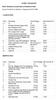 PORT CHARGES PORT CHARGES at KAKINADA ANCHORAGE PORT (As per G.O.Ms.No.34, I&I(Ports-1) Department Dt.04.07.2009) LANDING FEES Sl.No. Commodity Unit of Charges Rates Fixed Rs. Ps. 1 Fertilizers all kinds
Fourth Generation Modular Construction
 Allianz Global Corporate & Specialty Fourth Generation Modular Construction Marine Insurance Challenges: A technical report. 1 2 3 4 Foreword by Ron Johnson Modular Construction Trends Challenges and common
Ports in India 2015 Dredging in India 2015
 Now Available Two New Reports Ports in India 2015 Dredging in India 2015 Ports in India 2015 Table of Contents SECTION I: PORT SECTOR OVERVIEW AND OUTLOOK 1. Executive Summary 2. Overview Macroeconomic
Report No. 3 of 2009-10 2 Marine Operations
 2 Marine Operations Marine operations constitute a set of services provided by ports to facilitate smooth movement of vessels between anchorage points and berths as described below: = The ports should
-1- GATEWAY TERMINALS INDIA PRIVATE LIMITED Scale Of Rates. 1.1. GTI or Terminal means GATEWAY TERMINAL INDIA PVT. LTD.
 -1- Annex III GATEWAY TERMINALS INDIA PRIVATE LIMITED Scale Of Rates I. Definitions:- 1.1. GTI or Terminal means GATEWAY TERMINAL INDIA PVT. LTD. 1.2. Coastal Vessel shall mean any vessel exclusively employed
P.O. Box No. 112894, Dubai, United Arab Emirates Tel : +971 4 3577708, Fax: + 971 43577768 Email : [email protected] Website
 P.O. Box No. 112894, Dubai, United Arab Emirates Tel : +971 4 3577708, Fax: + 971 43577768 Email : [email protected] Website :www.oceanfrontshipping.com International Transportation Solutions At Oceanfront,
Women who are Moving Ohio into a Prosperous New World. Ohio s Maritime Vision
 Women who are Moving Ohio into a Prosperous New World Ohio s Maritime Vision Presented by: Rose Ann DeLeón Director of Government Relations and Federal Affairs Cleveland-Cuyahoga County Port Authority
THE LIVORNO PLATFORM
 THE LIVORNO PLATFORM Operational capabilities of the Livorno transport and logistics platform the infrastructures and services, intangible assets, the main development projects The Port of Livorno Livorno
Florida Transportation Commission: A Meeting of the Modes
 Florida Transportation Commission: A Meeting of the Modes Corridors of the Future: A National and I-95 Corridor Perspective George Schoener, Executive Director I-95 Corridor Coalition February 12, 2007
Freight Transport : Indian Scenario
 Welcome Freight Transport : Indian Scenario Joint Meeting of the Peel Goods Movement Task Force& GTHA Urban Freight Forum at Department of Civil Engineering, Lassonde School of Engineering York University,
Impact analysis: Supreme Court s order on overloading
 Knowledge for better decisions, from the expert Impact analysis: Supreme Court s order on overloading February 2006 Sections Executive summary 1 Section one 2 - Supreme Court Ruling on November 9, 2005:
OPERATIONAL LIMITATIONS DUE TO COMPLIANCE WITH THE JONES ACT
 Working Document of the NPC Study: Arctic Potential: Realizing the Promise of U.S. Arctic Oil and Gas Resources Made Available March 27, 2015 Paper #7-5 OPERATIONAL LIMITATIONS DUE TO COMPLIANCE WITH THE
ENVIRONMENTAL IMPACT ASSESSMENT PROCESS PROPOSED PHASE 2 EXPANSION OF THE TRANSNET IRON ORE HANDLING FACILITY, SALDANHA
 ENVIRONMENTAL IMPACT ASSESSMENT PROCESS PROPOSED PHASE 2 EXPANSION OF THE TRANSNET IRON ORE HANDLING FACILITY, SALDANHA BACKGROUND INFORMATION DOCUMENT 1 BACKGROUND Transnet Limited s (Transnet) existing
India Central Europe Business Forum Investment Opportunities in India: Emerging Perspective
 India Central Europe Business Forum Investment Opportunities in India: Emerging Perspective INVEST INDIA The official Investment Facilitation Agency for India A not-for-profit joint venture DIPP, Ministry
The Logistics and Transportation Industry in India 2009
 The Logistics and Transportation Industry in India 2009 Indian Logistics Industry The term logistics is often misinterpreted to mean transportation. In fact, the scope of logistics goes well beyond transportation.
SIMPLIFYING LOGISTICS: THE BENEFITS OF RAIL IN A MULTIMODAL SHIPPING SYSTEM
 SIMPLIFYING LOGISTICS: THE BENEFITS OF RAIL IN A MULTIMODAL SHIPPING SYSTEM A well-designed shipping plan has bottom-line implications for any business. Creating a sound logistics strategy supported by
Coverage on Domestic Freight Transportation Services. Improving macroeconomic indicators to sustain domestic freight growth over next five years
 Coverage on Spotlight Improving macroeconomic indicators to sustain domestic freight growth over next five years The Indian economy is slated to register a healthy growth of 8-9 per cent in GDP over the
TRANSPORT MODES AND THE CONSOLIDATION OF TRANSPORT LOTS
 TRANSPORT MODES AND THE CONSOLIDATION OF TRANSPORT LOTS November 2002 Department of Forest Economics, University of Helsinki Visit: for updates General When weighing between different modes of transport
FREMANTLE PORTS. A Guide to Our Business
 FREMANTLE PORTS A Guide to Our Business Our Vision, Mission and Values VISION To be valued by our customers and the community for our leadership and excellence. MISSION To facilitate trade in a sustainable
Intermodal Handling TOP PERFORMANCE WITH SMART SOLUTIONS
 Intermodal Handling TOP PERFORMANCE WITH SMART SOLUTIONS Intelligent intermodal solutions ensure safe and sustainable transport of goods International trade is constantly changing its ways and requirements
DAWEI Sea PROJECT Port Project DAWEI AND THE REGION
 February 2012 DAWEI Sea PROJECT Port Project DAWEI AND THE REGION PROJECT LOCATION Kunming India Middle East / Europe Dawei Africa Asia Regional Hub DAWEI Sea PROJECT Port Project DAWEI PROJECT OVERVIEW
TANZANIA HARBOURS AUTHORITY PO Box 9184 DAR-ES-SALAAM TANZANIA
 TANZANIA HARBOURS AUTHORITY PO Box 9184 DAR-ES-SALAAM TANZANIA Phone: +255 22 211 0401 Fax: +255 22 211 3938 E-mail: [email protected] Website: www.tanzaniaports.com The Tanzania Harbours Authority
The world s delivery system for consumer goods, components, and commodities is overloaded.
 From Mercer Management Journal 19 Delivery Jam How will the world s freight networks cope with surging demand? By Mark Kadar and Manny Hontoria Shipping ports, trains, and trucks are running flat out to
The Training Material on Multimodal Transport Law and Operations has been produced under Project Sustainable Human Resource Development in Logistic
 The Training Material on Multimodal Transport Law and Operations has been produced under Project Sustainable Human Resource Development in Logistic Services for ASEAN Member States with the support from
Is India s petrochemicals industry poised for a boom?
 Is India s petrochemicals industry poised for a boom? During the early years of this decade, the chemical industry in India was in a state of near stagnation. Capacity additions had virtually stopped (Fig
The Carbon Footprint of Global Trade
 The Carbon Footprint of Global Trade Tackling Emissions from International Freight Transport 1 International Transport Forum: Global dialogue for better transport Growing concern Projected increase of
Financing of Smart Cities. Kumar V Pratap Economic Adviser Ministry of Urban Development Government of India
 Financing of Smart Cities Kumar V Pratap Economic Adviser Ministry of Urban Development Government of India Responsibilities and finances of ULBs 2 Responsibilities Water and sewerage provision; Waste
CPCS Supply Chain Review. Eastern Canada Logistics Study By CPSC November 2012
 CPCS Supply Chain Review Eastern Canada Logistics Study By CPSC November 2012 Disclaimers 1. Study was initially presented in July 2013 in Montreal and may be repetitive for some of you. 2. Some of the
Inland intermodal terminals and freight logistics hubs
 Inland intermodal terminals and freight logistics hubs INTRODUCTION Transport planning and land use management are intricately engaged in the spatial design of nodes and links from origin to destination
Trends in Private and Public Investments in Agricultural Marketing Infrastructure in India
 Agricultural Economics Research Review Vol. 21 (Conference Number) 2008 pp 371-376 Trends in Private and Public Investments in Agricultural Marketing Infrastructure in India M.S. Jairath* National Institute
BULGARIAN RIVER SHIPPING JSC RUSE, BULGARIA. PROJECT : LOGMOS 29 February 2012 Brussels
 BULGARIAN RIVER SHIPPING JSC RUSE, BULGARIA PROJECT : LOGMOS 29 February 2012 Brussels BULGARIAN RIVER SHIPPING JSC / General Information Company established in 1935 Headquarters in Ruse, Bulgaria Ownership
P u b l i c P o l i c y D i v i s i o n
 William J. Diehl, CAPT USCG (Ret.) Chairman, Ports Task Force Greater Houston Partnership Testimony before the Texas House Transportation Committee Entitled The Panama Canal s Expansion Effect on Texas
WFP ETHIOPIA SPECIAL OPERATION SO 200358
 WFP ETHIOPIA SPECIAL OPERATION SO 200358 Country: Ethiopia Type of project: Special Operation Title: Construction and Management of the WFP Humanitarian Logistics Base at Djibouti Port Total cost (US$):
White Paper. Ten Points to Rationalize and Revitalize the United States Maritime Industry
 White Paper Ten Points to Rationalize and Revitalize the United States Maritime Industry Cartner & Fiske, LLC 1629 K St., NW Ste. 300 Washington, DC 20006 [email protected] John A C Cartner Managing Member
ECG Standard Shipping Terms
 ECG Standard Shipping Terms Version 1, September 2011 This document has been prepared by the ECG Maritime & Ports Commission and it is also available on the ECG website (www.ecgassociation.eu) The ECG
PORTS OF. sh i p to no r way
 PORTS OF NORWAY sh i p to no r way Annually between 12 and 14 million tonnes of cargo is imported and exported by truck to and from Norway. Norwegian ports work closely with authorities and shipping companies
THE ECONOMIC IMPACTS OF THE PORTS OF LOUISIANA AND THE MARITIME INDUSTRY
 THE ECONOMIC IMPACTS OF THE PORTS OF LOUISIANA AND THE MARITIME INDUSTRY Prepared by: TIMOTHY P. RYAN UNIVERSITY OF NEW ORLEANS February, 2001 EXECUTIVE SUMMARY The ports of Louisiana and the maritime
PPP Basics and Principles of a PPP Framework
 Note 1 May 2012 PPP Basics and Principles of a PPP Framework This note is the first in a series of notes on developing a comprehensive policy, legal, and institution framework for public-private partnership
POST GRADUATE DIPLOMA IN INTERNATIONAL BUSINESS OPERATIONS
 PGDIBO POST GRADUATE DIPLOMA IN INTERNATIONAL BUSINESS OPERATIONS PGDIBO ASSIGNMENTS 2015-16 School of Management Studies Indira Gandhi National Open University Maidan Garhi, New Delhi -110 068 ASSIGNMENTS
Examples of Eligible Projects. Project Category Description Examples
 Examples of Eligible Projects Public Transit Local Roads, Bridges, and Active Transportation Regional and Local Airports which supports a shared passenger transport system which is available for public
Final Report Main Report. Medium and Long Term Perspectives of IWT in the European Union
 Final Report Main Report Medium and Long Term Perspectives of IWT in the European Union Final Report Main Report Medium and Long Term Perspectives of IWT in the European Union This report has been financed
HEAVY LOAD FREIGHT SERVICES & 247 CARGO SERVICES
 HEAVY LOAD FREIGHT SERVICES & 247 CARGO SERVICES Oversize & Critical Cargo Specialists Air- Land-Multimodal Sea Movement-Transhipment- Critical & Urgent Shipments- Cranes, Lifting Equipments & Self Propelled
Logistics and Infrastructure
 The Steel Industry Mining Cement Logistics and Infrastructure CSN presents CSN Logistics Platform in Itaguaí Rio de Janeiro State CSN Logistics Platform in Itaguaí A project that supplies Brazil s needs
Surface Transportation Board
 Surface Transportation Board Office of Economics, Environmental Analysis & Administration Section of Economics January 16, 2009 Study of Railroad Rates: 1985-2007 The Surface Transportation Board (STB
A Contribution to the Analysis of Maritime Accidents with Catastrophic Consequence
 A Contribution to the Analysis of Maritime Accidents with Catastrophic Consequence Lusic Zvonimir M. Sc., Erceg Tonci Faculty of Maritime Studies Split, Croatia Zrinsko-Frankopanska 38, 21000 Split Phone:
UNIT I INTRODUCTION. This unit deals with Location space relations and India s place in the world
 UNIT I INTRODUCTION This unit deals with Location space relations and India s place in the world CHAPTER INDIA LOCATION You have already seen the map of India in the previous classes. Now you closely examine
Market Overview of Global & Regional Port Market
 Market Overview of Global & Regional Port Market Chris Rowland 3 rd Annual Port and Rail Expansion Summit, Istanbul, 10 April 2014 214020_presentation v1 Agenda Container shipping 2006 versus 2013 an industry
PORT OF NEWCASTLE 2014 ANNUAL TRADE REPORT
 PORT OF NEWCASTLE 2014 ANNUAL TRADE REPORT OUR VISION Port of Newcastle s vision is to maintain Newcastle s position as one of the leading and most efficient global scale coal export ports, and facilitate
CONTENTS. 1. Introduction: Rationale of the Project within the context of this Forum. 2. Integrated Planning of Waterborne Transport in Cambodia
 INTEGRATED WATERBORNE TRANSPORT PLANNING ON THE MEKONG RIVER SYSTEM IN CAMBODIA The International Forum on Integrated Water Resources Management of the Mekong River Basin 28 th -29 th November 2005 Chiang
Cefic Position on Intermodal Transport Network Development
 Summary Cefic Position on Intermodal Transport Network Development June 2014 The goal of the European Union to shift 30 % of road transport to intermodal means is very ambitious. The chemical industry
China Railways Development, Financing and Challenges
 China Railways Development, Financing and Challenges Zhang, Jianping Depart. of Development & Planning Ministry of Railway, P. R. China March 31, 2006 Transport Forum, World Bank 1. Current Situation of
CFR (CNF/C&F) (Cost and Freight) has a long history in the INCOTERMS.
 Incoterms - CFR/CIF CFR (CNF/C&F) (Cost and Freight) has a long history in the INCOTERMS. As an INCOTERM, seller passes the risk to the buyer when the cargo crosses the ship's rail at the port of origin.
SOUTH EAST EUROPE TRANSNATIONAL CO-OPERATION PROGRAMME. Terms of reference
 SOUTH EAST EUROPE TRANSNATIONAL CO-OPERATION PROGRAMME 3 rd Call for Proposals Terms of reference Efficient access to a SEE coordinated multimodal freight network between ports and landlocked countries
Analysis of the Obama Administration s FY 2017 Budget Proposal for Transportation
 Analysis of the Obama Administration s FY 2017 Budget Proposal for Transportation FY 2017 Budget Summary The Obama s Administration s proposed budget for FY 2017, which was submitted to Congress February
LOGISTICS STUDIES IN LUXEMBURG
 LOGISTICS STUDIES IN LUXEMBURG Over the past few years, Luxembourg has continuously improved its positioning as an intercontinental logistics hub in Europe especially for contract, air and rail freight-based
PDPE Market Analysis Tool: Import Parity Price. What insights can this tool provide? How to analyse, interpret and use the data
 PDPE Market Analysis Tool: Import Parity Price The import parity price (IPP) is the price at the border of a good that is imported, which includes international transport costs and tariffs. If a good is
Unit-2- Marine Insurance
 Unit-2- Marine Insurance Meaning- Procedure of taking marine insurance policy- Difference between fire and marine insurance- clauses of marine insurance policy- marine losses and perils- Types of policy
Transportation Process Framework
 ation Process Framework Qualify ation Partners Data Orders for Plan Schedule Book Resources and Monitor Execution Approve Shipment Charges Monitor ation Performance CORE TMS VALUE TENANTS Reduce transportation
Overview of Infrastructure and Construction Machinery Industry in India Opportunities and Challenges Rajesh Nath Managing Director VDMA India
 Overview of Infrastructure and Construction Machinery Industry in India Opportunities and Challenges Rajesh Nath Managing Director VDMA India Page 1 Contents India An Overview Infrastructure Sector & the
5:25 Flexible Structuring Scheme: Aligning Benefits
 June 02, 2015 Ratings I. Genesis 5:25 Flexible Structuring Scheme: Aligning Benefits The development of core industries and infrastructure sector is pivotal for developing countries like India. Development
Infrastructure Development in India's Reforms
 Infrastructure Development in India's Reforms Montek S. Ahluwalia It is a privilege to contribute to this volume honouring Dr Manmohan Singh. I first met Dr Singh in 1970, when I was a very young staff
Competition and Regulatory Deficit in Civil Aviation Sector in India
 Competition and Regulatory Deficit in Civil Aviation Sector in India Mukesh Kacker (IAS) Director General Structure Importance of Civil Aviation in India s Growth Civil Aviation Sector in India Investment
GAC International Moving Moving solutions for the Middle East, Indian Subcontinent and beyond
 GAC International Moving Moving solutions for the Middle East, Indian Subcontinent and beyond When moving offices or homes locally or internationally, we ensure that every move is pre-planned and handled
HAMBURGER HAFEN UND LOGISTIK AG
 HAMBURGER HAFEN UND LOGISTIK AG ANALYST CONFERENCE ON 2014 FINANCIAL YEAR RESULTS Hamburg, 30 March 2015 Hamburger Hafen und Logistik AG Agenda Business Development 2014 and Business Forecast 2015 Klaus-Dieter
IN DEFENSE OF THE JONES ACT
 IN DEFENSE OF THE JONES ACT ASBA Annual Cargo Conference Miami, FL September 26-28, 2012 Background of the Jones Act Section 27 of the Merchant Marine Act of 1920 (46 U.S.C. 883), commonly referred to
D SCW SE. Digital Supply Chains for European SMEs. What is DiSCwise? (by using a Common Framework for ICT in Transport & Logistics)
 D SCW SE Supported by Directorate General Enterprise and Industry Digital Supply Chains for European SMEs (by using a Common Framework for ICT in Transport & Logistics) What is DiSCwise? DiSCwise is a
Container Terminal Operation and Cargo Handling
 Container Terminal Operation and Cargo Handling Container terminals are designated for the handling, storage, and possibly loading or unloading of cargo into or out of containers, and where containers
Mercator Limited. Driven by growth Sustained by values
 Mercator Limited Group Driven by growth Sustained by values 1 Mercator at a Glance History Incorporated in 1983. Listed on both NSE and BSE Capacity Expansion by more than 1200% since 31 st March 2003
How To Know The State Of Intermodal Trucking In The United States
 The State of Intermodal Drayage David M. McLaughlin CONECT 2009 1 State of the Intermodal Industry Circa 2007 Consistent growth: 32% Increase 2000-2006 Dramatic increase in fuel costs from $1.40 per gallon
AGREEMENT ON TRADE, COMMERCE AND TRANSIT BETWEEN THE GOVERNMENT OF THE REPUBLIC OF INDIA AND THE ROYAL GOVERNMENT OF BHUTAN
 AGREEMENT ON TRADE, COMMERCE AND TRANSIT BETWEEN THE GOVERNMENT OF THE REPUBLIC OF INDIA AND THE ROYAL GOVERNMENT OF BHUTAN The Government of the Republic of India and the Royal Government of Bhutan, Conscious
A Case Study On Commercial Undertaking Of Govt. of West Bengal
 A Case Study On Commercial Undertaking Of Govt. of West Bengal The West Bengal Essential Commodities Supply Corporation Limited (WBECSC) suffered loss of ` 193.60 crore in export of iron ore fines Regional
CAPITAL MARKETS DAY DRY CARGO
 CAPITAL MARKETS DAY DRY CARGO THE PREFERRED PARTNER IN GLOBAL TRAMP SHIPPING UNIQUE PEOPLE, OPEN MINDED TEAM SPIRIT, NUMBER ONE New York City, 22 January 2008 1 GUIDANCE AGENDA Norden Dry cargo Organization