
PCMA BehaviorTools Curriculum
|
|
|
- Sheena Lang
- 10 years ago
- Views:
Transcription
1 PCMA BehaviorTools Curriculum The PCMA BehaviorTools Curriculum was originally developed and subsequently adapted by a dedicated team of noted Board Certified Behavior Analysts and is based on the landmark work of Dr. Glenn Latham, a prominent Psychologist, Behavior Analyst, Author and Presenter. The course material is consistent with current best practices in applied behavioral science. The strategies ( Tools ) included in this curriculum have been taught throughout the state of Florida for a number of years and have resulted in important outcomes for hundreds of individuals and human services organizations. The PCMA is proud to offer this curriculum, as well as a program to certify those who are trained to proficiency in the model. All classes are highly informative, entertaining and interactive. While the material is consistent with state-of-the-art behavioral research and principles, it is presented in an extraordinarily user friendly way. Participants relate easily to the real life examples that are used and the easily understood ways that principles and strategies are explained. The strategies are highly effective and often work quickly. Many participants return to the second class session excited to share stories of how the BehaviorTool taught in the previous session worked with their consumer, student or family member. BehaviorTools courses are the perfect companion to PCM training!! The following are some of the learning objectives from the BehaviorTools Basic Practitioner Course: Identify coercion and punishment commonly used to change behavior Identify the effects of coercive and punishment on people Demonstrate the steps of the Strengthen Relationships BehaviorTool Describe the benefits of using Strengthen Relationships BehaviorTool Describe the value of, and demonstrate empathy statements Define behavior, consequences, reinforcement and its effects Demonstrate the steps of Use Reinforcement Tool Define Junk Behavior and Discuss Why it Happens Demonstrate the steps of the Pivot Tool The following are some of the learning objectives from the BehaviorTools Practitioner Course: Identify more factors that influence behavior Define behavior function and describe how it can be used to plan replacement behaviors Demonstrate the steps of the Redirect Behavior Tool Discuss how to effectively set expectations with someone Demonstrate the steps of the Set Expectations Tool Discuss how to effectively make and implement a behavior contract Demonstrate the steps of the Make a Contract Tool Discuss how to review and evaluate a behavior contract Discuss factors that influence behavior Analyze Behavior and identify replacement behaviors Demonstrate all Tools in a variety of situations

2 Selected Tools Training Model Journal References The Florida Child Welfare Behavior Analysis Services Program Research on Social Work Practice 2008; 18; 367 originally published online May 20, 2008; Michael R. Stoutimore, Catherine E. Williams, Bryon Neff and Margie Foster Abuse, neglect, or both often result in removing children from their homes and placing them in foster care. As a result of these experiences, many children learn unhealthy behaviors. These behavioral challenges often lead to a cycle of multiple placement disruptions and progressively more restrictive placements. The philosophy, science, and technologies of behavior analysis are well suited to address this cycle. The Florida Department of Children and Families Behavior Analysis Services Program (BASP) is a behavior analysis initiative, combining research with service provision, developing and implementing data-based practices. Since 2001, the BASP has operated through statewide contracts with behavior analysis programs at the University of Florida and the University of South Florida. The BASP employs board certified behavior analysts and offers promise for the continued development of best practices. This article provides a description on the foundations, development, and current status of the BASP. Using Staff Training to Decrease the Use of Restrictive Procedures at Two Facilities for Foster Care Children Research on Social Work Practice 2008; 18; 401 originally published online Mar 6, 2008; Kimberly A. Crosland, Maricel Cigales, Glen Dunlap, Bryon Neff, Hewitt B. Clark, Tamela Giddings and Alfredo Blanco Objective: Use of some restrictive procedures, including physical restraint, has been controversial. For children within the foster care system, who have already suffered various degrees of abuse and neglect, restrictive procedures could add to their emotional and behavioral problems. The current study was conducted to determine whether a behavioral staff training program would help reduce the use of restrictive procedures at two group facilities housing children in the foster care system. Method: Pre- and posttraining measures (incident reports) were obtained within a nonconcurrent multiple-baseline design to document the use of restrictive procedures. Results: The data revealed decreases in reports of several restrictive procedures (e.g., take downs, physical holds, and physical and pharmacological restraints) at both facilities. Conclusions: The results suggest that training direct care staff personnel, including social workers, in positive behavioral strategies might reduce staff use of restrictive procedures and result in fewer injuries to both children and staff. The Effects of Staff Training on the Types of Interactions Observed at Two Group Homes for Foster Care Children Research on Social Work Practice 2008; 18; 410 originally published online Feb 26, 2008; Kimberly A. Crosland, Glen Dunlap, Wayne Sager, Bryon Neff, Catherine Wilcox, Alfredo Blanco and Tamela Giddings Objectives: An extensive literature base exists for behavioral parent training; however, few studies have focused on training direct care staff at group home and residential facilities for children. This study was conducted to determine whether a behavioral staff training program consisting of classroom training and in-home feedback would improve staff interactions with children at two group foster care homes. Method: Staff at both homes were trained, and direct observation measures were obtained on positive and negative interactions and lack of interactions. A multiple-baseline design across homes was used to assess staff interaction behavior. Results: Increases in both positive interactions and tool use were observed in the treatment phase, as were decreases in negative interactions for both group homes. Conclusions: The results suggest that training direct care staff, including social workers, to use behavioral strategies change patterns of interaction, resulting in a greater likelihood of improved relationships between staff and children. Behavioral Parent Training in Child Welfare: Evaluations of Skills Acquisition Research on Social Work Practice 2008; 18; 377 originally published online Mar 6, 2008; Carole M. Van Camp, Timothy R. Vollmer, Han-Leong Goh, Cristina M. Whitehouse, Jorge Reyes, Jan L. Montgomery and John C. Borrero Objective: Behavioral parent training has been proven effective through years of research with a variety of groups. However, little research has been conducted to systematically evaluate the extent to which behavioral parent training

3 Average Child Placement Duration (Days) may improve parenting skills of foster and other caregivers of dependent children. The Behavior Analysis Services Program (BASP) has been charged with providing behavioral parent training to foster parents and other caregivers of dependent children throughout the state of Florida through a variety of services focusing primarily on a group-class based training curriculum. This article examines the extent to which behavioral parent training was effective in increasing skills of caregivers who were trained in 2001 and Methods: Study 1 evaluated skills acquisition via a large-scale analysis of pre-course and post-course assessments, as well as observations of in-home parent-child interactions. Study 2 assessed skills acquisition via controlled analyses using repeated measures and multiple baseline designs. Results: Results showed increases in parenting skills in both studies as a function of curriculum training. Discussion: Implications of the results, limitations, and directions for future research are discussed. Evaluating a Positive Parenting Curriculum Package: An Analysis of the Acquisition of Key Skills Research on Social Work Practice 2008; 18; 442 originally published online May 19, 2008; Kerri P. Berard and Richard G. Smith The effectiveness of a parenting curriculum designed for parents who exhibit risk factors for child maltreatment was evaluated. Six skills were taught during a 5-week series of 3-hour classes that met 1 day per week. A written quiz containing questions corresponding to skills taught in each class was administered to participants before the series of classes, following each class session, and after completion of the course. Repeated administration of the quiz permitted an analysis of skill acquisition. A role-play assessment was conducted prior to and following the series of classes. Results demonstrate an improvement in the participants ability to recognize correct answers in a multiple-choice format and demonstrate the behavioral skills taught in class within a role-play context. A Functional Approach to Reducing Runaway Behavior and Stabilizing Placements for Adolescents in Foster Care Research on Social Work Practice 2008; 18; 429 originally published online Mar 24, 2008; Hewitt B. Clark, Kimberly A. Crosland, David Geller, Michael Cripe, Terresa Kenney, Bryon Neff and Glen Dunlap Teenagers running from foster placement is a significant problem in the field of child protection. This article describes a functional, behavior analytic approach to reducing running away through assessing the motivations for running, involving the youth in the assessment process, and implementing interventions to enhance the reinforcing value of placements for adolescents, thereby reducing the probability of running and associated unsafe periods. A case study illustrates this approach and a study compares 13 adolescents who ran away frequently and received interventions with a group of matched adolescents who had similar patterns of running but received only services as usual. The percentage of days on runaway status showed a significant pre-post reduction for those in the functional group, in contrast to no statistical change in the comparison group. Potential benefits this approach may have for foster care and child protection in improving youth safety, permanence, and connections for life are discussed. Selected Tools Training Model Outcome Data Graphs The pilot program collected data on tools model training outcomes, such as this placement study. The 438 subjects were residential caregivers that had at least 3 placements in their homes. There were 329 in a control group which did not receive training. The other 109 subjects received a 30 hour tools model training. Before the training, the average placement durations of the two groups were the same. After training, the trained group nearly doubled the durations of placements in their homes Before Training After Training Trained Untrained

4 This was the first phase of a multiple baseline design study. This phase took place in a short term residential placement and the intervention was tools model training with the staff. This was just tools training and did not include a coaching component. The restrictive procedures measured included seclusion, timeout, hands on crisis management procedures, emergency medications and mechanical restraint. Following training, the restrictive procedures were reduced by 47%. A more detailed breakdown is reported in the full journal article. This is the second phase of the multiple baseline study and it took place at a locked residential facility that was operated by the same agency. The intervention included both tools training of all staff and on-the-floor coaching of 7 key staff. The same restrictive procedures were measured and after intervention they decreased by 70%. More graphically displayed data documenting increased placement stability and reductions in targeted problem behaviors and crisis management procedures is available on request. The BehaviorTools courses are taught in schools, developmental centers, residential centers, day programs and in a variety of other settings. The BehaviorTools methods work well with adults, teenagers and children of all levels of functional skills and verbal abilities, including those without any spoken communication. Course packages tailored to specific populations are available.

5 For more information or to register for classes, please contact PCMA at or visit

Delivering Behavior Support in the Foster Care System:
 Delivering Behavior Support in the Foster Care System: Some Data and Perspectives from a Statewide Initiative Presented by: Glen Dunlap, Ph.D. University of South Florida 1 NOTE: All data in this presentation
Trauma-Informed Behavior Support: A training & coaching model for caregivers
 Trauma-Informed Behavior Support: A training & coaching model for caregivers Victoria L. Hummer, LCSW Rocky Haynes Jr., M.S., BCBA Irene K. Rickus, MS, LMHC Adapted from: Fundamental Tools for Positive
Type 1 Residential Facilities
 Ohio Department of Mental Health and Addiction Services Seclusion and Restraint Six Month Data Report Results Residential Facility (Type 1) January through June 2012 Ohio Department of Mental Health &
N.Y.S. PROTECTION OF PEOPLE WITH SPECIAL NEEDS ACT NOTICE TO MANDATED REPORTERS. Justice Center Guidance June 11, 2013
 N.Y.S. PROTECTION OF PEOPLE WITH SPECIAL NEEDS ACT NOTICE TO MANDATED REPORTERS Justice Center Guidance June 11, 2013 This Notice provides Mandated Reporters with an overview of their legal duties under
APPROVED TRAINING PROGRAMS PHYSICAL RESTRAINT & SECLUSION
 APPROVED TRAINING PROGRAMS PHYSICAL RESTRAINT & SECLUSION The following training programs have been approved by the Oregon Department of Education, pursuant to ORS 339.300; OAR 581-021-0563. THE CRISIS
Curriculum Vitae. Kristin S. Knapp-Ines
 Curriculum Vitae Kristin S. Knapp-Ines Educational Background: B.S., Psychology University of Tübingen, Germany July, 1986 M.S., Clinical and Industrial- University of Tübingen, Germany Organizational
GUIDANCE AND COUNSELING SERVICES PROGRAM GUIDE
 GUIDANCE AND COUNSELING SERVICES PROGRAM GUIDE 2013 COLTS NECK TOWNSHIP PUBLIC SCHOOLS COLTS NECK, NJ Colts Neck Schools Guidance Philosophy School Guidance Counselors provide a wide range of services
SENECA VALLEY SCHOOL DISTRICT
 No. 113.2 SECTION: PROGRAMS SENECA VALLEY SCHOOL DISTRICT TITLE: BEHAVIORAL MANAGEMENT FOR EXCEPTIONAL STUDENTS ADOPTED: JUNE 8, 1992 REVISED: 113.2. BEHAVIORAL MANAGEMENT FOR EXCEPTIONAL STUDENTS 1. Purpose
caring CHILD substance abuse FOR A who has been impacted by
 caring FOR A CHILD who has been impacted by substance abuse WHERE CAN CAREGIVERS FIND HELP? Caregivers may need guidance and support as they respond to the attachment needs of vulnerable children. Help
PRIMARY TREATMENT CENTERS AND DETENTION
 SECTION SIX PRIMARY TREATMENT CENTERS AND DETENTION I. PRIMARY TREATMENT CENTER A. General Characteristics 1. Children referred to Primary Treatment Centers (PTC) may be children in their initial state
MICHIGAN CIVIL SERVICE COMMISSION JOB SPECIFICATION SERVICES SPECIALIST
 JOB DESCRIPTION MICHIGAN CIVIL SERVICE COMMISSION JOB SPECIFICATION SERVICES SPECIALIST Employees in this job complete and oversee a variety of professional assignments to provide services to socially
Outcomes of a treatment foster care pilot for youth with complex multi-system needs
 Outcomes of a treatment foster care pilot for youth with complex multi-system needs Melissa Johnson Kimberly McGrath Mary Armstrong Norín Dollard John Robst René Anderson Presented at the 28th Annual Research
Training Plan for Wisconsin 2015-2019 Child and Family Services Plan
 Training Plan for Wisconsin 2015-2019 Child and Family Services Plan Wisconsin Child and Family Services Training Plan 2015-2019 Background and experience from the last five years that built Wisconsin
SAN MATEO COUNTY SELPA POSITIVE BEHAVIORAL INTERVENTIONS POLICY
 SAN MATEO COUNTY SELPA POSITIVE BEHAVIORAL INTERVENTIONS POLICY It is the Policy of the San Mateo County Special Education Local Plan Area that all children be provided educational opportunities that promote
Providing expert training, certification and consultation worldwide for over a quarter century
 Providing expert training, certification and consultation worldwide for over a quarter century I am humbled by the remarkable success those practicing Professional Crisis Management achieve on a daily
Optum By United Behavioral Health. 2015 Florida Medicaid Managed Medical Assistance (MMA) Level of Care Guidelines
 Optum By United Behavioral Health 2015 Florida Medicaid Managed Medical Assistance (MMA) Level of Care Guidelines Statewide Inpatient Psychiatric Program Services (SIPP) Statewide Inpatient Psychiatric
Program Evaluation of a Behaviour Therapy Group for Parents of Children with Developmental Disabilities Ages Four to Seven.
 JOURNAL ON DEVELOPMENTAL DISABILITIES, VOLUME 10, NUMBER 1, 2003 Program Evaluation of a Behaviour Therapy Group for Parents of Children with Developmental Disabilities Ages Four to Seven Anona Zimerman
Policy on Positive Behavior Interventions and Support, and Restraint and Seclusion Adopted by the State Board of Education January 15, 2013
 I. Purpose The purpose of this policy is to create a statewide policy that applies to all school districts regarding the use of positive behavior intervention and supports, and the limited use of restraint
Roseann Myers, J.D., R.N. County of San Diego Health and Human Services Agency Child Welfare Services
 Roseann Myers, J.D., R.N. County of San Diego Health and Human Services Agency Child Welfare Services 1 San Diego County Demographics Ethnicity 2010 % Hispanic 991,348 32% Non-Hispanic 2,103,965 68% White
SPECIAL EDUCATION AND DISABILITY POLICY (SEDP)
 VCU 1 SPECIAL EDUCATION AND DISABILITY POLICY (SEDP) SEDP 330. Survey of Special Education. 3 Semester course; 3 lecture hours. 3 credits. Presents an overview of the historical basis and regulatory requirements
What Every Parent Needs to Know about Applied Behavior Analysis (ABA) David F. Bicard, Ph.D., BCBA-D Esther Plank, MS
 What Every Parent Needs to Know about Applied Behavior Analysis (ABA) David F. Bicard, Ph.D., BCBA-D Esther Plank, MS Know Your Rights Six Major Principles of The Individuals with Disabilities Education
Bristol Intensive PBS Service for children with learning disabilities at risk of school exclusion
 Bristol Intensive PBS Service for children with learning disabilities at risk of school exclusion Dr Freddy Jackson Brown Clinical Psychologist North Bristol NHS Trust Background In February 2005, a 12
Best Practices in Juvenile Justice Reform
 The Case for Evidence-Based Reform Best Practices in Juvenile Justice Reform Over the past decade, researchers have identified intervention strategies and program models that reduce delinquency and promote
- 11-72) 120.745, 65-6: STATE RESIDENTIAL TREATMENT FACILITIES - FEE COLLECTION SYSTEM
 State of Florida - Governor Rick Scott The Office of Fiscal Accountability and Regulatory Reform (OFARR) Results of the Comprehensive Rule Review (Executive Order 11-72) as supplemented by the Enhanced
DEPARTMENT OF SPECIAL EDUCATION AND DISABILITY POLICY
 VCU 1 DEPARTMENT OF SPECIAL EDUCATION AND DISABILITY POLICY Colleen Thoma, Ph.D. Professor and chair The mission of the Department of Special Education and Disability Policy is to prepare skilled, effective
Evidence Based Approaches to Addiction and Mental Illness Treatment for Adults
 Evidence Based Practice Continuum Guidelines The Division of Behavioral Health strongly encourages behavioral health providers in Alaska to implement evidence based practices and effective program models.
1. The youth is between the ages of 12 and 17.
 Clinical MULTISYSTEMIC THERAPY (MST) Definition Multisystemic therapy (MST) is an intensive family and community-based treatment that addresses multiple aspects of serious antisocial behavior in adolescents.
The Therapeutic Crisis Intervention System for Schools
 The Therapeutic Crisis Intervention System for Schools Residential Child Care Project Bronfenbrenner Center for Translational Research Cornell University Therapeutic Crisis Intervention System For Schools
Hunter College School of Social Work. Child Welfare Competency Course Matrix
 EPAS Competency: 2.1.1 Identify as a professional social worker and conduct oneself accordingly. Child welfare competency: Student will act within the professional child welfare worker role at all times,
Rhode Island KIDS COUNT Presents: Newport Data in Your Backyard ~~~
 For Immediate Release Contact: Raymonde Charles Day: (401) 351-9400, Ext. 22 [email protected] Rhode Island KIDS COUNT Presents: Newport Data in Your Backyard The percentage of Newport eighth graders
Goals/Objectives FY 2010-2011
 Through Fiscal Year Ending September 30, 2011 Goals/Objectives SERVICE GOALS 1. Agency Capacity Desired Outcome: The service delivery network must have the capacity and ability to provide a high quality,
A GUIDE TO UNDERSTANDING THE CHILD PROTECTION REGISTRY
 A GUIDE TO UNDERSTANDING THE CHILD PROTECTION REGISTRY Think of the Child First Over the years many changes have been made to the laws regarding child abuse and neglect within the State of Delaware. Most
NYS Office of Children and Family Services
 ADOPTION ASSISTANCE Objective: Funds adoption subsidy costs for children with special needs. Administering Agency: ; US Department of Health and Human Services NYS Object Code: 62402, 62405 Year Established:
OFFICE OF MENTAL HEALTH AND SUBSTANCE ABUSE SERVICES BULLETIN
 OFFICE OF MENTAL HEALTH AND SUBSTANCE ABUSE SERVICES BULLETIN ISSUE DATE April 15, 2015 EFFECTIVE DATE: April 1, 2015 NUMBER: OMHSAS-15-01 SUBJECT: BY: Community Incident Management & Reporting System
The Services To At Risk Youth STAR Program Jack Nowicki
 The Services To At Risk Youth STAR Program Jack Nowicki STAR originated in 1983 when the Texas Legislature approved a demonstration project for serving runaway and truant youth called the Services to Truants
Improving Outcomes: A Technology Approach. Accuracy, Productivity, Awareness, Outcomes TRACKING ANALYZING PREDICTING
 Improving Outcomes: A Technology Approach Applying Predictive Analytics to Child Welfare Accuracy, Productivity, Awareness, Outcomes TRACKING ANALYZING PREDICTING What do we Achieving using the Predictive
The Boys Town Education Model SM : Service delivery customized to your needs
 The Boys Town Education Model SM : Service delivery customized to your needs The Boys Town Education Model SM uses a five-step process to help teachers and administrators implement school-wide changes
Maltreatment Prevention Programs and Policies in New Jersey
 Maltreatment Prevention Programs and Policies in New Jersey In a 2011 survey on state prevention policies, child welfare agency staff were asked about eligibility requirements, funding, program descriptions,
SOCIAL SERVICE SPECIALIST 1 6612
 SOCIAL SERVICE SPECIALIST 1 6612 GENERAL DESCRIPTION OF CLASS The SOCIAL SERVICE SPECIALIST 1 provides counseling, consultation, therapy, and treatment planning or conducts group sessions in effective
How To Help Your Child With A Learning Disability
 What Is a School Psychologist? Who Are School Psychologists? School psychologists have specialized training in both psychology and education. They use their training and skills to team with educators,
Western Carolina University Program Assessment Plan Program: School Psychology College of Education and Allied Professions
 Western Carolina University Program Assessment Plan Program: School Psychology College of Education and Allied Professions Assessment Plan for 2006-2007 Primary Contact: Candace H. Boan, Ph.D. Associate
The Pyramid Model provides guidance for early childhood special education and early intervention personnel, early educators, families, and other
 The Pyramid Model provides guidance for early childhood special education and early intervention personnel, early educators, families, and other professionals on the evidencebased practices for promoting
The Georgia Early Care and Education Professional Development Competencies
 Page 1 The Georgia Early Care and Education Professional Development Competencies Early Care and Education Professional School-Age Care Professional Program Administrator Trainer Technical Assistance Provider
Alabama Autism Task Force Preliminary Recommendations
 Alabama Autism Task Force Preliminary Recommendations Having reviewed the findings to date from the Alabama Autism Collaborative Group (AACG), The Alabama Autism Task Force proposes the following changes
Services. Learn about Intensive Behavioral Intervention (IBI)
 Services Learn about Intensive Behavioral Intervention (IBI) The IBI program is a comprehensive treatment for children with autism using applied behavior analysis (ABA). This autism treatment is evidence-based
Keeping Families Together. A guide for families to understand intensive treatment options for children with mental illnesses
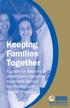 Keeping Families Together A guide for families to understand intensive treatment options for children with mental illnesses CONTENTS Introduction... 1 Children with Mental Illnesses... 3 Emotional Disturbance
COLORADO DEPARTMENT OF HUMAN SERVICES DIVISION OF CHILD WELFARE
 COLORADO DEPARTMENT OF HUMAN SERVICES DIVISION OF CHILD WELFARE REQUEST FOR CORE SERVICES ADDITIONAL FUNDING FOR EXPANSION OF SERVICES TO ADOLESCENTS PROPOSALS A. NEEDS ASSESSMENT: A needs assessment is
ROYALTON HARTLAND CENTRAL SCHOOL DISTRICT K 12 COMPREHENSIVE SCHOOL COUNSELING PROGRAM
 ROYALTON HARTLAND CENTRAL SCHOOL DISTRICT K 12 COMPREHENSIVE SCHOOL COUNSELING PROGRAM GUIDANCE PLAN ROYALTON HARTLAND CENTRAL SCHOOL DISTRICT MISSION STATEMENT The Mission of the Royalton Hartland Central
Warrington Safeguarding Children Board Neglect Strategy
 Warrington Safeguarding Children Board Neglect Strategy Every child and young person in Warrington should be able to grow up safe from maltreatment, neglect, bullying, discrimination and crime -receiving
Teen-Intervene Using Brief Intervention with Substance-Abusing Adolescents From HAZELDEN A Research-based Program
 Teen-Intervene Using Brief Intervention with Substance-Abusing Adolescents From HAZELDEN A Research-based Program What is Teen-Intervene? Teen-Intervene is a tested, time-efficient, evidence-based program
Francine B. Baffa, PhD, BCBA-D, LBA
 Francine B. Baffa, PhD, BCBA-D, LBA Highly experienced, innovative, and student-focused professional and faculty member with proven success as a Board Certified Behavior Analyst and Special Education Teacher
Safe Management Group (SMG) Student Orientation. At Ontario Shores Centre for Mental Health Sciences
 Safe Management Group (SMG) Student Orientation At Ontario Shores Centre for Mental Health Sciences Safe Management Group Safe Management Group (SMG) Training Program offers generic skills & techniques
Because children ARE our future. [email protected] www.idealearlylearning.com Office: (678) 632-4085 Fax: (678) 228-1912
 Because children ARE our future [email protected] www.idealearlylearning.com Office: (678) 632-4085 Fax: (678) 228-1912 Dr. Bisa Batten Lewis, Founder & CEO Course Information Child Development
The Wraparound Process: An Overview of Implementation Essentials
 This document was peer reviewed through the NWI. Supporting Wraparound Implementation: Chapter 5a.2 The Wraparound Process: An Overview of Implementation Essentials Eric Bruns, Co-Director, National Wraparound
College of Education and Human Services Exceptional Student & Deaf Education Course Descriptions
 CATALOG 2010-2011 Graduate Information College of Education and Human Services Exceptional Student & Deaf Education Course Descriptions ASL6215: Advanced American Sign Language Conversational Skills Prerequisites:
Durham SOC Care Review LEVELS OF RESIDENTIAL CARE
 The following is a description of the levels of residential care available to the children of North Carolina. These services can be provided in a variety of locations from urban to rural, from facility
Assessment Method 1: Direct Skills Assessment
 2013-2014 Assessment Report Program: Applied Behavioral Analysis, MS College of Liberal Arts Psychology Applied Behavioral Analysis, MS Expected Outcome 1: Proficiency in Application of ABA Procedures
Additional Substitute care and FBSS workers are needed to help the agency achieve face-to-face monthly contacts with 95% of children and parents.
 Texas Department of Family and Protective Services Description of Exceptional Item Requests FY 10-11 Biennium (As submitted in LAR on September 9, 2008) ITEM 5. DIRECT DELIVERY STAFF TO MEET FEDERAL STANDARDS
STANDARD FOR CONTACT BETWEEN THE SOCIAL WORKER, THE CHILD, THE FAMILY and RESOURCE PARENT(S) or OTHER ALTERNATE CARE PROVIDERS
 STANDARD FOR CONTACT BETWEEN THE SOCIAL WORKER, THE CHILD, THE FAMILY and RESOURCE PARENT(S) or OTHER ALTERNATE CARE PROVIDERS PURPOSE The purpose of this standard is to provide direction and guidance
Address: 10230 New Hampshire Avenue, Suite 200, Silver Spring, MD 20903. Title of Hearing: Improving Programs Designed to Protect At-Risk Youth
 Name: Erica Moltz Organization (if applicable): Adoptions Together Address: 10230 New Hampshire Avenue, Suite 200, Silver Spring, MD 20903 Phone Number: 301 422 5101 Contact E-mail Address: [email protected]
Basic Standards for Residency Training in Child and Adolescent Psychiatry
 Basic Standards for Residency Training in Child and Adolescent Psychiatry American Osteopathic Association and American College of Osteopathic Neurologists and Psychiatrists Adopted 1980 Revised, 1984
Improving Child Outcomes Through CARE, A Program Model by Cornell University. Council on Accreditation Innovative Practice. William Martin, MHSA
 Improving Child Outcomes Through CARE, A Program Model by Cornell University Council on Accreditation Innovative Practice William Martin, MHSA Assistant Executive Director Waterford Country School Abstract
How To Become A Psychologist
 R. Scott Stehouwer, Ph.D. Positions: 9/86 present Professor of Psychology 9/83 present Independent Practice in Clinical Psychology Licensing: State of Michigan Board Certification: Fellow and Diplomate
Family Preservation Programs
 Family Preservation Programs Since the term "family preservation services" was coined in the 1980s, there has been considerable confusion about the essential elements of these services and which types
System Improvement Plan
 R o a d m a p f o r S u p e r i o r S e r v i c e Children and Family Services and the Probation Department driving to: IMPROVE SAFETY IMPROVE PERMANENCY IMPROVE WELL-BEING THE CALIFORNIA CHILD AND FAMILY
FACTS ABOUT FOSTER PARENTING AND ADOPTION
 FACTS ABOUT FOSTER PARENTING AND ADOPTION The Georgia Department of Human Services Division of Family and Children Services (DFCS) is responsible for assuring that children who cannot remain with their
Chapter1 FOSTER CARE OVERVIEW. STATE OF WISCONSIN Foster Parent Handbook
 Chapter1 FOSTER CARE OVERVIEW STATE OF WISCONSIN Foster Parent Handbook CHAPTER 1: FOSTER CARE OVERVIEW Introduction: Chapter 1... 2 Letter from Wisconsin County Human Services Association... 3 The Purpose
CALIFORNIA S TEACHING PERFORMANCE EXPECTATIONS (TPE)
 CALIFORNIA S TEACHING PERFORMANCE EXPECTATIONS (TPE) The Teaching Performance Expectations describe the set of knowledge, skills, and abilities that California expects of each candidate for a Multiple
AMENDMENT OF THE REGULATIONS OF THE COMMISSIONER OF EDUCATION. Pursuant to Education Law sections 101, 207, 3208, 3602, 4002, 4308, 4355,
 AMENDMENT OF THE REGULATIONS OF THE COMMISSIONER OF EDUCATION Pursuant to Education Law sections 101, 207, 3208, 3602, 4002, 4308, 4355, 4401, 4402 and 4403 1. The emergency rule amending paragraphs (3)
Rubric for Evaluating Colorado s Specialized Service Professionals: School Psychologists Definition of an Effective School Psychologist
 Rubric for Evaluating Colorado s Specialized Service Professionals: School Psychologists Definition of an Effective School Psychologist Effective school psychologists are vital members of the education
Sample Student Learning Objectives-Educator/Student Support Specialists
 Subject Area: Intellectual Disabilities Grade(s): 6 # of students covered by SLO: 5 % of students covered by SLO: 100% of Grade 6 Student Learning Objective: My 6th grade students will improve their social
6864 NE 14th Street, Suite 5 Ankeny, IA 50023 800.277.8145 Toll free 515.289.4567 Dsm area www.ifapa.org Website ifapa@ifapa.
 About IFAPA The Iowa Foster and Adoptive Parents Association (IFAPA) is a non profit organization serving as a resource to foster, adoptive and kinship families in Iowa. Membership with IFAPA is free for
GEORGIA STANDARDS FOR THE APPROVAL OF PROFESSIONAL EDUCATION UNITS AND EDUCATOR PREPARATION PROGRAMS
 GEORGIA STANDARDS FOR THE APPROVAL OF PROFESSIONAL EDUCATION UNITS AND EDUCATOR PREPARATION PROGRAMS (Effective 9/01/08) Kelly Henson Executive Secretary Table of Contents Standard 1: Candidate Knowledge,
Using Home-Based Programs in Other States to Support a Medicaid Claim to Intensive Home-Based Services Under EPSDT
 Using Home-Based Programs in Other States to Support a Medicaid Claim to Intensive Home-Based Services Under EPSDT December 2005 QA Center for Public Representation I. Introduction Because EPSDT requires
TODD S. STANFIELD, PhD, LCSW, PIP 918 Trace Dr., Jackson, TN 38305 731.661.5968 [email protected]
 TODD S. STANFIELD, PhD, LCSW, PIP 918 Trace Dr., Jackson, TN 38305 731.661.5968 [email protected] EDUCATION Ph.D. - Social Work (2002) M.S.W. - CSWE Accredited (1994) B.S.W. - CSWE Accredited (1993) The