
ANS 3319C Reproductive Physiology and Endocrinology Techniques for In-Vitro Embryo Production
|
|
|
- Jesse Dorsey
- 10 years ago
- Views:
Transcription
1 ANS 3319C Reproductive Physiology and Endocrinology Techniques for In-Vitro Embryo Production Objectives 1) To gain an understanding of the process of in-vitro embryo production in cattle and other domestic species. 2) To provide hands-on experience in the techniques involved in in-vitro embryo production including oocyte aspiration and collection, maturation, fertilization, and embryo culture. Application of In-Vitro Embryo Technologies to Domestic Animal Species 1) Production of embryos from genetically valuable animals that are either infertile or that are deceased. 2) An alternative means to produce embryos from valuable animals rather than using superovulation 3) An inexpensive method for producing embryos using abattoir-derived ovaries Overview Although the production of domestic animal embryos in vitro is still a relatively new technique in commercial and clinical settings, work on in vitro fertilization began as early as the 1930 s with rabbit oocytes. While these first attempts at in vitro fertilization were not successful, subsequent research in the late 1950 s led to the birth of rabbit pups produced using oocytes fertilized in vitro. In the late 1960 s, work with human oocytes led to the birth of the first baby, Louise Brown (Figure 1), following in vitro fertilization in the United Kingdom in Since this time the production of human preimplantation embryos in vitro has become a common treatment for infertility. It is estimated that over 100,000 babies have been born using this technique in the United States alone. In terms of in vitro embryo techniques in domestic animals, the first calf (Figure 1), lambs and pigs produced following in vitro fertilization were born in the early 1980 s and the live birth of a foal following in vitro fertilization was reported in the early 1990 s. The production of bovine embryos in vitro has been the most successful of all the domestic animal species. Research on this topic in the 1980 s led to improved in vitro maturation medium and also techniques for capacitation of sperm in vitro. In the 1990 s new developments led to improved embryo culture conditions such that perimplantation bovine embryos could be cultured to the blastocyst stage in vitro. Over the last years, the production of bovine embryos in vitro for commercial use has increased significantly and now there are several hundred thousand bovine in vitro produced embryos transferred worldwide each year. The production of embryos in vitro of other domestic species, especially the pig and the horse, have been less successful and further research is necessary before these techniques can be applied efficiently in commercial settings. This handout was developed by former Animal Sciences graduate students Jeremy Block and Luiz Augusto (Guto) de Castro e Paula. Jeremy and Guto received their PhD in reproductive physiology in the Department of Animal Science at the University of Florida. This handout was prepared using material from Dr. Pete Hansen s web page on production of bovine embryos
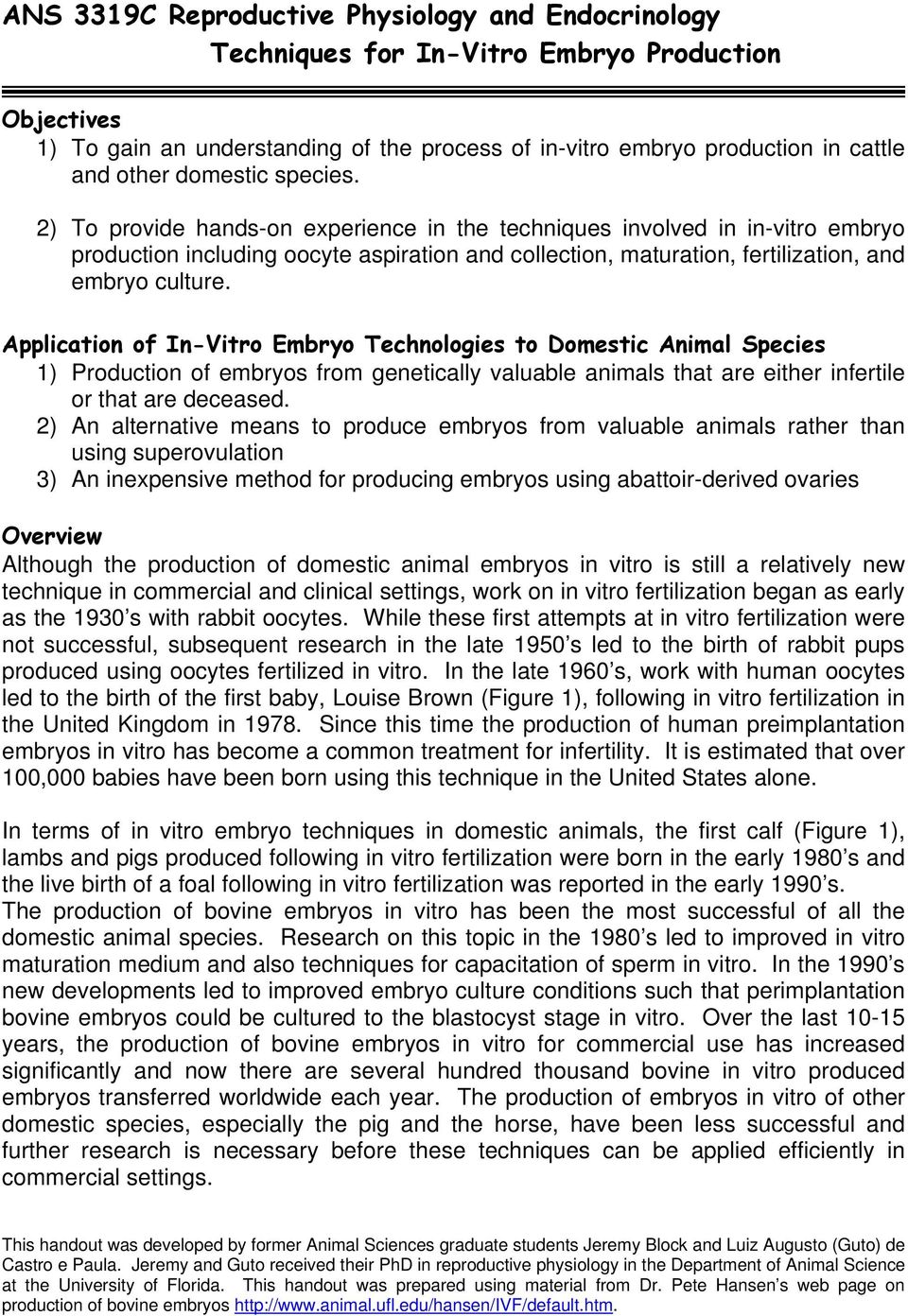
2 ANS 3319C Reproductive Physiology & Endocrinology Techniques for In vitro Embryo Production 2 Although there is variation among different species in the exact procedures for in-vitro embryo production, in general the procedure involves 4 major steps: 1) the collection of immature oocytes, 2) the maturation of immature oocytes, 3) the fertilization of mature oocytes and 4) the culture of embryos. Each of these steps will be discussed in more detail in the subsequent sections. Figure 1. Shown is the first baby born following in vitro fertilization, Louise Brown, in 1978 (left panel) and first calf born following in vitro fertilization, named Virgil, in 1981 (right panel). Oocyte Collection Immature oocytes in the form of cumulus-oocyte complexes (COC; figure 3) can be collected from live donor animals or directly from ovaries obtained from a abattoir. There are 2 main ways in which oocytes can be collected from live donors, 1) surgically by laparotomy and aspiration using a syringe and needle (Figure 2) or 2) using transvaginal ovum-pick-up techniques as shown in Figure 2. In the case of ovaries obtained from a abattoir or a deceased donor animal, the ovaries are generally transported to the laboratory in physiological saline that contains some form of antibiotic to help prevent bacterial contamination at approximately ºC. The best results are obtained when oocytes are collected within 4-6 hrs after slaughter. Oocytes can be collected from abattoir derived ovaries either by aspiration using a syringe and needle or by slashing the surface of the ovary with a scalpel blade and collection of oocytes into a beaker as shown in figure 3. Oocyte Maturation Following collection, cumulus-oocyte complexes are washed several times and then placed into maturation medium for a specified amount of time depending on the species (Table 1). This process is meant to mimic what occurs in-vivo following the LH surge.

3 ANS 3319C Reproductive Physiology & Endocrinology Techniques for In vitro Embryo Production 3 Thus during this culture period, the oocyte will resume meiosis and arrest at metaphase II so that it is ready for fertilization. The COC also undergoes other morphological changes during maturation, including the expansion of the cumulus cells (Figure 3). In some cases, such as in humans and horses, it is more common to allow oocytes to mature in vivo and then collect them for in vitro fertilization and embryo culture. Figure 2. Oocyte collection using ultrasound-guided transvaginal aspiration (left panel) and using a syringe and needle (right panel). Figure 3. Collection of oocytes by slashing the ovarian surface (left panel) and several immature bovine cumulus-oocyte complexes following collection (right panel). Although the mammalian oocyte resumes meiosis immediately after removal from the follicular environment it is important to place the COC into maturation medium as soon as possible following collection to provide an optimal microenvironment for oocyte maturation. The typical maturation medium will include several components including nutrients (pyruvate, glucose, glutamine, serum), hormones and gonadotrophins (estrogen, LH, FSH), and antibiotics (penicillin/streptomycin or gentamicin).

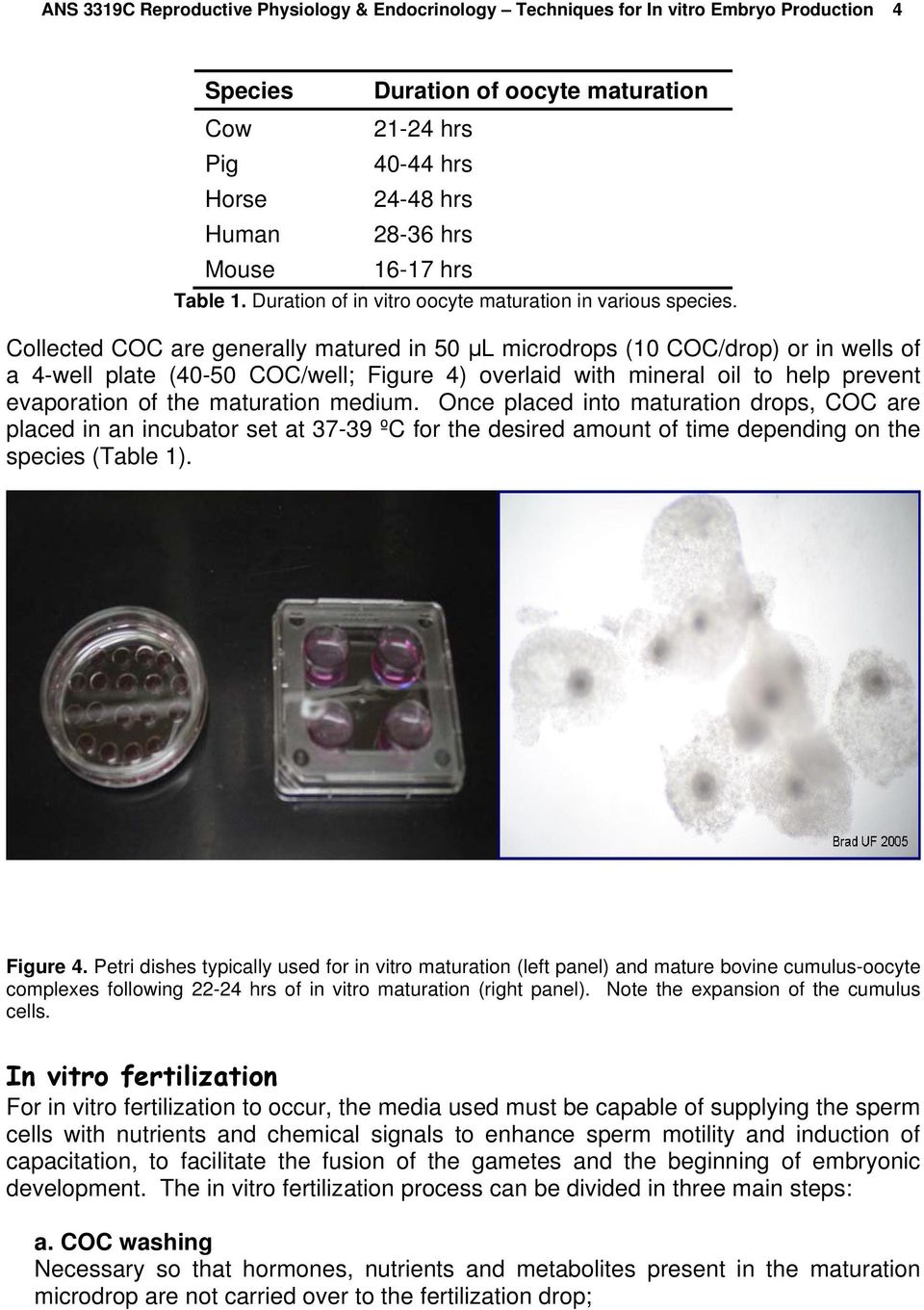
4 ANS 3319C Reproductive Physiology & Endocrinology Techniques for In vitro Embryo Production 4 Species Cow Pig Duration of oocyte maturation hrs hrs Horse hrs Human hrs Mouse hrs Table 1. Duration of in vitro oocyte maturation in various species. Collected COC are generally matured in 50 μl microdrops (10 COC/drop) or in wells of a 4-well plate (40-50 COC/well; Figure 4) overlaid with mineral oil to help prevent evaporation of the maturation medium. Once placed into maturation drops, COC are placed in an incubator set at ºC for the desired amount of time depending on the species (Table 1). Figure 4. Petri dishes typically used for in vitro maturation (left panel) and mature bovine cumulus-oocyte complexes following hrs of in vitro maturation (right panel). Note the expansion of the cumulus cells. In vitro fertilization For in vitro fertilization to occur, the media used must be capable of supplying the sperm cells with nutrients and chemical signals to enhance sperm motility and induction of capacitation, to facilitate the fusion of the gametes and the beginning of embryonic development. The in vitro fertilization process can be divided in three main steps: a. COC washing Necessary so that hormones, nutrients and metabolites present in the maturation microdrop are not carried over to the fertilization drop;
5 ANS 3319C Reproductive Physiology & Endocrinology Techniques for In vitro Embryo Production 5 Procedure 1. Transfer COCs from each maturation microdrop to the X-plate containing the buffer HEPES-TALP; 2. Transfer 10 COCs from the X-plate to each well of the 4-well fertilization plate; b. Sperm purification Necessary so that sperm cells can be washed from the extender + criopreserver (if frozen is used)/seminal plasma (if fresh semen is used), selected for alive motile sperm cells and provided with nutrients, buffers and chemical signals to induce capacitation and hyperactivation. Procedure 1. Place 1.5 ml of 90% Percoll and 1.5 ml of HEPES-TL to one 15 ml conical tube; 2. Mix to make a solution of 45% Percoll; 3. In another 15 ml conical tube, add 3 ml of 90% Percoll; 4. Make a Percoll gradient (45% over 90%) by slowly layering the 90 % Percoll on the bottom of the tube containing the 45% Percoll using a plastic Pasteur pipet; 5. If using frozen semen (which is usually the case in IVF of domestic animal species), thaw enough straws of semen in a citothaw for seconds or in another thermo with water pre-warmed to 37 o C; 6. Wipe the semen straw dry with a kimwipe, cut the tip of the straw with a scissors and expel contents of the straw onto the top of the Percoll gradient (Figure 5); Care must be taken so that the gradient is not disturbed and the semen lie on top of the 45% layer; Figure 5.. Layering of sperm onto Percoll. After cutting the tip of the straw (Left panel), the contents of the straw are expelled onto the top of the Percoll gradient (right panel). Here, removal of the semen is facilitated by using a homemade plunger.

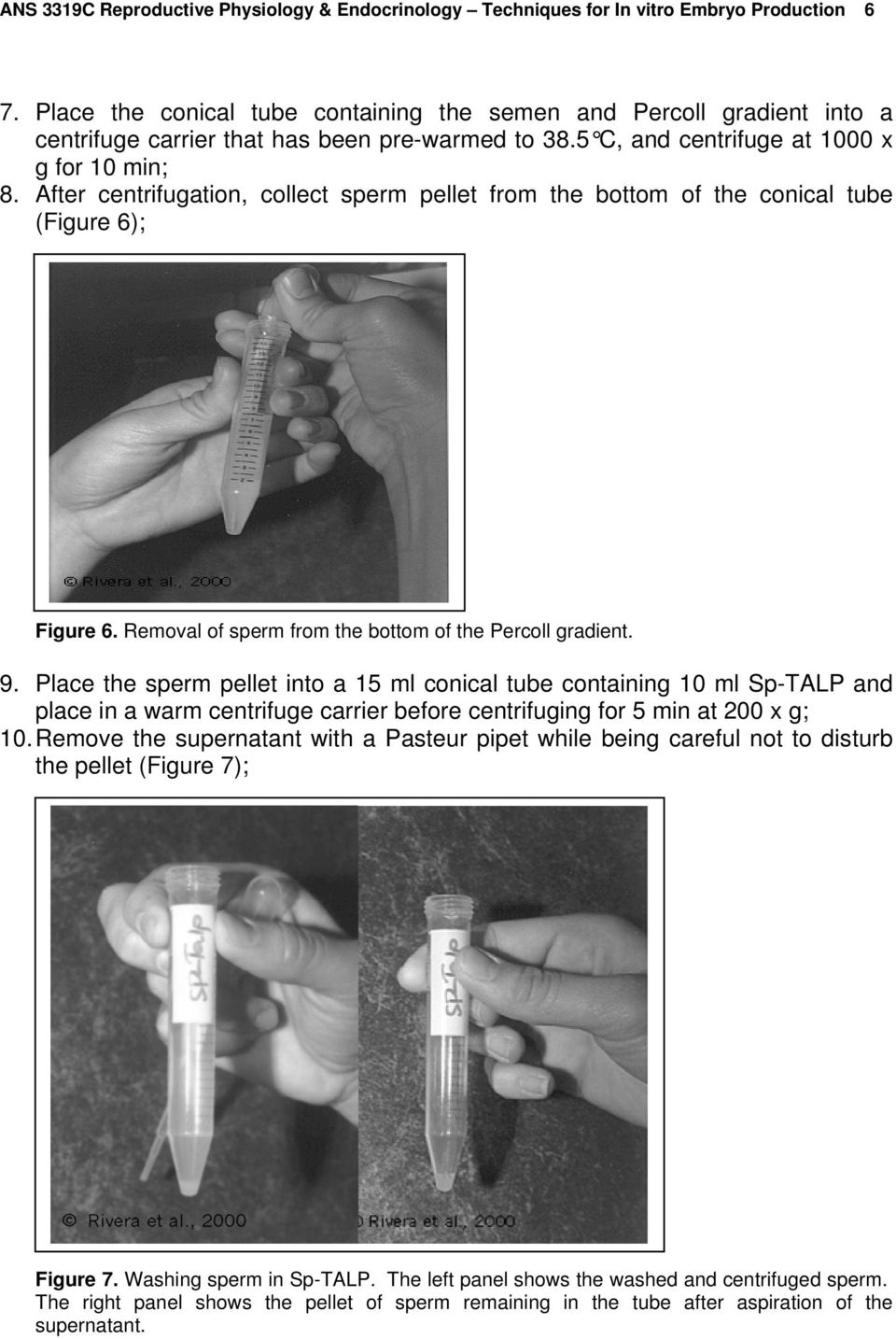
6 ANS 3319C Reproductive Physiology & Endocrinology Techniques for In vitro Embryo Production 6 7. Place the conical tube containing the semen and Percoll gradient into a centrifuge carrier that has been pre-warmed to 38.5 C, and centrifuge at 1000 x g for 10 min; 8. After centrifugation, collect sperm pellet from the bottom of the conical tube (Figure 6); Figure 6. Removal of sperm from the bottom of the Percoll gradient. 9. Place the sperm pellet into a 15 ml conical tube containing 10 ml Sp-TALP and place in a warm centrifuge carrier before centrifuging for 5 min at 200 x g; 10. Remove the supernatant with a Pasteur pipet while being careful not to disturb the pellet (Figure 7); Figure 7. Washing sperm in Sp-TALP. The left panel shows the washed and centrifuged sperm. The right panel shows the pellet of sperm remaining in the tube after aspiration of the supernatant.
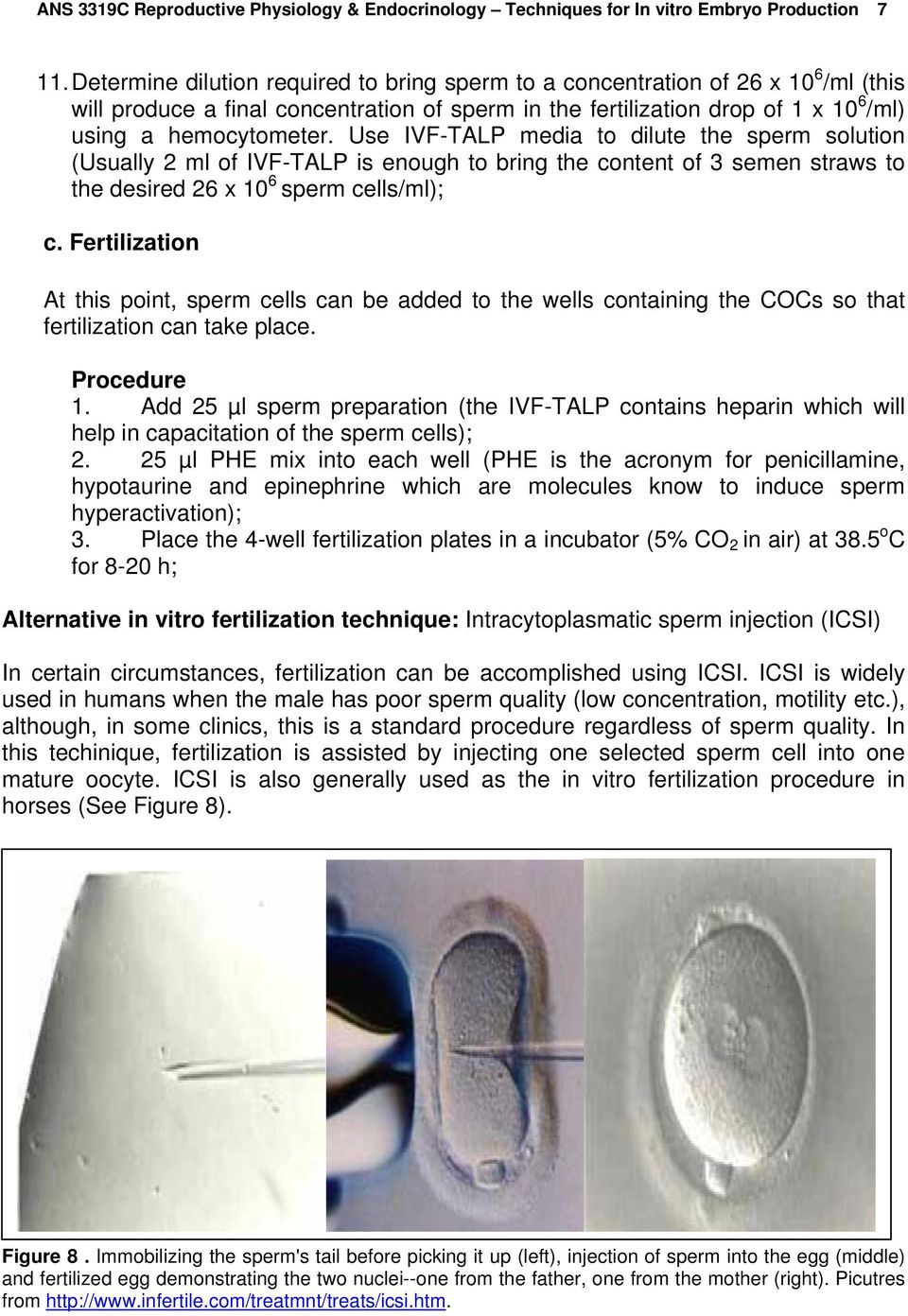
7 ANS 3319C Reproductive Physiology & Endocrinology Techniques for In vitro Embryo Production Determine dilution required to bring sperm to a concentration of 26 x 10 6 /ml (this will produce a final concentration of sperm in the fertilization drop of 1 x 10 6 /ml) using a hemocytometer. Use IVF-TALP media to dilute the sperm solution (Usually 2 ml of IVF-TALP is enough to bring the content of 3 semen straws to the desired 26 x 10 6 sperm cells/ml); c. Fertilization At this point, sperm cells can be added to the wells containing the COCs so that fertilization can take place. Procedure 1. Add 25 µl sperm preparation (the IVF-TALP contains heparin which will help in capacitation of the sperm cells); µl PHE mix into each well (PHE is the acronym for penicillamine, hypotaurine and epinephrine which are molecules know to induce sperm hyperactivation); 3. Place the 4-well fertilization plates in a incubator (5% CO 2 in air) at 38.5 o C for 8-20 h; Alternative in vitro fertilization technique: Intracytoplasmatic sperm injection (ICSI) In certain circumstances, fertilization can be accomplished using ICSI. ICSI is widely used in humans when the male has poor sperm quality (low concentration, motility etc.), although, in some clinics, this is a standard procedure regardless of sperm quality. In this techinique, fertilization is assisted by injecting one selected sperm cell into one mature oocyte. ICSI is also generally used as the in vitro fertilization procedure in horses (See Figure 8). Figure 8. Immobilizing the sperm's tail before picking it up (left), injection of sperm into the egg (middle) and fertilized egg demonstrating the two nuclei--one from the father, one from the mother (right). Picutres from
8 ANS 3319C Reproductive Physiology & Endocrinology Techniques for In vitro Embryo Production 8 Embryo culture Embryo culture is the step that follows fertilization. During this stage, the newly formed zygote will need to be provided with the conditions necessary to start dividing and grow in the most similar way to what would be expected to be happening in the first few days of pregnancy. There are several types of embryo culture: a. In vivo fertilized oocytes are placed in the oviduct of a synchronized female and grown for 6-8 days. The embryos are then retrieved and transferred to its definitive mother. In some cases, this type of culture can be performed across species, e.g., bovine or equine embryos can be successfully cultured in the sheep oviduct; b. Co-culture fertilized oocytes are placed in culture drops containing cells from the oviduct to try to mimic the maternal environment; c. Semi-defined medim fertilized oocytes are placed in culture drops containing serum. It is called semi-defined medium because the composition of the serum is variable and usually unknown. This is the most common method of embryo culture in domestic species; d. Defined medium fertilized oocytes are placed in culture drops where concentrations of all the components are known, including growth factors; e. Sequential culture the embryonic needs change as it grows. The idea of sequential culture is to place embryos in culture medium containing the nutrients necessary for one specific stage of development, mimicking the maternal environment; Two of the most common culture media used in embryo culture are SOF (Synthetic Oviduct Fluid) and KSOM Potassium Simplex Optimized Medium). Theses medias contain such items as nutrients (carbohydrates, amino acids) buffers, and antibiotics. Other factors affecting the embryonic development in vitro: a. Gas phase embryo culture can be done using determined concentration of gases. The two most commonly used are: 5% CO2 in air 5% CO2, 5% O2 and 90% N2. This gas mixture allows for better embryo development because it s thought to be more similar to the condition found in the oviduct and uterus b. ph the ph of the culture medium should be between 7.2 and 7.4. The ph can be affected by temperature and gas phase if not properly buffered; c. Osmolality should be between mosm/kg; d. Temperature The culture temperature should be the same temperature found by the embryo in the oviduct and uterus. In the cow, the normal temperature ranges from 38.5 to 39 o C and so this temperature should used during culture; e. Water purity resistivity of water must be less than 18 mohm; f. Sterility procedures should be carried out taking care of keeping the culture sterile, using sterile techniques and antibiotics if necessary;
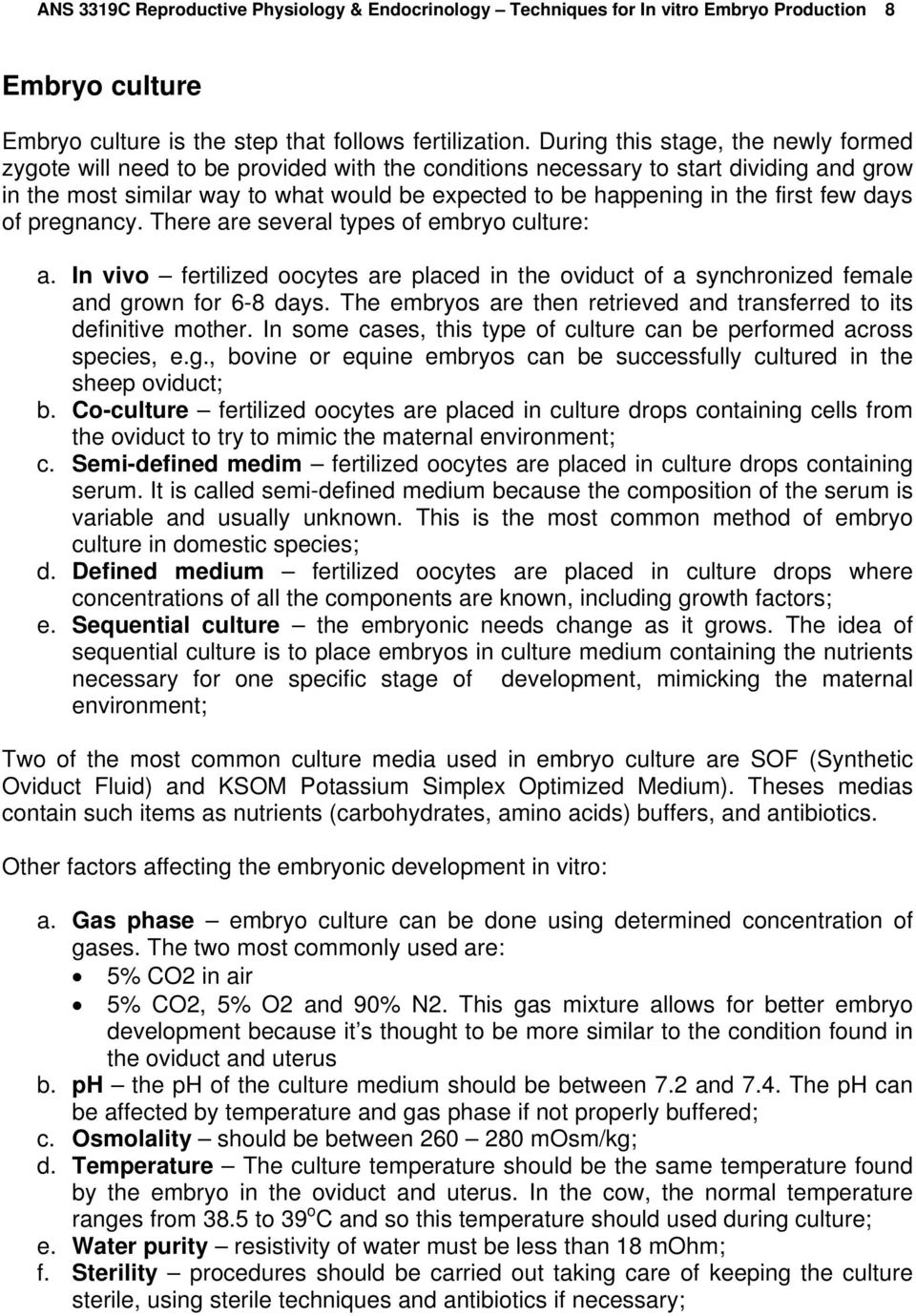
9 ANS 3319C Reproductive Physiology & Endocrinology Techniques for In vitro Embryo Production 9 Bovine embryo culture procedure 1. Add 1000 μl HEPES-TALP in a microcentrifuge tube; 2. Place X-plate on the slide warmer and add ~5 ml of HEPES-TALP to each of the wells; 3. After microscope and air have been warmed sufficiently, remove one 4-well plate containing IVF drops from the incubator; 4. Remove oocyte-cumulus complexes (now called putative zygotes since many of them have been fertilized; Figure 9) from each well of the 4-well plate and place in the microcentrifuge tube. Up to 300 embryos can be loaded in one microcentrifuge tube; 5. Repeat steps 3 and 4 until all plates have been processed; 6. Remove cumulus cells from putative zygotes by vortexing (Figure 10) the tube containing the embryos/oocytes for 3-4 minutes; Figure 9. Putative zygotes after 8-hour fertilization. Note the cumulus cells detaching from the putative zygote due to action of the sperm cells. Figure 10. Vortexing COCs to remove cumulus cells. 7. Two to three days after fertilization, embryos should be checked under a microscope to determine the percentage that cleaved. This number is an approximation of the percentage of oocytes that were fertilized. However it should be noted that not only fertilized oocyte will cleave. Parthenotes are unfertilized oocytes that due to external stimulus start to divide. The parthenotes can reach blastocyst stage and when transferred to a cow, may survive for up to 30 days but will die due to failure in placentation and attachment to the uterus. 8. Seven or eight days after fertilization, embryos should be checked again and the percentage of blastocysts formed recorded. 9. Grade 1 and grade 2 blastocysts are usually transferred to synchronized recipients;
10 ANS 3319C Reproductive Physiology & Endocrinology Techniques for In vitro Embryo Production 10 Embryo culture in other species: further considerations The growth rate of the embryo varies among species being very fast in the murine and slower in the bovine.. Figure 11. Four-cell (top left) and 8-cell (top right) bovine embryos (cell s cytoplasms are seen in red and nuclei in blue). Bovine blastocyst on day 8 after fertilization (bottom). Inner cell mass is seen as a compact group of cells and the trophoblast as more disperse cells Embryonic growth requirement in vitro also varies greatly among species. For instance, murine embryos can grow with minimum nutrients, if any at all, while other species like bovine, porcine, equine and humans are much more selective and sensitive to non-optimal conditions. In most domestic species, embryos are transferred to the recipients at the morula or blastocyst stage. In humans, however, is a common procedure to transfer the embryos earlier, like at the 2-cell, 4-cell or 8-cell stages. This is to avoid the negative effects that prolonged in vitro culture has on the embryo (growth arrest, improper genome activation, large offspring syndrome). The drawback of this procedure is the need to transfer multiple embryos to increase the chances of establishing pregnancy which increases the chance of causing a multiple pregnancy (twins, triplets, quadruplets or more).

Day -1 RETRIEVAL OF OVARIES AND OOCYTE COLLECTION AND MATURATION
 Day -1 RETRIEVAL OF OVARIES AND OOCYTE COLLECTION AND MATURATION OVARY COLLECTION Materials and Equipment Needed Thermos with 2 containers with 0.5 L of transport saline in each. Appropriate attire as
Assisted Reproductive Technologies at IGO
 9339 Genesee Avenue, Suite 220 San Diego, CA 92121 858 455 7520 Assisted Reproductive Technologies at IGO Although IGO no longer operates an IVF laboratory or program as such, we work closely with area
A POWERFUL IN VITRO FERTILIZATION
 A POWERFUL During the past 50 years technological advances in the field of bovine reproduction have led to some dramatic changes in the way cattle look, reproduce, perform, and even taste. Artificial Insemination
Symposium on RECENT ADVANCES IN ASSISTED REPRODUCTIVE TECHNOLOGY
 Symposium on RECENT ADVANCES IN ASSISTED REPRODUCTIVE TECHNOLOGY Dr Niel Senewirathne Senior Consultant of Obstetrician & Gynaecologist De zoyza Maternity Hospita 1 ART - IVF & ICSI 2 Infertility No pregnancy
In - Vitro Fertilization Handbook
 In - Vitro Fertilization Handbook William F. Ziegler, D.O. Medical Director Scott Kratka, ELD, TS Embryology Laboratory Director Lauren F. Lucas, P.A.-C, M.S. Physician Assistant Frances Cerniak, R.N.
Illinois Insurance Facts Illinois Department of Financial and Professional Regulation Division of Insurance
 Illinois Insurance Facts Illinois Department of Financial and Professional Regulation Division of Insurance Insurance Coverage for Infertility Treatment Revised November 2004 Infertility is a condition
Standard Operating Procedure IVF and ICSI procedures
 Pages: 1 of 6 PRINCIPLES Oocytes are aspirated from mature Graafian follicles after the administration of ovarian hyperstimulation pharmacological regimes designed to produce multiple follicular development.
Guide to IVF Laboratory Results
 Guide to IVF Laboratory Results PACIFIC CENTRE FOR REPRODUCTIVE MEDICINE 500-4601 Canada Way, Burnaby BC V5G 4X7 LAB-416-20140122-1 The following information will guide you through what results to expect
AGE & FERTILITY: Effective Evaluation & Treatment I. LANE WONG, MD, FACOG. www.hopefertilitycenter.com www.hopeivf.com
 Page 1 of 6 AGE & FERTILITY: Effective Evaluation & Treatment I. LANE WONG, MD, FACOG. www.hopefertilitycenter.com www.hopeivf.com Age has a profound effect on female fertility. This is common knowledge,
Assignment Discovery Online Curriculum
 Assignment Discovery Online Curriculum Lesson title: In Vitro Fertilization Grade level: 9-12, with adaptation for younger students Subject area: Life Science Duration: Two class periods Objectives: Students
Artificial Insemination in Cattle
 Artificial Insemination in Cattle Introduction This slide show is designed to introduce students to artificial insemination in cattle. However, it is only a brief overview and further training is necessary
ASSISTED REPRODUCTIVE TECHNOLOGIES (ART)
 ASSISTED REPRODUCTIVE TECHNOLOGIES (ART) Dr. Herve Lucas, MD, PhD, Biologist, Andrologist Dr. Taher Elbarbary, MD Gynecologist-Obstetrician Definitions of Assisted Reproductive Technologies Techniques
In Vitro Fertilization
 Patient Education In Vitro Fertilization What to expect This handout describes how to prepare for and what to expect when you have in vitro fertilization. It provides written information about this process,
Reproductive Technology. Chapter 21
 Reproductive Technology Chapter 21 Assisted Reproduction When a couple is sub-fertile or infertile they may need Assisted Reproduction to become pregnant: Replace source of gametes Sperm, oocyte or zygote
European IVF Monitoring (EIM) Year: 2008
 European IVF Monitoring (EIM) Year: 2008 Name of country POLAND Name and full address of contact person. professor Rafal Kurzawa MD PhD Fertility and Sterility Special Interest Group Polish Gynaecological
it right? activity (page 4) to highlight ethical issues associated with IVF
 IN VITRO FERTILIZATION I V F In some cases, a sperm is directly injected into an egg IVF: THE MEETING OF SPERM AND EGG IN GLASS Louise Brown, the first test tube baby was born in 1978. Since then, there
ANS 3319C Reproductive Physiology and Endocrinology Artificial Insemination in Cattle. Objectives. What are the advantages and disadvantages of AI?
 ANS 3319C Reproductive Physiology and Endocrinology Artificial Insemination in Cattle Objectives 1) To provide an overview of the process of artificial insemination (AI) in cattle. 2) To gain an understanding
Proceedings, Applied Reproductive Strategies in Beef Cattle September 11 and 12, 2007, Billings, Montana NEW TECHNOLOGIES FOR REPRODUCTION IN CATTLE
 Proceedings, Applied Reproductive Strategies in Beef Cattle September 11 and 12, 2007, Billings, Montana NEW TECHNOLOGIES FOR REPRODUCTION IN CATTLE George E. Seidel, Jr. Animal Reproduction and Biotechnology
Thermo Scientific Nunc Products for InVitro Fertilization. security, safety and reproducibility. for your valuable. samples
 Thermo Scientific Nunc Products for InVitro Fertilization security, safety and reproducibility for your valuable samples The criteria for an IVF product is that it is reliable and does not offer any threat
European IVF Monitoring (EIM) Year: 2010
 European IVF Monitoring (EIM) Year: 2010 Name of country: Poland Name and full address of contact person: Professor Rafal Kurzawa, MD PhD Fertility and Sterility Special Interest Group Polish Gynaecological
Technological & Ethical Issues In Laboratory-Assisted Reproduction A Short History to Accompany the Lecture
 1 Technological & Ethical Issues In Laboratory-Assisted Reproduction A Short History to Accompany the Lecture Richard Bronson, M.D. Professor of Obstetrics & Gynecology and Pathology The treatment of infertility
Infertility Services Medical Policy For University of Vermont Medical Center and Central Vermont Medical Center employer groups
 Infertility Services Medical Policy For University of Vermont Medical Center and Central Vermont Medical Center employer groups File name: Infertility Services File code: UM.REPRO.01 Last Review: 02/2016
FERTILITY AND AGE. Introduction. Fertility in the later 30's and 40's. Am I fertile?
 FERTILITY AND AGE Introduction Delaying pregnancy is a common choice for women in today's society. The number of women in their late 30s and 40s attempting pregnancy and having babies has increased in
LONDON REGIONAL TRANSGENIC AND GENE TARGETING FACILITY
 LONDON REGIONAL TRANSGENIC AND GENE TARGETING FACILITY SPERM CRYOPRESERVATION AND IN VITRO FERTILIZATION RESOURCE PACKAGE For information, contact: Dr. Christopher Pin, PhD, Scientific Director London
REPRODUCTIVE MEDICINE AND INFERTILITY ASSOCIATES Woodbury Medical Arts Building 2101 Woodwinds Drive Woodbury, MN 55125 (651) 222-6050
 REPRODUCTIVE MEDICINE AND INFERTILITY ASSOCIATES Woodbury Medical Arts Building 2101 Woodwinds Drive Woodbury, MN 55125 (651) 222-6050 RECIPIENT COUPLE INFORMED CONSENT AND AUTHORIZATION FOR IN VITRO FERTILIZATION
Lesbian Pregnancy: Donor Insemination
 Lesbian Pregnancy: Donor Insemination (Based on an article originally published in the American Fertility Association 2010 National Fertility and Adoption Directory. Much of this information will also
In Vitro Fertilization (IVF) Page 1 of 11
 In Vitro Fertilization (IVF) Page 1 of 11 This document is a part of your informed consent process. Both partners should read the entire document carefully. In vitro fertilization (IVF) is a treatment
How To Get A Refund On An Ivf Cycle
 100% IVF Refund Program Community Hospital North Clearvista Dr. N Dr. David Carnovale and Dr. Jeffrey Boldt, along with everyone at Community Reproductive Endocrinology, are committed to providing you
DARTMOUTH-HITCHCOCK MEDICAL CENTER Lebanon, New Hampshire IN VITRO FERTILIZATION PROCEDURE DESCRIPTION
 DARTMOUTH-HITCHCOCK MEDICAL CENTER Lebanon, New Hampshire IN VITRO FERTILIZATION PROCEDURE DESCRIPTION I. INTRODUCTION A. The Assisted Reproductive Technology (ART) Program. The ART Program is operated
Informed Consent Packet - In Vitro Fertilization (IVF)
 Center for Reproductive Medicine (CRM) Informed Consent Packet - In Vitro Fertilization (IVF) This packet contains the required IVF treatment consent documents. Please read, consider and, if you agree,
INFORMED CONSENT AND AUTHORIZATION FOR IN VITRO FERTILIZATION OF PREVIOUSLY CRYOPRESERVED OOCYTES
 INFORMED CONSENT AND AUTHORIZATION FOR IN VITRO FERTILIZATION OF PREVIOUSLY CRYOPRESERVED OOCYTES We, the undersigned, as patient and partner understand that we will be undergoing one or more procedures
Consent for Frozen Donor Oocyte In Vitro Fertilization and Embryo Transfer (Recipient)
 Name of Patient: Name of Partner: We, the Patient and Partner (if applicable) named above, are each over the age of twenty-one (21) years. By our signatures below, I/we request and authorize the performance
DNA Fingerprinting. Unless they are identical twins, individuals have unique DNA
 DNA Fingerprinting Unless they are identical twins, individuals have unique DNA DNA fingerprinting The name used for the unambiguous identifying technique that takes advantage of differences in DNA sequence
Areas of Concern. Reproductive Ethics: Issues &
 Reproductive Ethics: Issues & Areas of Concern Conception Control: under what conditions is conception control in harmony with a Christian ethic? Genetic Screening & Counseling: under what conditions should
ART - - - - - IVF - NO.1 IVF - IVF
 The success of any ART laboratory depends on its IVF laboratory. The primary function of an ART laboratory is to provide an optimal environment for gametes and embryos. To set up an ART laboratory, the
IVF OVERVIEW. Tracy Telles, M.D.
 IVF OVERVIEW By Tracy Telles, M.D. Dr. Hendler: Hello and welcome to KP Healthcast. I m your host Dr. Peter Hendler and today our guest is Dr. Tracy Telles. Dr. Telles is an IVF physician in Kaiser Walnut
Page 1. 1. The production of monoploid cells by spermatogenesis occurs in (1) zygotes (3) ovaries (2) testes (4) meristems
 1. The production of monoploid cells by spermatogenesis occurs in (1) zygotes (3) ovaries (2) testes (4) meristems Base your answers to questions 2 and 3 on the diagram below of the female reproductive
Authorized By: Holly C. Bakke, Commissioner, Department of Banking and Insurance.
 INSURANCE DIVISION OF INSURANCE Actuarial Services Benefit Standards for Infertility Coverage Proposed New Rules: N.J.A.C. 11:4-54 Authorized By: Holly C. Bakke, Commissioner, Department of Banking and
Instructions. Torpedo sirna. Material. Important Guidelines. Specifications. Quality Control
 is a is a state of the art transfection reagent, specifically designed for the transfer of sirna and mirna into a variety of eukaryotic cell types. is a state of the art transfection reagent, specifically
Revised minimum standards for in vitro fertilization, gamete intrafallopian transfer, and related procedures
 Revised minimum standards for in vitro fertilization, gamete intrafallopian transfer, and related procedures A PRACTICE COMMITTEE REPORT Guidelines and Minimum Standards I. Introduction Treatment of the
Fertility Research Policy
 Fertility Research Policy Rationale and Objective Merck Serono has a strong commitment to deliver innovations in Fertility treatments to help infertile couples achieve their desire to have a baby. Innovations
Reproductive System & Development: Practice Questions #1
 Reproductive System & Development: Practice Questions #1 1. Which two glands in the diagram produce gametes? A. glands A and B B. glands B and E C. glands C and F D. glands E and F 2. Base your answer
Center for Women s Reproductive Care at Columbia University
 Center for Women s Reproductive Care at Columbia University Oocyte Recipients Greetings, Thank you for your interest in the Center for Women s Reproductive Care at Columbia University. We hope that the
Human Tubal Fluid (HTF) Media & Modifi ed Human Tubal Fluid (mhtf) Medium with Gentamicin
 Human Tubal Fluid (HTF) Media & Modifi ed Human Tubal Fluid (mhtf) Medium with Gentamicin HTF Media are intended for use in assisted reproductive procedures which include gamete and embryo manipulation
Abortion and Stem Cell Debate Background Information
 Abortion and Stem Cell Debate Background Information 1 Fetal Development 2 Terms Syngamy: fusion of two gametes in fertilization Zygote: name of the cell resulting from fertilization until it implants
Consent for In Vitro Fertilization
 Consent for In Vitro Fertilization Print Patient s Name Print Partner s Name We (I), the undersigned, request, authorize and consent to the procedure of In Vitro Fertilization (IVF) and Embryo Transfer
Illinois Insurance Facts Illinois Department of Insurance
 Illinois Insurance Facts Illinois Department of Insurance Insurance Coverage for Infertility Treatment Revised December 2014 Note: This information was developed to provide consumers with general information
Germ cell formation / gametogenesis And Fertilisation
 Developmental Biology BY1101 P. Murphy Lecture 3 The first steps to forming a new organism Descriptive embryology I Germ cell formation / gametogenesis And Fertilisation Why bother with sex? In terms of
Clinical Policy Committee
 Northern, Eastern and Western Devon Clinical Commissioning Group South Devon and Torbay Clinical Commissioning Group Clinical Policy Committee Commissioning policy: Assisted Conception Fertility assessment
Topic: Male Factor Infertility
 Topic: Male Factor Infertility Topic Overview: Male Factor Infertility Comparisons of pregnancy rates at insemination based on total motile sperm counts from the 1999 and 21 World Health Organization (WHO)
Ethical issues in assisted reproductive technologies. Effy Vayena
 Ethical issues in assisted reproductive technologies Effy Vayena Assisted Reproductive Technologies (ART) All treatments or procedures that include the in vitro handling of human oocytes and human sperm
East and North Hertfordshire CCG Fertility treatment and referral criteria for tertiary level assisted conception. December 2014
 East and North Hertfordshire CCG Fertility treatment and referral criteria for tertiary level assisted conception December 2014 1 1. Introduction This policy sets out the entitlement and service that will
COVENTRY HEALTH CARE OF ILLINOIS, INC. COVENTRY HEALTH CARE OF MISSOURI, INC. Medical Management Policy and Procedure PROPRIETARY
 COVENTRY HEALTH CARE OF ILLINOIS, INC. COVENTRY HEALTH CARE OF MISSOURI, INC. Medical Management Policy and Procedure PROPRIETARY Policy: Infertility Evaluation and Treatment Number: MM 1306 Date Effective:
Assisted reproductive technology in Australia and New Zealand 2010
 Assisted reproductive technology in Australia and New Zealand 2010 ASSISTED REPRODUCTION SERIES Number 16 Assisted reproductive technology in Australia and New Zealand 2010 Alan Macaldowie Yueping A Wang
Carol Ludowese, MS, CGC Certified Genetic Counselor HDSA Center of Excellence at Hennepin County Medical Center Minneapolis, Minnesota
 Carol Ludowese, MS, CGC Certified Genetic Counselor HDSA Center of Excellence at Hennepin County Medical Center Minneapolis, Minnesota The information provided by speakers in workshops, forums, sharing/networking
CONSENT TO PARTICIPATE IN THE IN VITRO FERTILIZATION-EMBRYO TRANSFER PROGRAM
 CONSENT TO PARTICIPATE IN THE IN VITRO FERTILIZATION-EMBRYO TRANSFER PROGRAM I, after consultation with my physician, request to participate in the In Vitro Fertilization (IVF)-Embryo Transfer (ET) procedures
THE CENTER FOR ADVANCED REPRODUCTIVE SERVICES (CARS) (The Center) CONSENT FOR IN VITRO FERTILIZATION AND EMBRYO TRANSFER
 THE CENTER FOR ADVANCED REPRODUCTIVE SERVICES (CARS) (The Center) CONSENT FOR IN VITRO FERTILIZATION AND EMBRYO TRANSFER Partner #1 Last Name (Surname): Partner #1 First Name: Partner #1 Last 5 Digits
MODEL FORM. [Program s SART Name and Number] INFORMED CONSENT FOR EGG DONORS
![MODEL FORM. [Program s SART Name and Number] INFORMED CONSENT FOR EGG DONORS](/thumbs/39/19160563.jpg "MODEL FORM. [Program s SART Name and Number] INFORMED CONSENT FOR EGG DONORS") MODEL FORM [Program s SART Name and Number] INFORMED CONSENT FOR EGG DONORS You are agreeing to undergo a cycle of egg donation at [program s SART name]. Do not sign this document if you have not received
MODEL FORM [Program s SART Name and Number] INFORMED CONSENT FOR EGG DONORS You are agreeing to undergo a cycle of egg donation at [program s SART name]. Do not sign this document if you have not received
PICSI Sperm Selection Device Instructions for Use
 PICSI Sperm Selection Device Instructions for Use Manufacturer: Biocoat, Inc., 211 Witmer Rd., Horsham, PA 19044 USA Distributor: MidAtlantic Diagnostics, Inc., Telephone: 856-762-2000, www.midatlanticdiagnostics.com
The IUI procedure Who should consider an IUI IUI success rates IUI cost What to consider if IUI is unsuccessful. The IUI procedure:
 A Complete Guide to understanding IUI (intrauterine insemination) and artificial insemination (Eric Daiter, MD Board Certified in Reproductive Endocrinology and Infertility) The IUI procedure Who should
Course: AG 534 Zoology - Science of Animal Reproduction
 Course: AG 53 Zoology - Science of Animal Reproduction Unit Objective CAERT Lesson Plan Library Unit Problem Area Les son Animal. Plant & Soil Science 1 1,2, 3 Introduction to Animal Science Match terms
Artificial Reproductive Technologies I: insemination
 Artificial Reproductive Technologies I: insemination Cinzia Allegrucci LO s List the main advantages and disadvantages of artificial insemination (AI) Explain methods for evaluating volume and concentration,
Understanding Animal Reproduction Technology
 Lesson 251c Understanding Animal Reproduction Technology Core Area. Animal Science Unit 250. Genetics and Breeding Topic 251. Fertilization California Academic Standard. Science Grades 9 through 12 Biology/Life
Effect of honeybee royal jelly on the nuclear maturation of bovine oocytes in vitro
 CPh6.8 Effect of honeybee royal jelly on the nuclear maturation of bovine oocytes in vitro M Kuran 1*, E Sirin 1,E Soydan 1, AG Onal 2 Department of Animal Science, Universities of 1 Ondokuz Mayis, Samsun,
MINISTRY OF HEALTH Quality and Service Administration. Fe r t i l i z at i o n. to I n - V i t r o. G u i d e. i n I s r a e l
 MINISTRY OF HEALTH Quality and Service Administration G u i d e to I n - V i t r o Fe r t i l i z at i o n i n I s r a e l Contents Introduction 3 The Natural Fertilization Process 4 In Vitro Fertilization
Recommended Resources: The following resources may be useful in teaching this
 Unit B: Anatomy and Physiology of Poultry Lesson 4: Artificial Poultry Reproduction Student Learning Objectives: Instruction in this lesson should result in students achieving the following objectives:
tem ells /background /information Stem cell research Copyright 2007 MRC Centre for Regenerative Medicine, Institute for Stem Cell Research
 tem ells /background /information Stem cell research Copyright 2007 MRC Centre for Regenerative Medicine, Institute for Stem Cell Research /02 /information Table of contents Page 01. What are stem cells?
Guidelines for conformity assessment of In Vitro Fertilisation (IVF) and Assisted Reproduction Technologies (ART) products
 EUROPEAN COMMISSION DG HEALTH & CONSUMERS Directorate B - Consumer Affairs Unit B2 Health Technology and Cosmetics MEDICAL DEVICES: Guidance document MEDDEV 2.2/4 January 2012 Guidelines for conformity
Midland Fertility Services Blastocyst Transfer
 Midland Fertility Services Blastocyst Transfer Building futures, transforming lives What is a blastocyst? When a sperm fertilises an egg the resulting embryo develops from the original single cell into
Cellartis Protocol Culturing of hes Cells
 Cellartis Protocol Culturing of hes Cells This material was cultured and frozen using Cellartis protocols. WiCell recommends that stem cells should be thawed and established in the conditions in which
Welcome to chapter 8. The following chapter is called "Monitoring IVF Cycle & Oocyte Retrieval". The author is Professor Jie Qiao.
 Welcome to chapter 8. The following chapter is called "Monitoring IVF Cycle & Oocyte Retrieval". The author is Professor Jie Qiao. The learning objectives of this chapter are 2 fold. The first section
Fast, easy and effective transfection reagent for mammalian cells
 METAFECTENE EASY + Fast, easy and effective transfection reagent for mammalian cells For ordering information, MSDS, publications and application notes see www.biontex.com Description Cat. No. Size METAFECTENE
Ehlers-Danlos Syndrome Fertility Issues. Objectives
 Ehlers-Danlos Syndrome Fertility Issues Baltimore Inner Harbor Independence Day Brad Hurst, M.D. Professor Reproductive Endocrinology Carolinas Medical Center - Charlotte, North Carolina Objectives Determine
Stem Cell Quick Guide: Stem Cell Basics
 Stem Cell Quick Guide: Stem Cell Basics What is a Stem Cell? Stem cells are the starting point from which the rest of the body grows. The adult human body is made up of hundreds of millions of different
Endometriosis, Fertility and Pregnancy
 This leaflet covers endometriosis and fertility. It provides information for women who have been diagnosed with endometriosis who would like to know if and how this can affect their fertility, and for
Direct Antiglobulin Test (DAT)
 Exercise 8 Exercise 9 Direct Antiglobulin Test (DAT) Elution Study Task Aim Introduction To perform the DAT and elution procedure with correct interpretation of results. To perform with 100% accuracy the
The Menstrual Cycle. Model 1: Ovarian Cycle follicular cells
 The Menstrual Cycle REVIEW questions to complete before starting this POGIL activity 1. Gonads produce both gametes and sex steroid hormones. For the female, name the: A. gonads ovaries B. gametes oocyte/ovum/egg
An Introduction to Stem Cells
 By Kirstin Matthews, Ph.D. An Introduction to Stem Cells Overview Stem cells are cells that have the potential to replicate themselves for indefinite periods and to divide, producing one of themselves
Differentiation = Making specialized cells. Your body needs stem cells. What is a stem cell?
 Differentiation = Making specialized cells What is a stem cell? What the photo shows A lump of metal and lots of different kinds of screws. Things to think about Lumps of metal that start off the same
The following chapter is called "Preimplantation Genetic Diagnosis (PGD)".
 Slide 1 Welcome to chapter 9. The following chapter is called "Preimplantation Genetic Diagnosis (PGD)". The author is Dr. Maria Lalioti. Slide 2 The learning objectives of this chapter are: To learn the
Assisted reproductive technologies (ART) in Canada: 2011 results from the Canadian ART Register
 1 Assisted reproductive technologies (ART) in Canada: 2011 results from the Canadian ART Register Joanne Gunby, M.Sc. CARTR Co-ordinator Email: [email protected] Supported by the IVF Directors Group of
Age and Fertility. A Guide for Patients PATIENT INFORMATION SERIES
 Age and Fertility A Guide for Patients PATIENT INFORMATION SERIES Published by the American Society for Reproductive Medicine under the direction of the Patient Education Committee and the Publications
Consent to Perform Preimplantation Genetic Screening (PGS) using. Comparative Genomic Hybridization (acgh) or Next Generation Sequencing (NGS)
 Consent to Perform Preimplantation Genetic Screening (PGS) using Array Comparative Genomic Hybridization (acgh ) or Next Generation Sequencing (NGS) Purpose The purpose of Preimplantation Genetic Screening
ANS 431 - Reproductive Physiology of Domestic Animals (Spring 2015)
 1 ANS 431 - Reproductive Physiology of Domestic Animals (Spring 2015) Instructor: Dr. Eduardo L. Gastal, DVM, MS, PhD Room: AG 129; Phone: 453-1774; E-mail: [email protected] Office hours: MWF 11-12 a.m.;
Clinical Reference Group Quality & Safety Committee Governing Body. Policy Screened
 Fertility Policy 1 SUMMARY This policy is intended to support individuals and couples who want to become parents but who have a possible pathological problem (physical or psychological) leading to them
Stem Cells. Part 1: What is a Stem Cell?
 Stem Cells Part 1: What is a Stem Cell? Stem cells differ from other kinds of cells in the body. When a stem cell divides by mitosis, each new cell has the potential to either remain a stem cell or become
Risks and complications of assisted conception
 Risks and complications of assisted conception August 005 Richard Kennedy British Fertility Society Factsheet www.fertility.org.uk No medical treatment is entirely free from risk and infertility treatment
In-vitro Fertilization Procedural Manual
 IRVINE SCIENTIFIC 2511 Daimler Street Santa Ana, California 92705 Tel: (800) 437-5706 (949) 261-7800 Fax: (949) 261-6522 www.irvinesci.com In-vitro Fertilization Procedural Manual Irvine Scientific Contents
Transfection reagent for visualizing lipofection with DNA. For ordering information, MSDS, publications and application notes see www.biontex.
 METAFECTENE FluoR Transfection reagent for visualizing lipofection with DNA For ordering information, MSDS, publications and application notes see www.biontex.com Description Cat. No. Size METAFECTENE
Biology and Society Unit Five: Human Reproduction Topic Four: Assisted Reproductive Technologies (ART)
 Biology and Society Unit Five: Human Reproduction Topic Four: Assisted Reproductive Technologies (ART) Carl Djerassi (1923 - ) Excerpt from Sex in an Age of Mechanical Reproduction by Carl Djerassi With
HARVESTING AND CRYOPRESERVATION OF HUMAN EMBRYONIC STEM CELLS (hescs)
 HARVESTING AND CRYOPRESERVATION OF HUMAN EMBRYONIC STEM CELLS (hescs) OBJECTIVE: can be cryopreserved in a liquid nitrogen (LN 2 ) freezer for long-term storage. This Standard Operating Procedure (SOP)
Assisted Reproductive Technology
 AMERICAN SOCIETY FOR REPRODUCTIVE MEDICINE Assisted Reproductive Technology A Guide for Patients PATIENT INFORMATION SERIES Published by the American Society for Reproductive Medicine under the direction
in vitro Fertilization (IVF)
 Should an age limit be imposed on in vitro fertilization? Amanda Caster, Rong Hu, John Brothers II, and Barry Sexton Bioengineering and Bioinformatics Summer Institute 2005 University of Pittsburgh, Carnegie
Recent Progress in In Vitro Fertilization and Intracytoplasmic Sperm Injection Technologies in Japan
 Research and Reviews Recent Progress in In Vitro Fertilization and Intracytoplasmic Sperm Injection Technologies in Japan JMAJ 52(1): 29 33, 2009 Kaoru YANAGIDA* 1 Abstract The three basic pillars of fertility
טופס הסכמה לטיפולי הפרייה חוץ גופית
 טופס הסכמה לטיפולי הפרייה חוץ גופית CONSENT FORM: IN-VITRO FERTILIZATION (IVF) 1. General In-vitro fertilization is performed in cases of impaired fertility, which may be caused by the following: Obstruction
Quick guide: using CTE security straws for cryopreservation of pronuclear stages, embryos and sperm
 Quick guide: using CTE security straws for cryopreservation of pronuclear stages, embryos and sperm 1. How to prepare straws for pronuclear stages and embryos (use straws with plug, 66.5 mm) Straws are
Fertility Facts and Figures 2008
 Fertility Facts and Figures 2008 Contents About these statistics... 2 Accessing our data... 2 The scale of fertility problems... 3 Treatment abroad... 3 Contacts regarding this publication... 3 Latest
HighPure Maxi Plasmid Kit
 HighPure Maxi Plasmid Kit For purification of high pure plasmid DNA with high yields www.tiangen.com PP120109 HighPure Maxi Plasmid Kit Kit Contents Storage Cat.no. DP116 Contents RNaseA (100 mg/ml) Buffer