
Explosive Portfolios Bank groups and cluster munitions July 2006
|
|
|
- Eric Cross
- 10 years ago
- Views:
Transcription
1 Explosive Portfolios Bank groups and cluster munitions July 2006

2 This report is part of the campaign My Money. Clear Conscience?, a campaign by Netwerk Vlaanderen in co-operation with Forum voor Vredesactie, For Mother Earth and Vrede

3 CONTENTS IIntroduction...4 Chapter 1. Cluster munitions, a weapon facing international pressure Cluster munitions A weapon under pressure...7 Chapter 2. The producers of cluster munitions...9 Chapter 3. The investors AXA Dexia Fortis ING KBC Conclusion...24 Chapter 4. A role for the government Cluster bombs not wanted Transparency The government can set an example...26 Footnotes...27 Credits

4 INTRODUCTION 29th June 2003: In Kerbala (Iraq) Wahid and his 9 year old brother were walking through their neighbourhood when they were attracted to a metal object. Wahid lost his right hand, and three fingers from his left hand. His body is full of metal fragments. 10th October 2001: Four brothers playing in Chaat (Libanon) found a piece of metal displaying the letters BLU-63. One brother was killed, and the three others had to stay in hospital for two years. One of them only began to walk again in th Augustus 1999: In Nerodimlje (Kosovo) Adnan (7 years old) went swimming with his family in a lake. He found a piece of metal and brought it to his father and 17 year old brother. Moments later Adnan s father and brother are dead, and Adnan is lying on the ground with an injured hand and leg. In the confusion his sister Sanije, 14 years old, also stepped on a piece of metal and was killed. These stories detail a number of explosions, the explosion of cluster munitions. Cluster munitions have caused the deaths of innumerable innocent civilians over the past few decades, both during and after wars. It is not surprising, therefore, that cluster munitions are viewed as one of the most controversial weapons, and face mounting international pressure. In 2006, Belgium was the first country in the world to implement a complete ban on cluster munitions. This Belgian initiative will probably be mirrored in other countries and at the international level. Despite this, companies around the world produce and sell these weapons, and armies continue to use them against soldiers and (unavoidably for these weapons) against civilians. Since 2004, Netwerk Vlaanderen, Forum voor Vredesactie, For Mother Earth and Vrede have been calling on Belgian banks to stop their investments in cluster munitions. The banks made policy statements that claimed that investments would be ended and companies would be placed on black lists. The banks were almost unanimous, cluster munitions were not an acceptable investment. Not all banks went as far in their policy, and loopholes were soon discovered in the policies. This research report investigates whether the investments have effectively been stopped. There is good and bad news. The good news is that some banks really do have nothing more to do with cluster munitions. With other bank groups it appears that the aversion to cluster munitions is not so powerful when there are interesting deals on the table, or when it is too difficult to implement the policy. But we have built up a very interesting dialogue with the defence sector, is the excuse. Maybe that could be explained to Wahid, Adnan and the parents of the four Lebanese brothers. After two years the bank groups have had enough time to take action. And one bank group has passed with distinction. The other bank groups have used all the possible excuses and get-out clauses. Discussion of market share, legal concerns, confidentiality and risk management has replaced a concern for the victims. The time is ripe to outline a role for the government on this issue. 4 Explosive Portfolios

5 CHAPTER 1: Cluster munitions, a weapon facing international pressure 1.1.CLUSTER MUNITIONS The weapon Cluster bombs are made up of a large container (bomb, rocket, etc.) that, depending upon the model, can contain hundreds of smaller bombs (sub-munitions). The container opens in the air, and spreads the sub-munitions over a large area. The aim is to cover an entire area with a carpet of bombs. Cluster munitions can be dropped from the air by helicopters, bombers or fighter planes. They can also be launched from the ground via rocket launcher systems and artillery. 5

6 In contrast to landmines, cluster munitions are designed to explode on impact with the target. Landmines are dropped with the aim that they will not explode immediately, but only when they are activated by being touched by a victim. Cluster munitions can have different effects depending upon the use of the weapon: anti-personnel, antitank, anti-infrastructure, anti-equipment, toxic or incendiary effects. In some models, it is possible to combine these effects. Controversy Cluster munitions are generally seen as a controversial weapon. The characteristics of the weapon create two threats for the civilian population: Cluster bombs have the aim to cover a large area where one or more targets are located. Spreading the munitions over this area gives a large chance of civilian casualties during the attack. Cluster munitions also cause civilian casualties after the end of the armed conflict. The sub-munitions contained in cluster bombs have a certain rate of failure (dud rate). Following the use of a cluster bomb there will be many unexploded submunitions left behind over a large area. In this way, a mine field is created, with a great risk for civilians, also after the conflict. AL Radwaniya, Iraq, 2003 Akim was already a shepherd, although he was still a child. One day he was playing on his parents farm, when he was surprised by a cluster munition bombardment. His uncle found him with serious wounds, and took him immediately to the hospital. The diagnosis was very pessimistic as he had lost a lot of blood. Four months later, Akim was still in the hospital. His condition did not show any signs of improving. He had serious burns and other wounds, on his legs and his body contained many pieces of shrapnel. His right leg was broken in many places, and had to be held together with a metal pin. His two legs are bandaged together. Many of his wounds were infected. He had bedsores, and was crying every night. Source:the team of Handicap International in Baghdad; Iraq (July 2003) Use At least eleven countries have used cluster bombs: Eritrea, Ethiopia, France, Israel, Yugoslavia, the Netherlands, Russia, Saudi Arabia, Sudan, the United States and the United Kingdom. A few examples of the use of cluster munitions: The first Gulf War (1991) Cluster bombs were used in large numbers during the first Gulf War in According to a report from Human Rights Watch 1 the United States and her allies dropped 61,000 cluster bombs on Iraq and Kuwait between 17th February and 28th February These cluster bombs contained a total of around 20 million sub-munitions and accounted for _ of the bombs dropped on Iraq and Kuwait. Even using the conservative estimate of a 5% non-explosion rate, this means around 1 million dangerous sub-munitions remain. After the war, a report from the US Air Force 2 mentioned an "excessively high non explosive rate" due to the height from which the bombs were dropped and the fact that they had landed on sand and water. These unexploded sub-munitions have killed 1,600 civilians, and wounded 2,500. Sixty percent of the victims were younger than 15 years old. The use of cluster bombs in urban areas (mainly in the south of Iraq) meant that refugees and international humanitarian organisations were also put at risk. Yugoslavia and Kosovo (1999) Between March and June 1999, the US, UK and the Netherlands dropped 1,765 cluster bombs on Yugoslavia, containing a total of 295,000 sub-munitions. According to U.N. Mine Co-ordination more than 20,000 unexploded sub-munitions were left behind. During the bombardments, between 90 and 150 civilians were killed and many more were wounded. In the year after the 6 Explosive Portfolios

7 war, at least 50 civilians were killed and 101 wounded due to these unexploded sub-munitions. 3 Adnan went swimming with his father and brother Adnan Maloku was not yet seven. On August 11th 1999 he went swimming with his father and brother in a lake. Adnan found a yellow object in the water and gave it to his brother without knowing what it was. It was a piece of sub-munition, an unexploded BLU-97. His seventeen year old brother asked his father, and let the object fall to the ground. It exploded, killing him instantly. Adnan was injured on the leg and the arm by the blast. He heard his father saying something which he could not understand, but then he heard nothing more The following day, Adnan s sister, Sanije, returned to the place where the incident had occurred, to search for the clothes of her brother and father. She also stepped on a sub-munition and was killed immediately. Adnan lost a lot of blood. He needed medical attention for two months, and faced a shortage of blood. His left arm is still weak, and he cannot carry heavy loads. He only returned to school in January He remembers it as if it were yesterday. The oldest sister of Adnan, Ymrije, must take care of him and his mother. The mother is seriously traumatised by the event, and has to support the three on the small pension of the father. Iraq (2003) In 2003, the United States and the United Kingdom dropped 13,000 cluster munitions in Iraq (containing almost 2 million sub-munitions). In contrast to previous wars (for example in Kosovo and Afghanistan), the majority of these weapons were ground-launched. The use of these ground-launched cluster bombs in populated areas were the most significant cause of civilian casualties. Hundreds of civilian deaths and injuries caused by cluster munitions were reported in Baghdad, al-hilla, al-najaf, Basra, and elsewhere. 2 In the past decades, the US and UK have been the heaviest users of cluster munitions. The US alone has over 1 billion sub-munitions in its arsenal. In total, over 57 countries have stocks of cluster munitions, including Belgium, Chile, Russia, Israel, Iran and Iraq A WEAPON UNDER PRESSURE The characteristics of the weapon, the multiple use in the last decades, and the large numbers of civilian casualties, have made cluster munitions one of the most despised weapons around the world. In many countries the weapon has been placed under serious international pressure, and serious questions have been placed against their use. The Belgian law of 2006 that bans cluster munitions, is the most important international development in this area. "Cluster munitions ( ) are in the arsenals of more than 70 countries; they often claim the lives of civilians; and they impede socio-economic development long after conflict has ended. ( ) I urge you to place the range of issues related to cluster munitions on your 2006 agenda." Kofi Annan, Secretary General of the United Nations, to the Meeting of States Parties to the CCW, 24 November Adnan and his sister Imrije The witness statement was taken by the team of Handicap International in Kosovo in Afghanistan ( ) The United States dropped 1,288 cluster bombs in Afghanistan (containing 248,056 sub-munitions). Conservative estimates mention 12,400 unexploded sub-munitions remaining in Afghanistan. 1 International Humanitarian Law At this moment, cluster munitions are not banned by specific international treaties, and there is no equi valent of the international Ottawa-treaty banning landmines. Despite this, the use of cluster bombs is in breach of international humanitarian law. This body of law outlaws the use of weapons that cannot distinguish between civilians and military targets. International humanitarian law also enshrines the principle of proportionality, which states that no weapon should cause unnecessary suffering out of proportion to the military aim of the weapon. 7

8 8 The characteristics of the weapon make it clear that cluster munitions cannot be used in accordance with the rules of international humanitarian law, as civilians face a disproportionate danger during and after the conflict. Belgian first On 26th February 2006, the Belgian parliament became the first in the world to pass a law banning cluster munitions. 4 This was followed on 30th March 2006 by a law which clarifies the definition of cluster munitions. The law adds cluster munitions to the list of weapons that are banned in Belgium. It is now forbidden to produce, repair, sell, transport, stockpile, possess, or use cluster munitions. Belgium is the first country in the world to introduce such a law. Thankfully, Belgium does not stand alone in the struggle against nuclear weapons. Various states in action In Australia, the Senate passed a motion calling for a moratorium on the use of cluster munitions. In April 2003 Australia stated that it did not use cluster munitions. In Austria, a parliamentary resolution was tabled, calling for a moratorium on the use of cluster munitions and new international law on the weapon. In Belgium, a law has been adopted in the House of Representatives on 16 February 2006 banning cluster munitions. On 30 March 2006, the House of Representatives adopted a second law strengthening the prohibition through a more precise definition of cluster munitions. Canada announced in 2005 that it would be destroying its Rockeye cluster munitions and would be moving away from this weapon type in the future. Canada also noted that it would welcome focused discussions on cluster munitions within the Convention on Conventional Weapons (CCW). In 2005, Denmark called for negotiations on cluster munitions to begin immediately. The European Parliament adopted a resolution calling for a moratorium on use, production, stockpiling, transfer and export of cluster munitions in 2004 and adopted, on 19 January 2006, a resolution on disability and development, saying that it "supports fully, given the effects especially on child victims, the global battle to eradicate antipersonnel landmines and other related controversial weapon systems such as cluster submunitions." In July 2005, the European Parliament called for a ban on investments in the production of cluster munitions. In France, two bills have been introduced in parliament in order to ban cluster munitions. The government received more than 100 parliamentary questions Explosive Portfolios concerning cluster munitions. The Senate initiated an enquiry that shall propose recommendations to the government. In Germany, discussions and consultations are ongoing regarding a resolution on cluster munitions to be tabled. On 8 March 2006, Germany proposed a definition of cluster munitions at the CCW. In 2005, the Holy See called for an immediate moratorium on the use of cluster munitions and for their elimination, noting that it would be insufficient and inadequate to limit reflection to the question of improving their quality. Mexico called for a moratorium on the use of cluster munitions and for them to be considered at the CCW Review Conference in In New Zealand, the government s national disarmament advisory committee is currently considering cluster munitions with a view to recommending new policy. Norway, in addition to withdrawing Rockeye cluster munitions, decided not to purchase M26 rockets with sub-munitions for its MLRS system. After coming into office in 2005, Norway s new government pledged to work towards an international ban on cluster bombs. In 2005, Norway called on States Parties to consider a more general prohibition on the use of cluster munitions in populated areas. On 6 March 2006, Norway congratulated Belgium on taking a strong position on cluster munitions and called for a legal instrument on cluster munitions. In Sweden two parties introduced a bill proposing a ban on cluster munitions. On 14 February seven parties took part in a seminar in parliament dedicated to the problem of cluster munitions; four parties expressed themselves in favour of a ban on cluster munitions. In November 2005 Sweden stated that the humanitarian hazards caused by cluster munitions cannot be ignored. In 2006 Sweden called for negotiations on cluster munitions at the CCW. In Switzerland a draft law banning cluster munitions was tabled in parliament in November In Uruguay a project has been introduced to parliament to ban cluster munitions. 5 Convention on Conventional Weapons There have been attempts to introduce measures through the Convention on Conventional Weapons (CCW) to reduce the effects of unexploded remnants of war. At the end of 2006, Protocol V of the Conventional will come into force. This is the first international weapon control treaty since the Ottawa convention on landmines in When Protocol V comes into force, the users of weapons will be responsible for removing unexploded remains of weapons from foreign territory. Unexploded cluster munitions will form a large part of this material.

9 CHAPTER 2: The producers of cluster munitions There are 34 countries around the world where cluster munitions have been produced. Some of these countries, for example the Netherlands and possibly Iraq, have stopped production. There is unclarity over some other countries. It is clear, however, that many companies are still actively involved in the development, production and sale of cluster munitions. Companies can be involved in many ways, ranging from the production and sale of complete cluster munition systems, to the supply of essential components such as the fuse, sub-munitions, or the container in which the sub-munitions are placed. The following list describes a number of companies and their involvement in cluster munitions. ATK 6 ATK (US) is the most important supplier of ammunition to the US armed forces. In June 2000, ATK signed a contract with Israeli Military Industries (IMI) 7 to co-produce IMI s M mm DPICM mortar cargo ammunition for the US market. The bomb contains 32 sub-munitions. 8 In June 2003, ATK signed a new contract with IMI, 9

10 which enables it to also produce and sell the IMI selfdestruction mechanism in the US. 9 BAE Systems 10, EADS 11 and Finmecanicca 12 BAE Systems (UK) is the largest European arms manufacturer. EADS is the second largest European defence company. It was formed in 2000 following the merger of three companies: DASA (Gemany), Aerospatiale Matra (France) and CASA (Spain). Finmeccanica is an Italian defence giant. These three companies are currently involved in cluster munitions via MBDA 13, a world leader in missile systems. The company is a joint venture between EADS (37,5%), BAE Systems (37,5%) and Finmecanicca (25%). MBDA has been involved since 2004 in the GMLRS XM30 missile development programme, an international project by Italy, France, Germany, the UK, and the US. The M30 rocket carries 404 sub-munitions. MBDA is working with Lockheed Martin on this programme. 14 Multipurpose Sub-munition, that contains nine M73 sub-munitions. 17 In April 2006 General Dynamics received a new contract from the US army for the production of Hydra rockets (worth US$165 million). 18 In a letter to the Norwegian national bank on 2nd May 2005, General Dynamics stated that it also produces essential components, namely the fuse, for BLU-97. These are explosives used in various cluster bombs, including the Raytheon JSOW-A. 19 L-3 Communications 20 The US defence company L-3 communications makes self destruction/sub-munition grenade fuses. 21 In a letter to the Norwegian central bank on 2nd June 2005 the company stated that it produces safety and arming devices for various types of cluster munitions. 22 This includes the MK339 fuse that is used to open the canister containing the sub-munitions. The Rockeye II cluster bomb, amongst others, is opened with this device. 23 Lockheed Martin 24 Lockheed Martin is not only the largest arms producer in the world, but also the largest supplier to the Pentagon, and the the largest exporter of weapons in the world. It is not surprising that Lockheed Martin is active in the production and trade of cluster munitions. GMLRS XM30 raket Until recently, EADS was also involved in the production of cluster munitions via TDA, a joint venture between EADS (50%) and Thales (50%). In November 2005 EADS sold its share in TDA to Thales, and as a result TDA is now completely owned by Thales. General Dynamics 15 General Dynamics, a US defence multinational, produces the Hydra 70 rocket. These weapons are designed for use by aircraft and helicopters such as the F-16, the Apache or the Cobra. General Dynamics supplies these rockets with either a single warhead or with sub-munitions. 16 An example of a cluster munition application is the M261 High-Explosive MLRS The company is the producer of the MLRS system (Multiple Launch Rocket System), a highly mobile rocket launcher system that in less than one minute can fire 12 MLRS rockets. MLRS is used for the ground launch of rockets. 25 The rockets used in the MLRS-system are armed with cluster munitions. These are also produced by Lockheed Martin. Some examples 26 : The basic MLRS rocket (M26) contains a warhead with 644 M77 sub-munitions (DPICM) and has a range of 32 km. This means that up to 8000 sub- 10 Explosive Portfolios

11 munitions can be spread within one minute. The guided MLRS XM30 rocket has a range of 60 km and contains 404 DPCIM sub-munitions. It has been in production since The US plan to produce more than 100,000 of these rockets. 27 The ATACMS Block 1A has a range of 300 km and contains 275 M74 sub-munitions 28. In March and April 2003 MLRS cluster munitions were used in the war against Iraq. The use of ground launched cluster munitions (including MLRS) by the US and British ground troops is the most significant cause of the high number of civilian casualties in the war. These weapons were used against populated areas including Baghdad, Basra, al-hilal, al-najaf and Karbala. The MLRS cluster munitions were used primarily for long range attacks. The majority of the sub-munitions used by the US were DPICMs. In Iraq, the standard use of these weapons was in salvos of six rockets, which means that each salvo dropped 3864 submunitions over an area of one square kilometre. According to a report of the US Office of the Under Secretary of Defense for Acquisition, Technology and Logistics the MLRS sub-munitions have a failure rate of 16%. 29 The MLRS system including rockets has already been delivered to 16 countries including the US, Israel, Bahrain and the Netherlands. Northrop Grumman 30 Northrop Grumman, another US arms company, produces sub-munitions including Viper Strike munitions. This sub-munition has, since 2002, been adapted and tested for use in UAV (Unmanned Ariel Vehicles), specifically in the Hunter. 31 The Viper Strike munition is a derivative of the BAT sub-munition, developed and produced by Northrop Grumman. 32 The BAT sub-munition is used in systems including the ATACMS Block II variant cluster bomb from Lockheed Martin. The Viper Strike Munition Poongsan 33 Poongsan is a Korean multinational, active in the metal and defence sectors. Poongsan produces the cluster munition 155mm Base Bleed DPICM artillery shell K 310 with 49 sub-munitions. 34 Raytheon 35 The US Raytheon is a world leader in development and production of missile systems. The range of products includes cluster bombs. 36 Raytheon produces the AGM154 Joint Standoff Weapon (JSOW). This is a air-delivered bomb, that can be dropped from a great height. JSOW can be produced in four configurations, two of which are cluster munitions. 38 The variant AGM154A is the standard version of the JSOW. This version is a cluster bomb that contains 145 BLU-97/B sub-munitions. These sub-munitions have both anti-personnel and anti-material effects. Each sub-munition fragments on detonation into approximately 300 pieces. Since 1999 the US air force has used JSOW cluster bombs in Yugoslavia, Afghanistan and Iraq. The JSOW can be attached to various planes, including the F/A-18, F-16, B-2, B Raytheon is also the producer of the Tomahawk cruise missile. These missiles are fired from ships or submarines. The Tomahawk rockets have various possible warhead configurations. One of these is a submunition container with Combined Effect Bomblets. The Tomahawk can, in this way, be used as a cluster munition. The Tomahawk has been used already in various wars by the US navy: Desert Storm (1991), Iraq (1993), Bosnia (1995), Desert Fox (1998), Operation Allied Force (1999). 40 Rheinmetall 41 A joint venture between the German defence group Rheinmetall and Diehl Munitonssystemen produces systems including a 155mm projectile, the sensorfused SMArt. This contains 2 sub-munitions

12 In the past, Rheinmetall also produced DM- 632/642 and DM-652 artillery shells for the M-85 sub-munitions of Israeli Military Industries (IMI). It is unclear if this industrial cooperation continues. Textron 43 The US company Textron also produces cluster bombs and sub munitions. 44 Textron produces the CBU-105 Sensor Fused Weapon, a cluster bomb, for the US airforce. This cluster bomb was first used in 2003 during the war against Iraq. The sub-munitions in these weapons were also made by Textron: the BLU-105. According to Textron, these are the only smart sub-munition being produced in the United States. Textron has also developed the Selectively Targeted Skeet STS sub-munitions, which can be used in UAV (Unmanned Ariel Vehicles), amongst other applications. they are still involved. Other stock market listed companies such as GenCorp, Aerostar, Aselsan and Singapore Technologies are not discussed in this report, as we found no financial links between these companies and the researched bank groups. A company to keep an eye on is Israeli Military Industries, a producer and exporter of a range of cluster bombs. The company is currently owned by the Israeli state, but a privatisation of the company is on the way. Thales 45 The French defence group Thales is since November 2005 the 100% owner of TDA. TDA specialises in areas including missiles. In a letter to the Norwegian central bank, TDA describes its PR Cargo artillery grenade as a cluster munition. It contains 16 submunitions with both anti-personnel and anti-tank effects. 46 The Belgian subsidiary of TDA, Forges de Zeebrugge, was the biggest opponent of a Belgian ban on cluster munitions. The arguments used by the company included the claim that a ban on cluster munitions in Belgium would cost many jobs at the company and suppliers. Forges de Zeebrugge stated that the FZ101 rocket programme was in danger. These rockets contain eight sub-munitions. The company was awarded a contract in 2002 to supply this weapon for the German Tiger helicopter. 47 OTHER COMPANIES The companies listed above are not the only companies involved in the production of cluster munitions, rather they are the stock market listed companies. There are also a number of companies, not listed on the stock market, that are involved in the production of cluster munitions, including Diehl Munition Systeme, Giat industries, FAMAE, Dezamet. There are also companies such as Honeywell, that were certainly involved in the past with the production of cluster munitions, but which we cannot be sure if 12 Explosive Portfolios

13 CHAPTER 3: The investors This chapter goes deeper into the investments of five bank groups in the companies involved in the production of cluster munitions. The five bank groups are AXA, Dexia, Fortis, ING and KBC. AXA has so far not made a statement against involvement with cluster munitions. The other four financial groups have all adapted their policies regarding involvement in cluster munitions during 2004 and 2005, under pressure from the campaign My Money. Clear Conscience?. In this report, we investigate whether this policy is being implemented, and in how far this policy is suffficient to avoid involvement in cluster munitions. On 6th June 2006, all banks received a letter in which they were confronted with the finding of the research of Netwerk Vlaanderen. They were given two weeks in which to react to and send more up to date investment information regarding their investments. 13

14 3.1. AXA AXA invests more than US$5.5 billion in all 13 researched companies that produce cluster munitions. The high proportion of Textron (10.14%), BAE Systems (8.62%) and Northrop Grumman (4.36%) are particularly noteworthy. AXA has even increased its shareholdings in some companies since 2004: in EADS from 0.03% to 1.46%; in General Dynamics from 0.46% to 1.38%, in BAE Systems from 1.40% The cluster munitions policy of AXA AXA has not developed any policy regarding investment in companies producing cluster munitions. AXA has taken an attitude that it describes as being neutral, and will not take a position. AXA simply follows the law. As there is no international treaty that forbids the production of cluster munitions, AXA does not feel able to stop its investments in cluster munitions. AXA s cluster munition investments in 2006 to 8.62% and in Raytheon from 0.28% to 1.15%. The investments in ATK and Lockheed Martin are lower than in Table 1: AXA investments in producers of cluster munitions 48 Number of shares in Value of the shares % of shares the company in the company (in US$) ATK 205,069 16,132, % BAE Systems 288,433,104 2,065,218, % EADS 11,926, ,511, % Finmeccanica 691,421 16,089, % General Dynamics 5,559, ,841, % L-3 642,130 48,166, % Lockheed Martin 1,917, ,813, % Northrop Grumman 15,280, ,002, % Poongsan 56,600 1,161, % Raytheon 5,117, ,619, % Rheinmetall 102,752 7,393, % Textron 13,255,775 1,246,175, % Thales 236,792 9,298, % Total 5,551,425, Explosive Portfolios

15 AXA did not reply to the research results found in this report. In general, it can be remarked that the situation with AXA has certainly not improved: the investment in cluster munitions has increased. AXA offers investment funds in Belgium that invest in cluster munitions. Belgium passed a law banning cluster munitions in February During June, AXA will sell the shares that it has for its own portfolio in ATK, Singapore Technologies and Textron. This has nothing to do with the involvement of these companies in cluster munitions, rather their involvement in the development or production of land mines. AXA will continue to invest in these companies via indirect investments (via funds and other investments made for third parties). The disinvestment from these companies amounts to a value of US$ 11,600,000, less than 1% of the investments of AXA in these companies. 49 Conclusion AXA is the only one of the five researched banks that continues to invest without any restrictions in cluster munitions, currently considered one of the most controversial weapons. After three years of campaigns and research dealing with the weapon investments of AXA, we can state that AXA is not a bank group for customers that do not wish to invest in cluster munitions or in the weapon industry in general. 15

16 3.2. DEXIA The cluster munitions policy of Dexia Dexia has developed a policy that does not allow project financing for research, development or production of defensive or offensive weapons, including cluster munitions. No general business loans will be given to companies for which the core business is the arms industry, and no shares will be bought directly in these companies. Only indirect investments, (via investment funds) in the weapon industry arre not excluded. 50 Dexia invests almost US$ 52 million in 8 of the 13 researched producers of cluster munitions. These are only rather small amounts in the companies, which are all indirect investments via investment funds. Dexia has no direct investments in these companies. Noticeable is that most Dexia investment funds offering shares in these companies are also available in Belgium. Belgium passed a law banning cluster munitions in February This general weapon policy is completely applicable to the producers of cluster munitions named in this report. Dexia s cluster munition investments in 2006 Dexia responded to the first research results, and sent details of the most recent figures to Netwerk Vlaanderen. Table 2: Dexia investments in producers of cluster munitions 51 Number of shares in Value of the shares % of shares the company in the company (in US$) ATK BAE Systems 1,676,935 10,655, % EADS 776,393 24,081, % Finmeccanica 135,777 2,890, % General Dynamics L Lockheed Martin 48,002 3,398, % Northrop Grumman 90,908 8,839, % Poongsan Raytheon 22, , % Rheinmetall Textron , % Thales 22, , % Total 51,712, Explosive Portfolios

17 Dexia has removed Textron and General Dynamics from all investment funds. This is due to the involvement of these companies in the development of new anti-personnel mines for the US army. Dexia has a rule of 100% exclusion for companies involved in anti-personnel landmines. Conclusion Conformity with the policy As Dexia only invests in producers of cluster munitions via investment funds and not for its own portfolio, these results are completely in line with the policy of Dexia. According to these figures, Dexia is implementing its own cluster munitions policy correctly. 52 Evaluation of the policy This research shows that the policy of Dexia has some shortcomings. Dexia refuses to apply the arms policy to investment funds. This means that the investor who invests via a Dexia investment fund continues to invest in producers of cluster munitions. Dexia continues to offer investments in very controversial weapons to its customers. 17

18 3.3. FORTIS banks. The credit facility is worth 3 billion over seven years. The facility allows EADS to borrow money quickly when EADS is confronted with exceptional costs or investment opportunities. This facility also serves as a back-up for the EMTN 54 programme of EADS, through which the company regularly issues obligations. For the buyers of these obligations, the credit facility offers a guarantee that the company always has enough money to pay the obligations and interest. The cluster munitions policy of Fortis Fortis has developed a policy where it states that it no longer wishes to be involved in the financing of, or direct investments in, controversial weapons. Amongst other types of weapons, cluster munitions are considered to be controversial weapons. Fortis does not exclude these controversial weapons from its investment funds. Fortis cluster munition investments in 2006 Credit facility In July 2005 EADS renewed its continuing credit facility with an international bank syndicate of 36 Fortis has a share of facility. 55 Investments 45 million in this credit Table 3: Fortis investments in producers of cluster munitions 56 Number of shares in Value of the shares % of shares the company in the company (in US$) ATK BAE Systems 6,280,647 44,969, % EADS 36,765 1,296, % Finmeccanica 31, , % General Dynamics 1,068 68, % L-3 228,501 17,139, % Lockheed Martin 503,607 36,728, % Northrop Grumman 28,109 1,821, % Poongsan Raytheon 94,996 4,392, % Rheinmetall 257,607 18,534, % Textron 249,370 23,443, % Thales 54,083 2,123, % Total 151,246, Explosive Portfolios

19 Fortis invests between US$90 million and US$150 million in 11 of the 13 researched producers of cluster munitions. Fortis reacted to the research results of Netwerk Vlaanderen, and gave up to date figures regarding its investment portfolio 57. At the moment, these figures are not yet complete and cannot be published. However, it appears that investments are currently a little lower than the figures in the table that date from the start of The main points remain the same: Fortis invests rather small amounts in the companies, via indirect investments. The investments in companies such as BAE Systems and Lockheed Martin have increased since It is noteworthy that many of the Fortis investment funds that invest in producers of cluster munitions are also on offer in Belgium. Belgium passed a law banning cluster munitions in February Evaluation of the policy This research shows that the policy of Fortis has shortcomings. Fortis refuses to apply its weapons policy to investment funds. This means that the investor who invests via a Fortis investment fund continues to invest in producers of cluster munitions. Fortis continues to offer investments in very controversial weapon systems to its customers. There are also huge loopholes in the policy regarding the direct financing of arms companies. The financing of EADS highlights that highly lucrative deals quickly encourage Fortis to drop ethical concerns in favour of commercial interests. This seems to reduce the weapon policy to something that only exists on paper. The investments of Belgian investment funds in General Dynamics and Textron have been sold. This decision is related to the role of these companies in the development of new anti-personnel mines. Conclusion Conformity with the policy The credit facility extended to EADS is an unacceptable financing of an activity that is related to cluster munitions. This financing is either a breach of Fortis s own policy, or a sign that this policy does not promise much. Fortis states that no new transactions will be accepted that are related to controversial weapons. Ending existing relationships is a decision of last resort, certainly when dealing with a conglomerate that only has a small involvement in controversial weapons. If this loophole is used to ensure lucrative deals with EADS, it appears that the weapon policy is not effective. This is a direct financing of a company that is clearly involved in at least two weapon systems that are considered controversial by Fortis: cluster munitions and nuclear weapons. EADS is the second largest weapon producer in Europe. The research into shares held by Fortis does not allow us to make 100% certain that these are only indirect investments. If these shares are only held by investment funds, the results are fully in order with the policy of Fortis

20 3.4. ING the buyers of these obligations, the credit facility offers a guarantee that the company always has enough money to pay the obligations and interest. ING has a share of credit facility million in this The cluster munitions policy of ING ING has also developed a policy in which it states that it does not wish to be involved in the financing or direct investments in controversial weapons. Amongst other weapon systems, cluster munitions are considered by ING to be controversial weapons. As with Dexia and Fortis, ING has not excluded these controversial weapons from investment funds. 59 ING cluster munition investments in 2006 Credit facility In July 2005 EADS renewed its continuing credit facility with an international bank syndicate of 36 banks. The credit facility is worth 3 billion over seven years. The facility allows EADS to borrow money quickly when EADS is confronted with exceptional costs or investment opportunities. This facility also serves as a back-up for the EMTN 60 programme of EADS, through which the company regularly issues obligations. For Investments Table 4: ING investments in producers of cluster munitions 62 Number of shares in Value of the shares % of shares the company in the company (in US$) ATK 57,520 4,525, % BAE Systems 8,423,791 60,314, % EADS 8, , % Finmeccanica General Dynamics 1,026,805 65,540, % L-3 43,340 3,250, % Lockheed Martin 906,880 66,138, % Northrop Grumman 270,877 17,550, % Poongsan Raytheon 1,215,417 56,200, % Rheinmetall Textron 75,126 7,062, % Thales 60,365 2,370, % Totaal 283,236, Explosive Portfolios

21 ING invests more than US$283 million in 10 of the 13 researched producers of cluster munitions. These are rather small investments in these companies. However, there are a few caveats to this statement: investments have increased in BAE Systems (from 0.05% to 0.25%) and Raytheon (from 0.07% to 0.27%) in comparison to ING also offers investment funds in Belgium that invest in these producers of cluster munitions. Belgium passed a law banning cluster munitions in February ING reacted to the research results, but did not send up to date information regarding the investments in these companies. They only stated that these shareholdings are indirect, and ING does not hold any direct investments in the companies that feature in this report. 63 ING refuses to disclose the names of the companies that are excluded from investment under its weapons policy. Evaluation of the policy This research shows that the policy of ING has shortcomings. ING refuses to apply its weapons policy to investment funds. This means that the investor who invests via a ING investment fund continues to invest in producers of cluster munitions. ING continues to offer investments in very controversial weapon systems to its customers. There are also huge loopholes in the policy regarding the direct financing of arms companies. The financing of EADS highlights that highly lucrative deals quickly encourage ING to drop ethical concerns in favour of commercial interests. This seems to reduce the weapon policy to something that only exists on paper. Conclusion Conformity with the policy The credit facility extended to EADS is an unacceptable financing of an activity that is related to cluster munitions. This financing is either a breach of ING s own policy, or a sign that this policy does not promise much. The weapon policy of ING only excludes producers of controversial weapons from new financing and direct investment. An exception is made for companies involved in controversial weapons, but which are primarily civilian. If this loophole is used to make lucrative deals with EADS, it is clear that this policy is not effective. If this loophole is used to ensure lucrative deals with EADS, it appears that the weapon policy is not effective. This is a direct financing of a company that is clearly involved in at least two weapon systems that are considered controversial by ING: cluster munitions and nuclear weapons. EADS is the second largest weapon producer in Europe. Despite the civilian activities, it is difficult to argue that the company is primarily civilian. The research into shares held by ING does not allow us to make 100% certain that these are only indirect investments. If these shares are only held by investment funds, as ING claims, the results are fully in order with the policy
22 3.5. KBC The cluster munitions policy of KBC KBC adopted a policy on controversial weapons in According to KBC, these are weapons whose use in the past half century has caused great suffering to innocent civilians. Cluster munitions are one of the weapons systems that KBC finds controversial. KBC is the only bank group in this research that applies this policy not only to financing companies and direct investments, but also indirect investment for active and passive investment funds. (It is only the passive institutional investment funds that are excluded.) 65 part of 2006, with eleven companies being added to the list. The following companies are on the list as a result of their involvement with controversial weapons: Aerostar, ATK, Aselsan, BAE Systems, EADS, Finmeccanica, GenCorp, General Dynamics, Honeywell International, L-3 communications, Lockheed Martin, Magellan Aerospace, Northrop Grumman, Poongsan, Raytheon, Rheinmetall, Singapore Technologies Engineering, Textron and Thales. KBC cluster munition investments in 2006 KBC has given Netwerk Vlaanderen full access to information about investments of the bank in cluster munition producers. KBC is also the only bank group that has made public the list of companies that are excluded by this policy. The list was brought up to date in the early Table 5: KBC investments in producers of cluster munitions 67 Number of shares in Value of the shares % of shares the company in the company (in US$) ATK BAE Systems 152, , % EADS 10, , % Finmeccanica 17, , % General Dynamics 5, , % L-3 5, , % Lockheed Martin 5, , % Northrop Grumman 14, , % Poongsan Raytheon 6, , % Rheinmetall 1, , % Textron 1, , % Thales 2,623 77, % Total 3,525, Explosive Portfolios
23 KBC still invests US$3.5 million in 11 of the 13 researched cluster bomb producers. All of these investments take place through index funds: KBC Index Fund (compartments Europe, United States and World) and Plato Institutional Index Fund (Euro Equity, European Equity and North American Equity). All other KBC investment funds have completely withdrawn from investments in cluster munition producers. These are very small investments in the researched companies, and all the investments have dramatically reduced since KBC continues to offer two index funds in Belgium that invest in cluster munition producers. Belgium passed a law banning cluster munitions in February Regarding the KBC Index Fund (a fund that is on the market for individuals), KBC is looking for a good solution that takes account of the weapon policy, the wishes of the customers, and the legal obligations of index funds. 68 Conclusion Conformity with the policy KBC is clearly implementing the policy of the bank group. A solution remains to be found for investments for the KBC Index Fund. 69 Evaluation of the policy KBC is following a very sound policy regarding cluster munitions. KBC is the only bank group in this report that applies the policy to indirect investments, and thus takes full responsibility for its investments. KBC has also made a very thorough update in 2006 to the "black list" of cluster munitions producers. The quality of the policy and the quality of the implementation is higher with KBC than the other bank groups. 23
24 3.6. CONCLUSION Cluster munition-free banks? Investments in cluster munitions have been an important issue over the past two years in the context of the social responsibility of banks in Belgium. The discussion has been carried out in the financial sector, between banks and companies, and between banks and NGOs. Some banks have developed a stronger policy, and attempted to implement them. This appears to be a great step forwards. But for the victims, there is only one concern: cluster munitions have no place in the world, and stopping the flow of money to cluster munition producers is one important way of achieving this. It appears from this research that only one bank group over the past two years has really understood this. KBC has adopted a very strict policy, and has effectively withdrawn completely from cluster munitions. KBC is the only bank that wishes to completely distance itself from this weapon system and has almost completely achieved this. At the other end of the spectrum is AXA. This French banking and insurance company has not taken any responsibility in this case, and continues to invest in all producers of cluster munitions. The investments of AXA in most of these companies have even increased significantly. Dexia, Fortis and ING have adopted a policy that ensures a partial withdrawal from cluster munitions. This policy is completely insufficient. They continue to offer their customers investment funds that invest in cluster munitions. Netwerk Vlaanderen and the partners from the peace movement continue to oppose this practice. Regarding Dexia, it appears that the policy has been clearly implemented. We have to pose serious questions regarding the loopholes in the policy of Fortis and ING. The direct financing of EADS by ING and Fortis show that when the implementation of the cluster munitions policy threatens the loss of important deals or large customers for the bank, the ethical policy suffers. Such deviations from the policy are not acceptable. We are dealing with a weapon that has caused the death and injury of many innocent civilians. The financing of EADS damages the believability and vigorousness of the current policy of Fortis and ING. Transparency All banks (except AXA) have made their policy public, (normally via their website). KBC also comes out ahead regarding the supply of information. KBC is the only bank to make public the list of companies that they exclude. Dexia, Fortis and ING do not inform the public about the implications of their policy (the excluded companies). Dexia, Fortis and KBC have answered the request of Netwerk Vlaanderen to assist this research by supplying full and detailed information regarding the companies. In contrast, ING does not share information with third parties about excluded companies or investments. AXA has not replied to the questions. Demands of the campaign My Money. Clear Conscience? to the bank group regarding cluster munitions. Stop all investments in cluster munitions 70 ; Give clear and transparent public information regarding the policy and its implications, and regarding investment and financing portfolio. 24 Explosive Portfolios
25 CHAPTER 4: A role for the government The campaign My Money. Clear Conscience? has clearly set a number of issues in motion: a number of banks have developed and implemented a stricter weapon policy. Some have also taken steps in respect of the information regarding investments in the weapon industry. The report shows that there are a number of big problems: not all banks are following this path, an initiative from the banking sector that goes further than an implementation of the law is not in force, glowing ethical principles do not seem to obstruct the financing of controversial weapon systems, and control on the implementation of the policies remains practically impossible. Leaving everything to the self-regulation of the sector does not lead to the desired results. It is also important that the government plays a role in drawing up guidelines CLUSTER BOMBS NOT WANTED In the spring of 2006, Belgium became the first country in the world to ban the use, sale, production, and trade in cluster munitions. Belgium has achieved an important breakthrough here. But Belgium does not stand alone in the struggle against cluster munitions. The struggle against cluster munitions is being carried out in many countries, and various international fora including the EU and UN (see chapter 1.2). Now that cluster bombs are illegal in Belgium, it seems logical that a law proposal is introduced and agreed in the Belgian parliament that bans the financial support for the production of these weapons. Belgium already passed a similar law in 2004 regarding the financing of anti-personnel landmines. Belgium is supported here by the resolution of the 25
26 European Parliament from July 2005, which calls on all EU member states to ban the investment in cluster munitions. It goes without saying that a ban on cluster munitions and the investment in cluster munitions should also be introduced at an international level. This research shows that without such a ban, some banks can play a pioneering role, but that the financing by other banks will continue, and in some cases even increase THE GOVERNMENT CAN SET AN EXAMPLE Now that the Belgian government has decided to outlaw cluster munitions in Belgium, it appears logical that the government takes account of this for its own investments and savings. A Belgian local authority, province, region, federal government or government fund that invests in producers of cluster munitions via its bank seems to be in contradiction with the clear choice of Belgium against cluster munitions TRANSPARENCY The whole financial sector has taken clear steps forward in transparency, under pressure from the campaign My Money. Clear Conscience? The weapon policy of various banks has been made public, and KBC has even released the list of companies excluded from its portfolio. For the first time, during this research, Netwerk Vlaanderen has successfully received information about the investment portfolios of three bank groups (Dexia, Fortis and KBC). Brussels, July 2006 For the client, however, it remains difficult to find clear information. The policy statements of the bank groups are often full of wonderful words and great principles, as well as exceptions and loopholes. Information on what this policy means in concrete terms, is mainly not available or is obscured by terms such as confidentiality, Chinese walls, etc. It appears that the client is expected to believe that the complex defence policy texts mean that the "dirty weapons are out now". This report shows that this is not always the case. Self regulation by the sector does not give access to clear and full information. It is up to the government to ensure that client has access to the correct information regarding the weapon policy of their bank, and that the implementation of the policy can be assessed. Extra legislation is necessary. These initiatives must ensure that: all financial institutions must reveal their weapon policy and explain the concrete implications of this policy; all financial institutions must reveal their investment portfolios in these and other companies. 26 Explosive Portfolios
27 FOOTNOTES 1 US Cluster Bombs for Turkey?, A Human Rights Watch Report, vol. 6, no. 19, December 1994, 2 Gulf War Air Power Survey, US Air Force, vol.ii, pt. I (1993) 3 Civilian Deaths in the NATO Air Campaign, A Human Rights Watch Report, vol. 12, no. 1 (D), February 2000 en Ticking Time Bombs: NATO s Use of Cluster Munitions in Yugoslavia, A Human Rights Watch Report, vol. 11, no. 6 (D), May 1999, 4 Law regarding the economic and individual activities with weapons, 8th June 2006, appears in the Belgian State Monitor on 9th June All over the world, progress and initiatives on cluster munitions, Ban Mines Newsletter, N 17, April 2006, Handicap International /pagees24.htm Test Firing concludes MBDA extended Range GMLRS Technology Demonstrator Programme, press release MBDA, 27th July pdf 17 hydra-70.htm A Further Eight Companies Excluded from the Petroleum Fund; p?id=18&relation=grandchild 22 A Further Eight Companies Excluded from the Petroleum Fund; The description of these products can be found on the website of Lockheed Martin, 20&sc= /12368.pdf 28 /12364.pdf 29 Off Target: The conduct of the War and Civilian Casualties in Iraq, Human Rights Watch, November 2003, In this report, details are given of specific cluster munition attacks on densely populated areas, and the casualties that result issues/2005/apr/army_developing.htm groups/public/documents/content/cms01_ pdf /sys/smart/agm-154.htm groups/public/documents/content/cms01_ pdf RWM_e.pdf topframe/top.html&leftframe/productsmenu.html& mainframe/products/precisionstrike.html A Further Eight Companies Excluded from the Petroleum Fund; 47 Speech of Jean-Claude Lacroix, director of Belgian Security & Defence Industry, in the hearing in the Belgian House of Representatives, 19th December Shareworld databank, Thomson Financial, consulted in June
28 49 Letter from Cathérine Boiteux, sustainable development AXA Group to Netwerk Vlaanderen vzw, 15th June Letter from Daniel Caille, director for Sustainable Development Dexia Group to Netwerk Vlaanderen vzw, 12th April Letter from Marc Rizotto and Eric Flamand, Dexia Group to Netwerk Vlaanderen vzw, 20th June 2006 (including investment overview dated 13th June 2006); Shareworld databank, Thomson Financial, consulted in June We have to state our research is not exhaustive, and we cannot guarantee to have found every investment in every company. 53 Fortis Defence Policy Paper, Fortis, 2005; 54 Euro Medium Term Note 55 France, Euroweek Issue: 913, London, 22 juli 2005; Website EADS ( bezocht in juni Shareworld databank, Thomson Financial, bezocht in juni Letter from Babs Dijkshoorn, Fortis Group to Netwerk Vlaanderen vzw, 20th June 2006 (including investment overview dated 16th June 2006). 58 We have to state our research is not exhaustive, and we cannot guarantee to have found every investment in every company cid=147251_en&menopt=ins crp frp 60 Euro Medium Term Note 61 France, Euroweek Issue: 913, London, 22nd July 2005; Website EADS ( consulted in June Shareworld databank, Thomson Financial, consulted in June Letter from Arnaud Stuart Cohen, Corporate Responsibility ING Group, to Netwerk Vlaanderen vzw, 20th June We have to state our research is not exhaustive, and we cannot guarantee to have found every investment in every company. 65 KBC defensiebeleid, 66 KBC AM weert bijkomend elf wapenproducenten uit alle beleggingen, press release KBC AM, April 2006, 67 Letter from Wim Van Hellemont, Sustainibility Researcher KBCAM, to Netwerk Vlaanderen, 14th June 2006 (including investment overview dated 8th June 2006); Shareworld databank, Thomson Financial, consulted in June The aim of an index fund is to follow a certain share index as closely as possible. Excluding the nineteen companies would make the difference with the index too large, and the fund would no longer fulfil the criteria for an index fund. 69 We have to state our research is not exhaustive, and we cannot guarantee to have found every investment in every company. 70 The campaign demand is in the context of the general campaign demand of My Money. Clear Conscience? to end all investments in the arms industry. 28 Explosive Portfolios
29 CREDITS Author Christophe Scheire (Netwerk Vlaanderen vzw) With thanks to: David Heller, For Mother Earth Hildegarde Vansintjan en Stan Brabant, Handicap International Belgium Jan Willem van Gelder, Profundo Leontien Aarnoudse, Netwerk Vlaanderen Mark Hiznay, Human Rights Watch Reinhilde Weidacher Final editor: Christophe Scheire (Netwerk Vlaanderen vzw) Het Forum voor Vredesactie (Forum for Peace Action) is a pacifist peace organization. Forum voor Vredesactie is pluralistic and politically independent. It is a campaigning organization that brings people into action: Bombspotting, Trainstopping, Barco: "your share in the arms trade", Security: "not a military question", Get in Shape,... Campaigns where pacifism is put into practice. Forum voor Vredesactie Patriottenstraat Berchem, Belgium 0032 (0)3/ Layout: Anne-Mie Carpentier [email protected] Responsible publisher: Kristien Vermeersch, Netwerk Vlaanderen vzw Vooruitgangstraat 333b9, 1030 Brussel July 2006 Netwerk Vlaanderen vzw promotes an alternative approach to money. Money is an instrument that if applied well can promote a sustainable and honest society. For the past few years, Netwerk Vlaanderen has been running the campaign "My Money. Clear Conscience?" to make the investment policies of the banks public, and enforce the participation of the saver and investor in the destination of their money. Netwerk Vlaanderen provides information on sustainable investment and savings products, and supports and advises organizations and companies who (wish to) have a socially and environmentally friendly approach to money. Netwerk Vlaanderen vzw Vooruitgangstraat 333b Brussels 0032 (0)2/ Netwerk Vlaanderen is a member of BankTrack, an international movement for sustainability in the financial sector. Vrede vzw (Peace) With a name like this, you couldn t be anything other than a peace movement. We work around international politics, development issues and questions of peace. Our central demand: less military expenditure, more social justice. You can summarise our work in these five words: study, information, solidarity, action, cooperation. We have a library, a bi-monthly magazine, and peace-books. Political mobilisation is done in coalitions with other groups, and in this way we can increase the pressure on decision makers. Check out for more information. Vrede vzw - Filips Van Arteveldestraat Gent, Belgium 0032 (0)9/ Voor Moeder Aarde v.z.w. (For Mother Earth) is a pluralistic environmental organisation. We pay special attention to the links between the environment and issues of human rights and disarmament, and emphasise the need for international cooperation. We use research, education & awareness raising, policy work and nonviolent direct action as ways to reach our goals. For Mother Earth - Maria Hendrikaplein Gent, Belgium - tel: 0032 (0)
30 Netwerk Vlaanderen and her partner organisations want to use the campaign My Money. Clear Conscience?" to show the financial world where its responsibilities are. Banks work with your money. They invest that money in various companies, including those responsible for weapon production or human rights abuses. We demand that the banks are open about which companies they finance. And we demand that they end their investments in companies involved in the production of weapons and the abuse of human rights! Other publications by Netwerk Vlaanderen in the campaign My Money. Clear Conscience? My Money. Clear Conscience? research into the financial links between banks and weapon producers, Christophe Scheire, October 2003 (Dutch only) Cluster Bombs, Landmines, Nuclear Weapons and Depleted Uranium Weapons. A report on the financial links between banks and the producers of controversial weapon systems, Christophe Scheire, April 2004 Banks Disarm(ed). An Overview of the results of the campaign 'My Money. Clear Conscience?', Christophe Scheire and Luc Weyn, April 2005 AXA invests heavily in new US landmine producers, Christophe Scheire, October Where do you draw the line? - Research into the financial links between five bank groups and companies that abuse human rights, Inez Louwagie, Luc Weyn and Mathias Biestman, November ING and AXA invest in the modernisation of white phosphorous weapons, Christophe Scheire, David Heller and Soetkin Muyle, March Disinvest from Monterrico Metals - British mining company threatens farmers and biodiversity in Peru, Mathias Bienstman, May Explosive Portfolios
Cluster Bombs, Landmines, Nuclear Weapons and Depleted Uranium Weapons
 Cluster Bombs, Landmines, Nuclear Weapons and Depleted Uranium Weapons A report on the financial links between banks and the producers of controversial weapon systems april 2004 Anders omgaan met geld
Norges Bank Investment Management The Norwegian Government Pension Fund - Global & NBIM
 The Norwegian Government Pension Fund - Global & NBIM UKSIP Sovereign Wealth Fund Seminar Espen Klitzing,NBIM October 4, 2007 1 The Ranking of Oil Producers 2006 (mill b/d) Norges Bank Investment Management
WHEN YOUR INVESTMENT BOMBS
 WHEN YOUR INVESTMENT BOMBS A Summary of Canadian Financial Institutions Investments in Cluster Munitions Researched and compiled by Kristin Pristupa GLOSSARY CCM CMC CSR ESG FI MAC SRI Convention on Cluster
Explosive Investments. Financial Institutions and Cluster Munitions
 Explosive Investments Financial Institutions and Cluster Munitions Briefing Paper by Netwerk Vlaanderen February 2007 Executive summary 2 1. Investing in cluster munition producers: an ethical problem
How To Sell Defence Equipment In Australia
 ABC Ltd International Expansion Strategy Abstract This research report presents the findings of the research on the global defense industry for aaustralian contractor for providing services for defence
The aerospace industry: statistics and policy
 The aerospace industry: statistics and policy Standard Note: SN/EP/00928 Last updated: 5 March 2015 Author: Chris Rhodes, David Hough and Matthew Ward Section Economic Policy and Statistics Section The
GCC Missile Defense: A Threat
 GCC Missile Defense: A Threat Driven Imperative By Ian Williams & Wes Rumbaugh The Gulf Cooperation Council (GCC), a loose economic and military confederation of the six Arab nations along the Arabian
a V e N als enting/gee Mers IGN rse amp Nuclear a can Ica
 Nuclear Arsenals ICAN CAMPAIGNERS MEETING/GENEVA 1. Nuclear weapons 101 2. Who has nuclear weapons? How many do they really have? How do they work? Most nuclear weapons today are twostage thermonuclear
Option 1: Use the Might of the U.S. Military to End the Assad Regime
 1 Option 1: Use the Might of the U.S. Military to End the Assad Regime The Syrian dictatorship s use of chemical weapons against its own people was terrible. But we must not let it overshadow the larger
Dirty Business: Spanish banks financing producers of controversial weapons A research paper prepared for Setem
 Dirty Business: Spanish banks financing producers of controversial weapons A research paper prepared for Setem -i- Dirty Business: Spanish banks financing producers of controversial weapons A research
The Double Democratic Deficit Parliamentary Accountability and the Use of Force under International Auspices
 The Double Democratic Deficit Parliamentary Accountability and the Use of Force under International Auspices Hans Born, Senior Fellow, DCAF Geneva Brussels, 29 April 2004 Presentation given at the Book
INTERNATIONAL CONFERENCE SUSTAINABLE DISARMAMENT FOR SUSTAINABLE DEVELOPMENT THE BRUSSELS CALL FOR ACTION. 13 October 1998, Brussels, Belgium
 INTERNATIONAL CONFERENCE SUSTAINABLE DISARMAMENT FOR SUSTAINABLE DEVELOPMENT THE BRUSSELS CALL FOR ACTION 13 October 1998, Brussels, Belgium The international Conference on Sustainable Disarmament for
Ministry of Defence. Managing the defence inventory. Methodology
 Ministry of Defence Managing the defence inventory Methodology JUNE 2012 2 Managing the defence inventory Methodology 1 This document accompanies Ministry of Defence: Managing the defence inventory, a
Home Security: Russia s Challenges
 Home Security: Russia s Challenges A Russian Perspective Andrei Fedorov * Home security: Russia s challenges Home security and the struggle against terrorism is one of the most crucial issues for the Russian
Military Transactions
 8 Military Transactions In this section: Coverage and definitions Estimation methods overview U.S. receipts Transfers under U.S. military agency sales contracts U.S. payments Direct defense expenditures
Index trackers and cluster munitions
 Index trackers and cluster munitions A briefing note prepared by Profundo i for IKV Pax Christi and FairFin, 15 October 2012. Introduction Financial institutions that exclude investments in producers of
The Implication of TMD System in Japan to China s Security
 The Sixth ISODARCO Beijing Seminar on Arms Control October 29-Novermber 1, 1998 Shanghai, China The Implication of TMD System in Japan to China s Security Institute of World Economics & Politics Chinese
TEACHER S KEY SESSION 1. THE WORLD BEFORE THE GREAT WAR. PRETASK. 3. Pre- listening.
 TEACHER S KEY SESSION 1. THE WORLD BEFORE THE GREAT WAR. PRETASK 3. Pre- listening. 1. Before 1914, the nations of Europe were involved in a race to obtain overseas colonies all over the world, mainly
ISP 2000/2001. national inspectorate of strategic products
 national inspectorate of strategic products ISP 2/21 The yearbook 2/21 describes the development within the Inspectorate and its area of responsibility during the year 2. Information can also be found
OHIO. The European Union. Why the EU Matters for the Buckeye State. Indiana University. European Union Center
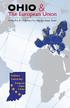 OHIO & The European Union Why the EU Matters for the Buckeye State Indiana University European Union Center Table of Contents Why does the EU Matter? 1 Ohio s Trade with the EU 2 The EU s Investments in
Case No COMP/M.3649 - FINMECCANICA / BAES AVIONICS & COMMUNICATIONS. REGULATION (EC) No 139/2004 MERGER PROCEDURE
 EN Case No COMP/M.3649 - FINMECCANICA / BAES AVIONICS & COMMUNICATIONS Only the English text is available and authentic. REGULATION (EC) No 139/2004 MERGER PROCEDURE Article 6(1)(b) NON-OPPOSITION Date:
The Global Cyber Security Market 2015-2025
 Brochure More information from http://www.researchandmarkets.com/reports/3502775/ The Global Cyber Security Market 2015-2025 Description: Summary During the forecast period the demand for cyber security
On the European experience in critical infrastructure protection
 DCAF a centre for security, development and the rule of law On the European experience in critical infrastructure protection Valeri R. RATCHEV [email protected] @ratchevv DCAF/CSDM 1 This presentation
AEGON N.V. Investment Policy
 the hague, november 2011 AEGON N.V. Responsible Investment Policy life insurance pensions asset management 1 / 7 Introduction AEGON N.V., through its member companies that are collectively referred to
Morningstar is shareholders in
 Media Contact: Andy Seunghye Jung, +82 2 3771 0730 or [email protected] FOR IMMEDIATE RELEASE Morningstar A Grade Announces Findings from Fourth Global Fund Investor Experience Report; Korea Scores
How does a venture capitalist appraise investment opportunities?
 1 How does a venture capitalist appraise investment opportunities? Michael Queen - Finance Director, 3i Group plc A presentation to: 23 Pensions Convention 2 June 23 A How presentation does a venture to:
Inhibition of an Arms Race in Outer Space
 Inhibition of an Arms Race in Outer Space Introduction Jinseong Joo The exploration and use of outer space shall be for peaceful purposes and should be carried out for the benefit and in the interest of
Nasams. Air Defence System. www.kongsberg.com
 Nasams Air Defence System www.kongsberg.com World class - through people, technology and dedication Kongsberg Gruppen ASA (KONGSBERG) is an international technology corporation that delivers advanced and
Chapter 4A: World Opinion on Terrorism
 1 Pew Global Attitudes Project, Spring 2007 Now I m going to read you a list of things that may be problems in our country. As I read each one, please tell me if you think it is a very big problem, a moderately
Andrea Gilli, PhD Post-doctoral Fellow - Center for Security Studies Metropolitan University Prague
 Andrea Gilli, PhD Post-doctoral Fellow - Center for Security Studies Metropolitan University Prague PH.D. DISSERTATION EXECUTIVE SUMMARY Unipolarity, Technological Change and Arms Manufacturing: Industrial
How Hedging Can Substantially Reduce Foreign Stock Currency Risk
 Possible losses from changes in currency exchange rates are a risk of investing unhedged in foreign stocks. While a stock may perform well on the London Stock Exchange, if the British pound declines against
AFGHANISTAN: FRANCE IS ALSO IN THE SOUTH
 FRENCH EMBASSY IN CANADA? Ottawa, June 2008 AFGHANISTAN: FRANCE IS ALSO IN THE SOUTH "France will maintain its forces in Afghanistan. Our country wishes to adapt the role of its forces to make them more
PEOPLE'S REPUBLIC OF CHINA. (New York, May 4, 2010) Please Check Against Delivery MISSION TO THE UNITED NATIONS
 PEOPLE'S REPUBLIC OF CHINA MISSION TO THE UNITED NATIONS 350 EAST 35TH STREET, NEW YORK, NY 10016 Please Check Against Delivery Statement by H.E. Ambassador Li Baodong Head of the Chinese Delegation at
European Centre for Information Policy and Security (ECIPS) DO NOT COPY! PROPERTY OF ECIPS
 European Centre for Information Policy and Security (ECIPS) DO NOT COPY! PROPERTY OF ECIPS Due to the authority vested in the European Centre for Information Policy and Security (ECIPS) Decree / Statute
EU COOPERATION. The Madrid bombings have provided additional impetus for action. In an 18-page declaration on counter terrorism on
 TESTIMONY BY AMBASSADOR J. COFER BLACK COORDINATOR FOR COUNTERTERRORISM DEPARTMENT OF STATE BEFORE THE SENATE FOREIGN RELATIONS SUBCOMMITTEE ON EUROPE MARCH 31, 2004 Thank you Mr. Chairman and members
BRUNEI DARUSSALAM'S SECURITY CONCEPTS AND PERCEPTIONS
 ARF WORKSHOP 21-22 JUNE 2005 ULAANBAATAR, MONGOLIA BRUNEI DARUSSALAM'S SECURITY CONCEPTS AND PERCEPTIONS Overall, Brunei Darussalam security assessment remains peaceful and stable. However, the range of
Australia s position in global and bilateral foreign direct investment
 Australia s position in global and bilateral foreign direct investment At the end of 213, Australia was the destination for US$592 billion of global inwards foreign direct investment (FDI), representing
PREREQUISITES FOR HEALTH
 Charter The first International Conference on Health Promotion, meeting in Ottawa this 21 st day of November 1986, hereby presents this CHARTER for action to achieve Health for All by the year 2000 and
Assessment of the Terror Threat to Denmark
 19 March 2015 Assessment of the Terror Threat to Denmark Summary The terrorist attacks in Copenhagen on 14 and 15 February 2015 confirm that the terror threat to Denmark is significant. There are individuals
Online gambling payment restrictions A worlwide overview of (some) regulations
 i Gaming Asia Macau, 23-25 February 2010 Online gambling payment restrictions A worlwide overview of (some) regulations Etienne Wéry, Attorney at law (Brussels and Paris Bars). Partner, Ulys (www.ulys.net)
Guidelines for Applicants: Advanced Training Course
 Emerging Security Challenges Division Guidelines for Applicants: Advanced Training Course Introduction The NATO (SPS) seeks to enhance cooperation and dialogue with all partners through civil science and
The wine market: evolution and trends
 The wine market: evolution and trends May 2014 1 Table of contents 1. WINE CONSUMPTION 3 2. TRENDS IN WORLD WINE TRADE IN 20 6 3. TOP WINE EXPORTERS IN 20 7 4. TOP WINE IMPORTERS IN 20 9 5. THE FIVE LARGEST
This is a summarised version of 3i s full policy. Responsible Investment policy APRIL 2014
 This is a summarised version of 3i s full policy Responsible Investment policy APRIL 2014 Our policy 3i will use its influence as an investor to promote a commitment in our investee companies to: Comply,
EXTERNAL DEBT AND LIABILITIES OF INDUSTRIAL COUNTRIES. Mark Rider. Research Discussion Paper 9405. November 1994. Economic Research Department
 EXTERNAL DEBT AND LIABILITIES OF INDUSTRIAL COUNTRIES Mark Rider Research Discussion Paper 9405 November 1994 Economic Research Department Reserve Bank of Australia I would like to thank Sally Banguis
Consumer Credit Worldwide at year end 2012
 Consumer Credit Worldwide at year end 2012 Introduction For the fifth consecutive year, Crédit Agricole Consumer Finance has published the Consumer Credit Overview, its yearly report on the international
Hexa Reports Market Research Reports and Insightful Company Profiles
 Military Ground Robot Mobile Platform Systems of Engagement Market Shares, Strategies, and Forecasts, Worldwide, 2013 to 2019 Military Ground Robot Mobile Platform Systems of Engagement -- Markets Reach
Get the benefits of Norgren s unique range of Online services
 Get the benefits of Norgren s unique range of Online services Make your job easier and save time - everything you need to select, design and purchase Norgren pneumatics is in one convenient location, available
Major Economies Business Forum: Perspectives on the Upcoming UN Framework Convention on Climate Change COP-17/CMP-7 Meetings in Durban, South Africa
 Major Economies Business Forum: Perspectives on the Upcoming UN Framework Convention on Climate Change COP-17/CMP-7 Meetings in Durban, South Africa The Major Economies Business Forum on Energy Security
Defense Acquisition Review January April 2004
 100 LETTER Letter TO to THE Editor EDITOR HONEST PERFORMANCE ANALYSIS: A NOT-ALWAYS MET REQUIREMENT Over a decade after Operation Desert Storm and months after Operation Iraqi Freedom, questions remain
Statement on G7 Topic Trade and Supply Chain Standards
 Statement on G7 Topic Trade and Supply Chain Standards Together, the G7 states produce 32 per cent of the global gross domestic product. A large number of companies located in the G7 countries are active
State of the Israeli Technology Industry and the Future. Dr. Orna Berry Venture Partner, Gemini Israel Funds
 State of the Israeli Technology Industry and the Future Dr. Orna Berry Venture Partner, Gemini Israel Funds 2002 ICT GDP - NIS 33 billion 17% of business sector GDP. OECD highest - compared to 10-11% in
Firstly, I would like to thank the organizers of this symposium for
 Keynote Address by former Prime Minister of Malaysia Are We Really Civilized? Make War a Crime Mahathir bin Mohamad Firstly, I would like to thank the organizers of this symposium for this opportunity
360 o View of. Global Immigration
 360 o View of Global Immigration In a fast moving global economy, remaining compliant with immigration laws, being informed and in control is more challenging than ever before. We are a globally linked
Schools of the Future initiative in California
 ISSN 2072-7925 Schools of the Future initiative in California CELE Exchange 2011/7 OECD 2011 Schools of the Future initiative in California By Kathleen Moore, California Department of Education, California,
Half prepared? A global study into corporate preparedness for disaster recovery and business continuity
 Half prepared? A global study into corporate preparedness for disaster recovery and business continuity November 2011 Half prepared? The latest global business survey from Regus reveals that companies
White Paper: Cyber Hawk or Digital Dove
 White Paper: Cyber Hawk or Digital Dove Published By: SkillBridge, LLC September 18, 2013 Today s Modern Warfare With the recent debate over whether or not the United States should take military action
MALTA TRADING COMPANIES IN MALTA
 MALTA TRADING COMPANIES IN MALTA Trading companies in Malta 1. An effective jurisdiction for international trading operations 410.000 MALTA GMT +1 Located in the heart of the Mediterranean, Malta has always
Theme: The Growing Role of Private Security Companies in Protecting the Homeland.
 Theme: The Growing Role of Private Security Companies in Protecting the Homeland. Background on terrorist organizations: A global threat, every object is a target, infinite number of targets. Terrorist
The European Security Strategy Austrian Perspective
 Erich Reiter and Johann Frank The European Security Strategy Austrian Perspective The following essay gives the Austrian view on the ESS from a security political perspective and analyses the needs and
Criminal Code Amendment (Cluster Munitions Prohibition) Act 2012
 Criminal Code Amendment (Cluster Munitions Prohibition) Act 2012 No. 114, 2012 An Act to criminalise some acts involving certain munitions, and for related purposes An electronic version of this Act is
Differing Views of Australia's Involvement in the Vietnam War
 Differing Views of Australia's Involvement in the Vietnam War XXXXXX XXXXXXX Australia 16th of May 1970 Appropriate letter writing formation Dear Granddad, I understand why you believe I should do my duty
Towards a Single Market for Occupational Pensions Without Tax Obstacles
 Towards a Single Market for Occupational Pensions Without Tax Obstacles May 25 9:00 AM 9:45 AM Peter Schonewille, European Commission, DG TAXUD/E/3 Competence Centre for Pension Research, University of
SEPTEMBER 2012 TALENT ASSESSMENT IN M&A THE PEOPLE FACTOR
 SEPTEMBER 2012 TALENT ASSESSMENT IN M&A THE PEOPLE FACTOR It is critical to assess the target company s human capital with the same rigor that s applied toward assessing pension liabilities, inventories,
THE SECRETARY OF THE NAVY WASHINGTON DC 20350-1 000
 THE SECRETARY OF THE NAVY WASHINGTON DC 20350-1 000 MEMORANDUM OF DECISION SUBJECT: Authority to Indemnify Certain Contractors and Subcontractors Against Nuclear Risks and Unusually Hazardous Risks Attributable
HEALTH CARE IN DANGER
 VIOLENCE AGAINST HEALTH CARE MUST END HEALTH CARE IN DANGER. A SIXTEEN-COUNTRY STUDY VIOLENT INCIDENTS AFFECTING HEALTH CARE HEALTH CARE IN DANGER JANUARY TO DECEMBER 2012 i VIOLENT INCIDENTS AFFECTING
The European Commission s strategy on Corporate Social Responsibility (CSR) 2011-2014: achievements, shortcomings and future challenges
 The European Commission s strategy on Corporate Social Responsibility (CSR) 2011-2014: achievements, shortcomings and future challenges Fields marked with are mandatory. 1 Introduction - Background and
MERGER BETWEEN BRITISH AEROSPACE PLC AND THE MARCONI ELECTRONIC SYSTEMS BUSINESS OF THE GENERAL ELECTRIC COMPANY PLC
 MERGER BETWEEN BRITISH AEROSPACE PLC AND THE MARCONI ELECTRONIC SYSTEMS BUSINESS OF THE GENERAL ELECTRIC COMPANY PLC UNDERTAKINGS GIVEN TO THE SECRETARY OF STATE FOR TRADE AND INDUSTRY BY BAE SYSTEMS PLC
Chairman's Draft Paper 3 March 2010
 Chairman's Draft Paper 3 March 2010 Elements 1. Preamble/ Principles 2. Goals and Objectives 3. Scope 4. Criteria for the transfer of conventional arms and other related items 5.. Implementation and Application
Reported Road Accident Statistics
 Reported Road Accident Statistics Standard Note: SN/SG/2198 Last updated: 24 October 2013 Author: Matthew Keep & Tom Rutherford Social and General Statistics Section This Note provides a range of data
Euler Hermes the world leader in credit insurance RISK ASSESSMENT CREDIT INSURANCE DEBT COLLECTION
 Euler Hermes the world leader in credit insurance RISK ASSESSMENT CREDIT INSURANCE DEBT COLLECTION Agenda 1 The Euler Hermes group 2 Our business 3 Our products and solutions 4 Our added value 2 The Euler
Global Investor Forum Market Perspectives / Strategy. Marwan Lahoud, Chief Strategy and Marketing Officer London, 11th/12th December 2013
 Global Investor Forum Market Perspectives / Strategy Marwan Lahoud, Chief Strategy and Marketing Officer London, 11th/12th December 2013 Safe Harbour Statement Disclaimer This presentation includes forward-looking
Foreign Affairs and National Security
 Foreign Affairs and National Security Objectives: TLW understand and explain the following questions as it relates to the Foreign affairs of the American Government What is foreign policy? What is the
WORLD WAR 2 Political and economic conditions in Europe and throughout the world after World War 1 led directly to World War 2:
 Political and economic conditions in Europe and throughout the world after World War 1 led directly to World War 2: 1. The Treaty of Versailles, ending World War 1, was particularly harsh on Germany and
International Securities Trading now you can invest across the world
 International Securities Trading now you can invest across the world INTERNATIONAL SECURITIES TRADING iii CONTENTS Welcome 2 Trade international securities with CommSec and Pershing 2 International trading
Harmful Interference into Satellite Telecommunications by Cyber Attack
 Kobe and QM Symposium on International Law "Diversity of Transnational Criminal Justice" Harmful Interference into Satellite Telecommunications by Cyber Attack 10 April 2015 Yuri Takaya Research Fellow/Lecturer,
Men from the British Empire in the First World War
 In 1914, Britain ruled over one quarter of the world s surface area and 434 million people. This was known as the British Empire. When war broke out, Britain was desperate for men to fight. Unlike France,
PwC study: The impact of the revision of the Insurance Mediation Directive. Background note
 1 PwC study: The impact of the revision of the Insurance Mediation Directive Background note I. Background In the context of the review of the Insurance Mediation Directive (IMD), the European Commission
EADS INTERNATIONAL COMPLIANCE PROGRAMME
 EADS INTERNATIONAL COMPLIANCE PROGRAMME 1 I. Case Abstract The topics covered by this business case are the several rules and processes implemented by EADS since the year 2000, aiming at ensuring the groups
COMPARATIVE ANALYSIS ON DATA SOURCES OF ARMY TRADE
 Review of the Air Force Academy No 1 (25) 2014 COMPARATIVE ANALYSIS ON DATA SOURCES OF ARMY TRADE Liu SiQi, Zhou DongMing Military Economics Academy, Wuhan, China Abstract: There are two reliable sources
You count on availability. We provide reliable solutions.
 You count on availability. We provide reliable solutions. Your global partner for military aviation Customers around the globe are faced with challenges every day, including increased demands on fleet
The Challenges and Recommendations of Accessing to Affected Population for Humanitarian Assistance: A Narrative Review
 Global Journal of Health Science; Vol. 7, No. 3; 2015 ISSN 1916-9736 E-ISSN 1916-9744 Published by Canadian Center of Science and Education The Challenges and Recommendations of Accessing to Affected Population
The rise of the cross-border transaction. Grant Thornton International Business Report 2013
 The rise of the cross-border transaction Grant Thornton International Business Report 2013 Foreword MIKE HUGHES GLOBAL SERVICE LINE LEADER MERGERS & ACQUISITIONS GRANT THORNTON INTERNATIONAL LTD When reflecting
Impact of Transition on Health Care Delivery
 Agency Coordinating Body for Afghan Relief & Development Impact of Transition on Health Care Delivery The security transition in Afghanistan is entering its final phase in 2014, with partial withdrawal
WELCOME! Introduction. Celebrating. &PrimeRevenue. PrimeRevenue Hong Kong. 2012 PrimeRevenue, Inc.
 WELCOME! Introduction Celebrating Ethe Factor Network establishment of &PrimeRevenue PrimeRevenue Hong Kong 2012 PrimeRevenue, Inc. Global Reach Today, we transact business in 50 countries Our platform
NSS 2014 UK NATIONAL PROGRESS REPORT. March 2014
 NSS 2014 UK NATIONAL PROGRESS REPORT March 2014 1. Support for the Convention on the Physical Protection of Nuclear Material and the International Convention for the Suppression of Acts of Nuclear Terrorism
Guidelines for Enforcing Money Judgments Abroad
 The article was originally published in International Business Lawyer, Volume 21, Number 11, pages 509-512. The International Business Lawyer is published by the Section on Business Law of the International
EU s Asylum Policy and the Danish Justice and Home Affairs Opt-Out
 EU s Asylum Policy and the Danish Justice and Home Affairs Opt-Out Marlene Wind, Professor and Director of Centre for European Politics, Department of Political Science, University of Copenhagen Professor
2015 Country RepTrak The World s Most Reputable Countries
 2015 Country RepTrak The World s Most Reputable Countries July 2015 The World s View on Countries: An Online Study of the Reputation of 55 Countries RepTrak is a registered trademark of Reputation Institute.
CHAPTER 13: International Law, Norms, and Human Rights
 CHAPTER 13: International Law, Norms, and Human Rights MULTIPLE CHOICE 1. Why did the former Secretary General of the United Nations, Kofi Annan, state that the US invasion of Iraq in 2003 was illegal?
APPENDIX R- Aerial Use of DU During the Gulf War
 APPENDIX R- Aerial Use of DU During the Gulf War R.1 U.S. Air Force In the early 1970s, the U.S. Air Force developed the GAU-8/A air-to-surface gun system for the A-10 Thunderbolt ( Warthog or Tank Buster
Co-operatives for Europe: Moving forward together
 Co-operatives for Europe: Moving forward together 3 In Finland, 75% of the population are members of a co-operative enterprise. In Belgium, when you enter a pharmacy, there is a 1 in 5 chance that you