
Best Practices in Disaster Recovery Planning and Testing
|
|
|
- Lynn Stevenson
- 10 years ago
- Views:
Transcription
1 Best Practices in Disaster Recovery Planning and Testing axcient.com Axcient, Inc. All Rights Reserved. 1
2 Best Practices in Disaster Recovery Planning and Testing Disaster Recovery plans are widely accepted as a way to ensure all critical data, IT systems and networks can be recovered in any event classed as an emergency. These plans also ensure that corporate business objectives can be achieved during the disruption. In short, it is a plan that keeps a business operational. In a recent Disaster Recovery survey, we asked business owners if they currently had a Disaster Recovery Plan in place. While only 1% felt secure without one, the overwhelming majority didn t. More than 57% of those surveyed said they currently have a plan that needed a little work; 27% said they don t have a plan, but would like to develop one; and the remaining 15% have a plan that they felt was good to go. DO YOU CURRENTLY HAVE A DR PLAN? 15% Yes, I have a comprehensive DR plan at my company 27% No, but I would like to get one ready You may think of these plans as a documented strategy to save your business in the event of a major disaster like a flood or fire, and you wouldn t be alone. But the reality is that a Disaster Recovery plan is created to protect your infrastructure against any event that could cause disruption, including technical glitches, system failures, power outages and even cyber attacks or data theft. These disruptions cost companies thousands (and in some cases hundreds of thousands) in damage and an even bigger loss at the end: damage to the company s brand. 57% Yes, but it needs more work 1% No, and I have no plans to create one Axcient, Inc. All Rights Reserved. 2
3 DEVISING YOUR PLAN There are a few key elements necessary for your plan to run efficiently: Management Support: Without the support of management, creating the plan is futile. Approved Funding: Keeping your company running takes additional resources and these resources cost money that management may not want to spend. Structured Plan Framework: This ensures that everyone is on the same page. Access to Qualified Staff: Don t assume that everyone in your IT team is qualified to put together or execute this plan. This may require additional training or expert consultants. All of these elements combine to form the goal of the DR plan, which is to build a plan and associated documentation based on a structured framework that is consistent with good practices and standards. The good practices and standards ensure that you re not only following the guidelines of what s best for your business and industry, but that you are also compliant with any regulations that surround recovery and planning in your industry and country. Common standards used in the DR industry include: Standards: NFPA 1600:2010; ISO 27031:2011; ISO 22301:2012; NIST Regulations: FINRA 4370 Good Practice: BCI Good Practice Guidelines, FFIEC Handbook Corporate DR Policies: Existing corporate policies that should apply to your DR plan Access to Relevant Information: Research and/or conduct interviews to gather the information you need. Documentation and Testing: Your plan has to be documented and tested regularly to ensure smooth execution in the event of an emergency Axcient, Inc. All Rights Reserved. 3


4 Sample Policies and Standards For a comprehensive list of existing legislation and regulations worldwide related to Disaster Recovery and Business Continuity, refer to the Business Continuity Institute publication BCM Legislations, Regulations & Standards. The National Commission on Terrorist Attacks Upon the United States (the 9/11 Commission), recognized NFPA 1600 as the National Preparedness Standard. Created by the National Fire Protection Association, the NFPA 1600 Standard on Disaster/Emergency Management and Business Continuity Programs contains provisions related to the development, implementation, assessment and maintenance of programs for prevention, mitigation, preparedness, response, continuity, and recovery. The ISO/IEC 27031:2011 describes the concepts and principles of information and communication technology (ICT) readiness for business continuity, and provides a framework of methods and processes to identify and specify all aspects (such as performance criteria, design, and implementation) for improving an organization s ICT readiness to ensure business continuity. The ISO 22301:2012 specifies requirements to plan, establish, implement, operate, monitor, review, maintain and continually improve a documented management system to protect against, reduce the likelihood of occurrence, prepare for, respond to, and recover from disruptive incidents when they arise. NIST Special Publication , Contingency Planning Guide for Information Technology (IT) Systems provides instructions, recommendations, and considerations for government IT contingency planning. Rule 4370 of the Financial Industry Regulatory Authority requires firms to create and maintain business continuity plans (BCPs) appropriate to the scale and scope of their businesses, and to provide FINRA with emergency contact information. The Business Continuity Institute Good Practice Guidelines (GPG) are the independent body of knowledge for good Business Continuity practice worldwide. Gathering the above information will take a little time, but it s worth it to keep your business going through any situation. When gathering this information, it s important to also identify anything that could cause a glitch in your plan; the objectives you have for your system, network and IT asset recovery; and anything your company can do to mitigate your risks. In the next section we will explore the components that make up your plan Axcient, Inc. All Rights Reserved. 4
5 PLAN COMPONENTS The previous information is there to help you structure your plan, but these components are what you need to run it. For a Disaster Recovery plan to actually work, there are certain elements that have to be included. These are all important to the plan s ease of execution and effectiveness and they begin with your company s own DR policy. Since both management and non-management staff are involved in Disaster Recovery, everyone should be aware of these policies. A meeting or the distribution of the policy will be necessary as soon as the key members of the plan are identified. Your DR plan should include the IT DR plan, the results of previous efforts for testing the plan, and supporting documents. The supporting documents for your DR plan are what stand between a successful recovery and a failed one. These documents include processes for data backup, information about off-site storage and processes, vendor and maintenance contracts, diagrams, and training plans. DEFINE IDENTIFY DETERMINE USE (if necessary) Plan scope, purpose and authority Policy statement Management approval and funding Staff roles and responsibilities Authorized person to declare disaster Step-by-step procedures for recovery of all physical, mechanical and virtual items (this includes premise security, records and wireless technology) Step-by-step procedures for alerting key people (includes members of staff, family members, media, vendors and alternate vendors, clients, stakeholders and first responders) Process for training IT resources Risks and impact on IT assets Process for equipment replacement Process for obtaining spare parts Designated spokesperson Recovery Time Objectives (RTO) Recovery Point Objectives (RPO) Preventative controls Response and recovery strategies Event notification procedures (could be an automated feature or an outsourced call center) Recovery failover procedures System restart/ failback procedures Resumption of business procedures Hot/Cold Sites (Hot sites have most of what you need to keep your business running, including hardware, software, servers and computers. Cold sites provide the power, environment and workspace, but no equipment.) Help desk support Call trees Automated Notification Systems Conference bridges Axcient, Inc. All Rights Reserved. 5
6 Next, everything should be compiled into a document. All aspects of your plan (including the information gathered from the previous page) should be made available to all DR personnel. Your plan should have a TOC (Table of Contents) and outline that lists each step of the plan in order of importance. (Emergency Response Actions should always come before anything else). Lastly, include a Business Impact Analysis Report and Risk Assessment Report this is vital. The RA (Risk Assessment) will outline events that could disrupt your business and the BIA (Business Impact Analysis) will illustrate how these disruptions will impact it.! THINGS TO AVOID WHEN CREATING THE DISASTER RECOVERY PLAN Although gathering the above information is a lengthy process, avoid skipping any of the steps or required sections. Some businesses make the mistake of utilizing generic DR plans or the plans of other businesses in their industry. This may seem like a time-saver at first, but you ll see during testing that it could prove disastrous. The other business (or the business that the generic plan is modeled Not defining a clear budget from the start Creating the plan without management s backing Summarizing procedures in the plan Assuming that all systems will be backed-up and running immediately after) could have more assets or finance than you or have fewer risks than you. So, if that plan only covered natural disasters and your business is the victim of data theft, it s pretty much useless. This makes research and, more importantly, a BIA and RA a must. Other pitfalls you ll want to avoid: Skipping testing and reviews Keeping all copies of the DR plan on-site Not training DR personnel Assuming all listed personnel will be available (including IT staff) The last item is possibly the most important in this section. As your business grows or expands into other areas, your needs, risks, vendors and key personnel may change. This requires you to manually update the plan and recalculate any figures contained within it. Once you do, the new plan should be discussed and another exercise should take place Axcient, Inc. All Rights Reserved. 6
7 TECHNOLOGY OPTIONS FOR DISASTER RECOVERY A good Disaster Recovery plan will also discuss the technology behind your DR efforts. What kind of technology you use depends on your risks, how much data you have to store, the number of people needed to access that data, and the sensitivity of the data. When we asked business owners what kind of technology they used for Disaster Recovery, the numbers were surprising. More than 69% said they still use local backup to a disk or tape. While local backup might seem like an attractive option at first, it leaves businesses susceptible to interruption in a variety of scenarios such as power outage, virus attack, or server crash. All three could have serious business implications. Due to budgetary constraints, some companies build their own DR architecture, assembling different products or building some infrastructure in-house. We have seen, for example, companies using local backup products in combination with automated scripts developed by their engineers to off-site data to a public cloud storage like Amazon. Other companies mix different flavors of server replication to accommodate for their heterogeneous environment. While interesting at first, the doit-yourself approach to Disaster Recovery leads to a number of issues. As explored by Forrester Research in its report on the risks related to DIY DR, companies report a number of challenges when it comes to their inhouse DR infrastructures, namely: Lack of focus on DR relative to other IT projects Not enough DR testing Lack of funding to keep DR infrastructure up to date Lack of skills in-house Not confident in ability to respond to a real disaster These results clearly show that bringing Disaster Recovery in-house is not the best choice for most companies. When looking at the different options available, businesses that have taken into consideration the Total Cost of Ownership (TCO) seem to have gotten a better bargain. While an expanded discussion of TCO is outside the scope of this document, keep in mind that the effectiveness of a Disaster Recovery plan is also tied to the effectiveness of the underlying technology being used to recover from a disaster. TOTAL COST OF OWNERSHIP Total cost for owning a disaster recovery solution takes into consideration factors such as: Capital Expenditures: Cost of purchasing software, hardware, and implementing the solution Operational Expenses: Cost for maintaining the solution, including time spent reviewing backup logs, ensuring successful completion of backup jobs, troubleshooting error messages, testing restores and running full DR tests Downtime: The time that it takes to bring files, applications, full servers and a full site back into production after an outage and related costs associated for loss of productivity and revenue Axcient, Inc. All Rights Reserved. 7
8 CONSIDERATIONS FOR DR TESTING Businesses responded with surprising answers when asked, How often do you test your DR plan and/or the ability to recover from a disaster? 34% Skip testing 24% Once a year 12% Two to four times per month 5% Every month 26% Not as often as I should How often you should test is determined by your risks and assets. Those who are at a greater risk like to test more frequently (say, every week), those who are at a moderate risk may test quarterly, and those who are at a very low risk may only test once a year. However, no matter what category your business is in, you should always test your DR plan. Here are a few tips to follow: Make sure the test is set for a date that isn t critical for your business and a date where all participants or alternates are present. You ll also need to notify your IT staff at least two weeks prior to testing. Document the step-by-step procedures of the test and hand them out to all selected personnel. Before administering the test, think about the area you need to test. It may not be (and almost never is) possible to test all aspects of the plan at one time, so test section by section. You also need to keep in mind how much strain this test will have on your systems. Running a test might disrupt them and cause further disruptions to processes that need to keep running. Find an environment to test in, preferably in a non-production area. Most businesses use conference rooms or empty offices for this. Gather all personnel listed in the DR plan and have them play out their roles in the test. Include a timekeeper. Keep note of what did and didn t work in a report, and update the report based on the results. Do a dry run first. TIPS FOR DR TESTING Axcient, Inc. All Rights Reserved. 8
9 All of the tips provided are designed to keep you and your staff abreast of any changes that could affect the plan or the execution of it. To make the most of your Disaster Recovery Plan, document it. You may not be present when an event occurs, so multiple copies should be available to selected staff members. Finally, run your DR plan by management each time a change is made to ensure financial backing and approval. By following this guide, you ll not only safeguard your business, but you ll also save yourself from hidden risks that would have otherwise gone unnoticed. Additional Resources For more information about best practices in disaster recovery planning and related topics, we encourage you to check out the following resources: Webinar Recording: Best Practices for DR Planning and Testing Webinar Recording: Key Criteria for Selecting a Business Continuity Solution White Paper: The IT Manager s Essential Guide to Preventing Downtime White Paper: The Five Myths of Reliable Tape Backup White Paper: Building a Business Case for Business Continuity Axcient, Inc. All Rights Reserved. 9
10 File and Folder Recovery Granular Application Recovery Database Recovery System Recovery/ Bare Metal Restore axcient.com Physical Server Failover Virtual Server IT Infrastructure and Full Of ce Virtualization linkedin.com/company/axcient axcient.com/facebook Axcient Business Recovery Cloud Axcient s Recovery-as-a-Service cloud eliminates data loss, keeps applications up and running, and makes sure that IT infrastructures never go down. Axcient replaces legacy backup, business continuity, disaster recovery and archiving products, with a single integrated platform that mirrors an entire business in the cloud, making it simple to restore data, failover applications, and virtualize servers or an entire office with a click. Thousands of businesses trust Axcient to keep their applications running and employees productive. Learn more at axcient.com.
Financial Services Need More than Just Backup... But they don t need to spend more! axcient.com
 Financial Services Need More than Just Backup... But they don t need to spend more! axcient.com Introduction Financial institutions need to keep their businesses up and running more than ever now. Considering
Manufacturers Need More Than Just Backup... But they don t need to spend more! axcient.com
 Manufacturers Need More Than Just Backup... But they don t need to spend more! axcient.com Introduction Manufacturers need to keep their businesses up and running more than ever now. Automating work processes
The Disaster Recovery Maturity Framework
 The Disaster Recovery Maturity Framework A guide for understanding and improving your company s resiliency www.axcient.com Climbing The Recovery Maturity Curve Businesses are critically reliant upon IT
Top 4 Common Mistakes Made by IT Managers in Financial Services
 Top 4 Common Mistakes Made by IT Managers in Financial Services www.axcient.com A trend affecting companies everywhere but especially in financial services is the explosion of data. As stated in Accenture
The 9 Ugliest Mistakes Made with Data Backup and How to Avoid Them
 The 9 Ugliest Mistakes Made with Data Backup and How to Avoid Them If your data is important to your business and you cannot afford to have your operations halted for days even weeks due to data loss or
Business Continuity Plan
 Business Continuity Plan October 2007 Agenda Business continuity plan definition Evolution of the business continuity plan Business continuity plan life cycle FFIEC & Business continuity plan Questions
Temple university. Auditing a business continuity management BCM. November, 2015
 Temple university Auditing a business continuity management BCM November, 2015 Auditing BCM Agenda 1. Introduction 2. Definitions 3. Standards 4. BCM key elements IT Governance class - IT audit program
How to Design and Implement a Successful Disaster Recovery Plan
 How to Design and Implement a Successful Disaster Recovery Plan Feb. 21 ASA Office-Administrative Section is Sponsored by Today s ASAPro Webinar is Brought to You by the How to Ask a Question Questions
Principles for BCM requirements for the Dutch financial sector and its providers.
 Principles for BCM requirements for the Dutch financial sector and its providers. Platform Business Continuity Vitale Infrastructuur Financiële sector (BC VIF) Werkgroep BCM requirements 21 September 2011
Business Continuity Planning and Disaster Recovery Planning
 4 Business Continuity Planning and Disaster Recovery Planning Basic Concepts 1. Business Continuity Management: Business Continuity means maintaining the uninterrupted availability of all key business
Proposal for Business Continuity Plan and Management Review 6 August 2008
 Proposal for Business Continuity Plan and Management Review 6 August 2008 2008/8/6 Contents About Newton IT / Quality of our services. BCM & BS25999 Overview 2. BCM Development in line with BS25999 3.
Disaster Recovery Plan Checklist
 Disaster Recovery Plan Checklist Your guide for setting up or updating a Disaster Recovery Plan for your business. ArcSource Disaster Recovery Plan Checklist 1. Compile Your Internal Contacts Information
Business Continuity and Disaster Recovery Planning
 Business Continuity and Disaster Recovery Planning Jennifer Brandt, CISA A p r i l 16, 2015 HISTORY OF STINNETT & ASSOCIATES Stinnett & Associates (Stinnett) is a professional advisory firm offering services
Top 10 Disaster Recovery Pitfalls
 Top 10 Disaster Recovery Pitfalls The key to successful disaster recovery is good planning. But with so much at stake for your business, how do you plan with confidence and ensure all stakeholders know
2014 NABRICO Conference
 Business Continuity Planning 2014 NABRICO Conference September 19, 2014 6 CityPlace Drive, Suite 900 St. Louis, Missouri 63141 314.983.1200 1520 S. Fifth Street, Suite 309 St. Charles, Missouri 63303 636.255.3000
Information Security Management: Business Continuity Planning. Presentation by Stanislav Nurilov March 9th, 2005 CS 996: Info. Sec. Mgmt.
 Information Security Management: Business Continuity Planning Presentation by Stanislav Nurilov March 9th, 2005 CS 996: Info. Sec. Mgmt. Overview BCP: Definition BCP: Need for (Why?) BCP: When BCP: Who
BCP and DR. P K Patel AGM, MoF
 BCP and DR P K Patel AGM, MoF Key difference between BS 25999 and ISO 22301 ISO 22301 puts a much greater emphasis on setting the objectives, monitoring performance and metrics aligning BC to top management
Disaster Recovery 101. Sudarshan Ranganath & Matthew Phillips Ellucian
 Disaster Recovery 101 Sudarshan Ranganath & Matthew Phillips Ellucian SESSION OBJECTIVES Business continuity is critical to every institution and its IT organization. How do you set up your ERP and other
NETWORK SERVICES WITH SOME CREDIT UNIONS PROCESSING 800,000 TRANSACTIONS ANNUALLY AND MOVING OVER 500 MILLION, SYSTEM UPTIME IS CRITICAL.
 NETWORK SERVICES WITH SOME CREDIT UNIONS PROCESSING 800,000 TRANSACTIONS ANNUALLY AND MOVING OVER 500 MILLION, SYSTEM UPTIME IS CRITICAL. Your Credit Union information is irreplaceable. Data loss can result
Operational Continuity
 Solution Brief Operational Continuity Achieve Maximum Uptime In a recent speech, Omar Sherin of the Qatar CERT, shared how they shifted their focus from protection and detection to response in the wake
Virtualizing disaster recovery using cloud computing
 IBM Global Technology Services Thought Leadership White Paper January 2012 Virtualizing disaster recovery using cloud computing Transition your applications quickly to a resilient cloud 2 Virtualizing
How to Plan for Disaster Recovery and Business Continuity
 A TAMP Systems White Paper TAMP Systems 1-516-623-2038 www.drsbytamp.com How to Plan for Disaster Recovery and Business Continuity By Tom Abruzzo, President and CEO Contents Introduction 1 Definitions
Offsite Disaster Recovery Plan
 1 Offsite Disaster Recovery Plan Offsite Disaster Recovery Plan Presented By: Natan Verkhovsky President Disty Portal Inc. 2 Offsite Disaster Recovery Plan Introduction This document is a comprehensive
D2-02_01 Disaster Recovery in the modern EPU
 CONSEIL INTERNATIONAL DES GRANDS RESEAUX ELECTRIQUES INTERNATIONAL COUNCIL ON LARGE ELECTRIC SYSTEMS http:d2cigre.org STUDY COMMITTEE D2 INFORMATION SYSTEMS AND TELECOMMUNICATION 2015 Colloquium October
TO AN EFFECTIVE BUSINESS CONTINUITY PLAN
 5 STEPS TO AN EFFECTIVE BUSINESS CONTINUITY PLAN Introduction The Snowpocalypse of 2015 brought one winter storm after another, paralyzing the eastern half of the United States. It knocked out power for
STEP-BY-STEP BUSINESS CONTINUITY AND EMERGENCY PLANNING MAY 27 2015
 STEP-BY-STEP BUSINESS CONTINUITY AND EMERGENCY PLANNING MAY 27 2015 AGENDA: Emergency Management Business Continuity Planning Q & A MONTH DAY, YEAR TITLE OF THE PRESENTATION 2 CANADIAN RED CROSS Disaster
BUSINESSES NEED TO MAXIMIZE PRODUCTIVITY, LOWER COSTS AND DECREASE RISKS EVERY DAY.
 NSA Cloud Suite Powered by BUSINESSES NEED TO MAXIMIZE PRODUCTIVITY, LOWER COSTS AND DECREASE RISKS EVERY DAY. In this age of information, this means you need your servers, desktops and applications up
DISASTER RECOVERY 101 3 Steps You Need to Take (Before It s Too Late)
 DISASTER RECOVERY 101 3 Steps You Need to Take (Before It s Too Late) Introduction... 4 Disaster Recovery vs. Business Continuity... 4 Why You Need to Read this ebook... 5 Chapter 1: The Risks (aka, The
Protecting your Enterprise
 Understanding Disaster Recovery in California Protecting your Enterprise Session Overview Why do we Prepare What is? How do I analyze (measure) it? What to do with it? How do I communicate it? What does
Protecting Microsoft Hyper-V 3.0 Environments with CA ARCserve
 Solution Brief: CA ARCserve R16.5 Complexity ate my budget Protecting Microsoft Hyper-V 3.0 Environments with CA ARCserve Customer Challenges Today, you face demanding service level agreements (SLAs) while
SOLUTION BRIEF: CA ARCserve R16. Leveraging the Cloud for Business Continuity and Disaster Recovery
 Leveraging the Cloud for Business Continuity and Disaster Recovery There are many reasons why businesses today find high value in a cloud service, whether it s a private cloud offered by a Managed Services
Blackboard Managed Hosting SM Disaster Recovery Planning Document
 BLACKBOARD MANAGED HOSTING Blackboard Managed Hosting SM Disaster Recovery Planning Document Prepared By: MH Services Modified Date: March 2009 Revision: 1.8 1. OBJECTIVES... 3 2. SCOPE... 3 3. ASSUMPTIONS...
MANAGEMENT AUDIT REPORT DISASTER RECOVERY PLAN DEPARTMENT OF FINANCE AND ADMINISTRATIVE SERVICES INFORMATION TECHNOLOGY SERVICES DIVISION
 MANAGEMENT AUDIT REPORT OF DISASTER RECOVERY PLAN DEPARTMENT OF FINANCE AND ADMINISTRATIVE SERVICES INFORMATION TECHNOLOGY SERVICES DIVISION REPORT NO. 13-101 City of Albuquerque Office of Internal Audit
With the large number of. How to Avoid Disaster: RIM s Crucial Role in Business Continuity Planning. Virginia A. Jones, CRM, FAI RIM FUNDAMENTALS
 How to Avoid Disaster: RIM s Crucial Role in Business Continuity Planning The world has experienced a great deal of natural and man-made upheaval and destruction in the past few years, including tornadoes,
a Disaster Recovery Plan
 Construction of a Disaster Recovery Plan David Godwin, Sr. Sales Engineer March 18, 2014 Objectives Understand What Disaster Recovery is? Why is Disaster Recovery Needed? Effectively assist customers or
Disaster Recovery and Business Continuity What Every Executive Needs to Know
 Disaster Recovery and Business Continuity What Every Executive Needs to Know Bruce Campbell & Sandra Evans Contents Why you need DR and BC What constitutes a Disaster? The difference between disaster recovery
Business Continuity and Capacity Building
 Business Continuity and Capacity Building April 10, 2015 Business Continuity and Capacity Building April 10, 2015 1 / 14 Developing Institutional Business Continuity Plans and Implications for Capacity
WHY CLOUD BACKUP: TOP 10 REASONS
 WHITE PAPER DATA PROTECTION WHY CLOUD BACKUP: TOP 10 REASONS Contents REASON #1: Achieve disaster recovery with secure offsite cloud backup REASON #2: Freedom from manual and complex tape backup tasks
Why cloud backup? Top 10 reasons
 Why cloud backup? Top 10 reasons HP Autonomy solutions Table of contents 3 Achieve disaster recovery with secure offsite cloud backup 4 Free yourself from manual and complex tape backup tasks 4 Get predictable
Security+ Guide to Network Security Fundamentals, Fourth Edition. Chapter 13 Business Continuity
 Security+ Guide to Network Security Fundamentals, Fourth Edition Chapter 13 Business Continuity Objectives Define environmental controls Describe the components of redundancy planning List disaster recovery
Backup & Disaster Recovery Options
 Backup & Disaster Recovery Options Since businesses have become more dependent on their internal computing capability, they are increasingly concerned about recovering from equipment failure, human error,
SOLUTION BRIEF: CA ARCserve R16. Virtual Server System and Data Protection, Recovery and Availability
 Virtual Server System and Data Protection, Recovery and Availability Page 2 Although server virtualization helps reduce IT infrastructure costs, it also adds complexity to protecting the wide range of
Protecting Citrix XenServer Environments with CA ARCserve
 Solution Brief: CA ARCserve R16.5 Complexity ate my budget Protecting Citrix XenServer Environments with CA ARCserve Customer Challenges Today, you face demanding service level agreements (SLAs) while
Best Practices in Business Recovery: Colocation or DRaaS? By Brien M. Posey
 Best Practices in Business Recovery: Colocation or DRaaS? By Brien M. Posey axcient.com 1 Introduction In the not-too-distant past, protecting an organization s data meant shipping backup tapes offsite
The ABC s of BCP. Jeremy Sucharski Governance Risk and Compliance G31
 The ABC s of BCP Jeremy Sucharski Governance Risk and Compliance G31 Jeremy Sucharski, CISA, CRISC Over 12 years of experience CISA and CRISC Certifications Governance, Risk and Compliance Practice Leader
White Paper: Librestream Security Overview
 White Paper: Librestream Security Overview TABLE OF CONTENTS 1 SECURITY OVERVIEW... 3 2 USE OF SECURE DATA CENTERS... 3 3 SECURITY MONITORING, INTERNAL TESTING AND ASSESSMENTS... 4 3.1 Penetration Testing
Post-Class Quiz: Business Continuity & Disaster Recovery Planning Domain
 1. What is the most common planned performance duration for a continuity of operations plan (COOP)? A. 30 days B. 60 days C. 90 days D. It depends on the severity of a disaster. 2. What is the business
Template Courtesy of: Cloudnition LLC 55 W. 22 nd St Suite 115 Lombard, IL 60148 (630) 297-4090 www.cloudnition.com
 Template Courtesy of: Cloudnition LLC 55 W. 22 nd St Suite 115 Lombard, IL 60148 (630) 297-4090 www.cloudnition.com 1 1.1 Introduction 1.2 Purpose 1.3 Priorities 2.1 About your business 2.1.1 Business
Business Continuity Planning
 Business Continuity Planning We believe all organisations recognise the importance of having a Business Continuity Plan, however we understand that it can be difficult to know where to start. That s why
What You Should Know About Cloud- Based Data Backup
 What You Should Know About Cloud- Based Data Backup An Executive s Guide to Data Backup and Disaster Recovery Matt Zeman 3Fold IT, LLC PO Box #1350 Grafton, WI 53024 Telephone: (844) 3Fold IT Email: [email protected]
11 Common Disaster Planning Mistakes
 11 Common Disaster Planning Mistakes The world is full of risk. Floods, fires, hurricanes, thefts, IT system failures and blackouts are just a few of the incredibly damaging disasters that can and do strike
IT Disaster Recovery Plan Template
 HOPONE INTERNET CORP IT Disaster Recovery Plan Template Compliments of: Tim Sexton 1/1/2015 An information technology (IT) disaster recovery (DR) plan provides a structured approach for responding to unplanned
<Client Name> IT Disaster Recovery Plan Template. By Paul Kirvan, CISA, CISSP, FBCI, CBCP
 IT Disaster Recovery Plan Template By Paul Kirvan, CISA, CISSP, FBCI, CBCP Revision History REVISION DATE NAME DESCRIPTION Original 1.0 2 Table of Contents Information Technology Statement
Disaster Recovery. 1.1 Introduction. 1.2 Reasons for Disaster Recovery. EKAM Solutions Ltd Disaster Recovery
 Disaster Recovery 1.1 Introduction Every day, there is the chance that some sort of business interruption, crisis, disaster, or emergency will occur. Anything that prevents access to key processes and
How To Back Up A Virtual Machine
 2010 Symantec Disaster Recovery Study Global Results Methodology Applied Research performed survey 1,700 enterprises worldwide 5,000 employees or more Cross-industry 2 Key Findings Virtualization and Cloud
Beyond Disaster Recovery: Why Your Backup Plan Won t Work
 Beyond Disaster Recovery: Why Your Backup Plan Won t Work Contents Introduction... 3 The Data Backup Model - Upgraded for 2015... 4 Why Disaster Recovery Isn t Enough... 5 Business Consequences with DR-Only
How To Back Up Your Computer With A Hard Drive On A Usb Or Usb 2 (For Small Businesses)
 The Real Cost of Do-It-Yourself Backups and Why Online Backup is Better This white paper discloses the real costs to a small business for performing proper data backups in-house using portable hard drives,
The Weill Cornell Medical College and Graduate School of Medical Sciences. Responsible Department: Information Technologies and Services (ITS)
 Information Technology Disaster Recovery Policy Policy Statement This policy defines acceptable methods for disaster recovery planning, preparedness, management and mitigation of IT systems and services
Don't Wait Until It's Too Late: Choose Next-Generation Backup to Protect Your Business from Disaster
 WHITE PAPER: DON'T WAIT UNTIL IT'S TOO LATE: CHOOSE NEXT-GENERATION................. BACKUP........ TO... PROTECT............ Don't Wait Until It's Too Late: Choose Next-Generation Backup to Protect Your
How to write a DISASTER RECOVERY PLAN. To print to A4, print at 75%.
 How to write a DISASTER RECOVERY PLAN To print to A4, print at 75%. TABLE OF CONTENTS SUMMARY SUMMARY WHAT IS A DRP AND HOW CAN IT HELP MY COMPANY? CHAPTER PREPARING TO WRITE YOUR DISASTER RECOVERY PLAN
Why Should Companies Take a Closer Look at Business Continuity Planning?
 whitepaper Why Should Companies Take a Closer Look at Business Continuity Planning? How Datalink s business continuity and disaster recovery solutions can help organizations lessen the impact of disasters
The State of Global Disaster Recovery Preparedness
 Computer Network Solutions Disaster Recovery Preparedness Benchmark Survey The State of Global Disaster Recovery Preparedness ANNUAL REPORT 2014 The Disaster Recovery Preparedness Council publishes this
Building and Maintaining a Business Continuity Program
 Building and Maintaining a Business Continuity Program Successful strategies for financial institutions for effective preparation and recovery Table of Contents Introduction...3 This white paper was written
SYMANTEC 2010 DISASTER RECOVERY STUDY. Symantec 2010 Disaster Recovery Study. Global Results
 SYMANTEC 2010 DISASTER RECOVERY STUDY Symantec 2010 Disaster Recovery Study Global Results CONTENTS Executive Summary...3 Methodology...4 Finding 1: Virtualization and Cloud Make DR Complex...5 Finding
SCADA Business Continuity and Disaster Recovery. Presented By: William Biehl, P.E. 913-601-0104 (mobile) [email protected]
 SCADA Business Continuity and Disaster Recovery Presented By: William Biehl, P.E. 913-601-0104 (mobile) [email protected] Business Continuity Planning, a Sound Process A Business Continuity Plan: "A
The Shift Cloud Computing Brings to Disaster Recovery
 The Shift Cloud Computing Brings to Disaster Recovery Mike Klein President, Online Tech June 21, 2010 Disasters Happen WHY DISASTER RECOVERY? How Do You Recover All of Your Electronic Assets? Recover Your
Domain 3 Business Continuity and Disaster Recovery Planning
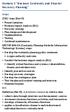 Domain 3 Business Continuity and Disaster Recovery Planning Steps (ISC) 2 steps [Har10] Project initiation Business Impact Analysis (BIA) Recovery strategy Plan design and development Implementation Testing
NEEDS BASED PLANNING FOR IT DISASTER RECOVERY
 The Define/Align/Approve Reference Series NEEDS BASED PLANNING FOR IT DISASTER RECOVERY Disaster recovery planning is essential it s also expensive. That s why every step taken and dollar spent must be
DISASTER RECOVERY BUSINESS CONTINUITY DISASTER AVOIDANCE STRATEGIES
 DISASTER RECOVERY BUSINESS CONTINUITY DISASTER AVOIDANCE STRATEGIES Dejan Živanović EMC Technology Solutions Group SEE Presales Manager [email protected] 1 The Business Maturity Model V Enabled Web
PRODUCT SCENARIOS BEST-IN-CLASS DISASTER RECOVERY FOR WINDOWS SERVERS
 PRODUCT SCENARIOS BEST-IN-CLASS DISASTER RECOVERY FOR WINDOWS SERVERS StorageCraft ShadowProtect Server and ShadowProtect Small Business Server provide fast and reliable disaster recovery, data protection
PAPER-6 PART-1 OF 5 CA A.RAFEQ, FCA
 1 Chapter-4: Business Continuity Planning and Disaster Recovery Planning PAPER-6 PART-1 OF 5 CA A.RAFEQ, FCA Learning Objectives 2 To understand the concept of Business Continuity Management To understand
END TO END DATA CENTRE SOLUTIONS COMPANY PROFILE
 END TO END DATA CENTRE SOLUTIONS COMPANY PROFILE About M 2 TD M2 TD is a wholly black Owned IT Consulting Business. M 2 TD is a provider of data center consulting and managed services. In a rapidly changing
Coping with a major business disruption. Some practical advice
 Coping with a major business disruption Some practical advice Coping with a major business disruption What is business continuity? Business continuity planning (BCP) is a management process that helps
White Paper. 1 800 FASTFILE / www.ironmountain.ca Page 1
 White Paper LIVEVAULT Top 10 Reasons for Using Online Server Backup and Recovery Introduction Backup of vital company information is critical to a company s survival, no matter what size the company. Recent
The University of Iowa. Enterprise Information Technology Disaster Plan. Version 3.1
 Version 3.1 November 22, 2004 TABLE OF CONTENTS PART 1: DISASTER RECOVERY EXPECTATIONS... 3 OVERVIEW...3 EXPECTATIONS PRIOR TO AN INCIDENT OCCURRENCE...3 EXPECTATIONS PRIOR TO A DISASTER OCCURRENCE...4
Rapid recovery from bare metal, to dissimilar hardware or to and from virtual environments.
 Product Scenarios StorageCraft Technology Corporation Backup Fast, Recover Faster 2010 StorageCraft Technology Corporation. All Rights Reserved. This brochure is for informational purposes only. STORAGECRAFT
DISASTER RECOVERY PLANNING GUIDE
 DISASTER RECOVERY PLANNING GUIDE AN INTRODUCTION TO BUSINESS CONTINUITY PLANNING FOR JD EDWARDS SOFTWARE CUSTOMERS www.wts.com WTS Disaster Recovery Planning Guide Page 1 Introduction This guide will provide
Is online backup right for your business? Eight reasons to consider protecting your data with a hybrid backup solution
 PARTNER BRIEF: IS ONLINE BACKUP RIGHT FOR YOUR BUSINESS?........................................ Is online backup right for your business? Eight reasons to consider protecting your data with a hybrid Who
Disaster recovery strategic planning: How achievable will it be?
 Disaster recovery strategic planning: How achievable will it be? Amr Ahmed Ernst & Young Advisory Services, Executive Director [email protected] Christopher Rivera Ernst & Young Advisory Services, Manager
Planning and Implementing Disaster Recovery for DICOM Medical Images
 Planning and Implementing Disaster Recovery for DICOM Medical Images A White Paper for Healthcare Imaging and IT Professionals I. Introduction It s a given - disaster will strike your medical imaging data
Contingency Planning Guide
 Institutional and Sector Modernisation Facility ICT Standards Contingency Planning Guide Document number: ISMF-ICT/3.03 - ICT Security/MISP/SD/CP Version: 1.20 Project Funded by the European Union 1 Document
How To Manage A Disruption Event
 BUSINESS CONTINUITY FRAMEWORK DOCUMENT INFORMATION DOCUMENT TYPE: DOCUMENT STATUS: POLICY OWNER POSITION: INTERNAL COMMITTEE ENDORSEMENT: APPROVED BY: Strategic document Approved Manager Organisational
Data Loss in a Virtual Environment An Emerging Problem
 Data Loss in a Virtual Environment An Emerging Problem Solutions to successfully meet the requirements of business continuity. An Altegrity Company 2 3 4 5 Introduction Common Virtual Data Loss Scenarios