
|
|
|
- Delphia Brooks
- 10 years ago
- Views:
Transcription
1 Website: Advances in Surgical Treatment of Stress Urinary Incontinence by Dr. Vivian Chan, AC, O & G, QEH Urinary incontinence is a complaint of any involuntary leakage of urine. Stress urinary incontinence (SUI) is a symptom in which patient suffers from involuntary leakage on effort or exertion, or on sneezing or coughing, while urodynamic stress incontinence (USI) is a urodynamic diagnosis where there is involuntary leakage of urine during increased abdominal pressure, in the absence of a detrusor contraction. Prevalence of urinary incontinence varies with the population sampled and the definition used for incontinence. According to Pang et. al. (2005), the prevalence of stress urinary incontinence in Hong Kong was 33.9%, while that of urge urinary incontinence was 15.5%. For the initial assessment of patients complaining of urinary incontinence, history and physical examination are important. Symptoms assessment questionnaire helps to assess the severity of the symptoms as well as impact on the quality of life. Abdominal examination should be performed to look for any palpable bladder. Gynaecological examination may reveal bladder neck hypermobility and concomitant pelvic organ prolapse. Neurological examination should be performed if indicated. Urinalysis should be done to rule out infection. Bladder diary helps in assessing the frequency of incontinence. Urodynamic study should be performed in case of mixed symptoms, failed response to conservative measures or surgery is anticipated. Contents: 1. Advamces in Surgical Treatment of Stress Urinary Incontinence by Dr. Vivian Chan p Nursing Management in Female Stress Urinary Incontinence by Ms. Anny Tong p Low Back Pain and Urinary Incontinence by Ms. Jess Li p Congratulations & Council member list p. 6 Conservative management is still the first-line treatment for women with stress incontinence. Behavioral modification, pelvic floor exercises, biofeedback (perineometer, vaginal cones) and electrical stimulation treatment are commonly used. Pharmacological treatment (e.g. Duloxetine) is not yet available in Hong Kong. Surgery should be considered in case of failed conservative management. Paravaginal repair, bladder neck suspensions and Marshall-Marchetti-Krantz procedure were previously used for treatment of urodynamic stress incontinence but with low cure rates. Burch s colposuspension (laparoscopic/ abdominal approach) was once the gold standard for treatment of urodynamic stress incontinence. Both the objective and subjective cure rates are 70-90% (up to 5 years after operation). There is no significant difference in the successful rate between the laparoscopic and open approach. Complications include detrusor overactivity, voiding difficulty and apical/ posterior compartment prolapse. Midurethral slings are now commonly used for treating urodynamic stress incontinence. Tension-free vaginal tape (TVT) was first described by Ulmsten et. al. in It is a polypropylene tape which is put underneath the urethra through retropubic route, aiming at tension free urethral support. Delorme described the outside-in transobturator approach (TOT) in 2001, by inserting the tape under the urethra through small incisions in the groin area. In 2003, de Leval described a variation of the insertion technique - inside-out transobturator approach (TVT-O). Complications include voiding difficulty, haemorrhage, bladder perforation and possible mesh rejection/ erosion. Midurethral slings are now replacing Burch s colposuspension as the gold standard in treatment of urodynamic stress incontinence. It is easy to perform with short operation time and hospital stay, less postoperative pain but with HUI Peggy (Editor-in in-chief) Dr. LEUNG Man Fuk (Consultant) Contributing editors: CHAN Sau Kuen, LAM Mo Ching similar cure rate as Burch s colposuspension. Peri-urethral injection is the use of injectable bulk forming agents (e.g. fat, collagen, silicone) to increase the urethral closure pressure. The successful rate is low (25-60%) and repeated injections is required.

2 Artificial sphincter is the last resort and only be used when all other operations have failed. Surgical correction of urodynamic stress incontinence should be delayed until the woman has completed her family. However, pregnancy after suburethal tape does not seem to expose the patients to important urinary or obstetrical complications. Potential risk of urinary tract infection, owing to possible urethral obstruction and urinary retention, should be bear in mind. Vaginal delivery does not seem to increase the risk of recurrence when compared to caesarean section. Long-term studies are required to determine the possible effects of the mode of delivery on recurrence. Nursing Management in Female Stress Urinary Incontinence By Anny Tong, APN, O & G, QEH Female urinary incontinence is common in worldwide. According to Markland, et al 1 there are 51.5% of females in US having urinary incontinence and the trend has been raised from 49.5% in to 53.4% in The prevalence of stress urinary incontinence in Hong Kong also has been raised from 21% in to 33.9% in Consequences of urinary incontinence may lead to impacts on quality of life of individual e.g. reduced self esteem, embarrassment and impaired social activities, etc. Therefore, nurses play an important role in first line conservative management in improving quality of life for females suffering from continence problems. Assessment History Includes the type of incontinence, duration of incontinence, any voiding problems, severity of symptoms, medical / neurological / surgical / obstetrical / gynaecological history, social / psychological history and any medication used. Physical examination Includes to note for any bladder distension, pelvic examination for any pelvic mass and pelvic organ prolapse, cough stress test to note for any urinary leakage, rectal examination for any fecal impaction and any mobility problem. Basic investigation Includes urine for urinalysis and culture to rule out urinary tract infection, uroflowmetry which is a non-invasive procedure to measure urine voided per unit time, post-void residual measurement, pad test to quantify urine loss after having a standardized activities and frequency volume chart to record one's drinking and voiding pattern, the amount and condition of leakage. Nursing management (first line conservative treatment) It can be divided into general advises and specific therapeutic management. For general measures, women are advised to avoid activities that can increase intra-abdominal pressure e.g. void by straining or heavy lifting, etc. Urinary tract infection and constipation should be treated accordingly. Clothing modification, improve toilet access and maximize mobility are strategies for old frailly women. Specific therapeutic measure Pelvic floor exercise (PFE) Pelvic floor is composed of muscle fibres of the levator ani, the coccygeus and associated connective tissue within span the area underneath the pelvis. It is used to provide support to the pelvic organs. PFE was first described by Kegel in The aims of exercise are to strengthen intrinsic striated muscle of urethra at rest and extrinsic periurethral striated muscle on stress so as to control stress urinary incontinence. However, the effectiveness of the exercise depends on the motivation of women, regularity and the correct method of the exercise. The most common errors are to contract the abdominal and hip adductors 4, therefore appropriate instruction, assessment and encouragement are essential to obtain satisfactory results. Other than pelvic floor exercise, vaginal cones, electrical stimulation and biofeedback are modalities that used for conservative rehabilitation therapy. Vaginal cones They are in various weights in the form of weighted cones and are used to strengthen the pelvic floor muscle Biofeedback It provides the awareness of the physiological action of the pelvic floor muscle by visual, tactile or auditory means Electrical stimulation Placement of an electrical stimulator near the pudendal nerves can make the striated muscles around the urethra to contract. Most of the probes of the above devices have to be inserted into vagina/ rectum in order to provide therapeutic effect and there may be side effects e.g. vaginal tenderness, vaginal bleeding or vaginitis etc. Although the above devices have been proved to improve the condition in stress urinary incontinence, there were no significant differenes when compared with pelvic floor exercise alone 5-6. Issue 25 P.2

3 Extracorporeal electromagnetic innervation ExMI It is used to stimulate the pelvic floor / or sacral roots by placing them within the eletromagnetic field. Women can sit on the magnetic chair comfortably without putting any probes into vagina or rectum. There have been studies stating ExMI can improve urinary incontinence 7-8, however, Gilling, et. al found that the improvements in active ExMI therapy was not statistically significant as in the sham therapy 9. Nursing management in women pending surgery If women are not satisfied with conservative therapy, surgery may be another option. The role of nurse will be aimed on providing physical and psychological preparation to women pending for surgeries. Pre-operatively, nurse can reinforce the nature, risk and complications of surgery as stated by urogynaecologists. Pictures of wound sites and how the tapes are placed can be introduced. Volunteers who had similar surgeries done are introduced to women pending surgeries so as to gain mutual support. Moreover, visiting hours, ward routines and post-operative nursing care in ward e.g care of Foley s catheter and checking of post-void residual are also introduced. Furthermore, in order to facilitate an optimal bladder capacity of women, regular drinking and voiding pattern is also advised. Abstain sexual intercourse and swimming for initial 8 weeks after surgery are also advised to promote healing of vaginal wound. After discharge from hospital, women are arranged to nurse clinic for initial check up on external wounds, any voiding problem, post-void residual and any signs and symptoms of infections e.g. urinary tract infection or vaginal infection. Good drinking and voiding habit, avoid activities that increase intra-abdominal pressure e.g void by straining, constipation and heavy lifting are reinforced. Conclusion Stress urinary incontinence is common in women. Nurses play an important role in providing first line conservative management to relieve the embarrassing urinary problem and improving quality of life of incontinent women. Moreover, nurses also play an informative role in providing pre-operative and post-operative education to women agreed for continent surgery. References 1. Markland AD, Richter HE, Fwu CW, Eggers P & Kusek JW. Prevalence and Trends of Urinary Incontinence in Adults in the United States, 2001 to The Journal of Urology 2011; 186(2): Brieger GM, Yip SK, Hin LY & Chung TKH. The Prevalence of Urinary Dysfunction in Hong Kong Chinese Women. Obstetrics & Gynaecolgy 1996; 88(6): Wong T, lau YT, Mak HL, Pang MW, Cheon C & Yip SK. Changing prevalence and knowledge of urinary incontinence among Hong Kong women. Int Urogynecol J 2006; 17: Wong KS, Fung KY & Tang CH. Conservative Management of Female Urinary Incontinence. Hong Kong Practitioner 1996; 18(9): Morkved S, Bo K & Fjortoft, T. Effect of Adding Biofeedback to Pelvic Floor Muscle Training to Treat Urodynamic Stress Incontinence. Obstetrics & Gynecology 2002; 100(4): Talseth KBT & Holme I. Single blind, randomized controlled trial of pelvic floor exercises, electrical stimulation, vaginal cones and no treatment in management of genuine stress incontinence in women. British Medical Journal 1999; 318(7182): Yokoyama T, Fujita O, Nishiguchi J, Nozaki K, Nose H, Inoue M, Ozawa H & Kumon H. Extracorporeal magnetic innervation treatment for urinary incontinence. Int J Urol 2004; 11: Yamanishi T, Yasuda K, Suda S, Ishikawa N, Sakakibara R, Hattori T. Effect of continuous magnetic stimulation for urinary incontinence. J Urol 2000; 163: Gilling PJ, Wilson LC, Westenbery AM, McAllister WJ, Kennett KM, Frampton CM, Bell DF, Wrigley PM & Fraundorfer MR. A double-blind randomized controlled trial of electromagnetic stimulation of the pelvic floor vs sham therapy in the treatment of women with stress urinary incontinence. BJU International 2009; 103: Ms. Anny Tong Dr. Vivian Chan Dr. Wong To Ms. Jess Li Issue 25 P.3

4 Low Back Pain and Urinary Incontinence by Jess Li, Physiotherapist, KWH Urinary incontinence (UI) is a common female dysfunction, affecting women in all ages. The prevalence of UI in Hong Kong is reported to be 33.8% (Pang 2005). Low back pain (LBP) has been defined as a condition of pain localized to the lumbar spine with or without radiation to the hip or leg (Waddell, 1996), which can be the result of several concurrent conditions whose etiology is unknown. The prevalence of LBP in Hong Kong is reported to be 21% (Lau et. al. 1995). Experienced physiotherapists and experts on LBP have since long observed and discussed the empirical association between LBP and UI, while also observing the benefits of the muscular stabilization treatment on both LBP and UI (Richardson et al, 1999). Hypothetically, there might be a relationship between LBP and UI but research regarding the relationship between UI and LBP is few. In a Sweden study, 78% of women with LBP reported urinary incontinence (Eliasson et al, 2008). To our knowledge there are no studies describing the occurrence of UI in women with LBP in Chinese population. The objectives of this study are therefore to describe the occurrence of UI in women visiting physiotherapy clinics and to investigate the association between urinary incontinence and LBP. Low back pain and urinary incontinence questionnaire were distributed in Kwong Wah Hospital Out-patient Department. Recent urinary incontinence symptoms defined as: Frequent voiding Stress urinary incontinence Urge incontinence Low back pain symptoms defined as Central back pain Sciatica The inclusion criteria were female, seeking physiotherapy for musculoskeletal problem, not pregnant, no previous spinal, pelvic floor or abdominal surgery. Demographics for women with LBP A total of 200 women answered the questionnaire. Their mean age was 54 (range 26-85) years. The majority of the women with LBP reported recurrent LBP (87%). Sixteen percent (n 33) were nulliparous and 84% (n 167) were parous, whereas 55% (n 110) had delivered one to two. BMI averaged 24 (range 18-40) kg/m2. Fifty-five percent were overweight. Frequency of defecation per week, level of straining effort, and straining time will be assessed on the first physiotherapy visit, and the final physiotherapy session. T.he prevalence of UI and LBP showed to be 78% within the 200 women visiting the department for treatment, and the statistical analysis showed that the condition LBP increased the risk for UI almost seven times (p<0.005). In this study including 200 women visiting physiotherapy clinics for treatment, and the statistical analysis showed that the condition LBP did not increase the risk for UI for parous women. There are diverging opinions on childbirth as a risk factor for UI. Most studies report that UI is most likely to occur in parous rather than nulliparous women (Jolleys, 1988) with an increased risk for every vaginal delivery (Jolleys, 1988). However, Thomas et al. (1980) found UI to be most common in parous women, but not until after four or more children, while in a recent Swedish study, Uustal Fornell et al.(2004) found an increased risk after more than two children. Most of the women in this study had delivered one or two children, and statistical analysis did not show that childbirth is a risk factor for UI. However, age was found to be a risk factor for UI in this study. The LBP group of age >45 was found to be associated with higher chance (OR 7.5) of getting urinary incontinence to those patients of age <45 (OR 4.2) in this study (p<0.005). Issue 25 P.4

5 Overweight is reported to be a risk factor for UI (Dwyer et al., 1988; Hunskaar et al., 2000) Frequency of defecation per week, level of straining effort, and straining time will be assessed on the first physiotherapy visit, and the final physiotherapy session., but overweight did not influence the prevalence of UI in this study. There is an unclear association mechanism between LBP and urinary incontinence. Some studies showed that there is close relationship between pelvic floor muscles and abdominal muscles. EMG of PFM increases with contraction of abdominal muscles (Ruth R. et al. 2001). There is ineffective PFM contraction when abdominal muscle relaxes (P. Neumann and V. Gill 2002). Women with disorders of continence and respiration have a significantly higher prevalence of back pain. Postural function of diaphragm, abdominal and pelvic floor muscles is reduced by incontinence (Smith et al. 2006). Conclusion Prevalence of UI was 78% in women with recurrent LBP (93 out of 119 patients with LBP has UI). Women with low back pain is associated with 6.77 times higher chance of getting urinary incontinence to those without low back pain. Clinical Implication Rehabilitation of Urinary incontinence patients (frequent voiding, stress urinary incontinence, urge incontinence) may require abdominal muscles strengthening in addition to pelvic floor muscle training. Co-existing LBP and urinary problems should be addressed and appropriate treatment should be given. Treating patients with LBP should be aware of possible leakage problems within this patient group. This study is a first attempt in Chinese population to describe whether women with LBP suffer from UI more or less than ordinary women, or the same. In the future the findings will be followed up in a larger epidemiological population study. Acknowledgments Mr. Lawrence Fung (Allied Health Coordinator of KWC) Mr. Charlie Li (SPT of KWH) and Mr. Raymond Tsang for advising the statistical analysis Ms. Brigitte Fung, Ms. Regina Leung, Ms. Mary Leung,. (Women s Health Team) Physiotherapists at out patients department, Kwong Wah Hospital References 1. MW Pang, HY Leung, LW Chan, SK Yip. The Impact of Urinary incontinence on quality of life among women in Hong Kong. Hong Kong Medical Journal 11 (2005): E M C Lau, P Egger, D Coggon, C Cooper, L Valenti, D O'Connell. Low back pain in Hong Kong: prevalence and characteristics compared with Britain. Journal of EpidemiologV and Community Health 49(1995): Kerstin Elissson, Britt Elfving, Birgitta Nordgren, Eva Mattsson. Urinary incontinence in women with low back pain. Manual Therapy 13 (2008) : Michelle D. Smith, Michel W. Coppieters, and Paul W. Hodges. Postural Response of the Pelvic Floor and Abdominal Muscles in Women With and Without Incontinence. Neurology and Urodynamics 26(2007): Michelle D. Smith,* Michel W. Coppieters, and Paul W. Hodges. Is Balance Different in Women With and Without Stress Urinary Incontinence? Neurology and Urodynamics 27(2008): S.M. Eisenstein, D. J. Engelbrecht, SA and W.S. EI Masry. Low Back Pain and Urinary Incontinence. A Hypothetical Relationship. Spine 19(1994) : Ruth R et al. Contraction of the pelvic floor muscles during abdominal maneuvers. Arch Phys Med Rehabil 82 (2001): P. Neumann and V. Gill. Pelvic floor and abdominal muscle interaction: EMG Activity and Intra-abdominal pressure. Int Urogynecol J 13 (2002): Smith MD. et al. Disorders of breathing and continence have a stronger association with back pain than obesity and physical activity. Australian Journal of Physiotherapy 52 (2006): Jolleys JV. Reported prevalence of urinary incontinence in women in a general practice. British Medical Journal 296 (1998): Thomas TM, Plymat KR, Blannin J, Meade TW. Prevalence of urinary incontinence. British Medical Journal 281 (1990): Uustal Fornell E, Wingren G, Kjolhede P. Factors associated with pelvic floor dysfunction with emphasis on urinary and fecal incontinence and genital prolapse: an epidemiological study. Acta Obstetricia et Gynecologica Scandinavica 83 (2004): Dwyer PL, Lee ECT, Hay DM. Obesity and urinary incontinence in women. British Journal of Obstetrics and Gynaecology 95(1988):91 6 Hunskaar S, Arnold EP, Burgio K, Diokno AC, Herzog AR, Mallett VT. Epidemiology and natural history of urinary incontinence. International Urogynecology Journal 11(2000): Issue 25 P.5

6 陳 秀 娟 ( 理 遺 科 顧 問 護 師 ) 基 督 教 聯 合 醫 院 綜 合 理 遺 中 心 (Integrated Continence Care Centre) 已 于 十 月 十 四 日 正 式 開 幕 中 心 位 于 聯 合 醫 院 S 座 四 樓, 佔 地 約 300 平 方 呎, 是 本 港 首 創 的 綜 合 理 遺 中 心, 此 中 心 是 有 賴 世 界 傳 道 會 那 打 素 基 金 的 慷 慨 捐 贈 而 成 立 的 理 遺 中 心 宗 旨 理 遺 科 是 指 專 門 處 理 遺 忘 了 的 大 小 二 便 的 專 科, 如 大 小 便 失 禁 排 尿 有 困 難 尿 頻 尿 床 或 便 秘 等 理 遺 中 心 的 宗 旨 是 建 立 一 個 資 料 庫, 匯 集 合 各 類 有 關 理 遺 的 資 料, 提 供 參 考 或 諮 詢 服 務 對 象 任 何 人 士 都 歡 迎 使 用 此 中 心 服 務 範 圍 設 於 綜 合 理 遺 中 心 內, 常 備 有 關 理 遺 科 單 張 書 刊 影 帶 影 碟 提 供 有 需 要 人 仕 索 閱 健 康 教 育 活 動, 定 期 舉 辦 不 同 健 康 講 座 及 常 識 分 享, 向 市 民 推 廣 有 關 理 遺 健 康 訊 息 如 有 提 問, 填 寫 提 問 紙, 稍 後 有 理 遺 科 護 士 解 答 之 開 放 時 間 星 期 一 至 五 : 上 午 十 時 至 下 午 一 時, 星 期 六 日 及 公 眾 假 期 休 息 郵 票 President: Vice-President: Honorary Secretary: Honorary Treasurer: Council members: Dr. Leung Man Fuk Dr. Leung Wai Yip, Michael Ms. Lam Mo Ching Dr. Tam Cheuk Kwan (Webmaster) Ms. Chan Sau Kuen Dr. John Fenn (Representative at FMSHK) Ms. Fung Kim Yook, Brigitte Dr. Ho Kwan Lun Ms. Hui Ngor, Peggy (Newsletter Editor) Ms. Ip Kam Tin Dr. Luk Lai Yin Dr. Cheon Willy, Cecilia Ms. Patricia Lee Dr. Tong Bing Chung Ms. Yvonne Kwok (Co-opt Member: Ms. Anny Tong)

Low Back Pain and Urinary Incontinence. Mary Ka Mei LEUNG Physiotherapist Kwong Wah Hospital Hong Kong SAR, China
 Low Back Pain and Urinary Incontinence Mary Ka Mei LEUNG Physiotherapist Kwong Wah Hospital Hong Kong SAR, China Hong Kong Background Prevalence of LBP in HK 39%: LBP at some time 21%: LBP in the past
Female Urinary Disorders and Pelvic Organ Prolapse
 Female Urinary Disorders and Pelvic Organ Prolapse Richard S. Bercik, M.D. Director, Division of Urogynecology & Reconstruction Pelvic Surgery Department of Obstetrics, Gynecology & Reproductive Sciences
Urinary Incontinence (Involuntary Loss of Urine) A Patient Guide
 Urinary Incontinence (Involuntary Loss of Urine) A Patient Guide Urinary Incontinence (Urine Loss) This booklet is intended to give you some facts on urinary incontinence - what it is, and is not, and
Normal bladder function requires a coordinated effort between the brain, spinal cord, and the bladder.
 .. Urinary Incontinence Urinary incontinence is not an inevitable part of aging, and it is not a disease. The loss of bladder control - called urinary incontinence - affects between 13 and 17 million adult
URINARY INCONTINENCE CASE PRESENTATION #1. Urinary Incontinence - History 2014/10/07. Structure of the Female Lower Urinary Tract
 Bladder pressure 2014/10/07 Structure of the Female Lower Urinary Tract Ureter URINARY INCONTINENCE Clinical Clerkship Lecture Series Outer peritoneal coat Detrusor smooth muscle Mucosa Trigone Proximal
Urinary Incontinence in Women. Susan Hingle, M.D. Department of Medicine
 Urinary Incontinence in Women Susan Hingle, M.D. Department of Medicine Background Estimated 13 million Americans with urinary incontinence Women are affected twice as frequently as men Only 25% will seek
SOGC Recommendations for Urinary Incontinence
 The quality of evidence is rated, and recommendations are made using the criteria described by the Canadian Task Force on Preventive Health Care. Clinical Practice Guidelines: The Evaluation of Stress
Consumer summary Minimally invasive techniques for the relief of stress urinary incontinence
 ASERNIP S Australian Safety and Efficacy Register of New Interventional Procedures Surgical Consumer summary Minimally invasive techniques for the relief of stress urinary incontinence (Adapted from the
VAGINAL TAPE PROCEDURES FOR THE TREATMENT OF STRESS INCONTINENCE
 VAGINAL TAPE PROCEDURES FOR THE TREATMENT OF STRESS INCONTINENCE AN INFORMATION LEAFLET Written by: Department of Urology May 2011 Stockport: 0161 419 5698 Website: w w w. s t o c k p o r t. n h s. u k
Stress Urinary Incontinence: Treatment Manisha Patel, MD April 10, 2006
 Stress Urinary Incontinence: Treatment Manisha Patel, MD April 10, 2006 What treatment options are available for a woman with stress urinary incontinence (SUI)? Behavioral therapy, medication, pessary,
Stress Urinary Incontinence
 Saint Mary s Hospital Gynaecology Service Warrell Unit Stress Urinary Incontinence Information for patients What is Stress Incontinence? Stress incontinence is a leakage of urine occurring on physical
Mixed urinary incontinence - sling or not sling
 Mixed urinary incontinence - sling or not sling 吳 銘 斌 Ming-Ping Wu, M.D.,Ph.D. Director, Div. Urogynecology & Pelvic Floor Reconstruction, Chi Mei Foundation Hospital, Tainan, Taiwan Assistant Professor,
Bard: Continence Therapy. Stress Urinary Incontinence. Regaining Control. Restoring Your Lifestyle.
 Bard: Continence Therapy Stress Urinary Incontinence Regaining Control. Restoring Your Lifestyle. Stress Urinary Incontinence Becoming knowledgeable about urinary incontinence Uterus Normal Pelvic Anatomy
Urinary Incontinence FAQ Sheet
 Urinary Incontinence FAQ Sheet Are you reluctant to talk to your doctor about your bladder control problem? Don t be. There is help. Loss of bladder control is called urinary incontinence. It can happen
URINARY INCONTINENCE IN WOMEN
 URINARY INCONTINENCE IN WOMEN Definition Urinary incontinence (UI) is defined as involuntary loss of urine that is a social or hygienic problem (International Continence Society, 1973) Magnitude of the
An operation for stress incontinence Tension-free Vaginal Tape (TVT)
 Saint Mary s Hospital The Warrell Unit An operation for stress incontinence Tension-free Vaginal Tape (TVT) Information for Patients 1 Stress Incontinence Stress incontinence is a leakage of urine occurring
Regain Control of Your Active Life Treatment Options for Incontinence and Pelvic Organ Prolapse
 Regain Control of Your Active Life Treatment Options for Incontinence and Pelvic Organ Prolapse Nearly one quarter of all women in the United States have some sort of pelvic floor disorder such as urinary
URINARY INCONTINENCE
 URINARY INCONTINENCE What is urinary incontinence? Urinary incontinence is the uncontrollable loss of urine. The amount of urine leaked can vary from only a few drops when you cough or sneeze to entirely
FEMALE INCONTINENCE REVIEW
 200 S. Wenona Suite 298 Steven L. Jensen, M.D. 5400 Mackinaw, Suite 4302 Bay City, MI 48706 Frank H. Kim, M.D. Saginaw, MI 48604 Telephone (989) 895-2634 Adult & Pediatric Urologists (989) 791-4020 Fax
Urinary Incontinence. Anatomy and Terminology Overview. Moeen Abu-Sitta, MD, FACOG, FACS
 Urinary Incontinence Anatomy and Terminology Overview Moeen Abu-Sitta, MD, FACOG, FACS Purpose Locate and describe the anatomy of the Female Urinary System Define terminology related to Incontinence Describe
What you should know about Stress Urinary Incontinence
 Gynecare TVT Stop coping. Start living. What you should know about Stress Urinary Incontinence Have you ever leaked urine when you laughed, coughed or sneezed? You are not alone. Many women suffer from
1 in 3 women experience Stress Urinary Incontinence.
 A PATIENT S GUIDE 1 in 3 women experience Stress Urinary Incontinence. It s time to talk about SUI Get the facts. This Patient s Guide is intended as a public resource on the issue of Stress Urinary Incontinence
Women s Health. The TVT procedure. Information for patients
 Women s Health The TVT procedure Information for patients What is a TVT procedure? A TVT (Tension-free Vaginal Tape) procedure is an operation to help women with stress incontinence the leakage of urine
Patient. Frequently Asked Questions. Transvaginal Surgical Mesh for Pelvic Organ Prolapse
 Patient Frequently Asked Questions Transvaginal Surgical Mesh for Pelvic Organ Prolapse Frequently Asked Questions WHAT IS PELVIC ORGAN PROLAPSE AND HOW IS IT TREATED? Q: What is pelvic organ prolapse
LOSS OF BLADDER CONTROL IS TREATABLE TAKE CONTROL AND RESTORE YOUR LIFESTYLE
 LOSS OF BLADDER CONTROL IS TREATABLE TAKE CONTROL AND RESTORE YOUR LIFESTYLE TALKING ABOUT STRESS INCONTINENCE (SUI) Millions of women suffer from stress incontinence (SUI). This condition results in accidental
Urinary Incontinence Dr. Leffler
 Urinary Incontinence Dr. Leffler The involuntary loss of urine at socially unacceptable times occurs in both women and men, but more commonly in women. It has multiple, far-reaching effects on daily activities,
Clinical audit of the use of tension-free vaginal tape as a surgical treatment for urinary stress incontinence, set against NICE guidelines
 GYNAECOLOGY Clinical audit of the use of tension-free vaginal tape as a surgical treatment for urinary stress incontinence, set against NICE guidelines NATALIA PRICE and SIMON R JACKSON The John Radcliffe
Female Urinary Incontinence
 Female Urinary Incontinence Molly Heublein, MD Assistant Professor Clinical Medicine UCSF Women s Health Primary Care Disclosures I have nothing to disclose. 1 Objectives Review the problem Feel confident
Stress Urinary Incontinence & Sexual Function
 Stress Urinary Incontinence & Sexual Function Lior Lowenstein, MD, MS Associate Professor Deputy Chairman of Obstetrics and Gynecology Department Rambam Health Care Campus Haifa Israel No Disclosures Disclosures
Should SUI Surgery be Combined with Pelvic Organ Prolapse Surgery?
 Should SUI Surgery be Combined with Pelvic Organ Prolapse Surgery? Geoffrey W. Cundiff, M.D. 36 th National Congress of the South African Society of Obstetricians and Gynaecologists SASOG 2014 Learning
Get the Facts, Be Informed, Make YOUR Best Decision. Pelvic Organ Prolapse
 Pelvic Organ Prolapse ETHICON Women s Health & Urology, a division of ETHICON, INC., a Johnson & Johnson company, is dedicated to providing innovative solutions for common women s health problems and to
An Operation for Stress Incontinence. Tension Free Vaginal Tape - TVT (Retropubic tape)
 An Operation for Stress Incontinence Tension Free Vaginal Tape - TVT (Retropubic tape) Patient Information Leaflet BSUG Patient Information Sheet Disclaimer This patient information sheet was put together
Urinary incontinence in women with low back pain
 Manual Therapy 13 (2008) 206 212 www.elsevier.com/locate/math Original article Urinary incontinence in women with low back pain Kerstin Eliasson, Britt Elfving, Birgitta Nordgren, Eva Mattsson Department
Transobturator tape sling Female sling system
 Transobturator tape sling Female sling system Delivering the best in care UHB is a no smoking Trust To see all of our current patient information leaflets please visit www.uhb.nhs.uk/patient-information-leaflets.htm
Incontinence. What is incontinence?
 Incontinence What is incontinence? Broadly speaking, the medical term incontinence refers to any involuntary release of bodily fluids, but many people associate it strongly with the inability to control
Bladder Health Promotion
 Bladder Health Promotion Community Awareness Presentation Content contributions provided by the Society of Urologic Nurses (SUNA) National Association for Continence (NAFC) Simon Foundation for Continence
symptoms of Incontinence
 Types, causes and symptoms of Urinary Incontinence Aims and Objectives Aim: To have an understanding of the types and causes of urinary incontinence. Objectives: To be aware of the incidence and prevalence
Having a tension-free vaginal tape (TVT) operation for stress urinary incontinence
 Having a tension-free vaginal tape (TVT) operation for stress urinary incontinence This leaflet explains more about tension-free vaginal tape (TVT) including the benefits, risks and any alternatives, and
Periurethral bulking agent for stress urinary incontinence (macroplastique)
 PLEASE PRINT WHOLE FORM DOUBLE SIDED ON YELLOW PAPER Patient Information to be retained by patient affix patient label Who is this leaflet for? This leaflet provides information about having an injection
An Operation for Stress Incontinence Transobturator Tape (TOT, TVT-O)
 An Operation for Stress Incontinence Transobturator Tape (TOT, TVT-O) Information for patients Gynaecology Department Phone no: 01625 661161 East Cheshire NHS Trust www.eastcheshire.nhs.uk @eastcheshirenhs
Position Statement on Mesh Midurethral Slings for Stress Urinary Incontinence
 Position Statement on Mesh Midurethral Slings for Stress Urinary Incontinence The polypropylene mesh midurethral sling is the recognized worldwide standard of care for the surgical treatment of stress
PROCEEDINGS INCIDENCE AND PREVALENCE OF STRESS URINARY INCONTINENCE * Ananias C. Diokno, MD ABSTRACT
 INCIDENCE AND PREVALENCE OF STRESS URINARY INCONTINENCE * Ananias C. Diokno, MD ABSTRACT Urinary incontinence is a worldwide problem that affects millions of women, although the magnitude of the problem
Treatment for Stress Incontinence Patient Decision Aid
 Treatment for Stress Incontinence Patient Decision Aid Patient Information Author ID: JD/NS Leaflet Number: Gyn 056 Version: 1 Name of Leaflet: Treatment for stress incontinence - Patient decision aid
Operations for Stress Incontinence. Mid-Urethral Tapes (Retropubic and Obturator)
 Operations for Stress Incontinence Mid-Urethral Tapes (Retropubic and Obturator) Patient Information Leaflet BSUG Patient Information Sheet Disclaimer This patient information sheet was put together by
Stress incontinence in Women
 Stress incontinence in Women Exceptional healthcare, personally delivered Operations for Stress Incontinence Introduction Stress incontinence is a medical word used to describe the type of leakage that
Primary Care Management Guidelines Female Urinary Incontinence. Overview of Lecture
 Primary Care Management Guidelines Female Urinary Incontinence Professor Don Wilson Department of Women s and Children s Health Dunedin School of Medicine University of Otago GP Teaching for Roy Morris,
Urinary Incontinence. Types
 Urinary Incontinence Leakage of urine is called urinary incontinence. It is a common problem in women. Some women occasionally leak small amounts of urine. At other times, leakage of urine is frequent
Urinary Incontinence
 Urinary Incontinence Q: What is urinary Urinary (YOOR-in-air-ee) incontinence (in-kahn-tih-nens) is when urine leaks out before you can get to a bathroom. If you have urinary incontinence, you re not alone.
An Operation for Stress Incontinence. Transobturator Tape (TOT, TVT-O)
 An Operation for Stress Incontinence Transobturator Tape (TOT, TVT-O) Patient Information Leaflet BSUG Patient Information Sheet Disclaimer This patient information sheet was put together by members of
Surgical Treatment for Female Stress Urinary. Continence. Consumer Education
 Surgical Treatment for Female Stress Urinary Incontinence By: Amy Rosenman, MD Geffen School of Medicine at UCLA Santa Monica, California Promoting Quality Continence Care through Consumer Education Always
Prevention & Treatment of De Novo Stress Incontinence after POP. Andy Vu, DO, FACOG UNT Health Science Center Fort Worth, TX.
 Prevention & Treatment of De Novo Stress Incontinence after POP Andy Vu, DO, FACOG UNT Health Science Center Fort Worth, TX Surgery Presenter Disclosure No Conflict of Interest to disclose No Financial
Mesh Erosion and What to do
 Disclosures Mesh Erosion and What to do None Michelle Y. Morrill, MD Chief of Urogynecology, TPMG Director of Urogynecology, Kaiser San Francisco Assistant Professor, Volunteer Faculty Dept of Ob/Gyn,
Bladder Health Promotion
 Bladder Health Promotion Community Awareness Presentation endorsed by the Society of Urologic Nurses (SUNA) National Association for Continence( NAFC) Simon Foundation for Continence This presentation
Transobturator mid urethral sling surgery for stress urinary incontinence: our experience
 International Journal of Reproduction, Contraception, Obstetrics and Gynecology Bettaiah R et al. Int J Reprod Contracept Obstet Gynecol. 2015 Dec;4(6):1831-1835 www.ijrcog.org pissn 2320-1770 eissn 2320-1789
Tension-free vaginal tape sling for recurrent stress incontinence after transobturator tape sling failure
 Int Urogynecol J (2007) 18:309 313 DOI 10.1007/s00192-006-0149-z ORIGINAL ARTICLE Tension-free vaginal tape sling for recurrent stress incontinence after transobturator tape sling failure Robert D. Moore
Urinary incontinence. The urinary system
 Urinary incontinence is defined as the involuntary loss of urine from the bladder. Although it is a common condition, most women who suffer from it do not seek help. It is thought that urinary incontinence
Colposuspension for Stress Incontinence
 Colposuspension for Stress Incontinence Patient information Leaflet BSUG Patient Information Sheet Disclaimer This patient information sheet was put together by members of the BSUG Governance Committee
Overview of Urinary Incontinence in the Long Term Care Setting
 Overview of Urinary Incontinence in the Long Term Care Setting Management Strategies for the Nursing Assistant Ann M. Spenard RN, C, MSN Courtney Lyder ND, GNP Learning Objectives Describe common types
Learning Resource Guide. Understanding Incontinence. 2000 Prism Innovations, Inc. All Rights Reserved
 Learning Resource Guide Understanding Incontinence 2000 Prism Innovations, Inc. All Rights Reserved ElderCare Online s Learning Resource Guide Understanding Incontinence Table of Contents Introduction
Dr Eva Fong. Urologist Auckland
 Dr Eva Fong Urologist Auckland Urinary incontinence: Treatment options GPCME 2013 Eva Fong Urologist Urinary incontinence Is not normal part of aging or childbearing We can make it better Urinary incontinence:
University College Hospital at Westmoreland Street. Mid urethral tension-free vaginal tape procedures
 University College Hospital at Westmoreland Street Mid urethral tension-free vaginal tape procedures Urology Directorate for women 2 3 If you would like this document in another language or format, or
Overactive Bladder (OAB)
 Overactive Bladder (OAB) Overactive bladder is a problem with bladder storage function that causes a sudden urge to urinate. The urge may be difficult to suppress, and overactive bladder can lead to the
Macroplastique injection for stress urinary incontinence
 Macroplastique injection for stress urinary incontinence Information for patients This information sheet answers some of the questions you may have about having a Macroplastique injection. It explains
VAGINAL MESH FAQ. How do you decide who should get mesh as part of their repair?
 VAGINAL MESH FAQ How do you decide who should get mesh as part of their repair? Each patient with pelvic organ prolapse (POP) is considered individually. In younger women, women with an uncomplicated prolapse
Transobturator tape. (TOT, TVT-O) An operation for stress incontinence. Patient Information. Women and Children - Obstetrics and Gynaecology
 41 Transobturator tape (TOT, TVT-O) An operation for stress incontinence Patient Information Women and Children - Obstetrics and Gynaecology Transobturator tape Contents About this leaflet What is stress
Urinary incontinence poses major medical
 ONE SIZE DOES NOT FIT ALL: MANAGEMENT OF THE DIFFICULT PATIENT * Karl J. Kreder, Jr, MD ABSTRACT Although the prevalence of urinary incontinence varies greatly depending on the criteria used to define
2 of 6 10/17/2014 9:51 AM
 1 of 6 10/17/2014 9:51 AM 010101 Free 14-Day Trial Tutorial Help Search by keyword or medical code User Name: Password: Directory Print Email Advanced Search Medical Disability Advisor > Cystocele Or Rectocele
Overactive bladder and urgency incontinence
 Overactive bladder and urgency incontinence As a health care provider you can make a significant difference to the quality of life of patients like these by addressing urinary incontinence, introducing
Topic review: Clinical presentation and diagnosis of urinary incontinence in the elderly. Prapa Pattrapornpisut 7 June 2012
 1 Topic review: Clinical presentation and diagnosis of urinary incontinence in the elderly Prapa Pattrapornpisut 7 June 2012 2 Urinary incontinence Definition the complaint of any involuntary leakage of
GENUINE STRESS AND URGE INCONTINENCE PROTOCOL
 GENUINE STRESS AND URGE INCONTINENCE PROTOCOL Using the NeuroTrac ETSTM in combination of electrostimulation and EMG Biofeedback in the treatment of female urinary incontinence. Anna Pawlaczyk Specialist
Lifestyle changes. Pelvic floor muscle training
 Incontinence, urinary - Treatment Treating urinary incontinence The treatment you receive for urinary incontinence will depend on the type of incontinence you have and the severity of your symptoms. If
MANAGEMENT OF SLING COMPLICATIONS IN FEMALES. Jorge L. Lockhart M.D. Program Director Division of Urology University of South Florida
 MANAGEMENT OF SLING COMPLICATIONS IN FEMALES Jorge L. Lockhart M.D. Program Director Division of Urology University of South Florida INTRODUCTION The traditional gold standard treatments for stress urinary
Bowel and Bladder Dysfunction in MS. Tracy Walker, WOCN, MSCN, FNP C Nurse Practitioner MS Institute at Shepherd Center. Bladder Dysfunction
 Bowel and Bladder Dysfunction in MS Tracy Walker, WOCN, MSCN, FNP C Nurse Practitioner MS Institute at Shepherd Center Bladder Dysfunction Approximately 75% of people with MS experience bladder problems
Surgery for Stress Incontinence
 Directorate of Women s Services Surgery for Stress Incontinence Tension Free Vaginal Tape Information for Patients Direct dial number Ward 40 0191 282 5640 Stress Incontinence Stress incontinence is a
A Physical Therapist s Perspective
 You Can Do Something About INCONTINENCE A Physical Therapist s Perspective American Physical Therapy Association 1 You Can Do Something About Urinary Incontinence Incontinence, involuntary loss of bladder
Urinary incontinence during sexual intercourse: a common, but rarely volunteered, symptom
 British Journal of Obstetrics and Gynaecology April 1988, Vol. 95, pp. 77-81 Urinary incontinence during sexual intercourse: a common, but rarely volunteered, symptom PAUL HILTON Summary. A total of 4
Information for men considering a male sling procedure
 Information for men considering a male sling procedure Delivering the best in care UHB is a no smoking Trust To see all of our current patient information leaflets please visit www.uhb.nhs.uk/patient-information-leaflets.htm
Synthetic Vaginal Mesh Mid-urethral Tape Procedure for the Surgical Treatment of Stress Urinary Incontinence in Women
 Synthetic Vaginal Mesh Mid-urethral Tape Procedure for the Surgical Treatment of Stress Urinary Incontinence in Women PATIENT INFORMATION AND CONSENT BOOKLET Patient Label Patient Information and Consent
Treatments for Urinary Incontinence in Women
 Treatments for Urinary Incontinence in Women National Kidney and Urologic Diseases Information Clearinghouse National Institute of Diabetes and Digestive and Kidney Diseases NATIONAL INSTITUTES OF HEALTH
9/24/2015. Incontinence and Prolapse 2015 Primary Care Update CME Symposium. Objectives. Mark Memo, DO, FACS NEO Urology September 25-27
 Incontinence and Prolapse 2015 Primary Care Update CME Symposium Mark Memo, DO, FACS NEO Urology September 25-27 Objectives Incontinence Pelvic Organ Prolapse Vaginal Mesh Litigation 1 Urinary Incontinence
In the mid-1990s, Ulmsten and Petros 1 introduced the synthetic,
 Surgical Intervention for Stress Urinary Incontinence: Comparison of Midurethral Sling Procedures Joseph M. Novi, DO Beth H.K. Mulvihill, DO Context: The synthetic, tension-free midurethral sling was introduced
Fecal incontinence (Encopresis) It is the fecal incontinence condition observed in children with chronic constipation over 1-2 years.
 WHAT IS DYSFUNCTIONAL URINATION (URINATION FUNCTION DISORDER)? It stands for the urination phase disorders, which appear due to wrongly acquired urination habits during the toilet training of some neurologically
Female Urinary Incontinence
 Female Urinary Incontinence Molly Heublein, MD Assistant Professor Clinical Medicine UCSF Women s Health Primary Care Disclosures I have nothing to disclose. Objectives Which is most true? Review the problem
Beverly E Hashimoto, M.D. Virginia Mason Medical Center, Seattle, WA
 Pelvic Floor Relaxation Beverly E Hashimoto, M.D. Virginia Mason Medical Center, Seattle, WA Disclosures Beverly Hashimoto: GE Medical Systems: research support and consultant (all fees given to Virginia
Do I Need to Have Surgery for Urinary Incontinence? What Kinds of Surgery Can Treat Stress Incontinence?
 Do I Need to Have Surgery for Urinary Incontinence? Excerpts from The Incontinence Solution: Answers for Women of All Ages, by William H. Parker, MD, Amy E. Rosenman, MD and Rachel Parker (Simon and Schuster,
Ask the Expert - Answers
 Ask the Expert - Answers Q. I had a hysterectomy four years ago. Since then, I have been experiencing progressively increasing urgency. I drink one XL cup of coffee per day but when I have to go, I have
Case Based Urology Learning Program
 Case Based Urology Learning Program Resident s Corner: UROLOGY Case Number 21 CBULP 2011 068 Case Based Urology Learning Program Editor: Associate Editors: Manager: Case Contributors: Steven C. Campbell,
Women suffer in silence
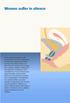 Women suffer in silence Stress urinary incontinence is the involuntary loss of urine resulting from increased intra-abdominal pressure. In people who suffer with this condition, forms of exertion such
Urinary Incontinence Definitions
 (AADL) Program Urge Stress Overflow Functional Mixed DHIC (Detrussor hyperreflexia with impaired contractility) Reflex Incontinence Leakage of urine (usually larger volumes) because of inability to delay
Postoperative. Voiding Dysfunction
 Postoperative Voiding Trial Voiding Dysfunction Stephanie Pickett, MD Fellow Female Pelvic Medicine and Reconstructive Surgery Objectives Define postoperative voiding dysfunction Describe how to evaluate