
Substance Abuse & Recovery. & Recovery Workbook. Workbook. The. The. Self-Assessments, Exercises & Educational Handouts
|
|
|
- David Boone
- 10 years ago
- Views:
Transcription
1 The Substance The Abuse Substance Abuse & Recovery & Recovery Workbook Workbook Self-Assessments, Exercises & Educational Handouts Self-Assessments, Exercises & Educational Handouts John J. Liptak, EdD Ester A. Leutenberg Illustrated by Amy L. Brodsky, LISW Ester A. Leutenberg John J. Liptak, EdD Whole Person Associates Duluth, Minnesota Illustrated by Amy L. Brodsky, LISW

2 Whole Person 101 W. 2 nd St., Suite 203 Duluth, MN [email protected] The Substance Abuse & Recovery Workbook Self-Assessments, Exercises & Educational Handouts Copyright 2008 by John J. Liptak and Ester A. Leutenberg. All rights reserved. Except for short excerpts for review purposes, no part of this book may be reproduced or transmitted in any form by any means, electronic or mechanical, including photocopying without permission in writing from the publisher. Printed in the United States of America Editorial Director: Carlene Sippola Art Director: Joy Morgan Dey Library of Congress Control Number: ISBN:

3 Using This Book (For the professional) Substance abuse has no universally accepted definition. Substance abuse refers to the use of substances in ways outside of societal conventions and that have an adverse effect on an individual. Other terms associated with substance abuse include chemical dependency, drug addiction, drug abuse, and substance dependence. Any use of drugs in a manner that violates the norms of society is considered substance abuse. In the fourth edition of the Diagnostic and Statistical Manual of Mental Disorders (DSM-IV), the American Psychological Association defines substance abuse as... A maladaptive pattern of substance use leading to clinically significant impairment or distress, as manifested by one or more of the following, occurring within a twelve month period of time: 1) Recurrent substance use resulting in a failure to fulfill major role obligations at work, school, or home (e.g., repeated absences or poor work performance related to substance abuse; substance-related absences, suspensions or expulsions from school; neglect of children or household). 2) Recurrent substance use in situations in which it is physically hazardous (e.g., driving an automobile or operating a machine when impaired by substance use). 3) Recurrent substance-related legal problems (e.g., arrests for substance-related disorderly conduct). 4) Continued substance use despite having persistent or recurrent social or interpersonal problem caused or exacerbated by the effects of the substance, e.g., arguments with spouse about consequences of intoxication, physical fights). Addictions come in many different shapes and forms. When most people hear the word addiction, they usually think of drug use and abuse. In reality, there are many different types of addictions that have very different effects on the body and mind of the abuser. Some of the different types of addictions include: Drug and alcohol This is probably the most common of all of the addictions. It is estimated that there are approximately twenty million people in the United States who suffer from the abuse of alcohol and certain drugs. Common among these include LSD, Speed, PCP, Steroids, and prescription drugs. Caffeine Many people do not even see this as an addiction. However, caffeine is a stimulant that many people consume in vast quantities on a daily basis. Cigarettes and cigars Tobacco today is one of the most popular as well as most problematic of all of the addictions. Nicotine has been proven to be a very powerful, highly addictive drug. Computers Because our society has become so dependent on different types of technology, computers can become very addictive. Computers were designed to help people reduce their workweek by making work easier, but people are actually spending so much time using a computer that they have become dependent on them and suffer withdrawal when they are unable to use them. Gambling As the opportunities become increasingly available to gamble, so does the number of people who are addicted to gambling. As gambling is seen on television, available on the Internet, and now available in many states, people are increasingly becoming addicted to the risks involved in gambling.

4 (Using This Book continued) There are many other types of addictions including sexual, eating, and shopping to name a few. Although this book is geared toward people suffering from substance abuse issues, many of the pages might be applicable to populations suffering from some of the other addictions. You will need to use your clinical judgment in determining whether the assessments and activities will be effective for the population with whom you work. There may be some handouts you will not use because they do not fit the needs of your population. If your clients are working on other programs, such as AA, you will need to make sure that the exercises and journaling activities do not conflict with your program objectives. The Substance Abuse & Recovery Workbook contains five separate sections that will help the participants learn more about themselves as well how substance abuse is impacting their lives. Substance Abuse Scale helps individuals to determine the level of their addiction to drug and/or alcohol, and the nature of their addiction. Addictive Personality Scale helps individuals examine if they have a constellation of personality traits that predisposes them to various addictions. Codependency Characteristics Scale helps individuals measure how well they fulfill the normal responsibilities of adult life, how they can identify their feelings of inadequacy, and leads them to explore things that are lacking in their life. Relapse Warning Signs Scale helps individuals identify the changes in thinking, feeling and behavior that accompany relapse. Substance Abuse Cessation Scale helps individuals get a clearer picture of the excuses that they may be using to continue their abuse of substances. These sections serve as an avenue for individual self-reflection, as well as group experiences revolving around identified topics of importance. Each assessment includes directions for easy administration, scoring and interpretation. Values of these self-assessments are, they... take into account life experiences of different clients. take into account similarities across cultures and unique aspects of cultures that may possibly be influencing members of the culture. recognize but do not pathologize people from different cultures. respect norms established for populations similar to those with whom you are working. serve as non-threatening measures. Each section includes exploratory activities, reflective journaling exercises and educational handouts to help participants discover their habitual and ineffective methods of managing substance abuse, and to explore new ways for bringing about healing. In the past twenty years, many research studies have focused on the value of self-reflection and journaling as a way of exploring personal characteristics, identifying ineffective behaviors and examining thoughts and feelings that lead to ineffective behaviors. This book is unique with its combination of two powerful psychological tools for substance abuse and recovery management: selfassessment and journaling.

5 (Using This Book continued) The art of self-reflection goes back many centuries and is rooted in many of the world s greatest spiritual and philosophical traditions. Socrates, the ancient Greek philosopher, was known to walk the streets engaging the people he met in philosophical reflection and dialogue. He felt that this type of activity was so important in life that he proclaimed, The unexamined life is not worth living! The unexamined life is one in which the same routine is continually repeated without ever thinking about its meaning to one s life and how this life really could be lived. However, a structured reflection and examination of beliefs, assumptions, characteristics and patterns can provide a better understanding which can lead to a more satisfying personal life and career. A greater level of self-understanding about important life skills is often necessary to make positive, self-directed changes from the negative patterns that keep repeating throughout life. The assessments and exercises in this book can help promote this self-understanding. Through involvement in the in-depth activities, the participant claims ownership in the development of positive patterns. Journaling is an extremely powerful tool for enhancing self-discovery, learning, transcending traditional problems, breaking ineffective lifestyle and career habits, and helping to heal from past psychological traumas. From a physical point of view, writing reduces feelings of stress and lowers muscle tension, and writing lowers blood pressure and heart rate levels. Psychologically, writing reduces feelings of sadness, depression and general anxiety, and leads to a greater level of life satisfaction and optimism. Behaviorally, the journaling leads to enhanced social skills, emotional intelligence and creativity. By combining reflective assessment and journaling, your participants will engage in a revolutionary method for reducing and managing their substance abuse issues. Thanks to the following professionals whose input in this book has been invaluable! Nancy Day, OT Reg (Ont.) Amy Herzenstein, M.Ed. Kathy Khalsa, OTR/L Kathy Liptak, Ed.D. Eileen Regen, M.Ed., CJE Karal Stern, LISW, LICDC

6 The Assessments, Journaling Activities, and Educational Handouts The Assessments, Journaling Activities, and Educational Handouts in this book are reproducible and ready to be photocopied for participants use. The assessments in this book focus on self-reported data and are similar to ones used by psychologists, counselors, and career consultants. The accuracy and usefulness of the information provided is dependent on the truthful information that each participant provides about him / herself. By being honest, participants help themselves to learn about unproductive and ineffective patterns, and to uncover information that might be keeping them from being as happy and / or as successful as they can be. An assessment instrument can provide participants with valuable information about themselves; however, it cannot measure or identify everything about themselves. Its purpose is not to pigeonhole certain characteristics, but rather to allow them to explore all of their characteristics. This book contains informal assessments and not tests. Tests measure knowledge or whether something is right or wrong. For the assessments in this book, there are no right or wrong answers. These assessments only ask for personal opinions or attitudes about a topic of importance in the participant s career and life. When administering the assessments in this workbook, remember that the items are generically written so that they will be applicable to a wide variety of people but will not account for every possible variable for every person. None of the assessments are specifically tailored to one person, so use the assessments to help participants identify negative themes in their lives and find ways to break the hold that these patterns and their effects have in life. Advise the participants taking the assessments that they should not spend too much time trying to analyze the content of the questions; they should think about the questions in general and then spontaneously report how they feel about each one. Whatever the results of the assessment, encourage participants to talk about their findings and their feelings about what they discovered about themselves. Writing and talking about substance abuse and recovery issues is therapeutic for most people.

7 Layout of the Book The Substance Abuse & Recovery Workbook is designed to be used either independently or as part of an integrated curriculum. You may administer one of the assessments and the journaling exercises to an individual or a group with whom you are working, or you may administer a number of the assessments over one or more days. This book includes five sections, each of which contains: Assessment Instruments Self-assessment inventories with scoring directions and interpretation materials. Group facilitators can choose one or more of the activities relevant to their participants. Activity Handouts Practical questions and activities that prompt self-reflection and promote self-understanding. These questions and activities foster introspection and promote pro-social behaviors. Reflective Questions for Journaling Self-exploration activities and journaling exercises specific to each assessment to enhance self-discovery, learning, and healing. Educational Handouts Handouts designed to enhance instruction can be used individually or in groups to enhance recovery from substance abuse and provide positive reinforcement for continued health and wellness. They can be distributed, converted into masters for overheads or transparencies, or written down on a board and discussed. Who should use this program? This book has been designed as a practical tool for helping professionals, such as therapists, counselors, psychologists, teachers, and group leaders. Depending on the role of the professional using The Substance Abuse & Recovery Workbook and the specific client or group s needs, these sections can be used individually, combined or as part of an integrated curriculum, for a more comprehensive approach. Why use self-assessments? Self-assessments are important in teaching various substance abuse management skills because they help participants... Become aware of the primary motivators that guide their behavior Explore and learn to let go of troublesome habits and behavioral patterns learned in childhood Explore the effects of unconscious childhood messages Gain insight and a wake up call for behavioral change Focus their thinking on behavioral goals for change Uncover resources they possess that can help them to cope better with problems and difficulties Explore their personal characteristics without judgment Develop full awareness of their strengths and weaknesses Because the assessments are presented in a straightforward and easy-to-use format, individuals can self-administer, score and interpret each assessment at their own pace.

8 Introduction for the Participant Substance abuse refers to an over-indulgence in, and a dependence on, a variety of addictive substances including cigarettes, alcohol, illegal drugs, prescription drugs, and smokeless tobacco. People abuse these types of substances for a variety of complicated reasons, but primarily because they like the way they feel when they are using them. Pleasure can be a motivating force in your life and your body and brain are wired to continue doing things that feel good. Thus, all addictive drugs can affect and be affected by your system s natural need to keep doing things that feel good. An addiction is a disease that negatively affects your emotions, thinking and behavior. Once you begin to use addictive substances, their effect on your brain and body will make you want to continue using them. You will know that you have a substance abuse problem if you continue to use substances even though they cause problems in your relationships, at home or at school, in the workplace, with money, with the law, or with your health. You also may have a problem if you need to keep using more and more of the substance to get the same effect. The good news is that if you feel as if you have a problem, the assessments and journaling activities included in this book can help you commit to a plan to ensure that you break the addictive habit. The Substance Abuse & Recovery Workbook relies on a self- reflective method that is both therapeutic and fun. Self-realization through journaling enables you to deeply understand your addictions and how your body and mind has become used to behaving. This strong insight through reflective journaling then allows you the opportunity to use the exercises in this book to break the addictive cycle and form new habits and behaviors toward an addiction-free life This book is designed to help you learn about substance abuse and addictions in your life and make constructive changes to better manage the addictions that have taken hold of your life, relationships and career.

9 table of Contents SECTION I Substance Abuse Substance Abuse Scale Directions Substance Abuse Scale Scoring Directions...18 Profile Interpretation Scale Descriptions...20 Activity Handouts Problems in Your Life...21 Self-Defeating Behaviors Addictive Life History When You Were Using Non-Addicted People...26 Journaling Activities Learning About Habits...29 Feeling Scared Feeling Pain Educational Handouts Signs of Addictive Behavior...32 Denial that Addiction Exists SECTION II Addictive Personality Addictive Personality Scale Directions Addictive Personality Scale...38 Scoring Directions...40 Profile Interpretation Scale Descriptions...42 Activity Handouts Increasing Your Self-Esteem...43 Passions Nurturing Relationships...47 Friends How I Get My Highs...49 About Your Risks

10 table of Contents Journaling Activities The Perfect Day More Support...52 Current Risk-Taking Behavior Educational Handouts Stages of Addictions Types of Highs...55 SECTION III Codependency Characteristics Codependency Characteristics Scale Directions Codependency Characteristics Scale Scoring Directions...63 Profile Interpretation Scale Descriptions...65 Activity Handouts Caretaking...66 Attachments...67 Low Self-Worth Dependency Communications Skills Journaling Activities Responsibilities Codependency Irresponsible People Educational Handouts Codependency Patterns...76 Codependent Characteristics...77 SECTION IV Relapse Warnings Signs Relapse Warnings Signs Scale Directions Relapse Warning Signs Scale...82 Scoring Directions...85 Profile Interpretation Scale Descriptions...86

11 table of Contents Activity Handouts Changes in Your Thinking Changes in Your Feelings Changes in Your Behavior Life History Recovery Plan Journaling Activities How Thinking Affects Potential Relapse How Feelings Affect Potential Relapse...95 How Behavior Affects Potential Relapse Plan for Action...97 Educational Handouts Rewards of Recovery...98 Facts About Recovery SECTION V Substance Abuse Cessation Substance Abuse Cessation Scale Directions Substance Abuse Cessation Scale Scoring Directions Profile Interpretation Activity Handouts Mental Roadblocks Social Roadblocks Emotional Roadblocks Physical Roadblocks Journaling Activities Primary Roadblocks Overcoming Roadblocks Roadblocks and You Educational Handouts The Recovery Process Stages Continuum of Substance Abuse

12

13 Section I: Substance Abuse Scale Name Date 2008 Whole Person Associates, 101 W. 2 nd St., Suite 203, Duluth MN

14 Whole Person Associates, 101 W. 2 nd St., Suite 203, Duluth MN

15 Section I: Substance Abuse Scale Substance Abuse Scale Directions The Substance Abuse Scale can help you determine the level of your addiction to drugs and/or alcohol, and the nature of your addiction. This scale contains 32 statements. Read each of the statements and decide whether or not the statement describes you. In each of the choices listed, circle the number of your response on the line to the right of each statement. 4 = Very Much 3 = Usually 2 = Somewhat 1 = Not Like Me Like Me Like Me Like Me In the following example, the circled 4 indicates the statement is very much like the person completing the scale. 1. I am sick or feel physically bad most of the time This is not a test, and there are no right or wrong answers. Do not spend too much time thinking about your answers. Your initial response will likely be the most true for you. Be sure to respond to every statement. (Turn to the next page and begin) 2008 Whole Person Associates, 101 W. 2 nd St., Suite 203, Duluth MN

16 Section I: Substance Abuse scale Substance Abuse Scale 4 = Very Much 3 = Usually 2 = Somewhat 1 = Not Like Me Like Me Like Me Like Me 1. I am sick or feel physically bad most of the time I have difficulty in thinking, remembering, and doing things I used to be able to do I often give up on things in my life I have problems working and keeping a job Sometimes I can t remember what has happened to me I can t make decisions about things, so I just wait to see what happens Nothing else matters in my life except getting and using I want a Higher Power to save me from my addictions It often takes stronger alcohol / drugs to get the same effect I change jobs, move or leave relationships a lot I often feel alone and lost I cannot control or quit my use of substances I hang around other people who use as much or more than I do I often avoid family and friends unless I need something I do not want to take the necessary steps to get better I get pushy or show off around other people I make excuses for my drug and alcohol use I hide and sneak drugs so people will not know how much I use (Continued on the next page) Whole Person Associates, 101 W. 2 nd St., Suite 203, Duluth MN

17 Section I: Substance Abuse scale (Substance Abuse Scale continued) 4 = Very Much 3 = Usually 2 = Somewhat 1 = Not Like Like Me Like Me Like Me Like Me 19. I feel afraid and I am on guard all the time I make promises but have trouble keeping them It takes me much less time to get high than it used to I get into trouble when I use alcohol / drugs I feel angry and resentful a lot of the time I rarely do anything that does not involve my addictions I do things that I never thought I would do I don t eat the proper foods or eat at a regular time I feel guilty about using and the things I do when I use I don t listen when other people try to talk with me about my addictions I would often use with other people who were worse off than me so I could feel better about myself I get the shakes, sweats, or feel terrible unless I drink or use drugs I feel bad about how my using hurts other people, but I can t stop my behavior I use drugs and alcohol to cope with my problems Substances are more important than anything in life I sometimes carry drugs or alcohol around with me I create situations (parties, attending bars) in which I can use substances I sometimes wonder if life just isn t worth living (Go to the Scoring Directions on the next page) 2008 Whole Person Associates, 101 W. 2 nd St., Suite 203, Duluth MN

18 Section I: Substance Abuse scale Substance Abuse Scale Scoring Directions The Substance Abuse Scale is designed to measure your level of addiction to various substances. Four areas have been identified to make up the scales for this assessment: Physical, Behavioral, Emotional, and Psychological. The items that make up each of the four scales are grouped so that you can explore how your addictions are showing themselves. To score your Substance Abuse Scale: 1. Record each of the scores from the previous two pages on the lines below. For example, if you circled the 4 for item number 1, you would put a 4 on the line above the 1 on the chart below. Do the same for all 36 items. 2. Add the totals for each of the 4 rows and put that total on the total line to the right Physical Total Behavioral Total Emotional Total Psychological Total The Profile Interpretation section on the next page can help you interpret your scores on the Substance Abuse Scale Whole Person Associates, 101 W. 2 nd St., Suite 203, Duluth MN

19 Section I: Substance Abuse scale Interpretation of the Substance Abuse Scale The remainder of the assessment contains interpretation materials to help determine if you are addicted to drugs and/or alcohol. This scale can help you to identify whether your addiction is primarily Physical, Behavioral, Emotional, and / or Psychological in nature. Substance Abuse Scale Profile Interpretation total Scores for each of the four scales 28 to to 27 9 to 17 result High Moderate Low Indications You are probably experiencing many of the difficulties associated with substance use and abuse. You are probably experiencing some difficulties associated with substance use and abuse. You are probably not experiencing many of the difficulties associated with substance use and abuse. For scales which you scored in the Moderate or High range, find the descriptions on the pages that follow. Then, read the description and complete the exercises that are included. No matter how you scored, low, moderate or high, you will benefit from these exercises Whole Person Associates, 101 W. 2 nd St., Suite 203, Duluth MN

20 Section I: Substance Abuse scale Scale Descriptions PHYSICAL People who are addicted to substances fail to take adequate care of themselves because they are preoccupied with their addiction. They may not get enough sleep, take unnecessary risks, often skip meals and do not eat a proper diet. They often feel bad physically and start to find themselves making excuses while they are using various substances. They find that it often takes stronger substances to get the same effects they had been getting, and that they can get high in less time than usual. They find themselves starting to forget things and often find themselves doing things they never thought they would. Substances rapidly become the most important thing in their lives. BEHAVIORAL People who are addicted to substances have difficulty maintaining relationships with others. They often lose their sense of self and their connection to others. In addition, they may start to have trouble at work or in school. They find themselves beginning to have trouble making decisions and completing tasks. They find themselves frequently changing jobs and leaving relationships. They find themselves avoiding friends and family who may find out about their addiction. They often begin to hide substances and sneak to use them so people do not know how much they are using. They also find themselves feeling bad and shaking when they are not using. EMOTIONAL People who are addicted to substances generally have low self-esteem. They tend to experience feelings such as anxiety, fear, guilt, depression and shame. They tend to have unexplained mood swings and are likely to have episodes of anger and rage. At times they will even be violent with others around them. They often feel like they are not good at anything but using substances. They sometimes feel alone, lost and afraid. They feel angry and resentful, and then feel bad about the effect that their using has on people around them. PSYCHOLOGICAL People addicted to substances often experience difficulty in their thinking. They tend to have impaired reasoning and judgment. They are often unable to think things through logically. Their impaired thinking affects their performance on the job. They refuse to listen to other people who are talking with them about their addiction. Because they have difficulty coping with problems while they are addicted, they use substances to help them cope with the stresses of life. They often have such difficulty in reasoning and in coping with life s problems, they wonder if life is worth living. The next sections are some self-reflective questions to help you overcome your addictions. Please complete the questions and journaling exercises on the following pages Whole Person Associates, 101 W. 2 nd St., Suite 203, Duluth MN

21 Section I: Activity Handouts Problems in Your Life Most experts feel that substance abuse is a physical disease similar to heart disease. It is a disease that causes you to be addicted to the use of alcohol or other drugs. This addiction causes you a variety of physical, emotional, relationship, school, college, career and spiritual problems. How has substance abuse caused problems for you With your family? With your friends? In your social life? At work? School? University? 2008 Whole Person Associates, 101 W. 2 nd St., Suite 203, Duluth MN
Drug Abuse and Addiction
 Drug Abuse and Addiction Introduction A drug is a chemical substance that can change how your body and mind work. People may abuse drugs to get high or change how they feel. Addiction is when a drug user
Addictions: Why Don t They Just Quit?
 Counseling Center of New Smyrna Beach 265 N. Causeway New Smyrna Beach FL 32169 Ph: 386-423-9161 Fax: 386-423-3094 Addictions: Why Don t They Just Quit? By Shane Porter One of the most frustrating issues
Substance Related Disorders. Substance Abuse. Substance Use Disorders 4/3/2012. Substance Abuse. Substance Dependency
 Social and Health Disparities Sarah Harkless Substance Abuse Services Division Alabama Department of Mental Health May 13, 2010 What s in a Name? Substance Abuse Chemical Dependency Habituation Hooked
Reference document. Alcohol addiction
 Reference document Alcohol addiction Table of content Introduction 2 Definition 2 Signs and symptoms 3 Intervening with an employee 4 Available treatments and resources 5 Conclusion 5 Reference document
What is Addiction? DSM-IV-TR Substance Abuse Criteria
 Module 2: Understanding Addiction, Recovery, and Recovery Oriented Systems of Care This module reviews the processes involved in addiction and what is involved in recovering an addiction free lifestyle.
ADDICTIONS. BEHAVIOURAL Internet Shopping Work Sex Gambling Food. SUBSTANCE - RELATED Alcohol Drugs Medicine Tobacco
 ADDICTIONS BEHAVIOURAL Internet Shopping Work Sex Gambling Food SUBSTANCE - RELATED Alcohol Drugs Medicine Tobacco Addiction is a chronic, relapsing disease affecting the brains's reward, motivation and
Substance Abuse. Client Handbook Series January 2015
 Substance Abuse Client Handbook Series January 2015 Developed by Carleton University, Criminal Justice Decision Making Laboratory & Ontario Ministry of Community Safety and Correctional Services Ralph
Caring for depression
 Caring for depression Aetna Health Connections SM Disease Management Program Get information. Get help. Get better. 21.05.300.1 B (6/08) Get back to being you How this guide can help you Having an ongoing
Overcoming Food Abuse. Session #1. Admitting Food Addiction
 Overcoming Food Abuse Session #1 Admitting Food Addiction Introductory statements: 1. You are safe with me: I am one of you 2. You are loved by me: I accept you as you are 3. You will hear truth from me:
GDC Session #3 The Process of Recovery: Part II
 GDC Session #3 The Process of Recovery: Part II Objectives of Session 1. Identify emotional and physical symptoms of withdrawal from cocaine and other substances. 2. Identify stages of recovery from cocaine
Sometimes people live in homes where a parent or other family member drinks too
 Alcohol and Drugs What If I'm Concerned About Someone Else's Drinking? Sometimes people live in homes where a parent or other family member drinks too much. This may make you angry, scared, and depressed.
It s helpful to watch the video Who is Slick on the slickrecovery.com website before completing this form.
 Recovery Worksheet The Voice of Addiction Worksheet How has my drug or alcohol use hurt key areas in my life? It s helpful to watch the video Who is on the slickrecovery.com website before completing this
Preventing Substance Abuse. How to Deal with Chemical Dependency
 Preventing Substance Abuse & How to Deal with Chemical Dependency For every ten people who consume alcohol or drugs in this country, at least one becomes chemically dependent. Addiction has an exponential
Are you feeling... Tired, Sad, Angry, Irritable, Hopeless?
 Are you feeling... Tired, Sad, Angry, Irritable, Hopeless? I feel tired and achy all the time. I can t concentrate and my body just doesn t feel right. Ray B. I don t want to get out of bed in the morning
12 Step Worksheet Questions
 12 Step Worksheet Questions STEP 1 We admitted we were powerless over alcohol that our lives had become unmanageable. The first time I took a drink I knew it wasn't for me. Every time I drank I got drunk
Cocaine. Like heroin, cocaine is a drug that is illegal in some areas of the world. Cocaine is a commonly abused drug.
 Cocaine Introduction Cocaine is a powerful drug that stimulates the brain. People who use it can form a strong addiction. Addiction is when a drug user can t stop taking a drug, even when he or she wants
Presently, there are no means of preventing bipolar disorder. However, there are ways of preventing future episodes: 1
 What is bipolar disorder? There are two main types of bipolar illness: bipolar I and bipolar II. In bipolar I, the symptoms include at least one lifetime episode of mania a period of unusually elevated
Are You Addicted to Drugs? Do you abuse drugs or alcohol regularly? Do you often use the drug when others are not around?
 Are You Addicted to Drugs? If you are concerned about your drug or alcohol use, then you might want to determine if you are addicted to the substance. Being addicted to drugs is a serious condition that
DRUGS? NO THANKS! What are some of the leading factors that cause you to. become interested in experimenting with illegal drugs?
 DRUGS? NO THANKS! What are some of the leading factors that cause you to become interested in experimenting with illegal drugs? It is easily available: During adolescence, you are trying to figure out
How To Treat An Addiction With Cognitive Behavioral Therapy
 Cognitive Behavioral Therapy Part 1 An Overview Cognitive Behavioral Therapy (CBT) is a general classification of psycho therapy, based on social learning theory, which emphasizes how our thinking interacts
Chapter 7. Screening and Assessment
 Chapter 7 Screening and Assessment Screening And Assessment Starting the dialogue and begin relationship Each are sizing each other up Information gathering Listening to their story Asking the questions
Understanding. Depression. The Road to Feeling Better Helping Yourself. Your Treatment Options A Note for Family Members
 TM Understanding Depression The Road to Feeling Better Helping Yourself Your Treatment Options A Note for Family Members Understanding Depression Depression is a biological illness. It affects more than
ANTISOCIAL PERSONALITY DISORDER
 ANTISOCIAL PERSONALITY DISORDER Antisocial personality disorder is a type of chronic mental illness in which your ways of thinking, perceiving situations and relating to others are dysfunctional. When
Specific Phobias. Anxiety Disorders Association of America
 Specific Phobias Everyone thinks that once I ve driven on the highway, I ve conquered it. They just don t understand... I don t understand. It s a day-in and day-out struggle. What is a phobia? We all
It s an awfully risky thing to live. Carl Rogers. her family. Daily routines that people were used to are now gone.
 It s All My Fault Feelings When a Family Member Has an Accident and Loses a Limb Easy Read Volume # 18 Issue # 4 May/June 2008 Translated into plain language by Helen Osborne of Health Literacy Consulting
How To Diagnose And Treat An Alcoholic Problem
 guideline for identification and treatment of alcohol abuse/dependence in primary care This guideline is informational in nature and is not intended to be a substitute for professional clinical judgment.
What is your addiction? Please describe it:
 Addiction can be thought of as repeating a behavior over and over even though it is causing problems for you in different areas of your life (negative consequences). When someone has an addiction, such
General Information. Age: Date of Birth: Gender (circle one) Male Female. Address: City: State: Zip Code: Telephone Numbers: (day) (evening)
 Kelly Bernstein, MS, LCDC, LPC Medical Center Psychological Services 7272 Wurzbach Road, Suite 1504 San Antonio, Texas 78240 Office: (210) 522-1187 Fax: (210) 647-7805 Functional Assessment Tool The purpose
RECOVERY ALTERNATIVES
 RECOVERY ALTERNATIVES Contact us at: 1-800-805-0499 http://www.recoveryalternatives.com INTERVENTION PREPARATION WORKSHEET To help guide you through the process of preparing for the intervention, a series
DSM 5 SUBSTANCE USE DISORDERS. Ronald W. Kanwischer LCPC, CADC Professor Emeritus Department of Psychiatry SIU School of Medicine
 DSM 5 SUBSTANCE USE DISORDERS Ronald W. Kanwischer LCPC, CADC Professor Emeritus Department of Psychiatry SIU School of Medicine I have no financial relationships to disclose with regard to this presentation.
New Beginnings: Managing the Emotional Impact of Diabetes Module 1
 New Beginnings: Managing the Emotional Impact of Diabetes Module 1 ALEXIS (AW): Welcome to New Beginnings: Managing the Emotional Impact of Diabetes. MICHELLE (MOG): And I m Dr. Michelle Owens-Gary. AW:
DSM-5 and its use by chemical dependency professionals
 + DSM-5 and its use by chemical dependency professionals Greg Bauer Executive Director Alpine Recovery Services Inc. President Chemical Dependency Professionals Washington State (CDPWS) NAADAC 2014 Annual
Introduction to Substance Abuse. Matthew D. Bennett, Psy.D. Rick McNeese, Ph.D. First Step Recovery, Inc.
 Introduction to Substance Abuse Matthew D. Bennett, Psy.D. Rick McNeese, Ph.D. First Step Recovery, Inc. Matthew D. Bennett, Psy.D. Rick McNeese, Ph.D. First Step Recovery, Inc. Lincoln, NE The psychology
COA/COSA. In this presentation you will receive basic information about alcohol and drug addiction. You will also
 In this presentation you will receive basic information about alcohol and drug addiction. You will also hear about the family dynamics of children of alcoholics and other substance abusers and finally
Gateways to Transformation LLC. The Phoenix Rising LLC. Information Kit
 The Phoenix Rising LLC 9993 N. 65th St. Longmont, Colorado 80503 303-859-7385 Who We Are Gateways to Transformation is a treatment program that specializes in trauma, substance abuse, and eating disorder
Surviving A Relationship Break-Up - Top 20 Strategies
 Surviving A Relationship Break-Up - Top 20 Strategies Surviving a relationship break-up can be one of the most difficult things we ever do and on an emotional level can be one of the most painful processes
Counselors are standing by 24/7 waiting for your free call 1-800-861-1768 thewatershed.com
 Counselors are standing by 24/7 waiting for your free call 1-800-861-1768 thewatershed.com Believe Again in Life. In The future. In Yourself. At The Watershed, our passion is helping addicts and alcoholics
Military and Substance Abuse Dr. Amy Menna & Gift From Within
 1 Military and Substance Abuse Dr. Amy Menna & Gift From Within This article is meant to assist soldiers and those who support them to identify the differences between substance abuse and addiction. In
Co-dependency. Fact Sheet on co-dependency from Mental Health America:
 Co-dependency Fact Sheet on co-dependency from Mental Health America: Co-dependency is a learned behavior that can be passed down from one generation to another. It is an emotional and behavioral condition
How To Prevent Alcohol And Drug Abuse At Stanford
 STANFORD UNIVERSITY Office for Campus Relations Stanford Help Center Alcohol and Drug Abuse Prevention at Stanford Information for Faculty and Staff Phone: 650-723-4577 or Email: [email protected]
Young people and drugs
 Young people and drugs Many parents worry about whether their son or daughter is taking illegal drugs, how they can tell, and what to do about it. While there s a lot of concern about illegal drugs in
MANAGING DEPRESSIVE SYMPTOMS IN SUBSTANCE ABUSE CLIENTS DURING EARLY RECOVERY
 MANAGING DEPRESSIVE SYMPTOMS IN SUBSTANCE ABUSE CLIENTS DURING EARLY RECOVERY Presented by: William L. Mock, Ph.D., LISW,LICDC, SAP Professional Training Associates Inc North Ridgeville, Ohio 1 (216) 299-9506
TREATING ADOLESCENTS
 TREATING ADOLESCENTS A focus on adolescent substance abuse and addiction Center for Youth, Family, and Community Partnerships Presentation developed by: Christopher Townsend MA, LPC, LCAS,CCS, NCC Learning
These changes are prominent in individuals with severe disorders, but also occur at the mild or moderate level.
 Substance-Related Disorders DSM-V Many people use words like alcoholism, drug dependence and addiction as general descriptive terms without a clear understanding of their meaning. What does it really mean
Understanding Suicidal Thinking
 Understanding Suicidal Thinking Suicidal thoughts are temporary. Suicide is permanent. Don t give in to suicidal thoughts you can overcome them. If depression or bipolar disorder (also known as manic depression)
Bullying. Take Action Against. stealing money. switching seats in the classroom. spreading rumors. pushing & tripping
 switching seats in the classroom stealing money Take Action Against Bullying spreading rumors pushing & tripping U.S. DEPARTMENT OF HEALTH & HUMAN SERVICES Substance Abuse and Mental Health Services Administration
Problem Gambling. Over the last decade, legalized gambling in Canada has grown - rapidly! So has problem gambling!
 Problem Gambling Introduction Over the last decade, legalized gambling in Canada has grown - rapidly! So has problem gambling! Should people with mood disorders be especially concerned? Probably yes! There
Personality Difficulties
 Personality Difficulties The essential features of a personality disorder are impairments in personality (self and interpersonal) functioning and the presence of pathological personality traits. There
USVH Disease of the Week #1: Posttraumatic Stress Disorder (PTSD)
 USVH Disease of the Week #1: Posttraumatic Stress Disorder (PTSD) Effects of Traumatic Experiences A National Center for PTSD Fact Sheet By: Eve B. Carlson, Ph.D. and Josef Ruzek, Ph.D. When people find
Prescription Drug Abuse
 Prescription Drug Abuse Introduction Most people take medicines only for the reasons their health care providers prescribe them. But millions of people around the world have used prescription drugs for
Diabetes and Emotions
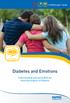 monitor track manage A TRUEinsight Guide manage Diabetes and Emotions Understanding and Coping With the Emotional Aspects of Diabetes The importance of understanding your emotions A TRUEinsight Guide about
Approved Substance Abuse Treatment Programs & Curricula
 Approved Substance Abuse Treatment Programs & Curricula Table of Contents YDC Substance Abuse Intervention Groups 3 Residential Substance Abuse Treatment Unit Programmatic Guidelines..... 5 General Population
Depression is a medical illness that causes a persistent feeling of sadness and loss of interest. Depression can cause physical symptoms, too.
 The Family Library DEPRESSION What is depression? Depression is a medical illness that causes a persistent feeling of sadness and loss of interest. Depression can cause physical symptoms, too. Also called
Opening Our Hearts, Transforming Our Losses
 Preface Alcoholism is a disease of many losses. For those of us who are the relatives and friends of alcoholics, these losses affect many aspects of our lives and remain with us over time, whether or not
Teen Drug & Alcohol Abuse: A Quick Reference Guide for Parents & Guardians
 Teen Drug & Alcohol Abuse: A Quick Reference Guide for Parents & Guardians Unity Chemical Dependency Parent Resources These days substance abuse is a worry on almost every parent s mind. That s why we
A L C O H O L D R U G S and G A M B L I N G
 IT S OUR BUSINESS Does someone I work with have a problem? A L C O H O L D R U G S and G A M B L I N G in the Workplace S O M E O N E A T W O R K H A S A P R O B L E M 3 Co-workers often get to know each
Substance Abuse Treatment Alternatives
 Substance Abuse Treatment Alternatives What You Should Know Tim Chapman, CSAC February 1 4, 2009 Introduction The purpose of this white paper is to provide information that will help you better understand
Helping Families Deal with Stress Related to Disasters
 Helping Families Deal with Stress Related to Disasters Diana DelCampo, Ph.D., Child Development and Family Life Specialist [email protected] A disaster is an event that: Involves the destruction of property,
Are you ever afraid to be around the person when he or she is drinking or using drugs because of the possibility of verbal or physical abuse?
 COMMON TERMS: Denial: The "hallmark" of the disease. All family members and close friends are affected by the actions of the Chemically Dependent Person. The refusal to admit the truth is a part of the
Adolescent drug abuse and the impact of the family dynamic. This is Stay Happily Married: Episode #279.
 Announcer: Adolescent drug abuse and the impact of the family dynamic. This is Stay Happily Married: Episode #279. Welcome to Stay Happily Married; your source for weekly updates on the latest tips and
OVERVIEW OF COGNITIVE BEHAVIORAL THERAPY. 1 Overview of Cognitive Behavioral Therapy
 OVERVIEW OF COGNITIVE BEHAVIORAL THERAPY 1 Overview of Cognitive Behavioral Therapy TABLE OF CONTENTS Introduction 3 What is Cognitive-Behavioral Therapy? 4 CBT is an Effective Therapy 7 Addictions Treated
How To Overcome Depression With Diabetes
 BREAKING FREE FROM DEPRESSION AND DIABETES 10 THINGS YOU NEED TO KNOW AND DO DepressionPageFINAL.indd 1 Depression is like a black hole. It can take the joy out of life, drain your energy and motivation,
Alcohol use or abuse. Lesson 2
 Leaps and Lesson 2 Alcohol use or abuse SPECIFIC OUTCOMES W-6.1 Evaluate the need for balance and variety in daily activities that promote personal health W-6.7 Identify and communicate values and beliefs
Insomnia affects 1 in 3 adults every year in the U.S. and Canada.
 Insomnia What is insomnia? Having insomnia means you often have trouble falling or staying asleep or going back to sleep if you awaken. Insomnia can be either a short-term or a long-term problem. Insomnia
100 Tips for Building a Strong Recovery
 45/13 Soi Pha Phum Tambon Bang Phra Amphoe Si Racha Chon Buri 20110 Thailand 100 Tips for Building a Strong Recovery Email: [email protected] - Telephone: 0066 895 291297 Giving up alcohol
How To Treat A Drug Addiction
 1 About drugs Drugs are substances that change a person s physical or mental state. The vast majority of drugs are used to treat medical conditions, both physical and mental. Some, however, are used outside
Making sense of cognitive behaviour therapy (CBT)
 Making sense of cognitive behaviour therapy (CBT) Making sense of cognitive behaviour therapy What is cognitive behaviour therapy? 4 How does negative thinking start? 6 What type of problems can CBT help
Addiction takes a toll not only on the
 FAMILY PROGRAM Addiction takes a toll not only on the individual, but on the family, as well. When using, addicts are selfish and selfcentered; their wants and needs are placed ahead of the ones they love.
Stress Assessment questionnaire
 MySkillsProfile Report Stress Assessment questionnaire Dave Smith myskillsprofile.com around the globe Report The SAQ questionnaires are copyright MySkillsProfile.com. MySkillsProfile.com developed and
Alcohol and drug abuse
 Alcohol and drug abuse This chapter explores how alcohol abuse affects our families, relationships, and communities, as well as the health risks associated with drug and alcohol abuse. 1. Alcohol abuse
Self Assessment: Substance Abuse
 Self Assessment: Substance Abuse Please respond TRUE (T) or FALSE (F) to the following items as they apply to you. Part 1 I use or have used alcohol or drugs for recreational purposes. I use alcohol despite
BROADALBIN-PERTH CENTRAL SCHOOL ADOPTED 7/19/04 2 ND READING AND ADOPTION 6/21/10 SUBSTANCE ABUSE
 BOARD OF EDUCATION ADMINISTRATIVE REGULATION 7.6.1A BROADALBIN-PERTH CENTRAL SCHOOL ADOPTED 7/19/04 2 ND READING AND ADOPTION 6/21/10 Primary Prevention SUBSTANCE ABUSE The intent of primary prevention
Methamphetamine. Like heroin, meth is a drug that is illegal in some areas of the world. Meth is a highly addictive drug.
 Methamphetamine Introduction Methamphetamine is a very addictive stimulant drug. People who use it can form a strong addiction. Addiction is when a drug user can t stop taking a drug, even when he or she
TheRecoveryBook.com. Answers to All Your Questions About Addiction and Alcoholism and Finding Health and Happiness in Sobriety
 Quick Start Guide The Recovery Book: Answers to All Your Questions About Addiction and Alcoholism and Finding Health and Happiness in Sobriety How To Use The Recovery Book Newcomers, start here: Are you
THE BIG BOOK OF ANGER: APPLYING THE TWELVE-STEP PROGRAM OF RECOVERY TO ANGER PROBLEMS TABLE OF CONTENTS
 THE BIG BOOK OF ANGER: APPLYING THE TWELVE-STEP PROGRAM OF RECOVERY TO ANGER PROBLEMS TABLE OF CONTENTS Title Pages T.J. s Story 2-3 Am I an Anger Addict? 4-5 The Miller-Patton Anger Self-Assessment Test
THE ABSENT MOTHER. The Psychological and Emotional Consequences of Childhood Abandonment and Neglect. Dr. Judith Arndell Clinical Psychologist
 THE ABSENT MOTHER. The Psychological and Emotional Consequences of Childhood Abandonment and Neglect Dr. Judith Arndell Clinical Psychologist The Psychological Parent The object of the child s deepest
Traumatic Stress with Alcohol and/or Drug Addiction
 Traumatic Stress with Alcohol and/or Drug Addiction information for individuals and families Eastern Trauma Advisory Panel What is Post Traumatic Stress Disorder (PTSD)? How people react to a traumatic
Bipolar Disorder. Some people with these symptoms have bipolar disorder, a serious mental illness. Read this brochure to find out more.
 Bipolar Disorder Do you go through intense moods? Do you feel very happy and energized some days, and very sad and depressed on other days? Do these moods last for a week or more? Do your mood changes
Recovery for Family Members
 Recovery for Family Members The first, and most important, thing to remember is that people with substance use disorders can get well and so can their families. You've survived together through major crises.
Walking a Tightrope. Alcohol and other drug use and violence: A guide for families. Alcohol- and Other Drug-related Violence
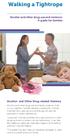 Walking a Tightrope Alcohol and other drug use and violence: A guide for families Alcohol- and Other Drug-related Violence Alcohol and other drug use and family violence often occur together. Families
GDC Session #1 Symptoms of Cocaine Addiction
 GDC Session #1 Symptoms of Cocaine Addiction Objectives of Session 1. Define cocaine addiction as a biopsychosocial disease. 2. Identify the symptoms of addiction that clients have experienced. 3. Identify
Borderline personality disorder
 Understanding NICE guidance Information for people who use NHS services Borderline personality disorder NICE clinical guidelines advise the NHS on caring for people with specific conditions or diseases
Depression. Introduction Depression is a common condition that affects millions of people every year.
 Depression Introduction Depression is a common condition that affects millions of people every year. Depression has an impact on most aspects of everyday life. It affects eating and sleeping routines,
cannabis TOO MUCH TOO OFTEN?
 cannabis TOO MUCH TOO OFTEN? Okay, so cannabis gets you high. It helps you to relax and unwind and can make you feel good... ...but are you in control of your cannabis use? Or is it controlling you? You
The Adolescent Cycle of Addiction
 0 0 0 The Adolescent Cycle of Addiction What they are Using, Why they are Using, and How they 0 are Unique Traci Wojciechowski Regional Director of SAP 610-462-7334 0 Kelly McAdams Business Development
- UNDERSTANDING - Dual Diagnosis
 - UNDERSTANDING - Dual Diagnosis TABLE OF CONTENTS Introduction 3 The Link Between Mental Illness and Substance Abuse 4 Characteristics of an Effective Dual Diagnosis Treatment Plan 6 Dual Diagnosis Treatment
CHAPTER 6 Diagnosing and Identifying the Need for Trauma Treatment
 CHAPTER 6 Diagnosing and Identifying the Need for Trauma Treatment This chapter offers mental health professionals: information on diagnosing and identifying the need for trauma treatment guidance in determining
Bipolar Disorder. in Children and Teens. Does your child go through intense mood changes? Does your child have
 Bipolar Disorder in Children and Teens Does your child go through intense mood changes? Does your child have extreme behavior changes too? Does your child get too excited or silly sometimes? Do you notice
Alcohol Addiction. Introduction. Overview and Facts. Symptoms
 Alcohol Addiction Alcohol Addiction Introduction Alcohol is a drug. It is classed as a depressant, meaning that it slows down vital functions -resulting in slurred speech, unsteady movement, disturbed
Physical Symptoms Mood Symptoms Behavioral Symptoms
 Prescription drugs are the 3 rd most commonly abused drugs amongst teens in Nebraska, and the same statistic holds true on a national level. The rise in prescription drug abuse is becoming increasingly
Coping with Multiple Sclerosis Strategies for you and your family
 Patient Education Coping with Multiple Sclerosis Strategies for you and your family Most people are not prepared to deal with the changes in routine and lifestyle that MS may require. Coping with MS can
WHAT I WANT FROM TREATMENT (2.0) William R. Miller & Janice M. Brown
 CASAA Research Division* WHAT I WANT FROM TREATMENT (.) William R. Miller & Janice M. Brown INSTRUCTIONS FOR OFFICE USE ONLY Study ID Point Date Raid WIWOOO- Revised 8/94 5 Pages People have different
Depression. What Causes Depression?
 National Institute on Aging AgePage Depression Everyone feels blue now and then. It s part of life. But, if you no longer enjoy activities that you usually like, you may have a more serious problem. Feeling
EAP Pamphlet List. General Healthcare Section. What Everyone Should Know About Wellness. What You Should Know About Self-Esteem. Your Attitude And You
 EAP Pamphlet List Listed below are pamphlets that are in stock at the Employee Assistance Program. They cover a wide range of topics and are intended to be a source of general information. They are in
Alcohol. And Your Health. Psychological Medicine
 Alcohol And Your Health Psychological Medicine Introduction Alcohol, when used in moderation and as part of a healthy lifestyle, can have beneficial effects for some people, particularly in the prevention
Copyright Recovery Connection 1 RECOVERY CONNECTION
 1 Choosing a Quality Christian Alcohol and Drug Rehab Some people who seek alcohol and drug treatment arrive at the treatment facility longing for a renewed or a new connection with a spiritual power.
SOUTH COAST PRIVATE ADDICTION RECOVERY PROGRAM. Your care in our hands. southcoastprivate.com.au
 SOUTH COAST PRIVATE ADDICTION RECOVERY PROGRAM southcoastprivate.com.au Your care in our hands The abuse of alcohol and other drugs is common and widespread; affecting people from all walks of life. 1.0
Contents. [ vii ] Foreword by George McGovern. Acknowledgments Note to the Reader
![Contents. [ vii ] Foreword by George McGovern. Acknowledgments Note to the Reader](/thumbs/39/19117329.jpg "Contents. [ vii ] Foreword by George McGovern. Acknowledgments Note to the Reader") Contents Foreword by George McGovern Preface Acknowledgments Note to the Reader xi xiii xvii xix Section 1: Insights into Alcoholism and Other Drug Addictions 1 Love First 3 What Does It Take to Get an
Contents Foreword by George McGovern Preface Acknowledgments Note to the Reader xi xiii xvii xix Section 1: Insights into Alcoholism and Other Drug Addictions 1 Love First 3 What Does It Take to Get an
Care Manager Resources: Common Questions & Answers about Treatments for Depression
 Care Manager Resources: Common Questions & Answers about Treatments for Depression Questions about Medications 1. How do antidepressants work? Antidepressants help restore the correct balance of certain