
Strawberries: Safe Methods to Store, Preserve, and Enjoy
|
|
|
- Buck Hunter
- 10 years ago
- Views:
Transcription
1 PUBLICATION 8256 Strawberries: Safe Methods to Store, Preserve, and Enjoy LINDA J. HARRIS is Food Safety and Applied Microbiology Specialist, Department of Food Science and Technology, UC Davis; and ELIZABETH MITCHAM is Postharvest Extension Specialist, Department of Plant Sciences, UC Davis. UNIVERSITY OF CALIFORNIA Division of Agriculture and Natural Resources WHAT IS A STRAWBERRY? The strawberry (Frageria x ananassa Duch.), a member of the rose family, is not really a berry, but an achene or false fruit (fig. 1). A strawberry consists of many tiny individual fruits embedded in a fleshy scarlet receptacle. The brownish or whitish specks, commonly considered seeds, are the true fruits, known as achenes. Each achene surrounds a tiny seed. These berry components make strawberries relatively high in fiber. Strawberries are also an excellent source of vitamin C, a good source of folate and potassium, and are relatively low in calories (fig. 2). The strawberry is native to temperate regions around the world, including parts of North America. California grows approximately 83 percent of the nation s strawberries (1.4 billion pounds of strawberries annually) that are marketed as fresh or frozen fruit. Strawberries are grown on over 25,000 acres in California, each producing an average of 21 tons of strawberries, seven times the national average. Strawberries are grown in five regions of California: San Diego, Orange County, Oxnard, Santa Maria, and Watsonville/Salinas. The California strawberry season extends from January through November along the California coast, with its peak in April, May, and June, when all five districts produce berries at once. Florida produces strawberries in the winter months (November through January), and additional berries are imported from Mexico during this time. The most common commercial varieties in California are the Camarosa, Diamonte, Chandler, and Selva. Proprietary and other varieties, representing about 32 percent of acreage, are bred and grown for individual shipping companies, and are not available to the public. Figure 1. Photo of ripe strawberries.

2 Nutrition Facts Serving Size (144 g) Amount Per Serving Calories 46 Calories from Fat 4 % Daily Value* Total Fat 0 g 1% Saturated Fat 0 g 0% Cholesterol 0 mg 0% Sodium 1 mg 0% Total Carbohydrate 11 g 4% Dietary Fiber 3 g 12% Sugars 7 g Protein 1 g Vitamin A 0% Vitamin C 141% Calcium 2% Iron 3% *Percent Daily Values are based on a 2,000 calorie diet. Your daily values may be higher or lower depending on your calorie needs. Figure 2. Nutrition facts for whole strawberries (1 cup). Source: USDA National Nutrient Database. GROWING STRAWBERRIES IN THE HOME GARDEN Information on growing strawberries is available online through the University of California, Davis, Fruit and Nut Research and Information Center homepage: The site also contains useful information on strawberry pest and disease management, and control of disorders, such as black root rot, gray mold, nematode problems, wilting, and virus diseases. A free online publication from the University of California, Key Points of Control and Management of Microbial Food Safety: Edible Landscape Plants and Home Garden Produce (UC ANR Publication 8101), provides information on ways to minimize contamination of fruits and vegetables in the home garden by organisms that cause foodborne illness. You can access the publication at Additional information on handling strawberries after harvest is available online at SELECTING STRAWBERRIES FROM THE HOME GARDEN OR PICK-YOUR-OWN SITE Strawberries do not ripen after they are harvested, so it is important to pick the fruit at the right stage of maturity. Pick when the berry surface is fully red, without green or white areas this fruit will contain the maximum sweetness and flavor. Strawberries that are deep red and dull in appearance are overripe and may be very soft. Harvest strawberries by gently snapping the pedicel (stem) from the plant. Take care to avoid bruising the berries. Cool the freshly picked berries as soon as possible after harvesting, and store the fruit in the refrigerator until use. SELECTING STRAWBERRIES AT THE GROCERY STORE Select strawberries that have a bright, glossy appearance and maximum red color development. Avoid fruit with signs of spoilage, shriveling, mushiness, or a dull appearance. STORING FRESH STRAWBERRIES The optimum storage temperature for strawberries in the home is 32 to 36 F (0 to 2 C). The optimum humidity for storage of berries to prevent water loss and shriveling is 90 to 95 percent. Store the fruit in the crisper drawer of your refrigerator. Keep strawberries packaged in closed plastic clamshell containers or place fruit in a partially opened plastic bag to maintain high humidity. Do not wash berries until just before eating or preserving. Washing will add moisture and will cause the berries to spoil more rapidly. Strawberries can only be stored for up to 7 days under optimum conditions, and that shelf life also depends on how ripe the fruit was when purchased or picked. SAFETY TIPS FOR HANDLING FRESH STRAWBERRIES General Sanitation Like any other fresh fruit or vegetable, strawberries can be contaminated with bacteria from soil, water, and animal sources. Contamination from human sources may occur during or after harvest, right up to the point of eating. Contaminated produce has been known to cause foodborne illness. Food poisoning outbreaks with other types of produce have occurred when poorly washed utensils or cutting boards (especially

3 those used to handle raw meats) were used to prepare fresh fruits or vegetables. For this reason, it is important that you wash your hands with soap and water before and after preparing produce, and use clean equipment, utensils, and cutting surfaces. Washing Strawberries Strawberries should be washed just before eating or preserving. To wash, rinse strawberries thoroughly under cool running water, drain in a clean strainer, and pat dry with a clean paper towel. For maximum cleaning, gently rub each berry under the running water. Washing strawberries in a sink filled with water is not recommended since the standing water can spread contamination from one berry to another. The use of soap or detergent is not recommended or approved for washing fruits and vegetables because the produce can absorb detergent residues. NOTE For best quality, cut or sliced strawberries should be covered and refrigerated if not eaten within 2 hours of preparation. NOTE Canning strawberries is not recommended freezing the fruit gives a far superior product. Cutting Strawberries Sort fruit and discard unripe, overripe, or defective fruit. Remove and discard the green cap (leafy part) before slicing berries. Wash hands, knives and surfaces before and after preparation of berries. To maintain quality, cut or sliced strawberries should be covered and refrigerated if they are not eaten within 2 hours of preparation. METHODS FOR PRESERVING STRAWBERRIES Strawberries are acidic. The ph (measure of acidity) of whole, ripe strawberries ranges from 3.3 to 3.6. Freezing, drying, and making jams and jellies are some of the best ways to preserve strawberries. FREEZING STRAWBERRIES Select firm, fully ripe, red berries, preferably with a slightly tart flavor. Wash and sort berries according to the method described under Washing Strawberries above, and remove the caps. You will need about ²/ ³ quart of fresh strawberries to prepare a pint of frozen berries. For approximate equivalents between U.S. and metric systems of measurement, a conversion table is provided at the end of this publication. Strawberries may be frozen whole, sliced, crushed, or puréed, depending on their intended use in recipes. Large strawberries give a better product when sliced or crushed before freezing. Frozen strawberries can be substituted for fresh berries in recipes, but thawed whole berries will have a much softer texture than the fresh fruit. Frozen whole strawberries are best served with a few ice crystals still remaining if thawed completely, the berries will be mushy. Syrup and sugar packs produce higher quality frozen strawberries, with a better flavor and texture, than berries packed without sweetening. Containers for freezing Rigid plastic containers and glass freezing and canning jars make good freezer containers. The glass in these jars has been tempered to withstand heat and cold. Glass jars not designed for freezing can easily break in the freezer. Flexible plastic freezer bags also work well. Ordinary waxed paper cartons from ice cream or milk do not work well because they do not keep air or moisture from moving in or out of the container and they are difficult to clean.

4 Table 1. Headspace (inches) needed between packed food and lid for freezing fruit Container with wide top opening Container with narrow top opening Type of pack Pint (in) Quart (in) Pint (in) Quart (in) liquid pack * ½ 1 ¾ 1½ dry pack ½ ½ ½ ½ Notes: * Strawberries packed in sugar, syrup, juice, or water; crushed or puréed berries; strawberry juice. Headspace for freezing strawberry juice should be 1½ inches. Fruit tightly packed without added sugar, sweeteners, or liquids. Syrup pack for whole berries To make the very heavy (50%) sugar syrup recommended for this type of pack, dissolve 4 cups of sugar in 4 cups of lukewarm water. Stir until the solution is clear. Chill before use. Pack prepared berries into containers and cover with cold syrup. Leave the appropriate headspace, as described in table 1. Keep the berries submerged in the syrup by placing a small piece of crumpled waxed paper or parchment paper on top of the fruit in each container. Seal the containers and freeze. Sugar pack for whole berries For each quart of prepared strawberries, add ¾ cup of sugar and mix gently until most of the sugar has dissolved, or let stand 15 minutes. Pack berries into containers, leaving the appropriate headspace (see table 1). Seal the containers and freeze. Dry pack (unsweetened) The dry pack is good for small whole strawberries and for freezing whole or sliced berries (without sugar) to use later in making jam. You can simply pack prepared fruit into containers, seal, and freeze. Or you can spread a single layer of prepared berries on shallow trays and freeze until hard. Immediately pack the frozen berries into freezer bags or containers to prevent freezer burn. These berries remain loose so that portions of frozen fruit can be poured easily from the container. The package can then be re-closed and returned to the freezer. Other unsweetened packs In addition to dry pack, strawberries can be packed in water, unsweetened juice, or pectin syrup. Unsweetened packs generally yield products that lack the plump texture and good color of fruit packed with sugar. The berries freeze harder and take longer to thaw. Fruit packed in pectin syrup may retain its texture better than if frozen in water or juice. Pack the strawberries in containers and cover with water, juice, or pectin syrup (pectin syrup preparation is described below), leaving the appropriate headspace (see table 1). Keep the fruit submerged by placing a small piece of crumpled waxed paper or parchment paper on top of the berries in each container. Seal the containers and freeze. Pectin syrup Combine 1 package of powdered pectin with 1 cup of water in a saucepan. Heat to boiling and maintain the boil for 1 minute. Remove from the heat and add 1¾ cups of water. Add more water if you want a thinner syrup. Cool. Yield is about 3 cups of moderately thick syrup.

5 Using artificial sweeteners Strawberries can be packed in a sweet solution made by mixing water with sugar substitutes such as saccharin (e.g., Sweet N Low), aspartame (e.g., Equal), or sucralose (Splenda). These artificial sweeteners work well in frozen products, or you can add them to the unsweetened, thawed fruit just before serving. Artificial sweeteners give a sweet flavor but do not provide the beneficial preservation effects of sugar, color protection, or thickness of syrup. The label on a sweetener package will tell you how much sweetener is equivalent to standard amounts of sugar. Use the label directions to determine the amount needed. Freezing sliced or crushed berries Wash and sort berries as described under Washing Strawberries above, and remove caps. Slice berries, or crush partially or completely. To each quart of prepared berries, add up to ¾ cup of sugar, if desired. Mix thoroughly and pack into containers, leaving the appropriate headspace (see table 1). Seal the containers and freeze. Freezing strawberry purée Wash and sort berries as described under Washing Strawberries above, and remove caps. Crush berries, press through a fine sieve, or purée in a blender or food processor. Mix up to ¾ cup of sugar with each quart of purée, if desired, stirring until sugar is dissolved. Pour purée into containers, leaving the appropriate headspace (see table 1). Seal the containers and freeze. Freezing juice Wash and sort berries as described under Washing Strawberries above, and remove caps. Crush berries and strain through a jelly bag. Juice may be sweetened with ¾ to 1 cup of sugar for each quart of juice, if desired. Pour juice into glass freezing and canning jars or rigid plastic containers, leaving a 1½-inch headspace (see table 1). Seal the containers and freeze. Sealing, labeling, and storing Before you close the containers, make sure sealing edges are free of moisture or food. Leave sufficient headspace in rigid containers to allow for expansion of food as it freezes (see table 1). Placing a small piece of crumpled waxed or parchment paper between the fruit and the lid of liquid-packed strawberries will help keep the berries submerged. Do not use aluminum foil because it will partly disintegrate as it reacts with the acids in the fruit. Seal each container tightly. Label containers plainly include name of food, date, and type of pack. Freeze packaged strawberries as quickly as possible at 0 F ( 18 C) or below. For quickest freezing, place containers in single layers in the freezer. Freeze no more than 2 to 3 pounds of fresh food per cubic foot of freezer space at one time a larger amount will raise the temperature in the freezer and lengthen the freezing time. The fruit should be thoroughly frozen within 24 hours and then you can rearrange the containers to store them more closely together. Most fruits maintain high quality for 8 to 12 months at 0 F ( 18 C) or below. Unsweetened strawberries lose quality faster than those packed in sugar or syrup. Fruits stored longer will lose quality but will continue to be safe to eat.

6 DRYING STRAWBERRIES Drying (dehydration) is the process of slowly removing water from food in order to preserve the food. Strawberries are considered fair to good candidates for drying. Oven drying It is possible to dry strawberries in your kitchen oven, but we do not recommend it since it takes so long: up to 18 hours to dry the berries adequately. The process heats up the kitchen, makes the oven unavailable for other uses, and is unsafe in homes with small children. If you wish to pursue oven drying, please consult other reliable references on the subject. One good online source is Preserving Food: Drying Fruits and Vegetables, available at Microwave drying Do not attempt to use a microwave oven to dry strawberries. Fruit requires constant attention during drying, and the oven door would have to be opened frequently to allow moisture to escape. Microwave-dried strawberries do not dry evenly and can easily scorch or burn. Sun drying The high sugar and acid content of strawberries makes them safe to dry outdoors when conditions are right for drying (minimum temperature of 85 F [29 C] and humidity less than 60 percent). However, insects and birds are attracted to drying berries, and may contaminate them. If you wish to try sun drying, please consult other reliable references such as the site listed under Oven drying, above. Dehydrator drying Unlike sun drying, which depends on proper weather conditions, dehydrator drying can be done at any time. There is an initial expense involved in buying a dehydrator (fig. 3), but many people think that a dehydrator produces the best quality dried food. An electric dehydrator can maintain low, even temperatures, circulating the heated air by means of a blower or fan. Most dehydrators are equipped with thermostats to maintain a constant temperature, and some have timers. Larger units with many shelves have room for more food than most ovens. Preparing strawberries for drying Wash and sort fruit as described under Washing Strawberries above, and remove caps. Sweeter berry varieties with a full red color and firm texture dry best. Strawberries may be sliced (¼-inch thick), halved, left whole (small berries), or puréed. No further pretreatment is required. Sliced strawberries will dry more evenly than whole berries. An excellent way to dry strawberries is to make fruit leather out of a strawberry purée (see Strawberry fruit leather, below). Figure 3. Typical home dehydrators. Dehydrating strawberries The secret to dehydrating strawberries successfully is to control the temperature and air circulation. If you use too low a temperature (less than 90 F [32 C]), the berries will dry too slowly, giving mold a chance to grow. At temperatures of 170 F (77 C) or more, the berries cook or harden on the outside and the inside remains moist and can spoil later. Set the dehydrator temperature at 135 to 140 F (57 to 60 C), the optimum drying temperature range. If your dehydrator does not have a thermostat, place an accurate, easy-to-read thermometer on the bottom tray. Arrange the prepared

7 strawberries on the drying trays, cut-side up (if cut) and in a single layer. The pieces should not touch or overlap. Leave 1 to 2 inches between trays in the dehydrator. It may be necessary to turn the berries and rotate the racks positions up and down the stack during the drying process. Continue dehydrating until the berries test dry, as described below under Testing for dryness. Food dries much more quickly and scorches easily toward the end of the drying time, so watch it closely and remove individual strawberry pieces as they dry. The amount of time it takes to dry strawberries depends on their initial moisture content, the volume being dried, the size and thickness of the pieces, the air s humidity during the drying process, and the dehydrator s efficiency. The estimated time for drying sliced strawberries is 7 to 15 hours, and for whole berries from 24 to 36 hours, depending on the size of the pieces and the individual dehydrator used. Testing for dryness To test for dryness, remove several strawberry pieces from the dehydrator. After they have cooled, cut the pieces in half. There should be no visible moisture, and you should not be able to squeeze any moisture from the pieces. Some strawberries may remain pliable, but they should not be sticky or tacky. If you fold a piece in half, it should not stick to itself. After drying, cool the fruit for 30 to 60 minutes before packaging. Avoid packaging warm fruit, since that could lead to sweating and moisture buildup. You should also avoid long delays before you package because the strawberries may have an opportunity to reabsorb moisture from the air. Conditioning dried strawberries Since strawberries are generally eaten without being rehydrated, they should not be dried to the point of brittleness. The water content of home-dried strawberries should be about 20 percent. When you take the berries from the dehydrator, the pieces may not have the same moisture level because of their size or where they were located in the dehydrator. Conditioning is the process used to make sure that all pieces are equally moist. This reduces the risk of mold growth. To condition the strawberries, pack the dried, cooled fruit loosely in clean plastic or glass jars. Seal the containers and allow them to stand for 7 to 10 days. Excess moisture in some pieces will be absorbed by the drier pieces. Shake the jars daily to separate the berries, checking for any water condensation. If condensation develops in a jar, return the fruit to the dehydrator for further drying. After conditioning, package and store the fruit. Packaging and storage Dehydrated berries require very little storage space. Completely dried strawberries can be stored in sealed plastic bags or airtight jars and cans. Pack the strawberries tightly in the bag or container, removing as much air as possible. If you use metal containers, place the fruit in a plastic bag first in order to prevent reaction with the metal. The dried fruit should be stored in a dark, cool (60 F [15 C]) place. The berries color, flavor, aroma, and nutritive value will start to decrease after about a year. For longer storage, you can keep well-wrapped dried strawberries in the freezer. For best flavor and quality, use within 2 years of frozen storage. Check dried strawberries occasionally during storage to make sure the product is still dry. Glass containers are excellent for storage because any moisture that collects

8 on the inside is easily seen. Strawberries that are affected by moisture but not spoiled should be used immediately or redried and repackaged. Moldy strawberries should be discarded. Using dried strawberries Home-dried strawberries can be eaten as a snack, mixed with dry or cooked cereals, and added to milkshakes and homemade ice cream. Dried strawberries can also be powdered to flavor fruit beverages. Strawberry fruit leather Fruit leathers are homemade dried fruit rolls. Fruit leathers are made by pouring puréed fruit onto a flat surface and drying. When dried, the product is pulled from the surface and rolled. The fruit roll is shiny and has the texture of leather. Select ripe or slightly overripe but not spoiled strawberries. (You can use fruits with minor blemishes and bruises that are not suitable for canning or freezing, if you remove the imperfections.) Wash the fruit as recommended above, and remove caps. Cut berries into slices or chunks. To make a mixed-fruit leather you can cut up kiwi or other fruits to add to the strawberries. Use 2 cups of prepared fruit for each 13 by 15 inch fruit leather. Preheating the berries before puréeing is recommended it helps to destroy bacteria and molds that may be present on the fruit, preserves the natural color of the berries, and speeds up the drying process. Place prepared berries in a microwaveable casserole dish, cover, and microwave on full power (high) for 6 to 8 minutes per 2 cups of fruit, stirring every 2 minutes until the fruit is soft and has reached 160 F. Alternatively, place prepared berries in the top of a double boiler, cover, and steam over boiling water for 10 to 15 minutes. Purée the heated fruit until smooth. Strain to remove seeds, if desired. To prevent darkening of the fruit leather during drying, you can add 2 teaspoons of lemon juice or ¼ teaspoon of ascorbic acid for each 2 cups of fruit. (You can buy pure ascorbic acid crystals from pharmacies and also in the canning supply section of some supermarkets and hardware stores.) Optional: to sweeten, you can add 1 to 2 tablespoons of corn syrup, honey, or sugar for each 2 cups of fruit. Corn syrup or honey will not crystallize so these sweeteners are best for leathers that will be stored for longer than a few months. Sugar is fine as a sweetener for making leathers that will be used immediately or within a few months. If you prefer to add artificial sweeteners to reduce the tartness of the fruit purée, use a sucralose sweetener (Splenda). Saccharin-based sweeteners may turn slightly bitter if added to the fruit and then heated, and aspartame sweeteners may lose sweetness during drying. For oven or sun drying of fruit leathers, line cookie sheets with plastic wrap. In a dehydrator use plastic wrap on the trays, or use specially designed plastic sheets available for dehydrators. Pour purée onto the trays or sheets and spread out to a thickness of ¹/8 to ¼ inch in the center; the edges can be slightly thicker since they will dry faster. Dry the fruit leather at 140 F (60 C) for about 4 to 8 hours in a dehydrator, up to 18 hours in the oven, or up to 1 to 2 days in the sun. Properly dried fruit leather is ready if no indentation remains when you touch the center of the leather with your finger, and it peels away easily from the wrap. Peel leather from the plastic wrap while still warm. Cool, roll loosely in clean plastic wrap, and store in an airtight container in a cool, dry place.

9 JAMS AND JELLIES Jams, jellies, and fruit spreads are simple and rewarding ways to preserve strawberries. Traditional strawberry jams are sweet spreads made by boiling crushed fruit with sugar until the mixture thickens. Jellies are clear, firm gelled products made with fruit juice and sugar. Pectin, a gelling substance found naturally in fruits, is needed to form a fruit-based gel. Strawberries are low-pectin fruits, so strawberry jam and jelly recipes usually call for added pectin. Jam or jelly made with added pectin requires less cooking, retains more natural fruit flavors, and generally gives a larger yield. In addition, using added pectin eliminates the need to test hot jellies and jams for proper gelling. However, if you want to make traditional strawberry jam without added pectin, a good online source for recipes and information on using gelling tests to determine when the jam is ready to pour into jars, is available from the National Center for Home Food Preservation at Strawberry jam may also be made without cooking, using freezer jam or nocook jam recipes. Freezer jam has more of a fresh strawberry flavor because the fruit is not cooked. Freezer jam (no-cook) recipes all include added pectin. NOTE There are many types of pectin available. Regular pectin is available in both liquid and powder forms. Liquid and powdered pectin are not interchangeable in recipes. Low or no-sugar pectins are also available, as are freezer or no cook pectins. Use each type of pectin for its intended purpose. For best results follow the instructions included with the package or at the manufacturer s Web site. Making strawberry jams and jellies with added pectin Commercially prepared powdered or liquid pectin can be added to fresh strawberry fruit and juices, as well as commercially canned or frozen juice, to make strawberry jams and jellies. The order of combining ingredients depends on the type of pectin used. Powdered and liquid pectin are not interchangeable in recipes. Complete directions for a variety of fruits and fruit combinations are provided with packaged pectins. For best results, follow the pectin manufacturer s recipes and directions. For the best quality jam, use pectin before the expiration date stamped on the side of the box. Older pectin may result in poor gels. Most jams and jellies are preserved by their high sugar content. Sugar is essential for gel formation when you use regular pectin in jam and jelly recipes. However, specially modified pectins are now readily available that can be used to make freezer jams and jam-like fruit spreads with less sugar, with artificial sweeteners, or with no sweeteners. If you want to make a low- or no-sugar product, follow the directions on the modified-pectin package exactly because any variations in quantities or the order in which you add the ingredients could result in product failure. These types of pectins are labeled no-sugar needed or for less or no sugar. Pectin specifically intended for freezer jam is also available (e.g., Ball Freezer Jam Pectin and Sure-Jell No Cook Jam Pectin ), and it requires significantly less sugar than traditional jams and freezer jams made with regular pectin. The sweetener Splenda can be used instead of sugar in these recipes. All strawberry jams and jellies (except freezer jam) should be safely processed using a boiling water bath canner, following the process times recommended in table 2. To prevent spoilage, freezer jams must be stored in the freezer, or in the refrigerator once a jar is opened. Since strawberries are high-acid (low ph) foods, they do not have the potential to develop botulism but they can spoil due to mold growth. Moldy jam or jelly should be discarded.

10 1 0 Using the Right Equipment Containers for canning Standard half-pint or pint glass canning jars should be used for jams and jellies. Make sure all jars are free of cracks and chips. These defects will prevent airtight seals. Wash the jars in hot, soapy water and rinse them, or you can wash them in a dishwasher. Heat the jars in boiling water for 10 minutes to sterilize them. Keep these jars hot by leaving them in the hot water until you fill them. Lids and rings Select the correct size of lids to fit your jars. Always use new lids each time you do canning. Rings can be reused if they are in good condition. Wash and thoroughly dry the rings before storing and they will remain in good condition for years. Follow the manufacturer s instructions for pretreating the canning lids. Metal lids have a sealing compound and usually need to be heated prior to use. Filling jars Do not overfill the jars. Pour hot strawberry mixture into hot, sterilized jars, leaving a ¼-inch headspace (fig. 4). Figure 4. Leave adequate headspace in canning or jelly jars. Figure 5. Boiling water bath canner and jars. Adjusting seals With a clean, damp cloth or towel, carefully wipe the rim and threads of the jar. Place the clean, prepared lid on the rim of the jar and screw the ring band on finger tight. Do not overtighten. If tightened too much, the lids will not vent correctly, causing buckling of the lid, loss of the seal a day or two after processing, and possible glass breakage during processing. Using a boiling water bath canner Any large covered kettle or pot may be used as a boiling water bath canner, if it is deep enough to allow water to cover the tops of the jars by 1 to 2 inches (fig. 5). Fill the canner half full with water. Preheat the water to 140 F (60 C). Place jars on a rack in the canner (fig. 5); any jars that come in direct contact with the bottom of the canner may break. Add enough boiling water to cover the tops of the jars by at least 1 inch. When water comes to a boil, begin to count the processing time indicated in table 2. At the end of the recommended processing time, remove jars from the canner and cool them, undisturbed, at room temperature. Avoid placing jars directly on cold surfaces like tile countertops because that may cause jars to crack. Setting the jars on a towel over the countertop rather than directly on the countertop can help protect jars from breaking. After the jars have cooled, check them for a tight seal. In a tight seal the metal lid will have snapped down and is curved slightly inwards. Press down on the center of the lid. If it springs back, there is no seal either place this jar in the refrigerator or freezer, or reprocess the contents using a new jar and lid. Remove the rings of the sealed jars and wash the jars gently before storage to remove any stickiness. Washing also removes any excess jam on the jars that may attract insects during storage. Store in a dark, dry, cool place. Using a boiling water bath at higher altitudes At higher altitudes, you must increase the processing time as recommended in table 2. Local elevations may be found online, typically at sites that also report climate. You may also check with your county extension office for altitude information.

11 1 1 Table 2. Recommended processing times for strawberry jams and jellies in a boiling water bath canner Jar size Processing time (minutes) at various elevations 0 1,000 ft 1,001 6,000 ft above 6,000 ft Half-pint or pint RECIPE: Strawberry Jelly (with liquid pectin) Makes about 8 or 9 half-pint (250 ml) jars Ingredients 4 cups (1 l) strawberry juice 7½ cups (1.875 l) sugar 2 pouches (6 oz /177 ml) liquid pectin Preparation 1. Thoroughly wash your hands, utensils, and work surfaces, and then prepare the ingredients. 2. To prepare strawberry juice, you will need about 3 quarts (3 l) of berries. Wash fully ripe berries; remove stems and caps. Crush berries. 3. Extract juice from crushed berries instructions on how to extract juice for jelly is available online at 4. Measure juice into a large saucepan; add sugar and mix well. 5. Place juice mixture on high heat and, stirring constantly, bring quickly to a full rolling boil that cannot be stirred down. 6. Add pectin and heat again to a full rolling boil. Boil hard for 1 minute. 7. Remove from heat; skim off foam quickly. 8. Pour hot jelly immediately into sterilized, hot jars, leaving ¼-inch headspace. 9. Wipe the jar rims and adjust the lids. 10. Process in a boiling water bath canner for the time recommended in table 2.

12 1 2 RECIPE: Fresh Strawberry Freezer Jam (using Ball Freezer Jam Pectin )* Makes about 4 or 5 half-pint (250 ml) containers Glass canning jars may be used and reusable plastic freezer jam jars are available. Other plastic containers are also suitable. Ingredients 4 cups (1 l) crushed strawberries 1½ cups (375 ml) sugar (Splenda may be substituted) 1 package (1.59 oz/45 g) Ball Freezer Jam Pectin 1 cup (250 ml) water *This is an example of a basic freezer jam recipe to use with one of the newer powdered pectins specifically intended for freezer jam (or no-cook jam). Jams made with these pectins use significantly less sugar and are much quicker to prepare. However, freezer jams can also be made with traditional pectin. For best results in both cases, follow the specific pectin manufacturer s recipes and directions. Directions will differ from brand to brand. Preparation 1. Thoroughly wash your hands, utensils, and work surfaces, and then prepare the ingredients. 2. Wash fully ripe strawberries; remove stems and caps. Crush berries. 3. Mix sugar and pectin thoroughly in a large bowl. 4. Measure crushed berries and add to the sugar/pectin mixture. 5. Stir for 3 minutes. 6. Ladle jam into clean jars or freezer containers, leaving ½-inch headspace. Cover with an airtight lid. 7. Let stand at room temperature until thickened (about 30 minutes). 8. Store in freezer (for up to 1 year), or in the refrigerator if to be used within 3 weeks. VARIATION: Strawberry/Kiwi Freezer Jam Substitute 2 cups (500 ml) of strawberries and 2 cups (500 ml) of diced, peeled kiwi fruit for the 4 cups (1 l) of strawberries in the recipe above.

13 1 3 F r e q u e n t ly A s k e d Q u e s t i o n s What is the white mold that grows on my strawberries and how can I prevent it? The white growth is actually a common fungus, Botrytis cinerea, found on strawberries and many other fruits. The spores, or single-celled seeds, of Botrytis are found on nearly all harvested strawberries, but particularly when they are harvested during wet weather. To reduce the growth of the fungus, store strawberries in the refrigerator. Eat strawberries within a few days of purchase and wash them just before eating. Does the degree of red color on the strawberry indicate its flavor quality? As the strawberry ripens on the plant, the surface color changes from green to white to pink to red. However, there is some variation from one variety to the next. Some berries only attain a light red or orange color when fully ripe. Strawberries that are picked fully ripe have optimal eating quality. Look for fruit without green or white color on the surface, but, in addition, avoid berries that are very red, but dull in appearance, which may indicate over-ripeness. ADDITIONAL RESOURCES UC Food Safety at UC Davis provides information about food safety and has links to resources on home food preservation. The National Center for Home Food Preservation provides science-based information on home food preservation for Extension educators, other educators, and home food preservers. University of Georgia College of Family and Consumer Sciences, Food Safety and Preservation Section provides extensive publications on preserving food safely, and other food-related information. The University of California Fruit and Nut Research and Information Center at UC Davis provides information on growing strawberries in the home garden. The site contains useful information on strawberry pest and disease management, and control of disorders. The Postharvest Technology Research and Information Center at UC Davis provides information on storing fresh fruits and vegetables. Approximate metric equivalents U.S. unit Metric 1 teaspoon (tsp) 5 milliliters (ml) 1 tablespoon (tbsp) 15 milliliters (ml) 1 ounce (oz) 28 grams (g) 1 cup 250 milliliters (ml) 1 pint (pt) 500 milliliters (ml) or 0.5 liter (l) 1 quart (qt) 1 liter (l) 1 gallon (gal) 4 liters (l) 1 bushel (bu) 35 liters (l) 1 pound (lb) 454 grams (g) or 0.45 kilogram (kg) 1 inch (in) 2.5 centimeters (cm) 1 foot (ft) 0.3 meters (m)

14 1 4 ACKNOWLEDGMENTS The University of California s Division of Agriculture and Natural Resources provided support for the development and production of this publication. FDA-CFSAN grant number and USDA CSREES grant number provided funding for research related to washing fruit. The authors offer special thanks to Sylvia Yada and Janice Hsiao for editorial assistance. Diagrams have been used or adapted with permission from the 1999 edition of So Easy to Preserve by Elizabeth L. Andress and Judy A. Harrison (Bulletin 989, 4th edition, Cooperative Extension Service, The University of Georgia, Athens). Preserving information and recipes have been adapted from the National Center for Home Food Preservation and the USDA Complete Guide to Home Canning (Bulletin No. 539, 1994 edition). F o r m o r e i n f o r m at i o n You ll find detailed information on many aspects of food preservation and preparation in these titles and in other publications, slide sets, CD-ROMs, and videos from UC ANR: Apples: Safe Methods to Store, Preserve, and Enjoy (ANR publication 8229), Cantaloupe: Safe Methods to Store, Preserve, and Enjoy (ANR publication 8095), Oranges: Safe Methods to Store, Preserve, and Enjoy (ANR publication 8199), Peppers: Safe Methods to Store, Preserve, and Enjoy (ANR publication 8004), Safe Methods of Canning Vegetables (ANR publication 8072), Tomatoes: Safe Methods to Store, Preserve, and Enjoy (ANR publication 8116), To order or obtain printed ANR publications and other products, visit the ANR Communication Services online catalog at You can also place orders by mail, phone, or FAX, or request a printed catalog of our products from Agriculture and Natural Resources Communication Services 6701 San Pablo Avenue, 2nd Floor Oakland, California Telephone: (800) or (510) FAX: (510) inquiries: [email protected] An electronic version of this publication is available on the ANR Communication Services Web site at Publication 8256 ISBN-13: by the Regents of the University of California, Division of Agriculture and Natural Resources. All rights reserved. To simplify information, trade names of products have been used. No endorsement of named or illustrated products is intended, nor is criticism implied of similar products that are not mentioned or illustrated.

15 1 5 The University of California prohibits discrimination or harassment of any person on the basis of race, color, national origin, religion, sex, gender identity, pregnancy (including childbirth, and medical conditions related to pregnancy or childbirth), physical or mental disability, medical condition (cancer-related or genetic characteristics), ancestry, marital status, age, sexual orientation, citizenship, or status as a covered veteran (covered veterans are special disabled veterans, recently separated veterans, Vietnam era veterans, or any other veterans who served on active duty during a war or in a campaign or expedition for which a campaign badge has been authorized) in any of its programs or activities. University policy is intended to be consistent with the provisions of applicable State and Federal laws. Inquiries regarding the University s nondiscrimination policies may be directed to the Affirmative Action/Staff Personnel Services Director, University of California, Agriculture and Natural Resources, 1111 Franklin Street, 6th Floor, Oakland, CA , (510) For a free catalog of other publications, call (800) For help downloading this publication, call (530) This publication has been anonymously peer reviewed for technical accuracy by University of California scientists and other qualified professionals. This review process was managed by the ANR Associate Editor for Food and Nutrition. To simplify information, trade names of products have been used. No endorsement of named or illustrated products is intended, nor is criticism implied of similar products that are not mentioned or illustrated. pr-4/07-lr/rw

Figs Carolyn Washburn, Family and Consumer Science Agent Charlotte Brennand, Food Safety/Preservation Specialist
 June 2005 FN/Harvest/2005-06pr Figs Carolyn Washburn, Family and Consumer Science Agent Charlotte Brennand, Food Safety/Preservation Specialist Did you know?! The history of figs dates back over 2000 years
Jelly is made from fruit juice and the end product is clear and firm enough to hold its shape when removed from the container.
 Sweet spreads butters, jellies, jams, conserves, marmalades and preserves add zest to meals. They can be made from fruit that is not completely suitable for canning or freezing. All contain the four essential
WATER BATH CANNER Instruction Manual
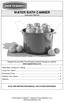 WATER BATH CANNER Instruction Manual Register this and other Focus Electrics products through our website: www.registerfocus.com Water Bath Canning At A Glance... 2 Using Your Canner... 3 Processing Times...
TABLE OF CONTENTS CLEAR JEL -- 2 CANNING APPLE PIE FILLING -- 3 CANNING BLUEBERRY PIE FILLING -- 4 CANNING CHERRY PIE FILLING -- 5
 TABLE OF CONTENTS CLEAR JEL -- 2 CANNING APPLE PIE FILLING -- 3 CANNING BLUEBERRY PIE FILLING -- 4 CANNING CHERRY PIE FILLING -- 5 CANNING FESTIVE MINCEMEAT PIE FILLING -- 6 CANNING GREEN TOMATO PIE FILLING
Types of Packs There are several ways to pack fruits for freezing: syrup pack, sugar pack, dry pack or unsweetened pack.
 Freezing is one of the easiest, most convenient and least time-consuming ways to prepare foods at home. Freezing does not sterilize food; the extreme cold simply retards growth of microorganisms and slows
SALSA RECIPES FOR CANNING
 SALSA RECIPES FOR CANNING Val Hillers and Richard Dougherty Washington State University Cooperative Extension Most salsa recipes are a mixture of low-acid foods, such as onions and peppers, with acid foods,
OSU FROZEN COOKING DESSERTS
 OSU COOKING FROZEN DESSERTS WITH SPLENDA Pittsburg County Extension Service 707 West Electric McAlester OK 74501 918.423.4120 (Office) 918.423.7053 (Fax) www.oces.okstate.edu/pittsburg Bringing the University
Canning Fruits A PACIFIC NORTHWEST EXTENSION PUBLICATION PNW199. Washington State University Oregon State University University of Idaho
 Canning Fruits A PACIFIC NORTHWEST EXTENSION PUBLICATION PNW199 Washington State University Oregon State University University of Idaho CANNING FRUITS Home canning can be a safe and economical way to
1. According to the Food Guide Pyramid, how many daily servings do we need of fruits?
 NAME HOUR VIDEO WORKSHEET 1. According to the Food Guide Pyramid, how many daily servings do we need of fruits? 2. How many daily servings do we need of vegetables according to the Food Guide Pyramid?
QUINOA AND BLACK BEAN SALAD
 QUINOA AND BLACK BEAN SALAD GF V VG SERVES: 12 (1 cup each) Prep Time: 30 min. Cooking Time: 12 min. CONTAINER EQUIVALENTS (per serving): 1 2 1½ I usually make a bunch of quinoa at the beginning of the
Fiesta Salsa From the Moscow Farmers Market
 Fiesta Salsa Fiesta Salsa 7 cups chopped, seeded, peeled, cored tomatoes 2 cups chopped, seeded, peeled cucumbers 2 cups chopped and seeded banana peppers 1 cup sliced green onion 1/2 cup chopped, peeled,
Preserve Your Garden Delights: How to Can Fresh Vegetables
 Information from Human Environmental Sciences Extension Food reservation reserve Your Garden Delights: How to Can Fresh Vegetables Nutritional Sciences University of Missouri Extension Vegetables are at
Ice Cream Maker INSTRUCTION MANUAL WITH RECIPES. www.zokuhome.com
 Ice Cream Maker INSTRUCTION MANUAL WITH RECIPES www.zokuhome.com The Zoku Ice Cream Maker revolutionizes the way ice cream is made at home. Watch ice cream magically freeze before your eyes in minutes!
APPLE PIE FILLING (Source: Complete Guide to Home Canning, USDA, 2009)
 APPLE PIE FILLING Blanched, sliced fresh apples 3 1/2 cups 6 quarts Granulated sugar 3/4 cup + 2 Tablespoons 5 1/2 cups ClearJel (not Instant Clear Jel) * 1/4 cup 1 1/2 cups Cinnamon 1/2 teaspoon 1 Tablespoon
Apples: Safe Methods to Store, Preserve, and Enjoy
 PUBLICATION 8229 Apples: Safe Methods to Store, Preserve, and Enjoy LINDA J. HARRIS, Food Safety and Applied Microbiology Specialist, Department of Food Science and Technology, UC Davis; SYLVIA YADA, Scientist,
Safe Methods to Store, Preserve, and Enjoy SAFETY TIPS FOR PRESERVING PEPPERS
 PUBLICATION 8004 Peppers Safe Methods to Store, Preserve, and Enjoy UNIVERSITY OF CALIFORNIA Division of Agriculture and Natural Resources http://anrcatalog.ucdavis.edu Content reviewed and revised by
Table of Contents. Introduction... 1. Personal Hygiene... 2. Temperature Control... 5. Cross-contamination... 6. Cleaning and Sanitizing...
 Table of Contents Introduction... 1 Food Handler Certification Program... 1 Personal Hygiene... 2 Temperature Control... 5 Cross-contamination... 6 Cleaning and Sanitizing... 6 Dishwashing... 7 Food Storage...
JULIE S CINNAMON ROLLS
 JULIE S CINNAMON ROLLS Dough: 1 pkg Dry Yeast (not Rapid Rise) 1 cup milk scalded 1/4 cup sugar 1/4 cup water (warm 110 degrees) 1/4 cup vegetable oil 1 tsp salt 3 1/2 cups all-purpose flour 1 egg Inside
Banana-Cinnamon French Toast (#70)
 Banana-Cinnamon French Toast (#70) 25 slices whole wheat bread 8 eggs 5 bananas 2 ½ cups milk, low fat, 1% 1 ½ tsp vanilla extract ¼ cup vegetable oil 3 Tbsp brown sugar 1 ½ tsp cinnamon Serving size:
Healthy Christmas Mini-Cookbook
 Healthy Christmas Mini-Cookbook Brought To You By Healthy Menu Mailer Editors: Susanne Myers & Christine Steendahl Table of Content Introduction Main Dishes Butterflied Beef Eye Roast Roast Pork with Cranberry
Mexican Recipes. 1 tablespoon chili powder ¼ teaspoon garlic powder
 Mexican Recipes Taco Seasoning 1 tablespoon chili powder ¼ teaspoon garlic powder ¼ teaspoon onion powder ¼ teaspoon dried oregano 1 ¼ teaspoon crushed red pepper flakes ½ teaspoon paprika 1 ½ teaspoons
Jars should be sterilized. Boil the jars, rings, and lids before filling with pickle ingredients.
 Pickling Basics Most pickles are made with a brine of either salt or vinegar, and usually both. You do not have to spend a lot to buy fancy versions of either ingredient. Some vinegars are sweeter than
Introduction. Preparing Fruits and Vegetables for Drying Many fruits and vegetables can be dried (Table 1). Use ripe foods only.
 Revised 2008 publication 348-597 Using Dehydration to Preserve Fruits,, and Meats Renee Boyer, Extension specialist and assistant professor, Virginia Tech; Karleigh Huff, graduate student, Virginia Tech
Mediterranean Bean Salad. You ll Need - Take Out - 1/3 cup SPLENDA Granular measuring cups
 Mediterranean Bean Salad 10 Servings You ll Need - Take Out - 1/3 cup SPLENDA Granular measuring cups ½ cup white wine vinegar measuring spoons 2 tablespoons extra virgin olive oil whisk 1 (15 oz.) can
Reduced Sugar and Sugar-free Food Preservation
 Reduced Sugar and Sugar-free Food Preservation Georgia C. Lauritzen, Food and Nutrition Specialist 1992 FN 209 Role of Sugar in Energy Balance Only in recent years has the amount of sugar consumed in the
How to Make Laser Toner Transfer Paper By Triston J. Taylor
 How to Make Laser Toner Transfer Paper By Triston J. Taylor Original process contributed by Cashsale Primer for this instructional: (double quote) = Inch (single quote) = Foot (12 Inches) 100% = No Additives
Cooking A World of New Tastes
 Cooking A World of New Tastes S E G M E N T 2 Cooking With Moist Heat Steaming Boiling Glazing Segment 2 Cooking With Moist Heat 19 S E G M E N T 2 Cooking With Moist Heat Learning Objectives Apply steaming
HOME FREEZING GUIDE FOR FRESH VEGETABLES
 HOME FREEZING GUIDE F FRESH VEGETABLES Freezing most vegetables at home is a fast, convenient way to preserve produce at their peak maturity and nutritional quality. The following links provide information
Blenderized & Pureed Recipes
 Blenderized & Pureed Recipes While you are having difficulty chewing or swallowing, use these recipes for preparing pureed meals. Use the recipes as a base for developing your own recipes. Be creative!
DESSERT Apple and cinnamon crumble with custard. 5 11 year olds. www.cwt-chew.org.uk
 DESSERT Apple and cinnamon crumble with custard DESSERT Apple and cinnamon crumble with custard Apple and cinnamon crumble Custard 90g 80g Apple and cinnamon crumble This recipe makes 4 portions of about
Nutritious & Hearty Recipes
 Nutritious & Hearty Recipes Nutrition Tips Pork is a leading dietary source of Thiamin, or vitamin B1. Thiamin builds and repairs nerves and muscles, maintains an appetite and helps to release energy from
How to prepare the Green Cleaning Recipes for a Healthy Home pages:
 How to prepare the Recipes for a Healthy Home pages: The following pages, Recipes for a Healthy Home, should be printed back to back on heavy weight paper. The odd number recipes will be on top and the
User s Guide. DISNEY ICE CREAM Maker
 User s Guide DISNEY ICE CREAM Maker Instruction manual 1 QUICK REFERENCE Cover Cap Cover Mixing Paddle Freezing Canister Motor Base SAVE THESE INSTRUCTIONS. INTENDED FOR HOUSEHOLD USE ONLY. 2 SAFETY PRECAUTIONS!
MEAL PLANNING FOR MECHANICAL SOFT DIET
 MEAL PLANNING FOR MECHANICAL SOFT DIET Definition of Terms Calories Protein Blenderized Pureed Units of energy. A nutrient used by your body for growth and repair. The best sources are milk, meats, fish,
Special Mother s Day menu
 Mother s Day is a time of commemoration and celebration for MUM. It is the one day out of the year when children, young and old remember their mothers and express their appreciation. This year make your
2014 PA STICKY BUN CONTEST Winning Recipes
 1 st Place Pamela McFall McKean County Bacon Chestnut Sticky Buns 4 tsp milk 1 cup plus 3 tbsp flour 1 tbsp sugar, 1/4 tsp sugar 1/4 tsp salt 1 tsp active dry yeast 2 tbsp butter 1/2 an egg 1/2 cup chopped
High Calorie, High Protein Recipes
 High Calorie, High Protein Recipes High Calorie, High Protein Shakes Using Nutrition Supplements Nutrition supplements are liquid, powder, or solid foods that have extra calories, protein, vitamins, and
What s So Great about Corn? Sweet corn is high in fiber, niacin, and folate. Sweet corn with yellow kernels has small amounts of vitamin A.
 Corn Volume 1, Issue 6 www.panen.org [email protected] (717) 233-1791 What s So Great about Corn? Did You Know? As soon as corn is picked, the sugar in the kernels begins to turn into starch. Starch hardens
Summer Recipes. Exclusive To:
 Exclusive To: This summer Seattle s Best Coffee introduced the Red Cup Showdown, a coast-to-coast search at state fairs to find the most imaginative new coffee drink. Our fun at the fair and the warm summer
SHOP SMART, STORE SAFE
 SHOP SMART, STORE SAFE Introduction This lesson gives an older adult audience an opportunity to focus on making the most of their food budgets by sharing strategies for healthy shopping on a budget and
ICE CREAM MAKER. Instruction Manual & Recipes. MODEL: AIC-100 (Capacity: 1 Quart)
 ICE CREAM MAKER Instruction Manual & Recipes MODEL: AIC-100 (Capacity: 1 Quart) Congratulations on your purchase of Aroma's Ice Cream Maker. It allows you to make your own rich and creamy HOMEMADE ice
LARGE GROUP PRESENTATION: PRESENTER S NOTES
 LARGE GROUP PRESENTATION: PRESENTER S NOTES Introduce yourself. Welcome! We are so glad you are here to learn about fruits and vegetables. Icebreaker Handout: Fruit or Vegetable: Parts of Many Words Read
Food Safety Guide for Family Day Care Educators
 Food Safety Guide for Family Day Care Educators Department of Health and Human Services About this Guide This Guide is designed to help Family Day Care (FDC) Educators make safe and healthy meals for the
Gourmet røgeopskrifter med ahorntræ briketter
 Foss Family Hams This is an old Canadian Prairie recipe for smoking ham and bacon. 50 kg (100 lb) Ham or Bacon 4 kg (8 lb) Salt 1.5 kg (3 lb) Sugar 60 ml (2 oz) Saltpetre 16 l (4 gal) of hot water, approximately
Electric Ice Cream Maker
 GC80/GC85 Electric Ice Cream Maker Owner s Guide READ AND SAVE THESE INSTRUCTIONS IMPORTANT SAFEGUARDS When using electrical appliances, basic safety precautions should always be followed, including the
High Calorie, High Protein Liquid and Semi-Solid Diet
 High Calorie, High Protein Liquid and Semi-Solid Diet Some health conditions increase your calorie and protein needs while also making it harder to eat more. For example, patients going through cancer
Home Canning Pickled and Fermented Foods
 COOPERATIVE EXTENSION SERVICE UNIVERSITY OF KENTUCKY COLLEGE OF AGRICULTURE, FOOD AND ENVIRONMENT, LEXINGTON, KY, 40546 FCS3-582 Home Canning Pickled and Fermented Foods The home canning of pickles, relishes,
DOUBLE GREEN SMOOTHIE
 DOUBLE GREEN SMOOTHIE 1 ½ cup unsweetened non-dairy beverage, such as almond, rice or soy 2 dried apricots or 4 pitted dates 1 banana 1 cup chopped kale leaves 1 cup baby spinach leaves 1/2 cup fresh or
How To Understand The Cottage Foods Act
 Cottage Foods Act Frequently Asked Questions WEBINAR AND RESOURCES For more information, check the Colorado Department of Public Health and Environment Division of Environmental Health and Sustainability
Using and Caring for a. Canner. Why use a pressure canner in home canning? Preventing temperature errors B2593
 B2593 Using and Caring for a P R E S S U R E Canner Mary E. Mennes Why use a pressure canner in home canning? To safely home can low-acid foods, the only practical way to obtain high enough temperatures
Ready, Set, Start Counting!
 Ready, Set, Start Counting! Carbohydrate Counting a Tool to Help Manage Your Blood Glucose When you have diabetes, keeping your blood glucose in a healthy range will help you feel your best today and in
Grace Emmaus Walk #49 Recipes
 Grace Emmaus Walk #49 Recipes Amish Oatmeal 1 ½ cup oatmeal ½ cup sugar ½ cup milk ¼ cup melted butter 1 eggand 1 tsp baking powder ¾ tsp salt 2 tsp vanilla Combine all ingredients and mix well. Spread
Save Time and Money at the Grocery Store
 Save Time and Money at the Grocery Store Plan a Grocery List Making a list helps you recall items you need and also saves you time. Organize your list according to the layout of the grocery store. For
ICM6 6 Qt. Ice Cream Maker Assembly Instructions
 ICM6 6 Qt. Ice Cream Maker Assembly Instructions READ ALL INSTRUCTIONS AND WARNINGS BEFORE USING THIS PRODUCT. This manual provides important information on proper operation & maintenance. Every effort
Selecting Freezer Containers Preparing the Vegetables Blanching
 Freezing is an excellent way to preserve fresh vegetables at home. Freezing does not sterilize food; the extreme cold simply retards growth of microorganisms and slows down changes that affect quality
What impacts blood glucose levels?
 What you eat and how much you eat has an impact on your blood glucose levels. Your blood glucose level reflects how well your diabetes is controlled. There are many aspects to eating for target BG (Blood
Can You Name this Kitchen Equipment? Assembled and photographed by
 Can You Name this Kitchen Equipment? Assembled and photographed by Stacy Halvorson, Program Assistant Julie Garden Robinson, Ph.D., L.R.D. Food and Nutrition Specialist Look at the pictures on the following
Gluten-Free Baking: Tips & Recipes
 Gluten-Free Baking: Tips & Recipes From the National Foundation for Celiac Awareness Webinar: Holiday Special: Gluten-Free Baking Featuring Chef Richard Coppedge, Jr., CMB, Professor, Baking and Pastry
Gourmet røgeopskrifter med elletræ briketter
 Bradley's Famous Hot Smoked Salmon Temperatures used in this recipe are for approx. 20 lbs of fish. The more fish in the smoker, the longer the unit will take to heat. Cure (white sugar & salt approx.
JAMS, JELLIES AND MARMALADE
 JAMS, JELLIES AND MARMALADE Introduction Collectively known as 'preserves', these products are finding an increased market in many countries, particularly in more affluent urban areas. However, it is important
Home Food Safety Myths and Facts for Consumers. The Partnership for Food Safety Education
 10 Home Food Safety Myths and Facts for Consumers The Partnership for Food Safety Education 2014 For more Home Food Safety Mythbusters go to www.fightbac.org Myth #1 Freezing foods kills harmful bacteria
2014 PA Preferred Chocolate Cookies Brownies Bars Winning Recipes
 1 st Place Jenny Huffman Kimberton Community Fair Chester County, PA Chocolate Raspberry Upside Downs 3/4 cup butter 3/4 cup powdered cocoa 1 1/4 cups sugar 2 tsp vanilla extract 2 eggs 1/2 cup white daisy
SLOW COOKER FREEZER MEAL LIST GROCERY LIST
 SLOW COOKER FREEZER MEAL LIST Two bags of slow cooker chicken fajitas Two bags of slow cooker chicken pot pie Two bags of spicy Dr. Pepper Shredded Pork (for tacos) One bag of slow cooker beef roast and
Lab Exercise 3: Media, incubation, and aseptic technique
 Lab Exercise 3: Media, incubation, and aseptic technique Objectives 1. Compare the different types of media. 2. Describe the different formats of media, plate, tube etc. 3. Explain how to sterilize it,
8 NO-COOK FREEZER MEALS IN 90 MINUTES
 8 NO- FREEZER MEALS IN 90 MINUTES RECIPE LIST (full recipes below) 1. Turkey and Black Bean Chili 2. Brown Sugar Meatloaf 3. Garden Veggie Soup with Meatballs 4. Red Pepper Chicken 5. Honey Dijon Chicken
Maintaining Nutrition as We Age
 SS-207-06 For more information, visit the Ohio Department of Aging web site at: http://www.goldenbuckeye.com and Ohio State University Extension s Aging in Ohio web site at: http://www.hec.ohio-state.edu/famlife/aging
Easter Brunch Menu Ideas with Chef Eric Crowley
 Easter Brunch Menu Ideas with Chef Eric Crowley March 7th, 2014 Chef Eric Jacques Crowley is a seasoned, professional chef and the founder, owner and chef instructor at his dynamic cooking school, Chef
GARDEN FACTS. When are apples ripe?
 A3743-E GARDEN FACTS U n i v e r s i t y o f W i s c o n s i n E x t e n s i o n When are apples ripe? Teryl R. Roper DIFFERENT APPLE CULTIVARS RIPEN over a long season. In Wisconsin, apples ripen from
DRY BEAN RECIPES. Beans, Beans and More Beans Soup
 DRY BEAN RECIPES Beans, Beans and More Beans Soup ¼ cup each dry Black Beans, Cranberry Beans, Pinto Beans and Light Red Kidney Beans 1 cup dry Navy Beans 6 cups water ½ cup onion, diced 2 cloves garlic,
How To Make A Cake
 Funeral Ministry Salads & Sides 10/22/2010 1:05:00 PM Broccoli Corn Muffins 1 (10 oz) pkg. frozen chopped broccoli thawed 1 (7 oz) pkg. corn muffin mix 4 eggs, beaten ½ cup butter, melted ¾ cup cottage
A GUIDE TO HELP PLAN, PURCHASE & PREPARE YOUR OWN HEALTHY FOOD. FOOD SENSE HEALTHY MEALS ON A BUDGET
 A GUIDE TO HELP PLAN, PURCHASE & PREPARE YOUR OWN HEALTHY FOOD. FOOD SENSE HEALTHY MEALS ON A BUDGET You ll be surprised at how affordable, delicious & convenient your own meals can be! the Great Plate:
Some Fair Trade Recipes to get you started
 Some Fair Trade Recipes to get you started Fair Trade Banana Bread 225 g (8 oz) self-raising flour 100 g (4 oz) butter 150 g (5 oz) caster sugar 450 g (1 lb) Fair Trade bananas (the gooier the better)
FOOD HYGIENE & KITCHEN SAFETY
 FOOD HYGIENE & KITCHEN SAFETY [These are as collated for use at Union Baptist Church. We acknowledge the excellent work done by the Galashiels Presbytery in preparing the original document from which much
Ithaca College Culinary Arts Club Mediterranean Night Recipes
 Ithaca College Culinary Arts Club Mediterranean Night Recipes Eggplant Dip Babaghanoosh http://ohan.itlnet.net/personpages/recipes.htm#rec 1 large eggplant 1 cup tahini ¼ cup lemon juice 3 cloves garlic,
SAFE HEALTHY CHILDREN A Health and Safety Manual for Childcare Providers
 TABLE OF CONTENTS Chapter 7: Food Storage and Preparation Safe Food: Food Storage and Preparation 7.1 Requirements of the Day Nurseries Act... 7.2 Recommendations of the Medical Officer of Health... 7.2
Easy Herb Recipes. Place the strawberries, mint leaves, orange juice, and yogurt in your blender. Blend until thick and smooth.
 Strawberry Smoothie Easy Herb Recipes Serves: 1 1 cup unsweetened frozen strawberries 1 teaspoon coarsely chopped mint leaves ½ cup 100% orange juice ½ cup lowfat vanilla yogurt Place the strawberries,
Fat-burning recipes, low-calories desserts and healthy snacks. Frittata Number of servings: 8
 Fat-burning recipes, low-calories desserts and healthy snacks Frittata 1 c Egg substitute 1 Omega-3 egg 2 Tbs Fat free half and half 1/4 tsp Ground black pepper 2 tsp Extra virgin olive oil 1 Tbs Trans
First Grade Unit A: PHYSICAL SCIENCE Chapter 1: Observing Solids, Liquids and Gases Lessons 1 to 5
 First Grade Unit A: PHYSICAL SCIENCE Chapter 1: Observing Solids, Liquids and Gases Lessons 1 to 5 Physical Science Overview Materials (matter) come in different forms. Water can be rain falling (liquid)
Home Canning: Questions and Answers
 Home Canning: Questions and Answers Q. What causes jars to break? A. Several types of breaks can occur. Each break looks different and has a specific cause. Thermal shock is characterized by a crack running
Balloon Inside a Bottle
 Balloon Inside a Bottle What is Needed * One small party balloon * One small bottle. A 16 ounce pop bottle works well. What to Do Put approximately 1 tablespoon of water into the empty pop bottle. Then
Mealtime Memo. Timesaving Tips for Mealtime
 Mealtime Memo National Food Service Management Institute The University of Mississippi for Child Care No. 6, 2009 Timesaving Tips for Mealtime Family day care home providers have a busy day. It starts
Banana Boats. STYLE: Foil DIFFICULTY: Beginner TOTAL TIME: Prep 20 min/bake: 5-10 min SERVINGS: 4
 Banana Boats STYLE: Foil TOTAL TIME: Prep 20 min/bake: 5-10 min SERVINGS: 4 4 medium unpeeled ripe bananas 4 teaspoons miniature chocolate chips 4 tablespoons miniature marshmallows Cut banana peel lengthwise
How to prepare your baby s bottle
 How to prepare your baby s bottle Cleaning and Sterilising Using or storing sterilised bottles Preparing a bottle feed Storing and warming feeds Feeding your baby Crèches, childminders and other childcare
HOMEMADE SPORT SNACK RECIPES
 HOMEMADE SPORT SNACK RECIPES The following are several interesting ideas for homemade sport snacks that you can use in your triathlon training. They not only can provide some taste variety, but they are
Both drink mixes contain similar basic ingredients, as listed in Table 1. Ascorbic acid (vitamin C) Ascorbic acid (vitamin C)
 MAKE YOUR OWN ORANGE DRINK AN EXPERIMENT IN DETERMINING HOW ADDITIVES AFFECT OUR FOOD 2000, 1999, 1996 by David A. Katz. All rights reserved. Reproduction permitted for education use provided original
MONSTER COOKIES. (From recipes by Pat)
 MONSTER COOKIES (From recipes by Pat) 1 lb brown sugar (2 1/3 cups) ½ teaspoons baking soda 2 cups white sugar 1 ½ cup peanut butter 2 sticks margarine 9 cups oatmeal 6 eggs ½ pound M&M s ½ tablespoon
snow cone maker SCM100 Series For your safety and continued enjoyment of this product, always read the instruction book carefully before using.
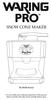 snow cone maker SCM100 Series For your safety and continued enjoyment of this product, always read the instruction book carefully before using. IMPORTANT SAFEGUARDS When using electrical appliances, basic
USING THE FOOD LABEL TO FIND ITEMS THAT MEET THE EAT SMART IN PARKS GUIDELINES
 USING THE FOOD LABEL TO FIND ITEMS THAT MEET THE EAT SMART IN PARKS GUIDELINES FOOD LABELS Food Nacho chips label Although one serving of chips (1 ounce) meets the calorie guideline, 3 ounces of chips
Patient and Family Education. Low Sodium Recipes
 Patient and Family Education Low Sodium Recipes Try these recipes to get started with lowsodium cooking that tastes good and is quick and easy! Oatmeal muffins 2 eggs 1 teaspoon vanilla extract 2 cups
Healthy Breakfast Smoothies
 Healthy Breakfast Smoothies Brought To You By HealthyMenuMailer.com Editors Susanne Myers & Christine Steendahl Table of Content Introduction Fruity Smoothies Strawberry-Banana Breakfast Smoothie Orange
Candidate Study Guide for the Illinois Food Service Sanitation Manager Examinations
 Candidate Study Guide for the Illinois Food Service Sanitation Manager Examinations This information is intended to help you prepare for the Illinois Food Service Sanitation Manager Examinations. Part
2014-2015 Culinary Arts STAR Events Menu Options. Menu I
 2014-2015 Culinary Arts STAR Events Menu Options Menu I Waldorf Salad Shaker Style Turkey Cutlets Potatoes Parmentier Sautéed Green Beans Menu II Sautéed Breast of Chicken with Mustard Cream Sauce Fresh
5-INGREDIENTS-OR-LESS CROCK POT RECIPES
 5-INGREDIENTS-OR-LESS CROCK POT RECIPES Table of Contents Page # Santa Fe Soup 4 Fiesta Chicken 5 Teriyaki Chicken 6 Pulled Barbecued Chicken 7 Pineapple Pork 9 Cranberry Pork Roast 10 Apple BBQ Pork Tenderloin
FHA-HERO: The California Affiliate of FCCLA Competitive Recognition Events
 Competitive Recognition Events 2015 2016 FCCLA STAR Event Culinary Arts Region Qualifying Competition Menu & Recipes Menu Garden Salad with Vinaigrette Dressing Classic Steak Diane Green Beans and Mushrooms
MISSISSIPPI. Downloaded January 2011
 MISSISSIPPI Downloaded January 2011 101.08 Dietitian. The term dietitian shall mean a person who is licensed as a dietitian in the State of Mississippi, or a Registered Dietitian exempted from licensure
You can eat healthy on any budget
 You can eat healthy on any budget Is eating healthy food going to cost me more money? Eating healthy meals and snacks does not have to cost you more money. In fact, eating healthy can even save you money.