
Emergency Responders Traffic Management Guidelines for Emergency Scenes
|
|
|
- Jesse Dawson
- 10 years ago
- Views:
Transcription
1 Emergency Responders Traffic Management Guidelines for Emergency Scenes EMERGENCY SCENE November 2006

2 1 FORWARD ACKNOWLEDGEMENTS RATIONALE SAFETY FIRST - CREATING A SAFER WORKING ENVIRONMENT GENERAL OVERVIEW DRIVING TO THE SCENE ARRIVAL AT THE SCENE AND DURING THE OPERATIONS SECURING THE SCENE INCIDENT TAKEDOWN RESPONSE NON-EMERGENCY RESPONSE EMERGENCY RESPONSE RESPONSIBILITIES ENROUTE INCIDENT COMMANDER S RESPONSIBILITY DRIVER S RESPONSIBILITY ON SCENE INCIDENT COMMANDER S RESPONSIBILITY DRIVER S RESPONSIBILITY TRAFFIC MANAGEMENT GUIDELINES COMPONENT AREAS OF AN EMERGENCY TRAFFIC CONTROL ZONE ADVANCE WARNING AREA APPROACH AREA TRANSITION AREA ACTIVITY AREA TERMINATION AREA EMERGENCY VEHICLE POSITIONING FEND - OFF POSITION BUFFER ZONE LATERAL BUFFER ZONE SAFETY SUPPORT VEHICLE EQUIPMENT USED FOR EMERGENCY SET-UP HIGH VISIBILITY WARNING CLOTHING TRAFFIC CONES ADVANCE WARNING SIGNS CONDITIONS AFFECTING CONE PLACEMENT Maximum Posted Speed View Obstructions Reduced Visibility Glare Other factors VIEW OBSTRUCTIONS HORIZONTAL VIEW OBSTRUCTION - HORIZONTAL CURVE VERTICAL VIEW OBSTRUCTION - VERTICAL CREST... 19

3 14 TAPER AND TANGENT SECTIONS SETTING UP TAPER AND TANGENT SECTIONS TAPERS AND TANGENTS INVOLVING CURVED SECTIONS OF HIGHWAYS SETUP DISTANCES TYPICAL EMERGENCY SET-UPS TWO LANE - TWO WAY HIGHWAY - ROAD CLOSED TWO LANE - TWO WAY HIGHWAY - ONE LANE CLOSED MULTI LANE HIGHWAY - ONE LANE CLOSED MULTI LANE HIGHWAY - TWO LANES CLOSED TWO LANE - TWO WAY HIGHWAY - DETOUR TRAFFIC CONTROLLED ACCESS HIGHWAY - DETOUR TRAFFIC SITUATIONS REQUIRING SPECIAL ATTENTION POTENTIAL HAZARDOUS MATERIAL INCIDENTS APPROACH CONSIDERATIONS TRAFFIC CONTROL AT RAIL CROSSINGS TRAFFIC CONTROL ON HIGH-SPEED HIGHWAYS EMERGENCY INCIDENT COMMAND AT SET-UPS SCENE AWARENESS MONITORING INCIDENT SET-UPS LEVEL 1 STAGING LOCATION OF A FORMAL COMMAND POST INCIDENT DURATION ADDITIONAL PROTECTIVE MEASURES SET - UP THE EMERGENCY TRAFFIC CONTROL ZONE TAKE DOWN - EMERGENCY TRAFFIC CONTROL ZONE APPENDIX A - SPECIAL CONSIDERATIONS A1. TRAFFIC DIRECTION A1.1 Duties of the Traffic Control Officer A1.2 Duties of the Traffic Control Personnel A1.3 Equipment Required A1.4 Hand Signals A2. EMERGENCIES DURING TRAFFIC CONTROL OPERATIONS A2.1 Overriding Existing Traffic Control Devices APPENDIX B - EMERGENCY RESPONDER - RESPONSE IN PERSONALLY OWNED VEHICLES (POVs)... 46

4

5 1 FORWARD The Nova Scotia Emergency Responders Traffic Management Manual, developed by the Select Committee of the Office of the Fire Marshal, Public Safety Division, Province of Nova Scotia, is a unique contribution to the field of temporary traffic control at emergency scenes on streets, roads, and highways throughout Nova Scotia. The Manual combines the basic principles and guidelines of temporary traffic control with combined years of experience in accommodating traffic at emergency scenes on the roads of the Province of Nova Scotia. The Nova Scotia Fire Marshal, Robert Cormier, is to be commended for taking the concerned initiative to strike the Select Committee to produce this Manual, which will enhance safety and traffic operations at emergency scenes. Gregory M. Smith Select Committee Chairperson The guidelines in this Manual were created to reduce the negative effects of the response to emergency roadway incidents on the motoring public, and to provide an increased level of scene safety to responders, (Police, Paramedics, Fire and Recovery) by the organized placement of emergency vehicles and traffic control devices. This Manual is not a textbook nor a substitute for technical knowledge, experience, or effective judgement. The Guidelines in the Manual are general since they cannot cover all incidents or unique site-specific conditions. The Incident Commander of each situation will require an individual assessment and Initial Action Plan, which may require periodic reevaluation to ensure that apparatus positioning and warning device placement are adequate. The Guidelines in the Manual will require ongoing review and updating as conditions, technology and equipment change. Emergency Responders are encouraged to follow the Nova Scotia Motor Vehicle Act, or the responding agency s Standard Operating Guidelines if more stringent than the Motor Vehicle Act. The Select Committee recognizes the work of Captain Rick Elvey of the Calgary Fire Department and the work of John Morrall, P Eng., Professor of Civil Engineering, University of Calgary in authoring the Calgary Fire Department - Emergency Traffic Manual. The Select Committee Fire Service Association of Nova Scotia Office of The Fire Marshal Province of Nova Scotia Page 1

6 2 ACKNOWLEDGEMENTS Several people have made significant contribution to this Traffic Management Program. This Manual would not have been possible without their support. Greg Smith, Chairperson Bernie Clancey, P.Eng. Marshall Johnson, CRSP Malcolm Noble John Fredericks Bryson Wilson Alan Edmonds Bud (John) Sanford George Muise Russell Mackintosh Jeff Wells Michel Doucet David Walsh, CRSP Deputy Chief, Four Valleys Fire Department Chair - Antigonish County Firefighters Association Director - Nova Scotia Firefighters School Director - Fire Service Association of Nova Scotia Acting Manager, Traffic Engineering Services Nova Scotia Department of Transportation & Public Works Provincial Traffic Control/Signage Instructor Level One Firefighter - New Germany Fire Service Chief Officer - Elmsdale Fire Service Chair - Halifax - Hants Mutual Fire Association Director - Fire Service Association of Nova Scotia Fire Protection Services Co-Ordinator Municipality of the County of Cumberland, N.S. Divisional Chief, Halifax Regional Fire & Emergency Service Services Safety & Strategic Initiatives Division Advanced Care Paramedic Occupational Health & Safety - Paramedic Emergency Health Services Operations Supervisor, Emergency Health Services Deputy Chief, Cape Breton Regional Fire Service Chief - Cape Breton Regional Hazardous Material Response Team Retired Chief, Annapolis Royal Fire Service Director - Fire Service Association of Nova Scotia President - Annapolis County Fire Service Retired Nova Scotia Department of Labour trainer Sergeant, N.C.O., South Shore Traffic Services, R.C.M.P. Sergeant, N.C.O., Northern Traffic Services, R.C.M.P. Occupational Health & Safety Officer, Central Region, Department of Environment & Labour, Province of Nova Scotia Page 2

7 3 RATIONALE Working in or near a moving traffic environment is extremely dangerous. Emergency responders within the Province of Nova Scotia have dealt with numerous emergency situations where vehicles have driven through incident scenes, compromising responder safety. The Office of the Fire Marshal, Province of Nova Scotia, in co-operation with the Fire Service Association of Nova Scotia, Paramedics with Emergency Health Services, and Provincial Police Forces, has responded to these concerns. On June 10, 2005, the Fire Marshal initiated a Select Committee to study these concerns to address the following: The delivery of appropriate equipment and responders to the scene of an incident in an efficient and timely fashion for the purpose of investigation, medical treatment, rescue, fire suppression, hazardous materials containment and environmental protection. The establishment and maintenance of the emergency scene safety of all emergency responders, the casualties, and the public. 3.1 SAFETY FIRST - CREATING A SAFER WORKING ENVIRONMENT The organized placement of emergency vehicles and traffic control devices on a roadway can create safer working conditions for emergency responders. While the guidelines outlined in this manual attempt to warn, guide or direct approaching motorists, the guidelines do not guarantee that the driver will take the correct action in every instance. Reports within the Province of Nova Scotia in recent years indicate increasing injuries, near misses, and motorist speeding through emergency scenes. Across North America, there are also Line of Duty deaths recorded far too frequently by Police, Fire and Paramedics while operating in, or near that same, traffic environment. The greatest risk to emergency responders occurs during two phases of Traffic Management; set-up and takedown. During the set-up phase, emergency vehicle staging and the placement of equipment establishes an emergency traffic control zone. Until warning devices are in position, approaching motorists may not be expecting to find emergency responders and their equipment on the highway. During the takedown phase, tasks are performed under non-emergency conditions, yet the removal of equipment and personnel is just as critical as the set-up. The INCIDENT COMMANDER should develop a plan for the re-establishment of normal traffic flow and communicate that plan to all personnel working on the scene. Emergency vehicles should be used to shield responders during the removal of equipment from the roadway. The Police Service should remain on scene until all responders have departed. The risks associated with working in moving traffic and the constantly changing emergency scene environment can be reduced through awareness, training, teamwork and communication. Each situation must be evaluated individually and an Incident Action Plan made in order to perform each task as safely as possible. Page 3

8 4 GENERAL OVERVIEW 4.1 DRIVING TO THE SCENE The first priority of any response is the safe arrival of emergency vehicles and personnel at the emergency scene. Follow the requirements of the Nova Scotia Motor Vehicle Act with due regard to safety and take extra care. Follow the Responding Agency s Standard Operating Guidelines if more stringent than the Motor Vehicle Act for the response of emergency vehicles. Always endeavour to take the most efficient route that will effectively position the response vehicles to provide the best protection for the incident, while giving consideration to its operational function. 4.2 ARRIVAL AT THE SCENE AND DURING THE OPERATIONS Whether responding to an incident, approaching the scene, securing the scene or assisting the casualties, safety must always be a major consideration of the responders. Safety and Rescue priorities come before any other response function. In addition to responding to motor vehicle collisions, performing rescue, fire suppression, hazardous materials containment or providing medical assistance to the casualties, the responders are also responsible for providing emergency traffic management. 4.3 SECURING THE SCENE In order to provide safety at the scene, the following is required: 1. Secure the incident site to protect emergency personnel, their equipment and the public, from hazardous conditions at the scene and throughout the traffic control zone. (The point from where normal traffic flow is diverted to the point where traffic returns to normal.) 2. Establish a traffic control set-up that gives motorists adequate warning and reaction time. 3. Separate pedestrians from vehicular traffic. 4. Limit access to the site to authorized persons only. A secure or well defined incident scene (traffic control zone) will command the attention of motorists and pedestrians, and clearly guide them around the incident scene without confusion. It is extremely difficult to establish a clearly defined traffic control zone under emergency conditions, especially upon arrival. Securing the scene takes time, and setup should be a progressive activity defined by the Incident Command (Officer-in- Charge), and is based on personnel, equipment and the critical needs of the incident. Page 4

9 4.4 INCIDENT TAKEDOWN The Incident Commander should develop an Action Plan for the systematic takedown of the emergency traffic control zone. All agencies involved in the incident must be included in the Plan and it s priority based on the safe removal of personnel and equipment. Page 5

10 5 RESPONSE 5.1 NON-EMERGENCY RESPONSE Lights and Safety Precautions on Roadways Non-emergency responses are defined as those where life, property, or the environment is not directly endangered. Emergency vehicles, while responding to non-emergency incidents, such as public assists, shall not use red lights and sirens. All vehicles will be operated in accordance with posted speed limits and obey all traffic control signs/devices. When conducting non-emergency responses and it is not possible to park in compliance with posted signs, or when emergency vehicles encroach upon a roadway to the extent that they present a hazard, the Incident Commander should consider the following actions: Take precautions to ensure the safety of the emergency responders and citizens in the area in which the Fire Service operations are being conducted. Activate emergency lighting for blocking the right-of-way. Reduce headlight glare during night-time operations, when stopped and after emergency lighting has been activated, apparatus headlights should be turned OFF and parking lights should remain on. Activate the turn signal on the desired traffic flow side of the emergency vehicle or the hazard warning flasher. Whenever possible, have the crew exit the curb-side or the non-traffic side of the vehicle. Place traffic cones on the approach to the emergency vehicle as soon as possible. These cones should attempt to provide motorists with adequate warning, to stop or guide their vehicles around the emergency vehicle. These cones should be removed when the need for such protection has terminated. Emergency lights should be turned off after the conclusion of the operation and when the need to warn traffic of the position of the emergency vehicle has ceased. Emergency lighting may be used when backing into the Station. 5.2 EMERGENCY RESPONSE Emergency lights and Safety Precautions on Roadways Emergency response situations are defined as those situations where life, property, or the environment is directly endangered. When responding, during staging, or while operating at roadway incidents, the Incident Commander should consider implementing the following actions when applicable. These actions will ultimately be dependent upon the conditions present at that time, and the options available to the Incident Commander in charge. 5.2 EMERGENCY RESPONSE contd. Take precautions to ensure the safety of the emergency responders and any citizens in the area in which emergency operations are being conducted. Page 6

11 Ensure that all emergency warning devices (lights and sirens) remain in continuous operation while responding. The air horn may be used in conjunction with the siren. Emergency lighting must remain in continuous operation until the conclusion of the emergency. Care must be taken when entering intersections even under green light situations. Emergency vehicles approaching a controlled intersection with a stop sign or red light must come to a complete stop. The vehicle operator may proceed, with due regard to safety, when all lanes of traffic have been accounted for and all traffic in, or approaching the intersection, has yielded the right-of-way. On approach to the incident, it is recommended that a buffer zone (refer to Figure 9.1) of 4 metres for every 10 km/hr of posted speed, be maintained between the incident scene and the emergency vehicles. Upon arrival, attempt to evaluate the situation (size-up), so you can position the emergency vehicles in a position that provides the best protection to the incident, while still considering it s operational function. The preferred method is the Fendoff position (Pull as far to the right or left as possible, then turn sharply back, to position your vehicle at 20 to 30 degrees to the roadway (refer to Figure 9.1). This allows approaching motorist s visibility of the emergency vehicle s side while attempting to provide them with recognition and direction in regards to the incident/hazard. This positioning may deflect any high-speed impact that would otherwise crash through the scene. Fire apparatus should reduce encroachment into the designated traffic lanes by providing a lateral buffer of at least 0.6 metres. This area should be enhanced by the use of a traffic cone and strobe light combination, (refer to Figure 9.1). During night time operations, apparatus headlights should be turned OFF and the parking lights should remain on. The turn signal should be activated, flashing on the desired traffic flow side, of the emergency vehicle or the hazard warning flasher may be activated. Personnel should maintain an awareness of the high risk of working in or around a moving traffic environment and whenever possible, exit the curb side or non traffic side of the vehicle wearing the protective clothing necessary to protect against all foreseeable hazards. Ensure that traffic warning devices (cones) are placed on the approach to the emergency vehicle and alongside the area where emergency operations are being conducted. These cones should attempt to provide motorists with adequate warning of the emergency operation, so they may stop or guide their vehicles around the incident. These cones should be removed when the need for such protection has terminated. Page 7

12 5.2 EMERGENCY RESPONSE contd. Wheel chocks provided with various pieces of emergency vehicles are to be utilized when parking on a grade or when their usage is deemed necessary. The use of warning signals must be discontinued after the conclusion of the operation and when the need to warn traffic of the position of the emergency vehicle has ceased. 6 RESPONSIBILITIES 6.1 ENROUTE INCIDENT COMMANDER S RESPONSIBILITY The Incident Commander has the responsibility to direct the resources, where in his/her opinion, they will be most effective. The operation of the emergency vehicles must be in accordance with the Nova Scotia Motor Vehicle Act, and the Standard Operational Guidelines of the responding agency. The Incident Commander is responsible to correct the unsafe behaviour of any personnel but conversely he/she may not direct those personnel to do anything that would create an undue hazard to the health and safety of any person DRIVER S RESPONSIBILITY Drivers are responsible for the condition, contents, and safe handling of their vehicles. The driver s duty is to combine safe driving practices with the responsibility of a timely response. Safe driving practices must be in accordance with the Province of Nova Scotia Motor Vehicle Act, and the Standard Operating Guidelines of the responding agency. Again, safety takes precedence over other considerations, therefore regardless of contrary orders, a driver must not do anything that he/she has reasonable cause to believe, would create an undue hazard to the health and/or safety of any person. Note: Emergency Responders that have been down - graded while responding to an emergency incident must discontinue the use of the warning devices when safe to do so. 6.2 ON SCENE INCIDENT COMMANDER S RESPONSIBILITY The Incident Commander has the responsibility to direct the emergency vehicles and resources where, in his/her opinion, they will be most effective. The on-scene operations must be in accordance with the Nova Scotia Motor Vehicle Act and the Nova Scotia Emergency Responders Traffic Management Guidelines for Emergency Scenes. The Incident Commander is responsible to correct the unsafe behaviour of any of his/her personnel but, conversely he/she must not direct those personnel to do anything that would create an undue hazard to the health and/or safety of any person. Page 8

13 6.2 ON SCENE contd DRIVER S RESPONSIBILITY Drivers are responsible for the condition, contents, and safe positioning of their emergency vehicle on scene. The driver s duty is to be familiar with the Nova Scotia Emergency Responders Traffic Management Guidelines for Emergency Scenes and park/position the vehicle in accordance with these Guidelines according to its planned function. Again, safety takes precedence over other considerations. Therefore, regardless of contrary orders, the driver must not do anything that he/she has reasonable cause to believe would create an undue hazard to the health and safety of any person. 7 TRAFFIC MANAGEMENT GUIDELINES The purpose of traffic management guidelines is to provide direction with respect to securing the scene and establishing an effective traffic control zone. This set-up takes time and should be a progressive activity defined by the Incident Commander, and is based on the resources, and equipment available and the critical needs of the incident. 1. Ensure all emergency lights are operating as you approach the scene. 2. Conduct an initial scene survey to identify hazards and evaluate the situation. 3. Communicate a brief radio report as per Incident Command procedures. 4. Begin the establishment of an emergency traffic control zone (refer to Figure 8.1) by slowly coming to a stop, ensuring that the emergency vehicle is parked to provide initial safety to the scene (ie. Fend-off, Buffer zone, and Lateral Buffer, refer to Figure 9.1). 5. If applicable, report to the agency in COMMAND at the time of arrival. If first on scene, perform a size-up and Initial Action Plan. 6. Give directions to the responders. All personnel leaving the emergency vehicles must wear appropriate safety equipment. 7. Consider implementing traffic management procedures to enhance initial set-up. If required, call for additional resources to secure the scene (i.e. Safety Support Vehicle, traffic cones, etc.). 8. The INCIDENT COMMANDER must evaluate the priorities of the situation based on his/her size-up and make an effort to place appropriate warning devices on the approach to the emergency vehicle as soon as possible. Roadway speed and surface condition, view obstructions, reduced visibility and glare are some of the factors that must be considered when determining cone placement. 9. At any incident, the appropriate Police agency shall be notified that traffic control is required. 10. When the estimated on-scene time is anticipated to exceed 1 hour, the incident is considered to be a long duration incident. When a long duration incident is anticipated, traffic control shall be provided under the authority of the Police Agency. Page 9

14 7 TRAFFIC MANAGEMENT GUIDELINES contd. 11. All safety procedures must remain in place until the incident is terminated (all personnel, hazards, emergency and related vehicles and equipment are removed from the roadway) or until a designated agency arrives on scene, provides a complete traffic control set-up and/or assumes responsibility for the incident. 8 COMPONENT AREAS OF AN EMERGENCY TRAFFIC CONTROL ZONE A well designed emergency traffic control zone should reflect five distinct component areas. These areas are described below in the order in which drivers will encounter them (Refer to Figure 8.1) 8.1 ADVANCE WARNING AREA The Advance Warning Area should alert motorists that there is a traffic situation or difficulty ahead which will require some action on his/her part. 8.2 APPROACH AREA The Approach area should identify the nature of the equipment or vehicle that he/she is about to encounter and allow them to analyse the situation. 8.3 TRANSITION AREA The Transition Area should provide an indication as to the expected action to be taken by the motorist. This will help them decide on a course of action and execute safe driving techniques prior to entering the Activity Area. 8.4 ACTIVITY AREA Components of the Activity Area include: Fend Off Position (refers to the position of the emergency vehicle) Buffer Zone (refers to scene protection area between the first emergency vehicle and the incident site) Incident Site (Restricted to authorized personnel only) Traffic Space (Area where traffic is allowed to pass by the Activity Area) Staging Area (Emergency Vehicles not immediately required to perform a function or shielding at the incident scene should be directed to stage in this area. The area should be downstream/upstream of the incident site and the location should not create a traffic hazard or obstruction). 8.5 TERMINATION AREA This is the area where traffic returns to it s normal path. The Termination Area extends from the downstream side of the Staging Area to the point where normal traffic is able to resume. Where motorist safety is compromised such as access to off/on ramps in this area, traffic control may be required. Page 10

15

16 9 EMERGENCY VEHICLE POSITIONING 9.1 FEND - OFF POSITION The recommended method of positioning emergency vehicles at an incident that provides added protection to the scene from traffic. This position allows approaching motorists the best visibility of the emergency vehicle s side while providing them with recognition in regards to the incident. Pull as far to the right or left as possible, then turn sharply back, to position your vehicle at 20 to 30 degrees to the centerline of the roadway. This position may also deflect any high speed impact that would otherwise crash into the scene (Refer to Figure 9.1). Vehicles are permitted to be parked on the opposite side of a divided highway from the scene of an incident only when the INCIDENT COMMANDER determines the benefits justify the risk. Vehicles not protecting the scene or responders should be staged in a safe area. Their location should not create a traffic hazard or obstruction, or impede other emergency vehicles. 9.2 BUFFER ZONE It is recommended that a Buffer Zone be maintained between the incident scene and emergency vehicles. The suggested distance is 4 metres for every 10 km/h of posted roadway speed. Reasons for this include: If the emergency vehicle is hit from behind, it may not be pushed into the original incident. Apparatus remains functional for firefighting operations. Scene preservation (crews not driving inside the collision scene destroying evidence.) Cones can be used to close off the Buffer Zone to vehicular traffic by placing them along the skip line (centre line) (refer to Figure 9.1 cone area ). The skip line is the dashed line or solid yellow (or white) centerline of the roadway that is used to separate the highway into driving lanes. 9.3 LATERAL BUFFER ZONE During the final stages of vehicle staging, while considering the Fend - off position and the Buffer zone, attempt to position the front bumper of the emergency vehicle at least 0.6 metres from the centerline/skip line. This Lateral Buffer is used to reduce encroachment into the designated traffic lanes. Traffic cones should also be placed on the skip line beside the emergency vehicle to allow personnel safer access around the corner of the vehicle. Reference NFPA 1451: Fire apparatus shall be used as a shield from oncoming traffic wherever possible Where acting as a shield, Fire department vehicle s warning lights shall remain on, and fluorescent and retro-reflective warning devices such as traffic cones, illuminated warning devices such as highway flares, or other appropriate warning devices shall be used to warn oncoming traffic of the emergency operations and the hazards to members operating at the scene. Page 12

17

18 10 SAFETY SUPPORT VEHICLE On roadways with a posted speed of 70 km/h or greater the risk increases. Therefore on any roadway with a posted speed of 70 km/h or greater, a Support Vehicle should be dispatched along with the primary response vehicles. A Support Vehicle can be any emergency vehicle, however, vehicles equipped with designated traffic control devices should be utilized first. The Support Vehicle functions as a warning device to oncoming motorists by blocking a lane or parking on the shoulder. It should be used with advance warning devices such as traffic cones. (Figure 10.1) Personnel manning the Support Vehicle may be required to: Assist crews on scene. Outline the perimeter of the incident scene or secure the site. Set up any additional required safety equipment. Establish Traffic space and/monitor traffic flow and report to the INCIDENT COMMANDER. Block additional traffic lanes as required. Functions as directed by the INCIDENT COMMANDER. Page 14

19

20 11 EQUIPMENT USED FOR EMERGENCY SET-UP NOTE: While these guidelines specify certain safety equipment and personal protective equipment (PPE), it is recognized that, due to costs involved, a response agency may not be able to purchase all the equipment. It is the intent of these guidelines that the agency will purchase the equipment specified as existing equipment needs replacing HIGH VISIBILITY WARNING CLOTHING All emergency responders setting up signage and cones shall wear high visibility clothing to maintain consistency and elimination of possible confusion for both the emergency vehicles and the general public. Only qualified personnel may control traffic during both day and night operations. The following Standards for high visibility clothing shall be followed: Vests that meet or exceed CSA Z Traffic arm cuffs at least 7" (175mm) long with fluorescent tape attached as follows: Beginning at the wrist, the cuff must have 1" (25mm) strip of background material followed by a 2" (50mm) strip of reflective material, followed by a 1" (25mm) strip of background material, followed by a 2" (50mm) strip of material, ending with another 1" (25mm) strip of background material TRAFFIC CONES Cones are used to form straight or curved boundaries to guide traffic. Using a line of cones to separate traffic from the Buffer Zone or directing one lane of traffic to another lane are just two examples of the use of traffic cones. The taper, tangent and curved sections should be clearly delineated to effectively close lanes and guide motorists to the intended path. In addition, cones are also used as warning devices on the approach to the emergency vehicle. Whenever an emergency vehicle is parked on, or, is encroaching upon the traffic lane, it may become a hazard. To reduce the risk, personnel should ensure that cones are placed on the approach to the emergency vehicle and throughout the area where emergency operations are being conducted. These cones should attempt to provide motorists with adequate warning of the operation, and to stop or guide their vehicles around the incident. These cones must be removed when the need for such protection has terminated. Emergency agencies shall utilize traffic cones, meeting the following standard: Traffic cones are fluorescent orange in colour and are 700 mm ( 28") in height. When used at night, traffic cones require a 100 mm ( 4") wide white reflectorized stripe 100 mm (4") from the top of the cone. The white stripe must be reflectorized with ASTM Type III (high intensity) material. Page 16

21 The optional use of strobe lights enhance the traffic set-up and make it more effective. They should be used in conjunction with cones to outline traffic set-ups, especially the Lateral Buffer, and are highly recommended during low light and reduced visibility conditions ADVANCE WARNING SIGNS When appropriate, use the EMERGENCY SCENE AHEAD sign. These signs are recommended as an advanced warning device to notify motorists of the incident ahead. They should be placed on the shoulder of the highway in the advanced warning area of the emergency traffic zone (Refer to Section 8.1). Signs must be fluorescent pink in colour and be made of retroreflective material. Figure Advance Warning Sign Page 17
22 12 CONDITIONS AFFECTING CONE PLACEMENT Whenever any of the following conditions are encountered while placing cones on the roadway or monitoring traffic flow, provisions should be made to give the motorist adequate warning of the incident ahead. In most cases, this can be accomplished by placing cones farther back from the apparatus to enhance the advance warning area. This increase in distance should allow approaching motorists to react appropriately and guide them safely through the traffic control zone Maximum Posted Speed Roadway speed affects warning device placement due to: The distance travelled while reacting to the perceived hazard. A vehicle travelling at 100 km/h is covering about 28 metres ( 91' ) per second. The distance required to stop the vehicle after the brakes have been applied View Obstructions Obstacles can keep a driver from seeing the cones, control devices, or hazards. Horizontal view obstructions - embankments, hedges, trees, buildings, vehicles, etc. (See figure 13.1, Horizontal Sight Distance). Vertical view obstructions - crests of hills, bridges, overpasses, affect the sight distance or the drivers line of sight. (See Figure 13.2, Vertical Sight Distance) View obstructions are not the same as reduced visibility. In reduced visibility the object gradually becomes visible Reduced Visibility Weather and darkness do not obscure a view the way solid objects do, but they do reduce visibility. They lessen the distance at which you can see things. Some examples are: Darkness - lack of lighting or over-driving headlights Weather - Fog, smoke, rain, snow, or any combination of these. Darkness and weather may combine to further reduce visibility. The motorist frequently drives too fast for conditions present Glare Glare temporarily blinds a motorist s field of vision. Headlight glare - only at night, from oncoming traffic Fixed light glare - back lighting, signs, stationary vehicles Sun glare - sun glare may make objects invisible to the motorist 12.5 Other factors Motorist confusion, between existing traffic control devices, signals, or pavement markings and emergency traffic control devices. Any change in alignment of a straight and level road (i.e. elevation, curve, embankment, sudden changes in road width, on-ramps, off-ramps, intersections). Page 18
23 13 VIEW OBSTRUCTIONS 13.1 HORIZONTAL VIEW OBSTRUCTION - HORIZONTAL CURVE The following illustration (Figure 13.1) is an example of a horizontal view obstruction. The term Horizontal Curve is used to describe a section of roadway curving to the right or left. This type of situation may have trees or buildings on the inside of the curve that affects the sight distance of the motorist. Adequate sight distance can be an important factor in these instances, as it allows the driver time to perceive and react to a hazard presented on the road surface. When it is determined that a horizontal view obstruction exists, steps should be taken to move the set-up back to a point that allows the oncoming motorist more perception and reaction time VERTICAL VIEW OBSTRUCTION - VERTICAL CREST The following illustration (Figure 13.2) is an example of a vertical view obstruction. The vertical crest of a hill reduces the motorist s visibility of the roadway as shown below. The sight distance in this situation must be adequate for the driver to perceive that a hazard is present and react accordingly. When it is determined that a vertical view obstruction exists, steps must be taken to move the set-up back towards the approaching motorists, allowing them more perception and reaction time. NOTE: Each situation will require individual assessment. Considerations should be given to all of the conditions present at the time of set-up to ensure warning devices are adequate in each instance. Traffic set-ups at night should consider that the driver s vision might be reduced by a combination of vehicle speed and headlight performance. Each situation will require individual assessment. Page 19
24
25
26 14 TAPER AND TANGENT SECTIONS 14.1 SETTING UP TAPER AND TANGENT SECTIONS (Figure 14.1) A taper is a diagonal line of cones marking the closure of a traffic lane and indicating to motorists the need to move to an adjacent traffic lane. If you have a given taper length of 15 metres ( 50'), it is measured along the distance of travel of the road, not along the diagonal, and must cross one lane of traffic in that 15 metre (50' ) section of the highway. A tangent is a row of cones straight and parallel to the flow of traffic that provide reaction time for the motorist. They are used on the approach to the emergency vehicle, between the taper marking the lane closure and the emergency vehicle. Tangents are also established between tapers on multi lane highways. Tapers and tangents will vary in length according to the conditions affecting cone placement), for example posted speed, wet roadway surfaces, snow covered roads. A highway with a 100 km /h speed limit will require longer tapers and tangents than a street with a 50 km/h posted speed limit. Longer tapers and tangents allow more time and distance for the motorist to react to a lane change. If the Incident affects more than one lane of traffic, each traffic lane should be closed separately TAPERS AND TANGENTS INVOLVING CURVED SECTIONS OF HIGHWAYS (Figure 14.2) In this example, the required tangent length (the maximum distance recommended for the conditions present, at the time of set-up) would extend into a curved section of highway. Since tangents must be straight and parallel to traffic flow, a curved section of traffic cones has been added between the tangent sections. Adding curved sections of traffic cones and extending tangent sections improves the motorists sight distance of the taper, which should provide them with adequate warning of the lane closure Page 22
27
28
29 15 SETUP DISTANCES The following table indicates the recommended distances required, in relation to posted speed for the Buffer Zone, Tapers, Spacing of Cones in Straight lines and Tangent Lengths. For example, while considering view obstructions, visibility, glare, surface condition and other factors, a posted speed of 100 km/h on dry pavement would require a tangent length or the furthest cone to be placed a recommended distance of 100 metres (about 11 engine lengths) from the vehicle. In comparison, the same 100 km/h highway when covered with snow would require a recommended tangent of 200 metres (about 22 pumper lengths ) from the vehicle. The placement of additional cones is dependent upon the conditions present, recommended spacing for cones in straight lines and the number of cones available at the time of set-up. The initial traffic control zone may need to be revised or reinforced when additional personnel and equipment arrives. Emergency responders are encouraged to exercise best judgement: i.e. placement of too many cones is preferable to too few. As conditions change, so would the set-up. TABLE 15.1 POSTED SPEED (km/h) BUFFER ZONE (m) TAPER LENGTH (m) CONE SPACING (m)* TANGENT LENGTH DRY PAVEMENT (m) (Pumper lengths) P P P P P P P WET PAVEMENT (m) (Pumper lengths) 75 8 P P P P P P P SNOW COVERED (m) (Pumper lengths) P P P P P P P *Denotes cone spacing for tangent areas. Cone spacing in tapers will be shortened such that the taper provides clear guidance to approaching motorists to move to an adjacent lane. P - Indicates distance in engine lengths ; 1 engine length is approximately 9.2 metres. (30 ft) Another method to use for calculating approximate distance is relating it to surrounding objects or markers when visible. Typically: One skip line (dash = 3.0 metres) and the space between the skip line is (gap = 6.0 metres) 3.0 metres metres = 9.0 metres or approximately one engine length. Page 25
30 16 TYPICAL EMERGENCY SET-UPS 16.1 TWO LANE - TWO WAY HIGHWAY - ROAD CLOSED The example diagram shown in Figure 16.1 depicts a traffic control set-up under an emergency situation. It illustrates the Buffer Zone, positions of emergency vehicles and areas for cone placement. All traffic lanes have been closed off on a two lane - two way section of highway. Conditions affecting cone placement are: 80 km/h speed limit, and dry pavement. Combining warning device placement with traffic cones to form tangent and taper sections, forewarns motorists of the STOP condition ahead. Note, traffic control persons are required for this set-up to ensure advance warning devices are placed beyond the position of the last stopped vehicle. Position additional emergency vehicles at the beginning of the stopped traffic to warn approaching motorists of the need to stop. In setting up in this manner, we have provided a secure, well defined traffic control zone. Page 26
31
32 16.2 TWO LANE - TWO WAY HIGHWAY - ONE LANE CLOSED The example diagram shown in Figure 16.2 depicts a traffic control set-up under emergency situation. It illustrates the Buffer Zone, position of emergency vehicles and areas for cone placement. One of the traffic lanes has been closed off on a two lane - two way section of highway. Conditions affecting cone placement are: 50 km/h speed limit, and dry pavement. Combining warning device placement with traffic cones, to form tangent and taper sections, the set-up efficiently directs traffic around the incident. Note, traffic control persons are required for this set-up to provide traffic direction and control. In setting up in this manner, we have provided a secure, well defined traffic control zone. Actual placement of emergency vehicles and equipment will vary depending on the situation encountered and conditions present at the time of set-up. Page 28
33
34 16.3 MULTI LANE HIGHWAY - ONE LANE CLOSED The example diagram shown in Figure 16.3 depicts a traffic control set-up under an emergency situation. It illustrates the Buffer zone, position of apparatus and areas for cone placement. One of the traffic lanes has been closed off on a multi lane section of highway. Conditions affecting cone placement are: 110 km/h speed limit, and dry pavement. Combining warning device placement with traffic cones, to form tangent and taper sections, the set-up efficiently directs traffic around the incident. In setting up in this manner, we have provided a secure, well defined traffic control zone. Actual placement of emergency vehicles and equipment will vary depending on the situation encountered and the conditions present at time of set-up. Page 30
35
36 16.4 MULTI LANE HIGHWAY - TWO LANES CLOSED The example diagram shown in Figure 16.4 depicts a traffic control set-up under an emergency situation. It illustrates the Buffer Zone, position of emergency vehicles and areas of cone placement. Two lanes of traffic have been closed off on a three lane section of a multi lane highway. Conditions affecting cone placement are: 110 km/h speed limit, and dry pavement. Combining warning device placement with traffic cones, to form tangent and taper sections, the set-up efficiently directs traffic around the incident. In setting up in this manner, we have provided a secure, well defined traffic control zone. Actual placement of emergency vehicles and equipment will vary depending on the situation encountered and the conditions present at the time of set-up. Page 32
37
38 16.5 TWO LANE - TWO WAY HIGHWAY - DETOUR TRAFFIC The example diagram shown in Figure 16.5 depicts a traffic control set-up for an emergency situation where it is necessary to detour traffic around the incident site. The Incident Commander should request police assistance with traffic control. Where necessary to detour traffic in order to protect responding personnel or casualties, block off the entire road width with emergency apparatus as illustrated in Figure 16.5 and redirect traffic onto an intersecting road and around the incident site. Position emergency apparatus in the fend-off position. Place traffic cones across the entire width of the road from shoulder to shoulder (curb to curb in an urban setting). Emergency lights should remain operational while traffic is being detoured to draw motorists attention to the fact that a change in travel direction is required. Page 34
39
40 16.6 CONTROLLED ACCESS HIGHWAY - DETOUR TRAFFIC When a traffic incident occurs within the limits of an interchange, or when an incident occurs between interchanges on a controlled access highway, it may be necessary to detour traffic to the adjacent highway system. Emergency apparatus may be used to block the travel lanes as depicted in Figure 16.6, thus directing traffic onto the interchange ramp. When the incident permits, disrupt traffic to the least extent possible. Where necessary to detour traffic in order to protect responding personnel or casualties, block off the entire road width with emergency apparatus as illustrated in Figure 16.6, thus directing traffic to the interchange ramp. The Incident Commander should request police assistance with traffic control. Block all travel lanes by positioning emergency apparatus in the fend-off position. Place traffic cones to form taper and tangent sections according to Table 15.1 to guide traffic around the apparatus in the direction of travel. All emergency lights should remain operational while emergency equipment is functioning in traffic control. Page 36
41
42 17 SITUATIONS REQUIRING SPECIAL ATTENTION 17.1 POTENTIAL HAZARDOUS MATERIAL INCIDENTS APPROACH CONSIDERATIONS Scene approach should be: From uphill and upwind when hazardous materials are involved. Identification of placards, signage, or container shape should be done from a distance, prior to close proximity approach. Avoid any direct contact, product plumes, or pools until identification is confirmed. Once involved products are identified, emergency responders are to act accordingly to recommendations using available information and methods regarding the identified product(s) TRAFFIC CONTROL AT RAIL CROSSINGS *********CONSIDER ALL RAIL CROSSINGS AS A RESTRICTED AREAS********** Traffic control at any railway crossing is controlled by the rail crossing signs/signals. This means we can neither stop the train, nor do we have control over their signals. If an incident affects rail traffic movement or presents a hazard anywhere along the railway right-of-way, contact Dispatch, or the appropriate Railway Police Authority (i.e. CNR Police) and have the trains stopped until the hazard has been removed or stabilized. Traffic control must be provided to prevent vehicles from stopping on railway tracks. Do not stop or park on the railway Right- of- Way. No traffic control devices are to be used on the railway Right - Of - Way. NOTE: Each emergency agency should be familiar with contacting the appropriate Railway Operator within their jurisdiction TRAFFIC CONTROL ON HIGH-SPEED HIGHWAYS High speed highways present special problems for emergency traffic control. This is due to the high speed limits and volumes of traffic on the roadways. Always consider moving vehicles as a threat to your safety. When working on high speed highways, extra care must be taken. Safety is the most important factor. Treat motorists as if they don t see you. Personnel should not remain in or position themselves beside the vehicles that are closing a traffic lane. After placing the vehicle in position, the personnel are to report to the Incident Commander for assignment. All lane closures are required to start from the nearest shoulder to the incident site and extend across as many lanes as required, closing each lane separately. Page 38
43 17.3 TRAFFIC CONTROL ON HIGH-SPEED HIGHWAYS contd. Some incident scenes will be located at the end of a curve or near the top of a crest. In these situations, lane closures must be completed well in advance of the view obstruction to provide oncoming motorists with adequate warning. On high speed highways, additional advanced warning devices may also be required on the approach to the lane closures. See Section 11.3 for details. Page 39
44 18 EMERGENCY INCIDENT COMMAND AT SET-UPS 18.1 SCENE AWARENESS Upon arrival, the INCIDENT COMMANDER shall perform a size-up of the situation by evaluating the critical factors. Some of these factors include recognized road/highway speeds, driver s view obstructions (hills, corners), reduced visibility, glare, and road surface conditions. The size-up/evaluation of the factors may identify a potential high-risk operating environment that requires additional safety precautions beyond flashing lights and traffic cones. At such incidents, Additional Protective Measures (refer to Section 18.6) may be required to ensure the safety of emergency responders i.e. Police, Fire, Paramedics, and Recovery and those involved in the area of the incident. These precautions may go so far as removing personnel and equipment from the roadway, until a safe scene set-up is established MONITORING INCIDENT SET-UPS During the course of an incident set-up, the INCIDENT COMMANDER is responsible to observe traffic flow around and through the scene. If possible or applicable, the INCIDENT COMMANDER should assign an individual to monitor traffic. It is the responsibility of this Officer to advise the INCIDENT COMMANDER of situations as these become apparent. It is the responsibility of the INCIDENT COMMANDER to maintain safe working conditions at all times. For additional information, refer to Appendix A, Special Considerations LEVEL 1 STAGING While the INCIDENT COMMANDER completes the situation size-up, arriving emergency vehicles that have not been assigned a task (awaiting tasks), should attempt to STAGE at a safe and appropriate staging area. While staged, they should ensure that their vehicles remain as visible as possible. Applicable lights and optical warning devices that provide for blocking of the right-of -way remain on and operating LOCATION OF A FORMAL COMMAND POST Emergency vehicles performing COMMAND functions (Command vans or mobile Command Centres) should attempt to park in the designated downstream area of the incident scene. Refer to Staging Area in Section 8.4. NOTE: To meet Emergency Management Organization Guidelines, a flashing green light and/or green flags will signify the Official Command Post INCIDENT DURATION Long duration incidents - if an incident is expected to take longer than 1 hour to restore traffic to its normal function, the INCIDENT COMMANDER should notify their Police Agency. The Police Agency will then notify the Provincial Department of Transportation or the local Traffic Authority requesting assistance in temporary traffic control. If a Supervisor is assigned to the Emergency Situation, he/she should report to the INCIDENT COMMANDER to determine requirements for long term traffic control. A temporary or a full time traffic control set-up should remain in place until normal traffic conditions have resumed. Page 40
45 18.6 ADDITIONAL PROTECTIVE MEASURES In emergency set-ups that are required for extended periods of time, or when driving or highway conditions permit, additional protective measures may be required. These measures could increase visibility and safety at the incident site. The following are additional measures that may be added to the existing emergency set-ups. It should be noted any or all are accepted: 1. Assign additional advance warning vehicles ahead (before) the Safety support vehicle when: Two or more lanes have to be closed. The incident site is located around a curve or at the crest of a hill. (Refer to Section 13). Posted speed, view obstructions, visibility, glare, surface conditions and other factors warrant their use. 2. If it can be done safely, additional cones may be set up in the traffic control zone. One or both of the following is acceptable: Set cones along the skip line between each vehicle. This will prevent motorists from changing lanes into the control zone. Set cones or barricades across the closed traffic lanes beside each vehicle (between the emergency vehicles and the shoulder of the highway). This will identify the closed traffic lanes for the motorist. 3. Strobe lights or flares can be placed on, or beside the cones to provide more effective warning to motorists. 4. During night-time operations, one spot light may be directed on the traffic cones in front or back of the apparatus. Please note the spot light must not blind approaching traffic. 5. Turn on pump panel lights. 6. Request support from outside agencies. Additional protective measures may be available from outside agencies. Dispatch is to be notified so that the appropriate agency can be contacted to supply or provide: Traffic control devices for a full or partial set-up Sanding of slippery conditions in the traffic control zone. Secure an overhead message arrow board to post advance warning. A trailer mounted message board. A trailer mounted arrow board. NOTE: The Police Agency may be able to supply additional units to enhance the effectiveness of the traffic control zone, close traffic lanes or increase site visibility. During takedown, they may also be available to provide protection to emergency responders during removal of apparatus and equipment from the highway. Page 41
46 18.7 SET - UP THE EMERGENCY TRAFFIC CONTROL ZONE The primary response emergency vehicle is usually the first to arrive at an incident. There should be a responder who is trained in the Nova Scotia Emergency Responders Traffic Management Guidelines at Emergency Scenes on board the emergency vehicle. 1. Establish a buffer zone between the incident site and the emergency vehicle by setting the emergency vehicle in the fend off position. Initial security of the area may require a temporary stoppage of all traffic. 2. Maintain a lateral buffer zone to reduce emergency vehicle encroachment. This will allow the driver/operator access to the vehicle cab. 3. Designate an emergency responder for the proper placing of traffic cones. This member and his/her assistant must don the high visibility traffic vests (CSA Z96-02 or better are recommended) and when safe to proceed to do so, place the cones on the highway in the following areas: a) Advanced Warning Area - The area designated to alert motorists that there is a traffic situation or difficulty ahead which will require some action on their part. This is the area where the recommended Emergency Scene Ahead signs are placed. b) Transition area - initial cone placement is initiated on the approach to the emergency scene. One of the safest methods of distributing traffic cones, is from the shoulder or non-traffic area of the highway. Cones and strobes/flares are removed from the emergency vehicle and placed on the shoulder of the highway. While facing oncoming traffic and staying on the shoulder or non-traffic area, a reasonable number of cones are carried adjacent to the intended position of the first cone. When safe to do so, the emergency responder steps onto the highway and positions the cone and returns to the shoulder. They continue to distribute the remaining cones in the same manner until all cones designated for this task are positioned. Strobes/flares can be used to enhance the set-up and increase the responder s visibility. c) Lateral Buffer - the lateral buffer can be enhanced by activating a strobe light on or a flare at the traffic cone. The cone is placed along the skip line adjacent to the front corner of the emergency vehicle, next to the traffic flow. d) Buffer zone - Traffic cones are placed along the skip line between the lateral buffer and the incident to outline the traffic space and secure the incident site. Page 42
47 4. Direct the first arriving Safety Support vehicle to close a designated lane of traffic and enhance the existing traffic set-up. The Officer in charge should consider the following: a) Vehicle positioning - with regards to Tangent length (conditions affecting cone placement) and directional capability of the unit.(i.e. arrow stick). b) a Lateral buffer - to reduce emergency vehicle lane encroachment and allow the emergency vehicle operator/driver safer access to and from the cab. c) Designating a responder for cone placement - This responder shall don the high visibility vest and when safe to do so, places cones on the roadway in the following areas - as per 3 (a), (b), and (d) above, and to reinforce the existing traffic setup with the available warning devices. 5. For two way - two lane highways, direct the second arriving Safety Support Vehicle to travel safely past the incident if possible, and set up the Advance Warning area. This must be done in such manner as jointly co-ordinated with the Officer - in - Charge of setting up the traffic control function. If this operation requires full traffic control, refer to Appendix A TAKE DOWN - EMERGENCY TRAFFIC CONTROL ZONE Taking - down of the emergency traffic set-up needs to be well organized and coordinated by the Incident Commander. The removal of emergency vehicles and equipment from the highway must be a priority of Command in order to provide the required level of safety at each position. The following recommendations should be considered by the Incident Commander when preparing to terminate the incident: 1. The Incident Commander shall meet with all agencies on scene, to develop a joint procedure for take-down and re-establishment of the traffic flow. 2. All emergency vehicles are to stay in place until the Incident Commander gives the order to start take-down procedures. This will ensure that all personnel are aware that the incident is terminated and traffic flow will be resuming. 3. Each lane should be opened individually, starting with the lane closest to the center of the highway. NOTE: Due to the non-emergency status of the take-down operations, the Incident Commander should arrange to have all emergency vehicles shield the responders when they remove equipment from the highway. Page 43
48 APPENDIX A - SPECIAL CONSIDERATIONS A1. TRAFFIC DIRECTION Due to a circumstance when traffic control is required on an emergency scene, the Incident Commander shall designate a Police Officer/Emergency Scene Officer to this function as follows: Personnel required: One Traffic Officer ( Team Leader) Two or more competent personnel (As assistants) Emergency responders assigned this task should have received training in traffic control through the responding agency s training program and are familiar with the Standard Operating Guidelines of that Agency and the Nova Scotia Emergency Responders Traffic Management Guidelines for Emergency Scenes. A1.1 Duties of the Traffic Control Officer (Team Leader) Ensures personnel are equipped with proper personal protective equipment including high visibility vests and arm cuffs. He/she is responsible for traffic control as per requests from Incident Command. He/she will coordinate on - scene emergency vehicle movements as requested by Incident Command. He/she shall ensure his personnel have proper working radios, on a frequency assigned by the Incident Commander. Ensures available signage, i.e. Emergency Scene Ahead are in place. Ensures a safe position for the Traffic Control Personnel complete with planned escape route. Changes sign set-up as needed. Maintains contact and keeps the Incident Commander updated with information. A1.2 Duties of the Traffic Control Personnel Ensure proper personal protective equipment is worn complete with high visibility vests and arm cuffs. Ensure STOP and SLOW traffic direction paddles are in place and used. Ensure their radios are on assigned frequency and are working. Ensure they are equipped with a traffic direction flashlight for night time operations. Take up assigned positions at the shoulder of the highway facing oncoming traffic. Ensures he/she understands the emergency escape area. Page 44
49 A1.3 Equipment Required Working radios on assigned frequency. Full personal protective equipment, as required by Standard Operating Guidelines and the Nova Scotia Emergency Responders Traffic Management Guidelines for Emergency Scenes. Whistle ( high decibel volume, i.e. type 40). STOP /SLOW paddles made of high intensity ASTM - Type III sheeting. Flashlight with orange cone attached. A1.4 Hand Signals When hand signals are to be used by the traffic control persons, they are to position themselves facing traffic and extend hands out from their sides so motorists can see the signals being given. A2. EMERGENCIES DURING TRAFFIC CONTROL OPERATIONS Traffic direction personnel are trained to operate, whenever possible, off the travelled portion of the highway. In case of emergency, they are to use their planned escape route for oncoming traffic incidents. When safe to do so, they are to return to their assigned position and let other emergency responders handle the new emergency as required. A2.1 Overriding Existing Traffic Control Devices Whenever possible, coordinate direction of traffic flow with existing traffic control devices (traffic lights). If it becomes necessary to override these signals, contact the Traffic Control Officer for agreed procedures. If possible, have the traffic lights put into flashing mode by the authorized agency. When more than one traffic control person is required at an intersection, traffic should be moved through the intersection one direction at a time. Use a predetermined clockwise rotation system to accomplish this. NOTE: Police Officers shall be used to perform manual traffic control whenever possible. NOTE: When emergency responders are required to direct traffic, it is important to adhere to the Standard Operating Guidelines of the response agency and the Nova Scotia Emergency Responders Traffic Management Guidelines for Emergency Scenes. NOTE: Safely maintain traffic as close as possible to its normal flow Page 45
50 APPENDIX B - EMERGENCY RESPONDER - RESPONSE IN PERSONALLY OWNED VEHICLES (POVs) B1. PURPOSE To identify issues affecting safe driving practices for emergency responders when responding to emergencies in Personally Owned Vehicles (POVs) as well as to make emergency responders aware of legislation and insurance issues governing responses in this manner. B2. SCOPE This guideline applies to all emergency responders who respond in POVs in the performance of their duties. B3. BACKGROUND Emergency responders may be required to respond using a POV either to a station or directly to an emergency scene as a normal response practice or in exceptional circumstances such as a declared state of emergency, extreme weather conditions, power blackouts, Chemical- Biological-Radioactive-Nuclear(CBRN) incidents, mass casualty traffic incidents or other natural disasters. It is imperative that all emergency responders arrive safely to ensure the emergency is dealt with. No emergency responder should take unnecessary risks when responding to emergencies in a POV. The Chief Officer or designate may call upon emergency responders to respond to the station in storm conditions when extremely poor road conditions exist. This should allow for adequate initial emergency response in an appropriate response agency vehicle should an emergency call be received. It may be necessary for emergency response agencies to staff stations in the event of road closure(s) as part of an overall contingency plan. B4. RESPONSIBILITIES Operation of a POV while on route to the station or the incident scene is governed by the Nova Scotia Motor Vehicle Act & Regulations. If directed by a peace officer, an emergency responder may travel on a road closed by police in a personally owned vehicle while acting in the performance of his or her duty as an emergency responder. The POV of a Chief or Deputy Chief of a Volunteer Fire Department is allowed to display a flashing red light to the front when responding to a emergency. This does not allow the Chief or Deputy Chief to ignore the responsibility for safe operation of their POV. Page 46
51 The Chief Officer is responsible for ensuring appropriate and timely response to all emergency calls. The Chief Officer should ensure that a protocol is established with local police services, whereby the police service will notify the emergency response agency of impending road closures and impacted areas and follow-up with information regarding the re-opening of roads. Chief Officers are to ensure that every emergency responder within the agency, who may use a POV to respond, fully understands and complies with this guideline. Each and every emergency responder is responsible for complying with procedures set forth in this guideline. Emergency responders must have automobile insurance, as required by law, when operating a POV. Personnel responding in a POV are not covered by his/her respective emergency agency s insurance. It is the responsibility of every emergency responder to inform their insurance company if they respond in their POV to emergency calls for their emergency agency. Contaminated and potentially contaminated Personal Protective Equipment(PPE) must not be carried in the passenger portion of a POV! Research is now showing that potentially harmful contaminants may be gassing off and is unhealthy and dangerous to occupants, especially infants and young children. Contaminated or potentially contaminated PPE should be placed in a sealed plastic bag and kept in the trunk of a car or box of a truck, until it has been properly cleaned and inspected. Clean or potentially clean PPE should always be kept in an approved equipment bag when being carried in a POV. It is your responsibility to limit or prevent the contamination of POVs by bagging and isolating the gear from the passenger compartment of the vehicle. B5. PROCEDURES 1. When emergency responders use a POV in the performance of their duties, they must exercise care. Responding as an emergency responder does not relieve the driver from the duty to drive with due regard to the safety of all persons and according to road conditions, nor does it exempt the driver from complying with the provisions of the N.S. Motor Vehicle Act & Regulations. 2. When parking a POV at an emergency scene, responders must park in a manner that will not hamper emergency or traffic management operations. 3. After arriving on an emergency scene, all personnel must report to their Chief Officer, or designate, to log their arrival, receive their assignment and initiate their agency s accountability system. Page 47
52 Notes: 1. In Nova Scotia the use of flashing, revolving, fixed or strobe type green lights are not recognized nor permitted for use by emergency responders in POVs. The use of a green light(or day-mark) is reserved for Incident Command Posts only! 2. The use of the 4-way flashers (hazard lights) is not permitted while responding in a POV to an emergency scene. Page 48
53 Dedicated to Nova Scotia s First Responders Safety First Front Cover Photo Courtesy Emergency Health Services Nova Scotia
Emergency Traffic Management
 Emergency Traffic Management Richard Elvey Captain Calgary Fire Department The City of Calgary Dr. John Morrall, P. Eng. Professor Emeritus of Civil Engineering University of Calgary Paper prepared for
Incident Management Response Plan Hampton Roads Highway Incident Management Committee
 Incident Management Response Plan Hampton Roads Highway Incident Management Committee Multi-Jurisdictional Memorandum of Understanding Highway Incident Management Plan This memorandum of understanding
Atlanta, Georgia Road Test
 1. When driving your car Into traffic from a parked position, you should: A. Sound your horn and pull Into the other lane. B. Signal and proceed when safe. C. Signal other traffic and pull directly into
Ontario Emergency Medical Services Section 21 Sub Committee. Emergency Medical Services Guidance Note #5
 Emergency Medical Services Guidance Note #5 Issue: TRAFFIC SAFETY AND WORKER VISIBILITY PREAMBLE Emergency Medical Services (EMS) workers (paramedics) performing their duties while responding to emergencies/unplanned
Document Name: Driving Skills. Purpose: To outline necessary driving skills required to maximize driving safety.
 Document Name: Driving Skills Date Created: 8 October 2013 Date Reviewed: 4 February 2014 Date Approved: 29 July 2015 Purpose: To outline necessary driving skills required to maximize driving safety. Overview:
NORTH CAROLINA NUG UPDATES FOR SUCCESSFUL TIM TEAMS. Traffic Incident Management Workshop June 19th, 2012
 NORTH CAROLINA NUG UPDATES FOR SUCCESSFUL TIM TEAMS Traffic Incident Management Workshop June 19th, 2012 OUTLINE FEMA PARKING GUIDELINES DVD / CARD RESPONDER VISIBILITY ACCIDENT INVESTIGATION SITES SAFE,
Bicycle Safety Quiz Answers Parental Responsibilities
 Bicycle riding is a great way to get into shape and enjoy the outdoors. To remain safe on Illinois roads, it is important to follow the same traffic safety laws that govern vehicle drivers. No amount of
Bicycle riding is a great way to get into shape
 Bicycle riding is a great way to get into shape and have fun. To remain safe on Illinois roads, it is important to follow the same traffic safety laws that govern vehicle drivers. No amount of bicycle
2014 TRANSPORTATION SAFETY SUMMIT LOUISIANA STATE POLICE & LADOTD TIM INITIATIVE
 2014 TRANSPORTATION SAFETY SUMMIT LOUISIANA STATE POLICE & LADOTD TIM INITIATIVE PROJECT SUMMARY & PRESENTATION LAW ENFORCEMENT FIRE EMS TRANSPORTATION TOWING & RECOVERY COMMUNICATIONS What is Traffic
Table of Contents. Traffic Control Devices (Signs, Channelizing Devices, Lighting Devices, Pavement Markings) 2-7
 1 Table of Contents Introduction 2 Traffic Control Devices (Signs, Channelizing Devices, Lighting Devices, Pavement Markings) 2-7 Five Parts of a Traffic Control Zone 8 Buffer Space Guidance 9 Taper Length
COLUMBIA COUNTY HIGHWAY INCIDENT MANAGEMENT PLAN Adopted April 2008
 COLUMBIA COUNTY HIGHWAY INCIDENT MANAGEMENT PLAN Adopted April 2008 PURPOSE This guideline provides information and procedures to allow for the safe and efficient resolution of incidents that occur on
How To Design A Crash Investigation Site
 CHAPTER 7 CRASH INVESTIGATION SITES December, 2000 7. Crash Investigation Sites (CIS) 7.1. Introduction and Usage The idea of "crash investigation sites" or areas outside of the freeway mainline where
California Crossing Guard Training: Online Course Part 2
 California Crossing Guard Training: Online Course Part 2 Prepared by the Safe Routes to School Technical Assistance Resource Center The Safe Routes to School Technical Assistance Resource Center is a program
INSTRUCTOR S GUIDE. Stay on the Right Track Highway-Railway Crossing Awareness Training for Newly Licensed Drivers
 INSTRUCTOR S GUIDE Stay on the Right Track Highway-Railway Crossing Awareness Training for Newly Licensed Drivers WHAT WE DO Operation Lifesaver is a nationwide, non-profit public information and education
Sharing the road safely
 6 sharing the road in this chapter Sharing the road safely Pedestrians Cyclists Motorcycle riders Passenger vehicles Large vehicles School buses Public transit buses Emergency vehicles Emergency workers
Chapter 4 DEFENSIVE DRIVING
 Chapter 4 DEFENSIVE DRIVING Chapter 4 Table of Contents Chapter 4 DEFENSIVE DRIVING... 4-1 DEFENSIVE DRIVING... 4-3 Positioning The Bus... 4-3 When Making a Turn at an Intersection... 4-3 Making the perfect
Delineation. Section 4 Longitudinal markings
 Delineation Section 4 Longitudinal markings The delineation guidelines have been developed to assist in designing and maintaining a quality delineation system. The guidelines are to comprise 19 sections
Reference Guide to Work Zone Traffic Control Texas Engineering Extension Service (TEEX)
 Reference Guide to Work Zone Traffic Control Texas Engineering Extension Service (TEEX) Infrastructure Training & Safety Institute (ITSI) Material in this guide is largely extracted from the March, 2006
6: LANE POSITIONS, TURNING, & PASSING
 6: LANE POSITIONS, TURNING, & PASSING BASIC LANE POSITIONS Traffic law says that slower vehicles should stay to the right. But where exactly should bicycles ride? Here are some basics. Never Ride Against
Guidelines for Traffic Controllers
 Guidelines for Traffic Controllers keeping victorians connected 2 IMPORTANT Before undertaking the tasks of a Traffic Controller on a public road, a person must successfully complete an accredited Traffic
The State Government recognises. areas, and regulates bicycle
 cycling & THE LAW rules introduction for roads The State Government recognises The cycling South Australian as a legitimate Road Traffic form of Act including transport the Australian and an increasingly
Safety-conscious Drivers Prevent Crashes. Defensive Driving: Managing Visibility, Time and Space. Improve Your Defensive Driving Skills
 Defensive Driving: Managing Visibility, Time and Space Motor vehicle travel is the primary means of travel in the United States. With all the benefits that come along with mobility, there are thousands
Stop The stop sign, a red octagon with white lettering, means come to a full stop and be sure the way is clear before proceeding.
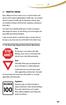 Tr a f f i c S i g n s 7 7. TRAFFIC SIGNS Many collisions and near crashes occur as a result of drivers who ignore or fail to respond appropriately to traffic signs. It is essential that the meaning of
NASHVILLE BICYCLE LAW 3/18/09
 NASHVILLE BICYCLE LAW 3/18/09 12.60.010 Compliance with Title 12 provisions. It is unlawful for any person to do any act prohibited or fail to perform any act required by Title 12 of this code. (Prior
Cycle Safety. Some tips on safer cycling. Údarás Um Shábháilteacht Ar Bhóithre Road Safety Authority
 Cycle Safety Some tips on safer cycling Údarás Um Shábháilteacht Ar Bhóithre Road Safety Authority Be safe For further information on safe cycling, please look at the Rules of the Road website at www.rulesoftheroad.ie
PREVENTABILITY OF MOTOR VEHICLE COLLISIONS
 PREVENTABILITY OF MOTOR VEHICLE COLLISIONS Management and fleet supervisors should establish standards for defensive driving in any type of fleet safety program. The overall performance of the drivers
AAA S GUIDE TO A SAFE
 Credit: ThinkStock SAME ROADS SAME RULES SAME RIGHTS AAA S GUIDE TO A SAFE BIKE RIDE DRIVING A BICYCLE Yes, bicyclists MUST drive their bicycles in the same manner that motorists drive their cars. Most
Beginner s Permit. Survival Guide. Compliments of. (843) 263-5023 www.123drivedrivingacademy.com [email protected]
 Beginner s Permit Survival Guide Compliments of (843) 263-5023 www.123drivedrivingacademy.com [email protected] Please use this study guide to assist you in studying for your written knowledge
These "rules of the road" are based on Texas Transportation Code statutes. Find the complete bicycle code at the bottom of the page
 Texas Bicycle Laws These "rules of the road" are based on Texas Transportation Code statutes. Find the complete bicycle code at the bottom of the page Bicyclists have the rights and duties of other vehicle
City of Kelowna Traffic Management Guide. December 2010
 City of Kelowna Traffic Management Guide December 2010 City of Kelowna Traffic Management Guide December 2010 Prepared by: Urban Systems Ltd. 304-1353 Ellis Street Kelowna, BC V1Y 1Z9 T: (250) 762-2517
SAFE CYCLING GUIDE. 6th Edition
 SAFE CYCLING GUIDE 6th Edition BEFORE SETTING OUT A WELL-MAINTAINED BICYCLE is key A Check tire pressure B Check that the chain does not slip C Check the brakes D Check lights and reflectors: 3 4 1 5 2
Owner/ Operator Hauling Asphalt Flux Dies After Driving into a Ravine and Striking Trees
 Owner/ Operator Hauling Asphalt Flux Dies After Driving into a Ravine and Striking Trees Incident Number: 11KY072 Photograph of semi involved in this incident. Property of KY FACE. Kentucky Fatality Assessment
SAFE CYCLING GUIDE. 7th Edition
 SAFE CYCLING GUIDE 7th Edition BEFORE SETTING OUT A Check tire pressure B Check that the chain does not slip C Check the brakes D Check lights and reflectors: 1 A WELL-MAINTAINED BICYCLE is key 3 4 5 Adjust
PRAIRIE ROSE SCHOOL DIVISION SECTION E: SUPPORT SERVICES (PART 3: TRANSPORTATION)
 EMJ ACCIDENTS INVOLVING SCHOOL BUSES File EMJ The Bus Driver shall immediately verbally inform the Supervisor of Operations who shall call the police to the scene of all accidents involving the school
CITY OF EUREKA POLICE DEPARTMENT GENERAL ORDER 89
 CITY OF EUREKA POLICE DEPARTMENT GENERAL ORDER 89 EFFECTIVE: JANUARY 8, 2011 REVISED: TO: ALL PERSONNEL INDEX AS: TRAFFIC ACCIDENT INVESTIGATION TRAFFIC ACCIDENT REPORTING SUBJECT: TRAFFIC ACCIDENT ACCIDENT
PEDESTRIAN LAWS OF NORTH CAROLINA
 PEDESTRIAN LAWS OF NORTH CAROLINA Under North Carolina law, pedestrians have the right of way at all intersections and driveways. However, pedestrians must act responsibly, using pedestrian signals where
ITARDAInstitute for Traffic Accident
 ITARDAInstitute for Traffic Accident Research and Data Analysis ( 財 ) 交 通 事 故 総 合 分 析 センター ITARDA INFORMATION No. 2011 88APRIL Fatality rate (%) 0 2 4 6 Head-on 0.70% Rear-end 4.7% Rear-end 0.70% Crossing
Bicycle Safety Enforcement Action Guidelines
 Introduction Bicycle Safety Enforcement Action Guidelines People ride bicycles for many different reasons: fitness, recreation, or for transportation. Regardless of the reason for riding, bicyclists young
STATE OF NEW JERSEY HIGHWAY INCIDENT TRAFFIC SAFETY GUIDELINES
 STATE OF NEW JERSEY HIGHWAY INCIDENT TRAFFIC SAFETY GUIDELINES FOR EMERGENCY RESPONDERS VERSION 2 Endorsed by New Jersey Office of the Attorney General Date: July 1, 2014 Acknowledgements New Jersey Career
Operating Vehicle Control Devices
 Module 2 Topic 3 Operating Vehicle Control Devices 1. Identify the vehicle controls in the pictures below: 1. 2. 3. 4. 7. 7. 5. 6. 1. accelerator 2. parking brake 3. foot brake 4. gear shift lever_ 5.
Death in the line of duty...
 F-33 Fire Fighter Fatality Investigation A Summary of a NIOSH fire fighter fatality investigation Death in the line of duty... May 25, 2000 Motor-Vehicle Incident Claims the Life of a Volunteer Fire Fighter
Broward County Public Schools Core Curriculum Department. Driver s Education Basic Driving Skills: Study Guide
 Broward County Public Schools Core Curriculum Department Driver s Education Basic Driving Skills: Study Guide 5 th Edition 2 nd Edition K.C. Wright Administrative Building 600 Southeast Third Avenue Fort
ENGINEERING SOLUTIONS FOR DESIGNING YOUR SAFE ROUTES
 How to Get Started ENGINEERING SOLUTIONS FOR DESIGNING YOUR SAFE ROUTES Design Elements Selecting appropriate design treatments for school neighborhoods creates environments that address the needs of all
Tennessee Traffic Laws Relating to Bicycles A HANDBOOK FOR MOTORISTS & BICYCLISTS
 Tennessee Traffic Laws Relating to Bicycles A HANDBOOK FOR MOTORISTS & BICYCLISTS About the Knoxville Regional Bicycle Program The Knoxville Regional Transportation Planning Organization (TPO) coordinates
211 CMR: DIVISION OF INSURANCE 21 APPENDIX A: TRAFFIC LAW VIOLATIONS. The following abbreviations are used in Appendix A:
 211 CMR: DIVISION OF INSURANCE 21 APPENDIX A: TRAFFIC LAW VIOLATIONS The following abbreviations are used in Appendix A: "M.G.L. c., ", " CMR ", Chapter and Section of the Massachusetts General Laws Code
TEST ON Driving Safely Among Bicyclists and Pedestrians
 TEST ON Driving Safely Among Bicyclists and Pedestrians Next you will take a 16 question test about driving safely among bicyclists and pedestrians. Please take out a sheet of paper to mark down and score
Traffic controllers and speed zones
 Section 8 Traffic controllers and speed zones 8.1 Traffic Controllers 8.1.1 General (AS 4.10.2) (a) Equipment Traffic controllers shall wear approved high visibility clothing and shall control traffic
How To Improve Safety
 Collision Diagrams Collision diagrams are used to display and identify similar accident patterns. They provide information on the type and number of accidents; including conditions such as time of day,
National Traffic Incident Management for Emergency Responders 4H-0
 4H-0 4H-1 NATIONAL TRAFFIC INCIDENT MANAGEMENT (TIM) RESPONDER TRAINING PROGRAM LAW ENFORCEMENT FIRE EMS TRANSPORTATION TOWING & RECOVERY COMMUNICATIONS TEXAS DEPARTMENT OF EMERGENCY MANAGEMENT MAY 19,
The Delivery Hub health, safety and environment Raising the bar 2 Traffic management entry and exit
 Safe roads, reliable journeys, informed travellers The Delivery Hub health, safety and environment Raising the bar 2 Traffic management entry and exit Version I - July 2012 An executive agency for the
Safe Driving Rules & Regulations
 Chapter 4 58 60 61 61 62 62 64 65 Speed Control Passing Keeping to the Right Yielding the Right-of-Way Pedestrians in a Crosswalk Intersections Entering Highways, Parkways and Turnpikes Leaving Highways,
Road Signs Recognition Quiz
 Road Signs Recognition Quiz Place your answer for each of the signs/pavement markings on the answer sheet. Ready to Roll? Here Comes Sign # 1... #1 A No right turn B Right turn only C Warning, no turn
Massachusetts Private Passenger Automobile Statistical Plan Appendix C Traffic Law Violations
 The following abbreviations are used in Appendix C: M.G.L. c., Chapter and Section of the Massachusetts General Laws CMR Code of Massachusetts Regulations The following out-of-state incidents are to be
A Bicyclist s Guide to Traffic Law in Tucson and Pima County. Traffic Laws, Fines and Phone Numbers
 A Bicyclist s Guide to Traffic Law in Tucson and Pima County Traffic Laws, Fines and Phone Numbers This booklet contains a listing of relevant Arizona State, Pima County and City of Tucson laws as of January,
chapter 3 basic driving skills
 chapter 3 basic driving skills When curving to the left, keep the front wheels close to the right edge of the lane to keep your driver s side rear wheels out of the next lane of traffic. Curve ahead slow
FMCSA Webinar Nov.18th to Examine Large Truck Crash Fatalities Involving Pedestrians & Bicyclists. New Technology for Better Fleet Management
 In This Issue: FMCSA Webinar Nov.18th to Examine Large Truck Crash Fatalities Involving Pedestrians & Bicyclists Help Prevent Roadway Accidents involving Pedestrians How to Steer Clear of Accidents with
TRAFFIC MANAGEMENT PLAN
 NATIONAL HIGHWAYS AUTHORITY OF INDIA (Ministry of Road Transport & Highways) Government of India SIX LANING OF CHANDIKHOLE JAGATPUR BHUBANESWAR SECTION OF NH-5 FROM KM 414.000 TO 419.000 AND FROM KM 0.000
U.S. Firefighters Killed when Struck by Vehicles, 2000-2013
 U.S. Firefighters Killed when Struck by Vehicles, 2000-2013 Rita Fahy Fire Analysis and Research Division National Fire Protection Association September 2014 National Fire Protection Association, 1 Batterymarch
GEOMETRIC DESIGN CIVL 3161
 GEOMETRIC DESIGN CIVL 3161 Reading Assignment: p. 45-72 (4 th ed.) p.45-75 (previous ed.) in Mannering textbook. Geometric design of highway facilities deals with the proportion of physical elements of
Chapter 53. Learning Objectives 9/11/2012. Ground and Air Ambulance Operations
 1 Chapter 53 Ground and Air Ambulance Operations 2 Learning Objectives List standards that govern ambulance performance and specifications. Discuss the tracking of equipment, supplies, and maintenance
CHAPTER 2 TRAFFIC SIGNS AND HIGHWAY MARKINGS
 CHAPTER 2 TRAFFIC SIGNS AND HIGHWAY MARKINGS This chapter summarizes traffic signs, signals and road markings that control the flow of traffic, making streets and highways safer for motorists, bicyclists
12 & 15- Passenger Van Defensive Driver Training
 12 & 15- Passenger Van Defensive Driver Training NHTS-national Highway Traffic Safety Administration Recognizes that 12-15 passenger vans (include driver) are similar type vehicle and offer the same hazards
- FREE! - The Official San Francisco BIKE GUIDE. 1st Edition
 - FREE! - The Official San Francisco BIKE GUIDE 1st Edition SF BIKE LAWS SAN FRANCISCO BICYCLISTS MUST: Yield to People Walking Whether they re in a crosswalk or not, ALWAYS yield to people walking. Stop
School Bus Accident Report
 School Bus Accident Report Regardless of severity, the following School Bus Accident Report must be submitted by a school division whenever a school bus is involved in an accident. This report can be submitted
C Grade Licence Examination Written and Oral questions Study Master List
 C Grade Licence Examination Written and Oral questions Study Master List Prior to Examination: Candidates are encouraged to either view the live copy of the current Manual or obtain all amendments to the
Signs, Pavement Markings, and Work Zones. Signs, Pavement Markings, and Work Zones
 Signs, Pavement 3 Signs, Pavement 77 3 Signs, Pavement This chapter includes information on highway signs that are intended to guide and inform you while you are driving. It includes information on the
BICYCLE AND IN-LINE SKATE LAWS ROAD SHARING RESPONSIBILITIES OF BICYCLISTS AND MOTORISTS, REQUIRED EQUIPMENT AND PARENTAL RESPONSIBILITY
 BICYCLE AND IN-LINE SKATE LAWS ROAD SHARING RESPONSIBILITIES OF BICYCLISTS AND MOTORISTS, REQUIRED EQUIPMENT AND PARENTAL RESPONSIBILITY The statutes in this material have been generated from the database
Safety Evidence for Bicycling
 Photo: Boegh (Flickr) Cycling in Cities Research Program School of Population & Public Health The University of British Columbia Faculty of Health Sciences Simon Fraser University Driving near bicyclists
ve been rolling Here, s to you, Oregon riders! You, , s no wonder for longer than you, ve been walking, so it
 THE BICYCLIST S 1 the bicyclist s survival guide ride safely. the way to go. 2 Here, s to you, Oregon riders! You, ve been rolling for longer than you, ve been walking, so it, s no wonder you feel right
New Jersey Bicycle Laws
 39:1-1 Words and phrases defined Right-of-way means the privilege of the immediate use of the highway. Traffic means pedestrians, ridden or herded animals, vehicles, streetcars, and other conveyances either
A Guide to Safe Bicycling in Hawai i
 A Guide to Safe Bicycling in Hawai i Sharing the Road: A Guide to Safe Bicycling in Hawai i What Motorists & Bicyclists Should Know Everyone has the right to be safe on Hawai i s roads. Law of the Splintered
Emergency Responder Safety Institute
 Emergency Responder Safety Institute Cumberland Valley Volunteer Firemen s Association Task Analysis for Emergency Responders at Roadway Incidents Funded By: Department of Homeland Security Assistance
Rockhampton Office Brisbane Office Tarong Site. Barron Gorge Hydro PS Kareeya Hydro PS Mica Creek PS
 Business Procedure Traffic Management Document Number OHS-PROC-130 This document applies to the following sites: All Sites Rockhampton Office Brisbane Office Tarong Site Barron Gorge Hydro PS Kareeya Hydro
STANDARD OPERATING PROCEDURES. Rapidly establish triage, treatment and transportation of multiple field casualties.
 EMERGENCY MEDICAL SERVICE SOP #: Category: Mass Casualty Incidents Date: January 1, 2010 I. Purpose: STANDARD OPERATING PROCEDURES Rapidly establish triage, treatment and transportation of multiple field
TEMPORARY TRAFFIC CONTROL SAFETY
 TEMPORARY TRAFFIC CONTROL SAFETY BASIC PRINCIPLES OF WORK ZONE TRAFFIC MANAGEMENT Temporary traffic control zone safety has become an area of national concern as awareness of risk to workers, pedestrians,
School Bus Accident Report Form
 School Bus Accident Report Form Regardless of severity, a School Bus Accident Report Form must be submitted by a school division whenever a school bus is involved in an accident. Please complete the following
Pedestrian/Car Accident
 Pedestrian/Car Accident by Frank Owen, Alpha Omega Engineering, Inc. (www.aoengr.com), all rights reserved August 2012 This example is taken from the book Technische Analyse von Verkehrsunfällen anhand
What Every Driver Must Know Review Assignment
 What Every Driver Must Know Review Assignment 1. Who is the Michigan Secretary of State? What services does the Secretary of State office offer? What days and hours is your local Secretary of State branch
Teaching Your Teen to Drive
 MetLife Auto & Home Teaching Your Teen to Drive Without driving each other crazy! Dear Parent/Guardian, One of the best ways for you to influence your teen s driving habits is to sit in the copilot seat
GENIUS DMV. cheat sheets QUESTION 1 QUESTION 2 QUESTION 3 QUESTION 4. 2 Driving-Tests.org. All Rights Reserved.
 DMV GENIUS cheat sheets QUESTION 1 QUESTION 2 QUESTION 3 QUESTION 4 are a pair of white or longitudinal lines that mark where pedestrians are permitted to walk. Crosswalk lines Crosswalk lines are a pair
GENERAL KNOWLEDGE PRACTICE TEST
 GENERAL KNOWLEDGE PRACTICE TEST 1. Driving under the influence of any drug that makes you drive unsafely is: a. Permitted if it is prescribed by a doctor b. Against the law c. Permitted if it is a diet
PART I TRAFFIC VIOLATIONS
 PART I TRAFFIC VIOLATIONS A. MOTOR VEHICLE STATUTES N.J.S.A. 39:3-4 Driving or parking unregistered motor vehicle 39:3-9a Failure to notify change in name $22 39:3-9a Failure to endorse license $42 39:3-10
EMERGENCY RESPONSE PROCEDURES FOR FIRE APPARATUS, MEDIC UNITS AND OTHER OFD VEHICLES
 Standard Operating Guidelines APPARATUS 1-0 EMERGENCY RESPONSE PROCEDURES FOR FIRE APPARATUS, MEDIC UNITS AND OTHER OFD VEHICLES GENERAL The driving skills needed to properly operate an emergency vehicle
GENERAL GUIDE FOR WORKPLACE TRAFFIC MANAGEMENT
 1 This General Guide provides information on how to manage traffic risks at a workplace. It is supported by specific guidance material on traffic management for shopping centres, construction workplaces,
CHAPTER 2B. REGULATORY SIGNS
 December 2000 Page 2B-1 CHAPTER 2B. REGULATORY SIGNS Section 2B.01 Application of Regulatory Signs Regulatory signs shall be used to inform road users of selected traffic laws or regulations and indicate
DRIVING TEST POSSIBLE QUESTIONS & ANSWERS.
 DRIVING TEST POSSIBLE QUESTIONS & ANSWERS. Question 1. What shape and colour is a warning sign? Diamond Shape - Yellow and Black Question 2. When should you not drive? While under the influence of alcohol,
GUIDELINES FOR MOVEMENT OVER SOUTH CAROLINA HIGHWAYS OF OVERSIZE AND OVERWEIGHT VEHICLES AND LOADS
 GUIDELINES FOR MOVEMENT OVER SOUTH CAROLINA HIGHWAYS OF OVERSIZE AND OVERWEIGHT VEHICLES AND LOADS Statutory Authority: Section 56-5-4010 through 56-5-4230 and 57-3-130 through 57-3-160 A. Implements of
City of Philadelphia Vehicle Crash Report Form Supervisor review instruction sheet
 City of Philadelphia Vehicle Crash Report Form Supervisor review instruction sheet This document provides instructions for completing a review of the Vehicle Crash Report Form. A thorough review of the
DEFENSIVE DRIVING. It s an Attitude
 DEFENSIVE DRIVING It s an Attitude RLI Design Professionals Design Professionals Learning Event DPLE 155 July 15, 2015 RLI Design Professionals RLI Design Professionals is a Registered Provider with The
Model Fleet Safety Program Short
 TM Model Fleet Safety Program Short CORPORATE HEADQUARTERS 518 EAST BROAD STREET COLUMBUS, OHIO 43215 614.464.5000 STATEAUTO.COM TM Disclaimer: The information contained in this publication was obtained
GUIDELINES. for oversize and overmass vehicles and loads MAY 2006. Government of South Australia. Department for Transport, Energy and Infrastructure
 ESCORTING GUIDELINES ESCORTING GUIDELINES SCORTING GUIDELINES ESCORTING GUIDELINES ESCORTING ESCORTING GUIDELINES for oversize and overmass vehicles and loads Government of South Australia Department for
Workplace Transport Safety Reversing Vehicles Information Sheet What are the dangers associated with reversing vehicles? Why is reversing a problem?
 Workplace Transport Safety Reversing Vehicles Information Sheet This information sheet aims to raise awareness of the dangers caused by reversing vehicles in the workplace. It provides basic information,
CHART OF MOVING VIOLATIONS
 CHART OF MOVING VIOLATIONS The following chart lists the moving violations that are designated by the Texas Department of Public Safety pursuant to statutory authority. The violations listed are subject
Vehicles travelling in the same direction on the same roadway. Vehicles travelling in the same direction in 2 different lanes of traffic
 Cases 1 to 3 Vehicles travelling in the same direction on the same roadway Cases 4 to 6 Vehicles travelling in the same direction in 2 different lanes of traffic Case 7 Vehicles travelling in opposite
Department of Transport. Cycling Rules
 Department of Transport Cycling Rules 2 Contents Definition of a bicycle Standard requirements Power-assisted pedal cycles Carrying or towing loads The rider, passenger and helmets Rules affecting cycling
The partnership has selected three intersections where enforcement, education, and engineering initiatives are being implemented to improve safety:
 Hamilton-Finn Suite 310 Tel. (403) 207-6000 Road Safety 3016 5th Avenue N.E. Fax. (403) 273-3440 Consultants Ltd. Calgary, Alberta dawatt.dawatt.com www.hamiltonfinn.ca January 19, 2005 Mr. Don Szarko,
Virginia Commonwealth University Police Department
 Virginia Commonwealth University Police Department SECTION NUMBER CHIEF OF POLICE EFFECTIVE REVIEW DATE 8 3 4/5/2013 6/1/2014 SUBJECT CRASH INVESTIGATIONS AND REPORTING GENERAL It is the policy of the
SAMPLE VEHICLE FLEET SAFETY & USAGE POLICY
 SAMPLE VEHICLE FLEET SAFETY & USAGE POLICY Policy The purpose of this policy is to ensure the safety of those individuals who drive company vehicles and to provide guidance on the proper use of company