
Spine Evaluation. Copyright 2004, Yoshiyuki Shiratori. All right reserved.
|
|
|
- Ambrose Fowler
- 10 years ago
- Views:
Transcription
1 Spine Evaluation 1. History Chief Complaint: A. What happened? B. Is it a sharp or dull pain? C. How long have you had the pain? D. Can you pinpoint the pain? E. Do you have any numbness or tingling? Mechanism: A. How did it happen? B. What was felt or heard? Previous History: A. Have you injured this before? 2. Observation Swelling Discoloration Posture A. Scoliosis: Lateral or S curvature of the spine B. Lordosis: Frontal curvature of the lumbar spine C. Kyphosis: Also called Gibbus deformity. Posterior curvature of the upper thoracic spine Skin markings A. Lipomata: Fatty masses appearing on the skin. B. Hair Patch: Called Faun s Beard. Sign of underlying spina bifida occulata C. Café au Lait Spots: Darkened patches of skin. Sign of underlying collagen disease of a connective tissue Gait (e.g. Lurches, Steppage) General appearance A. Muscle tone B. Scares C. Leg length (true and apparent) 3. Check the bone for fracture Proper location and palpation A. Vertebrae (spinous processes and facets) 7 Cervical vertebrae Fx and dx spinous pain, muscle spasm, bilateral sensory deficits, motor weakness, paralysis Usually caused by headfirst contact 12 Thoracic Vertebrae 5 Lumbar Vertebrae Spondylosis: Bony defect in line (stress fx of the transverse process, no slippage)

2 Spondylolisthesis: Forward slippage of one vertebrae on another Usually at L4/L5 or L5/S1 5 Sacral Vertebrae (fused) 4 Coccygeal (fused) Coccydynia: Painful coccyx Surface Landmarks on the back Vertebra Bony Landmark C2 One finger s breadth inferior to the mastoid process C6 Posterior to the cricoid cartilage C7 and T1 Prominent spinous processes in neck T2 Top of scapula T4 Base of spine of scapula T12 Lowest floating rib L4 Top of iliac crest L5 Demarcated by bilateral dimples S2 Level of PSIS (From: Sports Injury Management 2 rd Ed.) 4. Check the ligaments Supraspinal: Between each vertebrae Ligamentum nuchae Ligamentum flavum 5. Check the soft tissue and muscle tendons Scalene Sternocleidomastoid Trapezius Latissimus Dorsi Rhomboid Erector Spinae Quadratus Lumborum Internal Obliques External Obliques Rectus Abdominus 6. Compare ROM Compare bilaterally Stabilize the proper area AROM A. Lumbar Flexion Bend forward Have the athlete slide their hands down their thigh B. Lumbar Extension Place one hand on their back and ask the athlete look toward the ceiling

3 C. Trunk Lateral Bending Stabilize the iliac crest and lean to the left/right while they slide their hand down their leg D. Trunk Rotation Stabilize the iliac crest with one hand and have the athlete to look over their shoulder E. Neck Flexion Should be able to touch their chin. Watch for smoothness of motion F. Neck Extension Should be able to look at the ceiling. Watch for smoothness of motion G. Neck Lateral Bending Should be able to tilt their head about 45º H. Neck Rotation Should be able to move to the line of the shoulder Torticollis limited ROM PROM: Perform the same motion as AROM 7. Resistive ROM Stabilize the proper area Compare bilaterally, starting with the non injured ankle Performed both concentric and eccentric tests A. Trunk Flexion Athlete is supine Have the athlete do a crunches/ sit ups B. Trunk Extension Athlete is prone Stabilize the leg and have the athlete do a back extension against gravity C. Trunk Lateral Bending Athlete lays on the side Stabilize the leg and lift body up against gravity D. Trunk Rotation Stabilize at the iliac crest Pressure against the opposite posterior shoulder E. Neck Flexion Pressure against the forehead F. Neck Extension Pressure against back of the head G. Neck Lateral Bending Stabilize the opposite shoulder Pressure against the side of the head H. Neck Rotation Stabilize the opposite shoulder Pressure against the side of the head 8. Orthopedic Special Tests (Lumbar/Thoracic Spine)

4 Test for disk herniation A. Valsalva Maneuver This test assesses for a herniated disk or other intrathecal lesion in the spinal canal Position: Athlete is sitting Procedure: Have the athlete take a deep breath Bear down as if they were trying to move their bowels Blow into a closed fist Positive sign: Pain in the spinal cord by the herniation This test is also done for cervical herniation Test for neuropathy A. Straight Leg Raise Test This test assesses sciatic nerve irritation Position: Athlete is supine Hand placement: Support the foot around the calcaneus Procedure: Passively flexed the athlete s hip (knee is in full extension) until pain or discomfort is felt. Slowly lower the leg to release pain. Then dorsiflex their leg Positive sign: Dorsiflexion eliciting pain Pain with hip flexion indicates tight hamstring B. Well Straight Leg Raise Test This test is used to identify a disc herniation Position: Athlete is supine Hand placement: Support the foot around the calcaneus Procedure: Passively flex the hip as in the SLR test. Just perform on the uninvolved side Positive sign: Increased pain on the involved side C. Babinski Test This test is used to identify an upper motor neuron lesion Procedure: Using a blunt object (e.g. pen light, end of a reflex hammer), run the object on the plantar aspect of the foot, starting from the calcaneus along the lateral border to the forefoot. Positive sign: Great toe extension and flexion of digits 2-5 D. Oppenheim Test This test is used to identify an upper motor neuron lesion Procedure: Run your fingernail or an object along the crest of the athlete s tibia Positive sign: Same reaction as Babinski

5 E. Kernig- Brudzinski Test This test is to determine nerve root irritation, meningeal irritation, or dural irritation. This test is a combination of two tests, Kernig s and Brudzinski Position: Athlete is supine with their hands behind their neck and leg extended Procedure: Have the athlete flex their neck (Kernig s Test). Then have them flex their hip with knee extended (Brudzinski Test). Once pain is felt, have the athlete flex their knee Positive sign: Cervical pain disappears with knee flexion Pain in the lower back or down the leg indicates a meningeal or dural irritaion F. Bowstring Test This test is used to identify compression or tension of the sciatic nerve Position: Athlete is supine Hand placement: Same as SLR test Procedure: Perform at SLR test until pain or discomfort is felt. Flex the knee to relieve pain, and apply pressure at the popliteal fosssa Positive sign: Pain in the popliteal fosssa G. Hoover Test This test helps to determine if the athlete is malingering (faking an injury) when they state that they cannot raise their leg Position: Athlete is supine Hand placement: Place one hand under each heel and lift their leg slightly off the table Procedure: Have the athlete to lift up one of their leg Negative sign: Should feel a downward pressure on the opposite heel. If you don t feel any pressure the person is NOT TRYING! Test for vertebral defects A. Stork Standing Test (Spondylolisthesis Test) This test assesses a pars fracture Position: Athlete is standing on one leg Procedure: While balancing, have the athlete extend their spine back ward. Repeat test on the other side. Positive sign: Pain in the back If the pain is felt on one leg, the fracture might be unilateral Test for joint instability A. Spring Test This test determines if the pain is from the SI joint Position: Athlete is prone with rolled towel underneath the ASIS Hand placement: Place one hand over the apex of the sacrum, and the other hand on top of the other

6 Procedure: Apply downward pressure Positive sign: Increase pain Perform other SI test if it is positive 9. Orthopedic Special Test (Cervical Spine) Test for nerve root compression A. Cervical Compression Test This test is used to differentiate a nerve root compression and a soft tissue injury Position: Athlete is sitting with the neck in a neutral position Hand placement: Both hands on top of the athlete s head Procedure: Apply downward pressure Positive sign: Pain refers down the arm B. Spurling s Test Same as compression test. Usually done after the compression test is negative Position: Athlete is sitting, with their neck in extension and rotation to the involved side Hand placement: Same as compression test Procedure: Apply downward pressure Positive sign: Pain refers down the arm If the pain in the neck is without radiation soft tissue pain C. Cervical Distraction Test This test will confirm suspicion of a nerve root compression Position: Athlete is sitting Hand placement: One hand at the base of the skull and the other hand under the chin Procedure: Apply gradual upward force Positive sign: Symptoms subside D. Shoulder Depression Test This test determines a brachial plexus stretch Position: Athlete is sitting Hand placement: One hand stabilizes the shoulder, while the other hand is placed on the side of the head on the involved side Procedure: Passively lateral bend the neck to the uninvolved side Positive sign: Elicit pain or other symptoms Test for brachial plexus neuropathy A. Brachial Plexus Tension Test This test assesses upper limb tension Position: Athlete is seated Procedure: Hold the elbow for stabilization

7 (1) Have the athlete abducts the arm with the elbow extended, stopping just short of the onset of the symptoms (2) Externally rotate the shoulder just short of symptoms (3) Flex their elbow so that the hands lie behind the head Positive sign: Recreating the pain, numbness, or tingling along the arm B. Tinel s Sign (brachial plexus) This test assesses the pathology of the brachial plexus Position: Athlete is sitting with neck in slight flexion Procedure: Tap the transverse process Positive sign: Reproduction of the symptoms Test neurovascular dysfunction A. Vertebral Artery Test This test assesses the compression of the vertebral artery Position: Athlete is supine or sitting. If supine, have the athlete s head at the edge of the table Procedure: Passively move the athlete s head in extension, lateral bending, and rotation to the involved side Positive sign: Dizziness (nystagmus), lateral movement of the eye Neurological Tests A. Reflexes Biceps Brachii Tendon Reflex Brachioradialis Tendon Reflex Triceps Tendon Reflex (** We will cover these reflexes on Shoulder or elbow eval) Achilles Tendon Reflex Patellar Tendon Reflex Hamstring Tendon Reflex B. Dermatomes (For Brachial Plexus)

8 (For Lumbar Plexus) (From: Assessment of Athletic Injury) C. Myotomes Lower extremity look at foot and ankle eval Upper extremity we will cover it in shoulder or elbow eval

SPINE. Postural Malalignments 4/9/2015. Cervical Spine Evaluation. Thoracic Spine Evaluation. Observations. Assess position of head and neck
 SPINE Observations Body type Postural alignments and asymmetries should be observed from all views Assess height differences between anatomical landmarks Figure 25-9 Figure 25-10 Figure 25-11 & 12 Postural
How to Get and Keep a Healthy Back. Amy Eisenson, B.S. Exercise Physiologist
 How to Get and Keep a Healthy Back Amy Eisenson, B.S. Exercise Physiologist Lesson Objectives Statistics of Back Pain Anatomy of the Spine Causes of Back Pain Four Work Factors Core Muscles Connection
SAMPLE WORKOUT Full Body
 SAMPLE WORKOUT Full Body Perform each exercise: 30 secs each x 2 rounds or 2-3 sets of 8-12 reps Monday & Wednesday or Tuesday & Thursday Standing Squat Muscles: glutes (butt), quadriceps (thigh) Stand
International Standards for the Classification of Spinal Cord Injury Motor Exam Guide
 C5 Elbow Flexors Biceps Brachii, Brachialis Patient Position: The shoulder is in neutral rotation, neutral flexion/extension, and adducted. The elbow is fully extended, with the forearm in full supination.
Spine Anatomy and Spine General The purpose of the spine is to help us stand and sit straight, move, and provide protection to the spinal cord.
 Spine Anatomy and Spine General The purpose of the spine is to help us stand and sit straight, move, and provide protection to the spinal cord. Normal List Kyphosis The human spine has 7 Cervical vertebra
The Essential Lower Back Exam
 STFM National Convention 2011 New Orleans The Essential Lower Back Exam Judith A. Furlong, M.D., Cathee McGonigle, D.O. & Rob Rutherford, MD Objectives Brief review of the anatomy of the back, (hip and
Range of Motion. A guide for you after spinal cord injury. Spinal Cord Injury Rehabilitation Program
 Range of Motion A guide for you after spinal cord injury Spinal Cord Injury Rehabilitation Program This booklet has been written by the health care providers who provide care to people who have a spinal
MET: Posterior (backward) Rotation of the Innominate Bone.
 MET: Posterior (backward) Rotation of the Innominate Bone. Purpose: To reduce an anterior rotation of the innominate bone at the SI joint. To increase posterior (backward) rotation of the SI joint. Precautions:
CHAPTER 3: BACK & ABDOMINAL STRETCHES. Standing Quad Stretch Athletic Edge - www.athleticedge.biz - (650) 815-6552
 CHAPTER : BACK & ABDOMINAL STRETCHES Standing Quad Stretch ) Stand and grasp right ankle with same hand, use a wall or chair to Lower maintain Back balance with left hand. Maintain an upright Stretches
Avoid The Dreaded Back Injury by Proper Lifting Techniques
 Avoid The Dreaded Back Injury by Proper Lifting Techniques If you ve ever strained your back while lifting something, you ll know the importance of lifting safely. Agenda Introduction About the Back The
Integrated Low Back Examination
 Integrated Low Back Examination William Thomas, DO, VCOM PPC/OMM Internal Medicine, Pediatrics and Sports Medicine October 2015 Special thanks and appreciation to Mark Rogers, DO Objectives Utilize history
Spine Injury and Back Pain in Sports
 Spine Injury and Back Pain in Sports DAVID W. GRAY, MD 1 Back Pain Increases with Age Girls>Boys in Teenage years Anywhere from 15 to 80% of children and adolescents have back pain depending on the studies
Cervicothoracic Mobility Exercises
 Cervicothoracic Mobility Exercises Upper Cervical Mobility Exercises... 2 Lower Cervical Mobility Exercises... 3 Cervicothoracic Junction Mobility Exercises... 4 1 st Rib Mobility Exercises... 5 Cervical
by joseph e. muscolino, DO photography by yanik chauvin
 by joseph e. muscolino, DO photography by yanik chauvin body mechanics palpation of the anterior neck ESOUCES For more information go to www.medlineplus.gov and search under anterior neck. The anterior
Injury Prevention for the Back and Neck
 Injury Prevention for the Back and Neck www.csmr.org We have created this brochure to provide you with information regarding: Common Causes of Back and Neck Injuries and Pain Tips for Avoiding Neck and
OVERVIEW. NEUROSURGICAL ASSESSMENT CERVICAL PROBLEMS Dirk G. Franzen, M.D. WHAT IS THE MOST IMPORTANT PART OF THE PHYSICAL EXAM?
 NEUROSURGICAL ASSESSMENT CERVICAL PROBLEMS Dirk G. Franzen, M.D. Neurological Surgery Bluegrass Orthopaedics and Hand Care OVERVIEW SCOPE OF THE PROBLEM PREVALENCE PATHOLOGY ANATOMIC CONSIDERATIONS ASSESSMENT
A Patient s Guide to Diffuse Idiopathic Skeletal Hyperostosis (DISH)
 A Patient s Guide to Diffuse Idiopathic Skeletal Hyperostosis (DISH) Introduction Diffuse Idiopathic Skeletal Hyperostosis (DISH) is a phenomenon that more commonly affects older males. It is associated
Anatomy of the Spine. Figure 1. (left) The spine has three natural curves that form an S-shape; strong muscles keep our spine in alignment.
 1 2 Anatomy of the Spine Overview The spine is made of 33 individual bony vertebrae stacked one on top of the other. This spinal column provides the main support for your body, allowing you to stand upright,
X-Plain Neck Exercises Reference Summary
 X-Plain Neck Exercises Reference Summary Introduction Exercising your neck can make it stronger, more flexible and reduce neck pain that is caused by stress and fatigue. This reference summary describes
Massage and Movement
 Massage and Movement Incorporating Movement into Massage Part One: Theory and Technique in Prone With Lee Stang, LMT NCBTMB #450217-06 1850 West Street Southington, CT 06489 860.747.6388 www.bridgestohealthseminars.com
Spine Conditioning Program Purpose of Program
 Prepared for: Prepared by: OrthoInfo Purpose of Program After an injury or surgery, an exercise conditioning program will help you return to daily activities and enjoy a more active, healthy lifestyle.
Range of Motion Exercises
 Range of Motion Exercises Range of motion (ROM) exercises are done to preserve flexibility and mobility of the joints on which they are performed. These exercises reduce stiffness and will prevent or at
The cervical spine has three functions: supporting the head, allowing for the head s ROM and housing the spinal cord (Fig. 2.1).
 F10001-Ch02.qxd 4/7/06 9:04 AM Page 11 Spine 2 THE CERVICAL SPINE AND NECK The cervical spine has three functions: supporting the head, allowing for the head s ROM and housing the spinal cord (Fig. 2.1).
McMaster Spikeyball Therapy Drills
 BODY BLOCKS In sequencing Breathing and Tempo Flexibility / Mobility and Proprioception (feel) Upper body segment Middle body segment Lower body segment Extension / Static Posture Office / Computer Travel
Passive Range of Motion Exercises
 Exercise and ALS The physical or occupational therapist will make recommendations for exercise based upon each patient s specific needs and abilities. Strengthening exercises are not generally recommended
Sheet 1A. Treating short/tight muscles using MET. Pectorals. Upper trapezius. Levator scapula
 Sheet 1A Treating short/tight muscles using MET Pectorals Once daily lie at edge of bed holding a half-kilo can, arm out sideways. Raise arm and hold for 10 seconds, then allow arm to hang down, stretching
Info. from the nurses of the Medical Service. LOWER BACK PAIN Exercise guide
 Info. from the nurses of the Medical Service LOWER BACK PAIN Exercise guide GS/ME 03/2009 EXERCISE GUIDE One of the core messages for people suffering with lower back pain is to REMAIN ACTIVE. This leaflet
Lumbar/Core Strength and Stability Exercises
 Athletic Medicine Lumbar/Core Strength and Stability Exercises Introduction Low back pain can be the result of many different things. Pain can be triggered by some combination of overuse, muscle strain,
Screening Examination of the Lower Extremities BUY THIS BOOK! Lower Extremity Screening Exam
 Screening Examination of the Lower Extremities Melvyn Harrington, MD Department of Orthopaedic Surgery & Rehabilitation Loyola University Medical Center BUY THIS BOOK! Essentials of Musculoskeletal Care
DSM Spine+Sport - Mobility
 To set yourself up for success, practice keeping a neutral spine throughout all of these movements. This will ensure the tissue mobilization is being applied to the correct area, and make the techniques
Case Studies Updated 10.24.11
 S O L U T I O N S Case Studies Updated 10.24.11 Hill DT Solutions Cervical Decompression Case Study An 18-year-old male involved in a motor vehicle accident in which his SUV was totaled suffering from
Contact your Doctor or Nurse for more information.
 A spinal cord injury is damage to your spinal cord that affects your movement, feeling, or the way your organs work. The injury can happen by cutting, stretching, or swelling of the spinal cord. Injury
Colossus Important Diagnoses. Instructions for How to List Diagnoses
 1 Colossus Important Diagnoses Instructions for How to List Diagnoses 1. Only list diagnoses on HCFA-1500 or CMS-1500 billing forms 2. Use as many billing forms/pages as necessary (4 diagnoses per billing
NETWORK FITNESS FACTS THE HIP
 NETWORK FITNESS FACTS THE HIP The Hip Joint ANATOMY OF THE HIP The hip bones are divided into 5 areas, which are: Image: www.health.com/health/static/hw/media/medical/hw/ hwkb17_042.jpg The hip joint is
Don t. Hamstrings. Calf Muscles. both legs 2-3 times. stretch is felt in the back of the calf. Repeat with both legs 2-3 times.
 Remember to: Warm-up your muscles first before stretching (e.g. stretch after walking). Stretch until you feel mild discomfort, not pain. Never bounce or force a stretch. Hold the stretch for 10-30 seconds
MD 2016. Back Muscles & Movements Applied Anatomy. A/Prof Chris Briggs Anatomy & Neuroscience
 MD 2016 Back Muscles & Movements Applied Anatomy A/Prof Chris Briggs Anatomy & Neuroscience WARNING This material has been provided to you pursuant to section 49 of the Copyright Act 1968 (the Act) for
If you or a loved one have suffered because of a negligent error during spinal surgery, you will be going through a difficult time.
 If you or a loved one have suffered because of a negligent error during spinal surgery, you will be going through a difficult time. You may be worried about your future, both in respect of finances and
The Reflex Arc and Reflexes Laboratory Exercise 28
 The Reflex Arc and Reflexes Laboratory Exercise 28 Background A reflex arc represents the simplest type of nerve pathway found in the nervous system. This pathway begins with a receptor at the dendrite
Lumbar Back Pain in Young Athletes
 Lumbar Back Pain in Young Athletes MS CAQ in Sports Medicine Blair Orthopedics Altoona, PA OMED 2012 San Diego CA AOASM Tuesday October 9 th 1:00pm Lumbar Back Pain in Learning ObjecKves Epidemiology Anatomy
Return to same game if sx s resolve within 15 minutes. Return to next game if sx s resolve within one week Return to Competition
 Assessment Skills of the Spine on the Field and in the Clinic Ron Burke, MD Cervical Spine Injuries Sprains and strains Stingers Transient quadriparesis Cervical Spine Injuries Result in critical loss
Cardiac Rehab Program: Stretching Exercises
 Cardiac Rehab Program: Stretching Exercises Walk around the room, step side to side, ride a bike or walk on a treadmill for at least 5 minutes to warm up before doing these stretches. Stretch warm muscles
by Ellen Saltonstall and Dr. Loren Fishman
 10 Yoga Poses for Low Back Pain Prevention by Ellen Saltonstall and Dr. Loren Fishman Introduction This series of poses is designed to prevent future back pain and also to relieve back pain that you may
LOW BACK PAIN EXAMINATION
 LOW BACK PAIN EXAMINATION John Petty, M.D. Medical Director Department of Physical Medicine & Rehabilitation Kettering Medical Center February 8, 2014 PRE-TEST QUESTION What part of the low back physical
Thoracic Spine Anatomy
 A Patient s Guide to Thoracic Spine Anatomy 228 West Main, Suite C Missoula, MT 59802 Phone: [email protected] DISCLAIMER: The information in this booklet is compiled from a variety of sources.
A Syndrome (Pattern) Approach to Low Back Pain. History
 A Syndrome (Pattern) Approach to Low Back Pain Hamilton Hall MD FRCSC Professor, Department of Surgery, University of Toronto Medical Director, CBI Health Group Executive Director, Canadian Spine Society
Information on the Chiropractic Care of Lower Back Pain
 Chiropractic Care of Lower Back Pain Lower back pain is probably the most common condition seen the the Chiropractic office. Each month it is estimated that up to one third of persons experience some type
Human Anatomy & Physiology
 PowerPoint Lecture Slides prepared by Barbara Heard, Atlantic Cape Community College Ninth Edition Human Anatomy & Physiology C H A P T E R 7 The Skeleton: Part B Annie Leibovitz/Contact Press Images Vertebral
CERVICAL DISC HERNIATION
 CERVICAL DISC HERNIATION Most frequent at C 5/6 level but also occur at C 6 7 & to a lesser extent at C4 5 & other levels In relatively younger persons soft disk protrusion is more common than hard disk
Objectives. Spinal Fractures: Classification Diagnosis and Treatment. Level of Fracture. Neuro exam Muscle Grading
 Objectives Spinal Fractures: Classification Diagnosis and Treatment Johannes Bernbeck,, MD Review and apply the understanding of incidence and etiology of VCF. Examine conservative and operative management
Psoas Syndrome. The pain is worse from continued standing and from twisting at the waist without moving the feet.
 Psoas Syndrome The iliopsoas muscle is a major body mover but seldom considered as a source of pain. Chronic lower back pain involving the hips, legs, or thoracic regions can often be traced to an iliopsoas
Flexibility Assessment and Improvement Compiled and Adapted by Josh Thompson
 Flexibility Assessment and Improvement Compiled and Adapted by Josh Thompson Muscles must have a full and normal range of motion in order for joints and skeletal structure to function properly. Flexibility
THE BENJAMIN INSTITUTE PRESENTS. Excerpt from Listen To Your Pain. Assessment & Treatment of. Low Back Pain. Ben E. Benjamin, Ph.D.
 THE BENJAMIN INSTITUTE PRESENTS Excerpt from Listen To Your Pain Assessment & Treatment of Low Back Pain A B E N J A M I N I N S T I T U T E E B O O K Ben E. Benjamin, Ph.D. 2 THERAPIST/CLIENT MANUAL The
Lower Back Pain HealthshareHull Information for Guided Patient Management
 HealthshareHull Information for Guided Patient Management Index Introduction 2 Lumbar spine anatomy 2 What is lower back pain? 3 Conditions that may be causing your back pain 3 When should I see my doctor?
Ken Ross BSc ST, Nat Dip ST
 Ken Ross BSc ST, Nat Dip ST Trunk Most people will suffer from back pain at some point in their lives. Good spinal posture places minimal strain on the muscles which maintain the natural curve of the spine
Dermatomes and Myotomes
 Dermatomes and Myotomes C1 C2 C3 C4 C5 C6 C7 C8 T1 Upper Cervical Flexion Upper Cervical Extension Cervical Lateral Flexion Shoulder Girdle Elevation Shoulder Abduction Elbow Flexion Elbow Extension Thumb
The Anatomy of Spinal Cord Injury (SCI)
 The Anatomy of Spinal Cord Injury (SCI) What is the Spinal Cord? The spinal cord is that part of your central nervous system that transmits messages between your brain and your body. The spinal cord has
Anatomy and Physiology 121: Muscles of the Human Body
 Epicranius Anatomy and Physiology 121: Muscles of the Human Body Covers upper cranium Raises eyebrows, surprise, headaches Parts Frontalis Occipitalis Epicranial aponeurosis Orbicularis oculi Ring (sphincter)
Lumbar Spine Anatomy. eorthopod.com 228 West Main St., Suite D Missoula, MT 59802-4345 Phone: 406-721-3072 Fax: 406-721-2619 info@eorthopod.
 A Patient s Guide to Lumbar Spine Anatomy 228 West Main St., Suite D Missoula, MT 59802-4345 Phone: 406-721-3072 Fax: 406-721-2619 [email protected] DISCLAIMER: The information in this booklet is compiled
Is Your Neck Or Back Pain Caused By A Herniated Disc?
 Is Your Neck Or Back Pain Caused By A Herniated Disc? The bones in your spine are called the vertebrae. The vertebrae are held together and in place by ligaments and small discs that act as shock absorbers.
IMPAIRMENT RATING 5 TH EDITION MODULE II
 IMPAIRMENT RATING 5 TH EDITION MODULE II THE SPINE AND ALTERATION OF MOTION SEGMENT INTEGRITY (AOMSI) PRESENTED BY: RONALD J. WELLIKOFF, D.C., FACC, FICC In conjuction with: The chapter on the spine includes
SPINE, LOWER EXTREMITY, AND PELVIC IMPAIRMENT SECTION
 SPINE, LOWER EXTREMITY, AND PELVIC IMPAIRMENT SECTION Lev.II Curriculum Rev. 6/09 99 OBJECTIVES FOR SPINAL, LOWER EXTREMITY, AND PELVIC IMPAIRMENT RATING SECTION 1. Demonstrate ability to properly measure
THE LUMBAR SPINE (BACK)
 THE LUMBAR SPINE (BACK) At a glance Chronic back pain, especially in the area of the lumbar spine (lower back), is a widespread condition. It can be assumed that 75 % of all people have it sometimes or
General Guidelines. Neck Stretch: Side. Neck Stretch: Forward. Shoulder Rolls. Side Stretch
 Stretching Exercises General Guidelines Perform stretching exercises at least 2 3 days per week and preferably more Hold each stretch for 15 20 seconds Relax and breathe normally Stretching is most effective
Basic techniques of pulmonary physical therapy (I) 100/04/24
 Basic techniques of pulmonary physical therapy (I) 100/04/24 Evaluation of breathing function Chart review History Chest X ray Blood test Observation/palpation Chest mobility Shape of chest wall Accessory
L5 S1 Extruded Disc Relieved with Cox Technic Decompression Spinal Adjusting
 1 L5 S1 Extruded Disc Relieved with Cox Technic Decompression Spinal Adjusting submitted by Joseph d'angiolillo DC 11 Clyde Road, Suite 103 Somerset, NJ 08873 (732) 873 2222 This is a case study of a patient
Cervical Exercise: How important is it? What can be done? The Backbone of Spine Treatment. North American Spine Society Public Education Series
 Cervical Exercise: The Backbone of Spine Treatment How important is it? What can be done? North American Spine Society Public Education Series Important: If you have had an accident that started your neck
Spinal Exercise Program/Core Stabilization Program Adapted from The Spine in Sports: Robert G. Watkins
 Spinal Exercise Program/Core Stabilization Program Adapted from The Spine in Sports: Robert G. Watkins Below is a description of a Core Stability Program, designed to improve the strength and coordination
Neck Pain HealthshareHull Information for Guided Patient Management
 HealthshareHull Information for Guided Patient Management Index Introduction 2 The neck (cervical spine) anatomy 2 What are the common types of neck pain? 3 What are the common symptoms associated with
Low Back Injury in the Industrial Athlete: An Anatomic Approach
 Low Back Injury in the Industrial Athlete: An Anatomic Approach Earl J. Craig, M.D. Assistant Professor Indiana University School of Medicine Department of Physical Medicine and Rehabilitation Epidemiology
Chapter 12 The Trunk and Spinal Column
 Chapter 12 The Trunk and Spinal Column Manual of Structural Kinesiology R.T. Floyd, EdD, ATC, CSCS Vertebral Abdominal 24 31 most column complex some intricate & complex articulating vertebrae do pairs
TWO CONTRASTING CASES OF SCIATIC RADICULOPATHY: ONE WITH NORMAL MRI AND ONE WITH A FREE FRAGMENT. WHAT S A CHIROPRACTOR TO DO?
 Cox Case Report #59 by Dr. James Cox published 4/08 1 TWO CONTRASTING CASES OF SCIATIC RADICULOPATHY: ONE WITH NORMAL MRI AND ONE WITH A FREE FRAGMENT. WHAT S A CHIROPRACTOR TO DO? A 26-year-old, white,
Skeletal System. Axial Skeleton: Vertebral Column and Ribs
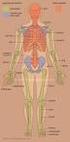 Skeletal System Axial Skeleton: Vertebral Column and Ribs Functions Regions Cervical Thoracic Lumbar Sacral Primary & secondary curvatures There are three major functions of the vertebral column. First,
Self-Myofascial Release Foam Roller Massage
 How it works. Self-Myofascial Release Foam Roller Massage Traditional stretching techniques simply cause increases in muscle length and can actually increase your chances of injury. Self-myofascial release
Rule of Thumb: think do I need to stabilise, strengthen or mobilise?
 Remedial/Rehabilitation - Spine General advice Do not work with any condition that you do not feel comfortable with - if in doubt, refer to a specialist and work under their guidance Work out susceptibility/what
Neck Injuries and Disorders
 Neck Injuries and Disorders Introduction Any part of your neck can be affected by neck problems. These affect the muscles, bones, joints, tendons, ligaments or nerves in the neck. There are many common
Sciatica Yuliya Mutsa PTA 236
 Sciatica Yuliya Mutsa PTA 236 Sciatica is a common type of pain affecting the sciatic nerve, which extends from the lower back all the way through the back of the thigh and down through the leg. Depending
Pain Management Top Diagnosis Codes (Crosswalk)
 Pain Management Top s (Crosswalk) 274.00 Gout arthropathy, M1000 Idiopathic gout, unspecified site unspecified M10011 Idiopathic gout, right shoulder M10012 Idiopathic gout, left shoulder M10019 Idiopathic
SHOULDER PULL DOWNS. To learn efficient use of the shoulder blades and arms while maintaining a neutral spine position.
 SHOULDER INTRODUCT ION Welcome to your shoulder exercise program The exercises in the program are designed to improve your shoulder mobility, posture and the control of the muscles in your neck and shoulder
Closed Automobile Insurance Third Party Liability Bodily Injury Claim Study in Ontario
 Page 1 Closed Automobile Insurance Third Party Liability Bodily Injury Claim Study in Ontario Injury Descriptions Developed from Newfoundland claim study injury definitions No injury Death Psychological
Breakout 2 - OMT for the Lumbar Spine and Sacrum Gretta A. Gross, DO
 Breakout 2 - OMT for the Lumbar Spine and Sacrum Gretta A. Gross, DO Osteopathic Diagnosis and Treatment of the Lumbar Spine and Sacrum Gretta A. Gross, DO, MMedEd, FACOFP DOME/PD Houston Healthcare Family
Exercise 1: Knee to Chest. Exercise 2: Pelvic Tilt. Exercise 3: Hip Rolling. Starting Position: Lie on your back on a table or firm surface.
 Exercise 1: Knee to Chest Starting Position: Lie on your back on a table or firm surface. Action: Clasp your hands behind the thigh and pull it towards your chest. Keep the opposite leg flat on the surface
Anatomy and Terminology of the Spine. Bones of the Spine (Vertebrae)
 Anatomy and Terminology of the Spine The spine, also called the spinal column, vertebral column or backbone, consists of bones, intervertebral discs, ligaments, and joints. In addition, the spine serves
Completing the Loop: Management of the Adolescent Sports Injury. Adam Thomas, PT, DPT, ATC
 : Management of the Adolescent Sports Injury Adam Thomas, PT, DPT, ATC https://www.youtube.com/watch?v=vbufpo 8s3As On field assessment can be the most efficient when the health care provider has observed
.org. Herniated Disk in the Lower Back. Anatomy. Description
 Herniated Disk in the Lower Back Page ( 1 ) Sometimes called a slipped or ruptured disk, a herniated disk most often occurs in your lower back. It is one of the most common causes of low back pain, as
We ve got your back. Physical Therapy After Lumbar Fusion Surgery
 We ve got your back Physical Therapy After Lumbar Fusion Surgery Physical therapy is an extremely important part of you recovery after spinal surgery. This booklet, prepared by the therapists who specialize
About your presenter LOW BACK PAIN. Epidemiology. Outline. Outline. Anatomy: Superficial Muscles 12/10/2012
 About your presenter LOW BACK PAIN Chronic Care Lecture Series Brian Liem, MD Sports Medicine Fellow University of Washington Department of Rehabilitation Medicine Hometown: Seattle, WA College: University
Spinal Surgery 2. Teaching Aims. Common Spinal Pathologies. Disc Degeneration. Disc Degeneration. Causes of LBP 8/2/13. Common Spinal Conditions
 Teaching Aims Spinal Surgery 2 Mr Mushtaque A. Ishaque BSc(Hons) BChir(Cantab) DM FRCS FRCS(Ed) FRCS(Orth) Hunterian Professor at The Royal College of Surgeons of England Consultant Orthopaedic Spinal
HYPERLORDOSIS & PILATES TREATMENT
 HYPERLORDOSIS & PILATES TREATMENT Grace Tiangco 3/18/15 2012-2013 Abstract Sacramento/Mountain View Lordosis or Hyperlordosis is defined as a postural type in which the natural curves of the spine are
Coaching the Injury Prone Athlete. www.englandathletics.org www.englandathletics.org/east
 Coaching the Injury Prone Athlete Injury! The Causes? Frequently the consequence of poor physical preparation ( accidents excluded) Exceeding training loads the athlete can handle at that time Volume,
Sit stand desks and musculo skeletal health. Katharine Metters
 Sit stand desks and musculo skeletal health Katharine Metters Topics Sitting Standing Movement and activity Work and human change Sitting uses less energy Sitting provides support for the body to reduce
Lower Body Exercise One: Glute Bridge
 Lower Body Exercise One: Glute Bridge Lying on your back hands by your side, head on the floor. Position your feet shoulder width apart close to your glutes, feet facing forwards. Place a theraband/mini
Temple Physical Therapy
 Temple Physical Therapy A General Overview of Common Neck Injuries For current information on Temple Physical Therapy related news and for a healthy and safe return to work, sport and recreation Like Us
No Equipment Agility/Core/Strength Program for Full Body No Equip Trainer: Rick Coe
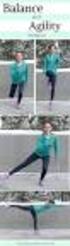 No Equipment Agility/Core/Strength Program for Full Body No Equip Trainer: Rick Coe Introduction Program designed to be performed in a circuit. Perform exercises in sequence without rest 2-3 times. Increase
Pilates Based Treatment For Low Back Pain with Contradicting Precautions : A Case Study
 Pilates Based Treatment For Low Back Pain with Contradicting Precautions : A Case Study Kerry Susser, DPT January 27, 2013 Body Arts and Science International Comprehensive Teacher Training Program 2013
Stretching in the Office
 Stretching in the Office Legs: Quads, Hamstrings, IT band, Hip flexors, Gluts, Calves Quads: Standing @ desk maintaining upright posture, grab one leg @ a time by foot or ankle and bring it towards backside
CHAPTER 32 QUIZ. Handout 32-1. Write the letter of the best answer in the space provided.
 Handout 32-1 QUIZ Write the letter of the best answer in the space provided. 1. All of the following are signs and symptoms in patients with spinal injuries except A. paralysis. C. hyperglycemia. B. priapism.
What are Core Muscles?... 2. A Healthy Lumbar Spine...3. What is Low Back Pain?...4. Rehabilitation...6. Stages of Rehabilitation...
 Table of Contents What are Core Muscles?... 2 A Healthy Lumbar Spine...3 What is Low Back Pain?...4 Rehabilitation...6 Stages of Rehabilitation...7 Pain Management....................... 8 Heat/Ice What