
NONCREDIT INSTRUCTION: MOVING TOWARD EQUITY FOR STUDENTS & FACULTY
|
|
|
- Erick Dixon
- 10 years ago
- Views:
Transcription
1 NONCREDIT INSTRUCTION: MOVING TOWARD EQUITY FOR STUDENTS & FACULTY FACCC Advocacy & Policy Conference March 1, 2015 Debbie Klein Professor of Anthropology, Gavilan College ASCCC At-large Representative & Noncredit Committee Chair FACCC Policy Committee Gavilan Academic Senate March 3, 2015

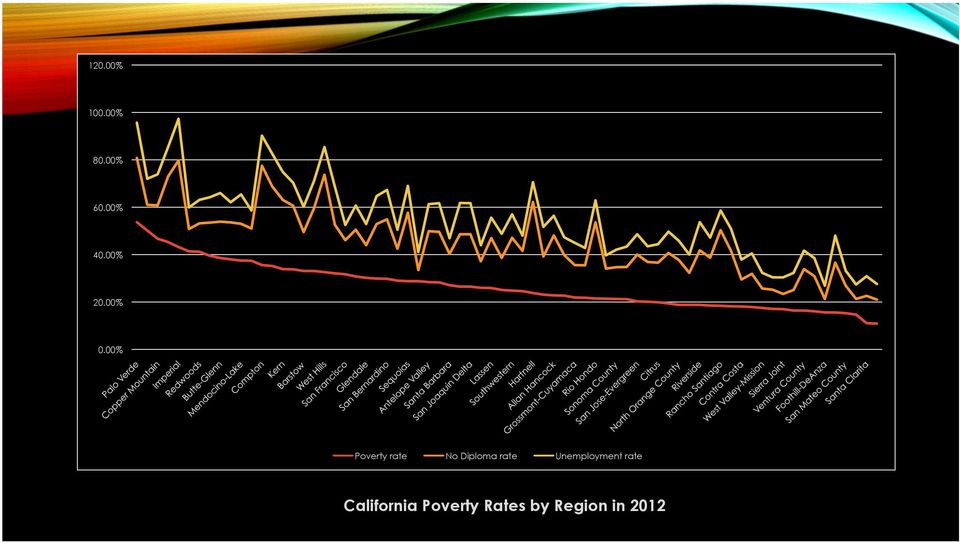
2 Poverty Rates in the US and California in 2012

3 120.00% % 80.00% 60.00% 40.00% 20.00% 0.00% Poverty rate No Diploma rate Unemployment rate California Poverty Rates by Region in 2012
4 WHAT IS NONCREDIT INSTRUCTION? CA EDUCATION CODE 84757(A) 1. Parenting 2. Basic Skills (Reading, Math, English) 3. English as a second language 4. Courses for immigrants 5. Education for persons with substantial disabilities 6. Short-term vocational programs with high employment potential (includes apprenticeship) 7. Education for older adults 8. Home economics (Family and Consumer Sciences) 9. Health and safety

5 HOW IS NONCREDIT DIFFERENT FROM CREDIT?! No course repeatability limits! No fees! No prerequisites! Traditionally, open-entry and open-exit! Flexible class attendance requirements! No penalty when dropping or withdrawing! Flexibility and time to adjust and transition to demands of college credit work! Students can quickly review, refresh and accelerate as they demonstrate competency.

6 WHO CURRENTLY OFFERS NONCREDIT? " Bulk of noncredit is offered by five districts: " San Diego " San Francisco " North Orange " Rancho Santiago " Mt. San Antonio " Approximately 85% of all noncredit courses are ESL courses.

7 STRUCTURE & FUNDING GAME CHANGERS IN # AB 86: Education Omnibus Trailer Bill ( ) # Enhanced Noncredit Rate Change: Governor s Budget proposes $49 million Prop 98 General Fund for CDCP (Career Development and College Preparation) rate to equal credit rate. # CDCP Categories ESL Math and English basic skills Short-term CTE courses with high employment potential High school diploma or high school equivalency certificates Workforce preparation courses Programs for apprentices

8 WHAT IS THE NATURE OF THE PROBLEM & WHAT ARE THE ISSUES? # CA stopped funding k-12 adult education during Great Recession & looked to CCCs to fill in the gap. # CCC noncredit rate is only $ 2745/FTES. In 2006, CDCP funding increased and is now $3232/FTES. Credit rate is $4565/FTES. # Unprecedented opportunity to offer more noncredit due to the CDCP funding equalization & statewide focus on adult/continuing education (AB 86). # However, majority of CCCs don t have big noncredit programs. So colleges are faced with the problem of figuring out how to best meet their students needs by offering noncredit courses.

9 INEQUITIES: STUDENT ACCESS & SUCCESS! Noncredit may be the better modality for students trying to meet particular educational goals.! Difficult to access information about new academic opportunities and career pathways! Difficult to move freely between noncredit and credit classes if there are physical distances between facilities and campuses! Difficult to access transportation assistance, childcare opportunities, book vouchers, etc.! Difficult to access counseling and matriculation services

10 INEQUITIES: FACULTY! Noncredit faculty do not have the same salary and load as credit faculty.! Noncredit faculty do not have the same seniority and rehire rights as credit faculty.! 95% of noncredit faculty are part-time, so they are underrepresented in leadership and shared governance realms.! Need to ensure effective and regular opportunities for communication and collaboration between noncredit and credit faculty! In the absence of full-time noncredit faculty, administrators make academic and curricular decisions.

11 WHO ELSE AGREES THAT THESE ARE THESE INEQUITIES?! The LAO (2012) and CA legislation! Want the CCCs to move the majority of ESL & basic skills courses to noncredit to help students better succeed! Want students to get in and out as quickly and efficiently as possible! ASCCC, CTA, CFT, CCCI, FACCC! Agree that something needs to be done to support noncredit students & faculty

12 LAO RECOMMENDATIONS (2012) $ Provide a Clear and Consistent Distinction at CCCs Between Adult Education and Collegiate Instruction $ Restrict credit instruction in English and ESL to transfer level coursework, and credit instruction in math to one level below transfer. Require courses below these levels to be offered on a noncredit basis. $ ASCCC does not have a recommendation on this. It s up to local senates to determine their college s noncredit/credit cut-off point.

13 WHY DO WE NEED ACTION? $ The majority of CCCs need to make college-wide planning decisions about noncredit. $ Due to time constraints, administrations are hiring new administrators and making decisions that may be adversely affecting existing programs and faculty load. $ We want to make thoughtful planning decisions with our students needs at the center. $ We also need to consider faculty equity issues.

14 WHO SHOULD BE RESPONSIBLE FOR ADDRESSING THESE ISSUES? % State legislation: with direction from FACCC, ASCCC, and the unions % Local colleges: conversations in local senates, curriculum committees, budget and strategic planning committees, etc. % ASCCC: upcoming Noncredit Curriculum Regionals on March 20 at Foothill

15 IF THERE WERE NO ACTION AT ALL, WHAT WOULD HAPPEN? " The big 5 noncredit programs would get most of the new CDCP funding, and the rest may get some. " College administrations may make decisions that adversely affect existing programs and faculty load. " Tensions may escalate on local campuses around the noncredit issue. " Our students may not have access to noncredit courses, which may be the best kinds of courses to help them meet their goals.

16 WHAT S THE TRACK RECORD OF ADDRESSING NONCREDIT & WHAT S HAPPENING NOW? & Since 2012, ASCCC Plenaries, Curriculum Institute, and Curriculum Regionals. & ASCCC Resolution adopted in Fall 2014: change Ed. Code to include noncredit faculty in the FON. & ASCCC Noncredit Committee (no longer just a task force) & New FACCC-sponsored bill: includes a recommendation that the Chancellor s Office work with the ASCCC to address noncredit. & Hopefully, local senates & other campus groups are having conversations like this one!

17 MOVING TOWARD EQUITY: POSSIBLE SOLUTIONS " Change Ed. Code to include noncredit faculty in the FON. " Noncredit faculty load adjustment " Use community needs assessments to show where there is a need for noncredit. " Use progress indicator data to show that increasing the funding for noncredit programs and faculty is a student success issue. " Offer a statewide response to support local changes to noncredit (beyond CDCP funding equalization).

18 WHAT CAN WE DO? $ Help Gav develop a plan to consider why we might want to take this opportunity to offer more noncredit. $ Make sure conversations include faculty & administrators from noncredit, credit basic skills, and CTE, and that they happen at: senate, curriculum, budget, strategic planning meetings, etc. $ Send team to the ASCCC Noncredit Regionals on March 20. $ Educate our colleagues about noncredit. $ Bring our union and senate together to address salary and load issues during the planning process. $ Talk with our legislators (Assembly member Alejo and Senator Monning) about the new FACCC-sponsored bill.

19 " We re creating a new paradigm under the constraints of systems that were not designed to work with each other. ELEPHANTS IN THE ROOM " Noncredit faculty are not representing noncredit issues. " Credit faculty are worried about losing their jobs or being forced to teach noncredit courses. " AB 86 consortia are worried that the CCC system will usurp adult education & thus aren t too interested in discussing noncredit. " Basic Skills programs have already gone through funding ups and downs & are worried about the sustainability of any substantive changes.

20 RESOURCES AB 86 website. www. ab86.cccco.edu Academic Senate for California Community Colleges. (2006). The Role of Noncredit in the California Community Colleges. Sacramento, CA. Academic Senate for California Community Colleges, Noncredit Ad Hoc Committee. (2009). Noncredit Instruction: Opportunity and Challenge. Sacramento, CA. Academic Senate for California Community Colleges. Noncredit Committee webpage. www. asccc.org/directory/noncredit-committee. Academic Senate for California Community Colleges, Noncredit Task Force. (2014). AB 86: A Brief History and Current State of Affairs from the Noncredit Task Force. Rostrum (March 2014). Sacramento, CA. California Community Colleges Chancellor s Office. (2006). Noncredit At a Glance. Sacramento, CA. Legislative Analyst s Office. (2012). Restructuring California s Adult Education System. Sacramento, CA. Shaw, Leigh Anne and Candace Lynch-Thompson. (2014). Trojan Horse or Tremendous Godsend? Retooling Adult Education in a New Era. Rostrum (October 2014). Sacramento, CA.

AB 86: What does it mean for Adult Education, Basic Skills, and Local Academic Senates?
 AB 86: What does it mean for Adult Education, Basic Skills, and Local Academic Senates? ASCCC Noncredit Task Force Presenters: Candace Lynch- Thompson, Virginia May, Diane Oren, and John Stanskas Contributers:
Overview of Adult Education Programs L E G I S L A T I V E A N A L Y S T S O F F I C E
 March 11, 2015 Overview of Adult Education Programs L E G I S L A T I V E A N A L Y S T S O F F I C E Presented to: Assembly Education Committee Hon. Patrick O Donnell, Chair Assembly Higher Education
Curriculum Inventory Training for Curriculum Specialists
 Curriculum Inventory Training for Curriculum Specialists Jackie Escajeda Erin Larson Cris McCullough Stephanie Ricks-Albert Chantee Warner CIO Workshop, San Francisco, April 14, 2015 1 Presentation Agenda
Recommendations From the California Community Colleges Task Force on Workforce, Job Creation and a Strong Economy
 1 2 3 4 5 6 7 8 9 10 11 12 13 14 15 16 17 18 19 20 21 22 23 24 25 26 27 28 29 30 31 32 33 34 Recommendations From the California Community Colleges Task Force on Workforce, Job Creation and a Strong Economy
ADULT EDUCATION REGIONAL PLANNING
 ADULT EDUCATION REGIONAL PLANNING 2015 California Department of Education Tom Torlakson, Superintendent California Community Colleges Chancellor s Office Brice W. Harris, Chancellor cover image: de anza
Mt. San Antonio College Joint Board and Superintendent Dinner. March 31, 2015
 Mt. San Antonio College Joint Board and Superintendent Dinner March 31, 2015 Topics Common Core and Community Colleges: Defining College Readiness Dual/Concurrent Enrollment Current Trends and Options
Noncredit Instruction: Opportunity and Challenge
 Noncredit Instruction: Opportunity and Challenge adopted spring 2009 2008-09 Noncredit Ad Hoc Committee Ian Walton, Chair, Mission College Marsha Elliott, North Orange County CCD-School of Continuing Ed
Essential Elements for Strong Programs: Curriculum Development and Instructors. The Academic Senate for California Community Colleges
 Background Paper: Essential Elements for Strong Programs: Curriculum Development and Instructors Authored by: The Academic Senate for California Community Colleges Prepared for: Discussion Category: 1.
Dr. Roger Schultz and Wade W. Ellis, CPA January 23, 2014
 Dr. Roger Schultz and Wade W. Ellis, CPA January 23, 2014 1. State Economic Recovery 2. California Community College Projections 3. MSJC Enrollment Targets 4. Questions During the Inland Valley Community
BARBARA S. ILLOWSKY EDUCATION
 BARBARA S. ILLOWSKY EDUCATION Doctor of Philosophy in Education Capella University Specialization: Instructional Design for Online Learning Master of Arts in Statistics The Wharton School, University of
Admin 101 Participant Directory 2014
 Counselor, Outreach, Degree and Transfer Pasadena City College Associate Director Rancho Santiago CCD Coordinator of Outreach & Recruitment LA City College Business Services Supervisor San Jose City College
San Diego Continuing Education. Student Equity Plan 2014-2017
 Student Equity Plan 2014-2017 November 6, 2014 2 EXECUTIVE SUMMARY (SDCE) provides adult education for the San Diego Community College District. SDCE is the largest, separately accredited continuing education
Higher Education. Higher Education Compact Funding Levels. Higher Education
 Higher Education Total Funding The Budget continues to recognize the significant contributions and benefits to society from broad access to higher education at the University of California (UC), the California
Laura Ramirez, East Los Angeles College, Interim Vice President of Workforce Education and Economic Development
 Sonia Ortiz-Mercado, CCCCO Student Services Dean Laura Ramirez, East Los Angeles College, Interim Vice President of Workforce Education and Economic Development John Freitas, Los Angeles City College ASCCC
Program and Course Approval Handbook
 Program and Course Approval Handbook Fourth Edition March 2012 Jack Scott, Chancellor 039900 Environmental Sciences and Technol 040000 Biological Sciences 041000 Biology, General 043000 Biotechnology and
Dr. Brian Edwin Ellison
 Dr. Brian Edwin Ellison CAREER OBJECTIVE To provide executive leadership within a shared governance environment thatfocuses on teaching and learning, encourages collaborative and innovative problem solving
California Community Colleges Chancellor s Office. Update on Student Attendance Accounting and Reporting. CACCRAO Annual Conference 2013
 California Community Colleges Chancellor s Office CACCRAO Annual Conference 2013 Update on Student Attendance Accounting and Reporting Presented by Elias Regalado and Chantée Warner Fiscal Services Unit
California Community Colleges
 California Community Colleges The Role of California s Community Colleges in Career Technical Education Presented by: José Millan, Vice Chancellor California Community Colleges System Office [email protected]
Shifting the Conversation from Punitive to Instructive: New Ways of Thinking About Academic Integrity
 Shifting the Conversation from Punitive to Instructive: New Ways of Thinking About Academic Integrity The 2013-14 Academic Integrity Task Force: Dolores Davison, Foothill College, chair Don Gauthier, Los
Guidelines for Using Rubrics for CB 21 Coding. Guide for Proper CB 21 Coding of ENGLISH (writing) Courses below Transfer-Level
 Coding the Student Progress Pathway through Basic Skills English, ESL, Mathematics and Reading Courses in California Community Colleges This project represents the collaborative work of hundreds of discipline
Educational Master Plan 2010-2015 Goals WORKING DRAFT
 Educational Master Plan 2010-2015 Goals WORKING DRAFT 1. PROVIDE SUPPORT TO ENSURE STUDENT RECRUITMENT, RETENTION AND SUCCESS. 1.1. Develop a policy to optimize student opportunity and access linked to
NONCREDIT AT A GLANCE
 NONCREDIT AT A GLANCE California Community Colleges Chancellor s Office September 21, 2006 NONCREDIT AT A GLANCE Introduction This Noncredit Guide is meant as a reference document for the development of
Basic Skills Initiative http://www.cccbsi.org. Academic Senate http://www.asccc.org. Center for Student Success http://css.rpgroup.
 Basic Skills Initiative http://www.cccbsi.org Academic Senate http://www.asccc.org Center for Student Success http://css.rpgroup.org California Community Colleges Chancellor s Office http://www.cccco.edu
Streamlining Nursing Education Pathways: A Progress Report On Assembly Bill 1295 (Fuller)
 March 15, 2011 Streamlining Nursing Education Pathways: A Progress Report On Assembly Bill 1295 (Fuller) L E G I S L A T I V E A N A L Y S T S O F F I C E STREAMLINING NURSING EDUCATION PATHWAYS: A PROGRESS
7.1.2 Class Placement Requirements for Initial Placement and/or Class Changes
 7.1 SALARY SCHEDULES CONTRACT YEAR 7.1.1 A. Effective 1/1/2015, the District shall increase all of the faculty salary schedules by 0.85%. For the 2014/15 school year, the District agrees to maintain not
Substantive Change Proposal
 Substantive Change Proposal Addition of New Programs: Certificates of Achievement in Project Management and Public Management Folsom Lake College 10 College Parkway Folsom, CA 95630 Los Rios Community
SB 1440 Implementation Associate Degrees for Transfer. Frequently Asked Questions (FAQ) August 2011
 SB 1440 Implementation Associate Degrees for Transfer Frequently Asked Questions (FAQ) August 2011 1. What are the key provisions of the bill, SB 1440? Senate Bill 1440 (Padilla), which was signed by the
ENROLLMENT MANAGEMENT PLAN
 ENROLLMENT MANAGEMENT PLAN September, 2009 Vision A premier learning community recognized for supporting student success and enriching society. Mission Cypress College enriches students lives by providing
Australia s career and technical education (CTE) system. - key features - challenges - reforms
 Australia s career and technical education (CTE) system - key features - challenges - reforms Key Features of the Australian CTE System Strong industry leadership and engagement Training qualifications
San Diego-Imperial. Regional Skills-Builder Discussion Guide
 San Diego-Imperial Regional Skills-Builder Discussion Guide Kathy Booth, WestEd Ryan Fuller, California Community Colleges Chancellor s Office Alice van Ommeren, California Community Colleges Chancellor
VOCATIONAL TRAININGS OVERVIEW
 Charity Cultural Services Center (CCSC) CCSC s Culinary Academy offers vocational training including Western Cooking Class (WCC), Chinese Cooking Class (CCC) and Bartending/Table Waiting (BTC). During
Ensuring Effective and Efficient Curriculum Processes An Academic Senate White Paper. Approved by the Executive Committee.
 Ensuring Effective and Efficient Curriculum Processes An Academic Senate White Paper Approved by the Executive Committee October 3 4, 2015 2015-2016 Curriculum Committee John Freitas (Chair), Chemistry,
Credit. Student Success and Support Program Plan 2015-16
 Credit Student Success and Support Program Plan 2015-16 District: College: Report Due by Friday, October 30, 2015 Email PDF of completed plan to: [email protected] and Mail signature page with original
Attendance Accounting for the California Community Colleges
 Attendance Accounting for the California Community Colleges CCC Chancellor s Office August 2, 2011 John Mullen, Senior Consultant Strata Information Group Elias Regalado, Specialist, Allocations CCC Chancellor
AA-T and AS-T Degrees Update and Ideas. Stephanie Low, CCCCO Michelle Pilati, ASCCC
 AA-T and AS-T Degrees Update and Ideas Stephanie Low, CCCCO Michelle Pilati, ASCCC March, 2011 Overview C-ID descriptor status and TMC development C-ID and TMCs Understanding the use of the TMCs Tips for
BUSINESS, CONSUMER SERVICES, AND HOUSING AGENCY GOVERNOR EDMUND G. BROWN JR.
 BUSINESS, CONSUMER SERVICES, AND HOUSING AGENCY GOVERNOR EDMUND G. BROWN JR. BOARD OF REGISTERED NURSING PO Box 944210, Sacramento, CA 94244-2100 P (916) 322-3350 F (916) 574-8637 www.rn.ca.gov Louise
Strategic Partnerships. Los Angeles & Orange County Regional Consortia 27 Colleges 14 Districts 800,000 Students
 Strategic Partnerships 1 Strategic Partnerships 2 Philosophy Helps students become aware of opportunities that they may not have been aware of Provides students with logical sequential pathways to educational
Evergreen Valley College Student Equity Plan
 Evergreen Valley College Student Equity Plan January 2015 3095 Yerba Buena Road San Jose, CA 95135 1 SECTION B. EXECUTIVE SUMMARY EVERGREEN VALLEY COLLEGE MISSION With equity, opportunity and social justice
REVISIONS TO DISCIPLINES LIST PLEASE TYPE (Note: Only typed forms will be accepted.) Revision to existing discipline
 REVISIONS TO DISCIPLINES LIST PLEASE TYPE (Note: Only typed forms will be accepted.) Enclosure 3 DATE SUBMITTED: _September 29, 2014 (Deadline for submission is September 30, 2014) DISCIPLINES LIST TITLE
Ensuring Effective Curriculum Approval Processes: A Guide for Local Senates. Draft as of April 2, 2016
 Ensuring Effective Curriculum Approval Processes: A Guide for Local Senates Draft as of April 2, 2016 2015-2016 Curriculum Committee John Freitas (Chair), Chemistry, Los Angeles City College Lori Bennett,
Associate in Arts for Transfer (AA-T) and Associate in Science for Transfer (AS-T) General Instructions February 2011
 Associate in Arts for Transfer (AA-T) and Associate in Science for Transfer (AS-T) General Instructions February 2011 Approval of Associate in Arts for Transfer (AA-T) and Associate in Science for Transfer
Los Angeles Regional Adult Education Consortium (LARAEC)
 Los Angeles Regional Adult Education Consortium (LARAEC) ASSEMBLY BILL 86 OVERVIEW Committee of the Whole 05/20/14 PURPOSE OF AB86 AB 86 provides planning funds to regional consortia to improve the delivery
SAN DIEGO COMMUNITY COLLEGE DISTRICT CONTINUING EDUCATION CENTERS ADDITIONAL FACULTY SERVICE AREA (FSA) APPLICATION FORM
 SAN DIEGO COMMUNITY COLLEGE DISTRICT CONTINUING EDUCATION CENTERS ADDITIONAL FACULTY SERVICE AREA (FSA) APPLICATION FORM INSTRUCTIONS: Please refer to the list of minimum qualification requirements below
Each year, millions of Californians pursue degrees and certificates or enroll in courses
 Higher Education Each year, millions of Californians pursue degrees and certificates or enroll in courses to improve their knowledge and skills at the state s higher education institutions. More are connected
New Discipline Proposal - Teacher Education
 Why is this new discipline needed? New Discipline Proposal - Teacher Education Frequently Asked Questions Prepared by Steve Bautista, Santa Ana College [email protected] This proposal seeks to create
Los Angeles Community College District External Evaluation Team Members March 2016
 Los Angeles Community College District External Evaluation Team Members March 2016 Dr. Helen Benjamin Chancellor Contra Costa Community College District Helen Benjamin is in her 11th year as chancellor