
AUSTRALIAN MUSEUM SCIENTIFIC PUBLICATIONS
|
|
|
- Allison Newton
- 10 years ago
- Views:
Transcription
1 AUSTRALIAN MUSEUM SCIENTIFIC PUBLICATIONS Troughton, Ellis Le G., A new genus, species, and subspecies of Marsupial Mice (family Dasyuridae). Records of the Australian Museum 16(6): , plate xxxix. [11 June 1928]. doi: /j ISSN Published by the Australian Museum, Sydney nature culture discover Australian Museum science is freely accessible online at 6 College Street, Sydney NSW 2010, Australia
![Records of the Australian Museum 16(6): 281 288, plate xxxix. [11 June 1928]](/docs-images/57/5634829/images/page_1.jpg ". doi:10.3853/j.0067-1975.16.1928.")
2 A NEW GENUS, SPECIES, AND SUBSPECIES OF MARSUPIAL MICE (FAMILY DASYURIDJE). By ELLIS LE G. TROUGH TON, Zoologist, Australian Museum. (Plate xxxix.) FROM time to time the Australian Museum has received small collections of mammals from Mr. P. L. Berney, of Queensland, which constitute very valuable additions to our material. Recently having occasion to check the identity of three pouched mice from the Richmond district, Queensland, presented by him in 1910, I found the specimens to be of unusual interest; one, which had been incorrectly relegated to Phascogale minutissima, proves to be a race of Ph. ingrami, providing the first record of the species' occurrence in Queensland, and warranting subspecific distinction, while the other two, belonging to the genus Sminthopsis, will be dealt with in another paper. Since Thomas l described Phascogale ingrami from Alexandria, Northern Territory, Lonnberg 2 has described Ph. subtilissima from Noonkambah, Kimberley, north Western Australia. As both species, which are clearly differentiated by their characters and geographical range, exhibit an extraordinary flattening of the skull unique amongst marsupials, and described by Thomas as only equalled by four other mammals, three of which are bats, their retention within the genus Phascogale appears no longer justified. In a recent paper on the "External Characters of the Dasyuridre," Pocock 3 says: "From the evidence supplied by the variation in the rhinarium, ears, marsupium, and other characters, it seems probable that Phascogale will prove to be divisible into several genera," and that "until more spirit preserved material than is now available comes to hand for examination and comparison, it will be wiser to leave the genus in its present somewhat chaotic state." While a critical examination of the spirit collection of pouched mice was being made, a specimen collected by the late Richard Helms during the floods on the Darling in 1890 was found which has the skull flattened in a manner similar to the above species and characters necessitating its description as new. There now exist at least three species clearly differentiated by the marked A 1 Thomas.-Proc. Zoo!. soc., 1906, p. 541, pi. xxxvii, fig Lonnberg.-Kung!. Sv. Vet. Akad. Hand!., lii, 1, 1913, p. 9. o Pocock.-Proc. Zoo!. Soc., 1926, p

3 282 RECORDS OF THE AUSTRALIA;'< MUSEUM. flattening of their skulls from minutissima, the only normal skulled Phascogalc approximating their extremely small size. Being convinced that generic distinction is indicated, I propose to form a genus for the reception of the flat-skulled pouched mice which will serve to lessen the chaos referred to by Pocock. The genus may be briefly diagnosed as follows: PLANIGALE, gen. novo Related to Phascogale but differentiated by the marked flattening of the upper surface of the skull (PI. xxxix, figs. 1q and 2c), the height in front of the bull m, from base to crown in profile. ranging from 3-3'5 mm., as compared with 4 7 in a skull of Phascogale minutissima, otherwise but little larger. Size small, even slightly less than that of minutissima, the smallest of the allied genus; the combined length of molars 1 - s not exceeding 3 2 mm. as opposed to 3 6 in an adult female minutissima, and the hindfoot ranging from 8 5 to 10, against 10 4 to 11 2 mm. Rhinarium (PI. xxxix, figs. 1e-1 and 2e-f) simple in the species available to me, the median groove extending from the lip to the posterior border above; of the general shape figured by Pocock (loc. cit. text fig. 28) for Ph. IJcnicillata, but without the definitely formed philtrum or traces of lateral grooves. Hallux present and clawless. Palms and soles naked and granulated; the central areas of the pads smooth and not striated. Tail short-haired, not tufted or incrassated. Mammrn variable in number. Skull.-Remarkably fiattened, with an almost straight dorsal profile. Interorbital region flat, with unridged edges; occipital crests almost obsolete. Nasals broadly expanded in their posterior half. Zygomata evenly convex outwards. Anterior palatine foramina not extending past centre of canines. Anterior portion of bullrn considerably larger than posterior. Dentition.-Teeth of the normal number found in the allied genera Phascogale and Sminthopsis, except in subtilissima, in Whic:~L the lower secator (P4) is absent. Range.-North-western New South Wales, western Queens land, Northern and north Western Australia. Genotype.-The form which I consider to be a subspecies of ingrami, which is described hereunder. Other species, subtilissima of Lonnberg (loc. cit.) and a new species from north-western New South Wales, described in this paper. PLANIGALE INGRAMI BRUNNEUS, s1{'bsp. novo (PI. xxxix, figs. la-h.) Similar to true ingrami but distinguished by its brown basal fur, comparatively longer tail, anterior palatine foramina extend-

4 'l'iwughto","-new MARSUPIAl, MICE. 283 ing to the level of the middle of the canines, definite posterior palatal vacuities, and the pml being definitely smaller than the median premolar. Below, the general colour is olive-buff, the hairs on the chin of that colour throughout, but from the neck to the pouch the basal half of the fur is a definite brown, somewhat lighter than the basal fur above; the upper half of the fur is olive-buff. Tail of the same shade of light greyish-olive as the feet. External chctractcrs.-above, the general colour is a peculiarly speckled pale tawny-olive composed of the brown of the basal fur showing through the warm buff tips, over which is a wash of tawny-olive; basal two-thirds of fur of a definite shade of brown near light "mummy" (Ridgway),4 the upper third warm buff, with a tipping of tawny-olive. The tawny-olive is darkest just in front of the eye, and on the crown, shoulders, and centre of the back. Snout, from,the rhinarium to between the eyes, of a deep olive-buff. Upper surface of hands and feet a yery light greyisholive. Ears short and broadly rounded (PI. xxxix, fig. 1d), the height about equal to the width; laid forward, in a spirit specimen, they do not reach the posterior canthus of the ey(', but extend about three-quarters of the distance from the anterior ear-base. Anterior base of the ('ar broadly overfolded, the apex obtusely rounded, followed by a slight but definite emargination behind the apex, the rest of the margin broadly rounded to the outer base. Supratragus large and untwisted, oblong, the anterior margin convexly sloping backwards, the posterior edge straight or slightly concave; when the ear is ered the supratl'agus is directed slightly upwards. The anterior ridge (Pocock) is not clearly defined and is sinuously folded and attaclwd by a strand above to the floor of the anterior passage. The median ridge which bounds the anterior passage below is much thickened and upstanding; bent sharply upon itself at the posterior end, it extends only a short distance inferiorly, termina ting about opposite the middle of the posterior ridge ("c" of Po cock's diagrams), not extending to the level of the lower margin of the inferior cleft as in Ph. minutissima. Inside of ear evenly covered with longish pale hairs, which form crests on the two laminated areas, one above and one below the supratragus. Rhinarium hairless and of a more'simple form (P]. xxxix, figs. 1e-1) than in any of the types figured by Pocock (loc. cit.) and apparently differing from them all in having the median groove traversing the entire yertical extent, from the edge of the lip to the hind margin above. As is shown by Pocock for Ph. lorentzi and ~4ntechinomys spenceri, there are no lateral or other Ridgway.-Color Standards and Color Nomenclature, Washington, D.C., 1912.

5 284 RECORDS OF 'file AUS'l'RALIAN l\iuseujll grooves, but otherwise the rhinarium is quite differently shaped, as the philtrum is almost entirely suppressed, being merely indicated by the slight emargination of the rhinarium-sides and represented by a small projection on each side extending beyond the terminus of the median groove. Manus and pes broad and fleshy, the granulations comparatively large and the pads unstriated. Manus with six well developed pads, the four small interdigital ones coarsely granulated and surmounted by large, smooth, rounded central areas constituting almost the entire pad. Both carpal pads are represented by smooth areas of a different shape and larger than those of the interdigital pads, oblong-ovate, the outer or ulnar pad being larger and somewhat expanded distally, but not markedly crescentic or horseshoe-shaped. Pes (PI. xxxix, fig. 19) broad-soled distally, with six well developed unstriated pads, the granulations comparatively large and sparse. The three interdigital pads consist of a large, oval, central area embedded in a ring of coarse granules. Hallucal pad distinct from, but situated close to the inner metatarsal pad, which is considerably broader but only slightly longer than the hallucal pad; outer metatarsal pad subequal in length to the inner one. Tail slender, evenly haired, not tufted or incrassated, and comparatively longer than in the typical ingrarni) being six-sevenths the length of the head and body as opposed to three-quarters in the typical form. Pouch (PI. xxxix, fig. lh) approximating the relatively large development attained in Ph. mintltissima) where there is a thickened crescentically curved flap almost encircling the wide mammary area; this flap is very deep in front, gradually becoming shallower laterally and fading out posteriorly so that it is absent in the middle line behind. Mammm 6. Skull. (PI. xxxix, figs. la-c}.-apparently quite similar to the typical subspecies in its marked flattening, even convexity of the zygomata, wide expansion of the posterior half of the nasals, flat unridged interorbital region, and almost obsolete occipital crests. It differs, however, in having comparatively broader nasals, and in the extension of the anterior palatal foramina beyond the level of the front of the canines to between the middle of those teeth; also in having two distinct posterior palatal vacuities,5 which are situated opposite the inner corners of molars 2-3, their length equal to the outer length of m 3 The anterior palatal foramina are 5 Presence or absence of posterior palatal vacuities does not seem a very reliable diagnostic character, as they are easily overlooked; in my specimens the vacuities were covered with a leathery film which came away when pierced, leaving clearcut openings.

6 TROUGHTox-:,mw MARSUPIAL MICE. 285 very broad, their length being 1 5 and their combined breadth 1 3 mm. The hinder margins of the short premaxillre rise rather abruptly, joining the nasals about 2 mm. from their tips. Dentition.-Similar to that of the typical subspecies, but the pi is barely two-thirds the size of the median p3 instead of being subequal to it as described by Thomas for his ingrami. Dimensions of the holotype, preserved in. spirit: Head and body, 65 mm.; tail, 57; hindfoot, 9; ear, from crown 6'5, from external base 8 5. For cranial dimensions see table on p Holotypc.-Adult female, number, M.2174 in the Australian :Museum coll(~ction; associated with it is one young one with a total length of 46 mm. Donor F. L. Berney. Hab.-1Vyangarie, on the Flinders Rivpr, Richmond district, northern Queensland. PLA)1IGALE 'L'EXUIROSTRIS, SI). novo (PI. xxxix, figs. 2a-g.) Of sombre colouration, the species is readily distinguished from subtilissimct by its shorter tail and its dentition, and from ingrami by its more slender dimensions, darker colouration, and the comparatively marked narrowness of the nasals and elongation of the premaxillre. From both allies it is distinguished by the narrower interorbital region. External character-s.-above, the general colouration is darker than in ingrami, and more markedly speckled than in the i. brunncus form owing to the basal fur being darker, and the upper fourth lighter, with a tipping of black. The basal fur is unusually dark in spite of long preservation in spirit, about "blackish-brown 3" of Ridgway; the Jight upper fourth is near pinkish buff. Top of head, from rhinarium to between the ears, lighter than the back, about buffy brown, pencilled with darker brown hair-tips. There is a blackish whisker-mark along the lip from rhinarium to eye. Upper surface of hands and feet about tilleul-buff. Fur of undersurface somewhat lighter basally than that of the back, about fuscous. Hairs from chin to angle of jaws not parti-coloured and a shade of tilleul-buff; tips of fur from neck to vent pale olive-buff. Ear (PI. xxxix, fig. 2d) similar in general outline, but comparatively larger than in ingrami brwnneus, reaching slightly beyond the posterior canthus of the eye when laid forward in a spirit specimen; without the definite emargination below the broadly rounded apex, and with a sharply defined triangular notch in the lower fourth of the margin which is not present in i.

7 286 RECORDS OF 'I'HE AUSTRALIAN MUSEUM. brttnneus. All the ridges are less pronounced than in i. bt'unneus, while the median ridge is not so sharply curved posterioriy, though it has a tendency to continue inferiorly to a level with the posterior end of the inferior cleft, as shown hy Pocock for Ph. rninutissirna. The supra tragus is shorter and more evenly conve;ol: than in i. brttnneus, the antero-posterior length being 2 4 as opposed to 3 mm. in the latter form. Rhinarium (PI. xxxix, figs. 2e-f) very similar to that of ingrami, excepting that the inferior third is more elongate and its sides more concave, the suggestion of a philtrum being thus slightly more pronounced. The nostrils are more circular in outline than in the allied species. Manus and pes not so broad and fleshy and with comparatively smaller granulations than in i. brunneu8, but with a similar arrangement of unstriated central areas which are somewhat differently shaped. Manus with six weh deyelop(~d pads, thl' four inter digital ones larger than in i bnmneus, the granulations smaller and more profuse, and the smooth l'(lunded central areas constituting about half the area of the pad, instead of almost the entire pad as in the subspecies of ingrami,. The two carpal pads are larger and more flattened than in the subspecies nndpl' comparison; the outer is the larger and the granulps of the general surface encroach somewhat on the inner side proximally, tending to a hooked appearance of the central area anteriorly. Pes (PI. xxxix, fig. 2.q) differing from that of i. brunneu8 in being decidedly narrower distally, in the greater elongation of the six well developed pads, and till' finer and more profuse granulations on the sole. The smooth areas of the three interdigital pads embedded in finely granulated c11shions, instead of forming almost the entire pad. Length of hallucal pad varying in a single individual; on one side it is smaller and separated by a decided space from the metatarsal pad, while on the other foot, though distinct, it is separated only by a slight groove from the metatarsal pad. The inner metatarsal pad is much longer, and narrower, than in i. bl'unneu8, being about twice as long as the hallucal pad instead of almost subequal to it. Tail slender, evenly haired, not tufted or incrassated, and three-quarters the length of the head and body. Pouch with the well developed flap of skin encircling the mammary area in front and at the sides as figured for i. brunneus (PI. xxxix, fig. Ih), but differing in possessing 10 or 12 mammre instead of 6; on the left there are six cleariy discernible, while on the right there are only five. Careful examination suggests that five on each side is probably the normal formula, for, although

8 TROUGH'.rOK-~EW MARSGPIAL MICE. 287 Thomas eonsiders it more likely that a teat would be suppressed than an additional one grown, the crowding of the anterior nipples on the side bearing six indicates that the extra one may be an abnormality, the otlh~r row of five nipples being quite normal in appearance. Skull (PI. xxxix, fig. 2a-c).-Similar in general appearance to that of ingrarni, but of narrower proportions and eomparatively a little less flattened, the height from base to crown in front of the bullre being 3 5 mm. as compared with 3,3-3,4 in ingmrni; nevertheless it is remarkably flattened in comparison to the height of 4 7 given by Thomas for a specimen of Phascogale rninutissirna of similar size. The nasals are deeidedly longer and narrower than in ingrarni; their greatest width only equals that of the nasals of the much smaller subtilissirna in which their length is only 5 mm., as compared with 6 9 in this species. The comparative narrowness of the skull is further indicated by the lesser width of the interorbital region and braincase, and the narrower palatal foramina; the greatest combined width of the anterior palata] foramina is 1 mm. as opposed to 1 3 mm. in the holotype of i. brunneus, though the foramina lengths are the same. '1'he premaxillre are decidedly more elongated than in i. brunneu8, their hind margins rising obliquely backward to a point about 2 6 mm. from the tips of the nasals. Dentition.-iVIuch as in ingrami, but with the p4 of a different shape, considerably shorter antero-posteriorly, higher, and without the elongated posterior heel or talon present on that tooth in the allied speeies. The two anterior upper premolars ai'(~ not subequal as in the typical ingrarni, pl being about two-thirds the size of ps as in ingrarni brunneus. Dimensions of the holotype, preserved in spirit: Head and body, 67 5 mm.; tail, 50'5; hind foot, 9; ear, from crown 6, from external base 8 9. For cranial dimensions see table on p H olotype.-apparently adult female, number M.3856 in the Australian Museum collection, whieh, with a three-quarter grown female, M.3857, was collected by the late Riehard Helms. Hab.-Collected at Bourke or Wilcannia, New South Wales, during the Darling River floods, in Mayor June, ACKNOWLEDGMENTS. I desire to express my appreciation of Mr. Berney's efforts as a collector, which have enabled me to record for the first time the

9 ~-~ ~ RECORDS OF THE AUS'mALIAN JllUSEUM. occurrence of a race of flat-skulled marsupial mice in Queensland, and my indebtedness to Miss J oyce K. Allan for the drawings illustrating this paper. EXTERNAL MEASUREMENTS OF THE SPECIES AND SFBSPECIES OF Planigale. Head and Body Tail... Hindfoot Ear, from crown6 Ear, from post. base "'i ingrami ingrami ingrami brunneus Cf' ,5 8'5 tenu1:rostris Cf' subtilissima ' ' CRANIAL MEASUREMENTS OF THE SPECIES AND SUBSPECIES OF Planigale. in grami in grami 6 ingrami brunneus Cf' tenuirostris subtilissima Cf' Greatest median length..,' ',.'.1 Basal length Zygomatic breadth Length of nasals... Breadth of nasals.., Interorbital breadth Breadth of braincase Palate length Length of upper tooth-row Length of lower tooth-row Length of molars1.3 Depth of skull in front of bullae i ' , I - I 8 4 I , I I I It is not clear from which point the ear measurements of i. ingrami and subtilissima have been taken, though comparison with dimensions taken by myself suggest that the former is from the posterior base, and the latter from the crown as adopted in the British Museum catalogue dimensions by Thomas.

10 EXPLANA'l'ION OF PLATE XXXIX. Fig. la-h. Planigale ingrarni brunneus, subsp. novo Holotype!j>. Fig. 2a-g. Planigale tenuirostris sp. novo a. Skull, from above. b. Skull, from below. C. Skull, from side. d. Ear. e. Rhinarium, front view. f. Rhinarium, side view. g. Right pes. h. Pouch and mammary area. Holotype!j>.

11 REe. A1I8TR. )IU8., VOL. XVI. PLATE X XXIX. Id 2d If 19 Ih le 2e.J oyce K. Allen, del G. C. Clutton, photo.

ON A NEW SPECIES OF DENISONIA (REPTILIA, SERPENTES) FROM NEW GUINEA
 ON A NEW SPECIES OF DENISONIA (REPTILIA, SERPENTES) FROM NEW GUINEA by L. D. BRONGERSMA and M. S. KNAAP-VAN MEEUWEN Until now the Elapid genus Denisonia had not been recorded from New Guinea, and this
DEVELOPMENT AND GROWTH OF THE MANDIBLE
 2012-2013 ORAL BIOLOGY DEVELOPMENT AND GROWTH OF THE MANDIBLE Ass. Prof. Dr. Heba M. Elsabaa Development and Growth of the Mandible DEVELOPMENT OF THE MANDIBLE The Mandible Is the largest and strongest
specimen, a practically complete cranium, was found by the author's
 Article 56.9,33N XLI.- PRELIMINARY DIAGNOSIS OF AN APPARENTLY NEW FAMILY OF INSECTIVORES. BY H. E. ANTHONY. PLATE XXIII. In July, 1916, while searching for remains of fossil mammals in Porto Rico, in accordance
FCI-Standard N 105 / 29. 03. 2006 /GB FRENCH WATER DOG. (Barbet)
 FCI-Standard N 105 / 29. 03. 2006 /GB FRENCH WATER DOG (Barbet) 2 TRANSLATION : Jennifer Mulholland. ORIGIN : France DATE OF PUBLICATION OF ORIGINAL VALID STANDARD : 21.02.2006. UTILIZATION: Water dog
Classification of Malocclusion
 Classification of Malocclusion What s going on here? How would you describe this? Dr. Robert Gallois REFERENCE: Where Do We Begin? ESSENTIALS FOR ORTHODONTIC PRACTICE By Riolo and Avery Chapter 6 pages
SCOTTISH TERRIER. FEDERATION CYNOLOGIQUE INTERNATIONALE (AISBL) SECRETARIAT GENERAL: 13, Place Albert 1 er B 6530 Thuin (Belgique) 10.01.
 FEDERATION CYNOLOGIQUE INTERNATIONALE (AISBL) SECRETARIAT GENERAL: 13, Place Albert 1 er B 6530 Thuin (Belgique) 10.01.2011/EN FCI-Standard N 73 SCOTTISH TERRIER M.Davidson, illustr. NKU Picture Library
PICCOLO LEVRIERO ITALIANO
 17.12.2015/EN FEDERATION CYNOLOGIQUE INTERNATIONALE (AISBL) SECRETARIAT GENERAL: 13, Place Albert 1 er B 6530 Thuin (Belgique) (VALID FROM 01/01/2016) FCI-Standard N 200 PICCOLO LEVRIERO ITALIANO (Italian
Objectives AXIAL SKELETON. 1. Frontal Bone. 2. Parietal Bones. 3. Temporal Bones. CRANIAL BONES (8 total flat bones w/ 2 paired)
 Objectives AXIAL SKELETON SKULL 1. On a skull or diagram, identify and name the bones of the skull 2. Identify the structure and function of the bones of the skull 3. Describe how a fetal skull differs
Exercise 1: Knee to Chest. Exercise 2: Pelvic Tilt. Exercise 3: Hip Rolling. Starting Position: Lie on your back on a table or firm surface.
 Exercise 1: Knee to Chest Starting Position: Lie on your back on a table or firm surface. Action: Clasp your hands behind the thigh and pull it towards your chest. Keep the opposite leg flat on the surface
FINNISH SPITZ. FEDERATION CYNOLOGIQUE INTERNATIONALE (AISBL) SECRETARIAT GENERAL: 13, Place Albert 1 er B 6530 Thuin (Belgique) 27.05.
 27.05.2015/ EN FEDERATION CYNOLOGIQUE INTERNATIONALE (AISBL) SECRETARIAT GENERAL: 13, Place Albert 1 er B 6530 Thuin (Belgique) FCI-Standard N 49 FINNISH SPITZ (Suomenpystykorva) 2 TRANSLATION: Finnish
Simplified Positioning for Dental Radiology
 Simplified Positioning for Dental Radiology Prepared by: Animal Dental Care Tony M. Woodward DVM, Dipl. AVDC 5520 N. Nevada Ave. Suite 150 Colorado Springs, CO 80918 (719) 536-9949 [email protected] www.wellpets.com
Hair Design. 5 Elements of Hair Design. 5 Principles of Hair Design. Facial Shapes. Hair designs for men
 Hair Design 5 Elements of Hair Design 5 Principles of Hair Design Facial Shapes Hair designs for men Elements of Hair Design To begin to understand the creative process involved in hairstyling, it is critical
CHAPTER 10 RESTS AND PREPARATIONS. 4. Serve as a reference point for evaluating the fit of the framework to the teeth.
 CHAPTER 10 RESTS AND DEFINITIONS A REST is any rigid part of an RPD framework which contacts a properly prepared surface of a tooth. A REST PREPARATION or REST SEAT is any portion of a tooth or restoration
Karyotype of Harrison's Tube-Nosed Bat Murina harrisoni
 TitleKaryotype of Harrison's Tube-Nosed Author(s) Wu, Yi; Motokawa, Masaharu; Chen, Zhong; Yu, Wen-Hua Li, Yu- Citation Mammal Study (2010), 35(4): 277-279 Issue Date 2010-12 URL http://hdl.handle.net/2433/156363
JACK RUSSELL TERRIER
 05.12.2012 / EN FEDERATION CYNOLOGIQUE INTERNATIONALE (AISBL) SECRETARIAT GENERAL: 13, Place Albert 1 er B 6530 Thuin (Belgique) FCI-Standard N 345 JACK RUSSELL TERRIER SMOOTH COATED VARIETY BROKEN COATED
CHEM 107. Hair handout. Basic Structure of Hair. 3-22-05 and 3-24-05
 CHEM 107 Hair handout. 3-22-05 and 3-24-05 Basic Structure of Hair A hair can be defined as a slender, thread-like outgrowth from a follicle in the skin of mammals. Composed mainly of keratin, it has three
General Guidelines. Neck Stretch: Side. Neck Stretch: Forward. Shoulder Rolls. Side Stretch
 Stretching Exercises General Guidelines Perform stretching exercises at least 2 3 days per week and preferably more Hold each stretch for 15 20 seconds Relax and breathe normally Stretching is most effective
Valley fold 1/4 at the left side, again creasing only at the edge, and unfold. Valley fold, connecting the tops of the angle bisectors, and unfold.
 Triceratops by Jerry Harris 1. Begin with a square, white side up, with the vertical diagonal precreased. A square of 10" results in a model of approximately 5.8" long and 1.67" tall at the hip. 2. 3.
Advanced MakeUp Tips by Kathy Whittington
 Advanced MakeUp Tips by Kathy Whittington Applying Eye Shadow Eyes are the windows to your soul. The right make up can add to the beauty of your eyes if you know how to accent the positive and minimize
Table of Contents. 10 Drawing Portraits: Fundamentals. Introduction and how this book is organized 13
 10 Drawing Portraits: Fundamentals Table of Contents Introduction and how this book is organized 13 Section One: 15 Drawing fundamentals for the new artist. 15 Some introductory words for the newbie artist
Surgical Art. Formulaic Drawing Method. DRAWING WORKSHOP Learning to sketch for patient notes
 DRAWING WORKSHOP Learning to sketch for patient notes Surgical Art Formulaic Drawing Method Formulaic figure drawing systems involve using abstract rhythms and interlocking shapes to construct the human
Headgear Appliances. Dentofacial Orthopedics and Orthodontics. A Common Misconception. What is Headgear? Ideal Orthodontic Treatment Sequence
 Ideal Orthodontic Treatment Sequence Headgear Appliances Natalie A. Capan, D.M.D. 580 Sylvan Avenue, Suite 1M Englewood Cliffs, New Jersey 07632 (201)569-9055 www.capanorthodontics.com [email protected]
porcelain fused to metal crown
 Lectur.5 Dr.Adel F.Ibraheem porcelain fused to metal crown the most widely used fixed restoration,it is full metal crown having facial surface (or all surfaces) covered by ceramic material. It consist
LABRADOR RETRIEVER. FEDERATION CYNOLOGIQUE INTERNATIONALE (AISBL) SECRETARIAT GENERAL: 13, Place Albert 1 er B 6530 Thuin (Belgique) 12.01.
 12.01.2011/EN FEDERATION CYNOLOGIQUE INTERNATIONALE (AISBL) SECRETARIAT GENERAL: 13, Place Albert 1 er B 6530 Thuin (Belgique) FCI-Standard N 122 LABRADOR RETRIEVER M.Davidson, illustr. NKU Picture Library
THE BENJAMIN INSTITUTE PRESENTS. Excerpt from Listen To Your Pain. Assessment & Treatment of. Low Back Pain. Ben E. Benjamin, Ph.D.
 THE BENJAMIN INSTITUTE PRESENTS Excerpt from Listen To Your Pain Assessment & Treatment of Low Back Pain A B E N J A M I N I N S T I T U T E E B O O K Ben E. Benjamin, Ph.D. 2 THERAPIST/CLIENT MANUAL The
How To Stretch Your Body
 Exercise Module A New Leaf Choices for Healthy Living University of North Carolina at Chapel Hill 2007 Center for Health Promotion and Disease Prevention Physical Activity Exercises for Keeping Active
Human, Male, White. Bone Clones Osteological Evaluation Report. Product Number: 1 intact mandible. General observations:
 Human, Male, White Product Number: Specimen Evaluated: Skeletal Inventory: BC-107 Bone Clones replica 1 intact cranium 1 intact mandible General observations: In general, the molding process has preserved
floridanum Banks, the only species of the genus previously
 1944] Three Species o[ Coleosoma ]rom Florida 51 THREE SPECIES OF COLEOSOMA FROM FLORIDA (ARANE/E; THERIDIID.E) x BY ELIZABETH B. BRYANT Among material recently sent the Museum of Comparative Zoology by
Lectures of Human Anatomy
 Lectures of Human Anatomy Vertebral Column-I By DR. ABDEL-MONEM AWAD HEGAZY M.B. with honor 1983, Dipl."Gynecology and Obstetrics "1989, Master "Anatomy and Embryology" 1994, M.D. "Anatomy and Embryology"
Human Anatomy & Physiology
 PowerPoint Lecture Slides prepared by Barbara Heard, Atlantic Cape Community College Ninth Edition Human Anatomy & Physiology C H A P T E R 7 The Skeleton: Part B Annie Leibovitz/Contact Press Images Vertebral
Freehand Sketching. Sections
 3 Freehand Sketching Sections 3.1 Why Freehand Sketches? 3.2 Freehand Sketching Fundamentals 3.3 Basic Freehand Sketching 3.4 Advanced Freehand Sketching Key Terms Objectives Explain why freehand sketching
GROUP III WORKING DOGS III-28. Siberian Husky
 III-28 Siberian Husky Origin and Purpose The Siberian Husky was developed untold centuries ago by the Chukchis of Northern Siberia. The Chukchis, a nomadic people, utilized their dogs in many ways - companions
Implants in your Laboratory: Abutment Design
 1/2 point CDT documented scientific credit. See Page 41. Implants in your Laboratory: Abutment Design By Leon Hermanides, CDT A patient s anatomical limitations have the greatest predictive value for successful
New Mites in the Family Caeculidae
 BULLETIN OF THE U N IV E R SIT Y OF UTAH Vol. 35 March 15, 1945 No. 17 New Mites in the Family Caeculidae B Y STANLEY M ULAIK BIOLOGICAL SERIES, Vol. VIII, No. 6 PUBLISHED BY THE UNIVERSITY OF UTAH SALT
MATHEMATICS FOR ENGINEERING BASIC ALGEBRA
 MATHEMATICS FOR ENGINEERING BASIC ALGEBRA TUTORIAL 4 AREAS AND VOLUMES This is the one of a series of basic tutorials in mathematics aimed at beginners or anyone wanting to refresh themselves on fundamentals.
Universal Crown and Bridge Preparation
 Universal Crown and Bridge Preparation The All-Ceramic Crown Preparation Technique for Predictable Success According to Dr. Ronald E. Goldstein Expect the Best. Buy Direct. The Universal * Crown and Bridge
United States Standards for Grades of Lettuce
 United States Department of Agriculture Agricultural Marketing Service Fruit and Vegetable Division United States Standards for Grades of Lettuce Fresh Products Branch Effective December 1, 1975 (Reprinted
Hair & Fiber. (Unit 5)
 37 Hair & Fiber (Unit 5) Morphology of Hair Hair is encountered as physical evidence in a wide variety of crimes. A review of the forensic aspects of hair examination must start with the observation that
AUSTRALIAN MUSEUM SCIENTIFIC PUBLICATIONS
 AUSTRALIAN MUSEUM SCIENTIFIC PUBLICATIONS Bayly, I. A. E., 1971. A new species of Kelleria (Copepoda: Cyclopoida) from brackish water in Victoria. Records of the Australian Museum 28(6): 111 116. [27 September
Inductive Reasoning Free Sample Test 1
 Inductive Reasoning Free Sample Test 1 Solutions Booklet Difficulty Rating: Difficult Instructions This inductive reasoning test comprises 22 questions. You will have 25 minutes in which to correctly answer
Periapical radiography
 8 Periapical radiography Periapical radiography describes intraoral techniques designed to show individual teeth and the tissues around the apices. Each film usually shows two to four teeth and provides
How to recognize and Identify a Jew Part 1 - Physical Features. by John Doe Goy
 How to recognize and Identify a Jew Part 1 - Physical Features by John Doe Goy "Once, when I was walking through the inner city, I suddenly came across a being in a long caftan with black side-locks. My
How To Look At A Dog
 11.05.1993/EN FEDERATION CYNOLOGIQUE INTERNATIONALE (AISBL) SECRETARIAT GENERAL: 13, Place Albert 1 er B 6530 Thuin (Belgique) FCI-Standard N 337 ITALIAN SHORT-HAIRED HOUND (Segugio italiano a pelo raso)
Geometry Unit 6 Areas and Perimeters
 Geometry Unit 6 Areas and Perimeters Name Lesson 8.1: Areas of Rectangle (and Square) and Parallelograms How do we measure areas? Area is measured in square units. The type of the square unit you choose
A. DEVELOPMENT OF THE DENTAL ORGAN (ENAMEL ORGAN):
 A. DEVELOPMENT OF THE DENTAL ORGAN (ENAMEL ORGAN): AS EARLY AS THE SECOND MONTH OF FETAL LIFE, THE DEVELOPMENT OF THE DECIDUOUS TEETH MAY FIRST BECOME EVIDENT. 1. Dental lamina and Bud stage At about six
Woodcock Ringing Guide Owen Williams
 Woodcock Ringing Guide Owen Williams All bird ringing in the UK is controlled by the British Trust for Ornithology. Ringing is only allowed by those granted a permit by the BTO or who are undergoing training
VOLUME AND SURFACE AREAS OF SOLIDS
 VOLUME AND SURFACE AREAS OF SOLIDS Q.1. Find the total surface area and volume of a rectangular solid (cuboid) measuring 1 m by 50 cm by 0.5 m. 50 1 Ans. Length of cuboid l = 1 m, Breadth of cuboid, b
THE BEATIFUL FACE. Beauty. Esthetics. Beauty ESTHETICS LOCAL FASHIONS. Notion of beauty. Looking good. Orthodontics 2005
 THE BEATIFUL FACE Orthodontics 2005 Malcolm E. Meistrell,, Jr., D.D.S. Clinical Professor of Dentistry Division of Orthodontics School of Dental and Oral Surgery Columbia University Beauty Beauty Esthetics
16 Stitches Style Guide
 16 Stitches Style Guide A lot of detailing goes into the making of a good dress shirt, right from the collar to the cuffs, to the cut of the torso. This style guide has been put together to help you know
Whole Hand Activities
 Activities Walk & Flip 5 Baton Twirl Rotate the pencil in, around and between all your fingers like it was a baton. 10 Walk your fingers up the pencil (your index will look like an inchworm climbing the
CHAPTER 3: BACK & ABDOMINAL STRETCHES. Standing Quad Stretch Athletic Edge - www.athleticedge.biz - (650) 815-6552
 CHAPTER : BACK & ABDOMINAL STRETCHES Standing Quad Stretch ) Stand and grasp right ankle with same hand, use a wall or chair to Lower maintain Back balance with left hand. Maintain an upright Stretches
Insect identification sheet
 information leaflet Insect identification sheet To enable you to identify the insect you have in your home, we have provided some identification sheets. These depict the most common pest species that you
A new species of Myrmarachne from Kenya (Araneae: Salticidae)
 Genus Vol. 13 (3): 409-415 Wroc³aw, 30 IX 2002 A new species of Myrmarachne from Kenya (Araneae: Salticidae) WANDA WESO OWSKA 1 and KATHRYN SALM 2 1 Zoological Institute, Wroc³aw University, Sienkiewicza
RULE 1. The Field of Play
 RULE 1 The Field of Play 1.1 Dimensions 1.1.1 The field of play shall be rectangular, the width of which shall not be more than 75 yards [68.58 m] or less than 70 yards [64.01 m] and shall not exceed the
Anatomy and Physiology 121: Muscles of the Human Body
 Epicranius Anatomy and Physiology 121: Muscles of the Human Body Covers upper cranium Raises eyebrows, surprise, headaches Parts Frontalis Occipitalis Epicranial aponeurosis Orbicularis oculi Ring (sphincter)
Self-Portrait Steps Images taken from Andrew Loomis Drawing Head & Hands (there are many sites to download this out of print book for free)
 Self-Portrait Steps Images taken from Andrew Loomis Drawing Head & Hands (there are many sites to download this out of print book for free) First of all- put the idea of it doesn t look like me! out of
Speed-Mat Rectangle Cutter
 Speed-Mat Rectangle Cutter 1 Honeycomb baseboard. 2 Left hold down. 14 3 Bottom hold down. 4 4 Left / right rule. 8 5 8 5 Left / right rule pointer. 1 6 Top / bottom rule. 7 Top / bottom rule pointer.
Installing Window and Door Mouldings
 Installing Window and Door Mouldings About Window and Door Mouldings The trim around windows and doors greatly influences the look and style of your interior. They also bridge the gaps and cover spaces
Name That Adaptation. Background: Link to the Plan Read Section 5 (Whooping Crane Ecology and Biology) in the Management Plan
 Summary Students will explore structural, physiological, and behavioral adaptations of whooping cranes. Objectives: Students will be able to: Define an adaptation Describe several whooping crane adaptations
TAI-CHI 24 FORM. Compiled by Robert Yeoh CONTENTS. [email protected] www.optusnet.com.au/~robyeoh Latest Revision: 24 October 2002
 TAI-CHI 24 FORM Compiled by Robert Yeoh [email protected] www.optusnet.com.au/~robyeoh Latest Revision: 24 October 2002 CONTENTS HISTORY OF TAI CHI 1 OPENING FORM...3 2 PART HORSE S MANE LEFT, RIGHT,
BeBalanced! balance throughout the week
 BeBalanced! balance throughout the week by Manuela Böhme made in switzerland 1 sponsored by 7 days with the airex Balance-pad elite At some time or other, everyone has had the experience of feeling strong
SELF-MASSAGE HANDOUTS
 SELF-MASSAGE HANDOUTS Self-Massage for the Head and Face Self-Massage for the Low Back and Buttocks Self-Massage for Runners Self-Massage for the Neck Self-Massage for the Feet Self-Massage for the Arms
Pizza! Pizza! Assessment
 Pizza! Pizza! Assessment 1. A local pizza restaurant sends pizzas to the high school twelve to a carton. If the pizzas are one inch thick, what is the volume of the cylindrical shipping carton for the
FINGERPRINTING IS A SCIENCE - TAKE A SCIENTIFIC APPROACH
 FINGERPRINTING IS A SCIENCE - TAKE A SCIENTIFIC APPROACH FINGERPRINT CLEAN HANDS ONLY DRY HANDS THOROUGHLY ROLL FINGERS FROM NAIL-TO-NAIL NOTE THE CORES AND DELTAS TAKE IMPRESSIONS IN CORRECT ORDER PRODUCE
Cardiac Rehab Program: Stretching Exercises
 Cardiac Rehab Program: Stretching Exercises Walk around the room, step side to side, ride a bike or walk on a treadmill for at least 5 minutes to warm up before doing these stretches. Stretch warm muscles
Digital Image Requirements for New Online US Visa Application
 Digital Image Requirements for New Online US Visa Application As part of the electronic submission of your DS-160 application, you will be asked to provide an electronic copy of your photo. The photo must
Queen Amidala Invasion Dress Pattern
 Queen Amidala Invasion Dress Pattern By: Pilbeam www.defectivegeeks.com Queen Amidala Invasion Dress Page 1 of 7 Supplies 4.0 mm hook Brown yarn [suggested Sirdar Country Style DK SH530] Red yarn [suggested
Descriptions of two new species of Gyrocarisa (Trichoptera: Petrothrincidae)
 Zootaxa : 15 20 (2005) www.mapress.com/zootaxa/ Copyright 2005 Magnolia Press ISSN 1175-5326 (print edition) ZOOTAXA ISSN 1175-5334 (online edition) Descriptions of two new species of Gyrocarisa (Trichoptera:
Mike s Top Ten Tips for Reducing Back Pain
 Mike s Top Ten Tips for Reducing Back Pain The following article explains ways of preventing, reducing or eliminating back pain. I have found them to be very useful to myself, my clients and my patients.
Chapter 3 Installing Over-the-Post Railing on an L-Shaped Stair
 49 Chapter 3 Installing Over-the-Post Railing on an L-Shaped Stair In this chapter: The Over-the-Post Balustrade System Determining the Rail Centerline Using Rail Bolts Making a Pitch Block Laying Out
How to Age Golden Eagles
 ADVANCES IN BIRD IDENTIFICATION How to Age Golden Eagles Techniques for Birds Observed in Flight Hawk identification has advanced considerably in recent years. With the arrival of new field guides, new
Reptiles and Amphibians of Curaçao
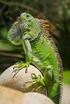 33 Reptiles and Amphibians of Curaçao BY Dr. Nelly de Rooij (With 2 Figures). The Zoological Museum of Amsterdam received some collections of reptiles from Curaçao made by Dr. J. BOEKE in 1905, by Dr.
In Class IV arch: Fulcrum line passes through two abutments adjacent to single edentulous space.
 It is that part of removable partial denture which assists the direct retainers in preventing displacement of distal extension denture bases by resisting lever action from the opposite side of the fulcrum
Removing chips is a method for producing plastic threads of small diameters and high batches, which cause frequent failures of thread punches.
 Plastic Threads Technical University of Gabrovo Yordanka Atanasova Threads in plastic products can be produced in three ways: a) by direct moulding with thread punch or die; b) by placing a threaded metal
TWO NEW FRESHWATER SPECIES OF THE GENUS JESOGAMMARUS (CRUSTACEA: AMPHIPODA: ANISOGAMMARIDAE) FROM CHINA
 THE RAFFLES BULLETIN OF ZOOLOGY 2004 THE RAFFLES BULLETIN OF ZOOLOGY 2004 52(2): 455-466 National University of Singapore TWO NEW FRESHWATER SPECIES OF THE GENUS JESOGAMMARUS (CRUSTACEA: AMPHIPODA: ANISOGAMMARIDAE)
Using and Constructing a Dichotomous Key
 Name Class Date Chapter 18 Classification Using and Constructing a Dichotomous Key You may want to refer students to Chapter 18 in the textbook for a discussion of the classification system used in biology.
Simple Machines. What are simple machines?
 Definitions to know: Simple Machines Work done when an applied force causes an object to move in the direction of the force Energy ability to cause change; can change the speed, direction, shape, or temperature
Residential Decks. Planning and Development Services Department
 Building Safety Division 8500 Santa Fe Drive Overland Park, KS 66212 (913) 895-6225 Fax (913) 895-5016 Email: [email protected] Planning and Development Services Department Residential Decks
A NEW GENUS OF THE SPIDER SUBFAMILY GNAPHOSINA E FROM THE VIRGIN ISLANDS (ARANEAE, GNAPHOSIDAE ) Norman I. Platnick and Mohammad U.
 Platnick, N. I., and M. U. Shadab. 1977. A new genus of the spider subfamily Gnaphosinae from th e Virgin Islands (Araneae, Gnaphosidae). J. Arachnol. 3 :191-194. A NEW GENUS OF THE SPIDER SUBFAMILY GNAPHOSINA
DSM Spine+Sport - Mobility
 To set yourself up for success, practice keeping a neutral spine throughout all of these movements. This will ensure the tissue mobilization is being applied to the correct area, and make the techniques
Instructor Training Program Levels 1 through 4 Uneven Bars
 USA Gymnastics Online: Technique: Uneven Bars Page 1 of 9 Instructor Training Program Levels 1 through 4 Uneven Bars Level 1 - Uneven Bars MOUNT: BACK HIP PULLOVER Grasp bar with hands "shoulder width"
try Elise s toning exercise plan
 try Elise s toning exercise plan Whether you want to start things off slow and gradually build up your fi tness, or begin with a challenge, Elise s toning exercise programme is designed for all levels.
A proper warm-up is important before any athletic performance with the goal of preparing the athlete both mentally and physically for exercise and
 A proper warm-up is important before any athletic performance with the goal of preparing the athlete both mentally and physically for exercise and competition. A warm-up is designed to prepare an athlete
12-1 Representations of Three-Dimensional Figures
 Connect the dots on the isometric dot paper to represent the edges of the solid. Shade the tops of 12-1 Representations of Three-Dimensional Figures Use isometric dot paper to sketch each prism. 1. triangular
Bitewing Radiography B.E. DIXON. B.D.S., M.Sc., D.P.D.S.
 Bitewing Radiography B.E. DIXON B.D.S., M.Sc., D.P.D.S. Main Indications Detection of Dental Caries Monitoring progression of caries Assessment of existing restorations Assessment of Periodontal status
Waxing up. Waxing up. Crown and bridgework. Friedrich Jetter Christian Pilz. Ideas for dental technology
 Waxing up Waxing up Crown and bridgework Friedrich Jetter Christian Pilz Ideas for dental technology Waxing-up units Waxing-up units Waxlectric II The Waxlectric II is an electrically regulated sculpting
about Why You Should Know Melanoma
 about Why You Should Know Melanoma Why You Should Know about Melanoma Each year, more than 3 million Americans are diagnosed with skin cancer. This is the most common form of cancer. Of these, more than
3D Electroform Stencils for Two Level PCB
 3D Electroform Stencils for Two Level PCB Rachel Miller-Short, VP Global Sales Photo Stencil Bill Coleman Photo Stencil Dudi Amir Intel Joe Perault Parmi Abstract The requirements for two-level PCB with
Orthopedic Shoe Dealer. Provider Manual
 Orthopedic Shoe Dealer Provider Manual Provider 1 TABLE OF CONTENTS Chapter I. General Program Policies Chapter II. Member Eligibility Chapter IV. Billing Iowa Medicaid Appendix III. Provider-Specific
Geometric Optics Converging Lenses and Mirrors Physics Lab IV
 Objective Geometric Optics Converging Lenses and Mirrors Physics Lab IV In this set of lab exercises, the basic properties geometric optics concerning converging lenses and mirrors will be explored. The
*The steps described are for the right-handed person; adjustments will need to be made for a lefthander.
 Archery Study Guide History The origin of archery is unknown; however, archery has been an activity with varied objectives for human beings since the beginning of recorded history. The successful use of
HUNGARIAN HOUND TRANSYLVANIAN SCENT HOUND (Erdélyi Kopó)
 13.09.2000/EN FEDERATION CYNOLOGIQUE INTERNATIONALE (AISBL) SECRETARIAT GENERAL: 13, Place Albert 1 er B 6530 Thuin (Belgique) FCI-Standard N 241 HUNGARIAN HOUND TRANSYLVANIAN SCENT HOUND (Erdélyi Kopó)
Activity: Can You Identify the Age?
 Activity: Can You Identify the Age? Skeletons are good age markers because teeth and bones mature at fairly predictable rates. How Teeth Reveal Age For toddler to age 21, teeth are the most accurate age
Make a difference in someone s life FITTING GUIDE
 Make a difference in someone s life FITTING GUIDE CONTENTS Introduction 3 Applications 4 Characteristics 4 Fitting philosophy 5 Mid-peripheral / limbal zone 6 Only 3 fitting variables to determine 7 Ideal
Section 3 Ape Physical Characteristics
 Section 3 Ape Physical Characteristics OVERVIEW The physical anatomy of apes is essential to their adaptive strategies. Compared to humans, their closest living relatives, ape skeletons are more robust
Yes No Correction Date. Seated Position Do you know how to adjust your chair? Is your chair adjusted for support & comfort?
 UC Davis Health System - Computer Workstation Self Evaluation Assessment Date: Employee Name: Employee ID#: Department: Supervisor: Union Affiliation: Date of Hire (if new hire) Reason for Assessment (circle
Determine Your Body Type and Size Body Proportion Length of Body Sections
 Determine Your Body Type and Size Body Proportion Length of Body Sections Proportion - Torso to Legs Are you longer in the torso or legs? Height in inches Torso vs. Legs Top half in inches Bottom half