
BPMonline CRM User Guide
|
|
|
- Susan Jefferson
- 10 years ago
- Views:
Transcription
1 BPMonline CRM

2 1 CONTENTS About This Guide BPMonline CRM Concept Leads Accounts Contacts Activities Opportunities Invoices Documents Knowledge Base Campaigns Mass Mail Working with BPMonline CRM Getting Started with BPMonline CRM Managing Accounts and Contacts Working with Leads Registering Customers Synchronization of Contacts with Google Saving Communication Options for Customers Searching Customer Information in Social Networks Entering Banking Details Tracking Noteworthy Events for Accounts and Contacts Establishing the Organizational Structure of a Company Maintaining Information About Contacts Career Compiling a List of Company Employees Managing Account and Contact Relationships Establishing the History of Interaction with Accounts and Contacts Account and Contact Segmentation Analytics for Accounts and Contacts Time Management and Communications Creating Tasks and Calls Creating and Sending Messages Completing Activities and Entering Results Activity Analytics Managing Opportunities Registering Opportunities Maintaining and Closing Deals BPMonline CRM
3 Viewing Analytics for Opportunities Managing Documents Registering Invoices and Documents Managing Invoices and Documents Analytics for Document Flow Knowledge Base Organization Managing Campaigns Creating Campaigns and Defining Target Audience Defining Promoted Products and Establishing the Campaign Team Planning Activities for Campaigns Identifying Campaign Results Analytics for Campaigns Mass Mailing Automation Organizing Mass Mail Setup of Mass Mail Templates BPMonline Mass ing MailChimp Mass ing BPMonline CRM General Features The Command Line User Profile Notifications Duplicates Search Access Rights BPMonline CRM Configuration The [Leads] Section Lead Page Actions in the [Leads] Section Analytics in the [Leads] Section The [Accounts] Section The Account Page Actions in the [Accounts] Section Analytics in the [Accounts] Section The [Contacts] Section The Contact Page Actions in the [Contacts] Section Analytics in the [Contacts] Section The [Activities] Section The Activity Page Actions in the [Activities] Section
4 Analytics in the [Activities] Section The [Calendar] Tab in the [Activities] Section The [Opportunities] Section Opportunity page Actions in the [Opportunities] Section Analytics in the [Opportunities] Section The [Invoices] Section Invoice Page Actions in the [Invoices] Section Analytics in the [Invoices] Section The [Documents] Section The Document Page Actions in the [Documents] Section Analytics in the [Documents] Section The [Knowledge Base] Section Knowledge Base Article Page Analytics in the [Knowledge Base] Section The [Campaigns] Section The Campaign Page Actions in the [Campaigns] Section Analytics in the [Campaigns] Section The [Mass Mail] Section Mass Mail Page Actions in the [Mass Mail] Section Analytics in the [Mass Mail] Section The [Dashboards] Section BPMonline CRM
![..147 4.7. The [Documents] Section...148 4.7.1. The Document Page...149 4.7.2. Actions in the [Documents] Section...152 4.7.3. Analytics in the [Documents] Section...153 4.8. The [Knowledge Base] Section.](/docs-images/40/2896190/images/page_4.jpg "..154 4.8.1. Knowledge Base Article Page...154 4.8.2. Analytics in the [Knowledge Base] Section...155 4.9. The [Campaigns] Section...156 4.9.1. The Campaign Page...157 4.9.2. Actions in the [Campaigns] Section.")
5 4 ABOUT THIS GUIDE The user guide consists of the following sections: BPMonline CRM Concept - provides a general understanding of the purpose and capabilities of BPMonline CRM sections, as well as defines a general system usage strategy that helps users solve business challenges. Working with BPMonline CRM - includes recommendations on preparing the system for operation, as well as step by step description of resolving user's daily tasks, such as managing customer base, documents, sales opportunities, scheduling working hours, etc. BPMonline CRM Performance Capabilities - describes general system features and functions, including working with the command line, notifications, searching for duplicates, distributing access rights, as well as setting up user profile. BPMonline CRM Configuration - contains a detailed description of the system functionality by sections, including the purpose of the fields and blocks, their specifics, description of the actions and analytical tools. NOTE Information about configuring and administering BPMonline CRM can be found in the Customization Guide. Because we continuously update and improve the system, occasionally the description of some elements could be different from what you will actually see on screen.
6 5 BPMONLINE CRM CONCEPT IN THIS CHAPTER Leads Accounts Contacts Activities Opportunities Invoices Documents Knowledge Base Campaigns Mass Mail BPMonline CRM

7 6 LEADS A lead represents an interest in your products expressed by a potential customer. For example, your partner has forwarded you information about a potential customer, a new user has registered on your website, or someone has left their contact information at your booth during a trade fair. All these data can be used to get new customers and conclude deals with them. In the LEADS section of BPMonline CRM, you can store communication options and the base data on potential customers, as well as track sources based on which the lead was identified. CONTENTS Lead Qualification Activities Analytics on Leads Working with Leads The [Leads] Section LEAD QUALIFICATION Every identified lead should be managed. For example, you can call back to the potential customers and specify if the they are interested in your products and services, offer a price list, send an invitation to the exhibition. In case if the interest is not confirmed or the potential customer is out of reach, there is no point to add a contact to the system. In this case, the lead should be DISQUALIFIED. If the interest is confirmed, the lead should be QUALIFIED. The lead qualification implies different results of processing. For example, the lead can already exist in the system. In this case, it should be qualified as existing contact and/or account. If the lead details are unique, you can create a new account, contact, or opportunity. Qualifying Leads ACTIVITIES The tasks, s, and calls connected with the lead are shown in the ACTIVITIES block. For example, here you can keep records related to the history of work with potential customers, such as getting, verification and processing data. You can view details on each activity or create new activities connected to the lead. Creating Tasks and Calls Creating and Sending Messages ANALYTICS ON LEADS Use the reports and charts of the LEADS section to analyze statistics on leads, for example, to evaluate the efficiency of employees' work or analyze the quality of the added leads.
8 Accounts 7 ACCOUNTS All information about customer companies, partners, contractors and suppliers should be stored in one place, up-to-date and easily accessed at any time. Use the ACCOUNTS section of BPMonline CRM to keep record of contact data, track connections between companies, group companies by various criteria and analyze the relevant statistics. For example, data about the number of employees and the annual revenue of a company can be processed to evaluate the company's market position. CONTENTS Communication Options and Addresses Banking Details Organizational Structure and Relationships Contact Persons Opportunities and Invoices Activities and History Duplicates Search Import from Excel Printing the Account Data Analytics for Accounts Managing Accounts and Contacts The [Accounts] Section COMMUNICATION OPTIONS and ADDRESSES The COMMUNICATION OPTIONS block contains a list of means you can use to contact an account. You can add several additional communication options, such as the primary and alternate phone numbers, fax or the website address. In the ADDRESSES block you can indicate several addresses of a company, for example, legal and actual addresses. Saving Communication Options for Customers BANKING DETAILS In this block enter the sort code of the recipient's bank as well as transactional and correspondent accounts. This information can be used, for instance, when creating a printable of an invoice or any other document. Entering Banking Details ORGANIZATIONAL STRUCTURE and RELATIONSHIPS In order to display the organizational structure of a company along with its divisions, use the ORGANIZATIONAL STRUCTURE block. You can add departments, divisions and managers by arranging the corresponding root and subordinate items. The RELATIONSHIPS block contains information about any possible relationships between an account and other accounts or contacts. For example, here you can show branches of one company. BPMonline CRM
9 8 Establishing the Organizational Structure of a Company Managing Account and Contact Relationships CONTACT PERSONS Use the CONTACTS block to indicate the contact persons and employees of a company. Here you can add a new contact or connect the account to an existing contact. Compiling a List of Company Employees OPPORTUNITIES and INVOICES In the OPPORTUNITIES block you can view all existing opportunities for an account, evaluate the profitability of deals and indicate stages of opportunities. To check the status of payments against invoices as well as payment amounts and discounts, use the INVOICES block. Along with viewing the existing records, blocks can be used to add new invoices and opportunities in the system. ACTIVITIES and HISTORY The ACTIVITIES block displays tasks, s and calls connected with the selected account. You can view the details for each activity or create new activities connected with the account. Use the HISTORY block to view the information about documents, invoices, tasks and s connected with the account. Creating Tasks and Calls Creating and Sending Messages Establishing the History of Interaction with Accounts and Contacts DUPLICATES SEARCH When a new account is added, the system searches for similar records and notifies the user if there is a chance that this account might be already registered. You can also start the duplicates search manually. Duplicates Search IMPORT FROM EXCEL Import from MS Excel can be used for adding accounts from an existing database to BPMonline CRM. You will need to download the import template, fill it out and import the modified file into the system. NOTE More information about importing records can be found in the Customization Guide. PRINTING THE ACCOUNT DATA Use the section actions to access printables of accounts. For example, you can print out summarized information about the company before making a presentation. In addition, the section contains printables for preparing envelopes and labels for mass mailing.
10 Accounts 9 ANALYTICS FOR ACCOUNTS Charts and reports of the ACCOUNTS section display the statistical data about the companies. For example, if you are planning the sales, you can analyze the customer base growth and evaluate the number of accounts that have made their first purchase. Charts showing the distribution of accounts by industries, countries and territories can be used to establish which products should be promoted within the marketing campaigns. The section analytics will be also helpful in evaluating the performance of managers. Analytics for Accounts and Contacts BPMonline CRM

11 10 CONTACTS In BPMonline CRM contacts are the contact persons of your customers and partners, individual clients and other business contacts. Using the CONTACTS section, you can manage the information about contacts, segment them according to various parameters, analyze the history of interactions with customers, and view the resulting statistics. CONTENTS Communication Options and Addresses Noteworthy Events Job Experience and Relationships Activities and History Import from Excel Synchronization of Contacts with Google Printing the Contact Data Analytics for Contacts Managing Accounts and Contacts The [Contacts] Section COMMUNICATION OPTIONS and ADDRESSES The COMMUNICATION OPTIONS block contains a list of means you can use to contact a person. You can enter several communication options, for example, business and home phone numbers, address, Facebook profile, etc. In addition, a contact can have multiple addresses, for example, a home address and a delivery address, which can be indicated in the ADDRESSES block. You can search for a contact in Facebook, LinkedIn and Twitter and connect it to a record in BPMonline CRM. As a result, the data from a social network can be used for adding information to a contact page. Besides that, you can create new contacts in BPMonline CRM based on the user profiles in social networks. Saving Communication Options for Customers Searching Customer Information in Social Networks NOTEWORTHY EVENTS Store the information on noteworthy occasions of a contact, such as a birth date, anniversaries, unofficial holidays, etc. Tracking Noteworthy Events for Accounts and Contacts JOB EXPERIENCE and RELATIONSHIPS Information about the current place of work of a contact can be found in the JOB INFORMATION block while the information about previous jobs can be found in the JOB EXPERIENCE block. When you modify the information about the contact's job (for example, data about the company, department or position), BPMonline CRM will offer you to automatically

12 Contacts 11 update the contact's job experience. Besides that, you can indicate and view the connections between contacts and accounts by using the RELATIONSHIPS block. Maintaining Information About Contacts Career Managing Account and Contact Relationships ACTIVITIES and HISTORY The ACTIVITIES block displays tasks, s and calls connected with the selected contact. You can view the details for each activity or create new activities connected with the contact. Use the HISTORY block to view the information about documents, invoices, tasks and s connected with the contact. Creating Tasks and Calls Creating and Sending Messages Establishing the History of Interaction with Accounts and Contacts IMPORT FROM EXCEL Import from MS Excel can be used for uploading contacts from an existing database. You will need to download the import template, fill it out and import the modified file into the system. NOTE More information about importing records can be found in the Customization Guide. SYNCHRONIZATION OF CONTACTS WITH GOOGLE You can synchronize your Google contacts and calendar with BPMonline CRM contacts and tasks. After the synchronization, the latest modifications in the BPMonline CRM contacts will be transmitted to Google contacts and vice versa. Synchronization of Contacts with Google PRINTING THE CONTACT DATA Use the section actions to access printables of contacts. Printables are helpful for getting the summarized information about a contact or preparing envelopes for mass mailing. ANALYTICS FOR CONTACTS Charts of the CONTACTS section display the distribution of contacts by responsible employees, job positions and roles. Reports of the section facilitate compiling a list of contact's noteworthy events and analyze the data entry for contacts. Analytics for Accounts and Contacts BPMonline CRM

13 12 ACTIVITIES Use the BPMonline CRM ACTIVITIES to optimize your work hours, create a schedule, plan activities for other employees, track interconnections between activities and other system sections, as well as receive a report on completed TASKS. Use the section to manage incoming and outgoing CALLS, as well as organize working with messages. You can send s directly from the system and receive them from other mail servers. Unread s are available on the reminder page. CONTENTS Calendar Participants Attachments Analytics on Activities Time Management and Communications The [Activities] Section CALENDAR The CALENDAR is the electronic organizer for managing planned tasks, calls and s. The calendar shows in visual form the employees' workload. In calendar, the duration of tasks can be specified up to 5 minutes. The calendar is a convenient tool to change the start time of the activity or its duration without going to the activity page. Monitoring Work Completion Modifying Planned Tasks PARTICIPANTS Use the PARTICIPANTS block to compile a list of contact persons involved in the activity. For example, in this manner, you can create collective tasks, such as conferences, trainings, meetings. Once the task is created and the needed participants are added, this task will be displayed in the list of activities of each of the listed employees. Also, when you create a collective message, you can track it to see if the participants have read it. Creating Collective Tasks ATTACHMENTS If you need to attach a file to the message, use the ATTACHMENTS block. The file will be sent to the recipients as well. Creating and Sending Messages
14 Activities 13 ANALYTICS ON ACTIVITIES Use the reports and charts of the ACTIVITIES section to analyze statistics on tasks, calls, and messages, evaluate employees' workload or detailed plan of their work hours. To assess the performance of employees, you can view a report on completed and overdue meetings, messages and calls for the specified period of time. Activity Analytics Compiling a Report on Performed Activities BPMonline CRM
15 14 OPPORTUNITIES BPMonline CRM helps determine the biggest and most profitable sales opportunities, as well as manage them efficiently. From the moment a client expresses an interest to work with you or purchase your services, enter information about the business opportunity in the OPPORTUNITIES section and update it regularly. In this section you can plan prospective opportunities, determine their stages, identify your competitors and analyze their strong and weak points, as well as obtain insight via statistical data about sales and evaluate the general efficiency of the sales department. Closing the deal is a critical part of any sales opportunity because at this point you can calculate the actual revenue from the opportunity and the number of hours spent on it. Entering the detailed information about the deal during the closure process will help you analyze won and lost opportunities, which in turn will provide insight into how to target your sales efforts more efficiently and plan further work on the opportunities. CONTENTS Products Stages and Sales Pipeline Participants and Competitors Activities Documents and Invoices Printing Opportunity Data Opportunity Analytics Managing Opportunities The [Opportunities] Section PRODUCTS Use the PRODUCTS block to create the list of goods and services that can be offered in the course of working with an opportunity. Specify if the customer is interested in acquiring a product and the number of units to sell. Registering Opportunities STAGES and SALES PIPELINE Longer sales can be broken down by stages, starting with the first contact and up to the actual sale of the product. To facilitate the sale, enter the information about an opportunity from the moment it is identified, and then update the opportunity stage and probability as you move through the sales process. BPMonline CRM will record the history of stages, as well as start and end dates for each stage in the STAGES block of the opportunity page. The Sales Pipeline report will visualize the success rate of deals in the context of opportunity stages. The sales pipeline provides a visual representation of how a sales plan is fulfilled. Using this report, you can determine the percentage of deals on each stage and determine the bottle necks of your sales process. With such insight you can focus your efforts on the stages that need the most attention, for example, conducting an effective presentation or preparing a quotation on time. Changing Current Stage of an Opportunity
16 Opportunities 15 Viewing the Completed Opportunity Stages Using the Sales Pipeline PARTICIPANTS and COMPETITORS Save the information on the opportunity participants in the PARTICIPANTS block. In this block you can add both your colleagues and partners or contact persons of the prospective customer, as well as specify their role in the opportunity. If other companies strive to make the same deal, add information on their strong and weak points, as well as information on the competing products. This will help you achieve the optimum position in the market. Adding Information on Competitors ACTIVITIES The ACTIVITIES block displays tasks, s and calls made by your colleagues in the course of closing a deal. You can view general information on existing activities or create new activities connected with the opportunity. Planning Activities for Opportunities DOCUMENTS and INVOICES Use the DOCUMENTS block to work with the documentation connected with the opportunity. Here you can, for example, add a contract or purchase order that are used in the process of initiating and closing the deal. If invoices are issued as part of sale process, save their data in the INVOICES block of an opportunity page. You can view information in the invoices that have been already issued or create new invoices. Maintaining Documents for Opportunities PRINTING OPPORTUNITY DATA Use actions of the section to access the opportunity printables. With the help of the printables you can, for example, view summary information on a business opportunity or prepare quotation for a customer. The resulting file can be printed, or saved locally in PDF format. Preparing the Quotation Printable Preparing Opportunity Summary Information OPPORTUNITY ANALYTICS Use the reports and charts of the OPPORTUNITIES section to conduct analysis of the statistical data on business opportunities. The charts in this section provide comprehensive information on the number and correlation of opportunities in different regions, possible causes of the more profitable deals and the efficiency of sales department as a whole. The reports in the Opportunities section provide means for evaluating the efficiency of sales on each of the stages, as well as analyzing the opportunity data entry compliance. Viewing Statistics for Opportunities Data Entry Compliance Analysis BPMonline CRM
17 16 INVOICES The INVOICES section is designed for managing company invoices. Here you can issue invoices, track payments, as well as monitor invoice statuses. To prepare an invoice, specify the customer's name and add a list of products. The printable will be generated based on the data stored in the system. Also, information in this section will help you evaluate profitability of sales opportunities and effectiveness of marketing campaigns. CONTENTS Products Activities Printing Invoices Invoice Analytics Managing Documents The [Invoices] Section PRODUCTS In the PRODUCTS block, add the list of products and services that are included to the invoice. Here you can save information about the number of items of each product, its price and the discount. In BPMonline CRM, the total invoice amount will be recalculated automatically. Registering Invoices ACTIVITIES The tasks, s, and calls made by your company employees while working with invoices are displayed in the ACTIVITIES block. You can view details of each activity or create new activities connected to the invoice. PRINTING INVOICES Use the actions menu to get access to the invoice printables. You can view and print the invoice including the list of products. Preparing Invoice and Document Printables INVOICE ANALYTICS Charts in the INVOICES section provide you with visual information about the dynamics and amount of invoice payments, payment statuses and the most profitable sales' opportunities in general. Analytics for Document Flow

18 Documents 17 DOCUMENTS In BPMonline CRM, the DOCUMENTS section is designed to manage company's documentation. In this section, you can create electronic documents, such as contracts, purchase orders, or incoming documents, as well as print them directly from the system. In BPMonline CRM, you can also store external files, for example, files received from customers. CONTENTS Products Subordinate Documents Activities Notes and Attachments Printing Documents Managing Documents The [Documents] Section PRODUCTS In the PRODUCTS block, specify the list of products and services that are included in a contract or purchase order. Save here the information about the number of product items, as well as price and discount of each product. In BPMonline CRM, the total amount of the document will be recalculated for the customer. Registering Contracts and Purchase Orders SUBORDINATE DOCUMENTS In the SUBORDINATE DOCUMENTS block, you can view a list of documents that were created based on the selected one. For example, you can create a purchase order based on the contract. Viewing and Establishing Connections Between Documents Establishing Parent Connection with a Document Registering a Subordinate Document ACTIVITIES The ACTIVITIES block shows tasks, s, and calls performed by your company's managers when working with documents. You can view details on each activity or create new activities connected to the document. NOTES and ATTACHMENTS The NOTES block is designed to add comments or additional information on the document. If you need to save an existing file of a document in BPMonline CRM, use the ATTACHMENTS block. You can, for example, add to the system a contract or purchase order file that was received from the customer. Also, here you can save links to websites related to the document. Saving a Document File BPMonline CRM

19 18 PRINTING DOCUMENTS Use the system actions to access document printables. You can view, print, or send to the customer the text of the purchase order or contract including the list of products in the document, as well their total cost to be paid by the customer. Preparing Invoice and Document Printables

20 Knowledge Base 19 KNOWLEDGE BASE The knowledge base is an electronic storage of documents designed for quick searching of information, as well as easy data management. In the knowledge base of BPMonline CRM, you can manage file archive of company's common documents, reference information, such as: contract templates, rules and regulations, advertising materials, answers to frequently asked questions, and examples of commercial documents, etc. CONTENTS Notes and Attachments Knowledge Base Organization The [Knowledge Base] Section NOTES and ATTACHMENTS In the knowledge base, the information can be added in different ways. To add a small article, use the NOTES block. Small text notes are usually sufficient means of saving an answer to frequently asked questions. In case of larger articles or if the article is already hosted on the web, or needs additional attachments (MS Word of PDF files), use the ATTACHMENTS block. You can also add any other attachments, such as commercial document templates or advertising materials. Registering a Knowledge Base Article Saving Additional Materials on Knowledge Base Articles BPMonline CRM
21 20 CAMPAIGNS Campaigns are marketing measures conducted to increase your company's sales. Advertising, attractive packaging, sales promotions, market research and new product development are all elements of marketing projects. Information about these or any other types of marketing activities you can store in the CAMPAIGNS section. The interconnections between the CAMPAIGNS section and other BPMonline CRM sections help gather information about all instances when your customers expressed interest in your products or services, get summary about the efficiency of the conducted events. Evaluate information about the quality and quantity of advertising, plan advertising budget, select the target audience and campaign team, analyze the efficiency of the conducted marketing campaigns and make corrections based on the analysis results. CONTENTS Target Audience Products Team Leads Opportunities and Invoices Documents Activities Printing Campaign Data Campaign Analytics Managing Campaigns The [Campaigns] Section TARGET AUDIENCE In the TARGET AUDIENCE, create a list of contacts and accounts you want to involve in your marketing campaign. You can add customers selectively, as well as add the folder of contacts or accounts created in the corresponding section beforehand. Specify the information about the invitees' responses to use these data when evaluating the efficiency of the campaign. Also, you can add a company or an individual to the campaign target audience directly from the contact or account page by specifying the needed marketing campaign in the CAMPAIGNS block of the page. Adding the Main Object of the Campaign PRODUCTS Use the PRODUCTS block to establish a list of products or services that are advertised or involved in a marketing campaign. Adding a Product to the Campaign
22 Campaigns 21 TEAM In the TEAM block, save the information about individuals and companies that participate in the preparation or conducting marketing campaign. Here you can add your colleagues, partners, or contact persons from the prospective customer, as well as their role in the campaign preparation. Adding Campaign Team Participants LEADS Use the LEADS block to manage the list of leads that were obtained as a result of a marketing campaign. For example, if a potential customer contacted you after the exhibition, add information about that marketing event on the lead page. Use the information from this block to evaluate the effectiveness of conducted campaigns. OPPORTUNITIES and INVOICES The list of opportunities that have been completed as a result of a campaign is shown in the OPPORTUNITIES block. Here you can add a new opportunity connected to a campaign, as well as view the list of opportunities created earlier as a result of the campaign. Use the INVOICES block to add information about the invoice if it was issued as a result of a campaign. You can view parameters of the invoices that were issued earlier, as well as create new invoices connected with the campaign. The financial details of invoices will be used in BPMonline CRM for calculating actual amount of sales that resulted from the marketing campaign. DOCUMENTS Use the DOCUMENTS block to manage documentation related to the campaign. Here you can, for example, create a contract related to the campaign or register incoming documents. ACTIVITIES The ACTIVITIES block displays tasks, s, and calls that are made by employees while preparing and conducting a campaign. Use this information to manage the time of your company's marketing managers. Planning Activities for Campaigns Creating Tasks and Calls Creating and Sending Messages PRINTING CAMPAIGN DATA Use the section actions to get access to the campaign summary. This printable will provide you with the summary information on each marketing campaign including its target audience. This information can be used to plan new campaigns, as well as to analyze the completed and ongoing campaigns. CAMPAIGN ANALYTICS Use the analytics of the CAMPAIGNS section to analyze the statistics on marketing campaigns. Use the section report to analyze the effectiveness of the conducted campaigns. The report BPMonline CRM
23 22 shows the detailed information about new customers and opportunities completed as a result of the campaign. Evaluating Campaign Efficiency Viewing Statistics for Campaigns
24 Mass Mail 23 MASS MAIL Mass mail is an important marketing tool that helps you promote your products or services. In BPMONLINE CRM, bulk mails can be created and sent in the MASS MAIL section. Inform your employees, partners or customers about various events, send news or advertising. You can create a list of frequently used templates and use them to quickly create mass mails. Two types of mass mail can be created in BPMonline: the mass mail of an internal BPMonline format and the MailChimp mass mail that uses external mass mail service MailChimp. To extend the functionality of the system, you can use the built-in MailChimp analytics. CONTENTS Recipients Attachments Working with MailChimp The [Mass Mail] Section Mass Mailing Automation RECIPIENTS Compile the list of mass mail recipients in the RECIPIENTS block. Here you can preview the resulting personalized for the selected recipient. Once mass mailing is started, a separate will be sent to each recipient, and the system will display the status. ATTACHMENTS If you want to attach an external file to the BPMonline mass mail message, use the ATTACHMENTS block. Once mass mailing starts, the file will be sent to the recipients. Use this block to store links to websites related to the mass mail. WORKING WITH MAILCHIMP You can integrate BPMonline CRM mass mails into the MailChimp mass mail service. In this case, you will get extra tools that will help you track wich messages were read, which links were clicked, get information about recipients' locations, etc. You can add a MailChimp mass mail directly from the BPMonline CRM, synchronize the list of recipients between BPMonline CRM and MailChimp, as well as update the statuses. BPMonline CRM
25 24 WORKING WITH BPMONLINE CRM IN THIS CHAPTER Getting Started with BPMonline CRM Managing Accounts and Contacts Time Management and Communications Managing Opportunities Managing Documents Managing Campaigns Mass Mailing Automation
26 Getting Started with BPMonline CRM 25 GETTING STARTED WITH BPMONLINE CRM Before you start working with BPMonline CRM, consider configuring a number of individual settings to provide the most convenient and efficient work with the system. The most of individual settings are located in the customer profile. You can open it by following the PROFILE link on the main BPMonline CRM page. CONTENTS Setting Up Accounts in External Resources Configuring Accounts Google Synchronization Setup SETTING UP ACCOUNTS IN EXTERNAL RESOURCES 1. Open the user's profile page. 2. Click the [Accounts in External Resources] button. 3. On the opened page, click the [Add] button and in the menu select the service for which the account must be added, for example, [Facebook]. 4. On the opened page, log in to the selected external resource using your account. As a result, the user login and password in the external resource will be used when performing the integration between BPMonline CRM and this service. The following external resources are used in BPMonline: a. Facebook, LinkedIn, and Twitter - for actions of searching for contact data in social networks. b. Google account - is used for synchronizing BPMonline CRM contacts with Google contacts, as well as synchronizing tasks and meetings with Google calendar. NOTE The application must be integrated with the selected social network. Registering BPMonline CRM for integration with social networks is described in the Customization Guide. Synchronization of Contacts with Google Searching Customer Information in Social Networks Synchronizing the Calendar with Google CONFIGURING ACCOUNTS 1. Open the user's profile page. 2. Click the [ Accounts] button. 3. On the opened page, click the [Add] button. 4. Enter the account parameters: a. In the [ Provider] field, select one of the available mail servers, for example, Yahoo.com. BPMonline CRM
27 26 NOTE The list of providers is compiled by the system administrator. Adding providers is described in the Customization Guide. b. Enter the user name ( address) and password used for account authorization. c. Specify the mailbox name to identify it when simultaneously working with several accounts. 5. Specify download parameters: a. Select the [Use for Receiving] checkbox. b. To enable automatic receiving, select the [Automatically Receive s Every... Minutes] checkbox and specify periodicity of the automatic receiving from the mailbox, in minutes. c. Define the way of selecting s for receiving. You can receive all s from the Incoming folder of the mailbox starting from certain date, or you can receive only s from the mailbox folders that are synchronized with BPMonline CRM. d. Specify the start date for receiving messages (if the [Receive All Messages from Mailbox] option is selected), or select the mailbox folders from which the s should be received (if the [Receive s from Customized Folders] option is selected. 6. If necessary, specify the sending parameters. a. Select the [Send s from Mailbox] checkbox to use a certain mailbox for sending s. b. If the mailbox is used for sending s, you can select the [Use by Default] checkbox to specify the mailbox address in the [From] field of the new messages cards by default. 7. Click the [Save] button. As a result, the configured mailbox will be added to the folder of the [Activities] section. You can receive and send messages using this account. Creating and Sending Messages GOOGLE SYNCHRONIZATION SETUP To allow synchronization between Google contacts and calendar and BPMonline CRM contacts and activities, the synchronization must be set up beforehand. The example of setting up synchronization in the CONTACTS section is given below. 1. Open the CONTACTS section. 2. Create a static contact folder to be synchronized. To do this: a. Follow the [Folders] link in the section filter area. b. On the opened page, in the [Add] button menu, select the [Add Static Folder] command. In the additional window, enter a folder name, for instance, Contacts for Google Synchronization, and click the [OK] button. c. Go back to the CONTACTS section.
28 Getting Started with BPMonline CRM Select the [Set Up Google Synchronization] command in the [Actions] button menu. The setup page will open: a. Click the button in the [Account] field. In the opened window, authorize in Google. NOTE The application must be integrated with Google. More information about registering BPMonline CRM for integration with Google can be found in the Customization Guide. b. In the [Contacts Folder for Synchronization] field, select the created static folder. c. If the synchronization should start automatically, select the Start Contact Synchronization Every checkbox and specify the time period for synchronization, for example, 30 Minutes. d. Click the [OK] page button to save the settings. As a result, both your Google account and the BPMonline contact folder for synchronization will be saved in the system, and the synchronization will be started at the specified time period automatically. NOTE In the [Activities] section, setting up synchronization with Google is done in the same manner. Note that you don't need to specify the static folder for synchronizing tasks in the synchronization settings of the [Activities] section. Synchronization of Contacts with Google BPMonline CRM
29 28 MANAGING ACCOUNTS AND CONTACTS This chapter covers the process of working with the LEADS, ACCOUNTS and CONTACTS sections. CONTENTS Working with Leads Registering Customers Synchronization of Contacts with Google Saving Communication Options for Customers Searching Customer Information in Social Networks Entering Banking Details Tracking Noteworthy Events for Accounts and Contacts Establishing the Organizational Structure of a Company Maintaining Information About Contacts Career Compiling a List of Company Employees Managing Account and Contact Relationships Establishing the History of Interaction with Accounts and Contacts Account and Contact Segmentation Analytics for Accounts and Contacts The [Leads] Section The [Accounts] Section The [Contacts] Section WORKING WITH LEADS Registering Leads Qualifying Leads REGISTERING LEADS 1. Open the [Leads] section and add a new record. 2. On the opened lead page, enter the information about the account and/or contact: a. Company and/or contact person name. b. Communication options and address. c. Any other known data. For example, for companies it could be No. of Employees or Annual Revenue, and for contacts Full Job Title or Title. 3. Save the data. Lead Page > General Information QUALIFYING LEADS 1. In the Leads section, locate the lead that needs to be qualified.
30 Managing Accounts and Contacts Select the lead and click the [Edit] button. 3. On the lead page, in the menu of the [Actions] button, select the [Qualify] command (Рис. 1). Additional page for lead qualification will be displayed. Рис. 1Starting the Lead Qualification 4. Select the [Create New] option (Рис. 2) to create a new contact and/or account based on the selected lead. Рис. 2Selecting [Create New] Option 5. Click the [Save] button. As a result, a new account and/or contact will be added in the system, and the status of the lead will be changed to Qualified as New. 6. In the opened account/contact edit page, enter any changes if necessary. For example, you can specify the type of the new potential customer and the responsible employee. NOTE Using the lead qualification page, you can also connect a lead with an existing account and/or contact. In this case, the status of the lead will be changed to Qualified as Existing. Using the [Disqualify] command of the [Actions] button, you can qualify a lead as lost or indicate that this lead cannot be contacted. Lead Page > Qualify Lead Page > Disqualify REGISTERING CUSTOMERS Adding an Account Adding a Private Customer Adding Customer's Contact Person BPMonline CRM
31 30 Adding a New Employee ADDING AN ACCOUNT 1. Open the ACCOUNTS section and add a new record. 2. On the account page, enter the information about the company: a. Company name. b. Name of the primary contact. c. Communication options, for instance, telephone number, website, or fax number. d. Primary address. 3. To further streamline your work with the account, fill in the [Type] field with options such as Customer or Partner, and the [Category] field with options such as Normal or VIP. 4. Fill in the [Industry] field to indicate in which industry the company operates. 5. Save the entered information. NOTE Entering information in the [Particulars] field block can help you perform further market segmentation for companies. The Account Page > General Information ADDING A PRIVATE CUSTOMER 1. Open the CONTACTS section and add a new record. 2. In the opened contact page, enter the information about the customer: a. The name and salutation for the customer. b. In the [Type] field, select Customer. c. If necessary, enter the address of the contact. 3. Save the entered information. 4. In the COMMUNICATION OPTIONS block, specify any known means of communication with the customer (such as mobile phone number or address). The Contact Page > General Information ADDING CUSTOMER'S CONTACT PERSON 1. Open the CONTACTS section and add a new record. 2. On the opened contact edit page, enter the information about the contact person: a. Enter name and title for the contact. b. Add communication options. c. In the [Type] field, select Contact Person (Рис. 3).
32 Managing Accounts and Contacts 31 Рис. 3Selecting a Contact Type d. In the [Account] field, select the name of the company where the contact works, and in the [Job Title] field specify contact s responsibilities (Рис. 4). Рис. 4Selecting a Contact's Position 3. If you know the role of contact in the decision making process, fill in the [Role] field. This way you will be able to tailor your communications specifically for the customer. 4. Save the data. NOTE You can also add a contact person for an account by running the [Find Contacts in Social Networks] action in the [Accounts] section. ADDING A NEW EMPLOYEE 1. Open the CONTACTS section and add a new record. 2. In the opened contact card, enter the information about the employee: a. Full name of the employee. b. Fill in the [Account] field with the name of your company. c. Job responsibility and department where the employee works. d. Specify home address of the employee. e. In the [Type] field, select Employee. 3. Save the entered information. BPMonline CRM
33 32 NOTE In order for a new employee to be able to log in, creating and licensing a new user is required. The procedure of creating and licensing a new user can be found in the Customization Guide. SYNCHRONIZATION OF CONTACTS WITH GOOGLE You can use the Google synchronization option to add your Gmail contacts into BPMonline CRM. Synchronization of BPMonline contacts with Google can be performed only for those contacts that belong to a static folder indicated in the synchronization settings. To run the synchronization for the first time: 1. Open the [Contacts] section. 2. Select the [Synchronize with Google Contacts] command in the menu of the [Actions] button. As a result of synchronization, a new group of contacts titled "BPMonline" will be added in your Gmail account. 3. Move Gmail contacts to the BPMonline group. 4. Run the [Synchronize with Google Contacts] action again to perform the synchronization of contacts. As a result, Gmail contacts from the BPMonline group will be imported into the BPMonline CRM folder that was specified during the synchronization setup. From this point on, the synchronization of Google and BPMonline CRM contacts is performed in both directions. Should you transfer some BPMonline CRM contacts to the static folder specified in the synchronization settings, they will be automatically imported into the Gmail's BPMonline group of contacts during the next synchronization. NOTE Synchronization can also be run automatically, at the time intervals specified in the synchronization settings. Getting Started with BPMonline CRM > Setting Up Accounts in External Resources Getting Started with BPMonline CRM > Google Synchronization Setup Actions in the [Contacts] Section > Synchronize with Google Contacts Actions in the [Contacts] Section > Set Up Google Synchronization SAVING COMMUNICATION OPTIONS FOR CUSTOMERS Adding a Communication Option Adding an Address ADDING A COMMUNICATION OPTION 1. Open the ACCOUNTS or CONTACTS section. 2. Select the record and click the [Edit] button. 3. In the COMMUNICATION OPTIONS block, click the [Add] button and select the command to add a communication option of the required type, for example, Primary Phone (Рис. 5).
34 Managing Accounts and Contacts 33 Рис. 5Selecting the Communication Option Type 4. Enter phone number. 5. Save the data. The Account Page > Communication Options The Contact Page > Communication Options ADDING AN ADDRESS 1. Open the ACCOUNTS or CONTACTS section. 2. Select the record and click the [Edit] button. 3. In the ADDRESSES block, click the [Add] button and select the required type for example, Actual. 4. Enter street name and building number, country, area and city of an account or contact. Рис. 6Entering Customer Address 5. Click the [Save] button. The Account Page > Addresses The Contact Page > Addresses BPMonline CRM
35 34 SEARCHING CUSTOMER INFORMATION IN SOCIAL NETWORKS You can search for additional information about contacts in social networks and save this information on the contact page. Using social network data, you can also search for contact persons of accounts and add their contacts to the system. To be able to search for data in social networks, you need to set up a social network account that will be used to log in to that network. Saving the Social network Data of the Customer to the Contact Page Filling In the Contact Page with Data from Social Networks Searching Employees of an Account in Social Networks SAVING THE SOCIAL NETWORK DATA OF THE CUSTOMER TO THE CONTACT PAGE You can connect an existing BPMonline CRM contact with a certain social network user. For example, to specify a Twitter account: 1. Open the CONTACTS section. 2. Select a record and click the [Edit] button. 3. In the [Communication Options] block, click the [Add] button and select command [Social Networks] > [TWITTER]. 4. In the [Twitter] field that was added as a result, click the button (Рис. 7). Рис. 7Filling In a Social Network Field 5. A page containing the search results for the selected social network will open. Select a social network account (Рис. 8). Рис. 8Selecting a Social Network User 6. If several users with the same name are registered in the social network, you can identify the needed user by clicking the [View] button on the toolbar and checking his/her social network profile page. 7. If the needed social network user is found, click the [Select] button. As a result, this contact will be associated with the selected social network user.
36 Managing Accounts and Contacts 35 Getting Started with BPMonline CRM > Setting Up Accounts in External Resources The Contact Page > Communication Options FILLING IN THE CONTACT PAGE WITH DATA FROM SOCIAL NETWORKS You can add information from a social network profile to the contact page. This can be used, for example, to update information about a contact in the system. To do this: 1. Open the CONTACTS section. 2. Select the needed contact in the list. 3. Click the [Actions] button and select the [Fill In with Data from Social Networks] command (Рис. 9). Рис. 9Selecting the [Fill In with Data from Social Networks] Action ATTENTION! This action can be performed only if at least one social network field in the contact page is filled in. 4. On the opened page specify which values must be used to fill in the fields of the contact page. BPMonline CRM
37 36 Рис. 10Example of [Filling In with Data from Social Networks] Page a. In the upper part of the window, either select the value that must be displayed on the contact page, or enter values manually. For example, the [Business Phone] field can be filled in using data from Twitter profile, and the [Birth Date] field using data from Facebook profile. b. In the lower part of the page, fill out the fields manually. For example, you can manually fill in fields from ADDRESS field block, based on the information in the social network fields. As a result, the left part of the page will display the values that will be entered on the contact page. 5. Click the [OK] button to apply the changes. Actions in the [Contacts] Section > Fill in with Data from Social Networks SEARCHING EMPLOYEES OF AN ACCOUNT IN SOCIAL NETWORKS Using the [Find Contacts in Social Networks] action of the ACCOUNTS section, you can search for information about companies in social network profiles and create new contacts for the corresponding accounts in the system. To add a contact person for an account using data from social networks: 1. Open the ACCOUNTS section. 2. Select an account in the list. 3. Click the [Actions] button and select the [Find Contacts in Social Networks] command (Рис. 9).
38 Managing Accounts and Contacts 37 Рис. 11Running the [Find Contacts in Social Networks] Action 4. On the opened page, select the user related to the selected account (Рис. 12). Рис. 12Selecting a Social Network User NOTE When executing the search action, the system will look for account name in all available social networks. Use special filtering field to quickly locate user in the specified social network. 5. If necessary, browse the user profile by clicking the [View] button. 6. If the contact has been found, click the [Create Contact] button. As a result, a new contact page will open. The selected company will be specified in the [Account] field, while the available social network data will be automatically entered in the respective fields. For example, such data can include date of birth, business phone, and contact name. Fill in other needed fields and save the contact page. Actions in the [Accounts] Section > Find Contacts in Social Networks BPMonline CRM
39 38 ENTERING BANKING DETAILS You can use the information about the company s banking details, for instance, when preparing to print a contract or issuing an invoice for a customer. To add banking details for a company: 1. Open the ACCOUNTS section. 2. Select the record and click the [Edit] button. 3. On the BANKING DETAILS block, click the button to add a new record (Рис. 13). Рис. 13Adding Banking Details 4. On the opened page, fill in the needed fields: a. Enter the name of banking details, for example, Billing for Residents. b. From the lookup in the [Country] field, select the country. c. Enter any additional information about the banking details of the account in the [Banking Details] field. d. Choose the company's chief accountant and CEO from the corresponding lookups. 5. Save the changes. The Account Page > Banking Details TRACKING NOTEWORTHY EVENTS FOR ACCOUNTS AND CONTACTS Adding Information on a Noteworthy Date Getting a List of Noteworthy Events for a Specific Time Period ADDING INFORMATION ON A NOTEWORTHY DATE 1. Open the ACCOUNTS or CONTACTS section. 2. Select the record and click the [Edit] button. 3. In the NOTEWORTHY EVENTS block, click the [Add] button and select the required type of a noteworthy event, for example, Birthday (Рис. 14).
40 Managing Accounts and Contacts 39 Рис. 14Adding Noteworthy Event 4. Enter the date of the noteworthy event. 5. Save the changes. The Account Page > Noteworthy Events The Contact Page > Noteworthy Events GETTING A LIST OF NOTEWORTHY EVENTS FOR A SPECIFIC TIME PERIOD If you want to view a list of customers who have a birthday, for example, in the coming month, you can display this data in the NOTEWORTHY EVENTS OF CONTACT report. To get a report on noteworthy events: 1. Open the CONTACTS section. 2. Open the ANALYTICS view (Рис. 15). Рис. 15Selecting the [Analytics] View 3. Select the NOTEWORTHY EVENTS OF CONTACT report. Additional area for report generation will be displayed. 4. Select the method of compiling the report and the period for which the report must be generated (Рис. 16). Рис. 16Filtering Report Data by Period of Time 5. Click the [Create Report] button (Рис. 17). BPMonline CRM
41 40 Рис. 17Compiling a Report As a result, your browser will start downloading the report file in PDF format. NOTE The list of noteworthy events of accounts and contacts for the next week is also available in the [Dashboards] section. The Contact Page > Reports ESTABLISHING THE ORGANIZATIONAL STRUCTURE OF A COMPANY Adding Organizational Structure Registering Subsidiaries of an Account ADDING ORGANIZATIONAL STRUCTURE 1. Open the ACCOUNTS section. 2. Select a record and click the [Edit] button. 3. On the account edit page expand the ORGANIZATIONAL STRUCTURE block. Adding a Root Item 1. In the ORGANIZATIONAL STRUCTURE block, click the button and select the [Add Root Item] command. Рис. 18 Adding a Root Item 2. On the opened page, fill in the needed fields: a. Enter the name of the organizational structure unit, b. Specify the department that the unit represents and its manager. 3. Save the record.
42 Managing Accounts and Contacts 41 Adding a Subordinate Item 1. In the ORGANIZATIONAL STRUCTURE block, select the item, to which a subordinate unit must be added. 2. In the menu of the button, select the [Add Subordinate Item] command (Рис. 19). Рис. 19Adding a Subordinate Item 3. On the opened page, fill in the needed fields. 4. Save the changes. The Account Page > Organizational Structure REGISTERING SUBSIDIARIES OF AN ACCOUNT 1. Open the ACCOUNTS section and select the record of the account that is a subsidiary of another account. 2. Click the [Edit] button. 3. Fill in the [Member Of] field (Рис. 20). Рис. 20Selecting Parent Account 4. Save the changes. As a result, the relationship between the parent and subordinate company will automatically established in the RELATIONSHIPS block. The Account Page > General Information The Account Page > Relationships MAINTAINING INFORMATION ABOUT CONTACTS CAREER Registering the Current Employer of a Contact Viewing and Editing Information about Contact's Job Experience BPMonline CRM
43 42 REGISTERING THE CURRENT EMPLOYER OF A CONTACT 1. Open the CONTACTS section. 2. In the list, select a contact record and click the [Edit] button. 3. In the contact edit page, fill in the [Account] and [Job Title] fields. 4. If necessary, specify the contact s position in the [Full Job Title] field. 5. Save the changes. As a result, contact's position will be saved in the CURRENT EMPLOYMENT block, and a new record will be added to the JOB EXPERIENCE block of the CONTACTS section. The Contact Page > General Information The Contact Page > Job Experience VIEWING AND EDITING INFORMATION ABOUT CONTACT'S JOB EXPERIENCE Information about previous employments of the contact will be available in the JOB EXPERIENCE block. To add information about the contact s job experience: 1. In the CONTACTS section, select a contact record and click the [Edit] button. 2. In the JOB EXPERIENCE block, select the [Add] command in the menu of the button. 3. On the opened page, enter the appropriate information about the contact s place of work. a. Select the job responsibility of the contact and department where the contact works. b. Specify the date when the contact started working on this position. 4. Save the entered information. As a result, a new record will be added to the JOB EXPERIENCE block. COMPILING A LIST OF COMPANY EMPLOYEES Adding a New Employee of an Account Connecting an Account with an Existing Contact ADDING A NEW EMPLOYEE OF AN ACCOUNT The CONTACTS block of the ACCOUNTS section displays information about contacts who work in the selected company. To add information about a new contact, select the [Add Contact] command of the button menu. As a result, a contact page will open, where you can enter the needed information. The Account Page > Contacts
44 Managing Accounts and Contacts 43 CONNECTING AN ACCOUNT WITH AN EXISTING CONTACT In the CONTACTS block you can add an existing contact using the [Connect with Contact] command of the button menu. As a result, contact's job experience page will open. Here you can enter all required information about the contact and their position. This function is useful, for instance, when contacts change jobs or when their duties are changed. NOTE Once the account is associated with an existing contact, the corresponding contact page will display this account listed in the [Account] field. MANAGING ACCOUNT AND CONTACT RELATIONSHIPS Establishing Relationships between Accounts Recording Business Connections between Accounts and Contacts Recording Business Connections between Accounts and Contacts ESTABLISHING RELATIONSHIPS BETWEEN ACCOUNTS 1. Open the ACCOUNTS section. 2. In the list, select a company record and click the [Edit] button. 3. On the account edit page expand the RELATIONSHIPS block. 4. In the button menu, select the [Add Account] command. 5. On the relationships page, select the relationship type and the company with which the relationship is established (Рис. 21). Рис. 21Establishing Relationships between Accounts The inverse type of relationship will be applied by the system automatically. 6. Click the [Save] button. The Account Page > Relationships RECORDING BUSINESS CONNECTIONS BETWEEN ACCOUNTS AND CONTACTS 1. Open the ACCOUNTS section. BPMonline CRM
45 44 2. In the list, select a company record and click the [Edit] button. 3. Expand the RELATIONSHIPS block. 4. In the button menu, select the [Add Contact] command. 5. On the relationships page, select the relationship type, for example, Employer and contact with whom the relationship is created. The inverse type of relationship will be applied by the system automatically. 6. Save the changes. RECORDING BUSINESS CONNECTIONS BETWEEN ACCOUNTS AND CONTACTS 1. Open the CONTACTS section. 2. In the list, select a contact person and click the [Edit] button. 3. Expand the RELATIONSHIPS block. 4. In the button menu, select the [Add Contact] command. 5. On the relationship page, select the type of relationship from the list, for example, Friend and the contact with whom the relationship is being recorded. The inverse type of relationship will be applied by the system automatically. 6. Save the changes. The Contact Page > Relationships ESTABLISHING THE HISTORY OF INTERACTION WITH ACCOUNTS AND CONTACTS Every customer interaction should be reflected in BPMonline CRM. Examples of such interactions are, for instance, issuing an invoice, speaking with a customer, having an informal meeting at the conference or concluding a deal with a customer. The ACCOUNTS and CONTACTS sections provide a number of blocks that are designed to display a complete interaction history with the contact person or company. The [Activities] block displays all activities connected to this contact: calls, meetings, s, etc. This block displays records from the [Activities] section. You can add a task, call or message directly in the ACTIVITIES block using the corresponding commands of the [Add] button menu. The INVOICES and DOCUMENTS blocks contain the list of all commercial documents for the account and contact. This list is formed based on information in the [Invoices] and [Documents] sections, respectively. The OPPORTUNITIES block lists all deals related to the selected account or contact. There is also a special HISTORY block. This block displays all interactions with customers in chronological order (including opportunities, invoices, documents, tasks and campaigns for the selected contact or account). For example, you want to analyze what actions on your part resulted in customer making a decision to sign a contract. To do this: 1. Open the ACCOUNTS section.
46 Managing Accounts and Contacts Select an account and click the [Edit] button. 3. Expand the HISTORY block and browse through the history of interaction with the account. The Account Page > History The Contact Page > History The [Activities] Section The [Invoices] Section The [Documents] Section The [Opportunities] Section ACCOUNT AND CONTACT SEGMENTATION Using Folder Area Grouping Contacts by Type USING FOLDER AREA To optimize working with accounts and contacts, we recommend segmenting them using the data about companies and contacts entered into the system. Tools for segmentation will help you assess the needs of accounts and contacts that you work with. Account and contact segmentation in BPMonline CRM is done with the help of the folder tree, which can be accessed by clicking the [Folders] link in the filter area. An example of account folders is shown in Рис. 22. Рис. 22Account Folders You can group accounts by territory, industry, annual revenue, category, type or other parameters. BPMonline CRM
47 46 Grouping contacts and accounts by territory gives you the capability to understand the regional preferences, and to highlight promising development paths. Grouping accounts by industry helps to organize the work with different companies, as well as to establish a unified approach to customers for each particular industry. Additionally, grouping customers by industry is used to distinguish marketing events, which can provide prospecting opportunities for different industries. Grouping accounts by annual revenue and category (VIP or common customers) is used to prioritize your work with companies. Grouping contacts and accounts by demographic parameters will help you to define the profile of your target customers and to tailor your efforts accordingly. For example, for contacts such parameters could be gender, age or occupation, and for companies it could be the number of employees. You can distinguish primary types of companies and contacts and establish these types in the [Account Types] and [Contact Types] lookups respectively. Examples of account types could be Customer, Supplier, Partner, Competitor or Contractor, while examples of contact types could be Customer, Contact Person or Employee. Assigning a type to the company or contact is done by filling in the [Type] field in the account or contact page respectively. For each contact you can indicate a role in the decision making process. For example, contacts could be Final Authority, Influencer or Specifier. To generate the list of options for the role in the decision making process, use the [Decision Making Roles] lookup. Using dynamic folders (groups), you can display records in the list that meet the specified parameters, which will facilitate your working with the database. NOTE To analyze the distribution of accounts and contacts by type, industry, city, country or any other parameters, the charts in the [Accounts] and [Contacts] sections are used. GROUPING CONTACTS BY TYPE 1. Open the CONTACTS section. 2. Click the [Folders] link in the filter area. A page for selecting the section folders will be displayed. 3. In the [Add] button menu, select the [Add Static Folder] command to add a grouping static folder (Рис. 23). Рис. 23Creating a Static Folder
48 Managing Accounts and Contacts Enter a folder name, for instance, Employees and click the [OK] button. 5. Select the added folder. In the menu of the [Actions] button, select the [Add Dynamic Folder] command. 6. Enter a folder name, for instance, By Type and click the [OK] button. 7. Select the created dynamic folder. 8. In the FILTER block, add a new condition: a. Click the [Add condition] link (Рис. 24). Рис. 24Adding Filter Condition b. The column selection page will be displayed. In the [Column] field, select Type (Рис. 25). Рис. 25Selecting Condition Column c. Click the [Select] button. d. Click the [Enter Value] link. e. On the opened contact type selection page, select the checkbox next to the Employee type and click the [Select] button (Рис. 26). BPMonline CRM
49 48 Рис. 26Selecting Column Value f. In the FILTER block, click the [Save Filter] button (Рис. 27). Рис. 27Saving the Filter Conditions As a result, the [Employees] dynamic folder will display contacts that are indicated as Employees. 9. Similarly, add dynamic folders for other contact types (Рис. 28). You can use these groups to filter records in the section. Рис. 28Grouping Contacts by Type The Account Page > Charts The Contact Page > Charts
50 Managing Accounts and Contacts 49 ANALYTICS FOR ACCOUNTS AND CONTACTS Analysis of Statistical Data Data Entry Compliance Analysis ANALYSIS OF STATISTICAL DATA To analyze statistical data for companies and contact persons in BPMonline CRM, use the charts and reports in the ACCOUNTS and CONTACTS sections respectively. You can, for instance, analyze your customers or evaluate the quality of your employees' work. Using the printables of the ACCOUNTS and CONTACTS sections, you can aggregate the information about customers. The CUSTOMER BASE GROWTH chart displays the quantity of companies that you have completed deals with for a specific period of time. This data can be used in sales planning. For planning the strategy of working with companies, for instance, you can use the ACCOUNTS BY INDUSTRY chart. For establishing a partnership or sales network, or for sales development in different territories, we recommend using the ACCOUNTS BY CITY, ACCOUNTS BY COUNTRY and ACCOUNTS BY TERRITORY charts. To analyze the work of your employees with accounts and contacts, you can use the ACCOUNTS BY OWNER and CONTACTS BY OWNER charts. These charts display the distribution of accounts and contacts by responsible employee. The ACCOUNTS BY NUMBER OF EMPLOYEES, CONTACTS BY DECISION MAKING ROLE and CONTACTS BY JOB CLASSIFICATION charts will help you assign priorities and optimal methods of cooperation when working with the various parties. To View a Chart: 1. Display only those records in the list that are needed for the statistics, for example, all records created by a certain employee (Рис. 29). Рис. 29Filtering Accounts by Owner 2. Open the ANALYTICS view (Рис. 30). Рис. 30Selecting the [Analytics] View 3. Select the desired chart, for example, ACCOUNTS BY INDUSTRY. As a result, the chard will be displayed on the right part of the page (Рис. 31). BPMonline CRM
51 50 Рис. 31The [Accounts by Industry] Chart The Account Page > Charts The Contact Page > Charts DATA ENTRY COMPLIANCE ANALYSIS You can determine how quickly and effectively new business relationships are established with companies and contacts. To do this, use the ACCOUNT BASE GROWTH and the CONTACT BASE GROWTH charts. These charts display the quantity of accounts and contacts registered in BPMonline CRM during a specific period of time. To see how well employees cope with filling in fields about companies and contacts, you can use the DATA ENTRY COMPLIANCE report in the CONTACTS and ACCOUNTS sections. This report contains information on the percentage and number of filled and unfilled fields in the account or contact pages. This report is an effective tool in estimating the extent of system functionality usage by company staff. To View a Report: 1. Open the ACCOUNTS or CONTACTS section. 2. Open the ANALYTICS view. 3. Select the DATA ENTRY COMPLIANCE report. 4. Select the method of report compilation, for example, by filtered records in the list. 5. Click the [Create Report] button (Рис. 32). Рис. 32Selecting Method of Forming the Report As a result, your browser will start downloading the report file in PDF format.
52 Time Management and Communications 51 TIME MANAGEMENT AND COMMUNICATIONS This chapter covers working with the ACTIVITIES section. CONTENTS Creating Tasks and Calls Creating and Sending Messages Completing Activities and Entering Results Activity Analytics The [Activities] Section CREATING TASKS AND CALLS Creating Tasks in the [Activities] section Creating Collective Tasks Registering a Call in the [Activities] Section Creating Activities in Other BPMonline CRM Sections Synchronizing the Calendar with Google CREATING TASKS IN THE [ACTIVITIES] SECTION 1. Open the ACTIVITIES section. 2. Select the [Add Task] command (Рис. 33) in the [Add] button menu. Рис. 33Adding a Task 3. Fill out the needed fields in the opened task page: a. In the [Subject] field, provide the task subject. b. Select the category of the task in the [Category] field, for example, Paper Work or Meeting. c. Assign the High priority for the important tasks. d. Select the [Calendar] checkbox if you want the task to be displayed in the calendar. e. Specify links to any other objects of the system (for example, if it is necessary to prepare some documents for the client) in the CONNECTED TO block. 4. Save the task. The Activity Page > General Information about Tasks and Calls The Activity Page > Connected To BPMonline CRM
53 52 CREATING COLLECTIVE TASKS In BPMonline CRM, you can plan and monitor collective meetings, presentations, conferences and other tasks that require participation of several people. To create collective tasks, use the PARTICIPANTS block To make a task collective: 1. Open the ACTIVITIES section. 2. In the list, select the needed record and click the [Edit] button. 3. Select the [Show in Calendar] checkbox on the task page. 4. Open the PARTICIPANTS block. a. Select the [Add] command in the button menu. b. On the opened page, select the checkboxes next to the needed contacts and click the [Select] button. As a result, the selected contacts will be added to the PARTICIPANTS block of the task page, and the task will be displayed in the calendar of each participant. The Activity Page > Participants REGISTERING A CALL IN THE [ACTIVITIES] SECTION 1. Open the ACTIVITIES section. 2. Select the [Add Call] command (Рис. 34) in the [Add] button menu. Рис. 34Adding a Call 3. Fill out the necessary fields on the call page: a. Enter the subject of the call in the [Subject] field, as well as its duration in the [Start] and [Due] fields. b. Specify the current status of the call. c. If the call is completed, indicate the result of the conversation in the [Result] field. d. In the CONNECTED TO block, specify the contact connected to the call. 4. Save the record. The Activity Page > General Information about Tasks and Calls
54 Time Management and Communications 53 CREATING ACTIVITIES IN OTHER BPMONLINE CRM SECTIONS There is no need to go to the ACTIVITIES section each time you want to create an activity. You can add a new activity from a number of system sections. For example, to create an activity for an account: 1. Open the ACCOUNTS section and select the needed company by which the activity should be created. Click the [Edit] button. 2. Go to the ACTIVITIES block. 3. In the [Add] button menu, select the needed command, for example, Add Task. As a result, a new task page will open. The [Account] field of that page will be filled in with the name of the selected company. 4. Fill out the activity page. 5. Click the [Save] button of the activity page. SYNCHRONIZING THE CALENDAR WITH GOOGLE If you use the Google calendar, you can synchronize it with your BPMonline CRM calendar. To run the synchronization, execute the SYNCHRONIZE WITH GOOGLE CALENDAR action of the [Activities] section. As a result, all events from your Google calendar will be added to the BPMonline CRM calendar, and the tasks from your BPMonline CRM calendar will be added to the Google calendar. NOTE Synchronization can be launched automatically at a time interval specified in the synchronization settings. Getting Started with BPMonline CRM > Setting Up Accounts in External Resources Getting Started with BPMonline CRM > Google Synchronization Setup Actions in the [Activities] Section > Synchronize with Google Calendar Actions in the [Activities] Section > Set Up Google Synchronization CREATING AND SENDING MESSAGES To create and send s in BPMonline CRM: 1. Open the ACTIVITIES section. 2. Select the [Add ] command (Рис. 35) in the [Add] button menu. Рис. 35Adding an Message 3. Fill out the page. a. Select the address from which the will be sent. BPMonline CRM
55 54 b. Indicate the address of the recipient and if necessary, specify people whom you want to send a copy of an . c. In the [Start] and [Due] fields, specify the time spent for preparing the message. d. Indicate the subject of the message in the [Subject] field. e. Enter the text of the . f. If the message is related to other objects of the system (for example, a contract), specify these connections in the CONNECTED TO block. 4. To add attachments, go to the ATTACHMENTS block of the message page: a. Click the [Add File] button. b. In the opened window, select the needed attachment. ATTENTION! The maximum size of the uploaded file can be changed using the Attachment Max Size system setting. Working with system settings is described in the Customization Guide. 5. To send the message, select the [Send] command of the [Actions] button menu of the toolbar. As a result, the will be sent, and the status of the activity will be changed to Completed. NOTE You can also send, forward, or reply to the message using corresponding buttons that are shown when you select the message in the [Activities] section. Getting Started with BPMonline CRM > Configuring Accounts The Activity Page > General Information about s COMPLETING ACTIVITIES AND ENTERING RESULTS Creating a Notification for a Task or Call Modifying Planned Tasks Monitoring Work Completion Compiling a Report on Performed Activities CREATING A NOTIFICATION FOR A TASK OR CALL To complete activities on time, you can use reminders. They will help you and other employees to organize the work effectively, for example, to documents for clients, plan and conduct meetings or make important calls on time. To create a reminder for an activity: 1. Open the ACTIVITIES section. 2. Select the needed record in the list and click the [Edit] button. 3. In the REMINDERS field block, select the [Remind Author] or [Remind Owner] checkbox to create a reminder for author or owner, respectively. Specify the date and time of the reminder. 4. Save the activity.
56 Time Management and Communications 55 At the selected time the information about this reminder will appear on the reminder page. Notifications > Viewing Notifications MODIFYING PLANNED TASKS To change the start and end time of an activity in the calendar, place the cursor on the border of the task, hold the left mouse button and drag the border to the desired time. To move the task in the calendar, drag the task to the desired time. You can also change the start and end times directly in the activity page. To do this, open the necessary page and edit the [Start] and [Due] fields accordingly. MONITORING WORK COMPLETION You can get up-to-date information about the activity status without opening the activity page. If the activity has already passed the scheduled completion time but is not yet completed, then such activity is considered overdue and is highlighted in the list and calendar. To monitor completed work or to plan collective tasks you can view the calendar of your colleagues. To do this, go to the CALENDAR data view and in the OWNER block of the filter area specify the user whose calendar you want to view (Рис. 36). Рис. 36Filter Area To quickly go to the calendar for the specified period of time, click the the time period, for example, Last Week. button and select The [Calendar] Tab in the [Activities] Section COMPILING A REPORT ON PERFORMED ACTIVITIES In order to view, for example, which tasks employees have completed or review how many outgoing calls were made by an employee, you can use the activity report. This report compiles information on all conducted and overdue meetings, messages and calls of a specified user for a selected period of time. Viewing a Report: 1. Open the ACTIVITIES section. 2. Go to the ANALYTICS data view (Рис. 37). BPMonline CRM
57 56 Рис. 37Selecting the Data View 3. Select the ACTIVITY REPORT report. 4. Specify the filter parameters to select records by which the report will be generated. 5. Click the [Create Report] button. As a result, the report in the PDF file format will be downloaded to your computer. Analytics in the [Activities] Section > Reports ACTIVITY ANALYTICS In order to monitor the use of work hours, you can get a summary and analytical information about activities. The charts in the ACTIVITIES section will help you analyze the workload of employees, as well as understand what activities dominate their work. To analyze the work of employees, use the EMPLOYEE WORKLOAD chart. The chart shows the ratio of registered activities by the responsible employee. The ACTIVITIES BY TYPE chart is used to see which activities dominate the time of your employees. Evaluating the number of registered activities is the key analytical tool. To track how many and what type of activities were registered by employees, we recommend using ENTERED ACTIVITIES BY MONTH chart. This chart shows the data on the number of activities that were created by each employee during a certain period of time. To view a chart: 1. Open the ACTIVITIES section. 2. Display only those records in the list that are needed for the statistics, for example, using filtering tools, show all records that were created by a certain employee (Рис. 38) or all records for a specific period of time. Рис. 38Filtering Data by Owner 3. Select the ANALYTICS data view (Рис. 39).
58 Time Management and Communications 57 Рис. 39Selecting the [Analytics] View 4. Select the desired chart, for example, ACTIVITIES BY TYPE. As a result, the chart will be compiled based on activities filtered in the list. NOTE Activity analytics is available in the [Dashboards] section as well. Analytics in the [Activities] Section > Charts The [Dashboards] Section BPMonline CRM
59 58 MANAGING OPPORTUNITIES This chapter covers the process of working with the OPPORTUNITIES section. CONTENTS Registering Opportunities Maintaining and Closing Deals Viewing Analytics for Opportunities The [Opportunities] Section REGISTERING OPPORTUNITIES Registering a New Deal in the [Opportunities] Section Creating Opportunity from Other Sections Creating an Opportunity from a Lead REGISTERING A NEW DEAL IN THE [OPPORTUNITIES] SECTION 1. Open the OPPORTUNITIES section, add a new record. 2. In the fields on the opened page, enter known information about the opportunity: a. The opportunity name. b. The name of the customer for the identified opportunity, as well as the responsible employee. c. The supplier for the opportunity. d. The planned end date. e. The current sales stage, for example, Initial Contact, Presentation or Signing Contract. f. The type of the opportunity (for example, Sale of Goods or Sale of Services ) and the expected revenue. g. If the opportunity was identified as a result of a marketing campaign, indicate the appropriate event in the [Campaign] field. 3. Use the PRODUCTS block to create a list of products in opportunity. a. Click the [Add] button. b. On the opened page, enter information about the offered product: product name, quantity being offered, as well as the result of offering the product to the customer. c. Save the record. d. Use the same procedure to add other products to the opportunity. 4. Use the PARTICIPANTS block to create a list of opportunity participants. a. In the menu of the button, select the [Add] command. b. In the opened page, indicate the name and role for this participant. c. Save the record. d. Use the same procedure to add other opportunity participants.
60 Managing Opportunities Save the opportunity page. Opportunity page > General Information Opportunity page > Products Opportunity page > Participants CREATING OPPORTUNITY FROM OTHER SECTIONS There is no need to open the OPPORTUNITIES section each time you want to add a new opportunity. You can also use the OPPORTUNITIES block on the pages of other sections to add opportunities. Below is the procedure for creating an opportunity for an account. 1. Open the ACCOUNTS section. 2. Select the company in the list and click the [Edit] button. 3. On the opened page, go to the OPPORTUNITIES block and select the [Add] command in the button menu. The new opportunity page will open. The [Account] field in it will be filled in with the company you have selected earlier. 4. Fill in all the required fields of the opportunity page and save the record. NOTE You can also create an opportunity from the [Opportunities] block in the [Contacts] and [Campaigns] sections. CREATING AN OPPORTUNITY FROM A LEAD In addition to directly registering an opportunity, you can also add a new opportunity as a result of lead qualification. To do this, select the [Add Opportunity] checkbox on the lead qualification page. Qualifying Leads MAINTAINING AND CLOSING DEALS Changing Current Stage of an Opportunity Viewing the Completed Opportunity Stages Adding Information on Competitors Preparing the Quotation Printable Maintaining Documents for Opportunities Planning Activities for Opportunities Closing an Opportunity CHANGING CURRENT STAGE OF AN OPPORTUNITY 1. Open the OPPORTUNITIES section. 2. In the list, select the needed record and open the opportunity edit page. 3. In the [Stage] field, select the new stage from the list. BPMonline CRM
61 60 4. Save the opportunity. As a result, the previous opportunity stage will be ended and a new one will be started. Information in the STAGES block will be updated. VIEWING THE COMPLETED OPPORTUNITY STAGES Sequence of all completed stages for a particular opportunity is shown in the STAGES block. Using information displayed in this block, you can analyze what stages are the most successful and determine the ones that take more time. Using the Sales Pipeline Opportunity page > Stages ADDING INFORMATION ON COMPETITORS 1. Open the OPPORTUNITIES section. 2. Select the record in the list and click the [Edit] button. 3. In the COMPETITORS block Select the [Add File] command in the button menu of the detail toolbar. 4. Fill out the fields on the opened page. a. Indicate the name of the company that is competing for this opportunity. b. If you know the product the competitor is offering, indicate it in the [Competing Product] field. c. Specify the strong and weak points of the competitor's offer. 5. Save the competitor record. NOTE You can make a list of competitor products in the [Competing Products] lookup. More information about lookups can be found in the Customization Guide. Opportunity page > Competitors PREPARING THE QUOTATION PRINTABLE You can prepare quotations directly from the system using the QUOTATION printable. It contains information on products to be offered to a customer, as well as their quantity and cost in the selected currency. 1. Open the OPPORTUNITIES section. 2. Select the opportunity and click the [Edit] button. 3. In the menu of the [Actions] button, select the [Quotation] command. As a result, a printable in the PDF format will be downloaded. Actions in the [Opportunities] Section > Printables
62 Managing Opportunities 61 MAINTAINING DOCUMENTS FOR OPPORTUNITIES Using BPMonline CRM you can automate the document flow for opportunities. Documents for opportunities can include, for example, contracts, purchase orders, incoming documents, invoices, etc. The DOCUMENTS section is used to prepare contracts and other documents regarding sales opportunities. Ordered products can be added to the PRODUCTS block of the document edit page, and the files of contracts can be added in the ATTACHMENTS block. The INVOICES section is used to store invoices for opportunities, as well as to track payments against invoices. Using the printables of this section, you can print out invoices that can be sent to customers, for example, by fax or . During the sales process the appropriate connections should be established between contracts, purchase orders, invoices and any other documents. For example, when invoicing the client, specify the appropriate opportunity and document based on which this invoice was created. Likewise, indicate such connections in the DOCUMENTS section, for example, if a purchase order is based on a contract. This will help obtain a complete set of documents for each client and analyze the interaction history by various parameters. To plan and monitor payments against the invoice, set the payment status to Outstanding, indicate the expected payment date in the [Payment Date] field of the invoice page and in the REMINDERS block create a reminder in order to monitor a payment. During the sales process you might need reference materials, technical documentation and other helpful information (like presentations and brochures). These materials can be stored in the KNOWLEDGE BASE section. Managing Documents PLANNING ACTIVITIES FOR OPPORTUNITIES 1. Open the OPPORTUNITIES section. 2. In the list, select an opportunity and click the [Edit] button. 3. In the ACTIVITIES block, select the [Add File] command in the [Add] button menu. 4. Fill out the required fields in the opened task edit page: a. Enter the subject of the task. b. Indicate the date and time for start and completion of the task. c. Specify the responsible employee. d. Assign a priority to the task, for example, Normal or High. e. Indicate the current status of the task, for example, Completed or In Progress. f. Select the [Show in Calendar] checkbox. 5. Save the task. As a result, a new task for the selected opportunity will be added in the schedule of the responsible employee. NOTE Use similar procedure to create a call or an connected to the opportunity. BPMonline CRM
63 62 Creating Tasks and Calls CLOSING AN OPPORTUNITY In case your company is the one closing the deal, enter the appropriate information in the opportunity card, as well as assign a final stage to this opportunity. If the opportunity was won by your competitor, do the following: 1. Open the OPPORTUNITIES section. 2. In the list, select an opportunity and click the [Edit] button. 3. Select Canceled/Lost in the [Stage] field. 4. Indicate the reason Won By Competitor in the RESULTS field block. 5. Select the name of the competitor account in the [Won By] field. 6. Save the page. NOTE The information in the [Won By] field is used to create the [Opportunities by Winner] chart. Opportunity page > Closure Viewing Statistics for Opportunities VIEWING ANALYTICS FOR OPPORTUNITIES Preparing Opportunity Summary Information Using the Sales Pipeline Viewing Statistics for Opportunities Data Entry Compliance Analysis PREPARING OPPORTUNITY SUMMARY INFORMATION To display the summary information about the opportunity, use the OPPORTUNITY SUMMARY printable. This printable displays general information on the sales opportunity, the list of offered products, as well as a list of activities related to the opportunity. To view the report: 1. Open the OPPORTUNITIES section. 2. Select the opportunity and click the [Edit] button. 3. In the menu of the [Actions] button, select the [Opportunity Summary] command. As a result, a PDF document containing the report will be downloaded. Actions in the [Opportunities] Section > Analytics in the [Opportunities] Section USING THE SALES PIPELINE Using the SALES PIPELINE report you can evaluate the work of your sales managers and identify the most problematic stages where the most customers are lost. You can construct a pipeline for each individual employee, a group of sales managers or the company as a whole. 1. Open the OPPORTUNITIES section.
64 Managing Opportunities Use the filter to display the list of opportunities that will be used to generate the report. For example, you can display opportunities of certain sales managers. 3. Open the ANALYTICS view (Рис. 40). Рис. 40 Selecting the [Analytics] View 4. In the REPORTS block, select the SALES PIPELINE report. 5. Choose the condition for selecting records for generating the report. For example, Filtered Records in List and click the [Create Report] button. As a result, a PDF document containing the report will be downloaded. Analytics in the [Opportunities] Section > Reports VIEWING STATISTICS FOR OPPORTUNITIES In order to see how quickly and effectively new opportunities are identified, you can use the IDENTIFIED OPPORTUNITIES BY MONTH chart. This chart displays the quantity of opportunities created in BPMonline CRM during a specified period of time. The OPPORTUNITIES BY INDUSTRY chart shows in which industries your company makes the most deals. Using the OPPORTUNITIES BY TERRITORY chart, you can plan marketing campaigns for the locations where your company has the least amount of sales opportunities. In order to see which factors resulted in the most profitable deals, use the REVENUE BY SALES ORIGIN chart. The OPPORTUNITY COMPETITORS chart can help you identify your most active competitors. To view information about opportunities won by competitors, you can use the OPPORTUNITIES BY WINNER chart. With this insight you can determine where to focus efforts when working with clients in order to take advantage over your competitors. To see the ratio of opportunities won by your company compared to your competitors, as well as canceled opportunities, you can use the OPPORTUNITIES BY RESULT chart. The OPPORTUNITIES BY SALES MANAGER chart displays which sales managers work with customers most efficiently. In order to plan, for example, marketing campaigns for your company, you can use the OPPORTUNITIES BY ORIGIN chart. The chart displays factors that were the most effective in identifying opportunities. With the help of the OPPORTUNITIES BY CAMPAIGN chart, you can see what marketing campaigns were the most effective in establishing opportunities. The information about campaigns is based on values in the [Campaign] field of opportunity pages. To view a chart: 1. Open the OPPORTUNITIES section. BPMonline CRM
65 64 2. Display only those records in the list that are needed for the statistics, for instance, opportunities in the Closed/Won stage (Рис. 41). Рис. 41Filtering Opportunities by Stage 3. Open the ANALYTICS view (Рис. 42). Рис. 42 Selecting the [Analytics] View 4. Select the desired chart, for example, OPPORTUNITIES BY SALES MANAGER. As a result, the chart for the selected records will be displayed. NOTE Opportunity analytics is also available in the [Dashboards] section. Analytics in the [Opportunities] Section > Charts The [Dashboards] Section DATA ENTRY COMPLIANCE ANALYSIS In order to receive more accurate and up-to-date data on opportunities it is important to make sure that sales managers provide the most detailed and complete information on sales. To see how well employees cope with entering data about opportunities, use the DATA ENTRY COMPLIANCE report. The report contains information about filling in each of the fields on the opportunty pages. You can generate a report using the filtering tools of the section. To do this: 1. Open the OPPORTUNITIES section. 2. Use the filter block to display the opportunities that must be used to generate the report, for example, only opportunities of a certain owner. 3. Open the ANALYTICS view (Рис. 43). Рис. 43 Selecting the [Analytics] View 4. Select the DATA ENTRY COMPLIANCE report. 5. Specify the condition for selecting the report data, for example, Filtered Records in List and click the [Create Report] button.
66 Managing Opportunities 65 As a result, a PDF document containing the report will be downloaded. Analytics in the [Opportunities] Section > Reports BPMonline CRM
67 66 MANAGING DOCUMENTS This chapter covers working with the DOCUMENTS, INVOICES, and KNOWLEDGE BASE sections. CONTENTS Registering Invoices and Documents Managing Invoices and Documents Analytics for Document Flow Knowledge Base Organization The [Invoices] Section The [Documents] Section The [Knowledge Base] Section REGISTERING INVOICES AND DOCUMENTS Registering Invoices Registering Contracts and Purchase Orders Registering Incoming Document Creating an Invoice or Document from other Sections REGISTERING INVOICES 1. Open the INVOICES section and add a new record. 2. On the opened page, fill in the invoice parameters: a. Indicate the customer to be invoiced as well as their banking details. b. Enter the date, currency and payment status of the invoice (in case this data is different from the default values). 3. In the PRODUCTS block, create a list of products in invoice: a. Click the [Add] button. b. On the opened page, specify the product name, quantity, and discount. If you select a product from the lookup, the price will be applied automatically. c. Click the [OK] button on the product page. d. Add other products to the invoice in the same manner. The invoice amount of invoice will be calculated automatically. 4. Save the invoice. NOTE Use the Invoice Number Mask system setting in order to enable automatic numbering of invoices by the system. Working with system settings is described in the Customization Guide. NOTE To compile a list of products with associated prices, use the [Products] lookup. To change the tax rates, use the [Taxes] lookup. You can change the way the system applies taxes to the products by changing the Price Includes Taxes system setting. More information about working with lookups, system settings, as well as setting up the tax and product catalog can be found in the Customization Guide.
68 Managing Documents 67 Invoice Page > General Information Invoice Page > Products REGISTERING CONTRACTS AND PURCHASE ORDERS 1. Open the DOCUMENTS section. 2. In the [Add] button menu, select the appropriate type of the created document, for example, Contract or Purchase Order (Рис. 44). Рис. 44Adding a Contract 3. On the opened page, enter the document parameters. a. Indicate the customer for the contact or purchase order, as well as the banking details. b. In the [Date] field, indicate the date of signing the document. c. For a contract, specify the start and end dates, as well as the contract amount. 4. Indicate the current status of the document, for example, Planned, In Progress or Signed. 5. If the contract or purchase order is connected to a campaign or a sales opportunity, indicate these connections in the CUSTOMER block. 6. Save the document. 7. Go to the PRODUCTS block to add products to the contract. NOTE Adding products to documents is done in the same manner as adding products to invoices. The Document Page > General Information The Document Page > Products REGISTERING INCOMING DOCUMENT 1. Open the DOCUMENTS section. 2. Select the Add Incoming Document command (Рис. 45) in the [Add] button menu. BPMonline CRM
69 68 Рис. 45Adding an Incoming Document 3. On the opened page, enter the document parameters. a. Indicate the customer, from whom you received the document. b. Specify the outgoing number of the document, i.e. the number that was assigned to it by the customer. c. In the [Date] field, indicate the date when the document was received. d. In the [Notes] field, you can provide additional information regarding the document. 4. Indicate the current status of the document, for example, In Progress. 5. If the incoming document is connected to other information in the system (for example, the customer sent a protocol for a contract), enter this data in the CUSTOMER field block. 6. Click the [Save] page button. The Document Page > General Information CREATING AN INVOICE OR DOCUMENT FROM OTHER SECTIONS There is no need to go to the INVOICES section each time you need to create an invoice. You can create invoices from a number of other sections in the system using the INVOICES block. In the same manner, you can register a document in the DOCUMENTS block. The example of adding an invoice by an account is given below. 1. Open the ACCOUNTS section and select the company that you need to invoice. Click the [Edit] button. 2. On the opened page, expand the INVOICES block and select the [Add] command of the button menu. The new invoice page will open. The [Account] field of this page will be filled in with the name of the selected company. 3. Fill in the needed fields on the invoice page. 4. Save the invoice. NOTE The invoice can be created in the [Opportunities], [Contacts], and [Campaigns] sections. MANAGING INVOICES AND DOCUMENTS Preparing Invoice and Document Printables Saving a Document File Creating a Reminder about an Invoice and Document
70 Managing Documents 69 Viewing and Establishing Connections Between Documents PREPARING INVOICE AND DOCUMENT PRINTABLES Use printables to save the invoices, contracts, or purchase orders in the PDF format for further printing or sending to customers via . The layout of information in a printable is determined by a template. This facilitates automatic compilation of document based on the data available in the system. To prepare an invoice printable: 1. Open the INVOICES section. 2. Select the needed invoice and click the [View] button. 3. In the [Actions] button menu, select the [Invoice] command. As a result, the printable in the PDF format will be downloaded to your computer. NOTE Preparing the [Contract] and [Closing Statement] printables in the [Documents] section is done in the same manner. SAVING A DOCUMENT FILE If you already have a file of the document or invoice that should be saved in BPMonline CRM, use the ATTACHMENTS block. The example of attaching a file to a document is given below. 1. Open the DOCUMENTS section. 2. Select the needed document in the list and click the [Edit] button. 3. Go to the ATTACHMENTS block. 4. Click the [Add File] button. 5. In the opened window, select the needed document file to upload it. As a result, the file will be attached to the selected record. To download it from the system, click the file name. NOTE To add a link to the document, select the [Add Link] command in the opened page enter the link address and click the [Save] button. button menu, and on the CREATING A REMINDER ABOUT AN INVOICE AND DOCUMENT To comply with the deadlines in your work with documents and invoices, you can use reminders that are shown on the BPMonline CRM reminder page. To create a reminder about an invoice: 1. Open the INVOICES section. 2. Select the needed invoice and click the [Edit] button. 3. In the [Remind Owner] field, select the checkbox, specify the date and time of the reminder. 4. Save the invoice. BPMonline CRM
71 70 As a result, the reminder to the owner about the selected invoice will be created. The information about this reminder will appear in the message page at the selected time. Invoice Page > General Information The Document Page > General Information Notifications > Viewing Notifications VIEWING AND ESTABLISHING CONNECTIONS BETWEEN DOCUMENTS We recommend connecting related documents in a document chain. For example, you can indicate that a contact was created as a result of closing a sales opportunity, a purchase order was created as a part of contract fulfillment, and invoice was created to facilitate the payment for received goods. You can connect a purchase order or invoice with this contract. The list of subordinate documents that were created based on the selected document is shown in the SUBORDINATE DOCUMENTS block. The list of documents is generated automatically in the block. You can also add a subordinate document manually. To establish a connection between documents, specify the parent document in the [Parent Document] field of the subordinate document. Establishing Parent Connection with a Document 1. Open the DOCUMENTS section. 2. Open the list record for which you want to specify a parent document (for example, a purchase order created for the contract) and click the [Edit] button. 3. In the [Parent Document] field, select the document that you want to establish as parent for the selected one, for example, a contract. 4. Save the document. As a result, the subordinate document will be indicated in the [Subordinate Documents] block of the parent document. Registering a Subordinate Document 1. Open the DOCUMENTS section. 2. Select the document for which you need to specify a subordinate document (for example, a contract for which an incoming document is registered) and click the [Edit] button. 3. Go to the SUBORDINATE DOCUMENTS block and select the [Add Incoming Document] command of the button. The edit page of the incoming document will open. On the page, the [Parent Document] field, as well as all connected fields will be filled in with the data from the parent document. 4. Enter all needed information about a subordinate document and save the record. As a result, a subordinate document will be indicated in the SUBORDINATE DOCUMENTS block of the parent document. ANALYTICS FOR DOCUMENT FLOW Viewing Invoice and Document Payment Analytics Statistics Analysis on Invoices and Documents

72 Managing Documents 71 VIEWING INVOICE AND DOCUMENT PAYMENT ANALYTICS The INVOICE TOTALS BY STATUS chart provides visualized analytics of the invoice payment statuses. This pie chart displays the number of invoices in different payment states (Рис. 46). Рис. 46The [Invoice Totals by Status] Chart Go to the dashboards page to see a list of outstanding invoices. The OUTSTANDING chart displays the unpaid invoices that were created by the current user in the current month. To gather deeper insight regarding the stability and timeliness of invoice payments, you can use the PAYMENT DYNAMICS BY MONTH chart. On this chart you can compare payments against the invoices, for example, for the last six months. To view a chart: 1. Open the INVOICES section. 2. Display only those invoices in the list that are needed for the statistics, for example, the records created by the current user for the last six months (Рис. 47). Рис. 47Filtering Invoices 3. Select the ANALYTICS view in the menu. 4. Select the PAYMENT DYNAMICS BY MONTH chart from the chart list. 5. Analyze the results displayed on the chart. Analytics in the [Invoices] Section BPMonline CRM
73 72 STATISTICS ANALYSIS ON INVOICES AND DOCUMENTS For convenient display of data on invoices and documents, the system provides a number of charts. Using these charts you can, for example, analyze information about invoice payments, compare statistics for different employees or track the number of invoices and documents issued by month. Using the PAYMENTS BY TERRITORY chart you can evaluate which territories bring the most revenue and which territories require additional attention. The ACTUAL PAYMENTS BY OWNER chart helps to evaluate which employees conclude the most profitable deals. The quantitative parameters of paid and outstanding invoices, you can analyze using the INVOICE TOTALS BY OWNER and INVOICE TOTALS BY STATUS charts. Use these charts to evaluate how efficiently the employees are working with the issued invoices. Evaluating the number of registered documents and invoices is a key tool of analytics, especially when a system has just been implemented. To track how many and which documents and invoices were registered by employees, we recommend using the ISSUED INVOICES BY MONTH and ENTERED DOCUMENTS BY MONTH charts. Using these charts, you can see how many documents and invoices were created by each employee for a certain period of time. To view charts in the INVOICES section: 1. Open the INVOICES section. 2. To filter only those list records that are needed for the statistics, specify the time period and the owner (Рис. 48). Рис. 48Filtering Data 3. In the menu, select the ANALYTICS view (РИС. 49). Рис. 49Selecting the [Analytics] View 4. Select the desired chart, for example, ISSUED INVOICES BY MONTH. As a result, a chart on the filtered invoices will be created on the page. Analytics in the [Documents] Section Analytics in the [Invoices] Section KNOWLEDGE BASE ORGANIZATION Registering a Knowledge Base Article Saving Additional Materials on Knowledge Base Articles REGISTERING A KNOWLEDGE BASE ARTICLE In the KNOWLEDGE BASE section you can store the following documents:
74 Managing Documents 73 Document templates (for example, for quotations, closing statements or contracts); Rules and Regulations (like job description or BPMonline CRM user guide); Answers to frequently asked questions; Examples of document or presentation design and styles; Promotional and other materials. To register a new knowledge base article: 1. Open the KNOWLEDGE BASE section and add a new record. 2. Fill in the page of the knowledge base article: a. Enter the name of the article. b. Select the type of article from the list, for example, Rules and Regulations or Advertising Materials. c. Enter the keywords that are used when searching knowledge base articles. d. Enter the text of the article in the [Notes] block. 3. Save the record. Knowledge Base Article Page SAVING ADDITIONAL MATERIALS ON KNOWLEDGE BASE ARTICLES If you need to additionally save a file of a certain knowledge base article or a link to a web page that relates to the article, use the ATTACHMENTS block. To add a link to a web page: 1. Open the KNOWLEDGE BASE section. 2. In the list, select the needed record and click the [Edit] button. 3. Go to the ATTACHMENTS block. 4. Select the [Add Link] command of the button menu. 5. On the opened page, enter the web page address in the [Link] field and click the [Save] button. As a result, the entered link will be added to the selected knowledge base article. NOTE To add a file of a knowledge base article, click the [Add File] button and then select the file to upload. BPMonline CRM
75 74 MANAGING CAMPAIGNS This chapter describes the specifics of working with the CAMPAIGNS section. CONTENTS Creating Campaigns and Defining Target Audience Defining Promoted Products and Establishing the Campaign Team Planning Activities for Campaigns Identifying Campaign Results Analytics for Campaigns The [Campaigns] Section CREATING CAMPAIGNS AND DEFINING TARGET AUDIENCE Adding a Campaign Adding the Main Object of the Campaign ADDING A CAMPAIGN 1. Open the CAMPAIGNS section and click the [Add] button of the list toolbar. 2. In the opened campaign page, enter the needed information about the marketing campaign: a. Enter the name of the campaign. b. Select campaign type, such as, sales promotion, seminar or exhibition. c. Specify the campaign objective, for example, Increase sales volume. d. Indicate the current status of the campaign, for example, Planned or In Progress. e. Enter dates for start and completion of the campaign. f. Indicate the budget and expected amount of sales from this campaign in the FINANCES block. 3. Save the page. The Campaign Page > General Information ADDING THE MAIN OBJECT OF THE CAMPAIGN 1. Open the CAMPAIGNS section. 2. Select the needed campaign and click the [Edit] button. 3. Select the [Add Contact] command in the button menu of the TARGET AUDIENCE block. 4. Fill out a campaign participant page: a. Select the needed customer from the lookup. b. Indicate the client response to the campaign, for example Participated or Participation Confirmed.
76 Managing Campaigns 75 c. Optionally, provide additional information about the participant in the [Notes] field. 5. Click the [Save] button. The Campaign Page > Target Audience DEFINING PROMOTED PRODUCTS AND ESTABLISHING THE CAMPAIGN TEAM Adding a Product to the Campaign Adding Campaign Team Participants ADDING A PRODUCT TO THE CAMPAIGN 1. Open the CAMPAIGNS section. 2. In the list, select the needed campaign and open it. 3. In the PRODUCTS block of the button menu, select the [Add] command. 4. Fill out the page of product in the campaign: a. Select the product from the lookup. b. Optionally, provide additional information about the product in the [Notes] field. 5. Save the changes. The Campaign Page > Products ADDING CAMPAIGN TEAM PARTICIPANTS The campaign team can include employees of your company, consultants, contractors or other companies. 1. Open the CAMPAIGNS section. 2. Select the required marketing campaign in the list and open it. 3. Expand the TEAM block and select the [Add] command in the button menu. 4. Fill out a page of the campaign team participant: a. Select the needed contact and indicate the company if needed. b. Specify the role of the team member in the [Role] field, for example, consultant or partner. c. Optionally, provide additional information about the team member in the [Notes] field. 5. Save the changes. The Campaign Page > Team BPMonline CRM
77 76 PLANNING ACTIVITIES FOR CAMPAIGNS The results of the campaign depend on the efforts of each team member. You can plan and organize the activities for each member of the campaign team. CREATING A TASK FOR A CAMPAIGN 1. Open the CAMPAIGNS section. 2. Select the needed campaign and click the [Edit] button. 3. Expand the ACTIVITIES block and select the [Add Task] command in the [Add] button menu. 4. Fill out the required fields in the opened task page: a. Enter the subject of the task. b. Indicate the date and time for start and completion of the task. c. Specify the responsible employee. d. Assign a priority to the task, for example, Normal or High. e. Indicate the current status of the task, for example, Completed or In Progress. 5. Fill in other fields if needed. 6. Save the changes. The Activity Page > General Information about Tasks and Calls IDENTIFYING CAMPAIGN RESULTS To determine campaign results, use the data about the amount of clients who responded to the campaign. In the TARGET AUDIENCE block you can specify customers who have expressed interest in the products. Information entered in the FINANCES block of the CAMPAIGN PAGE is used to analyze the financial results of the campaign. Indicating Campaign Response Identifying Financial Results of Campaigns INDICATING CAMPAIGN RESPONSE 1. Open the CAMPAIGNS section. 2. Select the needed campaign and click the [Edit] button. 3. Expand the TARGET AUDIENCE block and mark off the participant whose response you intend to specify. 4. Select the [Edit] command in the button menu (Рис. 50).
78 Managing Campaigns 77 Рис. 50Editing the Campaign Response 5. In the opened page, specify the participant's response to the marketing campaign, for example, Participated or Participation Confirmed. 6. Click the [Save] button. To specify the actual number of participants, fill in the [Actual Response] field on the campaign page. The Campaign Page > Target Audience IDENTIFYING FINANCIAL RESULTS OF CAMPAIGNS 1. Open the CAMPAIGNS section. 2. Find and select the needed campaign. 3. Select the [Calculate Actual Revenue] command in the [Actions] button (Рис. 51). Рис. 51Calculating Actual Revenue As a result, the value of the [Actual Revenue] column on the campaign page will be recalculated based on payments against invoices connected to this campaign. 4. Open the campaign page. 5. In the FINANCES block, indicate the actual cost of the campaign (Рис. 52). BPMonline CRM
79 78 Рис. 52Entering Financial Results for a Campaign (Campaign Page Fragment) 6. Save the changes. Thus, you can compare planned and actual expenses for the campaign, as well as analyze if the campaign results have met the sales plan. ANALYTICS FOR CAMPAIGNS Evaluating Campaign Efficiency Viewing Statistics for Campaigns EVALUATING CAMPAIGN EFFICIENCY To obtain and analyze the detailed statistics about ongoing campaigns, you can use the CAMPAIGN EFFICIENCY report. The report shows detailed information about campaigns, as well as quantity of new clients and sales volume resulting from campaigns. In addition, you can see the information about campaign efficacy in the EFFICIENCY BY INDUSTRY and EFFICIENCY BY TERRITORY charts available in this report. To view the report: 1. Open the CAMPAIGNS section. 2. Display only those records in the list that are needed for the statistics, for instance, completed campaigns (Рис. 53). Рис. 53Filtering Campaigns by Status 3. Switch to the ANALYTICS view (Рис. 53).
80 Managing Campaigns 79 Рис. 54 Switching to the Analytics View 4. Select the CAMPAIGN EFFICIENCY report. 5. In the additional area specify the report condition, for example, by the records filtered in the list. 6. Click the [Create Report] button (Рис. 55). Рис. 55Creating a Report As a result, the report will be downloaded in the PDF format. The Campaign Page > Reports VIEWING STATISTICS FOR CAMPAIGNS In order to analyze how often marketing campaigns are conducted, use the ENTERED CAMPAIGNS BY MONTH chart (Рис. 56). This chart shows the quantity of created campaigns in BPMonline CRM for a specified period of time. BPMonline CRM
81 80 Рис. 56The [Entered Campaigns by Month] Chart To view the chart: 1. Open the CAMPAIGNS section. 2. Display only those records in the list that are needed for the statistics, for example, campaigns conducted in urban areas. You can do this, for example, by applying the filter for campaigns (Рис. 57). Рис. 57Filtering Campaigns by Location 3. Switch to the ANALYTICS view. 4. Select the ENTERED CAMPAIGNS BY MONTH chart. As a result, the chart for the filtered records will be displayed on the right. The Campaign Page > Charts
82 Mass Mailing Automation 81 MASS MAILING AUTOMATION This chapter describes the specifics of working with the MASS MAIL section. CONTENTS Organizing Mass Mail Setup of Mass Mail Templates BPMonline Mass ing MailChimp Mass ing The [Mass Mail] Section ORGANIZING MASS MAIL In order to organize mass mail of printed materials, you can quickly prepare envelopes and envelope labels, using the respective printables in the ACCOUNTS and CONTACTS sections. NOTE Along with the existing printables of internal format, you can set up custom MS Word printables and use them. More information about customizing printables can be found in the Customization Guide. PRINTING ENVELOPES AND ENVELOPE LABELS 1. Open the ACCOUNTS or CONTACTS section. 2. Display only those records in the list that are needed for the printable, for instance, partner companies in the UK (Рис. 58). Рис. 58Filtering Accounts by Type and Country 3. Select the ENVELOPES FOR ACCOUNTS/ENVELOPES FOR CONTACTS command in the [Actions] button menu. The system will ask whether to create a report for the filtered records. If you confirm the action, your browser will download a PDF file of the printable on your computer. NOTE To create labels for accounts and contacts, use the [Labels] command from the [Actions] button menu of the list toolbar. The Account Page > Printables The Contact Page > Printables SETUP OF MASS MAIL TEMPLATES In order to promptly create mass mail in BPMonline CRM, you need to set up message templates at first. These templates will be further used to create the text of the mass mail. You can set up templates in the LOOKUPS service section of the system which can be accessed via the SETTINGS link in the navigation menu. BPMonline CRM
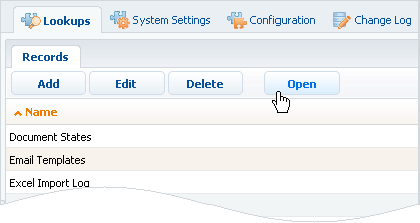
83 82 To create a template: 1. In the BPMonline CRM system navigation menu, click SETTINGS (Рис. 59). An additional tab will open. Рис. 59Opening the Settings 2. In this tab open the LOOKUPS service section. 3. Select the [ Templates] lookup from the list and click [Open] (Рис. 60). Рис. 60Selecting the [ Templates] Lookup 4. In the opened lookup, click the [Add] button. 5. Fill out the template page in the following manner: a. Enter the name and subject of the mass mail. b. Create the message template using macros (Рис. 61). To add a macro, select it from the list of macros and click the button.
![Mass Mailing Automation 83 Рис. 61Adding a Variable to an Email Message Template 6. Click the [OK] button to save the email template.](/docs-images/24/2896190/images/84-0.png "BPMonline Mass Emailing MailChimp Mass Emailing BPMONLINE MASS EMAILING To create the BPMonline mass mail: 1. Open the MASS MAIL section. 2.")
84 Mass Mailing Automation 83 Рис. 61Adding a Variable to an Message Template 6. Click the [OK] button to save the template. BPMonline Mass ing MailChimp Mass ing BPMONLINE MASS ING To create the BPMonline mass mail: 1. Open the MASS MAIL section. 2. Select the [Add BPMonline Mass Mail] command in the [Add] button menu (Рис. 62). Рис. 62Adding a BPMonline Mass Mail 3. On the mass mail page, fill in the needed fields: a. Enter the name of the mass mail. b. Specify the owner and optionally indicate a campaign. c. Select the message template on which the text should be based. d. Select the sender from the list. 4. In the RECIPIENTS block add addressees of the message. BPMonline CRM
85 84 5. Click the [View Message] button to check the message text personalized for the selected recipient (Рис. 63). Рис. 63Viewing the Personalized Message 6. Send the s by selecting the [Start Sending] command in the [Actions] button menu of the mass mail page (Рис. 64). Рис. 64Starting the Mass Mail As a result, s will be sent to the recipients. Setup of Mass Mail Templates Mass Mail Page > General Information Mass Mail Page > Recipients MAILCHIMP MASS ING You can integrate BPMonline CRM with MailChimp and use this marketing tool to send BPMonline CRM mass mail. All analytical information of the service will be also available for you. Creating the MailChimp Mass Mail Synchronizing the Mass Mail with MailChimp CREATING THE MAILCHIMP MASS MAIL 1. Open the MASS MAIL section. 2. Select the [Add MailChimp Mass Mail] command in the [Add] button menu (Рис. 65).
86 Mass Mailing Automation 85 Рис. 65Adding the MailChimp Mass Mail 3. Fill in the needed fields on the mass mail page: a. Enter the mass mail name and specify the responsible employee. b. Select the message template on which the text should be based and specify the sender's . NOTE In order to use the MailChimp templates, you can set up an empty template in BPMonline. c. Specify the sender's name and date up to which the statistics about this mass mail should be gathered. 4. In the RECIPIENTS block add addressees of the message. For example, if you need to include only VIP clients in the mass mail, you can specify the corresponding folder of contacts. To do this: a. In the button menu, select the [Add Contacts from Folder] command. b. On the folder selection page, mark off the needed folders and click the [Select] button (Рис. 66). Рис. 66Selecting the Recipients Folder 5. Select one of the recipients in the RECIPIENTS block and select the [View Message] command in the button menu in order to check the message text personalized for the selected recipient. SYNCHRONIZING THE MASS MAIL WITH MAILCHIMP Data synchronization is required in order to work with mass mail in BPMonline CRM and MailChimp simultaneously. BPMonline CRM
87 86 Creating the MailChimp Campaign Once the mass mail has been created in BPMonline CRM, it should be added to MailChimp. To do so, select the needed mass mail in the list and launch the [Synchronize with MailChimp] action (Рис. 67). Рис. 67Creating a Campaign in MailChimp When the action is completed, the system will display the relevant message, and the additional command [Go to MailChimp Campaign Page] will appear in the menu of the [Actions] button. If you select this action, the MailChimp page of this campaign will be opened in a new tab. If some of the recipients have unsubscribed from the MailChimp mass mail, the relevant information will be displayed in the [ Status] column in the RECIPIENTS block. Starting the Mass ing and Updating Results After the campaign has been added to MailChimp, you can start sending. To do so, select the mass mail in the list and run the [Start Sending] action. The service will start sending the s. To check the state of the mass mail, use the [Synchronize with MailChimp] action (Рис. 67). This action will synchronize the data in BPMonline CRM and MailChimp. In addition, the current information about messages sent and read will be displayed in the RECIPIENTS block (Рис. 68). Рис. 68Updating the State of the Mass Mailing NOTE If the periodic data upload is specified in the MailChimp integration parameters, the relevant information will be updated automatically. More information about integrating with MailChimp can be found in the Customization Guide.
88 Mass Mailing Automation 87 Analyzing Mass Mail Results Once all s have been sent, the mass mail status will be changed to Completed. The additional command [Go to MailChimp Campaign Report] will appear in the [Actions] button menu. Run this action to open the MailChimp report in a new tab in order to analyze the mass mail results. For example, in the MailChimp report you can view information about the number of s that have been opened by recipients, the number of recipients who have unsubscribed as well as analyze the geographical location of recipients (Рис. 69). Рис. 69MailChimp Campaign Report (Fragment) Setup of Mass Mail Templates Mass Mail Page > General Information Mass Mail Page > Recipients Mass Mail Page > Synchronize with MailChimp BPMonline CRM
89 88 BPMONLINE CRM GENERAL FEATURES IN THIS CHAPTER The Command Line User Profile Notifications Duplicates Search Access Rights
90 The Command Line 89 THE COMMAND LINE Use the BPMonline CRM command line (field with the What can I do for you? text) to quickly access the frequently used operations, such as opening the page of a certain contact or starting a business process. To run a command, enter a macro in the command line and click GO. For example, enter the Create Contact command to instantly open a new contact page or the Run Process Short Sale command to launch the corresponding business process. The command line can recognize several variations of the same command. For example, it can process both the Create Invoice command and the Add Invoice command. The command line can be compared to the search line of web search engines. If you enter a partial command, the system will offer you a list of several options that match the entered text For example, if you enter Create A, the system will offer the following commands: Create Account and Create Activity. You can also create and save additional commands for the system. CONTENTS Navigation Searching for Records Creating Records Running Business Processes Command Line Setup NAVIGATION You can use the GO TO SECTION command of the command line to quickly go to any folder of any section. For example, from the Activities section you can easily switch to the Customers folder of the accounts. To do so, enter the command: Go to Section Accounts Customers. When you will be entering the command, the drop-down list of the command line will contain commands for opening all folders of the selected section. SEARCHING FOR RECORDS Enter the SEARCH command in the command line to search for records in the system. The dropdown list will display commands for searching for records of various types, such as Search Contact, Search Invoice, etc. You can also launch the quick search of contacts, accounts or records of the opened section by entering the text and selecting the section from the drop-down menu. CREATING RECORDS Use the ADD command to create records from the command line. When you enter the command, the drop-down list will display commands for creating records of various types, such as Add Lead, Add Contact, Add Invoice. The name of the new record can also be added to the command. For example, enter Add Contact Jones in order to create a contact whose last name is Jones. As a result, a contact edit page will open, and the Contact Name field will contain Jones. BPMonline CRM
91 90 RUNNING BUSINESS PROCESSES To start a business process, you will need to enter the RUN PROCESS command and the process name in the command line. For example, enter the Run Process Short Sale command to launch the corresponding business process. COMMAND LINE SETUP If you wish to create new commands for the command line, enter: ADD CUSTOM COMMAND. A page will open where you can specify the command text (for example, My Tasks ), select the key word (for example, Go to Section ) and then stipulate additional parameters depending on the selected key word (for example, you can choose the Activities section and dynamic folder My Tasks ). The available key words represent types of operations that can be performed by the command line. Search for finding records. Go to Section for navigating through sections and folders. Add for creating records in system sections. Run Process for starting business processes.
92 User Profile 91 USER PROFILE The profile page is used to set up individual settings for each system user. Change Password Command Line Settings Accounts Accounts in External Resources Restore Default Settings Change your account password in BPMonline CRM. To change the password, you will need to enter the current password. Set up a list of additional commands recognized by the BPMonline CRM command line, for example, commands that are used for viewing a list of your tasks or unpaid invoices of certain customers. Commands added in this manner will be available only for users that have added them. To send and receive messages in BPMonline CRM, set up parameters of accounts using the [ Accounts] button. Here you can also view how many new messages were received from each of your mailboxes. The Google account is used when performing actions of synchronization of the BPMonline CRM contacts with the Google contacts, as well as action of synchronization of tasks and meetings with the Google calendar. Accounts in Facebook, LinkedIn, and Twitter are used when searching for the data on contacts in social networks. Restore default interface settings, such as list columns layout, parameters for sorting records, etc. NOTE The system automatically saves the interface settings, such as list columns layout, parameters for sorting records, etc, individually for each user. The Command Line Setting Up Accounts in External Resources Configuring Accounts Synchronization of Contacts with Google Synchronizing the Calendar with Google Searching Customer Information in Social Networks BPMonline CRM
93 92 NOTIFICATIONS Through notifications BPMonline CRM can inform you about various matters that should be addressed. The system displays the total number of notifications in the navigation menu next to the NOTIFICATIONS ITEM. If you select this option, the notifications page will open. All current notifications will be displayed on the page. When working with notifications, you can either open a record for which the notification has been created (for example, task or contract) or put off the reminder to a later point in time. You can create reminders about documents, invoices and activities for their owners by selecting the [Remind Owner] checkbox on the page of the corresponding record and specifying the date/time of the reminder. CONTENTS Viewing Notifications Creating Reminders Time Management and Communications Managing Documents VIEWING NOTIFICATIONS To open the list of active notifications, select the Notifications option in the navigation menu. Notifications about incoming s are grouped separately and can be accessed by clicking the [ ] button. Click the [Other Notifications] button to display the list of reminders that require your attention. NOTE Digits in captions of the [ ] and [Other Notifications] buttons display the total number of reminders and unread s respectively. Select a notification from the list and click the [Go To] button to open the record connected with this notification, for example, a task page or a document page. The name of a notification corresponds to the main field of the record. For example, the Call Customer notification will be created for the Call Customer task, and the invoice notification will be named according to the invoice number. Notifications about s are named according to the subject of an . NOTE Reminders about invoices and documents display the type of the record ( Invoice, Contract, etc.) they have been created for. To put off a notification to a later point in time, click the [Postpone] button and in the opened window select the period of time when the notification should be displayed again. Click the [Cancel] button for the notification not to be displayed anymore. You can also put off or cancel all notifications by using the [Postpone All] and [Cancel All] buttons. To cancel a notification about an incoming , either open the corresponding page or click the [Mark as Read] button.
94 Notifications 93 Activities Documents CREATING REMINDERS To create a reminder for yourself or another user about an activity, a document or an invoice, do the following: 1. Open the edit page of the record that you wish to create a reminder for. For example, to create a task reminder, open the corresponding task page. 2. Select the checkbox in the reminder field: a. Select the [Remind Owner] checkbox to create a reminder for the user specified in the [Owner] field of the activity, document or invoice page. b. Select the [Remind Author] checkbox to create a reminder for the user specified in the [Author] field of the page. 3. Specify the date and time when the reminder should be displayed for the user. 4. Save the record. As a result, at the specified time the reminder will appear on the notifications page for the user indicated in the [Owner] or [Author] field of the corresponding record. Creating Tasks and Calls Creating and Sending Messages Registering Invoices and Documents BPMonline CRM
95 94 DUPLICATES SEARCH In BPMonline CRM you can search for duplicates and eliminate them in order to manage your customer database more efficiently. When creating new records, the system automatically checks for duplicates. You can also schedule the periodic duplicates search for contacts and accounts. CONTENTS Starting the Duplicates Search Handling the Duplicates Merging the Duplicate Records STARTING THE DUPLICATES SEARCH 1. Open the [Accounts] or [Contacts] section. 2. Select the [Find Duplicates] command in the [Actions] button menu (Рис. 70). Рис. 70Going to the Duplicates Search Page 3. Click the [Start Searching] button on the accounts/contacts duplicates page (Рис. 71). Рис. 71Starting the Duplicates Search As a result, the system will start searching for duplicates. The information string will display the percentage of the processed records. HANDLING THE DUPLICATES Once the duplicates search is completed, the duplicates page for the accounts/contacts will display all similar records found in the system. These records should be processed: you will need to distinguish unique records from duplicates and then merge the duplicates. To analyze the records found: 1. Open the [Accounts] or [Contacts] section. 2. In the [Actions] button menu, select the [Find Duplicates] command. 3. On the duplicates page for accounts/contacts find the record that should be processed.
96 Duplicates Search Click to open the list of possible duplicates for this record. 5. Analyze whether these records duplicate the information in the root record (Рис. 72). Рис. 72Possible Duplicates of the Selected Record 6. Process the possible duplicates of the root record: Option 1. The subordinate record is not a duplicate a. Mark off the root record and the subordinate one. b. Click the [Not Duplicates] button (Рис. 73). Рис. 73Indicating Records as Unique As a result, the selected subordinate record will be removed from the duplicates list and will no longer be used when searching for duplicates of the root record. Option 2. The subordinate record is a duplicate a. Mark off the root record and the subordinate one. b. Click the [Merge Duplicates] button. c. Perform the duplicates merging. As a result, the system will contain only one record. All objects that have been connected to the merged records will now be connected to this record. For example, if you are merging two accounts and there is a few tasks connected to the first account and some contacts connected to the second one. Then after you merge these two accounts, the tasks from the first record and contacts from the second one will be connected to the resulting record. MERGING THE DUPLICATE RECORDS 1. Open the [Accounts] or [Contacts] section. BPMonline CRM
97 96 2. In the [Actions] button menu, select the [Find Duplicates] command. 3. On the duplicates page for accounts/contacts, mark off those records that should be merged. 4. Click the [Merge Duplicates] button. 5. The duplicates merging page for accounts/contacts will open. Select the data display mode, for example, Only Fields with Different Values. Рис. 74 Selecting the Data Display Mode 6. Use the options on the right to select those values that should remain in the system after the merging (Рис. 75). Рис. 75Selecting the Resulting Values 7. If necessary, edit the information in the [Communication Options] and [Addresses] blocks. 8. Click the [Save] button to complete the merging of duplicates.
98 Access Rights 97 ACCESS RIGHTS You can manage access rights to the information that you add in BPMonline CRM. For example, when registering an account, invoice, document, you can specify users that have access rights to the created record. You can manage access rights to certain operations with the records. There are three groups of such operations: READ, EDIT, and DELETE. For example, the access to the read operation means that the user or user group can view the record in the section or on the view page. For each operation, you can choose one of three permissions: GRANTED - the right to read, change, or delete a record. GRANTED/DELEGATION PERMITTED - the right to perform the operation on the record, as well as to manage access rights to this operation. DENIED - the access to the read, edit or delete operation is restricted for the user or user group. This permission is used only in cases if the denying access rights have been enabled for the section by the system administrator. NOTE If the denying access rights are not enabled, the access restriction is achieved through not granting any permissions. By default, the user that has created a record has the right to perform and delegate all operations with the record. The default access rights to records are defined by the system administrator. NOTE Managing default access rights is covered in the Customization Guide. To manage access rights to a record, open the edit page of the record in the [Actions] menu and select the [Access Rights] command. CONTENTS Managing Access Rights Changing Access Rights Restricting Access Denying Access Rights MANAGING ACCESS RIGHTS 1. Open the edit page of the record whose access rights must be changed. 2. Select the [Access Rights] command (Рис. 76) in the [Actions] menu. BPMonline CRM
99 98 Рис. 76Switching to Access Rights Setup 3. On the opened access rights page, click the [Add] button and select from the menu the type of operation that can be performed for the record. For example, to grant the right to edit the record, select the [Edit Access Right] command. 4. In the opened lookup, select the user or user group for which the added access rights must be granted. For example, to grant the edit access right to all company employees, select the All Employees user group. As a result, a new rule will be added to the corresponding page block. The rule will determine access rights for the selected user or user group to the selected operation on the current record. By default, the access rights to the operation are always Granted. 5. Click the [Save] button. CHANGING ACCESS RIGHTS 1. Open the edit page of the record whose access rights must be changed. 2. Select the [Access Rights] command in the [Actions] menu. 3. On the opened access rights page, in the READ, EDIT, or DELETE blocks, select the record to be changed. For example, to allow the user to delegate access rights to edit the record, in the EDIT block, select the record that contains the name of this user. 4. In the [Permission] menu, select the permission that must be set. For example, to allow the user manage access rights to the selected operation, select the [Granted/Delegation Permitted] command (Рис. 77). Рис. 77Changing Access Rights for the Record 5. Click the [Save] button. RESTRICTING ACCESS 1. Open the edit page of the record whose access rights must be changed.
100 Access Rights Select the [Access Rights] command in the [Actions] menu. 3. On the opened access rights page, in the READ, EDIT, or DELETE blocks, select the access rights to be canceled. For example, to restrict for all users the right to edit the record, select the All Employees record in the EDIT block. 4. Click the [Delete] button. DENYING ACCESS RIGHTS Denying access rights can be enabled to certain sections by the system administrator. When granting denying access rights, the DENIED additional permission becomes available. Also, on the access rights page, the [Up] and [Down] buttons become active. These buttons are used to define the priority of access rights when the conflict between the denying and allowing rights occurs. ATTENTION The right that is higher in the list has a higher priority. The denying rights are used when the access to the record must be restricted for a certain user or user group. For example, you must restrict access to an invoice or a document for users included into the Freelancers folder, while the rest of company employees must have free access to these records (the All Employees folder has a right to view, change and delete these records). In this case, it is necessary to add an access right of the Denied permission to the Freelancers group and place this right in the list higher than the access right for all company employees. BPMonline CRM
101 100 BPMONLINE CRM CONFIGURATION IN THIS CHAPTER The [Leads] Section The [Accounts] Section The [Contacts] Section The [Activities] Section The [Opportunities] Section The [Invoices] Section The [Documents] Section The [Knowledge Base] Section The [Campaigns] Section The [Mass Mail] Section The [Dashboards] Section
102 The [Leads] Section 101 THE [LEADS] SECTION LEAD PAGE General Information Categorization Communication Options Address Activities Notes Attachments Folders ACTIONS Qualify Disqualify ANALYTICS Charts Managing Accounts and Contacts BPMonline CRM
103 102 LEAD PAGE GENERAL INFORMATION Account Contact Title Full Job Title Status Notes Qualified as Account Qualified as Contact Company and/or contact person name. Filling in one of these fields is required. The salutation, if the lead is created for the contact, such as Mr. or Mrs.. The job title, if the lead is created for the contact. The status of the lead. This field is non-editable and is filled in automatically, depending on the operations performed with the lead. For example, the New status is assigned when the lead is added, and the Qualified as New or Out of Reach statuses are assigned after qualification. Additional information about a lead, for example, it could be products that the lead is interested in or relationships with other customers. The field displays information about the account with which the selected lead is associated. The field is not displayed on the lead page but can be displayed in the list. The field displays information about the contact with which the selected lead is associated. The field is not displayed on the lead page but can be displayed in the list. CATEGORIZATION The additional information about potential customers. Source Campaign Industry Annual Revenue Number of Employees The source of the new lead, for example, it could be Internet/ Website or Advertising. The marketing campaign that has helped to acquire a potential customer, for example, if a customer contacted you after visiting an exhibition. The industry that the potential customer operates in, for example, Banks or IT Companies. The approximate value of the annual revenue, if the lead is created for the account. The number of company employees, if the lead is created for the account.
104 The [Leads] Section 103 COMMUNICATION OPTIONS The list of the lead's communication options. Business Phone The phone numbers you can use to contact the lead. Mobile Phone Fax Web Preferred Communication Options The potential customer's . The potential customer's fax number. The potential customer's website. The checkboxes indicate communication options that are not preferable to use to contact the lead. For example, if the customer does not prefer to receive text information, select the [ ], [SMS], and [Mail] checkboxes. ADDRESS Type of Address Country State/Province City Index Address The type of address for the potential customer, for example, delivery, legal, etc. The location of the potential customer. The [State/Province] and [City] fields are connected to the [Country] field. For example, if a city is located in a certain country, then when you fill in the [City] field, the [Country] field will be filled in automatically. Similarly, if you enter a state or a province, the [Country] field will be filled in automatically. When you fill in the [Country] field, the [State/Province] and [City] fields will show only those regions and cities that correspond to the selected country. You can associate a region with a certain country in the [States/Provinces] lookup, and associate a city with a country in the [Cities] lookup. The ZIP/postal code of the potential customer. The street name, as well as building or office number of the potential customer. ACTIVITIES Tasks, messages or calls that are connected with the selected lead. The detail displays information from the [Activities] section. To connect an activity to the lead, fill in the [Lead] field of an activity page. NOTES The additional information connected with the lead. BPMonline CRM
105 104 ATTACHMENTS The attached files and website links of the selected lead. FOLDERS The list of static folders to which the selected lead belongs. ACTIONS IN THE [LEADS] SECTION QUALIFY Converts a lead into a contact and/or an account. The [Qualify] action is available on the lead page. Once the action is launched, the additional page will open. It will contain the non-editable fields of the lead page, as well as additional qualification area in the right part of the page. Using this area you can perform further operations with the lead. [Associate with Contact], [Associate with Account] - select the checkboxes to create an account and/or contact based on lead. These checkboxes can be selected if the corresponding fields in the lead page are filled in. NOTE Once the [Qualify] action is launched, the system will automatically select the [Associate with Account] and/or [Associate with Contact] checkboxes depending on what fields were filled in on the lead page. [Create New] - select the option to create a new account/contact based on the lead. The checkbox will be selected automatically in case there are no similar records in the system based on the information in the lead card. As a result of qualification, the status of lead will be changed to Qualified as New. [Associate with Existing] - select this option to connect the lead with one of existing accounts/ contacts. You can select the needed account/contact from the respective lookup. The list of suggested accounts/contacts is formed based on the registered customers and information about this lead. The checkbox is selected by default in case there are similar records in the system based on the information in the lead card. As a result of qualification, the status of lead will be changed to Qualified as Existing. For accounts the check is performed by the [Account Name], [Also Known As] fields, as well as the fields of the [Communication Options] block. For contacts this check is performed by the [Contact Name] field, as well as data from the [Communication Options] block (except records with the Business Phone, Primary Phone, and Fax ). If values at least in one of these fields are identical both on the lead and account/contact pages, then this record will be displayed in the list of suggested accounts/contacts for associating. Select the [Create Opportunity] checkbox to register a new opportunity based on the lead. If the lead is qualified as existing account and/or contact, and there are uncompleted opportunities by the selected account and/or contact (if you associated the lead with the account/contact using the [Associate with Suggested] or [Associate With] option), then the message will appear notifying that there are open opportunities for the selected account and/or contact.
106 The [Leads] Section 105 DISQUALIFY The [Disqualify] action flags the lead as pointless to continue working with. For example, if incorrect data has been entered, potential customer has been lost or is out of reach, the lead should be disqualified. In the menu of the [Actions] button, click the [Disqualify] command to display the additional menu and specify the reason why the lead can no longer be used in the system. For example, if a potential customer preferred cooperation with a competitor, select the No Longer Interested. Once the needed disqualification command has been selected, all fields of the lead page become non-editable. Also, the [Status] field of the lead is automatically filled in with the selected command. To cancel lead qualification and continue working with the lead page, click [Cancel] and then open the lead card again. When you click the [Save] button, the lead status can no longer be changed, and the lead page will become view only. ANALYTICS IN THE [LEADS] SECTION CHARTS Registered Leads by Month Leads by Status The users' activity in the system. Line chart. The horizontal axis represents the number of created leads, and the vertical axis represents the months. Grouping leads by their status. Horizontal bar chart. The horizontal axis represents the number of leads, and the vertical axis represents their statuses. BPMonline CRM
107 106 THE [ACCOUNTS] SECTION ACCOUNT PAGE General Information Categorization Addresses Communication Options Activities Contacts History Relationships Invoices Attachments Opportunities Documents Banking Details Leads Organizational Structure Noteworthy Events Campaigns Folders Notes Additional Logic ACTIONS Find Duplicates Find Contacts in Social Networks Printables ANALYTICS Charts Reports Managing Accounts and Contacts
108 The [Accounts] Section 107 THE ACCOUNT PAGE GENERAL INFORMATION Campaign Name Also Known As Primary Contact Code Owner Member Of Official name of the company with which you do business. Additional names of the account, for example, abbreviation of the company name. Name of the main contact person for the account, for example, the manager that you work with. Code of the account. It is used to distinguish between companies that have an identical name. The value in this field is generated automatically. Name of the employee responsible for working with the account. Parent company if this account is a member of a group of companies or a branch of a larger company. NOTE If you fill in the [Member Of] field, the record with the Division type will be added to the [Relationships] block automatically. CATEGORIZATION Additional information about the account. Type Legal Entity Industry Category No. of Employees Type of account, such as Customer, Partner or Supplier. Type of legal entity of the company, for example, LLP., Ltd., or Inc.. Field that the account operates in, for example, Advertising, Business Services, or Manufacturing and Distribution. Category of the account, for example, Normal or VIP. Approximate number of employees in the company, for example or Annual Revenue Possible revenue ranges for companies, for example, million or million. ADDRESSES List of all addresses of the account. Address Type Type of address for the company, for example, delivery, legal, actual address, etc. It is selected when creating a record. BPMonline CRM
109 108 Country State/Province City Index Address Location of the company. The [State/Province] and [City] fields are connected to the [Country] field. For example, if a city is located in a certain country, then when you fill in the [City] field, the [Country] field will be filled in automatically. Similarly, if you enter a state or a province, the [Country] field will be filled in automatically. When you fill in the [Country] field, the [State/Province] and [City] fields will show only those regions and cities that correspond to the selected country. You can associate a region with a certain country in the [States/Provinces] lookup, and associate a city with a country in the [Cities] lookup. Postal code of the company. Street, building number and other details of the company address. find the account address on the map. Click this button to open a new tab that will show the account address on Google maps. The button is displayed on the account page in the view mode only. COMMUNICATION OPTIONS List of account's communication options. Primary Phone Alternate Phone Phone numbers that will be used to contact the account. The communication option type is defined when adding a record. Fax Web Website and addresses of the company. Facebook LinkedIn Social network profiles of the account. A separate page is used to link a social network account to the company. Twitter NOTE You can also open the social networks search page by using the [Find Contacts in Social Networks] action of the [Accounts] section. Read more ACTIVITIES Tasks, messages or calls that are connected with the selected account. The detail displays information from the [Activities] section. To connect an activity to an account, fill in the [Account] field of an activity page.
110 The [Accounts] Section 109 CONTACTS List of contacts of the selected company. This block displays the information from the [Contacts] section: a list of contacts for which the selected company is indicated as the place of work in the [Job Experience] block. Contact Job Title Business Phone Company employee. Position held by the contact. Business phone of the employee. Block Toolbar The menu of the button contains additional commands: [Connect with Contact] is used for connecting the account with a contact existing in the system. This command opens the job experience page of the selected contact. [Add Contact] adds a new contact for the selected account. When you select this command, a new contact page will open, and its [Account] field will contain the name of the selected account. NOTE More information about the job experience page can be found in the description of the [Job Experience] block in the [Contacts] section, and details about the contact page are given along with the description of the [Contacts] section. HISTORY Summarized information about system objects connected with the account. The information in this block is added automatically and cannot be edited. Subject Object Date Title of an object connected with the account. For example, for activities the subject is shown in this column, and for documents the document number. System object with which the account is connected. Connections with the following objects are tracked: Activity, Invoice, Document, Campaign, Opportunity. Date by which the account is connected with the system object. The value of the field depends on the object record type. For example, it can be the date when an invoice is issued or when an opportunity is created. RELATIONSHIPS Relationships between the selected account and other accounts and contacts. Account Name of the company for which a relationship is established. This is a non-editable field. BPMonline CRM
111 110 is a/an of Actual Description Relationship type, for example, Subsidiary Company Holding Company. When you select a relationship, the inverse relationship type is automatically filled in the [Inverse Relationship] block. Name of the company or contact that is connected with the account. The checkbox indicates whether the relationship is relevant at the present time. Any additional information about the entities. INVOICES A list of invoices connected to the selected account. The block displays information from the [Invoices] section. To connect an invoice to an account, fill in the [Account] field of the invoice page. ATTACHMENTS Links to web-resources and files for the account. OPPORTUNITIES A list of opportunities connected to the selected account. The block displays information from the [Opportunities] section. To connect an opportunity to an account, fill in the [Account] field of the opportunity page. DOCUMENTS A list of documents connected with the selected account. The block displays information from the [Documents] section. To connect a document to an account, fill in the [Account] field of a document page. BANKING DETAILS Information about the banking details of the account. Account Campaign Name Country Banking Details Name of the company whose banking details are given. This is a non-editable field. Name or type of the selected account's banking information, for example Main Account, Offshore Account, or English/British Account. Country of the banking details for the account. If the selected country has a specific template for banking details in the [Countries] lookup, then this template will appear in the [Banking Details] field. Complete information on account's banking details, for example, account number, SWIFT number, ABA Code, etc.
112 The [Accounts] Section 111 Description Chief Accountant Additional information about the banking details, Names of the chief accountant and CEO of the company. Manager LEADS List of leads that are qualified as the selected account. The detail displays information from the [Leads] section. The lead is connected to the account by the [Qualified as Account] column of the [Leads] section. ORGANIZATIONAL STRUCTURE The block displays the company structure and divisions. Division Department Manager Description Name of the company division. Name of the company department. Name of the division manager. Additional information about the division. List Toolbar [Add Root Item] adds root items, such as company departments. [Add Subordinate Item] adds a subordinate item for the selected one, for example, a unit within a department. NOTEWORTHY EVENTS List of noteworthy events of the selected account. Type Date Type of a noteworthy event, such Founding Day for the Company. It is selected when creating a record. Date of the noteworthy event. CAMPAIGNS List of campaigns whose target audience includes the selected account. Account Campaign Response Account included in the target audience of a campaign. This is a non-editable field. Name of the campaign which involves the account. Client's response to the campaign, for example Participation Confirmed. BPMonline CRM
113 112 Notes Additional information about participating in the campaign. FOLDERS List of static folders to which the selected account belongs. NOTES Additional information about the account. ADDITIONAL LOGIC Some additional logic can be involved when you save data of the account page. Adding a Contact for the Registered Account When you save a new account page, a message window will appear prompting you to add a new contact for this account. If you click the [Yes] button, a contact page will open where you can enter information about a primary contact for the account. Click the [No] button if you do not intend to add a new contact. Duplicates Search when Saving a Record When you save an account page, a duplicates search page might open. It means that this record might be already registered in the system. You can edit the new record or indicate that the found records are not its duplicates. ACTIONS IN THE [ACCOUNTS] SECTION FIND DUPLICATES The [Find Duplicates] action opens an additional page that contains all possible duplicates of the accounts. Records on this page are added automatically after the duplicates search is completed. For the [Accounts] section the search is done by values in the [Account Name] and [Also Known As] fields, as well as in the fields from the [Communication Options] block. The record is considered to be a duplicate in case the value at least in one of the mentioned fields is completely identical to the corresponding value in another record. On the duplicates page for the accounts you can: Launch the search of duplicates and handle the duplicated records. Read more Set up the parameters of the duplicates search. It is done by the system administrator and described in detail in the Customization Guide. Starting the Duplicates Search Handling the Duplicates Merging the Duplicate Records FIND CONTACTS IN SOCIAL NETWORKS This action is used for entering data about contacts from social networks. If a social network profile contains information about one of accounts that you work with, then you can create a
114 The [Accounts] Section 113 contact for this account in BPMonline CRM. The contact page will contain the data from the social network. Additionally, you can view the contact's social network profile on a separate tab. A search page is used for finding data. The page shows all users in the social network that meet the search conditions. The Page Toolbar [Search] search for social network users connected with the specified account. [Add Contact] register a new contact for the selected account. When you click this button, a contact page will open. The selected company will be indicated in the [Account] field of the new page. Additionally, other fields on the contact page, like [Facebook] or [Twitter], will be filled in with data from social networks. [View] to look up the information about the selected user of the social network. This is useful if you want to find the needed user when there are several users with the same names. When you click this button, the social network page of the selected user will open, for example, a Facebook profile. [Cancel] close the search page. BPMonline CRM
115 114 PRINTABLES Company Summary Envelopes Labels The printable displays summarized information about the company. The table part contains: a list of communication options and addresses as well as the history of interaction with the account. This printable is available on the account page. This printable is designed for printing envelopes with addresses and names of accounts. This printable is available in the list of the [Accounts] section. The printable is used for creating labels with names, addresses and contact persons of companies, for example, to label mass mail envelopes. This printable is available in the list of the [Accounts] section. ANALYTICS IN THE [ACCOUNTS] SECTION CHARTS Account Base Growth Customer Base Growth Accounts by City Accounts by Number of Employees Accounts by Owner Accounts by Industry Accounts by Territory Accounts by Country It is a linear chart. The X-axis shows the months, and the Y-axis displays the number of created accounts. It is a linear chart. The X-axis displays the months, and the Y-axis shows the number of customers for which the first opportunity has been registered. This chart shows only won opportunities. Won opportunities are considered to be those that are in the stage for which the [Final] and [Successful] checkboxes are selected in the [Opportunity Stages] lookup. It is a horizontal bar chart. The X-axis displays the number of companies in a city, and the Y-axis shows the cities. It is a pie chart. The chart displays the distribution of employees by accounts. Use it to compare customer companies by the quantity of employees. Distribution of companies by responsible employees. It is a horizontal bar chart. The X-axis shows the number of accounts, and the Y-axis displays the responsible employees. It is a horizontal bar chart. The X-axis displays the number of accounts, and the Y-axis shows the industries that these companies operate in. It is a horizontal bar chart. The X-axis displays the number of companies in various regions, and the Y-axis shows the regions. It is a horizontal bar chart. The X-axis displays the number of companies in countries, and the Y-axis shows the countries.
116 The [Accounts] Section 115 REPORTS Data Entry Compliance The list of fields on the account page is given as a table. For each field the table contains the number of records where this field is filled in and the corresponding percentage. It also displays the number of entries that have no data in this field. BPMonline CRM
117 116 THE [CONTACTS] SECTION CONTACT PAGE General Information Job Information Addresses Communication Options Noteworthy Events Activities History Folders Campaigns Relationships Attachments Notes Leads Opportunities Documents Invoices Job Experience Additional Logic ACTIONS Find Duplicates Fill in with Data from Social Networks Synchronize with Google Contacts Set Up Google Synchronization Printables ANALYTICS Charts Reports Managing Accounts and Contacts
118 The [Contacts] Section 117 THE CONTACT PAGE GENERAL INFORMATION Contact Name Title Salutation Gender Type Owner First and last names of the contact. Honorific for the contact, for example, Mr or Mrs. Salutation used to refer to the contact, such as the first name or the last name with the honorific. Gender of the contact. Type of the contact, for example, Employee or Contact Person. Name of the employee responsible for working with the contact. JOB INFORMATION Current place of employment of the contact. Account Job Title Full Job Title Department Role Name of the company where the contact works. Position held by the contact, for example, Department Manager. Exact job title, such as Sales Department Manager. Department of the company where this contact works, for example Sales or Marketing. Contact's influence on the decision making process, for example, Final Authority or Specifier. Synchronization of Job Experience The data in the [Job Information] block is synchronized with the information in the [Job Experience] block. When the [Account] field is filled in, a record with the new place of work is automatically added in the [Job Experience] block. This information includes the company name and a day when the contact started working at the company. The [Primary] and [Current] checkboxes are also selected. When you change information in the fields of the [Job Information] block that are associated with the [Job Experience] block (for example, information about the company, department and position of contact), a message will appear prompting you to add a new record in the [Job Experience] block or to update an existing record. When a new record is added in the [Job Experience] block, the [Primary] and [Current] checkboxes are selected for this record, and the [Started On] block is filled in with the current date. The [Current] checkbox will be cleared for the previous place of work and the [Worked Till] field will be filled in with the current date. If you clear the [Account] field in the [Job Information] block, then in the [Job Experience] block the [Current] checkbox is automatically cleared for this place of work, and the [Worked Till] field is filled in with the current date. BPMonline CRM
119 118 ADDRESSES List of all addresses of the contact. Address Type Address Country Province City Index Type of address of the contact, for example, Home or Legal. It is selected when creating a record. Street, building number and other details of the contact's address. Location of the contact. The [Province] and [City] fields are connected to the [Country] field. For example, if a city is located in a certain country, then when you fill in the [City] field, the [Country] field will be filled in automatically. Similarly, if you enter a province, the [Country] field will be filled in automatically. When you fill in the [Country] field, the [Province] and [City] fields will show only those regions and cities that correspond to the selected country. You can associate a region with a certain country in the [States/Provinces] lookup, and associate a city with a country in the [Cities] lookup. Postal code of the contact's address. the contact's address on the map. Click this button to open a new tab that will show the contact's address on Google maps. The button is displayed on the contact page in the view mode only. COMMUNICATION OPTIONS List of the contact's communication options. Business Phone Mobile Phone Phone numbers that can be used to contact the person. The communication option type is selected when adding a record. Home Phone Skype Facebook LinkedIn The contact's Skype account. The address of the contact. Social network profiles of the contact. A separate page is used to link a social network account to the contact. Twitter
120 The [Contacts] Section 119 Do Not Use Do Not Use Phone Checkboxes signify which communication options should not be used to contact the person. For example, if a contact does not agree to be included in mass mail, select the [Do Not Use ] checkbox. DO Not Use SMS Do Not Use Mail Do Not Use Fax,, go to the contact profiles in social networks. These buttons become active if the corresponding fields are filled in ([Facebook], [LinkedIn] or [Twitter]) and are available in the view page only. NOTEWORTHY EVENTS List of contact's noteworthy events. Type Date Type of the noteworthy event of the contact, such as Birthday or Company Day. It is selected when creating a record. Date of the noteworthy event. ACTIVITIES Tasks, messages or calls that are connected with the selected contact. The detail displays information from the [Activities] section. To connect an activity to a contact, fill in the [Contact] field of an activity page. HISTORY Summarized information about system objects connected with the contact. The information in this block is added automatically and cannot be edited. Subject Object Date Title of an object connected with the contact. For example, for activities the subject is shown in this column, and for documents the document number. System object with which the contact is connected. Connections with the following objects are tracked: Activity, Invoice, Document, Campaign, Opportunity, Mass Mail. Date by which the contact is connected with the system object. The value of the field depends on the object record type. For example, it can be the date when an invoice is issued or when an opportunity is created. FOLDERS List of static folders to which the selected contact belongs. BPMonline CRM
121 120 CAMPAIGNS List of campaigns whose target audience includes the selected contact. Contact Campaign Response Notes Contact included in the target audience of a campaign. This is a non-editable field. Name of the campaign which involves the contact. Client's response to the campaign, for example Participation Confirmed. Additional information about participating in the campaign. RELATIONSHIPS Relationships between the selected contact and other contacts and accounts. Contact is a/an of Actual Description Name of the contact for whom a relationship is established. This is a non-editable field. Relationship type, for example, Employee Employer. When you select a relationship, the inverse relationship type is automatically filled in the [Inverse Relationship] block. Name of an account or contact that is connected with the contact. The checkbox indicates whether the relationship is relevant at the present time. Any additional information about the entities. ATTACHMENTS Links to web-resources and files for the contact. NOTES Additional information about the contact. LEADS List of leads that are qualified as the selected contact. The detail displays information from the [Leads] section. The lead is connected to the contact by the [Qualified as Contact] column of the [Leads] section. OPPORTUNITIES A list of opportunities connected with the contact. The block displays information from the [Opportunities] section. To connect an opportunity to a contact, fill in the [Contact] field of the opportunity page.
122 The [Contacts] Section 121 DOCUMENTS This detail contains a list of documents connected to the selected contact. The block displays information from the [Documents] section. To connect a document to a contact, fill in the [Contact] field of the document page. INVOICES A list of invoices connected with the contact. The block displays information from the [Invoices] section. To connect an invoice to a contact, fill in the [Contact] field of the invoice page. JOB EXPERIENCE Information about all employers of the contact. Account Contact Job Title Full Job Title Department Started On Worked Till Primary Current Reasons for Job Change Description Employer of the contact. Contact for whom the place of work is specified. This is a noneditable field. Position held by the contact, for example, Department Manager. Exact job title, such as Sales Department Manager. Department of the company where the contact works. Date when the employee was assigned to work in this position. Date when the contact left their job. Checkbox indicates that this place of work is the principal one. Checkbox indicates the company where contact works at the present time. The reason why the employee decided to accept this position, for example, Interesting Work or Promotion. Additional information about the contact's place of work. NOTE The [Job Information] block displays information about the place of work for which both the [Primary] and [Current] checkboxes are selected. Synchronization of Job Experience If either of the [Primary] and [Current] checkboxes is cleared for a record in the [Job Experience] block, the data about the place of work will be automatically cleared in the [Job Information] block. When a record with the selected [Primary] and [Current] checkboxes is modified, the data in the [Job Information] block is updated automatically. If you select the [Primary] and [Current] checkboxes for another record in the [Job Experience] block, a message window will appear asking whether the contact is still working in the specified position. If you click the [Yes] button, the [Primary] checkbox for the previous place of work will BPMonline CRM
123 122 be cleared. If you click the [No] button, the [Current] checkbox for the previous place of work will be cleared. ADDITIONAL LOGIC Some additional logic can be involved when you save data of the contact page. Duplicates Search when Saving a Record When you save a contact page, a duplicates search page might open. It means that this record might be already registered in the system. You can edit the new record or indicate that the found records are not its duplicates. ACTIONS IN THE [CONTACTS] SECTION FIND DUPLICATES The [Find Duplicates] action opens an additional page that contains all possible duplicates/ Records are added on the page automatically after the duplicates search is completed. For the [Contacts] section the duplicates search is done by values in the following fields: [Contact Name], [Mobile Phone], [Home Phone], [Skype], and [ ]. The record is considered to be a duplicate in case the value at least in one of the mentioned fields is completely identical to the corresponding value in another record. On the duplicates page for the contacts you can: Launch the search of duplicates and handle the duplicated records. Read more Set up the parameters of the duplicates search. It is done by the system administrator and described in detail in the Customization Guide. Starting the Duplicates Search Handling the Duplicates Merging the Duplicate Records FILL IN WITH DATA FROM SOCIAL NETWORKS The action is used to fill in the contact page with data from his/her social network profiles. When you run this action, a page with the data from the contact page and from his/her social network profile will open. ATTENTION! This action can be performed only if at least one social network field on the contact page is filled in. Select the values or fill in the fields manually: a list of text, numeric and date fields of a contact page whose values are specified in social networks. Use radio buttons to select the values that must be used to fill in the fields in the contact page. The left part of the page will display the value. You can also enter the value manually.
124 The [Contacts] Section 123 Fill out the fields manually: lookup and list fields of a contact page whose values are specified in social networks. In the left side of the page, you can manually select values for these fields from values or drop-down lists. SYNCHRONIZE WITH GOOGLE CONTACTS The action launches the synchronization between BPMonline contacts and Google contacts. Synchronization with Google can be performed only for those BPMonline contacts that belong to a static folder indicated in the synchronization settings. When you run this action for the first time, only BPMonline contacts will be added to Google contacts A new contact group named BPMonline will appear in your Gmail account. From then on the synchronization will be done in both directions between the specified static folder in BPMonline and the BPMonline group in Gmail. Synchronization is run only for those records that have been changed or added since the last synchronization session. If a record has been modified in both Gmail and BPMonline, the most recent of these changes will be used for the synchronization. If some records are deleted in Gmail or BPmonline, the next synchronization will not delete them from BPmonline or Gmail. However, records that have been deleted in BPMonline will be excluded from the BPMoniline group in Gmail, and records deleted in Gmail from the specified static folder in BPMonline. SET UP GOOGLE SYNCHRONIZATION Sets up the integration between the Google contacts and BPMonline CRM contacts. The action is available in the actions menu of the [Contacts] section. When you start this action, a setup window will open. User Account Your Google account. When you set up the integration, click the button to open the additional Google login page. Once the integration is set, the field becomes non-editable. Contacts Folder for Synchronization Run Synchronization with Contacts Every... Minutes Last synchronization of contacts was run... It is a static folder in the [Contacts] section that will be used for the synchronization. Checkbox is used for starting the synchronization automatically after a certain period of time. Date and time of the latest synchronization session. BPMonline CRM
125 124 PRINTABLES Contact Summary Envelopes Labels The printable displays the summarized information about the contact person. The table contains: a list of communication options and addresses of the contact as well as the history of interaction with them. This printable is available on the contact page. This printable is designed for printing envelopes with addresses and names of contacts. This printable is available in the list of the [Contacts] section. The printable is used for creating labels with names and addresses of the contact persons, for example, to label mass mail envelopes. This printable is available in the list of the [Contacts] section. ANALYTICS IN THE [CONTACTS] SECTION CHARTS Contact Base Growth Contacts by Job Classification Contacts by Owner Contacts by Decision Making Role Use the chart to estimate performance of the employees. It is a linear chart. The X-axis shows the months, and the Y-axis displays the number of created contacts. It is a horizontal bar chart. The X-axis shows the number of contacts, and the Y-axis displays their positions. The chart displays the distribution of contacts by the responsible employees. It is a horizontal bar chart. The X-axis shows the number of contacts, and the Y-axis displays the responsible employees. It is a horizontal bar chart. The X-axis shows the number of contacts, and the Y-axis displays their roles. REPORTS Noteworthy Events of Contact Data Entry Compliance The table contains a list of contacts and their noteworthy events for the selected period. It also includes their phone numbers and displays names of employees who are responsible for these contacts. The list of fields on the contact page is given as a table. For each field the table contains the number of records where this field is filled in and the corresponding percentage. It also displays the number of entries that have no data in this field.
126 The [Activities] Section 125 THE [ACTIVITIES] SECTION ACTIVITY TYPES Task, Call, . FILTERS By date (the [Start] field of an activity page), By a responsible employee (data in the [Participants] block of an activity page). ACTIVITY PAGE General Information about Tasks and Calls General Information about s Fulfilment Status Reminders Connected To Participants Notes Attachments Folders ACTIONS Synchronize with Google Calendar Set Up Google Synchronization Receive s Send ANALYTICS Charts Reports PARTICULARS The [Calendar] Tab in the [Activities] Section Time Management and Communications BPMonline CRM
127 126 THE ACTIVITY PAGE GENERAL INFORMATION ABOUT TASKS AND CALLS Type Subject Owner Category Start Due Priority Author Show in Calendar Duration (minutes) Duration (hours, minutes) Type of the activity, for example, Task or Call. It is selected when creating a record. The field is not displayed on the activity page, but is available in the list. The activity type defines the set of fields on the activity page. It is the topic of the activity, for example, Call the Customer, Prepare for the Presentation, Discuss the Contract. User that is responsible for performing the activity. Category of the activity, for example, Meeting or Paper Work. The field is displayed in the list and on the view page. It is available on the edit page for the task only. The Call value is automatically selected for all calls. The date and time when the task should be started and finished. By default, the fields are filled in with the current date and time. Priority of the task, for example, Normal or High. User who initiates the new activity. Checkbox determines whether to display the activity in the calendar. When you create a task of the Meeting category, the checkbox will be selected automatically. Length of the activity. Fields are not displayed on the activity page, but can be viewed in the list. GENERAL INFORMATION ABOUT S Type Category From: Type of the activity. It is selected when creating a record. Field is not displayed on the activity page, but can be viewed in the list. It is filled in with the value for messages. Category of the activity. The field is displayed in the list and on the view page, but is not available on the edit page. It is filled in with the value for messages. account of the sender. You can select the account from the list of mailboxes available for the current user. The field is automatically filled in with the address that is specified by default for the current user. For the message to be sent, the field must be filled in.
128 The [Activities] Section 127 To: Cc: Bcc: Subject: Message Body Direction Addresses of recipients. You can enter the address manually or use the button and select recipients from the BPMonline CRM contacts. After the is sent, the fields become noneditable. Connecting an to a contact is done automatically based on the addresses of the sender and recipients. A list of recipients is displayed in the [Participants] block. Topic of the message. After the is sent, the field becomes non-editable. The text area. The name of this field is not displayed on the page. After the is sent, its text becomes non-editable. Information about the direction. It can be incoming or outgoing. The value is set automatically. The field is not displayed on the page, but is available in the list. The Toolbar When you select the record in the list, additional buttons are displayed. Depending on the type and status of s, the buttons will differ. [Send] sends the selected from the account specified in the [From:] field to the addresses specified in the [To:], [Cc:] and [Bcc:] fields. Once the is sent, the activity status is changed to Completed, and most fields become non-editable. The button is displayed for s that have not been sent yet. NOTE You can also send an by using the [Send] action in the actions menu of the edit page. [Forward] forwards the message. Click this button to open a new page that will have the subject and text of the initial message. The button is displayed for incoming s and outgoing s that have been sent. [Reply] respond to the message. Click this button to open a new page that will have the subject and text of the initial message. The [To:] field will contain the address of the sender of the initial message. The button is displayed for incoming messages. [Reply All] send a response to all recipients of the initial . Click this button to open a new page that will have the subject and text of the initial message. The [To:] field will contain the sender's address from the initial message, and the [Cc:] and [Bcc:] fields will be filled in with the addresses of recipients of the copy and the blind copy respectively. The button is displayed for incoming messages. FULFILMENT This block is used to input the information on preparing the message. It is available on the page only. Owner Author Name of the employee who is responsible for sending the . User who initiates sending the . BPMonline CRM
129 128 Start Due Status Show in Calendar Duration (minutes) Duration (hours, minutes) Sent Status Status Details Date and time when working with the should start and finish. By default, the fields are filled in with the current date and time. Current status of the activity, for example, In Progress. Once the is sent, the status is automatically changed to Completed. Checkbox determines whether to display the in the calendar. Length of the activity. Fields are not displayed on the page, but can be viewed in the list. Date and time when the message was sent. The field is not displayed on the page, but is available in the list. Information whether the has already been sent. It is not displayed on the page, but can be viewed in the list. Error information if an error has occurred while sending. The field is not displayed on the page, but is available in the list. STATUS Information about the current status and results of the task or call. This block is available on the task page and the call page only. Status Result Result Details Status of the activity, for example, In Progress or Completed. Result of performing the activity, for example, Information Received or Document Ready. The field becomes editable, when the status of the activity is changed to Completed. For different categories of activities the appropriate options for the [Result] field are available. For example, for paper work it can be Document Ready, and for calls Information Received. Detailed information about performing the activity. The field becomes editable, when the status of the activity is changed to Completed. REMINDERS The block is used for creating reminders for the activity. Remind Owner Remind Author Used for reminding the owner and/or author about the activity at the specified time. Information about new reminders will be displayed on the reminders page of the owner and/or author.
130 The [Activities] Section 129 CONNECTED TO Information about objects connected with the activity. Account Contact Opportunity Invoice Document Campaign Lead Company or person that is connected with the activity. If you select a contact, then the [Account] field will be automatically filled in with the company indicated on the contact page. Opportunity that encompasses performing the activity. If you select an opportunity, then the [Contact] and [Account] fields will be automatically filled in with the data from the fields of the selected opportunity. Invoice that is connected with the activity. Document that is connected with the activity. Marketing campaign that is connected with the activity. Potential customer for whom an activity is created. When you select the value, the [Account] and [Contact] fields will automatically be filled in with values from the lead page. PARTICIPANTS A list of contacts taking part in the selected activity. If you add contacts in the block, this activity will be added to the list of activities for them. NOTE The contact specified in the [Owner] or [Contact] field will be added to the [Participants] block automatically. The following information is displayed when you add a participant to the block. Participant Role Participant. Mobile Phone Contact that takes part in the activity. Contact's role in the activity, for example, Owner, Participant or Recipient. The value is determined automatically and depends on the activity type and the means of adding the participant. Communication options of the activity participant. Participant. Opened Mark Shows if the has been opened by the user. The Yes value is selected automatically when the user opens the page. The No value means that the message has not been read. By default the field is not displayed on the page, but it can be viewed in the [Participants] block. BPMonline CRM
131 130 NOTE The number of unread s for the current user is displayed on the reminders page. Read more NOTES Additional information about the activity. ATTACHMENTS Links to web-resources and files for the activity. This block is also used for adding and storing attachments for an message. FOLDERS This block contains a list of static folders to which the selected activity belongs. ACTIONS IN THE [ACTIVITIES] SECTION SYNCHRONIZE WITH GOOGLE CALENDAR Launches the synchronization between Google calendar and BPMonline CRM tasks. The action is available in the actions menu of the [Activities] section. When you run this action, the BPMonline CRM activities are synchronized with the calendar of the Google account specified in the synchronization settings. Only certain BPMonline CRM activities are synchronized. These are the Task activities with the current user specified as the owner. If the current user creates an event in Google, synchronization with BPMonline CRM adds it into the system and lists its participants in the [Participants] block. This collective task will be displayed for other participants only after they synchronize their calendar with Google. NOTE Only those users who have the same listed in the [Communication Options] block and in the Google event will be added to the list of participants. If a collective task that was created in BPMonline CRM by synchronizing with Google has been modified by one of its participants, it will not be synchronized with Google on behalf of that participant. SET UP GOOGLE SYNCHRONIZATION Sets up the integration between the Google calendar and BPMonline CRM tasks. The action is available in the actions menu of the [Activities] section. When you start this action, a setup window will open. User Account Your Google account. When you set up the integration, click the button to open the additional Google login page. Once the integration is set, the field becomes non-editable. Run Synchronization with Calendar Every... Minutes Checkbox is used for starting the synchronization automatically after a certain period of time.
132 The [Activities] Section 131 Last synchronization was run... Date and time of the latest synchronization session. RECEIVE S Downloads s from the mailboxes synchronized with BPMonline CRM. It adds new records of the [ ] type to the [Activities] section. Information about unread s is displayed on the reminders page. NOTE Use the profile page of the navigation menu to set up the synchronization between BPMonline CRM and an account as well as specify parameters for downloading s. Read more SEND The action is available on the edit page. It sends the from the account specified in the [From:] field to the addresses specified in the [To:], [Cc:] and [Bcc:] fields. Once the is sent, the activity status is changed to Completed, and most fields become non-editable. NOTE You can also send an by using the [Send] button that is available in the [Activities] section for messages. BPMonline CRM
133 132 ANALYTICS IN THE [ACTIVITIES] SECTION CHARTS Employee Workload Activities by Opportunity Stage Activities by Type Entered Activities by Month Delayed Activities It is a horizontal bar chart. The X-axis displays the number of activities, and the Y-axis shows the responsible employees. It is a horizontal bar chart. The X-axis displays the number of activities for ongoing opportunities, and the Y-axis shows the opportunity stages. This pie chart demonstrates the number of activities of each type. It is a linear chart. The Y-axis displays the number of activities, and the X-axis shows the months. It is a vertical bar chart. The X-axis displays the system users, and the Y-axis shows not completed activities whose due date is earlier than the current date. REPORTS Activity Report Activities of the current user for the previous week. The [Completed Activities] part shows all completed activities for the specified period where the selected user participated (as listed in the [Participants] block of the activity page). The [Incomplete Activities] part displays overdue activities (those that are not in the final state and whose due date is earlier than the current date) for which the selected user is responsible. The checkbox for the final status is selected in the [Activity Statuses] lookup. THE [CALENDAR] TAB IN THE [ACTIVITIES] SECTION The tab displays activities as an electronic day planner. The calendar area is divided into days. The date and day of the week are shown in the heading of each day column in the calendar. The heading of the current day is highlighted in blue. In the calendar, you can change the time intervals for displaying activities (in increments of 5 to 60 minutes) by selecting the corresponding command in the menu of the button. The current time is highlighted with a blue line. To scroll the calendar vertically, use the scrollbar at the right of the calendar or the [Up] and [Down] keys on your keyboard. Using the toolbar buttons, you can add, view, edit, or delete an activity. You can also change the activity duration without opening its page. To do this, place the cursor to the border of activity and holding down the left mouse button, drag the border to the desired time. To move the activity to another date or time, drag it in the calendar to the desired time.
134 The [Activities] Section 133 If activities have the identical schedule time, such activities will be displayed in the calendar at the same time interval. Overdue activities are highlighted in the calendar. NOTE An activity is overdue when its due time has already passed and the activity is not in its final state yet. Activities in the calendar can be filtered in the same manner as records in the list. BPMonline CRM
135 134 THE [OPPORTUNITIES] SECTION OPPORTUNITY PAGE General Information Opportunity Amount Source Closure Activities Products Invoices Stages Attachments Documents Participants Competitors Notes Folders ACTIONS Printables ANALYTICS Charts Reports Managing Opportunities
136 The [Opportunities] Section 135 OPPORTUNITY PAGE GENERAL INFORMATION Name Account Name of the opportunity. If the field is empty, it will be automatically filled in with the name of the account as soon as an account is selected. Company or person with whom the deal is made. Contact Stage Owner Type Priority Supplier Current stage of the opportunity, for instance, Initial Contact, Quotation or Signing Contract. Once the field is filled in and the opportunity is saved, the information on the [Stages] block will be updated. In this case the start date for the selected stage will be automatically set to the current date. Name of the employee responsible for working with the opportunity. Type of the opportunity, such as Sale of Goods, Sale of Services or Package. Possible priorities for sales, for example, High or Medium. The name of the account that acts as a supplier for the selected opportunity. By default, this field is filled in with the name of your company. OPPORTUNITY AMOUNT Information about the financial potential of the deal. Revenue Forecast Probability Forecasted Revenue Revenue that is expected from closing the opportunity. The chances for closing an opportunity. For example, at the quotation stage of the deal the sales probability could be 60% and when the contract is signed 90%. An indicator that allows to estimate how much of the expected revenue you plan to obtain as a result of closing the opportunity. The value in this field is calculated automatically based on the opportunity amount and probability and is shown in the base currency. This is a non-editable field. BPMonline CRM
137 136 SOURCE Information about the grounds for creating the opportunity. Opportunity Source Channel Campaign The way how the new opportunity was identified, for example, Cross/Up Sale, Incoming Call/ or Recommendation/ Personal Contact. Sales channel for the opportunity, such as Direct Sale or Indirect Sale. Marketing campaign that has led to the opportunity being identified, for instance, an exhibition or advertisement. CLOSURE Information on closing the deal. End Date Reason Won/Lost Won By Planned or actual date of closing the opportunity. The reason why you won or lost the sales opportunity. The name of the competitor company that won the opportunity. This field becomes editable when The Won by Competitor is indicated in the [Reason Won/Lost] field. When a competitor is indicated as the winner of a sales opportunity, this competitor will automatically be added to the [Competitors] block. The fields in this block become editable when the final stage is selected in the [Stage] field. NOTE The checkbox for the final stage of opportunity is selected in the [Opportunity Stages] lookup. More information about lookups can be found in the Customization Guide. ACTIVITIES Tasks, s and calls that are connected with the opportunity. The block displays information from the [Activities] section. To connect an activity to an opportunity, fill in the [Opportunity] field of an activity page. PRODUCTS The list of products that are to be offered in the process of closing the opportunity. Opportunity Product Number of Quoted On Name of the opportunity that involves offering the product. This is a non-editable field. Name of the product. The quantity of products offered. Quotation date for the product.
138 The [Opportunities] Section 137 Quotation result Notes Result of the product quotation, for example, Is Interested. Additional information about offered products. INVOICES A list of invoices connected to the selected opportunity. Displays information from the [Invoices] section. To connect an invoice to an opportunity, fill in the [Opportunity] field of the invoice page. STAGES A list of stages of the selected opportunity. You can change the owner of the selected stage or enter a commentary. The remaining fields are non-editable. Opportunity Stage Start Name of the opportunity to which the stages belong. A clearly defined phase of the opportunity, such as Initial Contact or Signing Contract. The start and end dates of the opportunity stage. End Owner Notes Name of the employee responsible for the opportunity stage. Additional information about the opportunity stage. A record is added to the block automatically based on the information entered on the opportunity page. New record will be added each time the opportunity stage is changed. The [End] field for a previous stage will be automatically filled in with the current date. When the final stage is selected, current date will be entered as start and end dates. NOTE Final stage of the opportunity is considered to be the one for which the [Final] checkbox is selected in the [Opportunity Stages] lookup. More information about lookups can be found in the Customization Guide. ATTACHMENTS Any files or web links connected with the opportunity. DOCUMENTS This block contains a list of documents connected to the selected opportunity. Displays information from the [Documents] section. To connect a document to an opportunity, fill in the [Opportunity] field of a document page. BPMonline CRM
139 138 PARTICIPANTS The list of contacts or companies that take part in the deal. Account Contact Role Notes The name of the company where the opportunity participant works. For example, it can be your company, customer or partner company. The employee of your company or another company who participates in the opportunity. The role of the participant in the opportunity, for example, Sales Manager or Customer. Any additional information regarding the participant or the specific role they play. COMPETITORS Information about companies that are competing for this opportunity. Competitor Competing Product Weaknesses The account that is a competitor for this opportunity. The product offered by the competing company. Competitive strengths and weaknesses of the competing company. Strengths NOTES Additional information about the opportunity. FOLDERS A list of static folders to which the selected opportunity belongs. ACTIONS IN THE [OPPORTUNITIES] SECTION PRINTABLES Printables are available in the menu of the [Actions] button on the opportunity page. Quotation Information on quoted products, their quantity and cost in the selected currency. The list displays those products from the [Products] block for which the quote result is not specified.
140 The [Opportunities] Section 139 Opportunity Summary Aggregated summary information about an opportunity. The table contains data from the opportunity page, including the list of all meetings, calls and s connected with the opportunity, with the filtering parameters taken into account. Additionally, the printable shows data about the products associated with this opportunity from the [Products] block. BPMonline CRM
141 140 ANALYTICS IN THE [OPPORTUNITIES] SECTION CHARTS Identified Opportunities by Month Opportunities by Campaign Opportunities by Category Opportunities by Sales Manager Opportunities by Industry Opportunities by Winner Opportunities by Result Opportunities by Origin Opportunities by Territory Opportunity Competitors Closed Opportunities by Month Revenue by Sales Origin Line diagram. Vertical axis number of opportunities, horizontal axis month of closing the deal. Efficiency of marketing campaigns based on sales. Horizontal Bar Chart Horizontal axis number of deals, vertical axis campaigns that are the origins of the opportunities. Pie chart. The number of unfinished opportunities of the current user by categories. Distribution of opportunities by sales managers. Horizontal Bar Chart Vertical axis data on the opportunity owners, horizontal axis number of opportunities. Horizontal Bar Chart Horizontal axis number of opportunities, vertical axis industries of the customer companies of the opportunities. Horizontal Bar Chart Horizontal axis number of opportunities, vertical axis competitor companies that have won opportunities. Horizontal Bar Chart Horizontal axis number of deals, vertical axis reasons for closing opportunities. Distribution of opportunities by their origins. Horizontal Bar Chart Horizontal axis number of opportunities, vertical axis origins of the opportunities. Horizontal Bar Chart Horizontal axis number of opportunities, vertical axis territories of the customer companies. Pie chart showing the percentage of competitor participation in the opportunities. Line diagram. Vertical axis number of closed opportunities, horizontal axis month of closing the deal. Vertical Bar Chart Vertical axis total income from closing opportunities, horizontal axis origins of the opportunities. REPORTS Sales Pipeline The number of opportunities in each stage for a selected period of time is presented in a comprehensive graphical view.
142 The [Opportunities] Section 141 Data Entry Compliance The table contains the list of fields on the opportunity page. For each field there is percentage and the number of records in which this field is filled in, as well as the number of entries that have no data in this field. BPMonline CRM
143 142 THE [INVOICES] SECTION FILTERS By invoice issue date (the [Date] field of the invoice page). By owner (the [Owner] field of the invoice page). INVOICE PAGE General Information Customer Supplier Amount Payment Products Activities Notes Attachments Folders ACTIONS Printables ANALYTICS Charts Managing Documents INVOICE PAGE GENERAL INFORMATION Number Date Owner Reminder for Owner The invoice number. The system automatically generates collateral numbers in accordance with a specified pattern. This is a noneditable field. The date of issuing the invoice to the customer. The name of the employee responsible for working with the invoice. The checkbox for creating a notification for the invoice owner, as well as the date and time of the reminder. The notification will be displayed on the notification page when the specified point in time is reached. NOTE Use the Invoice Number Mask system setting to customize automatic numbering of invoices. Working with system settings is described in the Customization Guide.
144 The [Invoices] Section 143 CUSTOMER The information about the invoice, as well as system objects connected to the invoice. Account A company or an individual to whom the invoice has been issued. Contact Banking Details Opportunity Contract Campaign Banking details of the customer to whom the invoice has been issued. The options available in this field for the selected company are drawn from the [Banking Details] block of the [Accounts] section. If the selected company has only one record in this block, then the [Banking Details] field will be filled in automatically. The field becomes editable when the customer account of this invoice is selected. The name of the sales opportunity that is the source of this invoice. When you select an opportunity, the [Account] and/or [Contact] field will automatically be filled in with the name of the customer in this opportunity. The contract by which the invoice is created. Marketing campaign that is the source of this invoice, for example, if the customer turned to your company after taking part in the exhibition. SUPPLIER Data on the supplier company of the invoice. Supplier Banking Details A company that issued the invoice. Banking details of the company that issued the invoice. The options available in this field for the selected company are drawn from the [Banking Details] block of the [Accounts] section. If the selected company has only one record in this block, then the [Banking Details] field will be automatically filled in with that data. The field becomes editable when the supplier account of this invoice is selected. AMOUNT Information about the price of goods and services provided by the invoice. Currency The currency in which the invoice amount is specified. By default, this field is filled in with the base currency. BPMonline CRM
145 144 Exchange Rate Amount Amount, Base Currency The exchange rate of the selected currency in relation to the base currency. The field is automatically filled in based on data in the [Currencies] lookup. If necessary, you can enter a different exchange rate. If the currency for the invoice is the base currency, then the value in this field will be equal to one. The cost of all products of the invoice in the invoice currency. This is a non-editable field. The value is calculated automatically based on the cost of all products added on the [Products] block. Total invoice amount in the base currency. The field is non-editable. Its value is calculated based on the exchange rate. NOTE Use the Base Currency system setting to select a base currency. Working with system settings is described in the Customization Guide. PAYMENT Information about payment status of the invoice. Payment Status Paid On Payment Amount Payment Amount, Base Currency The invoice payment status, for example, Fully Paid or Partially Paid. The information in this field can be used both for monitoring payments and for creating analytical reports. Planned (for the issued) or actual (for the paid) payment date by invoice. The amount paid against invoice. The value is specified in the invoice currency. The amount paid by invoice. The value is specified in the base currency. This field is non-editable. Its value is calculated based on the exchange rate specified in the invoice. PRODUCTS A list of products included in the invoice. Invoice Product Custom Product Quantity The number of the invoice to which the product was added. This is a non-editable field. The name of the product that was added to the invoice. The field is filled in with the values from the [Products] lookup. The name of any non-standard product, for instance, a one time sale of a customized computer. The field is filled in manually. When the [Product] field is filled in, then the [Custom Product] field becomes non-editable, and vice versa. The number of products in invoice.
146 The [Invoices] Section 145 Unit Delivered On Price Amount Discount % Discount Amount Taxes Taxes % Tax Amount Total The unit in which the product quantity is measured. If you select a product from the lookup, the field is non-editable and is filled in automatically. If you add a custom product, specify the value manually. The date and time of the delivery of goods. The price of the product. When you select a product from the lookup, the price value will be filled in automatically. You can also enter the price manually. The total cost of the selected products. The field is non-editable and is calculated based on the number of the selected products and their price. The percentage and amount of discount given on the product. The values in these fields are interrelated, therefore, when you change the value in one of the fields, the value in the other field will be automatically recalculated. If you change the price and/or quantity of the product, the value in the [Discount Amount] field will be automatically recalculated as well. The type of the tax, for example, VAT. By default, this field contains the tax drawn from the [Products] lookup. The percentage of the selected tax. The field is non-editable and is filled in automatically with the values from the [Taxes] lookup. This is a non-editable field. The value is calculated based on the percentage of tax and total cost of the product. The total cost of goods including any applied discount. When calculating the total cost of products, the taxes are also taken into account. However, if necessary, you can disable this option by changing the corresponding system setting Price Includes Taxes. NOTE Working with tax and system settings is described in the Customization Guide. ACTIVITIES Tasks, messages and calls connected with the invoice. The detail displays information from the [Activities] section. To connect an activity to an invoice, fill in the [Invoice] field of an activity page. NOTES Additional information about the selected invoice. ATTACHMENTS The attached files and website links of the selected invoice. BPMonline CRM
147 146 FOLDERS A list of folders that include the selected invoice. ACTIONS IN THE [INVOICES] SECTION PRINTABLES Printables are available in the [Actions] button menu of the invoice page. Invoice The invoice in PDF format that can be printed or sent to the customer. Contains the data from the invoice page, as well as the information about products in the invoice from the [Products] block.
148 The [Invoices] Section 147 ANALYTICS IN THE [INVOICES] SECTION CHARTS Issued Invoices by Month Payment Dynamics by Month Unpaid Invoices Payments by Owner Actual Payments by Owner Payments by Territory Invoice Totals by Owner Invoice Totals by Status Invoices by Status Line chart. The horizontal axis represents the period when the invoice was issued, and the vertical axis represents the number of the invoices. Line chart. The horizontal axis represents the month when the invoice was issued, and the vertical axis represents the total payment amount of the invoices. Horizontal bar chart. The horizontal axis represents the amount of unpaid invoices for which the current user is specified as owner, for the current month. The vertical axis represents accounts that have unpaid invoices. Horizontal bar chart. The horizontal axis represents the amount of unpaid invoices for the current month, and the vertical axis represents the owners. Horizontal bar chart. The horizontal axis represents the total payment amount by invoice in the base currency, and the vertical axis represents the owners. Horizontal bar chart. The horizontal axis represents the payment amount by invoice in the base currency, and the vertical axis represents the customer's territory. The territory is specified in the [State/Province] field of the contact/account page. Horizontal bar chart. The horizontal axis represents the total payment amount by issued invoices in the base currency, and the vertical axis represents the owners. Pie chart. Different sectors show payment status by invoice, as well as total amount by invoice in each status. Pie chart. The amount of invoices that is to be paid in the current month and for which the current user is specified as owner, aggregated by invoice status. BPMonline CRM
149 148 THE [DOCUMENTS] SECTION DOCUMENT TYPES Contract, Purchase order, Incoming document. FILTERS By date of issue (the [Date] field of the document page), By responsible employee (the [Owner] field of the document page). DOCUMENT PAGE General Information Customer Supplier Amount Validity Products Subordinate Documents Activities Attachments Folders Notes ACTIONS Printables ANALYTICS Charts Managing Documents
150 The [Documents] Section 149 THE DOCUMENT PAGE GENERAL INFORMATION Type Document Number Date Status Parent Document Owner Remind Owner Outgoing Number Notes Type of the document, for instance, Contract. It is selected when adding a new document and displayed in the list and on the view page, but it is not visible on the edit page. The document type defines the set of fields available on the document page. Number of the document. The system automatically generates invoice numbers in accordance with a specified pattern. If another record in the system has the same number, a warning message will appear. You can enter the number manually if necessary. Date when the document was signed or issued. The current status of the document, for example, Signed or In Progress. Document for which the current document is subordinate, for example, a contract that has led to signing a purchase order. Name of the employee responsible for working with the document. Checkbox used for creating a reminder for the owner about the document; the date and time of the reminder. A reminder with the current date or earlier is displayed on the reminders page. Reference number that is assigned to a document by the sender. This field is available in the incoming document page only. Any additional information about the document. This field is available in the incoming document page only. NOTE Use the "Document Number Mask" system setting to customize automatic numbering of documents. Working with system settings is described in the Customization Guide. CUSTOMER Information about a contact/account that is a customer with regard to this document and other relevant system objects. Account Account and/or contact that are connected with the document. Contact BPMonline CRM
151 150 Customer Banking Details Opportunity Campaign Banking information that is necessary for making payments against the document. The options for the selected company are drawn from the [Banking Details] block in the [Accounts] section. If the selected company has only one record in the [Banking Details] block, the field will be filled in automatically. This field is available on the contract and purchase order pages. Once an account is selected, it becomes editable. Name of the opportunity that is associated with the document. Once an opportunity is selected, the customer fields are filled in automatically based on the customer information in the opportunity. Marketing campaign that is associated with the document. A document can be created as part of a marketing campaign, as well as a contract can be signed as a result of conducting a campaign. SUPPLIER Information about the supplier specified in the document. The block is available on the contract and purchase order pages only. Supplier Supplier Banking Details Company that acts as a supplier as specified in the document. Banking information of a supplier company. The options for the selected company are drawn from the [Banking Details] block in the [Accounts] section. If the selected account has only one record in the [Banking Details] block, the field will be filled in automatically. AMOUNT Information about the total price of goods and services provided within the contract. This field is available on the contract page only. Currency Exchange Rate Amount Amount, Base Currency Currency that is used to specify the amount. By default, this field is filled in with the base currency. Value of the selected currency in relation to the base currency. The field is automatically filled in based on data in the [Currencies] lookup. If necessary, you can enter a different exchange rate. If the currency for the contract is the base currency, then the value in this field will be equal to one. Total price of the products in the contract that is specified in the contract currency. This is a non-editable field. The value is calculated automatically based on the cost of all products added in the [Products] block. Total amount of the contract specified in the base currency. The field is non-editable. Its value is calculated automatically based on the exchange rate.
152 The [Documents] Section 151 NOTE Use the Base Currency system setting to select a certain base currency. Working with system settings is described in the Customization Guide. VALIDITY Period of time during which the contract is in force. This field is available on the contract page only. Start Date End Date Date when the contract comes into force. Ending date of contact validity. PRODUCTS List of products added in the document Document Product Custom Product Quantity Unit Delivered On Price Amount Discount % Discount Amount Number of the document in which the product is added This is a non-editable field. Name of the product added in the document. Select the value form the [Products] lookup. Name of any non-standard product, for instance, a one time sale of a customized computer. The field is filled in manually. When the [Product] field is filled in, then the [Custom Product] field becomes non-editable, and vice versa. Number of product units in the document. Unit of measure for the quantity of the product. When you select a product from the lookup, the field will be filled in automatically. When selecting a custom product, enter the value manually. Date and time when the product is delivered to the customer. Price of the product. When you select a product from the lookup, the price value is filled in automatically. You can also enter the price manually. Total cost of the selected quantity of products. The field is noneditable. Its value is calculated automatically based on the price per one unit and the quantity of products. Percentage and amount of discount given on the product. The values in these fields are interrelated, therefore, when you change the value in one of the fields, the value in the other field will be automatically recalculated. If you change the price and/or quantity of the product, the value in the [Discount Amount] field will be automatically recalculated as well. BPMonline CRM
153 152 Taxes Tax % Tax Amount Total Type of the tax, for example, "VAT". By default this field contains the tax drawn from the [Products] lookup. Percentage of the selected tax The information in this field is noneditable and is filled in based on the [Taxes] lookup. This is a non-editable field. The value is calculated based on the tax percentage and total price. Total cost of products including the discount. When calculating the total cost of products, the taxes are also taken into account. However, if necessary, you can disable this option by changing the corresponding system setting "Price Includes Taxes". NOTE Adjusting taxes and working with system settings are described in the Customization Guide. SUBORDINATE DOCUMENTS List of documents for which the selected one is a parent document (for example, an incoming document was received in relation to a signed contract). To connect a subordinate document with its parent, fill in the [Parent Document] field of the document page. ACTIVITIES Tasks, messages and calls connected with the document. The detail displays information from the [Activities] section. To connect an activity with a document, fill in the [Document] field of an activity page. ATTACHMENTS Links to web-resources and files for the selected document. FOLDERS List of static folders to which the selected document belongs. NOTES Additional information pertaining to the document. ACTIONS IN THE [DOCUMENTS] SECTION PRINTABLES Printable forms are available in the [Actions] button menu of a document page. Contract Text of a contract in the PDF format. It can be printed to be further signed by a customer. The table part contains data from the contract page, including the information from the [Products] block.
154 The [Documents] Section 153 Purchase Order Text of a purchase order in the PDF format. The table part contains data from the purchase order page, including the information from the [Products] block. ANALYTICS IN THE [DOCUMENTS] SECTION CHARTS Entered Documents by Month Linear chart. The X-axis shows the month when the document has been added, and the Y-axis shows the number of the created documents. BPMonline CRM
155 154 THE [KNOWLEDGE BASE] SECTION KNOWLEDGE BASE ARTICLE PAGE General Information Notes Attachments Folders ANALYTICS Charts Managing Documents KNOWLEDGE BASE ARTICLE PAGE GENERAL INFORMATION Article Code Type Title Keywords The knowledge base article code. The system automatically generates knowledge base article numbers in accordance with a specified pattern. The knowledge base article type, for example, Rules and Regulations or FAQ. The knowledge base article title. The words that reflect the purpose or contents of the knowledge base article. Searching by keywords helps quickly find the record you need in the knowledge base archive. NOTE Use the "Knowledge Base Article Number Mask" system setting to customize auto numbering of codes for knowledge base articles. Working with system settings is described in the Customization Guide. NOTES The text of the article or additional information related to it. ATTACHMENTS The files and web links related to the article. FOLDERS The list of static folders that include the selected knowledge base article.
156 The [Knowledge Base] Section 155 ANALYTICS IN THE [KNOWLEDGE BASE] SECTION CHARTS Registered Knowledge Base Articles by Month The line chart. The vertical axis represents the number of knowledge base articles, and the horizontal axis represents the months. BPMonline CRM
157 156 THE [CAMPAIGNS] SECTION CAMPAIGN PAGE General Information Finances Target Audience Products Team Leads Attachments Activities Opportunities Invoices Documents Notes Folders ACTIONS Calculate Actual Revenue Printables ANALYTICS Charts Reports Managing Campaigns
158 The [Campaigns] Section 157 THE CAMPAIGN PAGE GENERAL INFORMATION Campaign Name Type Objective Status Start End Owner Coverage Area Actual Response Name of the marketing campaign, for example, Newsletter or Tech World Type of the campaign, for example, Exhibition or Sales Promotion. Main purpose of the marketing campaign, for example, Customer Acquisition or Increase Sales. Current status of this campaign, for example, Completed or In Progress. The start and end dates of the period during which the campaign is conducted. Name of the employee responsible for carrying out the campaign. Area that you are targeting with your campaign, for instance, Atlantic Provinces or Baltimore-Washington Metro Area. Number of participants of the marketing campaign. FINANCES Expected Cost Actual Cost Expected Revenue Actual Revenue Estimated cost of the campaign in the base currency. Actual expenses on conducting the campaign in the base currency. Revenue to be obtained from sales that the campaign results in. Revenue received from sales resulting from the marketing campaign. This is a non-editable field. Its value is based on payments against invoices connected to this campaign. NOTE Amount of payment against the invoice is specified in the base currency in the [Payment Amount] field in the invoice page. TARGET AUDIENCE List of the marketing campaign participants. Participant Response Account or contact targeted by the campaign. Response to the campaign by a participant or an invitee, for example, Participation Confirmed or Participated. BPMonline CRM
159 158 Notes Additional information about the target audience participant. PRODUCTS A list of products that you promote during the marketing campaign. Campaign Product Notes Name of the campaign that promotes the product. This is a noneditable field. Product used in the campaign. Additional information about the product. TEAM A list of contacts and accounts that are involved in the preparation of the marketing campaign. Campaign Account Contact Description Name of the campaign. This is a non-editable field. Company that is working on the marketing campaign. Member of the campaign team. Additional information about the team member. LEADS Here you can view and add leads connected with the selected marketing campaign. The detail displays information from the [Leads] section. To connect a lead to a campaign, fill in the [Campaign] field of the lead page. ATTACHMENTS Links to web-resources and files for the campaign. ACTIVITIES Tasks, messages and calls that are connected with the selected campaign. The detail displays information from the [Activities] section. To connect an activity to a campaign, fill in the [Campaign] field of an activity page. OPPORTUNITIES A list of opportunities connected to the selected campaign. The block displays information from the [Opportunities] section. To connect an opportunity to a campaign, fill in the [Campaign] field of the opportunity page. INVOICES A list of invoices connected to the selected campaign. The block displays information from the [Invoices] section. To connect an invoice to a campaign, fill in the [Campaign] field of the invoice page.
160 The [Campaigns] Section 159 DOCUMENTS A list of documents for the campaign. The block displays information from the [Documents] section. To connect a document to a campaign, fill in the [Campaign] field of the document page. NOTES Additional information about the campaign. FOLDERS The block contains a list of folders to which the selected campaign belongs. ACTIONS IN THE [CAMPAIGNS] SECTION CALCULATE ACTUAL REVENUE When you run this action for records selected in the list, the value in the [Actual Revenue] field is recalculated using the information on payments against invoices that are connected with these campaigns. BPMonline CRM
161 160 PRINTABLES Campaign Summary The printable summarizes all information about the campaign. The table contains all data from the campaign page as well as information on the participants in the [Target Audience] block. The list of participants is divided into two groups: New Clients and Existing Clients. The New Clients group displays the companies whose first opportunity is connected to this campaign. ANALYTICS IN THE [CAMPAIGNS] SECTION CHARTS Entered Campaigns by Month It is a linear chart. The X-axis displays the number of marketing campaigns while the Y-axis shows the corresponding time spans. REPORTS Campaign Efficiency The detailed information about campaigns (based on data from the campaign page), as well as the number of new customers acquired and opportunities completed as a result of the marketing campaign. The information about new clients is calculated based on the companies with their first opportunity connected to the current campaign. The data on the created opportunities is based on all opportunities that have the selected marketing campaign specified in the [Campaign] field. The second part of the report consists of two charts: [Efficiency by Industry] and [Efficiency by Coverage Area]. These pie charts show the distribution of sales made as the result of marketing campaigns by industry and territory. Information about the industry is taken from the account page of companies involved in a campaign, and information about the territory from the campaign page.
162 The [Mass Mail] Section 161 THE [MASS MAIL] SECTION MASS MAIL PAGE General Information Message Parameters MailChimp Recipients Attachments Notes Folders Additional Logic ACTIONS Start Sending, Stop Sending Synchronize with MailChimp Go to MailChimp Campaign Page Go to MailChimp Campaign Report ANALYTICS Charts Mass Mailing Automation BPMonline CRM
163 162 MASS MAIL PAGE GENERAL INFORMATION Type Name Status Start Date Last Message Sent On Owner Campaign The mass mail type BPMonline Mass Mail or MailChimp Mass Mail. The type is defined when creating a record. It is not displayed on the edit page. The set of fields on the mass mail page depends on the mass mail type. The mass mail title. The mass mail status. This is a non-editable field, which is filled in automatically during the sending process. For example, the Is Started status indicates that the mass mail is in queue, and the In Progress status shows that the s are being sent. You can edit mass mails of the Planned status only. You cannot add recipients or make changes in the [Attachments] block of other mass mails. The date and time of sending mails to the recipients. The field is non-editable and is filled in automatically when the start mass mail action is run. The date and time when the last ten messages were sent to the recipients. This field is non-editable and is updated by the system automatically when sending the specified number of messages. Use the Number of Sent Messages for Checking the Mass Mail Start Status system setting to set up a number of sent messages. Working with system settings is described in the Customization Guide. The name of the employee responsible for carrying out the mass mail. The marketing campaign that encompasses the mass mail. MESSAGE PARAMETERS Template Sender The message template. To generate a message based on template, choose one of the templates. You can add and modify templates in the template lookup. The mailbox from which the messages are sent. NOTE The list of the [Sender ] field is generated based on the list of current user's mailboxes. Setup of Mass Mail Templates Configuring Accounts
164 The [Mass Mail] Section 163 MAILCHIMP Only mass mails of the MailChimp Mass Mail type contain this block. Sender Name Gather Statistics Up To The contact name of the sender. The date up to which the statistics must be gathered. By default, the field is filled in with the current date increased by the specified time period. NOTE Use the Number of Days for Gathering Statistics after Completing MailChimp Mass Mail system setting to set the default number of days for gathering mass mail statistics. Working with system settings is described in the Customization Guide. ADDITIONAL LOGIC When you save the information on the mass mail page that has the [Campaign] field filled in or modified, the system message will prompt you to add contacts from the [Target Audience] block of the campaign to the [Recipients] block of the mass mail. If you click the [Yes] button, the contacts will be added, and if you click the [No] button, the mass mail page will be saved without adding records to the [Contacts] block. RECIPIENTS The list of recipients of the selected mass mail. Contact Status Status Details The mass mail recipient. The lookup of this field contains the list of contacts with the specified and the cleared checkbox that prohibits using . The address of the recipient. The current status of the . The statuses can differ depending on the mass mail type. For example, the Sent or Status Details statuses are provided for the BPMonline Mass Mail type. The wider list of statuses is provided for the mass mails of the MailChimp Mass Mail type. These statuses are synchronized with the MailChimp data. The information about an error if it occurred while attempting to send an . The value is specified in case Sending Error is indicated in the [ Status] column. List Toolbar The menu of the button contains the additional commands: [Add Contact] add one recipient from the contact folder. [Add Contacts from Folder...] add a group of contacts. When you add a contacts folder, a page for selecting groups of contacts will open. Select the needed dynamic or static folder to add all contacts it contains to the mass mail. BPMonline CRM
165 164 [Add Contacts of Account] add contact persons of accounts. When you add contacts of the account, the account selection page will open. Select the needed account whose contacts you want to copy to the [Recipients] block. Only contacts with the address can be copied. [View Message] view the generated with macros personalized for the selected recipient. ATTACHMENTS The files and links to websites of the selected mass mail. You cannot add files and links to the [Attachments] block of the MailChimp Mass Mail mass mail. NOTES The additional information related to the selected mass mail. FOLDERS The list of folders to which the selected mass mail belongs. ACTIONS IN THE [MASS MAIL] SECTION START SENDING, STOP SENDING Use the [Start Sending] and [Stop Sending] actions to start or stop mass mailing. Use the [Start Sending] action to send template based s to the contacts that were specified in the [Recipients] block. This action can be performed for mass mails of the both BPMonline Mass Mail and MailChimp Mass Mail types. If the [Synchronized with MailChimp] action hasn't been performed yet for the MailChimp mass mail, it will be performed automatically once the mass mail is started. The [Stop Sending] action can be performed for mass mails of the BPMonline Mass Mail type only. In this case, the mass mail start status will be changed to Terminating. Once a certain number of messages is sent, the system will automatically verify the status of the mass mail. If it is changed to Terminating, mass mailing will stop, and the status of the mass mail will be changed to Terminated. NOTE Use the Number of Sent Messages for Checking the Mass Mail Status system setting to set up a number of mails for checking the mass mail status. Working with system settings is described in the Customization Guide. SYNCHRONIZE WITH MAILCHIMP The [Synchronize with MailChimp] action is used to exchange data of the mass mail created in BPMonline CRM and the mass mail of the MailChimp Mass Mail service. This action is available for mass mails of the MailChimp Mass Mail only. When the [Synchronize with MailChimp] action is launched for the first time, the selected mass mail will be added to MailChimp, and the data on recipients will be transferred from the [Recipients] block. When the action is performed for the first time, the [Go to MailChimp Campaign Page] action becomes available. Using this action, you can go to the page of the created mass mail on the MailChimp website. Use the [Synchronize with MailChimp] action to synchronize the list of recipients in the BPMonline CRM mass mail with the list of recipients in the MailChimp mass mail. For example,
166 The [Mass Mail] Section 165 when you remove a recipient or add a new one in BPMonline CRM, after the action is performed, the corresponding recipient will be added or removed from the MailChimp mass mail. The data synchronization is performed from BPMonline CRM to MailChimp only, and not vice versa. When you add a new segment of recipients to the mass mail on the website of the MailChimp campaign, the recipients will not be added to BPMonline CRM. For the started mass mails, use the [Synchronize with MailChimp] action to track the current send status of the s in the MailChimp campaign, as well as mass mail status. When the action is performed, the [ Status] column in the [Recipients] block becomes active. If the sending process for the selected mass mail is complete, its status will be changed to Completed. NOTE If the periodic data downloading is set in the MailChimp integration parameters, the statuses will be updated automatically. More information about integrating with MailChimp can be found in the Customization Guide. GO TO MAILCHIMP CAMPAIGN PAGE The [Go to MailChimp Campaign Page] action allows you to open the page of the mass mail created on the MailChimp website. The page will open on the additional tab. This action will become available once the [Synchronize with MailChimp] action is performed for the first time. GO TO MAILCHIMP CAMPAIGN REPORT The [Go to MailChimp Campaign Report] action allows you to go to the MailChimp report page for the completed mass mail. The page will open on the additional tab. For example, to view the statistics on the number of opened s, the number of clicks on the links, how many recipients have unsubscribed from the mass mail, or to evaluate the distribution of mass mail recipients by country. This action can be performed for the mass mail of the MailChimp Mass Mail type if the sending process is completed. ANALYTICS IN THE [MASS MAIL] SECTION CHARTS Entered Mass Mail by Month Vertical bar chart. The horizontal axis represents the time period, and the vertical axis represents the number of created mass mails. BPMonline CRM
167 166 THE [DASHBOARDS] SECTION The DASHBOARDS section displays data from different sections of the system. The structure of the section is not standard. The section has two views that display data on activities, invoices, and sales opportunities of the current user. We recommend that you use this section for analysis and planning the work of your staff and company as a whole. Activities Opportunities ACTIVITIES The information on activities. Activities by Opportunity Stage Noteworthy Events Delayed Activities Horizontal bar chart. The horizontal axis represents the number of activities by uncompleted opportunity, and the vertical axis represents the opportunity stages. List of noteworthy events of contacts and accounts for which the current user is specified as owner. The list contains the noteworthy events for the next week. The information is based on data in the [Noteworthy Events] block of the [Contacts] section. Vertical bar chart. The horizontal axis represents the system users, and the vertical axis represents uncompleted activities whose end date has passed. OPPORTUNITIES The information on opportunities and invoices. Opportunities by Category Invoices by Status Outstanding Payments by Owner Pie chart. The number of uncompleted opportunities of the current user by category. Pie chart. The amount of invoices with the scheduled payment date in the current month for which the current user is specified as owner, by status. Horizontal bar chart. The horizontal axis represents the amount of unpaid invoices for which the current user is specified as owner, for the current month. The vertical axis represents accounts that have unpaid invoices. Horizontal bar chart. The horizontal axis represents the amount of unpaid invoices for the current month, and the vertical axis represents the owners.
BPMonline CRM + Service Desk Agent Desktop User Guide
 BPMonline CRM + Service Desk Agent Desktop 1 Contents About This Guide... 2 1. Agent Desktop Setup... 3 2. Agent Desktop... 7 2.1. The CTI Panel of Agent Desktop... 10 2.1.1. The Incoming/Outgoing Call
Emails + Zoho CRM. for Your Business. Customer Relationship Management. Email
 Emails + Zoho CRM for Your Business Customer Relationship Management Email 2 Contents The Basics The Email + CRM Solution Built-in Option to Send Emails Zoho Mail Add-on BCC Dropbox Plug-in for Microsoft
ShowMe Dynamics CRM 2013 Total Count: 148 Videos
 Dynamics CRM 2013 Dashboards How to: Create Dashboards Dynamics CRM 2013 Dashboards How to: Follow or Unfollow Colleagues Dynamics CRM 2013 Dashboards How to: Follow or Unfollow Leads, Contacts or Accounts
Sage CRM 7.3 Release Preview
 Sage CRM 7.3 Release Preview Introduction This Release Preview provides information about new Sage CRM 7.3 features, and enhancements to existing features. We ve included a description of each feature,
If you are you are using Microsoft outlook 2007, then new toolbar will be added below the Outlook menu bar,
 Enjay SugarCRM Add-on for MS-Outlook 2010 Configuration 1. Launch MS-Outlook 2007 or 2010 2. Click on Enjay Tab shown in figure below If you are you are using Microsoft outlook 2007, then new toolbar will
Last Updated on 11/06/2008. www.jobprotech.com
 Last Updated on 11/06/2008 www.jobprotech.com Copyright JobPro Technology, 2008 How to Use this Guide This manual is designed as a reference for JobPro customers. It is not intended to be a replacement
BusinessMan CRM. Contents. Walkthrough. Computech IT Services Ltd 2011. Tuesday, June 1 st 2014 Technical Document -1015 Version 6.
 Contents. Table of Figures... 2 Businessman Enterprise Overview... 3 System Settings... 3 Human Resources... 4 User Management... 5 Customers... 7 Prospects... 9 Document Management 9 Sales Dashboard...
Insights for Microsoft Dynamics CRM Online User s Guide December 2014
 Insights for Microsoft Dynamics CRM Online User s Guide December 2014 Copyright This document is provided "as-is". Information and views expressed in this document, including URL and other Internet Web
Increasing Productivity and Collaboration with Google Docs. Charina Ong Educational Technologist [email protected]
 Increasing Productivity and Collaboration with Google Docs [email protected] Table of Contents About the Workshop... i Workshop Objectives... i Session Prerequisites... i Google Apps... 1 Creating
Getting Started with Mamut Online Desktop
 // Mamut Business Software Getting Started with Mamut Online Desktop Getting Started with Mamut Online Desktop Contents Welcome to Mamut Online Desktop... 3 Getting Started... 6 Status... 23 Contact...
Dare to COMPARE. Tour de Force. Be Efficient. Be Effective. CRM Product Evaluation: Feature Comparison Worksheet Table of Contents
 Dare to COMPARE offers a robust feature set that was designed to provide Distributors, Manufacturers, and other B2B Industries with a wide range of functionality that drives your sales organization to
Microsoft Outlook 2013 -And- Outlook Web App (OWA) Using Office 365
 1 C H A P T E R Microsoft Outlook 2013 -And- Outlook Web App (OWA) Using Office 365 1 MICROSOFT OUTLOOK 2013 AND OUTLOOK WEB ACCESS (OWA) Table of Contents Chapter 1: Signing Into the Microsoft Email System...
Base CRM Guide. Getting started and understanding of the basic features of Base CRM.
 Base CRM Guide Getting started and understanding of the basic features of Base CRM. Table of Contents BASIC NAVIGATION 03 Logging in 04 Desktop Navigation 05 Settings DASHBOARD 06 Your Dashboard LEADS
The following are two things that cannot be done with a lead until it has been converted to a prospect or account:
 Customer Management Work with the Leads Database & Lead Entry The Oasis-CRM Leads Database is quarantined from the main Oasis-CRM accounts and contacts database until they are converted to a prospect or
Sage CRM 2015 R1 Release Preview
 Sage CRM 2015 R1 Release Preview Introduction This Release Preview provides information about new Sage CRM 2015 R1 features, and enhancements to existing features. We ve included a description of each
Build Contacts, Manage Relationships, Get Results
 Build Contacts, Manage Relationships, Get Results ACT! is the world s best selling contact management software with over 120,000 UK registered users. By using Sage ACT!, individuals, small businesses and
v7.1 Quick Start Guide
 v7.1 Quick Start Guide Copyright 2011 Sage Technologies Limited, publisher of this work. All rights reserved. No part of this documentation may be copied, photocopied, reproduced, translated, microfilmed,
Salesforce Bootcamp for Nonprofits Workbook
 Salesforce Bootcamp for Nonprofits Workbook 1 501Partners, LLC Contents OVERVIEW & TERMINOLOGY...4 1. ENTERING CONTACTS AND ORGANIZATIONS...5 Exercise 1: Create Two Individual Contacts and connect them
How To Understand The History Of A Webmail Website On A Pc Or Macodeo.Com
 iservice Business Intelligence Reports Guide A guide for users of the iservice Customer Interaction Solution. This user guide is intended for users of the iservice system. It is not intended to provide
iextensions CRM v6.3 Marketing Datasheet
 iextensions CRM v6.3 Marketing Datasheet What Does iextensions CRM Do for Marketing? Helps Me Effectively Manage and Measure the Success of My Marketing Campaigns Overall Benefits: Lets me plan, develop
Veeam MarketReach User Guide. Automate Your Marketing. Grow Your Business.
 Veeam MarketReach User Guide Automate Your Marketing. Grow Your Business. March, 2013 Contents PART 1. INTRODUCTION 3 What is Veeam MarketReach? 3 PART 2. ENTERING VEEAM MARKETREACH 3 Who can access Veeam
Training Guide: Customers CRM. Version 001. Training Prerequisite: Basic System Knowledge
 Training Guide: Customers CRM Version 001 Training Prerequisite: Basic System Knowledge Inventory 2 Invoice Ltd 2013 Nimble Business Services Ltd 2013 Customers 01 1 Table of Contents Introduction... 3
What is a Mail Merge?
 NDUS Training and Documentation What is a Mail Merge? A mail merge is generally used to personalize form letters, to produce mailing labels and for mass mailings. A mail merge can be very helpful if you
USER MANUAL FOR INTERNET BANKING (IB) SERVICE
 USER MANUAL FOR INTERNET BANKING (IB) SERVICE Content: Introduction and General questions. Accessing and using Internet Banking. 1. Log In, Log Out and Printing screen/transaction information 2. Inquiries
TribeHR: Employee Training Last updated: 1 October 2013
 TribeHR: Employee Training Last updated: 1 October 2013 TribeHR Overview! 2 Home Page! 3 Navigation! 6 Employee Profiles! 8 Leave Management! 11 Requesting leave for self! 11 Pending requests! 12 Approving
mpc support FAQ FAQ FAQ FAQ A 360 Degree Contact Management Company
 mpc support FAQ FAQ FAQ FAQ A 360 Degree Contact Management Company Table of Contents 1 Getting Started...8 1.1 Settings... 8 1.2 Logo and Signature... 9 1.3 Explore the Mortgage Planner CRM...9 2 Tasks...10
e- storage Mail Archive
 e- storage Mail Archive 1 TABLE OF CONTENTS 1.0 OVERVIEW 3 1.1 INTRODUCTION... 3 1.2 REQUIREMENT. 4 2.0 SETUP AND CONFIGURATION. 6 2.1 CREATE NEW ARCHIVE PROFILE. 6 2.1.1 Gmail Account.. 8 2.1.2 Hotmail
ClicktoFax Service Usage Manual
 ClicktoFax Service Usage Manual 1. Log in to Fax Service 2. Configure your account 3. Send a fax 4. Receive a fax/search for Faxes/View Faxes 5. Logout 6. Additional Support 1. Log into fax service: a.
Email Marketing Features
 Email Marketing Features intouch Email Marketer is a true all-in-one communications platform and includes everything you need to create, send and track professional HTML emails, autoresponders, surveys,
CHAPTER 8: MANAGING LEADS
 Chapter 8: Managing Leads CHAPTER 8: MANAGING LEADS Objectives Introduction The objectives are: Understand the process for using leads in Microsoft Dynamics CRM. Create and import leads into Microsoft
Zoho CRM and Google Apps Synchronization
 Zoho CRM and Google Apps Synchronization Table of Contents End User Integration Points 1. Contacts 2. Calendar 3. Email 4. Tasks 5. Docs 3 6 8 11 12 Domain-Wide Points of Integration 1. Authentication
How To Use Freedomvoice On A Cell Phone Or Landline Phone On A Pc Or Mac Or Ipad Or Ipa Or Ipo Or Ipod Or Ipode Or Ipro Or Ipor Or Ipore Or Ipoe Or Ipob Or
 Virtual Phone System User Guide v5.4 169 Saxony Road, Suite 212 Encinitas, CA 92024 Phone & Fax: (800) 477-1477 Welcome! Thank you for choosing FreedomVoice. This User Guide is designed to help you understand
CONTENTS. Introduction... 3. Outlook at a glance... 3. Configure Outlook 2010 on-campus... 3. Creating Folders... 4. Sorting Emails...
 OFFICE OF INFORMATION TECHNOLOGY Academic Technology Unit Microsoft Outlook 2010 Basics Workbook CONTENTS Introduction... 3 Outlook at a glance... 3 Configure Outlook 2010 on-campus... 3 Creating Folders...
Cloud. Hosted Exchange Administration Manual
 Cloud Hosted Exchange Administration Manual Table of Contents Table of Contents... 1 Table of Figures... 4 1 Preface... 6 2 Telesystem Hosted Exchange Administrative Portal... 7 3 Hosted Exchange Service...
Content. Basic Navigation Dashboard Leads Contacts Deals Documents Tasks Emails Voice Reports Mobile M A O B C J D E
 Base Guide Content The purpose of this deck is to give you a better understanding of the basic features of Base CRM. M A O B C J D E F Basic Navigation Dashboard Leads Contacts Deals Documents Tasks Emails
Email Marketing Features
 Email Marketing Features JPC s Email Marketer includes everything you need to create, send and track professional HTML emails. It is fullyfeatured email marketing software which has been developed by marketing
Features Document of
 Document of Table of Contents 1 Welcome to rujulcrm-legal... 2 1.1 How CRM is Useful... 2 1.2 The Impact of Technology on CRM... 2 1.3 The Benefit of CRM... 2 1.4 Why SugarCRM... 3 1.5 Overview of rujulcrm...
Microsoft Business Contact Manager 2010 - Complete
 Microsoft Business Contact Manager 2010 - Complete Introduction Prerequisites Section 1: Getting Started with Business Contact Manager Lesson 1.1: Setting up Business Contact Manager What is Business Contact
Easy Manage Helpdesk Guide version 5.4
 Easy Manage Helpdesk Guide version 5.4 Restricted Rights Legend COPYRIGHT Copyright 2011 by EZManage B.V. All rights reserved. No part of this publication or software may be reproduced, transmitted, stored
Document Services Online Customer Guide
 Document Services Online Customer Guide Logging in... 3 Registering an Account... 3 Navigating DSO... 4 Basic Orders... 5 Getting Started... 5 Attaching Files & Print Options... 7 Advanced Print Options
Using Outlook WebAccess
 Using Outlook WebAccess Outlook Toolbars - Terminology Update all folders New Move/Copy Reply Forward Check for New Messages Help Show/Hide Folders Delete Reply to All Show/Hide Reading Pain Search Address
Contents INDEX...61 ECRM...1
 ecrm Guide 111011 2011 Blackbaud, Inc. This publication, or any part thereof, may not be reproduced or transmitted in any form or by any means, electronic, or mechanical, including photocopying, recording,
Table of Contents. Table of Contents 3
 User Guide EPiServer 7 Mail Revision A, 2012 Table of Contents 3 Table of Contents Table of Contents 3 Introduction 5 About This Documentation 5 Accessing EPiServer Help System 5 Online Community on EPiServer
Booth Gmail Configuration
 Student email is accessed via a Booth branded Gmail service. Student mailboxes will be accessed via Gmail. Configure Gmail Settings Before you connect Gmail to send and receive Booth Gmail on your mobile
FORM SIMPLICITY QUICK REFERENCE GUIDE PROFESSIONAL/ULTIMATE EDITION
 FORM SIMPLICITY QUICK REFERENCE GUIDE PROFESSIONAL/ULTIMATE EDITION Library Getting a Form 1. Click on Start a Form. (Alternatively, you can click on Library in the menu bar at the top) 2. This will open
Recruiter s Resource Guide
 Recruiter s Resource Guide First Edition 1.29.2015 Contents Section One Recruiting... 3 Accessing Team Georgia Careers... 4 My Setup Preferences... 5 Creating a Requisition... 6 Approving a Requisition...
OWA - Outlook Web App
 OWA - Outlook Web App Olathe Public Schools 0 Page MS Outlook Web App OPS Technology Department Last Revised: May 1, 2011 Table of Contents MS Outlook Web App... 1 How to Access the MS Outlook Web App...
BCSD WebMail Documentation
 BCSD WebMail Documentation Outlook Web Access is available to all BCSD account holders! Outlook Web Access provides Webbased access to your e-mail, your calendar, your contacts, and the global address
The Smartest Way to Get Meetings Done
 The Smartest Way to Get Meetings Done It is time to say goodbye to email and calendar hassle: Meetin.gs is the smartest way to meet. Get your meetings on the cloud and access them from any device. The
Drake Hosted User Guide
 Drake Hosted User Guide Last Revision Date: 11/23/2015 Support.DrakeSoftware.com (828) 524-8020 Drake Hosted User Guide Copyright The Drake Hosted User Guide, Drake Tax Software, and any other related
Outlook Web Access E-mail
 Outlook Web Access E-mail A. Accessing the mailbox via the Internet 1. Open your browser Firebox or Internet Explorer 2. In the URL address location box, key mail.asbury.edu for students and mail2.asbury.edu
Cloud Services. Email Archiving. End User Guide
 Cloud Services Email Archiving End User Guide 10/17/2014 CONTENTS Introduction... 2 Intended Audience... 2 Prerequisites... 2 Email Client Integration... 2 Supported Web Browsers... 3 My Archive... 4 Overview...
End User Guide. Version 2.8.0
 End User Guide Version 8.0 Table of Contents About this Guide... 5 Using this Manual... 5 Audience... 5 RedCarpet Overview... 6 What is RedCarpet?... 6 Who Uses RedCarpet?... 6 How Do I Get Started?...
Email UAE Bulk Email System. User Guide
 Email UAE Bulk Email System User Guide 1 Table of content Features -----------------------------------------------------------------------------------------------------03 Login ---------------------------------------------------------------------------------------------------------08
Getting Started with Performance Management
 Getting Started with Performance Management Welcome to SuccessFactors, our new performance management system. This guide will orient you to the selections of the system and overview of the features and
Getting Started with 20/20 Insight TRIAL VERSION
 Getting Started with 20/20 Insight TRIAL VERSION 20/20 Insight is a registered trademark of Performance Support Systems, Inc., Newport News, VA. Windows XP, MS Outlook, MS Word, Excel and PowerPoint are
Zoho CRM. Getting Started. Guidelines for Beginners
 Zoho CRM Getting Started Guidelines for Beginners - 1 - Getting Started on Zoho CRM Welcome to Zoho CRM, an On-demand Customer Relationship Management (CRM) software for managing your customer relations
Creating an Email with Constant Contact. A step-by-step guide
 Creating an Email with Constant Contact A step-by-step guide About this Manual Once your Constant Contact account is established, use this manual as a guide to help you create your email campaign Here
The Beginner s Guide to G-Lock WPNewsman Plugin for WordPress: Installation and Configuration
 The Beginner s Guide to G-Lock WPNewsman Plugin for WordPress: Installation and Configuration Summary G-Lock WPNewsman is a nice WordPress plugin for collecting subscribers using the confirmed opt-in method
Business Management Online
 Business Management Online Version: 27102012 http://bmo.my User Guide Version 27102012 page 1 of 93 Table of Contents Summary 1 Business Management Online (BMO)...6 2 Starting BMO Quotation...10 3 Starting
Outlook. Getting Started Outlook vs. Outlook Express Setting up a profile Outlook Today screen Navigation Pane
 Outlook Getting Started Outlook vs. Outlook Express Setting up a profile Outlook Today screen Navigation Pane Composing & Sending Email Reading & Sending Mail Messages Set message options Organizing Items
Google Docs A Tutorial
 Google Docs A Tutorial What is it? Google Docs is a free online program that allows users to create documents, spreadsheets and presentations online and share them with others for collaboration. This allows
Using Webmail. Document Updated: 11/10. Technical Manual: User Guide. The Webmail Window. Logging In to Webmail. Displaying and Hiding the Full Header
 Using Webmail Technical Manual: User Guide Webmail is supported in the following browsers: Windows Internet Explorer 6, Internet Explorer 7, Firefox 2, and Firefox 3 Mac OSX Safari 2, Safari 3, Firefox
S U M M A R Y O F T R A D E P O I N T E N T E R P R I S E F O R W I N D O W S C O R E F U N C T I O N A L I T Y
 S U M M A R Y O F T R A D E P O I N T E N T E R P R I S E F O R W I N D O W S C O R E F U N C T I O N A L I T Y C U S T O M E R R E L A T I O N S H I P M A N A G E M E N T O V E R V I E W CRM: Contact
Scheduling Software User s Guide
 Scheduling Software User s Guide Revision 1.12 Copyright notice VisualTime is a trademark of Visualtime Corporation. Microsoft Outlook, Active Directory, SQL Server and Exchange are trademarks of Microsoft
INTERSPIRE EMAIL MARKETER
 INTERSPIRE EMAIL MARKETER Interspire Pty. Ltd. User s Guide Edition 1.3 April 2009 3 About This User s Guide How to Use This User s Guide This user s guide describes Interspire Email Marketer s Graphical
Email -- Reading and Printing Email
 Email -- Reading and Printing Email Checking for New Email By default, webmail checks for new email automatically. If you want to manually check for new email, click the Check Email button. Or, click the
INTERCALL ONLINE Administrator Invoices User Guide
 INTERCALL ONLINE Administrator Invoices User Guide Access your invoices online, set up new billing accounts and view or edit existing billing accounts. With InterCall Online, also monitor and analyze your
BluWave crm Product Fact Sheet
 BluWave crm Product Fact Sheet Prepared By Tania Cooke-Tonnesen Executive Sales, BluWave Software [email protected] 011 462 6871 082 414 9138 Last Updated Sept 2013 Application of BluWave crm Expected
GUIDE TO EMAIL MARKETING
 GUIDE TO EMAIL MARKETING Using e-mail marketing to communicate with your customers and promote your business 2 April 2012 Version 1.0 Contents Contents 2 Introduction 3 Skill Level 3 Terminology 3 Video
Customer Relationship Management Training Guide. C100 Customer Relationship Management
 Customer Relationship Management Training Guide C100 Customer Relationship Management Contents 2 Contents Introduction... 4 How to Use This Course...5 Course Prerequisites... 6 Company Story...8 Customer
www.store.belvg.com skype ID: store.belvg email: [email protected] US phone number: +1-424-253-0801
 www.store.belvg.com skype ID: store.belvg email: [email protected] US phone number: +1-424-253-0801 1 Table of Contents User Guide Table of Contents 1. Introduction to Facebook Connect and Like Free... 3
Customer Timeline - New in Summer 2012. Web Lead Capture - New in Summer 2012. Built-In Dashboards - New in Summer 2012
 What s New Maximizer CRM 12 Features New Mobile Access User Interface Enhanced Mobile Access Appointment Management Enhanced Web Access User Interface Improved Web Access Speed & Navigation LinkedIn Integration
Install and Configure Oracle Outlook Connector
 Install and Configure Oracle Outlook Connector To install and configure Oracle Outlook Connector for Outlook to send and receive e-mail and to access your TechTime TM calendar, do the following. 1. Run
Internal User Guide. AECsoft USA, Inc 1776 Yorktown Ste 435 Houston, TX 77056 1-800-233-1121
 AECsoft USA, Inc 1776 Yorktown Ste 435 Houston, TX 77056 1-800-233-1121 Table of Contents Internal User Guide Outlook... 3 Supplier... 4 Search Supplier... 4 Simple Search... 4 Advanced Search... 4 Dynamic
- Training. Getting Started with Outlook 2003. Information Technology Services - Training The University of Texas at Austin
 - Training Getting Started with Outlook 2003 Information Technology Services - Training The University of Texas at Austin http://www.utexas.edu/its/training 2007 Information Technology Services The University
Google Apps Migration
 Academic Technology Services Google Apps Migration Getting Started 1 Table of Contents How to Use This Guide... 4 How to Get Help... 4 Login to Google Apps:... 5 Import Data from Microsoft Outlook:...
Client Relationship Management (CRM) Guide
 Client Relationship Management (CRM) Guide 110911 2011 Blackbaud, Inc. This publication, or any part thereof, may not be reproduced or transmitted in any form or by any means, electronic, or mechanical,
Client Management WalkThrough
 PRACTICE CS Client Management WalkThrough version 2014.x.x TL 27716a (1/16/15) Copyright Information Text copyright 2004-2015 by Thomson Reuters. All rights reserved. Video display images copyright 2004-2015
Digital Commons Journal Guide: How to Manage, Peer Review, and Publish Submissions to Your Journal
 bepress Digital Commons Digital Commons Reference Material and User Guides 6-2016 Digital Commons Journal Guide: How to Manage, Peer Review, and Publish Submissions to Your Journal bepress Follow this
Using Webmail. Document Updated: 9/08. Technical Manual: User Guide. The Webmail Window. Displaying and Hiding the Full Header.
 Using Webmail Technical Manual: User Guide Webmail is supported in the following browsers: Windows Internet Explorer 6, Internet Explorer 7, Firefox 2, and Firefox 3 Mac OSX Safari 2, Safari 3, Firefox
How To Use Optimum Control EDI Import. EDI Invoice Import. EDI Supplier Setup General Set up
 How To Use Optimum Control EDI Import EDI Invoice Import This optional module will download digital invoices into Optimum Control, updating pricing, stock levels and account information automatically with
SAP Digital CRM. Getting Started Guide. All-in-one customer engagement built for teams. Run Simple
 SAP Digital CRM Getting Started Guide All-in-one customer engagement built for teams Run Simple 3 Powerful Tools at Your Fingertips 4 Get Started Now Log on Choose your features Explore your home page
Contents COMBO SCREEN FOR THEPATRON EDGE ONLINE...1 TICKET/EVENT BUNDLES...11 INDEX...71
 Combo Screen Guide 092311 2011 Blackbaud, Inc. This publication, or any part thereof, may not be reproduced or transmitted in any form or by any means, electronic, or mechanical, including photocopying,
In order to use Elements Mail, you must have an active Elements CRM account.
 Introduction Welcome to Elements Mail! This Setup Guide will assist you in getting your Elements Mail App configured and up and running. Once you ve setup the app, your job is complete. Elements Mail does
Need help? The Accounts Payable Help Documentation is designed to make your Accounts Payable experience as efficient as possible.
 Need help? The Accounts Payable Help Documentation is designed to make your Accounts Payable experience as efficient as possible. All you have to do to navigate through this document is simply use the
Department of Information Technology. Microsoft Outlook 2013. Outlook 101 Basic Functions
 Department of Information Technology Microsoft Outlook 2013 Outlook 101 Basic Functions August 2013 Outlook 101_Basic Functions070713.doc Outlook 101: Basic Functions Page 2 Table of Contents Table of
User Manual for Web. Help Desk Authority 9.0
 User Manual for Web Help Desk Authority 9.0 2011ScriptLogic Corporation ALL RIGHTS RESERVED. ScriptLogic, the ScriptLogic logo and Point,Click,Done! are trademarks and registered trademarks of ScriptLogic
Procedure Guide: Daily Use Cyber Recruiter 6.6 December 2007
 Procedure Guide: Daily Use Cyber Recruiter 6.6 December 2007 Visibility Software Procedure Guide: Daily Use Page 1 of 17 Table of Contents PURPOSE...3 FLOW CHART...4 REQUISITION POSTING PROCEDURE (R)...5
Intellect Platform - The Workflow Engine Basic HelpDesk Troubleticket System - A102
 Intellect Platform - The Workflow Engine Basic HelpDesk Troubleticket System - A102 Interneer, Inc. Updated on 2/22/2012 Created by Erika Keresztyen Fahey 2 Workflow - A102 - Basic HelpDesk Ticketing System
Non-Profit Solution for Microsoft Dynamics CRM
 Non-Profit Solution for Microsoft Dynamics CRM 1 Non-Profit Solution for Microsoft Dynamics CRM Users Guide Table of Contents Introduction... 2 Overview... 2 Default Objects... 2 Screen Elements... 3 Required
VEDATRAK CRM 2.1. User's Guide
 VEDATRAK CRM 2.1 User's Guide 2 (C) 2006-2010 SUI SOLUTIONS. All rights reserved. 3 Contents Overview...9 System Requirements...11 Installation Notes...12 Vedatrak Basics...13 User Roles...13 System Administrator...13
INTRODUCTION 5 COLLABORATION RIBBON 5 SELECT THE UPDATING METHOD 6 MAKE YOUR PROJECT COLLABORATIVE 8 PROCESSING RECEIVED TASK UPDATES 9
 Contents Contents INTRODUCTION 5 COLLABORATION RIBBON 5 SELECT THE UPDATING METHOD 6 MAKE YOUR PROJECT COLLABORATIVE 8 PROCESSING RECEIVED TASK UPDATES 9 IMPORT UPDATES 12 CUSTOM TEXT FIELDS MAPPING 13
Produced by: Flinders University Centre for Educational ICT
 Produced by: Flinders University Centre for Educational ICT Introduction to Outlook 2010 Contents Microsoft Online Services Sign-in to Outlook/Exchange... 2 Key Features... 3 Outlook Screen... 4 To-Do
Nonprofit Technology Collaboration. Email Marketing
 Email Marketing What is Email Marketing? Email marketing is when an organization sends out an electronic message using email. It is one of the easiest and least expensive ways for nonprofit organizations
GO!Enterprise MDM Device Application User Guide Installation and Configuration for Android
 GO!Enterprise MDM Device Application User Guide Installation and Configuration for Android GO!Enterprise MDM for Android, Version 3.x GO!Enterprise MDM for Android 1 Table of Contents GO!Enterprise MDM
Creating an Email with Constant Contact. A step-by-step guide
 Creating an Email with Constant Contact A step-by-step guide About this Manual Once your Constant Contact account is established, use this manual as a guide to help you create your email campaign Here
Dare to Compare. General System Features System Support General Considerations
 Dare to Compare Tour de offers a robust feature set that was designed to provide Distributors, Manufacturers, and other B2B Industries with a wide range of functionality that drives your sales organization