
Non Invasive Ventilation (BiPAP)
|
|
|
- Jade Robinson
- 9 years ago
- Views:
Transcription
1 Emergency Department Pathway Non Invasive Ventilation (BiPAP) Patient Name / Addressograph.. Address..... Date of birth. BiPAP is suitable for COPD patients with type 2 respiratory failure Note: If considering non-invasive ventilation, inform SENIOR CLINICIAN now Inclusion Criteria Patient with acute exacerbation of COPD ABG showing acidosis ph<7.35 Type II Respiratory Failure PaCO2 >6.0 kpa On maximal medical therapy Emergency Department Consultant (or MG out of hours) informed and has reviewed patient Absolute Contraindications Cardio / Resp arrest or Peri-Respiratory arrest Airway obstruction Metabolic acidosis Untreated pneumothorax Recent upper GI or cranio- facial surgery Facial / airway burns Vomiting / aspiration risk Relative Contraindications Excess bronchial secretions Confused and unco-operative GCS < 8 Hypotension SBP < 90mmHg Bullae (known or seen on X-ray) Time/date of arrival in Emergency Department: Name of assessing clinician: MG/consultant involved in patient s care: Tamsin Dunn December
2 Patient Name / Addressograph.. Address... Date of birth. MEDICAL THERAPY Prior to commencing on NIV, ensure that all appropriate medical therapy has been commenced using the following as a guide: 1. OXYGEN Controlled oxygen via Venturi mask (aim for SpO 2 of 88-92%) 2. NEBULISERS Salbutamol nebulisers 5 mg, Atrovent nebulisers 500 mcg, repeat as necessary, use air-driven nebuliser if retaining CO 2 ) 3. STEROIDS IV Hydrocortisone 100 mg 4. ANTIBIOTICS If indicated, see antimicrobial formulary 5. IV BRONCHODILATORS if indicated use one of the agents below a) Aminophylline: Loading dose: 5 mg/kg If NOT on oral theophylline Infusion: mcg/kg/hour or 300mcg/kg/hour in elderly b) Salbutamol Infusion: 5 mcg/minute adjust to response, range 3-20 mcg/min Tamsin Dunn December
3 Investigation Time Result CXR ECG INITIAL INVESTIGATION RESULTS Pneumothorax excluded? Yes No Bloods (do not delay starting NIV for these) Hb WCC PLT. Na. K. Ur. Cr.. MANAGEMENT PLAN If no contraindications, discuss and agree the management plan with ED Consultant (or ED middle grade out of hours), placing patient into 1 of 3 groups: First you must decide: Is patient appropriate for BiPAP / NIV? Is the patient suitable for escalation of therapy and ICU? What is the patient s resuscitation status? 1. Patient is suitable for BiPAP and can escalate to intubation / ICU if needed Consultant signature: 2. Patient is suitable for BiPAP but not for escalation of treatment Maximal level of therapy: Reason for limiting treatment: Consultant signature: 3. Patient for maximal medical therapy only not for BiPAP Maximal level of therapy : Reason for limiting treatment: Consultant signature: Tamsin Dunn December
4 CRITERIA FOR THE USE OF BIPAP IN ACUTE HYPERCAPNIC RESPIRATORY FAILURE PaCO ph 7.35 Patient Name / Addressograph.. Address..... Date of birth. Initiate BIPAP Set the ventilator at: IPAP 14, EPAP 4 Increase IPAP to maximum tolerated by patient in 2 3 cm H 2 O increments within the first 30 mins Suggested max. IPAP 25cmH 2 O Add O 2 only if SpO 2 88% aim to maintain SpO 2 between 88 92% Check ABG after 30 minutes as a minimum, and 30 minutes after any changes to ventilator settings Adjust IPAP to control PaCO 2 (increasing IPAP will reduce CO 2 ) (aim to reduce PaCO 2 by 1 kpa / hr) Adjust oxygen to maintain SpO 2 in the range of 88 92% Avoid changing EPAP unless senior advice sought TERMINOLOGY IPAP - Inspiratory positive airways pressure EPAP - Expiratory positive airways pressure Back up respiratory rate 14 - avoid adjusting unless senior advice sought (SpR or above) Rise Time - Length of time taken to reach IPAP, set to a short rise time in acute patients Timed Inspiration (T i ) - keep between seconds for a back up rate of 14 bpm Tamsin Dunn December
5 PROFORMA FOR PATIENTS ON ACUTE NON INVASIVE VENTILATION (BiPAP) To be completed for ALL patients Patient Name: D.O.B.: RM2: Patient label: Indication for NIV ( BiPAP) Discussed with ED Consultant / Reg: Yes/No Name of Consultant:... Decision if N.I.V. fails (Circle as appropriate & document in notes) D.N.R. decision? (Circle as appropriate & document in notes) I.C.U. For Resuscitation Supportive Care D.N.R. Form Completed Yes / No Doctors name, Grade & Signature:... Doctors name, Grade & Signature:... Arterial Blood Gases ph Base line ABGs 30 mins post NIV set up 1 hour post NIV set up P02 pc02 Base Excess Bicarbonate Fi02 (if required) IPAP EPAP Signature of Doctor: ABG s should be checked 30 minutes after intiating NIV, Check ABGs 30 mins after any changes in IPAP, EPAP or Fi02 Repeat ABG s after 1 hour, in patients who are not improving clinically Tamsin Dunn December
6 NIPPY 3 See diagram below for panel explanation. Breathing hose & filter connects here Do not connect anything here unless otherwise instructed it is not an oxygen port Ventilator settings displayed here. Press button to highlight in pink you can change the settings by using + and arrows Press SET when finished To lock and unlock the Nippy: Press and hold + & - for 4 seconds, the on screen padlock will open Alarm silence To turn on press and hold the button for 3 seconds To turn off press and hold the button for 3 seconds, release and press again Check vent. is unlocked. Press required button, e.g. IPAP, it highlights in pink on the screen. Use the + & - arrow buttons to alter the settings. Press the SET button to register the new settings with the ventilator INITIAL SETTINGS Mode - pressure support. IPAP start at 14.0 cm EPAP start at 4 cm Back up (BPM) set at 14 Ti set at 1.2 Tamsin Dunn December
7 Tamsin Dunn December
How To Treat A Patient With A Lung Condition
 NHS FORTH VALLEY BIPAP Guideline Date of First Issue 27 / 10 / 2010 Approved 27 / 10 / 2010 Current Issue Date 27 / 10 / 2010 Review Date 27 / 10 / 2012 Version Version 1.00 EQIA Yes 27 / 10 / 2010 Author
RES Non-Invasive Positive Pressure Ventilation Guideline Page 1 of 9
 Page 1 of 9 Scope: Respiratory Care Department, Physicians, Advanced Nurse Practitioners (APRN), Physician Assistants (PA) Population: Patients receiving rescue or non-rescue non-invasive positive pressure
Guideline for the use of Non-Invasive Ventilation (NIV) TCP 180
 Guideline for the use of Non-Invasive Ventilation (NIV) CROSS REFERENCE Progress/date of approval This Strategy/ Policy should be read in conjunction with: Mental Capacity Act Policy -TCP 199 June 2009
NICE Pathways bring together all NICE guidance, quality standards and other NICE information on a specific topic.
 bring together all NICE guidance, quality standards and other NICE information on a specific topic. are interactive and designed to be used online. They are updated regularly as new NICE guidance is published.
Acute Care Day Respiratory. SCENARIO The Patient with Acute Asthma
 Acute Care Day Respiratory SCENARIO The Patient with Acute Asthma Notes for the instructor not volunteered to students 30 minutes have been allocated to the running of the scenario with an additional 10
Non-Invasive Positive Pressure Ventilation in Heart Failure Patients: For Who, Wy & When?
 REUNIÃO CONJUNTA DOS GRUPOS DE ESTUDO DE CUIDADOS INTENSIVOS CARDÍACOS E DE FISIOPATOLOGIA DO ESFORÇO E REABILITAÇÃO CARDÍACA O L H Ã O 2 7 e 2 8 d e J a n e i r o 2 0 1 2 Non-Invasive Positive Pressure
Respiratory failure and Oxygen Therapy
 Respiratory failure and Oxygen Therapy A patient with Hb 15 G % will carry 3X more O2 in his blood than someone with Hb 5G % Give Controlled O2 treatment in acute pulmonary oedema to avoid CO2 retention
Critical Care Therapy and Respiratory Care Section
 Category: Section: Title: Critical Care Therapy and Respiratory Care Section Policy #: 03 Revised: 5/02 1.0 DESCRIPTION Clinical Ventilator Management Invasive and Noninvasive Positive Pressure Ventilation
SARASOTA MEMORIAL HOSPITAL DEPARTMENT POLICY
 PS1006 SARASOTA MEMORIAL HOSPITAL DEPARTMENT POLICY TITLE: NON-INVASIVE POSITIVE PRESSURE (NPPV) VENTILATION (CPAP/BIPAP) Job Title of Reviewer: EFFECTIVE DATE: REVISED DATE: POLICY TYPE: Director, Respiratory
Common Ventilator Management Issues
 Common Ventilator Management Issues William Janssen, M.D. Assistant Professor of Medicine National Jewish Health University of Colorado Denver Health Sciences Center You have just admitted a 28 year-old
The patient s response to therapy within the first hour in the Emergency Room is one of the most reliable ways to predict need for hospitalization.
 Emergency Room Asthma Management Algorithm The Emergency Room Asthma Management Algorithm is to be used for any patient seen in the Emergency Room with the diagnosis of asthma. (The initial history should
Importance of Protocols in the Decision to Use Noninvasive Ventilation
 Importance of Protocols in the Decision to Use Noninvasive Ventilation Janice L. Zimmerman, M.D. Weill Cornell Medical College The Methodist Hospital Houston, Texas Objectives Review application of protocols
Table of contents. Exercise 1 Passive exhalation port 13. Exercise 2 Active exhalation valve 15
 Trilogy workshop Table of contents Trilogy Workshop Introduction 4 Trilogy100 circuit options 5 Trilogy200 circuit options 6 Breath types 6 Pressure modes 7 Volume modes 7 Waveforms 7 Sensitivity 7 User
Airway Pressure Release Ventilation
 Page: 1 Policy #: 25.01.153 Issued: 4-1-2006 Reviewed/ Revised: Section: 10-11-2006 Respiratory Care Airway Pressure Release Ventilation Description/Definition Airway Pressure Release Ventilation (APRV)
STATUS ASTHMATICUS S. Agarwal, MD, S. Kache, MD
 STATUS ASTHMATICUS S. Agarwal, MD, S. Kache, MD Definition Status asthmaticus is a life-threatening form of asthma in which progressively worsening reactive airways are unresponsive to usual appropriate
ROC CONTINUOUS CHEST COMPRESSIONS STUDY (CCC): MEDICAL CARDIAC ARREST MEDICAL DIRECTIVE
 ROC CONTINUOUS CHEST COMPRESSIONS STUDY (CCC): MEDICAL CARDIAC ARREST MEDICAL DIRECTIVE An Advanced Care Paramedic will provide the treatment based on the randomization scheme and as prescribed in this
Non-invasive ventilation in acute respiratory failure
 192 BTS GUIDELINE Non-invasive ventilation in acute respiratory failure British Thoracic Society Standards of Care Committee... Thorax 2002;57:192 211 Members of BTS Standards of Care Committee: S Baudouin,
Titration protocol reference guide
 Titration protocol reference guide Description Page Titration protocol goals 4 CPAP protocol CPAP protocol 6 CPAP titration protocol 7 CPAP reimbursement criteria 8 BiPAP S protocol BiPAP S protocol 10
Safe Zone: CV PIP < 26; HFOV: MAP < 16; HFJV: MAP < 16 Dopamine infusion up to 20 mcg/kg/min Epinephrine infusion up to 0.1 mcg /kg/min.
 Congenital Diaphragmatic Hernia: Management Guidelines 5-2006 Issued By: Division of Neonatology Reviewed: Effective Date: Categories: Chronicity Document Congenital Diaphragmatic Hernia: Management Guidelines
Adult Home Oxygen Therapy. Purpose To provide guidance on the requirements for and procedures relating to domiciliary oxygen therapy.
 Contents Purpose... 1 Scope/Audience... 1 Categories for Home Oxygen Therapy... 2 Assessment for Home Oxygen Therapy... 3 Investigations... 3 Requests for home oxygen... 3 Provision of Home Oxygen... 4
Exploring the Chronic Obstructive Pulmonary Disease (COPD) Clinical Pathway. Health Quality Ontario s integrated episode of care for COPD
 Exploring the Chronic Obstructive Pulmonary Disease (COPD) Clinical Pathway Health Quality Ontario s integrated episode of care for COPD Dr. Charlie Chan Health Quality Ontario Expert Panel Co-Chair May/June
3100B Clinical Training Program. 3100B HFOV VIASYS Healthcare
 3100B Clinical Training Program 3100B HFOV VIASYS Healthcare HFOV at Alveolar Level Nieman,, G, SUNY 1999 Who DO We Treat? Only Pathology studied to date has been ARDS Questions about management of adults
Irish Association for Emergency Medicine (IAEM) submission to the National COPD Strategy
 31 st Irish Association for Emergency Medicine (IAEM) submission to the National COPD Strategy 1 Introduction Chronic obstructive pulmonary disease (COPD) is an important disease for patients, the health
2000 Respironics, Inc. All rights reserved.
 Clinical Manual TM Clinical Manual BiPAP systems are the subject of one or more of U.S. Patents #5148802, #5239995, #5313937, #5433193, Canadian Patent #2, 024, 477, European Patent #EP0425092, German
It is recommended that the reader review each medical directive presented in this presentation along with the actual PCP Core medical directive.
 It is recommended that the reader review each medical directive presented in this presentation along with the actual PCP Core medical directive. This presentation will highlight the changes and any new
PROP Acute Care/Rehab Discharge Planning Requirements 1. PROP Medical Criteria 2. PROP Prescription for Services 3
 BC Association for Individualized Technology and Supports for People with Disabilities (BCITS) Proviinciiall Respiiratory Outreach Program ((PROP)) Discharge Planning Guide For ventilator dependent and
From AARC Protocol Committee; Subcommittee Adult Critical Care Version 1.0a (Sept., 2003), Subcommittee Chair, Susan P. Pilbeam
 AARC - ADULT MECHANICAL VENTILATOR PROTOCOLS 1. Guidelines for Using Ventilator Protocols 2. Definition of Modes and Suggestions for Use of Modes 3. Adult Respiratory Ventilator Protocol - Guidelines for
Management of airway burns and inhalation injury PAEDIATRIC
 Management of airway burns and inhalation injury PAEDIATRIC A multidisciplinary team should provide the management of the child with inhalation injury. Childhood inhalation injury mandates transfer to
Hyperosmolar Non-Ketotic Diabetic State (HONK)
 Hyperosmolar Non-Ketotic Diabetic State (HONK) University Hospitals of Leicester NHS Trust Guidelines for Management of Acute Medical Emergencies Management is largely the same as for diabetic ketoacidosis
ACID-BASE DISORDER. Presenter: NURUL ATIQAH AWANG LAH Preceptor: PN. KHAIRUL BARIAH JOHAN
 ACID-BASE DISORDER Presenter: NURUL ATIQAH AWANG LAH Preceptor: PN. KHAIRUL BARIAH JOHAN OBJECTIVES OF PRESENTATION 1. To refresh knowledge of acid-base disorders 2. To evaluate acid-base disorders using
INTRODUCING RESMED S. Home NIV Solutions. S9 VPAP ST-A with ivaps S9 VPAP ST. Why choose average when you can choose intelligent?
 INTRODUCING RESMED S Home NIV Solutions S9 VPAP ST-A with ivaps S9 VPAP ST Why choose average when you can choose intelligent? Now you can provide intelligent air through ResMed s intelligent Volume-Assured
Year in review: mechanical ventilation
 Year in review: mechanical ventilation Leo Heunks, MD, PhD Pulmonary and Critical Care Physician Dept of Critical Care Intensivisten dagen 2013 Disclosures Maquet (NAVA catheters, travel fee, speakers
BIPAP Synchrony TM AVAPS
 BIPAP Synchrony TM AVAPS Product Presentation V1.6 Contents Home NIV Solution introduction BiPAP Technology and Auto-Trak algorithm Consensus conference, Chest 1999 The AVAPS algorithm The AVAPS settings
5/30/2014 OBJECTIVES THE ROLE OF A RESPIRATORY THERAPIST IN THE DELIVERY ROOM. Disclosure
 THE ROLE OF A RESPIRATORY THERAPIST IN THE DELIVERY ROOM Ona Fofah, MD FAAP Assistant Professor of Pediatrics Director, Division of Neonatology Department of Pediatrics Rutgers- NJMS, Newark OBJECTIVES
RES/006/APR16/AR. Speaker : Dr. Pither Sandy Tulak SpP
 RES/006/APR16/AR Speaker : Dr. Pither Sandy Tulak SpP Definition of Asthma (GINA 2015) Asthma is a common and potentially serious chronic disease that imposes a substantial burden on patients, their families
INTERDISCIPLINARY CLINICAL MANUAL Policy/ Procedure
 INTERDISCIPLINARY CLINICAL MANUAL Policy/ Procedure TITLE: Non Invasive Positive NUMBER: CC 45-072 Pressure Ventilation Date Issued: October 2011 Page 1 of 13 Applies To: Respiratory Therapy and Nursing
NURSING SERVICES DEPARTMENT
 NURSING SERVICES DEPARTMENT TITLE: Mechanical Ventilation PATIENT CARE PLAN DIAGNOSIS: DISCHARGE CRITERIA: 1 The patient will: Maintain adequate mechanics of PERTINENT INFORMATION:. ventilation as demonstrated
The Use of Non-Invasive Ventilation in the management of patients with chronic obstructive pulmonary disease admitted to hospital with acute type II
 The Use of Non-Invasive Ventilation in the management of patients with chronic obstructive pulmonary disease admitted to hospital with acute type II respiratory failure (With particular reference to Bilevel
MODULE. POSITIVE AIRWAY PRESSURE (PAP) Titrations
 MODULE POSITIVE AIRWAY PRESSURE (PAP) Titrations POSITIVE AIRWAY PRESSURE (PAP) TITRATIONS OBJECTIVES At the end of this module the student must be able to: Identify the standards of practice for administering
ACID- BASE and ELECTROLYTE BALANCE. MGHS School of EMT-Paramedic Program 2011
 ACID- BASE and ELECTROLYTE BALANCE MGHS School of EMT-Paramedic Program 2011 ACID- BASE BALANCE Ions balance themselves like a see-saw. Solutions turn into acids when concentration of hydrogen ions rises
November 2008. St Elsewhere General Hospital. Royal College of Physicians of London, British Thoracic Society and British Lung Foundation
 Report of The National Chronic Obstructive Pulmonary Disease Audit 2008: clinical audit of COPD exacerbations admitted to acute NHS units across the UK November 2008 St Elsewhere General Hospital Royal
Using home NIV for the management of hypercapnic COPD
 Home NIV Program for COPD Using home NIV for the management of hypercapnic COPD This program offers COPD treatment guidelines to physicians to help appropriately target and qualify patients for noninvasive
Eileen Whitehead 2010 East Lancashire HC NHS Trust
 Eileen Whitehead 2010 East Lancashire HC NHS Trust 1 Introduction: Arterial blood gas analysis is an essential part of diagnosing and managing a patient s oxygenation status and acid-base balance However,
Neonatal Reference Guide
 Operated by REACH Air Medical Services Assessment Heart Rate (beats/min.) Age Rate
GUIDELINES FOR THE MANAGEMENT OF OXYGEN THERAPY
 SOUTH DURHAM HEALTH CARE NHS TRUST GUIDELINES FOR THE MANAGEMENT OF OXYGEN THERAPY AIM To supplement oxygen intake using the appropriate equipment in order to correct hypoxia and relieve breathlessness.
Oxygenation and Oxygen Therapy Michael Billow, D.O.
 Oxygenation and Oxygen Therapy Michael Billow, D.O. The delivery of oxygen to all body tissues is the essence of critical care. Patients in respiratory distress/failure come easily to mind as the ones
Oxygen Therapy. Oxygen therapy quick guide V3 July 2012.
 PRESENTATION Oxygen (O 2 ) is a gas provided in a compressed form in a cylinder. It is also available in a liquid form. It is fed via a regulator and flow meter to the patient by means of plastic tubing
Early Warning Scores (EWS) Clinical Sessions 2011 By Bhavin Doshi
 Early Warning Scores (EWS) Clinical Sessions 2011 By Bhavin Doshi What is EWS? After qualifying, junior doctors are expected to distinguish between the moderately sick patients who can be managed in the
Trilogy200. Proximal pressure line. Exhalation valve line. Quick start guide. Overview. Circuit set-up. Set-up screen. Prescription set-up
 Trilogy200 Proximal pressure line Exhalation valve line Quick start guide 1 2 3 4 Overview Circuit set-up Set-up screen Prescription set-up 1 Overview 4 Porting block Detachable battery Air inlet and grey
Policy for the Prescription and Administration of Oxygen to Adults in Inpatient Facilities
 Policy for the Prescription and Administration of Oxygen to Adults in Inpatient Facilities August 2013 Page 1 of 32 Policy Title Policy for the Prescription and Administration of Oxygen to Adults in Inpatient
DISCHARGE CRITERIA FOR PHASE I & II- POST ANESTHESIA CARE
 REFERENCES: The Joint Commission Accreditation Manual for Hospitals American Society of Post Anesthesia Nurses: Standards of Post Anesthesia Nursing Practice (1991, 2002). RELATED DOCUMENTS: SHC Administrative
ACLS PHARMACOLOGY 2011 Guidelines
 ACLS PHARMACOLOGY 2011 Guidelines ADENOSINE Narrow complex tachycardias or wide complex tachycardias that may be supraventricular in nature. It is effective in treating 90% of the reentry arrhythmias.
1.1 Quick Guide. To connect your PC to a Vivo 30/40 using cables. [ Quick guide Vivo 30/40 PC Software Help v4.01]
![1.1 Quick Guide. To connect your PC to a Vivo 30/40 using cables. [ Quick guide Vivo 30/40 PC Software Help v4.01]](/thumbs/40/21699629.jpg "1.1 Quick Guide. To connect your PC to a Vivo 30/40 using cables. [ Quick guide Vivo 30/40 PC Software Help v4.01]") [ Quick guide Vivo 30/40 PC Software Help v4.01] 1.1 Quick Guide The Vivo 30/40 PC Software is a tool to operate the Breas Vivo 30/40 ventilator and follow up on patient treatment. To use the Vivo 30/40
[ Quick guide Vivo 30/40 PC Software Help v4.01] 1.1 Quick Guide The Vivo 30/40 PC Software is a tool to operate the Breas Vivo 30/40 ventilator and follow up on patient treatment. To use the Vivo 30/40
Impact Uni-Vent 754 Portable Ventilator
 Impact Uni-Vent 754 Portable Ventilator Description - Indications- Contraindications- Side Effects- Special Considerations- The Uni-Vent 754 Portable Ventilator is a portable electronically controlled,
Target groups: Paramedics, nurses, respiratory therapists, physicians, and others who manage respiratory emergencies.
 Overview Estimated scenario time: 10 15 minutes Estimated debriefing time: 10 minutes Target groups: Paramedics, nurses, respiratory therapists, physicians, and others who manage respiratory emergencies.
AVAPS-AE Auto-titration Mode of Noninvasive Ventilation. Monique Hom Sr. Clinical Education Manager HHS
 AVAPS-AE Auto-titration Mode of Noninvasive Ventilation Monique Hom Sr. Clinical Education Manager HHS AVAPS-AE: Why do we need it? 3 AVAPS-AE AVAPS-AE is an Auto-titration Mode of Noninvasive ventilation
PAGE 1 OF 1 0 REFERENCE CURRENT EFFECT DATE 10/13 ORIGINAL ISSUE DATE 09/12 TITLE: SUBJECT: Patient Care
 PAGE 1 OF 1 0 REFERENCE [ ] All Sharp HealthCare AFFECTED DEPARTMENTS: ACCREDITATION: [ ] System Services Surgery Centers: [ ] SRS [ ] CV-OPS [ ] SCMG [ ] GPSC [ ] SHP [ ] SMH-OPP Hospitals (check all
Oxygenation. Chapter 21. Anatomy and Physiology of Breathing. Anatomy and Physiology of Breathing*
 Oxygenation Chapter 21 Anatomy and Physiology of Breathing Inspiration ~ breathing in Expiration ~ breathing out Ventilation ~ Movement of air in & out of the lungs Respiration ~ exchange of O2 & carbon
Sepsis Reassess patient Monitor and maintain respiratory/ hemodynamic status
 Patient exhibits two or more of the following SIRS criteria: Temperature greater than 38 o C (100.4 o F) or less SIRS than criteria 36 o C (96.8 o F) Heart Rate greater than 90 beats/minute Respiratory
6 Easy Steps to ABG Analysis
 6 Easy Steps to ABG Analysis E-Booklet David W. Woodruff, MSN, RN- BC, CNS, CMSRN, CEN 571 Ledge Road, Macedonia, OH 44056 Telephone (800) 990-2629 Fax (800) 990-2585 1997-2012 Ed4Nurses, Inc. All rights
1.40 Prevention of Nosocomial Pneumonia
 1.40 Purpose Audience Policy Statement: The guideline is designed to reduce the incidence of pneumonia and other acute lower respiratory tract infections. All UTMB healthcare workers and contract healthcare
ANAPHYLAXIS. Introduction. Differential Diagnosis. Starship Children s Health Clinical Guideline
 Introduction Differential Diagnosis Management Treatment of Anaphylaxis (Flow Chart) Disposition from Emergency Department Adrenaline Autoinjectors Action Plan Adrenaline Autoinjector Information Sheet
Acute Respiratory Failure
 Acute Respiratory Failure Family Medicine Update Big Sky, Montana January, 2014 Mark Tieszen, MD, FCCM, FCCP Sanford Medical Center Fargo Critical Care Medicine [email protected] Acute Respiratory
Acid-Base Balance and the Anion Gap
 Acid-Base Balance and the Anion Gap 1. The body strives for electrical neutrality. a. Cations = Anions b. One of the cations is very special, H +, and its concentration is monitored and regulated very
Appendix L: HQO Year 1 Implementation Priorities
 Appendix L: HQO Year 1 Implementation Priorities Chronic Obstructive Pulmonary Disease (Source: COPD Chairs) Non-Invasive Positive Pressure Ventilation Early Ambulation If possible, seek patient preferences
ETCO2 Monitoring: Riding the Wave! Disclosure 4/11/2013
 ETCO2 Monitoring: Riding the Wave! Debbie Fox, MBA, RRT-NPS, FAARC Director, Respiratory Care Wesley Medical Center Disclosure I have no financial conflicts to disclose. I have participated in focus groups
Cardiac Arrest VF/Pulseless VT Learning Station Checklist
 Cardiac Arrest VF/Pulseless VT Learning Station Checklist VF/VT 00 American Heart Association Adult Cardiac Arrest Shout for Help/Activate Emergency Response Epinephrine every - min Amiodarone Start CPR
Ventilator Application of the Passy-Muir Valve David A. Muir Course Outline Benefits Review of the Biased Closed Position No Leak Passy-Muir Valves
 Ventilator Application of the Passy-Muir Valve Michael S. Harrell, B.S., RRT Director of Clinical Education-Respiratory [email protected] (949) 833-8255 David A. Muir 23 year-old ventilator dependent
!!! BOLUS DOSE IV. Use 5-10 mcg IV boluses STD ADRENALINE INFUSION. Use IM adrenaline in advance of IV dosing!
 ADRENALINE IVI BOLUS IV Open a vial of 1:1000 ADRENALINE 1 mg /ml Add 1 ml to 9 ml N/Saline = 1mg adrenaline in 10 ml (or 100 mcg/ml) Add 1 ml 1:10,000 to 9 ml N/Saline = 100 mcg adrenaline in 10 ml (or
Department of Surgery
 What is emphysema? 2004 Regents of the University of Michigan Emphysema is a chronic disease of the lungs characterized by thinning and overexpansion of the lung-like blisters (bullae) in the lung tissue.
Homeostasis. The body must maintain a delicate balance of acids and bases.
 Homeostasis The body must maintain a delicate balance of acids and bases. Metabolic and respiratory processes must work together to keep hydrogen ion (H+) levels normal and stable. ph of Blood The ph of
Update on Small Animal Cardiopulmonary Resuscitation (CPR)- is anything new?
 Update on Small Animal Cardiopulmonary Resuscitation (CPR)- is anything new? DVM, DACVA Objective: Update on the new Small animal guidelines for CPR and a discussion of the 2012 Reassessment Campaign on
Prescribing and Administration of Emergency Oxygen in Adults Policy
 This is an official Northern Trust policy and should not be edited in any way Prescribing and Administration of Emergency Oxygen in Adults Policy Reference Number: NHSCT/12/542 Target audience: Medical,
Arterial Blood Gas Case Questions and Answers
 Arterial Blood Gas Case Questions and Answers In the space that follows you will find a series of cases that include arterial blood gases. Each case is then followed by an explanation of the acid-base
KING FAISAL SPECIALIST HOSPITAL AND RESEARCH CENTRE (GEN. ORG.) NURSING AFFAIRS. Scope of Service PEDIATRIC INTENSIVE CARE UNIT (PICU)
 PICU-Jan.2012 Page 1 of 7 Number of Beds: 18 Nurse Patient Ratio: 1:1-2 : The Pediatric Intensive Care Unit (PICU) provides 24 hour intensive nursing care for patients aged neonate through adolescence.
Acid-Base Disorders. Jai Radhakrishnan, MD, MS. Objectives. Diagnostic Considerations. Step 1: Primary Disorder. Formulae. Step 2: Compensation
 Objectives Diagnostic approach to acid base disorders Common clinical examples of acidoses and alkaloses Acid-Base Disorders Jai Radhakrishnan 1 2 Diagnostic Considerations Data points required: ABG: ph,
Care Pathway for the Administration of Intravenous Iron Sucrose (Venofer )
 Departments of Haematology, Nephrology and Pharmacy Care Pathway for the Administration of Intravenous Iron Sucrose (Venofer ) [Care Pathway Review Date] Guidance for use This Care Pathway is intended
TRANSPORT OF CRITICALLY ILL PATIENTS
 TRANSPORT OF CRITICALLY ILL PATIENTS Introduction Inter-hospital and intra-hospital transport of critically ill patients places the patient at risk of adverse events and increased morbidity and mortality.
Edwards FloTrac Sensor & Edwards Vigileo Monitor. Understanding Stroke Volume Variation and Its Clinical Application
 Edwards FloTrac Sensor & Edwards Vigileo Monitor Understanding Stroke Volume Variation and Its Clinical Application 1 Topics System Configuration Pulsus Paradoxes Reversed Pulsus Paradoxus What is Stroke
EMS Branch / Office of the Medical Director. Active Seziures (d) Yes Yes Yes Yes. Yes Yes No No. Agitation (f) No Yes Yes No.
 M07 Medications 2015-07-15 All ages EMS Branch / Office of the Medical Director Benzodiazepines Primary Intermediate Advanced Critical INDICATIONS Diazepam (c) Lorazepam (c) Midazolam (c) Intranasal Midazolam
Management of exacerbations in chronic obstructive pulmonary disease in Primary Care
 Management of exacerbations in chronic obstructive pulmonary disease in Primary Care Acute exacerbations of chronic obstructive pulmonary disease (COPD) are associated with significant morbidity and mortality.
Understanding Hypoventilation and Its Treatment by Susan Agrawal
 www.complexchild.com Understanding Hypoventilation and Its Treatment by Susan Agrawal Most of us have a general understanding of what the term hyperventilation means, since hyperventilation, also called
Nurses Competencies in Caring for Mechanically Ventilated Patients, What does the Evidence Say? Dr. Samah Anwar Dr. Noha El-Baz
 Nurses Competencies in Caring for Mechanically Ventilated Patients, What does the Evidence Say? Dr. Samah Anwar Dr. Noha El-Baz The mechanically ventilated patient presents many challenges for the intensive
Neonatal Reference Guide
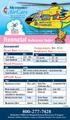 Operated by REACH Air Medical Services Assessment Heart Rate (beats/min.) Rate
Bier Block (Intravenous Regional Anesthesia)
 Bier Block (Intravenous Regional Anesthesia) History August Bier introduced this block in 1908. Early methods included the use of two separate tourniquets and procaine was the local anesthetic of choice.
NEWBORN (birth to 24 hours)
 NEWBORN (birth to 24 hours) 3kg ETT size: 3mm ETT length: 14cm AIRTRAQ: GREY LMA size: 1 or 1.5 IGT size: 5 FG SHOCK: 15 joules CPR: one third of chest depth rate 100/min 3:1 The emphases in resuscitation
COPD with Respiratory Failure Case Study #21. Molly McDonough
 COPD with Respiratory Failure Case Study #21 Molly McDonough Patient: Mr. Hayato 65 year old male Brought to ER with severe SOB Past History of emphysema Longstanding chronic obstruction pulmonary disease
Ventilation Perfusion Relationships
 Ventilation Perfusion Relationships VENTILATION PERFUSION RATIO Ideally, each alveolus in the lungs would receive the same amount of ventilation and pulmonary capillary blood flow (perfusion). In reality,
Inotropes/Vasoactive Agents Hina N. Patel, Pharm.D., BCPS Cathy Lawson, Pharm.D., BCPS
 Inotropes/Vasoactive Agents Hina N. Patel, Pharm.D., BCPS Cathy Lawson, Pharm.D., BCPS 1. Definition -an agent that affects the contractility of the heart -may be positive (increases contractility) or
Nursing Education and Research
 Melissa Meloche Meloche, RN RN, MSN MSN, CCRN Nursing Education and Research Describe the purpose p of common clinical equipment found in the Intensive Care Unit and how this equipment could impact a patient