
Tire Condition Inspection Manual
|
|
|
- Jean Caldwell
- 9 years ago
- Views:
Transcription
1 Tire Condition Inspection Manual Tire Condition Inspection Manual Table of contents Purpose and Benefit of the Manual Page 01 Codes by Tire Area Page 02 General Code List Page 03 Codes and Conditions Page 14 1XXX Tread Failures Page XXX Shoulder Failures Page XXX Sidewall Failures Page XXX Bead Failures Page XXX Inner Failures Page XXX General Failures Page TXXX Tube Failures Page FXXX Flap Failures Page
2 GENERAL CODE LIST General Code List - Tread Area AREA LEVEL CODE CONDITION L Tread Surface Damages Rejected L Tread Cut / Puncture (Through) Rejected L Tread Cut (Not Through) Rejected L Tread Delamination Rejected & Accepted L Tread Chipping Rejected L Tread Chunking (Tear Off) Rejected L Transport Damage Rejected L Pitted Surface Rejected & Accepted L Tread Migrating Wire Accepted L Groove Cracks Rejected L Groove Crack - Lateral Rejected L Groove Crack - Longitudinal Rejected L Weather Cracking in Grooves Rejected TREAD L Tread Separations Rejected & Accepted L Tread Leaving Casing Rejected & Accepted L Belt Leaving Belt Rejected & Accepted L Breaker (Belt) Leaving Casing Rejected & Accepted L Casing Leaving Casing Rejected & Accepted L Tread Leaving Belt Rejected & Accepted L Separation Not Identified Rejected & Accepted L Tread Bursting Rejected L Cut Bursting Rejected L Heat Bursting Rejected L Impact Bursting Rejected L BLB Bursting Rejected L Bursting Not Identified Rejected Back to Menu To be Continued... Tire Condition Inspection Manual Edition: GTQA-I-2012-EN Page. 2
3 GENERAL CODE LIST General Code List - Tread Area AREA LEVEL CODE CONDITION L Irregular Wear Rejected L River Wear Rejected L Sh. Wear (Shoulder Wear) Rejected L H&T (Heel & Toe Wear) Rejected L Rib Punch Rejected L Shoulder Edge Wear Rejected L Center Wear Rejected L Diagonal Wear Rejected L Max-Min Rejected L Step-Down Wear Rejected L Feather Edge Wear Rejected L Center Rib Punch Wear Rejected L Mechanical Wear Rejected L Spot Wear Rejected L Rapid Wear - Application Rejected L Rapid Wear Not Identified Rejected L IW Not Identified Rejected L Tread Tear Rejected L Rib Tear Rejected TREAD L Lug Tear Rejected L Rib Tear and Groove Crack Rejected L Lug Tear and Groove Crack Rejected L Defense Groove Tearing Rejected L Sipe Tear Rejected L Tread Distortion Rejected L Missing Belt Accepted L Open Tread Splice Accepted L Poor Tread Appearance Accepted L Foreign Material Accepted L Rubber Starved Accepted To be Continued... L Blister Accepted L Contamination Accepted L Air Loss (Pinhole) Accepted L Poor Repair Workmanship Accepted L Flow Cracks Accepted L Cord Exposed Accepted L Under Cure Accepted L Reported Condition Not Found Rejected L Condition Unknown Rejected & Accepted Back to Menu Tire Condition Inspection Manual Edition: GTQA-I-2012-EN Page. 3
4 GENERAL CODE LIST General Code List - Shoulder Area AREA LEVEL CODE CONDITION L Shoulder Surface Damages Rejected L Shoulder Cut Rejected L Shoulder Puncture Rejected L Damage in Shoulder - Repairable Rejected L Chunking Shoulder Rejected L Shoulder Migrating Wires Accepted L Transport Damage Rejected L Shoulder Cracks Rejected & Accepted L Shoulder Circumferential Crack Rejected & Accepted L Radial Cracking Rejected L Angular Repeated (Diagonal) Cracking Rejected L Ozone Cracking Rejected L Shoulder Separations Rejected & Accepted L Rubber Leaving Casing Rejected & Accepted L Casing Leaving Casing Rejected & Accepted L Belt Edge Separation Rejected & Accepted SHOULDER L Rubber Leaving Rubber - Poor Adhesion Accepted L Ply Cord Exposed (More Shoulder Separation) Rejected & Accepted L Wing Tip Separation (Tread Edge) Accepted L Separation Not Identified Rejected & Accepted L Poor Shoulder Appearance Accepted L Foreign Material Accepted L Rubber Starved Accepted L Blister Accepted L Contamination Accepted L Air Loss (Pinhole) Accepted L Poor Repair Workmanship Accepted L Flow Cracks Accepted L Wire Exposed Accepted L Under Cure Accepted L Reported Condition Not Found Rejected L Condition Unknown Rejected & Accepted Back to Menu To be Continued... Tire Condition Inspection Manual Edition: GTQA-I-2012-EN Page. 4
5 GENERAL CODE LIST General Code List - Sidewall Area AREA LEVEL CODE CONDITION SIDEWALL L Sidewall Surface Damages Rejected L Sidewall Cut Rejected L Sidewall Puncture Rejected L Damage Caused by Vehicle Rejected L Excessive Wear Rejected L Sidewall Migrating Wires Accepted L Transport Damage Rejected L Run Flat Rejected L Sidewall Cracks Rejected & Accepted L Sidewall Circumferential Cracks Rejected & Accepted L Radial Crease or Cracks Rejected L Angular Repeated (Diagonal) Cracking Rejected L Ozone Cracking Rejected L Sidewall Separations Rejected & Accepted L Rubber from Casing Rejected & Accepted L Casing from Casing Rejected & Accepted L Separation Not Identified Rejected & Accepted L Sidewall Bursting Rejected L Sidewall Cut / Impact Break Rejected L CBU (Zipper Rupture) Rejected L Cross-shaped Bursting Rejected Back to Menu To be Continued... Tire Condition Inspection Manual Edition: GTQA-I-2012-EN Page. 5
6 GENERAL CODE LIST General Code List - Sidewall Area AREA LEVEL CODE CONDITION L Sidewall Bulge (Not Sepa.) Rejected & Accepted L Bulge - Tread Cuts Rejected L Sidewall Dent - Heavy Carcass Splice Rejected & Accepted L White SW Damages Rejected & Accepted L White SW Stain Accepted L White SW Circumferential Cracking Rejected & Accepted L Poor Sidewall Grinding Accepted L Other Failures Rejected & Accepted L Open Sidewall Splice Accepted L Poor Sidewall Appearance Accepted SIDEWALL L Foreign Material Accepted L Rubber Starved Accepted L Blister Accepted L Contamination Accepted L Air Loss (Pinhole) Accepted L Poor Repair Workmanship Accepted L Flow Cracks Accepted L Wire Exposed Accepted L Under Cure Accepted L Reported Condition Not Found Rejected L Condition Unknown Rejected & Accepted Back to Menu To be Continued... Tire Condition Inspection Manual Edition: GTQA-I-2012-EN Page. 6
7 GENERAL CODE LIST General Code List - Bead Area AREA LEVEL CODE CONDITION BEAD L Bead Surface Damages Rejected L Bead Cut Rejected L Bead Deformation Rejected L Bead Pinch Rejected L Bead Trimming Damage Accepted L Transport Damage (Deformation) Rejected L Rim Friction Rejected L Bead Circumferential Cracks Rejected & Accepted L Crack Outer Rejected L Crack Below Rim-line Rejected L Crack Inner Rejected & Accepted L Bead Toe Crack / Tearing Rejected L Bead Ozone Crack Rejected L Bead Separations Rejected & Accepted L Chafer Edge Separation Rejected & Accepted L Chafer Separation Rejected & Accepted L Ply Turn Up Separation Rejected & Accepted L Apex from SW Rubber Rejected & Accepted L Nylon Chafer Separation Rejected & Accepted L Apex Leaving Ply Cord Accepted L Bead Separation - Poor Ply Cord Adhesion Accepted L Separation Not Identified Rejected & Accepted Back to Menu To be Continued... Tire Condition Inspection Manual Edition: GTQA-I-2012-EN Page. 7
8 GENERAL CODE LIST General Code List - Bead Area AREA LEVEL CODE CONDITION L Bead Bursting Rejected BEAD L Cut Bursting Rejected L Heat Bursting Rejected L Bead Break During Inflation Rejected L Loose Bead Wire Rejected & Accepted L Bursting Not Identified Rejected L Open Apex Splice Accepted L Open Gum-chafer Splice Accepted L Poor Bead Appearance Accepted L Foreign Material Accepted L Rubber Starved Accepted L Blister Accepted L Contamination Accepted L Bead Air Leakage Accepted L Poor Repair Workmanship Accepted L Flow Cracks Accepted L Migrating Bead Wire Accepted L Under Cure Accepted L Reported Condition Not Found Rejected L Condition Unknown Rejected & Accepted Back to Menu To be Continued... Tire Condition Inspection Manual Edition: GTQA-I-2012-EN Page. 8
9 GENERAL CODE LIST General Code List - Inner Area AREA LEVEL CODE CONDITION INNER L Inner General Rejected L Transport Damage Rejected L Run Flat Rejected L Pinch Shock Rejected L Inner Separations Rejected & Accepted L Inner Liner Separation (From Inner Liner) Rejected & Accepted L Inner Liner Separation (From Casing) Rejected & Accepted L Separation Not Identified Rejected & Accepted L Ply Cord Exposed Accepted L Ply Cord Exposed (No Shoulder Separation) Accepted L Ply Cord Exposed (Less Shoulder Separation) Accepted Inner Liner Undulation L Accepted (Roughness Inner Liner) L Cord Shadow / Thin IL gauge Accepted L Liner Damage of Foreign Objects Rejected L Blister Accepted L Bladder Mark Accepted L Bladder Crease Accepted L Heavy Inner Splice Accepted L Hair Cracking Accepted L Broken Ply Cords (BIAS) Rejected L L Broken Ply Cords Around Shoulder Inside (BIAS) Broken Ply Cords Around Bead Area Outside (BIAS) Rejected Rejected L Open Inner Liner Splice (Joint Sepa.) Accepted L Poor Inner Appearance Accepted L Foreign Material Accepted L Rubber Starved Accepted L Contamination Accepted L Reported Condition Not Found Rejected L Condition Unknown Rejected & Accepted To be Continued... Back to Menu Tire Condition Inspection Manual Edition: GTQA-I-2012-EN Page. 9
10 GENERAL CODE LIST General Code List - General AREA LEVEL CODE CONDITION L Uniformity Issues Rejected & Accepted L Out of Balance Rejected & Accepted L Radial Run Out Rejected & Accepted L Lateral Run Out Rejected & Accepted Damage Caused by Petroleum / L Rejected Chemicals L Dynamometer Damage Rejected & Accepted L Ride Complaint Rejected & Accepted L Vehicle Pulling Rejected & Accepted L Excessive Noise Rejected & Accepted L Vibration Rejected & Accepted L Poor Wet Traction Rejected & Accepted L Flat Spot Rejected GENERAL L Other Claims Rejected & Accepted L Repaired, Retread, Reclaimed Rejected L Beyond the Warranty Period Rejected L Improper Repair or Repair Failure Rejected L Regrooving Outside Limits Rejected L Mileage Warranty Claim Rejected & Accepted L RTD Below Warranty Limits Rejected L Sidewall Irregular / Wrong Marking Info. Accepted L Picture(s) Not Available Rejected L Tire Not Available for Inspection Rejected L Road Hazard Rejected L Mounting Difficult Rejected & Accepted L Inflation Difficult Rejected & Accepted L Tire Deformation Rejected Back to Menu To be Continued... Tire Condition Inspection Manual Edition: GTQA-I-2012-EN Page. 10
11 GENERAL CODE LIST General Code List - Tube AREA LEVEL CODE CONDITION TUBE L 2 T001 Foreign Material Accepted L 2 T002 Under Curing Accepted L 2 T003 Blister Accepted L 2 T004 Tube Undulation Accepted L 2 T005 Pinhole Accepted L 2 T006 Rubber Starved Accepted L 2 T007 Valve Stem Failures Rejected L 2 T008 Ozone Cracks Rejected L 2 T009 Transport Damage Rejected L 2 T010 Cut Rejected L 2 T012 Repaired Tube Rejected L 2 T013 Tube Run Flat Rejected L 2 T015 Air Leakage Not Identified Rejected & Accepted L 2 T021 Cracks in Rubber Base - Separation Accepted L 2 T022 Cracks in Rubber Base - Tearing Rejected L 2 T800 Open Tube Splice Accepted L 2 T999 Condition Not Identified Rejected & Accepted Back to Menu To be Continued... Tire Condition Inspection Manual Edition: GTQA-I-2012-EN Page. 11
12 GENERAL CODE LIST General Code List - Flap AREA LEVEL CODE CONDITION FLAP L 2 F001 Foreign Material Accepted L 2 F002 Under Curing Accepted L 2 F003 Blister Accepted L 2 F004 Flap Undulation Accepted L 2 F006 Rubber Starved Accepted L 2 F009 Cut Rejected L 2 F010 Flap Tear Rejected L 2 F012 Flap Run Flat Rejected L 2 F999 Condition Not Identified Rejected & Accepted Back to Menu Tire Condition Inspection Manual Edition: GTQA-I-2012-EN Page. 12
13 AND Codes and Conditions Tire Condition Inspection Manual Edition: GTQA-I-2012-EN Page. 13
14 AND - TREAD TREAD TREAD FAILURES PAGE 15 - PAGE 89 1XXX - Tread Failures Tread Surface Damages Groove Cracks Tread Separations Tread Bursting Irregular Wear Tread Tear Tread Distortion Open Tread Splice Poor Tread Appearance Reported Condition Not Found Condition Unknown Tire Condition Inspection Manual Edition: GTQA-I-2012-EN Page. 14
15 AND - TREAD AREA TREAD Tread Surface Damages Tread Surface Damages Back to Menu Tread cut/puncture (Through) Tread cut (Not through) Tread Delamination Tread Chipping Tread Chunking (Tear Off) Transport Damage Pitted Surface Tread Migrating Wire Tire Condition Inspection Manual Edition: GTQA-I-2012-EN Page. 15
16 AND - TREAD TREAD TBR/PCR/LTR/BIAS Tread Surface Damages 1100 Rejected Punctures, cuts, or tear could be found on tread area. In more severe conditions, casing ply cord can be shown obviously. Tread punctured or cut by sharp objects. Severe operation conditions (poor road condition). Misapplication of the tire to service condition. Steer clear of snags on the road when driving. Thoroughly Inspect whether there are any wounds on tire periodically. If punctured, timely repair should be done to prevent further damage to the tire. Select proper tire with regard to actual application conditions. Tire Condition Inspection Manual Edition: GTQA-I-2012-EN Page. 16
17 AND - TREAD TREAD Tread Cut / Puncture TBR/PCR/LTR/BIAS 1110 (Through) Rejected Cut and puncture were found on the tread, carcass was penetrated through. Severe road condition, tread cut or punctured by sharp objects. Steer clear of snags on the road when driving. Inspect tire for any wound periodically. If punctured, timely repair to prevent further damage on the tire. Tire Condition Inspection Manual Edition: GTQA-I-2012-EN Page. 17
18 AND - TREAD TREAD TBR/PCR/LTR/BIAS Tread Cut (Not Through) 1120 Rejected Cut and puncture were found on the tread, carcass not penetrated. Poor operation condition, such as road hazard and damaged by sharp objects. Steer clear of snags when driving. Inspect tire for any wound periodically. If the tire is punctured, timely repair to prevent further damage. Tire Condition Inspection Manual Edition: GTQA-I-2012-EN Page. 18
19 AND - TREAD TREAD TBR/PCR/LTR/BIAS Tread Delamination 1130 Rejected & Accepted Layers of rubber in the tread are visible and peeling apart. Excessive mould lube, a rubber compounding problem, surface scorch of the tread rubber or poor mould fitment; Please contact local GITI Technical Service for further inspection. Tire Condition Inspection Manual Edition: GTQA-I-2012-EN Page. 19
20 AND - TREAD TREAD TBR/PCR/LTR/BIAS Tread Chipping 1140 Rejected Rough, abraded tread surface with numerous small flakes. Hollows appear on the tread surface with rough edge showing signs of cuts. Poor road conditions. Aggravated by high torque, improper inflation pressure, sharp turning, sudden starting and braking or vehicle chassis malfunction. Misapplication of the tire to service condition. Avoid rough driving. Select proper tire with regard to actual application conditions. Tire Condition Inspection Manual Edition: GTQA-I-2012-EN Page. 20
21 AND - TREAD TREAD TBR/PCR/LTR/BIAS Tread Chunking (Tear Off) 1150 Rejected Pattern blocks separated (tear off) at the base of the tread. localized impact force over tire block resulting from poor road condition (e.g. pothole, curbs, nails, stones etc.). Aggravated by serious overload, improper inflation pressure, sharp turn or vehicle chassis malfunction. Misapplication of the tire to service condition. Steer clear of snags on the road when driving. Avoid overloading, maintain tire pressure. Check vehicle chassis periodically. Select proper tire with regard to actual application conditions. Tire Condition Inspection Manual Edition: GTQA-I-2012-EN Page. 21
22 AND - TREAD TREAD TBR/PCR/LTR/BIAS Transport Damage 1170 Rejected Poor appearance of new tire tread, such as cuts or scratches during tire shipping/transport operation. Improper shipping/transport operation. Check and review shipping/transport operation process. Tire Condition Inspection Manual Edition: GTQA-I-2012-EN Page. 22
23 AND - TREAD TREAD TBR/PCR/LTR/BIAS Pitted Surface 1180 Rejected & Accepted A spongy appearance exhibits in the surface of the tread pattern. Severe road condition. Environmental temperature too low. Exposure to chemicals. Misapplication of the tire to service condition. Keep away from chemicals. Choose winter tires in low temperature environment and/or in winter. Tire Condition Inspection Manual Edition: GTQA-I-2012-EN Page. 23
24 TREAD AND - TREAD TBR/PCR/LTR Tread Migrating Wire 1190 Accepted Wire pierce through and appears on the surface of tread. Manufacturing defects resulting from loose wires extruding from tread belts. Wire Contamination. Please contact local GITI Technical Service for further inspection. Tire Condition Inspection Manual Edition: GTQA-I-2012-EN Page. 24
25 AND - TREAD AREA TREAD Groove Cracks Groove Cracks Back to Menu Groove Crack - Lateral Groove Crack - Longitudinal Weather Cracking in Grooves Tire Condition Inspection Manual Edition: GTQA-I-2012-EN Page. 25
26 AND - TREAD TREAD TBR/PCR/LTR/BIAS Groove Cracks 1200 Rejected Cracks occurring in the grooves, in some cases, an evidence of cuts, stones trapped can be found. Employment of high inflation pressure. Frequent emergency braking. Riding over curbs or the edge of roads. Severe road condition. Stone drilling or external cuts. Extensive torque or lateral/radial force. Check and maintain tire inflation pressure with a quality air gauge Avoid overloading. Check and remove stones or other objects stuck in tread grooves periodically. Avoid tire abuse. Tire Condition Inspection Manual Edition: GTQA-I-2012-EN Page. 26
27 AND - TREAD TREAD TBR/PCR/LTR/BIAS Groove Crack - Lateral 1210 Rejected One or more cracks in the tread rubber occurring between and at the base of lugs. Employment of high inflation pressure. Frequent emergency braking or excessive tire spinning. Stone drilling or external cuts. Aggravated by frequent emergency braking or excessive tire spinning. Check and maintain tire inflation pressure with a quality air gauge periodically. Careful driving, e.g. steer clear of snags on the road when driving. Check and remove stones or other objects stuck in tread grooves periodically. Tire Condition Inspection Manual Edition: GTQA-I-2012-EN Page. 27
28 AND - TREAD TREAD TBR/PCR/LTR/BIAS Groove Crack - Longitudinal 1220 Rejected Longitudinal cracks occurring between ribs at the base of the tread grooves. Improper inflation pressure and/or overloading. Severe road conditions. Cuts by stones trapped in tread or external cuts. Excessive torque or lateral force. Misapplication of the tire. Riding over curbs or the edge of roads. Check and maintain tire inflation pressure with a quality air gauge periodically. Check and remove stones or other objects stuck in tread grooves periodically. Careful driving, e.g. steer clear of snags on the road when driving. Avoid tire abuse. Tire Condition Inspection Manual Edition: GTQA-I-2012-EN Page. 28
29 AND - TREAD TREAD Weather Cracking in TBR/PCR/LTR/BIAS 1230 Grooves Rejected Hairline cracks in grooves. Usually occurs in regions of low temperatures. Tiny sandstones embed in grooves. Misapplication of tire. Choose proper product, for instance, use winter tires in low temperature regions. Tire Condition Inspection Manual Edition: GTQA-I-2012-EN Page. 29
30 AND - TREAD AREA TREAD Tread Separations Tread Separations Back to Menu Tread Leaving Casing Belt Leaving Belt Breaker (Belt) Leaving Casing Casing Leaving Casing Tread Leaving Belt Separation Not Identified Tire Condition Inspection Manual Edition: GTQA-I-2012-EN Page. 30
31 AND - TREAD TREAD TBR/PCR/LTR/BIAS Tread Separations 1300 Rejected & Accepted Separations between tread components of tread rubber, belt package and casing plies. Loss or Fatigue (weakening) of adhesion between tread rubber and casing plies caused by excessive stresses and heat build up. Cut/penetration allow degradation and/or oxidation of tread components. Improper inflation pressure or overloading. Large shear force impact. Excessive speeds/overloading Poor adhesion of tread components Careful driving, e.g.: steer clear of snags during driving, avoid large shear force Timely inspect tire for any wounds and get it repaired. Check and maintain tire inflation pressure with a quality air gauge periodically. Avoid overloading and/or long-term continuous driving. Tire Condition Inspection Manual Edition: GTQA-I-2012-EN Page. 31
32 AND - TREAD TREAD TBR/PCR/LTR/BIAS Tread Leaving Casing 1310 Rejected & Accepted Separation between tread package and casing. Loss or fatigue (weakening) of adhesion between tread rubber and casing plies caused by excessive stresses and heat build up from: Improper inflation pressure or overloading. Large shear force impact. Excessive speeds/overloading Tread puncture, cuts. Poor adhesion between tread rubber and casing. Check and maintain tire inflation pressure with a quality air gauge periodically. Avoid large shear force impacts. Careful driving, e.g. steer clear of snags, avoid fast/sharp cornering, do not exceed tire speed rating. Avoid overloading and/or prolonged continuous driving. Tire Condition Inspection Manual Edition: GTQA-I-2012-EN Page. 32
33 AND - TREAD TREAD TBR/PCR/LTR Belt Leaving Belt 1320 Rejected & Accepted Separation between belts. Loss or Fatigue (weakening) of adhesion between belts caused by excessive stresses and heat build up from: Improper inflation pressure or overloading. Large shear force impact. Excessive speeds/overloading Tread puncture, cuts. Poor adhesion between belts Check and maintain tire inflation pressure with a quality air gauge periodically. Avoid large shear force impacts. Careful driving, e.g. steer clear of snags, avoid fast/sharp cornering. do not exceed tire speed rating. Avoid overloading and/or prolonged continuous driving. Tire Condition Inspection Manual Edition: GTQA-I-2012-EN Page. 33
34 AND - TREAD TREAD Breaker (Belt) Leaving TBR/PCR/LTR/BIAS 1330 Casing Rejected & Accepted Separation between breaker (belt) and casing. Loss or Fatigue (weakening) of adhesion between breaker (belt) and casing plies caused by excessive stresses and heat buildup from: Improper inflation pressure or overloading. Large shear force impact. Excessive speeds/overloading Tread puncture, cuts. Poor adhesion between breaker(belts) and casing. Check and maintain tire inflation pressure with a quality air gauge periodically. Avoid large shear force impacts. Careful driving, e.g. steer clear of snags, avoid fast/sharp cornering. Do not exceed tire speed rating. Avoid overloading and/or prolonged continuous driving. Tire Condition Inspection Manual Edition: GTQA-I-2012-EN Page. 34
35 AND - TREAD TREAD PCR/LTR/BIAS Casing Leaving Casing 1340 Rejected & Accepted Separation between casing plies. Loss or fatigue (weakening) of adhesion between tread rubber and casing plies caused by excessive stresses and heat build up from: Improper inflation pressure or overloading. Large shear force impact. Excessive speeds/overloading Tread puncture, cuts. Poor adhesion between casings. Check and maintain tire inflation pressure with a quality air gauge periodically. Avoid large shear force impacts. Careful driving, e.g. steer clear of snags, avoid fast/sharp cornering. do not exceed tire speed rating. Avoid overloading and/or prolonged continuous driving. Tire Condition Inspection Manual Edition: GTQA-I-2012-EN Page. 35
36 AND - TREAD TREAD TBR/PCR/LTR Tread Leaving Belt 1350 Rejected & Accepted Separation between tread rubber and belt. Loss or Fatigue (weakening) of adhesion between tread rubber and casing plies caused by excessive stresses and heat build up from: Improper inflation pressure or overloading. Large shear force impact. Excessive speeds/overloading Tread puncture, cuts. Poor adhesion between tread rubber and belt. Check and maintain tire inflation pressure with a quality air gauge periodically. Avoid large shear force impacts. Careful driving, e.g. steer clear of snags, avoid fast/sharp cornering. do not exceed tire speed rating. Avoid overloading and/or prolonged continuous driving. Tire Condition Inspection Manual Edition: GTQA-I-2012-EN Page. 36
37 AND - TREAD TREAD TBR/PCR/LTR/BIAS Separation Not Identified 1390 Rejected & Accepted Any Separations between tread components not listed or coded. None None Please contact local GITI Technical Service for further inspection. Tire Condition Inspection Manual Edition: GTQA-I-2012-EN Page. 37
38 AREA AND - TREAD TREAD Tread Bursting Tread Bursting Back to Menu Cut Bursting Heat Bursting Impact Bursting BLB Bursting Bursting Not Identified Tire Condition Inspection Manual Edition: GTQA-I-2012-EN Page. 38
39 AND - TREAD TREAD TBR/PCR/LTR/BIAS Tread Bursting 1400 Rejected Casing burst from shock or cut to the tread area and/or the shoulder. In a radial tire appears as diagonal or radial along the cords of the casing. In a bias tire appears in the shape of X, L, T or 一. Improper inflation pressure or overloading. Rough driving at high speeds. Impact with curbs or running over objects in road such as pothole. Wrong application of the tire to service condition. Check and adjust tire inflation pressure with a quality air gauge periodically. Avoid rough driving, e.g. steer clear of snags, do not exceed the tire speed rating. Inspect tire closely for any damages after hitting obstructions. Avoid overloading and/or long-term continuous driving. Tire Condition Inspection Manual Edition: GTQA-I-2012-EN Page. 39
40 AND - TREAD TREAD TBR/PCR/LTR/BIAS Cut Bursting 1410 Rejected Casing burst from cut to the tread area and/or the shoulder. Cuts Impact with curbs or running over objects in road such as pothole. Aggravated by overloading and rough driving at high speeds. Check and adjust tire inflation pressure with a quality air gauge periodically. Avoid rough driving, steer clear of snags. Inspect tire closely for any damages after hitting obstructions. Tire Condition Inspection Manual Edition: GTQA-I-2012-EN Page. 40
41 AND - TREAD TREAD TBR/PCR/LTR/BIAS Heat Bursting 1420 Rejected Crown rubber separates. Ply cord breaks up. Fierce abrasion could be found at the edge of the fracture. Separation of tread rubber from belts/breakers/casing. Excess heat build up from improper inflation pressure or overloading. Prolonged continuous driving at high speeds. Misapplication of the tire service condition. Check and adjust tire inflation pressure with a quality air gauge periodically. Avoid rough driving, long-term continuous driving at high speed/overloading. Correct application of the tire. Tire Condition Inspection Manual Edition: GTQA-I-2012-EN Page. 41
42 AND - TREAD TREAD TBR/PCR/LTR/BIAS Impact Bursting 1430 Rejected Localized break through the tread rubber and casing by concentrated impact. Severe, concentrated impact from foreign objects in road such as snags, pothole, curbs. Aggravated by over inflation, sharp turning and excessive speed. Check and adjust tire inflation pressure with a quality air gauge periodically. Avoid rough driving, steer clear of snags, do not exceed the tire speed rating. Inspect tire closely for any damages after hitting obstructions. Tire Condition Inspection Manual Edition: GTQA-I-2012-EN Page. 42
43 AND - TREAD TREAD TBR/PCR/LTR BLB Bursting 1440 Rejected Tread burst caused by BLB, casing is not bursting. Loss or fatigue (weakening) of adhesion between belts caused by Improper inflation pressure. Excessive speed/overloading. Large shear force impact. Check and maintain tire inflation pressure with a quality air gauge periodically. Avoid large shear force impacts. Careful driving, e.g. steer clear of snags, avoid fast/sharp cornering. do not exceed tire speed rating. Avoid overloading and/or prolonged continuous driving. Tire Condition Inspection Manual Edition: GTQA-I-2012-EN Page. 43
44 Tire Condition Inspection Manual Edition: GTQA-I-2012-EN Page. 44
45 AND - TREAD TREAD TBR/PCR/LTR/BIAS Bursting Not Identified 1490 Rejected Any Tread Bursting not listed or coded. None None None Tire Condition Inspection Manual Edition: GTQA-I-2012-EN Page. 45
46 AND - TREAD AREA TREAD Irregular Wear Irregular Wear Back to Menu River Wear Shoulder Wear Heel &Toe Wear Rib Punch Shoulder Edge Wear Center Wear Diagonal Wear Max-Min Wear Step-Down Wear Feather Edge Wear Center Rib Punch Wear Mechanical Wear Spot Wear Rapid Wear - Application Rapid Wear Not Identified IW Not Identified Tire Condition Inspection Manual Edition: GTQA-I-2012-EN Page. 46
47 AND - TREAD TREAD TBR/PCR/LTR/BIAS Irregular Wear 1500 Rejected Uneven wear exhibits around tread crown. Certain spot(s) wear faster than other in tread area. Vehicle mechanical problem with suspension system, braking system, axle alignment, etc. Improper tire inflation air pressure. Unbalanced tire/wheel assembly or other assembly non-uniformity. Rough driving style and habits. Regularly care and proper maintain vehicle mechanical system. Check and maintain tire inflation pressure with a quality air gauge periodically. Follow up proper mounting and demounting procedure by using proper tools. Check wheel/rim assembly. Foster good driving style and habits. Tire Condition Inspection Manual Edition: GTQA-I-2012-EN Page. 47
48 AND - TREAD TREAD TBR/LTR/BIAS River Wear 1501 Rejected Circumferential wear along rib edges next to major tread grooves which may be wavy in appearance and vary in width around tire. Common in line haul operations in which loads are light and turning is infrequent or loose axle components. Improper inflation pressure can aggravate. Regular care and proper maintenance on vehicle mechanical system. Check and maintain tire inflation pressure with a quality air gauge periodically. Tire Condition Inspection Manual Edition: GTQA-I-2012-EN Page. 48
49 AND - TREAD TREAD TBR/PCR/LTR/BIAS Sh. Wear (Shoulder Wear) 1502 Rejected Excessive wear on both shoulder ribs. Under inflation or overloading. Vehicle mechanical problem. Check and maintain tire inflation pressure with a quality air gauge periodically. Regularly care and proper maintenance on vehicle mechanical system. Avoid overloading. Tire Condition Inspection Manual Edition: GTQA-I-2012-EN Page. 49
50 AND - TREAD TREAD TBR/LTR/BIAS H&T (Heel & Toe Wear) 1503 Rejected Each lug around tire worn high to low from front to back edge, like a rubber eraser. Most often caused by mismatched inflation pressures or tire diameters in dual assemblies. Certain conditions such as P&D operations, high torque, sharp braking and mountainous terrains aggravate this condition. Regularly care and proper maintenance on vehicle mechanical system. Check and maintain tire inflation pressure with a quality air gauge periodically. Good driving habit, such as avoiding sharp/fast braking and starting. On a dual assembly, Both tires should be same size, same pattern, same construction, same inflation pressure. Tire Condition Inspection Manual Edition: GTQA-I-2012-EN Page. 50
51 AND - TREAD TREAD TBR/PCR/LTR/BIAS Rib Punch 1504 Rejected One or more inner ribs worn below the level the adjacent ribs circumferentially around tire. Primarily caused by low inflation pressure. Lack of shock absorber control in some suspension types, binding spring hanger, non-uniformity such as improper bead seating. Improper bearing adjustment, and assembly out of balance. Check and maintain tire inflation pressure with a quality air gauge periodically. Regularly care and proper maintenance on vehicle mechanical system. Check and review wheel/rim and tire assembly process. Tire Condition Inspection Manual Edition: GTQA-I-2012-EN Page. 51
52 AND - TREAD TREAD TBR/PCR/LTR/BIAS Shoulder Edge Wear 1505 Rejected Pattern on one side or both sides of shoulder edge wears faster. Vehicle mechanical problems such as rear axle of vehicle bends. Improper inflation pressure. Regularly care and proper maintenance on vehicle mechanical system. Check and maintain tire inflation pressure with a quality air gauge periodically. Tire Condition Inspection Manual Edition: GTQA-I-2012-EN Page. 52
53 AND - TREAD TREAD TBR/PCR/LTR/BIAS Center Wear 1506 Rejected Pattern in center wears faster. Over inflation, aggravated by overloading. Check and maintain tire inflation pressure with a quality air gauge periodically. Avoiding overloading. Tire Condition Inspection Manual Edition: GTQA-I-2012-EN Page. 53
54 AND - TREAD TREAD TBR/PCR/LTR/BIAS Diagonal Wear 1507 Rejected Localized flat spots worn diagonally across the tread approximately angles often repeating around tread circumference. Improper bearing adjustment, toe out, wrong of tire/wheel mounting technique. Mismatched tire dual assembly for different size and/or inflation pressure. Regularly care and proper maintenance on vehicle mechanical system. On a dual assembly, Both tires should be same size, same pattern, same construction, same inflation pressure. Rotate the tires on a regular basis. Tire Condition Inspection Manual Edition: GTQA-I-2012-EN Page. 54
55 AND - TREAD TREAD TBR/PCR/LTR/BIAS Max-Min 1508 Rejected Considerable different in tread depth from one point to 180 opposite. Tire no longer maintains a round shape. Non-uniformity in the rotating assembly such as wheel /rim, tire, and/or and improper bead seating of tire on rim. May also be caused by distorted brake drums. Regularly care and proper maintenance on vehicle mechanical system. Check and review wheel/rim and tire assembly process. Diagnose the problem components/ parts of vehicle, replace or correct it. Tire Condition Inspection Manual Edition: GTQA-I-2012-EN Page. 55
56 AND - TREAD TREAD TBR/LTR/BIAS Step-Down Wear 1509 Rejected Alternate lugs worn to different tread depths around tire circumference. May be every second lug, every third, etc. Mismatched inflation pressures or tire diameters in a dual assembly. Poorly maintained vehicle suspension system. Regularly care and proper maintenance on vehicle mechanical system. Rotate the tires on a regular basis. Tire Condition Inspection Manual Edition: GTQA-I-2012-EN Page. 56
57 AND - TREAD TREAD TBR/PCR/LTR/BIAS Feather Edge Wear 1510 Rejected Tread ribs worn high to low on each rib across the tread face. Excessive side force scrubbing, resulting from conditions of misalignment, primarily excessive toe. Damaged suspension components and other chassis misalignment. Diagnose and correct chassis misalignment condition. Regularly care and proper maintenance on vehicle mechanical system. Rotate the tires on a regular basis. Tire Condition Inspection Manual Edition: GTQA-I-2012-EN Page. 57
58 AND - TREAD TREAD TBR/PCR/LTR/BIAS Center Rib Punch Wear 1511 Rejected Center rib wears faster than others. Vehicle parts malfunction, such as lack of shock absorber control in some suspension types. Mismatched tire size and/or inflation pressure between duals. Improper inflation pressure may aggravate. Diagnose the problem of components' parts, replace or correct it. Check and maintain tire inflation pressure with a quality air gauge periodically. On a dual assembly, Both tires should be same size, same pattern, same construction, same inflation pressure. Tire Condition Inspection Manual Edition: GTQA-I-2012-EN Page. 58
59 AND - TREAD TREAD TBR/PCR/LTR/BIAS Mechanical Wear 1512 Rejected Abnormal & concentrating wearing shown on one or more positions on tread. Surface texture may show abrasion marks from tread sliding on road surface. Wheel locks during brake. Unbalanced brake system, aggressive use of brake, frozen brake or driver abuse. Regularly care and proper maintenance on vehicle mechanical system. Check brake system and brake balance. Avoid rough driving, such as frequently sudden braking/starting. Tire Condition Inspection Manual Edition: GTQA-I-2012-EN Page. 59
60 AND - TREAD TREAD TBR/PCR/LTR/BIAS Spot Wear 1513 Rejected Localized spot of excessive wear across the tread face showing skid mark on road surface. Tread Spot Wear Braking system problem such as brake malfunction or unbalanced brake system. Frequent hard braking. Check braking system periodically. Avoid rough driving. Tire Condition Inspection Manual Edition: GTQA-I-2012-EN Page. 60
61 AND - TREAD TREAD TBR/PCR/LTR/BIAS Rapid Wear - Application 1521 Rejected Low mileage, fast rate of wear resulted from improper usage condition. Severe service conditions, such as overloading, improper inflation pressure, vehicle mechanical problem, rough road condition, etc Misapplication of the tire to service condition. Regularly care and proper maintenance on vehicle mechanical system. Check and maintain tire inflation pressure with a quality air gauge periodically. Correct application of the tire. Tire Condition Inspection Manual Edition: GTQA-I-2012-EN Page. 61
62 AND - TREAD TREAD TBR/PCR/LTR/BIAS Rapid Wear Not Identified 1529 Rejected Any rapid wear issues not listed or coded. None None Please contact local GITI Technical Service for further inspection. Tire Condition Inspection Manual Edition: GTQA-I-2012-EN Page. 62
63 AND - TREAD TREAD TBR/PCR/LTR/BIAS IW Not Identified 1590 Rejected Any Tread Irregular Wear conditions not listed or coded. None None None Tire Condition Inspection Manual Edition: GTQA-I-2012-EN Page. 63
64 AREA AND - TREAD TREAD Tread Tear Tread Tear Back to Menu Rib Tear Lug Tear Rib Tear and Groove crack Lug Tear and Groove crack Defense Groove Tearing Sipe Tear Tire Condition Inspection Manual Edition: GTQA-I-2012-EN Page. 64
65 AND - TREAD TREAD TBR/PCR/LTR/BIAS Tread Tear 1600 Rejected Ribs, lugs and blocks of the tread are torn off by external forces. Severe road condition Riding over curbs or the edge of roads. Excess torque or High lateral force application. Stone retention or external cuts. Improper inflation pressure or overloading. Sharp/fast turn Check and maintain tire inflation pressure with a quality air gauge periodically. Check and remove stones or other objects stuck in tread grooves periodically. Drive carefully, steer clear of curbs or the edge of roads when driving. Avoid overloading and rough driving. Tire Condition Inspection Manual Edition: GTQA-I-2012-EN Page. 65
66 AND - TREAD TREAD TBR/PCR/LTR/BIAS Rib Tear 1610 Rejected Ribs are torn by external forces. Improper inflation pressure or excessive loading. Stone retention or external cuts. Riding over curbs or the edge of roads. High lateral force application. Frequent sharp turning. Check and maintain tire inflation pressure with a quality air gauge periodically. Check and remove stones or other objects stuck in tread grooves periodically. Drive carefully, steer clear of curbs or the edge of roads when driving. Avoid overloading and rough driving. Tire Condition Inspection Manual Edition: GTQA-I-2012-EN Page. 66
67 AND - TREAD TREAD TBR/PCR/LTR/BIAS Lug Tear 1620 Rejected Lugs are torn by external forces. Improper inflation pressure or excessive loading Riding over curbs or the edge of roads. Drive tires spinning. Stone retention or external cuts. High torque drive application. Check and maintain tire inflation pressure with a quality air gauge periodically. Check and remove stones or other objects stuck in tread grooves periodically. Drive carefully, steer clear of curbs or the edge of roads when driving. Avoid overloading, rough driving and excessive tire spinning. Tire Condition Inspection Manual Edition: GTQA-I-2012-EN Page. 67
68 AND - TREAD TREAD TBR Rib Tear and Groove Crack 1630 Rejected Cracks occurring in the groove combined with part of tire that has this cracking evolving to partial or full tear off of the rib. Improper inflation pressure and/or overloading. Severe road conditions. Cuts by stones trapped in tread or external cuts. Excessive torque or lateral force. Misapplication of the tire. Riding over curbs or the edge of roads. Check and maintain tire inflation pressure with a quality air gauge periodically. Check and remove stones or other objects stuck in tread grooves periodically. Careful driving, e.g. steer clear of snags on the road when driving. Avoid tire abuse. Tire Condition Inspection Manual Edition: GTQA-I-2012-EN Page. 68
69 AND - TREAD TREAD TBR Lug Tear and Groove Crack 1640 Rejected Tire has both presence of cracks in grooves and lugs are torn away. Improper inflation pressure or excessive loading Riding over curbs or the edge of roads. Stone retention or external cuts. Excessive tire spinning. Check and maintain tire inflation pressure with a quality air gauge periodically. Check and remove stones or other objects stuck in tread grooves periodically. Drive carefully, steer clear of curbs or the edge of roads when driving. Avoid overloading, rough driving and excessive tire spinning. Tire Condition Inspection Manual Edition: GTQA-I-2012-EN Page. 69
70 AND - TREAD TREAD TBR Defense Groove Tearing 1650 Rejected Pattern blocks outside of defense groove separated at the base of the tread with evidences of tear. localized impact force over tire block resulting from poor road condition (e.g. pothole, curbs, nails, stones etc.). Aggravated by serious overload, improper inflation pressure, sharp turn or vehicle chassis malfunction. Misapplication of the tire to service condition. Steer clear of snags on the road when driving. Avoid overloading, maintain tire pressure. Check vehicle chassis periodically. Select tire with regard to actual usage conditions. Tire Condition Inspection Manual Edition: GTQA-I-2012-EN Page. 70
71 AND - TREAD TREAD TBR Sipe Tear 1660 Rejected Tread sipe are torn by external force. Stone retention or external cuts. Riding over curbs or the edge of roads. High torque drive application. Drive tires spinning. Check and maintain tire inflation pressure with a quality air gauge periodically. Remove stones and rocks from grooves. Drive carefully, steer clear of curbs or the edge of roads when driving. Avoid overloading, rough driving and excessive tire spinning. Tire Condition Inspection Manual Edition: GTQA-I-2012-EN Page. 71
72 Tire Condition Inspection Manual Edition: GTQA-I-2012-EN Page. 72
73 AND - TREAD AREA TREAD Tread Distortion Tread Distortion Missing Belt Back to Menu Tire Condition Inspection Manual Edition: GTQA-I-2012-EN Page. 73
74 AND - TREAD TREAD PCR/LTR Tread Distortion 1700 Rejected Tread appears distorted. Fatigue (weakening) of tire components at late stage of service life. loose cords of belt/carcass resulting from external impact and/or cuts. Improper repair techniques. Check and maintain tire inflation pressure with a quality air gauge periodically. Drive carefully to avoid impacts. Inspect tires closely for any damages after hitting obstructions. Check and review tire repair workmanship and process. Tire Condition Inspection Manual Edition: GTQA-I-2012-EN Page. 74
75 AND - TREAD TREAD TBR/PCR/LTR Missing Belt 1710 Accepted One or more belts were missed in tread package. The center in tread may present convex or concave camber circumferentially. Manufacturing defects. Please contact local GITI Technical Service for further inspection. Tire Condition Inspection Manual Edition: GTQA-I-2012-EN Page. 75
76 AND - TREAD AREA TREAD Open Tread Splice Open Tread Splice Back to Menu Tire Condition Inspection Manual Edition: GTQA-I-2012-EN Page. 76
77 AND - TREAD TREAD TBR/PCR/LTR/BIAS Open Tread Splice 1800 Accepted A space is evident between the tread ends. Smooth separation with no cuts. Poor workmanship, poor tread end adhesion or tread was cut too short. Please contact local GITI Technical Service for further inspection. Tire Condition Inspection Manual Edition: GTQA-I-2012-EN Page. 77
78 AND - TREAD AREA TREAD Poor Tread Appearance Poor Tread Appearance Back to Menu Foreign Material Rubber Starved Blister Contamination Air Loss (Pinhole) Poor Repair Workmanship Flow Cracks Cord Exposed Under Cure Tire Condition Inspection Manual Edition: GTQA-I-2012-EN Page. 78
79 AND - TREAD TREAD TBR/PCR/LTR/BIAS Poor Tread Appearance 1900 Accepted Poor appearance on new tire tread. Manufacturing defects caused by foreign materials attached to mold or green tire. Improper management on semi-products and/or finished-products. Please contact local GITI Technical Service for further inspection. Tire Condition Inspection Manual Edition: GTQA-I-2012-EN Page. 79
80 AND - TREAD TREAD TBR/PCR/LTR/BIAS Foreign Material 1910 Accepted Foreign Material is any non-rubber material, other than the intended compound, that is cured into the tread rubber. It may appear as a raised spot on the surface containing foreign material covered by surface rubber. Manufacturing defects caused by foreign materials attached to mold or green tire. Please contact local GITI Technical Service for further inspection. Tire Condition Inspection Manual Edition: GTQA-I-2012-EN Page. 80
81 AND - TREAD TREAD TBR/PCR/LTR/BIAS Rubber Starved 1920 Accepted Localized Lack of rubber in tread area. Manufacturing defects caused by remaining water, oil, grease, etc in mould or green tire. Water leakage of curing bag. Please contact local GITI Technical Service for further inspection. Tire Condition Inspection Manual Edition: GTQA-I-2012-EN Page. 81
82 AND - TREAD TREAD TBR/PCR/LTR/BIAS Blister 1930 Accepted Internal voids on the surface of the tread. They are usually characterized by a hollow bump on the tread surface. Manufacturing defects resulting from such volatile materials as air, moisture, gasoline, chemical agent, etc. trapped in semi-product. Please contact local GITI Technical Service for further inspection. Tire Condition Inspection Manual Edition: GTQA-I-2012-EN Page. 82
83 AND - TREAD TREAD TBR/PCR/LTR/BIAS Contamination 1940 Accepted Contaminated/dirty tread surface. Manufacturing defects resulting from dirty mold. Please contact local GITI Technical Service for further inspection. Tire Condition Inspection Manual Edition: GTQA-I-2012-EN Page. 83
84 AND - TREAD TREAD TBR/PCR/LTR/BIAS Air Loss (Pinhole) 1950 Accepted Air leak from pinhole in tread area. Manufacturing defects results from remaining foreign materials in mold, such as broken-pin. Please contact local GITI Technical Service for further inspection. Tire Condition Inspection Manual Edition: GTQA-I-2012-EN Page. 84
85 AND - TREAD TREAD TBR/PCR/LTR/BIAS Poor Repair Workmanship 1960 Accepted Slight wounds on related area, not influencing tire use. Poor repair workmanship in plant. Please contact local GITI Technical Service for further inspection. Tire Condition Inspection Manual Edition: GTQA-I-2012-EN Page. 85
86 AND - TREAD TREAD TBR/PCR/LTR/BIAS Flow Cracks 1970 Accepted Cut-like cracks in tread surface of a tire, when examined closely, one side the cut is smooth and shiny and the other side folds over the other when stretched. Manufacture defect results from improper mixture of rubber compound, dirty mold. Please contact local GITI Technical Service for further inspection. Tire Condition Inspection Manual Edition: GTQA-I-2012-EN Page. 86
87 AND - TREAD TREAD TBR/PCR/LTR/BIAS Cord Exposed 1980 Accepted Fabric cord(s) and/or wire(s) cord protruding or exposing from the exterior surface of tire tread. Insufficient of tread rubber gauge. Please contact local GITI Technical Service for further inspection. Tire Condition Inspection Manual Edition: GTQA-I-2012-EN Page. 87
88 AND - TREAD TREAD TBR/PCR/LTR/BIAS Under Cure 1990 Accepted Tread rubber separation may occur circumferentially or locally, porosity and or micro bubbles can be observed on tread rubber. Manufacture defect results from curing parameter out of tolerances. Please contact local GITI Technical Service for further inspection. Tire Condition Inspection Manual Edition: GTQA-I-2012-EN Page. 88
89 AND - TREAD TREAD Reported Condition Not TBR/PCR/LTR/BIAS 1998 Found Rejected Back to Menu Reported condition can not be found or no any damages presented in tread area of a given tire. None None None Tire Condition Inspection Manual Edition: GTQA-I-2012-EN Page. 89
90 AND - TREAD TREAD TBR/PCR/LTR/BIAS Condition Unknown 1999 Rejected & Accepted Back to Menu Any tread conditions not listed or coded. None None Please contact local GITI Technical Service for further inspection. Tire Condition Inspection Manual Edition: GTQA-I-2012-EN Page. 90
91 AND - SHOULDER SHOULDER SHOULDER FAILURES PAGE 90 - PAGE 126 2XXX - Shoulder Failures Shoulder Surface Damages Shoulder Cracks Shoulder Separations Poor Shoulder Appearance Reported Condition Not Found Condition Unknown Tire Condition Inspection Manual Edition: GTQA-I-2012-EN Page. 91
92 AND - SHOULDER AREA SHOULDER Shoulder Surface Damages Shoulder Surface Damages Back to Menu Shoulder Cut Shoulder Puncture Damage in Shoulder - Repairable Chunking Shoulder Shoulder Migrating Wires Transport Damage Tire Condition Inspection Manual Edition: GTQA-I-2012-EN Page. 92
93 AND - SHOULDER SHOULDER TBR/PCR/LTR/BIAS Shoulder Surface Damages 2100 Rejected Shoulder rubber exhibits mechanical damages, and a portion of the rubber is torn off. Cuts and punctures could be found at fracture. Road hazard, curbing, wash rack rails, pit rails, vandalism, etc Drive carefully, such as steer clear of snags while driving. Timely have tire repaired properly to prevent further damages if Tire Condition Inspection Manual Edition: GTQA-I-2012-EN Page. 93
94 AND - SHOULDER SHOULDER TBR/PCR/LTR/BIAS Shoulder Cut 2110 Rejected Portion of shoulder rubber torn with cuts at fracture. Cuts or scrapes by sharp objects. Drive carefully, such as steer clear of snags while driving. Timely have tire repaired properly to prevent further damages if Tire Condition Inspection Manual Edition: GTQA-I-2012-EN Page. 94
95 AND - SHOULDER SHOULDER TBR/PCR/LTR/BIAS Shoulder Puncture 2120 Rejected Shoulder rubber separates with punctures at interfaces. Punctured by sharp objects. Avoid snags while driving. Timely have tire repaired properly to prevent further damages if Tire Condition Inspection Manual Edition: GTQA-I-2012-EN Page. 95
96 AND - SHOULDER SHOULDER Damage in Shoulder - TBR/PCR/LTR/BIAS 2130 Repairable Rejected Slight puncture found at shoulder area. Encountered fierce snags while running or being transported. Avoid snags while driving. Timely have tire repaired properly to prevent further damages if Tire Condition Inspection Manual Edition: GTQA-I-2012-EN Page. 96
97 AND - SHOULDER SHOULDER TBR/PCR/LTR/BIAS Chunking Shoulder 2150 Rejected Shoulder rubber separates with tearing interfaces. Running over curbs or nails, or withstanding severe localized impacts, aggravated by improper under inflation pressure or overloading and sharp turning. High torque application. Drive carefully, e.g. steer clear of snags while driving. Avoid aggressive/rough driving style. Tire Condition Inspection Manual Edition: GTQA-I-2012-EN Page. 97
98 AND - SHOULDER SHOULDER TBR/PCR/LTR Shoulder Migrating Wires 2160 Accepted Wire protruding trough the interior or exterior surface of tire shoulder. Manufacturing defects resulting from loose wires extruding from tread belts. Please contact local GITI Technical Service for further inspection. Tire Condition Inspection Manual Edition: GTQA-I-2012-EN Page. 98
99 AND - SHOULDER SHOULDER TBR/PCR/LTR/BIAS Transport Damage 2170 Rejected Poor appearance of new tire shoulder, such as cuts or scratches during tire shipping/transport operation. Improper shipping/transport operation. Check and review shipping/transport operation process. Tire Condition Inspection Manual Edition: GTQA-I-2012-EN Page. 99
100 AREA SHOULDER Shoulder Cracks AND - SHOULDER Shoulder Cracks Back to Menu Shoulder Circumferential Crack Radial Cracking Angular Repeated (Diagonal) Cracking Ozone Cracking Tire Condition Inspection Manual Edition: GTQA-I-2012-EN Page. 100
101 AND - SHOULDER SHOULDER TBR/PCR/LTR/BIAS Shoulder Cracks 2200 Rejected & Accepted Shoulder rubber exhibits cracks or splits. Under inflation pressure. Cuts, scrapes by sharp objects or external impact. Check and maintain tire inflation pressure with a quality air gauge periodically. Drive carefully, e.g. steer clear of snags while driving. Tire Condition Inspection Manual Edition: GTQA-I-2012-EN Page. 101
102 AND - SHOULDER SHOULDER Shoulder Circumferential TBR/PCR/LTR 2210 Crack Rejected & Accepted Should rubber exhibits circumferential cracks, with smooth interfaces. Operation with underinflation pressure. Cuts, scrapes by sharp objects or external impact. Manufacturing defects from improper product design, bad adhesion between sidewall and crown rubber. Check and maintain tire inflation pressure with a quality air gauge periodically. Carefully driving, e.g. steer clear of snags while driving. Check and review tire manufacturing process. Tire Condition Inspection Manual Edition: GTQA-I-2012-EN Page. 102
103 AND - SHOULDER SHOULDER TBR/PCR/LTR Radial Cracking 2220 Rejected Shoulder rubber exhibits vertical/ diagonal cracks. Under inflated and/or overloaded. Large torque force. Cuts and /or impacts. Check and maintain tire inflation pressure with a quality air gauge periodically. Drive carefully, e.g. steer clear of snags while driving. Tire Condition Inspection Manual Edition: GTQA-I-2012-EN Page. 103
104 AND - SHOULDER SHOULDER Angular Repeated (Diagonal) TBR/PCR/LTR 2230 Cracking Rejected Shoulder rubber exhibits repeated 45º angular cracks. Operation with underinflation pressure and/or overloaded. Large torque force. Cuts and /or impacts. Check and maintain tire inflation pressure with a quality air gauge periodically. Drive carefully, e.g. steer clear of snags while driving. Tire Condition Inspection Manual Edition: GTQA-I-2012-EN Page. 104
105 AND - SHOULDER SHOULDER TBR/PCR/LTR/BIAS Ozone Cracking 2270 Rejected Shoulder rubber exhibits hairline tiny cracks. Normal aging condition but can be caused and/or aggravated by extended periods of parking under direct sunlight, or exposure to high concentrations of ozone, ozone can be generated from many sources, such as vehicle exhaust, welding, electric generators, etc. Long time of running under inflated. Keep the tire away from heat source, vehicle exhaust, ozone and sunlight, electric generators and motors. Check and maintain tire inflation pressure with a quality air gauge periodically. Tire Condition Inspection Manual Edition: GTQA-I-2012-EN Page. 105
106 AND - SHOULDER AREA SHOULDER Shoulder Separations Shoulder Separations Back to Menu Rubber Leaving Casing Casing Leaving Casing Belt Edge Separation Rubber Leaving Rubber - Poor Adhesion Ply Cord Exposed (More Should Wing Tip Separation (Tread Edge) Separation Not Identified Tire Condition Inspection Manual Edition: GTQA-I-2012-EN Page. 106
107 AND - SHOULDER SHOULDER TBR/PCR/LTR/BIAS Shoulder Separations 2300 Rejected & Accepted Separation between shoulder rubber and casing, or between rubbers, with smooth interface, and could appear along with scorched rubber by excessive heat generation or traces of mechanical damages. Cut/penetration allow the degradation and/or oxidation of components of shoulder. Fatigue separations by excessive heat generation resulting from under inflation, overloading, prolonged continuous driving. Poor adhesion of shoulder's components. Drive carefully to avoid snags such as pothole in the road. Timely repair to prevent further damages. Check and maintain tire inflation pressure with a quality air gauge periodically. Avoid overloading and/or long-term continuous driving. Tire Condition Inspection Manual Edition: GTQA-I-2012-EN Page. 107
108 AND - SHOULDER SHOULDER TBR/PCR/LTR/BIAS Rubber Leaving Casing 2310 Rejected & Accepted Separation between shoulder rubber and casing. Cut/penetration allow the degradation and/or oxidation of components of shoulder rubber and casing. Fatigue separations by excessive heat generation results from under inflation, overloading, prolonged continuous driving. Poor adhesion between shoulder rubber and casing Drive carefully to avoid snags such as curbs in the road. Timely have tire repaired properly to prevent further damages if Check and maintain tire inflation pressure with a quality air gauge periodically. Avoid overloading and/or driving for long time without stop. Tire Condition Inspection Manual Edition: GTQA-I-2012-EN Page. 108
109 AND - SHOULDER SHOULDER PCR/LTR/BIAS Casing Leaving Casing 2320 Rejected & Accepted Separations between tire casings at shoulder area. Cut/penetration allow the degradation and/or oxidation of components of shoulder casing and casing. Fatigue separations by excessive heat generation resulting from under inflation, overloading, prolonged continuous driving. Poor adhesion between casings. Drive carefully to avoid snags such as curbs in the road. Timely have tire repaired properly to prevent further damages if Check and maintain tire inflation pressure with a quality air gauge periodically. Avoid overloading and/or drive for long-term continuous driving. Tire Condition Inspection Manual Edition: GTQA-I-2012-EN Page. 109
110 AND - SHOULDER SHOULDER TBR/PCR/LTR Belt Edge Separation 2330 Rejected & Accepted Separation between shoulder rubber and belt edge. Cut/penetration allow the degradation and/or oxidation of components of belt edge and shoulder rubber. Fatigue separations by excessive heat generation resulting from under inflation, overloading, prolonged continuous driving. Poor adhesion between belt edge and shoulder rubber. Drive carefully to avoid snags such as curbs in the road. Timely have tire repaired properly to prevent further damages if Check and maintain tire inflation pressure with a quality air gauge periodically. Avoid overloading and/or long-term continuous driving. Tire Condition Inspection Manual Edition: GTQA-I-2012-EN Page. 110
111 AND - SHOULDER SHOULDER Rubber Leaving Rubber - TBR/PCR/LTR/BIAS 2340 Poor Adhesion Accepted Separation between rubber surface at shoulder area with the evidence of poor adhesion. Manufacturing defects resulting from poor adhesion between different rubber components. Caused by foreign material contamination, air trap and over aged components been used etc Please contact local GITI Technical Service for further inspection. Tire Condition Inspection Manual Edition: GTQA-I-2012-EN Page. 111
112 AND - SHOULDER SHOULDER Ply Cord Exposed (More TBR 2350 Shoulder Separation) Rejected & Accepted Shoulder separation accompanied with exposed ply cord. Fatigue separations by excessive heat generation resulting from under inflation, overloading, prolonged continuous driving. Poor adhesion between body ply cords and rubber compound. Moisture and air penetration through inner liner allow the degradation and/or oxidation of ply coating rubber Check and maintain tire inflation pressure with a quality air gauge periodically. Avoid overloading and/or drive for long-term continuous driving. Check and Improve manufacturing workmanship and process control. Please contact local GITI Technical Service for further inspection. Tire Condition Inspection Manual Edition: GTQA-I-2012-EN Page. 112
113 AND - SHOULDER GENERAL Wing Tip Separation TBR/PCR/LTR 2380 (Tread Edge) Accepted Edge of the tread wing separated from the casing. Poor adhesion of components. Contamination of the tread. Poor stitching of tread wing to the casing. Please contact local GITI Technical Service for further inspection. Tire Condition Inspection Manual Edition: GTQA-I-2012-EN Page. 113
114 AND - SHOULDER SHOULDER TBR/PCR/LTR/BIAS Separation Not Identified 2390 Rejected & Accepted Separations between shoulder components not listed or coded. None None Please contact local GITI Technical Service for further inspection. Tire Condition Inspection Manual Edition: GTQA-I-2012-EN Page. 114
115 AND - SHOULDER AREA SHOULDER Poor Shoulder Appearance Poor Shoulder Appearance Back to Menu Foreign Material Rubber Starved Blister Contamination Air Loss (Pinhole) Poor Repair Workmanship Flow Cracks Wire Exposed Under Cure Tire Condition Inspection Manual Edition: GTQA-I-2012-EN Page. 115
116 AND - SHOULDER SHOULDER TBR/PCR/LTR/BIAS Poor Shoulder Appearance 2900 Accepted Poor appearance on new tire shoulder. Manufacturing defects caused by foreign materials attached to mould or green tire. Improper management on semi-products and/or finished-products. Please contact local GITI Technical Service for further inspection. Tire Condition Inspection Manual Edition: GTQA-I-2012-EN Page. 116
117 AND - SHOULDER SHOULDER TBR/PCR/LTR/BIAS Foreign Material 2910 Accepted Foreign Material is any non-rubber material, other than the intended compound, that is cured into the shoulder rubber. It may appear as a raised spot on the surface containing foreign material covered by surface rubber. Manufacturing defects caused by foreign materials attached to mould or green tire. Please contact local GITI Technical Service for further inspection. Tire Condition Inspection Manual Edition: GTQA-I-2012-EN Page. 117
118 AND - SHOULDER SHOULDER TBR/PCR/LTR/BIAS Rubber Starved 2920 Accepted Localized lack of rubber at shoulder area of a new tire. Manufacturing defects caused by remaining water, oil, grease, etc in mold or green tire. Curing bag defects. Please contact local GITI Technical Service for further inspection. Tire Condition Inspection Manual Edition: GTQA-I-2012-EN Page. 118
119 AND - SHOULDER SHOULDER TBR/PCR/LTR/BIAS Blister 2930 Accepted Internal voids on the surface of the shoulder of a new tire. They are usually characterized by a hollow bump on the shoulder surface. Manufacturing defects resulting from such volatile materials as air, moisture, gasoline, chemical agent, etc. contained in semi-product. Please contact local GITI Technical Service for further inspection. Tire Condition Inspection Manual Edition: GTQA-I-2012-EN Page. 119
120 AND - SHOULDER SHOULDER TBR/PCR/LTR/BIAS Contamination 2940 Accepted Shoulder surface of a new tire contaminated. Manufacturing defects resulting from dirty mold. Improper management on semi-products and or finished-products. Please contact local GITI Technical Service for further inspection. Tire Condition Inspection Manual Edition: GTQA-I-2012-EN Page. 120
121 AND - SHOULDER SHOULDER TBR/PCR/LTR/BIAS Air Loss (Pinhole) 2950 Accepted Slow rate of air leak caused pinhole in shoulder of a new tire. Manufacturing defects resulted from remaining foreign materials in mold, such as broken-pin. Please contact local GITI Technical Service for further inspection. Tire Condition Inspection Manual Edition: GTQA-I-2012-EN Page. 121
122 AND - SHOULDER SHOULDER TBR/PCR/LTR/BIAS Poor Repair Workmanship 2960 Accepted Obvious mending traces at shoulder, not influencing tire use. Poor repair workmanship in plant. Please contact local GITI Technical Service for further inspection. Tire Condition Inspection Manual Edition: GTQA-I-2012-EN Page. 122
123 AND - SHOULDER SHOULDER TBR/PCR/LTR/BIAS Flow Cracks 2970 Accepted Cut-like cracks in shoulder surface of a tire, when examined closely, one side the cut is smooth and shiny and the other side folds over the other when stretched. Manufacture defects resulting from improper mixture of rubber compound, dirty mold. Please contact local GITI Technical Service for further inspection. Tire Condition Inspection Manual Edition: GTQA-I-2012-EN Page. 123
124 AND - SHOULDER SHOULDER TBR/PCR/LTR Wire Exposed 2980 Accepted Wire protruding trough the interior or exterior surface of tire shoulder. Manufacturing defects resulting from loose wires extruding from tread belts. Please contact local GITI Technical Service for further inspection. Tire Condition Inspection Manual Edition: GTQA-I-2012-EN Page. 124
125 AND - SHOULDER SHOULDER TBR/PCR/LTR/BIAS Under Cure 2990 Accepted Shoulder rubber separation may occur circumferentially or locally, porosity and or micro bubbles can be observed. Manufacturing defects resulting from curing parameter out of tolerances. Please contact local GITI Technical Service for further inspection. Tire Condition Inspection Manual Edition: GTQA-I-2012-EN Page. 125
126 AND - SHOULDER SHOULDER Reported Condition Not TBR/PCR/LTR/BIAS 2998 Found Rejected Reported condition can not be found or no any damages presented in shoulder area of a given tire. Back to Menu None None None Tire Condition Inspection Manual Edition: GTQA-I-2012-EN Page. 126
127 AND - SHOULDER SHOULDER TBR/PCR/LTR/BIAS Condition Unknown 2999 Rejected & Accepted Any shoulder conditions not listed or coded. Back to Menu None None Please contact local GITI Technical Service for further inspection. Tire Condition Inspection Manual Edition: GTQA-I-2012-EN Page. 127
128 AND - SIDEWALL SIDEWALL SIDEWALL FAILURES PAGE PAGE 177 3XXX - Sidewall Failures Sidewall Surface Damages Sidewall Cracks Sidewall Separations Sidewall Bursting Sidewall Bulge (Not separation) White SW Damages Open Sidewall Splice Poor Sidewall Appearance Reported Condition Not Found Condition Unknown Tire Condition Inspection Manual Edition: GTQA-I-2012-EN Page. 128
129 AND - SIDEWALL AREA SIDEWALL Sidewall Surface Damages Sidewall Surface Damages Back to Menu Sidewall Cut Sidewall Puncture Damage Caused by Vehicle Excessive Wear Sidewall Migrating Wires Transport Damage Run Flat Tire Condition Inspection Manual Edition: GTQA-I-2012-EN Page. 129
130 PURPOSE AND BENEFIT OF THE MANUAL Purpose and Benefit of the Manual The Purpose To summarize most of the potential tire failures. To Implement a common code list for distribution, plants and field service staffs. To support data processing by giving each failure an unique code which is compiled with certain rules. To provide consistent records for quality statistics. To provide a consistent methodology for analysis of tires that has been removed from service. The Benefits Distributors and GITI Tire will gain information about: Out-of-Service conditions attributable to manufacturing workmanship, material and or operational usage. Quality and reliability of products and service distributed by GITI Tire. Causes of removal by type of tire. Corrective actions needed to improve tire performance. Attention: Giti Tire reserves the right of final interpretation on description, photo, possible causes, recommendation of tire conditions shown in this manual. Tire Condition Inspection Manual Edition: GITIQA-E-2012-EN Page. 130
131 BY TIRE AREA Codes by Tire Area 1XXX 2XXX TXXX 3XXX 4XXX 5XXX FXXX AREA AREA Tread 1XXX Inner 5XXX Shoulder 2XXX General 6XXX Sidewall 3XXX Tube TXXX Bead 4XXX Flap FXXX Tire Condition Inspection Manual Edition: GTQA-I-2012-EN Page. 131
132 AND - SIDEWALL SIDEWALL TBR/PCR/LTR/BIAS Sidewall Surface Damages 3100 Rejected Sidewall rubber separates with an evidence of punctures, cuts, scrapes. Tire punctured, scraped, cuts by external objects while running. Drive carefully to avoid snags on the road while driving. Timely have tire repaired properly to prevent further damages if Tire Condition Inspection Manual Edition: GTQA-I-2012-EN Page. 132
133 AND - SIDEWALL SIDEWALL TBR/PCR/LTR/BIAS Sidewall Cut 3110 Rejected Cuts, scrapes, gouges or bruises in the sidewall. Road hazard, curbing, wash rack rails, pit rails, vandalism, etc Drive carefully to avoid sharp objects on the road. Timely have tire repaired properly to prevent further damages if Tire Condition Inspection Manual Edition: GTQA-I-2012-EN Page. 133
134 AND - SIDEWALL SIDEWALL TBR/PCR/LTR/BIAS Sidewall Puncture 3120 Rejected Sidewall punctured. Road hazard, wash rack rails, pit rails, vandalism, etc. Drive carefully to avoid sharp objects on the road while driving. Timely have tire repaired properly to prevent further damages if Tire Condition Inspection Manual Edition: GTQA-I-2012-EN Page. 134
135 AND - SIDEWALL SIDEWALL TBR/PCR/LTR/BIAS Damage Caused by Vehicle 3130 Rejected Uniform scuffing or cutting on some major portion of the tire's outer surface, usually extending 360 around the tire. Wrong positioned vehicle components, such as spring board. Contact with vehicle components, such as loose U-bolts, slipped spring clips, restraining bolts, loose fenders, etc. Periodically inspect and maintain vehicle mechanical system. Ensure the tire does not come in contact with vehicle's components. Tire Condition Inspection Manual Edition: GTQA-I-2012-EN Page. 135
136 AND - SIDEWALL SIDEWALL TBR/PCR/LTR/BIAS Excessive Wear 3140 Rejected Abrasion on large areas of sidewall, Usually exhibited by tires on city bus. Abrasion between tire and curbstones or road fence. Avoid snags, curb, curbstones, road fence on the road while driving. Tire Condition Inspection Manual Edition: GTQA-I-2012-EN Page. 136
137 AND - SIDEWALL SIDEWALL TBR/PCR/LTR Sidewall Migrating Wires 3160 Accepted Belt wire migrated and pierce through the sidewall. Manufacturing defects resulting from loose wires extruding from tread belts. Please contact local GITI Technical Service for further inspection. Tire Condition Inspection Manual Edition: GTQA-I-2012-EN Page. 137
138 AND - SIDEWALL SIDEWALL TBR/PCR/LTR/BIAS Transport Damage 3170 Rejected Poor appearance(e.g. slight scrapes) at sidewall of new tire by transport. Cuts, scrapes, etc. by improper transportation and or shipment operation. Check and review shipping/transport operation process. Tire Condition Inspection Manual Edition: GTQA-I-2012-EN Page. 138
139 AND - SIDEWALL SIDEWALL TBR/PCR/LTR/BIAS Run Flat 3180 Rejected Sidewalls exhibit jagged cracks usually 360 around tire. Chunk of sidewall may be missing as well. In advanced stage, tire will loss their tread and belt package. Tire running with loss of inflation pressure resulting from sudden puncture or impact. Severe overloading and/or low pressure. Check and maintain tire inflation pressure with a quality air gauge periodically. Avoid overloading. Drive carefully, e.g. steer clear of snags, pothole, or other objects in road. Tire Condition Inspection Manual Edition: GTQA-I-2012-EN Page. 139
140 AND - SIDEWALL AREA SIDEWALL Sidewall Cracks Sidewall Cracks Back to Menu Sidewall Circumferential Cracks Radial Crease or Cracks Angular Repeated (Diagonal) Cracking Ozone Cracking Tire Condition Inspection Manual Edition: GTQA-I-2012-EN Page. 140
141 AND - SIDEWALL SIDEWALL TBR/PCR/LTR/BIAS Sidewall Cracks 3200 Rejected & Accepted Circumferential or locally cracks found at sidewall area. Serious distortion of sidewall extends to cracks after hitting obstructions. Tire running underinflated and/overloaded operation. Excessive torque transfer. Manufacturing defects. Check and maintain tire inflation pressure with a quality air gauge periodically. Avoid overloading. Drive carefully, e.g. steer clear of snags, pothole, or other objects in road. Check and review product design and manufacturing workmanship. Tire Condition Inspection Manual Edition: GTQA-I-2012-EN Page. 141
142 AND - SIDEWALL SIDEWALL Sidewall Circumferential TBR/PCR/LTR 3210 Cracks Rejected & Accepted Circumferential line-shaped cracks running parallel to the sidewall with smooth surface of cracks. Prolonged driving with under inflation, overloading. Large torque transfer. Check and maintain tire inflation pressure with a quality air gauge periodically. Drive carefully and avoid overloading. Tire Condition Inspection Manual Edition: GTQA-I-2012-EN Page. 142
143 AND - SIDEWALL SIDEWALL PCR/LTR Radial Crease or Cracks 3220 Rejected A vertical/diagonal break through the sidewall. Serious distortion of sidewall extends to cracks after hitting obstructions. Cuts by foreign objects and /or severe impacts. Excessive torque transfer. Aggravated by under inflation/overloading and severe cold temperatures. Drive carefully, e.g. steer clear of snags, pothole, or other objects in road. Check and maintain tire inflation pressure with a quality air gauge periodically. Avoid overloading. Tire Condition Inspection Manual Edition: GTQA-I-2012-EN Page. 143
144 AND - SIDEWALL SIDEWALL Angular Repeated (Diagonal) TBR/PCR/LTR/BIAS 3230 Cracking Rejected Several angular repeated diagonal cracks around the sidewall. Driving with high torque in combination with insufficient pressure or overload Excessive torque transfer Check and maintain tire inflation pressure with a quality air gauge periodically. Avoid overloading. Tire Condition Inspection Manual Edition: GTQA-I-2012-EN Page. 144
145 AND - SIDEWALL SIDEWALL TBR/PCR/LTR/BIAS Ozone Cracking 3270 Rejected Hairline cracks or corrugations at sidewall. Normal aging condition but can be caused and/or aggravated by extended periods of parking under direct sunlight, or exposure to high concentrations of ozone, ozone can be generated from many sources, such as vehicle exhaust, welding, electric generators, etc. Long time of running under inflated. Keep tires away from heat source, vehicle exhaust, ozone and sunlight, electric generators and motors. Check and maintaining tire inflation pressure with a quality air gauge periodically. Tire Condition Inspection Manual Edition: GTQA-I-2012-EN Page. 145
146 AND - SIDEWALL AREA SIDEWALL Sidewall Separations Sidewall Separations Back to Menu Rubber from Casing Casing from Casing Separation Not Identified Tire Condition Inspection Manual Edition: GTQA-I-2012-EN Page. 146
147 AND - SIDEWALL SIDEWALL TBR/PCR/LTR/BIAS Sidewall Separations 3300 Rejected & Accepted Separations between sidewall components, interfaces smooth. Cut/penetration allow the degradation and/or oxidation of components of sidewall Separations by heat generation resulting from prolonged continuous driving. Fatigue separation resulting from excessive sidewall flexing by runing with underinflation and overload. Poor adhesion between sidewall's components. Check and maintain tire inflation pressure with a quality air gauge periodically. Avoid large shear force impacts. Drive carefully, e.g. steer clear of snags, avoid fast/sharp cornering. do not exceed tire speed rating. Avoid overloading and/or tire overwork from prolonged continuous Tire Condition Inspection Manual Edition: GTQA-I-2012-EN Page. 147
148 AND - SIDEWALL SIDEWALL TBR/PCR/LTR/BIAS Rubber from Casing 3310 Rejected & Accepted Separation between sidewall rubber and casing. Cut/penetration allow the degradation and/or oxidation of components of sidewall rubber and casing. Separations by heat generation resulting from prolonged continuous driving. Fatigue separation resulting from excessive sidewall flexing by runing with under-inflation and overload. Poor adhesion of sidewall rubber and casing. Drive carefully, e.g. steer clear of snags, avoid fast/sharp cornering. Timely repair to prevent further damages. Avoid overloading and/or tire overwork from prolonged continuous di Avoid i large shear force impacts. Check and maintain tire inflation pressure with a quality air gauge Tire Condition Inspection Manual Edition: GTQA-I-2012-EN Page. 148
149 AND - SIDEWALL SIDEWALL PCR/LTR/BIAS Casing from Casing 3320 Rejected & Accepted Separation between casing and casing. Cut/penetration allow the degradation and/or oxidation of components of sidewall casing plies. Separations by heat generation resulted from prolonged continuous driving. Fatigue separation resulting from excessive sidewall flexing by runing with under-inflation and overload. Poor adhesion between the casings of sidewall. Drive carefully, e.g. steer clear of snags, avoid fast/sharp cornering. Timely repair to prevent further damages. Avoid overloading and/or tire overwork from prolonged continuous Avoid large shear force impacts. Check and maintain tire inflation pressure with a quality air gauge Tire Condition Inspection Manual Edition: GTQA-I-2012-EN Page. 149
150 AND - SIDEWALL SIDEWALL TBR/PCR/LTR/BIAS Separation Not Identified 3390 Rejected & Accepted Any Separation between sidewall components not listed or coded. None None Please contact local GITI Technical Service for further inspection. Tire Condition Inspection Manual Edition: GTQA-I-2012-EN Page. 150
151 AND - SIDEWALL AREA SIDEWALL Sidewall Bursting Sidewall Bursting Back to Menu Sidewall Cut/ Impact Break CBU (Zipper Rupture) Cross-shaped Bursting Tire Condition Inspection Manual Edition: GTQA-I-2012-EN Page. 151
152 AND - SIDEWALL SIDEWALL TBR/PCR/LTR/BIAS Sidewall Bursting 3400 Rejected Erratic breaking up and blowing out of cords. Sudden external impact by running over snags, such as curb, pothole, etc. Punctures or cut by sharp objects. Excessive sidewall flexing distortion resulted from poor rim condition and fast/sharp turn with heavy loading and/or improper inflation pressure. Fatigue(weakening) of cords resulting from overtime driving under low inflation pressure Avoid overloading and/or tire overworking, e.g. longtime continuous driving. Check and maintain tire inflation pressure with a quality air gauge periodically. Employ a quality and specified rim. Drive carefully, e.g. steer clear of snags, avoid sharp/fast cornering. Tire Condition Inspection Manual Edition: GTQA-I-2012-EN Page. 152
153 AND - SIDEWALL SIDEWALL TBR/PCR/LTR/BIAS Sidewall Cut / Impact Break 3430 Rejected Irregular-shaped breaking up and blowing out of cords with some evidences of cuts, abrasion, or other damages. Sudden external impact by running over snags, such as curb, pothole, etc. Fast/sharp turn with heavy loading and/or improper inflation pressure can aggravated it happening. Drive carefully, e.g. steer clear of snags, avoid sharp/fast cornering. Check and maintain tire inflation pressure with a quality air gauge periodically. Avoid overloading and/or tire overworking, e.g. longtime continuous driving. Tire Condition Inspection Manual Edition: GTQA-I-2012-EN Page. 153
154 AND - SIDEWALL SIDEWALL TBR/LTR CBU (Zipper Rupture) 3440 Rejected Ply cords breaks up. "Zipper" type rupture shown at sidewall with some cords drawing back to rubber. Concentrated stress on sidewall cords from overloading, improper inflation pressure, sharp/fast cornering. Cuts or punctures by sharp objects. Excessive sidewall flexing distortion resulted from underinflation application. Drive carefully, e.g. steer clear of snags, avoid sharp/ fast cornering. Check and maintain tire inflation pressure with a quality air gauge Avoid overloading and/or tire overworking, e.g. longtime continuous driving. Tire Condition Inspection Manual Edition: GTQA-I-2012-EN Page. 154
155 AND - SIDEWALL SIDEWALL TBR/LTR Cross-shaped Bursting 3480 Rejected Cross-shaped blowout shown at sidewall. External impact by running over snags. Overloading, sharp/fast turning, improper inflation pressure. Check and maintain tire inflation pressure with a quality air gauge periodically. Drive carefully, e.g. steer clear of snags, avoid sharp/fast cornering. Avoid overloading. Tire Condition Inspection Manual Edition: GTQA-I-2012-EN Page. 155
156 AND - SIDEWALL AREA SIDEWALL Sidewall Bulge (Not Separation) Sidewall Bulge (Not Separation) Back to Menu Sidewall Bulge - Tread Cuts Sidewall Dent - Heavy Carcass Splice Tire Condition Inspection Manual Edition: GTQA-I-2012-EN Page. 156
157 AND - SIDEWALL SIDEWALL Sidewall Bulge TBR/PCR/LTR/BIAS 3500 (Not Separation) Rejected & Accepted Radial, pencil-shaped bulge in the sidewall of a tire. In more severe conditions, bulge may also be seen when it is not inflated. Broken cord from tread puncture, external impact, etc. Excessive high inflation pressure applied. Improper repair techniques. Manufacturing defects resulted from loose ply cords or heavy sidewall splice. Drive carefully, e.g. steer clear of snags, pothole, curbs, etc. Check and review tire repair techniques and procedures. Tire Condition Inspection Manual Edition: GTQA-I-2012-EN Page. 157
158 AND - SIDEWALL SIDEWALL TBR/PCR/LTR/BIAS Bulge - Tread Cuts 3501 Rejected Radial sidewall bulge with signs of tread puncture or impact. Loss of adhesion between ply and sidewall rubber and/or broken ply cords resulted from tread punctured and/or external impact by curbs, potholes. Careful driving, e.g. steer clear of snags, pothole, curbs, etc. Timely repair with proper repair techniques and procedures to prevent further
159 AND - SIDEWALL SIDEWALL Sidewall Dent - Heavy TBR/PCR/LTR/BIAS 3610 Carcass Splice Rejected&Accepted Dent appear at the sidewall of the tire. Heavy carcass splice (overlapped carcass splice). Triggered and aggravated by high inflation pressure. Please contact local GITI Technical Service for further inspection. Tire Condition Inspection Manual Edition: GTQA-I-2012-EN Page. 159
160 AND - SIDEWALL AREA SIDEWALL White SW Damages White SW Damages Back to Menu White SW Stain White SW circumferential cracking Poor sidewall Grinding Other Failures Tire Condition Inspection Manual Edition: GTQA-I-2012-EN Page. 160
161 AND - SIDEWALL SIDEWALL PCR/LTR White SW Damages 3700 Rejected & Accepted Stains or cracks around sidewall white letters. Erosion by white letter protective agent. Excessive sidewall flexing from longtime driving on under inflation. Check and review tire manufacturing workmanship and process. Check and maintain tire inflation pressure with a quality air gauge periodically. Tire Condition Inspection Manual Edition: GTQA-I-2012-EN Page. 161
162 AND - SIDEWALL SIDEWALL PCR/LTR White SW Stain 3710 Accepted Stain at white letter side or color difference of rubber or tiny cracks at sidewall. Manufacturing defects resulting from improper brushing of white letter protective agent. Please contact local GITI Technical Service for further inspection. Tire Condition Inspection Manual Edition: GTQA-I-2012-EN Page. 162
163 AND - SIDEWALL SIDEWALL White SW Circumferential PCR/LTR 3720 Cracking Rejected & Accepted Tiny cracks on white sidewall side. Normal aging cracks. Chemical reaction caused by improper coating protective agent to sidewall rubber. Excessive sidewall flexing from longtime driving with under inflation. Check and maintain tire inflation pressure with a quality air gauge periodically. Please contact local GITI Technical Service for further inspection. Tire Condition Inspection Manual Edition: GTQA-I-2012-EN Page. 163
164 AND - SIDEWALL SIDEWALL PCR/LTR Poor Sidewall Grinding 3730 Accepted Worn flat circumferentially or partially at white sidewall side (uneven surface); Uneven grinding at white sidewall side. Manufacturing defects resulted from poor buffing workmanship. Please contact local GITI Technical Service for further inspection. Tire Condition Inspection Manual Edition: GTQA-I-2012-EN Page. 164
165 AND - SIDEWALL SIDEWALL PCR/LTR Other Failures 3790 Rejected & Accepted Any White sidewall damages not listed or coded. None None Please contact local GITI Technical Service for further inspection. Tire Condition Inspection Manual Edition: GTQA-I-2012-EN Page. 165
166 AND - SIDEWALL AREA SIDEWALL Open Sidewall Splice Open Sidewall Splice Back to Menu Tire Condition Inspection Manual Edition: GTQA-I-2012-EN Page. 166
167 AND - SIDEWALL SIDEWALL TBR/PCR/LTR/BIAS Open Sidewall Splice 3800 Accepted Regular smooth opening of the top layer of sidewall rubber that may appear radially or diagonally, the opening extends at a sharp angle into the sidewall rubber. No cords exposed. Poor adhesion of sidewall splice due to water, petrol, or dust trapped in joint interface, or bloom of chemical on splice. Please contact local GITI Technical Service for further inspection. Tire Condition Inspection Manual Edition: GTQA-I-2012-EN Page. 167
168 AND - SIDEWALL AREA SIDEWALL Poor Sidewall Appearance Poor Sidewall Appearance Back to Menu Foreign Material Rubber Starved Blister Contamination Air Loss (Pinhole) Poor Repair Workmanship Flow Cracks Wire Exposed Under Cure Tire Condition Inspection Manual Edition: GTQA-I-2012-EN Page. 168
169 AND - SIDEWALL SIDEWALL TBR/PCR/LTR/BIAS Poor Sidewall Appearance 3900 Accepted Poor appearance on a new tire sidewall. Manufacturing defects caused by foreign materials attached to mould or green tire. Improper management on semi-products and/or finished-products. Please contact local GITI Technical Service for further inspection. Tire Condition Inspection Manual Edition: GTQA-I-2012-EN Page. 169
170 AND - SIDEWALL SIDEWALL TBR/PCR/LTR/BIAS Foreign Material 3910 Accepted Foreign Material is any non-rubber material, other than the intended compound, that is cured into the sidewall rubber. It may appear as a raised spot on the surface containing foreign material covered by surface rubber. Manufacturing defects caused by foreign materials attached to mould or trapped in green tire. Please contact local GITI Technical Service for further inspection. Tire Condition Inspection Manual Edition: GTQA-I-2012-EN Page. 170
171 AND - SIDEWALL SIDEWALL TBR/PCR/LTR/BIAS Rubber Starved 3920 Accepted Localized lack of rubber shown on the surface of sidewall of a tire. Manufacturing defects caused by remaining water, oil, grease, etc in mould or green tire. Water leakage of curing bladder. Please contact local GITI Technical Service for further inspection. Tire Condition Inspection Manual Edition: GTQA-I-2012-EN Page. 171
172 AND - SIDEWALL SIDEWALL TBR/PCR/LTR/BIAS Blister 3930 Accepted Internal voids on the surface of the sidewall of a tire. They are usually characterized by a hollow bump on the sidewall surface. Manufacturing defects resulting from such volatile materials as air, moisture, gasoline, chemical agent, etc. trapped in semi-product. Please contact local GITI Technical Service for further inspection. Tire Condition Inspection Manual Edition: GTQA-I-2012-EN Page. 172
173 AND - SIDEWALL SIDEWALL TBR/PCR/LTR/BIAS Contamination 3940 Accepted Sidewall surface of a tire contaminated. Manufacturing defects resulting from dirty mold. Improper field management on semi-products and or finished-products. Please contact local GITI Technical Service for further inspection. Neither the sheet nor any information concerning it may be copied, exhibited or furnished to third parties without the express written permission of GITI Tire(China) Co. Ltd. Tire Condition Inspection Manual Edition: GTQA-I-2012-EN Page. 173
174 AND - SIDEWALL SIDEWALL TBR/PCR/LTR/BIAS Air Loss (Pinhole) 3950 Accepted Air leak from pinhole at sidewall of a tire. Manufacturing defects resulted from remaining foreign materials in mold, such as broken-pin. Please contact local GITI Technical Service for further inspection. Tire Condition Inspection Manual Edition: GTQA-I-2012-EN Page. 174
175 AND - SIDEWALL SIDEWALL TBR/PCR/LTR/BIAS Poor Repair Workmanship 3960 Accepted Slight wounds could be seen at sidewall (not influencing tire use). Poor repair workmanship in plant. Please contact local GITI Technical Service for further inspection. Tire Condition Inspection Manual Edition: GTQA-I-2012-EN Page. 175
176 AND - SIDEWALL SIDEWALL TBR/PCR/LTR/BIAS Flow Cracks 3970 Accepted Cut-like cracks in sidewall surface of a tire, when examined closely, one side the cut is smooth and shiny and the other side folds over the other when stretched. Manufacturing defects resulting from improper mixture of rubber compound, dirty mold. Please contact local GITI Technical Service for further inspection. Tire Condition Inspection Manual Edition: GTQA-I-2012-EN Page. 176
177 AND - SIDEWALL SIDEWALL TBR/PCR/LTR Wire Exposed 3980 Accepted Wires could be seen circumferentially or partially at sidewall of a tire. Manufacturing defects resulted from too thinness or short of sidewall rubber. Please contact local GITI Technical Service for further inspection. Tire Condition Inspection Manual Edition: GTQA-I-2012-EN Page. 177
178 AND - SIDEWALL SIDEWALL TBR/PCR/LTR/BIAS Under Cure 3990 Accepted Sidewall rubber separation may occur circumferentially or locally, porosity and or micro bubbles can be observed. Manufacture defects resulting from curing parameter out tolerances. Please contact local GITI Technical Service for further inspection. Tire Condition Inspection Manual Edition: GTQA-I-2012-EN Page. 178
179 AND - SIDEWALL SIDEWALL Reported Condition Not TBR/PCR/LTR/BIAS 3998 Found Rejected Reported condition can not be found or no any damages presented in sidewall area of a given tire. Back to Menu None None None Tire Condition Inspection Manual Edition: GTQA-I-2012-EN Page. 179
180 AND - SIDEWALL SIDEWALL TBR/PCR/LTR/BIAS Condition Unknown 3999 Rejected & Accepted Any sidewall conditions not listed or coded. Back to Menu None None Please contact local GITI Technical Service for further inspection. Tire Condition Inspection Manual Edition: GTQA-I-2012-EN Page. 180
181 AND - BEAD BEAD BEAD FAILURES PAGE PAGE 227 4XXX - Bead Failures Bead Surface Damages Bead Separations Bead Bursting Open Apex Splice Open Gum-chafer Splice Poor Bead Appearance Reported Condition Not Found Condition Unknown Tire Condition Inspection Manual Edition: GTQA-I-2012-EN Page. 181
182 AREA BEAD Bead Surface Damages AND - BEAD Bead Surface Damages Back to Menu Bead Cut Bead Deformation Bead Pinch Bead Trimming Damage Transport Damage (Deformation) Rim Friction Tire Condition Inspection Manual Edition: GTQA-I-2012-EN Page. 182
183 AND - BEAD BEAD TBR/PCR/LTR/BIAS Bead Surface Damages 4100 Rejected Visible damages on bead, such as mechanical damages, carbonization, or rubber loss, etc. Unmatched rim size. Bad rim conditions, such as damaged/distorted/cracked/rusted, broken rim. Improper tire mounting/demounting operation. Always use approved tire and rim combinations for diameters and contours. Follow up proper mounting and demounting procedure by using proper tools. Tire Condition Inspection Manual Edition: GTQA-I-2012-EN Page. 183
184 AND - BEAD BEAD TBR/PCR/LTR/BIAS Bead Cut 4110 Rejected Mechanical damages could be seen on bead. Cuts/scrapes by poor rim conditions, such as damaged/ distorted/ cracked/ rusted/ broken rim. Rough mounting and demounting operation. Inspect the rim or wheel for any damages, keep the rim in good condition. Follow up proper mounting and demounting procedure by using proper tools. Tire Condition Inspection Manual Edition: GTQA-I-2012-EN Page. 184
185 AND - BEAD BEAD TBR/PCR/LTR/BIAS Bead Deformation 4120 Rejected This condition is self-explanatory. Obvious bead deformation is exhibited. Distorted bead caused by improper mounting/ demounting operation, heat, improperly seated on rim, overloading. Unmatched rim size, locally distorted/damaged rim. Follow up proper mounting and demounting procedures by using the proper tools. Always use approved tire and rim combinations for diameters and contours. Avoid overloading. Tire Condition Inspection Manual Edition: GTQA-I-2012-EN Page. 185
186 AND - BEAD BEAD TBR/PCR/LTR/BIAS Bead Pinch 4130 Rejected There is no problem noticed on bead area after tire mounted, bead area damaged by rim due to kinked while driving. Incorrect rim size, improper bead seating. Unmatched rim size, locally distorted/damaged rim. Improper tire mounting technique. Always use approved tire and rim combinations for diameters and contours. Inspect closely of the rim condition while mounting tire. Follow up proper mounting and demounting procedures by using the proper tools. Tire Condition Inspection Manual Edition: GTQA-I-2012-EN Page. 186
187 AND - BEAD BEAD TBR/PCR/LTR/BIAS Bead Trimming Damage 4140 Accepted Small cuts occur on circumference of bead resulting from poor trimming technique. Poor trimming and/or repair workmanship and techniques in plant. Please contact local GITI Technical Service for further inspection. Tire Condition Inspection Manual Edition: GTQA-I-2012-EN Page. 187
188 AND - BEAD BEAD Transport Damage TBR/PCR/LTR 4170 (Deformation) Rejected Obvious bead distortion occurred during tire shipping. Improper loading/unloading and/or transport operation. Check and review tire shipping/transport operation process. Tire Condition Inspection Manual Edition: GTQA-I-2012-EN Page. 188
189 AND - BEAD BEAD BIAS Rim Friction 4180 Rejected Fabrics at bead rubbed by rim flange with cords migrating circumferentially which would even lead to blowing out of the tire. Severely rusted or distorted rim leads to improper bead seating which further resulting in partially or fully broken fabric. Broken play cords circumferentially from severe overload. Driving on under inflation/ incorrect rim size. Excessive over loading and high inflation pressure Always use approved tire and rim combinations for diameters and contours. Inspect the rim or wheel for any damages, keep rim in good condition. Avoid overloading. Check and maintain tire inflation pressure with a quality air gauge periodically. Tire Condition Inspection Manual Edition: GTQA-I-2012-EN Page. 189
190 AND - BEAD AREA CONDITION BEAD Bead Cracks Bead Circumferential Cracks Crack Outer Crack below Rim-line Crack Inner Bead Toe Crack/Tearing Bead Ozone Crack Tire Condition Inspection Manual Edition: GTQA-I-2012-EN Page. 190
191 AND - BEAD BEAD PCR/LTR Bead Circumferential Cracks 4210 Rejected & Accepted Continuously or discontinuously circumferential splits running parallel to the beads. Overloading, improper inflation pressure, unmatched rim size, improper bead seating. Ply turn up not well pressed and volatile chemical not dried during manufacturing process. Always use approved tire and rim combinations for diameters and contours. Check and maintain tire inflation pressure with a quality air gauge periodically. Avoid overloading. Tire Condition Inspection Manual Edition: GTQA-I-2012-EN Page. 191
192 AND - BEAD BEAD TBR/PCR/LTR Crack Outer 4220 Rejected Circumference or localized split/cracks above bead area that contacts with rim flange. Severe overloading, improper inflation pressure. Unmatched rim size and or bad rim condition, such as locally distorted/cracks rim. Big torsion angle of long vehicle when turning. Improper bead seating. Check and maintain tire inflation pressure with a quality air gauge periodically. Avoid overloading. Always use approved tire and rim combinations for diameters and contours. Avoid rough driving habits, e.g. sharp turning, braking, overtime continuous driving. Tire Condition Inspection Manual Edition: GTQA-I-2012-EN Page. 192
193 AND - BEAD BEAD TBR/LTR Crack Below Rim-line 4230 Rejected Circumferential or localized splits/cracks occurring below rim line. Unmatched rim size. Severe overloading and under inflation leads to flexing fatigue (weakening). Frequent sharp braking and turning, etc. Always use approved tire and rim combinations for diameters and contours. Check and maintain tire inflation pressure with a quality air gauge periodically. Avoid overloading, rough driving style. Tire Condition Inspection Manual Edition: GTQA-I-2012-EN Page. 193
194 AND - BEAD BEAD TBR/PCR/LTR/BIAS Crack Inner 4240 Rejected & Accepted Localized or circumferential occurring inside of bead area. Unmatched rim size. Under inflation or overloading. Separated ends of bead chafer from excessive bead flexing when frequent sharp turning and skid operation. Improper adhesion of bead components during tire manufacturing process. Always use approved tire and rim combinations for diameters and contours. Check and maintain tire inflation pressure with a quality air gauge periodically. Avoid overloading. Avoid rough driving habits, e.g. sharp turning, braking, overtime continuous driving. Tire Condition Inspection Manual Edition: GTQA-I-2012-EN Page. 194
195 AND - BEAD BEAD TBR/PCR/LTR Bead Toe Crack / Tearing 4260 Rejected Bead toe is cracked or torn by mounting tools. This damage is observed on tubeless tires. Careless mounting and demounting work. Bead toe rubber is aging by heat of brake drum. Follow up proper mounting and demounting procedures by using the proper tools. Avoid extreme heat build up from brake drum of frequent and rough braking. Tire Condition Inspection Manual Edition: GTQA-I-2012-EN Page. 195
196 AND - BEAD BEAD TBR/PCR/LTR/BIAS Bead Ozone Crack 4270 Rejected Numerous tiny cracks on bead surface, usually 360 around the tire. Normal aging condition but can be caused and/or aggravated by extended periods of parking under direct sunlight, or exposure to high concentrations of ozone, ozone can be generated from many sources, such as vehicle exhaust, welding, electric generators, etc. Long time of running under inflated. Keep tires away from source of heat, vehicle exhaust, ozone and direct sunlight, as well as electric generators and motors. Check and maintain tire inflation pressure with a quality air gauge Tire Condition Inspection Manual Edition: GTQA-I-2012-EN Page. 196
197 AND - BEAD AREA CONDITION BEAD Bead Separations Bead Separations Back to Menu Chafer Edge Separation Chafer Separation Ply Turn Up Separation Apex from SW Rubber Nylon Chafer Separation Apex Leaving Ply Cord Bead Separation - Poor Ply Cord Adhesion Separation Not Identified Tire Condition Inspection Manual Edition: GTQA-I-2012-EN Page. 197
198 AND - BEAD BEAD TBR/PCR/LTR/BIAS Bead Separations 4300 Rejected & Accepted Localized or circumferential bulge occurring in bead area. Improper bead seating, unmatched rim size, poor rim condition, such as damaged/distorted rim; Flexing fatigue(weakening) of bead from overloading and/or continuous driving with under inflation, and/ or frequent sharp braking and cornering, etc. Poor adhesion of bead components during manufacturing process. Always use approved tire and rim combinations for diameters and contours. Check and maintain tire inflation pressure with a quality air gauge periodically. Avoid overloading. Avoid rough driving habits, e.g. sharp turning, braking, overtime continuous driving. Follow up proper mounting and demounting procedure by using proper tools. Check and review manufacturing workmanship and process. Tire Condition Inspection Manual Edition: GTQA-I-2012-EN Page. 198
199 AND - BEAD BEAD TBR/PCR/LTR Chafer Edge Separation 4310 Rejected & Accepted Separation at bead chafer edge. Hollow could be sensed on separation area when pressed with hands or knocked with tools. In more severe conditions, some may even exhibits circumferential cracks. Incorrect rim size, improper bead seating. Severe overloading and under inflation which produce excessive flexing fatigue of bead components; Aggressive driving habits, such as frequent sharp braking and cornering, etc. Poor adhesion of tire components during tire manufacturing process. Always use approved tire and rim combinations for diameters and contours. Check and maintain tire inflation pressure with a quality air gauge periodically. Avoid overloading. Avoid rough driving habits, e.g. sharp cornering, braking, overtime continuous driving. Follow up proper mounting and demounting procedure by using proper tools. Check and review manufacturing workmanship and process. Tire Condition Inspection Manual Edition: GTQA-I-2012-EN Page. 199
200 AND - BEAD BEAD TBR/PCR/LTR Chafer Separation 4320 Rejected & Accepted Separation at bead chafer. Hollow could be sensed on separation area when pressed with hands or knocked with tools. In more severe conditions, some may even exhibits circumferential cracks. Incorrect rim size, improper bead seating. Severe overloading and under inflation which produce excessive flexing fatigue of bead components; Aggressive driving habits, such as frequent sharp braking and turning, etc. Poor adhesion of tire components during tire manufacturing process. Always use approved tire and rim combinations for diameters and contours. Check and maintain tire inflation pressure with a quality air gauge periodically. Avoid overloading. Avoid rough driving habits, e.g. sharp turning, braking, overtime continuous driving. Follow up proper mounting and demounting procedure by using proper tools. Check and review manufacturing workmanship and process. Tire Condition Inspection Manual Edition: GTQA-I-2012-EN Page. 200
201 AND - BEAD BEAD TBR/PCR/LTR/BIAS Ply Turn Up Separation 4330 Rejected & Accepted Separation at ply turn-up. Hollow could be sensed when pressed with hands or knocked separation area with tools. In more severe conditions, some may even exhibits circumferential cracks. Incorrect rim size, improper bead seating. Severe overloading and under inflation which produce excessive flexing fatigue of bead components; Aggressive driving habits, such as frequent sharp braking and turning, etc. Poor adhesion of tire components during tire manufacturing process. Always use approved tire and rim combinations for diameters and contours. Check and maintain tire inflation pressure with a quality air gauge periodically. Avoid overloading. Avoid rough driving habits, e.g. sharp turning, braking, overtime continuous driving. Follow up proper mounting and demounting procedure by using proper tools. Check and review manufacturing workmanship and process. Tire Condition Inspection Manual Edition: GTQA-I-2012-EN Page. 201
202 AND - BEAD BEAD TBR/PCR/LTR Apex from SW Rubber 4340 Rejected & Accepted Separation between Apex and sidewall rubber. Hollow could be sensed when pressed with hands or knocked separation area with tools. In more severe conditions, some may even exhibits circumferential cracks. Incorrect rim size, improper bead seating. Severe overloading and under inflation which produce excessive flexing fatigue of bead components; Aggressive driving habits, such as frequent sharp braking and turning, etc. Poor adhesion of tire components during tire manufacturing process. Always use approved tire and rim combinations for diameters and contours. Check and maintain tire inflation pressure with a quality air gauge periodically. Avoid overloading. Avoid rough driving habits, e.g. sharp turning, braking, overtime continuous driving. Follow up proper mounting and demounting procedure by using proper tools. Check and review manufacturing workmanship and process. Tire Condition Inspection Manual Edition: GTQA-I-2012-EN Page. 202
203 AND - BEAD BEAD TBR/LTR/BIAS Nylon Chafer Separation 4350 Rejected & Accepted Separation between nylon chafers. Incorrect rim size, improper bead seating. Severe overloading and under inflation which produce excessive flexing fatigue of bead components; Aggressive driving behaviors, such as frequent sharp braking and turning, etc. Poor adhesion or over aged of tire components during tire manufacturing process. Always use approved tire and rim combinations for diameters and contours. Check and maintain tire inflation pressure with a quality air gauge periodically. Avoid overloading. Avoid rough driving habits, e.g. sharp turning, braking, overtime continuous driving. Follow up proper mounting and demounting procedure by using proper tools. Check and review manufacturing workmanship and process. Tire Condition Inspection Manual Edition: GTQA-I-2012-EN Page. 203
204 AND - BEAD BEAD TBR/PCR/LTR Apex Leaving Ply Cord 4360 Accepted Separation between apex and ply cords with the evidence of poor adhesion. Manufacturing defects resulting from poor adhesion between different components. Caused by contamination, air trap and foreign substances. Please contact local GITI Technical Service for further inspection. Tire Condition Inspection Manual Edition: GTQA-I-2012-EN Page. 204
205 AND - BEAD BEAD Bead Separation - Poor Ply TBR/PCR/LTR/BIAS 4370 Cord Adhesion Accepted Separation at bead area with evidence of ply cord poor adhesion. Manufacturing defects resulting. Aggravated and triggered by improper inflation pressure, overloading, etc. Please contact local GITI Technical Service for further inspection. Tire Condition Inspection Manual Edition: GTQA-I-2012-EN Page. 205
206 AND - BEAD BEAD TBR/PCR/LTR/BIAS Separation Not Identified 4390 Rejected & Accepted Any Separations between bead components not listed or coded. None None Please contact local GITI Technical Service for further inspection. Tire Condition Inspection Manual Edition: GTQA-I-2012-EN Page. 206
207 AND - BEAD AREA CONDITION BEAD Bead Bursting Bead Bursting Back to Menu Cut Bursting Heat Bursting Bead Break During Inflation Loose Bead Wire Bursting Not Identified Tire Condition Inspection Manual Edition: GTQA-I-2012-EN Page. 207
208 AND - BEAD BEAD TBR/PCR/LTR/BIAS Bead Bursting 4400 Rejected Bead blow-out with ply cords migrating out of bead. In more severe conditions, extending to shoulders. Sudden Impacted or punctured by running over snags, such as pothole, curbstones. Unmatched rim size, bad rim conditions, such as distorted/cracked/rusted, broken rim. Overloading and/or high inflation pressure. Improper bead seating. Rough driving habits of sharp/hard turning. Avoid overloading, rough driving style, e.g. steer clear of snags, avoid sharp turning, Inspect the rim or wheel for any damages, keep rim in good condition. Always use approved tire and rim combinations for diameters and contours. Check and maintain tire inflation pressure with a quality air gauge periodically. Tire Condition Inspection Manual Edition: GTQA-I-2012-EN Page. 208
209 AND - BEAD BEAD TBR/PCR/LTR/BIAS Cut Bursting 4410 Rejected Bead burst even extending to shoulders, ply cords migrating out of bead. Obvious mechanical damages could be seen. Sudden Impacted or punctured by running over snags, such as pothole, curbstones. Avoid rough driving style, e.g. steer clear of snags, avoid sharp turning, etc. Tire Condition Inspection Manual Edition: GTQA-I-2012-EN Page. 209
210 AND - BEAD BEAD TBR/PCR/LTR/BIAS Heat Bursting 4420 Rejected Bead burst with ply cords migrating out of bead. A sign of excessive heat generation can be found in bead area, such as rough, brittle, distorted and/or discolored hard surface of bead. Excessive heat build up at bead and rim interface from faulty braking system, frequent hard braking, overloading, improper inflation pressure. Unmatched rim size. Locally concentrated stress from improper bead seating. and or poor rim condition, such as damaged, distorted, and/or rusty rim. Check and maintain vehicle braking system periodically. Check and maintain tire inflation pressure with a quality air gauge periodically. Avoid rough driving style, e.g. avoid frequent sharp braking/turning, etc. Inspect the rim or wheel for any damages, keep rim in good condition. Tire Condition Inspection Manual Edition: GTQA-I-2012-EN Page. 210
211 AND - BEAD BEAD PCR/LTR Bead Break During Inflation 4450 Rejected Bead bundle get broken. Extreme tension from improper lubricant on bead area during tire inflation. Improper bead seating. Bad rim condition, e.g. unmatched rim size, damaged / locally distorted rim. Following up the proper tire/rim assembly procedures. E.g. Apply an approved to lubricate inside and outside surfaces of both beads and rim flange. Clean rim or wheel inspect the rim or wheel for damages. Do not exceed the maximum inflation pressure shown on the sidewall of the tire. Tire Condition Inspection Manual Edition: GTQA-I-2012-EN Page. 211
212 AND - BEAD BEAD TBR/PCR/LTR/BIAS Loose Bead Wire 4470 Rejected & Accepted Bead wires become loose and fall to pieces. Incorrect rim size, improper bead seating. Severe overloading and under inflation which produce excessive flexing fatigue of bead components; Aggressive driving behaviors, such as frequent sharp braking and turning, etc. Poor adhesion of tire components during tire manufacturing process. Always use approved tire and rim combinations for diameters and contours. Check and maintain tire inflation pressure with a quality air gauge periodically. Avoid overloading. Avoid rough driving habits, e.g. sharp turning, braking, overtime continuous driving. Tire Condition Inspection Manual Edition: GTQA-I-2012-EN Page. 212
213 AND - BEAD BEAD TBR/PCR/LTR/BIAS Bursting Not Identified 4490 Rejected Any Bead bursting not listed or coded. None None Please contact local GITI Technical Service for further inspection. Tire Condition Inspection Manual Edition: GTQA-I-2012-EN Page. 213
214 AND - BEAD AREA BEAD Open Apex Splice Open Apex Splice Back to Menu Tire Condition Inspection Manual Edition: GTQA-I-2012-EN Page. 214
215 AND - BEAD BEAD TBR/PCR/LTR/BIAS Open Apex Splice 4700 Accepted Open apex splice. This damage often causes ply turn up separation. Poor adhesion of splice due to wrong condition of rubber cement, water, petrol, or dust trapped in joint interface, or bloom of chemical on splice. Please contact local GITI Technical Service for further inspection. Tire Condition Inspection Manual Edition: GTQA-I-2012-EN Page. 215
216 AND - BEAD AREA BEAD Open Gum-chafer Splice Open Gum-chafer Splice Back to Menu Tire Condition Inspection Manual Edition: GTQA-I-2012-EN Page. 216
217 AND - BEAD BEAD TBR/LTR Open Gum-chafer Splice 4800 Accepted Opened gum-chafer splice. Poor adhesion of splice due to water, petrol, or dust trapped in joint interface, or bloom of chemical on splice. Aggravated by improper inflation pressure, overloading, unmatched rim size. Please contact local GITI Technical Service for further inspection. Tire Condition Inspection Manual Edition: GTQA-I-2012-EN Page. 217
218 AND - BEAD AREA BEAD Poor Bead Appearance Poor Bead Appearance Back to Menu Foreign Material Rubber Starved Blister Contamination Bead Air Leakage Poor Repair Workmanship Flow Cracks Migrating Bead Wire Under Cure Tire Condition Inspection Manual Edition: GTQA-I-2012-EN Page. 218
219 AND - BEAD BEAD TBR/PCR/LTR/BIAS Poor Bead Appearance 4900 Accepted Poor appearance on tire bead. Manufacturing defects caused by foreign materials attached to mould or green tire. Improper management on semi-products and/or finished-products. Improper mixture of tire rubber compound. Please contact local GITI Technical Service for further inspection. Tire Condition Inspection Manual Edition: GTQA-I-2012-EN Page. 219
220 AND - BEAD BEAD TBR/LTR/PCR/BIAS Foreign Material 4910 Accepted Foreign Material is any non-rubber material, other than the intended compound, that is cured into the bead rubber. It may appear as a raised spot on the surface containing foreign material covered by surface rubber. Manufacturing defects caused by foreign materials attached to mould or green tire. Please contact local GITI Technical Service for further inspection. Tire Condition Inspection Manual Edition: GTQA-I-2012-EN Page. 220
221 AND - BEAD BEAD TBR/PCR/LTR/BIAS Rubber Starved 4920 Accepted Lack of rubber on bead area of a tire. Manufacturing defects caused by remaining water, oil, grease, etc in mold or green tire. Rubber did not completely fill out the mold. Water leakage of curing bladder. Please contact local GITI Technical Service for further inspection. Tire Condition Inspection Manual Edition: GTQA-I-2012-EN Page. 221
222 AND - BEAD BEAD TBR/PCR/LTR/BIAS Blister 4930 Accepted Internal voids on the surface of bead of a tire. Usually characterized by a hollow bump on inner surface. Manufacturing defects resulting from such volatile materials as air, moisture, gasoline, chemical agent, etc. trapped in semi-product. Please contact local GITI Technical Service for further inspection. Tire Condition Inspection Manual Edition: GTQA-I-2012-EN Page. 222
223 AND - BEAD BEAD TBR/PCR/LTR/BIAS Contamination 4940 Accepted Bead surface of a tire contaminated. Manufacturing defects resulting from dirty mold. Improper storage management on semi-products and/ or finished-products. Please contact local GITI Technical Service for further inspection. Tire Condition Inspection Manual Edition: GTQA-I-2012-EN Page. 223
224 AND - BEAD BEAD TBR/PCR/LTR/BIAS Bead Air Leakage 4950 Accepted Air leak out from bead. Any object trapped between bead and rim such as bar code sticker, etc. Improper tire/rim assembly technique. Disassemble tire/rim assembly and lubricate bead area properly again. Always follow up the proper tire mounting procedure and proper lubricating. Please contact local GITI Technical Service for further inspection. Tire Condition Inspection Manual Edition: GTQA-I-2012-EN Page. 224
225 AND - BEAD BEAD TBR/PCR/LTR/BIAS Poor Repair Workmanship 4960 Accepted Evidence of trimming or buffing could be seen in bead area, not influencing tire's usage. Poor repair workmanship and techniques in plant. Please contact local GITI Technical Service for further inspection. Tire Condition Inspection Manual Edition: GTQA-I-2012-EN Page. 225
226 AND - BEAD BEAD TBR/PCR/LTR/BIAS Flow Cracks 4970 Accepted Cut-like cracks in bead surface of a tire, when examined closely, one side the cut is smooth and shiny and the other side folds over the other when stretched. Manufacture defects resulting from improperly mixed rubber compound, dirty mold. Please contact local GITI Technical Service for further inspection. Tire Condition Inspection Manual Edition: GTQA-I-2012-EN Page. 226
227 AND - BEAD BEAD TBR/PCR/LTR/BIAS Migrating Bead Wire 4980 Accepted Bead wire tilted or stuck out from bead, deviating from normal position. Manufacturing defects. Please contact local GITI Technical Service for further inspection. Tire Condition Inspection Manual Edition: GTQA-I-2012-EN Page. 227
228 AND - BEAD BEAD TBR/PCR/LTR/BIAS Under Cure 4990 Accepted Bead rubber separation may occur circumferentially or locally, porosity and or micro bubbles can be observed on bead rubber. Manufacture defects resulting from curing parameter out tolerances. Please contact local GITI Technical Service for further inspection. Tire Condition Inspection Manual Edition: GTQA-I-2012-EN Page. 228
229 AND - BEAD BEAD Reported Condition Not TBR/PCR/LTR/BIAS 4998 Found Rejected Reported condition can not be found or no any damages presented in bead area of a given tire. Back to Menu None None None Tire Condition Inspection Manual Edition: GTQA-I-2012-EN Page. 229
230 AND - BEAD BEAD TBR/PCR/LTR/BIAS Condition Unknown 4999 Rejected & Accepted Any bead conditions not listed or coded. Back to Menu None None Please contact local GITI Technical Service for further inspection. Tire Condition Inspection Manual Edition: GTQA-I-2012-EN Page. 230
231 AND - INNER INNER INNER FAILURES PAGE PAGE 265 5XXX - Inner Failures Inner General Pinch Shock Inner Separations Ply Cord Exposed Inner Liner Undulation (Roughness Inner Liner) Broken Ply Cords (BIAS) Open Inner Liner Splice (Joint Sepa.) Poor Inner Appearance Reported Condition Not Found Condition Unknown Tire Condition Inspection Manual Edition: GTQA-I-2012-EN Page. 231
232 AND - INNER AREA INNER Inner General Inner General Back to Menu Transport Damage Run Flat Tire Condition Inspection Manual Edition: GTQA-I-2012-EN Page. 232
233 The linked image cannot be displayed. The file may have been moved, renamed, or deleted. Verify that the link points to the correct file and location. AND - INNER INNER TBR/PCR/LTR/BIAS Inner General 5100 Rejected Separation, visible damage in tire interior surface, etc. Continuous driving with under inflation and/or overloading. Under inflation creates flexing which generates heat and fatigue to cause components breakdown. Check and maintain tire inflation pressure with a quality air gauge periodically. Avoid overloading. Follow up proper mounting and demounting procedures by using the proper tools. Tire Condition Inspection Manual Edition: GTQA-I-2012-EN Page. 233
234 AND - INNER INNER TBR/PCR/LTR/BIAS Transport Damage 5170 Rejected Poor appearance of new tire inner, such as cuts or scratches during tire shipping/transport operation. Improper shipping/transport operation. Check and review shipping/transport operation process. Tire Condition Inspection Manual Edition: GTQA-I-2012-EN Page. 234
235 AND - INNER INNER TBR/PCR/LTR/BIAS Run Flat 5180 Rejected Breaking up of the inner liner is shown widespreadly Discoloration, burned, blister, wrinkling and/or even a separations of inner liner is exhibiting circumferrentially around inside tire sidewall. In advanced stage, the whole sidewall may be separated off. Continuous driving with under inflation and/or overloading. Under inflation creates flexing which generates heat and fatigue to cause components breakdown. Check and maintain tire inflation pressure with a quality air gauge periodically. Avoid overloading. Follow up proper tire repair procedures and techniques by using the proper tools. Tire Condition Inspection Manual Edition: GTQA-I-2012-EN Page. 235
236 AND - INNER AREA INNER Pinch Shock Pinch Shock Back to Menu Tire Condition Inspection Manual Edition: GTQA-I-2012-EN Page. 236
237 AND - INNER INNER TBR/PCR/LTR/BIAS Pinch Shock 5200 A bulge is exhibited in sidewall of a inflated-tire, cracks/splits can be detected on the corresponding position of inside the tire. In some cases, when dissecting the "bulge", a few cords has already broken, an evidence of pinch between rim and road obstacle can be noticed either. B PCR TBR BIAS Severe, concentrated impact with a foreign object, curb or pothole; Aggravated by over inflation and high speed. Total tire failure could be immediate or delayed depending upon severity of the impact. Drive carefully, steer clear of curb stones, pothole, etc. Check and maintain tire inflation pressure with a quality air gauge periodically. Follow up proper tire repair procedures and techniques by using the proper tools. Tire Condition Inspection Manual Edition: GTQA-I-2012-EN Page. 237
238 AND - INNER AREA INNER Inner Separations Inner Separations Back to Menu Inner Liner Separation (From Inner Inner Liner Separation (From Casing) Separation Not Identified Tire Condition Inspection Manual Edition: GTQA-I-2012-EN Page. 238
239 AND - INNER INNER TBR/PCR/LTR/BIAS Inner Separations 5300 Rejected & Accepted Separation of inner components, inner liner leaving casing, or casing leaving casing. In the early using stage, bulge could be exhibited interiorly. Fatigue separations by excessive heat generation resulting from under inflation, overloading long-time continuous driving. Poor adhesion between inner components. Check and maintain tire inflation pressure with a quality air gauge periodically. Avoid overloading and/or prolonged continuous driving at excessive speed. Tire Condition Inspection Manual Edition: GTQA-I-2012-EN Page. 239
240 AND - INNER INNER Inner Liner Separation (From TBR/PCR/LTR 5310 Inner Liner) Rejected & Accepted Separation between inner liner components, inner liner leaving inner liner. In the early usage stage, bulge could be exhibited interiorly. Fatigue separations by excessive heat generation resulting from under inflation, overloading long-time continuous driving. Poor adhesion of inner liners during tire manufacturing process. Check and maintain tire inflation pressure with a quality air gauge periodically. Avoid overloading and/or prolonged continuous driving at excessive speed. Tire Condition Inspection Manual Edition: GTQA-I-2012-EN Page. 240
241 AND - INNER INNER Inner Liner Separation TBR/PCR/LTR 5320 (From Casing) Rejected & Accepted Separation between inner liner and casing. In the early using stage, bulge could be exhibited interiorly. Fatigue separations by excessive heat generation resulting from under inflation, overloading long-time continuous driving. Poor adhesion between inner liner and casing during tire manufacturing process. Check and maintain tire inflation pressure with a quality air gauge periodically. Avoid overloading and/or prolonged continuous driving at excessive speed. Tire Condition Inspection Manual Edition: GTQA-I-2012-EN Page. 241
242 AND - INNER INNER TBR/PCR/LTR/BIAS Separation Not Identified 5390 Rejected & Accepted Any separations between inner components not listed or coded. None None Please contact local GITI Technical Service for further inspection. Tire Condition Inspection Manual Edition: GTQA-I-2012-EN Page. 242
243 AND - INNER AREA INNER Ply Cord Exposed Ply Cord Exposed Back to Menu Ply Cord Exposed (No Shoulder Ply Cord Exposed (Less Shoulder Tire Condition Inspection Manual Edition: GTQA-I-2012-EN Page. 243
244 AND - INNER INNER TBR/PCR/LTR/BIAS Ply Cord Exposed 5400 Accepted Ply cords in the inner liner of a tire are exposed locally, frequently may appear on the inside shoulder area. Manufacturing defects resulting from abnormal flow behavior of rubber compounds inside mold during curing, tire components' gauge out of tolerance. Please contact local GITI Technical Service for further inspection. Tire Condition Inspection Manual Edition: GTQA-I-2012-EN Page. 244
245 AND - INNER INNER Ply Cord Exposed (No TBR/PCR/LTR/BIAS 5410 Shoulder Separation) Accepted Ply cords in the inner liner of a tire are exposed locally, frequently may appear on the inside shoulder area. With no evidence of shoulder separation. Manufacturing defects resulting from abnormal flow behavior of rubber compounds inside mold during curing, tire components' gauge out of tolerance. Please contact local GITI Technical Service for further inspection. Tire Condition Inspection Manual Edition: GTQA-I-2012-EN Page. 245
246 Tire Condition Inspection Manual Edition: GTQA-I-2012-EN Page. 246
247 AND - INNER INNER Ply Cord Exposed (Less TBR/PCR/LTR/BIAS 5420 Shoulder Separation) Accepted Ply cords in the inner liner of a tire are exposed locally, frequently may appear on the inside shoulder area. Be accompanied with a lightly shoulder separation but less than ply cords exposed. Manufacturing defects resulting from abnormal flow behavior of rubber compounds inside mold during curing, tire components' gauge out of tolerance. Please contact local GITI Technical Service for further inspection. Tire Condition Inspection Manual Edition: GTQA-I-2012-EN Page. 247
248 AND - INNER AREA INNER Inner Liner Undulation Inner Liner Undulation Back to Menu Cord Shadow/ Thin IL gauge Liner Damage of Foreign Objects Blister Bladder Mark Bladder Crease Heavy Inner Splice Hair Cracking Tire Condition Inspection Manual Edition: GTQA-I-2012-EN Page. 248
249 AND - INNER INNER Inner Liner Undulation TBR/PCR/LTR 5500 (Roughness Inner Liner) Accepted Depression or elevation in the surface of the tire interior. Rubber of inner liner clinging to surface of curing bladder during curing. Bad curing bladder conditions such as pinhole, splits, which allow curing agent into inner liner during curing. Too thin or short inner liner and ply coating rubber gauges. Please contact local GITI Technical Service for further inspection. Tire Condition Inspection Manual Edition: GTQA-I-2012-EN Page. 249
250 AND - INNER INNER Cord Shadow / Thin IL TBR/PCR/LTR 5510 Gauge Accepted Radial ply cords impression may be visible through the inner liner locally or circumferentially. Frequently found in new tire. Too thin gauge or pulled inner liner during the manufacturing process. Please contact local GITI Technical Service for further inspection. Tire Condition Inspection Manual Edition: GTQA-I-2012-EN Page. 250
251 AND - INNER INNER Liner Damage of Foreign TBR/LTR/BIAS 5520 Objects Rejected Obvious worn area shown in the surface of inner liner. Foreign materials remained between tube and tire. Improper coating talcum powder in the surface of the inner liner. Improper inflation pressure. Check and review tire mounting and demounting process. Check and maintain tire inflation pressure with a quality air gauge periodically. Tire Condition Inspection Manual Edition: GTQA-I-2012-EN Page. 251
252 AND - INNER INNER TBR/PCR/LTR/BIAS Blister 5530 Accepted Air concealed at inner. Manufacturing defects resulting from such volatile materials as air, moisture, gasoline, chemical agent, etc. trapped in semi-product. Please contact local GITI Technical Service for further inspection. Tire Condition Inspection Manual Edition: GTQA-I-2012-EN Page. 252
253 AND - INNER INNER TBR/PCR/LTR/BIAS Bladder Mark 5540 Accepted Surface of inner liner exhibit partially uneven. Manufacturing defect caused by dirty or rough surface curing bladder. Please contact local GITI Technical Service for further inspection. Tire Condition Inspection Manual Edition: GTQA-I-2012-EN Page. 253
254 AND - INNER INNER TBR/PCR/LTR/BIAS Bladder Crease 5550 Accepted Surface of inner liner exhibit wedge-shaped projection. Manufacturing defect caused by over size curing bladder (Improper size/ over aged). Please contact local GITI Technical Service for further inspection. Tire Condition Inspection Manual Edition: GTQA-I-2012-EN Page. 254
255 AND - INNER INNER TBR/PCR/LTR/BIAS Heavy Inner Splice 5570 Accepted Big splice appear at the inner part which very obvious and easy to observed. Manufacturing defects caused by poor workmanship while building process.(overlapped inner splice) Please contact local GITI Technical Service for further inspection. Tire Condition Inspection Manual Edition: GTQA-I-2012-EN Page. 255
256 Tire Condition Inspection Manual Edition: GTQA-I-2012-EN Page. 256
257 AND - INNER INNER TBR/PCR/LTR/BIAS Hair Cracking 5580 Accepted Hairline cracks found in inner liner surface. Manufacturing defect caused by aged curing bladder with cracking. Please contact local GITI Technical Service for further inspection. Tire Condition Inspection Manual Edition: GTQA-I-2012-EN Page. 257
258 AND - INNER AREA INNER Broken Ply Cords (BIAS) Broken Ply Cords (BIAS) Back to Menu Broken Ply Cords (BIAS) Around Shoulder Broken Ply Cords (BIAS) Around Bead Area Tire Condition Inspection Manual Edition: GTQA-I-2012-EN Page. 258
259 AND - INNER INNER BIAS Broken Ply Cords (BIAS) 5600 Rejected Broken cords in large proportions exhibit around interior shoulder area or around exterior bead area.burned cords also can be seen in most cases. Broken Ply Cords around shoulder inside Broken Ply Cords Around bead area Fatigue failures resulting from overloading, under inflation, unmatched rim size, and or bad rim conditions, such as distorted/damaged rim. Avoid overloading. Always use approved quality rim and keep it in good condition. Check and maintain tire inflation pressure with a quality air gauge periodically. Tire Condition Inspection Manual Edition: GTQA-I-2012-EN Page. 259
260 AND - INNER INNER Broken Ply Cords Around BIAS 5610 Shoulder Inside (BIAS) Rejected Broken ply cords in large proportions exhibit around interior shoulder area, visible burned cords in most cases. Broken Ply Cords around shoulder inside Fatigue failures resulting from overloading, under inflation, unmatched rim size. Avoid overloading. Always use approved quality rim and keep it in good condition. Check and maintain tire inflation pressure with a quality air gauge periodically. Tire Condition Inspection Manual Edition: GTQA-I-2012-EN Page. 260
261 AND - INNER INNER Broken Ply Cords Around BIAS 5620 Bead Area Outside (BIAS) Rejected Broken ply cords in large proportions exhibit around exterior bead area. Broken Ply Cords Around bead area outside Fatigue failures resulting from overloading, under inflation, unmatched rim size, and or bad rim conditions, such as distorted/damaged rim. Avoid overloading. Always use approved quality rim and keep it in good condition. Check and maintain tire inflation pressure with a quality air gauge periodically. Tire Condition Inspection Manual Edition: GTQA-I-2012-EN Page. 261
262 AND - INNER AREA INNER Open Inner Liner Splice (Joint Sepa.) Open Inner Liner Splice (Joint Sepa.) Back to Menu Tire Condition Inspection Manual Edition: GTQA-I-2012-EN Page. 262
263 AND - INNER INNER Open Inner Liner Splice TBR/PCR/LTR 5800 (Joint Sepa.) Accepted Split at the splice of the inner liner material, which may be located next to a dark band in the liner. Manufacturing defects resulting from loss adhesion at the splice. Also can be aggravated by under inflation and/or overloading. Please contact local GITI Technical Service for further inspection. Tire Condition Inspection Manual Edition: GTQA-I-2012-EN Page. 263
264 AND - INNER AREA INNER Poor Inner Appearance Poor Inner Appearance Back to Menu Foreign Material Rubber Starved Contamination Tire Condition Inspection Manual Edition: GTQA-I-2012-EN Page. 264
265 AND - INNER INNER TBR/PCR/LTR/BIAS Poor Inner Appearance 5900 Accepted Poor appearance on tire inner. Manufacturing defects resulting from dirty mold, dirty semi-product. Poor storage management. Please contact local GITI Technical Service for further inspection. Tire Condition Inspection Manual Edition: GTQA-I-2012-EN Page. 265
266 AND - INNER INNER TBR/PCR/LTR/BIAS Foreign Material 5910 Accepted Foreign Material is any non-rubber material, other than the intended compound, that is cured into the inner. It may appear as a raised spot on the surface containing foreign material covered by surface rubber. Manufacturing defects resulted from remaining foreign material in semi-product or curing bladder during manufacturing process. Please contact local GITI Technical Service for further inspection. Tire Condition Inspection Manual Edition: GTQA-I-2012-EN Page. 266
267 AND - INNER INNER TBR/PCR/LTR/BIAS Rubber Starved 5920 Accepted Localized lack of rubber shown on the surface of inner of a tire. Manufacturing defects caused by remaining water, oil, grease, etc in mould or green tire. Water leakage of curing bladder. Please contact local GITI Technical Service for further inspection. Tire Condition Inspection Manual Edition: GTQA-I-2012-EN Page. 267
268 AND - INNER INNER TBR/PCR/LTR/BIAS Contamination 5940 Accepted Unclean inner liner surface in a tire. Manufacturing defects resulting from dirty mold, dirty semi-product. Please contact local GITI Technical Service for further inspection. Tire Condition Inspection Manual Edition: GTQA-I-2012-EN Page. 268
269 AND - INNER INNER Reported Condition Not TBR/PCR/LTR/BIAS 5998 Found Rejected Reported condition can not be found or no any damages presented in inner area of a given tire. Back to Menu None None None Tire Condition Inspection Manual Edition: GTQA-I-2012-EN Page. 269
270 AND - INNER INNER TBR/PCR/LTR/BIAS Condition Unknown 5999 Rejected & Accepted Any inner conditions not listed or coded. Back to Menu None None Please contact local GITI Technical Service for further inspection. Tire Condition Inspection Manual Edition: GTQA-I-2012-EN Page. 270
271 AND - GENERAL GENERAL GENERAL FAILURES PAGE PAGE 295 6XXX - General Failures Uniformity Issues Damage Caused by Petroleum/Chemicals Dynamometer Damage Ride Complaint Other Claims Road Hazard (US only) Tire Condition Inspection Manual Edition: GTQA-I-2012-EN Page. 271
272 AND - GENERAL AREA GENERAL Uniformity Issues Uniformity Issues Back to Menu Out of Balance Radial Run Out Lateral Run Out Tire Condition Inspection Manual Edition: GTQA-I-2012-EN Page. 272
273 AND - GENERAL GENERAL TBR/PCR/LTR Uniformity Issues 6100 Rejected & Accepted Tire is not uniformity like excessive balancing, out of round, run-out. Tire non-uniformity resulting from the distribution of tire mass is not uniform. Rim/wheel non-uniformity, improper bead seating. Minimizing tolerances in manufacturing process. Static balance can be achieved with a static bubble balancer. Dynamic balance can be achieved with a dynamic balancer. Use a quality rim/wheel and follow up the proper tire/rim assembly procedure. Tire Condition Inspection Manual Edition: GTQA-I-2012-EN Page. 273
274 AND - GENERAL GENERAL TBR/PCR/LTR Out of Balance 6110 Rejected & Accepted Vertical or lateral movement (wobble or shimmy) resulting from heavy or light spots in a tire. Static balance Dynamic balance The distribution of tire mass is not uniform. Rim/wheel non-uniformity, improper bead seating. Minimizing tolerances in manufacturing process. Static balance can be achieved with a static bubble balancer. Dynamic balance can be achieved with a dynamic balancer. Tire Condition Inspection Manual Edition: GTQA-I-2012-EN Page. 274
275 AND - GENERAL GENERAL TBR/PCR/LTR Radial Run Out 6120 Rejected & Accepted An "out of round" situation where vibrations are produced as the wheel spindle moves up and down. Tire non-uniformity resulting from the distribution of tire mass is not uniform. Rim/wheel non-uniformity, improper bead seating. Minimizing tolerances in manufacturing process. Use a quality rim/wheel and follow up the proper tire/rim assembly procedure. Tire Condition Inspection Manual Edition: GTQA-I-2012-EN Page. 275
276 AND - GENERAL GENERAL TBR/PCR/LTR Lateral Run Out 6130 Rejected & Accepted A side to side or wobbling movement of tire and wheel, it is less common than radial run-out. Tire non-uniformity resulting from the distribution of tire mass is not uniform. Rim/wheel non-uniformity, improper bead seating. Minimizing tolerances in manufacturing process. Use a quality rim/wheel and follow up the proper tire/rim assembly procedure. Tire Condition Inspection Manual Edition: GTQA-I-2012-EN Page. 276
277 AND - GENERAL GENERAL Damage Caused by Petroleum TBR/PCR/LTR/BIAS 6200 / Chemicals Rejected Back to Menu Localized spot of blistered, pony or deteriorated rubber in tire. Back to Menu In contact with chemicals, which attack to erode tire rubber. Identify and eliminate source of contamination. Tire Condition Inspection Manual Edition: GTQA-I-2012-EN Page. 277
278 AND - GENERAL GENERAL TBR/PCR/LTR/BIAS Dynamometer Damage 6300 Rejected & Accepted Back to Menu Swollen, spongy area hidden inside the center rib/lug extending up 360 around the tire, may surface as a local cavity. Extensive heat build up on a dynamometer. Review relevant operation. Tire Condition Inspection Manual Edition: GTQA-I-2012-EN Page. 278
279 AND - GENERAL AREA GENERAL Ride Complaint Ride Complaint Back to Menu Vehicle Pulling Excessive Noise Vibration Poor Wet Traction Flat Spot Tire Condition Inspection Manual Edition: GTQA-I-2012-EN Page. 279
280 AND - GENERAL GENERAL TBR/PCR/LTR Ride Complaint 6400 Rejected & Accepted Abnormal vibration, excessive noise, vehicle pulling, poor wet traction can be noticed or felt when driving on the road. Unbalanced tire/wheel assembly. Vehicle mechanical problem. Wrong application of tire. Use a quality rim/wheel and follow up the proper tire/rim assembly procedure. Regular check and maintain vehicle mechanical system. Select tire with regard to actual application conditions. Tire Condition Inspection Manual Edition: GTQA-I-2012-EN Page. 280
281 AND - GENERAL GENERAL TBR/PCR/LTR Vehicle Pulling 6410 Rejected & Accepted The vehicle deviating from its original direction to one side, driver has to constantly adjust the steer to keep its direction. - Original direction + Vehicle mechanical problem. Rim/wheel non-uniformity, improper bead seating. Unmatched inflation pressure applied on the tires on the same axle. Aggravated by road condition like road crown, wet road, etc. Use a quality rim/wheel and follow up the proper tire/rim assembly procedure. Regular check and maintain vehicle mechanical system. Tire Condition Inspection Manual Edition: GTQA-I-2012-EN Page. 281
282 AND - GENERAL GENERAL TBR/PCR/LTR Excessive Noise 6420 Rejected & Accepted Abnormal or excessive noise can be noticed during driving on the road. Noise Noise Noise Unbalanced tire/wheel assembly. Vehicle mechanical problem. Wrong application of tire. Use a quality rim/wheel and follow up the proper tire/rim assembly procedure. Regular check and maintain vehicle mechanical system. Select proper tire with regard to actual application conditions. Tire Condition Inspection Manual Edition: GTQA-I-2012-EN Page. 282
283 AND - GENERAL GENERAL TBR/PCR/LTR Vibration 6430 Rejected & Accepted Abnormal vibration from wheel can be noticed during driving on the road with ride disturbance. Vehicle mechanical problem. Wrong application of tire. Unbalanced tire/wheel assembly. Use a quality rim/wheel and follow up the proper tire/rim assembly procedure. Regular check and maintain vehicle mechanical system. Select proper tire with regard to actual application conditions. Tire Condition Inspection Manual Edition: GTQA-I-2012-EN Page. 283
284 AND - GENERAL GENERAL TBR/PCR/LTR Poor Wet Traction 6440 Rejected & Accepted Vehicle is not easy controlled or slip over wet surfaces. Pattern worn out too much. Over aged tire. Incorrect tire pressure. Low speeding and careful driving under severe wet condition. Regularly inspect remain tread depth and tire condition. Check and maintain tire inflation pressure with a quality air gauge periodically. Tire Condition Inspection Manual Edition: GTQA-I-2012-EN Page. 284
285 Tire Condition Inspection Manual Edition: GTQA-I-2012-EN Page. 285
286 AND - GENERAL GENERAL TBR/PCR/LTR Flat Spot 6480 Rejected An area of the tire that is flattened instead of round due to no service for a long period of time. Early stage After a certain miles Long-term concentration of stress on the portion of tire in contact with the ground without service, especially occur in winter season or cold region. Taking the weight of vehicle off and increasing tire pressure will increase the life of the tire and prevent flat spotting for long-term tire storage or storage of seasonal use vehicles. Flat spots usually disappear when the tire warms up after a certain miles drive. Tire Condition Inspection Manual Edition: GTQA-I-2012-EN Page. 286
287 AND - GENERAL GENERAL GENERAL Other Claims Other Claims Back to Menu Repaired, Retread, Reclaimed Beyond the Warranty Period Improper Repair or Repair Failure Regrooving Outside Limits RTD Below Warranty Limits Sidewall Irregular/ Picture(s) Not Available Tire Unavailable For Inspection Tire Condition Inspection Manual Edition: GTQA-I-2012-EN Page. 287
288 AND - GENERAL GENERAL TBR/PCR/LTR/BIAS Other Claims 6600 Rejected & Accepted Other type of claims. None None None Tire Condition Inspection Manual Edition: GTQA-I-2012-EN Page. 288
289 AND - GENERAL GENERAL Repaired, Retread, TBR/PCR/LTR/BIAS 6610 Reclaimed Rejected Any repaired, retread, reclaimed tires will be rejected for claim application. None None Tire Condition Inspection Manual Edition: GTQA-I-2012-EN Page. 289
290 AND - GENERAL GENERAL TBR/PCR/LTR/BIAS Beyond the Warranty Period 6620 Rejected The tire is beyond the warranty period. Warranty policy may differ from tire type to tire type county by county. None None Tire Condition Inspection Manual Edition: GTQA-I-2012-EN Page. 290
291 AND - GENERAL GENERAL Improper Repair or Repair TBR/PCR/LTR/BIAS 6630 Failure Rejected Any tire failures resulting from improper repair procedures and techniques. Improper repair procedures and techniques. Always follow up the proper tire repair procedures and techniques by using proper Tire Condition Inspection Manual Edition: GTQA-I-2012-EN Page. 291
292 AND - GENERAL GENERAL TBR/PCR/LTR/BIAS Regrooving Outside Limits 6640 Rejected Exposed belts at the base of regroove resulting from too deep regrooving. Regrooving too deep. Always follow up the proper tread regrooving procedures and techniques. Tire Condition Inspection Manual Edition: GTQA-I-2012-EN Page. 292
293 AND - GENERAL GENERAL TBR/PCR/LTR/BIAS Mileage Warranty Claim 6650 Rejected & Accepted Refer to our local warranty policy. None None None Tire Condition Inspection Manual Edition: GTQA-I-2012-EN Page. 293
294 AND - GENERAL GENERAL TBR/PCR/LTR/BIAS RTD Below Warranty Limits 6660 Rejected Remaining tread depth of the tire is beyond warranty limitation. None None None Tire Condition Inspection Manual Edition: GTQA-I-2012-EN Page. 294
295 AND - GENERAL GENERAL Sidewall Irregular / Wrong TBR/PCR/LTR/BIAS 6670 Marking Info. Accepted Absence, incomplete or wrong markings of information on tire sidewall, example: 3c certification, DOT number, TBR barcode or speed indicator etc. None Manufacturing defect caused by incorrect information on curing mould. Please contact local GITI Technical Service for further inspection. Tire Condition Inspection Manual Edition: GTQA-I-2012-EN Page. 295
296 AND - GENERAL GENERAL TBR/PCR/LTR/BIAS Picture(s) Not Available 6680 Rejected Absent of defect tire picture for claim application or tire condition can not be clearly shown in pictures. None None None Tire Condition Inspection Manual Edition: GTQA-I-2012-EN Page. 296
297 AND - GENERAL GENERAL Tire Not Available for TBR/PCR/LTR/BIAS 6690 Inspection Rejected The defective tire is not available, unable to perform further inspection. None None None Tire Condition Inspection Manual Edition: GTQA-I-2012-EN Page. 297
298 AND - GENERAL GENERAL TBR/PCR/LTR/BIAS Road Hazard 6700 Rejected Back to Menu Faulty tires caused by severe operation condition such as poor road condition, curb stone, pothole, sharp objects, aggressive driving behaviors. Road hazard, curbing, wash rack rails, pit rails, vandalism, etc Poor road conditions Misapplication of the tire to service condition. Aggressive driving style. Drive carefully, e.g. steer clear of road hazard, pothole, curbs, etc. Timely inspect tire for any wounds and get it repaired. Correct application of the tire. Tire Condition Inspection Manual Edition: GTQA-I-2012-EN Page. 298
299 AND - GENERAL GENERAL TBR/PCR/LTR/BIAS Mounting Difficult 6910 Rejected & Accepted Impossible or difficult to fix tire on rim. Improper mounting and lack of lubrication. Bead to bead distance too wide. Unmatched rim size. Always follow up the proper tire mounting procedure and proper lubricating. Always use approved tire and rim combinations for diameters and contours. Tire Condition Inspection Manual Edition: GTQA-I-2012-EN Page. 299
300 AND - GENERAL GENERAL TBR/PCR/LTR/BIAS Inflation Difficult 6920 Rejected & Accepted Require irregular high inflation pressure to seat the bead on the rim. Improper mounting and lack of lubrication, Bead to bead distance too narrow. Out of tolerance of rim curve dimension. Unmatched rim size. Do not exceed the maximum inflation pressure shown on the sidewall of the tire. Always follow up the proper tire mounting procedure and proper lubricating. Always use approved tire and rim combinations for diameters and contours. Tire Condition Inspection Manual Edition: GTQA-I-2012-EN Page. 300
301 AND - GENERAL GENERAL TBR/PCR/LTR/BIAS Tire Deformation 6960 Rejected Tire is deformed partially or fully in container, in rack or in any other conveyor. Improper storage, shipment or transport operation. Check and review storage, shipping/transport operation process. Tire Condition Inspection Manual Edition: GTQA-I-2012-EN Page. 301
302 AND - TUBE TUBE TUBE FAILURES PAGE PAGE 313 TXXX - Tube Failures Back to Menu T001 - Foreign Material T002 - Under Curing T003 - Blister T004 - Tube Undulation T005 - Pinhole T006 - Rubber Starved T007 - Valve Stem Splits T008 - Ozone Cracks T009 - Transport Damage T010 - Cut T011 - Cracks in Rubber Base of Valve T012 - Repaired Tube T013 - Tube Run Flat T015 - Air Leakage Not Identified T021 - Cracks in Rubber Base - Separation T022 - Cracks in Rubber Base - Tearing T023 - Crease in Rubber Base of Valve T024 - Flow Cracks in Tube Splice T800 - Open Tube Splice T999 - Conditions Not Identified Tire Condition Inspection Manual Edition: GTQA-I-2012-EN Page. 302
303 AND - TUBE TUBE TUBE Foreign Material T001 Accepted Foreign Material is any non-rubber material, other than the intended compound, that is cured into the tube rubber. It may appear as a raised spot on the surface containing foreign material covered by surface rubber. Foreign materials trapped in the raw material. Dirty mold. Please contact local GITI Technical Service for further inspection. Tire Condition Inspection Manual Edition: GTQA-I-2012-EN Page. 303
304 AND - TUBE TUBE TUBE Under Curing T002 Accepted A spot or localized area exhibits under-cured or not cured in tube surface. Manufacture defects resulting from curing parameter out of tolerances. (improper curing time, curing temperature, and curing pressure) Moisture trapped in mold and/or dirty mold. Please contact local GITI Technical Service for further inspection. Tire Condition Inspection Manual Edition: GTQA-I-2012-EN Page. 304
305 AND - TUBE TUBE TUBE Blister T003 Accepted Internal voids, usually near the surface of the tube. They are usually characterized by a hollow bump on the tube surface. Manufacturing defects resulting from such volatile materials as air, moisture, gasoline, chemical agent, etc. trapped in semi-product. Please contact local GITI Technical Service for further inspection. Tire Condition Inspection Manual Edition: GTQA-I-2012-EN Page. 305
306 AND - TUBE TUBE TUBE Tube Undulation T004 Accepted Uneven tube sections, with visual distinction or out-of-round under inflated. Abnormal flow behavior of rubber compounds during tube curing. Semi-products gauge out of tolerance. Please contact local GITI Technical Service for further inspection. Tire Condition Inspection Manual Edition: GTQA-I-2012-EN Page. 306
307 AND - TUBE TUBE TUBE Pinhole T005 Accepted Tiny pinhole can be found in tube surface. Contamination in raw rubber or semi-finished products. Dirty mold. Please contact local GITI Technical Service for further inspection. Tire Condition Inspection Manual Edition: GTQA-I-2012-EN Page. 307
308 AND - TUBE TUBE TUBE Rubber Starved T006 Accepted Localized area on tube in lack of rubber. Rubber did not completely fill out due to dirty mold. Poor curing technique. Please contact local GITI Technical Service for further inspection. Tire Condition Inspection Manual Edition: GTQA-I-2012-EN Page. 308
309 AND - TUBE TUBE TUBE Valve Stem Failures T007 Rejected Broken or cracks at the crook of the valve stem. Rough operation during tube/carcass assembly. Improper handling. Follow up proper tube/carcass assembly procedure. Neither the sheet nor any information concerning it may be copied, exhibited or furnished to third parties without the express written permission of GITI Tire(China) Co. Ltd. Tire Condition Inspection Manual Edition: GTQA-I-2012-EN Page. 309
310 AND - TUBE TUBE TUBE Ozone Cracks T008 Rejected Numerous tiny cracks exhibit on the tube surface, usually 360 around the tube. Exposure to direct sunlight or high concentrations of ozone generated by many sources, such as electric generator. Keep tubes storage away from sunlight and/or any ozone generator. For long-term storage, please keep the tube in box. Tire Condition Inspection Manual Edition: GTQA-I-2012-EN Page. 310
311 AND - TUBE TUBE TUBE Transport Damage T009 Rejected Any damages occurring during tube transport, such as cuts, punctures, etc. Improper shipment or transport operation. Check and review shipping/transport operation process. Tire Condition Inspection Manual Edition: GTQA-I-2012-EN Page. 311
312 AND - TUBE TUBE TUBE Cut T010 Rejected Splits, cuts, snags, punctures, etc. in tube by sharp objects. Cuts by external sharp objects. Rough operation during tube/carcass assembly. Improper handling. Follow up proper tube/carcass assembly procedure. Tire Condition Inspection Manual Edition: GTQA-I-2012-EN Page. 312
313 AND - TUBE TUBE TUBE Repaired Tube T012 Rejected Evidence of repair shown in the tube. The tubes was repaired against air leak. Drive carefully to avoid any obstacles on road. Tire Condition Inspection Manual Edition: GTQA-I-2012-EN Page. 313
314 AND - TUBE TUBE TUBE Tube Run Flat T013 Rejected Tube blown out and/or torn to pieces. Continued operation after loss of tire inflation pressure. Always check tires for any damage. Check and maintain tire inflation pressure with a quality air gauge periodically. Tire Condition Inspection Manual Edition: GTQA-I-2012-EN Page. 314
315 AND - TUBE TUBE TUBE Air Leakage Not Identified T015 Rejected & Accepted Air leaked from tube reported by customer, but unable to verify and confirm any air leakage in site by field service engineer due to some certain reason. Small puncture. Any damage resulting from improper tube assembly. Manufacturing defects. Please contact local GITI Technical Service for further inspection. Tire Condition Inspection Manual Edition: GTQA-I-2012-EN Page. 315
316 AND - TUBE TUBE TUBE Cracks in Rubber Base - Separation T021 Accepted Cracks or splits exhibit partially of circumferentially at the rubber base of a valve. The open joint surface is shown very smooth with evidence of poor adhesion. Related to Mfg defects from improper workmanship. Please contact local GITI Technical Service for further inspection. Tire Condition Inspection Manual Edition: GTQA-I-2012-EN Page. 316
317 AND - TUBE TUBE TUBE Cracks in Rubber Base - Tearing T022 Rejected Cracking or tearing rubber exhibit partially of circumferentially at the rubber base of a valve. The joint surface shown very rough with evidences of mechanical damages. Improper operation during tube/carcass assembly. Aggravated by improper inflation pressure, overloading, large shear force impact, excessive speeds, etc. Follow up proper tube/carcass assembly procedure. Avoid overloading and/or long-term continuous driving. Avoid excessive speeds / Do not exceed tire speed rating. Drive carefully, e.g. steer clear of snags, avoid sharp cornering. Tire Condition Inspection Manual Edition: GTQA-I-2012-EN Page. 317
318 AND - TUBE TUBE TUBE Open Tube Splice T800 Accepted Open splice and or tube distortion in splice area. Too short or too long tube gauge, or contaminated tube joints. Misaligned joints when making splice. Please contact local GITI Technical Service for further inspection. Tire Condition Inspection Manual Edition: GTQA-I-2012-EN Page. 318
319 AND - TUBE AREA TUBE Condition Not Identified T999 Rejected & Accepted Any tube conditions not listed or coded. None None Please contact local GITI Technical Service for further inspection. Tire Condition Inspection Manual Edition: GTQA-I-2012-EN Page. 319
320 AND - FLAP FLAP FLAP FAILURES PAGE PAGE 323 FXXX - Flap Failures Back to Menu F001 - Foreign Material F002 - Under Curing F003 - Blister F004 - Flap Undulation F006 - Rubber Starved F009 - Cut F010 - Flap Tear F012 - Flap Run Flat F999 - Condition Not Identified Tire Condition Inspection Manual Edition: GTQA-I-2012-EN Page. 320
321 AND - FLAP FLAP FLAP Foreign Material F001 Accepted Foreign Material is any non-rubber material, other than the intended compound, that is cured into the flap rubber. It may appear as a raised spot on the surface containing foreign material covered by surface rubber. Foreign materials trapped in the raw material or semi-products. Dirty mold. Please contact local GITI Technical Service for further inspection. Tire Condition Inspection Manual Edition: GTQA-I-2012-EN Page. 321
322 AND - FLAP FLAP FLAP Under Curing F002 Accepted A spot or localized area exhibits under-cured or not cured in flap surface. Foreign materials trapped in the raw material. Dirty mold. Please contact local GITI Technical Service for further inspection. Tire Condition Inspection Manual Edition: GTQA-I-2012-EN Page. 322
323 AND - FLAP FLAP FLAP Blister F003 Accepted Internal voids, usually near the surface of the flap. They are usually characterized by a hollow bump on the flap surface. Manufacturing defects resulting from such volatile materials as air, moisture, gasoline, chemical agent, etc. trapped in semi-product. Please contact local GITI Technical Service for further inspection. Tire Condition Inspection Manual Edition: GTQA-I-2012-EN Page. 323
324 AND - FLAP FLAP FLAP Flap Undulation F004 Accepted Uneven thickness of flap. Abnormal flow behavior of rubber compounds during tube curing. Semi-products gauge out of tolerance. Please contact local GITI Technical Service for further inspection. Tire Condition Inspection Manual Edition: GTQA-I-2012-EN Page. 324
3. Bead OVERHEATING FROM EXCESSIVE BRAKING... 82 CHAFER DAMAGE... 83 HEAT BURST... 84
 Index for each Part of Tires 1. Tread NORMAL TREAD WEAR.................................................... 57 UNEVEN TREAD WEAR (SHOULDER)........................................ 58 UNEVEN TREAD WEAR
INSPECTING MOUNTED TIRES
 INSPECTING MOUNTED TIRES Systematic inspection of mounted tires is strongly recommended for safety and tire economy. The frequency of the inspection should be determined by the use and normal tire wear
This article deals with the construction, maintenance and checks of light aircraft tyres.
 VIRGINIA FLIGHT SCHOOL SAFETY ARTICLE NO 08/09 INTRODUCTION LIGHT AIRCRAFT TYRES This article deals with the construction, maintenance and checks of light aircraft tyres. CONSTRUCTION Bias aircraft tires
Truck Tire Operator s Manual and Limited Warranty. (Including Limited Warranty Coverage for Consumer Use)
 Truck Tire Operator s Manual and Limited Warranty (Including Limited Warranty Coverage for Consumer Use) INDEX Page Page MICHELIN Truck Tire Limited Warranty...2-6 High Speed Driving...9 About This Warranty...2
Standards & Regulations
 S E C T I O N T H I R T E E N Both truck tire manufacturers and truck tire users are covered by a number of federal and state regulations designed to assure the safety of the motoring public. Some of the
SECTION 2B WHEEL ALIGNMENT TABLE OF CONTENTS
 SECTION 2B WHEEL ALIGNMENT TABLE OF CONTENTS Description and Operation... 2B2 Four Wheel Alignment... 2B2 Toein... 2B2 Caster... 2B2 Camber... 2B2 Diagnostic Information and Procedures... 2B3 Tire Diagnosis...
Kelly. Commercial Truck Tires
 Kelly Commercial Truck Tires A Good Deal On A Great Tire is an accurate description of Kelly commercial truck tires. The value of the Kelly brand is evident in the miles of original tread life and tough
TREAD CAREFULLY TIRE CARE AND MAINTENANCE PRESSURE GAUGE COMPARISON WINNEBAGO SIGHTSEER 33C LEISURE TRAVEL UNITY U24MB HOOKED ON MONTANA
 AUGUST 2010 TREAD CAREFULLY TIRE CARE AND MAINTENANCE PRESSURE GAUGE COMPARISON WINNEBAGO SIGHTSEER 33C VERSATILE TRIPLE-SLIDE CLASS A COACH LEISURE TRAVEL UNITY U24MB CLASS B WITH A MURPHY BED HOOKED
LIMITED WARRANTY FOR ORIGINAL EQUIPMENT PASSENGER CAR TIRE AND TEMPORARY TIRE
 LIMITED WARRANTY FOR ORIGINAL EQUIPMENT PASSENGER CAR TIRE AND TEMPORARY TIRE 1. WHAT IS COVERED AND FOR HOW LONG Hankook warrants that a tire manufactured by Hankook and equipped originally on the vehicle
HIGH PERFORMANCE TIRES PERFORMANCE RADIALS
 HIGH PERFORMANCE TIRES PERFORMANCE RADIALS POSSIBLY THE MOST CAPABLE RUBBER EVER TO MEET THE ROAD. For years, Yohohama has been synonymous with the pinnacle of high performance engineering. We are continuously
KELLY COMMERCIAL TIRE. Kelly Commercial Truck Tires
 KELLY COMMERCIAL TIRE Kelly Commercial Truck Tires KELLY COMMERCIAL TIRE A Good Deal On A Great Tire is an accurate description of Kelly commercial tires. The value of the Kelly brand is evident in the
Tyre Awareness Training
 Tyre Awareness Training Tyre Law Tread depth Tyres on cars, light vans (not exceeding 3,500kg gross weight) and light trailers must have a tread depth of at least 1.6mm across the central three-quarters
GOODYEAR COMMERCIAL TIRE SYSTEMS TIRE CASING RETREAD AND REPAIR MANUAL FOR ECDII AND DURASEAL TECHNOLOGY
 GOODYEAR COMMERCIAL TIRE SYSTEMS TIRE CASING RETREAD AND REPAIR MANUAL FOR ECDII AND DURASEAL TECHNOLOGY 31721gytrk_DuraRepManual2.indd 1 6/23/08 2:07:25 PM TABLE OF CONTENTS Introduction...................................................................
PUNCTURE INJURY LIMIT* 1/4 (6mm) For Passenger and Light Truck tires (through load range E)
 RECOMMENDED PROCEDURES FOR ALL TIRE REPAIR TECHNICIANS AND FACILITIES. BEFORE PERFORMING A PUNCTURE REPAIR, READ THIS SECTION! This publication covers puncture repair procedures for passenger and light
Pneumatic Tires. Specialist Tires for Maximum Efficiency
 Pneumatic Tires Specialist Tires for Maximum Efficiency Radial Pneumatic Tires from Continental Continental Industrial Pneumatic Tires provide comfort on all surfaces and therefore offer the protection
RV TIRE MAINTENANCE AND INFLATION TIPS
 RV TIRE MAINTENANCE AND INFLATION TIPS PROTECTING YOUR INVESTMENT ON THE ROAD Maintaining proper air pressure in RV tires is the best way to enhance tread life and overall performance. Improper tire inflation
Tire Basics: What Drivers Should Know About Tires
 Tire Basics: What Drivers Should Know About Tires 1. The Function of Tires Today s passenger-vehicle and light-truck tires contain over 200 separate materials and are engineered to deliver a varying combination
GOODYEAR EAGLE NCT5 GOODYEAR EAGLE RS-A EXTENDED MOBILITY TIRES. OWNER S MANUAL And LIMITED WARRANTY
 GOODYEAR EAGLE NCT5 GOODYEAR EAGLE RS-A EXTENDED MOBILITY TIRES Original Equipment Tires OWNER S MANUAL And LIMITED WARRANTY THE GOODYEAR TIRE & RUBBER COMPANY 1144 E. MARKET ST. AKRON, OHIO 44316 Goodyear
Class 5 to 7 Truck and Bus Hydraulic Brake System
 Class 5 to 7 Truck and Bus Hydraulic Brake System Diagnostic Guide 1st Edition * 5+0 Important Service tes The information in this publication was current at the time of printing. The information presented
(A4) Suspension and Steering Sample Questions and Answers
 (A4) Suspension and Steering Sample Questions and Answers Answers to these questions are found beginning on page 4 of this document 1. Two technicians are discussing the replacement of an inner tie rod
Safety and utilisation advice
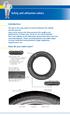 1 Safety and utilisation advice Introduction The tyre is the only point of contact between the vehicle and the ground. Users must ensure that they preserve the quality and performance of their tyres. To
BRAKE DRUM AND ROTOR SERVICE INFORMATION
 SERVICE INFORMATION To achieve maximum drum life and optimum performance, proper brake maintenance and brake balance are essential. Consult your truck or trailer manufacturer s maintenance manual for proper
CONGRATULATIONS! TABLE OF CONTENTS. 1 Safety Warnings 2 About Your Wheels 3 Setting Up Your Wheels 7 Care and Cleaning 8 Warranty
 WHEEL MANUAL CONGRATULATIONS! Congratulations on your purchase of Oval Concepts Wheels. Developed to perform at a high level, it is important that you follow the operation and maintenance instructions
WINTER TIRES AND TIRE SAFETY
 WINTER TIRES AND TIRE SAFETY Presented by: Phil Maloney Corporate Account Manager #2, 43850 Progress Way Chilliwack, BC V2R 0C3 c: 604-809-2150 [email protected] KalTire.com AGENDA Winter Tire Usage
TIRE MAINTENANCE, SAFETY and WARRANTY MANUAL
 TIRE MAINTENANCE, SAFETY and WARRANTY MANUAL ORIGINAL EQUIPMENT PASSENGER and LIGHT TRUCK TIRES Including Tires with Run-Flat Technology Congratulations! Your new vehicle comes equipped with quality BRIDGESTONE
Agricultural Tyres Explained
 Agricultural Tyres Explained Radial vs Cross-ply Radial Advantages High Flexibility Large contact surface High traction Regular wear Low heat build-up Low rolling resistance Excellent comfort Good high
Bearing Failure: Causes and Cures
 Bearing Failure: Causes and Cures bearing.ppt Page 1 Excessive loads usually cause premature fatigue. Tight fits, brinelling and improper preloading can also bring about early fatigue failure. The solution
Champion Hydro ND. Non-directional irrigation tire
 Champion Hydro ND Non-directional irrigation tire You have a lot riding on your irrigation systems, which is why yours should ride on Firestone irrigation tires. The new Firestone Champion Hydro ND is
SELF-STEERING AXLE TABLE OF CONTENTS
 SELF-STEERING AXLE TABLE OF CONTENTS Section 1 - Introduction Section 2 - Pre-Installation Check List Section 3 - Ride Height Adjustments Section 4 - Suspension Mount Section 5 - Axle Mount Section 6 -
MEDIUM COMMERCIAL TRUCK TIRES
 D U N L O P C O M M E R C I A L T R U C K T I R E S MEDIUM COMMERCIAL TRUCK TIRES DUNLOP COMMERCIAL TRUCK TIRES DUNLOP TIRES. GET OUT AND GO. Driving is a skill. Whether you re maneuvering through downtown
mixed service commercial truck tires
 mixed service commercial truck tires WHERE TOUGH MEETS TRACTION. A mixed service tire needs to be able to dig in especially in harsh terrain. That s why Goodyear offers a full line of mixed service tires
12. REAR WHEEL/BRAKE/SUSPENSION
 12 12 12-0 SERVICE INFORMATION... 12-1 REAR BRAKE... 12-5 TROUBLESHOOTING... 12-2 REAR SHOCK ABSORBER... 12-8 REAR WHEEL... 12-3 REAR FORK... 12-9 SERVICE INFORMATION GENERAL INSTRUCTIONS When installing
TIRE BASICS TIRE MOUNTING AND DEMOUNTING
 Tire mounting and demounting can be dangerous and should only be performed by a trained tire specialist using proper tools and procedures. Be sure to review your training manual and refer to the RMA wall
A. The top cover quality is not adequate for the system/material being conveyed. Upgrade to a heavier top cover. Upgrade to a better cover compound.
 Conveyor Belt common problem trouble shooting guide 1. Excessive top cover wear over entire top surface or in load carrying area. A. The top cover quality is not adequate for the system/material being
Limited Warranty. Passenger, Light Truck and SUV Tire Limited Warranty and Adjustment Policy
 Limited Warranty Passenger, Light Truck and SUV Tire Limited Warranty and Adjustment Policy Includes all applicable information on Mileage Warranty and Road Hazard. Stock #96822 (11/10) 13 Hercules Tires
Chapter 7 Hydraulic System Troubleshooting
 Chapter 7 Hydraulic System Troubleshooting General The following troubleshooting information is provided as a general guide to identify, locate and correct problems that may be experienced with the hydraulic
Section 6 Brake Drum Failure Analysis. Brake Drum Wear Conditions. What is Normal Wear? What is Deep or Excessive Wear? WARNING. Deep, Uniform Wear
 Section Brake Drum 6 Failure Analysis WARNING To prevent serious eye injury, always wear safe eye protection when you perform vehicle maintenance or service. Figure 6.1 ASBESTOS AND NON-ASBESTOS FIBERS
Tire Safety for Passenger Vehicles and Light Trucks
 Hanover Risk Solutions Tire Safety for Passenger Vehicles and Light Trucks Properly maintained tires improve the steering, stopping, traction, and load-carrying capability of vehicles. Underinflated and
Passenger and Light Truck Limited Warranty
 PURCHASER CONSUMER INFORMATION SIZE / MODEL MAKE / MODEL OF VEHICLE NAME ADDRESS CITY / ST / ZIP COMPANY CONTACT ADDRESS CITY / ST / ZIP PHONE 1 2 3 4 DEALER INFORMATION Please direct any questions about
Pirelli Tire Warranty
 Pirelli Tire Warranty What is Warranted and who is Eligibile? Pirelli Tyre North America - Limited Passenger & Light Truck Warranty Pirelli Tyre North America (PTNA), 100 Pirelli Drive, Rome, Georgia 30162-7000,
MEASURING WHEEL ALIGNMENT
 MEASURING WHEEL ALIGNMENT 2003-04 WHEEL ALIGNMENT Specifications & Procedures - Hummer - H2 Steering and vibration complaints are not always the result of improper alignment. One possible cause is wheel
EMERGENCY VEHICLE TIRES
 EMERGENCY VEHICLE TIRES USE THIS QUICK REFERENCE GUIDE TO FIND THE RIGHT TIRE FOR YOUR APPLICATION. Position/ Tire Drive All-Position Page 6 Page 6 Page 7 Page 7 Page 8 Page 8 Page 9 Page 9 Page 10 Page
TECHNICAL BULLETIN. Meritor WABCO Cab Leveling Valves and Chassis Leveling Valves. How the Cab Leveling and Chassis Leveling Valves Work
 Revised 02-00 TECHNICAL BULLETIN Meritor WABCO Cab Leveling Valves and Chassis Leveling Valves This technical bulletin covers both cab and chassis leveling valves manufactured by Meritor WABCO. While the
Limited Warranty, Tire Care And Maintenance Guide
 Limited Warranty, Tire Care And Maintenance Guide Highway Auto Tires Light Truck Tires DUNLOP LIMITED WARRANTY HIGHWAY AUTO AND LIGHT TRUCK REPLACEMENT AND ADJUSTMENT POLICY WHO IS ELIGIBLE? You are eligible
MEDIUM RADIAL TRUCK TIRES
 MEDIUM RADIAL TRUCK TIRES TRUCK TIRE CATALOG CROSSWIND MISSION CROSSWIND is dedicated to providing the highest quality and value to our customers. Each tire is built to perform, using advanced technology
SUSPENSION DIAGNOSIS
 SECTION 2A SUSPENSION DIAGNOSIS TABLE OF CONTENTS Diagnosis... 2A-2 General Diagnosis... 2A-2 Hub and Bearing... 2A-7 2A-2 SUSPENSION DIAGNOSIS DIAGNOSIS GENERAL DIAGNOSIS Problems in the steering, the
Tire Care Basics: Inflate. Rotate. Evaluate... 3 Tire Maintenance and Safety Information... 6 Tire Failure While Driving...
 Tire Care Basics: Inflate. Rotate. Evaluate............... 3 Tire Maintenance and Safety Information.............. 6 Tire Failure While Driving.......................... 6 Tire Inflation Pressure............................
falken TIRE LIMITED WARRANTy I. Tires Covered by this Warranty: II. What is Warranted and for How Long: Passenger Car Tires: Light Truck Tires:
 47 FALKEN TIRE LIMITED WARRANTY Effective November 1, 2013 I. Tires Covered by this Warranty: This limited warranty applies to FALKEN brand steel belted radial passenger car and selected light truck tires
CHAIN CARE & TROUBLE SHOOTING
 Fatigue Failure Bushing Fatigue Stress Corrosion Stress Corrosion and Hydrogen Embrittlement These closely related failures are similar in appearance and nature. They appear as cracks which initiate at
Heavy-Duty Break Drums. Maintenance & Installation Manual
 Heavy-Duty Break Drums Maintenance & Installation Manual Since 1923, Gunite Corporation has been designing and manufacturing brake drums for the heavy-duty trucking industry. Today, Gunite continues to
Critical safety and environmental information for you and your tires TP 2823E (03/2011)
 Critical safety and environmental information for you and your tires TP 2823E (03/2011) Riding on Air Critical safety and environmental information for you and your tires Your vehicle s tires are engineered
ARVINMERITOR UNITIZED FRONT WHEEL HUB INSPECTION AND MAINTENANCE
 SERVICE BULLETIN (Also applies to Mack Trucks Australia) NUMBER: SB-423-002 DATE: 8/23/02 MODEL: All with FF981 Front Axle ARVINMERITOR UNITIZED FRONT WHEEL HUB INSPECTION AND MAINTENANCE The ArvinMeritor
Your Vehicle Return Made Easy.
 Your Vehicle Return Made Easy. For SmartLease Customers. Tips and options from Ally Table of Contents Thank You Page 3 End-of-Lease Options Page 4 Mileage and Wear Page 5 Excess Wear Table Pages 6-7 Excess
ICE & SNOW. Winter RADIALS
 ICE & SNOW Winter RADIALS Thickness Thickness of water of water film um film um 15.0 15.0 12.5 12.5 10.0 A breakthrough in winter tire technology! 10.0 7.5 7.5 5.0 Before designing the latest generation
HEAVY DUTY TRUCK/BUS TYRES
 HEAVY DUTY TRUCK/BUS TYRES HEAVY DUTY TRUCK/BUS TYRES SUPERLUG Special tread compound Increased number of lugs Special design with scoops at shoulder Extra strong casing Improved traction Faster heat dissipation
Nokian mining tyres. Nokian Heavy Tyres Technical manual / Mining tyres 6.0.1. Mining tyres includes: Product range 6.0 6.8. Nokian Industrial Mine
 Nokian Heavy Tyres Technical manual / Mining tyres 6.0.1 Nokian mining tyres The world of mining tyres is rough. Uneven surfaces with sharp edges require tyres that offer extreme durability and high load-bearing
Tire Safety Information
 Tire Safety Information This portion of the User's Manual contains tire safety information as required by 49 CFR 575.6. Section 2.1 contains Steps for Determining Correct Load Limit - Trailer". Section
Service Manual SSCI. The Care and Maintenance of Casters. Wheeling, IL (800) 323 7366. Form No. 702755 11/06
 Service Manual The Care and Maintenance of Casters SSCI Wheeling, IL (800) 323 7366 Form No. 702755 11/06 Service Manual Table of Contents General Information... 3 Introduction... 3 About this Manual...
Purchase Yokohama Truck Tires At Travel Centers Of America Locations
 Purchase Truck Tires At Travel Centers Of America Locations When replacing a flat tire on the road, convenience is key. Now you can purchase tires at Travel Centers of America locations across the country.
Horsebox and Trailer Tyres
 Horsebox and Trailer Tyres Safe tyres save lives Safe tyres save lives www.tyresafe.org In partnership with The British Horse Society Horsebox and Trailer Tyres and Your Safety in the UK to mix tyres of
TIRE MAINTENANCE, TIRE MAINTENANCE, SAFETY
 Associated Brands TIRE MAINTENANCE, SAFETY and WARRANTY MANUAL REPLACEMENT MARKET PASSENGER and LIGHT TRUCK TIRES Including Tires with Run-Flat Technology 1 2 Congratulations! You have just purchased quality
Dozer. And Loader. tires
 Dozer And Loader tires Goodyear s Mobile Crane Radials Rough-terrain, all-terrain, truck-mounted - no matter what type of mobile crane you operate, Goodyear has the right radial tire. Goodyear tires are
FORESTRY TIRES FULL-LINE BROCHURE
 FORESTRY TIRES FULL-LINE BROCHURE BUILT TO PERFORM There s a simple rule in today s logging business: You can only make money when you keep the machines moving. Downtime will drain the profits out of any
Owner s Manual. 30-Day Satisfaction Guarantee* 3-Year Flat Tire Changing Assistance Limited Mileage Warranty
 Owner s Manual Michelin Passenger and Light Truck Replacement Tire Limited Warranty Registration Cards Safety Tips 30-Day Satisfaction Guarantee* 3-Year Flat Tire Changing Assistance Limited Mileage Warranty
INSTALLATION INSTRUCTIONS. 6111 Air Spring Kit 2011+ Ford F250/F-350 Single Wheel 2WD 2011+ Ford F350 Dually 2WD IMPORTANT NOTES
 INSTALLATION INSTRUCTIONS 6111 Air Spring Kit 2011+ Ford F250/F-350 Single Wheel 2WD 2011+ Ford F350 Dually 2WD Thank you for purchasing a quality Hellwig Product. PLEASE READ THIS INSTRUCTION SHEET COMPLETELY
Service Manual Rol-Lift
 R 2000 Service Manual Rol-Lift Series: T and E Developed by Generic Parts Service This manual is intended for basic service and maintenance of the Rol-Lift pallet jack. The pallet jacks you are servicing
Volkswagen Corrado 1990-1994 Suspension Wheels -Tires Wheel Alignment (Page GR-44)
 Wheels -Tires Wheel Alignment (Page GR-44) Front wheel camber adjusting Rear wheel toe determining Snow tires size Vibrations eliminating Wheel alignment data (4 cylinder) data (6 cylinder) Wheels - Tires,
Gunite Disc Brake Rotors
 Gunite Disc Brake Rotors Maintenance Manual Gunite is the industry leader in the development of brake system components for heavy-duty truck applications including air disc brake rotors. Gunite was the
Tire Manufacturing Processes
 Tire Manufacturing Processes For more information about tire defects, blowouts and tread separations contact the law offices of Kaster & Lynch, P.A. at (352) 622-1600. http://tirefailures.com STEEL BELTED
BUYERS GUIDE. IMPORTANT: Spoken promises are difficult to enforce. Ask the dealer to put all promises in writing. Keep this form.
 BUYERS GUIDE IMPORTANT: Spoken promises are difficult to enforce. Ask the dealer to put all promises in writing. Keep this form. VEHICLE MAKE MODEL YEAR VIN NUMBER DEALER STOCK NUMBER (Optional) WARRANTIES
Continental AG Büttnerstraße 25 D-30165 Hannover
 In the year 1998 Barum Continental,Ltd. received the certificate TÜV CERT according to ISO 9001,QS-9000 and VDA 6.1 standards. Companies receiving this certificate meet the highest standards required in
GENERAL RUBBER LINING PRINCIPLES
 GENERAL RUBBER LINING PRINCIPLES I. METAL PREREQUISITES Metal to be lined should meet the requirements as stated in section 8 Metal Fabrication and section 12 Blasting and Cementing Procedures. The surface
Premium Conventional. General Tire Information. High quality; low operating cost. Pneumatic ride in extreme conditions.
 Tire and Overview Premium Conventional 185-9932 254 mm (10 419 mm (16.5 185-9933 304 mm (12 419 mm (16.5 High quality; low operating cost. Skid Steer Loader Tires 5436 XD 222-3962 254 mm (10 419 mm (16.5
Cat. Sizes to fit Cat Skid Steer Loaders, Wheel Loaders, Telehandlers, Backhoe Loaders, and most other manufacturers models.
 Cat tires enhance productivity with design innovations and with the valuable option of purchasing your tires complete as mounted assemblies. Cat dealers and Cat tire retailers stock wheel types, sizes,
Commercial Vehicle Tire Data Guide
 2012 Commercial Vehicle Data Guide Lowest fuel consumption imum mileage performance Comfortable ride Our most fuel-efficient tires, designed for highway traffic over long distances with even wear. Excellent
PASSENGER AND LIGHT TRUCK TIRE LIMITED WARRANTY AND ADJUSTMENT POLICY
 PASSENGER AND LIGHT TRUCK TIRE LIMITED WARRANTY AND ADJUSTMENT POLICY Includes all Applicable Information on Tread Wearout Coverage, and Customer Satisfaction Trial Effective 4/11 1 In addition to the
13. REAR WHEEL/BRAKE/SUSPENSION
 13. REAR WHEEL/BRAKE/SUSPENSION 13 3.5~4.5kg-m 8.0~10.0kg-m 0.8~1.2kg-m 3.0~4.0kg-m 2.4~3.0kg-m 3.5~4.5kg-m 6.0~8.0kg-m 13-0 13. REAR WHEEL/BRAKE/SUSPENSION 13 REAR WHEEL/BRAKE/SUSPENSION SERVICE INFORMATION...
CAT FLEXPORT TIRES. Designed to perform from the ground up.
 CAT FLEXPORT TIRES Designed to perform from the ground up. We never like to mix-and-match parts on equipment, including tires. You always want to buy from the manufacturer of the machine. They know the
Tire User Guides. ALL ABOUT TIRE'S SIZE. Tire Size Designation For:
 Tire User Guides Pirelli Tire Knowledge Over one hundred years' experience of tire technology has enabled Pirelli to combine in their products maximum levels of security, longevity, comfort and attention
A Short Course on Wheel Alignment
 A Short Course on Wheel Alignment In its most basic form, a wheel alignment consists of adjusting the angles of the wheels so that they are perpendicular to the ground and parallel to each other. The purpose
Goodyear Truck Tyres. Technical Data Book. Innovation Tyre Range and Application Map Technical Data Regrooving Guidelines Tyre Technology
 Goodyear Truck Tyres Technical Data Book Innovation Tyre Range and Application Map Technical Data Regrooving Guidelines Tyre Technology Contents Truck Tyre Range and Application Map 4 Tyre Range Marathon
PASSENGER AND LIGHT TRUCK TIRE LIMITED WARRANTY AND ADJUSTMENT POLICY
 PASSENGER AND LIGHT TRUCK TIRE LIMITED WARRANTY AND ADJUSTMENT POLICY Includes all Applicable Information on Mileage Warranty, and Customer Satisfaction Trial Effective 8/15 1 In addition to the valuable
RANGE OF STARMAXX AGRICULTURAL TIRES
 1 DESCRIPTION * For load capacity on various speeds, and inflation figures, please consult your sales representative. ** Load capacity on standard speed and weight. Our company is entitled to make any
MICHELIN RV TIRES GUIDE FOR PROPER USE AND MAINTENANCE RV TIRE INFORMATION. MICHELIN RV Tires 1
 MICHELIN RV TIRES GUIDE FOR PROPER USE AND MAINTENANCE RV TIRE INFORMATION MICHELIN RV Tires 1 TABLE OF CONTENTS General Information About MICHELIN RV Tires... 3 Service Life For RV/Motorhome Tires...3
STEERING HANDLEBAR/FRONT WHEEL/ FRONT SHOCK ABSORBER
 14 14 STEERING HANDLEBAR/FRONT WHEEL/ SCHEMATIC DRAWING ------------------------------------------------- 14-1 SERVICE INFORMATION------------------------------------------------ 14-2 TROUBLESHOOTING-----------------------------------------------------
Webinar Series. Committee. Disc Brake Wheels Off Inspection and Reline. Presents
 1 APTA Bus Webinar Technical Series Maintenance Committee Webinar Series Presents Disc Brake Wheels Off Inspection and Reline January 21, 2015 2 Introduction Welcome to today s webinar in which we will
PRE INSTALLATION MANUAL
 REINFORCED CONCRETE PIPE PRE INSTALLATION INSPECTION & REPAIR MANUAL Kentucky Transportation Cabinet Kentucky Department of Highways Division of Materials 1227 Wilkinson Boulevard Frankfort, KY 40601 (502)
SPECIFICATION Aluminum Module Frames. Allowed anodization before fabrication for clear frames.
 SPECIFICATION Allowed anodization before fabrication for clear frames. Page 2 of 9 1. SCOPE 1.1. This document provides general requirements for aluminum frames used in the assembly of photovoltaic modules.
OSHA 1910.66 Remove impacted systems and components. Inspect systems prior to use.
 Q: When do I remove my harness from service? A: ANSI (American National Standards Institute) A10.32-2004 states the service life of fall protection equipment manufactured of synthetic fiber shall be 5
rarecorvettes.com, [email protected], (831) 475-4442 Pacific Time Zone
 INTRODUCTION TO WHEEL ALIGNMENT A SHORT COURSE ON WHEEL ALIGNMENT, FRONT AND REAR PREPARED FOR THE N.C.R.S. NATIONAL CONVENTION JUNE 29 TO JULY 5, 2012 by: JOE CALCAGNO, RARE CORVETTES rarecorvettes.com,
Drive shaft, servicing
 Volkswagen Passat B6 - Drive shaft, servicing Стр. 1 из 41 40-7 Drive shaft, servicing Drive shafts, overview I - Assembly overview: Drive axle with CV joint VL100 40-7, Drive axle with CV joint VL100,
VC 104+ Rigid Grade / Rigid Grade Imagine VC 104 Rigid Grade Commercial Customised
 Page 1 of 6 instructions VC 104+ Rigid Grade / VC 104+ Rigid Grade Imagine / (for the rest of this document referred to as VC 104) can be applied to new and used trucks and trailers with painted rigid
Tire Warranty Guide Contents: New Vehicle Limited Warranty BFGoodrich Continental and General Goodyear and Dunlop Hankook Kumho Maxxis Michelin
 Tire Warranty Guide Contents: New Vehicle Limited Warranty 1 BFGoodrich 2 Continental and General 8 Goodyear and Dunlop 15 Hankook 21 Kumho 25 Maxxis 29 Michelin 35 Pirelli 44 Uniroyal 48 Tire Safety Information
Autobody/Collision and Repair Technology/Technician CIP 47.0603 Task Grid
 1 Secondary Task List 100 ORIENTATION 101 Identify opportunities in the auto body field. 102 Identify basic auto body construction. 103 Identify program rules and policies. 104 Identify government agencies
BUYING A USED CAR. Copyright Permission Data Wizard/Humboldt 2003, Scott Keele
 BUYING A USED CAR VOCABULARY and DEFINITIONS Anti-lock brakes: Brakes that won t lock up, a computer in the car pumps the brakes on and off so the car will not skid. As Is: Buyer beware, the car is sold
Unit: mm(in) Item Standard value Service limit Axle shaft run out - 0.2(0.008)
 Rear Wheel/Brake/Suspension 13. Rear Wheel/Brake/Suspension Service Information 13-1 Troubleshooting 13-2 Rear Wheel 13-3 Rear Cushion 13-4 Rear Swing Arm 13-7 Service Information General Safety If the