
009// Aortic Stenosis
|
|
|
- Everett Clark
- 9 years ago
- Views:
Transcription
1 009// Aortic Stenosis CONTENTS 82 Basics 85 Quantification of Aortic Stenosis 88 Special Circumstances 89 Sub- and Supravalvular Aortic Stenosis 90 Indication for Aortic Stenosis Surgery/Intervention 81
2 Severe asymptomatic aortic stenosis is generally associated with a favorable prognosis. The risk increases dramatically once symptoms occur. BASICS Natural History of Aortic Stenosis PERCENT SURVIVAL Onset of symptoms 100 Asymptomic stage Heart failure 25 Syncope With aortic valve replacement Without aortic valve replacement Angina Adapted from Ross Circulation 1968 YEARS Epidemiology 3rd most common form of heart disease Increasing prevalence with older age (2 6% in the elderly) AV sclerosis is a precursor of AS Hemodynamics in Aortic Stenosis Patients with aortic stenosis have an increased afterload, which results in LV pressure overload. Left ventricular hypertrophy is a compensatory mechanism (reduces wall stress). Afterload LV pressure overload Filling pressure LVH Left Ventricular Failure in Aortic Stenosis Persistent pressure overload leads to deterioration of left ventricular function and eventually heart failure. LVF Low output Filling pressure Heart failure 82
3 BASICS Causes of Aortic Stenosis Congenital abnormalities of the aortic valve are a frequent cause of aortic stenosis. In some patients a stenosis is present at birth; in others congenital abnormal valves predispose the individual to aortic stenosis later in life (accelerated aging/calcification of the valve). < 70 Years > 70 Years 2% 2% 2% In the Western world, the cause of severe aortic stenosis in patients <50 years is almost always congenital. 3% 23% 18% 50% 48% 25% 27% Degenerative Bicuspid Postinflammatory Unicommissural Hypoplastic Indeterminate Adapted from Passik et al. Mayo Clinic Proc 1987 Rheumatic Aortic Stenosis Usually mild to moderate stenosis May progress to severe aortic stensos (accelerated valve aging) Often combined with aortic regurgitation Thickened leaflets/focal calcification Often multivalvular disease The aortic valve is the second most common valve involved in rheumatic heart disease. Congenital Abnormalities of the Aortic Valve Unicuspid, bicuspid, quadricuspid May be associated with genetic Syndromes (e.g. Down s, Heyde s) syndromes (such as Down s, Heyde s) To establish the diagnosis of a bicuspid valve, use the shortaxis view and observe the opening motion of the valve. Morphology of the Aortic Valve Normal valve (tricuspid) Functional bicuspid (tricuspid with raphe) congenital A raphe may be small and subtle. In this setting the valve may appear tricuspid, especially on a still frame. 83
4 BASICS A dilated ascending aorta in a young patient may point to a congenital aortic valve abnormality. Bicuspid congenital Unicuspid congenital Echocardiographic Assessment of Aortic Valve 2D Valve morphology (cusps) Visual assessment of aortic valve opening and motion Degree of calcification Left ventricular function Atrial enlargement Exclude subvalvular membrane Left ventricular hypertrophy Measurement of the aortic annulus (for valve sizing in TAVR) Coronary artery disease is frequent in calcified aortic stenosis. MMode Eccentric AV closure Box seperation of cusps TRICUSPID AORTIC VALVE zoomed PSAX AV Calcified aortic valve with reduced opening (aortic valve area= AVA) in a patient with severe aortic stenose. Calcification PV Aortic valve area BICUSPUD AORTIC VALVE zoomed PSAX AV Calcified bicuspid aortic valve with severe stenosis. Only 2 cusps are visible. It may be difficult to determine whether a valve is bicuspid when it is heavily calcified. Cusp 84
5 BASICS Doppler Assessment of the Aortic Valve Color Doppler Color Doppler aliasing caused by high Look for the origin of aortic stenosis jet velocity jet (stenotic turbulences) to exclude LVOT obstruction (SAM/ membrane)? CW/PW Doppler Measurement of maximum and mean Diastolic dysfunction (filling pressure, velocity gradient across the aortic valve indirect sign of severity, correlation (CW Doppler) with symptoms (PW Doppler) Measurment of LVOT velocity (PW Elevated pulmonary pressure is a sign Doppler) of left heart failure (CW Doppler) Check were aliasing (flow acceleration) occurs: at the valve (valvular AS), below the valve (subvalvular stenosis) or above the valve (supravalvular aortic stenosis). QUANTIFICATION OF AORTIC STENOSIS Methods Planimetry (TEE) Pressure gradients Aortic valve area using continuity equation 220 mmhg 120 mmhg 100 mmhg Stenosis results in a pressure gradient. The pressure gradient is high before the obstruction and low behind the stenosis. Planimetry (TTE) is usually not possible because the valves in AS are too heavily calcified (tracing the aortic valve orifice will be difficult). Evaluation of Gradients Gradient = 4 x Vmax 2 (simplified Bernoulli equation) Gradients are influenced by heart rate and stroke volume Jet velocity is elevated (> 2m/s) when AVA < cm 2 velocity (m/s) time peak velocity A late peak of the Doppler signal indicates severe aortic stenosis. AORTIC STENOSIS SPECTRUM apical five-chamber view/cw Doppler LVOT velocity AV trace Severe aortic stenosis with a peak velocity > 5.9 m/s during systole. The baseline is shifted upward and the velocity range adapted (8 m/s). Additionally, the LVOT velocity can be seen within the AS spectrum, indicating good Doppler alignment. Peak velocity 85
6 QUANTIFICATION OF AORTIC STENOSIS Patients with bicuspid stenosis and those with severe AS generally have eccentric AS jets. In these patients you will usually obtain the highest gradient from a right parasternal approach. High cardiac output (young or anxious patients, hyperthyroidism, fever, dialysis shunts, etc.) may cause flow velocities >2 m/s and thus mimic AS. Practical Considerations Try to be parallel to the stenotic jet and optimize the angle. Evaluate gradients from multiple windows (apical, suprasternal and right parasternal). Set the focus point of the CW Doppler in the aortic valve. Use the pencil probe. In the setting of atrial fibrillation, average the gradients of several beats and the PW-LVOT velocity. RIGHT PARASTERNAL SPECTRUM right parasternal view/cw Doppler CW Doppler spectrum of severe aortic stenosis from a right parasternal view. The spectrum is directed towards the transducer and is therefore positive. Measurement of LVOT width is most critical for the calculation of the aortic valve area. Small measurement errors result in large differences. Calculation of Aortic Valve Area (Continuity Equation) LVOT width is measured in the PLAX, slightly proximal to the aortic valve, exactly where you should also place the PW Doppler sample (5-chamber view). A 2 x V 2 Ao LV A 1 x V 1 LA A 2 = V 1 x A 1 /V 2 LVOT diam = A 1 LV=Tvel = V 1 AVvel = V 2 86
7 QUANTIFICATION OF AORTIC STENOSIS Limitations of Continuity Equation Measurement of LV may be difficult. PW sample volume position plays an The true geometry of LVOT (round, important role oval) is not appreciated by Underestimation of AV peak velocity in the measurement of distances suboptimal Doppler alignment To find the optimal location of the PW Doppler sample volume, place it first in the AS jet and slowly move the sample volume proximally until there is a sudden velocity drop. IVS LVOT diameter AV AMVL Aorta LVOT DIAMETER PLAX/2D The LVOT diameter is measured on a parasternal long-axis view, closely below the aortic valve. It is advisable to slightly overmeasure the LVOT diameter and thus compensate the oval shape of the LVOT. Reference Values for Aortic Stenosis Mild Moderate Severe Mean gradient < 25 mmhg mmhg > 40 mmhg Aortic valve area > 1.5 cm cm 2 < 1.0 cm 2 Jet velocity < 3 m/s 3 4 m/s > 4 m/s ESC 2012 Valvulo-Arterial Impedance Zva = (SAP + MG)/SVI Z(va) = measure of global LV load SAP = systolic arterial pressure MG = mean transvalvular pressure gradient SVI = stroke volume index. Valvuloarterial impedance <3.5 increases the mortality risk 2.3 to 3 fold. 87
8 To differentiate between true severe and pseudosevere AS, you should perform a dobutamine stress echo. SPECIAL CIRCUMSTANCES Low Gradient Aortic Stenosis Mean gradient < 30 mmhg 40mmHg EF < 40% AVA < 1.0 cm 2 Features of AS + red. LVF Gradient < mmhg Gradient > 40 mmhg Pseudo-severe AS True severe AS Severe AS Correct classification makes a difference. Patients with true aortic stenosis are potential candidates for valve replacement. Factors in Favor of True Severe Low-Flow Low-Gradient Aortic Stenosis Heavily calcified valve Late peak of AS signal LVH (in the absence of hypertension) Previous exams with higher gradients Patients with paradoxical low-flow low-gradient AS tend to have a higher level of LV global afterload, which is reflected by a higher valvuloarterial impedance. Paradoxical Low-Flow Low-Gradient Aortic Stenosis Patients with aortic stenosis and very small ventricles/cardiac output may also have low gradients in the setting of severe aortic stenosis. Low gradients in severe AS/ normal EF AVA < 1.0 cm 2 EF > 50 % Mean gradient < 40mmHg Low stroke volume (<35ml/m 2 ) Concentric LVH? Small, restrictive LV Calcified valve (Hypertension) The gradients overestimate AS severity only when aortic regurgitation is moderate or in excess of moderate. Aortic Stenosis and Aortic Regurgitation Tend to occur simultaneously Common in bicuspid valves Significant aortic regurgitation leads to higher gradients (overestimation of the severity of aortic stenosis) 88
9 SPECIAL CIRCUMSTANCES Pressure Recovery Increase of pressure downstream from the stenosis caused by reconversion of kinetic energy to potential energy Pressure recovery may lead to overestimation of gradients. Where is it relevant? Small aorta < 30mm Moderate aortic stenosis High flow rate Bileaflet prosthesis Funnular obstruction SUB- AND SUPRAVALVULAR AORTIC STENOSIS Subvalvular Aortic Stenosis (Membranous) 2nd most common LV outflow obstruction Variable morphology (i.e. muscular ridge) A transesophageal study is often required Subvalvular Membrane AV SUBVALVULAR AORTIC STENOSIS PLAX/2D A muscular ridge with a membrane causing obstruction is seen in the LVOT. In some patients you will need to scan through the entire LVOT to detect the membrane. AMVL Other Findings in Subvalvular Aortic Stenosis Abnormal mitral valve chords Associated defects (50%) (e.g. PDA, VSD, bicuspid AV, pulmonic stenosis) Subvalvular obstruction leads to aortic valve destruction (jet lesion) and aortic regurgitation. Echo Features Color flow aliasing at the site of obstruction Elevated CW velocity despite normal AV morphology Membrane of varying thickness within the LVOT, often with a small muscular ridge. Best visualized on atypical PLAX views 89
10 SUB- AND SUPRAVALVULAR AORTIC STENOSIS Use other imaging modalities (CT/MRI) and look for other congenital abnormalities (Williams syndrome). Types of Supravalvular Aortic Stenosis Hourglass type (most common) Membranous type Tubular type INDICATIONS FOR AORTIC STENOSIS SURGERY/INTERVENTION When the patient does not fulfill the criteria/indications for surgery, annual follow-up should be performed. Shorter intervals are necessary when AS is severe, heavily calcified or when symptoms are uncertain. Indications for Surgery in Severe AS (Class I/ESC 2012) Symptomatic patients with severe AS When other cardiac surgery (dyspnea, syncope, angina) is being performed (e.g. CABG; Symptomatic patients with severe AS ascending aorta) and reduced LV function (<50% EF) Asymptomatic patients with severe AS and abnormal exercise test The indication for aortic valve surgery must be established individually. Consider age, comorbidities, the risk of myocardial fibrosis in LVH, longitudinal dysfunction, the degree of calcification, the patient s preference and expectations, the rate of progression, etc. Other Things to Consider in Asymptomatic Severe AS Valve morphology (bicuspid) Severity of AS (very severe AS) Degree of calcification Subclinical myocardial dysfunction (longitudinal function) Rapid progression 90
11 INDICATIONS FOR AORTIC STENOSIS SURGERY/INTERVENTION Transcatheter Aortic Valve Replacement (TAVR) Consider interventional valve replacement in: Symptomatic/severe aortic stenosis High-risk patients Suitable anatomy (AV annulus diameter) Appropriate anatomical access for valve implantation (transfemoral/transapical) The indications for TAVR may change with improvements in methodology. TRANSCATHETER AORTIC VALVE PLAX/2D The steel frame and the bovine pericardial tissue leaflets of an Edwards-Sapien valve are visible in the aortic annulus. Bovine Valve Steel Frame Echo Assessment for TAVR Establish the presence of severe aortic stenosi. Assess annular dimension during systole in a zoomed PLAX for valve sizing Undersizing may lead to device migration or significant paravalvular aortic regurgitation. Oversizing increases the risk of underexpansion, reduces durability, and increases vascular access complications Assess the extent and distribution of calcification Exclude patients with bicuspid valves (an ellipitical orifice may predispose to incomplete valve deployment) Exclude patients with basal septal hypertrophy and dynamic LVOT obstruction Consider alternatives for the measurment of the aortic valve annulus (2D/3D TEE, CT), as these methods are more accurate than 2D echocardiography. 91
12 92
Low-gradient severe aortic stenosis with normal LVEF: A disturbing clinical entity
 Low-gradient severe aortic stenosis with normal LVEF: A disturbing clinical entity Jean-Luc MONIN, MD, PhD Henri Mondor University Hospital Créteil, FRANCE Disclosures : None 77-year-old woman, mild dyspnea
Fellow TEE Review Workshop Hemodynamic Calculations 2013. Director, Intraoperative TEE Program. Johns Hopkins School of Medicine
 Fellow TEE Review Workshop Hemodynamic Calculations 2013 Mary Beth Brady, MD, FASE Director, Intraoperative TEE Program Johns Hopkins School of Medicine At the conclusion of the workshop, the participants
Dysfunction of aortic valve prostheses
 Dysfunction of aortic valve prostheses Kai Andersen Oslo University Hospital Rikshospitalet, Norway Dysfunction of aortic valve prostheses Kai Andersen Oslo University Hospital Rikshospitalet, Norway No
RACE I Rapid Assessment by Cardiac Echo. Intensive Care Training Program Radboud University Medical Centre NIjmegen
 RACE I Rapid Assessment by Cardiac Echo Intensive Care Training Program Radboud University Medical Centre NIjmegen RACE Goal-directed study with specific questions Excludes Doppler ultrasound Perform 50
Management of the Patient with Aortic Stenosis undergoing Non-cardiac Surgery
 Management of the Patient with Aortic Stenosis undergoing Non-cardiac Surgery Srinivasan Rajagopal M.D. Assistant Professor Division of Cardiothoracic Anesthesia Objectives Describe the pathophysiology
020 // Congenital Heart Disease
 020 // Congenital Heart Disease CONTENTS 188 Basics 188 Atrial Septal Defect (ASD) 191 Patent Foramen Ovale (PFO) 192 Ventricular Septal Defects (VSD) 194 Patent Ductus Arteriosus (PDA) 195 Coronary Fistulas
Echocardiographic assessment of valve stenosis: EAE/ASE recommendations for clinical practice
 European Journal of Echocardiography (2009) 10, 1 25 doi:10.1093/ejechocard/jen303 EAE/ASE RECOMMENDATIONS Echocardiographic assessment of valve stenosis: EAE/ASE recommendations for clinical practice
Heart valve repair and replacement
 16 Heart valve repair and replacement 222 Valvular heart disease can be treated in a variety of ways: valve replacement, in which an artificial (prosthetic) heart valve is implanted surgically to replace
Echocardiographic Assessment of Valve Stenosis: EAE/ASE Recommendations for Clinical Practice
 GUIDELINES AND STANDARDS Echocardiographic Assessment of Valve Stenosis: EAE/ASE Recommendations for Clinical Practice Helmut Baumgartner, MD, Judy Hung, MD, Javier Bermejo, MD, PhD, John B. Chambers,
5. Management of rheumatic heart disease
 5. Management of rheumatic heart disease The fundamental goal in the long-term management of RHD is to prevent ARF recurrences, and therefore, prevent the progression of RHD, and in many cases allow for
CTA OF THE EXTRACORONARY HEART
 CTA OF THE EXTRACORONARY HEART Charles White MD Director of Thoracic Imaging Department of Radiology University of Maryland NO DISCLOSURES [email protected] CARDIAC CASE DISTRIBUTION Coronary CTA 30% ED chest
Note: The left and right sides of the heart must pump exactly the same volume of blood when averaged over a period of time
 page 1 HEART AS A PUMP A. Functional Anatomy of the Heart 1. Two pumps, arranged in series a. right heart: receives blood from the systemic circulation (via the great veins and vena cava) and pumps blood
How To Treat Aortic Stenosis
 2014 AHA/ACC Guideline for the Management of Patients With Valvular Heart Disease Developed in Collaboration with the American Association for Thoracic Surgery, American Society of Echocardiography, Society
Common types of congenital heart defects
 Common types of congenital heart defects Congenital heart defects are abnormalities that develop before birth. They can occur in the heart's chambers, valves or blood vessels. A baby may be born with only
Managing Mitral Regurgitation: Repair, Replace, or Clip? Michael Howe, MD Traverse Heart & Vascular
 Managing Mitral Regurgitation: Repair, Replace, or Clip? Michael Howe, MD Traverse Heart & Vascular Mitral Regurgitation Anatomy Mechanisms of MR Presentation Evaluation Management Repair Replace Clip
What is echo? CHAPTER 1 1.1 BASIC NOTIONS. Ultrasound production and detection
 What is echo? CHAPTER 1 1.1 BASIC NOTIONS Echocardiography (echo) the use of ultrasound to examine the heart is a safe, powerful, non-invasive and painless technique. Echo is easy to understand as many
Section Four: Pulmonary Artery Waveform Interpretation
 Section Four: Pulmonary Artery Waveform Interpretation All hemodynamic pressures and waveforms are generated by pressure changes in the heart caused by myocardial contraction (systole) and relaxation/filling
Aortic Valve Stenosis and CAD
 EUROECHO 14, Copenhagen 2010 Aortic Valve Stenosis and CAD Aleksandar N. Neskovic Clinical Hospital Center Zemun Belgrade University School of Medicine Aortic Stenosis and CAD Important facts Links AS/CAD
Heart Sounds & Murmurs
 Cardiovascular Physiology Heart Sounds & Murmurs Dr. Abeer A. Al-Masri MBBS, MSc, PhD Associate Professor Consultant Cardiovascular Physiologist Faculty of Medicine, KSU Detected over anterior chest wall
EAE TEACHING COURSE Aorta and aortic valve 2012
 EAE TEACHING COURSE Aorta and aortic valve 2012 31th March 2012 Szczecin, Poland EP EAE TEACHING COURSE: aorta and aortic valve Szczecin, 31st March 2012 Prof. Luigi Badano, Italy Prof. Patrizio Lancellotti,
Real-Time 3-Dimensional Transesophageal Echocardiography in the Evaluation of Post-Operative Mitral Annuloplasty Ring and Prosthetic Valve Dehiscence
 Journal of the American College of Cardiology Vol. 53, No. 17, 2009 2009 by the American College of Cardiology Foundation ISSN 0735-1097/09/$36.00 Published by Elsevier Inc. doi:10.1016/j.jacc.2008.12.059
Auscultation of the Heart
 Review of Clinical Signs uscultation of the Heart Series Editor: Bernard Karnath, MD Bernard Karnath, MD William Thornton, MD uscultation of the heart can provide clues to the diagnosis of many cardiac
Recommendations for Evaluation of the Severity of Native Valvular Regurgitation with Two-dimensional and Doppler Echocardiography
 AMERICAN SOCIETY OF ECHOCARDIOGRAPHY REPORT Recommendations for Evaluation of the Severity of Native Valvular Regurgitation with Two-dimensional and Doppler Echocardiography A report from the American
Workshop B: Essentials of Neonatal Cardiology and CHD Anthony C. Chang, MD, MBA, MPH CARDIAC INTENSIVE CARE
 SHUNT LESIONS NEONATAL : CONGENITAL CARDIAC MALFORMATIONS AND CARDIAC SURGERY ANTHONY C. CHANG, MD, MBA, MPH CHILDREN S HOSPITAL OF ORANGE COUNTY ATRIAL SEPTAL DEFECT LEFT TO RIGHT SHUNT INCREASED PULMONARY
Cardiology Fellowship Manual. Goals & Objectives -Cardiac Imaging- 1 Page
 Cardiology Fellowship Manual Goals & Objectives -Cardiac Imaging- 1 Page 2015-2016 UNIV. OF NEBRASKA CHILDREN S HOSPITAL & MEDICAL CENTER DIVISION OF CARDIOLOGY FELLOWSHIP PROGRAM CARDIAC IMAGING ROTATION
AORTIC STENOSIS. Marie-Jeanne Bertrand MD MSc - 2015 1
 AORTIC STENOSIS TYPES OF AORTIC STENOSIS 1. Valvular AS - Congenital: bicuspid or unicuspid, young patients o Bicuspid valve 1-2% population 20% with CoAo (80% with CoAo have bicuspid valve) Fusion of
Heart Murmurs. Outline. Basic Pathophysiology
 Heart Murmurs David Leder Outline I. Basic Pathophysiology II. Describing murmurs III. Systolic murmurs IV. Diastolic murmurs V. Continuous murmurs VI. Summary Basic Pathophysiology Murmurs = Math Q =
TAVR: A New Treatment Option for Aortic Stenosis. Alexis Auger, MSN, NP-BC
 TAVR: A New Treatment Option for Aortic Stenosis Alexis Auger, MSN, NP-BC 22nd Annual Northeast Regional Nurse Practitioner Conference May 6-8, 2015 DISCLOSURES There has been no commercial support or
Read It, Code It, See It
 Read It, Code It, See It Richard L. Prager, M.D. University of Michigan Ann Arbor, Michigan Dorothy Latham, R.N. Port Huron Hospital Port Huron, Michigan Nothing to Disclose Disclosure Preoperative diagnosis:
17 Endocarditis. Infective endocarditis
 17 Endocarditis 234 Endocarditis refers to inflammation of the endocardium, the inner layer of the heart (including the heart valves). Endocarditis can be: infective (e.g. bacterial, fungal) non-infective
Treating AF: The Newest Recommendations. CardioCase presentation. Ethel s Case. Wayne Warnica, MD, FACC, FACP, FRCPC
 Treating AF: The Newest Recommendations Wayne Warnica, MD, FACC, FACP, FRCPC CardioCase presentation Ethel s Case Ethel, 73, presents with rapid heart beating and mild chest discomfort. In the ED, ECG
Heart Sounds and Murmurs. Objectives. Valves. Wright, 2012 1
 Heart Sounds and Murmurs Wendy L. Wright, MS, RN, ARNP, FNP, FAANP Family Nurse Practitioner Owner Wright & Associates Family Healthcare Partner Partners in Healthcare Education 1 Objectives Upon completion
ECHOCARDIOGRAPHY PROPERTY OF ELSEVIER SAMPLE CONTENT - NOT FINAL CHAPTER 6. Hisham Dokainish, MD, FACC, FASE
 CHAPTER 6 ECHOCARDIOGRAPHY Hisham Dokainish, MD, FACC, FASE 1. How does echocardiography work? Echocardiography uses transthoracic and transesohageal probes that emit ultrasound directed at cardiac structures.
SECTION III: HEMODYNAMIC PRINCIPLES
 10/5/00 3:36 PM 10 Calculation of Stenotic Valve Orifice Area Blase A. Carabello and William Grossman BAC: Baylor University, Department of Medicine, Houston Veterans Affairs Medical Center, Houston, Texas
Normal & Abnormal Intracardiac. Lancashire & South Cumbria Cardiac Network
 Normal & Abnormal Intracardiac Pressures Lancashire & South Cumbria Cardiac Network Principle Pressures recorded from catheter tip Electrical transducer - wheatstone bridge mechanical to electrical waveform
2014 AHA/ACC Guideline for the Management of Patients With Valvular Heart Disease: Executive Summary
 2014 AHA/ACC Guideline for the Management of Patients With Valvular Heart Disease: Executive Summary A Report of the American College of Cardiology/American Heart Association Task Force on Practice Guidelines
Diagnostic and Therapeutic Procedures
 Diagnostic and Therapeutic Procedures Diagnostic and therapeutic cardiovascular s are central to the evaluation and management of patients with cardiovascular disease. Consistent with the other sections,
Mitral valve repair current Status and the modern Sternotomy
 Mitral valve repair current Status and the modern Sternotomy David L Saint MD, FACS Tallahassee Memorial Hospital Clinical Assistant Professor Florida State University School of Medicine History of Mitral
HISTORY. Questions: 1. What diagnosis is suggested by this history? 2. How do you explain her symptoms during pregnancy?
 HISTORY 33-year-old woman. CHIEF COMPLAINT: months duration. Dyspnea, fatigue and nocturnal wheezing of six PRESENT ILLNESS: At ages 5 and 9, she had migratory arthritis. At age 29, in the third trimester
Steven J. Yakubov, MD FACC For the CoreValve US Clinical Investigators
 Long-Term Outcomes Using a Self- Expanding Bioprosthesis in Patients With Severe Aortic Stenosis Deemed Extreme Risk for Surgery: Two-Year Results From the CoreValve US Pivotal Trial Steven J. Yakubov,
Practical class 3 THE HEART
 Practical class 3 THE HEART OBJECTIVES By the time you have completed this assignment and any necessary further reading or study you should be able to:- 1. Describe the fibrous pericardium and serous pericardium,
Potential Causes of Sudden Cardiac Arrest in Children
 Potential Causes of Sudden Cardiac Arrest in Children Project S.A.V.E. When sudden death occurs in children, adolescents and younger adults, heart abnormalities are likely causes. These conditions are
Aortic Stenosis and Comorbidities: the clinical challenge. P. Faggiano Cardiology Division Spedali Civili, Brescia - Italy
 Aortic Stenosis and Comorbidities: the clinical challenge P. Faggiano Cardiology Division Spedali Civili, Brescia - Italy 1 Factors affecting decision-making in patients with symptomatic severe aortic
Example Theory Multiple Choice Questions
 Example Theory Multiple Choice Questions Q a). In an ultrasound imaging system: Sector width, sector depth and frame rate can all be controlled independently b) Frame rate falls as sector width increases
Guidelines: Congenital Aortic Valve Stenosis
 Guidelines: Congenital Aortic Valve Stenosis PD Dr. med. Peter Ewert Senior Physician, Department of Congenital Heart Disease / Pediatric Cardiology, Deutsches Herzzentrum Berlin Guidelines: Congenital
How To Understand What You Know
 Heart Disorders Glossary ABG (Arterial Blood Gas) Test: A test that measures how much oxygen and carbon dioxide are in the blood. Anemia: A condition in which there are low levels of red blood cells in
Pulmonary Atresia With Intact Ventricular Septum - Anatomy, Physiology, and Diagnostic Imaging
 Pulmonary Atresia With Intact Ventricular Septum - Anatomy, Physiology, and Diagnostic Imaging Larry Latson MD Director of Pediatric Interventional Cardiology and Adult CHD Joe DiMaggio Children s Hospital
The P Wave: Indicator of Atrial Enlargement
 Marquette University e-publications@marquette Physician Assistant Studies Faculty Research and Publications Health Sciences, College of 8-12-2010 The P Wave: Indicator of Atrial Enlargement Patrick Loftis
Ny teknologi: Fagdagene ved St. Olavs Hospital Lasse Løvstakken Dept. Circulation and Medical Imaging 11.06.2010
 1 Ny teknologi: Ultralyd måler m blodstrøm Fagdagene ved St. Olavs Hospital Lasse Løvstakken Dept. Circulation and Medical Imaging 11.06.2010 2 Conventional imaging methods of blood flow using ultrasound
Normal Intracardiac Pressures. Lancashire & South Cumbria Cardiac Network
 Normal Intracardiac Pressures Lancashire & South Cumbria Cardiac Network Principle Pressures recorded from catheter tip Electrical transducer - wheatstone bridge mechanical to electrical waveform display
Provider Checklist-Outpatient Imaging. Checklist: Nuclear Stress Test, Thallium/Technetium/Sestamibi (CPT Code 78451-78454 78469)
 Provider Checklist-Outpatient Imaging Checklist: Nuclear Stress Test, Thallium/Technetium/Sestamibi (CPT Code 78451-78454 78469) Medical Review Note: Per InterQual, if any of the following are present,
Palpitations & AF. Richard Grocott Mason Consultant Cardiologist THH NHS Foundation Trust & Royal Brompton & Harefield NHS Foundation Trust
 Palpitations & AF Richard Grocott Mason Consultant Cardiologist THH NHS Foundation Trust & Royal Brompton & Harefield NHS Foundation Trust Palpitations Frequent symptom Less than 50% associated with arrhythmia
Guidelines on the management of valvular heart disease
 European Heart Journal doi:10.1093/eurheartj/ehl428 Guidelines on the management of valvular heart disease The Task Force on the Management of Valvular Heart Disease of the European Society of Cardiology
HEART HEALTH WEEK 3 SUPPLEMENT. A Beginner s Guide to Cardiovascular Disease HEART FAILURE. Relatively mild, symptoms with intense exercise
 WEEK 3 SUPPLEMENT HEART HEALTH A Beginner s Guide to Cardiovascular Disease HEART FAILURE Heart failure can be defined as the failing (insufficiency) of the heart as a mechanical pump due to either acute
Recommendations of the European Association of Echocardiography
 European Journal of Echocardiography (2011) 12, 339 353 doi:10.1093/ejechocard/jer051 RECOMMENDATIONS Recommendations of the European Association of Echocardiography How to use echo-doppler in clinical
Valve Disease and Diastology Summit
 Heart & Vascular Institute Valve Disease and Diastology Summit is offered in cooperation with the American Society of Echocardiography. Valve Disease and Diastology Summit March 4 6, 2016 Eden Roc Hotel
Minimally Invasive Mitral Valve Surgery
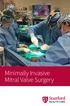 Minimally Invasive Mitral Valve Surgery Stanford Health Care offers leading, superior options in cardiac surgery, including the latest techniques and research for Minimally Invasive Cardiac surgery. Advanced
Teaching Med-5 Students Point-of-Care Transthoracic Echocardiography
 Teaching Med-5 Students Point-of-Care Transthoracic Echocardiography Anthony M.-H. Ho, Lester A. H. Critchley, Patricia Kan, Sylvia Au, Siu Keung Ng, Simon K. C. Chan, Philip Lam, Gordon Choi, Alex Lee,
Clinical Commissioning Policy Statement: Percutaneous mitral valve leaflet repair for mitral regurgitation April 2013. Reference: NHSCB/A09/PS/b
 Clinical Commissioning Policy Statement: Percutaneous mitral valve leaflet repair for mitral regurgitation April 2013 Reference: NHS Commissioning Board Clinical Commissioning Policy Statement: Percutaneous
Universal Fetal Cardiac Ultrasound At the Heart of Newborn Well-being
 Universal Fetal Cardiac Ultrasound At the Heart of Newborn Well-being Optimizes detection of congenital heart disease (chd) in the general low risk obstetrical population Daniel J. Cohen, M.D. [email protected]
How to get insurance companies to work with you
 Paying for Quality ACHD Care How to get insurance companies to work with you Christy Sillman, RN, MSN ACHD nurse coordinator Inpatient ACHD Nurse Educator The Adult Congenital Heart Program Stanford Lucile
Blood Flow Hemodynamics, Cardiac Mechanics, and Doppler Echocardiography
 Blood Flow Hemodynamics, Cardiac Mechanics, and Doppler Echocardiography THE CARDIAC CYCLE Figure 4.1 The cardiac cycle showing superimposed hemodynamic and echocardiographic parameters. A4C: apical 4-chamber
Aortic Valve Surgery
 From the Department of Cardiovascular Surgery and Anaesthesia Sahlgrenska University Hospital and Department of Molecular and Clinical Medicine Institute of Medicine, Sahlgrenska Academy University of
Dr Richard Telford. Introduction
 Dr Richard Telford Valvular Heart Disease 1. You visit a patient who is due to have an orthopaedic procedure. He tells you he gets occasional chest pain and shortness of breath on exertion. You notice
Heart Failure EXERCISES. Ⅰ. True or false questions (mark for true question, mark for false question. If it is false, correct it.
 Heart Failure EXERCISES Ⅰ. True or false questions (mark for true question, mark for false question. If it is false, correct it. ) 1. Heart rate increase is a kind of economic compensation, which should
Acquired Heart Disease: Prevention and Treatment
 Acquired Heart Disease: Prevention and Treatment Prevention and Treatment Sharon L. Roble, MD Assistant Professor Adult Congenital Heart Program The Ohio State University/Nationwide Children s Hospital
5. Diagnosis and management of rheumatic heart disease
 5. Diagnosis and management of rheumatic heart disease Introduction Chronic rheumatic valvular heart disease is the long-term result of ARF. It is a disease of poverty and disadvantage. In Australia, the
2/20/2015. Cardiac Evaluation of Potential Solid Organ Transplant Recipients. Issues Specific to Transplantation. Kidney Transplantation.
 DISCLOSURES I have no relevant financial relationships to disclose. Cardiac Evaluation of Potential Solid Organ Transplant Recipients Michele Hamilton, MD Director, Heart Failure Program Cedars Sinai Heart
9th Christmas. Echo. International Course on Perioperative and Critical Care. Echocardiography. 19-20 December 2008 Courtyard by Marriott Brussels
 9th Christmas Test yourself! Basic course Pre- and Post-course exam Image regognition testing Echo Advanced course Simulated exam for the European Accreditation in Adult Transesophageal Echocardiography
How To Treat Heart Valve Disease
 The Valve Clinic at Baptist Health Madisonville The Valve Clinic at Baptist Health Madisonville Welcome to the Baptist Health Madisonville Valve Clinic at the Jack L. Hamman Heart & Vascular Center. We
Transcatheter Mitral Valve-in-Valve and Valve-in-Ring Implantations. Danny Dvir, MD On behalf of VIVID registry investigators
 Transcatheter Mitral Valve-in-Valve and Valve-in-Ring Implantations Danny Dvir, MD On behalf of VIVID registry investigators Introduction Bioprosthetic valves are increasingly implanted in open-heart surgeries.
PRINCIPLES OF DOPPLER ECHOCARDIOGRAPHY AND THE DOPPLER EXAMINATION #1
 PRINCIPLES OF DOPPLER ECHOCARDIOGRAPHY AND THE DOPPLER EXAMINATION #1 Joseph A. Kisslo, MD David B. Adams, RDCS INTRODUCTION Doppler echocardiography is a method for detecting the direction and velocity
INTRODUCTION TO EECP THERAPY
 INTRODUCTION TO EECP THERAPY is an FDA cleared, Medicare approved, non-invasive medical therapy for the treatment of stable and unstable angina, congestive heart failure, acute myocardial infarction, and
Distance Learning Program Anatomy of the Human Heart/Pig Heart Dissection Middle School/ High School
 Distance Learning Program Anatomy of the Human Heart/Pig Heart Dissection Middle School/ High School This guide is for middle and high school students participating in AIMS Anatomy of the Human Heart and
Doc, I Am Fine, But I Have A Cardiac Condition
 Doc, I Am Fine, But I Have A Cardiac Condition Nevine Mahmoud, MD John Ludtke, MD Maj, USAFR, MC, FS RAM Class 2014 Wright State University Boonshoft School of Medicine Division of Aerospace Medicine Dayton,
Objectives. The ECG in Pulmonary and Congenital Heart Disease. Lead II P-Wave Amplitude during COPD Exacerbation and after Treatment (50 pts.
 The ECG in Pulmonary and Congenital Heart Disease Gabriel Gregoratos, MD Objectives Review the pathophysiology and ECG signs of pulmonary dysfunction Review the ECG findings in patients with: COPD (chronic
Doppler. Doppler. Doppler shift. Doppler Frequency. Doppler shift. Doppler shift. Chapter 19
 Doppler Doppler Chapter 19 A moving train with a trumpet player holding the same tone for a very long time travels from your left to your right. The tone changes relative the motion of you (receiver) and
New insights in the assessment of right ventricular function: an echocardiographic study. Avin Calcutteea
 New insights in the assessment of right ventricular function: an echocardiographic study Avin Calcutteea Department of Public Health and Clinical Medicine Umeå University, 2013 New insights in the assessment
Type II Pulmonary Hypertension: Pulmonary Hypertension due to Left Heart Disease
 Heart Failure Center Hadassah University Hospital Type II Pulmonary Hypertension: Pulmonary Hypertension due to Left Heart Disease Israel Gotsman MD The Heart Failure Center, Heart Institute Hadassah University
Ultrasound in Vascular Surgery. Torbjørn Dahl
 Ultrasound in Vascular Surgery Torbjørn Dahl 1 The field of vascular surgery Veins dilatation and obstruction (varicose veins and valve dysfunction) Arteries dilatation and narrowing (aneurysms and atherosclerosis)
HYPERTROPHIC CARDIOMYOPATHY
 HYPERTROPHIC CARDIOMYOPATHY Most often diagnosed during infancy or adolescence, hypertrophic cardiomyopathy (HCM) is the second most common form of heart muscle disease, is usually genetically transmitted,
Specific Basic Standards for Osteopathic Fellowship Training in Cardiology
 Specific Basic Standards for Osteopathic Fellowship Training in Cardiology American Osteopathic Association and American College of Osteopathic Internists BOT 07/2006 Rev. BOT 03/2009 Rev. BOT 07/2011
INHERIT. The Lancet Diabetes & Endocrinology In press
 INHibition of the renin angiotensin system in hypertrophic cardiomyopathy and the Effect on hypertrophy a Randomized Intervention Trial with losartan Anna Axelsson, Kasper Iversen, Niels Vejlstrup, Carolyn
ATRIAL FIBRILLATION (RATE VS RHYTHM CONTROL)
 ATRIAL FIBRILLATION (RATE VS RHYTHM CONTROL) By Prof. Dr. Helmy A. Bakr Mansoura Universirty 2014 AF Classification: Mechanisms of AF : Selected Risk Factors and Biomarkers for AF: WHY AF? 1. Atrial fibrillation
Cardiac Assessment for Renal Transplantation: Pre-Operative Clearance is Only the Tip of the Iceberg
 Cardiac Assessment for Renal Transplantation: Pre-Operative Clearance is Only the Tip of the Iceberg 2 nd Annual Duke Renal Transplant Symposium March 1, 2014 Durham, NC Joseph G. Rogers, M.D. Associate
Introduction. Mitral regurgitation
 European Journal of Echocardiography (2010) 11, 307 332 doi:10.1093/ejechocard/jeq031 RECOMMENDATIONS European Association of Echocardiography recommendations for the assessment of valvular regurgitation.
Echocardiography has become the primary imaging
 Guidelines and Standards for Performance of a Pediatric Echocardiogram: A Report from the Task Force of the Pediatric Council of the American Society of Echocardiography Wyman W. Lai, MD, MPH, FASE, Tal
The heart then repolarises (or refills) in time for the next stimulus and contraction.
 Atrial Fibrillation BRIEFLY, HOW DOES THE HEART PUMP? The heart has four chambers. The upper chambers are called atria. One chamber is called an atrium, and the lower chambers are called ventricles. In
Perioperative Cardiac Evaluation
 Perioperative Cardiac Evaluation Caroline McKillop Advisor: Dr. Tam Psenka 10-3-2007 Importance of Cardiac Guidelines -Used multiple times every day -Patient Safety -Part of Surgical Care Improvement Project
Questions FOETAL CIRCULATION ANAESTHESIA TUTORIAL OF THE WEEK 91 18 TH MAY 2008
 FOETAL CIRCULATION ANAESTHESIA TUTORIAL OF THE WEEK 91 18 TH MAY 2008 Dr. S. Mathieu, Specialist Registrar in Anaesthesia Dr. D. J. Dalgleish, Consultant Anaesthetist Royal Bournemouth and Christchurch
Exchange solutes and water with cells of the body
 Chapter 8 Heart and Blood Vessels Three Types of Blood Vessels Transport Blood Arteries Carry blood away from the heart Transport blood under high pressure Capillaries Exchange solutes and water with cells
1 Congestive Heart Failure & its Pharmacological Management
 Harvard-MIT Division of Health Sciences and Technology HST.151: Principles of Pharmocology Instructor: Prof. Keith Baker 1 Congestive Heart Failure & its Pharmacological Management Keith Baker, M.D., Ph.D.
Dynamic Auscultation of Heart Sounds and Murmurs. Acknowledgement. Disclosures Real or Potential Conflicts of Interest
 Dynamic Auscultation of Heart Sounds and Murmurs W. Lane Edwards, Jr., MSN, ARNP, ANP Hospitalist Group of Southwest Florida Affiliate Professor of Nursing, University of Alaska at Anchorage Acknowledgement