
Survey on Different Types of Cloud Operating System
|
|
|
- Arnold Nichols
- 9 years ago
- Views:
Transcription
1 Survey on Different Types of Cloud Operating System Kanchana Rani G Department of Computer Science & Engineering SCT College of Engineering Trivandrum, Kerala, India. Chitharanjan K Department of Computer Science & Engineering SCT College of Engineering Trivandrum, Kerala, India. Abstract Recently, Cloud is a new thought in the area of network computing. Traditional operating system cannot fulfil all the requirements of cloud computing and cannot support heterogeneous multicore platforms. Cloud operating system provides flexible and unified programming interface to the underlying distributed hardware, set of options for the resource management and metrics to facilitate programming in the cloud. Variety of cloud OS are available today. Each of them is good for different applications. Slap OS, Eye OS, Osprey, Megha OS, vstarcloud OS, ZeroPC, ispaces, Jolicloud, Corneli OS, AppleiCloud, Glide,ZimDeskOS, MyGoya are the variety of cloud OS. Among these Slap OS, Eye OS, Megha OS and Vstar cloud OS are included in this paper. First is Slap OS. It is an open source grid operating system and works by considering as everything is a process. Also it provides security on the Cloud. Second cloud OS discussed here is the Megha OS. It is a cloud based operating system and a framework for mobile application development. Then we have the vstar cloudos. It is a new network computing operating system for multicore and clouds. Final one is the Eye OS. Using the EyeOS everything inside it can be accessed from everywhere inside a Network. Keywords- Cloud OS, Slap OS, Megha OS, vstar cloud OS, Eye Os, Architecture, Development model, Application Model. I. INTRODUCTION Cloud computing is internet-based computing whereby shared resources, software information are provided to computers and other devices on demand, like the electricity grid -Wikipedia. Vital role of the cloud operating system (cloud OS) is the resource management like a server operating system (server OS). The server OS manages everything inside a server s chassis, such as memory, CPU, interfaces etc. It hides the details of hardware operations and allows efficient resource sharing. Cloud OS performs the same purpose, in addition to that it manages cloud infrastructure, hides details of infrastructure from application programmers and coordinates resource sharing. Individuals or organizations can efficiently rent or borrow computing resources by the support of cloud computing techniques. Users can upload their works, files with cloud irrespective of their location. In addition to that users can access variety of web based applications without booting the full scale of OS. Since cloud continues booting the main OS in the background users can quickly boot into the main OS. Cloud OS is mainly designed for PCs, mobile internet devices, netbooks etc. This paper provides an overview of the different types of cloud operating system and different measures used to evaluate these types. A detailed study of different types of cloud OS namely, Slap OS, Eye OS, vstar cloud OS, Megha OS is done and their application areas are identified. Moreover these techniques are compared. II. BACK GROUND Heterogeneous multicore platforms and requirements of cloud computing applications are not supported by traditional OS. So a new network computing operating system is required. This operating system should support high level resource management, resource sharing and must support various services. Also it can push forward the formulation of new growing information system. There are different types of cloud operating system. Cloud computing defines - a software that supports large collection of flexible infrastructures and dynamic operating environments, environment provided by an online application stored in cloud, which is run through a web browser in a user s machine. Also it can define a computing environment in which it is needed to pay only for required resources. Cloud can be installed and used as a standalone operating system. Also it can work together with other operating systems. If cloud is used as a standalone operating system then hardware requirements becomes relatively low. Cloud operating system can be referred to as Software as a service (SaaS) and platform as a service (PaaS). Cloud operating system has certain benefits it provides a dynamic environment to work from everywhere, resources can be easily shared between the users working from different places on same projects, users can access applications as platform independent. Also it supports users to continue their work without losing data and time when their local computer crashes. The Cloud Operating Systems architecture includes Cloud infrastructure, Cloud Storage, Cloud Platform etc. Architecture of Cloud Computing Operating Systems is shown below. 2695

2 III. Fig 1: Architecture of Cloud OS DIFFERENT TYPES OF CLOUD OS Today, varieties of cloud operating systems are available for users. Some of them are, SlapOS, vstarcloudos, MeghaOS, EyeOS, Glide, Amoeba, My Goya, Zimdesk, Ghost, Joli, Cloudo, Corneli, Lucid. Among these first four types are considered here. A. SLAP OS SLAPOS is the abbreviation of Simple Language for Accounting and provisioning operating system. This operating system is designed for distributed cloud computing. It supports automating the deployment, accounting and billing of cloud computing services. SLAPOS[1] works by considering as everything is a process. Grid computing and enterprise resource modelling can be combined by SLAPOS. Any user can become a cloud provider and they can sell software as platform as a service, software as a service and interface as a service. SLAPOS architecture is composed of two components SLAPOS master and SLAPOS nodes. These nodes are usually installed at home or inside data centers and they are used to run processes or to install software. Master knows location of each and every nodes and software installed on each node. 1) Developer Model: Developer Model is designed for the end users or developers. In this model the application programming interface (API) of the SLAPOS is based on REQUEST,[1] which is a single core API method. Parameter called instance type is defined by the REQUEST method. This parameter is used to specify the software service which should be instantiated and started. Additional two methods provided by the developer model are initialize connection and register computer partition. Using these two methods SLAPOS defines software configuration and Service Level Agreement (SLA) information. Location of software, where it should be installed can be specified by the SLA parameter. Reliability of a cloud hosted environment can be increased by allocating software instances on different LANs and continents. Software instances on same LAN or host can optimize the performance of distributed storage. 2) Application Model: This model is designed for the business applications. It is an application of ERP5 Unified Business Model (UBM) [1]. Resource, Movement, Item, Node and Path are the five concepts defined by ERP5. People and organization registered to the SLAPOS portal is called as nodes. After registration they can request any type of resource. Today SLAPOS has commercial production, which helps the users to protect their strategic data with low operating cost. B. vstar CLOUD OS Traditional operating system cannot satisfy the requirements of cloud computing and cannot support heterogeneous multicore platforms. So vstar cloudos [2] is designed as a new network computing operating system for multicore and clouds. Design of vstar cloudos for network computing has following challenges. They are, Scalability : Traditional operating system is not sufficient for supporting network computing environment. Also they have limitations in scalability such as locality aliasing, lock mechanism, message mechanism. So, network computing operating system with scalability is needed to be designed. Flexibility : Operating system must be able to support any type of changes in the underlying hardware and in the upper applications effectively. Dependability : Network computing operating system must be dependable. ie; self accuracy must be guaranteed and the user won t be aware of system breakdown even if a failure occurs. Fig 2 : SLAPOS Architecture. SLAPOS has two models developer model and accounting model. 1) vstar cloud architecture vstar cloud architecture mainly composed of two parts, terminal operating system and a cloud operating system. Foundational operating system and client access service components are the parts of terminal operating system. This cloud operating system is named as vstar cloud which is the core part. It contains network service layer and the foundational service layer. VStarEnv [2] and vstaros are the parts of foundational service layer, which are the 2696
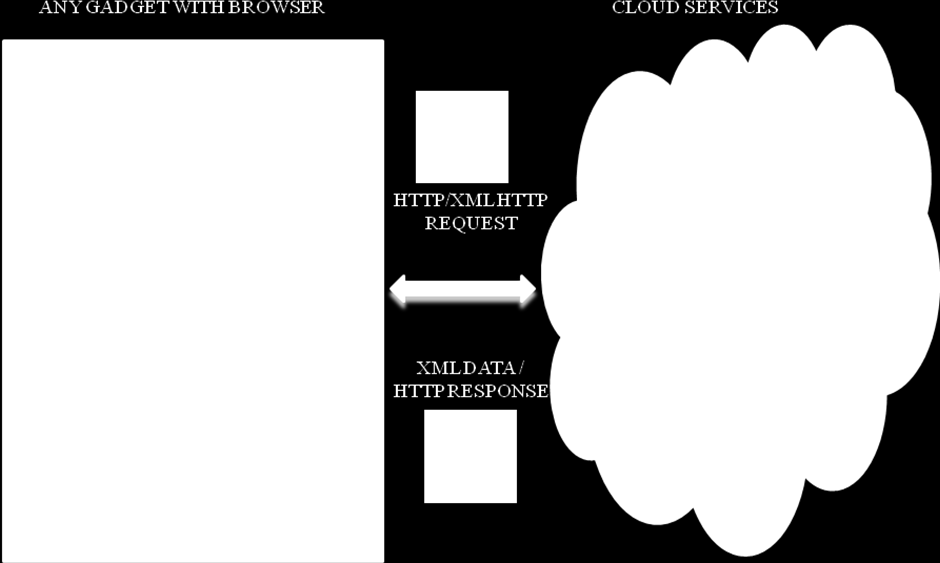
![Megha is a cloud based operating system. It provides common storage, common platform and common application. Megha OS [3] can provide high security for applications.](/docs-images/48/23799006/images/3-0.jpg "By using megha OS no additional plugins are needed to execute applications. Interface provided by megha OS is more user friendly as compared to others. Also megha OS has less bandwidth utilization.")
3 infrastructure service layer and the meta operating system respectively. engine, message engine, memory engine, device engine, name engine, scheduling engine. Traditional micro kernel operating system and distributed operating systems are similar to vstar cloud operating system. C. MEGHA OPERATING SYSTEM In Sanskrit megha means Cloud. Megha is a cloud based operating system. It provides common storage, common platform and common application. Megha OS [3] can provide high security for applications. By using megha OS no additional plugins are needed to execute applications. Interface provided by megha OS is more user friendly as compared to others. Also megha OS has less bandwidth utilization. So it is usable for Mobile Application Development. 1) MEGHA OS Architecture Fig 3:vStarCloud OS architecture 2) Layered Structure Of vstar cloud OS Layered architecture of the vstar cloud OS has two levels of structures, vstar kernel and vstar OS core engine. vstar kernel provides message protection layer, time multiplexing of processors, support for virtualized processor, safety mechanisms and application programming interface. Other complicated functions in traditional operating system are supported by the upper layer of this structure. vstar kernel is composed of Coordinator, Vdriver, vstar kernel, Core driver, Communicator. Coordinator used for coordinating and managing the overall state, Vdriver provide support to set up system virtualization environment, core driver manages processor cores and finally communicator provides communication between cores in CPU [2]. Fig 5 : Megha OS Architecture. Cloud computing provided by megha OS is divided into three parts. They are cloud platforms(cp), cloud services(cs) and cloud storage(cst) [3]. For the users cloud platform is provided by Megha OS architecture along with the web browser. Kernel is designed to unify system services and the general utilities provided by the operating system. Megha OS provides certain services for specific tasks and their communication and location is supported by the kernel. Fig 4: Layered Structure of vstar cloud os Next is the vstar OS core engine, which runs above the kernel mode. This engine module provides flexible foundational runtime environment for the vstar OS. This vstar core engine is composed of security engine, strategy Services offered by the Megha OS are, Account Manager: It is used to manage the registering and logging of application users. File Manager : This module is used to manage downloading and uploading of files, sharing of files and image hosting. Message Exchanging: Megha OS provide communication through message passing. It is fulfilled using HTTP/XML request and response. Communication Manager: It manages communication between client and cloud. Manager: It manages launching, listing and ending of process. 2697
4 D. EYE OPERATING SYSTEM Using eye operating system users inside a network can access everything inside the Eye OS [4]. Eye OS toolkit is used to design the platform for web applications. Applications are commonly written in PHP, XML and Javascript. Eye OS provides a desktop environment with 67 applications and system utilities. User require only one web browser for accessing eye operating system and all its applications. All applications can be accessed by using portable devices via its mobile front end. Eye OS is used to centralize all works and to help the user to experience as working from single place. Eye OS has certain goals such as it should allow the users to work from everywhere, easy sharing of resources must be possible between different work centers, it should allow the users to continue their work even if their system crashes without losing data. 1) Benefits of Eye OS World wide availability Browser is the only requirement Dynamic content and design Extensive list applications Remote storage facility Browser and platform independent Rich text editing facility 2) Eye OS Architecture to coordinate all the system services. Services indicate the functions of the lower level. Library helps the user to develop applications easily but they donot handle low level tasks.. Applications are able to call a function of any part. 3) APPLICATIONS Eye OS provides system and toolkit for users. This system can be used to work with eyeos and all its applications and the toolkit helps the users to create new applications easily. This operating system has applications in schools and universities. It provides web platforms with collaborative desktops for students, teachers and parents to work and communicate between themselves. With the support of private server EyeOS can provide free internet points, public library networks and other web places for their users to work and communicate with network managers. After the one time registration users can access these services from anywhere. Fig 7 : Applications of Eye OS Fig 6: Eye os architecture EyeOS architecture contains mainly four parts. They are kernel, services, library and applications. Kernel is used IV. COMPARISON By comparing earlier microkernel operating system and vstar cloud operating system it is clear that vstar can offer multilevel and fine grained services. Also these services are more flexible as compared to the simple services provided by earlier microkernel operating systems which are tightly coupled with microkernel. Systems such as Tornado are designed only for SMP and NUMA. As compared to vstar cloud this system is smaller, not applicable for cloud computing and not loosely coupled micro processor. That is this system is less scalable than vstar cloud systems. vstar cloud uses system virtualization techniques in addition to the usage of all ideas of FOS. FOS provides common operating system functions through the distributed services. By comparing vstar cloud and typical IaaS system such as Amazon it is clear that vstar provides single Iaas 2698
5 system image on the virtual machine and there is no unified programming model for the resources in it, where Amazon provides Linux kernel image and computing resources through Virtual Machine. Comparison of the Megha OS [3] with Google chrome operating system results the following table. Megha OS EyeOS Mobile application Development. Everything inside it can be accessed from everywhere inside a Network. TABLE I. COMPARISON TABLE Parameter Megha OS Google Chrome OS Service Type Cloud Based Web Based Applications Plugins No plugins needed. Preinstalled with the chromium Browser. Device specificity No Yes Large computing Applications Programming Environment Mobile Optimization Possible with computational offloading to cloud. Simple JavaScript Files. Suitable based on the mobile version. TABLE II. ADVATAGES OF CLOUD OS Type SlapOS Not very suitable. Advantage Need chromium API s Not Suitable. Provide security on the cloud. V. CONCLUSION Recently, Cloud is a new thought in the area of network computing. Traditional operating system cannot fulfil all the requirements of cloud computing and cannot support heterogeneous multicore platforms. Cloud operating system provides flexible and unified programming interface to the underlying distributed hardware, set of options for the resource management and metrics to facilitate programming in the cloud. Four types of cloud operating systems were discussed and compared here. They are SlapOS, vstar cloud OS, Megha OS and EyeOS. REFERENCES [1] Jean-Paul Smets-Solanes, Christophe C eriny and Romain Courteaud, SlapOS: a Multi-purpose Distributed Cloud Operating System Based on an ERP Billing Model, IEEE International Conference on Services Computing [2] CHEN Zuoning, YIN Hongwu, ZHANG Lufei, WANG Xingyan1, HE Sheng, YIN Jianwei, vstarcloud: A New Network Computing Operating System for Multicore and Clouds, IEEE International Conference on Services Computing [3] K G Srinivasa, Harish Raddi C S, Mohan Krishna S H, Nidhi Venkatesh, MeghaOS: Cloud based Operating System and a Framework for Mobile Application Development, IEEE International Conference on Services Computing [4] [5] L.M. Vaquero, L. Rodero-Merino, J. Caceres, and M. Lindner, A break in the clouds: towards a cloud definition, SIGCOMM,2010. [6] Kumar, K. and Lu, Y.H.: Cloud computing for mobile users. Computer Journal. IEEE, No. 99, vstar CloudOS Designed for multicore systems. 2699
Grid Computing Vs. Cloud Computing
 International Journal of Information and Computation Technology. ISSN 0974-2239 Volume 3, Number 6 (2013), pp. 577-582 International Research Publications House http://www. irphouse.com /ijict.htm Grid
On Cloud Computing Technology in the Construction of Digital Campus
 2012 International Conference on Innovation and Information Management (ICIIM 2012) IPCSIT vol. 36 (2012) (2012) IACSIT Press, Singapore On Cloud Computing Technology in the Construction of Digital Campus
Cloud Computing. Chapter 1 Introducing Cloud Computing
 Cloud Computing Chapter 1 Introducing Cloud Computing Learning Objectives Understand the abstract nature of cloud computing. Describe evolutionary factors of computing that led to the cloud. Describe virtualization
CLOUD COMPUTING. Keywords: Cloud Computing, Data Centers, Utility Computing, Virtualization, IAAS, PAAS, SAAS.
 CLOUD COMPUTING Mr. Dhananjay Kakade CSIT, CHINCHWAD, Mr Giridhar Gundre CSIT College Chinchwad Abstract: Cloud computing is a technology that uses the internet and central remote servers to maintain data
How To Understand Cloud Usability
 Published in proceedings of HCI International 2015 Framework for Cloud Usability Brian Stanton 1, Mary Theofanos 1, Karuna P Joshi 2 1 National Institute of Standards and Technology, Gaithersburg, MD,
Manjrasoft Market Oriented Cloud Computing Platform
 Manjrasoft Market Oriented Cloud Computing Platform Innovative Solutions for 3D Rendering Aneka is a market oriented Cloud development and management platform with rapid application development and workload
Security Analyzing in UNIX for Cloud Computing Environment
 Security Analyzing in UNIX for Cloud Computing Environment Yashwant Singh Chouhan 1, Makhan Kumbhkar 2 1 Professor, Dept. of Comp Science & Elex, Devi Ahilya Vishwavidyalaya, Indore, MP, India 2 Assistant
Keywords Mobile Cloud Operating System (MCOS), Distributed Cloud Operating System, Garbage mobile phone, Cloud Operating System
 Volume 5, Issue 5, May 2015 ISSN: 2277 128X International Journal of Advanced Research in Computer Science and Software Engineering Research Paper Available online at: www.ijarcsse.com A Futuristic Approach:
Cloud computing - Architecting in the cloud
 Cloud computing - Architecting in the cloud [email protected] 1 Outline Cloud computing What is? Levels of cloud computing: IaaS, PaaS, SaaS Moving to the cloud? Architecting in the cloud Best practices
Design and Implementation of IaaS platform based on tool migration Wei Ding
 4th International Conference on Mechatronics, Materials, Chemistry and Computer Engineering (ICMMCCE 2015) Design and Implementation of IaaS platform based on tool migration Wei Ding State Key Laboratory
Tamanna Roy Rayat & Bahra Institute of Engineering & Technology, Punjab, India [email protected]
 IJCSIT, Volume 1, Issue 5 (October, 2014) e-issn: 1694-2329 p-issn: 1694-2345 A STUDY OF CLOUD COMPUTING MODELS AND ITS FUTURE Tamanna Roy Rayat & Bahra Institute of Engineering & Technology, Punjab, India
Application Of Cloud Computing In University Libraries. Deepti Arora, Shabista Quraishi, Zahira Quraishi. Abstract
 Application Of Cloud Computing In University Libraries Deepti Arora, Shabista Quraishi, Zahira Quraishi Abstract Technology is changing rapidly and is forming a layer that is touching each and every aspect
UNIT I INTRODUCTION TO CLOUD COMPUTING
 UNIT I INTRODUCTION TO CLOUD COMPUTING Explain the term Cloud Computing History of Cloud Computing. Need for Cloud Computing. Explain the supporting areas of Cloud Computing. Introduction to various Internet
Effective Virtual Machine Scheduling in Cloud Computing
 Effective Virtual Machine Scheduling in Cloud Computing Subhash. B. Malewar 1 and Prof-Deepak Kapgate 2 1,2 Department of C.S.E., GHRAET, Nagpur University, Nagpur, India [email protected] and [email protected]
Contents. What is Cloud Computing? Why Cloud computing? Cloud Anatomy Cloud computing technology Cloud computing products and market
 Cloud Computing Contents What is Cloud Computing? Why Cloud computing? Cloud Anatomy Cloud computing technology Cloud computing products and market What is Cloud Computing? Definitions: Cloud computing
CLOUD COMPUTING: A NEW VISION OF THE DISTRIBUTED SYSTEM
 CLOUD COMPUTING: A NEW VISION OF THE DISTRIBUTED SYSTEM Taha Chaabouni 1 and Maher Khemakhem 2 1 MIRACL Lab, FSEG, University of Sfax, Sfax, Tunisia [email protected] 2 MIRACL Lab, FSEG, University
Cloud Computing. Adam Barker
 Cloud Computing Adam Barker 1 Overview Introduction to Cloud computing Enabling technologies Different types of cloud: IaaS, PaaS and SaaS Cloud terminology Interacting with a cloud: management consoles
How To Understand Cloud Computing
 Overview of Cloud Computing (ENCS 691K Chapter 1) Roch Glitho, PhD Associate Professor and Canada Research Chair My URL - http://users.encs.concordia.ca/~glitho/ Overview of Cloud Computing Towards a definition
An Efficient Cost Calculation Mechanism for Cloud and Non Cloud Computing Environment in Java
 2012 International Conference on Computer Technology and Science (ICCTS 2012) IPCSIT vol. 47 (2012) (2012) IACSIT Press, Singapore DOI: 10.7763/IPCSIT.2012.V47.31 An Efficient Cost Calculation Mechanism
See Appendix A for the complete definition which includes the five essential characteristics, three service models, and four deployment models.
 Cloud Strategy Information Systems and Technology Bruce Campbell What is the Cloud? From http://csrc.nist.gov/publications/nistpubs/800-145/sp800-145.pdf Cloud computing is a model for enabling ubiquitous,
Session 3. the Cloud Stack, SaaS, PaaS, IaaS
 Session 3. the Cloud Stack, SaaS, PaaS, IaaS The service models resemble a cascading architecture where services on a higher level, as identified by Weinhardt et.al. (2009); encapsulate functionality from
Cloud Computing and Amazon Web Services
 Cloud Computing and Amazon Web Services Gary A. McGilvary edinburgh data.intensive research 1 OUTLINE 1. An Overview of Cloud Computing 2. Amazon Web Services 3. Amazon EC2 Tutorial 4. Conclusions 2 CLOUD
Cluster, Grid, Cloud Concepts
 Cluster, Grid, Cloud Concepts Kalaiselvan.K Contents Section 1: Cluster Section 2: Grid Section 3: Cloud Cluster An Overview Need for a Cluster Cluster categorizations A computer cluster is a group of
Windows Azure and private cloud
 Windows Azure and private cloud Joe Chou Senior Program Manager China Cloud Innovation Center Customer Advisory Team Microsoft Asia-Pacific Research and Development Group 1 Agenda Cloud Computing Fundamentals
Cloud Web-Based Operating System (Cloud Web Os)
 Cloud Web-Based Operating System (Cloud Web Os) Hesham Abusaimeh Department of Computer Science, Faculty of Information Technology, Applied Science University, Amman, 11931 Jordan. ABSTRACT The cloud computing
Research Paper Available online at: www.ijarcsse.com A COMPARATIVE STUDY OF CLOUD COMPUTING SERVICE PROVIDERS
 Volume 2, Issue 2, February 2012 ISSN: 2277 128X International Journal of Advanced Research in Computer Science and Software Engineering Research Paper Available online at: A COMPARATIVE STUDY OF CLOUD
Introduction to grid technologies, parallel and cloud computing. Alaa Osama Allam Saida Saad Mohamed Mohamed Ibrahim Gaber
 Introduction to grid technologies, parallel and cloud computing Alaa Osama Allam Saida Saad Mohamed Mohamed Ibrahim Gaber OUTLINES Grid Computing Parallel programming technologies (MPI- Open MP-Cuda )
CLOUD COMPUTING AND BENEFITS OF PRIVATE CLOUD IN E-LEARNING SOLUTIONS
 CLOUD COMPUTING AND BENEFITS OF PRIVATE CLOUD IN E-LEARNING SOLUTIONS SHRINIVAS ADHYAPAK DEPARTMENT OF MCA, BLDEA S COLLEGE OF ENGINEERING & TECHNOLOGY, ASHRAM ROAD, BIJAPUR,[email protected]
An Introduction to Cloud Computing Concepts
 Software Engineering Competence Center TUTORIAL An Introduction to Cloud Computing Concepts Practical Steps for Using Amazon EC2 IaaS Technology Ahmed Mohamed Gamaleldin Senior R&D Engineer-SECC [email protected]
Cloud Computing: Computing as a Service. Prof. Daivashala Deshmukh Maharashtra Institute of Technology, Aurangabad
 Cloud Computing: Computing as a Service Prof. Daivashala Deshmukh Maharashtra Institute of Technology, Aurangabad Abstract: Computing as a utility. is a dream that dates from the beginning from the computer
CLOUD COMPUTING IN HIGHER EDUCATION
 Mr Dinesh G Umale Saraswati College,Shegaon (Department of MCA) CLOUD COMPUTING IN HIGHER EDUCATION Abstract Technology has grown rapidly with scientific advancement over the world in recent decades. Therefore,
IaaS Cloud Architectures: Virtualized Data Centers to Federated Cloud Infrastructures
 IaaS Cloud Architectures: Virtualized Data Centers to Federated Cloud Infrastructures Dr. Sanjay P. Ahuja, Ph.D. 2010-14 FIS Distinguished Professor of Computer Science School of Computing, UNF Introduction
Cloud Computing and Attacks
 Cloud Computing and Attacks Joseph Spring School of Computer Science 7COM1027 - Distributed Systems Security 1 Areas for Discussion Cloud Computing Attacks Firewalls 2 Cloud Computing A Cloud is a large
Cloud Computing. Chapter 1 Introducing Cloud Computing
 Cloud Computing Chapter 1 Introducing Cloud Computing Learning Objectives Understand the abstract nature of cloud computing. Describe evolutionary factors of computing that led to the cloud. Describe virtualization
Role of Cloud Computing to Overcome the Issues and Challenges in E-learning
 Journal of Basic and Applied Engineering Research pp. 66-70 Krishi Sanskriti Publications http://www.krishisanskriti.org/jbaer.html Role of Cloud Computing to Overcome the Issues and Challenges in E-learning
Mobile Hybrid Cloud Computing Issues and Solutions
 , pp.341-345 http://dx.doi.org/10.14257/astl.2013.29.72 Mobile Hybrid Cloud Computing Issues and Solutions Yvette E. Gelogo *1 and Haeng-Kon Kim 1 1 School of Information Technology, Catholic University
Cloud Computing Security Issues And Methods to Overcome
 Cloud Computing Security Issues And Methods to Overcome Manas M N 1, Nagalakshmi C K 2, Shobha G 3 MTech, Computer Science & Engineering, RVCE, Bangalore, India 1,2 Professor & HOD, Computer Science &
CHAPTER 2 THEORETICAL FOUNDATION
 CHAPTER 2 THEORETICAL FOUNDATION 2.1 Theoretical Foundation Cloud computing has become the recent trends in nowadays computing technology world. In order to understand the concept of cloud, people should
CPS221 Lecture: Operating System Structure; Virtual Machines
 Objectives CPS221 Lecture: Operating System Structure; Virtual Machines 1. To discuss various ways of structuring the operating system proper 2. To discuss virtual machines Materials: 1. Projectable of
Load Balancing in the Cloud Computing Using Virtual Machine Migration: A Review
 Load Balancing in the Cloud Computing Using Virtual Machine Migration: A Review 1 Rukman Palta, 2 Rubal Jeet 1,2 Indo Global College Of Engineering, Abhipur, Punjab Technical University, jalandhar,india
Introduction to Engineering Using Robotics Experiments Lecture 18 Cloud Computing
 Introduction to Engineering Using Robotics Experiments Lecture 18 Cloud Computing Yinong Chen 2 Big Data Big Data Technologies Cloud Computing Service and Web-Based Computing Applications Industry Control
Example of Standard API
 16 Example of Standard API System Call Implementation Typically, a number associated with each system call System call interface maintains a table indexed according to these numbers The system call interface
Introduction to Cloud Computing
 Introduction to Cloud Computing Cloud Computing I (intro) 15 319, spring 2010 2 nd Lecture, Jan 14 th Majd F. Sakr Lecture Motivation General overview on cloud computing What is cloud computing Services
A Cloud Monitoring Framework for Self-Configured Monitoring Slices Based on Multiple Tools
 A Cloud Monitoring Framework for Self-Configured Monitoring Slices Based on Multiple Tools Márcio Barbosa de Carvalho, Rafael Pereira Esteves, Guilherme da Cunha Rodrigues, Lisandro Zambenedetti Granville,
CLOUD COMPUTING: ARCHITECTURE AND CONCEPT OF VIRTUALIZATION
 CLOUD COMPUTING: ARCHITECTURE AND CONCEPT OF VIRTUALIZATION Neha Roy 1, Rishabh Jain 2 1 PG Scholar, Masters of Technology, Galgotias College of Engineering and Technology, Greater Noida (India) 2 Assistant
Cloud Computing-Software as Service
 International Journal of Cloud Computing and Services Science (IJ-CLOSER) Vol.1, No.1, Mar ch 2012, pp. 11~16 ISSN: 2089-3337 11 Cloud Computing-Software as Service Gurudatt Kulkarni*, Jayant Gambhir*,
A Quality Model for E-Learning as a Service in Cloud Computing Framework
 A Quality Model for E-Learning as a Service in Cloud Computing Framework Dr Rajni Jindal Professor, Department of IT Indira Gandhi Institute of Technology, New Delhi, INDIA [email protected] Alka Singhal
2) Xen Hypervisor 3) UEC
 5. Implementation Implementation of the trust model requires first preparing a test bed. It is a cloud computing environment that is required as the first step towards the implementation. Various tools
Rapid Application Development
 Rapid Application Development Chapter 7: Development RAD with CASE tool: App Inventor And Cloud computing Technology Cr: appinventor.org Dr.Orawit Thinnukool College of Arts, Media and Technology, Chiang
CHAPTER 8 CLOUD COMPUTING
 CHAPTER 8 CLOUD COMPUTING SE 458 SERVICE ORIENTED ARCHITECTURE Assist. Prof. Dr. Volkan TUNALI Faculty of Engineering and Natural Sciences / Maltepe University Topics 2 Cloud Computing Essential Characteristics
EECS 678: Introduction to Operating Systems
 EECS 678: Introduction to Operating Systems 1 About Me Heechul Yun, Assistant Prof., Dept. of EECS Office: 3040 Eaton, 236 Nichols Email: [email protected] Research Areas Operating systems and architecture
A real situation of OpenStack based cloud computing
 A real situation of OpenStack based cloud computing łuinea Tudor Faculty of Mathematics and Informatics Spiru Haret University CAMAI 2015 Bucharest, June 12-13, 2015 1 Abstract Cloud Computing - exemplified
Efficient Cloud Management for Parallel Data Processing In Private Cloud
 2012 International Conference on Information and Network Technology (ICINT 2012) IPCSIT vol. 37 (2012) (2012) IACSIT Press, Singapore Efficient Cloud Management for Parallel Data Processing In Private
Desktop Virtualization Technologies and Implementation
 ISSN : 2250-3021 Desktop Virtualization Technologies and Implementation Pranit Patil 1, Shakti Shekar 2 1 ( Mumbai, India) 2 (Mumbai, India) ABSTRACT Desktop virtualization is new desktop delivery method
Virtualization & Cloud Computing (2W-VnCC)
 Virtualization & Cloud Computing (2W-VnCC) DETAILS OF THE SYLLABUS: Basics of Networking Types of Networking Networking Tools Basics of IP Addressing Subnet Mask & Subnetting MAC Address Ports : Physical
Networks and Services
 Networks and Services Dr. Mohamed Abdelwahab Saleh IET-Networks, GUC Fall 2015 TOC 1 Infrastructure as a Service 2 Platform as a Service 3 Software as a Service Infrastructure as a Service Definition Infrastructure
Lecture 02a Cloud Computing I
 Mobile Cloud Computing Lecture 02a Cloud Computing I 吳 秀 陽 Shiow-yang Wu What is Cloud Computing? Computing with cloud? Mobile Cloud Computing Cloud Computing I 2 Note 1 What is Cloud Computing? Walking
Data Centers and Cloud Computing
 Data Centers and Cloud Computing CS377 Guest Lecture Tian Guo 1 Data Centers and Cloud Computing Intro. to Data centers Virtualization Basics Intro. to Cloud Computing Case Study: Amazon EC2 2 Data Centers
Operating Systems: Basic Concepts and History
 Introduction to Operating Systems Operating Systems: Basic Concepts and History An operating system is the interface between the user and the architecture. User Applications Operating System Hardware Virtual
APPLICABILITY OF CLOUD COMPUTING IN ACADEMIA
 Abstract APPLICABILITY OF CLOUD COMPUTING IN ACADEMIA Prof. Atul B Naik [email protected] Prof. Amarendra Kumar Ajay [email protected] Prof. Swapna S Kolhatkar [email protected] The Indian
Modern App Architecture for the Enterprise Delivering agility, portability and control with Docker Containers as a Service (CaaS)
 Modern App Architecture for the Enterprise Delivering agility, portability and control with Docker Containers as a Service (CaaS) Executive Summary Developers don t adopt locked down platforms. In a tale
Performance Analysis of VM Scheduling Algorithm of CloudSim in Cloud Computing
 IJECT Vo l. 6, Is s u e 1, Sp l-1 Ja n - Ma r c h 2015 ISSN : 2230-7109 (Online) ISSN : 2230-9543 (Print) Performance Analysis Scheduling Algorithm CloudSim in Cloud Computing 1 Md. Ashifuddin Mondal,
KC College of Engineering & Management Studies & Research, Thane, Maharashtra, India
 Volume 5, Issue 3, March 2015 ISSN: 2277 128X International Journal of Advanced Research in Computer Science and Software Engineering Research Paper Available online at: www.ijarcsse.com Special Issue
Secure Cloud Computing through IT Auditing
 Secure Cloud Computing through IT Auditing 75 Navita Agarwal Department of CSIT Moradabad Institute of Technology, Moradabad, U.P., INDIA Email: [email protected] ABSTRACT In this paper we discuss the
A CLOUD-BASED FRAMEWORK FOR ONLINE MANAGEMENT OF MASSIVE BIMS USING HADOOP AND WEBGL
 A CLOUD-BASED FRAMEWORK FOR ONLINE MANAGEMENT OF MASSIVE BIMS USING HADOOP AND WEBGL *Hung-Ming Chen, Chuan-Chien Hou, and Tsung-Hsi Lin Department of Construction Engineering National Taiwan University
Data Centers and Cloud Computing. Data Centers
 Data Centers and Cloud Computing Intro. to Data centers Virtualization Basics Intro. to Cloud Computing 1 Data Centers Large server and storage farms 1000s of servers Many TBs or PBs of data Used by Enterprises
IBM 000-281 EXAM QUESTIONS & ANSWERS
 IBM 000-281 EXAM QUESTIONS & ANSWERS Number: 000-281 Passing Score: 800 Time Limit: 120 min File Version: 58.8 http://www.gratisexam.com/ IBM 000-281 EXAM QUESTIONS & ANSWERS Exam Name: Foundations of
Manjrasoft Market Oriented Cloud Computing Platform
 Manjrasoft Market Oriented Cloud Computing Platform Aneka Aneka is a market oriented Cloud development and management platform with rapid application development and workload distribution capabilities.
A Study on Analysis and Implementation of a Cloud Computing Framework for Multimedia Convergence Services
 A Study on Analysis and Implementation of a Cloud Computing Framework for Multimedia Convergence Services Ronnie D. Caytiles and Byungjoo Park * Department of Multimedia Engineering, Hannam University
Cloud Computing Services and its Application
 Advance in Electronic and Electric Engineering. ISSN 2231-1297, Volume 4, Number 1 (2014), pp. 107-112 Research India Publications http://www.ripublication.com/aeee.htm Cloud Computing Services and its
Cloud Computing for Agent-based Traffic Management Systems
 Cloud Computing for Agent-based Traffic Management Systems Manoj A Patil Asst.Prof. IT Dept. Khyamling A Parane Asst.Prof. CSE Dept. D. Rajesh Asst.Prof. IT Dept. ABSTRACT Increased traffic congestion
A.Prof. Dr. Markus Hagenbuchner [email protected]. CSCI319 A Brief Introduction to Cloud Computing. CSCI319 Page: 1
 A.Prof. Dr. Markus Hagenbuchner [email protected] CSCI319 A Brief Introduction to Cloud Computing CSCI319 Page: 1 Content and Objectives 1. Introduce to cloud computing 2. Develop and understanding to
Outline. What is cloud computing? History Cloud service models Cloud deployment forms Advantages/disadvantages
 Ivan Zapevalov 2 Outline What is cloud computing? History Cloud service models Cloud deployment forms Advantages/disadvantages 3 What is cloud computing? 4 What is cloud computing? Cloud computing is the
Resource Allocation Avoiding SLA Violations in Cloud Framework for SaaS
 Resource Allocation Avoiding SLA Violations in Cloud Framework for SaaS Shantanu Sasane Abhilash Bari Kaustubh Memane Aniket Pathak Prof. A. A.Deshmukh University of Pune University of Pune University
20 th Year of Publication. A monthly publication from South Indian Bank. www.sib.co.in
 To kindle interest in economic affairs... To empower the student community... Open YAccess www.sib.co.in [email protected] A monthly publication from South Indian Bank 20 th Year of Publication Experience
DISTRIBUTED SYSTEMS AND CLOUD COMPUTING. A Comparative Study
 DISTRIBUTED SYSTEMS AND CLOUD COMPUTING A Comparative Study Geographically distributed resources, such as storage devices, data sources, and computing power, are interconnected as a single, unified resource
Essential Characteristics of Cloud Computing: On-Demand Self-Service Rapid Elasticity Location Independence Resource Pooling Measured Service
 Cloud Computing Although cloud computing is quite a recent term, elements of the concept have been around for years. It is the maturation of Internet. Cloud Computing is the fine end result of a long chain;
Iaas for Private and Public Cloud using Openstack
 Iaas for Private and Public Cloud using Openstack J. Beschi Raja, Assistant Professor, Department of CSE, Kalasalingam Institute of Technology, TamilNadu, India, K.Vivek Rabinson, PG Student, Department
International Journal of Advance Research in Computer Science and Management Studies
 Volume 3, Issue 6, June 2015 ISSN: 2321 7782 (Online) International Journal of Advance Research in Computer Science and Management Studies Research Article / Survey Paper / Case Study Available online
The Virtualization Practice
 The Virtualization Practice White Paper: Managing Applications in Docker Containers Bernd Harzog Analyst Virtualization and Cloud Performance Management October 2014 Abstract Docker has captured the attention
Private Cloud in Educational Institutions: An Implementation using UEC
 Private Cloud in Educational Institutions: An Implementation using UEC D. Sudha Devi L.Yamuna Devi K.Thilagavathy,Ph.D P.Aruna N.Priya S. Vasantha,Ph.D ABSTRACT Cloud Computing, the emerging technology,
Cloud Computing For Distributed University Campus: A Prototype Suggestion
 Cloud Computing For Distributed University Campus: A Prototype Suggestion Mehmet Fatih Erkoç, Serhat Bahadir Kert [email protected], [email protected] Yildiz Technical University (Turkey) Abstract
Multilevel Communication Aware Approach for Load Balancing
 Multilevel Communication Aware Approach for Load Balancing 1 Dipti Patel, 2 Ashil Patel Department of Information Technology, L.D. College of Engineering, Gujarat Technological University, Ahmedabad 1
SPLA Licensing New Products Tips & Tricks. Stefan Schwarz Licensing Sales Specialist Microsoft Central & Eastern Europe
 SPLA Licensing New Products Tips & Tricks Stefan Schwarz Licensing Sales Specialist Microsoft Central & Eastern Europe Agenda Windows Server 2008 New product lineup Transitioning Hyper-V Licensing SQL
Reallocation and Allocation of Virtual Machines in Cloud Computing Manan D. Shah a, *, Harshad B. Prajapati b
 Proceedings of International Conference on Emerging Research in Computing, Information, Communication and Applications (ERCICA-14) Reallocation and Allocation of Virtual Machines in Cloud Computing Manan
COMPUTING IN THE CLOUD
 COMPUTING IN THE CLOUD Provided by TryComputing - Lesson Focus Lesson focuses on cloud computing, another buzz word that has come up in today s world of computers. Though there are dozens of definitions
DevOps Course Content
 DevOps Course Content INTRODUCTION TO DEVOPS What is DevOps? History of DevOps Dev and Ops DevOps definitions DevOps and Software Development Life Cycle DevOps main objectives Infrastructure As A Code
Cloud Computing. Cloud computing:
 Cloud computing: Cloud Computing A model of data processing in which high scalability IT solutions are delivered to multiple users: as a service, on a mass scale, on the Internet. Network services offering:
Cloud Computing An Elephant In The Dark
 Cloud Computing An Elephant In The Dark Amir H. Payberah [email protected] Amirkabir University of Technology (Tehran Polytechnic) Amir H. Payberah (Tehran Polytechnic) Cloud Computing 1394/2/7 1 / 60 Amir
1.1.1 Introduction to Cloud Computing
 1 CHAPTER 1 INTRODUCTION 1.1 CLOUD COMPUTING 1.1.1 Introduction to Cloud Computing Computing as a service has seen a phenomenal growth in recent years. The primary motivation for this growth has been the
A PERFORMANCE ANALYSIS of HADOOP CLUSTERS in OPENSTACK CLOUD and in REAL SYSTEM
 A PERFORMANCE ANALYSIS of HADOOP CLUSTERS in OPENSTACK CLOUD and in REAL SYSTEM Ramesh Maharjan and Manoj Shakya Department of Computer Science and Engineering Dhulikhel, Kavre, Nepal [email protected],
CLOUD COMPUTING. DAV University, Jalandhar, Punjab, India. DAV University, Jalandhar, Punjab, India
 CLOUD COMPUTING 1 Er. Simar Preet Singh, 2 Er. Anshu Joshi 1 Assistant Professor, Computer Science & Engineering, DAV University, Jalandhar, Punjab, India 2 Research Scholar, Computer Science & Engineering,
How To Understand Cloud Computing
 Dr Markus Hagenbuchner [email protected] CSCI319 Introduction to Cloud Computing CSCI319 Chapter 1 Page: 1 of 10 Content and Objectives 1. Introduce to cloud computing 2. Develop and understanding to how