
HomeSafe Security Panel. Installation and Programming Manual 5400 Series
|
|
|
- Madlyn Bond
- 9 years ago
- Views:
Transcription
1 HomeSafe Security Panel Installation and Programming Manual 5400 Series
2
3 CONTENTS INSTALLATION Installation notes...4 Inputs and outputs...5 CONNECTION DIAGRAM...6 Wiring examples...7 Keypad...8 OPERATION Operation Summary...9 HOW TO PROGRAM Quick start Programming...10 How to enter Program Mode...11 Program mode levels...11 CONTACT ID REPORTING CODES...40 Dialling options...42 Area1, Area2 open/close reports...43 Siren Chirp, Flash options...43 Other reports...44 TEST CALL OPTIONS...45 Mains Report Delay...45 Listen-in to dialler...45 Swinger Shutdown...46 Line Fault Monitor...46 Line Fault to AUX Remote access options Required Rings...49 No Memory warning zones...49 PROGRAMMING OPTIONS User Codes...12, 13 Timers...14 Vibration Sensitivity...15 Zone Assignment Day Zones, Temporary Day Zones...18 Temporary Day Zones operation...18 Temporary Day Zones operation summary...18 Area Partitioning Zone To Output Mapping Various Options Tamper/Keypad Panic Output Mapping...24 System Operation Shortcuts...25 Monitor mode output mapping...26 Day mode output mapping...26 Miscellaneous Options...28 Radio Supervision options Misc. options DIALLER OPTIONS TELEPHONE NUMBERS...35 Account Numbers...35 Report zone alarms...37 Report zone restorals...37 Report multiple zone alarms...37 Account No.2 zones...37 Report Miscellaneous alarms...38 Report Miscellaneous Restorals...38 Test Call options...39 Dialler format options...40 SPECIAL FUNCTIONS Send test report...49 Siren test...49 Panel reset...49 Display software version...49 S Clear Radio Devices...50 Clear Memory...50 Clear Panel Options...50 Clear User Codes...50 RADIO OPTIONS Radio Interface...52 Signal strength meter...51 Radio Devices, described...52 Radio Supervision, defined...52 Radio Device Programming...53 Radio Key Programming...54 REMOTE OPERATION Monitoring operation...55 Remote operation by telephone...56 PROGRAMMING OPTIONS SUMMARY...57 Installation Record...58
4 WARNING THIS EQUIPMENT MUST ONLY BE INSTALLED AND MAINTAINED BY SERVICE PERSONNEL. ESD WARNING (Electrostatic Discharge). Once properly installed, the Clipsal HomeSafe panels are well protected from ESD. However, take note of the following precautions during installation. The human body can generate static electricity when it is insulated from earth - for instance by walking over carpet. INSTALLATION PROCEDURES The location of the main panel housing and all keypads should be in an area that is within the protected area of the premises. A linen closet or cupboard are good examples as these are generally located in the centre of the premises. Positioning of the movement detectors should be considered as the incorrect position may cause unwanted alarms. 1. Remove the housing lid. 2. Remove the battery from the base. 3. Securely mount the rear panel housing to a secure location. 4. Run all cabling needed for the installation. 5. Before removing the circuit board from its protective wrapping. 6. Insert the PCB stand-offs in the panel and then plug the circuit board onto the stand-offs. 7. Wire to the circuit board terminal blocks, as per the wiring instructions shown in this installation manual. 8. Replace the battery. 9. Insert the panel tamper bracket as shown below. 10. Close the lid and program the panel as required. ESD occurs (and a small shock is sometimes felt) if an earthed metal object is then touched. The installer should be aware that if he generates static electricity while installing the panel and then discharges this static electricity into the internal components on the main 5400 circuit board or the keypad board, then ESD damage may occur. CLIPSAL HOMESAFE ENHANCED HOUSING The circuit board should not be unwrapped until it is actually ready to be installed. Methods to avoid electrostatic build-up. 1. Use a foot strap, a wrist strap, or a grounding mat. The aim is to connect the body to earth to discharge static before it builds up. The connection is a high resistance for personnel safety. 2. If the above is not available, then it is advisable to wear clothing that will minimise the build-up of static. 3. Handle circuit boards by the edges. Avoid touching any components on the board as the integrated circuits, in particular, are not guaranteed by their manufacturers to be safe from ESD. Removable lid. Clip this side fi rst then secure the lid with screws provided. Backup battery position. Fits up to 12V 7Ah battery. Secure and easy to fi t standoffs for the main board. 4. To minimise the build-up of static, avoid walking around as much as possible while working on the installation. Tamper switch on lid protects lid and box rear. Provision for various slide-in accessory boards. Rear cable entry for cavity walls. Top & bottom knock-outs for conduit entry. 5. Touch an earthed object to discharge any static before working on the installation. 4
5 INPUTS OUTPUT FUSING The 12V outputs, Siren, Reset and Strobe outputs are protected by Automatic Reset electronic fuses. These outputs will automatically reset once the overload is removed. BACKUP BATTERY A properly charged battery must be installed to ensure the Siren, Strobe and Reset outputs operate correctly. SIREN LOAD A maximum output of 2.0A continuous is available from the SIREN and RESET outputs and 200mA from the STR output. Recommended maximum power load: 3 x Horn speakers (SIREN output) 2 x Strobe lights (STR output) 2 x Clipsal Internal Sirens (RESET output) Note: (This assumes no more than 500mA is being drawn from the 12V device outputs). MONITORED ZONES The Clipsal 5400 has multiple monitored inputs. 8 or 16 fully programmable zone inputs. (Monitored by end of line resistor). 1 x 24 hour External TAMP input. (Monitored by end of line resistor). 1 x 24 hour Box Tamper input. (Normally Closed input. Resistor is not required). ZONE INPUTS Each zone input must be terminated with a 2K2 (2200 ohm) resistor as supplied. All inputs must be sealed with an EOL resistor unless disabled by option P125E. For wiring details of Keypads, Keyswitches, Panic Buttons and Warning devices, see the wiring diagrams in the wiring section of this manual. TAMP Tamper Input The TAMP input must also be sealed with a 2K2 end of line resistor. This input is always a 24hr input. AC INPUT TERMINALS These terminals are for the connection of the plugpack. The Clipsal 5400 requires an AC transformer rating of V AC minimum. BATTERY These terminals are for the connection of a sealed lead-acid rechargeable 12Volt battery. Charge current is limited to 350mA. The charge voltage is factory preset at 13.8V and does not need changing. Note: A 12 Volt sealed lead acid rechargeable battery must be connected for correct panel operation. Observe correct polarity when connecting the battery. EARTH For maximum protection against damage caused by lightning strikes, connect a good earth to this terminal. Alternatively use the Earth lead from the plug pack. PROG/TAMP Program Link & Internal Tamper Input The PROG/TAMP link appears on the two pin J1 header. The PROG/TAMP link has two purposes: 1. To enter Installer Program Mode on initial power up. Power-up with the PROG link OFF. The PROG link (or Box Tamper lead) must be ON in operating mode. 2. Box Tamper. When used with the Internal Tamper Lead (supplied), PROG/TAMP serves as the 24hr tamper input for the panel s internal tamper switch. Replace the PROG Link with the Box Tamper Lead. Connect the Internal Tamper Lead spade terminals directly to the terminals of the internal tamper switch (supplied). An end-of-line resistor is NOT required on this input. When PROG/TAMP is used for Internal Tamper, powering up with the panel s cover open will enter Installer Program Mode. OUTPUTS 12 VOLT OUTPUT A regulated 13.8 VDC output is available to power detectors and other equipment. This output is available from two sets of terminals marked +12V and 0V. This output is protected by an Automatic Reset fuse. A maximum load of 500mA may be connected to these terminals. SIREN The on-board siren driver will drive a maximum of 3 x 8 ohm horn speakers. The output will reset at the end of siren time (P29E) or whenever the panel is reset, whichever comes fi rst. This output is protected by an Automatic Reset fuse. STR A latched 12VDC output for connecting strobe lights. This output will reset after 72 hours (3 days) or when the panel is disarmed. (5400 versions prior to V4.5 allow indefi nite strobe operation, until the panel is reset). A maximum of 2 x 1 Watt Strobes can be connected to this output. This output is protected by an Automatic Reset fuse. 5
6 RESET A 12V DC output for connecting Clipsal sirens, piezo sirens or relays, etc. This output will reset at the end of siren time (P29E) or whenever the panel is reset, whichever comes fi rst. A maximum of 3 x 12V piezo screamers or 2 X Clipsal Piezo can be connected to this output. This output is protected by an Automatic Reset fuse. AUX HEADER The Aux outputs are open collector outputs (switch negative) which can supply a maximum of 100mA. Each Aux output can be programmed to perform one of several different functions. Aux1: Programmed by option P121E 1E 8E. Aux2: Programmed by option P122E 1E 8E. Aux3: Programmed by option P123E 1E 8E. Aux4: Programmed by option P124E 1E 8E. 12V: 12V DC output. Maximum current draw 100mA. 0V: 12V ground. CLIPSAL 500 CONNECTION DIAGRAM Any unused zones to be wired as per zone 8. Only 1 x 2k2 resistor to be used per zone. 6
7 WIRING EXAMPLES * Refer to TAMPER SWITCH WIRING diagram (page 6). 7
8 KEYPAD 5400 KEYPAD The Clipsal LED or LCD keypad provides important visual and audible indication of the system status and is the main interface for controlling the many powerful features of the system. LED KEYPAD LED KEYPAD 105mm LCD KEYPAD Backlit LCD icon display Not Ready light Not Ready LCD KEYPAD 90mm DISPLAY TEST (LCD KEYPAD ONLY) To display all the keypad icons press and hold the button for at least 2 seconds. All the icons will be on whilst the button is held down. Display Test can be activated at any time either in operating mode or any program mode. MEMORY button PANIC buttons ARM button MONITOR button EXCLUDE button PROGRAM button ENTER button PANIC MEMORY ARM 1 MONITOR 4 EXCLUDE 7 PROGRAM 0 Protective flap not shown PANIC ENTER 150mm PANIC buttons ARM button MONITOR button EXCLUDE button MEMORY button PROGRAM button ENTER button ARM MONITOR EXCLUDE MEMORY P E Protective flap not shown The Not Ready light is on when the panel is not ready to Arm. i.e, a zone is unsealed, there may still be movement in the premises or a door or window left open 135mm NUMBER OF KEYPADS Up to 3 LED and/or LCD keypads can be connected to the 5400 panel. CABLE LENGTH The maximum allowable cable length is 100m (total cable length to all keypads). KEYPAD ICON DISPLAY ZONES 1-16 Zone is sealed Zone is unsealed, or Power fault or System is Armed, or phone line fault Disarmed Disarmed Disarmed KEYPAD ICON STATUS OFF ON FLASHING Zone is unsealed Ready to Arm Armed (AREA 1) Armed (AREA 2) Monitor Mode Zone alarm Monitor Mode (LED Keypad only) Normal Normal Normal Normal Memory Mode selected Mains Power is off The panel s backup battery is low New alarms in memory Zones are excluded KEYPAD INSTALLATION Unclip the top half of the keypad housing by pushing the top clips down with a small screwdriver and pulling the housing forward. Screw the base of the keypad housing to the wall using the 4 mounting holes provided. Bring the 4 connecting wires to the terminal block on the PCB on the rear of the keypad housing. Connect the wires to the screw terminals as per the wiring diagram shown in this manual. Clip the top half onto the base by fi rst engaging the bottom clips and swinging the top closed. Push hard to ensure the clips engage. Attach the Zone list label on the inside of the lid. Not Ready Normal Normal Normal Normal Ready to Arm Receiving radio signal Dialler is on line User Program Mode Not ready to Arm Tamper alarm Indicates that a Radio Key or other radio device has a low battery Phone line fault or failure to communicate Installer Program Mode MEMORY MODE - EVENTS INDICATED BY KEYPAD LIGHTS LIGHT MEMORY EVENT Zone lights 1 8 or Zone alarm (no lights)...panel Disarmed ARMED...Panel Armed (or Area 1 Armed) ARM2...Area 2 Armed MAINS...Mains power failure BATTERY...Low Battery TAMPER...Tamper alarm (Siren cover, panel etc) EXCLUDE...Panic alarm LINE...Telephone line fail RADIO, EXCLUDE...Radio Key Panic alarm RADIO, BATTERY, ZONE...Radio Device battery low, (Device number is indicated by zone lights) RADIO, BATTERY, ARM...Radio Key battery low, (Radio Key number is NOT indicated) RADIO, TAMPER, ZONE...Radio Device tamper alarm (Device number is indicated by zone lights) RADIO, MONITOR, ZONE...Radio Supervision fail (Device number is indicated by zone lights) 8
9 OPERATION SUMMARY See page 18 for information on arming Monitor Mode if Partitioning is enabled. 9
10 QUICK START PROGRAMMING Use one of these programming summaries for fast setup of your 5400 control panel as a Local, Audible Monitored or Central Station Monitored system. QUICK START 1 - LOCAL SYSTEM Quick Start 1 shows you how to change User Code 1 (the Master Code). QUICK START 1 STEP KEYSTROKES DESCRIPTION COMMENT 1 P E* Enters User Program Mode. Program light will turn on. 2 P E Selects the option for User Code 1. The existing code will be displayed on the keypad one digit at a time. 3 E Enter your new PIN code followed by E. Keypad codes can be 3 to 6 digits in length. 4 E Enter your new PIN code again. The new code will be displayed on the keypad one digit at a time. 5 P E To exit program mode. Program light will turn off. QUICK START 2 - AUDIBLE MONITORING Quick Start 2 shows you how to change User Code 1 (the Master Code), enable Audible Monitoring and program a telephone number. This will enable the dialler to report alarms to any telephone including mobile phones. QUICK START 3 - CENTRAL STATION MONITORING Quick Start 3 shows you how to change User Code 1 (the Master Code), enable Central Station Monitoring and program one telephone number. This will enable the dialler to report alarms to a Central Station. Note: 1. Option P86E 2E is ON by factory default. This option only needs to be turned ON if previously programmed OFF. 2. The central station s receiver telephone number - supplied by the central station. 3. Account Number to identify the premises - supplied by the central station. * Default Master Code is: 123 * Default Installer Code is: QUICK START 2 STEP KEYSTROKES DESCRIPTION COMMENT 1 P E* Enters User Program Mode. Program light will turn on. 2 P E* Enters Installer Program Mode. Program light will fl ash. 3 P E Selects the option for User Code 1. The existing code will be displayed on the keypad one digit at a time. 4 E Enter your new PIN code followed by E. Keypad codes can be 3 to 6 digits in length. 5 E Enter your new PIN code again. The new code will be displayed on the keypad one digit at a time. 6 P 8 6 E 4 E Turns on option P86E 4E Enables Audible Monitoring. 7 P 7 0 E Selects the option for Telephone Number 1. 8 E Enter the telephone number followed by E. 15 digits maximum. 9 P E To exit program mode. Program light will turn off. QUICK START 3 STEP KEYSTROKES DESCRIPTION COMMENT 1 P E* Enters User Program Mode. Program light will turn on. 2 P E* Enters Installer Program Mode. Program light will fl ash. 3 P E Selects the option for User Code 1. The existing code will be displayed on the keypad one digit at a time. 4 E Enter your new PIN code followed by E. Keypad codes can be 3 to 6 digits in length. 5 E Enter your new PIN code again. The new code will be displayed on the keypad one digit at a time. 6 P 8 6 E 2 E Turns on option P86E 2E Enables Contact ID format. 7 P 7 0 E Selects the option for Telephone Number 1. 8 E Enter the telephone number followed by E. 15 digits maximum. 8 P 7 2 E Selects the option for Account Number E Enter the Account number followed by E. 4 digits maximum. The account number is supplied by your central monitoring station. 11 P E To exit program mode. Program light will turn off. 10
11 S Master Code: 123 Installer Code: PROGRAM PROGRAM light is FLASHING Power up with Program Link OFF (Usually on first time installation) INSTALLER PROGRAM Mode PROGRAM LIGHT IS FLASHING INSTALLER PROGRAM MODE Installer Program Mode allows access to ALL program options. Note: The panel will remain in Installer Program Mode indefi nitely. PROGRAM PROGRAM light is ON [INSTALLER CODE] Factory default Installer Code: USER PROGRAM Mode PROGRAM LIGHT IS ON USER PROGRAM MODE User Program Mode allows the owner to program: [MASTER CODE] Factory default Master Code: 123 All User Codes Entry Exit Times Follow Me Telephone number NORMAL OPERATING Mode PROGRAM LIGHT IS OFF Note: The panel will automatically drop out of User Program Mode to Operating Mode if no keypad buttons are pressed for 4 minutes. S TABLE 4. FLOW CHART HOW TO ENTER PROGRAM MODE METHOD 1. FIRST TIME PROGRAMMING FROM POWER UP 1. Power-up with the PROG link OFF. (The PROG link (or Box Tamper lead) must be ON in Operating Mode). METHOD 2. USING THE KEYPAD TO ENTER PROGRAM MODE The panel must be Disarmed. 1. Press [MASTER CODE] The keypad will respond with 3 beeps This is User Program Mode (PROGRAM light is ON). 2. Press [INSTALLER CODE] The keypad will respond with 3 beeps This is Installer Program Mode (PROGRAM light is FLASHING). HOW TO EXIT PROGRAM MODE 1. Press then Exits directly to Operating Mode (PROGRAM light is OFF). 11
12 P101E P116E RADIO PROGRAMMING See pages 53, 54. P201E P256E User, Installer, Remote by PC (except radio keys and access cards). User Code 1: 123 All other codes: [blank] Notes: 1. To clear all codes (except the Installer Code), enter P98E in Installer Program mode. This also defaults user code 1 to 123. See Page Open/Close reports are identifi ed by user number when the control panel is base station monitored. Installer Code. See Page 11, How To Enter Program Mode. Page 51, Programming The Installer Code. Installer Code default: Programming Radio Codes, page 53. USER CODES 5400 version 5 and later have 56 User Codes which are used to operate the panel by a variety of methods. Each User Code can be assigned to either a KEYPAD CODE or a RADIO KEY or an ACCESS CARD. KEYPAD (PIN) CODES Up to 56 Keypad Codes can be used at up to 3 wired keypads for controlling all panel functions including Arming/Disarming, Monitor Mode, Panic, memory recall and much more. Keypad Codes can be 3 to 6 digits in length and can be individually programmed and deleted. Keypad Codes can optionally be programmed to be "Arm Only" codes. User Code 1 is also the Master Code which is used to enter Client Program mode. All 56 User Codes are Keypad Codes by default. User Codes can be programmed to be Radio Codes or Access Cards as required. 1. Keypad Codes beginning with 0 (zero) can be programmed but they will not operate the panel. This is an alternative method for disabling user codes. The MEMORY E function is recommended for deleting user codes. 2. All codes must be unique to each other. Codes are rejected if already used. Some codes that are similar to existing codes may also be rejected. PROGRAMMING KEYPAD CODES Press P [ ] E (The existing code is displayed one digit at a time). Press [NEW CODE] E [NEW CODE AGAIN] E (The new code is displayed). Example: To program the Master Code to be Press P201E 1234E (1 beep) (3 beeps) 1234E When re-programming a Keypad Code, the old code does not need to be deleted fi rst. The new code will overwrite the old code. DELETING KEYPAD CODES To delete a User Code without programming a new code, press the MEMORY key in place of the code. Example: To delete User Code 2, press P202E MEMORY E TIP: The Clipsal 5400 has 56 user codes which are programmed using a new set of options as per this table. Experienced users can still use option numbers P11E P25E, but only for programming user codes ARM ONLY CODES 'Arm Only' is an extra option for user codes. See next page for further information. User Codes 2 56 can optionally be programmed as Arm Only Codes, which can Arm but cannot Disarm the panel. (Used for cleaners, temporary staff, etc). Example: To program User Code 2 to be 1234 and an Arm Only code. Press P202E EXCLUDE E 3E EXCLUDE E 1234E 1234E (EXCLUDE E enters Extra Options mode, 3E enables the Arm Only option, then EXCLUDE E toggles back to normal user code program mode.) When the code is viewed in program mode, the ARMED icon is briefl y displayed before the digits of the code. To disable the Arm Only feature for a keypad code, simply enter the option for that code, press EXCLUDE E to view Extra Options then press 3 E without re-entering a new code. This retains the existing code and toggles off the Arm Only feature. The Arm Only feature also applies to Radio Keys and Access Cards. Arm Only codes can also arm the panel directly from Monitor Mode. (Normally, user codes can arm the panel only if it is fully disarmed). Arm Only codes can also arm Monitor Mode as normal.
13 USER CODES USER CODE OPTIONS TABLE USER CODE OPTION NO. KEYPAD PIN 1E AREA 1 CODE EXCLUDE+E toggles Extra Options mode. The Exclude light indicates this mode is on/off. (Installer Program mode only) 2E AREA 2 CODE 3E ARM ONLY 4E "CODE ONLY" ARM 5E RADIO CODE 6E Reader Code 1 7E Reader Code 2 1 (Master) P201E 123 ON 2 P202E ON 3 P203E ON 4 P204E ON 5 P205E ON 6 P206E ON 7 P207E ON 8 P208E ON 9 P209E ON 10 P210E ON 11 P211E ON 12 P212E ON 13 P213E ON 14 P214E ON 15 P215E ON 16 P216E 17 P217E 18 P218E 19 P219E 20 P220E 21 P221E 22 P222E 23 P223E 24 P224E 25 P225E 26 P226E 27 P227E 28 P228E 29 P229E 30 P230E 31 P231E 32 P232E 33 P233E 34 P234E 35 P235E 36 P236E 37 P237E 38 P238E 39 P239E 40 P240E 41 P241E 42 P242E 43 P243E 44 P244E 45 P245E 46 P246E 47 P247E 48 P248E 49 P249E 50 P250E 51 P251E 52 P252E 53 P253E 54 P254E 55 P255E 56 P256E You can use this table as a programming record. 8E Reader Code 3 ASSIGNING EXTRA OPTIONS Each user code has several "extra options" which can be assigned when programming the code or at any time later. In NORMAL USER CODE PROGRAMMING mode, (Exclude light is off), you can do the following: Program Keypad Codes (see page 12). Program Radio Codes (see page 53). Program Access cards (see page 54). View radio signal strength (see page 51). In EXTRA OPTIONS mode, (Exclude light is on), you can assign several powerful functions to each user code. See below. To view and program the Extra Options: 1. Select a User Code (P201 P256E). The Exclude light is OFF. 2. Press EXCLUDE E. The Exclude light is ON. The following Extra Options can now be changed: 1E AREA 1 CODES. This option is used to assign any user code to Area 1. (User codes 1 15 are assigned to Area 1. 2E AREA 2 CODES. Assigns user codes to operate Area 2. Area 2 will not arm unless it has one or more zones assigned to it (P46E). User codes can be assigned to Area 1, Area 2, both areas or no areas. (If a code is not assigned to any Area/s, the code can be used to trigger an output on the optional Output Expander/s). 3E ARM ONLY. User Codes 2 56 can be programmed to Arm but not Disarm the panel. (See page 12). 4E "CODE ONLY" ARMING. Enables selected user codes to allow CODE ONLY ARM. Arming can then be done either with or without the use of the ARM key. In the case of radio codes the radio key OFF button will toggle the armed state. The action is to toggle the existing armed states of the areas assigned to the radio key. If the User code is assigned to both AREA 1 and AREA 2. If AREA 1 is already armed, then entering the code will disarm AREA 1 - but arm AREA 2. If the intention is to either ARM or DISARM both areas using this code then ARM <code> must be used fi rst to arm both areas. Once both are armed they can be disarmed. If in Monitor mode, then the action is to exit Monitor mode. 5E RADIO CODE. Enables selected user codes as Radio Codes for operation by Clipsal Radio Key or Radio Keypad. (Page 53 - how to program Radio Codes). 6E READER CODE 1. Enables selected user codes as Access Control codes assigned to the optional access control Reader 1. (Page 54 - how to program Access Cards). 7E READER CODE 2. Enables selected user codes as Access Control codes assigned to the optional access control Reader 2. (Page 54 - how to program Access Cards). 8E READER CODE 3. Enables selected user codes as Access Control codes assigned to the optional access control Reader 3. (Page 54 - how to program Access Cards). A user code can be assigned to any one, two or all three access control readers. 13
14 Option No. Description Default Note P26E ENTRY DELAY TIME 1 20 seconds P27E ENTRY DELAY TIME 2 6 x10 = 60seconds P28E EXIT DELAY TIME 60 seconds P29E SIREN RESET TIME 5 minutes P26E User, 20 (seconds) Programmable from 1 99 ENTRY DELAY TIME1 The Entry Delay Time 1 is the time given to Disarm the Panel after a Entry Delay 1 zone is unsecured. The Entry Delay Time1 setting is from 1 to 99 seconds. P26E existing time is displayed one digit at a time [ENTER NEW TIME] E new time is displayed one digit at a time EXAMPLE: To program Entry Delay Time1 to be 30 seconds: P26E 30E P27E User, 60 (seconds) Programmable from ENTRY DELAY TIME2 The Entry Delay Time2 is the time given to Disarm the panel after an Entry Delay2 zone is unsecured. The Entry Delay Time2 setting is from 10 to 990 seconds (1 99). Note: The Entry Delay Time2 is set in 10 second increments so that a value setting of 6 means a 60 seconds delay. P27E existing time is displayed one digit at a time [ENTER NEW TIME] E new time is displayed one digit at a time EXAMPLE: To program Entry Delay Time2 to be 600 seconds: P27E 60E P28E User, 6 (=60 seconds) Programmable from 1 99 seconds EXIT DELAY TIME The Exit Delay Time is the time given to secure and depart the premises after the Panel is Armed. All zones (except 24hr zones) are inactive during the Exit Delay time. The Exit Delay Time setting is from 1 to 99 seconds. P28E existing time is displayed one digit at a time [ENTER NEW TIME] E new time is displayed one digit at a time EXAMPLE: To program Exit Delay to be 85 seconds: P28E 85E P29E 5 minutes. Programmable from 1 99 minutes. Siren times of longer than 5 minutes are contrary to noise pollution regulations in most areas. SIREN RESET TIME The Siren Reset Time sets the duration of the Siren and Reset outputs. The Siren Reset Time setting is from 1 to 99 minutes. P29E existing time is displayed one digit at a time [ENTER NEW TIME] E new time is displayed one digit at a time EXAMPLE: To program Siren Time to be 4 minutes: P29E 4E 14
15 P30E P36E Normal sensitivity. P30E, all zones = ON. Sensitivity can be individually programmed for each zone. Zones are allocated to one sensitivity level at any one time. Turning a zone ON in a sensitivity level, turns the zone OFF in any other sensitivity level. To revert zone sensitivity back to Normal, turn on the required zone/ s at P30E. VIBRATION SENSITIVITY Each zone has individually adjustable sensitivity for connection of a Vibration Sensor. Zone sensitivity is adjusted by toggling zones ON in options P30E to P36E. P30E is Normal Sensitivity, vibration analyser disabled. This is used for normal alarm devices. Zone response time, 200ms. P31 36E are the options for the 6 levels of vibration sensitivities. P31E is the most sensitive setting. P [30 38] E zones are displayed [Zone No] E EXAMPLE: To program zones 2 and 3 to be Medium sensitivity: P34E 2E 3E the keypad display will show zone lights 2 & 3 on. ZONES 1 8 Option No. Description Sensitivity Level "Extreme" (P31E) is provided as a guide to the upper limit and should NOT BE USED. For compatibility with existing installations, the sensitivity levels P31E to P36E are identical to previous versions of the VIBRATION OPTIONS P30E NORMAL ON ON ON ON ON ON ON ON P31E Vibration EXTREME* P32E Vibration HIGHEST P33E Vibration HIGH P34E Vibration MEDIUM P35E Vibration LOWER P36E Vibration LOWEST P37E 1 second ZONES P38E 3 second ZONES P37E P38E all off A Long Response Zone cannot be a Normal Zone or Vibration zone at the same time. To convert zone/s back to a Normal Zone, turn on the required zone/s at P30E. P301E 5E-7E Request To Exit (REX) In addition to zone sensitivity adjustment, the overall sensitivity of the Vibration Sensor can be adjusted by rotating the body of the Vibration Sensor within its bracket. 16.5mm 20mm 36mm 51mm 2 x 3mm holes at 27mm spacing * Extreme sensitivity (P31E) should not be used. It is provided as a guide only 350mm cable RED BLUE YELLOW GREEN N/C Vibration contacts N/C Tamper loop M L H L M L H L H L L M M L H L M L H L The Vibration Sensor bracket must always be mounted horizontally and the arrow must point up for any required setting. LONG RESPONSE ZONES Long Response Zones are normal alarm zones with a long reaction time. Individual zones can be programmed to have either a 1 second response (P37E) or 3 second response (P38E). This is useful where zones 5, 6 or 7 have been programmed as REX inputs for access control purposes, (P301E 5E-7E). To prevent accidental door opening, the REX button then must be pressed and held for 1sec or 3sec, as programmed. P37E or P38E [Zone No]E toggles zones ON and OFF 15
16 ZONES 1 8 Option No. Description P39E DOUBLE TRIGGER zones DELAY GROUP Only one option per zone can be selected. For example; a zone cannot be instant and delayed at the same. P40E INSTANT zones ON ON ON ON ON ON P41E ENTRY DELAY 1 zones ON P42E HANDOVER zones ON P43E ENTRY DELAY 2 zones P44E LOCKOUT zones (Reset O/P) ON ON ON ON ON ON ON ON P45E AREA 1 zones ON ON ON ON ON ON ON ON P46E P51E P52E P53E AREA 2 zones MONITOR zones 24HR zones DAY zones ON = Factory Default Setting P39E All OFF: No Double Trigger zones. Double Trigger is useful for preventing unwanted alarms from zones in harsh environments such as sheds and garages. 0E will turn all selections OFF. MEMORY E will turn all selections ON. P40E 3E 8E ON: Zones 3 8 are Instant. When a zone is selected for this type, it is automatically deselected from any other zone type in the DELAY GROUP. DOUBLE TRIGGER ZONES Zones programmed to Double Trigger will recognise an alarm condition if: The zone has been triggered twice within a 4 minute period. If any 2 zones (both programmed for double trigger), each trigger once. The zone is left unsealed for longer than 15 seconds. P39E [Zone No]E toggles the options ON and OFF [Zone No] OFF: The zone is not a Double Trigger zone [Zone No] ON: The zone is a Double Trigger zone INSTANT ZONES Instant Zones operate only in the Armed state. When Armed at the expiry of exit time, Instant Zones will activate assigned outputs immediately when triggered. P40E [Zone No]E turns the options ON [Zone No] ON: The zone is an Instant Zone To deselect the option, select a different zone type in the DELAY GROUP. 16 P41E 1E ON: Zone 1 has Entry Delay1. The keypad sonalert will beep during Entry Delay as a reminder to disarm the panel. Entry beeps can be disabled by program option P60E 1E. When a zone is selected for this type, it is automatically deselected from any other zone type in the DELAY GROUP. ENTRY DELAY1 ZONES Entry Delay1 zones operate only in the Armed state. When Armed, at the expiry of exit time these zones will activate the Entry Delay Timer1 (P26E) when they are triggered. If the panel is not disarmed before the expiry of the Entry Delay Timer1, the alarm outputs will be activated. P41E [Zone No]E turns the options ON [Zone No] ON: The zone is an Entry Delay1 zone To deselect the option, select a different zone type in the DELAY GROUP.
17 P42E 2E ON: Zone 2 is a Handover zone. When a zone is selected for this type, it is automatically deselected from any other zone type in the DELAY GROUP. P43E All OFF: No zones have Entry Delay2. When a zone is selected for this type, it is automatically deselected from any other zone type in the DELAY GROUP. P44E All ON: All zones are Lockout zones. The SIREN output always locks out. 0E will turn all selections OFF. MEMORY E will turn all selections ON. P60E 4E Tamper Reset Lockout. P78E Multiple alarm reports. HANDOVER ZONES Handover zones are delayed only if entry is made through an Entry Delay zone fi rst. If a Handover zone is triggered fi rst, the zone behaves as an instant zone. Normally, the point of entry zone should be Delay zone, with any other zones in the entry path programmed as Handover zones. P42E [Zone No]E turns the options ON P42E [Zone No]E ON: The zone is a Handover zone To deselect the option, select a different zone type in the DELAY GROUP. ENTRY DELAY2 ZONES When an Entry Delay2 zone is triggered, it has entry delay as set by the Entry Delay Time2 (P27E). P43E [Zone No]E turns the options ON P43E [Zone No]E ON: The zone is an Entry Delay2 zone To deselect the option, select a different zone type in the DELAY GROUP. RESET LOCKOUT ZONES All zones and tamper input can be programmed to Lockout, i.e. cause the RESET OUTPUT to sound only once whilst the panel is armed. The RESET OUTPUT is then locked out for that alarmed zone until entering a valid code has reset the panel. If using area partitioning, disarming either partition resets the zone lockout for both partitions. P44E [Zone No]E toggles the options ON and OFF P44E [Zone No]E OFF: The zone is not a Lockout zone P44E [Zone No]E ON: The zone is a Lockout zone AREA PARTITIONING ASSIGNING ZONES TO AREAS ZONES 1 8 Option No. Description P45E AREA 1 ZONES ON ON ON ON ON ON ON ON P46E AREA 2 ZONES P45E, P46E No zones assigned to Area 2. For options P45E and P46E, [Zone No] E toggles the selection ON and OFF. Zones assigned to BOTH areas become Common zones. If no Area operation is required, assign all zones to Area 1. (This is also the factory default). ASSIGNING ZONES TO AREAS Assign (or remove) zones that will operate in Area 1 and/or Area 2. P45E [Zone No]E toggles the options ON and OFF for Area1 [Zone No] OFF: The zone is not in Area1 [Zone No] ON: The zone is in Area1 P46E [Zone No]E toggles the options ON and OFF for Area2 [Zone No] OFF: The zone is not in Area2 [Zone No] ON: The zone is in Area2 EXAMPLE: To program zones 1 4 for Area 1 and zones 1, 5 8 for Area 2. In this example, we have assigned zone 1 to both areas, so it becomes a Common Zone. P45E use the [Zone No] E sequence to turn ON only zones 1 4. P46E use the [Zone No] E sequence to turn ON zone 1 and zones
18 AREA PARTITIONING DEFINITION Area Partitioning allows the control panel zones to be split into two partitions; Area1 and Area2. The panel then effectively operates as two separate systems sharing only the siren outputs and dialler. COMMON AREA ZONES Zones assigned to both Areas are armed only when Area1 and Area2 are both armed. This allows the Common Area zone/s to be shared by both Areas. For example, Offi ce A and Offi ce B operate as separate areas but the entrance foyer used by both offi ces is assigned to both areas meaning it will automatically arm when both Areas have armed. The Common Area then automatically disarms when either Area1 or Area2 disarms. USER CODE ASSIGNMENT A User Code assigned to an Area can arm and disarm only that Area. User Codes assigned to both Areas will operate both Areas simultaneously. OPERATION Arming and disarming is carried out as normal from a single keypad or separate keypads installed in both areas or by Radio Key. Area operation only applies to zones when they are in the armed state. This means that Day zones and 24hr zones are independent of area operations. AREA PARTITIONING & MONITOR MODE The panel can be armed in MONITOR mode if Area2 is already armed on these conditions: 1. Area 1 must be OFF. 2. Area 2 must be armed fi rst, and then Monitor armed not the reverse. 3. Zones assigned to both Monitor mode (P51E) and to Area 2 (P46E) will act as Monitor zones when both Area 2 and Monitor are armed. 4. Zones must be assigned to P51E to allow Monitor arm. Note: Monitor arming when AREA 2 is armed cannot be done by Radio Key (double OFF button) or by keyswitch. Note: Monitor Mode is not available when Area 1 is armed. MONITOR MODE Monitor Mode, (or Home Mode), allows selected zones to be armed whilst the system is disarmed. For example, this is often used to arm door and windows sensors overnight, while allowing free movement within the house. Monitor Mode will not work if Area 1 is armed. Zones which are to be armed in Monitor Mode are selected using option P51E. Monitor Mode can be armed by: Keypad: MONITOR+[code]+E or MONITOR+E Radio Key: See option P69E 5E Access Card: Audible outputs in Monitor Mode (set by options P63E 1E-4E) are independent of audible outputs in fully armed mode. If dialler reporting is enabled, Monitor Mode alarms will be reported as normal providing that: a/ The zone/s are selected to report alarms by option P74E. b/ Options P64E 1E & 3E are off. (Brief Monitor Alarm, Monitor Entry Delay2). Zones selected to be Entry Delay1 zones also have entry delay in Monitor Mode. If Monitor Zones Entry Delay2 (P64E 3E) is enabled, then all Monitor zones will have entry delay as set by P27E. Monitor Mode will not work no zones are selected as Monitor zones (P51E). TEMPORARY DAY ZONES The Temporary Day Zone feature allows easy and fl exible Day Zone selection and operation. While remaining in normal operating mode, the user can add and remove Temporary Day Zones and enable/disable day zone operation using simple key strokes. TO ENABLE TEMPORARY DAY ZONES To enable Temporary Day Zone selection and operation, the Brief Day Alarm feature (installer option P64E 2E) must be ON. If P64E 2E is OFF, the Temporary Day Zone feature will be unavailable but Permanent Day Zones will still operate and will sound the programmed output while the zone is unsealed. P64E 2E is OFF by default. USER COMMANDS (In normal Operating Mode). + Selection Mode. Enter P followed by E when in operating mode to enter Temporary Day Zone selection mode. [Zone No.]+ Zone Selection. To select or deselect zones to be Temporary Day Zones. The selected zones are indicated by the corresponding zone number. Permanent Day Zones, (set by installer option P53E), are not displayed in selection mode. Permanent Day Zones can be selected as Temporary Day Zones but this has no effect as those zones are already day zones. Saves changes and returns to normal operating mode. + Enables and Disables Day Mode. This enables/disables both Temporary and Permanent Day Zones. When Day Mode is enabled, any unsealed day zone will sound the programmed output for 2 seconds. When Day Mode is disabled, an unsealed day zone will simply be indicated on the keypad as an unsealed zone. (Note: The keypad does not indicate if Day Mode is enabled or disabled). AUX 2 OPTION When the Temporary Day Zone feature is enabled, the installer option P63E 6E selects Aux 2 output instead of the strobe output. This allows a remote warning device such as a buzzer to be connected for day zone warning. This may be needed if an additional audible day zone warning is needed, although the keypad sonalert, (P63E 7E), is more than adequate in most cases. P64E 2E, Brief Day Alarm. Turn this option on to enable Temporary Day Zones. Factory default = OFF. P63E 5E, Day Mode to Reset output. P63E 6E, Day Mode to Strobe output. If P64E 2E is ON, then this option sends day alarms to the AUX 2 output. P63E 7E, Day Mode to Sonalert. P63E 8E, Day Mode to Siren output. P53E, Permanent Day Zone selection. Temporary Day Zone selections will be lost if the panel is powered down or reset, but are not affected by arming/disarming or entering program mode. 18
19 P47E, P48E, P49E, P50E See page 12, programming user Codes. P51E all OFF: No Monitor zones. By default, all Monitor zones have Entry Delay2, see P64E 3E. If this option is off Monitor zones have normal entry delay attributes set by options P40E P42E. P63E Monitor Mode output mapping. P64E 1E Brief Monitor alarm. P64E 3E Monitor zones have Entry Delay2. P120E 2E Monitor arm chirps by radio key. P120E 3E Radio AUX button arms monitor mode. P52E All OFF: No 24hr zones. The Tamper input is always a 24hr zone. For silent 24hr zones, deselect the zone/s from options P54E-P57E (Reset, Strobe, Sonalert & Siren). To change a 24hr zone to any other zone type, the zone must also be re-assigned to an AREA (P45E or P46E). P53E Installer, Remote by PC all OFF: No Day zones P63E 5E-8E Day zone output mapping. P64E 2E Brief Day Mode alarm. P120E 6E Smart Beeps TYPICAL USES: Instant alert when a delivery door is opened, doorway alert for a shop. ASSIGNING USER CODES TO AREAS Options P201E P256E are now used for assigning user codes to areas. (Experienced users can still use options P47E P50E for this function, but only up to user code 15). MONITOR ZONES Monitor zones allow you to Arm selected zones while others are ignored. Typically used for perimeter zones such as windows and doors while you are at home. For example: upstairs zones are Disarmed while downstairs zones are Armed in Monitor mode. P51E [Zone No]E toggles the options ON and OFF P51E [Zone No]E OFF: The zone is not a Monitor zone P51E [Zone No]E ON: The zone is a Monitor zone NOTE: Zones selected to Report Zone Alarms (P74E) will by default report alarms in Monitor Mode, (if the dialler is enabled). The Brief Monitor Alarm option P64E 1E, when enabled, prevents monitor alarms from reporting. 24hr ZONES 24hr Zones operate at all times regardless of the mode of panel operation, i.e. Armed, Disarmed or Monitor. When alarmed, these zones will activate assigned outputs immediately. To reset those alarms a valid user code must be entered. Selecting a zone as 24hr will override any other zone type setting such as Instant, Delayed or Handover. 24hr zones are independent of Area operation. All other zone types must be assigned to at least one Area to become active. P52E [Zone No]E toggles the options ON and OFF [Zone No] OFF: The zone is not a 24hr zone [Zone No] ON: The zone is a 24hr zone DAY ZONES Day Zones operate when the panel is fully disarmed, i.e. when Area 1, Area 2 and Monitor are all off. When alarmed, these zones will activate their assigned outputs instantly. The outputs mapped to the Day Zone will turn on while the zone is unsealed. Turn P64E 2E on, to limit Day Zone alarms to 2 seconds. The Temporary Day Zones feature allows day mode to be easily enabled/disabled and day zones added/removed by the user from any keypad. P53E [Zone No]E toggles the options ON and OFF [Zone No] OFF: The zone is not a Day zone [Zone No] ON: The zone is a Day zone See page 18 for information on TEMPORARY DAY ZONES. 19
20 ZONE TO OUTPUT MAPPING When a zone alarms, it can turn on any or all of the following 6 outputs: Sonalert, Strobe, Siren, Reset, AUX1, AUX2. The programming is selected with options P54E P59E. Simply set the zone number to the output to select it. The zone LED will indicate if the zone is selected. The Tamper Input and the Keypad Panic can be programmed to turn on the Reset, Strobe, Sonalert and Siren by using option P61E. MAPPING ZONES TO OUTPUTS ZONES 1 8 Option No. Description Zone To Output Mapping applies to zones when the panel is in the Armed or 24hr state. For MONITOR and DAY mode Output Mapping see Option P63E 1E 8E, page 26. P54E RESET Zones ON ON ON ON ON ON ON ON P55E STROBE Zones ON ON ON ON ON ON ON ON P56E SONALERT Zones ON ON ON ON ON ON ON ON P57E SIREN Zones ON ON ON ON ON ON ON ON P58E AUX1 Zones P59E AUX2 Zones P54E All ON: All zones trigger Reset output. 0E will turn all selections OFF. MEMORY E will turn all selections ON. RESET OUTPUT ZONES Selects the zones to trigger the Reset output. P54E [Zone No]E toggles the options ON and OFF [Zone No] OFF: The zone will not trigger the Reset output [Zone No] ON: The zone will trigger the Reset output P55E all ON: All zones trigger Strobe output. 0E will turn all selections OFF. MEMORY E will turn all selections ON. P56E All ON: All zones sound the Keypad Sonalert. 0E will turn all selections OFF. MEMORY E will turn all selections ON. STROBE OUTPUT ZONES Selects the zones to trigger the Strobe output. P55E [Zone No]E toggles the options ON and OFF [Zone No] OFF: The zone will not trigger the Strobe output [Zone No] ON: The zone will trigger the Strobe output KEYPAD SONALERT ZONES Selects the zones which will sound the Keypad Sonalert (beeper). P56E [Zone No]E toggles the options ON and OFF [Zone No] OFF: The zone will not trigger the Keypad Sonalert [Zone No] ON: The zone will trigger the Keypad Sonalert 20
21 P57E All ON: All zones trigger Siren output. 0E will turn all selections OFF MEMORY E will turn all selections ON SIREN OUTPUT ZONES Selects the zones to trigger the Siren output. P57E [Zone No]E toggles the options ON and OFF [Zone No] OFF: The zone will not trigger the Siren output [Zone No] ON: The zone will trigger the Siren output P58E All OFF: No zones trigger AUX1. 0E will turn all selections OFF. MEMORY E will turn all selections ON. P121E 5E-8E Day zone output mapping. P59E All OFF: No zones trigger AUX2. 0E will turn all selections OFF. MEMORY E will turn all selections ON. AUX1 OUTPUT ZONES Selects the zones to trigger the AUX1 output on the main board. This option selects which zones trigger AUX1. Use P121E to enable the ouput. Once turned on by a zone alarm, the output will remain on until the panel is reset/ disarmed. P58E [Zone No]E toggles the options ON and OFF [Zone No] OFF: The zone will not trigger the AUX1 output [Zone No] ON: The zone will trigger the AUX1 output AUX2 OUTPUT ZONES Selects the zones to trigger the AUX2 output on the main board. This option selects which zones trigger AUX2. Use P122E to enable the ouput. Once turned on by a zone alarm, the output will remain on until the panel is reset/ disarmed. P59E [Zone No]E toggles the options ON and OFF [Zone No] OFF: The zone will not trigger the AUX2 output [Zone No] ON: The zone will trigger the AUX2 output 21
22 Entry beeps Keyswitch Monitor/Disarm Keyswitch Arm/Disarm Tamper Siren Lockout Duress to RESET output Auto Exclude zones Auto off, keypad display Delay Area1,2 outputs Option No. Description 1E 2E 3E 4E 5E 6E 7E 8E P60E VARIOUS OPTIONS ON ON ON P60E 1E Entry Beeps ON. P60E 2E, 3E No keyswitch enabled. P60E 3E, 4E off. P120E 1E off. The keyswitch always Arms Area1 only. The keyswitch always Disarms both Area1 and Area2. P120E 1E Latched Keyswitch. P120E 4E Keyswitch Disarms only. P120E 5E Keyswitch Arms only. ON = Factory Default Setting ENTRY BEEPS The sonalert will beep during Entry Delay. P60E 1E toggles the option ON and OFF OFF: Entry Beeps OFF ON: Entry Beeps ON KEYSWITCH OPERATION An externally fi tted, normally open momentary Keyswitch can be used to Arm, Disarm or arm the Monitor mode. The keyswitch is wired to zone 8 (zone 8 is then no longer available as a normal alarm input, but is still available for use as a Radio Zone). P60E 2E or 3E toggles the option ON and OFF 2E & 3E OFF: No keyswitch operation. Zone 8 is a normal alarm input. 2E ON: Keyswitch cycles between Monitor and Disarm. 3E ON: Keyswitch cycles between Arm and Disarm. 2E & 3E ON: Keyswitch cycles between Arm, Monitor and Disarm. MONITOR ARMED ARMED ARMED DISARM DISARM MONITOR DISARM DISARM Momentary Keyswitch Momentary Keyswitch Momentary Keyswitch P60E 2E is ON P60E 3E is ON P60E 2E is ON P60E 3E is ON Latching Keyswitch P120E 1E is ON KEYSWITCH WIRING If P60E 3E or 4E are enabled, use a momentary action keyswitch with normally open contacts. A momentary closed circuit across the resistor will toggle panels modes. Open circuit the resistor to trigger Panic if required. (Panic on this input is disabled if P120E 1E is enabled). If P120E 1E is enabled, use a latching keyswitch. When the resistor is sealed, panel is disarmed. If the resistor is unsealed, (either by open circuit or short circuit), the panel will arm Area1, (Area2 will be ignored). KEYSWITCH WIRING. A momentary or latching keyswitch can be wired as shown. 22
23 P60E 4E ON Tamper Reset Lockout enabled. P44E Lockout zones. TAMPER SIREN LOCKOUT This option programs the Tamper input to Lockout, i.e. cause the Siren & Reset outputs to sound only once whilst the panel is armed. P60E 4E toggles the option ON and OFF OFF: Tamper Reset Lockout disabled ON: Tamper Reset Lockout enabled P60E 5E OFF No Reset output on Duress alarm. P75E 1E Enable reporting of Duress. P60E 6E ON Auto Exclude enabled. P62E 7E Siren burst on Auto Exclude. P60E 7E OFF: Display is always ON. The LCD keypad display and display backlighting will turn off but the keys backlighting will remain on. The keypad fl ap can be closed to reduce stray light from the keys. P60E 8E OFF: AUX3 & AUX4 outputs are instant. P123E 1E, AUX3 output when Area1 armed. P124E 1E, AUX4 output when Area2 armed. DURESS TO RESET OUTPUT Keypad Duress is normally a silent alarm. This option makes the Duress alarm trigger the Reset output. To Disarm with Duress, add any of the digits 5,6,8 or 9 in front of the user code when Disarming. P60E 5E toggles the option ON and OFF OFF: No Reset output on Duress alarm ON: Duress alarm triggers Reset output AUTO EXCLUDE ZONES If a zone is unsealed at the end of Exit Time the panel can either Exclude (ignore) that zone or immediately alarm. The panel will give a 2 second Siren burst at the end of Exit Time to indicate that the panel is armed with a zone/s Auto Excluded. The 2 sec Siren burst can be disabled by option P62E 7E. P60E 6E toggles the option ON and OFF OFF: Auto Exclude disabled (instant alarm if unsealed at end of Exit Time) ON: Auto Exclude enabled (zone is excluded if unsealed at end of Exit Time) DISABLE THE DISPLAY The LED indicators on the keypad can be programmed to blank after 4 minutes of no keypad use. Any action that causes a beep will restore the display (Use the button preferably). P60E 7E toggles the option ON and OFF OFF: Display is always on ON: Display will blank after 4 minutes DELAYED ARM1 & ARM2 OUTPUTS The AUX3 and AUX4 outputs can be programmed to turn on when Areas 1 and 2 are armed. These outputs can be programmed to turn on instantly or at the end of Exit Time. This option only applies when AUX3 and AUX4 outputs are enabled as Arm1 and Arm2 outputs, (P123E 1E on and P124E 1E on). P60E 8E toggles the option ON and OFF OFF: AUX3 & AUX4 outputs turn on instantly, (Default). ON: AUX3 & AUX4 outputs turn on at the end of exit time. 23
24 Tamper to RESET output Tamper to STROBE output Tamper to keypad SONALERT Tamper to SIREN output KP Panic to RESET output KP Panic to STROBE output KP Panic to keypad SONALERT KP Panic to SIREN output Option No. Description 1E 2E 3E 4E 5E 6E 7E 8E P61E TAMPER & PANIC ALARM MAPPING ON ON ON ON ON ON ON ON ON = Factory Default Setting P61E 1E 4E 1E 4E, ON: Tamper Alarm triggers all outputs. A Tamper Alarm can be caused by the TAMP input or by removing the the J1 PROG/TAMP link on the main board. P61E 5E 8E 5E 8E, ON: Panic Alarm triggers all outputs. A Keypad Panic Alarm can be caused by the PANIC keys on the keypad (* E or ** together, depending on Option P64E6E). TAMPER ALARM / OUTPUT MAPPING This option selects which outputs will trigger when a Tamper Alarm occurs. P61E 1E 4E toggles the options ON and OFF 1E ON: Tamper Alarm to Reset output 2E ON: Tamper Alarm to Strobe output 3E ON: Tamper Alarm to Keypad Sonalert output 4E ON: Tamper Alarm to Siren output KEYPAD PANIC ALARM / OUTPUT MAPPING This option selects which outputs will trigger when a Keypad Panic alarm occurs. P61E 5E 8E toggles the options ON and OFF 5E ON: Keypad Panic Alarm to Reset output 6E ON: Keypad Panic Alarm to Strobe output 7E ON: Keypad Panic Alarm to Keypad Sonalert output 8E ON: Keypad Panic Alarm to Siren output 24
25 Shortcut MEMORY display Shortcut ZONE EXCLUDE Shortcut MONITOR MODE Shortcut KEYPAD PANIC Shortcut AREA1 ARMING Shortcut AREA2 ARMING Siren burst on Auto-Exclude Exit Time x10 Option No. Description 1E 2E 3E 4E 5E 6E 7E 8E P62E OPERATION SHORTCUTS ETC ON ON ON ON ON ON = Factory Default Setting P62E 1E 6E 1E, ON: Memory Display shortcut enabled. 2E, ON: Zone Exclude shortcut enabled. 3E, ON: Monitor Mode shortcut enabled. 4E, OFF: Keypad Panic disabled. 5E, ON: Area1 Arming shortcut enabled. 6E, OFF: Area2 Arming shortcut disabled. A Tamper Alarm can be caused by the TAMP input or the J1 link. Allocate a User Code to Area2 before programming Area2 shortcut arming. If Area 2 is shortcut armed then it will always remain armed. This will bar entry into program mode until Area 2 is disarmed. P62E 7E ON: Siren burst on Auto Exclude enabled. P60E 6E Auto Exclude zones. SYSTEM OPERATION SHORTCUTS Some keypad operations can be programmed to operate with or without a User Code. P62E 1E 6E toggles the options ON and OFF 1E ON: Memory Display shortcut 2E ON: Zone Exclude shortcut 3E ON: Monitor Mode shortcut 4E ON: Keypad Panic shortcut 5E ON: Area1 Arming shortcut 6E ON: Area2 Arming shortcut OPERATING EXAMPLES: Arming without shortcut: Arming with shortcut: Keypad Panic without shortcut: Keypad Panic with shortcut: [User Code] [User Code] SIREN BURST ON AUTO EXCLUDE This option allows the disabling of the 2 second siren burst at the end of Exit Time which indicates a zone/s has been Auto Excluded. P62E 7E toggles the option ON and OFF OFF: Siren burst on Auto Exclude disabled ON: Siren burst on Auto Exclude enabled P62E 8E OFF: Exit Time x10 disabled. P28E Exit Time. EXIT TIME X10 This option multiplies the normal exit time by a factor of 10. P62E 8E toggles the option ON and OFF OFF: Exit Time is the time set by P28E ON: Exit Time is multiplied by 10 EXAMPLE: If P28E = 22 seconds then if P62E 8E is ON, the exit time is 22 x 10 = 220 seconds. 25
26 Monitor to RESET output Monitor to STROBE output Monitor to keypad SONALERT Monitor to SIREN output Day Mode to RESET output Day Mode to STROBE output Day Mode to keypad SONALERT Day Mode to SIREN output Option No. Description 1E 2E 3E 4E 5E 6E 7E 8E P63E MONITOR & DAY MODE MAPPING ON ON ON ON ON = Factory Default Setting P63E 1E 4E 1E, 2E ON. 3E, 4E OFF. P64E 1E Brief Monitor alarm. MONITOR MODE OUTPUT MAPPING This option selects which outputs are triggered by alarms in Monitor Mode. P63E 1E 4E toggles the options ON and OFF 1E ON: Monitor Mode to Reset output 2E ON: Monitor Mode to Strobe output 3E ON: Monitor Mode to Keypad Sonalert output 4E ON: Monitor Mode to Siren output P63E 5E 8E 5E, 6E ON. 7E, 8E OFF. P64E 2E Brief Day alarm. DAY MODE OUTPUT MAPPING This option selects which outputs are triggered by alarms in Day Mode. P63E 5E-8E toggles the options ON and OFF 5E ON: Day Mode to Reset output 6E ON: Day Mode to Strobe output, (If Brief Day Alarm is enabled, (P64E 2E), then this option sends day alarms to the AUX2 output). 7E ON: Day Mode to Keypad Sonalert output 8E ON: Day Mode to Siren output For ZONE TO OUTPUT MAPPING for armed & 24hr states see options P54E P59E, page
27 Brief Monitor alarm Brief Day alarm Monitor zones have Entry Delay2 Radio Key chirp 50Hz mains frequency Double key Keypad Panic Keypad Fire Alarm Keypad Medical Alarm Option No. Description 1E 2E 3E 4E 5E 6E 7E 8E P64E MISC. OPTIONS ON ON ON ON = Factory Default Setting P64E 1E OFF: Brief Monitor Alarm disabled. P51E Set Monitor zones. P63E 1E 4E Monitor Mode output mapping P64E 2E OFF: Brief Day Alarm disabled. P53E Assign Day zones. P63E 5E 8E Day Mode output mapping. P64E 3E ON: Monitor zones all have Entry Delay 2. P27E Entry Delay Time 2. P51E Assign Monitor zones. P63E 1E 4E Monitor Mode output mapping. P64E 4E OFF: No siren chirps. P68E 8E Quiet Chirps. BRIEF MONITOR MODE ALARM Alarms in Monitor Mode can either activate the programmed outputs for Siren Time duration (P29E) or they can activate the outputs for 2 seconds only. NOTE: If Brief Monitor alarm is enabled, then Monitor alarms will not be reported by dialler. P64E 1E toggles the option ON and OFF OFF: Monitor Mode outputs have normal time as set by P29E ON: Monitor Mode outputs are ON for 2 seconds only BRIEF DAY ALARM Alarms in Day Mode will activate the programmed outputs while the zone is unsealed or they can activate the outputs for 2 seconds only. This option also enables the TEMPORARY DAY ZONE feature. See page 18. P64E 2E toggles the option ON and OFF OFF: Brief Day Alarm disabled. Day alarm outputs are ON while the zone is unsealed ON: Brief Day Alarm Enabled. Day alarm outputs are ON for 2 seconds only MONITOR ZONES ENTRY DELAY 2 Monitor zones can either have the delay types set by options P40E P43E or they can all be assigned to have Entry Delay 2. This allows all Monitor zones to be programmed with the same entry delay time. P64E 3E toggles the option ON and OFF OFF: Monitor zones behave as programmed by P40E P43E ON: Monitor zones all have Entry Delay 2 ARM/DISARM CHIRPS If this option is selected the Siren output will "Chirp" when the panel is Armed and Disarmed with the Keyswitch input or Radio Keys. This option applies to siren chirps, the strobe output always fl ashes when arming/disarming by keyswitch or radio key. The panel will make 1 Chirp on Arming, and 3 Chirps on Disarming. P64E 4E toggles the option ON and OFF OFF: No Arm/Disarm siren chirps ON: Siren & Strobe outputs will chirp on arm/disarm 27
28 P64E 5E ON: 50Hz mains frequency. 50Hz MAINS FREQUENCY Selects either 50Hz or 60Hz mains power frequency operation. Leave the factory default for use in Australia and New Zealand. Users in North America should select 60Hz mains frequency. Required for the accurate timing of dialler test reports (if programmed). It has no effect on local or other dialler operations. P64E 5E toggles the option ON and OFF OFF: 60Hz mains frequency ON: 50Hz mains frequency P64E 6E ON: Double key Keypad Panic enabled. The Clipsal LCD keypad has two buttons labelled P62E 4E Shortcut Keypad Panic P64E 7E OFF: No Keypad Fire Alarm. P68E 6E Fire Siren sound. P75E 4E Report Fire Alarms. DOUBLE KEY KEYPAD PANIC This option allows the Keypad Panic alarm to be triggered by pressing both Panic buttons together. NOTE: [User Code] always triggers Keypad Panic P64E 6E toggles the option ON and OFF OFF: No double key Keypad Panic ON: Double key Keypad Panic enabled KEYPAD FIRE ALARM This option enables the Keypad Fire Alarm. Pressing and then triggers the siren using the Fire Alarm siren sound. If P75E 4E is enabled, the fi re alarm is reported by dialler to the central station. P64E 7E toggles the option ON and OFF OFF: No Keypad Fire Alarm ON: Keypad Fire Alarm enabled P64E 8E OFF: No Keypad Medical Alarm. P75E 2E Report Medical Alarms. KEYPAD MEDICAL ALARM This option enables the Keypad Medical Alarm. Pressing and then activates the dialler and reports a Medical Alarm. If P75E 2E must be enabled for the Medical alarm to be reported. P64E 8E toggles the option ON and OFF OFF: No Keypad Medical Alarm ON: Keypad Medical Alarm enabled 28
29 ZONES 1 8 Option No. Description P65E SUPERVISED RADIO ZONES ON = Factory Default Setting P65E all OFF: No Radio Supervision zones. 0E will turn all selections OFF. MEMORY E will turn all selections ON. P66E 1E 6E Radio Supervision Alerts. P67E Radio Supervision Time. P01E P08E Programming Radio Devices. P66E 1E 8E SUPERVISED RADIO ZONES This option assigns zones that will operate as Radio Supervised types. Supervised signals failure is reported (as per the P66E output options) when no signal is received from a Radio Supervision Zone for the Supervision Time P67E. Radio Supervision for any zone is not enabled unless a Radio PIR is assigned to the zone, (P01E P08E). P65E [Zone No]E toggles the options ON and OFF [Zone No]E OFF: The zone is not a Supervised Radio zone [Zone No]E ON: The zone is a Supervised Radio zone RADIO SUPERVISION ALERTS, SUPERVISION TIME SPEEDUP See pages P67E 24hrs. A setting of less than 3 hours is not recommended. The Supervision timer is reset on exit from Installer Program Mode, on Arm or Disarm and on reception of the Supervision signal from the particular Radio PIR. The Supervision signal from each Supervised Radio PIR is individually timed. P65E Radio Supervision Zones. P66E 1E 6E Radio Supervision Alerts. P66E 7E 8E Supervision Time Speed-up. See Page 53 for Radio Device programming. SUPERVISION TIME The SUPERVISION TIME is the time allowed between radio transmissions received by the panel from any Supervised Clipsal Radio PIR (5420/90F). The SUPERVISION TIME setting is from 01 to 24 hours. P67E existing time is displayed one digit at a time [ENTER NEW TIME] E new time is displayed one digit at a time EXAMPLE: To program SUPERVISION TIME to be 4 hours: P67E 04E RADIO SUPERVISION The purpose of Radio Supervision is to verify the correct operation of Clipsal Radio PIRs. The Supervision signal from the Radio PIR tells the panel that the device has not been removed from radio range and is in working order. Non-SUPERVISION Radio PIRs can also be programmed and used with the 5400 SUPERVISION TIMERS. A non-supervision enabled Radio PIR will transmit signals to the panel only when it has detected an event. Obviously, there is no guaranteed signal period. In either case, when the allowed time limit is exceeded then a WARNING is fi rst given (if programmed by P66E 3E), and then after 1 minute, the programmed RADIO SUPERVISION ALERTS are generated by the NOTE: Manually Excluding a Supervised Zone will also disable Radio Supervision for that zone. 29
30 Supervision alarms to RESET output Supervision alarms to STROBE output Supervision alarms to SONALERT output Supervision alarms to SIREN output Supervision speedup x6 Supervision speedup x10 Option No. Description 1E 2E 3E 4E 5E 6E 7E 8E P66E RADIO SUPERVISION ALERTS ON = Factory Default Setting P66E 1E OFF: Supervision Reset output disabled. P65E Supervised Radio Zones. RADIO SUPERVISION ALERTS RESET OUTPUT Setting this option turns the Reset output ON when a SUPERVISED RADIO alert occurs. The Reset output will remain ON for the duration of the ALARM TIME (Set by Option P29E). P66E 1E toggles the option ON and OFF OFF: Supervision Reset output disabled ON: Supervision Reset output enabled P66E 2E OFF: Supervision Strobe output disabled. P65E Supervised Radio Zones. RADIO SUPERVISION ALERTS STROBE OUTPUT Setting this option turns the Strobe output ON when a SUPERVISED RADIO alert occurs. The Strobe output will remain ON until the panel is disarmed. P66E 2E toggles the option ON and OFF OFF: Supervision Strobe output disabled ON: Supervision Strobe output enabled P66E 3E OFF: Supervision Keypad Sonalert disabled. When this option is turned ON, it delays the operation of all other selected Supervision outputs by one minute. RADIO SUPERVISION ALERTS KEYPAD SONALERT & DELAY ALL SUPERVISION OUTPUTS Setting this option turns the Keypad Sonalert ON when a SUPERVISED RADIO alert occurs. The Keypad Sonalert remains ON until any keypad key is pressed. Also, turning this option ON makes all Supervision outputs delayed by one minute. P66E 3E toggles the option ON and OFF OFF: Supervision Keypad Sonalert disabled and all Supervision outputs trigger instantly ON: Supervision Keypad Sonalert enabled and all Supervision outputs are delayed by 1 minute P65E Supervised Radio Zones. 30
31 P66E 4E OFF: Supervision Siren output disabled. P65E Supervised Radio Zones. RADIO SUPERVISION ALERTS SIREN OUTPUT Setting this option turns the Siren output ON when a SUPERVISED RADIO alert occurs. The Siren output will remain ON for the duration of the ALARM TIME (Set by Option P29E). P66E 4E toggles the option ON and OFF OFF: Supervision Siren output disabled ON: Supervision Siren output enabled P66E 7E OFF: Supervision Time normal. P67E Supervision Time. P66E 8E Supervision Time speedup x10. SUPERVISION TIME SPEEDUP X6 Setting this option speeds up the Supervision Time by 6. For instance if P67E is set to 1 hour (60 minutes), then this option will reduce it to 10 minutes. (i.e., 60 divided by 6). P66E 7E toggles the option ON and OFF OFF: Supervision Time normal as set by P67E ON: Supervision Time speedup x6 P66E 8E OFF: Supervision Time normal. P67E Supervision Time. P66E 7E Supervision Time speedup x6. P66E 7E & 8E are normally only used for Supervision testing purposes SUPERVISION TIME SPEEDUP X10 Setting this option speeds up the Supervision Time by 10. For instance if P67E is set to 1 hour (60 minutes), then this option will reduce it to 6 minutes. (i.e., 60 divided by 10). P66E 8E toggles the option ON and OFF OFF: Supervision Time normal as set by P67E ON: Supervision Time speedup x10 NOTE: If both P66E 7E and 8E are both ON then the Supervision time is sped up by 60. For instance if P67E is set to 1 hour (60 minutes), then this option will reduce it to 1 minute. (i.e., 60 divided by 60). P67E SUPERVISION TIME, page 29. INPUT ZONE ZONE
32 ZONE SPLIT (D16 only) 3K3 resistors Radio Key arming unsealed warning 24hr zone FIRE SIREN sound QUIET CHIRPS on arm/disarm Option No. Description 1E 2E 3E 4E 5E 6E 7E 8E P68E MISC. OPTIONS 32 P68E 2E OFF: No 3K3 zone resistors. The 3K3 zone resistor option is useful when installing the panel in a site pre-wired with 3K3 resistors. If Zone 8 is converted to a keyswitch input then a 2K2 monitoring resistor is always used. P68E 5E OFF: Radio Key siren warning disabled. P68E 6E OFF: No 24hr Fire siren sound. The keypad key sequence for FIRE (3 E) always outputs the FIRE siren sound. P68E 8E OFF: Quiet Chirps disabled. : P64E 4E Arm/Disarm Chirps. ON = Factory Default Setting 3K3 ZONE RESISTORS Setting this option ON changes the Zones 1 8 monitoring resistor from 2K2 to 3K3. (External Tamper input always uses a 2K2 resistor). P68E 2E toggles the option ON and OFF OFF: 3K3 zone resistors disabled ON: 3K3 zone resistors enabled RADIO KEY ARMING, UNSEALED ZONE WARNING Setting this option ON allows a 2 second SIREN warning if there is an unsealed zone in an Area Armed by a Radio Key. P68E 5E toggles the option ON and OFF OFF: Radio Key arming, siren warning disabled ON: Radio Key arming, siren warning enabled 24HR ZONE FIRE SIREN SOUND This option changes the siren sound when a 24hr zone is triggered. P68E 6E toggles the option ON and OFF OFF: Fire siren sound disabled ON: Fire siren sound enabled QUIET CHIRPS ON ARM/DISARM This quietens the siren chirps that are made whenever keyswitch or radio key Arming or Disarming is used. (Arm/Disarm Chirps must be enabled at P64E 4E). P68E 8E toggles the option ON and OFF OFF: Quiet Chirps disabled ON: Quiet Chirps enabled
33 ARM1 pulse output ARM2 pulse output Quiet Monitor siren 6 beeps on arming Radio Key arming of Monitor Mode Disable Mains Fail alarm Option No. Description 1E 2E 3E 4E 5E 6E 7E 8E P69E MISC. OPTIONS 2 ON = Factory Default Setting P69E 1E OFF: ARM1 output toggles. This is useful as a Smoke Detector reset output with an optional external relay. P60E 8E Delay ARM1/ARM2 outputs P123E 1E, AUX3 output when Area1 armed. P69E 2E OFF: ARM2 output toggles. This is useful as a Smoke Detector reset output with an optional external relay. P60E 8E Delay ARM1/ARM2 outputs P124E 1E, AUX4 output when Area2 armed. P69E 3E OFF: Normal siren sound in Monitor Mode. This does not affect the RESET output. AUX3 (ARM1) PULSE OUTPUT This option selects the AUX3 output to pulse on for 2 seconds whenever arming or disarming of Area1. (The AUX3 output normally toggles when arming/disarming). Note also that when Arming with the P60E 8E option selected that the pulse will occur at the end of Exit Time. This option only applies when AUX3 output is enabled as Arm1 output, (P123E 1E on). P69E 1E toggles the option ON and OFF OFF: AUX3 output toggles ON: AUX3 output pulses AUX4 (ARM2) PULSE OUTPUT This option selects the AUX4 output to pulse on for 2 seconds whenever Arming or Disarming of Area2. (The AUX4 output normally toggles when arming/disarming). Note also that when arming with the P60E 8E option selected that the pulse will occur at the end of Exit Time. This option only applies when AUX4 output is enabled as Arm2 output, (P124E 1E on). P69E 2E toggles the option ON and OFF OFF: AUX4 output toggles ON: AUX4 output pulses QUIET MONITOR SIREN This option selects the Quiet Siren sound in Monitor Mode. The Quiet Siren sound is a continuous beep beep beep sound rather than the normal siren sound. P69E 3E toggles the option ON and OFF OFF: Normal siren sound in Monitor Mode ON: Quiet Siren sound in Monitor Mode 33
34 P69E 4E OFF: Keypad gives 3 beeps on Arming. The keypad beeps on Arm/Disarm when Arming/Disarming by 6 BEEPS ON ARMING Normally the keypad/s onboard SONALERT gives 3 beeps when the panel is armed. Turning this option ON will give 6 keypad beeps when Arming. P69E 4E toggles the option ON and OFF OFF: Keypad gives 3 beeps on Arming ON: Keypad gives 6 beeps on Arming P69E 5E OFF: Radio Keys cannot Arm Monitor.Mode Radio Key Monitor Arming will work only if one or more zones have been programmed as Monitor Zones (P51E). When using a Radio Keypad to Monitor arm, ensure that the ARM ONLY option is OFF for the USER CODE on the panel. Otherwise further MONITOR E keypresses on the Radio keypad could AREA arm P69E 6E OFF: Mains Fail alarm normal. This does not affect Dialler mains fail reporting or saving to the History memory or operation of the Mains Fail output on the Output Expander. RADIO KEY MONITOR ARMING Setting this option on allows MONITOR Mode arming by Radio Key. P69E 5E toggles the option ON and OFF OFF: Radio Key Monitor Mode Arming disabled ON: Radio Key Monitor Mode Arming enabled OPERATION: Panel version 4 Press the Radio Key OFF button twice within 4 seconds. Panel version 4.5 and later - Press the Radio Key OFF button twice within 4 seconds. or... - Press the Radio Key ON button twice within 5 seconds. DISABLE MAINS FAIL ALARM When set ON, a Mains Fail alarm is: 1. Not displayed on the keypad, 2. Does not give warning beeps, 3. Is not saved to MEMORY and the MEMORY display does not fl ash. P69E 6E toggles the option ON and OFF OFF: Mains Fail alarm operates normally ON: Mains Fail alarm is disabled 34
35 Option No. Description Default P70E P71E P80E P81E P00E TELEPHONE NUMBER 1 - PRIMARY TELEPHONE NUMBER 2 - SECONDARY TELEPHONE NUMBER 3 - TEST CALLS TELEPHONE NUMBER 4 - CALLBACK FOR UPLOAD FOLLOW-ME TELEPHONE NUMBER - For audible dialling P72E ACCOUNT NUMBER P73E ACCOUNT NUMBER P70E, P71E No telephone numbers. If telephone number 2 is disabled, all calls are made on telephone number 1 and the setting of P87E 1E has no effect. If telephone number 3 is disabled, all test calls are made on telephone number 1&2 Any keypress will stop the telephone number display sequence. P87E 1E Alternate Primary/ Secondary telephone numbers. P86E 1E Disable dialler (still allows remote up/download if programmed). TELEPHONE NUMBERS 1 & 2 The panel can dial up to 2 phone numbers when an event is to be transmitted to a central monitoring station or other location. Telephone numbers may be up to 15 digits in length. P70E existing telephone number is displayed one digit at a time [ENTER NEW TELEPHONE No] E new telephone number is displayed one digit at a time EXAMPLE: To program Telephone No.1 to be : P 70 E E SPECIAL FUNCTIONS FOR ALL TELEPHONE NUMBERS TO CLEAR A TELEPHONE NUMBER To clear a telephone number, enter the MEMORY key in place of the telephone number. Example, to clear a Telephone Number 1 press: P70E MEMORY E SPECIAL CHARACTERS (Applies to all telephone Numbers) Pauses, * (star) or # (hash) (VF digits) can be included in the dialling sequence by using the keys in the table below. SPECIAL CHARACTER KEY ENTRY DISPLAYED ON LCD DISPLAY PAUSE (1.6sec) ARM Key 12 * (Star) MONITOR Key 10 # (Hash) EXCLUDE Key 11 P72E, P73E P72E Account No.1: 0000 P73E Account No.2: 0000 ACCOUNT NUMBER 1 & 2 Account numbers for identifying the panel to the Central Station. Area 1 Open/ Close reports will report on Account No.1 and Area 2 Open/Close reports will report on Account No.2. Zone Alarms can be assigned to report on either Account Number as set by Option P79E. All miscellaneous events (eg. Tampers, Mains Fail) will report on Account No. 1. P72E (or P73E) existing account number is displayed one digit at a time [ENTER NEW ACCOUNT No] E new account number is displayed one digit at a time EXAMPLE: To program Account No.1 to be 1239: P72E1239E 35
36 P80E No telephone numbers. P89E 1E Enable test calls. P83E Test call interval. P84E Test call start delay. TELEPHONE NUMBER 3 TEST CALLS Phone Number 3 is used to send Test Calls. If it is not programmed then Test Calls are sent using Telephone No 1 & 2. P80E existing telephone number is displayed one digit at a time [ENTER NEW TELEPHONE No] E new telephone number is displayed one digit at a time EXAMPLE: To program Telephone No.3 to be : P80E E P81E No telephone numbers. P90E 8E Enable Callback. TELEPHONE NUMBER 4 CALLBACK Phone Number 4 is used to prevent unauthorised up/download. The panel will dial the callback telephone number to commence a up/download session. Up/download without callback is allowed by turning off option P90E 8E. P81E existing telephone number is displayed [ENTER NEW TELEPHONE No] E new Telephone No.4 is displayed one digit at a time P00E User, No telephone numbers. If the Follow Me telephone number is disabled, all audible format calls are made on telephone numbers 1 & 2. P86E 3E Audible DTMF format. P86E 4E Audible Pulse format. P86E 5E Contact ID + Audible DTMF. P86E 6E Contact ID + Audible Pulse. FOLLOW ME TELEPHONE NUMBER The Follow Me telephone number is only used in Audible Dialling mode. (If P86E 3E, 4E, 5E or 6E are on). The Follow Me telephone number can be programmed in User Program Mode. If the Follow Me number is programmed, then the primary & secondary numbers are ignored. IF P86E 3E or 4E ARE ENABLED (AUDIBLE MONITORING) If the Follow Me number is programmed, the primary & secondary numbers are ignored. IF P86E 5E or 6E ARE ENABLED (CONTACT ID + AUDIBLE) The telephone numbers programmed at P70E & P71E will be used to send the mesage to the central station. The message is also repeated in audible format to the telephone number (if any) programmed at P00E. P00E existing telephone number is displayed one digit at a time [ENTER NEW TELEPHONE No] E new telephone number is displayed one digit at a time 36
37 ZONES 1 8 Option No. Description P74E REPORT ZONE ALARMS ON ON ON ON ON ON ON ON P76E REPORT ZONE RESTORALS ON ON ON ON ON ON ON ON P78E MULTIPLE ZONE ALARMS P79E ACCOUNT NUMBER 2 ZONES P74E All zones report Alarms. 0E will turn all selections OFF. MEMORY E will turn all selections ON. P76E All zones report Restorals. 0E will turn all selections OFF MEMORY E will turn all selections ON REPORT ZONE ALARMS This option selects which zone inputs will send Alarm reports to the Central Station. P74E [Zone No]E toggles the option ON and OFF [Zone No]E OFF: Alarm reporting disabled for that zone [Zone No]E ON: Alarm reporting enabled for that zone REPORT ZONE RESTORALS This option selects which zone inputs will send Restoral reports to the Central Station. Only zones that have previously sent an Alarm will send a Restoral. P76E [Zone No]E toggles the option ON and OFF [Zone No]E OFF: Restoral reporting disabled for that zone [Zone No]E ON: Restoral reporting enabled for that zone P82E 1E Send Restoral immediately. P82E 2E Send Restoral after siren time. P82E 3E Send Restoral on Disarm & seal. P82E 4E Send Restoral on Disarm always. P78E No zones report Multiple Alarms. Only zones that have previously sent an Alarm will send a Restoral. 0E will turn all selections OFF MEMORY E will turn all selections ON P89E 4E Swinger shutdown. REPORT MULTIPLE ZONE ALARMS Zones selected for Multiple Zone Alarms will report each time the zone alarms and without a restore being sent. The number of reports is a maximum of 15. The number of alarms sent for each Multiple Zone Alarm can be reduced to 3 by using the swinger shutdown option P89E 4E. Zones not selected report only once, until reset by an opening or a valid code. P78E [Zone No]E toggles the option ON and OFF [Zone No]E OFF: Multiple Zone Alarms disabled for that zone [Zone No]E ON: Multiple Zone Alarms enabled for that zone P79E none ACCOUNT NO.2 ZONES Zones selected to be Account No.2 zones will report their Alarms, Restorals and Excludes on Client code 2. P79E [Zone No]E toggles the option ON and OFF 37
38 P75E, P92E REPORT MISCELLANEOUS ALARMS see table 0E will turn all selections OFF MEMORY E will turn all selections ON P77E, P93E REPORT MISCELLANEOUS RESTORALS see table ALARM DEFAULT RESTORAL DEFAULT ALARM RESTORAL Duress ON P75E 1E P77E 1E Medical ON P75E 2E P77E 2E KP Panic & KS Panic ON ON P75E 3E P77E 3E Fire ON P75E 4E P77E 4E Panel tamper ON ON P75E 5E P77E 5E External tamper ON ON P75E 6E P77E 6E Keypad Tamper ON ON P75E 7E P77E 7E Exit Installer Mode ON P75E 8E P77E 8E Radio Tamper ON ON P92E 1E P93E 1E Radio Panic ON ON P92E 2E P93E 2E Radio Battery ON P92E 3E P93E 3E Supervision fail ON P92E 4E P93E 4E Panel battery ON P92E 5E P93E 5E Mains fail ON P92E 6E P93E 6E [not used] ON P92E 7E P93E 7E [not used] ON P92E 8E P93E 8E REPORT MISCELLANEOUS ALARMS REPORT MISCELLANEOUS RESTORALS These options select which Miscellaneous alarms will trigger the dialler to send Alarm reports and Restoral reports to the Central Station. Alarms (if enabled) are sent on activation. Restorals (if enabled) are sent on Opening. Mains Fail and Low Battery Restorals are sent when the power has been restored. PxxE 1E 8E or 1E 16E toggles the option ON and OFF Send immediately Send after siren time Send after disarm & seal Send after disarm always Option No. Description 1E 2E 3E 4E 5E 6E 7E 8E P82E ZONE RESTORAL REPORTING OPTIONS ON 38 P82E 1E 4E 4E, ON: Always send Restoral on Disarm. P76E Report zone restorals. RESTORAL REPORTING OPTIONS This option selects when the dialler sends zone Restoral reports. Only one of the following options may be selected. Restoral reporting options also apply to 24hr zones. P82E 1E 4E toggles the option ON and OFF 1E ON: Send Restoral immediately 2E ON: Send Restoral after siren time 3E ON: Send Restoral on Disarm & seal 4E ON: Send Restoral on Disarm always
39 Option No. Description Default Note P83E TEST CALL INTERVAL 84 x2 = 168hrs P84E TIME BEFORE FIRST TEST CALL 6 x2 = 12hrs P83E 84 (=168hrs =7 days). Enter a value from 1 to 99. P89E 1E Enable Test Calls. P84E Time Before Next Test Call. P84E 6 (=12hrs). 1. Enter a value from 1 to If Test Calls are to start immediately, then the value is set to The Time Before Next Test Call is constantly updated. When viewed, the current value will be displayed (not the initially entered value). P89E 1E, Enable Test Calls. P83E, Test Call interval. TEST CALL INTERVAL Test calls to the Central Station can be sent at intervals between 2 and 198 hours in 2 hour increments. Programmable from 2 to 198 Hours. Enter a value between 1 and 99. (This is automatically multiplied by 2). Test Calls must be enabled by option P89E 1E. Press P83E (The existing Test Call Interval time will be displayed.) Press [NEW TIME] E (The new Test Call Interval time will be displayed.) EXAMPLE: To program daily test calls. Press P83E12E TIME BEFORE FIRST TEST CALL This option sets the time before the fi rst Test Call and is used to set the preferred time for Test Calls. Programmable from 2 to 198 Hours. Enter a value between 1 and 99. (This is automatically multiplied by 2). EXAMPLES: A/ New Installation: Set the time before the fi rst test call. E.g., If you are programming the panel at 5pm and you want test calls to be sent at 1am. Enter P84E 4E (4 x 2 =8hrs. Therefore 5pm + 8hrs =1am). B/ Existing Installation: To reset the time that test calls are sent. E.g., Our example panel is sending test calls at 1am and you want to change it to 2am. If you are programming the panel at 6pm, enter P84E 4E (4 x 2 =8hrs. Therefore 6pm + 8hrs =2am). Press P84E (The existing Time Before First Test Call will be displayed. See note 3) Press [NEW TIME] E (The new Time Before First Test Call will be displayed) Auto select PULSE dialling always DTMF dialling always Option No. Description 1E 2E 3E 4E 5E 6E 7E 8E P85E 1E 3E 3E ON: DTMF Dialling always. Only one option is allowed to be ON THE DECADIC (OR PULSE) DIALLING ON THIS DEVICE IS UNSUITABLE FOR USE ON THE TELECOM NETWORK IN NEW ZEALAND. P85E DIALLING METHOD ON ON = Factory Default Setting DIALLING METHOD The dialler can be set to dial in PULSE (Decadic) or DTMF dialling or auto selct depending on dial tone. Factory default is DTMF dialling. This option should not be changed for use in Australia, New Zealand or Europe. P85E 1E 3E turns the option ON 1E ON: Auto Select Dialling (PULSE or DTMF) 2E ON: Pulse Dialling always 3E ON: DTMF Dialling always 39
40 Disable Dialler Contact ID Format Audible DTMF format Audible PULSE format Contact ID + Audible DTMF Contact ID + Audible DTMF Option No. Description 1E 2E 3E 4E 5E 6E 7E 8E P86E REPORTING FORMATS ON ON = Factory Default Setting P86E 1E Off: dialler enabled. This option is useful for temporary disabling of the dialler without affecting other dialler options. Only one option in the range P86E 1E 6E is allowed to be ON. P86E 2E ON: Contact ID format enabled. Only one option in the range P86E 1E 6E is allowed to be ON. DISABLE DIALLER This option disables the dialler even if telephone numbers and other dialler options are programmed. Up/download or remote telephone access remain enabled. P86E 1E turns the option ON ON: Dialler disabled CONTACT ID FORMAT This option enables the reporting of alarms to a Central station via telephone numbers 1 & 2 using Contact ID format. P86E 2E turns the option ON ON: Contact ID format enabled P86E 3E OFF. Only one option in the range P86E 1E 6E is allowed to be ON. AUDIBLE DTMF FORMAT For Audible Monitoring to any telephone or mobile phone. The last digit of the Account number and the zone alarm are sent in Audible DTMF format. The message is repeated for 45 seconds or until kissed-off by the receiving telephone. P86E 3E turns the option ON ON: Audible DTMF format enabled 40 P86E 4E OFF. Only one option in the range P86E 1E 6E is allowed to be ON. This is the best option to select for Audible Monitoring. AUDIBLE PULSE FORMAT For Audible Monitoring to any telephone or mobile phone. The last digit of the Account number and the zone alarm are sent in Audible PULSE format. The message is repeated for 45 seconds or until kissed-off by the receiving telephone. P86E 4E turns the option ON ON: Audible PULSE format enabled
41 P86E 5E OFF. Only one option in the range P86E 1E 6E is allowed to be ON. CONTACT ID + AUDIBLE DTMF FORMAT For simultaneous Central Station and Audible Monitoring. The alarm message will be sent to the Central Station on the Primary telephone number and then in audible DTMF format to the Follow Me telephone number. P86E 5E turns the option ON ON: Contact ID + Audible DTMF format enabled P86E 6E OFF. Only one option in the range P86E 1E 6E is allowed to be ON. CONTACT ID + AUDIBLE PULSE FORMAT For simultaneous Central Station and Audible Monitoring. The alarm message will be sent to the Central Station on the Primary telephone number and then in audible PULSE format to the Follow Me telephone number. P86E 6E turns the option ON ON: Contact ID + Audible PULSE format enabled The panel reports alarms to the Central Station using Contact ID dialler format. The message format is fi xed as shown in the Contact ID Codes Table. THE MESSAGE TAKES THE FORM OF: SSSS Account Number Q Event qualifi er 1=New Event or Open 3=Restore or Close XYZ Alarm type GG Group or Area designation CCC Alarm number dd=user ID (1 to 56) zz = Zone ID (1 to 16) aa = 01 Area 1 aa = 02 Area 2 aa = 01 Monitor area aa = Hr Area K = Checksum (0 to 0f hex) CONTACT ID CODES TABLE REPORT NAME SSSS Q XYZ GG CCC SUFFIX Zone 1 Alarm ssss 18 q 130 aa k Duress ssss k Keyswitch Panic ssss k Keypad Panic ssss k Radio Key Panic ssss dd k Medical Alarm ssss k Fire ssss k Exit Install mode ssss k External Tamper ssss 18 q k Internal Tamper ssss 18 q k Keypad Tamper ssss 18 q k Radio Sensor Supervision ssss 18 q zz k Radio Sensor Tamper ssss 18 q zz k Radio Sensor Low Battery ssss 18 q zz k Mains Fail ssss 18 q k Panel Battery Fail ssss 18 q k Open ssss aa 0dd k Force Open (Cancel) ssss aa 0dd k Close ssss aa 0dd k Test Report ssss k Zone 1-8 Manual Exclude ssss 18 q 573 aa k Zone 1-8 Auto Exclude ssss 18 q 380 aa k Keyswitch arming is identifi ed as User 57. Shortcut arming is identifi ed as User
42 Spilt dial Check for dial tone 4 dialling attempts Option No. Description 1E 2E 3E 4E 5E 6E 7E 8E P87E MISC. DIALLING OPTIONS ON ON ON = Factory Default Setting P87E 1E OFF: Alternate Dial. P87E 4E Number of Dialling attempts. SPLIT DIAL PRIMARY/SECONDARY PHONE NUMBERS This option selects the order in which Telephone numbers 1 & 2 are dialled. P87E 1E toggles the option ON and OFF OFF: Alternate Dial. Dial Telephone No.1 on the fi rst attempt. If no answer, dial Telephone No.2. Continue alternating until successful. ON: Split Dial. Dial Telephone No.1 for half of the call attempts. If unsuccessful, dial Telephone No.2 for the last half of call attempts. P87E 2E ON: Dial only with dial tone. CHECK FOR DIAL TONE The dialler normally dials only if a dial tone is detected. The dialler can be forced to dial without a dial tone. Allows use on PABXs with non-standard dial tones. P87E 2E toggles the option ON and OFF OFF: Dial without dial tone ON: Dial only with dial tone P87E 4E ON: 4 dialling attempts. Sets the total number of dialling attempts. E.g. If 4 dialling attempts is selected, this means 2 attempts per telephone number. P87E 1E Alternate dialling. NUMBER OF DIALLING ATTEMPTS Sets the number of dialling attempts when sending reports. OFF: sets a maximum 10 dial attempts before a 5 minute sleep and 10 more retries if unsuccessful. ON: allows a maximum of 4 dial attempts before a 5 minute sleep and 4 more retries if unsuccessful. If all attempts fail the dialler waits for the next trigger event. The previously unsuccessful report will be included in the new message. When sending Test Calls, the time between dialling attempts increases to 60 minutes for the second round of dialling. If a Test Call is unsuccessful after the fi rst round of calls are made, another call is made after 5 minutes. If this call fails then subsequent calls are made every hour (up to the maximum number of calls). P87E 4E toggles the option ON and OFF OFF: Maximum 10 dialling attempts ON: Maximum 4 dialling attempts 42
43 AREA1 open/close report AREA2 open/close report Chirp siren on kiss-off Flash strobe on kiss-off Forced opening report Delay closing report Manual exclude report Auto exclude report Option No. Description 1E 2E 3E 4E 5E 6E 7E 8E P88E OPEN/CLOSE REPORTING OPTIONS ON ON ON ON = Factory Default Setting P88E 1E OFF: No AREA1 Open/Close reports. AREA1 OPEN/CLOSE REPORTS Enables or disables sending of AREA1 Open/Close reports. The User ID of the code used is included in the report. Keyswitch arming is identifi ed as User 57. Shortcut arming is identifi ed as User 58. P88E 1E toggles the option ON and OFF OFF: No AREA1 Open/Close reports ON: AREA1 Open/Close reports enabled P88E 2E OFF: No AREA2 Open/Close. AREA2 OPEN/CLOSE REPORTS Enables or disables sending of AREA2 Open/Close reports. P88E 2E toggles the option ON and OFF OFF: No AREA2 Open/Close reports ON: AREA2 Open/Close reports enabled P88E 3E OFF: No Siren Chirp on kiss-off. P88E 4E Flash Strobe on kiss-off. SIREN CHIRP ON KISS-OFF Selects a 2 Second Siren burst on a successful Closing report. This is used to give audible indication that the dialler has successfully sent the Arming report. P88E 3E toggles the option ON and OFF OFF: No Siren Chirp on kiss-off ON: Siren Chirp on kiss-off enabled P88E 4E OFF: No Strobe Flash on kiss-off. P88E 3E Siren Chirp on kiss-off. STROBE FLASH ON KISS-OFF Selects a 2 Second Strobe on a successful Closing report. This is used to give visual indication that the dialler has successfully sent the Arming report. P88E 4E toggles the option ON and OFF OFF: No Strobe Flash on kiss-off ON: Strobe Flash on kiss-off enabled 43
44 P88E 5E ON: Forced opening Reports enabled This option is used to indicate to the Central Station that an alarm has been reset by a valid user. Usually used in cases where Open/ Close reports are normally selected OFF. P88E 6E OFF: Closing Reports sent on Arming. P88E 1E AREA1 Open/Close reports. P88E 2E AREA2 Open/Close reports. FORCED OPENING REPORT If Forced Opening Report is selected ON when an alarm has been reset by a valid User Code (or Radio Key), the dialler will send an Opening report along with a restoral report for the zone or miscellaneous input which caused the alarm. P88E 5E toggles the option ON and OFF OFF: No Forced opening Reports ON: Forced opening Reports enabled DELAY CLOSING REPORT If selected ON, Closing reports (if enabled) are sent at the end of Exit Time. Normally, Closing reports are sent immediately on arming. P88E 6E toggles the option ON and OFF OFF: Closing Reports sent on Arming ON: Closing Reports sent at end of Exit Time P88E 7E ON: Manual Exclude Reports enabled. P88E 8E Auto Exclude Reports. MANUAL EXCLUDE REPORT Enables Manual Exclude Reports for zones. Exclude Reports for 24hr zones are sent on exiting EXCLUDE mode. P88E 7E toggles the option ON and OFF OFF: No Manual Exclude Reports ON: Manual Exclude Reports enabled P88E 8E ON: Auto Exclude Reports enabled. P88E 7E Manual Exclude Reports. AUTO EXCLUDE REPORT Enables Auto Exclude Reports for Zones. Zones not sealed on arming will be reported as Auto Excluded.. P88E 8E toggles the option ON and OFF OFF: No Auto Exclude Reports ON: Auto Exclude Reports enabled 44
45 Enable Test Calls Mains Report Delay Listen-in to dialler Swinger shutdown Line Fault monitor Internal timing Option No. Description 1E 2E 3E 4E 5E 6E 7E 8E P89E MISC. REPORTING OPTIONS ON ON ON ON = Factory Default Setting P89E 1E ON: Test Calls enabled. P83E Test Call Interval. P84E Time before next Test call. P87E 4E Number Of Dialling Attempts. ENABLE TEST CALLS This option enables the reporting of dialler test calls to the Central station. P89E 1E toggles the option ON and OFF OFF: No Test Calls ON: Test Calls enabled P89E 2E ON: Mains Fail report is delayed. MAINS REPORT DELAY This option allows Mains Fail reports to be delayed by one hour if the mains power has been off continuously for that time. This avoids mains fail reports being sent to the Central Station in the event of brief power failures. P89E 2E toggles the option ON and OFF OFF: Mains Fail reports immediately ON: Mains Fail report is delayed by 1 hour P89E 3E OFF: No Listen In. Use METHOD 1 if you already have the panel box open and have a spare horn speaker on hand. Use METHOD 2 if the box is closed and you need to quickly listen in to the dialler. Keep in mind that the dialler tones will be heard via any horn speaker/s connected to the Siren output. LISTEN-IN TO DIALLER This is a diagnostic feature to allow the installer to hear the dialler message and other telephone tones through a horn speaker. There are 2 methods of listening to the dialler. METHOD 1: Temporarily connect a horn speaker to the LISTEN pins on the main board. This method requires no programming options to be set - the LISTEN pins are always active. METHOD 2: This method requires option P89E 3E to be turned on. Listen-In is enabled for a minimum of 4 minutes after exiting Program Mode. During Method 2 Listen-In, the dialler message and other telephone tones can be heard through the Siren output (at low volume) while the dialler is sending reports. The 4 minute period is restarted whenever any key on the keypad is pressed. To turn Listen-In off, go back into Installer Program mode and toggle the option OFF. P89E 3E toggles the option ON and OFF OFF: Method 2 Listen-In disabled ON: Method 2 Listen-In enabled 45
46 P89E 4E ON: Swinger Shutdown enabled. This prevents unnecessary multiple alarms reported to the Central station in cases, for example, where a door is swinging in the wind. P89E 5E OFF: No Line Fault Monitor. P89E 6E Line Fault to AUX2. SWINGER SHUTDOWN Limits the number of calls made by a zone alarm when Multiple Zone Alarms are enabled for that zone. If enabled, multiple reports are limited to three per zone. P89E 4E toggles the option ON and OFF OFF: No Swinger Shutdown (unlimited multiple reports) ON: Swinger Shutdown enabled (maximum 3 reports per zone) LINE FAULT MONITOR When this option is enabled, the telephone line is regularly tested. If the telephone line is not found, the Line light will commence fl ashing. P89E 5E toggles the option ON and OFF OFF: No Line Fault Monitor ON: Line Fault Monitor enabled P89E 7E OFF: Clock uses mains frequency timing. INTERNAL TIMING When set ON, the Test Report Timer uses the panel s onboard crystal oscillator instead of the external mains power supply frequency. Use this option if the mains frequency is not stable over long periods. (Not necessary in Australia and New Zealand). P89E 7E toggles the option ON and OFF OFF: Clock uses mains frequency timing ON: Clock uses internal timing 46
47 Remote Access Enable First Call Mode Remote Arming Remote Disarming Remote AUX control Remote status reporting Remote event reporting Callback Mode Option No. Description 1E 2E 3E 4E 5E 6E 7E 8E P90E UPLOAD/DOWNLOAD OPTIONS P90E 1E OFF: No Remote Access. P91E Required Rings. P90E 2E OFF: Second Call Mode enabled. If Callback is enabled (P90E 8E is on), then First Call mode is disabled. P91E Required Rings. REMOTE ACCESS When selected On, this option allows the panel to be remotely uploaded/ downloaded by a remote computer or controlled by a remote telephone. When the option is Off, the panel will not answer incoming telephone calls, preventing any type of remote access. P90E 1E toggles the option ON and OFF OFF: No Remote Access ON: Remote Access enabled ENABLE "FIRST CALL" MODE For remote access the panel can answer incoming telephone calls on either the First or Second Call. First Call Mode: The panel answers a telephone call after the number of Rings set by P91E. Used if the panel has the telephone line exclusively or distinctive telephone ring signal is being used. Second Call Mode: The panel answers on the second telephone call. The fi rst telephone call must ring for at least the number of rings set by P91E. The second call to the panel must be made after a wait of between 10 and 50 seconds. Second Call mode is used to stop other equipment such as fax machines from answering the call. P90E 2E toggles the option ON and OFF OFF: Second Call Mode enabled ON: First Call Mode enabled P90E 3E OFF: No Remote Arming. Remote Access must also be enabled. REMOTE ARMING Allows the Remote Arming of the control panel using a standard DTMF telephone (or mobile phone) from anywhere in the world. P90E 3E toggles the option ON and OFF OFF: No Remote Arming ON: Remote Arming enabled P90E 1E Enable Upload/Download. See page 67 for details on Remote Operation by telephone. 47
48 P90E 4E OFF: No Remote Disarming. REMOTE DISARMING Allows the Remote Disarming of the control panel using a standard DTMF telephone (or mobile phone) from anywhere in the world. P90E 4E toggles the option ON and OFF OFF: No Remote Disarming ON: Remote Disarming enabled P90E 5E OFF: No Remote AUX control. REMOTE AUX CONTROL Enables the remote turn ON/OFF of the AUX1, 2, 3 and 4 outputs using a standard DTMF telephone (or mobile phone) from anywhere in the world. P90E 5E toggles the option ON and OFF OFF: No Remote AUX control ON: Remote AUX control enabled P90E 6E OFF: No Remote Status Reporting. REMOTE STATUS REPORTING Enables Remote Status Reporting P90E 6E toggles the option ON and OFF OFF: No Remote Status Reporting ON: Remote Status Reporting enabled P90E 7E OFF: No Remote Event Reporting. REMOTE EVENT REPORTING Enables Remote Event Reporting P90E 7E toggles the option ON and OFF OFF: No Remote Status Reporting ON: Remote Status Reporting enabled P90E 8E OFF: No Callback. P90E 1E Enable Upload/Download. P81E Telephone Number 4, Callback. CALLBACK MODE Enables two methods of connecting by computer for remote upload/download. NO CALLBACK Allows remote access by computer as long as the panel s Account Number (P72E) is known. The panel answers on the 2nd incoming call. WITH CALLBACK The panel will answer the 2nd call, verify the caller, hang up and then make the Callback using Telephone Number 4. P90E 8E toggles the option ON and OFF OFF: No Callback ON: Callback Mode enabled 48
49 Option No. Description Default Note P91E REQUIRED RINGS TO ANSWER 1 1 to 24 rings P91E 1 The Australian 'double ring' tone is counted as one ring. P90E 1E to 8E (Remote Access options). REQUIRED RINGS Sets the number of rings before an incoming call is answered. This is used for remote access of the panel either by software or user operation by telephone. Remote Access can work in First Call or Second Call modes, see option P90E 2E. Programmable from 1 to 24 rings. Enter a value between 1 and 24. P91E existing Required Rings value is displayed one digit at a time [ENTER NEW VALUE] E new Required Rings value is displayed one digit at a time ZONES 1 8 Option No. Description P94E "NO MEMORY WARNING"ZONES P94E no zones selected. 0E will turn all selections OFF. MEMORY E will turn all selections ON. NO MEMORY WARNING ZONES Select zones 1-8 that do not fl ash the Memory indicator on the keypad/s. The alarm still goes into memory and can be seen when reviewing. P94E 1E-16E toggles the option ON and OFF [Zone No]E OFF: Memory Warning operates normally for that zone [Zone No]E ON: Memory Warning is disabled for that zone SPECIAL FUNCTIONS SEND DIALLER TEST REPORT Send a Dialler Test Report to the telephone numer programmed at P70E. This test operates only in User program mode. P E (eight 6 s) Triggers dialler and sends test report to Central Station SIREN TEST Turn the Siren, Reset and Strobe Outputs On. Pressing P E will stop the Siren Test (and also exits Program Mode). This test operates in User and Installer program mode. P E (eight 7 s) Triggers Siren, Reset, Strobe PANEL RESET This function resets the microprocessor. The effect is the same as powering down and powering up again. Panel Reset operates in User and Installer program mode. P E (eight 8 s) Panel Reset PANEL SOFTWARE VERSION This function displays the panel software version when in program mode. Displayed in decimal format by the zone LEDs. Example, version 5.0 is displayed by fl ashing 5 followed by 0. This test operates in User and Installer program mode. P E (eight 9 s) Displays software version 49
50 These options allow selective restoring of various factory defaults. For example, you can default (clear) all the User Codes, without affecting any other programmed options. Option No. P95E P96E P97E P98E P99E Description CLEAR RADIO DEVICES CLEAR MEMORY CLEAR PANEL OPTIONS (RESTORE S) CLEAR USER CODES PROGRAM INSTALLER CODE P95E [not applicable] CLEAR RADIO DEVICES This option clears all Radio Devices assigned to zones 1 8. (This option does not clear User Codes). P95E Clears Radio Device Codes P96E [not applicable] CLEAR MEMORY Enter P96E when in Installer Program mode to clear all events in the Alarm Memory display. P96E Clears Alarm Memory display P97E [not applicable] CLEAR PANEL OPTIONS This option restores panel program options to their factory default values. Defaults the options P00E, P26E P94E, P99E, P117E P125E, P130E P135E, P281E P287E, P301E, P303E, P304E, P305E, P311 P319E, P321E P329E, P331 P339E. (This includes all options except User Codes, Radio Codes & Radio Devices). P97E Restores Factory Defaults P98E User Code 1: 123 All other codes: [blank] This option DOES NOT clear the Installer Code. P99E CLEAR USER CODES This option clears all User Codes, (this means all Keypad Codes, Radio Keys and Access cards) and restores User Code 1 to the factory setting of 123. P201E P256E are defaulted (User Codes 1 56) P98E Clears User Codes PROGRAM THE INSTALLER CODE Programs the installer code. This code can be 3 to 6 digits long. Factory default installer code is P99E [Enter new code]e [Enter new code again]e (Unlike User Codes, the installer code is not displayed when programming) For a complete list of factory default values, see the Programming Options Summary on page
51 CLIPSAL RADIO Signal strength of Radio Keys can be tested in USER PROGRAM Mode or INSTALLER PROGRAM Mode. Signal strength of all other Radio Devices is tested in INSTALLER PROGRAM Mode. PRESS 3E to test the signal strength of the selected transmitter ONLY. (Other devices will be ignored). PRESS 4E to test the signal strength of ANY Clipsal transmitter (including unprogrammed devices). SIGNAL STRENGTH TEST The Signal Strength Test can be used to test the radio signal from any Clipsal radio device. The strength of the radio signal received is displayed on the zone lights 1~8 and beeped by the keypad. The higher the number displayed (and beeped) the stronger the signal received. TEST SEQUENCE: 1. Enter the option for the radio device to be tested For Radio Keys: options P201E P256E. For Radio Devices, options P101E P116E. 2. Press 3E 3. Trigger the radio device One of zone lights 1 to 8 will turn ON to indicate the signal strength from the transmitter. The Signal Strength display remains on until another command is entered. To clear the display and re-test the transmitter, simply press 3E again (or 4E to test any other transmitter). WEAK SIGNAL (1 beep) BEST SIGNAL (8 beeps) 51
52 PANI NIC CLIPSAL RADIO RADIO DEVICES OPERATION ALARM: Any Clipsal radio device can operate on any zone. Hardwired zones continue to operate in parallel. Radio Keys can also operate on radio zones for special purposes, but they should normally be used as Radio Codes. KEYSWITCH INPUT: A Radio Device programmed to Zone 8 will still work as an alarm even if the Zone 8 input operation has been changed to Keyswitch operation. The P60E 2E and 3E options only affect the Zone 8 terminal inputs. VIBRATION: Radio device zone signals IGNORE the P30E P38E vibration sensor settings. TAMPER REPORT: Radio Device Tamper operation depends on the Armed State of the control panel. RADIO TAMPER: causes the keypad to continuously beep and also to fl ash the RADIO, TAMPER and the ZONE (identifying the detector) lights. Pressing any key on the keypad or sending a TAMPER RESTORE will clear this warning. LOW BATTERY REPORT: A low battery gives 10 beeps and fl ashes the RADIO & the BATTERY light. The ZONE light identifying the radio device is also ON. The fl ashing lights stop when any key on the keypad is pressed or a detector code with no low battery is received. Low Battery generates HISTORY and DIALLER reports ONCE only (until the low battery is fi xed and a restore report is received). SUPERVISION: If a zone has the P65E option ON and a radio code has been programmed for that zone, then the supervision is active. This means that the radio detector does not need to have its SUPER enabled (via header link) for the SUPERVISED timeout to occur. (Useful as an inactivity alarm). A zone supervision failure always fl ashes the identifying ZONE light and the RADIO light. RADIO SUPERVISION The purpose of Radio Supervision is to verify the correct operation of Clipsal Radio PIRs. The Supervision signal from the Radio PIR tells the panel that the device has not been removed from radio range and is in working order. Non-SUPERVISION Radio PIRs can also be programmed and used with the SUPERVISION TIMERS. A non-supervision enabled Radio PIR will transmit signals to the panel only when it has detected an event. Obviously, there is no guaranteed signal period. In either case, when the allowed time limit is exceeded a WARNING is fi rst given (if programmed by P66E 3E), and then after 1 minute, the programmed RADIO SUPERVISION ALERTS are generated by the panel. NOTE: Manually Excluding a Supervised Zone will also disable Radio Supervision for that zone. CLIPSAL RADIO DEVICES Radio Events Table CLIPSAL RADIO INTERFACE The Clipsal Radio Interface (5400RF) is the optional radio receiver required to enable all radio functions. Connection to the control panel is via a 4 wire loom and plug supplied with the Clipsal Radio Interface. If the Clipsal Radio Interface is correctly installed, the keypad will fl ash the RADIO light ON when any radio signal is detected (from both programmed and nonprogrammed radio devices). CLIPSAL 5400 CONTROL PANEL J2 RECEIVER SIGNAL TYPE ARM / DISARM ALARM RESTORAL PANIC AUX LOW BATT TAMPER SUPERVISION RADIO KEY PENDANT 5401BP yes RK3 RADIO KEY 3 BUTTON 5403BP RED WHITE BLUE BLACK OFF ON yes +12V DATA RSSI OV R12 RADIO PIR 5420/90F yes yes yes RADIO REED SWITCH 5460MRF yes yes yes yes yes CLIPSAL RADIO INTERFACE Part No. 5400RF The Clipsal Radio Interface is normally installed inside the control panel box. In cases where radio reception needs to be improved, the Radio Interface can be installed up to 50 metres away from the control panel. Use 14/0.20 SHIELDED cable or equivalent. The shield can either be connected to the EARTH connection or left unconnected. Leave the shield unconnected at the receiver end. If the Radio Interface must be installed inside a metal enclosure, the antenna wire should protrude outside the enclosure. For best performance, the antenna wire should be kept straight and not coiled, shortened or extended. 52
53 CLIPSAL RADIO P101E P108E Installer. No Radio Devices programmed. Radio Device programming is done by learning the code by radio. Radio Devices codes can only be deleted by keypad. Some Clipsal Radio Devices send separate Alarm and Restore signals. For special purposes, radio zones can be also programmed to accept radio keys. In this case the zone can not also be programmed to accept a radio device. Late model Clipsal Radio PIRs (5420/90F) and Radio Reed Switches (5420MRF) send Supervision signals. SUPERVISION P65E Supervised Radio Zones. P66E Radio Supervision Alerts. P67E Radio Supervision Time. P75E 12E Radio Supervision Fail Report. RADIO DEVICES - OPTION TABLE Zone 1 Zone 2 Zone 3 Zone 4 Zone 5 Zone 6 Zone 7 Zone 8 P101E P102E P103E P104E P105E P106E P107E P108E RADIO DEVICE PROGRAMMING Each of the 8 zones can be a radio zone. Once programmed, zones can accept both radio devices and normal zone inputs simultaneously. The optional 5400RF Radio Interface is required for radio devices to operate. A radio device is any type of Clipsal transmitter including Radio PIR, Radio Reed Switches, Radio Smoke Detector. PROGRAMMING RADIO DEVICES Up to 8 radio devices can be assigned, (one per zone). PROGRAMMING SEQUENCE NO RESTORALS Suitable for 5420/90F Radio PIR, 5401BP Radio Pendant. 1. Select a zone using P101E P108E The ARMED light will be ON if a Radio Device is already programmed to the zone. Press 0E to delete. 2. Press 1E The READY light will turn ON to indicate that the zone is ready to accept the Radio Device. 3. Trigger the Radio Device A. If the Radio Device is accepted, the READY light will turn off, the ARMED light will turn on and 3 beeps will sound. B. If the READY light stays on and a warning beep sounds, the Radio Device is already assigned to another zone and must be cleared from that zone fi rst. EXAMPLE: To program a Radio PIR on zone 1: P101E 1E Trigger the Radio PIR (or simply connect the battery) PROGRAMMING SEQUENCE WITH RESTORALS Suitable for 5460MRF Radio Reed Switch. 1. Alarm the reed switch, ie., move the magnet away from the switch Leave the reed switch in the alarm condition and wait until radio transmission has stopped. 2. Select a zone using P101E P108E The ARMED light will be ON if a Radio Device is already programmed to the zone. Press 0E to delete. 3. Press 1E The READY light will turn ON to indicate that the zone is ready to accept the Radio Device. 4. Restore the reed switch (place the magnet next to the switch) A. If the Radio Device is accepted, the READY light will turn off, the ARMED light will turn on and 3 beeps will sound. B. The MEMORY light will turn on to indicate that this device sends Restorals. C. If the READY light stays on and a warning beep sounds, the Radio Device is already assigned to another zone and must be cleared from that zone fi rst. EXAMPLE: To program a Radio Reed Switch with Restorals on zone 2: Alarm the reed switch P102E 1E Restore the reed switch DELETING A RADIO DEVICE: 1. Use P101E to P108E to select the zone 2. Press 0E to clear the device (3 beeps will sound) TIP: To prevent confl icting radio signals when programming Radio Devices, disable each device once you have fi nished programming it. (Remove the battery or open the RADIO link). Remember to enable all the devices when programming is completed. The Clipsal Radio PIR has a TEST link which disables the re-transmit timer, allowing the detector to be walk tested without waiting for the 4 minute re-transmit timer to expire. If the TEST link is left on, the PIR will automatically revert to normal mode after 30 minutes. TEST mode can be re-started by briefly removing then replacing the battery. 53
54 USER CODE OPTIONS TABLE USER CODE OPTION NO. 1 (Master) P201E 2 P202E 3 P203E 4 P204E 5 P205E 6 P206E 7 P207E 8 P208E 9 P209E 10 P210E 11 P211E 12 P212E 13 P213E 14 P214E 15 P215E 16 P216E 17 P217E 18 P218E 19 P219E 20 P220E 21 P221E 22 P222E 23 P223E 24 P224E 25 P225E 26 P226E 27 P227E 28 P228E 29 P229E 30 P230E 31 P231E 32 P232E 33 P233E 34 P234E 35 P235E 36 P236E 37 P237E 38 P238E 39 P239E 40 P240E 41 P241E 42 P242E 43 P243E 44 P244E 45 P245E 46 P246E 47 P247E 48 P248E 49 P249E 50 P250E 51 P251E 52 P252E 53 P253E 54 P254E 55 P255E 56 P256E EXTRA OPTIONS MODE (Exclude Light is on). 5E RADIO CODE CLIPSAL RADIO 5403BP Radio Key RADIO CODES Each of the 56 User Codes, except for the Master Code, can be programmed to be Radio Codes. This allows up to 55 Clipsal Radio Keys to be used for Arming and Disarming of the panel. The Radio Keypad can also be used with the D8/D16, (see the RKP installer manual). The optional 5400RF Radio Interface is required for radio operation. 1. In Installer Program Mode, enter the option number for the user code which will be become a radio code. (P202E P256E). 2. Press EXCLUDE E to enter Extra Options mode. (The Exclude light is on). 3. Press 5E to enable that user code as a Radio Code. (Light 5 is on). 4. Press EXCLUDE E to exit Extra Options mode. (The Exclude light is off). 5. Press 1E The READY light will turn ON to indicate that the User Code is ready to accept the Radio Key. If a code is already programmed the READY light will not turn on and a warning beep will sound. To clear the code, press 0E, then go back to step 5. (0E clears any existing codes). 6. Press the OFF button on the Radio Key to be programmed If the Radio Key is accepted, the READY light will turn off and 3 beeps will sound. If the READY light stays on and a warning beep sounds, the Radio Key is already assigned to another User Code and must be cleared from that User Code fi rst. EXAMPLE: To enable User Code 56 as a Radio Code and program a Radio Key. In Installer Program Mode. Press P256E EXCLUDE E 5E EXCLUDE E 1E then press the OFF button on the Radio Key. P201E P256E : Installer. : No Radio Codes, all code are keypad codes. User Code 1 (Master Code) is always a Keypad Code. Radio Codes can be deleted by keypad in the case of a lost Radio Key. Radio Keys are assigned to User Codes, so that Open/Close reports are identifi ed by user number when the control panel is base station monitored. (If Open/Close reports are enabled) P101E P116E Programming Radio Devices. TO DELETE A RADIO CODE: Any Radio Code can be deleted if necessary, (lost radio key or if programming a radio key over an old one). And a Radio Code is automatically deleted when the user code type is changed to keypad code or reader code. EXAMPLE: To delete Radio Code 56. In Installer Program Mode: Press P256E 0E 54
55 CENTRAL STATION MONITORING MONITORED PREMISES CENTRAL STATION MONITORING TELEPHONE LINE MONITORING STATION The 5400 control panels have an on-board digital dialler which can send detailed alarm messages to a central monitoring station. The digital messages can include information about the zone/s which caused the alarm, tamper alarms, low battery or mains failure reports, and it can also (by user number) identify the users who arm and disarm the system. Central station monitoring is highly recommended and is the most effective method of monitoring your alarm system. Installers are welcome to contact Clipsal for further information about monitoring. MONITORED PREMISES AUDIBLE MONITORING REPORTING FORMAT TABLE DIGIT A DIGIT B AUDIBLE MONITORING TELEPHONE LINE ALARM Zone 1 Zone 2 Zone 3 Zone 4 Zone 5 Zone 6 Zone 7 Zone 8 Zone 9 Zone 10 Zone 11 Zone 12 Zone 13 Zone 14 Zone 15 Zone 16 Duress ANY TELEPHONE Keyswitch Tamper/Panic Keypad Panic Radio Panic Medical alarm Fire alarm Exit from installer program mode External Tamper Internal Panel Tamper Keypad Tamper Radio Tamper Mains Fail Panel Battery Fail RADIO Battery Fail RADIO Supervision Fail AUDIBLE MONITORING While Central Station Monitoring is recommended, the panel can also send audible alarm reports to any DTMF capable telephone. The types of alarms sent are listed in the Reporting Format Table. The basic audible message takes the form of: N [pause] A [pause] B [pause] N = The fi rst digit of the Account Number, P72E. (N can be the digits 1 9. If P72E starts with 0, N is not sent). A = First digit of the Alarm identifi er (See Reporting Format Table). B = Second digit of the Alarm identifi er (See Reporting Format Table). MESSAGE EXAMPLE (AUDIBLE PULSE FORMAT P86E 4E) If the Account Number is 1234 and zone 5 alarm is reported: beep [pause] beep beep beep beep beep 1 Beep 5 Beeps = zone 5 = 1st digit of the account number REPORTING SEQUENCE When triggered by an alarm event the panel will call the Primary Telephone Number (or the Follow Me Telephone Number, if programmed) and at the end of the dialling of the last digit, it will wait for 5 seconds and then commence the audible message, the audible message will continue to repeat for 45 seconds or until it is kissed off by a DTMF tone. If there is more than one alarm message to transmit then after it has received the Kiss-off/ Acknowledge tone it will commence transmission of the next message. The panel will continue to do this until all alarm messages are transmitted and Kissed-off. ACKNOWLEDGE TONE The person receiving the call can then acknowledge the alarm by pressing the key on their telephone. Press the key for 2 seconds during pauses in the audible message. (On mobile phones, press the key in short bursts. Many mobile phones enter sub-menus if the key is pressed continuously). If the alarm is not acknowledged, the keypad s LINE light will fl ash continuously until the panel is next armed. ALARM EVENTS SENT The Reporting Format Table identifi es the alarm events which can be programmed to be sent in Audible Format. Open/Close reports, Restorals and Exclusions (Isolates) are NOT sent in Audible Format, even if selected on. 55
56 OPERATING THE 5400 BY TELEPHONE The 5400 will allow a user to call in to the panel, using a standard DTMF telephone, and remotely Arm or Disarm all areas and also turn on or off Aux 1 and Aux 2. To maintain panel security, remote operations can only be activated after entering a valid user code. To operate the 5400 by telephone, you need a DTMF capable telephone, a valid User Code and you must know the Telephone number of the line to which the 5400 is connected. If the 5400 does not receive commands for periods longer than 10 seconds it will assume that the call is fi nished and it will hang up. If an alarm occurs which requires the 5400 to dial out while attempting remote control, the 5400 will treat the alarm as a priority, give a constant tone as a warning and then hang up. When all remote control commands are fi nished press to force the 5400 to hang up. SEQUENCE OF OPERATION. 1. Phone the 5400 telephone number and listen for the required number of rings (ring ring...ring ring) and then hang up. 2. Wait 10 seconds and then call the number again within 50 seconds. 3. The 5400 will answer the second call immediately, sound a beep for 2 seconds then, after a pause, it will sound a lower frequency tone. The 5400 is now ready to receive telephone commands. 4. Press the button on the telephone. This tells the 5400 that telephone commands will follow. The 5400 will respond with either 3 beeps if all OK (One long beep means try again). 5. Now enter a valid User Code (that is normally used for Arming or Disarming the 5400) followed by the button. The 5400 will respond with 3 beeps if it recognises the code or 1 long beep to signal the code was invalid and to try again. 6. Enter the required command. See: Summary Of Telephone Commands. 7. Press to fi nish. This tells the 5400 to hang up. Also hang up your telephone. 56
57 PROGRAMMING OPTIONS SUMMARY 57 CLIPSAL 5400 (V4) CONTROL PANEL INSTALLER MANUAL
58 CLIPSAL 5400 (V4) CONTROL PANEL INSTALLER MANUAL 58
59 For Technical Support on this product, please call the Clipsal Integrated Systems Call Centre on * *(Cost of call is 25 cents per call. Valid in Australia only). CLIPSAL 5400 (V4) CONTROL PANEL INSTALLER MANUAL 59
60 Products of Clipsal Integrated Systems Pty Ltd ABN Head Office 12 Park Terrace, Bowden South Australia 5007 PO Box 103 Hindmarsh South Australia 5007 Telephone (08) International Facsimile (08) International Internet [email protected] Offices in all States NSW Sydney (02) Albury (02) VIC Melbourne (03) Country Areas QLD Brisbane (07) Townsville (07) SA Adelaide (08) WA Perth (08) TAS Launceston (03) NT Darwin (08) International Enquiries Head Office Export Department Telephone Facsimile [email protected] New Zealand Clipsal Industries (NZ) Ltd (Auckland) Telephone Facsimile headoffice@clipsal. co.nz Customer Service Free Facsimile (0508) Auckland/ Mobile Phone (09) Free Phone (0508) CLIPSAL Malaysia Clipsal Integrated Systems (M) Sdn Bhd Level 3, Unit 3-2, C P Tower Jalan Damansara Petaling Jaya Telephone Facsimile [email protected] Singapore CIS Pte Ltd (Singapore) No. 8, Jurong Town Hall Road # The JTC Summit Singapore Telephone Facsimile [email protected] International Representatives China Clipsal China Ltd Telephone Greece Clipsal Hellas S.A. Telephone Hong Kong Clipsal Integrated Systems (HK) Limited Telephone South Africa Clipsal South Africa (Pty) Ltd Telephone Taiwan Clipsal (Taiwan) Co Ltd Telephone Thailand Clipsal Thailand Ltd Telephone United Kingdom Clipsal Ltd (UK) Telephone You can fi nd this brochure and many others online in PDF format at: clipsal.com Follow the links off the home page or access the following page directly: clipsal.com/ wat_lib_pdf.cfm clipsal.com/cis Clipsal Integrated Systems Pty Ltd reserves the right to change specifi cations, modify designs and discontinue items without incurring obligation and whilst every effort is made to ensure that descriptions, specifi cations and other information in this catalogue are correct, no warranty is given in respect thereof and the company shall not be liable for any error therein. Copyright Clipsal Integrated Systems Pty Ltd November 04/04 CLIPADV/9044
D24 ALARM CONTROL PANEL USER S MANUAL REVISION 1.1 A$12.00 INC GST
 D24 ALARM CONTROL PANEL USER S MANUAL REVISION 1.1 A$12.00 INC GST Ness Security Products Pty Ltd Quality Endorsed Company ISO9001 LIC.No. QEC2074 NSW Head Office only WWW.NESS.COM.AU Australia s largest
NESS D16. 16 Zone Control Panel and Dialler OWNER S MANUAL
 NESS D16 16 Zone Control Panel and Dialler OWNER S MANUAL REVISION 2, JULY 2001 Ness Security Products Pty Ltd Quality Endorsed Company ISO9001 LIC.No. QEC2074 NSW Head Office only WWW.NESS.COM.AU Australia
NESS D8 ALARM CONTROL PANEL AND DIALLER USER S MANUAL. NESS D8 CONTROL PANEL V4 USER MANUAL Revision 5 A$12.00 INC GST
 NESS D8 ALARM CONTROL PANEL AND DIALLER USER S MANUAL NESS D8 CONTROL PANEL V4 USER MANUAL Revision 5 A$12.00 INC GST Ness Security Products Pty Ltd Quality Endorsed Company ISO9001 LIC.No. QEC2074 NSW
User s Information Guide R1A
 HSC505-R Home Security Controller - User Manual Release R1a Pi HSC505 and Pi HSC505R Home Security Controller User s Information Guide R1A Page 1 QD Dynamics (Pty) Ltd reserves the right to make changes
Ness D8x / D16x Alarm Control Panel
 Automation Ness icomms/acomms compatible Ness D8x / D16x Alarm Control Panel Available with Navigator, Saturn or KPX keypad options Installation & programming MANUAL Revision 7.8.1 Innovative Electronic
CONTENTS QUICK SETUP & INSTALLATION USER MANUAL. SUPA8 Quick Setup & User Manual
 SUPA8 Quick Setup & User Manual QUICK SETUP & INSTALLATION CONTENTS FACTORY DEFAULTS... 1 INSTALLATION OF THE SECURITY SYSTEM... 2 COMMISSIONING THE DIALLER PANEL... 5 ZONE INPUT CONNECTIONS... 7 PANEL
Ness D8x / D16x alarm control panel. User's MANUAL. A$15.00 Revision 5.6
 Ness D8x / D16x alarm control panel User's MANUAL A$15.00 Revision 5.6 www.ness.com.au Australia s largest designer and manufacturer of high quality security products Head Office: Ness Security Products
!"#$%&"'()**+),-+)).( /'0%1##1%&"'(21'$1#( ISSUE 1.40
 !"#$%&"'()**+),-+)).( /'0%1##1%&"'(21'$1#( ISSUE 1.40 MA8XXI 34&0(5167(410(877'(&'9#$:7:(;"
ICP-CC488. Installation Guide ICP-CC488 Control Panel
 ICP-CC488 EN Installation Guide ICP-CC488 Control Panel ICP-CC488 Installation Guide Notices EN 2 Copyright Notice Unless otherwise indicated, this publication is the copyright of Bosch Security Systems,
Ness D8x / D16x alarm control panel
 Ness D8x / D16x alarm control panel A$15.00 User's MANUAL Revision 5.2 www.ness.com.au Australia s largest designer and manufacturer of high quality security products Head Office: Ness Security Products
HomeSafe Security Panel User s Guide 5400 Series
 HomeSafe Security Panel User s Guide 5400 Series CONTENTS Features... 4 Introduction... 5 Keypad... 6 Keypad Indicators... 7 OPERATION by KEYPAD... 8 Arming... 9 Disarming... 10 Resetting Alarms... 10
9452/9453 Installation and User Guide
 9452/9453 Installation and User Guide Compatible Equipment 9425 Remote Keypad 9040 Internal Sounder 660 Speech Communicator 8440 4-Channel Minicom 496330 Issue 1 1 of 10 9452/3 Introduction The 9452 and
ICP-CC488 ICP-CC488 EN. Control Panel. Quick Reference Guide
 ICP-CC488 EN Quick Reference Guide ICP-CC488 Control Panel ICP-CC488 Quick Reference Guide Notices EN 2 Copyright Notice Unless otherwise indicated, this publication is the copyright of Bosch Security
Solution 862 Operators Manual. Issue 1.00
 Solution 862 Operators Manual Issue 1.00 Solution 862 Operators Manual Copyright 1998 by Electronics Design and Manufacturing Pty Limited, SYDNEY, AUSTRALIA Document Part Number MA406O Document Issue
CM705B - Universal Expander Module CM707B - Plug On Zone Expander Security Systems
 CM705B - Universal Expander Module CM707B - Plug On Zone Expander Security Systems EN Security System CM705B CM705B - Universal Expander Module The CM705B universal expander provides a cost effective way
SECURITY ALARM CONTROL PANEL QUICK SETUP & USER MANUAL
 SECURITY ALARM CONTROL PANEL QUICK SETUP & USER MANUAL PINKERTON Quick Setup & User Manual QUICK SETUP & INSTALLATION CONTENTS FACTORY DEFAULTS...1 INSTALLATION OF THE SECURITY SYSTEM...2 COMMISSIONING
IDS X-Series User Manual 700-398-01D Issued July 2012
 1 2 Contents 1. Introduction to the IDS X-Series Panels... 7 2. Before Operating Your Alarm System... 7 3. Understanding the Keypad LEDs... 8 3.1 Viewing Data on an LED Keypad... 12 3.1.1 LED Status Indicators...
SCORPION. micron security products
 SCORPION 4120 6020 & 8020 USER INSTRUCTIONS Thank you for purchasing a Quality Micron Security Alarm Controller. Micron product is manufactured to exacting quality standards. We understand the importance
Control/Communicator Installation Manual
 DAS NETWORX NX-8 Control/Communicator Installation Manual Page General Description... 2 Ordering Information... 2 Option Definitions... 2 Programming the LED Code Pads... 4 Programming the NX-8... 8 Types
Solution-16 Operators Manual ISSUE 1.60
 Solution-16 Operators Manual ISSUE 1.60 !"#$%&"'()*+ Operators Manual Copyright 2002 by, SYDNEY, AUSTRALIA Document Part Number MA880O DOCUMENT ISSUE 1.60 Printed 22 March 2002 This documentation is provided
D24 USER S MANUAL ALARM CONTROL PANEL AND DIALLER. Ness D24 control panel User s manual A$15.00 INC GST. Revision 2
 D24 ALARM CONTROL PANEL AND DIALLER USER S MANUAL A$15.00 INC GST Ness D24 control panel User s manual Revision 2 Ness Security Products Pty Ltd Quality Endorsed Company ISO9001 LIC.No. QEC2074 NSW Head
Solution 880 Operators Manual ISSUE 1.10
 Solution 880 Operators Manual ISSUE 1.10 Solution 880 Operators Manual Copyright 2001 by, SYDNEY, AUSTRALIA Document Part Number MA408O DOCUMENT ISSUE 1.10 Printed 25 May 2001 This documentation is provided
USER S MANUAL. Ness R8 Radio Control Panel User s Manual A$15.00 INC GST. Revision 2
 USER S MANUAL A$15.00 INC GST Ness R8 Radio Control Panel User s Manual Revision 2 WWW.NESS.COM.AU Quality Endorsed Company ISO9001 LIC.No. QEC2074 NSW Head Office only Australia s largest designer and
Using your LED Plus keypad
 Using your LED Plus keypad System 238 System 2316 System 238i System 2316i Part Number 5-051-372-00 Rev B Thank you for purchasing this C&K alarm system Your system is one of the most powerful and advanced
HAM841K ALARM CONTROL PANEL FOR COMMERCIAL AND RESIDENTIAL SECURITY SYSTEMS
 ALARM CONTROL PANEL FOR COMMERCIAL AND RESIDENTIAL SECURITY SYSTEMS USER MANUAL USER MANUAL ALARM CONTROL PANEL FOR COMMERCIAL AND RESIDENTIAL SECURITY SYSTEMS INTRODUCTION The (HA-841K) is a complete
AC-115 Compact Networked Single Door Controller. Installation and User Manual
 AC-115 Compact Networked Single Controller Installation and User Manual December 2007 Table of Contents Table of Contents 1. Introduction...5 1.1 Key Features... 6 1.2 Technical Specifications... 7 2.
SPR-5 FOUR SECTOR COMPOS I TE CONTROL UN I T.
 SPR-5 FOUR SECTOR COMPOS I TE CONTROL UN I T. -SECTORS- EXIT 1 2 3 4 POWER OFF 4 SECTOR SPR-5 The SPR-5 is the culmination of many years experience in control module and power supply design and manufacture,
NESS D8 ALARM CONTROL PANEL & DIALLER USER'S MAN U AL. A$15.00 INC GST Revision 4.7
 NESS D8 ALARM CONTROL PANEL & DIALLER USER'S MAN U AL A$15.00 INC GST Revision 4.7 WWW.NESS.COM.AU Australia s largest designer and manufacturer of high quality security products HEAD OFFICE: Ness Security
TS510 & TS500. Installation & User Guide. Compatible Equipment
 Installation & User Guide Compatible Equipment TS510 REM - Remote Keypad 9040 - Loudspeaker DC54/58 - Digital Communicator SD1+ - Speech Dialler 496525 Issue A 1 of 10 TS510 and TS500 Overview Introduction
9448 Installation and User Guide
 9448 Installation and User Guide Compatible Equipment 9040 Internal Sounder 660 Speech communicator 496327 Issue 1 1 of 6 9448 INTRODUCTION The 9448 is a 3 zone control panel with separate Entry/Exit and
ACTIVE 5 ENGINEERING MANUAL
 ACTIVE 5 ENGINEERING MANUAL C & K Systems Ltd C031-066 Issue 3 THE ACTIVE 5 INSTALLATION MANUAL. Date: Feb 1997 INTRODUCTION. The Active 5 is a microprocessor controlled intruder alarm panel. It features
SCORPION Z16040C Alarm Controller User Instructions
 SCORPION Z16040C Alarm Controller User Instructions Thank you for choosing to purchase this micron security alarm controller. Micron product is manufactured to exacting quality standards. We understand
tattletale User Guide Consumer unit version 2.48 1 P a g e
 tattletale User Guide Consumer unit version 2.48 1 P a g e Contents Basic 1... 4 Base Unit Features... 4 Initial Setup... 4 Arming... 5 Disarming... 5 Quiet Button... 5 Settings... 5 Settings 2... 6 Quick
IDS. Users Guide to Keypad Functions S E C U R I T Y MANUAL NO. 700-171-01B ISSUED AUG 2002 VERSION 1.18
 INHEP DIGITAL IDS S E C U R I T Y Users Guide to Keypad Functions MANUAL NO. 700-171-01B ISSUED AUG 2002 VERSION 1.18 Summary of Operation A rm/ disarm [#] + [USER CODE] Quick Quick Quick Away Arm Stay
SPECIAL CONTROL BUTTON FUNCTIONS
 Operating Guide 1 2 3 CONTENTS Page No. OPERATING YOUR ALARM 5 General Information 5 Arming the Alarm 5 Disarming the Alarm 6 Arming in Stay Mode 7 Disarming Stay Mode 8 Bypassing Zones 8 Manual Panic,
GSM AD05 Slave GSM Auto Dialer- Instruction Manual
 GSM AD05 Slave GSM Auto Dialer- Instruction Manual Please read these instructions before you start the installation Features LCD display Programmable 9 x 32 digit phone numbers for each trigger. 10 second
Installation & Programming Guide. ELITE 64 Version. 64 Zone Wired/Wireless Control/Communicator Arrowhead Alarm Products Ltd
 ELITE 64 Version 2 64 Zone Wired/Wireless Control/Communicator Arrowhead Alarm Products Ltd Installation & Programming Guide Proudly Designed and Manufactured in New Zealand Arrowhead Alarm Products Ltd
Users Guide to Keypad Functions
 Users Guide to Keypad Functions MANUAL NO. 700-175-01J ISSUED JAN 2002 VERSION 1.41 Summary of Operation A rm/ disarm [#] + [USER CODE] Quick Quick Quick Panic Fire Medical Away Arm Stay Arm Stay Arm &
CONTENTS 4. HOW TO UNSET THE PANEL...7
 Pi-8 USER MANUAL CONTENTS 1. THE KEYPAD AND ITS OPERATION...3 1.1 DESCRIPTION OF THE KEYPAD LEDS... 3 1.1.1 READY LED (RED)...3 1.1.2 TAMPER LED (RED)...3 1.1.3 POWER LED (GREEN)...3 1.1.4 CIRCUIT LEDs
Solution-16 Operators Manual ISSUE 1.40
 Solution-16 Operators Manual ISSUE 1.40 Solution-16 Operators Manual Copyright 1995-97 by, SYDNEY, AUSTRALIA Document Part Number MA880O Document Issue 1.40 Printed 29 July 1997 This documentation is
Emergency Dialer DIAL-ALERT MODEL: AD-105. www.skylinkhome.com
 www.skylinkhome.com Emergency Dialer TM DIAL-ALERT MODEL: AD-105 If you would like to order Skylink s products or have difficulty getting them to work or download information and user manual, please :
How To Program An Autodialer
 GJD HYL005 GSM Autodialer Instruction Manual Please read these instructions before you start the installation Features: LCD display. Programmable 9 x 32 digit phone numbers for each trigger. 10 second
Operating Guide. Alert 8D Version 8 Zone Controller Arrowhead Alarm Products Ltd
 8 Alert 8D Version 8 Zone Controller Arrowhead Alarm Products Ltd Operating Guide 20 1 Proudly Designed and Manufactured in New Zealand Installer Notes: Please contact your alarm installer if you require
Elite 8D/Lite Version 8 Zone Controller. Arrowhead Alarm Products Ltd. Operating Guide. Proudly Designed and Manufactured in New Zealand
 Elite 8D/Lite Version 8 Zone Controller 8 Arrowhead Alarm Products Ltd Operating Guide 1 Proudly Designed and Manufactured in New Zealand 2 CONTENTS Page No. INTRODUCTION 4 About your Alarm 4 OPERATING
500r+ Installation and User Guide
 500r+ Installation and User Guide Compatible Equipment 502rUK-50 Watch/Pendant PA. 509rUK-50 Smoke Detector 515rUK-00 10 metre passive infra red movement detector. 525rUK-00 Remote Set/Unset (Full and
How To Use A Powerwave Powerwave
 ELECTRONIC ENGINEERING LTD. PowerWave 16 16 Zone Control Panel Communicator Installation and Programming Guide Version 6.33 07/2003 P/N 7111240 Rev. D Y.A-M.H CONTENTS INTRODUCTION...4 PACKAGE CONTENTS...4
ICP-CC488 ICP-CC488 EN. Control Panel. User s Guide
 ICP-CC488 EN User s Guide ICP-CC488 Control Panel ICP-CC488 User's Guide Notices EN 2 Copyright Notice Unless otherwise indicated, this publication is the copyright of Bosch Security Systems, Inc. ( Bosch
Reference & Installation Manual
 & Versions 4.4 (728ULT) & 4.1 (738ULT) 728ULT 738ULT Reference & Installation Manual Table of Contents Introduction... 1 About This Manual... 1 New Features... 1 Main Features... 1 Specifications... 1
INSTALLATION MANUAL PC2525. Version 1.1
 INSTALLATION MANUAL PC2525 Version 1.1 TABLE OF CONTENTS FEATURES 1 SPECIFICATIONS 1 INSTALLATION 2 Mounting the Panel... 2 Mounting the Keypad... 2 Auxiliary Power Connection... 2 Bell/Siren Connection...
TABLE OF CONTENTS FEATURES 2 SPECIFICATIONS 2
 TABLE OF CONTENTS FEATURES 2 SPECIFICATIONS 2 INSTALLATION 3 Mounting the Panel... 3 Mounting the Keypad... 3 Auxiliary Power Connection... 3 PGM Terminal Connections... 3 Bell/Siren Connection... 3 Keypad
HA-266 6-ZONE ALARM CONTROL PANEL OWNER'S MANUAL. Programming And Operation FOR HOME AND OFFICE PROTECTIONS WITH AUTO-DIALER AND COMMUNICATOR
 6-ZONE ALARM CONTROL PANEL WITH AUTO-DIALER AND COMMUNICATOR FOR HOME AND OFFICE PROTECTIONS OWNER'S MANUAL Programming And Operation An Innovative Product Developed By: PROTECT - ON SYSTEMS LTD. www.protect-on.com
D - 8 NESS SECURITY PRODUCTS OWNERS MANUAL CONTROL PA N E L
 D - 8 CONTROL PA N E L OWNERS MANUAL NESS SECURITY PRODUCTS M A N U F A C T U R E D B Y: NESS SECURITY PRODUCTS PTY LT D A.C.N. 069 984 732 Quality Endorsed Company ISO9001 Lic No QEC2074 NSW Head Office
www.sebury.com.cn Digital Keypad Use s Manual
 K3 K4 www.sebury.com.cn Digital Keypad Use s Manual Contents Introduction Introduction Specifications Intramural Interface Circuit 3 Mounting 3 Wiring 5 Power UP 7 Engineer Programming Mode 7 The K3/K4
ACP10 10 Zone Intruder Alarm System
 ACP10 10 Zone Intruder Alarm System Installation Manual Contents 1. System Overview... 4 System Configuration... 4 Control Panel... 4 Remote Keypads... 5 LED Remote Keypad... 5 LCD Remote Keypad... 5 USB-Link...
ICP-CC404 ICP-CC404 EN. Control Panel. User s Guide
 ICP-CC404 EN User s Guide ICP-CC404 Control Panel ICP-CC404 User's Guide Copyright Notice Copyright Notice Unless otherwise indicated, this publication is the copyright of Bosch Security Systems, Inc.
ICP-CP500. User's Guide ICP-CP500 Codepads
 ICP-CP500 EN User's Guide ICP-CP500 Codepads ICP-CP500 User's Guide 1.0 ICP-CP500 Series Codepads Overview EN 2 1.0 ICP-CP500 Series Codepads Overview The codepad is the communications interface between
IDS X64 Installer Manual 700-398-02D Issued August 2010
 1 2 Contents 1. Introduction to the IDS X64... 10 1.1 Features of the IDS X64... 10 2. Installation and Wiring... 11 2.1 Installation Requirements... 12 2.1.1 End-of-Line Resistors... 12 2.1.2 Box Tamper
HARDWIRED CONTROL PANELS
 USER GUIDE 9651 HARDWIRED CONTROL PANELS Contents 1. Introduction...3 The Alarm System...3 The Keypad...3 About This Guide...5 2. Everyday Operation...6 How Do I Know if the System is Working?...6 Setting
Master User Guide Premier Elite 24/48/88/168/640
 Master User Guide Premier Elite 24/48/88/168/640 INS177-7 Overview Premier Elite Series Master User Guide Contents 1. Overview... 4 Introduction... 4 Keypads... 6 Emergency Keys... 7 The Quick Arm Keys...
TABLE OF CONTENTS FEATURES
 TABLE OF CONTENTS FEATURES 2 Keypad Programmable... 2 EEPROM Memory... 2 Static/Lightning Protection... 2 Supervision... 2 Operation... 2 SPECIFICATIONS 2 PC1550 Control Panel... 2 PC1500RK Keypad... 2
Matrix 424/832/832+ ICON & LCD User Manual. Software Version 5 RINS915-2. EN50131-1 Security Grade 2 Environmental Class 2
 Matrix 424/832/832+ ICON & LCD User Manual Software Version 5 RINS915-2 EN50131-1 Security Grade 2 Environmental Class 2 CONTENTS CHAPTER 1: INTRODUCTION... 1 CHAPTER 2: REPLACING THE BATTERIES... 2 CHAPTER
Wireless Home Security System Product Manual (Model #80355)
 Wireless Home Security System Product Manual (Model #80355) Installation Instructions During set-up, if no key is pressed for 15 seconds it will come out of the setup mode and you will have to start over.
PRO PLM Installation Instructions
 PRO PLM Installation Instructions PROFESSIONAL INSTALLATION STRONGLY RECOMMENDED Installation Precautions: Roll down window to avoid locking keys in vehicle during installation Avoid mounting components
How To Control A Car Alarm On A Car With A Remote Control System
 MODEL CA100 REMOTE CONTROL AUTO ALARM SYSTEM INSTALLATION & OPERATION INSTRUCTIONS WIRING DIAGRAM Black Antenna Wire 6 Pin 6 Pin Mini Connector Valet Switch Blue LED Indicator Blue Wire: (-) 200mA Unlock
GSM Alarm System User Manual
 GSM Alarm System User Manual For a better understanding of this product, please read this user manual thoroughly before using it. Quick Guider After getting this alarm system, you need to do the following
WIRELESS ALARM SYSTEM WITH TELEPHONE AUTO DIALER
 BAT.LOW AC WIRELESS ALARM SYSTEM WITH TELEPHONE AUTO DIALER THE SYSTEM THAT CALLS YOU! Our WIRELESS ALARM SYSTEM WITH TELEPHONE AUTO DIALER is designed to allow you to create your own security system.
Microprocessor Home Security System
 numbers of sensor s activations in the zone and after which activations the zone will be discarded (ignored). On every system s arming the counter is cleared in self. 6.3.11. 2 - Triger Timer - enter a
Master User Guide Premier Elite Series
 Master User Guide Premier Elite Series INS177-8 Overview Premier Elite Series Master User Guide Contents 1. Overview... 5 Introduction... 5 Keypads... 7 Emergency Keys... 8 The Quick Arm Keys... 9 Keypad
1R / 4-BUTTON SERIES
 Button 1 1R / 4-BUTTON SERIES VEHICLE SECURITY SYSTEM Standard Features: Two 4-Button Remote Transmitters Status indicator (LED) Valet / override switch Multi-tone siren Dual stage impact detector Remote
PRT3 Printer Module: ASCII Protocol Programming Instructions
 PRT3 Printer Module: ASCII Protocol Programming Instructions We hope this product performs to your complete satisfaction. Should you have any questions or comments, please visit www.paradox.com and send
FIREDEX 2200. Conventional Fire Panels
 68 Flexible, high specification system Choice of 1, 2, 4 or 8 zones Simple one-shot auto-reset user test facility Approved to EN54 Maintenance free poly switch circuit protection, with auto reset Class
Secure Keypads for access control
 torm Secure Keypads for access control Strike Master Read this manual carefully before attempting to install, program or operate the STORM AXS Strike Master Keypad. After installation the Command Summary
CAD-05 Kit GSM Auto Dialer. Owner s Manual
 CAD-05 Kit GSM Auto Dialer Owner s Manual CAD-05 Kit Manual.indd 1 Warnings: This device complies with Part 15 of the FCC rules, Operation of this device is subject to the following conditions: 1. This
INSTALLATION MANUAL 5-051-719-00 CONTENTS
 INSTALLATION MANUAL CHALLENGER VIII CONTROL PANEL 5-051-719-00 CONTENTS Warnings 2 Standards 2 Product Description 2 Available Parts 2 Intended use 2 Specifications 3 Processor Version 3 Power Supply 3
PK5500 v1.1 Installation Instructions
 PK5500 v1.1 Installation Instructions 1 2 3 4 5 6 7 8 9 * 0 # WARNING: Please refer to the System Installation Manual for information on limitations regarding product use and function and information on
VEHICLE SECURITY SYSTEM G25/G20
 VEHICLE SECURITY SYSTEM G25/G20 Limited Lifetime Warranty This vehicle security system is warranted to the original purchaser, to be free from defects in material and workmanship. The manufacturer will
HONEYWELL COMMERCIAL FIRE/BURG PANEL UL LISTING REQUIREMENTS (Compiled from VistaFBPT Installation Instructions 800-09617V1 Rev A 11/12)
 HONEYWELL COMMERCIAL FIRE/BURG PANEL UL LISTING REQUIREMENTS (Compiled from VistaFBPT Installation Instructions 800-09617V1 Rev A 11/12) UL864 (Commercial Fire) Compliance General Requirements The VISTA-128FBPT/VISTA250FBPT
Using Your. Security System With Icon Keypad S5020, S5021, S5022
 Using Your Security System With Icon Keypad S5020, S5021, S5022 Contents 1 Overview Your Security System... 1 How Your Security System Works... 2 Your System's Programming... 3 Getting Used to Your System...
WIRELESS ALARM SYSTEM WITH TELEPHONE AUTO DIALER
 BAT.LOW AC WIRELESS ALARM SYSTEM WITH TELEPHONE AUTO DIALER THE SYSTEM THAT CALLS YOU! Our WIRELESS ALARM SYSTEM WITH TELEPHONE AUTO DIALER is designed to allow you to create your own security system.
WIRELESS HOME ALARM SYSTEM (WHA1)
 WIRELESS HOME ALARM SYSTEM (WHA1) IMPORTANT : PLEASE READ THIS MANUAL CAREFULLY BEFORE ATTEMPTING TO INSTALL AND OPERATE THIS ALARM SYSTEM. SAFETY Please note: Before you start to install this alarm, we
Auto Dialer. Manual E-921APQ E-921GPQ
 Troubleshooting: Auto dialer will not arm/disarm Auto dialer will not dial out Unit doesn t respond to a call-back Difficulty in activating room monitor by telephone remote control Make sure that you have
USER GUIDE SERIES 4250 AUDIO ALARM CONFIRMATION SYSTEM CONTROL UNIT
 USER GUIDE SERIES 4250 AUDIO ALARM CONFIRMATION SYSTEM CONTROL UNIT CONTENTS Page INTRODUCTION... 2 Security conditions... 3 Full Set (Fully armed)... 3 Part Set (Partially armed)... 3 Unset (Disarmed)...
NetworX NX-6V2. LED Keypad User Manual
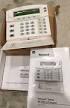 NetworX NX-6V2 LED Keypad User Manual POWER Light is on when AC power is present; flashes to indicate a low battery condition. ARMED Light is on when armed; off when disarmed; flashes to indicate a previous
APR-PRT3 Printer Module: C-Bus Programming Instructions
 APR-PRT3 Printer Module: C-Bus Programming Instructions We hope this product performs to your complete satisfaction. Should you have any questions or comments, please visit www.paradox.com and send us
Using Your. Security System. With LED Keypad S5030, S5031, S5032
 Using Your Security System With LED Keypad S5030, S5031, S5032 Contents 1 Overview Your Security System... 1 How Your Security System Works... 2 Your System's Programming... 3 Getting Used to Your System...
Solution 16 plus. User Guide Security System
 Solution 16 plus EN Security System Copyright Notice Unless otherwise indicated, this publication is the copyright of Bosch Security Systems Pty Ltd ( Bosch ). All rights are reserved.you may download
AD-01 Slave Auto Dialer. Owner s Manual
 AD-01 Slave Auto Dialer Owner s Manual AD-01 Slave Manual.indd 1 10/15/2009 10:20:44 AM 2 AD-01 Slave Manual.indd 2 10/15/2009 10:20:44 AM Features: Programmable entry/exit delay time; select up to 9 (32
HUNTER-PRO 32 Ver. 3.8 Intruder Alarm System RXN-9/416 User Guide
 HUNTER-PRO 32 Ver. 3.8 Intruder Alarm System RXN-9/416 User Guide PIMA Electronic Systems Ltd. 5 Hatzoref Street, Holon 58856, Israel +972-3-5587722 +972-3-5500442 [email protected] http://www.pima-alarms.com
2 4PI175 issue 1_6/01. How to unset system in alarm. Programs 1, 2 and 3. Access codes. How to operate Personal Attack
 Access codes Contents Unset system indications - - - - - - - - - - - System indication - - - - - - - - - - - - Access codes - - - - - - - - - - - - - - - - How to operate Personal - - - - - - How to unset
Solution-8 Control Panel
 Solution-8 Control Panel Issue 3c September 1994 Copyright 1994-1995 All rights reserv (MA 800 O) Important Note As there are many different types of consoles available for use with this control panel,
CA60 Plus Software Version 3.1 User Manual May 2000
 TeleT eletek ek CA60 Plus Software Version 3.1 User Manual May 2000 CONTENTS 1. CA60Plus Keypad... 3 1.1. LED display... 3 1.2. Keys... 4 1.3. Combinations of Keys... 4 1.4. Audible Indication... 4 2.
INSTALLATION GUIDE. www.security.soundstream.com FCC ID NOTICE
 AL.1 AUTO SECURITY SYSTEM INSTALLATION GUIDE www.security.soundstream.com FCC ID NOTICE This device complies with Part 15 of the FCC rules. Operation is subject to the following conditions: 1. This device
Accenta/Optima. Engineer s Manual. Honeywell Security. 8SP399A - Accenta mini panel with remote LCD keypad and communicator outputs.
 Reset Chime Omit Prog Set Power PA Day ZONE PA PA Accenta/Optima Engineer s Manual Power Gen" ACCENTA! " # $ % & Zones Power Attack Tamper Day 0 1 2 3 5 6 7 8 Chime Omit Reset Prog 4 9 Set Accenta/! mini
How To Set A Timer On A Gg System
 ZONE ZONE 2 ZONE ZONE ZONE 5 ZONE 6 ZONE 7 ZONE Power PA XR2/ XR2+ Intruder alarm system Operating Instructions ZONE ZONE 2 ZONE ZONE ZONE 5 ZONE 6 ZONE 7 ZONE 0 2 5 6 7 9 Omit Prog Remote LED keypad 0
GSM Autodialer Professional GJD700 Speech & Text Autodialer
 Text Edit message GSM Autodialer Professional GJD700 Speech & Text Autodialer Introduction The GSM Autodialer Professional works in conjunction with standard alarm systems and makes use of your preferred
AMAX 2100 / 3000 / 4000. en User Guide
 AMAX 2100 / 3000 / 4000 en User Guide AMAX Table of Contents en 3 Table of contents 1 Safety 5 2 Short information 6 2.1 Introduction 6 2.2 Keypads 7 2.3 Keypad Indicators 8 2.4 Quick Keypad Operations
Security module CG2 User manual
 Security module CG2 User manual TRIKDIS, JSC Draugystes str. 17, LT-51229 Kaunas LITHUANIA E-mail [email protected] Web http://www.trikdis.lt This manual is furnished to help You understand Your security
Understanding the Code Pad lights...4. Code Pad tones...5. Fully arming the system On MODE...6. Fully arming the system - Quick Arm MODE...
 TABLE OF CONTENTS...Glossary of terms...2...code Pad Diagram...3 Understanding the Code Pad lights...4 Code Pad tones...5 Fully arming the system On MODE...6 Fully arming the system - Quick Arm MODE...6
i 70 Installation Manual V1.04 Contents Grade 2 Wireless Intruder Alarm System YOUR SECURITY IS OUR PRIORITY Installation Instructions 2
 YOUR SECURITY IS OUR PRIORITY Contents Installation Instructions 2 Operation Instructions Trouble shooting Technical Specification 8 25 31 i 70 Grade 2 Wireless Intruder Alarm System Global Security Devices