
Trans-Septal Puncture Procedures and Devices
|
|
|
- Maude Brooks
- 9 years ago
- Views:
Transcription
1 Trans-Septal Puncture Procedures and Devices Problem statement Trans-septal punctures are generally used to access the left side of the heart without having to place catheters in the aorta, by puncturing the septum that separates the left and right atria. Access to the left atrium is commonly required for atrial fibrillation ablation and treatment of structural heart disease. Devices used must be able to both locate the fossa ovalis reliably, and safely puncture the septum. Description of procedure The catheter being used enters the right atrium via either the inferior or superior vena cava, after being inserted into either a femoral or brachiocephalic vein, respectively. The catheter is pressed up against the fossa ovalis, and a hole through the septum is created. Location of the fossa is usually determined through the use of fluoroscopy or intra-cardiac echo (ICE). Figure 1: Anatomy of the atria. From US patent application 2005/

2 Figure 2: Typical TS puncture. Catheter entering RA through the IVC. 502 points to location of actual puncture (fossa ovalis). From patent application 2006/ Current Products Current products include many variations on needles for puncture and a method of using RF energy to create the perforation. NRG RF Transseptal needle (Baylis Inc) Predictably crosses all types of septa Can cross an aneurismal septum in a controlled manner Can effectively cross a fibrotic septum Removes the danger of skiving and scraping Compatible with standard sheaths / dilators Proximal Gauge: 18 Ga Distal Gauge: 21 Ga

3 The curves of the NRG RF Transseptal Needles mimic those of conventional needles Inner lumen for fluid injection and pressure waveforms Electrically insulated BRK Transseptal needles Figure 3: Baylis RF needle ( BRK Transseptal Needles are designed for cardiology procedures that require a transseptal puncture. They are available in a variety of sizes and curves and are designed to be used with Fast-Cath transseptal, venous transseptal and St. Jude Medical guiding introducers. Figure 4: BRK transseptal needles ( Needles.aspx)

4 Figure 5: BRK transseptal needles ( Needles.aspx) SafeSept Transseptal guidewire SafeSept is a 135cm long, inch diameter nitinol guidewire specifically designed for transseptal puncture. After the transseptal dilator has tented the fossa ovalis, effortless advancement of the SafeSept tip perforates the membranous fossa. Unsupported by the needle and dilator, the tip of the wire assumes a J shape, rendering it incapable of further tissue penetration. Figure 6: SafeSept puncture wire (

5 Journal of the American College of Cardiology Vol. 51, No. 22, by the American College of Cardiology Foundation ISSN /08/$34.00 Published by Elsevier Inc. doi: /j.jacc Emerging Applications for Transseptal Left Heart Catheterization Old Techniques for New Procedures Vasilis C. Babaliaros, MD, Jacob T. Green, MD, Stamatios Lerakis, MD, FACC, Michael Lloyd, MD, Peter C. Block, MD, FACC Atlanta, Georgia Transseptal (TS) catheterization was introduced in 1959 as a strategy to directly measure left atrial (LA) pressure. Despite acceptable feasibility and safety, TS catheterization has been replaced by indirect measurements of LA pressure using the Swan-Ganz catheter. Today, TS puncture is rarely performed for diagnostic purposes but continues to be performed for procedures such as balloon mitral valvuloplasty, antegrade balloon aortic valvuloplasty, and ablation of arrhythmias in the LA. Thus, the art of TS puncture has been lost, except in centers that perform these procedures with regularity. Recently, there has been a renewed interest in the TS technique because of emerging therapeutic procedures for structural heart disease and atrial fibrillation ablation. Invasive cardiologists will have to refamiliarize themselves with the TS technique, newer TS devices, and advanced ultrasound imaging for guidance of the procedure. (J Am Coll Cardiol 2008;51: ) 2008 by the American College of Cardiology Foundation Measurement of left atrial (LA) pressure is important in the evaluation of heart disease. Various direct methods, such as transbronchial, supraclavicular (1), and transseptal (TS) puncture (2 4), were developed in the 1950s to measure LA pressure. Despite acceptable feasibility and safety (1,2,5), these methods were replaced by indirect measurements of LA pressure with a Swan-Ganz catheter. Right heart catheterization with a balloon wedge catheter replaced TS left heart catheterization not only because of ease and safety, but because many hemodynamic parameters could be measured with a single catheter. Today, TS catheterization is rarely performed for diagnostic purposes unless the wedge pressure reading is in question or retrograde access to the left ventricle is not possible. Thus, the art of TS puncture has been lost by invasive cardiologists, except in centers that perform balloon mitral valvuloplasty and LA arrhythmia ablation with regularity. With the introduction of new procedures for percutaneous structural heart disease therapy (6 8) and atrial fibrillation ablation (9) in the last 5 years, TS catheterization is increasingly necessary. This review focuses on the current From the Andreas Gruentzig Cardiovascular Center, Emory University Hospital, Atlanta, Georgia. Dr. Babaliaros is a consultant for Medtronic. Dr. Block is an E-Valve consultant and stock holder, Direct Flow stock holder, Medtronic consultant, and Ample Medical consultant. Dr. Lloyd is a Medtronic research grant recipient. Manuscript received December 7, 2007; revised manuscript received January 15, 2008, accepted January 24, state of TS catheterization, with emphasis on updated techniques and emerging indications. TS Technique Current TS technique has changed very little since the initial reports in 1959 (3,4). In brief, a needle is inserted into a catheter that is in contact with the right atrial (RA) septum at the level of the fossa ovalis. The needle is then advanced, puncturing the atrial septum and allowing access to the LA. The key to a successful procedure is a thorough understanding of the anatomy of the fossa ovalis and the surrounding landmarks. Anatomy of the Fossa Ovalis and Surrounding Structures The intact atrial septum is formed from fusion of the septum primum and the septum secundum. Both septae extend from the roof of the atria toward the endocardial cushions. The septum primum, which is the LA septum, is absorbed superiorly, leaving the septum secundum, or the RA septum, to cover this superior defect (ostium secundum) and separate the atria. The area of fusion of the muscular, septum secundum and the thin portion of the septum primum is known as the limbus (10). The limbus is most pronounced superiorly and laterally, and forms the raised margin around the fossa ovalis (Fig. 1). Thus, the fossa ovalis appears as a depression in the interatrial septum when viewed from the RA (Fig. 1) and is composed primarily of

6 JACC Vol. 51, No. 22, 2008 June 3, 2008: Babaliaros et al. Emerging Applications for TS Catheterization 2117 thin fibrous tissue (10,11). Surrounding the fossa is the muscular septum, the thick portions of the septum secundum and primum composed primarily of atrial muscle. The fossa ovalis is either oval or circular with an average area of 1.5 to 2.4 cm 2 in the adult (11). It is located posteriorly, at the junction of the mid and lower third of the RA. In patients with dilated aortae and in those with mitral valve disease and a bulging LA, the fossa ovalis can be located more superiorly or inferiorly, respectively. Localization of the Fossa Ovalis Figure 1 Gross Examination of the FO From the Right Atrium Right atrial view of the atrial septum with limbic ledge seen superiorly (below dotted line) and depressed fossa ovalis (FO) inferiorly. SVC superior vena cava. Localization of the fossa ovalis for TS puncture has traditionally been done by fluoroscopic imaging. A pigtail catheter is placed retrograde into the aortic root so that its tip marks the location of the aortic valve. The cardiac silhouette identifies the posterior and lateral borders of the atria (12). Several different angiographic projections are used to puncture the septum safely. In the anteroposterior projection, the fossa lies below the pigtail catheter in the mid RA silhouette (Fig. 2A). In the lateral projection, the fossa is usually halfway along the imaginary line from the pigtail catheter tip to the posterior border of the heart (Fig. 2B). In the right anterior oblique projection (40 to 50 ), the outline of the atrial septum is en face. The fossa is posterior and 1 to 3 cm inferior to the pigtail catheter tip, but anterior to the RA silhouette (Fig. 2B). In difficult cases, an RA angiogram with delayed LA angiography can help visualize the septum (overlap area). Tattooing of the septum with a 1-ml contrast injection through the TS puncture needle can also help visualize the septum. Echocardiographic visualization of the atrial septum has aided in the safety of TS catheterization (13). Transthoracic echocardiography (TTE) has limited utility, but transesophageal echocardiography (TEE) is more useful, particularly when visualizing a specific area of the fossa ovalis to be punctured. Superior/inferior localization is seen best in the bicaval view (90 ), and anterior/posterior localization is seen best in the 4-chamber view (0 ). Tenting (Fig. 3A) of the fossa ovalis (the thin septum) by the TS catheter tip indicates correct positioning, even if the needle or catheter cannot be visualized. Newer imaging modalities such as intracardiac echocardiography (AcuNav ICE, Siemens Medical Systems, Mountain View, California) (12,14,15) have also been used with success. The role of 3-dimensional TEE has yet to be fully evaluated, although initial experience is positive (Fig. 3B). CardioOptics (Boulder, Colorado) manufactures a catheter that emits infrared light and can image through flowing blood in real time. This catheter may be useful in TS catheterization, allowing direct visualization of the fossa ovalis. Animal testing has been completed, and Phase I human trials are pending. Puncture of the Fossa Ovalis Abbreviations and Acronyms ASD atrial septal defect EP electrophysiology LA left atrial/atrium PFO patent foramen ovale PVL paravalvular leak RA right atrium/atrial RF radiofrequency TEE transesophageal echocardiography TS transseptal TTE transthoracic echocardiography Puncture of the fossa ovalis begins with insertion of the needle delivery catheter and dilator to the level of the superior vena cava from the right common femoral vein. The catheter has a 270 curve at the end that is straightened by the dilator, and is most commonly a Mullins TS introducer (Medtronic, Minneapolis, Minnesota). The radius of the end of the catheter is available in different sizes, allowing variable reach within the RA. The needle is then inserted into the dilator, and allowed to freely rotate as it is advanced. Passage of the needle is easier if the sheath and dilator is introduced from the right rather than left femoral vein because of tortuosity. Fluoroscopy is used to visualize the needle as it is advanced up to the tip of the dilator so as to avoid inadvertent passage out of the dilator and sheath. The needle most commonly used is a Brockenbrough needle (Medtronic). This needle is an 18-gauge hollow tube that tapers distally to 21 gauge. The proximal end has a flange with an arrow that points to the position of the needle tip. With the needle tip just within the dilator, the entire assembly is rotated such that the needle points to a 4 o clock orientation (ceiling of the room is 12 o clock orientation, floor is 6 o clock orientation) and withdrawn into the mid RA. Using the fluoroscopic projections as previously described, the dilator is then advanced to catch the limbus of the fossa ovalis. In the minority of patients in whom the limbus is not prominent, echocardiographic guidance is helpful. The sheath, dilator, and needle assem-

7 2118 Babaliaros et al. JACC Vol. 51, No. 22, 2008 Emerging Applications for TS Catheterization June 3, 2008: Figure 2 Fluoroscopic Views During Transseptal Puncture (A) Transseptal puncture performed in the anteroposterior projection with fluoroscopic imaging. The pigtail catheter marks the location of the aortic valve, and the tip of the transseptal dilator engages the fossa ovalis inferiorly and medially to the aortic valve. (B) Transseptal puncture performed in the lateral fluoroscopic projection. The transseptal dilator engages the fossa ovalis in the lower third of the imaginary line (thin dashed line) connecting the pigtail catheter (aortic valve) and the posterior wall of the left atrium (heavy dashed line). (C) Transseptal puncture performed in the right anterior oblique projection with fluoroscopic imaging. The transseptal dilator (TC) engages the fossa ovalis posterior to the pigtail catheter (aortic valve) but anterior to right atrial silhouette (dashed line). bly are advanced as a unit, tenting the fossa. The needle is then rotated to 3 o clock to prevent posterior puncture and is fully advanced. Puncture into the LA can be confirmed by pressure transduction through the needle (Fig. 4), aspiration of oxygenated blood, and injection of contrast. In 20% to 25% of adult patients, the fossa ovalis is probe patent (patent foramen ovale [PFO]) and may not require needle puncture (10,11). In approximately two-thirds of patients, the fossa is paper thin, and the catheter can be passed into the LA with gentle pressure and rotation of the dilator (10). Puncture is associated with a tactile feeling of the septum giving way. The dilator and sheath are then advanced over the needle (without advancing the needle) to avoid injury to the posterior LA wall. Some operators introduce a inch angioplasty wire through the needle into the LA and pulmonary vein to prevent inadvertent puncture of the LA free wall by the needle or dilator (16). Fortunately, serious morbidity or mortality after needle puncture of the LA free wall or aorta is uncommon if the sheath and dilator are not advanced. Overall, serious complications from TS catheterization are 1% (1,17,18). After successful puncture of the atrial septum, the patient should be immediately anticoagulated (heparin or direct thrombin antagonist) to minimize the risk of thromboembolism. Newer Methods for Atrial Septal Puncture In an attempt to improve the TS technique, a new system that uses radiofrequency (RF) energy to puncture the septum (Radiofrequency Transseptal System, Baylis Medi- Figure 3 2- and 3-Dimensional Echocardiographic Views During Transseptal Puncture (A) 2-dimensional transesophageal echocardiographic imaging depicts tenting (arrow) of the atrial septum into the left atrium (LA). (B) 3-dimensional transesophageal echocardiographic imaging visualizes tenting (arrow) of the atrial septum. RA right atrium.

8 JACC Vol. 51, No. 22, 2008 June 3, 2008: Babaliaros et al. Emerging Applications for TS Catheterization 2119 Figure 4 Pressure Tracing From Transseptal Needle During Transseptal Catheterization Right atrial (RA) pressure wave form becomes blunted (BP) as the needle engages the septum. After the needle passes through the septum, a left atrial (LA) pressure wave form is seen. cal, Montreal, Canada) has been developed (19). Instead of a needle, an RF catheter is introduced into the dilator/ sheath assembly (Fig. 5A). This catheter delivers 5 W energy for 2 to 5 s and can perforate the atrial septum after 1 to 4 pulses. It has been used in 5 patients undergoing balloon mitral valvuloplasty and was successful in 4. This technology may have an advantage in thick, scarred, calcified, or patched atrial septa, where excess force could result in unsuccessful puncture or in perforation of the LA free wall secondary to catheter momentum. Another new technology that also may improve the safety of TS puncture is the excimer laser catheter (0.9-mm Clirpath X-80, Spectranetics, Colorado Springs, Colorado) (20 22). The laser catheter is inserted via a modified Mullins sheath and dilator (inner lumen compatible with a inch wire) and can puncture the septum after a brief (2 to 5 s) application of laser energy. The laser catheter requires less force ( 10-fold) to cross the septum compared with the Brockenbrough needle, and can then be used as a rail over which the Mullins sheath and dilator can be advanced. Currently, only data from animal studies are available, although the technology seems promising and can be used off the shelf with existing deflectable guiding catheters (Morph catheter, Biocardia, San Francisco, California, and Naviport catheter, Cardima, Fremont, California). In cases in which TS catheterization cannot be performed from the femoral vein, a new system has been developed for safe puncture of the LA from the internal jugular vein. The LA-Crosse system (St. Jude Medical, St. Paul, Minnesota) is composed of 3 parts: a stabilizer sheath, a guide catheter, and a flexible puncture screw (Fig. 5B). The stabilizer sheath is placed from the right internal jugular vein such Figure 5 New Transseptal Catheterization Techniques Using a Radiofrequency Catheter or an Internal Jugular Vein Approach (A) A radiofrequency catheter is inserted into dilator and sheath and ablates a thickened atrial septum to cross into the left atrium (courtesy of Radiofrequency Transseptal System, Baylis Medical, Montreal, Quebec, Canada). (B) The LA-Crosse system uses a stabilizer sheath, a guide catheter, and a flexible puncture screw to safely cross the atrial septum from the right internal jugular vein (courtesy of St. Jude Medical, St. Paul, Minnesota).

9 2120 Babaliaros et al. JACC Vol. 51, No. 22, 2008 Emerging Applications for TS Catheterization June 3, 2008: that the distal end lies in the inferior vena cava and the side opening faces the mid RA. A guide catheter is advanced through the stabilizer sheath and out the side opening until its distal end is in contact with the fossa ovalis. The flexible puncture screw is then advanced through the guide catheter to its tip. When it contacts the atrial septum, the puncture screw is rotated and penetrates the atrial septum. Once LA pressure is measured through the end hole of the puncture screw, an Inoue guidewire is advanced into the LA. This system has been 100% successful in animal models guided by fluoroscopy, and can be used to perform multiple punctures in selective portions of the atrial septum. Additionally, introduction of catheters from the internal jugular vein through the superior vena cava and across the atrial septum may offer a more favorable trajectory than the femoral approach for transcatheter interventions on the mitral valve. Human evaluation is pending. Emerging Indications for TS Puncture TS catheterization in electrophysiology (EP). The cardiac subspecialty of EP accounts for the single most common context in which TS punctures are performed in the U.S. Interest in the refinement and perfection of the TS technique has paralleled the dramatic increase in the number of ablative procedures performed for atrial fibrillation in the last 5 years (9,23). In addition to RF ablation for atrial fibrillation, TS puncture is routine for ablation of accessory pathways located along the mitral annular region, LA tachycardias and flutters, and less commonly for variants of atrioventricular nodal reentrant tachycardia. The TS route also provides a useful alternative to the retroaortic approach for ablation within the left ventricle and left ventricular outflow tract. In most centers, TS puncture is performed under fluoroscopic biplanar guidance using methods described above. Additionally, a diagnostic catheter in the coronary sinus aids in the localization of the fossa ovalis. Often, EP procedures require 2 or more sheaths across the fossa ovalis. This can be accomplished by 2 separate TS punctures or a single pass with the Brockenbrough needle. In the latter case, the initial sheath, which is already across the atrial septum, can be withdrawn into the RA over a guidewire in the LA. A second sheath or ablation catheter can then pass through the previously created rent in the septum. The initial sheath is then reinserted over the guidewire. On occasion, patients require repeat TS procedures for atrial fibrillation ablation (24). If previous punctures have been performed, the fossa ovalis can become thickened and fibrotic. This can obscure the physical landmarks, prevent the characteristic leftward movement of the TS needle into the fossa, and require significant forward pressure for puncture with the needle. In this situation and in the case of prior aortic root surgery adjuncts to fluoroscopic visualization, such as intracardiac or TEE, are most useful. PFO and atrial septal defect (ASD) repair. The second most common use for TS catheterization is percutaneous repair of ASD and PFO. Percutaneous ASD repair is a validated alternative to surgical repair (25), and is used primarily to prevent or reverse the untoward consequences of left-to-right shunting across the atrial septum (pulmonary hypertension, right ventricular failure). Alternatively, percutaneous PFO closure has been used to prevent the problems of right-to-left shunting, specifically secondary stroke prevention. Ongoing trials are also evaluating the role of PFO closure in migraine reduction. In the majority of cases, the ASD and PFO can be crossed with the use of a multipurpose catheter and a J-wire without the need for TS puncture. In rare occasions, atrial septal aneurysms may pocket the catheter tip and wire, preventing the cannulation of a small ASD or PFO. In this situation and in the long-tunnel variant PFO, TS puncture has been used to place a catheter in the LA, and deploy a closure device to seal the defect (26,27). This technique requires echocardiographic guidance to puncture the septum as close to the defect as possible. Percutaneous mitral valve repair. Percutaneous mitral valve repair strategies include leaflet repair, coronary sinus annuloplasty, and noncoronary sinus annuloplasty with or without myocardial reduction (6,7,28,29). The largest experience with repair strategies has been with percutaneous leaflet clipping in the treatment of primary mitral regurgitation. The MitraClip device (Evalve Inc., Menlo Park, California), requires the introduction of a 22-F device via TS puncture (8). The TS puncture should be performed under ultrasound guidance in order to pierce the septum superiorly and posteriorly. This high TS puncture allows adequate distance above the mitral valve plane for manipulation of the guiding and delivery catheter and to properly place the mitral valve clip. The Ample PS3 System (Ample Medical, Foster City, California) also involves TS puncture. A T-bar implant is delivered to the posterior annulus via the coronary sinus. A TS puncture is performed to tether the T-bar to an Amplatzer (AGA Medical, Minneapolis, Minnesota) device anchored in the atrial septum. LA appendage closure. The LA appendage is positioned in the anterior-superior portion of the LA, above the mitral valve. The Watchman device (Atritech Company, Plymouth, Minnesota) is a nitinol cage with a polyethylene membrane that can be implanted into the LA appendage of patients with atrial fibrillation to prevent stroke (30). For placement of this device, TS puncture is performed in the superior fossa ovalis so that the delivery sheath is coaxial with the LA appendage, and device deployment is facilitated. Percutaneous left ventricular assist device. The Tandem- Heart Device (CardiacAssist, Pittsburgh, Pennsylvania) is a circulatory assist device (31 33) that retrogradely perfuses the aorta with oxygenated blood from the LA. After TS puncture, a 21-F cannula is advanced across the atrial septum from the femoral vein; the proximal end of the

10 JACC Vol. 51, No. 22, 2008 June 3, 2008: Babaliaros et al. Emerging Applications for TS Catheterization 2121 venous cannula (inflow) is connected to a 15- to 18-F cannula in the iliac artery (outflow) via a rotary pump. The flow can be as high as 4.0 l/min and requires appropriate placement of the distal end of the LA cannula in the mid-posterior LA. Ultrasound guidance for placement of the LA catheter is recommended. Paravalvular leak (PVL) closure. Paravalvular leak of mitral prostheses can be repaired percutaneously from a TS approach (34), particularly if the leak is along the lateral aspect of the LA. The TS puncture should be in the middle or inferior fossa ovalis to direct a right Judkins catheter to the lateral wall of the atrium at the level of the mitral valve. A PVL along the medial aspect of mitral prostheses is technically more difficult to repair because the acute angle needed to access the PVL. Such leaks might be approached from a TS puncture performed from the right internal jugular in the future. A TS puncture has also been performed to snare a wire from the left ventricle or LA when closing an aortic or mitral PVL. Other procedures. The TS technique has been used in a variety of other procedures, including pulmonary vein stenosis intervention, antegrade VSD closure, stent implantation in the right internal carotid artery (35), and atrial septostomy. Indications for TS catheterization will increase as more interventions are performed for treatment of structural heart disease. Conclusions Although once popular, TS catheterization has been shelved by all except electrophysiologists and a few interventionalists until recently. Today s invasive cardiologists will have to refamiliarize themselves with the technique as well as become involved with the newer TS devices and more advanced imaging. Training will remain an issue because of the number of cases and the lack of recent experience. Therefore, simulators and echocardiographic imaging should prove helpful. In the current era of catheter therapies for structural heart disease and EP, we will certainly see new and a resurgence of old techniques to aid in the success of forthcoming procedures. Reprint requests and correspondence: Dr. Vasilis Babaliaros, Department of Cardiology, Emory University Hospital, 1364 Clifton Road, Suite F606, Atlanta, Georgia [email protected]. REFERENCES 1. Christiansen I, Wennevold A. Complications in 1,056 investigations of the left side of the heart. Am Heart J 1966;71: Brockenbrough EC, Braunwald E, Ross J Jr. Transseptal left heart catheterization. A review of 450 studies and description of an improved technic. Circulation 1962;25: Cope C. Technique for transseptal catheterization of the left atrium; preliminary report. J Thorac Surg 1959;37: Ross J Jr., Braunwald E, Morrow AG. Transseptal left atrial puncture; new technique for the measurement of left atrial pressure in man. Am J Cardiol 1959;3: Nixon PG, Ikram H. Left heart catheterization with special reference to the transseptal method. Br Heart J 1966;28: Block PC. Percutaneous mitral valve repair for mitral regurgitation. J Interv Cardiol 2003;16: Block PC, Bonhoeffer P. Percutaneous approaches to valvular heart disease. Curr Cardiol Rep 2005;7: Feldman T, Wasserman HS, Herrmann HC, et al. Percutaneous mitral valve repair using the edge-to-edge technique: six-month results of the EVEREST Phase I Clinical Trial. J Am Coll Cardiol 2005;46: Calkins H, Brugada J, Packer DL, et al. HRS/EHRA/ECAS expert consensus statement on catheter and surgical ablation of atrial fibrillation: recommendations for personnel, policy, procedures and followup. A report of the Heart Rhythm Society (HRS) Task Force on Catheter and Surgical Ablation of Atrial Fibrillation. Heart Rhythm 2007;4: Bloomfield DA, Sinclair-Smith BC. The limbic ledge. A landmark for transseptal left heart catheterization. Circulation 1965;31: Sweeney LJ, Rosenquist GC. The normal anatomy of the atrial septum in the human heart. Am Heart J 1979;98: Cheng A, Calkins H. A conservative approach to performing transseptal punctures without the use of intracardiac echocardiography: stepwise approach with real-time video clips. J Cardiovasc Electrophysiol 2007;18: Hahn K, Bajwa T, Sarnoski J, Schmidt DH, Gal R. Transseptal catheterization with transesophageal guidance in high risk patients. Echocardiography 1997;14: Cafri C, de la Guardia B, Barasch E, Brink J, Smalling RW. Transseptal puncture guided by intracardiac echocardiography during percutaneous transvenous mitral commissurotomy in patients with distorted anatomy of the fossa ovalis. Catheter Cardiovasc Interv 2000;50: Shalganov TN, Paprika D, Borbas S, Temesvari A, Szili-Torok T. Preventing complicated transseptal puncture with intracardiac echocardiography: case report. Cardiovasc Ultrasound 2005;3: Hildick-Smith D, McCready J, de Giovanni J. Transseptal puncture: use of an angioplasty guidewire for enhanced safety. Catheter Cardiovasc Interv 2007;69: Peckham GB, Chrysohou A, Aldridge HE, Wigle ED. Combined percutaneous retrograde aortic and transseptal left heart catheterization. Br Heart J 1964;26: Adrouny ZA, Sutherland DW, Griswold HE, Ritzmann LW. Complications with transseptal left heart catheterization. Am Heart J 1963;65: Sherman W, Lee P, Hartley A, Love B. Transatrial septal catheterization using a new radiofrequency probe. Catheter Cardiovasc Interv 2005;66: Bommer WJ, Lee G, Riemenschneider TA, et al. Laser atrial septostomy. Am Heart J 1983;106: Galal O, Weber HP, Enders S, et al. Transcatheter laser atrial septostomy in rabbits. Int J Cardiol 1993;42: Elagha AA, Kim AH, Kocaturk O, Lederman RJ. Blunt atrial transseptal puncture using excimer laser in swine. Catheter Cardiovasc Interv 2007;70: Pappone C, Rosanio S, Augello G, et al. Mortality, morbidity, and quality of life after circumferential pulmonary vein ablation for atrial fibrillation: outcomes from a controlled nonrandomized long-term study. J Am Coll Cardiol 2003;42: Callans DJ, Gerstenfeld EP, Dixit S, et al. Efficacy of repeat pulmonary vein isolation procedures in patients with recurrent atrial fibrillation. J Cardiovasc Electrophysiol 2004;15: Du ZD, Koenig P, Cao QL, et al. Comparison of transcatheter closure of secundum atrial septal defect using the Amplatzer septal occluder associated with deficient versus sufficient rims. Am J Cardiol 2002;90: McMahon CJ, El Said HG, Mullins CE. Use of the transseptal puncture in transcatheter closure of long tunnel-type patent foramen ovale. Heart 2002;88:E Tande AJ, Knickelbine T, Chavez I, et al. Transseptal technique of percutaneous PFO closure results in persistent interatrial shunting. Catheter Cardiovasc Interv 2005;65: Babaliaros V, Block P. State of the art percutaneous intervention for the treatment of valvular heart disease: a review of the current

11 2122 Babaliaros et al. JACC Vol. 51, No. 22, 2008 Emerging Applications for TS Catheterization June 3, 2008: technologies and ongoing research in the field of percutaneous valve replacement and repair. Cardiology 2006;107: Babaliaros V, Cribier A, Agatiello C. Surgery insight: current advances in percutaneous heart valve replacement and repair. Nat Clin Pract Cardiovasc Med 2006;3: Nageh T, Meier B. Intracardiac devices for stroke prevention. Prev Cardiol 2006;9: Pretorius M, Hughes AK, Stahlman MB, et al. Placement of the TandemHeart percutaneous left ventricular assist device. Anesth Analg 2006;103: Burkhoff D, Cohen H, Brunckhorst C, O Neill WW. A randomized multicenter clinical study to evaluate the safety and efficacy of the TandemHeart percutaneous ventricular assist device versus conventional therapy with intraaortic balloon pumping for treatment of cardiogenic shock. Am Heart J 2006;152:469.e Burkhoff D, O Neill W, Brunckhorst C, et al. Feasibility study of the use of the TandemHeart percutaneous ventricular assist device for treatment of cardiogenic shock. Catheter Cardiovasc Interv 2006;68: Shapira Y, Hirsch R, Kornowski R, et al. Percutaneous closure of perivalvular leaks with Amplatzer occluders: feasibility, safety, and shortterm results. J Heart Valve Dis 2007;16: Yoon YS, Shim WH. Transseptal approach for stent implantation in right internal carotid artery stenosis. J Invasive Cardiol 2000;12:70 4.

12

13

14

15

16

17

18

19

20

21
22
23
24
25
26
27
28
29
30
31
32
33
34
35
36
37
38
39
40
41
42
43
44
45
46
47
48
49
50
51
52
53
54
55
56
57
58
59
60
61
62
63
64
65
66
67
68
69
70
71
72
73
74
75
76
77
78
79
80
81
82
83
84
85
86
87
88
89
90
91
92
93
94
95
96
97
98
99
100
101
102
103
104
105
106
107
108
109
110
111
112
113
114
115
Common types of congenital heart defects
 Common types of congenital heart defects Congenital heart defects are abnormalities that develop before birth. They can occur in the heart's chambers, valves or blood vessels. A baby may be born with only
Real-Time 3-Dimensional Transesophageal Echocardiography in the Evaluation of Post-Operative Mitral Annuloplasty Ring and Prosthetic Valve Dehiscence
 Journal of the American College of Cardiology Vol. 53, No. 17, 2009 2009 by the American College of Cardiology Foundation ISSN 0735-1097/09/$36.00 Published by Elsevier Inc. doi:10.1016/j.jacc.2008.12.059
Percutaneous closure of paravalvular leaks EULOGIO GARCIA MD MADRID ~ SPAIN
 Percutaneous closure of paravalvular leaks EULOGIO GARCIA MD MADRID ~ SPAIN BACKGROUND The incidente of paravalvular leaks is variable ( from 2% up to 17% ). More frequent in mechanical valves. Surgical
Practical class 3 THE HEART
 Practical class 3 THE HEART OBJECTIVES By the time you have completed this assignment and any necessary further reading or study you should be able to:- 1. Describe the fibrous pericardium and serous pericardium,
The Essential Role of CT Planning and TEE Guidance to Optimize Device Deployment
 LAA Occlusion Therapy The Essential Role of CT Planning and TEE Guidance to Optimize Device Deployment John Carroll, MD University of Colorado Interventional 3-D Lab 3-D Research Lab for Interventions
Regions Hospital Delineation of Privileges Cardiology
 Regions Hospital Delineation of s Cardiology Applicant s Name: Last First M. Instructions: Place a check-mark where indicated for each core group you are requesting. Review education and basic formal training
CARDIOLOGY Delineation of Privileges
 CARDIOLOGY Delineation of Privileges APPLICANT: INITIAL APPOINTMENT REQUIREMENTS: BASIC EDUCATION: M.D. or D.O. from an accredited school of medicine or osteopathy. Successful completion of an ACGME or
Minimally Invasive Mitral Valve Surgery
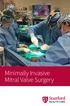 Minimally Invasive Mitral Valve Surgery Stanford Health Care offers leading, superior options in cardiac surgery, including the latest techniques and research for Minimally Invasive Cardiac surgery. Advanced
2015 WATCHMAN Left Atrial Appendage Closure Device (The WATCHMAN Device) Coding Guide- Structural Heart Contents
 2015 WATCHMAN Left Atrial Appendage Closure Device (The WATCHMAN Device) Coding Guide- Structural Heart Contents Reimbursement Overview... 2 Physician Reimbursement... 2 Physician Coding... 2 WATCHMAN
Distance Learning Program Anatomy of the Human Heart/Pig Heart Dissection Middle School/ High School
 Distance Learning Program Anatomy of the Human Heart/Pig Heart Dissection Middle School/ High School This guide is for middle and high school students participating in AIMS Anatomy of the Human Heart and
Heart valve repair and replacement
 16 Heart valve repair and replacement 222 Valvular heart disease can be treated in a variety of ways: valve replacement, in which an artificial (prosthetic) heart valve is implanted surgically to replace
RACE I Rapid Assessment by Cardiac Echo. Intensive Care Training Program Radboud University Medical Centre NIjmegen
 RACE I Rapid Assessment by Cardiac Echo Intensive Care Training Program Radboud University Medical Centre NIjmegen RACE Goal-directed study with specific questions Excludes Doppler ultrasound Perform 50
ST. DAVID S MEDICAL CENTER CARDIOLOGY - Special, Invasive, Diagnostic, or High-Risk Procedure Requirements
 ST. DAVID S MEDICAL CENTER CARDIOLOGY - Special, Invasive, Diagnostic, or High-Risk Procedure Requirements Cardiac Catheterization & Peripheral Angiography Completion of a fellowship in Cardiovascular
Steven J. Yakubov, MD FACC For the CoreValve US Clinical Investigators
 Long-Term Outcomes Using a Self- Expanding Bioprosthesis in Patients With Severe Aortic Stenosis Deemed Extreme Risk for Surgery: Two-Year Results From the CoreValve US Pivotal Trial Steven J. Yakubov,
020 // Congenital Heart Disease
 020 // Congenital Heart Disease CONTENTS 188 Basics 188 Atrial Septal Defect (ASD) 191 Patent Foramen Ovale (PFO) 192 Ventricular Septal Defects (VSD) 194 Patent Ductus Arteriosus (PDA) 195 Coronary Fistulas
Name: DEPARTMENT OF CARDIOLOGY CRITERIA FOR RECOMMENDATION AND CATEGORIZATION OF MEDICAL STAFF PRIVILEGES
 Name: DEPARTMENT OF CARDIOLOGY CRITERIA FOR RECOMMENDATION AND CATEGORIZATION OF MEDICAL STAFF PRIVILEGES A. Applicants (Full Privileges) 1. Satisfactory completion of an application, including documentation
Section Four: Pulmonary Artery Waveform Interpretation
 Section Four: Pulmonary Artery Waveform Interpretation All hemodynamic pressures and waveforms are generated by pressure changes in the heart caused by myocardial contraction (systole) and relaxation/filling
SUTTER MEDICAL CENTER, SACRAMENTO Department of Cardiovascular Disease Cardiology - Delineation of Privileges
 INITIAL: [ ] RENEWED: [ ] DATE: ADDITIONAL: [ ] Privileges are granted for Sutter General Hospital, Sutter Memorial Hospital, Sutter Center for Psychiatry, Sutter Oaks Midtown and the Capitol Pavilion
Normal Intracardiac Pressures. Lancashire & South Cumbria Cardiac Network
 Normal Intracardiac Pressures Lancashire & South Cumbria Cardiac Network Principle Pressures recorded from catheter tip Electrical transducer - wheatstone bridge mechanical to electrical waveform display
Clinical Commissioning Policy Statement: Percutaneous mitral valve leaflet repair for mitral regurgitation April 2013. Reference: NHSCB/A09/PS/b
 Clinical Commissioning Policy Statement: Percutaneous mitral valve leaflet repair for mitral regurgitation April 2013 Reference: NHS Commissioning Board Clinical Commissioning Policy Statement: Percutaneous
Normal & Abnormal Intracardiac. Lancashire & South Cumbria Cardiac Network
 Normal & Abnormal Intracardiac Pressures Lancashire & South Cumbria Cardiac Network Principle Pressures recorded from catheter tip Electrical transducer - wheatstone bridge mechanical to electrical waveform
Step-by-step Approach to Paravalvular Leak Closure
 Transcatheter Valve Therapies TVT Seattle, USA, June 2-5, 2012 Step-by-step Approach to Paravalvular Leak Closure - Including Case Presentations - Horst Sievert, Ilona Hofmann, Undine Pittl, Laura Vaskulite
Complete Guide for Interventional Radiology
 2013 Complete Guide for Interventional Radiology Contents Introduction... 1 CPT Codes and Descriptions...1 Procedure Codes...2 Chapter 1: The Basics... 5 APC Basics Why Is This Important?...5 CCI Edits
PEDIATRIC CARDIOLOGY CLINICAL PRIVILEGES
 Name: Page 1 Initial Appointment Reappointment All new applicants must meet the following requirements as approved by the governing body effective: 08/05/2015. Applicant: Check off the Requested box for
CTA OF THE EXTRACORONARY HEART
 CTA OF THE EXTRACORONARY HEART Charles White MD Director of Thoracic Imaging Department of Radiology University of Maryland NO DISCLOSURES [email protected] CARDIAC CASE DISTRIBUTION Coronary CTA 30% ED chest
Note: The left and right sides of the heart must pump exactly the same volume of blood when averaged over a period of time
 page 1 HEART AS A PUMP A. Functional Anatomy of the Heart 1. Two pumps, arranged in series a. right heart: receives blood from the systemic circulation (via the great veins and vena cava) and pumps blood
Fort Hamilton Hospital Specialty: Cardiology Department of Medicine Delineation of Privileges
 NAME Fort Hamilton Hospital Specialty: Cardiology Department of Medicine Delineation of Privileges GENERAL CARDIOLOGY Required Qualifications for General Cardiology Education/Training/Experience Must have
Catheter Ablation. A Guided Approach for Treating Atrial Arrhythmias
 Catheter Ablation A Guided Approach for Treating Atrial Arrhythmias A P A T I E N T H A N D B O O K This brochure will provide an overview of atrial arrhythmias (heart rhythm problems affecting the upper
Heart and Vascular System Practice Questions
 Heart and Vascular System Practice Questions Student: 1. The pulmonary veins are unusual as veins because they are transporting. A. oxygenated blood B. de-oxygenated blood C. high fat blood D. nutrient-rich
5. Management of rheumatic heart disease
 5. Management of rheumatic heart disease The fundamental goal in the long-term management of RHD is to prevent ARF recurrences, and therefore, prevent the progression of RHD, and in many cases allow for
Read It, Code It, See It
 Read It, Code It, See It Richard L. Prager, M.D. University of Michigan Ann Arbor, Michigan Dorothy Latham, R.N. Port Huron Hospital Port Huron, Michigan Nothing to Disclose Disclosure Preoperative diagnosis:
Coding Updates for 2013: Cardiology
 Coding Updates for 2013: Cardiology Presented by: David Dunn, MD, FACS CIRCC, CPC-H, CCVTC, CCC, CCS, RCC National Coding Standards Sources of information Centers for Medicare and Medicare (CMS) Provider
DETECTION OF LEFT-TO-RIGHT INTRACARDIAC SHUNTS
 10/5/00 3:35 PM 9 Shunt Detection and Quantification William Grossman University of California, San Francisco, School of Medicine; Division of Cardiology, University of California, San Francisco Medical
Questions FOETAL CIRCULATION ANAESTHESIA TUTORIAL OF THE WEEK 91 18 TH MAY 2008
 FOETAL CIRCULATION ANAESTHESIA TUTORIAL OF THE WEEK 91 18 TH MAY 2008 Dr. S. Mathieu, Specialist Registrar in Anaesthesia Dr. D. J. Dalgleish, Consultant Anaesthetist Royal Bournemouth and Christchurch
Utilizing the Cath Lab for Cardiac Arrest
 Utilizing the Cath Lab for Cardiac Arrest Khaled M. Ziada, MD Director, Cardiovascular Catheterization Laboratories Gill Heart Institute, University of Kentucky UK/AHA Strive to Revive Symposium May 2013
Managing Mitral Regurgitation: Repair, Replace, or Clip? Michael Howe, MD Traverse Heart & Vascular
 Managing Mitral Regurgitation: Repair, Replace, or Clip? Michael Howe, MD Traverse Heart & Vascular Mitral Regurgitation Anatomy Mechanisms of MR Presentation Evaluation Management Repair Replace Clip
COVERAGE GUIDANCE: ABLATION FOR ATRIAL FIBRILLATION
 COVERAGE GUIDANCE: ABLATION FOR ATRIAL FIBRILLATION Question: How should the EGBS Coverage Guidance regarding ablation for atrial fibrillation be applied to the Prioritized List? Question source: Evidence
Confirmed CCHD What next?
 Confirmed CCHD What next? Herbert J. Stern MD, FACC, FSCAI Children s Cardiology Associates and Dell Children s Hospital Catheter Based Therapy: Spectrum of Procedures Tear PFO to enhance mixing (D-TGA)
Purpose Members of the Department of Cardiology will provide cardiology services to patients of McLaren Greater Lansing.
 Purpose Members of the Department of Cardiology will provide cardiology services to patients of McLaren Greater Lansing. Qualifications To be eligible for core privileges in the Department of Cardiology,
How To Treat A Single Ventricle And Fontan
 COACH Columbus Ohio Adult Congenital Heart Disease Program The Heart Center at Nationwide Children s Hospital & The Ohio State University Single Ventricle Defects Normal Heart Structure The heart normally
LEADING-EDGE Cardiovascular Care
 LEADING-Edge Cardiovascular Care Coral Gables Hospital North Shore Medical Center Hialeah Hospital Delray Medical Center Good Samaritan Medical Center Palm Beach Gardens Medical Center St. Mary s Medical
Reporting Transcatheter Aortic Valve Replacement (TAVR) Procedures in 2013
 Reporting Transcatheter Aortic Valve Replacement (TAVR) Procedures in 2013 There are nine new CPT codes effective January 1, 2013, for reporting TAVR procedures. Five of these codes are Category I codes
Cardiac Catheterization Curriculum for Fellows in Cardiology Dartmouth-Hitchcock Medical Center Level 1 and Level 2 Training 2008-2009
 Cardiac Catheterization Curriculum for Fellows in Cardiology Dartmouth-Hitchcock Medical Center Level 1 and Level 2 Training 2008-2009 I. Overview of Training in Cardiac Catheterization Cardiac catheterization
Fellow TEE Review Workshop Hemodynamic Calculations 2013. Director, Intraoperative TEE Program. Johns Hopkins School of Medicine
 Fellow TEE Review Workshop Hemodynamic Calculations 2013 Mary Beth Brady, MD, FASE Director, Intraoperative TEE Program Johns Hopkins School of Medicine At the conclusion of the workshop, the participants
BASIC STANDARDS FOR RESIDENCY TRAINING IN CARDIOLOGY
 BASIC STANDARDS FOR RESIDENCY TRAINING IN CARDIOLOGY American Osteopathic Association and the American College of Osteopathic Internists Specific Requirements For Osteopathic Subspecialty Training In Cardiology
The Cardiac Society of Australia and New Zealand
 The Cardiac Society of Australia and New Zealand Guidelines on Support Facilities for Coronary Angiography and Percutaneous Coronary Intervention (PCI) including Guidelines on the Performance of Procedures
Understanding your child s heart Atrial septal defect
 Understanding your child s heart Atrial septal defect About this factsheet This factsheet is for the parents of babies and children who have an atrial septal defect (ASD). It explains, what an atrial septal
Endovascular Repair of an Axillary Artery Aneurysm: A Novel Approach
 Endovascular Repair of an Axillary Artery Aneurysm: A Novel Approach Bao- Thuy D. Hoang, MD 1, Jonathan- Hien Vu, MD 2, Jerry Matteo, MD 3 1 Department of Surgery, University of Florida College of Medicine,
Atrial Fibrillation and Ablation Therapy: A Patient s Guide
 Atrial Fibrillation and Ablation Therapy: A Patient s Guide ATRIAL FIBRILLATION CENTER AT UNIVERSITY OF ROCHESTER MEDICAL CENTER www.heart.urmc.edu 585-275-4775 INTRODUCTION Our goal at the Atrial Fibrillation
Treating AF: The Newest Recommendations. CardioCase presentation. Ethel s Case. Wayne Warnica, MD, FACC, FACP, FRCPC
 Treating AF: The Newest Recommendations Wayne Warnica, MD, FACC, FACP, FRCPC CardioCase presentation Ethel s Case Ethel, 73, presents with rapid heart beating and mild chest discomfort. In the ED, ECG
Biol 111 Comparative & Human Anatomy Lab 9: Circulatory System of the Cat Spring 2014
 Biol 111 Comparative & Human Anatomy Lab 9: Circulatory System of the Cat Spring 2014 Philip J. Bergmann Lab Objectives 1. To learn how blood flows through a dual circuit circulation with lungs. 2. To
How To Understand What You Know
 Heart Disorders Glossary ABG (Arterial Blood Gas) Test: A test that measures how much oxygen and carbon dioxide are in the blood. Anemia: A condition in which there are low levels of red blood cells in
CATHETER ABLATION for ATRIAL FIBRILLATION
 CATHETER ABLATION for ATRIAL FIBRILLATION Atrial Fibrillation Clinic Dr. Richard Leather, Dr. Larry Sterns, Dr Paul Novak, Dr. Chris Lane Royal Jubilee Hospital Block 3 rd floor, Rm 343 1952 Bay Street
Ch. 138 CARDIAC CATHETERIZATION SERVICES 28 138.1 CHAPTER 138. CARDIAC CATHETERIZATION SERVICES GENERAL PROVISIONS
 Ch. 138 CARDIAC CATHETERIZATION SERVICES 28 138.1 CHAPTER 138. CARDIAC CATHETERIZATION SERVICES Sec. 138.1 Principle. 138.2. Definitions. GENERAL PROVISIONS PROGRAM, SERVICE, PERSONNEL AND AGREEMENT REQUIREMENTS
Cardiology Fellowship Manual. Goals & Objectives -Cardiac Imaging- 1 Page
 Cardiology Fellowship Manual Goals & Objectives -Cardiac Imaging- 1 Page 2015-2016 UNIV. OF NEBRASKA CHILDREN S HOSPITAL & MEDICAL CENTER DIVISION OF CARDIOLOGY FELLOWSHIP PROGRAM CARDIAC IMAGING ROTATION
Diagnostic and Therapeutic Procedures
 Diagnostic and Therapeutic Procedures Diagnostic and therapeutic cardiovascular s are central to the evaluation and management of patients with cardiovascular disease. Consistent with the other sections,
2014 Procedural Reimbursement Guide Select Percutaneous Coronary Interventions
 2014 Procedural Reimbursement Guide Select Percutaneous Coronary Interventions IC-221010-AA Jan 2014 Page 1 of 10 Interventional Cardiology This for interventional cardiology procedures provides coding
Introduction to Electrophysiology. Wm. W. Barrington, MD, FACC University of Pittsburgh Medical Center
 Introduction to Electrophysiology Wm. W. Barrington, MD, FACC University of Pittsburgh Medical Center Objectives Indications for EP Study How do we do the study Normal recordings Abnormal Recordings Limitations
Mitral valve repair current Status and the modern Sternotomy
 Mitral valve repair current Status and the modern Sternotomy David L Saint MD, FACS Tallahassee Memorial Hospital Clinical Assistant Professor Florida State University School of Medicine History of Mitral
PRACTICE GUIDELINE TITLE: INTRAVENOUS LINE INSERTION: PERIPHERAL AND CENTRAL
 PRACTICE GUIDELINE Effective Date: 9-17-04 Manual Reference: Deaconess Trauma Services TITLE: INTRAVENOUS LINE INSERTION: PERIPHERAL AND CENTRAL PURPOSE: To outline the indications and options for intravenous
Kompleks Atriyal Septal Defektlerin Perkutan Kapatılmasına Uygun Hasta Seçiminde Gerçek Zamanlı Üç Boyutlu Transözafajeal Ekokardiyografinin Rolü The
 Kompleks Atriyal Septal Defektlerin Perkutan Kapatılmasına Uygun Hasta Seçiminde Gerçek Zamanlı Üç Boyutlu Transözafajeal Ekokardiyografinin Rolü The Role of Real-time Three-dimensional Transesophageal
Right Heart Catheterization from the Arm
 Right Heart Catheterization from the Arm Mauricio G. Cohen, MD, FACC, FSCAI Director, Cardiac Catheterization Lab Associate Professor of Medicine 1 Disclosure Statement of Financial Interest Within the
AND SYLLABUS FOR INTERVENTIONAL CARDIOLOGY SUBSPECIALITY TRAINING IN EUROPE
 CURRICULUM AND SYLLABUS FOR INTERVENTIONAL CARDIOLOGY SUBSPECIALITY TRAINING IN EUROPE Document prepared by: Carlo Di Mario, FESC Germano Di Sciascio, FESC Jean-Luc Dubois-Rande,FESC Rolf Michels, FESC
Electrocardiographic recognition and ablation of outflow tract ventricular tachycardia
 VIEWPOINT Electrocardiographic recognition and ablation of outflow tract ventricular tachycardia Rupa Bala, MD, Francis E. Marchlinski, MD From the Hospital of the University of Pennsylvania, Philadelphia,
Specific Basic Standards for Osteopathic Fellowship Training in Cardiology
 Specific Basic Standards for Osteopathic Fellowship Training in Cardiology American Osteopathic Association and American College of Osteopathic Internists BOT 07/2006 Rev. BOT 03/2009 Rev. BOT 07/2011
Christopher M. Wright, MD, MBA Pioneer Cardiovascular Consultants Tempe, Arizona
 Christopher M. Wright, MD, MBA Pioneer Cardiovascular Consultants Tempe, Arizona Areas to be covered Historical, current, and future treatments for various cardiovascular disease: Atherosclerosis (Coronary
Imaging of Thoracic Endovascular Stent-Grafts
 Imaging of Thoracic Endovascular Stent-Grafts Tariq Hameed, M.D. Department of Radiology and Imaging Sciences, Indiana University School of Medicine, Indianapolis, Indiana Disclosures: No relevant financial
Deflectable & Steerable Catheter Handbook
 Deflectable & Steerable Catheter Handbook Terminology Guide & Design Options www.cregannatactx.com California Minnesota Ohio Ireland Singapore Terminology Steering v s Deflection Steerability This refers
Transcatheter Aortic Valve Implantation (TAVI) A patient s guide
 Transcatheter Aortic Valve Implantation (TAVI) A patient s guide Valvular heart disease The heart is a muscle which pumps blood to your lungs and around the body. There are four valves within the heart.
Acute heart failure may be de novo or it may be a decompensation of chronic heart failure.
 Management of Acute Left Ventricular Failure Acute left ventricular failure presents as pulmonary oedema due to increased pressure in the pulmonary capillaries. It is important to realise though that left
FY2015 Proposed Hospital Inpatient Rule Summary
 FY2015 Proposed Hospital Inpatient Rule Summary Cardiac Rhythm Management (CRM) Electrophysiology (EP) Interventional Cardiology (IC) Peripheral Intervention (PI) On April 30, 2014, the Centers for Medicare
Chapter 2 Cardiac Interpretation of Pediatric Chest X-Ray
 Chapter 2 Cardiac Interpretation of Pediatric Chest X-Ray Ra-id Abdulla and Douglas M. Luxenberg Key Facts The cardiac silhouette occupies 50 55% of the chest width on an anterior posterior chest X-ray
Administrative. Patient name Date compare with previous Position markers R-L, upright, supine Technical quality
 CHEST X-RAY Administrative Patient name Date compare with previous Position markers R-L, upright, supine Technical quality AP or PA ( with x-ray beam entering from back of patient, taken at 6 feet) Good
ECHOCARDIOGRAPHY PROPERTY OF ELSEVIER SAMPLE CONTENT - NOT FINAL CHAPTER 6. Hisham Dokainish, MD, FACC, FASE
 CHAPTER 6 ECHOCARDIOGRAPHY Hisham Dokainish, MD, FACC, FASE 1. How does echocardiography work? Echocardiography uses transthoracic and transesohageal probes that emit ultrasound directed at cardiac structures.
The Emerging Atrial Fibrillation Epidemic: Treat It, Leave It or Burn It?
 The Emerging Atrial Fibrillation Epidemic: Treat It, Leave It or Burn It? Indiana Chapter-ACC 17 th Annual Meeting Indianapolis, Indiana October 19, 2013 Deepak Bhakta MD FACC FACP FAHA FHRS CCDS Associate
Atrial Fibrillation An update on diagnosis and management
 Dr Arvind Vasudeva Consultant Cardiologist Atrial Fibrillation An update on diagnosis and management Atrial fibrillation (AF) remains the commonest disturbance of cardiac rhythm seen in clinical practice.
How To Treat Heart Valve Disease
 The Valve Clinic at Baptist Health Madisonville The Valve Clinic at Baptist Health Madisonville Welcome to the Baptist Health Madisonville Valve Clinic at the Jack L. Hamman Heart & Vascular Center. We
HEART HEALTH WEEK 3 SUPPLEMENT. A Beginner s Guide to Cardiovascular Disease HEART FAILURE. Relatively mild, symptoms with intense exercise
 WEEK 3 SUPPLEMENT HEART HEALTH A Beginner s Guide to Cardiovascular Disease HEART FAILURE Heart failure can be defined as the failing (insufficiency) of the heart as a mechanical pump due to either acute
Tunneled Hemodialysis Catheters: Placement and complications
 Tunneled Hemodialysis Catheters: Placement and complications Arif Asif, M.D. Director, Interventional Nephrology Associate Professor of Medicine University of Miami, FL Tunneled Hemodialysis Catheters:
STONY BROOK UNIVERSITY HOSPITAL VASCULAR CENTER CREDENTIALING POLICY
 STONY BROOK UNIVERSITY HOSPITAL VASCULAR CENTER CREDENTIALING POLICY Per Medical Board decision March 18, 2008: These credentialing standards do NOT apply to peripheral angiography performed in the context
Exchange solutes and water with cells of the body
 Chapter 8 Heart and Blood Vessels Three Types of Blood Vessels Transport Blood Arteries Carry blood away from the heart Transport blood under high pressure Capillaries Exchange solutes and water with cells
Treatment of Maxillary Sinusitis Using the SinuSys Vent-Os Sinus Dilation System
 White PAPer Treatment of Maxillary Sinusitis Using the SinuSys Vent-Os Sinus Dilation System Jerome Hester, MD Chief Medical Officer SinuSys Corporation Palo Alto, California USA introduction Establishment
Chapter 19 Ci C r i cula l t a i t o i n
 Chapter 19 Circulation A closed system Circulatory System Consisting of Heart, Arteries, Veins, Capillaries, Blood & the Lymphatic system Blood Make up The blood is made up of Plasma and three main types
Cardiovascular Physiology
 Cardiovascular Physiology Heart Physiology for the heart to work properly contraction and relaxation of chambers must be coordinated cardiac muscle tissue differs from smooth and skeletal muscle tissues
The Heart and Vascular Institute at Englewood Hospital and Medical Center
 treatment of abnormal heart rhythms. Most recently, for example, we ve incorporated technology that significantly enhances our mapping systems, providing a high-resolution 3-D model on a graphic interface,
How should we treat atrial fibrillation in heart failure
 Advances in Cardiac Arrhhythmias and Great Innovations in Cardiology Torino, 23/24 Ottobre 2015 How should we treat atrial fibrillation in heart failure Matteo Anselmino Dipartimento Scienze Mediche Città
Treatments to Restore Normal Rhythm
 Treatments to Restore Normal Rhythm In many instances when AF causes significant symptoms or is negatively impacting a patient's health, the major goal of treatment is to restore normal rhythm and prevent
Atrioventricular (AV) node ablation
 Patient information factsheet Atrioventricular (AV) node ablation The normal electrical system of the heart The heart has its own electrical conduction system. The conduction system sends signals throughout
Electrophysiology Heart Study - EPS -
 Electrophysiology Heart Study - EPS - What is an EPS? EPS is short for ElectroPhysiology heart Study. This procedure looks at the electrical system of your heart. An EPS will show if you have a heart rhythm
Ablation For Atrial Fibrillation. Bill Petrellis Electrophysiologist
 Ablation For Atrial Fibrillation Bill Petrellis Electrophysiologist AF is the most common arrhythmia in the Western world Prevalence 1.1% in Australia conservative estimate - 240,000 June 2009 AF is an
Tachyarrhythmias (fast heart rhythms)
 Patient information factsheet Tachyarrhythmias (fast heart rhythms) The normal electrical system of the heart The heart has its own electrical conduction system. The conduction system sends signals throughout
Pulmonary Atresia With Intact Ventricular Septum - Anatomy, Physiology, and Diagnostic Imaging
 Pulmonary Atresia With Intact Ventricular Septum - Anatomy, Physiology, and Diagnostic Imaging Larry Latson MD Director of Pediatric Interventional Cardiology and Adult CHD Joe DiMaggio Children s Hospital
When Procedural Support really matters. Navien TM A+ Intracranial Support Catheter
 When Procedural Support really matters Navien TM A+ Intracranial Support Catheter Coils / Liquid Embolics DURABLE ovalization resistance, Maintains patent lumen in tortuosity for smooth micro catheter