
Quick Start FLUOVIEW FV1000
|
|
|
- Briana Mildred Walters
- 9 years ago
- Views:
Transcription
1 Quick Start FLUOVIEW FV1000 CONFOCAL LASER SCANNING BIOLOGICAL MICROSCOPE FV10-ASW Ver1.4 Petition Thank you for your purchase of Olympus microscope at this time. Prior to using this microscope, read this instruction manual for sure to utilize full-fledged performance of this microscope and ensure customer s safety. In addition, read section Safety Guide and Hardware of User s Manual FLUOVIEW FV1000 as well as instruction manual for microscope to understand how to use the equipment thoroughly. To use laser system correctly, read instruction manuals that come with each laser equipment and light power system. Hold this manual by your side when using this microscope all the time and keep it with care after reading. AX7284

2

3 Caution 1. Part or whole of this software as well as manual shall not be used or duplicated without consent. 2. Contents described in this manual are subject to change without notice in future. Registered trademark OLYMPUS, FLUOVIEW and LSM are of our registered trademark.

4

5 CONTENTS 1 About this manual 1 2 Windows in this software 1 3 Basic operation procedures System Start Up Visual observation with microscope (Differential Interference Image Observation ) Erecting type BX Erecting type BXWI Inverted type IX Visual observation with microscope (Fluorescent image observation) Erecting type BX, BXWI Inverted type IX Acquisition setting, Image acquisition window - Outline Image acquisition Single dyeing color XY Double dyeing color XY (Simultaneous scan version) Double dyeing color XY (Line sequential scan version) Single dyeing color + DIC XY Double dyeing color XYZ (Line sequential scan version) Spectral XYL - Spectral type D Display window - Outline File open Display of XYZ Image (Cross-section image overlap) Putting Scale bar D Display 41

6 CONTENTS 3.11 Rotation of cubic image Fluorescence separation - unmixing (Spectral type) In case that Dye place for each fluorescence is known In case that control sample is used In case that number of fluorescent dye kinds only is known (Blind Unmixing) Evanescent light observation Image save Save to CD-R System shut down 54 Appendix A Relationship between confocal principle and tuning mechanism 55 Appendix B Image acquisition of less noises 56 Appendix C Method to change width or position of slit in manual mode 57

7 1 About this manual About this manual This manual describes about windows that can be displayed (Section 2) and simple operation procedures (Section 3). For further details of each window, see Online Help that appears through [Help] [Help]. 2 Windows in this software Window used on FV10-ASW (Application Software) is individually introduced. 1
![For further details of each window, see Online Help that appears through [Help]](/docs-images/46/21736239/images/page_7.jpg "[Help].")
8 Windows in this software TIP When Acquisition setting and Image acquisition windows are not displayed on start-up of this software, it is not possible to acquire an image (this software starts up with review station). When an image should be acquired with this microscope system, verify conditions of which the above two (2) windows can be displayed. Window to set image acquisition (See TIP) Window to acquire image (See TIP) Acquisition setting Image acquisition Bleach setting Spectrometer setting Window that opens when button for Image Acquisition is pressed and it is used for bleach setting. It can be displayed when the SIM scanner exists. Window that opens when button for Image Acquisition is pressed and it is used for spectrometer setting.

9 Windows in this software Window that opens when button for Image Acquisition is pressed and it is used for light path setting. Window that opens when button for Image Acquisition is pressed and it is used for Dye setting. Acquisition Program/Run Microscope Control [Device] [Time Controller] Window that the acquisition is programmed and the process is executed. [Device] - [Microscope Controller] Window to control microscope main unit and motorized section attached to the microscope main unit. 3
![Acquisition Program/Run Microscope Control [Device] [Time Controller] Window that the acquisition is programmed and the](/docs-images/46/21736239/images/page_9.jpg "process is executed.")
10 Windows in this software Window that opens when button for 2D Display is pressed and it is used for 2D display setting. Window to display 2D. When Live View appears, the image being acquired will be displayed. Window that opens when button for 2D Setting is pressed and it is used to display intensity profile of 2D image in vertical direction. 2D Setting 2D Display LUT Setting Window that opens when button for 2D Setting is pressed and it is used to display intensity profile of 2D image in horizontal direction. Window that opens when button for 2D Setting is pressed and it is used for LUT setting that changes image display color.

11 Windows in this software [Live] [Live Plot] Window for analysis of an image being acquired and it indicates a graph in real time. Window to load an image by selecting folder that saves the images. When thumbnail image is double-clicked, the file is called and displayed. Explorer Live Plot Data Manager Window where thumbnail and property of the image currently loaded is displayed. 5

12 Windows in this software [Analysis] [Single] [Histogram] Window that Histogram is displayed. Histogram ROI Measurement Intensity Profile Display [Analysis] [Single] [Measurement] Window that ROI (Region of Interest) is measured. [Analysis] [Single] [Intensity Profile] Window that intensity profile inside ROI selected is displayed.
![Histogram ROI Measurement Intensity Profile Display [Analysis] [Single]](/docs-images/46/21736239/images/page_12.jpg "[Measurement] Window that ROI (Region of Interest) is measured.")
13 Windows in this software [Analysis] - [Series] Window that series image analysis is done. Time change for average value of intensity or integrated value can be displayed in graph. Series Analysis Line Series Analysis [Analysis] [Line Series] Window used to perform series image analysis on ROI (Region of Interest) of line. 7

14 Windows in this software [Processing] [Image Calculation] Window used to perform operations between images. Logic and arithmetic operation for image intensity can be done. [Processing] - [Filter setting] Window to enhance the image. Operation between images Filter process Ratio/Concentration Operation Binary process [Processing] [Threshold] Window to turn the image to binary data. [Processing] - [Ratio/Concentration] Window where an image of the following value converted to intensity value is created. Ratio : Intensity ratio between channels Concentration : Ion concentration of specimen
![Operation between images Filter process Ratio/Concentration Operation Binary process [Processing] [Threshold] Window to turn the image to binary](/docs-images/46/21736239/images/page_14.jpg "data. [Processing] - [Ratio/Concentration] Window where an image of the following value converted to intensity value is created.")
15 Windows in this software [Processing] [Spectral Deconvolution] Window for spectral deconvolution (the process to separate fluorescent from image of multi-dyeing specimen). Spectral Deconvolution (Fluorescent separation) Channels Edition Image Connection Image Extraction Colocalization [Processing] [Edit Experiment] Window that the following image editions are done. Edit channels : To combine or extract channel or channels. Append Series : To append image each other. Extract Series : To extract image. [Processing] - [Colocalization] It is the window to see how the intensity is overlapping. For example, it is possible to see what extent the bright area of Ch1 is overlapping with the bright area of Ch2 quantitatively. 9

16 Windows in this software [Processing] [Correcting Z Gaps] Window where Z position shift between image channels is corrected. Z Shift Correction Pixel Shift Correction [Processing] [Correcting Pixel Gaps] Window where pixel position is corrected in XY direction, if it is shifted, between light receiving channels while image is being acquired.
![Z Shift Correction Pixel Shift Correction [Processing] [Correcting Pixel Gaps] Window](/docs-images/46/21736239/images/page_16.jpg "where pixel position is corrected in XY direction, if it is shifted, between light")
17 Windows in this software Window for 3D display that opens when 2D Display button is pressed. 3D Display 11

18 Windows in this software This is a window that is opened with button on Image acquisition window ( 2) and it is used for evanescent observation. It can be displayed when EVA exists. Evanescent observation

19 Windows in this software [Tool] - [Microscope Configuration] Window for setting microscope main unit and motorized section attached to microscope main unit. [Tool] - [User Setting] Window for user information setting. New addition, deletion or change of user can be set. Microscope Setting User Setting Online Help Maintenance [Tool] [Maintenance] Maintenance of system can be done. [Help] [Help] Online Help. See here for the details of operation methods. 13

20 3 Basic operation procedures 3.1 System Start Up 1 1. Turn computer to ON. 2. Turn FV10-PSU to ON. 3. Turn BX-UCB or IX2-UCB to ON. 4. Turn laser to ON. (Turn key switch.) 4-1. Multi Ar (458nm 488nm 514nm) ON 4-2. HeNe(G)(543nm) ON 4-3. HeNe(R)(633nm) ON 5. Turn mercury lamp power to ON Enter user name/password and logon to WindowsXP. User name: Password: 7 7. Double-click and this software starts up. User name: Password: It takes a certain period of time for start up. 14

21 3.2 Visual observation with microsocpe (Differential Interference Image Observation ) Erecting type BX DIC element Hand switch Select objective lens with hand switch. (Ref: -Memo -) 2. Insert polarizer. 3. Insert differential interference prism slider. Differential interference contrast is adjusted with this knob Click of Image Acquisition. Note 1: Light of halogen lamp is adjusted, using TD Lamp slider on Image Acquisition. Note 2: Check if the filter turret is set to 6. DIC. If not, press DICT button of hand switch. 5. Adjust focus. Note 1 -Memo - When magnification change is required hereafter, do procedure 1 only and the followings will be changed accordingly:; Objective lens Optimum DIC element to each objective lens 15
22 3.2.2 Erecting type BXWI DIC element 1 1. Select objective lens Insert polarizer and select DIC element. Photo shows BX Insert differential interference prism slider and select differential interference analyzer (DICT). Differential interference contrast is adjusted with this knob Click of Image Acquisition. Note 1: Light of halogen lamp is adjusted, using TD Lamp slider on Image Acquisition. Note 2: Check if the filter turret is set to 6. DICT. If not, press DICT button of hand switch. 5. Adjust focus. Note 1 16
23 3.2.3 Inverted type IX DIC element Hand switch Select objective lens with hand switch. (Ref: -Memo-) 2. Insert polarizer. 3. Insert differential interference prism slider. Differential interference contrast is adjusted with this knob Click of Image Acquisition. Note 1: Light of halogen lamp is adjusted, using TD Lamp slider on Image Acquisition. Note 2: Check if the filter turret is set to 6. DIC. If not, press DICT button of hand switch. 5. Adjust focus. -Memo - When magnification change is required hereafter, do procedure 1 only and the followings will be changed accordingly; Objective lens Optimum DIC element for each objective lens Note 1 17
24 3.3 Visual observation with microscope (Fluorescent image observation) Erecting type BX, BXWI Note 1 Hand switch Select objective lens with hand switch. 2.Click of Image Acquisition. Note 2 Note 1: Operation in procedure 2 turns the mode to fluorescent visual mode. At this moment, mechanical shutter of mercury lamp will open. Be careful. (Mercury lamp shutter Close is done from hand switch.) Note 2: Verify that the differential interference slider is pulled out. 3. Select fluorescent filter with hand switch. (Ref: - Memo -) 2 - Memo - About fluorescent filter NIBA: Blue excitation/green fluorescent (Example: FITC, EGFP etc.) WIG: Green excitation/red fluorescent (Example: Rhodamine, DsRed. etc.) 4. Adjust focus. 18
25 3.3.2 Inverted type IX Hand switch Select objective lens with hand switch. 2.Click of Image Acquisition. Note 1: Operation in procedure 3 turns the mode to fluorescent visual mode. At this moment, mercury lamp mechanical shutter will open. Be careful. (It is recommended that the mercury lamp manual shutter is set to Close beforehand.) Note 2: Verify that the differential interference slider is pulled out. Note 2 Note 1 & 3 3. Select fluorescent filter with hand switch. (Ref: - Memo -) 2 Note 3: When viewing through microscope, verify whether or not the mercury lamp mechanical shutter is set to Open. 4. Adjust focus. - Memo - About fluorescent filter NIBA: Blue excitation/green fluorescent (Example: FITC, EGFP, etc.) WIG : Green excitation/red fluorescent (Example: Rhodamine, DsRed, etc.) 19
26 3.4 Acquisition Setting, Image acquisition window - Outline Scan mode Scan speed No. of Pixels Acquisition Setting Zoom&Pan Laser output adj. Lambda scan condition setting (Spectral type) Objective lens Focus Image Acquisition TimeInterval&TimeNumber (at XYT or XT acquisition) Transmitted observation (Visual) Fluorescent observation (Visual) Dye setting Light path setting Slit adjustment (Spectral type) SIM Scanner setting (Case of adding ASU) Scan buttons XYZ/XYT/XYL selection Each Ch device adj. Confocal aperture Halogen lamp adj Kalman Explorer Live View Thumbnail display Of Image Data Manager Files on memory displayed 20
27 3.5 Image acquisition Single dyeing color XY -- 1 slice of image acquisition (XY plane) (Fluorescent image only) -- Example: Single dyeing with green fluorescence (FITC) 1 1. Click of Image Acquisition and set it to not pressed state and close shutter of fluorescent lamp. 2 3 Click and set it to not pressed state and close shutter of halogen lamp. 2. Click <DyeList> button and doubleclick fluorescent reagent (FITC) that should be observed from DyeList window. When reselecting, double-click the fluorescent dye in [AssignDyes] one time to clear it, and then, perform operation in procedure Click <Apply> button. ( DyeList window can be closed with <Close> button.) - In case of Spectral type - When this operation is done, the fluorescent wavelength suit to Fluorescent Dye selected is defined. Window after DyeApply is clicked Moreover, the fluorescent wavelength is manually changeable. For further details, see Appendix C. 21
28 Click <XY Repeat> button to perform scanning. 5. Adjust green (FITC) image. (See below for outline of image adjustment. For further details, see Appendix A.) 6. Click <STOP> button to stop scanning. (Ref: - Memo -) - Memo - About scan button : Consecutive scan : Scan stop : Rough scan (Lines skipped and scanned) Outline of image adjustment Sensitivity of detector adjustment (HV) 2 Confocal aperture adjustment (CA) 3 Laser output adjustment (Laser) 3 Adjustment method (Example: HV) When any place on slider is clicked, the HV can be jumped UP or DOWN to the point where it is clicked. For fine tuning, click or use mouse wheel. 22
29 Select <AutoHV> button and select [ScanSpeed]. The slower the speed set, the more the noise only can be reduced by keeping current brightness. (In addition, Kalman integration is available as a separate method to remove noise. For further details, see Appendix B.) 8. Click <XY> button to acquire an image. 9. When acquisition is completed, 2D View-(File Name) will appear on title bar of the image acquired. 10. Image save: Click mouse right button over Image displayed on DataManager and then, select [SaveAs]. (Save as Type oib or oif is the dedicated file format for this software.) - Memo - Dedicated file format for this software OIF type: Folder that contains images (16bit TIFF) and attached file are created. Unless these two exist, the file cannot be opened. OIB type: File that contains a plural number of OIF files. It is convenience when files are moved. 23
30 3.5.2 Double dyeing color XY (Simultaneous scan version) -- 1 slice of image acquisition (XY plane) (Fluorescent image only) -- Example: Green fluorescence (Alexa488) + Red fluorescence (Alexa546) Double dyeing 1 1. Click of Image Acquisition and set it to not pressed state and close shutter of fluorescent lamp. Click and set it to not pressed state and close shutter of halogen lamp Click <DyeList> button and select fluorescent reagent (Alexa488, Alexa546) from DyeList window and double-click it. When reselecting, double-click the fluorescent reagent in [AssignDyes] one time to delete it and then, do procedure Click <Apply> button. ( DyeList window can be closed with <Close> button.) - In case of Spectral type - When this operation is done, the fluorescent wavelength suit to Fluorescent Dye selected is defined. Window after DyeApply clicked Moreover, the fluorescent wavelength is manually changeable. For further details, see Appendix C. 24
31 Click <XY Repeat> button to perform scanning. 5. Adjust image of Green (AlexaFluor488) and Red (AlexaFluor546). (See below regarding outline of image adjustment. For further details, see Appendix A.) 6. Click <Stop> button to stop scanning. (Ref: - Memo -) - Memo - Scan buttons : Consecutive scan : Scan stop : Rough scan (Lines skipped and scanned) Outline of image adjustment Sensitivity adjustment of detector (HV) 2 Confocal aperture adjustment (CA) 3 Laser output adjustment (Laser) 3 Adjustment method (Example: HV) When any place on slider is clicked, the HV can be jumped UP or DOWN to the point where it is clicked. For fine tuning, click or use mouse wheel. 25
32 Select <AutoHV> button and select [ScanSpeed]. The slower the speed set, the more the noise only can be reduced by keeping current brightness. (In addition, Kalman integration is available as a separate method to remove noise. For further details, see Appendix B.) 8. Click XY button to acquire an image. 9. When acquisition is completed, 2D View-(File Name) will appear on title bar of the image acquired Image save: Click mouse right button over Image displayed on DataManager and then, select [SaveAs]. (Save as Type oib or oif is the dedicated file format for this software.) -Memo - Dedicated file format for this software OIF type: Folder that contains images (16bit TIFF) and attached file are created. Unless these two exist, the file cannot be opened. OIB type: File that contains a plural number of OIF files. It is convenience when files are moved. 26
33 3.5.3 Double dyeing color XY (Line sequential scan version) -- 1 slice of image acquisition (XY plane) (Fluorescent image only) -- Example: Green fluorescence (Alexa488) + Red fluorescence (Alexa546) Double Dyeing 1 1. Click of Image Acquisition and set it to not pressed state and close shutter of fluorescent lamp. Click and set it to not pressed state and close shutter of halogen lamp Click <DyeList> button and select fluorescent reagent (Alexa488, Alexa546) from DyeList window and double-click it. When reselecting, double-click the fluorescent reagent in [AssignDyes] one time to delete it and then, do procedure Click <Apply> button. ( DyeList window can be closed with <Close> button.) - In case of Spectral type - When this operation is done, the fluorescent wavelength suit to Fluorescent Dye selected is defined. Window after DyeApply clicked Moreover, the fluorescent wavelength is manually changeable. For further details, see Appendix C. 27
34 Check [Sequential] and select [Line]. 5 Click <XY Repeat> button to perform scanning. 6. Adjust image of Green (AlexaFluor488) and Red (AlexaFluor546). (See below regarding image adjustment outline. For further details, see Appendix A.) 7. Click <Stop> button to stop scanning. Outline of image adjustment Sensitivity adjustment of detector (HV) 2 Confocal aperture adjustment (CA) 3 Laser output adjustment (Laser) Adjustment method (Example: HV) When any place on slider is clicked, the HV can be jumped UP or DOWN to the point where it is clicked. For fine tuning, click or use mouse wheel. 28
35 Select <AutoHV> button and select [ScanSpeed]. The slower the speed set, the more the noise only can be reduced by keeping current brightness. (In addition, Kalman integration is available as a separate method to remove noise. For further details, see Appendix B.) 9. Click <XY> button to acquire an image. 10. When acquisition is completed, 2D View-(File Name) will appear on title bar of the image acquired Image save: Click mouse right button over Image displayed on DataManager and then, select [SaveAs]. (Save as Type oib or oif is the dedicated file format for this software.) -Memo - Dedicated file format for this software OIF type: Folder that contains images (16bit TIFF) and attached file are created. Unless these two exist, the file cannot be opened. OIB type: File that contains a plural number of OIF files. It is convenience when files are moved. 29
36 3.5.4 Single dyeing color + DIC XY -- 1-slice Image (XY plane) acquisition (Fluorescent Image + Differential Interference) -- Example: Green fluorescence (FITC) + Differential Interference 1 1. Click of Image Acquisition and set it to not pressed state and close shutter of fluorescent lamp. Click and set it to not pressed state and close shutter of halogen lamp Click <DyeList> button and select fluorescent reagent (FITC) to be observed from DyeList window and double-click it. When reselecting, double-click the fluorescent dye in [AssignDyes] one time to clear it and then, perform procedure Click <Apply> button. ( DyeList window can be closed with <Close> button.) 4. Check [TD1]. - In case of Spectral type - When this operation is done, the fluorescent wavelength suit to Fluorescent Dye selected is defined. Window after DyeApply clicked Moreover, the fluorescent wavelength is manually changeable. For further details, see Appendix C. 30
37 Click <XY Repeat> button to perform scanning. 6. Adjust Green (FITC) image and differential interference image. (See below regarding image adjustment outline. For further details, see Appendix A.) 7. Click <Stop> button to stop scanning. (Ref: - Memo -) -Memo - Scan buttons : Consecutive scan : Scan stop : Rough scan (Line skipped and scanned) Outline of image adjustment Sensitivity adjustment of detector (HV) 2 Confocal aperture adjustment (CA) 3 Laser output adjustment (Laser) Adjustment method (Example: HV) When any place on slider is clicked, the HV can be jumped UP or DOWN to the point where it is clicked. For fine tuning, click or use mouse wheel. 31
38 Select <AutoHV> button and select [ScanSpeed]. The slower the speed set, the more the noise only can be reduced by keeping current brightness. (In addition, Kalman integration is available as a separate method to remove noise. For further details, see Appendix C.) 9. Click <XY> button to acquire an image. 10. When acquisition is completed, 2D View-(File Name) will appear on title bar of the image acquired Image save: Click mouse right button over Image displayed on DataManager and then, select [SaveAs]. (Save as Type oib or oif is the dedicated file format for this software.) -Memo - Dedicated file format for this software OIF type: Folder that contains images (16bit TIFF) and attached file are created. Unless these two exist, the file cannot be opened. OIB type: File that contains a plural number of OIF files. It is convenience when files are moved. 32
39 3.5.5 Double dyeing color XYZ (Line sequential scan version) -- Consecutive Cross-section Image (XYZ) Acquisition (Fluorescent Image only) -- Example:Green fluorescence (Alexa488)+Red fluorescence (Alexa546) Double Dyeing Perform procedures 1 through 7 described in page 26 and 27. Upper and lower limit of consecutive cross-section image is determined here. 2. Enter [StepSize] and check. 3. Click <XY Repeat> button to perform scanning. 4. Click or to bring the object in out of focus. 5. When sample upper limit is displayed on the sample, click <Set> button Click or to bring the object in out of focus. 7. When sampler lower limit is displayed on the sample, click <Set> button Click <Stop> button and stop scanning. 33
40 Select <AutoHV> button and select [ScanSpeed]. The slower the speed set, the more the noise only can be reduced by keeping current brightness. (In addition, Kalman integration is available as a separate method to remove noise. For further details, see Appendix B.) 10. Select <Depth> button. 11. Click <XYZ> button to acquire an image Click <SeriesDone> button so that, on Title bar of the image acquired, 2D View-(file name) will appear Image save: Click mouse right button over thumbnail displayed on DataManager and then, select [SaveAs]. (Save as Type oib or oif is the dedicated file format for this software.) -Memo - Dedicated file format for this software OIF type: Folder that contains images (16bit TIFF) and attached file are created. Unless these two exist, the file cannot be opened. OIB type: File that contains a plural number of OIF files. It is convenience when files are moved. 34
41 3.5.6 Spectral XYL - Spectral type - -- Spectral Image (XYL) Acquisition -- Example: Green fluorescence (AlexaFluor488) + Green fluorescence (YOYO-1) Double dyeing 1 1. Click of Image Acquisition and set it to not pressed state and close shutter of fluorescent lamp. Click and set it to not pressed state and close shutter of halogen lamp Click and display light path diagram. 3. Set as shown below. Select Excitation Laser 488 Select Mirror Select BS20/80 or DM405/488 Select CHS1 only 35
42 4 4. Click button and display [SpectralSetting] window Set slit width of CHS1 to 10nm (as example). (To change slit width, see Appendix C.) 6 6. Click <XY Repeat> button to perform scanning Viewing the image, move slit position to the brightest position. (To change slit position, see Appendix C.) Note: Leave slit width to 10nm as is and move position only. 8. Adjust the image. (Regarding image adjustment, see Appendix A.) 36
43 Setting range/step of wavelength to be acquired. 9-1:Move slit to wavelength start and click <Start LambdaSet> button. 9-2:Move slit to wavelength end and click <End LambdaSet> button. 9-3:Enter [Step Size]. 10. Stop scanning Select <AutoHV> button and select [ScanSpeed]. The slower the speed set, the more the noise only can be reduced by keeping current brightness. (In addition, Kalman integration is available as a separate method to remove noise. For further details, see Appendix B.) 12. Select <Lambda> button. 13. Click <XYL> button to acquire an image. 14. Click <SeriesDone> button so that, on Title bar of the image acquired, 2DView-(file name) will appear. 15. Image save: Click mouse right button over thumbnail displayed on DataManager and then, select [SaveAs]. (Save as Type oib or oif is the dedicated file format for this software.) 37
44 3.6 2D Display window - Outline TEXT ROI type Point Grid Arrow Color bar When clicked, it changes alternately Ch1 Ch2 Display change Zoom 1:1 Display To match with Window size Frame feed Animation Fast feed 3D Formation Projection change End Section Fix Start Section Fix Scale Bar 3.7 File open 1 1. Double-click a file that should be opened from Explorer. 38
45 3.8 Display of XYZ Image (Cross-section section image overlap) 1 1. Click and select In case that this image is saved, click mouse right button over the image and select [Save Display] and save it with a name assigned. 39
46 3.9 Putting Scale bar 1 1. Click button While left mouse button is clicked over the image, drag the mouse and release the button at proper point. Size change 3 3. While right or left handle is clicked, move the mouse, left or right. Change of character size, color and style, etc After selecting [ScaleBar], click mouse right button over [ScaleBar] and select [FormatSetting] In this Window, change portions that must be changed. 40
47 3.10 3D Display 1 Image is observed from arbitrarily selected angle. 1. Click button on 2D View- (file name) image. 2. [3D-OLYMPUS FLUOVIEW] window starts up and 3D View will be built up Dragging mouse over the image, observe the image from arbitrarily selected angle. 4 To save this image, see procedure 6 in next page. Cross-section image at optional angle is observed. 4. Click and select Dragging mouse over the image, move, left or right, to see crosssection at optional angle. To save this image, see procedure 6 in next page. 41
48 6 Image in procedure 3 or 5 is saved. 6. Click button. 7. 2D View-(file name) image appears Image save: Click mouse right button over thumbnail displayed on DataManager and then, select [SaveAs]. (Save as Type oib or oif is the dedicated file format for this software.) -Memo - Dedicated file format for this software OIF type: Folder that contains images (16bit TIFF) and attached file are created. Unless these two exist, the file cannot be opened. OIB type: File that contains a plural number of OIF files. It is convenience when files are moved. 42
49 3.11 Rotation of cubic image 1 1. Click button on 2D View-(file name) image. 2. [3D-OLYMPUS FLUOVIEW] window starts up and 3D View will be built up Dragging mouse over the image, observe the image from arbitrarily selected angle. Simplified animation 4. When button is clicked with long press mode, the image turns with X-axis as rotation center. When clicked again, the turn would stop. When button is clicked with long press mode, the image turns with Y-axis as rotation center. When clicked again, the turn would stop. When button is clicked with long press mode, the image turns with Z-axis as rotation center. When clicked again, the turn would stop. 43
50 5 6 When a rotation file is saved as movie, 3D formation must be executed as follows. Let s turn an image 180 as example. 5. Click button Double-click [Angle Rotation] tab. 7. Select rotation angle axis. 8. Enter rotation angle. [Start]=From what degree / [ End]=To what degree/ [Frame/s]=Rotation speed / [Interval]=per what degree 9. Select [AVI File] and click <Create> button. 10. Enter file name and click <Save> button. 44
51 3.12 Fluorescence separation - Unmixing (Spectral type) In case that Dye place for each fluorescence is known Fluorescent spectrum of each fluorescent dye are extracted from XYL image where a plural number of fluorescent dyes having fluorescent spectrum similar to each other exist and; with the said fluorescent spectrum as reference, a method is presented here to acquire a fluorescence separated image. Example: Green fluorescence (AlexaFluor488) + Green fluorescence (YOYO-1) Open XYL image file of AlexaFluor488 + YOYO1 of double dyeing. 2. Surround AlexaFluor488 and YOYO1 region only with ROI. 3. Select [SpectralDeconvolution] from [Processing] on menu bar. 4. Double-click ROI1 and ROI2 respectively Verify that [ProcessingType] is set to Normal and [BackGround Correcting] is turned ON and then, click <NewImage> button. 6. Image of fluorescent separation can be acquired. 6 After fluorescence separation (Unmixing), the assignment of image to Ch is indicated. Image after fluorescence separating (Unmixing) 45
52 In case that control sample is used Method to acquire a fluorescence separated image with reference to fluorescent spectrum. The said spectrum are extracted from one kind of fluorescent dye on XYL image. Example: Green fluorescence (AlexaFluor488) + Green fluorescence (YOYO-1) Double Dyeing Open XYL image file of control sample (the sample dyed with AlexaFluor488 only). 2. Surround AlexaFluor488 region with ROI Select [SpectralDeconvolution] from [Processing] on menu bar. 4. Double-click ROI Click <SaveProfile> button. Registered fluorescent spectral appears here Enter name to be saved and click <OK> button and the fluorescent spectral of AlexaFluor488 is registered to data base. 7. Perform the same operation, 1 to 6, for YOYO1. 46
53 Open XYL image file of AlexaFluor488 + YOYO1 of double dyeing. 9. Select [SpectralDeconvolution] from [Processing] on menu bar. 10. Double-click AlexaFluor488 and YOYO1 (previously registered) from data base of fluorescent spectrum. 11. Verify that [ProcessingType] is set to Normal and [BackGround Correcting] is turned ON and then, click <NewImage> button Image of fluorescence separated can be acquired. 12 After fluorescence separation (Unmixing), the assignment of image to Ch is indicated. Image after fluorescence separating (Unmixing) 47
54 In case that number of fluorescent dye kinds only is known (Blind Unmixing) Method to acquire a fluorescence separated image with a little information such as number of fluorescent dye kinds only known as a hint from XYL image where a plural number of fluorescent dyes having fluorescent spectrum similar to each other exist. Example: Sample having 2 kinds of unknown fluorescent dyes 1. Open XYL image file of sample that has 2 kinds of unknown fluorescent dyes Select [SpectralDeconvolution] from [Processing] on menu bar. 3. Put check marks at 2 places for [Calculate] check box. (When 3 kinds of fluorescent Dyes exist, click 3 places to put check marks.) 4. Verify that [ProcessingType] is set to Blind, [BackGroundCorrecting] is turned ON and then, click <NewImage> button. 5. Image of fluorescence separated can be acquired. 5 After fluorescence separation (Unmixing), the assignment of image to Ch is indicated. Image after fluorescence separating (Unmixing) 48
55 3.13 Evanescent light observation 3.13 Evanescent light observation When EVA is used It is a method to excite fluorescent particles only that exist near surface of cover glass by using evanescent light that comes out in submicron order at total reflection side of the cover glass (specimen side) as excitation beam Remove the Nomarski prism. 2. Click button. [EVA] window appears With [Objective Lens], select the objective lens indicated as TIRFM. 4. With [Mirror Unit], select IBEVA. 5. With [Excitation DM], select the excitation DM indicated as
56 Enter refractive index of the specimen in [Refractive index of sample]. 7. Check [Laser Control] check box and set the output with slider Set [Beam Angle Offset] to Set [FS]. Recommended value - 9.0mm Press [Laser Emission] button. Laser emission will start. 50
57 11. Align focus Move [Beam Angle Offset] slider and adjust it so as to set [Penetration Depth] to the value other than Make a fine adjustment of focus. Using [User Configuration], the setting condition can be saved or called out. 51
58 3.14 Image save 1 Each channel for XY or XYZ Image is converted to TIFF. 1. Click mouse right button over thumbnail displayed on DataManager and select [Export]. 2. Set [Save as Type] to TIFF and <Save> button. Other type, BMP/JPEG/PNG can be selected. 2 3 Merge image of XY or XYZ Image is converted to TIFF. 1. Click mouse right button over thumbnail displayed on DataManager and select [Export]. 2. Set [Save as Type] to TIFF. 3. Check [MergeChannel] and <Save> button. Other type, BMP/JPEG/PNG can be selected. ********************************************************************************** 1 2 Image with Scale bar is converted to BMP. 1. Click mouse right button over image. 2. Select [Save Display] and save the image with a name assigned. Movie is converted to AVI. 1. Click mouse right button over image. 2. Select [Save as AVI] and save the image with a name assigned. 52
59 3.15 Save to CD-R 2 1. Insert CD-R media. 2. Click <OK> button Select a file and move it to Window for CD-R with drag-and-drop technique. 4. Click [Write these files to CD] Click <Next> button Write will start. 7. Click <Finish> button so that the save to CD-R is completed. 7 53
60 3.16 System shut down 1 1. Shut dwon this software with [File]-[Exit] Shut down WindowsXP. 1 Select [Start] [Shut Down]. 2 Select Shutdonwn on [ShutDown] window and click <OK> button. 3. Turn FV10-PSU to OFF. 4. Turn BX-UCB or IX2-UCB to OFF. 5. Turn laser to OFF. (Return key switch to OFF position) 5-1.Multi Ar (458nm 488nm 514nm) OFF 5-2.HeNe(G)(543nm) OFF 5-3.HeNe(R)(633nm) OFF Turn mercury lamp power to OFF. 54
61 Appendix A Relationship between confocal principle and tuning mechanism HV: Sensitivity adjustment of detector (Voltage) Setting value >Sensitivity >Image Brightness (But, noises are getting noticeable.) It is recommended that the voltage is set at about 700V or less. button: changes by 1V step. (1V in case of transmitted image) Gain adjustment (x) Setting value >Image Brightness Image gets brighter with setting value. button: changes by x0.001 OffSet adjustment (%) Setting value >Image Brightness button: changes by 1% C.A.: Confocal aperture adjustment (μm) Setting value >C.A. Size >Image Brightness (But, optical cross-section is getting thicker). It is recommended that C.A. Is used with Auto.) When C.A. should return to default setting after move, press Auto again. button: changes by 1μm. M_Ar or HeNeG HeNeR: Laser output adjustment (%) Setting value >Output strength >Brightness (But, fluorescent discoloring is getting larger.) Use with a value as small as possible recommended. button; changes by 0.1% Memo Relationship between confocal aperture and optical cross-section, image brightness Relationship between laser output/ detector sensitivity and image brightness C.A. Cross-section thickness Image brightness M_Ar PMT Image brightness 55
62 Appendix B Image acquisition of less noises Method to make scanning speed slower Set scanning speed slower so that an image can be acquired without detecting noises from the beginning. AutoON: The slower it is set, the more noise can be removed by keeping current image brightness. AutoOFF: The slower it is set, the more it is getting brighter and noise is also removed. Merit: With Kalman integration, comparatively sharp image can be acquired. Demerit: Speed of scanning at one time is slow. 1. Select [ScanSpeed]. ********************************************************************************** Method to use Kalman Integration Images are averaged while image is being acquired for number of times specified. As the results, noises are also averaged so that roughness of whole image can be suppressed. Merit: Speed of scanning at one time is fast. Demerit: Images are averaged so that an image may get dim, more or less. 1. Click [Kalman] and select [Line] or [Frame]. 2. Enter number of integration times for the image (number of scanning cycles). 56
63 Appendix C Method to change width or positiron of slit in manual mode 1 1. Click button and display SpectralSetting window. 2. Using or, move Spectral of fluorescent dye selected and Slit width and position are displayed. 2 left or right. CH1 Slit Adj Ch2 Slit Adj Ch3 Fluorescent filter selection Slit Position varies here Slit Position varies 1nm each Slit Width varies here Slit Width varies 1nm each. Numeric can be entered. 57
64
65
66 OLYMPUS CORPORATION Shinjuku Monolith, 3-1, Nishi Shinjuku 2-chome,Shinjuku-ku, Tokyo, Japan OLYMPUS LIFE AND MATERIAL SCIENCE EUROPA GMBH Postfach , 20034, Hamburg, Germany OLYMPUS AMERICA INC. 2 Corporate Center Drive, Melville, NY , U.S.A. OLYMPUS SINGAPORE PTE LTD. 491B River Valley Road, #12-01/04 Valley Point Office Tower, Singapore OLYMPUS UK LTD. 2-8 Honduras Street, London EC1Y OTX, United Kingdom. OLYMPUS AUSTRALIA PTY. LTD. 31 Gilby Road, Mt. Waverley, VIC 3149, Melbourne, Australia. OLYMPUS LATIN AMERICA, INC Blue Lagoon Drive, Suite 390 Miami, FL , U.S.A. Printed in Japan
Zeiss 780 Training Notes
 Zeiss 780 Training Notes 780 Start Up Sequence Do you need the argon laser, 458,488,514nm lines? No Turn on the Systems PC Switch Turn on Main Power Switch Yes Turn on the laser main power switch and turn
Leica TCS SP5 Confocal Laser Scanning Microscope User Guide 1. BASIC IMAGE ACQUISITION
 Leica TCS SP5 Confocal Laser Scanning Microscope User Guide 1. BASIC IMAGE ACQUISITION This manual is the FIRST section of a THREE part Leica TCS - SP5 User Guide edited by Donald Pottle Leica True Confocal
CONFOCAL LASER SCANNING MICROSCOPY TUTORIAL
 CONFOCAL LASER SCANNING MICROSCOPY TUTORIAL Robert Bagnell 2006 This tutorial covers the following CLSM topics: 1) What is the optical principal behind CLSM? 2) What is the spatial resolution in X, Y,
OPERATING INSTRUCTIONS Nikon TiE Deconvolution Microscope CCRB 1-220G
 OPERATING INSTRUCTIONS Nikon TiE Deconvolution Microscope CCRB 1-220G Conventions Through these notes bold font refers to a software button and italics refer to a hardware switch. The software makes extensive
The How Do Guide to AxioVision. Author: Brian Svedberg Image Analysis Specialist Carl Zeiss MicroImaging, Inc.
 The How Do Guide to AxioVision Author: Brian Svedberg Image Analysis Specialist Carl Zeiss MicroImaging, Inc. How do I grab a single image? How do I grab a single image? Click on the Camera icon to switch
Instructions for Use. CyAn ADP. High-speed Analyzer. Summit 4.3. 0000050G June 2008. Beckman Coulter, Inc. 4300 N. Harbor Blvd. Fullerton, CA 92835
 Instructions for Use CyAn ADP High-speed Analyzer Summit 4.3 0000050G June 2008 Beckman Coulter, Inc. 4300 N. Harbor Blvd. Fullerton, CA 92835 Overview Summit software is a Windows based application that
Navios Quick Reference
 Navios Quick Reference Purpose: The purpose of this Quick Reference is to provide a simple step by step outline of the information needed to perform various tasks on the system. We begin with basic tasks
WAVELENGTH OF LIGHT - DIFFRACTION GRATING
 PURPOSE In this experiment we will use the diffraction grating and the spectrometer to measure wavelengths in the mercury spectrum. THEORY A diffraction grating is essentially a series of parallel equidistant
Webex-based remote instrument control guide
 Webex-based remote instrument control guide 1) Once a microscopic imaging experiment is scheduled, the host (i.e., Hunter Bioimaging Facility) will send an email containing a Webex meeting link to the
NIS-Elements Viewer. User's Guide
 NIS-Elements Viewer User's Guide Publication date 10.09.2013 v. 4.20.00 Laboratory Imaging, s. r. o., Za Drahou 171/17, CZ - 102 00 Praha 10 No part of this publication may be reproduced or transmitted
Chapter 13 Confocal Laser Scanning Microscopy C. Robert Bagnell, Jr., Ph.D., 2012
 Chapter 13 Confocal Laser Scanning Microscopy C. Robert Bagnell, Jr., Ph.D., 2012 You are sitting at your microscope working at high magnification trying to sort out the three-dimensional compartmentalization
Pictorial User s Guide
 S-T IMAGING Pictorial User s Guide Copyright 2008 ST Imaging, Inc. a division of Digital Check Corp. All Rights Reserved. Table of Contents Getting Started... 1 Adjust for Viewing...1 Loading Microfilm...2
EPSON SCANNING TIPS AND TROUBLESHOOTING GUIDE Epson Perfection 3170 Scanner
 EPSON SCANNING TIPS AND TROUBLESHOOTING GUIDE Epson Perfection 3170 Scanner SELECT A SUITABLE RESOLUTION The best scanning resolution depends on the purpose of the scan. When you specify a high resolution,
SEMTech Solutions. Leaders in Refurbished SEMs. SEMTech Solutions Windows 7 SOFTWARE CONTROL SYSTEM
 SEMTech Solutions Leaders in Refurbished SEMs SEMTech Solutions Windows 7 SOFTWARE CONTROL SYSTEM Recertification Process Our Goal: Value Added Technologies Demo Outgoing Inspection Can Include: New PC
N-STORM. Super-resolution Microscope. Operation Manual
 M605E 13.2.Nx.3 N-STORM Super-resolution Microscope Operation Manual (N-STORM Software Ver. 3.10) Introduction Introduction Thank you for purchasing a Nikon product. This instruction manual is written
2012 Ward s Natural Science
 2012 Ward s Natural Science Contents Recommended System Requirements...3 Additional Assistance...3 QUICK START GUIDE Installation Instructions...4 How It Works...5 Your First View...6 Navigating the Library...7
IncuCyte ZOOM Whole Well Imaging Overview
 IncuCyte ZOOM Whole Well Imaging Overview With the release of the 2013B software, IncuCyte ZOOM users will have the added ability to image the complete surface of select multi-well plates and 35 mm dishes
The Applied Imaging Cytogenetic Workstation
 The Applied Imaging Cytogenetic Workstation Introduction to the Genus F.I.S.H. Imaging System. The Genus Imaging System is a powerful and easy way to capture Fluorescence in-situ Hybridisation pictures
Zeiss 710 Confocal Microscope User Guide
 Cornell University - Biotechnology Resource Center Imaging Facility Zeiss 710 Confocal Microscope User Guide B46 Weill Hall BRC Imaging Facility 8-6-2014 Table of Contents Startup General Procedure 2 Microscope
1 ImageBrowser Software User Guide
 1 ImageBrowser Software User Guide Table of Contents (1/2) Chapter 1 Try It! ImageBrowser Chapter 2 What is ImageBrowser? Chapter 3 Starting ImageBrowser... 4 Downloading Images to Your Computer... 9 Printing
3D Viewer. user's manual 10017352_2
 EN 3D Viewer user's manual 10017352_2 TABLE OF CONTENTS 1 SYSTEM REQUIREMENTS...1 2 STARTING PLANMECA 3D VIEWER...2 3 PLANMECA 3D VIEWER INTRODUCTION...3 3.1 Menu Toolbar... 4 4 EXPLORER...6 4.1 3D Volume
HCImage Live Getting Started Guide
 HCImage Live Getting Started Guide Release 4.3.5 May 2016 2016 Hamamatsu Corporation FCD-0332-HCILQ4516 This guide, as well as the software described in it, is covered under license agreement and may be
3. TCS - SP5 Off-Line Confocal Work Stations
 3. TCS - SP5 Off-Line Confocal Work Stations 1 Processing image data for 3D rotations and movies takes substantial time on our confocal microscope work station. Clients are asked to transfer data to our
Gear View Basic. User Help. Version 2.2.0. Written by: Product Documentation and R&D Date: August 2015 LX-DOC-GVB-2.2.0-UH-EN-REVA
 Gear View Basic User Help Version 2.2.0 Written by: Product Documentation and R&D Date: August 2015 2015 Lexmark International Technology, S.A. All rights reserved. No part of this publication may be reproduced,
Products - Microarray Scanners - SpotLight Two-Color Microarray Fluorescence Scanners New! SpotLight 2 now available!
 Products - Microarray Scanners - SpotLight Two-Color Microarray Fluorescence Scanners New! SpotLight 2 now available! Arrayit SpotLight Two-Color Microarray Scanners provide the market s most affordable
Operating Manual for UVEX-p (JAN Scientific, Inc. Aug 2014)
 Operating Manual for UVEX-p (JAN Scientific, Inc. Aug 2014) [The beige shaded areas introduce the user interface in detail. For turn on and run operation, you may skip these descriptions. The blue shaded
User guide for Cary 5000 absorption spectrometer with external DRA 1800 attachment.
 User guide for Cary 5000 absorption spectrometer with external DRA 1800 attachment. (last updated 03/17/2016) This guide is for use of the Cary 5000 with the DRA only. For use without the DRA as a standard
Excel -- Creating Charts
 Excel -- Creating Charts The saying goes, A picture is worth a thousand words, and so true. Professional looking charts give visual enhancement to your statistics, fiscal reports or presentation. Excel
Super-resolution Microscope N-STORM. Simple Operation Manual
 M605E 12.6.Nx.1 Super-resolution Microscope N-STORM Simple Operation Manual Introduction Introduction Thank you for purchasing a Nikon product. This instruction manual is written for users of the Nikon
Plotting: Customizing the Graph
 Plotting: Customizing the Graph Data Plots: General Tips Making a Data Plot Active Within a graph layer, only one data plot can be active. A data plot must be set active before you can use the Data Selector
DAS202Tools v1.0.0 for DAS202 Operating Manual
 DAS202Tools v1.0.0 for DAS202 Operating Manual DAT102Tools 1.0.0 Manual Table of context 2 Table of Contents 1 General Information... 3 2 PC... Configuration Requirements 3 3 Software Installation... 3
Prism 6 Step-by-Step Example Linear Standard Curves Interpolating from a standard curve is a common way of quantifying the concentration of a sample.
 Prism 6 Step-by-Step Example Linear Standard Curves Interpolating from a standard curve is a common way of quantifying the concentration of a sample. Step 1 is to construct a standard curve that defines
Using Image J to Measure the Brightness of Stars (Written by Do H. Kim)
 Using Image J to Measure the Brightness of Stars (Written by Do H. Kim) What is Image J? Image J is Java-based image processing program developed at the National Institutes of Health. Image J runs on everywhere,
Improved predictive modeling of white LEDs with accurate luminescence simulation and practical inputs
 Improved predictive modeling of white LEDs with accurate luminescence simulation and practical inputs TracePro Opto-Mechanical Design Software s Fluorescence Property Utility TracePro s Fluorescence Property
Katharina Lückerath (AG Dr. Martin Zörnig) adapted from Dr. Jörg Hildmann BD Biosciences,Customer Service
 Introduction into Flow Cytometry Katharina Lückerath (AG Dr. Martin Zörnig) adapted from Dr. Jörg Hildmann BD Biosciences,Customer Service How does a FACS look like? FACSCalibur FACScan What is Flow Cytometry?
The following is an overview of lessons included in the tutorial.
 Chapter 2 Tutorial Tutorial Introduction This tutorial is designed to introduce you to some of Surfer's basic features. After you have completed the tutorial, you should be able to begin creating your
SMS (Server Management Software) Digital Video Recorder. User s Manual
 SMS (Server Management Software) Digital Video Recorder User s Manual Contents 1 - Introduction 2 1.1 About this manual 2 1.2 Configuration 2 1.3 SMS Functions 2 1.4 Product Information 2 1.5 System Requirements
Appendix A. CMS(Client Management Software)
 Appendix A. CMS(Client Management Software) A-1. Install CMS for Windows PC CMS is a program for communication between DVR and PC to control signal and video. Insert the enclosed CD, and go to CD-ROM Drive
Solar-Generation Data Visualization Software Festa Operation Manual
 Solar-Generation Data Visualization Software Festa Operation Manual Please be advised that this operation manual is subject to change without notice. FL-003 CONTENTS INTRODUCTION Chapter1: Basic Operations
BD FACSComp Software Tutorial
 BD FACSComp Software Tutorial This tutorial guides you through a BD FACSComp software lyse/no-wash assay setup run. If you are already familiar with previous versions of BD FACSComp software on Mac OS
Software User's Guide
 Software User's Guide Brother QL-series The contents of this guide and the specifications of this product are subject to change without notice. Brother reserves the right to make changes without notice
Atomic Force Microscope
 Atomic Force Microscope (Veeco Nanoman) User Manual Basic Operation 4 th Edition Aug 2012 NR System Startup If the system is currently ON To start the NanoScope software, double-click the NanoScope startup
Basic 3D reconstruction in Imaris 7.6.1
 Basic 3D reconstruction in Imaris 7.6.1 Task The aim of this tutorial is to understand basic Imaris functionality by performing surface reconstruction of glia cells in culture, in order to visualize enclosed
Multi Client (Integration)
 Multi Client (Integration) Installation and User s Guide Ver 12.10.x *All contents of this document may change without prior notice. INDEX 1. Index 01 2. Introduction 02 3. Installation 03 4. Using Multi
Quick Start Guide Chromeleon 7.2
 Chromeleon 7.2 7229.0004 Revision 1.0 July 2013 Table of Contents 1 Introduction... 1 1.1 About this Document... 1 1.2 Other Documentation... 2 2 Using Chromeleon... 3 2.1 Overview... 3 2.2 Starting Chromeleon...
Quick Start Tutorials
 Quick Start Tutorials Imaris 6.3 Bitplane AG Badenerstrasse 682 CH-8048 Zurich www.bitplane.com [email protected] Table of Contents 1 Introduction 1 1 1.1 Reference Manual... 3 2 Visualize Data Set
MET 306. Activity 8a. Mechanism Design Creo 2.0 Level 7 POINT A GROUND LINK LINK 1 LINK 2 LINK 3 POINT B 10/15/2010 1
 Mechanism Design Creo 2.0 Level 7 POINT A LINK 1 GROUND LINK LINK 2 LINK 3 POINT B 10/15/2010 1 Download parts ground, key, link_1, link_2, link_3 and pulley from the V:/MET_306/Activity_8_Creo drive.
13-1. This chapter explains how to use different objects.
 13-1 13.Objects This chapter explains how to use different objects. 13.1. Bit Lamp... 13-3 13.2. Word Lamp... 13-5 13.3. Set Bit... 13-9 13.4. Set Word... 13-11 13.5. Function Key... 13-18 13.6. Toggle
Scientific Graphing in Excel 2010
 Scientific Graphing in Excel 2010 When you start Excel, you will see the screen below. Various parts of the display are labelled in red, with arrows, to define the terms used in the remainder of this overview.
Data Management Software CA-S20w Ver.2.4 Instruction Manual
 Data Management Software CA-S20w Ver.2.4 Instruction Manual Safety Precautions Before you use the CA-S20w software, we recommend that you thoroughly read this manual as well as the instruction manuals
1051-232 Imaging Systems Laboratory II. Laboratory 4: Basic Lens Design in OSLO April 2 & 4, 2002
 05-232 Imaging Systems Laboratory II Laboratory 4: Basic Lens Design in OSLO April 2 & 4, 2002 Abstract: For designing the optics of an imaging system, one of the main types of tools used today is optical
Chapter 12 Filters for FISH Imaging
 Chapter 12 Filters for FISH Imaging Dan Osborn The application of in situ hybridization (ISH) has advanced from short lived, non-specific isotopic methods, to very specific, long lived, multiple color
Maya 2014 Basic Animation & The Graph Editor
 Maya 2014 Basic Animation & The Graph Editor When you set a Keyframe (or Key), you assign a value to an object s attribute (for example, translate, rotate, scale, color) at a specific time. Most animation
1 ImageBrowser Software Guide
 1 ImageBrowser Software Guide Table of Contents (1/2) Chapter 1 Try It! ImageBrowser Starting ImageBrowser -------------------------------------------------- 4 Importing Images to Your Computer ---------------------------------
Microsoft Picture Manager. Picture Manager
 Picture Manager Picture Manager allows you to easily edit and organize the pictures on your computer. Picture Manager is an application that was included with Microsoft Office suite for Windows 2003 and
Imaris Quick Start Tutorials
 Imaris 1 Introduction Why should you read and practice the Imaris? They provide you with the basic information how-to-use Imaris but may also show yet unrecognized new features of the software to the advanced
Takeoff Guide Tutorial to get started with the AxioVision Imaging System (Based on Release 4.7.2 December 2008)
 Takeoff Guide Tutorial to get started with the AxioVision Imaging System (Based on Release 4.7.2 December 2008) This Takeoff Guide has been prepared for Carl Zeiss by Imaging Associates Ltd. www.imas.co.uk
Manual Client Management Software HDR50-CMS
 Manual Client Management Software HDR50-CMS HDR50-CMS (Client Management Software) A-1. Install HDR50-CMS for Windows PC HDR50-CMS is a program for communication between DVR and PC to control signal and
Experiment 5. Lasers and laser mode structure
 Northeastern University, PHYS5318 Spring 2014, 1 1. Introduction Experiment 5. Lasers and laser mode structure The laser is a very important optical tool that has found widespread use in science and industry,
How to read this guide
 How to read this guide The following shows the symbols used in this Quick start guide with descriptions and examples. Symbol Description Example P oint Reference Caution [ ] This symbol explains information
Microscopy. MICROSCOPY Light Electron Tunnelling Atomic Force RESOLVE: => INCREASE CONTRAST BIODIVERSITY I BIOL1051 MAJOR FUNCTIONS OF MICROSCOPES
 BIODIVERSITY I BIOL1051 Microscopy Professor Marc C. Lavoie [email protected] MAJOR FUNCTIONS OF MICROSCOPES MAGNIFY RESOLVE: => INCREASE CONTRAST Microscopy 1. Eyepieces 2. Diopter adjustment
TRIMBLE TX5 3D LASER SCANNER QUICK START GUIDE
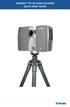 TRIMBLE TX5 3D LASER SCANNER QUICK START GUIDE Equipment 1 8 9 5 6 7 4 3 2 The TX5 laser scanner ships with the following equipment: 1 Scanner transport and carry case 6 USB memory card reader 2 AC power
AxioCam MR The All-round Camera for Biology, Medicine and Materials Analysis Digital Documentation in Microscopy
 Microscopy from Carl Zeiss AxioCam MR The All-round Camera for Biology, Medicine and Materials Analysis Digital Documentation in Microscopy New Dimensions in Performance AxioCam MR from Carl Zeiss Both
Network ScanGear. User's Guide ENG
 Network ScanGear User's Guide Please read this guide before operating this product. After you finish reading this guide, store it in a safe place for future reference. ENG Organization of this User s
User Guide LUXXOR VIDEO MICROSCOPE. 2 Luxxor Video Microscope Set Up
 2 Luxxor Video Microscope Set Up User Guide LUXXOR VIDEO MICROSCOPE Column When removed from its packaging, the Luxxor Video Microscope will be configured as shown, with the Vertical Slide and Slide Stop
Recording the Instrument Response Function of a Multiphoton FLIM System
 Recording the Instrument Response Function of a Multiphoton FLIM System Abstract. FLIM data analysis in presence of SHG signals or extremely fast decay components requires the correct instrument response
Hierarchical Clustering Analysis
 Hierarchical Clustering Analysis What is Hierarchical Clustering? Hierarchical clustering is used to group similar objects into clusters. In the beginning, each row and/or column is considered a cluster.
Spectroscopy Using the Tracker Video Analysis Program
 Spectroscopy Using the Tracker Video Analysis Program Douglas Brown Cabrillo College Aptos CA 95003 [email protected] Spectroscopy has important applications in many fields and deserves more attention
Microsoft Office PowerPoint 2013
 Microsoft Office PowerPoint 2013 Navigating the PowerPoint 2013 Environment The Ribbon: The ribbon is where you will access a majority of the commands you will use to create and develop your presentation.
Adding Animation With Cinema 4D XL
 Step-by-Step Adding Animation With Cinema 4D XL This Step-by-Step Card covers the basics of using the animation features of Cinema 4D XL. Note: Before you start this Step-by-Step Card, you need to have
Adobe Illustrator CS5 Part 1: Introduction to Illustrator
 CALIFORNIA STATE UNIVERSITY, LOS ANGELES INFORMATION TECHNOLOGY SERVICES Adobe Illustrator CS5 Part 1: Introduction to Illustrator Summer 2011, Version 1.0 Table of Contents Introduction...2 Downloading
Creating Interactive PDF Forms
 Creating Interactive PDF Forms Using Adobe Acrobat X Pro Information Technology Services Outreach and Distance Learning Technologies Copyright 2012 KSU Department of Information Technology Services This
Name: Due: September 21 st 2012. Physics 7230 Laboratory 3: High Resolution SEM Imaging
 Name: Due: September 21 st 2012 Physics 7230 Laboratory 3: High Resolution SEM Imaging 1. What is meant by the term resolution? How does this differ from other image variables, such as signal to noise
Micro Cam Software. User Manual V1.3
 Micro Cam Software User Manual V1.3 CONTENT CHAPTER 1: MICRO CAM SOFTWARE INSTALLATION AND CONNECTION... - 1-1.1 SOFTWARE MICRO CAM INSTALLATION... - 1-1.2 WIRED DEVICE CONNECTION... - 4-1.3 SOFTWARE OPERATION
VisiSens AnalytiCal 2 Software
 VisiSens AnalytiCal 2 Software SYSTEMS Instruction Manual Specification: Software for the VisiSens A2 ph Imaging System Version VA2.10 Document filename: IM_VA2_dv2 All rights reserved. No parts of this
MANUAL Device Type Manager
 FACTORY AUTOMATION MANUAL Device Type Manager 2D Laser Scanner OBD10M-R2000-4EP-V1V17 With regard to the supply of products, the current issue of the following document is applicable: The General Terms
SpecLine Offline Spectroscopy Analysis Software SPECLINE-P/SPECLINE-U. Installation and Operation Manual Document Number 000-20000-090-02-1209
 SpecLine Offline Spectroscopy Analysis Software SPECLINE-P/SPECLINE-U Installation and Operation Manual Document Number 000-20000-090-02-1209 Offices: Ocean Optics, Inc. World Headquarters 830 Douglas
MetaMorph Software Basic Analysis Guide The use of measurements and journals
 MetaMorph Software Basic Analysis Guide The use of measurements and journals Version 1.0.2 1 Section I: How Measure Functions Operate... 3 1. Selected images... 3 2. Thresholding... 3 3. Regions of interest...
LEGENDplex Data Analysis Software
 LEGENDplex Data Analysis Software Version 7.0 User Guide Copyright 2013-2014 VigeneTech. All rights reserved. Contents Introduction... 1 Lesson 1 - The Workspace... 2 Lesson 2 Quantitative Wizard... 3
Image Capture Software Reference Manual High Speed Scanner
 Image Capture Software Reference Manual High Speed Scanner Image Capture Software is a software application that is designed to scan high-quality images at high speed from Panasonic High Speed Scanners
MARS STUDENT IMAGING PROJECT
 MARS STUDENT IMAGING PROJECT Data Analysis Practice Guide Mars Education Program Arizona State University Data Analysis Practice Guide This set of activities is designed to help you organize data you collect
product. Please read this instruction before setup your VenomXTM.
 Tuact Corp. Ltd. TM Venom X mouse controller combo Setup Software Instruction Thank you for purchasing our VenomXTM product. Please read this instruction before setup your VenomXTM. Introduction Venom
Table of Contents 2. Table of Contents
 Scanning Options Table of Contents 2 Table of Contents Scanning Overview and Setup... 3 Scanning Tools and Equipment... 3 File Locations... 4 Other Settings... 5 Scanning Options and Techniques... 6 Scanned
User Manual PIXPRO SP360. (Smart Device Version) For KODAK PIXPRO SP360 Action Cam. Ver. 5.1
 User Manual PIXPRO SP360 (Smart Device Version) For KODAK PIXPRO SP360 Action Cam Ver. 5.1 Before You Start Declaration of Conformity Responsible Party: JK Imaging Ltd. Address: JK Imaging Ltd., 17239
Image Editing Helper User s Guide
 Image Editing Helper User s Guide Manual-en-250-0842-E-Image Editing Helper-V100 Copyright Copyright 2014 Avision Inc. All rights reserved. Information in this document is subject to change without notice.
Avigilon Control Center Web Client User Guide
 Avigilon Control Center Web Client User Guide Version: 4.12 Enterprise OLH-WEBCLIENT-E-E-Rev2 Copyright 2013 Avigilon. All rights reserved. The information presented is subject to change without notice.
MicroStrategy Analytics Express User Guide
 MicroStrategy Analytics Express User Guide Analyzing Data with MicroStrategy Analytics Express Version: 4.0 Document Number: 09770040 CONTENTS 1. Getting Started with MicroStrategy Analytics Express Introduction...
SA-9600 Surface Area Software Manual
 SA-9600 Surface Area Software Manual Version 4.0 Introduction The operation and data Presentation of the SA-9600 Surface Area analyzer is performed using a Microsoft Windows based software package. The
Fixplot Instruction Manual. (data plotting program)
 Fixplot Instruction Manual (data plotting program) MANUAL VERSION2 2004 1 1. Introduction The Fixplot program is a component program of Eyenal that allows the user to plot eye position data collected with
Information Technology Lab School of Information University of Texas Summer 2005
 Introduction to Windows Movie Maker 2 1 Information Technology Lab School of Information University of Texas Summer 2005 1. Introduction This paper tutorial is designed as a basic introduction to Microsoft
Twelve. Figure 12.1: 3D Curved MPR Viewer Window
 Twelve The 3D Curved MPR Viewer This Chapter describes how to visualize and reformat a 3D dataset in a Curved MPR plane: Curved Planar Reformation (CPR). The 3D Curved MPR Viewer is a window opened from
USING WINDOWS MOVIE MAKER TO CREATE THE MOMENT BEHIND THE PHOTO STORY PART 1
 PART 1 Windows Movie Maker lets you assemble a range of video, pictures, and sound elements to create a story. It is an application that comes with most PC computers. This tip sheet was created using Windows
edgebooks Quick Start Guide 4
 edgebooks Quick Start Guide 4 memories made easy SECTION 1: Installing FotoFusion Please follow the steps in this section to install FotoFusion to your computer. 1. Please close all open applications prior
Video in Logger Pro. There are many ways to create and use video clips and still images in Logger Pro.
 Video in Logger Pro There are many ways to create and use video clips and still images in Logger Pro. Insert an existing video clip into a Logger Pro experiment. Supported file formats include.avi and.mov.
The only change is a fix of an issue with Ixpress 384 16-shot quality that appeared in V. 3.6.5.
 FlexColor 3.6.6 read me The only change is a fix of an issue with Ixpress 384 16-shot quality that appeared in V. 3.6.5. FlexColor 3.6.5 read me New camera features Support for the Ixpress 96C, 132C and
Protocol for Microscope Calibration
 Protocol for Microscope Calibration A properly calibrated system is essential for successful and efficient software use. The following are step by step instructions on how to calibrate the hardware using
BCC Multi Stripe Wipe
 BCC Multi Stripe Wipe The BCC Multi Stripe Wipe is a similar to a Horizontal or Vertical Blind wipe. It offers extensive controls to randomize the stripes parameters. The following example shows a Multi
Lecture 20: Scanning Confocal Microscopy (SCM) Rationale for SCM. Principles and major components of SCM. Advantages and major applications of SCM.
 Lecture 20: Scanning Confocal Microscopy (SCM) Rationale for SCM. Principles and major components of SCM. Advantages and major applications of SCM. Some limitations (disadvantages) of NSOM A trade-off
Working with SQL Server Integration Services
 SQL Server Integration Services (SSIS) is a set of tools that let you transfer data to and from SQL Server 2005. In this lab, you ll work with the SQL Server Business Intelligence Development Studio to