
4-H Sporting Dog Project Member Guide
|
|
|
- Crystal Terry
- 9 years ago
- Views:
Transcription
1 4-H Sporting Dog Project Member Guide Pointing dogs. Photo Libby Stahancyk, Crook County, Oregon. 4-H Sporting Dog Education and Shooting Sports Program Positive youth development is the primary goal of the 4-H Sporting Dog education program. The program helps young people learn the sport of hunting with dogs by doing activities that teach basic sporting dog training techniques, care, and management. 4-H Sporting Dog and Shooting Sports education goals Encourage participation in natural resources and related natural science programs through exposure to sporting dogs, shooting, hunting, and related activities Enhance development of self-concept, character, and personal growth through safe, educational, and socially acceptable interaction with sporting dogs Teach safe, responsible ways to care for, train, and hunt with dogs Contents For Parents and Leaders... 2 History of Dogs as Hunting Companions... 3 The Hunting Dog Today... 4 Being Prepared... 6 Equipment... 7 Training Methods... 9 General Training Notes... 9 Basic Obedience Training for the Field Training in the Field Putting It All Together Home Life and Your Dog Resources References H 368 September 2011

2 Promote the highest standards of safety, sportsmanship, and ethical behavior Expose 4-H members to the many types of jobs and lifelong hobbies related to shooting sports Strengthen families through lifelong recreational activities Complement and enhance existing safety, shooting, and hunter education programs using hands-on activities and step-by-step development of skills and abilities For Parents and Leaders 4-H helps young people learn and grow through an intentional process that builds life skills. Research has shown that all youth need competence, confidence, connection, compassion, and character five characteristics to become positive, contributing members of society. 4-H is a learn-by-doing program that uses projects as the means to learn and exercise those skills. The 4-H Sporting Dog project is one of many offered through the 4-H program designed to help youth experience and practice life skills. Youth take part year round in the 4-H Sporting Dog project to learn how to raise, train, care for, and manage sporting dogs. They showcase what they have learned throughout the year at different 4-H venues. Adult 4-H volunteers mentor youth in 4-H club work. Adults with skills and interests in specific project areas play a key role as volunteers in the 4-H program. The is for youth and volunteers who participate in the 4-H sporting dog program. It opens the door for youth who are interested in how to train sporting dogs for hunting, companionship, and the 4-H Sporting Dog project. This 4-H member guide focuses on training sporting dogs to hunt birds. The 4-H Sporting Dog project connects youth to the 4-H Shooting Sports program and the 4-H Dog project as well. When used with this guide, resources from those two projects can help 4-H members learn how to raise and train dogs to be good companion animals, family pets, fantastic 4-H project dogs, and sporting dogs. 4-H members interact with and learn from adult volunteers who want to see youth succeed and who have expertise or interest in a specific project area. It is the 4-H volunteer s responsibility to create an environment that is emotionally and physically safe for youth to learn and grow. 4-H volunteers help members do these things: Set goals Learn how to interact with and speak in front of peer groups and adults Develop life skills Sustain relationships Practice leadership Interacting with a caring, responsible adult 4-H volunteer, 4-H members can achieve mastery, independence, belonging, and generosity, and find success in their 4-H Sporting Dog project. Photo DOGS Unlimited and DOGSUnlimited.com. Used with permission. 2

3 American Kennel Club/Robert Young History of Dogs as Hunting Companions Did you know that people used dogs for hunting way back when they were still living in caves? In fact, some of what is known about the use of dogs for hunting comes from paintings archeologists have found in caves dating back more than 12,000 years. In those days, you couldn t open the refrigerator or go to a grocery store. People domesticated dogs to help them find the food and other things they needed to survive. Dogs have helped humans track and find food for hundreds of years. Original hunting dogs fell into two main categories: scent and sight. Dogs could see things the early hunters could not see and especially smell things they could not smell. People needed the hunting dog to help them track and take game and birds for food, pelts and fur for clothing and shelter, and, in some cases, the hunted animals bones to make tools. When people began to develop agriculture, dogs had new roles to play both as helpers and companions. Dogs were essential to the people who first hunted with them, and they have been important to human existence ever since. Things you can do 1. Read books and magazines on sporting dogs and dog training or check out online resources to learn about the sport of hunting with dogs and its history. Make a list of the books and articles you read and websites you visited, and discuss them with your 4-H club and leader. Share some things you learned and how you might use the information to help you in your 4-H Sporting Dog project. Why is knowing the history of things important? 2. Begin a scrapbook about your project. Include pictures of yourself training and hunting with your dog, equipment that you use, and places that you go. How can scrapbooks and records be useful to you in your 4-H Sporting Dog project? How can you use them in everyday life? 3. Sit down with your 4-H volunteer and set some goals for what you want to accomplish in the 4-H Sporting Dog project. Set both short- and long-term goals. How can goals help you be successful in your 4-H Sporting Dog project? What other goals do you have outside of this project? 3

4 American Kennel Club/Robert Young The Hunting Dog Today Though hunting dogs are not usually needed for basic human survival today, people still use them for sport hunting. Also, hunting dogs are companions to the many people and families with whom they belong. Though many dogs are bred just for hunting and sport, they are still looked after and cared for in the same way most people care for their family pets. Dogs often are both hunting and family companions. Over time, hunting dogs have evolved to fit various categories, many of which still fall into the two original ones, sight and scent. This member guide focuses on pointers, retrievers, and flushing dogs, commonly referred to as gun dogs or sporting dogs. Though there are many more kinds of hunting dogs, these are the types most used in the field today. If you are thinking of buying a sporting dog, or have a dog that you want to train to be a good sporting dog, there are a few things to consider. The most important question to ask yourself is, "What types of sporting events do I wish to do with my All sporting breeds have slightly different characteristics and markings, and come in a variety of colors. dog?" It s important to clearly define this before you buy or begin training your dog. Research a variety of different breed types to figure out what kind of dog best fits your needs and home life. Or, maybe you already have a dog that you want to train to be a sporting dog. Do some research about your dog s breed(s) to decide in which category your dog will perform best or to understand better why your dog behaves the way it does at home or in the field. Though many dogs overlap in more than one category (pointing, flushing, and retrieving) and the training techniques for all three categories are similar, each breed or type of sporting dog has different characteristics. Pointing dogs In this guide, the term pointing dog broadly defines breeds of dogs ranging from pointers to setters. In the field, this type of dog uses scent and sight to point to game birds that often hide in dense brush, tall grass, and woods. Some pointing dog breeds are English Setter, German Shorthaired Pointer, German Wirehaired Pointer, Gordon Setter, Irish Red and White Setter, Irish Setter, Pointer, Vizsla, Weimaraner, and Wirehaired Pointing Griffon. German Wirehaired Pointer pup Retrieving dogs Photo DOGS Unlimited and DOGSUnlimited. com. Used with permission. Retrieving dogs get their name from their basic desire to retrieve downed game birds. (This category could include nearly all the variations of hunting dogs. Most sporting dogs can be and are trained in addition to their natural instinct to retrieve various game animals.) Retrieving dogs are used for 4

5 game that thrive both on land and in water, and can be trained for both. Some retrieving dog breeds are American Water Spaniel, Chesapeake Bay Retriever, Curly-coated Retriever, Flat-coated Retriever, Golden Retriever, Irish Water Spaniel, Labrador Retriever, Nova Scotia Duck Tolling Retriever (Toller), and Spinone Italiano. Some flushing dog breeds are Brittany, Clumber Spaniel, Cocker Spaniel, English Cocker Spaniel, English Springer Spaniel, Field Spaniel, Sussex Spaniel, and Welsh Springer Spaniel. All of the many different types of sporting dogs can be trained to point, flush, and retrieve. You can train a Labrador Retriever to point or flush, just as you can train a German Shorthaired Pointer to retrieve ducks in the water. All of the dogs listed can be trained to perform the way you want them to in the field. And even if you have a dog that is not listed here or is crossbred, you can still train it to be a good sporting dog. American Kennel Club/Mary Bloom American Kennel Club/Mary Bloom Labrador Retriever Flushing dogs The word flushing refers to the dog finding and scaring a bird into flight or movement so that the hunter can take it down. Flushing dogs, like retrievers, often bring back the downed bird to the hunter. (The main difference between a flushing dog and a pointing dog is that a pointing dog finds the bird and waits for the hunter to flush the bird. A flushing dog finds and flushes the bird.) English Springer Spaniel Things you can do 1. Research the breed(s) of dog you have, or wish to have, and give a presentation to your 4-H club about what you learned. Be sure to include photos, video, or some other kind of illustrations. What did you learn through this process that you can use in other project areas or with schoolwork? 2. Attend a dog show or sporting dog field trial to see the different types of hunting dogs and how they perform. Take notes on the things you like and do not like about the various breeds that you see. Take notes on behavior, color, energy level, and how attentive they are to their tasks or with their handlers. What did you learn about the different breeds of sporting dogs through this process? How can you pass on the information you learned? 3. Either as a club or individually, volunteer some time at a sporting dog breeder s house or at a dog kennel. Help with feeding, cleaning the kennels, exercising the dogs, and other daily chores that come with raising a dog. While you are there, talk to the breeders about different breeds of sporting dogs and ask them about training methods, how the dogs behave when they are not performing, and what the dogs are like with other members of the family. What did you learn about your project through your time spent volunteering? What other ways or where else can you volunteer in your community to help people, organizations, or businesses? 5

6 Photo by Michael J. Galante, Being Prepared Owning a dog is a commitment you will have for many years (some dogs can live more than 12 years). Before you get a puppy, be prepared for all that comes with being a responsible pet owner. The idea of training a sporting dog, performing in field trials, or hunting with your dog can be fun and energizing. But whether or not you train, perform, or hunt with your dog, you still have to take care of it every day. When considering whether you want to get a dog, begin by having the support of everyone in the house. Because a dog can entirely change the dynamics of a household, it s a good idea to make sure that everyone in the house has had a chance to think about it. If your household decides that owning a dog is not the best course of action, maybe you know someone who has a dog that they would like you to train for them. There are many questions to consider before you get a dog or puppy. Who will take care of the dog when you are not home? Who will watch the dog when everyone in your house goes on vacation? What happens to the dog when you leave for college? Do you have a place inside the house for the dog? Do you have a kennel or dog run outside, or is your back yard fenced? How are you going to cover the costs of owning a dog (purchasing the dog, food, license, vaccinations, veterinary care, equipment, training supplies, and other costs that come up along the way)? Will you have enough time to spend with the dog each and every day? In the house, dogs sometimes need something to do to keep from being bored. These are just a few of the many questions all dog owners must be ready to answer before they get a dog or puppy. Owning a dog can be very rewarding and fun. It can teach you a lot about responsibility. But it can also be difficult and stressful at times. Being prepared before you get a dog is a good way to ensure success as a responsible pet owner. Things you can do 1. Make a list of all the reasons you want a dog and all the things you think may be difficult about owning a dog. Sit down with your mom, dad, or other adults in the house and discuss the list with them. Ask them if they can think of anything you may have missed. Why is it important to think about and discuss these things before you get a dog? How is talking to your parent(s) or mentor helpful before you make decisions? 2. If you decide you definitely want to get a dog, sit down with everyone in the house and ask how they feel about it. Talk about some of the different breeds that might be an option and why, and decide what kind of dog (breed, size, and temperament) will be best for the household. How will getting a dog affect everyone in the house? Why is it important to talk to others before making a decision that will affect someone else? 3. Go online or visit the local pet shop to find out how much it costs to buy the equipment needed to raise, take care of, and train your sporting dog. Talk with your mom, dad, other adults in your house, or a mentor about some of the costs of owning a dog. Make a budget to show how much money you will need and how much you have. How do you plan to pay all the costs of owning a dog? How are budgets useful in other areas of your life? 4. As a club, visit a local veterinarian to talk about general care and management of a dog. Ask about immunizations, feeding rations and schedules, grooming, personality, and activity levels of sporting dogs. What did you learn from visiting the veterinarian? How can talking to professionals be helpful when you want to learn about something that interests you? 6

7 Equipment There are lots of different training materials, equipment, and tools you can use while training and hunting with your dog. This section covers some of the basic equipment used with sporting dogs. 15- to 30-foot leash/rope/check cord is used in a dog s training when it is not quite ready to be off leash but is ready to perform basic commands at a distance further than 4 feet from the handler. 4-foot leather leash is used to begin a dog s basic obedience training. It helps teach a dog how to walk on a leash and how to heel at the handler s right or left leg. It also helps in the training process when a handler requires close and quick access to the dog. Boots help protect a dog s feet from objects in the field. They help avoid injury to the dog s legs, feet, and pads. Buckle collars are worn when dogs are transported to or from the field. Identification, license, and/or vaccination records often are attached, and most dogs also wear them around the house. Dumbbells and dummies are commonly used to teach the basic retrieval technique. They are used both for training and performance classes. They come in a variety of shapes, sizes, and materials. Some are made to float in water. First-aid kit. Have a first-aid kit on hand whenever you are away from home and while hunting. Your first-aid kit should contain basic things you would need (like bandages and ointment) so you can help your dog if it were to get hurt or injured in the field. Floatation vests are for dogs that spend a long time in the water or in boats while hunting. The vest keeps the dog afloat, like a life jacket for humans. They come in various sizes and colors. Some handlers prefer bright fluorescent orange to make the dog more visible; other handlers prefer camouflage patterns or solid dark colors to help shield the dog from the sight of approaching game birds. Kennels and carriers are used to safely transport dogs from home to the field. There are several different kinds, including enclosed and wire, and various sizes. Platforms and ramps help hunting dogs maneuver from boat to water or offer them a place to stand or sit while in the field. They are mainly used when hunting ducks from a blind or boat. Retractable leash or Flexi leash is often used while training (especially in the field). Either allows the dog to move freely at various lengths while allowing the handler, by retracting the leash, to keep the dog at the distance of choice. Safety vests make a hunting dog more visible to other hunters and dogs, like the hunter orange vests that gun hunters wear in the field. Slip collars are used while training a dog on leash. A slip collar allows the handler to make quick corrections, such as when teaching a dog to sit or not to lunge at the end of the leash. These Check cords Leather leash Boots Orange buckle collar Training dummies All photos this page DOGS Unlimited and DOGSUnlimited.com. Used with permission. 7

8 collars are also called snake chains, choke chains, training collars, and martingales, and come in many different styles. Never leave a slip collar on a dog while it is unattended, and never use one when a dog is tied up. Training wings (either fabricated or authentic) are used to teach basic retrieving methods and help simulate the feeling of a game bird s wing in the dog s mouth. They are also used to help teach scent retrieval. Vibrating or shock collars are used both during training and in the field to teach a dog to respond to certain commands. The handler uses a hand-held remote control while the collar is on the dog. Whistles are used both during training and in the field to teach a dog commands either in addition to or in the place of voice commands. Things you can do 1. Visit a local sporting goods shop or pet store and look at the different types of dog training equipment for obedience, hunting, or field trials. How can researching equipment before you buy it help you be successful in your project? How can doing research help you make better decisions in other areas of your life? 2. Assemble a first-aid kit that is easy to carry. Take it with you when you take your dog out to train, to field trials, or to hunt. How did you decide what to put in the kit? What did you learn about making the kit that you can apply to your 4-H Sporting Dog project? For what other interests or hobbies could you use a first-aid kit? 3. As a club, brainstorm and decide on equipment that all members of the club could use during meetings. Come up with a plan to raise the money. Conduct the fundraiser. As a club, budget what you earned, and buy the equipment. What did you learn about your club through this whole process? Are there things the club could have done differently to be more successful? What did you learn from the group process that will help you when organizing or working with other groups? Pheasant dummy Electronic training collar Safety vest (for visibility) Training wings Whistles Professional first-aid kit All photos this page DOGS Unlimited and DOGSUnlimited.com. Used with permission. 8

9 Training Methods There are many different training methods. This 4-H member guide does not explain each training method in depth. It helps define some of them and gives some training steps so you will have the basic skill set you need to begin training your dog. There are also many resources available on dog training methods. To train your sporting dog correctly and well, you will need to use some of these other resources along with this member guide. Try a variety of different methods to find which one works best for you and your dog. Your 4-H volunteer can help support, train, and guide you through the process. Because many of the training techniques require that you work often with your dog, it is important that you are comfortable with a method and can work on it with your dog even if your 4-H leader is not there to help. Part of building confidence in yourself and your dog is to learn and practice on a regular basis. Though it is important to train your dog while it is a puppy, keep in mind that older dogs can be taught sporting techniques as well. And remember that it can take several years before you and your dog (young or old) reach the level of skill you hope to achieve in the training process and in the field. Teach your dog the basics before putting it in situations with live birds. If you advance a dog too quickly, you can cause frustration for both you and your dog. Learn the training steps in this member guide in the right order, and that should help you reach success. That said, you might find it easier during the training process to teach certain steps in a different order or to train multiple steps at a time. It is up to you and what you think is best while training your dog. General Training Notes Before you begin, understand that the keys to teaching your dog anything are consistency, repetition, and praise. Consistency in training means to use the same commands every time you work with your dog. If you change the way you give your dog a command, it may become confused. For instance, if you use a certain hand signal to teach your dog to come, you must always use exactly the same hand signal to tell your dog to come. Changing the hand signal or teaching a different command with a very similar hand signal could confuse your dog. Repetition is very important when training dogs. You cannot expect your dog to learn anything if you do not take the time to teach it. You have to be committed to the training process, which means taking time each day or several times a week to work with your dog until it is well versed in what you are trying to teach it. Praise your dog every time it responds the way you want it to (especially in the training stage). Be sure you show your dog that you are happy when it does well. Some trainers also use treats or some other sort of reward along with praise to let the dog know that it performed well. You will have to decide whether you want to give rewards. Work with your dog often to help reinforce what you want it to learn. An adult 4-H volunteer can help you learn new dog training techniques. Photo DOGS Unlimited and DOGSUnlimited.com. Used with permission. 9

10 Photo DOGS Unlimited and DOGSUnlimited.com. Used with permission. Basic Obedience Whether you focus on pointing, retrieving, or flushing, your dog must first know these very basic obedience commands: come, sit, stay, and heel. Before you start any hunting exercises with your dog, it may be a good idea to attend some formal obedience classes or join a 4-H dog club to learn some of the basics of obedience. Come All dogs need to know that when you call their name, they are to come. This can be taught in a variety of ways, but the most basic way is to put your dog on a leash and take it for a walk. When the dog begins to stray on leash or to focus on things other than you, simply say the dog s name and give the command to come. When the dog responds, give it lots of praise (and a treat, if you like rewarding your dog with food). Do this many times until your dog starts to respond attentively every time. If your dog does not seem to respond fast enough, give it a slight tug on the leash so that it recognizes you are asking it to come back to you. When correcting a dog on leash, be sure to tug the leash tight and immediately release the tension. When used correctly with a training collar, the dog receives a popping sensation. This gets the dog s attention and sends the message that it needs to focus on you. Start with a short (4-foot) leash. When your dog is ready, change to a 15- to 30-foot leash or check Come is one of the most important obedience commands you can teach your dog. cord. Your dog should respond every time you call it by name, no matter how far it is from your side. When your dog comes repeatedly and you feel comfortable enough, remove the leash and repeat the steps. As your dog begins to wander off, call it by name and tell it to come. Respond with lots of praise (and treats, if you wish). Sit and stay Once your dog has mastered the come command, it is time to introduce the sit and stay commands. Begin by placing your dog on a short (4-foot) leash. Place one hand on your dog s collar and your other hand on its rump. Gently press on its rump while holding the collar in your other hand, and tell the dog to sit. When the dog sits, respond with lots of praise (and a reward, if you wish). Do this for several minutes at different times of the day. Within a few days, your dog will learn to sit on command. Always remember to praise it when it does. (Continue to use treats or other rewards until your dog no longer needs them.) Use your hands to help teach your dog the sit command. Once you and your dog have mastered the sit command, you can start working on stay. It is important that you teach your dog to sit and to 10

11 Photo by Michael J. Galante, com stay for long stretches of time. You should be able to put your dog on a sit-stay and expect it not to move, even if you are walking around it, wandering around the yard, or going out of its sight. The dog should never move until you release it. Begin by saying your dog s name, telling it to sit, and then to stay. When your dog has not moved for several seconds, release it with lots of praise (and a treat, if you wish). Do this repeatedly several times a day for many consecutive days. Make sure to lengthen how long your dog has to stay sitting each time. Gradually work your dog up to the point that it will stay until you release it, even when you go out of its sight. Remember, repetition is the key when training your dog, no matter what type of task you are asking it to do. As your dog learns to sit and stay, gradually increase the distance between you and the dog. Heel Teaching your dog to heel takes time. Start by taking your dog for a walk. Keep the dog on a short leash and focused on you while keeping its head and shoulders close to either your right or left leg. Your dog should get comfortable walking next to you without lunging on the leash or causing you to maneuver around it. As you walk, say the dog s name and give the command to heel. If the dog lunges in front, lags behind, or tries to wander off, say heel with light corrections on the leash or a treat to focus your dog s attention. You will need to work with your dog several times throughout the day for many consecutive days to teach it to heel. Each time you stop, your dog should sit next to your right or left leg. To teach this, have the dog sit next to you, give it the heel command, and take a few steps forward. When you stop, ask your dog to sit. If it does not sit on the first command, repeat the command again and at the same time maneuver the dog into a sitting position next to your leg. Again walk forward telling your dog to heel, stop after a few paces, and ask your dog to sit. Eventually, your dog will learn that when you tell it to heel, it walks next to your leg and stops at a sit when you stop. Gradually, over time, work your dog to the point that it can do this off the leash. When your dog has learned both to come when it is called and to sit on command, you can teach it to sit every time it comes to you. This helps you keep better control of your dog when you are out in the field by stopping its urge to come running up and then run circles around you, jump on you, or even knock you over. To teach this, let your dog wander off a bit, and give it the command to come. When it responds and comes back to you, position it either in front of you or next to you on either side, and ask it to sit. When the dog sits, praise (and reward) it. Practice this until every time you call your dog, it comes back to you and sits before doing anything else. Once your dog heels consistently, you can include other dogs as distractions during training sessions. 11

12 When heeling, your dog should always sit within arm s length of your right or left leg when your stop. Things you can do 1. Attend an obedience, agility, or hunting dog field trial to see the different ways a dog and its handler interact. What did you learn from observing those interactions? How can you apply what you learned to your own training techniques? How can you use observation for your other interests? 2. Enroll with your dog in a formal obedience class to get extra help in teaching the basic obedience commands. Then, think about what you learned in those classes, and apply what you learned to your sporting dog training routine. How did the classes help you? What could the classes have taught you more about? How can taking part in other dog-related activities help you in your sporting dog project? 3. Once you and your dog have mastered each obedience command, demonstrate to your club and 4-H leader what you have taught your dog. Share with them how you did it, how long it took, and how often you worked with your dog. Think about how you can show, help, and guide others in your club to achieve the same level of knowledge and obedience training as you and your dog. 12

13 American Kennel Club/Robert Young Training for the Field Once you have successfully taught your dog the four basic commands (come, sit, stay, and heel), you are ready to begin training your dog for the field. Remember that repetition is just as important in the field as it is for basic obedience. All the training techniques covered in this section will take your dog a lot of time and practice to perform perfectly and consistently. It takes many trips to the field and many months (perhaps years) before you and your dog are performing as a team in the way you hope to achieve while hunting or competing in field trials. When your dog is responding well to commands at home, begin training sessions in the field or other new place. Some dogs learn faster than others. Like humans, every dog is different and trains and responds differently. The most important thing to remember as a handler and trainer is that you are working with an animal that does not understand or think through things the same way you do. Just because you get it does not mean your dog will get it. Training any animal can be frustrating at times. If training or working in the field gets challenging, continue to practice, continue praising your dog when it is good, and do not be afraid to return to simple training methods. It is more important to take steps back and retrain your dog than to continue pushing it to do something it may not fully understand. Dogs, by nature, want to please. Making it easier on them and allowing them fun and proper training time will make for better rewards in the end. Whistle training Whistle training is useful for all hunting dogs in the field. High winds and terrain can muffle your voice so that your dog cannot hear your commands. There are a variety of dog whistles on the market. Find one that you are comfortable with and that your dog responds to. Whistle come command You can easily train your dog to come to a whistle if your dog is already trained to come and sit (either in front of you or in the heel position) when you call it. Take your dog outside and let it wander off a bit. Say your dog s name, give it the command to come, and immediately follow that command with a whistle command of your choice (for instance, three shorts breaths on your dog whistle). When your dog responds and comes back to you, give it lots of praise (and a reward, if you choose). Do this several times throughout the day for many days in a row. The goal is to give a whistle command and have your dog come to sit next to you without hearing its name or the come command. Be sure to alternate using a voice command and a whistle command. You want your dog to respond to both, no matter which one you use. If you mix it up, your dog has to keep processing what you are telling it, leaving it little time to become distracted. As with any training technique conducted off leash, if your dog is not responding fast enough or with the response you command, put it back on a short leash and begin the training process again. The short leash gives you better control because the dog stays closer to you. Whistle stop command If you have already taught your dog to sit on command no matter what distance it is from you, then this step in whistle training will be much simpler. While you are out playing with and training your dog, give it the sit command and immediately follow that command with a specific whistle command (for instance, one short breath on your dog whistle). By doing this repeatedly, your dog will soon recognize that one short whistle is the command to stop and sit no matter where it is, what it is doing, or how far away from you it is. Again, alternate using your voice and the whistle to give the stop 13

14 Work your dog off leash once it is responding well while on leash. and sit command. Your dog will learn to respond to both commands the same way. If your dog does not respond to the whistle command while off leash, put it back on a short leash and begin the training process again. Repeat this process on leash until the dog is responding; then try it again off leash. Repetition and lots of praise are the keys to success. Hand signals Hand signals can be just as effective as voice and whistle commands and are equally important when training your dog for the field. Hand signals work well when your dog is focused on you and sound is not going to work. For example, the wind might be blowing hard enough to muffle the sound of a This is an example of a hand signal you can use to teach your dog to come. whistle. Or, while hunting, you might need to be very quiet so you do not spook the game. In these two cases, hand signals are very useful. Just as for the training techniques we have covered so far, repetition and consistency are very important for training with hand signals. You must ensure that each hand signal is distinctly different and use each one consistently. There are a multitude of hand signals used for training sporting dogs. Each signal represents a different action you wish your dog to perform. Take the time to research which hand signals are most commonly used or will work best for you. Remember to keep the hand signal for a specific action the same every time, and be sure that each signal is unique. Use the same steps to train your dog with hand signals as you did in whistle training. Give your dog the command to come and at the same time show a hand signal of your choice, like swinging your right hand from your stomach around to the side of your right leg (or vice-versa, using your left hand and left leg). Do this several times throughout the day for many days in a row. Eventually, when your dog sees this signal, it will recognize the command to come. Follow the same steps to teach your dog to sit with a hand signal only. Give it the voice command to sit and at the same time show a specific hand signal, such as holding your right or left hand directly out in front of your body, fingers up and palm facing the dog. Soon your dog will sit when it sees that hand signal. As your dog progresses, you can begin teaching hand signals that command it to retrieve in a specific direction. For instance, if you want your dog to retrieve an object to the right of you, make a throwing motion to the right with your right hand while giving the dog the voice or whistle command to retrieve. Your dog will learn Use hand signals to direct your dog to a specific location or object. 14

15 to associate the direction of your throwing motion with the direction you wish it to go retrieve. There are a number of different exercises for teaching this command. Practice and consistency are most important. Again, mix it up. Alternate using hand signals, whistle commands, and voice commands, allowing your dog to master each method of command without focusing on one type of command more than another. This will help reinforce that whenever you use a sound or hand signal, your dog needs to respond in the way it was trained. Mixing it up ensures that when you take your dog into the field, no matter the conditions, it will know what it is supposed to do based upon the command or signal you give. Mixing it up when training helps keep your dog from getting bored with the same commands and keeps its attention constantly on you. Collar training Collar devices are often used while training sporting dogs and are commonly seen in the field. There are training collars that make sounds (similar to a whistle), that vibrate, or that shock. There are many different opinions about how to use these collars and whether or not they should be used at all. Remember that there are many different techniques for training a dog. What is most important is that you, the handler, use the training techniques and tools that are most comfortable for both you and your dog. If you decide to use a vibrating or shock collar, it is critically important that you read the collar manufacturer s instructions before putting it on your dog. Vibrating and shock collars can injure a dog if used incorrectly. Be sure to fit your dog with the correct size and use the correct amount of vibration or shock. Be careful, and use these collars with discretion. Training and hunting with your dog should be fun for both of you. If you use these types of collars inappropriately, you can cause your dog to respond negatively or not at all. Training collars are another way to teach dogs the basic commands (come, sit, stay, and heel) and any other commands you need in order to be successful in the field. Repetition and consistency are still the most important techniques, along with giving lots of praise (and a reward, if you choose). To train your dog to respond to a collar device, say the dog s name and give it the voice command to come while making the collar produce either a noise or vibration. Do this repeatedly, several times a day for several days in a row. Always praise your dog when it responds to the command you are giving it. When working your dog off leash during collar training, if it is not responding fast enough or in the way that you command, put it back on a 4-foot leash and begin the training process again. Keep the dog on a short leash until it is responding correctly, and then proceed to either a longer leash or check cord or take the dog back off leash again. Retrieving Put your dog back on leash while collar training to help reinforce the training commands. Most hunting dogs are trained to retrieve whether they are bred for flushing, pointing, or retrieving. Though some dogs can be taught to retrieve whether they want to or not, retrieving is something a dog should want to do. Keep training times fun and energetic. Teaching your dog to retrieve can be playtime with your dog. Begin by simply playing fetch with your dog. Start with a lightweight object that is a comfortable fit for your dog s mouth. (Remember, just because it is easy for you to hold does not mean that your dog can easily carry it.) Throw the object, and have the dog bring it back to you. If your dog is reluctant to pick it up, try putting something tasty on it to tempt the dog. Practice this with your dog several times a day for several days in a row. Once your dog is retrieving consistently and is enjoying it, the next step is to have the dog retrieve the object, come back to you, and sit either in front of you or in the heel position. Follow the steps outlined in the basic obedience section to teach the dog to return to you and sit. Once your dog 15

16 Photo by Michael J. Galante, com Playing fetch with your dog is fun and a great way to teach your dog to retrieve. retrieves the object, returns to you, and sits, reach down and take the object from the dog s mouth, telling it to either drop it, release, give, or any other command you want to use. Some dogs like to play tug-of-war with objects. Teach your dog to give you the object on command to prevent the tug-of-war play and help you be more efficient in the field. Some dogs think it is fun to run around in circles after they have retrieved an object. Teach your dog to retrieve the object, return to you immediately, sit, and give you the object. This sets the stage for success in the field. This is helpful especially when you want to get going to your next bird or be ready when the next flock of ducks approaches. If your dog is reluctant to return the object to you while off leash, try putting the dog on a flexi-leash or check cord and continue with the training process. Having the dog back on leash allows you more control as you teach it to retrieve. Make sure your dog knows the command to retrieve while on leash before practicing off leash. Retrieve on command Once your dog has accomplished the art of retrieving, sitting after the retrieve, and giving the object to you on command, it is ready for more training. Put your dog on a sit-stay, place the object where the dog can see you do it, and then walk away from the object. Give your dog a command to retrieve (like find the bird ), and have the dog return the object to you. This helps teach the dog how to retrieve on command. In the field, your dog will often need to perform this type of retrieve, especially if it is a duck dog or there is more than one game bird to bring back. Retrieve by scent When your dog is comfortable retrieving on command, you can move on to more advanced training methods, such as adding the scent of a particular bird to the object. This helps teach the dog three things: 1. The dog becomes familiar with the scent of various game birds. 2. The dog acquires a taste for having a bird in its mouth. 3. The dog begins to use its sense of smell to find and retrieve birds. Place a scented object somewhere out of sight (for example, stuffed in a pile of hay or under some brush). Then give your command to retrieve, and allow the dog time to find the object. If your dog needs help, walk in the general area of the object and keep encouraging the dog to find it. When your dog finds the object, respond with lots of praise. Training wings are good tools for teaching your dog to recognize bird scent. Photo DOGS Unlimited and DOGSUnlimited.com. Used with permission. These are simple techniques to teach your dog to find and retrieve objects similar to what it will encounter in the field. Lots of field training and practice time are necessary for the dog to be successful. 16

17 Introducing gunfire Before you handle any firearms (cap guns or real guns firing blanks or live rounds), you first must take a firearm safety handling class. Be sure you know how to handle a firearm properly. Never handle a firearm (loaded or unloaded) without the supervision of an adult. the dog s head. Always ignore the dog s response to the sound. Once your dog is fully accustomed to the sound of the cap gun, it is time to visit the field with a larger-caliber firearm. A sudden change from a cap gun to a 12- or 20-gauge shotgun may be too severe, so start with a.22 with blanks, a blank pistol, or a.410 shotgun. Most sporting dogs that will hunt game birds need to become accustomed to the sound of gunfire. There are several different methods of training these steps. No matter which method you use, start out with a cap gun. A cap gun tends not to be as loud or startling as blanks or live ammunition, so it may be easiest on your dog. Start by firing the cap gun at different times during the day when you are 15 feet or further away from your dog. For instance, if your dog is playing in the back yard, wait until it is not paying attention to you, and fire a shot from the cap gun. Ignore your dog s response to the sound, and continue with what you were doing. Do this a couple of times during the day. Another option is feeding time (this is best done outside). Start to set your dog s bowl of food on the ground. As it comes running over to meet you and is at least 15 feet way, fire a shot from the cap gun and continue the feeding. Ignore the dog s response to the sound. By ignoring the dog s response, you are neither teaching it to be afraid of the sound nor are you reinforcing that the sound is okay. You are just allowing your dog the time it needs to become familiar with the sound. Eventually, your dog will get used to the sound, and gunfire will become a natural noise that it doesn t fear or worry about. Do this for several days. Over the next couple of weeks, start the process again, only this time fire the cap gun closer to your dog each time. Keep working until you can fire the cap gun within a few feet of your dog or over When you introduce your dog to gunfire, start with small-caliber firearms or cap guns before using largecaliber shot guns. Begin by walking your dog on a 15- to 30-foot leash. Have someone walk beside you and fire a shot from a medium-caliber firearm. If your dog does not seem to mind the louder noise, try a largercaliber (such as a 12- or 20-gauge shotgun). You will have to do this exercise many times to be sure your dog can handle the sound of a regulation game bird load. If your dog appears anxious or stressed from the louder noise, you may need to go back to the cap gun for a few more training sessions. Be sure your dog is accustomed to having firearms around before you introduce gunfire. American Kennel Club/Robert Young 17 Photo by Michael J. Galante, com

18 American Kennel Club/Robert Young Sometimes, just the presence of a firearm in hand can cause a dog to shy away. Never point a firearm directly at your dog in a commanding manner. Instead, have your dog come to you while a firearm is nearby or in your hand, and pet the dog and praise it when it obeys. Be sure the firearm is not loaded. Let your dog grow accustomed to seeing you with a firearm in hand so it learns not to fear it. Once your dog is comfortable enough with one large-caliber firearm, try the exercise with two or three shooting at different intervals to get the dog used to a real hunting situation. Eventually, your dog will be able to respond to your commands off leash while you are doing this exercise. If your dog has grown accustomed to the sound, it should not run off or shy away from the presence Wear hunter orange for safety in the field and when you are hunting. and noise of firearms. Things you can do 1. Attend a hunter safety course to learn about proper firearm handling techniques. How did the hunter safety course reinforce some of your training techniques? How can you apply what you learned to your training sessions? How will the hunter safety course affect you as you continue training and working your dog in the field? 2. Visit a gun club and talk to members about hunting with dogs in the field. Take your dog along with you to the gun club to get it used to different people with firearms and the sound of multiple gunshots (do this only after you have completed gunfire training with your dog). How does talking to other people about their dogs and their training methods help you with your dog? How can you help others learn about and train sporting dogs? 3. Take part in a field dog trial or hunt test. Why are field trials or hunt tests important to the sporting dog industry? How can competing in a field dog trial or hunt test help you with your sporting dog project? How can you apply what you learned to other areas of your life? 4. Join a 4-H Shooting Sports club. 18

19 American Kennel Club/Robert Young Training in the Field You have completed basic obedience training, taught your dog some whistle commands and hand signals, practiced with an electronic collar (if you choose to use one), and introduced your dog to the sound of gunfire. Now it is time to put it all together and begin training your dog for live birds in the field. There are many different ways to teach your dog how to react when it comes upon a bird in the field, or how to retrieve on command when you have downed a bird in the water or on land. In this section, you will learn some basic field training techniques specific to pointing, flushing, and retrieving dogs. Further training and practice and other resources are needed to be sure your dog is ready for live hunting. Many different breeds of dogs can be trained to retrieve birds. Pointing dogs Though pointing dogs should have some natural instinct to point to a bird when they come upon it, they also have minds of their own. You will have to train your pointing dog to know how to react correctly when it comes upon a bird in the field. Start by taking your pointing dog into the field on a 4-foot leash. Take a training dummy or bird wing and cover it with bird scent so that it smells like a live bird. Have someone place the bird (object) in a field so that you know where it is but the dog does not. Walk the dog downwind of the object about 75 to 100 feet away. Slowly approach the object with the dog in the heel position. Try to focus the dog s attention out in front by telling it to find the bird. When your dog picks up the scent, you should notice a change in its behavior (pricked ears, sniffing, perhaps whining a little). Praise your dog, and keep approaching the object slowly. When you get within 10 to 15 feet of the object, and your dog definitely smells the bird scent, give a whoa or stop command. This helps teach the dog that as it approaches birds, it needs to come to a stop and wait for you to approach. When your dog stops and is looking intently at the object, give lots of praise, and try the exercise again. This time, approach from a different direction or have someone move the object to a different spot. Eventually, switch from a 4-foot leash to a 15- to 30-foot leash or check cord and continue the exercise. On a longer leash, allow your dog to move out in front of you instead of staying in the heel position. As soon as the dog comes within 10 to 15 feet of the object and is looking or pointing toward it, give a stop command, and walk up next to the dog. Release the dog with lots of praise, and try it again. Do this several times with the bird in many different places, such as in high brush, short grass, a hedgerow, or on a fence line. This lets your dog practice different scenarios that it might encounter in the field. Eventually, your dog no longer will need to be on leash during this exercise. It will approach the object, stop 10 to 15 feet away and point toward the object, and wait until you come to its side and give the command to release. The next step involves adding the retrieve to the exercise. These steps are covered in the section Retrieve on command with gunfire (page 20). Flushing dogs Flushing dogs can be trained in a similar way to pointing dogs. Start your dog on a 4-foot leash. Have someone place an object that has been covered in bird scent, such as a training dummy or wing, downwind about 75 to 100 feet. Be sure that you know where the object is but the dog does not. Approach the object from downwind while keeping your dog in the heel position. Try to focus your dog s attention in the direction of the object. As you approach the object, your dog should begin 19

20 American Kennel Club/Robert Young to pick up the scent. When you are within 15 feet of the object, and you know your dog clearly has the scent, give a whoa or stop command. Then release your dog and do the exercise again from a different approach or with the object in a different spot. Perform this several times until you can approach the object with your dog off leash. Be sure your dog stops when you give it the whoa or stop command. Some flushing dogs are trained to wait for the handler to catch up to them. Others are kept very close to the handler using voice, whistle, hand, or electronic collar signals. The important thing is that the dog understands a whoa or stop command so that the hunter has time to get into a shooting position. Then the dog should wait for the command to flush the bird (scare the bird into motion or flight). At this point, the hunter can shoot the bird. To teach your dog to flush on command, you must have access to live birds and be able to control your dog so that it won t scare up the bird until you are ready. First, have someone place a bird so you know its general whereabouts. The bird can be tied to a string or loose, depending on the wishes of the bird s owner. Start by approaching the bird with your dog on a short leash. When you know that your dog clearly sees or knows where the bird is, give it the whoa or stop command. Then give the command that your dog recognizes to proceed toward the bird. When the bird flushes, give your dog lots of praise. You must have enough control of your dog to be able to call it off the bird no matter how intently the dog is focused on chasing it. Do this exercise several times during a training session for many days before advancing to a longer leash or rope and before you take the Flushing dogs scare birds into motion or flight from their hiding places. dog off leash completely. Keep your dog on leash when introducing live birds. Gradually work the dog from a 4-foot leash to a 30 foot leash or check cord before going off leash. Retrieve on command with gunfire It is important that all hunting dogs know not to retrieve a bird until their handler has given the command to do so. When your dog has learned this well, you are ready to start training it to retrieve on command while in the field. Start with the same steps as in previous sections: 1. Have someone place an object covered in bird scent 75 to 100 feet in front of you and your dog, making sure the dog does not see where the object is. 2. Have your dog approach the object and stop when it is a good distance from it, allowing you time to get in position. When you are in position and are sure your dog knows where the object is, fire a shot over the dog s head and give the command to retrieve. Have your dog retrieve the object, bring it back to you, and sit. Do this exercise several times in a training session, and repeat for many days, weeks, and months if need be. Water retrieve on command with gunfire Teaching the water retrieve is very similar to teaching the retrieve on the ground. The main difference is that you have less control of your dog once it enters the water, because most of the time you will not practice the water retrieve while your dog is on leash. Have your dog sit near the water. Have a partner throw an object out into the water. At the same moment, fire a shot over the dog s head in the direction of the object. When the object lands in the water, give the command to retrieve. Have the 20 Photo DOGS Unlimited and DOGSUnlimited.com. Used with permission.

21 Photo DOGS Unlimited and DOGSUnlimited.com. Used with permission. American Kennel Club/Robert Young Use training dummies when teaching your dog to retrieve in the water. Be sure your dog is well accustomed to water before you put it in real hunting situations. dog return the object to you and sit. Practice this exercise several times in a training session, and repeat for many days, weeks, and months until you are confident that your dog will retrieve every time, with the corresponding command and with gunfire. You can use these training steps along with other resources to train your dog for the kinds of field trials, hunt tests, or hunting you want to do. Remember that you can train a retrieving dog to flush or point, a flushing dog to point, and a pointing dog to flush and retrieve. Keep two important things in mind when you decide how to train your dog: 1. How you want your dog to perform in the field 2. What type of hunting (land or water) you will do most often Things you can do 1. Read books and online articles and watch videos about how to teach your dog to flush, point, and retrieve. Demonstrate to your club the new techniques you have learned. How did it feel to demonstrate what you learned in front of a group of peers? How can you help others feel comfortable demonstrating what they have learned in front of the group? 2. Attend a clinic or seminar on how to teach your dog to be successful in the field. How did the clinic help you become a more successful sporting dog trainer? What did you learn that you can use with your dog or when helping other members in your club? 21
22 Photo DOGS Unlimited and DOGSUnlimited.com. Used with permission. Putting It All Together Your dog is ready for the field. Before you go out, make certain that you have done all that is necessary to comply with rules and regulations and to take care of yourself and your dog. Always take food and plenty of water for yourself and your dog. This is especially important if it is a hot day and you will be out for a long time. Keep your dog hydrated so it won t get exhausted or suffer worse harm that could require medical attention. Take along a blanket or towel if your dog will be out in low temperatures or retrieving in water (especially in winter). Like you, your dog must be able to get dry to be sure it doesn t get too cold. Take a first-aid kit for yourself and your dog. You never know what your dog might get into while in the field. Cuts, scratches, and burrs all need attention from time to time. A first-aid kit with the appropriate contents can help ease your dog s discomfort if it is injured. Always take a first-aid kit as part of your equipment when training or hunting in the field. When you take your dog hunting with other people and their dogs, stay aware of where your dog is, where other hunters dogs are, and where the other hunters are as well. Keep yourself and your dog at a safe distance from others while hunting. Any type of highly visible clothing (such as hunter orange) that you can wear yourself and put on your dog will help make sure that other hunters can see you and your dog. Oregon (and other states) has different requirements for using hunter orange depending on the species of game you are hunting. Check the hunting regulations for your state, area, and game species to ensure you follow all appropriate and required hunting regulations. Wear hunter orange while in the field. It helps keep you visible to others. Remember, it is your responsibility to know and understand the laws that hunters must follow. Make sure you visit your local fish and wildlife office to confirm that you are in compliance with all the hunting regulations that both you and your dog must abide by while in the field. Ask about the game tags and licenses you are required to carry. Make sure you know what vaccination papers and identification you must have for your dog when taking it out on public land. If you have never hunted before, go along with someone who has experience before venturing out by yourself. There is a lot you can learn (both good and bad habits) from watching other people and their dogs in the field. Watch videos to find out what a real hunting situation might be like before you experience it firsthand. Plan where you will be hunting, and tell someone your plan. Do not change plans without telling someone. Photo DOGS Unlimited and DOGSUnlimited.com. Used with permission. 22
23 Things you can do 1. Watch a video about hunting dogs that shows real hunting scenes to get a better idea of what to expect in the field. Critique the scenes in the video. Write down the positive things you saw and some things that could have been done differently. Compare your notes to your own training and hunting regimes. Note the areas in which you see progress and where you still experience challenges. 2. Contact your local fish and wildlife office and ask about the tags and licenses you need before you hunt with your dog. How do required tags and licenses help in game conservation? How can you as an outdoor enthusiast have a positive impact on game conservation? 3. Go on a hunting trip with a mentor or someone else from whom you can learn. Watch how this person works with his or her dogs. Take notes on the different voice commands, hand signals, or whistles used to tell the dog what to do. How did watching your mentor or friend help you work with your dog? How can you be a mentor to someone in your life? Remember to give your dog adequate protection from the weather while in the field. 23
24 Home Life and Your Dog Most hunting dogs serve two roles: hunting companion and family pet. Living with a hunting dog can be a challenge for other people in your home, especially if they do not understand why the dog does what it does. Most dogs understand the difference between relaxed playing at home, training sessions, and hunting in the field. But because of their natural instincts, they may still act certain ways while relaxing and playing around the house. A retrieving dog, for instance, may constantly bring objects to throw so it can retrieve them. A pointing or flushing dog may continually run around the back yard chasing birds. Spend some time teaching your family about your dog s traits and instincts so they can understand why it acts the way it does. Show them how to give the proper commands to come, sit, stay, and heel so they too can enjoy having the dog around. Your dog can be fun for all members of the family if everyone knows how to manage it and also understands that it must also be allowed to act like a hunting dog. As the handler, you do not want to scold your dog for behavior that is natural for it. Instead, create time each day to interact with your dog. Play fetch, exercise, or walk your dog every day. Not only will you solidify the relationship you have with your dog, you will help keep the dog from becoming bored or finding trouble. Above all, your dog depends on you to care for it and help it. By spending time with your dog (training, hunting, or just hanging around the house), you will learn how your dog communicates to you. When you can recognize this, you can take better care of your dog. There are many great resources available through the 4-H Dog Project on feeding, grooming, and caring for your dog. Take some time to look at them. The more you learn about the daily care and management of your dog, the better you will become at keeping it healthy and able to perform while training or hunting in the field. Spend down time with your dog to form a close bond. Things you can do 1. Write down the different commands you give your dog to sit, stay, come, etc. Post them somewhere in your house where others can see them, so they can practice giving the commands to your dog as well. 2. Give a presentation about your dog to the people living in your home. Explain how some of your dog s behavior is based on its natural instincts. Tell them all they need to know to help them understand more about your dog and why it behaves the way it does. 24
25 Resources Visit these websites to find out more about 4-H, fish and wildlife regulations, breeds of hunting dogs, competitions, field trials, and other things that interest you. American Kennel Club Dogs Unlimited National 4-H Shooting Sports Program NextGen Retriever Training North American Gun Dog Association Oregon 4-H Youth Development Program Oregon Department of Fish and Wildlife References American Kennel Club (AKC). Raleigh, North Carolina. Beck, T., N. Carroll, R. Downing, A. Garrison, K. Martin, D. Studebaker, and the Indiana Hunter Education Shooting Sports State Team Oregon 4-H Shooting Sports Member Guide, 4-H 360. Corvallis, OR: Oregon State University Extension Service. Breech, S., L.B. Miller, and P. Stover H Dog Resource Handbook, 201R. Columbus, OH: The Ohio State University. Dokken, T Tom Dokken s Retriever Training: The Complete Guide to Developing Your Hunting Dog. Iola, WI: Krause Publications. Kress, C Four essential and eight critical elements of positive youth development programs. documents/essentialelemnet.pdf Lerner, R.M The good teen: Rescuing adolescence from the myths of the storm and stress years. New York, NY: Stonesong Press. Rafe, S Training Your Dog for Birdwork. Daytona Beach, FL: Denlinger s Publishers, Ltd. Robinson, J.B Training the Hunting Retriever. Canaan, NH: J.B. Robinson Roettger, A., and B.H. Schleider III Urban Gun Dogs: Training Flushing Dogs for Home and Field. Cranston, RI: Writers Collective. Rogers, T H Guide to Dog Training and Dog Tricks. Minneapolis, MN: Voyageur Press. Schreiber, D.L.T H Archery Member Manual, 4-H 361. Corvallis, OR: Oregon State University Extension Service. Weaver, R Training Your Pointing Dog for Hunting and Home. Mechanicsburg, PA: Stackpole Books. Author: Jeremy W. Green, Extension 4-H faculty, Crook County, Oregon State University. Reviewers: Brenda Herberling, 4-H program assistant, Levy County, University of Florida IFAS Extension. James P. Adams, associate professor, 4-H Youth Development, Kansas State University. Michael Galante, NextGen Retriever. Helen Pease, Extension 4-H Youth Development program coordinator, Oregon State University. David J. White, Extension 4-H Youth Development outdoor education and recreation coordinator, Oregon State University. Acknowledgments to DOGS Unlimited and DOGSUnlimited.com for use of their product photos in this publication Oregon State University. This publication was produced and distributed in furtherance of the Acts of Congress of May 8 and June 30, Extension work is a cooperative program of Oregon State University, the U.S. Department of Agriculture, and Oregon counties. Oregon State University Extension Service offers educational programs, activities, and materials without discrimination based on age, color, disability, gender identity or expression, marital status, national origin, race, religion, sex, sexual orientation, or veteran s status. Oregon State University Extension Service is an Equal Opportunity Employer. Published September
How to have a well behaved dog
 How to have a well behaved dog Top Tips: Training should be FUN for both of you Training will exercise his brain Training positively will build a great relationship between you Training should be based
PREVENTING THOSE BAD BEHAVIORS. Biting, Nipping & Jumping Up
 PREVENTING THOSE BAD BEHAVIORS. Biting, Nipping & Jumping Up THE PROBLEM WITH PUPPY AND DOG AGGRESSION Probably the most challenging aspect of working with aggression in dogs is that it often starts when
Companion Animals Amphibians & Reptiles Cats Dogs Horses Veterinary Science
 Making the Character Connection with Companion Animals Amphibians & Reptiles Cats Dogs Horses Veterinary Science Being a person of good character means you follow the Six Pillars of Character SM everyday.
Preparing For a New Dog
 Preparing For a New Dog Contents Are you ready to get a dog? 3 Choosing a breed 4 Hypoallergenic breeds 4 Should you get a puppy or an adult dog? 5 Where to find your dog 5 Picking up your dog 6 Bringing
100 Pug Training Tips
 1. Be committed. Do not get a puppy or a dog for a pet if you are not fully committed in caring for it. Without commitment, you can never train your pet effectively. By being committed, as well as by loving
Icebreaker: Fantastic Four
 Icebreaker: Fantastic Four 1. Break the group into groups of 4. 2. Each team must come up with four things that they all have in common. They may be as simple or as complex as they want (example: we all
The Insider's Guide To The West Highland Terrier - The Dog Barking Helper HOW TO MANAGE DOGGY PROBLEMS. Dog Barking Help
 HOW TO MANAGE DOGGY PROBLEMS Dog Barking Help 2007-2011 www.west-highland-terrier-fun.com 1 DOG BARKING Dogs, often called mans best friend, are wonderful companions and certainly an extremely important
Personal Action / Crisis Prevention Plan
 Personal Action / Crisis Prevention Plan This Plan is meant to help clients/consumers, their support persons and providers prepare for times when life seems too hard to manage. This Plan is designed to
Crate Training Your Dog
 Crate training takes some time and effort, but it is a proven way to help train dogs who act inappropriately without knowing any better. If you have a new dog or puppy, you can use the crate to limit his
INTRODUCTION TEACHING TIPS. THE NURSERY CLASS Purpose
 INTRODUCTION THE NURSERY CLASS Purpose Letter to Parents The purpose of the nursery class is to help children learn the restored gospel of Jesus Christ and live it. The nursery class should help the children
How to get started with dog training
 Information Guide How to get started with dog training www.thekennelclub.org.uk www.thekennelclub.org.uk How to get started with dog training Some may say that dog training isn t for them, but dogs like
English Language Arts Book 3
 English Language Arts Grade 4 Sample Test 2005 Name TIPS FOR TAKING THE SAMPLE TEST Here are some suggestions to help you do your best: Be sure to read carefully all the directions in the test book. Plan
Agility Training for 4-H Dog Club (Page 1 of 5
 Agility Training for 4-H Dog Club (Page 1 of 5 A-Frame (Beginning= 4 apex, Intermediate= 5 apex, and Advanced= 5 6 apex) Step 1. Set A-Frame low or flat. Setting the A-frame flat will let the dog become
Many dogs love to play and to be petted. But not all dogs are friendly or want to play all the time.
 Dear Parents: Many children are bitten and injured by dogs each year. Bites can result from family dogs, neighbor dogs, as well as strange dogs. These injuries often occur because children do not understand
Advanced Back Tie Training for Patrol Dogs
 Advanced Back Tie Training for Patrol Dogs By Jerry Bradshaw, Tarheel Canine Training, Inc. photos by Britney Pelletier ( All product photos courtesy of elite k-9 www.elitek9.com ( Many trainers do developmental
Tee Ball Practice Plans and Drills
 Tee Ball Practice Plans and Drills Introduction: Whether you are a parent whose child is about to start Tee Ball for the first time or you are about to take on the responsibility of coaching a Tee Ball
Encourage and develop each child s unique interests and curiosity. Help the children discover their own unique gifts & talents
 Adoption: Adoption is the legal process by which a person becomes a lawful member of a family different from their birth family. Adoption is a permanent lifelong commitment to a child. Becoming a parent
Photograph Penny Simpson SHOW GUNDOG WORKING CERTIFICATE. SGWC - A5 18 September_ec.indd 1 27/08/2013 16:16:38
 Photograph Penny Simpson SHOW GUNDOG WORKING CERTIFICATE SGWC - A5 18 September_ec.indd 1 27/08/2013 16:16:38 THE KENNEL CLUB SHOW GUNDOG WORKING CERTIFICATE Regulation J(F) HISTORY In the early history
Pushes and Pulls. TCAPS Created June 2010 by J. McCain
 Pushes and Pulls K i n d e r g a r t e n S c i e n c e TCAPS Created June 2010 by J. McCain Table of Contents Science GLCEs incorporated in this Unit............... 2-3 Materials List.......................................
Step 1: Come Together
 THE STORY FOR LITTLE ONES: Preschool LESSON GUIDE: Lesson 2 5 ABRAHAM FOLLOWS GOD Bible Basis: Genesis 12:1 9, 17; 21:1 7 Bible Verse: Abram believed the Lord. The Lord accepted Abram because he believed.
Nova Scotia Duck Tolling Retriever. Nova Scotia Duck Tolling Retriever
 Nova Scotia Duck Tolling Retriever Westerlea s s Kennels & Kennel Huntmasters Nova Scotia Duck Tolling Retriever Alison Strang & Finn Lange Nova Scotia Duck Tolling Retriever First Toller dog in Europe:
STEP 5: Giving Feedback
 STEP 5: Giving Feedback Introduction You are now aware of the responsibilities of workplace mentoring, the six step approach to teaching skills, the importance of identifying the point of the lesson, and
activities at home Planning the day for a person with moderate or severe dementia
 activities at home Planning the day for a person with moderate or severe dementia Activities and a person with dementia Activities are the things we do, like getting dressed, doing chores, playing cards
Grade 2 Lesson 3: Refusing Bullying. Getting Started
 Getting Started Lesson Concepts You can refuse to let bullying happen to you or to others. Being assertive is one way to refuse bullying. Key Words Refuse, assertive Objectives Students will be able to:
LearnToRun10K Program
 LearnToRun10K Program So you ve decided you d like to LearnToRun10K! If you ve never run before, or if you ve not done any running for 3 months or longer, then this is the program for you! You ll notice
All sessions were observed at each of the Academy Venues
 These Academy coaching sessions have been delivered by UEFA A and B Licence coaches from Liverpool, Manchester United, Blackburn Rovers, Bolton and Preston. All sessions were observed at each of the Academy
Imagine It! ICEBREAKER:
 ICEBREAKER: Imagine It! FOCUS: To develop creativity and increase participants comfort with acting in front of a group PURPOSE: To help participants relax before working on their public presentation skills
A guide to living with Urban Coyotes
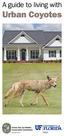 A guide to living with Urban Coyotes Living with coyotes ThinkStock Coyotes are found throughout Florida. This adaptable animal belongs to the dog family and resembles a small German shepherd. In Florida,
Car Safety for Your Child with Autism
 Car Safety for Your Child with Autism Children with autism may have special needs that can cause challenges during travel. This brochure answers some questions you might have about transporting your child
A SPECIAL PROGRAM OF DISTRICT # 8 NY DAN CAVALLO DISTRICT ADMINSTRATOR
 A SPECIAL PROGRAM OF DISTRICT # 8 NY DAN CAVALLO DISTRICT ADMINSTRATOR Tips for T-Ball & Coach/Pitch Although they are two separate divisions of League, they are so close in age grouping that many of the
INTRODUCTION TO COACHING TEACHING SKILLS TEACHING/LEARNING. September 2007 Page 1
 TEACHING SKILLS September 2007 Page 1 TEACHING SKILLS Being a teacher is one of the main roles a coach fulfils for their players. The ability to teach effectively, especially the technical skills of ice
WHY DO WE GET ANGRY? EVERYONE FEELS ANGRY SOMETIMES
 FEELING ANGRY? WHY DO WE GET ANGRY? There are lots of things that can make us angry. Here are a few examples... EVERYONE FEELS ANGRY SOMETIMES It s normal and healthy to get angry when there is a good
Lesson Effective Communication Skills
 Lesson Effective Communication Skills Lesson Overview In this lesson, participants will learn about various types of communication and how important effective communication is in the workplace. Lesson
Average producers can easily increase their production in a larger office with more market share.
 The 10 Keys to Successfully Recruiting Experienced Agents by Judy LaDeur Understand whom you are hiring. Don t make the mistake of only wanting the best agents or those from offices above you in market
100 Ways To Improve Your Sales Success. Some Great Tips To Boost Your Sales
 100 Ways To Improve Your Sales Success Some Great Tips To Boost Your Sales 100 Ways To Improve Your Sales Success By Sean Mcpheat, Managing Director Of The Sales Training Consultancy What makes a successful
VAK Learning Styles Self-Assessment Questionnaire
 Student Services Study Skills Student Development and Counselling VAK Learning Styles Self-Assessment Questionnaire Circle or tick the answer that most represents how you generally behave. (It s best to
Circle or tick the answer that most represents how you generally behave.
 VAK Learning Styles Self-Assessment Questionnaire Circle or tick the answer that most represents how you generally behave. (It s best to complete the questionnaire before reading the accompanying explanation.)
Soccer Control and Trapping Small Sided Game, Soccer Control, Soccer Trapping
 Mini Soccer Games Soccer Control and Trapping Small Sided Game, Soccer Control, Soccer Trapping Create a grid that is approximately 40X60 yards with goals on each end. Split the teams into 6v6 and place
I Miss My Pet: A workbook for children about pet loss
 I Miss My Pet. Unpublished workbook, Katie Nurmi 2002 1/30 I Miss My Pet: A workbook for children about pet loss Illustration by Joseph, age 6, The Solid Foundation Association, State College, PA. Developed
Mental Health Role Plays
 Mental Health Role Plays Goals: To discuss various mental health issues and mental illnesses. To discuss stigma, support and treatment options surrounding mental health issues and mental illnesses. Requirements:
Workbook for: Rapid Planning Method (RPM)
 Workbook for: Rapid Planning Method (RPM) There is one tool above all others that influences the quality of life: the capacity to take a vision of what you want and make it real. The key to this game of
Handy tips & tricks. On a regular basis I will share some handy tips and tricks with you. Please find some below. Enjoy!
 Handy tips & tricks On a regular basis I will share some handy tips and tricks with you. Please find some below. Enjoy! Tip december Don't give constant aids to keep your horse in a certain speed. Realise
Become Independent with Daily Routines
 Teaching Your Child to: Become Independent with Daily Routines Does this Sound Familiar? Nadine is a single mom with two young children ages 3 and 5. Her children attend preschool while she is working.
ADD/ADHD in the Classroom
 ADD/ADHD in the Classroom TIPS FOR TEACHERS AND PARENTS At any given time, a teacher can expect to have at least one student with ADHD. The impulsive and hyperactive behavior of such students can be distracting
How to Have a Pee-Free Home
 How to Have a Pee-Free Home In this article based on Karen Pryor s work, you re going to learn how to quickly potty train your dog. For a lot of dog owners, potty training can be very frustrating but it
Part 5. Dinosaur School Notes to Teachers. 1. Introduction. 2. Iguanodon Unit: How to be Successful in School
 Part 5 Dinosaur School Notes to Teachers 1. Introduction 2. Iguanodon Unit: How to be Successful in School 3 & 4. Triceratops Unit: Detecting, Understanding and Talking About Feelings 5. Stegosaurus Unit:
Backyard Visitor by Kelly Hashway
 Mom! Sarah yelled, running into the house. What is it? her mother asked, looking up from her book. There s a baby deer in the backyard. Can we feed it? Sarah ran for the bowl of fruit on the counter and
Doctor Visits. How Much to Participate
 Family Caregiver Guide Doctor Visits Caregiving involves not only major crises, but also routine experiences like going to the doctor. HIPAA is a federal law that protects patient privacy, while allowing
Design Analysis of Everyday Thing: Nintendo Wii Remote
 1 Philip Stubbs Design Analysis of Everyday Thing: Nintendo Wii Remote I. Introduction: Ever since being released in November 2006, the Nintendo Wii gaming system has revolutionized the gaming experience
PUSD High Frequency Word List
 PUSD High Frequency Word List For Reading and Spelling Grades K-5 High Frequency or instant words are important because: 1. You can t read a sentence or a paragraph without knowing at least the most common.
COACHING GOALS FOR U7 TO U10 PLAYERS
 COACHING GOALS FOR U7 TO U10 PLAYERS The players in these age groups are fundamental to the growth and success of Mandeville Soccer Club. More importantly, what these players are taught during these years
Adopting an Under-Socialized Dog
 3100 Cherry Hill Road Ann Arbor, MI 48105 734-662-5585 www.hshv.org Adopting an Under-Socialized Dog Congratulations you have saved a very special life! Bringing an under-socialized dog into your home
Ski on specific terrain (green, blue, black diamond, double black diamond) B Balancing Maintaining balance while in motion
 Developing Skills A ski lesson should focus on a skier s skill development through the use of various encouraging tactics which include using exercises to help a student: Reinforce key movement Ski in
ADI Minimum Standards and Ethics
 1 ADI Minimum Standards and Ethics Assistance Dogs International has developed minimum standards and ethics which all member and candidate programs must follow. This is agreed upon when organizations join
Five. Free. Trai. The following. used with. their own activities. happy to
 Five Free Customer Service Trai ning Games The following are five free customer service training games that we have used with clients during our customer service courses for more than a decade. We frequently
Facilitation 101: Roles of Effective Facilitators
 Facilitation 101: Roles of Effective Facilitators Bonner Curriculum Overview: Category: Level: Recommended Bonner Seuence: This workshop provides a basic introduction to techniues and tips for facilitation,
Set personal, academic, and career goals. Keep your expectations high.
 Chapter SIX Set personal, academic, and career goals. Keep your expectations high. It is today that we create the world of the future. Eleanor Roosevelt When seventy-one adults with specific learning disabilities
Mindfulness. A simple way of relating to our experience, which can have profound impact on painful, negative experiences we encounter.
 Mindfulness A simple way of relating to our experience, which can have profound impact on painful, negative experiences we encounter. Characteristics of mindfulness Involves: o Stopping o Paying attention
All Saints (or All Hallows) Celebration
 All Saints (or All Hallows) Celebration Bible base: Mark 10:46 52 Aim: To present an alternative focus to the Hallowe en events that dominate this time of year. Note to leaders Our focus this week will
The Cost of Discipleship. A Youth Lesson for Grades 3-5, 6-8, & 9-12
 The Cost of Discipleship A Youth Lesson for Grades 3-5, 6-8, & 9-12 Scripture Lesson: Matthew 4: 18-23 The Call of the Disciples Theme: When we understand Jesus call of the Disciples we know now how large
T-BALL BLAST COACH S NOTEBOOK. www.tballblast.com YOUR COMPLETE T-BALL COACHING GUIDE. baseball lessons and skills tips
 COACH S NOTEBOOK 2011 Copyright 2011 KMS Productions LLC All rights reserved. No part of this book may be reproduced in any form or by any electronic or mechanical means, or the facilitation thereof, including
Customer Service Training 101, Second Edition By Renee Evenson
 Excerpt from: Customer Service Training 101, Second Edition By Renee Evenson Chapter One Taking Your First Steps: The Basics Always remember, the customer is the reason you have a job. What has happened
Girl Scout Journey FAQs Frequently Asked Questions
 Girl Scout Journey FAQs Frequently Asked Questions 1. How do we pick which Girl Scout Journey to do? 2. How long does it take to complete a Girl Scout Journey? How long is a typical Girl Scout Journey
Team Building Blocks. Team Building Activities with Blocks
 Team Building Blocks Team Building Activities with Blocks. 1. Just a Glimpse Purpose of activity: This game encourages problem solving and helps groups learn to communicate effectively. The leader of the
Parents Corner. Habit 1 Be ProActive * You re In Charge
 Habit 1 Be ProActive * You re In Charge I can t count how many times my kids have whined, Dad, we re so bored! There s nothing to do, as if their boredom was somehow my fault I ll respond with something
A Guide to Breast Screening
 A Guide to Breast Screening Contents Information for Carers, Family, Friends and Medical Guardians of Care Introduction Information on BreastCheck Information on Attending Screening The Screening Story
homework and revision
 Create a space for homework Help your child plan their studying Deal with exam stress Helping your child with homework and revision AT A GLANCE Helping your child with homework and exam revision Take an
HOUSEBREAKING A PUPPY
 Three C s Kennel - Puppy House-Breaking - Page 1 HOUSEBREAKING A PUPPY The time proven housebreaking method. Housebreaking a puppy can be an easy process or difficult depending on the method chosen. Before
Smoking Cessation Script
 Smoking Cessation Script Progressive Muscle Relaxation Deepener Make yourself comfortable move around if you need to just as you would move around at night when you sleep it helps to relax you and as you
Arkansas State PIRC/ Center for Effective Parenting
 Increasing Your Child s Motivation to Learn In order to be successful in school and to learn, students must stay involved in the learning process. This requires students to do many different activities
Girl Scout Journey: It's Your World Change It!
 Girl Scout Journey: It's Your World Change It! amaze! Four-week Girl Scout Journey Program amaze!: The Twists and Turns of Getting Along Life is a maze of relationships and this journey has Girl Scout
Fry Phrases Set 1. TeacherHelpForParents.com help for all areas of your child s education
 Set 1 The people Write it down By the water Who will make it? You and I What will they do? He called me. We had their dog. What did they say? When would you go? No way A number of people One or two How
Team Building Ideas to Motivate, Engage, encourage
 MOTIVATE ENGAGE encourage Team Building Ideas to Motivate, Engage, and Encourage How to Use this ebook Baudville 52 Ways to a Positive Culture ebook PAGE 1 Keep your team feeling motivated, engaged, and
Junior Soldiers. Unit 4 : Lesson 8
 Junior Soldiers Unit 4 : Lesson 8 One body: many parts! PURPOSE : For children to explore and understand that even though those who follow Jesus are all different in some way, God loves each of us and
Therefore, the first step to successfully managing anxiety is to learn to understand and recognize it. Self-awareness is essential. The Facts!
 WHAT IS ANXIETY? Why is it important to learn about anxiety? Most people do not recognize their anxiety for what it is, and instead think there is something wrong with them. Some people are preoccupied
A GUIDE FOR CLUBS & SPORTS PROVIDERS
 A GUIDE FOR CLUBS & SPORTS PROVIDERS Intro Archery provides an easy way for beginners to learn to shoot in six fun lessons. The aim of Intro Archery is to get new and returning archers shooting arrows!
Information Guide. Find a rescue dog. www.thekennelclub.org.uk
 Information Guide Find a rescue dog www.thekennelclub.org.uk www.thekennelclub.org.uk Find a rescue dog Do not consider adopting a rehomed dog if you have a busy life, or very young children, as it may
Suggested Practice Plan Rookie and Tee Ball
 Suggested Practice Plan Rookie and Tee Ball Table of Contents General Coaching Tips --------------------------------------------------------- 2 Stretching Exercises ------------------------------------------------------------
Using C.L.A.S.S. to Encourage Training and Increase Adoptions in Your Local Shelter, Rescue Group, or Municipal Animal Control
 Using C.L.A.S.S. to Encourage Training and Increase Adoptions in Your Local Shelter, Rescue Group, or Municipal Animal Control This article is geared toward trainers who work with dogs in need of adoptive
Tips for making effective presentations
 Tips for making effective presentations Doing successful presentations could be considered an Art, which can be mastered only over time after extensive practice. However, it is helpful to remember the
Coaching Tips Tee Ball
 Coaching Tips Tee Ball Tee Ball Overview The great thing about tee ball is that there are very few rules to learn and that the game is all about involving lots of kids. It s about making sure all players
Free Report. My Top 10 Tips to Betting Like a Pro With Zero Risk
 Free Report My Top 10 Tips to Betting Like a Pro With Zero Risk Legal Disclaimer: EVERY EFFORT HAS BEEN MADE TO ACCURATELY REPRESENT THIS PRODUCT AND IT'S POTENTIAL. EVEN THOUGH THIS INDUSTRY IS ONE OF
Is your dog barking too much?
 Is your dog barking too much? Is your dog barking too much? It s normal and natural for dogs to bark. But when barking happens a lot, or goes on for a long time, it can be annoying and upsetting for your
Parable of The Prodigal Son
 Parable of The Prodigal Son Teacher Pep Talk: Children need to know that they are loved unconditionally. In fact, we all need to know it! In the Parable of the Prodigal Son, Jesus assures us that God will
Time: Depending on the size and behavior of the dog, this procedure will take no longer than approximately two hours.
 How to Groom a Dog Purpose This set of basic grooming instructions inform dog owners, veterinary staff, groomers and even interested animal lovers on how to groom a dog. The dog grooming instructional
BASIC BEHAVIOR CONCEPTS: Here are some basic behavior concepts that can help you as you get to know your bird.
 What an exciting day! You have welcomed a new parrot into your home. Having a parrot as a companion can be an incredibly rewarding experience. The following information is designed to help you create a
AKC Community Canine SM
 AKC Community Canine SM Evaluator s Guide Sponsored by Table of Contents Part I General Information... 1 About the AKC Community Canine SM Title... 1 AKC S.T.A.R. Puppy and Canine Good Citizen... 1 Age
FLAG FOOTBALL SKILLS
 FLAG FOOTBALL SKILLS Colonial Baptist Church SNAPPING SKILLS Each play begins with the snap. There are 2 types of snaps used in Flag Football; Under Center and Shot Gun. Without a good center to quarterback
Information for Parents on Youth Mentoring Programs
 Information for Parents on Youth Mentoring Programs Adapted from: The Guide to Mentoring For Parents and Guardians A Resource for U.S. Department of Education Office of Safe and Drug Free Schools Mentoring
YOUTH SOCCER COACHES GUIDE TO SUCCESS Norbert Altenstad
 The Reason Why Most Youth Soccer Coaches Fail Lack of knowledge to make and keep practice fun and enjoyable for the kids is really the primary cause for failure as a youth soccer coach, it s sad. It s
Homework Activities for Kindergarten
 Homework Activities for Kindergarten Listed below are several learning activities for your child to complete at home to reinforce skills being taught in school. The sight words are on the last page. Reading
For maximum effectiveness and safety, please read this Owner's Manual before using your Torso Track 2.
 For maximum effectiveness and safety, please read this Owner's Manual before using your Torso Track 2. TABLE OF CONTENTS Introduction...2 Important Safety Tips...3 Product Specifications...4 Set Up...5-6
Hurdle Training. Manual. Drills and exercises to help you get the most out of your Hurdle training program!
 Hurdle Training Manual Drills and exercises to help you get the most out of your Hurdle training program! Performance Hurdles USAGE GUIDELINES Words of Caution 1. Are you physically fit? Do not enter into
Practice Ideas Rookie / Junior Mosquito
 Practice Ideas Rookie / Junior Mosquito Equipment essentials needed: 25 30 wiffle balls 20 25 kenko balls 20 tennis balls 1 2 tennis or racquet ball racquets 4 6 cones 3 4 bats and helmets 1 or 2 batting
Caring for your adult cat
 CAT 3 Caring for your adult cat The charity dedicated to helping sick, injured and homeless pets since 1897. Caring for your adult cat Although considered independent pets, cats are reliant on their owners
Training Greeting Routines
 Training Greeting Routines In this report we re going to focus on what is probably the most important thing your dog could ever learn: How to greet people calmly and in a way that s not disruptive. And
Potential Interview Questions
 Potential Interview Questions Listed below are some questions commonly asked by employers during interviews along with some hints about how to best answer each question. Outline or write out your responses
YOU CAN QUIT WE CAN HELP
 YOU CAN QUIT WE CAN HELP SO, you re thinking of quitting tobacco. Let s figure out where you are right now, and see how this book can guide you through the quit process. Which of these sounds most like
family games Taking the kids swimming is a great way of making sure they re moving around and having fun. And to help you get them into
 swim family games Taking the kids swimming is a great way of making sure they re moving around and having fun. And to help you get them into the pool, we ve come up with loads of great swimming games to
10k. 8-week training program
 10k 8-week training program T H E G O A L O F T H I S P L A N I S N T T O G E T Y O U A C R O S S T H E F I N I S H L I N E, I T S T O G E T T H E B E S T V E R S I O N O F Y O U A C R O S S T H E F I