
MATERIAL SELECTION FOR MECHANICAL SEALS
|
|
|
- Hilda Jones
- 9 years ago
- Views:
Transcription
1 MATERIAL SELECTION FOR MECHANICAL SEALS by Michael Huebner Staff Engineer Flowserve Corporation Flow Solutions Division Deer Park, Texas Michael B. Huebner is a Staff Engineer in the Flow Solutions Division of Flowserve Corporation, in Deer Park, Texas. He has more than 20 years experience in the design of mechanical seals, centrifugal and positive displacement pumps, and fluid conditioning equipment. For Flowserve, he has served in design, testing, and application functions in both the U.S. and Europe. Mr. Huebner received his B.S. degree (Engineering Technology) from Texas A&M University. He is a member of the International Pump Users Symposium Advisory Committee and the API 682 Task Force. While the purpose of a seal appears deceptively simple, the design of seal components is a significant engineering challenge. To minimize leakage, the rotating and stationary sealing interface is normally separated by a very small film. This film is on the order of 20 millionths of an inch (or a half micron). With the seal faces operating this close together, there is some level of contact that results in wear and heat generation. In balancing the requirements of low leakage and low wear, the selection of materials becomes import. It is important not only to the seal faces but to all of the components in a seal that contribute to its ability to maintain an acceptable fluid film. In this paper the author will divide the seal into three major categories of components: the seal faces, secondary sealing elements, and major metal components (Figure 2). ABSTRACT Mechanical seals are used throughout industry to minimize or eliminate leakage in centrifugal pumps, mixers, and other rotating equipment. The ability of a mechanical seal to meet its performance objectives depends upon a wide range of factors involving equipment design, operating conditions, and support systems. Included in this list is the selection of the materials of construction of the seal. Mechanical seals are constructed of a wide range of materials including metals, elastomers, and ceramics. Each of these materials plays an important role in the operation of the seal. Seal manufacturers have narrowed the list of available materials through years of successful field experience. Still, the selection of the correct materials remains a critical step in the successful application of a mechanical seal. SEAL BASICS A mechanical seal is a device used to seal the interface between a rotating shaft and a stationary housing (Figure 1). This is commonly seen in centrifugal pumps although this challenge also exists in other equipment such as agitators, turbines, compressors, centrifuges, and blowers. The mechanical seal has gained success over the years due to its ability to minimize or eliminate leakage of process fluids to atmosphere. This has resulted in improved equipment reliability, reduced emissions, and improved safety. Figure 1. Typical Mechanical Seal. 127 Figure 2. Major Components. The seal faces are the elements that define the sealing interface. One seal face will be mounted onto and rotating with the shaft. The other seal face will be mounted into and stationary with the gland. The seal faces must allow for rotation as well as other motions experienced in the pump. Since all equipment has some small amount of misalignment, run-outs, and clearances, the seal faces must be capable of both axial and radial motions to maintain an effective fluid film. While the seal face may be the heart of the seal, secondary sealing elements or gaskets can create their own challenges that affect seal performance. Secondary seals perform the function of sealing between internal seal elements as well as sealing between the mechanical seal and the pump. Most secondary seals are static meaning that there is no relative motion between the sealed components. In a pusher type seal, there is also a dynamic gasket that must allow for small amounts of axial motion to compensate for equipment motion and wear of the seal faces. The last major category is the metallic components used in a mechanical seal. This includes materials for the sleeve, gland, and springs. It also includes a more challenging duty in the materials used in welded metal bellows. Welded metal bellows act as both a spring and an expansion joint and eliminate the need for a dynamic gasket. The requirement for motion and pressure containment makes the selection of bellows material challenging. Welded metal

2 128 PROCEEDINGS OF THE TWENTY-SECOND INTERNATIONAL PUMP USERS SYMPOSIUM 2005 bellows must be easily welded, have good physical properties, and be resistant to most types of corrosion. Seal Faces The seal faces of a mechanical seal provide a demanding set of requirements for a seal designer. The faces must be stable, conduct heat, be chemically resistant, and provide good wear characteristics. They must also be easy to manufacture, readily available, and economically priced. In the early years of mechanical seals, some seal faces were manufactured from metals such as hardened steels, copper, and bronze. This has evolved over time as newer, more exotic materials have been developed including ceramics and various grades of mechanical carbons. This paper will review some of the most common seal face materials. These include mechanical grades of carbons as well as the most popular ceramics. This list does not include every material ever used as a seal face. Some materials such as overlays or hardened metals that were widely used in the past have been considered obsolete for years. Surprisingly, some of these options are resurfacing in specialty applications where their strengths are exploited. Other materials such as diamond coatings and silicon nitride are also used in specialty applications and are beyond the scope of this list. Carbon Carbon is one of the most abundant elements on earth. It is the basis for all organic products and processes. It is also an interesting material because it takes on forms from amorphous carbon to graphite to diamonds to fullerenes. Carbon is inert, stable, and can be self-lubricating. It is used in products as varied as pigments, carbon black in rubbers, and electrical brushes. It can take the form of soft carbon graphite powder to hard friction pads. Mechanical carbons used in seal faces are a mixture of amorphous carbon and graphite. The percentages of each help determine the physical properties on the final grade of carbon. In addition to carbon, other elements and compounds are present that affect the properties of the grade of carbon. Some of these are impurities from the original sources of carbon; others are specifically added to improve some aspect of the carbon s performance. Mechanical carbons are manufactured by blending together types of amorphous carbon (i.e., lampblack, charcoal, or coke) and carbon graphite with a carbonaceous binder (i.e., pitch or resins). The source of the raw materials not only helps determine the physical properties of the carbon but also the type and amount of impurities. Other additives will be blended in depending upon the specific grade. The mixture is then pressed into shapes and heated in an inert environment. At a high temperature, most of the binder decomposes into carbon while a small amount volatizes and leaves the part. This leaves the carbon porous and soft. The carbon is then placed into a vacuum chamber to remove any air from the porous carbon. While under a vacuum, the carbon is immersed into liquid impregnant. The vessel is then pressurized to drive the impregnant into the carbon. This effectively fills the pores of the carbon making it impermeable and greatly increasing the strength of the final material. The selection of impregnants is a critical factor in determining the properties of the final material. Impregnants include various plastics and resins, metals, and salts. The most common impregants for mechanical seal faces are thermoset resins and antimony metal. While a carbon manufacturer may produce hundreds of grades of carbons, the mechanical seal industry has standardized on only a dozen or so grades that are used for the majority of seal applications. With the consolidation of companies in the carbon manufacturing business, the list is fairly small. Resin Impregnated Carbon As the name implies, resin impregnated carbon is a mixture of amorphous carbon/graphite that has been impregnated with a thermoset resin. This is by far the most common type of carbon for mechanical seals used in industry today. While there is a wide variety of specific formulations or grades available, most resin impregnated carbons are capable of operating in a wide range of chemicals from strong bases to strong acids. They possess good frictional properties and an adequate modulus to help control pressure distortions. Antimony Impregnated Metallized carbons are available with a variety of metal impregnants including copper, bronze, lead, and antimony. Of these, antimony has proven to be the most successful in seal applications. The addition of antimony has a couple of beneficial effects that can improve seal performance. First, the addition of a metal impregnant increases the strength and modulus of the material. This is beneficial for high pressure applications when a stronger and stiffer material is needed. Finally, antimony impregnated carbons are more resistant to blistering in high viscosity fluids or light hydrocarbons. This has made it the standard grade for many refinery applications. These benefits come at a price. The chemical compatibility of an antimony carbon is limited by the antimony metal. Carbon manufacturers and seal original equipment manufacturers (OEMs) can give guidance on selection of antimony impregnated carbons for specific applications. Dry-Running Carbons Some seal applications are specifically designed to run without a fluid between the seal faces. In some cases, the seal faces are designed to lift off and not contact in operation. In other cases, the faces are designed to run with contact and no lubricating liquid. These dry-running, contacting seal designs create serious demand on the carbon and mating face of the seal. The carbon material must be self lubricating and have a low coefficient of friction and yet be strong and durable enough to run for years without wearing out. Special grades of carbon have been designed for dry-running conditions. These grades are generally softer than other mechanical seal grade carbons. This is primarily due to the high graphite content in the mixture. Other additives such as salts can be added to improve performance. In most cases, a small amount of moisture in the seal environment greatly improves the performance of these grades. Acid Grades As stated earlier, elemental carbon is inert to attack from most chemicals. It was also stated earlier that most commercial grades of carbon are mixed from a variety of carbon sources. These sources differ greatly in the type and amount of impurities that are introduced into the mixture. The impurities are generally not resistant to aggressive chemicals like strong acids. This can lead to leaching and weakening of the component. To improve the carbon s performance, very pure sources of carbon are used to produce the most chemically resistant grades. These grades can compromise other aspects of the carbon properties and seal performance so they are generally reserved only for aggressive chemical applications. Ceramic Materials Ceramics can be defined as nonmetallic, nonorganic materials that usually require high temperature processing. In a general sense, this can refer to everything from pottery and china to carbides and oxides. In an engineering sense, the term generally refers to a class of materials that are characterized by their high hardness, high stiffness, low thermal expansion, and good wear resistance. For mechanical seals, these include silicon carbide, tungsten carbide, and alumina oxide. Other materials such as silicon nitride are used in specialty applications.

3 MATERIAL SELECTION FOR MECHANICAL SEALS 129 Not all ceramics are the same. Characteristics such as thermal conductivity and thermal shock resistance vary significantly depending upon the material. Strength and impact resistance also varies widely depending upon the material and manufacturing methods. Chemical compatibility and corrosion resistance is affected not only by the ceramic material but also other secondary materials present in the material. To help understand why materials are selected, it can be helpful to understand more about the actual materials. Silicon Carbide In the simplest sense, silicon carbide (SiC) consists of one atom of silicon bonded to one atom of carbon. This results in a tenacious bond that is extremely stable over a wide range of temperatures and chemical environments. It also has other desirable properties such as a high hardness and a high modulus. Unfortunately, it is also a material that is difficult to manufacture in shapes suitable for component design. For many years, a reaction bonding process has been used to manufacture components. More recently, sintering processes have been used. Other methods such as chemical vapor deposition (CVD) or conversion processes are used in areas outside of mechanical seals. Silicon carbide almost never exists in nature. It was first identified in 1824 but remained somewhat of a curiosity until 1892 when C. E. Acheson developed a practical manufacturing process involving an electric arc furnace that SiC became commercially available (reference, General Properties of Silicon Carbide ). This remains one of the most common methods for production of SiC materials. This method results in a mass of large blackish blue crystals that are then crushed into various size particles. The powders are then used for abrasives or secondary SiC processes. Reaction Bonded Silicon Carbide Reaction bonded silicon carbide (RBSiC), as its name implies, is a material formed by bonding SiC particles to each other in a reaction process. SiC particles and carbon are mixed together with a binding agent and pressed into the desired shape. This green state material is placed into a furnace with an inert atmosphere and exposed to molten silicon metal. The silicon metal wicks its way throughout the material reacting with the free carbon to form additional SiC. The reaction literally bonds the original SiC particles together by forming additional SiC material that acts as a glue. Done correctly, this creates a fully connected matrix of SiC material. As a result of the manufacturing process, all of the spaces in the material are filled with silicon metal. In current grades, 8 to 12 percent of the final composition is free silicon. While the silicon metal does not significantly affect most of the physical and thermal properties of the material, it does limit the chemical resistance of the material. Anything that can chemically attack elemental silicon can attack the interconnected passages of silicon in RBSiC. This can weaken the material and cause seal failures. The most common chemicals that will attack RBSiC are caustics (and other high ph chemicals) and strong acids. RBSiC should not be used with these applications. Self-Sintered Silicon Carbide Researchers discovered that it was possible to sinter SiC particles directly together using nonoxide sintering aids (such as C, B, or Al) in an inert environment at temperatures over 2000 C. The resulting material consists almost entirely of SiC with a very small volume of unconnected voids. Due to the lack of a secondary material (such as silicon), the direct sintered material is chemically resistant to almost any fluid and process condition likely to be seen in a centrifugal pump. Some of the original research on self-sintered silicon carbides (SSSiC) was done with a beta phase SiC. Later research used alpha phase SiC. These new materials and manufacturing methods were patented, which greatly limited their availability and slowed their acceptance into industry. There was also a perception that SSSiC was more brittle and prone to chipping than RBSiC. Since there are no standardized tests for evaluating these properties, it remained as a perception with no conclusive data to prove one position or the other. Self-sintered silicon carbide is often called sintered silicon carbide (SSiC), direct-sintered silicon carbide (DSSiC), or alpha sintered silicon carbide (αsic). These are all the same material and the names are used interchangeably. Silicon Carbide with Controlled Features The vast majority of SiC material is solid material free from any significant pores, voids, or imperfections. This results in seal faces that are lapped very flat and smooth. Under certain conditions, faces that are too flat or too smooth can prevent fluid from migrating across the seal faces, which can prevent proper lubrication of the seal faces. Over the last decade, SiC manufacturers have been creating SiC materials that have controlled features throughout the structure of the materials. When a seal face is lapped flat, these features create small anomalies on the surface that can provide enhanced seal performance. The most common varieties of these materials involve free graphite particles dispersed throughout the SiC material. On a lapped surface, this results in small patches of graphite surrounded by a hard SiC surface. The graphite does not provide additional lubrication by providing graphite into the sliding interface. Rather the soft graphite material creates small depressions in the surface that enhance lubrication with the process fluids. As an alternate approach, SiC is available with small controlled voids throughout the material, which also create small depressions on the lapped surfaces. It is even possible to create material with both free graphite and controlled porosity. Tungsten Carbide Tungsten carbide (WC) is a carbide ceramic that is used in many products requiring high hardness and toughness. WC shares many of the same difficulties in manufacturing shapes with other ceramics. WC is readily available in powder form but must be processed into a final shape. Tungsten carbides are most often manufactured as cemented carbides. As a cemented carbide there is no attempt to bond WC to itself. Rather a secondary metal is added to bind or cement the WC particles together. This results in a material that has the combined properties of both the WC and the metal binder. This has been used to an advantage by providing greater toughness and impact strength than possible with WC alone. One of the primary weaknesses of cemented WC is its high density. Cobalt bound WC proved to be one of the most successful carbides. These were introduced in the early 1930s for cutting tools in the metal-working industry (reference, Usage and Applications, Cemented Carbide ). As the mechanical seal developed over the years, Co-WC was the standard ceramic material. Cobalt though did not exhibit the range of chemical compatibilities required by industry and was gradually replaced by nickel-bound WC. Current grades range from 6 to 10 percent free nickel. Ni-WC is still widely used as a seal face material especially where its high strength and high toughness properties are beneficial. It has good chemical compatibility generally limited by the free nickel. Alumina Oxide Oxides of aluminum range from oxidation on aluminum metals to rubies and sapphires. They also constitute the most widely used oxide ceramic in the form of alumina oxide (Al 2 O 3 ) or alumina. Alumina is a white or ivory color ceramic that can be produced by direct sintering. This results in a dense, homogeneous material. It shares many of the favorable attributes of other ceramics such as high hardness, high strength, and high stiffness. It also has excellent dielectric properties. It is commonly used for electrical

4 130 PROCEEDINGS OF THE TWENTY-SECOND INTERNATIONAL PUMP USERS SYMPOSIUM 2005 insulators, wear resistant components, grinding media, and high temperature components. Alumina is available in a range of purities typically from around 94 percent to over 99 percent. In the high purities, alumina has excellent chemical resistance to most process fluids other than some strong acids. This led to its widespread use in many mechanical seal applications. Alumina does have one weakness that has restricted its use in seals; it can fracture easily if thermally shocked. Thermal shock may result from rapid heating in the process fluid or from dry-running operation. Even with this concern, it continues to be used where thermal shock is not considered an issue. Mating Pairs Tribological Considerations Mechanical seal faces do not function in isolation. They are always operated against a mating face. While there is theoretically a fluid film between the faces, there is still some contact between the faces on most well-designed seals. Contact can also occur during startups, shutdowns, and system upsets. There may be considerable mechanical support between the two faces. Depending upon the differential pressure across the seal faces, the contact pressure may be on the order of hundreds of psi. Seal faces can also operate with a high relative velocity between the faces. This may be on the order of 75 to 250 feet per second. Clearly the materials of the seal faces must be able to withstand the combination of pressure and velocity without damaging either seal face. To understand this interaction, the concept of mating pairs in seal face materials was introduced (Massaro, 1988). This approach considers how specific materials (as well as specific grades of each type of material) interact when exposed to actual operating conditions. In some form or another, this concept is used by seal manufacturers in evaluating face materials and establishing application guidelines for their use. Comparison of Seal Face Materials By reviewing the material available for seal faces, it is clear that each has its own set of strengths and weaknesses (Tables 1, 2, and 3). It is not possible to declare one material superior in all applications. The demands of the process conditions, seal component design, tribological properties, and economic considerations all play a part in this evaluation. It is however possible to compare physical data that can help explain the difference between the materials. It is also possible to list the general strengths and weaknesses of each material type that can give guidance in its use. Table 1. Comparison of Properties of Common Seal Face Materials. Density - g/cc COTE - in/in F 2.7 X X X X X X X X ,365 - Hardness - see Note ,400 3,000 1,600 2,085 Modulus - psi 3.5 X X X X X X X X 10 6 Strength, Transverse - psi 11,500 12,500 8,000 10,000 40,000 65, ,000 47,000 Note 1: All values are representative values and will vary depending upon vendor and specific grade. Note 2: Hardness for carbon materials is given in Shore Scleroscope; handness for ceramic materials is given in Vickers. SECONDARY SEALS Secondary seals (or gaskets) are defined as any sealing element that prevents leakage of the process fluid under pressure. These appear throughout a typical mechanical seal assembly. In most cases the seal faces are mounted into the gland or onto the sleeve with a secondary seal. Secondary seals are used to seal the seal gland against the pump housing. They are also used to seal the sleeve to the pump shaft. Some secondary seals are assembled as Table 2. Strengths and Weaknesses of Common Seal Face Materials. Table 3. Chemical Compatibility of Common Seal Face Materials. part of the seal cartridge. Others only perform their function as the seal is assembled in the pump. Secondary seals are most commonly elastomeric O-rings although other materials such as polytetrafluoroethylene (PTFE) and flexible graphite seals are also frequently used. Secondary seals between the seal gland and the pump can also be flat composite materials or spiral metal/composite gaskets. The unique requirements for each sealing location help provide the seal designer with the information necessary to select the correct seal design. The design requirements of a secondary seal depend on the specific application but they include the following: Pressure containment must be capable of sealing under the highest pressure for the application; Chemically resistant must withstand all chemicals and combinations of chemicals without degradation, swelling, or loss of physical properties; Surface finish requirements must be capable of sealing against the mating surface finish; Thermal expansion must be capable of compensating for differential thermal expansion between components; and Installation requirements must be capable of being installed into the seal or pump without damaging the secondary seal. This paper will review some of the more common compounds and designs used in the seal industry today. It would be difficult to cover every compound and gasket design and there are others that are used successfully in industry today. The seal OEM can provide additional details about the gasket selection for a specific seal design. Elastomers Carbon - Resin Impregnated Carbon - Antimony Impregnated Carbon - Dry Running General Duty Dry Running - see Note Abrasive Services Blister Resistant - see Note Chemical Resistance Impact Resistance Thermal Shock Resistance Note 2: Ratings may indicate properties when run against other common seal face materials. Carbon - Resin Impregnated Carbon - Antimony Impregnated Carbon - Dry Running Light Hydrocarbons Heavy Hydrocarbons / Oil Acids Bases Overall Chemical Resistance Note 2: Chemical compatability ratings are for general catagories of chemicals. The user must confirm compatibility for each specific application. Most secondary seals used in mechanical seals are elastomers. Elastomers are rubber-like compounds that can be elongated or compressed significantly without permanent deformation. This ability to move and return to its original shape helps elastomeric gaskets take the shape of the gasket cavity and still retain sealing force against its mating components. Carbon - Acid Grade Carbon - Acid Grade Silicon Carbide - Reaction Bonded Silicon Carbide - Reaction Bonded Silicon Carbide - Self Sintered Silicon Carbide - Self Sintered Tungten Carbide Tungten Carbide Alumina Oxide Alumina Oxide

5 MATERIAL SELECTION FOR MECHANICAL SEALS 131 While there is a wide array of options for elastomeric materials available, a few standard compounds have found wide use as sealing applications such as O-rings. These are widely used throughout industry and should be selected for most applications. There is an extensive amount of data available in evaluating the chemical compatibility for most elastomeric materials. This exists both at the material manufacturer as well as the equipment OEM such as the mechanical seal manufacturer. This helps minimize the chances of failures in the field. The popular compounds are also easier to find in inventory and generally are more competitive in terms of price than specialty elastomers. Within a given general category of elastomers (such as ethylene propylene), the properties are dramatically based on the specific formulation, additives, and curing process. The most common variation is in hardness. It can also show up in properties such as aging, ozone resistance, high and low temperature properties. Ethylene Propylene (EPR) and Ethylene Propylene Diene (EPDM) Ethylene propylene is a copolymer of ethylene and propylene. Adding a third component, a diene, can maintain the saturated backbone of the molecule and move vulcanization or modification sites to a side chain. This terpolymer is referred to as EPDM. Since their introduction in the early 60s, EPR and EDPM have become one of the most popular compounds for general elastomer services. They are used extensively in automotive and consumer products applications. For mechanical seals though, their use has been limited due to a relatively narrow range of chemical resistance. The primary weakness of these compounds is the poor resistance to petroleum oils and solvents. This includes petroleum-based lubricants that may be used to aid assembly of seals. Exposure to petroleum-based oils leads to excessive swelling and seal failure. EPR and EPDM compounds are still used in some applications. They are considered as one of the best materials for hot water and steam (up to 400 F) applications. They are also used with siliconebased products, ketones, and alcohols. Care must be taken to ensure hydrocarbon-based products are not present during system upsets or from contamination in the system. Nitrile (NBR) Nitrile (also called Buna-N) is a copolymer of acrylonitrile and butadiene. By varying the percentage of each, this compound exhibits a wide range of chemical resistance and physical properties. There are tradeoffs though. For example, increasing the acrylonitrile fraction improves hydrocarbon compatibility but reduces low temperature performance. Nitrile is the most commonly used elastomers for O-rings across all industries. It is the workhorse elastomer for the automotive industry finding use throughout the oil, fuel, and water systems. In other industries, it is used in general consumer goods, hoses, appliances, and plumbing seals. Nitrile has excellent resistance to most petroleum products. Nitrile elastomers can also be compounded to perform at temperatures lower than most other carbon-based elastomers (down to approximately 65 F). On physical properties, they offer good compression set performance as well as good teat and abrasion resistance. Nitrile is not recommended for applications where it is exposed to ozone, sunlight, or outside weather conditions. It should also not be used in ketones, esters (including many hydraulic oils), and chlorinated hydrocarbons. Fluoroelastomers () Fluorocarbon elastomers were the first high performance elastomers introduced in the market. They exhibited better overall chemical compatibility and high temperature performance than any other elastomer for many decades. They are still the standard elastomer for most mechanical seal applications in the process industries. Fluorocarbon elastomers are a copolymer of vinylidene and hexafluoropropylene. Fluoroelastomers are highly fluorinated compounds. Since the carbon-fluorine bond is so tenacious, higher fluorine content relates to better chemical compatibility. Fluorine content for some of the popular s range from 64 percent to 70 percent. In addition to the fluorine content, other factors such as curing process have a large effect on the physical properties, operating temperature, and chemical resistance of the compound. Be aware that not all s are the same. Fortunately, most mechanical seal OEMs have standardized on the higher quality compounds of s and have a good installation database to accurately make material selections for a specific application. s are generally considered the best selection for hydrocarbon services especially at higher temperatures (up to 400 F). s are also used widely in lubricants, halogenated hydrocarbons, silicone-based fluids, water, and acids. They have good compression set characteristics and are resistant to ozone and sunlight degradation. s are not recommended for ketones, amines, and low molecular weight ethers, esters, hot water, or steam. They are also not generally recommended for temperatures below 15 F (although some specialty compounds are rated at 50 F in static applications). Perfluoroelastomers (F) Perfluoroelastomers represent the state-of-the-art in elastomers for high temperatures and aggressive chemical applications. The chemical resistance of F is often compared with PTFEs although, in practice, they are a little more restricted in their use. Fs have addressed many of the failures commonly seen in all types of process equipment in the chemical industry. Fs are terpolymers of fluorinated, saturated monomers. This results in a highly fluorinated backbone that is very resistant to chemical attack. Since their introduction, this class of elastomers has seen rapid and continual development. There are literally dozens of F compounds currently on the market. While there are many grades with a wide range of chemical resistances, many others were developed to address specific applications while sacrificing compatibility in other areas. Greater care should be taken in selecting F compounds than any other class of elastomers. This is because these compounds are generally used in applications that seal the most aggressive chemicals or operate at very high temperatures. In these cases, the consequences of failure can be unacceptable. The other reason is that the properties and compatibility of these materials can vary widely from one compound to another. Fs have several interesting characteristics. They have a thermal expansion rate approximately 50 percent higher than comparable compounds. This requires that groove dimensions be checked and sized appropriately if upgrading to an F material. Fs also have a higher compression set than most other elastomers. There has been much discussion on the merits of compression set and its role in sealability with O-rings. In properly designed grooves though, this has not been a major factor in actual practice. Fs are also limited in low temperature services due to hardening of the material. Most grades should not be used below 20 F. Finally, F being a highly fluorinated material has a great affinity for fluorinated products. This results in excessive swelling, which does not harm the base elastomer but may cause a failure due to extrusion or hang-up. Most F suppliers have excellent references for chemical compatibility for the various compounds that they offer. These are available in hardcopies or on the OEM s website. They also have technical support staffs that can provide additional information or provide sample materials for testing. Nonelastomers Nonelastomer secondary seals are defined as seals that do not consist entirely of elastomeric materials. In some cases, these are homogeneous materials; in other cases they are assemblies consisting of several materials. Once deformed, nonelastomer materials do

6 132 PROCEEDINGS OF THE TWENTY-SECOND INTERNATIONAL PUMP USERS SYMPOSIUM 2005 not inherently have the ability to spring back to their original shape. This requires special considerations for their use as a gasket material. In some cases it requires special gasket cavity designs. In other cases, the nonelastomer gasket is assembled with a metal spring component to provide the sealing force for the gasket. Nonelastomeric materials are used because they can have unique properties that are not available in elastomeric materials. Nonelastomers can be compatible with virtually any chemical in process applications. They can also be designed for the highest temperatures seen in centrifugal pump applications. They can take the form of O-rings, U-cups, chevrons, spiral wound composite gaskets, and flat gaskets. Graphite Flexible graphite is an excellent material for secondary seals (Figure 3). In many ways, it is ideal. It has near universal chemical compatibility. It is stable at the highest temperatures that will be seen in any centrifugal pump. It is soft and conforms to mating surfaces to provide an excellent seal. It does, though, have one major disadvantage. Flexible graphite has essentially no resiliency. Once the material is deformed, it will not spring back into its original shape. While this is useful for forming the gaskets, it does not allow the gasket to be installed like most other secondary seals. It also requires special consideration on sealing with differential thermal expansion between the mating components. cavities must be designed so the gaskets are installed axially or into inner diameter (ID) grooves. PTFE can also be damaged easily by scratching, so care must be taken if the gasket is pulled axially into position. For mechanical seals, this material is used in extremely aggressive service where elastomeric compounds are not suitable. It is also used in services such as batch processes where the changing chemicals or process conditions make selection of a single elastomer grade impossible. Spiral Wound Gaskets Spiral wound gaskets are designed with thin strips of metal separated by an inert filler material wound into a circular shape (Figure 4). This style of gasket has enjoyed great success as a flange gasket in process piping. In mechanical seals though, it is generally limited to use as a gasket between the seal gland and pump housing. Most spiral wound gaskets used for mechanical seals consist of 300 series stainless with an inert filler. Fillers include flexible graphite or proprietary materials from the OEM. Figure 4. Spiral Wound Gasket. Figure 3. Flexible Graphite Secondary Seals for Sleeve and Face Applications. Flexible graphite gaskets must be either held in place by mechanical means or by hydraulic loading. In some cases like sleeve gaskets, the flexible graphite is mechanically clamped into place. The gasket will be deformed to provide an effective seal but the gasket will be physically held in place by the clamping components. Flexible graphite is used for mounting seal faces by providing an L-shaped face that hydraulically loads the gasket against the cavity. This design is pressure energized so the higher the pressure, the greater the hydraulic loading. PTFE PTFE or polytetrafluoroethylene has been the miracle material for several decades. This material has an extremely low coefficient of friction against most materials. It is difficult for most materials to bond or stick to PTFE. It is also chemically inert to almost any process sealed with mechanical seals. It is no surprise that it has found its way into almost every application from nonstick frying pans to seals in the most aggressive services. Although PTFE is an exceptional material, it has some special considerations when used as a secondary seal or gasket. Most guidelines limit the use of this material to less than 500 F. PTFE is also a hard plastic material with almost no resiliency. This requires that the secondary seal be designed with this limitation in mind. PFTE gaskets can be designed in almost any shape from flat gaskets to O-rings. Since the gasket cannot be stretched, the Strengths and weaknesses and the chemical compatibility of secondary seal materials are shown in Tables 4 and 5. Table 4. Strengths and Weaknesses of Common Secondary Seal Materials. METALS EPR / EPDM NBR Price Custom Molded Parts Temperature Range Abrasion Resistance Tear Resistance Metals are used throughout most mechanical seals. They provide the hardware for adapting the seal to a piece of equipment. They provide the major components of the basic seal including springs, drives, and bellows. In some cases they are even used as the seal faces. Although mechanical seals have some unique requirements, the selection of metallic materials is generally straightforward and does not differ much from the materials review of other pieces of equipment. There should be consideration that mechanical seals comprise components that have substantially thinner cross sections F Graphite PTFE

7 MATERIAL SELECTION FOR MECHANICAL SEALS 133 Table 5. Chemical Compatibility of Common Secondary Seal Materials. EPR / EPDM NBR F Graphite PTFE Light Hydrocarbons Heavy Hydrocarbons / Oil Acids Bases Hot Water Ozone Overall Chemical Resistance Note 2: Chemical compatability ratings are for general catagories of chemicals. The user must confirm compatibility for each specific application. than other components in the pump. For this and other reasons, materials are selected that offer the best corrosion resistance for a specific application. Metals used in mechanical seals can be manufactured from metals from many sources. In some industries, most of the seal components are machined from wrought materials such as bar or tube stock. This is because there are so many variations in designs, sizes, and cross sections that it is not economical to provide castings. In pump designs where there is a high degree of standardization or high volumes, seal OEMs utilize castings, stampings, and other high volume manufacturing techniques. Other components such as springs require drawing to obtain the required mechanical properties. Even though metallic components share the same generic description, the source of the material and the manufacturing methods may affect chemical compatibility. For example, one of the most common austenitic stainless steels is AISI 316. This material is used extensively throughout the seal industry. In a wrought form, it provides excellent chemical resistance. In a cast material such as CF-8M, it introduces a ferrite phase necessary for casting. This increases the susceptibility for corrosion in some environments. As a spring material, the drawing or cold working of the material increase the hardness. This may make the material more susceptible to sulfide stress corrosion material. The caveat is that metal corrosion guides provide a good resource but they should be cross checked against actual field experience. Fortunately, the seal OEMs can provide assistance in recommending materials for seal applications. Welded metal bellows are used in general duty and high temperature mechanical seals (Figure 5). The bellows acts as a spring, a drive, and a secondary seal. The basic construction consists of a stack of thin metal diaphragms welded on the outer diameter (OD) and ID to form an accordion-like device. The bellows provide the ability to flex axially while being rigid in torsion. The bellows diaphragms must be thin to provide the flexibility required for a seal. In most seals, the diaphragms range from inch to inch in thickness. After welding, the materials are either cold-worked or heat-treated to increase the tensile strength. The combination of material selection, thin cross sections, and secondary treatments makes bellows material selection particularly challenging. Fortunately this is a mature product line and there is a great deal of field experience to guide the user in actual applications. Many of the common names used in metal designations are actually trademarks of the material manufacturer. Most publications and standards will refer to these by their generic names. 316 Stainless Steel Austenitic stainless steels are the workhorse of the mechanical seal industry. AISI 316 (UNS S31600) is considered the base material for most seal designs. Other variations of this alloy such as 316L (UNS S31603) and 316Ti (UNS S31635) are used depending Figure 5. Welded Metal Bellows. upon secondary operations (such as welding) or geographic availability, respectively. Like all stainless steels, 316 derives its corrosion resistance from the presence of chromium and the formation of a passive oxide layer. It is easily welded (especially as 316L) and is used for many welded metal bellows applications. For mechanical seals, 316 stainless steel is used for a wide variety of applications from drinking water to hot sour crude oil. It is resistant to many acids and caustics although these should be checked for the concentration and temperature for each specific application. It is compatible with most other organics and hydrocarbons. 316 should not be used in services with high chlorides since it is susceptible to pitting corrosion. Alloy C-276 Alloy C-276 (UNS N10276) is one of the most widely used high alloy metals in aggressive environments. C-276 is a nickel-molybdenum-chromium alloy that is available in many wrought forms. It is suitable for applications including seawater, brine, many acids, strong oxidizers, and hydrocarbons. In mechanical seals, C-276 is used for all of the major seal components including sleeves, glands, and fasteners. In most cases, it is only used for these components if lesser alloys such as 316 are not suitable. This is primarily due to the higher cost of C-276 to 316. It is the standard alloy for springs in many industries and defined as the default spring material in API 682 (2004). It is also easy to weld and has good corrosion properties in the heat-affected zone. This also makes it widely used as a material for welded metal bellows. Alloy 20 Alloy 20 (UNS N08020) is a nickel-chromium-molybdenum alloy that was originally developed for applications in hot sulfuric acid. Today it is still used in this service as well as other aggressive chemical applications. It is considered as resistant to applications that cause stress corrosion cracking. It is used in applications in the manufacture of rubber, high-octane gasolines, and pharmaceuticals. Alloy 20 can be readily welded without carbide precipitation so it has been used in welded metal bellows seal designs. Other adapter hardware such as sleeves and glands will generally be made from this alloy also to match the chemical resistance of the bellows. Alloy 20 is normally used only when no other common alloys are acceptable for a specific application. Other alloys such as alloy C-276 and alloy 400 are more common in the seal industry. Alloy 400 Alloy 400 (UNS N04400) is a copper-nickel alloy that exhibits good corrosion resistance against many chemicals. These include seawater, sulfuric acid, hydrochloric acid, and alkalis. This material is generally not susceptible to stress corrosion cracking. For mechanical seals, alloy 400 s most common use is in hydrofluoric acid applications. In this service it is used for both basic metal parts as well as welded metal bellows. For components that require higher strength (such as set screws and fasteners), a related material, alloy K-500 (UNS N05500) is often used. Alloy 350 Alloy 350 (UNS S35000) is a chromium-nickel-molybdenum alloy that exhibits high strength in high temperature applications. It is often

8 134 PROCEEDINGS OF THE TWENTY-SECOND INTERNATIONAL PUMP USERS SYMPOSIUM 2005 used in aircraft and turbine applications. This alloy is easily welded so it found use as a material for welded metal bellows. For many years, this alloy was the standard material for bellows in high temperature applications. Since most of the high temperature applications were found in hydrocarbon processing application, these alloys became exposed to more aggressive environments as more sour crudes were being processed. This resulted in many seal failures and this alloy was eventually replaced with alloy 718 in refinery services. Alloy 350 is still used in some welded metal bellows seals although it is limited to less aggressive environments. Since this alloy was never considered a highly corrosion resistant material, it is difficult to obtain chemical compatibility data or corrosion rates for most services. Alloy 718 Alloy 718 (UNS N07718) is a nickel-chromium alloy that exhibits both excellent corrosion resistance and high temperature properties. This alloy can be heat-treated to obtain the required physical properties for a specific application and these properties do not significantly degrade over the temperature range typically seen in mechanical seals. For this reason, Alloy 718 has become the standard alloy for welded metal bellows in high temperature hydrocarbon processing applications. These alloys, with proper heat-treating, resist attack by sour crudes (sulfur) and other chemicals found in these services. This alloy has been adopted as the default material for Type C seals in API 682 (2004). For mechanical seals, alloy 718 is used primarily for welded metal bellows. In a limited number of seal designs, components attached to alloy 718 are also manufactured out of alloy 718 for the purpose of match thermal expansion between the components. Low Expansion Alloys Almost all materials expand when they are heated. The amount of expansion is normally characterized by their coefficient of thermal expansion (COTE). When a seal is constructed entirely of materials with a similar COTE, it can be exposed to varying temperatures without changes in interferences or fits between mating parts. When components have significantly different COTEs and they are exposed to a large temperature change, changes in the fits between the components may lead to hang-up, distortion, leaks, or fractures. This is one of the design factors that a seal OEM considers in the design of any seal. The most common area where this affects seal designs is with the interface between metal components and seal faces. Common metals have a COTE on the order of to in/in F. Most seal face materials including carbon and ceramics have a COTE on the order of to in/in F. This implies that, as the temperature increases, metal components will increase in size faster than seal faces. In most cases, the seal faces have a secondary seal that will compensate for this difference. For faces that rely on a shrink fit or interference fit, the ability to maintain the interference is directly related to the initial interference, differential COTE, size of component, and temperature increase. For high temperature services, seal designs use low expansion alloys for interference fits on seal faces. These alloys are generally iron-nickel alloys and their COTE can be varied depending upon the nickel content. Many of these alloys were developed for matching the thermal expansion of glass. They are used extensively in lighting, optics, and instrumentation. For seals, alloys are selected where the COTE closely matches that of the seal faces. The primary limitation of low expansion alloys in mechanical seals is their poor performance in corrosive environments. For mechanical seals, these alloys are used primarily for high temperature metal bellows seals, which are used in hot refinery services. Like Alloy 350, these alloys suffer from attack in high sulfur applications. This can lead to the components literally dissolving away in hot sour application. For these applications, it is necessary to go to special alloys that balance in an increase in COTE for enhanced corrosion resistance. Chemical compatibility and comparison of common metals are shown in Tables 6 and 7. Table 6. Comparison of Properties of Common Metals. Density - g/cc COTE - in/in F 9.0 X X X X X X X 10-6 Melting Range - F Modulus - psi 28.0 X X X X X X X 10 6 Strength, Yeild - ksi Note 1: All values are representative values and will may depending upon vendor, specific grade, temperature, heat treatment or work hardening. Table 7. Chemical Compatibility of Common Metals. INDUSTRY STANDARDS FOR MECHANICAL SEAL MATERIALS 316 SS Alloy C-276 Hydrocarbons Acids NA Bases ++ NA Chlorides NA Overall Chemical Compatibility Note 2: Chemical compatability ratings are for general catagories of chemicals. The user must confirm compatibility for each specific application. Throughout their history, mechanical seals have little standardization in seal designs, materials, or nomenclature. Seal designs varied greatly between OEMs, industries, and pump types. This has resulted in a wide array of products and solutions to sealing problems around the globe. Through consolidations in the seal industry and common field experiences, seal OEMs and seal users began to informally converge in the areas of design features and materials. It was not until the release of API 682 in 1994 though that the seal industry had a standard that covered many of the aspects of seal design and application. API 682 is an attempt to take the collective experience of seal users in various industries along with seal OEMs and document the knowledge of what has been successful in actual field applications. This standard has gone beyond the typical document that standardizes dimensions or a performance specification. API 682 covers design details, qualification requirements, documentation, and applications guidelines. It also defines a set of standard seal types and material requirements for common seal applications. API 682 uses the term type to define a basic seal design. The seal type has implications related not only to the seal design and features but also to standard materials. API 682 defines three seal types: Type A, Type B, and Type C. The Type A seal is a pusher design that utilizes a dynamic gasket. The Type B seal is a generalduty welded metal bellows design. The Type C seal is a high-temperature welded metal bellows design. In the Second Edition of API 682 (as well as ISO and API 682, Third Edition), the standard uses the concept of seal categories. A seal category defines the operating window, intended pump, and documentation requirements. It also has implications on material selections. Category 1 is intended for use in standard chemical duty pumps. Category 2 is intended for heavy-duty refinery type pumps where the seal will be provided minimal features and documentation. Category 3 seals are intended for use in heavy-duty refinery type pumps where the seal will be provided maximum features and documentation. Alloy 20 Alloy 400 Alloy 350 Alloy 718 Low Expansion Alloys

9 MATERIAL SELECTION FOR MECHANICAL SEALS 135 Before reviewing the standard material selection, the user should consider the scope of API 682. As complete as API 682 is, it is not intended to replace field experience in every application or service. In the chemical processing industry especially, there are literally thousands of different chemicals processed under a wide range of pressures, temperatures, and concentrations. Material selections from this or any reference must be compared against proven experience in similar applications in the field. Default API 682 material selections are shown in Table 8. Table 8. Default API 682 Material Selections. Type A, Category 1 Type A, Category 2 Type A, Category 3 Type B, Category 1 Type B, Category 2 Type B, Category 3 Type C, Category 1 Type C, Category 2 Type C, Category 3 CONCLUSIONS Material selection for mechanical seals can be a challenge. This is true not only because seals are used under so many different operating conditions but also because they contain such a wide variety of materials. Between elastomers, nonelastomer gaskets, metals, ceramics, and carbons, the end user must be knowledgeable about many different materials with significantly different properties. Fortunately there are many references available to support this endeavor. Besides printed materials, the Internet offers access to websites from seal OEMs, educational groups, and material suppliers. By far the most useful resource though remains the seal OEMs and their technical support staffs. These groups not only maintain a comprehensive set of reference materials, they also have data on thousands of successful field applications that can be used as a basis for future material selections. DISCLAIMER Seal Faces Elastomers Metal Parts SSSiC, Resin Carbon (optional: RBSiC, Antimony SSSiC, Resin Carbon (optional: RBSiC, Antimony SSSiC, Resin Carbon (optional: RBSiC, Antimony Throughout this paper, data on physical properties and chemical compatibility are given. These data were obtained from a number of sources listed in the references and bibliography below. In some cases data may not be directly comparable due to different assumptions, sample preparation, or test techniques. The ratings given in the various tables represent the author s opinion. Although all of the data in this paper are believed to be correct, neither the author, nor any other entity associated with this paper, makes any claim to its use or accuracy. Users of materials of any nature are urged to obtain specific information from the OEM about its applicability in a specific application. ACKNOWLEDGMENTS (optional: F; for high (optional: F; for high (optional: F; for high (optional: F; for high (optional: F; for high (optional: F; for high Graphite, Spiral Wound Gasket Graphite, Spiral Wound Gasket Graphite, Spiral Wound Gasket 316, Alloy C-276 springs (optional: 316 single spring) 316, Alloy C-276 springs (optional: 316 single spring) 316, Alloy C-276 springs (optional: 316 single spring) 316, Alloy C-276 bellows 316, Alloy C-276 bellows 316, Alloy C-276 bellows 316, Alloy 718 bellows 316, Alloy 718 bellows 316, Alloy 718 bellows The author would like to acknowledge the contributions from Scott Svendsen, Bill Key, Ron Grace, Ken Lavelle, and Joanne Burnett in the production of this paper. Special thanks go to Flowserve Corporation for their support in this tutorial. REFERENCES API Standard 682, 2004, Pumps Shaft Sealing Systems for Centrifugal and Rotary Pumps, Third Edition, American Petroleum Institute, Washington, D.C. General Properties of Silicon Carbide, 2.1 Historical Resume, Linköpings Universitet, Material Science Division, Sweden, r2.html. Massaro, A. J., 1988, The Mating Pairs, Concept for Mechanical Seals, Lubrication Engineering, pp Usage and Applications, Cemented Carbide, International Tungsten Industry Association, London, United Kingdom, BIBLIOGRAPHY ASM Metals Reference Book, 1983, American Society for Metals, Metals Park, Ohio. Chemical Resistance Guides for Metals and Alloys, 1998, Compass Publications, La Jolla, California. Corrosion Handbook, 1990, APV Crepaco Inc., Rosemont, Illinois. Engineered Materials Handbook, Volume 4: Ceramics and Glasses, 1991, ASM International, Metals Park, Ohio. Guide to Corrosion Resistance, A, 1981, Climax Molybdenum Company, Greenwich, Connecticut. Manufactured Carbon: A Self-Lubricating Material for Mechanical Devices, 1979, Boca Raton, Florida: CRC Press. Metals Handbook, Volume 1: Properties and Selection: Irons and Steels, 1980, Ninth Edition, American Society for Metals, Metals Park, Ohio. Metals Handbook, Volume 3: Properties and Selection Stainless, Tool Materials and Special-Purpose Metals, 1980, Ninth Edition, American Society for Metals, Metals Park, Ohio. O-Ring Handbook, 1989, Wynn s-precision, Inc., Lebanon, Tennessee. Parker O-Ring Handbook, 1982, Parker Seal Group, Lexington, Kentucky. Seal Design Guide, 1998, Apple Rubber Products, Lancaster, New York. OTHER RESOURCES The Internet has made it possible to access a wide range of information on materials and their properties. The list below contains some sites that may be useful to the reader. General Materials Carbon and Ceramics Elastomers Perfluoroelastomers Metals

Handling Corrosive or Abrasive Liquids
 Handling Corrosive or Abrasive Liquids Defining abrasion and corrosion An abrasive liquid is one that has particles in it. Some, like inks, have very fine particles, while others, like some paints, contain
North American Stainless
 North American Stainless Long Products Stainless Steel Grade Sheet 2205 UNS S2205 EN 1.4462 2304 UNS S2304 EN 1.4362 INTRODUCTION Types 2205 and 2304 are duplex stainless steel grades with a microstructure,
gasket type & material overview
 gasket type & material overview gaskets a gasket is placed in between two objects in order to prevent leakage of any kind of the pressurized or not pressurized media. most important is the compression
Section 4: NiResist Iron
 Section 4: NiResist Iron Section 4 Ni-Resist Description of Grades...4-2 201 (Type 1) Ni-Resist...4-3 202 (Type 2) Ni-Resist...4-6 Stock Listings...4-8 4-1 Ni-Resist Description of Grades Ni-Resist Dura-Bar
Cutting Tool Materials
 Training Objectives After watching the video and reviewing this printed material, the viewer will gain knowledge and understanding of cutting tool metallurgy and specific tool applications for various
Mechanical shaft seal types and sealing systems
 Chapter 2 Mechanical shaft seal types and sealing systems 1. Mechanical shaft seal types 2. Sealing systems 3. Selecting a mechanical shaft seal Mechanical shaft seal types and sealing systems 1. Mechanical
MICRO PLASTICS MOLDED NYLON 6/6 FASTENERS MECHANICAL TEST DATA - UNC - UNF SECTION
 MICRO PLASTICS MOLDED NYLON 6/6 FASTENERS MECHANICAL TEST DATA - UNC - UNF Nylon 6/6 meets MIL-M20693B "A" Type 1, LP410A, and ASTM D789-66 Type 1, GDE 2 All test performed per ASTM specifications. Parts
New Refractory Technology Provides Advantages in Monolithic Refractories
 New Refractory Technology Provides Advantages in Monolithic Refractories There have been a number of different refractory binder systems introduced and utilized over the last 100 years. The most long-standing
Engine Bearing Materials
 Engine Bearing Materials Dr. Dmitri Kopeliovich (Research & Development Manager) The durable operation of an engine bearing is achieved if its materials combine high strength (load capacity, wear resistance,
North American Stainless
 North American Stainless Flat Products Stainless Steel Grade Sheet 310S (S31008)/ EN 1.4845 Introduction: SS310 is a highly alloyed austenitic stainless steel designed for elevated-temperature service.
AMERICAN Mechanical Joint Pipe For Water, Sewage or Other Liquids
 AMERICAN Mechanical Joint Pipe For Water, Sewage or Other Liquids The AMERICAN Mechanical Joint was developed by the American Cast Iron Pipe Company and first marketed in 1929. Since that time, millions
Benefits of Preventative Maintenance Pavement Sealers
 Pavement Coatings Technology Council WWW.PAVEMENTCOUNCIL.ORG Benefits of Preventative Maintenance Pavement Sealers Introduction Pavement Sealers have been used successfully for around 60 years. Recently,
Materials. Chapter 3. 1. Seal face materials. 2. Seal face material pairings. 3. Testing of shaft seals. 4. Secondary seals
 Chapter Materials. Seal face materials. Seal face material pairings. Testing of shaft seals 4. Secondary seals. Materials of other shaft seal parts Materials The preceding chapters have explained the composition
FEATURES AND BENEFITS OF DIFFERENT PLATINUM ALLOYS. Kris Vaithinathan and Richard Lanam Engelhard Corporation
 FEATURES AND BENEFITS OF DIFFERENT PLATINUM ALLOYS Kris Vaithinathan and Richard Lanam Engelhard Corporation Introduction There has been a significant increase in the world wide use of platinum for jewelry
Benefits of Thermax N990 in EPDM Compounds
 TECHNICAL BULLETIN EPDM Compounds Thermax medium thermal carbon black N990 is manufactured by the thermal decomposition of natural gas. The thermal process provides a unique carbon black characterized
ALLOY C276 DATA SHEET
 ALLOY C276 DATA SHEET //// Alloy C276 (UNS designation N10276) is a nickel-molybdenum-chromium-iron-tungsten alloy known for its corrosion resistance in a wide range of aggressive media. It is one of the
Valu Guide Sheaths. Valu Guide Inserts. Optional Valu Guide Inserts. Typical Properties of Valu Guide Rail. and Hardware.
 14 gauge stainless steel The Original, Long Life Sanitary Guide Rail Valu Guide rail incorporates two outstanding materials: stainless steel and UHMW. The 14 ga. stainless steel sheath provides rigid streamlined
Chapter 5 - Aircraft Welding
 Chapter 5 - Aircraft Welding Chapter 5 Section A Study Aid Questions Fill in the Blanks 1. There are 3 types of welding:, and, welding. 2. The oxy acetylene flame, with a temperature of Fahrenheit is produced
COATED CARBIDE. TiN. Al 2 O 3
 COATED CARBIDE GENERAL INFORMATION CVD = Chemical Vapour Deposition coated grades GC2015, GC2025, GC2135, GC235, GC3005, GC3015, GC3020, GC3025, GC3115, GC4015, GC4025, GC4035, S05F, and CD1810. PVD =
RTV162. Electronic Grade Silicone Adhesive Sealant
 RTV162 Product Description Electronic Grade Silicone Adhesive Sealant RTV162 adhesive sealant from GE Silicones is one-component, readyto-use electronic grade silicone sealant. It cures to a tough, resilient
Tableting Punch Performance Can Be Improved With Precision Coatings
 Tableting Punch Performance Can Be Improved With Precision Coatings by Arnold H. Deutchman, Ph. D. Director of Research and Development (614) 873-4529 X 114 [email protected] Mr. Dale C. Natoli
Module 3 Machinability. Version 2 ME, IIT Kharagpur
 Module 3 Machinability Lesson 1 Cutting Tool Materials of common use Instructional Objectives At the end of this lesson, the students will be able to (i) Identify the needs and cite the chronological development
Dissimilar Metal Corrosion
 PDHonline Course S118 (1 PDH) Dissimilar Metal Corrosion Instructor: D. Matthew Stuart, P.E., S.E., F.ASCE, F.SEI, SECB, MgtEng 2013 PDH Online PDH Center 5272 Meadow Estates Drive Fairfax, VA 22030-6658
Unit 6: EXTRUSION. Difficult to form metals like stainless steels, nickel based alloys and high temperature metals can also be extruded.
 1 Unit 6: EXTRUSION Introduction: Extrusion is a metal working process in which cross section of metal is reduced by forcing the metal through a die orifice under high pressure. It is used to produce cylindrical
PTFE Slide Bearings 04/10 149
 04/10 149 1.0 GENERAL INFORMATION In a wide range of applications, PTFE Slide bearings are superior to conventional expansion plates, rollers and rocker arm type supports. They support petrochemical plant,
North American Stainless
 Introduction: North American Stainless Flat Products Stainless Steel Grade Sheet 309S (S30908)/ EN1.4833 SS309 is a highly alloyed austenitic stainless steel used for its excellent oxidation resistance,
ALLOY 2205 DATA SHEET
 ALLOY 2205 DATA SHEET UNS S32205, EN 1.4462 / UNS S31803 GENERAL PROPERTIES ////////////////////////////////////////////////////// //// 2205 (UNS designations S32205 / S31803) is a 22 % chromium, 3 % molybdenum,
Failure of mechanical shaft seals
 Chapter 5 Failure of mechanical shaft seals 1. Introduction to failures 2. Lubrication failures 3. Contamination failures 4. Chemical, physical degrading and wear 5. Installation failures 6. System failures
Crevice Corrosion on Stainless Steel Propeller Shafts
 Crevice Corrosion on Stainless Steel Propeller Shafts A Quick Summary: What is it? How to Prevent it. How to Repair it. Stainless steel propeller shafts and running gear are subject to pitting & crevice
2. The mold is closed up and held under hydraulic pressure while the rubber material or compound cures.
 Designing with Rubber Molding Processes Compression Molding Compression molding is the process of placing a pre-load of a rubber material or compound directly in the mold cavity and compressed to the shape
UTEX INDUSTRIES, INC. Sheet Packing
 UTEX INDUSTRIES, INC. Sheet Packing C a t a l o g UTEX Offers You More... UTEX Industries, Inc. has been a leader in the fluid sealing industry since 1940. We began as a gasket cutter and general line
TechCut 4 Precision Low Speed Saw
 Product Brochure TechCut 4 Precision Low Speed Saw 3" - 6" Blade Range Digital Speed Display 1-Micron Sample Indexing Spring-Loaded Dressing Stick Attachment All Aluminum & Stainless Steel Construction
Packing and gaskets Page 029 of 040
 Packing and gaskets Page 029 of 040 7.3 Packing and gaskets The chemical industry has carried out cadastral surveys for many years. These surveys provide valuable information regarding environmental pollution
THE FACTS ABOUT MOLY AND ITS USE IN LUBRICANTS
 THE FACTS ABOUT MOLY AND ITS USE IN LUBRICANTS WHAT IS MOLY Moly is the common name used to describe various chemical compounds that contain the element Molybdenum (Mo). Molybdenum is a metallic element
Lapping and Polishing Basics
 Lapping and Polishing Basics Applications Laboratory Report 54 Lapping and Polishing 1.0: Introduction Lapping and polishing is a process by which material is precisely removed from a workpiece (or specimen)
North American Stainless
 North American Stainless Long Products Stainless Steel Grade Sheet AISI 316 UNS S31600 EN 1.4401 AISI 316L UNS S31630 EN 1.4404 INTRODUCTION NAS provides 316 and 316L SS, which are molybdenum-bearing austenitic
An SPX Process Equipment Operation. Universal II Industrial Series Rotary Positive Displacement ECP Pumps
 An SPX Process Equipment Operation Universal II Industrial Series Rotary Positive Displacement ECP Pumps New levels of performance. Reduced operational and maintenance costs. For more than half a century,
Technical Data BLUE SHEET. Martensitic. stainless steels. Types 410, 420, 425 Mod, and 440A GENERAL PROPERTIES APPLICATIONS PRODUCT FORM
 Technical Data BLUE SHEET Allegheny Ludlum Corporation Pittsburgh, PA Martensitic Stainless Steels Types 410, 420, 425 Mod, and 440A GENERAL PROPERTIES Allegheny Ludlum Types 410, 420, 425 Modified, and
GENERAL PROPERTIES //////////////////////////////////////////////////////
 ALLOY 625 DATA SHEET //// Alloy 625 (UNS designation N06625) is a nickel-chromium-molybdenum alloy possessing excellent resistance to oxidation and corrosion over a broad range of corrosive conditions,
RTV159. RTV157 and RTV159 High Strength Silicone Adhesive Sealants
 RTV159 RTV157 and RTV159 High Strength Silicone Adhesive Sealants Product Description RTV157 and RTV159 are one-component, ready-to-use, high strength silicone rubber adhesive sealants. They cure to tough
The mechanical properties of metal affected by heat treatment are:
 Training Objective After watching this video and reviewing the printed material, the student/trainee will learn the basic concepts of the heat treating processes as they pertain to carbon and alloy steels.
Stainless steel grade chart
 Stainless steel grade chart ATLAS STEELS METAL DISTRIBUTION Chemical analysis (%) specified C Si Mn P S Cr Mo Ni Other Austenitic stainless steels 253MA S30815 0.05 1.1-2.0 0.8 0.040 0.030 20.0-22.0 10.0-12.0
Derakane epoxy vinyl ester resins: The Evolution of Corrosion Resistant FRP
 A Brief History on Corrosion Derakane epoxy vinyl ester resins: The Evolution of Corrosion Resistant FRP Corrosion in industrial processes has always threatened pipes, ducting, process equipment, scrubbers
WJM Technologies excellence in material joining
 Girish P. Kelkar, Ph.D. (562) 743-7576 [email protected] www.welding-consultant.com Weld Cracks An Engineer s Worst Nightmare There are a variety of physical defects such as undercut, insufficient
SEM-COM SEALING GLASSES. SEM-COM Company, Inc. 1040 N. Westwood Ave. Toledo, Ohio 43607
 SEM-COM SEALING GLASSES SEM-COM Company, Inc. 1040 N. Westwood Ave. Toledo, Ohio 43607 Phone : (419) 537-8813 Fax: (419) 537-7054 e-mail: [email protected] www.sem-com.com SEM-COM SEALANTS SEM-COM has
Automotive Base Oil Presentation
 Automotive Base Oil Presentation What is a Base Oil? The refined petroleum mineral or synthetic material that is produced by a refinery to a required set of specifications. A lubricant s quality can depend
ULTRA 865HD HIGH PERFORMANCE MULTI PURPOSE GREASE
 ULTRA 865HD HIGH PERFORMANCE MULTI PURPOSE GREASE Contains penetrants, lubricants and greases All weather Water-resistant Penetrates like an oil, then cures to a thick, water-resistant grease Recommended
PS-SEAL PTFE based high performance seal
 PS-SEAL PTFE based high performance seal Advancing the Science of Sealing Advancing the Science of Sealing Table of content PS-SEAL 3 PS-SEAL STANDARD Standard seal in stock 4 PS-SEAL NON-STANDARD Customized
FULL FACE FLANGE-TYTE Gasket FOR FLANGED JOINTS
 4"-64" FULL FACE FLANGE-TYTE Gasket FOR FLANGED JOINTS NSF FOR WATER & WASTEWATER, FIRE PROTECTION & INDUSTRIAL APPLICATIONS NSF P 2 Table of Contents Introduction 3 Pressure Performance 3 Torque Performance
HVAC Super Pro FAQ. Can HVAC SUPER PRO be used on both hard and soft copper and aluminum tubing?
 HVAC Super Pro FAQ Application What is the working time for HVAC SUPER PRO? HVAC SUPER PRO can be left on the tubing and connector for several minutes, but when the tubing is inserted into the connector
TECHICAL SPECIFICATION Conductive Elastomer Extruded Gaskets
 Pag. 1/8 TECHICAL SPECIFICATION Conductive Elastomer Extruded Gaskets Electrically conductive silicone gaskets are manufactured in different standard profiles and upon client request, in silicone and fluorosilicone,
Durcomet 100 CD4MCuN. Bulletin A/7l
 Durcomet 100 CD4MCuN Bulletin A/7l Durcomet 100 Introduction Durcomet 100 is a duplex stainless steel produced to ASTM specification A995 or A890, Grade CD4MCuN (1B). It is indicated by the Flowserve casting
4. Cryogenic gloves are generally designed to protect the hands from intense cold or heat.
 PROTECTIVE GLOVES In many University laboratories, exposure to chemicals, infectious agents, sharp objects, extreme temperatures and other hazards can create a potential for injury to the hand. Wherever
USP CLASS VI GASKETS PRODUCTS OF INTEGRITY...FROM PEOPLE OF INTEGRITY
 USP CLASS VI GASKETS PRODUCTS OF INTEGRITY...FROM PEOPLE OF INTEGRITY USP Class VI Compliance Means Substantial Savings for You Established in 1973 David Newman set out to create the only company in the
PIPING SYSTEM - ABRASIVE SLURRIES Engineering Standard Specification. 96 B. Riutta
 PIPING SYSTEM - ABRASIVE SLURRIES Engineering Standard Specification Number: 3503-11.2.610 Rev. 2 Rubber Lined Steel Pipe and Fittings Mechanically Coupled Plain End Type System Issued Revised Approved
Grade Selection... Coated Grades / CVD... Coated Grades / PVD... Cermet... PCBN (T-CBN)... PCD (T-DIA)... Ceramics...
 Products Grade Selection... Coated / CVD... Coated / PVD... Cermet... PCBN (T-CBN)... PCD (T-DIA)... Ceramics... Uncoated Cemented Carbides... Ultra fine Grain Cemented Carbides... -2-4 -6-8 -0-2 - -4-5
NetShape - MIM. Metal Injection Molding Design Guide. NetShape Technologies - MIM Phone: 440-248-5456 31005 Solon Road FAX: 440-248-5807
 Metal Injection Molding Design Guide NetShape Technologies - MIM Phone: 440-248-5456 31005 Solon Road FAX: 440-248-5807 Solon, OH 44139 [email protected] 1 Frequently Asked Questions Page What
Specifications for Programs: 737, 747, 757, 767, 777, 787
 = Performed by GKN BAC 5000 AN General Sealing 6-262, 6-265, 6-267, 6-270 PSD for 787 Only: 6-242, 6-269, 6-271 PSD for 777 Only: 6-261,6-264, 6-266, 6-269, 6-271 BAC 5004 L Installation of Permanent Fasteners
still different technique of assessment.
 D E N S I T Y A N A L Y S I S Micromeritics gas pycnometers are being used worldwide to obtain material density measurements. These measurements are necessary in the manufacture of many of today s products.
Pipe Protection Tape System
 Pipe Protection Tape System PASCO All Weather Pipe Protection Tape is a pure physical barrier that is moisture proof, inert and non-conducting. Whether the need is to protect overhead piping in industrial
North American Stainless
 North American Stainless Flat Products Stainless Steel Grade Sheet 304 (S30400)/ EN 1.4301 304L (S30403) / EN 1.4307 304H (S30409) Introduction: Types 304, 304L and 304H are the most versatile and widely
60.12. Depend-O-Lok FxE Expansion Coupling. System No. Submitted By Spec Sect Para Location Date Approved Date. DEPEND-O-LOK FxE EXPANSION COUPLING
 60.1 D-O-L FxE expansion couplings are a bolted, split-sleeve design that provides for expansion and contraction at the coupled joint. These couplings are furnished with restraint rings that, when affixed
AUSTENITIC STAINLESS DAMASCENE STEEL
 AUSTENITIC STAINLESS DAMASCENE STEEL Damasteel s austenitic stainless Damascene Steel is a mix between types 304L and 316L stainless steels which are variations of the 18 percent chromium 8 percent nickel
Flange Insulation Sets
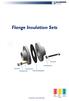 Insulation sets are used to limit corrosion in pipeline systems. Where dissimilar metals are present, the sets remove the possibility of the system acting as a galvanic cell and reduce the risk of galvanic
These features have made Lo Torc valves the choice of high pressure plug value users, worldwide:
 LO TORC Plug Valve The high value, dependable performance, and low maintenance requirements of Halliburton Lo Torc valves can help reduce overall operating costs and help cut downtime. These features have
Steel production. Furnace linings made from carbon and graphite are applied for the production of primary iron.
 Steel production Furnace linings made from carbon and graphite are applied for the production of primary iron. Graphite electrodes and nipples (connecting pins) are applied for the production of steel.
Manufacturing Process and Material Properties of Carbon and Graphite Materials. Schunk Kohlenstofftechnik
 Manufacturing Process and Material Properties of Carbon and Graphite Materials Schunk Kohlenstofftechnik Carbon and graphite materials are manufactured according to processes based on conventional ceramic
A Guide to Thermoform Processing of Polypropylene. Introduction
 A Guide to Thermoform Processing of Polypropylene Introduction Thermoforming is the process of heating plastic sheet to a pliable state and forming it into shape. Thermoforming offers processing advantages
North American Stainless
 North American Stainless Flat Product Stainless Steel Grade Sheet 316 (S31600)/EN 1.4401 316L (S31603)/ EN 1.4404 INTRODUCTION NAS provides 316 and 316L SS, which are molybdenum-bearing austenitic stainless
Pipe Thread Types and Designations
 Pipe Thread Types and Designations Overview: Different types of screw threads have evolved for fastening, and hydraulic systems. Of special concern are plastic-to-metal, taper/parallel threaded joints
Material Product Data Sheet Sealers for Thermal Spray Coatings
 Material Product Data Sheet Sealers for Thermal Spray Coatings Thermal Spray Products: AP, APT Thinner, ERS, SA, URS, Metco 185 Sealer 1 Introduction Sealers are materials that penetrate the pores of thermal
Advanced materials & solutions for high h temperatures
 2010 Advanced materials & solutions for high h temperatures t Mission To engineer innovative solutions for our customers High temperature Corrosion Mechanical wear 2010 From material to engineering solutions
HEAT TREATMENT OF STEEL
 HEAT TREATMENT OF STEEL Heat Treatment of Steel Most heat treating operations begin with heating the alloy into the austenitic phase field to dissolve the carbide in the iron. Steel heat treating practice
North American Stainless
 North American Stainless Long Products Stainless Steel Grade Sheet AISI 304 UNS S30400 EN 1.4301 AISI 304L UNS S30430 EN 1.4307 INTRODUCTION: Types 304 and 304L are the most versatile and widely used of
Alodine EC 2 The Principle of Protection
 White Paper Alodine EC 2 The Principle of Protection Providing cost effective protection and improvement for aluminum parts used in extreme environments Contact American Trim, LLC 1005 W. Grand Ave. Lima,
CUTTING TOOL TECHNOLOGY. 1. Tool life 2. Tool Materials 3. Tool Geometry 4. Cutting fluids
 CUTTING TOOL TECHNOLOGY 1. Tool life 2. Tool Materials 3. Tool Geometry 4. Cutting fluids 1 Introduction Machining is accomplished by cutting tools. Cutting tools undergo high force and temperature and
EROSPACE MOVING FORWARD WITH NBM W W W. N B M M E T A L S. C O M LEADING MANUFACTURER & MASTER DISTRIBUTOR OF BRASS, BRONZE, & COPPER ALLOYS
 MOVING FORWARD WITH NBM W W W. N B M M E T A L S. C O M SPECIALTY COPPER ALLOYS FOR THE AEROSPACE INDUSTRY EROSPACE LEADING MANUFACTURER & MASTER DISTRIBUTOR OF BRASS, BRONZE, & COPPER ALLOYS NBM s corporate
TECHNICAL SPECIFICATION
 THOMAS - G-FLEX GFLEX TECH SPEC CONNECTING INNOVATION JOHANNESBURG TEL: +27 11 794 7594 CAPE TOWN TEL: +27 21 556 5258 POLOKWANE TEL: 015 298 9142 DESIGNER, MANUFACTURER AND DISTRIBUTOR OF PIPE CONNECTION,
Radiation Curable Components and Their use in Hard, Scratch Resistant Coating Applications
 Radiation Curable Components and Their use in Hard, Scratch Resistant Coating Applications William Schaeffer Steven Tyson Indu Vappala Robert Kensicki Sartomer USA, LLC 502 Thomas Jones Way Exton, PA 19343
Bearing Failure: Causes and Cures
 Bearing Failure: Causes and Cures bearing.ppt Page 1 Excessive loads usually cause premature fatigue. Tight fits, brinelling and improper preloading can also bring about early fatigue failure. The solution
Chapter 5 POWDER-BASED RAPID PROTOTYPING SYSTEMS
 Chapter 5 POWDER-BASED RAPID PROTOTYPING SYSTEMS 5.1 3D SYSTEMS SELECTIVE LASER SINTERING (SLS) 5.1.1 Company 3D Systems Corporation was founded by Charles W. Hull and Raymond S. Freed in 1986. The founding
Dry Gas Seals for LNG Compressors
 SEALING solutions Dry Gas Seals for LNG Compressors Sealing answers for liquefied natural gas By Daniel Goebel and Francesco Grillo, EagleBurgmann With the discoveries of large new natural gas deposits,
North American Stainless
 North American Stainless Flat Products Stainless Steel Grade Sheet 430 (S43000)/ EN 1.4016 Introduction: SS430 is a low-carbon plain chromium, ferritic stainless steel without any stabilization of carbon
Visual Index O-Rings and Seals
 O-Rings and Seals N O-Ring Face Seal ORFS O-Ring N4 XO O-Ring N4 Port Ends SAE, Metric,, JIS, K4 SAE O-Ring N4 ISO 6149 O-Ring N5 Metric O-Ring Metric Retaining Ring O-Ring Retaining Ring EOlastic Seal
Flowserve - Edward Valves Development of the Flowserve Edward Equiwedge Gate Valve
 Flowserve - Edward Valves Development of the Flowserve Edward Equiwedge Gate Valve Problem Gate valves in severe service applications that experience premature trim wear from seat guided discs or leakage
O-Ring Reference Guide. Seal Dynamics, Inc. Worldwide Headquarters 75 Burt Drive Deer Park, New York 11729 (631) 667-4000
 O-Ring Reference Guide Seal Dynamics, Inc. Worldwide Headquarters 75 Burt Drive Deer Park, New York 11729 (631) 667-4000 Seal Dynamics, Inc. Sample Product Offering O-Rings and Gaskets o Custom Molded
Inspired By Challenge. Technical information polymer characteristics
 Inspired By Challenge Technical information polymer characteristics Technical Information Seat materials - overview Habonim s extensive field experience, which lets us design valves that meet the diverse
Thermal Adhesives Ther-O-Bond 1500
 Products / Interface Materials / Adhesives Adhesives Bond 1500 Epoxy casting system for potting and encapsulation Bond 1600 Two part epoxy for bonding Bond 2000 Rapid cure acrylic adhesive bond High strength
North American Stainless
 North American Stainless Flat Products Stainless Steel Sheet T409 INTRODUCTION NAS 409 is an 11% chromium, stabilized ferritic stainless steel. It is not as resistant to corrosion or high-temperature oxidation
300 SERIES 331, 332, 333, 344, 356 AND 367 MODELS
 Section: MOYNO 500 PUMPS Page: 1 of 8 Date: March 1, 1998 SERVICE MANUAL MOYNO 500 PUMPS 300 SERIES 331, 332, 333, 344, 356 AND 367 MODELS Mechanical Seal Models Packing Gland Models MODELS DESIGN FEATURES
08.08 Vic-Check Valves
 The check valves are a product of computer-assisted innovative engineering with quality features including a new hydrodynamically efficient profile. The Vic-Check valve utilizes a spring-assisted, single-disc
Gaskets & seals solutions TENAX. Rubber fabric products. Vee packings Chevron sets Collars for rods & pistons
 Rubber fabric products Gaskets & seals solutions ENAX Vee packings Chevron sets Collars for rods & pistons 100 YEAR 1911-2011 Gaskets and eals in enax rubber fabric Our gaskets in cotton-fabric ENAX do
Saw Tooth Design and Tipping Materials
 Saw Tooth Design and Tipping Materials Bruce Lehmann, P.Eng, Ph.D. Sr. Engineer, Thin Kerf Technologies Inc. British Columbia, Canada Introduction The purposes of a saw tooth are to: 1. Remove a chip from
CORROSION ENGINEERING RESIN-BASED POLYMER CONCRETES AND GROUTS
 AN ERGONARMOR COMPANY TECHNICAL INFORMATION SPECIFICATION FOR INSTALLATION 07/11 SUPERSEDES 04/00 PAGE 1 OF 6 CORROSION ENGINEERING RESIN-BASED POLYMER CONCRETES AND GROUTS 1. SCOPE 1.1 This specification
Weld Cracking. An Excerpt from The Fabricators' and Erectors' Guide to Welded Steel Construction. The James F. Lincoln Arc Welding Foundation
 Weld Cracking An Excerpt from The Fabricators' and Erectors' Guide to Welded Steel Construction The James F. Lincoln Arc Welding Foundation Weld Cracking Several types of discontinuities may occur in welds
Heat Exchanger Thin Film Foul Release Applications Corrosion Resistant Protective Coatings Grit Blast Surface Prep of Tubular Equipment
 Heat Exchanger Thin Film Foul Release Applications Corrosion Resistant Protective Coatings Grit Blast Surface Prep of Tubular Equipment Non-Destructive Examination Heat Exchanger Mechanical Repair Services
SUNNDA CORPORATION. Mud Pump Parts & Expendables. Boost Your Bottom Line! Sunnda Corporation
 SUNNDA CORPORATION Boost Your Bottom Line! Mud Pump Parts & Expendables Sunnda Corporation 4543 Brittmoore Road, Houston, TX 77041 USA Phone: +1-713-849-5678 Fax: +1-713-849-5687 E-mail: [email protected]
Ceralink Capabilities and Opportunities
 Ceralink Capabilities and Opportunities Dr. Holly Shulman President, Materials Scientist Ceralink Inc. Rensselaer Technology Park 105 Jordan Rd. Troy, New York 12180 [email protected] www.ceralink.com
PROCESSING OF VARIOUS MATERIALS
 4 PROCESSING OF VARIOUS MATERIALS CHAPTER CONTENTS 4.1 Shaping Processes for Polymers Polymers Manufacturing Processes for Polymers 4.2 Rubber Processing Technology Processing of rubber into finished good