
DeviceNet Communications Unit for EJ1 Temperature Controllers OPERATION MANUAL
|
|
|
- Mavis Harris
- 9 years ago
- Views:
Transcription
1 Cat. No. H155-E1-02 DeviceNet Communications Unit for EJ1 Temperature Controllers OPERATION MANUAL

2 DeviceNet Communications Unit for EJ1 Temperature Controllers Operation Manual Revised July 2008

3 iv

4 Preface: OMRON products are manufactured for use according to proper procedures by a qualified operator and only for the purposes described in this manual. This manual contains information on the functions, performance, and operating procedure for the DeviceNet Communications Unit. Be sure to heed the following points when using the DeviceNet Communications Unit. The DeviceNet Communications Unit must be handled by personnel who have a sufficient knowledge of electrical systems. Please read this manual carefully and be sure that you understand the information provided before attempting to operate the DeviceNet Communications Unit. Keep this manual close at hand for reference during operation. Visual Aids The following headings appear in the left column of the manual to help you locate different types of information. Note Indicates information of particular interest for efficient and convenient operation of the product. 1,2, Indicates lists of one sort or another, such as procedures, checklists, etc. OMRON, 2008 All rights reserved. No part of this publication may be reproduced, stored in a retrieval system, or transmitted, in any form, or by any means, mechanical, electronic, photocopying, recording, or otherwise, without the prior written permission of OMRON. No patent liability is assumed with respect to the use of the information contained herein. Moreover, because OMRON is constantly striving to improve its high-quality products, the information contained in this manual is subject to change without notice. Every precaution has been taken in the preparation of this manual. Nevertheless, OMRON assumes no responsibility for errors or omissions. Neither is any liability assumed for damages resulting from the use of the information contained in this publication. v

5 Read and Understand this Manual Please read and understand this manual before using the product. Please consult your OMRON representative if you have any questions or comments. Warranty and Limitations of Liability WARRANTY OMRON's exclusive warranty is that the products are free from defects in materials and workmanship for a period of one year (or other period if specified) from date of sale by OMRON. OMRON MAKES NO WARRANTY OR REPRESENTATION, EXPRESS OR IMPLIED, REGARDING NON- INFRINGEMENT, MERCHANTABILITY, OR FITNESS FOR PARTICULAR PURPOSE OF THE PRODUCTS. ANY BUYER OR USER ACKNOWLEDGES THAT THE BUYER OR USER ALONE HAS DETERMINED THAT THE PRODUCTS WILL SUITABLY MEET THE REQUIREMENTS OF THEIR INTENDED USE. OMRON DISCLAIMS ALL OTHER WARRANTIES, EXPRESS OR IMPLIED. LIMITATIONS OF LIABILITY OMRON SHALL NOT BE RESPONSIBLE FOR SPECIAL, INDIRECT, OR CONSEQUENTIAL DAMAGES, LOSS OF PROFITS OR COMMERCIAL LOSS IN ANY WAY CONNECTED WITH THE PRODUCTS, WHETHER SUCH CLAIM IS BASED ON CONTRACT, WARRANTY, NEGLIGENCE, OR STRICT LIABILITY. In no event shall the responsibility of OMRON for any act exceed the individual price of the product on which liability is asserted. IN NO EVENT SHALL OMRON BE RESPONSIBLE FOR WARRANTY, REPAIR, OR OTHER CLAIMS REGARDING THE PRODUCTS UNLESS OMRON'S ANALYSIS CONFIRMS THAT THE PRODUCTS WERE PROPERLY HANDLED, STORED, INSTALLED, AND MAINTAINED AND NOT SUBJECT TO CONTAMINATION, ABUSE, MISUSE, OR INAPPROPRIATE MODIFICATION OR REPAIR. Application Considerations SUITABILITY FOR USE OMRON shall not be responsible for conformity with any standards, codes, or regulations that apply to the combination of products in the customer's application or use of the products. At the customer's request, OMRON will provide applicable third party certification documents identifying ratings and limitations of use that apply to the products. This information by itself is not sufficient for a complete determination of the suitability of the products in combination with the end product, machine, system, or other application or use. The following are some examples of applications for which particular attention must be given. This is not intended to be an exhaustive list of all possible uses of the products, nor is it intended to imply that the uses listed may be suitable for the products: Outdoor use, uses involving potential chemical contamination or electrical interference, or conditions or uses not described in this manual. Nuclear energy control systems, combustion systems, railroad systems, aviation systems, medical equipment, amusement machines, vehicles, safety equipment, and installations subject to separate industry or government regulations. Systems, machines, and equipment that could present a risk to life or property. Please know and observe all prohibitions of use applicable to the products. NEVER USE THE PRODUCTS FOR AN APPLICATION INVOLVING SERIOUS RISK TO LIFE OR PROPERTY WITHOUT ENSURING THAT THE SYSTEM AS A WHOLE HAS BEEN DESIGNED TO ADDRESS THE RISKS, AND THAT THE OMRON PRODUCTS ARE PROPERLY RATED AND INSTALLED FOR THE INTENDED USE WITHIN THE OVERALL EQUIPMENT OR SYSTEM. PROGRAMMABLE PRODUCTS OMRON shall not be responsible for the user's programming of a programmable product, or any consequence thereof. vi

6 Disclaimers CHANGE IN SPECIFICATIONS Product specifications and accessories may be changed at any time based on improvements and other reasons. It is our practice to change model numbers when published ratings or features are changed, or when significant construction changes are made. However, some specifications of the products may be changed without any notice. When in doubt, special model numbers may be assigned to fix or establish key specifications for your application on your request. Please consult with your OMRON representative at any time to confirm actual specifications of purchased products. DIMENSIONS AND WEIGHTS Dimensions and weights are nominal and are not to be used for manufacturing purposes, even when tolerances are shown. PERFORMANCE DATA Performance data given in this manual is provided as a guide for the user in determining suitability and does not constitute a warranty. It may represent the result of OMRON's test conditions, and the users must correlate it to actual application requirements. Actual performance is subject to the OMRON Warranty and Limitations of Liability. ERRORS AND OMISSIONS The information in this document has been carefully checked and is believed to be accurate; however, no responsibility is assumed for clerical, typographical, or proofreading errors, or omissions. vii

7 Safety Precautions Notation and Definitions for Precautionary Information The following notation is used in this manual to provide precautions required to ensure safe usage of the DeviceNet Communications Unit. The safety precautions that are provided here are extremely important to safety. Always read and heed information provided in all safety precautions. The following notation is used. Definitions of Warning and Caution WARNING Indicates a potentially hazardous situation which, if not avoided, is likely to result in slight or moderate injury or occasionally, death or serious injury. And serious property damage may occur as well. CAUTION Indicates a potentially hazardous situation which, if not avoided, is likely to result in minor or moderate injury or property damage. Symbols Symbol Meaning Caution Prohibition Mandatory Caution General Caution Indicates non-specific general cautions, warnings, and dangers. Electrical Shock Caution Indicates possibility of electric shock under specific conditions. General Prohibition Indicates non-specific general prohibitions. General Caution Indicates non-specific general cautions, warnings, and dangers. viii

8 Warnings and Cautions WARNING Never use the product without installing protective circuit in network. Doing so may possibly cause abnormal operation, and result in serious injury, property damage, or accident. To operate your total system safely even if any equipment failure occurs, or any trouble is caused by an external element, be sure to configure an external-control-circuit that consists of emergency stop, interlock and limit circuits to provide double or triple safeguard. CAUTION Do not touch the terminals while power is being supplied. Doing so may occasionally result in minor injury due to electric shock. Use a power supply unit that complies with the reinforced insulation specified in IEC for the EJ1. If non-compliant power supply units are used, electric shock may occasionally result in minor injury. Do not allow pieces of metal, wire clippings, or fine metallic chips generated during installation to enter the product. Doing so may occasionally result in electric shock, fire, or malfunction. Do not use the product where subject to flammable or explosive gas. Otherwise, minor injury from explosion may occasionally occur. Never disassemble, modify, or repair the product or touch any of the internal parts. Minor electric shock, fire, or malfunction may occasionally occur. If screws are loosened, fire may occasionally occur. Tighten the fixing screws for connector with the torque of 0.25 to 0.30 N m as specified. When changing the program by using online edit, an unexpected actuation may occasionally result in minor or moderate injury or property damage. Make sure that the product is not affected by prolonged cycle time on DeviceNet before using online edit. When transferring a program to another node, or changing I/O memory, an unexpected actuation may occasionally result in minor or moderate injury or property damage. Before doing these operations, make sure that the node to be changed is in appropriate status. ix

9 Precautions for Safe Use 1) The product is designed for indoor use only. Do not use the product outdoors or in any of the following locations. Places directly subject to heat radiated from heating equipment. Places subject to splashing liquid or oil atmosphere. Places subject to direct sunlight. Places subject to dust or corrosive gas (in particular, sulfide or ammonia gas) Places subject to intense temperature change. Places subject to icing or condensation. Places subject to vibration or strong shocks. 2) Use and store the product within the rated temperature and humidity ranges. Provide forced-cooling if required. 3) To allow heat to escape, do not block the area around the temperature controller. Also, do not block its ventilation holes. 4) Be sure to wire properly with correct polarity of terminals. 5) Use crimped terminals of specified sizes (M3, width: 5.8 mm or less) for wiring. To connect bare wires to the terminal block, use wires with a gage of AWG22 to AWG14 (cross-sectional area: mm 2 to mm 2 ). For wirings other than power supply, use wires with a gage of AWG28 to AWG14 (crosssectional area: mm 2 to mm 2 ). (The stripping length: 6 to 8 mm). 6) Do not wire terminals that do not have an identified use. 7) Secure as much space as possible between the product and devices that generates a strong highfrequency or surge. Separate the high-voltage or large-current power lines from other lines, and avoid parallel or common wiring with the power lines when you are wiring to the terminals. 8) Use the product within the rated load and power supply voltage. 9) Make sure that the rated voltage is attained within 2 s of turning ON the power. 10) The switch or circuit breaker must be located within an easy reach of the operator, and must be marked as a disconnecting means for this unit. 11) Do not use paint thinner or similar chemical to clean with. Use standard grade alcohol. 12) Never touch the electric components, connectors, or patterns in the product with bare hands. Always hold the product by its enclosure. Inappropriate handling of the product may occasionally damage internal components due to static electricity. 13) Use a switch, relay, or other device for turning OFF the power supply quickly. Gradually lowering the voltage of the power supply may result in incorrect outputs or memory errors. 14) Connect only the specified number of products in only a specified configuration. 15) Mount the product to a DIN Rail mounted vertically to the ground. 16) Always turn OFF the power before wiring, replacing the product, or changing the configuration. 17) Before installing the product, attach the enclosed cover seal to the connector opening on the left end of the product. 18) Make sure that the data transfer distance for DeviceNet is within the specified range, and use the specified cable only. Also, refer to this manual for specifications including appropriate data transfer distance and cable. 19) Do not bend or pull data transfer cable for DeviceNet forcibly. 20) Turn OFF the DeviceNet before connecting/disconnecting connectors. Not doing so may result in equipment failure or malfunction. x

10 Precautions for Correct Use Installation 1) Connect the DeviceNet Communications Unit to the left side of a Basic Unit or an End Unit. 2) The EJ1 cannot be used linked to a CJ-series PLC. Service Life 1) Use the product within the following temperature and humidity ranges. Temperature: 10 to 55 C (with no icing or condensation) Humidity: 25% to 85% When the Temperature Controller is incorporated in a control panel, make sure that the controller s ambient temperature and not the panel s ambient temperature does not exceed 55 C. 2) The service life of electronic devices like the Temperature Controller is determined by the service life of internal electronic components. Component service life is affected by the ambient temperature: the higher the temperature, the shorter the service life and the lower the temperature, the longer the service life. Therefore, the service life can be extended by lowering the temperature of the Temperature Controller. 3) Mounting two or more Temperature Controllers side by side, or mounting Temperature Controllers above each other may cause heat to build up inside the Temperature Controllers, which will shorten their service life. If the Temperature Controllers are mounted above each other or side by side, use forced cooling by fans or other means of air ventilation to cool down the Temperature Controllers. However, be sure not to cool only the terminals. Doing so will result in measurement errors. Precautions for Operation 1) It takes a certain amount of time for the outputs to turn ON from after the power supply is turned ON. Due consideration must be given to this time when designing control panels, etc. 2) It takes 30 minutes from the time the product is turned ON until the correct temperature is indicated. Always turn ON the power supply at least 30 minutes before starting temperature control. 3) Avoid using the Temperature Controller near a radio, television set, or other wireless device. Its use would result in reception disturbance. xi

11 Preparations for Use Be sure to thoroughly read and understand the manual provided with the product, and check the following points. Timing Check point Details Purchasing the product Product appearance After purchase, check that the product and packaging are not dented or otherwise damaged. Damaged internal parts may prevent optimum control. Setting the Unit EC Directives Product model and specifications Product installation location Make sure that the purchased product meets the required specifications. Provide sufficient space around the product for heat dissipation. Do not block the vents on the product. Wiring Terminal wiring Do not subject the terminal screws to excessive stress (force) when tightening them. Make sure that there are no loose screws after tightening terminal screws to the specified torque of 0.25 to 0.30 N m. Be sure to confirm the polarity for each terminal before wiring the terminal block and connectors. Power supply inputs Wire the power supply inputs correctly. Incorrect wiring will result in damage to the internal circuits. Operating environment Ambient temperature The ambient operating temperature for the product is 10 to 55 C (with no condensation or icing). To extend the service life of the product, install it in a location with an ambient temperature as low as possible. In locations exposed to high temperatures, if necessary, cool the products using a fan or other cooling method. Vibration and shock Check whether the standards related to shock and vibration are satisfied at the installation environment. (Install the product in locations where the conductors will not be subject to vibration or shock.) Foreign particles Install the product in a location that is not subject to liquid or foreign particles entering the product. If sulfide, chlorine, or other corrosive gases are present, remove the source of the gas, install a fan, or use other countermeasures to protect the product. Concepts EMC Directives Low Voltage Directive EMC Directives OMRON devices that comply with EC Directives also conform to the related EMC standards so that they can be more easily built into other devices or the overall machine. The actual products have been checked for conformity to EMC standards. Whether the products conform to the standards in the system used by the customer, however, must be checked by the customer. EMC-related performance of the OMRON devices that comply with EC Directives will vary depending on the configuration, wiring, and other conditions of the equipment or control panel on which the OMRON devices are installed. The customer must, therefore, perform the final check to confirm that devices and the overall machine conform to EMC standards. xii

12 Conformance to EC Directives The EJ1 DeviceNet Communications Unit complies with EC Directives. To ensure that the machine or device in which the Unit is used complies with EC Directives, the Unit must be installed as follows: 1,2, The Unit must be installed within a control panel. 2. You must use reinforced insulation or double insulation for the DC power supplies used for the communications power supply, internal power supply, and I/O power supplies. 3. Units complying with EC Directives also conform to the Common Emission Standard (EN ). Radiated emission characteristics (10-m regulations) may vary depending on the configuration of the control panel used, other devices connected to the control panel, wiring, and other conditions. You must therefore confirm that the overall machine or equipment complies with EC Directives. 4. The Unit is a Class A product (products for industrial environments). In residential environment areas it may cause radio interference, in which case the user may be required to take adequate measures to reduce interference. The following example shows one means of reducing noise. 1,2, Noise from the communications cable can be reduced by installing a ferrite core on the communications cable within 10 cm of the DeviceNet Unit. 30 mm 33 mm 13 mm 29 mm Ferrite Core (Data Line Filter): (manufactured by Fair-Rite Products Co., Ltd.) Impedance specifications 25 MHz: 105 Ω 100 MHz: 190 Ω 30 mm 13 mm 29 mm 33 mm 2. Wire the control panel with as thick and short electric lines as possible and ground to 100 Ω min. 3. Keep DeviceNet communications cables as short as possible and ground to 100 Ω min. xiii

13 The manuals related to the EJ1 DeviceNet Communications Unit are configured as shown in the following tables. Refer to these manuals as required. EJ1 DeviceNet Master Unit Related Manuals Name Cat. No. Contents EJ1 DeviceNet Communications Unit Operation Manual EJ1 Modular Temperature Controller User's Manual CX-Thermo Ver. (online help) EST2-2C-MV4 DeviceNet Operation Manual DeviceNet Master Units Operation Manual H155 (This manual) H (Available only as online help.) Describes the following information on the DeviceNet Communications Unit. Overview and features System configuration Mounting and wiring Troubleshooting Describes the following information on the EJ1. Overview and features System configuration Mounting and wiring Troubleshooting Describes how to set parameters and adjust devices (i.e., components such as Temperature Controllers) using the CX-Thermo. Name Cat. No. Contents W267 W379 Describes the configuration and construction of a DeviceNet network, including installation procedures and specifications for cables, connectors, and other connection devices, as well as information on the communications power supply. Describes the models, specifications, functions, and application methods of C200HX/HG/HE, CVM1, and CV-series DeviceNet Master Units. CS1 Series DeviceNet Unit Operation Manual W380 Describes the models, specifications, functions, and application methods of the CS1-series DeviceNet Unit. G3ZA Multi-channel Power Controller Manual G3ZA G3ZA-4H203-FLK-UTU G3ZA-4H403-FLK-UTU G3ZA-8H203-FLK-UTU G3ZA-8H403-FLK-UTU Multi-channel Power Controller User's Manual Name Cat. No. Contents Z200 Provides an outline of and describes the features, installation, wiring, RS-485 serial communications settings, and basic function for the G3ZA Multichannel Power Controller. xiv

14 G3PW Power Controller Manual G3PW-A220EC-C-FLK G3PW-A230EC-C-FLK G3PW-A245EC-C-FLK G3PW-A260EC-C-FLK G3PW-A220EC-S-FLK G3PW-A230EC-S-FLK G3PW-A245EC-S-FLK G3PW-A260EC-S-FLK Power Controller User's Manual CS/CJ-series PLC Manuals Support Software Manuals Name Cat. No. Contents Z280 Provides an outline of and describes the features, installation, wiring, RS-485 serial communications settings, and basic function for the G3PW Power Controller. Name Cat. No. Contents SYSMAC CJ Series CPU Unit Hardware Manual SYSMAC CJ2- Series CPU Unit Software Manual SYSMAC CJ Series Programmable Controllers Operation Manual SYSMAC CS/CJ Series CS1D- CJ1M- Programmable Controllers Programming Manual SYSMAC CS/CJ Series CS1D Programmable Controllers Instructions Reference Manual SYSMAC CS Series Programmable Controllers Operation Manual W472 W473 W393 W394 W474 W339 Provides an outlines of and describes the design, installation, maintenance, and other basic operations for the CJ-series PLCs. Describes programming and other methods to use the functions of the CJ-series PLCs. Provides an outlines of and describes the design, installation, maintenance, and other basic operations for the CJ-series PLCs. Describes programming and other methods to use the functions of the CS/CJ-series PLCs. Describes the ladder diagram programming instructions supported by CS/CJ-series PLCs. Provides an outlines of and describes the design, installation, maintenance, and other basic operations for the CS-series PLCs. Name Cat. No. Contents DeviceNet Configurator Ver. Operation Manual W382 Describes the operating procedures of the DeviceNet Configurator. CX-One Ver. 3.0 FA Integrated Tool Package Setup Manual CX-Integrator Ver. 3.0 Operation Manual SYSMAC WS02-CXPC1-E-V70 CX-Programmer Operation Manual W463 W464 W446 Installation and overview of CX-One FA Integrated Tool Package. Describes operating procedures for the CX-Integrator Network Configuration Tool for CS-, CJ-, CP-, and NSJ-series Controllers. Provides information on how to use the CX-Programmer for all functionality except for function blocks. xv

15 Meanings of Abbreviations and Terms The following abbreviations and terms are used in this manual. Abbreviation or term AT EDU EU HB HS LBA LSP OC PV RSP SP TC4/TC2 Temperature Controller Configurator word (CIO) channel (ch) communications unit number unit number as a CPU Bus Unit Autotuning EJ1 End Unit Engineering unit (See note.) Heater burnout Heater short Loop burn alarm Local SP Heater overcurrent Process value Remote SP Set point EJ1 Basic Unit TC4: Four-channel Basic Unit TC2: Two-channel Basic Unit Meaning EJ1 Basic Unit listed above (TC4 or TC2) Device to perform system setup and other functions. Includes functions for reading ID data, reading and writing parameters, and displaying network configurations. The DeviceNet Configurator and the CX-Integrator (with the same screen configuration as the DeviceNet Configurator) are available for Units manufactured by OMRON. Words allocated in the CIO Areas of the CPU Unit of the PLC. Number of control loops for a Temperature Controller. An identification number for a Temperature Controller connected to a DeviceNet Communications Unit. (Set using both rotary switch 1 and DIP switch pin 2.) The unit number of a DeviceNet Master Unit in the PLC. (Unit numbers are used as identification numbers for CPU Bus Units.) Note EU stands for Engineering Unit. EU is used as the minimum unit for engineering units such as C, m, and g. The size of EU varies according to the input type. For example, when the input temperature setting range is 200 to C, 1 EU is 1 C, and when the input temperature setting range is 20.0 to C, 1 EU is 0.1 C. For analog inputs, the size of EU varies according to the decimal point position of the scaling setting, and 1 EU becomes the minimum scaling unit. xvi

16 TABLE OF CONTENTS SECTION 1 Overview Features and System Configuration Specifications Connecting Temperature Controllers Initial Temperature Controller Settings SECTION 2 Operating Procedures Setup Procedure Startup Procedure SECTION 3 Parts, Installation, and Wiring Part Names and Functions Installation DeviceNet Communications Cables Wiring Wiring the Temperature Controllers SECTION 4 Remote I/O Communications Allocation Method Overview Simple I/O Allocation Allocating I/O from the Configurator Expansion Remote I/O Allocating Data in the Master Ladder Programming Examples SECTION 5 Operations from the Configurator List of Operations from the Configurator Operations from the Edit Device Parameters Window Maintenance Mode Window DeviceNet Communications Unit Monitor SECTION 6 Explicit Message Communications Overview of Explicit Message Communications Sending CompoWay/F Commands to a Temperature Controller Examples Using CompoWay/F Commands Example of Sending Explicit Messages Sending Explicit Messages xvii

17 TABLE OF CONTENTS SECTION 7 Communications Performance Remote I/O Communications Characteristics Message Communications Characteristics SECTION 8 Troubleshooting and Maintenance Indicators and Error Processing Maintenance Appendices A Connecting to a Master from Another Company B Allocation Numbers for Configurators Manufactured by Other Companies C List of Connectable Devices Index Revision History xviii

18 About this Manual: This manual describes the installation and operation of the EJ1 DeviceNet Communications Unit for EJ1 Temperature Controllers and includes the sections described below. Please read this manual carefully and be sure you understand the information provided before attempting to install or operate the EJ1 DeviceNet Communications Unit. Be sure to read the precautions provided in the following section. Precautions provides general precautions for using the EJ1 DeviceNet Communications Unit, Programmable Controller, and related devices. Section 1 introduces the features and system configuration of the EJ1 DeviceNet Communications Unit, the types of EJ1 Temperature Controller that can be used, and other basic information. Section 2 outlines the basic operating procedures of the EJ1 DeviceNet Communications Unit. Section 3 describes the methods used to install and wire the EJ1 DeviceNet Communications Unit and the EJ1 Temperature Controller. The settings of DeviceNet Communications Unit switches are also described. Section 4 describes the input (IN) areas and output (OUT) areas that EJ1 DeviceNet Communications Units can use for remote I/O communications. The methods to allocate data for master communications are also described. Section 5 describes the DeviceNet Configurator operations that can be used for the EJ1 DeviceNet Communications Unit except for allocation procedures, which are described in SECTION 4 Remote I/O Communications. Section 6 describes how to send explicit messages to the EJ1 DeviceNet Communications Unit, including how to send CompoWay/F commands using explicit messages. CompoWay/F commands are supported by the EJ1 Temperature Controller. Section 7 provides information on the time required for a complete communications cycle, for an output response to be made to an input, to start the system, and to send messages. Section 8 describes error processing, periodic maintenance operations, and troubleshooting procedures needed to keep the DeviceNet Network operating properly. Details on resetting replaced Units are also provided. Read through the error processing procedures in both this manual and the operation manual for the DeviceNet master being used before operation so that operating errors can be identified and corrected more quickly. The Appendices provide the handling methods for EDS setting files required for multivendor environments, the device profile of the EJ1 DeviceNet Communications Unit, and information on related products.!warning Failure to read and understand the information provided in this manual may result in personal injury or death, damage to the product, or product failure. Please read each section in its entirety and be sure you understand the information provided in the section and related sections before attempting any of the procedures or operations given. xix

19 xx

20 SECTION 1 Overview This section introduces the features and system configuration of the EJ1 DeviceNet Communications Unit, the types of EJ1 Temperature Controller that can be used, and other basic information. 1-1 Features and System Configuration Features Overview of Unit Communications Functions System Configuration Specifications DeviceNet Communications Specifications Function and Performance Specifications General Specifications Connecting Temperature Controllers Temperature Controller ID and Number of Connectable Units Temperature Controller Communications Temperature Controller Models Temperature Controller Power Supply Temperature Controller Registration Initial Temperature Controller Settings

21 Features and System Configuration Section Features and System Configuration Features Using DeviceNet Functions The DeviceNet Communications Unit enables a DeviceNet master to communicate with multiple EJ1 Temperature Controllers through the DeviceNet to monitor their process values, write parameters, and control operation. Simultaneously Managing Multiple Temperature Controllers from the Master Remote I/O Communications Expansion Remote I/O to Enable Using More Than 100 Words of Parameters Explicit Message Communications Setting, Monitoring, and Operating the Temperature Controller from the Configurator Up to 16 Temperature Controllers can be connected to a single DeviceNet Communications Unit. The DeviceNet Communications Unit is connected to the master as a DeviceNet slave. Up to 63 slaves can be connected to a single master, so multiple DeviceNet Communications Units and other types of slaves can be managed as part of the same system. The master and DeviceNet Communications Units can share I/O by using remote I/O communications. Data in the EJ1 Temperature Controllers, such as process values (PVs) and set points (SPs), can be allocated for communications with the master to enable sending and receiving the allocated data via remote I/O communications, without requiring special programming. Remote I/O Communications without a Configurator Using the DeviceNet Communications Unit, basic Temperature Controller data can be allocated for communications with the master, such as process values (PVs) and set points (SPs), without requiring a Configurator. This is called simple I/O allocation. Simple I/O allocation can be easily set from the DIP switch of the DeviceNet Communications Unit. User-set Data Allocations with a Configurator The specific data required for communications with the master can also be allocated by using I/O allocations from the Configurator. Expansion remote I/O can be used to read and write parameters. Specific parameters allocated in I/O memory of the master can be switched to a variety of parameters by using memory operations. This function enables manipulating more than 100 words of parameters. Even if the number of parameters to be read and written increases, modifications can be handled simply by changing operations in the memory of the master. By executing commands from the PLC, various operations can be performed, including reading/writing specific parameters, such as reading process values or writing set points, and performing operations using operation commands. CompoWay/F communications commands can also be executed using explicit message communications. The Configurator (Ver. 2.2 or higher) or CX-Integrator (Ver. 2.2 or higher) can be used to create the device parameters for the DeviceNet Communications Unit, including settings for the DeviceNet Communications Unit and setting for the Temperature Controllers. The Configurator can then be used to download the parameters together to the DeviceNet Communications Unit and Temperature Controllers. (See note.) The Configurator can also be used to monitor Temperature Controller process values, and execute operation commands for the Temperature Controllers. The Configurator can be used to copy parameters between Temperature Controller channels, allowing the initial parameters of Temperature Controllers requiring the same or similar parameters to be easily set. 2
22 Features and System Configuration Section 1-1 Automatically Detects Baud Rate Previously, the baud rate had to be set for each slave, but the DeviceNet Communications Unit automatically detects and matches the baud rate of the master, so this setting is not required. (If the master's baud rate is changed, turn OFF the communications power supply to the DeviceNet Communications Unit and then turn it ON again.) Wide Range of Maintenance Functions Copy Function (Uploading or Downloading Temperature Controller Parameters) Monitoring Network Power Voltage Monitoring the Unit Conduction Time Unit Comments Setting Temperature Controller Comments Monitoring Communications Error History Monitoring Temperature Controller Power Status Monitor Temperature Controller Conduction Time and RUN Time Parameters for all Temperature Controllers connected to the DeviceNet Communications Unit can be uploaded or downloaded together. (The parameters that have been read are stored in the DeviceNet Communications Unit except for bank parameters and G3ZA and G3PW parameters.) When Temperature Controllers are replaced, the new Controllers can be easily reset onsite without using a Configurator. The DeviceNet network communications power voltage values (present value, peak value, and bottom value) can be stored in the DeviceNet Communications Unit, and the recorded voltages can be read from the Configurator. By setting the voltage monitor value in the DeviceNet Communications Unit, notification will be sent to the master if the voltage level drops below the monitor value. The conduction time of the DeviceNet Communications Unit's internal circuit power supply can be recorded. The recorded conduction time can be read from the Configurator or using explicit messages. By setting a monitor value for the conduction time in the DeviceNet Communications Unit, notification will be sent to the master when the total time exceeds the monitor value. Any name can be set for a DeviceNet Communications Unit and recorded in the Unit. Specifying names enables the user to easily differentiate the applications of the DeviceNet Communications Units when setting and monitoring them from the Configurator. A name can be set for each Temperature Controller channel connected to the DeviceNet Communications Unit and recorded in the DeviceNet Communications Unit. Specifying names enables the user to easily differentiate the function of each channel when setting and monitoring them from the Configurator. The error status for the last four communications errors (the causes and communications power voltage when the communications error occurred) can be recorded in the DeviceNet Communications Unit. The recorded communications error history can be read from the Configurator. The power supply to the Temperature Controllers can monitored to confirm that power is ON and send notification of the status to the master. (The power status can be checked for Temperature Controllers connected to the DeviceNet Communications Unit only.) The power status of the Temperature Controllers can be read from the Configurator or using explicit messages. The conduction time of the Temperature Controller's internal circuit power supply or the RUN time of the Temperature Controller can be totaled and recorded. (Select whether to total the conduction time or RUN time by setting the monitor mode.) The recorded total time can be read using the Configurator or explicit messages. By setting a monitor value in the DeviceNet Communications Unit, notification will be sent to the master if the Unit conduction time exceeds the monitor value. 3
23 Features and System Configuration Section Overview of Unit Communications Functions Remote I/O Communications DeviceNet Communications Unit data is shared with the master's IN Area and OUT Area through DeviceNet. Up to 100 words (200 bytes) each can be used as the IN Area and OUT Area for the DeviceNet Communications Unit. (The first word (two bytes) of the OUT Area is always allocated for the OUT Enable Bit). The IN Area is allocated for data such as the communications status and the process values of the Temperature Controller channels and the OUT Area is allocated for the set points of the channels and other data. When using a CS/CJ-series DeviceNet Unit as the master, the IN Area can be divided into two areas. One is normally used for input data (such as Temperature Controller process values), and the other can be used for reading status (such as Temperature Controller status). Even when the IN Area is divided into two areas, however, the total number of words that can be used for the IN Area is still 100 words (200 bytes). DeviceNet Communications Unit CPU Unit Remote I/O communications output area Output Enable Bit Read parameter setting Write parameter setting PLC Input Area Unit 0, ch 1 SP Unit 0, ch 2 SP Unit 1, ch 1 SP Output Completed Flags Read parameter monitor Unit 0, ch 1 PV Unit 0, ch 2 PV Unit 1, ch 1 PV Remote I/O communications DeviceNet DeviceNet Communications Unit Unit 0 Unit 1 Temperature Controllers 4
24 Features and System Configuration Section 1-1 Explicit Message Communications Explicit message commands can be sent from the master to the DeviceNet Communications Unit to read or write the parameters of the connected Temperature Controllers. CompoWay/F communications commands that were previously used for Temperature Controllers can also be sent (in explicit message format). The DeviceNet Communications Unit's own parameters can also be read or written. DeviceNet Unit CPU Unit PLC Ladder program CMND or other communications instruction Explicit message communications DeviceNet DeviceNet Communications Unit Unit 0 Unit 1 Temperature Controllers 5
25 Features and System Configuration Section 1-1 Transferring, Monitoring, and Operating from the Configurator Any of the Temperature Controller parameters can be read or written from a personal computer using the Configurator (Ver or higher) or CX-Integrator (Ver. 2.2 or higher) and then saved as a file. The setup parameters for each Temperature Controller channel can be copied, allowing the same or similar settings to be easily set for multiple Temperature Controllers. DeviceNet Configurator EJ1 CS/CJ-series DeviceNet Unit PLC Serial connection DeviceNet Setting, monitoring, and executing operation commands for the Temperature Controllers using the Configurator. Setting Temperature Controller settings and downloading them. Monitoring Temperature Controller process values and target values. Executing Temperature Controller operation commands. DeviceNet Communications Unit Unit 0 Unit 1 DeviceNet Slave Temperature Controllers 6
26 10 NODE ADR 1 MAX No D AB C EF0123 EJ1N DRT MS NS TS COPY EDS UP/DN TC2/4 NO MODE Features and System Configuration Section System Configuration Basic Configuration DeviceNet Configurator CS/CJ-series DeviceNet Unit PLC Serial connection (setting, monitoring, and operating) Explicit messages DeviceNet DeviceNet slave Connect to port B Distributed placement of 16th Temperature Controller DeviceNet Communications Unit Temperature Controllers (up to 16 Controllers) (See note.) EDU RS-485 (CompoWay/F) Note: Up to 16 Temperature Controllers can be connected to one DeviceNet Communications Unit. Use distributed placement via RS-485 for the 16th Temperature Controller. Connect the master to the DeviceNet Communications Unit, and connect the DeviceNet Communications Unit to the Temperature Controllers. The DeviceNet Communications Unit shares I/O with the master as a DeviceNet slave, and can send data to and receive data from the master using explicit messages. Up to 63 slaves can be connected to a single master. Up to 16 Temperature Controllers can be connected to a single DeviceNet Communications Unit. Note Always connect the DeviceNet Communications Unit to the Temperature Controllers on the left end of the block. 7
27 10 NODE ADR 1 MAX No. D AB C EF NO EJ1N DRT MS NS TS COPY Features and System Configuration Section 1-1 Distributed Placement DeviceNet Configurator CS/CJ-series DeviceNet Unit PLC Serial connection (setting, monitoring, and operating) Explicit messages DeviceNet DeviceNet Communications Unit DeviceNet slave EDS UP/DN TC2/4 MODE RS-485 communications cable (length: 500 m max.) Connect to port B on the EDU Connect to port B on the EDU Temperature Controllers (up to 16 Controllers) Connect to port B on the EDU Connect to port B on the EDU Connect the master and DeviceNet Communications Unit to port B (RS-485) of each End Unit. The total cable length for RS-485 communications can be up to 500 m, so Temperature Controllers located at a distance can be operated using a single DeviceNet Communications Unit. Up to 63 slaves can be connected to a single master. Up to 16 Temperature Controllers total for all blocks can be connected to a single DeviceNet Communications Unit. 8
28 Specifications Section Specifications Terminating resistance of 100 to 125 Ω (1/2 W) must be connected to both ends of the RS-485 communications transmission path. Note Connect the DeviceNet Communications Unit to the Temperature Controllers on the left end of any one of the blocks DeviceNet Communications Specifications Item Communications protocol Communications functions Connection format Baud rate Communications media Remote I/O communications Simple I/O allocation I/O allocations from the Configurator Message communications Setting, monitoring and controlling operations from the Configurator Conforms to DeviceNet Specifications Master-slave connections (polling, COS, or cyclic) Conform to DeviceNet specifications. Allocates I/O data using switch settings only, without a Configurator. I/O is allocated for Temperature Controller status, process values, set points, alarm output status, and other basic data only. One block for IN Area, up to 86 words (words are allocated through the unit number set in the highest communications unit number setting) One block for OUT Area, up to 74 words (words are allocated through the unit number set in the highest communications unit number setting) Can be used to allocate any I/O data from the Configurator. Can be used to allocate any data, such as parameters specific to the DeviceNet Communications Unit and the Temperature Controller variable area. Up to 2 blocks for the IN Area, up to a total of 100 words. (See note 1.) One block for OUT Area 1 block, up to 100 words (the first word is always allocated to the OUT Enable Bit). (See note 2.) Explicit message communications CompoWay/F communications commands can be sent (commands are sent in explicit message format). Supported by DeviceNet Configurator (using the Edit Parameters and Device Monitor functions of the DeviceNet Communications Unit and Temperature Controllers). Used to set and monitor the DeviceNet Communications Unit. Used to register connection configurations, make initial settings (see note 3), change settings, and monitor the Temperature Controllers. Use to allocates data for master communications. Used to allocates word in the IN and OUT Areas for specific data. Used to sends operation commands to the Temperature Controllers. Combination of multidrop and T-branch connections (for trunk and drop lines) DeviceNet: 500, 250, or 125 kbps, or automatic detection of master baud rate Special 5-wire cable (2 signal lines, 2 power lines, and 1 shield line) Communications distance Baud rate Network length Drop line length Total drop line length 500 kbps 100 m max. 6 m max. 39 m max. (100 m max.) 250 kbps 250 m max. 6 m max. 78 m max. (100 m max.) 125 kbps 500 m max. 6 m max. 156 m max. (100 m max.) The values in parentheses apply when Thin Cables are used. Communications power supply 11 to 25 VDC Maximum number of nodes that can be 64 (includes Configurator when used.) connected Maximum number of slaves that can be 63 connected 9
29 Specifications Section 1-2 Error control Power supply Item Specifications CRC error detection Power supplied from DeviceNet communications connector (DeviceNet communications power supply and DeviceNet Communications Unit internal circuit power supply) Note 1. When a CS/CJ-series DeviceNet Unit is used as the master, two blocks can be used for the IN Area (the connections can also be set). When a CVM1, CV-series, or C200HX/HG/HE DeviceNet Master Unit is used, the IN Area must be in 1 block, and up to 100 words (200 bytes) are allocated. (Only polling connections can be used.) 2. When a CVM1, CV-series, or C200HX/HG/HE DeviceNet Master Unit is used, up to 32 words can be allocated in the master for a single node. 3. The set points, alarm setting values, PID constants, and other Temperature Controller parameters can be set together Function and Performance Specifications Item Maximum number of Temperature Controllers that can be connected Applicable Temperature Controllers Power supply Copying Specifications 16 Note Up to 15 Units can be connected side by side. The 16th Unit is connected using distributed placement by using an End Unit. (TC4) EJ1N-TC4A-QQ EJ1N-TC4B-QQ (TC2) EJ1N-TC2A-QNHB EJ1N-TC2B-QNHB EJ1N-TC2A-CNB EJ1N-TC2B-CNB Power is supplied via the terminal block of the End Unit (power supply for communications between the DeviceNet Communications Unit and Temperature Controllers and power supply for internal circuits of the Temperature Controllers). The parameters of a connected Temperature Controller can be uploaded or downloaded as a batch by using the DeviceNet Communications Unit s DIP switch or an explicit message. The bank, G3ZA, and G3PW parameters are not copied. The uploaded parameters are stored in the DeviceNet Communications Unit. 10
30 10 NODE ADR 1 MAX No AB DEF0123 C NO Connecting Temperature Controllers Section General Specifications Item Supply voltage Allowable voltage range DeviceNet power supply External input power supply DeviceNet power supply External input power supply 24 VDC (internal circuit) 1-3 Connecting Temperature Controllers Specifications 24 VDC (for RS-485 communications circuit/ Temperature Controllers) 11 to 25 VDC 20.4 to 26.4 VDC Power consumption (at maximum load) 1 W max. Current consumption (DeviceNet power 45 ma max. (24 VDC) supply) Vibration resistance 10 to 55 Hz, 10m/s 2 for 2 hours each in X, Y, and Z directions Shock resistance 150m/s 2 max. 3 times each in 3 axes, 6 directions Dielectric strength 600 VAC 50 or 60 Hz 1min Insulation resistance 20 MΩ min. (at 100 VDC) Ambient temperature 10 to 55 C (with no condensation or icing) Ambient humidity 25% to 85% Storage temperature 25 to 65 C (with no condensation or icing) Enclosure rating IP20 Dimensions mm (W H D) Memory protection EEPROM, 100,000 write operations (backup data) Weight 70 g max Temperature Controller ID and Number of Connectable Units A DeviceNet Communications Unit is connected as shown in the following diagram EJ1N DRT MS NS TS COPY EDS UP/DN TC2/4 MODE DeviceNet Communications Unit Temperature Controllers The DeviceNet Communications Unit differentiates each of the connected Temperature Controllers according to communications unit numbers (0 to F: 0 to 15 decimal). The Temperature Controllers can be connected in any order. The communications unit number of each Temperature Controller is set using the rotary switch on the front panel of the Temperature Controller. Always set a unique communications unit number for each Temperature Controller. Up to 15 Temperature Controllers can be connected side by side. By using an End Unit, however, up to 16 Temperature Controller can be connected using distributed placement. 11
31 Connecting Temperature Controllers Section 1-3 Note There is no priority between operation commands and settings for DeviceNet communications from the master, and operation commands and settings from the Configurator. Do not change the same data or send different operation commands more than one source at the same time Temperature Controller Communications Temperature Controller Models The DeviceNet Communications Unit communicates through port B on the Temperature Controllers. The DeviceNet Communications Unit will automatically set the communications settings. You do not need to set them. If you mistakenly change the settings, use the CX-Thermo to restore the default settings and then reset the DeviceNet Communications Unit. Refer to EJ1 Temperature Controllers on page 171 for information on the Temperature Controller models Temperature Controller Power Supply Power is supplied to the Temperature Controllers through the End Unit. For details, refer to the EJ1 Modular Temperature Controller User's Manual (Cat. No. H142) Temperature Controller Registration The connected Temperature Controllers must be registered in the configuration in the DeviceNet Communications Unit. The DeviceNet Communications Unit automatically verifies that the registered the Temperature Controllers match the Temperature Controllers currently able to communicate. If the unit numbers do not match in the verification process, the Temperature Controllers will be determined to have an error, causing the following status. The TS indicator will flash red. The Communicating Flag will turn OFF and the Communications Error Flag will turn ON for each Temperature Controller that is not communicating but is registered as being connected to the DeviceNet Communications Unit. The method used to register the connection configuration depends on the method of remote I/O allocation. 1,2, Allocation from the Configurator With DIP switch pin 1 set to OFF, turn ON the power supply, and register the configuration using the Configurator or an explicit message. 2. Allocation Using Simple Allocation Turn DIP switch pin 1 to ON, set DIP switch pin 2 to the model to be connected, and set the highest communications unit number setting to the highest communications unit number of the Temperature Controllers that are connected. 12
32 Initial Temperature Controller Settings Section Initial Temperature Controller Settings The following four methods are provided for setting the EJ1 Temperature Controllers. Transferring Temperature Controller Parameters Together Set each of the Temperature Controller parameters in the Edit Device Parameters Window from the DeviceNet Configurator, and then transfer them together via the DeviceNet network. Edit device parameters Edit Unit parameters Proportional band Target value Configurator CS/CJ-series DeviceNet Unit PLC Temperature Controller parameters DeviceNet DeviceNet Communications Unit Setting with Explicit Messages Set the initial settings from the PLC with the master by sending an explicit message. PLC CMND CMND (1) Execute a STOP command. (Operation command 30 05, command code 0B, related data FF) (2) Execute an AUTO command. (Operation command 30 05, command code 0D, related data FF) (3) Make initial settings. (VARIABLE AREA WRITE 01 02, variable type E0 to F2) DeviceNet Communications Unit 13
33 Initial Temperature Controller Settings Section
34 SECTION 2 Operating Procedures This section outlines the basic operating procedures of the EJ1 DeviceNet Communications Unit. 2-1 Setup Procedure Startup Procedure Simple I/O Allocation I/O Allocation Using the Configurator
35 Setup Procedure Section Setup Procedure Use the following procedure to prepare the DeviceNet Communications Unit for use. Refer to the reference pages provided for detailed information on each step. Step Item Details Reference page 1 Connect the DeviceNet Communications Unit and the Temperature Controllers. 2 Mount the connected DeviceNet Communications Unit and the Temperature Controllers to the DIN Rail. 3 Connect the RS-485 communications cable (only for distributed placement). Connect the DeviceNet Communications Unit to the Temperature Controllers. Attach the seal supplied with the End Unit to the hole on the side of the DeviceNet Communications Unit. Mount the joined DeviceNet Communications Unit and the Temperature Controllers to the DIN Rail. To ensure secure mounting, always attach an End Plate to each end. When using a multiblock configuration for the Temperature Controllers connected to the DeviceNet Communications Unit, connect the RS-485 communications cable to port B on the End Unit for each block. 4 Connect the power supply Connect a 24-VDC power supply to the power supply terminals of the End Unit. Note Do not turn ON the power supply at this time. This power supply is used as the internal circuit power supply of the Temperature Controllers and the communications power supply between the DeviceNet Communications Unit and the Temperature Controllers. 5 Wire the Temperature Controllers. Wire the Temperature Controller temperature inputs and control outputs. Note Do not turn ON the power supply at this time. 6 Set the communications unit numbers of the Temperature Controllers. Set the communications unit number of each Temperature Controllers using the rotary switch and DIP switch on the Temperature Controller. Set a unique communications unit number for each Temperature Controller. 7 Set the DeviceNet node address. Set the DeviceNet node address (0 to 63) of the DeviceNet Communications Unit. Set the ten s digit using the 10 rotary switch, and the one s digit using the 1 rotary switch. Set a unique node address for each slave connected to the same master
36 Startup Procedure Section Startup Procedure Simple I/O Allocation Use this method in the following situations. To allocate words in the master only for basic data, such as the set points (SPs), process values (PVs), and alarm outputs for each Temperature Controller. To use the DeviceNet Communications Unit without a Configurator (when allocating only fixed I/O in the master). Step Item Details Reference page 8 Set the I/O allocation method. Set simple I/O allocation as the method for allocating I/O data in the IN and OUT Areas used by the DeviceNet Communications Unit. Turn ON pin 1 of the DIP switch. Set DIP switch pin 2 to the model of the Temperature Controller connected Set the highest unit number of the connected Temperature Controllers. 10 Connect the DeviceNet communications connectors. Set the highest communications unit number of the Temperature Controllers connected to the DeviceNet Communications Unit using the rotary switch (Max. No.) of the Unit. This setting will determine the size of the IN and OUT Areas. Connect the DeviceNet communications connector to the DeviceNet Communications Unit. Note Do not turn ON the communications power supply at this time. This power supply is also used as the internal circuit power supply of the DeviceNet Communications Unit. 11 Turn ON the power to the End Unit. Turn ON the power connected to the End Unit. Note The Temperature Controllers will start. 12 Turn ON the DeviceNet communications power (V+, V ). 13 Check the indicators on the DeviceNet Communications Unit. 14 Operate from the Configurator (if user-set allocation is used at the master). Note This also applies if 11 or more TC4 Units are connected. Turn ON the communications power supply to the DeviceNet Communications Unit. (See note.) Note The DeviceNet Communications Unit will start. Check that the status of each indicator on the DeviceNet Communications Unit is as follows: MS: Operating normally when lit green. NS: Operating normally when lit green. (DeviceNet online or communications connected) TS: Communicating with Temperature Controllers when lit green. With the Configurator online, open the master's Edit Device Parameters Window and allocate the IN and OUT Areas used by DeviceNet in the master. Click the Master I/O Allocations Tab, specify the first words for allocation input 1 and allocation output 1, and download the parameters to the master. Note When fixed allocations are used, I/O is allocated automatically
37 Startup Procedure Section 2-2 Step Item Details Reference page 15 Start remote I/O communications. Enable the master's scan list and change the PLC to RUN Mode. Remote I/O communications will start, and the contents of the IN and OUT Areas in the master and DeviceNet Communications Unit will be synchronized. --- Using explicit message communications 16 Set the initial settings or monitor the Temperature Controller. 17 Upload the parameters of the Temperature Controller to the DeviceNet Communications Unit. Note When changing the baud rate of the master after starting the DeviceNet Communications Unit, turn ON the communications power supply of the DeviceNet Communications Unit again, and restart the Unit I/O Allocation Using the Configurator Send explicit messages from the master. Explicit messages can be used to perform control and monitoring that cannot be achieved using the IN and OUT Areas alone, by sending explicit messages to the DeviceNet Communications Unit. With the Configurator online, perform Temperature Controller initial settings or monitoring from the Edit Device Parameters Window for the DeviceNet Communications Unit. When the system has started normally, upload (backup) all the parameters to the DeviceNet Communications Unit in case of Temperature Controller malfunction. Creating a backup copy of the parameters will allow parameters to be easily reset onsite after a Temperature Controller has been replaced, without requiring a Configurator. Procedure: Turn OFF pin 3 of the DIP switch of the DeviceNet Communications Unit, turn ON pin 6 (1 to 5 s), and then turn it OFF again. Use this method for any of the following situations. To select any parameters (such as PID constants) or status information, apart from the Temperature Controller set points (SPs), process values (PVs), or alarm outputs, and allocate words for them in the master (up to 100 words each in the IN Area and OUT Area). To allocate data in any order. To use remote I/O communications to allocate only data that is always required in the master and not allocate unnecessary data. Note Up to 100 words each can be allocated in the IN Area and OUT Area for remote I/O communications. To read and write larger amounts of data, use the following procedure. Use expansion remote I/O. Use explicit message communications. Also write data using explicit message communications for data that is written only when required. Use multiple DeviceNet Communications Units and distribute the number of Temperature Controllers connected to each DeviceNet Communications Unit and
38 Startup Procedure Section 2-2 Step Item Details Reference page 8 Set the method for allocating I/O. Set to the Configurator as the method for allocating I/O data in the IN and OUT Areas used by the DeviceNet Communications Unit. Turn OFF pin 1 of the DIP switch of the Unit Connect the DeviceNet communications connector. Connect the DeviceNet communications connector to the DeviceNet Communications Unit. Note Do not turn ON the communications power at this time. This power supply is also used as the internal circuit power supply of the DeviceNet Communications Unit. 10 Turn ON the power to the End Unit. Turn ON the power supply connected to the End Unit. Note The Temperature Controller will start. 11 Turn ON the DeviceNet communications power supply (+V, V) 12 Check the indicators on the DeviceNet Communications Unit. Turn ON the communications power supply to the DeviceNet Communications Unit. (See note.) Note The DeviceNet Communications Unit will start. Check that the status of each indicator on the DeviceNet Communications Unit is as follows: MS: Operating normally when lit green. (When the power is turned ON for the first time when allocating I/O from the Configurator, the connection configuration of the Temperature Controllers will not be registered, so the indicator will flash green.) NS: Operating normally when lit green. (DeviceNet online or communications connected.) TS: Not lit. 13 Operate from the Configurator. (1) With the Configurator online, register the connection configuration of the Temperature Controllers in the Edit Device Parameters Window for the DeviceNet Communications Unit. (2) Use the following method to allocate I/O in the IN and OUT Areas from the Parameters Window for the DeviceNet Communications Unit. a. Select the data to be allocated from the available allocation data. b. With the Configurator online, download the data to the DeviceNet Communications Unit. (3) To divide the IN Area used by the DeviceNet Communications Unit into two blocks, select the DeviceNet Communications Unit in the Edit Device Parameters Window for the master, and click Advanced to set the connections. Dividing the IN Area into two blocks allows, for example, RUN parameters such as set points (SP) and process values (PV) to be allocated as DM words in IN Area 1 and status information to be allocated as CIO words in IN Area 2. (4) When using the Configurator to allocate user-set I/O, allocate the IN and OUT Areas used by DeviceNet in the master from the Edit Device Parameters Window for the master. Click the Master I/O Allocations Tab, specify the first words of the IN Area 1, IN Area 2, and OUT Area 1, and download the parameters to the master. Note When fixed allocations are used, I/O is allocated automatically
39 Startup Procedure Section 2-2 Step Item Details Reference page 14 Start remote I/O communications. Enable the master's scan list and change the PLC to RUN Mode. Remote I/O communications will start, and the contents of the IN and OUT Areas in the master and DeviceNet Communications Unit will be synchronized. --- When using explicit message communications 15 Set the initial settings or monitor the Temperature Controller. 16 Upload the Temperature Controller parameters to the DeviceNet Communications Unit. Send explicit messages from the master. Explicit messages can be used to perform control and monitoring that cannot be achieved using the IN and OUT Areas alone by sending explicit messages to the DeviceNet Communications Unit. With the Configurator online, execute Temperature Controller operation commands or perform monitoring from the Edit Device Parameters Window for the DeviceNet Communications Unit. When the system has started normally, upload (backup) all the parameters to the DeviceNet Communications Unit in case of Temperature Controller malfunction. This will allow parameters to be easily reset onsite without using a Configurator after replacing a Temperature Controller. Procedure: Turn OFF pin 3 of the DIP switch on the front panel of the DeviceNet Communications Unit, turn ON pin 6 (1 to 5 s), and then turn it OFF again. Note When changing the baud rate of the master after starting the DeviceNet Communications Unit, turn ON the communications power supply of the DeviceNet Communications Unit again, and restart the Unit and
40 SECTION 3 Parts, Installation, and Wiring This section describes the methods used to install and wire the EJ1 DeviceNet Communications Unit and the EJ1 Temperature Controller. The settings of DeviceNet Communications Unit switches are also described. 3-1 Part Names and Functions Part Names Indicators Switch Settings Installation Installing the DeviceNet Communications Unit and Temperature Controllers Mounting to DIN Rail DeviceNet Communications Cables Wiring Preparing DeviceNet Communications Cables Attaching the DeviceNet Communications Unit Connector Wiring the Temperature Controllers
41 Part Names and Functions Section Part Names and Functions Part Names Node Address Set the node address for the DeviceNet slave. Highest Communications Unit Number When using simple I/O allocation, set the highest communication unit number that is used by the connected Temperature Controllers. Setting DIP Switches DIP Switches Descriptions 6 (COPY) Executes UpLoad/DownLoad OFF ON (For 1 to 5 sec) OFF Not in use 4 (EDS) OFF OMRON Configurator is used. ON Other manufacturer's configurator is used. OFF UpLoad (from Temperature Controller to EJ1-DRT) 3 (UP/DN) ON DownLoad (from EJ1-DRT to Temperature Controller) 2 (TC2/4) 1 (MODE) OFF Simple assignment of I/O for TC2 ON Simple assignment of I/O for TC4 OFF Simple assignment of I/O given by Configurator ON Simple assignment of I/O Front Panel 10 NODE ADR 1 MAX No AB DEF0123 C EJ1N DRT MS NS TS COPY EDS UP/DN TC2/4 NO MODE Indicators DeviceNet Communications Connector This connector connects the DeviceNet network communications cable. The DeviceNet communications power is also supplied through this connector. The required FCK2.5/5-STF-5.08AU connector (Phoenix Contact) is provided with the Unit. External Dimensions (Unit: mm) 22
42 Part Names and Functions Section Indicators NS Network status (DeviceNet) The Unit is not set (when I/O allocation is set from the Configurator). The connection configuration has not been set. I/O allocations have not been set. Red ON Fatal error Watchdog timer error RAM error The indicators show the status of the DeviceNet Communications Unit, the DeviceNet Network, and the status of communications with the Temperature Controllers. Indicator Name Color Status Meaning (main errors) MS Module status Green ON The Unit condition is normal. (DeviceNet Communications Unit is normal.) Flashing Flashing Non-fatal error EEPROM sum error EEPROM hardware error --- OFF No power is being supplied. Power is not being supplied to the DeviceNet Communications Unit. The Unit is being reset. Waiting for initialization to start. Green ON Online/communications established (normal network status) Flashing Online/communications established (waiting for communications to be established with master) Red ON Fatal communications error (The Unit has detected an error that does not allow communications through the network.) Node address duplication error Bus Off error detected Flashing Non-fatal communications error Communications timeout --- OFF Offline or power supply is OFF Waiting for completion of the master's node address duplication check. Power is not being supplied to the DeviceNet Communications Unit. 23
43 0 0 Part Names and Functions Section 3-1 Note 1. Always turn OFF the DeviceNet communications power supply and EDU power supply before setting the Unit. 2. The factory setting is If two or more nodes are set with the same node address, a node address duplication will occur and the nodes will not be able to participate in communications. Indicator Name Color Status Meaning (main errors) TS Temperature Controller Green ON Communicating with the Temperature Controllers Flash- The copy operation is being performed. communications staintus Red Flashing Communications error with a Temperature Controller (a communications error has occurred with at least one of the Temperature Controllers registered in the DeviceNet Communications Unit) The copy operation failed. (Flashes for 10 s, then returns to prior status.) --- OFF Waiting to communicate with Temperature Controllers (until communications start after the power supply is turned ON or the Unit is reset.) The Power is OFF. The connection configuration has not been set. Normal Indicator Display The MS, NS, and TS indicators are all lit green when the status of all Units and the Network are normal Switch Settings Note The DeviceNet Communications Unit automatically detects and matches the baud rate of the master, so the baud rate does not require setting. Front Rotary Switches Use these switches to set the node address as a slave in the DeviceNet network between 00 and 63 (node addresses 64 to 99 cannot be used). Set the ten's digit with the upper rotary switch, and the one's digit with the lower rotary switch. Any node address within the specified range can be set, as long as each node in the Network (master, slaves, Configurator) has a different node address. 10 NODE ADR DeviceNet node address setting Copy Function The DeviceNet Communications Unit can read and save the parameters of the connected Temperature Controllers, allowing the parameters to be copied to the Temperature Controllers when required. 24
44 Part Names and Functions Section 3-1 Use the following procedure to operate the front panel DIP switch and perform copy operations. For details on the copy mode, refer to Reading/Writing Temperature Controller Settings Using Copy Mode in Replacing Units NO COPY UP/DN Starts the copy operation. Sets copy mode. Copy Mode Setting (Pin 3) Specify the copy mode operation according to the following table. Pin 3 OFF ON Copy mode operation setting Upload (from Temperature Controller to DeviceNet Communications Unit) Download (from DeviceNet Communications Unit to Temperature Controller) Note Pins 3 and 6 of the DIP switch are OFF as the factory setting. Copy Start (Pin 6) The copy operation is performed according to the copy mode set using pin 3, by operating this pin as follows: OFF ON (1 s min., 5 s max.) OFF I/O Allocations Note Pins 3 and 6 of the DIP switch are OFF as the factory setting NO TC2/4 MODE Model setting I/O allocation setting The Temperature Controller connection configuration and I/O allocations can be set using simple I/O allocations or I/O allocations from the Configurator. I/O Allocation Setting Switch (DIP Switch Pin 1) DIP switch pin 1 OFF ON I/O allocation setting switch Setting I/O Allocation from the Configurator. Use the Configurator to set the DeviceNet Communications Unit connection configuration and I/O allocation. The settings are saved in the non-volatile memory in the DeviceNet Communications Unit, so the same settings can be used once they have been made. (By default, the connection configuration and I/O allocation are not set.) Simple I/O Allocation Setting Connection configuration is made and I/O allocation is automatically performed according to the settings made on the highest communications unit number switch (rotary switch) and the model switch (DIP switch pin 2). With the simple I/O allocation setting, the system checks the communications status of Temperature Controllers up to the communications unit number set as the highest communications unit number when the DeviceNet Communications Unit is started. (Power must also be supplied to the End Unit). As a result, the Temperature Controllers with which communications can be performed normally are registered to the connection configuration. Also, input and output areas are obtained for Temperature Controllers up to the highest communications unit number. 25
45 Part Names and Functions Section 3-1 For details on setting I/O allocations from the Configurator and simple I/O allocations, refer to SECTION 4 Remote I/O Communications. Model Setting (DIP Switch Pin 2) Set the model of the Temperature Controllers to be connected to the DeviceNet Communications Unit. This setting is enabled if DIP switch pin 1 is set to ON (simple I/O allocations). DIP switch pin 2 OFF ON TC2 connected. TC4 connected. Model setting Note 1. Refer to page 64 and page 68 for information on data allocations when both TC2 and TC4 Units are connected to a DeviceNet Communications Unit. 2. Always turn OFF the DeviceNet communications power supply and turn OFF the End Unit power supply before making this setting. 3. When DIP switch pin 1 is set to OFF (I/O allocations with Configurator), the MS indicator will flash green if the connection configuration is not registered. When the connection configuration is set from the Configurator, the DeviceNet Communications Unit will automatically be reset, and after starting normally, the MS indicator will be lit green. 4. By default, DIP switch pins 1 and 2 are set to OFF. Setting the Highest Communications Unit Number MAX No AB DEF0123 C Highest communications unit number Use this switch to set the highest communications unit number (0 to F: 0 to 15 decimal) of the connected Temperature Controllers. This setting is enabled only when DIP switch pin 1 is set to ON (simple I/O allocations). Set the communications unit numbers on the other Temperature Controllers using the following settings 0 to F (0 to 15 decimal). Setting Communications Unit Number Switch for Temperature Controllers SW2 SW A B C D E F OFF OFF Note 1. Refer to the EJ1 Modular Temperature Controller User s Manual (Cat. No. H142) for details. 2. Always turn OFF the DeviceNet communications power supply and turn OFF the End Unit power supply before making this setting. 3. Always set the communications unit number for each Temperature Controller to between 0 and F (0 and 15 decimal). 4. If simple I/O allocations are used, do not use a Temperature Controller that has a communications number higher than the highest communications number set here. 5. I/O data is also allocated automatically according to this setting. 6. The default setting is 1. 26
46 Installation Section 3-2 Setting the Support Software NO EDS Support Software switch Use this pin to select the Support Software to be used. DIP switch pin 4 OFF ON Details Use the OMRON Configurator. Use another company s configurator. Other Settings NO Reserved for system use (always OFF) DIP switch pin 5 is reserved for the system. Keep it set to OFF. 3-2 Installation Connect the Temperature Controllers to the right side of the DeviceNet Communications Unit. If distributed placement is used, connect the End Units of each block to each other using communications cables. Up to 16 Temperature Controllers can be connected to a single DeviceNet Communications Unit. Note Do not connect DeviceNet Communications Units to communications cables or disconnect them from the cables while the DeviceNet Network is operating. Abnormal communications may result from short-circuited DeviceNet cables, loose contacts, or from changing the location of terminating resistance (DeviceNet) due to changes in the node configuration. 27
47 Installation Section Installing the DeviceNet Communications Unit and Temperature Controllers 1,2, Align the connectors and connect the Units to each other. DeviceNet Communications Unit Temperature Controller EDU Connect the End Unit to the right end and connect the DeviceNet Communications Unit to the left end. 2. Slide the yellow sliders on the top and bottom of the Units until they click into place. Slider Lock 3. Attach the cover seal to the connector on the Unit on the left end of the EJ1. Seal Mounting to DIN Rail Mounting Bracket Mount the DeviceNet Communications Unit and Temperature Controllers to the DIN Rail. Use screws to attach the DIN Rail to the control panel in at least three places. 28
48 Installation Section 3-2 PFP-50N (50 cm)/pfp-100n (100 cm) DIN Rail PFP-M End Plates ( 2) Mounting Direction The mounting direction of the Temperature Controllers is fixed. Position the DIN Rail vertical to the ground, as shown in the following diagram. Vertical: OK Horizontal: NG Mounting the Unit Pull down the hooks on the bottoms of the Units, and then catch the hooks on the tops of the Units onto the DIN Rail and press the Units onto the DIN Rail until they lock into place. 2. Catch the upper hooks onto the DIN Rail. 3. Press in on the Units. 1. Pull down the hooks. 4. Make sure the Units are locked into place. 29
49 10 NODE ADR 1 MAX No. C EF0123 D456789AB NO DeviceNet Communications Cables Wiring Section 3-3 Removing the Unit Use a flat-blade screwdriver to pull down the DIN Rail mounting hooks, and then lift up the Units. Flat-blade screwdriver (unit: mm) Flat-blade screwdriver Mounting End Plates Always mount end plates to both ends to keep the Units connected together. Hook the bottom of the end plate onto the DIN Rail (1), hook the top, and then pull down (2). Secure the end plate screws EJ1N DRT MS NS TS COPY EDS UP/DN TC2/4 MODE Note Always use two End Plates to clamp the Units together from both ends. 3-3 DeviceNet Communications Cables Wiring The methods for preparing DeviceNet communications cables connected to the DeviceNet Communications Unit, and attaching communications connectors are explained here. For details on supplying the DeviceNet communications power and grounding the DeviceNet Network, refer to the DeviceNet Operation Manual (Cat. No. W267) Preparing DeviceNet Communications Cables Use the following procedure to prepare and connect the communications cables to the connectors. 1,2, Remove about 30 to 80 mm of the cable covering, being careful not to damage the shield mesh underneath. Do not remove too much covering or a 30
50 DeviceNet Communications Cables Wiring Section 3-3 short circuit may result. Approx. 30 to 80 mm (Remove as little as possible.) 2. Carefully peel back the shield mesh to reveal the signal lines, power lines, and the shield wire. The shield wire is slightly harder to the touch than the mesh. Shield wire 3. Remove the exposed mesh and the aluminum tape from the signal and power lines. Strip the covering from the signal and power lines to the proper length for the crimp terminals. Twist together the wires of each of the signal and power lines. Strip to match the crimp terminals. 4. Attach crimp terminals to the lines and then cover any exposed areas with vinyl tape or heat-shrink tubing. Orient the connector properly, then insert each of the signal lines, power supply lines, and the shield wire into the connector holes from the top in the order red, white, shield, blue, black, as shown in the following diagram. The DeviceNet Communications Unit is equipped with screwless connectors, so the cables do not need to be secured with screws as with previous DeviceNet communications connectors. With the orange tab pushed down, insert each of the lines into the back of the holes. Release the orange tab and gently tug on each line to check that it is connected properly. Red (+V) White (CAN high) Shield Blue (CAN low) Black ( V) 31
51 10 NODE ADR 1 MAX No. C EF0123 D456789AB NO DeviceNet Communications Cables Wiring Section 3-3 Colored stickers that match the colors of the lines to be inserted are provided on the Master Unit and slaves. Use these stickers to check that the lines are wired correctly. The colors correspond to the signal lines as follows: Color Signal Red Power line, positive voltage (+V) White Communications line, high (CAN high) --- Shield Blue Communications line, low (CAN low) Black Communications cable, negative voltage ( V) We recommend the following crimp terminals. Phoenix Contact AI-series Crimp Terminals: AI-0.5-8WH-B (product code ) Crimp terminal Line Insert the line and crimp. The following crimp tool is also available. Phoenix Contact ZA3 Crimp Tool Note For the DeviceNet power supply, always use an EN/IEC-approved power supply with reinforced or double insulation Attaching the DeviceNet Communications Unit Connector Align the DeviceNet Communications Unit connector with the cable connector, and insert the cable connector fully into the DeviceNet Communications Unit connector. Tighten the set screws to a torque between 0.25 and 0.30 N m to secure the connector EJ1N DRT MS NS TS COPY EDS UP/DN TC2/4 MODE 32
52 Wiring the Temperature Controllers Section 3-4 Using the Connector Provided with the DeviceNet Communications Unit for a Multidrop Connection (Using Thin Cables) When using Thin Cables for a multidrop connection, two wires of the same color can be inserted into the one hole. Crimp the two lines together that are to be inserted into the same hole using a special crimp terminal, as shown in the following diagram. Crimp Terminal for Two Lines Crimp terminal Lines We recommend the following crimp terminals and crimp tools. Crimp terminal Phoenix Contact Model: AI-TWIN WH (product code ) Crimp tool Phoenix Contact Model: UD6 (product code ) 3-4 Wiring the Temperature Controllers For information on wiring the Temperature Controllers, refer to the EJ1 Modular Temperature Controller User s Manual (Cat. No. H142). Insert a noise filter (MXB manufactured by Densei-Lamda or equivalent product) on the End Unit power supply line within 25 cm of the Unit in order to satisfy standards for EN Class A noise terminal voltage and electromagnetic radiation interference. 33
53 Wiring the Temperature Controllers Section
54 SECTION 4 Remote I/O Communications This section describes the IN Area and OUT Area that a EJ1 DeviceNet Communications Unit can use for remote I/O communications. The methods to allocate data for master communications are also described. 4-1 Allocation Method Overview Overview Allocation Procedure Simple I/O Allocation Setting Allocation Data Simple I/O Allocation Area Configuration Allocating Data in the Master Allocating I/O from the Configurator Setting Allocation Data Creating Allocation Data Parameters for Which Allocation Is Possible Input Data Output Data Details Expansion Remote I/O What Is Expansion Remote I/O? Procedure for Reading Parameters Procedure for Writing Parameters Allocating Data in the Master Fixed Allocations User-set Allocations Ladder Programming Examples RUN/STOP Programming Examples Change SP Programming Example Change MV Upper Limit/Lower Limit Programming Example
55 Allocation Method Overview Section Allocation Method Overview Overview This section provides an overview of allocation methods for performing remote I/O communications from the master through the DeviceNet Communications Unit. The DeviceNet Communications Unit can be used to allocate I/O memory in the master to the following Temperature Controller parameters. Operation command/status parameters Monitor parameters Parameters that can be changed during operation The DeviceNet Communications Unit can be used to select data from the Temperature Controllers and DeviceNet Communications Unit and specify the words to allocate to that data. Data is automatically exchanged between the master and DeviceNet Communications Unit, allowing Temperature Controllers to be controlled and monitored from the master without requiring special communications programming. DeviceNet Master CPU Unit Master CPU Unit I/O memory IN Area Process values, etc. OUT Area DeviceNet Set points, etc. DeviceNet Communications Temperature Controllers Unit 0 Unit Allocated data IN Area Process values, etc. OUT Area Set points, etc. Use either of the following two methods to allocate DeviceNet Communications Unit I/O in the master. 36
56 Allocation Method Overview Section Simple I/O Allocation I/O can be allocated simply by setting the highest communications unit number of Temperature Controllers connected to the DeviceNet Communications Unit using the rotary switch. Basic data only, such as Temperature Controller set points (SPs) and process values (PVs), will be allocated consistently and automatically in unit number/channel order according to the configuration of connected Temperature Controllers. DeviceNet Master Specify allocation destination Data is allocated in the master using fixed or user-set allocations. DeviceNet DeviceNet Communications Unit Automatic allocation from connection configuration Unit 0 Unit Allocation data IN Area Unit 1,ch1 PV Unit 1,ch2 PV : Continues in Unit/ch order. OUT Area Unit 1, ch1 SP Unit 1, ch2 SP : Continues in Unit/ch order. Select data for allocation Note: The above allocation data is automatically allocated according to the connection configuration. 37
57 Allocation Method Overview Section User-set Allocations from the Configurator The Configurator can be used to edit the device parameters and select any data from the list of allocation parameters for the Temperature Controller and DeviceNet Communications Unit, and then allocate the data in a user-set destination. DeviceNet Configurator (Ver or higher) or CX-Integrator (Ver. 2.2 or higher) DeviceNet Master Destination DeviceNet Data is allocated the master using fixed or user-set allocations. DeviceNet Communications Unit Unit 0 Unit Available allocation data Unit 1, ch1 PV Unit 1, ch1 SP : : Unit 2, ch1 proportional band Unit 2, ch1 integral time Select and allocate Allocation data IN Area Unit 1, ch1 PV : : OUT Area Unit 1, ch1 SP Unit 2, ch2 proportional band : Data for allocation Note: Create the above allocation data using the Configurator's Edit Device Parameters and then download to the DeviceNet Communications Unit. 38
58 Allocation Method Overview Section Allocation Procedure Step 1: Set the Slaves Method for setting allocation data 1) Simple I/O allocation 2) I/O allocations from the Configurator ON OFF DIP switch pin 1 Follow the two steps below to allocate I/O for remote communications between the master and DeviceNet Communications Unit. Set in the DeviceNet Communications Unit which Temperature Controller data or DeviceNet Communications Unit data to allocate in the Master. Use either of the following two methods (1 or 2) to set the data allocation method. Contents The predetermined set of parameters is automatically set. The Configurator is used to select any data for allocating in the master from the list of parameters. Applications Used to allocate in the master basic data only, such as the Temperature Controller SPs, PVs, and alarm outputs. Used to allocate parameters and statuses in the master other than the Temperature Controller SPs, PVs, and alarm outputs. Used to allocate data in any order. Used to allocate in the master only the data that is always required for remote I/O communications, without allocating data that is not required. To divide the IN Area into two areas for allocating data (see note 1). Note 1. When a CS/CJ-series DeviceNet Unit is used, the IN Area can be divided into two areas (IN Area 1 and IN Area 2). Any allocation data from the list of parameters can be selected and allocated in each area. (For example, operation data and status data can be separated and allocated into different locations.) To use this function, however, set two connection methods between the master and DeviceNet Communications Unit under User Setup in the Edit Device Parameters Window for the master. For details, refer to Setting Connections when Dividing IN Area in Two on page The size of allocated data is determined according to the allocation method used, as shown in the following table. Setting method Simple I/O allocation I/O allocations from the Configurator Number of allocated blocks IN Area: 1 block OUT Area: 1 block IN Area: 1 or 2 blocks OUT Area: 1 block Size of allocated data TC2 Selected (DIP switch pin 2 OFF): IN Area: 16 to 46 words (32 to 92 bytes) (= 16 + n 2 words) OUT Area: 8 to 38 words (16 to 76 bytes) (= 8 + n 2 words) TC4 Selected (DIP switch pin 2 ON): IN Area: 26 to 86 words (52 to 172 bytes) (= 26 + n 4 words) OUT Area: 14 to 74 words (28 to 148 bytes) (= 14 + n 4 words) n: The value set as the highest communications unit number (0 to F hex: 0 to 15 decimal). IN Area: 0 to 100 words (0 to 200 bytes) OUT Area: 0 to 100 words (0 to 200 bytes) (Depends on the quantity of allocation data selected.) Step 2: Allocate Data in the Master Specify the I/O memory of the master (CPU Unit) to allocate for the data determined in step 1. Whether the setting for allocating data in the master is set to simple I/O allocation or allocation from the Configurator, either of the following two methods can be used. Fixed allocations 39
59 Simple I/O Allocation Section 4-2 Procedure Overview User-set allocations Step 1 Step 2 Steps Simple I/O allocation I/O allocations from the Configurator Set the allocation data. Allocate the data in the master. Turn ON pin 1 of the DIP switch. Use DIP switch pin 2 to set the model of the Temperature Controller to be connected. Set the highest communications unit number. Fixed allocations Fixed allocations cannot be used if 11 or more TC4 Units are used. User-set allocations Using the Configurator, allocate I/O from the Edit Device Parameters Window for the Master Unit under I/O Allocations, or I/O Allocations through Allocated DM words. Turn OFF pin 1 of the DIP switch. IN Area: 1 block OUT Area: 1 block IN Area: 2 blocks OUT Area: 1 block Using the Configurator, create the allocation data in the Edit Device Parameters Window for the DeviceNet Communications Unit. --- Using the Configurator, set the connections using user definitions in the Edit Device Parameters Window for the Master Unit. Fixed allocations User-set allocations Using the Configurator, allocate I/O from the Edit Device Parameters Window for the Master Unit under I/O Allocations, or I/O Allocations through Allocated DM words. 4-2 Simple I/O Allocation Setting Allocation Data Note The sizes of slave I/O data allocated in the master is listed below. Allocate I/O correctly within the maximum allocation sizes. DeviceNet Communications Unit allocation sizes: IN Area: Up to 200 bytes (100 words) OUT Area: Up to 200 bytes (100 words) CS/CJ-series Master Unit allocation sizes: IN Area: Up to 200 bytes (100 words) OUT Area: Up to 200 bytes (100 words) CVM1/CV-series, C200H, C200HX/HG/HE Master Unit allocation sizes: IN Area: Up to 64 bytes (32 words) OUT Area: Up to 64 bytes (32 words) Simple I/O allocation is used to allocate I/O in the master without using a Configurator, and to allocate in the master the Temperature Controller set points (SP), process values (PV), alarm output status, and other basic data only. Set simple I/O allocation by turning ON pin 1 of the DIP switch of the DeviceNet Communications Unit. Memory is allocated to data, such as SP and SV, in the order of unit numbers and channels of the Temperature Controllers up to the Temperature Controller with the highest communications unit number set on the front of the Unit (MAX No.). It is assumed that there are no Temperature Controllers with communications unit numbers higher than this value. TC2 Selected (DIP switch pin 2 OFF): IN Area: 16 to 46 words (= 16 + n 2 words) OUT Area: 8 to 38 words (= 8 + n 2 words) 40
60 Simple I/O Allocation Section 4-2 TC4 Selected (DIP switch pin 2 ON): IN Area: 26 to 86 words (= 26 + n 4 words) OUT Area: 14 to 74 words (= 14 + n 4 words) Note 1. Data that is not included in the allocation data can be controlled and monitored using explicit messages. 2. When simple I/O allocation is used, the type of data allocated and the allocation order cannot be changed. To add or change types of data, or to specify the allocation order, allocate I/O from the Configurator Simple I/O Allocation Area Configuration Simple I/O Allocations with TC2 Selected (DIP switch pin 2 OFF) The configuration of the IN Area and OUT Areas for simple I/O allocations is shown here for the TC2 and TC4. (The process values (PVs) and set points (SPs) have the same contents as the PV and SP settings in the Temperature Controller variable area.) Address OUT Area IN Area First word + 0 OUT Enable Bit (See note 1.) Communications Status --- First word + 1 Not used. (See note 1.) Communications Error Status --- First word + 2 RUN/STOP (TC2: #00 #07) (See note 1.) RUN/STOP (TC2: #00 #07) (See note 1.) First word + 3 RUN/STOP (TC2: #08 #15) (See note 1.) RUN/STOP (TC2: #08 #15) (See note 1.) First word + 4 AT Execute/Cancel (TC2: #00 #07) (See note 1.) AT Execute/Cancel (TC2: #00 #07) (See note 1.) First word + 5 AT Execute/Cancel (TC2: #08 #15) (See note 1.) AT Execute/Cancel (TC2: #08 #15) (See note 1.) First word + 6 #0 ch1 Present Bank Set Point (See note 2.) Alarm 1 (TC2: #00 #07) (See note 1.) First word + 7 #0 ch2 Present Bank Set Point (See note 2.) Alarm 1 (TC2: #08 #15) (See note 1.) First word + 8 #1 ch1 Present Bank Set Point (See note 2.) Alarm 2 (TC2: #00 #07) (See note 1.) First word + 9 #1 ch2 Present Bank Set Point (See note 2.) Alarm 2 (TC2: #08 #15) (See note 1.) First word + 10 #2 ch1 Present Bank Set Point (See note 2.) Alarm 3 (TC2: #00 #07) (See note 1.) First word + 11 #2 ch2 Present Bank Set Point (See note 2.) Alarm 3 (TC2: #08 #15) (See note 1.) First word + 12 #3 ch1 Present Bank Set Point (See note 2.) HB Alarm (TC2: #00 #07) (See note 1.) First word + 13 #3 ch2 Present Bank Set Point (See note 2.) HB Alarm (TC2: #08 #15) (See note 1.) First word + 14 #4 ch1 Present Bank Set Point (See note 2.) #0 ch1 Process Value (See note 2.) First word + 15 #4 ch2 Present Bank Set Point (See note 2.) #0 ch2 Process Value (See note 2.) First word + 16 #5 ch1 Present Bank Set Point (See note 2.) #1 ch1 Process Value (See note 2.) First word + 17 #5 ch2 Present Bank Set Point (See note 2.) #1 ch2 Process Value (See note 2.) First word + 18 #6 ch1 Present Bank Set Point (See note 2.) #2 ch1 Process Value (See note 2.) First word + 19 #6 ch2 Present Bank Set Point (See note 2.) #2 ch2 Process Value (See note 2.) First word + 20 #7 ch1 Present Bank Set Point (See note 2.) #3 ch1 Process Value (See note 2.) First word + 21 #7 ch2 Present Bank Set Point (See note 2.) #3 ch2 Process Value (See note 2.) First word + 22 #8 ch1 Present Bank Set Point (See note 2.) #4 ch1 Process Value (See note 2.) First word + 23 #8 ch2 Present Bank Set Point (See note 2.) #4 ch2 Process Value (See note 2.) First word + 24 #9 ch1 Present Bank Set Point (See note 2.) #5 ch1 Process Value (See note 2.) First word + 25 #9 ch2 Present Bank Set Point (See note 2.) #5 ch2 Process Value (See note 2.) First word + 26 #10 ch1 Present Bank Set Point (See note 2.) #6 ch1 Process Value (See note 2.) First word + 27 #10 ch2 Present Bank Set Point (See note 2.) #6 ch2 Process Value (See note 2.) First word + 28 #11 ch1 Present Bank Set Point (See note 2.) #7 ch1 Process Value (See note 2.) First word + 29 #11 ch2 Present Bank Set Point (See note 2.) #7 ch2 Process Value (See note 2.) First word + 30 #12 ch1 Present Bank Set Point (See note 2.) #8 ch1 Process Value (See note 2.) 41
61 Simple I/O Allocation Section 4-2 Address OUT Area IN Area First word + 31 #12 ch2 Present Bank Set Point (See note 2.) #8 ch2 Process Value (See note 2.) First word + 32 #13 ch1 Present Bank Set Point (See note 2.) #9 ch1 Process Value (See note 2.) First word + 33 #13 ch2 Present Bank Set Point (See note 2.) #9 ch2 Process Value (See note 2.) First word + 34 #14 ch1 Present Bank Set Point (See note 2.) #10 ch1 Process Value (See note 2.) First word + 35 #14 ch2 Present Bank Set Point (See note 2.) #10 ch2 Process Value (See note 2.) First word + 36 #15 ch1 Present Bank Set Point (See note 2.) #11 ch1 Process Value (See note 2.) First word + 37 #15 ch2 Present Bank Set Point (See note 2.) #11 ch2 Process Value (See note 2.) First word #12 ch1 Process Value (See note 2.) First word #12 ch2 Process Value (See note 2.) First word #13 ch1 Process Value (See note 2.) First word #13 ch2 Process Value (See note 2.) First word #14 ch1 Process Value (See note 2.) First word #14 ch2 Process Value (See note 2.) First word #15 ch1 Process Value (See note 2.) First word #15 ch2 Process Value (See note 2.) Simple I/O Allocation with TC4 Selected (DIP switch pin 2 ON) Note 1. Individual bits will be enabled only through those allocated to the highest communications unit number. 2. Words will be allocated only through those for the highest communications unit number. Example: If the highest communications unit number is set to 10, then the OUT Area will be the 28 words, i.e., from the first word to the first word Address OUT Area IN Area First word + 0 OUT Enable Bit --- Communications Status (See note 1.) First word + 1 Not used. --- Communications Error Status (See note 1.) First word + 2 RUN/STOP (TC4: #00 #03) (See note 1.) RUN/STOP (TC2: #00 #03) (See note 1.) First word + 3 RUN/STOP (TC4: #04 #07) (See note 1.) RUN/STOP (TC2: #04 #07) (See note 1.) First word + 4 RUN/STOP (TC4: #08 #11) (See note 1.) RUN/STOP (TC2: #08 #11) (See note 1.) First word + 5 RUN/STOP (TC4: #12 #15) (See note 1.) RUN/STOP (TC2: #12 #15) (See note 1.) First word + 6 AT Execute/Cancel (TC4: #00 #03) (See note 1.) AT Execute/Cancel (TC4: #00 #03) (See note 1.) First word + 7 AT Execute/Cancel (TC4: #04 #07) (See note 1.) AT Execute/Cancel (TC4: #04 #07) (See note 1.) First word + 8 AT Execute/Cancel (TC4: #08 #11) (See note 1.) AT Execute/Cancel (TC4: #08 #11) (See note 1.) First word + 9 AT Execute/Cancel (TC4: #12 #15) (See note 1.) AT Execute/Cancel (TC4: #12 #15) (See note 1.) First word + 10 #0 ch1 Present Bank Set Point (See note 2.) Alarm 1 (TC4: #00 #03) (See note 1.) First word + 11 #0 ch2 Present Bank Set Point (See note 2.) Alarm 1 (TC4: #04 #07) (See note 1.) First word + 12 #0 ch3 Present Bank Set Point (See note 2.) Alarm 1 (TC4: #08 #11) (See note 1.) First word + 13 #0 ch4 Present Bank Set Point (See note 2.) Alarm 1 (TC4: #12 #15) (See note 1.) First word + 14 #1 ch1 Present Bank Set Point (See note 2.) Alarm 2 (TC4: #00 #03) (See note 1.) First word + 15 #1 ch2 Present Bank Set Point (See note 2.) Alarm 2 (TC4: #04 #07) (See note 1.) First word + 16 #1 ch3 Present Bank Set Point (See note 2.) Alarm 2 (TC4: #08 #11) (See note 1.) First word + 17 #1 ch4 Present Bank Set Point (See note 2.) Alarm 2 (TC4: #12 #15) (See note 1.) First word + 18 #2 ch1 Present Bank Set Point (See note 2.) Alarm 3 (TC4: #00 #03) (See note 1.) First word + 19 #2 ch2 Present Bank Set Point (See note 2.) Alarm 3 (TC4: #04 #07) (See note 1.) 42
62 Simple I/O Allocation Section 4-2 Address OUT Area IN Area First word + 20 #2 ch3 Present Bank Set Point (See note 2.) Alarm 3 (TC4: #08 #11) (See note 1.) First word + 21 #2 ch4 Present Bank Set Point (See note 2.) Alarm 3 (TC4: #12 #15) (See note 1.) First word + 22 #3 ch1 Present Bank Set Point (See note 2.) #0 ch1 Process Value (See note 2.) First word + 23 #3 ch2 Present Bank Set Point (See note 2.) #0 ch2 Process Value (See note 2.) First word + 24 #3 ch3 Present Bank Set Point (See note 2.) #0 ch3 Process Value (See note 2.) First word + 25 #3 ch4 Present Bank Set Point (See note 2.) #0 ch4 Process Value (See note 2.) First word + 26 #4 ch1 Present Bank Set Point (See note 2.) #1 ch1 Process Value (See note 2.) First word + 27 #4 ch2 Present Bank Set Point (See note 2.) #1 ch2 Process Value (See note 2.) First word + 28 #4 ch3 Present Bank Set Point (See note 2.) #1 ch3 Process Value (See note 2.) First word + 29 #4 ch4 Present Bank Set Point (See note 2.) #1 ch4 Process Value (See note 2.) First word + 30 #5 ch1 Present Bank Set Point (See note 2.) #2 ch1 Process Value (See note 2.) First word + 31 #5 ch2 Present Bank Set Point (See note 2.) #2 ch2 Process Value (See note 2.) First word + 32 #5 ch3 Present Bank Set Point (See note 2.) #2 ch3 Process Value (See note 2.) First word + 33 #5 ch4 Present Bank Set Point (See note 2.) #2 ch4 Process Value (See note 2.) First word + 34 #6 ch1 Present Bank Set Point (See note 2.) #3 ch1 Process Value (See note 2.) First word + 35 #6 ch2 Present Bank Set Point (See note 2.) #3 ch2 Process Value (See note 2.) First word + 36 #6 ch3 Present Bank Set Point (See note 2.) #3 ch3 Process Value (See note 2.) First word + 37 #6 ch4 Present Bank Set Point (See note 2.) #3 ch4 Process Value (See note 2.) First word + 38 #7 ch1 Present Bank Set Point (See note 2.) #4 ch1 Process Value (See note 2.) First word + 39 #7 ch2 Present Bank Set Point (See note 2.) #4 ch2 Process Value (See note 2.) First word + 40 #7 ch3 Present Bank Set Point (See note 2.) #4 ch3 Process Value (See note 2.) First word + 41 #7 ch4 Present Bank Set Point (See note 2.) #4 ch4 Process Value (See note 2.) First word + 42 #8 ch1 Present Bank Set Point (See note 2.) #5 ch1 Process Value (See note 2.) First word + 43 #8 ch2 Present Bank Set Point (See note 2.) #5 ch2 Process Value (See note 2.) First word + 44 #8 ch3 Present Bank Set Point (See note 2.) #5 ch3 Process Value (See note 2.) First word + 45 #8 ch4 Present Bank Set Point (See note 2.) #5 ch4 Process Value (See note 2.) First word + 46 #9 ch1 Present Bank Set Point (See note 2.) #6 ch1 Process Value (See note 2.) First word + 47 #9 ch2 Present Bank Set Point (See note 2.) #6 ch2 Process Value (See note 2.) First word + 48 #9 ch3 Present Bank Set Point (See note 2.) #6 ch3 Process Value (See note 2.) First word + 49 #9 ch4 Present Bank Set Point (See note 2.) #6 ch4 Process Value (See note 2.) First word + 50 #10 ch1 Present Bank Set Point (See note 2.) #7 ch1 Process Value (See note 2.) First word + 51 #10 ch2 Present Bank Set Point (See note 2.) #7 ch2 Process Value (See note 2.) First word + 52 #10 ch3 Present Bank Set Point (See note 2.) #7 ch3 Process Value (See note 2.) First word + 53 #10 ch4 Present Bank Set Point (See note 2.) #7 ch4 Process Value (See note 2.) First word + 54 #11 ch1 Present Bank Set Point (See note 2.) #8 ch1 Process Value (See note 2.) First word + 55 #11 ch2 Present Bank Set Point (See note 2.) #8 ch2 Process Value (See note 2.) First word + 56 #11 ch3 Present Bank Set Point (See note 2.) #8 ch3 Process Value (See note 2.) First word + 57 #11 ch4 Present Bank Set Point (See note 2.) #8 ch4 Process Value (See note 2.) First word + 58 #12 ch1 Present Bank Set Point (See note 2.) #9 ch1 Process Value (See note 2.) First word + 59 #12 ch2 Present Bank Set Point (See note 2.) #9 ch2 Process Value (See note 2.) First word + 60 #12 ch3 Present Bank Set Point (See note 2.) #9 ch3 Process Value (See note 2.) First word + 61 #12 ch4 Present Bank Set Point (See note 2.) #9 ch4 Process Value (See note 2.) First word + 62 #13 ch1 Present Bank Set Point (See note 2.) #10 ch1 Process Value (See note 2.) First word + 63 #13 ch2 Present Bank Set Point (See note 2.) #10 ch2 Process Value (See note 2.) First word + 64 #13 ch3 Present Bank Set Point (See note 2.) #10 ch3 Process Value (See note 2.) First word + 65 #13 ch4 Present Bank Set Point (See note 2.) #10 ch4 Process Value (See note 2.) First word + 66 #14 ch1 Present Bank Set Point (See note 2.) #11 ch1 Process Value (See note 2.) First word + 67 #14 ch2 Present Bank Set Point (See note 2.) #11 ch2 Process Value (See note 2.) First word + 68 #14 ch3 Present Bank Set Point (See note 2.) #11 ch3 Process Value (See note 2.) 43
63 Simple I/O Allocation Section 4-2 Address OUT Area IN Area First word + 69 #14 ch4 Present Bank Set Point (See note 2.) #11 ch4 Process Value (See note 2.) First word + 70 #15 ch1 Present Bank Set Point (See note 2.) #12 ch1 Process Value (See note 2.) First word + 71 #15 ch2 Present Bank Set Point (See note 2.) #12 ch2 Process Value (See note 2.) First word + 72 #15 ch3 Present Bank Set Point (See note 2.) #12 ch3 Process Value (See note 2.) First word + 73 #15 ch4 Present Bank Set Point (See note 2.) #12 ch4 Process Value (See note 2.) First word #13 ch1 Process Value (See note 2.) First word #13 ch2 Process Value (See note 2.) First word #13 ch3 Process Value (See note 2.) First word #13 ch4 Process Value (See note 2.) First word #14 ch1 Process Value (See note 2.) First word #14 ch2 Process Value (See note 2.) First word #14 ch3 Process Value (See note 2.) First word #14 ch4 Process Value (See note 2.) First word #15 ch1 Process Value (See note 2.) First word #15 ch2 Process Value (See note 2.) First word #15 ch3 Process Value (See note 2.) First word #15 ch4 Process Value (See note 2.) Note 1. Individual bits will be enabled only through those allocated to the highest communications unit number. 2. Words will be allocated only through the highest communications unit number. Example: If the highest communications unit number is set to 10, then the IN Area will be the 66 words, i.e., from the first word to the first word Allocating Data in the Master Data is allocated in the master in the same way as other slaves using either fixed allocations or user-set allocations. Note The sizes of the IN and OUT Areas allocated to the DeviceNet Communications Unit are larger than for other slaves, so make sure that the allocated words are within the DeviceNet Area and do not overlap with words used by other slaves. Fixed Allocations When fixed allocations are used, the location for allocated data is automatically determined according to the node address of the DeviceNet Communications Unit. Fixed allocations can be set without the Configurator. With fixed allocations, however, each node address is allocated one word. Therefore, the node addresses allocated to the DeviceNet Communications Unit cannot be used by other nodes, as shown below. TC2 IN Area Allocated 16 to 46 words, therefore, uses 16 to 46 node addresses. OUT Area Allocated 8 to 38 words, therefore, uses 8 to 38 node addresses. TC4 (See note.) IN Area Allocated 26 to 86 words, therefore, uses 26 to 86 node addresses. OUT Area Allocated 14 to 74 words, therefore, uses 14 to 74 node addresses. 44
64 Allocating I/O from the Configurator Section 4-3 Note Fixed allocations cannot be used if 11 or more TC4 Units are used. Use user-set allocations. User-set Allocations With user-set allocations, the Configurator can be used to allocate I/O to the DeviceNet Communications Unit in any location of the CPU Unit's I/O memory area. The configuration of the DeviceNet Communications Unit's allocation data is fixed, so the data can be used by merely allocating it in the master. For actual allocating methods, refer to 4-5 Allocating Data in the Master. Note 1. When performing user-set allocations from a DeviceNet Configurator, use Ver or higher. When using the CX-Integrator, use Ver. 2.2 or higher. 2. When using a CS/CJ-series DeviceNet Unit as the master, the location and size of the DeviceNet Area can be specified through the allocated DM Area words, without using the Configurator. For slaves, however, I/O is allocated in the DeviceNet Area in node-address order. For details, refer to the CS/CJ-series DeviceNet Unit Operation Manual (Cat. No. W380). 4-3 Allocating I/O from the Configurator Setting Allocation Data Creating Allocation Data Use the Configurator to allocate data other than the process values and set points (such as PID constants), or to allocate only that data that is required. Turn OFF pin 1 of the DIP switch of the DeviceNet Communications Unit to enable I/O to be allocated from the Configurator. Create the allocation data by selecting any data from the list of parameters using the Configurator. Download the allocation data that has been edited using the Configurator to the DeviceNet Communications Unit. Any allocation size can be set within the following range according to the number of allocation parameters that have been selected. IN Area: 0 to 100 words OUT Area: 0 to 100 words Note If too many allocation data parameters are selected, the area available for other slaves may not be sufficient, or the Network may become overloaded. Therefore, restrict the data to those parameters that require relatively frequent reading or writing, and use explicit messages to read and write other data. Allocation data is specified using the Configurator and then downloaded to the DeviceNet Communications Unit. Any data can be selected from the list of parameters, and then allocated freely in the IN Area (up to 100 words) and OUT Area (up to 100 words). 45
65 Allocating I/O from the Configurator Section 4-3 When a CS/CJ-series DeviceNet Unit is used, the IN Area can be divided into two separate blocks by using two connection methods. This function is used to allocate IN data in different areas. Edit device parameters for the DeviceNet Communications Unit (I/O Allocations Tab) Parameters Configurator Unit 1, ch 1 PV Select and allocate Allocated Area 1 Unit 1, ch 1 PV Slave device parameters (allocation data, etc.) DIP switch pin 1: OFF Unit 0 Unit Note The maximum allocation size for the IN and OUT Areas (100 words) applies to the DeviceNet Communications Unit, and does not apply to the size of allocations in the Master Unit. For details on allocation sizes in the Master Unit, refer to the operation manual for the Master Unit being used. Creating Data from the DeviceNet Configurator (Ver or Higher) (or CX-Integrator Ver. 2.2 or higher) If problems occur in the connection with the Configurator, change the master settings. Problems will occur if the master's message timeout time is too short or the I/O size allocated in the master is different from that allocated in the DeviceNet Communications Unit. For details on setting methods, refer to Preparing the Configurator Connection. 1,2, Select the DeviceNet Communications Unit in the Network Configuration Window, and double-click, or right-click and select Parameters and Edit to display the Edit Device Parameters Window. 46
66 Allocating I/O from the Configurator Section Select the General Tab. Uploading the Real Configuration Online 3. With the Configurator online, click the Upload Real Configuration Button. The real configuration will be uploaded, and the configuration of the Temperature Controllers that are currently connected to the DeviceNet Communications Unit and all the parameters for these Temperature Controllers will be read. Note a) Click the Upload Button to read the connection configuration recorded in the DeviceNet Communications Unit and all the parameters for the Temperature Controllers that are registered in the configuration. The window display will refresh at the same time. b) Click the Download Button to instantly write all the settings that have been set using the Configurator to the DeviceNet Communications Unit and the Temperature Controllers. The Temperature Controllers that have been written to will be reset automatically to enable the settings. (The status of the Temperature Controllers will be the same as if the power had been turned OFF and ON again.) c) Click the Compare Button to compare the parameters set from the Configurator with the parameters set in the DeviceNet Communications Unit and in all the Temperature Controllers. Editing the Connection Configuration Offline Edit the Temperature Controller connection configuration (Unit configuration) in the General Tab Page. Click the Button beside the communications unit number under Unit Configuration, and specify the type of Temperature Controller for the selected communications unit number. 47
67 Allocating I/O from the Configurator Section 4-3 Leave the field blank for unit numbers that are not allocated to Temperature Controller. Note Click the Set Button to display the Edit Unit Parameters Window and then edit the parameters of the corresponding Temperature Controller (refer to page 93). Click the Operation Button to display the Operation Commands for Units Window, and control the corresponding Temperature Controller (refer to page 91). Click the Copy Button to copy parameters between Temperature Controllers simply by specifying the copy source and destination. (refer to page 89). 4. Create Allocation Data for the OUT Area Create the allocation data for the OUT Area in the I/O Allocations (OUT) Tab Page. Select the data to be allocated from the list in the Parameters field (top half of window), and drag the corresponding word to one of the Allocation Areas (bottom half of window). Alternatively, select the parameter to be allocated and click the Allocate Button to display the I/O Allocations Dialog Box. Specify the allocation destination and click the OK Button. Note a) The number of words from the first word is shown as where the box indicates the number. 48
68 Allocating I/O from the Configurator Section 4-3 b) To delete an allocated parameter, select the parameter in the Allocation Area field, and click the Release Button. To delete all the allocated items, click the Release All Button. The Allocated Area field will become blank. Icon (Gray) (Pink) (Green) (Blue) Description Allocation not possible (parameter for unit number not in configuration or OUT Enable Bit). Allocation possible (parameter for unit number in configuration). Reserved (for OUT Enable Bit). Parameter for unit number in configuration and not yet assigned. Parameter for unit number not in configuration. Note a) The first word of the allocation area is for the OUT Enable Bit. This allocation cannot be changed. If any data is assigned to the second word or higher, the OUT Enable Bit will be assigned automatically. b) Do not assign the same parameter more than once. c) No processing will be performed for parameters for unit numbers that are not in the configuration. 49
69 Allocating I/O from the Configurator Section Create Allocation Data for the IN Area Create the allocation data for the IN Area in the IN Allocations Tab Page. Select the parameters to be allocated from the list in the Parameters field (top half of window), and drag to the corresponding word in the Allocation area areas (bottom half of window). Allocations can also be performed using the Allocate Button in the same way as for the OUT Area. Icon (Gray) (Pink) (Green) (Blue) Description Allocation not possible (parameter for unit number not in configuration or OUT Enable Bit). Allocation possible (parameter for unit number in configuration). Reserved (for OUT Enable Bit). Parameter for unit number in configuration and not yet assigned. Parameter for unit number not in configuration. Note a) When using a CS/CJ-series DeviceNet Unit as the master, the IN Area can be divided into two separate areas. When allocating data, drag the parameter to either the IN Area field on the left or right (Allocation Area 1 or Allocation Area 2). To create these two areas, however, two connections must be defined by the user between the master and DeviceNet Communications Unit on the Edit Device Parameters Window for the master. For details, refer to Setting Connections when Dividing IN Area in Two under Userset Allocations. b) Do not assign the same parameter more than once. c) No processing will be performed for parameters for unit numbers that are not in the configuration. 6. Return to the General Tab, and click the Download Button. The device parameters (connection configuration, allocation data) will be registered in the DeviceNet Communications Unit. 7. Always click the OK Button to exit the Edit Device Parameters Window. 50
70 Allocating I/O from the Configurator Section 4-3 Description of Windows: Edit DeviceNet Parameter WIndow General Tab Page Item Comment Network Power Voltage Unit Conduction Time Monitor Value Last Maintenance Time Default Setting Button Unit Configuration Description Input a comment for the Temperature Controller. Input the monitor value for the power supply voltage. Input a value from 11.0 to 25.0 VDC. Input the monitor value for the unit conduction time (i.e., the time that communications power is supplied). Use the pull-down menu to specify the last date on which maintenance was performed. Click the Default Setting Button to initialize all settings in the DeviceNet Communications Unit to the defaults. The Configurator display, however, will not return to the defaults. Press the Upload Button to read the settings again. Note The message monitor timer must be changed to use this function. Refer to page 107 for details. Set the models of Temperature Controllers connected to the DeviceNet Communications Unit. 51
71 Allocating I/O from the Configurator Section 4-3 Item Set Buttons Description Click a Set Button to display the Edit Unit Parameters Menu, and then set the Temperature Controller parameters. Doubleclick the parameter name to set a value. Operation Buttons Copy Buttons Click an Operation Button to send an operation command to the Temperature Controller. The Temperature Controller can be controlled in the Operation Commands for Units Window. For details, refer to Sending Operation Commands to the Temperature Controllers. Click a Copy Button to copy parameters form one Temperature Controller to an other. Select the channel number to be copied from and then select the channel of the unit number to be copied to. Upload Button Upload Real Configuration Button Download Button Click the Upload Button to read the DeviceNet Communications Unit settings, registered unit configuration, and Temperature Controller parameter settings. Click the Upload Real Configuration Button to read the DeviceNet Communications Unit settings, real unit configuration, and Temperature Controller parameter settings. Click the Download Button to write the settings in the Configurator to the DeviceNet Communications Unit and Temperature Controllers. 52
72 Allocating I/O from the Configurator Section 4-3 Item Compare Button Reset Button Description Click the Compare Button to compare the settings in the Configurator with the settings in the Units. Click the Reset Button to reset the DeviceNet Communications Unit and the Temperature Controllers (in the same way as when the power is cycled). Temperature Controllers, however, will not be reset during operation. I/O Allocation (OUT) Tab Page and I/O Allocation (IN) Tab Page Note The I/O Allocation (OUT) Tab Page and I/O Allocation (IN) Tab Page have the same format. 53
73 Allocating I/O from the Configurator Section 4-3 Item Allocate Button Description Select the parameter and click the Allocate Button. The following I/O Allocation Window will be displayed. Select the allocation area and allocation position. Unit Allocate Button Select the unit number icon of the Temperature Controller and click the Unit Allocate Button. The Unit I/O Allocation Window will be displayed. Select the parameter to be allocated and the allocation position. Up Button Down Button Copy Button Paste Button Release All Button Release Default setting Button Moves the selected parameter up. Moves the selected parameter down. Copies the selected parameter. Pastes the copied parameter. Clears all allocations. Clears the selected parameter. Returns allocations to the defaults. Note Individual parameters can be selected by pressing the Ctrl Key while selecting the parameters. Ranges of parameters can be selected by pressing the Shift Key while selecting a second parameter Parameters for Which Allocation Is Possible Broadly speaking, there are three types of parameters that can be assigned to memory: operation command and status parameters, monitor parameters, and parameters that can be changed during operation. The numbers given in the tables for monitor parameters and parameters that can be changed during operation are allocation numbers, and are used when operating with expansion remote I/O. For information on how to use each parameter, refer to the EJ1 Modular Temperature Controller User s Manual (Cat. No. H142). Operation Command and Status Parameters These parameters are for write processing, operation commands, reading status, and expansion remote I/O for Temperature Controllers. These parameters are managed by the DeviceNet Communications Unit and are not in the variable area of the Temperature Controllers. 54
74 Allocating I/O from the Configurator Section 4-3 TC2 TC4 Assigned to IN Area Assigned to OUT Area Parameter name Yes No Output Completed Flags Yes No Read Parameter Monitor (See note 2.) No Yes OUT Enable Bit (See note 1.) No Yes OUT Enable Bit 2 No Yes Read Parameter (See note 2.) No Yes Write Parameter (See note 2.) Yes No Communications Status Yes No Communications Error Status Yes No Unit Status Yes No Alarm 1 (TC2: #00 #07) Yes No Alarm 1 (TC2: #08 #15) Yes No Alarm 2 (TC2: #00 #07) Yes No Alarm 2 (TC2: #08 #15) Yes No Alarm 3 (TC2: #00 #07) Yes No Alarm 3 (TC2: #08 #15) Yes No HB Alarm (TC2: #00 #07) Yes No HB Alarm (TC2: #08 #15) Yes No HS Alarm (TC2: #00 #07) Yes No HS Alarm (TC2: #08 #15) Yes No OC Alarm (TC2: #00 #07) Yes No OC Alarm (TC2: #08 #15) Yes No Input Error (TC2: #00 #07) Yes No Input Error (TC2: #08 #15) Yes Yes Run/Stop (TC2: #00 #07) Yes Yes Run/Stop (TC2: #08 #15) Yes Yes AT Execute/Cancel (TC2: #00 #07) Yes Yes AT Execute/Cancel (TC2: #08 #15) Yes Yes Auto/Manual (TC2: #00 #07) Yes Yes Auto/Manual (TC2: #08 #15) No Yes Software Reset Yes Yes #0 ch1 Specified Parameters (See note 2.) Yes Yes #0 ch2 Specified Parameters (See note 2.) Yes Yes #1 ch1 Specified Parameters (See note 2.) Yes Yes --- Yes Yes #15 ch2 Specified Parameters (See note 2.) Note 1. Always allocate the first word of the OUT Area to the OUT Enable Bit. 2. These parameters are for expansion remote I/O. Allocated in IN Area Allocated in OUT Area Parameter name Yes No Output Completed Flags Yes No Read Parameter Monitor (See note 2.) No Yes OUT Enable Bit (See note 1.) No Yes OUT Enable Bit 2 No Yes Read Parameter (See note 2.) No Yes Write Parameter (See note 2.) 55
75 Allocating I/O from the Configurator Section 4-3 Allocated in IN Area Allocated in OUT Area Parameter name Yes No Communications Status Yes No Communications Error Status Yes No Unit Status Yes No Alarm 1 (TC4: #00 #03) Yes No Alarm 1 (TC4: #04 #07) Yes No Alarm 1 (TC4: #08 #11) Yes No Alarm 1 (TC4: #12 #15) Yes No Alarm 2 (TC4: #00 #03) Yes No Alarm 2 (TC4: #04 #07) Yes No Alarm 2 (TC4: #08 #11) Yes No Alarm 2 (TC4: #012 #15) Yes No Alarm 3 (TC4: #00 #03) Yes No Alarm 3 (TC4: #04 #07) Yes No Alarm 3 (TC4: #08 #011) Yes No Alarm 3 (TC4: #012 #15) Yes No Input Error (TC4: #00 #03) Yes No Input Error (TC4: #04 #07) Yes No Input Error (TC4: #08 #11) Yes No Input Error (TC4: #12 #15) Yes Yes Run/Stop (TC4: #00 #03) Yes Yes Run/Stop (TC4: #04 #07) Yes Yes Run/Stop (TC4: #08 #11) Yes Yes Run/Stop (TC4: #12 #15) Yes Yes AT Execute/Cancel (TC4: #00 #03) Yes Yes AT Execute/Cancel (TC4: #04 #07) Yes Yes AT Execute/Cancel (TC4: #08 #11) Yes Yes AT Execute/Cancel (TC4: #12 #15) Yes Yes Auto/Manual (TC2: #00 #03) Yes Yes Auto/Manual (TC2: #04 #07) Yes Yes Auto/Manual (TC2: #08 #11) Yes Yes Auto/Manual (TC2: #12 #15) No Yes Software Reset Yes Yes #0 ch1 Specified Parameters (See note 2.) Yes Yes #0 ch2 Specified Parameters (See note 2.) Yes Yes #0 ch3 Specified Parameters (See note 2.) Yes Yes #0 ch4 Specified Parameters (See note 2.) Yes Yes #1 ch1 Specified Parameters (See note 2.) Yes Yes --- Yes Yes #15 ch4 Specified Parameters (See note 2.) Note 1. Always allocate the first word of the OUT Area to the OUT Enable Bit. 2. These parameters are for expansion remote I/O. 56
76 Allocating I/O from the Configurator Section 4-3 Monitor Parameters (TC4 and TC2) These parameters are for monitoring PV, SP, and other data of the Temperature Controller. Allocated in IN Area Allocated in OUT Area Parameter name Allocation number for expansion remote I/O Yes No Device A Status 1 (1 hex) Yes No Configuration Error A Status 3 (3 hex) Yes No Configuration Error B Status 4 (4 hex) Yes No Internal Communications Error Status 5 (5 hex) Yes No I/O Error Status 6 (6 hex) Yes No I/O Alarm A Status (See note 1.) 7 (7 hex) Yes No I/O Alarm B Status (See note 1.) 8 (8 hex) Yes No I/O Notification A Status (See note 1.) 9 (9 hex) Yes No Error Channel A Status 10 (A hex) Yes No Basic Unit/Expand Unit Error 11 (B hex) Yes No Basic Unit/Expand Unit Alarm 12 (C hex) Yes No Output Status 13 (D hex) Yes No Device B Status 14 (E hex) Yes No Process Value 15 (F hex) Yes No Channel Status 16 (10 hex) Yes No Channel Alarm Status 17 (11 hex) Yes No Internal SP 18 (12 hex) Yes No Local SP Monitor 19 (13 hex) Yes No Remote SP Monitor 20 (14 hex) Yes No Bank No. Monitor 21 (15 hex) Yes No MV Monitor (Heating) 22 (16 hex) Yes No MV Monitor (Cooling) 23 (17 hex) Yes No Decimal Point Monitor 24 (18 hex) Yes No Heater Current Value Monitor 25 (19 hex) (See note 1.) Yes No Leakage Current Value Monitor 26 (1A hex) (See note 1.) Yes No G3ZA CH1 Control Variable Monitor G3PW Output Variable Monitor (See note 2.) 67 (43 hex) Yes No G3ZA CH2 Control Variable Monitor 68 (44 hex) (See note 2.) Yes No G3ZA CH3 Control Variable Monitor 69 (45 hex) (See note 2.) Yes No G3ZA CH4 Control Variable Monitor 70 (46 hex) (See note 2.) Yes No G3ZA CH5 Control Variable Monitor 71 (47 hex) (See note 2.) Yes No G3ZA CH6 Control Variable Monitor 72 (48 hex) (See note 2.) Yes No G3ZA CH7 Control Variable Monitor 73 (49 hex) (See note 2.) Yes No G3ZA CH8 Control Variable Monitor 74 (4A hex) (See note 2.) Yes No G3ZA CH1 Status (See note 2.) 75 (4B hex) G3PW Status Yes No G3ZA CH2 Status (See note 2.) 76 (4C hex) 57
77 Allocating I/O from the Configurator Section 4-3 Allocated in IN Area Allocated in OUT Area Parameter name Allocation number for expansion remote I/O Yes No G3ZA CH3 Status (See note 2.) 77 (4D hex) Yes No G3ZA CH4 Status (See note 2.) 78 (4E hex) Yes No G3ZA CH5 Status (See note 2.) 79 (4F hex) Yes No G3ZA CH6 Status (See note 2.) 80 (50 hex) Yes No G3ZA CH7 Status (See note 2.) 81 (51 hex) Yes No G3ZA CH8 Status (See note 2.) 82 (52 hex) Yes No G3ZA CH1 Heater ON Current Monitor 83 (53 hex) G3PW Current Monitor (See note 2.) Yes No G3ZA CH2 Heater ON Current Monitor 84 (54 hex) (See note 2.) Yes No G3ZA CH3 Heater ON Current Monitor 85 (55 hex) (See note 2.) Yes No G3ZA CH4 Heater ON Current Monitor 86 (56 hex) (See note 2.) Yes No G3ZA CH1 Heater OFF Current Monitor 87 (57 hex) (See note 2.) Yes No G3ZA CH2 Heater OFF Current Monitor 88 (58 hex) (See note 2.) Yes No G3ZA CH3 Heater OFF Current Monitor 89 (59 hex) (See note 2.) Yes No G3ZA CH4 Heater OFF Current Monitor (See note 2.) 90 (5A hex) Note 1. Can be used with TC2, but not with TC4. 2. Monitoring can be performed for up to four G3ZA or G3PW Power Controllers per Temperature Controller. Each channel of the Temperature Controller corresponds to one G3ZA or G3PW Power Controller. (Example: ch1 G3ZA1) Parameters That Can Be Changed during Operation (TC4 and TC2) These parameters, such as the SP, PID, and alarm values, can be changed during operation of the Temperature Controller. Allocated in IN Area Allocated in OUT Area Parameter name Allocation number for expansion remote I/O Yes Yes Present Bank Set Point 27 (1B hex) Yes Yes Present Bank Proportional Band 28 (1C hex) Yes Yes Present Bank Integral Time 29 (1D hex) Yes Yes Present Bank Derivative Time 30 (1E hex) Yes Yes Present Bank SP Ramp Rise Value 31 (1F hex) Yes Yes Present Bank SP Ramp Fall Value 32 (20 hex) Yes Yes Present Bank Manual Reset Value 33 (21 hex) Yes Yes Present Bank Cooling Coefficient 34 (22 hex) Yes Yes Present Bank Dead Band 35 (23 hex) Yes Yes Present Bank Alarm Value 36 (24 hex) Yes Yes Present Bank Alarm Upper Limit Value 1 37 (25 hex) Yes Yes Present Bank Alarm Lower Limit Value 1 38 (26 hex) Yes Yes Present Bank Alarm Value 2 39 (27 hex) Yes Yes Present Bank Alarm Upper Limit Value 2 40 (28 hex) Yes Yes Present Bank Alarm Lower Limit Value 2 41 (29 hex) 58
78 Allocating I/O from the Configurator Section Input Data TC4 and TC2 Output Completed Flags Allocated in IN Area Allocated in OUT Area Parameter name Yes Yes Present Bank Alarm Value 3 42 (2A hex) Yes Yes Present Bank Alarm Upper Limit Value 3 43 (2B hex) Yes Yes Present Bank Alarm Lower Limit Value 3 44 (2C hex) Yes Yes Input Digital Filter 45 (2D hex) Yes Yes Input Value for Input Correction 46 (2Ehex) Yes Yes Input Shift 1 47 (2F hex) Yes Yes Input Value 2 for Input Correction 48 (30 hex) Yes Yes Input Shift 2 49 (31 hex) Yes Yes MV at PV Error 50 (32 hex) Yes Yes MV at Stop 51 (33 hex) Yes Yes MV Upper Limit 52 (34 hex) Yes Yes MV Lower Limit 53 (35 hex) Yes Yes Hysteresis (Heating) 54 (36 hex) Yes Yes Hysteresis (Cooling) 55 (37 hex) Yes Yes Alpha 56 (38 hex) Yes Yes Manual MV 57 (39 hex) Yes Yes SP Upper Limit 58 (3A hex) Yes Yes SP Lower Limit 59 (3B hex) Yes Yes Disturbance Gain 60 (3C hex) Yes Yes Disturbance Time Constant 61 (3D hex) Yes Yes Disturbance Rectification Band 62 (3E hex) Yes Yes Disturbance Judgement Width 63 (3F hex) Yes Yes Heater Burnout 1 Detection (See note.) 64 (40 hex) Yes Yes HS Alarm 1 (See note.) 65 (41 hex) Yes Yes Heater Overcurrent 1 Detection 66 (42 hex) (See note.) Yes Yes Proportional Band (Cooling, Current 91 (5B hex) Bank) Yes Yes Integral Time (Cooling, Current Bank) 92 (5C hex) Yes Yes Derivative Time (Cooling, Current Bank) 93 (5D hex) Note Can be used with TC2, but not with TC4. Allocation number for expansion remote I/O Input data that is specific to the DeviceNet Communications Unit and that is not allocated in the Temperature Controller variable area is described here Bit (2) (1) 59
79 Allocating I/O from the Configurator Section 4-3 Number Description (1) ON: Writing to the OUT Area has been completed. (After the OUT Enable Bit is turned ON, this flag (bit 00) turns ON when writing is completed, even if an error occurs during writing.) OFF: Writing to OUT Area is stopped. (After the OUT Enable Bit turns OFF and the OFF status is received, this flag (bit 00) turns OFF. This flag (bit 00) also turns OFF when the power supply is turned OFF.) (2) ON: An error occurred during writing to the OUT Area. (This flag (bit 15) turns OFF when the Output Enable Bit turns OFF.) OFF: Writing to the OUT Area has completed normally. Note The word containing the Output Completed Flags will be 0001 hex if writing is ends normally or 8001 hex if writing ends in an error. Read Parameter Monitor Bit When the Read Parameter is designated for expansion remote I/O, the allocation number set for the Read Parameter is stored here after the specified parameter has been read. The Read Parameter Monitor cannot be used with simple I/O allocations. Communications Status Bit Unit 15 Unit 14 Unit 13 Unit 12 Unit 11 Unit 10 Unit 9 Unit 8 Unit 7 Unit 6 Unit 5 Unit 4 Unit 3 Unit 2 Unit 1 Unit 0 ON: The DeviceNet Communications Unit is communicating with the Temperature Controller registered in the connection configuration for the specified communication unit number. OFF: A communications error has occurred in communications with the Temperature Controller registered in the connection configuration, or the communications unit number belongs to a Temperature Controller that is not registered in the connection configuration. These bit always show the status of communications with the Temperature Controllers registered in the connection configuration. When a Temperature Controller with a communications error returns to normal communications, the corresponding bit will automatically turn ON. Communications Error Status Bit Unit 15 Unit 14 Unit 13 Unit 12 Unit 11 Unit 10 Unit 9 Unit 8 Unit 7 Unit 6 Unit 5 Unit 4 Unit 3 Unit 2 Unit 1 Unit 0 ON: A communications error has occurred in communications with the Temperature Controller registered in the connection configuration for the specified communication unit number. OFF: The DeviceNet Communications Unit is communicating with the Temperature Controller registered in the connection configuration for the specified communication unit number or the communications unit number belongs to a Temperature Controller that is not registered in the connection configuration. These bits always show the status of communications with the Temperature Controllers registered in the connection configuration. When an error occurs in communications with a Temperature Controller registered in the connection 60
80 Allocating I/O from the Configurator Section 4-3 Unit Status configuration, the corresponding bit will turn ON. The bit will automatically turn OFF when communications return to normal Bit Temperature Controller Maintenance Flag OFF: Within range (less than monitor value for all channels of all Units) ON: Outside range (monitor value or higher for at least one channel) Temperature Controller Power Status Flag OFF: Power is ON ON: Power is OFF Network Power Voltage Monitor Error Flag OFF: Normal (higher than monitor value) ON: Error (monitor value or lower) TC2 Unit Maintenance Flag OFF: Within range (less than monitor value) ON: Outside range (monitor value or higher) The Temperature Controller Power Status Flag indicates the status of the power supplied to the End Unit. The Communications Power Voltage Monitor Error Flag indicates the status of the power being supplied through the DeviceNet communications cables. For details, refer to Setting Network Power Voltage Monitor. The Unit Maintenance Flag turns ON when the conduction time for the DeviceNet Communications Unit exceeds the specified monitor value. For details, refer to Setting the Unit Conduction Time Monitor. The Temperature Controller Maintenance Flag turns ON when the Unit conduction time or total RUN time of one or more channel of the Temperature Controllers registered in the connection configuration exceeds the specified monitor value. For details, refer to Setting Temperature Controller Monitor Mode and Monitor Values. Alarms 1, 2, and 3 and HB, HS, and OC Alarms Bit Units 00 to 07 Unit 7 Unit 6 Unit 5 Unit 4 Unit 3 Unit 2 Unit 1 Unit 0 ch2 ch1 ch2 ch1 ch2 ch1 ch2 ch1 ch2 ch1 ch2 ch1 ch2 ch1 ch2 ch1 Units 08 to 15 Unit 15 Unit 14 Unit 13 Unit 12 Unit 11 Unit 10 Unit 9 Unit 8 ch2 ch1 ch2 ch1 ch2 ch1 ch2 ch1 ch2 ch1 ch2 ch1 ch2 ch1 ch2 ch1 ON: There is an alarm and the Temperature Controller is communicating normally. OFF: There is no alarm and the Temperature Controller is communicating normally, or the communications unit number belongs to a Temperature Controller that is not communicating normally. Input Error Bit Units 00 to 07 Unit 7 Unit 6 Unit 5 Unit 4 Unit 3 Unit 1 Unit 1 Unit 0 ch2 ch1 ch2 ch1 ch2 ch1 ch2 ch1 ch2 ch1 ch2 ch1 ch2 ch1 ch2 ch1 Units 08 to 15 Unit 15 Unit 14 Unit 13 Unit 12 Unit 11 Unit 10 Unit 9 Unit 8 ch2 ch1 ch2 ch1 ch2 ch1 ch2 ch1 ch2 ch1 ch2 ch1 ch2 ch1 ch2 ch1 61
81 Allocating I/O from the Configurator Section 4-3 RUN/STOP AT Execute/Cancel Auto/Manual ON: An input error has occurred and the Temperature Controller is communicating normally. OFF: No input error has occurred and the Temperature Controller is communicating normally, or the communications unit number belongs to a Temperature Controller that is not communicating normally. Bit Units 00 to 07 Unit 7 Unit 6 Unit 5 Unit 4 Unit 3 Unit 1 Unit 1 Unit 0 ch2 ch1 ch2 ch1 ch2 ch1 ch2 ch1 ch2 ch1 ch2 ch1 ch2 ch1 ch2 ch1 Units 08 to 15 Unit 15 Unit 14 Unit 13 Unit 12 Unit 11 Unit 10 Unit 9 Unit 8 ch2 ch1 ch2 ch1 ch2 ch1 ch2 ch1 ch2 ch1 ch2 ch1 ch2 ch1 ch2 ch1 ON: The corresponding Temperature Controller is communicating normally and is running. OFF: The corresponding Temperature Controller is communicating normally and is stopped, or the communications unit number belongs to a Temperature Controller that is not communicating normally. Bit Units 00 to 07 Unit 7 Unit 6 Unit 5 Unit 4 Unit 3 Unit 1 Unit 1 Unit 0 ch2 ch1 ch2 ch1 ch2 ch1 ch2 ch1 ch2 ch1 ch2 ch1 ch2 ch1 ch2 ch1 Units 08 to 15 Unit 15 Unit 14 Unit 13 Unit 12 Unit 11 Unit 10 Unit 9 Unit 8 ch2 ch1 ch2 ch1 ch2 ch1 ch2 ch1 ch2 ch1 ch2 ch1 ch2 ch1 ch2 ch1 ON: Autotuning is being executed for the corresponding Temperature Controller and the corresponding Temperature Controller is communicating normally. OFF: Autotuning is stopped for the corresponding Temperature Controller and the corresponding Temperature Controller is communicating normally, or the communications unit number belongs to a Temperature Controller that is not communicating normally. Bit Units 00 to 07 Unit 7 Unit 6 Unit 5 Unit 4 Unit 3 Unit 1 Unit 1 Unit 0 ch2 ch1 ch2 ch1 ch2 ch1 ch2 ch1 ch2 ch1 ch2 ch1 ch2 ch1 ch2 ch1 Units 08 to 15 Unit 15 Unit 14 Unit 13 Unit 12 Unit 11 Unit 10 Unit 9 Unit 8 ch2 ch1 ch2 ch1 ch2 ch1 ch2 ch1 ch2 ch1 ch2 ch1 ch2 ch1 ch2 ch1 ON: The corresponding Temperature Controller is communicating normally and is being operated manually. OFF: The corresponding Temperature Controller is communicating normally and is being operated automatically, or the communications unit number belongs to a Temperature Controller that is not communicating normally. 62
82 Allocating I/O from the Configurator Section 4-3 TC4 Alarms 1, 2, and 3 Bit Units 0 to 3 Unit 3 Unit 2 Unit 1 Unit 0 ch4 ch3 ch2 ch1 ch4 ch3 ch2 ch1 ch4 ch3 ch2 ch1 ch4 ch3 ch2 ch1 Units 4 to 7 Unit 7 Unit 6 Unit 5 Unit 4 ch4 ch3 ch2 ch1 ch4 ch3 ch2 ch1 ch4 ch3 ch2 ch1 ch4 ch3 ch2 ch1 Units 8 to 11 Unit 11 Unit 10 Unit 9 Unit 8 ch4 ch3 ch2 ch1 ch4 ch3 ch2 ch1 ch4 ch3 ch2 ch1 ch4 ch3 ch2 ch1 Units 12 to 15 Unit 15 Unit 14 Unit 13 Unit 12 ch4 ch3 ch2 ch1 ch4 ch3 ch2 ch1 ch4 ch3 ch2 ch1 ch4 ch3 ch2 ch1 Input Error ON: One of the specified alarms has occurred and the corresponding Temperature Controller is communicating normally. OFF: The specified alarms have not occurred and the corresponding Temperature Controller is communicating normally, or the communications unit number belongs to a Temperature Controller that is not communicating normally. Bit Units 0 to 3 Unit 3 Unit 2 Unit 1 Unit 0 ch4 ch3 ch2 ch1 ch4 ch3 ch2 ch1 ch4 ch3 ch2 ch1 ch4 ch3 ch2 ch1 Units 4 to 7 Unit 7 Unit 6 Unit 5 Unit 4 ch4 ch3 ch2 ch1 ch4 ch3 ch2 ch1 ch4 ch3 ch2 ch1 ch4 ch3 ch2 ch1 Units 8 to 11 Unit 11 Unit 10 Unit 9 Unit 8 ch4 ch3 ch2 ch1 ch4 ch3 ch2 ch1 ch4 ch3 ch2 ch1 ch4 ch3 ch2 ch1 Units 12 to 15 Unit 15 Unit 14 Unit 13 Unit 12 ch4 ch3 ch2 ch1 ch4 ch3 ch2 ch1 ch4 ch3 ch2 ch1 ch4 ch3 ch2 ch1 RUN/STOP ON: There is an alarm and the Temperature Controller is communicating normally. OFF: There is no alarm and the Temperature Controller is communicating normally, or the communications unit number belongs to a Temperature Controller that is not communicating normally. Bit Units 0 to 3 Unit 3 Unit 2 Unit 1 Unit 0 ch4 ch3 ch2 ch1 ch4 ch3 ch2 ch1 ch4 ch3 ch2 ch1 ch4 ch3 ch2 ch1 Units 4 to 7 Unit 7 Unit 6 Unit 5 Unit 4 ch4 ch3 ch2 ch1 ch4 ch3 ch2 ch1 ch4 ch3 ch2 ch1 ch4 ch3 ch2 ch1 Units 8 to 11 Unit 11 Unit 10 Unit 9 Unit 8 ch4 ch3 ch2 ch1 ch4 ch3 ch2 ch1 ch4 ch3 ch2 ch1 ch4 ch3 ch2 ch1 Units 12 to 15 Unit 15 Unit 14 Unit 13 Unit 12 ch4 ch3 ch2 ch1 ch4 ch3 ch2 ch1 ch4 ch3 ch2 ch1 ch4 ch3 ch2 ch1 ON: The corresponding Temperature Controller is communicating normally and is running. 63
83 Allocating I/O from the Configurator Section 4-3 OFF: The corresponding Temperature Controller is communicating normally and is stopped, or the communications unit number belongs to a Temperature Controller that is not communicating normally. AT Execute/Cancel Bit Units 0 to 3 Unit 3 Unit 2 Unit 1 Unit 0 ch4 ch3 ch2 ch1 ch4 ch3 ch2 ch1 ch4 ch3 ch2 ch1 ch4 ch3 ch2 ch1 Units 4 to 7 Unit 7 Unit 6 Unit 5 Unit 4 ch4 ch3 ch2 ch1 ch4 ch3 ch2 ch1 ch4 ch3 ch2 ch1 ch4 ch3 ch2 ch1 Units 8 to 11 Unit 11 Unit 10 Unit 9 Unit 8 ch4 ch3 ch2 ch1 ch4 ch3 ch2 ch1 ch4 ch3 ch2 ch1 ch4 ch3 ch2 ch1 Units 12 to 15 Unit 15 Unit 14 Unit 13 Unit 12 ch4 ch3 ch2 ch1 ch4 ch3 ch2 ch1 ch4 ch3 ch2 ch1 ch4 ch3 ch2 ch1 ON: Autotuning is being executed for the corresponding Temperature Controller and the corresponding Temperature Controller is communicating normally. OFF: Autotuning is stopped for the corresponding Temperature Controller and the corresponding Temperature Controller is communicating normally, or the communications unit number belongs to a Temperature Controller that is not communicating normally. Auto/Manual Bit Units 0 to 3 Unit 3 Unit 2 Unit 1 Unit 0 ch4 ch3 ch2 ch1 ch4 ch3 ch2 ch1 ch4 ch3 ch2 ch1 ch4 ch3 ch2 ch1 Units 4 to 7 Unit 7 Unit 6 Unit 5 Unit 4 ch4 ch3 ch2 ch1 ch4 ch3 ch2 ch1 ch4 ch3 ch2 ch1 ch4 ch3 ch2 ch1 Units 8 to 11 Unit 11 Unit 10 Unit 9 Unit 8 ch4 ch3 ch2 ch1 ch4 ch3 ch2 ch1 ch4 ch3 ch2 ch1 ch4 ch3 ch2 ch1 Units 12 to 15 Unit 15 Unit 14 Unit 13 Unit 12 ch4 ch3 ch2 ch1 ch4 ch3 ch2 ch1 ch4 ch3 ch2 ch1 ch4 ch3 ch2 ch1 ON: The corresponding Temperature Controller is communicating normally and is being operated manually. OFF: The corresponding Temperature Controller is communicating normally and is being operated automatically, or the communications unit number belongs to a Temperature Controller that is not communicating normally. Combining TC2 and TC4 Units Simple I/O Allocation Operation will be as follows if simple I/O allocation is used and both TC2 and TC4 Units are connected to a DeviceNet Communications Unit or if the Configurator is used to allocate I/O for both TC2 and TC4 Units. If a TC4 Unit is used and simple I/O allocation is performed for TC2 Units (i.e., with DIP switch pin 2 turned OFF), channel 1 and channel 2 data will be used for channel 1 and channel 2 of the TC4 Unit. If a TC2 Unit is used and simple I/O allocation is performed for TC4 Units (i.e., with DIP switch pin 2 turned ON), channel 1 and channel 2 data will be used for channel 1 and channel 2 of the TC2 Unit. 64
84 Allocating I/O from the Configurator Section 4-3 Allocating I/O from the Configurator If data is allocated for both TC2 and TC4 Units, the data will be allocated according to unit number in each allocated area, regardless of whether the Units are TC2 or TC4 Units. This may result in the same data in two different places for the same unit numbers for the channels that are available. Example: The data in the shaded areas of the following table will be used if a TC2 Unit set as unit 0 and a TC4 Unit set as unit 1 are connected to a DeviceNet Communications Unit Output Data Details TC2 and TC4 OUT Enable Bit TC2 data Unit 7 Unit 6 Unit 5 Unit 4 Unit 3 Unit 2 Unit 1 Unit 0 ch2 ch1 ch2 ch1 ch2 ch1 ch2 ch1 ch2 ch1 ch2 ch1 ch2 ch1 ch2 ch1 TC4 data Unit 3 Unit 2 Unit 1 Unit 0 ch4 ch3 ch2 ch1 ch4 ch3 ch2 ch1 ch4 ch3 ch2 ch1 ch4 ch3 ch2 ch1 The output data is divided into the OUT Enable Bit, operation commands, setting data, and expansion remote I/O. This section describes the OUT Enable Bit and operation commands specific to DeviceNet communications that are not allocated in the variable areas of the Temperature Controller. Note 1. The output data will not be valid for Temperature Controllers with which a communications error has occurred, or which have a communications unit number that is not registered in the connection configuration. 2. Depending on the Temperature Controller status (e.g., RUN/STOP), some data may not be valid even if it is written to the OUT Area. For details, refer to the EJ1 Modular Temperature Controller User s Manual (Cat. No. H142). 3. Operation commands are executed only after sending the setting data. The setting data and operation commands are sent or executed in the order that they are allocated in the OUT Area Bit (1) Number Description (1) OFF to ON: All parameters in the OUT Area are transferred to the Temperature Controller. (They are transferred only once each time the bit is turned ON). ON: Only parameters that are changed in the OUT Area are transferred to the Temperature Controller. OFF: Parameters in the OUT Area are not transferred to the Temperature Controller. Note The Output Completed Flags will show the results of processing for the OUT Enable Bit. The OUT Enable Bit must be turned ON to enable the output data set in the output area. If the OUT Enable Bit is OFF, no data will be transferred to the Temperature Controller even if the output data is written to the OUT Area. Note 1. The first word of the OUT Area is allocated to the OUT Enable Bit. If the Configurator is used to allocate I/O and the second or higher words in the OUT Area are allocated to parameters, the first word will automatically be allocated for the OUT Enable Bit. 2. Always turn OFF the OUT Enable Bit when downloading setting parameters to the Temperature Controllers using the Configurator. If the OUT En- 65
85 Allocating I/O from the Configurator Section 4-3 Read Parameter able Bit is not turned OFF before downloading data, the set values allocated as I/O and the set values downloaded using the Configurator will compete with each other, causing the set values allocated as I/O to be enabled. For details on downloading set values to the Temperature Controllers using the Configurator, refer to SECTION 5 Operations from the Configurator. 3. Even when the OUT Enable Bit is turned OFF, data can be written using explicit messages Bit Write Parameter This parameter is used for expansion remote I/O. Allocate the Read Parameter in the OUT Area, and then specify the allocation number of the parameter to be read, e.g., using the ladder program. For the allocation numbers, refer to Parameters for Which Allocation Is Possible Bit Software Reset TC2 This parameter is used for expansion remote I/O. Allocating the Write Parameter in the OUT Area, and then specify the allocation number of the parameter to be written, e.g., using the ladder program. For the allocation numbers, refer to Parameters for Which Allocation Is Possible Bit Unit 15 Unit 14 Unit 13 Unit 12 Unit 11 Unit 10 Unit 9 Unit 8 Unit 7 Unit 6 Unit 5 Unit 4 Unit 3 Unit 2 Unit 1 Unit 0 OFF to ON: Software reset command. (Executed only once when the bit is turned ON.) ON to OFF: No processing is performed. RUN/STOP Bit Units 0 to 7 Unit 7 Unit 6 Unit 5 Unit 4 Unit 3 Unit 1 Unit 1 Unit 0 ch2 ch1 ch2 ch1 ch2 ch1 ch2 ch1 ch2 ch1 ch2 ch1 ch2 ch1 ch2 ch1 Units 8 to 15 Unit 15 Unit 14 Unit 13 Unit 12 Unit 11 Unit 10 Unit 9 Unit 8 ch2 ch1 ch2 ch1 ch2 ch1 ch2 ch1 ch2 ch1 ch2 ch1 ch2 ch1 ch2 ch1 ON: Run command (starts control). (Executed while the bit is ON.) OFF: Stop command (stops control). (Executed while the bit is OFF.) AT Execute/Cancel Bit Units 0 to 7 Unit 7 Unit 6 Unit 5 Unit 4 Unit 3 Unit 1 Unit 1 Unit 0 ch2 ch1 ch2 ch1 ch2 ch1 ch2 ch1 ch2 ch1 ch2 ch1 ch2 ch1 ch2 ch1 66
86 Allocating I/O from the Configurator Section 4-3 Units 8 to 15 Unit 15 Unit 14 Unit 13 Unit 12 Unit 11 Unit 10 Unit 9 Unit 8 ch2 ch1 ch2 ch1 ch2 ch1 ch2 ch1 ch2 ch1 ch2 ch1 ch2 ch1 ch2 ch1 OFF to ON: 100% autotuning execution command. (Executed only once each time the bit is turned ON.) OFF: Autotuning cancel command (Executed while the bit is OFF.) Note Always allocate AT Execute/Cancel after RUN/STOP or Auto/Manual. If it is allocated before, AT execution and RUN or Auto will not be performed at the same time. Auto/Manual Bit Units 0 to 7 Unit 7 Unit 6 Unit 5 Unit 4 Unit 3 Unit 1 Unit 1 Unit 0 ch2 ch1 ch2 ch1 ch2 ch1 ch2 ch1 ch2 ch1 ch2 ch1 ch2 ch1 ch2 ch1 Units 8 to 15 Unit 15 Unit 14 Unit 13 Unit 12 Unit 11 Unit 10 Unit 9 Unit 8 ch2 ch1 ch2 ch1 ch2 ch1 ch2 ch1 ch2 ch1 ch2 ch1 ch2 ch1 ch2 ch1 ON: Manual mode command. (Executed while the bit is ON.) OFF: Auto mode command. (Executed while the bit is OFF.) TC4 RUN/STOP Bit Units 0 to 3 Unit 3 Unit 2 Unit 1 Unit 0 ch4 ch3 ch2 ch1 ch4 ch3 ch2 ch1 ch4 ch3 ch2 ch1 ch4 ch3 ch2 ch1 Units 4 to 7 Unit 7 Unit 6 Unit 5 Unit 4 ch4 ch3 ch2 ch1 ch4 ch3 ch2 ch1 ch4 ch3 ch2 ch1 ch4 ch3 ch2 ch1 Units 8 to 11 Unit 11 Unit 10 Unit 9 Unit 8 ch4 ch3 ch2 ch1 ch4 ch3 ch2 ch1 ch4 ch3 ch2 ch1 ch4 ch3 ch2 ch1 Units 12 to 15 Unit 15 Unit 14 Unit 13 Unit 12 ch4 ch3 ch2 ch1 ch4 ch3 ch2 ch1 ch4 ch3 ch2 ch1 ch4 ch3 ch2 ch1 ON: RUN command (starts control). (Executed while the bit is ON.) OFF: Stop command (stops control). (Executed while the bit is OFF.) AT Execute/Cancel Bit Units 0 to 3 Unit 3 Unit 2 Unit 1 Unit 0 ch4 ch3 ch2 ch1 ch4 ch3 ch2 ch1 ch4 ch3 ch2 ch1 ch4 ch3 ch2 ch1 Units 4 to 7 Unit 7 Unit 6 Unit 5 Unit 4 ch4 ch3 ch2 ch1 ch4 ch3 ch2 ch1 ch4 ch3 ch2 ch1 ch4 ch3 ch2 ch1 Units 8 to 11 Unit 11 Unit 10 Unit 9 Unit 8 ch4 ch3 ch2 ch1 ch4 ch3 ch2 ch1 ch4 ch3 ch2 ch1 ch4 ch3 ch2 ch1 Units 12 to 15 Unit 15 Unit 14 Unit 13 Unit 12 ch4 ch3 ch2 ch1 ch4 ch3 ch2 ch1 ch4 ch3 ch2 ch1 ch4 ch3 ch2 ch1 67
87 Expansion Remote I/O Section 4-4 OFF to ON: 100% autotuning execution command. (Executed only once each time the bit is turned ON.) OFF: Autotuning cancel command. (Executed while the bit is OFF.) Note Always allocate AT Execute/Cancel after RUN/STOP or Auto/Manual. If it is allocated before, AT execution and RUN or Auto will not be performed at the same time. Auto/Manual Bit Units 0 to 3 Unit 3 Unit 2 Unit 1 Unit 0 ch4 ch3 ch2 ch1 ch4 ch3 ch2 ch1 ch4 ch3 ch2 ch1 ch4 ch3 ch2 ch1 Units 4 to 7 Unit 7 Unit 6 Unit 5 Unit 4 ch4 ch3 ch2 ch1 ch4 ch3 ch2 ch1 ch4 ch3 ch2 ch1 ch4 ch3 ch2 ch1 Units 8 to 11 Unit 11 Unit 10 Unit 9 Unit 8 ch4 ch3 ch2 ch1 ch4 ch3 ch2 ch1 ch4 ch3 ch2 ch1 ch4 ch3 ch2 ch1 Units 12 to 15 Unit 15 Unit 14 Unit 13 Unit 12 ch4 ch3 ch2 ch1 ch4 ch3 ch2 ch1 ch4 ch3 ch2 ch1 ch4 ch3 ch2 ch1 ON: Manual mode command. (Executed while the bit is ON.) OFF: Auto mode command. (Executed while the bit is OFF.) Combining TC2 and TC4 Units Simple I/O Allocation Allocating I/O from the Configurator Operation will be as follows if simple I/O allocation is used and both TC2 and TC4 Units are connected to a DeviceNet Communications Unit or if the Configurator is used to allocate I/O for both TC2 and TC4 Units. If a TC4 Unit is used and simple I/O allocation is performed for TC2 Units (i.e., with DIP switch pin 2 turned OFF), channel 1 and channel 2 data will be used for channel 1 and channel 2 of the TC4 Unit. If a TC2 Unit is used and simple I/O allocation is performed for TC4 Units (i.e., with DIP switch pin 2 turned ON), channel 1 and channel 2 data will be used for channel 1 and channel 2 of the TC2 Unit. If data is allocated for both TC2 and TC4 Units, the data will be allocated according to unit number in each allocated area, regardless of whether the Units are TC2 or TC4 Units. This may result in the same data in two different places for the same unit numbers for the channels that are available. Example: The data in the shaded areas of the following table will be used if a TC2 Unit set as unit 0 and a TC4 Unit set as unit 1 are connected to a DeviceNet Communications Unit. TC2 data Unit 7 Unit 6 Unit 5 Unit 4 Unit 3 Unit 2 Unit 1 Unit 0 ch2 ch1 ch2 ch1 ch2 ch1 ch2 ch1 ch2 ch1 ch2 ch1 ch2 ch1 ch2 ch1 TC4 data Unit 3 Unit 2 Unit 1 Unit 0 ch4 ch3 ch2 ch1 ch4 ch3 ch2 ch1 ch4 ch3 ch2 ch1 ch4 ch3 ch2 ch1 4-4 Expansion Remote I/O What Is Expansion Remote I/O? Expansion remote I/O is a function reading and writing parameters. Specific parameters allocated in I/O memory of the master can be switched to a variety of parameters by using memory operations. This function enables manipu- 68
88 Expansion Remote I/O Section 4-4 lating more than 100 parameters. Even if the number of parameters to be read and written increases, modifications can be handled simply by changing operations in the memory of the master. PLC Memory IN Area Address m+0 m+1 m+2 m+3 m+4 m+5 m+6 Output Completed Flags Read Parameter Monitor --- Unit 0, ch1 parameter Unit 0, ch2 parameter Unit 1, ch1 parameter Unit 1, ch2 parameter : Address n+0 n+1 n+2 n+3 n+4 n+5 n+6 PLC Memory OUT Area OUT Enable Bit Read Parameter Write Parameter Unit 0, ch1 parameter Unit 0, ch2 parameter Unit 1, ch1 parameter Unit 1, ch2 parameter : The parameter set in the Read Parameter can be read. The parameter set in the Write Parameter can be written Procedure for Reading Parameters Note a) The parameters that can be specified are the ones that can be changed during operation. b) Expansion remote I/O cannot be used with simple I/O allocations. This section describes how to read parameters using expansion remote I/O. Allocating Expansion Remote I/O Parameters Allocate the following parameters in I/O memory by using the Configurator. For information on allocation methods, refer to Creating Allocation Data. Area Parameter Description OUT Area Read Parameter Used to the allocation number of the parameter to be read. Always allocate memory to this parameter. IN Area Read Parameter Monitor Used to confirm that reading has been completed. Always allocate memory to this parameter. Parameters for specified unit numbers and channels The values of the parameters corresponding to the specified allocation number will be set. Allocate memory for the required unit numbers and channels. Note There are no restrictions on the locations for allocations. Reading Parameters by Using Memory Operations Use the following procedure to read parameters by using ladder programming. 1,2, Set the Read Parameter to the allocation number of the parameter to be read. For the allocation numbers, refer to the Allocation number for expansion remote I/O column in the table in Parameters for Which Allocation Is Possible. Example: Allocation number for the set point = 18 (0012 hex) 2. Check that the allocation number specified in step 1 is set in the Read Parameter Monitor. If the same allocation number is set as in step 1, then the specified parameter has been read normally. FFFF hex will be set in the following cases. The Read Parameter is 0 at startup. There is no parameter that corresponds to the allocation number. 69
89 Expansion Remote I/O Section 4-4 Communications cannot be performed with the unit number registered in the configuration. Note No processing will be performed and reading will be completed normally if a parameter is allocated for a unit number that is not registered in the configuration. 3. Check the parameters that were read. The parameter specified in step 1 will be read for each unit number and channel that has been allocated. If the Read Parameter Monitor is set to FFFF hex, the parameters for individual unit numbers and channels will maintain the previous values. Example: Address m+0 m+1 m+2 m+3 m+4 m+5 m+6 Set to 0012 hex. PLC Memory IN Area Output Completed Flags Read Parameter Monitor --- Unit 0, ch1 parameter Unit 0, ch2 parameter Unit 1, ch1 parameter Unit 1, ch1 parameter Values read. Address PLC Memory OUT Area n+0 OUT Enable Bit n+1 Read Parameter n+2 Write Parameter n+3 Unit 0, ch1 parameter n+4 Unit 0, ch2 parameter n+5 Unit 1, ch1 parameter n+6 Unit 1, ch2 parameter Set 0012 hex (set point). Programming Example for Reading Parameters Operation Example of Ladder Programming Execution condition The program uses CIO 3200 to CIO 3263 as the OUT Area and CIO 3300 to CIO 3363 as the IN Area for an OMRON CS/CJ-series DeviceNet Unit. The set point of a TC2 Unit (unit number 0, ch1) is read. The allocation number of the set point (18 (0012 hex)) is set in the Read Parameter allocated in CIO If reading is completed normally, allocation number of the set point (18 (0012 hex)) is set in the Read Parameter Monitor allocated in CIO The set point is stored in the Unit 0 Ch1 Parameter allocated in CIO 3302 and then the value is transferred to D0100. MOV(021) # CIO 3201 (Read Parameter) is set to #0012 (allocation number for set point) = 3301 #0012 ASL(025) 0000 When CIO 3301 (Read Parameter Monitor) is set to #0012 (allocation number for set point), the content of CIO 0000 is shift one bit to the left (CIO turns ON) MOV(021) 3302 D0100 CIO 3302 is set to the set point for channel 1 of unit 0 and this value is transferred to D0100. ASL(025) 0000 The content of CIO 0000 is shifted one bit to the left (CIO turns ON) END(001) 70
90 Expansion Remote I/O Section Procedure for Writing Parameters This section describes how to write parameters using expansion remote I/O. Allocating Expansion Remote I/O Parameters Allocate memory to the following parameters to I/O by using the Configurator. For information on allocation methods, refer to Creating Allocation Data. Area Parameter Description OUT Area OUT Enable Bit Used to enable writing. Always allocate the first word of the OUT Area to this parameter. Write Parameter Used to set the allocation number of the parameter to be written. Always allocate memory to this parameter. Parameters for specified unit numbers and channels Set the values to write to the parameters corresponding to the specified allocation number. Allocate memory for the required unit numbers and channels. IN Area Output Completed Flags Used to check that writing has been completed. Always allocate memory to this parameter. Note There are no restrictions on the locations for allocations except for the OUT Enable Bit. Writing Parameters by Using Memory Operations Use the following procedure to write parameters by using ladder programming. 1,2, Turn OFF the OUT Enable Bit. First, always turn OFF the OUT Enable Bit. After the OUT Enable Bit is turned OFF, the word that contains the Output Completed Flags will be 0000 hex. 2. Check that the word that contains the Output Completed Flags is 0000 hex. 3. Set the Write Parameter to the allocation number of the parameter to be written. For the allocation numbers, refer to the Allocation number for expansion remote I/O column in the table in Parameters for Which Allocation Is Possible. Example: Allocation number for the set point = 27 (001B hex) 4. Set the values to write in the parameters for the unit numbers and channels for the allocation number specified in step Turn ON the OUT Enable Bit. Writing will be performed when this bit turns ON. 6. Check that the word containing the OUT Completed Flags is 0001 hex. If the word is 0001 hex, then writing has been completed normally, and if it is 8001 hex, an error has occurred in writing. If an error occurs, check the following points. There are no parameters that corresponds to the allocation number. The write value in step 4 is outside the setting range. Communications cannot be performed with a unit number registered in the configuration. 71
91 Expansion Remote I/O Section 4-4 Note If memory is allocated to the parameter for a unit number that is not registered in the configuration, no processing will be performed, and writing will completed normally. Example: Address m+0 m+1 m+2 m+3 m+4 m+5 m+6 2. Set to 0000 hex. 6. Set to 0001 hex. 1. Turn OFF. 5. Turn ON. PLC Memory IN Area Address PLC Memory OUT Area Output Completed Flags Read Parameter Monitor n+0 n+1 OUT Enable Bit Read Parameter Set 001B hex (set point). n+2 Write Parameter Unit 0, ch1 parameter Unit 0, ch2 parameter Unit 1, ch1 parameter Unit 1, ch2 4. parameter: Set 0064 hex n+3 n+4 n+5 n+6 Unit 0, ch1 parameter Unit 0, ch2 parameter Unit 1, ch1 parameter Unit 1, ch2 parameter (value written as the set point). Note Always turn OFF the OUT Enable Bit before attempting to write parameters using expansion remote I/O. If writing is attempted while the bit is ON, writing may be performed while the allocation number or write values are being set, and unintended values may be written. Programming Example for Writing Parameters Operation The program uses CIO 3200 to CIO 3263 as the OUT Area and CIO 3300 to CIO 3363 as the IN Area for an OMRON CS/CJ-series DeviceNet Unit. The set point of a TC2 Unit (unit number 0, ch1) is written. The OUT Enable Bit (bit ) to which CIO 3200 is allocated is turned OFF. When bit 00 of the Output Completed Flags, to which CIO 3300 is allocated, is reset, the Write Parameter, to which CIO 3202 is allocated, is set to allocation number 27 (001B hex) to specify the set point, and the unit number and channel parameter, to which CIO 3203 is allocated, is set to 100 C (0064 hex). The OUT Enable Bit is turned ON (CIO ). Writing is performed. When writing has been completed normally, the word that contains the OUT Enable Bit will be 0001 hex (bit 00 ON, bit 15 OFF). 72
92 Allocating Data in the Master Section 4-5 Example of Ladder Programming Execution condition RSET CIO (OUT Enable Bit) is turned OFF. = 3300 #0000 Checking the Output Completed Flags MOV(021) #001B 3202 MOV(021) # When bit 00 of CIO 3300 (Output Enable Bit) turns OFF, CIO 3202 (Write Parameter) is set to 001B hex (allocation number for set point), and CIO 3203 (Unit 0, ch1 set point) is set to 0064 hex (100 C). ASL(025) 0000 The content of CIO 0000 is shifted one bit to the left SET CIO (Output Enable Bit) is turned ON. = 3300 #0001 ASL(025) 0000 When CIO 3300 (OUT Enable Bit) is 0001 hex, the content of CIO 0000 is shifted one bit to the left Checking the Output Completed Flags END(001) END 4-5 Allocating Data in the Master Fixed Allocations User-set Allocations The created allocation data can be allocated in the master using fixed or userset allocations. When fixed allocations are used, the location for allocated data is automatically determined according to the node address of the DeviceNet Communications Unit. Note 1. When I/O is allocated from the Configurator, up to 100 words can be allocated in the IN Area and OUT Area, but only up to 64 words can be used for the IN Area and OUT Area if fixed allocations are used (the maximum number of words may be even less depending on the DeviceNet Unit and PLC being used). Consider the number of words that can be used before allocating data. 2. When fixed allocations are used, each node address is allocated one word. The node addresses allocated in the words that are allocated to the DeviceNet Communications Unit cannot be used by other nodes. With user-set allocations, the Configurator can be used to allocate DeviceNet Communications Unit data anywhere within the specified DeviceNet area. Note 1. When performing user-set allocations from a DeviceNet Configurator, use Ver or higher. 2. When the IN Area is divided into two blocks, the total number of words that can be used for allocating data in the IN Area is still 100 words. 73
93 Allocating Data in the Master Section 4-5 Allocating Data in the Master 3. When using a CS/CJ-series DeviceNet Unit as the master, the location and size of the DeviceNet Area can be specified through the allocated DM Area words, without using the Configurator. For slaves, however, I/O is allocated in the DeviceNet Area in node-address order. For details, refer to the CS/CJ-series DeviceNet Unit Operation Manual (Cat. No. W380). Setting from the DeviceNet Configurator 1,2, Double-click the icon of the Master Unit in the Network Configuration Window, or select Device, Parameters, and Edit to display the Edit Device Parameters Window for the master. 2. Click the Register Device Button in the master's General Tab Page, and register the DeviceNet Communications Unit. Alternatively, in the Network Configuration Window, drag and drop the DeviceNet Communications Unit icon in the Master Unit icon to register it. Once registered, the DeviceNet Communications Unit will be added to the Register Device List field. By registering the DeviceNet Communications Unit, the allocation data created in the slave's Edit Device Parameters Window will be registered in the master. Register Device Button 3. Select the I/O Allocation (OUT) and I/O Allocation (IN) Tab, and check that the allocation data created in the Edit Device Parameters Window for the DeviceNet Communications Unit parameters is registered in the master's allocated area (memory block 1 or 2). 74
94 Allocating Data in the Master Section Click the Edit Button, and edit any of the I/O allocations. Set where to allocate the master's IN and OUT Areas in the Allocated field. When the master's IN and OUT Areas consist of two blocks, specify in which block to allocate the data. 5. Click the OK Button, and return to the master's Edit Device Parameters Window. The DeviceNet Communications Unit data can be registered anywhere in the memory block fields in the lower half of the window. 6. Return to the General Tab for the master, click the Download Button, and write the set I/O memory allocations to the master. Note Always click the OK Button to exit the master's Edit Device Parameters Window. If the Cancel Button or Button are pressed, the setting contents will be invalid. Setting Connections when Dividing IN Area in Two When a CS/CJ-series DeviceNet Unit is used as the master, the IN Area can be divided into two areas by setting connections. This function is enabled by setting two connection types at the same time for a single DeviceNet Communications Unit using the user-defined settings. When a DeviceNet Communications Unit is used, one connection type can be used to exchange data from IN Area 1 and OUT Area 1, and another connection can be used to exchange data from IN Area 2. The default connections and connection paths are shown in the following table. Allocated Area Connection type used Connection path used IN Area 1 Poll IN Area 1 OUT Area 1 Poll OUT Area 1 IN Area 2 None None By setting the following connections as user-defined settings, the IN Area can be divided into two areas. Allocated Area Connection type used Connection path used IN Area 1 Poll IN Area 1 OUT Area 1 Poll OUT Area 1 IN Area 2 COS or Cyclic IN Area 2 Setting from the DeviceNet Configurator 1,2, Right-click the icon for the DeviceNet Communications Unit and select Properties. The EJ1N-HFUB-DRT Property Window will be displayed. 75
95 Allocating Data in the Master Section Click the I/O Information Tab and click the Edit Button. The Change I/O Size Window will be displayed. 3. Change the output size and input size for the COS or Cyclic connection to be used. Set the output size to the same value as the output size of the Poll connection and set the input size to the size used for allocation area 2 of on the I/O Allocation (IN) Tab Page for the DeviceNet Communications Unit. 4. Select the Unit from the General Tab Page for the master in the Edit Device Parameters Window of the master, and then click the Advanced Setup Button. The Connection Tab Page will be displayed. 76
96 Allocating Data in the Master Section Select User Setup, and select Use Poll Connection for one connection, the same as the default setting. Then select the connection path from the pull-down menu as OUT area 1 for the OUT side, and IN area 1 for the IN side. For the second connection, select either Use COS Connection or Use Cyclic Connection, then select IN area 2 as from the pull-down menu on the IN side as the connection path. For the connection path on the OUT side, always set the same connection path as specified for the Poll connection. Example: When Use COS Connection is selected. Note The output for the Poll connection and the output for the COS or Cyclic connection are sent in the same frame. Therefore, the same output size must be set for both connections when using a Poll and COS combination, or a Poll and Cyclic combination. When a COS or Cyclic connection are used, always set a dummy output size, and set the same connection path that is used for the Poll connection. 6. Click the OK Button, and return to the master's Edit Device Parameters Window. The following dialog box will be displayed when master I/O allocation is performed before the connection is set. Edit the I/O allocation on the master s I/O Allocation (IN) Tab Page. Allocation words can be set for each connection in the Edit I/O Allocation Window. 77
97 Ladder Programming Examples Section Click the OK Button, and return to the master's Edit Device Parameters Window. 8. Select the General Tab, and click the Download Button to write the set I/O memory allocations to the master. Note Always click the OK Button to exit the master's Edit Device Parameters Window. If the Cancel Button or the Button is clicked, the settings will be invalid. 4-6 Ladder Programming Examples RUN/STOP Programming Examples The ladder programming example here is for the following execution conditions. Using simple I/O allocation to allocate data in the fixed allocation area 1 of a CS/CJ-series DeviceNet Unit (OUT Area = CIO 3200 to CIO 3263, IN Area = CIO 3300 to CIO 3363). Operation Executes RUN or STOP for the TC2 (Unit 0, ch1). The bit in the first word + 2 words of the OUT Area is allocated by default to the RUN/STOP Bit (CIO ). RUN is executed when the RUN/STOP Bit (CIO ) turns ON for the execution condition , after which the OUT Enable Bit turns ON. When the RUN/STOP Confirmation Flag (CIO ) turns ON, the OUT Enable Bit turns OFF. STOP is executed when the RUN/STOP Bit (CIO ) turns OFF for the execution condition , after which the OUT Enable Bit turns ON. Then, when the RUN/STOP Confirmation Flag (CIO ) turns OFF, the OUT Enable Bit turns OFF. 78
98 Ladder Programming Examples Section 4-6 Programming Example Execution condition RUN/STOP Confirmation Flag SET ASL(025) 0000 SET ASL(025) 0000 RSET Turns ON CIO (RUN/STOP). Shifts the contents of CIO 0000 one bit to the left. (CIO ON) Turns ON CIO (Output Enable Bit) Shifts the contents of CIO 0000 one bit to the left. (CIO ON) Turns OFF CIO (Output Enable Bit) Execution condition RUN/STOP Confirmation Flag ASL(025) 0000 RSET ASL(025) 0001 SET ASL(025) 0001 RSET ASL(025) 0001 Shifts the contents of CIO 0000 one bit to the left. (CIO ON) Turns OFF CIO (RUN/STOP). Shifts the contents of CIO 0001 one bit to the left. (CIO ON) Turns ON CIO (Output Enable Bit). Shifts the contents of CIO 0001 one bit to the left. (CIO ON) Turns OFF CIO (Output Enable Bit). Shifts the contents of CIO 0001 one bit to the left. (CIO ON) END(001) END Change SP Programming Example The ladder programming example here is for the following execution conditions. Using simple I/O allocation to allocate data in the fixed allocation area 1 of a CS/CJ-series DeviceNet Unit of CS/CJ-series DeviceNet Unit (OUT Area = CIO 3200 to CIO 3263, IN Area = CIO 3300 to CIO 3363). Operation Writes the SP to the TC2 (SP = 150 hex, destination = Unit 0, ch1). Writes the SP to the first word + 6 words of the default allocated OUT Area (CIO 3206). The SP is first set in D1000, and then transferred to CIO 3206 at the start of the ladder program when the execution condition (CIO ) turns ON. The OUT Enable Bit will then turn ON, and the SP will be refreshed. 79
99 Ladder Programming Examples Section 4-6 Programming Example A First Scan Flag Execution condition MOV(021) 0150 D1000 MOV(021) D Sets 0150 in D1000. Moves D1000 (0150) to CIO (Transfers to channel in which SP is allocated.) ASL(025) 0000 Shifts the contents of CIO 0000 one bit to the left. (CIO ON) SET Turns ON the OUT Enable Bit (CIO ). ASL(025) 0000 Shifts the contents of CIO 0000 one bit to the right. (CIO ON) END(001) END Change MV Upper Limit/Lower Limit Programming Example The ladder programming example here is for the following execution conditions. Using the Configurator to allocate I/O in the fixed allocation area 1 of a CS/CJ-series DeviceNet Unit (OUT Area = CIO 3200 to CIO 3263, IN Area = CIO 3300 to CIO 3363). Operation This programming example writes the MV upper limit/lower limit to the TC2 (Unit 0, ch1) (upper limit: 50 hex, lower limit 20 hex). MV upper limit/lower limit cannot be used with simple I/O allocations, so the Configurator is used to allocate memory. In this programming example, the MV upper limit is allocated in CIO 3218, the MV lower limit in CIO 3219, and the Output Completed Flags in CIO The MV upper limit is set in D1000 and the MV lower limit is set in D1001 at the start of the ladder program, and then they are transferred to CIO 3218 and CIO 3219 when the execution condition, CIO , turns ON. Next, the upper and lower limits are refreshed when the OUT Enable Bit turns ON. If the data is transferred normally, the Output Completed Flags turn ON, and then OUT Enable Bit turns OFF. 80
100 Ladder Programming Examples Section 4-6 Programming Example A MOV(021) Sets 0050 in D1000. First Scan Flag #0050 D1000 MOV(021) #0020 D MOV(021) Execution condition D MOV(021) D ASL(025) SET Sets 0020 in D1001. Sets D1000 (0050) in CIO (Moves data to the word in which MV upper limit value is allocated.) Sets D1001 (0020) in CIO (Moves data to the word in which MV lower limit value is allocated.) Shifts the contents of CIO 0000 one bit to the left. (Turns ON CIO ) Turns ON the OUT Enable Bit ASL(025) 0000 Shifts the contents of CIO 0000 one bit to the left. (Turns ON CIO ) Checks Output Completed Flags (If CIO is ON, output has been completed.) RSET ASL(025) 0000 Turns OFF the OUT Enable Bit. Shifts the contents of CIO 0000 one bit to the left. (Turns ON CIO ) END(001) END 81
101 Ladder Programming Examples Section
102 SECTION 5 Operations from the Configurator This section describes the DeviceNet Configurator operations that can be used for the EJ1 DeviceNet Communications Unit except for allocation procedures, which are described in SECTION 4 Remote I/O Communications. 5-1 List of Operations from the Configurator Operations from the Edit Device Parameters Window Preparing the Configurator Connection Edit Device Parameters Window Setting DeviceNet Communications Unit Comment Setting Network Power Voltage Monitor Setting the Unit Conduction Time Monitor Setting Last Maintenance Date Copying Temperature Controller Parameters Sending Operation Commands to the Temperature Controllers Editing Temperature Controller Parameters Setting Temperature Controller Comment Setting Temperature Controller Monitor Mode and Monitor Values Maintenance Mode Window Maintenance Mode Window Maintenance Information Window DeviceNet Communications Unit Monitor
103 List of Operations from the Configurator Section List of Operations from the Configurator This section describes the settings and operations performed by the Configurator apart from those operations explained in SECTION 4 Remote I/O Communications. Various setting and operation procedures are possible from the Configurator, and only examples are provided here. Note Always use Ver or higher of the Configurator or CX-Integrator Ver. 2.2 or higher for setting and monitoring the DeviceNet Communications Unit. Item Reference page Master's Edit Device Parameters Window --- Registering DeviceNet Communications Unit in the master 74 Setting DeviceNet Communications Unit connections 75 Allocating data in the master 74 DeviceNet Communications Unit's Edit Device Parameters Window --- General Tab --- Setting details of DeviceNet Communications Unit 86 Setting Network power voltage monitor value 87 Setting DeviceNet Communications Unit conduction time monitor value 88 Setting last maintenance date 89 Operation commands 91 Setting details of Temperature Controllers 95 Setting Temperature Controller monitor mode (Total ON or RUN time) 95 Setting Temperature Controller monitor value (Total ON or RUN time monitor value) 95 Editing Temperature Controller parameters 93 I/O Allocations (OUT) Tab --- Allocating allocation data in the OUT Area 48 I/O Allocations (IN) Tab --- Allocating allocation data in the IN Area 50 Monitor Device Window Maintenance Information Window (accessed from the Maintenance Mode Window) 97 General Tab --- Displaying DeviceNet Communications Unit comment 99 Displaying last maintenance date 99 Displaying DeviceNet Communications Unit Conduction Time 99 Displaying Network power voltage PV 99 Displaying Network power voltage peak value 99 Displaying Network power voltage bottom value 99 Displaying Unit status 99 (Temperature Controller power voltage status, communications power voltage monitor status, DeviceNet Communications Unit Conduction time monitor status, Temperature Controller total ON/RUN time monitor status) Unit Tab --- Displaying the Temperature Controller comment 100 Displaying the Temperature Controller total ON/RUN time 100 Temperature Controller total ON/RUN time monitor value status 100 Error History Tab --- Displaying the communications error history
104 Operations from the Edit Device Parameters Window Section Operations from the Edit Device Parameters Window Preparing the Configurator Connection If problems occur in the connection with the Configurator, change the settings for the master. Problems will occur if the master's message timeout time is too short or the I/O size allocated in the master is different from that allocated in the DeviceNet Communications Unit. Configurator Connected Using a DeviceNet Interface Board (Card) 1,2, Right-click the icon for the master, then select Monitor to display the Monitor Device Window. 2. Click the Stop Remote I/O Communication Button to stop remote I/O communications with the DeviceNet Communications Unit. Note This operation is not required if no error has occurred in the master node. Master Connected using Serial Line 1,2, Double-click the icon for the master to display the Edit Device Parameters Window and click the Message Timer Tab. 2. Double-click the unit number of the DeviceNet Communications Unit, set 5,000 ms in the Setup Message Timer Window, and click the OK Button Edit Device Parameters Window 3. Click the Download Button on the General Tab Page in the Edit Device Parameters Window to execute the download. 1,2, Turn ON the power to the DeviceNet Communications Unit and master, and then put the Configurator online, and select Upload from the Network Menu. The configuration of Units connected in the Network will be read and displayed in the Network Configuration Window. 85
105 Operations from the Edit Device Parameters Window Section Double-click the icon for the DeviceNet Communications Unit in the Network Configuration Window, or right-click and select Parameter and Edit to display the Edit Device Parameters Window for the DeviceNet Communications Unit. Note 1. Click the Upload Button to read the Unit configuration registered in the DeviceNet Communications Unit. 2. Click the Upload Real Configuration Button to read the configuration of the Temperature Controllers currently connected to the DeviceNet Communications Unit at that time. 3. Click the Reset Button to reset the DeviceNet Communications Unit. The status of the Unit will be the same as if the power had been turned OFF and ON again. Temperature Controllers, however, will not be reset during operation. 4. Click the Default Setting Button to initialize all the DeviceNet Communications Unit settings, and return them to the factory setting status. The Configurator screen will not return to factory setting status, however, so click the Upload Button to read the settings again. The message monitor timer must be changed to use this function. For details, refer to page 107.!Caution Always turn OFF the OUT Enable Bit when using the Configurator to download the parameters set in the Temperature Controller. If the OUT Enable Bit are not OFF when downloading, the set values allocated with I/O and the set values downloaded with the Configurator will compete, causing the set values allocated using I/O to be enabled. For details on OUT Enable Bit, refer to OUT Enable Bit on page Setting DeviceNet Communications Unit Comment A name can be assigned to the DeviceNet Communications Unit and recorded in the Unit. The name can be entered using up to 32 standard characters. The comment for the registered DeviceNet Communications Unit is 86
106 Operations from the Edit Device Parameters Window Section 5-2 Setting Method used in the Configurator display, such as in the Maintenance Mode Window (refer to page 97). Note The DeviceNet Communications Unit comment is stored even when the power is turned OFF. 1,2,3... In the DeviceNet Communications Unit's Edit Device Parameters Window, click the General Tab, and enter a comment in the Comment field at the top of the Tab Page. Note Comments can also be set by right-clicking the DeviceNet Communications Unit in the Network Configuration Window and selecting Change Device Comment. After setting a comment, right-click and select Parameter and Download to write the comment to the DeviceNet Communications Unit Setting Network Power Voltage Monitor With the Network power voltage monitor, the present value, bottom (minimum) value, and peak (maximum) value are recorded in the DeviceNet Communications Unit, and when the voltage drops below the set monitor value, the Network Power Voltage Error Flag in the Unit Status Area will be turned ON. The PV, bottom value, and peak value of the network power supply, and the Unit Status Area can be checked from the Maintenance Mode Window. Note 1. The range of the network power voltage for the DeviceNet Communications Unit is 11 to 25 V, so if the network power voltage drops below 11 V, the operation for reading the measured voltage value may not function properly. The default monitor value for the network power voltage is set to 11.0 V. The network power supply monitor value is held even when the power is turned OFF. 2. The present, bottom, and peak values for the network power voltage are cleared when the network power is turned OFF. 87
107 Operations from the Edit Device Parameters Window Section 5-2 Setting Method 1,2,3... Open the Edit Device Parameters Window for the DeviceNet Communications Unit, select the General Tab, and enter the desired value in the Network Power Voltage field Setting the Unit Conduction Time Monitor Setting Method The DeviceNet Communications Unit can record the conduction time (time that communications power is supplied to the Unit), and when the value exceeds the set monitor value, the Unit Maintenance Bit in the Unit Status Area will be turned ON. This function provides a guideline for when to replace the Unit. Measuring unit: 0.1 h (On the Configurator, however, the display unit will be 1 h.) Measured time: 0 to h (stored data: to FFFFFFFF hex) Monitor value setting range: 0 to hours (specify as an integer) The present value for conduction time and the Unit Status Area can be checked in the Maintenance Information Window when using Maintenance Mode. Note The present value and monitor value for the conduction time are held even when the power is turned OFF. 1,2,3... Open the Edit Device Parameters Window for the DeviceNet Communications Unit, select the General Tab, and enter the desired value in the Unit Conduction Time field. 88
108 Operations from the Edit Device Parameters Window Section Setting Last Maintenance Date Setting Method With DeviceNet Communications Units, the last date on which maintenance was last performed can be written to the Unit. This means that the timing for future maintenance can be judged more easily. The recorded date can be checked from the Maintenance Mode Window. Note The present value and monitor value for the conduction time are held even when the power is turned OFF. 1,2,3... Open the Edit Device Parameters Window for the DeviceNet Communications Unit, click the General Tab, and select the applicable date from the calendar in the pull-down menu in the Last Maintenance Date field. 89
109 Operations from the Edit Device Parameters Window Section Copying Temperature Controller Parameters Setting Method Parameters of the Temperature Controllers connected to the DeviceNet Communications Unit can be easily copied between Temperature Controllers by simply specifying the copy source and destination. The all the parameters for one channel of the Temperature Controller are copied, so multiple Temperature Controllers requiring the same settings can be easily set. 1,2, Open the Edit Device Parameters Window for the DeviceNet Communications Unit, select the General Tab, and click the Copy Button of the Temperature Controller unit number under Unit Configuration from which the parameters are to be copied. 2. The Copy Parameters Window will be displayed. 90
110 Operations from the Edit Device Parameters Window Section Select the channel from which to copy, specify the unit number and channel as the copy destination, and then click the OK Button. The parameters will be copied and the display will return to the Edit Device Parameters Window for the DeviceNet Communications Unit. 4. From the Edit Device Parameters Window, select the General Tab, and click the Download Button to write all the parameters copied from the Temperature Controller Sending Operation Commands to the Temperature Controllers Operating Method The Configurator can be used to send operation commands to each of the Temperature Controllers through the DeviceNet Communications Unit. The following operation commands can be executed from the Configurator. RUN/STOP Alarm latch cancel Auto/manual Initialize settings AT execute/cancel Software reset LSP/RSP switching Clear error Write mode 1,2, Open the Edit Device Parameters Window for the DeviceNet Communications Unit, select the General Tab, and click the Operation Button for the Temperature Controller unit number in the Unit Configuration field. 91
111 Operations from the Edit Device Parameters Window Section The window for sending operation commands to the specified Temperature Controller will be displayed. 3. Select the Tab Page for the channel that will be sent the command, and click the button of the operation to be executed. Note The message monitor timer must be changed to initialize settings. For details, refer to page After the operation command is executed, click the Close Button. The display will return to the Edit Device Parameters Window for the DeviceNet Communications Unit. Note Use the following procedure to change a manual manipulated variable. 1,2, Click the Manual Button. 2. Change the manipulated variable in the Edit Unit Parameters Window, and click the Download can be changed during operation Button. Note Use the following procedure to initialize the Temperature Controller. 1,2, Click the Parameter Initialization Button and then the Save RAM Data 2 Button. 2. Click the Reset Button in the Edit Device Parameters Window. 92
112 Operations from the Edit Device Parameters Window Section Editing Temperature Controller Parameters The Configurator can be used to edit the parameters of each connected Temperature Controller through the DeviceNet Communications Unit. 1,2, Open the Edit Device Parameters Window for the DeviceNet Communications Unit, click the General Tab and click the Set Button next to the Temperature Controller unit number under Unit Configuration. 2. A window for editing the unit parameters of the corresponding Temperature Controller will be displayed. Note a) This icon indicates parameters that are shared by ch1 to ch4. If a value for any channel is changed, the other value will also change. 93
113 Operations from the Edit Device Parameters Window Section 5-2 This icon indicates a parameter that is read only. b) The Temperature Controller parameters are stored even if the power is turned OFF. 3. Select the tab page of the channel for which the parameters are to be edited, and edit the parameters. 4. Click the parameter to be edited, and change the contents. Note a) Click the Download Button to download all parameters. When this operation is performed, the Unit will be reset, so do not use this operation while the Unit is in RUN mode. b) By clicking the Button in the Parameter Group field, the displayed parameters can be changed as follows: All parameters Parameters that can be changed during operation Parameters that can be changed when operation is stopped. c) Click the Default Setting Button to return parameters to the factory settings. d) Click the Upload, Download, Compare, and Default Setting Buttons in the Edit Unit Parameters Window to perform operations on the parameters for the specified channel only. e) Use the Download can be changed during operation Button to download parameters that can be changed during operation. The Unit will not be reset. 5. Click the OK Button. The display will return to the Edit Device Parameters Window for the DeviceNet Communications Unit. Note All the new settings will be canceled if the Cancel Button or Button is clicked to exit the window. Always exit the window by clicking the OK Button. 6. To continue editing the parameters of other Temperature Controllers, repeat the procedure from step 1. 94
114 Operations from the Edit Device Parameters Window Section After editing the parameters of each Temperature Controller, return to the General Tab Page and click the Download Button to download the set parameters to the DeviceNet Communications Unit in a batch Setting Temperature Controller Comment Setting Method Names can be assigned to each of the Temperature Controllers, and recorded in the DeviceNet Communications Unit. Each name can be entered using up to 32 standard characters. The registered Temperature Controller comments are used in the Configurator, such as in the Monitor Window and Maintenance Mode Window. Note The comments set for Temperature Controllers are stored even when the power is turned OFF. 1,2, Open the Edit Device Parameters Window for the DeviceNet Communications Unit, select the General Tab Page, and click the Set Button. The Edit Unit Parameters Window will be displayed. 2. Enter the name or other comment in the Comment field. 3. Click the OK Button to return to the Edit Device Parameters Window. Note If the window is exited by clicking the Cancel Button or Button, all the new settings will be canceled. Always click the OK Button to exit the window. 4. To continue setting comments for other Temperature Controllers, repeat the procedure from step After entering comments for each Temperature Controller, return to the General Tab Page and click the Download Button to write the comments to the DeviceNet Communications Unit in a batch Setting Temperature Controller Monitor Mode and Monitor Values A conduction time monitor and total RUN time monitor can be used to calculate the conduction time or RUN (control) time of connected Temperature Controllers and record the time in the DeviceNet Communications Unit. When 95
115 Operations from the Edit Device Parameters Window Section 5-2 the total time exceeds the set monitor value, the Temperature Controller Maintenance Bit in the Unit Status Area will be turned ON. These monitors provide a guideline for when to replace the Temperature Controllers. Set whether to total the Unit conduction time or RUN time using the MONI- TOR mode. Measuring unit: 0.1 h (The Configurator display is in 1-h units.) Measured time: 0 to h (stored data: to FFFFFFFF hex) Monitor value setting range: 0 to hours The present values for the conduction time or RUN time, and the Unit status can be checked from the Maintenance Mode Window. Note 1. The present values and monitor values for conduction time or RUN time are stored even when the power is turned OFF. 2. The conduction time monitor and total RUN time monitor cannot be used at the same time for a single channel. 3. The total time is not calculated when the communications power to the DeviceNet Communications Unit is turned OFF. 4. The DeviceNet Communications Unit checks the ON/RUN status of the specified Temperature Controller approximately every 0.1 hour (6 minutes). Depending on the measurement timing, the accurate may not be obtained due to the timing interval, as shown in the following examples. Example 1: Using the Unit conduction time monitor when communications power is turned ON and OFF for three minutes each (A) Calculates ON time every 6 min approx. ON OFF 3 min In the above diagram, the actual conduction time is 3 minutes 3 = 9 minutes, but the status is ON only once at the time the measurement is taken, so the conduction time is calculated as 6 minutes. Example 2: Using the Unit conduction time monitor when communications power is turned ON and OFF for three minutes each (B) ON Calculates ON time every 6 min approx. OFF 3 min In the above diagram, the actual conduction time is 3 minutes 3 = 9 minutes, but the status is ON only twice at the time the measurement is taken, so the conduction time is calculated as 12 minutes. Example 3: Using the Unit conduction time monitor when communications power is turned ON for 9 minutes, OFF for 3 minutes, and ON for 9 minutes ON Calculates ON time every 6 min approx. OFF 9 min 96
116 Maintenance Mode Window Section 5-3 Setting Method In the above diagram, the actual conduction time is 9 minutes 2 = 18 minutes, but the status is ON four times when the measurement is taken, so the conduction time is calculated as 24 minutes. 1,2, Open the Edit Unit Parameters Window, select the monitor mode to be used, Conduction Time or RUN Time, under the Detection Mode, and enter the monitoring time in the Value field. 5-3 Maintenance Mode Window Maintenance Mode Window 2. Click the OK Button to return to the Edit Device Parameters Window. Note All the settings will be cleared if the Cancel Button or Button is used to exit the window. Always click the OK Button to exit the window. 3. To continue setting monitor values for other Temperature Controllers, repeat the procedure from step After setting monitor values for each Temperature Controller, return to the General Tab Page and click the Download Button to write the monitor values for all the Temperature Controllers to the DeviceNet Communications Unit in a batch. The Maintenance Mode Window is different from the Main Window and is used to easily monitor the Network status and the status of each node. In the Network Configuration Window of the Maintenance Mode Window, when an error is detected in a node, a yellow warning icon is displayed next to the corresponding node icon, enabling errors to be checked immediately. By double-clicking on a node in the Network Configuration Window of the Maintenance Mode Window, the Maintenance Information Window is displayed, and the status of the node can be checked. The Maintenance Mode Window is displayed with a pale blue background. Maintenance Mode Window Display Use either of the following two procedures to switch between the Main Window and the Maintenance Mode Window. 97
117 Maintenance Mode Window Section 5-3 Switching from the Icons in the Toolbar 1,2, From the Main Window, click the icon in the Configurator Toolbar to switch to the Maintenance Mode Window. 2. Click the icon to return to the Main Window. Switching from the View Menu 1,2, From the menu bar, select View and Large Icons (Maintenance Mode) to switch to the Maintenance Mode Window. 2. From the menu bar, select View and Large Icons to return to the Main Window. Note 1. This icon indicates that the Network power supply is low. 2. This icon indicates that the Maintenance Bit is ON. 98
118 Maintenance Mode Window Section Maintenance Information Window General Tab Page 1,2,3... From the Maintenance Mode Window, double-click the icon for the DeviceNet Communications Unit in the Network Configuration Window. The following Maintenance Information Window for the DeviceNet Communications Unit will be displayed. The following information can be checked from the General Tab Page. Item Comment Last Maintenance Date Unit Conduction Time Network Power Voltage Network Peak Power Voltage Network Bottom Power Voltage Description Displays the comment set using the comment setting function of the DeviceNet Communications Unit. Displays the last maintenance date set in the DeviceNet Communications Unit. Displays the present value for the conduction time of the DeviceNet Communications Unit. Displays the present value for the communications power voltage being supplied to the DeviceNet Communications Unit. Displays the peak communications power voltage supplied to the DeviceNet Communications Unit since startup. Displays the bottom communications power voltage supplied to the DeviceNet Communications Unit since startup. Unit Status (See note 1.) Network Power Selected if the power supply for the Temperature Controller is OFF (Temperature Controller Power Status Flag). Voltage Drop Unit Maintenance Selected if the conduction time of the DeviceNet Communications Unit exceeds the setting (Maintenance Flag). Time Temperature Controller Power Error ler is OFF (Temperature Controller Power Status Flag). Selected if the power supply for the Temperature Control- Temperature Controller Mainte- Selected if the total ON/RUN time exceeds the setting. nance Time Note 1. The content of Unit Status is the same as that for Unit Status in allocation data. (For information, refer to Unit Status in Input Data. 99
119 Maintenance Mode Window Section 5-3 Unit Tab Page 2. Click the Refresh Button to read the maintenance information, error history, and Temperature Controller maintenance information from the DeviceNet Communications Unit and display the most recent values. 3. Click the Save Maintenance Counter Button to save the Unit conduction time and Temperature Controller maintenance counter values in the DeviceNet Communications Unit's internal non-volatile memory. 4. Even if the Save Maintenance Counter Button is not clicked, the values will normally be saved in the non-volatile memory once every six minutes. 1,2, From the Maintenance Mode Window, double-click the icon for the DeviceNet Communications Unit in the Network Configuration Window. 2. The Maintenance Information Window for the DeviceNet Communications Unit will be displayed. Select the Unit Tab. 3. When the present values for the Unit conduction time or total RUN time exceed the monitor value set in the total ON/RUN time monitor, a warning icon will be displayed beside the corresponding unit number in the #ch column. The following information can be confirmed for each of the Temperature Controllers connected to the DeviceNet Communications Unit. Item Comment Maintenance Counter Details Displays the Temperature Controller comment set using the comment function. Displays the present value for the Unit conduction time or total RUN time measured using the total ON/RUN time monitor. Error History Tab Page Note Click the Clear Maintenance Counter Button to clear the contents of the maintenance counter. 1,2, From the Maintenance Mode Window, double-click the icon for the DeviceNet Communications Unit in the Network Configuration Window. 2. The Maintenance Information Window for the DeviceNet Communications Unit will be displayed. Select the Error History Tab. 100
120 Maintenance Mode Window Section The Error History Tab Page displays the error status information (communications error code, communications power voltage when the error occurred) that is recorded in the DeviceNet Communications Unit for the last four communications errors that occurred. Note 1. When four communications errors are already recorded in the error history and a new communications error occurs, the earliest error will be deleted and the most recent communications error will be recorded. 2. Click the Clear Button to clear the communications error history in the DeviceNet Communications Unit. The display in the Error History Tab Page will also be cleared. 101
121 DeviceNet Communications Unit Monitor Section DeviceNet Communications Unit Monitor Displaying the Monitor The monitor lists various status information for the DeviceNet Communications Unit. 1,2, Select Network and Connection, and put the Configurator online. 2. Right-click the icon of the DeviceNet Communications Unit, and select Monitor. The following Monitor Device Window will be displayed. Item Communications Status Status Table Status EEPROM Status Results of Backup Unit Status Details Displays the communications status of the Temperature Controllers connected to the Communications Unit. (Blue) Communicating normally. (Red) A communications error has occurred. Displays the Communications Unit's present operating status. Displays the status of the Communications Unit's setup table. Displays the status of the Communications Unit's non-volatile memory (EEPROM). Displays the results of the backup operation. Displays the Temperature Controller process value (PV), and set value (SP). The details for the Temperature Controller that is positioned under the cursor are displayed on the right of the Tab Page. Note The Monitor Device Window will respond slowly if many Temperature Controllers are connected. Operation can be improved by selecting Setup Monitor Refresh Timer in the Options Menu and setting a value of 3 s or higher. 102
122 SECTION 6 Explicit Message Communications This section describes how to send explicit messages to the EJ1 DeviceNet Communications Unit, including how to send CompoWay/F commands using explicit messages. CompoWay/F commands are supported by the EJ1 Temperature Controller. 6-1 Overview of Explicit Message Communications Explicit Message Communications Explicit Messages Types Explicit Messages Basic Format Initializing the DeviceNet Communications Unit or Temperature Controllers Sending CompoWay/F Commands to a Temperature Controller CompoWay/F Binary Commands CompoWay/F ASCII Commands List of FINS-mini Commands Examples Using CompoWay/F Commands Example of Sending Explicit Messages Sending Explicit Messages Reading General Status Setting and Monitoring the Unit Conduction Time Writing Maintenance Mode Information Setting and Monitoring Temperature Controller Channels Copy Function
123 Overview of Explicit Message Communications Section Overview of Explicit Message Communications Explicit Message Communications Explicit message communications is a communications protocol for sending commands from the master as explicit messages, and receiving explicit messages as responses from the nodes that receive the commands. Explicit messages can be sent from the master to the DeviceNet Communications Unit to read and write the Temperature Controller variable area, send operation commands, and read and write various other functions supported by the DeviceNet Communications Unit. Explicit message communications can be used to send and receive data that is not allocated in the IN and OUT Areas due to word size restrictions, and data that does not require the frequent refreshing used by the IN Area and OUT Area. Use either of the following two methods depending on the application. Reading/Writing Temperature Controller Variable Area Data and Sending Operation Commands Send Compoway/F communications commands to Temperature Controllers by embedding them in explicit messages. Reading/Writing Maintenance Information for the DeviceNet Communications Unit and Temperature Controllers Send explicit messages to the DeviceNet Communications Unit. DeviceNet Unit CPU Unit Master (PLC) IOWR or CMND instruction CompoWay/F communications command sent to Temperature Controller (embedded in explicit message) Explicit message sent to DeviceNet Communications Unit Slave Slave Temperature Controller DeviceNet Communications Unit Conversion Unit 0 Unit 1 CompoWay/F communications command Note This manual describes the contents of explicit messages that can be sent to DeviceNet Communications Units. For details on the methods of sending explicit messages, refer to the operation manual for the DeviceNet Unit being used as the master. 104
124 Overview of Explicit Message Communications Section Explicit Messages Types The explicit messages sent to the DeviceNet Communications Unit can be divided into two types, as follows: Sending CompoWay/F Communications Commands to Temperature Controllers The master can send CompoWay/F communications commands to the Temperature Controllers by sending to the DeviceNet Communications Unit as explicit messages data. The DeviceNet Communications Unit automatically converts the explicit messages to CompoWay/F communications commands and sends them to the Temperature Controllers. The responses from the Temperature Controllers are converted into explicit messages and returned to the master. Compo- Way/F commands are used to read from and write to the Temperature Controller variable area and to execute operation commands. CompoWay/F commands consist of binary commands and ASCII commands. CompoWay/F Binary Commands CompoWay/F ASCII Commands CompoWay/F binary commands are CompoWay/F communications commands expressed in hexadecimal, and are easy to execute from ladder programs. CompoWay/F communications commands that include ASCII data, however, cannot be sent or received. Therefore, Read Controller Attribute (05 03) and broadcasting (communications unit number = XX) cannot be used. CompoWay/F ASCII commands are CompoWay/F communications commands expressed in ASCII, so numerical values must be converted to ASCII when executing these commands from a ladder program. All CompoWay/F communications commands can be sent and received, including Read Controller Attribute (05 03) and broadcasting (unit number = XX), which cannot be used with CompoWay/F binary commands. Sending Explicit Messages to the DeviceNet Communications Unit The master can send explicit messages to the DeviceNet Communications Unit to control various operations supported by the DeviceNet Communications Unit and to read settings and status information Explicit Messages Basic Format Explicit messages are used to read and write various maintenance data for the DeviceNet Communications Unit and Temperature Controllers. The basic format of explicit message commands and responses is as follows: Command Block Destination node address Service code Class ID Instance ID Attribute ID Data Destination Node Address Service Code, Class ID, Instance ID, Attribute ID This parameter specifies the node address of the DeviceNet Communications Unit to which the explicit messages (commands) will be sent in single-byte (2- digit) hexadecimal. These parameters specify the command type, processing target, and processing details. When sending explicit messages to the DeviceNet Communications Unit, specify the target Temperature Controller in the Instance ID. (Specify the Temperature Controller's communications unit number and channel number). The Attribute ID does not need to be specified for some commands. 105
125 Overview of Explicit Message Communications Section 6-1 Data Response Block Specifies the details of the commands and set values. The data section is not required for read commands. Note The number of digits used for the Class ID, Instance ID, and Attribute ID depends on the master used. When sending parameters from an OMRON Master Unit, the values are expressed as follows: Class ID: Instance ID: Attribute ID: 4-digit (2-byte) hexadecimal 4-digit (2-byte) hexadecimal 2-digit (1-byte) hexadecimal The following format is used when a normal response is returned for the sent explicit message. No. of bytes received Source node address Service code Data The following format is used when an error response is returned for the sent explicit message. No. of bytes received 0004 hex, fixed Source node address Service code Error code (2 bytes, fixed) Number of Bytes Received Source Node Address Service Code Data The number of data bytes received from the source node address is returned in hexadecimal. When an error response is returned for the explicit message, the contents is always 0004 hex. The address of the node that sent the response is returned in hexadecimal. For normal responses, the value for when the most significant bit (bit 07) of the service code specified in the command turns ON is returned. (When the service code of the command is 0E hex, the service code of the response will be 8E hex.) When an error response is returned for the explicit message, the contents is always 94 hex. Read data is included only when a read command is executed. 106
126 Overview of Explicit Message Communications Section 6-1 Error Code The following table shows the error codes for explicit messages. Error Error name Cause code 08FF Service not supported The service code is incorrect. 09FF Invalid Attribute Value The specified attribute value is not supported. The data written is out of the data range. 0CFF Object State Conflict There is a error in the communications between the DeviceNet Communications Unit and the Temperature Controller. Another explicit message was received while a previous explicit message was being processed. The copy function is being executed. 0EFF Attribute Cannot Be Set A write service code was sent for a read-only attribute ID. 10FF Device State Conflict An attempt was made to access a Temperature Controller that does not exist. There is an error in the EEPROM. 13FF Not Enough Data The data string is shorter than the specified size. 14FF Attribute Not Supported The specified attribute is not supported. 15FF Too Much Data The data string is longer than the specified size. 16FF Object Does Not Exist The specified instance ID is not supported. 19FF Store Operation Failure There is an error in the EEPROM of the DeviceNet Communications Unit Initializing the DeviceNet Communications Unit or Temperature Controllers Set the DeviceNet message monitor timer for the DeviceNet Communications Unit to 5 s or longer using the following procedure. CS/CJ-series DeviceNet Unit 1,2, Using the Configurator, select Connection from the Network Menu to switch to online operation. 2. Double-click the icon for the master, and then click the Message Timer Tab in the Edit Device Parameters Window. 3. Double-click the icon for the DeviceNet Communications Unit, set the timer to 5000 ms in the Setup Message Timer Dialog Box, and then click the OK Button. (In this example, the node address of the DeviceNet Communications Unit is 00.) 107
127 Sending CompoWay/F Commands to a Temperature Controller Section Click the General Tab in the Edit Device Parameters Window, and then click the Download Button. The parameters will be downloaded and the value for the message monitor timer of the DeviceNet Communications Unit will be changed. C2000HE/HG/HX, CVM1, or CV-series DeviceNet Master Unit Set the response monitoring time to 5,000 ms when sending the explicit message using an IOWR instruction. (The message timer cannot be set from the Configurator.) 6-2 Sending CompoWay/F Commands to a Temperature Controller The master can send CompoWay/F command frames to the DeviceNet Communications Unit by embedding them in explicit message commands, and receive CompoWay/F response frames that are embedded in explicit messages responses. When the DeviceNet Communications Unit receives the explicit message command, a CompoWay/F command frame is created by adding STX, ETX, and BCC to the command frame data, from the communications unit number to the FINS-mini command text, after which it is sent to the Temperature Controller. The Temperature Controller returns a CompoWay/F response. When the DeviceNet Communications Unit receives the CompoWay/F response returned from the Temperature Controller, the STX, ETX, and BCC values are deleted, and then the data is converted to an explicit message response in either hexadecimal or ASCII format, before it is sent to the master. (The DeviceNet Communications Unit performs a BCC check.) 108
128 Sending CompoWay/F Commands to a Temperature Controller Section 6-2 Master (PLC) DeviceNet Unit Explicit message header CompoWay/F command frame data (unit number to FINS-mini command text) Slave Explicit message header CompoWay/F response frame data Remove explicit header STX Add ETX/BCC Add STX ETX/BCC ETX/BCC for CompoWay/F command STX for CompoWay/F command STX Explicit header STX ETX/BCC ETX/BCC Note The CompoWay/F frames can be expressed in binary (hexadecimal) (Compo- Way/F binary commands) or ASCII (CompoWay/F ASCII commands). Generally, CompoWay/F binary commands are used to minimize the number of operations. Always use CompoWay/F ASCII commands, however, when broadcasting or executing using a Read Controller Attribute (05 03) CompoWay/F Binary Commands The format of explicit messages used for CompoWay/F commands is explained here. For details on CompoWay/F frames, refer to the EJ1 Temperature Controller User s Manual (Cat. No. H142). CompoWay/F binary commands use hexadecimal values for the Compo- Way/F frames, and not ASCII. Therefore, the data volume is about half of CompoWay/F ASCII commands. The following restrictions apply. Read Controller Attribute (05 03), which includes ASCII in the Compo- Way/F frame, cannot be used. The XX used for the communications unit number when broadcasting is ASCII, and therefore cannot be specified. The following command and response formats are used when executing CompoWay/F binary commands from an OMRON Master. 109
129 Sending CompoWay/F Commands to a Temperature Controller Section 6-2 Command Block Service Code 36 hex bytes Class ID Instance ID Data (CompoWay/F command frame data) 0086 hex fixed 0001 hex fixed 1 byte 1 byte 2 bytes 2 bytes Specified in binary (hexadecimal). (See following example.) Destination node address Communications Unit No. (See Subaddress note.) SID FINS-mini command text Communications Unit number 00 hex fixed 00 hex fixed Note Broadcasting cannot be specified. Example: Communications Unit number = 01, FINS-mini command text = C (Executes Read from Variable Area (01 01), to read one element for ch1 PV (C0 0000) Sub-address SID FINS-mini command text 01 hex 00 hex 00 hex 01 hex 01 hex C0 hex 00 hex 00 hex 00 hex 00 hex 01 hex Response Block Normal Response No. of received bytes Source node Service address Code B6 hex fixed Data (CompoWay/F response frame data) 2 bytes 1 byte 1 byte Responds in binary (hexadecimal) Communications Subaddress Unit No. End code FINS-mini response text 00 hex fixed 00 hex fixed CompoWay/F ASCII Commands When CompoWay/F ASCII commands are used, the CompoWay/F frames are expressed in ASCII (each digit in a specified numerical value is also converted to ASCII, so 52 is specified as 3532 in ASCII). When CompoWay/F ASCII commands are used, all CompoWay/F communications commands supported by Temperature Controllers can be used. (Read Controller Attribute (0503) and broadcasting can be specified.) The following command and response formats are used when the commands are executed from an OMRON Master Unit. 110
130 Sending CompoWay/F Commands to a Temperature Controller Section 6-2 Command Block Destination node Service address Code Class ID Instance ID Data (CompoWay/F command frame data) 37 hex fixed 0086 hex fixed 0001 hex fixed 1 byte 1 byte 2 bytes 2 bytes Communications Unit No. (See note.) Sub-address SID Specified in ASCII code (See following example.) FINS-mini command text [00]= 3030 hex fixed [0]= 30 hex fixed Response Block Note For broadcasting, specify XX (58 hex 58 hex ASCII) Example: Unit number = 01, FINS-mini command text = C (Executes Read from Variable Area (01 01), to read one element for ch1 PV (C0 0000).) Communications Sub-address SID FINS-mini command text Unit No. 30 hex 31 hex 30 hex 30 hex 30 hex 30 hex 31 hex 30 hex 31 hex 43 hex 30 hex FINS-mini command text 30 hex 30 hex 30 hex 30 hex 30 hex 30 hex 30 hex 30 hex 30 hex 31 hex Normal Response No. of receive bytes Source node Service address Code Data (CompoWay/F response frame data) B7 Hex fixed 2 bytes 1 byte 1 byte Returns in ASCII code Communications Unit No. Sub-address End code FINS-mini response text [00]= 3030 Hex fixed List of FINS-mini Commands The following table lists the FINS-mini commands that can be sent to the Temperature Controllers. For details on commands and the variable area, refer to the EJ1 Temperature Controller User s Manual (Cat. No. H142). MRC SRC Service name Description MRC, SRC notation Read from Variable Area Write to Variable Area Composite Read from Variable Area Composite Write to Variable Area Composite Registration Read CompoWay/F binary commands CompoWay/F ASCII commands Reads a set value. 01 hex 01 hex 30 hex 31 hex 30 hex 31 hex Writes a set value. 01 hex 02 hex 30 hex 31 hex 30 hex 32 hex Reads more than one non-consecutive set value. Writes more than one non-consecutive set value. Reads in order the contents of addresses specified for composite read registration of set values. 01 hex 04 hex 30 hex 31 hex 30 hex 34 hex 01 hex 13 hex 30 hex 31 hex 31 hex 33 hex 01 hex 10 hex 30 hex 31 hex 31 hex 30 hex 111
131 Examples Using CompoWay/F Commands Section 6-3 MRC SRC Service name Description MRC, SRC notation Composite Read Registration Composite Read Registration Confirmation Controller Attribute Read Controller Status Read Specifies the addresses to be read for a composite read of set values. Reads the contents of the registration for composite read of set values. Reads the model and communications buffer size. Note 1. Read Controller Attribute (05 03) cannot be executed using CompoWay/F binary commands. Use CompoWay/F ASCII commands to execute this service. 2. To write setting data to the variable area for initial settings (variable type C3) when using EJ1 Temperature Controllers (Write to Variable Area 01 02, variable type C3), first execute Move to Setting Area 1 (Operation Commands 30 05, command code 07). 6-3 Examples Using CompoWay/F Commands 01 hex 11 hex 30 hex 31 hex 31 hex 31 hex 01 hex 12 hex 30 hex 31 hex 31 hex 32 hex 05 hex 03 hex 30 hex 35 hex 30 hex 33 hex Reads the operating status. 06 hex 01 hex 30 hex 36 hex 30 hex 31 hex Echoback Test Performs an echoback test. 08 hex 01 hex 30 hex 38 hex 30 hex 31 hex Executes RUN/STOP, AT execute/at cancel, and other operations. CompoWay/F binary commands CompoWay/F ASCII commands 30 hex 05 hex 33 hex 30 hex 30 hex 35 hex The following example shows the FINS-mini commands, Write to Variable Area and Read from Variable Area, executed from a CS1W-DRM21 using CompoWay/F binary commands (embedded in explicit messages). Operation 1 (Writing SP) This example writes the SP to TC2 (unit number 0, ch1). (The SP is 240.) The FINS-mini command writes hex as the SP data for ch1 with the write start address = 0003 hex, MRC = 01 hex, SRC = 02 hex (Write to Variable Area), variable type = C1 hex, and write start address = 0003 hex. The data is written using the EXPLICIT MESSAGE SEND command (2801). The command data is written in words starting from D01000 in the CPU Unit's memory, and the response data is stored in DM words starting from D If the command does not end normally, the end code is stored in D01106 and the send command is re-executed. Explicit Message Command Operation Command Destination node address Service code Class ID Instance ID Explicit Message Response Communications Unit No. Subaddress SID MRC SRC Variable type FINS-mini command text Address Bit position No. of elements 00 hex 36 hex 0086 hex 0001 hex 00 hex 00 hex 00 hex 01 hex 02 hex 94 hex 0100 hex 00 hex 0001 hex 0240 hex No. of Source Service Commu- Subaddress code End FINS-mini command text bytes node code nica- tions MRC SRC Re- received address Unit No. sponse code 09 hex 00 hex B6 hex 00 hex 00 hex 00 hex 01 hex 02 hex 0000 hex Write data 112
132 Examples Using CompoWay/F Commands Section 6-3 Command Details [CMND S D C] Response (Operation1) S D : 2801 hex Command code +1: 0036 hex DeviceNet Communications Unit node address = 00 Service code = 36 hex +2: 0086 hex Class ID = 0086 hex +3: 0001 hex Instance ID = 01 hex +4: 0000 hex TC2 communications unit number = 00 hex, subaddress (fixed) = 00 hex +5: 0001 hex SID (fixed) = 00 hex MRC = 01 Hex +6: 02C1 hex SRC = 02 hex, variable type = 94 hex +7: 0003 hex Write start address = 0100 hex (2 bytes) +8: 0000 hex Bit position (fixed) = 00 hex, No. of elements = 00 hex (2 bytes) +9: 0100 hex No. of elements = 01 hex, Data = 02 hex (4 bytes) +10: 4000 hex Data = 04 hex (lower byte (00 hex) is not relevant.) D D01200: First response storage word C D : 0015 hex No. of command data bytes +1: 000F hex No. of response data bytes +2: 0000 hex Remote (destination) network address = 0 +3: 3FFE hex Remote (destination) node address = 3F hex Remote (destination) Unit address = FE hex (10 hex also possible) +4: 0000 hex Response required, communications port No.0, No. of retries = 0 hex +5: 0064 hex Response monitoring time D : 2801 hex Command code +1: 0000 hex End code (FINS) +2: 0009 hex No. of bytes received +3: 00B6 hex Node address = 00 hex, Service code = B6 hex +4: 0000 hex TC2 communications unit number = 00 hex, Sub-address (fixed) = 00 hex +5: 0001 hex End code (CompoWay/F) = 00 hex, MRC = 01 hex +6: 0200 hex SRC = 02 hex, End code (FINS-mini) = 00 hex (2 bytes) +7: 0000 hex End code (FINS-mini) = 00 hex (Lower byte (00 hex) is not relevant.) 113
133 Examples Using CompoWay/F Commands Section 6-3 Program Example (Operation 1) A20011 First Scan Flag ON BSET(071) 0000 D1000 D1209 MOV(021) 2801 D1000 MOV(021) 0036 D1001 MOV(021) 0086 D1002 MOV(021) 0001 D1003 MOV(021) 0000 D1004 MOV(021) 0001 D1005 MOV(021) 0294 D1006 MOV(021) 0100 D1007 MOV(021) 0000 D1008 MOV(021) 0102 D1009 MOV(021) 0400 D1010 Sets 0000 in D1000 to D1209. Sets 2801 in D1000. (Command code = 2801) Sets 0036 in D1001. (Slave node address = 00, ServiceCode = 36) Sets 0086 in D1002. (ClassID = 86) Sets 0001 in D1003. (InstanceID = 01) Sets 0000 in D1004. (TC2 Communications Unit No. = 00, sub-address = 00) Sets 0001 in D1005. (SID = 00, MRC = 01) Sets 0294 in D1006. (SRC= 02, variable type =94) Sets 0100 in D1007. (Write address = 0003) Sets 0000 in D1008. (Bit position = 00, No. of elements = 00) Sets 0102 in D1009. (No. of elements = 01. data = 00) Sets 4000 in D1010. (data = 4000) 114
134 Examples Using CompoWay/F Commands Section 6-3 A First Scan Flag ON MOV(021) # 0015 D1100 MOV(021) # 000F Sets 0015 in D1100. (No. of command data bytes =21) Sets 000F in D1101. (No. of response data bytes = 15) D1101 MOV(021) # 0000 Sets 0000 in D1102. (Destination network address = 00) D1102 MOV(021) # 3FFE D1103 MOV(021) # 0000 D1104 Sets 3FFE in D1103. (Destination node address = 3F, destination unit address = FE) Sets 0000 in D1104. (Response required, communications port No. = 0, No. of retries = 0) MOV(021) # 0064 Sets 0064 in D1105. (Response monitoring time = 10.0 s) Execution condition Execution condition A Network Enabled Flag A20200 Network Enabled Flag Online Flag (Word n + 11, bit00) A21900 Network Execution Error Flag D1105 CMND(490) D1000 D1200 D1100 ASL(025) 0000 MOV(021) A203 D1106 ASR(026) 0000 END(001) Sends 21 bytes of command data starting from D1000 to destination node address 00, and stores 16 bytes of response data in D1200 of the local node (D1100 or controller data) Shifts the contents of CIO 0000 one bit to the left. (Turns ON CIO ) Stores A203 (network communications response code) in D1106. Shifts the contents of CIO 0000 one bit to the right, and retries in the next cycle. (Turns ON CIO ) END Operation 2 (Reading PV) Reads the PV for TC2 unit number 0, ch1. FINS-mini command: Reads the PV of ch1. MRC = 01 hex, SRC = 01 hex (Read from Variable Area), variable type 00 hex, and read start address = 0000 hex. The data is read using the EXPLICIT MESSAGE SEND command (2801). The command data is written in DM words starting from D01020 in the CPU Unit's memory, and the response data is stored in DM words starting from D If the command does not end normally, the end code is stored in D01126 and the send command is re-executed. Explicit Messages Command Destination node address Service code Class ID Instance ID Explicit Messages Response Communications Unit No. Subaddress SID MRC SRC Variable type FINS-mini command text Address No. of elements 00 hex 36 hex 0086 hex 0001 hex 00 hex 00 hex 00 hex 01 hex 01 hex 84 hex 0000 hex 00 hex 0001 hex No. of bytes received Source node address Service code Bit position Communications Unit No. Subaddress End code FINS-mini command text MRC SRC Response code Read data 0B hex 00 hex B6 hex 00 hex 00 hex 00 hex 01 hex 01 hex 0000 hex (Example) hex 115
135 Examples Using CompoWay/F Commands Section 6-3 Command Details (Operation 2) [CMND S D C] S D : 2801 hex Command code +1: 0036 hex DeviceNet Communications Unit node address = 00 hex Service code = 36 hex +2: 0086 hex Class ID = 0086 hex +3: 0001 hex Instance ID = 01 hex +4: 0000 hex TC2 communications unit number = 00 hex, subaddress (fixed) = 00 hex +5: 0001 hex SID (fixed) = 00 hex, MRC = 01He x +6: 01C0 hex SRC = 01 hex, variable type = C0 hex +7: 0003 hex Read address = 0000 hex (2 bytes) +8: 0000 hex Bit position (fixed) = 00 hex, No. of elements = 00 hex (2 bytes) +9: 0100 hex No. of elements = 01 hex D D01220: First response storage word C D : 0013 hex No. of command data bytes +1: 0013 hex No. of response data bytes +2: 0000 hex Remote (destination) network address = 0 +3: 3FFE hex Remote (destination) node address = 3F hex Remote (destination) Unit address FE hex (10 hex is also possible) +4: 0000 hex Response required, communications port No. = 0, No. of retries = 0 hex +5: 0064 hex Response monitoring time Response Details (Operation 2) D : 2801 hex Command code +1: 0000 hex End code (FINS) +2: 000D hex No. of bytes received +3: 00B6 hex Node address = 00 hex, service code = B6 hex +4: 0000 hex TC2 communications unit number = 00 hex, sub-address (fixed) = 00 hex +5: 0001 hex End code (CompoWay/F), MRC = 01 hex +6: 0100 hex SRC = 01 hex, end code (FINS-mini) = 00 hex (2 bytes) +7: 0000 hex End code (FINS-mini) = 00 hex, read data = 00 hex (4 bytes) +8: 0002 hex Read data = 0002 hex +9: 4000 hex Read data = 40 hex (rightmost 00 hex is ignored) 116
136 Examples Using CompoWay/F Commands Section 6-3 Program Example (Operation 2) A BSET(071) Sets 0000 (clears) in D1020 to D1229. First Scan Flag ON # 0000 D1020 D1229 MOV(021) # 2801 D1020 MOV(021) # 0036 D1021 MOV(021) # 0086 D1022 MOV(021) # 0001 D1023 MOV(021) # 0000 D1024 MOV(021) # 0001 D1025 MOV(021) # 01C0 D1026 MOV(021) # 0000 D1027 MOV(021) # 0000 D1028 MOV(021) # 0100 D1029 Sets 2801 in D1020. (Command code = 28 01) Sets 0036 in D1021. (Slave node address = 00, service code = 36) Sets 0086 in D1022. (Class ID = 86) Sets 0001 in D1023. (Instance ID = 01) Sets 0000 in D1024. (TC2 communications Unit No. = 00, sub-address = 00) Sets 0001 in D1025. (SID = 00, MRC = 01) Sets 01C0 in D1026. (SRC = 01, variable type = C0) Sets 0000 in D1027. (Read address = 0000) Sets 0000 in D1028 (Bit position = 00, No. of elements = 00) Sets 0100 in D1029. (Number of elements = 01) 117
137 Example of Sending Explicit Messages Section 6-4 A20011 First Scan Flag ON MOV(021) # 0013 D1120 Sets 0013 in D1120. (No. of command data bytes = 19) MOV(021) # 0011 Sets 0011 in D1121. (No. of response data bytes = 17) D1121 MOV(021) # 0000 Sets 0000 in D1122. (Destination network address = 00) D1122 MOV(021) # 3FFE D1123 Sets 3FFE in D1123. (Destination node address = 3F, destination Unit address = FE) MOV(021) # 0000 D1124 MOV(021) # 0064 Sets 0000 in D1124. (Response required, communications port No. = 0, No. of retries = 0) Sets 0064 in D1125. (Response monitoring time = 10.0 s) Execution condition Execution condition A Network Enabled Flag A20200 Network Enabled Flag Online Flag (Word n+11, bit 00) A21900 Network Execution Error Flag D1125 CMND(490) D1020 D1220 D1120 ASL(025) 0001 MOV(021) A203 D1126 ASR(026) 0001 END(001) Sends 19 bytes of command data from D1020 to the destination node address 00, and stores 17 bytes of response data in D1220 of the local node. (D1120 or Controller) Shifts the contents of CIO 0001 one bit to the left. (Turns ON CIO ) Stores A203 (network communications response code) in D1126. Shifts the contents of CIO 0001 one bit to the right, and retries in next cycle. (CIO ON). END 6-4 Example of Sending Explicit Messages The following example shows when an explicit message is sent to the DeviceNet Communications Unit from a CS1W-DRM21 Master Unit to read general status information for the DeviceNet Communications Unit. DeviceNet Master Unit (unit number 0, node address 04) PLC Using CMND(490) instruction Explicit message General Status Read DeviceNet Communications Unit (node address 09) Operation Reads the Unit status of the DeviceNet Communications Unit. Status information is read using the EXPLICIT MESSAGE SEND command (28 01). The information for the read results is as follows: Temperature Controller Power Voltage Status Flag (bit 00) = 1 (Power 118
138 Sending Explicit Messages Section 6-5 OFF), Communications Power Voltage Monitor Error Flag (bit 01) = 0 (normal), Unit Maintenance Flag (bit 03) = 0 (within range), Temperature Controller Maintenance Flag (bit 07) = 0 (within range). Explicit Message Command Destination node Service code Class ID Instance ID Attribute ID address 09 hex 0E hex 0095 hex 0001 hex 65 hex Explicit Message Response No. of bytes received Source node address Service code Data 03 hex 09 hex 8E hex 01 hex Command Details [CMND S D C] Response 6-5 Sending Explicit Messages The command data is written in DM words starting from D01000 in the CPU Unit memory, and the response data is stored in DM words starting from D If the command does not end normally, the end code is stored in DM words D00006, and the send command is re-executed. S D : 2801 hex Command code +1: 090E hex DeviceNet Communications Unit node address Service code = 0E hex +2: 0095 hex Class ID = 0095 hex +3: 0001 hex Instance ID = 0001 hex +4: 6500 hex Attribute ID = 65 hex D D02000: First response storage word C D : 0009 hex No. of command data bytes +1: 0009 hex No. of response data bytes +2: 0001 hex Remote (destination) network address = 1 +3: 04FE hex Remote (destination) node address = 4 Remote (destination) Unit address = FE hex (10 hex is also possible) +4: 0000 hex Response required, communications port No. = 0, No. of retries = 0 hex +5: 003C hex Response monitoring time = 6 s D : 2801 hex Command code +1: 0000 hex End code (FINS) +2: 0003 hex No. of bytes received +3: 098E hex Node address = 09 hex, service code = 8E hex +4: 0100 hex Node address = 01 hex (rightmost 00 hex is ignored) The following list shows explicit messages that can be sent to the DeviceNet Communications Unit. These messages are used to read and write maintenance information (such as Unit conduction time or total RUN time) for the DeviceNet Communications Unit and Temperature Controllers. For details on sending explicit messages from an OMRON Master PLC, refer to the corresponding DeviceNet Master Unit operation manual. 119
139 Sending Explicit Messages Section 6-5 Note The number of digits used for Class ID, Instance ID, and Attribute ID depends on the master used. When sending parameters from an OMRON Master Unit, the values are expressed as follows: Class ID: Instance ID: Attribute ID: 4-digit (2-byte) hexadecimal 4-digit (2-byte) hexadecimal 2-digit (1-byte) hexadecimal Reading General Status Explicit message General Status Read Read /write Read Function Command Response Reads the Unit status bits of the DeviceNet Communications Unit (8 bits). (Refer to page 61). Service code Class ID Instance ID Attribute ID Data size 0E hex 95 hex 01 hex 65 hex byte Setting and Monitoring the Unit Conduction Time Explicit message Unit Maintenance Set Value Unit Maintenance Present Value Unit Maintenance Bit Read /write Read Write Read Read Function Command Response Reads the set value (monitor value) for the DeviceNet Communications Unit conduction time (unit: 0.1 h). Writes the set value (monitor value) for the DeviceNet Communications Unit conduction time (unit: 0.1 h). Reads the PV for the DeviceNet Communications Unit conduction time (unit: 0.1 h). Reads the monitor status of the Communications Unit conduction time. Service code Class ID Instance ID Writing Maintenance Mode Information Attribute ID Data size 0E hex 95 hex 01 hex 73 hex bytes to FFFFFFFF hex (0 to ) 10 hex 95 hex 01 hex 73 hex 4 bytes to FFFFFFFF hex (0 to ) 0E hex 95 hex 01 hex 71 hex bytes to FFFFFFFF hex (0 to E hex 95 hex 01 hex 72 hex byte 00 hex: Within range 01 hex: Out of range (monitor value exceeded) --- Explicit message Maintenance Counter Save Read /write Save Function Command Response Records the maintenance counter (PV of total ON/RUN time for all Temperature Controllers) in the DeviceNet Communications Unit's memory. Service code Class ID Instance ID Attribute ID Data size 16 hex 95 hex 01 hex 75 hex
140 Sending Explicit Messages Section Setting and Monitoring Temperature Controller Channels Explicit message Temperature Controller Channel Maintenance Information Monitor Mode Set Value for Unit Conduction Time or Total RUN Time Unit Conduction Time or Total RUN Time Read Monitor Status of Unit Conduction Time or Total RUN Time Read Read /write Read Write Read Write Read Read Function Command Response Reads the monitor mode for maintenance information of the Temperature Controller unit number and channel (see note 1) specified by the Instance ID (1 to 64). Writes the monitor mode for maintenance information of the Temperature Controller unit number and channel (see note 1) specified by the Instance ID (1 to 64). Reads the set value (monitor value) for the Unit conduction time or total RUN time (unit: s) of the Temperature Controller unit number and channel (see note 1) specified by the Instance ID (1 to 64). Writes the set value (monitor value) for the Unit conduction time or total RUN time (unit: s) of the Temperature Controller unit number and channel (see note 1) specified by the Instance ID (1 to 64). Reads the PV for the Unit conduction time or total RUN time (unit: s) of the Temperature Controller unit number and channel (see note 1) specified by the Instance ID (1 to 64). Reads the monitor status for the Unit conduction time or total RUN time (unit: s) of the Temperature Controller unit number and channel (see note 1) specified by the Instance ID (1 to 64). Service code Class ID Instance ID 0E hex 7A hex 01 to 40 hex 10 hex 7A hex 01 to 40 hex 0E hex 7A hex 01 to 40 hex 10 hex 7A hex 01 to 40 hex 0E hex 7A hex 01 to 40 hex 0E hex 7A hex 01 to 40 hex Attribute ID Data size 65 hex byte 00 hex: Unit conduction time mode 01 hex: Total RUN time mode 65 hex 1 byte 00 hex: Unit conduction time mode 01 hex: Total RUN time mode hex bytes to FFFFFFFF hex (0 to ) 68 hex 4 bytes to FFFFFFFF hex (0 to ) hex bytes to FFFFFFFF hex (0 to ) 67 hex byte 00 hex: Within range 01 hex: Out of range (monitor value exceeded) 121
141 Sending Explicit Messages Section 6-5 Note The following table shows the relationship between the Instance IDs (01 to 64) and the Temperature Controller communications unit numbers (0 to 15) and channels (1 to 4). Instance ID Unit No., channel Instance ID Unit No., channel 01 (01 hex) Unit 0, ch1 33 (21 hex) Unit 8, ch1 02 (02 hex) Unit 0, ch2 34 (22 hex) Unit 8, ch2 03 (03 hex) Unit 0, ch3 35 (23 hex) Unit 8, ch3 04 (04 hex) Unit 0, ch4 36 (24 hex) Unit 8, ch4 05 (05 hex) Unit 1, ch1 37 (25 hex) Unit 9, ch1 06 (06 hex) Unit 1, ch2 38 (26 hex) Unit 9, ch2 07 (07 hex) Unit 1, ch3 39 (27 hex) Unit 9, ch3 08 (08 hex) Unit 1, ch4 40 (28 hex) Unit 9, ch4 09 (09 hex) Unit 2, ch1 41 (29 hex) Unit 10, ch1 10 (0A hex) Unit 2, ch2 42 (2A hex) Unit 10, ch2 11 (0B hex) Unit 2, ch3 43 (2B hex) Unit 10, ch3 12 (0C hex) Unit 2, ch4 44 (2C hex) Unit 10, ch4 13 (0D hex) Unit 3, ch1 45 (2D hex) Unit 11, ch1 14 (0E hex) Unit 3, ch2 46 (2E hex) Unit 11, ch2 15 (0F hex) Unit 3, ch3 47 (2F hex) Unit 11, ch3 16 (10 hex) Unit 3, ch4 48 (30 hex) Unit 11, ch4 17 (11 hex) Unit 4, ch1 49 (31 hex) Unit 12, ch1 18 (12 hex) Unit 4, ch2 50 (32 hex) Unit 12, ch2 19 (13 hex) Unit 4, ch3 51 (33 hex) Unit 12, ch3 20 (14 hex) Unit 4, ch4 52 (34 hex) Unit 12, ch4 21 (15 hex) Unit 5, ch1 53 (35 hex) Unit 13, ch1 22 (16 hex) Unit 5, ch2 54 (36 hex) Unit 13, ch2 23 (17 hex) Unit 5, ch3 55 (37 hex) Unit 13, ch3 24 (18 hex) Unit 5, ch4 56 (38 hex) Unit 13, ch4 25 (19 hex) Unit 6, ch1 57 (39 hex) Unit 14, ch1 26 (1A hex) Unit 6, ch2 58 (3A hex) Unit 14, ch2 27 (1B hex) Unit 6, ch3 59 (3B hex) Unit 14, ch3 28 (1C hex) Unit 6, ch4 60 (3C hex) Unit 14, ch4 29 (1D hex) Unit 7, ch1 61 (3D hex) Unit 15, ch1 30 (1E hex) Unit 7, ch2 62 (3E hex) Unit 15, ch2 31 (1F hex) Unit 7, ch3 63 (3F hex) Unit 15, ch3 32 (20 hex) Unit 7, ch4 64 (40 hex) Unit 15, ch4 122
142 Sending Explicit Messages Section Copy Function Explicit message Read/ write COPY Write Uploads or downloads settings of the Temperature Controller connected to the DeviceNet Communications Unit. (Refer to page 141.) STATUS Read Reads the operating status of the copy function. Function Command Response Service code Class ID Instance ID Attribute ID Data size 10 hex 95 hex 01 hex C6 hex 1 byte 00 hex: Upload 01 hex: Download 0E hex 71 hex 01 hex 66 hex bytes (Bit 1 of the leftmost byte is the operating status. The rightmost byte is the results.) Use the following procedure to execute the copy function. 1,2, Send the COPY command. 2. After receiving the response, wait for processing to be completed (approx. 10 s per Temperature Controller). 3. Read the status to confirm that the copy function is stopped. If bit 1 of the leftmost byte is ON, the copy function is still being executed. If it is OFF, the copy function is stopped. 4. Read the status again and confirm the results (rightmost byte). The meaning of each bit of the rightmost byte is as follows: Bit 0: ON for a normal end. (OFF for an error end or when the copy function has not been executed.) Bit 1: OFF Bit 2: ON if a communications error occurred when starting the upload or download. Bit 3: ON if an EEPROM hardware error or checksum error occurred when starting the upload or download. Bit 4: ON if a communications error occurred when executing the upload or download. Bit 5: ON if there was no backup data to download. Bit 6: ON if the backup data configuration does not match the actual configuration for an upload or download. Bit 7: OFF
143 Sending Explicit Messages Section
144 SECTION 7 Communications Performance This section provides information on the time required for a complete communications cycle, for an output response to be made to an input, to start the system, and to send messages. 7-1 Remote I/O Communications Characteristics I/O Response Time CompoWay/F Communications Cycle Time and Refresh Time More than One Master in Network System Startup Time Message Communications Characteristics Message Communications Time
145 Remote I/O Communications Characteristics Section Remote I/O Communications Characteristics This section describes the characteristics of DeviceNet remote I/O communications when OMRON Master and Slave Units are being used. Use this section for reference when planning operations that require precise I/O timing. The equations provided here are valid under the following conditions: I/O Response Time The Master Unit is operating with the scan list enabled. All of the required slaves are participating in communications. No errors are being indicated at the Master Unit. Messages are not being produced in the Network (from another company's configurator, for example). Note The values provided by these equations may not be accurate if another company's master or slave is being used in the Network. CVM1- and CV-series PLCs (Asynchronous Mode) The I/O response time is the time it takes from the reception of an input signal at an Input Slave to the output of the corresponding output signal at an Output Slave after being processed by the ladder program at the master. Minimum I/O Response Time The minimum I/O response time occurs when the DeviceNet Master Unit refreshing is executed just after the input signal is received by the master and instruction execution is completed within one peripheral servicing cycle. Instruction execution cycle time PLC cycle (instruction execution cycle) Instruction execution PLC cycle (peripheral servicing cycle) Master Unit processing Peripheral servicing cycle time Input Output TIN TRT-IN TPLC2 TRT-OUT TOUT T IN : The Input Slave's ON (OFF) delay (Minimum value: 0) T OUT : The Output Slave's ON (OFF) delay (Minimum value: 0) T RT-IN : The Input Slave's communications time/slave T RT-OUT : The Output Slave's communications time/slave T PLC2 : The PLC's peripheral servicing cycle time 126
146 Remote I/O Communications Characteristics Section 7-1 Note Refer to the information on each slave for details on Input and Output Slaves' ON and OFF delay times. Refer to CompoWay/F Communications Cycle Time and Refresh Time and the Operation Manual for the PLC being used for details on the PLC's peripheral servicing cycle time. The minimum I/O response time (T MIN ) is the total of the following terms: T MIN = T IN + T RT-IN + T PLC2 + T RT-OUT + T OUT Maximum I/O Response Time The maximum I/O response time occurs with the I/O timing shown in the following diagram. Instruction execution cycle time PLC cycle (instruction execution cycle) Instruction execution Instruction execution PLC cycle (peripheral servicing cycle) Master Unit processing Peripheral servicing cycle time Input Output TIN TRM TPLC2 TPLC1 TPLC2 TRM TOUT T IN : The Input Slave's ON (OFF) delay T OUT : The Output Slave's ON (OFF) delay T RM : The whole Network's communications cycle time (Refer to page 131.) T PLC1 : The PLC's instruction execution cycle time T PLC2 : The PLC's peripheral servicing cycle time Note Refer to the information on each slave for details on Input and Output Slaves' ON and OFF delay times. Refer to CompoWay/F Communications Cycle Time and Refresh Time and the Operation Manual for the PLC being used for details on the PLC's peripheral servicing cycle time. The maximum I/O response time (T MAX ) is the total of the following terms: T MAX = T IN + 2 T RM + T PLC1 + 2 T PLC2 + T OUT 127
147 Remote I/O Communications Characteristics Section 7-1 CVM1- and CV-series PLCs (Synchronous Mode) Minimum I/O Response Time The minimum I/O response time occurs with the I/O timing shown in the following diagram. Cycle time PLC Peripheral ser- execution Instruction vicing Instruction execution Peripheral servicing Peripheral servicing Instruction execution Master Unit Input Output TIN TRT-IN+TPLC0 TPLC0 TRT-OUT TOUT T IN : The Input Slave's ON (OFF) delay (Minimum value: 0) T OUT : The Output Slave's ON (OFF) delay (Minimum value: 0) T RT-IN : The Input Slave's communications time/slave T RT-OUT : The Output Slave's communications time/slave T PLC0 : The PLC's cycle time (instruction execution + peripheral servicing) Note Refer to the information on each slave in SECTION 5 to SECTION 7 for details on Input and Output Slaves' ON and OFF delay times. Refer to CompoWay/F Communications Cycle Time and Refresh Time and the Operation Manual for the PLC being used for details on the PLC's cycle time. The minimum I/O response time (T MIN ) is the total of the following terms: T MIN = T IN + T RT-IN + 2 T PLC0 + T RT-OUT + T OUT 128
148 Remote I/O Communications Characteristics Section 7-1 Maximum I/O Response Time The maximum I/O response time occurs with the I/O timing shown in the following diagram. Cycle time PLC Instruction execution Instruction execution Instruction execution Peripheral servicing Peripheral servicing Peripheral servicing Peripheral servicing Instruction execution Master Unit Input Output TIN TRM+TPLC0 TPLC0 TPLC0 TRM T IN : T OUT : T RM : T PLC0 : The Input Slave's ON (OFF) delay The Output Slave's ON (OFF) delay The whole Network's communications cycle time (Refer to page 131) The PLC's cycle time (instruction execution + peripheral servicing) Note Refer to the information on each slave for details on Input and Output Slaves' ON and OFF delay times. Refer to CompoWay/F Communications Cycle Time and Refresh Time and the Operation Manual for the PLC being used for details on the PLC's instruction execution and peripheral servicing cycle times. TOUT The maximum I/O response time (T MAX ) is the total of the following terms: T MAX = T IN + 2 T RM + 3 T PLC0 + T OUT 129
149 Remote I/O Communications Characteristics Section 7-1 CS, CJ, C200HX/HG/HE (-Z), and C200HS PLCs Minimum I/O Response Time The minimum I/O response time occurs when the DeviceNet Slave I/O refreshing is executed just after the input signal is received by the master and I/O is refreshed for the slave first in the next I/O refresh cycle. TRF TPLC PLC Instruction execution Master Unit Input Output TIN TRT-IN (TPLC TRF) TRT-OUT T IN : The Input Slave's ON (OFF) delay (Minimum value: 0) T OUT : The Output Slave's ON (OFF) delay (Minimum value: 0) T RT-IN : The Input Slave's communications time/slave T RT-OUT : The Output Slave's communications time/slave T PLC : The PLC's cycle time T RF : The PLC's DeviceNet Unit refresh time Note Refer to the information on each slave for details on Input and Output Slaves' ON and OFF delay times. Refer to CompoWay/F Communications Cycle Time and Refresh Time and the Operation Manual for the PLC being used for details on the PLC's cycle time. TOUT The minimum I/O response time (T MIN ) is the total of the following terms: T MIN = T IN + T RT-IN + (T PLC T RF ) + T RT-OUT + T OUT 130
150 Remote I/O Communications Characteristics Section 7-1 Maximum I/O Response Time The maximum I/O response time occurs with the I/O timing shown in the following diagram. PLC Instruction execution Instruction execution Instruction execution Master Unit Input Output TIN TRM TPLC TPLC TRF TRM TOUT T IN : T OUT : T RM : T PLC : T RF : The Input Slave's ON (OFF) delay The Output Slave's ON (OFF) delay The whole Network's communications cycle time The PLC's cycle time The PLC's DeviceNet Unit refresh time Note Refer to the information on each slave for details on Input and Output Slaves' ON and OFF delay times. Refer to CompoWay/F Communications Cycle Time and Refresh Time and the Operation Manual for the PLC being used for details on the PLC's cycle time. The maximum I/O response time (T MAX ) is the total of the following terms: T MAX = T IN + 2 T RM + 2 T PLC + T RF + T OUT CompoWay/F Communications Cycle Time and Refresh Time This section explains the communications cycle time and refresh processing time required to calculate various processing times for DeviceNet. Communications Cycle Time Communications Cycle Time Reference Values The communications cycle time is the time from the completion of a slave's I/O communications processing until I/O communications with the same slave are processed again. The communications cycle time of the DeviceNet Communications Unit is the maximum CompoWay/F communications cycle time T IN + T OUT. Reference values for CompoWay/F communications cycle time are given below. Total communications cycle time = IN communications cycle time + OUT communications cycle time. No. of Temperature TIN Controllers ms 100 ms ms 700 ms ms 1,200 ms TOUT 131
151 Remote I/O Communications Characteristics Section 7-1 Note The measurement conditions are as follows: Baud rate: 500 kbps I/O allocation: Same as simple I/O allocation Temperature Controller: TC2 The values above are reference values, not maximum values. The communications cycle time depends on the number of Temperature Controllers connected and the type or number of the parameters allocated to I/O. Refresh Time The refresh time is the time required for I/O data to be exchanged between the PLC's CPU Unit and the DeviceNet Master Unit. The PLC's cycle time is increased when a Master Unit is mounted, as shown below. Note Refer to the PLC's Operation Manual for more details on the refresh time and the PLC's cycle time. Master Unit for CV-series PLCs Master Unit for CS/CJseries, C200HX/HG/HE (- Z), and C200HS PLCs The PLC's cycle time (CPU Bus Unit servicing) is increased by the amount shown in the following table when a Master Unit is mounted to the PLC. Process Processing time CPU Bus Unit servicing DeviceNet Unit refreshing: 1.1 ms The PLC's cycle time (I/O refreshing) is increased by the amount shown in the following table when a Master Unit is mounted to the PLC. Process Processing time I/O refreshing DeviceNet Unit I/O refreshing: Using Master Unit for CS/CJ-series, and C200HX/HG/HE (-Z) PLCs number of words (ms) (See note.) Using Master Unit for C200HS PLCs number of words (ms) (See note.) Note The number of words refreshed is the total number of words in the I/O Area that are allocated to the slaves, including any unused words between those words actually used by the slaves. For example, if there are only two Input Slaves with node addresses 1 and 5, the 5 input words for nodes 1 through 5 would be refreshed even though the input words for nodes 2, 3, and 4 are unused. If message communications are being performed, just add the number of words used in message communications to the above number of words for whenever messages are being processed More than One Master in Network The following equation shows the communications cycle time (T RM ) when there is more than one master in the Network. An example for two Master Units is shown here. 132
152 Remote I/O Communications Characteristics Section 7-1 First, the Network is divided into two groups: Master A and the slaves in remote I/O communications with it, and Master B and the slaves in remote I/O communications with it. Group A Master A Group B Master B Slave a Slave b Slave c Slave d Slave e Slave f Slaves in remote I/O communications with Master A Slaves in remote I/O communications with Master B Note Although in the above diagram the slaves are separated into two separate groups for each master for convenience, the actual physical positions of the slaves in the Network are irrelevant. Next, refer to CompoWay/F Communications Cycle Time and Refresh Time and calculate the communications cycle time for each group as if they were separate Networks. Group A Group B Master A Master B Slave a Slave b Slave c Communications cycle time for Group A: T RM-A Slave d Slave e Slave f Communications cycle time for Group B: T RM-B System Startup Time In Networks with two masters, the communications cycle time for the entire Network will be the sum of the communications cycle times for both groups. T RM = T RM-A + T RM-B Although this example shows only two masters in the Network, the total communications cycle time for any Network with more than one master can be calculated by dividing it into groups performing remote I/O communications and adding the communications cycle times of all the groups. This section describes the system startup time for a Network, assuming that the scan list is enabled and that remote I/O communications are set to start automatically at startup. The system startup time is the delay from the time that the Master Unit is turned ON or restarted until the time remote I/O communications begin. The system startup time when the Master Unit is set to start up immediately after power supplies of all the slaves' are turned ON is different from when the Master Unit is restarted while communications are in progress. The startup times are shown in the following table. Condition Slave's indicator status System startup time The master is started NS indicator is OFF or flashing green. 11 s immediately after slave startup. 133
153 Message Communications Characteristics Section 7-2 Condition Slave's indicator status System startup time The master only is restarted. The slaves only are restarted. NS indicator is flashing red or green while the master is OFF. 8 s - 11 s Program Example As shown in the preceding table, it takes time for DeviceNet communications to start up. This programming uses flags in the Master Status Area to prevent the slaves' I/O processing from being performed until the Master Unit and remote I/O communications have started up. Note Refer to the operation manual of the Master Unit being used for details on the Master Unit Status Area. The following program example is for a CS/CJ-series PLC and a Master Unit with a unit number of (004) JMP #0001 I/O Data Communications Flag Error/ Communications Stopped Flag Slave's I/O processing (005) JME # Message Communications Characteristics Message Communications Time The message communications time is the time required from the time a Master Unit starts to send a message over the Network to another node until the Master Unit completes sending the message (SEND/RECV instructions to send/receive data and CMND/IOWR instructions to execute FINS commands). Note If the CPU Unit attempts to send another message or receives a message from another node before the message communications time has finished, the response message being sent or the message being received from another node may be destroyed. Always perform message communications at intervals longer than the message communications time and use message instructions (SEND, RECV, CMND, and IOWR). Never send messages to any one node at intervals less than the message communications time. If send or receive messages are destroyed, the error record will be placed in the error history of the Master Unit. If an error occurs, read the error history using the FINS command or monitor the error history from the Configurator. The following equation can be used to calculate the approximate message communications time. Message communications time = Communications cycle time ((No. of message bytes + 15) 6 + 1) 134
154 Message Communications Characteristics Section 7-2 The number of message bytes is the number of data bytes following the FINS command code. The communications cycle time depends on whether remote I/O communications are being used. Message Communications Only (Remote I/O Communications Not Used) Message communications time = 2 (see note) T B (ms) T B : Baud rate (500 kbps: T B = 2; 250 kbps: T B = 4; 125 kbps: T B = 8) Note The communications cycle when remote I/O communications are not being used is 2 ms. Message Communications with Remote I/O Communications Communications cycle time = (Communications cycle time for remote I/O communications only) T B (ms) T B : Baud rate (500 kbps: T B = 2; 250 kbps: T B = 4; 125 kbps: T B = 8) Note The above equations can be used to find the approximate message communications time, but not the maximum time. The message communications time will depend on the frequency of the message communications, the load on the remote node, the communications cycle time, and other factors. For any one Master Unit, the message communications time may be greatly increased due to heavy loads. 135
155 Message Communications Characteristics Section
156 SECTION 8 Troubleshooting and Maintenance This section describes error processing, periodic maintenance operations, and troubleshooting procedures needed to keep the DeviceNet Network operating properly. Details on resetting replaced Units are also provided. Read through the error processing procedures in both this manual and the operation manual for the DeviceNet master being used before operation so that operating errors can be identified and corrected more quickly. 8-1 Indicators and Error Processing Maintenance Cleaning Inspection Replacing Units
157 Indicators and Error Processing Section Indicators and Error Processing The following table lists the indicator status when errors occur, the probable causes and processing. Indicator status Probable cause Remedy MS: OFF NS: OFF MS: Flashing green NS: No change MS: Flashing red NS: No change MS: ON red NS: OFF MS: ON green NS: Flashing green MS: ON green NS: ON red MS: ON green NS: Flashing red The power is not being supplied to the Unit. The power voltage is not within the permitted range. The Unit is faulty. The Temperature Controller connection configuration is not registered. A sum error has occurred in the parameters registered in EEPROM. A EEPROM hardware error has occurred. The Unit is faulty Waiting to connect to DeviceNet communications. The Unit is faulty. The DeviceNet is in Bus Off status. Node addresses duplicated. The Unit is faulty. A communications timeout has occurred. The Unit is faulty. Supply communications power from the DeviceNet Communications connector. Use a power supply voltage within the permitted range. Replace the Unit. If I/O allocations are to be set using the Configurator, register the Temperature Controller connection configuration. (Refer to pages 45 to 68). Use the Configurator s device monitor to check the parameters with the sum error or logic error, and reset the parameters. Replace the Unit. Replace the Unit. Check the following items and restart the Unit. Are lengths of cables (trunk and branch lines) correct? Are cables short-circuited, broken, or loose? Are cables wired correctly? Is terminating resistance connected to both ends of the trunk line only? Is noise interference excessive? Is the power to the master ON? Replace the Unit. Check the following items and restart the Unit. Are lengths of cables (trunk and branch lines) correct? Are cables short-circuited, broken, or loose? Is terminating resistance connected to both ends of the trunk line only? Is noise interference excessive? Reset node addresses correctly. Replace the Unit. Check the following items and restart the Unit. Are lengths of cables (trunk and branch lines) correct? Are cables short-circuited, broken, or loose? Is terminating resistance connected to both ends of the trunk line only? Is noise interference excessive? Replace the Unit. 138
158 Maintenance Section Maintenance Cleaning Indicator status Probable cause Remedy TS: OFF Communications with the Temperature Controllers Set the Temperature Controller connection configuration. have stopped. The Unit is faulty. Replace the Unit. TS: Flashing red TS: Flashing red (Flashes for 10 s only.) One or more of the connected Temperature Controllers is faulty. One or more of the connected Temperature Controllers has been disconnected. The communications unit number of one or more Temperature Controllers registered in the connection configuration is incorrect. Pin 1 of the DIP switch is set incorrectly. Power is not being supplied to the End Unit. The Unit is faulty. A communications error occurred with the Temperature Controller when copy was executed. The settings downloaded for a Temperature Controller configuration that is different from that used when uploading. Replace the faulty Temperature Controllers. Check the communications status and communications error status to detect which Temperature Controller is faulty. Connect the Temperature Controllers correctly. Check the communications status and communications error status to detect which Temperature Controller is disconnected. Change the communications unit number of the Temperature Controller or register the connection configuration correctly. Set correctly as follows: Pin 1 ON: Simple I/O allocation Pin 1 OFF: I/O allocation using the Configurator Supply 24-VDC power to the End Unit. Replace the Unit. Check whether the Units are connected together properly. Refer to the EJ1 User s Manual (Cat. No. H142). If distributed placement is used, check the connection of port B on the End Unit. Use the same Temperature Controller configuration for downloading that was used when uploading. This section describes the routine cleaning and inspection recommended as regular maintenance. Handling methods when replacing Units are also explained here. Clean the DeviceNet Units regularly as described below in order to keep the Network in its optimal operating condition. Wipe the Unit with a dry, soft cloth for regular cleaning. When dust or dirt cannot be removed with a dry cloth, dampen the cloth with a neutral cleanser (2%), wring out the cloth, and wipe the Unit. Smudges may remain on the Unit from gum, vinyl, or tape that was left on for a long time. Remove these smudges when cleaning. 139
159 Maintenance Section Inspection Note Never use volatile solvents, such as paint thinner or benzene, or chemical wipes to clean the Unit. These substances may damage the surface of the Unit. Inspect the system periodically to keep it in its optimal operating condition. In general, inspect the system once every 6 to 12 months, but inspect more frequently if the system is used in high-temperature, humid, or dusty conditions. Inspection Equipment Equipment Required for Regular Inspection Other Equipment that May Be Required Inspection Procedure Prepare the following equipment before inspecting the system. A flat-blade and a Phillips screwdriver, a screwdriver for connecting communications connectors, a tester (or a digital voltmeter), industrial alcohol, and a clean cloth are required for routine inspection. A synchroscope, oscilloscope, thermometer, or hygrometer may be required. Check the items in the following table and correct any condition that is below standard by adjusting the Unit or improving the environmental conditions. Inspection item Details Standard Equipment Environmental conditions Are ambient and cabinet temperatures 10 to +55 C Thermometer correct? Are ambient and cabinet humidity correct? 25% to 85% Hygrometer Has dust or dirt accumulated? No dust or dirt Visual inspection Installation conditions Are the Units installed securely? No looseness Phillips screwdriver Are the connectors of the communications No looseness Phillips screwdriver cables fully inserted? Are the external wiring screws tight? No looseness Phillips screwdriver Are the connecting cables undamaged? No external damage Visual inspection Replacing Units The Network consists of the DeviceNet Master Unit and Slave Units. The entire network is affected when a Unit is faulty, so a faulty Unit must be repaired or replaced quickly. We recommend having spare Units available to restore Network operation as quickly as possible. Precautions Observe the following precautions when replacing a faulty Unit. After replacement make sure that there are no errors with the new Unit. When a Unit is being returned for repair, attach a sheet of paper detailing the problem and return the Unit to your OMRON dealer If there is a faulty contact, try wiping the contact with a clean, lint-free cloth dampened with alcohol. Note Before replacing a Unit, always stop Network communications and turn OFF the power to all the nodes in the Network. Settings after Replacing a Unit After replacing a Unit, set the new Unit's switches to the same settings that were on the old Unit. Connect the same model of DeviceNet Communications Unit to the Temperature Controllers as the previous Unit. Note 1. By backing up the settings of the DeviceNet Communications Unit and the Temperature Controllers, the settings can be reset in a batch. For details 140
160 10 NODE ADR 1 MAX No. D AB C EF NO Maintenance Section 8-2 on the device parameters upload and download functions, refer to the DeviceNet Configurator Ver. 2@ Operation Manual (Cat. No. W382). 2. When replacing a Temperature Controller, the DeviceNet Communications Unit copy mode can be used to easily reset the Temperature Controller onsite without requiring the Configurator. For details, refer to Reading/Writing Temperature Controller Settings Using Copy Mode below. Reading/Writing Temperature Controller Settings Using Copy Mode The DeviceNet Communications Unit has a copy function that can read or write the setting parameters of all the Temperature Controllers connected to the Unit in a batch (the read setting parameters are recorded in the DeviceNet Communications Unit). When a Temperature Controller has been replaced, the copy function allows the Temperature Controller to be easily reset onsite without using a Configurator. Read Setting Parameters (Upload) Note 1. The parameters of the G3ZA and G3PW are not backed up. If backup is required, use the CX-Thermo to back up the parameters. 2. Once a system using a DeviceNet Communications Unit is operating properly, it is recommended to read the Temperature Controller parameters using the copy function at the same time as the device parameters are saved using the Configurator. 3. The copy function can be used with explicit messages also. For details, refer to page 123. Use this function to upload the setting parameters from the Temperature Controllers to the DeviceNet Communications Unit. Uploading EJ1N DRT MS NS TS COPY EDS UP/DN TC2/4 MODE DeviceNet Communications Unit Temperature Controllers Execution Condition There can be no communications error (TS indicator is not flashing red). Procedure 1,2, Turn OFF pin 3 (UP/DN) of the DIP switch of the DeviceNet Communications Unit. 2. Toggle pin 6 of the of the DIP switch of the DeviceNet Communications Unit from OFF to ON (leave ON for 1 to 5 seconds) and then turn OFF again (while pin 6 is ON, the TS indicator will be lit green). The data will start uploading and the TS indicator will flash green. (Approx. 10 s is required for each Temperature Controller.) 141
161 10 NODE ADR 1 MAX No. D AB C EF NO Maintenance Section 8-2 Write Setting Parameters (Download) Start copying Copy operation mode setting Execution Results Turn OFF pin 3 Leave pin 6 ON for 1 to 5 s Indicators Lit green Lit green Flashing green If the uploading completes normally, the TS indicator status will return to be lit green. If the upload operation ends abnormally, after error completion, the TS indicator will flash red for 10 seconds. Note 1. For the upload operation, when pin 6 (copy) is turned ON, and then OFF again, the TS indicator will flash green. Check that the TS indicator is flashing green during the upload operation. 2. To cancel an upload operation, leave pin 6 (copy) ON for at least 5 seconds, and then turn OFF again NO NO NO TS Use this function to download the setting parameters from the DeviceNet Communications Unit to the Temperature Controllers. Downloading TS TS EJ1N DRT MS NS TS COPY EDS UP/DN TC2/4 MODE DeviceNet Communications Unit Temperature Controllers Note While downloading, refresh processing of I/O data will stop, and the data immediately before being copied will be held in the IN Area of the DeviceNet Communications Unit. Explicit message communications will stop, so a timeout error may occur. An error will occur for explicit message communications except for the STA- TUS explicit message. Execution Condition Data for the same connection configuration (model, unit number) has been uploaded to the DeviceNet Communications Unit. There can be no communications error (TS indicator is not flashing red). Procedure 1,2, Turn ON pin 3 (UP/DN) of the DIP switch of the DeviceNet Communications Unit. 142
162 Maintenance Section Toggle pin 6 of the of the DIP switch of the DeviceNet Communications Unit from OFF to ON (leave ON for 1 to 5 seconds) and then turn OFF again (while pin 6 is ON, the TS indicator will be flashing green). The data will start downloading and the TS indicator will flash green. (Approx. 10 s is required for each Temperature Controller.) Execution Results Start copying Copy operation mode setting Indicators Turn ON pin 3 Leave pin 6 ON for 1 to 5 s When the download completes normally, the TS indicator status returns to be lit green. When the download operation ends abnormally, after error completion, the TS indicator will flash red for 10 s. Note 1. For the download operation, when pin 6 (copy) is turned ON, the TS indicator will flash green (indicating download standby). Check that the TS indicator is flashing green before turning OFF pin 6 (copy) again. 2. To cancel a download operation, leave pin 6 (copy) ON for at least 5 seconds, and then turn OFF again. 3. Check that data is downloading by confirming that the TS indicator flashes green after pin 6 (copy) is turned OFF NO NO NO TS TS Lit green Flashing green Flashing green TS 143
163 Maintenance Section
164 Appendix A Connecting to a Master from Another Company This appendix explains how to operate the DeviceNet Communications Unit when it is connected to a master manufactured by another company. Using a Configurator Manufactured by Another Company This section explains how to use an EDS file with a Configurator manufactured by another company. Setting the DeviceNet Communications Unit Set DIP switch pin 4 on the DeviceNet Communications Unit to ON (to use a Configurator manufactured by another company). Support Software selector NO Turn ON DIP switch pin 4. Installing an EDS File Download the EDS file for the DeviceNet Communications Unit from the product guide on the following website and install it in the configurator manufactured by another company. For the installation procedure, refer to the manual of the configurator you are using. Note This EDS file cannot be used with the OMRON Configurator. For the OMRON Configurator, always install the expansion module. Settings Settings are divided into the following groups. Group name Description Unit Sets the model of Temperature Controller connected to the DeviceNet Communications Unit. IN1 Area Sets the allocation items for the IN1 Area. (See note 1.) IN2 Area Sets the allocation items for the IN2 Area. (See note 1.) OUT Area Sets the allocation items for the OUT Area. (See note 1.) #00 ch1 Makes settings for Unit 0, channel 1 #00 ch2 Makes settings for Unit 0, channel #15 ch4 Makes settings for Unit 15, channel 4. General setting Makes settings for the DeviceNet Communications Unit. Note 1. Allocation items are set using allocation numbers. For information on allocation numbers, refer to Appendix B Allocation Numbers for Configurators Manufactured by Other Companies on page 151. In the first word of OUT Area 1 (OUT Data 1) must always be allocated to (i.e., the OUT Enable Bit). 145
165 Connecting to a Master from Another Company Appendix A 2. The default assignments is the 111 (ch3 Control Output (Heating)) for control output 3 and 143 (ch4 Control Output (Heating)) for control output 4. Change these assignments as required when using a TC2 Unit. 3. When settings are read, data read for non-existing Temperature Controllers are not dependable. Do not change the Temperature Controller configuration when reading or writing settings. Data Size and Connection Types The DeviceNet Communications Unit supports both simple I/O allocation and I/O allocations set from the Configurator when the Unit is connected to another company s master, but the data size of the IN and OUT Areas of the DeviceNet Communications Unit must be set. The size of the DeviceNet Communications Unit s data areas will depend on the setting method used. For details, refer to SECTION 4 Remote I/O Communications. If the connection type can be set when another company s configurator is being used, select a connection supported by the DeviceNet Communications Unit. The following table shows the connection types and data sizes for OMRON DeviceNet Communications Units. DeviceNet Communications Unit Model Supported connections Data size (bytes) Poll Bit strobe Change of state (COS) Cyclic IN OUT EJ1N-HFUB- DRT Note The size of the IN/OUT Areas depends on the setting. DeviceNet I/O communications support the following types of connections. More Detailed DeviceNet Specifications The following device profiles contain more detailed DeviceNet specifications for the DeviceNet Communications Unit if more information needs to be registered in the scan list. Device Profiles Yes No Yes Yes 1 to 200 (See note.) Connection type Details Remarks Poll Used to exchange data between the master and individual slaves by sending and receiving commands and responses. (Output data is allocated for commands and input data is allocated for responses). --- Change of state (COS) Cyclic Normally, input and output data are sent by master and slaves at regular cycles, but with a COS connection, data is sent to the master or slave when the master or slave data changes. Masters and slaves send output or input data at regular cycles. 1 to 200 (See note.) By setting a long cycle interval, the Network will not be loaded with communications for minor data changes, thereby improving the overall efficiency of the Network. General data Compatible DeviceNet Specifications Volume I, Release 1.3 Volume II, Release 1.3 Vendor name OMRON Corporation Vendor ID = 47 Device profile name Slaves: Communications Profile number = 12 Adapter Manufacturer catalog number H155 Manufacturer revision
166 Connecting to a Master from Another Company Appendix A Physical conformance Network current consumption 80 ma max. data Connector type Open plug Physical layer insulation No Supported indicators Module, Network MAC ID setting Rotary switch Default MAC ID 0 Baud rate setting None (automatic recognition) Supported baud rates 125 kbps, 250 kbps, and 500 kbps Communications data Predefined Master/Slave connection set Group 2 only server Dynamic connection support (UCMM) No Explicit message fragmentation support Yes Object Mounting Identity Object (01 hex) Object class Attribute Not supported Service Not supported Object instance Attribute ID Contents Get (read) Set (write) Value 1 Vendor Yes No 47 2 Device type Yes No 12 3 Product code Yes No Revision Yes No Status (bits supported) Yes No Bit 00 only 6 Serial number Yes No Unique for each Unit 7 Product name Yes No EJ1N-HFUB-DRT 8 State No No Service DeviceNet service Parameter option 05 Reset No 0E Get_Attribute_Single No Message Router Object (02 hex) Object class Attribute Not supported Service Not supported Object instance Attribute Not supported Service Not supported Vendor specification addition None DeviceNet Object (03 hex) Object class Attribute Not supported Service Not supported 147
167 Connecting to a Master from Another Company Appendix A Object instance Attribute ID Contents Get (read) Set (write) Value 1 MAC ID Yes No 2 Baud rate Yes No 3 BOI Yes No 00 (hexadecimal) 4 Bus Off counter Yes No 5 Allocation information Yes No 6 MAC ID switch changed Yes No 7 Baud rate switch changed No No 8 MAC ID switch value Yes No 9 Baud rate switch value No No Service DeviceNet service Parameter option 0E Get_Attribute_Single None 4B Allocate_Master/ None Slave_Connection_Set 4C Release_Master/ Slave_Connection_Set None Assembly Object (04 hex) Object class Attribute Not supported Service Not supported Object instance 100: IN Area 1 101: IN Area 2 110: OUT Area 1 Attribute ID Contents Get (read) Set (write) Value 1 Number of members in list No No 2 Member list No No 3 Data Yes Yes Service DeviceNet service Parameter option 0E Get_Attribute_Single None 10 Set_Attribute_Single None Connection Object (05 hex) Object class Attribute Not supported Service Not supported Maximum number of active connections 1 148
168 Connecting to a Master from Another Company Appendix A Object instance 1 Section Information Maximum number of instances Instance type Explicit Message 1 Production Cyclic trigger Transport type Server Transport 3 class Attribute ID Contents Get (read) Set (write) Value 1 State Yes No 2 Instance type Yes No 00 (hexadecimal) 3 Transport class trigger Yes No 83 (hexadecimal) 4 Produced connection ID Yes No 5 Consumed connection ID Yes No 6 Initial comm. characteristics Yes No 21 (hexadecimal) 7 Produced connection size Yes No 0176 (hexadecimal) 8 Consumed connection Yes No size 9 Expected packet rate Yes Yes Service DeviceNet service Parameter option 05 Reset None 0E Get_Attribute_Single None 10 Set_Attribute_Single None Object Section Information Maximum number of instances instance 2 Instance type Polled I/O 1 Production Cyclic trigger Transport type Server Transport 2 class Attribute ID Contents Get (read) Set (write) Value 1 State Yes No 2 Instance type Yes No 01 (hexadecimal) 3 Transport class trigger Yes No 82 (hexadecimal) 4 Produced connection ID Yes No 5 Consumed connection ID Yes No 6 Initial comm. characteristics Yes No 01 (hexadecimal) 7 Produced connection size Yes No 8 Consumed connection Yes No size 9 Expected packet rate Yes Yes Service DeviceNet service Parameter option 05 Reset None 0E Get_Attribute_Single None 10 Set_Attribute_Single None 1. Produced Connection Path IN Area 1: 20_04_24_64_30_03 IN Area 2: 20_04_24_65_30_03 2. Consumed Connection Path OUT Area: 20_04_24_6E_30_03 149
169 Connecting to a Master from Another Company Appendix A Object instance 4 Section Information Maximum number of instances Instance type COS Cyclic 1 Production Cyclic trigger Transport type Server Transport 2 class Attribute ID Contents Get (read) Set (write) Value 1 State Yes No 2 Instance type Yes No 01 (hexadecimal) 3 Transport class trigger Yes No 12 (hexadecimal) 4 Produced connection ID Yes No 5 Consumed connection ID Yes No 6 Initial comm. characteristics Yes No 01 (hexadecimal) 7 Produced connection size Yes No 8 Consumed connection size Yes No 9 Expected packet rate Yes Yes Service DeviceNet service Parameter option 05 Reset None 0E Get_Attribute_Single None 10 Set_Attribute_Single None Note Produced Connection Path IN Area 1: 20_04_24_64_30_03 IN Area 2: 20_04_24_65_30_03 150
170 Appendix B Allocation Numbers for Configurators Manufactured by Other Companies Operation Command/Status Parameters TC2 Allocated in IN Area Allocated in OUT Area Parameter name Allocation number for configurator manufactured by other company Yes No Output Completed Flags Yes No Read Parameter Monitor (See note 2.) No Yes OUT Enable Bit (See note 1.) No Yes OUT Enable Bit No Yes Read Parameter (See note 2.) No Yes Write Parameter (See note 2.) Yes No Communications Status Yes No Communications Error Status Yes No Unit Status Yes No Alarm 1 (TC2: #00 #07) Yes No Alarm 1 (TC2: #08 #15) Yes No Alarm 2 (TC2: #00 #07) Yes No Alarm 2 (TC2: #08 #15) Yes No Alarm 3 (TC2: #00 #07) Yes No Alarm 3 (TC2: #08 #15) Yes No HB Alarm (TC2: #00 #07) Yes No HB Alarm (TC2: #08 #15) Yes No HS Alarm (TC2: #00 #07) Yes No HS Alarm (TC2: #08 #15) Yes No OC Alarm (TC2: #00 #07) Yes No OC Alarm (TC2: #08 #15) Yes No Input Error (TC2: #00 #07) Yes No Input Error (TC2: #08 #15) Yes Yes Run/Stop (TC2: #00 #07) Yes Yes Run/Stop (TC2: #08 #15) Yes Yes AT Execute/Cancel (TC2: #00 #07) Yes Yes AT Execute/Cancel (TC2: #08 #15) Yes Yes Auto/Manual (TC2: #00 #07) Yes Yes Auto/Manual (TC2: #08 #15) No Yes Software Reset Note 1. Always allocate the first word of the OUT Area to the OUT Enable Bit. 2. These parameters are for expansion remote I/O. 151
171 Allocation Numbers for Configurators Manufactured by Other Companies Appendix B TC4 Allocated in IN Area Allocated in OUT Area Parameter name Yes No Output Completed Flags Yes No Read Parameter Monitor (See note 2.) No Yes OUT Enable Bit (See note 1.) No Yes OUT Enable Bit No Yes Read Parameter (See note 2.) No Yes Write Parameter (See note 2.) Yes No Communications Status Yes No Communications Error Status Yes No Unit Status Yes No Alarm 1 (TC4: #00 #03) Yes No Alarm 1 (TC4: #04 #07) Yes No Alarm 1 (TC4: #08 #11) Yes No Alarm 1 (TC4: #12 #15) Yes No Alarm 2 (TC4: #00 #03) Yes No Alarm 2 (TC4: #04 #07) Yes No Alarm 2 (TC4: #08 #11) Yes No Alarm 2 (TC4: #12 #15) Yes No Alarm 3 (TC4: #00 #03) Yes No Alarm 3 (TC4: #04 #07) Yes No Alarm 3 (TC4: #08 #11) Yes No Alarm 3 (TC4: #12 #15) Yes No Input Error (TC4: #00 #03) Yes No Input Error (TC4: #04 #07) Yes No Input Error (TC4: #08 #11) Yes No Input Error (TC4: #12 #15) Yes Yes Run/Stop (TC4: #00 #03) Yes Yes Run/Stop (TC4: #04 #07) Yes Yes Run/Stop (TC4: #08 #11) Yes Yes Run/Stop (TC4: #12- #15) Yes Yes AT Execute/Cancel (TC4: #00 #03) Yes Yes AT Execute/Cancel (TC4: #04 #17) Yes Yes AT Execute/Cancel (TC4: #08 #11) Yes Yes AT Execute/Cancel (TC4: #12 #15) Yes Yes Auto/Manual (TC4: #00 #03) Yes Yes Auto/Manual (TC4: #04 #07) Yes Yes Auto/Manual (TC4: #08 #11) Yes Yes Auto/Manual (TC4: #12 #15) No Yes Software Reset Note 1. Always allocate the first word of the OUT Area to the OUT Enable Bit. 2. These parameters are for expansion remote I/O. Allocation number for configurator manufactured by other company 152
172 Allocation Numbers for Configurators Manufactured by Other Companies Appendix B Parameters for Expansion Remote I/O (for TC4 and TC2) Parameter name Unit 0 Unit 1 Unit 2 Unit 3 ch1 ch2 ch3 ch4 ch1 ch2 ch3 ch4 ch1 ch2 ch3 ch4 ch1 ch2 ch3 ch4 Parameter specification Unit 4 Unit 5 Unit 6 Unit 7 ch1 ch2 ch3 ch4 ch1 ch2 ch3 ch4 ch1 ch2 ch3 ch4 ch1 ch2 ch3 ch Unit 8 Unit 9 Unit 10 Unit 11 ch1 ch2 ch3 ch4 ch1 ch2 ch3 ch4 ch1 ch2 ch3 ch4 ch1 ch2 ch3 ch Unit 12 Unit 13 Unit 14 Unit 15 ch1 ch2 ch3 ch4 ch1 ch2 ch3 ch4 ch1 ch2 ch3 ch4 ch1 ch2 ch3 ch Monitor Parameters (for TC4 and TC2) Units 0 to 3 Parameter name Unit 0 Unit 1 Unit 2 Unit 3 ch1 ch2 ch3 ch4 ch1 ch2 ch3 ch4 ch1 ch2 ch3 ch4 ch1 ch2 ch3 ch4 Device A Status Configuration Error A Status Configuration Error B Status Internal Communications Error Status I/O Error Status I/O Alarm A Status (See note 3.) I/O Alarm B Status (See note 3.) I/O Notification A Status (See note 3.) Error Channel A Status Basic Unit/Expand Unit Error Basic Unit/Expand Unit Alarm Output Monitor Device B Status Process Value Channel Status Channel Alarm Status Internal SP Local SP Monitor Remote SP Monitor Bank No. Monitor MV Monitor (Heating) MV Monitor (Cooling) Decimal Point Monitor Heater Current Value Monitor (See note 3.) Leakage Current Value Monitor (See note 3.)
173 Allocation Numbers for Configurators Manufactured by Other Companies Appendix B Parameter name Unit 0 Unit 1 Unit 2 Unit 3 ch1 ch2 ch3 ch4 ch1 ch2 ch3 ch4 ch1 ch2 ch3 ch4 ch1 ch2 ch3 ch4 G3ZA1 CH1 Control Variable Monitor G3PW Output Variable Monitor (See note 4.) G3ZA1 CH2 Control Variable Monitor (See note 4.) G3ZA1 CH3 Control Variable Monitor (See note 4.) G3ZA1 CH4 Control Variable Monitor (See note 4.) G3ZA1 CH5 Control Variable Monitor (See note 4.) G3ZA1 CH6 Control Variable Monitor (See note 4.) G3ZA1 CH7 Control Variable Monitor (See note 4.) G3ZA1 CH8 Control Variable Monitor (See note 4.) G3ZA1 CH1 Status G3PW Status (See note 4.) G3ZA1 CH2 Status (See note 4.) G3ZA1 CH3 Status (See note 4.) G3ZA1 CH4 Status (See note 4.) G3ZA1 CH5 Status (See note 4.) G3ZA1 CH6 Status (See note 4.) G3ZA1 CH7 Status (See note 4.) G3ZA1 CH8 Status (See note 4.) G3ZA1 CH1 Heater ON Current Monitor G3PW Current Monitor (See note 4.) G3ZA1 CH2 Heater ON Current Monitor (See note 4.) G3ZA1 CH3 Heater ON Current Monitor (See note 4.) G3ZA1 CH4 Heater ON Current Monitor (See note 4.) G3ZA1 CH1 Heater OFF Current Monitor (See note 4.) G3ZA1 CH2 Heater OFF Current Monitor (See note 4.) G3ZA1 CH3 Heater OFF Current Monitor (See note 4.) G3ZA1 CH4 Heater OFF Current Monitor (See note 4.) Note 1. Only the IN Area can be allocated to monitor parameters. 2. TC2 Units cannot use allocations for channel 3 or channel Can be used with TC2 Units, but not TC4 Units. 154
174 Allocation Numbers for Configurators Manufactured by Other Companies Appendix B 4. Monitoring can be performed for up to four G3ZA or G3PW Power Controllers for each Temperature Controller. Each channel of Temperature Controller corresponds to one G3ZA or G3PW Power Controller. (Example: ch1 G3ZA1) 155
175 Allocation Numbers for Configurators Manufactured by Other Companies Appendix B Units 4 to 7 Parameter name Unit 4 Unit 5 Unit 6 Unit 7 ch1 ch2 ch3 ch4 ch1 ch2 ch3 ch4 ch1 ch2 ch3 ch4 ch1 ch2 ch3 ch4 Device A Status Configuration Error A Status Configuration Error B Status Internal Communications Error Status I/O Error Status I/O Alarm A Status (See note 3.) I/O Alarm B Status (See note 3.) I/O Notification A Status (See note 3.) Error Channel A Status Basic Unit/Expand Unit Error Basic Unit/Expand Unit Alarm Output Monitor Device B Status Process Value Channel Status Channel Alarm Status Internal SP Local SP Monitor Remote SP Monitor Bank No. Monitor MV Monitor (Heating) MV Monitor (Cooling) Decimal Point Monitor Heater Current Value Monitor (See note 3.) Leakage Current Value Monitor (See note 3.) G3ZA1 CH1 Control Variable Monitor G3PW Output Variable Monitor (See note 4.) G3ZA1 CH2 Control Variable Monitor (See note 4.) G3ZA1 CH3 Control Variable Monitor (See note 4.) G3ZA1 CH4 Control Variable Monitor (See note 4.) G3ZA1 CH5 Control Variable Monitor (See note 4.) G3ZA1 CH6 Control Variable Monitor (See note 4.) G3ZA1 CH7 Control Variable Monitor (See note 4.) G3ZA1 CH8 Control Variable Monitor (See note 4.)
176 Allocation Numbers for Configurators Manufactured by Other Companies Appendix B Parameter name Unit 4 Unit 5 Unit 6 Unit 7 ch1 ch2 ch3 ch4 ch1 ch2 ch3 ch4 ch1 ch2 ch3 ch4 ch1 ch2 ch3 ch4 G3ZA1 CH1 Status G3PW Monitor (See note 4.) G3ZA1 CH2 Status (See note 4.) G3ZA1 CH3 Status (See note 4.) G3ZA1 CH4 Status (See note 4.) G3ZA1 CH5 Status (See note 4.) G3ZA1 CH6 Status (See note 4.) G3ZA1 CH7 Status (See note 4.) G3ZA1 CH8 Status (See note 4.) G3ZA1 CH1 Heater ON Current Monitor G3PW Current Monitor (See note 4.) G3ZA1 CH2 Heater ON Current Monitor (See note 4.) G3ZA1 CH3 Heater ON Current Monitor (See note 4.) G3ZA1 CH4 Heater ON Current Monitor (See note 4.) G3ZA1 CH1 Heater OFF Current Monitor (See note 4.) G3ZA1 CH2 Heater OFF Current Monitor (See note 4.) G3ZA1 CH3 Heater OFF Current Monitor (See note 4.) G3ZA1 CH4 Heater OFF Current Monitor (See note 4.) Note 1. Only the IN Area can be allocated to monitor parameters. 2. TC2 Units cannot use allocations for channel 3 or channel Can be used with TC2 Units, but not TC4 Units. 4. Monitoring can be performed for up to four G3ZA or G3PW Power Controllers for each Temperature Controller. Each channel of Temperature Controller corresponds to one G3ZA or G3PW Power Controller. (Example: ch1 G3ZA1) 157
177 Allocation Numbers for Configurators Manufactured by Other Companies Appendix B Units 8 to 11 Parameter name Unit 8 Unit 9 Unit 10 Unit 11 ch1 ch2 ch3 ch4 ch1 ch2 ch3 ch4 ch1 ch2 ch3 ch4 ch1 ch2 ch3 ch4 Device A Status Configuration Error A Status Configuration Error B Status Internal Communications Error Status I/O Error Status I/O Alarm A Status (See note 3.) I/O Alarm B Status (See note 3.) I/O Notification A Status (See note 3.) Error Channel A Status Basic Unit/Expand Unit Error Basic Unit/Expand Unit Alarm Output Monitor Device B Status Process Value Channel Status Channel Alarm Status Internal SP Local SP Monitor Remote SP Monitor Bank No. Monitor MV Monitor (Heating) MV Monitor (Cooling) Decimal Point Monitor Heater Current Value Monitor (See note 3.) Leakage Current Value Monitor (See note 3.) G3ZA1 CH1 Control Variable Monitor G3PW Output Variable Monitor (See note 4.) G3ZA1 CH2 Control Variable Monitor (See note 4.) G3ZA1 CH3 Control Variable Monitor (See note 4.) G3ZA1 CH4 Control Variable Monitor (See note 4.) G3ZA1 CH5 Control Variable Monitor (See note 4.) G3ZA1 CH6 Control Variable Monitor (See note 4.) G3ZA1 CH7 Control Variable Monitor (See note 4.) G3ZA1 CH8 Control Variable Monitor (See note 4.)
178 Allocation Numbers for Configurators Manufactured by Other Companies Appendix B Parameter name Unit 8 Unit 9 Unit 10 Unit 11 ch1 ch2 ch3 ch4 ch1 ch2 ch3 ch4 ch1 ch2 ch3 ch4 ch1 ch2 ch3 ch4 G3ZA1 CH1 Status G3PW Status (See note 4.) G3ZA1 CH2 Status (See note 4.) G3ZA1 CH3 Status (See note 4.) G3ZA1 CH4 Status (See note 4.) G3ZA1 CH5 Status (See note 4.) G3ZA1 CH6 Status (See note 4.) G3ZA1 CH7 Status (See note 4.) G3ZA1 CH8 Status (See note 4.) G3ZA1 CH1 Heater ON Current Monitor G3PW Current Monitor (See note 4.) G3ZA1 CH2 Heater ON Current Monitor (See note 4.) G3ZA1 CH3 Heater ON Current Monitor (See note 4.) G3ZA1 CH4 Heater ON Current Monitor (See note 4.) G3ZA1 CH1 Heater OFF Current Monitor (See note 4.) G3ZA1 CH2 Heater OFF Current Monitor (See note 4.) G3ZA1 CH3 Heater OFF Current Monitor (See note 4.) G3ZA1 CH4 Heater OFF Current Monitor (See note 4.) Note 1. Only the IN Area can be allocated to monitor parameters. 2. TC2 Units cannot use allocations for channel 3 or channel Can be used with TC2 Units, but not TC4 Units. 4. Monitoring can be performed for up to four G3ZA or G3PW Power Controllers for each Temperature Controller. Each channel of Temperature Controller corresponds to one G3ZA or G3PW Power Controller. (Example: ch1 G3ZA1) 159
179 Allocation Numbers for Configurators Manufactured by Other Companies Appendix B Units 12 to 15 Parameter name Unit 12 Unit 13 Unit 14 Unit 15 ch1 ch2 ch3 ch4 ch1 ch2 ch3 ch4 ch1 ch2 ch3 ch4 ch1 ch2 ch3 ch4 Device A Status Configuration Error A Status Configuration Error B Status Internal Communications Error Status I/O Error Status I/O Alarm A Status (See note 3.) I/O Alarm B Status (See note 3.) I/O Notification A Status (See note 3.) Error Channel A Status Basic Unit/Expand Unit Error Basic Unit/Expand Unit Alarm Output Monitor Device B Status Process Value Channel Status Channel Alarm Status Internal SP Local SP Monitor Remote SP Monitor Bank No. Monitor MV Monitor (Heating) MV Monitor (Cooling) Decimal Point Monitor Heater Current Value Monitor (See note 3.) Leakage Current Value Monitor (See note 3.) G3ZA1 CH1 Control Variable Monitor G3PW Output Variable Monitor (See note 4.) G3ZA1 CH2 Control Variable Monitor (See note 4.) G3ZA1 CH3 Control Variable Monitor (See note 4.) G3ZA1 CH4 Control Variable Monitor (See note 4.) G3ZA1 CH5 Control Variable Monitor (See note 4.) G3ZA1 CH6 Control Variable Monitor (See note 4.) G3ZA1 CH7 Control Variable Monitor (See note 4.) G3ZA1 CH8 Control Variable Monitor (See note 4.)
180 Allocation Numbers for Configurators Manufactured by Other Companies Appendix B Parameter name Unit 12 Unit 13 Unit 14 Unit 15 ch1 ch2 ch3 ch4 ch1 ch2 ch3 ch4 ch1 ch2 ch3 ch4 ch1 ch2 ch3 ch4 G3ZA1 CH1 Status G3PW Status (See note 4.) G3ZA1 CH2 Status (See note 4.) G3ZA1 CH3 Status (See note 4.) G3ZA1 CH4 Status (See note 4.) G3ZA1 CH5 Status (See note 4.) G3ZA1 CH6 Status (See note 4.) G3ZA1 CH7 Status (See note 4.) G3ZA1 CH8 Status (See note 4.) G3ZA1 CH1 Heater ON Current Monitor G3PW Current Monitor (See note 4.) G3ZA1 CH2 Heater ON Current Monitor (See note 4.) G3ZA1 CH3 Heater ON Current Monitor (See note 4.) G3ZA1 CH4 Heater ON Current Monitor (See note 4.) G3ZA1 CH1 Heater OFF Current Monitor (See note 4.) G3ZA1 CH2 Heater OFF Current Monitor (See note 4.) G3ZA1 CH3 Heater OFF Current Monitor (See note 4.) G3ZA1 CH4 Heater OFF Current Monitor (See note 4.) Note 1. Only the IN Area can be allocated to monitor parameters. 2. TC2 Units cannot use allocations for channel 3 or channel Can be used with TC2 Units, but not TC4 Units. 4. Monitoring can be performed for up to four G3ZA or G3PW Power Controllers for each Temperature Controller. Each channel of Temperature Controller corresponds to one G3ZA or G3PW Power Controller. (Example: ch1 G3ZA1) 161
181 Allocation Numbers for Configurators Manufactured by Other Companies Appendix B Parameters That Can Be Changed during Operation (TC4 and TC2) Units 0 to 3 Parameter name Unit 0 Unit 1 Unit 2 Unit 3 ch1 ch2 ch3 ch4 ch1 ch2 ch3 ch4 ch1 ch2 ch3 ch4 ch1 ch2 ch3 ch4 Present Bank Set Point Present Bank Proportional Band Present Bank Integral Time Present Bank Derivative Time Present Bank SP Ramp Rise Value Present Bank SP Ramp Fall Value Present Bank Manual Reset Value Present Bank Cooling Coefficient Present Bank Dead Band Present Bank Alarm Value 1 Present Bank Alarm Upper Limit Value 1 Present Bank Alarm Lower Limit Value 1 Present Bank Alarm Value 2 Present Bank Alarm Upper Limit Value 2 Present Bank Alarm Lower Limit Value 2 Present Bank Alarm Value 3 Present Bank Alarm Upper Limit Value 3 Present Bank Alarm Lower Limit Value 3 Input Digital Filter Input Value 1 for Input Correction Input Shift Input Value 2 for Input Correction Input Shift MV at PV Error MV at Stop MV Upper Limit MV Lower Limit Hysteresis (Heating) Hysteresis (Cooling) Alpha Manual MV SP Upper Limit SP Lower Limit Disturbance Gain Disturbance Time Constant Disturbance Rectification Band Disturbance Judgement Width
182 Allocation Numbers for Configurators Manufactured by Other Companies Appendix B Parameter name Unit 0 Unit 1 Unit 2 Unit 3 ch1 ch2 ch3 ch4 ch1 ch2 ch3 ch4 ch1 ch2 ch3 ch4 ch1 ch2 ch3 ch4 Heater Burnout 1 Detection (See note 3.) HS Alarm 1 (See note 3.) Heater Overcurrent Detection (See note 3.) Proportional Band (Cooling, Current Bank) Integral Time (Cooling, Current Bank) Derivative Time (Cooling, Current Bank) Note 1. Both the IN Area and the OUT Area can be allocated to parameters that can be changed during operation. 2. TC2 Units cannot use allocations for channel 3 or channel Can be used with TC2 Units, but not TC4 Units. 163
183 Allocation Numbers for Configurators Manufactured by Other Companies Appendix B Units 4 to 7 Parameter name Unit 4 Unit 5 Unit 6 Unit 7 ch1 ch2 ch3 ch4 ch1 ch2 ch3 ch4 ch1 ch2 ch3 ch4 ch1 ch2 ch3 ch4 Present Bank Set Point Present Bank Proportional Band Present Bank Integral Time Present Bank Derivative Time Present Bank SP Ramp Rise Value Present Bank SP Ramp Fall Value Present Bank Manual Reset Value 1 Present Bank Cooling Coefficient Present Bank Dead Band Present Bank Alarm Value Present Bank Alarm Upper Limit Value 1 Present Bank Alarm Lower Limit Value 1 Present Bank Alarm Value 2 Present Bank Alarm Upper Limit Value 2 Present Bank Alarm Lower Limit Value 2 Present Bank Alarm Value 3 Present Bank Alarm Upper Limit Value 3 Present Bank Alarm Lower Limit Value 3 Input Digital Filter Input Value 1 for Input Correction Input Shift Input Value 2 for Input Correction Input Shift MV at PV Error MV at Stop MV Upper Limit MV Lower Limit Hysteresis (Heating) Hysteresis (Cooling) Alpha Manual MV SP Upper Limit SP Lower Limit Disturbance Gain Disturbance Time Constant Disturbance Rectification Band Disturbance Judgement Width Heater Burnout 1 Detection (See note 3.) HS Alarm 1 (See note 3.)
184 Allocation Numbers for Configurators Manufactured by Other Companies Appendix B Parameter name Unit 4 Unit 5 Unit 6 Unit 7 ch1 ch2 ch3 ch4 ch1 ch2 ch3 ch4 ch1 ch2 ch3 ch4 ch1 ch2 ch3 ch4 Heater Overcurrent Detection (See note 3.) Proportional Band (Cooling, Current Bank) Integral Time (Cooling, Current Bank) Derivative Time (Cooling, Current Bank) Note 1. Both the IN Area and the OUT Area can be allocated to parameters that can be changed during operation. 2. TC2 Units cannot use allocations for channel 3 or channel Can be used with TC2 Units, but not TC4 Units. 165
185 Allocation Numbers for Configurators Manufactured by Other Companies Appendix B Units 8 to 11 Parameter name Unit 8 Unit 9 Unit 10 Unit 11 ch1 ch2 ch3 ch4 ch1 ch2 ch3 ch4 ch1 ch2 ch3 ch4 ch1 ch2 ch3 ch4 Present Bank Set Point Present Bank Proportional Band Present Bank Integral Time Present Bank Derivative Time Present Bank SP Ramp Rise Value Present Bank SP Ramp Fall Value Present Bank Manual Reset Value Present Bank Cooling Coefficient Present Bank Dead Band Present Bank Alarm Value 1 Present Bank Alarm Upper Limit Value 1 Present Bank Alarm Lower Limit Value 1 Present Bank Alarm Value 2 Present Bank Alarm Upper Limit Value 2 Present Bank Alarm Lower Limit Value 2 Present Bank Alarm Value 3 Present Bank Alarm Upper Limit Value 3 Present Bank Alarm Lower Limit Value 3 Input Digital Filter Input Value 1 for Input Correction Input Shift Input Value 2 for Input Correction Input Shift MV at PV Error MV at Stop MV Upper Limit MV Lower Limit Hysteresis (Heating) Hysteresis (Cooling) Alpha Manual MV SP Upper Limit SP Lower Limit Disturbance Gain Disturbance Time Constant Disturbance Rectification Band Disturbance Judgement Width Heater Burnout 1 Detection (See note 3.) HS Alarm 1 (See note 3.)
186 Allocation Numbers for Configurators Manufactured by Other Companies Appendix B Parameter name Unit 8 Unit 9 Unit 10 Unit 11 ch1 ch2 ch3 ch4 ch1 ch2 ch3 ch4 ch1 ch2 ch3 ch4 ch1 ch2 ch3 ch4 Heater Overcurrent Detection (See note 3.) Proportional Band (Cooling, Current Bank) Integral Time (Cooling, Current Bank) Derivative Time (Cooling, Current Bank) Note 1. Both the IN Area and the OUT Area can be allocated to parameters that can be changed during operation 2. TC2 Units cannot use allocations for channel 3 or channel Can be used with TC2 Units, but not TC4 Units. 167
187 Allocation Numbers for Configurators Manufactured by Other Companies Appendix B Units 12 to 15 Parameter name Unit 12 Unit 13 Unit 14 Unit 15 ch1 ch2 ch3 ch4 ch1 ch2 ch3 ch4 ch1 ch2 ch3 ch4 ch1 ch2 ch3 ch4 Present Bank Set Point Present Bank Proportional Band Present Bank Integral Time Present Bank Derivative Time Present Bank SP Ramp Rise Value Present Bank SP Ramp Fall Value Present Bank Manual Reset Value Present Bank Cooling Coefficient Present Bank Dead Band Present Bank Alarm Value 1 Present Bank Alarm Upper Limit Value 1 Present Bank Alarm Lower Limit Value 1 Present Bank Alarm Value 2 Present Bank Alarm Upper Limit Value 2 Present Bank Alarm Lower Limit Value 2 Present Bank Alarm Value 3 Present Bank Alarm Upper Limit Value 3 Present Bank Alarm Lower Limit Value 3 Input Digital Filter Input Value 1 for Input Correction Input Shift Input Value 2 for Input Correction Input Shift MV at PV Error MV at Stop MV Upper Limit MV Lower Limit Hysteresis (Heating) Hysteresis (Cooling) Alpha Manual MV SP Upper Limit SP Lower Limit Disturbance Gain Disturbance Time Constant Disturbance Rectification Band Disturbance Judgement Width Heater Burnout 1 Detection (See note 3.) HS Alarm 1 (See note 3.)
188 Allocation Numbers for Configurators Manufactured by Other Companies Appendix B Parameter name Unit 12 Unit 13 Unit 14 Unit 15 ch1 ch2 ch3 ch4 ch1 ch2 ch3 ch4 ch1 ch2 ch3 ch4 ch1 ch2 ch3 ch4 Heater Overcurrent Detection (See note 3.) Proportional Band (Cooling, Current Bank) Integral Time (Cooling, Current Bank) Derivative Time (Cooling, Current Bank) Note 1. Both the IN Area and the OUT Area can be allocated to parameters that can be changed during operation. 2. TC2 Units cannot use allocations for channel 3 or channel Can be used with TC2 Units, but not TC4 Units. 169
189 Allocation Numbers for Configurators Manufactured by Other Companies Appendix B 170
190 Appendix C List of Connectable Devices DeviceNet Communications Unit Model Specifications Manufacturer EJ1N-HFUB-DRT DeviceNet Communications Unit for EJ1 Temperature Controllers OMRON EJ1 Temperature Controllers Model Specifications Manufacturer Terminal form Control outputs Auxiliary outputs Functions Number of control points EJ1N-TC4A-QQ M3 terminals Voltage outputs (for driv- EJ1N-TC4B-QQ Screw-less clamp terminaling SSR): 4 EJ1N-TC2A- ONHB EJ1N-TC2B- QNHB M3 terminals Screw-less clamp terminals Voltage outputs (for driving SSR): 2 Transistor outputs: 2 (sinking) EJ1N-TC2A-CNB EJ1N-TC2B-CNB M3 terminals Screw-less clamp terminals Current outputs: 2 Transistor outputs: 2 (sinking) EJ1C-EDUA- NFLK EJ1C-EDUC- NFLK M3 terminals --- Transistor output: 2 Connector DeviceNet Communications Cables OMRON --- Heater burnout alarms: 2 Event inputs: 2 OMRON 2 OMRON OMRON --- Event inputs: 2 OMRON OMRON OMRON OMRON Model Specifications Manufacturer DCA2-5C10 Thick Cable: 5 wires, 100 m OMRON DCA1-5C10 Thin Cable: 5 wires, 100 m OMRON DVN18-10G Thick Cable: 5 wires, 10 m Nihon Wire & Cable (See note 1.) DVN18-30G Thick Cable: 5 wires, 30 m Nihon Wire & Cable (See note 1.) DVN18-50G Thick Cable: 5 wires, 50 m Nihon Wire & Cable (See note 1.) DVN18-100G Thick Cable: 5 wires, 100 m Nihon Wire & Cable (See note 1.) DVN18-300G Thick Cable: 5 wires, 300 m Nihon Wire & Cable (See note 1.) DVN18-500G Thick Cable: 5 wires, 500 m Nihon Wire & Cable (See note 1.) DVN24-10G Thin Cable: 5 wires, 10 m Nihon Wire & Cable (See note 1.) 171
191 List of Connectable Devices Appendix C Model Specifications Manufacturer DVN24-30G Thin Cable: 5 wires, 30 m Nihon Wire & Cable (See note 1.) DVN24-50G Thin Cable: 5 wires, 50 m Nihon Wire & Cable (See note 1.) DVN24-100G Thin Cable: 5 wires, 100 m Nihon Wire & Cable (See note 1.) DVN24-300G Thin Cable: 5 wires, 300 m Nihon Wire & Cable (See note 1.) DVN24-500G Thin Cable: 5 wires, 500 m Nihon Wire & Cable (See note 1.) 1485C-P1-A50 Thick Cable: 5 wires, 50 m Allen-Bradley (See note 2.) 1485C-P1-C150 Thin Cable: 5 wires, 150 m Allen-Bradley (See note 2.) DCA1-5CN@@W1 DCA1-5CN@@F1 DCA1-5CN@@H1 DCA1-5CN@@W5 DCA2-5CN@@W1 DCA2-5CN@@F1 DCA1-5CN@@H1 Cable with shielded micro-size (M12) connectors on both ends (female socket and male plug) Cable length: 0.5 m, 1 m, 2 m, 3 m, 5 m, and 10 m Cable with shielded micro-size (M12) connector (female socket) on one end Cable length: 0.5 m, 1 m, 2 m, 3 m, 5 m, and 10 m Cable with shielded micro-size (M12) connector (male plug) on one end Cable length: 0.5 m, 1 m, 2 m, 3 m, 5 m, and 10 m Cable with shielded connector on both ends (male plug on mini-size end, female socket on micro-size end) Cable length: 1 m, 2 m, 5 m, and 10 m Cable with shielded mini-size connectors on both ends (female socket and male plug) Cable length: 1 m, 2 m, 5 m, and 10 m Cable with shielded mini-size connector on one end (female socket) Cable length: 1 m, 2 m, 5 m, and 10 m Cable with shielded mini-size connector on one end (male plug) Cable length: 1 m, 2 m, 5 m, and 10 m Note 1. The cables made by Nihon Wire & Cable Company Ltd. are sold through the OMRON 24 Service Co., Ltd. The product specifications are identical to the OMRON cable specifications. 2. The cables made by Allen-Bradley are stiffer than the cables made by OMRON and Nihon Wire & Cable Company Ltd., so do not bend the Allen-Bradley cables as much as the others. Other DeviceNet communications cables are available from the following manufacturers. For details, refer to the product catalogs on the ODVA web site ( or contact the manufacturer directly. DeviceNet Communications Connector OMRON OMRON OMRON OMRON OMRON OMRON OMRON Model Specifications Manufacturer FCK2.5/5-STF-5.08AU For node connection Screwless type, includes connector set screws PHOENIX CONTACT 172
192 List of Connectable Devices Appendix C Crimp Terminals for DeviceNet Communications Cables Model Crimper Remarks Manufacturer AI series: AI-0.5-8WH-B for Thin Cable (product code: ) ZA3 For single-wire insertion PHOENIX CONTACT AI series: AI-TWIN WH for Thin Cable (product code: ) Terminating Resistors for DeviceNet Network A Terminating Resistor can also be connected to a T-branch Tap or a one-branch Power Supply Tap. T-branch Taps One-branch Taps Three-branch Taps UD6 (product code: ) For two-wire insertion (multi-drop wiring) Model Specifications Manufacturer DRS1-T Terminal-block Terminating Resistor, 121 Ω ±1% 1/4 W OMRON DRS2-1 Shielded Terminating Resistor (male plug), micro-size (M12) DRS2-2 Shielded Terminating Resistor (female socket), micro-size (M12) DRS3-1 Shielded Terminating Resistor (male plug), mini-size Model Specifications Manufacturer DCN1-1C Includes three XW4B-05C1-H1-D parallel connectors with screws (When used on a trunk line, one branch line can be connected.) Connector insertion direction: Horizontal A Terminating Resistor (included as standard) can be connected. OMRON DCN1-2C DCN1-2R Includes three XW4B-05C1-H1-D parallel connectors with screws (When used on a trunk line, one branch line can be connected.) Connector insertion direction: Vertical A Terminating Resistor (included as standard) can be connected. Includes three XW4B-05C1-VIR-D orthogonal connectors with screws (When used on a trunk line, one branch line can be connected.) Connector insertion direction: Vertical A Terminating Resistor (included as standard) can be connected. OMRON OMRON Model Specifications Manufacturer DCN1-3C Includes five XW4B-05C1-H1-D parallel connectors with screws (When used on a trunk line, three branch lines can be connected.) Connector insertion direction: Horizontal A Terminating Resistor (included as standard) can be connected. OMRON DCN1-4C DCN1-4R Includes five XW4B-05C1-H1-D parallel connectors with screws (When used on a trunk line, three branch lines can be connected.) Connector insertion direction: Vertical A Terminating Resistor (included as standard) can be connected. Includes five XW4B-05C1-H1-D orthogonal connectors with screws (When used on a trunk line, three branch lines can be connected.) Connector insertion direction: Vertical A Terminating Resistor (included as standard) can be connected. OMRON OMRON 173
193 List of Connectable Devices Appendix C Shielded T-branch Connectors Model Specifications Manufacturer DCN2-1 One-branch shielded T-branch connectors, three micro-size (M12) connectors OMRON DCN3-11 One-branch shielded T-branch connectors, three mini-size connectors DCN3-12 One-branch shielded T-branch connectors, two mini-size connectors and one micro-size (M12) connector One-branch Power Supply Tap Model Specifications Manufacturer DCN-1P One-branch tap for power supply. Use this tap when connecting a communications power supply. Includes two XW4B-05C1-H1-D parallel connectors with screws and two fuses as standard. A Terminating Resistor (included as standard) can be connected. OMRON 174
194 Index A attribute ID, 105 B baud rate, 9 automatic detection, 3 C cables communications cables models, 171 class ID, 105 cleaning, 139 command block, 105 commands sending to Temperature Controllers, 91 communications cycle time, 131 DeviceNet remote I/O, 126 distance, 9 explicit messages, 5 functions, 4 media, 9 message communications time, 134 performance, 125 power supply, 9 refresh time, 132 specifications, 9 timing, 125 Communications Cables, 171 Communications Connectors, 172 Communications Unit comment setting, 86 CompoWay/F, 2, 5, 105 command examples, 112 sending commands, 108 Configurator, 2, 6 connecting, 85 I/O allocations, 18 procedures, 83 connectors, 22 attaching, 32 models, 172 copy operation DIP switch, 25 crimp terminals, 32, 173 models, 173 D decimal point position, xvi destination node address, 105 device profiles, 146 DeviceNet Communications Unit, 171 dimensions, 22 DIN Rail mounting, 28 E EMC Directives, xii End Plates removing, 30 error codes, 107 error control, 10 error history, 100 explicit messages, 2, 5 basic format, 105 communications time, 134 error codes, 107 example, 118 General Status Read, 120 Maintenance Counter Save, 120 overview, 104 sending, 119 Set Value for Unit Conduction Time or Total RUN Time, 121 Temperature Controller Channel Maintenance Information Monitor Mode, 121 types, 105 Unit Conduction Time or Total RUN Time Read, 121 Unit Maintenance Bit, 120 Unit Maintenance Present Value, 120 Unit Maintenance Set Value, 120 F features, 2 FINS-mini commands, 111 fixed allocations, 44,
195 Index I I/O allocations, 17 data configuration, 41 master, 44, 73 procedure, 39 remote I/O communications, 36 simple allocation, 40 simple allocations, 37 using the Configurator, 18, 38, 45 I/O response time, 126 IN area, 50 dividing in two, 75 indicators, 22, 23 troubleshooting, 138 input data, 59 inspection, 140 installation, 27 instance ID, 105, 122 L Last Maintenance Date setting, 89 Low Voltage Directive, xii M maintenance, 97, 137, 139 functions, 3 information, 99 replacing Units, 140 Maintenance Counter, 100 message communications time, 134 model numbers, 171 module status indicator, 23 Monitor Mode setting, 95 monitoring, 2, 102 mounting, 29 MS indicator, 23 multivendor connections, 145 MV Upper Limit/Lower Limit changing, 80 N Network Power Voltage Monitor setting, 87 network status indicator, 23 node address setting, 24 NS indicator, 23 Number of Bytes Received, 106 O One-branch Power Supply Taps, 174 One-branch Taps, 173 operation, 2 procedures, 15 ordering information, 171 OUT area, 48 P parameters copying, 90 editing, 85, 93 reading and writing, 5 part names, 22 PFP-100N, 29 PFP-50N, 29 PFP-M, 29 power supply, 10, 12 products, 171 programming examples, 78 PV reading, 115 R refresh time, 132 remote I/O communications, 2, 4, 35, 126 replacing Units, 140 response block, 106 RUN/STOP Bits,
196 Index S service code, 105, 106 setup, 2 monitoring, 95 parameters, 6 procedure, 16 Temperature Controller Parameters, 13 using explicit messages, 13 Shielded T-branch Connectors, 174 Source Node Address, 106 SP changing, 79 writing, 112 specifications, 9 DeviceNet, 146 startup time, 133 switches, 22 settings, 24 system configuration, 7 T T-branch Taps, 173 models, 173 Temperature Controller Comments setting, 95 Temperature Controller IDs, 11 Temperature Controllers, 171 communications status indicator, 24 editing parameters, 93 initial settings, 13 number, 11 registration, 12 sending commands, 91 Terminating Resistors, 173 models, 173 Three-branch Taps, 173 troubleshooting, 137 TS indicator, 24 U Unit Conduction Time Monitor setting, 88 Unit status, 61 user-set allocations, 45,
197 178 Index
198 Revision History A manual revision code appears as a suffix to the catalog number on the front cover of the manual. Cat. No. H155-E1-02 Revision code The following table outlines the changes made to the manual during each revision. Page numbers refer to the previous version. Revision code Date Revised content 01 January 2008 Original production 01A March 2008 Pages 2, 19, 37, and 39: Removed reference to the rear panel in descriptions of the simple I/O allocation function. Page 36: Corrected missing lines in PLC illustration. 02 July 2008 Added numbers for parameters added for a functional upgrade. These parameters can be used with version 1.2 or higher. Added the G3PW Power Controller. The G3PW can be used with Temperature Controllers with version 1.1 or higher. 179
CQM1-SF200/CS1W-SF200
 Safety Relay Unit ( I/O Unit Type) CQM1-SF200/CS1W-SF200 CSM_CQM1-SF200_CS1W-SF200_DS_E_2_1 A Safety Relay Unit That Functions as a I/O Unit. Less Installation Space and Wiring Required. Safety Relay Unit
Maintenance information. DRT2-series. Remote I/O Terminals Relay Output Terminals. DRT2-series. DRT2-series Smart Slave Analog I/O Terminals
 CS-series Net Unit CSM DS_E_5_1 A Net Unit for the CS Series That Boasts Industry-leading Performance and Functions Features Allows control of up to 32,000 points (2,000 words) per master, and ensures
EE-SPY801/802. Photomicrosensors for detecting wafer-carrier mounting. Wafer-carrier Mounting Photomicrosensors. Ordering Information.
 Wafer-carrier Mounting Photomicrosensors EE-SPY1/ CSM_EE-SPY1 DS_E_3_ Photomicrosensors for detecting wafer-carrier mounting. The mounting position is set with a pedestal. The contact surface with the
USER S MANUAL. CompoBus/D (DeviceNet) Communications Unit MODEL 3G3MV-PDRT1-SINV. (For SYSDRIVE 3G3MV Multi-function Compact Inverters)
 Cat. No. I529-E1-1 USER S MANUAL CompoBus/D (DeviceNet) Communications Unit MODEL 3G3MV-PDRT1-SINV (For SYSDRIVE 3G3MV Multi-function Compact Inverters) Thank you for choosing a 3G3MV Multi-function Compact
Cat. No. W317-E1-11 SYSMAC CPM1A. Programmable Controllers OPERATION MANUAL
 Cat. No. W317-E1-11 SYSMAC CPM1A Programmable Controllers OPERATION MANUAL CPM1A Programmable Controllers Operation Manual Revised October 2007 iv Notice: OMRON products are manufactured for use according
EE-SX91. Meeting Customer Needs with Compact Sensors that Mount with M3 Screws
 Compact Pre-wired Photomicrosensor with Built-in Amplifier (Non-modulated) CSM DS_E_7_2 Meeting Customer Needs with Compact Sensors that Mount with M Screws Both light-on and dark-on outputs provided.
Original instructions Tina 3A/Aps Adaptor unit
 Original instructions Tina 3A/Aps Adaptor unit ABB Jokab Safety Varlabergsvägen 11, SE-434 39 Kungsbacka, Sweden www.abb.com/jokabsafety Read and understand this document Please read and understand this
Tina 2A/B Adaptor unit
 Original instructions Tina 2A/B Adaptor unit ABB Jokab Safety Varlabergsvägen 11, SE-434 39 Kungsbacka, Sweden www.abb.com/jokabsafety Read and understand this document Please read and understand this
SYSMAC CS and CJ Series CS1W-EIP21 (100Base-TX) CJ1W-EIP21 (100Base-TX) CJ2H-CPU6@-EIP (100Base-TX) CJ2M-CPU3@ (100Base-TX/10Base-T) TM
 Cat. No. W465-E1-09 SYSMAC CS and CJ Series CS1W-EIP21 (100Base-TX) CJ1W-EIP21 (100Base-TX) CJ2H-CPU6@-EIP (100Base-TX) CJ2M-CPU3@ (100Base-TX/10Base-T) TM EtherNet/IP Units OPERATION MANUAL OMRON, 2007
Smart DeviceNet Remote I/O Terminals
 Smart DeviceNet Remote I/O Terminals ather and Use Information for Effective Preventive Maintenance et more useful data for preventive maintenance when you build cost-effective parallel information systems
When any of the following symbols appear, read the associated information carefully. Symbol Meaning Description
 Samba OPLC SM35-J-R20 Installation Guide The Unitronics SM35-J-R20 offers the following onboard I/Os: 12 Digital Inputs, configurable via wiring to include: 1 HSC/Shaft-encoder Input, 2 Analog inputs (only
Cat. No. W02E-EN-01. SYSMAC CJ-series CJ1W-CTL41-E 4-Channel Counter Unit OPERATION MANUAL
 Cat. No. W02E-EN-01 SYSMAC CJ-series CJ1W-CTL41-E 4-Channel Counter Unit OPERATION MANUAL SYSMAC CJ-series CJ1W-CTL41-E 4-Channel Counter Unit Operation Manual Produced September 2004 i ii Notice: OMRON
CRT1-ID16(-1)/OD16(-1), CRT1B-ID/OD/MD@@@@(-1), CRT1-AD04/DA02, CRS1-RPT01
 Cat. No. W457-E1-01 CRT1-ID16(-1)/OD16(-1), CRT1B-ID/OD/MD@@@@(-1), CRT1-AD04/DA02, CRS1-RPT01 CompoNet Slave Units and Repeater Unit OPERATION MANUAL CompoNet CRT1-ID16(-1)/OD16(-1), CRT1B-ID/OD/MD@@@@(-1),
UniStream CPU-for-Panel
 UniStream CPU-for-Panel Installation Guide USC-P-B10 Unitronics UniStream platform comprises control devices that provide robust, flexible solutions for industrial automation. This guide provides basic
DLP-PU/E Instruction Manual
 Instruction Manual BEFORE USING THE POWER SUPPLY UNIT Pay attention to all warnings and cautions before using the unit. Incorrect usage could lead to an electrical shock, damage to the unit or a fire hazard.
REFERENCE MANUAL. Communications Commands. SYSMAC CS/CJ/CP Series. SYSMAC One NSJ Series
 Cat. No. W342-E1-14 SYSMAC CS/CJ/CP Series CS1G/H-CPU@@H CS1G/H-CPU@@-EV1 CS1D-CPU@@H CS1D-CPU@@S CS1W-SCB@@-V1 CS1W-SCU@@-V1 CJ2H-CPU6@-ElP CJ2H-CPU6@ CJ1H-CPU@@H-R CJ1G/H-CPU@@H CJ1G-CPU@@P CJ1G-CPU@@
Smile 11 AS-i Emergency stop with safe AS-i input node
 Original instructions Smile 11 AS-i Emergency stop with safe AS-i input node SAFETY AT WORK ABB Jokab Safety Varlabergsvägen 11, SE-434 39 Kungsbacka, Sweden www.abb.com/jokabsafety Read and understand
Programmable Controllers PROGRAMMING MANUAL
 Cat. No. W394-E1-05 SYSMAC CS Series CS1G/H-CPU@@-EV1 CS1G/H-CPU@@H CS1D-CPU@@H SYSMAC CJ Series CJ1G-CPU@@ CJ1G/H-CPU@@H CJ1M-CPU@@ Programmable Controllers PROGRAMMING MANUAL SYSMAC CS Series CS1G/H-CPU@@-EV1
NFC Communication Tray Model: HHX-IT3-Z
 INSTRUCTION MANUAL NFC Communication Tray Model: HHX-IT3-Z ENGLISH CONTENTS Introduction...3 Important safety information...4 Know your unit...6 Transferring data to the PC...7 Care and maintenance...8
Phase-sequence Phase-loss Relay
 New Product Phase-sequence Phase-loss Relay K8DS-PH Three-phase Phase-sequence Phase-loss Relay Using Voltage Detection Method Lineup includes a 17.5-mm slim, compact model. Greater resistance to inverter
CAUTION OPC-LM1-IL. Option Card for Encoder of Line Driver Output. Instruction Manual
 Instruction Manual OPC-LM1-IL Option Card for Encoder of Line Driver Output CAUTION Deliver this instruction manual without fail to those who actually operate the equipment. Read this operation manual
Wireless Indoor/ Outdoor Thermometer
 Wireless Indoor/ Outdoor Thermometer Owner s Manual Please read before using this equipment. ˆ Contents FCC Information... 3 FCC Declaration of Conformity... 5 Preparation... 5 Installing Batteries...
Machine Automation Controller NJ-series. Startup Guide. for Motion Control W514-E1-01
 Machine Automation Controller NJ-series Startup Guide for Motion Control W514-E1-01 OMRON, 2011 All rights reserved. No part of this publication may be reproduced, stored in a retrieval system, or transmitted,
HL-5000. Economical, Miniature Limit Switch Boasting Rigid Construction. General-purpose Limit Switch. Model Number Structure.
 General-purpose Limit Switch CSM DS_E_3_ Economical, Miniature Limit Switch Boasting Rigid Construction The Head, Box, and Cover mate with ridged surfaces to maintain strength. A unique Head structure
Installation and safety instructions for AC/DC built-in devices
 The device type and date of manufacture (week/year) can be found on the device rating plate. In the event of any queries about the device, please quote all the details given on the rating plate. For further
Ordering Information. Latching Relay G2AK. Model Number Legend G2AK-@@@@@ 1 2 3 4 5. Magnetic Latching Version of G2A Ideal for Sequence Control
 Latching Relay CSM DS_E_4_1 Magnetic Latching Version of G2A Ideal for Sequence Control Double-winding latch system with continuous rating. Terminals pulled from the respective junctions between the built-in
CAUTION OPC-LM1-ID. Option Card for Frequency Divider. Fuji Electric FA Components & Systems Co., Ltd. Instruction Manual
 Instruction Manual Option Card for Frequency Divider Deliver this instruction manual without fail to those who actually operate the equipment. Read this operation manual and understand the description
AXIS T81B22 DC 30W Midspan
 INSTALLATION GUIDE AXIS T81B22 DC 30W Midspan ENGLISH About this Document This document includes instructions for installing AXIS T81B22 on your network. Previous experience of networking will be beneficial
Liquid Leakage Sensor Amplifier
 9 Liquid Leakage Sensor Amplifier Space-saving Sensor Amplifier reliably detects a wide variety of liquids ranging from water to chemical liquids with low conductivity 1 Detects leakage of liquid such
No. : EX##-OMF0004 OPERATION MANUAL. SI unit EX12#-SMB1
 No. : EX##-OMF0004 OPERATION MANUAL EX12#-SMB1 Contents 1. Safety instructions ------------------------------------------------------ P3 2. Notes ------------------------------------------------------
VAQ. Built-in V-series Miniature Basic Switch for Compatibility with Business and Consumer Equipment. Pushbutton Switch (Cylindrical 10.5-dia.
 Pushbutton Switch (Cylindrical 10.5-dia.) CSM DS_E_4_4 Built-in V-series Miniature Basic Switch for Compatibility with Business and Consumer Equipment Momentary operation and lock. available in six colors.
Safety Manual BT50(T) Safety relay / Expansion relay
 Safety Manual BT50(T) Safety relay / Expansion relay ABB Jokab Safety Varlabergsvägen 11, SE-434 39, Sweden www.abb.com/jokabsafety Read and understand this document Please read and understand this document
DVPPF02-H2. PROFIBUS DP Slave Communication Module Application Manual
 DVPPF02-H2 PROFIBUS DP Slave Communication Module Application Manual Warning Please read this instruction carefully before use and follow this instruction to operate the device in order to prevent damages
/ Instruction Manual. Analog Input/Output Interface Card "OPC-G1-AIO"
 / Instruction Manual Analog Input/Output Interface Card "OPC-G1-AIO" Fuji Electric Co., Ltd. INR-SI47-1288b-JE English Version Preface Thank you for purchasing our analog input/output interface card.
MCR1900 Media Converter 19-Slot Chassis
 MCR1900 Media Converter 19-Slot Chassis Installation Guide Part #5500304-11 Copyright Statement This document must not be reproduced in any way whatsoever, either printed or electronically, without the
SYSMAC CS and CJ Series CS1W-ETN21 (100Base-TX) CJ1W-ETN21 (100Base-TX) Ethernet Units Construction of Networks OPERATION MANUAL
 Cat. No. W420-E1-06 SYSMAC CS and CJ Series CS1W-ETN21 (100Base-TX) CJ1W-ETN21 (100Base-TX) Ethernet Units Construction of Networks OPERATION MANUAL CS1W-ETN21 (100Base-TX) CJ1W-ETN21 (100Base-TX) Ethernet
Three-phase Asymmetry and Phase-sequence Phase-loss Relay K8AB-PA
 Three-phase Asymmetry and Phase-sequence Phase-loss Relay K8AB-PA Ideal for 3-phase voltage asymmetry monitoring for industrial facilities and equipment. Monitor voltage asymmetry, phase sequence, and
USB-Serial Conversion Cable User's Manual
 Cat. No. W417-E1-03 USB-Serial Conversion Cable User's Manual USB-Serial Conversion Cable User's Manual Notice: OMRON products are manufactured for use according to proper procedures by a qualified operator
LS1024B / LS2024B/ LS3024B. Solar Charge Controller USER MANUAL
 EPSOLAR LS1024B / LS2024B/ LS3024B Solar Charge Controller USER MANUAL Thank you very much for selecting our product! This manual offers important information and suggestions with respect to installation,
Cat. No. W463-E1-11. SYSMAC CX-One FA Integrated Tool Package CXONE-AL@@C-V4/AL@@D-V4 CXONE-LT@@C-V4 SETUP MANUAL
 Cat. No. W463-E1-11 SYSMAC CX-One FA Integrated Tool Package CXONE-AL@@C-V4/AL@@D-V4 CXONE-LT@@C-V4 SETUP MANUAL SYSMAC CX-One FA Integrated Tool Package CXONE-AL@@C-V4/AL@@D-V4 CXONE-LT@@C-V4 Setup Manual
OPLC Installation Guide
 Samba OPLC SM43-J-T20/ SM35-J-T20 OPLC Installation Guide 12 Digital Inputs, include 1 HSC/Shaft-encoder Input, 2 Analog inputs (only when the digital inputs are set to pnp), 8 Relay Outputs 12 Digital
Power supply unit Model: PAC-SC50KUA
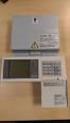 Building Air Conditioning Control System Power supply unit Model: PAC-SC50KUA Installation Manual Contents 1. Safety precautions... 1 2. Product feature... 2 1. Specification... 2 2. Appearance... 2 3.
E/P Regulator (DeviceNet TM type) ITV1000/2000/3000/2090-DE* Series
 Doc. No. ITV2-OM00095-B P R O D U C T N A M E E/P Regulator (DeviceNet TM type) MODEL/ Series/ Product Number ITV1000/2000/3000/2090-DE* Series Install and operate the product only after reading the Operation
DRM75A 230V 20/100A DIN rail single phase two wire energy meter
 DRM75A 230V 20/100A DIN rail single phase two wire energy meter 1.1 Safety instruction 1.2 Foreword 1.3 Performance criteria 1.4 Specifications 1.5 Basic errors 1.6 Description 1.7 Dimensions 1.8 Installation
Cat. No. V103-E1-02. NV Series NV3W NV4W NV3Q. Programmable Terminals SETUP MANUAL
 Cat. No. V103-E1-02 NV Series NV3W NV4W NV3Q Programmable Terminals SETUP MANUAL NV Series NV3W NV4W NV3Q Programmable Terminals Revised December 2009 iv Notice OMRON products are manufactured for use
Ordering Information. Specifications. Electrode Holder PS-@S(R)/-31. Electrode Holders. Accessories (Order Separately)
 Holder PS-@S(R)/-31 Separate Holders for Water Supply and Drainage Control in Buildings. Small, Lightweight Holders for Use as Built-in Components. The PS-@S(R) are separate Holders that allow the s to
E2FM. Inductive Proximity Sensor in full metal housing. Application. Continuous Impact Test. Brush Test
 Inductive Proximity Sensor in full metal housing Full body stainless steel housing for highest mechanical protection Low frequency modulation for metal chip immunity Flame retardant cable for high protection
User s Manual Before using the inverter, you need to read and save the safety instructions.
 User s Manual Before using the inverter, you need to read and save the safety instructions. STI SERIES (STI200, STI300, STI500, STI700, STI1000) Power Frequency Pure Sine Wave Inverter The information
Advantium 2 Plus Alarm
 ADI 9510-B Advantium 2 Plus Alarm INSTALLATION AND OPERATING INSTRUCTIONS Carefully Read These Instructions Before Operating Carefully Read These Controls Corporation of America 1501 Harpers Road Virginia
Single Phase Soft Starter
 Single Phase Soft Starter Installation & Operating Manual 6/02 Table of Contents Section 1 General Information................................................... 1 1 General Description................................................
Programmable Terminal. NPSeries. Easy Setup with the Low-cost, Compact NP Series
 Programmable Terminal NPSeries Easy Setup with the Low-cost, Compact NP Series Simpler and More Versatile.OMRON s Compact NP Series Connect! Easier connection to OMRON PLCs and Temperature Controllers,
Antenna Splitter ASA 1. Instruction manual
 Antenna Splitter ASA 1 Instruction manual Contents Important safety instructions... 2 The ASA 1 active antenna splitter... 4 Delivery includes... 4 Operating elements... 5 Putting the ASA 1 into operation...
(CPU01-E/03-E/11-E) OPERATION MANUAL
 Cat. No. W130-E1-05 SYSMAC Programmable Controllers C200H (CPU01-E/03-E/11-E) OPERATION MANUAL C200H Programmable Controllers (CPU01-E/03-E/11-E) Operation Manual Revised June 2003 iv Notice: OMRON products
Daker DK 1, 2, 3 kva. Manuel d installation Installation manual. Part. LE05334AC-07/13-01 GF
 Daker DK 1, 2, 3 kva Manuel d installation Installation manual Part. LE05334AC-07/13-01 GF Daker DK 1, 2, 3 kva Index 1 Introduction 24 2 Conditions of use 24 3 LCD Panel 25 4 Installation 28 5 UPS communicator
RIGOL. Quick Guide. DS1000CA Series Oscilloscope. Aug. 2011. RIGOL Technologies, Inc.
 Quick Guide DS1000CA Series Oscilloscope Aug. 2011 Technologies, Inc. Guaranty and Declaration Copyright 2011 Technologies, Inc. All Rights Reserved. Trademark Information is a registered trademark of
TIG INVERTER INSTRUCTION MANUAL
 TIG INVERTER INSTRUCTION MANUAL Contents Warning General Description Block Diagram Main Parameters Circuit Diagram Installation and Operation Caution Maintenance Spare Parts List Troubleshooting 3 4 4
ADM1TE 5/30A DIN rail single phase two wire energy meter
 ADMTE 5/30A DIN rail single phase two wire energy meter. Safety instruction.2 Foreword.3 Performance criteria.4 Specifications.5 Basic errors.6 Description.7 Dimensions.8 Installation.9 Operating.0 Troubleshooting.
aseries A13B Mini Bullet Camera User Manual
 aseries A13B Mini Bullet Camera User Manual Thank you for purchasing our product. If there are any questions, or requests, please do not hesitate to contact the dealer. This manual applies to the MicroView
Square D Clipsal DIN-Rail Four-Channel Auxiliary Input Unit
 Square D Clipsal DIN-Rail Four-Channel Auxiliary Input Unit SLCLE5504AUX for Use with Wired C-Bus Networks Instruction Bulletin Retain for future use. Square D Clipsal DIN-Rail Four-Channel Auxiliary Input
Kvaser Mini PCI Express User s Guide
 Kvaser Mini PCI Express User s Guide Copyright 2013-2014 Kvaser AB, Mölndal, Sweden http://www.kvaser.com Printed Sunday 28 th September, 2014 We believe that the information contained herein was accurate
Documentation for. KL2602 and KL2622. Two-channel Relay Output Terminals for 230 V AC / 30 V DC. Version: 1.4 Date: 2013-03-20
 Documentation for KL2602 and KL2622 Two-channel Relay Output Terminals for 230 V AC / 30 V DC Version: 1.4 Date: 2013-03-20 Table of contents Table of contents 1 Foreword 1 1.1 Notes on the documentation
T0118 T2118 T3118. Instruction Manual
 Programmable indoor transmitter of temperature T0118 Programmable indoor transmitter of atmospheric pressure T2118 Programmable indoor transmitter of temperature, relative humidity and other derived humidity
SIMATIC NET. CP 243-2 AS-Interface Master B C. Preface Contents. Technical Description and Installation Instructions Interface to the User Program
 Preface Contents SIMATIC NET CP 243-2 AS-Interface Master Manual Technical Description and Installation Instructions Interface to the User Program 2 in the S7-200 CPU Access to the Data of the AS-i Slaves
WE70. FA Wireless LAN Unit. Reliable Wireless Ethernet for Harsh FA Environments Conforms to IEEE 802.11a/b/g
 New Product News FA Wireless LAN Unit WE70 Reliable Wireless Ethernet for Harsh FA Environments Conforms to IEEE 802.11a/b/g Construct an Ideal Wireless LAN System for FA Applications! The FA Wireless
CC-Link Digital Sensor Communications Unit
 E3NW-CCL CC-Link Digital Sensor Communications Unit User s Manual Cat. No. E431-E1-04 NOTICE (1) No part of this publication may be reproduced, stored in a retrieval system, or transmitted, in any form,
AIR-CONDITIONER SPLIT TYPE
 FILE NO. A08-016 SERVICE MANUAL AIR-CONDITIONER SPLIT TYPE RAS-M10PKVP-E, RAS-M13PKVP-E, RAS-M16PKVP-E, RAS-M18PKVP-E / RAS-M10PKVP-ND, RAS-M13PKVP-ND, RAS-M16PKVP-ND, RAS-M18PKVP-ND / RAS-3M26GAV-E1,
Machine Automation Controller NX-series. CPU Unit Hardware. User s Manual NX701-1 NX-PA9001/PD7001. CPU Unit Power Supply Unit W535-E1-01
 Machine Automation Controller NX-series CPU Unit Hardware User s Manual NX701-1 NX-PA9001/PD7001 CPU Unit Power Supply Unit W535-E1-01 NOTE All rights reserved. No part of this publication may be reproduced,
MILLENIUM INSTALLATION MANUAL NTR 735 A. Simple Automation Control Module (MAS)
 MILLENIUM Table of contents 1. INTRODUCTION 1 2. HARDWARE DESCRIPTION 2 3. INSTALLATION 5 4. CONNECTION 6 5. USER SAFETY AND PROTECTION OF EQUIPMENT 8 1. Introduction The MILLENIUM series has been designed
Resolution (divisions) Pre-wired Model E6F-AB3C 360P/R 2M *2 Pre-wired Connector E6F-AB3C-C 360P/R 2M *2 Model (2 m) NPN open collector BCD 360
 Absolute 60-mm-dia. Rotary Encoder CSM DS_E_7_ Rugged Rotary Encoder Absolute model. External diameter of 60 mm. Resolution of up to 1,024 (10-bit). IP65 oil-proof protection. Strong shaft. Radial: 120
Model: DC-A2IO Advanced HVAC Controller
 Model: DC-A2IO Advanced HVAC Controller Job Name: Schedule Reference: Date: DC-A2IO Advanced HVAC Controller Package PAC-IF01 M-Net Adapter AL2-14MR-D α2 Simple Application Controller Accessories AL2-2DA
Modular I/O System Analog and Digital Interface Modules
 OPERATING INSTRUCTIONS Modular I/O System Analog and Digital Interface Modules Installation Operation Maintenance Document Information Document ID Title: Operating Instructions Modular I/O System Part
CompactLogix Power Supplies Specifications
 Technical Data CompactLogix Power Supplies Specifications 1768 CompactLogix Power Supplies Catalog Numbers 1768-PA3, 1768-PB3 1769 Compact I/O Power Supplies Catalog Numbers 1769-PA2, 1769-PB2, 1769-PA4,
PRO370D 65A Mbus MID DIN rail three phase four wire energy meter. User manual Version 1.03
 PRO370D 65A Mbus MID DIN rail three phase four wire energy meter User manual Version 1.03 1 Safety instructions... 3 2 Foreword... 4 3 CE certificates... 5 4 MID certificate... 7 5 Performance criteria...
NT620S/620C Programmable Terminals OPERATION MANUAL
 Cat. No. V033-E1-5 NT620S/620C Programmable Terminals OPERATION MANUAL Authorized Distributor: Cat. No. V033-E1-5 Note: Specifications subject to change without notice. Printed in Japan 0401-0.7M (0597)
EZmoto V2. Product description Rev. 6 10/01/2014. EZmoto V2 Product description Rev.6 10/01/2014
 EZmoto V2 Product description Rev. 6 10/01/2014 1 Contents 1. Overview... 3 2. Hardware Interface Description... 3 2.1 Main features of the EZmoto... 3 2.2 Hardware block diagram... 4 2.3 Internal Hardware
IN-OUT Thermometer with Cable Free Sensor and Clock
 IN-OUT Thermometer with Cable Free Sensor and Clock MODEL: RAR232 USER'S MANUAL INTRODUCTION Congratulations on your purchase of the RAR232 In-Out Thermometer with 433MHz cable free sensor and calendar
12 Volt 30 Amp Digital Solar Charge Controller
 12 Volt 30 Amp Digital Solar Charge Controller User s Manual WARNING Read carefully and understand all INSTRUCTIONS before operating. Failure to follow the safety rules and other basic safety precautions
Achat 115MA full-range speaker. user manual
 Achat 115MA full-range speaker user manual Musikhaus Thomann Thomann GmbH Hans-Thomann-Straße 1 96138 Burgebrach Germany Telephone: +49 (0) 9546 9223-0 E-mail: [email protected] Internet: www.thomann.de
Programmable set for Ethernet Modbus/TCP in IP67 TI-BL67-PG-EN-2
 Type code Ident no. 1545065 Number of channels 2 Dimensions (W x L x H) 108 x 145 x 77.5 mm CoDeSys-programmable acc. to IEC 61131-3 Cable max. 50 m between interface and read/write head 10/100 Mbps Male
INSTRUCTION MANUAL MODEL PCD-88
 INSTRUCTION MANUAL MODEL PCD-88 CLOSED CAPTION DECODER LINK ELECTRONICS, INC. 2137 Rust Avenue Cape Girardeau, Missouri 63703 Phone: 573-334-4433 Fax: 573-334-9255 e-mail: sales @ linkelectronics.com website:
ABB Drives. User s Manual. Pulse Encoder Interface Module RTAC-01
 ABB Drives User s Manual Pulse Encoder Interface Module RTAC-0 Pulse Encoder Interface Module RTAC-0 User s Manual 3AFE 64486853 REV A EN EFFECTIVE:.5.00 00 ABB Oy. All Rights Reserved. Safety instructions
DC REFRIGERATORS 12/24 VOLTS INSTALLATION AND OWNER S MANUAL
 DC REFRIGERATORS 12/24 VOLTS INSTALLATION AND OWNER S MANUAL Service Information If service or parts are required, contact the nearest Norcold Service Center. To find an authorized Norcold Service Center
ZC-24DO CANopen I/O Module: 24 Digital Outputs
 Z-PC Line EN ZC-24DO CANopen I/O Module: 24 Digital Outputs Installation Manual Contents: - General Specifications - Technical Specifications - Installation Rules - Electrical connections - DIP-switches
Installation guide H-5500-8554-03-A. HSI hardwired system interface
 Installation guide H-5500-8554-03-A HSI hardwired system interface 2008-2011 Renishaw plc. All rights reserved. This document may not be copied or reproduced in whole or in part, or transferred to any
NX safety stand-alone
 NX-S@ NX safety stand-alone stand-alone into machine automation Expandable safety system up to 32 safety connections or 63 standard connections controller flexible system lets your freely mix safety I/O
Instruction Manual Copy Adapter "CPAD-C1A" "CP Fuji Electric Systems Co., Ltd. INR-SI47-0886a-EU Rev 052010
 Instruction n Manual Copy Adapter "CPAD-C1A" Thank you for purchasing our Copy Adapter CPAD-C1A. This product is designed to copy function codes and their data, which are stored in the FRENIC-Mini series
CONTROLS DATA MANAGEMENT PROCESS AUTOMATION EUROCUBE. General purpose single phase thyristors and solid state relays Product data.
 425 CONTROLS DATA MANAGEMENT PROCESS AUTOMATION EUROCUBE General purpose single phase thyristors and solid state relays Product data abc 425 EUROCUBE A complete range of low cost solid state relays and
BMW Multi Tool User Manual
 X-Horse Electronics Co., Ltd. Table of Contents 1. Safety Precautions and Warnings... 3 2. General Information... 4 3. Hardware Overview... 5 3.1. Tool Description... 5 3.2. Specifications... 6 3.3. System
FN2001-A1 Network module (SAFEDLINK) Mounting Installation
 FN00-A Network module (SAFEDLINK) Mounting Installation A6V050_f_en_-- 05-0-6 Building Technologies Division Legal notice Legal notice Technical specifications and availability subject to change without
Whale 3. User Manual and Installation Guide. DC Servo drive. Contents. 1. Safety, policy and warranty. 1.1. Safety notes. 1.2. Policy. 1.3. Warranty.
 Whale 3 DC Servo drive User Manual and Installation Guide Contents 1. Safety, policy and warranty. 1.1. Safety notes. 1.2. Policy. 1.3. Warranty. 2. Electric specifications. 2.1.Operation ranges. 3. Connections
Safety Precautions WARNINGS
 Safety Precautions This guide contains a variety of safety markings related to the safe and correct operation of the USB Data Transfer Cable. Be sure to read this guide and any related manuals carefully
Adjustment functions for both span and shift have been incorporated
 SENSORS FOR SERIES LED Type Wafer Alignment Sensor FX-0-F FT-F9 FD-F7 EX-F70/F60 M SH-7 FD-L4 M-DW The use of a safe LED light beam now allows for high precision detection with a resolution of 0!m (.8
AC 800M. EtherNet/IP DeviceNet Linking Device LD 800DN. Power and productivity for a better world TM SP1134
 AC 800M EtherNet/IP DeviceNet Linking Device LD 800DN SP1134 Power and productivity for a better world TM AC 800M EtherNet/IP DeviceNet Linking Device LD 800DN NOTICE This document contains information
Owner s Manual & Safety Instructions
 Owner s Manual & Safety Instructions Save This Manual Keep this manual for the safety warnings and precautions, assembly, operating, inspection, maintenance and cleaning procedures. Write the product s
Cat. No. W472-E1-06. SYSMAC CJ Series. CJ2H-CPU6@-EIP CJ2H-CPU6@ CJ2M-CPU@@ CJ2 CPU Unit Hardware USER S MANUAL
 Cat. No. W472-E1-06 SYSMAC CJ Series CJ2H-CPU6@-EIP CJ2H-CPU6@ CJ2M-CPU@@ CJ2 CPU Unit Hardware USER S MANUA OMRON, 2008 All rights reserved. No part of this publication may be reproduced, stored in a
CAT AVR V2.3. Instruction Manual. Voltage regulator for generators. March 2008
 CAT AVR V2.3 Voltage regulator for generators March 2008 Instruction Manual Warnings WARNING The system should not be installed, operated, serviced or modified except by qualified personnel who understand
Battery Power Inverters
 Battery Power Inverters Renogy 500W 1000W 2000W Pure Sine Wave Inverter Manual 2775 E. Philadelphia St., Ontario, CA 91761 1-800-330-8678 1 Version 1.1 Important Safety Instructions Please save these instructions.
SoftRAID 5 QUICK START GUIDE. for OWC ThunderBay
 SoftRAID 5 QUICK START GUIDE for OWC ThunderBay TABLE OF CONTENTS INTRODUCTION...1 1.1 MINIMUM SYSTEM REQUIREMENTS 1.2 FEATURES 1.3 ABOUT THIS MANUAL SYSTEM SETUP...2 2.1 GETTING STARTED 2.2 INITIALIZING,
Manual Ranging MultiMeter
 Owner s Manual Manual Ranging MultiMeter Model 82345 CAUTION: Read, understand and follow Safety Rules and Operating Instructions in this manual before using this product.! Safety! Operation! Maintenance!
Temperature Controller USER S MANUAL
 Cat. No. H100-E1-04A E5CN Temperature Controller USER S MANUAL E5CN Temperature Controller User s Manual Revised July 2003 iv Notice: OMRON products are manufactured for use according to proper procedures