
About 1 million people in the
|
|
|
- Adelia Carmella McBride
- 9 years ago
- Views:
Transcription
1 Understanding stoma complications Learn how to identify and manage stoma hernias, trauma, mucocutaneous separation, necrosis, prolapse, retraction, and stenosis. By Rosalyn S. Jordan, RN, BSN, MSc, CWOCN, WCC, OMS; and Judith LaDonna Burns, LPN, WCC, DFC About 1 million people in the United States have either temporary or permanent stomas. A stoma is created surgically to divert fecal material or urine in patients with GI or urinary tract diseases or disorders. A stoma has no sensory nerve endings and is insensitive to pain. Yet several complications can affect it, making accurate assessment crucial. These complications may occur during the immediate postoperative period, within 30 days after surgery, or later. Lifelong assessment by a healthcare provider with knowledge of ostomy surgeries and complications is important. Immediately after surgery, a healthy GI stoma appears red, moist, and shiny. Edema of the stoma is expected for the first 6 to 8 weeks. A healthy urinary stoma is pale or pink, edematous, moist, and shiny. Usually, it shrinks to about one-third the initial size after the first 6 to 8 weeks as edema subsides. The stoma warrants close observation as pouching types and sizes may need to be changed during this time. Teach the patient and family caregivers to report changes or signs and symptoms of stoma complications to a healthcare provider. If complications are recognized early, the problem may be resolved without surgical intervention. Stoma complications range from a simple, unsightly protrusion to conditions that require emergency treatment and possible surgery. Clinicians must be able to recognize complications and provide necessary treatment and therapy early. Complications include parastomal hernias, stoma trauma, mucocutaneous separation, necrosis, prolapse, retraction, and stenosis. Although one complication can lead to and even promote others, all require attention and treatment. Parastomal hernia A parastomal hernia involves an ostomy in the area where the stoma exits the abdominal cavity. The intestine or bowel extends beyond the abdominal cavity or abdominal muscles; the area around the stoma appears as a swelling or protuberance. Parastomal hernias are incisional hernias in the area of the abdominal musculature that was incised to bring the intestine through the abdominal wall to form the stoma. They may completely surround the stoma (called circumferential hernias) or may invade only part of the stoma. Parastomal hernias can occur any time 20 July/August 2013 Volume 2, Number 4 Wound Care Advisor

2 after the surgical procedure but usually happen within the first 2 years. Recurrences are common if the hernia needs to be repaired surgically. Risk factors may be patient related or technical. Patient-related risk factors include obesity, poor nutritional status at the time of surgery, presurgical steroid therapy, wound sepsis, and chronic cough. Risk factors related to technical issues include size of the surgical opening and whether surgery was done on an emergency or elective basis. Parastomal hernias occur in four types. (See Types of parastomal hernias.) Initially, a parastomal hernia begins as an unsightly distention in the area surrounding the stoma; the hernia enlarges, causing pain, discomfort, and pouching problems resulting in peristomal skin complications that require frequent assessment. Conservative therapy is the usual initial treatment. Adjustments to the pouching system typically are required so changes in the shape of the pouching surface can be accommodated. Also, a hernia support binder or pouch support belt may be helpful. Avoid convex pouching systems; if this isn t possible, use these systems with extreme caution. If the patient irrigates the colostomy, an ostomy management specialist should advise the patient to discontinue irrigation until the parastomal hernia resolves. The image shows stoma injury caused by a poor fitting appliance. Photo by Connie Johnson. Used with permission. Stoma trauma Stoma trauma occurs when the stoma is injured, typically from a laceration. Lacerations usually result from the pouch appliance or clothing. Belt-line stomas are easily traumatized and injury may occur from both clothing belts and pouch support belts. Stoma lacerations commonly result from a small opening in the flange or a misaligned pouch opening. Other causes include parastomal or stomal prolapse with possible stoma enlargement or edema. Signs and symptoms of stoma trauma include bright red bleeding, a visible cut, and a yellowish-white linear discoloration. Lacerations may heal spontaneously. If the culprit is the pouching system, make sure nothing within the system comes in contact with the stoma. Usually direct pressure controls bleeding, but if bleeding continues, refer the patient to a physician for treatment. Mucocutaneous separation Mucocutaneous separation occurs when the stoma separates from the skin at the junction between the skin and the intestine used to form the stoma. Causes are related to poor wound-healing capacity, such as malnutrition, steroid therapy, diabetes, infection, or radiation of the abdominal area. Tension or tautness of the suture line also can cause mucocutaneous separation. This complication usually arises early Types of parastomal hernias The four types of parastomal hernias are based on hernia location within the abdominal tissue: intestinal interstitial, in which the hernia lies within the layers of the abdominal wall subcutaneous, in which the hernia is contained within subcutaneous tissue intrastomal, in which the herniated intestine penetrates the stoma (usually confined to an ileostomy) peristomal, in which the hernia is located within a stoma that has prolapsed. Wound Care Advisor July/August 2013 Volume 2, Number

3 This temporary ileostomy secondary to colon cancer has been treated for mucocutaneous separation. Closure of the temporary ileostomy. Photos by Connie Johnson. Used with permission. and can lead to other serious conditions, such as infection, peritonitis, and stomal stenosis. The area of the separation may completely surround the stoma (known as a circumferential separation), or the separation may affect only certain areas Blood flow and tissue perfusion are essential to stoma health. of the stoma/skin junction. The separation may be superficial or deep. The first sign of mucocutaneous separation may be induration. Treat the separation as a wound, and apply woundhealing principles: Absorb drainage, reduce dead space, use the proper dressing, and promote wound healing. The proper dressing depends on wound depth and amount of wound drainage. Be sure to assess the wound, using the clock method to describe location; measure the wound area in centimeters; and describe the type of tissue in the wound bed. Be aware that slough may be present. Treatment of the wound dictates how often the pouch is changed. A two-piece pouching system commonly is used to reduce the number of pouch changes. Cover the wound dressing with the pouching system unless the wound is infected. If infection is present, let the wound drain into the pouch and heal by secondary intention. Don t use a convex pouching system, because this may cause additional injury to the mucocutaneous junction. Stoma necrosis Blood flow and tissue perfusion are essential to stoma health. Deficient blood flow causes stoma necrosis. A stoma may be affected by both arterial and venous blood compromise. The cause of necrosis usually relates to the surgical procedure, such as tension or too much trimming of the mesentery, or the vascular system that provides blood flow to the intestine. Other causes of vascular compromise include hypovolemia, embolus, and excessive edema. Stoma necrosis usually occurs within the first 5 postoperative days. The stoma appears discolored rather than red, moist, and shiny. Discoloration may be cyanotic, black, dark red, dusky bluish purple, or brown. The stoma mucosa may be hard and dry or flaccid. Also, the 22 July/August 2013 Volume 2, Number 4 Wound Care Advisor

4 stoma has a foul odor. Associated complications may include stoma retraction, mucocutaneous separation, stoma stenosis, and peritonitis. Report signs and symptoms to the primary care provider immediately. Superficial necrosis may resolve with necrotic tissue simply sloughing away. But if tissue below the fascial level is involved, surgery is necessary. A transparent twopiece pouching system is recommended for frequent stoma assessment. The pouch may need to be resized often. Stoma prolapse A stoma prolapse occurs when the stoma moves or becomes displaced from its proper position. The proximal segment of the bowel intussuscepts and slides through the orifice of the stoma, appearing to telescope. This occurs more often in loop transverse colostomies. A prolapsed stoma increases in both length and size. Prolapse may be associated with stoma retraction and parastomal hernias. Causes of stoma prolapse include large abdominal-wall openings, inadequate bowel fixation to the abdominal wall during surgery, increased abdominal pressure, lack of fascial support, obesity, pregnancy, and poor muscle tone. Unless the patient complains of pain, has a circulatory problem, or has signs or symptoms of bowel obstruction, conservative treatment is used for uncomplicated stoma prolapse. The prolapse usually can be reduced with the patient in a supine position. After reduction, applying a hernia support binder often helps. Also, a stoma shield can be used to protect the stoma. A prolapsed stoma may require a larger pouch to accommodate the larger stoma. Some clinicians use cold compresses and sprinkle table sugar on the stoma; the sugar provides osmotic therapy or causes a fluid shift across the stoma mucosa and reduces edema. Unless the patient complains of pain, has a circulatory problem, or has signs or symptoms of bowel obstruction, conservative treatment is used for uncomplicated stoma prolapse. Stoma retraction The best-formed stoma protrudes about 2.5 cm, with the lumen located at the top center or apex of the stoma to guide the effluent flow directly into the pouch. In stoma retraction, the stoma has receded about 0.5 cm below the skin surface. Retraction may be circumferential or may occur in only one section of the stoma. The usual causes of stoma retraction are tension of the intestine or obesity. Stoma retraction during the immediate postoperative period relates to poor blood flow, obesity, poor nutritional status, stenosis, early removal of a supporting device with loop stomas, stoma placement in a deep skinfold, or thick abdominal walls. Late complications usually result from weight gain or adhesions. Stoma retraction is most common in patients with ileostomies. A retracted stoma has a concave, bowl- Wound Care Advisor July/August 2013 Volume 2, Number

5 shaped appearance. Retraction causes a poor pouching surface, leading to frequent peristomal skin complications. Typical therapy is use of a convex pouching system and a stoma belt. If obtaining a pouch seal is a problem and the patient has recurrent peristomal skin problems from leakage, stoma revision should be considered. Most stoma complications are preventable. Stoma stenosis Stoma stenosis is narrowing or constriction of the stoma or its lumen. This condition may occur at the skin or fascial level of the stoma. Causes include hyperplasia, adhesions, sepsis, radiation of the intestine before stoma surgery, local inflammation, hyperkeratosis, and surgical technique. Stoma stenosis frequently is associated with Crohn s disease. You may notice a reduction or other change in effluent output with both urinary and GI ostomies. With GI stoma stenosis, bowel obstruction frequently occurs; signs and symptoms are abdominal cramps, diarrhea, increased flatus, explosive stool, and narrow-caliber stool. The initial sign is increased flatus. With urinary stoma stenosis, signs and symptoms include decreased urinary output, flank pain, high residual urine in conduit, forceful urine output, and recurrent urinary tract infections. Partial or complete bowel obstruction and stoma stenosis at the fascial level require surgical intervention. Conservative therapy includes a low-residue diet, increased fluid intake, and correct use of stool softeners or laxatives for colosto - mies. Most stoma complications are preventable and result from poor stoma placement. Up to 20% of patients with stoma complications require surgical revision of the stoma. All patients with ostomies require ongoing, accurate assessment and, if needed, early intervention by trained clinicians. n Selected references Al-Niaimi F, Lyon CC. Primary adenocarcinoma in peristomal skin: a case study. Ostomy Wound Manage. 2010;56(1):45-7. Appleby SL. Role of the wound ostomy continence nurse in the home care setting: a patient case study. Home Healthc Nurse. 2011:29(3); Black P. Managing physical postoperative stoma complications. Br J Nurs. 2009:18(17):S4-10. Burch J. Management of stoma complications. Nurs Times. 2011;107(45):17-8, 20. Butler DL. Early postoperative complications following ostomy surgery: a review. J Wound Ostomy Continence Nurs. 2009:36(5): Husain SG, Cataldo TE. Late stomal complications. Clin Colon Rectal Surg. 2008:21(1): Jones T, Springfield T, Brudwick M, Ladd A. Fecal ostomies: practical management for the home health clinician. Home Healthc Nurse. 2011;29(5): Kann BR. Early stomal complications. Clin Colon Rectal Surg. 2008:21(1): Nybaek H, Jemec GB. Skin problems in stoma patients. J Eur Acad Dermatol Venereol. 2010;24(3): Shabbir J, Britton DC. Stomal complications: a literature overview. Colorectal Dis. 2010;12(10): Szymanski KM, St-Cyr D, Alam T, Kassouf W. External stoma and peristomal complications following radical cyctectomy and ileal conduit diversion: a systematic review. Ostomy Wound Manage. 2010;56(1): Wound, Ostomy, Continence Clinical Practice Ostomy Subcommittee. Stoma Complications: Best Practice for Clinicians. Mt. Laurel, NJ; Rosalyn S. Jordan is the senior director of Clinical Services at RecoverCare, LLC, in Louisville, Kentucky. Judith LaDonna Burns is currently pursuing a BSN and plans to gain certification as an Ostomy Management Specialist July/August 2013 Volume 2, Number 4 Wound Care Advisor

Urinary Diversion: Ileovesicostomy/Ileal Loop/Colon Loop
 Urinary Diversion: Ileovesicostomy/Ileal Loop/Colon Loop Why do I need this surgery? A urinary diversion is a surgical procedure that is performed to allow urine to safely pass from the kidneys into a
Laparoscopic Surgery of the Colon and Rectum (Large Intestine) A Simple Guide to Help Answer Your Questions
 Laparoscopic Surgery of the Colon and Rectum (Large Intestine) A Simple Guide to Help Answer Your Questions What are the Colon and Rectum? The colon and rectum together make up the large intestine. After
ABThera Open Abdomen Negative Pressure Therapy for Active Abdominal Therapy. Case Series
 ABThera Open Abdomen Negative Pressure Therapy for Active Abdominal Therapy Case Series Summary of Cases: USER EXPERIENCE The ABThera OA NPT system was found by surgeons to be a convenient and effective
PREPARING FOR YOUR STOMA REVERSAL
 PREPARING FOR YOUR STOMA REVERSAL Information Leaflet Your Health. Our Priority. Page 2 of 6 Introduction- What you need to know As part of your bowel operation you may have had a temporary stoma formed.
Laparoscopic Repair of Hernias. A simple guide to help answer your questions
 Laparoscopic Repair of Hernias A simple guide to help answer your questions What is a hernia? A hernia is defined as a hole or defect in the abdominal (belly) wall. A hernia can either be congenital (a
Guide to Abdominal or Gastroenterological Surgery Claims
 What are the steps towards abdominal surgery? Investigation and Diagnosis It is very important that all necessary tests are undertaken to investigate the patient s symptoms appropriately and an accurate
Understanding Laparoscopic Colorectal Surgery
 Understanding Laparoscopic Colorectal Surgery University Colon & Rectal Surgery A Problem with Your Colon Your doctor has told you that you have a colon problem. Now you ve learned that surgery is needed
Colocutaneous Fistula. Disclosures
 Colocutaneous Fistula Madhulika G. Varma MD Associate Professor Chief, Colorectal Surgery University of California, San Francisco Honoraria Applied Medical Covidien Disclosures 1 Colocutaneous Fistula
How do I evaluate my skin condition? What causes sore skin?
 skin care Taking good care of your peri-stomal skin is of utmost importance. Your skin is the base, on which all of your stoma products will be placed, so it is vital that it is kept in good condition.
Care of Gastrostomy Tubes for Adults with IDD in Community Settings: The Nurse s Role. Lillian Khalil, BSN, RN Volunteers of America, Chesapeake
 Care of Gastrostomy Tubes for Adults with IDD in Community Settings: The Nurse s Role Lillian Khalil, BSN, RN Volunteers of America, Chesapeake Objectives The participants will be able to identify the
Get the Facts, Be Informed, Make YOUR Best Decision. Pelvic Organ Prolapse
 Pelvic Organ Prolapse ETHICON Women s Health & Urology, a division of ETHICON, INC., a Johnson & Johnson company, is dedicated to providing innovative solutions for common women s health problems and to
Removal of Haemorrhoids (Haemorrhoidectomy) Information for patients
 Removal of Haemorrhoids (Haemorrhoidectomy) Information for patients What are Haemorrhoids? Haemorrhoids (piles) are enlarged blood vessels around the anus (back passage). There are two types of haemorrhoids:
Inguinal Hernia (Female)
 Inguinal Hernia (Female) WHAT IS AN INGUINAL HERNIA? 2 WHAT CAUSES AN INGUINAL HERNIA? 2 WHAT DOES TREATMENT / MANAGEMENT INVOLVE? 3 DAY SURGERY MANAGEMENT 3 SURGICAL REPAIR 4 WHAT ARE THE RISKS/COMPLICATIONS
7/11/2011. Pressure Ulcers. Moisture-NOT Pressure. Wounds NOT Caused by Pressure
 Assessment and Documentation of Pressure Ulcers Jeri Ann Lundgren, RN, BSN, PHN, CWS, CWCN Pathway Health Services July 19, 2011 Training Objectives Describe etiologies of pressure ulcers Discuss how to
Wound Healing. Healing is a matter of time, but it is sometimes also a matter of opportunity. Hippocrates
 C HAPTER 9 Wound Healing Healing is a matter of time, but it is sometimes also a matter of opportunity. Hippocrates As the above quote suggests, conduct regular and systematic wound assessments, and seize
Laparoscopic Colectomy. What do I need to know about my laparoscopic colorectal surgery?
 Laparoscopic Colectomy What do I need to know about my laparoscopic colorectal surgery? Traditionally, colon & rectal surgery requires a large, abdominal and/or pelvic incision, which often requires a
Patient information regarding care and surgery associated with ULCERATIVE COLITIS
 Patient information regarding care and surgery associated with ULCERATIVE COLITIS by: Robert K. Cleary, M.D., John C. Eggenberger, M.D., Amalia J. Stefanou, M.D. location: Michigan Heart & Vascular Institute,
Femoral Hernia Repair
 Femoral Hernia Repair WHAT IS A FEMORAL HERNIA REPAIR? 2 WHAT CAUSES A FEMORAL HERNIA? 2 WHAT DOES TREATMENT/ MANAGEMENT INVOLVE? 3 DAY SURGERY MANAGEMENT 3 SURGICAL REPAIR 4 WHAT ARE THE RISKS/COMPLICATIONS
Wound and Skin Assessment. Mary Carvalho RN, BSN, MBA Clinical Coordinator Johnson Creek Wound and Edema Center
 Wound and Skin Assessment Mary Carvalho RN, BSN, MBA Clinical Coordinator Johnson Creek Wound and Edema Center Skin The largest Organ Weighs between 6 and 8 pounds Covers over 20 square feet Thickness
PATIENT CONSENT TO PROCEDURE - ROUX-EN-Y GASTRIC BYPASS
 As a patient you must be adequately informed about your condition and the recommended surgical procedure. Please read this document carefully and ask about anything you do not understand. Please initial
Inflammation and Healing. Review of Normal Defenses. Review of Normal Capillary Exchange. BIO 375 Pathophysiology
 Inflammation and Healing BIO 375 Pathophysiology Review of Normal Defenses Review of Normal Capillary Exchange 1 Inflammation Inflammation is a biochemical and cellular process that occurs in vascularized
FUNCTIONS OF THE SKIN
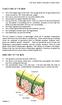 FUNCTIONS OF THE SKIN Skin is the largest organ of the body. The average adult has 18 square feet of skin which account for 16% of the total body weight. Skin acts as a physical barrier for you to the
ANTERIOR RESECTION YOUR OPERATION EXPLAINED
 ANTERIOR RESECTION YOUR OPERATION EXPLAINED Information Leaflet Your Health. Our Priority. Page 2 of 10 Introduction This leaflet explains the procedure known as an Anterior Resection. It includes what
Acute Abdominal Pain following Bariatric Surgery. Disclosure. Objectives 8/17/2015. I have nothing to disclose
 Acute Abdominal Pain following Bariatric Surgery Kathy J. Morris, DNP, APRN, FNP C, FAANP University of Nebraska Medical Center College of Nursing Disclosure I have nothing to disclose Objectives Pathophysiology
Colon and Rectal Cancer
 Colon and Rectal Cancer What is colon or rectal cancer? Colon or rectal cancer is the growth of abnormal cells in your large intestine, which is also called the large bowel. The colon is the last 5 feet
LOSS OF BLADDER CONTROL IS TREATABLE TAKE CONTROL AND RESTORE YOUR LIFESTYLE
 LOSS OF BLADDER CONTROL IS TREATABLE TAKE CONTROL AND RESTORE YOUR LIFESTYLE TALKING ABOUT STRESS INCONTINENCE (SUI) Millions of women suffer from stress incontinence (SUI). This condition results in accidental
Managing cavity wounds Journal of Community Nursing March 1998 Author: Rosemary Pudner
 Managing cavity wounds Journal of Community Nursing March 1998 Author: Rosemary Pudner It has been seen in recent years, that an increasing number of patients are being discharged early into the community,
Laparoscopic Repair of Incisional Hernia. Maria B. ALBUJA-CRUZ, MD University of Colorado Department of Surgery-Grand Rounds
 Laparoscopic Repair of Incisional Hernia Maria B. ALBUJA-CRUZ, MD University of Colorado Department of Surgery-Grand Rounds Overview Definition Advantages of Laparoscopic Repair Disadvantages of Open Repair
Weight Loss before Hernia Repair Surgery
 Weight Loss before Hernia Repair Surgery What is an abdominal wall hernia? The abdomen (commonly called the belly) holds many of your internal organs. In the front, the abdomen is protected by a tough
Information for Patients having a Colonic Stent Placement
 Information for Patients having a Colonic Stent Placement Information for Patients having a Colonic Stent Placement The Digestive System To understand the procedure you are about to have, it helps to have
Gastric Sleeve Surgery
 Gastric Sleeve Surgery Introduction Obesity is associated with many diseases such as diabetes, high blood pressure, heart problems, and degeneration of the joints. These diseases and the obesity itself
Gastrointestinal Bleeding
 Gastrointestinal Bleeding Introduction Gastrointestinal bleeding is a symptom of many diseases rather than a disease itself. A number of different conditions can cause gastrointestinal bleeding. Some causes
X-Plain Inguinal Hernia Repair Reference Summary
 X-Plain Inguinal Hernia Repair Reference Summary Introduction Hernias are common conditions that affect men and women of all ages. Your doctor may recommend a hernia operation. The decision whether or
Ostomy Care And Management
 RN.ET Ostomy Care And Management Clinical Best Practice Guidelines ET.Nurse Education 20-21 21 Nov. 2009 Pratin Chaisri Purpose and Scope Best Practice Guidelines are systematically developed statements
Wound Classification Name That Wound Sheridan, WY June 8 th 2013
 Initial Wound Care Consult Sheridan, WY June 8 th, 2013 History Physical Examination Detailed examination of the wound Photographs Cultures Procedures TCOM ABI Debridement Management Decisions A Detailed
Bowel Control Problems
 Bowel Control Problems WOMENCARE A Healthy Woman is a Powerful Woman (407) 898-1500 Bowel control problems affect at least 1 million people in the United States. Loss of normal control of the bowels is
Provided by the American Venous Forum: veinforum.org
 CHAPTER 1 NORMAL VENOUS CIRCULATION Original author: Frank Padberg Abstracted by Teresa L.Carman Introduction The circulatory system is responsible for circulating (moving) blood throughout the body. The
Informed Consent for Laparoscopic Vertical Sleeve Gastrectomy. Patient Name
 Informed Consent for Laparoscopic Vertical Sleeve Gastrectomy Patient Name Please read this form carefully and ask about anything you may not understand. I consent to have a laparoscopic Vertical Sleeve
Wound, Ostomy and Continence Nurses Society s Guidance on OASIS-C1 Integumentary Items: Best Practice for Clinicians
 Wound, Ostomy and Continence Nurses Society s Guidance on OASIS-C1 Integumentary Items: Best Practice for Clinicians Acknowledgments Wound, Ostomy and Continence Nurses Society s Guidance on OASIS-C1 Integumentary
Laparoscopic hernia repair GEORGIOS SAMPALIS GENERAL SURGEON. Director of surgical department of Lefkos Stavros of Athens
 Laparoscopic hernia repair GEORGIOS SAMPALIS GENERAL SURGEON Director of surgical department of Lefkos Stavros of Athens About 600,000 surgical hernia repair procedures are performed every year... Many
Subtotal Colectomy. Delivering the best in care. UHB is a no smoking Trust
 Subtotal Colectomy Delivering the best in care UHB is a no smoking Trust To see all of our current patient information leaflets please visit www.uhb.nhs.uk/patient-information-leaflets.htm This leaflet
Open Ventral Hernia Repair
 Ventral Hernias Open Ventral Hernia Repair UCSF Postgraduate Course in General Surgery Maui, HI March 21, 2011 Hobart W. Harris, MD, MPH Ventral Hernias: National Experience Occur following 11-23% of laparotomies,
THERAPEUTIC USE OF HEAT AND COLD
 THERAPEUTIC USE OF HEAT AND COLD INTRODUCTION Heat and cold are simple and very effective therapeutic tools. They can be used locally or over the whole body, and the proper application of heat and cold
Lymph Node Dissection for Penile Cancer
 Lymph Node Dissection for Penile Cancer Exceptional healthcare, personally delivered Removal of Lymph Nodes Why are the Lymph Nodes so important when I have penile cancer? Lymph nodes are small bean shaped
Orthopaedic Spine Center. Anterior Cervical Discectomy and Fusion (ACDF) Normal Discs
 Orthopaedic Spine Center Graham Calvert MD James Woodall MD PhD Anterior Cervical Discectomy and Fusion (ACDF) Normal Discs The cervical spine consists of the bony vertebrae, discs, nerves and other structures.
Surgical removal of fibroids through an abdominal incision-either up and down or bikini cut. The uterus and cervix are left in place.
 What is an abdominal myomectomy? Surgical removal of fibroids through an abdominal incision-either up and down or bikini cut. The uterus and cervix are left in place. When is this surgery used? Treatment
Spinal Cord and Bladder Management Male: Intermittent Catheter
 Spinal Cord and Bladder Management Male: Intermittent Catheter The 5 parts of the urinary system work together to get rid of waste and make urine. Urine is made in your kidneys and travels down 2 thin
Pressure Ulcers: Facility Assessment Checklists
 Pressure Ulcers: Facility Assessment Checklists This is a series of self-assessment checklists for nursing home staff to use to assess processes related to managing pressure ulcers in the facility, in
Position Statement: Pressure Ulcer Staging
 Position Statement: Pressure Ulcer Staging Statement of Position The Wound, Ostomy and Continence Nurses (WOCN) Society supports the use of the National Pressure Ulcer Advisory Panel Staging System (NPUAP).
WOUND OSTOMY CONTINENCE NURSES SOCIETY GUIDANCE ON OASIS-C INTEGUMENTARY ITEMS
 Wound Ostomy Continence Nurses Society Guidance on OASIS-C Integumentary Items WOCN OASIS Taskforce Members: Ben Peirce (Chairperson), RN, BA, CWOCN, COS-C Dianne Mackey, BSN, RN, PHN, CWOCN Laurie McNichol,
However, each person may be managed in a different way as bowel pattern is different in each person.
 Department of colorectal surgery Reversal of ileostomy A guide for patients Introduction This booklet is designed to tell you about your reversal of ileostomy operation and how your bowels might work after
PREOPERATIVE INSTRUCTIONS FOR COLON AND RECTAL SURGERY
 PREOPERATIVE INSTRUCTIONS FOR COLON AND RECTAL SURGERY University Colon & Rectal Surgery Removal of a portion of the small bowel, colon, or rectum is a major operation. After a period of hospitalization
Recurrent Varicose Veins
 Information for patients Recurrent Varicose Veins Sheffield Vascular Institute Northern General Hospital You have been diagnosed as having Varicose Veins that have recurred (come back). This leaflet explains
C A R O L I N A S. Hernia Handbook ( C H A P T E R 2 ) B. Todd Heniford, MD
 C A R O L I N A S Hernia Handbook ( C H A P T E R 2 ) B. Todd Heniford, MD C H A P T E R 2 Umbilical Hernias C A R O L I N A S H E R N I A H A N D B O O K 17 Umbilical Hernias W H AT I S A N U M B I L
Prevention and Recognition of Obstetric Fistula Training Package. Module 8: Pre-repair Care and Referral for Women with Obstetric Fistula
 Prevention and Recognition of Obstetric Fistula Training Package Module 8: Pre-repair Care and Referral for Women with Obstetric Fistula Early detection and treatment If a woman has recently survived a
Colorectal Cancer Treatment
 Scan for mobile link. Colorectal Cancer Treatment Colorectal cancer overview Colorectal cancer, also called large bowel cancer, is the term used to describe malignant tumors found in the colon and rectum.
Y O U R S U R G E O N S. choice of. implants F O R Y O U R S U R G E R Y
 Y O U R S U R G E O N S choice of implants F O R Y O U R S U R G E R Y Y O U R S U R G E O N S choice of implants F O R Y O U R S U R G E R Y Your Surgeon Has Chosen the C 2 a-taper Acetabular System The
OASIS-C Integument Assessment: Not for Wimps! Part I: Pressure Ulcers
 OASIS-C Integument Assessment: Not for Wimps! Part I: Pressure Ulcers Presented by: Rhonda Will, RN, BS, COS-C, HCS-D Assistant Director, OASIS Competency Institute 243 King Street, Suite 246 Northampton,
TRANSFORM YOUR BODY WITHOUT SURGERY OR DOWNTIME. Freeze your fat away with CryoSculpting
 TRANSFORM YOUR BODY WITHOUT SURGERY OR DOWNTIME. Freeze your fat away with CryoSculpting BEFORE 12 WEEKS AFTER IT ALL BEGAN WITH NOT-SO-CHUBBY CHEEKS. 1 The revolutionary technology behind CoolSculpting
3M Steri-Strip S Surgical Skin Closure. Commonly Asked Questions
 3M Steri-Strip S Surgical Skin Closure Commonly Asked Questions What are the indications for use of 3M Steri-Strip S Surgical Skin Closure? Steri-Strip S Surgical Skin Closures are indicated as a primary
Wound Care on the Field. Objectives
 Wound Care on the Field Brittany Witte, PT, DPT Cook Children s Medical Center Objectives Name 3 different types of wounds commonly seen in sports and how to emergently provide care for them. Name all
Radiation Therapy for Prostate Cancer
 Radiation Therapy for Prostate Cancer Introduction Cancer of the prostate is the most common form of cancer that affects men. About 240,000 American men are diagnosed with prostate cancer every year. Your
Total Abdominal Hysterectomy
 What is a total abdominal hysterectomy? Is the removal of the uterus and cervix through an abdominal incision (either an up and down or bikini cut). Removal of the ovaries and tubes depends on the patient.
KEYHOLE HERNIA SURGERY
 Disclaimer This movie is an educational resource only and should not be used to manage a hernia or abdominal pain. All decisions about the management of a hernia must be made in conjunction with your Physician
Colon Cancer. About the Colon and Rectum. Symptoms. Colorectal Cancer Screening
 Patient information regarding care and surgery associated with COLON CANCER by Robert K. Cleary, M.D., John C. Eggenberger, M.D., Amalia J. Stefanou., M.D. location: Michigan Heart and Vascular Institute,
Objectives. Why is this important? 5/1/2012. By: Rhonda Trexler, BS RN COS-C CCP
 By: Rhonda Trexler, BS RN COS-C CCP Objectives Verbalize the ability to determine if a surgical wound exists when documenting in OASIS-C Describe would healing phases related to wounds healing by primary
Laparoscopic Gallbladder Removal (Cholecystectomy) Patient Information from SAGES
 Laparoscopic Gallbladder Removal (Cholecystectomy) Patient Information from SAGES Gallbladder removal is one of the most commonly performed surgical procedures. Gallbladder removal surgery is usually performed
I can t empty my rectum without pressing my fingers in or near my vagina
 Since the birth of my baby, I can t control my bowel movements Normally bowel movements (stools) are stored in the rectum until the bowel sends a message to the brain that it is full, and the person finds
Obesity Affects Quality of Life
 Obesity Obesity is a serious health epidemic. Obesity is a condition characterized by excessive body fat, genetic and environmental factors. Obesity increases the likelihood of certain diseases and other
Problems of the Digestive System
 The American College of Obstetricians and Gynecologists f AQ FREQUENTLY ASKED QUESTIONS FAQ120 WOMEN S HEALTH Problems of the Digestive System What are some common digestive problems? What is constipation?
Bladder Health Promotion
 Bladder Health Promotion Community Awareness Presentation endorsed by the Society of Urologic Nurses (SUNA) National Association for Continence( NAFC) Simon Foundation for Continence This presentation
PATIENT TEACHING GUIDE: Wound Care Handbook
 PATIENT TEACHING GUIDE: Wound Care Handbook PATIENT TEACHING GUIDE: WOUND CARE Design by Mariscal Design, Illustrations by Lysa Hawke. The Wound Care Self Care Guide was written and prepared by: Barbara
INFORMATION FOR PATIENTS CONSIDERING LAPAROSCOPIC INGUINAL HERNIA REPAIR
 INFORMATION FOR PATIENTS CONSIDERING A LAPAROSCOPIC INGUINAL HERNIA REPAIR Prepared By Mr Peter Willson Consultant Surgeon Contents 1. Background... 3 2. What is an inguinal Hernia?... 3 3. What are the
10 Common Questions Answers SBO
 10 Common Questions Answers SBO 1 What is Small Bowel Obstruction (SBO)? After food passes through our stomach, it soon arrives in our intestines, starting at the small bowel. This tube-like organ meanders
How To Stage A Pressure Ulcer
 WOCN Society Position Statement: Pressure Ulcer Staging Originated By: Wound Committee Date Completed: 1996 Reviewed/Revised: July 2006 Revised: August 2007 Reviewed/Revised: April 2011 Definition of Pressure
Endoscopic Plantar Fasciotomy
 Endoscopic Plantar Fasciotomy Introduction Plantar fasciitis is a common condition that causes pain centralized around the heel. It may be severe enough to affect regular activities. Health care providers
treatment of varicose and spider veins patient information SAMPLE a publication by advancing vein care
 treatment of varicose and spider veins patient information a publication by advancing vein care Since most veins lie deep to the skin s surface, vein disorders are not always visible to the naked eye.
Total Vaginal Hysterectomy
 What is a total vaginal hysterectomy? Is the removal of the uterus and cervix through the vagina. Removal of the ovaries and tubes depends on the patient. Why is this surgery used? To treat disease of
Pressure Ulcers Assessing and Staging. Anne Pirzadeh RN CWOCN University of Colorado Hospital June 2010
 Pressure Ulcers Assessing and Staging Anne Pirzadeh RN CWOCN University of Colorado Hospital June 2010 Never Events: Pressure Ulcers Pressure Ulcer Codes: MD documentation of pressure ulcers determines
Chapter 11. Everting skin edges
 Chapter 11 PRIMARY WOUND CLOSURE KEY FIGURE: Everting skin edges In primary wound closure, the skin edges of the wound are sutured together to close the defect. Whenever possible and practical, primary
Wound Care: The Basics
 Wound Care: The Basics Suzann Williams-Rosenthal, RN, MSN, WOC, GNP Norma Branham, RN, MSN, WOC, GNP University of Virginia May, 2010 What Type of Wound is it? How long has it been there? Acute-generally
Tired, Aching Legs? Swollen Ankles? Varicose Veins?
 Tired, Aching Legs? Swollen Ankles? Varicose Veins? Healthy Legs 2006 http://healthylegs.com Page 1 Venous disorders are widespread Leg problems are widespread throughout the world, but what most people
Total Vaginal Hysterectomy with an Anterior and Posterior Repair
 Total Vaginal Hysterectomy with an Anterior and Posterior Repair What is a total vaginal hysterectomy with an anterior and posterior repair? Total vaginal hysterectomy is the removal of the uterus and
GASTRIC BYPASS SURGERY CONSENT FORM
 Page 1 of 6 I, have been asked to read carefully all of the (name of patient or substitute decision-maker) information contained in this consent form and to consent to the procedure described below on
Caring for a Hemovac Drain
 Caring for a Hemovac Drain 269 12. Raise side rail. Lower bed height and adjust head of bed to a comfortable position. 13. Remove additional PPE, if used. Perform hand hygiene. These promote patient safety.
CHOC CHILDREN SUROLOGY CENTER. Constipation
 Constipation What is constipation? Constipation is a condition in which a person has uncomfortable or infrequent bowel movements. Generally, a person is considered to be constipated when bowel movements
Using the COLO and HYST Surgical Site Infection (SSI) Medical Record Abstraction Tools
 Using the COLO and HYST Surgical Site Infection (SSI) Medical Record Abstraction Tools Janet Brooks RN, BSN, CIC Nurse Consultant State HAI Grantee Meeting November 14, 2013 National Center for Emerging
Streptococcal Infections
 Streptococcal Infections Introduction Streptococcal, or strep, infections cause a variety of health problems. These infections can cause a mild skin infection or sore throat. But they can also cause severe,
TREATMENT CONSULTATION FORM
 TREATMENT CONSULTATION FORM Consultation led by: Gender: M / F Weight Has your patient had other aesthetic procedures for the body? How did your patient hear about the CoolSculpting procedure? TREATMENT
Eye Injuries. The Eyes The eyes are sophisticated organs. They collect light and focus it on the back of the eye, allowing us to see.
 Eye Injuries Introduction The design of your face helps protect your eyes from injury. But injuries can still damage your eyes. Sometimes injuries are severe enough that you could lose your vision. Most
Laparoscopic Nephrectomy
 Laparoscopic Nephrectomy Information for Patients This leaflet explains: What is a Nephrectomy?... 2 Why do I need a nephrectomy?... 3 What are the risks and side effects of laparoscopic nephrectomy?...
A Pocket Guide. Application and Cutting Guide
 A Pocket Guide Application and Cutting Guide Developed by Pia Carlsen, RN, Denmark Jacqui Fletcher, Principal Lecturer, MSc BSc (Hons) PG Dip (ED) RN ILT, UK Maria Mousley, AHP, Consultant Podiatrist,
Inservice: Wound Care and Dressings. Friday, June 26, 2009. A. Closed Wounds tissue is injured but skin is not BROKEN
 f Inservice: Wound Care and Dressings Friday, June 26, 2009 WOUNDS: Are injuries of the skin and underlying subcutaneous tissues and muscles (Nursing Manual by Lippincott) Are disruptions in the integrity
M O V I N G F R E E LY. HerniaCenter. The Columbia Hernia Center at ColumbiaDoctors Midtown
 M O V I N G F R E E LY HerniaCenter The Columbia Hernia Center at ColumbiaDoctors Midtown Director, Dr. Peter L. Geller The Columbia Hernia Center brings together a group of surgeons adept in using the
Summary of Recommendations
 Summary of Recommendations *LEVEL OF EVIDENCE Practice Recommendations Assessment 1.1 Conduct a history and focused physical assessment. IV 1.2 Conduct a psychosocial assessment to determine the client
Integumentary System Individual Exercises
 Integumentary System Individual Exercises 1. A physician performs an incision and drainage of a subcutaneous abscess in his office for a particularly uncooperative established patient. How should this
Procedure Name: Day Case - Laparoscopic Inguinal Hernia Repair (TEP)
 Dr Philip Lockie MB BCh MPhil FRCSI FRACS PO Box 1275, Kenmore 4069 Tel: 07 3834 7080 Fax: 07 3834 6148 E-mail: [email protected] Provider No: 248127EW Brochure Code: DC GS13 Procedure Name: Day