
Controlling Damage by Giant Canada Geese
|
|
|
- June Long
- 9 years ago
- Views:
Transcription
1 Controlling Damage by Giant Canada Geese Most people enjoy seeing Canada geese. However, the big birds often wear out their welcome when they become too numerous and when yards, beaches and docks become fouled with their feces. This guide explains why problems with geese arise and how landowners can reduce these problems. GIANT CANADA GEESE (Branta canadensis maxima), the largest race of Canada geese, are native to the prairie region of the midwestern United States and Canada. They nest in over one-half of Arkansas counties, most commonly in northern and western regions and along the Arkansas River. Canada geese have adapted to civilization and are firmly established in cities such as Fort Smith, Clarksville, Russellville, Ozark, and Little Rock. Canada geese are highly prized game birds and are enjoyed by birders, photographers and casual observers. Their presence in some locations, however, may result in problems. Goose flocks near airports are an aviation hazard, and in rural areas geese can damage crops. Most problems result from goose droppings in urban or semiresidential locations. Lawns, golf courses and community or subdivision lakes provide ideal loafing, roosting and grazing areas for geese. Droppings on shorelines, swimming beaches and docks are a nuisance and vegetation can be damaged by too much grazing or trampling. Identification Canada geese can be distinguished from other geese by their black bill, legs and feet and by the distinctive black head and neck with a white cheek patch. Giant Canada geese are the only wild goose to commonly nest in Arkansas. General Biology Canada geese are extremely prolific. Able to reproduce at 2 or 3 years of age and living to over 10 years, a pair of adult geese raises an average of about 4 young per year. At normal reproduction and mortality, a pond or lake with 3 pairs of adult geese can multiply to nearly 50 birds within 5 years and to over 300 in just 10 years. Being social birds geese congregate in "flocks," except during the nesting season. Most birds in these flocks are related and return to the same nesting and feeding areas every year. Pairing may occur at one or two years of age, but few individuals will nest prior to three years of age. Pairs disperse widely during the spring in search of nesting sites. Islands, peninsulas and artificial nesting structures are preferred, but geese may also nest along shorelines, in abandoned raptor nests or on the tops of tree stumps and even on roofs of buildings. Nests are almost always near water. Nesting begins during early March but the date may vary a week or two depending on spring temperatures. Giant Canada geese normally lay five or six eggs (some nests can have 8) and hatching occurs about 28 days later. Goslings leave the nest within a day

2 or two but remain flightless for ten weeks. Adult geese molt their primary flight feathers and become grounded during the latter portion of the brood-rearing period. Adult geese regain flight about the time goslings first begin to fly. During an average year, goslings are present and flightless during May through early July, and adult geese are flightless from mid-june through early July. Feeding is the predominant activity during the summer. Goslings require large amounts of high protein food to achieve rapid growth, and adults replace weight lost during breeding and molting. Geese are primarily grazers during the warm months. Young, tender shoots of new grass are preferred because of their high protein and low fiber content. Grasses that have been mowed or grazed are ideal. Native aquatic plants and seedheads of grasses also are eaten when available. Agricultural crops become more important during fall and winter. Winter places highenergy demands on geese and browse may be less available because of snow cover and ice. Waste grain in stubble fields is preferred but standing crops will also be used, particularly in partially harvested fields. During winter, geese concentrate where food and open water are available. During the fall hunting season, geese often move to areas where hunting and disturbance are minimal. Observations of marked birds indicate that even small wintering flocks often consist of a mixture of local birds and migrants. CONTROL Prevention is the best way to avoid problems with geese. A key ingredient for alleviating damage is for neighbors or affected property owners to cooperate. A compromise between those who attract geese and those who do not want them around is often the best practical solution. The following section offers advice on methods of controlling damage by geese once a problem develops. Legal Status. Giant Canada geese are migratory waterfowl and subject to U.S. Fish and Wildlife Service jurisdiction. It is unlawful to kill, hunt, sell, purchase or possess migratory birds except as permitted by federal regulations. Federal law also prohibits the destruction of the eggs or nests of migratory waterfowl. Permits are not required to harass or scare depredating waterfowl. Eliminate Attractions. Most problems develop when geese are encouraged by feeding, clean shorelines and when artificial nesting structures are constructed. Control has little chance of sustained success unless attractants are eliminated. Feeding must be stopped. Neighboring property owners must agree to stop feeding before control is initiated. Some communities and homeowners' associations have passed regulations prohibiting the feeding of waterfowl in their jurisdictions. This prevents feeding by a few well-meaning individuals from nullifying the control efforts of the majority of the neighborhood. Artificial nesting structures should be removed to reduce production of more geese. Woven wire fencing, or planting closely spaced trees

3 or shrubs and allowing shoreline vegetation to grow will also discourage geese from walking to nearby mowed areas. Harassment. Although federal permits are not required to scare waterfowl, neighbors or members of a homeowners' association must agree that there is a problem and that harassment should be initiated. Intensive harassment is often sufficient to solve typical problems. Areas that are habitually used by geese will require more intense and persistent efforts than sites that are used sporadically. Geese that have been fed may not respond to harassment. The objective of harassment is to force birds from the problem area. Scaring them from a single yard or swimming beach will only relocate the problem. Harassment should be intense and persistent enough to disrupt established use patterns or the birds will likely return when harassment stops. Several consecutive days initially and periodic harassment thereafter may be required to ensure that geese will avoid a particular location. The disruption of roosting patterns often causes geese to relocate. Do not allow even a few birds to remain, as they will attract other birds. Scaring devices such as fireworks, gas exploders, firearms, pistol-launched whistle bombs, dogs, balloons, flags, reflective tape, swan or eagle decoys, spotlights, lasers and Canada goose distress tapes are used to harass geese. Chasing and rock throwing may also be effective. Active forms of harassment usually are better but passive devices (balloons, flags, etc.) can be effective if used in combination with other methods. Shellcrackers (12-gauge shotgun shells that shoot an exploding projectile), pistol-launched whistle bombs and noise bombs can be very effective when fired over the heads of geese. Whistle bombs make a continuous whistling noise and shell crackers travel up to 100 yards before exploding. The above devices were developed specifically for animal damage control but before using any exploding scare device, check with law enforcement authorities to make sure no local ordinances are being violated. Information about availability of the above scare devices can be obtained from Animal Damage Control Agents of the U.S. Department of Agriculture. Firearms, fireworks and blank pistols are more readily available and can also be effective. Safety is a consideration when using firearms or fireworks. Firearms should be used only for scaring. Care must be taken to shoot in a safe direction and not directly at the problem birds. Automatic exploders produce a loud blast but no projectile is fired. They can be purchased or, if available, borrowed from state and federal wildlife personnel. A source of propane gas is needed for the gas exploders. Propane tanks used with barbeque grills and campers will fit scare cannons. If a propane tank is not readily available to you they can usually be rented locally. Gas exploders are most effective if timed to fire once every five to 10 minutes. They will fire at a set interval for up to two weeks but this is seldom necessary or desired because birds will become conditioned to regularly spaced blasts. Disturbance to neighbors should also be considered when setting the frequency and timing of blasts. Exploders should be moved every two or three days. In open areas such as fields or golf courses one exploder will protect up to 40 acres. Balloons, flags and reflective tape are most effective when used in combination with exploders. Place them on posts around the shoreline or over water to discourage geese from landing on a pond or lake. They may also be used in feeding areas such as lawns or around gardens. Flags made of inflated black plastic trash bags and tied onto a six-foot post are inexpensive and have produced good results. Tomato stakes or metal fence posts make

4 good anchors for flags. Helium filled balloons tied onto posts with monofilament line are also effective. Reflective silver or red balloons are more visible and durable than rubber balloons. Other passive scare devices such as scarecrows, dangling pie plates, wind chimes, etc. can be used. To remain effective, scare devices must be moved frequently. Barrier fences. Barrier fencing is a very effective method for excluding walking geese from your yard. This method consists of placing a physical barrier that geese cannot pass through between the water and the area to be protected. Barrier fences can be constructed from woven wire, chicken wire, plastic snow fence, corn cribbing, chainlink, netting, or a picket fence. An effective barrier fence for walking Canada geese uses durable material with openings no larger than 3 inches by 3 inches that is at least 30 inches high. Before you build any fence, check local ordinances at your planning and zoning office. Bird scare tape. Bird scare tape or bird flash tape is a short-term or emergency strategy to reduce problems from geese walking onto your yard. Bird scare tape is most effective with small numbers of geese that have other mowed grass areas they can move to. Bird scare tape is not effective if geese are flying into your yard. Bird scare tape is thin shiny ribbon of mylar about ½ inch wide. It is silver on one side and colored, usually red, on the other. When properly used, the tape flashes in the sun and rattles in the breeze. The flashing and rattling frightens geese. Inspect and repair the tape daily. Pets, people, wind, and animals can break the tape. A broken bird scare tape "fence" is not effective. Locate the tape where it is visible to the geese. The fence should be long enough so geese cannot walk around it into the yard. Landscaping. Landscaping your shoreline to make it less attractive for Canada geese and their broods is considered the most effective long-term and environmentally sound method of reducing goose problems to individual yards and lawns. Canada geese avoid using areas where plants obstruct their view of the surrounding area. Temporary measures such as fences or repellents may be necessary to keep geese from your yard until landscaping is established. A hedge near the water with a gate to allow access can be decorative as well as effective at reducing goose access to your lawn. The hedge should be inches tall and must be thick enough to exclude geese. Check with your local nursery or greenhouse for shrubs that will work in your yard. Leave a dense strip of naturally occurring trees and shrubs (20-30 feet wide) along the shoreline. A narrow (3-4 feet wide) S-shaped footpath can provide access to the lake. A continuous band of emergent aquatic plants such as cattails or bulrush in the water in front of your shoreline may reduce goose use of your yard. An unmowed shoreline buffer of native grasses and wild flowers that grow inches tall in a strip feet wide along the shoreline can discourage goose visits. Native grasses generally remain standing even after winter snows have compacted most other grasses. Use a mowed S-shaped footpath (3-4 feet wide) to provide access from your yard to the shoreline.

5 HUNTING. Where permitted by law, hunting should be encouraged to alleviate goose problems. The objective is to achieve long-term benefits by sensitizing geese to scare tactics. Geese that are never hunted do not respond to exploders or to harassment because they perceive no danger. Birds that have been exposed to hunting are more likely to respond to scare devices outside the fall hunting season. If nuisance problems are not solved using the above techniques, additional measures may be necessary. Arkansas Game and Fish Commission or Department of Agriculture (Animal, Plant and Health Inspection Service) personnel may recommend techniques such as nest destruction and egg shaking which require a federal permit. An accurate documentation of the problem will greatly enhance the probability and timeliness of receiving a permit. Record the number of geese present and dates, whether or not geese use the area for roosting, number of nests and young produced, whether or not feeding takes place, and if hunting is permitted. When describing the habitat, include the size and number of water bodies present, number of landowners involved, vegetation type and description of the problem. This information will allow a better and more timely assessment of the problem and will streamline possible solutions. Your Arkansas Game and Fish Commission Regional Office will help you contact the appropriate Animal Damage Control Personnel. POPULATION MANAGEMENT The main drawback of avoidance methods is that they merely cause geese to move to another property. Increasing goose populations will eventually create a larger "demand" for habitat. This demand, often called "pressure," causes geese to become increasingly resistant to avoidance techniques. Hunting is the most effective way to control goose populations. Special hunting seasons that target local geese in areas where populations are high have been established by the Arkansas Game and Fish Commission. Controlled hunting can be successful in populated areas. Local governments are encouraged to allow goose hunting where possible. Citizens concerned with growing goose populations are encouraged to support local government efforts to limit restrictions on hunting where possible. The Arkansas Game and Fish Commission will provide technical assistance in starting and managing hunts. Giant Canadas are beautiful birds enjoyed by thousands of Arkansas citizens. Although their attractions are significant, they occasionally create problems which must be addressed in a realistic manner to be resolved. It is hoped that the techniques described will assist Arkansas property owners in solving problems caused by giant Canada geese.

6 WHAT DO I DO IF I HAVE PROBLEMS WITH GEESE DAMAGING MY AGRICULTURAL CROPS? 1. CALL THE U.S DEPARTMENT OF AGRICULTURE CONTACT PEOPLE: MIKE HOY THURMAN BOOTH USDA WILL SEND A BIOLOGIST TO YOUR FARM TO ASSESS THE SITUATION AND MAKE RECOMMENDATIONS. 3. POSSIBLE SOLUTIONS A. SCARING OR HAZING THE BIRDS USING PYROTECHNICS B. PROPANE CANNONS C. HUNTING

Dealing With Resident Canada Geese
 Rhode Island Department of Environmental Management Division of Fish and Wildlife and U.S. Department of Agriculture Dealing With Resident Canada Geese Canada geese are a valuable natural resource that
How To Plan A Buffer Zone
 Backyard Buffers Protecting Habitat and Water Quality What is a buffer? A buffer (also called a riparian buffer area or zone) is the strip of natural vegetation along the bank of a stream, lake or other
Living with Foxes and Skunks Goose Hunting: CWS
 Ministry of Natural Resources and Forestry Living with Foxes and Skunks Goose Hunting: CWS November 19 th, 2015 Town of Tecumseh Kathryn Markham, A/Management Biologist Steven Rowswell, A/Wildlife Technician
Small Scale Poultry Housing
 Small Scale Poultry Housing Phillip J. Clauer, Poultry Extension Specialist, Animal and Poultry Sciences Small scale poultry coops seem to be built in almost every possible shape and size. Those building
The Wonderful World of Wetlands BINGO
 The Wonderful World of Wetlands BINGO Time: 10-15 minutes to create Bingo board; 5-10 minutes to play one-round of Bingo Scituate Reservoir Watershed Education Program 17 Smith Ave Greenville, RI 02828
Sullivan s Island Bird Banding and Environmental Education Program. Sarah Harper Díaz, MA and Jennifer Tyrrell, MS
 Sullivan s Island Bird Banding and Environmental Education Program Sarah Harper Díaz, MA and Jennifer Tyrrell, MS I. Introduction The Sullivan s Island Bird Banding and Environmental Education Program
The Trails at Hiwan Rules & Regulations Revised September 28, 2012
 GOOD NEIGHBOR POLICY The Trails at Hiwan Rules & Regulations Revised September 28, 2012 The Rules and Regulations as stated herein are brief and are not inclusive of all facets of the Restrictive Covenants
SANTA BARBARA COUNTY COMPREHENSIVE PLAN LOMPOC AREA
 SANTA BARBARA COUNTY COMPREHENSIVE PLAN LOMPOC AREA A. LAND USE ELEMENT INTERPRETIVE GUIDELINES B. COMMUNITY BENEFITS C. COUNTY ACTION ITEMS Adopted by the Board of Supervisors November 9, 1999 A. Santa
A guide to living with Urban Coyotes
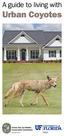 A guide to living with Urban Coyotes Living with coyotes ThinkStock Coyotes are found throughout Florida. This adaptable animal belongs to the dog family and resembles a small German shepherd. In Florida,
L A N D S C A P E P A T T E R N S
 A PATTERN BOOK FOR NEIGHBORLY HOUSES LANDSCAPE PATTERNS E Landscape Patterns Throughout the United States there is an incredible range of climatic zones, microclimates, plant species, and landscape traditions.
A Method of Population Estimation: Mark & Recapture
 Biology 103 A Method of Population Estimation: Mark & Recapture Objectives: 1. Learn one method used by wildlife biologists to estimate population size of wild animals. 2. Learn how sampling size effects
SOUTH LONDONDERRY TOWNSHIP 20 WEST MARKET STREET P.O. BOX 3 CAMPBELLTOWN, PA 17010
 SOUTH LONDONDERRY TOWNSHIP 20 WEST MARKET STREET P.O. BOX 3 CAMPBELLTOWN, PA 17010 OPEN BURNING APPLICATION NO BURNING ALLOWED UNTIL ISSUANCE OF BURNING PERMIT NAME DATE ADDRESS: PHONE NO: You must be
Kacy Blackham Fall, 2002. Introductory Lesson: Grade Level: 10 th
 Kacy Blackham Fall, 2002 Introductory Lesson: The Interdependence of Birds and the Great Salt Lake Ecosystem Abstract: Students will participate in the Checks and Balances game. This game will allow the
2015 BEAR HUNTING REGULATIONS
 2015 BEAR HUNTING REGULATIONS Please read the following regulations carefully. In addition, general hunting regulations, legal firearms, and bows and arrows allowed for big game hunting are described in
How to make a Solitary Bee Box
 How to make a Solitary Bee Box **Note: The following instructions include the use of tools that may be dangerous. Ensure there is adult supervision with children. Time: 1 hour People: 1-2+ Materials: Wood
Promoting Pollination Farming for Native Bees
 Promoting Pollination Farming for Native Bees Overview Pollination, the transfer of pollen grains to fertilize the ovules of flowers to produce seeds and fruits, is essential to agriculture and natural
Poultry Sample Questions from Animals In Pursuit
 Q. What is barring on a chicken s feather? A. Two alternating colors on a feather, running across its width Q. What commercial strain of layers is best for egg production? A. White Leghorn strains Q. How
RESTORATION & REVITALIZATION
 RESTORATION & REVITALIZATION Legal preservation has not proved to be sufficient to preserve natural communities. Restoration activities are diverse and includes revitalization of natural communities which
TREE PERMIT APPLICATION Private Property- Section 10.52.120 MBMC COMMUNITY DEVELOPMENT DEPARTMENT
 Permit No.: TREE PERMIT APPLICATION Private Property- Section 10.52.120 MBMC COMMUNITY DEVELOPMENT DEPARTMENT City Hall 1400 Highland Avenue Manhattan Beach, CA 90266-4795 Telephone (310) 802-5500 FAX
Got Starlings? Bird Control Options for Dairies
 Got Starlings? Bird Control Options for Dairies Charles D. Lee Extension Specialist, Wildlife Department of Animal Sciences and Industry 131 Call Hall, Kansas State University, Manhattan, KS 66506 Tel
Using Aerial Photography to Measure Habitat Changes. Method
 Then and Now Using Aerial Photography to Measure Habitat Changes Method Subject Areas: environmental education, science, social studies Conceptual Framework Topic References: HIIIB, HIIIB1, HIIIB2, HIIIB3,
Water Quality and Water Usage Surveys
 Appendix 1 Water Quality and Water Usage Surveys This appendix contains copies of the Water Quality Survey and the Lake Usage Survey that we used to complete the watershedbased community assessments. We
Phosphorus. Phosphorus Lake Whatcom Cooperative Management. www.ecy.wa.gov/programs/wq/nonpoint/phosphorus/phosphorusban.html
 Phosphorus Phosphorus Brochure Lake Whatcom Cooperative Management Reducing Phosphorus Website Washington State Department of Ecology www.ecy.wa.gov/programs/wq/nonpoint/phosphorus/phosphorusban.html Nutrients
HeatherRidge Townhome Association One (HRTA) (Hidden Hills) Rules and Regulations Effective January 1, 2011
 HeatherRidge Townhome Association One (HRTA) (Hidden Hills) Rules and Regulations Effective January 1, 2011 The following is the list of the Rules and Regulations that most immediately affect Hidden Hills
Lesson Overview. Biodiversity. Lesson Overview. 6.3 Biodiversity
 Lesson Overview 6.3 6.3 Objectives Define biodiversity and explain its value. Identify current threats to biodiversity. Describe how biodiversity can be preserved. THINK ABOUT IT From multicolored coral
Wildlife Habitat Conservation and Management Plan
 Wildlife Habitat Conservation and Management Plan For [Applicant Name] [Insert photo of property] Developed in Cooperation with Jane Doe Habitat Conservation Biologist Oregon Department of Fish and Wildlife
Chesterfield. virginia. Code Compliance. Can Contribute to Clean, Attractive and Safe Neighborhoods
 Chesterfield county virginia How Code Compliance Can Contribute to Clean, Attractive and Safe Neighborhoods Planning Department Code Compliance Office 804-748-1500 Code Compliance can improve neighborhoods
Name That Adaptation. Background: Link to the Plan Read Section 5 (Whooping Crane Ecology and Biology) in the Management Plan
 Summary Students will explore structural, physiological, and behavioral adaptations of whooping cranes. Objectives: Students will be able to: Define an adaptation Describe several whooping crane adaptations
VILLAGE GREEN CONDOMINIUM ASSOCIATION RULES AND REGULATIONS. Approved December 2007
 VILLAGE GREEN CONDOMINIUM ASSOCIATION RULES AND REGULATIONS Approved December 2007 INTRODUCTION Condominium living means cooperation and sharing. The following Rules and Regulations are intended to help
Post-Wildfire Clean-Up and Response in Houston Toad Habitat Best Management Practices
 Post-Wildfire Clean-Up and Response in Houston Toad Habitat Best Management Practices Purpose The purpose of this document is to provide guidance and recommendations for minimizing potential impacts to
Controlling Invasive Plants and Animals in our Community
 Controlling Invasive Plants and Animals in our Community PROVIDED BY THE WILDLIFE COMMITTEE What makes a plant or animal invasive? When a plant or animal from another region of the world (usually Europe
Here Come the Sunflowers!
 Here Come the Sunflowers! Overview Students will have an opportunity to learn about sunflowers and plant sunflower seeds, a native plant of the North American prairie. Suggested Grade Level PreK - 1 Estimated
San Jacinto County Appraisal District PO Box 1170 Coldspring, Texas 77331 936-653-1450 936-653-5271 (Fax)
 San Jacinto County Appraisal District PO Box 1170 Coldspring, Texas 77331 936-653-1450 936-653-5271 (Fax) (Referenced) Property Tax Code Section 23.51 Guidelines to Qualify for 1-d-1 Open Space Land Appraisal
CITY of ASHLAND, OREGON CEMETERY RULES AND REGULATIONS
 CITY of ASHLAND, OREGON CEMETERY RULES AND REGULATIONS MOUNTAIN VIEW, ASHLAND and HARGADINE CEMETERIES Grounds hours of visitation: 7 a.m. to dusk daily Office: 8-3:30 Monday - Friday Main Mausoleum: 8-3:30
Using Nighttime Falconry for Roosting Blackbird Abatement at Dallas/Fort Worth International Airport
 University of Nebraska - Lincoln DigitalCommons@University of Nebraska - Lincoln 2011 Bird Strike North America Conference, Niagara Falls Bird Strike Committee Proceedings 9-1-2011 Using Nighttime Falconry
COMPREHENSIVE PLAN SECTION B, ELEMENT 4 WATER RESOURCES. April 20, 2010 EXHIBIT 1
 COMPREHENSIVE PLAN SECTION B, ELEMENT 4 WATER RESOURCES April 20, 2010 EXHIBIT 1 ELEMENT 4 WATER RESOURCES TABLE OF CONTENTS 4.1 INTRODUCTION 4.2 GOALS AND POLICIES 4.2.A General Goals and Policies 1 4.2.B
CITY OF EDEN PRAIRIE CANADA GOOSE MANAGEMENT PLAN
 CITY OF EDEN PRAIRIE CANADA GOOSE MANAGEMENT PLAN TABLE OF CONTENTS 1.0 INTRODUCTION TO THE CANADA GOOSE... 1 1.1 NESTING... 1 1.2 BROOD-REARING... 2 1.3 MOLTING... 2 1.4 GOOSE DAMAGE... 2 2.0 EDEN PRAIRIE
Northern Long-eared Bat - Interim Final 4(d) Rule Questions and Answers
 Northern Long-eared Bat - Interim Final 4(d) Rule Questions and Answers 1. What action is the Service taking? On January 15, 2015, the Service published a proposed rule under section 4(d) of the Endangered
JAPANESE KNOTWEED. What is Japanese Knotweed?
 JAPANESE KNOTWEED What is Japanese Knotweed? Japanese Knotweed (botanical name Fallopia japonica) was introduced into Britain from Japan in the early 1800 s. It was originally grown as an ornamental plant,
Where Do Birds Live?
 Objectives You will learn about 1) where birds build nests, 2) the materials they use, 3) different nest characteristics and 4) how to observe nesting activity. Introduction Birds hatch their young in
Electric Fencing Made Easy
 Electric Fencing Made Easy Confused by electric fencing? Don t feel like a dummy, electric fencing seems complicated to most people so many different fence chargers, insulators and wires to choose from.
Wetlands by Leslie Cargile
 Name: by Leslie Cargile What do the bogs in Ireland, the marshes in South Carolina, and the swamps of Louisiana have in common? If you said they re all wetlands, you d be right! are any land that is flooded
Talking About Penguins by Guy Belleranti
 Talking About Penguins Penguins are one of the world s most interesting birds. They waddle when they walk, and have flippers instead of wings. The bones in a penguin s flippers are heavier and more solid
3 September 9, 2015 Public Hearing
 3 September 9, 2015 Public Hearing APPLICANT: PI TELECOM INFRASTRUCTURE T, LLC PROPERTY OWNER: JSW HOLDINGS, LLC STAFF PLANNER: Carolyn A.K. Smith REQUEST: Conditional Use Permit (communications tower-monopole)
Wildlifer 2013 Managing Wildlife on Private Lands
 Master Wildlifer 2013 Managing Wildlife on Private Lands Greg Yarrow, Chair and Professor Natural Resources School of Agricultural, Forest, & Environmental Sciences Clemson University Clemson, South Carolina,
Wildlife Habitat Conservation and Management Program
 Wildlife Habitat Conservation and Management Program Manual for Counties and Cities Oregon Department of Fish and Wildlife 2015 Table of Contents 1. Introduction Purpose of the habitat program Objective
CITY OF UKIAH TREE MANAGEMENT GUIDELINES TREE MANAGEMENT POLICIES FOR THE PROTECTION, OPERATION AND MAINTENANCE OF CITY PROPERTY
 CITY OF UKIAH TREE MANAGEMENT GUIDELINES TREE MANAGEMENT POLICIES FOR THE PROTECTION, OPERATION AND MAINTENANCE OF CITY PROPERTY FINAL DRAFT November 2010 1.0 PURPOSE STATEMENT The purpose of this document
Rules and Regulations
 TOWNHOUSES HOMEOWNERS ASSOCIATION INC. Ocoee, Florida 34761 2011 Rules and Regulations These rules were developed by the Board of Directors to promote the safety and well-being of the residents, their
U.S. Fish & Wildlife Service West Virginia Ecological Services Field Office
 Slide 1 West Virginia Ecological Services Field Office Liz Stout Fish and Wildlife Biologist 694 Beverly Pike Elkins, West Virginia 26241 [email protected] 304-636-6586 x 15 Slide 2 Today s Goals
HUMANE GOOSE- CONTROL SOLUTIONS
 HUMANE GOOSE- CONTROL SOLUTIONS 1 A guide to integrated management programs TABLE OF CONTENTS 1. Introduction 4 A. Canada Geese in the United States 4 B. The Difference Between Resident and Migratory Geese
Resources, Publications, Tools, Input from AWCC
 A comprehensive review of Farm Bill contributions to wildlife conservation A comprehensive review was made of scientific literature to determine wildlife responses to conservation programs undertake as
Key Idea 2: Ecosystems
 Key Idea 2: Ecosystems Ecosystems An ecosystem is a living community of plants and animals sharing an environment with non-living elements such as climate and soil. An example of a small scale ecosystem
Integrated Pest Management for Rat, Mice, and other Rodents at Thurston County s Waste and Recovery Center
 Integrated Pest Management for Rat, Mice, and other Rodents at Thurston County s Waste and Recovery Center When you think of garbage you automatically think of rats and rodents because they are very opportunistic
Your Defensible Space Slideshow
 Your Defensible Space Slideshow Red = Trees to Remove Your Defensible Space Slideshow This slideshow was created to highlight actions you can take to dramatically improve the chances of your home surviving
Position Description for Conservation Specialist
 Position Description for Conservation Specialist Position Summary This Conservation Specialist position is focused primarily on helping to conserve natural resources associated with small farms. Wildlife
Garbage and Debris. Zoning/Use Violations. Tall Grass and Weeds. Vehicle Violations. Recreational Vehicle/Trailer Parking. Property Maintenance
 Garbage and Debris Zoning/Use Violations Tall Grass and Weeds Vehicle Violations Property Maintenance Building without a permit Recreational Vehicle/Trailer Parking Sign Violations Animal Violations Right
Frequently Asked Questions about Septic Systems
 What is a septic tank? Where is my septic tank located? Do septic tanks last forever? What should and should not go into my septic tank? How can I tell if my septic tank is working properly? Why should
ENVIRONMENTAL CHANGES
 reflect How do you respond to environmental changes? Maybe you wear different types of clothes in different seasons. Maybe you only ride your bike during certain times of the year. What if you moved to
Animal Ordinances for the City of Columbus, Georgia
 Animal Ordinances for the City of Columbus, Georgia If you would like to make a complaint regarding an animal in Muscogee County, please contact our administrative office at: 706.653.4512. The administrative
Ecosystem Services in the Greater Houston Region. A case study analysis and recommendations for policy initiatives
 Ecosystem Services in the Greater Houston Region A case study analysis and recommendations for policy initiatives Ecosystem Services Ecosystems provide services through their natural processes that we
Applewood Townhomes Homeowner s Handbook 2015
 Applewood Townhomes Homeowner s Handbook 2015 Welcome to Applewood! On behalf of all the members of Applewood, welcome to the neighborhood! We are proud of our community and look forward to getting to
GOOD NEIGHBOR HANDBOOK
 GOOD NEIGHBOR HANDBOOK Welcome to the City of Grandview s Good Neighbor Handbook! We hope you find it informative and easy to understand. It has been designed to provide the reader with basic information
The importance of Lebanon for the migratory soaring birds & the flyway. April 2012. Bassima Khatib SPNL Assistant Director General
 The importance of Lebanon for the migratory soaring birds & the flyway April 2012 Bassima Khatib SPNL Assistant Director General Outline Who is SPNL? IBA programme Importance of Lebanon for migratory soaring
Natural Resources and Landscape Survey
 Landscape Info Property Name Address Information Contact Person Relationship to Landscape Email address Phone / Fax Website Address Landscape Type (private/muni/resort, etc.) Former Land Use (if known)
BIRD DEFINITIONS. Game Birds: Migratory game birds and upland game birds.
 Birds Page4 Page5 BIRD DEFINITIONS Wild Birds: Migratory game birds; upland game birds; and all undomesticated feathered vertebrates, except Pigeon, English Sparrow, European Starling and Mute Swans. Migratory
LAKESHORE RESORT POA INC Lake Shore Resort POA,Inc. 15105 Lake Shore Blvd. Brookville, IN. 47012 765-647 6887
 Lake Shore Resort POA,Inc. 15105 Lake Shore Blvd. Brookville, IN. 47012 765-647 6887 Page 1 of 6 Effective May, 2005 Updated and Revised Condensed Rules and Regulations In an effort to better inform the
Town of Richmond Hill Beaver Management Policy Summary
 Town of Richmond Hill Beaver Management Policy Summary Above Left: Tree damage from beaver. Above Right: Beaver dam in stream - notice the water level above and below the dam! Below: Beaver swimming. Town
Wildlife Damage Prevention and Control Strategies
 Wildlife Damage Prevention and Control Strategies Rutgers Cooperative Extension Rutgers University s Snyder Farm-Center for Wildlife Damage Control Keys to Success Identify species causing damage Develop
SECTION 02100 SITE PREPARATION
 SECTION 02100 SITE PREPARATION PART 1 - GENERAL 1.01 RELATED DOCUMENTS A. Drawings and General Provisions of Contract, including General Conditions and Supplementary Conditions and Division 1 through Division
CHICKENS 101 INTRODUCTORY COURSE HOUSING AND PREDATOR CONTROL
 CHICKENS 101 INTRODUCTORY COURSE HOUSING AND PREDATOR CONTROL THE BASICS: HOUSING 1 3 THE BASICS: HOUSING 1 Protect from rain and cold when first outside. After about three weeks, chickens can tolerate
The ABCs of Pasture Grazing
 L P E S Small Farms Fact Sheet series Livestock and Poultry Environmental Stewardship < L P E S > Curriculum By Ben Bartlett, Michigan State University Summary Well-managed pastures are Always the Best
Follow the steps listed on the following pages to help eliminate the conditions that encourage rats.
 CONTROLLING RATS Responsibilities It takes a community-wide effort to manage the rodent population. What Does the Evanston Health and Human Services Department Do? Working with residents, the Evanston
Human Impact to Wetlands
 Human Impact to Wetlands Oregon State Standards 3.2 3.2P.1 3.3S.1 3.3S.2 3.3S.3. 4.2 4.2L.1 4.3 4.3S.1 4.3S.2 4.3S.3 5.1 5.1L.1 5.2 5.2L.1 5.3 5.3S.3 5.3S.2 5.3S.3 Vocabulary Wetland Riparian Biodiversity
Restoring Anadromous Fish Habitat in Big Canyon Creek Watershed. Summary Report 2002
 Restoring Anadromous Fish Habitat in Big Canyon Creek Watershed Summary Report 2002 DOE/BP-00005268-5 November 2002 This Document should be cited as follows: "Restoring Anadromous Fish Habitat in Big Canyon
6. NATURAL AREAS FIRE MANAGEMENT
 6. NATURAL AREAS FIRE MANAGEMENT 6-1 Wildfire management is an important component of managing and maintaining County natural areas. The natural areas are woven into the community fabric and are a part
RainScapes. Runoff/Erosion: RainScapes for Schools Environmental Report Card. Excess runoff will affect these indicators of Bay health:
 RainScapes Environmentally Friendly Landscapes for Healthy Watersheds RainScapes for Schools Environmental Report Card How is your schoolyard doing? Is it helping the Chesapeake Bay, or is it contributing
Helping fish and wildlife on your lakeshore property
 The Edge Helping fish and wildlife on your lakeshore property 2 Shoreline habitat Shoreline habitat T he water s edge is a busy place. Northern pike, bluegills, bass, and other fish spawn in the shallow
Grade Level Content Expectations addressed: Activities: Schedule of Field Trip Activities at the Detroit Zoo 8:15 am Board Bus at School
 Title: Comparing and Contrasting Ecosystem Biodiversity Submitted by: Tracy Ortiz Email: [email protected] School: Coffey K-8 Educational Learning Community Date: May 12, 2010 Target Grade: 6 Duration:
How To Manage Wildlife And Wildlife Damages At Earthen Dams
 Dam Owner s Guide To Animal Impacts On Earthen Dams FEMA L-264 / September 2005 Twenty-five states across the U.S. can write headlines of unsafe dam operations caused by nuisance wildlife intrusions,
Biology Keystone (PA Core) Quiz Ecology - (BIO.B.4.1.1 ) Ecological Organization, (BIO.B.4.1.2 ) Ecosystem Characteristics, (BIO.B.4.2.
 Biology Keystone (PA Core) Quiz Ecology - (BIO.B.4.1.1 ) Ecological Organization, (BIO.B.4.1.2 ) Ecosystem Characteristics, (BIO.B.4.2.1 ) Energy Flow 1) Student Name: Teacher Name: Jared George Date:
CRP Mid-Contract Management Option: Integrated Wildlife Management (645)
 CRP Mid-Contract Management Option: Integrated Wildlife Management (645) Conservation Practice Job Sheet ID - CRP, JS-20 Revised August 2013 The purpose of mid-contract management activities is to enhance
Management Plan Template For Conservation Easements Held by CPW
 Management Plan Template For Conservation Easements Held by CPW The following template provides guidelines for developing a management plan for a property that will have a Conservation Easement held by
CODE ENFORCEMENT - FAQ STREETS
 CODE ENFORCEMENT - FAQ STREETS Can I have a red (or blue) line painted or repainted at the curb in front of my house? Yes. This is allowed in some situations. Please contact Traffic Engineering at (714)
Climate Change: A Local Focus on a Global Issue Newfoundland and Labrador Curriculum Links 2010-2011
 Climate Change: A Local Focus on a Global Issue Newfoundland and Labrador Curriculum Links 2010-2011 HEALTH Kindergarten: Grade 1: Grade 2: Know that litter can spoil the environment. Grade 3: Grade 4:
AN INITIATIVE TO IMPROVE
 L OW E R C A R M E L R I V E R A N D L AG O O N F L O O D P L A I N R E S TO R AT I O N A N D E N H A N C E M E N T P R O J E C T AN INITIATIVE TO IMPROVE FLOOD PROTECTION RESTORE AND PROTECT RIPARIAN
Architectural Review
 Kylemont at Lansbrook Homeowners Association (HOA) General Information and Guidelines April 2015 Board of Directors (BOD) Selection and Term Per the Kylemont By-Laws, the BOD is to consist of an odd number
Fayette County Appraisal District
 Fayette County Appraisal District Agricultural Guidelines July 7, 2010 A SUPPLEMENT TO THE STATE OF TEXAS PROPERTY TAX MANUAL FOR THE APPRAISAL OF AGRICULTUAL LAND AND WILDLIFE MANAGEMENT ACTIVITIES AND
Broadmoor Public Golf Course TREE MANAGEMENT GUIDE
 Broadmoor Public Golf Course TREE MANAGEMENT GUIDE Conservation of the trees at the Broadmoor Public Golf Course is a priority for environmental, economic and human health reasons. Trees make a difference