
iologik E1200 Series User s Manual
|
|
|
- Denis O’Brien’
- 9 years ago
- Views:
Transcription
1 User s Manual Eighth Edition, September Moxa Inc. All rights reserved. Reproduction without permission is prohibited.

2 User s Manual The software described in this manual is furnished under a license agreement and may be used only in accordance with the terms of that agreement. Copyright Notice Copyright 2012 Moxa Inc. All rights reserved. Reproduction without permission is prohibited. Trademarks The MOXA logo is a registered trademark of Moxa Inc. All other trademarks or registered marks in this manual belong to their respective manufacturers. Disclaimer Information in this document is subject to change without notice and does not represent a commitment on the part of Moxa. Moxa provides this document as is, without warranty of any kind, either expressed or implied, including, but not limited to, its particular purpose. Moxa reserves the right to make improvements and/or changes to this manual, or to the products and/or the programs described in this manual, at any time. Information provided in this manual is intended to be accurate and reliable. However, Moxa assumes no responsibility for its use, or for any infringements on the rights of third parties that may result from its use. This product might include unintentional technical or typographical errors. Changes are periodically made to the information herein to correct such errors, and these changes are incorporated into new editions of the publication. Technical Support Contact Information Moxa Americas Toll-free: Tel: Fax: Moxa Europe Tel: Fax: Moxa China (Shanghai office) Toll-free: Tel: Fax: Moxa Asia-Pacific Tel: Fax: Moxa India Tel: Fax:

3 Table of Contents 1. Introduction Quick Start Guide Product Features Inside the Box Product Model Information Product Specifications Common Specifications iologik E iologik E iologik E iologik E iologik E iologik E iologik E iologik E iologik E Physical Dimensions Hardware Reference Panel Guide LED Indicators I/O Circuit Diagram DI Circuit DIO Circuit DI & Relay Circuit AI Circuit RTD Circuit TC Circuit Initial Setup Hardware Installation Connecting the Power Grounding the iologik E Connecting to the Network Jumper Settings (DIO and AI) I/O Wiring Diagrams iosearch Installation Load Factory Defaults Using the Web Console Introduction to the Web Console Overview Network Settings for the Web Console General Settings Ethernet Configuration User-defined Modbus Addressing Default Modbus Address Active OPC Server Settings Tag Generation I/O Settings DI Channels DO Channels AI Channels AI Input Range AO Channels RTD Channels TC Channels System Management IP Accessibility Network Connection Firmware Update Import System Configuration Settings Export System Configuration Settings Peer-to-peer Settings Peer-to-peer Settings (1-50) Sample Peer-to-Peer Configuration DO Safe Mode Settings AO Safe Mode Settings Change Password Load Factory Defaults Save/Restart

4 4. Using iosearch Introduction to iosearch iosearch Main Screen Main Screen Overview iosearch Setup System Sort Quick Links Main Function Locate Firmware Upgrade Unlock Import Export Change IP Address Batch TCP/IP Configuration on Multiple Devices Restart System Reset to Default Mass Deployment (Import) Mass Deployment (export) Utility: Active OPC Server Active OPC Server OLE for Process Control Active OPC Server From Pull to Push Features of Active OPC Server One Simple Click Creates Active Tags Faster, More Accurate Data Collection than Traditional Pull Technology Dynamic IP Assignments for Cellular RTUs Active OPC Server Overview Installing Active OPC Server Main Screen Overview Menu Bar A. Modbus/TCP Default Address Mappings... A-1 E1210 Modbus Mapping... A-2 E1211 Modbus Mapping... A-5 E1212 Modbus Mapping... A-7 E1214 Modbus Mapping... A-11 E1240 Modbus Mapping... A-14 E1241 Modbus Mapping... A-16 E1242 Modbus Mapping... A-17 E1260 Modbus Mapping... A-20 E1262 Modbus Mapping... A-20 B. Network Port Numbers... B-1 C. Factory Defaults... C-1 D. Pinouts... D-1 E. FCC Interference Statement... E-1 F. European Community (CE)... F-1

5 1. Introduction 1 The iologik E1200 Series of industrial Ethernet remote I/O has two embedded Ethernet switch ports that allow information to flow to another local Ethernet device or be daisy chained to another iologik. Applications such as factory automation, security and surveillance systems, and tunnel monitoring can make use of daisy chained Ethernet for building multi-drop I/O networks over standard Ethernet cables. Many industrial automation users are familiar with the multi-drop configuration typically used in fieldbus applications. The Ethernet daisy chaining feature of the iologik E1200 not only increases connections between machines and panels, but also lowers the cost of buying separate Ethernet switches while further reducing labor fees and cabling by a large percentage. For example, if a production facility contains 700 stations (20 points per station), the wiring cost reduction can reach 15% of the total implementation cost. The following topics are covered in this chapter: Quick Start Guide Product Features Inside the Box Product Model Information Product Specifications Common Specifications iologik E1210 iologik E1211 iologik E1212 iologik E1214 iologik E1240 iologik E1241 iologik E1242 iologik E1260 iologik E1262 Physical Dimensions Hardware Reference Panel Guide LED Indicators I/O Circuit Diagram DI Circuit DIO Circuit DI & Relay Circuit AI Circuit RTD TC Circuit

6 Introduction Quick Start Guide Overview Here we introduce the iologik concept and basic specifications. 1. Product Feature 2. Product Highlights 3. Product Model Information 4. Common Specification Getting Started See how to quickly set up your iologik. Features are explained using snapshots for painless setup. 1. Hardware Installation 2. I/O Wiring Diagram 3. Jumper Setting (DIO and AI) 4. iosearch Installation Basic Configuration Learn the basics of several useful functions. 1. Introduction to the Web Console 2. Network Settings for the Web Console 3. User-defined Modbus Addressing 4. Active OPC Server Settings 5. I/O Settings 6. Firmware Update 7. Peer-to-peer Settings 8. Sample Peer-to-Peer Configuration Software Configuration Learn how to set up useful Moxa Utilities. 1. iosearch Setup 2. Active OPC Setup 1-2

7 Introduction Product Features Built-in 2-port Ethernet switch for daisy chain topologies Free support for Moxa s push-based Active OPC Server User-defined Modbus/TCP addressing MXIO library for Windows/WinCE/VB/VC.NET and Linux C Web-based configuration with import/export capabilities Peer-to-peer I/O communication over Ethernet Inside the Box The iologik E1200 is shipped with the following items: iologik E1200 Remote Ethernet I/O Server. Document and Software CD. Quick Installation Guide. NOTE: Notify your sales representative if any of the above items are missing or damaged. Product Model Information Model Description iologik E1210 Remote Ethernet I/O with 2-port Ethernet switch and 16 DIs iologik E1211 Remote Ethernet I/O with 2-port Ethernet switch and 16 DOs iologik E1212 Remote Ethernet I/O with 2-port Ethernet switch, 8 DIs, and 8 DIOs iologik E1214 Remote Ethernet I/O with 2-port Ethernet switch, 6 DIs, and 6 relays iologik E1240 Remote Ethernet I/O with 2-port Ethernet switch and 8 AIs iologik E1241 Remote Ethernet I/O with 2-port Ethernet switch and 4 AOs iologik E1242 Remote Ethernet I/O with 2-port Ethernet switch and 4 AIs, 4DIs, and 4DIOs iologik E1260 Remote Ethernet I/O with 2-port Ethernet switch and 6 RTDs iologik E1262 Remote Ethernet I/O with 2-port Ethernet switch and 8 TCs iologik E1210-T Ethernet remote I/O with 2-port Ethernet switch and 16 DIs, -40 to 75 C operating temperature iologik E1211-T Ethernet remote I/O with 2-port Ethernet switch and 16 DOs, -40 to 75 C operating temperature iologik E1212-T Ethernet remote I/O with 2-port Ethernet switch, 8 DIs, and 8 DIOs, -40 to 75 C operating temperature iologik E1214-T Ethernet remote I/O with 2-port Ethernet switch, 6 DIs, and 6 Relays, -40 to 75 C operating temperature iologik E1240-T Ethernet remote I/O with 2-port Ethernet switch and 8 AIs, -40 to 75 C operating temperature iologik E1241-T Ethernet remote I/O with 2-port Ethernet switch and 4 AOs, -40 to 75 C operating temperature iologik E1242-T Ethernet remote I/O with 2-port Ethernet switch, 4 AIs, 4 DIs, and 4 DIOs, -40 to 75 C operating temperature iologik E1260-T Ethernet remote I/O with 2-port Ethernet switch and 6 RTDs, -40 to 75 C operating temperature iologik E1262-T Ethernet remote I/O with 2-port Ethernet switch and 8 TCs, -40 to 75 C operating temperature 1-3

8 Introduction Product Specifications Common Specifications LAN Ethernet: 2 x 10/100 Mbps switch ports, RJ45 Protection: 1.5 KV magnetic isolation Protocols: Modbus/TCP, TCP/IP, UDP, DHCP, Bootp, HTTP Power Requirements Power Input: 24 VDC nominal, 12 to 36 VDC Physical Characteristics Wiring: I/O cable max. 14 AWG Dimensions: 27.8 x 124 x 84 mm (1.09 x 4.88 x 3.31 in) Weight: under 200 g Mounting: DIN rail or wall Environmental Limits Operating Temperature: Standard Models: -10 to 60 C (14 to 140 F) Wide Temp. Models: -40 to 75 C (-40 to 167 F) Storage Temperature: -40 to 85 C (-40 to 185 F) Ambient Relative Humidity: 5 to 95% (non-condensing) Altitude: Up to 2000 m Note: Please contact Moxa if you require products guaranteed to function properly at higher altitudes. Standards and Certifications Safety: UL 508 EMI: EN 55022; EN ; EN ; FCC Part 15, Subpart B, Class A EMS: EN 55024, EN , EN , EN , EN , EN , EN , EN Shock: IEC Freefall: IEC Vibration: IEC Green Product: RoHS, CRoHS, WEEE Note: Please check Moxa's website for the most up-to-date certification status. Warranty Warranty Period: 5 years (excluding iologik E1214) Details: See *Note: Because of the limited lifetime of power relays, products that use this component are covered by a 2-year warranty. 1-4

9 Introduction iologik E1210 Inputs and Outputs Digital Inputs: 16 channels Isolation: 3K VDC or 2K Vrms Digital Input Sensor Type: Wet Contact (NPN or PNP), Dry Contact I/O Mode: DI or Event Counter Dry Contact: On: short to GND Off: open Wet Contact: NPN (DI to GND): On: 0 to 3 VDC Off: 10 to 30 VDC PNP (DI to GND): Off: 0 to 3 VDC On: 10 to 30 VDC Common Type: 8 points per COM Counter Frequency: 250 Hz, power off storage Digital Filtering Time Interval: Software selectable Power Requirements Power Consumption: VDC MTBF (mean time between failures) Time: 671,345 hrs Database: Telcordia (Bellcore) iologik E1211 Inputs and Outputs Digital Outputs: 16 channels Isolation: 3K VDC or 2K Vrms Digital Output Type: Sink I/O Mode: DO or Pulse Output Pulse Output Frequency: 500 Hz Over-voltage Protection: 45 VDC Over-current Protection: 2.6 A (4 650 ma) Over-temperature Shutdown: 175 C (typical), 150 C (min.) Current Rating: 200 ma per channel Power Requirements Power Consumption: VDC MTBF (mean time between failures) Time: 923,027 hrs Database: Telcordia (Bellcore) 1-5

10 Introduction iologik E1212 Inputs and Outputs Digital Inputs: 8 channels Configurable DIOs: 8 channels Isolation: 3K VDC or 2K Vrms Digital Input Sensor Type: Wet Contact (NPN or PNP), Dry Contact I/O Mode: DI or Event Counter Dry Contact: On: short to GND Off: open Wet Contact: NPN (DI to GND): On: 0 to 3 VDC Off: 10 to 30 VDC PNP (DI to GND): Off: 0 to 3 VDC On: 10 to 30 VDC Common Type: 8 points per COM Counter Frequency: 250 Hz, power off storage Digital Filtering Time Interval: Software selectable Digital Output Type: Sink I/O Mode: DO or Pulse Output Pulse Output Frequency: 500 Hz Over-voltage Protection: 45 VDC Over-current Protection: 2.6 A (4 650 ma) Over-temperature Shutdown: 175 C (typical), 150 C (min.) Current Rating: 200 ma per channel Power Requirements Power Consumption: VDC MTBF (mean time between failures) Time: 561,930 hrs Database: Telcordia (Bellcore) 1-6

11 Introduction iologik E1214 Inputs and Outputs Digital Inputs: 6 channels Relay Outputs: 6 channels Isolation: 3K VDC or 2K Vrms Digital Input Sensor Type: Wet Contact (NPN or PNP), Dry Contact I/O Mode: DI or Event Counter Dry Contact: On: short to GND Off: open Wet Contact: NPN (DI to GND): On: 0 to 3 VDC Off: 10 to 30 VDC PNP (DI to GND): Off: 0 to 3 VDC On: 10 to 30 VDC Common Type: 6 points per COM Counter Frequency: 250 Hz, power off storage Digital Filtering Time Interval: Software selectable Relay Output Type: Form A (N.O.) power relay Contact Current Rating: Resistive Load: 5 30 VDC, 250 VAC, 110 VAC Breakdown Voltage: 500 VAC Relay On/Off Time: 1500 ms (Max.) Initial Insulation Resistance: 1000 M ohms 500 VDC Mechanical Endurance: 5,000,000 operations Electrical Endurance: 100,000 5 A resistive load Contact Resistance: 100 m ohms (max.) Pulse Output: 0.3 Hz at rated load *Note: Ambient humidity must be non-condensing and remain between 5 and 95%. The relays of the iologik E1214 may malfunction when operating in condensing environments below 0 Celsius. Power Requirements Power Consumption: VDC MTBF (mean time between failures) Time: 808,744 hrs Database: Telcordia (Bellcore) 1-7

12 Introduction iologik E1240 Inputs and Outputs Analog Inputs: 8 channels Isolation: 3K VDC or 2K Vrms Analog Input Type: Differential input Resolution: 16 bits I/O Mode: Voltage / Current Input Range: 0 to 10 VDC, 0 to 20 ma, 4 to 20 ma Accuracy: ±0.1% 25 C ±0.3% -10 and 60 C ±0.5% -40 and 75 C Sampling Rate: All channels: 12 samples/sec Per channel: 1.5 samples/sec Only one channel enabled: 12 samples/sec Input Impedance: 10M ohms (min.) Built-in Resistor for Current Input: 120 ohms Power Requirements Power Consumption: VDC MTBF (mean time between failures) Time: 474,053 hrs Database: Telcordia (Bellcore) iologik E1241 Inputs and Outputs Analog Outputs: 4 channels Isolation: 3K VDC or 2K Vrms Analog Output Resolution: 12 bits Output Range: 0 to 10 VDC, 4 to 20 ma Voltage Output: 10 ma (max.) Accuracy: ±0.1% 25 C ±0.3% -40 and 75 C Load Resistor: Internal power: 400 ohms External 24V power: 1000 ohms Power Requirements Power Consumption: VDC MTBF (mean time between failures) Time: 888,656 hrs Database: Telcordia (Bellcore) 1-8

13 Introduction iologik E1242 Inputs and Outputs Analog Inputs: 4 channels Digital Inputs: 4 channels Configurable DIOs: 4 channels Isolation: 3K VDC or 2K Vrms Analog Input Type: Differential input Resolution: 16 bits I/O Mode: Voltage / Current Input Range: 0 to 10 VDC, 0 to 20 ma, 4 to 20 ma Accuracy: ±0.1% 25 C ±0.3% -10 and 60 C ±0.5% -40 and 75 C Sampling Rate: All channels: 12 samples/sec Per channel: 3 samples/sec Only one channel enabled: 12 samples/sec Input Impedance: 10M ohms (min.) Built-in Resistor for Current Input: 120 ohms Digital Input Sensor Type: Wet Contact (NPN or PNP), Dry Contact I/O Mode: DI or Event Counter Dry Contact: On: short to GND Off: open Wet Contact: NPN (DI to GND): On: 0 to 3 VDC Off: 10 to 30 VDC PNP (DI to GND): Off: 0 to 3 VDC On: 10 to 30 VDC Common Type: 4 points per COM Counter Frequency: 250 Hz, power off storage Digital Filtering Time Interval: Software selectable Digital Output Type: Sink I/O Mode: DO or Pulse Output Pulse Output Frequency: 500 Hz Over-voltage Protection: 45 VDC Over-current Protection: 2.6 A (4 650 ma) Over-temperature Shutdown: 175 C (typical), 150 C (min.) Current Rating: 200 ma per channel Power Requirements Power Consumption: VDC MTBF (mean time between failures) Time: 502,210 hrs Database: Telcordia (Bellcore) 1-9

14 Introduction iologik E1260 Inputs and Outputs RTD Inputs: 6 channels Isolation: 3K VDC or 2K Vrms RTD Inputs Input Type: PT50, PT100, PT200, PT500 (-200 to 850 C) PT1000 (-200 to 350 C) Resistance of 310, 620, 1250, and 2200 ohms Sampling Rate: All channels: 12 samples/sec Per channel: 2 samples/sec Only one channel enabled: 12 samples/sec Resolution: 0.1 C or 0.1 ohm Accuracy: ±0.1% 25 C ±0.3% -40 and 75 C Input Impedance: 625K ohms Power Requirements Power Consumption: VDC MTBF (mean time between failures) Time: 660,260 hrs Database: Telcordia (Bellcore) iologik E1262 Inputs and Outputs Thermocouple Inputs: 8 channels Isolation: 3K VDC or 2K Vrms Thermocouple Input Sensor Type: J (0 to 750 C), K (-200 to 1250 C), T (-200 to 350 C), E (-200 to 900 C), R (-50 to 1600 C), S (-50 to 1760 C), B (600 to 1700 C), N (-200 to 1300 C) Millivolt Type: Mode: ± mv, ± mv, ± mv Fault and over-voltage protection: -35 to +35 VDC (power off); -25 to +30 VDC (power on) Sampling Rate: All channels: 12 samples/sec Per channel: 1.5 samples/sec Only one channel enabled: 12 samples/sec Resolution: 16 bits Accuracy: ±0.1% 25 C ±0.3% -40 and 75 C Input Impedance: 10M ohms Power Requirements Power Consumption: VDC MTBF (mean time between failures) Time: 631,418 hrs Database: Telcordia (Bellcore) 1-10

15 Introduction Physical Dimensions Unit=mm 1-11


16 Introduction Hardware Reference Panel Guide NOTE The reset button restarts the server and resets all settings to factory defaults. Use a pointed object such as a straightened paper clip to hold in the reset button for 5 sec. The factory defaults will be loaded once the Ready LED turns green again. You may then release the reset button. LED Indicators LED State Description Power Amber System power is ON OFF System power is OFF Ready Green System is ready Flashing Flashes every 1 sec when the Locate function is triggered Flashing Flashes every 0.5 sec when the firmware is being upgraded Flashing Cycle on/off period of 0.5 sec. represents Safe Mode OFF System is not ready. Port 1 Green Ethernet connection enabled Flashing Transmitting or receiving data Port 2 Green Ethernet connection enabled Flashing Transmitting or receiving data 1-12

17 Introduction I/O Circuit Diagram DI Circuit 1-13

18 Introduction DIO Circuit 1-14

19 Introduction DI & Relay Circuit 1-15

20 Introduction AI Circuit RTD Circuit TC Circuit 1-16

21 2. Initial 2 Setup This chapter describes how to install the iologik E1200. The following topics are covered in this chapter: Hardware Installation Connecting the Power Grounding the iologik E1200 Connecting to the Network Jumper Settings (DIO and AI) I/O Wiring Diagrams iosearch Installation Load Factory Defaults
22 Initial Setup Hardware Installation Connecting the Power Connect the 12 to 36 VDC power line to the iologik E1200 s terminal block on the top panel. If power is properly supplied, the Power LED will glow a solid amber color. ATTENTION Determine the maximum possible current for each power wire and common wire. Observe all electrical codes dictating the maximum current allowable for each wire size. If the current exceeds the maximum rating, the wiring could overheat, causing serious damage to your equipment. For safety reasons, we recommend an average cable size of 22 AWG. However, depending on the current load, you may want to adjust your cable size (the maximum wire size for power connectors is 2 mm). Grounding the iologik E1200 The iologik E1200 is equipped with a grounding point on the terminal block located on the top panel. Connect the ground pin ( ) if earth ground is available. Connecting to the Network The iologik E1200 has two built-in Ethernet switch ports for connecting a standard direct or cross-over Ethernet cable from RJ45 port to either the host PC or another iologik E1200 device. For initial setup of the iologik E1200, it is recommended that the iologik E1200 be configured using a direct connection to a host computer rather than remotely over the network. Configure the host PC s IP address to xxx (where xxx ranges from 001 to 253). When using Windows, you will need to do the configuration from the Control Panel. iologik E1200 Default IP Address Default Netmask Default Gateway None Use the web console or iosearch configuration utility to connect to the iologik E1200. Once the iologik E1200 has been detected, modify the settings as needed for your network environment, and then restart the server. Refer to Chapters 3 and 4 or further details. 2-2
23 Initial Setup Jumper Settings (DIO and AI) The iologik E1212, E1240, and E1242 require configuring the jumpers inside the enclosure. Remove the screw on the back panel and open the cover to configure the jumpers. DIO mode configuration is as follows (default is DO Mode) Analog mode configuration is as follows (default is Voltage Mode) 2-3
24 Initial Setup I/O Wiring Diagrams A Dry Contact is a contact that does not provide voltage, e.g., the push-to-talk switch of a microphone, which just closes a circuit without providing voltage. A Wet Contact is a contact that will provide voltage when closed, e.g., a switch on the wall that activates a 110 VAC outlet to turn a lamp on in a room. ATTENTION Remove the screw on the back panel and open the cover to configure the jumpers. 2-4
25 Initial Setup NOTE It is good to have a contact protection circuit for relay output. A varistor can serve as a contact protection circuit, where the parallel connects with load. Load 2-5
26 Initial Setup iosearch Installation iosearch is a search utility that helps the user locate iologik E1200 devices on the local network. Find the iosearch utility in the Document and Software CD under Software iosearch, or download the latest version from Moxa s website. 1. Installing from the CD: Insert the Document and Software CD into the host computer. In the root directory of the CD, locate and run SETUP.EXE. The installation program will guide you through the installation process and install the iosearch utility. You can also install the MXIO DLL library separately. 2. Open iosearch: After installation is finished, run iosearch from Start Program Files MOXA IO Server Utility iosearch 3. Search the network for the server: On the menu bar, select System Auto Scan Active Ethernet I/O Server. A dialog window will pop up. Click Start Search to begin searching for the iologik E1200. If multiple iologik E1200 units are installed on the same network, remember that each unit has the same default IP address. You will need to assign a different IP address to each unit to avoid IP conflicts. Load Factory Defaults There are three ways to restore the iologik E1200 to the factory default. 1. Hold the RESET button for 5 seconds. 2. Right click the specified iologik in the iosearch utility and select Reset to Default. 3. Select Load Factory Default from the web console 2-6
27 3. Using 3 the Web Console The iologik E1200 s main configuration and management utility is the built-in web console, which can be used to configure a wide range of options. The following topics are covered in this chapter: Introduction to the Web Console Overview Network Settings for the Web Console General Settings Ethernet Configuration User-defined Modbus Addressing Default Modbus Address Active OPC Server Settings Tag Generation I/O Settings DI Channels DO Channels AI Channels AI Input Range AO Channels RTD Channels TC Channels System Management IP Accessibility Network Connection Firmware Update Import System Configuration Settings Export System Configuration Settings Peer-to-peer Settings Peer-to-peer Settings (1-50) Sample Peer-to-Peer Configuration DO Safe Mode Settings AO Safe Mode Settings Change Password Load Factory Defaults Save/Restart
28 Using the Web Console Introduction to the Web Console The iologik E1200 web console is a browser-based configuration utility. When the iologik E1200 is connected to your network, you may enter the server s IP address in your web browser to access the web console. The left panel is the navigation panel and contains an expandable menu tree for navigating among the various settings and categories. When you click on a menu item in the navigation panel, the main window will display the corresponding options for that item. Configuration changes can then be made in the main window. For example, if you click on Network Settings in the navigation panel, the main window will show a page of basic settings that you can configure. You must click on the Submit button after making configuration changes. The Submit button will be located at the bottom of every page that has configurable settings. If you navigate to another page without clicking the Submit button, your changes will not be retained. Submitted changes will not take effect until they are saved and the iologik E1200 is restarted! You may save and restart the server in one step by clicking on the Save/Restart button after you submit a change. If you need to make several changes before restarting, you may save your changes without restarting by selecting Save/Restart in the navigation panel. If you restart the iologik E1200 without saving your configuration, the iologik E1200 will discard all submitted changes. 3-2

29 Using the Web Console Overview The Overview page contains basic information about the iologik E1200, including the model name, serial number, firmware version, MAC address, and current IP address. Most importantly, you can see the current I/O status by hitting the F5 key on the computer keyboard to refresh the page. 3-3
30 Using the Web Console Network Settings for the Web Console General Settings On the General Settings page, you can assign a server name and location to assist you in differentiating between different iologik E1200 units. You may also configure the Modbus/TCP idle interval or enable the Communication Watchdog function. The Server Socket Idle Connection Timeout Interval: When the iologik E1200's connection to the server exceeds a specified time period the device will automatically release its modbus/tcp connection to the server, to free up the port for the next connection. The Communication Watchdog comes alive when there is a loss of modbus/tcp network connectivity, and after a specified amount of time has passed it then activates Safe Mode. Safe mode is especially designed for products that have output channels, so they will output a suitable value (ref AO Safe Mode Setting) or status (ref DO Safe Mode Setting) when the iologik E1200 cannot be controlled by a remote PC (due to network failure, for example).by default, the Watchdog is disabled. Users can configure how each output channel responds on the I/O Settings page. To enable the Watchdog, check Enable Connection Watchdog, set the timeout value, and then restart the server. With Watchdog enabled, the iologik E1200 will enter Safe Mode after there is a disruption in communication that exceeds the specified time limit. For easier location of devices when troubleshooting, enable the remote control of LEDs on the E1200 series devices by selecting Enable I/O Locate, to allow remote toggling of the Ready LED from off to flashing. Ethernet Configuration On the Ethernet Configuration page, you can set up a static or dynamic IP address for the iologik E1200, and configure the subnet mask and gateway address. 3-4
31 Using the Web Console User-defined Modbus Addressing The input and output address can be configured in a different format on a specific settings page. Check the Enable User-defined Modbus Addressing box, select the Modbus function, and then configure the start address of each item. Default Modbus Address On the settings page, you can view the default Modbus address for all I/O devices. The page only displays the start address of each item. For example, if the DI Value starts from 10001, then the 1 st DI channel s Modbus address is and the 2 nd DI is Please refer to the diagram at the top of the following page. ATTENTION Disable the user-defined modbus addressing function if using the MXIO(.NET) library or using Active OPC Server to control or monitor the iologik E1200 s I/O Status. 3-5
32 Using the Web Console Active OPC Server Settings Moxa s Active OPC Server is a software package operated as an OPC driver of an HMI or SCADA system. It seamlessly connects Moxa s iologik products to a wide variety of SCADA systems, including the most popular: Wonderware, Citect, and ifix. Active OPC Server conforms to the OPC Foundation s latest data access standard, DA 3.0, to connect with other standards-compliant devices and host OPC machines. Hardware Requirements CPU Intel Pentium 4 and above RAM 512 MB (1024 MB recommended) Network Interface 10/100 MB Ethernet Software Requirements Operating System Microsoft Windows 2000, XP or later Editor (not required) Microsoft Office 2003 (Access 2003) or later OPC Server Specifications OPC Data Access 1.0a, 2.0, 2.05a, 3.0 Max. No. of Tags 5000 (V1.12 or later) Active OPC Server can be downloaded from the Moxa Website, and may be found from the support page, After downloading the AOPC software, unzip it and run Install.exe. The installation program will guide you through the installation process and install the Active OPC Server Utility. For more details on AOPC installation and use, please refer to the Active OPC User s manual or Chapter 5 Tag Generation Tag configuration of an iologik E1200 is specified by its web console. Open the browser and go to the Active OPC Server Settings page. Follow these steps to create the tag from the iologik E1200 to Active OPC Server: In the AOPC & I/O Settings page, Check the Enable Active OPC box and specify the IP address where the Active OPC Server is installed. Select the I/O channels that need to be created in the Active OPC Server. Configure the Heartbeat Interval, if necessary. The Heartbeat Interval can be used to determine the connection status between the iologik and Active OPC Server, and to ensure that the iologik is connected and alive. If the heartbeat interval is set and the network between the iologik E1200 and Active OPC Server is down, Active OPC Server will detect the stopped heartbeat and the Quality column in the Active OPC will display BAD to indicate the loss of connectivity. 3-6
33 Using the Web Console Click the Submit button and click the Save/Restart button on the next page. On the Create AOPC Tag page, click on the Create Tags button to push tag configurations to the Active OPC Server. Launch the Active OPC Server program; tags will be automatically created. Save the configuration of the Active OPC Server when exiting the program. 3-7
34 Using the Web Console I/O Settings DI Channels The status of each DI (digital input) channel appears on the I/O Setting: DI Channels page. You can also configure each channel s digital input mode and parameters by clicking on the channel. DI Channels can operate in DI mode or Event Counter mode. You activate the Event Counter mode by selecting the Counter Start field and configure the Counter Trigger to be either Lo to Hi, Hi to Lo, or Both. When the Counter Start field is not selected you can still activate the counter by using Modbus command. Note* Make sure that the Counter Filter is not set to 0; otherwise, the counter will never be activated. When configuring individual channels, if the Power On Setting is selected the counter will start as soon as the iologik E1200 is powered on; if the Safe Status Setting is selected, the counter will start only once the E1200 has entered Safe Status mode; In contrast, When neither of these setting is selected and Counter Start setting is, the iologik E1200 will automatically stop the Counter when either iologik E1200 is Powered On or when it entered into Safe Status mode. (Note* that Safe Status is controlled by the Communication Watchdog under General Setting, which is disabled by default. If the Communication Watchdog is disabled, the iologik E1200 will never enter Safe Mode and your Safe Status settings will have no effect.) By selecting Save Status on Power Failure field, the iologik E1200 will automatically save the counter value when there is a power failure. To reset the Counter, you will select Reset Counter field and then click on the Submit button. 3-8
35 Using the Web Console The Digital Input s Alias Name and the logic definition can also be configured on this page. You can apply the alias name to all channels by click on the Apply to all DI channels box. DI Channel Specification: 3-9

36 Using the Web Console DO Channels On the I/O Setting: DO (Digital Output) Channels page; You can configure each DO channel by clicking on the channel. DO Channels can operate in DO mode and is either on or off. Or in Pulse Output mode, you can specify the ON Width and OFF width to generate a square wave. Pulse Width unit = 1 ms, range = When configuring individual channels, if the Power On Setting is selected the Pulse Output will start as soon as the iologik E1200 is powered on; if the Safe Status Setting is selected, the Pulse Output will start only once the E1200 has entered Safe Status mode; In contrast, When neither of these setting is selected and Pulse Start field is selected, the iologik E1200 will automatically stop the Pulse Output when either iologik E1200 is Powered On or when iologik E1200 entered into Safe Status mode. (Note* that Safe Status is controlled by the Communication Watchdog under General Setting, which is disabled by default. If the Communication Watchdog is disabled, the iologik E1200 will never enter Safe Mode and your Safe Status settings will have no effect.) 3-10
37 Using the Web Console The Digital Output s Alias Name and the logic definition can also be configured on this page. You can apply the alias name to all channels by click on the Apply to all DO channels box. 3-11
38 Using the Web Console AI Channels The current status of each AI (analog input) channel can be viewed on the I/O Setting: AI Channels page. Click on a specific channel to enable or disable the AI channel by selecting the Enable AI Channel field. There are two modes for the AI channels, 1. AI Input: Voltage Mode (Jumper Settings (DIO and AI)) 2. AI Input: Current Mode (Jumper Settings (DIO and AI)) Auto Scaling and Slope-intercept functions of the AI value can be defined on this page. 3-12
39 Using the Web Console AI Input Range AI Input: Voltage Mode: V (Jumper Settings (DIO and AI)) There is only one default analog voltage input range: [0-10V] AI Input: Current Mode: ma (Jumper Settings (DIO and AI)) There are three modes in the analog current input range: [4-20 ma], [0-20 ma],[4-20 ma (burnout)] NOTE only [0-10 V] and [4-20 ma] supports peer to peer networking. AI Input: Current Mode Burnout mode can indicate if the current analog input has burnt out. The 4-20 ma burnout mode is defined in the diagram in the following Users can define burnout values (BO, default 2mA) for selected ranges. When input values are in the burnout range, raw data will register as 0000h to indicate analog input burnout. The definition of raw data is as follows: 3-13
40 Using the Web Console ATTENTION When configuring the jumpers to select voltage or current measurement for the AI channels, open the cover by first removing the screw on the back panel. Details on jumper settings can be found here: Jumper Settings (DIO and AI) Enabling the Auto Scaling: Point-Slope Formula function will linearly convert the actual current or voltage value into other user defined units, such as percentage or ppm (parts per million). Note that the scaled value s Modbus address differs from the original value. The slope-intercept function is used to compensate when the measurement requires a slight adjustment. The Analog Input s Alias Name can also be configured on this page. 3-14
41 Using the Web Console AO Channels The current status of each AO (analog output) channel can be viewed on the I/O Setting: AO Channel page Click on a specific channel to access the AO channel settings, and then select the Enable AO Channel box. The Auto Scaling function of the AO value can be defined on the same page. There are two modes for the AI channels, Voltage Mode (V) and Current Mode (ma) (Jumper Settings (DIO and AI)) Enabling the Auto Scaling: Point-Slope Formula function will linearly convert the actual current or voltage value into other user defined units, such as percentage or ppm (parts per million). Note that the scaled value s Modbus address differs from the original value. The Analog Output s Alias Name can also be configured on this page. 3-15
42 Using the Web Console RTD Channels The current status of each RTD (Resistance Temperature Detector) channel can be viewed on the RTD Channel page. Click on a specific channel to access the RTD channel settings. Select the Enable RTD Channel box and then select the sensor type that meets the physical attachment to the iologik E1200. The iologik E1200 allows you to calibrate the temperature sensors. In each channel configuration section, follow the instructions and click Calibrate button to start the RTD sensor calibration. Each calibration requires around 30 seconds (per channel). 3-16
43 Using the Web Console The iologik E1200 allows you to manually adjust the current temperature reading. In each channel configuration section, select the channel, apply the offset value, and click the Submit button to perform the task. TC Channels The current status of each TC (Thermocouple) channel can be viewed on the TC Channel page. Click on a specific channel to access the enabling or disabling of the TC channel. Select the Enable TC Channel box and then select the sensor type that meets the physical attachment to the iologik E1200. The iologik E1200 allows you to calibrate the temperature sensors. In each channel configuration section, follow the instructions and click the Calibrate button to start the TC sensor calibration. Each calibration requires about 30 seconds (per channel). 3-17
44 Using the Web Console The iologik E1200 allows you to manually adjust the current temperature reading. In each channel configuration section, select the channel, apply the offset value, and click the Submit button to perform the task. 3-18
45 Using the Web Console System Management IP Accessibility You can control network access to the iologik E1200 from the IP Accessibility page by only allowing access from specific IP addresses. When the accessible IP list is enabled, a host s IP address must be listed in order to gain access to the iologik E1200. Specify a range of addresses by using a combination of an IP address and netmask, as follows: To allow access to a specific IP address Enter the IP address in the corresponding field; enter for the netmask. To allow access to hosts on a specific subnet For both the IP address and netmask, use 0 for the last digit (e.g., and ). To allow unrestricted access Deselect the Enable the accessible IP list option. Refer to the following table for additional configuration examples. Allowed Hosts IP address/netmask Any host Disable / to / to / to / to /
46 Using the Web Console Network Connection TCP connections from other hosts appear on the Network Connection page. This information can assist you with managing your devices. Firmware Update Load new or updated firmware onto the iologik from the Firmware Update page. Import System Configuration Settings Import a configuration into the iologik server from the Import System Config page. This function can be used to duplicate settings between iologik servers. You will be prompted for the location of the configuration file (i.e., ik1212.txt ). Export System Configuration Settings On the Export System Config page, you can save the iologik s configuration into a file for backup or import into another iologik server. 3-20

47 Using the Web Console Peer-to-peer Settings In some remote automation implementations, the control room and sensors are located quite far away from each other, often with only a single remote I/O module to collect data from all the sensors. Peer-to-peer communication has little or no limitation as it replaces cable by integrating multiple I/O signals over a single network cable to transmit input-to-output controls without the aid of PLCs or controllers. Featuring peer-to-peer communications and support for channel-to-channel mapping, the iologik E1200 allows simultaneous multiple target transmissions. In addition, the iologik E1200 supports up to 16 channels for transmission over Ethernet (based on an emitter and receiver I/O pair). Peer-to-peer Settings (1-50) The iologik E1200 supports up to 50 peer-to-peer mapping rules. You can configure the channel settings 10 at a time. To enable the rules, either select the Enable All box to enable all 10 channels, or select the Enable box individually for each rule. The Local Channel drop-down menu allows you to specify the channel of the iologik E1200 to configure. Type the IP address and port number of a remote iologik E1200 in the Remote IP and Remote Ports fields, respectively. The Remote Channel field is for you to select input channels of the remote iologik E1200 when you select output channels in the Local Channel field. Set the Interval Time and On change percentage on the local iologik E1200 that will trigger the transmission of a mapping signal to the remote iologik E1200. The default local listen port number is 9020; this value can be set between 1 to NOTE If you select a DI or AI channel in the Local Channel field, the Remote Channel field will be disabled. You need to configure the DO or AO channel on the remote iologik E
48 Using the Web Console Sample Peer-to-Peer Configuration The following is an example of configuring DO (Server IP: ) to DI (Client IP: ) peer-to-peer functionality with two iologik E1200 devices. Server settings: Client settings: Note: refer to the table below for maximum number of rules supported at different signal frequencies. 1 Hz 2 Hz 4 Hz 10 Hz 20 Hz 1 rule 10 rules 20 rules 30 rules 40 rules 50 rules DO Safe Mode Settings When a peer-to-peer rule on a local DO channel is not valid, the local DO channel will enter safe mode. You can set the DO to be Hold Last, ON, or OFF in safe mode. 3-22
49 Using the Web Console AO Safe Mode Settings When a peer-to-peer rule of the local AO channel is not valid, the local AO channel will enter safe mode. You can either set the AO safe value from or enable Hold Last Status during Safe Mode. Change Password For all changes to the iologik E1200 s password protection settings, you will first need to enter the old password. Leave this blank if you are setting up password protection for the first time. To set up a new password or change the existing password, enter your desired password under both New password and Confirm password. To remove password protection, leave the New password and Confirm password fields blank. ATTENTION If you forget the password, the ONLY way to configure the iologik E1200 is by using the reset button to load the factory defaults. Before you set a password for the first time, it is a good idea to export the configuration to a file when you have finished setting up your iologik E1200. Your configuration can then be easily imported back into the iologik E1200 if you need to reset the iologik E1200 due to a forgotten password or for other reasons. Load Factory Defaults This function will reset all of the iologik E1200 s settings to the factory default values. All previous settings, including the console password will be lost. 3-23
50 Using the Web Console Save/Restart If you change the configuration, do not forget to reboot the system. 3-24
51 4. Using 4 iosearch This chapter describes iosearch, which is used to search for and locate iologik E1200 units. The following topics are covered in this chapter: Introduction to iosearch iosearch Main Screen Main Screen Overview iosearch Setup System Sort Quick Links Main Function Locate Firmware Upgrade Unlock Import Export Change IP Address Batch TCP/IP Configuration on Multiple Devices Restart System Reset to Default Mass Deployment (Import) Mass Deployment (export)

52 Using iosearch Introduction to iosearch iosearch is for locating or searching for an Logik E1200 on the physical network. The following functions are supported by the iosearch utility. Search for and locate iologik E1200 units. IP address configuration. Firmware upgrade for multiple iologik E1200 units (same model). Export configuration files from multiple iologik E1200 units. Import a configuration file to multiple iologik E1200 units (same model). Reset to default for multiple iologik E1200 units. iosearch Main Screen Main Screen Overview The main screen displays the result of the broadcast search of the iologik E iosearch Main Screen 1. Title 2. Menu bar 3. Quick link 4. Navigation panel 5. Main window 4-2


53 Using iosearch iosearch Setup System Several operations are possible from the System menu. Auto Scan Active Ethernet I/O Servers will search for iologik servers on the network. When connecting for the first time or recovering from a network disconnection, you can use this command to find I/O servers that are on the network. Network Interface allows you to select a network to use, if the PC has multiple network adaptors installed. 4-3
54 Using iosearch Sort The Sort menu allows the server list in the navigation panel to be sorted by iologik connection and server (model). Quick Links Quick links are provided to search for I/O servers on the network and sort the server list. 1 Automatically search the local network 2 Sort by iologik E1200 s IP address (connection) 3 Sort by iologik E1200 model 4 Locate an iologik E Upgrade Firmware 6 Import settings 7 Export settings 8 Unlock an iologik E1200 which is password protected 9 Change IP Address of an iologik E1200 Main Function Right click on a particular iologik E1200 to view the iosearch function menu. 4-4

55 Using iosearch Locate The locate function helps users find a dedicated iologik on the network. When this function is triggered, the ready LED on the selected unit will start to blink indicating its location. Firmware Upgrade The iologik E1200 supports a remote firmware upgrade function. Enter the path to the firmware file or click on the icon to browse for the file. The wizard will lead you through the process until the server is restarted. Batch Upgrades on Multiple Devices of the Same Model Batch firmware upgrades are possible on multiple devices of the same iologik model. To upgrade multiple models, press the Shift key, select iologik, and right click to process multiple firmware upgrades. ATTENTION Do not interrupt the firmware update process! An interruption in the process may result in your device becoming unrecoverable. Unlock If an iologik E1200 is password protected, unlock the iologik E1200 by entering the password before using any of the functions. 4-5

56 Using iosearch Import Select this command to reload a configuration that was exported to a text file. Importing one configuration file to multiple iologik E1200 units (same model) is allowed. To do this, press the Shift key, select iologik, and then right click. Export The export function is used to export the current configuration file of an iologik E1200. The export file format will be ik12xx.txt where xx represents the model type of the iologik E1200. Exporting multiple files for different models of iologik E1200 is allowed. The file format is ik12xx_mac Address.txt, where the xx represents the model types of the iologik E1200. e.g., ik1214_00-90-e txt To export multiple configuration files, select the iologik and right click to process this function. Change IP Address The Change IP Address function can be used to directly modify the IP Address, especially for first time installation. Changing the IP address for multiple iologik E1200 s is allowed. Select the iologik E1200 and then right click to process this function. 4-6

57 Using iosearch Batch TCP/IP Configuration on Multiple Devices Users can batch modify IP addresses, subnet masks, and gateways for devices of the same model from a single window while submitting the changes at one time. First, select several devices of the same model, click the right mouse button, and then click Change IP Address in the pop-up menu to launch a new window. The following screenshot shows the window used to modify IP addresses, subnet masks, and gateways. Users can modify each item and click Set to confirm the modification, or click the Advance button to automatically assign IP addresses incrementally. After the Advance button is clicked, a window will pop up to allow users to use iosearch to set the IP address by MAC address. iosearch will automatically set sequential IP addresses on the selected devices, with the subnet mask and gateway set to the same value. Restart System Select this command to restart the selected iologik E1200. Restarting multiple iologik E1200 units is allowed. Select the iologik E1200 and right click to process this function. 4-7

58 Using iosearch Reset to Default Select this function to reset all settings, including console password, to factory default values. Resetting multiple iologik E1200 units to the default configuration is allowed. Select the iologik E1200 and right click to process this function. Mass Deployment (Import) Users can import E1200 series module information via iosearch. Select this command to reload a configuration from an exported.csv file. 4-8
59 Using iosearch Mass Deployment (export) Users can export E1200 series module information via iosearch. The export file format will be E1200_Series_List. 4-9
60 5. Utility: 5 Active OPC Server Active OPC Server is a software package provided by Moxa that operates as an OPC driver for an HMI or SCADA system. It offers seamless connection from Moxa's iologik series products to SCADA systems, such as Wonderware, Citect, and ifix. Active OPC Server meets the latest standard of OPC DA 3.0, which allows connections to various kinds of devices and host OPC machines. The following topics are covered in this chapter: Active OPC Server OLE for Process Control Active OPC Server From Pull to Push Features of Active OPC Server One Simple Click Creates Active Tags Faster, More Accurate Data Collection than Traditional Pull Technology Dynamic IP Assignments for Cellular RTUs Active OPC Server Overview Installing Active OPC Server Main Screen Overview Menu Bar OPC Test Client

61 Utility: Active OPC Server Active OPC Server Moxa Active OPC Server is a software package operated as an OPC driver of an HMI or SCADA system. It offers seamless connection from Moxa iologik series products to SCADA systems, including the most popular Wonderware, Citect, and ifix. Active OPC Server meets the latest standard of OPC DA3.0 to connect various kinds of devices and host OPC machines. Active OPC Server System Requirements Hardware Requirements CPU Intel Pentium (Pentium 4 and above) RAM 512 MB (1024 MB recommended) Network Interface 10/100Mb Ethernet Software Requirements Operating System Microsoft Windows 2000, XP or later Editor(not necessary) Microsoft Office 2003 (Access 2003) or later OPC Server Specifications OPC Data Access 1.0a, 2.0, 2.05a, 3.0 Max. tags 256 iologik Support Product Model iologik E1200 series, E2200 series, E4200, and W5300 series Firmware version V3.0 or above ioadmin version V3.0 or above NOTE The latest versions are Active OPC Server V1.11 and ioadmin Use firmware V1.3 or above for the iologik W5312 series, V1.5 or above for the iologik W5340 series, and V1.2 or above for the iologik W5340-HSDPA series for the following descriptions to be valid. OLE for Process Control OPC (originally OLE for process control) is an industry standard created by the leading worldwide automation hardware and software suppliers working in cooperation with Microsoft. The standard defines methods for exchanging real-time automation data between PC-based clients using Microsoft operating systems. The organization that manages this standard is the OPC Foundation. The OPC Specification is a non-proprietary technical specification that defines a set of standard interfaces based on Microsoft s OLE/COM/DCOM platform and.net technology. The application of the OPC standard interface makes possible interoperability between automation/control applications, field systems/devices, and business/office applications. Traditionally, software and application developers needed to write a custom interface or server/driver to exchange data with hardware field devices. OPC eliminates this requirement by defining a common, high performance interface that permits this to be done once, and then easily reused by HMI, SCADA, Control, and custom applications. Drivers must be installed several times to connect to different devices 5-2

62 Utility: Active OPC Server OPC Client/Server creates a common interface to connect to different devices Active OPC Server From Pull to Push When looking up an I/O devices Modbus table, 19 or more steps are required to create a single tag. The steps include specifying the IP address, selecting the protocols, and defining the data type. The procedure is repeated over and over again until all the devices and tags are created. It takes about 1 minute for a user with a technical background to create one tag. But what if there are 400 tags in an OPC system? Not only does it take a long time to configure such a large number of tags, it also puts a heavy load on the CPU. OPC also requires the connected I/O devices to use fixed IP addresses. This type of architecture is sometimes referred to as pull technology, because the OPC server always needs to pull data (by polling ) from the I/O devices for tag creation, IP connection, and tag status updates. In addition, Moxa's iologik products now support OPC technology. An iologik can automatically generate tags without requesting any data or even a device s IP address. All the user needs to do is launch Active OPC Server, and the I/O channels selected by the user will be pushed from the iologik to Active OPC Server. The push technology also includes the update for the tags. When the I/O status changes, the iologik will send updates to the Active OPC Server. Compared to polling the status (the so-called pull-based method), this feature efficiently reduces network bandwidth usage and speeds up response time with event-driven, push-based status updates. At the same time, the heartbeat function monitors the system s basic signs of life. 5-3
63 Utility: Active OPC Server DI 1=ON DI 1=OFF DI 0=ON DI 0=OFF iologik Tag Update iologik Idle Push for tag updates Active OPC Server Heartbeat every X seconds iologik iologik Alive Check every 5 seconds iologik Not Alive Heart Beat Time (sec) 5-4
64 Utility: Active OPC Server Features of Active OPC Server One Simple Click Creates Active Tags Moxa s RTUs, remote I/O devices, and Active OPC Servers support automatic tag generation, which eliminates the headache of specifying individual target IP addresses, I/O channels, and data formats, while even eliminating any need for editing and importing configuration files. Working from either of Moxa s ioadmin or iosearch utilities, users only need to select specific I/O channels, set the update criteria, and then click a single button for their active tags to be automatically generated and configured. Faster, More Accurate Data Collection than Traditional Pull Technology Moxa has pioneered the concept of active type OPC software in the automation industry. The patented Active OPC Server offers nonpolling architecture alongside the standard OPC protocol, giving users the alternative of active, push-based communication from Moxa s RTUs and remote I/O devices. This adaptation of push technology means that I/O status will be updated at the Active OPC Server only when there is an I/O status change, a pre-configured interval is reached, or when a request is issued by a user. This application of push technology cuts metadata overhead, resulting in faster I/O response times and more accurate data collection than traditional pull-based architectures. With Moxa s active technology advantage, users can now instantly receive alarms and real time updates allowing for timely risk response. 5-5
65 Utility: Active OPC Server Dynamic IP Assignments for Cellular RTUs For most cellular solutions, each remote modem as well as the central SCADA server are assigned static public IPs when establishing bi-directional communication. Yet cellular network carriers charge higher monthly fees for static, public IPs than dynamic, private ones. Moxa s iologik W5300 series and patented Active OPC Server allow users to implement dynamic IP assignments for the RTUs. The iologik W5300 can automatically establish communications with the Active OPC Server using a fixed IP, and the Active OPC Server will receive and register the iologik W5300 s IP address and receive or record tag updates accordingly. 5-6
66 Utility: Active OPC Server Active OPC Server Overview Installing Active OPC Server Active OPC Server can be installed from the Document and Software CD or downloaded from the Moxa Website. The following instructions explain how to install the software from the CD: 1. Installing from CD: Insert the Document and Software CD into the host computer and then run INSTALL.EXE from the Software\PC_Utility\SCADA_Datalogging\Active_OPC_Server\ActiveOPCSetup directory. The installation program will guide you through the installation process for installing the Active OPC Server Lite utility. 2. Open Active OPC Server: After installation is finished, run Active OPC Server from the Windows Start menu: Start Program Files MOXA IO Server ActiveOPC ActiveOPC Main Screen Overview Active OPC Server Lite s main screen displays a figure of the mapped iologik with the status of every I/O tag. Note that configuration and tags are not available until you have the iologik to create the tags. 1. Title 2. Menu bar 3. Quick link 4. Navigation panel 5. Tag Window 6. Log Monitor 7. Status bar Menu Bar File From the File menu, you can export the list of the iologik devices currently displayed in the navigation panel, and import a list into Active OPC Server. 5-7

67 Utility: Active OPC Server The file will have.mdb and.xls extension, it can be opened using Microsoft Office Access or Microsoft Excel. The server list includes the current tag information of the mapped iologik. System Several operations can be accessed from the System menu. Network Interface: Select which network to use if the PC has multiple network adaptors installed. Active Tag Listen Port: Select the preferred TCP socket port for tag generation from ioadmin. Stop Listen: Stop receiving tag generation messages and I/O status updates. Output Control Timeout: Define the timeout interval for controlling an output channel on a remote iologik device. Heartbeat Tolerance: Define the timeout to wait for a heartbeat signal from a remote iologik device. (Default: 60 Seconds) 5-8

68 Utility: Active OPC Server Auto-save Updated Configuration: Once you activate auto-save, the Active OPC will automatically saves the configuration when access synchronize. System Log Settings: Enable or disable the Active OPC Server system log function. It will keep a Log file of all the Logging information. Launch DCOM Configuration: Launch the Windows DCOM configuration utility. Register OPC as Service: Force Active OPC Server to run as a Windows system service. Register OPC Server: Register the DCOM components to a Windows system. After Active OPC Server Lite is installed, it will automatically configure the DCOM. Unregister OPC Server: Cancel the registration of DCOM components from the Windows system. Sort The Sort menu allows the server list in the navigation panel to be sorted by connection and type (model). Quick Links Quick links are provided for sorting the server list and importing/exporting configurations. Sort by connection Import configuration Sort by server type Export configuration 5-9
69 A. Modbus/TCP A Default Address Mappings The following topics are covered in this appendix: E1210 Modbus Mapping E1211 Modbus Mapping E1212 Modbus Mapping E1214 Modbus Mapping E1240 Modbus Mapping E1241 Modbus Mapping E1242 Modbus Mapping E1260 Modbus Mapping E1262 Modbus Mapping
70 Modbus/TCP Default Address Mappings NOTE The Modbus/TCP ID of the iologik E1200 is set to 1 by default. E1210 Modbus Mapping 0xxxx Read/Write Coils (Functions 1, 5, 15) Reference Address Data Type Description x bit CH0 DI Counter Operate Status 0: Stop 1: Start(R/W) x bit CH1 DI Counter Operate Status 0: Stop 1: Start(R/W) x bit CH2 DI Counter Operate Status 0: Stop 1: Start(R/W) x bit CH3 DI Counter Operate Status 0: Stop 1: Start(R/W) x bit CH4 DI Counter Operate Status 0: Stop 1: Start(R/W) x bit CH5 DI Counter Operate Status 0: Stop 1: Start(R/W) x bit CH6 DI Counter Operate Status 0: Stop 1: Start(R/W) x bit CH7 DI Counter Operate Status 0: Stop 1: Start(R/W) x bit CH8 DI Counter Operate Status 0: Stop 1: Start(R/W) x bit CH9 DI Counter Operate Status 0: Stop 1: Start(R/W) x010A 1 bit CH10 DI Counter Operate Status 0: Stop 1: Start(R/W) x010B 1 bit CH11 DI Counter Operate Status 0: Stop 1: Start(R/W) x010C 1 bit CH12 DI Counter Operate Status 0: Stop 1: Start(R/W) x010D 1 bit CH13 DI Counter Operate Status 0: Stop 1: Start(R/W) x010E 1 bit CH14 DI Counter Operate Status 0: Stop 1: Start(R/W) x010F 1 bit CH15 DI Counter Operate Status 0: Stop 1: Start(R/W) x bit CH0 DI Clear Count Value Read Always return:0 Write: 1 : Clear counter value 0 : Return illegal data value(0x03) x bit CH1 DI Clear Count Value Read Always return:0 Write: 1 : Clear counter value 0 : Return illegal data value(0x03) x bit CH2 DI Clear Count Value Read Always return:0 Write: 1 : Clear counter value 0 : Return illegal data value(0x03) x bit CH3 DI Clear Count Value Read Always return:0 Write: 1 : Clear counter value 0 : Return illegal data value(0x03) x bit CH4 DI Clear Count Value Read Always return:0 Write: 1 : Clear counter value 0 : Return illegal data value(0x03) x bit CH5 DI Clear Count Value Read Always return:0 Write: 1 : Clear counter value 0 : Return illegal data value(0x03) x bit CH6 DI Clear Count Value Read Always return:0 Write: 1 : Clear counter value A-2
71 Modbus/TCP Default Address Mappings 0 : Return illegal data value(0x03) x bit CH7 DI Clear Count Value Read Always return:0 Write: 1 : Clear counter value 0 : Return illegal data value(0x03) x bit CH8 DI Clear Count Value Read Always return:0 Write: 1 : Clear counter value 0 : Return illegal data value(0x03) x bit CH9 DI Clear Count Value Read Always return:0 Write: 1 : Clear counter value 0 : Return illegal data value(0x03) x011A 1 bit CH10 DI Clear Count Value Read Always return:0 Write: 1 : Clear counter value 0 : Return illegal data value(0x03) x011B 1 bit CH11 DI Clear Count Value Read Always return:0 Write: 1 : Clear counter value 0 : Return illegal data value(0x03) x011C 1 bit CH12 DI Clear Count Value Read Always return:0 Write: 1 : Clear counter value 0 : Return illegal data value(0x03) x011D 1 bit CH13 DI Clear Count Value Read Always return:0 Write: 1 : Clear counter value 0 : Return illegal data value(0x03) x011E 1 bit CH14 DI Clear Count Value Read Always return:0 Write: 1 : Clear counter value 0 : Return illegal data value(0x03) x011F 1 bit CH15 DI Clear Count Value Read Always return:0 Write: 1 : Clear counter value 0 : Return illegal data value(0x03) 1xxxx Read Only Coils (Function 2) Reference Address Data Type Description x bit CH0 DI Value,0=OFF,1=ON (Read only) x bit CH1 DI Value,0=OFF,1=ON (Read only) x bit CH2 DI Value,0=OFF,1=ON (Read only) x bit CH3 DI Value,0=OFF,1=ON (Read only) x bit CH4 DI Value,0=OFF,1=ON (Read only) x bit CH5 DI Value,0=OFF,1=ON (Read only) x bit CH6 DI Value,0=OFF,1=ON (Read only) x bit CH7 DI Value,0=OFF,1=ON (Read only) x bit CH8 DI Value,0=OFF,1=ON (Read only) x bit CH9 DI Value,0=OFF,1=ON (Read only) x000A 1 bit CH10 DI Value,0=OFF,1=ON (Read only) x000B 1 bit CH11 DI Value,0=OFF,1=ON (Read only) A-3
72 Modbus/TCP Default Address Mappings x000C 1 bit CH12 DI Value,0=OFF,1=ON (Read only) x000D 1 bit CH13 DI Value,0=OFF,1=ON (Read only) x000E 1 bit CH14 DI Value,0=OFF,1=ON (Read only) x000F 1 bit CH15 DI Value,0=OFF,1=ON (Read only) 3xxxx Read Only Registers (Function 4) Reference Address Data Type Description x word CH0 DI Counter Value Hi- Word (Read only) x word CH0 DI Counter Value Lo- Word (Read only) x word CH1 DI Counter Value Hi- Word (Read only) x word CH1 DI Counter Value Lo- Word (Read only) x word CH2 DI Counter Value Hi- Word (Read only) x word CH2 DI Counter Value Lo- Word (Read only) x word CH3 DI Counter Value Hi- Word (Read only) x word CH3 DI Counter Value Lo- Word (Read only) x word CH4 DI Counter Value Hi- Word (Read only) x word CH4 DI Counter Value Lo- Word (Read only) x001A 1 word CH5 DI Counter Value Hi- Word (Read only) x001B 1 word CH5 DI Counter Value Lo- Word (Read only) x001C 1 word CH6 DI Counter Value Hi- Word (Read only) x001D 1 word CH6 DI Counter Value Lo- Word (Read only) x001E 1 word CH7 DI Counter Value Hi- Word (Read only) x001F 1 word CH7 DI Counter Value Lo- Word (Read only) x word CH8 DI Counter Value Hi- Word (Read only) x word CH8 DI Counter Value Lo- Word (Read only) x word CH9 DI Counter Value Hi- Word (Read only) x word CH9 DI Counter Value Lo- Word (Read only) x word CH10 DI Counter Value Hi- Word (Read only) x word CH10 DI Counter Value Lo- Word (Read only) x word CH11 DI Counter Value Hi- Word (Read only) x word CH11 DI Counter Value Lo- Word (Read only) x word CH12 DI Counter Value Hi- Word (Read only) x word CH12 DI Counter Value Lo- Word (Read only) x002A 1 word CH13 DI Counter Value Hi- Word (Read only) x002B 1 word CH13 DI Counter Value Lo- Word (Read only) x002C 1 word CH14 DI Counter Value Hi- Word (Read only) x002D 1 word CH14 DI Counter Value Lo- Word (Read only) x002E 1 word CH15 DI Counter Value Hi- Word (Read only) x002F 1 word CH15 DI Counter Value Lo- Word (Read only) x word DI Value (Ch0~15) Bit0 = Ch0 DI Value (0=OFF, 1=ON) Bit15 = Ch15 DI Value (0=OFF, 1=ON) A-4
73 Modbus/TCP Default Address Mappings E1211 Modbus Mapping 0xxxx Read/Write Coils (Functions 1, 5, 15) Reference Address Data Type Description x bit CH0 DO Value 0: Off 1: On x bit CH1 DO Value 0: Off 1: On x bit CH2 DO Value 0: Off 1: On x bit CH3 DO Value 0: Off 1: On x bit CH4 DO Value 0: Off 1: On x bit CH5 DO Value 0: Off 1: On x bit CH6 DO Value 0: Off 1: On x bit CH7 DO Value 0: Off 1: On x bit CH8 DO Value 0: Off 1: On x bit CH9 DO Value 0: Off 1: On x000A 1 bit CH10 DO Value 0: Off 1: On x000B 1 bit CH11 DO Value 0: Off 1: On x000C 1 bit CH12 DO Value 0: Off 1: On x000D 1 bit CH13 DO Value 0: Off 1: On x000E 1 bit CH14 DO Value 0: Off 1: On x000F 1 bit CH15 DO Value 0: Off 1: On x bit CH0 DO Pulse Operate Status 0: Off 1: On x bit CH1 DO Pulse Operate Status 0: Off 1: On x bit CH2 DO Pulse Operate Status 0: Off 1: On x bit CH3 DO Pulse Operate Status 0: Off 1: On x bit CH4 DO Pulse Operate Status 0: Off 1: On x bit CH5 DO Pulse Operate Status 0: Off 1: On x bit CH6 DO Pulse Operate Status 0: Off 1: On x bit CH7 DO Pulse Operate Status 0: Off 1: On x bit CH8 DO Pulse Operate Status 0: Off 1: On x bit CH9 DO Pulse Operate Status 0: Off 1: On x001A 1 bit CH10 DO Pulse Operate Status 0: Off 1: On x001B 1 bit CH11 DO Pulse Operate Status 0: Off 1: On x001C 1 bit CH12 DO Pulse Operate Status 0: Off 1: On x001D 1 bit CH13 DO Pulse Operate Status 0: Off 1: On x001E 1 bit CH14 DO Pulse Operate Status 0: Off 1: On x001F 1 bit CH15 DO Pulse Operate Status 0: Off 1: On x1000 1Bit CH0 DO P2P Connect Status 0=OFFLINE, 1=ONLINE x1001 1Bit CH1 DO P2P Connect Status 0=OFFLINE, 1=ONLINE x1002 1Bit CH2 DO P2P Connect Status 0=OFFLINE, 1=ONLINE x1003 1Bit CH3 DO P2P Connect Status 0=OFFLINE, 1=ONLINE x1004 1Bit CH4 DO P2P Connect Status 0=OFFLINE, 1=ONLINE x1005 1Bit CH5 DO P2P Connect Status 0=OFFLINE, 1=ONLINE x1006 1Bit CH6 DO P2P Connect Status 0=OFFLINE, 1=ONLINE x1007 1Bit CH7 DO P2P Connect Status 0=OFFLINE, 1=ONLINE x1008 1Bit CH8 DO P2P Connect Status 0=OFFLINE, 1=ONLINE x1009 1Bit CH9 DO P2P Connect Status 0=OFFLINE, 1=ONLINE x100A 1Bit CH10 DO P2P Connect Status 0=OFFLINE, 1=ONLINE x100B 1Bit CH11 DO P2P Connect Status 0=OFFLINE, 1=ONLINE x100C 1Bit CH12 DO P2P Connect Status 0=OFFLINE, 1=ONLINE x100D 1Bit CH13 DO P2P Connect Status 0=OFFLINE, 1=ONLINE A-5
74 Modbus/TCP Default Address Mappings x100E 1Bit CH14 DO P2P Connect Status 0=OFFLINE, 1=ONLINE x100F 1Bit CH15 DO P2P Connect Status 0=OFFLINE, 1=ONLINE x1010 1Bit CH0 DO P2P Output Safe Status 0=Normal, 1=Safe Mode x1011 1Bit CH1 DO P2P Output Safe Status 0=Normal, 1=Safe Mode x1012 1Bit CH2 DO P2P Output Safe Status 0=Normal, 1=Safe Mode x1013 1Bit CH3 DO P2P Output Safe Status 0=Normal, 1=Safe Mode x1014 1Bit CH4 DO P2P Output Safe Status 0=Normal, 1=Safe Mode x1015 1Bit CH5 DO P2P Output Safe Status 0=Normal, 1=Safe Mode x1016 1Bit CH6 DO P2P Output Safe Status 0=Normal, 1=Safe Mode x1017 1Bit CH7 DO P2P Output Safe Status 0=Normal, 1=Safe Mode x1018 1Bit CH8 DO P2P Output Safe Status 0=Normal, 1=Safe Mode x1019 1Bit CH9 DO P2P Output Safe Status 0=Normal, 1=Safe Mode x101A 1Bit CH10 DO P2P Output Safe Status 0=Normal, 1=Safe Mode x101B 1Bit CH11 DO P2P Output Safe Status 0=Normal, 1=Safe Mode x101C 1Bit CH12 DO P2P Output Safe Status 0=Normal, 1=Safe Mode x101D 1Bit CH13 DO P2P Output Safe Status 0=Normal, 1=Safe Mode x101E 1Bit CH14 DO P2P Output Safe Status 0=Normal, 1=Safe Mode x101F 1Bit CH15 DO P2P Output Safe Status 0=Normal, 1=Safe Mode x1020 1Bit CH0 DO Clear P2P Output Safe Status Write: 1= clear status Read: always zero x1021 1Bit CH1 DO Clear P2P Output Safe Status Write: 1= clear status Read: always zero x1022 1Bit CH2 DO Clear P2P Output Safe Status Write: 1= clear status Read: always zero x1023 1Bit CH3 DO Clear P2P Output Safe Status Write: 1= clear status Read: always zero x1024 1Bit CH4 DO Clear P2P Output Safe Status Write: 1= clear status Read: always zero x1025 1Bit CH5 DO Clear P2P Output Safe Status Write: 1= clear status Read: always zero x1026 1Bit CH6 DO Clear P2P Output Safe Status Write: 1= clear status Read: always zero x1027 1Bit CH7 DO Clear P2P Output Safe Status Write: 1= clear status Read: always zero x1028 1Bit CH8 DO Clear P2P Output Safe Status Write: 1= clear status Read: always zero x1029 1Bit CH9 DO Clear P2P Output Safe Status Write: 1= clear status Read: always zero x102A 1Bit CH10 DO Clear P2P Output Safe Status Write: 1= clear status Read: always zero x102B 1Bit CH11 DO Clear P2P Output Safe Status Write: 1= clear status Read: always zero x102C 1Bit CH12 DO Clear P2P Output Safe Status Write: 1= clear status Read: always zero x102D 1Bit CH13 DO Clear P2P Output Safe Status Write: 1= clear status Read: always zero x102E 1Bit CH14 DO Clear P2P Output Safe Status Write: 1= clear status Read: always zero x102F 1Bit CH15 DO Clear P2P Output Safe Status Write: 1= clear status Read: always zero A-6
75 Modbus/TCP Default Address Mappings E1212 Modbus Mapping 0xxxx Read/Write Coils (Functions 1, 5, 15) Reference Address Data Type Description DO Channel x bit CH0 DO Value 0: Off 1: On x bit CH1 DO Value 0: Off 1: On x bit CH2 DO Value 0: Off 1: On x bit CH3 DO Value 0: Off 1: On x bit CH4 DO Value 0: Off 1: On x bit CH5 DO Value 0: Off 1: On x bit CH6 DO Value 0: Off 1: On x bit CH7 DO Value 0: Off 1: On x bit CH0 DO Pulse Operate Status 0: Off 1: On x bit CH1 DO Pulse Operate Status 0: Off 1: On x bit CH2 DO Pulse Operate Status 0: Off 1: On x bit CH3 DO Pulse Operate Status 0: Off 1: On x bit CH4 DO Pulse Operate Status 0: Off 1: On x bit CH5 DO Pulse Operate Status 0: Off 1: On x bit CH6 DO Pulse Operate Status 0: Off 1: On x bit CH7 DO Pulse Operate Status 0: Off 1: On DI Channel x bit CH0 DI Counter Operate Status 0: Stop 1: Start(R/W) x bit CH1 DI Counter Operate Status 0: Stop 1: Start(R/W) x bit CH2 DI Counter Operate Status 0: Stop 1: Start(R/W) x bit CH3 DI Counter Operate Status 0: Stop 1: Start(R/W) x bit CH4 DI Counter Operate Status 0: Stop 1: Start(R/W) x bit CH5 DI Counter Operate Status 0: Stop 1: Start(R/W) x bit CH6 DI Counter Operate Status 0: Stop 1: Start(R/W) x bit CH7 DI Counter Operate Status 0: Stop 1: Start(R/W) x bit CH8 DI Counter Operate Status 0: Stop 1: Start(R/W) x bit CH9 DI Counter Operate Status 0: Stop 1: Start(R/W) x010A 1 bit CH10 DI Counter Operate Status 0: Stop 1: Start(R/W) x010B 1 bit CH11 DI Counter Operate Status 0: Stop 1: Start(R/W) x010C 1 bit CH12 DI Counter Operate Status 0: Stop 1: Start(R/W) x010D 1 bit CH13 DI Counter Operate Status 0: Stop 1: Start(R/W) x010E 1 bit CH14 DI Counter Operate Status 0: Stop 1: Start(R/W) x010F 1 bit CH15 DI Counter Operate Status 0: Stop 1: Start(R/W) x bit CH0 DI Clear Count Value Read Always return:0 Write: 1 : Clear counter value 0 : Return illegal data value(0x03) x bit CH1 DI Clear Count Value Read Always return:0 Write: 1 : Clear counter value 0 : Return illegal data value(0x03) x bit CH2 DI Clear Count Value Read Always return:0 Write: 1 : Clear counter value 0 : Return illegal data value(0x03) A-7
76 Modbus/TCP Default Address Mappings x bit CH3 DI Clear Count Value Read Always return:0 Write: 1 : Clear counter value 0 : Return illegal data value(0x03) x bit CH4 DI Clear Count Value Read Always return:0 Write: 1 : Clear counter value 0 : Return illegal data value(0x03) x bit CH5 DI Clear Count Value Read Always return:0 Write: 1 : Clear counter value 0 : Return illegal data value(0x03) x bit CH6 DI Clear Count Value Read Always return:0 Write: 1 : Clear counter value 0 : Return illegal data value(0x03) x bit CH7 DI Clear Count Value Read Always return:0 Write: 1 : Clear counter value 0 : Return illegal data value(0x03) x bit CH8 DI Clear Count Value Read Always return:0 Write: 1 : Clear counter value 0 : Return illegal data value(0x03) x bit CH9 DI Clear Count Value Read Always return:0 Write: 1 : Clear counter value 0 : Return illegal data value(0x03) x011A 1 bit CH10 DI Clear Count Value Read Always return:0 Write: 1 : Clear counter value 0 : Return illegal data value(0x03) x011B 1 bit CH11 DI Clear Count Value Read Always return:0 Write: 1 : Clear counter value 0 : Return illegal data value(0x03) x011C 1 bit CH12 DI Clear Count Value Read Always return:0 Write: 1 : Clear counter value 0 : Return illegal data value(0x03) x011D 1 bit CH13 DI Clear Count Value Read Always return:0 Write: 1 : Clear counter value 0 : Return illegal data value(0x03) x011E 1 bit CH14 DI Clear Count Value Read Always return:0 Write: 1 : Clear counter value 0 : Return illegal data value(0x03) x011F 1 bit CH15 DI Clear Count Value Read Always return:0 Write: 1 : Clear counter value 0 : Return illegal data value(0x03) A-8
77 Modbus/TCP Default Address Mappings Reference Address Data Type Description x1000 1Bit CH0 DO P2P Connect Status 0=OFFLINE, 1=ONLINE x1001 1Bit CH1 DO P2P Connect Status 0=OFFLINE, 1=ONLINE x1002 1Bit CH2 DO P2P Connect Status 0=OFFLINE, 1=ONLINE x1003 1Bit CH3 DO P2P Connect Status 0=OFFLINE, 1=ONLINE x1004 1Bit CH4 DO P2P Connect Status 0=OFFLINE, 1=ONLINE x1005 1Bit CH5 DO P2P Connect Status 0=OFFLINE, 1=ONLINE x1006 1Bit CH6 DO P2P Connect Status 0=OFFLINE, 1=ONLINE x1007 1Bit CH7 DO P2P Connect Status 0=OFFLINE, 1=ONLINE x1010 1Bit CH0 DO P2P Output Safe Status 0=Normal, 1=Safe Mode x1011 1Bit CH1 DO P2P Output Safe Status 0=Normal, 1=Safe Mode x1012 1Bit CH2 DO P2P Output Safe Status 0=Normal, 1=Safe Mode x1013 1Bit CH3 DO P2P Output Safe Status 0=Normal, 1=Safe Mode x1014 1Bit CH4 DO P2P Output Safe Status 0=Normal, 1=Safe Mode x1015 1Bit CH5 DO P2P Output Safe Status 0=Normal, 1=Safe Mode x1016 1Bit CH6 DO P2P Output Safe Status 0=Normal, 1=Safe Mode x1017 1Bit CH7 DO P2P Output Safe Status 0=Normal, 1=Safe Mode x1020 1word CH0 DO Clear P2P Output Safe Status Write: 1= clear status Read: always zero x1021 1word CH1 DO Clear P2P Output Safe Status Write: 1= clear status Read: always zero x1022 1word CH2 DO Clear P2P Output Safe Status Write: 1= clear status Read: always zero x1023 1word CH3 DO Clear P2P Output Safe Status Write: 1= clear status Read: always zero x1024 1word CH4 DO Clear P2P Output Safe Status Write: 1= clear status Read: always zero x1025 1word CH5 DO Clear P2P Output Safe Status Write: 1= clear status Read: always zero x1026 1word CH6 DO Clear P2P Output Safe Status Write: 1= clear status Read: always zero x1027 1word CH7 DO Clear P2P Output Safe Status Write: 1= clear status Read: always zero 1xxxx Read Only Coils (Function 2) Reference Address Data Type Description x bit CH0 DI Value,0=OFF,1=ON (Read only) x bit CH1 DI Value,0=OFF,1=ON (Read only) x bit CH2 DI Value,0=OFF,1=ON (Read only) x bit CH3 DI Value,0=OFF,1=ON (Read only) x bit CH4 DI Value,0=OFF,1=ON (Read only) x bit CH5 DI Value,0=OFF,1=ON (Read only) x bit CH6 DI Value,0=OFF,1=ON (Read only) x bit CH7 DI Value,0=OFF,1=ON (Read only) A-9
78 Modbus/TCP Default Address Mappings x bit CH8 DI Value,0=OFF,1=ON (Read only) x bit CH9 DI Value,0=OFF,1=ON (Read only) x000A 1 bit CH10 DI Value,0=OFF,1=ON (Read only) x000B 1 bit CH11 DI Value,0=OFF,1=ON (Read only) x000C 1 bit CH12 DI Value,0=OFF,1=ON (Read only) x000D 1 bit CH13 DI Value,0=OFF,1=ON (Read only) x000E 1 bit CH14 DI Value,0=OFF,1=ON (Read only) x000F 1 bit CH15 DI Value,0=OFF,1=ON (Read only) 3xxxx Read Only Registers (Function 4) Reference Address Data Type Description x word CH0 DI Counter Value Hi- Word (Read only) x word CH0 DI Counter Value Lo- Word (Read only) x word CH1 DI Counter Value Hi- Word (Read only) x word CH1 DI Counter Value Lo- Word (Read only) x word CH2 DI Counter Value Hi- Word (Read only) x word CH2 DI Counter Value Lo- Word (Read only) x word CH3 DI Counter Value Hi- Word (Read only) x word CH3 DI Counter Value Lo- Word (Read only) x word CH4 DI Counter Value Hi- Word (Read only) x word CH4 DI Counter Value Lo- Word (Read only) x001A 1 word CH5 DI Counter Value Hi- Word (Read only) x001B 1 word CH5 DI Counter Value Lo- Word (Read only) x word DI Value (Ch0~5) Bit0 = Ch0 DI Value (0=OFF, 1=ON) Bit5 = Ch5 DI Value (0=OFF, 1=ON) 4xxxx Read/Write Registers (Functions 3, 6, 16) Reference Address Data Type Description x word DO all Value (Ch0~5) Bit0 = Ch0 DO Value (0=OFF, 1=ON) Bit5 = Ch5 DO Value (0=OFF, 1=ON) A-10
79 Modbus/TCP Default Address Mappings E1214 Modbus Mapping 0xxxx Read/Write Coils (Functions 1, 5, 15) Reference Address Data Type Description DO Channel x bit CH0 DO (Relay) Value 0: Off 1: On x bit CH1 DO (Relay) Value 0: Off 1: On x bit CH2 DO (Relay) Value 0: Off 1: On x bit CH3 DO (Relay) Value 0: Off 1: On x bit CH4 DO (Relay) Value 0: Off 1: On x bit CH5 DO (Relay) Value 0: Off 1: On x bit CH0 DO (Relay) Pulse Operate Status 0: Off 1: On x bit CH1 DO (Relay) Pulse Operate Status 0: Off 1: On x bit CH2 DO (Relay) Pulse Operate Status 0: Off 1: On x bit CH3 DO (Relay) Pulse Operate Status 0: Off 1: On x bit CH4 DO (Relay) Pulse Operate Status 0: Off 1: On x bit CH5 DO (Relay) Pulse Operate Status 0: Off 1: On x1000 1Bit CH0 DO P2P Connect Status 0=OFFLINE, 1=ONLINE x1001 1Bit CH1 DO P2P Connect Status 0=OFFLINE, 1=ONLINE x1002 1Bit CH2 DO P2P Connect Status 0=OFFLINE, 1=ONLINE x1003 1Bit CH3 DO P2P Connect Status 0=OFFLINE, 1=ONLINE x1004 1Bit CH4 DO P2P Connect Status 0=OFFLINE, 1=ONLINE x1005 1Bit CH5 DO P2P Connect Status 0=OFFLINE, 1=ONLINE x1010 1Bit CH0 DO P2P Output Safe Status 0=Normal, 1=Safe Mode x1011 1Bit CH1 DO P2P Output Safe Status 0=Normal, 1=Safe Mode x1012 1Bit CH2 DO P2P Output Safe Status 0=Normal, 1=Safe Mode x1013 1Bit CH3 DO P2P Output Safe Status 0=Normal, 1=Safe Mode x1014 1Bit CH4 DO P2P Output Safe Status 0=Normal, 1=Safe Mode x1015 1Bit CH5 DO P2P Output Safe Status 0=Normal, 1=Safe Mode x1020 1Bit CH0 DO Clear P2P Output Safe Status Write: 1= clear status Read: always zero x1021 1Bit CH1 DO Clear P2P Output Safe Status Write: 1= clear status Read: always zero x1022 1Bit CH2 DO Clear P2P Output Safe Status Write: 1= clear status Read: always zero x1023 1Bit CH3 DO Clear P2P Output Safe Status Write: 1= clear status Read: always zero x1024 1Bit CH4 DO Clear P2P Output Safe Status Write: 1= clear status Read: always zero x1025 1Bit CH5 DO Clear P2P Output Safe Status Write: 1= clear status Read: always zero DI Channel x bit CH0 DI Counter Operate Status 0: Stop 1: Start(R/W) x bit CH1 DI Counter Operate Status 0: Stop 1: Start(R/W) x bit CH2 DI Counter Operate Status 0: Stop 1: Start(R/W) A-11
80 Modbus/TCP Default Address Mappings x bit CH3 DI Counter Operate Status 0: Stop 1: Start(R/W) x bit CH4 DI Counter Operate Status 0: Stop 1: Start(R/W) x bit CH5 DI Counter Operate Status 0: Stop 1: Start(R/W) x bit CH0 DI Clear Count Value Read Always return:0 Write: 1 : Clear counter value 0 : Return illegal data value(0x03) x bit CH1 DI Clear Count Value Read Always return:0 Write: 1 : Clear counter value 0 : Return illegal data value(0x03) x bit CH2 DI Clear Count Value Read Always return:0 Write: 1 : Clear counter value 0 : Return illegal data value(0x03) x bit CH3 DI Clear Count Value Read Always return:0 Write: 1 : Clear counter value 0 : Return illegal data value(0x03) x bit CH4 DI Clear Count Value Read Always return:0 Write: 1 : Clear counter value 0 : Return illegal data value(0x03) x bit CH5 DI Clear Count Value Read Always return:0 Write: 1 : Clear counter value 0 : Return illegal data value(0x03) 1xxxx Read Only Coils (Function 2) Reference Address Data Type Description x bit CH0 DI Value,0=OFF,1=ON (Read only) x bit CH1 DI Value,0=OFF,1=ON (Read only) x bit CH2 DI Value,0=OFF,1=ON (Read only) x bit CH3 DI Value,0=OFF,1=ON (Read only) x bit CH4 DI Value,0=OFF,1=ON (Read only) x bit CH5 DI Value,0=OFF,1=ON (Read only) 3xxxx Read Only Registers (Function 4) Reference Address Data Type Description x word CH0 DI Counter Value Hi- Word (Read only) x word CH0 DI Counter Value Lo- Word (Read only) x word CH1 DI Counter Value Hi- Word (Read only) x word CH1 DI Counter Value Lo- Word (Read only) x word CH2 DI Counter Value Hi- Word (Read only) x word CH2 DI Counter Value Lo- Word (Read only) x word CH3 DI Counter Value Hi- Word (Read only) x word CH3 DI Counter Value Lo- Word (Read only) x word CH4 DI Counter Value Hi- Word (Read only) A-12
81 Modbus/TCP Default Address Mappings x word CH4 DI Counter Value Lo- Word (Read only) x001A 1 word CH5 DI Counter Value Hi- Word (Read only) x001B 1 word CH5 DI Counter Value Lo- Word (Read only) x word DI Value (Ch0~5) Bit0 = Ch0 DI Value (0=OFF, 1=ON) Bit5 = Ch5 DI Value (0=OFF, 1=ON) 4xxxx Read/Write Registers (Functions 3, 6, 16) Reference Address Data Type Description x word DO (Relay) all Value (Ch0~5) Bit0 = Ch0 DO Value (0=OFF, 1=ON) Bit5 = Ch5 DO Value (0=OFF, 1=ON) A-13
82 Modbus/TCP Default Address Mappings E1240 Modbus Mapping 3xxxx Read Only Registers (Function 4) Reference Address Data Type Description x word CH0 Read AI Value x word CH1 Read AI Value x word CH2 Read AI Value x word CH3 Read AI Value x word CH4 Read AI Value x word CH5 Read AI Value x word CH6 Read AI Value x word CH7 Read AI Value x word CH0 Read AI Scaling Value Hi (float) x word CH0 Read AI Scaling Value Low (float) x000A 1 word CH1 Read AI Scaling Value Hi (float) x000B 1 word CH1 Read AI Scaling Value Low (float) x000C 1 word CH2 Read AI Scaling Value Hi (float) x000D 1 word CH2 Read AI Scaling Value Low (float) x000E 1 word CH3 Read AI Scaling Value Hi (float) x000F 1 word CH3 Read AI Scaling Value Low (float) x word CH4 Read AI Scaling Value Hi (float) x word CH4 Read AI Scaling Value Low (float) x word CH5 Read AI Scaling Value Hi (float) x word CH5 Read AI Scaling Value Low (float) x word CH6 Read AI Scaling Value Hi (float) x word CH6 Read AI Scaling Value Low (float) x word CH7 Read AI Scaling Value Hi (float) x word CH7 Read AI Scaling Value Low (float) x003C 1 word Read AI 0 Current Mode Status 0: Normal 1: Burn Out 2: Over Range 3. Under Range x003D 1 word Read AI 1 Current Mode Status 0: Normal 1: Burn Out 2: Over Range 3. Under Range x003E 1 word Read AI 2 Current Mode Status 0: Normal 1: Burn Out 2: Over Range 3. Under Range x003F 1 word Read AI 3 Current Mode Status 0: Normal 1: Burn Out 2: Over Range 3. Under Range x word Read AI 4 Current Mode Status 0: Normal 1: Burn Out A-14
83 Modbus/TCP Default Address Mappings 2: Over Range 3. Under Range x word Read AI 5 Current Mode Status 0: Normal 1: Burn Out 2: Over Range 3. Under Range x word Read AI 6 Current Mode Status 0: Normal 1: Burn Out 2: Over Range 3. Under Range x word Read AI 7 Current Mode Status 0: Normal 1: Burn Out 2: Over Range 3. Under Range 3xxxx Read Only Registers (Function 4) Reference Address Data Type Description x word CH AI 0 Mode: 1:4-20mA, 2:0-20mA, 4:BO x word CH AI 1 Mode: 1:4-20mA, 2:0-20mA, 4:BO x001A 1 word CH AI 2 Mode: 1:4-20mA, 2:0-20mA, 4:BO x001B 1 word CH AI 3 Mode: 1:4-20mA, 2:0-20mA, 4:BO x001C 1 word CH AI 4 Mode: 1:4-20mA, 2:0-20mA, 4:BO x001D 1 word CH AI 5 Mode: 1:4-20mA, 2:0-20mA, 4:BO x001E 1 word CH AI 6 Mode: 1:4-20mA, 2:0-20mA, 4:BO x001F 1 word CH AI 7 Mode: 1:4-20mA, 2:0-20mA, 4:BO x word CH AI 0 BO Value (floating point) x002A 2 word CH AI 1 BO Value (floating point) x002C 2 word CH AI 2 BO Value (floating point) x002E 2 word CH AI 3 BO Value (floating point) x word CH AI 4 BO Value (floating point) x word CH AI 5 BO Value (floating point) x word CH AI 6 BO Value (floating point) x word CH AI 7 BO Value (floating point) A-15
84 Modbus/TCP Default Address Mappings E1241 Modbus Mapping 0xxxx Read/Write Coils (Functions 1, 5, 15) Reference Address Data Type Description x1000 1Bit CH0 AO P2P Connect Status 0=OFFLINE, 1=ONLINE x1001 1Bit CH1 AO P2P Connect Status 0=OFFLINE, 1=ONLINE x1002 1Bit CH2 AO P2P Connect Status 0=OFFLINE, 1=ONLINE x1003 1Bit CH3 AO P2P Connect Status 0=OFFLINE, 1=ONLINE x1010 1Bit CH0 AO P2P Output Safe Status 0=Normal, 1=Safe Mode x1011 1Bit CH1 AO P2P Output Safe Status 0=Normal, 1=Safe Mode x1012 1Bit CH2 AO P2P Output Safe Status 0=Normal, 1=Safe Mode x1013 1Bit CH3 AO P2P Output Safe Status 0=Normal, 1=Safe Mode x1020 1Bit CH0 AO Clear P2P Output Safe Status Write: 1= clear status Read: always zero x1021 1Bit CH1 AO Clear P2P Output Safe Status Write: 1= clear status Read: always zero x1022 1Bit CH2 AO Clear P2P Output Safe Status Write: 1= clear status Read: always zero x1023 1Bit CH3 AO Clear P2P Output Safe Status Write: 1= clear status Read: always zero 3xxxx Read Only Registers (Function 4) Reference Address Data Type Description x word CH0 Read AO Scaling Value (float) x word CH1 Read AO Scaling Value (float) x word CH2 Read AO Scaling Value (float) x word CH3 Read AO Scaling Value (float) 4xxxx Read/Write Registers (Functions 3, 6, 16) Reference Address Data Type Description x word CH0 AO RAW Value x word CH1 AO RAW Value x word CH2 AO RAW Value x word CH3 AO RAW Value A-16
85 Modbus/TCP Default Address Mappings E1242 Modbus Mapping 0xxxx Read/Write Coils (Functions 1, 5, 15) Reference Address Data Type Description DO Channel x bit CH0 DO Value 0: Off 1: On x bit CH1 DO Value 0: Off 1: On x bit CH2 DO Value 0: Off 1: On x bit CH3 DO Value 0: Off 1: On x bit CH0 DO Pulse Operate Status 0: Off 1: On x bit CH1 DO Pulse Operate Status 0: Off 1: On x bit CH2 DO Pulse Operate Status 0: Off 1: On x bit CH3 DO Pulse Operate Status 0: Off 1: On DI Channel x bit CH0 DI Counter Operate Status 0: Stop 1: Start(R/W) x bit CH1 DI Counter Operate Status 0: Stop 1: Start(R/W) x bit CH2 DI Counter Operate Status 0: Stop 1: Start(R/W) x bit CH3 DI Counter Operate Status 0: Stop 1: Start(R/W) x bit CH4 DI Counter Operate Status 0: Stop 1: Start(R/W) x bit CH5 DI Counter Operate Status 0: Stop 1: Start(R/W) x bit CH6 DI Counter Operate Status 0: Stop 1: Start(R/W) x bit CH7 DI Counter Operate Status 0: Stop 1: Start(R/W) x bit CH0 DI Clear Count Value Read Always return:0 Write: 1 : Clear counter value 0 : Return illegal data value(0x03) x bit CH1 DI Clear Count Value Read Always return:0 Write: 1 : Clear counter value 0 : Return illegal data value(0x03) x bit CH2 DI Clear Count Value Read Always return:0 Write: 1 : Clear counter value 0 : Return illegal data value(0x03) x bit CH3 DI Clear Count Value Read Always return:0 Write: 1 : Clear counter value 0 : Return illegal data value(0x03) x bit CH4 DI Clear Count Value Read Always return:0 Write: 1 : Clear counter value 0 : Return illegal data value(0x03) x bit CH5 DI Clear Count Value Read Always return:0 Write: 1 : Clear counter value 0 : Return illegal data value(0x03) x bit CH6 DI Clear Count Value Read Always return:0 Write: 1 : Clear counter value 0 : Return illegal data value(0x03) x bit CH7 DI Clear Count Value A-17
86 Modbus/TCP Default Address Mappings Read Always return:0 Write: 1 : Clear counter value 0 : Return illegal data value(0x03) x1000 1Bit CH0 DO P2P Connect Status 0=OFFLINE, 1=ONLINE x1001 1Bit CH1 DO P2P Connect Status 0=OFFLINE, 1=ONLINE x1002 1Bit CH2 DO P2P Connect Status 0=OFFLINE, 1=ONLINE x1003 1Bit CH3 DO P2P Connect Status 0=OFFLINE, 1=ONLINE x1010 1Bit CH0 DO P2P Output Safe Status 0=Normal, 1=Safe Mode x1011 1Bit CH1 DO P2P Output Safe Status 0=Normal, 1=Safe Mode x1012 1Bit CH2 DO P2P Output Safe Status 0=Normal, 1=Safe Mode x1013 1Bit CH3 DO P2P Output Safe Status 0=Normal, 1=Safe Mode x1020 1Bit CH0 DO Clear P2P Output Safe Status Write: 1= clear status Read: always zero x1021 1Bit CH1 DO Clear P2P Output Safe Status Write: 1= clear status Read: always zero x1022 1Bit CH2 DO Clear P2P Output Safe Status Write: 1= clear status Read: always zero x1023 1Bit CH3 DO Clear P2P Output Safe Status Write: 1= clear status Read: always zero 1xxxx Read Only Coils (Function 2) Reference Address Data Type Description DI Channel x bit CH0 DI Value,0=OFF,1=ON (Read only) x bit CH1 DI Value,0=OFF,1=ON (Read only) x bit CH2 DI Value,0=OFF,1=ON (Read only) x bit CH3 DI Value,0=OFF,1=ON (Read only) x bit CH4 DI Value,0=OFF,1=ON (Read only) x bit CH5 DI Value,0=OFF,1=ON (Read only) x bit CH6 DI Value,0=OFF,1=ON (Read only) x bit CH7 DI Value,0=OFF,1=ON (Read only) 3xxxx Read Only Registers (Function 4) Reference Address Data Type Description DI Channel x word CH0 DI Counter Value Hi- Word (Read only) x word CH0 DI Counter Value Lo- Word (Read only) x word CH1 DI Counter Value Hi- Word (Read only) x word CH1 DI Counter Value Lo- Word (Read only) x word CH2 DI Counter Value Hi- Word (Read only) x word CH2 DI Counter Value Lo- Word (Read only) x word CH3 DI Counter Value Hi- Word (Read only) x word CH3 DI Counter Value Lo- Word (Read only) x word CH4 DI Counter Value Hi- Word (Read only) x word CH4 DI Counter Value Lo- Word (Read only) x001A 1 word CH5 DI Counter Value Hi- Word (Read only) A-18
87 Modbus/TCP Default Address Mappings x001B 1 word CH5 DI Counter Value Lo- Word (Read only) x001C 1 word CH6 DI Counter Value Hi- Word (Read only) x001D 1 word CH6 DI Counter Value Lo- Word (Read only) x001E 1 word CH7 DI Counter Value Hi- Word (Read only) x001F 1 word CH7 DI Counter Value Lo- Word (Read only) x word DI Value (Ch0~7) Bit0 = Ch0 DI Value (0=OFF, 1=ON) Bit7 = Ch7 DI Value (0=OFF, 1=ON) Bit8 to 15 = reserved x word CH0 Read AI RAW Value x word CH1 Read AI RAW Value x word CH2 Read AI RAW Value x word CH3 Read AI RAW Value x word CH0 Read AI Scaling Value (float) x word CH1 Read AI Scaling Value (float) x020A 2 word CH2 Read AI Scaling Value (float) x020B 2 word CH3 Read AI Scaling Value (float) x word Read AI 0 Current Mode Status 0: Normal 1: Burn Out 2: Over Range 3. Under Range x word Read AI 1 Current Mode Status 0: Normal 1: Burn Out 2: Over Range 3. Under Range x word Read AI 2 Current Mode Status 0: Normal 1: Burn Out 2: Over Range 3. Under Range x word Read AI 3 Current Mode Status 0: Normal 1: Burn Out 2: Over Range 3. Under Range 4xxxx Read/Write Registers (Functions 3, 6, 16) Reference Address Data Type Description x word DO all Value (Ch0~3) Bit0 = Ch0 DO Value (0=OFF, 1=ON) Bit3 = Ch3 DO Value (0=OFF, 1=ON) Bit4 to 15 = reserved x word CH0 AI 0 Mode: 1:4-20mA, 2:0-20mA, 4:BO x word CH0 AI 1 Mode: 1:4-20mA, 2:0-20mA, 4:BO x word CH0 AI 2 Mode: 1:4-20mA, 2:0-20mA, 4:BO x word CH0 AI 3 Mode: 1:4-20mA, 2:0-20mA, 4:BO x word CH AI 0 BO Value (floating point) x word CH AI 1 BO Value (floating point) x word CH AI 2 BO Value (floating point) x word CH AI 3 BO Value (floating point) A-19
88 Modbus/TCP Default Address Mappings E1260 Modbus Mapping 3xxxx Read Only Registers (Function 4) Reference Address Data Type Description x word CH0 Read RTD Value Range 0~65535, Unit:0.1 (Ohm, Celsius, Fahrenheit) x word CH1 Read RTD Value Range 0~65535, Unit:0.1 (Ohm, Celsius, Fahrenheit) x word CH2 Read RTD Value Range 0~65535, Unit:0.1 (Ohm, Celsius, Fahrenheit) x word CH3 Read RTD Value Range 0~65535, Unit:0.1 (Ohm, Celsius, Fahrenheit) x word CH4 Read RTD Value Range 0~65535, Unit:0.1 (Ohm, Celsius, Fahrenheit) x word CH5 Read RTD Value Range 0~65535, Unit:0.1 (Ohm, Celsius, Fahrenheit) E1262 Modbus Mapping 3xxxx Read Only Registers (Function 4) Reference Address Data Type Description x word CH0 TC Minimum Value Hi Word Unit:0.1 (Celsius, Fahrenheit) (mV) x word CH0 TC Minimum Value Lo Word Hi+Lo Range: 0~ Unit:0.1 (Celsius, Fahrenheit) (mV) x word CH1 TC Minimum Value Hi Word x word CH1 TC Minimum Value Lo Word x word CH2 TC Minimum Value Hi Word x word CH2 TC Minimum Value Lo Word x word CH3 TC Minimum Value Hi Word x word CH3 TC Minimum Value Lo Word x word CH4 TC Minimum Value Hi Word x word CH4 TC Minimum Value Lo Word x080A 1 word CH5 TC Minimum Value Hi Word x080B 1 word CH5 TC Minimum Value Lo Word x080C 1 word CH6 TC Minimum Value Hi Word x080D 1 word CH6 TC Minimum Value Lo Word x080E 1 word CH7 TC Minimum Value Hi Word x080F 1 word CH7 TC Minimum Value Lo Word x word CH8 TC Minimum Value Hi Word x word CH8 TC Minimum Value Lo Word A-20
89 B. Network B Port Numbers iologik E1200 Network Port Usage Port Type Usage 80 TCP Web console service 502 TCP Modbus/TCP communication 68 UDP BOOTP/DHCP 4800 UDP Auto search 69 UDP Export/import configuration file 9900 TCP Active OPC Server 9950 TCP Active OPC Server 9020 (default) TCP Peer-to-peer
90 C. Factory C Defaults iologik E1200 series products are configured with the following factory defaults: Default IP address Default Netmask Default Gateway Communication watchdog Disable Modbus/TCP Alive Check On Modbus/TCP Timeout Interval 60 sec DI Mode DI Filter time 100 ms Trigger for counter Lo to Hi Counter status Stop DO Mode DO DO Safe Status Disable Power on status Disable Low width for pulse 1 ms (1.5 s for relay) Hi width for pulse 1 ms (1.5 s for relay) Output pulses 0 (continuous) DIO Mode DO AI Mode Voltage Scaling and Slop-Intercept Disable Password N/A Server Name N/A Server Location N/A AO Mode Voltage Scaling Disable
91 D. Pinouts D Pin assignment of Terminal Blocks
92 E. FCC E Interference Statement Federal Communication Commission Warning! This equipment has been tested and found to comply with the limits for a Class A digital device, pursuant to part 15 of the FCC Rules. Operation is subject to the following two conditions: (1) This device may not cause harmful interference, and (2) this device must accept any interference received, including interference that may cause undesired operation. These limits are designed to provide reasonable protection against harmful interference when the equipment is operated in a commercial environment. This equipment generates, uses, and can radiate radio frequency energy and, if not installed and used in accordance with the instruction manual, may cause harmful interference to radio communications. Operation of this equipment in a residential area is likely to cause harmful interference in which case the user will be required to correct the interference at his own expense.
93 F. European F Community (CE) This is a Class A product. In a domestic environment, this product may cause radio interference in which case the user may be required to take adequate measures.
MDM Mass Configuration Tool User s Manual
 User s Manual First Edition, October 2010 www.moxa.com/product 2010 Moxa Inc. All rights reserved. Reproduction without permission is prohibited. User s Manual The software described in this manual is
User Manual. EtherUSB
 User Manual EtherUSB USB Ethernet Access Point for PDA V 2.0 Clarinet Systems, Inc. Clarinet Systems, Inc. http://www.clarinetsys.com Page 1 Publication Revision No. Control Table Rev. No. Date Contents
JNIOR. Overview. Get Connected. Get Results. JNIOR Model 310. JNIOR Model 312. JNIOR Model 314. JNIOR Model 410
 The INTEG is an Ethernet I/O (digital, analog) device that monitors and controls a small set of process signals. functions as both basic I/O for integration with another application or system AND as a
BIT COMMANDER. Serial RS232 / RS485 to Ethernet Converter
 BIT COMMANDER Serial RS232 / RS485 to Ethernet Converter (Part US2000A) Copyrights U.S. Converters 1 Contents Overview and Features... 3 Functions..5 TCP Server Mode... 5 Httpd Client Mode.5 TCP Auto mode....6
HWg-STE HWg-STE PoE MANUAL
 HWg-STE HWg-STE PoE MANUAL www.hw-group.com Page 2 HWg-STE connectors LED indicators Green: Power & Mode Yellow: Link & Activity SENSORS S1 and S2 ports for connecting temperature or humidity sensors.
Application/Connection Examples
 This Quick Start Guide is designed to familiarize the user with the connection and configuration of the DTS-305 DIN rail mounted single / 3 phase power & energy meter with RS-485 or TCP communications.
Moxa Device Manager 2.3 User s Manual
 User s Manual Third Edition, March 2011 www.moxa.com/product 2011 Moxa Inc. All rights reserved. User s Manual The software described in this manual is furnished under a license agreement and may be used
Moxa Device Manager 2.0 User s Guide
 First Edition, March 2009 www.moxa.com/product 2009 Moxa Inc. All rights reserved. Reproduction without permission is prohibited. Moxa Device Manager 2.0 User Guide The software described in this manual
User Manual. EtherUSB
 User Manual EtherUSB USB Ethernet Access Point for PDA V 1.6 Page 1 Publication Revision No. Control Table Rev. No. Date Contents 1.6 8/22/07 Support connection of multiple WM5.0 devices 1.5 6/18/07 Support
Linksys WAP300N. User Guide
 User Guide Contents Contents Overview Package contents 1 Back view 1 Bottom view 2 How to expand your home network 3 What is a network? 3 How to expand your home network 3 Where to find more help 3 Operating
IP SERIAL DEVICE SERVER
 IP SERIAL DEVICE SERVER ( 1 / 2 / 4 serial port ) Installation guide And User manual Version 1.0 1Introduction... 5 1.1Direct IP mode...5 1.2Virtual COM mode...5 1.3Paired mode...6 1.4Heart beat... 6
EZ-View Network Communications Guide www.cszindustrial.com
 Network Communications Guide EzView Network Communications Guide RevB July 2013 (V2.2) Supersedes: RevA (May 2011) Cincinnati Sub-Zero Products, LLC 513-772-8810 12011 Mosteller Road Cincinnati, Ohio 45241
Manual. IP Sensor and Watchdog IPSW2210. I P S W 2 2 1 0 M a n u a l P a g e 1. Relay Output. Power input. 12VDC adapter LED Indicators. 2 Dry.
 IP Sensor and Watchdog IPSW2210 Manual Relay Output Power input 12VDC adapter LED Indicators 1 wire 2 Dry Output Green : Power Yellow: Link temperature & humidity contact inputs LED indicator sensor input
TCP/IP MODULE CA-ETHR-A INSTALLATION MANUAL
 TCP/IP MODULE CA-ETHR-A INSTALLATION MANUAL w w w. c d v g r o u p. c o m CA-ETHR-A: TCP/IP Module Installation Manual Page Table of Contents Introduction...5 Hardware Components... 6 Technical Specifications...
ModBus Server - KNX. Gateway for integration of KNX equipment into Modbus (RTU and TCP) control systems.
 IntesisBox ModBus Server - KNX Gateway for integration of KNX equipment into Modbus (RTU and TCP) control systems. Integrate KNX based lighting control into your SCADA, BMS, PLC "talking" Modbus. Master
Wireless Router Setup Manual
 Wireless Router Setup Manual NETGEAR, Inc. 4500 Great America Parkway Santa Clara, CA 95054 USA 208-10082-02 2006-04 2006 by NETGEAR, Inc. All rights reserved. Trademarks NETGEAR is a trademark of Netgear,
Quick Start Guide. Cisco SPA232D Mobility Enhanced ATA
 Quick Start Guide Cisco SPA232D Mobility Enhanced ATA Package Contents Analog Telephone Adapter Ethernet Cable Phone Cable Power Adapter Quick Start Guide Product CD-ROM Welcome Thank you for choosing
How to use KEPServerEX OPC Server (Kepware) with iologik 4000 (Modbus TCP/IP NA-4010 and Modbus Serial NA-4020/NA-4021)
 with iologik 4000 (Modbus TCP/IP NA-4010 and Modbus Serial NA-4020/NA-4021) Alex Chen, Senior Engineer, Moxa Technical Support Dept. In this Technical Note, we cover the following topics: 1. How to export
Wireless LAN 802.11g USB Adapter
 Wireless LAN 802.11g USB Adapter User s Guide Version 1.0 User s Guide 0 Copyright statement No part of this publication may be reproduced, stored in a retrieval system, or transmitted in any form or by
Installation Guide Wireless 4-Port USB Sharing Station. GUWIP204 Part No. M1172-a
 Installation Guide Wireless 4-Port USB Sharing Station 1 GUWIP204 Part No. M1172-a 2011 IOGEAR. All Rights Reserved. PKG-M1172-a IOGEAR, the IOGEAR logo, MiniView, VSE are trademarks or registered trademarks
Router Setup Manual. NETGEAR, Inc. 4500 Great America Parkway Santa Clara, CA 95054 USA 208-10060-01 2006-03-17
 NETGEAR, Inc. 4500 Great America Parkway Santa Clara, CA 95054 USA 208-10060-01 2006-03-17 2006 by NETGEAR, Inc. All rights reserved. Trademarks NETGEAR is a trademark of Netgear, Inc. Microsoft, Windows,
Ultra Thin Client TC-401 TC-402. Users s Guide
 Ultra Thin Client TC-401 TC-402 Users s Guide CONTENT 1. OVERVIEW... 3 1.1 HARDWARE SPECIFICATION... 3 1.2 SOFTWARE OVERVIEW... 4 1.3 HARDWARE OVERVIEW...5 1.4 NETWORK CONNECTION... 7 2. INSTALLING THE
CX Series. Video Recording Server. Quick Start Guide CX784 / CX788 / CX7816. Version 1.05.00
 CX Series Video Recording Server CX784 / CX788 / CX7816 Quick Start Guide Version 1.05.00 Contents 1.Introduction...1 1.1.Packages Contents...1 1.2.Hardware Features...2 1.3.Functional Features...4 1.4.Hard
SNMP Web Management. User s Manual For SNMP Web Card/Box
 SNMP Web Management User s Manual For SNMP Web Card/Box Management Software for Off-Grid Inverter Version: 1.2 Table of Contents 1. Overview... 1 1.1 Introduction... 1 1.2 Features... 1 1.3 Overlook...
Quick Start Guide. WRV210 Wireless-G VPN Router with RangeBooster. Cisco Small Business
 Quick Start Guide Cisco Small Business WRV210 Wireless-G VPN Router with RangeBooster Package Contents WRV210 Router Ethernet Cable Power Adapter Product CD-ROM Quick Start Guide Welcome Thank you for
Broadband Router ESG-103. User s Guide
 Broadband Router ESG-103 User s Guide FCC Warning This equipment has been tested and found to comply with the limits for Class A & Class B digital device, pursuant to Part 15 of the FCC rules. These limits
TDP43ME NetPS. Network Printer Server. Control Center. for Ethernet Module
 Panduit Corp. 2010 TDP43ME NetPS PA26306A01 Rev. 01 11-2010 Network Printer Server Control Center for Ethernet Module NOTE: In the interest of higher quality and value, Panduit products are continually
LabelWriter. Print Server. User Guide
 LabelWriter Print Server User Guide Copyright 2010 Sanford, L.P. All rights reserved. 08/10 No part of this document or the software may be reproduced or transmitted in any form or by any means or translated
PePWave Surf Series PePWave Surf Indoor Series: Surf 200, AP 200, AP 400
 PePWave Surf Series PePWave Surf Indoor Series: Surf 200, AP 200, AP 400 PePWave Surf Outdoor Series: Surf AP 200/400-X, PolePoint 400-X, Surf 400-DX User Manual Document Rev. 1.2 July 07 COPYRIGHT & TRADEMARKS
USER GUIDE. Ethernet Configuration Guide (Lantronix) P/N: 2900-300321 Rev 6
 KRAMER ELECTRONICS LTD. USER GUIDE Ethernet Configuration Guide (Lantronix) P/N: 2900-300321 Rev 6 Contents 1 Connecting to the Kramer Device via the Ethernet Port 1 1.1 Connecting the Ethernet Port Directly
Transmitter Interface Program
 Transmitter Interface Program Operational Manual Version 3.0.4 1 Overview The transmitter interface software allows you to adjust configuration settings of your Max solid state transmitters. The following
Serial over Ethernet Device Server. User s Manual
 Serial over Ethernet Device Server User s Manual Second Edition, November 2005 SUNIX Co., Ltd. Tel : +886-2-8913-1987 Fax: +886-2-8913-1986 Http://www.sunix.com.tw [email protected] Serial over Ethernet
Zlinx Wireless I/O. Peer-to-Peer and Modbus I/O B&B ELECTRONICS PRODUCT INFORMATION
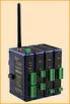 Modular, Customizable Wire Replacement 128 / 256 Bit AES Encryption Software Selectable RF Transmit Power Software Selectable Over-the-air Data Rate Modbus ASCII /RTU Compatible Wide Operating Temperature
N300 WiFi Range Extender
 Model EX2700 User Manual July 2014 202-11395-01 350 East Plumeria Drive San Jose, CA 95134 USA Support Thank you for selecting NETGEAR products. After installing your device, locate the serial number on
NeoGate TA Series Installation Guide
 NeoGate TA Series Installation Guide Version 1.2 Date: April 1, 2015 Yeastar Information Technology Co. Ltd Contents 1. Preparation before Installation... 3 2. Hardware Specifications... 5 2.1 Overview...
User Manual. PePWave Surf / Surf AP Indoor Series: Surf 200, E200, AP 200, AP 400. PePWave Mesh Connector Indoor Series: MC 200, E200, 400
 User Manual PePWave Surf / Surf AP Indoor Series: Surf 200, E200, AP 200, AP 400 PePWave Mesh Connector Indoor Series: MC 200, E200, 400 PePWave Surf AP Series: Surf AP 200-X, E200-X, 400-X PePWave Surf
1 Serial RS232 to Ethernet Adapter Installation Guide
 Installation Guide 10/100 Mbps LED (amber color ) Link/Activity LED (green color ) 1. Introduction Thank you for purchasing this 1-port RS232 to Ethernet Adapter (hereinafter referred to as Adapter ).
WA Manager Alarming System Management Software Windows 98, NT, XP, 2000 User Guide
 WA Manager Alarming System Management Software Windows 98, NT, XP, 2000 User Guide Version 2.1, 4/2010 Disclaimer While every effort has been made to ensure that the information in this guide is accurate
Programmable set for Ethernet Modbus/TCP in IP67 TI-BL67-PG-EN-2
 Type code Ident no. 1545065 Number of channels 2 Dimensions (W x L x H) 108 x 145 x 77.5 mm CoDeSys-programmable acc. to IEC 61131-3 Cable max. 50 m between interface and read/write head 10/100 Mbps Male
Vantage RADIUS 50. Quick Start Guide Version 1.0 3/2005
 Vantage RADIUS 50 Quick Start Guide Version 1.0 3/2005 1 Introducing Vantage RADIUS 50 The Vantage RADIUS (Remote Authentication Dial-In User Service) 50 (referred to in this guide as Vantage RADIUS)
One Port Serial Server Users Manual Model ESP901, ESP901E
 One Port Serial Server Users Manual Model ESP901, ESP901E Documentation Number: ESP901-2303 International Headquarters B&B Electronics Mfg. Co. Inc. 707 Dayton Road -- P.O. Box 1040 -- Ottawa, IL 61350
About This Guide SolarEdge Configuration Tool Software Guide. About This Guide
 About This Guide 3 About This Guide This user guide is intended for Photovoltaic (PV) system owners, installers, technicians, maintainers, administrators and integrators who are authorized to configure
EMBEDDED ACCESS CONTROL Hardware Installation Guide
 EMBEDDED ACCESS CONTROL Hardware Installation Guide Lenel goentry Hardware Installation Guide, product version 1.00. This guide is item number DOC- ENHW-ENU, revision 1.003, April 2009 Copyright 2009 Lenel
GV-Data Capture V3 Series User's Manual
 GV-Data Capture V3 Series User's Manual Before attempting to connect or operate this product, please read these instructions carefully and save this manual for future use. 2006 GeoVision, Inc. All rights
Installation Guide. Wireless N Access Point EAP110/EAP120/EAP220
 Installation Guide Wireless N Access Point EAP110/EAP120/EAP220 CONTENTS Network Topology 01 Hardware Overview 02 Hardware Installation 05 1. Installation Requirements... 05 2. Mounting Bracket... 05
Intel Active Management Technology with System Defense Feature Quick Start Guide
 Intel Active Management Technology with System Defense Feature Quick Start Guide Introduction...3 Basic Functions... 3 System Requirements... 3 Configuring the Client System...4 Intel Management Engine
WRE6505. User s Guide. Quick Start Guide. Wireless AC750 Range Extender. Default Login Details. Version 1.00 Edition 1, 4 2014
 WRE6505 Wireless AC750 Range Extender Version 1.00 Edition 1, 4 2014 2.4G 5G Quick Start Guide User s Guide Default Login Details LAN IP Address 192.168.1.2 User Name admin www.zyxel.com Password 1234
Portal Software GSM-PRO Run LED displays module activity Com LED displays activity on the GSM network GSM-PRO
 GSM-PRO GSM-PRO perfect for communication CONTA-CLIP s GSM-PRO module offers a remote control and maintenance solution which allows you to monitor and control decentralized facilities. The GSM-PRO module
Link Link sys E3000 sys RE1000
 User Guide High Performance Extender Wireless-N Router Linksys Linksys RE1000 E3000Wireless-N Table of Contents Contents Chapter 1: Product Overview 1 Front 1 Top 1 Bottom 1 Back 2 Chapter 2: Advanced
The GV-I/O Box 8 Ports provides 8 inputs and 8 relay outputs, and supports both DC and AC output voltages.
 GV-I/O Box 8 Ports The GV-I/O Box 8 Ports provides 8 inputs and 8 relay outputs, and supports both DC and AC output voltages. Key Features 8 inputs and 8 outputs are provided. Up to 9 pieces of GV-I/O
ENET-710. ENET-710 - Ethernet Module ENET-710 JAN / 06 FOUNDATION
 ENET-710 ENET-710 - Ethernet Module JAN / 06 ENET-710 FOUNDATION E N E T 7 1 0 ME smar www.smar.com Specifications and information are subject to change without notice. Up-to-date address information is
3.1 RS-232/422/485 Pinout:PORT1-4(RJ-45) RJ-45 RS-232 RS-422 RS-485 PIN1 TXD PIN2 RXD PIN3 GND PIN4 PIN5 T+ 485+ PIN6 T- 485- PIN7 R+ PIN8 R-
 MODEL ATC-2004 TCP/IP TO RS-232/422/485 CONVERTER User s Manual 1.1 Introduction The ATC-2004 is a 4 Port RS232/RS485 to TCP/IP converter integrated with a robust system and network management features
TL-PS310U Single USB 2.0 Port MFP and Storage Server
 TL-PS310U Single USB 2.0 Port MFP and Storage Server Rev: 2.0.0 1910010313 Contents Chapter 1 Introduction... 1 1.1 Product Overview...1 1.2 Network Management...1 1.3 Components and Features...1 1.4 Hardware
WUA-0605 300Mbps Wireless USB Network Adapter
 WUA-0605 300Mbps Wireless USB Network Adapter User Manual V1.0 Certification FCC CE FCC Statement This equipment has been tested and found to comply with the limits for a Class B digital device, pursuant
Moxa EtherDevice Switch
 Moxa EtherDevice Switch EDS-205 Hardware Installation Guide Third Edition, June 2008 2008 Moxa Inc., all rights reserved. Reproduction without permission is prohibited. P/N: 1802002050000 Overview The
Ethernet Radio Configuration Guide
 Ethernet Radio Configuration Guide for Gateway, Endpoint, and Repeater Radio Units April 20, 2015 Customer Service 1-866-294-5847 Baseline Inc. www.baselinesystems.com Phone 208-323-1634 FAX 208-323-1834
SLC 5/05 Processors Firmware/Operating System ControlFLASH Upgrade
 Installation Instructions SLC 5/05 Processors Firmware/Operating System ControlFLASH Upgrade Catalog Numbers 1747-DU501 Topic Page System Requirements 3 Install ControlFLASH 3 Prior to Running ControlFLASH
Foglight Experience Monitor and Foglight Experience Viewer
 Foglight Experience Monitor and Foglight Experience Viewer Quest Software, Inc. April 2008 Using the Dell Remote Access Controller Copyright Quest Software, Inc. 2008. All rights reserved. This guide contains
Secure Ethernet Gateway SEG-1 and SEG-M for IEI Access Systems Installation Manual
 Secure Ethernet Gateway SEG-1 and SEG-M for IEI Access Systems Installation Manual Section 1: Introduction SECURITY WARNING: New SEG's shipped after April 2008 will have Telnet setup option enabled by
ProSAFE 8-Port and 16-Port Gigabit Click Switch
 ProSAFE 8-Port and 16-Port Gigabit Click Switch Model GSS108E and GSS116E User Manual March 2015 202-11520-01 350 East Plumeria Drive San Jose, CA 95134 USA Support Thank you for selecting NETGEAR products.
1 Application Description... 3. 1.1 Objective... 3 1.2 Goals... 3
 Contents Moxa Technical Support Team [email protected] 1 Application Description... 3 1.1 Objective... 3 1.2 Goals... 3 2 System Topology... 3 3 Hardware and Software Requirements... 4 4 Configuration...
NEW. EVEN MORE data acquisition and test stand automation
 NEW EVEN MORE data acquisition and test stand automation the new class of data The plug&play complete package User benefits Expert Series is the latest generation of data acquisition Complete hardware
RS-232/422/485, Power over Ethernet
 IP-COM-M IP-COMi-M IP-COM-M PoE IP-COMi-M PoE RS-232 RS-232/422/485 RS-232, Power over Ethernet RS-232/422/485, Power over Ethernet Edition: September 2012 The computer programs provided with the hardware
Allworx Installation Course
 VPN Hello and welcome. In the VPN section we will cover the steps for enabling the VPN feature on the Allworx server and how to set up a VPN connection to the Allworx System from your PC. Page 1 VPN The
PT500 500Mbps Powerline Adapter. User Guide
 PT500 500Mbps Powerline Adapter User Guide PT500 500Mbps Powerline Adapter V100R001 User Guide 202593_04 Huawei Technologies Co., Ltd. provides customers with comprehensive technical support and service.
3.5 EXTERNAL NETWORK HDD. User s Manual
 3.5 EXTERNAL NETWORK HDD User s Manual Table of Content Before You Use Key Features H/W Installation Illustration of Product LED Definition NETWORK HDD Assembly Setup the Network HDD Home Disk Utility
Prestige 202H Plus. Quick Start Guide. ISDN Internet Access Router. Version 3.40 12/2004
 Prestige 202H Plus ISDN Internet Access Router Quick Start Guide Version 3.40 12/2004 Table of Contents 1 Introducing the Prestige...3 2 Hardware Installation...4 2.1 Rear Panel...4 2.2 The Front Panel
Quick Setup Guide High Power Wireless Ethernet Converter WLI-TX4-G54HP
 Quick Setup Guide High Power Wireless Ethernet Converter WLI-TX4-G54HP This guide is intended to help you quickly and easily install your High Power Wireless Ethernet Converter. For more setup and configuration
Innovative Electronics for a Changing World INDEX
 Innovative Electronics for a Changing World INDEX 1. SYSTEM DESCRIPTION 2. BOARD CONNECTIONS terminals and indicators 3. CONNECTION DIAGRAM 4. START UP GUIDE and passwords 5. HOME PAGE 6. STATUS PAGE 7.
GV-Keyboard. User's Manual V2.0
 GV-Keyboard User's Manual V2.0 Before attempting to connect or operate this product, please read these instructions carefully and save this manual for future use. 2007 GeoVision, Inc. All rights reserved.
SecureLinx Spider Duo Quick Start Guide
 SecureLinx Spider Duo Quick Start Guide SecureLinx Spider Duo Quick Start Guide SecureLinx Spider Duo QUICK START GUIDE CONTENTS Overview... 2 What s In The Box... 3 Installation and Network Settings...
Unpacking the Product. Rack Installation. Then, use the screws provided with the equipment rack to mount the firewall in the rack.
 About This Guide This guide contains step-by-step instructions for setting up the D-Link DFL-260E/860E Firewall. Please note that the model you have purchased may appear slightly different from those shown
RouteFinder SOHO. Quick Start Guide. SOHO Security Appliance. EDGE Models RF825-E, RF825-E-AP CDMA Models RF825-C-Nx, RF825-C-Nx-AP
 RouteFinder SOHO SOHO Security Appliance EDGE Models RF825-E, RF825-E-AP CDMA Models RF825-C-Nx, RF825-C-Nx-AP Quick Start Guide RouteFinder RF825 Series Quick Start Guide RouteFinder SOHO Security Appliance
SIMATIC S7-1200. It s the Interplay that makes the difference. Siemens AG 2010. All Rights Reserved.
 SIMATIC S7-1200 It s the Interplay that makes the difference SIMATIC S7-1200 Controller SIMATIC S7-1200 CPUs CPU 1211C 3 configurations per CPU Dimensions W x H x D (mm) CPU 1212C CPU 1214C DC/DC/DC, AC/DC/RLY,
WAP3205 v2. User s Guide. Quick Start Guide. Wireless N300 Access Point. Default Login Details. Version 1.00 Edition 2, 10/2015
 WAP3205 v2 Wireless N300 Access Point Version 1.00 Edition 2, 10/2015 Quick Start Guide User s Guide Default Login Details Web Address http://zyxelsetup Password www.zyxel.com 1234 Copyright 2014 ZyXEL
Energy Communication Unit (ECU)
 Altenergy Power System Energy Communication Unit (ECU) Installation and User Manual (For ECU-3 V3.8) ALTENERGY POWER SYSTEM INC. All rights reserved TABLE OF CONTENTS 1.0 Introduction... 2 2.0 Installation...
SNMP Web card. User s Manual. Management Software for Uninterruptible Power Supply Systems
 SNMP Web card User s Manual Management Software for Uninterruptible Power Supply Systems Table of Contents 1. Overview... 3 1.1 Introduction... 3 1.2 Features... 3 1.3 Overlook... 3 1.4 Installation and
AXIS Camera Station Quick Installation Guide
 AXIS Camera Station Quick Installation Guide Copyright Axis Communications AB April 2005 Rev. 3.5 Part Number 23997 1 Table of Contents Regulatory Information.................................. 3 AXIS Camera
IntesisBox KNX Modbus TCP master
 IntesisBox KNX TCP master Gateway for integration of TCP slave devices into KNX control systems. Integrate any TCP slave device into KNX. KNX TCP slave EIB Bus IntesisBox Ethernet slave LinkBoxEIB Configuration
User s Manual TCP/IP TO RS-232/422/485 CONVERTER. 1.1 Introduction. 1.2 Main features. Dynamic DNS
 MODEL ATC-2000 TCP/IP TO RS-232/422/485 CONVERTER User s Manual 1.1 Introduction The ATC-2000 is a RS232/RS485 to TCP/IP converter integrated with a robust system and network management features designed
The GV-I/O Box 16 Ports provides 16 inputs and 16 relay outputs, and supports both DC and AC output voltages.
 GV-I/O Box 16 Ports The GV-I/O Box 16 Ports provides 16 inputs and 16 relay outputs, and supports both DC and AC output voltages. Key Features 16 inputs and 16 outputs are provided. Up to 9 pieces of GV-I/O
How to use Citect (SCADA) with iologik 4000 (Modbus TCP/IP NA-4010 and Modbus Serial NA-4020/NA-4021)
 with iologik 4000 (Modbus TCP/IP NA-4010 and Modbus Serial NA-4020/NA-4021) Alex Chen, Senior Engineer, Moxa Technical Support Dept. In this Technical Note, we cover the following topics: 1. How to export
200M PLC User Manual
 Contents Contents 1 Introduction... 1 1.1 System Requirements... 1 1.2 Package Contents... 2 2 Safety Notice... 3 3 Getting to Know the Adapter... 5 3.1 Ethernet Interface... 5 3.2 Buttons on the Adapter...
CentreWare Internet Services Setup and User Guide. Version 2.0
 CentreWare Internet Services Setup and User Guide Version 2.0 Xerox Corporation Copyright 1999 by Xerox Corporation. All rights reserved. XEROX, The Document Company, the digital X logo, CentreWare, and
ALL0237R. Wireless N 300Mbit Access Point/Repeater. User s Manual
 ALL0237R Wireless N 300Mbit Access Point/Repeater User s Manual ALLNET ALL0237R User Manual Table of Contents About the Device... 3 Minimum System Requirements... 5 Package Contents... 5 Device Overview...
Users manual. TCW181B-CM_R1 Page 1
 Ethernet controller TCW181B-CM Users manual 1. Short description TCW181B-CM is 8-channel Ethernet relay board, which is designed to work in IP-based networks and managed by WEB interface or SNMP programs.
Firmware version: 1.10 Issue: 7 AUTODIALER GD30.2. Instruction Manual
 Firmware version: 1.10 Issue: 7 AUTODIALER GD30.2 Instruction Manual Firmware version: 2.0.1 Issue: 0.6 Version of the GPRS transmitters configurator: 1.3.6.3 Date of issue: 07.03.2012 TABLE OF CONTENTS
EPSON Scan Server & EPSON TWAIN Pro Network
 EPSON Scan Server & EPSON TWAIN Pro Network EPSON Scan Server & EPSON TWAIN Pro Network SCANNER UTILITY PROGRAMS All rights reserved. No part of this publication may be reproduced, stored in a retrieval
NPort DE-311 Hardware Installation Guide
 NPort DE-311 Hardware Installation Guide Fourth Edition, June 2008 www.moxa.com/product 2008 Moxa Inc., all rights reserved. Reproduction without permission is prohibited. NPort DE-311 Hardware Installation
SIP Proxy Server. Administrator Installation and Configuration Guide. V2.31b. 09SIPXM.SY2.31b.EN3
 SIP Proxy Server Administrator Installation and Configuration Guide V2.31b 09SIPXM.SY2.31b.EN3 DSG, DSG logo, InterPBX, InterServer, Blaze Series, VG5000, VG7000, IP590, IP580, IP500, IP510, InterConsole,
About This Guide SolarEdge Configuration Tool Software Guide. About This Guide
 Version 2.0 About This Guide 2 About This Guide This user guide is intended for Photovoltaic (PV) system owners, installers, technicians, maintainers, administrators, and integrators who are authorized
Adding a Modbus TCP Device to the Network. Setting Up Your Network
 Page 1 of 17 Adding a Modbus TCP Device to the Network Overview This section extends the sample Unity Pro application, by describing how to: add an STB NIP 2212 Modbus TCP network interface module to your
WinCON8000-R2/R8. Hardware User s Manual
 WinCON8000-R2/R8 Compact Embedded Controller Hardware User s Manual REV 1.1 2004/10/22 1 Warranty All products manufactured by ICP DAS are warranted against defective materials for a period of one year
Pleiades USB/LAN. User Manual. & Installation Guide. External Storage Enclosure for 3.5 Hard Drive. v1.1
 Pleiades USB/LAN External Storage Enclosure for 3.5 Hard Drive User Manual & Installation Guide v1.1 Table of Contents CHAPTER 1 - INTRODUCTION - 1 - CHAPTER 4 LAN DISK SETUP - 11 - ICON KEY - 1 - NETWORK
PCS0100en 02.2008. Persy Control Services B.V. Netherlands
 P-Bus Gateway PBGW2.128 Universal gateway between the P-bus protocol and open standard protocols. The variety of available electrical interfaces on the gateway offers a wide range of possibilities for
Energy Communication Unit (ECU)
 Altenergy Power System Energy Communication Unit (ECU) Installation and User Manual (For ECU-3 V3.7) Version:3.0 ALTENERGY POWER SYSTEM INC. All rights reserved TABLE OF CONTENTS 1.0 Introduction... 2
Industrial L2+ Managed Gigabit/ 10 Gigabit Ethernet Switch. IGS-5225 Series. Quick Installation Guide
 Industrial L2+ Managed Gigabit/ 10 Gigabit Ethernet Switch IGS-5225 Series Quick Installation Guide Table of Contents 1. Package Contents... 3 2. Requirements... 4 3. Wiring DC Power Inputs... 5 4. Terminal
IP Box Camera ACM-5711. Ver. 081016. Hardware User s Manual
 IP Box Camera ACM-5711 Ver. 081016 Hardware User s Manual 0 0 PRECAUTIONS 1. Read these instructions All the safety and operating instructions should be read before the product is operated. 2. Heed all
OPERATION MANUAL. MV-410RGB Layout Editor. Version 2.1- higher
 OPERATION MANUAL MV-410RGB Layout Editor Version 2.1- higher Table of Contents 1. Setup... 1 1-1. Overview... 1 1-2. System Requirements... 1 1-3. Operation Flow... 1 1-4. Installing MV-410RGB Layout
MODBUS TCP to RTU/ASCII Gateway. User s Manual
 MODBUS TCP to RTU/ASCII Gateway User s Manual 1 INTRODUCTION... 1 1.1 FEATURES... 2 1.2 PRODUCT SPECIFICATIONS... 3 1.3 DEFAULT SETTINGS... 4 2 MAKING THE HARDWARE CONNECTIONS... 5 2.1 POWER CONNECTION...