
Surround Sound by ReSound. The Technical Background
|
|
|
- Lucas Jackson
- 9 years ago
- Views:
Transcription
1 Surround Sound by ReSound The Technical Background

2 The Surround Sound Experience Surround sound is a term to which many people can easily relate. Surround sound plays back recorded sound using sound enhancing techniques and encircling the listener with multiple speakers to create a virtual three dimensional sound environment. It recreates a realistic, full sound picture and gives the listener a sense of actually being in the situation. Likewise, Surround Sound by ReSound preserves and conveys acoustic information in such a way that hearing instrument wearers surroundings sound natural. However, rather than recreating sound environments, Surround Sound by ReSound helps wearers reconnect with their actual environments. This takes them to a new level of auditory awareness and natural sound perception. Surround Sound by ReSound is a digital sound processing strategy that is inspired by surround sound at the cinema because, like that, it offers a more true to life listening experience. The ReSound philosophy of using knowledge of the normally functioning ear as the basis for hearing loss compensation is exemplified in the surround sound strategy. It uses advanced technologies to emulate the function and performance of the natural ear. With Surround Sound by ReSound, hearing instrument wearers can enjoy exceptional speech understanding, enhanced awareness of their sound environments, and rich, vibrant, fully detailed sound quality. A Digital Sound Processing Strategy The surround sound experience is created by the interplay of advanced technologies that model, clean, balance and stabilize the digitalized signal before it enters the hearing instrument receiver. First of all, the sound entering the hearing instrument is modeled to replicate the way the natural ear processes sound. It is then cleaned, with unwanted parts of the sound, like background noise and wind noise being removed. Another way the Surround Sound by ReSound strategy emulates the natural ear is in how the signal is adjusted to achieve the proper balance between low and high pitches, soft and loud sounds, and sounds coming from different directions. Finally, the signal is stabilized before it enters the receiver, so people don t have to worry about annoying feedback, even when they put a phone to their ear. The Surround Sound by ReSound signal processing strategy is illustrated in Figure 1. Figure 1: The Surround Sound experience is created by the interplay of advanced technologies that model, clean, balance and stabilize the digitalized signal before it enters the receiver. Figure 2: The Warp processor models auditory frequency resolution with non-uniform band spacing approximating the auditory Bark scale. The highly overlapping bands are more closely spaced at lower frequencies and further apart at higher frequencies, which matches Model: The signal is modeled to replicate the way the natural ear processes sound. Clean: Unwanted noise is removed from the signal. Balance: The signal is adjusted to achieve the proper balance between low and high pitches and soft and loud sounds. Stabilize: The signal is corrected before it enters the receiver. Modeling Based on the Natural Ear Sound is by nature analog, meaning that it is a continuous stream of vibrational energy. All digital processing conversely breaks the signal into discrete chunks of data in order to perform mathematical operations to treat the sound. As the foundation for any sound processing in the hearing instrument, Surround Sound by ReSound must first model the incoming sound in a digital format. To ensure the right level of detail for a natural-sounding result, the normal-functioning ear serves as the starting point for modeling. Cochlear frequency resolution with Warp Hearing instrument fitting procedures assume that the amplification system is capable of frequency analysis suitable for the human auditory system. ReSound solves this challenge with Warp processing, which emulates the way frequencies are analyzed by the natural ear. Due to logarithmic coding on the basilar membrane, the human ear s ability to resolve sounds is best modeled by a system in which the bandwidth of the frequency analysis is nearly constant at lower frequencies and increases proportionally at higher frequencies 1. The Warp processor uses a mathematical warping function to map frequency components logarithmically to a scale closely corresponding to the auditory Bark scale 2, which incorporates the critical auditory bandwidth as the scale unit 3. The frequency warped ReSound compression system results in 17, smoothly overlapping frequency bands separated by approximately 1.3 Bark as illustrated in Figure KHz KHz KHz resolution in the cochlea KHz KHz KHz

3 Analyzing the listening environment Another way that Surround Sound by ReSound models the sound is via environmental classification. Nearly all modern hearing instruments incorporate functionality that depends on environmental recognition. Therefore, it is important that the system which represents the hearing instrument user s surroundings is consistent with how the user would perceive them. The environmental classification model ReSound has developed considers acoustic factors which are of importance to all hearing instrument wearers: Is there sound above an ambient level?, Is there speech present?, Are there other background noises present?, and What are the levels of the sounds present? In order to answer these questions, the Environmental Classifier employs sophisticated speech and noise detection algorithms based on frequency content and spectral balance, as well as the temporal properties of the incoming sound to determine the nature of the acoustic surroundings. Furthermore, the classification does not occur on the basis of stringent predetermined criteria, but rather on the basis of probabilistic models, resulting in classification of listening environments which has shown a high degree of consistency with listener perception. Acoustic surroundings are categorized dependent on signal-to-noise ratio and sound level into a scheme of seven environments as indicated by the dark ovals in Figure 3. In many real-world situations, the acoustic environment often falls between categories or shifts among closely related environments. The Environmental Classifier takes these frequently occurring situations into account by assigning combinations of environments to the most probable candidates. This means that any adaptation of hearing instrument sound processing based on the environmental classification has a behind-the-scenes rather than pronounced or intrusive character, allowing the wearer to always experience transparent and comfortable sound transitions. Cleaner, clearer sound One facet of successful hearing instrument use is the wearer s acceptance that not all amplified sounds are desirable, interesting or pleasant. Hearing instrument users have traditionally had to resign themselves to hearing sounds not of interest in order to hear those that are of interest, like speech. Examples of sounds that are bothersome for hearing instrument wearers include amplified environmental sounds such as ventilation systems, water running, the background babble of many talkers, and wind blowing across the hearing instrument. Noise generated by components in the hearing instrument itself can also be amplified to the point where it is annoying for users. Surround Sound by ReSound uses processing to diminish or remove sounds that users find distracting or bothersome, in essence to clean the sound. Comfortable listening with less effort Listening in background noise has far-reaching impact. Consider, for example, the hearing instrument wearer who is attempting to listen to speech in a noisy environment over a prolonged period of time. The concentration required to follow what is being said can be an arduous and exhausting task indeed. Conceivably, less effort would be required by the listener if the background were less noisy, even if overall understanding of speech were not improved. Less effort required of the hearing instrument user may even allow them to perform dual attention tasks that normal listeners typically take for granted, such as listening to a talker while also paying attention to their surroundings, simultaneously noting other conversations that may be going on around them, or monitoring the activity of other people in the room. Simply eliminating a distracting or annoying sound, such as a nearby air conditioner, could also provide significant benefit to a hearing instrument user because of the improved sound quality. Input sound level (db) Noise Noise Speechin-noise Speechin-noise Quiet Signal-to-noise ratio (db) Speech Speech Figure 3: Sound input to the hearing instrument is analyzed to model the acoustic environments in a digital format. Classification is based on probabilistic models, and ensures that transitions in hearing instrument settings based this information are seamless for the user. Digital hearing instruments have typically aimed to improve listening comfort and sound quality through the use of single microphone noise reduction. NoiseTracker II also follows this strategy in order to clean the sound for more effortless listening. This unique algorithm accomplishes a seemingly unsolvable challenge: how to separate speech from noise when both signals usually have energy at the same frequencies at the same time. Complicating matters further is that many noises have speech-like characteristics and many parts of speech have noise-like characteristics. The NoiseTracker II system uses spectral subtraction, one of the most widely used methods for enhancement of noisy speech in audio applications 4. The concept of spectral subtraction is to subtract the short-term noise spectrum from the total signal, leaving only the speech portion. The success of this strategy hinges on being able to identify speech and to precisely characterize noise. 4 5

4 An additional challenge is to keep up with the dynamic speech and noise make-up of real listening environments. Finally, it is important for hearing instrument users that not all noise be removed from the signal, and that the noise characteristics be preserved. If all ambient noise were removed or if the spectrum of the noise background was altered, this would create an unnatural-sounding experience. Background sounds do need to be audible to the degree that users can recognize and orient themselves in their listening environments. Ultimately, the goal is undistorted speech at the prescribed gain, and undistorted noise at lower gain. Without Noise Tracker Tracker II II With Noise Noise Tracker Tracker II II Whereas NoiseTracker II cleans sound in the hearing instrument user s surroundings, expansion takes care of sound produced by the hearing aid itself in quiet situations. Expansion reduces audibility for very soft sounds. With this type of processing, the amount of gain decreases as the input level decreases, as illustrated in Figure 5. Also commonly known as squelch or microphone noise reduction, expansion is intended to keep the hearing aid from amplifying very soft sounds which are not of interest to the wearer, such as internally generated noise or very low level environmental sounds. In this way, the hearing instrument itself sounds quiet, providing the best backdrop for pleasurable listening. Figure 4: Speech in speech babble is the most difficult situation for noise reduction systems to handle. The NoiseTracker II spectral subtraction approach can effectively reduce the level of the background noise (dark green) without affecting audibility of the desired speech signal (light green). Easier listening - even in wind On-the-scene news reporters are often filmed speaking into microphones covered with large, fuzzy caps. Without this effective mode of protection, any breeze blowing across the microphones would be amplified and severely degrade the quality of the recording. Hearing instrument wearers who venture outside endure the same degradation in sound quality and masking of desired sounds when wind hits the instrument microphones. While a protective cap or cover such as the fuzzy ones used on handheld microphones could prevent wind from reaching the hearing instrument microphones, such a solution is obviously both impractical and cosmetically unacceptable. Another line of defense against wind noise is WindGuard. This processing, available in dual microphone hearing instruments, effectively cleans the signal for wind noise without impacting audibility of other sounds or causing the overall sound quality to be unnatural. The goal of WindGuard is to accurately detect the presence of wind noise, and then apply enough gain reduction in the frequency bands where wind is detected to provide listening comfort for the hearing instrument user, without disrupting the gain levels of the frequency bands that are unaffected by wind. The wind noise detector ingeniously relies on the fact that turbulence caused by wind blowing over the microphones of a dual microphone instrument will be uncorrelated, unlike desired sounds. Whenever wind noise is not found to be present, the instantaneous level of the sound input levels in each of the Warp bands is updated and stored. The amount of gain reduction applied depends on the stored level. Thus, it varies with the environment and the level of the wind noise, making the reduction as personalized as possible to the situation without sacrificing audibility for other sounds. The end result: the hearing instrument user has a very natural sounding experience, with soft wind noise in the background and preserved audibility for other sounds in the environment. Strong Expansion Figure 6: Figure 5: WindGuard reduces gain to the Coupler gain for the Alera 61DW continuously updated level of with expansion set to Strong. This environment sound without wind 2cc coupler gain (db) shows how gain decreases with decreasing input level. The effect is most apparent at lower frequencies, where the expansion kneepoints are highest. noise. This approach helps preserve audibility for desired sounds and natural sound quality. No wind Wind detected WindGuard activates 6 Frequency (Hz) 7

5 A delicate balance It is universally acknowledged that the primary complaint of hearing instrument users is hearing in noise. Rehabilitation as well as hearing instrument design focuses on improving the hearing impaired individual s ability to understand speech in noisy conditions, assuming that resolving this primary issue will lead to success and satisfaction with hearing instruments. But the fact is that hearing instrument users may choose not to use the enhancements proven to increase speech understanding in noise because the sound picture becomes unnatural and noisy. It can be difficult to reconcile evidence that the hearing instruments are beneficial with reports that they are unappreciated or unused in many situations. However, hearing instrument wearers overall satisfaction is closely tied to the number of their daily listening environments in which they can function satisfactorily 5 rather than benefit determined under controlled and predictable conditions. It was estimated that hearing instruments would need to be of use to wearers in at least 7% of the listening situations encountered in order for them to assign a high overall satisfaction rating. Figure 7: WDRC balances loudness by applying frequency and input level dependent gain to compress the wide range of daily sounds into the smaller dynamic range of the hearing instrument user. the input level to achieve the appropriate balance between soft and loud sounds. Because loudness perception is most dissimilar from normal loudness perception at lower input levels, more gain is needed for soft sounds, and progressively less gain is required for louder sounds. In addition, loudness growth functions are frequency dependent, which also points to a need for a multichannel system replicating the natural ear s frequency analysis in order to balance loudness in a suitable way across frequencies. Sound pressure level (db) Normal hearing range Compression 2 Impaired range of hearing 4 5 Frequency (Hz) 8 Implicit in the Surround Sound by ReSound philosophy is to recreate ReSound pioneered Wide Dynamic Range Compression (WDRC), natural perception of sound environments in addition to providing offering the first system to account for the loudness growth associated speech in noise benefit in the traditional sense. This involves putting with sensorineural hearing impairment by applying progressively less the individual wearers back in touch with as many of their wideranging listening situations as possible. The list of situations in which ReSound system were carefully selected to support compensation gain with increasing input levels. Compression parameters in the an individual experiences hearing difficulties but still wants to be aware for abnormal loudness growth in a way that emulated studies of how of their surroundings might include talking in small groups and at compression is carried out in the human cochlea. These include low, parties, communicating at meetings, hearing the instructor at a fitness frequency dependent compression kneepoints, compression ratios of class, hearing announcements over PA systems, orientation in traffic, up to 3:1, and syllabic time constants. An essential part of restoring speaking with small children, and many others. To accomplish this, the loudness balance is the prescription of gains for the WDRC system. To sound processing must compensate for the loss of the normal hearing provide a reliable starting point, a fitting algorithm based on individual experience by balancing varying aspects of the incoming sound. the psychoacoustic measures of loudness growth was initially used. Years soft versus loud sounds, speech versus noisy sounds, high versus of clinical experience encompassing thousands of fittings with this low pitches and sounds coming from in front versus in back of the procedure provided the foundation for development and refinement of hearing instrument wearer must be carefully balanced. This enables and the threshold-based Audiogram+ fitting algorithm, which provides the enhances speech recogning without compromising on the richness and basis for fitting ReSound hearing instruments today. comfort of the listening experience. Directionality like the open ear WDRC the perfect balance Another feature contributing to the surround sound experience which A hallmark of sensorineural hearing loss is a reduction in sensitivity for provides balance in the amplified sound is the Directional Mix. This softer sounds, but preserved sensation of loudness for louder sounds. technology gives wearers the advantages of directionality without As shown in Figure 7, this can also be described in terms of reduced compromising on sound quality. The idea behind the Directional Mix dynamic range. Restoring audibility for the soft sounds outside of the is to promote good speech intelligibility and natural sound quality by individual s dynamic range should be accomplished without boosting preserving the acoustic characteristics of the open ear. This unique louder sounds above the individual s upper range of comfort. This technology considers the individual s audiometric data and physical implies that different amounts of gain will be necessary depending on properties of the device in calculating a balanced, personalized mix 8 9

6 of directional and omnidirectional processing. Incoming sound will be preprocessed, with higher frequency components delivered to the directional system while an omnidirectional response is maintained in low frequencies. This processing strategy replicates directionality patterns of the unaided ear even for BTE microphone placement, contributing to natural perception of sound for the user. Figure 8 illustrates how the Directional Mix preserves open ear directional 1 characteristics. The left panel shows the open ear directional response 5 for 4 frequencies measured on KEMAR. Note how the response is omnidirectional with only subtle asymmetries for the 2 lower frequencies -1 while 9 in the higher frequencies 27 there is relatively more amplification for frontal incident sound than for sound coming from other directions. The right panel presents the same measurement performed with a BTE with Directional Mix. This technology ensures that the directional Hz characteristics with the 5 hearing 1 Hz instrument in situ are a good match to 2 Hz those of the open ear. 4 Hz Open ear Hz 1 Hz 2 Hz 4 Hz -1 The Directional Mix also solves byproducts of directional processing that have limited even the most advanced adaptive systems, including added noise from low frequency equalization, distortion of near-field -1 sounds such as own voice and wind, as well as disruption of the low frequency interaural time differences which are crucial for localization. These shortcomings of directionality can be perceptually significant enough to cause wearers not to use an otherwise beneficial feature 18 of their hearing instruments. In their laboratory study investigating the impact of visual cues on directional benefit, Wu and Bentler 6 reported that many individuals fit with an equalized directional response experienced a hissing sound. In a subsequent field trial 7 with the same participants and hearing instruments, these investigators determined that loudness and internal noise were the most important predictors for preference of omnidirectional microphone mode over directional. Other studies have also demonstrated strong preferences for omnidirectional microphone mode even in situations where directional processing should be of benefit 8,9. The Directional Mix provides a directional pattern closer to a person s own, thereby striking a natural balance between environmental awareness and directional advantage. The result is sound closer to the way hearing instrument wearers remember their acoustic world what they describe as natural sounding Directional Mix 27 5 Hz 1 Hz 2 Hz 4 Hz Figure 8: The Directional Mix provides directivity patterns that are similar to the open ear. The response is omnidirectional at lower frequencies and directional at higher frequencies. Figure 9: Hearing instrument wearers expressed a sound quality preference for a directional response when achieved with the Directional Mix twice as often as traditional directionality. Figure 1: Hearing impaired listeners fit with BTE devices with the Directional Mix performed better on a localization task than when fit with BTEs featuring earto-ear processing intended to improve localization. Evidence has been mounting in support of the benefits afforded by the Directional Mix. Groth and colleagues 1 reported on the effects of directional processing schemes on sound quality. These investigations used a double-blind design in which hearing-impaired listeners expressed a preference for the Directional Mix, omnidirectional processing or a conventional full directional response. As illustrated in Figure 9, listeners indicated an overwhelming preference for the sound quality of omnidirectional processing over full directional with or without low frequency equalization. When comparing to the Directional Mix, listeners this processing over full directionality more than twice as often. Sound quality preference for directional processing scheme In addition to sound quality, the Directional Mix has also been shown to contribute to localization ability 11. Van den Bogaert and colleagues asked hearing impaired listeners to perform localization tasks wearing BTE hearing instruments with the Directional Mix and BTE hearing instruments featuring an ear-to-ear algorithm designed to enhance localization via wireless coordination of settings bilaterally. While performance for right-left localization was similar in both conditions, participants made more than twice as many front-back confusions when wearing the devices with the ear-to-ear feature than when wearing the instruments with the Directional Mix (Figure 1) Localization errors Percentage of trials 1% 9% 8% 7% 6% 5% 4% 3% 2% 1% % Omni 65% Full directional 35% Full Dir (no equalization) Left Omni 65% Full directional 35% Full Dir (equalized) Omni 41% Directional Mix 59% Directional Mix Front Full directional 3% Directional Mix 7% Directional Mix BTE with ear-to-ear localization feature

7 Better speech recognition in surround sound Given that directionality is the only proven technology to improve speech understanding in noise 12 the more-is-better approach of maximizing directionality across frequencies might lead one to expect better speech recognition in noise performance with full directionality than with the Directional Mix. On the other hand, articulation index theory would predict a negligible difference between the two types of processing, as added audibility in the lower frequencies should represent only a modest contribution to intelligibility 13. Figure 11 shows results from a clinical investigation in which 18 participants were fit with devices in which they could switch between an omnidirectional, a full directional, and mixed directional response. Both full directionality and the mixed directional response provided equivalent directional benefit as predicted by the directional enhancement of speech important frequencies for both types of processing. These results support the notion that the lack of directionality in the low frequencies has virtually no impact on directional benefit. Due to the balance provided by the Directional Mix, all wearers can be provided directional benefit with no trade-off between audibility of low frequencies and noisiness. Directional Mix -9.7 Full Directionality -9.6 Signal-to-noise Ratio (db) Speech recognition and sound quality It is typical to see speech intelligibility with hearing instruments discussed separately from sound quality. And yet it is unlikely that hearing instrument wearers perceive varying aspects of listening with their devices in such a compartmentalized fashion. What does seem likely is that natural sound quality relates to the holistic experience of hearing and perceiving sound, encompassing fidelity and perceptual dimensions such as fullness, brightness and loudness 14 as well as hearing and processing speech. When sound is experienced as natural, the listener can effortlessly segregate and group the continuous stream of sound in the environment. A hearing instrument achieves good sound quality by preserving spectral, dynamic, and temporal aspects of the input sound to an extent that higher level auditory and cognitive processing can interpret these physical attributes and construct auditory environments. For example, in a busy office environment, hearing instruments with good sound quality would allow the wearer not only to hear that people were talking and that others were typing, but also to perceive the spatial relationships among these Figure 11: Results of the Hagerman speech in noise test with 18 test subjects. Participants wore either BTE or RIE instruments fit with custom earmolds or occluding eartips. Directional benefit with the Directional Mix was equivalent to that obtained with full directionality. Figure 12: AutoScope directionality automatically narrows the width of the directional beam to focus on a speaker in front, and expands the beam when speakers are not directly in front of the user. sound sources and shift attention from one to another. Not only would this give the user a natural perception of the environment, it would also aid in speech intelligibility. Freyman and colleagues 15 found that the improved intelligibility observed when the speech and interfering sound are spatially separated was attributable to the perceived locations of the signal of interest and noise. In other words, knowing where to direct one s attention makes it easier to listen to the desired signal. It is not just that the sound sources are spatially separated, but that the listener perceives them as such. Hearing in noise: a wide array of options ReSound hearing instruments offer a multitude of advanced directionality modes that work with the Directional Mix to improve speech understanding in noisy situations while maintaining natural sound quality for enhanced spatial hearing in all environments. Adaptive Directionality with AutoScope AutoScope is the most advanced adaptive directional algorithm available. This system analyzes the inputs to the two microphones to determine the direction of arrival of sounds and to estimate whether more focused directionality is likely to be of benefit. Like its predecessor, MultiScope directionality, AutoScope adaptively cancels the strongest noise source behind the user, and can simultaneously act on noise occurring at different locations when the frequency content of the noise sources differs. In addition, AutoScope monitors the relative levels of the sounds entering the front and rear microphones to automatically adjust the width of the directional beam. The stronger the signal coming from the front, the more narrow the beamwidth will be adjusted. Conversely, as the level at the front microphone decreases, the beamwidth is widened to catch more of the surrounding sounds. This effect is like zooming in on a single talker located in front of the hearing instrument wearer and zooming out when others off to the sides are speaking, as illustrated in Figure

8 Asymmetrical Directional fittings The Directional Mix also enhances the unique asymmetrical fitting strategy introduced by ReSound. An asymmetric fitting is one in which a hearing instrument with directionality is fit on one ear, the focus ear, and a hearing instrument with an omnidirectional response is fit on the other, the monitor ear. This fitting approach is based on the idea that information presented to the two ears that differs in signal-to-noise ratio and audibility will be perceived as a unified binaural image based on which ear has the better representation of the signal of interest. This allows the wearer to take advantage of the improved signal-to-noise ratio benefit of directionality without significantly decreasing audibility for sounds arriving from behind. No manual switching of directional mode is required, which eases demands on the wearer to be able to analyze the environment, understand when directionality might be advantageous, and physically select the appropriate response. Also, no automatic switching of directional mode takes place, which ensures that one of the devices will always be in the microphone mode regardless of the listening situation. Asymmetric fittings have been shown to provide directional benefit equivalent to bilateral directional fittings under laboratory conditions 16,17,18, better acceptance of background noise compared to bilateral omnidirectional fittings 18 and increased ease of listening compared to bilateral directional fittings 17. This supports that an asymmetric fitting is an excellent way for users to effortlessly derive benefit from directional technology while maintaining full awareness of their surroundings. Although an asymmetric fitting can be done with other hearing instruments which offer both omnidirectional and directional microphone modes, they will be prone to the same disadvantages listed earlier, including noisiness and overamplification of nearby sounds. In addition, adaptive directional processing can negate the ease of listening advantage of the asymmetric fitting, as the constantly shifting directional patterns preclude adaptation to the acoustic cues. An additional issue specific to advanced directional systems currently available is that the processing delay between the instrument in directional mode will be longer than that of the instrument in omnidirectional mode. The resulting asynchrony of the cues provided to the two ears disrupts spatial hearing and awareness. As discussed, this negatively impacts the holistic impression of the auditory environment and perceived sound quality. environments are favorable for a hearing impaired listener as the signalto-noise ratio is positive and sound levels comfortable, others are much more difficult. As mentioned previously, overall hearing aid satisfaction has been correlated to a hearing aid s ability to provide improved hearing in multiple listening environments 5, which is to be expected considering that they are intended for continual wear. All hearing instrument fittings begin with some sort of prescription of settings based on client data, usually an audiogram. Yet the presumption that one set of hearing aid parameters will meet the listening needs of an individual in all conditions is clearly not met. It is reasonable to say that the goal of fitting prescriptions is to provide amplification for optimum speech understanding while ensuring comfort for loud sounds. Even if achieved for a particular individual, this would not take into account that the wearer might want to enhance or diminish different aspects of the amplified sound in different situations. For example, a hearing instrument wearer might desire more volume than prescribed in an important meeting at work, but wish for less volume when relaxing with the newspaper on the train ride home several hours later. Individually tailored adaptive noise reduction An automatic, personalized volume control such as the Environmental Optimizer solves some of the negative and impractical issues related to frequent or necessary manipulation to a manual volume control or program switch. However, this functionality combined with individually tailored adaptive noise reduction is an extraordinary solution to the complaints of hearing aid users both the need to adapt to multiple listening environments and comfort in noise are balanced. Environmental Optimizer II automatically adjusts both the gain and NoiseTracker II settings dependent on the listening environment identified by the hearing instrument classification system. Based on the situation dependent volume preferences of hearing instrument wearers in a study at Oldenburg University 19 as well as internal research studies, the Environmental Optimizer prescribes volume offsets to the prescribed frequency response and optimized NoiseTracker II settings for 7 different acoustic environments. Each of these settings can be personalized for the individual through the ReSound Aventa 3 software. Balancing volume and noise reduction Most people encounter many dynamic listening environments throughout the day, with each offering its own unique challenges in terms of listening and communicating. The demands of hearing in the car versus the grocery store or coffee shop are different. Some 14 15

9 Stabilize To complete the surround sound experience, it is necessary to make sure the output from the hearing instrument is stabilized. This process corrects for any unnatural or undesirable consequences that can occur with amplification or digital sound processing. For example, stabilizing keeps users from being subjected to unpleasant and embarrassing feedback. The tiny hearing instruments of today necessarily place the sound inlet in close proximity to the sound outlet. If the sound returning to the microphone ports from the ear canal where the sound is delivered is not sufficiently damped relative to the gain applied by the amplifier, oscillatory feedback will occur. This is a dynamic issue, as the damping in the pathways from the ear canal to the hearing instrument microphone change continually during daily use situations. DFS Ultra with built-in WhistleControl provides the necessary stability to eliminate such issues. Since last reported in 24, user satisfaction with hearing instruments in terms of whistling and feedback has shown a significant 12% improvement 2. This period of time coincides with the proliferation of feedback cancellation algorithms in digital hearing aids, which suggests that manufacturers are on the right track to improve users experience with hearing aids with this type of processing. Feedback cancellation processing can increase the amount of gain available for a particular fitting by 15 db or more in a static situation where there are no dynamic variations in the feedback path due to client movement or changes in the acoustics of the environment. However, feedback cancellation systems are limited in their ability to operate effectively in dynamic real-world situations. Factors such as room reverberation and nonlinearities of the hearing instrument can cause the very whistling and chirping that the processing is intended to eliminate. To complicate matters further, most systems cannot distinguish between actual feedback and external sounds that may be correlated with feedback. Such sounds include tones, beeps and musical notes, and the failure of the feedback cancellation system to recognize these sounds often results in disturbing echoing or ringing artifacts. As a result, they must compromise on balancing performance in terms of gain, sound quality and critical situations such as phone usage. For example, providing the desired amplification means the wearer may have to tolerate poor sound quality as the system erroneously attacks non-feedback sound inputs. ReSound technology has long led the field in immunity to such processing artifacts with its use of two cancellation filters, adaptive filter constraints and separate cancellation filters for dual microphone Figure 13: DFS Ultra analyzes and models the incoming sound and uses this information to prevent the feedback cancellation filters from attacking desired sounds. This results in excellent feedback cancellation performance without creating disturbing sound quality artifacts. Figure 14: DFS Ultra with built-in Whistle Control eliminates feedback in critical situations like phone use. The feedback which occurred without DFS Ultra and Whistle Control (dotted line) was eliminated and the response restored to the desired amplification when this feature was activated. instruments. A new generation of feedback cancellation, DFS Ultra, represents a major breakthrough in feedback cancellation processing. In addition to technical enhancements that enable even more accurate feedback path modeling, a new component of the system is input signal modeling. Unlike other systems which only attempt to model the feedback path, this unique functionality also maintains a representation of the sound entering the hearing instrument (Figure 13). The advantage of this component is that the system can more easily distinguish between feedback and non-feedback sounds, vastly improving the dynamic behavior of the system. Important everyday sounds like phone rings, alarm beeps and music can be amplified to desired levels without being mistaken for feedback. Incoming sound Feedback path DFS Ultra also incorporates WhistleControl to ensure feedback-free performance in all daily life situations, including when a phone is held up to the hearing instrument. Because the feedback cancellation is constrained to not adapt to signals that are very disparate from the feedback pathway model, it is possible for intermittent feedback to occur in situations like this. WhistleControl restores the desired response when feedback is imminent (Figure 14). The combination of DFS Ultra in effect solves the most challenging dilemma of the last decades growth in popularity of open fittings how to provide sufficient, undistorted high frequency gain without feedback. Real ear SPL (db) Adaptive filter Feedback model Frequency (Hz) Hearing instrument processing Signal model Static filter Amplified sound Desired amplification Feedback due to phone Response restored by DFS Ultra with built-in WhistleControl 16 17

10 Summary Surround Sound by ReSound provides a natural-sounding listening experience to wearers. It can be likened to going from listening to stereo speakers to a sophisticated surround sound audio system, and translates to increased and effortless awareness and orientation in listening environments. The interplay of advanced technologies model, clean, balance and stabilize the sound in ways designed to emulate the natural ear. As a result, Surround Sound by ReSound provides full and detailed sound quality and delivers important acoustic cues for localizing sounds, which facilitates speech understanding even in challenging situations. References 1. Moore BCJ & Glasberg BR. Suggested formulae for calculating auditory filter bandwidths and excitation patterns. Journal of the Acoustical Society of America. 1983; 74: Smith JO & Abel JS. Bark and ERB bilinear transforms. IEEE Transactions on Speech and Audio Processing. 1999; 7: Zwicker E, Flottorp G, & Stevens SS. (1957). Critical bandwidth in loudness summation. Journal of the Acoustical Society of America. 1957; 29: Boll SF. Suppression of acoustic noise in speech using spectral subtraction. IEEE Trans Acoust Speech Sig Proc. 1979; 27: Kochkin S. MarkeTrak VII: Consumer satisfaction with hearing instruments in the digital age. Hear J. 25; 58(9): Wu Y, Bentler RA: Impact of Visual Cues on Directional Benefit and Preference: Part I Laboratory Tests. Ear Hear. 21; 31: Wu Y, Bentler RA: Impact of Visual Cues on Directional Benefit and Preference: Part II Field Tests. Ear Hear. 21; 31: Walden BE, Surr RT, Cord MT, Dyrlund O. Predicting hearing aid microphone preference in everyday listening. J Am Acad Audiol. 24; 15: Walden BE, Surr RT, Cord MT, Grant KW, Summers V, Dittberner AB. The robustness of microphone preferences in everyday listening environments. J Am Acad Audiol. 27; 18(5): Groth J, Laureyns M, Piskosz M. Double-blind study indicates sound quality preference for Surround Sound Processor. Hearing Review. 21; 17(3): Van den Bogaert T, Carette E, Wouters J. Sound source localization using hearing aids with microphones placed behind-the-ear, and inthe-pinna. Int J Audiol. 211; 5(3): Bentler RA. Effectiveness of directional microphones and noise reduction schemes in hearing aids: a systematic review of the evidence. J Am Acad Audiol. 25; 16: Kryter K. Methods of calculation and use of the articulation index. J Acoust Soc Am. 1962; 34: Gabrielsson A, Rosenberg U, Sjögren H. Judgments and dimension analyses of perceived sound quality of sound-reproducing systems. J Acoust Soc Am. 1974; 55: Freyman RL, Balakrishnan U, Helfer KS. Spatial release from informational masking in speech recognition. J Acoust Soc Am. 21;19: Bentler RA, Egge JLM, Tubbs JL, Dittberner AB, Flamme GA. Quantification of directional benefit across different polar response patterns. Journal of the American Academy of Audiology. 24;15: Cord MT, Walden BE, Surr RK, Dittberner AB. Field evaluation of an asymmetric directional microphone fitting. J Am Acad Audiol. 27;18: Kim JS, Bryan FM. The effects of asymmetric directional microphone fittings on acceptance of background noise. Int J Audiol. 211;5(5): Wagner K. Test of Environmental Learner. Study for GN ReSound Kochkin S. MarkeTrack VIII: Consumer satisfaction with hearing aids is slowly increasing. Hear Jour. 21; 63(1):

11 Worldwide headquarters GN ReSound A/S Lautrupbjerg 7 DK-275 Ballerup Denmark Tel.: ReSound and rediscover hearing are registered trademarks of The GN ReSound Group. 211 The GN ReSound Group, all rights reserved. M268-GB-11.7 Rev.A

Everybody has the right to
 Everybody has the right to good hearing The Guide TO Hearing satisfaction for more people Beltone was founded on the act of helping a friend to enjoy life more. Since 19, we have provided knowledge, tools,
application note Directional Microphone Applications Introduction Directional Hearing Aids
 APPLICATION NOTE AN-4 Directional Microphone Applications Introduction The inability to understand speech in noisy environments is a significant problem for hearing impaired individuals. An omnidirectional
ReSound Aventa 3.7 fitting software supports all ReSound instruments built on the ReSound Range, Range II and Smart Range chips.
 Fitting guide 1 This fitting guide gives an overview of how to fit ReSound LiNX wireless hearing instruments with ReSound Aventa 3.7. A ReSound LiNX 988 wireless binaural fitting is depicted. Not all features
SmartFocus Article 1 - Technical approach
 SmartFocus Article 1 - Technical approach Effective strategies for addressing listening in noisy environments The difficulty of determining the desired amplification for listening in noise is well documented.
Your Hearing ILLUMINATED
 Your Hearing ILLUMINATED INFORMATION FROM YOUR HEARING CARE PROFESSIONAL REDISCOVER your hearing and reconnect 1 with the important things you might have been missing. Your sense of hearing is a vital
HEARING. With Your Brain
 HEARING With Your Brain Better Hearing with Both Ears Experience A NEW FREEDOM Your brain is responsible for processing everything you hear and needs accurate sound information from both ears. When you
Functional Communication for Soft or Inaudible Voices: A New Paradigm
 The following technical paper has been accepted for presentation at the 2005 annual conference of the Rehabilitation Engineering and Assistive Technology Society of North America. RESNA is an interdisciplinary
HIGH QUALITY AUDIO RECORDING IN NOKIA LUMIA SMARTPHONES. 1 Nokia 2013 High quality audio recording in Nokia Lumia smartphones
 HIGH QUALITY AUDIO RECORDING IN NOKIA LUMIA SMARTPHONES 1 Nokia 2013 High quality audio recording in Nokia Lumia smartphones HIGH QUALITY AUDIO RECORDING IN NOKIA LUMIA SMARTPHONES This white paper describes
5th Congress of Alps-Adria Acoustics Association NOISE-INDUCED HEARING LOSS
 5th Congress of Alps-Adria Acoustics Association 12-14 September 2012, Petrčane, Croatia NOISE-INDUCED HEARING LOSS Davor Šušković, mag. ing. el. techn. inf. [email protected] Abstract: One of
Voice Communication Package v7.0 of front-end voice processing software technologies General description and technical specification
 Voice Communication Package v7.0 of front-end voice processing software technologies General description and technical specification (Revision 1.0, May 2012) General VCP information Voice Communication
Using Your Fitting Software This guide provides comprehensive, task-based information about all the fitting software features.
 Gravity Fitting Software User's Manual part #: S0273-01 Rev A Using Your Fitting Software This guide provides comprehensive, task-based information about all the fitting software features. You may access
A Hearing Aid Primer
 A Hearing Aid Primer Includes: Definitions Photographs Hearing Aid Styles, Types, and Arrangements WROCC Outreach Site at Western Oregon University This hearing aid primer is designed to define the differences
The NAL Percentage Loss of Hearing Scale
 The NAL Percentage Loss of Hearing Scale Anne Greville Audiology Adviser, ACC February, 2010 The NAL Percentage Loss of Hearing (PLH) Scale was developed by John Macrae of the Australian National Acoustic
Prescriptive Fitting Algorithms: New and Improved! Michelle Mattingly, Au.D. and Lisa Perhacs, Au.D.
 1 Prescriptive Fitting Algorithms: New and Improved! Michelle Mattingly, Au.D. and Lisa Perhacs, Au.D. TM 2 What is the goal of a prescriptive algorithm? Optimize audibility Optimize speech intelligibility
Life is on. Interact freely. Communicate with confidence. Live without limit. Life is on. www.phonak.com www.dynamicsoundfield.com
 Life is on We are sensitive to the needs of everyone who depends on our knowledge, ideas and care. And by creatively challenging the limits of technology, we develop innovations that help people hear,
Essential hearing technology, shaped for life
 Essential hearing technology, shaped for life P E R F O R M A N C E L I N E Premium INIUM WIRELESS Advanced Essential Improved Performance Reduced Listening Effort Improved PersonalisATION premium ADVANCED
SYSTEM DESIGN AND THE IMPORTANCE OF ACOUSTICS
 SYSTEM DESIGN AND THE IMPORTANCE OF ACOUSTICS n Will your communication or emergency notification system broadcast intelligible speech messages in addition to alarm tones? n Will your system include multiple
Convention Paper Presented at the 112th Convention 2002 May 10 13 Munich, Germany
 Audio Engineering Society Convention Paper Presented at the 112th Convention 2002 May 10 13 Munich, Germany This convention paper has been reproduced from the author's advance manuscript, without editing,
Hearcentres Guide to Hearing Aid Terminology
 Hearcentres Guide to Hearing Aid Terminology Sophisticated modern hearing aids use a number of complicated technologies and techniques to ensure great improvements in hearing. Not only are the terms used
Hear Better With FM. Get more from everyday situations. Life is on. www.phonak.com
 Hear Better With FM Get more from everyday situations Life is on We are sensitive to the needs of everyone who depends on our knowledge, ideas and care. And by creatively challenging the limits of technology,
The loudness war is fought with (and over) compression
 The loudness war is fought with (and over) compression Susan E. Rogers, PhD Berklee College of Music Dept. of Music Production & Engineering 131st AES Convention New York, 2011 A summary of the loudness
Advanced Speech-Audio Processing in Mobile Phones and Hearing Aids
 Advanced Speech-Audio Processing in Mobile Phones and Hearing Aids Synergies and Distinctions Peter Vary RWTH Aachen University Institute of Communication Systems WASPAA, October 23, 2013 Mohonk Mountain
Say hello to the world's smartest hearing aids
 Say hello to the world's smartest hearing aids Imagine a new kind of hearing aid that lets you hear more of everything. With ReSound LiNX everything you hear is vivid and natural. Imagine speech that s
A Microphone Array for Hearing Aids
 A Microphone Array for Hearing Aids by Bernard Widrow 1531-636X/06/$10.00 2001IEEE 0.00 26 Abstract A directional acoustic receiving system is constructed in the form of a necklace including an array of
Dirac Live & the RS20i
 Dirac Live & the RS20i Dirac Research has worked for many years fine-tuning digital sound optimization and room correction. Today, the technology is available to the high-end consumer audio market with
By Michael Block, PhD
 By Michael Block, PhD IHS offers a diversity of options for obtaining continuing education credit: seminars and classroom training, institutional courses, online studies, and distance learning programs.
ACOUSTICAL CONSIDERATIONS FOR EFFECTIVE EMERGENCY ALARM SYSTEMS IN AN INDUSTRIAL SETTING
 ACOUSTICAL CONSIDERATIONS FOR EFFECTIVE EMERGENCY ALARM SYSTEMS IN AN INDUSTRIAL SETTING Dennis P. Driscoll, P.E. and David C. Byrne, CCC-A Associates in Acoustics, Inc. Evergreen, Colorado Telephone (303)
Stream Boost: All About That Bass
 Carreen Pederson, M.A., & Alyson Gruhlke, Au.D. Stream Boost is an automatic feature that activates hearing aid settings optimized for high-quality streamed audio. Stream Boost settings are not part of
What Audio Engineers Should Know About Human Sound Perception. Part 2. Binaural Effects and Spatial Hearing
 What Audio Engineers Should Know About Human Sound Perception Part 2. Binaural Effects and Spatial Hearing AES 112 th Convention, Munich AES 113 th Convention, Los Angeles Durand R. Begault Human Factors
Expanding Performance Leadership in Cochlear Implants. Hansjuerg Emch President, Advanced Bionics AG GVP, Sonova Medical
 Expanding Performance Leadership in Cochlear Implants Hansjuerg Emch President, Advanced Bionics AG GVP, Sonova Medical Normal Acoustic Hearing High Freq Low Freq Acoustic Input via External Ear Canal
Pediatric Fitting Guide
 Pediatric Fitting Guide October 2013 / Phonak Target 3.2 This guide aims to provide a detailed introduction to Phonak Target Junior Mode for hearing care professionals who fit children of all ages. Introduction...
The Design and Implementation of Multimedia Software
 Chapter 10 Auditory Content The Design and Implementation of Multimedia Software David Bernstein Jones and Bartlett Publishers www.jbpub.com David Bernstein (jbpub.com) Multimedia Software Jones and Bartlett
resoundpro.com WIRELESS CONNECTIVITY Expand your clients hearing experience A GUIDE FOR PROFESSIONALS
 WIRELESS CONNECTIVITY resoundpro.com Expand your clients hearing experience A GUIDE FOR PROFESSIONALS Empower your clients with all the benefits of Smart Hearing In today s world, we take for granted that
with the new portables
 WHITE PAPER MAY 2012 ADVANCING TO THE NEXT STAGE IN AUDIO PERFORMANCE with the new motorola tetra portables Clear voice communications in stressful and noisy situations remains a primary requirement for
JBL CINEMA BASE. Home Cinema 2.2 all-in-one soundbase for television OWNER S MANUAL
 JBL CINEMA BASE Home Cinema 2.2 all-in-one soundbase for television OWNER S MANUAL JBL CINEMA BASE TABLE OF CONTENTS INTRODUCTION 1 DESCRIPTION AND FEATURES 1 JBL CINEMA BASE TOP PANEL CONTROLS 2 JBL CINEMA
Whitepaper. Image stabilization improving camera usability
 Whitepaper Image stabilization improving camera usability Table of contents 1. Introduction 3 2. Vibration Impact on Video Output 3 3. Image Stabilization Techniques 3 3.1 Optical Image Stabilization 3
PURE TONE AUDIOMETRY Andrew P. McGrath, AuD
 PURE TONE AUDIOMETRY Andrew P. McGrath, AuD Pure tone audiometry is the standard behavioral assessment of an individual s hearing. The results of pure tone audiometry are recorded on a chart or form called
Boost the performance of your hearing aids. Phonak wireless add-ons
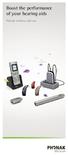 Boost the performance of your hearing aids Phonak wireless add-ons Modern hearing aid technology makes hearing and understanding in most situations enjoyable. But when you re on the phone, watching TV
Phonak Audéo Q. Small package. Big performance.
 Phonak Audéo Q Small package. Big performance. Interact We believe every voice is important. Voices are our connection to the world and allow us to interact with loved ones, friends and the people around
MICROPHONE SPECIFICATIONS EXPLAINED
 Application Note AN-1112 MICROPHONE SPECIFICATIONS EXPLAINED INTRODUCTION A MEMS microphone IC is unique among InvenSense, Inc., products in that its input is an acoustic pressure wave. For this reason,
Introduction to Digital Audio
 Introduction to Digital Audio Before the development of high-speed, low-cost digital computers and analog-to-digital conversion circuits, all recording and manipulation of sound was done using analog techniques.
ARTICLE. Sound in surveillance Adding audio to your IP video solution
 ARTICLE Sound in surveillance Adding audio to your IP video solution Table of contents 1. First things first 4 2. Sound advice 4 3. Get closer 5 4. Back and forth 6 5. Get to it 7 Introduction Using audio
The Top 5 Things You Should Know Before Buying Hearing Aids
 S p e c i a l R e p o r t The Top 5 Things You Should Know Before Buying Hearing Aids Dr. Mary Anne Larkin, Au. D. Board Certified Doctor of Audiology Advanced Hearing Care The Top 5 Things You Should
DOLBY SR-D DIGITAL. by JOHN F ALLEN
 DOLBY SR-D DIGITAL by JOHN F ALLEN Though primarily known for their analog audio products, Dolby Laboratories has been working with digital sound for over ten years. Even while talk about digital movie
DeNoiser Plug-In. for USER S MANUAL
 DeNoiser Plug-In for USER S MANUAL 2001 Algorithmix All rights reserved Algorithmix DeNoiser User s Manual MT Version 1.1 7/2001 De-NOISER MANUAL CONTENTS INTRODUCTION TO NOISE REMOVAL...2 Encode/Decode
Testing FM Systems on the FP35 Hearing Aid Analyzer -1-
 Testing FM Systems on the FP35 Hearing Aid Analyzer -1- Testing FM Systems on the FP35 Hearing Aid Analyzer Introduction This workbook describes how to test FM systems with the FP35 Hearing Aid Analyzer
A METHOD FOR THE ASSESSMENT OF SOUNDS AS PERCEIVED SEPARATELY FROM THEIR BACKGROUND
 A METHOD FOR THE ASSESSMENT OF SOUNDS AS PERCEIVED SEPARATELY FROM THEIR BACKGROUND PACS 43.50.+y Noise: its effects and control ; 43.58.+z Acoustical measurements and instrumentation ; M. Boubezari; J.
ReSound Unite TV FREQUENTLY ASKED QUESTIONS. Setup & Configuration. Use & Operation. Troubleshooting
 Tip for use of FAQ: Click on questions to go to answer. Setup & Configuration How do I pair the hearing aids to the Unite TV?... 2 What is the latency of the streamed signal?... 2 Does the Unite TV use
Interference to Hearing Aids by Digital Mobile Telephones Operating in the 1800 MHz Band.
 Interference to Hearing Aids by Digital Mobile Telephones Operating in the 1800 MHz Band. Reference: EB968 Date: January 2008 Author: Eric Burwood (National Acoustic Laboratories) Collaborator: Walter
Trigonometric functions and sound
 Trigonometric functions and sound The sounds we hear are caused by vibrations that send pressure waves through the air. Our ears respond to these pressure waves and signal the brain about their amplitude
Overview. Dolby PC Entertainment Experience v4
 Dolby PC Entertainment Experience v4 Overview From humble beginnings as a productivity device, the personal computer has evolved into an entertainment hub for the digital lifestyle. People are increasingly
The front end of the receiver performs the frequency translation, channel selection and amplification of the signal.
 Many receivers must be capable of handling a very wide range of signal powers at the input while still producing the correct output. This must be done in the presence of noise and interference which occasionally
Workshop Perceptual Effects of Filtering and Masking Introduction to Filtering and Masking
 Workshop Perceptual Effects of Filtering and Masking Introduction to Filtering and Masking The perception and correct identification of speech sounds as phonemes depends on the listener extracting various
Hearing Tests And Your Child
 HOW EARLY CAN A CHILD S HEARING BE TESTED? Most parents can remember the moment they first realized that their child could not hear. Louise Tracy has often told other parents of the time she went onto
ABOVE ALL WAS THE SENSE OF HEARING
 ABOVE ALL WAS THE SENSE OF HEARING Pleasant sounds are a symbiosis of art and technology, which arouses emotions and awakens associations. SOUND IS OUR LINE OF BUSINESS CONCEIVING > RESEARCHING > DEVELOPING
What are the causes of presbycusis? What can be done? How can I communicate with someone who has a hearing loss? How does hearing work?
 This e-book will answer the following questions: What is presbycusis? What are the symptoms of presbycusis? What are the causes of presbycusis? What can be done? How can I communicate with someone who
Sound Quality Aspects for Environmental Noise. Abstract. 1. Introduction
 The 2002 International Congress and Exposition on Noise Control Engineering Dearborn, MI, USA. August 19-21, 2002 Sound Quality Aspects for Environmental Noise Dr.-Ing. Klaus Genuit HEAD acoustics GmbH
Early vs. Late Onset Hearing Loss: How Children Differ from Adults. Andrea Pittman, PhD Arizona State University
 Early vs. Late Onset Hearing Loss: How Children Differ from Adults Andrea Pittman, PhD Arizona State University Heterogeneity of Children with Hearing Loss Chronological age Age at onset Age at identification
Hearing Tests And Your Child
 How Early Can A Child s Hearing Be Tested? Most parents can remember the moment they first realized that their child could not hear. Louise Tracy has often told other parents of the time she went onto
Acoustical Design of Rooms for Speech
 Construction Technology Update No. 51 Acoustical Design of Rooms for Speech by J.S. Bradley This Update explains the acoustical requirements conducive to relaxed and accurate speech communication in rooms
Noise: Impact on Hearing; Regulation
 Noise: Impact on Hearing; Regulation EOH 466A Fall 2008 Mechanism of Hearing Sound waves collected, focused by the outer ear. Humans have little control over muscles in outer ear. Many animals have the
Search keywords: Connect, Meeting, Collaboration, Voice over IP, VoIP, Acoustic Magic, audio, web conferencing, microphone, best practices
 Title: Acoustic Magic Voice Tracker II array microphone improves operation with VoIP based Adobe Connect Meeting URL: www.acousticmagic.com By: Bob Feingold, President, Acoustic Magic Inc. Search keywords:
Affordable Sports Halls
 Creating a sporting habit for life Appendix 5 Acoustics (To be read in conjunction with the main document) Speech Intelligibility with 40dBA Ambient Noise (BB93 Compliant) Affordable Sports Halls August
Audio Engineering Society. Convention Paper. Presented at the 129th Convention 2010 November 4 7 San Francisco, CA, USA
 Audio Engineering Society Convention Paper Presented at the 129th Convention 2010 November 4 7 San Francisco, CA, USA The papers at this Convention have been selected on the basis of a submitted abstract
BXR 300C BXR 300R. Owner, s Manual P/N 040294
 THE SOUND THAT CREATES LEGENDS BXR 300C BXR 300R Owner, s Manual P/N 040294 INTRODUCTION The Fender BXR 300 AMPLIFIER is the most recent effort in state of the art bass amplifier technology, and is a member
VoIP Conferencing Best Practices. Ultimate Guide for Hosting VoIP Conferences. A detailed guide on best practices for VoIP conferences:
 VoIP Conferencing Best Practices Ultimate Guide for Hosting VoIP Conferences A detailed guide on best practices for VoIP conferences: 1. Setting Up Your Hardware 2. VoIP Conference Software and Its Settings
The Conference is Calling. A guide to getting the most out of your conference calls
 The Conference is Calling A guide to getting the most out of your conference calls The Conference is Calling Why use a conference phone? Most phones today have a speakerphone button but there are in fact
Multichannel stereophonic sound system with and without accompanying picture
 Recommendation ITU-R BS.775-2 (07/2006) Multichannel stereophonic sound system with and without accompanying picture BS Series Broadcasting service (sound) ii Rec. ITU-R BS.775-2 Foreword The role of the
JBL CINEMA SB350. Home Cinema 2.1 soundbar with wireless subwoofer
 JBL CINEMA SB350 Home Cinema 2.1 soundbar with wireless subwoofer Owner s Manual BASS English JBL CINEMA SB350 JBL CINEMA SB350 Optical cable Table of Contents INTRODUCTION 5 ITEMS INCLUDED 5 JBL CINEMA
White Paper Effective Audio For Video Conferencing. January 2013. S. Ann Earon, Ph.D. President, Telemanagement Resources International Inc.
 White Paper Effective Audio For Video Conferencing January 2013 S. Ann Earon, Ph.D. President, Telemanagement Resources International Inc. 2013 ClearOne Inc. All rights reserved. No part of this document
Vibrant Soundbridge Implantable Hearing System
 Vibrant Soundbridge Implantable Hearing System Kristin M. Avitabile, MS, CCC-A Clinical Manager, Southeastern U.S. MED-EL Corporation Hearing Technology Hearing Aids Mild to severe HL Problems with feedback
Guidelines for video conferencing room acoustics. D14377.01 September 2010
 Guidelines for video conferencing room acoustics D14377.01 September 2010 Video conferencing room acoustics Does the audio quality fail to meet your expectations? Do you feel tired when spending longer
The quest for sound quality
 The quest for sound quality > > > > W H I T E P A P E R 0 8. 1 5. 0 3 The Quest for Sound Quality INTRODUCTION Superior sound quality is a phrase that is often over-used in the world of telephone headset
FREE TV AUSTRALIA OPERATIONAL PRACTICE OP 60 Multi-Channel Sound Track Down-Mix and Up-Mix Draft Issue 1 April 2012 Page 1 of 6
 Page 1 of 6 1. Scope. This operational practice sets out the requirements for downmixing 5.1 and 5.0 channel surround sound audio mixes to 2 channel stereo. This operational practice recommends a number
Understanding the DriveRack PA. The diagram below shows the DriveRack PA in the signal chain of a typical sound system.
 Understanding the DriveRack PA The diagram below shows the DriveRack PA in the signal chain of a typical sound system. The diagram below shows all the pieces within a sound system that the DriveRack PA
Audio processing and ALC in the FT-897D
 Audio processing and ALC in the FT-897D I recently bought an FT-897D, and after a period of operation noticed problems with what I perceived to be a low average level of output power and reports of muffled
PC Postprocessing Technologies: A Competitive Analysis
 PC Postprocessing Technologies: A Competitive Analysis Home Theater v4 SRS Premium Sound Waves MaxxAudio 3 Abstract In a scientifically rigorous analysis of audio postprocessing technologies for laptop
Estimation of Loudness by Zwicker's Method
 Estimation of Loudness by Zwicker's Method Loudness is one category in the list of human perceptions of sound. There are many methods of estimating Loudness using objective measurements. No method is perfect.
Understanding Sound System Design and Feedback Using (Ugh!) Math by Rick Frank
 Understanding Sound System Design and Feedback Using (Ugh!) Math by Rick Frank Shure Incorporated 222 Hartrey Avenue Evanston, Illinois 60202-3696 (847) 866-2200 Understanding Sound System Design and
Audio Coding Algorithm for One-Segment Broadcasting
 Audio Coding Algorithm for One-Segment Broadcasting V Masanao Suzuki V Yasuji Ota V Takashi Itoh (Manuscript received November 29, 2007) With the recent progress in coding technologies, a more efficient
Selecting the Right Conference Phone for Different Room Environments
 Selecting the Right Conference Phone for Different Room Environments 1 Introduction When was the last time you used a conference phone? Today? Yesterday? It probably hasn t been more than a day or two.
White Paper. PESQ: An Introduction. Prepared by: Psytechnics Limited. 23 Museum Street Ipswich, Suffolk United Kingdom IP1 1HN
 PESQ: An Introduction White Paper Prepared by: Psytechnics Limited 23 Museum Street Ipswich, Suffolk United Kingdom IP1 1HN t: +44 (0) 1473 261 800 f: +44 (0) 1473 261 880 e: [email protected] September
TECHNICAL LISTENING TRAINING: IMPROVEMENT OF SOUND SENSITIVITY FOR ACOUSTIC ENGINEERS AND SOUND DESIGNERS
 TECHNICAL LISTENING TRAINING: IMPROVEMENT OF SOUND SENSITIVITY FOR ACOUSTIC ENGINEERS AND SOUND DESIGNERS PACS: 43.10.Sv Shin-ichiro Iwamiya, Yoshitaka Nakajima, Kazuo Ueda, Kazuhiko Kawahara and Masayuki
Anatomy and Physiology of Hearing (added 09/06)
 Anatomy and Physiology of Hearing (added 09/06) 1. Briefly review the anatomy of the cochlea. What is the cochlear blood supply? SW 2. Discuss the effects of the pinna, head and ear canal on the transmission
Experience smart super power hearing for the first time
 Experience smart super power hearing for the first time Introducing smart super power hearing ReSound ENZO brings smart hearing technology to people with severe and profound hearing loss for the first
Direct and Reflected: Understanding the Truth with Y-S 3
 Direct and Reflected: Understanding the Truth with Y-S 3 -Speaker System Design Guide- December 2008 2008 Yamaha Corporation 1 Introduction Y-S 3 is a speaker system design software application. It is
Polycom Video Communications
 Polycom Video Communications Advanced Audio Technology for Video Conferencing Author: Peter L. Chu September 2004 Connect. Any Way You Want. If you ask frequent users of video conferencing technology what
Basics of Digital Recording
 Basics of Digital Recording CONVERTING SOUND INTO NUMBERS In a digital recording system, sound is stored and manipulated as a stream of discrete numbers, each number representing the air pressure at a
Lecture 4: Jan 12, 2005
 EE516 Computer Speech Processing Winter 2005 Lecture 4: Jan 12, 2005 Lecturer: Prof: J. Bilmes University of Washington Dept. of Electrical Engineering Scribe: Scott Philips
Doppler. Doppler. Doppler shift. Doppler Frequency. Doppler shift. Doppler shift. Chapter 19
 Doppler Doppler Chapter 19 A moving train with a trumpet player holding the same tone for a very long time travels from your left to your right. The tone changes relative the motion of you (receiver) and
DECT. DECT Density. Wireless Technology. and WHITE PAPER
 WHITE PAPER DECT Wireless Technology and DECT Density INDEX Introduction 3 About DECT 3 Advantages 4 Density 4 Considerations 4 How to increase DECT density? 7 2 Introduction a summary of DECT DECT technology
Byron's Hudson Valley Hearing Aid Centers Kingston/Lake Katrine 845-336-0108 Poughkeepsie 845-485-0168 Your hearing Journey
 Your hearing Journey Don't miss out on the joys of life, your hearing is our concern. Trust our experts to enhance your quality of life. Ask Yourself: Do you have difficulty following a conversation in
1 All safety instructions, warnings and operating instructions must be read first.
 ONYX USER MANUAL 2 Dateq ONYX Manual Safety instructions EN Safety instructions 1 All safety instructions, warnings and operating instructions must be read first. 2 All warnings on the equipment must be