
Teaching, Learning, And Assessment: Improving Student Achievement
|
|
|
- Kellie Jordan
- 9 years ago
- Views:
Transcription
1 Quality Educational Programs, Inc North Gaffey Street #228 San Pedro CA Teaching, Learning, And Assessment: Improving Student Achievement A Distance Learning Graduate Course Featuring Dr. William Glasser, Dr. Jane Bluestein, Dr. Hanoch McCarty, and senior faculty members of The William Glasser Institute Course Syllabus 2008 Quality Educational Programs, Inc.

2 This course was created with the cooperation of: Truckee Elementary School Glenshire Elementary School River Oaks Elementary School Seaquam Secondary School Placer High School Colfax High School Natomas High School The Oklahoma Education Association The California Department of Education The Quality Schools Consortium The William Glasser Institute Improving Student Achievement Page 2

3 Course Instructors: Dr. William Glasser is well known for his many books on mental health and education, especially Reality Therapy, Schools Without Failure, Positive Addition, Choice Theory in the Classroom, The Quality School, and The Quality School Teacher, and Choice Theory: A New Psychology of Personal Freedom. Dr. Glasser is the founder and president of the William Glasser Institute. Dr. Jane Bluestein is author of Being a Successful Teacher, Parents, Teens and Boundaries, Parents in a Pressure Cooker, and the critically acclaimed Mentors, Masters and Mrs. MacGregor. Dr. Bluestein, an internationally renowned speaker, is on the board of the National Council for Self-Esteem, and specializes in programs that promote positive adult-child relationships. Dr. Hanock McCarty is author of several books including A Fourth Serving of Chicken Soup for the Soul, Acts of Kindness, and Growing Pains in the Classroom. Internationally acclaimed as an author and lecturer, Dr. McCarty has presented thousands of workshops providing training in education, business, parenting, and personal growth. Additional instruction by: Robert Hoglund is co-author of The School for Quality and Learning and is the president and founder of the Center for Quality Education. He is a senior faculty member of the William Glasser Institute and conducts training seminars in both the education and business arenas. Al Katz is a senior faculty member of the William Glasser Institute and is a consultant to schools, mental health organizations, and agencies throughout the United States. Formerly, he was an administrator, a school psychologist, a counselor, a classroom teacher, and the coordinator of the Class Meeting Program in the New York public school systems. Kaye Mentley is co-author of Quality is the Key and is principal of Huntington Woods Elementary School in Wyoming, Michigan. She has been an educator for 20 years, is a faculty member of the William Glasser Institute, and provides training to principals and teachers throughout the United States. Robert Sullo is author of Teach Them to be Happy, I m Learning to be Happy, Inspiring Quality in Your School, and New Beginnings: How to Become an Inspiring Teacher. He is a school psychologist with 24 years experience in public education and is a senior faculty member of the William Glasser Institute. Improving Student Achievement Page 3

4 Teaching, Learning, and Assessment: Improving Student Achievement Rationale The Challenge: To truly improve student achievement, experts concur, the student must be the primary focus of all improvement efforts. Improving Student Achievement, American Association of School Administrators Meeting The Challenge: While there is a rapidly growing consensus on the need to improve student achievement, many questions remain about how achievement is defined, how it is measured, and what factors enhance the possibility that students will choose to cooperate in the learning process. There are, however, certain factors that many educational experts agree are key to improving student achievement. One of those factors, identified in the foregoing statement by the AASA, is that students must be the focus of all improvement efforts. Improving achievement by focusing on students individual needs, strengths and interests is the subject of this course. As the instructors in this course will point out, gaining a better understanding of students and their natural, intrinsic motivation is an important step in the process of improving student achievement. The following excerpt from the Motivation and Learning summarizes this view of motivation that is shared by Drs. Glasser, Bluestein and McCarty: Whenever we feel a desire or need for something, we are in a state of motivation. Motivation is an internal feeling it s the Improving Student Achievement Page 4

5 drive that some one has to do something. teaching some students a joy and working with others so difficult. It is what makes Anyone who has taught knows the importance of student motivation. The best technology, curriculum, and assessments don t make a difference if the students don t want to learn. Great technology and curriculum may help by connecting with student interests, but if the students are more motivated to put their energy into something outside of learning, they will... Almost without exception, every student is motivated to learn something. Unfortunately, many students are more motivated to learn things other than what we re trying to teach them. As teachers, we have seen students struggling to learn how to improve in their favorite sport, how to play a video game, how to drive, or how to solve a problem they re having at home or on the streets. The problem is that many students aren t motivated to learn what we re teaching... If we re asking the question, What can we do to motivate our students? we re asking the wrong question. No one can motivate someone else, and yet, for years we ve tried to motivate students. We ve tried just about every trick that can be imagined... awards, points, rewards, demerits, grades, names on boards, honors, scholarships, certificates, time after school, report cards, notes to parents, calls home, stars, ribbons, money, and prizes. Over the years, we ve discovered extrinsic motivates can be powerful and work for short periods of time. Unfortunately, they soon become either not enough, or demotivators for many students, or both... The struggle is not in how to motivate students to learn but in creating lessons and classroom environments that focus and attract students intrinsic motivation; thus, increasing the likelihood student will actively engage in the learning. Spence Rogers, Jim Ludington & Shari Graham, Motivation and Learning In this course, student achievement is meant to include both behavior and Improving Student Achievement Page 5

6 learning. The instructors in this course look at the student as a whole, with the belief being that when students are presented lessons that are need-fulfilling and satisfying, they will have no reason to choose to otherwise fulfill their needs through disruptive behavior. Dr. Bluestein in an article entitled Great Expectations: Helpful Hints for Beginning Teachers : You can create a warm and positive climate in your classroom by identifying and considering your students needs and interests. You can meet students needs for belonging and control by involving them in decisions that concern them. For example, allow students to choose which assignment to do first, or even with whom they would like to work... Simply being able to make choices may give some of your students a real boost in confidence and often improves chances for cooperation. Plus, making choices is an important step toward developing individual responsibility...a classroom that emphasizes responsibility and cooperation, in which you model the positive behaviors you would like them to demonstrate, tends to minimize the resistance that leads to so many classroom conflicts. The challenge, then, addressed by this course, is how to reach out to students and to present lessons to them in a way that engages them in the learning process and results in responsible behavior and higher academic achievement. Improving Student Achievement Page 6

7 Course Title "Teaching, Learning and Assessment: Improving Student Achievement" Course Description "Teaching, Learning and Assessment: Improving Student Achievement " is a course designed to provide school professionals with the psychological knowledge base related to learning, motivation, and individual differences that contribute directly to improvements in the quality of student achievement and to provide guidance for the design of educational systems that would best support individual student learning and achievement. The course is based on the work of Dr. William Glasser (The Quality School, The Quality School Teacher, Choice Theory: A New Psychology of Personal Freedom), Dr. Jane Bluestein (Being a Successful Teacher, Parents, Teens, and Boundaries, Parents in a Pressure Cooker, Mentors, Masters and Mrs. MacGregor), and Dr. Hanoch McCarty (A Fourth Serving of Chicken Soup for the Soul, Acts of Kindness, Growing Pains in the Classroom). Course Goal The goal of this course is to have participants develop a framework that can guide decisions about content, environment, and opportunities for learning for the student in the classroom and that can help define a dynamic learning context that is continuously improving. Course Outline In the following outline, the term "Course of Study" refers to a study plan that includes required reading, video viewing, discussion questions, learning activities, worksheets, application assignments, and progress reports. Session #1: The Challenge of Improving Student Achievement Objectives: To have participants explore the challenge of improving student achievement through a student-centered approach to education; to have participant analyze the extent to which their current teaching is student-centered. Improving Student Achievement Page 7

8 Video Program #1: "Improving Student Achievement: An Introduction. Session #2: Creating a Positive Learning Environment Objectives: To have participants examine an approach to classroom management that promotes responsibility and student engagement in learning; to have participants design and implement strategies to enhance student engagement in learning. Video Program #2: "Promoting Responsibility and Learning, Part One. Session #3: Behavior, Learning, and Boundaries Objectives: To have participants establish a learning environment that is need fulfilling and success-oriented; to have participants design and implement strategies for improving the learning environment in their own teaching situation. Video Program #3: "Promoting Responsibility and Learning, Part Two. Session #4: Strategies for Improving Student Achievement, Elementary, and Middle School Objectives: To have participants view approaches to creating and teaching engaging lessons at the elementary and middle school levels; to have participants adapt these approaches for use in their own teaching situations. Video Program #4: "Strategies for Improving Student Achievement, Part One. Session #5 Strategies for Improving Student Achievement, Secondary School Objectives: To have participants view approaches to creating and teaching engaging lessons at the secondary school level; to have participants adapt these approaches for use in their own teaching situations Video Program #5: "Strategies for Improving Student Achievement, Part Two. Improving Student Achievement Page 8

9 Session #6: Connections: The Key to Effective Teaching, Part One Objectives: To have participants consider Dr. Glasser s theory that making a positive connection with students is a prerequisite for effective instruction; to have participants create and implement a strategy for improving connections with students. Video Program #6: "Glasser on Making Connections, Part One. Session #7: Connections: The Key to Effective Teaching, Part Two Objectives: To have participants evaluate the effectiveness of the strategy implement in the previous session; to have participants utilize information presented in this session to modify and improve that strategy. Video Program #7: "Glasser on Making Connections, Part Two. Session #8: Student-Teacher Relationships and Improving Achievement Objectives: To have participants view strategies for improving student achievement and classroom relationships; to have participants evaluate and adapt these strategies for use in to their own teaching situations. Video Program #8: "Connecting With Students. Session #9: The Parents Role in Improving Student Achievement Objectives: To have participants learn how to develop connections with parents that foster improved student achievement; to have participants design and implement a plan to improve their connections with parents. Video Program #9: "Connecting With Parents Session #10: Questioning Techniques that Promote Learning Objectives: To have participants gain an understanding of questioning Improving Student Achievement Page 9

10 techniques that promote student involvement, enhance problem-solving skills and promote student engagement in learning; to have participants utilize these techniques in their own teaching situations. Video Program #10: "Class Meetings and Improving Achievement. Session #11: A Student-Created Rubric for Quality Objectives: To demonstrate to participants how students can be involved in the creation of a rubric for quality classroom work; to have participant guide their own students in creating a rubric for quality. Video Program #11: "Quality Teacher, Quality Student, Quality Work. Session #12: New Approaches to Assessing Student Achievement Objectives: To have participants explore alternatives to traditional assessment techniques such as student self-evaluation, student-led parent conferences and student portfolios; to have participants utilize and evaluate one or more of these alternatives. Video Program #12: Involving Students in the Assessment Process. Session #13: Using Stories to Improve Comprehension and Retention Objectives: To have participants develop and utilize strategies for utilizing stories to enhance their lessons and improve student comprehension and retention of the information presented; to have students evaluate the effectiveness of these lessons. Video Program #13: "Chicken Soup for Teachers and Students. Session #14: An Appreciation of the Teacher s Role in Effective Education Objectives: To have participants revisit the reasons they entered the teaching profession; to have participants gain an appreciation of critical role educators play in the future of our society. Improving Student Achievement Page 10

11 Video Program #14: "Teachers Make the Difference. Session #15: Developing a Blue Print for Change Objectives: To have participants develop, implement, and evaluate a systematic plan that incorporates course concepts and techniques in a comprehensive plan designed to improve student behavior and learning. Video Program #15: "Planning for Change. Participant Characteristics This course is designed for teachers and administrators in grades kindergarten through twelve. Participants will have a bachelor's degree and a valid teacher credential (if applicable). There are no other prerequisites. a.) Text: Instructional Materials The Course of Study will contain articles and chapter excerpts from the works of Dr. William Glasser, Dr. Jane Bluestein, Dr. Hanock McCarty, Robert Hoglund, Al Katz, Kaye Mentley, and Robert Sullo. b.) Course Videos (All videos are approximately 30 minutes in length.) Program #1 "Improving Student Achievement: An Introduction. Program #2 "Promoting Responsibility and Learning, Part One. Program #3: "Promoting Responsibility and Learning, Part Two. Program #4 "Strategies for Improving Student Achievement, Part One. Program #5: "Strategies for Improving Student Achievement, Part Two. Program #6: "Glasser on Making Connections, Part One. Program #7: "Glasser on Making Connections, Part Two. Program #8 "Connecting With Students. Program #9: "Connecting With Parents Program #10: "Class Meetings and Improving Achievement. Program #11: "Quality Teacher, Quality Student, Quality Work. Program #12: "Involving Students in the Assessment Process. Program #13: "Chicken Soup for Teachers and Students. Program #14: "Teachers Make the Difference. Program #15: "Planning for Change. Improving Student Achievement Page 11

12 c.) Course of Study. This book contains summaries of course content, pre-video viewing activities, discussion questions, group activities, worksheets, classroom application assignments, and learning reports. d.) Bibliography. Learning Activities Participants will complete activities that include: For each of the fifteen (15) sections of this course, participants will complete the following activities: a.) Read the assigned chapters of the course text. b.) Read supplemental articles in the course of study book. c.) Participate in a study/preparation activity with a colleague. NOTE: While benefits are greatest when participants take this course as a part of a study team, participants can successfully complete course requirements by working with a friend or colleague who is not enrolled in the course; or, by reflecting upon the material and considering how they might use it in their teaching situations. d.) View instructional videos. e.) Discuss (see above note) course material in terms of participants own students. f.) Record summary of discussion activities in progress report g.) Design, implement, and evaluate an application of course content in their teaching situation. NOTE: If participants are taking this course during the summer or at a time when they do not have access to a classroom, they follow these directions with respect to classroom application projects. 1. If they choose to design a classroom lesson or activity for their project, they design it for a class that they have had in the past. 2. Instead of implementing their activity in a classroom, they share their activity design with a colleague and ask for their input. 3. Based on the input received from their colleagues, they make whatever changes they feel are appropriate to improve their activity design. h.) Summarize classroom application design, application experience, and evaluation in progress report. i.) Post progress report online and post reactions to the progress reports of other students. 2. Submit a final paper. Improving Student Achievement Page 12

13 Course Outcomes Our courses been designed to provide a learning environment in which participants individual and collaborative efforts result in positive change in the classroom. The courses are designed to promote a quality graduate educational experience through the attainment of the following outcomes: To successfully complete the program, participants will: 1. Demonstrate knowledge of current quality teaching theory and practices. 2. Work toward positive educational change in collaboration with colleagues, administrators, parents, and the community. 3. Develop, implement, and demonstrate proficiency in teaching strategies and learning activities that promote responsible student behavior. 4. Develop, implement, and demonstrate proficiency in teaching strategies and learning activities that improve student academic achievement. 5. Develop and utilize evaluative skills to critically analyze, adapt and continually improve instructional and managerial skills. 6. Develop skills to incorporate student self-evaluation in an approach to authentic and effective assessment. 7. Acquire the skills in building and utilizing learning networks that they may continue to utilize as lifelong learners. Course Assessment Participant achievement will be measured by a combination of the following: 1. An evaluation of participant's 15 progress reports. (Outcomes 1, 2, 3, and 4.) Each progress report will be evaluated for: Completeness and quality of responses. Accuracy of information. Appropriateness of classroom application. Quality of reflection. 2. An evaluation of participant's professional paper. (Outcomes 5, 6, and 7.) The professional paper will be evaluated for: Inclusion of required components. Synthesis and analysis of course concepts. Presentation in an organized, professional manner. Improving Student Achievement Page 13

14 Bibliography American Association of School Administrators. (1993) Improving Student Achievement. Arlington, VA: AASA Publications. Banathy, B. (1997) Designing educational systems: creating our future in a changing world Educational Technology. 32 (11), Bluestein, J. (1995) Mentors, Masters and Mrs. MacGregor. Deerfield Beach, FL: Health Communications, Inc. Bluestein, J. & Collins, L. (1989) Parents in a Pressure Cooker. Rosemont, NJ: Modern Learn Press. Bluestein, J. (1989) Being a Successful Teacher. Torrance, CA: Frank Shaffer Publications, Inc. Bosworth, K. (1995) Caring for others and being cared for: Students talk in a caring school. Phi Delta Kappan, 76 (9) Brooks, J. & Brooks, M. (1993) In Search of Understanding: The case for Constructivist Classrooms. Alexandria, VA: Association for Supervision and Curriculum Development. Comer, J. et. al. (1995). Rallying the Whole Village. New York, NY: Teachers College Press. Covington, M. (1992) Making the Grade: A Self-Worth Perspective on Motivation and School Reform. Cambridge, MA: Cambridge University Press. Darling-Hammond, L. & Snyder, J. (1992) Reframing Accountability: Creating Learner-Centered Schools. New York, NY: ERIC Clearinghouse on Urban Education/National Center for Restructuring Education, Schools, and Teaching. DeBruyn, R. (1997). Proactive Leadership for the 21st Century Classroom, School and District. Manhattan, KS: The MASTER Teacher. Glasser, W. (1998). Choice Theory, A New Psychology of Personal Freedom.New York, NY: HarperCollins. Glasser, W. (1993). The Quality School Teacher. New York: HarperCollins. Improving Student Achievement Page 14

15 Glasser, W. (1992). The Quality School: Managing Students Without Coercion.New York, NY: HarperCollins. Goleman, D. (1995). Emotional Intelligence. New York, NY: Bantam Books. Hansen, D. (1995). The Call to Teach. New York: Teachers College Press. Hoglund, R., Bodine, R. & Crawford, D. (1993) The School for Quality Learning. Champaign, IL, Research Press. Keller, B. (1995) Accelerated schools: Hands-on learning in a unified community. Educational Leadership, 52(5), Mager, R. (1997) How to Turn Learns On...without turning them off. 3rd Edition. Atlanta, GA, The Center for Effective Performance, Inc. McCarty, H., McCarty, M., Canfield, J. & Hansen, M. (1997) A Fourth Serving of Chicken Soup for the Soul. Deerfield, FL: Health Communications, Inc. McCarty, H. (1995) Ten Keys to Successful Parent Involvement and Parent Counseling. Galt, CA, Learning Resources Press. McCarty, H. & McCarty, M. (1994) Acts of Kindness. Deerfield, FL, Health Communications, Inc. McCarty, H. (1993) Developing Teacher Support Groups for Personal and Professional Growth. Galt, CA, Learning Resources Press. McCombs, B. & Whisler, J. (1997) The Learner-Centered Classroom. San Francisco, CA, Jossey Bass Publishers. Mentley, K. & Ludwig, S. (1997) Quality is the Key: Stories from Huntington Woods School. Wyoming, MI, KWM Educational Services, Inc. O Neil, J. (1995) On lasting school reform: A conversation with Ted Sizer. Educational Leadership, 80(1), Rogers, S., Ludington, J. & Graham, S. (1997). Motivation and Learning. Evergreen, CO.: Peak Learning Systems. Snow, M. & Brinton, D. (1997) The Content-Based Classroom. White Plains, NY, Longman Publishing. Sternberg, R. & Horvath, J. (1995) A prototype view of expert teaching. Educational Researcher, 24(6), Improving Student Achievement Page 15

16 Strong, R., Silver, H. & Robinson, A. (1995) What do students want (and what really motivates them)? Educational Leadership, 53(1), Sullo, R. (In press). New Beginnings: A Guide to Becoming an Inspiring Teacher. Washington, D.C., National Education Association. Williamson, R. (1996) Modifying structure: A resource for improved student achievement at the middle school level. NASSP Bulletin, 80(578), Improving Student Achievement Page 16

Classroom Management: Dealing with Discipline Problems
 Quality Educational Programs, Inc. 1891 North Gaffey Street #228 San Pedro CA 90731 800-486-8650 Classroom Management: Dealing with Discipline Problems A Distance Learning Graduate Course Based on the
Teaching Students with Special Needs: Inclusion Strategies for the Classroom Teacher
 Quality Educational Programs, Inc. 1891 North Gaffey Street #228 San Pedro CA 90731 800-486-8650 Teaching Students with Special Needs: Inclusion Strategies for the Classroom Teacher A Distance Learning
Under the Start Your Search Now box, you may search by author, title and key words.
 VISTAS Online VISTAS Online is an innovative publication produced for the American Counseling Association by Dr. Garry R. Walz and Dr. Jeanne C. Bleuer of Counseling Outfitters, LLC. Its purpose is to
Reflective Essay. Antonio Almeida. Walden University
 Reflective Essay 1 Reflective Essay Antonio Almeida Walden University Professor Jim Lehmann EDUC 6610: Teacher as a Professional February 11, 2007 Reflective Essay 2 Running head: REFLECTIVE ESSAY Reflective
Course: Instructor: Prerequisites: Number of Credits:
 Course: Instructor: Prerequisites: Number of Credits: Choice Theory in the Classroom: Where Every Student Can Succeed William Glasser, M.D. None 3 Semester credits, 4 quarter credits, 45 hours This course
INSTRUCTION AT FSU THE FLORIDA STATE UNIVERSITY OFFICE OF DISTANCE LEARNING. A Guide to Teaching and Learning Practices
 7th Edition Office of Distance Learning INSTRUCTION AT FSU A Guide to Teaching and Learning Practices Version 12.02.11 ODL/rg THE FLORIDA STATE UNIVERSITY OFFICE OF DISTANCE LEARNING 7th Edition Office
Requirements EDAM-5002. WORD STUDY K-3: PRINT AWARENESS, LETTER KNOWLEDGE, PHONICS, AND HIGH FREQUENCY WORDS
 LETTER OF ENDORSEMENT: TEACHER LEADERSHIP AND INSTRUCTIONAL COACHING Requirements Dr. Grace Surdovel, Director of Master's Programs/Faculty of Practice The Letter of Endorsement in Teacher Leadership and
Sherrod D. Willaford, Ed. D.
 Sherrod D. Willaford, Ed. D. EDUCATION Doctor of Education Degree in School Improvement, University of West Georgia, Carrollton, GA, 2011 Master of Arts Degree in Administration and Supervision, State
THE RIPPLE EFFECT of the UCI Math Educational Outreach. Alessandra Pantano University of California, Irvine
 THE RIPPLE EFFECT of the UCI Math Educational Outreach Alessandra Pantano University of California, Irvine UCI Math CEO: Community Educational Outreach Founded in 2012, with support of a Dolciani grant
My Classroom Management Philosophy
 My Classroom Management Philosophy I believe one of the hardest things for new teachers to build is their classroom management plan. I have seen many different types of classroom management plans throughout
Course Title: Early Childhood Practicum & Seminar 1 & 2. Course # : EC 332a & 332b Credit Hours: 3 + 3. Catalog Description:
 Course Title: Early Childhood Practicum & Seminar 1 & 2 Course # : EC 332a & 332b Credit Hours: 3 + 3 Catalog Description: Practicum: Early Childhood Education Practicum experiences are designed to provide
Syllabus. Required ebook: Pyramid Response to Intervention: RTI, Professional Learning Communities, and How to Respond When Kids Don t Learn
 Syllabus Course: Pyramid Response to Intervention: How to Respond When Kids Don t Learn Presenters: Austin Buffum, Mike Mattos, and Chris Weber Credits: 3 Instructor: Jessica Kessler Email: [email protected]
Implementing Performance Assessment in the Classroom. ERIC/AE Digest.
 ERIC Identifier: ED423312 Publication Date: 1998-08-00 Author: Brualdi, Amy Source: ERIC Clearinghouse on Assessment and Evaluation Washington DC. Implementing Performance Assessment in the Classroom.
LEVEL 1 LICENSURE PORTFOLIO
 LEVEL 1 LICENSURE PORTFOLIO Part I Purpose Principles to Be Addressed Required Documentation Directions Entry 1: Analyzing the School Counseling Environment Candidates analyze the school counseling environment
Finding and Supporting Educators Through Distance Learning
 Finding and Supporting Educators Through Distance Learning Peggy E. Gaskill A Nontraditional Approach One of the lessons the nation is learning as we look to overcome an impending large-scale teacher shortage
Effective Grading Practices Douglas B. Reeves
 Effective Grading Practices Douglas B. Reeves If you wanted to make just one change that would immediately reduce student failure rates, then the most effective place to start would be challenging prevailing
Pre-Requisites EDAM-5001 Early Literacy Guiding Principles and Language
 . EDAM EDAM-5001. EARLY LITERACY: GUIDING PRINCIPLES AND LANGUAGE DEVELOPMENT This course is the prerequisite for all other courses in the Early Childhood Literacy program. It outlines the philosophical
Tips for Choosing a TESOL Master s Program
 Tips for Choosing a TESOL Master s Program Whether you are just breaking into the TESOL field or have already been in the profession for some time, a great way to increase your knowledge and expand your
Striving for Success: Teacher Perspectives of a Vertical Team Initiative
 VOLUME 16 NUMBER 3, 2006 Striving for Success: Teacher Perspectives of a Vertical Team Initiative Dr. Lisa Bertrand Educational Administration and Counseling Southeast Missouri State University Dr. Ruth
Leadership and Learning: The Journey to National Accreditation and Recognition
 VOLUME 31, NUMBER 4, 2013 Leadership and Learning: The Journey to National Accreditation and Recognition Lisa Bertrand, EdD Professor and Program Coordinator Department of Educational Leadership and Counseling
STEPHEN J. KOFFMAN, LCSW
 STEPHEN J. KOFFMAN, LCSW [email protected] PROFESSIONAL PROFILE Dedicated to establishing professional relationships, working partnerships and providing effective connections and support to strengthen communities.
Tools to Use in Assessment
 Tools to Use in Assessment II. Observations and Checklists Teachers have always watched and observed students in the classroom and they have made instructional decisions based on these observations. Too
Health and wellbeing Principles and practice
 Health and wellbeing Principles and practice Curriculum for Excellence has an important role to play in promoting the health and wellbeing of children and young people and of all of those in the educational
www.nacol.org Fast Facts About Online Learning Research, Trends and Statistics K-12 Online Learning and Virtual Schools: Expanding Options
 The North American Council for Online Learning (NACOL) is the leading international K-12 non-profit organization representing the interests of administrators, practitioners, businesses and students involved
Using Questions to Promote Critical Thinking By Cindy McClung, coordinator for quality, and Bob Hoglund, president of Bob Hoglund Inc.
 Using Questions to Promote Critical Thinking By Cindy McClung, coordinator for quality, and Bob Hoglund, president of Bob Hoglund Inc. Critical thinking occurs whenever you judge, decide or solve a problem.
DIABLO VALLEY COLLEGE CATALOG 2016-2017
 EARLY CHILDHOOD EDUCATION ECE Obed Vazquez, Dean Social Sciences Division Faculty Office Building, Room 136 Possible career opportunities Early childhood educators focus on children from zero to age five.
READING WITH. Reading with Pennsylvania Reading Specialist Certificate
 READING WITH PENNSYLVANIA READING SPECIALIST CERTIFICATE Reading with Pennsylvania Reading Specialist Certificate Program Coordinator: Ms. Anne Butler The Master of Science degree in Education with a concentration
SPECIAL EDUCATION. Masters in. online.arbor.edu ONLINE PROGRAM GUIDE
 Masters in SPECIAL EDUCATION ONLINE PROGRAM GUIDE online.arbor.edu 1 CONTENTS 04 From the Office of the President 05 About SAU Online 06 Student Support 06 Online Learning Community 07 Accreditation and
www.nacol.org Fast Facts About Online Learning Research, Trends and Statistics K-12 Online Learning and Virtual Schools: Expanding Options
 Research, Trends and Statistics K-12 Online Learning and Virtual Schools: Expanding Options K-12 online learning is a new field consisting of an estimated $50 million market, which is growing at an estimated
Annotated Bibliography
 Name: Susan Mayberry Date: Summer 2009 Class: Cohort 25-02 Course: MAT 735 Meeting the Needs of Diverse Students Instructor: Adam Holden Unit: #4 Assignment: #5 Annotated bibliography Annotated Bibliography
CALIFORNIA STATE UNIVERSITY, NORTHRIDGE College of Education Educational Leadership and Policy Studies
 CALIFORNIA STATE UNIVERSITY, NORTHRIDGE College of Education Educational Leadership and Policy Studies COURSE OUTLINE ELPS 676 SCHOOL COMMUNITY RELATIONS MICHAEL D. EISNER COLLEGE OF EDUCATION MISSION
MISSISSIPPI STATE UNIVERSITY COLLEGE OF EDUCATION. DEPARTMENT of LEADERSHIP & FOUNDATIONS COURSE SYLLABUS. Educational Leadership
 MISSISSIPPI STATE UNIVERSITY COLLEGE OF EDUCATION DEPARTMENT of LEADERSHIP & FOUNDATIONS COURSE SYLLABUS Course Prefix and Number: EDA 8283 Course Title: Credit Hours: Type of Course: Catalogue Description:
MY PLAN. This module is designed to help students gain perspective on themselves and their planning journey as they use MyRoad s My Plan feature.
 MY PLAN This module is designed to help students gain perspective on themselves and their planning journey as they use MyRoad s My Plan feature. Lesson Plans: MY1: In Toward a Self-Portrait, students use
EXAMPLE FIELD EXPERIENCE PLANNING TEMPLATE CCSU MAT Program
 EXAMPLE FIELD EXPERIENCE PLANNING TEMPLATE CCSU MAT Program Secondary Education (Math, History/Social Studies, Science, World Languages) and Special Education (K-12) Goal: The MAT program focuses on preparing
Professional Development for the Virtual School Setting: Aligning and Designing
 Professional Development for the Virtual School Setting: Aligning and Designing Katherine Hayden, Ed.D. Associate Professor of Educational Technology California State University San Marcos Stacey Campo
TEACHING CREDENTIAL CANDIDATES HOW TO ADAPT LESSONS AND INCREASE VOCABULARY FOR ENGLISH LEARNERS. Abstract
 1 Abstract The purpose of this study was to measure the effectiveness of two instructional activities on teacher credential candidates as they learned how to adapt standards-based content lessons and increase
SECTION 4: MASTER OF EDUCATION DEGREE
 SECTION 4: MASTER OF EDUCATION DEGREE Beginning with the summer session in 1954, a fi fth-year program of teacher education leading to the degree Master of Teaching was instituted at Northwestern Oklahoma
Elementary MEd I. The Relationship of the Program with the Unit s Conceptual Framework
 Elementary MEd I. The Relationship of the Program with the Unit s Conceptual Framework Shaping Tomorrow: Ideas to Action The Early Elementary Education program for prospective elementary education candidates
Games and Activities that Build Academic Vocabulary
 Games and Activities that Build Academic Vocabulary 21 st CCLC Summer Institute July 10-12, 2006 San Diego, CA Danette Parsley, McREL [email protected] 303.632.5560 Heather Martindill, McREL [email protected]
[ 2013 2014 Progress Report] NALP/Street Law Legal Diversity Pipeline Program
![[ 2013 2014 Progress Report] NALP/Street Law Legal Diversity Pipeline Program](/thumbs/39/19374957.jpg "[ 2013 2014 Progress Report] NALP/Street Law Legal Diversity Pipeline Program") [ 2013 2014 Progress Report] NALP/Street Law Legal Diversity Pipeline Program Year in Review This year, high school students in seven cities across the country had the opportunity to explore the legal
[ 2013 2014 Progress Report] NALP/Street Law Legal Diversity Pipeline Program Year in Review This year, high school students in seven cities across the country had the opportunity to explore the legal
Examples Student s Name: Math Learning Contract. Date Due:
 Learning Contracts Learning Contracts are written agreements between students and teachers that grant the student certain freedoms and choices about completing tasks yet require the student to meet certain
PDF Compressor Pro. Teacher Development Interactive. The Blended Course
 Teacher Development Interactive The Blended Course 20 + 20 online face to face Teacher Development Interactive: The Blended Course deepens and expands the online experience in a face-to-face classroom.
Chenoa S. Woods, Ph.D.
 Chenoa S. Woods, Ph.D. Center for Postsecondary Success Florida State University Tallahassee, FL [email protected] www.chenoawoods.com Education Ph.D. Educational Policy & Social Context, University of California,
http://www.bls.gov/oco/ocos070.htm Teachers Special Education
 http://www.bls.gov/oco/ocos070.htm Teachers Special Education * Nature of the Work * Training, Other Qualifications, and Advancement * Employment * Job Outlook * Projections Data * Earnings * OES Data
Satir Transformational Systemic Therapy (in Brief)
 Satir Transformational Systemic Therapy (in Brief) What happens when a human being appears on the professional radar and, without directly challenging the prevailing system, provides new possibilities
Nevis Public School District #308. District Literacy Plan Minnesota Statute 120B.12, 2011 2015-2016. Learning together... Achieving quality together.
 Nevis Public School District #308 District Literacy Plan Minnesota Statute 120B.12, 2011 2015-2016 Learning together... Achieving quality together. SCHOOL BOARD Chairperson: Vice Chairperson: Treasurer:
WILLIAM PATERSON UNIVERSITY College of Education Department of Special Education and Counseling COURSE OF STUDY
 WILLIAM PATERSON UNIVERSITY College of Education Department of Special Education and Counseling COURSE OF STUDY Theme: Preparing Inquiring Educators: Knowledge, Understanding and Application A. Course
Chapter 3: Teaching Learning Strategies in the Learner- Centered Classroom
 Chapter 3: Teaching Learning Strategies in the Learner- Centered Classroom In this chapter, we demonstrate how you can teach your students to make their learning more efficient and effective by thinking
Applying is Easy. To apply online, visit: www.applyweb.com/apply/uopg/menu.html
 Applying is Easy. Prospective students should submit an application to University of the Pacific s Research and Graduate Studies Office: www.pacific.edu/homepage/graduate To apply online, visit: www.applyweb.com/apply/uopg/menu.html
Masters Comprehensive Exam and Rubric (Rev. July 17, 2014)
 1 Educational Leadership & Policy Studies Masters Comprehensive Exam and Rubric (Rev. July 17, 2014) The comprehensive exam is intended as a final assessment of a student s ability to integrate important
School Counselor Supervision: Practices. True or False? Why talk about supervision? 2/26/2012. Cher N. Edwards, Ph.D., LPCC Seattle Pacific University
 School Counselor Supervision: Strategies and School Based Best Practices Cher N. Edwards, Ph.D., LPCC Seattle Pacific University True or False? WA state does not have a supervision credential for school
Section III. An Excellent Christian Teacher. Characteristics and Expectations. GRCS Handbook 1
 Section III An Excellent Christian Teacher Characteristics and Expectations GRCS Handbook 1 Beliefs and Vision Statement In the sphere of home, church, community and school, Grand Rapids Christian schools
Requirements & Guidelines for the Preparation of the New Mexico Online Portfolio for Alternative Licensure
 Requirements & Guidelines for the Preparation of the New Mexico Online Portfolio for Alternative Licensure Prepared for the New Mexico Public Education Department Educator Quality Division http://www.ped.state.nm.us/
Resource Guide for High School Transitions:
 Resource Guide for High School Transitions: Annotated Bibliography Harvard Family Research Project June 2011 For questions or comments about this paper, email [email protected] 2011 President and
Committee On Public Secondary Schools. Standards for Accreditation
 Committee On Public Secondary Schools Standards for Accreditation Effective 2011 New England Association of Schools & Colleges 3 Burlington Woods Drive, Suite 100 Burlington, MA 01803 Tel. 781-425-7700
Self-Assessment Duval County School System. Level 3. Level 3. Level 3. Level 4
 Standard 1: Purpose and Direction 1.1 The system engages in a systematic, inclusive, and comprehensive process to review, revise, and communicate a system-wide propose for the student success. The system
Coun 589 Action Research in Counseling Wednesdays, 4-6:30 pm, Fall Term 1 credit
 Portland State University Graduate School of Education Counselor Education Preparing professionals to meet our diverse community s life-long educational needs Diversity & Inclusiveness to work in diverse
To answer the secondary question, if hands-on activities would increase student interest and comprehension, several hands-on activities were used:
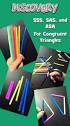 1 The Effect of an Overarching Topic on Student Performance in Algebra II Christine Consoletti and David Collins J.E.B. Stuart High School Fairfax County (VA) Public Schools June 2003 Question Does an
Source- Illinois State Board of Education (www.isbe.net)
 Wise Ways / Center on Innovation & Improvement CL17 Indicator: Professional development for teachers is determined by data (including classroom observations and review of lesson plans) that demonstrate
Frank R. Lilly, PhD 6000 J. Street, Sacramento, CA 95819-6079 916-278-4120
 Frank R. Lilly, PhD 6000 J. Street, Sacramento, CA 95819-6079 916-278-4120 EDUCATION Ph.D. McGill University, Department of Educational and Counselling Psychology, Applied Developmental Psychology / Special
Dr. Thomas E. Graham 178 Anthony Drive Wintersville, OH 43964 740-381-0963 Birth Date: 10/10/55
 Dr. Thomas E. Graham 178 Anthony Drive Wintersville, OH 43964 740-381-0963 Birth Date: 10/10/55 EDUCATION Elementary (K-6) Roosevelt School, Toronto, OH 1960-67 Junior High (7-8) S.C. Dennis School, Toronto,
Degree Level Expectations for Graduates Receiving the
 Degree Level Expectations for Graduates Receiving the Degree of Bachelor of Education, B.Ed. Ontario Institute for Studies in Education (OISE) University of Toronto 1 Introduction Teacher education has
READING. Master of Arts in. online.arbor.edu ONLINE PROGRAM GUIDE
 Master of Arts in READING ONLINE PROGRAM GUIDE online.arbor.edu 1 CONTENTS 04 From the Office of the President 05 About SAU Online 06 Student Support 06 Online Learning Community 07 Accreditation and Rankings
Bibliography. Transitional Programs to Middle Level School
 Bibliography Transitional Programs to Middle Level School Akos, P.; Galassi, J.P. (2004, April). Middle and High School Transitions as Viewed by Students, Parents, and Teachers. Professional School Counseling.
Virginia Defense Force
 Virginia Defense Force Instructor Development Course By Lt. Col. (VA) Stewart W. Bentley, PhD 1 Course Objectives At the end of this course, you will be able to identify: Principles of Adult Learners.
CURRICULUM VITA. Gregory D. Henderson, Ph.D., CRC, LCAS-A, LPC-A
 1 CURRICULUM VITA Gregory D. Henderson, Ph.D., CRC, LCAS-A, LPC-A 524 Washington Avenue, Winston-Salem, NC 336.437.4426 [email protected] Education & Qualifications Master Counseling Chemical Addiction
Rob Darrow, Ed. D. Email: [email protected] Wiki: robdarrow.wikispaces.com Blog: robdarrow.wordpress.com
 EDUCATION Resume Rob Darrow, Ed. D. Email: [email protected] Wiki: robdarrow.wikispaces.com Blog: robdarrow.wordpress.com 2010 Ed.D. Educational Leadership, California State University, Fresno
SECTION 4: MASTER OF EDUCATION DEGREE
 SECTION 4: MASTER OF EDUCATION DEGREE Beginning with the summer session in 1954, a fifthyear program of teacher education leading to the degree Master of Teaching was instituted at Northwestern Oklahoma
Model for Practitioner Evaluation Manual SCHOOL PSYCHOLOGIST. Approved by Board of Education August 28, 2002
 Model for Practitioner Evaluation Manual SCHOOL PSYCHOLOGIST Approved by Board of Education August 28, 2002 Revised August 2008 Model for Practitioner Evaluation Guidelines and Process for Traditional
Parent Coordinator Resource Guide & Toolkit. The JOINING PROCESS
 Parent Coordinator Resource Guide & Toolkit The JOINING PROCESS The JOINING PROCESS THE JOINING PROCESS: Developing Positive Relationships between Families and Schools What you ll learn As you complete
Classroom Climate. from the complex transaction of many immediate environmental factors (e.g., physical, material,
 Adelman, H. S. & Taylor, L. (in press). Classroom climate. In S. W. Lee, P. A. Lowe, & E Robinson (Eds.), Encyclopedia of School Psychology. Thousand Oaks, CA: Sage. Classroom Climate Classroom climate
This sample chapter is for review purposes only. Copyright The Goodheart-Willcox Co., Inc. All rights reserved.
 This sample chapter is for review purposes only. Copyright The Goodheart-Willcox Co., Inc. All rights reserved. 2 BECOMING A TEACHER Key Terms teaching academies teacher education programs grants job shadowing
College. Of Education
 College Of Education Contact Us 00971-2-5993111 (Abu Dhabi) 00971-4-4021111 (Dubai) 00971-2- 5993783 (College of Education) @Zayed_U zayeduniversity ZayedU www.zu.ac.ae Introduction and Mission Educators
A Writer s Workshop: Working in the Middle from Jennifer Alex, NNWP Consultant
 Structure of a Workshop: A Writer s Workshop: Working in the Middle from Jennifer Alex, NNWP Consultant For the last four years, writing and reading workshops have been the foundation of my classroom practice.
"You never really understand a person until you consider things from his point of view - until you climb into his skin and walk around in it.
 "A Regional Model For School District Collaboration To Create More Equitable Academic Outcomes For Students of Color" PA PIRC Family Engagement Conference Harrisburg, PA April 14, 2011 Dr. Robert L. Jarvis
PORTLAND STATE UNIVERSITY GRADUATE SCHOOL OF EDUCATION Preparing professionals to meet our diverse community s lifelong educational needs
 PORTLAND STATE UNIVERSITY GRADUATE SCHOOL OF EDUCATION Preparing professionals to meet our diverse community s lifelong educational needs Diversity & Inclusiveness to work in diverse settings to promote
Informed Design: A Contemporary Approach to Design Pedagogy Design as The Core Process in Technology Design as an Instructional Strategy
 Informed Design: A Contemporary Approach to Design Pedagogy M. David Burghardt and Michael Hacker Co-directors, the Hofstra University Center for Technological Literacy Design as The Core Process in Technology
Turkish Online Journal of Distance Education-TOJDE July 2006 ISSN 1302-6488 Volume: 7 Number: 4 Review: 2
 Turkish Online Journal of Distance Education-TOJDE July 2006 ISSN 1302-6488 Volume: 7 Number: 4 Review: 2 ADVANCED METHODS IN DISTANCE EDUCATION: Applications and Practices for Educators, Administrators
EXPEDITIONARY LEARNING SCHOOL PERFORMANCE. www.elschools.org! Expeditionary Learning 2010
 EXPEDITIONARY LEARNING SCHOOL PERFORMANCE REPORT www.elschools.org Expeditionary Learning 2010 www.elschools.org Expeditionary Learning 2010 A National Network Impact in 2009-2010 165 Schools 29 States
School of Social and Behavioral Sciences
 human development School of Social and Behavioral Sciences Acting Dean: Daniel E. Rivas, Ph.D. Academic Chair: Kari Tucker, Ph.D. Faculty: Ingrid Anderson, Julie Bookwalter, Marilee Cosgrove, Donna Gray,
Marzano Center Non-Classroom Instructional Support Member Evaluation Form
 Marzano Center Non-Classroom Instructional Support Member Evaluation Form Prepared by Learning Sciences Marzano Center for Teacher and Leader Evaluation March, 2013 OUR MISSION The Learning Sciences Marzano
KIMBERLY FERRARIO [email protected]
 KIMBERLY FERRARIO [email protected] EDUCATION RESEARCH Ph.D. Education, June 2009 Emphasis on Language, Literacy and Culture University California, Davis Advisers: Professor Sandra Murphy, School of Education,
ZENO G. HINES, ED. D.
 ZENO G. HINES, ED. D. CURRICULUM VITAE SCHOOL COUNSELOR RICHMOND TECHNICAL CENTER RICHMOND PUBLIC SCHOOLS 2020 WESTWOOD AVENUE RICHMOND, VIRGINIA 23230 (804) 683-2238 [email protected] Professional
College. Of Education COLLEGE OF EDUCATION
 College Of Education COLLEGE OF EDUCATION Contact Us 00971-2-5993111 (Abu Dhabi) 00971-4-4021111 (Dubai) 00971-4-4021278 (College of Education) @Zayed_U www.facebook.com/zayeduniversity www.zu.ac.ae Introduction
How do the principles of adult learning apply to English language learners?
 Beginning to Work with Adult English Language Learners: Some Considerations MaryAnn Cunningham Florez and Miriam Burt National Center for ESL Literacy Education (NCLE) October 2001 This article discusses
Multipoint Videoconferencing: Using Constructivist Strategies to Engage Adult Learners
 Multipoint Videoconferencing: Using Constructivist Strategies to Engage Adult Learners Katherine L. Hayden, Ed. D. Assistant Professor California State University San Marcos Joan H. Hanor, Ph. D. Associate
Does coaching work? Can mathematics coaches make a difference?
 1 Defining Mathematics Coaching Does coaching work? Can mathematics coaches make a difference? These are real questions in an ongoing debate about the value of content coaching. According to the National
Assessment That Drives Instruction
 Improving Instruction Through Assessment Assessment That Drives Instruction Pokey Stanford Stacy Reeves TEACHING Exceptional Children, Vol. 37, No. 4, pp. 18-22. Copyright 2005 CEC. Two challenging aspects
ACTE Position Paper. The Contributions of Comprehensive Guidance and Counseling Programs to the Career and College Readiness of all Students
 ACTE Position Paper The Contributions of Comprehensive Guidance and Counseling Programs to the Career and College Readiness of all Students Professional school counselors recognize that each student possesses
October 2009 Reality Check: Making Sure Your High School Students are Adequately Prepared for College
 October 2009 Reality Check: Making Sure Your High School Students are Adequately Prepared for College Now that your students are enrolled in college preparatory programs, they are firmly on the path to
SuperSpeed 100. A Power Teaching Reading Game For New Readers... of any age! Chris Biffle. Crafton Hills College. Yucaipa, California. CBiffle@AOL.
 SuperSpeed 100 Chris Biffle, 2007 2 SuperSpeed 100 A Power Teaching Reading Game For New Readers... of any age! Chris Biffle Crafton Hills College Yucaipa, California [email protected] SuperSpeed 100 Chris
CHANGING THE EDUCATIONAL LANDSCAPE
 CHANGING THE EDUCATIONAL LANDSCAPE COLLEGE OF EDUCATION We are interested in creating new knowledge, but we don t conduct research just to collect data. We apply those findings directly in the schools.