
DISCUSSION GUIDE A FILM BY LAUREL CHITEN
|
|
|
- Bruce Richardson
- 9 years ago
- Views:
Transcription
1 DISCUSSION GUIDE A FILM BY LAUREL CHITEN T W ISTED tells the stories of people who live with dystonia, a neurological disorder that forces your muscles to twist into abnormal, often painful, movements or postures. Pat Brogan, a basketball coach and triathlete who developed dystonia after a bike accident; Shari Tritt, whose dystonia affects her whole body, and Remy Campbell, an artist who gambled on a radical form of brain surgery and won. Together, these individuals try to answer the question, when you are trapped inside your body, what will set you free?

2 FROM THE FILMMAKER Over 20 years ago, after seeing doctor after doctor and after years of living with a condition that defied explanation, I was finally diagnosed with Tourette Syndrome, a neurological disorder defined by multiple involuntary motor and vocal tics. Why did it take so long? Did people, including doctors, not know about Tourette Syndrome? As a filmmaker, I knew I was in a position to do something about this, so I made Twitch and Shout, a documentary about people with Tourette Syndrome, which aired on PBS. After that broadcast, Tourette Syndrome became a household word. Many years later, I was also diagnosed with a form of dystonia, an even lesser known neurological disorder. They say 300,000 people in North America have some form of dystonia, but through my experience I know those statistics are low. Many doctors have never even heard of dystonia. Often, only the most tenacious get a diagnosis, seeing up to 80 doctors before the disorder is properly recognized! After experiencing how a TV broadcast can reach millions and radically change the face of a disorder, I set out to make a film about people who live with dystonia. My hope was to make a film that would educate the public about dystonia and lead to more people getting diagnosed faster. But my challenge was: how could I make a film about a specific neurological movement disorder that will interest the general public and that will be sexy enough to keep them engaged for a full hour? Here is where I got lucky. At a dystonia conference, I found Shari and Ira Tritt. Shari who can t speak, as a result of a childhood brain surgery to treat her dystonia, and her husband Ira who is a self-proclaimed loud mouth New Yorker. They met on the Internet, and their relationship transcends language. I also found Remy Campbell and Peter Cohen. They both had undergone a radical form of brain surgery called deep brain stimulation (DBS) that completely transformed the way dystonia impacts their lives. I then decided to find someone who was considering doing DBS and follow them for a year. I was introduced to Pat Brogan, a basketball coach, who developed dystonia as a result of a bicycle accident. When I first met him in August 2004, he was contemplating whether to have the DBS surgery. After much deliberation with family, friends and doctors, he decided to go ahead with it, and we shot his entire operation (which lasted nine hours). In my naiveté, I fully expected his results to be as remarkable as those of Peter and Remy. After all, DBS worked magically for them. It was almost like science fiction! The film would have a happy ending. That is when the trajectory of the film took a turn. Following the surgery, Pat s dystonia worsened. And instead of communicating with me, he would disappear and hide. I was trying to be respectful of his privacy, but how could I document his struggles without being intrusive. I decided to hand Pat s wife Cathy a video camera. She collected the most intimate footage of Pat on his journey footage we never could have obtained in the presence of a film crew. She shot footage of him at his doctor s appointments and at basketball practice. Pat even took hold of the camera and filmed himself talking about his deep frustration and anguish with the unpredictable outcomes of the DBS. The rollercoaster ride we all took with Pat was haunting and completely unexpected. It was painful to watch him get better only to go downhill again. We had no idea where the film was going to land. The films I made in the past were upbeat and what one might call feel good films. This film was becoming a tragedy right up until the last month of shooting when things took yet another turn. In the beginning, I set out to make a film that would shed light on a little known neurological disorder called dystonia. I also wanted to capture the transformations that take place as a result of the triumphs and travails of the human condition. In the end, became a film about relationships, love, struggle and, ultimately, hope. L a u rel Chiten PAGE 1

3 THE FILM BACKGROUND INFORMATION What would your life be like if you told your body to do one thing, but your brain told it to do something else, as if your brain had a mind of its own? Filmmaker Laurel Chiten and the people she profiles don't have to wonder about how to answer that question. They live with dystonia a neurological disorder that causes muscles to twist into abnormal, often painful, movements or postures. Dystonia is a neurological disorder that causes uncontrollable, often painful, sustained muscle contractions that can cause twisting and repetitive movements or abnormal postures. In, Chiten's hour-long documentary, viewers learn about this often hidden disease through the eyes of dystonia sufferers. What emerges is a series of detailed portraits of people whose approach to their physical condition is shaped by their very different personalities and circumstances. The film features the victories and frustrations of Pat Brogan, a basketball coach and triathlete who developed dystonia after a bike accident; the outgoing Shari Tritt, whose dystonia has affected her whole body since childhood; and Remy Campbell, an artist who gambled on a radical form of brain surgery and won. Together, these individuals try to answer the question, when you are trapped inside your body, what will set you free? also challenges viewers to think about how our culture looks at disability and how people are affected by stereotyping. In addition, it raises issues related to medical ethics, mind/body connection, and access to health care, all of which make the film a powerful outreach tool. According to the Bachmann-Strauss Dystonia and Parkinson Foundation, 500,000 people in North America have some form of dystonia. The Dystonia Medical Research Foundation puts the number at 300,000 Dystonia can affect one or more parts of the body, including muscles in the face, neck, throat, eyelids, arms, legs, or torso. There are different types of dystonia, usually classified by age of onset, parts of the body affected, and source of the onset (genetic, trauma, or medication). Generalized dystonia is used to describe the disease when it affects the whole body. There is no cure for dystonia, but some experimental treatments have helped some people with the disease. These include botulinum toxin injections (which relax the muscles), and a neurosurgery procedure called Deep Brain Stimulation (DBS), during which a pacemaker is implanted in the brain. People Whose Stories are Featured in Pat Brogan, basketball coach and triathlete suffering from trauma-related dystonia Remy Campbell, photographer and filmmaker whose general dystonia has been controlled by experimental brain surgery Laurel Chiten, the filmmaker, who developed dystonia following a car accident Shari Tritt, has had generalized dystonia since childhood, who now works in a retail store and has made a happy life with husband Ira PAGE 2

4 THINKING MORE DEEPLY General What did you learn from the experiences of the people featured in? If you could ask any person in a question, what would you ask and why? Medical Issues Before the viewing the film, what had you heard about dystonia? Why do some diseases seem to be more visible than others? What are the implications of visibility or the lack of visibility on research, treatment, and support for individuals and families dealing with a diagnosis? Several of the people in the film experience having doctors misdiagnose or discount their symptoms. What is your experience with doctors listening to you and/or taking you seriously? What might you do to increase the likelihood of accurate diagnoses in cases of dystonia? Identity The filmmaker asks, when you are locked inside your body, what can possibly set you free? How would you answer? How much is your identity tied up with what your body is able to do physically? How might your self-image change if your body didn't have those capabilities? Do you notice gender-based differences in terms of how people deal with dystonia? In your view, do men and women relate to their bodies or their physical capabilities differently? Several of the film's participants met at conferences for people with dystonia. What is the power in meeting others who share at least some of your experience? At one point, Pat says, hope is a dangerous word. What do you think he means? What is the role of hope in coping with adversity? Discuss the ethics involved in promoting DBS (the brain surgery featured in the film). What are the pros and cons of treating dystonia sufferers with experimental procedures? What are the broader implications of treatment that allows a doctor to program a person's brain? If you were in Pat's position, what kinds of factors would go into your decision about whether or not to have brain surgery? What are the side effects of a disease like dystonia in terms of things like social networking, family life, work, and mental health? Given both the physical and non-physical impact, in what ways might family, friends, health care providers, and/or colleagues support people with dystonia? What could you do? Stereotyping Shari says, I get angry when people misinterpret what I have. They think I am retarded. What are the roots of the stereotype that people with physical disabilities are also mentally impaired? What could you do to counter those stereotypes? Remy says, I just wanted to be tall. I just wanted to be straight. I just wanted to be normal. Why is the desire to be normal so powerful? How does it influence your life? How do you define normal? What kinds of people fit into your definition? What kinds of people are excluded from it? PAGE 3

5 SUGGESTIONS FOR ACTION Together with other audience members, brainstorm actions that you might take as an individual and that people might do as a group. If you need help getting started, you might begin your list with these suggestions: Investigate the types of support organizations that exist for people with disabilities in your community and commit to finding a way to help. If no organizations exist, start one. Hold an educational session on dystonia to help publicize the disease. You might also raise funds for research towards treatments and a cure. Organize a special screening of for doctors, nurses, and other medical professionals in your community. WILL AIR NATIONALLY ON THE EMMY AWA RD-WINNING PBS SERIES INDEPENDENT LENS ON TUESDAY, JANUA RY 30, 2007 AT 10 PM. CHECK LOCAL LISTINGS. Twisted is produced by Blind Dog Films for the Independent Television Service (ITVS) with major funding provided by the Corporation for Public Broadcasting. The Emmy Aw a rd-winning series Independent Lens is jointly curated by ITVS and PBS and is funded by the Corporation for Public Broadcasting (CPB) with additional funding provided by PBS and the National Endowment for the Arts. ITVS COMMUNITY is the national community engagement program of the Independent Television Service. ITVS Community works to leverage the unique and timely content of the Emmy Award-winning PBS series Independent Lens to build stronger connections among leading community organizations, local communities, and public television stations around key social issues and create more opportunities for civic engagement and positive social change. To find out more about ITVS COMMUNITY, visit For additional outreach ideas, visit itvs.org, the website of the Independent Television Service. For local information, check the website of your PBS station. Before you leave this event, commit yourself to pursue one item from the brainstorm list. RESOURCES FOR FURTHER STUDY AND ACTION - The website of the Dystonia Medical Research Foundation provides a wide range of information about the disease, health care options, research, support groups, and an excellent collection of links to related organizations. - The Bachmann-Strauss Dystonia and Parkinson Foundation focuses on research. The website includes a downloadable brochure that answers frequently asked questions about dystonia. - The website of the film profiles participants and provides downloadable publicity materials, and is the place to purchase copies of the film. PAGE 4

Bipolar Disorder. Some people with these symptoms have bipolar disorder, a serious mental illness. Read this brochure to find out more.
 Bipolar Disorder Do you go through intense moods? Do you feel very happy and energized some days, and very sad and depressed on other days? Do these moods last for a week or more? Do your mood changes
A Guide for Enabling Scouts with Cognitive Impairments
 A Guide for Enabling Scouts with Cognitive Impairments What cognitive impairments are discussed in this manual? Autism Spectrum Disorder Attention Deficit Hyper Activity Disorder Depression Down Syndrome
Obsessive-compulsive disorder
 Obsessive-compulsive disorder Obsessive-compulsive disorder An anxiety disorder characterized by involuntary thoughts, ideas, urges, impulses, or worries that run through one s mind (obsessions) and purposeless
Life with MS: Mastering Relationships with Family and Friends
 Life with MS: Mastering Relationships with Family and Friends Getting the Support You Need The bonds we have with friends and family are linked to our happiness and well-being. They bring us joy during
ARTICLE #1 PLEASE RETURN AT THE END OF THE HOUR
 ARTICLE #1 PLEASE RETURN AT THE END OF THE HOUR Alcoholism By Mayo Clinic staff Original Article: http://www.mayoclinic.com/health/alcoholism/ds00340 Definition Alcoholism is a chronic and often progressive
An overview of Intellectual Developmental Disability Functioning levels of Mental Retardation/Intellectual Disability Autism
 An overview of Intellectual Developmental Disability Functioning levels of Mental Retardation/Intellectual Disability Autism Intellectual/Developmental Disability (IDD) - indicates an overall intellectual
Life with MS: Mastering Early Treatment
 Life with MS: Mastering Early Treatment Essential Information About MS Multiple sclerosis (MS) is a disease that attacks the central nervous system (CNS). Approximately 2.5 million people worldwide and
Cerebral Palsy. In order to function, the brain needs a continuous supply of oxygen.
 Cerebral Palsy Introduction Cerebral palsy, or CP, can cause serious neurological symptoms in children. Up to 5000 children in the United States are diagnosed with cerebral palsy every year. This reference
PARKINSON S DISEASE IN LONG-TERM-CARE SETTINGS
 PARKINSON S DISEASE IN LONG-TERM-CARE SETTINGS De Anna Looper, RN CHPN Corporate Clinical Consultant / Legal Nurse Consultant Carrefour Associates L.L.C. PARKINSON S DISEASE IN LONG-TERM-CARE SETTINGS
Non-epileptic seizures
 Non-epileptic seizures a short guide for patients and families Information for patients Department of Neurology Royal Hallamshire Hospital What are non-epileptic seizures? In a seizure people lose control
BOTOX Treatment. for Chronic Migraine. Information for patients and their families. Botulinum Toxin Type A
 BOTOX Treatment Botulinum Toxin Type A for Chronic Migraine Information for patients and their families. Is Chronic Migraine the same as Migraine? Chronic Migraine is similar to migraine as sufferers experience
Visual Storytelling, Shot Styles and Composition
 Pre-Production 1.2 Visual Storytelling, Shot Styles and Composition Objectives: Students will know/be able to >> Understand the role of shot styles, camera movement, and composition in telling a story
MINDING OUR BODIES. Healthy Eating and Physical Activity for Mental Health
 MINDING OUR BODIES Healthy Eating and Physical Activity for Mental Health Facilitators Guide: Background Information (note: tell participants to consult with their doctor before starting to exercise) What
Cerebral palsy can be classified according to the type of abnormal muscle tone or movement, and the distribution of these motor impairments.
 The Face of Cerebral Palsy Segment I Discovering Patterns What is Cerebral Palsy? Cerebral palsy (CP) is an umbrella term for a group of non-progressive but often changing motor impairment syndromes, which
SLEEP AND PARKINSON S DISEASE
 A Practical Guide on SLEEP AND PARKINSON S DISEASE MICHAELJFOX.ORG Introduction Many people with Parkinson s disease (PD) have trouble falling asleep or staying asleep at night. Some sleep problems are
Sleep Difficulties. Insomnia. By Thomas Freedom, MD and Johan Samanta, MD
 Sleep Difficulties By Thomas Freedom, MD and Johan Samanta, MD For most people, night is a time of rest and renewal; however, for many people with Parkinson s disease nighttime is a struggle to get the
Cerebral Palsy. Causes
 Cerebral Palsy Cerebral Palsy (sera brul PAUL zee) (CP) is an injury or abnormality of the developing brain that affects movement. This means that something happened to the brain or the brain did not develop
On Sun, Jan 8. Latest Update 28/1/2012
 This is Chrissi s fight through surgery, coming in instalments from her husband. On Sun, Jan 8 Yesterday we received the results of a biopsy that was done on Chrissi and the diagnosis was mesothelioma.
New Beginnings: Managing the Emotional Impact of Diabetes Module 1
 New Beginnings: Managing the Emotional Impact of Diabetes Module 1 ALEXIS (AW): Welcome to New Beginnings: Managing the Emotional Impact of Diabetes. MICHELLE (MOG): And I m Dr. Michelle Owens-Gary. AW:
Cerebral Palsy. 1995-2014, The Patient Education Institute, Inc. www.x-plain.com nr200105 Last reviewed: 06/17/2014 1
 Cerebral Palsy Introduction Cerebral palsy, or CP, can cause serious neurological symptoms in children. Thousands of children are diagnosed with cerebral palsy every year. This reference summary explains
Facts About Alcohol. Addiction Prevention & Treatment Services
 Facts About Alcohol Addiction Prevention & Treatment Services Table of Contents Facts about alcohol: What is harmful involvement with alcohol?... 2 What is alcohol dependence?... 3 What Is BAC?... 4 What
F r e q u e n t l y A s k e d Q u e s t i o n s
 Myasthenia Gravis Q: What is myasthenia gravis (MG)? A: Myasthenia gravis (meye-uhss- THEEN-ee-uh GRAV uhss) (MG) is an autoimmune disease that weakens the muscles. The name comes from Greek and Latin
Patient Satisfaction Survey
 Patient Satisfaction Survey March 2014 Number of responses = 229 Survey Tool: GPAQ V3 Analysis by Andrew McHugh using Adobe Acrobat Pro and MS Excel 1 of 25 Subject Page Front Cover 1 Contents Page 2 Explanatory
Delirium. The signs of delirium are managed by treating the underlying cause of the medical condition causing the delirium.
 Delirium Introduction Delirium is a complex symptom where a person becomes confused and shows significant changes in behavior and mental state. Signs of delirium include problems with attention and awareness,
Squint surgery in adults
 Patient Information Strabismus service Squint surgery in adults This leaflet aims to answer some of the questions you may have about squint surgery. The leaflet does not cover everything as every patient
Video Guide: Next Generation Videos. Next Generation Videos...6. Before You Start...6. Showing the Segments...6
 video Video Guide: Next Generation Videos Next Generation Videos...6 Before You Start...6 Showing the Segments...6 Question Keys and Discussion Points by Segment...6 Talking About Risk...6 Hattie: Life
Are you buying private medical insurance? Take a look at this guide before you decide 2008
 Are you buying private medical insurance? Take a look at this guide before you decide 2008 2 Private medical insurance Private medical insurance 3 Contents 1 About this guide 4 2 What is private medical
Life with MS: Mastering Your Career
 Life with MS: Mastering Your Career Dear Friends, For many of us, working gives our lives a sense of purpose. Now that you have multiple sclerosis (MS), you may be asking yourself, Can I keep working?
Disease/Illness. GUIDE TO REPETITIVE STRAIN INJURIES Repetitive Strain Injuries/Work Related Limb Disorders. Help it hurts! How does it happen?
 GUIDE TO REPETITIVE STRAIN INJURIES Repetitive Strain Injuries/Work Related Limb Disorders Help it hurts! What is it? There are loads of different phrases used to describe pain and symptoms arising from
USVH Disease of the Week #1: Posttraumatic Stress Disorder (PTSD)
 USVH Disease of the Week #1: Posttraumatic Stress Disorder (PTSD) Effects of Traumatic Experiences A National Center for PTSD Fact Sheet By: Eve B. Carlson, Ph.D. and Josef Ruzek, Ph.D. When people find
The Memory Loss Tapes
 DISCUSSION GUIDE The Memory Loss Tapes A 4-PART DOCUMENTARY SERIES CHANGING THE WAY AMERICA THINKS ABOUT ALZHEIMER S DISEASE The Memory Loss Tapes Introduction This film provides an intimate portrait of
About Andropause (Testosterone Deficiency Syndrome)
 About Andropause (Testosterone Deficiency Syndrome) There are many myths, misconceptions and a general lack of awareness about this easily treated hormonal imbalance that research shows affects 20% of
Financial Advisors and Alzheimer s Disease: What You Need to Know
 Financial Advisors and Alzheimer s Disease: What You Need to Know In today s aging society, with people living longer lives, chances are good that you ll be called upon to assist clients who have Alzheimer
Steps to getting a diagnosis: Finding out if it s Alzheimer s Disease.
 Steps to getting a diagnosis: Finding out if it s Alzheimer s Disease. Memory loss and changes in mood and behavior are some signs that you or a family member may have Alzheimer s disease. If you have
ATTENTION: Accident Victim!!!
 HERE S THE SPECIAL REPORT YOU REQUESTED... ATTENTION: Accident Victim!!! FREE SPECIAL REPORT REVEALS: INSIDE SECRETS INSURANCE COMPANIES DON T WANT YOU TO KNOW ABOUT YOUR INJURY CLAIM. By Garry S. Malin,
Lesson Plan: Genetic Testing and Hereditary Cancer
 Lesson Plan: Genetic Testing and Hereditary Cancer OVERVIEW This lesson plan is designed to be used with the film In the Family, which explores issues related to genetic testing and the difficult decisions
Patient identifier/label: Page 1 of 6 PATIENT AGREEMENT TO SYSTEMIC THERAPY: CONSENT FORM FEC-T. Patient s first names. Date of birth.
 Patient identifier/label: Page 1 of 6 PATIENT AGREEMENT TO SYSTEMIC THERAPY: CONSENT FORM FEC-T Patient s surname/family name Patient s first names Date of birth Hospital Name: Guy s Hospital St. Thomas
Disability Living Allowance claiming the higher rate mobility component for children with learning disabilities and autism spectrum disorders
 Finance Disability Living Allowance claiming the higher rate mobility component for children with learning disabilities and autism spectrum disorders Information for families in England, Northern Ireland,
Treating Acute Promyelocytic Leukemia (AML-M3)
 Treating Acute Promyelocytic Leukemia (AML-M3) Recorded on: February 7, 2014 Lloyd E. Damon, M.D. Director of Hematology and Blood and Marrow Transplantation UCSF Medical Center Nancy White Gamble APL
Traumatic Brain Injury
 Traumatic Brain Injury NICHCY Disability Fact Sheet #18 Updated, July 2014 Susan s Story Susan was 7 years old when she was hit by a car while riding her bike. She broke her arm and leg. She also hit her
BRIEF NOTES ON THE MENTAL HEALTH OF CHILDREN AND ADOLESCENTS
 BRIEF NOTES ON THE MENTAL HEALTH OF CHILDREN AND ADOLESCENTS The future of our country depends on the mental health and strength of our young people. However, many children have mental health problems
How To Create Your Hot Hook In 3 Minutes Flat So Clients Want To Hire You On The Spot!
 A Simple Script That Solves The Problem Of How You Answer The Question What Do You Do? How To Create Your Hot Hook In 3 Minutes Flat So Clients Want To Hire You On The Spot! Action Sheet Have you ever
Mild Brain Injury Recovery
 2011 Mild Brain Injury Recovery Mild Brain Injury Recovery What is a mild brain injury? A brain injury is often caused by trauma to the head for any reason. If you had a change in your level of consciousness,
Clinical Trials. Clinical trials the basics
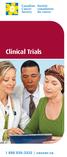 Clinical Trials Clinical Trials This brochure is for people making decisions about cancer treatment. You may be thinking about a clinical trial for you or your child but need to know more before you decide.
Going to a Mental Health Tribunal hearing
 June 2015 Going to a Mental Health Tribunal hearing Includes: information about compulsory treatment and treatment orders information about Mental Health Tribunal hearings worksheets to help you represent
Critical Illness. Learn How a Serious Illness Can Cost You Much More Than What Your Health Insurance Covers. According to a Harvard University study
 Critical Illness Learn How a Serious Illness Can Cost You Much More Than What Your Health Insurance Covers According to a Harvard University study [each year] more than 1.5 million American households
Obsessive Compulsive Disorder (OCD)
 Obsessive Compulsive Disorder (OCD) Introduction Obsessive compulsive disorder, or OCD, is a type of anxiety disorder. OCD causes repeated upsetting thoughts called obsessions. To try and get rid of these
Are you buying private medical insurance? Take a look at this guide before you decide 2008
 Are you buying private medical insurance? Take a look at this guide before you decide 2008 2 Private medical insurance Private medical insurance 3 Contents 1. About this guide 4 2. What is private medical
AIG Life. Additional support from AIG Medical advice from the world s Best Doctors
 AIG Life Additional support from AIG Medical advice from the world s Best Doctors At AIG Life, we provide more than financial support when illness or injury threatens your life, lifestyle or livelihood.
Autism and Intellectual Disabilities
 Autism and Intellectual Disabilities (DSM IV & V) Accessibility Politecnico di Milano Autism (I) A total of six (or more) items from (A), (B), and (C), with at least two from (A), and one each from (B)
Advances in MOvEMEnt DIsOrDErs:
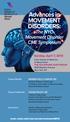 Advances in MOvEMEnt DIsOrDErs: The NYC Movement Disorder CME Symposium sunday, April 7, 2013 Icahn School of Medicine at Mount Sinai the goldwurm AuDItOrIuM New York, NY Course Director Course Co-Director
Depression. Introduction Depression is a common condition that affects millions of people every year.
 Depression Introduction Depression is a common condition that affects millions of people every year. Depression has an impact on most aspects of everyday life. It affects eating and sleeping routines,
Urinary Incontinence FAQ Sheet
 Urinary Incontinence FAQ Sheet Are you reluctant to talk to your doctor about your bladder control problem? Don t be. There is help. Loss of bladder control is called urinary incontinence. It can happen
Parkinson's s disease - a
 Parkinson's Disease Parkinson's s disease - a progressive disorder of the nervous system that affects movement. The most common perception of Parkinson s is the patient having tremors. Hands shaking, inability
dealing with a depression diagnosis
 tips for dealing with a depression diagnosis 2011 www.heretohelp.bc.ca No one wants to feel unwell. Talking to your doctor or other health professional about problems with your mood is an important first
The Top Five. FMLA Compliance Mistakes That Could Land You in Court
 The Top Five FMLA Compliance Mistakes That Could Land You in Court A slip of the tongue, a misplaced remark, the wrong job assignment: managers make mistakes every day. When the mistake involves FMLA,
Understanding. Brain Tumors. Jana, diagnosed in 1999, with her husband, Paul.
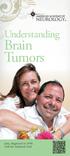 Understanding Brain Tumors Jana, diagnosed in 1999, with her husband, Paul. What Is a Brain Tumor? A brain tumor, like other tumors, is a collection of cells that multiply at a rapid rate. The tumor may
In-service training available through Netflix
 In-service training available through Netflix Instructions: Request the video from Netflix, print out and complete the worksheet for that particular movie, and return the completed worksheet to your licensor.
Raising Awareness of Primary Immunodeficiency through the Media for National Primary Immunodeficiency Awareness Month (April)
 Raising Awareness of Primary Immunodeficiency through the Media for National Primary Immunodeficiency Awareness Month (April) Thank you for your interest in promoting National Primary Immunodeficiency
Traumatic Brain Injury
 Traumatic Brain Injury NICHCY Disability Fact Sheet #18 Resources updated, March 2011 Susan s Story Susan was 7 years old when she was hit by a car while riding her bike. She broke her arm and leg. She
Electroconvulsive Therapy - ECT
 Electroconvulsive Therapy - ECT Introduction Electroconvulsive therapy, or ECT, is a safe and effective treatment that may reduce symptoms related to depression or mental illness. During ECT, certain parts
Why Back Safety is Important
 Back Safety Why Back Safety is Important Back injuries are considered by OSHA (the Occupational Safety and Health Administration) as the nation's #1 workplace safety problem. Back Injuries are often: Very
Developmental Disabilities
 RIGHTS UNDER THE LAN TERMAN ACT Developmental Disabilities Chapter 2 This chapter explains: - What developmental disabilities are, - Who is eligible for regional center services, and - How to show the
Hope, Help & Healing. A guide to helping someone who might have a drug or alcohol problem. www.drugfree.org
 Hope, Help & Healing A guide to helping someone who might have a drug or alcohol problem www.drugfree.org Are you worried that someone you care about has a drug or alcohol problem? Or do you feel your
ABC s of Parkinson s Disease 4/29/15 Karen Parenti, MS, PsyD
 ABC s of Parkinson s Disease 4/29/15 Karen Parenti, MS, PsyD What is Parkinson s Disease? Parkinson's disease is a progressive disorder of the nervous system that affects movement. It develops gradually,
NeuroStar TMS Therapy Patient Guide for Treating Depression
 NeuroStar TMS Therapy Patient Guide for Treating Depression This NeuroStar TMS Therapy Patient Guide for Treating Depression provides important safety and use information for you to consider about treating
TOP 10 SOCIAL SECURITY DISABILITY QUESTIONS
 TOP 10 SOCIAL SECURITY DISABILITY QUESTIONS 1. How do I apply for Social Security? You can apply for it over the phone, over the internet or in person. If you are disabled and cannot work, do not wait.
Are You Buying Private Medical Insurance? Take a look at this guide before you decide
 Are You Buying Private Medical Insurance? Take a look at this guide before you decide 2012 ARE YOU BUYING PRIVATE MEDICAL INSURANCE? 3 Contents 1. 2. 3. 4. 5. 6. 7. 8. 9. 10. 11. About this guide 4 Understanding
Hope, Help & Healing
 and Washington Hope, Help & Healing A guide to helping someone who might have a drug or alcohol problem www.drugfree.org 1-800-562-1240 YOU ARE NOT ALONE Are you worried that someone you care about has
Palliative Care for Children. Support for the Whole Family When Your Child Is Living with a Serious Illness
 Palliative Care for Children Support for the Whole Family When Your Child Is Living with a Serious Illness Palliative care provides comfort and support to your child and family. When a child is seriously
SO, YOU ARE HAVING DBS SURGERY?
 SO, YOU ARE HAVING DBS SURGERY? This resource is for Awake Deep Brain Stimulation (DBS) patients. Welcome to Brigham and Women s Hospital and the Deep Brain Stimulation (DBS) Program Serving patients in
LOW BACK PAIN: SHOULD I HAVE AN MRI?
 DATE: / / HG SY EH CQ RL AS JZ Name: (Last, First, M.I.) M F DOB: / / Decision Point LOW BACK PAIN: SHOULD I HAVE AN MRI? You may want to have a say in this decision, or you may simply want to follow your
Opening Our Hearts, Transforming Our Losses
 Preface Alcoholism is a disease of many losses. For those of us who are the relatives and friends of alcoholics, these losses affect many aspects of our lives and remain with us over time, whether or not
Diuretics: You may get diuretic medicine to help decrease swelling in your brain. This may help your brain get better blood flow.
 Hemorrhagic Stroke GENERAL INFORMATION: What is a hemorrhagic stroke? A hemorrhagic stroke happens when a blood vessel in the brain bursts. This may happen if the blood vessel wall is weak, or sometimes
Emergency Room (ER) Visits: A Family Caregiver s Guide
 Family Caregiver Guide Emergency Room (ER) Visits: A Family Caregiver s Guide Your family member may someday have a medical emergency and need to go to a hospital Emergency Room (ER), which is also called
The Media Image of the Diabetic. the news says is "diabetes," "diabetics," and "obesity," so will my friends think I'm diabetic
 McCarthy 1 Bethany McCarthy Mrs. Tasha Bowlin English 100 Writing 1 13 Mar. 2013 The Media Image of the Diabetic As a type one diabetic, being diagnosed at the age of five years old, I've always known
COVERAGE You re going to have to edit your film later. How do you make sure you get enough footage for that to work?
 MAKE IT YOUR STORY CINEMATOGRAPHY Film is a visual medium - which just means it s a story you consume through your eyeballs. So, when you ve got your story figured out, you need to think about the best
INNOVATIVE 5-STAR SERIOUS ILLNESS COVER
 INNOVATIVE 5-STAR SERIOUS ILLNESS COVER FROM VITALITYLIFE VITALITY.CO.UK/LIFE YOU RE UP TO TWICE 1 AS LIKELY TO GET A PAYOUT FROM OUR SERIOUS ILLNESS COVER THAN YOU ARE FROM A TYPICAL CRITICAL ILLNESS
Will the pre-existing ailment waiting period affect you? information for consumers
 Will the pre-existing ailment waiting period affect you? information for consumers Commonwealth of Australia 2001 This work is copyright. Apart from any use as permitted under the Copyright Act 1968, no
Lesson Plan: What Role Should Government Play in Paying for Health Care?
 Lesson Plan: What Role Should Government Play in Paying for Health Care? THE FILM This lesson plan is designed to be used with the film Life.Support.Music., which documents the recovery of guitarist Jason
DEPUY HIP REPLACEMENTS: WHAT YOU NEED TO KNOW ABOUT THEM
 DEPUY HIP REPLACEMENTS: WHAT YOU NEED TO KNOW ABOUT THEM 1 As people get older, some of their bones actually do get weary and tired. Sometimes, bones and joints need to be replaced by doctors to improve
Bipolar Disorder. in Children and Teens. Does your child go through intense mood changes? Does your child have
 Bipolar Disorder in Children and Teens Does your child go through intense mood changes? Does your child have extreme behavior changes too? Does your child get too excited or silly sometimes? Do you notice
Your Roadmap to Maximize Your Settlement!!!
 Your Roadmap to Maximize Your Settlement!!! Helpful tips to get the most money for your injuries. The Advocates Driggs, Bills and Day PC (801) 355 5550 www.utahadvocates.com 1 Table of Contents: Introduction:
Self Care: How to Maintain Patients Dignity
 Self Care: How to Maintain Patients Dignity 98 Lesson 12: Self Care Vocabulary list Reference Notes at ease idiom. comfortable, relaxed. bowel n. the intestine. catheter n. a tube passed through the body
PSA Distribution Kit
 It s time to change how we view a child s growth. Centers for Disease Control and Prevention (CDC) Learn the Signs. Act Early. Campaign PSA Distribution Kit www.cdc.gov/actearly 1-800-CDC-INFO About This
HOW PARENTS CAN HELP THEIR CHILD COPE WITH A CHRONIC ILLNESS
 CENTER FOR EFFECTIVE PARENTING HOW PARENTS CAN HELP THEIR CHILD COPE WITH A CHRONIC ILLNESS Parenting a chronically ill child is a challenge. Having a child with a chronic illness is stressful for any
Message, Audience, Production (MAP) Framework for Teaching Media Literacy Social Studies Integration PRODUCTION
 Message, Audience, Production (MAP) Framework for Teaching Media Literacy Social Studies Integration PRODUCTION All media messages - a film or book, photograph or picture, newspaper article, news story,
MODULE 1: Introduction
 MODULE 1: Introduction Materials Flipchart, display material, pens Icebreaker Welcome everyone to the first session. Explain how long the training programme will run and how long each session will run
Depression is a medical illness that causes a persistent feeling of sadness and loss of interest. Depression can cause physical symptoms, too.
 The Family Library DEPRESSION What is depression? Depression is a medical illness that causes a persistent feeling of sadness and loss of interest. Depression can cause physical symptoms, too. Also called
Hope, Help & Healing. A guide to helping someone who might have a drug or alcohol problem. www.warecoveryhelpline.
 Hope, Help & Healing A guide to helping someone who might have a drug or alcohol problem www.warecoveryhelpline.org 1-866-789-1511 Are you worried that someone you care about has a drug or alcohol problem?
Statement of Ovidio Bermudez, MD, FAAP, FSAHM, FAED, F.iaedp, CEDS
 Statement of Ovidio Bermudez, MD, FAAP, FSAHM, FAED, F.iaedp, CEDS Chief Clinical Officer and Medical Director of Child and Adolescent Services, Eating Recovery Center Senior Board Advisor, National Eating