
Plants and Products. Consumption 4.1.
|
|
|
- Marcus Freeman
- 9 years ago
- Views:
Transcription
1 4 Plants and Products The wealth of plants available to us is overwhelming. This chapter describes the plants listed in the Index to this guide. The Index (see page 128) also gives references Consumption Tea plant Glasshouse 2, Photo 38 Camellia sinensis var. sinensis Camellia sinensis var. assamica The camellia is a garden shrub with beautiful flowers that is also much loved in The Netherlands. The camellia belongs to the tea family (Theaceae), an area of specialisation at the TU Delft Botanical Garden. Some people say that every year a special shrub blooms here for the Lady of the Camellias. The tea we drink is usually made by pouring hot water over tea plant parts, the process that occurs is called extraction. The tea leaves used for the beverage almost always come from the Camellia sinensis bush, of which there are two varieties: var. sinensis and var. assamica. The bush grows naturally in hilly areas, with an average daily temperature not much higher than 18 o C and an even humidity due to annual rainfall of 120 to 250 cm (the average rainfall in Delft is roughly 80 cm). If left to grow the bush becomes a small tree (up to around 15 metres in height). The tea leaves that are picked are the tips of the shoots of new leaves during the period when the very youngest leaf is still folded and the leaf underneath is still soft. In the tea plantations all the shrubs are roughly the same height, the waist of the countless pickers. After the harvest, the leaves 58

2 are allowed to wither and are crushed. The cells are broken and fermentation commences. This fermentation is an enzyme activity, which occurs most strongly at the tip of the shoot. The folded leaves are the tastiest and are destined, of course, for the emperor s tea chest. The fermentation takes several hours, during which time the leaf turns a coppery colour. Fermentation is halted by heating the leaves until they turn black. Green tea is unfermented. Tea has been drunk in China since the 5 th century. The Dutch East Indies Company (VOC ) brought the first shipment of tea to Europe in Theine is the stimulant in the tea that passes to the extract that we drink. The theine in tea is the same substance as caffeine in coffee, but there is generally less theine in the tea we drink than there is caffeine in coffee. The drop of milk we pour into our tea binds the tannins and gives the tea a smoother taste. However, we often make tea really tasty by adding aromatising agents such as lavender, bergamot ( Earl Grey ) or jasmine. Cinchona tree Illus. 3 Cinchona ledgeriana syn. C. offi cinalis Cinchona ubescens The genus Cinchona (cinchona tree or quinine bark) is a member of the Rubiaceae family and originally comes from mountainous areas in South and Central America. The native Indians already knew that the bark of the tree of this genus contained antipyretic substances. This knowledge was brought to Europe by the Spanish conquerors in the 16 th and 17 th centuries. Demand for antipyretic medicines increased when colonial expansion in the tropics really took off in the 19 th century. This included areas where malaria was very common, such as the former Dutch East Indies. Dutch explorers also went to Latin America in search of seeds and cuttings. In the mountainous 59

3 regions of Java it finally proved possible to grow the cinchona tree. Quinine came to be the best-known medicinal use of the bark to alleviate the symptoms of malaria. The antipyretic substances in the cinchona bark are a collection of chemically distinct but related compounds that are all found in the various types of cinchona tree, but to varying degrees depending on local conditions, and in different parts of the tree. It seems, however, that only the species offi cinalis and pubescens and their special varieties contain the effective substances in commercially viable quantities. There are now two main producing countries, Zaire (Congo) and Indonesia. In Zaire the trees are grown and cut down when they are ten years old. In Java the trees are also cut down but earlier and shoots are left growing out of the stump of the trunk in a manner similar to willow cultivation. The recovered bark is ground locally for export. The quinine is then extracted elsewhere. The stench from the quinine factory in Maarssen near Utrecht was a familiar smell for miles around right up until the 1960s. The bitter taste of quinine also enhances the effect of a soft drink like tonic. Coconut palm Glasshouse 4, Photo 50 Cocos nucifera A coconut can be as large as a human head. The coconut is the fruit of the coconut palm, which is the only species of its genus and belongs to the Palm family (Arecaceae). A coconut consists of woody outer layer of fibres, which also have important uses, and contains a single seed. The food storage of this seed is formed fairly soon after fertilisation, is initially quite liquid and attaches itself to the inside of the brown skin of the seed. The coconut milk and the young soft stored food have a pleasant taste: I want coconut milk with sugar, there s nothing else I want was a popular Dutch tune in the 1950s. The stored food in the seed pit later becomes more solid. When the ripe coconuts are harvested these contents are removed and dried. The result is called copra, which still contains 70% coconut oil. A coconut can yield around 300 grams of copra. Every coconut palm produces from ten to a hundred coconuts a year. Obviously the number can vary quite significantly, depending on the age of the coconut palm and the growing conditions. The coconut palm probably originated in the Indonesian archipelago. The coconut floats easily, which is probably how the coconut palm spread throughout the tropics, carried all over by the sea as well as by humans. The archetypical image of the tropics is a deserted white beach with 60

4 coconut palms along the shore. Coconut palms can survive for a century and grow to a height of around 30 metres. The trunk provides very hard wood and the leaves are used for roofing. The flowers bloom in bunches and when cut the flowers produce palm juice, from which sugar is made by a process of evaporation ( gula jawa as it is called in Indonesia ) or palm wine after fermentation. A fat is a solid oil and an oil is a melted fat. Whether a substance is called an oil or a fat at room temperature depends on its solidification point. Coconut oil in the tropics is usually coconut fat in Europe. Seventy percent of all oils and fats are of vegetable origin. Plants generally produce oils, in other words fats with a fairly low solidification point. Fats and oils are important for nutrition but they also significant in applications such as lubricating oil, fuel for our gas-guzzling combustion engines as well as candles, cosmetics and paints. Chemically speaking, oils and fats are compounds of fatty acids and alcohol. Modern consumers know these fatty acids as saturated or unsaturated. Vegetable fats and oils always contain unsaturated fatty acids. Animal fats generally also contain saturated fatty acids, while many sea creatures (fish and seals) in fact have fats containing polyunsaturated fatty acids. First and foremost, oils and fats provide calories which the modern consumer needs in today s stressful life, although there is less need for them in the present age of obesity. Fats are important for transporting vitamins through the body because most vitamins do not dissolve in water but do in fats. Unfortunately, coconut oil contains mainly saturated fatty acids although there are also some unsaturated fatty acids in it. More importantly, however, coconut oil contains fatty acids that are very suitable for manufacturing soap because of their small molecules. 61

5 Coffee plant Glasshouse 1, Glasshouse 4, Photo 36, Illus. 4 Coffea arabica Coffea canephora Coffea robusta What coffee and tea have in common is that they both contain a substance that is a stimulant for humans, known as theine or caffeine. The genus Coffea belongs to the Rubiaceae family, which in fact grows mainly in the tropics. Coffea species that produce the raw material for the coffee we drink are Coffea arabica, Coffea robusta, Coffea liberica and Coffea canephona. The first species accounts for 75% of world coffee production. A large part of the coffee production is in fact a so-called robusta melange, generally consisting of Coffea arabica and Coffea robusta. Coffee plants are small shrubs or trees up to 12 metres high. The plants on the plantations are no higher than a man s height since the fruit generally has to be picked by hand. The coffee bush blossoms with white aromatic bunches of flowers three to four times a year. The coffee bush grows best on volcanic soil with ample rain and temperatures that are not too high but can be slightly higher than for tea, at up to 22 o C. The fruit is red when it ripens and contains two seeds that are dried and then roasted at temperatures between 200 and 250 o C. Drinking coffee and tea became popular at around the same time in Europe from the 17 th century onwards, first among the wealthier classes and later as a stimulant among the general population. The Dutch East Indies Company (VOC ) initially bought the coffee in Ethiopia and Sudan, the region where it was known to grow at that time. The cultivation of coffee spread to Arabia and Malabar (India). 62

6 The VOC introduced the first coffee plant in the Botanical Gardens in Amsterdam. A mayor of Amsterdam donated several coffee plants to King Louis XIV of France for the Jardin de Plantes in Paris at the beginning of the 18 th Century, which led to the establishment of the Paris cafés. These plants would later provide the basis for the cultivation of coffee in Latin America. From the end of the 17 th century the VOC experimented with coffee cultivation in Java. The first Javanese coffee (894 pounds) was auctioned in Amsterdam in Coffee is still an important agricultural product in Java. The Indonesian Luwak coffee (or Kopi Luwak ) is world famous, but is not only grown in Indonesia but also in other parts of South-East Asia. The wild civet eats the fresh red coffee berries in the coffee plantations. The coffee beans are picked out of the civet droppings and then fermented and lightly roasted. Even today these are still the most exclusive coffee beans in the world. The question of course is whether the number of civets in the coffee plantations corresponds with the supply of Kopi Luwak. In the 17 th century doctors recommended coffee and tea as a remedy for all sorts of ailments and as stimulants of various desires. The caffeine in coffee and tea does indeed stimulate the heart function and the blood flow, including to the brain, thus reducing tiredness and the need for sleep and increasing alertness and a sense of well-being. African oil palm Glasshouse 4, Photo 51, Illus. 5 Elaeis guineensis The African oil palm naturally belongs to the Palm family (Arecaceae). This palm originally comes from tropical Africa and was introduced to the Indonesian Archipelago and Malacca in the middle of the 19 th century. African oil palm only became commercially important quite late on: around 1910 in Sumatra, 1920 in Africa and 1930 in America. The most important producers now are Indonesia, Malaysia and Zaire. The African oil palm is by the far the most 63

7 economically important oil plant. Palm oil can be used as an ingredient for soap and candles and for cooking fats such as margarine and cooking oil. Palm oil can also substitute for diesel fuels in motor engines. In principle, therefore, palm oil could be a renewable fuel. The African oil palm forms clusters of more than 1000 drupes, which together can have a mass of more than 15 kilograms. These fruit are often orangered, red or black. The flesh of the fruit contains 40-60% palm oil, which is often orange in colour due to the presence of carotene. The pit contains the palm kernel oil. Each hectare of oil palm yields 2.6 tonnes of palm oil and 0.25 tonnes of palm kernel oil. The palm oil contains monounsaturated fatty acids and palm kernel oil contains polyunsaturated fatty acids. Jerusalem artichoke Route no. 18, Photo 18 Helianthus tuberosus The genus Helianthus belongs to the Composites family (Asteraceae) and comprises around 50 to 60 different species, the best known of which is the sunflower (Helianthus annuus). The entire genus is native to America and hence only arrived in Europe after Columbus voyage. The sunflower comes from North America and is in fact the only North American contribution to the list of major consumption crops. The Jerusalem artichoke (or topinamboer ) also comes from North America. In the summer the plant forms tubers which it uses to survive the winter. The plant was first imported to Europe in around It was initially fairly commonly grown for these tubers, but it was quickly displaced by the potato, which also originated in America. Helianthus tuberosus can be crossed with the sunflower. Jersualem artichokes contain quite a lot of carbohydrates, mainly in the form of inulin. Inulin is a chain molecule of various sugars. The widely known sucrose is of course a sugar, but glucose and fructose are two other types of sugar. Inulin consists of roughly 30 linked fructose molecules with a glucose molecule at the ends of the chain. The low glucose content of the Jerusalem artichoke means that diabetics can eat it. Inulin is more 64

8 or less resistant to human digestion, but is broken down by bacteria in the colon releasing significant quantities of methane and carbon dioxide. Consuming inulin can therefore initially lead to increased flatulence, but it is useful in a low calorie weight-loss diet. Inulin was an important subject of research at the TU Delft Botanical Garden in the second half of the 20 th century. One name inseparably linked with this research is that of Professor A. Fuchs, one of Van Iterson Jr s successors. West-Europe is a fairly important production area for inulin from Helianthus tuberosus, but also from chicory (Cichorium intybus). Inulin is widely used in the food industry for dairy products, baking products, soft drinks, ice cream and sweets. Inulin can also be used as a raw material for agents for water treatment to counter the formation of unwanted precipitates. Common juniper Route no. 10, Photo 10 Juniperus communis The Common juniper is a conifer and belongs to the Cypress family (Cupressaceae). There are fifty species of the genus Juniperus, of which only the Common juniper occurs in the wild in The Netherlands. There are fairly large stands in some areas in the north of the country, particularly in the province of Drenthe. Juniperus communis is internationally recognised as a threatened species or a species facing extinction. By contrast with other conifers, the plant forms berrylike fruit. It grows well in shifting sands and on dry moorland. There are male and female plants. The female juniper berries bear cones when they blossom with three seed buds which eventually grow to form a berry-like fruit. The fruit contains an etheric oil and resin. Etheric oil is also found in the bark and wood of the Common juniper. The berries provide the unmistakable taste of the Dutch gin known as jenever. The 65

9 jenever industry in Schiedam, which in fact enjoyed its heyday in the 18 th century, was of course a natural market for the pickers of juniper berries. The wood of the Common juniper is relatively hard and is used in woodturning and for walking sticks. Lovage Route no. 21, Photo 21 Levisticum offi cinale Lovage is a member of the Umbellifer family (Apiaceae). Lovage is a perennial that can often grow to around two metres in height in The Netherlands. The plant originally comes from West Asia and was introduced to Europe as early as the Middle Ages. In Europe, lovage is commonly known as the Maggi plant. When rubbed the leaf smells like the very popular, piquant flavouring sauce in which it is an important ingredient. The etheric oil from the leaves promotes the production of the gastric juices and thus appetite, which in a time of obesity is not necessarily an advantage. Nevertheless, a lovage leaf tastes delicious in soup. Lovage is nowadays regarded as a European herb. Spices and kitchen herbs are used to give taste, colour and aroma to meals. Many spices and herbs were originally believed to possess medicinal properties. Some spices do not exist as separate plants. Curry powder is a mixture of powders from various plants. Practically all curry powder contains powder from turmeric (Curcuma longa) and coriander (Coriandrum sativum). Most spices come from overseas regions. Colonial history has often played a role in the use of spices. The European kitchen herbs, on the other hand, often come from the region around the Mediterranean, which was once known as the inland sea of the Roman Empire and may in future be known as the European Union s inland sea. Consequently, there is a long history associated with the use of both spices and herbs. Nevertheless, the cultivated 66

10 plants of kitchen herbs are scarcely distinguishable from the wild species. This is probably because the quantities of herbs needed to flavour meals are rather small so there was no need to increase yields, which was an important driving force behind the improvement of other food crops. Nutmeg Glasshouse 2, Photo 40 Myristica fragrans The genus Myristica (nutmeg ) consists of roughly 120 species of trees, all of which have succulent green leaves that are lanceolate and leathery, and belongs to the Nutmeg family (Myristicaceae). The flowers are very small. The plant is dioecious and there are therefore male and female trees. The plant only blossoms after four years at the earliest, so that only then is it certain which bear fruit and which don t. One male tree to ten female trees is sufficient for fructification. To be certain of fructification, propagation often takes place using cuttings of the female plant. The fruit looks like the fruit of the horse chestnut without the spines. When it is dried the seed produces nutmeg, while the covering of the seed becomes mace when it is dried. The Myristica fragrans originated in the Moluccas, particularly the Banda Islands and Ambon. Consumption of nutmeg implies ingestion of the substance myristicin which has hallucinatory effects. Just two nutmegs can be fatal! Fortunately, such fatal doses are not easily consumed when it is used as a spice. Indonesia is still the most important producer, accounting for roughly 60% of world production. Nutmeg and mace were important spices for the VOC. The demand for spices in Europe was sustained not only by their use in adding flavour and aroma to meals, but above all by their assumed medicinal effect. Mace was recommended for treating stomach ailments, for inducing contractions during birth and for preventing flatulence, colds and lung complaints. Nutmeg was regarded as a remedy for stomach complaints, colds, diarrhoea and boils. Given the general state of health of the European population during 67

11 the VOC period there was a continuous demand for these spices. The trees of Myristca fragrans demand growing conditions that are actually only found on the Banda Islands and Ambon: around 3,000 millimetres of rain a year, temperatures of between 25 and 30 o C and a permeable alkaline volcanic soil. Nevertheless, the TU Delft Botanical Garden has one of the largest nutmeg collections in the world, which flourishes on a combination of micro-organisms around the root-hairs and the composition of the soil. The trees in fact only bear good fruit when they are around ten years old. The higher the tree, the larger the crop. The yield peaks when a tree is twenty-five years old, with two thousand fruit per tree annually at a height of approximately 18 metres. If the trees are in good health and are protected from sun and sea wind by other trees and bushes, pyramid-shaped crowns form with bottom branches of up to five metres in length. After being picked the nuts are dried until they are extremely hard. They are first treated for fungi and parasites and sorted by size before they are sold. Tobacco Wild Tobacco Route no. 19, Photo 19, Illus. 8, Illus. 9 Nicotiana tabacum Nicotiana rustica The genus Nicotiana is a member of the Nightshade family (Solanaceae). The Nightshade family includes various consumer crops: potatoes, tomatoes, paprikas, aubergines and Spanish peppers (not to be confused with real pepper ). Nicotiana is a genus comprising roughly 70 different species, most of which are indigenous to America. After all, the American Indians smoked the peace pipe. Nicotiana tabacum is an annual herb. The plants are cultivated from seeds and later transplanted to fields. The 68

12 large leaves are spread along the stems. The rather beautiful flowers are at the end of the stems. These flowers are often cut off to allow the leaves to grow further since they are what the plant is being grown for. Sometimes the leaves are removed in stages, but in other cases the entire plant is harvested when the time is right. How the crop is then treated depends very much on the product it is to be used for: cigarettes, cigars (the famous Deli wrapper from Sumatra ), snuff, chewing tobacco or pipe tobacco. Other factors that affect the ultimate taste of the tobacco when it is being smoked, chewed or sniffed are the growing conditions and the variety of the tobacco. The crop is generally dried and fermented. For cigars and pipe tobacco the plucked ripe leaf is slowly dried and fermented. For cigarettes, the leaf is dried at a higher temperature and there is no fermentation. The tobacco is then more or less yellow, while cigar and pipe tobacco is tobacco brown. Pipe tobacco and chewing tobacco are sauced to give additional flavour. It is well known that the consumption of tobacco in any of these variations is anywhere from slightly to highly addictive. This addictiveness is caused mainly by the nicotine. Four percent of the weight of a dried tobacco leaf is nicotine. The tobacco leaf can be so easily smoked because it contains a relatively large amount of nitrates. Nicotine is in fact toxic to humans and is sometimes used as an insecticide. Vitamin B3 is nicotinic acid, a substance derived from nicotine. These latter applications of the tobacco plant use the waste from the tobacco industry and wild tobacco, Nicotiana rustica. This species is also specially planted in some countries for this purpose. There are varieties of Nicotiana rustica in which as much as 12% of their weight is nicotine! 69

13 Rice Glasshouse 3, Photo 46, Illus. 10 Oryza sativa With globalisation the variety of fruit and vegetables available in greengrocers and supermarkets has increased enormously in recent times. It seems as though people are eating more and more types of plants. Nothing could be further from the truth! Early in the history of mankind, people already selected a relatively small number of food crops (grains, beans, cabbages and fruits) that have provided the staple food supply since prehistoric times. Only around 20 different types of crops are really important to feed mankind. Rice is one of the traditional food crops. Rice is the principal foodstuff for a large part of the world s population. Although it is know as the grain of the tropics, rice can grow very well in nontropical regions, which is why Italy and the United States of America are also important production areas. The US is in fact the largest rice-exporting country after Thailand. Rice belongs to the Grass family (Poaceae). The genus Oryza has more than 20 species, not all of which have been named. The relationship of Oryza sativa to the wild species of rice is also not entirely clear. For the people of Java and The Netherlands rice cultivation is associated with rice paddies. The young rice seedlings are planted in the paddy fields, pieces of land that have been flooded and are surrounded by small dikes. This wet rice cultivation requires an extensive irrigation system embedded in a complex social structure that makes the irrigation system possible. Dry rice cultivation is also possible, however, although rice does require a lot of water and heat, particularly during the growing season. Rice blossoms with a panicle of spikelets, which gives the plant a tremendous elegance. The 70

14 paddy fields are drained when the panicles start to grow. The plants are then cut and threshed. After the threshing, the outer protective husk of the grains has to be removed. This is often done by stamping on the raw rice ( paddy ). The result is brown rice or unpolished rice. Unlike wheat and other grains from temperate climates, rice does not have to be milled. Brown rice is ready to cook. The bran coat can also be removed from brown rice to produce white rice, but unfortunately this means that many of the vitamins and proteins in the brown rice are lost. Glutinous rice is another variant, Oryza sativa var. glutinosa, which ultimately yields the sticky grains that appear on the table and are so easy to eat with chopsticks. The rice chaff is used as a raw material for paper and cardboard and is a potential source of silicon, which is so important as an information carrier today. Pepper Glasshouse 3, Photo 45 Piper nigrum The genus Piper, belonging to the Pepper family (Piperaceae), contains more than 1,000 different species. They are all climbing plants and Piper nigrum also needs support when it is growing. Piper nigrum can grow to a length of 10 metres! Piper nigrum is indigenous to the west of India (Malabar), but has spread since ancient times. Sumatra and 71

15 West Java (Bantam) were important production areas around Pepper is perhaps the best known trading product of the VOC, and during a large part of the 17 th century it was the most important. Pepper was very popular for flavouring, but just as important was pepper s medicinal function in the 16 th and 17 th centuries. Pepper was known as a remedy for stomach complaints, liver disease, eye diseases and flatulence. Piper nigrum only grows between latitudes 20º north and south of the equator, in hilly areas, around 500 metres above sea level with regular rainfall, good humidity and a permeable humus soil. The stems start to bear fruit around four to six years after planting. Naturally, cultivated plants are not allowed to grow to 10 metres long. They are tied to stakes and kept short. The plant does not climb with tendrils like the vine, for example, but the branches have adhesive roots. The flowers are borne on pendulous spikes with as many as 50 to 100 florets. The fruit is actually a small drupe. The colour of pepper depends on the method of harvesting and the subsequent treatment. The fruit, which is still green when harvested, is allowed to dry. The small layer of flesh is dried, shrinks and the fruit becomes black pepper. The ripe fruit is red. When the fruit starts to colour it can be harvested. The spikes are placed in sacks that are laid in water. This starts a fermentation process during which the flesh of the berries decomposes. The remaining white seeds are then dried in the sun, which produces white pepper. The fruit that is still green can also be preserved to produce green pepper. Red pepper granules come from an entirely different plant, Schinus molle, a shrub that originates in South America and is a member of the Sumac family (Anacardiaceae). Related to Piper nigrum are Piper cubeba (tailed pepper), which is used in Indonesia to make cigarettes, and Piper methysticum, whose roots are chewed by some inhabitants of New Guinea to prepare a narcotic drink. 72

16 Sugar cane Saccharum offi cinarum Sugar beet Beta vulgaris var. altissima Glasshouse 4, Photo 53, Route no. 20, Photo 20, Illus. 1 People have a limited number of basic tastes: bitter, sour, salty and sweet. Although a bitter taste is said to be good for the heart, most people prefer sweet. Sweetness is the first result of photosynthesis in plants. From carbon dioxide, light and water plants produce glucose, one of the many sugars in plants. Sacharose or sucrose is what is commonly referred to as sugar. Sugar cane and sugar beet are the main plants from which sucrose is produced, but they are not the only plants that produce sucrose. Other familiar examples are allium or the onion genus, dates and figs. The juice of the sugar palm (Arenga pinnata syn. A. saccharifera) also contains a lot of sucrose, so much in fact that the sugar palm is sometimes specially planted for it in sugar plantations. Sugar cane originates in East Indonesia. Sugar cane belongs to the Grass family (Poaceae). Sugar and sugar cane have been known in India and China since around the time of the beginning of the Common Era. From 900 CE sugar and sugar cane were found in Mediterranean countries. In Europe in the Middle Ages sugar was mainly used by apothecaries to give a pleasant taste to other medicines, but also as a medicine itself (as the Latin word offi cinarum indicates its use by the pharmacist). The Portuguese and Spaniards brought sugar and sugar cane to Latin America at the time of the great voyages of discovery (Cuba, Brazil and Surinam). The use of sugar as a sweetener in Europe also dates from this period. The 73

17 74 genus Saccharum consists of just a small number of species. It seems likely that what is now known as Saccharum offi cinarum was created by being crossed with other grass species, perhaps even belonging to another genus. In any case, Saccharum offi cinarum is unknown as a wild plant. It is a perennial grass with thick stalks taller than the height of a man. Propagation generally occurs through cuttings. Growing sugar cane is labour intensive. The stalks have to be cut by hand. They are finely crushed and the resulting pulp is boiled until a large part of the sugar has been removed. The boiled mix is evaporated until a more or less solid product is formed. In the 17 th century, part of what is now Brazil was owned by the Dutch West Indies Company (WIC). For a long time Johan Maurits van Nassau, the founder of the Mauritshuis in The Hague, was the governor of the colony. It was one of his great achievements that he breathed new life into the sugar industry in the colony. The refining of sugar from sugar cane was partly developed by the Arabs: sugar comes from the Arab word sukkar, which referred to sugar loaves sown into linen. In Brazil the cut-down stalks were pressed in sugar mills driven by horses, oxen or hydropower. After being boiled the syrup was poured into stone moulds and when it had solidified the resulting sugar loaves were shipped to the Republic, mainly to Amsterdam, which was a centre of sugar refining. There, the sugar was refined

18 by repeated dissolving and boiling. When the WIC lost possession of Brazil to the Portuguese, the sugar cane plantations and the accompanying sugar mills moved to what is now Surinam. In the Dutch East Indies, particularly in Java, sugar was an important crop in the 19 th and 20 th centuries. In the meantime the mills had been replaced by steam machines. The main fuel for the steam boilers was the pressed cane stalks. During the Napoleonic era, the Continental System practically stopped the Dutch trade and hence also the import of raw sugar from America. Fortunately, in the mid-18 th century a German chemist had already discovered the sweetness of the beet Beta vulgaris, which belongs to the Goosefoot family (Chenopododiaceae). All known beets, red beet, beetroot or chard are forms of Beta vulgaris. Red beets were already being grown as a food crop in the countries around the Mediterranean even before the Common Era. The Romans brought red beet to the Low Countries along the North Sea. All beets are genetically biennials, but the sugar beet is already harvested for sugar production after six months in the same year as it is sown. The beet is actually the thickened main root. Sugar beet also comes originally from the Mediterranean region, but is nowadays grown throughout Europe. The Netherlands has been an important production area since Napoleonic times, although cane sugar remained very important for a long time because of the sugar industry on Java. The beet contains around 18% sucrose, which represents a yield of around 5 tonnes of sugar per hectare. The sugar yield from sugar cane can reach 17 tonnes per hectare. It is no wonder that cane sugar has a competitive advantage. 75

19 Cacao Glasshouse 3, Photo 44, Illus. 11 Theobroma cacao The genus Theobroma consists of approximately 30 species and belongs to the Sterculiaceae family. These species are indigenous to the Latin American tropical rain forests. They have large simple leaves, which grow directly on the trunk or on large bare branches. In the wild the tree grows to a height of around 12 metres. The flowers are surprisingly small and vary from white to pink. They are pollinated by insects, often more successfully in the wild than on plantations, which can nowadays be found in every tropical region. An important production area is Ivory Coast in West Africa. In Dutch greenhouses pollination is performed manually. The fruit are surprisingly large, around 20 centimetres long. The fruit take six months to ripen and come in a range of colours: red, purple, yellow or orange. Each fruit contains 20 to 50 seeds, the cacao beans. These seeds are embedded in a sweet, juicy pulp, which is a particular delicacy sought after by various animals. The seeds are fermented with the flesh for some time at temperatures of up to 50 o C. After fermentation the seeds are dried and then roasted. This produces the characteristic taste and smell of cocoa. The outer layer is removed from the cacao beans and the peeled beans are then ground into an oily paste, the cacao mass. The cocoa butter is pressed from the cacao mass and the residue is dried and ground into cocoa power. Chocolate is produced by adding extra cocoa butter to the cacao mass, although other fats can be used instead of the cocoa butter. White chocolate is a mixture of cocoa butter, dairy ingredients and sugar. 76

20 The cocoa butter is the fat of the cacao bean. The fat is solid at room temperature but melts at around 35 o C. This fact forms the basis for the processing of chocolate into ingenious bonbons. Approximately a third of cocoa butter consists of an unsaturated fatty acid. Unfortunately, the other fatty acids are fully saturated; otherwise chocolate would fit in well with a modern healthy diet! The beans also contain several stimulants such as caffeine and a related substance called theobromine. Chocolate does act as a stimulant. Not for nothing did Linnaeus describe the cacao plant as the food of the gods (theo = god and broma = food). Cacao was brought to Europe by the Spaniards in 1520, in other words long before coffee and tea which only reached Europe in the first quarter of the 17 th century. Ginger Glasshouse 6, Photo 57 Zingiber offi cinale The Ginger family (Zingiberaceae) consists of tropical herbaceous plants that form a horizontal root system in the soil known as a rhizome. The stems that grow from these rhizomes can be the actual flowering stalks as well as pseudostems formed by leaf sheaths. The ground rhizome of Alpinia galanga is known in The Netherlands as laos from Indonesian cuisine. Another spice known through the Indonesian kitchen is turmeric or curcuma, which is the ground rhizome of the Curcuma longa plant. Saffron is used in large parts of Europe, the Near East and Middle East as a yellow colouring agent in meals, for example in rice. Curcuma is known as Indonesian saffron because it is mainly used to add a yellow colouring to Indonesian meals. Cardamom is a spice that comes from the seeds of the Elettaria cardamomum, a plant in the 77

Nutrients: Carbohydrates, Proteins, and Fats. Chapter 5 Lesson 2
 Nutrients: Carbohydrates, Proteins, and Fats Chapter 5 Lesson 2 Carbohydrates Definition- the starches and sugars found in foods. Carbohydrates are the body s preferred source of energy providing four
AIJN Guideline for Vegetable Juices and Nectars
 AIJN Guideline for Vegetable Juices and Nectars 1. INTRODUCTION This guideline is applicable without prejudice to the national legislation of each Member State and/or Code of Practice and cannot be used
Essential Khmer Spices. Cooking Class Courses
 Cooking Class Essential Khmer Spices Cooking Class Courses In Khmer Niam Bay is the word for eating but the real meaning is Eating Rice. Showing how the rice is so important in Cambodia. Almost every meal
CHAPTER 21. Miscellaneous edible preparations
 NOTES : 1. This Chapter does not cover: CHAPTER 21 Miscellaneous edible preparations (a) mixed vegetables of heading 0712; (b) roasted coffee substitutes containing coffee in any proportion (heading 0901);
Sugars, Starches, and Fibers Are All Carbohydrates
 Sugars, Starches, and Fibers Are All Carbohydrates What are carbohydrates? Today's food advertisements call them carbs, but they are not all the same. They are a group of compounds that have some similarities
Bitter or sweet, dark or
 God s World News Lessons Loco for Cocoa by Jenny Pitcock Bitter or sweet, dark or white, studded with bacon or sprinkled with gold. Candy lovers eat chocolate every way imaginable. And there s no better
Cocoa Growing Countries
 Cocoa Growing Countries Cocoa powder and chocolate are made from the dried seeds that are found in pods on the cacao tree. In the 18th century the Swedish botanist, Carolus Linnaeus, renamed the cocoa
Topic 4 Products of slave labour
 Learning Resource 2 Slavery in the Caribbean Topic 4 Products of slave labour In the British Caribbean the main crops grown for export by enslaved labourers were sugar, cocoa, tobacco and coffee. Other
DIABETES & HEALTHY EATING
 DIABETES & HEALTHY EATING Food gives you the energy you need for healthy living. Your body changes most of the food you eat into a sugar called glucose. (glucose) Insulin helps your cells get the sugar
ST 2004-01 Food Definition, Issued May, 2004; Revised June, 2007 and May, 2015
 Business Tax Division Sales & Use Tax P.O. Box 530 Columbus; Ohio 43216-0530 www.tax.ohio.gov ST 2004-01 Food Definition, Issued May, 2004; Revised June, 2007 and May, 2015 The purpose of this information
Nutritional Guidelines for Roux-en-Y, Sleeve Gastrectomy and Duodenal Switch. Gastric Restrictive Procedures. Phase III Regular Consistency
 Nutritional Guidelines for Roux-en-Y, Sleeve Gastrectomy and Duodenal Switch Gastric Restrictive Procedures Phase III Regular Consistency The University of Chicago Hospitals Center for the Surgical Treatment
Moringa Oleifera a Multipurpose Tree:
 Moringa Oleifera a Multipurpose Tree: 1.0 Introduction: Amandla Resources 1.1 Moringa Oleifera belongs to the onogeneric family of shrubs and trees and originated south of the Himalayas in Northern India.
WILMAR INTERNATIONAL LIMITED Investor Day Presentation
 WILMAR INTERNATIONAL LIMITED Investor Day Presentation April 25, 2014 BY THOMAS LIM GENERAL MANAGER - TRADING IMPORTANT NOTICE Information in this presentation may contain projections and forward looking
HIGH FIBER DIET. (Article - Web Site) August 20, 2003
 HIGH FIBER DIET (Article - Web Site) August 20, 2003 Dietary fiber, found mainly in fruits, vegetables, whole grains and legumes, is probably best known for its ability to prevent or relieve constipation.
Apricot Tree Prunus armeniaca
 Apricot Tree Prunus armeniaca Up to 25-30 tall x 15-20 wide or partial shade 10 degrees F. General: The Apricot Tree is a subspecies of the peach and dates back 3,000 years to northeastern China. Apricots
Cooking A World of New Tastes
 Cooking A World of New Tastes S E G M E N T 2 Cooking With Moist Heat Steaming Boiling Glazing Segment 2 Cooking With Moist Heat 19 S E G M E N T 2 Cooking With Moist Heat Learning Objectives Apply steaming
LARGE GROUP PRESENTATION: PRESENTER S NOTES
 LARGE GROUP PRESENTATION: PRESENTER S NOTES Introduce yourself. Welcome! We are so glad you are here to learn about fruits and vegetables. Icebreaker Handout: Fruit or Vegetable: Parts of Many Words Read
From cocoa to chocolate
 From cocoa to chocolate Transforming cocoa beans into chocolate is a complex process, in which ingredients, time and temperature play a crucial role. By varying these three parameters, we are able to produce
Types of Cooking Fats and Oils - Smoking Points of Fats and Oils
 Types of Cooking Fats and s - Smoking Points of Fats and s Not all fats are the same. Following are some basics on the various types of fats to help you make sense of what is best for your own body. Saturated
Eating Well with Diabetes. Cassie Vanderwall UW Health Nutrition Registered Dietitian Certified Personal Trainer Certified Diabetes Educator
 Eating Well with Diabetes Cassie Vanderwall UW Health Nutrition Registered Dietitian Certified Personal Trainer Certified Diabetes Educator Outline What is Diabetes? Diabetes Self-Management Eating Well
Maintaining Nutrition as We Age
 SS-207-06 For more information, visit the Ohio Department of Aging web site at: http://www.goldenbuckeye.com and Ohio State University Extension s Aging in Ohio web site at: http://www.hec.ohio-state.edu/famlife/aging
Let s Talk Oils and Fats!
 Lesson Overview Lesson Participants: School Nutrition Assistants/Technicians, School Nutrition Managers, Child and Adult Care Food Program Staff, Teachers Type of Lesson: Short, face-to-face training session
Blenderized & Pureed Recipes
 Blenderized & Pureed Recipes While you are having difficulty chewing or swallowing, use these recipes for preparing pureed meals. Use the recipes as a base for developing your own recipes. Be creative!
Your Cholesterol Lowering Guide
 1 Your Cholesterol Lowering Guide Cholesterol plays a vital role in the day-to-day functioning of your body. However, too much cholesterol in the blood can affect your heart health. The good news is that
February 2006. 23 Best Foods for Athletes
 23 Best Foods for Athletes February 2006 1. Beans Legumes a. Excellent source of fiber (important for keeping blood sugar and cholesterol levels under control). b. High in protein and a good source of
Production... 2. Cocoa Value Chain... 4. Consumption... 6. Price and Trading... 8. External Links... 11
 April 1, 2014 Cocoa Market Update Introduction Cocoa is a cash crop and critical export for producing countries and is also a key import for consuming countries, which typically do not have suitable climates
The functional properties of sugar
 The functional properties of sugar These days, sugar comes in many varieties and can therefore be used in many different food products. Sugar has a range of unique properties that, either individually
Nonalcoholic Fatty Liver Disease. Dietary and Lifestyle Guidelines
 Nonalcoholic Fatty Liver Disease Dietary and Lifestyle Guidelines Risk factors for NAFLD Typically, but not always seen in patients who are overweight. May have Diabetes and or insulin resistance high
Beating insulin resistance through lifestyle changes
 Beating insulin resistance through lifestyle changes This information is relevant to people at risk for type 2 diabetes, those who already have type 2 diabetes, pre- diabetes, polycystic ovary syndrome
Healthy Eating for Diabetes
 Healthy Eating for Diabetes What is diabetes and why is it important to manage it? Diabetes occurs when there is too much glucose in the blood. Learning how to manage your diabetes will help you feel better
Determination of Specific Nutrients in Various Foods. Abstract. Humans need to consume food compounds such as carbohydrates, proteins, fats,
 Determination of Specific Nutrients in Various Foods Abstract Humans need to consume food compounds such as carbohydrates, proteins, fats, and vitamins to meet their energy requirements. In this lab, reagents
What impacts blood glucose levels?
 What you eat and how much you eat has an impact on your blood glucose levels. Your blood glucose level reflects how well your diabetes is controlled. There are many aspects to eating for target BG (Blood
Analysis of Jaggery. What is Jaggery? Composition of Cane Jaggery
 Analysis of Jaggery What is Jaggery? Jaggery (also called as jaggeree) is a traditional, unrefined, noncentrifugal, whole cane-sugar consumed in Asia, Africa, Latin America and the Caribbean. Jaggery or
PRODUCTS CERTIFICATION USDA-NOP EU JAS NASAA FLO ITEM
 1 TEA Blackberry green Ο NA Ο Ο NA 2 Blackberry tea Ο NA Ο Ο NA 3 Chai mix tea Ο Ο Ο Ο NA 4 Cardamon tea Ο Ο Ο Ο NA 5 Cinnamon tea Ο Ο Ο Ο NA 6 Clove tea Ο Ο Ο Ο NA 7 Ginger tea Ο Ο Ο Ο NA 8 Detox tea
MEAL PLANNING FOR MECHANICAL SOFT DIET
 MEAL PLANNING FOR MECHANICAL SOFT DIET Definition of Terms Calories Protein Blenderized Pureed Units of energy. A nutrient used by your body for growth and repair. The best sources are milk, meats, fish,
Heart Healthy Diet: Tips for Lowering Cholesterol and Fat in Your Diet
 Heart Healthy Diet: Tips for Lowering Cholesterol and Fat in Your Diet Cholesterol Saturated Fats Polyunsaturated and Mono-unsaturated Fats This fat-like substance is needed for good health. However, high
Healthy Foods for my School
 yum, yum, yum, yum, yum, yum, yum, yum, yum, yum, yum, yum, yum, yum, yum, yum, yum, yum, yum, yum, yum, Healthy Foods for my School Nutrition Standards for Saskatchewan Schools Schools are an ideal place
Diet for Oral Surgery/Wired Jaw
 Diet for Oral Surgery/Wired Jaw After oral surgery no chewing is allowed for a period of 4-8 weeks. During this time you will need a blenderized or liquid diet. This pamphlet will help you to get adequate
Growing Cocoa Beans. Growing Region
 Growing Cocoa Beans All chocolate begins with cocoa beans, the fruit of the cacao tree (also called a cocoa tree). Scientists know that the cacao tree originated somewhere in South or Central America.
Save Time and Money at the Grocery Store
 Save Time and Money at the Grocery Store Plan a Grocery List Making a list helps you recall items you need and also saves you time. Organize your list according to the layout of the grocery store. For
Take Control of Your Health and Reduce Your Cancer Risk
 Take Control of Your Health and Reduce Your Cancer Risk Creation of this material was made possible in part by a pioneering grant from CBCC-USA. Distributed by India Cancer Initiative Take Control of
EMBARK ON A JOURNEY OF CULINARY DISCOVERY AND UNCOVER THE SECRETS OF THE WORLD S MOST POPULAR CUISINES.
 CULINARY SCHOOL EMBARK ON A JOURNEY OF CULINARY DISCOVERY AND UNCOVER THE SECRETS OF THE WORLD S MOST POPULAR CUISINES. Explore the creative depths of your selected cuisine style as you prepare exquisite
simple steps give you for good bowel health
 simple steps give you for good bowel health This booklet contains simple steps you can take to help achieve good bowel health. This is important to everyone, as these small changes will help your digestive
Fat Facts That Can Help Your Heart. Most Common Risk Factors for Heart Disease
 Fat Facts That Can Help Your Heart Sally Barclay, MS RD LD Nutrition Clinic for Employee Wellness Most Common Risk Factors for Heart Disease High LDL (bad) cholesterol Smoking Low HDL (good) cholesterol
Sustainability Potato Chip Project
 Sustainability Potato Chip Project For a final project in Sustainability you will be working with your team to create a baked potato chip that can be packaged in a resealable bag (plastic or paper) and
Nutritious & Hearty Recipes
 Nutritious & Hearty Recipes Nutrition Tips Pork is a leading dietary source of Thiamin, or vitamin B1. Thiamin builds and repairs nerves and muscles, maintains an appetite and helps to release energy from
High Blood Pressure in People with Diabetes:
 Prepared in collaboration with High Blood Pressure in People with Diabetes: Are you at risk? Updated 2012 People with diabetes are more likely to have high blood pressure. What is blood pressure? The force
How To Use Lactose In Confectionery
 Importance of whey ingredients in confectionery products Andréa Pernot-Barry Technical Director ZDS Central College of the German Confectionery Industry Whey ingredients in confectionery Lactose Whey powder
Ready, Set, Start Counting!
 Ready, Set, Start Counting! Carbohydrate Counting a Tool to Help Manage Your Blood Glucose When you have diabetes, keeping your blood glucose in a healthy range will help you feel your best today and in
Nutrition and Chronic Kidney Disease
 Nutrition and Chronic Kidney Disease I have been told I have early kidney failure. What does this mean? What can I expect? This means that your kidneys are not doing as good a job as they should to help
Integrates with today s healthy food trends. Targets a broad consumer market children / adults and the health conscious!
 Integrates with today s healthy food trends Targets a broad consumer market children / adults and the health conscious! Delivers impulse and add-on revenue for new and existing customers Promotes your
Noni is a tropical evergreen tree that grows throughout the Islands of the South Pacific, Southeast Asia, Australia and Polynesia.
 Noni Juice: Where does it come from? Noni is a tropical evergreen tree that grows throughout the Islands of the South Pacific, Southeast Asia, Australia and Polynesia. How is Noni used? Noni has been used
Making Healthy Food Choices. Section 2: Module 5
 Making Healthy Food Choices Section 2: Module 5 1 Nutrition For Health What is healthy Tips on planning meals Making a shopping list/ Bulk orders Using WIC foods Cook and freeze What foods to choose How
top 5 fat burning tips by steve dennis
 top 5 fat burning tips by steve dennis top 5 fat burning tips by steve dennis Are you frustrated about trying to lose body fat? Confused about what foods to eat? Do you often wonder why carbs are bad?
Pediatrics. Specialty Courses for Medical Assistants
 Pediatrics Specialty Courses for Medical Assistants 7007 College Boulevard, Suite 385 Overland Park, Kansas 66211 www.ncctinc.com t: 800.875.4404 f: 913.498.1243 Pediatrics Specialty Certificate Course
Published 2005 INTRODUCTION
 MORINGA LEAF POWDER By Beth Doerr and Lindsay Cameron Published 2005 Copyright ECHO 2007. All rights reserved. This document may be reproduced for training purposes if distributed free of charge or at
Plant Parts and Their Function
 Science Unit: Lesson 6: Plants Plant Parts and Their Function School year: 2004/2005 Developed for: Developed by: Grade level: Duration of lesson: Queen Alexandra Elementary School, Vancouver School District
Nutritional Glossary. Index of Contents
 Nutritional Glossary This glossary provides nutrition information about the nutrients commonly found in fruits, vegetables, and other plant foods Each glossary definition has a long and a short version.
Level 3. Applying the Principles of Nutrition to a Physical Activity Programme Level 3
 MULTIPLE CHOICE QUESTION PAPER Paper number APNU3.0 Please insert this reference number in the appropriate boxes on your candidate answer sheet Title MOCK PAPER Time allocation 50 minutes Level 3 Applying
2) Herewith the 2nd question in our Q&A series with Ria Catsicas about 'Nutrition and Diabetes':
 DIABETES Q&A WITH RIA CATSICAS 1) Today is World Diabetes Day! We ve been chatting to clinical dietitian and nutrition consultant Ria Catsicas about nutrition and diabetes. Ria is a specialist in the practice
PHYSICAL AND CHEMICAL PROPERTIES AND CHANGES
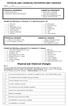 PHYSICAL AND CHEMICAL PROPERTIES AND CHANGES Name Key PHYSICAL PROPERTY CHEMICAL PROPERTY 1. observed with senses 1. indicates how a substance 2. determined without destroying matter reacts with something
High Blood Pressure and Chronic Kidney Disease
 High Blood Pressure and Chronic Kidney Disease For People with CKD Stages 1 4 www.kidney.org National Kidney Foundation's Kidney Disease Outcomes Quality Initiative Did you know that the National Kidney
It is important to know that some types of fats, like saturated and trans fat, can raise blood cholesterol levels.
 Healthy Eating You are what you eat! So before you even shop for food, it is important to become a well informed, smart food consumer and have a basic understanding of what a heart healthy diet looks like.
Healthy Eating for Diabetes
 Healthy Eating for Diabetes What is diabetes? Diabetes is when your blood sugar (glucose) levels are higher than normal. For some people, this is because the insulin in their body doesn t work as well
Food Science & Chef School
 Food Science & Chef School I. Introduction Lesson 1: Introduction to Food Science Learn about the course sections Learn why cooking skills are important Lesson 2: Food Science & Chef School Projects Learn
4th GRADE MINIMUM CONTENTS-NATURAL SCIENCE UNIT 11: PLANTS
 PLANT BITS 4th GRADE MINIMUM CONTENTS-NATURAL SCIENCE UNIT 11: PLANTS There are four main parts to a plant. They are the root, stem, leaf and flower. Each part has an important task to do in the life of
The atmosphere has a number of gases, often in tiny amounts, which trap the heat given out by the Earth.
 The Earth is wrapped in a blanket of air called the atmosphere, which is made up of several layers of gases. The sun is much hotter than the Earth and it gives off rays of heat (radiation) that travel
Health Maintenance: Controlling Cholesterol
 Sacramento Heart & Vascular Medical Associates February 18, 2012 500 University Ave. Sacramento, CA 95825 Page 1 What is cholesterol? Cholesterol is a fatty substance. It has both good and bad effects
online version Dietary Fibre Patient Information for the Gloucestershire Health Community GHPI0811_08_07 Author: Continence Review due: August 2010
 GHPI0811_08_07 Author: Continence Review due: August 2010 Patient Information for the Gloucestershire Health Community Dietary Fibre Notes Introduction Fibre is an extremely important component of a balanced,
MILK. Amount Type Function PROTEIN 3.5% High Biological Value Growth of new cells & repair of old /damaged cells
 MILK Nutritional Value Amount Type Function PROTEIN 3.5% High Biological Value Growth of new cells & repair of old /damaged cells FAT 4% (whole) Saturated Fat 0.5% (low fat) CARBOHYDRATE 4.5% Sugar in
Mexican Recipes. 1 tablespoon chili powder ¼ teaspoon garlic powder
 Mexican Recipes Taco Seasoning 1 tablespoon chili powder ¼ teaspoon garlic powder ¼ teaspoon onion powder ¼ teaspoon dried oregano 1 ¼ teaspoon crushed red pepper flakes ½ teaspoon paprika 1 ½ teaspoons
Healthy Eating During Pregnancy
 Healthy Eating During Pregnancy Pregnancy is a time of great change. Your body is changing to allow your baby to grow and develop. Good nutrition will help you meet the extra demands of pregnancy while
Our item list for the 2014-15 season
 Our item list for the 2014-15 season Halva (SESAME, HONEY BASE) ETERNAL BLISS NUTJOB COCO-GINGE SWEET JEAN INDIAN DREAM cashew cardamom peanut coconut ginger coconut cinnamon oat pistachio cardamom Indian
Material AICLE. 5º de Primaria.: Food and nutrition (Solucionario)
 Material AICLE. 5º de Primaria.: Food and nutrition (Solucionario) 3 SOLUTIONS Activity 3. Listen to the following audio and complete this chart. Then, check your answers using the information in activity
Here's how to include more fiber in your diet.
 July 1, 2012 Welcome to our first newsletter which will address the issue of fiber in your diet. If you are not regular or are having difficulty going to the bathroom then you should consider eating more
Macromolecules in my food!!
 Macromolecules in my food!! Name Notes/Background Information Food is fuel: All living things need to obtain fuel from something. Whether it is self- made through the process of photosynthesis, or by ingesting
A guide for handling for cabbage, carrot, hot pepper, lettuce, sweet potato and tomato. Food and Agriculture Organization of the United Nations
 A guide for handling for cabbage, carrot, hot pepper, lettuce, sweet potato and tomato Food and Agriculture Organization of the United Nations A guide for handling for cabbage 1. HARVESTING Harvesting
SUGAR SMARTS. Introduction. Preparation. Suggested Recipes. Key Concepts
 SUGAR SMARTS Introduction This lesson uses health concerns around diabetes to introduce a discussion of sugar in our diets. Depending on your audience, you may want to talk about diabetes more generally
How Did That Get in My Lunchbox?
 A RIF GUIDE FOR COMMUNITY COORDINATORS Before reading: Ask children what they had for lunch. After they respond, ask them to tell you where that food came from. If they answer from the grocery store, ask
Dietetics. Advice on. Healthy Eating for Lowering Cholesterol
 Dietetics Advice on Healthy Eating for Lowering Cholesterol 41 What is blood cholesterol? A waxy, fat-like substance in the blood Made by the liver and also comes from food Important for building and maintenance
There is a word for you: chocoholic,
 There is a word for you: chocoholic, when you need chocolate. Nothing else will do. Just thinking about hot fudge drizzling over ice cream raises your spirits. You crave a truffle, a Kit-Kat, a mug of
Shake Recipes revised 9-18.qxp 9/19/2006 4:05 PM Page 1 FOREVER SHAKE IT UP! FOREVER LITE SHAKE RECIPES
 Shake Recipes revised 9-18.qxp 9/19/2006 4:05 PM Page 1 FOREVER SHAKE IT UP! FOREVER LITE SHAKE RECIPES Shake Recipes revised 9-18.qxp 9/19/2006 4:05 PM Page 2 Give your body the nutrients it needs with
HOME FREEZING GUIDE FOR FRESH VEGETABLES
 HOME FREEZING GUIDE F FRESH VEGETABLES Freezing most vegetables at home is a fast, convenient way to preserve produce at their peak maturity and nutritional quality. The following links provide information
How to Increase Volume in Your Meals
 How to Increase Volume in Your Meals By adding certain types of food to your diet and drinking more water, you can actually increase the amount of food you eat, while staying within your fat gram and calorie
Official Journal of the European Communities
 12.1.2002 EN Official Journal of the European Communities L 10/67 COUNCIL DIRECTIVE 2001/113/EC of 20 December 2001 relating to fruit jams, jellies and marmalades and sweetened chestnut purée intended
Common Baking Ingredients
 Common Baking Ingredients With the following seven categories of ingredients you can make almost every type of baked good. 1. Flour a. Examples: Wheat (white or whole), rice, corn b. Purpose in baking:
THE DIGESTIVE SYSTEM
 THE DIGESTIVE SYSTEM What is digestion? Digestion is the process of breaking down food so that it's small enough to be absorbed and used by the body for energy or in other bodily functions. Digestion involves
Composition of Grapes
 Composition of Grapes By Murli Dharmadhikari Grapes are the most important raw material for making wine. A good understanding of grape composition is essential to understanding the process of winemaking
CODEX STANDARD FOR RICE
 1 Codex Standard 198-1995 CODEX STANDARD FOR RICE CODEX STAN 198-1995 1. SCOPE This standard applies to husked rice, milled rice, and parboiled rice, all for direct human consumption; i.e., ready for its
Diet, activity and your risk of prostate cancer
 Diet, activity and your risk of prostate cancer Prostate cancer is the most common cancer in men in the UK. About one in eight men (12.5 per cent) will get prostate cancer at some point in their lives.
American Cancer Society. Nutritional Guidelines for Reducing Your Risk of Cancer
 American Cancer Society Nutritional Guidelines for Reducing Your Risk of Cancer Cancer Impact More than one million Americans will be diagnosed with cancer this year. Scientific evidence suggests that
How To Eat Without Getting Sick
 Level 2 Dysphagia Mechanically Altered* This diet consists of foods that are moist, soft-textured and easily formed into a bolus. All foods on Level 1 are. Meats and other select foods may be ground or
1. About dairy cows. Breed of dairy cows
 1. About dairy cows Breed of dairy cows Holstein Holstein is a typical dairy cow, and 99% of dairy cows in Japan are Holsteins. They are originally from the Netherlands and Holstein region of Germany.
Agricultural Statistics ANNUAL REPORT OF MILK COLLECTION AND PRODUCTION OF DAIRY PRODUCTS
 MD 32 Methodological document ISSN 1840 488X Agricultural Statistics ANNUAL REPORT OF MILK COLLECTION AND PRODUCTION OF DAIRY PRODUCTS Bosnia and Herzegovina Agency for Statistics of Bosnia and Herzegovina
Melt Your Body Fat for Good!
 Melt Your Body Fat for Good! How to Boost Your Metabolism Naturally and Switch from Fat Storage to Fat Burning Before anything else, you must understand what is your metabolism s role in burning body fat
High Blood Pressure and Chronic Kidney Disease. For People With CKD Stages 1 4
 High Blood Pressure and Chronic Kidney Disease For People With CKD Stages 1 4 National Kidney Foundation s Kidney Disease Outcomes Quality Initiative (NKF-KDOQI ) The National Kidney Foundation s Kidney
Water It s Crucial Role in Health. By: James L. Holly, MD
 Water It s Crucial Role in Health By: James L. Holly, MD After a two week hiatus, we return to our series entitled, Aging Well. It is often the case that in health we become so infatuated with the exotic,
Directions. 2. Dredge shrimp through flour, followed by egg whites and Samoas Girl Scout Cookies mixture.
 Fried Samoas Shrimp Ingredients Directions Uses box of Samoas Girl Scout Cookies Yields 5 shrimp 5 extra-large shrimp, peeled and de-veined 5 Samoas Girl Scout Cookies, finely chopped 2 cups seasoned bread
Bariatric Surgery: Step III Diet
 Bariatric Surgery: Step III Diet This diet is blended foods with one new solid food added daily. The portions are very small to help prevent vomiting. Warning: This diet does not have enough calories,
BEST & WORST FOODS FOR BELLY FAT
 Belly fat is worse for you than fat elsewhere on your body. Excess accumulation of belly fat is more dangerous than excess fat around your hips and thighs. Belly fat is associated with serious health problems,