
Expanded Performance Formulary - PA Criteria
|
|
|
- Adela Stone
- 10 years ago
- Views:
Transcription
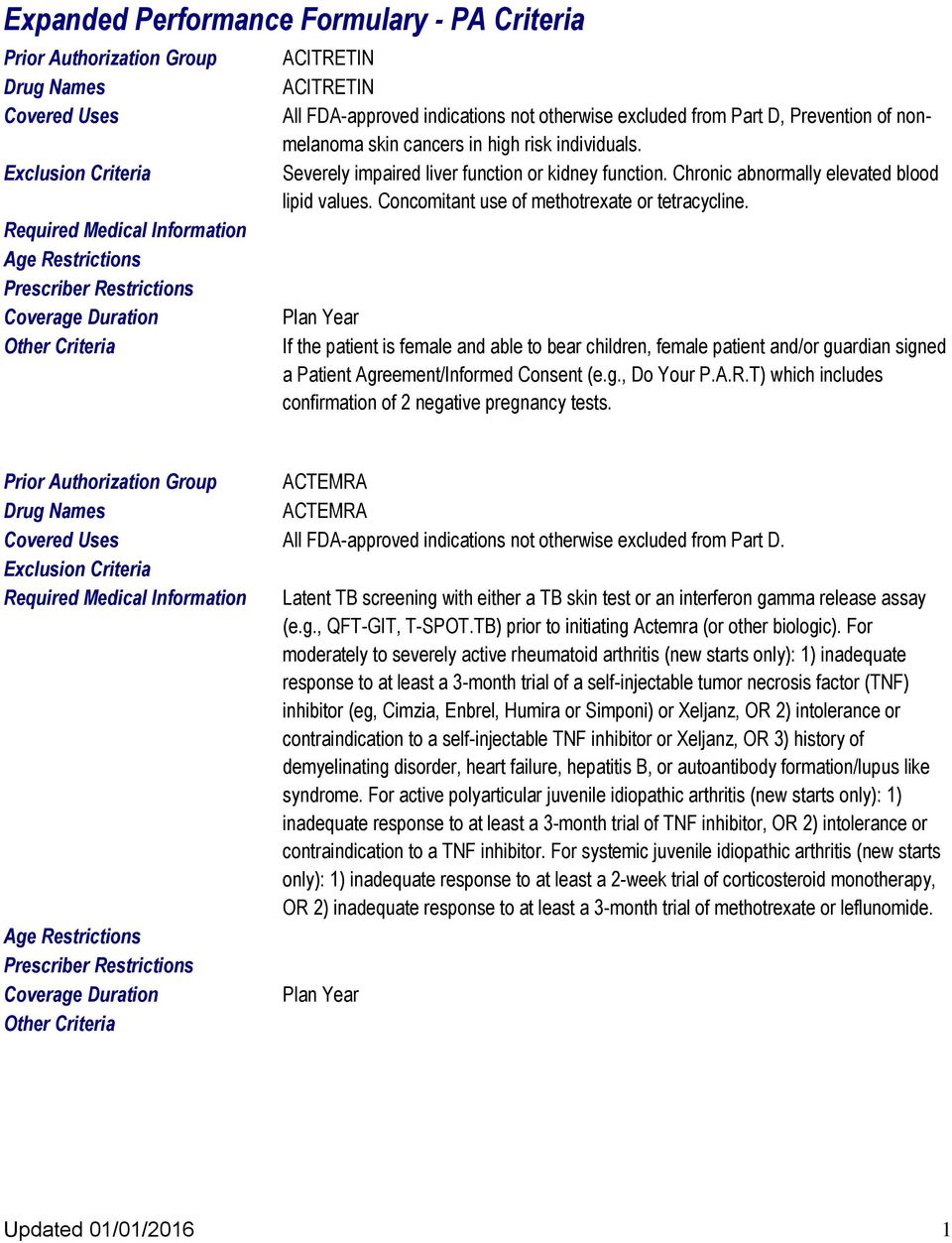
1 Expanded Performance Formulary - PA Criteria Prior Authorization Group ACITRETIN ACITRETIN All FDA-approved indications not otherwise excluded from Part D, Prevention of nonmelanoma skin cancers in high risk individuals. Severely impaired liver function or kidney function. Chronic abnormally elevated blood lipid values. Concomitant use of methotrexate or tetracycline. If the patient is female and able to bear children, female patient and/or guardian signed a Patient Agreement/Informed Consent (e.g., Do Your P.A.R.T) which includes confirmation of 2 negative pregnancy tests. Prior Authorization Group ACTEMRA ACTEMRA Latent TB screening with either a TB skin test or an interferon gamma release assay (e.g., QFT-GIT, T-SPOT.TB) prior to initiating Actemra (or other biologic). For moderately to severely active rheumatoid arthritis (new starts only): 1) inadequate response to at least a 3-month trial of a self-injectable tumor necrosis factor (TNF) inhibitor (eg, Cimzia, Enbrel, Humira or Simponi) or Xeljanz, OR 2) intolerance or contraindication to a self-injectable TNF inhibitor or Xeljanz, OR 3) history of demyelinating disorder, heart failure, hepatitis B, or autoantibody formation/lupus like syndrome. For active polyarticular juvenile idiopathic arthritis (new starts only): 1) inadequate response to at least a 3-month trial of TNF inhibitor, OR 2) intolerance or contraindication to a TNF inhibitor. For systemic juvenile idiopathic arthritis (new starts only): 1) inadequate response to at least a 2-week trial of corticosteroid monotherapy, OR 2) inadequate response to at least a 3-month trial of methotrexate or leflunomide. Updated 01/01/2016 1
2 Prior Authorization Group ACTHAR HP H.P. ACTHAR All FDA-approved indications not otherwise excluded from Part D. Receipt of live or live attenuated vaccines in patients receiving immunosuppressive doses of H.P. Acthar Gel, suspected congenital infections in infants, scleroderma, osteoporosis, systemic fungal infection, history of or the presence of a peptic ulcer, ocular herpes simplex, congestive heart failure, recent surgery, uncontrolled hypertension, known hypersensitivity to porcine proteins, primary adrenocortical insufficiency or adrenocortical hyperfunction. For the following diagnoses, patient must have an inadequate response to a trial of parenteral corticosteroids: 1) For rheumatic diseases (e.g., psoriatic arthritis, rheumatoid arthritis, ankylosing spondylitis): H.P. Acthar gel must be used as adjunctive treatment, 2) For nephrotic syndrome: H.P. Acthar gel must be requested for induction of diuresis or for remission of proteinuria, 3) For multiple sclerosis (MS): patient has an acute exacerbation of MS, 4) Collagen diseases (e.g., systemic lupus erythematosus, dermatomyositis, or polymyositis), 5) Dermatologic disorders (e.g., severe erythema multiforme, Stevens-Johnson syndrome), 6) Ophthalmic disorders, acute or chronic (e.g., iritis, keratitis, optic neuritis), 7) Symptomatic sarcoidosis, 8) Serum sickness. For infantile spasms initial request: patient is less than 2 years of age. MS exacerbation: 3 weeks. Serum sickness: 1 month. All other diagnoses: 6 months. For infantile spasms: for continuation of therapy, patient must show substantial clinical benefit from therapy. Prior Authorization Group ACTIMMUNE ACTIMMUNE All FDA-approved indications not otherwise excluded from Part D, mycosis fungoides, Sezary syndrome, atopic dermatitis. For chronic granulomatous disease, Actimmune is used for reducing the frequency and severity of serious infections associated with chronic granulomatous disease. For atopic dermatitis, the condition is resistant to conservative treatments (eg, topical medications, phototherapy). Coverage under Part D will be denied if coverage is available under Part A or Part B as the medication is prescribed and dispensed or administered for the individual. Updated 01/01/2016 2

3 Prior Authorization Group ADAGEN ADAGEN Severe combined immunodeficiency disease (SCID) is due to adenosine deaminase (ADA) deficiency. Condition failed to respond to bone marrow transplantation or patient is not currently a suitable candidate for bone marrow transplantation. Prior Authorization Group ADCIRCA ADCIRCA Patient requires nitrate therapy on a regular or intermittent basis. NYHA Functional Class II or III symptoms. PAH (WHO Group 1) was confirmed by right heart catheterization. For new starts only: 1) pretreatment mean pulmonary arterial pressure is greater than or equal to 25 mmhg, 2) pretreatment pulmonary capillary wedge pressure is less than or equal to 15 mmhg, and 3) pretreatment pulmonary vascular resistance is greater than 3 Wood units. Updated 01/01/2016 3

4 Prior Authorization Group ADEMPAS ADEMPAS Patient is taking a nitrate or nitric oxide donor medication (eg, amyl nitrite) on a regular or intermittent basis. Patient is taking a phosphodiesterase inhibitor (eg, sildenafil, tadalafil, vardenafil, dipyridamole, theophylline). For new starts only: 1) pretreatment mean pulmonary arterial pressure is greater than or equal to 25 mmhg AND 2) pretreatment pulmonary capillary wedge pressure is less than or equal to 15 mmhg AND 3) pretreatment pulmonary vascular resistance is greater than 3 Wood units. For chronic thromboembolic pulmonary hypertension (CTEPH) (WHO Group 4): 1) CTEPH was confirmed by right heart catheterization AND by CT, MRI or pulmonary angiography AND 2) Patient has inoperable CTEPH or persistent or recurrent CTEPH after pulmonary endarterectomy. For pulmonary arterial hypertension (PAH) (WHO Group 1): 1) PAH was confirmed by right heart catheterization AND 2) NYHA Functional Class II or III symptoms. 18 years of age or older Updated 01/01/2016 4

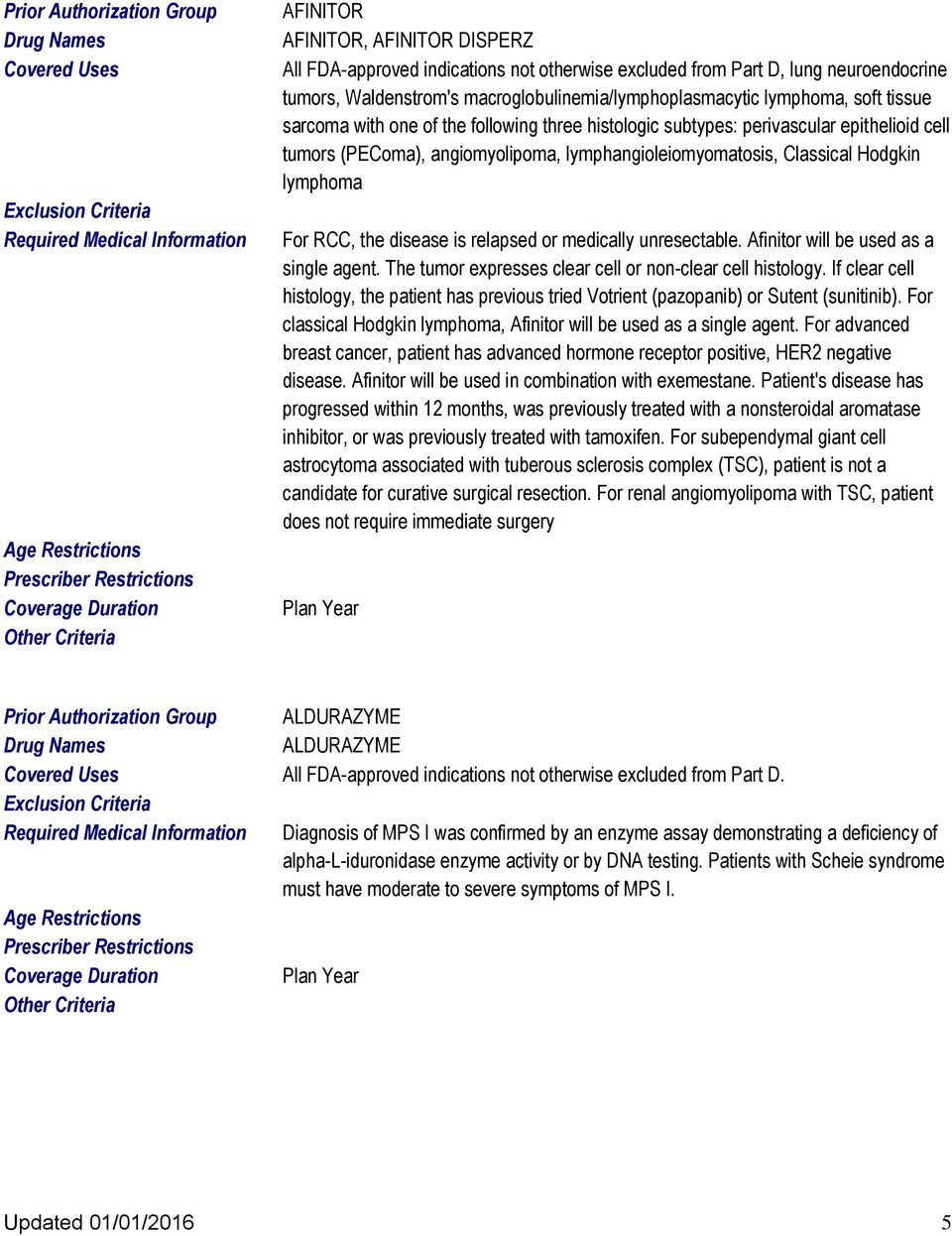
5 Prior Authorization Group AFINITOR AFINITOR, AFINITOR DISPERZ All FDA-approved indications not otherwise excluded from Part D, lung neuroendocrine tumors, Waldenstrom's macroglobulinemia/lymphoplasmacytic lymphoma, soft tissue sarcoma with one of the following three histologic subtypes: perivascular epithelioid cell tumors (PEComa), angiomyolipoma, lymphangioleiomyomatosis, Classical Hodgkin lymphoma For RCC, the disease is relapsed or medically unresectable. Afinitor will be used as a single agent. The tumor expresses clear cell or non-clear cell histology. If clear cell histology, the patient has previous tried Votrient (pazopanib) or Sutent (sunitinib). For classical Hodgkin lymphoma, Afinitor will be used as a single agent. For advanced breast cancer, patient has advanced hormone receptor positive, HER2 negative disease. Afinitor will be used in combination with exemestane. Patient's disease has progressed within 12 months, was previously treated with a nonsteroidal aromatase inhibitor, or was previously treated with tamoxifen. For subependymal giant cell astrocytoma associated with tuberous sclerosis complex (TSC), patient is not a candidate for curative surgical resection. For renal angiomyolipoma with TSC, patient does not require immediate surgery Prior Authorization Group ALDURAZYME ALDURAZYME Diagnosis of MPS I was confirmed by an enzyme assay demonstrating a deficiency of alpha-l-iduronidase enzyme activity or by DNA testing. Patients with Scheie syndrome must have moderate to severe symptoms of MPS I. Updated 01/01/2016 5
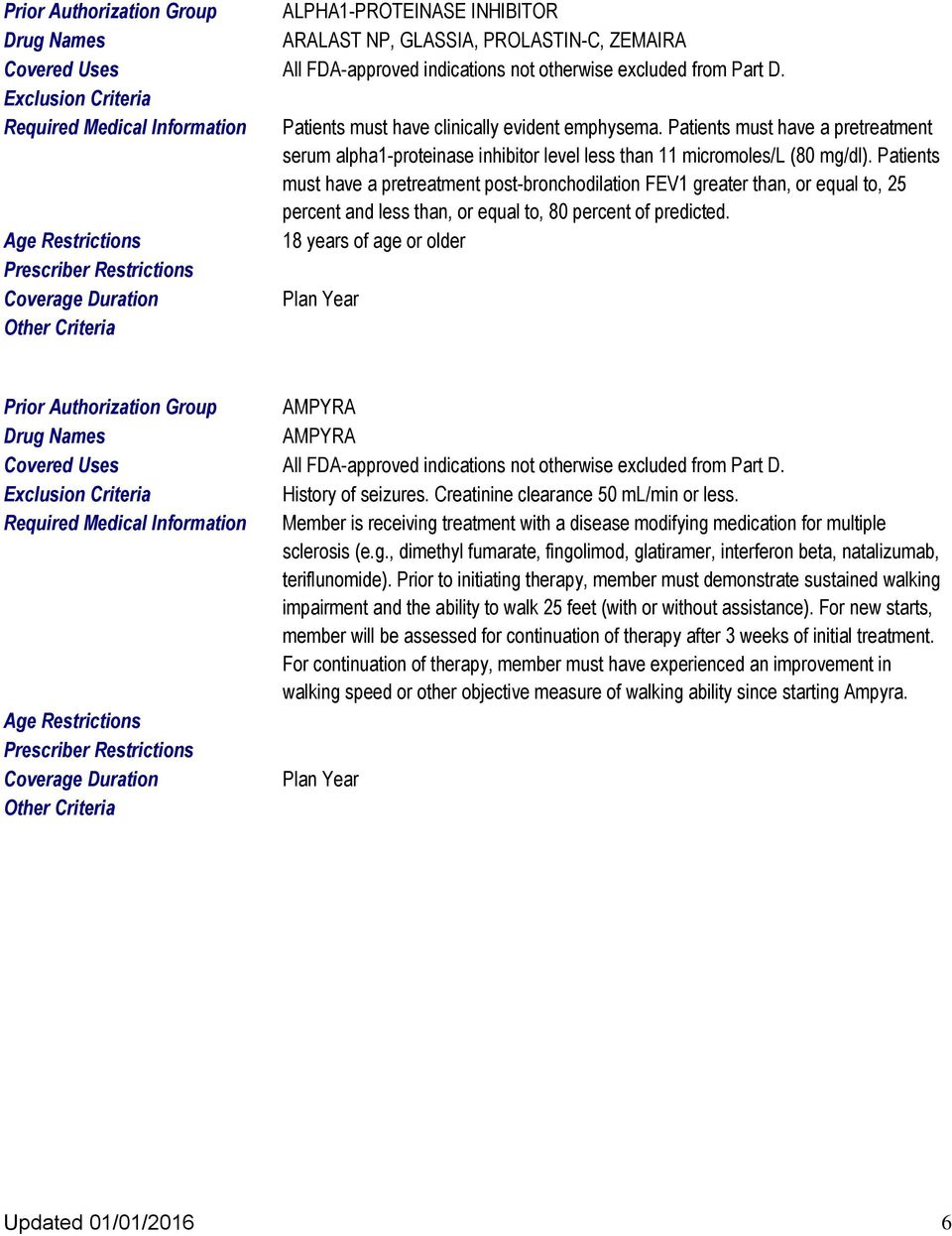
6 Prior Authorization Group ALPHA1-PROTEINASE INHIBITOR ARALAST NP, GLASSIA, PROLASTIN-C, ZEMAIRA Patients must have clinically evident emphysema. Patients must have a pretreatment serum alpha1-proteinase inhibitor level less than 11 micromoles/l (80 mg/dl). Patients must have a pretreatment post-bronchodilation FEV1 greater than, or equal to, 25 percent and less than, or equal to, 80 percent of predicted. 18 years of age or older Prior Authorization Group AMPYRA AMPYRA History of seizures. Creatinine clearance 50 ml/min or less. Member is receiving treatment with a disease modifying medication for multiple sclerosis (e.g., dimethyl fumarate, fingolimod, glatiramer, interferon beta, natalizumab, teriflunomide). Prior to initiating therapy, member must demonstrate sustained walking impairment and the ability to walk 25 feet (with or without assistance). For new starts, member will be assessed for continuation of therapy after 3 weeks of initial treatment. For continuation of therapy, member must have experienced an improvement in walking speed or other objective measure of walking ability since starting Ampyra. Updated 01/01/2016 6
7 Prior Authorization Group ANABOLIC STEROIDS OXANDROLONE All FDA-approved indications not otherwise excluded from Part D, AIDS-wasting or cachexia due to chronic disease, Turner's syndrome. Pregnancy. Known or suspected carcinoma of the prostate or breast in male patients. Carcinoma of the breast in females with hypercalcemia. Nephrosis, the nephrotic phase of nephritis. Hypercalcemia. Patient will be monitored for peliosis hepatis, liver cell tumors and blood lipid changes. 6 months Prior Authorization Group APOKYN APOKYN Concomitant treatment with a serotonin 5HT3 antagonist (e.g., ondansetron, granisetron, dolasetron, palonosetron, and alosetron). Updated 01/01/2016 7

8 Prior Authorization Group ARANESP ARANESP ALBUMIN FREE All FDA-approved indications not otherwise excluded from Part D, anemia due to myelodysplastic syndromes (MDS). Patients receiving chemotherapy with curative intent. Patients with myeloid cancer. For all uses: 1) Pretreatment (no erythropoietin treatment in previous month) Hgb is less than 10 g/dl, AND 2) For reauthorizations (patient received erythropoietin in previous month), an increase in Hgb of at least 1 g/dl after at least 12 weeks of therapy. Additional requirements for anemia due to myelosuppressive cancer chemotherapy: 1) For initial therapy, at least 2 more months of chemotherapy is expected, AND 2) For reauthorizations, current Hgb is less than 11 g/dl. Additional requirements for CKD not on dialysis reauthorization: 1) Current Hgb is less than or equal to 10 g/dl OR Hgb is greater than 10 but less than or equal to 12 g/dl AND prescriber will reduce or interrupt dose. Additional requirements for MDS: 1) Patient has symptomatic anemia, AND 2) Pretreatment serum erythropoietin level is less than or equal to 500 mu/ml, AND 3) For reauthorizations, current Hgb is less than or equal to 11 g/dl OR Hgb is greater than 11 but less than or equal to 12 g/dl AND prescriber will reduce or interrupt dose. 12 weeks Coverage under Part D will be denied if coverage is available under Part A or Part B as the medication is prescribed and dispensed or administered for the individual (eg, used for treatment of anemia for a patient with chronic renal failure who is undergoing dialysis, or furnished from physician's supply incident to a physician service). Requirements regarding Hgb values exclude values due to a recent transfusion. Prior Authorization Group ARCALYST ARCALYST 12 years of age or older Updated 01/01/2016 8

9 Prior Authorization Group AUBAGIO AUBAGIO Severe hepatic impairment. Pregnancy. Have a relapsing form of MS (eg, relapsing-remitting MS, progressive-relapsing MS, or secondary progressive MS with relapses). Updated 01/01/2016 9

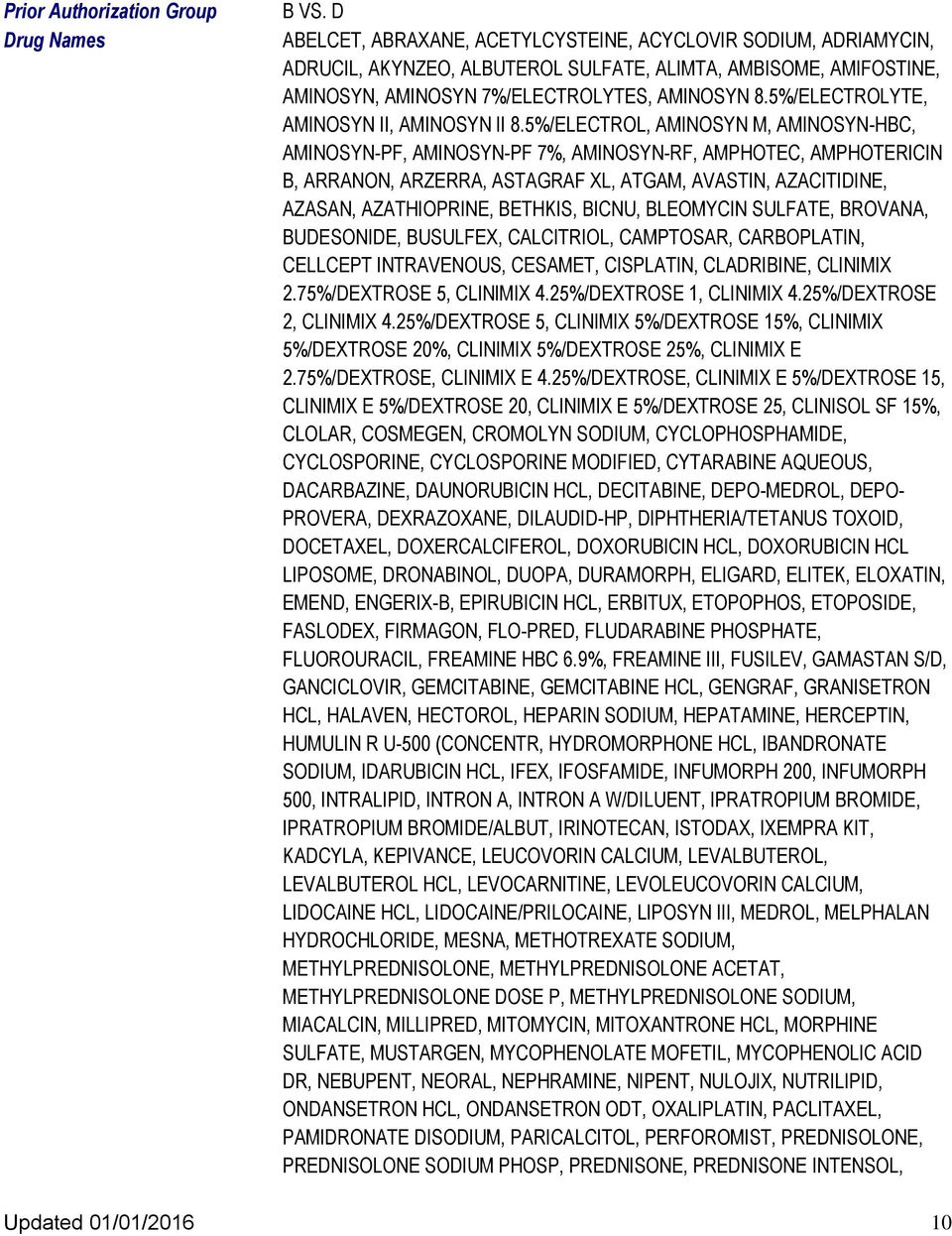
10 Prior Authorization Group B VS. D ABELCET, ABRAXANE, ACETYLCYSTEINE, ACYCLOVIR SODIUM, ADRIAMYCIN, ADRUCIL, AKYNZEO, ALBUTEROL SULFATE, ALIMTA, AMBISOME, AMIFOSTINE, AMINOSYN, AMINOSYN 7%/ELECTROLYTES, AMINOSYN 8.5%/ELECTROLYTE, AMINOSYN II, AMINOSYN II 8.5%/ELECTROL, AMINOSYN M, AMINOSYN-HBC, AMINOSYN-PF, AMINOSYN-PF 7%, AMINOSYN-RF, AMPHOTEC, AMPHOTERICIN B, ARRANON, ARZERRA, ASTAGRAF XL, ATGAM, AVASTIN, AZACITIDINE, AZASAN, AZATHIOPRINE, BETHKIS, BICNU, BLEOMYCIN SULFATE, BROVANA, BUDESONIDE, BUSULFEX, CALCITRIOL, CAMPTOSAR, CARBOPLATIN, CELLCEPT INTRAVENOUS, CESAMET, CISPLATIN, CLADRIBINE, CLINIMIX 2.75%/DEXTROSE 5, CLINIMIX 4.25%/DEXTROSE 1, CLINIMIX 4.25%/DEXTROSE 2, CLINIMIX 4.25%/DEXTROSE 5, CLINIMIX 5%/DEXTROSE 15%, CLINIMIX 5%/DEXTROSE 20%, CLINIMIX 5%/DEXTROSE 25%, CLINIMIX E 2.75%/DEXTROSE, CLINIMIX E 4.25%/DEXTROSE, CLINIMIX E 5%/DEXTROSE 15, CLINIMIX E 5%/DEXTROSE 20, CLINIMIX E 5%/DEXTROSE 25, CLINISOL SF 15%, CLOLAR, COSMEGEN, CROMOLYN SODIUM, CYCLOPHOSPHAMIDE, CYCLOSPORINE, CYCLOSPORINE MODIFIED, CYTARABINE AQUEOUS, DACARBAZINE, DAUNORUBICIN HCL, DECITABINE, DEPO-MEDROL, DEPO- PROVERA, DEXRAZOXANE, DILAUDID-HP, DIPHTHERIA/TETANUS TOXOID, DOCETAXEL, DOXERCALCIFEROL, DOXORUBICIN HCL, DOXORUBICIN HCL LIPOSOME, DRONABINOL, DUOPA, DURAMORPH, ELIGARD, ELITEK, ELOXATIN, EMEND, ENGERIX-B, EPIRUBICIN HCL, ERBITUX, ETOPOPHOS, ETOPOSIDE, FASLODEX, FIRMAGON, FLO-PRED, FLUDARABINE PHOSPHATE, FLUOROURACIL, FREAMINE HBC 6.9%, FREAMINE III, FUSILEV, GAMASTAN S/D, GANCICLOVIR, GEMCITABINE, GEMCITABINE HCL, GENGRAF, GRANISETRON HCL, HALAVEN, HECTOROL, HEPARIN SODIUM, HEPATAMINE, HERCEPTIN, HUMULIN R U-500 (CONCENTR, HYDROMORPHONE HCL, IBANDRONATE SODIUM, IDARUBICIN HCL, IFEX, IFOSFAMIDE, INFUMORPH 200, INFUMORPH 500, INTRALIPID, INTRON A, INTRON A W/DILUENT, IPRATROPIUM BROMIDE, IPRATROPIUM BROMIDE/ALBUT, IRINOTECAN, ISTODAX, IXEMPRA KIT, KADCYLA, KEPIVANCE, LEUCOVORIN CALCIUM, LEVALBUTEROL, LEVALBUTEROL HCL, LEVOCARNITINE, LEVOLEUCOVORIN CALCIUM, LIDOCAINE HCL, LIDOCAINE/PRILOCAINE, LIPOSYN III, MEDROL, MELPHALAN HYDROCHLORIDE, MESNA, METHOTREXATE SODIUM, METHYLPREDNISOLONE, METHYLPREDNISOLONE ACETAT, METHYLPREDNISOLONE DOSE P, METHYLPREDNISOLONE SODIUM, MIACALCIN, MILLIPRED, MITOMYCIN, MITOXANTRONE HCL, MORPHINE SULFATE, MUSTARGEN, MYCOPHENOLATE MOFETIL, MYCOPHENOLIC ACID DR, NEBUPENT, NEORAL, NEPHRAMINE, NIPENT, NULOJIX, NUTRILIPID, ONDANSETRON HCL, ONDANSETRON ODT, OXALIPLATIN, PACLITAXEL, PAMIDRONATE DISODIUM, PARICALCITOL, PERFOROMIST, PREDNISOLONE, PREDNISOLONE SODIUM PHOSP, PREDNISONE, PREDNISONE INTENSOL, Updated 01/01/
11 PREMASOL, PROCALAMINE, PROGRAF, PROLEUKIN, PROSOL, PULMICORT, PULMOZYME, RAPAMUNE, RAYOS, RECOMBIVAX HB, REMODULIN, SANDIMMUNE, SIMULECT, SIROLIMUS, SOLU-MEDROL, TACROLIMUS, TENIVAC, TETANUS/DIPHTHERIA TOXOID, THYMOGLOBULIN, TOBRAMYCIN, TOPOSAR, TOPOTECAN HCL, TORISEL, TPN ELECTROLYTES, TRAVASOL, TREANDA, TREXALL, TRISENOX, TROPHAMINE, TYVASO, UVADEX, VECTIBIX, VELCADE, VENTAVIS, VERIPRED 20, VINBLASTINE SULFATE, VINCASAR PFS, VINCRISTINE SULFATE, VINORELBINE TARTRATE, ZANOSAR, ZEMPLAR, ZOLEDRONIC ACID, ZOMETA, ZORTRESS, ZUPLENZ This drug may be covered under Medicare Part B or D depending upon the circumstances. Information may need to be submitted describing the use and setting of the drug to make the determination. N/A Prior Authorization Group BANZEL BANZEL All FDA-approved indications not otherwise excluded from Part D. The patient is diagnosed with familial short QT Syndrome. Prior Authorization Group BELEODAQ BELEODAQ All FDA-approved indications not otherwise excluded from Part D. Patient has relapsed or refractory disease. Updated 01/01/

12 Prior Authorization Group BENLYSTA BENLYSTA Severe active lupus nephritis (excludes other types of renal involvement associated with SLE). Severe active central nervous system lupus. Patient has a diagnosis of active, autoantibody-positive SLE. Patient is currently receiving standard therapy for SLE (eg, corticosteroids, azathioprine, leflunomide, methotrexate, mycophenolate mofetil, hydroxychloroquine, non-steroidal antiinflammatory drugs) OR patient is not currently receiving standard therapy for SLE because patient tried and had an inadequate response or intolerance to standard therapy. Initial: 6 months. Renewal:. For renewals, patient is benefiting from Benlysta therapy (eg, reduction of steroid dose, decrease in pain medications). Prior Authorization Group BETASERON BETASERON Have a relapsing form of MS (eg, relapsing-remitting MS, progressive-relapsing MS, or secondary progressive MS with relapses) OR first clinical episode of MS with MRI scan that demonstrated features consistent with a diagnosis of MS (ie, multifocal white matter disease). Updated 01/01/

13 Prior Authorization Group BOSENTAN TRACLEER NYHA Functional Class II to IV symptoms. PAH (WHO Group 1) was confirmed by right heart catheterization. For new starts only: 1) pretreatment mean pulmonary arterial pressure is greater than or equal to 25 mmhg, 2) pretreatment pulmonary capillary wedge pressure is less than or equal to 15 mmhg, and 3) pretreatment pulmonary vascular resistance is greater than 3 Wood units. Prior Authorization Group BOSULIF BOSULIF All FDA-approved indications not otherwise excluded from Part D, Philadelphia chromosome-positive (Ph+) acute lymphoblastic leukemia (ALL). Diagnosis of CML or Ph+ ALL was confirmed by detection of the Philadelphia chromosome or BCR-ABL gene. For CML, patient meets any of the following: 1) patient has accelerated or blast phase CML, OR 2) patient experienced resistance, intolerance or toxicity to alternative tyrosine kinase inhibitor (imatinib, dasatinib, nilotinib, ponatinib), OR 3) patient received a hematopoietic stem cell transplant. For Ph+ ALL, ALL is relapsed or refractory to prior therapy. 18 years of age or older Updated 01/01/

14 Prior Authorization Group BOTOX BOTOX All FDA-approved indications not otherwise excluded from Part D, excessive salivation secondary to advanced Parkinson's disease, hemifacial spasm. Cosmetic use For chronic migraine prophylaxis, initial treatment: patient experiences at least 15 headache days per month, and patient had an inadequate response to at least 8 weeks of oral migraine preventative therapy. For chronic migraine prophylaxis, continuation of treatment (after 2 injection cycles): 50 percent reduction in monthly headache frequency since starting therapy. For urinary incontinence in a patient with a neurologic condition (eg, spinal cord injury, multiple sclerosis) or with overactive bladder: patient had an inadequate response to or is intolerant of an anticholinergic medication. Chronic migraine, initial: 24 wks. for all other indications and chronic migraine renewal. Prior Authorization Group BUPRENORPHINE BUPRENORPHINE HCL 1) The prescriber agrees not to prescribe other opioids while the patient is taking buprenorphine AND 2) If the patient is a pregnant female and being prescribed buprenorphine for induction therapy and subsequent maintenance therapy for transition from opioid use to opioid dependence treatment OR 3) if buprenorphine is being prescribed for induction therapy for transition from opioid use to opioid dependence treatment OR 4) if buprenorphine is being prescribed for maintenance therapy for opioid dependence treatment in a patient who is intolerant to naloxone. Induction 3 months, Maintenance, Pregnancy 10 months Updated 01/01/

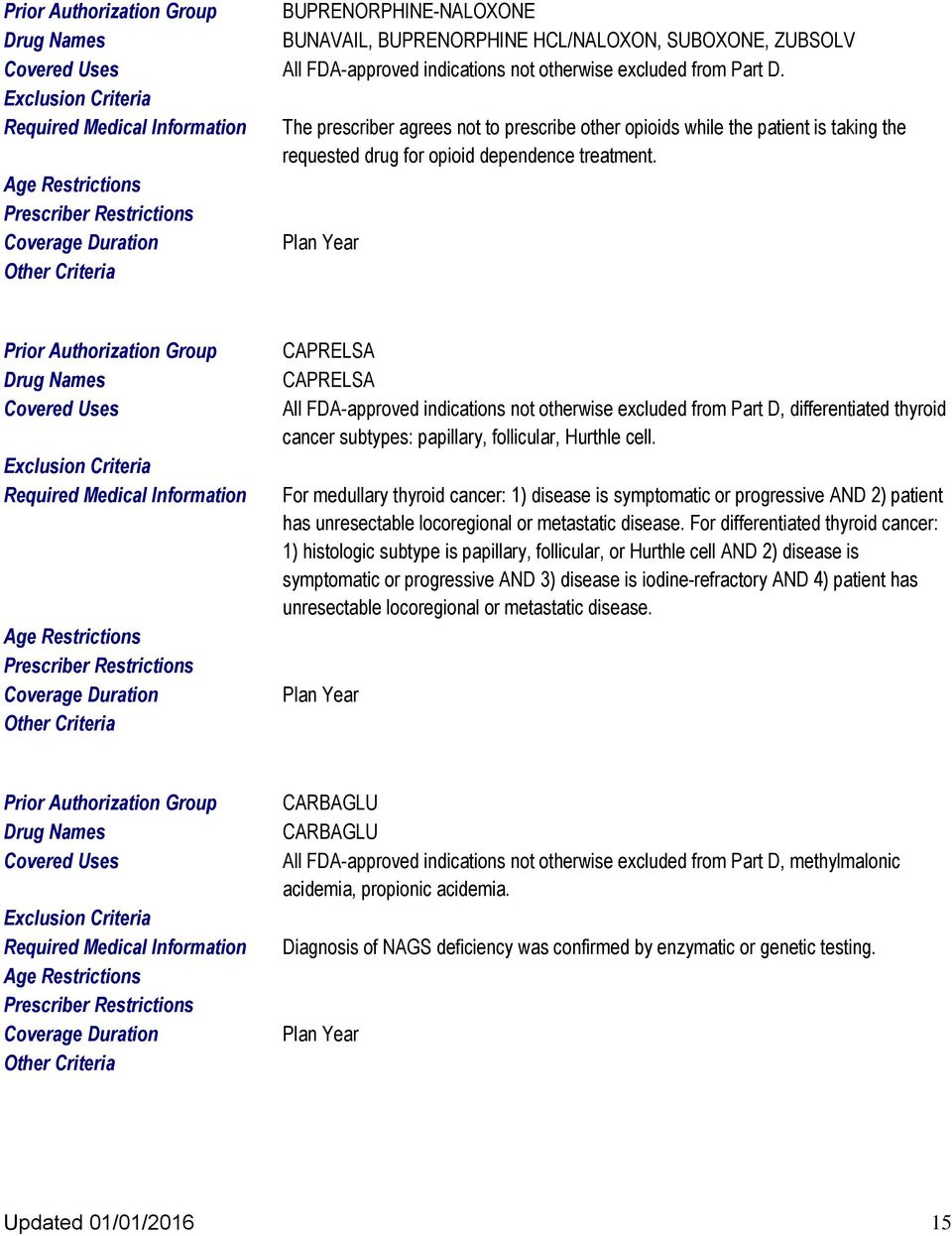
15 Prior Authorization Group BUPRENORPHINE-NALOXONE BUNAVAIL, BUPRENORPHINE HCL/NALOXON, SUBOXONE, ZUBSOLV The prescriber agrees not to prescribe other opioids while the patient is taking the requested drug for opioid dependence treatment. Prior Authorization Group CAPRELSA CAPRELSA All FDA-approved indications not otherwise excluded from Part D, differentiated thyroid cancer subtypes: papillary, follicular, Hurthle cell. For medullary thyroid cancer: 1) disease is symptomatic or progressive AND 2) patient has unresectable locoregional or metastatic disease. For differentiated thyroid cancer: 1) histologic subtype is papillary, follicular, or Hurthle cell AND 2) disease is symptomatic or progressive AND 3) disease is iodine-refractory AND 4) patient has unresectable locoregional or metastatic disease. Prior Authorization Group CARBAGLU CARBAGLU All FDA-approved indications not otherwise excluded from Part D, methylmalonic acidemia, propionic acidemia. Diagnosis of NAGS deficiency was confirmed by enzymatic or genetic testing. Updated 01/01/
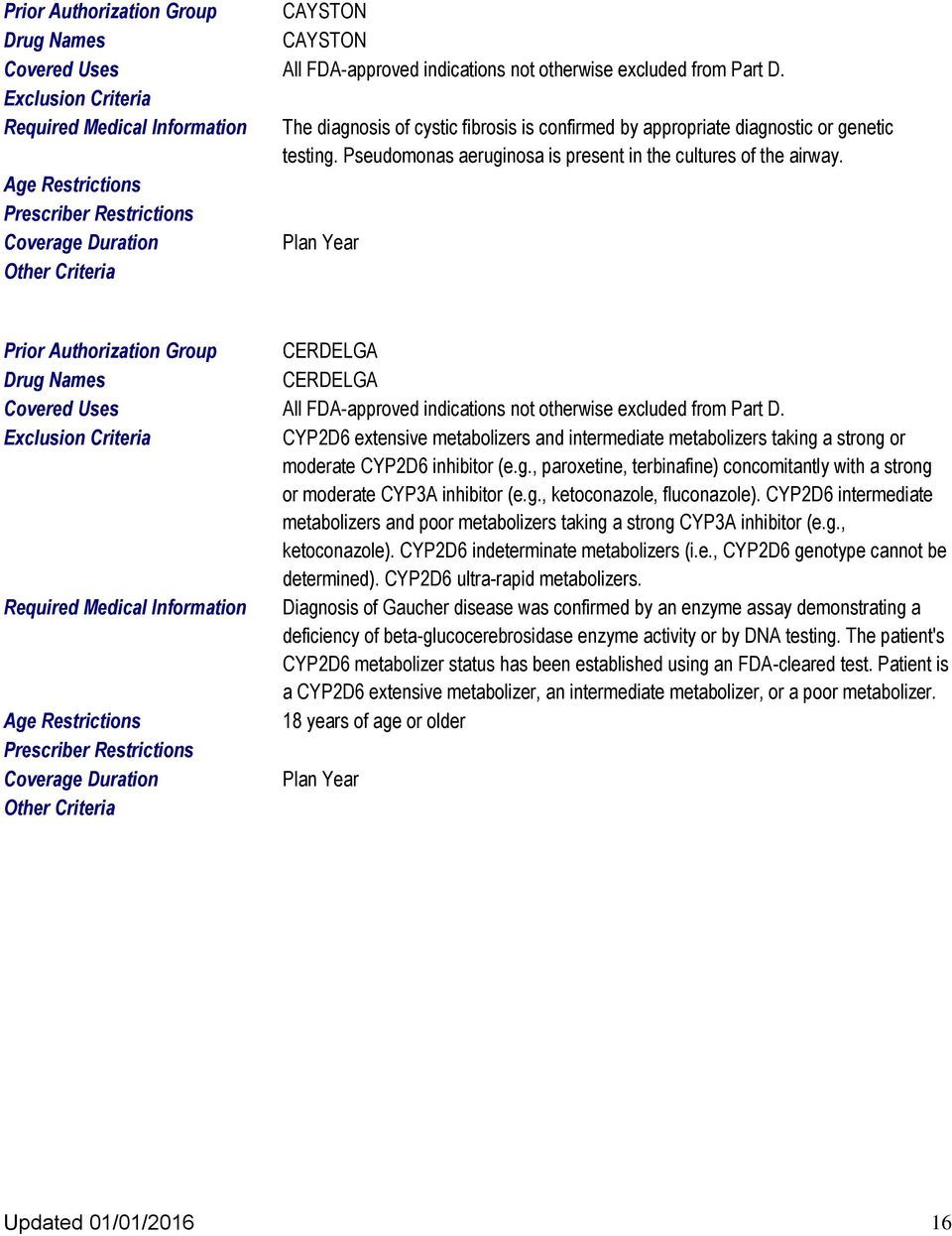
16 Prior Authorization Group CAYSTON CAYSTON The diagnosis of cystic fibrosis is confirmed by appropriate diagnostic or genetic testing. Pseudomonas aeruginosa is present in the cultures of the airway. Prior Authorization Group CERDELGA CERDELGA CYP2D6 extensive metabolizers and intermediate metabolizers taking a strong or moderate CYP2D6 inhibitor (e.g., paroxetine, terbinafine) concomitantly with a strong or moderate CYP3A inhibitor (e.g., ketoconazole, fluconazole). CYP2D6 intermediate metabolizers and poor metabolizers taking a strong CYP3A inhibitor (e.g., ketoconazole). CYP2D6 indeterminate metabolizers (i.e., CYP2D6 genotype cannot be determined). CYP2D6 ultra-rapid metabolizers. Diagnosis of Gaucher disease was confirmed by an enzyme assay demonstrating a deficiency of beta-glucocerebrosidase enzyme activity or by DNA testing. The patient's CYP2D6 metabolizer status has been established using an FDA-cleared test. Patient is a CYP2D6 extensive metabolizer, an intermediate metabolizer, or a poor metabolizer. 18 years of age or older Updated 01/01/
17 Prior Authorization Group CEREZYME CEREZYME All FDA-approved indications not otherwise excluded from Part D, type 3 Gaucher disease. Concomitant therapy with miglustat (Zavesca) Diagnosis of Gaucher disease was confirmed by enzyme assay demonstrating a deficiency of beta-glucocerebrosidase enzyme activity or by DNA testing. For Type 1 Gaucher disease, patient has one or more of the following disease complications: anemia, thrombocytopenia, bone disease, hepatomegaly, or splenomegaly. For Type 3 Gaucher disease, patient has one or more of the following disease complications: anemia, thrombocytopenia, bone disease, hepatomegaly, splenomegaly, developmental delay, or ophthalmoplegia (gaze palsy). Prior Authorization Group CHANTIX CHANTIX, CHANTIX CONTINUING MONTH, CHANTIX STARTING MONTH PA The patient has been advised to report any changes to the prescriber such as changes in behavior, hostility, agitation, depressed mood, and suicide related events, including ideation, behavior, and attempted suicide, while taking Chantix. 6 months Updated 01/01/

18 Prior Authorization Group CIMZIA CIMZIA, CIMZIA STARTER KIT All FDA-approved indications not otherwise excluded from Part D, axial spondyloarthritis. Latent TB screening with either a TB skin test or an interferon gamma release assay (eg, QFT-GIT, T-SPOT.TB) prior to initiating Cimzia (or other biologic). For moderately to severely active Crohn's disease (new starts only): Member meets ANY of the following: 1) Inadequate response to at least one conventional therapy (eg, corticosteroids, SSZ, azathioprine, mesalamine), 2) Intolerance or contraindication to conventional therapy. For moderately to severely active RA (new starts only): Member meets ANY of the following: 1) Inadequate response to at least a 3-month trial of methotrexate (MTX) despite adequate dosing (ie, titrated to mg/week), 2) Intolerance or contraindication to MTX. For active psoriatic arthritis (PsA) (new starts only): Member meets ANY of the following: 1) Inadequate response to at least a 3- month trial of MTX, sulfasalazine, or leflunomide 2) Intolerance or contraindication to MTX, sulfasalazine, or leflunomide, 3) Inadequate response to at least a 3-month trial of a prior biologic DMARD, 4) Intolerance to a prior biologic DMARD, 5) Severely active PsA as evidenced by ANY of the following: a) multiple swollen joints, b) structural damage in the presence of inflammation, or c) clinically relevant extra-articular manifestations (eg, extensive skin, bowel, ocular, cardiovascular, urogenital, or pulmonary involvement), 6) Active enthesitis and/or dactylitis (i.e., sausage finger) 7) Predominant axial disease (ie, extensive spinal involvement). For active ankylosing spondylitis and axial spondyloarthritis (new starts only): 1) Inadequate response to at least a 4-week NSAID trial at maximum recommended or tolerated dose OR intolerance and/or contraindication to NSAIDs, AND 2) Member has at least ONE of the following: a) predominant axial disease (ie, extensive spinal involvement), b) inadequate response to a synthetic DMARD (eg, sulfasalazine), c) intolerance or contraindication to a synthetic DMARD, d) inadequate response to at least a 3-month trial of a prior biologic DMARD, or e) intolerance to a prior biologic DMARD. Updated 01/01/

19 Prior Authorization Group CINRYZE CINRYZE All FDA-approved indications not otherwise excluded from Part D, treatment of hereditary angioedema attacks. Diagnosis of HAE confirmed by laboratory tests (eg, C4, C1 inhibitor functional, and C1 inhibitor antigenic protein levels) Prior Authorization Group CLORAZEPATE CLORAZEPATE DIPOTASSIUM 1) For the management of anxiety disorders or for the short-term relief of the symptoms of anxiety, the patient has experienced an inadequate treatment response to lorazepam OR for adjunctive therapy in the management of partial seizures OR symptomatic relief in acute alcohol withdrawal AND 2) If the patient is 65 years of age or older, the benefit of therapy with the prescribed medication outweighs the potential risk. (The prescribed medication is considered a high risk medication that is considered either ineffective in most patients 65 years of age or older or that poses an unnecessarily high risk when safer alternative therapy may be available.) Updated 01/01/

20 Prior Authorization Group CLOZAPINE ODT CLOZAPINE ODT, FAZACLO History of clozapine-induced agranulocytosis or severe granulocytopenia. Dementiarelated psychosis. The patient is unwilling or unable to take tablets or capsules orally or is at high risk for non-compliance. Prior Authorization Group COMETRIQ COMETRIQ All FDA-approved indications not otherwise excluded from Part D, NSCLC with RET rearrangements. Medullary thyroid cancer is symptomatic, progressive, or metastatic. Non-small cell lung cancer is with RET gene rearrangements. Prior Authorization Group COPAXONE COPAXONE, GLATOPA All FDA-approved indications not otherwise excluded from Part D, First clinical episode of MS. Have a relapsing form of MS (eg, relapsing-remitting MS, progressive-relapsing MS, or secondary progressive MS with relapses) OR first clinical episode of MS with MRI scan that demonstrated features consistent with a diagnosis of MS (ie, multifocal white matter disease). Updated 01/01/

21 Prior Authorization Group COSENTYX COSENTYX, COSENTYX SENSOREADY PEN Latent TB screening with either a TB skin test or an interferon gamma release assay (e.g., QFT-GIT, T-SPOT.TB) must be performed prior to initiating Cosentyx (or other biologic). Member has a diagnosis of moderate to severe plaque psoriasis. At least 5% BSA is affected or crucial body areas (eg, feet, hands, face, neck and/or groin) are affected at the time of diagnosis. For new starts, ALL of the following criteria must be met: 1) Member has experienced an inadequate response to phototherapy (e.g., UVB, PUVA), methotrexate, cyclosporine, or acitretin, unless contraindicated or intolerant to such therapies, 2) Member will be assessed for continuation of therapy after 3 months of treatment. For continuation, member must have achieved positive clinical response after 3 months of treatment or has maintained positive clinical response as evidenced by low disease activity or improvement in signs and symptoms. 18 years of age or older Initial: 4 months. Continuation: Prior Authorization Group CYSTAGON CYSTAGON Diagnosis of nephropathic cystinosis was confirmed by the presence of increased cysteine concentration in leukocytes or by DNA testing. Updated 01/01/
22 Prior Authorization Group DEFERASIROX EXJADE, JADENU For chronic iron overload due to blood transfusions: pretreatment serum ferritin level is greater than 1000 mcg/l. For chronic iron overload in patients with non-transfusion dependent thalassemia (NTDT) syndromes: a) for initiation of the deferasirox therapy, pretreatment liver iron concentration (LIC), measured by liver biopsy or by an FDAcleared or approved method, is at least 5 mg of iron per gram of liver dry weight (mg Fe/g dw) AND pretreatment serum ferritin levels are greater than 300 mcg/l on 2 consecutive measurements 1 month apart, b) for continuation of the deferasirox therapy: current LIC is greater than 3 mg Fe/g dw or the deferasirox therapy will be withheld until the LIC reaches above 5 mg Fe/g dw. 2 years of age or older Prior Authorization Group DIAZEPAM DIAZEPAM, DIAZEPAM INTENSOL 1) For the management of anxiety disorders or for the short-term relief of the symptoms of anxiety, the patient has experienced an inadequate treatment response to lorazepam OR for symptomatic relief in acute alcohol withdrawal OR for use as an adjunct for the relief of skeletal muscle spasms OR for adjunctive therapy in the treatment of convulsive disorders AND 2) If the patient is 65 years of age or older, the benefit of therapy with the prescribed medication outweighs the potential risk. (The prescribed medication is considered a high risk medication that is considered either ineffective in most patients 65 years of age or older or that poses an unnecessarily high risk when safer alternative therapy may be available.). Updated 01/01/
23 Prior Authorization Group DICLOFENAC GEL DICLOFENAC SODIUM Prior Authorization Group EGRIFTA EGRIFTA Use for weight loss. Egrifta is requested to reduce excess abdominal fat in an HIV-infected patient with lipodystrophy. Patient has a diagnosis of HIV infection and is receiving anti-retroviral therapy (ART). For patients who have received at least 6 months of Egrifta therapy: patient has demonstrated clear clinical improvement from baseline that is supported by a waist circumference or CT scan. Infectious disease specialist 6 months Prior Authorization Group ELAPRASE ELAPRASE Diagnosis of mucopolysaccharidosis II (Hunter syndrome) was confirmed by an enzyme assay demonstrating a deficiency of iduronate 2-sulfatase enzyme activity or by DNA testing. Updated 01/01/
24 Prior Authorization Group ELELYSO ELELYSO Concomitant therapy with miglustat (Zavesca) Diagnosis of Gaucher disease was confirmed by enzyme assay demonstrating a deficiency of beta-glucocerebrosidase enzyme activity or by DNA testing. Patient has one or more of the following disease complications: anemia, thrombocytopenia, bone disease, hepatomegaly, or splenomegaly. Prior Authorization Group ELIDEL ELIDEL All FDA-approved indications not otherwise excluded from Part D, Psoriasis on the face or body skin folds. 1) The short-term or noncontinuous chronic use to treat psoriasis on the face or body skin folds OR 2) The short-term or noncontinuous chronic use to treat mild to moderate atopic dermatitis (eczema). 2 years of age or older The patient experienced an inadequate treatment response, intolerance, or contraindication to at least one medium or higher potency topical steroid when Elidel will not be used on the face, body skin folds, genital area, armpit, or around the eyes. Updated 01/01/
25 Prior Authorization Group EMSAM EMSAM All FDA-approved indications not otherwise excluded from Part D. Pheochromocytoma. 1) Patient will be monitored closely for suicidal thinking or behavior, clinical worsening, and unusual changes in behavior AND 2) Patient experienced an inadequate treatment response to any one of the following antidepressants: bupropion, trazodone, mirtazapine, SNRIs (e.g., venlafaxine), SSRIs (e.g., citalopram, fluoxetine, fluvoxamine, paroxetine, sertraline), tricyclic or tetracyclic antidepressants (e.g., amitriptyline, nortriptyline) OR 3) Patient is unable to swallow oral formulations. 12 years of age or older Prior Authorization Group ENTRESTO ENTRESTO History of angioedema related to previous ACE inhibitor or ARB therapy. Concomitant use of ACE inhibitors. Concomitant use of aliskiren in a patient with diabetes. Pregnancy. Updated 01/01/
26 Prior Authorization Group ENTYVIO ENTYVIO For moderately to severely active Crohn's disease (CD), patient must have an inadequate response, intolerance, or contraindication to conventional therapy (eg, corticosteroids, sulfasalazine, azathioprine, 6-mercaptopurine) and a TNF-inhibitor for CD. For moderately to severely active ulcerative colitis (UC), patient must have an inadequate response, intolerance, or contraindication to conventional therapy (eg, oral aminosalicylates, corticosteroids, azathioprine, 6-mercaptopurine) and a TNF-inhibitor for UC. 18 years of age or older Initial = 4 months, renewal =. For renewal, patient has experienced therapeutic benefit with Entyvio treatment. Updated 01/01/
27 Prior Authorization Group EPO EPOGEN, PROCRIT All FDA-approved indications not otherwise excluded from Part D, anemia due to myelodysplastic syndromes (MDS), anemia in congestive heart failure (CHF), anemia in rheumatoid arthritis (RA), anemia due to hepatitis C treatment (ribavirin in combination with either interferon alfa or peginterferon alfa). Patients receiving chemotherapy with curative intent. Patients with myeloid cancer. Use to facilitate preoperative autologous blood donation. For all uses except surgery:1) Pretreatment (no erythropoietin treatment in previous month) Hgb is less than 10 g/dl (less than 9 g/dl for anemia in CHF only) AND 2) For reauthorizations (patient received erythropoietin in previous month), an increase in Hgb of at least 1 g/dl after at least 12 weeks of therapy. Additional requirements for anemia due to myelosuppressive cancer chemotherapy: 1) For initial therapy, at least 2 more months of chemotherapy is expected, AND 2) For reauthorizations, current Hgb is less than 11 g/dl. Additional requirements for CKD not on dialysis reauthorization: 1) Current Hgb is less than or equal to 10 g/dl OR Hgb is greater than 10 but less than or equal to 12 g/dl AND prescriber will reduce or interrupt dose. Additional requirements for MDS: 1) Patient has symptomatic anemia, AND 2) Pretreatment serum erythropoietin level is less than or equal to 500 mu/ml, AND 3) For reauthorizations, current Hgb is less than or equal to 11 g/dl OR Hgb is greater than 11 but less than or equal to 12 g/dl AND prescriber will reduce or interrupt dose. Additional requirements for HIV: 1) Concomitant use of zidovudine at a maximum dose of 4200 mg per week, AND 2) For initial therapy, pretreatment serum erythropoietin level is less than or equal to 500 mu/ml, AND 3) For reauthorizations, current Hgb is less than or equal to 11 g/dl OR Hgb is greater than 11 but less than or equal to 12 g/dl AND prescriber will reduce or interrupt dose. Additional requirements for anemia due to CHF, RA, hepatitis C treatment, or patients whose religious beliefs forbid blood transfusions: 1) For reauthorizations, current Hgb is less than or equal to 11 g/dl OR Hgb is greater than 11 but less than or equal to 12 g/dl AND prescriber will reduce or interrupt dose. For surgery: 1) Patient is scheduled for elective, noncardiac, nonvascular surgery, AND 2) Pretreatment Hgb is greater than 10 but not more than 13 g/dl. 12 weeks Coverage under Part D will be denied if coverage is available under Part A or Part B as the medication is prescribed and dispensed or administered for the individual (eg, used for treatment of anemia for a patient with chronic renal failure who is undergoing dialysis, or furnished from physician's supply incident to a physician service). Coverage includes use in anemia in patients whose religious beliefs forbid blood transfusions. Requirements regarding Hgb values exclude values due to a recent transfusion. Updated 01/01/
28 Prior Authorization Group ERIVEDGE ERIVEDGE Patient meets one of the following criteria: 1) patient has distant metastatic basal cell carcinoma (BCC), OR 2) patient has undergone surgery and/or radiation therapy for BCC and has residual or recurrent disease following surgery and/or radiation, OR 3) both surgery and radiation are contraindicated or not appropriate for the patient. Prior Authorization Group ESBRIET ESBRIET Initial Review Only, The patient does not have a known etiology for interstitial lung disease. The patient has completed a high-resolution computed tomography study of the chest which reveals the usual interstitial pneumonia pattern. If the study reveals the possible usual interstitial pneumonia pattern, the diagnosis is supported by surgical lung biopsy. If a surgical lung biopsy has not been conducted, the diagnosis is supported by a multidisciplinary discussion between at least a radiologist and pulmonologist who are experienced in idiopathic pulmonary fibrosis. The prescriber will collect LFTs on the schedule recommended in the package insert. For initial and continuation, Esbriet will not be used in combination with Ofev. Pulmonologist Initial: 6 months, Renewal: For continuation only, The patient has experienced a reduction in disease progression. The patient's AST or ALT is not greater than 5x upper limit of normal (ULN) OR the AST or ALT is not greater than 3x and less than 5x ULN with symptoms or hyperbilirubinemia. Updated 01/01/
29 Prior Authorization Group EXTAVIA EXTAVIA Have a relapsing form of MS (eg, relapsing-remitting MS, progressive-relapsing MS, or secondary progressive MS with relapses) OR first clinical episode of MS with MRI scan that demonstrated features consistent with a diagnosis of MS (ie, multifocal white matter disease). Prior Authorization Group FABRAZYME FABRAZYME Diagnosis of Fabry disease is confirmed by an enzyme assay showing deficiency of alpha-galactosidase enzyme activity or by DNA testing. Patient has clinical signs and symptoms of Fabry disease. Prior Authorization Group FARYDAK FARYDAK The patient has received at least 2 prior regimens, including bortezomib and an immunomodulatory agent. Farydak will be given in combination with bortezomib and dexamethasone. Patients may not have recent myocardial infarction or unstable angina, a history of clinically significant ST-segment or T-wave elevation, or a QTC interval greater than, or equal to, 450 ms. The patient may not have serum electrolytes outside of the normal range at baseline. Updated 01/01/
30 Prior Authorization Group FENTANYL PATCH FENTANYL Significant respiratory depression. Known or suspected paralytic ileus. 1) The patient has been evaluated and will be monitored regularly for the development of addiction, abuse, or misuse of fentanyl patch AND 2) The patient can safely take the requested dose based on their current opioid use history. [Note: Fentanyl patch is indicated for use in opioid-tolerant patients. Patients considered opioid-tolerant are those who are taking, for one week or longer, at least 60mg of morphine daily, or at least 30mg of oral oxycodone daily, or at least 8mg of oral hydromorphone daily, or an equianalgesic dose of another opioid.] AND 3) Fentanyl patch is being prescribed for pain severe enough to require daily, around-the-clock, long-term treatment in a patient who has been taking an opioid. Patient is not applying fentanyl patch more often than every 48 hours. Prior Authorization Group FERRIPROX FERRIPROX Diagnosis of transfusional iron overload due to thalassemia syndromes Updated 01/01/
31 Prior Authorization Group FILGRASTIM GRANIX, NEUPOGEN All FDA-approved indications not otherwise excluded from Part D, treatment of chemotherapy-induced febrile neutropenia (FN), mobilization of and following transplantation of peripheral blood progenitor cells, following bone marrow transplantation, acute lymphocytic leukemia (ALL), acute myeloid leukemia (AML), severe chronic neutropenia (congenital, cyclic, or idiopathic), leukemic relapse following allogeneic stem cell transplantation, myelodysplastic syndromes (MDS), agranulocytosis, aplastic anemia, HIV-related neutropenia. Use of a G-CSF product within 24 hours preceding or following chemotherapy or radiotherapy. For treatment of chemotherapy-induced FN, patient received prophylactic pegylated G-CSF (eg, Neulasta) during the current chemotherapy cycle. For prophylaxis of myelosuppressive chemotherapy-induced FN: 1) Patient has a nonmyeloid cancer AND 2) Patient is currently receiving or will be receiving treatment with myelosuppressive anti-cancer therapy. For treatment of myelosuppressive chemotherapy-induced FN: 1) Patient has a non-myeloid cancer AND 2) Patient is currently receiving or has received treatment with myelosuppressive anti-cancer therapy. For MDS: 1) Patient has neutropenia and recurrent or resistant infections OR 2) Patient has symptomatic anemia and the requested G-CSF product will be used in combination with epoetin or darbepoetin. 6 months Prior Authorization Group FIRAZYR FIRAZYR Diagnosis of HAE confirmed by laboratory tests (eg, C4, C1 inhibitor functional, and C1 inhibitor antigenic protein levels) 18 years of age or older Updated 01/01/
32 Prior Authorization Group FORTEO FORTEO Paget's disease of bone, unexplained elevations of alkaline phosphatase, open epiphyses (ie, pediatric or young adult patient), prior radiation therapy involving the skeleton, history of a skeletal malignancy, bone metastases, pre-existing hypercalcemia, metabolic bone disease other than osteoporosis. For all indications: patient has had an oral bisphosphonate trial of at least 1-year duration unless contraindicated or intolerant to an oral bisphosphonate. For primary or hypogonadal osteoporosis and postmenopausal osteoporosis: Patient has a) a history of an osteoporotic vertebral or hip fracture OR b) a pre-treatment T-score of less than or equal to -2.5 OR c) a pre-treatment T-score of less than or equal to -1 but greater than -2.5 AND a pre-treatment FRAX score of greater than or equal to 20 percent for any major osteoporotic fracture. For glucocorticoid-induced osteoporosis in postmenopausal women and men 50 years of age or older: 1) patient is currently receiving or will be initiating glucocorticoid therapy, AND 2) patient has a) a history of fragility fracture OR b) a pre-treatment T-score of less than or equal to -2.5 OR c) a pre-treatment FRAX score of greater than or equal to 20 percent for any major osteoporotic fracture. For glucocorticoid-induced osteoporosis in premenopausal women and men less than 50 years of age: 1) patient is currently receiving or will be initiating glucocorticoid therapy AND, 2) the anticipated glucocorticoid length of therapy is at least 3 months, AND 3) patient has a history of a fragility fracture. 24 months (lifetime) Prior Authorization Group FYCOMPA FYCOMPA The patient and caregivers will be advised to contact the healthcare provider immediately if any serious psychiatric or behavioral reactions are observed. 12 years of age or older Updated 01/01/
33 Prior Authorization Group GATTEX GATTEX Gattex will be used for the initial therapy of adult patients with short bowel syndrome who have required parenteral support for at least 12 months. Gattex will be used for the continuation therapy of adult patients with short bowel syndrome who have required parenteral support for at least 12 months AND have the decreased requirement for parenteral support from baseline while on Gattex therapy. Prior Authorization Group GILENYA GILENYA Have a relapsing form of MS (eg, relapsing-remitting MS, progressive-relapsing MS, or secondary progressive MS with relapses). Prior Authorization Group GILOTRIF GILOTRIF Patient has metastatic non-small cell lung cancer. Patient had EGFR mutation testing and is positive for EGFR exon 19 deletions or exon 21 (L858R) substitution mutations. Updated 01/01/
34 Prior Authorization Group GONADOTROPIN CHORIONIC GONADOTROPIN, NOVAREL, PREGNYL W/DILUENT BENZYL Patient is female, uncontrolled thyroid or adrenal dysfunction, uncontrolled organic intracranial lesion (e.g., pituitary tumor), prostatic carcinoma or other androgen dependent neoplasm Prior Authorization Group GRASTEK GRASTEK Severe, unstable, or uncontrolled asthma. History of any severe systemic allergic reaction or any severe local reaction to sublingual allergen immunotherapy. A history of eosinophilic esophagitis. Medical conditions that may reduce the ability of the patient to survive a serious allergic reaction or increase the risk of adverse reactions after epinephrine administration. Patient is on any medication(s) that can inhibit or potentiate the effect of epinephrine. 5 through 65 years of age Allergist or in consultation with an allergist 6 months 1) Auto-injectable epinephrine will be prescribed or available to the patient and the patient will be instructed and trained on its use AND 2)Treatment is initiated at least 12 weeks prior to expected onset of a grass pollen season AND 3) For a patient currently receiving Grastek, patient must show benefit from Grastek treatment (i.e., reduction in symptoms of allergic rhinitis and conjunctivitis, decreased use of rescue medications such as antihistamines and nasal or oral corticosteroids). Updated 01/01/
35 Prior Authorization Group GROWTH HORMONE GENOTROPIN, GENOTROPIN MINIQUICK, HUMATROPE, HUMATROPE COMBO PACK, NORDITROPIN FLEXPRO, NORDITROPIN NORDIFLEX PEN, NUTROPIN AQ NUSPIN 5, NUTROPIN AQ PEN, OMNITROPE, SAIZEN, SAIZEN CLICK.EASY, ZOMACTON All FDA-approved indications not otherwise excluded from Part D including pediatric growth hormone deficiency (GHD), Turner syndrome (TS), Noonan syndrome (NS), chronic kidney disease (CKD), small for gestational age (SGA), Prader-Willi syndrome (PWS), idiopathic short stature (ISS), short stature homeobox-containing gene deficiency (SHOXD), adult GHD, HIV-associated wasting/cachexia, short bowel syndrome (SBS). Active malignancy. Closed epiphyses (except PWS, adult GHD, HIV wasting/cachexia and SBS). Pediatric GHD, TS, CKD, SHOXD, NS: 1) younger than 2.5 yrs old, when applicable: pre-tx height (ht) more than 2 SD below mean and slow growth velocity, 2) 2.5 yrs old or older: pre-tx 1-yr ht velocity more than 2 SD below mean, OR pre-tx ht more than 2 SD below mean and 1-yr ht velocity more than 1 SD below mean. Pediatric GHD: 1) failed 2 pre-tx stimulation tests (peak below 10 ng/ml) OR 2) pituitary/cns disorder and pre-tx IGF-1 more than 2 SD below mean OR 3) patient is a neonate. TS: confirmed by karyotyping. CKD: not post-kidney transplant. SGA: 1) birth wt below 2500g at gestational age (GA) more than 37 wks OR 2) birth wt or length below 3rd percentile or at least 2 SD below mean for GA, AND 3) did not manifest catch-up growth by age 2. PWS: confirmed by 1) deletion in the chromosomal 15q11.2-q13 region OR 2) maternal uniparental disomy in chromosome 15 OR 3) imprinting defects or translocations involving chromosome 15. SHOXD: confirmed by molecular or genetic testing. ISS: 1) pediatric GHD ruled out with appropriate provocative test more than 10 ng/ml, and 2) pre-tx ht more than 2.25 SD below mean, and 3) adult ht prediction below 63 inches for boys, 59 inches for girls. Adult GHD: 1) failed 2 pre-tx stimulation tests (peak below 5 ng/ml), OR 2) structural abnormality of hypothalamus/pituitary AND 3 or more pituitary hormone deficiencies, OR 3) childhood-onset GHD with congenital (genetic/structural) abnormality of hypothalamus/pituitary/cns, OR 4) low pre-tx IGF-1 and failed 1 pre-tx stimulation test (peak below 5 ng/ml). HIV wasting/cachexia: 1) on antiretroviral tx AND 2) suboptimal response to at least 1 other therapy for wasting/cachexia (eg, megestrol, dronabinol, cyproheptadine, or testosterone if hypogonadal) OR contraindication/intolerance to alternative therapies, AND 3) pre-tx BMI less than 18.5 kg/m2 AND unintentional wt loss greater than 5% body weight in the past 6 mos. SBS: used with optimal management of SBS. SGA: 2 years of age or older. NS and SHOXD: 3 years of age or older. Endocrinologist, pediatric nephrologist, infectious disease specialist, gastroenterologist, nutritional support specialist. SBS = Up to 8 wks total lifetime. HIV wasting = 12 wks. All other indications = Plan Year. Updated 01/01/
36 Renewal for pediatric GHD, TS, NS, CKD, SGA, PWS patients with open epiphyses, ISS, or SHOXD: patient is growing more than 2 cm/year. Also for renewal for PWS only: body composition and psychomotor function have improved. Renewal for PWS patients with closed epiphyses and adult GHD patients: current IGF-1 level is normal for age and gender. Renewal for HIV-associated wasting: demonstrated response to GH therapy (ie, BMI has improved or stabilized) and BMI is less than 27 kg/m2. Updated 01/01/
37 Prior Authorization Group HARVONI HARVONI All FDA-approved indications not otherwise excluded from Part D, chronic hepatitis C genotype 4, 5, or 6 infection. Chronic hepatitis C infection confirmed by presence of HCV RNA in the serum prior to starting tx. For G1 infection, monotherapy: 1)Total 12 wks for tx-naive pts with or without cirrhosis. Tx for 8 wks can be considered in tx-naive pts without cirrhosis who have pre-tx HCV RNA below 6 million IU/mL, 2)For pts who failed prior tx with PEG-IFN and RBV with or without HCV PI: a) total 12 wks if no cirrhosis, b) total 24 wks for cirrhosis. For G4 infection, monotherapy: Total 12 wks for pts who are tx-naive or failed prior tx with PEG-IFN and RBV. For G5 infection, monotherapy: Total 12 wks for pts who are tx-naive or failed prior tx with PEG-IFN and RBV. For G6 infection, monotherapy: Total 12 wks for pts who are tx-naive or failed prior tx with PEG-IFN and RBV. For recurrent HCV infection post liver txp, monotherapy: Total 24 wks for tx-naive pts with G1 or 4 infection and documented anemia or RBV ineligibility. For G1 infection, tx with RBV: 1)Total 12 wks for pts with cirrhosis who failed prior tx with PEG-IFN and RBV with or without an HCV PI, 2)Total 12 wks for pts without cirrhosis who failed prior tx with a SOF-containing regimen, 3)Total 24 wks for pts with cirrhosis who failed prior tx with a SOF-containing regimen. For decompensated cirrhosis (CTP class B or C), tx with RBV: 1)Total 12 wks for pts with G1 or 4 infection, 2)Total 24 wks for pts with G1 or 4 infection who failed prior tx with a SOF-containing regimen, 3)Total 12 wks for pts with recurrent G1 or 4 infection post liver txp. For recurrent HCV infection post liver txp, tx with RBV: Total 12 wks for pts with G1 or 4 infection. For HCV/HIV coinfection, pt meets all of the following: 1)Pt meets the criteria for requested regimen above, 2)Will not receive tx with cobicistat given with tenofovir, 3)Will not receive tx with tipranavir wks depending on baseline host/viral factors with reminder for 8 wk option when appropriate Harvoni will not be used with other drugs containing sofosbuvir, including Sovaldi. Anemia defined as baseline hemoglobin below 10g/dL, RBV ineligibility defined as intolerance to RBV, pregnant female or male whose female partner is pregnant, hemoglobinopathy, or coadministration with didanosine. tx=treatment, G=genotype, pt=patient, PEG-IFN=peginterferon alfa, RBV=ribavirin, PI=protease inhibitor, SOF=sofosbuvir, CTP=Child Turcotte Pugh, txp=transplantation, ART=antiretroviral therapy. Updated 01/01/
38 Prior Authorization Group HETLIOZ HETLIOZ All FDA-approved indications not otherwise excluded from Part D. For initial therapy and continuation of Hetlioz therapy: 1) diagnosis of Non-24 Hour Sleep-Wake Disorder, AND 2) diagnosis of total blindness in both eyes (eg, nonfunctioning retinas), AND 3) unable to perceive light in both eyes. For patients currently on Hetlioz therapy, must meet at least one of the following: 1) increased total nighttime sleep, OR 2) decreased daytime nap duration. Initiation: 3 Months, Renewal: Prior Authorization Group HIGH RISK MEDICATION ALORA, DIGITEK, DIGOX, DIGOXIN, DISOPYRAMIDE PHOSPHATE, ESTRADIOL, GUANFACINE ER, JINTELI, LANOXIN, MEGESTROL ACETATE, MENOSTAR, MINIVELLE, NORETHINDRONE ACETATE/ETH, NORPACE CR, TRANSDERM- SCOP All FDA-approved indications not otherwise excluded from Part D. This Prior Authorization requirement only applies to patients 65 years of age or older. (In most patients 65 years of age or older, the prescribed medication is considered a high risk medication that poses an unnecessarily high risk when safer alternative therapy may be available.) 1) A non-hrm therapy for the patient's condition has not been tried. AND 2) The patient has a contraindication to a non-hrm therapy for the patient's condition AND 3) Prescriber must acknowledge that medication benefits outweigh potential risks in the patient 65 years of age or older. OR 4) A non-hrm therapy for the patient's condition has been tried. AND 5) The patient experienced an inadequate treatment response OR intolerance to a non-hrm therapy for the patient's condition AND 6) Prescriber must acknowledge that medication benefits outweigh potential risks in the patient 65 years of age or older. Updated 01/01/
39 Prior Authorization Group HRM-ANTICONVULSANTS PHENOBARBITAL, PHENOBARBITAL SODIUM This Prior Authorization requirement only applies to patients 65 years of age or older. (In most patients 65 years of age or older, the prescribed medication is considered a high risk medication that poses an unnecessarily high risk when safer alternative therapy may be available.) 1) A non-hrm alternative formulary drug (carbamazepine, lamotrigine, topiramate) has not been tried AND 2) The patient has a contraindication to a non-hrm alternative formulary drug (carbamazepine, lamotrigine, topiramate) AND 3) Prescriber must acknowledge that medication benefits outweigh potential risks in the patient 65 years of age or older OR 4) A non-hrm alternative formulary drug (carbamazepine, lamotrigine, topiramate) has been tried AND 5) The patient experienced an inadequate treatment response OR intolerance to a non-hrm alternative formulary drug (carbamazepine, lamotrigine, topiramate) AND 6) Prescriber must acknowledge that medication benefits outweigh potential risks in the patient 65 years of age or older. Updated 01/01/
40 Prior Authorization Group HRM-ANTIDEPRESSANTS TCA AMITRIPTYLINE HCL, DOXEPIN HCL, IMIPRAMINE HCL, IMIPRAMINE PAMOATE, SURMONTIL, TRIMIPRAMINE MALEATE This Prior Authorization requirement only applies to patients 65 years of age or older. (In most patients 65 years of age or older, the prescribed medication is considered a high risk medication that poses an unnecessarily high risk when safer alternative therapy may be available.) 1) A non-hrm alternative formulary drug (citalopram, duloxetine, escitalopram, fluoxetine, sertraline, venlafaxine, venlafaxine ER) has not been tried AND 2) The patient has a contraindication to a non-hrm alternative formulary drug (citalopram, duloxetine, escitalopram, fluoxetine, sertraline, venlafaxine, venlafaxine ER) AND 3) Prescriber must acknowledge that medication benefits outweigh potential risks in the patient 65 years of age or older OR 4) A non-hrm alternative formulary drug (citalopram, duloxetine, escitalopram, fluoxetine, sertraline, venlafaxine, venlafaxine ER) has been tried AND 5) The patient experienced an inadequate treatment response OR intolerance to a non-hrm alternative formulary drug (citalopram, duloxetine, escitalopram, fluoxetine, sertraline, venlafaxine, venlafaxine ER) AND 6) Prescriber must acknowledge that medication benefits outweigh potential risks in the patient 65 years of age or older. Updated 01/01/
41 Prior Authorization Group HRM-ANTIPARKINSON BENZTROPINE MESYLATE This Prior Authorization requirement only applies to patients 65 years of age or older. (In most patients 65 years of age or older, the prescribed medication is considered a high risk medication that poses an unnecessarily high risk when safer alternative therapy may be available.) 1) A non-hrm alternative formulary drug (amantadine, pramipexole, ropinirole) has not been tried AND 2) The patient has a contraindication to a non-hrm alternative formulary drug (amantadine, pramipexole, ropinirole) AND 3) Prescriber must acknowledge that medication benefits outweigh potential risks in the patient 65 years of age or older OR 4) A non-hrm alternative formulary drug (amantadine, pramipexole, ropinirole) has been tried AND 5) The patient experienced an inadequate treatment response OR intolerance to a non-hrm alternative formulary drug (amantadine, pramipexole, ropinirole) AND 6) Prescriber must acknowledge that medication benefits outweigh potential risks in the patient 65 years of age or older. Updated 01/01/
42 Prior Authorization Group HRM-ANTIPSYCHOTICS THIORIDAZINE HCL This Prior Authorization requirement only applies to patients 65 years of age or older. (In most patients 65 years of age or older, the prescribed medication is considered a high risk medication that poses an unnecessarily high risk when safer alternative therapy may be available.) 1) A non-hrm alternative formulary drug (olanzapine, quetiapine, risperidone, ziprasidone) has not been tried AND 2) The patient has a contraindication to a non-hrm alternative formulary drug (olanzapine, quetiapine, risperidone, ziprasidone) AND 3) Prescriber must acknowledge that medication benefits outweigh potential risks in the patient 65 years of age or older OR 4) A non- HRM alternative formulary drug (olanzapine, quetiapine, risperidone, ziprasidone) has been tried AND 5) The patient experienced an inadequate treatment response OR intolerance to a non-hrm alternative formulary drug (olanzapine, quetiapine, risperidone, ziprasidone) AND 6) Prescriber must acknowledge that medication benefits outweigh potential risks in the patient 65 years of age or older. Updated 01/01/
43 Prior Authorization Group HRM-CLOMIPRAMINE CLOMIPRAMINE HCL This Prior Authorization requirement only applies to patients 65 years of age or older. (In most patients 65 years of age or older, the prescribed medication is considered a high risk medication that poses an unnecessarily high risk when safer alternative therapy may be available.) 1) A non-hrm alternative formulary drug (fluoxetine, fluvoxamine) has not been tried AND 2) The patient has a contraindication to a non- HRM alternative formulary drug (fluoxetine, fluvoxamine) AND 3) Prescriber must acknowledge that medication benefits outweigh potential risks in the patient 65 years of age or older OR 4) A non-hrm alternative formulary drug (fluoxetine, fluvoxamine) has been tried AND 5) The patient experienced an inadequate treatment response OR intolerance to a non-hrm alternative formulary drug (fluoxetine, fluvoxamine) AND 6) Prescriber must acknowledge that medication benefits outweigh potential risks in the patient 65 years of age or older. Updated 01/01/
44 Prior Authorization Group HRM-HYDROXYZINE HCL HYDROXYZINE HCL This Prior Authorization requirement only applies to patients 65 years of age or older. (In most patients 65 years of age or older, the prescribed medication is considered a high risk medication that poses an unnecessarily high risk when safer alternative therapy may be available.) For alcohol withdrawal syndrome 1) A non-hrm alternative formulary drug (clorazepate or diazepam) has not been tried AND 2) The patient has a contraindication to a non-hrm alternative formulary drug (clorazepate or diazepam) AND 3) Prescriber must acknowledge that medication benefits outweigh potential risks in the patient 65 years of age or older. OR 4) A non-hrm alternative formulary drug (clorazepate or diazepam) has been tried AND 5) The patient experienced an inadequate treatment response OR intolerance to a non-hrm alternative formulary drug (clorazepate or diazepam) AND 6) Prescriber must acknowledge that medication benefits outweigh potential risks in the patient 65 years of age or older. For nausea/vomiting 1) A non-hrm alternative formulary drug (ondansetron) has not been tried AND 2) The patient has a contraindication to a non-hrm alternative formulary drug (ondansetron) AND 3) Prescriber must acknowledge that medication benefits outweigh potential risks in the patient 65 years of age or older OR 4) A non-hrm alternative formulary drug (ondansetron) has been tried AND 5) The patient experienced an inadequate treatment response OR intolerance to a non-hrm alternative formulary drug (ondansetron) AND 6) Prescriber must acknowledge that medication benefits outweigh potential risks in the patient 65 years of age or older. For anxiety 1) A non-hrm alternative formulary drug (duloxetine, escitalopram, venlafaxine ER) has not been tried AND 2) The patient has a contraindication to a non-hrm alternative formulary drug (duloxetine, escitalopram, venlafaxine ER) AND 3) Prescriber must acknowledge that medication benefits outweigh potential risks in the patient 65 years of age or older OR 4) A non-hrm alternative formulary drug (duloxetine, escitalopram, venlafaxine ER) has been tried AND 5) The patient experienced an inadequate treatment response OR intolerance to a non-hrm alternative formulary drug (duloxetine, escitalopram, venlafaxine ER) AND 6) Prescriber must acknowledge that medication benefits outweigh potential risks in the patient 65 years of age or older. Updated 01/01/
45 Prior Authorization Group HRM-HYPNOTICS ZOLPIDEM TARTRATE This Prior Authorization requirement only applies to patients 65 years of age or older. In most patients 65 years of age or older, the prescribed medication is considered a high risk medication that poses an unnecessarily high risk when safer alternative therapy may be available. 1) A non-hrm alternative formulary drug (temazepam 7.5mg, temazepam 15mg, Silenor 3mg, Silenor 6mg, Rozerem) has not been tried. AND 2) The patient has a contraindication to a non-hrm alternative formulary drug (temazepam 7.5mg, temazepam 15mg, Silenor 3mg, Silenor 6mg, Rozerem) AND 3) Prescriber must acknowledge that medication benefits outweigh potential risks in the patient 65 years of age or older. OR 4) A non-hrm alternative formulary drug (temazepam 7.5mg, temazepam 15mg, Silenor 3mg, Silenor 6mg, Rozerem) has been tried. AND 5) The patient experienced an inadequate treatment response OR intolerance to a non-hrm alternative formulary drug (temazepam 7.5mg, temazepam 15mg, Silenor 3mg, Silenor 6mg, Rozerem) AND 6) Prescriber must acknowledge that medication benefits outweigh potential risks in the patient 65 years of age or older. APPLIES TO GREATER THAN CUMULATIVE 90 DAYS OF THERAPY PER YEAR. Updated 01/01/
46 Prior Authorization Group HRM-NITROFURANTOIN MACRODANTIN, NITROFURANTOIN, NITROFURANTOIN MACROCRYST, NITROFURANTOIN MONOHYDRAT This Prior Authorization requirement only applies to patients 65 years of age or older. (In most patients 65 years of age or older, the prescribed medication is considered a high risk medication that poses an unnecessarily high risk when safer alternative therapy may be available.) 1) A non-hrm alternative formulary drug (cephalexin, ciprofloxacin, levofloxacin, sulfamethoxazole/trimethoprim, trimethoprim) has not been tried AND 2) The patient has a contraindication to a non-hrm alternative formulary drug (cephalexin, ciprofloxacin, levofloxacin, sulfamethoxazole/trimethoprim, trimethoprim) AND 3) Prescriber must acknowledge that medication benefits outweigh potential risks in the patient 65 years of age or older OR 4) A non-hrm alternative formulary drug (cephalexin, ciprofloxacin, levofloxacin, sulfamethoxazole/trimethoprim, trimethoprim) has been tried AND 5) The patient experienced an inadequate treatment response OR intolerance to a non-hrm alternative formulary drug (cephalexin, ciprofloxacin, levofloxacin, sulfamethoxazole/trimethoprim, trimethoprim) AND 6) Prescriber must acknowledge that medication benefits outweigh potential risks in the patient 65 years of age or older. APPLIES TO GREATER THAN CUMULATIVE 90 DAYS OF THERAPY PER YEAR. Updated 01/01/
47 Prior Authorization Group HRM-PROMETHAZINE PHENADOZ, PHENERGAN, PROMETHAZINE HCL, PROMETHEGAN This Prior Authorization requirement only applies to patients 65 years of age or older. (In most patients 65 years of age or older, the prescribed medication is considered a high risk medication that poses an unnecessarily high risk when safer alternative therapy may be available.) For nausea/vomiting 1) A non-hrm alternative formulary drug (ondansetron) has not been tried AND 2) The patient has a contraindication to a non-hrm alternative formulary drug (ondansetron) AND 3) Prescriber must acknowledge that medication benefits outweigh potential risks in the patient 65 years of age or older OR 4) A non-hrm alternative formulary drug (ondansetron) has been tried AND 5) The patient experienced an inadequate treatment response OR intolerance to a non-hrm alternative formulary drug (ondansetron) AND 6) Prescriber must acknowledge that medication benefits outweigh potential risks in the patient 65 years of age or older. For allergic rhinitis 1) A non-hrm alternative formulary drug (levocetirizine, azelastine nasal, fluticasone nasal) has not been tried AND 2) The patient has a contraindication to a non-hrm alternative formulary drug (levocetirizine, azelastine nasal, fluticasone nasal) AND 3) Prescriber must acknowledge that medication benefits outweigh potential risks in the patient 65 years of age or older OR 4) A non-hrm alternative formulary drug (levocetirizine, azelastine nasal, fluticasone nasal) has been tried AND 5) The patient experienced an inadequate treatment response OR intolerance to a non-hrm alternative formulary drug (levocetirizine, azelastine nasal, fluticasone nasal) AND 6) Prescriber must acknowledge that medication benefits outweigh potential risks in the patient 65 years of age or older. For urticaria 1) A non-hrm alternative formulary drug (levocetirizine) has not been tried AND 2) The patient has a contraindication to a non-hrm alternative formulary drug (levocetirizine) AND 3) Prescriber must acknowledge that medication benefits outweigh potential risks in the patient 65 years of age or older OR 4) A non-hrm alternative formulary drug (levocetirizine) has been tried AND 5) The patient experienced an inadequate treatment response OR intolerance to a non-hrm alternative formulary drug (levocetirizine) AND 6) Prescriber must acknowledge that medication benefits outweigh potential risks in the patient 65 years of age or older. Updated 01/01/
48 Prior Authorization Group HUMIRA HUMIRA, HUMIRA PEN, HUMIRA PEN-CROHNS DISEASE, HUMIRA PEN- PSORIASIS STAR Latent TB screening with either a TB skin test or an interferon gamma release assay (e.g., QFT-GIT, T-SPOT.TB) prior to initiating Humira (or other biologic). For moderately to severely active rheumatoid arthritis (new starts only): 1) Inadequate response to at least a 3-month trial of methotrexate despite adequate dosing (i.e., titrated to mg/week) OR 2) intolerance or contraindication to MTX OR 3) Inadequate response to at least a 3-month trial of a prior biologic DMARD or a targeted synthetic DMARD (e.g. Xeljanz) OR 4) Intolerance to a prior biologic DMARD or a targeted synthetic DMARD OR 5) Severely active RA. For moderately to severely active polyarticular juvenile idiopathic arthritis (new starts only): 1) Inadequate response to at least a 3-month trial of MTX OR 2) Intolerance or contraindication to MTX OR 3) Inadequate response to at least a 3-month trial of a prior biologic DMARD OR 4) Intolerance to a prior biologic DMARD. For active ankylosing spondylitis and axial spondyloarthritis (new starts only): 1) Inadequate response to at least a 4-week NSAID trial at maximum recommended or tolerated dose OR intolerance and/or contraindication to NSAIDs AND 2) Member has at least ONE of the following: a) Predominant axial disease (i.e., extensive spinal involvement), b) Inadequate response to a synthetic DMARD (e.g., sulfasalazine), c) Intolerance or contraindication to a synthetic DMARD, d) Inadequate response to at least a 3-month trial of a prior biologic DMARD, e) Intolerance to a prior biologic DMARD. For moderate to severe chronic plaque psoriasis (new starts only): 1) At least 5% of BSA is affected or crucial body areas (e.g., feet, hands, face, neck and/or groin) are affected AND 2) Inadequate response to either phototherapy (eg, UVB, PUVA) or a traditional systemic agent (eg, methotrexate, cyclosporine, acitretin), unless contraindicated or intolerant to such therapies. For moderately to severely active Crohn's disease (new starts only): 1) Inadequate response to at least one conventional therapy (e.g., corticosteroids, sulfasalazine, azathioprine, mesalamine) OR 2) Intolerance or contraindication to conventional therapy. For moderately to severely active ulcerative colitis (new starts only): 1) Inadequate response to immunosuppressant therapy (e.g., corticosteroids, azathioprine, mercaptopurine) or intolerance or contraindication to immunosuppressant therapy AND 2) Patient is naive to TNF inhibitor therapy or patient lost response to previous TNF inhibitor therapy due to antibody formation. For active psoriatic arthritis (PsA) (new starts only): Member meets ANY of the following: 1) Inadequate response to at least a 3-month trial of MTX, sulfasalazine, or leflunomide, 2) Intolerance or Updated 01/01/
49 Prior Authorization Group IBRANCE IBRANCE Prior Authorization Group ICLUSIG ICLUSIG Diagnosis of CML or Ph+ ALL was confirmed by detection of the Philadelphia chromosome or BCR-ABL gene. 18 years of age or older Patient will be monitored for evidence of thromboembolism and vascular occlusion. Cardiac and hepatic function will be monitored. Updated 01/01/
50 Prior Authorization Group IMATINIB GLEEVEC All FDA-approved indications not otherwise excluded from Part D, desmoid tumors, pigmented villonodular synovitis/tenosynovial giant cell tumor (PVNS/TGCT), chordoma, and melanoma. Diagnosis of CML or Ph+ ALL was confirmed by detection of the Philadelphia chromosome or BCR-ABL gene. For CML, patient did not fail (excluding failure due to intolerance) prior therapy with a tyrosine kinase inhibitor (dasatinib, nilotinib, bosutinib, ponatinib). For myelodysplastic/ myeloproliferative disease, disease is associated with PDGFR gene re-arrangements. For aggressive systemic mastocytosis, D816V c-kit mutation is negative or unknown. For melanoma, c-kit mutation is positive. Patient has one of the following diagnoses: gastrointestinal stromal tumor, hypereosinophilic syndrome, chronic eosinophilic leukemia, desmoid tumor, dermatofibrosarcoma protuberans, PVNS/TGCT, or chordoma. Prior Authorization Group IMBRUVICA IMBRUVICA All FDA-approved indications not otherwise excluded from Part D, small lymphocytic lymphoma, lymphoplasmacytic lymphoma. For small lymphocytic lymphoma (SLL): patient has SLL with 17p deletion OR has received at least one prior therapy. For Waldenstrom's macroglobulinemia and lymphoplasmacytic lymphoma (WM/LPL): Imbruvica is used as a single agent. Updated 01/01/
51 Prior Authorization Group INCRELEX INCRELEX Closed epiphyses Must meet all of the following prior to beginning Increlex therapy (new starts only): 1) height 3 or more standard deviations below the mean for children of the same age and gender AND 2) basal IGF-1 level 3 or more standard deviations below the mean for children of the same age and gender AND 3) stimulation test showing a normal or elevated growth hormone level. For renewal, patient is growing more than 2 cm/year AND the current IGF-1 level is normal for age and gender. Endocrinologist Prior Authorization Group INLYTA INLYTA All FDA-approved indications not otherwise excluded from Part D, papillary, Hurthle cell, or follicular thyroid carcinoma For renal cell carcinoma, the disease is relapsed or medically unresectable. The medication will be used as a single agent. The tumor expresses predominantly clear cell or non-clear cell histology. If clear cell, the patient has previous tried and failed, or had an intolerance or contraindication to, Votrient (pazopanib) or Sutent (sunitinib). For thyroid carcinoma, the disease has papillary, Hurthle cell, or follicular histology. Nexavar is not an appropriate option for the patient. The disease is unresectable or metastatic. The disease is radioiodine refractory. The disease is progressive or symptomatic. Updated 01/01/
52 Prior Authorization Group IRESSA IRESSA Prior Authorization Group ITRACONAZOLE ITRACONAZOLE All FDA-approved indications not otherwise excluded from Part D, Coccidioidomycosis, Cryptococcosis, Sporotrichosis, Penicilliosis, Microsporidiosis, Pityriasis versicolor/tinea versicolor, Tinea corporis/tinea cruris, Tinea manuum/tinea pedis. Evidence of ventricular dysfunction, such as congestive heart failure (CHF). Current use of certain drugs metabolized by CYP3A4. 1) If for the treatment of onychomycosis due to tinea, the diagnosis has been confirmed with a fungal diagnostic test OR 2) Pityriasis versicolor or Tinea versicolor OR 3) If for the treatment of tinea corporis, tinea cruris, tinea manuum, tinea pedis, the patient has experienced either an inadequate treatment response, adverse event, intolerance, or contraindication to griseofulvin OR 4) Diagnosis of blastomycosis, histoplasmosis, aspergillosis, coccidioidomycosis, cryptococcosis, sporotrichosis, penicilliosis, microsporidiosis. Onychomycosis, Versicolor (pityriasis or tinea), Tinea-3mo, Systemic infection-6mo Criteria apply to capsule dosage form only. Updated 01/01/
53 Prior Authorization Group IVIG BIVIGAM, CARIMUNE NANOFILTERED, FLEBOGAMMA, FLEBOGAMMA DIF, GAMMAGARD LIQUID, GAMMAGARD S/D, GAMMAGARD S/D IGA LESS TH, GAMMAKED, GAMMAPLEX, GAMUNEX-C, OCTAGAM All FDA-approved indications not otherwise excluded from Part D, chronic inflammatory demyelinating polyneuropathy, multifocal motor neuropathy, dermatomyositis, polymyositis, Guillain-Barre syndrome (GBS), relapsing-remitting multiple sclerosis (RRMS), myasthenia gravis, Lambert-Eaton myasthenic syndrome, Kawasaki syndrome, idiopathic thrombocytopenic purpura, pure red cell aplasia (PRCA), fetal/neonatal alloimmune thrombocytopenia, and prophylaxis of bacterial infections in B-cell chronic lymphocytic leukemia (CLL), bone marrow/hematopoietic stem cell transplant (BMT/HSCT) recipients, and pediatric HIV infection. IgA deficiency with antibodies to IgA and a history of hypersensitivity. History of anaphylaxis or severe systemic reaction to human immune globulin or product components. For dermatomyositis and polymyositis: standard 1st line treatments (corticosteroids or immunosuppressants) have been tried but were unsuccessful or not tolerated OR patient is unable to receive standard therapy because of a contraindication or other clinical reason. For GBS: physical mobility must be severely affected such that the patient requires an aid to walk AND IVIG therapy must be initiated within 2 weeks of symptom onset. For RRMS: standard 1st line treatments (interferon or glatiramer) have been tried but were unsuccessful or not tolerated OR patient is unable to receive standard therapy because of a contraindication or other clinical reason. For CLL: serum IgG less than 500 mg/dl OR a history of recurrent bacterial infections. For BMT/HSCT: serum IgG less than 400 mg/dl. For pediatric HIV infection: serum IgG less than 400 mg/dl OR a history of recurrent bacterial infections. PRCA is secondary to parvovirus B19 infection. For all indications: patients with any of the following risk factors for renal dysfunction must receive the minimum dose or concentration available of IVIG and the minimum infusion rate practicable: pre-existing renal insufficiency, diabetes mellitus, age over 65 years, volume depletion, sepsis, paraproteinemia, or receiving concomitant nephrotoxic drugs. For all indications: patients with any of the following risk factors for thrombosis must receive the minimum dose or concentration available of IVIG and the minimum infusion rate practicable: age 45 years or older, prolonged immobilization, hypercoagulable conditions, history of venous or arterial thrombosis, use of estrogens, indwelling central vascular catheters, hyperviscosity, or cardiovascular risk factors. For pediatric HIV infection: age 12 years or younger Coverage under Part D will be denied if coverage is available under Part A or Part B as the medication is prescribed and dispensed or administered for the individual. Updated 01/01/
54 Prior Authorization Group JAKAFI JAKAFI For polycythemia vera, patient has had an inadequate response to or is intolerant of hydroxyurea. Updated 01/01/
55 Prior Authorization Group JUXTAPID JUXTAPID For initiation of treatment, moderate or severe hepatic impairment (eg, Child-Pugh B or C). For renewal, ALT or AST equal to or greater than 5 times the upper limit normal (ULN), or equal to greater than 3x ULN with signs or symptoms of liver toxicity or injury, increases in bilirubin greater than 2x ULN or active liver disease. For initiation of therapy, 1. Patient has a diagnosis of homozygous familial hypercholesterolemia confirmed by one of the following: A. documented mutations in both alleles at LDL receptor, ApoB, PCSK9, or ARH adapter protein gene locus, B. documented skin fibroblast LDL receptor activity less than 20% of normal, OR C. the following criteria are met: a) untreated LDL-C greater than 500 mg/dl or unknown AND b) triglyceride level less than 350 mg/dl AND c) tendon or cutaneous xanthomas at age 10 or younger OR d) both parents with a history of LDL-C greater than 190 mg/dl, AND 2. Prior to initiation of treatment with Juxtapid, patient is/was receiving a current combination lipid-lowering regimen consisting of at least 3 of the following treatment options for at least 3 months: A. LDL apheresis, AND/OR B. For adults: atorvastatin 80mg, rosuvastatin 40mg, simvastatin 40-80mg, cholestyramine 24g, colesevelam 3.75g, colestipol 16g, ezetimibe 10mg, gemfibrozil 1200mg, or any fenofibrate or fenofibric acid product at doses greater than 105mg OR C. For children and adolescents: lipid lowering medications listed above at maximum tolerated doses AND 3. Prior to initiation of treatment with Juxtapid, patient is/was experiencing an inadequate response to such combination regimen, as demonstrated by one of the following: A. treated LDL-C greater than 300 mg/dl OR B. treated LDL-C greater than 200 mg/dl with a documented history of a) myocardial infarction, b) coronary bypass graft surgery, c) coronary arteriogram demonstrating significant coronary artery disease or percutaneous transluminal coronary angioplasty (PTCA) with or without atherectomy or coronary stent placement, or d) significant angina pectoris with a positive thallium or other heart scanning stress test. For renewal of therapy, 1. Patient meets all initial criteria AND 2. Current LDL-C is at least 20% lower from the levels immediately prior to initiation of treatment with Juxtapid. Lipid specialist or cardiometabolic specialist Updated 01/01/
56 Prior Authorization Group KALYDECO KALYDECO All FDA-approved indications not otherwise excluded from Part D The patient has a diagnosis of cystic fibrosis. The patient has one of the following documented mutations to the CFTR gene that was confirmed by genetic testing: G551D, G1244E, G1349D, G178R, G551S, S1251N, S1255P, S549N, S549R, or R117H. Granules: 2 years of age and older, Tablets: 6 years of age and older Prior Authorization Group KETOCONAZOLE KETOCONAZOLE All FDA-approved indications not otherwise excluded from Part D, Cushing's syndrome. Acute or chronic liver disease. Current use with dofetilide, quinidine, pimozide, cisapride, methadone, disopyramide, dronedarone, ranolazine. The patient's liver status will be assessed prior to therapy and as needed during therapy. 6 months 1) Patient has one of the following diagnoses: blastomycosis, coccidioidomycosis, histoplasmosis, chromomycosis, and paracoccidioidomycosis AND other antifungal therapies are ineffective, unavailable, or not tolerated OR 2) Ketoconazole (Nizoral) is being prescribed for a patient with Cushing's syndrome who cannot tolerate surgery or surgery has not been curative. Updated 01/01/
57 Prior Authorization Group KEYTRUDA KEYTRUDA Patient has unresectable or metastatic disease. Documentation of genetic testing for the BRAF mutation. Patient is either: 1) negative for the BRAF V600 mutation and has experienced disease progression following therapy with ipilimumab (Yervoy) OR 2) positive for the BRAF V600 mutation and has experienced disease progression following therapy with ipilimumab (Yervoy) AND a BRAF inhibitor (eg, vemurafenib [Zelboraf], dabrafenib [Tafinlar]). Prior Authorization Group KINERET KINERET All FDA-approved indications not otherwise excluded from Part D, systemic juvenile idiopathic arthritis, adult-onset Still's disease. For moderately to severely active rheumatoid arthritis (new starts only): 1) Inadequate response to at least a 3-month trial of a biologic DMARD or Xeljanz, OR 2) Intolerance to a biologic DMARD or Xeljanz. For adult onset Still's disease (new starts only): 1) Inadequate response to at least a 3-month trial of methotrexate, OR 2) Contraindication, or intolerance to methotrexate. For systemic juvenile idiopathic arthritis (new starts only): 1) Inadequate response to at least a 2-week trial of corticosteroids, OR 2) Inadequate response to at least a 3-month trial of methotrexate or leflunomide. Updated 01/01/
58 Prior Authorization Group KORLYM KORLYM Korlym is being used to control hyperglycemia secondary to hypercortisolism in a patient with endogenous Cushing's syndrome who has type 2 diabetes mellitus or glucose intolerance. Patient had an inadequate or partial response to surgery or there is a clinical reason for why the patient is not a candidate for surgery. Endocrinologist Prior Authorization Group KUVAN KUVAN Kuvan will be used in conjunction with a phenylalanine-restricted diet. For patients who have not yet received a therapeutic trial of Kuvan: a) patients less than or equal to 12 years of age have a baseline blood Phe level greater than 6 mg/dl OR b) patients greater than 12 years of age have a baseline blood Phe level greater than 10 mg/dl. For patients for whom this is the first treatment after a therapeutic trial of Kuvan: a) patient must have experienced a reduction in blood Phe level of greater than or equal to 30 percent from baseline OR b) patient has demonstrated an improvement in neuropsychiatric symptoms. Initial: 1 month. Continuation of treatment:. Updated 01/01/
59 Prior Authorization Group KYNAMRO KYNAMRO For initiation of treatment, moderate or severe hepatic impairment (eg, Child-Pugh B or C). For renewal, ALT or AST equal to or greater than 5 times the upper limit normal (ULN), or equal to greater than 3x ULN with signs or symptoms of liver toxicity or injury, increases in bilirubin greater than 2x ULN or active liver disease. For initiation of therapy, all of the following requirements are met : 1)Patient has a diagnosis of homozygous familial hypercholesterolemia confirmed by one of the following: a) documented mutations in both alleles at LDL receptor, ApoB, PCSK9, or ARH adapter protein gene locus, b) documented skin fibroblast LDL receptor activity less than 20% of normal, OR c) the following criteria are met: i) untreated LDL-C greater than 500 mg/dl or unknown AND ii) triglyceride level less than 350 mg/dl AND iii) tendon or cutaneous xanthomas at age 10 or younger or both parents with a history of LDL-C greater than 190 mg/dl, AND 2)Prior to initiation of treatment with Kynamro, patient is/was receiving a current combination lipid-lowering regimen consisting of at least three of the following treatment options for at least 3 months: a) For adults: atorvastatin 80mg, rosuvastatin 40mg, simvastatin 40-80mg, cholestyramine 24g, colesevelam 3.75g, colestipol 16g, ezetimibe 10mg, gemfibrozil 1200mg, or any fenofibrate or fenofibric acid product at doses greater than 105mg, b) For children and adolescents: lipid lowering medications listed above in a) at maximum tolerated doses, AND 3)Prior to initiation of treatment with Kynamro, patient is/was experiencing an inadequate response to such combination regimen, as demonstrated by one of the following: a) treated LDL-C greater than 300 mg/dl OR b) treated LDL-C greater than 200 mg/dl with a documented history of myocardial infarction, coronary bypass graft surgery, coronary arteriogram demonstrating significant coronary artery disease, percutaneous transluminal coronary angioplasty (PTCA) with or without atherectomy, coronary stent placement, or significant angina pectoris with a positive thallium or other heart scanning stress test. For renewal of therapy, Patient meets all criteria for initiation of therapy AND current LDL-C is at least 20% lower from levels immediately prior to initiation of treatment with Kynamro. Lipid specialist or cardiometabolic specialist Updated 01/01/
60 Prior Authorization Group LEMTRADA LEMTRADA Human immunodeficiency virus (HIV) infection Member has a diagnosis of a relapsing form of multiple sclerosis (MS) (eg, relapsingremitting MS, progressive-relapsing MS, or secondary progressive MS with relapses). For First Course, member has had an inadequate response to two or more drugs indicated for MS despite adequate duration of treatment. For Second Course, member received the first course of treatment (ie, five 12-mg infusions) at least 12 months prior to the planned date of the first dose of the second course. For first course, 5 days. For second course, 3 days. Prior Authorization Group LENVIMA LENVIMA 10MG DAILY DOSE, LENVIMA 14MG DAILY DOSE, LENVIMA 20MG DAILY DOSE, LENVIMA 24MG DAILY DOSE Prior Authorization Group LETAIRIS LETAIRIS NYHA Functional Class II or III symptoms. PAH (WHO Group 1) was confirmed by right heart catheterization. For new starts only: 1) pretreatment mean pulmonary arterial pressure is greater than or equal to 25 mmhg, 2) pretreatment pulmonary capillary wedge pressure is less than or equal to 15 mmhg, and 3) pretreatment pulmonary vascular resistance is greater than 3 Wood units. Updated 01/01/
61 Prior Authorization Group LEUKINE LEUKINE All FDA-approved indications not otherwise excluded from Part D, chemotherapyinduced febrile neutropenia (FN), following chemotherapy for acute lymphocytic leukemia (ALL) or acute myeloid leukemia (AML), myelodysplastic syndromes (MDS), agranulocytosis, aplastic anemia, HIV-related neutropenia. Use of Leukine within 24 hours preceding or following chemotherapy or radiotherapy. For treatment of chemotherapy-induced FN, patient received prophylactic pegylated G- CSF (eg, Neulasta) during the current chemotherapy cycle. For prophylaxis of myelosuppressive chemotherapy-induced FN: 1) Patient has a nonmyeloid cancer AND 2) Patient is currently receiving or will be receiving treatment with myelosuppressive anti-cancer therapy. For treatment of myelosuppressive chemotherapy-induced FN: 1) Patient has a non-myeloid cancer AND 2) Patient is currently receiving or has received treatment with myelosuppressive anti-cancer therapy. For MDS: Patient has neutropenia and recurrent or resistant infections. 6 months Prior Authorization Group LIDOCAINE PATCHES LIDOCAINE All FDA-approved indications not otherwise excluded from Part D, pain associated with diabetic neuropathy, pain associated with cancer-related neuropathy Updated 01/01/
62 Prior Authorization Group LONSURF LONSURF For metastatic colorectal cancer, KRAS (with or without NRAS) mutation testing is performed on either the primary tumor or metastases to confirm RAS mutation status. The patient must have been previously treated with fluoropyrimidine-, oxaliplatin- and irinotecan-based chemotherapy, an anti-vegf therapy, and, if KRAS or NRAS wild type, an anti-egfr therapy. Prior Authorization Group LOTRONEX ALOSETRON HYDROCHLORIDE Patient has a history of any of the following conditions: Chronic or severe constipation or sequelae from constipation. Intestinal obstruction, stricture, toxic megacolon, gastrointestinal perforation, and/or adhesions. Ischemic colitis. Impaired intestinal circulation, thrombophlebitis or hypercoagulable state. Crohn's disease or ulcerative colitis. Diverticulitis. Severe hepatic impairment. 1) Lotronex is being prescribed for a woman with a diagnosis of severe diarrheapredominant irritable bowel syndrome (IBS) AND 2) chronic IBS symptoms lasting at least 6 months AND 3) gastrointestinal tract abnormalities have been ruled out AND 4) inadequate response to conventional therapy. Updated 01/01/
63 Prior Authorization Group LUMIZYME LUMIZYME Diagnosis of Pompe disease was confirmed by an enzyme assay demonstrating a deficiency of GAA enzyme activity or by DNA testing that identifies mutations in the GAA gene. Prior Authorization Group LUPANETA LUPANETA PACK Undiagnosed abnormal vaginal bleeding. Pregnancy. Breastfeeding. For retreatment patient must meet all of the following (one-time retreatment course allowed): 1) Patient has had a recurrence of symptoms, AND 2) Bone mineral density is within normal limits. 18 years of age or older 6 months Updated 01/01/
64 Prior Authorization Group LUPRON LEUPROLIDE ACETATE, LUPRON DEPOT, LUPRON DEPOT-PED All FDA-approved indications not otherwise excluded from Part D, breast cancer (Lupron Depot 3.75mg only), ovarian stromal tumors (Lupron Depot 3.75mg and Lupron Depot 3-Month 11.25mg only), epithelial ovarian cancer/fallopian tube cancer/primary peritoneal cancer (Lupron Depot 3.75mg only), in combination with growth hormone for children with growth failure and advancing puberty (leuprolide acetate only). Pregnancy for female patients except for children with CPP. Breastfeeding (Lupron Depot 3.75mg and Lupron Depot 3-Month 11.25mg). Undiagnosed abnormal vaginal bleeding (Lupron Depot 3.75mg and Lupron Depot 3-Month 11.25mg). For prostate cancer: If the patient (pt) has metastatic disease (ds), node positive ds, or recurrent ds as defined as a biochemical failure after previous therapy, then no further information is required. If the pt has none of the abovementioned criteria and has intermediate or high risk stratification (RS), then the medication must be used with external beam radiation therapy. If the pt has none of the abovementioned criteria and has very high RS, the medication may be used with radiation therapy unless the pt is not a candidate for definitive therapy. For endometriosis retreatment, pt must meet all of the following: 1) Pt has had a recurrence of symptoms AND 2) Pt will be receiving add-back therapy (eg, norethindrone) AND 3) Bone mineral density (BMD) is within normal limits (WNL). For uterine fibroids (UF), pt must meet one of the following: 1) Diagnosis of anemia (ie, hematocrit less than or equal to 30 percent and/or hemoglobin less than or equal to 10g/dL) AND Lupron Depot will be used in conjunction with iron therapy OR 2) Lupron Depot will be used in the preoperative setting to facilitate surgery. For UF retreatment, BMD is WNL. For epithelial ovarian cancer/fallopian tube cancer/primary peritoneal cancer: Lupron Depot (3.75mg only) will be used as a single agent AND disease is persistent or recurrent. For breast cancer, Lupron Depot (3.75mg only), pt must meet both of the following: 1) Premenopausal woman AND 2) Hormone receptor positive disease. For CPP (Lupron Depot-PED), patients not currently receiving therapy must meet all of the following: 1) Diagnosis of CPP confirmed by a) A pubertal response to a GnRH agonist OR a basal 3rd generation LH level AND b) Assessment of bone age versus chronological age AND c) Appropriate diagnostic imaging of the brain has been done to exclude an intracranial tumor, AND 2) The onset of sexual characteristics occurred prior to 8 years of age for female patients OR prior to 9 years of age for male patients. For endometriosis, fibroids, breast cancer, ovarian stromal tumors, epithelial ovarian cancer/fallopian tube cancer/primary peritoneal cancer: 18 years of age or older. CPP: Patient must be less than 12 years old if female and less than 13 years old if male. Fibroids: 3 mo, max 6 mo (lifetime). Endometriosis: 6 mo, max 12 mo (lifetime). Others:. For prostate cancer, the medication will not be used as neoadjuvant androgen Updated 01/01/
65 Prior Authorization Group LYNPARZA LYNPARZA Prior Authorization Group MEGACE ES MEGACE ES, MEGESTROL ACETATE Pregnancy Prior Authorization Group MEKINIST MEKINIST As a single agent for the treatment of patients who have received prior BRAF-inhibitor therapy (eg, Zelboraf, Tafinlar) Patient has a diagnosis of unresectable or metastatic melanoma AND the tumor is positive for either BRAF V600E or V600K mutation AND patient will use Mekinist as either a single agent or in combination with Tafinlar. Updated 01/01/
66 Prior Authorization Group MIRCERA MIRCERA Pretreatment (no Mircera treatment in previous two months or other erythropoietin treatment in previous month) Hgb is less than 10 g/dl. For reauthorizations (patient received Mircera in previous two months or other erythropoietin in previous month): 1) an increase in Hgb of at least 1 g/dl after at least 12 weeks of therapy, AND 2) current Hgb is less than or equal to 10 g/dl OR Hgb is greater than 10 but less than or equal to 12 g/dl AND prescriber will reduce or interrupt dose. 18 years of age or older 12 weeks Coverage under Part D will be denied if coverage is available under Part A or Part B as the medication is prescribed and dispensed or administered for the individual (eg, used for treatment of anemia for a patient with chronic renal failure who is undergoing dialysis, or furnished from physician's supply incident to a physician service). Requirements regarding Hgb values exclude values due to a recent transfusion. Prior Authorization Group MODAFINIL MODAFINIL 1) Diagnosis is narcolepsy confirmed by sleep lab evaluation OR 2) Diagnosis is obstructive sleep apnea (OSA) confirmed by polysomnography OR 3) Diagnosis is shift work disorder (SWD). Updated 01/01/
67 Prior Authorization Group MOZOBIL MOZOBIL 6 months Prior Authorization Group MYOZYME MYOZYME Diagnosis of Pompe disease was confirmed by an enzyme assay demonstrating a deficiency of GAA enzyme activity or by DNA testing that identifies mutations in the GAA gene. Prior Authorization Group NAGLAZYME NAGLAZYME Diagnosis of mucopolysaccharidosis VI (MPS VI) was confirmed by an enzyme assay demonstrating a deficiency in N-acetylgalactosamine 4-sulfatase (arylsulfatase B) enzyme activity or by DNA testing. Updated 01/01/
68 Prior Authorization Group NAMENDA MEMANTINE HCL, MEMANTINE HYDROCHLORIDE, NAMENDA, NAMENDA XR, NAMENDA XR TITRATION PACK All FDA-approved indications not otherwise excluded from Part D. The drug is being prescribed for the treatment of moderate to severe dementia of the Alzheimer's type. This edit only applies to patients less than 30 years of age. Prior Authorization Group NATPARA NATPARA All FDA-approved indications not otherwise excluded from Part D Acute postsurgical hypoparathyroidism (within 6 months of surgery). Hypoparathyroidism due to calcium-sensing receptor mutations. Any of the following risk factors for osteosarcoma: Paget's disease of bone, unexplained elevations of alkaline phosphatase, open epiphyses (ie, children or young adults), hereditary disorder that predisposes to osteosarcoma, or history of external beam or implant radiation therapy involving the skeleton. Natpara is prescribed to control hypocalcemia associated with hypoparathyroidism. Natpara will be used in conjunction with calcium supplements with or without calcitriol (activated vitamin D). For initial therapy only: 1) total serum calcium levels are inadequately controlled despite treatment with optimized doses of calcium supplements and calcitriol, 2) total serum calcium level (albumin-corrected) is above 7.5 mg/dl, 3) serum 25-hydroxyvitamin D level is within the normal range, and 4) serum magnesium level is within the normal range. For continuation of therapy only: 1) total serum calcium level (albumin-corrected) is within the low-normal range (generally between 8 mg/dl and 9 mg/dl) OR the dose of Natpara, calcitriol, or calcium supplement is being adjusted to achieve total serum calcium levels within the low-normal range, AND 2) serum 25-hydroxyvitamin D level is within the normal range. Updated 01/01/
69 Prior Authorization Group NEULASTA NEULASTA, NEULASTA DELIVERY KIT All FDA-approved indications not otherwise excluded from Part D, mobilization of peripheral blood progenitor cells prior to autologous transplantation. Use of Neulasta within 14 days before or 24 hours after chemotherapy, unless Neulasta is requested for administration once per cycle at least 24 hours after completion of chemotherapy for a patient receiving a chemotherapy regimen administered every 14 days. For prophylaxis of myelosuppressive chemotherapy-induced febrile neutropenia: 1) Patient has a non-myeloid cancer AND 2) Patient is currently receiving or will be receiving treatment with myelosuppressive anti-cancer therapy. 6 months Prior Authorization Group NEXAVAR NEXAVAR All FDA-approved indications not otherwise excluded from Part D, osteosarcoma, angiosarcoma, desmoid tumors (aggressive fibromatosis), progressive gastrointestinal stromal tumor (GIST), medullary thyroid carcinoma For renal cell carcinoma, patient has relapsed or medically unresectable disease and Nexavar will be used as a single agent. If clear cell histology, the patient has previous tried and failed, or had an intolerance or contraindication to, Votrient (pazopanib) or Sutent (sunitinib). For hepatocellular carcinoma, patient has unresectable disease and Nexavar will be used as a single agent. For osteosarcoma, Nexavar will be used as a single agent. For GIST, disease progressed after failure of imatinib, sunitinib, or regorafenib. For follicular, Hurthle cell, and papillary thyroid carcinoma, the disease is unresectable or metastatic. The disease is radio-iodine refractory. The disease is progressive or symptomatic. For medullary thyroid carcinoma, after progression on vandetanib or cabozantinib OR vandetanib or cabozantinib are not appropriate options Updated 01/01/
70 Prior Authorization Group NUEDEXTA NUEDEXTA Patient is currently using quinidine, quinine, mefloquine, monoamine oxidase inhibitors (MAOIs), or drugs that both prolong the QT interval and are metabolized by CYP2D6 (examples: thioridazine and pimozide). Patient has a prolonged QT interval or congenital long QT syndrome (LQTS), or heart failure or a history suggestive of torsades de pointes (TdP). Patient has complete atrioventricular (AV) block without an implanted pacemaker or is at high risk of complete AV block. Nuedexta is being prescribed for the treatment of pseudobulbar affect (PBA). Prior Authorization Group NUVIGIL NUVIGIL 1) Diagnosis is narcolepsy confirmed by sleep lab evaluation OR 2) Diagnosis is obstructive sleep apnea (OSA) confirmed by polysomnography OR 3) Diagnosis is Shift Work Disorder (SWD). Updated 01/01/
71 Prior Authorization Group OCTREOTIDE OCTREOTIDE ACETATE All FDA-approved indication not otherwise covered under Part D, poorly differentiated (high-grade) neuroendocrine tumor (NET)/large or small cell, pancreatic endocrine tumors (Islet cell tumors), carcinoid tumors, lung NET, unresectable and recurrent meningiomas, thymic carcinomas. For Acromegaly, must meet all of the following: 1) Clinical evidence of acromegaly, AND 2) Pre-treatment high IGF-1 level for age/gender, AND 3) Patient had an inadequate or partial response to surgery and/or radiotherapy OR there is a clinical reason for why the patient has not had surgery or radiotherapy. For acromegaly continuation of therapy: the IGF-1 level decreased or normalized. Prior Authorization Group ODOMZO ODOMZO Pregnancy Member has a diagnosis of locally advanced basal cell carcinoma (BCC). Member experienced disease recurrence following surgery or radiation therapy OR member is not a candidate for surgery or radiation therapy. For females of reproductive potential, pregnancy has been ruled out with a negative pregnancy test result. Updated 01/01/
72 Prior Authorization Group OFEV OFEV Initial Review Only: The patient does not have a known etiology for interstitial lung disease. The patient has completed a high-resolution computed tomography study of the chest which reveals the usual interstitial pneumonia pattern. If the study reveals the possible usual interstitial pneumonia pattern, the diagnosis is supported by surgical lung biopsy. If a surgical lung biopsy has not been previously conducted, the diagnosis is supported by a multidisciplinary discussion between a radiologist and pulmonologist who are experienced in idiopathic pulmonary fibrosis. The prescriber will collect LFTs on the schedule recommended in the package insert. For initial and continuation: Ofev will not be used in combination with Esbriet. Pulmonologist Initial: 6 months, Renewal: For continuation only: The patient has experienced a reduction in disease progression. The patient's AST or ALT is not greater than 5x upper limit of normal (ULN) OR the AST or ALT is not greater than 3x ULN with signs or symptoms of severe liver damage. Prior Authorization Group ONFI ONFI Updated 01/01/
73 Prior Authorization Group ONMEL ONMEL Evidence of ventricular dysfunction, such as congestive heart failure (CHF). Current use of certain drugs metabolized by CYP3A4. Treatment of onychomycosis of the toenail due to Trichophyton that has been confirmed by a fungal diagnostic test. 3 months Criteria apply to tablet dosage form only. Prior Authorization Group OPSUMIT OPSUMIT NYHA Functional Class II or III symptoms. PAH (WHO Group 1) was confirmed by right heart catheterization. For new starts only: 1) pretreatment mean pulmonary arterial pressure is greater than or equal to 25 mmhg, 2) pretreatment pulmonary capillary wedge pressure is less than or equal to 15 mmhg, and 3) pretreatment pulmonary vascular resistance is greater than 3 Wood units. Updated 01/01/
74 Prior Authorization Group ORAL-INTRANASAL FENTANYL ABSTRAL, FENTANYL CITRATE ORAL TRA, FENTORA, LAZANDA, SUBSYS All FDA-approved indications not otherwise excluded from Part D. Significant respiratory depression. Known or suspected paralytic ileus. 1) The drug is being prescribed for the management of breakthrough pain in a cancer patient who is already receiving around-the-clock opioid therapy for underlying cancer pain AND 2) The patient can safely take the requested dose based on their current opioid use history. [Note: The TIRF (Transmucosal Immediate-Release Fentanyl) products (Abstral, Actiq, Fentora, Lazanda, and Subsys) are indicated for opioid- tolerant patients. Patients considered opioid tolerant are those who are taking at least: 60 mg of oral morphine/day, 25 mcg of transdermal fentanyl/hour, 30 mg oral oxycodone/day, 8 mg oral hydromorphone/day, 25 mg oral oxymorphone/day, or an equianalgesic dose of another opioid for a week or longer.] Prior Authorization Group ORENCIA ORENCIA All FDA-approved indications not otherwise excluded from Part D. Latent TB screening with either a TB skin test or an interferon gamma release assay (e.g., QFT-GIT, T-SPOT.TB) prior to initiating Orencia (or other biologic). For moderately to severely active rheumatoid arthritis (new starts only): 1) Inadequate response to at least a 3-month trial of methotrexate (MTX) OR 2) Intolerance or contraindication to MTX OR 3) Inadequate response to at least a 3-month trial of biologic DMARD or Xeljanz OR 4) Intolerance to a prior biologic DMARD or Xeljanz. For active polyarticular juvenile idiopathic arthritis (new starts only): 1) Inadequate response to at least a 3-month trial of a TNF inhibitor (eg, Humira), OR 2) Intolerance or contraindication to a TNF inhibitor (eg, Humira). Orencia will not be used in combination with a TNF inhibitor. Updated 01/01/
75 Prior Authorization Group ORENITRAM ORENITRAM Severe hepatic impairment (Child Pugh Class C). NYHA Functional Class II or III symptoms. PAH (WHO Group 1) was confirmed by right heart catheterization. For new starts only: 1) pretreatment mean pulmonary arterial pressure is greater than or equal to 25 mmhg, 2) pretreatment pulmonary capillary wedge pressure is less than or equal to 15 mmhg, and 3) pretreatment pulmonary vascular resistance is greater than 3 Wood units. Prior Authorization Group ORFADIN ORFADIN Diagnosis of hereditary tyrosinemia type 1 is confirmed by one of the following: 1) biochemical testing (eg, detection of succinylacetone in urine) and appropriate clinical picture of the patient, OR 2) DNA testing (mutation analysis). Orfadin is used in conjunction with dietary restriction of tyrosine and phenylalanine. Prior Authorization Group ORKAMBI ORKAMBI Use in combination with Kalydeco The patient is positive for the F508del mutation on both alleles of the CFTR gene. 12 years of age or older Updated 01/01/
76 Prior Authorization Group OTEZLA OTEZLA For active psoriatic arthritis, patient has had an inadequate response, contraindication, or intolerance to at least two disease-modifying antirheumatic drugs (DMARDs). For moderate to severe plaque psoriasis: 1) At least 5% of body surface area (BSA) is affected or crucial body areas (eg, feet, hands, face, neck and/or groin) are affected, AND 2) Inadequate response to either phototherapy (eg, UVB, PUVA) or a traditional systemic agent (eg, methotrexate, cyclosporine, acitretin), unless contraindicated or intolerant to such therapies. Prior Authorization Group PEGINTRON PEG-INTRON, PEG-INTRON REDIPEN, PEGINTRON All FDA-approved indications not otherwise excluded from Part D, chronic myelogenous leukemia (CML). Decompensated liver disease (eg, Child Turcotte Pugh class B or C) For chronic hepatitis C (CHC): CHC infection confirmed by presence of HCV RNA in serum prior to starting treatment (tx). For monotherapy OR dual therapy with ribavirin (RBV): total 48 weeks (wks). For tx with Olysio and RBV (G1 only): 1) total 24 wks for patients (pts) without history of nonresponse to prior therapy with PEG-IFN and RBV, 2) total 48 wks for pts with nonresponse to prior HCV therapy with PEG-IFN and RBV and HCV-RNA less than 25 IU/mL at wk 24. For tx with Sovaldi and RBV: 1)Total 12 wks for G2 infection in pts who failed prior tx with PEG-IFN and RBV or prior tx with sofosbuvir and ribavirin, 2)Total 12 wks for G3,4,5,6 infection and tx-naive or failed prior tx with PEG-IFN and RBV, 3)Total 12 wks for G3 infection in pts who failed prior tx with sofosbuvir and RBV, 4)HCV/HIV coinfection: a) Pt meets criteria for requested regimen above, and b) Will not receive tx with tipranavir. HCV=12 to 48 wks depending on treatment regimen and genotype. CML =. Updated 01/01/
77 Prior Authorization Group PERJETA PERJETA All FDA-approved indications not otherwise excluded from Part D, adjuvant therapy for early stage breast cancer. For neoadjuvant therapy or adjuvant therapy if a Perjeta-containing regimen was not used as neoadjuvant therapy to treat HER2-positive breast cancer: disease must be greater than or equal to T2 or greater than or equal to N1 HER2-positive early stage breast cancer AND Perjeta must be used 1) in combination with trastuzumab and paclitaxel or trastuzumab and docetaxel following AC (doxorubicin and cyclophosphamide) regimen, 2) in combination with TCH (docetaxel, carboplatin, and trastuzumab) regimen, OR 3) in combination with trastuzumab and paclitaxel or trastuzumab and docetaxel prior to or following FEC/CEF (fluorouracil, epirubicin, and cyclophosphamide) regimen. For recurrent or metastatic HER2-positive breast cancer: disease is either hormone receptor (HR)-negative or HR-positive and endocrine therapy refractory or with symptomatic visceral disease AND Perjeta must be used 1) in combination with trastuzumab with a taxane OR 2) in combination with trastuzumab with or without cytotoxic therapy (e.g., vinorelbine or taxane) in patients previously treated with chemotherapy and trastuzumab in the absence of pertuzumab. Neoadjuvant/adjuvant therapy: 6 months Recurrent or metastatic breast cancer: Plan Year Prior Authorization Group POMALYST POMALYST All FDA-approved indications not otherwise excluded from Part D, systemic light chain amyloidosis. For multiple myeloma, The patient has been previously treated with bortezomib. The patient has been previously treated with lenalidomide or thalidomide. The disease progressed during the previous treatment or within 60 days of completion of the previous therapy. Pomalyst will be used as a single agent or in combination with dexamethasone. For amyloidosis, Pomalyst will be given in combination with dexamethasone. Updated 01/01/
78 Prior Authorization Group PRIVIGEN PRIVIGEN All FDA-approved indications not otherwise excluded from Part D, chronic inflammatory demyelinating polyneuropathy, multifocal motor neuropathy, dermatomyositis, polymyositis, Guillain-Barre syndrome (GBS), relapsing-remitting multiple sclerosis (RRMS), myasthenia gravis, Lambert-Eaton myasthenic syndrome, Kawasaki syndrome, pure red cell aplasia (PRCA), fetal/neonatal alloimmune thrombocytopenia, and prophylaxis of bacterial infections in B-cell chronic lymphocytic leukemia (CLL), bone marrow/hematopoietic stem cell transplant (BMT/HSCT) recipients, and pediatric HIV infection. IgA deficiency with antibodies to IgA and a history of hypersensitivity. History of anaphylaxis or severe systemic reaction to human immune globulin or product components. Hyperprolinemia. For dermatomyositis and polymyositis: standard 1st line treatments (corticosteroids or immunosuppressants) have been tried but were unsuccessful or not tolerated OR patient is unable to receive standard therapy because of a contraindication or other clinical reason. For GBS: physical mobility must be severely affected such that the patient requires an aid to walk AND IVIG therapy must be initiated within 2 weeks of symptom onset. For RRMS: standard 1st line treatments (interferon or glatiramer) have been tried but were unsuccessful or not tolerated OR patient is unable to receive standard therapy because of a contraindication or other clinical reason. For CLL: serum IgG less than 500 mg/dl OR a history of recurrent bacterial infections. For BMT/HSCT: serum IgG less than 400 mg/dl. For pediatric HIV infection: serum IgG less than 400 mg/dl OR a history of recurrent bacterial infections. PRCA is secondary to parvovirus B19 infection. For all indications: patients with any of the following risk factors for renal dysfunction must receive the minimum dose or concentration available of IVIG and the minimum infusion rate practicable: pre-existing renal insufficiency, diabetes mellitus, age over 65 years, volume depletion, sepsis, paraproteinemia, or receiving concomitant nephrotoxic drugs. For all indications: patients with any of the following risk factors for thrombosis must receive the minimum dose or concentration available of IVIG and the minimum infusion rate practicable: age 45 years or older, prolonged immobilization, hypercoagulable conditions, history of venous or arterial thrombosis, use of estrogens, indwelling central vascular catheters, hyperviscosity, or cardiovascular risk factors. For pediatric HIV infection: age 12 years or younger Coverage under Part D will be denied if coverage is available under Part A or Part B as the medication is prescribed and dispensed or administered for the individual. Updated 01/01/
79 Prior Authorization Group PROCYSBI PROCYSBI Diagnosis of nephropathic cystinosis was confirmed by the presence of increased cysteine concentration in leukocytes or by DNA testing. Patient has tried and experienced intolerance to prior Cystagon therapy. 6 years of age or older Updated 01/01/
80 Prior Authorization Group PROMACTA PROMACTA For chronic or persistent immune thrombocytopenia (ITP): 1) For new starts: a) Patient has had an inadequate response or is intolerant to corticosteroids, immunoglobulins or splenectomy, AND b) Untransfused platelet count at time of diagnosis is less than 30,000/mcL OR 30,000-50,000/mcL with symptomatic bleeding or risk factor(s) for bleeding. 2) For continuation of therapy, platelet (plt) count response to Promacta: a) Current plt count is 50, ,000/mcL OR b) Current plt count is less than 50,000/mcL and sufficient to avoid clinically important bleeding OR c) Current plt count is less than 50,000/mcL and patient has not received a maximal dose of Promacta for at least 4 weeks OR d) Current plt count is greater than 200,000/mcL and dosing will be adjusted to a plt count sufficient to avoid clinically important bleeding. For thrombocytopenia associated with chronic hepatitis C: 1) For new starts: a) Promacta is used for initiation and maintenance of interferon-based therapy, AND b) Untransfused platelet count at time of diagnosis is less than 75,000/mcL. 2) For continuation of therapy: patient is receiving interferon-based therapy. For severe aplastic anemia (AA): 1) For new starts: a) Patient has had an inadequate response to immunosuppressive therapy, AND b) Untransfused platelet count at time of diagnosis is less than or equal to 30,000/mcL. 2) For continuation of therapy, plt count response to Promacta: a) Current plt count is 50, ,000/mcL OR b) Current plt count is less than 50,000/mcL and patient has not received appropriately titrated therapy for at least 16 weeks OR c) Current plt count is greater than 200,000/mcL and dosing will be adjusted to achieve and maintain an appropriate target plt count. Adequate platelet response = APR. Inadequate platelet response = IPR. HCV:6mo, ITP/AA initial:6mo, ITP/AA APR reauth: Plan Yr, ITP IPR reauth:3mo, AA IPR reauth:16wks Updated 01/01/
81 Prior Authorization Group QUININE SULFATE QUININE SULFATE All FDA-approved indications not otherwise excluded from Part D, Babesiosis. Prolonged QT interval. Glucose-6-phosphate dehydrogenase (G6PD) deficiency. Myasthenia gravis. Optic neuritis. 1 month Prior Authorization Group RAGWITEK RAGWITEK Severe, unstable, or uncontrolled asthma. History of any severe systemic allergic reaction or any severe local reaction to sublingual allergen immunotherapy. A history of eosinophilic esophagitis. Medical conditions that may reduce the ability of the patient to survive a serious allergic reaction or increase the risk of adverse reactions after epinephrine administration. Patient is on any medication(s) that can inhibit or potentiate the effect of epinephrine. 18 through 65 years of age Allergist or in consultation with an allergist 6 months 1) Auto-injectable epinephrine will be prescribed or available to the patient and the patient will be instructed and trained on its use AND 2)Treatment is initiated at least 12 weeks prior to expected onset of the ragweed pollen season AND 3) For a patient currently receiving Ragwitek, patient must show benefit from Ragwitek treatment (i.e., reduction in symptoms of allergic rhinitis and conjunctivitis, decreased use of rescue medications such as antihistamines and nasal or oral corticosteroids). Updated 01/01/
82 Prior Authorization Group RAVICTI RAVICTI Diagnosis of urea cycle disorder (UCD) was confirmed by enzymatic, biochemical or genetic testing. Ravicti will be used for chronic management of UCD. UCD cannot be managed by dietary protein restriction and/or amino acid supplementation alone. Ravicti will be used in combination with dietary protein restriction. Patient has experienced intolerance to prior Buphenyl therapy OR patient has not tried Buphenyl because of a comorbid condition that prohibits a trial due to its sodium content (eg, heart failure, hypertension, renal impairment, edema). 2 months of age or older Prior Authorization Group REBIF REBIF, REBIF REBIDOSE, REBIF REBIDOSE TITRATION, REBIF TITRATION PACK All FDA-approved indications not otherwise excluded from Part D, clinically isolated syndrome (first clinical episode). Have a relapsing form of MS (eg, relapsing-remitting MS, progressive-relapsing MS, or secondary progressive MS with relapses) OR first clinical episode of MS with MRI scan that demonstrated features consistent with a diagnosis of MS (ie, multifocal white matter disease). Updated 01/01/
83 Prior Authorization Group REGRANEX REGRANEX Neoplasm(s) at site(s) of application. 1) For the treatment of lower extremity diabetic ulcers that extend into the subcutaneous tissue or beyond and have an adequate blood supply AND 2) Good ulcer care practices including initial sharp debridement, pressure relief, and infection control will be performed. 20 weeks Prior Authorization Group RELISTOR RELISTOR Known or suspected mechanical gastrointestinal obstruction. At increased risk of recurrent obstruction due to the potential for gastrointestinal perforation. 1) Relistor is being prescribed for opioid-induced constipation in an adult patient with advanced illness who is receiving palliative care when response to laxative therapy has not been sufficient OR 2) Relistor is being prescribed for opioid-induced constipation in an adult patient with chronic non-cancer pain AND 3) The patient is unable to tolerate oral medications OR 4) An oral drug indicated for opioid-induced constipation in an adult patient with chronic non-cancer pain has been tried.(note: Examples are Amitiza or Movantik) AND 5) The patient experienced an inadequate treatment response or intolerance to an oral drug indicated for opioid-induced constipation in an adult patient with chronic non-cancer pain. (Note: Examples are Amitiza or Movantik) OR 6) An oral drug indicated for opioid-induced constipation in an adult patient with chronic noncancer pain has not been tried. (Note: Examples are Amitiza or Movantik) AND 7) The patient has a contraindication to an oral drug indicated for opioid-induced constipation in an adult patient with chronic non-cancer pain (Note: Examples are Amitiza or Movantik). 4 months Updated 01/01/
84 Prior Authorization Group REMICADE REMICADE All FDA-approved indications not otherwise excluded from Part D. Axial spondyloarthritis (AxSpA). Behcet's syndrome. Granulomatosis with polyangiitis (Wegener's granulomatosis). Hidradenitis suppurativa. Juvenile idiopathic arthritis (JIA). Pyoderma gangrenosum. Sarcoidosis. Takayasu's arteritis. Uveitis. Latent TB screening w/ skin test or interferon gamma release assay before initiating Remicade/other biologic. The following apply to new starts only. For moderate to severe active Crohn's disease: 1) fistulizing disease OR 2) inadequate response to at least 3-mo trial of a self-inj TNF inhibitor (eg, Humira, Cimzia) or intolerance. For moderate to severe active UC: inadequate response to at least 1 conventional tx (eg, steroids, sulfasalazine [SSZ], azathioprine) or intolerance/contraindication (CI). For moderate to severe active RA: 1) Remicade used w/ MTX or leflunomide (LEF) OR intolerance/ci to MTX or LEF, AND 2) inadequate response to at least 3-mo trial of a self-inj TNF inhibitor (eg, Humira, Cimzia) or intolerance. For active AS/AxSpA: 1) inadequate response to at least 4-wk trial of NSAID at max recommended/tolerated dose OR intolerance/contraindication to NSAIDs, AND 2) at least 1 of the following: a) predominant axial disease b) inadequate response to a synthetic DMARD c) intolerance/contraindication to a synthetic DMARD or d) inadequate response to at least 3-mo trial of a self-inj TNF inhibitor (eg, Humira, Cimzia) or intolerance. For active PsA: 1) inadequate response to at least 3-mo trial of MTX, LEF, or SSZ OR intolerance/contraindication to MTX, LEF, or SSZ, 2) inadequate response to at least 3- mo trial of a self-inj TNF inhibitor (eg, Humira, Cimzia) or intolerance, 3) severe active PsA w/ ANY of the following: multiple swollen joints, structural damage w/ inflammation, clinically relevant extra-articular manifestations, 4) active enthesitis and/or dactylitis, or 5) predominant axial disease. For chronic moderate to severe plaque psoriasis: 1) at least 5% BSA affected or crucial body areas (eg, feet, hands, face) affected AND 2) inadequate response to at least 3-mo trial of a self-inj TNF inhibitor (eg, Humira) or intolerance. For JIA: inadequate response to at least 3-mo trial of a self-inj TNF inhibitor (eg, Humira) or intolerance. Updated 01/01/
85 Prior Authorization Group REVLIMID REVLIMID All FDA-approved indications not otherwise excluded from Part D, systemic light chain amyloidosis, chronic lymphocytic leukemia/small lymphocytic lymphoma, classical Hodgkin lymphoma, mantle cell lymphoma, non-hodgkin's lymphoma with the following subtypes: AIDS-related diffuse large B-cell lymphoma, primary effusion lymphoma, lymphoma associated with Castleman's disease, diffuse large B-cell lymphoma, follicular lymphoma, nongastric/gastric MALT lymphoma, primary cutaneous B-cell lymphoma, splenic marginal zone lymphoma For multiple myeloma: Revlimid (REV) will be used as primary, maintenance, or salvage therapy. If primary and the patient is a stem cell transplant (SCT) candidate, REV will be used with dexamethasone (dex), dex and bortezomib, or dex and carfilzomib. If primary and the patient is not a SCT candidate, REV will be used with dex OR melphalan and prednisone. If maintenance, REV will be used as monotherapy. If salvage and the patient will be retreated with the same regimen and they were a SCT candidate, REV will be used in combination with dex, dex and bortezomib, or dex and carfilzomib. If salvage and the patient will be retreated with the same regimen and they were not a SCT candidate, REV will be used in combination with dex OR melphalan and prednisone. If salvage and the patient will not be retreated with the same regimen, REV will be used as monotherapy or in combination with dex, dex and bortezomib, dex and cyclophosphamide, or dex and bendamustine. For myelodysplastic syndrome: patients must have low- to intermediate-1 risk MDS. If the patient has the 5q deletion, no further questions. If they do not, no further questions are required if their serum erythropoietin (EPO) level is greater than 500 mu/ml. If they do not have the deletion and their serum EPO level is less than 500 mu/ml, the patient must have failed epoetin or darbepoetin AND failed, had intolerance to, or a contraindication to immunosuppressive therapy. For mantle cell lymphoma: the disease is relapsed, refractory, or progressive. For systemic light chain amyloidosis: REV will be used with either dex or dex AND cyclophosphamide. Chronic lymphocytic leukemia/small lymphocytic lymphoma: the disease is relapsed or refractory. For Hodgkin lymphoma: REV will be used as a single agent as third line or salvage therapy. For non-hodgkin lymphoma: the disease is relapsed, refractory, or progressive. REV will be used as monotherapy or in combination with rituximab. Updated 01/01/
86 Prior Authorization Group RITUXAN RITUXAN All FDA-approved indications not otherwise excluded from Part D, primary CNS lymphoma, leptomeningeal metastases from lymphomas, Hodgkin's lymphoma (lymphocyte-predominant), non-hodgkin's lymphoma subtypes [marginal zone lymphomas (splenic, MALT), Mantle cell lymphoma, Burkitt lymphoma, AIDS-related B- cell lymphoma, relapsed/refractory hairy cell leukemia, small lymphocytic lymphoma (SLL), post-transplant lymphoproliferative disorder (PTLD), primary cutaneous B-cell lymphoma], acute lymphoblastic leukemia, acquired blood factor VIII deficiency, autoimmune hemolytic anemia, chronic graft-versus-host disease (GVHD), multicentric Castleman's disease with HIV, refractory immune or idiopathic thrombocytopenic purpura (ITP), Waldenstrom's macroglobulinemia/lymphoplasmacytic lymphoma, Sjogren syndrome, thrombotic thrombocytopenic purpura, and prevention of Epstein- Barr virus (EBV)-related PTLD. Prior to initiating therapy, patient has been screened for hepatitis B virus (HBV) infection with Hepatitis B serologic assays. For moderately to severely active rheumatoid arthritis (new starts only): Inadequate response to a self-injectable tumor necrosis factor (TNF) inhibitor OR Intolerance or contraindication to a self-injectable TNF inhibitor. Hematologic malignancies must be CD20-positive. For Burkitt lymphoma and ALL, Rituxan is used as a component of a chemotherapy regimen. For diffuse large B-cell lymphoma (DLBCL), patient meets one of the following: 1) has relapsed or refractory disease and will use Rituxan as a component of a chemotherapy regimen if patient is a candidate for high dose therapy with autologous stem cell rescue 2) has relapsed or refractory disease and is not a candidate for high dose therapy with autologous stem cell rescue OR 3) does not have relapsed or refractory disease and will use Rituxan as a component of a chemotherapy regimen. For Wegener's Granulomatosis (WG) and Microscopic Polyangiitis (MPA), Rituxan will be used in combination with glucocorticoids. For rheumatoid arthritis, Rituxan is used in combination with methotrexate unless methotrexate is contraindicated or was not tolerated. Updated 01/01/
87 Prior Authorization Group RUCONEST RUCONEST All FDA-approved indications not otherwise excluded from Part D. Known or suspected allergy to rabbits or rabbit-derived products. History of immediate hypersensitivity reactions to C1 esterase inhibitor preparations (eg, Cinryze, Berinert). Diagnosis of HAE confirmed by laboratory tests (eg, C4, C1 inhibitor functional, and C1 inhibitor antigenic protein levels) Prior Authorization Group SABRIL SABRIL All FDA-approved indications not otherwise excluded from Part D. For infantile spasms (IS): Sabril is used as a single agent in the treatment of IS. For complex partial seizures (CPS): 1) patient had an inadequate response to at least 2 alternative therapies for CPS (e.g., carbamazepine, phenytoin, levetiracetam, topiramate, oxcarbazepine or lamotrigine), AND 2) Sabril is used as adjunctive therapy. Initial treatment infantile spasms: 1 month to 2 years. CPS: none Prior Authorization Group SAMSCA SAMSCA All FDA-approved indications not otherwise excluded from Part D. Underlying liver disease. 30 days Samsca therapy was initiated (or re-initiated) in the hospital. Updated 01/01/
88 Prior Authorization Group SANDOSTATIN LAR SANDOSTATIN LAR DEPOT All FDA-approved indication not otherwise covered under Part D, poorly differentiated (high-grade) neuroendocrine tumor (NET)/large or small cell, pancreatic endocrine tumors (Islet cell tumors), carcinoid tumors, lung NET, unresectable and recurrent meningiomas, thymic carcinomas. For Acromegaly, must meet all of the following: 1) Clinical evidence of acromegaly, AND 2) Pre-treatment high IGF-1 level for age/gender, AND 3) Patient had an inadequate or partial response to surgery and/or radiotherapy OR there is a clinical reason for why the patient has not had surgery or radiotherapy. For acromegaly continuation of therapy: the IGF-1 level decreased or normalized. Prior Authorization Group SEROSTIM SEROSTIM All FDA-approved indications not otherwise excluded from Part D. Active malignancy. Patient has a diagnosis of cachexia or wasting syndrome associated with HIV infection. Serostim is used in combination with antiretroviral therapy. Patient has had a suboptimal response to at least 1 other therapy for wasting or cachexia (eg, megestrol, dronabinol, cyproheptadine, or testosterone therapy if hypogonadal) OR patient has contraindication or intolerance to alternative therapies. For initial approval, patient must have a body mass index (BMI) less than 18.5 kg/m2 AND have experienced unintentional weight loss greater than 5 percent of body weight in the previous 6 months. For continuation of therapy, patient must have demonstrated a response to therapy with Serostim (ie, BMI has improved or stabilized) AND have BMI less than 27 kg/m2. Infectious disease specialist. 12 weeks Updated 01/01/
89 Prior Authorization Group SIGNIFOR SIGNIFOR Patient had pituitary surgery that was not curative unless surgery is not an option. Patient must have controlled blood glucose levels or is receiving optimized antidiabetic therapy. Fasting plasma glucose and/or hemoglobin A1c levels must be obtained at baseline. For continuation of therapy, patient must show a clinically meaningful reduction in 24-hour urinary free cortisol levels and/or improvement in signs or symptoms of the disease. Endocrinologist Prior Authorization Group SIGNIFOR LAR SIGNIFOR LAR Must meet all of the following: 1) Patient has clinical evidence of acromegaly, AND 2) High pre-treatment IGF-1 level for age and/or gender, AND 3) Patient had an inadequate response to surgery OR there is a clinical reason for why the patient has not had surgery For continuation of therapy: the IGF-1 level has decreased or normalized since initiation of therapy. Updated 01/01/
90 Prior Authorization Group SILDENAFIL REVATIO, SILDENAFIL Patient requires nitrate therapy on a regular or intermittent basis. NYHA Functional Class II or III symptoms. PAH (WHO Group 1) was confirmed by right heart catheterization. For new starts only: 1) pretreatment mean pulmonary arterial pressure is greater than or equal to 25 mmhg, 2) pretreatment pulmonary capillary wedge pressure is less than or equal to 15 mmhg, and 3) pretreatment pulmonary vascular resistance is greater than 3 Wood units. Updated 01/01/
91 Prior Authorization Group SIMPONI SIMPONI, SIMPONI ARIA All FDA-approved indications not otherwise excluded from Part D, Axial spondyloarthritis (Simponi only). Latent TB screening with either a TB skin test or an interferon gamma release assay (eg, QFT-GIT, T-SPOT.TB) prior to initiating Simponi/Simponi Aria (or other biologic). For moderately to severely active rheumatoid arthritis (new starts only): 1) Simponi/Simponi Aria is prescribed in combination with methotrexate (MTX) or MTX is contraindicated or was not tolerated AND 2) Member must meet ANY of the following requirements: a) Inadequate response to at least a 3-month trial of methotrexate despite adequate dosing (ie, titrated to mg/week), b) intolerance or contraindication to MTX, c) inadequate response to at least a 3-month trial of a prior biologic DMARD or a targeted synthetic DMARD (e.g. Xeljanz), d) intolerance to a prior biologic DMARD or a targeted synthetic DMARD, OR e) severely active RA. For active psoriatic arthritis (PsA) (new starts only): Member must meet at least one of the following requirements: 1) Inadequate response to at least a 3-month trial of MTX, leflunomide or sulfasalazine, 2) intolerance or contraindication to MTX, leflunomide or sulfasalazine, 3) inadequate response to at least a 3-month trial of a prior biologic DMARD, 4) intolerance to a prior biologic DMARD, 5) severely active PsA as evidenced by ANY of the following: a) multiple swollen joints, b) structural damage in the presence of inflammation, or c) clinically relevant extra-articular manifestations (eg, extensive skin, bowel, ocular, cardiovascular, urogenital, or pulmonary involvement), 6) active enthesitis and/or dactylitis (ie, sausage finger), or 7) predominant axial disease (ie, extensive spinal involvement). For active ankylosing spondylitis and axial spondyloarthritis (new starts only): 1) Member has an inadequate response to at least a 4-week NSAID trial at maximum recommended or tolerated dose OR intolerance and/or contraindication to NSAIDs AND 2) Member has at least ONE of the following: a) predominant axial disease (ie, extensive spinal involvement), b) inadequate response to synthetic DMARD (eg, sulfasalazine), c) intolerance or contraindication to synthetic DMARD, d) inadequate response to at least a 3-month trial of a prior biologic DMARD, or e) intolerance to a prior biologic DMARD. For moderately to severely active ulcerative colitis (new starts only): Member has at least one of the following: 1) Corticosteroid dependence, 2) inadequate response to a conventional therapy (eg, oral aminosalicylates, oral corticosteroids, azathioprine, or 6-mercaptopurine), or 3) intolerance or a contraindication to conventional therapy. Updated 01/01/
92 Prior Authorization Group SIRTURO SIRTURO Sirturo being prescribed for the treatment of latent infection due to Mycobacterium tuberculosis, drug-sensitive tuberculosis, extra-pulmonary tuberculosis (e.g.central nervous system), or infection caused by the non-tuberculous mycobacteria (NTM). Another effective treatment regimen cannot be used instead of Sirturo. 6 months Prior Authorization Group SOMATULINE DEPOT SOMATULINE DEPOT All FDA-approved indications not otherwise excluded from Part D, poorly differentiated (high-grade) neuroendocrine tumors (NET)/large or small cell, pancreatic endocrine tumors (Islet cell tumors), carcinoid tumors. For Acromegaly, must meet all of the following: 1) Clinical evidence of acromegaly, AND 2) Pre-treatment high IGF-1 level for age/gender, AND 3) Patient had an inadequate or partial response to surgery and/or radiotherapy OR there is a clinical reason for why the patient has not had surgery or radiotherapy For acromegaly continuation of therapy: the IGF-1 level decreased or normalized. Updated 01/01/
93 Prior Authorization Group SOMAVERT SOMAVERT Patient must meet all of the following: 1) Clinical evidence of acromegaly, AND 2) Pretreatment high IGF-1 level for age/gender, AND 3) Patient had an inadequate or partial response to surgery and/or radiotherapy OR there is a clinical reason for why the patient has not had surgery or radiotherapy, AND 4) Patient had an inadequate response to octreotide or lanreotide OR patient is intolerant or has a contraindication to octreotide or lanreotide For renewal, the IGF-1 level decreased or normalized Prior Authorization Group SOVALDI SOVALDI All FDA-approved indications not otherwise excluded from Part D, chronic hepatitis C genotype 5 or 6 infection. Chronic hepatitis C infection confirmed by presence of HCV RNA in serum prior to treatment. Planned treatment regimen, genotype, prior treatment history, presence or absence of cirrhosis (compensated or decompensated [Child Turcotte Pugh class B or C]), presence or absence of HIV coinfection, presence or absence of resistanceassociated variants (eg, NS3 Q80K polymorphism) where applicable, liver transplantation status if applicable. For patients with genotype 1, 2, 3, or 4 infection and hepatocellular carcinoma awaiting liver transplantation: must meet MILAN criteria. Coverage conditions and specific durations of approval will be based on current AASLD treatment guidelines. 12 to 48 weeks depending on baseline host and viral factors For HCV/HIV coinfection, patient meets criteria for requested regimen and will not receive treatment with tipranavir. For patients prescribed a treatment regimen that includes Olysio, no prior treatment failure with an HCV protease inhibitor (eg, telaprevir, simeprevir, boceprevir, paritaprevir) despite adequate dosing and duration of therapy. MILAN criteria defined as: 1) tumor size 5cm or less in diameter in pts with single hepatocellular carcinoma OR 3 tumor nodules or less, each 3cm or less in diameter in pts with multiple tumors, and 2) no extrahepatic manifestations of the cancer or evidence of vascular invasion of tumor. Updated 01/01/
94 Prior Authorization Group SPRYCEL SPRYCEL All FDA-approved indications not otherwise excluded from Part D, gastrointestinal stromal tumor (GIST). Diagnosis of CML or Ph+ ALL was confirmed by detection of the Philadelphia chromosome or BCR-ABL gene. For CML, patient has experienced resistance, intolerance or toxicity to imatinib or an alternative tyrosine kinase inhibitor (e.g., nilotinib). For GIST, patient must have PDGFRA D842V mutation. For Ph+ ALL: 15 years of age or older. Other indications: 18 years of age or older Prior Authorization Group STELARA STELARA All FDA-approved indications not otherwise excluded from Part D. Latent TB screening with either a TB skin test or an interferon gamma release assay (e.g., QFT-GIT, T-SPOT.TB) prior to initiating Stelara (or other biologic). For moderate to severe plaque psoriasis (new starts only): 1) At least 5% of BSA is affected or crucial body areas (eg, feet, hands, face, neck and/or groin) are affected, AND 2) Inadequate response to either phototherapy (eg, UVB, PUVA) or a traditional systemic agent (eg, methotrexate, cyclosporine, acitretin), unless contraindicated or intolerant to such therapies. For active psoriatic arthritis (new starts only):1) Inadequate response to at least a 3-month trial of methotrexate (MTX), leflunomide or sulfasalazine, OR 2) Intolerance or contraindication to MTX, leflunomide or sulfasalazine OR 3) Inadequate response to at least a 3-month trial of a prior biologic DMARD, OR 4) Intolerance to a prior biologic DMARD, OR 5) Severely active psoriatic arthritis as evidenced by any of the following [multiple swollen joints, structural damage in the presence of inflammation, or clinically relevant extra-articular manifestations (eg, extensive skin, bowel, ocular, cardiovascular, urogenital, or pulmonary involvement)], OR 6) Active enthesitis and/or dactylitis (i.e., sausage finger), OR 7) Predominant axial disease (i.e., extensive spinal involvement). 18 years of age or older Updated 01/01/
95 Prior Authorization Group STIVARGA STIVARGA For unresectable advanced or metastatic colorectal cancer, KRAS (with or without NRAS) mutation testing is performed on either the primary tumor or metastases to confirm RAS mutation status. The patient must have been previously treated with fluoropyrimidine-, oxaliplatin- and irinotecan-based chemotherapy, and, if KRAS or NRAS wild type, an anti-egfr therapy. Stivarga must be used as a single agent. For locally advanced, unresectable or metastatic gastrointestinal stromal tumor (GIST), the patient must have been previously treated with imatinib or sunitinib. Prior Authorization Group SUTENT SUTENT All FDA-approved indications not otherwise excluded from Part D, thyroid carcinoma (follicular, papillary, Hurthle cell, or medullary), angiosarcoma, solitary fibrous tumor, hemangiopericytoma, alveolar soft part sarcoma, chordoma (bone cancer), lung neuroendocrine tumor. For renal cell carcinoma, disease is relapsed or medically unresectable and Sutent will be used as a single agent. For PNET, disease is unresectable, locally advanced, or metastatic. For GIST, patient experienced disease progression on imatinib or was intolerant to imatinib. For chordoma: disease is recurrent. For follicular, papillary, or Hurthle cell thyroid carcinoma: Nexavar is not an appropriate option for the patient. The disease is unresectable or metastatic. The disease is radioiodine-refractory. The disease is progressive or symptomatic. For medullary thyroid carcinoma: patient experienced progression on vandetanib or cabozantinib OR vandetanib or cabozantinib are not appropriate options. Updated 01/01/
96 Prior Authorization Group SYLATRON SYLATRON All FDA-approved indications not otherwise excluded from Part D, giant cell tumor of the bone. For giant cell tumor of the bone, patient has unresectable disease OR surgical resection is likely to result in severe morbidity. For melanoma, Sylatron must be requested within 84 days (12 weeks) of the surgical resection. Prior Authorization Group SYMLIN SYMLINPEN 120, SYMLINPEN 60 Recurrent severe hypoglycemia that required assistance during the past 6 months. Gastroparesis. Patient requires drug therapy to stimulate gastrointestinal motility. Hypoglycemia unawareness (i.e., inability to detect and act upon the signs or symptoms of hypoglycemia). HbA1c level greater than 9 percent. 1) Diagnosis of type 1 or type 2 diabetes mellitus AND 2) The patient has demonstrated an inadequate treatment response, contraindication or been intolerant to metformin OR a sulfonylurea OR a thiazolidinedione OR insulin AND 3) The patient is currently receiving optimal mealtime insulin therapy If the patient has been receiving the Symlin for at least 3 months, patient demonstrated a reduction in HbA1c since starting Symlin therapy Updated 01/01/
97 Prior Authorization Group SYNRIBO SYNRIBO For CML, the patient has experienced resistance, toxicity or intolerance to prior therapy with at least two tyrosine kinase inhibitors (TKIs) (eg, imatinib, dasatinib, nilotinib, bosutinib, ponatinib). Prior Authorization Group TAFINLAR TAFINLAR All FDA-approved indications not otherwise excluded from Part D, CNS metastases, NSCLC. For monotherapy in melanoma, patient must have a diagnosis of unresectable or metastatic melanoma AND the tumor must be positive for BRAF V600E mutation. For combination with Mekinist in melanoma, patient must have a diagnosis of unresectable or metastatic melanoma AND the tumor must be positive for either BRAF V600E or V600K mutation. For CNS metastases, the patient has a diagnosis of melanoma AND Tafinlar was active against primary tumor (melanoma) AND Tafinlar will be used as a single agent.for non-small cell lung cancer (NSCLC), the patient has BRAF V600E mutation. Updated 01/01/
98 Prior Authorization Group TARCEVA TARCEVA All FDA-approved indications not otherwise excluded from Part D, chordoma, renal cell carcinoma. For non-small cell lung cancer, Tarceva is used for locally advanced, recurrent, or metastatic disease. EGFR mutation testing was performed and is positive for EGFR exon 19 deletion or exon 21 (L858R) substitution mutation, Tarceva is used as either a first-line or second-line therapy. For first-line therapy, Tarceva is used as a single agent for the disease with locoregional recurrence with evidence of disseminated disease or with distant metastases. For second-line therapy, Tarceva is used following disease progression on erlotinib or afatinib, Tarceva is continued to be used as a single agent or used in combination with platinum-doublet therapy with or without bevacizumab. For EGFR mutation negative or unknown, Tarceva is used for the disease which progressed after chemotherapy as a second-line or third-line therapy. For pancreatic cancer, Tarceva is used in combination with gemcitabine for patients with locally advanced unresectable or metastatic disease. For chordoma, Tarceva is used as a single agent for the treatment of recurrent disease. For RCC, Tarceva is used as a single agent for patients with relapsed or medically unresectable stage IV disease with non-clear cell histology. Updated 01/01/
99 Prior Authorization Group TARGRETIN BEXAROTENE, TARGRETIN All FDA-approved indications not otherwise excluded from Part D, mycosis fungoides, Sezary syndrome (capsules only), primary cutaneous CD30-positive T-cell lymphoproliferative disorder types: primary cutaneous anaplastic large cell lymphoma (capsules only) and lymphomatoid papulosis (capsules only), adult T-cell leukemia/lymphoma (gel only), primary cutaneous B-cell lymphoma types: primary cutaneous marginal zone lymphoma (gel only) and primary cutaneous follicle center lymphoma (gel only). For Targretin capsules: Patient has any of the following types of cutaneous T-cell lymphomas: mycosis fungoides, Sezary syndrome, primary cutaneous anaplastic large cell lymphoma, and lymphomatoid papulosis. For primary cutaneous anaplastic large cell lymphoma: 1) The disease is CD30-positive, AND 2) Patient has multifocal lesions, AND 3) Targretin will be used as a single agent. For lymphomatoid papulosis: 1) The disease is CD30-positive, AND 2) Patient has extensive lesions or symptomatic disease, AND 3) Targretin will be used as a single agent. For Targretin gel: For cutaneous T-cell lymphoma, patient has a diagnosis of stage I to III mycosis fungoides. For primary cutaneous B-cell lymphoma: 1) Patient has any of the following types: a) primary cutaneous marginal zone lymphoma or b) primary cutaneous follicle center lymphoma AND 2) disease is confined to the skin. Updated 01/01/
100 Prior Authorization Group TASIGNA TASIGNA All FDA-approved indications not otherwise excluded from Part D, Philadelphia chromosome positive acute lymphoblastic leukemia (Ph+ ALL), gastrointestinal stromal tumor (GIST). Diagnosis of CML or Ph+ ALL was confirmed by detection of the Philadelphia chromosome or BCR-ABL gene. For CML, patient has experienced resistance, intolerance or toxicity to imatinib or an alternative tyrosine kinase inhibitor (e.g., dasatinib). For Ph+ ALL, 1) patient has relapsed or refractory Ph+ ALL, OR 2) patient has received hematopoietic stem cell transplant after achieving complete response to induction chemotherapy. For GIST, patient must have progressed on imatinib, sunitinib or regorafenib. 18 years of age or older Prior Authorization Group TAZORAC TAZORAC 1) For patients being treated for plaque psoriasis Tazorac must be applied to less than 20 percent of the patient's body surface area AND 2) For patients being treated for plaque psoriasis a trial of at least one topical corticosteroid (e.g., clobetasol, fluocinonide, mometasone, triamcinolone) (patient may still be using a corticosteroid product in addition to Tazorac) OR 3) The patient experienced an adverse event, intolerance, or contraindication to topical corticosteroids. For female patients who are able to bear children, the pregnancy status of the patient has been evaluated and the patient made aware of the potential risks of fetal harm and importance of birth control while using Tazorac. Updated 01/01/
101 Prior Authorization Group TECFIDERA TECFIDERA, TECFIDERA STARTER PACK All FDA-approved indications not otherwise excluded from Part D. Have a relapsing form of MS (eg, relapsing-remitting MS, progressive-relapsing MS, or secondary progressive MS with relapses). Prior Authorization Group TEMAZEPAM TEMAZEPAM All FDA-approved indications not otherwise excluded from Part D. Prescriber must acknowledge that medication benefits outweigh potential risks in the patient 65 years of age or older. This Prior Authorization requirement only applies to patients 65 years of age or older. APPLIES TO GREATER THAN CUMULATIVE 90 DAYS OF THERAPY PER YEAR. Prior Authorization Group TESTOSTERONE CYPIONATE INJ DEPO-TESTOSTERONE, TESTOSTERONE CYPIONATE All FDA-approved indications not otherwise excluded from Part D. Drug is being prescribed for hypogonadism in a male patient who had or currently has at least two confirmed low testosterone levels according to current practice guidelines or your standard lab reference values Updated 01/01/
102 Prior Authorization Group TESTOSTERONE ENANTHATE INJ TESTOSTERONE ENANTHATE 1) Drug being prescribed for inoperable metastatic breast cancer in a female patient who is 1 to 5 years postmenopausal and who has had an incomplete response to other therapy for metastatic breast cancer OR 2) Drug is being prescribed for hypogonadism in a male patient who had or currently has at least two confirmed low testosterone levels according to current practice guidelines or your standard lab reference values OR 3) Drug is being prescribed for delayed puberty in a male patient. Updated 01/01/
103 Prior Authorization Group THALOMID THALOMID All FDA-approved indications not otherwise excluded from Part D, systemic light chain amyloidosis, Waldenstrom's macroglobulinemia/lymphoplasmacytic lymphoma, recurrent apthous stomatitis, cachexia, HIV-associated diarrhea, Kaposi's sarcoma, Behcet's syndrome, graft-versus-host disease, Crohn's disease, myelofibrosis with myeloid metaplasia For systemic light chain amyloidosis: Thalomid will be used in combination with dexamethasone or dexamethasone and cyclophosphamide. For Waldenstrom's macroglobulinemia/lymphoplasmacytic leukemia, Thalomid will be used as monotherapy or in combination with rituximab. For multiple myeloma, Thalomid will be used as primary, maintenance, or salvage therapy. If primary and the patient is a stem cell transplant candidate, Thalomid will be used in combination with dexamethasone and bortezomib. If primary and the patient is not a stem cell transplant candidate, Thalomid will be used in combination with melphalan and prednisone. If maintenance, Thalomid will be used as a single agent. If salvage and the patient will be retreated with the same regimen and they are a transplant candidate, Thalomid will be used in combination with dexamethasone and bortezomib. If salvage and the patient will be retreated with the same regimen and they are not a transplant candidate, Thalomid will be used in combination with melphalan and prednisone. If salvage and the patient will not be treated with the same regimen as primary therapy, Thalomid will be used as monotherapy for steroid intolerant patients, or in combination with dexamethasone, dexamethasone and bortezomib, DT-PACE (dexamethasone, cisplatin, doxorubicin, cyclophosphamide, and etoposide), or VTD-PACE (dexamethasone, bortezomib, cisplatin, doxorubicin, cyclophosphamide, and etoposide). For cachexia, cachexia must be due to cancer or HIV-infection. For Kaposi's sarcoma, the patient must be HIVpositive. For graft-versus-host disease, use must be for the treatment of chronic or recurrent disease that is refractory to other therapies. Patient must be a bone marrow transplant recipient. For Crohn's disease, the patient must have failed or been intolerant to prior therapy. Updated 01/01/
104 Prior Authorization Group TOBI INHALER TOBI PODHALER All FDA-approved indications not otherwise excluded from Part D, non-cystic fibrosis bronchiectasis. The patient has a diagnosis of cystic fibrosis that is confirmed by appropriate diagnostic or genetic testing OR the patient has a diagnosis of non-cystic fibrosis bronchiectasis. Pseudomonas aeruginosa is present in the patient's airway cultures OR the patient has a history of pseudomonas aeruginosa infection or colonization in the airways. Prior Authorization Group TOPICAL TACROLIMUS TACROLIMUS All FDA-approved indications not otherwise excluded from Part D, Psoriasis on the face or body skin folds. 1) The short-term or noncontinuous chronic use to treat moderate to severe atopic dermatitis (eczema) OR 2) The short-term or noncontinuous chronic use to treat psoriasis on the face or body skin folds Tacrolimus 0.03% 2 years of age or older, Tacrolimus 0.1% 16 years of age or older The patient experienced an inadequate treatment response, intolerance, or contraindication to at least one medium or higher potency topical steroid if Protopic will not be used on the face, body skin folds, genital area, armpit, or around the eyes. Updated 01/01/
105 Prior Authorization Group TOPICAL TESTOSTERONES ANDRODERM, ANDROGEL, ANDROGEL PUMP, AXIRON, FORTESTA, STRIANT, TESTIM, VOGELXO, VOGELXO PUMP Drug is being prescribed for hypogonadism in a male patient who had or currently has at least two confirmed low testosterone levels according to current practice guidelines or your standard lab reference values. Prior Authorization Group TRELSTAR TRELSTAR MIXJECT All FDA-approved indications not otherwise excluded from Part D, recurrent prostate cancer, intermediate or high risk prostate cancer in combination with radiation therapy, or very high risk prostate cancer with or without radiation therapy. If the patient has metastatic disease, node positive disease, or recurrent disease as defined as a biochemical failure after previous therapy, then no further information is required. If the patient has none of the abovementioned criteria and has intermediate or high risk stratification, then Trelstar must be used with external beam radiation therapy. If the patient has none of the abovementioned criteria and has very high risk stratification, Trelstar may be used with external beam radiation unless the patient is not a candidate for definitive therapy. Use as neoadjuvant therapy prior to radical prostatectomy is not approvable. Updated 01/01/
106 Prior Authorization Group TYKERB TYKERB All FDA-approved indications not otherwise excluded from Part D, metastatic CNS lesions. For advanced, recurrent, or metastatic HER2-positive breast cancer, Tykerb must be used in combination with 1) capecitabine or trastuzumab (without cytotoxic therapy) for patients who have received prior trastuzumab-containing regimen, OR 2) aromatase inhibitor (e.g., anastrozole, letrozole, exemestane) for postmenopausal women with hormone receptor positive disease. For metastatic CNS lesions, Tykerb must be used with capecitabine in patients with recurrent HER2-positive breast cancer. Prior Authorization Group TYSABRI TYSABRI All FDA-approved indications not otherwise excluded from Part D. Use as monotherapy. For Crohn's disease (CD), patient must have an inadequate response, intolerance or contraindication to one conventional CD therapy (eg, corticosteroid, azathioprine, mesalamine) and one TNF-inhibitor (eg, Humira, Cimzia). MS:. CD: initial = 3 months, renewal =. Upon renewal for CD, patient's condition must have improved or stabilized with Tysabri treatment. Prior Authorization Group VALCHLOR VALCHLOR All FDA-approved indications not otherwise excluded from Part D. Patient has received prior skin-directed therapy. Plan year Updated 01/01/
107 Prior Authorization Group VERSACLOZ VERSACLOZ History of clozapine-induced agranulocytosis or severe granulocytopenia. Dementiarelated psychosis. The patient is unwilling or unable to take tablets or capsules orally or is at high risk for non-compliance. Prior Authorization Group VIMIZIM VIMIZIM Diagnosis of mucopolysaccharidosis IVA (MPS IVA, Morquio A syndrome) was confirmed by an enzyme assay demonstrating a deficiency in N-acetylgalactosamine 6- sulfatase enzyme activity or by DNA testing. Appropriate medical support is readily available when Vimizim is administered in the event of anaphylaxis, severe allergic reaction, or acute respiratory failure. Updated 01/01/
108 Prior Authorization Group VOTRIENT VOTRIENT All FDA-approved indications not otherwise excluded from Part D, uterine sarcoma, follicular, papillary, or Hurthle cell thyroid carcinoma. For renal cell carcinoma, the disease is relapsed or medically unresectable. Votrient will be used as a single agent. For soft tissue sarcoma, does not have an adipocytic soft tissue sarcoma or GIST. The patient has angiosarcoma or pleomorphic rhabdomyosarcoma. If so, Votrient will be used as a single agent. If not angiosarcoma or pleomorphic rhabdomyosarcoma, the patient has retroperitoneal/intra-abdominal sarcoma or extremity/superficial trunk sarcoma. If so, the disease is unresectable, progressive, or recurrent and Votrient will be used as a single therapy. For uterine sarcoma, the patient had stage I, II, III, or IV disease. If II, III, or IV, the medication will be used as a single agent. If the patient has stage I disease, the disease is medically inoperable and Votrient will be used as a single agent. For follicular, papillary, or Hurthle cell thyroid carcinoma, Nexavar is not an appropriate option for the patient. The disease is unresectable or metastatic. The disease is radioiodine-refractory. The disease is progressive or symptomatic. Prior Authorization Group VPRIV VPRIV All FDA-approved indications not otherwise excluded from Part D. Concomitant therapy with miglustat (Zavesca) Diagnosis of Gaucher disease was confirmed by enzyme assay demonstrating a deficiency of beta-glucocerebrosidase enzyme activity or by DNA testing. Patient has one or more of the following disease complications: anemia, thrombocytopenia, bone disease, hepatomegaly, or splenomegaly. Updated 01/01/
109 Prior Authorization Group XALKORI XALKORI All FDA-approved indications not otherwise excluded from Part D, inflammatory myofibroblastic tumors, non-small cell lung cancer (NSCLC) with ROS1-positive tumors. For NSCLC, the tumor is ROS1- or ALK-positive AND the patient has recurrent or metastatic disease. For IMT, the tumor is ALK-positive. For all indications, Xalkori is being used as a single agent. Prior Authorization Group XELJANZ XELJANZ Combination therapy with a potent immunosuppressant such as azathioprine or cyclosporine Latent TB screening with either a TB skin test or an interferon gamma release assay (e.g., QFT-GIT, T-SPOT.TB) prior to initiating Xeljanz or previous biologic DMARD. For moderately to severely active rheumatoid arthritis (new starts only), member must meet both of the following requirements: 1) Member has an inadequate response to at least a 3-month trial of methotrexate (MTX) despite adequate dosing (i.e., titrated to mg/week) or intolerance or contraindication to MTX, and 2) Member has experienced an inadequate response to at least a 3-month trial of any biologic DMARD (e.g., TNFalpha inhibitor, Actemra, Kineret, Orencia, or Rituxan) or meets at least one of the following requirements: a) Member has an intolerance or contraindication to any biologic DMARD, b) Member has a history of a demyelinating disorder, congestive heart failure, chronic hepatitis B, or autoantibody formation/lupus-like syndrome. Updated 01/01/
110 Prior Authorization Group XENAZINE TETRABENAZINE, XENAZINE All FDA-approved indications not otherwise excluded from Part D, chronic tics associated with Tourette's syndrome, tardive dyskinesia, hemiballismus, chorea not associated with Huntington's disease. Patients who are actively suicidal or have untreated or inadequately treated depression. Prior Authorization Group XEOMIN XEOMIN All FDA-approved indications not otherwise excluded from Part D, upper limb spasticity related to stroke. Cosmetic use Updated 01/01/
111 Prior Authorization Group XGEVA XGEVA For bone metastases from prostate cancer (solid tumor), patient has castrationrecurrent disease. For giant cell tumor of the bone, patient has unresectable disease or surgical resection is likely to result in severe morbidity. For hypercalcemia of malignancy, condition is refractory to intravenous (IV) bisphosphonate therapy (eg, zoledronic acid, pamidronate) defined as albumin-corrected serum calcium level of greater than 12.5 mg/dl despite IV bisphosphonate therapy. Hypercalcemia of malignancy: initial = 2 months, renewals = Plan Yr. All other dx = Plan Yr. For hypercalcemia of malignancy renewal requests: patient has demonstrated a response to Xgeva therapy defined as albumin-corrected serum calcium level of 12.5 mg/dl or less. For bone metastases from solid tumors and giant cell tumor of the bone: patient will receive calcium and vitamin D supplementation as needed to treat or prevent hypocalcemia. Coverage under Part D will be denied if coverage is available under Part A or Part B as the medication is prescribed and dispensed or administered for the individual. Prior Authorization Group XIFAXAN XIFAXAN All FDA-approved indications not otherwise excluded from Part D, Irritable Bowel Syndrome without constipation. 18 years of age or older for reduction in risk of overt hepatic encephalopathy (HE) recurrence. Reduction in risk of overt hepatic encephalopathy (HE) recurrence- 6 mos, IBS w/o constipation-3 mos Updated 01/01/
112 Prior Authorization Group XOLAIR XOLAIR For allergic asthma, Xolair will be used in combination with other medications for longterm control of asthma. Patient will have a rapid-acting beta2-agonist available for rescue therapy. For initial therapy, must meet ALL of the following criteria: 1) has a diagnosis of moderate to severe persistent asthma, 2) has positive skin test (or blood test) to at least 1 perennial aeroallergen, 3) has baseline IgE level at or above 30 IU/mL, 4) asthma is inadequately controlled despite use of inhaled corticosteroid at the optimal dose, and 5) patient is optimizing the use of a long-acting inhaled beta2- agonist, leukotriene modifier, or theophylline at the optimal dose. For continuation therapy, patient must have improved asthma control while on Xolair. For chronic idiopathic urticaria, patient initiating Xolair therapy must meet ALL of the following criteria: 1) patient has been evaluated for other causes of urticaria, 2) patient has had itchy hives for at least 6 weeks, 3) patient has remained symptomatic despite H1- antihistamine treatment, and 4) the dose of antihistamine has been optimized. For continuation therapy, patient's symptom has been improved with Xolair treatment. 12 years of age or older For chronic idiopathic urticaria: allergist. Xolair will be administered in a controlled healthcare setting with access to emergency medications (e.g., anaphylaxis kit). Prior Authorization Group XTANDI XTANDI For metastatic, castration-resistant disease, the patient has been previously treated with Zytiga unless the patient has a contraindication, or intolerance, to Zytiga therapy. For disease that is not castration-resistant, Xtandi will be used in combination with androgen deprivation therapy. Xtandi will be used to enhance the effectiveness of radiation therapy, to supplement androgen deprivation therapy if the patient experienced inadequate testosterone suppression, or to prevent androgen flare in androgen deprivation therapy naive patients. Updated 01/01/
113 Prior Authorization Group XYREM XYREM All FDA-approved indications not otherwise excluded from Part D. Taking alcohol or sedative hypnotic agents while taking Xyrem. 1) The drug is being prescribed for the treatment of cataplexy in a patient with narcolepsy OR 2) The drug is being prescribed for the treatment excessive daytime sleepiness in a patient with narcolepsy without cataplexy and 3) At least one CNS stimulant drug and one CNS wakefulness promoting drug have been tried and 4) The patient experienced an inadequate treatment response or intolerance to the CNS stimulant drug and CNS promoting wakefulness drug OR 5) the patient has a contraindication to a CNS stimulant drug or a CNS wakefulness promoting drug (NOTE: Examples of a CNS stimulant drug are amphetamine, dextroamphetamine, or methylphenidate. Examples of a CNS wakefulness promoting drug is modafinil or armodafinil. Coverage of modafinil or armodafinil or amphetamines or methylphenidates may require prior authorization). If the request is for the continuation of Xyrem, the patient experienced a decrease in daytime sleepiness with narcolepsy or a decrease in cataplexy episodes with narcolepsy. Prior Authorization Group YERVOY YERVOY All FDA-approved indications not otherwise excluded from Part D, recurrent melanoma, CNS metastases from primary tumor (melanoma). For melanoma: 1) disease is unresectable, recurrent, or metastatic AND 2) Yervoy will be used as a single agent. For CNS metastases from primary tumor (melanoma): 1) Yervoy was active against the primary tumor (melanoma), AND 2) disease is recurrent, AND 3) Yervoy will be used as a single agent. 16 weeks Updated 01/01/
114 Prior Authorization Group ZAVESCA ZAVESCA Patient has mild to moderate type 1 Gaucher disease. Diagnosis of Gaucher disease was confirmed by an enzyme assay demonstrating a deficiency of betaglucocerebrosidase enzyme activity or by DNA testing. Enzyme replacement therapy is not a therapeutic option (e.g., due to constraints such as allergy, hypersensitivity, or poor venous access). 18 years of age or older Prior Authorization Group ZELBORAF ZELBORAF All FDA-approved indications not otherwise excluded from Part D, melanoma with BRAF V600K mutation, CNS metastases from primary tumor (melanoma), NSCLC with BRAF V600E mutation. For melanoma, the tumor is positive for either BRAF V600E or V600K mutation. For CNS metastases, the patient has a diagnosis of melanoma AND Zelboraf was active against primary tumor (melanoma) AND Zelboraf will be used as a single agent. For non-small cell lung cancer (NSCLC), the patient has BRAF V600E mutation. Updated 01/01/
115 Prior Authorization Group ZOLINZA ZOLINZA All FDA-approved indications not otherwise excluded from Part D, mycosis fungoides, Sezary syndrome, multiple myeloma. For multiple myeloma: Zolinza will be used as salvage therapy in combination with bortezomib (Velcade). Prior Authorization Group ZORBTIVE ZORBTIVE All FDA-approved indications not otherwise excluded from Part D. Active malignancy, history of malignancy in the past 12 months, previous Zorbtive therapy for longer than 8 week Zorbtive will be used in conjunction with optimal management of SBS. Gastroenterologist or nutritional support specialist Maximum 8 weeks total Prior Authorization Group ZYDELIG ZYDELIG All FDA-approved indications not otherwise excluded from Part D. History of serious allergic reactions including anaphylaxis or toxic epidermal necrolysis. For relapsed chronic lymphocytic leukemia, Zydelig is used in combination with rituximab. For relapsed follicular B-cell non-hodgkin lymphoma and relapsed small lymphocytic lymphoma, patient has received at least two prior systemic therapies. Updated 01/01/
116 Prior Authorization Group ZYKADIA ZYKADIA All FDA-approved indications not otherwise excluded from Part D, recurrent ALK- positive NSCLC. Patient has recurrent or metastatic disease. The tumor is ALK-positive. Patient has progressed on or is intolerant to crizotinib. Prior Authorization Group ZYPREXA RELPREVV ZYPREXA RELPREVV All FDA-approved indications not otherwise excluded from Part D. Dementia-related psychosis. 1) Tolerability with oral olanzapine has been established AND 2) The patient has a history of noncompliance and/or refuses to utilize oral medications. Prior Authorization Group ZYTIGA ZYTIGA All FDA-approved indications not otherwise excluded from Part D. Patient has metastatic prostate cancer. Patient's disease is castration-resistant. Zytiga will be used in combination with prednisone. Updated 01/01/
PRIOR AUTHORIZATION CRITERIA First United American Enhanced (PDP) PA Criteria. Prior Authorization Group ACTEMRA
 PA Criteria ACITRETIN ACITRETIN All FDA-approved indications not otherwise excluded from Part D, Prevention of nonmelanoma skin cancers in high risk individuals. Severely impaired liver function or kidney
Prior Authorization Form
 Prior Authorization Form Growth Hormone This fax machine is located in a secure location as required by HIPAA regulations. Complete/review information, sign and date. Fax signed forms to CVS/Caremark at
Sovaldi (sofosbuvir) Prior Authorization Criteria
 INITIAL REVIEW CRITERIA Sovaldi (sofosbuvir) Prior Authorization Criteria 1. Adult patient age 18 years old; AND 2. Prescribed by a hepatologist, gastroenterologist, infectious disease specialist, transplant
SASKATCHEWAN FORMULARY BULLETIN Update to the 62nd Edition of the Saskatchewan Formulary
 November 1, 2014 Bulletin #150 ISSN 1923-0761 SASKATCHEWAN FORMULARY BULLETIN Update to the 62nd Edition of the Saskatchewan Formulary New Exception Drug Status (EDS) Listings Effective November 1, 2014
MOH Policy for dispensing NEOPLASTIC DISEASES DRUGS
 MOH Policy for dispensing NEOPLASTIC DISEASES DRUGS All prescriptions for antineoplastic drugs must be accompanied by the MOH special form. All the attachments mentioned on this form shall be submitted
Co-pay assistance organizations offering assistance
 Acromegaly Acute Exacerbations of Multiple Sclerosis Acute Porphyrias Advanced Idiopathic Parkinson' s Disease Age-Related Macular Degeneration www.theassistancefund.org Alcohol Dependence Alpha-1 Antitrypsin
INITIATING ORAL AUBAGIO (teriflunomide) THERAPY
 FOR YOUR PATIENTS WITH RELAPSING FORMS OF MS INITIATING ORAL AUBAGIO (teriflunomide) THERAPY WARNING: HEPATOTOXICITY AND RISK OF TERATOGENICITY Severe liver injury including fatal liver failure has been
Immune Modulating Drugs Prior Authorization Request Form
 Patient: HPHC member ID #: Requesting provider: Phone: Servicing provider: Diagnosis: Contact for questions (name and phone #): Projected start and end date for requested Requesting provider NPI: Fax:
PA Criteria Prior Authorization Group ACTEMRA
 PA Criteria ACTEMRA ACTEMRA Latent TB screening with either a TB skin test or an interferon gamma release assay (e.g., QFT-GIT, T-SPOT.TB) prior to initiating Actemra (or other biologic). For moderately
Biologic Treatments for Rheumatoid Arthritis
 Biologic Treatments Rheumatoid Arthritis (also known as cytokine inhibitors, TNF inhibitors, IL 1 inhibitor, or Biologic Response Modifiers) Description Biologics are new class of drugs that have been
5.07.09. Aubagio. Aubagio (teriflunomide) Description
 Federal Employee Program 1310 G Street, N.W. Washington, D.C. 20005 202.942.1000 Fax 202.942.1125 5.07.09 Subject: Aubagio Page: 1 of 6 Last Review Date: December 5, 2014 Aubagio Description Aubagio (teriflunomide)
PA Criteria Prior Authorization Group ABILIFY MAINTENA
 PA Criteria ABILIFY MAINTENA ABILIFY MAINTENA Patient has a diagnosis of dementia-related psychosis. ACTEMRA ACTEMRA Active infection (including active TB). Combination therapy with another biologic agent.
Original Policy Date
 MP 5.01.20 Tysabri (natalizumab) Medical Policy Section Prescription Drug Issue 12:2013 Original Policy Date 12:2013 Last Review Status/Date Local Policy/12:2013 Return to Medical Policy Index Disclaimer
GROWTH HORMONE THERAPY
 GROWTH HORMONE THERAPY Line(s) of Business: HMO; PPO; QUEST Integration Original Effective Date: 05/21/1999 Current Effective Date: 10/01/2015 POLICY A. INDICATIONS The indications below including FDA-approved
PRIOR AUTHORIZATION PROTOCOL FOR HEPATITIS C TREATMENT
 PRIOR AUTHORIZATION PROTOCOL FOR HEPATITIS C TREATMENT HARVONI (90mg ledipasvir/400mg sofosbuvir): tablet (PREFERRED AGENT) SOVALDI (sofosbuvir ): 400mg tablets (PREFERRED AGENT ) OLYSIO (simeprivir) PEG-INTRON
GRANIX (tbo-filgrastim)
 RATIONALE FOR INCLUSION IN PA PROGRAM Background Neutropenia is a hematological disorder characterized by an abnormally low number of neutrophils. A person with severe neutropenia has an absolute neutrophil
subcutaneous initially every 4 weeks then every 12 weeks Coverage Criteria: Express Scripts, Inc. monograph dated 02/24/2010
 BENEFIT DESCRIPTION AND LIMITATIONS OF COVERAGE ITEM: PRODUCT LINES: COVERED UNDER: DESCRIPTION: CPT/HCPCS Code: Company Supplying: Setting: Humira (adalimumab subcutaneous injection) Commercial HMO/PPO/CDHP
FDA Approved Indications
 Preferred Agents: Humatrope (somatropin) Nutropin (somatropin) Medication Nutropin AQ (somatropin) Nutropin AQ NuSpin (somatropin) Non-Preferred Agents: Genotropin (somatropin) Omnitrope (somatropin) Norditropin
How To Choose A Biologic Drug
 North Carolina Rheumatology Association Position Statements I. Biologic Agents A. Appropriate delivery, handling, storage and administration of biologic agents B. Indications for biologic agents II. III.
National MS Society Information Sourcebook www.nationalmssociety.org/sourcebook
 National MS Society Information Sourcebook www.nationalmssociety.org/sourcebook Chemotherapy The literal meaning of the term chemotherapy is to treat with a chemical agent, but the term generally refers
MEDICAL ASSISTANCE HANDBOOK PRIOR AUTHORIZATION OF PHARMACEUTICAL SERVICES `I. Requirements for Prior Authorization of Cytokine and CAM Antagonists
 MEDICAL ASSISTANCE HBOOK `I. Requirements for Prior Authorization of Cytokine and CAM Antagonists A. Prescriptions That Require Prior Authorization All prescriptions for Cytokine and CAM Antagonists must
Drugs covered under Medicare Part B or Part D
 LABEL_NAME GENERIC_NAME MESSAGE GEMZAR INJ 1 GM GEMCITABINE HCL FOR INJ 1 GM ALIMTA INJ 500MG PEMETREXED DISODIUM FOR IV SOLN 500 MG (BASE EQUIV) FUNGIZONE INJ 50MG AMPHOTERICIN B FOR INJ 50 MG KYTRIL
chronic leukemia lymphoma myeloma differentiated 14 September 1999 Pre- Transformed Ig Surface Surface Secreted Myeloma Major malignant counterpart
 Disease Usual phenotype acute leukemia precursor chronic leukemia lymphoma myeloma differentiated Pre- B-cell B-cell Transformed B-cell Plasma cell Ig Surface Surface Secreted Major malignant counterpart
Cytokine and CAM Antagonists
 Texas Prior Authorization Program Clinical Edit Criteria Drug/Drug Class Clinical Edit Information Included in this Document Actemra (Tocilizumab) Drugs requiring prior authorization: the list of drugs
ACTEMRA. Cigna Medicare Rx (PDP) 2014 Cigna Medicare Rx Secure Plan (PDP) Formulary. Products Affected Actemra. Prior Authorization Criteria
 Cigna Medicare Rx (PDP) Medicare Part D Prescription Drug Plans 2014 Cigna Medicare Rx Secure Plan (PDP) Formulary Prior Authorization ACTEMRA Products Affected Actemra PA Details Age Other Authorization
Pharmacy Policy Bulletin
 Pharmacy Policy Bulletin Title: Policy #: Pulmonary Arterial Hypertensive (PAH) agents Rx.01.83 Application of pharmacy policy is determined by benefits and contracts. Benefits may vary based on product
N/A N/A N/A. Supporting statement of diagnosis from the N/A. physician and documented trial of 1 generic. formulary alternative
 Actimmune Amlodipine Androderm Anticonvulsant Antidepressants Antineoplastics Antipsychotics Arcalyst Butalbital Colony Stimulating Factors ESRD Therapy Actimmune Norvasc Androderm Banzel Keppra Mysoline
AUBAGIO (teriflunomide) oral tablet
 AUBAGIO (teriflunomide) oral tablet Coverage for services, procedures, medical devices and drugs are dependent upon benefit eligibility as outlined in the member's specific benefit plan. This Pharmacy
CNS DEMYLINATING DISORDERS
 CNS DEMYLINATING DISORDERS Multiple sclerosis A Dutch saint named Lidwina, who died in 1433, may have been one of the first known MS patients. After she fell while ice skating, she developed symptoms such
MEDICAL ASSISTANCE BULLETIN
 ISSUE DATE May 11, 2015 SUBJECT EFFECTIVE DATE May 18, 2015 MEDICAL ASSISTANCE BULLETIN NUMBER *See below BY Prior Authorization of Multiple Sclerosis Agents Pharmacy Service Leesa M. Allen, Deputy Secretary
July 2015 Preferred Drug List Review and Other Pharmacy Policy Changes
 Update June 2015 No. 2015-27 Affected Programs: BadgerCare Plus, Medicaid, SeniorCare To: Blood Banks, Dentists, Federally Qualified Health Centers, Hospital Providers, Nurse Practitioners, Nursing Homes,
Stepping toward a different treatment option LEARN WHAT ACTHAR CAN DO FOR YOU
 FOR MS RELAPSES Stepping toward a different treatment option LEARN WHAT ACTHAR CAN DO FOR YOU As a person with multiple sclerosis (MS), you know firsthand the profound impact MS relapses can have on your
Autoimmune Diseases More common than you think Randall Stevens, MD
 Autoimmune Diseases More common than you think Randall Stevens, MD picture placeholder Autoimmune Diseases More than 60 different disorders Autoimmune disorders (AID) diseases caused by the immune system
PA Criteria. All FDA-approved indications not otherwise excluded from Part D, mycosis fungoides, Sezary syndrome, atopic dermatitis.
 PA Criteria Prior Authorization Group ACTIMMUNE ACTIMMUNE All FDA-approved indications not otherwise excluded from Part D, mycosis fungoides, Sezary syndrome, atopic dermatitis. For atopic dermatitis,
Evidence-based Management of Rheumatoid Arthritis (2009)
 CPLD reviews its distance learning programmes every twelve months to ensure currency. This update has been produced by an expert and should be read in conjunction with the Evidencebased Management of distance
Progress in MS: Current and Emerging Therapies
 Progress in MS: Current and Emerging Therapies Presented by: Dr. Kathryn Giles, MD MSc FRCPC The MS Society gratefully acknowledges the grant received from Biogen Idec Canada, which makes possible the
MEDICAL ASSISTANCE HANDBOOK PRIOR AUTHORIZATION OF PHARMACEUTICAL SERVICES I. Requirements for Prior Authorization of Tysabri
 MEDICAL ASSISTANCE HBOOK PRI AUTHIZATION OF I. Requirements for Prior Authorization of Tysabri A. Prescriptions That Require Prior Authorization All prescriptions for Tysabri must be prior authorized.
PHARMACY PRIOR AUTHORIZATION
 PHARMACY PRIOR AUTHORIZATION Hepatitis C Clinical Guideline Harvoni (sofosbuvir/ledipasvir), Sovaldi (sofosbuvir), Viekira PAK (ombitsavir, paritapravir/ritonavir, dasubavir), and Olysio (simeprevir) Authorization
SECTION 3. Criteria for Special Authorization of Select Drug Products. Section 3 Criteria for Special Authorization of Select Drug Products
 SECTION 3 Criteria for Special Authorization of Select Drug Products Section 3 Criteria for Special Authorization of Select Drug Products CRITERIA FOR SPECIAL AUTHORIZATION OF SELECT DRUG PRODUCTS The
Arthritis and Rheumatology Clinics of Kansas Patient Education. Reactive Arthritis (ReA) / Inflammatory Bowel Disease (IBD) Arthritis
 Arthritis and Rheumatology Clinics of Kansas Patient Education Reactive Arthritis (ReA) / Inflammatory Bowel Disease (IBD) Arthritis Introduction: For as long as scientists have studied rheumatic disease,
Limited Pay Policy (L-222B) - Underwriting Guidelines
 Limited Pay Policy (L-222B) - Underwriting Guidelines 1 Addiction/Abuser Drug - Past or Present Presently Recovered - AA for last 2 years 2 Aids 3 Alcoholic Presently Recovered - AA for last 2 years 4
NATIONAL CANCER INSTITUTE. Lenalidomide or Observation in Treating Patients With Asymptomatic High-Risk Smoldering Multiple Myeloma
 NATIONAL CANCER INSTITUTE Lenalidomide or Observation in Treating Patients With Asymptomatic High-Risk Smoldering Multiple Myeloma Basic Trial Information Phase Type Status Age Sponsor Protocol IDs Phase
Prior Authorization Requirements Effective: 12/01/2015
 An Independent Licensee of the Blue Cross and Blue Shield Association Prior Authorization Requirements Effective: 12/01/2015 No changes made since 10/2015 AMPYRA AMPYRA PLUS PATIENT ALREADY STARTED ON
Clinical Criteria for Hepatitis C (HCV) Therapy
 Diagnosis Clinical Criteria for Hepatitis C (HCV) Therapy Must have chronic hepatitis C (HCV infection > 6 months), genotype and sub-genotype specified to determine the length of therapy; Liver biopsy
Medications for Prevention and Treatment of Osteoporosis
 1 Medications for Prevention and Treatment of Osteoporosis Osteoporosis is a disease where the strength of bones is less than normal, making them more susceptible to fracture, or breaking, than normal
Acute Myeloid Leukemia
 Acute Myeloid Leukemia Introduction Leukemia is cancer of the white blood cells. The increased number of these cells leads to overcrowding of healthy blood cells. As a result, the healthy cells are not
1.1.2 Amend the that the Special Authority relating to tenofovir for use in pregnancy for postpartum care;
 Anti-Infective Subcommittee of PTAC Meeting held 1 March 2012 (minutes for web publishing) Anti-Infective Subcommittee minutes are published in accordance with the Terms of Reference for the Pharmacology
Male New Patient Package
 Male New Patient Package The contents of this package are your first step to restore your vitality. Please take time to read this carefully and answer all the questions as completely as possible. Thank
Corso Integrato di Clinica Medica ONCOLOGIA MEDICA AA 2010-2011 LUNG CANCER. VIII. THERAPY. V. SMALL CELL LUNG CANCER Prof.
 Corso Integrato di Clinica Medica ONCOLOGIA MEDICA AA 2010-2011 LUNG CANCER. VIII. THERAPY. V. SMALL CELL LUNG CANCER Prof. Alberto Riccardi SMALL CELL LUNG CARCINOMA Summary of treatment approach * limited
BreastCancerTrials.org History Form: Completed Treatment for Breast Cancer ABOUT ME
 BreastCancerTrials.org History Form: Completed Treatment for Breast Cancer This form is for patients with DCIS or early stage invasive cancer who are: On hormone therapy after breast cancer surgery Or
Summary of the risk management plan (RMP) for Accofil (filgrastim)
 EMA/475472/2014 Summary of the risk management plan (RMP) for Accofil (filgrastim) This is a summary of the risk management plan (RMP) for Accofil, which details the measures to be taken in order to ensure
FastTest. You ve read the book... ... now test yourself
 FastTest You ve read the book...... now test yourself To ensure you have learned the key points that will improve your patient care, read the authors questions below. Please refer back to relevant sections
Committee Approval Date: December 12, 2014 Next Review Date: December 2015
 Medication Policy Manual Policy No: dru299 Topic: Tecfidera, dimethyl fumarate Date of Origin: May 16, 2013 Committee Approval Date: December 12, 2014 Next Review Date: December 2015 Effective Date: January
Disease Modifying Therapies for MS
 Disease Modifying Therapies for MS The term disease-modifying therapy (DMT) means a drug that can modify or change the course of a disease. In other words a DMT should be able to reduce the number of attacks
Medication Policy Manual. Topic: Aubagio, teriflunomide Date of Origin: November 9, 2012
 Medication Policy Manual Policy No: dru283 Topic: Aubagio, teriflunomide Date of Origin: November 9, 2012 Committee Approval Date: December 12, 2014 Next Review Date: December 2015 Effective Date: January
Teriflunomide (Aubagio) 14mg once daily tablet
 Teriflunomide (Aubagio) 14mg once daily tablet Exceptional healthcare, personally delivered Your Consultant Neurologist has suggested that you may benefit from treatment with Teriflunomide. The decision
NATIONAL INSTITUTE FOR HEALTH AND CLINICAL EXCELLENCE. Health Technology Appraisal
 NATIONAL INSTITUTE FOR HEALTH AND CLINICAL EXCELLENCE Health Technology Appraisal Adalimumab, etanercept, infliximab, rituximab and abatacept for the treatment of rheumatoid arthritis after the failure
Medications for chronic pain
 Medications for chronic pain When it comes to treating chronic pain with medications, there are many to choose from. Different types of pain medications are used for different pain conditions. You may
FastTest. You ve read the book... ... now test yourself
 FastTest You ve read the book...... now test yourself To ensure you have learned the key points that will improve your patient care, read the authors questions below. The answers will refer you back to
Rheumatoid Arthritis. Outline. Treatment Goal 4/10/2013. Clinical evaluation New treatment options Future research Discussion
 Rheumatoid Arthritis Robert L. Talbert, Pharm.D., FCCP, BCPS University of Texas at Austin College of Pharmacy University of Texas Health Science Center at San Antonio Outline Clinical evaluation New treatment
PULMONARY ARTERIAL HYPERTENSION AGENTS
 Approvable Criteria: PULMONARY ARTERIAL HYPERTENSION AGENTS Brand Name Generic Name Length of Authorization Revatio Sildenafil citrate Calendar Year Adcirca Tadalafil Calendar Year Letairis Ambrisentan
Endocrine issues in FA SUSAN R. ROSE CINCINNATI CHILDREN S HOSPITAL MEDICAL CENTER
 Endocrine issues in FA SUSAN R. ROSE CINCINNATI CHILDREN S HOSPITAL MEDICAL CENTER 80% of children and adults with FA have an endocrine abnormality Endocrine cells make a hormone (message) Carried in bloodstream
PATIENT / VISIT INFORMATION PATIENT INFORMATION
 PATIENT / VISIT INFORMATION PATIENT INFORMATION Name of Patient: Date of Birth: Date of Visit: VISIT INFORMATION Please complete this form in its entirety, and present it to the registration desk when
CHAPTER 2. Neoplasms (C00-D49) March 2014. 2014 MVP Health Care, Inc.
 Neoplasms (C00-D49) March 2014 2014 MVP Health Care, Inc. CHAPTER SPECIFIC CATEGORY CODE BLOCKS C00-C14 Malignant neoplasms of lip, oral cavity and pharynx C15-C26 Malignant neoplasms of digestive organs
Relapsing-remitting multiple sclerosis Ambulatory with or without aid
 AVONEX/BETASERON/COPAXONE/EXTAVIA/GILENYA/REBIF/TYSABRI Applicant must be covered on an Alberta Government sponsored drug program. Page 1 of 5 PATIENT INFMATION Surname First Name Middle Initial Sex Date
Hodgkin Lymphoma Disease Specific Biology and Treatment Options. John Kuruvilla
 Hodgkin Lymphoma Disease Specific Biology and Treatment Options John Kuruvilla My Disclaimer This is where I work Objectives Pathobiology what makes HL different Diagnosis Staging Treatment Philosophy
MULTIPLE MYELOMA Review & Update for Primary Care. Dr. Joseph Mignone 21st Century Oncology
 MULTIPLE MYELOMA Review & Update for Primary Care Dr. Joseph Mignone 21st Century Oncology OVERVIEW Identify the diagnostic criteria for multiple myeloma Compare first & second line therapies, using data
New Treatment Options for MS Patients: Understanding risks versus benefits
 New Treatment Options for MS Patients: Understanding risks versus benefits By Michael A. Meyer, MD Department of Neurology, Sisters Hospital, Buffalo, NY Objectives: 1. to understand fundamentals of MS
HEPATITIS C THERAPY PRIOR AUTHORIZATION FORM: Page 1 of 3 Patient Information. Diagnosis Acute Hep C Chronic Hep C Hepatocellular Carcinoma
 HEPATITIS C THERAPY PRIOR AUTHORIZATION FORM: Page 1 of 3 Patient Information Recipient: MA#: Date of Birth: Phone #: Body Weight: Treatment Plan Sovaldi (sofosbuvir) 400mg: Take once daily for weeks Olysio
MEDICATION GUIDE REMICADE (Rem-eh-kaid) (infliximab) Read the Medication Guide that comes with REMICADE before you receive the first treatment, and
 MEDICATION GUIDE REMICADE (Rem-eh-kaid) (infliximab) Read the Medication Guide that comes with REMICADE before you receive the first treatment, and before each time you get a treatment of REMICADE. This
Hepatitis C. Laboratory Tests and Hepatitis C
 Hepatitis C Laboratory Tests and Hepatitis C If you have hepatitis C, your doctor will use laboratory tests to check your health. This handout will help you understand what the major tests are and what
IMPORTANT DRUG WARNING Regarding Mycophenolate-Containing Products
 Dear Healthcare Provider: Mycophenolate REMS (Risk Evaluation and Mitigation Strategy) has been mandated by the FDA (Food and Drug Administration) due to postmarketing reports showing that exposure to
Stem Cell Transplantation
 Harmony Behavioral Health, Inc. Harmony Behavioral Health of Florida, Inc. Harmony Health Plan of Illinois, Inc. HealthEase of Florida, Inc. Ohana Health Plan, a plan offered by WellCare Health Insurance
Kidney Cancer OVERVIEW
 Kidney Cancer OVERVIEW Kidney cancer is the third most common genitourinary cancer in adults. There are approximately 54,000 new cancer cases each year in the United States, and the incidence of kidney
Thymus Cancer. This reference summary will help you better understand what thymus cancer is and what treatment options are available.
 Thymus Cancer Introduction Thymus cancer is a rare cancer. It starts in the small organ that lies in the upper chest under the breastbone. The thymus makes white blood cells that protect the body against
Commonly Asked Questions About Chronic Hepatitis C
 Commonly Asked Questions About Chronic Hepatitis C From the American College of Gastroenterology 1. How common is the hepatitis C virus? The hepatitis C virus is the most common cause of chronic viral
CLINICAL POLICY Department: Medical Management Document Name: Opdivo Reference Number: CP.PHAR.121 Effective Date: 07/15
 Page: 1 of 6 IMPORTANT REMINDER This Clinical Policy has been developed by appropriately experienced and licensed health care professionals based on a thorough review and consideration of generally accepted
SOUTH TAMPA MULTIPLE SCLEROSIS CENTER
 SOUTH TAMPA MULTIPLE SCLEROSIS CENTER PATIENT/CARE GIVER QUESTIONNAIRE DEMOGRAPHIC INFORMATION Patient's Name: City: State: Zip Code: Phone: Marital Status: Spouse/Care Giver Name: Phone (H) (W) Occupation:
Disease Modifying Therapies for MS
 Disease Modifying Therapies for MS The term disease-modifying therapy means a drug that can modify or change the course of a disease. In other words a DMT should be able to reduce the number of attacks
MEDICAL ASSISTANCE HANDBOOK PRIOR AUTHORIZATION OF PHARMACEUTICAL SERVICES. I. Requirements for Prior Authorization of Hepatitis C Agents
 MEDICAL ASSISTANCE HBOOK I. Requirements for Prior Authorization of Hepatitis C Agents A. Prescriptions That Require Prior Authorization Prescriptions for Hepatitis C Agents that meet any of the following
.org. Metastatic Bone Disease. Description
 Metastatic Bone Disease Page ( 1 ) Cancer that begins in an organ, such as the lungs, breast, or prostate, and then spreads to bone is called metastatic bone disease (MBD). More than 1.2 million new cancer
Bone Marrow or Blood Stem Cell Transplants in Children With Severe Forms of Autoimmune Disorders or Certain Types of Cancer
 Bone Marrow or Blood Stem Cell Transplants in Children With Severe Forms of Autoimmune Disorders or Certain Types of Cancer A Review of the Research for Parents and Caregivers Is This Information Right
Indication: Indication: Protaxos is indicated in adults.
 Maklumat tambahan indikasi untuk upload pada laman web Year 2013 Products Approved For Additional Indication (DCA 262 28 Mac 2013) NO PRODUCT (ACTIVE INGREDIENT) 1. 1.1 EVISTA TABLET 60MG [ Raloxifene
SOUTH TAMPA MULTIPLE SCLEROSIS CENTER PATIENT/ CARE GIVER QUESTIONNAIRE
 SOUTH TAMPA MULTIPLE SCLEROSIS CENTER PATIENT/ CARE GIVER QUESTIONNAIRE DEMOGRAPHIC INFORMATION Patient Name: Date: Address: City: State: Zip Code Best Phone Number: Marital Status Phone (H): (W) (Cell):
Growth Hormone Therapy
 Growth Hormone Therapy Policy Number: Original Effective Date: MM.04.011 05/21/1999 Line(s) of Business: Current Effective Date: HMO; PPO; QUEST 10/28/2011 Section: Prescription Drugs Place(s) of Service:
Prior Authorization Guideline
 Prior Authorization Guideline Guideline: PS Inj - Alimta Therapeutic Class: Antineoplastic Agents Therapeutic Sub-Class: Antifolates Client: PS Inj Approval Date: 8/2/2004 Revision Date: 12/5/2006 I. BENEFIT
Medication Policy Manual. Topic: Aubagio, teriflunomide Date of Origin: November 9, 2012
 Medication Policy Manual Policy No: dru283 Topic: Aubagio, teriflunomide Date of Origin: November 9, 2012 Committee Approval Date: December 11, 2015 Next Review Date: December 2016 Effective Date: January
New England Pain Management Consultants At New England Baptist Hospital
 New England Pain Management Consultants At New England Baptist Hospital Pain Management Center Health Assessment Dear New Pain Management Patient, Welcome to the New England Pain Management Consultants
MEDICATION GUIDE. ACTEMRA (AC-TEM-RA) (tocilizumab) Solution for Intravenous Infusion
 MEDICATION GUIDE ACTEMRA (AC-TEM-RA) (tocilizumab) Solution for Intravenous Infusion ACTEMRA (AC-TEM-RA) (tocilizumab) Injection, Solution for Subcutaneous Administration Read this Medication Guide before
GUIDELINES FOR THE MANAGEMENT OF LUNG CANCER
 GUIDELINES FOR THE MANAGEMENT OF LUNG CANCER BY Ali Shamseddine, MD (Coordinator); [email protected] Fady Geara, MD Bassem Shabb, MD Ghassan Jamaleddine, MD CLINICAL PRACTICE GUIDELINES FOR THE TREATMENT
Report series: General cancer information
 Fighting cancer with information Report series: General cancer information Eastern Cancer Registration and Information Centre ECRIC report series: General cancer information Cancer is a general term for