
Comprehending Software Architecture using a Single-View Visualization
|
|
|
- Erica Norton
- 10 years ago
- Views:
Transcription
1 UCRL-CONF Comprehending Software Architecture using a Single-View Visualization T. Panas, T. G. W. Epperly, D. J. Quinlan, A. Saebjoernsen, R. W. Vuduc January 17, th IEEE Int. Conference on Engineering of Complex Computer Systems Auckland, New Zealand July 11, 2007 through July 14, 2007

2 Disclaimer This document was prepared as an account of work sponsored by an agency of the United States Government. Neither the United States Government nor the University of California nor any of their employees, makes any warranty, express or implied, or assumes any legal liability or responsibility for the accuracy, completeness, or usefulness of any information, apparatus, product, or process disclosed, or represents that its use would not infringe privately owned rights. Reference herein to any specific commercial product, process, or service by trade name, trademark, manufacturer, or otherwise, does not necessarily constitute or imply its endorsement, recommendation, or favoring by the United States Government or the University of California. The views and opinions of authors expressed herein do not necessarily state or reflect those of the United States Government or the University of California, and shall not be used for advertising or product endorsement purposes.

3 Communicating Software Architecture using a Unified Single-View Visualization Thomas Panas Thomas Epperly Daniel Quinlan Andreas Sæbjørnsen Richard Vuduc Center for Applied Scientific Computing, Lawrence Livermore National Laboratory {panas epperly2 dquinlan saebjornsen1 richie}@llnl.gov Abstract Software is among the most complex human artifacts, and visualization is widely acknowledged as important to understanding software. In this paper, we consider the problem of understanding a software system s architecture through visualization. Whereas traditional visualizations use multiple stakeholder-specific views to present different kinds of taskspecific information, we propose an additional visualization technique that unifies the presentation of various kinds of architecture-level information, thereby allowing a variety of stakeholders to quickly see and communicate current development, quality, and costs of a software system. For future empirical evaluation of multi-aspect, single-view architectural visualizations, we have implemented our idea in an existing visualization tool, Vizz3D. Our implementation includes techniques, such as the use of a city metaphor, that reduce visual complexity in order to support single-view visualizations of large-scale programs. 1. Introduction Visualization techniques are widely considered to be important for understanding large-scale software systems [15]; yet knowing what to visualize and how to present information are themselves daunting issues. The challenges are many. First, there are several stakeholders in a software project architects, developers, maintainers, managers each asking different questions about the software. Answering a diverse set of questions will involve different abstraction levels, such as the architecture, the middle level structure [15], or the source code itself. Each question may require a distinct analysis; multiple analyses can generate huge volumes of data, which may be difficult to store, to manipulate, and to present. Having to manage multiple analyses, possibly through multiple visualizations (views), places a significant cognitive burden on any individual stakeholder. Multiple views also tend to make it difficult for separate stakeholders to communicate on subtle issues about a software architecture. These challenges make it hard for multiple stakeholders to reach a common understanding or consensus about the project. Different stakeholders often interact around questions about the software system s architecture. For example, developers and project managers need to know where to make improvements, e.g., which components do we have to modify in order to improve the performance or security of our system? Project managers need to know how to allocate team members to each part of the system and answer questions such as, can we meet the next deadline? Additionally, both managers and vendors are interested in development hot spots (frequently modified components), which may indicate areas of high system maintenance cost. Designers and maintainers are more interested in the overall structure of the system; this knowledge helps them to identify reusable components, for instance. We are investigating a visualization technique designed to help all stakeholders collectively understand and better communicate the architecture of a large-scale software system. Our particular technique represents the structure of the system using a graph-based model, following common convention [15], and we augment this model with a number of static and dynamic analyses. Our specific choices of model and analyses help stakeholders answer a wide range of questions about the overall design, quality, and costs in development and maintenance (Section 2). The central design goal of our approach is to visualize multiple task- (or stakeholder-) specific aspects of a software architecture using just a single view (Section 3), cf. Figure 1, to communicate problems, decisions and solutions between stakeholders. In contrast, existing approaches (Section 6) primarily rely on multiple views when visualizing multiple aspects of a system [1, 17, 30, 31]. Although multi-view approaches can be very effective, users may also have considerable difficulty managing and navigating through dif-

![Figure 1. Architectural Program Visualization of a C++ Program. ferent views [27, 28, 32].](/docs-images/28/12651793/images/4-0.png "In our current research, we are particularly interested in whether these difficulties can be overcome by judicious rendering within a single view.")
4 Figure 1. Architectural Program Visualization of a C++ Program. ferent views [27, 28, 32]. In our current research, we are particularly interested in whether these difficulties can be overcome by judicious rendering within a single view. To help answer this question, we have implemented a single-view visualization tool (Section 4). We use a metaphor based on cities that provides users with an intuitive physical interpretation of the system. In addition, we use a layout algorithm that permits the system to be rendered consistently each time the visualization is performed. That is, the layout is designed to be insensitive to small structural changes, thereby helping users remember and navigate in the visualization. Our specific implementation supports C and C++ programs, extending our earlier work for Java programs [20, 34]. Our overall approach allows multiple stakeholders to see and communicate about the same view, which facilitates the collective understanding and discussion of the system s architecture (Section 5). 2. Visualizing Architectures There are roughly three levels of program visualization, based on the level of abstraction [15, 26]: source code level, middle level, and architecture level. This section explains what we mean by architecture level, and describes our specific model of the program and analyses in detail. On the source code level, typical visualization tools include program and aspect editors. Advanced tools may integrate program editors with online debuggers and profilers. Source-level visualizations are very low-level, as they relate directly to the underlying software artifact, and are primarily of interest to developers and maintainers. On the middle level, visualizations are problem-specific. Developers and code maintainers have specific problems to solve, and they usually apply tailored algorithms and visualizations to the program to better understand both the problem and the program. Typical middle level visualizations include sequence diagrams, abstract syntax tree (AST) representations, dominance tree visualizations, concept lattices, control and data flow graphs. The aim of architecture-level visualization is to rapidly summarize and communicate the architecture and design decisions of the overall software system. Architectural visualization is naturally more abstract than source- or middlelevel visualizations, and therefore better suited to visualizations in the large. Abstract visualizations of software architectures combined with metrics can help different stakeholders to answer many questions about a software system.

5 For instance, project managers might use the visualizations to understand the aspects of a project that are most expensive, code designers can communicate current implementation deviations from original design plans, and code maintainers may use the visualizations to better understand unknown software systems [7]. Common examples of architectural visualizations are function call graphs, hierarchy graphs, and directory structures. There are many ways to present these graphs, such as UML diagrams, graph browsers, and component/connector graph drawings. Many tools support these visualizations [12, 26, 31] 1. However, to the best of our knowledge, no tool exists that supports the visualization and communication of software architecture between different software development and maintenance stakeholders A graph-based program model To support communication among various stakeholders through a single-view architecture visualization, a program model combining different aspects of a program (important to different stakeholders) is needed. We have merged several tools (Section 4) to retrieve the following architectural program models of C/C++ applications: A Function Call graph represents the call relationship between different (C/C++) functions. A Class Call graph shows the interaction structure between (C++) classes. A Class Contains graph holds information about classes and their functions. A Class Inheritance graph represents the inheritance structure of an (C++) application. A File Call graph shows the call structure between source files. A File Contains graph shows functions in relation to their files. In C/C++, related functions may be implemented in (multiple) source as well as header files. The C++ specification does not enforce a standard implementation style. As a result, File Contains and Class Contains graphs are most likely to be viewed together. A Directory Contains graph represents the relationship between files and their corresponding directories. Our graph-based program model is a union of the graphs implemented and described above. Table 1 shows examples of how various stakeholders might communicate software architecture through a particular set of graph types. 1 We consider only graph-based tools and visualization approaches. Graph Program Architect/ Developer Maintainer/ Manager Designer Re-engineer Function Call x x x Class Call x x x Class Contains x x Class Inheritance x x x File Call x x x x File Contains x x Directory Contains x x x x Table 1. Correlation Graphs - Stakeholders Table 1 only suggests what information might be of interest to each stakeholder. Of course, we might modify the table to reflect the interest, expertise, or task at hand. The key point in Table 1 is that a unified architectural visualization more flexibly supports and encourages interaction among stakeholders, compared to visualizing and communicating multiple stakeholder-specific representations in various notations Augmenting the model with analyses There is more information of interest to various stakeholders than plain structural graphs can represent. For instance, when investigating a Directory Contains graph, a project manager would also like to understand the complexity of the files being viewed with respect to other metrics, such as size. The additional program information can either be shown in tables and be related to the views, or more preferably be integrated directly into the views themselves. For our prototype, we have implemented a number of analyses, the results of which can be attached to our program model. We list examples below; though not all-inclusive, this list can be extended easily: Run-Time Analyses. We collect run-time information about C/C++ applications using the gprof profiling tool. Execution Time Analysis profiles the time spent in functions, identifying performance hot spots, or functions that execute for an exceptionally long time. Execution Frequency Analysis profiles the call frequency of functions to determine exceptionally frequently called functions. Metric Analyses collect program information about single entities such as functions. Lines of Code (LOC) is measured for each function. Unsafe Function Calls. Certain aspects of C++ (e.g., unchecked array access, raw pointers), can lead to lowlevel buffer overflows, page faults, and segmentation

6 faults. In this analysis, we detect calls to unsafe functions, such as sprintf, scanf, strcpy. Global Variables. We traverse the program s abstract syntax tree (AST) to check for public declared variables (within the scope of classes) and global variables (outside the scope of classes). It is considered a good programming style to avoid global variables. New-Delete Analysis. In C++, when deleting scalar entities, the scalar C++ delete statement should be used to ensure correct program behavior. Similarly, dynamically allocated arrays must be deleted with the delete[] statement. Our analysis is based on data-flow and control-flow information. Cyclomatic Complexity (CC) indicates how much effort is required to maintain a function. Our implementation of McCabe s Cyclomatic Complexity [19] counts the possible execution branches in a function for the following branching statements: if, for, while, do-while, and (switch-)case. Arithmetic Complexity. For each function, this analysis counts the number of arithmetic operations on float, int, float pointer, and int pointer types. Thus, functions and classes with large arithmetic operation counts can be detected. This is particularly important in scientific computing codes, since such functions should be the most robust and reliable pieces of the software. Advanced Static Analyses help to recover various hidden aspects of software. In general, these analyses can not be interpreted alone; results indicate relations between entities. Pattern Matching is used to locate functional and non-functional properties of a software system, e.g., MPI [22] calls in high performance computing. This approach is similar to visualizing aspects from aspectoriented programming (AOP) [13]. Class Membership. This analysis annotates each member function with its associated class and source file it is implemented in. It discovers fragmented member functions, i.e., member functions declared in the same class but defined in different files. This analysis may uncover bad coding styles or refactoring efforts that were applied to split large source files. Strongly Connected Components (SCC). We detect cyclic dependencies between functions, classes or files. In general, nodes in a cyclic dependency may be merged to reduce call dependencies, and hence to reduce the structural complexity of the system. Repository Analyses retrieve information from a sourcecode repository such as CVS or SVN and attach it to the current program model. In our current implementation of C/C++ visualization, we have not attached this information yet. We base the need for such information on our previous studies visualizing Java repository information [20, 24] using VizzAnalyzer [35] and Kenyon [3]. Work Distribution is an analysis that determines the specific developers that are working on a specific part of a software system. This information gives an idea about the progress of the maintenance or development team and can also assist to estimate time to completion. Frequent Change. Entities changed frequently result in higher maintenance efforts and costs. Thus, it is essential to determine frequently changed components. Defect Dependencies show how certain defects and their bug-fixes relate [4, 6]. Defect analyses may help to predict software project/maintenance costs. Table 2 lists stakeholders and these analyses in which they might be particularly interested. Metric/Analysis Project Architect/ Developer Maintainer/ Manager Designer Re-engineer Execution Time x x Execution Frequency x x Lines of Code x x x x Unsafe Function Calls x x Global Variables x x x New-Delete x x Cyclomatic Complexity x x x Arithmetic Complexity x x Pattern Matching x x x Class Membership x x SCC x x x Work Distribution x Frequent Change x x x Defect Dependencies x x Table 2. Correlation Analyses - Stakeholders Table 2 only suggests what is possible. For our prototype, we have implemented all of the analyses above (except pattern matching and the repository analyses). The analysis results are attached to our model graph. With the model graph at hand, the user can now view, interactively select (reduce) and communicate information of interest. 3. Practical Single-View Visualization We believe that single-view visualizations are better than multi-view visualizations when communicating about software architecture. First, single-view illustrations avoid the difficulties when managing and navigating through different views [27, 28, 32]; secondly, they rapidly summarize a system because all information is available within that view; and thirdly, having one view helps different stakeholders to easily communicate different concerns within the same familiar picture. Single-view visualizations do not replace

7 detailed stakeholder-specific visualizations. Rather, they unify different stakeholder-specific architectural visualizations to a common image that can easily be communicated, as is done in the engineering industry where task-specific blueprints are unified to be understood by architects, electricians, civil engineers, and others. As an example, Kruchten introduced (software) architectural blueprints in which a logical view describes classes and associations for end users and a development view describes modules and compilation dependencies for developers and managers [16]. Both views are essential. Nevertheless, we believe that a single unified view combining both the logical and development view could support the communication between end users, developers and managers. We plan to evaluate this hypothesis in future work. To study the effects of single-view visualizations, we have developed a tool prototype, cf. Section 4. For our prototype to work effectively (i.e., by reducing the cognitive overload for a viewer [28, 32]), we need to handle the inherent complexity of multiple architectural aspects within one view. Below, we describe complexity reduction techniques we have selected and implemented from literature: Abstraction. To cope with a flood of information, we need mechanisms for filtering, aggregating, or merging low-level details into higher-level properties [25, 36]. Abstraction techniques are part of Vizz3D [20]. Association with Source Code. The architectural visualization should be easy to relate to the underlying software artifact [36]. Therefore, we have extended Vizz3D with the capability to interactively view the source code in association with any node of the architectural view. This feature associates architecture and source levels, cf. Section 2. Metaphors. Many graphic designs lack an intuitive interpretation, requiring that a user be trained to understand them. We can alleviate this problem by selecting metaphors that are familiar to the user, such as those found in the real world. Tangible metaphors improve understanding and social interaction [8]. We have chosen and implemented the city metaphor [14, 24], cf. Section 4.1, to increase program understandability. Predictability. Two different runs of a layout algorithm, involving the same graphs, should not lead to radically different visual representations. This property is also referred to as preserving the mental map of the user [23]. While force-directed layouts are usually not predictable, hierarchical algorithms improve the situation, but they do not scale particularly well. For improved predictability and scalability, we have implemented a combination of force-directed and hierachical layout within our tool, cf. Section 4.2. The items above do not constitute an all-inclusive list of complexity reduction techniques or features a tool should support. There are several other techniques discussed in the literature [31, 36]. Some techniques were not chosen because of their minor impact. For instance, focus and context [9], in which a user focuses on a visual detail without losing the visual context, also aids program comprehension. However, as Storey, et al., report in their user study, although focus and context (particularly fish-eye) views are thought to be useful, in practice they tend not to be used [32]. Moreover, it is not our primary goal to define a complete list, but rather to implement a reasonable number of techniques to support our goal to show that our singleview visualization can present all manners of architectural information. 4. Implementation: Vizz3D Our prototype is based on Vizz3D [20, 34], a 3D information visualization system primarily developed for program visualization. Vizz3D is highly flexible and allows users to define and reassign layout algorithms and metaphors at runtime. Hence, visualizations can be configured on-line [20]. To reduce a user s cognitive load, Vizz3D has a variety of operations, such as the aggregation and filtering of nodes. In addition, users may at run-time filter all nodes and edges of certain types, thereby allowing the visualization of arbitrary combinations of the graphs defined in Section 2.1. For instance, a user may interactively select several types of edges to display; the resulting same image might then represent a Function Call graph, a Class Call graph, a File Contains graph, or all graphs simultaneously. We have enhanced Vizz3D with the ability to view the corresponding source code when interactively selecting visual entities. In addition, to achieve predictable and consistent layouts and to provide an intuitive representation of our program model, we have configured our own layout and metaphor for Vizz3D. (Sections , below). Our prototype works on real C and C++ applications [33]. To build our implementation, we have used, combined, and enhanced the following reverse engineering tools: ROSE [29], a C/C++ source-to-source code transformation tool used for program retrieval; ROSEVA, a program analyzer developed to create and merge the various graphs described above; VizzAnalyzer [35], a framework for reverse engineering tool integration, allowing us the rapid integration of various program analysis and visualization tools; and for language interoperability between C/C++ (ROSE and ROSEVA) and Java (VizzAnalyzer), we use Babel [2].

![4.1. An intuitive city metaphor Metaphors help users to better understand complex situations. For our architectural program visualization, we have chosen a city metaphor [14, 24].](/docs-images/28/12651793/images/8-0.png "Our metaphor comprises the following elements, cf. Figure 1 2. Buildings represent functions.")
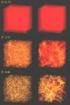
8 4.1. An intuitive city metaphor Metaphors help users to better understand complex situations. For our architectural program visualization, we have chosen a city metaphor [14, 24]. Our metaphor comprises the following elements, cf. Figure 1 2. Buildings represent functions. Building textures represent source code metrics; for instance, the (tall) blue colored buildings in Figure 1 indicate a LOC > 200. Similarly, other textures in this image indicate other thresholds. Cities (blue plates) indicate source files. Pillars (C++ only), shown perpendicular to cities in Figure 2, represent class definitions. The pillars are the foundation for water towers (spheres), representing header files. In this way, a header file can have multiple class definitions. Finally, (green) landscapes, which carry cities and water towers, represent directories. The water and sky in Figure 1 and 2 are optional aesthetic decorations. Note that the above is an example of one visual configuration; to determine the most effective configuration, cognitive studies must be conducted. Vizz3D merely allows different user defined mappings (from program model entities to visual entities). For more information see [20] Computing consistent layouts Our layout algorithm extends the force-directed algorithm of Huang and Eades [11] by combining it with a hierarchical algorithm. Because force-directed layout algorithms can in general be rather slow, we calculate the forces for coarsegrained nodes first, i.e., for header files, source files, and directories. Figure 3 a) shows the layout of 36 files. The edges 2 Directed edges are color interpolated from a light to a dark color. represent Directory Contains relationships. Files belonging to the same directory, representing components by design, are laid out close together. The size of a source file reflects the number of functions defined within it. Buildings are laid out compactly next to each other, i.e., they are not part of the force-directed layout. The second step is to apply the landscapes (directory structure) for the cities (files), cf. Figure 3 b). The height of the landscape (y-axis) represents the depth of the directory path. Therefore, cities or files in a deeper directory structure are represented on a higher hierarchical level. As a result of the force-directed layout, directories containing subdirectories are laid out more closely. As subdirectories are on a higher hierarchical level, subdirectories produce visual mountains, similar to 3D treemaps [5], where directory structures are represented to the user in a hierarchical way. Our layout provides predictable visualizations (see Section 3) in that different runs of the system produce fairly similar landscapes. Together with our 3D city metaphor, familiar entities can quickly be rediscovered. The current layout predictability can even be improved if the initial random seed of our layout is kept constant across multiple runs Representing analysis results Our single-view restriction means that all analysis results are displayed in one view, raising immediate concerns about information overload. To overcome this problem, we display metrics either with 2D icons [27] within our 3D scene (i.e., 2D icons are shown on top of each building and above each city to convey information), or we use visual properties such as height, width, depth, and texture, among others. Analysis results may also be represented by color; this means, however, that only one analysis at a time can be represented. For instance, all strongly connected components are colored red (the top roof of a building). 5. Application Examples We envision a variety of scenarios in which our single-view architectural visualization would be particularly useful. We outline several such scenarios in this section, emphasizing the ways in which our approach can facilitate collaboration and discussion among stakeholders Quality Assessment Figure 2. Architectural Visualization. Project managers and developers can easily assess various aspects of a software system s quality in our one-view vi-


9 (a) (b) Figure 3. (a) layout algorithm between files (b) adding the directory structure sualization. For instance, consider Figure 1, which combines a File Call-, Class Inheritance-, Class Contains-, File Contains- and Directory Contains graph. In addition, this figure shows software complexity information (fire texture), global variables (globe icon), oversized functions (blue buildings), unsafe functions (lock icon), and run-time information (the width and depth represents run-time information). By interactively examining Figure 1, developers can communicate concerns, such as global variables, new-delete deviations, or unsafe functions, to managers, and help the managers understand where and why additional time must be spent to improve those components. Similarly, complex areas of the system, as indicated by cyclomatic or arithmetic complexity, can be easily illustrated via the common metaphor. Developers of all skill levels can use this kind of visualization to detect and communicate concerns, and they may do so over a variety of communication media, such as teleconferencing or virtual reality displays. We anticipate that single-view collaboration will help stakeholders detect code quality problems earlier, make meetings more effective, and reduce project costs in general Componentization Once a software system becomes large, it is essential to decomponentize it, i.e., to split it into smaller reusable components that eventually can be maintained or sold separately. A single-view architectural visualization may again help to communicate componentization issues and costs among management, developers, and re-engineers, using analyses such as pattern matching, class membership, and SCC. For example, consider the analysis of class membership violations. As described in Section 2.2, a class membership analysis determines fragmented member functions, i.e., member functions declared in the same C++ class (usually header file) but defined in different source files. Suppose a file represents a component. From a reusability perspective, a good coding style might prefer that all member functions of one class be implemented in the same source file. A re-engineer might write a simple analysis to check this condition and print the results as text to the screen. Though this screen dump provides useful information, this information might be of limited use if the original developers are not present to guide changes. An architectural visualization, on the other hand, might supply some of the developers expertise through additional metrics visualized at the same time. For instance, consider Figure 4, where the class membership relationship is indicated by assigning the same color to each member function of a class. In Figure 4, the directory /wpp3d/ contains four source files and one header file. The header file contains one class (pillar) that contains eight member functions, indicated by their red coloration. We see that one member function is defined in a different source file, i.e., a fragmentation is present. However, due to the additional LOC information, even a non-expert could conclude that the exceptional member function has been refactored due to its size. Our single-view architectural visualization helps us to understand the specific analysis problem at hand. Moreover, it shows the entire context of all additional entities and relationships involved. For example, one can determine whether the exceptional method described above occurs in


10 Figure 4. Class Membership Visualization. the same directory as the other methods in its class or not. Furthermore, call edges may be activated turning the Class Contains graph into a merge of the Class Contains and Function Call graphs. The additional information may help to investigate the purpose of certain functions in the context of the whole program. Another example is the detection of strongly connected components. Again, if only printed to the screen as a list, the context might be lost. For instance, Figure 5 shows an architectural visualization of a file call graph. The files themselves are color coded; a green color indicates a cycle. Seeing the analysis result in the context of the directory structure, one could assume that all files in the cycle belong to the lower right directory. There are however two exceptions. It is now up to the developer or re-engineer to determine whether the exceptional files should be moved. 6. Comparison to Related Work There is a large literature on existing architectural visualization tools. We can classify these approaches according to the number of aspects they visualize using how many views. Single-aspect, single-view. Illustrate only one aspect of a software architecture, e.g., CrocoCosmos [18], sv3d [21]. Multi-aspect, single-view. Our work is an example of this class. Another example is SHriMP [31], allowing the interactive, single-view navigation between architecture and source code. SHriMP is a great tool for architectural browsing and understanding of source code. However, SHriMP was not developed with stakeholder communication in mind; it does not support a natural metaphor or the ability to add multiple analysis and metric results within the view. Multi-aspect, multi-view. Illustrate multiple views of the architecture level, e.g., CodeCrawler [17], BLOOM [30] 3. Other approaches, such as ArgoUML [1], exist. However, these applications visualize not just architectural level information, but rather a combination of architecture and middle level. Further recommendations and cognitive studies on (architectural) multi-views can be found in [10, 16, 32]. We believe that multiple views are important for detecting and answering many problems, especially when depicting low-level analysis results in middle-level visualizations. In such cases, it is impossible to view all the possible aspects of software in one image. However, when illustrating the architecture of a software system to various stakeholders, we believe that showing the different architectural aspects 3 Note that some architecture level tools might also be used for other purposes, e.g., CodeCrawler supports also class blueprints and therefore could as well qualify as a multi-level, multi-view visualization tool.


11 Figure 5. Strongly Connected Components Visualization. in the same view with the same metaphor and layout is desirable. In this paper, we have suggested how it is possible to merge and filter the essential information for different stakeholders. This helps stakeholders get precise answers to their questions and, moreover, enables them to communicate the answers among themselves and others. complexity reduction techniques for large scale visualizations, and implemented a layout algorithm and metaphor in our visualization tool, Vizz3D. 8. Acknowledgments 7. Conclusion and Future Work Our tool is a proof-of-concept design for a multi-aspect, architecture-level, single-view visualizer. This paper reviews our philosophy and implementation, with particular emphasis on how different stakeholders can use such visualizations as an aid in collaborative understanding, development, maintenance, and re-engineering of a large-scale software system. The key features of our approach are the use of an intuitive city metaphor for representing the structure of the system architecture, a single view for visualizing multiple aspects and analysis results, and powerful filtering and focusing techniques built into the tool implementation. We have integrated and extended a variety of analysis and visualization tools, allowing us in future work to evaluate the trade-offs of using a unified single-view for architecturelevel program visualization and communication. In preparation for such future experiments, we have classified and implemented program analyses, identified and implemented This work was performed under the auspices of the U.S. Department of Energy by University of California, Lawrence Livermore National Laboratory under Contract W Eng-48, UCRL-CONF We thank Jeremiah Willcock and Christian Iwainsky for numerous helpful discussions. References [1] ArgoUML. Available at: org/, [2] Babel. Available at: components/, July [3] J. Bevan, S. Kim, and L. Zou. Kenyon: A common software stratigraphy system. Available at: ucsc.edu/research/labs/grase/kenyon/, [4] D. Beyer. Co-change visualization. In Proceedings of the 21st IEEE International Conference on Software Mainte-

12 nance (ICSM 2005, Budapest, September 25-30), Industrial and Tool volume, pages 89 92, Budapest, [5] T. Bladh, D. Carr, and J. Scholl. Extending tree-maps to three dimensions: a comparative study. In M. Masoodian, S. Jones, and B. Rogers, editors, 6th Asia-Pacific Conference on Computer-Human Interaction (APCHI 2004), New Zealand, June [6] M. Burch, S. Diehl, and P. Weissgerber. Visual data mining in software archives. In SoftVis 05: Proceedings of the 2005 ACM symposium on Software visualization, pages 37 46, New York, NY, USA, ACM Press. [7] S. Demeyer, S. Ducasse, and O. Nierstrasz. Object-Oriented Reengineering Patterns. Morgan Kaufmann Publishers, [8] C. R. dos Santos, P. Gros, P. Abel, D. Loisel, N. Trichaud, and J. Paris. Metaphor-aware 3d navigation. In IEEE Symposium on Information Visualization, pages Los Alamitos, CA, USA, IEEE Comput. Soc., [9] G. W. Furnas. The FISHEYE view: A new look at structured files. Technical Report , Murray Hill, New Jersey 07974, U.S.A., [10] J. C. Grundy, R. Mugridge, and J. Hosking. Visual specification of multi-view visual environments. In IEEE Symposium on Visual Languages, Halifax, Nova Scotia, Canada. IEEE CS Press, September [11] M. L. Huang and P. Eades. A fully animated interactive system for clustering and navigating huge graphs. In 6th Int. Symposium on Graph Drawing, pages Springer LNCS 1547, [12] M. Jünger and P. Mutzel, editors. Graph Drawing Software. Springer, [13] G. Kiczales, K. Lieberherr, H. Ossher, M. Aksit, and T. Elrad. Discussing Aspects of AOP. Communications of the ACM, 44(10), October [14] C. Knight and M. C. Munro. Virtual but visible software. In IV00, pages , [15] R. Koschke. Software Visualization in Software Maintenance, Reverse Engineering, and Reengineering: A Research Survey. Journal on Software Maintenance and Evolution, 15(2):87 109, March [16] P. Kruchten. The 4+1 view model of architecture. IEEE Software, 12(6):42 50, November [17] M. Lanza. Codecrawler a lightweight software visualization tool. In VisSoft 2003 (2nd International Workshop on Visualizing Software for Understanding and Analysis). IEEE Computer Society Press, [18] C. Lewerentz and F. Simon. Metrics-based 3D Visualization of Large Object-Oriented Programs. In 1st International Workshop on Visualizing Software for Understanding and Analysis, June [19] W. Li and S. Henry. Maintenance Metrics for the Object Oriented Paradigm. In IEEE Proceedings of the 1st International Software Metrics Symposium, May [20] W. Löwe and T. Panas. Rapid Construction of Software Comprehension Tools. International Journal of Software Engineering and Knowledge Engineering, December [21] A. Marcus, L. Feng, and J. I. Maletic. 3D Representations for Software Visualization. In Proceedings of ACM Symposium on Software Visualization, [22] Message Passing Interface Forum (MPIF). MPI: A Message-Passing Interface Standard. Technical Report, University of Tennessee, Knoxville, June [23] K. Misue, P. Eades, W. Lai, and K. Sugiyama. Tree visualisation and navigation clues for information visualisation. J. of Visual Languages and Computing, 6: , [24] T. Panas, R. Berrigan, and J. C. Grundy. A 3d metaphor for software production visualization. In IV03, London, UK, June IEEE. [25] T. Panas, W. Löwe, and U. Aßmann. Towards the unified recovery architecture for reverse engineering. In International Conf. on Software Engineering Research and Practice, Las Vegas, USA, June [26] T. Panas, J. Lundberg, and W. Löwe. Reuse in reverse engineering. In International Workshop on Program Comprehension, Bari, Italy, June [27] G. Parker, G. Franck, and C. Ware. Visualization of large nested graphs in 3d: Navigation and interaction. Journal of Visual Languages and Computing, 9(3): , [28] M. Petre, A. Blackwell, and T. Green. Cognitive questions in software visualization. Software Visualization: Programming as a Multimedia Experience, pages , January [29] D. Quinlan, S. Ur, and R. Vuduc. An extensible open-source compiler infrastructure for testing. In Proc. IBM Haifa Verification Conference, volume LNCS 3875, pages , Haifa, Israel, November [30] S. P. Reiss and M. Renieris. The BLOOM Software Visualization System. In Software Visualization From Theory to Practice, MIT Press, [31] M.-A. D. Storey, F. D. Fracchia, and H. A. Mueller. Cognitive design elements to support the construction of a mental model during software visualization. In Proc. of the 5th Int. Workshop on Program Comprehension (WPC 97), Washington, DC, USA, IEEE Computer Society. [32] M.-A. D. Storey, K. Wong, and H. A. Müller. How do program understanding tools affect how programmers understand programs? Science of Computer Programming, 36(2 3): , [33] T. Panas. Quality Analysis of SMG2000. Technical report, CASC, Lawrence Livermore National Laboratory, November [34] Vizz3D. Available at: sourceforge.net, July [35] VizzAnalyzer. Available at: [36] P. Young and M. Munro. Visualising software in virtual reality. In Proc. IEEE 6th Int. Workshop on Program Comprehension, June 24-26, pp Ischia, Italy, IEEE Computer Society Press., 1998.
![Rogers, editors, 6th Asia-Pacific Conference on Computer-Human Interaction (APCHI 2004), New Zealand, June 2004. [6] M. Burch, S. Diehl, and P. Weissgerber. Visual data mining in software archives.](/docs-images/44/12651793/images/page_12.jpg "In SoftVis 05: Proceedings of the 2005 ACM symposium on Software visualization, pages 37 46, New York, NY, USA, 2005. ACM Press. [7] S. Demeyer, S. Ducasse, and O. Nierstrasz.")
Architectural Visualization of C/C++ Source Code for Program Comprehension
 UCRL-CONF-224144 Architectural Visualization of C/C++ Source Code for Program Comprehension T. Panas, T. G. W. Epperly, D. Quinlan, A. Saebjornsen, R. Vuduc September 1, 2006 29th International Conference
Tool Support for Inspecting the Code Quality of HPC Applications
 Tool Support for Inspecting the Code Quality of HPC Applications Thomas Panas Dan Quinlan Richard Vuduc Center for Applied Scientific Computing Lawrence Livermore National Laboratory P.O. Box 808, L-550
A Survey Paper on Software Architecture Visualization
 A Survey Paper on Software Architecture Visualization Yaser Ghanam and Sheelagh Carpendale Department of Computer Science University of Calgary, Canada T2N 1N4 {yghanam, sheelagh}@ucalgary.ca ABSTRACT
Component visualization methods for large legacy software in C/C++
 Annales Mathematicae et Informaticae 44 (2015) pp. 23 33 http://ami.ektf.hu Component visualization methods for large legacy software in C/C++ Máté Cserép a, Dániel Krupp b a Eötvös Loránd University [email protected]
VISUALIZATION APPROACH FOR SOFTWARE PROJECTS
 Canadian Journal of Pure and Applied Sciences Vol. 9, No. 2, pp. 3431-3439, June 2015 Online ISSN: 1920-3853; Print ISSN: 1715-9997 Available online at www.cjpas.net VISUALIZATION APPROACH FOR SOFTWARE
Exploiting Dynamic Information in IDEs Eases Software Maintenance
 Exploiting Dynamic Information in IDEs Eases Software Maintenance David Röthlisberger Software Composition Group, University of Bern, Switzerland [email protected] Abstract The integrated development
Software Analysis Visualization
 28th International Conference on Software Engineering Software Analysis Visualization Harald Gall and Michele Lanza !oftware Visualiza"o# Tutorial F7 Software Evolution: Analysis and Visualization 2006
Software Engineering & Architecture
 Software Engineering & Architecture 11. QUALITY METRICS AND VISUALIZATION Martin Kropp University of Applied Sciences Northwestern Switzerland Institute for Mobile and Distributed Systems References Some
An Introduction to Software Visualization. Visualization. Types of Software Visualization. Course Overview
 An Introduction to Software Dr. Jonathan I. Maletic Software DevelopMent Laboratory Department of Computer Science Kent State University Course Overview Introductory Lectures Software visualization
IMPROVING JAVA SOFTWARE THROUGH PACKAGE STRUCTURE ANALYSIS
 IMPROVING JAVA SOFTWARE THROUGH PACKAGE STRUCTURE ANALYSIS Edwin Hautus Compuware Europe P.O. Box 12933 The Netherlands [email protected] Abstract Packages are an important mechanism to decompose
A Visualization Method to Support Impacts Analysis in Program Understanding
 A Visualization Method to Support Impacts Analysis in Program Understanding Rita Noremi Bt Mohamad Centre for Advanced Software Engineering (CASE) Universiti Teknologi Malaysia Kuala Lumpur, Malaysia [email protected]
International Journal of Software Engineering and Knowledge Engineering c World Scientific Publishing Company
 International Journal of Software Engineering and Knowledge Engineering c World Scientific Publishing Company Rapid Construction of Software Comprehension Tools WELF LÖWE Software Technology Group, MSI,
Program Understanding in Software Engineering
 Taming the complexity: The need for program understanding in software engineering Raghvinder S. Sangwan, Ph.D. Pennsylvania State University, Great Valley School of Graduate Professional Studies Robert
Génie Logiciel et Gestion de Projets. Evolution
 Génie Logiciel et Gestion de Projets Evolution 1 Roadmap Evolution: definitions Re-engineering Legacy systems Reverse engineering Software Visualisation Re-engineering Patterns 2 Evolution: Definitions
Visualization of bioinformatics workflows for ease of understanding and design activities
 Visualization of bioinformatics workflows for ease of understanding and design activities H.V. Byelas and M.A.Swertz Genomics Coordination Center, Department of Genetics, University Medical Center Groningen,
A Tool for Visual Understanding of Source Code Dependencies
 The 16th IEEE International Conference on Program Comprehension A Tool for Visual Understanding of Source Code Dependencies Martin Pinzger, Katja Gräfenhain, Patrick Knab, and Harald C. Gall Department
VisCG: Creating an Eclipse Call Graph Visualization Plug-in. Kenta Hasui, Undergraduate Student at Vassar College Class of 2015
 VisCG: Creating an Eclipse Call Graph Visualization Plug-in Kenta Hasui, Undergraduate Student at Vassar College Class of 2015 Abstract Call graphs are a useful tool for understanding software; however,
Visualization methods for patent data
 Visualization methods for patent data Treparel 2013 Dr. Anton Heijs (CTO & Founder) Delft, The Netherlands Introduction Treparel can provide advanced visualizations for patent data. This document describes
A Business Process Services Portal
 A Business Process Services Portal IBM Research Report RZ 3782 Cédric Favre 1, Zohar Feldman 3, Beat Gfeller 1, Thomas Gschwind 1, Jana Koehler 1, Jochen M. Küster 1, Oleksandr Maistrenko 1, Alexandru
An Eclipse Plug-In for Visualizing Java Code Dependencies on Relational Databases
 An Eclipse Plug-In for Visualizing Java Code Dependencies on Relational Databases Paul L. Bergstein, Priyanka Gariba, Vaibhavi Pisolkar, and Sheetal Subbanwad Dept. of Computer and Information Science,
Program Understanding with Code Visualization
 Program Understanding with Code Visualization Arif Iftikhar Department of Computer Science National University of Computer and Emerging Sciences 852-B Faisal Town, Lahore, Pakistan [email protected]
JRefleX: Towards Supporting Small Student Software Teams
 JRefleX: Towards Supporting Small Student Software Teams Kenny Wong, Warren Blanchet, Ying Liu, Curtis Schofield, Eleni Stroulia, Zhenchang Xing Department of Computing Science University of Alberta {kenw,blanchet,yingl,schofiel,stroulia,xing}@cs.ualberta.ca
Big Data: Rethinking Text Visualization
 Big Data: Rethinking Text Visualization Dr. Anton Heijs [email protected] Treparel April 8, 2013 Abstract In this white paper we discuss text visualization approaches and how these are important
Supporting Software Development Process Using Evolution Analysis : a Brief Survey
 Supporting Software Development Process Using Evolution Analysis : a Brief Survey Samaneh Bayat Department of Computing Science, University of Alberta, Edmonton, Canada [email protected] Abstract During
VISUALIZING HIERARCHICAL DATA. Graham Wills SPSS Inc., http://willsfamily.org/gwills
 VISUALIZING HIERARCHICAL DATA Graham Wills SPSS Inc., http://willsfamily.org/gwills SYNONYMS Hierarchical Graph Layout, Visualizing Trees, Tree Drawing, Information Visualization on Hierarchies; Hierarchical
The Class Blueprint A Visualization of the Internal Structure of Classes
 The Class Blueprint A Visualization of the Internal Structure of Classes Michele Lanza Software Composition Group University Of Bern Bern, Switzerland [email protected] Stéphane Ducasse Software Composition
Understanding Software Static and Dynamic Aspects
 Understanding Software Static and Dynamic Aspects Welf Löwe IPD, Universität Karlsruhe PF 6980, 76128 Karlsruhe Germany [email protected] Andreas Ludwig IPD, Universität Karlsruhe PF 6980, 76128 Karlsruhe
Topic Maps Visualization
 Topic Maps Visualization Bénédicte Le Grand, Laboratoire d'informatique de Paris 6 Introduction Topic maps provide a bridge between the domains of knowledge representation and information management. Topics
Development/Maintenance/Reuse: Software Evolution in Product Lines
 Development/Maintenance/Reuse: Software Evolution in Product Lines Stephen R. Schach Vanderbilt University, Nashville, TN, USA Amir Tomer RAFAEL, Haifa, Israel Abstract The evolution tree model is a two-dimensional
NGNP Risk Management Database: A Model for Managing Risk
 INL/EXT-09-16778 Revision 1 NGNP Risk Management Database: A Model for Managing Risk John M. Beck November 2011 DISCLAIMER This information was prepared as an account of work sponsored by an agency of
A Framework of Model-Driven Web Application Testing
 A Framework of Model-Driven Web Application Testing Nuo Li, Qin-qin Ma, Ji Wu, Mao-zhong Jin, Chao Liu Software Engineering Institute, School of Computer Science and Engineering, Beihang University, China
Hierarchical Data Visualization
 Hierarchical Data Visualization 1 Hierarchical Data Hierarchical data emphasize the subordinate or membership relations between data items. Organizational Chart Classifications / Taxonomies (Species and
CHAPTER 1 INTRODUCTION
 1 CHAPTER 1 INTRODUCTION Exploration is a process of discovery. In the database exploration process, an analyst executes a sequence of transformations over a collection of data structures to discover useful
Hierarchical Data Visualization. Ai Nakatani IAT 814 February 21, 2007
 Hierarchical Data Visualization Ai Nakatani IAT 814 February 21, 2007 Introduction Hierarchical Data Directory structure Genealogy trees Biological taxonomy Business structure Project structure Challenges
Simulating the Structural Evolution of Software
 Simulating the Structural Evolution of Software Benjamin Stopford 1, Steve Counsell 2 1 School of Computer Science and Information Systems, Birkbeck, University of London 2 School of Information Systems,
Software Visualization Tools for Component Reuse
 Software Visualization Tools for Component Reuse Craig Anslow Stuart Marshall James Noble Robert Biddle 1 School of Mathematics, Statistics and Computer Science, Victoria University of Wellington, New
Interaction and Visualization Techniques for Programming
 Interaction and Visualization Techniques for Programming Mikkel Rønne Jakobsen Dept. of Computing, University of Copenhagen Copenhagen, Denmark [email protected] Abstract. Programmers spend much of their
Modeling the User Interface of Web Applications with UML
 Modeling the User Interface of Web Applications with UML Rolf Hennicker,Nora Koch,2 Institute of Computer Science Ludwig-Maximilians-University Munich Oettingenstr. 67 80538 München, Germany {kochn,hennicke}@informatik.uni-muenchen.de
Baseline Code Analysis Using McCabe IQ
 White Paper Table of Contents What is Baseline Code Analysis?.....2 Importance of Baseline Code Analysis...2 The Objectives of Baseline Code Analysis...4 Best Practices for Baseline Code Analysis...4 Challenges
SQLFlow: PL/SQL Multi-Diagrammatic Source Code Visualization
 SQLFlow: PL/SQL Multi-Diagrammatic Source Code Visualization Samir Tartir Department of Computer Science University of Georgia Athens, Georgia 30602 USA Email: [email protected] ABSTRACT: A major problem
A standards-based approach to application integration
 A standards-based approach to application integration An introduction to IBM s WebSphere ESB product Jim MacNair Senior Consulting IT Specialist [email protected] Copyright IBM Corporation 2005. All rights
Change Management. [email protected] ABSTRACT
 Change Management James Tam, Saul Greenberg, and Frank Maurer Department of Computer Science University of Calgary Calgary, Alberta phone: +1 403 220 3532 [email protected] ABSTRACT In this paper,
SourceMeter SonarQube plug-in
 2014 14th IEEE International Working Conference on Source Code Analysis and Manipulation SourceMeter SonarQube plug-in Rudolf Ferenc, László Langó, István Siket, Tibor Gyimóthy University of Szeged, Department
Java (12 Weeks) Introduction to Java Programming Language
 Java (12 Weeks) Topic Lecture No. Introduction to Java Programming Language 1 An Introduction to Java o Java as a Programming Platform, The Java "White Paper" Buzzwords, Java and the Internet, A Short
Software Engineering Best Practices. Christian Hartshorne Field Engineer Daniel Thomas Internal Sales Engineer
 Software Engineering Best Practices Christian Hartshorne Field Engineer Daniel Thomas Internal Sales Engineer 2 3 4 Examples of Software Engineering Debt (just some of the most common LabVIEW development
Verifying Business Processes Extracted from E-Commerce Systems Using Dynamic Analysis
 Verifying Business Processes Extracted from E-Commerce Systems Using Dynamic Analysis Derek Foo 1, Jin Guo 2 and Ying Zou 1 Department of Electrical and Computer Engineering 1 School of Computing 2 Queen
Chapter 13: Program Development and Programming Languages
 Understanding Computers Today and Tomorrow 12 th Edition Chapter 13: Program Development and Programming Languages Learning Objectives Understand the differences between structured programming, object-oriented
II. TYPES OF LEVEL A.
 Study and Evaluation for Quality Improvement of Object Oriented System at Various Layers of Object Oriented Matrices N. A. Nemade 1, D. D. Patil 2, N. V. Ingale 3 Assist. Prof. SSGBCOET Bhusawal 1, H.O.D.
Source Code Translation
 Source Code Translation Everyone who writes computer software eventually faces the requirement of converting a large code base from one programming language to another. That requirement is sometimes driven
Load Distribution in Large Scale Network Monitoring Infrastructures
 Load Distribution in Large Scale Network Monitoring Infrastructures Josep Sanjuàs-Cuxart, Pere Barlet-Ros, Gianluca Iannaccone, and Josep Solé-Pareta Universitat Politècnica de Catalunya (UPC) {jsanjuas,pbarlet,pareta}@ac.upc.edu
Using Eclipse CDT/PTP for Static Analysis
 PTP User-Developer Workshop Sept 18-20, 2012 Using Eclipse CDT/PTP for Static Analysis Beth R. Tibbitts IBM STG [email protected] "This material is based upon work supported by the Defense Advanced Research
Technical paper review. Program visualization and explanation for novice C programmers by Matthew Heinsen Egan and Chris McDonald.
 Technical paper review Program visualization and explanation for novice C programmers by Matthew Heinsen Egan and Chris McDonald Garvit Pahal Indian Institute of Technology, Kanpur October 28, 2014 Garvit
CodeCrawler An Extensible and Language Independent 2D and 3D Software Visualization Tool
 CodeCrawler An Extensible and Language Independent 2D and 3D Software Visualization Tool Michele Lanza Software Engineering Group Department of Informatics University of Zurich, Switzerland Stéphane Ducasse
Model-Driven Cloud Data Storage
 Model-Driven Cloud Data Storage Juan Castrejón 1, Genoveva Vargas-Solar 1, Christine Collet 1, and Rafael Lozano 2 1 Université de Grenoble, LIG-LAFMIA, 681 rue de la Passerelle, Saint Martin d Hères,
Requirements engineering
 Learning Unit 2 Requirements engineering Contents Introduction............................................... 21 2.1 Important concepts........................................ 21 2.1.1 Stakeholders and
Fault Localization in a Software Project using Back- Tracking Principles of Matrix Dependency
 Fault Localization in a Software Project using Back- Tracking Principles of Matrix Dependency ABSTRACT Fault identification and testing has always been the most specific concern in the field of software
What is Visualization? Information Visualization An Overview. Information Visualization. Definitions
 What is Visualization? Information Visualization An Overview Jonathan I. Maletic, Ph.D. Computer Science Kent State University Visualize/Visualization: To form a mental image or vision of [some
Interactive Data Mining and Visualization
 Interactive Data Mining and Visualization Zhitao Qiu Abstract: Interactive analysis introduces dynamic changes in Visualization. On another hand, advanced visualization can provide different perspectives
Visualizing an Auto-Generated Topic Map
 Visualizing an Auto-Generated Topic Map Nadine Amende 1, Stefan Groschupf 2 1 University Halle-Wittenberg, information manegement technology [email protected] 2 media style labs Halle Germany [email protected]
EVALUATING METRICS AT CLASS AND METHOD LEVEL FOR JAVA PROGRAMS USING KNOWLEDGE BASED SYSTEMS
 EVALUATING METRICS AT CLASS AND METHOD LEVEL FOR JAVA PROGRAMS USING KNOWLEDGE BASED SYSTEMS Umamaheswari E. 1, N. Bhalaji 2 and D. K. Ghosh 3 1 SCSE, VIT Chennai Campus, Chennai, India 2 SSN College of
Winery A Modeling Tool for TOSCA-based Cloud Applications
 Institute of Architecture of Application Systems Winery A Modeling Tool for TOSCA-based Cloud Applications Oliver Kopp 1,2, Tobias Binz 2, Uwe Breitenbücher 2, and Frank Leymann 2 1 IPVS, 2 IAAS, University
UNDERGRADUATE COMPUTER SCIENCE EDUCATION: A NEW CURRICULUM PHILOSOPHY & OVERVIEW
 UNDERGRADUATE COMPUTER SCIENCE EDUCATION: A NEW CURRICULUM PHILOSOPHY & OVERVIEW John C. Knight, Jane C. Prey, & Wm. A. Wulf Department of Computer Science University of Virginia Charlottesville, VA 22903
Automated Test Approach for Web Based Software
 Automated Test Approach for Web Based Software Indrajit Pan 1, Subhamita Mukherjee 2 1 Dept. of Information Technology, RCCIIT, Kolkata 700 015, W.B., India 2 Dept. of Information Technology, Techno India,
Gadget: A Tool for Extracting the Dynamic Structure of Java Programs
 Gadget: A Tool for Extracting the Dynamic Structure of Java Programs Juan Gargiulo and Spiros Mancoridis Department of Mathematics & Computer Science Drexel University Philadelphia, PA, USA e-mail: gjgargiu,smancori
Meeting DO-178B Software Verification Guidelines with Coverity Integrity Center
 Meeting DO-178B Software Verification Guidelines with Coverity Integrity Center May, 2009 Thomas Schultz Director of Product Strategy, Coverity, Inc. Executive Summary Development organizations that create
The structured application of advanced logging techniques for SystemVerilog testbench debug and analysis. By Bindesh Patel and Amanda Hsiao.
 Logging makes sense for testbench debug The structured application of advanced logging techniques for SystemVerilog testbench debug and analysis. By Bindesh Patel and Amanda Hsiao. SystemVerilog provides
The Use of Information Visualization to Support Software Configuration Management *
 The Use of Information Visualization to Support Software Configuration Management * Roberto Therón 1, Antonio González 1, Francisco J. García 1, Pablo Santos 2 1 Departamento de Informática y Automática,
HierarchyMap: A Novel Approach to Treemap Visualization of Hierarchical Data
 P a g e 77 Vol. 9 Issue 5 (Ver 2.0), January 2010 Global Journal of Computer Science and Technology HierarchyMap: A Novel Approach to Treemap Visualization of Hierarchical Data Abstract- The HierarchyMap
WoPeD - An Educational Tool for Workflow Nets
 WoPeD - An Educational Tool for Workflow Nets Thomas Freytag, Cooperative State University (DHBW) Karlsruhe, Germany [email protected] Martin Sänger, 1&1 Internet AG, Karlsruhe, Germany [email protected]
Visualizing e-government Portal and Its Performance in WEBVS
 Visualizing e-government Portal and Its Performance in WEBVS Ho Si Meng, Simon Fong Department of Computer and Information Science University of Macau, Macau SAR [email protected] Abstract An e-government
Integrating Service Oriented MSR Framework and Google Chart Tools for Visualizing Software Evolution
 2012 Fourth International Workshop on Empirical Software Engineering in Practice Integrating Service Oriented MSR Framework and Google Chart Tools for Visualizing Software Evolution Yasutaka Sakamoto,
Applying 4+1 View Architecture with UML 2. White Paper
 Applying 4+1 View Architecture with UML 2 White Paper Copyright 2007 FCGSS, all rights reserved. www.fcgss.com Introduction Unified Modeling Language (UML) has been available since 1997, and UML 2 was
Questions? Assignment. Techniques for Gathering Requirements. Gathering and Analysing Requirements
 Questions? Assignment Why is proper project management important? What is goal of domain analysis? What is the difference between functional and non- functional requirements? Why is it important for requirements
A Systems Approach to HVAC Contractor Security
 LLNL-JRNL-653695 A Systems Approach to HVAC Contractor Security K. M. Masica April 24, 2014 A Systems Approach to HVAC Contractor Security Disclaimer This document was prepared as an account of work sponsored
An Integrated Quality Assurance Framework for Specifying Business Information Systems
 An Integrated Quality Assurance Framework for Specifying Business Information Systems Frank Salger 1, Stefan Sauer 2, Gregor Engels 1,2 1 Capgemini sd&m AG, Carl-Wery-Str. 42, D-81739 München, Germany
Quantitative Evaluation of Software Quality Metrics in Open-Source Projects
 Quantitative Evaluation of Software Quality Metrics in Open-Source Projects Henrike Barkmann Rüdiger Lincke Welf Löwe Software Technology Group, School of Mathematics and Systems Engineering Växjö University,