
Chapter 33. Nerve Physiology
|
|
|
- Sherilyn Greer
- 10 years ago
- Views:
Transcription
1 Chapter 33 NERVE AND VASCULAR INJURIES OF THE HAND KEY FIGURES: Digital nerve location on finger Epineurial repair Nerves and blood vessels of the hand and fingers usually are quite delicate, and some are quite small. Optimal repair of injuries often requires the microsurgical expertise of a reconstructive surgeon. However, an understanding of basic principles is useful when you find yourself without specialist support. Nerve Injuries Nerve Physiology When a nerve is cut, the distal part of the nerve slowly dies and cannot regrow. The proximal part of the nerve will regenerate. However, without proper treatment, there is no guarantee that the nerve will grow correctly or that function (sensory or motor) will be restored. The nerve laceration should be repaired by sewing the cut ends together. Repair increases the likelihood that the living proximal part will grow in the proper direction, along the path left by the disintegrating distal part. Nerves grow at a rate of 1 mm/day once the reparative process begins (usually within a few weeks of injury). Remind the patient that even if the nerve is repaired, normal sensation and movement will not be apparent immediately after the procedure. It will take many months to know the final outcome. 313

2 314 Practical Plastic Surgery for Nonsurgeons General Nerve Anatomy Nerves are made up of axonal fibers running in parallel. These fibers are surrounded by loose connective tissue, called epineurium. In larger nerves that have many different axons (some sensory, some motor in function), the connective tissue between the individual axons is called perineurium. Sutures should be placed in the loose connective tissue around the axons, not in the axonal substance itself. Digital Nerves Digital nerves are approximately 2 3 mm in diameter. They run with the digital arteries along the sides of each finger. If you look at your Determining the position of the digital nerve. A, Flex the finger and mark the most dorsal aspect of both PIP and DIP flexion creases with a dot. Connect the dots in a straight line. B, The course of the digital nerve is illustrated by the dashed line.

3 Nerve and Vascular Injuries of the Hand 315 finger from the side and completely flex the distal (DIP) and proximal interphalangeal (PIP) joints, the neurovascular bundle runs along a line that connects the flexion creases of these joints. Digital nerves are purely sensory. If a digital nerve is cut, the patient feels numbness on the corresponding side of the finger. Motor function in the finger should be normal, because it is controlled by the tendons, whose muscles are innervated more proximally in the forearm. Impairment of motor function (other than pain with movement) suggests that tendon injury also is present. Injury to a digital nerve at any point proximal to the DIP flexion crease should be repaired. In the fingertip (distal to the DIP flexion crease), the nerve divides into its terminal branches, which are too small to repair. With distal nerve injuries, sensation may return without formal nerve repair. Larger Nerves Nerves in the forearm and wrist (e.g., median and ulnar nerves at the wrist) are much larger than digital nerves; their diameters range from 5 10 mm. Most have both motor and sensory functions. When you look at the cut ends of the nerve, especially under magnification, you can see that the inner nerve fibers are of various diameters and that some fibers seem to be grouped together within the nerve. For optimal outcome, the proximal sensory fibers should be sutured to the distal sensory fibers and the proximal motor fibers to the distal motor fibers. Specialists sometimes repair larger nerves with electophysiologic guidance. This technique uses electric stimulators to identify which fibers are sensory and which are motor. Thus, the surgeon can determine exactly which fibers should go together. However, this specialized equipment usually is found only in high-technology hand centers. Your best strategy is to try to align the nerve, using whatever landmarks you can discern. For example, try to line up the tiny blood vessels in the connective tissue around the nerve and fibers of similar size. Nerve Repair For optimal results, use at least twofold magnification (glasses or microscope). The more magnification, the better. Twofold magnification glasses make the image appear twice as large as with the naked eye. Use the most delicate instruments you have jewelers forceps, fine needle holders, fine scissors and the smallest needle you can find (8-0 or 9-0 nylon is best).

4 316 Practical Plastic Surgery for Nonsurgeons Epineurial repair. Sutures are placed in the connective tissue surrounding the nerve fibers. (From McCarthy JV (ed): Plastic Surgery. Philadelphia, W.B. Saunders, 1990, with permission.) Place your sutures in the epineurium, not in the nerve fibers. This approach aligns the nerve fibers and allows proper growth. There should be no tension on the repair. You may need to free the nerve from the surrounding soft tissues to remove tension. You also can change the position of the patient's fingers or wrist to allow the ends to meet more easily. Caution: if you bend the finger or wrist during surgery to bring the nerve ends together, it must stay in this position for days. If you accidentally straighten the hand in the operating room, you will disrupt the repair. If you have no magnification and minimal instruments: For a digital nerve, place a single simple suture to bring the ends together. For a larger nerve, 3 4 sutures should be placed. If you have magnification and very small sutures (8-0 or 9-0): For a digital nerve, place 2 4 simple sutures to bring the ends together. For larger nerves, place as many as you need to get a smooth repair (i.e., nerve fibers should not protrude from the epineurium). If there is too much tension on the nerve repair despite different positioning techniques, a nerve graft is required. This technically challenging procedure requires referral to a specialist for optimal outcome. Even so, there is no guarantee that a nerve graft will work. To facilitate future exploration and nerve grafting, mark the ends of the nerve by placing a 4-0 or 5-0 nylon or prolene simple suture in the epineurium. Be sure to use a nonabsorbable material, which helps to locate the nerve ends at the next operation. The surgeon performing the subsequent procedure will be grateful.

5 Nerve and Vascular Injuries of the Hand 317 Postoperative Care The repair should be immobilized by splinting the hand or finger for a minimum of days. If the finger or hand required special positioning to get the nerve ends to meet during the operation, the patient should begin to open the finger or hand slowly (over the subsequent 1 2 weeks) to avoid disruption of the repair. If a motor nerve is injured, the patient should move the joints of the hand regularly to prevent stiffness. It takes months for the nerve to start working again. Even if the nerve repair is successful, the patient may not regain function if the joints have become stiff from disuse. If a sensory nerve is injured, remind the patient to be careful around very hot, very cold, or sharp objects to prevent accidental injury to the insensate area. Vascular Injuries First, address the risk of exsanguination (bleeding to death), which is a real danger with arterial injuries. If serious bleeding persists: Apply point pressure over the wound. This does not mean placing gauze in the wound and wrapping the area with an Ace bandage. It means placing a wad of gauze over the injured area and using two fingers to apply firm point pressure to the injured site. You may need to hold the pressure for several minutes before the bleeding stops. If the bleeding is arterial, exploration is needed. If you cannot control an exsanguinating hemorrhage, place a tourniquet or blood pressure cuff proximal to the injury (closer to the heart). If you use a blood pressure cuff, it must be inflated to at least 50 mmhg above systolic arterial pressure (usually to at least mmhg). Tourniquets hurt and place the tissues at risk for ischemic injury. The tourniquet should not be left in place for more than minutes. If a tourniquet is needed, urgent operative exploration is required. Patients with a history of pulsatile bleeding (blood squirting out from a hand or forearm wound) must be explored surgically, even in the absence of active bleeding at the time of exam. Failure to tie off or repair the vessel is associated with a high incidence of pseudoaneurysm (outpouching of the vessel). A pseudoaneurysm can be dangerous because of its propensity for rupture in the future.

6 318 Practical Plastic Surgery for Nonsurgeons Digital Artery Bleeding from a digital artery usually can be controlled by repairing the skin laceration and applying pressure over the injured area. In the rare instance when this approach fails, the vessel can be tied off with a very small suture (5-0 or 6-0 silk or chromic). Caution: The digital nerve is adjacent to the artery. Do not accidentally place the suture around the nerve as well as the artery. If you accidentally tie off a digital nerve, the patient will have considerable postoperative pain. Radial Artery Although we palpate the radial artery to check heart rate, it is not the dominant source of circulation to the hand. Many patients with a radial artery injury still have adequate circulation in the injured hand, as evidenced by good capillary refill and normal hand temperature (compared with the other hand). The artery does not necessarily need to be repaired or reconstructed. The vessel can be tied off with minimal morbidity. Remember to tie off both ends of the vessel. Because a significant amount of pressure pushes blood through an artery, a preferable and more secure way to tie off a larger artery is to use a stick tie. Both techniques are discussed in the chapter 2, Basic Surgical Skills. However, if circulation to the hand is insufficient, as evidenced by poor capillary refill and cold skin, the vessel should be repaired. Repair of the blood vessel involves joining together the two severed parts of the artery so that blood can flow as it did before the injury. Blood vessels in the distal forearm are quite small, and repair requires microsurgical equipment and expertise. Transfer to a specialist is vital to save the hand. Ulnar Artery The ulnar artery is the dominant artery to the hand in most people. Thus, if it is injured, it should be repaired or reconstructed. Repair requires microsurgical expertise, because the ulnar artery is even smaller than the radial artery. The vessel should be tied off only if no one with microsurgical skills is available or if the patient is actively bleeding. In addition, some patients have sufficient circulation to the hand even if the ulnar artery is injured. In these few patients, the vessel can be safely tied off. In general, however, it is not recommended to tie off the ulnar artery permanently if specialists are available for referral.

7 Nerve and Vascular Injuries of the Hand 319 Bibliography 1. Modrall JG, Weaver FA, Yellin AE: Diagnosis and management of penetrating vascular trauma and the injured extremity. Emerg Med Clin North Am 16: , Watchmaker GP, Mackinnon SE: Advances in peripheral nerve repair. Clin Plast Surg 24:63-73, 1997.

TENDON INJURIES OF THE HAND KEY FIGURES:
 Chapter 32 TENDON INJURIES OF THE HAND KEY FIGURES: Extensor surface of hand Mallet finger Mallet splints Injured finger in stack splint Repair of open mallet Most hand specialists believe that the earlier
Chapter 11. Everting skin edges
 Chapter 11 PRIMARY WOUND CLOSURE KEY FIGURE: Everting skin edges In primary wound closure, the skin edges of the wound are sutured together to close the defect. Whenever possible and practical, primary
Chapter 29. Initial Care
 Chapter 29 FINGERTIP AND NAIL BED INJURIES KEY FIGURES: Digital tourniquet Bone rongeur Fingernail with hematoma Thenar flap Repair of nail bed Hand injuries are commonly encountered by health care providers
Chapter 30. Rotational deformity Buddy taping Reduction of metacarpal fracture
 Chapter 30 FINGER FRACTURES AND DISLOCATIONS KEY FIGURES: Rotational deformity Buddy taping Reduction of metacarpal fracture Because we use our hands for so many things, finger fractures and dislocations
Chapter 7. Expose the Injured Area
 Chapter 7 GUNSHOT WOUNDS KEY FIGURES: Entrance/exit wounds This chapter describes how to treat the external, surface wounds caused by a bullet. The evaluation for underlying injury related to gunshot wounds
Chapter 35. Volar forearm fasciotomy incisions Hand/dorsal forearm fasciotomy incisions Finger fasciotomy incisions
 Chapter 35 HAND CRUSH INJURY AND COMPARTMENT SYNDROME KEY FIGURES: Volar forearm fasciotomy incisions Hand/dorsal forearm fasciotomy incisions Finger fasciotomy incisions The previous chapters about the
Adult Forearm Fractures
 Adult Forearm Fractures Your forearm is made up of two bones, the radius and ulna. In most cases of adult forearm fractures, both bones are broken. Fractures of the forearm can occur near the wrist at
Wrist and Hand. Patient Information Guide to Bone Fracture, Bone Reconstruction and Bone Fusion: Fractures of the Wrist and Hand: Carpal bones
 Patient Information Guide to Bone Fracture, Bone Reconstruction and Bone Fusion: Wrist and Hand Fractures of the Wrist and Hand: Fractures of the wrist The wrist joint is made up of the two bones in your
Chapter 3. Ulnar nerve infiltration
 Chapter 3 LOCAL ANESTHESIA KEY FIGURES: Digital block/anatomy Sensation to hand Median nerve infiltration Ulnar nerve infiltration Facial block: skeleton Full surgical evaluation of a wound and suture
Integra. MCP Joint Replacement PATIENT INFORMATION
 Integra MCP Joint Replacement PATIENT INFORMATION Integra MCP Patient Information This brochure summarizes information about the use, risks, and benefits of the Integra MCP finger implant. Be sure to discuss
Abdominal Pedicle Flaps To The Hand And Forearm John C. Kelleher M.D., F.A.C.S.
 Abdominal Pedicle Flaps To The Hand And Forearm John C. Kelleher M.D., F.A.C.S. Global-HELP Publications Chapter Eight: TECHNICAL REQUIREMENTS FOR FORMATION OF A TUBED PEDICLE FLAP Creating a tube pedicle
www.ghadialisurgery.com
 P R E S E N T S Dr. Mufa T. Ghadiali is skilled in all aspects of General Surgery. His General Surgery Services include: General Surgery Advanced Laparoscopic Surgery Surgical Oncology Gastrointestinal
Extremity Trauma. William Schecter, MD
 Extremity Trauma William Schecter, MD Approach to the Evaluation of the Patient with an Extremity Injury Blood Supply Skeleton Neurologic Function Risk for Compartment Syndrome? Coverage (Skin and Soft
The Hand Exam: Tips and Tricks
 The Hand Exam: Tips and Tricks Nikki Strauss Schroeder, MD Assistant Clinical Professor, UCSF Department of Orthopaedic Surgery November 4, 2013 Outline Surface Anatomy Hand Anatomy Exam Management of
LSU Health Sciences Center Occupational Therapy Flexor Tendon Injury Treatment Protocol
 . LSU Health Sciences Center Occupational Therapy Flexor Tendon Injury Treatment Protocol DIP PIP MCP Zone 1 Zone 2 T 1 T 2 Zone 3 T 3 Zone 4 Zone 5 Zone 5 cs Carla M. Saulsbery LOTR, CHT Dr. A. Hollister,
Wrist Fracture. Please stick addressograph here
 ORTHOPAEDIC UNIT: 01-293 8687 /01-293 6602 UPMC BEACON CENTRE FOR ORTHOPAEDICS: 01-2937575 PHYSIOTHERAPY DEPARTMENT: 01-2936692 GUIDELINES FOR PATIENTS FOLLOWING WRIST FRACTURE Please stick addressograph
Chapter 6. Hemorrhage Control UNDER FIRE KEEP YOUR HEAD DOWN
 Hemorrhage Control Chapter 6 Hemorrhage Control The hemorrhage that take[s] place when a main artery is divided is usually so rapid and so copious that the wounded man dies before help can reach him. Colonel
CONSTRUCTION WORK and CUMULATIVE TRAUMA DISORDERS
 Connecticut Department of Public Health Environmental and Occupational Health Assessment Program 410 Capitol Avenue MS # 11OSP, PO Box 340308 Hartford, CT 06134-0308 (860) 509-7740 http://www.ct.gov/dph
Chapter 34. Neglected hand Escharotomy
 Chapter 34 HAND BURNS KEY FIGURES: Neglected hand Escharotomy Severe hand burns are especially problematic injuries because of their propensity for causing long-term disability. Proper treatment of the
Hand and Upper Extremity Injuries in Outdoor Activities. John A. Schneider, M.D.
 Hand and Upper Extremity Injuries in Outdoor Activities John A. Schneider, M.D. Biographical Sketch Dr. Schneider is an orthopedic surgeon that specializes in the treatment of hand and upper extremity
Heel Pain Syndromes DELLON INSTITUTES FOR PERIPHERAL NERVE SURGERY
 Heel Pain s 5 3333 N CALVERT ST, SUITE 370, BALTIMORE, MD 21218 T410 467 5400 F410 366 9826 delloninstitutes.com your complaints are Pain, numbness or burning in your heel. The timing of this pain and
Radial Head Fracture Repair and Rehabilitation
 1 Radial Head Fracture Repair and Rehabilitation Surgical Indications and Considerations Anatomical Considerations: The elbow is a complex joint due to its intricate functional anatomy. The ulna, radius
A Patient s Guide to Post-Operative Physiotherapy. Following Anterior Cruciate Ligament Reconstruction of the Knee
 A Patient s Guide to Post-Operative Physiotherapy Following Anterior Cruciate Ligament Reconstruction of the Knee Introduction The anterior cruciate ligament (ACL) is one of the main supporting ligaments
OPERATION:... Proximal tibial osteotomy Distal femoral osteotomy
 AFFIX PATIENT DETAIL STICKER HERE Forename.. Surname NHS Organisation. Responsible surgeon. Job Title Hospital Number... D.O.B.././ No special requirements OPERATION:..... Proximal tibial osteotomy Distal
.org. Arthritis of the Hand. Description
 Arthritis of the Hand Page ( 1 ) The hand and wrist have multiple small joints that work together to produce motion, including the fine motion needed to thread a needle or tie a shoelace. When the joints
A Patient s Guide to Guyon s Canal Syndrome
 A Patient s Guide to DISCLAIMER: The information in this booklet is compiled from a variety of sources. It may not be complete or timely. It does not cover all diseases, physical conditions, ailments or
Joint Pain: Wrist, Knee, Shoulder, Ankle, Elbow, TMJ
 Joint Pain: Wrist, Knee, Shoulder, Ankle, Elbow, TMJ 6 3333 N CALVERT ST, SUITE 370, BALTIMORE, MD 21218 T410 467 5400 F410 366 9826 delloninstitutes.com your complaints are Your wrist hurts when you bend
THORACIC OUTLET SYNDROME
 THORACIC OUTLET SYNDROME The Problem The term thoracic outlet syndrome is used to describe a condition of compression of the nerves and/or blood vessels in the region around the neck and collarbone, called
Hand & Plastics Physiotherapy Department Cubital Tunnel Syndrome Information for patients
 Oxford University Hospitals NHS Trust Hand & Plastics Physiotherapy Department Cubital Tunnel Syndrome Information for patients This leaflet has been developed to answer any questions you may have regarding
CONTROLLED MOTION REHABILITATION AFTER FLEXOR TENDON REPAIR AND GRAFTING
 CONTROLLED MOTION REHABILITATION AFTER FLEXOR TENDON REPAIR AND GRAFTING A MULTI-CENTRE STUDY JIMMY A. CHOW, LINWOOD J. THOMES, SAM DOVELLE, JOSE MONSIVAIS, WILLIAM H. MILNOR, JOSEPH P. JACKSON From the
Ankle Block. Indications The ankle block is suitable for the following: Orthopedic and podiatry surgical procedures of the distal foot.
 Ankle Block The ankle block is a common peripheral nerve block. It is useful for procedures of the foot and toes, as long as a tourniquet is not required above the ankle. It is a safe and effective technique.
THE WRIST. At a glance. 1. Introduction
 THE WRIST At a glance The wrist is possibly the most important of all joints in everyday and professional life. It is under strain not only in many blue collar trades, but also in sports and is therefore
Carpal Tunnel Release. Relieving Pressure in Your Wrist
 Carpal Tunnel Release Relieving Pressure in Your Wrist Understanding Carpal Tunnel Syndrome Carpal tunnel syndrome (CTS) is a problem that affects the wrist and hand. If you have CTS, tingling and numbness
Cast removal what to expect #3 Patient Information Leaflet
 Cast removal what to expect #3 Patient Information Leaflet SM466 Now your cast is off, self help is the key! Follow the advice given to you by your doctor and the staff in the clinic. Your skin will be
RP0807 - PERFORM SPLINTING TECHNIQUES
 RP0807 - PERFORM SPLINTING TECHNIQUES TERMINAL LEARNING OBJECTIVE. 1. Without the aid of references, given a casualty and standard combat lifesaver medical equipment set, perform splinting techniques,
ARTHROSCOPIC HIP SURGERY
 ARTHROSCOPIC HIP SURGERY Hip Arthroscopy is a relatively simple procedure whereby common disorders of the hip can be diagnosed and treated using keyhole surgery. Some conditions, which previously were
Scaphoid Fracture of the Wrist
 Page 1 of 6 Scaphoid Fracture of the Wrist Doctors commonly diagnose a sprained wrist after a patient falls on an outstretched hand. However, if pain and swelling don't go away, doctors become suspicious
Shoulder Arthroscopy
 Copyright 2011 American Academy of Orthopaedic Surgeons Shoulder Arthroscopy Arthroscopy is a procedure that orthopaedic surgeons use to inspect, diagnose, and repair problems inside a joint. The word
ESSENTIALPRINCIPLES. Wrist Pain. Radial and Ulnar Collateral Ligament Injuries. By Ben Benjamin
 ESSENTIALPRINCIPLES Wrist Pain Radial and Ulnar Collateral Ligament Injuries By Ben Benjamin 92 MASSAGE & BODYWORK FEBRUARY/MARCH 2005 Ulnar Collateral Ligament Radial Collateral Ligament Right wrist,
.org. Tennis Elbow (Lateral Epicondylitis) Anatomy. Cause
 Tennis Elbow (Lateral Epicondylitis) Page ( 1 ) Tennis elbow, or lateral epicondylitis, is a painful condition of the elbow caused by overuse. Not surprisingly, playing tennis or other racquet sports can
KnifeLight. Carpal Tunnel Ligament Release. Operative Technique
 KnifeLight Carpal Tunnel Ligament Release Operative Technique Contents Page 1. Features & Benefits 3 Intended Use and Indications 3 Contraindications 3 Features & Benefits 3 2. Operative Technique 4 Antegrade
Mini TightRope CMC Surgical Technique
 Mini TightRope CMC Surgical Technique Mini TightRope CMC Mini TightRope CMC Fixation The Mini TightRope provides a unique means to suspend the thumb metacarpal after partial or complete trapezial resection
Significant nerve damage is uncommonly associated with a general anaesthetic
 Risks associated with your anaesthetic Section 10: Nerve damage associated with an operation under general anaesthetic Section 10: Significant nerve damage is uncommonly associated with a general anaesthetic
Chapter 21. How to do fasciotomy. neighboring structures
 Chapter 21 FRACTURES OF THE TIBIA AND FIBULA KEY FIGURES: Calf anatomy How to do fasciotomy Gastrocnemius and neighboring structures Longstanding open fracture Gastrocnemius flap Fractures of the tibia
Brachial Plexus Palsy
 Patient and Family Education Brachial Plexus Palsy A Therapy Guide for Your Baby Brachial Plexus Palsy is caused by trauma to the nerves of the arm. This trauma may have caused muscle weakness, lack of
INJURIES OF THE HAND AND WRIST By Derya Dincer, M.D.
 05/05/2007 INJURIES OF THE HAND AND WRIST By Derya Dincer, M.D. Hand injuries, especially the fractures of metacarpals and phalanges, are the most common fractures in the skeletal system. Hand injuries
SHOULDER ACROMIOPLASTY/ SHOULDER DECOMPRESSION
 ORTHOPAEDIC WARD: 01-293 8687 /01-293 6602 BEACON CENTRE FOR ORTHOPAEDICS: 01-2937575 PHYSIOTHERAPY DEPARTMENT: 01-2936692 GUIDELINES FOR PATIENTS HAVING A SHOULDER ACROMIOPLASTY/ SHOULDER DECOMPRESSION
Dressing and bandage
 Dressing and bandage Mihajlo Lojpur, M.D., Ph.D. INTRODUCTION The terms dressing and bandage are often used synonymously. In fact, the term dressing refers more correctly to the primary layer in contact
Westmount UCC 751 Victoria Street South, Kitchener, ON N2M 5N4 519-745-2273 Fairway UCC 385 Fairway Road South, Kitchener, ON N2C 2N9 519-748-2327
 K-W URGENT CARE CLINICS INC. Westmount UCC 751 Victoria Street South, Kitchener, ON N2M 5N4 519-745-2273 Fairway UCC 385 Fairway Road South, Kitchener, ON N2C 2N9 519-748-2327 OPEN Mon-Fri 8am-5pm, Sa
Scout Vessel Guard. A cover for vessels during anterior lumbar spine surgery.
 Scout Vessel Guard. A cover for vessels during anterior lumbar spine surgery. Technique Guide Instruments and implants approved by the AO Foundation Table of Contents Introduction Scout Vessel Guard 2
Catheter Reduction Program: Creating the Ideal Vascular Access Culture. Presented by: Diane Peck, RN, CNN
 Catheter Reduction Program: Creating the Ideal Vascular Access Culture Presented by: Diane Peck, RN, CNN Fistula First Initiative The superiority of an AVF over an AVG is an accepted fact. For this reason
Renal Vascular Access Having a Fistula For Haemodialysis
 Renal Vascular Access Having a Fistula For Haemodialysis Delivering the best in care UHB is a no smoking Trust To see all of our current patient information leaflets please visit www.uhb.nhs.uk/patient-information-leaflets.htm
.org. Distal Radius Fracture (Broken Wrist) Description. Cause
 Distal Radius Fracture (Broken Wrist) Page ( 1 ) The radius is the larger of the two bones of the forearm. The end toward the wrist is called the distal end. A fracture of the distal radius occurs when
CPR/First Aid. Lesson 12 Injuries to Muscles, Bones & Joints
 CPR/First Aid Lesson 12 Injuries to Muscles, Bones & Joints 1 Muscles Muscles are soft tissues. Your body has over 600 different muscles. Injuries to the brain, spinal cord or nerves can affect the muscles.
Common Hand and Wrist Conditions: When to Refer? Dr Tim Heath
 Common Hand and Wrist Conditions: When to Refer? Dr Tim Heath Difficult Balance Many hand conditions can be managed non-operatively / simply Missed injury or delayed diagnosis not uncommon Common Problems
Whiplash. Whiplash is part of our modern lives. One in 200 of us will suffer from it at some point but it is rarely serious.
 Whiplash www.physiofirst.org.uk Whiplash is part of our modern lives. One in 200 of us will suffer from it at some point but it is rarely serious. Most people make a full return to health. What you do
Orthopaedic Spine Center. Anterior Cervical Discectomy and Fusion (ACDF) Normal Discs
 Orthopaedic Spine Center Graham Calvert MD James Woodall MD PhD Anterior Cervical Discectomy and Fusion (ACDF) Normal Discs The cervical spine consists of the bony vertebrae, discs, nerves and other structures.
Hand & Plastics Physiotherapy Department Carpal Tunnel Syndrome Information for patients
 Oxford University Hospitals NHS Trust Hand & Plastics Physiotherapy Department Carpal Tunnel Syndrome Information for patients page 2 What is the Carpal Tunnel? The carpal tunnel is made up of the bones
Peripheral nerve injury from intravenous cannulation: A case report
 Peripheral nerve injury from intravenous cannulation: A case report MARY BETH BOESON, CRNA, MSN ANNE HRANCHOOK, CRNA, MSN JEFF STOLLER, CRNA Royal Oak, Michigan 1998 Student Writing Contest Honorable Mention
What to Expect from your Hip Arthroscopy Surgery A Guide for Patients
 What to Expect from your Hip Arthroscopy Surgery A Guide for Patients Sources of Information: http://orthoinfo.aaos.org http://dev.aana.org/portals/0/popups/animatedsurgery.htm http://www.isha.net/ http://
CARPAL TUNNEL SYNDROME A PATIENT GUIDE TO THE NURSE-LED CARPAL TUNNEL SERVICE
 CARPAL TUNNEL SYNDROME A PATIENT GUIDE TO THE NURSE-LED CARPAL TUNNEL SERVICE Information Leaflet Your Health. Our Priority. Page 2 of 6 What is carpal tunnel syndrome? It is entrapment of a nerve at the
Provided by the American Venous Forum: veinforum.org
 CHAPTER 1 NORMAL VENOUS CIRCULATION Original author: Frank Padberg Abstracted by Teresa L.Carman Introduction The circulatory system is responsible for circulating (moving) blood throughout the body. The
A Patient's Guide to Arthritis of the Finger Joints
 Introduction A Patient's Guide to Arthritis of the Finger Joints When you stop to think about how much you use your hands, it's easy to see why the joints of the fingers are so important. Arthritis of
Hand Injuries and Disorders
 Hand Injuries and Disorders Introduction Each of your hands has 27 bones, 15 joints and approximately 20 muscles. There are many common problems that can affect your hands. Hand problems can be caused
Arthroscopy of the Hand and Wrist
 Arthroscopy of the Hand and Wrist Arthroscopy is a minimally invasive procedure whereby a small camera is inserted through small incisions of a few millimeters each around a joint to view the joint directly.
RADIOGRAPHIC EVALUATION
 Jeff Husband MD Objectives Evaluate, diagnose and manage common wrist injuries due to high energy trauma in athletes Appropriately use radiographs, CT scans and MRI Know when to refer patients for additional
Lumbar Laminectomy and Interspinous Process Fusion
 Lumbar Laminectomy and Interspinous Process Fusion Introduction Low back and leg pain caused by pinched nerves in the back is a common condition that limits your ability to move, walk, and work. This condition
Chapter 12. Anatomy of Skin. Epidermis. Dermis
 Chapter 12 SKIN GRAFTS KEY FIGURES: Skin anatomy with graft thickness Humby knife Using the dermatome Using the Humby knife Mesher Skin graft Tying the dressing in place Defatting the FTSG A skin graft
Nursing Management of Patient with Casting
 Nursing Management of Patient with Casting Elsa CHUNG Workshop on Trauma Management with Cast Application 5 July 2009 (Sunday) Functions A rigid external immobilizer to secure body part To maintain support
FUNCTIONS OF THE SKIN
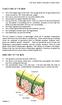 FUNCTIONS OF THE SKIN Skin is the largest organ of the body. The average adult has 18 square feet of skin which account for 16% of the total body weight. Skin acts as a physical barrier for you to the
Welcome to the July 2012 edition of Case Studies from the files of the Institute for Nerve Medicine in Santa Monica, California.
 Welcome to the July 2012 edition of Case Studies from the files of the Institute for Nerve Medicine in Santa Monica, California. In this issue, we focus on a 23-year-old female patient referred by her
Fact Sheet: Occupational Overuse Syndrome (OOS)
 Fact Sheet: Occupational Overuse Syndrome (OOS) What is OOS? Occupational Overuse Syndrome (OOS) is the term given to a range of conditions characterised by discomfort or persistent pain in muscles, tendons
3. Be able to perform a detailed clinical examination of the forearm and wrist.
 Patient Care: 1. Demonstrate appropriate evaluation and treatment of patients with hand/wrist surgery problems in the emergency room and as part of the inpatient consultation service, including application
Going home after an AV Fistula or AV Graft
 Going home after an AV Fistula or AV Graft TGH Information for patients and families During your hospital stay, your surgeon created an: AV Fistula AV Graft Read this booklet to learn: how to care for
Facial Sports Injuries
 Facial Sports Injuries Playing catch, shooting hoops, bicycling on a scenic path or just kicking around a soccer ball have more in common than you may think. On the up side, these activities are good exercise
Surgical scissors and forceps Product List
 Surgical scissors and forceps Product List Sr. No Items Picture of Product Product specification 1 Grasping forceps-- 5 MM Grasping forceps are used to remove stones and retrieve foreign objects under
.org. Rotator Cuff Tears: Surgical Treatment Options. When Rotator Cuff Surgery is Recommended. Surgical Repair Options
 Rotator Cuff Tears: Surgical Treatment Options Page ( 1 ) The following article provides in-depth information about surgical treatment for rotator cuff injuries, and is a continuation of the article Rotator
THORACIC OUTLET SYNDROME & BRACHIAL PLEXUS INJURIES
 THORACIC OUTLET SYNDROME & BRACHIAL PLEXUS INJURIES I. THORACIC OUTLET SYNDROME TOS is a compression of nerves or blood vessels, or both, in the thoracic outlet region, which is the space between the collarbone
Recent Injuries. www.physiofirst.org.uk
 Recent Injuries www.physiofirst.org.uk A recent or acute injury can occur suddenly during any activity, from tripping over the kerb, to making the bed, to playing sport. In some cases, an acute injury
KNEE LIGAMENT REPAIR AND RECONSTRUCTION INFORMED CONSENT INFORMATION
 KNEE LIGAMENT REPAIR AND RECONSTRUCTION INFORMED CONSENT INFORMATION The purpose of this document is to provide written information regarding the risks, benefits and alternatives of the procedure named
Basic Wound Closure & Knot Tying. Joslyn Albright, MD General Surgery PGY-4 Research Resident
 Basic Wound Closure & Knot Tying Joslyn Albright, MD General Surgery PGY-4 Research Resident Objectives Provide basic information on commonly used suture materials Review general principles of wound closure
1 of 6 1/22/2015 10:06 AM
 1 of 6 1/22/2015 10:06 AM 2 of 6 1/22/2015 10:06 AM This cross-section view of the shoulder socket shows a typical SLAP tear. Injuries to the superior labrum can be caused by acute trauma or by repetitive
Level 1, 131-135 Summer Street ORANGE NSW 2800 Ph: 02 63631688 Fax: 02 63631865
 Write questions or notes here: Level 1, 131-135 Summer Street ORANGE NSW 2800 Ph: 02 63631688 Fax: 02 63631865 Document Title: Revision Total Hip Replacement Further Information and Feedback: Tell us how
Self-Range of Motion Exercises for Shoulders, Arms, Wrists, Fingers
 Self-Range of Motion Exercises for Shoulders, Arms, Wrists, Fingers These exercises will help keep your muscles strong and mobile, and your joints flexible. Other benefits of these exercises include: C
Oxford University Hospitals. NHS Trust. Hand & Plastics Physiotherapy Department Flexor Tendon Repair. Information for patients
 Oxford University Hospitals NHS Trust Hand & Plastics Physiotherapy Department Flexor Tendon Repair Information for patients Introduction You have had surgery to repair one or more of the tendons in your
Multifocal Motor Neuropathy. Jonathan Katz, MD Richard Lewis, MD
 Multifocal Motor Neuropathy Jonathan Katz, MD Richard Lewis, MD What is Multifocal Motor Neuropathy? Multifocal Motor Neuropathy (MMN) is a rare condition in which multiple motor nerves are attacked by
Informed Patient Tutorial Copyright 2012 by the American Academy of Orthopaedic Surgeons
 Informed Patient Tutorial Copyright 2012 by the American Academy of Orthopaedic Surgeons Informed Patient - Carpal Tunnel Release Surgery Introduction Welcome to the American Academy of Orthopaedic Surgeons'
Shoulder Dislocation or Instability Surgery: A Guide to Recovery After Surgery
 What is Shoulder Instability? What is a Shoulder Dislocation? The shoulder joint is a ball in socket joint and is the most mobile joint in the human body. The socket, however, is quite shallow which means
Elbow Joint Replacement A guide for patients
 Elbow Joint Replacement A guide for patients GATESHEAD UPPER LIMB UNIT Mr Andreas Hinsche Mr John Harrison Mr Jagannath Chakravarthy Page 1 of 7 The elbow joint The elbow consists of three bones; the humerus
2. (U4C2L3:F2) If your friend received a deep cut on her wrist, what would you do?
 Cadet Name: Date: 1. (U4C2L3:F1) Your friend receives a deep cut on her wrist while washing dishes. She asks for your help. How confident are you that you could provide appropriate aid? A) My friend is
Anatomic Percutaneous Ankle Reconstruction of Lateral Ligaments (A Percutaneous Anti ROLL)
 Anatomic Percutaneous Ankle Reconstruction of Lateral Ligaments (A Percutaneous Anti ROLL) Mark Glazebrook James Stone Masato Takao Stephane Guillo Introduction Ankle stabilization is required when a patient
MOHS MICROGRAPHIC SURGERY
 MOHS MICROGRAPHIC SURGERY UMass Memorial Medical Center 55 Lake Avenue North Worcester, MA 01655 (508) 856-1666 Dr. Mary Maloney This booklet is intended to explain Mohs surgery to you. It is not, however,
Lean-Ergonomic methods to reduce workers compensation costs (Part 2 of 2) Cumulative trauma disorders can be classified as: What is CTD?
 #425 Lean-ergonomic methods to reduce workers compensation costs, Part 2 of 2 Lean-Ergonomic methods to reduce workers compensation costs (Part 2 of 2) Govid Bharwani, Ph.D, Biomedical Engineering Thursday,
ACUTE HAND INJURY PROTOCOLS
 ACUTE HAND INJURY PROTOCOLS I. FRACTURES OF THE HAND AND DIGITS Digital and hand fractures are seen in workers who use their hands, due to the exposed nature of the hand (in most functions) at work. Most
X-Plain Trigeminal Neuralgia Reference Summary
 X-Plain Trigeminal Neuralgia Reference Summary Introduction Trigeminal neuralgia is a condition that affects about 40,000 patients in the US every year. Its treatment mostly involves the usage of oral
Most active and intricate part of the upper extremity Especially vulnerable to injury Do not respond well to serious trauma. Magee, 2008. pg.
 PTA 216 Most active and intricate part of the upper extremity Especially vulnerable to injury Do not respond well to serious trauma Magee, 2008. pg. 396 28 bones Numerous articulations 19 intrinsic muscles