
UC SANTA CRUZ WATER EFFICIENCY SURVEY
|
|
|
- Lynn Russell
- 10 years ago
- Views:
Transcription
1 UC SANTA CRUZ WATER EFFICIENCY SURVEY FINAL REPORT December 2007 Prepared By Maddaus Water Management and UC Santa Cruz `

2 WATER EFFICIENCY SURVEY OF UC SANTA CRUZ, SANTA CRUZ, CA TABLE OF CONTENTS 1.0 EXECUTIVE SUMMARY Project Summary Survey Recommendations INTRODUCTION Project Objectives Scope of the Investigation Goals and Objectives for the UC Santa Cruz DESCRIPTION OF EXISTING UC SANTA CRUZ CAMPUS Description of Campus Domestic Water System Sanitary Fixtures Dining Facilities and Restaurants Laundry Ice Machines Cleaning (Custodial) Cooling Swimming Pool Laboratories Landscaping HISTORICAL WATER USE AT UC SANTA CRUZ Water Use Composition Discussion of Irrigation System Evaluation Discussion of System Water Loss Evaluation Billing Rates for the UC Santa Cruz Campus Historical Water Conservation Efforts UC Santa Cruz Campus WATER CONSERVATION OPPORTUNITIES Water Conservation Project Descriptions Water Conservation Technology Overview and Definitions Water Conservation Project Costs Estimated Water, Sewer, and Energy Savings and Paybacks CONCLUSIONS UC Santa Cruz 2 Maddaus Water Management

3 Tables: Table 1 Summary of UC Santa Cruz Water Fixtures Table 2 Summary of High Priority Conservation Projects Table 3 City Meters for the UC Santa Cruz Campus Table 4 UC Santa Cruz Main Campus Water Fixtures Table 5 Cooling Tower Descriptions Table 6 - Data Recorded in Field Landscape/Irrigation Survey Table 7 - Tabulation of Irrigated Area by Type and Metered, Unmetered, on Central Control System Table 8 - Irrigation Season Reference Evapotranspiration (Eto) Data from CIMIS Station No. 104, De Laveaga Table 9 - Assumed Landscape and Irrigation Parameters Table 10 - Applied Water Factor for Water Budget Calculation Table 11- Actual Metered Irrigation Use, , gpd Table 12 - Water Budgets for Table 13 - Comparison of Actual Use with Annual Water Budget Table 14 - Analysis of Non-Revenue Water for Winter Period Table 15 - Analysis of Non-Revenue Water for Annual Period Table 16 UC Santa Cruz Campus Fixtures in 1989 Table 17 UC Santa Cruz Water Efficiency Project Descriptions Table 18 Plumbing Fixture Codes and Regulations Table 19 Potential Water Conservation Projects for UC Santa Cruz Table 20 - Annual Water, Sewer, Irrigation and Energy Bill Savings for UC Santa Cruz Table 21 Water Savings, Costs and Paybacks for UC Santa Cruz Projects Figures: Figure 1 Annual Water Consumption History for the UC Santa Cruz Figure 2 Monthly Submeter Water Consumption History for UC Santa Cruz Figure 3 Annual Sewer Flow History for UC Santa Cruz Figure Annual Demand By Category for Domestic Water System (Draft) Figure 5 Detailed End Use Breakdown for the UC Santa Cruz (Total Campus Water Use Based on Submeter Data for 2006) Figure 6 - Monthly Water Purchased, Submetered, and Sewer Flow Data Comparison UC Santa Cruz 3 Maddaus Water Management

4 WATER EFFICIENCY SURVEY OF UC SANTA CRUZ, SANTA CRUZ, CA 1.0 EXECUTIVE SUMMARY 1.1 Project Summary The inventoried UC Santa Cruz existing water use facilities and assessed operations to determine the current level of water conservation practices and derive potential water saving projects for implementation. Implementation of the combined high priority water conservation projects is estimated to result in a 15.0 percent savings in total annual water use (approximately 29.8 million gallons per year) and save approximately $500,000 per year after all the high priority projects are completed as a result of lower water, sewer, and energy bills (using 2009 price rates). Maddaus Water Management (MWM) estimates that the UC Santa Cruz s payback from implementation of the recommended water conservation projects will occur in approximately one year. The payback calculations in this report are simple paybacks and by definition do not take time of actual implementation into account. It is planned that the high priority projects will be implemented over the next 5 years. Based on review of the UC Santa Cruz s historical billing data provided by the City of Santa Cruz, the main campus used an average of 544,900 gallons per day ( GPD ) of potable water in the year 2006, all of which is purchased from the City of Santa Cruz. This amounted to about 200 million gallons per year (MGY) for 2006 or about 5% of the entire water demand for the Santa Cruz water service area. This does not include the Barn theatre service or the Marine Science Campus located off the main campus which uses approximately 20,000 GPD. UC Santa Cruz currently has 8 main campus meters from which the entire campus receives water from the City of Santa Cruz. The campus water use is a combination of indoor use (e.g., toilets, showers, sinks, and kitchens) and outdoor use for landscape irrigation. Based on the campus s water and sewer billing data, UC Santa Cruz currently spends approximately $1.8 to $2.0 million annually on its water, irrigation and sewer bills. UC Santa Cruz spends an additional $4.0 million annually on it s in energy bills. 1.2 Survey From April to August 2007 MWM, UC Santa Cruz staff and students conducted a walk-through of the UC Santa Cruz campus to identify uses of water and potential water conservation options. After training by and under the supervision of MWM a team of 11 students measured faucet and shower flow rates, toilet flush volumes, looked for leaks, checked for missing faucet aerators and inspected the kitchens and characterized and measured over 500 irrigated landscape areas. Maddaus Water Management conducted a survey of the laboratories, greenhouses, cooling towers, pool, central irrigation control system, arboretum, farm, garden and checked the student gathered data. The data was placed in a database with over 2,500 rows organized by building (CAAN) number. This database was used for the analysis of this report, and also was provided to staff for future implementation and reference purposes. The results of the survey are presented below. UC Santa Cruz 4 Maddaus Water Management

5 Table 1 Summary UC Santa Cruz Main Campus Water Fixtures (Data Collected During Survey Conducted April June 2007) Fixture Number Surveyed Buildings Surveyed 414 Restrooms Surveyed 1,188 Restroom Faucets Surveyed 2,255 Total Surveyed Toilets 2,152 Urinals Flush 188 Urinals Waterless 30 Washing Machines 153 Showers 1,425 Drinking Fountains 342 Kitchens: Apartment/Office 637 Kitchens: Cafeteria & Dining Hall & Restaurant 14 Kitchen Faucets: Cafeteria & Dining Hall & Restaurant 111 Kitchen Spray Valves 17 Kitchen Ice Machines 14 Kitchen Cooking Steamers 18 Cooling Towers 4 Swimming Pools (Outdoor) 1 Laboratory Steam Sterilizers 11 Laboratory Cage Washer 1 Laboratory Fly Food Kettles 2 Laboratory Spray Valves 2 Laboratory Ice Machines 10+ Outdoor Fountains 3+ Landscape Irrigation Controllers 90 Following the on campus survey MWM estimated the water savings, costs, and paybacks associated with implementation of various water conservation projects. Based on MWM s analysis, the following water conservation projects were identified to provide significant water savings and to have a high cost-benefit ratio for the UC Santa Cruz (i.e., the money that the UC Santa Cruz will save on its water, sewer, and energy bills will off-set the cost to implement the recommended water conservation projects). For the purposes of payback analysis, the water and sewer rates for 2009 were used which are already adopted by the City of Santa Cruz. The water rate as of January 1, 2009 is $5.61 per 1,000 gallons (from the City of Santa Cruz future rate schedule). The sewer rate as of July 1, 2009 is $7.31per 1,000 gallons. These rates are substantially higher than current rates. If the rates continue to increase faster than inflation after 2009, the water conservation projects evaluated in this report will become even more attractive. The recommended high priority water conservation projects with a payback of less than 5 years are in Table 2. UC Santa Cruz 5 Maddaus Water Management

6 Project Table 2 High Priority Conservation Projects for UC Santa Cruz Fixtures To be Replaced / Repaired Estimated water savings (gpd) Total Cost of Project Payback in Years Remove Steam Sterilizer from DI Water System in Marine Sciences Building $ Replace 9 inefficient spray valves in kitchens, cafes, and restaurants 9 1,697 $ 2, Replace hose in College 9/10 Dining Hall kitchen with low flow spray valve $ 1, Replace 2 spray valves in steam sterilizer room of Earth and Marine Sciences $ Install Arboretum PRVs to reduce water pressure to lines 100 1,213 $ 1, Install waterless urinals in "high use" restrooms ,225 $ 60, Conduct pilot test 1.0 gpm aerators on high use restroom faucets ,652 $ 18, Replace faucet aerators in non high use restrooms 2,137 17,825 $ 124, Replace existing showerheads in high use housing and athletic facilities $ 6, Replace existing showerheads in non high use housing and athletic facilities 310 5,959 $ 53, Replace Flapper Valves and Diaphragms on 1.6 gpf Toilets that tested with high flush volumes ,347 $ 63, Implement water budgets for individual connection points that appear to be over watering that are not connected to the central control system 12 3,021 $ 8, Use battery-operated timers to shut water off 40 1,213 $ 3, Add wireless rain sensors on existing controllers 70 6,913 $ 24, Change operating procedure of CT-5 from conductivity set point of 1200 to $ 8, Add 10 new PRVs to Farm irrigation system $ 2, Replace high flow toilets in "high-use" areas with 1.6 gpf or 1.28 gpf toilets ,450 $ 190, Add campus submeters for large un-metered irrigated areas use at Arboretum $ 5, Install ET controllers for selected high-water-use areas. 9 2,613 $ 26, TOTAL High Priority Projects 4,179 81,818 $ 602, Each of the above listed projects is described in the Conservation Opportunities Section 5.0. UC Santa Cruz 6 Maddaus Water Management

7 MWM estimates that, if the above water conservation projects are implemented at the UC Santa Cruz, the UC Santa Cruz will use approximately 15.0 percent less water on an annual basis or average savings of 29.8 MGY. 1.3 Recommendations UC Santa Cruz has completed several projects in previous years to improve water efficiency including replacing hundreds of 3.5 or 5.0 gallon per flush toilets to 1.6 gallon per flush toilets. MWM recommends the above list of high priority water conservation projects and consider implementing, over time, the additional water conservation programs identified in Table 17 as resources are available. Implementation of the combined high priority water conservation projects is estimated to result in a 15.0 percent savings in total water use and a savings of approximately $500,000 per year (2009 rates). Savings will be higher when utility rates increase. The recommended projects, when combined, have a payback of approximately 1.1 years. 2.0 INTRODUCTION 2.1 Project Objectives UC Santa Cruz has made a commitment to conduct an engineering audit of campus water use as one of several mitigations for the environmental impacts of the projected increase in campus water use over the next 15 years. Information on UC Santa Cruz existing and future projected water use and other pertinent information may be found in the Final 2005 Long-Range Development Plan Environmental Impact Report (2005 LRDP EIR), Volume II, Section 4.14 and Volume IV. This survey provides a menu of potential water conservation measures. However, other water conservation measures may be identified within the next 15 years that UC Santa Cruz may implement. Maddaus Water Management ( MWM ) was retained in April 2007 by the UC Santa Cruz campus ( UC Santa Cruz ) to perform a water efficiency survey ( survey ) and make water conservation recommendations for uses throughout the campus. The survey described in this report was conducted at the UC Santa Cruz campus in Santa Cruz, California. The water conservation recommendations included in this report are based on a payback analysis that identified the most cost-effective water conservation projects for UC Santa Cruz. 2.2 Scope of the Investigation MWM worked closely with the campus staff to complete the water efficiency study of UC Santa Cruz campus. The project including the following steps: 1. Develop detailed scope for the water efficiency survey. 2. Gather background data. UC Santa Cruz 7 Maddaus Water Management

8 3. Assess the efficiency of plumbing fixtures in campus facilities, existing conservation efforts, and operation of irrigation systems and the campus cooling water system. 4. Identify options of reductions water consumption including operations and retrofits. 5. Conduct an analysis of cost effectiveness for the various water conservation measures 6. Develop a prioritization of potential options for implementation over the next 5 years. During the site survey, MWM and campus staff and students identified all significant uses of water. UC students measured the flow rates and volumes of representative fixtures. MWM interviewed staff responsible for each significant end use. Based on this information, MWM prepared a breakdown of daily water use at the UC Santa Cruz into major categories and identified potential water conservation projects for payback evaluation. As described in detail below, water conservation project recommendations were developed and prioritized based on the estimated payback from each water conservation project. MWM identified and focused water conservation efforts on seven major uses of potable water, two major uses of irrigation water at UC Santa Cruz, and lost or unaccounted for water: Potable Water Domestic (sanitary) use by students and employees (e.g., toilets, urinals, faucets, showers) Kitchen / Restaurant (dishwasher, spray valves, faucets, food steamers, ice machines) Laundry (residential facilities) Cooling Towers Ice machines Laboratories Pool Irrigation Water Metered Shrub Irrigation Metered Lawn Irrigation Lost and Unaccounted for Water Meter Error Leaks Unmetered irrigation and domestic Other (including authorized unmetered uses) 2.3 Goals and Objectives for the UC Santa Cruz During a meeting with UC Santa Cruz Staff and Maddaus Water Management on April 10, 2007 a list of goals and objectives for the water efficiency survey were identified. The goals of the study are: To help create a more sustainable campus environment by reducing water consumption in existing facilities and new development on campus. To minimize the contribution of projected campus growth to the need for new water supply for the City of Santa Cruz. UC Santa Cruz 8 Maddaus Water Management

9 Include fixture study data into the campus facilities data base so all can benefit from detailed building fixture information. Communicate ways to increase campus water efficiency to staff, students, purchasing, and outside vendors and consultants, etc. through campus awareness programs. Communication of the campus goal to be water efficient can be done through a variety of sources including websites, banners, articles in the campus newspaper, student competitions focused on saving water, campus banners and flyers placed on campus in high traffic areas. Identify improvements that could be made to campus facilities and operations to reduce campus water consumption. Analyze the cost-effectiveness of these potential improvements (when possible). Recommend top priority measures to be carried out within the next five years, and lower priority measures that may be implemented in subsequent years. 3.0 DESCRIPTION OF EXISTING UC SANTA CRUZ CAMPUS The University of California, Santa Cruz, opened in 1965 and grew to its current ( ) enrollment of about 15,000 students and a total of 414 buildings and 6,217 student beds on campus. Undergraduates pursue 62 majors supervised by divisional deans of humanities, physical & biological sciences, social sciences, and arts and the School of Engineering. Graduate students work toward graduate certificates, master's degrees, or doctoral degrees in 33 academic fields under the supervision of the divisional and graduate deans. All undergraduates, whether they live on campus or off, are affiliated with one of the ten UC Santa Cruz colleges (Cowell, Stevenson, Crown, Merrill, Porter, Kresge, Oakes, Eight, Nine, and Ten). Although students take classes in any number of colleges and academic units throughout the campus, core courses within each college provide a common academic base for first-year and transfer students. The campus includes academic and support buildings, college resident halls and apartments, family student housing, faculty/staff housing, 14 large kitchens, a fitness center including an outdoor pool, 4 cooling towers, and irrigated playing fields and landscaping. 3.1 Description of Campus Domestic Water System The UC Santa Cruz campus receives water from eight large City meters. The two 10 meters, through which about half of the entire water delivered to UC flows, were last replaced in May The other meters are 4 and 6 meters. All of the 8 City meters are turbine meters. Five out of the eight City meters have been replaced in the last 10 years. UC Santa Cruz City Meter Size Table 3 City Meters for the UC Santa Cruz Campus Date Meter Was Last Replaced Type of Meter Account Number Approximate Percent of Campus flow for past 3 years 10 May 2004 Water % 10 May 2004 Water % 6 Not since 1995 Water % 6 Not since 1995 Water % 6 July 1997 Water % UC Santa Cruz 9 Maddaus Water Management

10 6 July 2006 Water % 4 Not since 1995 Water % 4 September 2000 Water % 10 Unknown Sewer ~100% The campus has installed submeters, individual water meters serving a particular building or area, after the main City water meters in order to monitor water use. There currently are a total of 350 submeters on campus including 60 dedicated irrigation meters that are monitored monthly by UC Santa Cruz staff but not used for City billing purposes. During this water survey, several unmetered irrigation areas were identified, and recommended for future submetering. Currently the UC Santa Cruz campus have installed a few submeters to the SENSUS Auto Read system which allows real time reading of water use data. The automatic reading meters are well liked by UC Santa Cruz staff as they are very beneficial for identifying leaks quickly, reducing time for the staff to physically read the meters, and also allowed the meters to be read on similar dates at the City of Santa Cruz allowing better comparison of water use information. An additional 306 submeters on campus are currently scheduled to be converted to automatic reading meters in two phases over the next few years. On the main campus there are 17 miles of pipeline, many of which are under the roadways. There are a variety of pipe materials on campus including ductile iron (under roads), asbestos (in non road areas) and PVC C900 (under roads). PVC piping became the campus standard in the mid 1990s. 3.2 Sanitary Fixtures The UC Santa Cruz maintains 1188 restrooms (for student and employee use). It estimated that there are approximately 2,156 toilets, 2,255 restroom sinks, 218 urinals, 1,425 showers, and 342 drinking fountains throughout the UC Santa Cruz campus. The number of fixtures shown in Table 4 represent the number of fixtures surveyed which is not necessarily the total on campus. Although this was a very comprehensive survey, it did not include a survey of faculty staff homes, or buildings believed to be buildings/warehouses that do not use any water. In summary Table 4 lists only the items that were physically surveyed by the student teams. Table 4 summarizes the distribution of these fixtures and other water using features that were surveyed. A brief discussion of findings from the UC Santa Cruz survey is presented below: 738 flush valve toilets tested at an average of 2.84 gpf. 293 tank type toilets tested at an average of 2.66 gpf. Majority of campus had low flow shower heads, with an average flow rate of 1.87 gallons per minute ( GPM ). Measured flow rates of faucets as follows: o Restrooms: 1.87 gallons per minute (gpm) o Sinks in student kitchens 1.84 gpm 9 out of 17 kitchen spray rinse valves were flowing at higher than 1.9 gpm. Pursuant to the plumbing code, 1 UC Santa Cruz has replaced 59% of the public restrooms and guest rooms with low flow, or 1.6 gallon per flush ( gpf ) toilets. 1 The U.S. Energy Policy Act of 1992 requires efficient plumbing fixtures in new construction and replacements UC Santa Cruz 10 Maddaus Water Management

11 Table 4 UC Santa Cruz Main Campus Water Fixtures (Data Collected During Survey Conducted April August 2007) Fixture Number Surveyed Buildings Surveyed 414 Number of UC Santa Cruz 350 submeters Restrooms Surveyed 1,188 Restroom Faucets Surveyed 1,378 Restroom Faucet Aerators 1,003 (73%) Faucets Leaks 58 (3%) Total Surveyed Toilets 2, gpf Toilets 1,252 (58%) 3.5 gpf Toilets 661 (31%) Unknown gpf Toilets (not labeled) 243 (11%) Toilet Leaks 6 (0.3%) Urinals Flush 188 Urinals Waterless 30 Washing Machines 157 Showers 1,425 Drinking Fountains 342 Kitchens: Apartment/Office 637 Kitchens: Cafeteria & Dining Hall 14 & Restaurant Kitchen Faucets: Cafeteria & Dining Hall & Restaurant 3.3 Dining Facilities and Restaurants 111 (Range 3 to 19 faucets per kitchen) Kitchen Spray Rinse Valves 17 Kitchen Ice Machines 14 Kitchen Cooking Steamers 18 Cooling Towers 4 Swimming Pools (Outdoor) 1 Laboratory Steam Sterilizers 11 Laboratory Cage Washer 1 Laboratory Fly Food Kettles 2 Laboratory Spray Valves 2 Laboratory Ice Machines 10+ Outdoor Fountains 3+ Landscape Irrigation Controllers 90 The UC Santa Cruz operates dining commons (with shared kitchens) for 9 colleges (Kresge College is Suite/Apartment style housing) in addition to a variety of restaurants and cafes across campus. Some of the restaurants are independently owned. The large dining facilities serve UC Santa Cruz 11 Maddaus Water Management

12 breakfast, lunch and dinner. Staff estimated that the college dining facilities and restaurants serve over 10,500 meals per day. This number can greatly fluctuate depending on the UC Santa Cruz occupancy (lower in the summer and during holiday breaks). The summer term does continue to have dining services for the summer camps and summer school attendees and employees. During food preparation and clean up the kitchens use a variety of water using equipment including dishwashers, spray valves, food steamers, ice machines, and kitchen faucets. Dishwasher and Spray Valves During cleanup, the UC Santa Cruz kitchens do not currently use garbage disposals; typically the dishes are first spayed with a spray rinse valve to remove large food particles, and then washed by large dishwashers. Dishwashers use a large volume of water to wash dishes. Therefore, MWM recommends that the dishwashers be loaded as efficiently as possible as determined by the manufacturer (e.g., running full racks instead of half racks or one plate at a time) to avoid any unnecessary water use. The flow rates of the 17 spray rinse valves measured during the UC Santa Cruz survey had an average flow rate of 1.90 GPM. It is recommended that the 9 valves measured to flow greater than 1.9 GPM need to be replaced with newer low flow models as they are used frequently by kitchen staff. Spray Rinse Valves These fixtures are used in commercial kitchens to rinse dishes before they are placed in the dishwasher. Conventional spray valves use about 2-3 gallons/minute or more and new low flow models required by the current plumbing regulations only use about 1.6 gallons/minute at 80 psi, or 1.0 gallons/minute at 60 psi. Low flow models can save on energy, water and sewer as the fixtures typically use hot water. Information about these pre-rinse spray valves and savings can be found at The total cost to purchase and install one of the sprayers is $ Laundry All of the UC Santa Cruz s 157 washing machines are leased. The lease is renewed every three years. Almost all of the machines on campus are Maytag Neptune front loading commercial machines. The machines are coin operated and provided to the students in their college resident halls. It is important to ensure that the machines provided by the leasing company are the most efficient possible to minimize water, sewer, and heating cost to ensure that resources are being used efficiently. Checking with the leasing company and experimentation with alternative higher efficiency machines can possibly reduce water, sewer, and energy costs. UC Santa Cruz 12 Maddaus Water Management

13 3.5 Ice Machines UC Santa Cruz has 14 large air-cooled ice machines for kitchen use, in addition to units in the laboratories used for experiments. The kitchen ice machines are made by a variety of manufactures including Manitowoc, Hoshizaki and Scotsman. Air-cooled ice machines are more water efficient than water-cooled machines. Air-cooled machines typically use less than 18 gallons per 100 pounds of ice. Water-cooled machines typically use 150 to 200 gallons per 100 pounds of ice produced. It is recommended when it is time for new installations (such as the new Biomedical building) or replacements; UC Santa Cruz should select air cooled machines and look for possible rebates. Currently Manitowoc is offering $300 to $500 rebates for air cooled machines. Air cooled machines are more efficient but do not typically cost any more than water cooled machines. For more information and an example of possible future rebates see the following website: Cleaning (Custodial) The UC Santa Cruz has a custodial staff that cleans different parts of campus daily. The staff is responsible for cleaning the sinks, toilets, faucets, and showers. It is recommended that the staff be trained in water and chemical efficiency to ensure that water is not wasted. 3.7 Cooling UC Santa Cruz has 4 evaporative (water) cooling towers with over 3300 tons of cooling capacity that is used for refrigeration, air conditioning, and cooling the chilled water loop. These cooling towers are metered and are well maintained. The cooling towers run all year except for 2 weeks in April and 2 weeks in September for maintenance. The chart below shows the 4 cooling towers and the approximate number of cycles of concentration. During the site visit and testing of total dissolved solids (TDS) shown in Table 5, the towers were found to be running 3 cycles. Due to the current low level of cycles, there are two recommendation projects to improve water efficiency. For water efficiency the goal is a minimum of 5 cycles as shown in the chart below. UC Santa Cruz 13 Maddaus Water Management

14 Table 5 Cooling Tower Descriptions Cooling Tower CT-1 CT-2 CT-3 CT-5 Co- Generation Cooling Tower Mfrg and Type Marley Crossflow/ Force Draft Baltimore Aircoil Vertical Counter / Force Draft Baltimore Aircoil Vertical Counter / Force Draft Baltimore Aircoil Vertical Counter / Force Draft Tonnage Total Water Recirculat ion Rate GPM GPM GPM 675 GPM Read Date July 24 August 1 August 8 July 24 August 1 August 8 TDS Incoming Water Typically CT-2 Runs at Night. Typically CT-2 Runs at Night TDS Measured in Tower Not running when sampled during the day Not running when sampled during the day Approx # of Cycles Swimming Pool The UC Santa Cruz has one large outdoor swimming pool that was installed in The pool is approximately 50 meters by 25 meters in size with a depth range of 3.5 to 10 feet deep. The approximate volume is 895,000 gallons which is maintained at 80.5 degrees all year round. The pool is in use all year for classes and recreation. The Physical Plant staff stated that the pool filters are backwashed once per month. The pool has never been fully drained since it was installed in 1988, which explains the current high levels TDS (greater than 2500) measured in the pool water during the site visit. The pool is typically not covered at night. It is recommended to cover pools when not in use to reduce evaporation and keep water cleaner. In the summer, evaporation ranges from five to ten inches a month (The Association of Pool and Spa Professionals). The evaporation rate from an outdoor pool varies depending on the pool's temperature, air temperature and humidity, and the wind speed at the pool surface. The higher the pool temperature and wind speed and the lower the humidity, the greater the evaporation rate. Using a pool cover eliminates almost all evaporation. If a pool is heated, as much as 70 percent of heat is lost through evaporation (U.S. Dept. of Energy ERRE Consumer s Guide). Covers range from single sheets of plastic to insulated materials. It is recommended for UC Santa Cruz to purchase an insulated cover to keep the evaporation of the heated pool at night to a minimum. For UC Santa Cruz, it is recommended to fully cover the pool at night only in the winter. During the summer months the pool is used to reduce heat generated by the energy Cogen plant. UC Santa Cruz 14 Maddaus Water Management

15 3.9 Laboratories MWM conducted a walk-through of the laboratories in the academic core area on July 31 and August 1, The purpose of the site visit was to identify water using equipment beyond the fixtures cataloged in the student survey and find potential water conservation projects. The campus has deionized water (DI) system in the basement or on the roof of several laboratory buildings. The Physical Sciences Building has the largest DI system, which is a reverse osmosis system maintained by US Filter Corp. It is planned that this building will serve existing and new buildings in the vicinity. The DI faucets were tested in a sample of the laboratories in each building. MWM identified the following major water using equipment: 1 - cage washer for animal research area 11 steam sterilizers used to clean and sterilize glass ware 2 - spray valves to prerinse equipment prior to the sterilizer 2 - fly food kettles 10+ ice machines water cooled vacuum pumps and compressors Several water conservation projects based on the above listed items are evaluated in the Conservation Opportunities Section Landscaping As mentioned previously, the UC Santa Cruz has separate submeters for most of the landscape irrigation. The landscaping is located throughout the UC Santa Cruz campus including the academic and housing areas, and large turf athletic fields. There is also an arboretum, garden and farm. In addition, there are many small to medium sized areas of shrubs and groundcovers in the colleges. The total irrigated area on campus is approximately 67 acres (including the farm). The landscape is irrigated via 77 different irrigation controllers. A Central Control System (Rain Master) irrigates with 13 satellite controllers about one third of the irrigated area on campus. The UC Santa Cruz should only irrigate turf and shrub landscaping during the drier summer season (i.e., from April to October each year). The landscape does not require irrigation in the winter cooler and wet months and should be turned off during wet weather. UC Santa Cruz 15 Maddaus Water Management

16 4.0 HISTORICAL WATER USE AT UC SANTA CRUZ The City of Santa Cruz reads the UC Santa Cruz s water meters every month for billing purposes. Water usage at the UC Santa Cruz varies seasonally because the landscaping is irrigated more intensively in the summer and the occupancy rate at the UC Santa Cruz is lower in the summer (see Figure 1). In this report, water usage is reported in gallons per day (GPD). The following water use characteristics were derived based on review of the UC Santa Cruz s water and sewer bills as provided by the City of Santa Cruz: The highest combined total indoor and outdoor water use occurs during the school months of May, June and October The average total daily usage (sum of indoor and outdoor water use) in 2006 is approximately 564,900 GPD including Marine Sciences or 544,900 for the main campus only. Figure 1 indicates that overall water use at the UC Santa Cruz has been increasing over the last three and a half years. This increased water use is due to the increase in student enrollment, new building facilities, and changes in campus activities such as types of laboratory research. This incremental increase in water use has been slower than the growth components that affect demand due to the many conservation efforts on campus. The peak water usage occurs in the end of summer when the students return to campus and there is a continued irrigation demand. Figure 1 Annual Water Consumption History for the UC Santa Cruz (Main Campus Water Use Based On City Meter Data) Annual Water Consumption University of California, Santa Cruz (main campus only) (million gallons per year) Source: Provided by the City of Santa Cruz, July 2007 Figure 2 Monthly Water Consumption History for UC Santa Cruz UC Santa Cruz 16 Maddaus Water Management

17 (Total Campus Water Use Based On Submeter Data) UCSC Submeter Monthly Water Use in Gallons Per Day January 2004 to June 2007 Source: Water Use - Gallons Per Day 700, , , , , , ,000 0 Jan-04 Apr-04 Jul-04 Oct-04 Jan-05 Apr-05 Jul-05 Oct-05 Date Jan-06 Apr-06 UC Santa Cruz Submeter Data Provided by Physical Plant Department, July 2007 Jul-06 Oct-06 Jan-07 Apr-07 Figure 3 Annual Sewer Flow History for UC Santa Cruz UCSC Annual Sewer Flows in Gallons Per Day 1993 to 2006 Source: Sewer Flow - Gallons per Day 32,000 30,000 28,000 26,000 24,000 22,000 20, Year UC Santa Cruz Physical Plant Utilities Submeter Data, July UC Santa Cruz 17 Maddaus Water Management

18 4.1 Water Use Composition In order to accurately account for water conservation benefits from water conservation program savings, it is necessary to establish a baseline water use from historical data. The evaluation of historical water consumption for UC Santa Cruz involved the analysis of available submetering data between 2004 and Data show that the 12-month moving average from 2004 to 2006 for the submetered system is increasing slightly and was at approximately 482,000 gallons per day for calendar year This submeter total of 482,000 gallons does not include water system loss, unmetered areas, or the Marine Sciences Lab or 2300 Delaware. This report focuses specifically on water conservation for the domestic water supply system. The historical water use was further broken down into a water system profile to establish water demands by nine individual categories. The four categories of water use analyzed are listed as follows: Irrigation Residential OMP Other (including Central Energy Facility (CEF/Cogen) Construction Projects and Domestic System Flushing The categories were chosen to analyze domestic water use and consumption based on monthlymetered data to be consistent with the Long Range Development Plan. The respective percent of total annual average domestic water demand based on 5 years of metered data for each category is illustrated in Figure 5. This does not include unaccounted for water. Unaccounted-for water is approximately 7.3 percent in UC Santa Cruz s domestic system is very efficient compared to the industry goal of less than 10 percent unaccounted-for water as determined reasonable by the American Water Works Association (AWWA, 1996). MWM recommends that the focus for water conservation efforts should target the larger end uses of water so as to provide the most cost effective conservation investment returns. Figure Annual Demand By Category for Domestic Water System In addition to the historical water use by category presented in the above section, it is necessary to DINING further review the data to determine major end uses of water and additional UCSC opportunities Water Usage ACADEMI for water savings. Breakdown Where water savings are possible, water conservation measures target IRRIGATION the appropriate major end uses. There are some end uses of water that are similar across nearly all categories. Two of these major end uses of domestic water are: (1) toilets; and (2) landscape irrigation, which are presented in Figure 5 below. Water use for toilet flushing is based on calibrating a fixture model to the various RESIDENTIA categories of 4.5% water use. Estimates were made about the number of persons using the facilities Total in each : category, 10.0% and the number of times per day they use each fixture (faucets, toilets, showers, urinals). MECHANICAL Figure 5 Detailed End Use Breakdown for the UC Santa Cruz (Total Campus Water Use Based on Submeter Data for 2006) RESIDENTIA ACADEMI 2.7% DINING 5.1% IRRIGATION 2.5% MECHANICAL 5.2% UC Santa Cruz 18 Maddaus Water Management

19 UCSC Submeter Water Use 2006 in Gallons/Day Cooling Towers, 17,949, 4% Pool, 5,679, 1% Restroom Faucets, 38,130, 8% Urinals, 19,857, 4% Other - Kitchens, Labratories, Laundry Misc., 113,118, 24% Toilets, 120,389, 25% Irrigation, 107,048, 22% Showers, 59,008, 12% Source: UC Santa Cruz Submeter Data Provided by Physical Plant Department, July 2007 The two leading end uses of water: toilet flushing and landscape irrigation represent over 47 percent of the domestic water used on campus. Therefore, these two end uses are specifically targeted by conservation measures, in addition to evaluation of other end uses in Section Discussion of Irrigation System Evaluation Irrigation System Evaluation Description of Current Landscaping and Irrigation System UC Santa Cruz maintains an extensive irrigation system to water the playing fields and other landscape around campus buildings. A survey by trained students was conducted to characterize the various irrigated areas. The survey was conducted in the Spring Quarter, Data was recorded on forms and transferred to an Excel spreadsheet with 30 columns and 500 rows. Each UC Santa Cruz 19 Maddaus Water Management

20 row in the spreadsheet was a separately measured irrigated area and characterized according to the parameters listed in Table 6. The purpose of the survey was to gather data that could be used to establish landscape water requirements, develop water budgets, and then compare these budgets to actual use. A detailed three year ( ) comparison was conducted using the 60 irrigation submeters. Currently there are some irrigated areas on campus that are unmetered. Water budgets were developed for all irrigated areas to estimate current water use on the 91 points of connection (POCs), as well as for the total amount of irrigation water used on campus. Table 6 - Data Recorded in Field Landscape/Irrigation Survey Data Point Location Irrigation Type Values recorded separate areas Hose & bucket Drip irrigation Underground piping w/sprinkler Manual Control Irrigation Schedule Central Control Other Controller Slope < 5% 5-10% >10% Exposure Shady all Part sun and Sunny most day shade of the day Soil Type Sandy loam Clay loam Clay 2=High 3=Low Landscape 1=Turf water use water use Type plants shrubs Over watered Visual Quality Healthy Weeds Area, sq. ft. length width area Full sun 4=Ground cover 5=Trees The survey and other information indicated that there are 91 separate POCs to the campus water system for irrigation purposes. Thirteen of these connections are on a central computerized irrigation system made by Rain Master. The Central control system was installed in the year A weather station is located on campus and is used to adjust the irrigation schedule to compensate for daily fluctuations in the weather and associated irrigation requirements. There are approximately 77 other individual field controllers located around campus. Some of the irrigation is controlled manually, such as at the Arboretum and most of the Farm. Shown in Table 7 is the breakdown in landscaped area between categories 1 and 2, designated High Water Use and 3-5, and designated Low Water Use Note that about one-third of the landscaping is low water use. The percentage low water use plantings would be much higher without the playing fields. As the Farm is such a large area, totals are shown with and without the Farm. Note that about one-third of the landscaped area is on the Central control system. Table 7 - Tabulation of Irrigated Area by Type UC Santa Cruz 20 Maddaus Water Management

21 and Metered, Unmetered, on Rain Master System Area Total Area, sq. ft. High Water Use, sq. Low Water Use, ft. sq. ft. All Area 2,934,771 2,087, ,472 Metered 2,475,371 1,760, ,162 Unmetered Totals 459, , ,310 Central Control Totals 974, , ,461 Total w/o Farm 2,380,779 1,585, ,707 Percent of Total w/o Farm % 33.5% Development of Water Budgets for Irrigated Areas In order to evaluate the current irrigation system efficiency water budgets were developed for each POC. Water budgets were developed by obtaining monthly weather data for the years and then using this information with standard landscape water budgeting principals. The methodology was developed at Cal Poly San Luis Obispo and endorsed by the California Urban Water Conservation Council (CUWCC) and the Irrigation Association. The CUWCC has a Best Management Practice devoted to landscape water conservation (BMP 5) and expects their utility members to develop and provide to customers water budgets for 90 percent of all the irrigation accounts in their service area. In this the water budgets have been developed and thus the campus is in compliance with the intent of BMP 5, even though the campus is not a utility member of the CUWCC. The individual POC water budgets have been provided to campus staff in an Excel Workbook. Shown in Table 8 is the evapotranspiration of cool season grass (the reference crop) from a local weather station owned and operated by the California Department of Water Resources. The nearest station to UC Santa Cruz is named De Laveaga. The computed evapotranspiration is the amount of water in inches per month that the cool season grass needs to thrive. Table 8 provides this information for the last three years. It is coincidental that the values for 2005 and 2006 are the same. Table 8 - Irrigation Season Reference Evapotranspiration (Eto) Data from CIMIS Station No. 104, De Laveaga 2004 Eto (April thru 2005 Eto (April thru 2006 Eto (April thru October), inches October), inches October), inches The Applied Water Requirement (the amount of water to apply through the irrigation system) is obtained by the following equation: Applied Water, inches/year = Eto x Kl / DU Where: Eto is the annual Evapotranspiration, inches/year UC Santa Cruz 21 Maddaus Water Management
22 Kl = Landscape or Crop Coefficient DU = Distribution Uniformity The values used in this project are those adopted by the campus irrigation specialists and are shown in Table 9. Note that the landscape factor reduces the amount of water needed. In the case of turf, 80% of Eto is believed to be adequate, whereas 25% of Eto is adequate for low water use plants. The irrigation efficiency for the high water use areas is higher, these are mainly flat grass areas irrigated with sprinklers. Table 9 - Assumed Landscape and Irrigation Parameters Landscaping Type 1 Kl DU 1, ,4, See Table A Kl = Landscape or Crop Coefficeint DU = Distribution Uniformity Using these values the applied water factor or amount of irrigation needed is given in Table 10. High water use plants and turf requires almost three times the water as low water use plant material. Because the weather changes this calculation should be made every year. For future forecasting applications averages can be used. Additional years of record are available for this purpose from the De Laveaga station. Note that 2004 was a normal year and both 2005 and 2006 are considered wet years in California. The water requirements for 2005 and 2006 were about 14 percent less than Landscaping Type Table 10 - Applied Water Factor for Water Budget Calculation 2004 Applied Water Factor, inches/yr 2005 Applied Water Factor, inches/yr 2006 Applied Water Factor, inches/yr 1, ,4, Evaluation of Current System Efficiency The relative efficiency of the current irrigation can be estimated by comparing actual water use with the water budget. It should be recognized that a water budget calculated in this way is a guide or estimate of the water requirements and should be refined by local microclimate information such as exposure, soil type, and wind as well as visual inspection. The budgets developed in this study will serve as the best available information to gauge the efficiency of the current system. Table 11 show the actual metered water use in annual average gallons per day (gpd). The values in the summer would be considerably higher than these values and in the winter the irrigation is near zero. Note that about half of the metered water use is being controlled by the Central control system at 13 sites. These are the playing fields and the newer building landscapes. Note that the UC Santa Cruz 22 Maddaus Water Management
23 water use declined in the last two years (most likely in response to the weather and enhanced water management). Table 11- Actual Metered Irrigation Use, , gpd Tabulations Water Use in 2004, Water Use in 2005, Water Use in 2006, gpd gpd gpd Totals 121,290 99, ,048 Totals w/o Farm 111,338 91,808 99,088 Central control Totals 56, , ,868.4 % Total Irrigation Water Use on Central control 46.5% 51.6% 46.6% Water budgets for each POC have been developed and are summarized by type of area in Table 12 for the last three years. Note that about 85 percent of the irrigation use is metered, the unmetered irrigation is estimated (based on a water budget for those areas) to be about 20-22,000 gallons per day (gpd). The water budgets for the Farm are separated from the totals due to its large acreage. Generally the Farm uses considerably less than the budget because the entire area is not continuously planted or irrigated through the growing season. Table 12 - Water Budgets for Tabulations Budget for 2004, Budget for 2005, Budget for 2006, gpd gpd gpd All Area 151, , ,724.5 Metered 128, , ,067.9 Unmetered Totals 22, , ,656.5 Central control Totals 55, , ,058.3 Metered Totals w/o Farm 95, , ,407.6 Finally Table 13 shows how the actual water use for the overall areas compares to the overall water budgets. On an overall basis, the metered areas appear to be under watering. This is because the Farm is under watering by a large margin. Without the Farm the metered areas appear to be over watering from 10 to 17 percent on an annual average basis. Those 13 areas on the Central control system are performing much better and are over watering only one to six percent. This was especially true in 2006, a wet year. The Central control system was able to cut back irrigation automatically, whereas the other irrigation time clocks were not able to be adjusted frequently enough to compensate for the unusually cool and wet weather that occurred in Inspection of the budgets for the individual areas shows that many appear to be significantly under watering and a number of other areas are over watering a significant amount. Therefore there is room for improvement on an overall basis (for those areas not on Central control) and for about 20 UC Santa Cruz 23 Maddaus Water Management
24 specific sites estimated to be over watering. Tapping this potential is investigated in a subsequent section. Table 13 - Comparison of Actual Use with Annual Water Budget Performance (Over Budget) 2004 Use Over Budget, percent 2005 Use Over Budget, percent 2006 Use Over Budget, percent Total Metered Overage Total Metered Overage w/o Farm Total Central control Overage Note: Negative percentage means area is under water budget; Positive percentage means area is over water budget 4.3 Discussion of System Water Loss Evaluation Definitions The term unaccounted for water has been used for many years to characterize the difference in metered water use between production or purchase meters and customer or building meters. Unfortunately there have never been clear definitions of what should be included in this category or what are acceptable or reasonable levels for the amount of water in this category. Historically the figure of 10 percent of water produced or purchased has been used as a guideline. Two commonly referenced sources include a 1996 Journal American Water Works Association (AWWA) article entitled Committee Report: Water Accountability which stated: Advances in technology and expertise should make it possible to reduce lost and unaccounted-for water to less than 10 percent The California Urban Water Conservation Council (CUWCC) established a Best Management Practice (Number 3) for System Water Audits, Leak Detection and Repair in It called for an annual review of the ratio of metered sales and other verifiable uses to total supply into the system. If the ratio fell below 0.9, then a full scale system water audit is indicated. The American Water Works Association (AWWA) has subsequently adopted a different method of dealing with lost and unaccounted for water and the California Urban Water Conservation Council (CUWCC) is in the process (2007) of doing the same. Both have or are adopting a method developed by the International Water Association (IWA) that attempts to standardize definitions. AWWA, CUWCC, and IWA use the term Non-Revenue Water which is typically used for utilities to describe the water that is not billed to customers. Adapted to UC Santa Cruz the Non-Revenue water includes: Fundamental Definitions for Water Not Included in (Customer or Building) Metered Use: Non-Revenue Water UC Santa Cruz 24 Maddaus Water Management
25 Real Losses: Physical losses of leaks, bursts or breaks and overflows from the pressurized system, up to the metering point on customer service connections Apparent Losses: consist of all types of inaccuracies (customer meters, meter reading or estimation, billing error) and unauthorized consumption (theft of service, illegal use of fire hydrants) Unbilled Authorized Consumption: Metered and Unmetered consumption approved by the UC Santa Cruz; including water used for fire fighting, system maintenance/flushing and authorized campus uses (landscape irrigation) Non-Revenue Water: the sum of Unbilled Authorized Consumption, Apparent Losses and Real Losses Approach The UC Santa Cruz included a water balance approach and compared campus water meter readings (submeters) with City of Santa Cruz water billed for the main campus. Monthly data for sewer flow leaving the campus was also available and used. This work can be considered a preliminary system audit, but not a full system audit that would involve calibrating meters, estimating all authorized unmetered uses. The work did not include using sonic leak detection equipment to search for leaks on the distribution system. The purpose of the water balance approach was to determine whether the campus should pursue strategies to reduce Non-Revenue Water. The campus water balance included analyzing the following monthly data and comparing winter and annual volumes in 2004, 2005 and 2006 of: Water purchased Submetered water Winter irrigation Sewer flow Recent Levels of Non-Revenue Water (NRW) The campus water balance used the data shown in Figure 6. Note that the water purchased and submetered uses are converging and that the winter sewer flow is converging on the submetered uses in the winter (when landscape irrigation is relatively low). The former is apparent by focusing on the moving averages, the latter by reviewing the monthly values in the winter for the submeters and sewer flow. In terms of accuracy of meters the City Meters, the largest 10 inch meters were replaced in The 4 to 6 inch meters range in age from one year to 12 years. The UC Santa Cruz meters also range in age. Whereas there is no regular program to replace meters, meters are replaced when they stop working. Most likely some meters are over 30 years old. A number of buildings on campus are relatively new, with new meters. On average the UC Santa Cruz meters are probably less accurate than the City meters due to the age difference. UC Santa Cruz 25 Maddaus Water Management
26 Figure 6 - Monthly Water Purchased, Submetered, and Sewer Flow Data Comparison Average Daily Use or Flow, gpd 900, , , , , , , , ,000 0 Feb-01 May-01 Winter Analysis Aug-01 Nov-01 Feb-02 May-02 Aug-02 Nov-02 Feb-03 May-03 Aug-03 Nov-03 Feb-04 May-04 Aug-04 Nov-04 Feb-05 May-05 Aug-05 Nov-05 Feb-06 May-06 Aug-06 Nov-06 Feb-07 May-07 Total Water Purchased, gpd. Total Sewer, gpd Total Submeter, gpd 12 per. Mov. Avg. (Total Sewer, gpd) 12 per. Mov. Avg. (Total Submeter, gpd) 12 per. Mov. Avg. (Total Water Purchased, gpd.) Shown in Table 14 is the comparison of water purchased, submeter readings and sewer flow in the winter. The winter is defined to be the months of December, January, February and March. The difference between City Water and submeter readings in the winter has dropped to 5-6 percent in 2005 and Using the sewer flow data but subtracting off the winter irrigation (metered and estimated unmetered) yields an even lower percentage. As the later relies very little on the submeter data, the difference here might be thought to be the background leakage, assuming the sewer flow data is accurate. Thus system leakage is probably about 5 percent or less. Year City Water Winter, MG Table 14 - Analysis of Non-Revenue Water for Winter Period Winter Submeter, MG Winter Irrigation, MG Winter Sewer, MG City Water Winter, MG % of City Water (Winter NRW) City Water- Sewer- Winter Irrigation, MG Final % of City Water (Adjusted Winter NRW) % % % % % % MG = million gallons NRW = Non-Revenue Water Annual Analysis UC Santa Cruz 26 Maddaus Water Management
27 Year Shown in Table 15 is the comparison of the annual volumes of City Water, submetered water and sewer flow. In this case the difference between City Water and submetered water has dropped from 19 percent in 2004 to 11 percent in When the estimate of unmetered irrigation is included in the equation the difference narrows to 15 percent in 2004, dropping to 12.5 percent in 2005 and finally to under 7.5 percent in The year to year reduction is significant. These values would include leaks and submeter error. In all likelihood both leakage and submeter error are less than five percent and overall Non-Revenue Water is now (2006) less than 10 percent of water purchased. City Water Winter MG Table 15 - Analysis of Non-Revenue Water for Annual Period Submeter MG Irrigation MG Sewer MG City Water -Submeter, MG % of City Water (Annual NRW) City Water- Submeter- Unmetered Irrigation, MG Final % of City Water (Adjusted (Annual NRW) Year to Year Reduction in NRW, % % % % % 17.5% % % 41.6% MG = million gallons NRW = Non-Revenue Water Opportunities The reduction Non-Revenue Water is most likely due to the improved maintenance of the UC Santa Cruz campus water distribution system, submeters and data management. Currently the UC Santa Cruz Physical Plant staff monitors the meters monthly and any meter that is out of the typical range is inspected. The fluctuation between 2004 and 2006 has been significant and could be tracked annually to verify that the system water loss is within the national guidelines. At some point in the future the level of Non-Revenue Water will stabilize at a value that is probably small and not cost-effective to pursue reducing further. The campus water system, considering the volume of water used, has a relatively short length of mains, 17 miles, (where leaks might be present) and a relatively few number of meters (less than 400). Therefore it is reasonable to assume that a Non-Revenue Water target of less than 10 percent might be realistic. With this small of a water system, upgrading water meters or conducting sonic leak detection would not be extremely expensive. These opportunities are pursued further in Section Billing Rates for the UC Santa Cruz Campus The current cost of water (as of 1 January 2007) for UC Santa Cruz is $3.67 per 1,000 gallons for the main building meter. The sanitary sewer service charge (as of 1 July 2007) is $4.79 per 1,000 gallons. 2 The UC Santa Cruz s total combined sewer and water bill is approximately $1.8 million annually, including fixed meter charges. In accordance with the City s policies, the water and sewer rates are revised every year. Historically water rates change on January 1 and Sewer rates 2 This sewer charge assumes the High strength commercial category according to the Campus of Santa Cruz Billing System schedule of rates and charges. UC Santa Cruz 27 Maddaus Water Management
28 change on July 1 every year. A rate of $0.74/therm (2007 natural gas rate) was used to estimate energy savings from lower hot water use. UC Santa Cruz does not have a separate meter or separate bill for irrigation use. All the water used on campus for domestic, irrigation or other type of use is charged the same at a uniform rate. There is, however, another meter at the base of campus that is used to measure sewer flows. Indoor uses thus get billed both for water and sewer charges (including cooling tower drain down water), while outdoor use and any other consumptive use only get billed for water because they do not result in sewer flow. For the purposes of payback analysis, the water and sewer rates for 2009 were used which are already adopted by the City of Santa Cruz. The water rate as of January 1, 2009 is $5.61 per 1,000 gallons. The sewer rate as of July 1, 2009 is $7.31. If the rates continue to increase faster than inflation after 2009, the water conservation projects evaluated in this report will become even more attractive. 4.5 Historical Water Conservation Efforts UC Santa Cruz Campus The UC Santa Cruz campus has a long tradition of trying to be resource efficient. This attitude toward sustainable resource management was seen on multiple occasions when talking to staff around campus that water and energy efficiency is very important in their project planning and daily operation procedures. All across campus MWM discovered water and energy efficiency practices including: Physical plant who monitor meters monthly looking for leaks, Farm who teaches and believes in the use dry and sustainable farming practices, Laboratories who monitor the dionized systems, Dining and Housing Services department who teaches water efficiency to students, works to get efficient washing machines in contract, and had their kitchens Green Building Certified, Planning and construction department that includes minimum fixture standards for all new construction projects, Irrigation maintenance staff report daily each morning and follow the warnings provided by the Central control system of areas that need possible repairs and sends workers out daily to inspect for possible problems. Example of Past Conservation Efforts: 1989 Campus Fixture Survey During the data review for the UC Santa Cruz water efficiency survey, 1989 records indicated retrofits and campus standards revisions took place, which included the total number of toilets on campus (1,434, including 772 gravity flush and 662 flush valves). In 1989 the most efficient model of toilets had been the 3.5 gpf toilets. The 3.5 gpf toilets were made from 1980 to Before 1980 toilets used 4-7 gpf. In 1989 and the early 1990s new toilet technology had been developed for 1.6 gpf toilets. At that time all campus toilets had been retrofitted to 3.5 gpf and a decision had been made to install 1.6 gpf toilets in residence halls where they were used by fewer than 10 people or less per toilet and 3.5 gpf flush valve toilets in public areas and resident halls where there were more than 10 occupants per toilet. UC Santa Cruz 28 Maddaus Water Management
29 Showers in residential areas had been retrofitted to 2.5 gpm or less and there was some discussion of retrofitting to 2 gpm. Lavatory faucets were at 2.5 gpm and future lavatory faucets were to have 0.5 gpm aerators (but MWM did not find many 0.5 gpm faucets). In 1989, there were 110 urinals on campus, all using 3.5 gpf. There was a proposal to retrofit these to 1.5 gpf. In comparison to the 2007 UC Santa Cruz campus survey, there are now about gpf toilets (plus maybe another or so in student apartments that were not surveyed). In summary, the campus has retrofitted about half of the 3.5 gpf toilets to 1.6 gpf between 1989 and Table 16 UC Santa Cruz Campus Fixtures in 1989 Fixture Number Restroom Faucets 2.5 gpm standard revised to be 0.5 gpm Total Toilets on Campus 1,434 Toilets Flush Valve 662 Toilets Gravity Flush Tanks 772 Urinals Flush 3.5 gpf 110 Urinals Waterless 0 Showers Retrofitted to be 2.5 gpm or less Cooling Towers 4 Swimming Pools (Outdoor) 1 Pool installed in 1988 Indoor/Outdoor Fountains 0 Example of Current Conservation Efforts: Dining Services Green Building Certification UC Santa Cruz is proud of the fact that they recently were awarded a Green Building certification for their Dining Services on campus. In order to qualify for the certification, they had to meet strict water and energy standards for kitchen equipment. As part of this process, 10 kitchen spray valves were replaced with the efficient 1.6 gallon per minute models. Example of Current Conservation Efforts: Education Campaign for Fall 2007 Students UC Santa Cruz 29 Maddaus Water Management
30 In the Fall of 2007, UC Santa Cruz is running an education campaign including an announcement on University radio station, the College newsletters and the University newspaper, Clings and magnets will go to the students along with table jackets for the dining facilities. A large banner will be at the base of campus. Examples of the material for the campaign are provided below. 5.0 WATER CONSERVATION OPPORTUNITIES 5.1 Water Conservation Project Descriptions The following table provides a description of the 54 projects that were identified during the UC Santa Campus water efficiency Survey. Table 17 UC Santa Cruz Water Efficiency Project Descriptions Project Number Project Goal Potential Water Conservation Project IRRIGATION, GENERAL Increase water pressure to Sand Field irrigation, which is over watered to overcome poor distribution resulting from pressures below those required by irrigation system design. Reduce runoff from sprinklers by reducing application rate. Reduce use of irrigation water on Sand Field, which is over watered to overcome poor distribution (see #1, above). Relocate the main to the high pressure side of the PRV for Sand Field. Install MP rotator heads on sprinklers that irrigate turf on slopes. Artificial turf for Sand Field. UC Santa Cruz 30 Maddaus Water Management
31 Project Number Project Goal Improve landscape irrigation efficiency by automatically adjusting irrigation schedule as weather conditions vary. Detect and repair irrigation system leaks more quickly. Replace high-water-use turf with low water-use landscaping. Reduce the amount of unmetered irrigation water use. Replace high-water-use landscaping with lower water-use plants. Improve landscape irrigation efficiency by automatically adjusting irrigation schedule as weather conditions vary. Improve landscape irrigation efficiency. Install rain sensors on non Central control Controllers to save water in the spring and fall. FARM Make meter readings available to staff in various units so they can improve water management in their own facilities. Use rainwater for greenhouse watering. Reduce water pressure in irrigation mains to avoid breaking lines. ARBORETUM Increase efficiency of Arboretum water use. Reduce water pressure in Arboretum irrigation lines to prevent breakage in drip system. Reduce the amount of unmetered irrigation water use at Arboretum. FIXTURES Potential Water Conservation Project Add additional high-water-use areas to the Central control system. Remove Carriage House turf. Add meters for the un-metered use except at Arboretum. Replace high-water-use landscaping on 10% of irrigated area with lower wateruse plants. Install ET controllers for selected highwater-use areas. Develop water budgets for individual points of connection that appear to be over-watering. Add wireless rain sensors on existing controllers. Physical Plant communicate monthly meter readings to other units or enable staff to check meter readings electronically. Install system to collect and use rainwater for new greenhouse. Add 10 new PRVs to Farm irrigation system. Use battery-operated timers to automatically shut water off for individual drip systems. Install PRVs to reduce water pressure to lines that are in use. Add campus submeters for the large unmetered irrigated areas use at Arboretum Replace high-volume toilets with more efficient models in high-use areas. Replace high-volume toilets with more efficient models in non high-use areas. Maintain 1.6 gpf toilet models so that they function as designed. Replace high flow toilets in "high-use" areas with 1.6 gpf or 1.28 gpf toilets. Replace high flow toilets in "non highuse" areas with 1.6 gpf or 1.28 gpf toilets. Replace flapper valves on toilets with 1.6 gpf that are testing with high flush UC Santa Cruz 31 Maddaus Water Management
32 Project Number Project Goal Increase efficiency of urinals. Improve water efficiency of washing machines in student housing. Reduce flow rate for restroom faucets by installing lower-water-use aerators. Campus standard is 0.5 gpm but these were only found at Grad Student Commons and a few other new buildings, and not in most new buildings. Current average faucet flow rate across campus is 1.5 gpm. Reduce flow rate for restroom faucets by installing lower-water-use aerators. Reduce flow rate of showerheads in high-use areas. Reduce flow rate of showerheads in other non high-use areas. Replace older, inefficient kitchen spray valves with newer, more efficient models. Replace older, inefficient kitchen rinse operations with efficient spray valves. Eliminate water wasted through use of garbage disposals. Increase the efficiency of dishwashers. LABRATORIES Replace older, inefficient laboratory spray valves with newer, more efficient models. Potential Water Conservation Project volumes. Adjust 1.6 gpf flush valve toilets with high measured flush volumes. Continue to require waterless urinals in new construction and as urinals require replacement. Replace five urinals at the East Field House that are high flow models and are used frequently. Where vendor can provide them, specify efficient front-loading washing machines in new contracts for laundry equipment in student housing. Currently lease renews every 3 years. Conduct pilot test of retrofitting faucets with 1.0 gpm aerators in high use restrooms. Select appropriate aerator and replace aerators in all campus faucets. Replace existing "high use" showerheads in housing and athletic facilities with Bricor 1.5 gpm or 1.0 gpm showerheads, including 24 at the East Field House. Replace all remaining high flow showerheads in housing and athletic facilities with Bricor 1.5 gpm or 1.0 gpm showerheads. Replace remaining 9 inefficient spray valves in kitchens, cafes, and restaurants. Replace existing hose in College 9/10 Dining Hall kitchen with a low flow spray valve. Remove garbage disposals. Revise Campus Standards to require use of water-efficient dishwashers in new facilities and as existing machines are replaced. Replace 2 old high flow spray valves in steam sterilizer room of Earth and Marine Sciences Building Room D473, and UC Santa Cruz 32 Maddaus Water Management
33 Project Number Project Goal Eliminate use of DI water in steam sterilizers. Eliminate single-pass cooling systems. Improve management of DI Water System. Reduce waste of DI water due to high pressure at DI water faucets. Reduce waste of DI water due to high pressure at DI water faucets. Re-use heating water for fly food kettle in Earth and Marine Sciences building Room 304. Reduce use of water for ice machines in Earth and Marine Sciences building. Reduce use of water in X-ray machines. GREENHOUSES Reduce plant watering requirement and load on swamp coolers used for greenhouses. Reduce use of water for cooling greenhouses. SYSTEM & METERS Improve reliability of the campus submetering system. Identify leaks more quickly. Convert campus water meters to automatic meter read (AMR) system. Replace 306 meters in 2 Phases. Potential Water Conservation Project Room D363. Earth & Marine room D473. The equipment is actually an autoclave, and it should be converted to the typical building "soft water" rather than dionized (DI) water. Eliminate fresh water single pass cooling for the air compressor and vacuum pump in Earth and Marine Sciences building. Convert to using the condensate water from the condensing loop. Conduct preliminary engineering study to determine feasibility and cost. Meter the RO and DI Systems or monitor run time. Meters would allow maintenance staff to closely monitor leaks. Reduce pressure in DI water system in Physical Sciences Building. Reduce pressure in DI water system in Sinsheimer Labs. Re-plumb fly food kettle in Earth and Marine Sciences building Room 304 to route to condensate return system. Replace water-cooled ice machines in Earth and Marine Sciences building with air-cooled models. Replace X-ray machines with models that do not use water continuously. Place Saran shade cloth on 2,000 sf of Thiemann Lab greenhouse. Replace swamp coolers for Thimann Lab greenhouse with A/C units. Develop preventative maintenance program for campus water meters. With AMR leak detection staff will be able to detect and repair leaks faster. Use AMR to line up UC Santa Cruz read dates with City meter read dates to facilitate tracking of unaccounted-for water. UC Santa Cruz 33 Maddaus Water Management
34 Project Number Project Goal Detect and repair leaks more quickly. Identify amount of water unaccounted for with goal to reduce this amount. POOL Cover pool during school breaks or periods of limited use and at night in the winter to reduce evaporative water loss. NEW BUILDINGS Install water-efficient fixtures in existing buildings as they are being built or remodeled. COOLING TOWERS Re-use cooling tower blowdown water. Improve water efficiency of cooling tower no. 5. (CT-5) Improve water efficiency of cooling towers CT- 1, CT-2 and CT3. GENERAL / OTHER Augment summer water supply using fog drip. Augment water supply with recycled water. Increase water conservation awareness among students. Partner with the City of Santa Cruz on rebates when applicable. Potential Water Conservation Project Use the ultrasonic leak detection equipment for regular system-wide audit every three to five years. Annually, conduct analysis of water not accounted for by campus submetering system. Purchase and use a complete set of pool covers. It is not recommended to cover pool at night during the summer as it is used by the Energy CoGen facility to reduce heat generated by the energy plant. Update water efficiency requirements for new and remodeled buildings on campus standards. Re-use cooling tower blowdown water for non-potable uses such as flushing toilets. It is recommended this be further studied during the upcoming UC Santa Cruz Water Recycling Master Plan. Changing operating procedures of CT-5 from set point of 1200 to 2000 on conductivity meter to enable towers to run at 4 or 5 cycles. Modify cooling tower basins to enable CT-1, CT-2 and CT-3 towers to reduce water loss when alternating between towers. Evaluate potential for collection of fog for non-potable water use. Evaluate use of recycled sewer and/or rainwater for non-potable uses. Conduct educational campaign for students arriving on campus in September. Improve campus water efficiency in the most cost effective manner possible. Partner with the City of Santa Cruz on rebates. UC Santa Cruz 34 Maddaus Water Management
35 Project Number 54 Project Goal Detect and repair leaking fixtures more quickly. Potential Water Conservation Project cruz.ca.us/wt/wtcon/index.html. The City of Santa Cruz Currently offers rebates to business customers for high efficiency toilets, high efficiency urinals, high efficiency washing machines, x-ray film processors, and cooling tower conductivity meters. Post signs in restrooms encouraging people to report leaks. 5.2 Water Conservation Technology Overview and Definitions The description of the UC Santa Cruz water using fixtures (shown in Table 4) outlines the possible future improvements that can be made for the toilets, washing machines, ice machines, dishwashers, spray valves, urinals, faucets, and irrigation equipment (see Section 3 for comments by individual area). It is recommended the UC Santa Cruz purchase water and energy efficiency equipment now and in the future as technology continues to advance. Often the cost for the more energy and water efficient devices is the same as the less efficient models. One simply needs to be aware and read or ask the manufacturers for the energy and water using specifications and compare among different models and manufacturers to ensure that the most efficient and economical model is purchased. The selection of an efficient model can greatly reduce the energy and water operation costs as much as 70 percent, which is highly desirable. Sanitary Plumbing Fixture Standards and Definitions National law requires that for new construction after January 1, 1992 only fixtures meeting the following standards can be installed in new buildings: Toilet 1.6 gal/flush maximum Urinals 1.0 gal/flush maximum Showerhead gal/min at 80 psi Residential Faucets 2.2 gal/min at 60 psi Public Restroom Faucets gal/min at 60 psi (2005 amendment) Replacement of fixtures in existing buildings is governed by the Federal Energy Policy Act that requires only devices with the specified level of efficiency (shown above) can be sold after January 1, 1994 for residential use and January 1, 1997 for commercial toilets. Only efficient models can be legally sold by manufacturers to be placed in new structures or used as replacement parts for existing fixtures. The net result of the plumbing regulations is that new buildings will be more efficient and old inefficient fixtures will slowly be replaced with new more efficient models. The national and state plumbing legislation and regulations are carefully taken into consideration when analyzing the overall water efficiency of a service area. In addition to the plumbing legislation the US Department of Energy regulates appliances such as residential clothes washers. Regulations to make these appliances more energy efficient has UC Santa Cruz 35 Maddaus Water Management
36 driven manufactures to dramatically reduce the amount of water these efficient machines use. Generally horizontal axis washing machines use percent less water than conventional models (which are still sold). MWM forecasts a gradual transition to efficient clothes washers so that by 2020 this will be the only type of machines sold. New pending state and federal clothes washer standards will further increase efficiency standards. MWM forecasts given that machines last about 15 years eventually all the leased machines at UC Santa Cruz campus will be of this type.. Table 18 Plumbing Fixture Legislation and Regulations Plumbing Fixture Urinals Required by Plumbing Legislation and Regulations 0.5 gpf by 2014 in California Proposed Future Replacement Fixtures Waterless Lavatory Faucets 2.5 gpm 1.5 gpm Toilets 1.6 gpf 1.28 gpf High Efficiency 1.28 gpf Required by 1.28 gpf Toilets 2014 in California gpf = gallons per flush gpm = gallons per minute Waterless Urinals Saves 100% of urinal water use Male employees use urinals 3-4 times/day High Efficiency Toilets recently available for sale in the US Use 1.6 gallon button for full flush (solid waste) Use 0.8 liter button for half flush (liquid waste) Water savings average 0.4 gallons/flush (employees flush toilets about three times per day at work) Landscape Irrigation Technology State of the Art ET Controller: Irrigation controllers turn on the sprinkler and drip systems at either a specified time of day or on demand. Conventional irrigation controllers function as a time clock and work regardless of the climate, unless turned off. Many landscapers set the time clock to water the amount needed in July and then turn it on in late spring and turn it off in late fall. These controllers, called ET (short for Evapo transpiration controllers) have on-site temperature and rain sensors or an on-site weather station or receive a signal from a central computer that modifies irrigation times (sometimes daily) as the weather changes. UC Santa Cruz 36 Maddaus Water Management
37 ET-Irrigation Controller For a list of recommended models and more information (commonly called an ET Controller) view these web resources: Or contact one of the manufacturers. There are many manufacturers. Other New Landscape and Irrigation Technology: Artificial Turf As noted in project for Sand Field Wireless Rain Sensors to be added to individual controllers so they will automatically turn off irrigation when it rains. These devises save the most water with non typical rain events that occur in the spring and fall. Current systems require manual turn off of controllers. UC Santa Cruz 37 Maddaus Water Management
38 Pressure regulators to help reduce high pressures on drip systems lower part of campus 5.3 Water Conservation Project Costs A summary matrix of the high priority projects and rough estimates of costs, assuming contractor labor and retail prices, is shown in Table 19. The labor rate for all projects is $85 per hour as provided by Physical Plant staff. Because some of the projects have not been fully designed and detailed cost estimates have not been completed, initial project costing includes a 20% contingency for those projects identified that would require further cost analysis or project management. In addition to the 20% contingency, the $100,000 cost to perform this water efficiency study was spread among all the high priority projects. Table 19 High Priority Water Conservation Projects for UC Santa Cruz Project Number Potential Water Conservation Project Number of units to be Replaced or Installed Unit Cost Unit Labor hours Labor Cost Total Project Cost IRRIGATION Install ET controllers for selected high-water-use areas. 9 $ 2, $ 765 $ 26,683 Implement water budgets for individual connection points that appear to be over watering that are not connected to the Central control system 12 $ $ 1,020 $ 8,578 Add wireless rain sensors on existing controllers 70 $ $ 11,900 $ 24,885 FARM Add 10 new PRVs to Farm irrigation system. 10 $ 200 $ 2,444 ARBORETUM Use battery-operated timers to shut water off on drip systems. 40 $ 80 $ 3,910 Install Arboretum PRVs to reduce water pressure to drip 100 $ 9 $ 1,100 UC Santa Cruz 38 Maddaus Water Management
39 Project Number Potential Water Conservation Project lines. Number of units to be Replaced or Installed Unit Cost Unit Labor hours Labor Cost Total Project Cost Add campus submeters for large un-metered irrigated areas use at Arboretum. 1 $ 3,900 $ 5,546 FIXTURES Replace high flow toilets in "high-use" areas with 1.6 gpf or 1.28 gpf toilets. 204 $ $ 52,020 $ 190,004 Replace Flapper Valves and Diaphragms on 1.6 gpf Toilets that tested with high flush volumes. 850 $ $ 36,125 $ 63,455 Install waterless urinals in "high use" restrooms. A 65 $ $ 16,575 $ 60,540 Conduct pilot test 1.0 gpm aerators on high use restroom faucets. 318 $ $ 13,515 $ 18,458 Replace faucet aerators in non high use restrooms. 2,137 $ $ 90,823 $ 124,039 Replace existing showerheads in high use housing and athletic facilities. 40 $ $ 3,400 $ 6,843 Replace existing showerheads in non high use housing and athletic facilities. 310 $ $ 26,350 $ 53,034 Replace 9 inefficient spray valves in kitchens, cafes, and restaurants. 9 $ $ 1,530 $ 2,420 Replace hose in College 9/10 Dining Hall kitchen with low flow spray valve. 1 $ $ 680 $ 1,381 LABORATORIES Replace 2 spray valves in steam sterilizer room of Earth and Marine Sciences. 2 $ $ 340 $ 538 Remove Steam Sterilizer from DI Water System in Marine Sciences Building. 1 $ $ 340 $ 538 UC Santa Cruz 39 Maddaus Water Management
40 Project Number Potential Water Conservation Project COOLING TOWERS Number of units to be Replaced or Installed Unit Cost Unit Labor hours Labor Cost Total Project Cost 48 Change operating procedure of CT-5 from conductivity set point of 1200 to $ $ 6,800 $ 8,309 A = Does not include cost of replacement cartridges for waterless urinals 5.4 Estimated Water, Sewer, and Energy Savings and Paybacks Table 20 shows the projected water savings and the associated paybacks for the high priority projects. Projects were identified to be high priority if they had a payback of less than 5 years. The payback is defined as the number of years for the UC Santa Cruz to recover its investment in a given water conservation project, based on the projected water and sewer bill savings associated with implementation of that project. In this case, nineteen water conservation projects identified for the UC Santa Cruz have paybacks which are equal to or less than five years and are recommended. The value of the saved water for all recommended water conservation projects is an estimated reduction in water, sewer, and energy costs of $542,000 per year (2009 rates). Savings will increase when the UC Santa Cruz s water, sewer and energy rates increase in the future. Table 20 shows the estimated annual savings achieved by the completion of the recommended water conservation projects. In terms of priorities, projects should be implemented in the order of increasing payback. The total cost to implement the nineteen recommended water conservation projects is estimated to be approximately $603,000. The overall payback for these projects is estimated to be 1.1 years. The cost estimates presented in this report are planning level costs, sufficiently accurate to identify projects with attractive paybacks. The exact costs to the UC Santa Cruz to implement these water conservation projects will depend on the specific number and type of fixtures. In addition, MWM recommends that the UC Santa Cruz adjust the estimates contained herein based on estimates provided by plumbing contractors and engineering staff. Table 20 - Annual Water, Sewer, Irrigation And Energy Bill Savings for High Priority UC Santa Cruz Projects Project Number 8 Annual Water Savings (gpd) Annual Water Bill Savings, ($/year) Annual Sewer Bill Savings, ($/year) Annual Irrigation Bill Savings, ($/year) Annual Energy Savings ($/year) Total Savings, ($/year) Project IRRIGATION Install ET controllers for selected high-water-use areas. 2,613 $ - $ - $ 5,355 $ - $ 5,355 UC Santa Cruz 40 Maddaus Water Management
41 Project Number Annual Water Savings (gpd) Annual Water Bill Savings, ($/year) Annual Sewer Bill Savings, Annual Irrigation Bill Savings, Annual Energy Savings Total Savings, Project ($/year) ($/year) ($/year) ($/year) Develop water budgets for individual connection points. 3,021 $ - $ - $ 6,190 $ - $ 6,190 Add wireless rain sensors on existing controllers. 6,913 $ - $ - $ 14,167 $ - $ 14,167 FARM Add 10 new PRVs to Farm irrigation system. 434 $ - $ - $ 889 $ - $ 889 ARBORETUM Use battery-operated timers to shut water off. 1,213 $ - $ - $ 2,485 $ - $ 2,485 Install PRVs to reduce water pressure to lines. 1,213 $ - $ - $ 2,485 $ - $ 2,485 Add campus submeters for large un-metered irrigated areas use at Arboretum. 549 $ - $ - $ 1,125 $ - $ 1,125 FIXTURES Replace high flow toilets in "high-use" areas with 1.6 gpf or 1.28 gpf toilets. 10,450 $ 38,114 $ 27,893 $ - $ - $ 66,007 Replace Flapper Valves and Diaphragms on 1.6 gpf Toilets that tested with high flush volumes. 8,347 $ 30,443 $ 22,279 $ - $ - $ 52,722 Install waterless urinals in "high use" restrooms. A 16,225 $ 59,175 $ 43,307 $ - $ - $ 102,482 Conduct pilot test 1.0 gpm aerators on high use restroom faucets. 2,652 $ 9,674 $ 7,080 $ - $ 8,218 $ 24,972 Replace faucet aerators in non high use restrooms. 17,825 $ 65,012 $ 47,578 $ - $55,227 $ 167,816 Replace existing showerheads in high use housing and athletic facilities. 769 $ 2,804 $ 2,052 $ - $ 2,382 $ 7,238 Replace existing showerheads in non high use housing and athletic facilities. 5,959 $ 21,732 $ 15,904 $ - $18,461 $ 56,098 UC Santa Cruz 41 Maddaus Water Management
42 Project Number Annual Water Savings (gpd) Annual Water Bill Savings, ($/year) Annual Sewer Bill Savings, Annual Irrigation Bill Savings, Annual Energy Savings Total Savings, Project ($/year) ($/year) ($/year) ($/year) Replace 9 inefficient spray valves in kitchens, cafes, and restaurants. 1,697 $ 6,189 $ 4,529 $ - $ 5,257 $ 15,975 Replace hose in College 9/10 Dining Hall kitchen with low flow spray valve. 540 $ 1,970 $ 1,441 $ - $ 1,673 $ 5,084 LABORATORIES Replace 2 spray valves in steam sterilizer room of Earth and Marine Sciences. 180 $ 657 $ 480 $ - $ 558 $ 1,695 Remove Steam Sterilizer from DI Water System in Marine Sciences Building. 525 $ 1,915 $ 1,401 $ - $ 1,627 $ 4, COOLING TOWERS Change operating procedure of CT-5 from conductivity set point of to $ 2,539 $ 1,858 $ - $ - $ 4,397 Total All High Priority Projects 81,818 $ 240,223 $175,803 $ 32,697 $ 93,403 $ 542,127 Table 21 Water Savings, Costs and Paybacks For High Priority UC Santa Cruz Projects Project Number Project Total Savings, ($/year) Total Cost of Project Payback, Years Payback less than 5 years IRRIGATION Install ET controllers for selected high-water-use areas. $ 5,355 $ 26, X Develop water budgets for individual connection points. $ 6,190 $ 8, X Add wireless rain sensors on existing controllers. $ 14,167 $ 24, X FARM Add 10 new PRVs to Farm irrigation system. $ 889 $ 2, X ARBORETUM Use battery-operated timers to shut water off. $ 2,485 $ 3, X UC Santa Cruz 42 Maddaus Water Management
43 Project Number Project Total Savings, ($/year) Total Cost of Project Payback, Years Install PRVs to reduce water pressure to lines. $ 2,485 $ 1, X Payback less than 5 years Add campus submeters for large un-metered irrigated areas use at Arboretum. $ 1,125 $ 5, X FIXTURES Replace high flow toilets in "high-use" areas with 1.6 gpf or 1.28 gpf toilets. $ 66,007 $ 190, X Replace Flapper Valves and Diaphragms on 1.6 gpf Toilets that tested with high flush volumes. $ 52,722 $ 63, X Install waterless urinals in "high use" restrooms. A $ 102,482 $ 60, X Conduct pilot test 1.0 gpm aerators on high use restroom faucets. $ 24,972 $ 18, X Replace faucet aerators in non high use restrooms. $ 167,816 $ 124, X Replace existing showerheads in high use housing and athletic facilities. $ 7,238 $ 6, X Replace existing showerheads in non high use housing and athletic facilities. $ 56,098 $ 53, X Replace 9 inefficient spray valves in kitchens, cafes, and restaurants. $ 15,975 $ 2, X Replace hose in College 9/10 Dining Hall kitchen with low flow spray valve. $ 5,084 $ 1, X LABORATORIES Replace 2 spray valves in steam sterilizer room of Earth and Marine Sciences. $ 1,695 $ X Remove Steam Sterilizer from DI Water System in Marine Sciences Building. $ 4,943 $ X COOLING TOWERS 48 Change operating procedure of CT-5 from conductivity set point of 1200 to $ 4,397 $ 8, X Total All High Priority Projects $ 542,127 $ 602, X UC Santa Cruz 43 Maddaus Water Management
44 6.0 CONCLUSIONS In conclusion, UC Santa Cruz has done work to improve water efficiency and we found several additional projects that will further improve efficiency. MWM recommends that the UC Santa Cruz implement the water conservation programs that are cost effective and within available resources. Implementation of the combined high priority water conservation projects is estimated to result in a 15.0 percent savings in total water use and a savings of approximately $500,000 per year (2009 rates). Savings will be higher when utility rates increase. The recommended projects, when combined, have a payback of approximately 1.1 years. UC Santa Cruz 44 Maddaus Water Management
45 Project High Priority Conservation Projects for UC Santa Cruz Fixtures To be Replaced / Repaired Estimated water savings (gpd) Total Cost of Project Payback in Years Remove Steam Sterilizer from DI Water System in Marine Sciences Building $ Replace 9 inefficient spray valves in kitchens, cafes, and restaurants 9 1,697 $ 2, Replace hose in College 9/10 Dining Hall kitchen with low flow spray valve $ 1, Replace 2 spray valves in steam sterilizer room of Earth and Marine Sciences $ Install Arboretum PRVs to reduce water pressure to lines 100 1,213 $ 1, Install waterless urinals in "high use" restrooms ,225 $ 60, Conduct pilot test 1.0 gpm aerators on high use restroom faucets ,652 $ 18, Replace faucet aerators in non high use restrooms ,825 $ 124, Replace existing showerheads in high use housing and athletic facilities $ 6, Replace existing showerheads in non high use housing and athletic facilities 310 5,959 $ 53, Replace Flapper Valves and Diaphragms on 1.6 gpf Toilets that tested with high flush volumes ,347 $ 63, Implement water budgets for individual connection points that appear to be over watering that are not connected to the central control system 12 3,021 $ 8, Use battery-operated timers to shut water off 40 1,213 $ 3, Add wireless rain sensors on existing controllers 70 6,913 $ 24, Change operating procedure of CT-5 from conductivity set point of 1200 to $ 8, Add 10 new PRVs to Farm irrigation system $ 2, Replace high flow toilets in "high-use" areas with 1.6 gpf or 1.28 gpf toilets ,450 $ 190, Add campus submeters for large un-metered irrigated areas use at Arboretum $ 5, Install ET controllers for selected high-water-use areas. 9 2,613 $ 26, TOTAL High Priority Projects 4,179 81,818 $ 602, UC Santa Cruz 45 Maddaus Water Management
46 We would like to thank the following people for their valuable information and contribution to the UC Santa Cruz water efficiency survey: UC Santa Cruz Staff: Alisa Klaus - Physical Planning and Construction Dean Fitch - Physical Planning and Construction Steve Paul - Physical Planning and Construction Bruce Hoffman - Physical Planning and Construction Patrick Testoni - Physical Plant Ian McDonald - Physical Plant Dean Raven - Physical Plant Jeff Pawlak - Physical Plant Greg Pawlak - Physical Plant George Williams - Physical Plant Mark Sine - Physical Plant Mike Hanson - Physical Plant Roger Edberg - Physical Plant Craig Bowman- Physical Plant Darren Hintsala - Physical Plant Juergen Wunder -Physical Plant Dan Miceli - Physical Plant Christopher Attias - College and University Housing Services Silas Snyder - College and University Housing Services Tarun Bhattacharya - College and University Housing Services Jim Schoonover - Physical and Biological Sciences Jim Velzy - Physical and Biological Sciences Diane Polk - Physical and Biological Sciences Jim Leap - Center for Agroecology and Sustainable Food Systems (CASFS) Francis Campbell - Arboretum Brett Hall - Arboretum Toby Goddard - City of Santa Cruz Tony Zavanelli - Stantec Consulting (New Biomedical Cooling Tower Designer) UC Santa Cruz 46 Maddaus Water Management
RESIDENTIAL WATER SURVEY
 RESIDENTIAL WATER SURVEY Thomas Guide 2009 Page Number: Meter #/Location: Appointment Date Time Acct Number Customer Name Last First Address City Zip Code Daytime Phone Evening Phone Age of Home Years
Common Causes of High Water Bills
 Common Causes of High Water Bills An unusually high water bill is most often caused by a leak or change in water use. Some common causes of high water bills include: A leaking toilet, or a toilet that
100 Ways to Save Water
 Water Saving Tips: Outdoors Lawns, Plants and Watering 100 Ways to Save Water Adjust sprinklers so only the lawn is watered and not the house, sidewalk or street. Choose shrubs and groundcover instead
Introduction. Kitchens
 Chapter 10 Water Fixtures and Conservation Introduction Responsible use of fresh water means WATER AT-A-GLANCE ensuring that all water-consuming fixtures Introduction in public areas are operating properly,
City of Modesto WATER-USE HOME SURVEY
 City of Modesto WATER-USE HOME SURVEY Water is a precious natural resource important to our health, community and the quality of life. Because water is precious, it is essential to conserve and use water
WATER. Water Management Protect your building from water damage. Intent. Information & Tips
 Water Management Protect your building from water damage If not managed properly, rain can drain into unwanted areas damaging your roof, windows, walls and facade. Eliminate water damage to your property
LEAK DETECTION GUIDE
 LEAK DETECTION GUIDE Your Guide to Home Water Conservation CITY OF BELLEVUE UTILITIES WATER & SEWER DEPARTMENTS LEAK DETECTION GUIDE PAGE: 1 WHERE TO START If you receive a high water bill, or think there
Home comfort: water heating
 Home comfort: water heating Water heating usage Hot water. It s one of those luxuries we give little thought to until we run out. This information is provided to help you get the most value and comfort
Residential Water-Use Survey
 Residential Water-Use Project Residential Water-Use Survey Residential Water-Use Project Survey 1 Residential Water-Use Survey To help better assess current water needs and plan for the future, please
Monitoring Water Use
 GIIRS Emerging Market Assessment Resource Guide: What s in this Guide? I. Definition: Water Use II. Why Monitor and Record Water Use? III. How to Monitor and Record Water Use? IV. Water Conservation V.
Plumbing Installations. A homeowner guide to the City of Winnipeg plumbing requirements for a single-family dwelling
 Plumbing Installations A homeowner guide to the City of Winnipeg plumbing requirements for a single-family dwelling February 2001 contents General Information 3 Inspection 4 New Drain and Vent Installations
Sierra Nevada Brewing Co. Water Conservation Efforts. Fred Strachan
 Sierra Nevada Brewing Co. Water Conservation Efforts Fred Strachan Butte County, Ca. Water Source! Underground Aquifer Source.!Utility is Cal Water.! Cal Water responsible for chlorination and overall
Water is a valuable and expensive resource.
 Conserving Water VIRGINIA SOL Science 6.5 Social studies CE.1, CE.9 Language arts 6.1, 7.1 Math 6.8, 6.10, 6.18, 7.17, 7.18 Technology C/T8.1, C/T8.4 OBJECTIVES Discuss different uses of water Discuss
Leak Detector Guide. Your Guide to Home Water Conservation
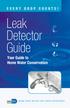 E v e r y D r o p C o u n t s! Leak Detector Guide Your Guide to Home Water Conservation M i a m i - D a d e W a t e r a n d S e w e r D e p a r t m e n t A High Bill Usually Means a Leak Did you know
This presentation premiered at WaterSmart Innovations. watersmartinnovations.com
 This presentation premiered at WaterSmart Innovations watersmartinnovations.com Green Plumbing and Mechanical Code Supplement David Viola IAPMO Director of Special Services 1 IAPMO Group Association of
THE PEOPLE OF THE CITY OF LOS ANGELES DO ORDAIN AS FOLLOWS: Section 1. Article V of Chapter XII of the Los Angeles Municipal Code is added to read:
 ORDINANCE NO. 1,;...8_U_8_2_2_ An ordinance adding Article V to Chapter XII, and amending Section 94.103.1.2.9, of the Los Angeles Municipal Code establishing water efficiency requirements for new development
8 plumbing. plumbing. 2010 PulteGroup, Inc. All Rights Reserved.
 8 90 2010 PulteGroup, Inc. All Rights Reserved. drains All the water you use leaves the home through a drain. Maintaining drains prevents clogging, overflows, water damage, and other problems. care and
Water Management Plan Revision 2
 Water Management Plan Revision 2 United States Environmental Protection Agency Ecosystems Research Division 960 College Station Road Athens, GA 30605 August 18, 2014 Point of Contact: Rick Pittman, Facility
7.1 Conservation Programs for Industrial, Commercial, and Institutional Accounts
 Industrial, Commercial, and Institutional Accounts Applicability This BMP is intended for all Municipal Water User Groups ( utility ) which serve industrial, commercial, and institutional ( ICI ) customers.
Water Loss Auditing and Water Leak Detection: How Much is Being Lost and Where Does it Go? PNWS-AWWA Annual Conference Michael W. Grimm, P.E.
 Water Loss Auditing and Water Leak Detection: How Much is Being Lost and Where Does it Go? PNWS-AWWA Annual Conference Michael W. Grimm, P.E. April 29, 2015 1 2 What Will Be Covered Determining the magnitude
Working for our future today. Water saving tips. Water saving tips for your home, garden and pool
 Working for our future today Water saving tips Water saving tips for your home, garden and pool From the bathroom to the backyard, there are some simple things you can do that could save thousands of litres
A High Bill Usually Means a Leak
 A High Bill Usually Means a Leak Did you know that approximately 50 percent of all households have some kind of plumbing leak? Most of these leaks are due to worn out washers, flappers or faulty tank valves,
Water Saver Bingo. Objectives:
 Water Saver Bingo Objectives: Materials: Determine the average amount of water used through daily activities. Recognize that large quantities of water can be wasted from a dripping faucet. Describe different
Augmenting Rainwater Harvesting to Offset Potable Water for Irrigation and Indoor Use within the Tampa Bay Region A Best Management Practice
 Augmenting Rainwater Harvesting to Offset Potable Water for Irrigation and Indoor Use within the Tampa Bay Region A Best Management Practice Tampa Bay Water May 23, 2011 1 Table of Contents Section 1:
SIZING OF WATER PIPING SYSTEM
 SIZING OF WATER PIPING SYSTEM SECTION E101 GENERAL E101.1 Scope. E101.1.1 This appendix outlines two procedures for sizing a water piping system (see Sections E103.3 and E201.1). The design procedures
Utility Service Application
 Utility Service Application for Multi-family/Non-residential Developments Thank you for contacting the City of Tampa for your water and wastewater utility service needs. We have assembled this package
A Do-It-Yourself Home Water Audit
 A Do-It-Yourself Home Water Audit This page is left blank intentionally. Please use the double-sided printer setting when printing. Your new Home Water Savings Kit can help you conduct a do-it-yourself
RANCHO MURIETA COMMUNITY SERVICES DISTRICT WATER SHORTAGE CONTINGENCY PLAN
 RANCHO MURIETA COMMUNITY SERVICES DISTRICT WATER SHORTAGE CONTINGENCY PLAN September 14, 2012 The purpose of this Water Shortage Contingency Plan (Plan) is to provide direction on specific actions to be
detection kit the water leak water leaks: What you should know A helpful guide for locating indoor and outdoor water leaks Getting Ready
 water leaks: What you should know the water leak detection kit Imagine that the dot inside these brackets [ ] is the only hole in your home s water system. By its size alone, that hole may not seem worth
WATER LEAK DETECTION AND REPAIR PROGRAM
 WATER LEAK DETECTION AND REPAIR PROGRAM EPD Guidance Document August 2007 TABLE OF CONTENTS PART 1: ESSENTIALS OF LEAK DETECTION AND REPAIR 3 SUMMARY 3 Benefits of Leak Detection and Repair 3 Unaccounted-for
Water on the Home Front
 WE CARE ABOUT WATER. IT S WHAT WE DO. Water on the Home Front Grade Level: 6-12 Objective: Students will learn how an in-home water audit can help to identify the best ways to save water and money. Subjects:
The main steam enters the building in the basement mechanical room; this is where the condensate line also leaves the building.
 MSV: Square Footage: 24,844 No. of Floors: 1 Year Built: 1963 Type of Use: Lounge and dining area open all night for snacks Steam Water-cooled condenser, 50-Ton York unit with a 6 cylinder-reciprocating
Commercial Rainwater and
 Commercial Rainwater and AC Condensate Collection Systems Uses Landscape irrigation *** Cooling tower make-up water Toilet flushing Commercial and industrial processes Other non-potable uses Benefits Reduction
Plumbing Code Sections For Commercial Food Facilities
 Plumbing Code Sections For Commercial Food Facilities SCOPE The following list of requirements summarizes the plumbing issues that are commonly addressed in commercial retail food facilities by health
Water Pressure Reducing Valves
 F-23QA 23 Questions and Answers about Water Pressure Reducing Valves $ HOW THEY Save WATER Save ENERGY Save WASTEWATER Save MAINTENANCE Save MONEY ENERGY WATER Conserve Both Automatically with Water Pressure
Plumbing Installations A homeowner guide to the City of Winnipeg plumbing requirements for a single-family dwelling
 PLANNING, PROPERTY AND DEVELOPMENT DEPARTMENT Plumbing Installations A homeowner guide to the City of Winnipeg plumbing requirements for a single-family dwelling October 2014 contents General Information
DRAFT ONLY ORDINANCE NO.
 ORDINANCE NO. An ordinance amending certain provisions of Articles 4 and 9 of Chapter IX of the Los Angeles Municipal Code to establish citywide water efficiency standards and require water-saving systems
Eco-Schools USA Water Audit
 Learning Objectives To investigate water use within the school and identify inefficiency. To record and analyze water data. Curriculum Links English, Science, Geography, Citizenship Eco-Schools USA Pathways
WaterSense or Energy Star. Tank type toilets: WaterSense = 1.28 gpf (4.8L) with at least 350 gram waste. 1.5 gpm maximum & 0.8 gpm minimum at 20 psi
 National Efficiency Standards and s for and Water Using Toilets Lavatory (Bathroom) Faucets 2.2 gpm at 60 psi 2 Kitchen Faucets Showerheads Clothes Washers, Energy Independence and Security Act of 2007
RESIDENTIAL END USES OF WATER
 RESIDENTIAL END USES OF WATER Prepared by: Peter W. Mayer and William B. DeOreo Aquacraft, Inc. Water Engineering and Management 2709 Pine St. Eva M. Opitz, Jack C. Kiefer, William Y. Davis, and Benedykt
How to Protect Your Property Against Plumbing Disasters
 How to Protect Your Property Against Plumbing Disasters Over 15 Years of Experience Servicing Toronto & GTA Available 24-Hours a Day CONTENT Why Your Home Plumbing Matters...2 Plumbing 101...3 Caring For
Water Efficiency Self-Assessment Guide from
 Water Efficiency Self-Assessment Guide from 1 Water Efficiency Self-Assessment Guide from Anglian Water Introduction More than 97% of the water in the world is too salty to drink, 2% is locked in glaciers
APPLICATION FOR GRAYWATER IRRIGATION SYSTEM PERMIT SIMPLE RESIDENTIAL GRAVITY SYSTEMS, NO STORAGE
 APPLICATION FOR GRAYWATER IRRIGATION SYSTEM PERMIT SIMPLE RESIDENTIAL GRAVITY SYSTEMS, NO STORAGE Please read the California Plumbing Code Chapter 16A-1 Design Requirements before completing this form.
Codes and High Performance Hot Water Systems. Gary Klein Affiliated International Management, LLC 916 549 7080 gary@aim4sustainability.
 Codes and High Performance Hot Water Systems Gary Klein Affiliated International Management, LLC 916 549 7080 [email protected] Annual Energy Use for Heating Water Natural Gas Gallons Per Day
WINTERIZING YOUR HOME PLUMBING AT BLUE RIDGE SHORES
 WINTERIZING YOUR HOME PLUMBING AT BLUE RIDGE SHORES The following are suggestions to help you winterize your home plumbing. They are for homes where the heat is not left on during the winter months. There
Frequently Asked Questions about water & sewer bills
 Frequently Asked Questions about water & sewer bills Why is my water bill so high? Running toilets are the most common cause of high water bills, even though they are not always the easiest to find. The
360 CMR: MASSACHUSETTS WATER RESOURCES AUTHORITY 360 CMR 12.00: LEAK DETECTION REGULATIONS
 360 CMR 12.00: LEAK DETECTION REGULATIONS Section 12.01: Preamble 12.02: Effective Date 12.03: Definitions 12.04: Applicability of Leak Detection and Repair Program 12.05: Minimum Frequency 12.06: Methods
Backflow Bulletin #1
 Backflow Bulletin #1 FIRE PROTECTION SYSTEMS Chemicals in the System Anti-Freeze, Foam, Corrosion Inhibitors, etc. Chemicals in the System Glycerin Glycerin or similar food-grade non-toxic additive Siamese
GENERAL WATERING & CARE GUIDE
 GENERAL WATERING & CARE GUIDE Between 30-60 percent of water applied to lawns and gardens is never absorbed by the plants. Water is often wasted because it is applied too quickly and runs off, evaporates
Water Conservation in Tucson Past, Present and Future. Fernando Molina Public Information /Conservation Officer Tucson Water
 Water Conservation in Tucson Past, Present and Future Fernando Molina Public Information /Conservation Officer Tucson Water Blue Ribbon Panel - May 6, 2010 Water Conservation - A Brief History 1912 Tucson
SUBCHAPTER H: UTILITY SUBMETERING AND ALLOCATION 291.121-291.127 Effective January 6, 2011
 Texas Commission on Environmental Quality Page 1 SUBCHAPTER H: UTILITY SUBMETERING AND ALLOCATION 291.121-291.127 Effective January 6, 2011 291.121. General Rules and Definitions. (a) Purpose and scope.
Energy Conservation Measures for Home Twenty-two (22) low cost or no-cost energy conservation measures
 Energy Conservation Measures for Home Twenty-two (22) low cost or no-cost energy conservation measures County Energy Manager, Jeff Sheckels As I began the energy conservation endeavor within Charles County
A HOMEOWNERS GUIDE ON-SITE SEWAGE MANAGEMENT SYSTEMS
 GEORGIA DEPARTMENT OF HUMAN RESOURCES ENVIRONMENTAL HEALTH SECTION A HOMEOWNERS GUIDE TO ON-SITE SEWAGE MANAGEMENT SYSTEMS March 12, 2002 WHAT IS AN ON-SITE SEWAGE MANAGEMENT SYSTEM An on-site sewage management
BCA Green Mark for Restaurants
 BCA Green Mark for Restaurants Updated: 10/5/2011 1 Point Allocations - BCA Green Mark for Restaurants (I) Energy Related Requirements Part 1 : Energy Efficiency Category Point Allocations Minimum 20 points
Georgia State Amendments to the International Plumbing Code
 Georgia State Amendments to the International Plumbing Code (2006 Edition) Georgia Department of Community Affairs Local Government Assistance Division 60 Executive Park South, N.E. Atlanta, Georgia 30329-2231
Water Shortage Contingency Plan
 Section 10632 of the California Water Code states that the Urban Water Management Plan shall provide an urban water shortage contingency analysis that includes information on the estimated three-year minimum
Dominic i Barbato Dpt. Of Building and Safety (818) 374 4361 [email protected]
 Dominic i Barbato Dpt. Of Building and Safety (818) 374 4361 [email protected] b 2011 Los Angeles Plumbing Code LAPC changes from 2008 2011 Los Angeles Plumbing Code Consists of the following:
Get Ready For The One Tonne Action Challenge!
 Get Ready For The One Tonne Action Challenge! Read through the four elements of the one-tonne challenge - making a difference is easier than you think!! Watt's It All About? As our demand for electricity
FOG PRETREATMENT INFORMATION. New London Public Utilities F.O.G. Program 120 Broad Street New London, CT 06320
 FOG PRETREATMENT INFORMATION 1 New London Public Utilities F.O.G. Program 120 Broad Street New London, CT 06320 Kathryn Willis Program Coordinator Phone: 860-447-5222 Introduction This information package
One of the fundamental design elements that every
 Preliminary Design Information Before starting the water system design, you must assemble a collection of information. This includes information from the owner, the local utility, and the architect. Things
Solar and Wind Energy for Greenhouses. A.J. Both 1 and Tom Manning 2
 Solar and Wind Energy for Greenhouses A.J. Both 1 and Tom Manning 2 1 Associate Extension Specialist 2 Project Engineer NJ Agricultural Experiment Station Rutgers University 20 Ag Extension Way New Brunswick,
Proposals for Water Conservation Programs in Yavapai County Water Advisory Committee April, 2007
 Proposals for Water Conservation Programs in Yavapai County Water Advisory Committee April, 2007 This document provides Water Advisory Committee (WAC) recommendations for water conservation in Yavapai
Water/Sewer Billing, Metering, and Water Efficiency. May 3, 2011
 Water/Sewer Billing, Metering, and Water Efficiency May 3, 2011 Two Types of Water/Sewer Billing Flat Rate ( Frontage ) A series of set fees based on the size of a building and the number of water-using
RETROFITTING APARTMENT BUILDINGS TO CONSERVE WATER A Guide for Managers, Engineers, and Contractors
 CONSERVATION RETROFITTING APARTMENT BUILDINGS TO CONSERVE WATER A Guide for Managers, Engineers, and Contractors U.S. Department of Housing and Urban Development Office of Policy Development and Research
TARRANT COUNTY PUBLIC HEALTH DEPARTMENT 817-321-4960 fax 817-321-4961 FOOD ESTABLISHMENT REVIEW APPLICATION
 TARRANT COUNTY PUBLIC HEALTH DEPARTMENT 817-321-4960 fax 817-321-4961 FOOD ESTABLISHMENT REVIEW APPLICATION Date: NEW REMODEL Name of Establishment: Category: Restaurant Institution Daycare Retail Market
NYC Department of Education Building Condition Assessment Survey 2014-2015 BROADWAY EDUCATION CAMPUS - MANHATTAN, 26 BROADWAY, MANHATTAN, NY, 10004
 School: InspectionId Asset Data Inspection Type Building Assessment Survey 204-205 BROADWAY EDUCATION CAMPUS - MANHATTAN, 26 BROADWAY, MANHATTAN, NY, 0004 Time In Last Edited 255 MECHANICAL 205-05-8 09:00AM
This report presents the findings and recommendations of the assessment of energy use and
 This report presents the findings and recommendations of the assessment of energy use and environmental stewardship of Arlington Street Church, Boston, MA. As stewards of the earth it is important that
http://septic.umn.edu
 for Holding Tank Systems The goal of a septic system is to protect human health and the environment by properly treating wastewater before returning it to the environment. Your holding tank system is designed
Sample - Existing Building Commissioning Plan
 Sample - Existing Building Commissioning Plan Version: Draft for Review Final Approved: Owner Site Address: Primary Site Contact Name and Telephone Number: Date Building Description The site consists of
VILLAGE OF GRANVILLE SEWER BACK-UP and WATER LEAK POLICIES
 VILLAGE OF GRANVILLE SEWER BACK-UP and WATER LEAK POLICIES SEWER BACK-UP POLICY General Sewer back-ups are an unfortunate, but common problem in older communities. A sewer back-up can create a health or
Bio-Clean. for Septic Systems. Tips for Using Bio-Clean. Page Index METRIC CONVERSIONS
 Bio-Clean for Septic Systems METRIC CONVERSIONS 1 tablespoon = 15ml 1/4 cup = 57 ml 1/3 cup = 76 ml 1/2 cup = 114 ml 1 pint = 1/2 litre 1 quart = 1 litre 1/2 gallon = 2 litres 1 gallon = 4 litres 1 pound
Sewer and Stormwater Back-ups Policy Adopted by Council October 4, 2010
 Sewer and Stormwater Back-ups Policy Adopted by Council October 4, 2010 A. Purpose The purpose of this policy is to explain how and why sewer or stormwater backups occur, what to do in the event a homeowner
ENERGY EFFICIENCY ENERGY EFFICIENCY: Saving Dollars While Clearing the Air
 : Saving Dollars While Clearing the Air After labor and food, energy is the largest controllable cost in a restaurant s operation. And energy is a great place to start in becoming a green restaurant because
HEATING, VENTILATION & AIR CONDITIONING
 HEATING, VENTILATION & AIR CONDITIONING as part of the Energy Efficiency Information Grants Program Heating and cooling can account for approximately 23 % of energy use in pubs and hotels 1. Reducing heating
PREVENT FROZEN PIPES
 Public Works - Water Conservation 433 N Virginia, PO Box 2059 Prescott, AZ 86302 928.777.1130 Fax 928.771.5929 www.cityofprescott.net PREVENT FROZEN PIPES Do not be caught by surprise when sub-freezin
ALBUQUERQUE BERNALILLO COUNTY WATER UTILITY AUTHORITY WATER WASTE ORDINANCE
 4-1-1 SHORT TITLE... 1 4-1-2 INTENT... 1 4-1-3 DEFINITIONS... 1 4-1-4 WATERING RESTRICTIONS... 4 4-1-5 WATER WASTE... 5 4-1-6 SPECIAL PERMITS... 6 4-1-7 VARIANCES, EXEMPTIONS AND APPEALS... 7 4-1-8 FEES;
WATER & SEWER SERVICES
 WATER/SEWER ENGINEERING SECTION PHONE (703) 228-3677 WATER & SEWER SERVICES INFORMATION & APPLICATION PACKAGE REVISED MAY 2014 1 MAY 2014 Dear Customer: Thank you for taking the time to read this information
SAVE ENERGY AT HOME INSULATE AND AIR SEAL
 SAVE ENERGY AT HOME INSULATE AND AIR SEAL Check the roof insulation level and add insulation to maintain minimum R-38 (6 of blown cellulose or equal). Use R-19 between frame or R-10 rigid insulation for
What Is An On-Lot Sewage Disposal System?
 What Is An On-Lot Sewage Disposal System? Most rural homes and communities in Monroe County are not served by a public sewer system. In order to dispose of the wastewater (sewage) generated by homes and
Septic System Management Plan for Below Grade Systems
 The goal of a septic system is to protect human health and the environment by properly treating wastewater before returning it to the environment. Your septic system is designed to kill harmful organisms
WATER SHORTAGE MANAGEMENT PLAN
 TOWN OF JAMESTOWN WATER SHORTAGE MANAGEMENT PLAN Adopted November 21, 2005 Revised and Adopted July 21, 2009 Revised and Adopted February 16, 2010 I. PURPOSE The procedures herein are written to reduce
Homeowners and Home Buyers Guide to Wells and Private Sewage Systems
 Homeowners and Home Buyers Guide to Wells and Private Sewage Systems What every homeowner should know about living with a well and a private sewage system. YOUR ENVIRONMENTAL SYSTEMS Out of sight out of
Facilities Maintenance Standards rev 9-1-2015
 Facilities Maintenance Standards rev 9-1-2015 Purpose The purpose of these standards is to outline the minimum requirements for maintaining state owned facilities and infrastructures in a manner that will
MODEL WEB CONTENT FOR CITY SANITARY SEWER DEPARTMENTS
 MODEL WEB CONTENT FOR CITY SANITARY SEWER DEPARTMENTS The following information is designed to be used in conjunction with the Sewer Toolkit, located in the Wastewater section of the Florida Rural Water
Water Saving Incentive Program Totals for FY2015
 1 Lee Belle Lago Homeowners' Belle Lago HOA - Controller Upgrade Association Project $115,348.00 $50,000 32.00 32.00 Broward County Enivronmental Planning and 2 Broward Community Resilience High Efficiency
RESIDENTIAL WATER LEAK DETECTION GUIDE
 RESIDENTIAL WATER LEAK DETECTION GUIDE WATER - USE IT DON T WASTE IT PROTECT YOUR HOME FROM DAMAGING LEAKS CONTENTS Understanding Your Water Bill 4 Understanding Your Water Meter 6 10 Common Indoor Water
How To Get A Building Permit In Florida
 MIAMI-DADE COUNTY BUILDING DEPARTMENT PERMIT EXEMPTIONS Please note that the exemptions listed in this section are from Florida Building Code requirements only. Other State and County regulatory departments
Codes and Standards Research Report. California s Residential Indoor Water Use
 Codes and Standards Research Report California s Residential Indoor Water Use Codes and Standards Research Report California s Residential Indoor Water Use FUNDED THROUGH A GRANT FROM: 1215 K Street, Ste.