
On the Nature and Nurture of Antisocial Behavior and Violence
|
|
|
- Francis Chase
- 10 years ago
- Views:
Transcription
1 On the Nature and Nurture of Antisocial Behavior and Violence ESSI VIDING Social, Genetic, and Developmental Psychiatry Centre, Institute of Psychiatry, King s College London, London SE5 8AF, UK ABSTRACT: This article focuses on the contribution that behavioral genetic research can make to further the understanding of how antisocial and violent behavior develops. Genetically informative study designs are particularly useful for investigating etiological heterogeneity and can refine the search for developmental pathways to persistent antisocial conduct. While the current data are not yet directly translatable for prevention programs, behavioral genetic research will have far-reaching implications for prevention and treatment. As we find genes associated with risk for antisocial behavior and develop better understanding of the mechanics of the interplay between genes and the environment, we can expect to tailor prevention and treatment to serve the specific needs of etiologically distinct subgroups of children. Furthermore, researchers involved in sharpening the knowledge base have the responsibility of trying to ensure that such findings are not misused. KEYWORDS: behavior genetics; antisocial behavior; etiology INTRODUCTION The nature vs. nurture debate seems somewhat dated these days, as most scientists appear happy with the notion that both genetic predisposition and environmental risk/protective factors mould individuals throughout development. The interest has shifted to assessing the relative importance of genes and environmental influences on any given trait or ability and, more importantly, to discovering the developmental processes of genetic and environment interplay. In this article I will selectively summarize some research on antisocial and violent behavior that addresses etiological questions. I will first briefly and selectively outline quantitative genetic findings of antisocial and violent behavior, specifically highlighting our recent findings on etiological heterogeneity within early-onset antisocial behavior. Children who manifest behavior problems early in life are at the greatest risk for chronic, life-course persistent antisocial behavior, including violence. 1 However, Address for correspondence: Essi Viding, Institute of Psychiatry, Social, Genetic, and Developmental Psychiatry Centre, Box No. P080 De Crespigny Park, London SE5 8AF, UK. Voice: ; fax: [email protected] Ann. N.Y. Acad. Sci. 1036: (2004) New York Academy of Sciences. doi: /annals

2 268 ANNALS NEW YORK ACADEMY OF SCIENCES these children do not appear to form an etiologically unitary group. In the following section I will then describe how genetic study designs can be used to answer specific questions about environmental risk factors for antisocial behavior. Next I will discuss the challenges for finding genes associated with antisocial behavior and violence. In the last section of this paper I will outline tentative implications of findings on genes and environment for both prevention and treatment. QUANTITATIVE GENETICS OF ANTISOCIAL AND VIOLENT BEHAVIOR Rhee and Waldman 2 recently conducted a meta-analysis of behavior genetic studies on antisocial behavior and estimated that on average about 41% of the variance on antisocial behavior was due to genetic factors, about 16% to shared environmental factors, and about 43% to non-shared environmental factors. These estimates were based on findings from 51 studies that varied in sample size from very small (less than hundred participants) to large (thousands of participants), used different methods to infer estimates of heritability and environmental influence (twin, adoption, and sibling study designs), collected data on different age groups (children, juveniles, and adults), and applied different definitions of antisocial behavior using different informants. However, the basic finding is that antisocial behavior is moderately heritable. The same appears to hold for violence, 3 5 although studies using official conviction records have reported evidence of nil heritability. 6,7 There is a logical explanation to the nil heritability estimate, as using conviction records to measure violence will miss out on information on actual crimes committed, while including some individuals who have only committed a single, one-off violent act. Furthermore, small sample sizes of the studies relying on conviction records limits the statistical power of these analyses. Overall, the data appear to indicate moderate heritability for both antisocial and violent behavior. If we use sufficiently large twin samples we can ask questions that go beyond demonstrating that antisocial behavior is heritable. We can investigate genetic and environmental influences on co-morbidity between antisocial behavior and other behavioral problems. For example, there is suggestive evidence of overlapping genetic influences for conduct disturbance and hyperactivity. 8 We can ask developmental questions by assessing antisocial behavior over time and investigate whether genetic or environmental variables contribute to its continuity or change by measuring twin 1 s phenotypic score at age one, and twin 2 s phenotypic score at age two. As an example, a recent study suggested that continuity of aggressive antisocial behavior is genetically mediated. 9 We can also use the twin design to divide groups of antisocial individuals on some distinct behavioral or personality marker to see whether etiological influences differ for different subtypes. For example, early-onset antisocial behavior appears to be more heritable than adolescence-limited antisocial behavior, a finding that has been argued to reflect the transient, almost normative nature of adolescent antisocial behavior. 1 On the other hand, the higher heritability estimate for antisocial behavior in young children may reflect a genetic predisposition to such behavior, particularly when antisocial behavior is pervasive over different settings. 10,a

3 VIDING: NATURE & NURTURE OF ANTISOCIAL BEHAVIOR 269 QUANTITATIVE GENETICS HIGHLIGHTING ISSUES FOR PREVENTION Our recent findings can serve as an example of investigation that goes beyond demonstrating heritability of a trait and that has potential to inform prevention. Previous research led us to ask whether there may be etiologically different subtypes within the early-onset subgroup of antisocial children. 12 This is an important question, as a demonstration of etiological differences in the early-onset group may index a need for differentiated prevention and treatment efforts that mirror the relevant risk factors for antisocial behavior in a particular sub-group. Earlier research had demonstrated that callous unemotional personality traits (lack of guilt and empathy) delineated a distinct group of antisocial children and adults with high levels of aggression (including proactive aggression), poor prognosis, and a neurocognitive profile characterized by dysfunctional processing of others distress and hyper-reactivity to rewards In addition, antisocial children and adults with callous unemotional personality traits did not show the traditional association between environmental risk factors (e.g., parenting or environment upon release from prison) and manifestation or maintenance of antisocial behavior. 15,16 In adults the combination of callous unemotional traits and antisocial behavior is called psychopathy. It must be emphasized that psychopathy is an adult diagnosis and children should not be labeled as psychopaths. However, charting the callous unemotional traits in children and investigating whether children with callous unemotional personality traits differ in etiology from other children with early-onset antisocial behavior is an important enterprise with implications for prevention and treatment. Although previous research had strongly suggested that children with early-onset antisocial behavior coupled with callous unemotional traits form a distinct subtype, 13,14 possible etiological differences between these children and others with early-onset antisocial behavior had not been assessed. To address this question we studied teacher ratings of callous unemotional traits and antisocial behavior in more than year-old twins from the Twins Early Development Study (TEDS). We found that exhibiting extreme levels of callous and a The twin method is a natural experiment that relies on the different levels of genetic relatedness between MZ and DZ twin pairs to estimate the contribution of genetic and environmental factors to individual differences, or extreme scores in a phenotype of interest. Phenotypes include any behavior or characteristic that is measured separately for each twin, such as twins score on a antisocial behavior checklist. Statistical model-fitting techniques and regression analyses methods incorporating genetic relatedness parameter are used to investigate the etiology of the phenotype of choice. I will not cover these techniques on this article and an interested reader should read Plomin s textbook Behavioral Genetics. 11 The basic premise of the twin method is this: If identical twins, who share 100% of their genetic material, appear more similar on a trait than fraternal twins, who share on average 50% of their genetic material (like any siblings), then we infer that there are genetic influences on a trait. Identical twins genetic similarity is twice that of fraternal twins. If nothing apart from genes influences behavior, then we would expect the identical twins to be twice as similar with respect to the phenotypic measure than fraternal twins. Shared environmental influences environmental influences that make twins similar to each other are inferred if fraternal twins appear more similar than is expected from sharing 50% of their genes. Finally, if identical twins are not 100% similar on a trait (as would be expected if only genes influenced a trait), non-shared environmental influences are inferred in other words environmental influences that make twins different from each other. The non-shared environmental estimate also includes measurement error.

4 270 ANNALS NEW YORK ACADEMY OF SCIENCES FIGURE 1. Estimates of genetic and environmental contribution to extreme levels of antisocial behavior (AB) in children with callous unemotional traits (AB/CU+) and children without callous unemotional traits (AB/CU ). A = genetic; C = shared environment; E = non-shared environment. unemotional traits was under strong genetic influence (heritability of.67). 12 After establishing that the callous unemotional traits were highly heritable in children, we conducted further research on children with antisocial behavior who either had or did not have elevated levels of these traits. When we separated children with antisocial behavior into these two groups, the most interesting result emerged (FIG. 1). Antisocial behavior in children with elevated levels of callous unemotional traits was under extremely high genetic influence (heritability of.81) and no influence of shared environment. In contrast, antisocial behavior in children without elevated levels of callous unemotional traits showed moderate genetic influence (heritability of.30) and substantial environmental influence (shared environmental influence =.34; non-shared environmental influence =.26). This is a novel finding and represents an etiologically based refinement for theories of antisocial behavior. Furthermore, it indicates that there is heterogeneity within the early-onset group that warrants further investigation. WHAT ARE THE IMPLICATIONS OF ETIOLOGICAL HETEROGENEITY? These findings of etiological heterogeneity have implications for future research on development of antisocial behavior. We are currently following up the twins at 9-years and will be able to assess whether the two subgroups of children with earlyonset antisocial behavior show different patterns of stability for the antisocial behavior or differ in their environmental risk factors. As we are using a twin design, we can also address whether genetic or environmental effects are primarily responsible for any change or continuity in antisocial behavior in the two subgroups. The finding of high heritability in the callous unemotional subgroup of children with early-onset antisocial behavior also suggests that molecular genetic research may be particularly

5 VIDING: NATURE & NURTURE OF ANTISOCIAL BEHAVIOR 271 fruitful in this group and we are following this up (see the section entitled FINDING GENES in this article). In contrast, children with early-onset antisocial behavior, but without elevated levels of callous unemotional trait, had a strong environmental influence on their antisocial behavior. Using theoretically defined environmental measures, as well as incorporating information about DNA polymorphisms, is particularly important for these future research efforts. The following sections will briefly discuss both environmental and molecular genetic research on antisocial and violent behavior. FINDING ENVIRONMENTS: HOW GENETIC STUDY DESIGNS CAN BE USED TO ANSWER SPECIFIC QUESTIONS ABOUT ENVIRONMENTAL RISK FACTORS FOR ANTISOCIAL BEHAVIOR The finding of substantial shared environmental influence for antisocial behavior in children without elevated levels of callous unemotional traits indicates that family-wide environmental influences that are not acting on the child s genotype are important for the development of antisocial behavior in this subgroup. 12 In contrast, environmental influences acting in tandem with the genotype, as well as environmental influences unique to the child, appear more important for the development of antisocial behavior in children with elevated levels of callous unemotional traits. We are in the process of charting common and unique environmental risk factors for antisocial behavior in these two etiologically distinct subtypes. Behavioral genetic methods are powerful in informing the causal theory of the development of antisocial behavior. For example, comparing identical twins who differ on antisocial behavior outcome can enlighten us about child-specific nonshared environmental risk factors for antisocial behavior independent of genetic influence. Furthermore, given that genetic effects influence the likelihood of environmental risk, as well as the reaction to environmental risk, it is important to study measured, welldefined environmental factors within genetically sensitive designs where we can assess genetic environmental correlation and genetic environmental interaction, as well as environmental effects over and above gene environment correlation and gene environment interaction. By gene environment correlation, behavioral geneticists can mean either passive, active, or evocative gene environment relationships. A passive gene environment correlation reflects genetic influence on exposure to environment, such as an adult s genetic propensity for antisocial behavior influencing the likelihood of that adult engaging in maltreatment an environmental risk factor for the child. Evocative and active genetic environmental correlations reflect experiences that are correlated with genetic propensities. An example of evocative gene environment correlation might be a child s temperamental predisposition (which is partly under genetic influence) evoking a certain disciplinary reaction. An active gene environment correlation could be a child s seeking out particular risk environments. This type of gene environment correlation could be particularly relevant in adolescence or for children who receive inadequate parental supervision. By gene environment interaction behavioral geneticists mean genetic sensitivity or susceptibility to environments, such that only children with certain genotypes will develop an antisocial outcome after exposure to environmental risk.

6 272 ANNALS NEW YORK ACADEMY OF SCIENCES A study by Caspi and colleagues is a good example of using behavioral genetic methods to study the nature of association between child-specific environmental risk and antisocial behavior. 17 This study used a longitudinal design and compared identical twins discordant for teacher-rated antisocial behavior, demonstrating that mothers negative emotional attitudes toward their children were associated with children s antisocial behavior. This association was not purely a child effect (i.e., an effect of children s behavior on parental treatment), as the longitudinal analyses documented that even after children s antisocial behavior at age 5 was controlled for, maternal negative expressed emotion still predicted increases in children s antisocial behavior at age 7. The discordant identical twins design ruled out that the association between maternal expressed emotion and children s antisocial behavior was genetically mediated, as maternal expressed emotion predicted differences between genetically identical individuals. These findings suggest maternal expressed emotion is an environmentally mediated risk factor, and possibly an environmental cause for antisocial behavior. Caspi and colleagues did not divide their sample of children to those with and without elevated levels of callous unemotional traits. It might be interesting to include this distinction in future research. There is some suggestive evidence that children with early-onset antisocial behavior and elevated levels of callous unemotional traits do not show the same association between poor parenting practices and increased antisocial behavior, as do children with early-onset antisocial behavior without elevated levels of callous unemotional traits. 16 Another recent twin study focused on maltreatment as an environmental risk factor. 18 This study supported the hypothesis that physical maltreatment is an environmental risk variable that is causally linked to children s antisocial behavior. Jaffee and colleagues found that physical maltreatment prospectively predicted antisocial outcome, that the extent of physical maltreatment was related to the level of antisocial behavior, and that physical maltreatment was followed by emergence of new antisocial behavior. 18 Controlling for parental history of antisocial behavior demonstrated that the association between physical maltreatment was not entirely accounted for by the parents genotype in other words, physical maltreatment had an effect on children s antisocial behavior over and above passive gene environment correlation. Again, this study did not divide children with early-onset antisocial behavior to those with and without elevated levels of callous unemotional traits. Given the different levels of genetic risk tentatively associated with the two subtypes, it may be interesting to see whether this particular environmental risk factor operates differently on the two subtypes. The above examples provide a flavor of how environmental risk can be studied using behavioral genetic methodology. One further example, involving study of gene environment interaction, will be provided in the section just below. An interested reader is referred to a paper by Rutter and Silberg for a more in-depth discussion of the issues raised in this article. 19 In concluding this section, I would like to stress that genetic study designs have very convincingly demonstrated that there are environmental risk factors that appear causal to the development of antisocial behavior while controlling for genetic factors. This is true for physical maltreatment that is a particularly extreme environmental risk factor, as well as for maternal expressed emotion a risk factor that may be more common and does not on the surface appear so extreme. 17,18

7 VIDING: NATURE & NURTURE OF ANTISOCIAL BEHAVIOR 273 FINDING GENES When we find genes associated with antisocial behavior we will have a more powerful way of examining the questions of co-morbidity, developmental trajectory, and heterogeneity that I outlined earlier, in the twin method section of this article. For example, we can examine whether the same genes are the risk genes for both antisocial behavior and hyperactivity. We can also assess which genes are important at different points in development, and how risk genes may interact with risk environments throughout development. Common behavioral disorders are currently proposed to be the quantitative extreme of the same genetic effects that operate throughout the distribution. 20 In this Quantitative Trait Loci (QTL) model, many genes are hypothesized to be involved in the development of any behavior pattern and these genes are thought to act in a probabilistic manner. There has been slow progress in identifying QTLs, as they are neither sufficient, nor necessary to cause extreme behavioral outcome. They can be said to act together with other risk or protective genes to increase or reduce the risk of disorder. Furthermore, a risk gene may have to be combined with environmental risk before a clinically significant outcome is produced. It is thus important to understand that genes are not a blueprint determining outcome. There is now suggestive evidence that a number of serotonin pathway genes may be associated with impulsive antisocial, aggressive, and violent behavior. 21 Not all of these findings have been replicated, but this may not be so surprising given the likely heterogeneous nature of the samples under study and the fact that the genes act in a probabilistic, rather than deterministic manner. The molecular genetic research on antisocial behavior so far has primarily concentrated on impulsive antisocial and violent behavior. We are currently trying to find genes associated with callous unemotional (CU) traits using our twin sample and a novel DNA pooling strategy comparing composite DNA from large samples of groups of individuals high versus low on the quantitative trait. 22 Pooled DNA will be genotyped on microarrays (gene chips) that can genotype more than 100,000 DNA markers in two days. 23 If we find genes associated with CU traits, these genes can then be used to answer the questions I have highlighted earlier. For example, we can see whether the same genes associated with CU traits are also associated with some other phenotypes. We can also see whether these genes are associated with persistent risk. Perhaps the most exciting possibilities lie in the realm of using measured genes to study gene environment interaction. The study of gene environment interaction is possibly the most exciting follow-up for finding genes associated with behavior. As an example, a recent study by Caspi and colleagues demonstrated the involvement of a risk MAOA allele in antisocial behavior, but only if the carrier of the vulnerable genotype had also experienced childhood maltreatment. 24 MAOA is involved in regulating serotonin at key developmental stages, and this finding highlights the importance of genetically influenced levels of serotonin functioning in buffering/exposing individuals to environmental stress. It is interesting to note that a small subgroup of individuals in this study with both genetic and environmental risk present, did not go on to develop violent and antisocial behavior. This suggests the possibility of additional risk genes operating in tandem with the MAOA, or alternatively some pro-

8 274 ANNALS NEW YORK ACADEMY OF SCIENCES tective genes modulating the impact of MAOA maltreatment combination in some individuals. IMPLICATIONS FOR PREVENTION AND TREATMENT The research reviewed above suggests that there may be a particularly genetically vulnerable group of youngsters for whom early intervention is likely to be extremely crucial to prevent a life course persistent antisocial outcome. I would also like to highlight that prevention and treatment strategies should take into account the different etiologies of subgroups of antisocial and violent children. Etiologically heterogeneous samples may explain why intervention programs can sometimes have mixed results. 25 Some children seem to respond to well-timed, early prevention and treatment, while others do not. I would suggest that the root of this may lie in etiological differences. The modest to moderate success of intervention programs may actually reflect a high success rate for affecting the outcome for a particular etiological subtype. Frick has emphasized that while there are prevention programs available that address the needs of primarily impulsive antisocial behavior, less is known about possible prevention and treatment of antisocial behavior in the callous unemotional subtype. 25 Research on environmental risk factors within behavioral genetic designs has highlighted a number of important issues. It is more than likely that for children with a vulnerable genotype, this genotype will react with risk environments. Furthermore, at least one of the parents will share the risk genes for antisocial behavior and is thus more likely to either directly or indirectly contribute to a less-than-optimal rearing environment. As the parent or parents with the antisocial genotype are not often willing or capable of engaging in efforts toward prevention and treatment, these families present a particular challenge for professionals engaged in preventing future, ongoing cycles of violence. However, recent successes with nurse-visit programs in breaking the association between maltreatment and antisocial behavior suggest that genetic risk can be effectively moderated by environmental intervention. 26,27 IS KNOWLEDGE OF ETIOLOGY NEEDED TO IMPROVE CLINICAL PRACTICE? Do the findings from behavioral genetic studies (both quantitative genetic studies and those including measured genes and environment) actually yield results relevant for the practitioner? I would argue that they do. As demonstrated in this article, genetic research is important for studying the causality and mode of operation of environmental risk factors in affecting antisocial behavior outcome. Behavioral genetic research also cautions against entertaining ideas of gene therapy for antisocial behavior. Genes that have variants that are common in the population are more than likely to have multiple functions, some of which are desirable, others not. Hence, a risk gene may have many functions over and above increasing risk for disorder. When this information is combined with the fact that genes interact in com-

9 VIDING: NATURE & NURTURE OF ANTISOCIAL BEHAVIOR 275 plex systems, as well as with environmental risk factors, it seems pertinent to conclude that removing the effects of one gene via gene therapy is unlikely to be effective. 28 This does not mean that genotype information will be irrelevant for therapeutic intervention. For example, demonstration of genetically heterogeneous subtypes of early-onset antisocial behavior suggests the possibility of subtype-specific risk gene variants. An early knowledge of such risk genes may come to guide prevention efforts prior to the emergence of clear, overt behavioral markers for the disorder. As cognitive behavioral approaches are likely to feature strongly in the antisocial behavior intervention, developing better understanding of the genes brain/cognition behavior pathways for particular subtypes especially within a longitudinal, developmental framework could provide crucial insights for intervention. For example, using brain imaging techniques on genotypically discordant fraternal twins set to perform a theoretically meaningful cognitive task in the scanner could tell us about genetic contributions to functional brain differences associated with antisocial behavior. As there is ever-increasing knowledge about developmental vulnerability periods of particular brain areas, best timing for the environmental modulation of genetic risk could be cued with such study designs. Use of identical twins discordant for the disorder in a similar scanning experiment would yield information about nonshared environmental influences on brain/cognitive function crucial for the development of antisocial behavior. Aside from the obvious target of preventing environmental risk, knowledge of the nature of environmental risk that predisposes to brain functional and cognitive differences could direct efforts of cognitive restructuring in therapy. That is, it could cue the provision of counter-environments. Lastly, individuals with identical risk genes, but different levels of environmental risk could be scanned at different developmental stages to document developmental processes associated with maladaptive cognitions and antisocial outcome. As a final argument, I would suggest that increased knowledge about genetic influences on antisocial behavior will eventually lead to etiology-based diagnosis in antisocial behavior disorders. Current diagnostic systems rely on overt behaviors, thus yielding diagnostic categories comprising etiologically heterogeneous groups of individuals who, unsurprisingly, do not respond in a similar manner to prevention and treatment efforts. 29 SUMMARY In this article I have argued that genetic research provides valuable information about the relative importance of genetic and environmental influences to antisocial and violent behavior. Such research also yields knowledge about the etiology of comorbidity, as well as developmental change and continuity. Perhaps most interestingly, recent twin research has demonstrated etiological differences between distinct subtypes of children with early-onset antisocial behavior, raising the possibility that successful intervention may need to integrate information about differential genetic risk. Genetic study designs are crucial for understanding the mechanisms by which environmental risk factors operate. Recent research has demonstrated environmentally mediated risk effects over and above genetic effects. Combining measured genes and environments in the study of antisocial behavior enables direct assessment

10 276 ANNALS NEW YORK ACADEMY OF SCIENCES of gene environment interaction, and has illuminated the importance of studying risk genes in conjunction with risk environments. Genetic risk may not be expressed at the behavioral level unless combined with a toxic environment. As we develop better understanding of genes brain/cognition behavior pathways, we will be more able to tailor individualized treatments. Diagnostic boundaries may also be revised in the light of genetic information. 29 Future possibilities include collection of DNA through noninvasive cheek-swabs and using genotype information to provide prevention that is tailored to suit the client s genotype. Genetic information should never be used to dictate who gets to reproduce (aside from the obvious ethical reprehensibility of eugenics, the genetic information it is much too probabilistic to predict outcome), nor should genetic information be used to decide who gets access to treatment. However, genetic information should be used to provide people with the most effective and least invasive means of prevention and treatment means that take into account the person s specific vulnerabilities and strengths. REFERENCES: 1. MOFFITT, T.E Life-course-persistent and adolesence-limited antisocial behavior. In Causes of Conduct Disorder and Juvenile Delinquency. B.B Lahey, T. E. Moffitt & A. Caspi, Eds. Guilford Press. New York. 2. RHEE, S.H. & I.D. WALDMAN Genetic and environmental influences on antisocial behavior: a meta-analysis of twin and adoption studies. Psychol. Bull. 128: CLONINGER, C.R., & I.I. GOTTESMAN Genetic and enviornmental factors in antisocial behavior disorders. In The Causes of Crime: New Biological Approaches. S.A. Mednick, T.E. Moffitt & S.A. Stack, Eds. : Cambridge University Press. Cambridge, UK. 4. ROWE, D., D.M. ALMEIDA & K.C. JACOBSON School context and genetic influences on aggression in adolescence. Psychol. Sci. 10: RUSHTON, J.P Self-report delinquency and violence in adult twins. Psychiatric Genet. 6: MEDNICK, S.A., W.F. GABRIELLI & B. HUTCHINGS Genetic factors in criminal behavior: evidence from an adoption cohort. Science 224: SIGVARDSSON, S., C.R. CLONIGNER, M. BOHMAN & A. VON KORRING Predisposition to petty criminality in Swedish adoptees. III. Sex differences and validation of the male typology. Arch. Gen. Psychiatry 39: SILBERG, J. et al Genetic and environmental influences on the covariation between hyperactivity and conduct disturbance in juvenile twins. J. Child Psychol. Psychiatry 37: ELEY, T.C., P. LICHTENSTEIN & T.E. MOFFITT A longitudinal behavioral genetic analysis of the etiology of aggressive and nonaggressive antisocial behavior. Dev. Psychopathol. 15: ARSENEAULT, L. et al Strong genetic effects on cross-situational antisocial behaviour among 5-year-old children according to mothers, teachers, examinerobservers, and twins' self-reports. J. Child Psychol. Psychiatry Allied Disc. 44: PLOMIN, R. et al Behavioral Genetics. Worth. New York. 12. VIDING, E. et al. Evidence for substantial genetic risk for psychopathy in 7-year-olds. J. Child Psychol. Psychiatry. In press. 13. BLAIR, R.J.R Neuro-cognitive models of acquired sociopathy and developmental psychopathy. In The Neurobiology of Criminal Behavior. J. Glicksohn, Ed. Kluwer. Dordrecht. 14. FRICK, P.J. et al Callous-unemotional traits and developmental pathways to severe conduct problems. Dev. Psychol. 39:

11 VIDING: NATURE & NURTURE OF ANTISOCIAL BEHAVIOR HART, S.D. & R.D. HARE Psychopathy: assessment and association with criminal conduct. In Handbook of Antisocial Behaviour. D.M. Stoff & J. Breiling, Eds. John Wiley. New York. 16. WOOTTON, J.M. et al Ineffective parenting and childhood conduct problems: the moderating role of callous-unemotional traits. J. Consult. Clin. Psychol. 65: CASPI, A. et al Maternal expressed emotion predicts children's antisocial behavior problems: using monozygotic-twin differences to identify environmental effects on behavioral development. Dev. Psychol. 40: JAFFEE, S.R. et al Physical maltreatment victim to antisocial child: evidence of an environmentally mediated process. J. Abnorm. Psychol. 113: RUTTER, M. & J. SILBERG Gene-environment interplay in relation to emotional and behavioral disturbance. Annu. Rev. Psychol. 53: PLOMIN, R., M.J. OWEN & P. MCGUFFIN The genetic basis of complex human behaviors. Science 264: LESCH, K.P The serotonergic dimension of aggression and violence. In Neurobiology of Agression: Understanding and Preventing Violence. Humana Press. Totowa, NJ. 22. SHAM, P., J.S. BADER, L. CRAIG, et al DNA pooling: A tool for large-scale association studies. Nature Rev. Genet. 3: BUTCHER, L.M., E. MEABURN, L. LIU, et al Genotyping pooled DNA on microarrays: a systematic genome screen of thousands of SNPs in large samples to detect QTLs for complex traits. Behav. Genet. 34: CASPI, A. et al Role of genotype in the cycle of violence in maltreated children. Science 297: FRICK, P.J Effective interventions for children and adolescents with conduct disorder. Canad. J Psychiatry 46: OLDS, D.L. et al Long-term effects of home visitation on maternal life course and child abuse and neglect: fifteen-year follow-up of a randomized trial. JAMA 278: ECKENRODE, J. et al Child maltreatment and the early onset of problem behaviors: can a program of nurse home visitation break the link? Dev. Psychopathol. 13: NUFFIELD COUNCIL OF BIOETHICS Genetics and human behaviour: The ethical context. < publication_311.html> 29. UHL, G.R. & R.W. GROW The burden of complex genetics in brain disorders. Arch. Gen. Psychiatry 61:

The Human Genome. Genetics and Personality. The Human Genome. The Human Genome 2/19/2009. Chapter 6. Controversy About Genes and Personality
 The Human Genome Chapter 6 Genetics and Personality Genome refers to the complete set of genes that an organism possesses Human genome contains 30,000 80,000 genes on 23 pairs of chromosomes The Human
Conduct Disorder: Treatment Recommendations. For Vermont Youth. From the. State Interagency Team
 Conduct Disorder: Treatment Recommendations For Vermont Youth From the State Interagency Team By Bill McMains, Medical Director, Vermont DDMHS Alice Maynard, Mental Health Quality Management Chief, Vermont
A Review of Conduct Disorder. William U Borst. Troy State University at Phenix City
 A Review of 1 Running head: A REVIEW OF CONDUCT DISORDER A Review of Conduct Disorder William U Borst Troy State University at Phenix City A Review of 2 Abstract Conduct disorders are a complicated set
Chapter 4. Quantitative genetics: measuring heritability
 Chapter 4 Quantitative genetics: measuring heritability Quantitative genetics: measuring heritability Introduction 4.1 The field of quantitative genetics originated around 1920, following statistical
PYSCHOPATHY AND ANTISOCIAL PERSONALITY DISORDER. Lisann Nolte & Justine Paeschen
 PYSCHOPATHY AND ANTISOCIAL PERSONALITY DISORDER Lisann Nolte & Justine Paeschen PSYCHOPATHY THE PSYCHOPATH TEST http://www.youtube.com/watch?v=e_va2tl6czwth E PSYCHOPATH TEST - are you a psychopath? PSYCHOPATHY
EFFECTIVENESS OF TREATMENT FOR VIOLENT JUVENILE DELINQUENTS
 EFFECTIVENESS OF TREATMENT FOR VIOLENT JUVENILE DELINQUENTS THE PROBLEM Traditionally, the philosophy of juvenile courts has emphasized treatment and rehabilitation of young offenders. In recent years,
SERIOUS AND VIOLENT JUVENILE OFFENDERS: ASSESSMENT AND TREATMENT
 139TH INTERNATIONAL TRAINING COURSE VISITING EXPERTS PAPERS SERIOUS AND VIOLENT JUVENILE OFFENDERS: ASSESSMENT AND TREATMENT Robert D. Hoge* I. INTRODUCTION Many adolescents engage in risky rule-breaking
Okami Study Guide: Chapter 3 1
 Okami Study Guide: Chapter 3 1 Chapter in Review 1. Heredity is the tendency of offspring to resemble their parents in various ways. Genes are units of heredity. They are functional strands of DNA grouped
TREATING ASPD IN THE COMMUNITY: FURTHERING THE PD OFFENDER STRATEGY. Jessica Yakeley Portman Clinic Tavistock and Portman NHS Foundation Trust
 TREATING ASPD IN THE COMMUNITY: FURTHERING THE PD OFFENDER STRATEGY Jessica Yakeley Portman Clinic Tavistock and Portman NHS Foundation Trust Treating the untreatable? Lack of evidence base for ASPD Only
Social determinants of mental health in childhood a gene-environment perspective.
 Social determinants of mental health in childhood a gene-environment perspective. Anders Hjern, Centre for Health Equity Studies (CHESS), Karolinska Institutet/Stockholm University E-mail:[email protected]
Genetics and Developmental Psychology
 M ERRILL-PALMER Q UARTERLY, VOL. 50, NO. 3 Genetics and Developmental Psychology Robert Plomin, Institute of Psychiatry One of the major changes in developmental psychology during the past 50 years has
Applied Psychology. Course Descriptions
 Applied Psychology s AP 6001 PRACTICUM SEMINAR I 1 CREDIT AP 6002 PRACTICUM SEMINAR II 3 CREDITS Prerequisites: AP 6001: Successful completion of core courses. Approval of practicum site by program coordinator.
Temperament and Its Impact on Child Development: Comments on Rothbart, Kagan, Eisenberg, and Schermerhorn and Bates
 TEMPERAMENT Temperament and Its Impact on Child Development: Comments on Rothbart, Kagan, Eisenberg, and Schermerhorn and Bates Susan D. Calkins, PhD University of North Carolina, USA April 2012,, Rev.
EARLY INTERVENTION IN PERSONALITY DISORDER:
 EARLY INTERVENTION IN PERSONALITY DISORDER: MST and Other Treatments for Socially Excluded High Risk/High Harm Children and Families Report of conference held November 2007, London AUTHORS: Eileen Vizard,
Rehabilitation programs for young offenders: Towards good practice? Andrew Day. Forensic Psychology Research Group. University of South Australia
 1 Rehabilitation programs for young offenders: Towards good practice? Andrew Day Forensic Psychology Research Group University of South Australia [email protected] Invited paper for the Understanding
Assignment Discovery Online Curriculum
 Assignment Discovery Online Curriculum Lesson title: Nature Versus Nurture Grade level: 9-12, with adaptation for younger students Subject area: Human Body Contemporary Studies Behavioral Science Duration:
Drug Abuse Prevention Training FTS 2011
 Drug Abuse Prevention Training FTS 2011 Principles of Prevention Prevention programs should enhance protective factors and reverse or reduce risk factors (Hawkins et al. 2002). The risk of becoming a drug
Chapter 12 Personality Disorders
 The Nature of Personality Disorders Chapter 12 Personality Disorders Enduring patterns of perceiving, relating to, and thinking about the world and oneself Manifest across many life areas Are inflexible
Antisocial personality disorder
 Page 1 of 7 Diseases and Conditions Antisocial personality disorder By Mayo Clinic Staff Antisocial personality disorder is a type of chronic mental condition in which a person's ways of thinking, perceiving
Investigating the genetic basis for intelligence
 Investigating the genetic basis for intelligence Steve Hsu University of Oregon and BGI www.cog-genomics.org Outline: a multidisciplinary subject 1. What is intelligence? Psychometrics 2. g and GWAS: a
Psychology Courses (PSYCH)
 Psychology Courses (PSYCH) PSYCH 545 Abnormal Psychology 3 u An introductory survey of abnormal psychology covering the clinical syndromes included in the diagnostic classification system of the American
Master of Arts, Counseling Psychology Course Descriptions
 Master of Arts, Counseling Psychology Course Descriptions Advanced Theories of Counseling & Intervention (3 credits) This course addresses the theoretical approaches used in counseling, therapy and intervention.
Personality Disorders
 Personality Disorders Chapter 11 Personality Disorders: An Overview The Nature of Personality and Personality Disorders Enduring and relatively stable predispositions (i.e., ways of relating and thinking)
Psychology (MA) Program Requirements 36 credits are required for the Master's Degree in Psychology as follows:
 Psychology (MA) ACADEMIC DIRECTOR: Carla Marquez-Lewis CUNY School of Professional Studies 101 West 31 st Street, 7 th Floor New York, NY 10001 Email Contact: Carla Marquez-Lewis, [email protected]
ADHD and Treatment HYPERACTIVITY AND INATTENTION (ADHD) Meghan Miller, MA, Stephen P. Hinshaw, PhD University of California, Berkeley, USA
 HYPERACTIVITY AND INATTENTION (ADHD) ADHD and Treatment Meghan Miller, MA, Stephen P. Hinshaw, PhD University of California, Berkeley, USA February 2012 Introduction Attention-deficit/hyperactivity disorder
Oppositional Defiant Disorder Handout for Professionals. By Timothy M. Wagner
 Oppositional Defiant Disorder Handout for Professionals By Timothy M. Wagner Eric: An oppositional defiant disorder case study This school sucks, and you can t tell me what to do anymore! seven-year-old
ANTISOCIAL PERSONALITY DISORDER BY: MACKENZIE
 ANTISOCIAL PERSONALITY DISORDER BY: MACKENZIE RESEARCH QUESTIONS Main: What is antisocial personality disorder? What are the symptoms of antisocial personality disorder? What are some everyday complications
Anti-Social Personality Disorder
 Anti-Social Personality Disorder Definition Anti-Social Personality Disorder is a type of chronic mental condition in which a person's ways of thinking, perceiving situations and relating to others are
B.A. Programme. Psychology Department
 Courses Description B.A. Programme Psychology Department 2307100 Principles of Psychology An introduction to the scientific study of basic processes underlying human and animal behavior. Sensation and
Courses in the College of Letters and Sciences PSYCHOLOGY COURSES (840)
 Courses in the College of Letters and Sciences PSYCHOLOGY COURSES (840) 840-545 Abnormal Psychology -- 3 cr An introductory survey of abnormal psychology covering the clinical syndromes included in the
FORENSIC PSYCHOLOGY LECTURE 2
 FORENSIC PSYCHOLOGY LECTURE 2 Psychology of Criminal Behaviour 1 Recommended Reading Howitt, Dennis. (2009), Introduction to Forensic and Criminal Psychology: 3rd Edition. London: Pearson Prentice Hall
Irritability and DSM-5 Disruptive Mood Dysregulation Disorder (DMDD): Correlates, predictors, and outcome in children
 Irritability and DSM-5 Disruptive Mood Dysregulation Disorder (DMDD): Correlates, predictors, and outcome in children Ellen Leibenluft, M.D. Chief, Section on Bipolar Spectrum Disorders National Institute
Risk Factors for Alcoholism among Taiwanese Aborigines
 Risk Factors for Alcoholism among Taiwanese Aborigines Introduction Like most mental disorders, Alcoholism is a complex disease involving naturenurture interplay (1). The influence from the bio-psycho-social
Unit 4: Personality, Psychological Disorders, and Treatment
 Unit 4: Personality, Psychological Disorders, and Treatment Learning Objective 1 (pp. 131-132): Personality, The Trait Approach 1. How do psychologists generally view personality? 2. What is the focus
ANTISOCIAL PERSONALITY DISORDER: IS IT TREATABLE? JESSICA YAKELEY PORTMAN CLINIC TAVISTOCK AND PORTMAN NHS FOUNDATION TRUST
 ANTISOCIAL PERSONALITY DISORDER: IS IT TREATABLE? JESSICA YAKELEY PORTMAN CLINIC TAVISTOCK AND PORTMAN NHS FOUNDATION TRUST ANTISOCIAL PERSONALITY DISORDER: IS IT TREATABLE? Why care about ASPD? Why care
Co occuring Antisocial Personality Disorder and Substance Use Disorder: Treatment Interventions Joleen M. Haase
 Co occuring Antisocial Personality Disorder and Substance Use Disorder: Treatment Interventions Joleen M. Haase Abstract: Substance abuse is highly prevalent among individuals with a personality disorder
MSc Applied Child Psychology
 MSc Applied Child Psychology Module list Modules may include: The Child in Context: Understanding Disability This module aims to challenge understandings of child development that have emerged within the
CAMS-UA 203 Advanced Seminar Eating Disorders Course Description
 CAMS-UA 203 Advanced Seminar Eating Disorders Sara S. Weekly, MD, Clinical Instructor of Child and Adolescent Psychiatry, NYU Child Study Center, Department of Child and Adolescent Psychiatry Course Aims:
The Teen Brain: Still Under ConStrUCtion NATIONAL INSTITUTE OF MENTAL HEALTH
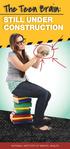 The Teen Brain: Still Under ConStrUCtion NATIONAL INSTITUTE OF MENTAL HEALTH One of the ways that scientists have searched for the causes of mental illness is by studying the development of the brain from
Theories of Violence and Aggression. By Jason Ittel
 Theories of Violence and Aggression By Jason Ittel Questions:! What does Judith Harris say parents can do to increase the probability of their children not becoming delinquent?! What areas of the brain
Diagnostic and Statistical Manual of Mental Disorders (DSM-IV-TR) (APA, 2001) 10
 5. Diagnosis Questions to be answered: 5.1. What are the diagnostic criteria for ADHD in children and adolescents? 5.2. How is ADHD diagnosed in children and adolescents? Who must diagnose it? 5.3. Which
Parent-Child Relationships in Early Childhood and Development of Anxiety & Depression
 Parent-Child Relationships in Early Childhood and Development of Anxiety & Depression JENNIFER L. HUDSON, PhD Centre for Emotional Health, Department of Psychology, Macquarie University, AUSTRALIA Topic
The Role of Neurobiological Deficits in Childhood Antisocial Behavior Stephanie H.M. van Goozen, 1 Graeme Fairchild, 2 and Gordon T.
 CURRENT DIRECTIONS IN PSYCHOLOGICAL SCIENCE The Role of Neurobiological Deficits in Childhood Antisocial Behavior Stephanie H.M. van Goozen, 1 Graeme Fairchild, 2 and Gordon T. Harold 1 1 School of Psychology,
Handout: Risk. Predisposing factors in children include: Genetic Influences
 Handout: Risk The more risk factors to which a child is exposed the greater their vulnerability to mental health problems. Risk does not cause mental health problems but it is cumulative and does predispose
Emerging international perspectives in forensic psychology Bogaerts, Stefan
 Tilburg University Emerging international perspectives in forensic psychology Bogaerts, Stefan Published in: The Journal of Forensic Psychology Practice Document version: Publisher final version (usually
UMEÅ INTERNATIONAL SCHOOL
 UMEÅ INTERNATIONAL SCHOOL OF PUBLIC HEALTH Master Programme in Public Health - Programme and Courses Academic year 2015-2016 Public Health and Clinical Medicine Umeå International School of Public Health
Outline Chapter 1 Child Psychology 211 Dr. Robert Frank. 1 What is child development, and how has its study evolved?
 Outline Chapter 1 Chapter 1: GUIDEPOSTS FOR STUDY 1 What is child development, and how has its study evolved? 2 What are six fundamental points about child development on which consensus has emerged? 3
Personality Disorders
 Abnormal Psychology PSYCH 40111 s s: An Overview The Nature of Personality and s A personality is all the ways we have of acting, thinking, believing, and feeling that make each of us unique and different
Validation and Replication
 Validation and Replication Overview Definitions of validation and replication Difficulties and limitations Working examples from our group and others Why? False positive results still occur. even after
Billy. Austin 8/27/2013. ADHD & Bipolar Disorder: Differentiating the Behavioral Presentation in Children
 ADHD & Bipolar Disorder: Differentiating the Behavioral Presentation in Children Judy Goodwin, MSN, CNS Meadows Psychiatric Associates Billy Austin 1 Introduction Distinguishing between ADHD and Bipolar
The Genetic Epidemiology of Substance Abuse
 The Genetic Epidemiology of Substance Abuse Kenneth S. Kendler, MD Virginia Institute of Psychiatric and Behavioral Genetics Virginia Commonwealth University NIDA/NIAAA Satellite Symposium - WCPG Sept
Personality Disorders (PD) Summary (print version)
 Personality Disorders (PD) Summary (print version) 1/ Definition A Personality Disorder is an abnormal, extreme and persistent variation from the normal (statistical) range of one or more personality attributes
Psychology Courses (PSYCH)
 Psychology Courses (PSYCH) PSYCH 545 Abnormal Psychology 3 u An introductory survey of abnormal psychology covering the clinical syndromes included in the diagnostic classification system of the American
Adolescent Depression and Attachment Ima G. Student Purdue University
 Heading (on all pages): running head plus page number Adolescent Depression 1 Running Head: ADOLESCENT DEPRESSION Running head (a shortened version of the title is defined on the title page and used in
Essential Nursing Competencies and Curricula Guidelines for Genetics and Genomics: Outcome Indicators
 Essential Nursing Competencies and Curricula Guidelines for Genetics and Genomics: Outcome Indicators Introduction The Outcome Indicators are an adjunct to the Essential Nursing Competencies and Curricula
An Overview of Psychological Theories of Crime Causation. Professor James Byrne Nov.2, 2010 Lecture Graduate Criminology Seminar
 An Overview of Psychological Theories of Crime Causation Professor James Byrne Nov.2, 2010 Lecture Graduate Criminology Seminar The Psychology of Crime Psychologically-based criminologists explain criminal
Psychology. REQUIREMENTS FOR A MAJOR IN PSYCHOLOGY (B.A.): 12 courses (45-49 credits)
 Psychology MAJOR, MINOR PROFESSORS: Bonnie B., George W. (chair) ASSOCIATE PROFESSORS: Richard L. ASSISTANT PROFESSOR: Tiffany A. The core program in psychology emphasizes the learning of representative
JUVENILE ISSUES CRIJ 1313 COURSE SYLLABUS
 JUVENILE ISSUES CRIJ 1313 COURSE SYLLABUS COURSE DESCRIPTION: 3 Credit Hours-A study of the juvenile process. Topics include specialized juvenile law, role of the juvenile courts, role of police agencies,
Child and Family Studies
 Child and Family Studies Administered by the Department of Curriculum and Instructions within the College of Education. The Child and Family Studies major is designed to provide a sound academic foundation
Effective Treatment for Complex Trauma and Disorders of Attachment
 Effective Treatment for Complex Trauma and Disorders of Attachment By Meds Reactive Attachment Disorder is a severe developmental disorder caused by a chronic history of maltreatment during the first couple
The Goal of Correctional Counseling
 41140_CH03_Pass2.qxd 8/9/07 12:21 PM Page 45 Jones and Bartlett Publishers. NOT FOR SALE OR DISTRIBUTION The Goal of Correctional Counseling 3 The goal of correctional counseling is usually based on two
Sue/Sue/Sue Understanding Abnormal Behavior, 9 th edition 2010 Cengage Learning CHAPTER EIGHT. Personality Disorders
 Sue/Sue/Sue Understanding Abnormal Behavior, 9 th edition 2010 Cengage Learning CHAPTER EIGHT Personality Disorders PERSONALITY DISORDERS Personality Disorder: Sue/Sue/Sue Understanding Abnormal Behavior,
Al Ahliyya Amman University Faculty of Arts Department of Psychology Course Description Psychology
 Al Ahliyya Amman University Faculty of Arts Department of Psychology Course Description Psychology 0731111 Psychology And Life {3}[3-3] Defining humans behavior; Essential life skills: problem solving,
Sociopathic Behavior in Children
 Sociopathic Behavior in Children David C. Rettew, M.D. Associate Professor of Psychiatry and Pediatrics Director, Pediatric Psychiatry Clinic Training Director, Child Psychiatry Fellowship University of
Seminar/Talk Calendar
 Seminar/Talk Calendar Tuesday, February 3rd Dr. John Neumaier, Professor of Psychiatry and Pharmacology, University of Washington DREADDing Addiction Dr. Neumaier s laboratory is studying stress and addiction
PhD. IN (Psychological and Educational Counseling)
 PhD. IN (Psychological and Educational Counseling) I. GENERAL RULES CONDITIONS: Plan Number 2012 1. This plan conforms to the regulations of the general frame of the programs of graduate studies. 2. Areas
Research on Adoption and Post-Adoption Services and Supports (PASS)
 Research on Adoption and Post-Adoption Services and Supports (PASS) Based on presentations and publications by Richard P. Barth, Ph.D. Frank A. Daniels Professor UNC School of Social Work Research to Teaching
Clinical Practice Guidelines: Attention Deficit/Hyperactivity Disorder
 Clinical Practice Guidelines: Attention Deficit/Hyperactivity Disorder AACAP Official Action: OUTLINE OF PRACTICE PARAMETERS FOR THE ASSESSMENT AND TREATMENT OF CHILDREN, ADOLESCENTS, AND ADULTS WITH ADHD
Compiled by Julie Ann Romero AS 91 Spring 2010
 Compiled by Julie Ann Romero AS 91 Spring 2010 Antisocial personality disorder is a psychiatric condition in which a person manipulates, exploits, or violates the rights of others. This behavior is often
Clinical and Developmental Psychopathology (MScRes) Vrije Universiteit Amsterdam - Faculteit der Psychologie en Pedagogiek - RM Clinical and
 Clinical and Developmental Psychopathology (MScRes) Vrije Universiteit Amsterdam - - RM Clinical and Developmental Psychopath - 2011-2012 Vrije Universiteit Amsterdam - - RM Clinical and Developmental
Heritability: Twin Studies. Twin studies are often used to assess genetic effects on variation in a trait
 TWINS AND GENETICS TWINS Heritability: Twin Studies Twin studies are often used to assess genetic effects on variation in a trait Comparing MZ/DZ twins can give evidence for genetic and/or environmental
NEW DIRECTIONS: TRENDS
 NEW DIRECTIONS: QUESTIONS TO GUIDE FUTURE CHILD ABUSE AND NEGLECT RESEARCH New Directions in Child Abuse and Neglect Research, a report by the Institute of Medicine (IOM) and National Research Council
Department Of Psychology/ Psychological Counseling
 Department Of Psychology/ Psychological Counseling Admission Requirements To join the Department of psychology and counseling, (Dept. code #1( Psychology,5 counseling), a student must successfully complete»»
Treatment of DUI s A Swedish Evaluation Study
 Treatment of DUI s A Swedish Evaluation Study 1 A. Andrén, 1 H. Bergman and 2 F. Schlyter, 3 H. Laurell 1 Department of Clinical Neuroscience, Karolinska Institutet, Stockholm, Sweden, 2 Swedish Prison
Eating Disorder Policy
 Eating Disorder Policy Safeguarding and Child Protection Information Date of publication: April 2015 Date of review: April 2016 Principal: Gillian May Senior Designated Safeguarding Person: (SDSP) Anne
What will I study? Year One core modules currently include:
 What will I study? Year One core modules currently include: Introduction to Psychology You will examine how psychology research is conducted and interpreted; a range of perspectives in psychology, including
Workshop on Establishing a Central Resource of Data from Genome Sequencing Projects
 Report on the Workshop on Establishing a Central Resource of Data from Genome Sequencing Projects Background and Goals of the Workshop June 5 6, 2012 The use of genome sequencing in human research is growing
CONDUCT DISORDERS. Chapter D.3 EXTERNALISING DISORDERS. Stephen Scott. IACAPAP Textbook of Child and Adolescent Mental Health
 EXTERNALISING DISORDERS Chapter D.3 CONDUCT DISORDERS Stephen Scott Stephen Scott BSc, FRCP, FRCPsych Professor of Child Health and Behaviour; Head, National Specialist Conduct Problems Clinic; Head, National
DSM 5 AND DISRUPTIVE MOOD DYSREGULATION DISORDER Gail Fernandez, M.D.
 DSM 5 AND DISRUPTIVE MOOD DYSREGULATION DISORDER Gail Fernandez, M.D. GOALS Learn DSM 5 criteria for DMDD Understand the theoretical background of DMDD Discuss background, pathophysiology and treatment
ITT Advanced Medical Technologies - A Programmer's Overview
 ITT Advanced Medical Technologies (Ileri Tip Teknolojileri) ITT Advanced Medical Technologies (Ileri Tip Teknolojileri) is a biotechnology company (SME) established in Turkey. Its activity area is research,
The relationship between DSM-IV oppositional defiant disorder and conduct disorder: findings from the Great Smoky Mountains Study
 Journal of Child Psychology and Psychiatry 43:3 (2002), pp 365 373 The relationship between DSM-IV oppositional defiant disorder and conduct disorder: findings from the Great Smoky Mountains Study Richard
Personality Disorders
 LP 13BF personality disorders 1 Personality Disorders Personality disorders: Disorders characterized by deeply ingrained, Inflexible patterns of thinking, feeling, or relating to others or controlling
Brief Strategic Family Therapy for Adolescent Drug Abuse
 Brief Strategic Family Therapy for Adolescent Drug Abuse Multiple Choice Identify the choice that best completes the statement or answers the question. 1. Chapter One: Brief Strategic Family Therapy-An
1. The youth is between the ages of 12 and 17.
 Clinical MULTISYSTEMIC THERAPY (MST) Definition Multisystemic therapy (MST) is an intensive family and community-based treatment that addresses multiple aspects of serious antisocial behavior in adolescents.
Study in psychology provides multiple perspectives
 Psychology Faculty: Kim G. Brenneman (chair) Gregory Koop Judy H. Mullet Major: Psychology Minor: Psychology Study in psychology provides multiple perspectives on understanding persons as individuals and
An Examination of the Association Between Parental Abuse History and Subsequent Parent-Child Relationships
 An Examination of the Association Between Parental Abuse History and Subsequent Parent-Child Relationships Genelle K. Sawyer, Andrea R. Di Loreto, Mary Fran Flood, David DiLillo, and David J. Hansen, University
Monoamine Oxidase in Major Depressive Disorder
 Handout for the Neuroscience Education Institute (NEI) online activity: Monoamine Oxidase in Major Depressive Disorder Learning Objective Explain the role of monoamine oxidase in the neurobiology, etiology,
Abnormal Psychology PSY-350-TE
 Abnormal Psychology PSY-350-TE This TECEP tests the material usually taught in a one-semester course in abnormal psychology. It focuses on the causes of abnormality, the different forms of abnormal behavior,
Molecular Genetics: Challenges for Statistical Practice. J.K. Lindsey
 Molecular Genetics: Challenges for Statistical Practice J.K. Lindsey 1. What is a Microarray? 2. Design Questions 3. Modelling Questions 4. Longitudinal Data 5. Conclusions 1. What is a microarray? A microarray
Choosing Adoption Therapist
 Choosing Adoption Therapist How do I find a therapist who is qualified with adoption and foster care issues? Selecting a therapist who understands adoption and foster care can be an important component