
Euclid SPACECRAFT INDUSTRY DAY. ESTEC 15/Jan/ DOC-TAS-EN-002
|
|
|
- Cecil Williamson
- 10 years ago
- Views:
Transcription
1 Euclid SPACECRAFT INDUSTRY DAY ESTEC 15/Jan/ DOC-TAS-EN-002

2 INDUSTRY DAY of the Euclid Spacecraft contents (1/2) General Presentation The Euclid overall design Spacecraft Configuration Mission Design Design Drivers Launcher SVM Physical Configuration Overview Spacecraft Functional Architecture The Euclid development logic Models Verification philosophy Schedule The Euclid Service Module product tree and constituents The ITT Process (according to Best Practices) List and dates of the future ITTs 2

3 INDUSTRY DAY of the Euclid Spacecraft contents (2/2) Presentation of each ITT SVM Flight products AOCS, FGS CDMS, TT&C SVM STRUCTURE & THERMAL CONTROL SUN SHIELD & SOLAR ARRAY PROPULSION BATTERY, HARNESS, PCDU ASW SVM Ground Support Equipment EGSE MGSE System support activities CPPA ISVV Test facilities 3

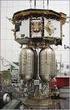
4 Euclid Spacecraft Configuration SVM (including Sunshield) EUCLID Spacecraft 4 PLM (developped independently)

5 Mission design Nominal lifetime: 6 years (after 3 months commissioning), 7 years sizing for consumables Orbit at Sun-Earth L2 Launched with Soyuz ST 2-1B from French Guiana, direct transfer 4 hours of ground communication per day K-band science telemetry link, 850 Gb compressed data per day Step-and-stare scan of the sky with Telescope line of sight nearly perpendicular to the Sun direction Each 0.5 deg² field observed for 4500s Four dithered exposures of VIS Four dithered exposures of NISP-S in 2 different bands each with 2 different dispersion orientations Four dithered exposures of NISP-P in 3 different bands 5

6 Design Drivers 6 Survey speed: nearly half the sky ( deg²) covered in 6 years Large Telescope Field of View (0.5 deg²) Optimised survey strategy with minimal dead times (fast slews, fast settling) large data rates Survey depth and signal to noise ratio Mission at L2 permanently shaded telescope low detector (on PLM) temperatures Size reconstruction and stability of the Point Spread Function high Telescope image quality high pointing stability high thermoelastic stability } co-location of the AOCS sensor (FGS) with the science sensor (VIS)

7 Launcher Launch from the Guiana Space Centre, Kourou, on board a Soyuz ST 2.1-B; 1 st quarter 2020 Direct ascent launch: no L2 orbit insertion manoeuvre; 7 First correction manoeuvre first 48 hours; Two more correction manoeuvres to enter the libration orbit around L2; Orbit around L2 is maintained by regular station-keeping manoeuvres every 30 days 2160 kg launch mass adapter included

8 SVM Physical Configuration 8

9 Spacecraft Functional Architecture 9

10 The Euclid development logic / Models 10 The baseline Spacecraft model philosophy is a 3-model approach consisting of: Structural and Thermal Model (STM), built at flight standard, for structure and thermal qualification. The STM will include the SVM and the PLM STMs and will be equipped with equipment dummies/stms Avionic Model (AVM), built from units engineering models (EM) or engineering qualification models (EQM), constituted of the SVM and PLM AVM, for early verification of the functional, software, electrical interfaces and the Flight Operational aspects as well the SRD. Proto Flight Model (PFM), used to complete the qualification, submitted to a full proto-flight programme and launch preparation and suitable for launch and flight operations.

11 Euclid development logic 11

12 Verification philosophy Overall 12 PLM STM Refurbished as Flight spare

13 Euclid Development Schedule 13

14 The Euclid Service Module product tree and constituents 2 SVM 3 GSE 2 1 Structure and Thermal Control 2 3 CDMS 3 1 EGSE Structure CDMU + HDSW System EGSE Thrust Cone MMU CCS Platforms Power SCOE Panels, struts, brackets 2 4 Software CDMU and TM/TC SCOE Structure Miscellanea CDMS ASW TT&C SCOE LVA (CFI) ISVV RF Suitcase AVM Structure 2 5 TT&C PLM SCOE SVM Thermal Control X-Band transponder 3 2 MGSE Heaters X-Band RFDN System & SVM MGSE Doubler X-Band TWTA Integration Stands Temperature sensors X-Band LGA Adapters OSR K-Band modulator Hoisting/Lifting Devices MLI K-Band RFDN Access Platforms Black Paint K-Band TWTA Shipping Containers Filler K-Band HGA Assembly Other MGSE Miscellanea K-Band HGA Mechanical & Thermal Dummies 2 2 Propulsion HGA APM Micropropulsion 2 6 AOCS Micropropulsion Thruster AOCS SW Micropropulsion Tank Reaction Wheel FVV SAS Filters FSS Pressure Regulator Gyroscope Assembly Pressure Transducer CRS Latch valve Accelerometer Assembly Piping and Miscellanea STR Monopropellant Propulsion FGS N Thruster AOCS SCOE Propellant Tank 2 7 Sunshield & Solar Array FDV Sunshield Structure FVV Sunshield Thermal Control Pressure Transducer PVA Filter 2 8 Electrical Power Latch valve Battery Piping and Miscellanea PCDU 2 9 System Harness SVM Harness Other PRIME ITT outside Product Tree: CPPA Test Facility System Support Tasks 14

15 The ITT process according to Best Practices 15 EUCLID Project Industrial Organization Procurement Approach Geographical Return Targets Overview of Selection process steps and duration Overview of ITT pack composition Evaluation Criteria Procurement Needs

16 EUCLID Project Industrial Organization (1/2) 16 PRIME CONTRACTOR Thales Alenia Space Italy - Torino PLM Contractor Astrium France Prime System Supports SVM Subsystems Contractors Lev N-1 PLM Supports Contractors PLM Equipment Contractors SVM Equipments Contractors SVM Subsystem Supports Contractors Lev N-2 Parts, Material and Components Suppliers

17 EUCLID Project Industrial Organization (2/2) Prime Contractor TAS-I Responsible for overall programme management, coordination and control of the main Subcontractors (Level 1), system architecture, detailed design, analysis and specification of all SVM subsystems and Sunshield elements PLM Contractor Astrium SAS Responsible for PLM architecture, detailed design, analysis and specification of all PLM equipment Subsystem Contractors responsible of deploying the subsystem specifications to the Suppliers of the equipment/elements, of their procurement and of ensuring the full qualification and acceptance of the subsystems delivered to the Prime Equipment Contractors in charge of manufacturing the equipment/elements and to deliver fully qualified products to the Subsystem Contractors 17

18 Procurement Approach (1/3) 18 The Industrial Organization build-up is starting in the frame of Phase B and it will be completed in Phase C/D. The Subcontractors Selection Process will be performed in accordance with the Project s requirements that are based on the ESA Code Of Best Practices The Offers will be evaluated by a board (TEB) composed by the Issuing company, TAS-I and ESA. In the event that the Issuing Company or one of its affiliates submits a bid, the TEB responsibility will be taken by TAS-I Prime or ESA.

19 Procurement Approach (2/3) The principal procurement method is the Open Competition, that will be managed by releasing Invitations To Tender (ITTs) on EMITS. The Invitations To Tender are addressed to companies and organizations residing in all ESA Member and Associated States. TAS-I is responsible for procuring: SVM Flight Subsystems, Equipment's and Software Supports for the System Activities, Ground Support Equipment's (GSE) for on ground tests and verifications The Subsystem Contractors will be responsible for procuring: Flight Equipments Ground Support Equipment's (GSE) for on ground tests and verifications Materials, parts, components

20 Procurement Approach (3/3) 20 For the S/S level ITTs, the Cover letter will contain also a set of constraints chosen among these main elements, aimed to maximise open competition, participation of non-lsi and achievement of georeturn targets : Subsystem core team : a maximum size of core team in % of the S/S value may be specified (core team defined as the sum of all the proposed MAKE plus all the preselected BUY) Lower level competition: outside the S/S core team share, the open competition will be the standard approach for the Equipment procurement, however some specific activities (e.g unit X, WP Y) may be specifically requested to be procured in restricted competition Geo return: dedicated S/S geo return target, exclusions, restriction, DN, may be set depending on return evolution. Note that the above elements can be used individually or in combination.

21 Geographical Return Targets 21
22 Overview of Selection process steps and duration 22 Proposal Preparation: 6 weeks
23 Overview of ITT pack composition The ITT package available on EMITS will be composed by: Cover Letter Special Conditions Of Tender Draft Contract Statement Of Work Dedicated e-links will be provided in the Cover Letter for the Technical Requirement Specification and for the Normative References (Applicable Documents).
24 Evaluation Criteria Background and experience of the company, key personnel, adequacy of proposed facilities 2. Understanding of objectives, discussion of problem and risk areas, proposed design solutions, performance and trade-offs. Compliance to the requirements 3. Quality and suitability of proposed programme of work, adequacy of engineering and verification approach including risk mitigation 4. Adequacy of management, costing and planning 5. Compliance with tender conditions and acceptance of contract conditions. Note: criteria weighting factors will be made available in the SCOT.
25 TAS-I ITTs issuing dates 25 BATCH 1 BATCH 2 BATCH 3 BATCH 4 ITT SUBJECT FGS CDMS SVM STRUCTURE & THC AOCS SSH & S.A. TT&C CPPA MGSE Mech. Therm. Dummies ASW PROPULSION BATTERY HARNESS PCDU CCS EGSE POWER SCOE CDMU and TMTC SCOE TT&c SCOE SYSTEM SUPPORTS RF SUITCASE ISVV TEST FACILITIES ITT release reference date Nov-2013 Feb-2014 Feb-2014 Feb-2014 March-2014 January-2014 Apr-2014 Apr-2014 Apr-2014 March-2014 May-2014 June-2014 Apr-2014 May-2014 May-2014 May-2014 June-2014 Apr-2014 Sept-2014 January-2016 March-2015 Apr-2015
26 TAS-I point of contacts for Euclid Procurement Gianprimo QUARCHIONI Eros POLI TAS-I Purchasing TAS-I Purchasing Euclid Purchasing Manager Head of Exploration & Science Purchasing Paolo MUSI TAS-I Domain Exploration & Science Head of ESA Projects and Euclid Program Manager
27 INDUSTRY DAY of the Euclid Spacecraft 27 Presentation of each ITT
28 AOCS Abstract The Euclid AOCS provides: measurement of satellite attitude control of satellite attitude via suitable actuators management and control of the propulsion subsystem FDIR to guarantee mission safety communication with spacecraft CDMS, including command handling and TM generation Main deliverables Item STM EM FM FS Star Tracker Fine Sun Sensor Coarse Rate Sensor Sun Acquisition Sensor Gyroscope Assembly Reaction Wheel Accelerometer assembly AOCS SW (v0, v1, v2) AOCS SCOE (2x) 28
29 AOCS key features and main tasks 29 Key Features Very stringent pointing requirement (RPE and APE) Use of a CFI dedicated sensor for high precision attitude measurement: Fine Guidance Sensor High agility to perform frequent manoeuvres Use of 2 propulsion subsystems not under AOCS procurement Hydrazine RCS for orbit/sk/safe attitude manoeuvres Cold gas MPS for low noise / precise attitude control in science mode Science Mode with two stellar sensor (STR and FGS) plus gyro and two actuators (RWL and Cold Gas) Sun sensor and coarse rate sensor dedicated to FDIR AOCS SW on main CDMU Main Tasks Responsible for the design, procurement, verification and validation of the complete subsystem, HW+SW Core Team definition and procurement of needed products and services according to Best Practices Subsystem AIT before delivery to TAS-I and Support at TAS-I for System AIT Key Milestones MLS Date Kick Off July 14 SRR Sept 14 PDR April 15 CDR June 16 E(Q)M Sept 16 QR Aug 16 (P)FM Oct 17
30 AOCS budgets and required performance 30 Performance in science mode: Absolute Pointing Error (APE) < 2.5 arcsec, 68% CL (X and Y axis) and <7.5 arcsec, 68% CL (Z axis) Relative Pointing Error (RPE) over 700s (VIS, NISP Spectro) shall be better than: 25 milli-arcseconds (X and Y axes) at 68% Confidence Level (CL) 500 milli-arcseconds (Z axis) at 68% Confidence Level (CL) Point Spread Function (PSF) Ellipticity < 21% Constraint on the difference between the Full Width Half Maximum (FWHM) along the two principal axes of the PSF spatial distribution Mass: 45 kg Power: 84 W in Science Mode, (weighted average between observation, slew, and dither phases) 38 W in low order modes 124 W when reaction wheels are active in nominal conditions FWHM MAX FWHM MIN
31 Fine Guidance Sensor Abstract 31 FGS Purpose and composition The FGS is a star sensor aimed at providing the AOCS with the high accuracy attitude measurement required to meet the demanding pointing performance during science observation. The FGS is composed of Focal Plane Assembly (detectors and detectors support structure) and the Proximity Electronics, installed on the Euclid Payload Module (PLM) Electronic Unit mounted on the Euclid Service Module (SVM) Embedded SW The contract includes the development of a FGS EGSE for ground testing, verification, and validation FGS ITT on emits since 29/11/2013: AO30175 ITT closing date: 7/2/ :00 CET
32 FGS features and milestones 32 FGS key features The FGS focal planes are placed in close proximity to the VIS instrument focal plane at ~ 150 K the proximity electronics are also in close proximity and share the same radiator FGS uses the telescope optical path in the VIS channel (focal length = 24.5 m) key requirements on thermal dissipation towards the cold PLM and structural stability (use of SiC). EMC compatibility between FGS and VIS Integration of a star catalogue to provide Inertial attitude Main Tasks Responsible for the design, procurement, verification and validation of the equipment, HW and SW Core Team definition and procurement of needed products and services. Key aspects is the procurement of detectors Subsystem AIT before delivery Support to TAS-I and PLM for System AIT Key Milestones MLS Date Quantity Kick Off 03/14 SRR 06/14 PDR 02/15 CDR 02/16 E(Q)M 06/16 1EU+1PEM +1FP QR 08/16 (P)FM 04/17 1EU+2PEM +2FP Spare 06/17 see SoW
33 FGS required performance 33 To meet image quality requirements, the FGS provides very accurate absolute and relative attitude measurement with frequency 0.5 Hz f 2Hz FGS provides: relative attitude measurement with accuracy better than 30 mas (99.7% confidence level) cross optical axis and 2.1 (99.7% C.L.) around optical axis, over 4500s. absolute attitude measurement with accuracy better than 0.6 (99.7% C.L.) cross optical axis and 5 (99.7% C.L.) around optical axis, to meet APE requirements. The FGS has 2 main operative modes: Relative Tracking Mode (RTM) in which targets to be tracked are selected without external information from full frame images. Absolute Tracking Mode (ATM) in which targets are selected using a star catalogue provided as CFI by TAS-I. Mass: 6 kg Power: 14.5 W
34 CDMS (Command and Data Management S/S) Abstract 34 Collect and store onboard HK and science data; Perform on-board data conditioning, processing, formatting, encoding and transmission to ground Perform command acquisition, decoding, validation, execution or distribution
35 CDMS Key Features Main Tasks It consists of two main units: the Command and Data Management Unit (CDMU) and the Mass Memory Unit (MMU). The CDMU embeds Boot-init SW and Hardware Dependent SW (HDSW) needed to drive the HW of CDMU. The CDMU provides computational capabilities for the Application Software which manages and controls all subsystems including the AOCS. The CDMU maintains and distribute the on-board time to all on-board users. The MMU collects, stores and downloads satellite HK and scientific data by the MMU SW consisting of: HDSW, Operating System and Application Layer SW (including the CFDP protocol) Design, development and manufacturing/procurement of all the CDMS components (CDMU, MMU, CDMU HDSW and MMU SW) Selection of the Equipment's according to Best Practices Integration of MMU HDSW, Operating System and Application Layer on the MMU unit. Verification, validation and qualification of each CDMS component and of the integrated CDMS subsystem. Support at TAS-I for System AIT Key Milestones MLS Date Quantity Kick Off June 14 SRR Sept 14 PDR Feb 15 CDR June 16 QR July 16 FUMO Aug 15 #2 CDMU STM March 16 #1 CDMU #1 MMU E(Q)M May 16 #1 CDMU #1 MMU (P)FM Nov 17 #1 CDMU #1 MMU 35
36 CDMU Performances Processor Module > 40MIPS > 5MFLOPS > 2*4Mbyte EEPROM > 64 Kbyte PROM > 16 Mbyte RAM Two Dual redundant MIL- STD-1553B Reconfiguration Module FDIR CUC time generation (Stability better than 1*10E -6 ) SGM > 1 Mbyte Mass Memory > 12 Gbit TC & TM Modules Remote Unit I/F AOCS & RCS I/F Mass target = 18 kg max Power dissipation = 33 watts max Width: 500 W x250 D x 280 H mm (including mounting feet) 36
37 MMU Performances Memory Bank Module 4 Tbit A spare Bank is installed, to provide SPFT > 15 Mbps storing > 90 Mbps reading Supervisor Module Host MMU Application SW Implement an HW Supervisior Failure Detection and Isolation I/F CDMU via 1553B Data Reception Module 6 SpW, each 160Mbps, w/buffering capabilities File Output Module Redundant I/F to K-Band Transponder, 8 data lines + CLK, physical LVDS Mass target = 15 kg max Power dissipation = 59 watts max Width: 300 W x250 D x 300 H mm (including mounting feet) 37
38 CDMS Model Philosophy Models to be delivered: Structural and Thermal Model (STM) for both CDMU and MMU Two CDMU FuMo (no redundancy required) in support to SW integration and test Engineering Qualification Model (EQM or EM) for both CDMU and MMU Flight Model (FM or PFM) for both CDMU and MMU Repairing kit for the CDMU and MMU flight hardware a SW model representative of the CDMU (CDMU Emulator) including CDMU HW model, Interface models and processor model (TSIM) to be integrated into the System SW Verification Facility a SW model representative of the functional behavior of the MMU 38 CDMS subsystem E(Q)M shall implement the same redundancies as the (P)FM. The model philosophy of the single units (EM + PFM or EQM + FM) shall be defined by CDMS Contractor taking into account the design maturity
39 TT&C Abstract TT&C shall support the communication link with Earth LEOP via X-Band link Spacecraft Commandability and Observability via X-Band link during daily contact of 4 hours Download of scientific data (850 Gbit/day) via K-Band during daily contact of 4 hours. 39
40 TT&C 40 Key Features X-Band section for TC, HK TM and ranging 2 Transponders 2 Power Amplifiers RFDN (switches, WG, coaxial and miscellanea) 3 LGA s (one of them on HGA support structure) K-Band section for science + HK TM 2 Modulators with coding capability 2 TWTA s RFDN (switches, WG, coaxial and miscellanea) steerable HGA Key Milestones MLS Date Quantity Kick Off June 14 PDR April 15 CDR April 16 E(Q)M August 16 Whole S/S QR July 16 (P)FM October 17 Whole S/S Main Tasks Spare October 17 Kit Detailed TT&C S/S Design Selection of the X-Band and K Band Equipment's according to Best Practices Procurement & integration on the Structural panel of the equipment End to End S/S AIT and Verification on both AVM and FM
41 X-Band Performances TC rate = 4 kb/s, TM rate = 2 kb/s and RNG for each attitude Through LGA-1 and LGA-2 cross-coupled in uplink TC rate = 16 kb/s (to support CFDP NAK transmission), TM rate = 26 kb/s and RNG during nominal operations Through LGA-3, mounted on HGA support platform 41 S/S Mass target = 22.5 kg max Power dissipation: 33 W in Launch Mode, 101 W in Sun Asq. Mode 260 W in Nom. Telec. Mode 57 W in Stand By Mode 115 W in Survival Mode 60 W in Re-Pointing Mode Dimensions : except antennas and external WGs (WR112), all equipment shall be integrated on a single panel (2260 x 801 mm) together with the K- Band Equipment
42 K-Band Performances TM rate = ~73.85 Mb/s, nominal rate To download HK + science TM generated in 1 day and stored in MMU TM rate = ~ Mb/s low rate To be used in adverse weather conditions Link supported by 2 DoF mechanically steerable HGA (approx 60 cm diameter) 42 S/S Mass target = 36 kg max Power dissipation: 33 W in Launch Mode, 90 W in Sun Acq. Mode 217 W in Nom. Telec. Mode 52 W in Stand By Mode 104 W in Survival Mode 55 W in Re-Pointing Mode Dimensions : except antennas, APM and external WGs (WR34), all equipment shall be integrated on a single panel (2260 x 801 mm) together with the X-Band Equipment
43 TT&C Model Philosophy Models to be delivered: Structural and Thermal Model (STM) Engineering Qualification Model (EQM or EM) Flight Model (FM or PFM) Repair kit for the TT&C flight hardware or Flight Spare to be proposed by the Contractor and agreed with the Prime a SW simulation model for each unit interfacing with MIL-1553B i.e. Transponder and APME 43 TT&C subsystem EQM shall implement the same redundancies as the FM/PFM The model philosophy of the single units shall be defined by TT&C Contractor taking into account the design maturity
44 Structure and Thermal Control Abstract 44 The structure and thermal control shall provide the adequate resources to support the mechanical and thermal environments
45 Structure and Thermal Control Key Features Structure: It consists of a central thrust structure (Cone + 2 rings) connected to 6 lateral panels (hosting units and equipment) by means of eight shear panels It shall: Provide support, to Payload Module, Sunshield & Solar Array Subsystem, Hydrazine and Cold Gas Tanks, Equipment and Units installed on SVM Transfer properly launch loads Provide handling and lifting points to allow transportation of fully equipped S/C Assure high thermo-structural dimensional stability Concur to meet stiffness and strength requirements in accordance to S/C specification (1st mode above 15 Hz lateral & 35 Hz Longitudinal) Not exceed mass target of 204 kg 45
46 Structure and Thermal Control Structure - Main Dimensions: 46
47 Structure and Thermal Control Key Features Thermal Control : It includes all the means, hardware and software, to monitor and control temperatures, heat flows and gradients, like thermal insulation blankets, radiator panels and heaters It shall: Provide the required thermal environment to all equipment and units along the mission lifetime Maintain the PLM-SVM conductive I/F at the requested temperature (19 +/- 2 C), during the operative phases. Provide High efficiency MLI blankets to reduce radiative heat transfer to PLM radiators from SVM top floor, central cone top surface, Solar Shield (SSH) back side area Reduce to the requested value the radiative Field of View to the VIS radiators Maintain the radiative flux toward the NISP Radiator < 25 mw Provide a SVM stable thermal environment during the operative phases (11000 seconds) Provide S/S Thermal Analysis for Thermal Control design sizing and verification Prepare Overall System TMM for Thermal analysis at System level Support System (Prime) during Thermal tests (TB/TV at STM level TB/TV at PFM level) Mass: 30 kg Power: 47
48 Structure and Thermal Control Thermal Control External Configuration: 48

49 Structure and Thermal Control Thermal Control External Configuration (2): 49
50 Structure and Thermal Control Main Tasks Design, development and manufacturing/procurement of all structure and thermal control subsystem components Selection of materials and components according to Best Practices Subsystem structural analyses Subsystem thermal analyses System thermal analyses Provide high efficiency MLI blankets Provide MLI blankets for SVM and SSH Prepare PFM from STM refurbishment Subsystem AIT before delivery to TAS-I Support at TAS-I for System AIT (including mechanical and thermal TB/TV tests) Models to be Delivered Structural and Thermal Model (STM) Flight Model (PFM) by STM refurbishment Avionic Model (AVM) 3D representative of SVM but built with commercial materials Key Milestones MLS Date Quantity Kick Off July 14 PDR March 15 CDR April 16 QR Nov. 16 AVM May 16 1 STM March 16 1 PFM Sep. 17 1(STM refurb.) Spare Sep. 17 KIT 50
51 Structure and Thermal Control 51 Models To be delivered: Structure Structural and Thermal Model (STM) Flight Model (PFM) using STM refurbished Avionic Model (AVM) 3D representative of SVM with respect to electronic unit and Harness Layout Thermal hardware STM and FM
52 Sunshield & Solar Array 52 It comprises the Sunshield structure, the thermal blankets and the PVA. It performs the following functions: Protect the whole PLM from direct sun illumination and guarantee a stable thermal environment to both telescope and optical bench Avoid straylight effects on the P/L telescope Provide solar cells (PVA) for electrical power supply Provide mechanical interfaces such as to preserve the Payload Module from mechanical and thermal disturbances (mechanical interfaces limited to SVM upper platform) Main mechanical requirements Meet stiffness and strength requirements in accordance to S/C specification (1st mode above 22 Hz) Not exceed mass target of 114 kg (Structure and PVA) and 11 kg (Thermal hardware)
53 Sunshield & Solar Array Main Dimensions: 53
54 Sunshield & Solar Array 54 Description and key requirements Solar Array: Power requirement : 1970 W at V>33 worst case SAA: 33 around Y, 10 around Z; 34.2 worst case solar flux: 1293 EoL, with 1 string failed Area available for PVA Large panel of 9.7m² integrated on SSH structure additional (growth capability) area of 1.6m² on SVM panel The SVM mounted panel described above is today considered as a growth capability and is included in the mass target
55 Sunshield & Solar Array 55 Key Milestones Main Tasks Core Team definition and procurement of needed products and services Subsystem Design and Analysis Selection of the Equipment's according to Best Practices Subsystem AIT before delivery to TAS-I Sunshield structure refurbishment STM PFM Support at TAS-I for System AIT MLS Date Quantity Kick Off July 14 PDR Feb 15 CDR Apr 16 QR Jan 17 STM Aug 16 1 (P)FM Set 17 1 Spare Set 17 kit
56 Propulsion Abstract 56 The EUCLID propulsion subsystem is constituted of two systems devoted to different manoeuvering purposes : Monopropellant RCS Cold Gas Micropropulsion (MPS) Monopropellant RCS used for providing the DV required for the transfer correction manoeuvres (TCM) bringing the spacecraft to L2, and the periodic station keeping manoeuvres (SKM) for bounding the spacecraft trajectory around L2. In addition, the RCS provides the torques necessary for stabilising the spacecraft attitude after separation from the launcher, for managing the safe mode, and for offloading the angular momentum accumulated by the reaction wheels.
57 Propulsion Abstract 57 Cold Gas Micropropulsion (MPS) devoted to provide finely controlled torques during the science pointing sessions when exceptional attitude stability is required.
58 Propulsion Key Features Maximum reuse of existing and qualified HW Layout architecture defined to minimise AIT effort and MPS functional validation tasks Specific for the MPS Fine thruster resolution Extended lifetime Wide thrust range (1µN to 1000µN) Low noise Dry mass 104 kg Main Tasks Perform the Propulsion System Design & Development for both the RCS and the MPS Perform the Components EQSR Perform the components procurement Perform the propulsion sub-assemblies integration on the SVM structure and test it Perform the final Propulsion system (RCS and MPS) integration and test on the SVM structure at TASI premises Support system level design activities Support system level testing activities Key Milestones MLS Date Quantity Kick Off Sept 14 PDR Mar 15 CDR Sept 16 QR June 17 STM March 16 S/S Units FM Nov 17 S/S Integrated Spare kit Nov 17 58
59 RCS characteristics RCS (Monopropellant) Propellant: anhydrous hydrazine Thrust BOL: 20N Operating mode: blow-down Thruster type: right angle Propellant mass: 121,5 Kg RCS Power 255 W (it is assumed simultaneous actuation of 7 thrusters as a worst case) 59 RCS hydrazine Tank RCSThrusters
60 MPS characteristics MPS (Micropropulsion) Min Thrust: 1 µn Min Isp (@min thrust): 45s Thrust resolution 1 µn. Thrust range: 1 µn to 1000µN Thrust Response Time: 0.3 sec (1 to 500 µn, 63% commanded value) Continuous Ops: 60000hr Thrusters activations: 3.78*10^8 Closed loop control MPS Power 50 W Typical Thrust profiles (lower thrust range) 60 MPS Thrusters MPS tanks 65 kg of N2
61 Propulsion Model Philosophy Models to be delivered: Structural and Thermal Model (STM) Flight Model (FM or PFM) Micropropulsion Assembly development model composed by Microthruster(s), mass sensor, driving electronics, pressure gauge, pressure regulator and piping at least not used at system level, but needed to verify the performances at S/S level to validate its design 61
62 PCDU Abstract Provides power conditioning/ regulation and power distribution to SVM and P/L Handling up to 2kW 28V Regulated bus MPPT (tbc) TM/TC I/F via 1553 RT and direct lines Distribution: 60 LCL 6 NED drivers 130 Heater line drivers Very high stability (short term) required on power delivered to some heater line drivers 28V +/- 0.05% on some lines Mass target = 32 kg max Internal Power dissipation = 54W (excluding power conversion efficiency and serial losses) calculated at the unit inputs Width: 500 W x350 D x 200 H mm (including mounting feet) 62
63 PCDU 63 Main Tasks Definition and procurement of needed products and services Support at TAS-I for System AIT and verification during Power functional and performance verification Key Milestones MLS Date Quantity Kick Off Nov 14 PDR May 15 CDR Sep 16 QR Jun 17 STM Jan 16 1 E(Q)M Jul 16 1 (P)FM Oct 17 1 Spare Oct 17 kit
64 BATTERY Abstract 64 Functions Supplies power to the Spacecraft prior to lift-off and during ascent Possible utilization to cover spacecraft power consumption peaks (i.e. Reaction Wheels) Performances Used in case of attitude loss Li-ion cells Minimum Voltage 25.2V 800 Wh Main Tasks Max DoD = 70% Mass target = 8 kg max Width: 330 W x 200 D x 120 H mm (incl. mounting feet) Definition and procurement of needed products and services Support at TAS-I for System AIT and verification during Power functional and performance verification Key Milestones MLS Date Quantity Kick Off Nov 14 PDR Apr 15 CDR Apr 16 QR Jun 17 STM Mar 16 1 E(Q)M Jun 16 1 (P)FM Apr 17 1 Spare Apr 17 1
65 SVM Harness Abstract 65 Provides connection between SVM units installed on SVM to the PLM units till the PLM/SVM interconnecting Brackets to the FGS located on the PLM to the skin connectors It includes: Wires, connectors, Contacts, Back Shells, Grounding Rails, Brackets and installation accessories
66 SVM Harness Key Features: Main Tasks ~800 FM connectors (around 100 circular type) ~4000 FM wires (Several cables connecting SVM and PLM) Connecting units located on lateral panels (tiltable and dismountable) and up to SVM/PFM I/F connectors Target mass ~ 70 kg Detailed routing definition based on constraints (stay in/out areas, EICD) defined by system configuration Manufacturing, installation and verification (on STM, AVM and FM) of needed products Selection of suppliers for lower level mechanical parts according to Best Practices. Key Milestones MLS Date Quantity Kick Off Sept 14 PDR Mar 15 CDR Jul 16 QR Apr 17 STM Mar 16 1 E(Q)M Maj 16 1 PFM Nov 17 1 Spare Apr 17 kit 66
67 SVM Harness Model Philosophy Models to be delivered: Structural and Thermal Model (STM) Engineering Model (EM) installed on AVM Proto Flight Model (PFM) installed on FM Repairing kit for flight hardware 67

68 ASW Abstract EUCLID Application Software (to be integrated in the CDMU HW) consists of: The Operating System (OS) Basic Layer that contains an Implementation of the Packet Utilisation Standard (PUS) services and general standard services and managers for data handling, equipments, FDIR, OBT, on board monitoring facility, Spacecraft Control Language (SCL) interpreter, On Board Control Procedure (OBCP) management, Mission Time Line (MTL) management etc Application Layer that contains the user s software applications (System Safeguarding Logic, AOCS Management Framework, MMU Management, Thermal Control, Power Management, TT&C Management and Payload Management). 68
69 ASW Activities Main Tasks Production of Technical Specification Software Specification Architectural Design Implementation of ASW Detail Design, Coding Integration of ASW with the other OBSW components (HDSW and AOCS Application SW) Verification vs TS on SVF Validation vs RB on CDMU FUMO Provide OBSW stub to AOCS SW supplier. Support to AOCS SW Supplier for integrated OBSW verification. Support to TAS-I for integrated OBSW validation and System AIT 69 Phase Activities RB specification Specification Design and Coding Validation Coding, Unit TS specification and Architecture Design and Integration Tests Validation vs TS Validation vs RB Acceptance Acceptance Review s RB SRR TS SRR PDR DDR TS TRR CDR RB TRR QR AR This block of Activities and Reviews will be repeated for each SW version. Some of the reviews for certain SW versions, may be replaced by Check-Points, with reduced process formalism.
70 ASW Versions MLS Date Description 70 Kick Off October 14 V0 April 16 Operative System and ASW initialization TM/TC handling and Busses data management versus all the Units on SVM, allowing integration and test on the AVM PUS Services Memory management read/ write mode to the EEPROM Interfaces services needed for the defined AOCS SW V0 MMU management interface with CFDP protocol Instruments TM/TC Interface Thermal control functionality Power control functionality TT&C control functionality Preliminary Mission Timeline (MTL) V1 Feb 17 The added functionalities are: Complete System Mission Mode Control Management FDIR control and autonomous logic for reconfiguration Complete Instruments support functions and control Management Final tuning on Thermal Power and TT&C Complete MTL management Complete OBCP management V2 Feb. 18 Full functionality, fixing bugs, complete ASW to support final AOCS SW, allowing AOCS FDIR and redundancy management.
71 MGSE (1/5) 71 Delivery date March 2016
72 MGSE (2/5) 72 Integration Support Stand (ISS) It is the static support of the SVM and S/C structures (SVM + PLM) with Z axis in vertical. Panels Support/Tilting Stand (PSS) It support the Panels in the deployed configuration to allow unit integration and to tilt the single panel of 90. AVM SVM Support Stand (ASS) It supports the AVM SVM during integration activities with panels fully deployed. SVM and S/C Tilting/Rotating Stand (TRS) It will be used to tilt and rotate the SVM and the complete Spacecraft. Handling Lifting Adapter (HLA) It is the interface device between: the SVM or the S/C (constrained to the SHA interface flange via the HCB/TCB) the PLM (constrained to the PHA interface flange via the HCB/TCB) and the ISS or the TRS. Spacecraft Handling Adapter Ring (SHA) It is the device connected to the SVM base or to the S/C base via the HCB/TCB which interfaces to the ISS and to the TRS.
73 MGSE (3/5) Handling Clamp Band (HCB) / Test Clamp Band (TCB) It is a constraining belt reproducing the Launcher Clamp Band foreseen to constrain the SVM and the S/C separation flange to the SHA for the handling, integration and test activities. 73 Vibration Test Adapter (VTA) It is the interface flange between the S/C and the vibration system. Physical Properties Adapter (PPA) It is the interface flange between the S/C and the Physical Properties test facility. Thermal Test Adapter (TTA) It is the interface flange between the S/C and the TB/TV interface chamber. SVM Multipurpose Panels Handling Device (SPHD) It should perform all the operations needed to hoist, transfer and prepare the single items. SVM and S/C Vertical Lifting Device (VLD) It shall allow the lifting/hoisting operation of the SVM Module and of the S/C with the Z axis in vertical position. SVM and S/C Horizontal Lifting Device (HLD) It shall allow the lifting/hoisting operation of the SVM Module and of the S/C, through the HLA interface, with the Z axis in horizontal position.
74 MGSE (4/5) Mobile Access Platform (MAP) It will be used to allow flexible, easy and stable access to the SVM/PLM and F/H in various configurations during assembly, integration and tests. It could be a commercial item. 74 Access Platform (AP) It is a stand placed around the spacecraft or main sub-assembly to allow easy and stable access to the STM and/or PFM when installed on ISS during assembly, integration and tests. RF Panel Transport Container (RFTC) It shall provide a proper support and a controlled environment for the transport and storage of the relevant preintegrated panels. Spacecraft Transport & Storage Container (S/C TSC) It shall provide a proper support and a controlled and conditioned environment for the transport and storage of the PLM, SVM and complete S/C. Warm Unit Panel Transport Container (WUTC) It shall provide a proper support and a controlled environment for the transport and storage of the Warm Unit Panel. SVM & Spacecraft Mass dummy (SMD) It is necessary for the re-certification of the complete set of mechanical MGSE. It will simulate the geometry and mass (factorized at the foreseen re-certification value) of the SVM and S/C.
75 MGSE (5/5) Equipment mass dummies In addition a set of equipment mechanical and thermal dummies are necessary to simulate units during system STM test campaign. They shall typically be representtaive of mechnical properties (mass, cog, moi, 1 st resonance frequency) and thermal properties (dissipation, alfa, epsilon) 75
76 EGSE Contents (1/4) EGSE List and Functions Items description 76 EGSE ITT Qty Delivery date for AVM (TBC) Delivery date for PFM (TBC) CCS 18/01/ /10/2016 CCS 4 CCS Lite 2 POWER SCOE 22/01/ /11/2016 SAS 2 Launch Power Supply 2+1 Umbilical 2 Bat SIM 2 Battery Conditioning Equipment (BCE) 2 CDMU and TM/TC SCOE 21/03/ /12/2016 TM_TC FE 2+1 CDMU SCOE 2 Bus Monitors (MIL Bus 1553/SPACEWIRE) 2 CDMU DFE (Per PLM EGSE) 4 TM/TC Amplifier (for Launch Campaign) 1 S/C I/F Simulator (for Launch Campaign) 1 OBSW Loader 2 TT&C SCOE 2 02/02/ /12/2016 PLM EGSE 06/06/2016 PLM SCOE (only Power Functions) 2 Simplified PLM SCOE (VIS) 1 Simplified PLM SCOE (NISP) 1 RF SUITCASE 1 end 2018
77 EGSE (2/4) CCS EGSE The CCS (Central Checkout System) is the central control system of the overall EGSE: it will be used to support electrical, functional, performance and environmental tests during all the duration of the EUCLID project ground activities. Compatible with SCOS POWER SCOE The POWER SCOE shall be able to provide the required electrical power simulating the real Battery, the Solar Array behavior, Main Bus Voltage Monitoring, Launch Power Supply and Battery Charge/discharge TT&C SCOE The tasks of the TT&C SCOE is to communicate with the on-board TT&C (Telemetry, Tracking and Command) Subsystem via the nominal RF-Link (X and K band). RF SUITCASE The purpose of the RF suitcase is to demonstrate in advance of the Euclid launch, the RF compatibility in terms of communication interfaces between the Spacecraft (TT&C subsystem and relevant parts of the avionics) and the selected Ground Station. The RF suitcase shall also support the verification of the overall link performance (BER, frame loss probability) including the relevant elements of the on-board subsystem and the ground station.
78 EGSE (3/4) 78 CDMU and TM/TC SCOE CDMU SCOE The CDMU SCOE will be used in every moment during Tests if it is required to exercise the Bus Acquisition and Monitoring capabilities. The CDMU SCOE shall be composed of the following main functional blocks: Simulation of the missing Units (Experiments) over 1553 Bus Simulation of the missing Units (Experiments) over Space-wire Bus Simulation of other missing Units (Remote Terminals) 1553 Bus Acquisition and Monitoring Space-wire Bus Acquisition and Monitoring 1553 Bus Controller Module for PCDU direct commanding and monitoring. TM/TC DFE The TM/TC DFE will be used in all EGSE configurations during all over the EUCLID test campaign, both during AVM, PFM Service Modules, and System activities, including Environmental testing and Launch Campaign.
79 EGSE (4/4) 79 Additional EGSE procured as part of other ITT packages AOCS SCOE [procured with AOCS ITT] PLM SCOE EGSE provided to the PLM is foreseen composed by the following items: Central Checkout Equipment (CCS) [procured with S/C CCS] Power Supply [procured with Power SCOE] CDMU DFE [procured with CDMU SCOE] EGSE provided to the Instruments will be a simplified version of the above items.
80 ITTs for System support activities 80 Foreseen during Phase C/D and requires personnel on site (Turin) Typically (a) analytical work in support of system design verification, (b) AIT support Already identified activities are Radiation Analysis based on FASTRAD tool to support spacecraft lay-out optimisation Tolerance of selected unit component to the radiation environment Identify criticality vs. SEU tolerance AIT test operators support (thermomechanical / functional) Other specific support tasks will be identified during Phase B
81 Euclid EEE components procurement approach 81 Use of CPPA service is offered and recommended to equipment manufacturers in line with standard practices for ESA science projects as a cost saving measure for EEE part procurement due to lower Non- Recurring costs CPPA (Co-ordinated Parts Procurement Agent) will be selected by TAS-I and ESA with dedicated ITT The objective of the CPPA is to meet quality, cost and schedule requirements of the project via standardization and common procurement of Flight model EEE parts ESA, TAS-I and CPPA will organize periodic Parts Review Boards (EUC- PCB) for review and approval of FM EEE parts
82 CPPA tasks CPPA will be in charge of the following activities for co-ordinated procured components: 82 Support of experienced Parts Engineer for components selection/evaluation Euclid Preferred Part List will be issued by CPPA as baseline for parts selection PAD preparation and submission for approval to EUC-PCB Testing and RVT plan preparation and follow-up (with input from final User) Management of Purchase orders to manufacturers Export licence submission Pre-cap, DPA, buy-off, incoming inspection
83 CPPA schedule control 83 Users will identify reliable need dates for parts CPPA will establish Cut-off dates for orders Early cut-off date will be defined for LLI and critical items Advanced procurement of LLI and critical items can be authorized CPPA will monitor delivery dates from all manufactures
84 ISVV 84 ISVV Main Tasks The following verifications will be performed on requirements: Verification Requirements Design Completeness Correctness Testability The following verifications will be performed on the software design: Adequacy and conformance to requirements (functional, I/F, performance) Feasibility Maintenance The following verifications will be performed on software code: Critical SW will be submitted to ISVV. ISVV activities will be performed by an independent Contractor (not involved in the software development process) under direct control of the Prime, Scope of ISVV is to assess both the processes and the resulting products. Code Completeness Correctness Consistency Code Metrics Analysis Compliance to Coding Standards Validation The validation activities will be focused on the following aspects: Identification of unstable components/functionalities Error handling Compliance to Software Requirements Review of black box testing Review of white box testing
85 Test Facility STM Test Flow STM Environment Test Campaign : 7 months in All activities in ISO 8 condition.
86 Test Facility PFM Test Flow PFM Environment Test Campaign : 9 months in All activities at Test Facility in ISO 8 condition except for System TB/TV preparatio where ISO 5 is required.
How To Celebrate The Industry Day Of The Euclid Spacecraft
 Industry Day of the Euclid Spacecraft With the present announcement, the European Space Agency and Thales Alenia Space (Italy) inform the EITS Users (European Companies and Institutes) about a presentation
Dr. Celal Sami Tüfekci & Erdem Demircioğlu Turksat AS
 Dr. Celal Sami Tüfekci & Erdem Demircioğlu Turksat AS 10 September 2008 Prague, Czech Republic Agenda Short company introduction Turksat s satellite design and R&D goals Outline Turksat s satellite design
Fernando Aguado-Agelet University of Vigo - INTA
 Fernando Aguado-Agelet University of Vigo - INTA August 10th 2008 2008 Cubesat Summer Developer s Workshop 1 Project Presentation GENERAL DESCRIPTION University of Vigo: Leader Spanish university in R+D
Satellite technology
 Satellite technology Overview What is a satellite? The key elements of orbital position Satellite manufacturers and design The components of a satellite: payload and bus Digital versus analogue How do
From Single to Formation Flying CubeSats: An Update of the Delfi Programme
 From Single to Formation Flying CubeSats: An Update of the Delfi Programme Jian Guo, Jasper Bouwmeester & Eberhard Gill 1 Outline Introduction Delfi-C 3 Mission Delfi-n3Xt Mission Lessons Learned DelFFi
Lessons Learned during the Refurbishment and Testing of an Observatory after Longterm
 Lessons Learned during the Refurbishment and Testing of an Observatory after Longterm Storage GSFC 2015 John Hawk, Sharon Peabody, and Richard Stavely NASA Goddard Space Flight Center Background The Triana
Small Satellite Attitude Determination With RF Carrier Phase Measurement
 Politecnico di Torino Electronics Department IAC-09.C1.6.9 Small Satellite Attitude Determination With RF Carrier Phase Measurement Danilo Roascio, Leonardo M. Reyneri, Claudio Sansoé, Maurizio Bruno International
Quest- 1 Satellite Functional Description
 Quest- 1 Satellite Functional Description Overview The Quest- 1 Satellite is based on the CubeSat Standard that measures 10 cm x 10 cm x 10 cm and weighs less than 1.33 kilograms. The Quest- 1 Satellite
STEREO Guidance & Control
 STEREO Guidance & Control J. Courtney Ray [email protected] J. C. Ray 98/11/19 1 STEREO G&C Requirements Baseline System Software Some Analysis J. C. Ray 98/11/19 2 G&C Requirements - Drivers Spacecraft
IBIS DOCUMENT TYPE: INSTRUMENT MANAGEMENT PLAN. DOCUMENT No.: TL PAGE: I of V,26. PROJECT Ref.: ISSUE No.: Draft DATE: January, 97 CHECKED BY:
 DOCUMENT TYPE: PLAN TITLE: INSTRUMENT MANAGEMENT PLAN DOCUMENT No.: TL PAGE: I of V,26 PROJECT Ref.: ISSUE No.: Draft DATE: January, 97 PREPARED BY: G. FUGGETTA CHECKED BY: SYSTEM MANAGER: DATE: PAPM:
LISA Pathfinder SUMMARY
 Page 2 of 36 SUMMARY This document defines the Independent Software Verification and Validation requirements for the Implementation Phase of the LISA Pathfinder project. Page 3 of 36 TABLE OF CONTENTS
FILE MANAGEMENT AND FILE TRANSFER CNES VIEWS. Christian POULIQUEN
 FILE MANAGEMENT AND FILE TRANSFER CNES VIEWS Christian POULIQUEN 1 SOMMAIRE INTRODUCTION NEEDS AND OPS CONCEPT STANDARDS OVERVIEW CNES MISSION STATUS OPEN POINTS 2 FILES IN SPACE - SHORT INTRODUCTION Many
VIETNAM ACADEMY OF SCIENCE AND TECHNOLOGY VIETNAM NATIONAL SATELLITE CENTER CUBESAT PICO DRAGON. Presenter Name: Do Xuan Phong
 VIETNAM ACADEMY OF SCIENCE AND TECHNOLOGY VIETNAM NATIONAL SATELLITE CENTER CUBESAT PICO DRAGON Presenter Name: Do Xuan Phong Co-authors: Vu Viet Phuong, Truong Xuan Hung, Le Xuan Huy, Bui Nam Duong, Do
Mission Spacecraft and Operations Overview MAVEN Science Community Workshop December 2, 2012
 Mars Atmosphere and Volatile EvolutioN (MAVEN) Mission Mission Spacecraft and Operations Overview MAVEN Science Community Workshop December 2, 2012 Chris Waters Spacecraft Design Lead Lockheed Martin MAVEN
QBITO Development and Students Involvement. Ignacio Barrios Tascón E-USOC, Universidad Politécnica de Madrid
 QBITO Development and Students Involvement Ignacio Barrios Tascón E-USOC, Universidad Politécnica de Madrid 1 Contents Who we are E-USOC Educational activities Project based learning QBITO 2 Who we are
A science class experience that is out of this world. Robert Benkoczi, PhD Optimization Research Group University of Lethbridge
 A science class experience that is out of this world Robert Benkoczi, PhD Optimization Research Group University of Lethbridge SWATCA 2015 Summary Optimization Research Group Funcube project and reception
Spacecraft Power Systems
 Spacecraft Power Systems AOE 4065 Space Design Refs: SMAD Chap 11.4, G&F Chap 10, F&S Chap 11, P&M Chap 6 Electrical Power Subsystem (EPS) Functions Supply electrical power to spacecraft loads Control
DSL Mission Concept at Lunar Orbit
 DSL Mission Concept at Lunar Orbit Jingye Yan Na9onal Space Science Center (NSSC) Chinese Academy of Sciences (CAS) 2015-02- 02, ASTRON, The Netherland 1 Payload onboard single nano- sat Element antenna
Description of the AAU satellite Project. CubeSat Concept. Financing. Organization
 Projects Catalogue for AAU satellite /DRAFT by Rafael Wisniewski (I8), Ole Thybo (15), Stig Munk Nielsen (I14), Brian Nielsen (I16), Thomas Bak (I8), Lasse Rosendahl (I14) Description of the AAU satellite
ESA s Data Management System for the Russian Segment of the International Space Station
 iss data management system ESA s Data Management System for the Russian Segment of the International Space Station J. Graf, C. Reimers & A. Errington ESA Directorate of Manned Spaceflight and Microgravity,
Operability in the SAVOIR Context
 SAVOIR Avionics Reference Architecture Operability in the SAVOIR Context Avionics, Data Control & Software Systems Workshop 23/10/2012 Implementing Operability The CCN Standoff & the SOIRD SOIRD & Standarisation
102 26-m Antenna Subnet Telecommunications Interfaces
 DSMS Telecommunications Link Design Handbook 26-m Antenna Subnet Telecommunications Interfaces Effective November 30, 2000 Document Owner: Approved by: Released by: [Signature on file in TMOD Library]
Overview of NASA s Laser Communications Relay Demonstration
 Overview of NASA s Laser Communications Relay Demonstration April 2012 Bernard Edwards NASA Goddard Space Flight Center (301) 286-8926 [email protected] 1 LCRD Demonstration Scenarios Mission
CONSTRUCTING A CONSTELLATION OF 6U SOLAR POWER CUBE SATELLITES
 CONSTRUCTING A CONSTELLATION OF 6U SOLAR POWER CUBE SATELLITES Authors: Corey Bergsrud 1, Jeremy Straub 2, Matthew Clausing 3, Johnathan McClure 1, and Sima Noghanian 1. 1 Department of Electrical Engineering,
SAC-C MISSION 2.0 CONAE INSTRUMENTS DESCRIPTION 2.1 MMRS
 SAC-C MISSION Carlos Alonso Carlos Hofmann SAC-C Program Manager SAC-C System Engineer CONAE (Comisión Nacional de Actividades Espaciales), Paseo Colón 751 (1063) Buenos Aires Argentina 1 Abstract. SAC-C
Satellite Telemetry, Tracking and Control Subsystems
 Satellite Telemetry, Tracking and Control Subsystems Col John E. Keesee 1 Overview The telemetry, tracking and control subsystem provides vital communication to and from the spacecraft TT&C is the only
AIDA: Asteroid Impact & Deflection Assessment A Joint ESA-NASA Mission. Joint ESA NASA AIDA Team
 AIDA: Asteroid Impact & Deflection Assessment A Joint ESA-NASA Mission Joint ESA NASA AIDA Team Chelyabinsk Meteor on 15 February 2013 AIDA Asteroid Deflection Test AIDA international cooperation First
16 th IOCCG Committee annual meeting. Plymouth, UK 15 17 February 2011. mission: Present status and near future
 16 th IOCCG Committee annual meeting Plymouth, UK 15 17 February 2011 The Meteor 3M Mt satellite mission: Present status and near future plans MISSION AIMS Satellites of the series METEOR M M are purposed
Spacecraft Operations Course
 , DLR Spacecraft Operations Course Course Content The following subjects and topics will be addressed during the Spacecraft Operations Course Table of Content Spacecraft Operations Course, DLR TABLE OF
Sensor & Actuator Functional Interface
 Sensor & Actuator Functional Interface ADCSS workshop 25-10-2011 J.L. Terraillon (TEC-SWE) F. van Hattem (TEC-ECC) Contents SAFI context, scope and organisation Interaction with CCSDS SOIS Use cases Sensor
System Engineering Data Repository
 System Data Repository 09:00 data in the MBSE life-cycle 09:20 EGS-CC in the system context 09:40 Conceptual Modelling and ECSS 10:00 ecascade 10:20 A snapshot of systems engineering data management in
THE EUROPEAN SPACE TECHNOLOGY HARMONISATION
 THE EUROPEAN SPACE TECHNOLOGY HARMONISATION INFORMATION NOTE (P. LIONNET - JC TREUET) INTRODUCTION HARMONISATION OVERVIEW HARMONISATION OBJECTIVES PRINCIPLES HARMONISATION STAKEHOLDERS THE PARTICIPANTS
Space engineering. System engineering. ECSS-E-10 C Draft 1
 Space engineering System engineering This ECSS document is a draft standard distributed for Public Review. It is therefore subject to change without any notice and may not be referred to as an ECSS Standard
DEOS. Deutsche Orbitale Servicing Mission. The In-flight Technology Demonstration of Germany s Robotics Approach to Service Satellites
 DEOS Deutsche Orbitale Servicing Mission The In-flight Technology Demonstration of Germany s Robotics Approach to Service Satellites B. Sommer, K. Landzettel, T. Wolf, D. Reintsema, German Aerospace Center
BB-18 Black Body High Vacuum System Technical Description
 BB-18 Black Body High Vacuum System Technical Description The BB-18 Black Body is versatile and is programmed for use as a fixed cold target at 80 K or variable target, at 80 K- 350 K no extra cost. The
The National Strategy, Current Activities for Space Technology Development and Application
 14-18 November 2011, Putrajaya, Malaysia The National Strategy, Current Activities for Space Technology Development and Application Lai Anh Khoi Space Technology Institute, VAST, Vietnam Bief History Space
BUILDING TRANSATLANTIC PARTNERSHIPS IN SPACE EXPLORATION THE MPCV-SM STUDY
 BUILDING TRANSATLANTIC PARTNERSHIPS IN SPACE EXPLORATION THE MPCV-SM STUDY Following the approval of the ESA ISS Exploitation Declaration for the ISS lifetime at the ESA Council Meeting in March 2011,
Model-Based Testing of Spacecraft Flight Software
 Model-Based Testing of Spacecraft Flight Software Maria Hernek Virtual 12/09/2013 Objective/Outline Objective: To present the result and achievements of ESA study Model Based Testing of flight SW and discuss
We bring quality to light. MAS 40 Mini-Array Spectrometer. light measurement
 MAS 40 Mini-Array Spectrometer light measurement Features at a glance Cost-effective and robust CCD spectrometer technology Standard USB interface Compatible with all Instrument Systems measuring adapters
Criteria for Flight Project Critical Milestone Reviews
 Criteria for Flight Project Critical Milestone Reviews GSFC-STD-1001 Baseline Release February 2005 Approved By: Original signed by Date: 2/19/05 Richard M. Day Director, Independent Technical Authority
Sentinel-2 MMFU The first European Mass Memory System based on NAND-Flash Storage Technology
 Sentinel- MMFU The first European Mass Memory System based on NAND-Flash Storage Technology M. Staehle, M. Cassel, U. Lonsdorfer - Astrium GmbH - Processing and Platform Products F. Gliem, D. Walter, T.
FUNcube-1 Satellite. Wouter Weggelaar 1 AMSAT-NL. NVR CubeSat Cluster Launch mini-symposium
 FUNcube-1 Satellite NVR CubeSat Cluster Launch mini-symposium Wouter Weggelaar 1 AMSAT-NL Wouter Weggelaar Worked on Delfi-C3 The first dutch Nanosatellite Now RF engineer at Delfi-spinoff ISIS Radio Amateur
Space Project Management
 EUROPEAN COOPERATION FOR SPACE STANDARDIZATION Space Project Management Project Phasing and Planning Secretariat ESA ESTEC Requirements & Standards Division Noordwijk, The Netherlands Published by: Price:
IP-S2 Compact+ 3D Mobile Mapping System
 IP-S2 Compact+ 3D Mobile Mapping System 3D scanning of road and roadside features Delivers high density point clouds and 360 spherical imagery High accuracy IMU options without export control Simple Map,
MSITel provides real time telemetry up to 4.8 kbps (2xIridium modem) for balloons/experiments
 The MSITel module family allows your ground console to be everywhere while balloon experiments run everywhere MSITel provides real time telemetry up to 4.8 kbps (2xIridium modem) for balloons/experiments
The European Satellite Navigation Programmes EGNOS and Galileo
 The European Satellite Navigation Programmes EGNOS and Galileo Olivier Crop European GNSS Agency (GSA) Paris, 17 March 2014 20 March, 2014 The European GNSS Programmes 2 Basics of Satellite Navigation
An internal gyroscope minimizes the influence of dynamic linear acceleration on slope sensor readings.
 TECHNICAL DATASHEET #TDAX06070X Triaxial Inclinometer with Gyro ±180⁰ Pitch/Roll Angle Pitch Angle Rate Acceleration SAE J1939, Analog Output or RS-232 Options 2 M12 Connectors, IP67 with Electronic Assistant
ECSS-E-ST-10-03C 1 June 2012. Space engineering. Testing. ECSS Secretariat ESA-ESTEC Requirements & Standards Division Noordwijk, The Netherlands
 ECSS-E-ST-10-03C Space engineering Testing ECSS Secretariat ESA-ESTEC Requirements & Standards Division Noordwijk, The Netherlands Foreword This Standard is one of the series of ECSS Standards intended
Mission Operation Ground. Assurance @ ESA. Mario Merri GSAW, Los Angeles, USA 2 Mar 2011 ESA UNCLASSIFIED
 Mission Operation Ground Software Systems Product Assurance @ ESA Mario Merri GSAW, Los Angeles, USA 2 Mar 2011 The European Cooperation for Space Standardisation (ECSS) Established: in 1993 Goal: coherent,
ESA Technology Planning. Technology Harmonisation. 13 th March 2015 ESA Technology Planning Section (TEC-TP) European Space Technology Harmonisation
 ESA Technology Planning Technology Harmonisation European Space Technology Harmonisation 13 th March 2015 ESA Technology Planning Section (TEC-TP) Purpose of ESA To provide for and promote, for exclusively
ShindaiSat : A Visible Light Communication Experimental Micro-Satellite
 ShindaiSat : A Visible Light Communication Experimental Micro-Satellite Atsushi Nakajima, Nobutada Sako, Masato Kamemura, Yuuki Wakayama, Arata Fukuzawa, Hironori Sugiyama and Naoki Okada Graduate School
DATA REQUIREMENTS DESCRIPTION (DRD)
 DATA REQUIREMENTS DESCRIPTION (DRD) 1. DPD NO.: XXX ISSUE: Draft 2. DRD NO.: STD/EDAL 3. DATA TYPE: 3 4. DATE REVISED: 5. PAGE: 1/3 6. TITLE: Engineering Drawings and Associated Lists 7. DESCRIPTION/USE:
SuperIOr Controller. Digital Dynamics, Inc., 2014 All Rights Reserved. Patent Pending. Rev: 5-16-14 1
 SuperIOr Controller The SuperIOr Controller is a game changer in the world of high speed embedded control. The system combines incredible speed of both control and communication with revolutionary configurable
ATMEL FPGA 3rd User Group Workshop. 2010, 3rd June Christophe POURRIER
 ATMEL FPGA 3rd User Group Workshop 2010, 3rd June Christophe POURRIER Summary Sodern first experience with AT40K Megha-Tropiques Project PHARAO Project ATF280 Evaluation Tests performed on the first development
RECOMMENDATION ITU-R F.1113. (Question ITU-R 157/9) b) that systems using this mode of propagation are already in service for burst data transmission,
 Rec. ITU-R F.1113 1 RECOMMENDATION ITU-R F.1113 RADIO SYSTEMS EMPLOYING METEOR-BURST PROPAGATION (Question ITU-R 157/9) (1994) Rec. ITU-R F.1113 The ITU Radiocommunication Assembly, considering a) that
Herschel PACS Test Procedure STM PACS-KT-PR-011 Issue: 1 Revision: -
 CASE GmbH Westendstrasse 125 80339 München Herschel PACS Test Procedure STM 1 Revision: - i Document Approval Sheet Title: Herschel PACS Subtitle: Test Procedure STM Doc. No: 1 Revision: - Prepared:......
WIRELESS INSTRUMENTATION TECHNOLOGY
 BS&B WIRELESS, L.L.C. BS&B WIRELESS, L.L.C. WIRELESS INSTRUMENTATION TECHNOLOGY Printed February 2004 BS&B WIRELESS, L.L.C. 7422-B East 46th Place, Tulsa, OK74145 Phone: 918-622-5950 Fax: 918-665-3904
Information regarding the Lockheed F-104 Starfighter F-104 LN-3. An article published in the Zipper Magazine #48. December-2001. Theo N.M.M.
 Information regarding the Lockheed F-104 Starfighter F-104 LN-3 An article published in the Zipper Magazine #48 December-2001 Author: Country: Website: Email: Theo N.M.M. Stoelinga The Netherlands http://www.xs4all.nl/~chair
SpaceLoft XL Sub-Orbital Launch Vehicle
 SpaceLoft XL Sub-Orbital Launch Vehicle The SpaceLoft XL is UP Aerospace s workhorse space launch vehicle -- ideal for significant-size payloads and multiple, simultaneous-customer operations. SpaceLoft
The Elwing Company THE ELWING COMPANY. EPIC Workshop 2014. Products and Systems 2015 2020
 The Elwing Company THE ELWING COMPANY EPIC Workshop 2014 Products and Systems 2015 2020 Elwing E IMPAcT technology key features Erosion free Contamination free Short circuit free Multiple modes Thurst/
NanoPower P110 Series Solar Panels Datasheet
 NanoPower P110 Series Solar Panels Datasheet Highly Effecient Solar Panel with Integrated Magnetorquer, Sun Sensor, Gyroscope and Thermistor for CubeSats NanoPower P110 Series Solar Panels The NanoPower
Silicon Seminar. Optolinks and Off Detector Electronics in ATLAS Pixel Detector
 Silicon Seminar Optolinks and Off Detector Electronics in ATLAS Pixel Detector Overview Requirements The architecture of the optical links for the ATLAS pixel detector ROD BOC Optoboard Requirements of
Frequency selective monitoring and logging of environmental electromagnetic fields
 FREQUENCY SELECTIVE EMF AREA MONITOR AMS-8060 Frequency selective monitoring and logging of environmental electromagnetic fields Up to 20 fully programmable frequency bands Real built-in spectrum analyser
Highly accelerated Life Testing HALT in Barco
 Highly accelerated Life Testing HALT in Barco 2007 Ivan Malfait Topics HALT in Barco Situating HALT in Barco How it started Current situation: The HALT Installation itself Situating HALT in the Design
Renewable Energy. Solar Power. Courseware Sample 86352-F0
 Renewable Energy Solar Power Courseware Sample 86352-F0 A RENEWABLE ENERGY SOLAR POWER Courseware Sample by the staff of Lab-Volt Ltd. Copyright 2009 Lab-Volt Ltd. All rights reserved. No part of this
THERMAL ANEMOMETRY ELECTRONICS, SOFTWARE AND ACCESSORIES
 TSI and TSI logo are registered trademarks of TSI Incorporated. SmartTune is a trademark of TSI Incorporated. THERMAL ANEMOMETRY ELECTRONICS, SOFTWARE AND ACCESSORIES IFA 300 Constant Temperature Anemometry
An Introduction to the MTG-IRS Mission
 An Introduction to the MTG-IRS Mission Stefano Gigli, EUMETSAT IRS-NWC Workshop, Eumetsat HQ, 25-0713 Summary 1. Products and Performance 2. Design Overview 3. L1 Data Organisation 2 Part 1 1. Products
Plasma Propulsion on STENTOR Satellite: In Flight Acceptance Operations and Experimental Program *
 Plasma Propulsion on STENTOR Satellite: In Flight Acceptance Operations and Experimental Program * Franck Darnon, Luc Petitjean, Jean-Pierre Diris, Jacques Hoarau, Louis Torres Centre National d'etudes
RISH EM 3490 DS Dual Source Energy Meter RISH EM 3490 DS. Application : Product Features:
 Application : RISH Master 3490 DS measures important electrical parameters of Utility (in normal mode) & Generators (in Power back up) in three phase and single phase Network & replaces the multiple analog
Space engineering ECSS. System engineering Part 1: Requirements and process. ECSS-E-10 Part 1B EUROPEAN COOPERATION FOR SPACE STANDARDIZATION
 -E-10 Part 1B EUROPEAN COOPERATION FOR SPACE STANDARDIZATION Space engineering System engineering Part 1: Requirements and process Secretariat ESA-ESTEC Requirements & Standards Division Noordwijk, The
DDX 7000 & 8003. Digital Partial Discharge Detectors FEATURES APPLICATIONS
 DDX 7000 & 8003 Digital Partial Discharge Detectors The HAEFELY HIPOTRONICS DDX Digital Partial Discharge Detector offers the high accuracy and flexibility of digital technology, plus the real-time display
Communication Satellite Systems Trends and Network Aspects
 Communication Satellite Systems Trends and Network Aspects Paul Anderson Communication Architectures Department The Aerospace Corporation [email protected] http://www.aero.org/ Lee Center, Caltech
NASA ISS Research Academy and Pre-Application Meeting. Erin Beck Mission Integrator [email protected] August 4, 2010
 NASA ISS Research Academy and Pre-Application Meeting Erin Beck Mission Integrator [email protected] SpaceX Overview Founded in mid-2002 with the singular goal of providing highly reliable, low cost
Material test chamber with mechanical convection
 FP series 400 Material test chambers Material test chamber with mechanical convection A BINDER material test chamber with mechanical convection of the FP series provides reliably short drying times and
RS platforms. Fabio Dell Acqua - Gruppo di Telerilevamento
 RS platforms Platform vs. instrument Sensor Platform Instrument The remote sensor can be ideally represented as an instrument carried by a platform Platforms Remote Sensing: Ground-based air-borne space-borne
RISH CON - Hz. Salient Features : Application : Product Features: FREQUENCY TRANSDUCER
 Application : The RISH CON - Hz transducer is used for frequency measurement. The output signal is proportional to measured frequency and is either load independent DC Current or load independent DC Voltage.
Mars Sample Return Campaign: An Overview. Dr. Firouz Naderi Associate Director NASA s JPL
 Mars Sample Return Campaign: An Overview Dr. Firouz Naderi Associate Director NASA s JPL 1 Why Sample Return? Why Now? Compelling Science Informed Landing Site Selection International Interest Good Engineering
Fig.1. The DAWN spacecraft
 Introduction Optical calibration of the DAWN framing cameras G. Abraham,G. Kovacs, B. Nagy Department of Mechatronics, Optics and Engineering Informatics Budapest University of Technology and Economics
Intelligent chart recorder for compressed air and gases. Measurement - control - indication - alarm - recording - evaluation
 DS 500 Intelligent chart recorder for compressed air and gases Measurement - control - indication - alarm - recording - evaluation new Advantages at a glance: Clear layout: 7" colour screen with touch
Internal Calibration Software Requirements
 REQUIREMENT SPECIFICATION Internal Calibration Software Requirements This document is stored electronically. Printed version might not be the latest. SAOCOM PROJECT COMISION NACIONAL DE ACTIVIDADES ESPACIALES
Honeywell Primus HF 1050 HF Radio System
 Honeywell Primus HF 1050 HF Radio System 1 HF Technical Description Honeywell s new 28Vdc HF radio advances the performance and capability of our HF systems to meet the emerging needs of the HF market
Method of Generating Transient Equivalent Sink and Test iarget Temperatures for Swift BAT
 Method of Generating Transient Equivalent Sink and Test iarget Temperatures for Swift BAT m Michael K. Choi* NASA Goddard Space Flight Center, Greenbelt, MD 2771 The NASA Swift mission has a 6km altitude
'l'ehisat. A IfICROSATBLLI'l'E SYS'l'EH FOR AlJ'rONOHOUS ENVIRONIfElI'.rAL IfONI'l'ORING SERVICR
 'l'ehsat A fcrosatbll'l'e SYS'l'EH FOR AlJ'rONOHOUS ENVRONfEl'.rAL fon'l'orng SERVCR Brunella Paves! (1), Giuseppe Rondinelli (1) Nikolaos Balteas (2) (1) f!lesp1zo S.p.a. - Via 'l'iburtlna 965-00156 ROJa,
www.axon-cable.com Power distribution systems
 www.axon-cable.com Power distribution systems Power distribution systems As vital components for electrical power distribution in telecommunication satellites and landbased weapon systems, the bus and
An Introduction to the ECSS Software Standards
 An Introduction to the ECSS Software Standards Abstract This introduces the background, context, and rationale for the creation of the ECSS standards system presented in this course. Addresses the concept
Overview of the Orbiting Carbon Observatory (OCO) Mishap Investigation Results For Public Release
 Overview of the Orbiting Carbon Observatory (OCO) Mishap Investigation Results For Public Release SUMMARY The Orbiting Carbon Observatory was a National Aeronautics and Space Administration satellite mission
Basic Principles of Inertial Navigation. Seminar on inertial navigation systems Tampere University of Technology
 Basic Principles of Inertial Navigation Seminar on inertial navigation systems Tampere University of Technology 1 The five basic forms of navigation Pilotage, which essentially relies on recognizing landmarks
MPC 4. Machinery Protection Card Type MPC 4 FEATURES. Continuous on-line Machinery Protection Card
 Machinery Protection Card Type FEATURES Continuous on-line Machinery Protection Card Real-time measurement and monitoring using state-of-the-art DSP techniques Fully VME-compatible slave interface Fully
PERFORM-X DIGITAL X-RAY SYSTEM PERFORM-X. with ceiling mounted tube support PERFORM-X
 DIGITAL X-RAY SYSTEM with ceiling mounted tube support Universal Digital Radiographic System Conventional system, full DR components Best-in-class image quality Flexible connectivity to PACS systems General
Waveguide Access Point WGA631. Product Guide
 Waveguide Access Point Product Guide Waveguide Access Point Contents 1. Description............................ 3 2. Application............................ 3 3. Technical data... 4 4. Physical interfaces......................
PRELIMINARY DESIGN REVIEW
 STUDENTS SPACE ASSOCIATION THE FACULTY OF POWER AND AERONAUTICAL ENGINEERING WARSAW UNIVERSITY OF TECHNOLOGY PRELIMINARY DESIGN REVIEW CAMERAS August 2015 Abstract The following document is a part of the
REGIONAL ROVER FOR 1: MARS ANNEXE B SYSTEM REQUIREMENTS SCOUTING AND SAMPLE COLLECTION PART MARS ROVER CHASSIS DOCUMENT
 document title/ titre du document REGIONAL MARS ROVER FOR SCOUTING AND SAMPLE COLLECTION PART 1: MARS ROVER CHASSIS ANNEXE B 1: SYSTEM REQUIREMENTS DOCUMENT prepared by/pré paré par ESA reference/ré ference
Byonics Micro Trak 1000 High Altitude Balloon Tracker
 Byonics Micro Trak 1000 High Altitude Balloon Tracker The Micro Trak 1000 (MT 1000) is a high altitude balloon (HAB) tracker. It is usually sold as a combination to provide a simple, turn key tracking
The L&J Engineering Model MCG 1500SFI Servo Gauge
 PRODUCT DATA SHEET The is the most compact and lightest servo available today. Accuracy / repeatability of 1/32 inch (0.8mm) Product and Interface, custody transfer Wireless Infrared Calibration Advanced
System Engineering: A Traditional Discipline in a Non-traditional Organization
 System Engineering: A Traditional Discipline in a Non-traditional Organization Corporate Overview Founded with the singular goal of providing highly reliable space transportation Tech-style Organization