
DDS. Medication Administration Certification. Re-certification Review Manual July 2006
|
|
|
- Milton Wade
- 10 years ago
- Views:
Transcription
1 DDS Medication Administration Certification Re-certification Review Manual July 2006 DDS Med Admin Re-certification Review Manual July

2 I. Medication Administration Responsibilities Authorization to administer medication Medication certification is an achievement that is earned when a non-licensed person completes the requirements identified by DDS. Certification means that you have achieved baseline competency knowledge of medication administration practices as identified by Connecticut DDS and after additional training you may be delegated responsibility by an RN for medication administration to persons served by DDS in residential and day program settings. Certified non-licensed staff may administer medications only when the following conditions are met: 1. Staff have in their possession, their current DDS Medication Certification Card 2. Staff have completed the On-Site Practicum training (Checklist A) from the RN including training that is specific to the agency and the needs of individuals at all sites where they will administer medication 3. Staff have successfully completed an On-Site practicum (Checklist B) with each delegating RN 4. Staff have the responsibility for medication administration delegated to them by the RN at each site 5. Staff meets all re-certification requirements to remain certified before the expiration date on their card. 6. Staff have not had their certification suspended or revoked by DDS or the delegation of this task suspended by the RN. The delegating RN has the right/responsibility to stop you at any time from administering medications if you make errors or commit any acts that violate DDS Medication Regulations. There may be additional tasks related to medication administration that the RN will train you to perform and then delegate these to you when needed (administering a suppository and/or an enema, administering medications via a nebulizer, etc.) Responsibilities before you administer medication Check for a signed, current order from the authorized prescriber (Doctor, Dentist, APRN, Physician s Assistant [PA]). If order is not current, you can not give medication. Compare the order to the MAR (Medication Administration Record [Kardex]) to make sure the order was transcribed properly Know about each of the medications you will administer to the person before you give it- 1. The desired effects (what should happen) 2. Side effects 3. Usual dose 4. Any precautions (take pulse before administering, etc.) 5. Any other considerations (example- give with food, take on an empty stomach, etc.) At the beginning of the shift, check the MAR for medication changes and medication times. Also check the communication log in the home to alert you to possible new medications or changes. DDS Med Admin Re-certification Review Manual July

3 Responsibilities before you administer medication (continued) Do a controlled drug count at the start of the shift to ensure that all controlled drugs are accounted for. Make sure that the RN has been notified of any new medication orders or changes to existing orders before the medication is started Make sure you are aware of any consistency requirements (size of food, consistency of liquids, etc.) so that you can be sure to follow these when administering medications. Make sure you check the person s allergies Make sure that you know how to administer the medications prescribed and if they require special additional training that you have received it and been delegated this responsibility by the RN (example: suppository, nebulizer, enema, etc.) Responsibilities when you are preparing medication for administration Wash your hands Allow NO distractions when you are preparing medication (NO Calls; request other staff to deal with individuals while preparing meds); If a medical emergency occurs, stop pouring meds and lock up until you can focus. Prepare only one person s medication at a time and administer that medication before you prepare someone else s medication. Assemble all appropriate equipment (med cups, crusher, spoons, cups for water, gloves, etc.) Check the MAR to make sure that the medication has not already been given Practice the Rule of 3- Compare information three times before you administer the medication to the person Use the 5 Rights when comparing information (CTDMR= Right consumer/client, Right Time, Right Dose, Right Medication, and Right Route). Do not pour medications from a container if you cannot read the information on the label. Do not use one person s meds for another person. Medications are the property of the person whose name is on the label. Sign for controlled drugs on the Receipt and Disposition record when you remove them from the container Make sure that medications especially liquids are in the correct consistency for administration to that person (liquid meds thickened, pills crushed, etc.) Lock the medication cabinet before walking away. DDS Med Admin Re-certification Review Manual July

4 Responsibilities when you are administering medications Identify the person you are going to administer medications to (check photo ID if you do not know them) Remember to perform any pre-administration task specific to the medication you are going to administer, before you give the person the medications (check pulse or blood pressure, etc.) Inform the person of what you are going to do Follow correct techniques for administering that dosage form or that route of medication. Observe the person as you administer any type of medication (example: oral-for signs that they have any difficulty swallowing, pulmonary- that they keep their mouth closed around the inhaler, rectal- that they are able to keep the suppository in, topical that they do not immediately wipe away the medication, etc.) Make sure the person has swallowed oral medication- Check their mouth. Remember when you Should Not administer medications- 1. If the person has had a change of condition or level of consciousness (example: sick, vomiting, seizure, short of breath, etc.) 2. If the label can t be read 3. If the person refuses 4. If any of the 5 Rights are missing 5. If signed order is not present Responsibilities after you have administered medications Wash hands Make sure that you complete the documentation for the administration of the meds you just gave on the person s MAR. Don t forget documentation of controlled drugs on the receipt and disposition record. If you administered a PRN medication, make sure you also complete the documentation on the backside of the MAR to document effectiveness. Notify RN of any observations/ problems with administration to RN (difficulty swallowing medication, refusal or lack of cooperation by the person to take medication, etc.) Clean up the medication area as necessary. Other responsibilities associated with medication administration Observe the person to determine effects of medication 1. Therapeutic effect (desired effect of medication) 2. No Apparent Effect (drug does not appear to do what it is supposed to do) 3. Side effect (mild and predictable reaction that is other than what it was given for) 4. Adverse Effect (severe reaction caused by the drug that causes it to be stopped) 5. Allergic Effect (a reaction to the drug that usually involves the skin, lungs, and or mucous membranes; Severe allergic reactions are called Anaphylaxis or anaphylactic reaction) DDS Med Admin Re-certification Review Manual July

5 Other responsibilities associated with medication administration Keep RN informed about what you have observed about the person s response to the medication. Notify the RN immediately if you suspect the person is experiencing an allergic effect from a medication. When an order is transcribed onto the MAR, a second certified staff needs to check the transcription against the order and verify that it is correct. Follow the RN s direction regarding this. Notify the RN if you are not able to give a medication as ordered. (example: medication not available, medication not given in the correct hour window, etc.) Medications, which are out-of-date, discontinued, and/or unlabeled, must be destroyed according to policy. 1. With a witness if drugs is Non- controlled 2. By Nurse and certified staff if is a Controlled drug You are responsible for ensuring the security of medication. Never leave the medication cabinet unlocked, leave medication keys out for access by persons in the home or any staff that are not currently certified Never give medication that has been poured by another person except if it is a single dose that has been prepackaged by a licensed or certified staff and is properly and completely labeled with the name of the person the medication is to be administered to along with the names and dosages of the medications, the time of administration, and the route. If you have questions about the medication contained in this package ask before you administer. Never take an order from an authorized prescriber over the telephone. Ask them to fax it or call the order to the pharmacy. II. Abbreviations Times of Administration Location of Administration Measurement qd every day, once a AD right ear cc Cubic centimeter day bid twice a day AS left ear gm gram tid three times a day AU both ears gtt drop qid four times a day mcg microgram OD right eye mg milligram qh every hour OS left eye ml milliliter q2h every 2 hours OU both eyes oz ounce q2 every 2 hours tsp teaspoon q4h every 4 hours po by mouth TBSP tablespoon q4 every 4 hours NPO nothing by mouth. qod every other day l one pr per rectum; rectally ac before meals Other pc after meals sl sublingual c with hs hour of sleep Allergies NKA No known allergies s without prn as needed NKDA No known drug allergies tab tablet stat immediately D/C discontinue DDS Med Admin Re-certification Review Manual July

6 III. Measurements 5cc = 1 tsp. = 5ml 15cc = 1 Tbsp. = 15ml 3 tsp. = 1 Tbsp. 30cc = 2 Tbsp. = 30ml = 1 oz 240cc = 240 ml = 8 oz IV. Documentation Reminders Each person has their own MAR/ Kardex Each controlled drug has a separate Receipt and Disposition Record All documentation must be in blue or black ink (NO gel pens). What you write must be legible, and must be clear. You may not erase, use white out, or scribble over any documentation. If an error is made, you correct documentation by drawing a single line through the error so that it remains legible, but a bracket around the error, initial and date the error and then write the correction. You may not insert notes between lines or leave empty space for someone else to insert an entry later Don t change your documentation to cover up anyone else s mistake. Do not falsify information. Use only approved abbreviations. Your initials and your signature must appear on the signature area of the MAR When orders are transcribed onto the MAR they should be checked by another med certified staff before the medication is administered. Changes to medications dosages, or frequency of administration are treated as new orders PRN medications must be documented on the front and the back of the MAR along with the effect of the medication. Controlled drugs are documented on the MAR and the Receipt and Disposition Record. V. Medication Errors and Prohibited Practices All medication errors must be immediately reported to the Nurse by the person who makes the error or by the person who discovers the error. Error is defined as a failure to: administer medication to correct person, correct medication, correct dose, within one hour of the time specified, by the wrong route, or according to generally accepted medical practices. Prohibited practice is defined as those actions/ inactions that affect the medication administration process in that they violate state or federal law, DDS regulation, and/ or DDS Med Admin Re-certification Review Manual July

7 V. Medication Errors and Prohibited Practices (continued) generally accepted medical practices. (Examples include: failure to: document, maintain an adequate supply of medication, or secure medications; taking a verbal or telephone order, packaging more than one dose of medication, falsification of documentation or certification paperwork, administering medications without current certification, etc.) There are 3 classes of medication errors and prohibited practices: 1. Class A errors- this class generally involves such things as: documentation errors, failure to keep the medications secured, failure to ensure a supply of medication, and/or transcription errors (unless these last 2 examples results in an omission of a dose) 2. Class B errors- this class generally involves a violation of the 5 rights 3. Class C errors- this class generally involves more serious mistakes in the administration of medication that result in the person requiring medical attention, administration of medication when certification has expired or delegation of this responsibility has been stopped by the RN, or records have been falsified. All medication errors require re-training by the RN as soon as possible. Staff are expected to make themselves available for this retraining as failure to do so may result in the suspension of the delegation of this responsibility. If the staff person makes more than one Class A and/or Class B error, or makes one Class C error they may be subject to other sanctions. These sanctions may include repetition of the 21-hour medication administration training course, and/or progressive discipline as outlined in the DDS Medication Sanction Process for certified non-licensed staff. A DDS incident report (255m) is required to be completed within 24 hours of the commission or discovery of a medication error. VI. Drug Classifications: Analgesic Drugs that relieve pain without producing a loss of consciousness Antacids Antianxiety Antibiotic Drugs that counteract or neutralize stomach acid Drugs that are used to treat anxiety, tension, or nervousness. Also called Anxiolytics or Tranquilizers Medication designed to destroy or prevent the growth of harmful organisms. Anticholinergic Drugs that are helpful in the treatment of early side effects that are caused by Antispychotic/ Neuroleptic drugs Anticonvulsant Drugs used to control seizure disorders. Also called antiepileptics Antidepressant Drugs used to elevate mood, increase physical activity and mental alertness Antihistamines Drugs used to reduce the symptoms of allergic reactions. Antitussives Drugs that suppress the cough reflex. DDS Med Admin Re-certification Review Manual July

8 VI. Drug Classifications (continued): Antipsychotics Barbiturate Drugs that treat psychotic behavior. Also called Neuroleptics; Can cause early onset side effects that can be treated with anticholinergics or late onset effects (Tardive Dyskinesia) for which there is no treatment; Can also cause Neuroleptic Malignant Syndrome at any time. Drugs that are used to produce drowsiness and/or a hypnotic state. These can become addictive if taken for long periods of time. Bronchodilators Drugs given to open the air passages of the lungs to increase the flow of air Cardiovascular Cathartic Expectorants Hypnotic Hormonal drugs Mood Stabilizer Sedative Vasodilators Drugs that are given for conditions of the heart and/or circulatory system Antihypertensives: Drugs given to treat high blood pressure Digitalis: Drugs that strengthen the heart but cause it to beat slower; needs pulse check Diuretics: Drugs that are given to rid the body of excess fluids; Need to eat foods high in potassium (bananas) Drugs that cause a bowel movement Drugs that aid in the removal of secretions from the throat or lungs. Drugs used to produce sleep Drugs used to replace hormones the body is not producing such as: Insulin: Drugs usually administered by nurses via injection to persons with Diabetes Oral Hypoglycemics: Drugs administered to persons with Diabetes to help control their blood sugar Oral contraceptives: Birth control medications Thyroid Preparations: Given to persons whose Thyroid gland does not produce enough natural Thyroid hormone Drugs used to stabilize person s mood Drugs uses to relax the person without producing sleep Drugs that relax the muscles in the blood vessels to increase blood supply VII. Other Terms Related to Medication Administration Akathesia Anaphylaxis Antagonistic Authorized Prescriber Motor restlessness, not able to sit still. Early side effect of antipsychotic medications Severe allergic reaction; Life threatening; May require use of Epi-Pen A drug to drug interaction that causes the effect of one drug to be decreased A doctor, dentist, advanced practice RN (APRN), or a physician s assistant (PA) that can by law prescribe medications. DDS Med Admin Re-certification Review Manual July

9 VII. Other Terms Related to Medication Administration (continued): Controlled Drug Depressant Enteric coated Feeding Tube Five Rights Gingival Hyperplasia LOA MAOI Names of Drugs Neuroleptic Malignant Syndrome Non-controlled drug PRN meds Rule of 3 Scored Tablet Stimulant A medication that is determined by the U.S. Government to cause dependence or addiction. These medications require special handling- counts between shifts, extra documentation, and storage under double lock. A drug that slows down certain functions of the body such as breathing and heart rate. (Example: Alcohol) A hard- shelled drug designed to pass through the stomach and dissolve in the intestines. This drug can not be crushed or split. It should not be chewed. A tube that leads to the stomach (G-tube) or to the intestine (J-tube) that is used to provide a way of giving nourishment and medications to a person who is not able to take things orally. CTDDS; Right person (consumer), right time, right dose, right medication, right route The overgrowth of the gums surrounding the teeth. This is often seen in individuals that take Dilantin for seizures. Leave of absence; This term may be used when the person needs to take meds away from their home and these meds (one dose) are pre-packaged. The type of antidepressant medication that require special dietary precautions (No aged or cured food such as cheese, lox, pickled herring and no alcoholic beverages such as beer, wine or whiskey. Each drug has 3 names- Chemical, Generic, and Trade. A potentially life threatening medical condition that can result at any time from the use of antipsychotic medications. Any drug not identified by the U.S. Government as controlled. Meds given on an as needed basis that require that the effect be documented. A medication that is ordered to be given PRN must always contain a reason for administration in the order. Comparing the medication label with the MAR 3 times before administering the medication to the person. A tablet that has a line marked on the tablet that indicates that there is an equal amount of the drug on each side of the line. This is the only type of tablet that can be split. A drug that increases the activity of the brain and spinal cord. Example: caffeine DDS Med Admin Re-certification Review Manual July

10 VII. Other Terms Related to Medication Administration: Synergistic Systemic effect Tardive Dyskinesia Toxicity Unlabeled use of Medication Psychotropic Meds A drug to drug interaction that causes the effect of one drug to be increased The action of the medication is noted in the whole body. Late onset involuntary movement disorder that is a side effect of antipsychotic medications The build-up of a substance, such as a medication, in the body to the point it is harmful to the person. When a drug is listed to treat a certain condition, but is found through research to be useful for other disorders also. A group of several classifications of medication that are given to control or modify behavior. Need PRC approval before being started. PSYCHOTROPIC MEDICATIONS Antipsychotics Antianxiety Antidepressant Mood stabilizers Treat psychosis Some can cause : Extrapyramidal effects Akathisia Parkinsonism Dystonia Early onset days after starting med Treatment: anticholinergic meds (Cogentin) Tardive Dyskinesia (TD) Abnormal involuntary muscle movements Late onset- 3-6 months after Starting med Treatment: None; may or may not stop the med Neuroleptic Malignant Syndrome Treat tension, anxiety nervousness Frequently used as pre-sedation for MD appt. Synergistic reaction with other CNS drugs antidepressants Treat depression 3 types: 1) MAOIs- low tyramine diet (No aged foods like cheese, pickles, herring or alcohol) interact with many other meds 2) Tricyclics 3) Atypicals (Prozac, Zoloft) Treat Bipolar Disorder Lithium- potential for problems with toxicity Notify nurse if vomiting, diarrhea or lack of food/ fluid intake Depakoteanticonvulsant that is also used for this purpose Blood levelsusually AM dose of med is held until after blood is drawn- follow instructions of RN Remember Sunscreen Remember Sunscreen DDS Med Admin Re-certification Review Manual July

Section II When you are finished with this section, you will be able to: Define medication (p 2) Describe how medications work (p 3)
 Section II When you are finished with this section, you will be able to: Define medication (p 2) Describe how medications work (p 3) List the different medication effects (p5) List the ways that medications
Assistance. Teaching Plan. With Self-Administered Medication
 Assistance With Self-Administered Medication Teaching Plan Note to leader: Complete Page 4 of the learning guide and insert it in the learning guide before making copies of the lesson for each learner.
Medication Administration for Non-Licensed School Staff
 Medication Administration for Non-Licensed School Staff School Health Issues A federal mandate created in the 1970s obligated schools to provide children with medical services, including medication administration.
Medication Administration Training for School Personnel. Waynesboro Public Schools Created: November 2010
 Medication Administration Training for School Personnel Waynesboro Public Schools Created: November 2010 Medication Administration Training for School Personnel Purpose: To teach school personnel basic
Medication Administration Quick Guide
 Medication Administration Quick Guide Catholic Mutual Group INDEX INDEX 1. Common Medical Abbreviations 2. Oral Medication Skill Competency 3. Topical Skill Competency 4. Ear Medication Skill Competency
DRUG INTERACTIONS: WHAT YOU SHOULD KNOW. Council on Family Health
 DRUG INTERACTIONS: WHAT YOU SHOULD KNOW Council on Family Health Drug Interactions There are more opportunities today than ever before to learn about your health and to take better care of yourself. It
Verbalize knowledge of laws and policies for administration of prescribed and over the counter medication to students.
 Medication Administration for Non-Licensed School Staff Canton City Schools School Health Issues: A federal mandate created in the 1970s obligated schools to provide children with medical services, including
MEDICATION ADMINISTRATION PROCEDURE
 MEDICATION ADMINISTRATION PROCEDURE Objective: To provide procedure and protocols to ensure the safe administration of medication to students at school. Always refer to FFAC Legal and FFAC Local for district-approved
MARY T. INC. PROGRAM POLICY MANUAL
 MARY T. INC. PROGRAM POLICY MANUAL POLICY Safe Medication Assistance and SECTION: 2-2C TITLE: Administration Policy REVISED BY: Jane Strobel, RN PAGE: 1of 6 APPLIES TO: All Services Operating Under Rule
Section 400: Code # 453.4R
 Section 400: Code # 453.4R Administering Medication Conditions for Administering Prescription Drugs Except as otherwise specifically provided by law, a school bus driver, employee, or volunteer that has
Administration of Medications Policy
 5141.21 Administration of Medications Policy Statement of Purpose The policy and procedures for the administration of medication in schools are written in accordance with Connecticut Education Laws. Families
The following book is required for purchase prior to the beginning of the semester:
 Dear Student: As a faculty member of the Johns Hopkins University School of Nursing, we are pleased to welcome you to the School. In preparation for a key nursing course, Principles and Applications in
Medication Management: A Family Caregiver s Guide
 Family Caregiver Guide Medication Management: A Family Caregiver s Guide Types of Medications You should make sure all of your family member s doctors and the home care nurse know all the overthe-counter
BROCKTON AREA MULTI-SERVICES, INC. MEDICAL PROCEDURE GUIDE. Date(s) Reviewed/Revised:
 Page 1 of 5 PROCEDURE FOR: MAP-certified staff and RN/LPN MAP-certified staff are to be trained in the use of epinephrine administration via pre-filled autoinjector devices(s) annually. Certified staff
Controlling Pain Part 2: Types of Pain Medicines for Your Prostate Cancer
 Controlling Pain Part 2: Types of Pain Medicines for Your Prostate Cancer The following information is based on the general experiences of many prostate cancer patients. Your experience may be different.
Share the important information in this Medication Guide with members of your household.
 MEDICATION GUIDE BUPRENORPHINE (BUE-pre-NOR-feen) Sublingual Tablets, CIII IMPORTANT: Keep buprenorphine sublingual tablets in a secure place away from children. Accidental use by a child is a medical
GUIDELINES ON PREVENTING MEDICATION ERRORS IN PHARMACIES AND LONG-TERM CARE FACILITIES THROUGH REPORTING AND EVALUATION
 GUIDELINES GUIDELINES ON PREVENTING MEDICATION ERRORS IN PHARMACIES AND LONG-TERM CARE FACILITIES THROUGH REPORTING AND EVALUATION Preamble The purpose of this document is to provide guidance for the pharmacist
ADMINISTRATION OF DRUG PRODUCTS/MEDICATIONS TO STUDENTS
 ADMINISTRATION OF DRUG PRODUCTS/MEDICATIONS TO STUDENTS 453.4 Drug products/medications are given to students in the school setting to continue or maintain a medical therapy which promotes health, prevents
Self-Assessment Questions
 Self-Assessment Questions 1. According to the Manual, functions that technicians are generally allowed to perform include: a. Receive oral prescriptions from prescribers. b Tell patients how to use their
When you are finished with this section, you will be able to: Define medication order (p 2) Define prescribing practitioner (p 2)
 Section III When you are finished with this section, you will be able to: Define medication order (p 2) Define prescribing practitioner (p 2) Define PRN Protocol (p 3) Describe the process for administering
ROLE OF THE PARENT/LEGAL GUARDIAN IN THE ADMINISTRATION OF MEDICATION AT SCHOOL
 ROLE OF THE PARENT/LEGAL GUARDIAN IN THE ADMINISTRATION OF MEDICATION AT SCHOOL The parent/legal guardian who wishes medication to be administered at school to his/her child has the following responsibilities:
MEDGUIDE SECTION. What is the most important information I should know about SEROQUEL? SEROQUEL may cause serious side effects, including:
 MEDGUIDE SECTION Medication Guide SEROQUEL (SER-oh-kwell) (quetiapine fumarate) Tablets Read this Medication Guide before you start taking SEROQUEL and each time you get a refill. There may be new information.
MONROE SCHOOL DISTRICT NO. 103 No.: P5432 MONROE PUBLIC SCHOOLS STUDENTS BOARD POLICY PROCEDURE P5432 MEDICATION AT SCHOOL
 Page: 1 of 9 MONROE PUBLIC SCHOOLS STUDENTS BOARD POLICY PROCEDURE P5432 MEDICATION AT SCHOOL Each school principal shall authorize at least two staff members to administer prescribed or nonprescribed
Healthcare Math: Calculating Dosage
 Healthcare Math: Calculating Dosage Industry: Healthcare Content Area: Mathematics Core Topics: Applying medical abbreviations to math problems, using formulas, solving algebraic equations Objective: Students
Anchor Bay School District Diabetic Medical Care Plan. Student Name Date Grade Teacher
 Rev: 4/2009 Anchor Bay School District Diabetic Medical Care Plan Place Child s Picture Here Student Name Date Grade Teacher Emergency Contact information (Please list in order to be called) #1 Parent
The following is a sample of psychotropic drug warnings that drug regulatory agencies
 Chronology of International Drug Regulatory Agency Warnings about Psychotropic Drugs The following is a sample of psychotropic drug warnings that drug regulatory agencies around the world have issued.
Definitions For the purpose of this policy, the following definitions shall apply:
 5141.21 Administration of Student Medications in the Schools A licensed school nurse, or in the absence of such nurse, qualified personnel for schools may administer medication to students in the school
Trileptal (Oxcarbazepine)
 Brand and Generic Names: Trileptal Tablets: 150mg, 300mg, 600mg Liquid Suspension: 300mg/5mL Generic name: oxcarbazepine What is Trileptal and what does it treat? Trileptal (Oxcarbazepine) Oxcarbazepine
Guidelines for Completing the Medication Administration Clinical Skills Checklist Section 1: The employee must be knowledgeable of at least:
 Section 1: Basic Medication Administration Information and Medical Terminology Guidelines for Completing the Section 1: The employee must be knowledgeable of at least: A. Match common medical abbreviations
Medication Guide EQUETRO (ē-kwĕ-trō) (carbamazepine) Extended-Release Capsules
 Medication Guide EQUETRO (ē-kwĕ-trō) (carbamazepine) Extended-Release Capsules Read this Medication Guide before you start taking EQUETRO and each time you get a refill. There may be new information. This
ADMINISTRATION OF MEDICATIONS POLICY
 Policy 6.007. ADMINISTRATION OF MEDICATIONS POLICY It is the policy of Cooperative Educational Services (C.E.S.) that students who require any medications to be administered during school hours, including
Contemporary Psychiatric-Mental Health Nursing. Assessing the Effectiveness of Medications. Administering Medications
 Contemporary Psychiatric-Mental Health Nursing Chapter 32 Psychopharmacologic Nursing Interventions Assessing the Effectiveness of Medications Include how well the medications are helping the client to
Haloperidol: MedlinePlus Drug Information
 Haloperidol (ha loe per' i dole) URL of this page: IMPORTANT WARNING: Studies have shown that older adults with dementia (a brain disorder that affects the ability to remember, think clearly, communicate,
HUMULIN R REGULAR INSULIN HUMAN INJECTION, USP (rdna ORIGIN) 100 UNITS PER ML (U-100)
 1 PATIENT INFORMATION HUMULIN R REGULAR INSULIN HUMAN INJECTION, USP (rdna ORIGIN) 100 UNITS PER ML (U-100) WARNINGS Do not share your syringes with other people, even if the needle has been changed. You
The Annual Direct Care of Asthma
 The Annual Direct Care of Asthma The annual direct health care cost of asthma in the United States is approximately $11.5 billion; indirect costs (e.g. lost productivity) add another $4.6 billion for a
What You Need to Know About Xenazine
 Note to Healthcare Professionals: Please provide this guide to your patient or your patient s caregiver. What You Need to Know About Xenazine (tetrabenazine) Patient/Caregiver Counseling Guide This guide
A Parent s Guide to Understanding Congenital Hypothyroidism. Children s of Alabama Department of Pediatric Endocrinology
 A Parent s Guide to Understanding Congenital Hypothyroidism Children s of Alabama Department of Pediatric Endocrinology How did you get here? Every baby born in the state of Alabama is required by law
PHARMACY TECHNICIAN COMPETENCY EXAMINATION PROGRAM
 PHARMACY TECHNICIAN COMPETENCY EXAMINATION PROGRAM 1 PHARMACY TECHNICIAN CERTIFICATION TABLE OF CONTENTS Dosage Calculations and Math Review.3 General Pharmacology.3-5 Substance Abuse, Vitamins, Psychotropic
Name: Date of Birth: Phone: ( ) Gender: Mailing Address:
 To apply for help in affording your Sunovion prescription, please mail or fax a completed application to: Sunovion Support Prescription Assistance Program ( Program ) PO Box 220285, Charlotte, NC 28222-0285
Chapter 18 Drugs Used for Psychoses Learning Objectives Identify signs and symptoms of psychotic behavior Describe major indications for the use of
 Chapter 18 Drugs Used for Psychoses Learning Objectives Identify signs and symptoms of psychotic behavior Describe major indications for the use of antipsychotic agents Identify common adverse effects
UBISTESIN 1:200,000 and UBISTESIN FORTE 1:100,000
 UBISTESIN 1:200,000 and UBISTESIN FORTE 1:100,000 Articaine hydrochloride and adrenaline hydrochloride Consumer Medicine Information WHAT IS IN THIS LEAFLET Please read this leaflet carefully before you
SLIDING SCALE INSULIN REGULAR PLAN
 PHYSICIAN S Weight Allergies DETAILS Patient Care POC Blood Sugar Check Per Sliding Scale Insulin Frequency AC & HS AC & HS 3 days TID BID q12h q6h q6h 24 hr q4h q2h Sliding Scale Insulin Regular Guidelines
VISTARIL (hydroxyzine pamoate) Capsules and Oral Suspension
 VISTARIL (hydroxyzine pamoate) Capsules and Oral Suspension DESCRIPTION Hydroxyzine pamoate is designated chemically as 1-(p-chlorobenzhydryl) 4- [2-(2-hydroxyethoxy) ethyl] diethylenediamine salt of 1,1
Medicines: Use Them Safely
 What Are Medicines? What Are Drugs? Medicines: Use Them Safely When Jerry, age 71, came home from the drug store with his latest prescription, he placed all his pill bottles on the kitchen counter and
D( desired ) Q( quantity) X ( amount ) H( have)
 Name: 3 (Pickar) Drug Dosage Calculations Chapter 10: Oral Dosage of Drugs Example 1 The physician orders Lasix 40 mg p.o. daily. You have Lasix in 20 mg, 40 mg, and 80 mg tablets. If you use the 20 mg
SECTION N: MEDICATIONS. N0300: Injections. Item Rationale Health-related Quality of Life. Planning for Care. Steps for Assessment. Coding Instructions
 SECTION N: MEDICATIONS Intent: The intent of the items in this section is to record the number of days, during the last 7 days (or since admission/reentry if less than 7 days) that any type of injection,
MEDICATION GUIDE SUBOXONE (Sub-OX-own) (buprenorphine and naloxone) Sublingual Film for sublingual or buccal administration (CIII)
 MEDICATION GUIDE SUBOXONE (Sub-OX-own) (buprenorphine and naloxone) Sublingual Film for sublingual or buccal administration (CIII) IMPORTANT: Keep SUBOXONE in a secure place away from children. Accidental
Student Health 2015/2016. Welcome Back!
 Student Health 2015/2016 Welcome Back! Back-to-School Highlights Bloodborne Pathogens Organisms in blood and other body fluids that can cause disease Examples: HBV HCV HIV AIDS Protect yourself! Observe
Upstate University Health System Medication Exam - Version A
 Upstate University Health System Medication Exam - Version A Name: ID Number: Date: Unit: Directions: Please read each question below. Choose the best response for each of the Multiple Choice and Medication
SCHOOL DISTRICT #43 (COQUITLAM) MEDICAL ALERT FORMS FORM(S) MUST BE COMPLETED AT THE START OF EACH SCHOOL YEAR
 SCHOOL DISTRICT #43 (COQUITLAM) MEDICAL ALERT FORMS FORM(S) MUST BE COMPLETED AT THE START OF EACH SCHOOL YEAR Please read instructions below carefully. Feel free to contact your school if you need any
Basic Medications Activity 1
 Basic Medications Activity 1 Directions: Choose the correct meaning for each abbreviation listed below and write it in the blank. Abbreviation Meaning q.i.d (QID) afternoon/evening morning Tab teaspoon
Depression is a common biological brain disorder and occurs in 7-12% of all individuals over
 Depression is a common biological brain disorder and occurs in 7-12% of all individuals over the age of 65. Specific groups have a much higher rate of depression including the seriously medically ill (20-40%),
1. Dosing Schedule: your customized schedule of your weekly injections as provided by the center.
 Home Immunotherapy Raza Pasha, MD Congratulations. You are now on the path to better control of your allergies. The following is your instruction guide to allow you to become more familiar with proper
MEDICATION ADMINISTRATION TO STUDENTS
 540 540 SECTION 540 MEDICATION AND FIRST AID SECTION 540A - MEDICATION MEDICATION ADMINISTRATION TO STUDENTS Medications are given to students in the school setting to continue or maintain a medical therapy
Thorazine (chlorpromazine)
 Generic name: Chlorpromazine Available strengths: 10 mg, 25 mg, 50 mg, 100 mg, 200 mg tablets; 100 mg/ml oral concentrate; 25 mg/ml injection Available in generic: Yes Drug class: First-generation (conventional)
Summary of the risk management plan (RMP) for Aripiprazole Pharmathen (aripiprazole)
 EMA/303592/2015 Summary of the risk management plan (RMP) for Aripiprazole Pharmathen (aripiprazole) This is a summary of the risk management plan (RMP) for Aripiprazole Pharmathen, which details the measures
Medications to help you quit smoking
 Medications to help you quit smoking How can medication help me quit smoking? Using medications can increase your chances of quitting smoking 2 to 3 times more than quitting without using medications.
HOUGHTON COLLEGE & CSEHY SUMMER SCHOOL OF MUSIC MEDICAL RECORD & WAIVER FORMS
 HOUGHTON COLLEGE & CSEHY SUMMER SCHOOL OF MUSIC MEDICAL RECORD & WAIVER FORMS COMPLETION AND RETURN OF THIS FORM TO THE CAMP DIRECTORS IS REQUIRED FOR ADMISSION TO CAMP. Either Mail This Completed Form
Electroconvulsive Therapy - ECT
 Electroconvulsive Therapy - ECT Introduction Electroconvulsive therapy, or ECT, is a safe and effective treatment that may reduce symptoms related to depression or mental illness. During ECT, certain parts
Electronic Medication Administration Record (emar) (For Cerner Sites Only)
 POLICY NO. 1009 Approved: 12/05 Effective: 12/05 Reviewed: 9/10; 5/12 1. Purpose: Electronic Medication Administration Record (emar) (For Cerner Sites Only) To provide direction for the transcription and
Please put above in a plastic Ziploc bag with your child s name on it.
 Dear Parent(s), You have noted your child has medications related to an allergic reaction. The Stamford Museum & Nature Center s requirements for noted medications are as follows: Epi-pen requirements
CHAPTER 21 QUIZ. Handout 21-1. Write the letter of the best answer in the space provided.
 Handout 21-1 QUIZ Write the letter of the best answer in the space provided. 1. A severe form of allergic reaction is called A. an allergen. C. epinephrine. B. anaphylaxis. D. an immune reaction. 2. Harmless
MEDICATION GUIDE. What is Morphine Sulfate Oral Solution?
 MEDICATION GUIDE Morphine Sulfate (mor-pheen) (CII) Oral Solution IMPORTANT: Keep Morphine Sulfate Oral Solution in a safe place away from children. Accidental use by a child is a medical emergency and
Medication Guide LATUDA (luh-too-duh) (lurasidone hydrochloride) Tablets
 Medication Guide LATUDA (luh-too-duh) (lurasidone hydrochloride) Tablets What is the most important information I should know about LATUDA? LATUDA may cause serious side effects, including: 1. Increased
Revised: X Date: 04/07/14. 1. All medication orders shall be reviewed, signed, or co-signed by a Registered Nurse (RN).
 Vermont Psychiatric Care Hospital Procedure Revised: X Date: 04/07/14 I. Medication Orders 1. All medication orders shall be reviewed, signed, or co-signed by a Registered Nurse (RN). 2. Medication orders
DEMENTIA EDUCATION & TRAINING PROGRAM
 The pharmacological management of aggression in the nursing home requires careful assessment and methodical treatment to assure maximum safety for patients, nursing home residents and staff. Aggressive
Medications: A Double-Edged Sword Family Caregiver Alliance
 Any symptom in an elderly patient should be considered a drug side effect until proved otherwise. Brown University Long-term Care Quality Letter, 1995. Modern medicines have contributed to longer life
How to Measure and Give Medicine
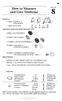 59 How to Measure and Give Medicine CHAPTER 8 SYMBOLS: = means: is equal to or is the same as + means: and or plus HOW FRACTIONS ARE SOMETIMES WRITTEN: 1 + 1 = 2 One plus one equals two. 1 tablet = one
MARYLAND STATE SCHOOL HEALTH SERVICES GUIDELINES
 Department of Health and Mental Hygiene Maryland State Department of Education Maryland State School Health Council MARYLAND STATE SCHOOL HEALTH SERVICES GUIDELINES Emergency Management Guidelines for
Custodial Procedures Manual Table of Contents
 Custodial Procedures Manual Table of Contents Page 1. Drug Policies and Procedures 1 A. Procurement of Prescription Drugs 1 i. Prescription drugs may only be accepted from 1 pharmacies and or practitioners.
ORAL ANTICOAGULANTS RIVAROXABAN (XARELTO) FOR PULMONARY EMBOLISM (PE)
 ORAL ANTICOAGULANTS RIVAROXABAN (XARELTO) FOR PULMONARY EMBOLISM (PE) Information Leaflet Your Health. Our Priority. Page 2 of 6 What Are Anticoagulants And What Do They Do? This information leaflet has
Medication Administration Student Syllabus and Study Guide
 Medication Administration Student Syllabus and Study Guide Revised March 2012 Health Facilities and Emergency Medical Services Division Colorado Department of Public Health and Environment 4300 Cherry
What Codeine Phosphate Tablets are used for
 New Zealand Consumer Medicine Information CODEINE PHOSPHATE 15mg, 30mg & 60mg Tablets What is in this leaflet Please read this leaflet carefully before you start using Codeine Phosphate Tablets. This leaflet
Facts About Alcohol. Addiction Prevention & Treatment Services
 Facts About Alcohol Addiction Prevention & Treatment Services Table of Contents Facts about alcohol: What is harmful involvement with alcohol?... 2 What is alcohol dependence?... 3 What Is BAC?... 4 What
CHAPTER 6: MEDICATION ADMINISTRATION PROCEDURES TABLE OF CONTENTS. Definitions... VI-1. Purpose... VI-1. Guidelines... VI-2
 CHAPTER 6: MEDICATION ADMINISTRATION PROCEDURES TABLE OF CONTENTS Definitions... VI-1 Purpose... VI-1 Guidelines... VI-2 Responsibilities Related to Medication Administration... VI-2 Delegating Nurse Responsibilities...
Health Information Sheet
 Health Information Sheet What is depression? Depression -- How Medicine Can Help Depression is a medical illness like diabetes or high blood pressure. It affects about 17% of people at some time in their
Medication Administration 10/15 Hour Training Course for Adult Care Homes Student Manual
 Medication Administration 10/15 Hour Training Course for Adult Care Homes Student Manual North Carolina Department of Health and Human Services Division of Health Service Regulation Center for Aide Regulation
NAP 117 MEDICATION ASSISTANT COURSE
 NAP 117 MEDICATION ASSISTANT COURSE APPROVED: JANUARY 12, 2012 EFFECTIVE: FALL 2012-13 Prefix & Number NAP 117 Course Title: Medication Assistant Course Purpose of this submission: New Course New Change/Updated
Paxil/Paxil-CR (paroxetine)
 Generic name: Paroxetine Available strengths: 10 mg, 20 mg, 30 mg, 40 mg tablets; 10 mg/5 ml oral suspension; 12.5 mg, 25 mg, 37.5 mg controlled-release tablets (Paxil-CR) Available in generic: Yes, except
Patient Information Leaflet
 Patient Information Leaflet METHOTREXATE We hope this fact sheet will provide you with some information about Methotrexate and answer some of the questions you may have. Methotrexate is available in tablet
X-Plain Preparing For Surgery Reference Summary
 X-Plain Preparing For Surgery Reference Summary Introduction More than 25 million surgical procedures are performed each year in the US. This reference summary will help you prepare for surgery. By understanding
Influenza Vaccine Protocol Agreement (O.C.G.A. Section 43-34-26.1)
 Influenza Vaccine Protocol Agreement (O.C.G.A. Section 43-34-26.1) This Influenza Vaccine Protocol Agreement (the "Protocol") authorizes the Georgia licensed pharmacists (the "Pharmacists") or nurses (
Opioid Treatment Agreement
 Opioid Treatment Agreement 1. I understand that my provider and I will work together to find the most appropriate treatment for my chronic pain. I understand the goals of treatment are not to eliminate
St. Luke s MS Center New Patient Questionnaire. Name: Date: Birth date: Right or Left handed? Who is your Primary Doctor?
 St. Luke s MS Center New Patient Questionnaire Name: Date: Birth date: Right or Left handed? Who is your Primary Doctor? Who referred you to the MS Center? List any other doctors you see: Reason you have
And the. Two types of orders:
 1 PHARMACOLOGY And the EMT-B 2 MEDICAL DIRECTION Must have Dr. s orders to administer any drug to a Pt Local medical director can override any state set protocols Two types of orders: On-line : verbal
Memantine (Ebixa) Drug treatment for Alzheimer s disease
 IS 20 October 2011 Information sheet Memantine (Ebixa) Drug treatment for Alzheimer s disease Introduction... 1 How does Ebixa work?... 1 Who might benefit?... 2 What effect might Ebixa have?... 2 How
Opioid Analgesic Medication Information
 Opioid Analgesic Medication Information This handout provides information about treating pain with opioid analgesics or narcotics. Please read this entire handout. We want to be sure that you understand
ORAL ANTICOAGULANTS - RIVAROXABAN (XARELTO) FOR DEEP VEIN THROMBOSIS (DVT)
 ORAL ANTICOAGULANTS - RIVAROXABAN (XARELTO) FOR DEEP VEIN THROMBOSIS (DVT) Information Leaflet Your Health. Our Priority. Page 2 of 6 What Are Anticoagulants And What Do They Do? This information leaflet
Undergoing an Oesophageal Endoscopic Resection (ER)
 Contact Information If you have an enquiry about your appointment time/date please contact the Booking Office on 0300 422 6350. For medication enquiries please call 0300 422 8232, this is an answer machine
Diabetes Medical Management Plan
 Diabetes Medical Management Plan 1 School District: School: School Year: Grade: Student Name: DOB: Provider Name: Phone #: Fax #: Blood Glucose Monitoring at School Blood Glucose Target Range: - mg/dl
Care of Gastrostomy Tubes for Adults with IDD in Community Settings: The Nurse s Role. Lillian Khalil, BSN, RN Volunteers of America, Chesapeake
 Care of Gastrostomy Tubes for Adults with IDD in Community Settings: The Nurse s Role Lillian Khalil, BSN, RN Volunteers of America, Chesapeake Objectives The participants will be able to identify the
Medication Administration Procedure
 Medication Administration Procedure Procedure Name Medication Administration Approved by Category Work Practice Approval date April 2014 Version 1 Review date April 2016 Why do we need this procedure?
SPECIALIZED PHYSICAL HEALTH CARE SERVICES. RECTAL DIAZEPAM ADMINISTRATION (DIASTAT or DIASTAT AcuDial )
 SAN DIEGO UNIFIED SCHOOL DISTRICT Nursing & Wellness Program SPECIALIZED PHYSICAL HEALTH CARE SERVICES RECTAL DIAZEPAM ADMINISTRATION (DIASTAT or DIASTAT AcuDial ) THIS PROCEDURE SHALL BE PERFORMED BY
MEDICATION GUIDE KOMBIGLYZE XR (kom-be-glyze X-R) (saxagliptin and metformin HCl extended-release) tablets
 MEDICATION GUIDE KOMBIGLYZE XR (kom-be-glyze X-R) (saxagliptin and metformin HCl extended-release) tablets Read this Medication Guide carefully before you start taking KOMBIGLYZE XR and each time you get
Stepping toward a different treatment option LEARN WHAT ACTHAR CAN DO FOR YOU
 FOR MS RELAPSES Stepping toward a different treatment option LEARN WHAT ACTHAR CAN DO FOR YOU As a person with multiple sclerosis (MS), you know firsthand the profound impact MS relapses can have on your