
Characterization of an Artificially Prepared Cohesive Soil Bed
|
|
|
- Blaze Rose
- 10 years ago
- Views:
Transcription
1 Pak. J. Engg. & Appl. Sci. Vol. 6, Jan., 21 (p ) Characterization of an Artificially Prepared Cohesive Soil Bed Z. Rehman 1, A.Akbar 2 and B.G. Clarke 3 1 Ph.D. Student, Department of Civil Engineering, University of Engineering and Technology, Lahore-Pakistan 2 Professor, Department of Civil Engineering, University of Engineering and Technology, Lahore-Pakistan 3 Professor, Department of Civil Engineering Department, University of Leeds,UK Abstract A new pressuremeter has been developed at the University of Engineering and Technology, Lahore-Pakistan with some modifications / improvements in the Newcastle full displacement pressuremeter (NFDPM), developed by Akbar in 21. The device is now called Akbar Pressuremeter (APMT). Tests in soils can be performed using the APMT by full displacement as well as pre-bored techniques. This paper describes the results of characterization of an artificially prepared cohesive soil bed comprising low plastic lean clay (CL) to sandy silty clay (CL-ML) using the APMT. This testing was carried out by pre-bored technique. For this purpose initially borehole produced up to the desired test level using auger and then device was inserted into the borehole to conduct the test. The pressuremeter (PMT) testing was carried out at two locations at 1. m intervals to 5. m depth. Undisturbed soil samples (UDS) were taken from nearby locations at the level of each APMT test using Shelby tubes. These samples were subjected to various conventional laboratory tests to correlate with the APMT test results. The standard penetration tests (SPTs) were also carried out in the near vicinity at the level of each APMT in order to correlate PMT data with the SPT data. Undrained shear strength of each UDS was determined by performing unconfined compression test. The PMT parameters viz. soil strength and stiffness, determined from the corrected pressure-cavity strain curves of each APMT test and those from laboratory methods, have been compared and correlations have been drawn. The findings of this study are that the APMT can be used to characterize a cohesive soil bed. Key Words: Pressuremeter; clay; SPT; shear strength; shear modulus; in-situ horizontal stress 1. Introduction Subsoil investigation, consisting of in-situ tests either independently or in combination with laboratory tests, has become a prerequisite for any civil engineering project [1]. It provides cost-effective and safe design of the substructure elements [2]. While laboratory testing forms a crucial part of any subsoil exploration, in-situ testing has become progressively more enviable in order to obtain various soil parameters. Results can not be provided at the time of subsoil investigation with laboratory methods of testing soil samples, whether disturbed or undisturbed. Basically soils are first sampled at the site, transported to the laboratory and then tested for the determination of the required parameters. Anonymous and different soil disturbance can have impact on the soil fabric and can change the void ratio and density of the soil. The effect on these parameters can everlastingly change the strength and deformation properties of the soil specimens. The growing ranges of design and construction problems and diversity of geological situations have led to the development of many in-situ test techniques [3]. In order to address these issues, geotechnical engineers have been trying to develop new in-situ soil testing devices and data analysis procedures around the world. These include cone penetrometers, pressuremeters, dilatometers etc. These devices have been developed to produce better quality soil parameters. However, such devices are sophisticated, hence expensive to buy or hire, making their use unaffordable on small projects. The first pressuremeter of full-displacement type was developed by Withers et al. (1986) [4]. It is headed by a 15 cm 2 solid cone, which is pushed into place by displacing the ground. It measures the inflation pressure and the circumferential strain at three locations 12 apart at the centre of the membrane. A Chinese lantern, making the probe sophisticated, secures the membrane. The Fugro cone pressuremeter has been further simplified by the use of a volume change measurement system to measure the pressuremeter membrane expansion rather than using strain gauges. The assembly and test control have also been made easier [5] but the basic design has remained unchanged. While many efforts have been made to make it simpler, no effort has been made to measure the pressuremeter membrane expansion with a single transducer till 21. Akbar [6] developed full-displacement pressuremeter keeping length of test section 42 mm [7], which is nearly the same as that of the FDPM, developed by Withers et al (1986) [4]. The SPT equipment was developed in the 19 s to determine the ability of the ground to support end-bearing piles. The blow count provides a measurement of the strength of the ground which led to many empirical correlations with laboratory determination of stiffness and strength or direct predictions of settlement and bearing capacity [8]. In Pakistan the geotechnical design parameters are being obtained by SPT testing in the field and laboratory testing on disturbed and undisturbed soil samples collected from the field. The SPT, though commonly used around the world, does not provide soil parameters of high quality. The

![Characterization of an Artificially Prepared Cohesive Soil Bed pressuremeter is believed to provide soil parameters of relatively better quality, particularly the stiffness of the soil [9].](/docs-images/26/8960917/images/2-0.png "The unavailability of such devices in developing countries like Pakistan give emphasis on the need to develop a new generation of cost-effective in-situ testing devices having ability to produce high")
2 Characterization of an Artificially Prepared Cohesive Soil Bed pressuremeter is believed to provide soil parameters of relatively better quality, particularly the stiffness of the soil [9]. The unavailability of such devices in developing countries like Pakistan give emphasis on the need to develop a new generation of cost-effective in-situ testing devices having ability to produce high quality geotechnical design parameters. The target design parameters are strength, stiffness and in-situ stress. The research was, therefore, carried out to develop a relatively robust and simple version having ability to yield higher quality soil design parameters, with certain modifications to the design of Newcastle full-displacement pressuremeter (NFDPM) developed by Akbar in 21. For the development of this new testing device most of the local resources have been used. Testing has been carried out using this new version of NFDPM. The new version of this device is called the Akbar pressuremeter (APMT). It is instrumented with transducers to measure expansion of the membrane and the pressure to expand it. The SPT blows are recorded for 35 mm penetration of the split spoon sampler. The length of the test section of the pressuremeter probe has been kept 35 mm, in order to correlate the pressuremeter data with the SPT blows. This similarity was intended to benefit from the long experience available on the SPT. The aim of this study was to use the APMT by prebored technique and to check / improve correlations between the APMT indices, soil properties and geotechnical design parameters by performing tests on an artificially prepared cohesive soil bed. In order to correlate the APMT data with parameters obtained from other types of tests, undisturbed samples (UDS) were obtained using 38 mm diameter Shelby tubes. The UDS were retrieved from the same depths as the APMT tests from two boreholes close to the pressuremeter test locations. Boreholes were advanced by augering and Shelby tubes were gently hammered into the soil to obtain relatively undisturbed soil samples. Tests were carried out on the UDS to determine undrained shear strength along with water content, unit weight and classification of soil. 2. Akbar Pressuremeter (APMT) The main body of the probe of the APMT as shown in Figure 1 is made of high strength stainless steel. Its diameter is 44.4 mm with a 35 mm long test section (L). With the membrane in place, the outer diameter of the probe (D) is 48.2 mm. The L/D ratio is therefore 6.3. Both ends of the main body are identical. One end is connected to the pressure hose and the electrical cable by a re-usable hydraulic fitting. A 45 stainless steel cone having a maximum diameter of 5.8 mm (surface area 28.5 cm 2 ) is screwed to the other end. The main body has a 115 mm long and 1 mm wide slot in the middle in Figure 1a for the expansion arms assembly (Figure 2). A longitudinal hole of 8 mm diameter is drilled from one end (the end to which the hydraulic coupling is connected) up to the central slot. This hole houses the transducer wires and transmits the pressurised gas, which inflates the membrane. The radial grooves have been machined to allow the dry nitrogen gas (N 2 ) pressure to reach everywhere underneath the membrane simultaneously. This allows the whole length of the membrane to expand uniformly under uniform soil conditions around the probe. Fig. 1: Full-displacement pressuremeter probe. 27

3 66 mm 44.4 mm Pak. J. Engg. & Appl. Sci. Vol. 6, Jan., 21 Figure 2 shows the assembly of the expansion arms. The arms, made of stainless steel, move outward about a pivot point. The hair spring activates this outward movement. At zero expansion of the membrane, the distance between the outer surfaces of the arms is the same as that of the main body (i.e mm) as shown in Figure 2(a). The arms can move apart radially from 44.4 mm to a maximum of 66 mm). This limit is reached when the part of arm-1 containing magnet 2 comes in contact with the projecting part of the seat for the linear output Hall Effect Transducer (HET), as shown in Figure 2(b). The expansion of arms is about 45% according to this design. The HET has been glue mounted on its seat, positioning it between the two magnets located in arm-1. The expansion of the arms changes the output of the HET mounted inside the arms as shown in Figure 3. The HET is connected to the A/D data-logger at the surface using an electrical cable, which passes through a pressure hose. One end of the pressure hose is permanently fixed to the pressuremeter probe while the other end is fixed to the gas-electric separator during in-situ testing. The gaselectric separator separates the cable and the hose and a pressure transducer fitted to it measures the gas pressure applied during the membrane expansion. The pressuremeter membrane consists of two layers. The inner layer (2.2 mm thick) is made from Nitrile and is reinforced by encasing with a (1.1 mm thick) Nylon cover. The inside and outside diameters of the rubber membrane are and mm respectively. Hall effect transducer (HET) Magnet 1 Arm 1 Hair spring Hole for pin (pivot) Magnet 2 Seat for HET (a) At zero expansion of membrane Arm 2 (b) Maximum limit of arms expansion Fig. 2: Expansion arms [6]. 28

4 Pressure, kpa Characterization of an Artificially Prepared Cohesive Soil Bed Fig. 3: A typical calibration data plot for the HET in the APMT 25 2 y =.5278x R 2 = Change in pressure transducer voltage, mv Fig.4: A typical calibration data plot for pressure transducer. 29

5 Gas pressure,kpa Pak. J. Engg. & Appl. Sci. Vol. 6, Jan., Loading 5 4 Unloading Radial expansion,% Fig. 5: A typical calibration data plot for radial expansion of the APMT membrane. 3. Calibration for System Stiffness Three calibrations are required (i) HET for expansion measurement (ii) Pressure Transducer (iii) System stiffness. Calibration of HET is described earlier. The calibration of the pressure transducer was carried out using a Budenberg dead weight gauge. The calibration data for the pressure transducer used is plotted as shown in Figure 4. The calibration for membrane stiffness was carried out by increasing the gas pressure in small increments of about 1 kpa, maintaining each increment for 6 seconds. In 6 seconds, the radial expansion of the membrane was found to be almost complete. The same time duration is used for the Ménard pressuremeter test. When the arms had moved out to their maximum design distance (which was reflected by the constant output of the HET), unloading was commenced using similar decrements until full contraction of the arms. The radial expansion of the membrane in percentage was plotted against the gas pressure applied as shown in Fig Test Site The APMT testing was carried out at an Open Area of the Civil Engineering Department, University of Engineering and Technology, Lahore-Pakistan. For this purpose, a test pit of size 3m x 3m and 5m deep was excavated and backfilled with a borrowed cohesive soil. The ground water table is much lower than 5. m. During backfilling, the pit was kept filled with water and the borrow material was dropped from the surface into the pit manually. This technique was employed to obtain uniform moisture content and density conditions in the test pit. This methodology of soak filling also simulates the process through which natural deposits are usually formed. The APMT testing was carried out after a lapse of about one year to allow the soil to achieve equilibrium condition. 5. Field Testing The equipment was assembled at the site as shown in the schematic sketch Figure 6. The APMT testing was carried out at two locations using pre-bored technique (PB-1 and PB-2). The SPT and undisturbed sampling using 38 mm Shelby tubes were carried out in the nearby locations at the levels of APMT testing as per plan shown in Figure 7. The bore hole was created up to the desired test depth by an auger of 4 mm diameter and the APMT probe was put into the hole keeping the centre of the probe at a test level to carry out the APMT testing. An auger of 4 mm diameter was used as it created a bore hole diameter equal to about 5 mm. The diameter of the cone is 5.8 mm which means that cone in front of test section will just touch the wall of the hole during its lowering. Testing interval was kept as 1 m so that the previous one above should not affect a test. Stress 3

6 Characterization of an Artificially Prepared Cohesive Soil Bed Jack Pressure hose and electric cable (7) Push rods (8) Pressure source (14) 12 V battery (16) Ground surface Electronics box (15) Clamping nut (3) (6) Friction reducer/ adaptor (5) Pressuremeter module (2) Clamping nuts (4) Laptop computer (18) 12 V HET Pressure To data logger A/D convertor (17) Pressure transducer (11) (12) Gas electric separator (1) (9) 1 bars max. 4 bars max. Dummy cone (1) Pressure regulators (13) Fig. 6: The APMT equipment on site assembly [6]. Fig. 7: Field testing plan. 31

7 Pressure, kpa Pak. J. Engg. & Appl. Sci. Vol. 6, Jan., p L 25 Field data Field data corrected for membrane stiffness. Only data points prior to a load increment/decrement are plotted Cavity strain, % Fig. 8: Typical applied pressure-cavity strain curves at 2. m depth. Table 1: Summary of classification, SPT and unconfined compression tests Location: Open area, Civil Engineering Department, University of Engineering & Technology, Lahore Technique Depth LL PI Gravel Sand Silt/clay N value Soil type NMC γ d s u E UCT (m) (%) (%) (%) (%) (%) kn/m 3 kpa kpa SPT1 SPT2 UDS1 UDS CL-ML CL-ML ML CL-ML CL-ML CL-ML CL-ML CL-ML CL-ML ML CL-ML CL CL-ML CL CL CL CL CL CL-ML CL

8 Applied pressure Characterization of an Artificially Prepared Cohesive Soil Bed increment controlled tests were carried out, which is a common procedure for testing with self-boring pressuremeter, full-displacement pressuremeter [1] and the Ménard pressuremeter. The pressure increments of about 25 kpa each were maintained for 1 minute with data recorded at every 1 second. The unloading was carried out at an expansion of about 45% of the initial cavity size (as arms can not move beyond this cavity strain). An unload-reload cycle was also included during loading in each test in order to estimate the shear modulus. Figure 8 shows a typical applied pressure-cavity strain curves at 2. m depth. 6. Laboratory Testing The following tests were carried out on undisturbed and disturbed soil samples to determine the strength, stiffness and classification of soil: Unconfined Compression Testing (ASTM D2166) Grain Size Analysis (ASTM D422) Liquid Limit Test (ASTM D4318) Plastic Limit Test (ASTM D4318) Table 1 presents a summary of laboratory test results. LL values range from 22 to 32 % and PI values from 5 to11 %. The percentages of gravel, sand and silt/clay in different samples fall between to 4 %, 1 to 32 % and 62 to 95 % respectively. On the basis of classification tests, the soil type ranges from low plastic lean clay (CL) to sandy silty clay (CL-ML). The natural moisture content (NMC) values are ranging from 13.6 to 33.8 %, bulk unit weight (γb) values from 18.8 to 2.8 kn/m3 and undrained shear strength (su) values from 29 to 51 kpa. 7. Analysis of Pressuremeter Data Figure 8 shows plots of the applied pressure and cavity strain data (uncorrected) and the same corrected for the membrane stiffness for a test at 2. m depth. The corrected curve shows only the data points prior to a load increment/decrement/ The hole diameter is created greater than the diameter of the probe by about 2.6 mm. At the start of a test, the membrane leaves the body of the probe at point B as shown in Figure 9. The pressure (corrected for the stiffness of the membrane) at point B, denoted by pa, is required to overcome pressure around the probe due to water/mud in the borehole. The membrane then expands from points B to C until it is in contact with the cavity wall. The applied pressure between points C to D is insufficient to cause any significant strain within the soil. From points D to E, it is likely that the soil elements close to the membrane are loaded elastically. This elastic behaviour is due to the unloading that takes place during boring the hole. At point E, soil elements close to the membrane reach yield and start behaving plastically. During this stage, soil elements at various radial distances from the probe are in different stages. Those close to the probe are at failure and those at some distance from the probe are at the in-situ state [11]. Between these two extreme states are the plastic and elastic states. The pressure at the start of the elastic yielding is denoted by p h. Point E shows the on-set of the plastic yielding and the corresponding pressure is written as p E. The lift-off pressure, p F corresponds to the point on the pressure axis where tangents to the elastic part and initial part of the yield curve intersect. p E E p A B p h D Plastic strain in soil Elastic strain in soil C A Expansion of membrane due to oversized cavity Cavity strain Fig. 9: An ideal stress-strain curve for the APMT. 33

9 Pak. J. Engg. & Appl. Sci. Vol. 6, Jan., 21 Limit pressure (p L ) is defined as the pressure required to double the initial volume of the cavity. Since the HET can record the cavity expansion strain only upto about 45%, the limit pressures have been determined by extrapolation to the maximum pressure to be reached in a PMT test at which the cavity will continue to expand indefinitely [9]. 7.1 Undrained shear strength (s u ) The undrained shear strength (s u ) has been determined by the procedure proposed by Marsland et al. (1977) [12]. The s u values determined according to this method are presented in column 5 of the summary Table 2. At the PB-1 location, the s u values range between 5 and 42 kpa and indicate soft to firm clay according to BS 84:1. At the PB- 2 location, the s u values fall between 2 and 38 kpa indicating soft to firm clay. Figure 1 presents a comparison of undrained shear strength (s u ) values determined from the pressuremeter and unconfined compression test (UCT). There are some data points showing very low s u values from APMT. This is due the fact that at each APMT testing location, at 3 m and 5 m depths, slushy soils were present where-as the same situation was not observed at UDS and SPT locations at the same levels. Ignoring such data points, the agreement of s u from the two sources become better. However, based on few data points no definite statement can be made. Figure 11 shows plot of s u / ' vo against depth. The s u / ' vo values, in general, decrease with depth. Except four data points for soft to firm clay showing s u / ' vo ratio greater than.8, all other ratios are less than.8. According to Lunne et al. (1992) [13], the subsoils with s u / ' vo.8 are young clays. The soil bed tested is about one year old. 7.2 In- ho) The in-situ horizontal stress, ho values determined by the method proposed by Marsland et al. (1977) [12] are presented in column 4 of Table 2 and fall between 28 to 89 kpa for PB-1 and 21 to 167 kpa for PB-2. The Marsland method is a graphical method and graphical methods usually do not provide exact values. The values of in-situ horizontal stress determined by this method are on higher side as compared to those determined by Aziz (26) [14] using Akbar Newcastle Dilatometer. The undrained shear strength can be obtained from the yield portion of the pressuremeter curve [15]. In other words the difference of limit pressure and total in-situ horizontal pressure (i.e. p L - ho ) indicates the slope of the loading curve which is a function of shear strength of a soil. Location Table 2: Summary of APMT test results. Strain range Marsland et al. max and ( max-.2%) min and ( min+.2%) (1977) First unloading Final unloading Reloading Unload-reload cycle stiffness average Depth p L ho s u G u1 G u2 G r slope G ur Cycle m kpa kpa kpa MPa MPa MPa MPa MPa PB PB G ur = Col.9/
![cavity will continue to expand indefinitely [9]. 7.1 Undrained shear strength (s u ) The undrained shear strength (s u ) has been determined by the procedure proposed by Marsland et al. (1977) [12].](/docs-images/42/8960917/images/page_9.jpg "The s u values determined according to this method are presented in column 5 of the summary Table 2.")
10 Depth, m Undrained shear strength (APMT), KPa Characterization of an Artificially Prepared Cohesive Soil Bed 6 5 UDS1-PB1 UDS2-PB Undrained shear strength (UCT ), kpa Fig. 1: Comparison of undrained shear strength from PMT and laboratory. s u / σ' vo PMT UCT Power (PMT) Fig,11: Profiles of s u / σ' vo vs depth. 35

11 su, kpa Pak. J. Engg. & Appl. Sci. Vol. 6, Jan., y =.237x R 2 = p L - σ ho, kpa Fig. 12: Comparison between s u and (p L - ho). Figure 12 shows a good agreement of undrained shear strength values against (p L - ho ). The general trend of the plot, represented by the following equation, is increase in strength with increase in the difference of pressures: s. 237 (1) u p L Amar and Jézéquel (1972) [16] have reported coefficient.1818 on the right hand side of equation (1) for soft to firm clays. 7.3 Shear modulus (G) Shear modulus (G) was determined in a number of ways from the stress-strain curve. The secant shear modulus values calculated from the two unloading curves over a strain range of.2% (denoted by G u1 and G u2 ) are given in columns 6 and 7 of Table 2. The reloading moduli values (G r ) for the same strain range are given in column 8 of Table 2.The average shear modulus values [17] determined from the slope of the chord of an unloading-reloading cycle (written as G ur ) are shown in column 1 of the summary Table 2. The average shear modulus represents stiffness of a number of elements radiating from the probe, all being at different strain. The profiles of shear moduli values determined from different methods are shown in Figure 13. The shear moduli values determined from different methods at the same level ho are different as expected, however, an increasing trend of the shear moduli values with depth can be seen from the figure. In general, the values lie between the lower bound and upper bound as shown in Figure 13. The values in the lower and upper bound vary from 1.8 MPa to 6.2 MPa. An average trend of shear modulus values is shown by the following equation: G.4D 3 (2) where D is the depth in m and G is in MPa. If the Poisson s ratio, is known the modulus of elasticity, E can be determined using the following relation: E 2 (1 )G (3) Figure 14 shows the variation of the elemental secant shear modulus (final unloading) normalised with respect to the horizontal effective stress against the current cavity strain (elemental) for the PMT data. The effective horizontal stress is taken as the effective applied pressure at the start of unloading since this represents the maximum pressure to which the soil is loaded prior to unloading. The current cavity strain, curr, in Figure 14 is defined as: curr s 1 m m where s is the elemental cavity strain at any point of the (4) 36

12 G/p' Depth, m Characterization of an Artificially Prepared Cohesive Soil Bed cycle and m is the maximum cavity strain during unloading for G u. The results in Figure 14 show that the stiffness responses show more scatter at small strains (below about.3%). The scatter is reduced with strain. The early scatter may be due to consolidation taking place at the start of unloading. The large scatter in the small strain secant moduli values has also been reported by Muir Wood (199) [17]. According to him, as it is difficult to identify precisely the start of an unloading or reloading phase, these effects may tend to obscure the small strain behaviour of the soil. Figure 15 shows a plot of the strain amplitude against the cycle shear modulus (G ur ) normalised by the applied pressure, (p) at the start of unloading. The plot shows that the normalized moduli are a function of the strain amplitude as expected, with a slight lower normalised modulus at higher strain amplitude. Houlsby and Nutt (1993) [18] report similar observations for the unload-reload shear modulus. Equation of average line G =.4 D + 3 Shear modulus, G, MPa First unloading (PB-1) First unloading (PB-2) 2 Final unloading (PB-1) 3 Upper bound Final unloading (PB-2) Reloading (PB-1) 4 5 Lower bound Reloading (PB-2) Unload-reload cycle PB-1) Unload-reload cycle (PB-2) 6 Average Fig. 13: Shear moduli profiles p' = total horizontal stress at the start of unloading Current cavity strain, % Fig. 14: Variation in elemental shear modulus with strain. 37
![The early scatter may be due to consolidation taking place at the start of unloading. The large scatter in the small strain secant moduli values has also been reported by Muir Wood (199) [17].](/docs-images/42/8960917/images/page_12.jpg "According to him, as it is difficult to identify precisely the start of an unloading or reloading phase, these effects may tend to obscure the small strain behaviour of the soil.")
13 PMT shear modulus, MPa G/p' Pak. J. Engg. & Appl. Sci. Vol. 6, Jan., y = x R 2 = Fig. 15: Normalised shear modulus plotted against strain amplitude. 8. Correlations between Different Parameters Using the available data correlations between different parameters have been developed by using the least square method. The developed correlations along with possible comments are given below: PMT shear modulus vs. SPT N values The PMT interpreted shear moduli values, G PMT, and N values of SPT for the same depth have been plotted in Figure 16. The general trend of the data is a linear increase in shear modulus with increase in N. The variation between these parameters can be represented by the following equation: 6 5 y =.9281x R 2 = SPT N value Fig. 16: Correlation between PMT shear modulus and SPT N value. 38

14 p L, kpa Characterization of an Artificially Prepared Cohesive Soil Bed s u, kpa Ajayi relationship y = 1.39x y = x R 2 = SPT N value Fig. 17: Correlation between undrained shear strength and SPT N value y = x R 2 = SPT N value Fig. 18: Correlation between PMT limit pressure and SPT N value. 39

15 Pak. J. Engg. & Appl. Sci. Vol. 6, Jan., 21 G PMT N (5) where G is in MPa. PMT For most clay soils υ =.4-.5 [2]. Taking υ =.45, equation 3 yields E 2. 9 G. By substituting the proposed value of shear modulus given by equation 5, this relation reduces to the following equation: E N (6) where E is in MPa. For the given values of N, the value of E ranges from MPa for soft to firm clays. Bowles (1996) [2] suggests a range of 5-25 MPa for soft clays. Undrained shear strength vs. SPT N values Figure 17 presents plots of undrained shear strength against SPT N values. The general trend is linear increase in undrained shear strength with increase in SPT N values. A regression analysis yields the following equation: s u N (7) where s u is in kpa. A comparison of the proposed relationship given by equation 7, and that by Ajayi et al. (1988) [19] is provided in Figure 17. The data points plot on or near straight line whose slope is different from that of Ajayi et al. The difference in slope may be due to the fact that Ajayi s relationship is for soils ranging from CL to CH and the proposed relationship is for CL to CL-ML Limit Pressure Vs SPT N Values Figure 18 presents plots of PMT limit pressure against SPT N values. The general trend is increase in limit pressure with increase in SPT N values. However, due to scatter in data points, it is not possible to develop some good relationship. Nevertheless, a regression analysis yields the following equation: where p L is in KPa. p L N (8) 9. Conclusions A pressuremeter has been developed and tested as a pre-bored pressuremeter successfully in cohesive soils varying in consistency from soft to firm. The data obtained from this PMT have been analysed using the available cavity expansion theory. The soil parameters derived from the PMT data compare well with those determined from the laboratory testing. The correlations developed between different parameters provide a good comparison with the similar previous correlations. Moreover the operation of the locally developed instrument is simple and the instrument is cost effective. With these characteristics, this instrument can be used on projects of any size. However, further testing should be carried out to check its robustness in hard/dense soils and sands. REFERENCES [1] W. S. Kaggwa, M. B. Jaksa and R. K. Jha; Development of Automated Dilatometer and Comparison with Cone Penetration tests at the University of Adelaide, Australia, Advances in Site Investigation Practice, Thomas Telford, London, (1996) [2]J. E. Bowles; Foundation Analysis and Design, 5 th ed. McGraw Hill Book Company, New York, (1996) [3] P. K. Robertson; In Situ Testing and Its Application to Foundation Engineering, Canadian Geotech. J., Vol. 23, No.4, (1986), [4] N. J. Withers, L.H.J. Schaap and C. P. Dalton; The Development of a Full Displacement Pressuremeter, The Pressuremeter and its Marine Applications: Second International Symposium. ASTM STP 95, (1986), [5] H. M. Zuidberg and M. L. Post; The Cone Pressuremeter: An Efficient Way of Pressuremeter Testing, Proc. 4 th Int. Symp. on Pressuremeter Testing (ISP4), The Pressuremeter and its New Avenue Balkema, (1995), [6] A. Akbar; Development of Low Cost In-situ Testing Devices, Ph.D. Thesis, Department of Civil Engineering, University of Newcastle, Newcastle Upon Tyne, UK, (21) [7] A. Akbar, B. G. Clarke and P. G. Allen; A Low Cost Newcastle Full-Displacement Cone Pressuremeter, UET Research Journal, Vol. 14, Jan. 23, Nos. 1-2, (23), [8] A. Akbar, M. Arshad and B. G. Clarke; Site Characterization Using CPT, DMT, SPT and Laboratory Test Results, Proceedings, International Conference on Geotechnical and Geophysical Site Characterization, Taipei, Taiwan, (28), [9] B. G. Clarke; Pressuremeters in Geotechnical Design, Blackie Academic and Professional, London, (1995) [1] B. G. Clarke; Pressuremeter Testing in Ground Investigation, Part I-Site Operations, Proc. Instn. Civ. Engr. Geotech. Engg. 119, April (1996), [11] G. T. Houlsby and N. J. Withers, Analysis of the Cone Pressuremeter Test in Clay, Geotechnique 38, No. 4, (1988), [12] A. Marsland and M. F. Randolph; Comparisons of Results from Pressuremeter Tests and Large In-situ Plate Tests in London Clay, Geotechnique 27, No. 2, (1977),
![For the given values of N, the value of E ranges from 5.38-16.14 MPa for soft to firm clays. Bowles (1996) [2] suggests a range of 5-25 MPa for soft clays. Undrained shear strength vs.](/docs-images/42/8960917/images/page_15.jpg "SPT N values Figure 17 presents plots of undrained shear strength against SPT N values. The general trend is linear increase in undrained shear strength with increase in SPT N values.")
16 Characterization of an Artificially Prepared Cohesive Soil Bed [13] T. Lunne, S. Lacasse and N. S. Rad; General Report: SPT, CPT, Pressuremeter Testing and Recent Developments in In-Situ Testing, Proceedings, 12 th International Conference on Soil Mechanics and Foundation Engineering, Vol. 4, Rio de Janeiro, (1992), [14] M. Aziz; Calibration of Newcastle Dilatometer in Cohesive Soil, M.Sc. Thesis, Department of Civil Engineering, University of Engineering and Technology, Lahore, Pakistan, (26) [15] G. E. Bauer and A. Tanaka; Penetration Testing of a Desiccated Clay Crust, Penetration Testing, ISOPT- 1, De Ruiter (ed.) Balkema, Rotterdam, (1988), [16] S. Amar, and J. F. Jéséquel; Essais en place et en laboratoire sur sols cohérent comparaison des résultats, Bull.de Liaison de LCPC, Paris, No. 58, (1972), [17] D.Muir-Wood; Strain Dependent Moduli and Pressuremeter Tests, Geotechnique, 4(26), (199), [18] G. T. Houlsby and N. R. F. Nutt; Development of the Cone Pressuremeter, Predictive Soil Mechanics, Proc. Wroth Memorial Symp., Oxford, (1993), [19] L. A. Ajayi et al.; Penetration Testing in Tropical Lateritic and Residual Soils- Nigerian Experience, Penetration Testing, ISOPT-1, De Ruiter (ed.), Balkema, Rotterdam (1988),

Soil Classification Through Penetration Tests
 Pak. J. Engg. & Appl. Sci. Vol. 9, Jul., 2011 (p. 76-86) Soil Classification Through Penetration Tests A. H. Khan, A. Akbar, K. Farooq, N. M. Khan, M. Aziz and H. Mujtaba Department of Civil Engineering,
c. Borehole Shear Test (BST): BST is performed according to the instructions published by Handy Geotechnical Instruments, Inc.
 Design Manual Chapter 6 - Geotechnical 6B - Subsurface Exploration Program 6B-2 Testing A. General Information Several testing methods can be used to measure soil engineering properties. The advantages,
Site Investigation. Some unsung heroes of Civil Engineering. buried right under your feet. 4. Need good knowledge of the soil conditions
 This is an attempt to create a stand alone self learning module on site investigation. Fasten your seat belts. Sit back, relax and enjoy. 1 2 Site Investigation Some unsung heroes of Civil Engineering
SPECIFICATION FOR DYNAMIC CONSOLIDATION / DYNAMIC REPLACEMENT
 SPECIFICATION FOR DYNAMIC CONSOLIDATION / DYNAMIC REPLACEMENT 1.0 SOIL IMPROVEMENT 1.1 General Soil Investigation Information are provided in Part B1 annex as a guide to the Contractor for his consideration
INSITU TESTS! Shear Vanes! Shear Vanes! Shear Vane Test! Sensitive Soils! Insitu testing is used for two reasons:!
 In-situ Testing! Insitu Testing! Insitu testing is used for two reasons:! To allow the determination of shear strength or penetration resistance or permeability of soils that would be difficult or impossible
KWANG SING ENGINEERING PTE LTD
 KWANG SING ENGINEERING PTE LTD 1. INTRODUCTION This report represents the soil investigation works at Aljunied Road / Geylang East Central. The objective of the soil investigation is to obtain soil parameters
Module 1 : Site Exploration and Geotechnical Investigation. Lecture 4 : In-situ tests [ Section 4.1: Penetrometer Tests ] Objectives
![Module 1 : Site Exploration and Geotechnical Investigation. Lecture 4 : In-situ tests [ Section 4.1: Penetrometer Tests ] Objectives](/thumbs/26/8734290.jpg "Module 1 : Site Exploration and Geotechnical Investigation. Lecture 4 : In-situ tests [ Section 4.1: Penetrometer Tests ] Objectives") Lecture 4 : In-situ tests [ Section 4.1: Penetrometer Tests ] Objectives In this section you will learn the following Penetrometer Tests Standard penetration test Static cone penetration test Dynamic cone
Lecture 4 : In-situ tests [ Section 4.1: Penetrometer Tests ] Objectives In this section you will learn the following Penetrometer Tests Standard penetration test Static cone penetration test Dynamic cone
CIVL451. Soil Exploration and Characterization
 CIVL451 Soil Exploration and Characterization 1 Definition The process of determining the layers of natural soil deposits that will underlie a proposed structure and their physical properties is generally
By D. P. StewarP and M. F. Randolph z
 T-BAR PENETRATION TESTING IN SOFT CLAY By D. P. StewarP and M. F. Randolph z ABSTRACT: A t-bar penetration test for soft clay that can be performed with existing cone penetration test (CPT) equipment is
How To Design A Foundation
 The Islamic university - Gaza Faculty of Engineering Civil Engineering Department CHAPTER (2) SITE INVESTIGATION Instructor : Dr. Jehad Hamad Definition The process of determining the layers of natural
APPENDIX A PRESSUREMETER TEST INTERPRETATION
 APPENDIX A PRESSUREMETER TEST INTERPRETATION PRESSUREMETER TEST INTERPRETATION Description of test The pressuremeter test, discussed in great detail by Martin (1977), Baguelin et al. (1978), Barksdale
Geotechnical Measurements and Explorations Prof. Nihar Ranjan Patra Department of Civil Engineering Indian Institute of Technology, Kanpur
 Geotechnical Measurements and Explorations Prof. Nihar Ranjan Patra Department of Civil Engineering Indian Institute of Technology, Kanpur Lecture No. # 13 (Refer Slide Time: 00:18) So last class, it was
Eurocode 7 - Geotechnical design - Part 2 Ground investigation and testing
 Brussels, 18-20 February 2008 Dissemination of information workshop 1 Eurocode 7 - Geotechnical design - Part 2 Ground investigation and testing Dr.-Ing. Bernd Schuppener, Federal Waterways Engineering
International Journal of Scientific & Engineering Research, Volume 4, Issue 9, September-2013 409 ISSN 2229-5518
 International Journal of Scientific & Engineering Research, Volume 4, Issue 9, September-2013 409 Estimation of Undrained Shear Strength of Soil using Cone Penetration Test By Nwobasi, Paul Awo Department
NUMERICAL MODELLING OF PIEZOCONE PENETRATION IN CLAY
 NUMERICAL MODELLING OF PIEZOCONE PENETRATION IN CLAY Ilaria Giusti University of Pisa [email protected] Andrew J. Whittle Massachusetts Institute of Technology [email protected] Abstract This paper
Measurement of Soil Parameters by Using Penetrometer Needle Apparatus
 Vol.3, Issue.1, Jan-Feb. 2013 pp-284-290 ISSN: 2249-6645 Measurement of Soil Parameters by Using Penetrometer Needle Apparatus Mahmoud M. Abu zeid, 1 Amr M. Radwan, 2 Emad A. Osman, 3 Ahmed M.Abu-bakr,
1 Mobilisation and demobilisation 1 Deep boring sum 2 Cone penetration tests sum 3 Miscellenous tests sum
 Malaysian Civil Engineering Standard Method of Measurement (MyCESMM) CLASS D: SITE INVESTIGATION WORK Measurement covered under other classes: Excavation not carried out for the purpose of soil investigation
Using Combination of SPT, DMT and CPT to Estimate Geotechnical Model for a Special Project in Turkey
 Using Combination of SPT, DMT and CPT to Estimate Geotechnical Model for a Special Project in Turkey Figen Orhun Onal GE, M.Sc., Site Works Manager, Zemin Etud ve Tasarım A.Ş., Istanbul, [email protected]
Numerical Analysis of Texas Cone Penetration Test
 International Journal of Applied Science and Technology Vol. 2 No. 3; March 2012 Numerical Analysis of Texas Cone Penetration Test Nutan Palla Project Engineer, Tolunay-Wong Engineers, Inc. 10710 S Sam
A study on the Effect of Distorted Sampler Shoe on Standard Penetration Test Result in Cohesionless soil
 ISSN: 319-53 (An ISO 39: 00 Certified Organization) A study on the Effect of Distorted Sampler Shoe on Standard Penetration Test Result in Cohesionless soil Utpal Kumar Das Associate Professor, Department
product manual HS-4210 HS-4210_MAN_09.08 Digital Static Cone Penetrometer
 HS-4210_MAN_09.08 product manual HS-4210 Digital Static Cone Penetrometer Introduction This Manual covers the measurement of bearing capacity using the Humboldt Digital Static Cone Penetrometer (DSCP).
INDIRECT METHODS SOUNDING OR PENETRATION TESTS. Dr. K. M. Kouzer, Associate Professor in Civil Engineering, GEC Kozhikode
 INDIRECT METHODS SOUNDING OR PENETRATION TESTS STANDARD PENETRATION TEST (SPT) Reference can be made to IS 2131 1981 for details on SPT. It is a field edtest to estimate e the penetration e resistance
Figure 2.31. CPT Equipment
 Soil tests (1) In-situ test In order to sound the strength of the soils in Las Colinas Mountain, portable cone penetration tests (Japan Geotechnical Society, 1995) were performed at three points C1-C3
LABORATORY DETERMINATION OF CALIFORNIA BEARING RATIO
 LABORATORY DETERMINATION OF CALIFORNIA BEARING RATIO STANDARD IS: 2720 (Part 16) 1979. DEFINITION California bearing ratio is the ratio of force per unit area required to penetrate in to a soil mass with
CHAPTER 1 INTRODUCTION
 CHAPTER 1 INTRODUCTION 1.1 Introduction The design and construction of foundations require a good knowledge of the mechanical behaviour of soils and of their spatial variability. Such information can be
ASSESSMENT OF SHEAR WAVE VELOCITY FROM INDIRECT INSITU TESTS
 Proceedings of Indian Geotechnical Conference IGC-2014 December 18-20, 2014, Kakinada, India ASSESSMENT OF SHEAR WAVE VELOCITY FROM INDIRECT INSITU TESTS Kant, L., M. Tech Student, Department of Earthquake
Geotechnic Parameters Analysis Obtained by Pencel Presuremeter Test on Clayey Soils in Resistencia City
 American Journal of Science and Technology 2015; 2(5): 237-242 Published online August 10, 2015 (http://www.aascit.org/journal/ajst) ISSN: 2375-3846 Geotechnic Parameters Analysis Obtained by Pencel Presuremeter
Lymon C. Reese & Associates LCR&A Consulting Services Tests of Piles Under Axial Load
 Lymon C. Reese & Associates LCR&A Consulting Services Tests of Piles Under Axial Load Nature of Services The company has a long history of performance of tests of piles and pile groups under a variety
INTERNATIONAL JOURNAL OF CIVIL AND STRUCTURAL ENGINEERING Volume 3, No 3, 2013
 INTERNATIONAL JOURNAL OF CIVIL AND STRUCTURAL ENGINEERING Volume 3, No 3, 2013 Copyright by the authors - Licensee IPA- Under Creative Commons license 3.0 Research article ISSN 0976 4399 Reliability of
BEARING CAPACITY AND SETTLEMENT RESPONSE OF RAFT FOUNDATION ON SAND USING STANDARD PENETRATION TEST METHOD
 SENRA Academic Publishers, British Columbia Vol., No. 1, pp. 27-2774, February 20 Online ISSN: 0-353; Print ISSN: 17-7 BEARING CAPACITY AND SETTLEMENT RESPONSE OF RAFT FOUNDATION ON SAND USING STANDARD
GUIDELINE FOR HAND HELD SHEAR VANE TEST
 GUIDELINE FOR HAND HELD SHEAR VANE TEST NZ GEOTECHNICAL SOCIETY INC August 2001 CONTENTS Page 1.0 Introduction 2 2.0 Background 2 3.0 Recommended Practice 3 4.0 Undrained Shear Strength 3 5.0 Particular
Geotechnical Testing Methods II
 Geotechnical Testing Methods II Ajanta Sachan Assistant Professor Civil Engineering IIT Gandhinagar FIELD TESTING 2 1 Field Test (In-situ Test) When it is difficult to obtain undisturbed samples. In case
CEEN 162 - Geotechnical Engineering Laboratory Session 7 - Direct Shear and Unconfined Compression Tests
 PURPOSE: The parameters of the shear strength relationship provide a means of evaluating the load carrying capacity of soils, stability of slopes, and pile capacity. The direct shear test is one of the
Numerical Simulation of CPT Tip Resistance in Layered Soil
 Numerical Simulation of CPT Tip Resistance in Layered Soil M.M. Ahmadi, Assistant Professor, [email protected] Dept. of Civil Engineering, Sharif University of Technology, Tehran, Iran Abstract The paper
Cone Penetration Testing in Geotechnical Practice. Tom Lunne Peter K. Robertson John J.M. Powell
 Cone Penetration Testing in Geotechnical Practice Tom Lunne Peter K. Robertson John J.M. Powell BLACKIE ACADEMIC & PROFESSIONAL An Imprint of Chapman & Hall London Weinheim New York Tokyo Melbourne Madras
ON THE INTERPRETATION OF SEISMIC CONE PENETRATION TEST (SCPT) RESULTS
 Studia Geotechnica et Mechanica, Vol. XXXV, No. 4, 213 DOI: 1.2478/sgem-213-33 ON THE INTERPRETATION OF SEISMIC CONE PENETRATION TEST (SCPT) RESULTS IRENA BAGIŃSKA Wrocław University of Technology, Faculty
Soil behaviour type from the CPT: an update
 Soil behaviour type from the CPT: an update P.K. Robertson Gregg Drilling & Testing Inc., Signal Hill, California, USA ABSTRACT: An initial application of CPT results is to evaluate soil type and soil
Evaluation of Properties of Soil Subgrade Using Dynamic Cone Penetration Index A Case Study
 International Journal of Engineering Research and Development e-issn: 2278-067X, p-issn: 2278-800X Volume 4, Issue 4 (October 202), PP. 07-5 Evaluation of Properties of Soil Subgrade Using Dynamic Cone
An Automatic Kunzelstab Penetration Test
 An Automatic Kunzelstab Penetration Test Yongyuth Sirisriphet 1, Kitidech Santichaianant 2 1 Graduated student: Faculty of Industrial Education in and Technology. King Mongkut's University of Technology
INTRODUCTION TO SOIL MODULI. Jean-Louis BRIAUD 1
 INTRODUCTION TO SOIL MODULI By Jean-Louis BRIAUD 1 The modulus of a soil is one of the most difficult soil parameters to estimate because it depends on so many factors. Therefore when one says for example:
Step 11 Static Load Testing
 Step 11 Static Load Testing Test loading is the most definitive method of determining load capacity of a pile. Testing a pile to failure provides valuable information to the design engineer and is recommended
Improvement in physical properties for ground treated with rapid impact compaction
 International Journal of the Physical Sciences Vol. 6(22), pp. 5133-5140, 2 October 2011 Available online at http://www.academicjournals.org/ijps ISSN 1992-1950 2011 Academic Journals Full Length Research
Anirudhan I.V. Geotechnical Solutions, Chennai
 Anirudhan I.V. Geotechnical Solutions, Chennai Often inadequate In some cases, excess In some cases, disoriented Bad investigation Once in a while good ones Depends on one type of investigation, often
TECHNICAL Summary. TRB Subject Code:62-7 Soil Foundation Subgrades February 2003 Publication No.: FHWA/IN/JTRP-2002/30, SPR-2362
 INDOT Research TECHNICAL Summary Technology Transfer and Project Implementation Information TRB Subject Code:62-7 Soil Foundation Subgrades February 3 Publication No.: FHWA/IN/JTRP-2/3, SPR-2362 Final
Geotechnical Investigation using Standard Penetration Test (SPT) in Rangamati, Bandarban and Khagrachari Towns
 1. Introduction 1.1 Scope of Work The Asian Disaster Preparedness Centre (ADPC) is implementing the project Seismic Hazard and Vulnerability Mapping for Rangamati, Bandarban and Khagrachari Municipality.
ESTIMATION OF UNDRAINED SETTLEMENT OF SHALLOW FOUNDATIONS ON LONDON CLAY
 International Conference on Structural and Foundation Failures August 2-4, 2004, Singapore ESTIMATION OF UNDRAINED SETTLEMENT OF SHALLOW FOUNDATIONS ON LONDON CLAY A. S. Osman, H.C. Yeow and M.D. Bolton
ENCE 4610 Foundation Analysis and Design
 This image cannot currently be displayed. ENCE 4610 Foundation Analysis and Design Shallow Foundations Total and Differential Settlement Schmertmann s Method This image cannot currently be displayed. Strength
CPTic_CSM8. A spreadsheet tool for identifying soil types and layering from CPTU data using the I c method. USER S MANUAL. J. A.
 CPTic_CSM8 A spreadsheet tool for identifying soil types and layering from CPTU data using the I c method. USER S MANUAL J. A. Knappett (2012) This user s manual and its associated spreadsheet ( CPTic_CSM8.xls
DYNAMIC CONE PENETRATION TEST INSTRUCTIONAL MANUAL GEOTECHANICAL
 DYNAMIC CONE PENETRATION TEST INSTRUCTIONAL MANUAL GEOTECHANICAL J. P. Scientific Instruments 7, Civil Lines, Roorkee-247667 DYNAMIC CONE PENETRATION TEST CONTENTS: PAGE NO. 1.0 INTRODUCTION 03 2.0 PROBLEM
Comparison of Continuous Dynamic Probing with the Standard Penetration Test for Highly Weathered Limestone of Eastern Sudan
 Comparison of Continuous Dynamic Probing with the Standard Penetration Test for Highly Weathered Limestone of Eastern Sudan Prof. Dr. Khairul Anuar Kassim Deputy Dean, Research and Graduate Studies, Faculty
FINAL REPORT ON SOIL INVESTIGATION
 FINAL REPORT ON SOIL INVESTIGATION FOR PROPOSED CONSTRUCTION AT SS-6B AREA AT HPCL VISAKH REFINERY VISAKHAPATNAM ANDHRA PRADESH J.J. ASSOCIATES(VISAKHAPATNAM) AETP(P) LIMITED #11-6-3, RockDale Layout,
USE OF CONE PENETRATION TEST IN PILE DESIGN
 PERIODICA POLYTECHNICA SER. CIV. ENG. VOL. 47, NO. 2, PP. 189 197 (23) USE OF CONE PENETRATION TEST IN PILE DESIGN András MAHLER Department of Geotechnics Budapest University of Technology and Economics
Abstract. Keywords. Pouya Salari 1, Gholam Reza Lashkaripour 2*, Mohammad Ghafoori 2. Email: * [email protected]
 Open Journal of Geology, 2015, 5, 231-2 Published Online May 2015 in SciRes. http://www.scirp.org/journal/ojg http://dx.doi.org/./ojg.2015.55021 Presentation of Empirical Equations for Estimating Internal
STRUCTURAL DAMAGE OF A 5-STOREY BUILDING: DIFFERENTIAL SETTLEMENT DUE TO CONSTRUCTION OF AN ADJACENT BUILDING OR BECAUSE OF CONSTRUCTION DEFECTS?
 STRUCTURAL DAMAGE OF A 5-STOREY BUILDING: DIFFERENTIAL SETTLEMENT DUE TO CONSTRUCTION OF AN ADJACENT BUILDING OR BECAUSE OF CONSTRUCTION DEFECTS? Ioannis Anastasopoulos National Technical University of
QUESTION TO AUDIENCE
 Site investigation some aspects of EN1997 Part 2 David Norbury David Norbury Limited BGA Symposium Eurocode 7 Today and Tomorrow, Cambridge, England, March 2011 QUESTION TO AUDIENCE How many of you have
King Saud University College of Engineering Civil Engineering Department DEFORMATION OF PARTIALLY SATURATED SAND. Sultan Musaed Al-Ghamdi
 King Saud University College of Engineering Civil Engineering Department DEFORMATION OF PARTIALLY SATURATED SAND By Sultan Musaed Al-Ghamdi Submitted in Partial Fulfillment of The Required For the Degree
product manual 08.09 H-4210A PORTABLE STATIC CONE PENETROMETER
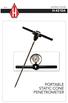 08.09 product manual H-4210A PORTABLE STATIC CONE PENETROMETER PORTABLE STATIC CONE PENETROMETER GENERAL INFORMATION The H-4210A Static Cone Penetrometer is an unparalleled device for measuring soil consistency.
Drained and Undrained Conditions. Undrained and Drained Shear Strength
 Drained and Undrained Conditions Undrained and Drained Shear Strength Lecture No. October, 00 Drained condition occurs when there is no change in pore water pressure due to external loading. In a drained
Estimation of Compression Properties of Clayey Soils Salt Lake Valley, Utah
 Estimation of Compression Properties of Clayey Soils Salt Lake Valley, Utah Report Prepared for the Utah Department of Transportation Research Division by Steven F. Bartlett, PhD. P.E. Assistant Professor
Chittagong Hill Tract Development Facilities (CHTDF) United Nations Development Programme
 Chittagong Hill Tract Development Facilities (CHTDF) United Nations Development Programme Main Report Deliverable 02 Sub-Surface Properties of Soil Development in Rangamati, Bandarban and Khagrachari Municipality
Pavements should be well drained both during and upon completion of construction. Water should not be allowed to pond on or near pavement surfaces.
 Project No. 208-8719 January, 2009 Ref: 2-8719BR Anthony Hudson - Broadscale Geotechnical Investigation - Proposed Commercial Development - 52 Old Pacific Highway, Pimpama Page 32 iii) Pavements should
Cone Penetration Testing (CPT) Michael Bailey, P.G. U.S. Army Corps of Engineers, Savannah District
 Cone Penetration Testing (CPT) Michael Bailey, P.G. U.S. Army Corps of Engineers, Savannah District Recommended publications ASTM D 5778-07 Standard Test Method for Electronic Friction Cone and Piezocone
Multiple parameters with one Cone Penetration Test. by Mark Woollard
 Multiple parameters with one Cone Penetration Test by Mark Woollard Subjects introduction MW introduction APB introduction CPT portfolio APB onshore CPT equipment near shore CPT equipment offshore CPT
PREDICTING THE HYDRAULIC CONDUCTIVITY OF MAKASSAR MARINE CLAY USING FIELD PENETRATION TEST (CPTU) RESULTS
 Proceedings of the Sixth International Conference on Asian and Pacific Coasts (APAC 2011) December 14 16, 2011, Hong Kong, China PREDICTING THE HYDRAULIC CONDUCTIVITY OF MAKASSAR MARINE CLAY USING FIELD
Objectives. Experimentally determine the yield strength, tensile strength, and modules of elasticity and ductility of given materials.
 Lab 3 Tension Test Objectives Concepts Background Experimental Procedure Report Requirements Discussion Objectives Experimentally determine the yield strength, tensile strength, and modules of elasticity
CONSTANT HEAD AND FALLING HEAD PERMEABILITY TEST
 CONSTANT HEAD AND FALLING HEAD PERMEABILITY TEST 1 Permeability is a measure of the ease in which water can flow through a soil volume. It is one of the most important geotechnical parameters. However,
Effect of grain size, gradation and relative density on shear strength and dynamic cone penetration index of Mahi, Sabarmati and Vatrak Sand
 Discovery ANALYSIS The International Daily journal ISSN 2278 5469 EISSN 2278 5450 2015 Discovery Publication. All Rights Reserved Effect of grain size, gradation and relative density on shear strength
Assessment of stress history in glacial soils on the basis of cone penetration tests
 Assessment of stress history in glacial soils on the basis of cone penetration tests ALOJZY SZYMANSKI 1, ANNA DROZDZ & MAREK BAJDA 1 Warsaw Agricultural University. (e-mail: [email protected])
SAMPLE GUIDE SPECIFICATIONS FOR OSTERBERG CELL LOAD TESTING OF DEEP FOUNDATIONS
 Page 1 of 9 SAMPLE GUIDE SPECIFICATIONS FOR OSTERBERG CELL LOAD TESTING OF DEEP FOUNDATIONS 1. GENERAL REQUIREMENTS 1. Description of Work: This work consists of furnishing all materials, equipment and
A Ground Improvement Update from TerraSystems
 TERRANOTES A Ground Improvement Update from TerraSystems SOIL MODULUS AFTER GROUND IMPROVEMENT Evaluation of ground improvement is accomplished using a variety of methods, from simple elevation surveys
Tests and Analyses on Shear Strength Increment of Soft Soil under Embankment Fill
 Tests and Analyses on Shear Strength Increment of Soft Soil under Embankment Fill Guanbao Ye Professor Key Laboratory of Geotechnical and Underground Engineering,Tongji University, Ministry of Education,
4.3 Results... 27 4.3.1 Drained Conditions... 27 4.3.2 Undrained Conditions... 28 4.4 References... 30 4.5 Data Files... 30 5 Undrained Analysis of
 Table of Contents 1 One Dimensional Compression of a Finite Layer... 3 1.1 Problem Description... 3 1.1.1 Uniform Mesh... 3 1.1.2 Graded Mesh... 5 1.2 Analytical Solution... 6 1.3 Results... 6 1.3.1 Uniform
Ingeniería y Georiesgos Ingeniería Geotécnica Car 19 a Nº 84-14 of 204 ; TEL : 6916043 E-mail: [email protected]
 The plot below presents the cross correlation coeficient between the raw qc and fs values (as measured on the field). X axes presents the lag distance (one lag is the distance between two sucessive CPT
Field tests using an instrumented model pipe pile in sand
 Field tests using an instrumented model pipe pile in sand D. Igoe University College Dublin K. Gavin University College Dublin B. O Kelly Trinity College Dublin Reference: Igoe D., Gavin K., and O'Kelly
Geotechnical Investigation Test Report
 Geotechnical Investigation Test Report Report No. htsc/rcd/ 3457 Dated: - 20/03/2010 Asphalt Standard Penetration Test as per IS 2131 ------------- IS 6403 Soil Job Card No - 1649 Cement Client/Department
Appendix A Sub surface displacements around excavations Data presented in Xdisp sample file
 Appendix A Sub surface displacements around excavations Data presented in Xdisp sample file Notation B1 = lowest level of basement slab c = cohesion E = drained Young s Modulus Eu = undrained Young s Modulus
HAULBOWLINE, CORK STATIC CONE PENETRATION TESTS FACTUAL REPORT
 HAULBOWLINE, CORK STATIC CONE PENETRATION TESTS FACTUAL REPORT CONE PENETRATION TESTS Cone resistance Local friction Porewater pressure Dissipations REPORT NO: RRM CONTRACT NO: GLOVER SITE INVESTIGATIONS
2009 Japan-Russia Energy and Environment Dialogue in Niigata S2-6 TANAKA ERINA
 Importance of the Site Investigation for Development of Methane Hydrate Hokkaido University Hiroyuki Tanaka Civil Engineer My Background Site Investigation Soil Parameters for Design Very Soft Clay and
Strength Determination of "Tooth-Paste" Like Sand and Gravel Washing Fines Using DMT
 Strength Determination of "Tooth-Paste" Like Sand and Gravel Washing Fines Using DMT David L. Knott, P.E. and James M. Sheahan, P.E. HDR Engineering, Inc. 3 Gateway Center Pittsburgh, PA 15222-1074 Phone:
SNC-Lavalin Inc. Montcalm Wastewater Pumping Station Upgrades - Geotechnical Report. October 2011
 SNC-Lavalin Inc. Montcalm Wastewater Pumping Station Upgrades - Geotechnical Report October 2011 SNC-Lavalin Inc Montcalm Wastewater Pumping Station Upgrades - Geotechnical Report Table of Contents 1.0
Standard Test Method for Mechanical Cone Penetration Tests of Soil 1
 Designation: D 3441 98 AMERICAN SOCIETY FOR TESTING AND MATERIALS 100 Barr Harbor Dr., West Conshohocken, PA 19428 Reprinted from the Annual Book of ASTM Standards. Copyright ASTM Standard Test Method
SUGGESTION ABOUT DETERMINATION OF THE BEARING CAPACITY OF PILES ON THE BASIS OF CPT SOUNDING TESTS
 SUGGESTION ABOUT DETERMINATION OF THE BEARING CAPACITY OF PILES ON THE BASIS OF CPT SOUNDING TESTS JóZSEF PUSZTAI About the authors Pusztai József Budapest University of Technology and Economics, Department
METHOD OF STATEMENT FOR STATIC LOADING TEST
 Compression Test, METHOD OF STATEMENT FOR STATIC LOADING TEST Tension Test and Lateral Test According to the American Standards ASTM D1143 07, ASTM D3689 07, ASTM D3966 07 and Euro Codes EC7 Table of Contents
Ground improvement using the vibro-stone column technique
 Ground improvement using the vibro-stone column technique A. Kosho 1 A.L.T.E.A & Geostudio 2000, Durres, Albania ABSTRACT The vibro stone columns technique is one of the most used techniques for ground
CONE PENETRATION TESTING AND SITE EXPLORATION IN EVALUATING THE LIQUEFACTION RESISTANCE OF SANDS AND SILTY SANDS ABSTRACT
 CONE PENETRATION TESTING AND SITE EXPLORATION IN EVALUATING THE LIQUEFACTION RESISTANCE OF SANDS AND SILTY SANDS E. J. Newman 1, T. D. Stark 2, and S. M. Olson 3 ABSTRACT Refined relationships between
COMPENDIUM OF INDIAN STANDARDS ON SOIL ENGINEERING PART 2
 (PREVIEW) SP 36 (Part 2) : 1988 COMPENDIUM OF INDIAN STANDARDS ON SOIL ENGINEERING PART 2 IS 1893 : 1979 (Reaffirmed 1987) CODE OF PRACTICE FOR SUBSURFACE INVESTIGATION FOR FOUNDATIONS 1.1 This code deals
Soil Mechanics. Soil Mechanics
 Soil is the most misunderstood term in the field. The problem arises in the reasons for which different groups or professions study soils. Soil scientists are interested in soils as a medium for plant
1.0 INTRODUCTION 1 2.0 SCOPE OF WORK 2 3.0 EXECUTION OF FIELD WORK 2 4.0 LABORATORY TESTS 8 5.0 FINDINGS OF THE GEOTECHNICAL INVESTIGATION 9
 REPORT ON GEOTECHNICAL INVESTIGATION FOR LPG MOUNDED STORAGE AT VISAKHA REFINERY, MALKAPURAM, VISAKHAPATNAM (A.P) FOR HINDUSTAN PETROLEUM CORPORATION LIMITED CONTENTS SR.NO. DESCRIPTION PAGE NO. 1.0 INTRODUCTION
LABORATORY CLASSIFICATION OF SOILS FOR ENGINEERING PURPOSES
 Test Procedure for LABORATORY CLASSIFICATION OF SOILS FOR ENGINEERING PURPOSES TxDOT Designation: Tex-142-E Effective Date: August 1999 1. SCOPE 1.1 This method is a system for classifying disturbed and
Local Authority Building Control Technical Information Note 3 Driven and In-situ Piled Foundations
 Local Authority Building Control Technical Information Note 3 Driven and In-situ Piled Foundations Cambridge City Council - East Cambridgeshire District Council - Fenland District Council, Huntingdonshire
How To Prepare A Geotechnical Study For A Trunk Sewer Project In Lincoln, Nebraska
 APPENDIX B Geotechnical Engineering Report GEOTECHNICAL ENGINEERING REPORT Preliminary Geotechnical Study Upper Southeast Salt Creek Sanitary Trunk Sewer Lincoln Wastewater System Lincoln, Nebraska PREPARED
Soil Behavior Type using the DMT
 Soil Behavior Type using the DMT Peter K. Robertson Gregg Drilling & Testing Inc., Signal Hill, CA, USA. E-mail: [email protected] Keywords: Soil Behavior Type, CPT, DMT ABSTRACT: The most promising
Cone Penetration Test (CPT)
 Cone Penetration Test (CPT) The cone penetration test, or CPT in short, is a soil testing method which will provide a great deal of high quality information. In the Cone Penetration Test (CPT), a cone
TECHNICAL NOTE: SI 01 SPECIFIC REQUIREMENTS FOR THE ACCREDITATION OF INSPECTION BODIES FOR SITE INVESTIGATION
 ACCREDITATION SCHEME FOR INSPECTION BODIES TECHNICAL NOTE: SI 01 SPECIFIC REQUIREMENTS FOR THE ACCREDITATION OF INSPECTION BODIES FOR SITE INVESTIGATION Technical Note SI 01: 3 February 2016 The SAC Accreditation
Secondary Consolidation and the effect of Surcharge Load
 Secondary Consolidation and the effect of Surcharge Load Thuvaragasingam Bagavasingam University of Moratuwa Colombo, Sri Lanka International Journal of Engineering Research & Technology (IJERT) Abstract
Program COLANY Stone Columns Settlement Analysis. User Manual
 User Manual 1 CONTENTS SYNOPSIS 3 1. INTRODUCTION 4 2. PROBLEM DEFINITION 4 2.1 Material Properties 2.2 Dimensions 2.3 Units 6 7 7 3. EXAMPLE PROBLEM 8 3.1 Description 3.2 Hand Calculation 8 8 4. COLANY
Optimised Design for Soil Nailed Walls 1
 Optimised Design for Soil Nailed Walls 1 J A R Ortigao 1 and E M Palmeira 2 1 Federal University of Rio de Janeiro, Rio de Janeiro, Brazil 2 University of Brasília, Brasília, Brazil INTRODUCTION The first
Penetration rate effects on cone resistance measured in a calibration chamber
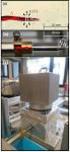 Penetration rate effects on cone resistance measured in a calibration chamber K. Kim Professional Service Industries, Inc, Houston, TX, USA M. Prezzi & R. Salgado Purdue University, West Lafayette, IN,
Index and strength properties of clay gravel mixtures
 Proceedings of the Institution of Civil Engineers Geotechnical Engineering February Issue GE Pages http://dx.doi.org/./geng... Paper Received // Accepted // Keywords: geotechnical engineering /strength