
THE TRAINING OF THE WILL By ROBERTO ASSAGIOLI, M.D.
|
|
|
- Rudolf Cummings
- 10 years ago
- Views:
Transcription
1 THE TRAINING OF THE WILL By ROBERTO ASSAGIOLI, M.D. INTRODUCTION THE NEED TO TRAIN THE WILL The wide gulf between the external and inner powers of modern man is the most important and profound cause of the individual and collective evils which hinder the progress and even menace the future of our civilization. Modern man has paid dearly for the external powers and advantages he has gained; while his life is richer, broader and more intense, it is at the same time much more complicated and exhausting. Its rapidly increasing pace, the countless enticements it offers, the complicated economic and social machinery in which it has enmeshed him, make ever increasing and more insistent demands upon his nervous energy, his mental powers, his emotions and his will. To realize this, one has only to observe the day's work of an active business man, scientist or prominent politician, the daily round of a leading society woman, of an actress, or of a housewife with a large family. Frequently the individual has not the resources to cope with the hard necessities, to resist the enticements or to avoid the many pitfalls of such a life. Nervous equilibrium is destroyed, the person is overwhelmed by despondency and a sense of frustration and even despair, and he allows himself to be mastered by his lower drives. In order to remedy these evils, to eliminate this lack of balance between the outer and the inner powers of man, two generally applicable methods can be used. One is simplification of the external life; the other is the development of the inner powers. Everyone can resist, at least to some extent, the attractions of the world and the rush of modern life, can eliminate some of its unnecessary complications, re-establish a closer contact with nature, and learn to relax and rest at intervals. However, this first method is in itself insufficient and in many cases difficult to apply. Duties of every kind, family ties, professional obligations, etc., keep us bound to the wheel of modern life and often compel us to participate in its hurried pace. Very few of us possess the will power to resist the general current. Moreover, modern man would certainly not give up the powers over nature which he has acquired, and it would not be desirable for him to do so. The evil does not lie in the powers themselves but in the use man makes of them and in the fact that he allows them to overcome him and make him their slave. For these reasons it is necessary to use also the other method the development of the inner powers; it is necessary for the sanity, happiness and dignity of modern man that he should develop his inner powers with the same intense desire and concentration that he now devotes towards external achievements. The very pivot of all development of the inner powers is the training of the Will. St. Augustine, with one of his concise and apt expressions, said, "Homines sunt voluntates" (men are wills). Indeed, it is the will that constitutes the real innermost center of man; it is that which makes him truly himself. Without it, the ablest and most intelligent individual would be no more than an ingenious automaton. The man of weak will is like a cork on the ocean, tossed by every wave; or like the weather vane, turned about by every gust of wind. He is the slave not only of the will of others and all external circumstances, but also of his drives and desires. He is unable to make adequate use of his talents and aptitudes; he is unable to live up to his convictions.
2 On the other hand, the man who has developed a strong and steady will finds his rightful position in the world by overcoming all obstacles, both those created by circumstances and those due to his own weaknesses or urges. Thus he acquires the power to reach the goals he has chosen; in other words, he succeeds, and also gains that which is better than worldly success: the satisfaction of having attained his ends through his own efforts, by means of his will, and the assurance of having within himself the power to fight and to win again and again, if necessary. Such a man has eliminated from his consciousness one of the most common causes of unhappiness and failure that is, fear. He has learned to face life with resolute and steadfast confidence and say to it: "I know thee and I fear thee not." But it is not enough that the will should be merely strong; such a will is liable to errors and excesses which may lead the individual astray and bring about dangerous reactions. There are psychological laws as exact and certain as natural laws, and their neglect or violation brings inevitable and often severe punishment. Thus we frequently see people of strong will misusing their precious instrument by violent clashes or exaggerated efforts; they use methods which are too harsh and aggressive, resulting in inner and external conflicts and in nervous and psychological troubles. Instead, by using more skilful and harmonious ways, based on a sound knowledge of the constitution and functioning of the psyche, they could make headway more easily; they could handle the opposing forces so as to utilize them constructively, thus attaining the desired ends with a minimum of effort. But even when the will is endowed with both strength and skill, it is not yet a complete will, nor is it always helpful; it may even be a very harmful weapon, for if such a will is directed, consciously or unconsciously, towards evil ends, it becomes a real danger to society. A man of strong and able will, capable of using his natural gifts to the utmost, can overpower and corrupt the will of others; one who dares everything, fears nothing, and whose actions are not restrained by any moral law, by any sense of love and compassion, can have a disastrous influence on a community or on an entire nation. There are also moral and spiritual laws which are no less strict and inviolable than the physical and psychological laws, although their action is more subtle and less obvious. The great law of action and reaction, of rhythm and equilibrium, which operates in the natural world is just as powerful in the moral and spiritual spheres. Those who do evil attract evil upon themselves, those who are violent and merciless ultimately provoke the violence and cruelty of others against themselves. History offers many such examples from Caligula to Rasputin and to Hitler. Therefore it is necessary, both for the general welfare and our own, that our will should be good, as well as strong and skilful. Only this is the true, the whole will; only such a will can give us both practical success and the highest inner satisfaction. In it lies one of the secrets of the great men and women whom we admire and revere. The question now arises: Is it possible to form and develop a will of this kind? How should one set about such a task? And by what means can it be accomplished? It is possible to develop such a will; the past and the present give us many examples of men and women who have achieved it. The means to this end do exist and have always been more or less known and used. In recent times much progress has been made in this respect: the investigation of the less known facts and the laws of human psychology, of the various manifestations of the emotions and of the powers latent in the self, has been undertaken and actively carried on. The will is often confused with strong drives, with obstinacy, with impulse, with intense outward activity. It is a common thing to consider and admire, as persons endowed with a strong will, the business man who, from
3 small beginnings, has built up a fortune; the stern and authoritative general; the explorer who faces dangers and discomforts. It is, however, quite possible that all these do not really possess a strong will and that they may be "possessed" by a drive, such as greed for money, ambition, the thirst for sensation or the glamour of adventure. In order to know what the will really is, we must discover it in ourselves. It is an inner condition difficult to describe or define. It is one of those fundamental experiences which cannot actually be communicated by means of words, but which must be lived individually. Who could explain what the sense of beauty consists of, and how it is kindled in human beings? It is a "revelation", an "awakening", which may come to a man as he looks at a glorious sunset, a majestic glacier or into the clear and innocent eyes of a child; it may arise while contemplating "The Last Supper" of Leonardo da Vinci or Michelangelo's "David"; while reading one of the literary masterpieces or listening to the celestial harmonies of Wagner's "Parsifal". This awakening sense of the beautiful, confused at first, becomes clearer and more developed through repeated experiences of an aesthetic kind, and is also cultivated through the study of aesthetics and the history of art. But no amount of intellectual study can by itself take the place of the initial revelation. On the other hand, while the aesthetic sense cannot be taught, its awakening can be facilitated and often brought about by creating favorable circumstances for this purpose; for instance, by the quiet and repeated contemplation of natural scenery and works of art, or by opening oneself to the charm of music. The same is true concerning the will. At a given moment, generally in a crisis, we have a vivid and unmistakable inner experience of its reality and nature. In the face of danger, when the instinct of selfpreservation urges us to take refuge in flight, or when fear threatens to paralyze our limbs, suddenly, from the mysterious depths of our being, there arises an unsuspected energy which enables us to place a firm foot on the edge of the abyss or to confront our aggressor with calmness and resolution. Before the threatening attitude of a superior, or when confronting an excited mob, when every personal reason would induce us to yield, the energy of the will gives us the power to say resolutely: "No! At all costs I stand by my convictions; I shall carry out what I consider to be my duty." Similarly, when we are in the presence of some insinuating and seductive temptation, the energy of the will rises up, shakes us out of our dangerous acquiescence and sets us free from the snare In other cases, the inner experience of "willing' comes to us in a more quiet and subtle way. In times of silence and meditation, in the careful examination of our motives, or in the thoughtful pondering on decisions, there arises within us a "voice", small but distinct, that urges us in a certain direction; a voice different from that of our ordinary motives and impulses. We feel that it comes from the real and central core of our being. Or else, in this inner illumination, we come to realize that the essential note of the spirit is the Will, an overwhelming energy that brushes aside every obstacle and asserts itself, irresistible and effective. However, the simplest and most frequent way in which we discover our will lies in determined action and struggle. When we make a physical or mental effort, when we are actively wrestling with some obstacle or opposing forces, we feel a specific power rising up within us; we become animated by an inner energy and experience a sense of "willing'. In these last cases, however, this is rarely the pure and unalloyed will, since our action is not determined only by a direct act of the will, but also by a multiplicity of desires, hopes, fears, needs, drives. It is well to realize thoroughly the full meaning and the immense value of the discovery of the will. In whatever way it happens, either spontaneously or through conscious action, in a crisis or in the quiet of inner recollection, it constitutes a most important and decisive event in our lives. The will is the central power of our individuality,
4 the innermost essence of ourself; therefore, in a certain sense, the discovery of the will means the discovery of our true being. METHODS OF TRAINING OF THE WILL The Strong Will Many people would like to possess a strong will, but few have the determination to acquire it. Most people are consciously or unconsciously deterred by the efforts and perseverance it entails. Yet this is hardly reasonable. Anyone who really wants to master a foreign language or to play a musical instrument is willing to devote all the time, energy and expense necessary to their study. Why not then do the same for the development of the will? It is illogical to expect that the strengthening of the will can be achieved without the perseverance and the effort which are required for the development of any other ability, either mental or physical. Therefore, the first indispensable condition for acquiring a strong will is the earnest resolve to devote to its attainment whatever time, energy and means are necessary. As Tame said, one must "will systematically and earnestly, every day, for a year, for two, for three years Man can re-make himself, still more, he can make himself; it is a great power, a noble task for a lofty spirit and a generous heart." (Correspondence, Vol. II, p. 251.) Here someone may object and say: "In order to do so, I would need a firm and decided will, and that is just what I lack." This objection is not valid; it constitutes one of the many "vicious circles" in which men imprison themselves through laziness and lack of faith. All, even the weakest, have at least a little will power and, although it may only exist in an embryonic state, still it is sufficient for beginning the work. The cultivation of the will is really, in one respect, easier than that of the other abilities, because the individual gradually evolves an ever-increasing fund of volitional energy, which he can use for its further development, just as the owner of a prosperous industry can invest its returns in enlarging the plant and increasing the production. Every individual, therefore, has the capacity to develop his will power. In the face of this truth, so simple, certain and stimulating, no sophism can stand, no denial is possible. He who will not set himself to the task is a traitor to himself, and he should realize that the fault is his own and that he is responsible to himself and to others for all the consequences resulting from his indolence. Now, without further preliminaries, let us examine the best practical methods for developing strength of will. Preparation To insure success, it is of paramount importance that a proper preparation be made to create the initial urge and impetus; this preparation should arouse a lively, fervid and even passionate desire to develop the will, leading to the firm decision to do all that is necessary for attaining that end. For this purpose, the following exercises will be found very helpful: I. Settle yourself into a comfortable position, with your muscles relaxed. Reflect on the foregoing statements and apply them to yourself. a. Picture to yourself as vividly as possible the harm, to yourself and to others, which has actually occurred, and which might occur, as a result of the present weakness of your will. Examine these occasions, one by one, formulating them clearly; then make a list of them in writing. Allow the feelings, which these recollections and forecasts arouse, to affect you intensely: shame, dissatisfaction with yourself, revulsion against the repetition of such conduct and an earnest desire to change this condition.
5 b. Picture to yourself as vividly as possible all the advantages the training of your will can bring to you; all the benefits and satisfactions that will come from it to yourself and to others. Examine them carefully, one by one, formulate them with clarity, and write them down. Allow the feelings aroused by these anticipations to have full sway: the joy of the splendid possibilities that open up before you; the intense desire to realize them; the strong urge to begin at once. c. Picture yourself vividly as being in possession of a strong will; see yourself walking with a firm and decided step, acting in every situation with full self-control; see yourself successfully resisting any attempt at intimidation or enticement; visualize yourself as you will be when you have attained inner and outer mastery. This is the technique of the "Ideal Model". The whole exercise makes use of the technique of visualization because of its value and effectiveness in any creative process. II. This exercise consists of using reading material particularly suited to the cultivation and reinforcement of the feelings and determinations aroused by the mental visualization of the previous exercise. It should be encouraging, optimistic and dynamic in character, apt to arouse self-reliance and to incite to action. Very suitable for this purpose are biographies of outstanding personalities who have possessed great willpower, and books and articles intended to awaken the inner energies. But in order to get full benefit from such a course of reading, it must be performed in a special way. Read slowly, with undivided attention, marking the passages that impress you and copying those that are most striking or which seem specially adapted to your case. It is well to re-read these passages several times, absorbing their full meaning. Through the conscious awakening of the will we feel enriched and more real. A new feeling of confidence, a sense of security, of "wholeness" and joy rises in us. It seems to us that we have awakened from a state of torpor and that we begin now to truly live. Thus it is not surprising that the Polish thinker, Cieskowsky, asserted the priority of the will over all other psychological functions. Instead of Descartes' "I think, therefore I am", Cieskowsky says: "I will, therefore I think and am." This inward flame, however, if left to itself, pales and flickers out, or gives forth only intermittent flashes. It must be assiduously nourished in order that it may shine brightly and vividly. The newly awakened will easily becomes overpowered by a thousand ideas and imaginings, is driven asunder by desires and emotions that agitate us. It is necessary to protect it, to cultivate it, to exercise it. This end can be achieved through a systematic training, which can be called "the gymnastics of the will". The Gymnastics of the Will The foundation of the method is simple. Every organ of our body and every function can be developed by exercise. Muscles become stronger by a series of contractions. In the same way, our will grows by "willing'. In order to strengthen a specific muscle, or group of muscles, as in the case of a weakened limb, there are exercises arranged in such a way as to put into motion only that weak part of the body. In a similar manner, in order to strengthen the will, it is best to exercise it independently of every other psychological function. This can be accomplished by performing deliberate acts which have no other purpose than the training of the will. The application of such seemingly "useless exercises", has been strongly advocated by the great psychologist, William James, in these terms: "Keep alive in yourself the faculty of making efforts by means of little useless exercises every day, that is to say, be systematically heroic every day in little unnecessary things; do something every other day, for the sole and simple reason that it is difficult and you would prefer not to do it, so that when the cruel hour of danger
6 strikes, you will not be unnerved or unprepared. A self-discipline of this kind is similar to the insurance that one pays on one's house and on one's possessions. To pay the premium is not pleasant and possibly may never serve us, but should it happen that our house were burnt, the payment will save us from ruin. Similarly, the man who has accustomed himself steadily, day after day, to concentrating his attention, to will with energy, for instance, not to spend money on unnecessary things, will be well rewarded by his effort. When disasters occur, he will stand firm as a rock, even though faced on all sides by ruin, while his companions in distress will be swept aside as the chaff from the sieve." (William James, Talks to Teachers-New York, Holt, 1912, pp ) Later, E. Boyd Barrett based a method of will training on exercises of this sort. It consists in carrying out a number of simple and easy little tasks, with precision, regularity and persistence. These exercises can be performed by anyone with facility, no special conditions being required. It is enough to be alone and undisturbed for five or ten minutes every day. Each task or exercise has to be carried out for several days, usually a week, and then replaced by another in order to avoid monotony and the formation of a habit leading to automatic performance. Here is an exercise of this kind, quoted from Boyd Barrett's book Strength of Will and How to Develop It (New York, Harper, 1931): "Resolution Each day, for the next seven days, I will stand on a chair, here in my room, for ten consecutive minutes, and I will try to do so contentedly." At the end of this ten minutes' task write down the sensations and the mental states you have experienced during that time. Do the same on each of the seven days. The following are excerpts from reports contained in the book: "1st day: Exercise a little strange, unnatural. Had to smile or cross my arms and stand akimbo in order to feel contented. It was arduous to me to hold or keep myself in an attitude of voluntary satisfaction doing nothing. Naturally I was distracted by various thoughts, for instance: 'What will this experience lead to?', etc. "2nd day: The time of the exercise passed easily and agreeably. I had a sense of satisfaction, of pride, of virility. I feel 'toned up' mentally and physically by the mere fact of exercising my will, and by holding to my resolution. "3rd day: Have had a sense of power in performing this exercise imposed by myself on myself. Joy and energy are experienced in willing, and in the practice of willing. This exercise 'tones me up' morally, and awakens in me a sense of nobility, and of virility. I maintain an attitude, not of submission and resignation, but to will actively what I am doing, and it is this that gives me satisfaction." Boyd Barrett proposes several other exercises of the same kind, which we quote in part: "1. Repeat quietly and aloud: 'I will do this, keeping time with rhythmic movements of a stick or ruler for five minutes. 2. Walk to and fro in a room, touching in turn, say, a dock on the mantelpiece and a particular pane of glass for five minutes. 3. Listen to the ticking of a clock or watch, making some definite movements at every fifth tick.
7 4. Get up and down from a chair thirty times. 5. Replace in a box, very slowly and deliberately, one hundred matches or bits of paper. (An exercise particularly adapted to combat impulsiveness.) Similar exercises can be invented ad libitum. The important thing is not the doing of this or that exercise, but the manner in which it is performed. It should be done willingly, with interest, with precision, with style. Try always to improve the quality of the work, the dearness of introspection, the fidelity of the written account, and above all to develop the awareness and the energy of the will. It is good to compete with oneself; in other words, to assume a "sporting attitude" in the best sense of the word. Exercises of the Will in Daily Life Daily life, with its duties and occupations, presents countless opportunities for developing the will. Most of our activities can be helpful in this way, because through our purposes, our inner attitude, and the way in which we accomplish them, they can become definite exercises of the will. For instance, the mere fact of rising in the morning at a definite time can be such a drill, if for that purpose we rise ten or fifteen minutes earlier than usual. Also, getting dressed in the morning can be used as such an opportunity, if we accomplish the various necessary movements with attention and precision, rapidly yet not hurriedly. Here is a very important precious ability to develop in daily life: to learn how to "make haste slowly". Modem life with its stress and strain tends to create in us the habit of hurry, even when the occasion does not require it a result of "mass suggestion." To make haste slowly is not easy, but it is possible; and it paves the way for efficiency and productiveness, without tension and without exhaustion. It is not easy because it requires of us that we be almost dual: the one who acts, and the one who simultaneously looks on as the observer; yet simply to try to do this constitutes a good way of developing the will. Also, during the rest of the day be it at the office or in professional work, or attending to domestic duties one can do numerous exercises for the development of will, which at the same time, may enable one to unfold certain needed qualities. For instance, learning serenity or "self-recollectedness" during one's daily work, no matter how tedious the task may be; or to control emotion and acts of impatience when confronted with minor difficulties and annoyances, such as finding oneself in a crowded train, or waiting for the opening of a door, or when noticing the mistakes or faults of a dependent, or experiencing the injustice of a superior. Further, when we return home, we have opportunity for similar valuable exercises: controlling the impulse to give vent to our bad temper perhaps caused by various vexations, preoccupations or business worries bearing serenely whatever comes our way and trying to adjust any disharmonies in the home. At the table, an exercise just as useful for health as for the will is to control the desire or impulse to eat quickly, while thinking of business, etc. We should compel ourselves to masticate well and enjoy our meal with a relaxed and calm mind. In the evening we have other occasions for training, such as to resist the allurements of people or things that tend to divert us from our chosen tasks. Whether away at business or in the home, wherever possible, we must resolutely cease working when tired, controlling the desire to hurry just to get a job finished. Rather we should give ourselves wise rest and recreation; a short rest taken in time, at the outset of fatigue, is of greater value than a long rest necessitated by exhaustion. Short and frequent rest periods have been applied in industry and have resulted in increased output by workers.
8 During these rest periods, a few muscular exercises or relaxation by means of closing the eyes for a few minutes will suffice. For mental fatigue, physical exercises are generally the most beneficial, though each individual can find out by practice what suits him best. One of the advantages of such short and frequent interruptions is that one does not lose interest in, nor the impetus for, the work in hand, and at the same time one overcomes fatigue and nervous tension. An ordered rhythm in our activities generates harmony in our being; and harmony is a universal law of life. A good exercise is to retire at a fixed hour, resolutely interrupting one's reading or an interesting conversation. It is difficult, especially at first, to do all these exercises well, and to attempt them all at once would easily lead to discouragement. Therefore, it is advisable to begin with only a few, spread over the day; and when success has been achieved with these, to increase their number, varying, alternating the exercises and performing them cheerfully and with interest, scoring successes and failures, setting oneself records, and trying to meet them in a competitive sporting attitude. Thus the danger is avoided of making life too rigid and mechanical, and we make interesting and colorful what otherwise would be tiresome duties; also all with whom we are associated become our cooperators (without their knowing it!). For instance, a dogmatic superior or an exacting partner becomes, as it were, the mental parallel bars on which our will the will to right human relations can develop its force and proficiency. Delay in being served with a meal gives us the opportunity to exercise patience and serenity, as well as the chance to read a good book while waiting. Talkative friends or time-wasters give us the chance to control speech; they teach us the art of courteous but firm refusal to engage in unnecessary conversations. To be able to say "no" is a difficult but very useful discipline. Physical Exercises in the Training of the Will These constitutes a very effective technique when used with the specific intention and purpose of developing the will; for as the French writer, Gillet, has expressed it, "gymnastics are the elementary school of the will and serve as a model for that of the mind." In reality, every physical movement is an act of will, a command given to the body, and the deliberate repetition of such acts with attention, effort and endurance exercise and invigorate the will. Organic sensations are thus aroused: the consciousness of physical vigor, a more rapid circulation, a sense of warmth and agility of the limbs, and their ready obedience; all produce a sense of moral strength, of decision, of mastery that raises the tone of the will and develops its energy. However, we repeat, to extract from such exercises the utmost benefit, it is necessary that they be performed with the exclusive aim, or at least with the principal objective, of training the will. Such exercises must be performed with measured precision, and with attention. They must not be too violent or too fatiguing; every single movement or group of movements must be executed with liveliness and decision. Exercises or sports best fitted for this purpose are not the ones of a violent or exciting nature, but rather those that call for endurance, calmness, dexterity and courage, permitting interruption, and variety of movement. Many outdoor sports such as golf, tennis, skating, walking, and climbing are particularly suited for the training of the will; but where they are not possible, suitable selected physical exercises can always be carried out in the privacy of one's room. Characteristics of the Strong Will These can be summed up as: Energy This is obvious and requires no comment, but it is necessary to realize that energy is not enough. There is no doubt that, if a difficult task has to be performed or a strong impulse resisted, a great deal of energy is required. But if such actions are only occasional and sporadic, one could not say that the will is really strong; in order to be so it must also possess: Persistence This is the capacity to repeat the actions decided upon regularly and for a long time. For certain tasks of great length, tenacity of purpose is needed more than energy, and the former partly replaces the latter.
9 We have a typical example of this in Charles Darwin, who possessed so little physical and nervous energy that he was unable to carry on a long conversation and could work for little more than an hour a day. He overcame this shortcoming, however, by adopting the method of "little and often", and in this way he gave to the world his big, epoch-making book. Concentration Constancy and energy are not enough, if the multiplicity of our interests and undertakings disperses our forces into a thousand little streamlets. It is of little value to have the energy and persistence to remain at a desk for ten hours, if during that time we divide our attention among many books, or if we deceive ourselves into thinking that we can carry on many projects concurrently. This is the reason why many active, remarkable and intelligent people produce nothing of vital importance. The Skilful Will Strength of will, alone, as it has been pointed out, is not enough; the will must also be intelligent and skilful. Before we start any external action which brings about visible results, the will must first work from within, from the mind, and from there influence the various energies that play within us. Modern psychology has shown that we cannot perform the simplest voluntary act, for instance, the movement of a muscle, unless the image of the movement has first been evoked. It has also shown that, if the will puts itself into direct opposition to other psychological forces and mental activities, such as imagination, emotions and drives, it will often be overpowered. Its true function is to direct, to stimulate, to regulate the activities of the various aspects of our being so that they may lead us to the goal predetermined by us. If we wish to achieve success in life we must know the principal facts and laws concerning the wonderful mechanism of our being and the laws that regulate it. The ignorance that prevails in this field, even among the educated, is great, and grave mistakes are continually being made; elementary psychological laws are violated, and absurd methods used. Some try to achieve their aim by violent efforts of the will without securing the cooperation of the other functions; many lacking a proper sense of responsibility, or because of an erroneous fear of the consequences of "repression" give free rein to their drives, with the same results as if they allowed themselves to be carried along in a car without guiding it by the use of the steering wheel. These ways of living are primitive, resulting in an enormous dissipation of energy, followed by exhaustion, nervous and psychological disturbances and even in a number of cases crime and suicide. It is evident that we should know the psychological world in which and on which the will has to operate; what are the elements that compose that world, the forces active in it, the laws that regulate it, and the most practical and effective means of obtaining the desired results. There is no reason to get discouraged in facing such a task; it is not as difficult as it appears at first. It means the acquiring of some clear and simple knowledge which is within the reach of everyone. As it is not necessary for the driver of a car to understand the difficult theories of advanced mechanics, so it is not necessary for one who wishes to achieve self-mastery to know the innermost nature of the psychological forces, or to be an advanced student of philosophy. It is enough for him to be acquainted with the principal facts and laws of psychology that will serve his practical purposes. The Principal Facts and Laws of the Psychological Life The elements which constitute our inner being can be roughly classified into: (1) impulse; (2) emotion; (3) knowledge. The first class includes all basic drives, tendencies, and volitions; to the second class belong emotional states and feelings of every kind; the third class comprises the sensations of sight, hearing, etc., and all mental pictures, opinions, concepts and ideas.
10 These elements, however, should not be regarded as inert, static, fixed, but as living forces in constant activity and transformation, whose dynamics are regulated by laws which are just as definite as those that govern physical energies. From among the many laws of the psychological life we shall briefly mention those most useful for practical purposes. 1. Images, mental pictures and ideas tend to produce the physical conditions and external acts that correspond to them. Some psychologists have formulated this law in the following ways: a. Every image has in itself a motor element, and b. Every idea is an act in a latent state. This explains, at least in part, the power of "suggestions" or "persuasion", which so often drive us, or which we use even unconsciously. It also accounts for the overwhelming influence of mass suggestion so cleverly and successfully exploited by advertisers and other "persuaders". To the objection that one is generally not aware of images and ideas transforming themselves into acts, the reply can be made that ordinarily numerous mental pictures are crowding in on us, clashing and hindering each other from manifesting. 2. Attitudes, movements and actions tend to evoke and intensify the ideas, images, emotions and feelings that correspond to them. This is clearly proved by the following experiment: If we shut the fist of a hypnotized person, he gradually shuts the other fist, raises his arm, closes his lips tightly, frowns, and his entire aspect expresses anger. To "play a part" in life tends to arouse the corresponding ideas and feelings; thus, speaking with a harsh voice and behaving as if one were angry tends to really awaken anger. One often sees this in boys who begin to fight for fun and, gradually becoming excited, end by fighting in earnest. On this law is also based the method used by some researchers to penetrate into the psychological condition of others. They imitate artificially the body postures and the facial expression of those they are observing, and in so doing arouse in themselves the corresponding psychological condition. 3. Ideas and images tend to awaken emotions and feelings that correspond to them. For example, the sight of a funeral evokes feelings of sadness, awakens the fear of our own death and of that of someone dear to us; the idea of a possible danger arouses emotions of fear. Thus ideas and images tend to produce: (1) acts, in accordance with the first law; (2) emotions, in accordance with the second law. But which prevail acts or emotions? This depends on two factors: a. the nature of the idea or image; b. the psychological type of the person. For instance, the idea of danger awakens in an active person primarily the urge to use the practical means to avoid it. In an emotional type fear is awakened to such an extent as may paralyze action. In a mental type the ideas and the mental images will be stronger than the emotions and will tend to awaken other ideas and images. 4. Emotions and impressions tend to awaken and intensify ideas and images that correspond to or are associated with them. For instance, the fear of becoming ill awakens a series of images of illness, which is harmful, both because it is depressing, and still more because the mental pictures thus evoked tend to produce the corresponding physical states, that is, psychosomatic troubles (through the action of Law One). 5. Attention, interest, affirmations and repetitions reinforce the ideas and images on which they are centered.
11 Attention renders the images and ideas clearer and more exact, and enables us to find in them new elements and new particulars. It may be compared to a lens through which we observe an object. The image is made larger, clear and sharp. That which is at the center of our attention is well-defined, whereas that which is at its circumference remains dim. (The latter can be called "marginal consciousness"; it belongs to a semiconscious sphere, an intermediate zone, between the conscious and the unconscious.) Interest makes ideas and images more outstanding. It makes them occupy a bigger space in the field of our consciousness and remain in it for a longer span of time. It enhances and reinforces attention. Conversely attention tends to increase interest. Affirmations produce an identification with the images or ideas which we assert and thereby give them stronger suggestive force and effectiveness. Repetition acts like the blows of a hammer on a nail and brings about the penetration and fixation of the idea or image, until it dominates and even obsesses the mind. It is a technique used all the time by advertisers, and the millions they spend in putting the same advertisement under the eyes of the public so many times are convincing proof of the effectiveness of repetition. Incidentally, may I advise the careful study of the various psychological techniques employed by advertisers, both to prevent ourselves from yielding irrationally to their influence, and also to utilize them for good purposes in the training and use of our will. 6. The repetition of actions intensifies the urge to further reiteration and renders their execution easier and better, until they come to be performed unconsciously. Habits are useful; they represent a great saving of energy. One can compare them to streets or roads. It is so much easier and more convenient to walk on a street than it is to thread one's way through the undergrowth of uncultivated land. As the repeated habitual actions are taken over by the unconscious, the conscious is freed for other and higher activities. This is an established fact concerning biological functions. What a burden it would be for us if we were obliged to breathe and digest consciously! Gustave Le Bon in his book, La Psychologie de l'education, goes so far as to state that education is "the art of making the conscious pass into the unconscious". This is true concerning learning and skills, but it is certainly not true about all education; one might say that just the contrary is true regarding the higher aspects of education: in so far as education maintains its etymological meaning, its purpose and function is to "draw out" from the unconscious its latent possibilities, to activate the energies dormant in it, particularly in its higher section, the superconscious. Moreover, there is danger in habits; they tend to limit us and make us follow only beaten tracks. But as William James has aptly said: "Will and intellect can form habits of thought and will. We are responsible for forming our habits and even when acting according to habits we are acting freely." 7. Ideas, images, emotions, feelings and drives combine and group themselves, forming "psychological complexes". Thus psychological groupings are created which may grow to the point of becoming actual "sub-personalities", having a semi-independent life. They develop as the various "selves" described by William James (the family self the professional self the social self). 8. Psychological complexes find and use without our awareness, independent of, or even against, our will the means of achieving their aims.
12 This law explains why drives and other psychological forces seek to and often succeed in evading or overpowering our control. It has been called by Baudoin "the law of subconscious finalism", and he ably describes its workings and points out the ways of utilizing it, in therapy and education, in his book Suggestion and Autosuggestion (London, Allen and Unwin, 1920). The knowledge and the use of this law are important, because it makes possible three basic tasks of the will. The first is not to be or remain under the dominance of these complexes or sub-personalities. This requires that we recognize them, disidentify ourselves from them, and thus be able to master them. The second task is that of utilizing them opportunely according to the needs, the circumstances and the aims we want to achieve. The third task is to modify these complexes, to mould these sub-personalities and then to harmonize them with each other as component parts of our general psychosynthesis. 9. The psychological energies which remain unexpressed and are not discharged into action accumulate, operate and are transformed in the unconscious, and can produce physical effects. This is the source of many psychological and psychosomatic troubles it also indicates the way of curing them. It holds the key for the conscious transformation and sublimation of our drives (sexual, aggressive, etc.), which is one of the most important methods of therapy, education and creative activity. THE GOOD WILL In our consideration of the education of the will up to now we have been regarding the individual as an isolated unit and his will as an instrument of personal advantage. But in reality the isolated man does not exist; he is in constant interaction with his family, his working associates and society in general; he has many and diverse relationships with his fellowmen and with the world. Therefore, two problems of the greatest practical importance confront us. They concern: I. The relation of our will to that of others; II. The relation of our will to the universal Will. An individual who, however strong and able he may be, fails to take these relationships into consideration inevitably arouses reactions and conflicts that may overwhelm the structure he has laboriously raised. Yet modem life presents the spectacle of a general clash of wills on the part of those who compete for dominance in all fields. Class is in conflict with class, party with party, and nation with nation, while within the family unit there is frequent strife between husband and wife, between parents and children, and between relatives. Incalculable is the enormous wastage of physical and psychological energies, of time and money, of volitional energy, and the sum of human suffering bred from these struggles. Truly, our civilization has adopted ways of life that are as uneconomic, wasteful and exhausting as they are the reverse of spiritual. This has been a matter of deep concern to those who are practical in a truly spiritual sense. They have endeavoured and are endeavouring to replace competition by co-operation, conflict by arbitration and agreements, based on understanding of the right relationships between groups, classes and nations. The success of this attempt, however, must depend in a large measure on the harmonization of the wills of all concerned, so that their differing aims may be made to t into the circle of a superior human solidarity. The same applies to our relations with nature and the universe. These relations are complex and mysterious, raising most difficult questions on the origin, the significance and the purpose of life, which form the perennial themes of philosophic meditation, spiritual concern and religious faith. It is certainly not possible to treat such questions here with profundity. However, we can single out from all these questions the ones which, while
13 seemingly abstract and remote, are in reality connected with every act of our daily life. We are continually obliged to take our stand in facing conditions and events, and this necessarily implies a conception and valuation of life, a "philosophy" or a faith, however rudimentary and unconscious. In "taking our stand" in regard to life in general, we usually fall into the same error we frequently commit in our relations with our fellowmen. The same arrogant personal will tries continually to impose itself on nature, to rebel against events and against destiny. But nature and destiny cannot thus be flouted. There is in the universe, however we may conceive it, a great law of harmony, of equilibrium, of compensation; every action produces a re-action, and every violation of harmony and equilibrium rebounds, like a boomerang, against the transgressor. It is necessary, therefore, to curb our rebellions and learn to live in harmony and in tune with life. Just as the will has the power to develop itself and to control and direct the other psychological energies, so it has also the power to control and discipline itself, to confine itself within limits, to co-operate harmoniously with a group of other wills, to adhere and to subordinate itself to universal values, freely recognized and accepted. This is the "will-to-good", and it is different from "goodwill". In "goodwill" the emphasis is on goodness. It is a benevolent attitude and disposition towards others. Goodwill is the prerequisite of understanding, the means of solving human problems; it brings about right relations; it expresses itself in co-operation; it has been called "the active principle of peace". In the will-to-good the emphasis is on the will. It is a strong determination to make the good triumph; therefore it is positive, active, dynamic. It is in the measure in which a human being can recognize and manifest it an expression of the Will of the Whole, of the Divine Will. The methods for developing the will-to-good do not differ from those already mentioned. Methodical exercises; meditative reflection and autosuggestion; the transformation and sublimation of the psychological energies, etc. The difference lies in the aim and purpose and in the fields of application. The Relation of Our Will to That of Others The fundamental obstacles, the great enemies opposed both to goodwill and to the will-to-good, are selfcenteredness and selfishness. Self-centeredness can co-exist with sincere attachment to others and with acts of sacrifice; it is the general tendency to refer everything to oneself, to consider everything from the angle of one's own personality, to concentrate only on one's own ideas and on one's emotional reactions. The self-centered individual may sincerely want to do good, but only in his own way; therefore he is likely to be overbearing or fanatical. He wishes to convert everybody to his convictions, impose his methods, and sees salvation only in the remedies he offers. Such an attitude is a fundamental error of perspective, a real psychological "ptolemaic outlook". Thus, with the best of intentions, one can do actual harm, like the kindly monkey in the story that, seeing a fish in the water, rushed to rescue it from drowning by carrying it up into the branches of a tree. Selfishness, instead, is the result of the fundamental urges to self-preservation and self-assertion, of the outcome of the desire to possess and to dominate; and as such, continually finding obstacles that prevent its satisfaction, it arouses aggressiveness and violence, the impulse to destroy that which interferes with the attainment of the desired objects. Selfishness is inherent in man and has always existed; but in our present day it assumes more accentuated and dangerous forms, because modern life provides stronger stimuli, fewer restraints and more powerful destructive instruments. The control of selfishness is therefore not only a moral exigency; it is a necessity for social safety. Another obstacle is the lack of understanding of others. We are easily liable to misunderstand those who are of a different race, nationality or social class; who belong to a different religion, political party, etc. But often we have no less lack of understanding towards those who are nearest to us and whom we love. Unfortunately
14 personal love does not as many are apt to believe create mutual understanding. We can often observe the sad spectacle of people who love each other dearly but do not understand or appreciate the vital needs of the loved one (mate, child or parent) and thus torment him and even spoil his life. How can this be obviated? By the will-to-understand. In order truly to understand, we must be willing to make the necessary preparation and develop in ourselves the specific faculty, namely, empathy. The preparation consists in acquiring an adequate knowledge of psychology, both general and specific; this includes: a. A knowledge of the psychological constitution of the human being; b. A comprehension of the differential psychology of ages, sexes, types, etc. c. An acquaintance with the unique combination of traits in different individuals. The means for acquiring this knowledge are: a. The study of books that deal with psychology from a dynamic and humanistic point of view. b. The insight into human personalities given by first-hand documents and material: biographies, autobiographies, diaries and letters of very different kinds of people men, women, saints, scientists, ancient and modern, Eastern and Western. Among the most useful for this purpose we may mention, at random, those written by or about: Marcus Aurelius, St. Augustine, Petrarch, Montaigne, St. Teresa, Rousseau, Mazzini, Emerson, Lincoln, Amiel, Ramakrisbna, Tolstoi, Rabindranath Tagore, Adele Kamm, Keyserling, Wagner, Helen Keller, Jung. Very helpful also are good psychological novels, such as those by Dickens, Baizac, Tolstoi, Dostoevsky, Manzoni, Romain Rolland. Biographies and novels of the present day are less suitable, because generally they deal with, or emphasize, only the lower, darker aspects of human nature; most of them are permeated with anguish, despair, a sense of hopelessness, or of bitterness and rebellion. Therefore they can give a distorted and one-sided picture of human nature. Among the few exceptions we may mention Jung's Memories, Dreams, Reflections and novels by Herman Hesse, Pearl Buck and Priestley. c. The development and use of empathy ("Imaginative projection of one's own consciousness into another being" Webster). The first requirement for this is an attitude of impersonality and self-forgetfulness on our part. It can be achieved by letting ourselves be pervaded by, or actively arousing, an absorbing interest in the person we will to understand. Let us approach him or her with sympathy, with respect, even with wonder, as a "Thou", and thus establish a deep inner relationship. Then let us increase this approach until it becomes, first, a living contact and then an identification. Let us imagine ourselves to have become, to be for the time being, that person. Let us try to realize his thoughts, his feelings; let us picture ourselves in various conditions and situations and evoke his mental and emotional reactions to them. Such empathy is made possible by the fact of the essential sameness of human nature below, and in spite of, all outer individual and group diversities. In each of us there are potentially all the elements and qualities of the human being, the germ of all virtues and of all vices. In each of us there is the potential criminal and the potential saint or hero. It is a question of different development, valuation, choice and control.
15 This exercise not only helps us to acquire a true understanding of others but also bestows on us a wider humaneness. It gives us an insight into the wonder and mystery of human nature, in which so many and such contrasting elements are found side by side; we recognize both the germ of goodness and the possibilities for redemption existing in the delinquent, and the foibles, imperfections, and even low drives which exist also in very great men. We become aware of the conflicts going on in both these extreme human types and in all intermediate ones, and of the consequent sufferings. Thus we drop our ordinary stupid attitude of passing judgment on others, and instead a sense of wide compassion, fellowship and solidarity pervades us. And this naturally arouses in us the will-to-good. The Relation of Our Will to the Universal Will 1. Recognition of Our True Place in the Universe It can be achieved easily by means of an exercise of reflective meditation. Let us subdue the activity of our mind, quiet our emotions, "make silence" in ourselves at least to some extent. Then let the sense of the infinite grandeur of the universe permeate us; let us feel ourselves to be a small particle in it, similar to myriads of other particles; let us realize that we are one of many millions of the inhabitants of a small globe one of the planets of a star which is in its turn only one of billions of suns forming a galaxy, and that the galaxies are countless. Such a meditation produces, little by little, or sometimes instantaneously, an inner change that might be called an inner "Copernican revolution". We no longer live and act as if we were at the center of the universe: the true proportions and relations between it and ourselves are established. Yet, by a curious psychological paradox, instead of feeling small and humiliated, we experience a sense of expansion, a new dignity. We lose our false sense of importance, the pompousness of our pride and the conceit about our personal merits; we feel ourselves in tune with the universe; even more we feel that we are made of its substance, as a drop 0f water is made of the same substance as the ocean. We recognize ourselves to be an integral part of it and feel the joy of this recognition. From this meditation we return to our everyday life more poised and serene and also with a clearer insight into personal and practical problems. The remembrance of it will remain to support us through trying and painful times. It is easier to practice this meditation in the midst of nature or contemplating the starry sky; but if this is not possible, we can find effective help by previously reading some pages of a book on astronomy and by looking at photographs of the Milky Way and other galaxies, suggesting the immensity of the cosmos. 2. Adherence to the Universal Will The preceding meditation has prepared and led us to the last and highest achievement in the training and use of the will. In contemplating the greatness of the universe, we realize that it is not only a wonderful physical mechanism, but that it is pervaded by and pulsating with Life; that it is evolving under the guidance of intelligent laws; that it must have significance and purpose. Even those who may not have a religious faith or a definite philosophy of life can hardly deny that the universe is ruled by a law of evolution and progress. We perceive in the stars and in the insect, in the atom and in the heart, the same trend towards a mysterious goal. When we have become aware of the power of this universal law it becomes clear to us how foolish it is to oppose it; we discover that the true cause of so many failures lies in the unconscious and ignorant violation of that law. Then there arises in us spontaneously the impulse to obey it and co-operate with it. And here again, a paradox: the individual will, in freely submitting to the universal Will and merging with it, is neither annihilated nor diminished. At the very moment in which it would seem to die or cease to exist, it rises with new power, transfigured. When the individual wills to co-operate harmoniously with the Will that governs the Universe, then that Will co-operates with him and puts at his disposal Its own infinite energies. In the Laws that rule the Cosmos man discovers the laws which should regulate his own actions.
16 Thus the will, in becoming good, becomes at the same time strong and wise, and this union, this synthesis of the three, creates the complete will the Perfect Will.
Yogi Tea Bag Inspirations received from all the Yogi Tea Debby has consumed over the last year
 Yogi Tea Bag Inspirations received from all the Yogi Tea Debby has consumed over the last year A Act selfless, you will be infinite. Appreciate yourself and honor your soul. As a plant can t live without
why happiness is good for business
 why happiness is good for business Martyn Newman Ph.D. Randstad consulting psychologist In today s business world, driven by competitive advantage, success and wealth, happiness can easily be relegated
Financial Freedom: Three Steps to Creating and Enjoying the Wealth You Deserve
 Financial Freedom: Three Steps to Creating and Enjoying the Wealth You Deserve What does financial freedom mean to you? Does it mean freedom from having to work, yet still being able to enjoy life without
I Opt (Input Output Processing Template)
 I Opt (Input Output Processing Template) INDIVIDUAL SALES REPORT This report has been prepared for: Sample Person 0/00/0000 2003, Professional Communications Inc. All rights reserved. Trademarks: Professional
WELCOME TO GOD S FAMILY
 WELCOME TO GOD S FAMILY To all who received him, to those who believed in his name, he gave the right to become children of God children born not of natural descent, nor of human decision or a husband
Psychic Lotto Formula 3-Step Formula Secret Template To Lottery Secrets Module 3
 Page 1 Table of Content The Psychic Lotto Formula Jackpot to Success System... 4 Part 1 Channeling the Power of Your Mind to Success... 6 Part 2 Visualization... 12 Part 3 Integrating Luck and Making it
USVH Disease of the Week #1: Posttraumatic Stress Disorder (PTSD)
 USVH Disease of the Week #1: Posttraumatic Stress Disorder (PTSD) Effects of Traumatic Experiences A National Center for PTSD Fact Sheet By: Eve B. Carlson, Ph.D. and Josef Ruzek, Ph.D. When people find
Self Assessment: Substance Abuse
 Self Assessment: Substance Abuse Please respond TRUE (T) or FALSE (F) to the following items as they apply to you. Part 1 I use or have used alcohol or drugs for recreational purposes. I use alcohol despite
Finding Your Gift: Three Paths to Maximizing Impact in Your Career
 Finding Your Gift: Three Paths to Maximizing Impact in Your Career Do you have a job, or a career? Are you working for a paycheck, or are you working on your life s mission? Would you like to discover
PERSONALITY STYLES ASSESSMENT
 PERSONALITY STYLES ASSESSMENT Each of us has a dominant personality style that reflects our individual values and principles and affects our relationship with others. There are four basic personality styles
Stress Management. Agenda CAUSES OF STRESS STRESS SYMPTOMS THE ART OF RESILIENCY MINDSET AND ATTITUDES HABITS AND ACTIONS
 Stress Management 1 Stress Management Agenda CAUSES OF STRESS STRESS SYMPTOMS THE ART OF RESILIENCY MINDSET AND ATTITUDES HABITS AND ACTIONS CONNECTIONS AND RELATIONSHIPS Stress Management 2 How Would
Philosophy of Youth Ministry
 Philosophy of Youth Ministry I. Methodology My philosophy of student ministry is to see the lost come to faith in Christ and to see them discipled to maturity in the faith, in order that they can turn
Why Give Up Self-Reliance?
 000208 ~...--------------... Why Give Up Self-Reliance? if man of 81 asks our young people a question BY Waddill Catchings SOCIAliST - labor COllECTION Why Give Up Self-Reliance? A Program for Regaining
Adjusting to Spinal Cord Injury
 Adjusting to Spinal Cord Injury After a spinal cord injury, everyone copes differently with the journey toward psychological healing and adjustment. The topics below will explore common issues and concerns
Introduction. Dear Leader,
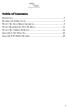 Table of Contents Introduction...4 Meeting and Setting Goals...6 Week 1: The Great Human Questions...9 Week 2: Examining the Ways We Know...15 Week 3: The Christian Worldview...24 Appendix A: The Divine
The Christian Social Work Model
 The Christian Social Work Model Christian Social Work Model l Jesus is Lord The Christian social work model is based on an acknowledgment that Jesus is Lord of our lives and of our work. The social worker
Their stories are tragic. A new chapter starts now. now.
 ! Their stories are tragic. A new chapter starts now. now.! Bully is a movie that tells powerful stories about children and their families dealing with extreme pain and tragic consequences related to bullying.
MAGNETIC PSYCHIC POWER CHANTS
 MAGNETIC PSYCHIC POWER CHANTS MAGNETIC PSYCHIC POWER CHANTS Do you dream of living a life of luxury? Do you long for a life where you enjoy great health, fulfilling romantic relationships and friendships,
12 Step Worksheet Questions
 12 Step Worksheet Questions STEP 1 We admitted we were powerless over alcohol that our lives had become unmanageable. The first time I took a drink I knew it wasn't for me. Every time I drank I got drunk
12 Step Goal-Setting Process
 12 Step Goal-Setting Process 1 Decide exactly what you want in every key area of your life. Start off by Idealizing. Imagine that there are no limitations on what you can be, have or do. Imagine that you
EMPLOYEE JOB IMPROVEMENT PLANS. This Employee Job Improvement Plan designed by Kielley Management Consultants achieves results because:
 EMPLOYEE JOB IMPROVEMENT PLANS This Employee Job Improvement Plan designed by Kielley Management Consultants achieves results because: it is simple and understandable it keeps supervisors and employees
Listen, Protect, and Connect
 Page 1 Listen, Protect, and Connect PSYCHOLOGICAL FIRST AID FOR CHILDREN, PARENTS, AND OTHER CAREGIVERS AFTER NATURAL DISASTERS Helping you and your child in times of disaster. Page 2 As a parent or adult
The Case for Contemplative Psychology By Han F. de Wit
 The Case for Contemplative Psychology By Han F. de Wit Han F. de Wit argues that spiritual tradition can be viewed as its own school of psychology. As such, it offers more effective techniques and profound
A PhD in Public Affairs?
 A PhD in Public Affairs? The Basics A Doctor of Philosophy degree, abbreviated Ph.D. for the Latin Philosophiae Doctor, is an advanced academic degree earned in many fields, signifying major interests
Free Will. Freedom: To possess freedom of choice is to possess the ability to do otherwise.
 Free Will Freedom: To possess freedom of choice is to possess the ability to do otherwise. Furthermore, if one is NOT able to do otherwise (i.e., if one is not free), then one is not responsible for their
I've got a quick question for you
 I've got a quick question for you If you've been trying to learn to read Tarot, does any of the following sound familiar? "I can't seem to commit the Tarot card meanings to memory. I try, but memorising
Emotionally Intelligent Leadership
 Emotionally Intelligent Leadership Leadership and Emotions Copyright 2005 Claus Møller Consulting. All rights reserved. This work may not be altered in any way, but may be distributed freely in its current
The Little Red Book of Selling By Jeffrey Gitomer
 The Little Red Book of Selling By Jeffrey Gitomer Why do people buy? is a thousand times more important than How do I sell? 1. I like my sales rep. Liking is the single most powerful element in a sales
Co-dependency. Fact Sheet on co-dependency from Mental Health America:
 Co-dependency Fact Sheet on co-dependency from Mental Health America: Co-dependency is a learned behavior that can be passed down from one generation to another. It is an emotional and behavioral condition
Angel Guidance Messages of Love and Guidance
 A beautiful expanded collection of messages inspired from the daily Angel Wisdom that Sharon Taphorn channels and shares with thousands of readers around the world. Each message contains thought provoking
The New Leaders Transforming the art of leadership into the science of results
 The New Leaders Transforming the art of leadership into the science of results By Daniel Goleman, Richard Boyatzio and Annie Mckee Great leadership works through emotions. When leaders drive emotions positively,
It s hard to know what to do when you know or suspect that a friend or family member is living with violence.
 How can you help? A B It s hard to know what to do when you know or suspect that a friend or family member is living with violence. How do I know what is the right thing to do? Should I say something or
ALIGNMENT WITH THE HIGHER SELF & MEETING SPIRIT GUIDES
 ALIGNMENT WITH THE HIGHER SELF & MEETING SPIRIT GUIDES Experiencing Spiritual Connection This becomes more and more obvious to you with practice you will get a distinct feeling and knowing when you are
The Common Denominator of Success by Albert E.N. Gray
 The Common Denominator of Success by Albert E.N. Gray The common denominator of success --- the secret of success of every man who has ever been successful --- lies in the fact that he formed the habit
TIME MANAGEMENT by Dr. Ben S. Graham, Jr. The Ben Graham Corporation
 TIME MANAGEMENT by Dr. Ben S. Graham, Jr. The Ben Graham Corporation Everyone gets the same twenty-four hours each day, yet some people accomplish many times more than what might be considered normal.
Total Quality Management
 Total Quality Management 1 Chapter 12: Total Employee involvement 2 Human factor is very important in implementation of any process or principle. It is all the more important in Quality Management. Organization
YOUR FORCES AND HOW TO USE THEM
 YOUR FORCES AND HOW TO USE THEM by Christian Larson TABLE OF CONTENTS Foreword... p. 3 Chapter 1. The Ruling Principle of Man... p. 6 Chapter 2. How We Govern the Forces We Possess... p. 11 Chapter 3.
The Emotional Bank Account
 The Emotional Bank Account We all know what a bank account is. It is where we put our money, make deposits, save for the future, and make withdrawals when we need to. An Emotional Bank Account is a metaphor
Support and Resistance: Trading by Reading a Market
 Support and Resistance: Trading by Reading a Market 2009 [Published by] www.investija.com Page 1 Contents 1.0 Trading method Market Types...3 1.1 Trading method Drawing Lines...7 2.0 The Time...11 3.0
A Response to Colla J. MacDonald s Creative Dance in Elementary Schools
 Discussion / Débat A Response to Colla J. MacDonald s Creative Dance in Elementary Schools Sheryle Bergmann university of manitoba In proposing a theoretical and practical justification for including creative
About Hostmanship. the art of making people feel welcome
 About Hostmanship the art of making people feel welcome 1 VÄRDSKAPET AB layout Form & Funktion i Sverige AB PRINT Åtta45, November 2007 PHOTOgraphy ImageState, Banana Stock, Ada Elmgart Feel free to quote
Understanding Soul Mate Relationships
 1 Understanding Soul Mate Relationships And How To Prepare For Your Divine Partner By Pamela Dussault of Passage To Inner Joy 2 What is a Soul Mate? A soul mate is a person whose soul has come into your
Class Notes The Intake of God's Word for the Purpose of Godliness Session 2
 Study to show yourself approved unto God, a workman that does not need to be ashamed, rightly handling the Word of Truth. 2 Timothy 2:15 BIBLE INTAKE Do not think about this important discipline with a
Psychic Guide 101 Written by: Jennifer A. Young www.bestonlinepsychics.net
 Written by: Jennifer A. Young www.bestonlinepsychics.net Page 1 Table of Contents Chapter Title Page 01 Consulting a Psychic 03 02 Why Should You Consult a Psychic? 04 03 What Is a Psychic? 05 04 Choosing
Living Your Best Life with MS USING THE PRINCIPLES OF POSITIVE PSYCHOLOGY TO MANAGE THE CHALLENGES OF LIVING WITH A CHRONIC ILLNESS
 Living Your Best Life with MS USING THE PRINCIPLES OF POSITIVE PSYCHOLOGY TO MANAGE THE CHALLENGES OF LIVING WITH A CHRONIC ILLNESS 1 The Principles of Positive Psychology Positive psychology focuses on
Bibliographical information. Date: 1936. Republished electronically by the Bach Flower Research Programme 2003.
 The Bach Flower Research Programme electronic library Masonic lecture Edward Bach Masonic lecture Masonic lecture Edward Bach Bibliographical information First published by: Not known Date: 1936 ISBN None
Diagrams Helpful for Understanding Critical Thinking and Its Relationship with Teaching and Learning
 9 Diagrams Helpful for Understanding Critical Thinking and Its Relationship with Teaching and Learning This section entails diagrams which can help you: 1. make connections between the critical thinking
The Importance of Goal Setting When Starting Your Own Online Business
 The Importance of Goal Setting When Starting Your Own Online Business A Special Report By: Tom Browne 1. Dare to Have Big Dreams 2. Dream Boards 3. How to Set a Goal 4. Short- and Long-Term Goals 5. Identify
Making the Case for Service Recovery - Customer Retention
 Making the Case for Service Recovery - Customer Retention Service Recovery is one of the key ingredient s to good service, leading to happy customers and we all know happy customers are very good for business,
What Is the Narcotics Anonymous Program?
 Who Is an Addict? Most of us do not have to think twice about this question. We know! Our whole life and thinking was centered in drugs in one form or another the getting and using and finding ways and
On-Line AA Skype Meetings Format
 On-Line AA Skype Meetings Format [This is our suggested format for the on-line Skype meetings. We are fortunate to have this option and many of us find talking on-line is the next best thing to in-person
1 The Unique Character of Human Existence
 1 1 The Unique Character of Human Existence Each of us is confronted with the challenge of being human, the challenge of becoming a person. It is important to emphasize this word challenge, because it
It is interesting to know that as soon as the Internet was invented, its creators perceived its potential for the therapeutic communication.
 Online Counselling With the beginning of the twenty first century, the Internet has quickly become part of our everyday life. The impact which it has produced, has been much bigger than one created by
LaGuardia Community College Department of Human Resources CUSTOMER SERVICE COMMUNICATION SKILLS INTERPERSONAL SKILLS E-MAIL & TELEPHONE TECHNIQUES
 LaGuardia Community College Department of Human Resources CUSTOMER SERVICE COMMUNICATION SKILLS INTERPERSONAL SKILLS E-MAIL & TELEPHONE TECHNIQUES 1 This Workshop Provides Strategies to: Deliver quality
TAKING IN THE GOOD: Key Points "At the banquets of life, bring a big spoon."
 Train Your Brain: The Five Essential Skills Rick Hanson, Ph.D., 2005-415/491-4900 TAKING IN THE GOOD: Key Points "At the banquets of life, bring a big spoon." What Is Taking In? In a profound sense, we
BEing There Counseling
 BEing There Counseling Booklet #1 BEing There Counseling 823 Mease Road Grand Junction, Colorado 81505 Tel. (970) 245-6502 website: www.beingthere.net email: [email protected] 2 BEing There Counseling
Bullying. Take Action Against. stealing money. switching seats in the classroom. spreading rumors. pushing & tripping
 switching seats in the classroom stealing money Take Action Against Bullying spreading rumors pushing & tripping U.S. DEPARTMENT OF HEALTH & HUMAN SERVICES Substance Abuse and Mental Health Services Administration
PSYCHOLOGY AND PROJECT MANAGEMENT
 PSYCHOLOGY AND PROJECT MANAGEMENT Human aspects of the project management Ver 1.0 2 360 Degree Approach of IT Infrastructure Projects PSYCHOLOGY AND PROJECT MANAGEMENT Abstract Project Management usually
Psychological First Aid Red Cross Preparedness Academy 2014
 Caring for Survivors of Trauma and Disaster: An Introduction to Psychological First Aid Biographical Information Rev. William F. Engfehr III LutheranChurch MissouriSynod DisasterResponseChaplain Senior
DESCRIBING OUR COMPETENCIES. new thinking at work
 DESCRIBING OUR COMPETENCIES new thinking at work OUR COMPETENCIES - AT A GLANCE 2 PERSONAL EFFECTIVENESS Influencing Communicating Self-development Decision-making PROVIDING EXCELLENT CUSTOMER SERVICE
Back to School: Working with Teachers and Schools
 Back to School: Working with Teachers and Schools Starting school each fall is a challenge for the student and parents. The following article offers some valuable suggestions as your child starts a new
Whereas I was Blind, Now I See. John 9: 1-11; 25
 Whereas I was Blind, Now I See John 9: 1-11; 25 We all know that great hymn well: Amazing grace, how sweet the sound, that saved a wretch like me; I once was lost, but now I m found; was blind, but now
Taking Hold of Your Mind: What Skills:
 Taking Hold of Your Mind: What Skills: Observing, Describing, and Participating Core mindfulness skills are the foundation of all Dialectical Behavioral Therapy (DBT) skills training. The problems addressed
Discover The God Who Believes In You
 Discover The God Who Believes In You I AM LOVED The most basic fact of the Bible is that there is a God. He made everything that is, including you, and loves you with an everlasting love. God has loved
Contact Center LeaderPro. Candidate Feedback
 Contact Center LeaderPro Candidate Feedback Contents Page Recommended Selection Criteria 1 Ideal Ranges for: Team Leader Go 2 Snapshots Management Profile 3 Management Style 4 Orientation & Coaching Factors
Most people do not listen with the intent to understand; they listen with the intent to reply.
 But until a person can say deeply and honestly, "I am what I am today because of the choices I made yesterday," that person cannot say, "I choose otherwise. Seek first to understand, then to be understood.
PREPARING FOR THE INTERVIEW
 U N I V E R S I T Y C A R E E R S E R V I C E S PREPARING FOR THE INTERVIEW THE INTERVIEW The interview is an opportunity to demonstrate to an employer why you are the best fit for the position. Essentially,
How To Be A Successful Project Manager
 CHAPTER 8 Are You Too Soft? A Most project leaders are too soft most of the time. true leader has the confidence to stand alone, the courage to make tough decisions, and the compassion to listen to the
Denver Baptist Church
 Denver Baptist Church 2016 Bible Reading Plan All Scripture is breathed out by God and profitable for teaching, for reproof, for correction and for training that the man of God may be complete, equipped
The Good Roommate Guide
 The Good Roommate Guide Contents: p. 2 COMMUNICATING WITH YOUR ROOMMATE 101 p. 3 IDENTIFYING COMMUNICATION STYLES p. 4 TOP 10 TIPS FOR HEALTHY RELATIONSHIP p. 5 10 EFFECTIVE WAYS TO HANDLE CONFLICT p.
http://www.quickmba.com/mgmt/7hab/ THE 7 HABITS OF HIGHLY EFFECTIVE PEOPLE HABIT 1 : BE PROACTIVE
 HABIT 1 : BE PROACTIVE Your life doesn't just "happen." Whether you know it or not, it is carefully designed by you. The choices, after all, are yours. You choose happiness. You choose sadness. You choose
Chapter 17 DAY TRADE VS POSITION TRADE. For years, the arguments have gone up and back: which is better, day trading or position trading?
 Chapter 17 DAY TRADE VS POSITION TRADE For years, the arguments have gone up and back: which is better, day trading or position trading? We have heard many day traders say they prefer day trading because
The ins and outs. of successful. leadership. Helping you to be a more effective leader
 The ins and outs of successful leadership Helping you to be a more effective leader What does your team expect from their leader? Someone who high-fives everyone from the post boy to the CEO on his way
OUR MISSION. WE HELP YOU TO ACHIEVE WELLBEING. Your Wellbeing.
 OUR MISSION. Your Wellbeing. WE HELP YOU TO ACHIEVE WELLBEING 01 OUR FOCUS. Develop employee s total potential. HELP EMPLOYEES GET FIT, GET WELL, GET INSPIRED TO EXPERIENCE ULTIMATE BLISS IN LIFE. 02 WORK-RELATED
Experiential Focusing and Twelve Step Recovery Work
 Experiential Focusing and Twelve Step Recovery Work by Steve Crawford, MA After being in Sacramento for a year, my life had truly become unmanageable with the unhappy demise of yet another personal relationship.
Beacon s Education Program:
 Beacon s Education Program: Why it works 2101 Livingston Street Oakland, CA 94606 510.436.4466 beaconday.org Part One: Curriculum Spirals Beacon s Education Program is based upon a system which we call
Application of Motivational Interviewing to College & Career Decision Making
 Application of Motivational Interviewing to College & Career Decision Making Originally developed by William R. Miller in 1983 as a useful set of techniques to use in the treatment of problem drinkers,
Inspirational Quotes
 Inspirational Quotes The meeting of two personalities is like the contact of two chemical substances: If there is any reaction, both are transformed Carl Jung All the greatest and most important problems
DRUG AND ALCOHOL ADDICTION. BY: Kristen Mehl AGE: 17 GRADE: 12. SCHOOL NAME: St. Clair High School
 DRUG AND ALCOHOL ADDICTION BY: Kristen Mehl AGE: 17 GRADE: 12 SCHOOL NAME: St. Clair High School DRUG AND ALCOHOL ADDICTION Drug and alcohol addiction is a rising problem among all ages, including our
What are Your Favorite Lies?
 Life is Hard Sometimes What are Your Favorite Lies? West Chester, PA [email protected] Little lies make life easier at least in the moment. They enable us to avoid pain in the moment and hopefully in
The Cave of Education. Kate Flinchbaugh, Luther College
 Flinchbaugh 1 The Cave of Education Kate Flinchbaugh, Luther College What is reality, and what is mere illusion? In The Allegory of the Cave, Plato argues that most of our life is built on the illusions
School-Age Child Guidance Technical Assistance Paper #2
 School-Age Child Guidance Technical Assistance Paper #2 School-age Child Guidance High quality out-of-school time programs promote school-age children s emotional and social development as well as their
~SHARING MY PERSONAL PERSPECTIVE~
 April 2012 ~SHARING MY PERSONAL PERSPECTIVE~ Dear Friends, It is a certainty that shared values encourage cooperative relationships. I don t know who first said this, but I certainly believe it to be true.
-The Test of Discipleship-
 STUDY GUIDE STEPS TO CHRIST, CHAPTER 7 -The Test of Discipleship- Memory Verses: Galatians 2:20; 5:22-23; Romans 8:1 Who has the heart? With whom are our thoughts? Of whom do we love to converse? Who has
The Personal Statement
 The Personal Statement The ideal student, seen through the eyes of graduate faculty, is gifted and creative, very bright and extremely motivated to learn, perfectly suited to the program, eager to actively
Conducting Emotionally Difficult Conversations. John Banja, PhD Center For Ethics Emory University [email protected]
 Conducting Emotionally Difficult Conversations John Banja, PhD Center For Ethics Emory University [email protected] How To Break Bad News Robert Buckman (with contributions by Yvonne Kason). Baltimore:
STEP ONE: We admitted we were powerless over cocaine and all other mind-altering substances that our lives had become unmanageable.
 A Guide to the 12 Steps This pamphlet contains a description of one method for taking the Twelve Steps of Cocaine Anonymous. To help us work the Twelve Steps, Cocaine Anonymous uses a text entitled Alcoholics
Introduction...4. Who is an Entrepreneur...5. Why it is Important to Identify Traits...6. Important Traits to Have...8. Leadership Skills...
 1 Disclaimer This e-book has been written to provide information about its topic. Every effort has been made to make this ebook as complete and accurate as possible. However, there may be mistakes in typography
Personality Difficulties
 Personality Difficulties The essential features of a personality disorder are impairments in personality (self and interpersonal) functioning and the presence of pathological personality traits. There
All rights reserved by Self-Realization Fellowship. Contents. Preface. Make Your Life a Divine Adventure 3. Thoughts for the Fearless Soul 12
 Contents Preface ix Make Your Life a Divine Adventure 3 Thoughts for the Fearless Soul 12 Practical Antidotes for Fear and Worry 15 Removing the Static of Fear From the Mind 20 The Fearless Mind and the
Introduction. The ACFkids Staff
 Introduction Every parent has a daunting task ahead of them helping their kids to know, love and serve Jesus. We often talk about discipling another person. But the most important disciples you will ever
Conflict Management Styles Center for Student Leadership Resources
 Conflict Management Styles Center for Student Leadership Resources The proverbs listed below can be thought of as descriptions of some of the different strategies for resolving conflict. Proverbs state
100 Tips for Building a Strong Recovery
 45/13 Soi Pha Phum Tambon Bang Phra Amphoe Si Racha Chon Buri 20110 Thailand 100 Tips for Building a Strong Recovery Email: [email protected] - Telephone: 0066 895 291297 Giving up alcohol
MODULE 3: FUNCTIONAL ANALYSIS AND TREATMENT PLANNING
 MODULE 3: FUNCTIONAL ANALYSIS AND TREATMENT PLANNING Module 3: Functional Analysis and Treatment Planning Table Of Contents TABLE OF CONTENTS II MODULE 3: FUNCTIONAL ANALYSIS AND TREATMENT PLANNING 1 BACKGROUND......
The Psychology of Negotiation
 The Psychology of Negotiation Negotiation is the communication between two or more individuals or groups who meet with the intent of producing a cooperative agreement. Each group has conflicting interests
Wise Mind: Experiencing Integration & Intuition
 Wise Mind: Experiencing Integration & Intuition Dialectical Behavioral Therapy (DBT) assumes that you are capable of experiencing wisdom in your life or achieving Wise Mind. You will develop Wise Mind
Mindfulness. A simple way of relating to our experience, which can have profound impact on painful, negative experiences we encounter.
 Mindfulness A simple way of relating to our experience, which can have profound impact on painful, negative experiences we encounter. Characteristics of mindfulness Involves: o Stopping o Paying attention