
How To Understand And Understand The Waste Management Process
|
|
|
- Oscar Bond
- 5 years ago
- Views:
Transcription
1 WASTE MANAGEMENT PLAN Presented to: Abilene Christian University 1600 Campus Court Abilene, Texas JOB # ABI2001.RC Prepared: May 2012 Prepared By: 1327-D Miller Road Greenville, South Carolina (864) / (800) (864) fax

2 This Waste Management Plan (WMP) was generated at the request of Abilene Christian University by RP Associates, Inc. It is the privileged property of Abilene Christian University and RP Associates, Inc., and is not to be distributed to or shared with anyone other than authorized personnel of Abilene Christian University, RP Associates, Inc., and/or local, state, or federal regulatory or emergency response authorities. This WMP has been prepared by an environmental professional and an original copy has been retained by RP Associates, Inc. Any changes or modifications made to this plan (other than nontechnical amendments such as changes to phone numbers or names) by Abilene Christian University, which are not reviewed by an environmental professional, may lead to a violation of the applicable regulations.

3 TABLE OF CONTENTS SECTION PAGE ACRONYM LIST. i GLOSSARY OF TERMS ii 1.0 INTRODUCTION...1 LIMITATIONS...1 LOCATIONS RESPONSIBILITIES SENIOR VICE PRESIDENT ENVIRONMENTAL EALT & SAFETY OFFICER FACULTY AND STAFF STUDENT AND LAB WORKERS AZARDOUS WASTE GENERATOR STATUS REQUIREMENTS EPA ID NUMBER MANIFESTING LAND DISPOSAL RESTRICTIONS (LDR) WASTE IDENTIFICATION, CARACTERIZATION, AND ANALYSIS AZARDOUS WASTE UNIVERSAL, PAINT, AND PAINT-RELATED MATERIAL WASTE UNKNOWN WASTES EMPTY CONTAINERS AEROSOL CANS WASTE STORAGE SATELLITE ACCUMULATION AREAS FOR AZARDOUS WASTES CENTRAL AZARDOUS WASTE STORAGE AREA UNIVERSAL WASTE STORAGE WASTE STORAGE AREA INSPECTIONS WASTE DISPOSAL WASTE MINIMIZATION PROGRAM WASTE MANAGEMENT TRAINING RCRA AZARDOUS WASTE TRAINING UNIVERSAL WASTE TRAINING CONTINGENCY PLAN AND PREPAREDNESS AND PREVENTION CAMPUS OPERATIONS EMERGENCY EQUIPMENT AVAILABILITY AND MAINTENANCE AISLE SPACE...26 :\T\ICUT-Texas Independent College\_TX Colleges\Abilene Christian U\Corrective Actions\Waste Management Plans\ACU WMP FINAL.doc

4 TABLE OF CONTENTS SECTION PAGE 10.4 ARRANGEMENTS WIT LOCAL AUTORITIES CONTINGENCY PLAN EMERGENCY PROCEDURES AZARDOUS WASTE REPORTING EXPORT NOTIFICATIONS EXCEPTION REPORTS SPECIFIC REPORTS OTER WASTES USED OIL MEDICAL WASTE (BIOAZARDOUS WASTE) ASBESTOS CONTAINING MATERIAL POLYCLORINATED BIPENYL (PCB) WASTE E-WASTE SPECIAL WASTE...37 LIST OF TABLES Table 1: Generator Status Defined... 6 Table 2: List of Universal Waste Generated at Abilene Christian University Table 3: Accumulation Areas Table 4: Texas azardous Waste Reports LIST OF APPENDICES APPENDIX A: Waste Stream Determination and Analysis Flow Chart APPENDIX B: Completed Waste Stream Determinations * APPENDIX C: Waste Label Examples APPENDIX D: Inspection and Generation Logs (Example) APPENDIX E: RCRA azardous Waste Training Roster APPENDIX F: Chemical Compatibility Chart APPENDIX G: Arrangements with Local Authorities APPENDIX : azardous Waste Manifests * APPENDIX I: Universal Waste Manifests * APPENDIX J: E-Waste Manifests and Certificates of Recycling * APPENDIX K: Used Oil Manifests * APPENDIX L: Miscellaneous Disposal Documents * APPENDIX M: PCB Waste Manifests * APPENDIX N: Sample Notification of Medical Waste Treatment * Populated in hard copy only, located in Office of Risk Management :\T\ICUT-Texas Independent College\_TX Colleges\Abilene Christian U\Corrective Actions\Waste Management Plans\ACU WMP FINAL.doc

5 ACRONYM LIST ACM BMP CAA CESQG CFR DIY DOT ES EPA FIFRA ICR ICUT LDR LQG LQUW NESAP PPRM RCRA SAA SPCC SQG SQUW RCRA TCEQ TCLP TSDF WMP Asbestos Containing Materials Best Management Practice Central Accumulation Area Conditionally Exempt Small Quantity Generator Code of Federal Regulations Do-It-Yourselfer Department of Transportation Environmental ealth and Safety Environmental Protection Agency Federal Insecticide, Fungicide and Rodenticide Act Ignitable, Corrosive or Reactive Texas Association of Independent Colleges and Universities Land Disposal Restriction Large Quantity Generator Large Quantity andler of Universal Waste National Emissions Standards for azardous Air Pollutants Paint and Paint Related Material Resource Conservation and Recovery Act Satellite Accumulation Area Spill Prevention Control and Countermeasures Small Quantity Generator Small Quantity andler of Universal Waste Resource Conservation and Recovery Act Texas Commission on Environmental Quality Toxicity Characteristic Leaching Procedure Treatment, Storage or Disposal Facility Waste Management Plan i :\T\ICUT-Texas Independent College\_TX Colleges\Abilene Christian U\Corrective Actions\Waste Management Plans\ACU WMP FINAL.doc

6 GLOSSARY OF TERMS Abandoned Materials that are disposed of or thrown away; burned or incinerated; or accumulated, stored or treated (but not recycled) before or in lieu of being disposed of, burned or incinerated. Accumulation Start Date azardous Waste in Satellite Storage The date in which a container containing hazardous waste reaches 55-gallons (or 2.2 gallons of acutely hazardous waste). If less than 55-gallons of waste is in the container, the date in which a container is transferred to the central accumulation area. Accumulation Start Date azardous Waste in Central Storage The date in which the waste is initially added to the storage container holding the hazardous waste. Accumulation Start Date Universal Waste The date in which the waste is initially added to the storage container holding the Universal Waste. Acute azardous Waste azardous waste identified either on the P-list or having the following waste codes: F020, F021, F023, F027, and F028. Asbestos Containing Materials Any material found to contain greater than one percent (1%) asbestos. Biohazardous Waste See Medical Waste Class 1 Wastes Any industrial solid waste or mixture of industrial solid wastes that because of its concentration, or physical or chemical characteristics is toxic, corrosive, flammable, a strong sensitizer or irritant, a generator of sudden pressure by decomposition, heat, or other means, or may pose a substantial present or potential danger to human health or the environment when improperly processed, stored, transported, or disposed of or otherwise managed, as further defined in of this title (relating to Class 1 Waste Determination). Class 2 Wastes Any individual solid waste or combination of industrial solid waste that are not described as azardous, Class 1, or Class 3 as defined in of this title (relating to Class 2 Waste Determination). ii :\T\ICUT-Texas Independent College\_TX Colleges\Abilene Christian U\Corrective Actions\Waste Management Plans\ACU WMP FINAL.doc

7 Class 3 Wastes Inert and essentially insoluble industrial solid waste, usually including, but not limited to, materials such as rock, brick, glass, dirt, and certain plastics and rubber, etc., that are not readily decomposable, as further defined in of this title (relating to Class 3 Waste Determination). Commercial Chemical Product A chemical substance which is manufactured or formulated for commercial or manufacturing use which consists of the commercially pure grade of the chemical, any technical grades of the chemical that are produced or marketed, and all formulations in which the chemical is the sole active ingredient. Corrosivity This characteristic identifies solid wastes that have either of the following properties: it is aqueous and has a p <2 or >12.5; and it is a liquid and corrodes steel at a rate greater than 0.25 inches per year at a test temperature of 130 F (55 C). Electronic Waste (E-Waste) Waste consisting of computers, monitors, cathode ray tubes (CRTs), radios, and other electronic equipment that is to be discarded and not recycled. azardous Waste A waste, when not properly handled or disposed, may present an unreasonable or substantial risk to human health or the environment. A solid waste qualifies as a hazardous waste if it falls under any one of the four (4) categories listed below and does not qualify for any of the exemptions or exclusions listed under Federal and/or State regulations. 1) A waste or waste generation process which has been specifically identified by EPA to be "listed" hazardous waste. Included under this category are products in their pure or off-specification form which are discarded and contain specific hazardous constituents. 2) Those solid waste and waste generation processes that have not been specifically listed by EPA but exhibit one or more of the four characteristics of hazardous waste irrespective of the manufacturing produces from which it is generated. The four characteristics are: ignitability (I), corrosivity (C), reactivity (R), or toxicity (T). 3) It is a mixture of a listed hazardous waste and any other material, or is a mixture of a characteristic waste and any other material, provided the mixture still exhibits the characteristic (i.e., mixture rule). 4) It is a residue that is "derived from" the treatment, storage, or disposal of a listed waste. iii :\T\ICUT-Texas Independent College\_TX Colleges\Abilene Christian U\Corrective Actions\Waste Management Plans\ACU WMP FINAL.doc

8 Ignitability This characteristic identifies solid wastes that are capable of causing a fire or exacerbating a fire once it has started during routine handling of material. These wastes include: Liquids: Other than an aqueous solution containing less than 24% alcohol by volume and has a flashpoint of less than 140 F (60 C); Non-Liquids: Capable under standard temperature and pressure of (1) causing fire through friction, absorption of moisture or spontaneous chemical changes and (2) when ignited burn so vigorously and persistent that it creates a hazard; Ignitable Compressed Gases: As defined under 49 CFR ; and Oxidizers: As defined in 49 CFR Inherently Waste-Like Materials that are inherently waste-like are materials that pose significant threats to human health and the environment if mismanaged (i.e., too hazardous to be unregulated). These materials have been designated with the EPA azardous Waste Codes F020 to F023 and F026 to F028, and secondary materials fed to a halogen acid furnace that exhibit a characteristic of a hazardous waste or are listed hazardous waste. Medical Waste Treated and untreated special waste from health care-related facilities that is comprised of animal waste, bulk blood, bulk human blood, bulk human body fluids, microbiological waste, pathological waste, and sharps as those terms are defined in 25 Texas Administration Code (TAC) (relating to Definitions) from the sources specified in 25 TAC (relating to Application), as well as regulated medical waste as defined in 49 Code of Federal Regulations (a)(5), except that the term does not include medical waste produced on a farm or ranch as defined in 34 TAC 3.296(f) (relating to Agriculture, Animal Life, Feed, Seed, Plants, and Fertilizer), nor does the term include artificial, nonhuman materials removed from a patient and requested by the patient, including, but not limited to, orthopedic devices and breast implants. ealth carerelated facilities do not include: single or multi-family dwellings; and hotels, motels, or other establishments that provide lodging and related services for the public. Reactivity This characteristic identifies wastes that are unstable and may react violently or explode during stages of their management. Solid wastes that exhibit any of the following properties are classified as reactive wastes: normally unstable and readily undergoes violent change without detonating; reacts violently with water; forms potentially explosive mixtures with water; generates toxic gases, vapors or fumes in a sufficient quantity to pose a danger when mixed with water; iv :\T\ICUT-Texas Independent College\_TX Colleges\Abilene Christian U\Corrective Actions\Waste Management Plans\ACU WMP FINAL.doc

9 cyanide or sulfide bearing waste which, when exposed to p conditions between 2 and 12.5, can generate toxic gases, vapors, or fumes in a quantity sufficient to present a danger to human health or environment; capable of detonation or explosive reaction if it is subjected to a strong initiations source or if heated under confinement; readily capable of detonation or explosive decomposition or reaction at standard temperature and pressure; and forbidden explosive as defined by DOT regulations or is a Class A explosive, or a Class B explosive as defined in DOT regulations. Recycled Reused or reclaimed according to the following Table. RECYCLED MATERIALS WIC ARE SOLID WASTES Secondary Material Categories Use Constituting Disposal [ 261.2(c)(1)] Energy Recovery/Fuel [ 261.2(c)(2)] Reclamation [ 261.2(c)(3)] Speculative Accumulation [ 261.2(c)(4)] Spent Materials * 1 * * * Sludge (listed in 40 CFR Part or ) Sludge exhibiting a characteristic of hazardous waste By-products (listed in 40 CFR Part or ) By-products exhibiting a characteristic of hazardous waste Commercial chemical products 2, 3 listed in 40 CFR Scrap metal other than excluded scrap metal (see 40 CFR 261.1(c)(9) * * * * * * * * * * * * * * * * * * * * Notes: 1 Solid wastes are noted with an "*". 2 Commercial chemical products are not solid wastes if land disposal is their ordinary manner of use. 3 Commercial chemical products are not solid wastes if they are themselves fuels. 4 Materials noted with a --- are not solid wastes. v :\T\ICUT-Texas Independent College\_TX Colleges\Abilene Christian U\Corrective Actions\Waste Management Plans\ACU WMP FINAL.doc

10 Solid Waste A solid waste, which can be a solid, liquid, semi-solid or gaseous material, is defined as any discarded material that is not specifically excluded. A "discarded material" is any material, which is either: Abandoned (i.e. thrown away or disposed of); Inherently waste like; Military munitions; or Recycled in a manner constituting disposal, burning for energy recovery, reclaimed or over accumulated. Special Waste Special waste is any solid waste that requires special handling and disposal because of its quantity, concentration, physical or chemical characteristics, or biological properties. Special waste is defined in Title 30 Texas Administrative Code (30 TAC), Chapter 330, Special waste that is not specifically identified in 30 TAC (c) or (d), or requires prior written authorization by the TCEQ for disposal. Special wastes identified in, and meeting the requirements of, 30 TAC (c) and (d) do not require prior written authorization before disposal, provided the MSW landfill is permitted to accept these wastes. These include: Municipal hazardous waste from conditionally exempt small-quantity generators may be accepted at a Type I or Type IAE landfill provided the amount of waste does not exceed 220 lb (100 kg) per month per generator. Municipal wastewater treatment plant sludges, other types of domestic sewage treatment plant sludges, and water-supply treatment plant sludges. Liquid wastes from municipal sources that are treated or processed to eliminate free liquids and tested in accordance with 30 TAC (c)(7). Grease-trap and grit-trap wastes. Slaughterhouse wastes. Dead animals. Empty pesticide (insecticide, herbicide, fungicide, or rodenticide) containers that have been triple rinsed and rendered unusable. Toxicity This characteristic measures the potential of a waste to leach toxic constituents into ground water when land disposed assuming mismanagement or co-disposal in an unlined, municipal solid waste landfill. Compounds, which are analyzed under the current Toxicity Characteristic Leaching Procedure (TCLP) test and their regulatory levels, are listed in Appendix A. vi :\T\ICUT-Texas Independent College\_TX Colleges\Abilene Christian U\Corrective Actions\Waste Management Plans\ACU WMP FINAL.doc

11 1.0 INTRODUCTION This plan has been developed by RP Associates, Inc., on behalf of Abilene Christian University (ACU) to establish a program to comply with the regulations set forth in 40 CFR Subchapter I: Solid Waste and TCEQ Administrative Code Title 30, Part 1, Chapter 335, Subpart C, which also references adoption of Title 40 CFR Parts of the Federal hazardous waste regulations with few exceptions and/or changes. ACU is currently identified and operating as a Conditionally Exempt Small Quantity Generator (CESQG) of hazardous waste. ACU manages some of its applicable hazardous waste as Universal Waste. This allows for longer storage times and the reduced burden of regulations on wastes such as used lamps, used batteries, used mercury-containing equipment, and paint and paint-related material. ACU is also identified and operating as a Small Quantity andler of Universal Waste (SQUW) as defined as generating universal wastes, not treating or recycling on site, in amounts less than 5,000 kilograms at any given time. This Waste Management Plan (WMP) addresses the total life cycle of hazardous waste generated at and disposed by Abilene Christian University. Within this plan is guidance on classifying and analyzing waste, storing hazardous waste, inspecting hazardous waste storage areas, disposing of hazardous waste, complying with a waste minimization program, training employees on hazardous waste, establishing contingency plans, and preparing any state or federal required reporting. This WMP also documents procedures and practices for Universal Waste, used oil, medical waste, polychlorinated biphenyl (PCB) waste, aerosol cans, empty containers, asbestos containing materials, e-waste, special waste, and unknown wastes. This plan is to be administered by employees of ACU and by contractors working on their behalf. 1.1 LIMITATIONS This plan is not intended to address the safe handling of chemicals in laboratories as required under OSA regulation 29 CFR nor is this plan intended to define the requirements for employees exposed to Asbestos Containing Materials as required under OSA regulations 29 CFR , 29 CFR , or 40 CFR ACU has a Chemical ygiene Plan under a separate cover, which addresses the safe handling, storage and usage of chemicals in laboratories. ACU should review the requirements set forth in the aforementioned regulations associated with safe lab practices and asbestos to assure all staff and students meet the necessary requirements. 1.2 LOCATIONS Copies of this WMP are located in the following areas on campus: 1 :\T\ICUT-Texas Independent College\_TX Colleges\Abilene Christian U\Corrective Actions\Waste Management Plans\ACU WMP FINAL.doc

12 1. Office of Risk Management. 2. Electronically on the Abilene Christian University intranet. 2 :\T\ICUT-Texas Independent College\_TX Colleges\Abilene Christian U\Corrective Actions\Waste Management Plans\ACU WMP FINAL.doc

13 2.0 RESPONSIBILITIES It is the responsibility of all employees, students, and contractors working on behalf of ACU to handle, store, and dispose of hazardous waste, universal waste, biohazardous waste, and regulated non-hazardous waste in a manner that is in compliance with all applicable state and federal regulations. 2.1 SENIOR VICE PRESIDENT The Abilene Christian University Senior Vice President has the ultimate responsibility for proper waste handling and provides along with other officers and administrators, support for efforts to minimize waste generation and comply with all applicable waste regulations. The Senior Vice President supervises and authorizes the faculty and staff to take steps necessary to carry out the objectives of the WMP including the following: 1. Providing the necessary resources, training, and staffing required to implement the WMP. 2. Monitoring the implementation of the WMP at all applicable levels of administration with Abilene Christian University. 3. Ensuring that any required licensing, permits, or approval from local, state, and federal agencies to purchase, store, use, synthesize, administer, and/or dispose of any hazardous material, prescribed medication, or controlled substance. 2.2 ENVIRONMENTAL EALT & SAFETY OFFICER For the purpose of this plan, the Safety Manager of the Office of Risk Management will serve as the Environmental ealth and Safety (ES) Officer. The ES Officer of ACU is responsible for the day-to-day activities associated with hazardous waste, universal waste, biohazardous waste, and regulated nonhazardous waste management including, but not limited to: 1. Working with the appropriate personnel to evaluate, implement, and update the WMP on a routine basis. Providing technical expertise and administrative support to the faculty and staff and direct inquiries to appropriate resources. 2. Aiding in hazardous waste stream determinations and consulting with faculty and staff each semester to ensure that waste stream determinations continue to be completed each semester for new waste streams. 3 :\T\ICUT-Texas Independent College\_TX Colleges\Abilene Christian U\Corrective Actions\Waste Management Plans\ACU WMP FINAL.doc

14 3. Assisting the departments in ensuring that hazardous waste, universal waste, biohazardous waste, and non-hazardous waste, containers are appropriately labeled, handled, stored, and managed. 4. Conducting, or designating the conducting of, inspections of centralized accumulation areas (CAA) and satellite accumulation areas (SAA) for hazardous waste collection. These Inspection Forms have been provided in Appendix D. 5. Acting as a liaison between campus hazardous waste operations and the Facilities office. Bring unresolved and potentially serious waste related issues to the Dean s attention. 6. Maintaining records and making them available to employees, administrative personnel, and state or federal officials. 7. Monitoring use and disposal of laboratory chemicals. 8. Training, or coordinate the training of, all ACU employees and other personnel who may handle, generate or prepare hazardous waste for shipment. This includes both RCRA azardous Waste Management Training (annual) and DOT azardous Materials Training (every 3 years). 9. Coordinating waste pickups, from all departments, and with off-site vendors. 10. Familiarizing oneself with laboratory procedures and all other applicable campus emergency plans which are maintained under separate cover. 2.3 FACULTY AND STAFF Faculty and staff, who have the responsibility of Environmental ealth & Safety of a campus operation or the responsibility of instruction of students at Abilene Christian University, participate in the implementation of this WMP and overall proper waste practice by: 1. Informing and training students and workers on waste procedures as it applies to activities in their areas. 2. Performing and documenting waste stream determinations for waste generated by their activities. 3. Ensuring student and lab worker compliance with the WMP. 4. Before each lesson, teaching students about proper waste disposal as it applies to that day s activity. 5. Ensuring that all containers of hazardous waste, universal waste, biohazardous 4 :\T\ICUT-Texas Independent College\_TX Colleges\Abilene Christian U\Corrective Actions\Waste Management Plans\ACU WMP FINAL.doc

15 waste, and regulated non-hazardous wastes are properly labeled, closed, and stored; and, 6. Requesting assistance, if needed, from the Environmental ealth and Safety Officer. 2.4 STUDENT AND LAB WORKERS Students and lab workers participate in the implementation of this WMP and overall proper waste disposal: 1. Following all rules and procedures established in the WMP as communicated by staff and faculty. 2. Aiding in waste stream determinations for waste generated by their activities. 3. Requesting information and training if not sure about proper waste procedures. 5 :\T\ICUT-Texas Independent College\_TX Colleges\Abilene Christian U\Corrective Actions\Waste Management Plans\ACU WMP FINAL.doc

16 3.0 AZARDOUS WASTE GENERATOR STATUS Each generator of hazardous waste must determine their generator status for each calendar month. This exercise is necessary to identify those regulatory requirements in which ACU must comply. The generator status is determined by the sum of hazardous waste generated on site, not the amount shipped, in one calendar month. Additionally, there are limitations on aggregate storage that may affect one s generator status. There are three generator categories for hazardous waste and two categories for universal waste as defined in Table 1. ACU is currently a CESQG of hazardous waste. ACU is also categorized as a SQUW. These categories are defined in the table below. Table 1: Generator Status Defined Generator Category Conditionally Exempt Small Quantity Generator (CESQG) Small Quantity Generator (SQG) Large Quantity Generator (LQG) Small Quantity andlers of Universal Waste (SQUW) Large Quantity andlers of Universal Waste (SQUW) Amount of azardous Waste Generated in a Month (unless otherwise noted) < 100 kilograms (< 220 pounds) < 1000 kilograms (< 2200 pounds) > 1000 kilograms (> 2200 pounds) Amount of Acute azardous Waste Generated in a Month AZARDOUS WASTE STATUS < 1 kilogram (<2.2 pounds) < 1 kilogram (<2.2 pounds) > 1 kilogram (>2.2 pounds) UNIVERSAL WASTE STATUS < 5000 kilograms of Universal Waste N/A (< 110,000 pounds) At any time > 5000 kilograms of Universal Waste N/A (> 110,000 pounds) At any time Amount of Residue or Contaminated Debris from a Spill of Acute azardous Waste < 100 kilograms (< 220 pounds) < 100 kilograms (< 220 pounds) > 100 kilograms (> 220 pounds) N/A N/A Maximum Amount of Waste Stored on Site at Any Given Time < 1000 kg (<2,200 lbs) or <1 kg (<2.2 lbs) of acute hazardous waste < 6000 kg (<13,200 lbs) or <1 kg (<2.2 lbs) of acute hazardous waste > 6000 kg (>13,200 lbs) or >1 kg (>2.2 lbs) of acute hazardous waste Accumulate no more than one year Accumulate no more than one year 6 :\T\ICUT-Texas Independent College\_TX Colleges\Abilene Christian U\Corrective Actions\Waste Management Plans\ACU WMP FINAL.doc

17 3.1 REQUIREMENTS At the time that this plan was prepared, ACU is currently identified and operating as a Conditionally Exempt Small Quantity Generator (CESQG) of hazardous waste since it generates less than 220 pounds of hazardous waste per month. Regardless of their generator status, ACU has made the decision to comply with the majority of requirements (i.e. container management, personnel training) of a Small Quantity Generator (SQG) of hazardous waste as a Best Management Practice. Close monitoring of campus status must be ensured when wastes are generated and when conducting periodic laboratory clean-outs to maintain CESQG status. As a CESQG of hazardous waste, ACU will implement the following practices as required by a CESQG: 1. Not store in excess of greater than 1,000 kilograms (2,200 pounds) of hazardous waste or greater than 1.0 kilogram (2.2 pounds) of acute hazardous waste at any given time; and 2. Not generate greater than 220 pounds of hazardous waste, or greater than 2.2 pounds of acute hazardous waste, in any one (1) calendar month. By utilizing several of the practices required by a Small Quantity Generator of hazardous waste, ACU will also: 1. Use a manifest for all off-site shipments of hazardous waste (see Sections 3.3 and 7.0 of this plan); 2. Mark (label) each container of hazardous waste with appropriate labels including the words hazardous waste and other words that identify the contents of the containers such as the chemical name (see Section 5.0, and Appendix C of this plan); 3. Place the waste in appropriate containers. (see Section 5.0 of this plan); 4. Establish and document emergency preparedness procedures and contingency plans (see Section 10.0 of this plan); 5. Conduct annual training (see Section 9.0 of this plan); and 6. Perform inspections of the CAA and SAA s (see Section 6.0 and Appendix D of this plan). Additionally, ACU is identified and operating as a Small Quantity andler of Universal Waste (SQUW), and as such must: 1. Store universal waste (lamps, damaged or leaking batteries, damaged or leaking mercury-containing equipment) in containers or packages that are structurally sound and adequate to prevent breakage; 2. Select containers compatible with the universal waste; 3. Ensure containers are closed except when adding or removing waste; 7 :\T\ICUT-Texas Independent College\_TX Colleges\Abilene Christian U\Corrective Actions\Waste Management Plans\ACU WMP FINAL.doc

18 4. Label containers with the words Universal Waste and other descriptive words such as Universal waste lamps, Universal Waste batteries, or Universal Waste mercury containing devices; and 5. Store waste for no more than 1 year from the date waste was first placed in the container. 3.2 EPA ID NUMBER ACU is currently not registered, nor is it required to be, with the Texas Commission on Environmental Quality (TCEQ) or the Environmental Protection Agency (EPA) as a generator of hazardous waste. ACU is currently operating and classified as a Conditionally Exempt Small Quantity Generator of azardous Waste (CESQG) since it generates greater than 220 pounds of hazardous waste, or greater than 2.2 pounds of acute hazardous waste per month. TCEQ s regulations do not require EPA ID Numbers for CESQG s. 3.3 MANIFESTING Prior to any off-site shipment of hazardous waste from Abilene Christian University, a hazardous waste manifest is completed and accompanies all off-site shipments. The hazardous waste manifest is presented on 8½ x 11 paper and contains six (6) copies. Once the waste is loaded on the truck for shipment, the designated appointee from ACU prints and signs his/her name and dates the manifest. Prior to the waste leaving the campus, the truck driver transporting the waste must print and sign his/her name and date the manifest. ACU is to maintain one copy of the manifest at this time. The six (6) copies of the manifest are distributed as follows: Copy 1: When the manifest is completed by the Treatment, Storage and Disposal Facility (TSDF), a copy is mailed to the State where the TSDF located. Copy 2: When the TSDF has completed this section of the manifest, a copy is mailed to the State where the waste was generated. Copy 3: When the TSDF has completed this section of the manifest, a copy is mailed back to ACU for their records. This copy is used to document the delivery of the waste to the designated facility. Copy 4: When the TSDF has completed this section of the manifest, he keeps this copy for his records. Copy 5: When the Transporter has completed his section and transfers the waste to the TSDF, he keeps this copy for his records. 8 :\T\ICUT-Texas Independent College\_TX Colleges\Abilene Christian U\Corrective Actions\Waste Management Plans\ACU WMP FINAL.doc

19 Copy 6: When ACU and the Transporter have completed their sections of the manifest (including signatures) and the hazardous waste has been transferred to the vehicle, ACU keeps this copy of the manifest for their records. Note: this is the first copy of the manifest the campus receives. When Copy 3 of the manifest is returned to ACU, it is attached to Copy 6 and any other records associated with the shipment (i.e. LDR, emergency response information, lab pack inventories, etc) and must be retained on-site for a minimum of three (3) years. The original manifest must be retained by the ES officer. If Copy 3 is not returned to ACU within 45 days, the campus should call the TSDF to check on the status of the waste shipment. If the manifest copy has not been returned within 60 days, ACU should notify legal counsel. As a CESQG, it is not necessary for Abilene Christian University to submit an Exception Report to TCEQ, as this is only a requirement of SQGs and LQGs in TX. Instead, the campus should make every effort to identify the fate of the waste and ensure that the waste was delivered to, and received by, the TSDF. Those signing manifests on behalf of ACU must be trained in Department of Transportation (DOT) procedures and requirements at least every three (3) years. Manifests are not required for the off-site disposal of used oil, regulated nonhazardous waste, or biohazardous waste. owever, it is a Best Management Practice by both ACU and its vendor to utilize a manifest or Bill of Lading where appropriate to document all off-site shipments of waste materials and recycled, reclaimed, or donated materials. ACU should maintain copies of all waste disposal documents for at least three (3) years. Whereas three (3) years is the required record keeping time period, due to the liability involved with waste disposal, permanent record keeping of waste disposal documents is recommended. 3.4 LAND DISPOSAL RESTRICTIONS (LDR) azardous waste that is restricted from land disposal (see 40 CFR Part 268.7(a)(4)), must comply with the following: 1. If a hazardous waste is subject to LDR and does not meet applicable treatment standards, ACU must submit a one-time written notice to each treatment, storage, or disposal facility, which receives the initial shipment of waste. This one-time notice accompanies the manifest and must include the information listed below: EPA hazardous waste code(s); Identification of the waste as a wastewater or non-wastewater; Manifest number associated with the waste shipment; 9 :\T\ICUT-Texas Independent College\_TX Colleges\Abilene Christian U\Corrective Actions\Waste Management Plans\ACU WMP FINAL.doc

20 Waste analysis data (if available); For certain wastes, any additional hazardous constituents present; and Where hazardous debris is to be treated by an alternative technology under 40 CFR , a statement to that effect and the contaminants subject to treatment. No additional notices are required unless the waste or receiving facility changes. 2. If the waste meets the applicable treatment standards, ACU must submit a one-time notice and signed certification stating that the waste meets the required treatment standards to each treatment, storage or disposal facility that receives the initial shipment of waste. The notice must include the items listed above and the certification, which must be signed by an authorized representative. Records of the LDR must be retained with the copy of the waste manifest (i.e. staple the original copy of the waste manifest to the LDR statement and the returned copy of the manifest indicating successful shipment to the final disposal facility.) Typically, the hazardous waste vendor used by ACU generates the LDR. owever, ACU is ultimately responsible to ensure that the LDR is completed and maintained with the manifest in University s files. 10 :\T\ICUT-Texas Independent College\_TX Colleges\Abilene Christian U\Corrective Actions\Waste Management Plans\ACU WMP FINAL.doc

21 4.0 WASTE IDENTIFICATION, CARACTERIZATION, AND ANALYSIS 4.1 AZARDOUS WASTE ACU has identified all known hazardous waste generated on campus by completing a department-by-department waste stream determination of all generated wastes. Spreadsheets of the completed waste stream determinations (by department) are available in Appendix B of the official hard copy located in the Office of Risk Management, as well as in each respective department. When a new waste is generated at the University, a determination must be made as to whether the waste is hazardous. Faculty and staff s knowledge of the process generating the waste, any associated material safety data sheets (MSDS), and lab analyses are tools that can be used in this determination. Solid Waste (see definition in glossary) is a hazardous waste when it is: 1. Listed (P-list, U-list, F-list, K-list); 2. Characteristic of hazardous waste (ignitable, corrosive, toxic, reactive); 3. Derived from hazardous waste; and, 4. Mixed with hazardous waste. The P-list, U-list and F-list are available in Appendix A. The K-list is not included, as it typically does not apply to college campuses. Definitions of the characteristics of hazardous waste are found both in the Glossary of Terms as well as incorporated into Figure 1, located in Appendix A. Figure 1, Located in Appendix A, includes a flow chart and hazardous waste determination form to aid in waste determination and analysis. This completed form is to be maintained on campus with other documentation related to hazardous waste as proof of waste determination. 4.2 UNIVERSAL, PAINT, AND PAINT-RELATED MATERIAL WASTE According to 40 CFR 273 Subpart A, the following hazardous waste streams may be managed as Universal Waste: azardous waste batteries (40 CFR 273.2); Waste or recalled pesticides (40 CFR 273.3); Mercury containing equipment (40 CFR 273.4); and Universal waste lamps (i.e. fluorescent lamps, exit sign lights, street lights, and those meeting the characteristics of a hazardous waste) (40 CFR 273.5). In Texas, Paint and Paint-Related Material (PPRM) is also included as universal waste. Under 30 TAC , PPRW is defined as: 11 :\T\ICUT-Texas Independent College\_TX Colleges\Abilene Christian U\Corrective Actions\Waste Management Plans\ACU WMP FINAL.doc
22 Used or unused paint and paint-related material which is "hazardous waste"; and Any mixture of pigment and a suitable liquid that forms a closely adherent coating when spread on a surface or any material that results from painting activities. ACU generates universal waste from the following locations/operations on campus, as identified in Table 2. Table 2: List of Universal Waste Generated at Abilene Christian University Campus Operation/Location Art and Theater Maintenance Sciences Print Shop Athletics PPRM Paint and Paint Related Material Universal Waste(s) Generated PPRM, batteries Spent fluorescent lamps, batteries, PPRM Batteries and mercury containing equipment PPRM Batteries All generated universal waste on the ACU campus is shipped off-site to a regulated facility. Universal waste manifests, or other documents associated with universal waste disposal/recycling are provided for record retention by the ES officer and copies are retained within Appendix I of this WMP. Copies should also be maintained by the generating department (See Section 3.3 of this plan for manifest information). 4.3 UNKNOWN WASTES Occasionally, unknown wastes are generated or discovered. This may occur when a waste is generated from a new process and the waste has not yet been evaluated as to its hazards, or during inventory clean-outs when the original product label is no longer legible. Unknown waste presents a particularly dangerous threat since the hazards are not know. Unknown waste should be treated as hazardous waste until the waste can be characterized. Professor or student knowledge of the process generating the waste, as well as laboratory analytical procedures, can be used to identify the waste (Refer to Figure 1 in Appendix A). Lab analysis, and the associated cost, to perform on the unknown waste may include the following: Flashpoint/Ignitability (approximately $50 per analysis) p/corrosivity (approximately $10 per analysis) TCLP Volatiles (approximately $110 per analysis) TCLP Semi-volatiles (approximately $160-$195 per analysis) 12 :\T\ICUT-Texas Independent College\_TX Colleges\Abilene Christian U\Corrective Actions\Waste Management Plans\ACU WMP FINAL.doc
23 TCLP Pesticides (approximately $75-$110 per analysis) TCLP erbicides (approximately $105-$140 per analysis) TCLP Metals (approximately $65-$100 per analysis) As with any hazardous waste, unknown waste must be labeled and stored properly. Unknown waste label templates are available in Appendix C. For proper methods for the storage of unknown wastes, refer to Section 5.0 for the storage of hazardous waste. 4.4 EMPTY CONTAINERS Empty containers formerly containing hazardous materials may be considered hazardous waste if not managed properly. For containers that have been utilized for the storage of acute hazardous waste (P-listed waste at ACU), the container must be triple rinsed to be considered empty and no longer hazardous waste. The rinsate from this process must be collected and waste determinations performed to determine if the rinsate is hazardous. Or, the college may collect the container without triple rinsing, and thus dispose of the container itself as hazardous waste. For non-acute hazardous waste (U-listed, some F-listed, K-listed and characteristic waste) the container is considered empty if: All waste has been removed that can be removed; Less than 1 inch of residue remains in the container; or, No more than 3% by weight of the total capacity of the container remains in a container sized less or equal to 110 gallons; or, No more than 0.3% by weight of the total capacity of the container remains in a container sized more than 110 gallons. If containers are not empty per the requirements listed above, it must be treated as hazardous waste. If the containers meet the regulatory definition of empty, then the containers should be identified as empty to ensure proper disposal. An empty label template is provided in Appendix C. Empty containers of raw materials or virgin chemicals become wastes when materials are emptied from such containers as reasonably attainable. When this is achieved, the waste rule as noted above applies. Empty containers containing non-hazardous waste materials may be disposed of in the general refuse provided no visible materials remain within the container. 4.5 AEROSOL CANS An aerosol can typically becomes waste when 1) the can has lost its spray nozzle before the contents have been completely used; 2) the can runs out of propellant before the contents have been completely used; 3) the generator no longer has a 13 :\T\ICUT-Texas Independent College\_TX Colleges\Abilene Christian U\Corrective Actions\Waste Management Plans\ACU WMP FINAL.doc
24 use for that product; or 4) the product has been completely used and the empty, pressurized can remains. An aerosol can, even one in which its contents have been completely used, by itself is usually considered hazardous waste because it exhibits the characteristic of reactivity (D003) or ignitability (D001). That is, it is capable of detonation or explosive reaction if it is subjected to a strong initiating source or it is heated under confinement. Each department at ACU will establish a storage area for waste aerosol cans. When the storage area is full, or at the end of each semester, a request is made with the Facilities Department to collect the accumulated waste aerosol cans, and transport them to Facilities where the cans are collected. Aerosol cans from Paint and Paint-Related Materials (PPRM) are to be disposed as universal waste. All other cans will be disposed of as hazardous waste. Aerosol can puncturing devices may be used to completely empty aerosol cans and make them non-reactive. Punctured and drained aerosol cans meet the definition of an empty container and are exempt from management as hazardous waste. The contents of the aerosol cans must be evaluated to see if it need to be collected as hazardous waste when punctured (i.e. a flammable paint would need to be collected in a container when punctured and identified with a D001 waste code). 14 :\T\ICUT-Texas Independent College\_TX Colleges\Abilene Christian U\Corrective Actions\Waste Management Plans\ACU WMP FINAL.doc
25 5.0 WASTE STORAGE azardous waste and universal waste (except for batteries and used mercury containing equipment unless damaged or leaking), by regulation, must ultimately be placed in closed containers. For the purposes of ACU, the majority of hazardous waste is collected in containers, typically in small-scale laboratory bottles (1 ounce to 5 gallons), but also 5, 30 and 55-gallon drums or pales are utilized. ACU maintains both satellite accumulation areas (SAAs) and central storage areas for the management of hazardous wastes as identified in Table 4. Table 3: Accumulation Areas Location of Storage Area Area Type azardous Waste Accumulated Storage Area s Owner Foster Science Building: Various Labs Foster Science Building: Science Storage Shed SAA Central Storage Area azardous Wastes from sciences: laboratory chemical waste azardous Wastes from sciences: laboratory chemical waste Faculty generating waste Faculty generating waste Don. Morris Center: SAA* Various paints and solvents Faculty generating waste Various Art Studios * ACU does not generate >55 gallons of hazardous waste in any SAA, therefore there are no Central Storage Areas in these buildings. 5.1 SATELLITE ACCUMULATION AREAS FOR AZARDOUS WASTES ACU maintains satellite accumulation areas (SAAs) as identified in Table 3. SAAs are not required to be inspected on a weekly basis, but periodic inspections are recommended as a Best Management Practice. Examples of the inspection logs to be performed and maintained are located in Appendix D. Management of these SAAs includes: Accumulating no more than 55 gallons of hazardous waste or 1 quart of acutely hazardous waste at any one time; Locating the SAA at or near the point of generation (i.e. within the same laboratory or classroom); Controlling the containers by the operator(s) of the generating process; Marking the containers with the words hazardous waste and/or other words identifying the contents of the container (example: azardous Waste Used alogenated Organic Solvents); Dating and moving containers to the central storage area within 72 hours (3 days) of when the 55 gallons (1 quart) limitation is met; Closing containers except when adding or removing waste; 15 :\T\ICUT-Texas Independent College\_TX Colleges\Abilene Christian U\Corrective Actions\Waste Management Plans\ACU WMP FINAL.doc
26 Ensuring that all waste containers are in good condition; and Ensuring containers are compatible with the waste enclosed within. Appropriate labeling of SAAs is an important component of hazardous waste compliance. Located within Appendix C, please find the approved labels to be used on all accumulated wastes stored in SAAs throughout Abilene Christian University s campus. If the satellite container is too small or oddly shaped to accommodate the labels provided, ensure that the same information is displayed by other means, such as a hang tag. 5.2 CENTRAL AZARDOUS WASTE STORAGE AREA As a CESQG, ACU does not have a certain number of days under which it must dispose of its hazardous waste. owever, the University must be considerate of its restriction on the quantity of hazardous waste generated and stored on-site (see Section 3.0) while allowing hazardous waste to accumulate. ACU maintains central hazardous waste storage areas, as identified in Table 3. These areas are clearly identified with signs indicating its function. The storage area is maintained according to the regulations and is inspected on at least a monthly basis. An example of the inspection form is located in Appendix D. Management of the central hazardous waste storage area according to the BMP established in this plan includes: Labeling containers with the words azardous Waste and other words to identify its contents; Ensuring all containers are marked with an accumulation start date; Removing spilled or leaked waste in a timely manner; Posting no smoking signs where flammable wastes are stored; Maintaining adequate aisle space for inspections and movement of emergency equipment; Maintaining containers in good condition; Storing waste in compatible containers; Closing containers except when adding or removing waste; Locating ignitable or reactive waste a minimum of 50 feet from property line; and, Separating incompatible waste by means of a dike, wall, containment bucket, or other separation mechanism and not storing in the same container. (See Appendix F for Compatibility Chart). 5.3 UNIVERSAL WASTE STORAGE The benefits of utilizing universal waste regulations for the management of some hazardous waste includes less stringent regulatory requirements and the ability to store the waste for longer periods of time. :\T\ICUT-Texas Independent College\_TX Colleges\Abilene Christian U\Corrective Actions\Waste Management Plans\ACU WMP FINAL.doc 16
27 ACU is currently identified and operating as a Small Quantity andler of Universal Waste (SQUW). Universal waste is collected in various areas around campus and consolidated at the Maintenance Facility. Example labels that may be used for collection units of universal waste are available in Appendix C. Containers of universal waste should be closed except when adding or removing wastes. Dating the label as soon as the first item of waste is placed within the container is imperative as there is a one-year storage limit on universal wastes. For batteries or mercury devices a clipboard with an accumulation log denoting periodic additions to storage bins is a good way to track the date requirements. Used batteries and mercury-containing devices only have to be in closed containers if leaking or damaged. 17 :\T\ICUT-Texas Independent College\_TX Colleges\Abilene Christian U\Corrective Actions\Waste Management Plans\ACU WMP FINAL.doc
28 6.0 WASTE STORAGE AREA INSPECTIONS Faculty and staff of ACU perform at least monthly inspections of the satellite accumulation areas (SAAs) and central accumulation area (CAAs), also known as the central storage area. The PCB containing equipment inspections are also conducted monthly (see section 12.4 for PCB storage). These inspections are performed by one knowledgeable in the regulations pertaining to hazardous waste and who has participated in annual RCRA azardous Waste Training. Examples of the inspections to be completed are provided in Appendix D of this WMP. Completed inspections should be maintained for three (3) years. At the time of the inspection of the CAA, all waste in the storage area will be accounted for on the azardous Waste Accumulation Log (Appendix D). The accumulation date and the quantity and type of waste will be listed on the Accumulation Log. When the waste is shipped off site for disposal, the date will be entered into the Accumulation Log. The retention of these records is critical to the University s ability to maintain CESQG status and monitor the applicable regulatory requirements. Use of this log will provide the necessary documentation to indicate that the waste amounts indicated on a manifest was not all generated during the month the material was disposed. It should be noted that if this log is not accurately maintained to indicate when each container on the manifest was individually generated, and the manifest notes greater than 220 pounds of hazardous waste or 2.2 pounds of acute hazardous waste, CESQG status may be exceeded. 18 :\T\ICUT-Texas Independent College\_TX Colleges\Abilene Christian U\Corrective Actions\Waste Management Plans\ACU WMP FINAL.doc
29 7.0 WASTE DISPOSAL All hazardous waste that is shipped off-site is accompanied by a manifest, and as appropriate, a land disposal restriction (see Section 3.3 and 3.4). The manifest will list the names of the generator, the transporter, and the receiving facility along with their addresses, telephone numbers, and EPA ID numbers. When shipping hazardous waste off-site, an inactive or unregistered CESQG can use EPA ID number TXCESQG. The generator s copy of the manifest, which has the signatures of the generator and transporter, will be retained by ACU when the waste is shipped. Within sixty (60) days from the day the material was removed from campus, ACU should receive the final copy of the manifest, which contains the signature of the receiving facility. The original copy and the copy returned by the receiving facility are filed on-site in the ACU environmental files for three (3) years. Additional information regarding manifest management is detailed in Section 3.3 of this report. ACU uses an outside contractor to containerize, mark, label, manifest and ship hazardous waste, non hazardous waste, used oil, universal waste, and medical/biohazard waste. ACU understands that it is ultimately responsible for all waste generated by the University, and using a contractor does not relinquish the University of the responsibilities associated with a generator of hazardous waste. Manifests are not required for the off-site shipments of used oil, non-hazardous waste, or biomedical waste. owever, it is a best management practice for both ACU as a generator and its vendor to utilize a manifest or bill of lading where appropriate to document all off-site shipments of waste materials and recycled, reclaimed, or donated materials. The activities of the outside contractors will be supervised and managed by the ACU ES officer. ACU utilizes various vendors for the disposal of waste disposal hazardous waste and universal wastes. ACU sends the disposal out to bid for each event. The Office of Risk Management maintains a current listing of waste vendors and the associated contact information. 19 :\T\ICUT-Texas Independent College\_TX Colleges\Abilene Christian U\Corrective Actions\Waste Management Plans\ACU WMP FINAL.doc
30 8.0 WASTE MINIMIZATION PROGRAM Since 1984, LQGs and SQGs of hazardous have been required to certify on their hazardous waste manifests that it has a waste minimization program. This certification reads as follows: I hereby declare that the contents of this consignment are fully and accurately described above by the proper shipping name, and are classified, packaged, marked and labeled/placarded, and are in all respects in proper condition for transportation according to applicable international and national government regulations. If export shipment and I am the Primary Exporter, I certify that the contents of this consignment conform to the terms of the attached EPA Acknowledgement of Consent. I certify that the waste minimization statement identified in 40CFR (a) (if I am a large quantity generator) or (b) (if I am a small quantity generator) is true. EPA regulation 40 CFR Waste Minimization Certification specifically states: A generator who initiates a shipment of hazardous waste must certify to one of the following statements in Item 15 of the uniform hazardous waste manifest: (a) I am a large quantity generator. I have a program in place to reduce the volume and toxicity of waste generated to the degree I have determined to be economically practicable and I have selected the practicable method of treatment, storage, or disposal currently available to me which minimizes the present and future threat to human health and the environment; or (b) I am a small quantity generator. I have made a good faith effort to minimize my waste generation and select the best waste management method that is available to me and that I can afford. Regardless of their generator status, ACU will make every effort to reduce the amount of non-hazardous, universal, medical, used oil, E-waste and hazardous waste generated on campus. This will include, but is not limited to, maintaining an inventory control system to avoid the unnecessary accumulation of chemicals. The EPA has established guidance recommending six key elements that should be incorporated into a waste minimization program. These key elements are: Top management support; 20 :\T\ICUT-Texas Independent College\_TX Colleges\Abilene Christian U\Corrective Actions\Waste Management Plans\ACU WMP FINAL.doc
31 Characterization of waste generation and waste management costs; Periodic waste minimization assessments; Cost allocation system; Encourage Technology transfer; and Program implementation and evaluation. As a Best Management Practice, ACU will practice the key elements recommended by the EPA in the following ways: Key Element 1. Top management support 2. Characterization of waste generation and waste management costs 3. Periodic waste minimization assessments 4. Cost allocation system Implementation This Waste Management Plan was requested by and submitted to the upper management of ACU (Mr. Scot Colley, Director of Risk Management). ACU trains appropriate employees annually on the waste generated and associated impacts resulting from the way associates conduct their work procedures. Waste is characterized according to Section 4 of this Plan. Waste generation is accounted in the Waste Accumulation Log as described in Section 6 of this Plan. Waste costs are maintained by the ES Coordinator. Waste agreements and contracts are maintained in the campuswide Environmental Files. ACU continuously strives for process improvement and optimization to reduce waste and thus reduce costs. ACU recycles waste when possible. Currently the campus recycles electronic wastes. ACU maintains a Chemical ygiene Plan that outlines chemical procurement procedures to ensure that excess chemicals are not purchased which will eventually have to be disposed. ACU maintains invoices for not only the cost to dispose of hazardous waste, but also the cost of contractors to manage their hazardous waste activities. 21 :\T\ICUT-Texas Independent College\_TX Colleges\Abilene Christian U\Corrective Actions\Waste Management Plans\ACU WMP FINAL.doc
32 Key Element 5. Encourage Technology Transfer 6. Program implementation and evaluation Implementation ACU is a member of the Independent Colleges and Universities of Texas (ICUT). Through the foundation, ACU participates in a peer audit program where peers not only audit each other s campus, but also share best management practices, success stories, and opportunities for improvement. As appropriate, opportunities to reduce waste and optimize efficiency are implemented. This element combines the principals of each of the elements listed above. 22 :\T\ICUT-Texas Independent College\_TX Colleges\Abilene Christian U\Corrective Actions\Waste Management Plans\ACU WMP FINAL.doc
33 9.0 WASTE MANAGEMENT TRAINING 9.1 RCRA AZARDOUS WASTE TRAINING As a CESQG, ACU should ensure that all employees are thoroughly familiar with proper waste handling and emergency procedures, relevant to their responsibilities during normal facility operations and emergencies. As a Best Management Practice, RCRA hazardous waste training will be conducted annually for those employees who manage and/or handle hazardous waste. A written description of the training provided along with the roster of the personnel attending the training will be maintained on site for three (3) years or the time of the individual s employment, whichever is longer. The roster of attendees includes the trainee s name and job title. Appendix E contains a sample roster that can be used during training. Copies of all training materials and classes completed will be maintained in the campus Environmental Files located at the Office of Risk Management. Elements of the hazardous waste training may include: azardous waste determination; Manifests; Container labeling and securing; Waste storage; Waste inspections; Universal Waste; Other waste (medical, e-waste etc.) Emergency procedures; Emergency equipment; and Emergency systems. Additionally, the Department of Transportation (DOT) requires that those preparing the waste for shipment and those signing shipping papers for hazardous waste (i.e. manifests) are trained in DOT regulations every three years. Currently, the following individuals on campus are the only individuals authorized per DOT requirements to sign azardous Waste Manifest Scott Colley 9.2 UNIVERSAL WASTE TRAINING A small quantity handler of universal waste must inform all employees who handle or have responsibility for managing universal waste. The information must describe proper handling and emergency procedures appropriate to the type(s) of :\T\ICUT-Texas Independent College\_TX Colleges\Abilene Christian U\Corrective Actions\Waste Management Plans\ACU WMP FINAL.doc 23
34 universal waste handled at the facility. This universal waste training material will be incorporated in the annual RCRA training. 24 :\T\ICUT-Texas Independent College\_TX Colleges\Abilene Christian U\Corrective Actions\Waste Management Plans\ACU WMP FINAL.doc
35 10.0 CONTINGENCY PLAN AND PREPAREDNESS AND PREVENTION 10.1 CAMPUS OPERATIONS The operations at ACU are conducted in a manner to minimize the possibility of a fire, explosion, or any unplanned sudden or non-sudden release of hazardous waste. The Chemical Compatibility Chart (located in Appendix F) is used to ensure the proper storage of both raw materials as well as waste to ensure that the risk of fire, explosion, or release is minimized. azardous waste is centrally stored in the Foster Science Building: Science Storage Shed EMERGENCY EQUIPMENT AVAILABILITY AND MAINTENANCE The campus is equipped with the following emergency equipment that is maintained and tested to ensure its availability in case of an emergency: Internal Communications Due to the complexities of a college campus, traditional internal communications such as voice paging systems are not practical. owever, in some buildings, evacuation alarm bells are automatically activated when fire is detected. The alarm bells can also be activated manually at strategically located pull boxes. The emergency actions of personnel and the evacuation procedures for each building or operating area are usually set forth in the Operation Safety Procedures for each building and posted near the main entrance or fire exit or elevator Immediate Communications The primary method to immediately communicate an emergency is by way of and/or text message via the ACU Alert system as well as a functional campus phone system that can be used to summons help both internally as well as externally. Cell phones are also available throughout campus. Dedicated resources maintain the phone system and if the system were to not operate, it would be identified immediately. Portable fire extinguishers Portable fire extinguishers are available throughout the campus. These are visually inspected as a part of the inspections of waste storage areas. The campus uses dry chemical fire extinguishers, which are appropriate to use on class B (flammable liquids) and C (electrical) fires. Spill Kits Spill kits are available throughout the campus. These are visually inspected as a part of the inspections of waste storage areas. Location Spill kits are maintained in the following locations: Foster Science Building: Science Storage Shed; Throughout the Foster Science Building; Central Plant; Rhoden Farm; Facility Maintenance; 25 :\T\ICUT-Texas Independent College\_TX Colleges\Abilene Christian U\Corrective Actions\Waste Management Plans\ACU WMP FINAL.doc
36 Through the Don Morris Center; Zona Luce Building; and University Purchasing. Water to suppress fires Fire hydrants are available to ensure that water in adequate volume and pressure is available to suppress a fire. These hydrants are maintained by the Abilene Fire Department. Most of the buildings were constructed prior to the building code requirements for sprinklers; however, sprinkler systems have been installed in some buildings. In addition, several types of automatic fire detectors are used throughout ACU, according to particular needs and purposes. The fire detectors will detect fire and transmit an alarm to the fire station. The fire department always dispatches fire fighters and apparatus to the scene of many automatically actuated alarms AISLE SPACE Aisle space is maintained to allow the unobstructed movement of personnel, fire protection equipment, spill control equipment, and decontamination equipment to any area of the campus in an emergency. The pathway to the waste storage area is maintained free of obstruction. In the event of waste being stored in drums, drums would be staged side-by-side and not clumped together in groups in order to clearly identify the drum and its condition. As for the more commonly employed smaller containers of hazardous waste, these are stored in a manner to ensure that labels can be identified and containers accessed to determine condition and respond appropriately. Waste containers are not to be stacked more than two (2) high ARRANGEMENTS WIT LOCAL AUTORITIES The local authorities (fire department) are aware of Abilene Christian University s campus and materials stored on-site due to routine fire code inspections. ACU is serviced by the Abilene Fire and Rescue Department and the Abilene Police Department. ACU also maintains its own private police department on campus. As a CESQG of hazardous waste, it is recommended that ACU attempt to make arrangements with local authorities (Abilene Fire and Rescue Service and the Abilene Police Department) to inform them of the hazards present on-site. As a BMP, a letter as shown in Appendix G should be mailed to these departments. Copies of the certified mail and return receipts should be kept for ACU s files. The hospitals that service the ACU s Campus include: endrick Medical Center Abilene Regional Medical Center 1900 Pine Street 6250 US ighway 83 Abilene, TX Abilene, TX (325) (325) :\T\ICUT-Texas Independent College\_TX Colleges\Abilene Christian U\Corrective Actions\Waste Management Plans\ACU WMP FINAL.doc
37 10.5 CONTINGENCY PLAN EMERGENCY PROCEDURES Whenever there is an imminent or actual emergency situation, the emergency coordinator (or his/her designee), must immediately: 1. Activate internal alarms or communication systems (i.e. fire pull station) to notify all students and faculty. 2. Notify appropriate State or local agencies with designated response roles, if necessary. This would only be necessary if ACU intended to take an active role in the emergency response. It is Abilene Christian University s stance that any serious fire or spill will be handled by the professionals and not by ACU employees. 3. Whenever there is a release, fire or explosion, the emergency coordinator will immediately identify the character, exact source, amount, and area extent of any released materials. This may be achieved by visual observation or review of facility records or manifests. 4. Concurrently, possible hazards to human health and the environment must be identified. Potential exposure effects from direct or indirect exposure must be considered (e.g., toxic, irritating, or asphyxiating gases which may be potentially generated, or the effects of run-offs from water or chemicals used to control fire and heat-induced explosions. This information is readily available within a product s MSDS. If the emergency coordinator determines that the facility has had a release, fire or explosion which could threaten human health or the environment outside the facility, he must report his findings as follows: 1. Immediately notify appropriate local authorities (see Section ) and provide information to the applicable authorities to determine whether areas should be evacuated. 2. Immediately notify TCEQ in Austin, Texas or the National Response Center (NRC) whose contact information is provided in Section A report to the TCEQ or NRC must be prepared immediately if a release, fire or explosion has occurred, which could threaten human health or the environment outside the facility. This report must include: 27 :\T\ICUT-Texas Independent College\_TX Colleges\Abilene Christian U\Corrective Actions\Waste Management Plans\ACU WMP FINAL.doc
38 Name and contact information of Emergency Coordinator who responded to the event; Name and Address of facility; Time and type of incident (e.g., fire, release); Name and quantity of material(s) involved, to the extent known; Extent of injuries, if any; and The possible hazards to human health, or the environment, outside the facility. During an emergency, the emergency coordinator must take all reasonable measures necessary to assure that fires, explosions, and releases do not occur, recur, or spread to other hazardous waste on campus. If the facility stops operation in response to a fire, explosion, or release, the emergency coordinator must monitor for leaks, pressure buildup, gas generation, or ruptures in valves, pipes, or other equipment, wherever appropriate. Immediately after an emergency, the emergency coordinator must provide for treating, storing, and/or disposing of recovered waste, contaminated soils or surface water, or any other material that results from a release, fire, or explosion at the facility. The emergency coordinator must ensure that no waste that may be incompatible with the released material is treated, stored, or disposed of until all cleanup procedures are complete and all emergency equipment listed in the contingency plan is cleaned and fit for its intended use before operations are resumed. A report to TCEQ or NRC must be prepared within 15 days after the incident if any release, fire or explosion has occurred at the facility. This report must include: Name and contact information of Emergency Coordinator who responded to the event; Name and Address of facility; Date, time and type of incident (e.g., fire, release); Name and quantity of material(s) involved, to the extent known; Extent of injuries, if any; An assessment of actual or potential hazards to human health, or the environment; and An estimated quantity and disposition of recovered material that resulted from the incident EMERGENCY COORDINATORS At all times, there must be at least one employee either on the campus or on-call with the responsibility of directly coordinating all emergency response measures. This emergency coordinator must be thoroughly familiar with all aspects of the facility s contingency plan, all operations and activities at the facility, and the 28 :\T\ICUT-Texas Independent College\_TX Colleges\Abilene Christian U\Corrective Actions\Waste Management Plans\ACU WMP FINAL.doc
39 facility layout. In addition, this person must have the authority to commit the resources necessary to carry out the contingency plan. In the case of a spill or release the following ACU Staff will serve as the emergency coordinators. Name Office Phone 24-our Number Rickey Brown (Primary Emergency Coordinator) (325) (325) ACU Campus Police (325) As a BMP, the emergency coordination information (see Appendix G) is posted next to the phone at in the following locations: Facility Maintenance Chemistry Stock Room, Foster Science Building Biology Stock Room, Foster Science Building The Emergency Coordinator or Campus Police will contact additional resources from the campus as necessary. Outside resources to contact in case of an emergency include: Authority Phone Number Abilene Police Department 911 or (325) Abilene Fire and Rescue Department 911 or (325) Texas Commission on Environmental Quality (800) National Response Center (NRC) (800) endrick Medical Center (325) Abilene Regional Medical Center (325) Cleanup Contractor: Safety Kleen ER-KLEEN (888) :\T\ICUT-Texas Independent College\_TX Colleges\Abilene Christian U\Corrective Actions\Waste Management Plans\ACU WMP FINAL.doc
40 EVACUATION PLAN 1. Building Evacuations a. All buildings will be evacuated immediately when an alarm sounds and/or upon notification by responsible authorities and in the residence halls by the residence hall director or resident assistant. Follow the building evacuation plan that is posted in each building. b. When the building evacuation alarm is sounded or evacuation orders are issued, leave the building in a calm, orderly manner via the nearest exit and alert others to do the same. c. ASSIST TE ANDICAPPED IN EXITING TE BUILDING! Once outside, proceed to a clear area that is at least 500 feet away from the affected building. Keep streets, fire lanes, hydrant areas and walkways clear for emergency vehicles and personnel. Know your assembly points and familiarize yourself with evacuation plans posted in your building. d. Do not return to an evacuated building unless told to do so by a college official. e. A Campus Emergency Command Post may be set up near the emergency site. Keep clear of the command post, unless you have official business. f. Take the roster of individuals who occupy the building and report to the command post that all are accounted for and all is clear. IMPORTANT: After any evacuation, report to your designated assembly area. Stay there until an accurate head count is taken. 2. Campus Evacuation a. Evacuation of all or part of the campus will be announced. b. All persons (students, faculty, staff and visitors) are to immediately vacate the site in question and relocate to another part of the campus or off campus as directed. 30 :\T\ICUT-Texas Independent College\_TX Colleges\Abilene Christian U\Corrective Actions\Waste Management Plans\ACU WMP FINAL.doc
41 11.0 AZARDOUS WASTE REPORTING 11.1 EXPORT NOTIFICATIONS ACU does not export hazardous waste EXCEPTION REPORTS As a CESQG, ACU is not required to submit exemption reports SPECIFIC REPORTS As a CESQG, ACU is not required to submit specific reports. Texas allows a one-time waste clean out program under which ACU would need to request a temporary ID number. Temporary numbers may be requested by downloading the Request for Texas Waste Code Form (TCEQ form 0757) from and faxing it to Instructions and phone numbers are included in the download. If ACU begins routinely generating hazardous waste over the CESQG abovestated amounts, the University must send TCEQ the Initial Notification Package to register a new facility. The Initial Notification Package consists of the Core Data Form (TCEQ-10400), the Notification for azardous or Industrial Waste Management Form (TCEQ-00002), and the Notification of Regulated Waste Activity Form (EPA ). Forms can be downloaded from the TCEQ Web site at 31 :\T\ICUT-Texas Independent College\_TX Colleges\Abilene Christian U\Corrective Actions\Waste Management Plans\ACU WMP FINAL.doc
42 12.0 OTER WASTES 12.1 USED OIL Used Oil is defined as any oil that has been refined from crude, or any synthetic oil, that has been used and as a result of such use is contaminated by physical or chemical impurities. Used oil that is recycled is regulated under 40 CFR Part 279. Used oil under this regulation does not include antifreeze, kerosene, vegetable oil, animal oil, kitchen grease, and petroleum distillates. Used oil may be considered hazardous waste and must be managed in accordance with the previous sections of this plan if: The used oil has been mixed with a listed hazardous waste; The used oil has been mixed with a characteristic hazardous waste and still meets the characteristics of the hazard; and Contains greater than 1,000 ppm (0.1%) of total halogens and the presumption of being mixed with a listed hazardous waste cannot be rebutted. GENERAL REQUIREMENTS FOR USED OIL: 1) Storage: Used oil must be stored in containers or tanks that are in good condition and not leaking. 2) Labeling: Containers and any associated fill pipes must be labeled with the words USED OIL. 3) Response to release: Upon detection of a release of oil, a facility must: a) Stop the release; b) Contain the released oil; c) Clean up and manage properly released oil and associated cleaning and absorbing materials; and d) Repair or replace any leaking oil storage container or tanks prior to returning them to service. USED OIL GENERATED AT ACU: Used oil generated at ACU includes lubricating oil, hydraulic fluid, compressor oil, mineral oil, coolants, cutting oils and metal working fluid resulting from maintenance activities associated with boilers, compressors, and elevators as well as vehicles. The additional requirements for facilities that burn used oil in space heaters do not apply since ACU currently does not burn used oil in on-site oilfired space heaters. ACU follows all the requirements listed above and consolidates all used oil at the Facility Maintenance. The University uses a used oil vendor for the disposal/recycling of its used oil: Safety Kleen 4234 Oil Belt Lane Abilene, TX (325) :\T\ICUT-Texas Independent College\_TX Colleges\Abilene Christian U\Corrective Actions\Waste Management Plans\ACU WMP FINAL.doc
43 12.2 MEDICAL WASTE (BIOAZARDOUS WASTE) The TCEQ defines medical waste as being one of the following: Animal waste from animals intentionally exposed to pathogens; Bulk human blood and blood products; Pathological waste; Microbiological waste; or Sharps. Certain categories of medical waste may not be disposed of in sanitary landfills or may be disposed of only after the waste has been treated or packaged in certain ways: Sharps must be securely packaged in puncture-proof containers prior to landfilling; Cultures and stocks of infectious agents and associated biologicals must not be landfilled unless and until they have been treated (e.g., autoclaved, incinerated) to render them non-infectious; uman blood and blood products and other body fluids may not be landfilled. This restriction applies to bulk liquids or wastes containing substantive amounts of free liquids, but does not apply to simply blood - contaminated materials such as emptied blood bags, bandages, or dirty linens; and Recognizable human organs and body parts may not be landfilled. GENERAL REQUIREMENTS FOR MEDICAL WASTE: 1) Mixing: Medical waste must not be mixed with other wastes. 2) Storage: Medical wastes must be stored in a manner and location as to minimize exposure to the public; protected from animals, wind and rain; and as to not provide a food source for insects and rodents. 3) Sharps Storage and Labeling: Sharps must be stored in rigid containers identified with either the words medical waste, biohazard, or infectious and/or the universal symbol for biohazard ( ). These containers are to remain closed except when adding or removing wastes. 4) Medical Waste (other than sharps) Storage and Labeling: Medical waste must be placed in containers which are impervious to moisture and have the strength sufficient to preclude ripping, tearing or bursting under normal conditions. These containers remain closed except when adding or removing waste. Additionally, these containers are to be labeled clearly with either the words Medical Waste, Bio-hazardous, or Infectious and/or contain the universal symbol for biohazard ( ). 5) Bagged Medical Waste Disposal: Biological wastes and Petri dishes may be autoclaved on-site and then disposed in the general trash. 6) On-Site Medical Waste Treatment: 33 :\T\ICUT-Texas Independent College\_TX Colleges\Abilene Christian U\Corrective Actions\Waste Management Plans\ACU WMP FINAL.doc
44 a) A generator of medical waste that treats all or part of the wastes on-site in quantities of 50 pounds or less per calendar month shall maintain a written record that, at a minimum, contains the following information: the date of treatment; the method/conditions of treatment; the amount of waste treated; the name (printed) and initials of the person(s) performing treatment; and if applicable, name, address, telephone number, and registration number of the entity providing treatment. b) If more than 50 pounds of medical wastes are treated on-site per calendar month, additional requirements apply. In addition to the items above, these facilities must also have a written procedure for the operation and testing of any equipment used, a written procedure for the preparation of any chemicals used in treatment, and performance testing. c) All treatment facilities are also required notify the TCEQ of the operation of an approved treatment process unit used only for the treatment of on-site generated medical waste. A sample letter has been included in Appendix O of the WMP. 7) Off-Site Medical Waste Disposal: a) Generators of medical waste that ship their waste off-site for treatment are required to: Properly package and label it as specified in 30 TAC (c). List the weight of each medical-waste container (using general use scales) on the generator label as specified in 30 TAC (c)(5) prior to transportation off-site in order to allow for its complete tracking. Place bags containing medical waste in a rigid container that is leak resistant, impervious to moisture, strong enough to prevent tearing and bursting under normal use and handling, and sealed to prevent leakage or as otherwise required by the U.S. Department of Transportation under 49 CFR Cardboard boxes that are designed for medical waste and conform to 49 CFR is acceptable to use for medical waste. Obtain a signed shipping receipt from a registered transporter, maintain records of all shipments of untreated medical waste 34 :\T\ICUT-Texas Independent College\_TX Colleges\Abilene Christian U\Corrective Actions\Waste Management Plans\ACU WMP FINAL.doc
45 sent off-site for three years, and make the records available for inspection by the TCEQ. Obtain a receipt from the medical-waste treatment facility certifying that the waste has been properly treated and must also maintain these records. MEDICAL WASTES GENERATED AT ACU: ACU generates medical waste (sharps, bagged medical waste) from various laboratories located in the Foster Science Building (biology labs), Teague Special Events Center (athletic trainers) and Royce & Pam Money Student Recreation and Wellness Center, ACU Medical Care Center (health services). Medical waste storage, labeling, treatment and disposal practices at ACU are conducted in accordance with regulatory requirements listed above. Most medical laboratory waste is periodically treated by sterilization in an autoclave. Written records are maintained in the area of treatment, which documents each sterilization event. A sample log is provided in Appendix D of this plan ASBESTOS CONTAINING MATERIAL ACU personnel are not licensed or accredited to conduct an asbestos survey, nor are ACU personnel licensed or certified to remove asbestos containing materials (ACM). As required under the National Emission Standards for azardous Air Pollution (NESAP) Standards, in the event demolition or renovation activities are conducted at the ACU campus, ACU is required to conduct an asbestos survey prior to these activities to identify any ACM in the work area. In the event ACM is identified in a proposed work area by a licensed or accredited Asbestos Inspector, ACU must comply with all appropriate removal and notification requirements. ACU should request copies of all contractors licenses as well as a copy of the final report to include a waste manifest documenting the proper disposal of the ACM to an approved disposal facility. Pertinent copies should be permanently retained within the campus Environmental Files. Under no circumstances should ACU store waste materials associated with the abatement or removal of ACM POLYCLORINATED BIPENYL (PCB) WASTE According to 40 CFR 761, all persons who manufacture, process, distribute in commerce, use, or dispose of PCBs or PCB items are subject to requirements for disposal and labeling of PCB containing equipment. The most common PBC containing equipment found on campuses include but are not limited to dielectric fluids located within transformers and in the capacitor of florescent lamp ballasts. 35 :\T\ICUT-Texas Independent College\_TX Colleges\Abilene Christian U\Corrective Actions\Waste Management Plans\ACU WMP FINAL.doc
46 GENERAL REQUIREMENTS FOR PCB WASTES: A facility that owns PCB containing equipment must comply with the following requirements: 1) Storage Labeling: Each storage area used to store PCBs and PCB Items for disposal shall be marked as illustrated in Figure 1 in 40 CFR (a) as shown below. 2) Dated Records: PCB Items shall be dated on the item when they are removed from service for disposal. The storage shall be managed so that the PCB Items can be located by this date. 3) Disposal: Any PCB waste shall be disposed of within 1-year from the date it was determined to be PCB waste and the decision was made to dispose of it. 4) Inspection: All PCB Items in storage shall be checked for leaks at least once every 30 days. Any leaking PCB Items and their contents shall be transferred immediately to properly marked, non-leaking containers. Any spilled or leaked materials shall be immediately cleaned up and the materials and residues containing PCBs shall be disposed of in accordance with 40 CFR ) Documentation: Records of inspections, maintenance, cleanup and disposal must be maintained in accordance with 40 CFR (a) and (b). PCB WASTES GENERATED AT ACU: ACU does not own the transformers located on-site; however, the University does have florescent light ballasts throughout the facility. These ballasts on-site are evaluated for the potential PCB content based on the guidance given in 40 CFR If the ballast is marked non-pcb it may be either recycled or disposed in the general trash. If the ballast is not marked non-pcb it is assumed to be PCB containing. Once the PCB content has been determined, ACU follows the proper labeling and storage requirements listed above. All generated PCB waste on the ACU campus is shipped off-site to a regulated facility. Waste manifests are provided for record retention by the ES officer within Appendix M of this WMP, with copies maintained by the generating department. 36 :\T\ICUT-Texas Independent College\_TX Colleges\Abilene Christian U\Corrective Actions\Waste Management Plans\ACU WMP FINAL.doc
47 12.5 E-WASTE E-waste is a general category for electronic products facing displacement or replacement that are hazardous due to the toxic metals present within their internal materials, coatings and glass. E-waste may include personal computers, monitors, televisions, keyboards printers, telephones, typewriters, calculators, copiers, fax machines and audio equipment. There are commodities worth capturing in E-waste plus there are traditionally toxic materials in electronics that should be kept out of the environment and properly managed. GENERAL REQUIREMENTS FOR E-WASTES: A waste stream determination should be completed for e-waste to determine if it should be considered a regulated hazardous waste. Based on the outcome of the waste stream determination, the waste must be handled and disposed as deemed appropriate. Generators of e-waste also have the option of utilizing reclamation and recycling vendors to manage their e-waste. E-WASTES GENERATED AT ACU: E-waste generated at ACU includes but is not limited to personal computers, monitors, televisions, keyboards printers, telephones, and other office equipment. The ACU Information Technology Department (IT) holds an annual auction open to the students and the community to auction refurbished and non-operational e- waste. Detailed documentation is maintained regarding each auction lot sold. These documents indicate a description of the lot, the date of the auction, and a signed agreement that the purchased lot must be taken off ACU campus SPECIAL WASTE Special waste is any solid waste that requires special handling and disposal because of its quantity, concentration, physical or chemical characteristics, or biological properties. These include: Municipal hazardous waste from conditionally exempt small-quantity generators may be accepted at a Type I or Type IAE landfill provided the amount of waste does not exceed 220 lb (100 kg) per month per generator; Municipal wastewater treatment plant sludges, other types of domestic sewage treatment plant sludges, and water-supply treatment plant sludges; Liquid wastes from municipal sources that are treated or processed to eliminate free liquids and tested in accordance with 30 TAC (c)(7); Grease-trap and grit-trap wastes; Slaughterhouse wastes; Dead animals; 37 :\T\ICUT-Texas Independent College\_TX Colleges\Abilene Christian U\Corrective Actions\Waste Management Plans\ACU WMP FINAL.doc
48 Empty pesticide (insecticide, herbicide, fungicide, or rodenticide) containers that have been triple rinsed and rendered unusable; and Certain discarded materials containing asbestos as detailed in 30 TAC (c)(3) and (4). Regulated asbestos-containing material may be accepted for disposal at a Type I or Type IAE landfill. Non-regulated asbestos-containing materials (non-racm) may be accepted for disposal at a Type I, Type IAE, Type IV, or Type IVAE landfill. SPECIAL WASTES GENERATED AT ACU: Special wastes that could be generated at ACU include but are not limited to periodic animal carcasses from laboratory dissections, grease trap wastes, and potential ACM. None of these wastes require prior authorization for disposal as long as the MSW landfill or recycling facility is authorized to accept the specific wastes. Special wastes should be managed and transported to contain odor and then covered immediately at an MSW landfill. 38 :\T\ICUT-Texas Independent College\_TX Colleges\Abilene Christian U\Corrective Actions\Waste Management Plans\ACU WMP FINAL.doc
49 APPENDIX A Figure 1: Waste Stream Determination and Analysis Flow Chart F-List P-List U-List
50 AZARDOUS WASTE DETERMINATION FORM azardous Waste Determination Form #: A. WASTE DESCRIPTION: Generation Process: Generation Location: Total Quantity and/or Estimated Generation Rate: B. WASTE PROPERTIES, CARACTERISTICS, and CONSTITUENTS: Physical State: Solid Solid w/freestanding or absorbed liquid Liquid (If liquid, indicate if the liquid is: Single-Layer Multi-Layer Gas p: < 2 > 2 but < 12.5 N/A > 12.5 Flashpoint: < 140 o F > 140 o F but < 200 o F N/A > 200 o F Characteristics: PCB Content: Metal Content: Corrosive Ignitable Reactive Radioactive Toxic None > 5 ppm < 5 ppm None Listed: P or U-list (DCC only**) K-list F-list N/A **DCC discarded commercial chemical products Composition (list all hazardous constituents): Antimony* Chromium Molybdenum* Vanadium* Arsenic Cobalt* Nickel* Zinc* Barium Copper* Selenium Beryllium* Lead Silver None Cadmium Mercury Thallium* *Check these metals (or metal compounds) only if they are in a friable, powdered, or finely divided state. Constituent: Volume % (range): Constituent: Volume % (range): C. REMARKS (Attach all applicable documentation describing the waste (e.g. process knowledge statement, MSDS, sample analysis, etc.): D. FINAL DETERMINATION: azardous Non-hazardous Medical Waste Universal Waste Used Oil Prohibited by POTW COMPLETED BY: DEPARTMENT: CONTACT No.: DATE: :\Marketing\Peer Audits\AUDIT TEMPLATES\W Determination Form.doc
51 AZARDOUS WASTE DETERMINATION FLOW CART Is your material a solid waste? Discarded (i.e. place in the trash, pour down the drain) Recycled Stored in lieu of being disposed of (i.e. cannot use anymore, obsolete chemical) YES NO Does your solid waste meet any of the regulatory exemptions? Recycled scrap metal ot drained oil filters (see 40 CFR for additional exemptions) Your material Solid waste is NOT a hazardous waste. Record results or azardous Waste Determination Form NO Is your solid waste a listed waste? F-waste: see 40 CFR K-waste: see 40 CFR P and U-waste: see 40 CFR YES NO Is your solid waste a characteristic waste? Ignitability: Flashpoint < 140 F Corrosivity: p 2 or p 12.5 Reactivity: reacts violently with waste capable of detonation (see 40 CFR ) Toxicity: compare known metal/solvent concentration to Table 1 in 40 CFR or perform TCLP Test NO YES Solid waste is a hazardous waste. Record results on azardous Waste Determination Form
52 azardous wastes from non-specific sources. (a) The following solid wastes are listed hazardous wastes from non-specific sources unless they are excluded under and and listed in appendix IX. Industry and EPA hazardous waste No. F001 F002 F003 F004 F005 azardous waste The following spent halogenated solvents used in degreasing: Tetrachloroethylene, trichloroethylene, (T) methylene chloride, 1,1,1-trichloroethane, carbon tetrachloride, and chlorinated fluorocarbons; all spent solvent mixtures/blends used in degreasing containing, before use, a total of ten percent or more (by volume) of one or more of the above halogenated solvents or those solvents listed in F002, F004, and F005; and still bottoms from the recovery of these spent solvents and spent solvent mixtures The following spent halogenated solvents: Tetrachloroethylene, methylene chloride, trichloroethylene, 1,1,1-trichloroethane, chlorobenzene, 1,1,2-trichloro-1,2,2-trifluoroethane, ortho-dichlorobenzene, trichlorofluoromethane, and 1,1,2-trichloroethane; all spent solvent mixtures/blends containing, before use, a total of ten percent or more (by volume) of one or more of the above halogenated solvents or those listed in F001, F004, or F005; and still bottoms from the recovery of these spent solvents and spent solvent mixtures The following spent non-halogenated solvents: Xylene, acetone, ethyl acetate, ethyl benzene, ethyl ether, methyl isobutyl ketone, n-butyl alcohol, cyclohexanone, and methanol; all spent solvent mixtures/blends containing, before use, only the above spent non-halogenated solvents; and all spent solvent mixtures/blends containing, before use, one or more of the above non-halogenated solvents, and, a total of ten percent or more (by volume) of one or more of those solvents listed in F001, F002, F004, and F005; and still bottoms from the recovery of these spent solvents and spent solvent mixtures The following spent non-halogenated solvents: Cresols and cresylic acid, and nitrobenzene; all spent solvent mixtures/blends containing, before use, a total of ten percent or more (by volume) of one or more of the above non-halogenated solvents or those solvents listed in F001, F002, and F005; and still bottoms from the recovery of these spent solvents and spent solvent mixtures The following spent non-halogenated solvents: Toluene, methyl ethyl ketone, carbon disulfide, isobutanol, pyridine, benzene, 2-ethoxyethanol, and 2-nitropropane; all spent solvent mixtures/blends containing, before use, a total of ten percent or more (by volume) of one or more of the above nonhalogenated solvents or those solvents listed in F001, F002, or F004; and still bottoms from the recovery of these spent solvents and spent solvent mixtures F006 Wastewater treatment sludges from electroplating operations except from the following processes: (1) Sulfuric acid anodizing of aluminum; (2) tin plating on carbon steel; (3) zinc plating (segregated basis) on carbon steel; (4) aluminum or zinc-aluminum plating on carbon steel; (5) cleaning/stripping associated with tin, zinc and aluminum plating on carbon steel; and (6) chemical etching and milling of aluminum (T) F007 Spent cyanide plating bath solutions from electroplating operations (R, T) F008 F009 F010 Plating bath residues from the bottom of plating baths from electroplating operations where cyanides are used in the process Spent stripping and cleaning bath solutions from electroplating operations where cyanides are used in the process Quenching bath residues from oil baths from metal heat treating operations where cyanides are used in the process F011 Spent cyanide solutions from salt bath pot cleaning from metal heat treating operations (R, T) F012 Quenching waste water treatment sludges from metal heat treating operations where cyanides are used in the process azard code (T) (I)* (T) (I,T) (R, T) (R, T) (R, T) (T)
53 Industry and EPA hazardous waste No. F019 F020 F021 F022 F023 F024 F025 F026 F027 F028 azardous waste Wastewater treatment sludges from the chemical conversion coating of aluminum except from (T) zirconium phosphating in aluminum can washing when such phosphating is an exclusive conversion coating process. Wastewater treatment sludges from the manufacturing of motor vehicles using a zinc phosphating process will not be subject to this listing at the point of generation if the wastes are not placed outside on the land prior to shipment to a landfill for disposal and are either: disposed in a Subtitle D municipal or industrial landfill unit that is equipped with a single clay liner and is permitted, licensed or otherwise authorized by the state; or disposed in a landfill unit subject to, or otherwise meeting, the landfill requirements in , or For the purposes of this listing, motor vehicle manufacturing is defined in paragraph (b)(4)(i) of this section and (b)(4)(ii) of this section describes the recordkeeping requirements for motor vehicle manufacturing facilities Wastes (except wastewater and spent carbon from hydrogen chloride purification) from the production or manufacturing use (as a reactant, chemical intermediate, or component in a formulating process) of tri- or tetrachlorophenol, or of intermediates used to produce their pesticide derivatives. (This listing does not include wastes from the production of exachlorophene from highly purified 2,4,5- trichlorophenol.) Wastes (except wastewater and spent carbon from hydrogen chloride purification) from the production or manufacturing use (as a reactant, chemical intermediate, or component in a formulating process) of pentachlorophenol, or of intermediates used to produce its derivatives Wastes (except wastewater and spent carbon from hydrogen chloride purification) from the manufacturing use (as a reactant, chemical intermediate, or component in a formulating process) of tetra-, penta-, or hexachlorobenzenes under alkaline conditions Wastes (except wastewater and spent carbon from hydrogen chloride purification) from the production of materials on equipment previously used for the production or manufacturing use (as a reactant, chemical intermediate, or component in a formulating process) of tri- and tetrachlorophenols. (This listing does not include wastes from equipment used only for the production or use of exachlorophene from highly purified 2,4,5-trichlorophenol.) Process wastes, including but not limited to, distillation residues, heavy ends, tars, and reactor cleanout wastes, from the production of certain chlorinated aliphatic hydrocarbons by free radical catalyzed (T) processes. These chlorinated aliphatic hydrocarbons are those having carbon chain lengths ranging from one to and including five, with varying amounts and positions of chlorine substitution. (This listing does not include wastewaters, wastewater treatment sludges, spent catalysts, and wastes listed in or ) Condensed light ends, spent filters and filter aids, and spent desiccant wastes from the production of certain chlorinated aliphatic hydrocarbons, by free radical catalyzed processes. These chlorinated aliphatic hydrocarbons are those having carbon chain lengths ranging from one to and including five, with varying amounts and positions of chlorine substitution Wastes (except wastewater and spent carbon from hydrogen chloride purification) from the production of materials on equipment previously used for the manufacturing use (as a reactant, chemical intermediate, or component in a formulating process) of tetra-, penta-, or hexachlorobenzene under alkaline conditions Discarded unused formulations containing tri-, tetra-, or pentachlorophenol or discarded unused () formulations containing compounds derived from these chlorophenols. (This listing does not include formulations containing exachlorophene sythesized from prepurified 2,4,5-trichlorophenol as the sole component.) Residues resulting from the incineration or thermal treatment of soil contaminated with EPA azardous Waste Nos. F020, F021, F022, F023, F026, and F027 azard code () () () () (T) () (T)
54 Industry and EPA hazardous waste No. F032 F034 F035 F037 F038 F039 azardous waste Wastewaters (except those that have not come into contact with process contaminants), process (T) residuals, preservative drippage, and spent formulations from wood preserving processes generated at plants that currently use or have previously used chlorophenolic formulations (except potentially crosscontaminated wastes that have had the F032 waste code deleted in accordance with of this chapter or potentially cross-contaminated wastes that are otherwise currently regulated as hazardous wastes (i.e., F034 or F035), and where the generator does not resume or initiate use of chlorophenolic formulations). This listing does not include K001 bottom sediment sludge from the treatment of wastewater from wood preserving processes that use creosote and/or pentachlorophenol Wastewaters (except those that have not come into contact with process contaminants), process residuals, preservative drippage, and spent formulations from wood preserving processes generated at plants that use creosote formulations. This listing does not include K001 bottom sediment sludge from the treatment of wastewater from wood preserving processes that use creosote and/or pentachlorophenol Wastewaters (except those that have not come into contact with process contaminants), process residuals, preservative drippage, and spent formulations from wood preserving processes generated at plants that use inorganic preservatives containing arsenic or chromium. This listing does not include K001 bottom sediment sludge from the treatment of wastewater from wood preserving processes that use creosote and/or pentachlorophenol Petroleum refinery primary oil/water/solids separation sludge Any sludge generated from the (T) gravitational separation of oil/water/solids during the storage or treatment of process wastewaters and oil cooling wastewaters from petroleum refineries. Such sludges include, but are not limited to, those generated in oil/water/solids separators; tanks and impoundments; ditches and other conveyances; sumps; and stormwater units receiving dry weather flow. Sludge generated in stormwater units that do not receive dry weather flow, sludges generated from non-contact once-through cooling waters segregated for treatment from other process or oily cooling waters, sludges generated in aggressive biological treatment units as defined in (b)(2) (including sludges generated in one or more additional units after wastewaters have been treated in aggressive biological treatment units) and K051 wastes are not included in this listing. This listing does include residuals generated from processing or recycling oil-bearing hazardous secondary materials excluded under 261.4(a)(12)(i), if those residuals are to be disposed of. Petroleum refinery secondary (emulsified) oil/water/solids separation sludge Any sludge and/or float (T) generated from the physical and/or chemical separation of oil/water/solids in process wastewaters and oily cooling wastewaters from petroleum refineries. Such wastes include, but are not limited to, all sludges and floats generated in: induced air flotation (IAF) units, tanks and impoundments, and all sludges generated in DAF units. Sludges generated in stormwater units that do not receive dry weather flow, sludges generated from non-contact once-through cooling waters segregated for treatment from other process or oily cooling waters, sludges and floats generated in aggressive biological treatment units as defined in (b)(2) (including sludges and floats generated in one or more additional units after wastewaters have been treated in aggressive biological treatment units) and F037, K048, and K051 wastes are not included in this listing Leachate (liquids that have percolated through land disposed wastes) resulting from the disposal of more than one restricted waste classified as hazardous under subpart D of this part. (Leachate resulting from the disposal of one or more of the following EPA azardous Wastes and no other azardous Wastes retains its EPA azardous Waste Number(s): F020, F021, F022, F026, F027, and/or F028.) azard code (T) (T) (T)
55 Discarded commercial chemical products, off-specification species, container residues, and spill residues thereof. (e) The commercial chemical products, manufacturing chemical intermediates or off-specification commercial chemical products or manufacturing chemical intermediates referred to in paragraphs (a) through (d) of this section, are identified as acute hazardous wastes () and are subject to the small quantity exclusion defined in 261.5(e). [ Comment: For the convenience of the regulated community the primary hazardous properties of these materials have been indicated by the letters T (Toxicity), and R (Reactivity). Absence of a letter indicates that the compound only is listed for acute toxicity. Wastes are first listed in alphabetical order by substance and then listed again in numerical order by azardous Waste Number.] These wastes and their corresponding EPA azardous Waste Numbers are: azardous waste No. P023 P002 P057 P058 P002 P003 P070 P203 P004 P005 P006 P007 P008 P009 P119 P099 Chemical abstracts No Acetaldehyde, chloro Acetamide, N-(aminothioxomethyl) Acetamide, 2-fluoro Acetic acid, fluoro-, sodium salt Acetyl-2-thiourea Acrolein Aldicarb Aldicarb sulfone Aldrin Allyl alcohol Aluminum phosphide (R,T) (Aminomethyl)-3-isoxazolol Aminopyridine Ammonium picrate (R) Ammonium vanadate Argentate(1-), bis(cyano-c)-, potassium Substance P Arsenic acid 3 AsO 4 P Arsenic oxide As 2 O 3 P Arsenic oxide As 2 O 5 P011 P012 P038 P036 P054 P067 P013 P Arsenic pentoxide Arsenic trioxide Arsine, diethyl Arsonous dichloride, phenyl Aziridine Aziridine, 2-methyl Barium cyanide Benzenamine, 4-chloro-
56 azardous waste No. P077 P028 P042 P046 P014 P127 P188 P001 P028 P015 P017 P018 P045 P021 Chemical abstracts No Benzenamine, 4-nitro Benzene, (chloromethyl)- Substance ,2-Benzenediol, 4-[1-hydroxy-2-(methylamino)ethyl]-, (R) Benzeneethanamine, alpha,alpha-dimethyl Benzenethiol Benzofuranol, 2,3-dihydro-2,2-dimethyl-, methylcarbamate Benzoic acid, 2-hydroxy-, compd. with (3aS-cis)-1,2,3,3a,8,8a-hexahydro-1,3a,8- trimethylpyrrolo[2,3-b]indol-5-yl methylcarbamate ester (1:1) Benzopyran-2-one, 4-hydroxy-3-(3-oxo-1-phenylbutyl)-, & salts, when present at concentrations greater than 0.3% Benzyl chloride Beryllium powder Bromoacetone Brucine Butanone, 3,3-dimethyl-1-(methylthio)-, O-[(methylamino)carbonyl] oxime Calcium cyanide P Calcium cyanide Ca(CN) 2 P189 P191 P192 P190 P127 P022 P095 P189 P023 P024 P026 P027 P029 P029 P202 P030 P031 P Carbamic acid, [(dibutylamino)- thio]methyl-, 2,3-dihydro-2,2-dimethyl- 7-benzofuranyl ester Carbamic acid, dimethyl-, 1-[(dimethyl-amino)carbonyl]- 5-methyl-1- pyrazol-3-yl ester Carbamic acid, dimethyl-, 3-methyl-1- (1-methylethyl)-1- pyrazol-5-yl ester Carbamic acid, methyl-, 3-methylphenyl ester Carbofuran Carbon disulfide Carbonic dichloride Carbosulfan Chloroacetaldehyde p-chloroaniline (o-Chlorophenyl)thiourea Chloropropionitrile Copper cyanide Copper cyanide Cu(CN) m-cumenyl methylcarbamate. Cyanides (soluble cyanide salts), not otherwise specified Cyanogen Cyanogen chloride
57 azardous waste No. P033 P034 P016 P036 P037 P038 P041 P040 P043 P004 P060 P037 P051 P044 P046 P191 P047 P048 P020 P085 P111 P039 P049 P185 P050 P088 P051 P051 P042 P031 P194 Chemical abstracts No Cyanogen chloride (CN)Cl Cyclohexyl-4,6-dinitrophenol Dichloromethyl ether Dichlorophenylarsine Dieldrin Diethylarsine Diethyl-p-nitrophenyl phosphate O,O-Diethyl O-pyrazinyl phosphorothioate Diisopropylfluorophosphate (DFP) Substance ,4,5,8-Dimethanonaphthalene, 1,2,3,4,10,10-hexa- chloro-1,4,4a,5,8,8a,-hexahydro-, (1alpha,4alpha,4abeta,5alpha,8alpha,8abeta) ,4,5,8-Dimethanonaphthalene, 1,2,3,4,10,10-hexa- chloro-1,4,4a,5,8,8a-hexahydro-, (1alpha,4alpha,4abeta,5beta,8beta,8abeta) ,7:3,6-Dimethanonaphth[2,3-b]oxirene, 3,4,5,6,9,9-hexachloro-1a,2,2a,3,6,6a,7,7a-octahydro-, (1aalpha,2beta,2aalpha,3beta,6beta,6aalpha,7beta, 7aalpha) ,7:3,6-Dimethanonaphth [2,3-b]oxirene, 3,4,5,6,9,9-hexachloro-1a,2,2a,3,6,6a,7,7a-octahydro-, (1aalpha,2beta,2abeta,3alpha,6alpha,6abeta,7beta, 7aalpha)-, & metabolites Dimethoate alpha,alpha-dimethylphenethylamine Dimetilan ,6-Dinitro-o-cresol, & salts ,4-Dinitrophenol Dinoseb Diphosphoramide, octamethyl Diphosphoric acid, tetraethyl ester Disulfoton Dithiobiuret ,3-Dithiolane-2-carboxaldehyde, 2,4-dimethyl-, O- [(methylamino)- carbonyl]oxime Endosulfan Endothall Endrin Endrin, & metabolites Epinephrine Ethanedinitrile Ethanimidothioic acid, 2-(dimethylamino)-N-[[(methylamino) carbonyl]oxy]-2-oxo-, methyl ester.
58 azardous waste No. P066 P101 P054 P097 P056 P057 P058 P198 P197 P065 P059 P062 P116 P068 P063 P063 P096 P060 P192 P202 P007 P196 P196 P092 P065 P082 P064 P016 P112 P118 P198 P197 Chemical abstracts No. Substance Ethanimidothioic acid, N-[[(methylamino)carbonyl]oxy]-, methyl ester Ethyl cyanide Ethyleneimine Famphur Fluorine Fluoroacetamide Fluoroacetic acid, sodium salt Formetanate hydrochloride Formparanate Fulminic acid, mercury(2+) salt (R,T) eptachlor exaethyl tetraphosphate ydrazinecarbothioamide ydrazine, methyl ydrocyanic acid ydrogen cyanide ydrogen phosphide Isodrin Isolan Isopropylphenyl N-methylcarbamate (2)-Isoxazolone, 5-(aminomethyl) Manganese, bis(dimethylcarbamodithioato-s,s)-, Manganese dimethyldithiocarbamate Mercury, (acetato-o)phenyl Mercury fulminate (R,T) Methanamine, N-methyl-N-nitroso Methane, isocyanato Methane, oxybis[chloro Methane, tetranitro- (R) Methanethiol, trichloro Methanimidamide, N,N-dimethyl-N-[3-[[(methylamino)-carbonyl]oxy]phenyl]-, monohydrochloride Methanimidamide, N,N-dimethyl-N-[2-methyl-4-[[(methylamino)carbonyl]oxy]phenyl]- P ,9-Methano-2,4,3-benzodioxathiepin, 6,7,8,9,10,10- hexachloro-1,5,5a,6,9,9a-hexahydro-, 3-oxide
59 azardous waste No. P059 P199 P066 P068 P064 P069 P071 P190 P128 P072 P073 P073 P074 Chemical abstracts No. Substance ,7-Methano-1-indene, 1,4,5,6,7,8,8-heptachloro- 3a,4,7,7a-tetrahydro Methiocarb Methomyl Methyl hydrazine Methyl isocyanate Methyllactonitrile Methyl parathion Metolcarb Mexacarbate alpha-naphthylthiourea Nickel carbonyl Nickel carbonyl Ni(CO) 4, (T-4) Nickel cyanide P Nickel cyanide Ni(CN) 2 P075 P076 P077 P078 P Nicotine, & salts Nitric oxide p-nitroaniline Nitrogen dioxide Nitrogen oxide NO P Nitrogen oxide NO 2 P081 P082 P084 P085 P087 P087 P088 P194 P089 P034 P048 P047 P020 P Nitroglycerine (R) N-Nitrosodimethylamine N-Nitrosomethylvinylamine Octamethylpyrophosphoramide Osmium oxide OsO 4, (T-4) Osmium tetroxide Oxabicyclo[2.2.1]heptane-2,3-dicarboxylic acid Oxamyl Parathion Phenol, 2-cyclohexyl-4,6-dinitro Phenol, 2,4-dinitro Phenol, 2-methyl-4,6-dinitro-, & salts Phenol, 2-(1-methylpropyl)-4,6-dinitro Phenol, 2,4,6-trinitro-, ammonium salt (R)
60 azardous waste No. P128 P199 P202 P201 P092 P093 P094 P095 P096 P041 P039 P094 P044 P043 P089 P040 P097 P071 P204 P188 P110 P098 P098 P099 P201 P070 P203 P101 P027 P069 P081 P017 Chemical abstracts No. Substance Phenol, 4-(dimethylamino)-3,5-dimethyl-, methylcarbamate (ester) Phenol, (3,5-dimethyl-4-(methylthio)-, methylcarbamate Phenol, 3-(1-methylethyl)-, methyl carbamate Phenol, 3-methyl-5-(1-methylethyl)-, methyl carbamate Phenylmercury acetate Phenylthiourea Phorate Phosgene Phosphine Phosphoric acid, diethyl 4-nitrophenyl ester Phosphorodithioic acid, O,O-diethyl S-[2-(ethylthio)ethyl] ester Phosphorodithioic acid, O,O-diethyl S-[(ethylthio)methyl] ester Phosphorodithioic acid, O,O-dimethyl S-[2-(methylamino)-2-oxoethyl] ester Phosphorofluoridic acid, bis(1-methylethyl) ester Phosphorothioic acid, O,O-diethyl O-(4-nitrophenyl) ester Phosphorothioic acid, O,O-diethyl O-pyrazinyl ester Phosphorothioic acid, O-[4-[(dimethylamino)sulfonyl]phenyl] O,O-dimethyl ester Phosphorothioic acid, O,O,-dimethyl O-(4-nitrophenyl) ester Physostigmine Physostigmine salicylate Plumbane, tetraethyl Potassium cyanide Potassium cyanide K(CN) Potassium silver cyanide Promecarb Propanal, 2-methyl-2-(methylthio)-, O-[(methylamino)carbonyl]oxime Propanal, 2-methyl-2-(methyl-sulfonyl)-, O-[(methylamino)carbonyl] oxime Propanenitrile Propanenitrile, 3-chloro Propanenitrile, 2-hydroxy-2-methyl ,2,3-Propanetriol, trinitrate (R) Propanone, 1-bromo-
61 azardous waste No. P102 P003 P005 P067 P102 P008 P075 P204 P114 P103 P104 P104 P105 P106 P106 P108 P018 P108 P115 P109 P110 P111 P112 P062 P113 Chemical abstracts No Propargyl alcohol Propenal Propen-1-ol ,2-Propylenimine Propyn-1-ol Pyridinamine Substance Pyridine, 3-(1-methyl-2-pyrrolidinyl)-, (S)-, & salts Pyrrolo[2,3-b]indol-5-ol, 1,2,3,3a,8,8a-hexahydro-1,3a,8-trimethyl-, methylcarbamate (ester), (3aS-cis) Selenious acid, dithallium(1+) salt Selenourea Silver cyanide Silver cyanide Ag(CN) Sodium azide Sodium cyanide Sodium cyanide Na(CN) Strychnidin-10-one, & salts Strychnidin-10-one, 2,3-dimethoxy Strychnine, & salts Sulfuric acid, dithallium(1+) salt Tetraethyldithiopyrophosphate Tetraethyl lead Tetraethyl pyrophosphate Tetranitromethane (R) Tetraphosphoric acid, hexaethyl ester Thallic oxide P Thallium oxide Tl 2 O 3 P114 P115 P109 P045 P049 P014 P116 P Thallium(I) selenite Thallium(I) sulfate Thiodiphosphoric acid, tetraethyl ester Thiofanox Thioimidodicarbonic diamide [( 2 N)C(S)] 2 N Thiophenol Thiosemicarbazide Thiourea, (2-chlorophenyl)-
62 azardous waste No. P072 P093 P185 P123 P118 P119 Chemical abstracts No Thiourea, 1-naphthalenyl Thiourea, phenyl Tirpate Toxaphene Trichloromethanethiol Vanadic acid, ammonium salt Substance P Vanadium oxide V 2 O 5 P120 P084 P001 P205 P Vanadium pentoxide Vinylamine, N-methyl-N-nitroso Warfarin, & salts, when present at concentrations greater than 0.3% Zinc, bis(dimethylcarbamodithioato-s,s)-, Zinc cyanide P Zinc cyanide Zn(CN) 2 P122 P Zinc phosphide Zn 3 P 2, when present at concentrations greater than 10% (R,T) Ziram. 1 CAS Number given for parent compound only. (f) The commercial chemical products, manufacturing chemical intermediates, or off-specification commercial chemical products referred to in paragraphs (a) through (d) of this section, are identified as toxic wastes (T), unless otherwise designated and are subject to the small quantity generator exclusion defined in (a) and (g). [ Comment: For the convenience of the regulated community, the primary hazardous properties of these materials have been indicated by the letters T (Toxicity), R (Reactivity), I (Ignitability) and C (Corrosivity). Absence of a letter indicates that the compound is only listed for toxicity. Wastes are first listed in alphabetical order by substance and then listed again in numerical order by azardous Waste Number.] These wastes and their corresponding EPA azardous Waste Numbers are: azardous waste No. Chemical abstracts No. Substance U A2213. U001 U034 U187 U005 U240 U112 U144 U214 see F Acetaldehyde (I) Acetaldehyde, trichloro Acetamide, N-(4-ethoxyphenyl) Acetamide, N-9-fluoren-2-yl Acetic acid, (2,4-dichlorophenoxy)-, salts & esters Acetic acid ethyl ester (I) Acetic acid, lead(2+) salt Acetic acid, thallium(1+) salt Acetic acid, (2,4,5-trichlorophenoxy)-
63 azardous waste No. U002 U003 U004 U005 U006 U007 U008 U009 U011 U012 U136 U014 U015 Chemical abstracts No Acetone (I) Acetonitrile (I,T) Acetophenone Acetylaminofluorene Acetyl chloride (C,R,T) Acrylamide Acrylic acid (I) Acrylonitrile Amitrole Aniline (I,T) Arsinic acid, dimethyl Auramine Azaserine Substance U010 U280 U278 U364 U271 U157 U016 U017 U192 U018 U094 U012 U014 U049 U093 U328 U353 U158 U Azirino[2,3:3,4]pyrrolo[1,2-a]indole-4,7-dione, 6-amino-8-[[(aminocarbonyl)oxy]methyl]- 1,1a,2,8,8a,8b-hexahydro-8a-methoxy-5-methyl-, [1aS-(1aalpha, 8beta,8aalpha,8balpha)] Barban Bendiocarb Bendiocarb phenol Benomyl Benz[j]aceanthrylene, 1,2-dihydro-3-methyl Benz[c]acridine Benzal chloride Benzamide, 3,5-dichloro-N-(1,1-dimethyl-2-propynyl) Benz[a]anthracene Benz[a]anthracene, 7,12-dimethyl Benzenamine (I,T) Benzenamine, 4,4-carbonimidoylbis[N,N-dimethyl Benzenamine, 4-chloro-2-methyl-, hydrochloride Benzenamine, N,N-dimethyl-4-(phenylazo) Benzenamine, 2-methyl Benzenamine, 4-methyl Benzenamine, 4,4-methylenebis[2-chloro Benzenamine, 2-methyl-, hydrochloride
64 azardous waste No. U181 U019 Chemical abstracts No Benzenamine, 2-methyl-5-nitro Benzene (I,T) Substance U038 U030 U035 U037 U221 U028 U069 U088 U102 U107 U070 U071 U072 U060 U017 U223 U239 U201 U127 U056 U220 U105 U106 U055 U169 U183 U185 U020 U020 U207 U Benzeneacetic acid, 4-chloro-alpha-(4-chlorophenyl)-alpha-hydroxy-, ethyl ester Benzene, 1-bromo-4-phenoxy Benzenebutanoic acid, 4-[bis(2-chloroethyl)amino] Benzene, chloro Benzenediamine, ar-methyl ,2-Benzenedicarboxylic acid, bis(2-ethylhexyl) ester ,2-Benzenedicarboxylic acid, dibutyl ester ,2-Benzenedicarboxylic acid, diethyl ester ,2-Benzenedicarboxylic acid, dimethyl ester ,2-Benzenedicarboxylic acid, dioctyl ester Benzene, 1,2-dichloro Benzene, 1,3-dichloro Benzene, 1,4-dichloro Benzene, 1,1-(2,2-dichloroethylidene)bis[4-chloro Benzene, (dichloromethyl) Benzene, 1,3-diisocyanatomethyl- (R,T) Benzene, dimethyl- (I,T) ,3-Benzenediol Benzene, hexachloro Benzene, hexahydro- (I) Benzene, methyl Benzene, 1-methyl-2,4-dinitro Benzene, 2-methyl-1,3-dinitro Benzene, (1-methylethyl)- (I) Benzene, nitro Benzene, pentachloro Benzene, pentachloronitro Benzenesulfonic acid chloride (C,R) Benzenesulfonyl chloride (C,R) Benzene, 1,2,4,5-tetrachloro Benzene, 1,1-(2,2,2-trichloroethylidene)bis[4-chloro-
65 azardous waste No. Chemical abstracts No. Substance U247 U023 U234 U021 U202 U278 U364 U203 U141 U367 U090 U064 U248 U022 U197 U023 U085 U021 U073 U091 U095 U225 U030 U128 U172 U031 U159 U160 U053 U Benzene, 1,1-(2,2,2-trichloroethylidene)bis[4- methoxy Benzene, (trichloromethyl) Benzene, 1,3,5-trinitro Benzidine ,2-Benzisothiazol-3(2)-one, 1,1-dioxide, & salts ,3-Benzodioxol-4-ol, 2,2-dimethyl-, methyl carbamate ,3-Benzodioxol-4-ol, 2,2-dimethyl-, ,3-Benzodioxole, 5-(2-propenyl) ,3-Benzodioxole, 5-(1-propenyl) Benzofuranol, 2,3-dihydro-2,2-dimethyl ,3-Benzodioxole, 5-propyl Benzo[rst]pentaphene Benzopyran-2-one, 4-hydroxy-3-(3-oxo-1-phenyl-butyl)-, & salts, when present at concentrations of 0.3% or less Benzo[a]pyrene p-benzoquinone Benzotrichloride (C,R,T) ,2-Bioxirane [1,1-Biphenyl]-4,4-diamine [1,1-Biphenyl]-4,4-diamine, 3,3-dichloro [1,1-Biphenyl]-4,4-diamine, 3,3-dimethoxy [1,1-Biphenyl]-4,4-diamine, 3,3-dimethyl Bromoform Bromophenyl phenyl ether ,3-Butadiene, 1,1,2,3,4,4-hexachloro Butanamine, N-butyl-N-nitroso Butanol (I) Butanone (I,T) Butanone, peroxide (R,T) Butenal Butene, 1,4-dichloro- (I,T)
66 azardous waste No. Chemical abstracts No. Substance U143 U031 U136 U032 U372 U271 U280 U238 U178 U373 U409 U097 U389 U387 U114 U062 U279 U372 U367 U215 U033 U156 U033 U211 U034 U035 U036 U026 U037 U Butenoic acid, 2-methyl-, 7-[[2,3-dihydroxy- 2-(1-methoxyethyl)-3-methyl-1-oxobutoxy]methyl]- 2,3,5,7a-tetrahydro-1-pyrrolizin-1-yl ester, [1S-[1alpha(Z),7(2S*,3R*),7aalpha]] n-butyl alcohol (I) Cacodylic acid Calcium chromate Carbamic acid, 1-benzimidazol-2-yl, methyl ester Carbamic acid, [1-[(butylamino)carbonyl]-1-benzimidazol-2-yl]-, methyl ester Carbamic acid, (3-chlorophenyl)-, 4-chloro-2-butynyl ester Carbamic acid, ethyl ester Carbamic acid, methylnitroso-, ethyl ester Carbamic acid, phenyl-, 1-methylethyl ester Carbamic acid, [1,2-phenylenebis (iminocarbonothioyl)]bis-, dimethyl ester Carbamic chloride, dimethyl Carbamothioic acid, bis(1-methylethyl)-, S-(2,3,3-trichloro-2-propenyl) ester Carbamothioic acid, dipropyl-, S-(phenylmethyl) ester Carbamodithioic acid, 1,2-ethanediylbis-, salts & esters Carbamothioic acid, bis(1-methylethyl)-, S-(2,3-dichloro-2-propenyl) ester Carbaryl Carbendazim Carbofuran phenol Carbonic acid, dithallium(1+) salt Carbonic difluoride Carbonochloridic acid, methyl ester (I,T) Carbon oxyfluoride (R,T) Carbon tetrachloride Chloral Chlorambucil Chlordane, alpha & gamma isomers Chlornaphazin Chlorobenzene Chlorobenzilate
67 azardous waste No. U039 U042 U044 U046 U047 U048 U049 U032 U050 U051 U052 U053 U055 U246 U197 U056 Chemical abstracts No p-chloro-m-cresol Chloroethyl vinyl ether Chloroform Chloromethyl methyl ether beta-chloronaphthalene o-chlorophenol Chloro-o-toluidine, hydrochloride Chromic acid 2 CrO 4, calcium salt Chrysene Creosote Cresol (Cresylic acid) Crotonaldehyde Cumene (I) Cyanogen bromide (CN)Br ,5-Cyclohexadiene-1,4-dione Cyclohexane (I) Substance U129 U057 U130 U058 U240 U059 U060 U061 U062 U063 U064 U066 U069 U070 U071 U Cyclohexane, 1,2,3,4,5,6-hexachloro-, (1alpha,2alpha,3beta,4alpha,5alpha,6beta) Cyclohexanone (I) ,3-Cyclopentadiene, 1,2,3,4,5,5-hexachloro Cyclophosphamide ,4-D, salts & esters Daunomycin DDD DDT Diallate Dibenz[a,h]anthracene Dibenzo[a,i]pyrene ,2-Dibromo-3-chloropropane Dibutyl phthalate o-dichlorobenzene m-dichlorobenzene p-dichlorobenzene
68 azardous waste No. U073 U074 U075 U078 U079 U025 U027 U024 U081 U082 U084 U085 U108 U028 U395 U086 U087 U088 U089 U090 U091 U092 U093 U094 U095 Chemical abstracts No ,3-Dichlorobenzidine ,4-Dichloro-2-butene (I,T) Dichlorodifluoromethane ,1-Dichloroethylene ,2-Dichloroethylene Dichloroethyl ether Dichloroisopropyl ether Dichloromethoxy ethane ,4-Dichlorophenol ,6-Dichlorophenol ,3-Dichloropropene ,2:3,4-Diepoxybutane (I,T) ,4-Diethyleneoxide Diethylhexyl phthalate Diethylene glycol, dicarbamate N,N-Diethylhydrazine O,O-Diethyl S-methyl dithiophosphate Diethyl phthalate Diethylstilbesterol Dihydrosafrole ,3-Dimethoxybenzidine Dimethylamine (I) p-dimethylaminoazobenzene ,12-Dimethylbenz[a]anthracene ,3-Dimethylbenzidine Substance U096 U097 U098 U099 U101 U102 U103 U alpha,alpha-dimethylbenzylhydroperoxide (R) Dimethylcarbamoyl chloride ,1-Dimethylhydrazine ,2-Dimethylhydrazine ,4-Dimethylphenol Dimethyl phthalate Dimethyl sulfate ,4-Dinitrotoluene
69 azardous waste No. U106 U107 U108 U109 U110 U111 U041 U001 U404 U174 Chemical abstracts No ,6-Dinitrotoluene Di-n-octyl phthalate ,4-Dioxane ,2-Diphenylhydrazine Dipropylamine (I) Di-n-propylnitrosamine Epichlorohydrin Ethanal (I) Ethanamine, N,N-diethyl Ethanamine, N-ethyl-N-nitroso- Substance U155 U067 U076 U077 U131 U024 U117 U025 U184 U208 U209 U218 U226 U227 U410 U394 U359 U173 U395 U004 U043 U042 U ,2-Ethanediamine, N,N-dimethyl-N-2-pyridinyl-N-(2-thienylmethyl) Ethane, 1,2-dibromo Ethane, 1,1-dichloro Ethane, 1,2-dichloro Ethane, hexachloro Ethane, 1,1-[methylenebis(oxy)]bis[2-chloro Ethane, 1,1-oxybis-(I) Ethane, 1,1-oxybis[2-chloro Ethane, pentachloro Ethane, 1,1,1,2-tetrachloro Ethane, 1,1,2,2-tetrachloro Ethanethioamide Ethane, 1,1,1-trichloro Ethane, 1,1,2-trichloro Ethanimidothioic acid, N,N- [thiobis[(methylimino)carbonyloxy]]bis-, dimethyl ester Ethanimidothioic acid, 2-(dimethylamino)-N-hydroxy-2-oxo-, methyl ester Ethanol, 2-ethoxy Ethanol, 2,2-(nitrosoimino)bis Ethanol, 2,2-oxybis-, dicarbamate Ethanone, 1-phenyl Ethene, chloro Ethene, (2-chloroethoxy) Ethene, 1,1-dichloro-
70 azardous waste No. U079 U210 U228 U112 U113 U238 U117 Chemical abstracts No Ethene, 1,2-dichloro-, (E) Ethene, tetrachloro Ethene, trichloro Ethyl acetate (I) Ethyl acrylate (I) Ethyl carbamate (urethane) Ethyl ether (I) Substance U114 U067 U077 U359 U115 U116 U076 U118 U119 U120 U122 U123 U124 U125 U147 U213 U125 U Ethylenebisdithiocarbamic acid, salts & esters Ethylene dibromide Ethylene dichloride Ethylene glycol monoethyl ether Ethylene oxide (I,T) Ethylenethiourea Ethylidene dichloride Ethyl methacrylate Ethyl methanesulfonate Fluoranthene Formaldehyde Formic acid (C,T) Furan (I) Furancarboxaldehyde (I) ,5-Furandione Furan, tetrahydro-(i) Furfural (I) Furfuran (I) U Glucopyranose, 2-deoxy-2-(3-methyl-3-nitrosoureido)-, D- U206 U126 U163 U127 U128 U D-Glucose, 2-deoxy-2-[[(methylnitrosoamino)- carbonyl]amino] Glycidylaldehyde Guanidine, N-methyl-N-nitro-N-nitroso exachlorobenzene exachlorobutadiene exachlorocyclopentadiene
71 azardous waste No. U131 U132 U243 U133 U086 U098 U099 U109 U134 U134 U135 U135 Chemical abstracts No exachloroethane exachlorophene exachloropropene ydrazine (R,T) ydrazine, 1,2-diethyl ydrazine, 1,1-dimethyl ydrazine, 1,2-dimethyl ydrazine, 1,2-diphenyl ydrofluoric acid (C,T) ydrogen fluoride (C,T) ydrogen sulfide ydrogen sulfide 2 S Substance U096 U116 U137 U190 U140 U141 U142 U143 U144 U146 U145 U146 U129 U163 U147 U148 U149 U150 U ydroperoxide, 1-methyl-1-phenylethyl- (R) Imidazolidinethione Indeno[1,2,3-cd]pyrene ,3-Isobenzofurandione Isobutyl alcohol (I,T) Isosafrole Kepone Lasiocarpine Lead acetate Lead, bis(acetato-o)tetrahydroxytri Lead phosphate Lead subacetate Lindane MNNG Maleic anhydride Maleic hydrazide Malononitrile Melphalan Mercury U Methacrylonitrile (I, T) U Methanamine, N-methyl- (I)
72 azardous waste No. U029 Chemical abstracts No Methane, bromo- Substance U Methane, chloro- (I, T) U046 U068 U080 U075 U138 U119 U Methane, chloromethoxy Methane, dibromo Methane, dichloro Methane, dichlorodifluoro Methane, iodo Methanesulfonic acid, ethyl ester Methane, tetrachloro- U Methanethiol (I, T) U225 U044 U121 U036 U154 U155 U142 U247 U154 U029 U186 U045 U156 U226 U157 U158 U068 U080 U159 U160 U138 U161 U Methane, tribromo Methane, trichloro Methane, trichlorofluoro ,7-Methano-1-indene, 1,2,4,5,6,7,8,8-octachloro-2,3,3a,4,7,7a-hexahydro Methanol (I) Methapyrilene ,3,4-Metheno-2-cyclobuta[cd]pentalen-2-one, 1,1a,3,3a,4,5,5,5a,5b,6-decachlorooctahydro Methoxychlor Methyl alcohol (I) Methyl bromide Methylbutadiene (I) Methyl chloride (I,T) Methyl chlorocarbonate (I,T) Methyl chloroform Methylcholanthrene ,4-Methylenebis(2-chloroaniline) Methylene bromide Methylene chloride Methyl ethyl ketone (MEK) (I,T) Methyl ethyl ketone peroxide (R,T) Methyl iodide Methyl isobutyl ketone (I) Methyl methacrylate (I,T)
73 azardous waste No. U161 U164 U010 Chemical abstracts No Methyl-2-pentanone (I) Methylthiouracil Mitomycin C Substance U059 U167 U168 U026 U165 U047 U166 U236 U279 U166 U167 U168 U217 U169 U170 U171 U172 U173 U174 U176 U177 U178 U179 U180 U181 U193 U058 U ,12-Naphthacenedione, 8-acetyl-10-[(3-amino-2,3,6-trideoxy)-alpha-L-lyxohexopyranosyl)oxy]-7,8,9,10-tetrahydro-6,8,11-trihydroxy-1-methoxy-, (8S-cis) Naphthalenamine Naphthalenamine Naphthalenamine, N,N-bis(2-chloroethyl) Naphthalene Naphthalene, 2-chloro ,4-Naphthalenedione ,7-Naphthalenedisulfonic acid, 3,3-[(3,3dimethyl[1,1-biphenyl]-4,4-diyl)bis(azo)bis[5-amino-4-hydroxy]-, tetrasodium salt Naphthalenol, methylcarbamate ,4-Naphthoquinone alpha-naphthylamine beta-naphthylamine Nitric acid, thallium(1+) salt Nitrobenzene (I,T) p-nitrophenol Nitropropane (I,T) N-Nitrosodi-n-butylamine N-Nitrosodiethanolamine N-Nitrosodiethylamine N-Nitroso-N-ethylurea N-Nitroso-N-methylurea N-Nitroso-N-methylurethane N-Nitrosopiperidine N-Nitrosopyrrolidine Nitro-o-toluidine ,2-Oxathiolane, 2,2-dioxide ,3,2-Oxazaphosphorin-2-amine, N,N-bis(2-chloroethyl)tetrahydro-, 2-oxide Oxirane (I,T)
74 azardous waste No. U126 U041 U182 U183 U184 U185 See F027 U161 U186 U187 U188 U048 U039 U081 U082 Chemical abstracts No Oxiranecarboxyaldehyde Oxirane, (chloromethyl) Paraldehyde Pentachlorobenzene Pentachloroethane Pentachloronitrobenzene (PCNB) Pentachlorophenol Pentanol, 4-methyl ,3-Pentadiene (I) Phenacetin Phenol Phenol, 2-chloro Phenol, 4-chloro-3-methyl Phenol, 2,4-dichloro Phenol, 2,6-dichloro- Substance U089 U101 U052 U132 U411 U170 See F027 See F027 See F027 See F027 U Phenol, 4,4-(1,2-diethyl-1,2-ethenediyl)bis-, (E) Phenol, 2,4-dimethyl Phenol, methyl Phenol, 2,2-methylenebis[3,4,6-trichloro Phenol, 2-(1-methylethoxy)-, methylcarbamate Phenol, 4-nitro Phenol, pentachloro Phenol, 2,3,4,6-tetrachloro Phenol, 2,4,5-trichloro Phenol, 2,4,6-trichloro L-Phenylalanine, 4-[bis(2-chloroethyl)amino]- U Phosphoric acid, lead(2+) salt (2:3) U087 U189 U190 U191 U179 U Phosphorodithioic acid, O,O-diethyl S-methyl ester Phosphorus sulfide (R) Phthalic anhydride Picoline Piperidine, 1-nitroso Pronamide
75 azardous waste No. U194 U111 U110 U066 U083 U149 U171 U027 U193 Chemical abstracts No Propanamine (I,T) Propanamine, N-nitroso-N-propyl Propanamine, N-propyl- (I) Propane, 1,2-dibromo-3-chloro Propane, 1,2-dichloro Propanedinitrile Propane, 2-nitro- (I,T) Propane, 2,2-oxybis[2-chloro ,3-Propane sultone Substance See F Propanoic acid, 2-(2,4,5-trichlorophenoxy)- U Propanol, 2,3-dibromo-, phosphate (3:1) U140 U002 U007 U084 U243 U009 U152 U008 U113 U118 U162 U373 U411 U387 U194 U083 U148 U196 U191 U237 U Propanol, 2-methyl- (I,T) Propanone (I) Propenamide Propene, 1,3-dichloro Propene, 1,1,2,3,3,3-hexachloro Propenenitrile Propenenitrile, 2-methyl- (I,T) Propenoic acid (I) Propenoic acid, ethyl ester (I) Propenoic acid, 2-methyl-, ethyl ester Propenoic acid, 2-methyl-, methyl ester (I,T) Propham Propoxur Prosulfocarb n-propylamine (I,T) Propylene dichloride ,6-Pyridazinedione, 1,2-dihydro Pyridine Pyridine, 2-methyl ,4-(1,3)-Pyrimidinedione, 5-[bis(2- chloroethyl)amino] (1)-Pyrimidinone, 2,3-dihydro-6-methyl-2-thioxo-
76 azardous waste No. U180 U200 U201 U202 U203 U204 U204 U205 U205 U015 See F027 U206 U103 U189 See F027 U207 U208 U209 U210 See F027 U213 U214 U215 U216 U216 U217 U218 U410 U153 Chemical abstracts No Pyrrolidine, 1-nitroso Reserpine Resorcinol Saccharin, & salts Safrole Selenious acid Selenium dioxide Selenium sulfide Selenium sulfide SeS 2 (R,T) L-Serine, diazoacetate (ester) Silvex (2,4,5-TP) Streptozotocin Sulfuric acid, dimethyl ester Sulfur phosphide (R) ,4,5-T ,2,4,5-Tetrachlorobenzene ,1,1,2-Tetrachloroethane ,1,2,2-Tetrachloroethane Tetrachloroethylene ,3,4,6-Tetrachlorophenol Tetrahydrofuran (I) Thallium(I) acetate Thallium(I) carbonate Thallium(I) chloride thallium chloride TlCl Thallium(I) nitrate Thioacetamide Thiodicarb Thiomethanol (I,T) Substance U244 U409 U219 U Thioperoxydicarbonic diamide [( 2 N)C(S)] 2 S 2, tetramethyl Thiophanate-methyl Thiourea Thiram
77 azardous waste No. U220 U221 U223 U328 U353 U222 U389 U011 U226 U227 U228 U121 See F027 See F027 U404 U234 U182 U235 U236 U237 U176 U177 U043 Chemical abstracts No Toluene Toluenediamine Toluene diisocyanate (R,T) o-toluidine p-toluidine o-toluidine hydrochloride Triallate ,2,4-Triazol-3-amine ,1,1-Trichloroethane ,1,2-Trichloroethane Trichloroethylene Trichloromonofluoromethane ,4,5-Trichlorophenol ,4,6-Trichlorophenol Triethylamine ,3,5-Trinitrobenzene (R,T) ,3,5-Trioxane, 2,4,6-trimethyl Tris(2,3-dibromopropyl) phosphate Trypan blue Uracil mustard Urea, N-ethyl-N-nitroso Urea, N-methyl-N-nitroso Vinyl chloride Substance U248 U239 U200 U Warfarin, & salts, when present at concentrations of 0.3% or less Xylene (I) Yohimban-16-carboxylic acid, 11,17-dimethoxy-18-[(3,4,5-trimethoxybenzoyl)oxy]-, methyl ester, (3beta,16beta,17alpha,18beta,20alpha) Zinc phosphide Zn 3 P 2, when present at concentrations of 10% or less
78 Toxicity characteristic. Table 1 Maximum Concentration of Contaminants for the Toxicity Characteristic EPA W No. 1 Contaminant CAS No. 2 Regulatory Level (mg/l) D004 Arsenic D005 Barium D018 Benzene D006 Cadmium D019 Carbon tetrachloride D020 Chlordane D021 Chlorobenzene D022 Chloroform D007 Chromium D023 o-cresol D024 m-cresol D025 p-cresol D026 Cresol D016 2,4-D D027 1,4-Dichlorobenzene D028 1,2-Dichloroethane D029 1,1-Dichloroethylene D030 2,4-Dinitrotoluene D012 Endrin D031 eptachlor (and its epoxide) D032 exachlorobenzene D033 exachlorobutadiene D034 exachloroethane D008 Lead D013 Lindane D009 Mercury D014 Methoxychlor D035 Methyl ethyl ketone D036 Nitrobenzene D037 Pentrachlorophenol D038 Pyridine D010 Selenium D011 Silver D039 Tetrachloroethylene D015 Toxaphene D040 Trichloroethylene D041 2,4,5-Trichlorophenol D042 2,4,6-Trichlorophenol D017 2,4,5-TP (Silvex) D043 Vinyl chloride azardous waste number. 2 Chemical abstracts service number. 3 Quantitation limit is greater than the calculated regulatory level. The quantitation limit therefore becomes the regulatory level. 4 If o-, m-, and p-cresol concentrations cannot be differentiated, the total cresol (D026) concentration is used. The regulatory level of total cresol is 200 mg/l
79 APPENDIX B WASTE STREAM DETERMINATION SEETS
80 APPENDIX C WASTE LABEL EXAMPLES Example of blank and completed Universal Waste Label Example of blank and completed Non-azardous Waste Label Example of blank and completed Central Accumulation Area (CAA) Label and Template Example of other Commonly Used Labels (All labels are formatted to use with Universal Laser Printer Labels, 80108) CAA/SAA Label Template Unknown Waste Label Template Empty Container Label Template Biohazardous Waste Label Template Universal Waste Label Template
81 Example of blank and completed Universal Waste Label Example of blank and completed Non-azardous Waste Label
82 Example of blank and completed CAA and Template EPA I.D. Number: Campus Abilene Christian University EPA ID Number TX CESQ Manifest Document No.: As listed on the manifest for the shipment, will be alphanumerical number consisting of 9 numbers and 3 letters. Accumulation Start Date: Date waste was first placed in the container OR date the satellite accumulation container filled to container capacity or 55 gallons (whichever is smallest). DOT Proper Shipping Name: Refer to the azardous Materials Table of the DOT regulations and/or refer to previous manifests EPA Waste Code: Refer to the completed waste stream determinations
83 Example of other Commonly Used Labels
84 Satellite & Central Accumulation Area Labels Chemical Waste/ Unwanted Material Circle One: azardous Waste Non-az Waste Waste Description: Contact Name: Ext. # Lab/Room Number: Date placed in central storage area: Waste container must be CLOSED when not adding or removing waste! Chemical Waste/ Unwanted Material Circle One: azardous Waste Non-az Waste Waste Description: Contact Name: Ext. # Lab/Room Number: Date placed in central storage area: Waste container must be CLOSED when not adding or removing waste! Chemical Waste/ Unwanted Material Circle One: azardous Waste Non-az Waste Waste Description: Contact Name: Ext. # Lab/Room Number: Date placed in central storage area: Waste container must be CLOSED when not adding or removing waste! Chemical Waste/ Unwanted Material Circle One: azardous Waste Non-az Waste Waste Description: Contact Name: Ext. # Lab/Room Number: Date placed in central storage area: Waste container must be CLOSED when not adding or removing waste! Chemical Waste/ Unwanted Material Circle One: azardous Waste Non-az Waste Waste Description: Contact Name: Ext. # Lab/Room Number: Date placed in central storage area: Waste container must be CLOSED when not adding or removing waste! Chemical Waste/ Unwanted Material Circle One: azardous Waste Non-az Waste Waste Description: Contact Name: Ext. # Lab/Room Number: Date placed in central storage area: Waste container must be CLOSED when not adding or removing waste!
85 UNKNOWN WASTE Pending Analysis Unknown Waste Labels UNKNOWN WASTE Pending Analysis If Solid: Water Soluable (yes/no) Reactive with water (yes/no) p in Water: Flammability: If Solid: Water Soluable (yes/no) Reactive with water (yes/no) p in Water: Flammability: If Liquid: p of solution: Reactivity: Miscibility: Flammability: If Liquid: p of solution: Reactivity: Miscibility: Flammability: Process Generating Waste: Date Identified as Waste: Contact Name: Lab/Room Number: UNKNOWN WASTE Pending Analysis Process Generating Waste: Date Identified as Waste: Contact Name: Lab/Room Number: UNKNOWN WASTE Pending Analysis If Solid: Water Soluable (yes/no) Reactive with water (yes/no) p in Water: Flammability: If Solid: Water Soluable (yes/no) Reactive with water (yes/no) p in Water: Flammability: If Liquid: p of solution: Reactivity: Miscibility: Flammability: If Liquid: p of solution: Reactivity: Miscibility: Flammability: Process Generating Waste: Date Identified as Waste: Contact Name: Lab/Room Number: UNKNOWN WASTE Pending Analysis Process Generating Waste: Date Identified as Waste: Contact Name: Lab/Room Number: UNKNOWN WASTE Pending Analysis If Solid: Water Soluable (yes/no) Reactive with water (yes/no) p in Water: Flammability: If Solid: Water Soluable (yes/no) Reactive with water (yes/no) p in Water: Flammability: If Liquid: p of solution: Reactivity: Miscibility: Flammability: If Liquid: p of solution: Reactivity: Miscibility: Flammability: Process Generating Waste: Date Identified as Waste: Contact Name: Lab/Room Number: Process Generating Waste: Date Identified as Waste: Contact Name: Lab/Room Number:
86 Empty Labels EMPTY CONTAINER Previous contents: (Note P-waste code as appropriate) Department/Lab No.: Contact Name/Number: Triple Rinsed? (circle one) YES NO Must be triple rinsed if an acute hazardous waste Empty defined as: less than 1in residue, no more than 3% by weight of the total container (container < 110 gallons) and no more than 0.3% by weigh of the total container (container > 110 gallons) EMPTY CONTAINER Previous contents: (Note P-waste code as appropriate) Department/Lab No.: Contact Name/Number: Triple Rinsed? (circle one) YES NO Must be triple rinsed if an acute hazardous waste Empty defined as: less than 1in residue, no more than 3% by weight of the total container (container < 110 gallons) and no more than 0.3% by weigh of the total container (container > 110 gallons) EMPTY CONTAINER Previous contents: (Note P-waste code as appropriate) Department/Lab No.: Contact Name/Number: Triple Rinsed? (circle one) YES NO Must be triple rinsed if an acute hazardous waste Empty defined as: less than 1in residue, no more than 3% by weight of the total container (container < 110 gallons) and no more than 0.3% by weigh of the total container (container > 110 gallons) EMPTY CONTAINER Previous contents: (Note P-waste code as appropriate) Department/Lab No.: Contact Name/Number: Triple Rinsed? (circle one) YES NO Must be triple rinsed if an acute hazardous waste Empty defined as: less than 1in residue, no more than 3% by weight of the total container (container < 110 gallons) and no more than 0.3% by weigh of the total container (container > 110 gallons) EMPTY CONTAINER Previous contents: (Note P-waste code as appropriate) Department/Lab No.: Contact Name/Number: Triple Rinsed? (circle one) YES NO Must be triple rinsed if an acute hazardous waste Empty defined as: less than 1in residue, no more than 3% by weight of the total container (container < 110 gallons) and no more than 0.3% by weigh of the total container (container > 110 gallons) EMPTY CONTAINER Previous contents: (Note P-waste code as appropriate) Department/Lab No.: Contact Name/Number: Triple Rinsed? (circle one) YES NO Must be triple rinsed if an acute hazardous waste Empty defined as: less than 1in residue, no more than 3% by weight of the total container (container < 110 gallons) and no more than 0.3% by weigh of the total container (container > 110 gallons)
87 Biohazardous Waste Labels BIOAZARDOUS WASTE Waste Description (circle one): Sharps anatomical remains blood soaked material Other (describe) Waste container must be CLOSED when not adding or removing waste! BIOAZARDOUS WASTE Waste Description (circle one): Sharps anatomical remains blood soaked material Other (describe) Waste container must be CLOSED when not adding or removing waste! BIOAZARDOUS WASTE Waste Description (circle one): Sharps anatomical remains blood soaked material Other (describe) Waste container must be CLOSED when not adding or removing waste! BIOAZARDOUS WASTE Waste Description (circle one): Sharps anatomical remains blood soaked material Other (describe) Waste container must be CLOSED when not adding or removing waste! BIOAZARDOUS WASTE Waste Description (circle one): Sharps anatomical remains blood soaked material Other (describe) Waste container must be CLOSED when not adding or removing waste! BIOAZARDOUS WASTE Waste Description (circle one): Sharps anatomical remains blood soaked material Other (describe) Waste container must be CLOSED when not adding or removing waste!
88 TX Universal Waste Labels UNIVERSAL WASTE UNIVERSAL WASTE Circle One: Batteries Paint/Paint Related Material Circle One: Batteries Paint/Paint Related Material g Equipment Lamps Pesticide Date Waste Generated: (dispose <1 yr) Waste container must be CLOSED when not adding or removing waste! g Equipment Lamps Pesticide Date Waste Generated: (dispose <1 yr) Waste container must be CLOSED when not adding or removing waste! UNIVERSAL WASTE UNIVERSAL WASTE Circle One: Batteries Paint/Paint Related Material Circle One: Batteries Paint/Paint Related Material g Equipment Lamps Pesticide Date Waste Generated: (dispose <1 yr) Waste container must be CLOSED when not adding or removing waste! g Equipment Lamps Pesticide Date Waste Generated: (dispose <1 yr) Waste container must be CLOSED when not adding or removing waste! UNIVERSAL WASTE UNIVERSAL WASTE Circle One: Batteries Paint/Paint Related Material Circle One: Batteries Paint/Paint Related Material g Equipment Lamps Pesticide Date Waste Generated: (dispose <1 yr) Waste container must be CLOSED when not adding or removing waste! g Equipment Lamps Pesticide Date Waste Generated: (dispose <1 yr) Waste container must be CLOSED when not adding or removing waste!
89 APPENDIX D INSPECTION AND GENERATION LOGS SAA Inspections Central azardous Waste Storage Area Inspections azardous Waste Accumulation Log Autoclave Log
90 Abilene Christian University Satellite Accumulation Area (SAA) Inspection Log Department: SAA Waste Description: Room/Lab No.: Owner of Process Generating the waste: Date: Inspector s Name: Are containers Closed? Are containers labeled with the words azardous Waste or other words that identify its contents? Is there less than 1 quart of acute waste or less than 55 gallons of all other hazardous wastes? If no to above, is the container dated with 3 days and moved to the centralized accumulation area? Is the waste at or near the point of generation (i.e. same room or lab?) Is the waste under control of the person generating the waste?
91 ABILENE CRISTIAN UNIVERSITY CENTRAL ACCUMULATION AREA (CAA) Date: Time: Inspectors Name (Print): Inspector (Signature): AZARDOUS WASTE STORAGE AREA INSPECTION SEET Location: INSPECTION ITEMS YES NO If NO, list the discrepancy, how and when was the discrepancy corrected? By whom? Was root cause fixed? Amount of time dedicated to fix the problem? Use additional sheets if necessary. 1. ow many containers and what types of wastes are stored in the area (continue list on back of inspection if necessary)? 2. Are container(s) in good condition? 3. Are container label(s) clearly visible? 4. Are container(s) labeled azardous Waste AND with other words which identify the contents? 5. Is hazardous waste accumulation limited to less than 2,200 pounds or less than 2.2 pounds of acutely hazardous waste? 6. Is the initial accumulation date marked on each container? 7. Is waste compatible with the container? 8. Are incompatible wastes kept separate? 9. Is proper aisle space maintained in order to identify any leaking or damaged containers? 10. Is the area clean (no signs of spillage) and are containers non-leaking? 11. Is appropriate equipment located nearby and fully functional (i.e. fire extinguisher charged, spill kit fully stocked)? 12. Are container(s) properly closed? 13. Is the intended amount of spill-absorbent material readily available in case of an emergency? 14. as monthly generation remained less than 220 pounds of hazardous waste and less than 2.2 pounds of acutely hazardous waste? 15. (Maintenance Only) Is PCB storage area maintained (labeling, dating and non-leaking). ***UPDATE WASTE ACCUMULATION LOG***
92 ABILENE CRISTIAN UNIVERSITY AZARDOUS WASTE ACCUMULATION LOG Department: Lab/Class Room Number: Date Placed into Storage Waste Description EPA Waste Code Quantity (pounds) Date Shipped Off
93 ABILENE CRISTIAN UNIVERSITY 1600 CAMPUS COURT ABILENE, TEXAS AUTOCLAVE LOG Location of Autoclave: Name/Model Number of Autoclave: Date Material Autoclaved Approximate Amount (in lbs) Name (printed) Signature (Initials) Date Last Calibrated
94 APPENDIX E RCRA azardous Waste Training Roster & Previous Training Attendance Records
95 ABILENE CRISTIAN UNIVERSITY Annual azardous Waste Training Training Date(s): Trainer s Name (print): Trainer s Name (signature): Trainee s Name (print) Trainee s Title
96 APPENDIX F Chemical Compatibility Chart
97 EPA's Chemical Compatibility Chart EPA-600/ April 1980 A METOD FOR DETERMINING TE COMPATIBILITY OF CEMICAL MIXTURES Please Note: This chart is intended as an indication of some of the hazards that can be expected on mixing chemical wastes. Because of the differing activities of the thousands of compounds that may be encountered, it is not possible to make any chart definitive and all inclusive. It cannot be assumed to ensure compatibility of wastes because wastes are not classified as hazardous on the chart, nor do any blanks necessarily mean that the mixture cannot result in a hazard occurring. Detailed instructions as to hazards involved in handling and disposing of any given waste should be obtained from the originator of the waste. # REACTIVITY GROUP NAME 1 Acids, Mineral, Non-oxidizing 1 CODE CONSEQUENCE 2 Acids, Mineral, Oxidizing 2 eat Generation 3 Acids, Organic G 3 F Fire 4 Alcohols and Glycols F P 4 G Innocuous and non-flammable gas generation 5 Aldehydes P F P 5 GT Toxic Gas formation 6 Amides GT 6 GF Flammable Gas formation 7 Amines, Aliphatic and Aromatic GT 7 E Explosion 8 Azo Compounds, Diazo Compounds and ydrazines G GT G G 8 P Violent Polymerization 9 Carbamates G GT G 9 S Solubilization of toxic substance 10 Caustics G 10 U May be hazardous, but Unknown GT GT GT 11 Cyanides GF GF GF G Dithiocarbamates,F GF,F GF,GT GF GF GT U G Esters F G Ethers F Fluorides, Inorganic GT GT GT ydrocarbons, Aromatic F alogenated Organics GT,F GT GT G GF Isocyanates G,F GT G P P G,P G G U Ketones F G 19 Mercaptans and Other Organic GT,F 20 Sulfides GF GT G 20 Metals, Alkali and Alkaline Earth,,F,F,F,F,F GF GF GF GF GF GF GF GF GF GF 21 Elemental GF GF GF GF GF GF, GT E Metals, Other Elemental & Alloys,F as Powders, Vapors, or Sponges GF,F GF G F,F GT U GF E GF,F GF 22 Metals, Other Elemental & Alloys,F,F,F 23 as Sheets, Rods, Drops, etc. GF GF G F 23 Metals and Metal Compounds, 24 Toxic S S S S S S Nitrides GF F,F E GF,E GF GF U G U GF GF GF GF U GF GF E 25,GT,F GF 26 Nitriles GF GT U P S 26,F,E,E 27 Nitro Compounds, Organic GT E GF GF ydrocarbons, Aliphatic, Unsaturated F E 28 ydrocarbons, Aliphatic, 29 Saturated F Peroxides and ydroperoxides, Organic G E F G GT,F E,F GT,E GT,F GT E E,F GT E G G,E GF,P GT P 30 GF GF 31 Phenols and Cresols F G P 31 Organophosphates, 32 Phosphothioates, Phosphodithioates GT GT U E U 32 GT F 33 Sulfides, Inorganic GF GF GT E GT Epoxides P P P P U P P P P U P P P P P P P U P 34 Combustible and Flammable,F,F,F,F 101 Materials, Miscellaneous G GT G GF GT Explosives E E E E E E E E E E E E E E E E Polymerizable Compounds P P P P P P U P P P P P P P P E Oxidizing Agents, Strong GT GT F F,F GT,F GT E,F GT,E GT,F GT F F F GT,F GT F,F GT,F E,F E F,F E,F GT E F F G F,F GT,F GT,F G,F G E,F GT Reducing Agents, Strong GF,F GT GF,F GF,F GF GF G GT F,F E E GF GF GF GF E E GF,GT GF GF E,P GF,F E Water and Mixtures Containing Water G G GF GF S GF GT GF GF GT Water Reactive Substances <---EXTREMELY REACTIVE! DO NOT MIX WIT ANY CEMICAL OR WASTE MATERIAL! EXTREMELY REACTIVE!--->
98 APPENDIX G Arrangements with Local Authorities
99 May 22, 2012 Abilene Fire/Rescue Department Attn: Chief Ken Dozier 250 Grape Street Abilene, TX Abilene Christian University Attn: Chief Frank Loza ACU Box ickory Abilene, TX endrick Medical Center Attention: Administrator 1900 Pine Street Abilene, Texas To Whom It May Concern: This is to serve as notification that Abilene Christian University, located at 1600 Campus Court, Abilene, Texas, generates and stores hazardous waste on site prior to disposal. The types of hazardous waste generated at Abilene Christian University include laboratory waste, used and obsolete laboratory chemicals, and used paints and solvents. Abilene Christian University maintains a Waste Management Plan and Chemical ygiene Plan. As such, in case of an emergency, the emergency coordinators on campus are: Mr. Rickey Brown Mobile (325) Primary Contact Work (325) Campus Police (325) If you have any questions, please do not hesitate to contact me. Sincerely, Mr. Scot Colley Director of Risk Management Abilene Christian University
100 APPENDIX azardous Waste Manifests
101 APPENDIX I Universal Waste Manifests
102 APPENDIX J E-Waste Auction Signed Agreements
103 APPENDIX K Used Oil Manifests
104 APPENDIX L Miscellaneous Disposal Documents
105 APPENDIX M PCB Waste Manifests
106 APPENDIX N Notification of Medical Waste Treatment
107 May 22, 2012 Dr. Richard C. Carmichael, PhD, Director Municipal Solid Waste Permits Section - MC 124 Texas Commission on Environmental Quality P. O. Box Austin, Texas Dear Director Carmichael, Please accept this letter as notification that Abilene Christian (ACU) operates a medical waste treatment unit to treat only on-site generated medical waste as defined in 30 TAC (b). This notification is submitted as required by 30 TAC (f). The treatment unit utilizes steam sterilization which is an approved method in accordance with 25 TAC 1.133(b)(4). ACU generates less than 50 pounds of medical waste per month, as such, the university maintains the following records: date of treatment; amount of waste treated; method/condition of treatment; and the name and initials of person performing treatment. Please contact me if you have any questions or suggestions. Sincerely, Mr. Scot Colley Director of Risk Management Abilene Christian University
Hazardous Waste Compliance Awareness For Faculty and Staff
 Hazardous Waste Compliance Awareness For Faculty and Staff Important information for campus employees generating, handling or storing hazardous waste I. Hazardous Waste A. Materials being used for their
Here are some hazardous wastes commonly generated by the marina industry:
 Important Note: The following text is excerpted directly from the New York State Department of Environmental Conservation s publication, Environmental Compliance, Pollution Prevention, and Self Assessment
Hazardous Waste Determination and Management Plan
 Hazardous Waste Determination and Management Plan Prepared By: Triumvirate Environmental Developed: November 2014 Updated: Program Approval Associate Vice President of Public Safety & Administrative Services
Berea College Chemical waste/product Management Guide. October 2014
 Berea College Chemical waste/product Management Guide October 2014 Chemical Waste Chemical waste is generated in many locations across campus. Chemical waste is generated in laboratories, from painting
Guidelines for the Responsible Disposal of Wastes and Containers from Polyurethane Processing
 Guidelines for the Responsible Disposal of Wastes and Containers from Polyurethane ISSUE AX151 January 2014 Table of Contents Purpose...1 Regulations... 2 What is a Hazardous Waste?... 2 Listed Wastes...3
ENVIRONMENTAL HEALTH AND SAFETY HAZARDOUS MATERIALS MANAGEMENT PLAN
 ENVIRONMENTAL HEALTH AND SAFETY HAZARDOUS MATERIALS MANAGEMENT PLAN November 2011 University of Northern Colorado Hazardous Materials Management Plan I. General II. III. IV. Responsibilities Definition
Compliance Bulletin Hazardous Waste Lighting Waste reviewed/revised March 2012
 Lamp Wastes Many commonly used lamps contain small amounts of mercury and other metals. Such lamps include fluorescent, compact fluorescent, high-pressure sodium, mercury vapor and metal halide lamps.
Hazardous Waste Generator Requirements
 Pennsylvania Hazardous Waste Regulation Compliance Guide Hazardous Waste Generator Requirements Title Pennsylvania Code 25 TWENTY-FIVE TABLE OF CONTENTS 1. What Is This Guide About?...1 2. Do The Hazardous
Hazardous Waste Management Plan
 Hazardous Waste Management Plan Introduction The management of hazardous waste is governed by the Environmental Protection Agency (EPA) regulations, specifically, 40CFR260-262. These regulations are the
Policies and Procedures Manual Waste Management Plan Policy No. 06:04:00 Page 1 of 12
 Page 1 of 12 Revision Responsibility: Director of Facility Services and Safety Responsible Executive Officer: Vice President for Financial & Administrative Services Source / Reference: Tennessee Division
HAZARDOUS WASTE MANAGEMENT PROGRAM. For OTTERBEIN UNIVERSITY. Prepared by: 140 North Otterbein Avenue Westerville, Ohio 43081
 HAZARDOUS WASTE MANAGEMENT PROGRAM For OTTERBEIN UNIVERSITY Prepared by: 140 North Otterbein Avenue Westerville, Ohio 43081 Otterbein University 0 TABLE OF CONTENTS 1.0 PURPOSE AND SCOPE... 1 2.0 ROLES
FLORIDA HAZARDOUS WASTE MANAGEMENT REGULATIONS THAT DIFFER FROM FEDERAL REQUIREMENTS
 FLORIDA HAZARDOUS WASTE MANAGEMENT REGULATIONS THAT DIFFER FROM FEDERAL REQUIREMENTS Chapter 1: Introduction General Notes Lead Agency: Florida Department of Environmental Protection (DEP) Division of
Hazardous Waste Generator Handbook
 Hazardous Waste Generator Handbook May 1, 2011 Revised April 16, 2014 A Guide to Complying with Kansas Hazardous Waste Generator Regulations Kansas Department of Health and Environment Division of Environment
WHAT IS A HAZARDOUS WASTE? Kansas Department of Health and Environment Bureau of Waste Management
 WHAT IS A HAZARDOUS WASTE? Kansas Department of Health and Environment Bureau of Waste Management REGULATORY BACKGROUND Resource Conservation & Recovery Act (RCRA) 1976 EPA implemented hazardous waste
HAZARDOUS WASTE MANAGEMENT PROGRAM
 HAZARDOUS WASTE MANAGEMENT PROGRAM UNIVERSITY RISK MANAGEMENT Occupational Safety and Health Programs 19 Hagood Avenue, Suite 908 Charleston, SC 29425 843-792-3604 Revised: January 2015 TABLE OF CONTENTS
Guide to Generator Requirements of the Colorado Hazardous Waste Regulations
 Guide to Generator Requirements of the Colorado Hazardous Waste Regulations Hazardous Materials and Waste Management Division (303) 692-3300 Seventh Edition August 2013 Purpose of this Guidance This is
ENVIRONMENTAL COMPLIANCE PROGRAM
 Chapter 4. Handling and Disposal of Hazardous Waste 4.1 Hazardous waste: Hazardous waste is defined in section IV under definitions. The following diagram can aide in the process of determination: Is the
MARSHALL UNIVERSITY HAZARDOUS WASTE DISPOSAL SECTION
 MARSHALL UNIVERSITY HAZARDOUS WASTE DISPOSAL SECTION TABLE OF CONTENTS POLICY STATEMENT.2 REFERENCE PROCEDURE 3 l.0 Purpose.3 2.0 Scope 3 3.0 Definitions 4 4.0 Responsibilities 5 5.0 Procedure.7 11/16/2005
RCRA and Pharmaceutical Waste Management: A Brief Federal Overview
 RCRA and Pharmaceutical Waste Management: A Brief Federal Overview Lisa Lauer (EPA) Office of Resource Conservation and Recovery [email protected]; 703-308-7418 1 What is RCRA? RCRA = Resource Conservation
The following sections provide hazardous waste safety guidelines and procedures. This section covers the following topics:
 13. The following sections provide hazardous waste safety guidelines and procedures. This section covers the following topics: TOPIC PAGE 13.1 Hazardous Waste and Texas State University... 13-2 13.2 Definitions...
Health Care Alert. Disposing of Hazardous Pharmaceutical Wastes: It s Not Just for Hospitals Anymore
 December 2008 Authors: Raymond P. Pepe +1.717.231.5988 [email protected] Patricia Shea +1.717.231.5870 [email protected] Jessica Leigh Wray +1.717.231.4815 [email protected] K&L Gates
The Texas A&M University System Environmental, Health & Safety Special Thanks to Koch Industries, Wichita, KS
 Universal Waste Management Training The Texas A&M University System Environmental, Health & Safety Special Thanks to Koch Industries, Wichita, KS Training Objectives In this training, you will learn: What
Frequently Asked Questions about Hazardous Waste Lamps (e.g., fluorescent or other lights containing mercury)
 Frequently Asked Questions about Hazardous Waste Lamps (e.g., fluorescent or other lights containing mercury) I. Current Regulatory Status of Fluorescent Lamps in NC What is the current regulatory status
Waste Hazardous? Why?
 Doc. No. 801 Hazardous Waste M anagement Auto body shops typically generate several kinds of potentially hazardous waste, including waste solvent and coatings, contaminated rags, wipes, and absorbents,
Hazardous Waste Generator Regulations. A User-Friendly Reference Document
 Hazardous Waste Generator Regulations A User-Friendly Reference Document Version 6: August 2012 1 Table of Contents General Hazardous Waste Generator Resources... 10 CESQG Requirements... 11 Applicability...
Hazardous Waste Recycling. The dreaded definition of solid waste table (40 CFR 261.2) and other equally confusing regulations
 Hazardous Waste Recycling The dreaded definition of solid waste table (40 CFR 261.2) and other equally confusing regulations 1 Why is hazardous waste recycling regulation so complicated? Must look in many
Can I Recycle Some of My Industrial or Hazardous Wastes?
 TCEQ REGULATORY GUIDANCE Waste Permits Division RG-240 August 2006 Can I Recycle Some of My Industrial or Hazardous Wastes? Purpose. The purpose of this document is to assist those who recycle industrial
TEXAS TECH UNIVERSITY HAZARDOUS WASTE PROGRAM DEPARTMENT OF ENVIRONMENTAL HEALTH AND SAFETY
 TEXAS TECH UNIVERSITY HAZARDOUS WASTE PROGRAM DEPARTMENT OF ENVIRONMENTAL HEALTH AND SAFETY 1 TABLE OF CONTENTS I II III IV V VI VII INTRODUCTION CHEMICAL HAZARDOUS WASTE 1. Definition 2. Characteristics
Container Management for Hazardous Waste Generators Technical Guidance Document HW-2005-G1
 Kansas Department of Health and Environment Bureau of Waste Management 1000 SW Jackson, Suite 320, Topeka, Kansas 66612-1366 Container Management for Hazardous Waste Generators Technical Guidance Document
14.0 Hazardous Chemical Waste Management
 14.0 Hazardous Chemical Waste Management 14.1 Responsibilities. The hazardous waste management program at the UTHSCSA is designed to provide safe, effective and economical disposal of chemical waste generated
Hazardous Waste Accumulation, Storage, & Labeling
 Nadine Deak, Kalamazoo District Office 269-567-3592 or [email protected] Jenny Bennett, Gaylord District Office 989-705-2421 or [email protected] Hazardous Waste Accumulation, Storage, & Labeling
HAZARDOUS WASTE SATELLITE ACCUMULATION MANAGER RESPONSIBILITIES
 INTRODUCTION This program applies to Eastern Washington University (EWU) personnel who work with chemicals and generate chemical waste in performance of their job duties. Chemicals may pose a threat to
Waste Management Program
 SUNY Cortland Environmental Health and Safety Office Waste Management Program Inception Date: January 30, 2007 Latest Revision/Review Date October 8, 2015 Previous Revision/Review Date: April 30, 2014
Pharmaceutical Waste Compliance Program
 Pharmaceutical Waste Compliance Program Corporate Overview Stericycle Services Medical Waste Management Sharps Disposal Management Product Recalls & Retrieval OSHA Compliance Training Pharmaceutical &
Notification of RCRA Subtitle C Activity
 United States Environmental Protection Agency January 2015 Notification of RCRA Subtitle C Activity Instructions and Form EPA Form 8700-12 (OMB #2050-0024; Expires 01/31/2017) Office of Resource Conservation
DREXEL UNIVERSITY HAZARDOUS WASTE MANAGEMENT PLAN DEPARTMENT OF ENVIRONMENTAL HEALTH AND SAFETY
 DREXEL UNIVERSITY HAZARDOUS WASTE MANAGEMENT PLAN DEPARTMENT OF ENVIRONMENTAL HEALTH AND SAFETY January 2010 Page 1 of 32 HAZARDOUS WASTE MANAGEMENT PLAN TABLE OF CONTENTS Hazardous Waste Management Plan...3
Generator Requirements Summary Chart
 guidance Generator Requirements Summary Chart This chart is designed to give inspectors a fairly detailed comparison of the requirements as they apply to Large Quantity Generators (LQGs), Small Quantity
ITEM 18571.9810XX M - TREATMENT AND DISPOSAL OF ASBESTOS AND LEAD-BASED COATING WASTE
 DESCRIPTION The work shall consist of accumulating, packaging, labeling, loading, transporting, treating, and disposing of lead-based paint and asbestos coating waste declared to be a hazardous waste containing
Disposal of Pharmaceuticals, and their empty containers, in the Workplace
 Disposal of Pharmaceuticals, and their empty containers, in the Workplace Prepared by Bio-Team Mobile LLC There is a lot of misinformation being circulated about disposal of pharmaceuticals ever since
Hazardous and Regulated Waste Management Plan Purpose
 Hazardous and Regulated Waste Management Plan Purpose Purpose This Hazardous and Regulated Waste Management Plan describes the chemical and biological waste management practices at Normandale Community
Harvard University. Hazardous Waste Program Overview
 Harvard University Hazardous Waste Program Overview Outline Cradle-to-grave approach Hazardous Waste related laws RCRA inspections at Universities Roles and Responsibilities Sink Disposal Labelling requirements
Chemical Waste Policy Duke University/Medical Center October 10, 2010
 Supplement Q Chemical Waste Policy Duke University/Medical Center October 10, 2010 PUBLISHED BY Occupational Environmental Safety Office Environmental Programs Division Phone (919) 684-2794 Fax (919) 684-2422
Hazardous Waste Management Plan Page 1
 Procedure Subject: Hazardous Waste Management Plan Areas Affected: Departments the generate hazardous waste. Effective: 1/1/09 Reviewed/Revised: 11/24/09 1.0 Purpose, Applicability, and Scope 1.1 Purpose
Hazardous Waste Procedures. Faculty of Science University of Ottawa
 Hazardous Waste Procedures University of Ottawa Contents Hazardous Materials Waste Overview:... 3 Regulations:... 3 General requirements related to packaging waste:... 4 Table 1: List of Appropriate Waste
Managing Hazardous Waste A HANDBOOK FOR SMALL BUSINESS
 Managing Hazardous Waste A HANDBOOK FOR SMALL BUSINESS TABLE OF CONTENTS INTRODUCTION... 4 DECIDING WHETHER HAZARDOUS WASTE REGULATIONS APPLY TO YOU... 5 Defining Hazardous Waste... 5 Identifying Your
Hazardous Waste Management Manual
 Environmental Health & Safety Hazardous Waste Management Manual October 1999 TABLE OF CONTENTS Section Page I. Introduction... 1 A. Purpose... 1 B. Applicability... 1 C. Regulatory Requirements... 1 D.
When Completed - Fax to (410) 704-2993
 Revised 2/12 Date: / / Hazardous Chemical Waste Disposal Request Page of Requestor: Phone #: Email: Department: Building & Room #: Item # Description of Waste Chemicals Quantity Container Size & Type Comments
Hazardous Waste and Pharmaceutical Waste in
 Hazardous Waste and Pharmaceutical Waste in Veterinary Offices Janine Kraemer, CHMM Environmental Manager Solid and Hazardous Waste Programs Florida Department of Environmental Florida Department of Environmental
Chemical Waste Disposal
 Chemical Waste Disposal Summary/Purpose: The Chemical Waste Disposal Policy details the minimum requirements and procedures to dispose of Chemicals and Hazardous Waste. Disposal Information and Procedures
Handling of Specific Chemicals
 Handling of Specific Chemicals 1) ACETONITRILE 2) CARCINOGENS, MUTAGENS, TERATOGENS 3) COMBUSTIBLE LIQUIDS 4) CONTAMINATED CONTAINERS 5) CONTAMINATED EQUIPMENT 6) CORROSIVE ACIDS AND BASES 7) EXPLOSIVES
Tufts Environmental Health and Safety April 2010
 7. HAZARDOUS WASTE 7.1 Hazardous Chemical Waste The Resource Conservation and Recovery Act (RCRA) of 1976 gave the Environmental Protection Agency the authority to regulate the generation, transportation,
Disposal of chemical waste must be regarded as an integral part of all research projects and teaching programs involving chemical use.
 1. Purpose and Objectives This procedure provides information on the generation, collection, storage and disposal of chemical waste to ensure: that the collection, storage and disposal of chemical waste
IDENTIFYING YOUR WASTE
 United States Environmental Protection Agency EPA530-F-97-029 September 1997 http://www.epa.gov Solid Waste and Emergency Response IDENTIFYING YOUR WASTE THE STARTING POINT This brochure explains the methodology
Hazardous Waste Management & Waste Minimization Training
 Hazardous Waste Management & Waste Minimization Training Environmental Health and Safety Safety Training Building Inspections Accident Investigations Fire Safety Hazardous Materials Management Laboratory
Waste Management Program
 EOSMS 210 Date: 04/01/2014 Page 1 of 7 1. Purpose Non-hazardous and hazardous chemical wastes, biohazardous wastes, regulated medical wastes and universal wastes generated by KSU will be handled according
40 CFR 262.11 Hazardous Waste Determination
 262.11 states, the following: 40 CFR 262.11 Hazardous Waste Determination [which is incorporated into 391 3 11.08(1) of the Georgia Rules for Hazardous Waste Management by reference] A person who generates
Hazardous Waste Definitions
 Hazardous Waste Definitions Acceptable Closed Conveyance System: A system in which waste reclamation operations are literally enclosed, or hard-plumbed with pipe to the unit that generates the waste. A
INFOCUS 1EPA DRY CLEANING REGULATORY REVIEW REDUCING WASTE POLLUTION RESOURCES FOR DRY CLEANERS AND PREVENTING
 INFOCUS DRY CLEANING REGULATORY REVIEW REDUCING WASTE AND PREVENTING POLLUTION RESOURCES FOR DRY CLEANERS 1EPA United States Environmental Protection Agency Solid Waste and Emergency Response (5305W) EPA530-K-99-005
Contingency Plan. Facility Name
 Contingency Plan Facility Name This plan is reviewed annually and amended whenever changes occur that will significantly affect the ability of this facility to respond to an emergency situation. This includes
Laboratory Hazardous Waste Disposal Guidelines
 Satellite Accumulation Area (SAA) For safety and environmental reasons, hazardous waste must be stored in a designated "Satellite Accumulation Area." These areas must be inspected weekly for container
The Bevill Exemption from Hazardous Waste Regulation
 The Bevill Exemption from Hazardous Waste Regulation Dean Miller Davis Graham & Stubbs LLP Roadmap What s at Stake RCRA 101 Hazardous Waste Identification, Management, and Exemptions Solid Waste Identification,
ST. CLOUD TECHNICAL AND COMMUNITY COLLEGE HAZARDOUS WASTE PROCEDURE
 APPLICABILITY This procedure is applicable to all St. Cloud Technical & Community College faculty, staff and students. GENERAL Federal, state and local governments impose strict regulations concerning
Identifying Your Hazardous Waste
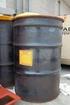 Division of Materials and Waste Management August 2015 Identifying Your Hazardous Waste As a business owner, it is important to know if you generate hazardous waste. Under Ohio EPA s rules, all wastes
Hazardous Materials Management Considerations in Healthcare
 Session No. 656 Introduction Hazardous Materials Management Considerations in Healthcare Mae Ping Grogg, MS, CSP BJC HealthCare St. Louis, MO 63110 Paul Halliburton, MS, CHMM Barnes-Jewish Hospital St.
Lids, Leaks, Labels and Location All About Satellite Accumulation Martin E. Sánchez Principal Environmental Specialist
 Lids, Leaks, Labels and Location All About Satellite Accumulation Martin E. Sánchez Principal Environmental Specialist New Jersey Department of Environmental Protection Hazardous Waste Compliance & Enforcement
EPA s proposed hazardous waste pharmaceutical regulations
 EPA s proposed hazardous waste pharmaceutical regulations November 4, 2015 By J. Timothy Ramsey The United States Environmental Protection Agency ( EPA ) published proposed regulations in the Federal Register
UNIVERSITY OF MARYLAND, BALTIMORE COUNTY HAZARDOUS WASTE DISPOSAL GUIDELINES
 UNIVERSITY OF MARYLAND, BALTIMORE COUNTY HAZARDOUS WASTE DISPOSAL GUIDELINES I. Introduction The intention of these guidelines is to provide UMBC employees with an understanding of Federal and State hazardous
Fact Sheet: Disposal of Alkaline Batteries
 Fact Sheet: Disposal of Alkaline Batteries August 1994 Disposal of Alkaline Batteries Introduction This fact sheet is intended for users of alkaline batteries. It describes how alkaline batteries should
Newport News Shipbuilding Contractor Environmental, Health and Safety Resource Manual Waste Management
 Newport News Shipbuilding Contractor Environmental, Health and Safety Resource Manual Waste Management Newport News Shipbuilding Page 1 WASTE MANAGEMENT 1. Purpose and Scope a. The purpose of this section
Hazardous Waste Generator Training
 presented by Facilities Management and the office of Hazardous Waste Generator Training Environmental Health & Safety RCRA..."It's The Law!" Hazardous Waste is: Spent material that is: READY TO BE THROWN
Treatment of Hazardous Waste On-Site by Generators
 IDEM Indiana Department of Environmental Management Office of Land Quality 100 North Senate Indianapolis, IN 46204 OLQ PH: (317) 232-8941 Guidance Treatment of Hazardous Waste On-Site by Generators The
7. Chemical Waste Disposal Procedures
 7. Chemical Waste Disposal Procedures Substances that Can and Cannot be Disposed of via Sink Drains or in Regular Solid Refuse Containers 1. It is prohibited to pour down a sink or floor drain, or place
WASTE MANAGEMENT PLAN CERTIFICATION AND COMPLIANCE FORM (GSFA Residential Energy Retrofit Program)
 Golden State Finance Authority (GSFA) 1215 K Street, Suite 1650 Sacramento, California 95814 Phone: (855) 740-8422 Fax: (916) 444-3219 www.gsfahome.org WASTE MANAGEMENT PLAN CERTIFICATION AND COMPLIANCE
5: Types of Hazardous Waste
 1. Introduction THE TEXAS A&M UNIVERSITY SYSTEM HEALTH SCIENCE CENTER CHAPTER XI HAZARDOUS WASTE DISPOSAL Hazardous waste disposal is governed by the EPA and the TCEQ through State and Federal regulations.
Hazardous Waste Containers
 ACCUMULATION START DATE CONTENTS HANDLE WITH CARE! CONTAINS HAZARDOUS OR TOXIC WASTES ACCUMULATION START DATE CONTENTS HANDLE WITH CARE! CONTAINS HAZARDOUS OR TOXIC WASTES ACCUMULATION START DATE CONTENTS
Exhibit A - Scope of Work
 Exhibit A - Scope of Work The Emergency Response and Hazardous Waste Management program responds to both emergency and non-emergency chemical spills, releases of regulated and/or hazardous materials, and
SPILL PREVENTION, CONTROL, AND COUNTER MEASURES PLAN (SPCC)
 SPILL PREVENTION, CONTROL, AND COUNTER MEASURES PLAN (SPCC) UNIVERSITY RISK MANAGEMENT Occupational and Health Programs 19 Hagood Avenue, Suite 908 Charleston SC 29425 843-792-3604 Revised: June 2015 Spill
Satellite Accumulation Areas Large Quantity Generators June 2009
 Satellite Accumulation Areas Large Quantity Generators June 2009 Large quantity generators of hazardous waste can accumulate up to 55 gallons of non-acutely hazardous waste or up to one quart of acutely
Regulated Waste Storage
 Regulated Waste Storage Storage of both hazardous and non-hazardous waste is subject to federal and state regulations. Additionally, improper storage of wastes has the potential to contaminate soil, surface
The potential to adversely affect human
 Purpose and Applicability of Regulations The potential to adversely affect human health and the environment is always present when using, storing, and transporting regulated materials. Consequently, numerous
APPENDIX G Materials Storage and Handling Guidelines
 APPENDIX G Materials Storage and Handling Guidelines 1.0 INTRODUCTION Operations at Austin-Bergstrom International Airport (ABIA) comprise several different industrial activities including aircraft, ground
Hazardous Waste Training
 Hazardous Waste Training Hazardous Waste training is an ANNUAL requirement. Please plan to recertify this training again within one year of today s date if you are still working in an area that may produce
Environment. Dealing with Hazardous Waste and Processing Effluents at Photographic Processing Facilities. Some used. photographic processing
 Environment I N F O R M A T I O N F R O M K O D A K Dealing with Hazardous Waste and Processing Effluents at Photographic Processing Facilities J-411 $10.00 Some used photographic processing materials
The Comprehensive Environmental Response,
 Purpose and Applicability of Regulations Chapter 7 The Comprehensive Environmental Response, Compensation, and Liability Act (CERCLA) was enacted by Congress in 1980 to clean up the nation s hazardous
Hazard Communication Policy
 Hazard Communication Policy Responsible Department: Office of Risk Management Responsible Administrator: Safety Manager Effective Date: January 1, 1994 Revised: March 1, 2011 Date of Scheduled Review:
Laboratory Waste Management Manual
 Laboratory Waste Management Manual Reduce, identify, store, and dispose of hazardous waste in Oregon This guidance was written in cooperation with and for Oregon s Environmental Laboratory community DEQ
The Comprehensive Environmental Response,
 Purpose and Applicability of Regulations The Comprehensive Environmental Response, Compensation, and Liability Act (CERCLA) was enacted by Congress in 1980 to clean up the nation s hazardous waste sites