
Guide to Generator Requirements of the Colorado Hazardous Waste Regulations
|
|
|
- Wilfrid Tyler
- 9 years ago
- Views:
Transcription
1 Guide to Generator Requirements of the Colorado Hazardous Waste Regulations Hazardous Materials and Waste Management Division (303) Seventh Edition August 2013

2 Purpose of this Guidance This is intended as general guidance for generators of hazardous waste and is meant to assist in compliance with the hazardous waste regulations. The guidance is not meant to modify or replace the promulgated regulations, which undergo periodic revisions. In the event of a conflict between this guidance and promulgated regulations, the regulations govern. Some portions of the hazardous waste regulations are complex and this guidance does not go into details of these complex situations. If a regulatory situation is not described in the guidance, or if clarification is desired, an official interpretation of a specific hazardous waste regulation can be requested by writing to the Hazardous Materials and Waste Management Division at the address on page iii of this guidance.

3 TABLE OF CONTENTS Contact Information... iii Web Sites... iii Introduction... 1 Rules and Regulations... 1 Fees... 2 Colorado Solid and Hazardous Waste Commission Fees... 2 Generator Fees... 2 Notification Fees... 3 Water and Air Regulations... 3 Company and Personal Liability... 3 Pollution Prevention... 4 How to Use This Booklet... 5 What is Hazardous Waste?... 6 Listed Waste... 6 Characteristic Waste... 7 Mixture and Derived-From Rules... 8 Universal Waste... 8 Management of Used Oil How do you know if you re generating hazardous waste? What are the Land Disposal Restrictions? Can generators treat their hazardous wastes? Can a hazardous waste be recycled? Generator Categories What wastes don t count towards your generator category? What are the three generator categories? Is it possible for a generator to change categories? Conditionally Exempt Small Quantity Generators What is a conditionally exempt small quantity generator of hazardous waste? What are the requirements for a conditionally exempt small quantity generator of hazardous waste? 20 Notification Making a Hazardous Waste Determination Accumulation of Hazardous Waste Shipping Hazardous Waste Off Site Employee Training Preparedness Self-Certification Small Quantity Generators What is a small quantity generator of hazardous waste? What are the requirements for a small quantity generator of hazardous waste? Notification Making a Hazardous Waste Determination Accumulation of Hazardous Waste Shipping Hazardous Waste Off Site Land Disposal Restriction Determination Employee Training Emergency Response/Preparedness Self-Certification i

4 Large Quantity Generators What is a large quantity generator of hazardous waste? What are the requirements for a large quantity generator of hazardous waste? Notification Making a Hazardous Waste Determination Biennial Report Accumulation of Hazardous Waste Shipping Hazardous Waste Off Site Land Disposal Restriction Determination Employee Training Emergency Response RCRA Air Emission Standards for Large Quantity Generators Self-Certification Program Generator Assistance Program Hazardous Waste Generator Requirements Summary Table ii

5 Contact Information Hazardous Materials and Waste Management Division Customer Technical Assistance Line (303) Toll-free outside the 303/720 area code.. (888) ext For an EPA I.D. number. (303) For a Generator Assistance Program (GAP) inspection (303) For Self-Certification questions (303) hour Emergency Spill/Release Reporting Line (877) Other Phone Numbers: National Response Center. (800) Air Pollution Control Division.. (303) Water Quality Control Division. (303) Send Questions in Writing to: Colorado Department of Public Health and Environment Hazardous Materials and Waste Management Division 4300 Cherry Creek Drive South Denver, CO FAX (303) [email protected] Please provide as much detail as possible regarding your question and the waste or process to which it applies. Web Sites Hazardous Materials & Waste Management Division Hazardous Materials & Waste Management Division, Hazardous Waste Program Water Quality Control Division Air Pollution Control Division iii

6 This page intentionally left blank. iv

7 Introduction As a result of doing business, your company may generate hazardous wastes that can cause serious health and safety problems if not handled and disposed of properly. Such wastes can cause injury or death, and they may damage or pollute Colorado s land, air and water. The Colorado Hazardous Waste Regulations (6 CCR ) are in place to protect human health and the environment from the dangers of mismanaged hazardous wastes. The regulations are designed to protect you, your co-workers, your family, and your community. Rules and Regulations In 1976, Congress passed the Resource Conservation and Recovery Act (RCRA), which directed the U.S. Environmental Protection Agency (EPA) to develop and implement a program to protect human health and the environment from improper hazardous waste management practices. The program is designed to control the management of hazardous waste from its generation to its ultimate disposal -- from cradle-to-grave. Colorado passed state laws governing hazardous waste in 1981 and has since adopted regulations that cover hazardous waste management in the state. Congress had also seen the need for states to be the primary enforcement agency for hazardous waste rules. Congress therefore set up a system for authorizing state agencies, using state rules, to implement the federal hazardous waste program in place of the U.S. Environmental Protection Agency (EPA). The Colorado Department of Public Health and Environment (the Department), acting through the Hazardous Materials and Waste Management Division (the Division), was authorized to implement the federal hazardous waste program in One of the conditions for getting that authorization requires that the state hazardous waste rules be at least as stringent as those of the EPA. There are numerous instances where Colorado rules are stricter than those of the EPA. The guide Regulations More Stringent Than Federal Regulations, available on the Division s website (see page iii of this guidance), provides more detailed information on key areas of the Colorado hazardous waste regulations that are more stringent than the federal regulations. During the legislative session, the Colorado General Assembly passed Senate Bill 116, which, among other things, created the Hazardous Waste Commission. In the past, the duties of the Commission were the responsibility of the Committee on Hazardous Waste and the Colorado State Board of Health. The Hazardous Waste Commission was renamed the Solid and Hazardous Waste Commission during the legislative session with the passage of Senate Bill 171. This bill transferred rulemaking authority for solid waste from the Board of Health to the Solid and Hazardous Waste Commission. Rules previously adopted by the Board of Health remain in effect unless amended or repealed by the Solid and Hazardous Waste Commission (the Commission). The Commission is responsible for developing and adopting rules pertaining to solid waste and hazardous waste management. The Commission is also required to conduct public meetings pertaining to hazardous waste issues, issue interpretive rules and hear appeals of administrative law judges' determinations regarding the amount of administrative penalties. The Commission is composed of nine members appointed by the Governor who equally represent industry, the public, and government or academia. 1

8 In some circumstances when the EPA adopts new hazardous waste rules, it enforces the rules until Colorado incorporates the new rules into state regulations. Once Colorado s Solid and Hazardous Waste Commission formally adopts the new rules, the Department becomes the primary regulatory agency for those new regulations. In other cases, the EPA may adopt new rules that are less stringent than the current rules. Since authorized states are not required to adopt rules that are less stringent, and may adopt rules that are more stringent, it is very important for companies that generate hazardous waste to become familiar with both state and federal hazardous waste regulations and to be aware of any changes and differences in these regulations. Fees Colorado Solid and Hazardous Waste Commission Fees The Commission is required to generate enough revenue through the imposition of fees to pay for the reasonable actual costs of the Commission s activities. The Commission adopts rules each fiscal year that set the fees according to the estimated costs for the upcoming year. These fees are billed annually and are due thirty days after the date of receipt. Commission fees for hazardous waste management, as of the date of this publication, are: $65 for small quantity generators of hazardous waste; $210 for large quantity generators of hazardous waste; $70 for transporters of hazardous waste; $400 for non-commercial treatment, storage or disposal facilities; $600 for commercial treatment, storage or disposal facilities. 6 CCR , Part 6 Generator Fees The Solid and Hazardous Waste Commission adopted rules pertaining to the assessment of fees to offset regulatory oversight program costs from facilities that treat, store or dispose of hazardous waste under a permit or interim status and from generators of hazardous waste. The Commission may adjust these fees, either on a permanent or temporary basis. These fees are billed annually with the Solid and Hazardous Waste Commission fees and are due thirty days after the date of receipt. The hazardous waste generator fees, as of the date of this publication, are: $200 $140* per year for a conditionally exempt small quantity generator of hazardous waste generating more than 3 gallons per year of a F001, F002, F004 and/or F005 listed waste. $625 $440* per year for a small quantity generator of hazardous waste; $3,200 $2240* per year for a large quantity generator of hazardous waste. *Temporary fee reduction for calendar year 2013; current fees are available in 6 CCR , section

9 Conditionally exempt small quantity generators that operate at the small quantity generator level for four or more months of the year will be assessed the small quantity generator fee. Similarly, small quantity generators that operate at the large quantity generator level for four or more months of the year will be assessed the large quantity generator fee. Section (3.5) C.R.S., 6 CCR , sections and Notification Fees Small quantity and large quantity generators submitting a new notification under Part 99 of the hazardous waste regulations must submit a notification fee with their Colorado Hazardous Waste Notification form. If you submit a subsequent notification that downgrades your hazardous waste notification status (for example, from a large quantity generator to a small quantity generator), you must also submit the notification fee with your updated form. Subsequent notifications that are providing or updating other information (for example, contact name change) will not be assessed any fee unless you are also downgrading your notification status. If you submit a subsequent notification that upgrades your notification status, you will not be assessed the notification fee. Conditionally exempt small quantity generators that generate three (3) or more gallons per calendar year of hazardous waste codes F001, F002, F004 and/or F005 (halogenated and nonhalogenated solvents) are required to notify the Division under Part 99 of the Colorado hazardous waste regulations and obtain an EPA identification number. However, you are not required to pay the notification fee. The notification fee, as of the date of this publication is $120 $84*. *Temporary fee reduction for calendar year 2013; current fees are available in 6 CCR , section When applicable, the notification fee must accompany the completed and signed notification form. The Division will not process the notification form without the notification fee. Do not submit the Commission or Generator fee with the notification form unless told to do so by the Division. 6 CCR , section Water and Air Regulations This guidance does not cover the clean air and clean water requirements that also apply to many businesses. These regulations and other information are available on the Department s website or by contacting the appropriate division using the information on page iii of this guidance. Company and Personal Liability Historically, Colorado s hazardous waste compliance and enforcement program focused on the companies that generated the greatest amount of hazardous waste. In recent years, however, 3

10 public attention has been focused on the potential for environmental and health problems that may result from mismanaging even small quantities of hazardous waste. For example, small amounts of hazardous waste dumped on the land may seep into the earth and contaminate the underground water that supplies drinking water wells. Companies are liable for clean-up costs from contamination resulting from improper waste management activities. Even those companies classified as conditionally exempt small quantity generators can be held responsible for not complying with the hazardous waste regulations. In addition, non-compliance with the Colorado hazardous waste regulations can result in fines up to $25,000 a day per violation, as well as possible criminal charges. Pollution Prevention Management of hazardous wastes can be an expensive and complicated part of a company s operations. The best way to eliminate or reduce the burden of managing hazardous waste is to generate less waste in the first place. While it may be impossible for your business to stop producing hazardous waste, there are many things you can do to reduce the amount generated. By now, most small and large businesses have learned about the benefits of pollution prevention and waste reduction. The Colorado Pollution Prevention Act of 1992 made pollution prevention "the environmental management tool of first choice" in Colorado. By reducing the amount of hazardous waste generated, you not only solve the immediate problem of what to do with that waste, but you reduce your legal liability for future discoveries of contamination that may be attributable to you. Numerous materials and products that generate hazardous waste have safer substitutes. There are also many proven methods of operating more efficiently that result in reducing the amount of waste generated. These include inventory control and good housekeeping, as well as improved equipment and processes. Many of Colorado s larger industries have embarked on programs to prevent pollution and have realized a variety of benefits. For more information about pollution prevention in your business, contact the Department s Pollution Prevention Program. This program is separate from the regulatory and compliance programs of the Department and offers educational materials and services. For information about pollution prevention, call (303) , [email protected] or visit their website at 4

11 How to Use This Booklet This booklet helps you understand what hazardous waste is and if you are generating hazardous waste at your facility. If you are, it will help you determine which of three regulatory classifications you fit into. Once you know which classification you fall under, this booklet will guide you through the regulations that apply to that category of generator. Colorado is authorized by the US EPA to implement the hazardous waste program. There are numerous instances where Colorado rules are stricter than those of the EPA, so you must be familiar with Colorado s regulations for all waste management activities occurring in this state. Regulatory requirements listed in the booklet are followed by a regulatory citation beginning with 6 CCR These citations tell you where to look in the Colorado Code of Regulations (CCR) for the specific regulatory language pertaining to that requirement. Knowing the specific regulations that apply to your company is vital in maintaining your company s compliance with the Colorado hazardous waste regulations. An unofficial copy of the Colorado Hazardous Waste Regulations is available on the Internet at You may also obtain a hard copy of these regulations for a fee by following the Frequently Asked Questions link on that web page. Official publication of the regulations occurs on the Colorado Secretary of State website at This booklet provides an overview of the requirements for hazardous waste generators. There are numerous other guidance documents, policies and related materials available on the Division s website at to assist you in determining how the regulations apply to you. 5

12 What is Hazardous Waste? A hazardous waste is a solid, semi-solid, liquid or contained gaseous material that can no longer be used or that no longer serves the purpose for which it was produced and could pose dangers to human health and the environment after it is discarded. Hazardous waste can be one of two types. Listed Waste Your company s waste is considered hazardous if it appears on one of four lists in the Colorado Hazardous Waste Regulations. Listed wastes are hazardous regardless of their concentration. F listed hazardous wastes are wastes from non-specific sources such as spent solvents or wastewater treatment sludges from electroplating. K listed hazardous wastes are wastes from a specific source such as wastewater treatment sludge from the production of chrome yellow and orange pigments. P and U listed hazardous wastes are unused off-specification or discarded commercial chemical products, or Any residue remaining in a container that held commercial chemical products in the P or U listing, or Any residue or contaminated media resulting from the cleanup of a spill of a commercial chemical product in the P or U listing, or Any unused formulation containing one or more active ingredients appearing on the P or U list. 6 CCR , Part 261, Subpart D All P-listed wastes are acutely hazardous wastes, as are specified dioxin wastes (F020, F021, F022, F023, F026 and F027). An acutely hazardous waste is any waste that has been found to be fatal to humans or animals in low doses or can cause or contribute to an increase in serious irreversible, or incapacitating reversible, illness. 6 CCR , section Since chemicals are often identified by many different names, the Division recommends that the Chemical Abstract Number (CAS) and a list of chemical synonyms be used to identify the correct chemical. The EPCRA/CERCLA/CAA 112(r) Consolidated List of Lists is one reference that identifies chemicals by common synonyms. The List of Lists is available on EPA s website at You may also want to seek advice from a chemist or environmental consultant. Determining if a compound is listed can be complicated, and you can t rely solely on the CAS number. CAS numbers were added to the tables in section as an identification aid in 1986 (51 FR 28296). If the CAS number for your waste is identical to the CAS number in the P- or U-list, then the listing obviously applies to your waste. But the P- and U-listings apply to all commercial chemical products or manufacturing chemical intermediates having the generic 6

13 names listed in section , and to any off-specification commercial chemical products or manufacturing chemical intermediates that would have the generic name listed if it met specifications, regardless of the CAS number. (EPA RCRA Online 14175, ) Confusion may also be caused by salts 1 or esters 2 of a compound listed in section Some listings specify a parent compound along with their salts and/or esters (e.g., U240-2,4-D, salts & esters ), but others do not specify that the salts or esters are included. If a parent compound is listed, but the salt or ester of that compound is not, then only the parent compound is covered by the listing. (EPA RCRA Online 12155) Isomers 3 add to the confusion. In some cases, EPA chose to include all isomers of a chemical by listing the mixed isomer or generic name of the compound. If the generic mixed isomer name and CAS number of a compound appear on one of the lists, then any individual isomers of that compound and all mixtures of isomers of that compound meet the listing. But if a specific isomer is listed, then only that isomer is covered by that particular listing. (EPA RCRA Online 13760) Characteristic Waste Even if a waste does not appear on one of the lists, it is considered hazardous if it falls under one of the following hazardous waste categories: Ignitable - EPA hazardous waste number D001 It is a liquid with a flash point less than 140F (60 o C), It is not a liquid but is capable of causing a fire that burns so vigorously that it creates a hazard, It is an ignitable compressed gas, or It is an oxidizer as defined by the U. S. Department of Transportation. Corrosive - EPA hazardous waste number D002 It is a liquid and has a ph of less than or equal to 2 or greater than or equal to 12.5, or It is a liquid and dissolves steel. Reactive - EPA hazardous waste number D003 It is unstable, It is explosive, It undergoes rapid or violent chemical reaction, It reacts violently with water, forms potentially explosive mixtures with water or produces toxic gases, vapors or fumes when mixed with water, or 1 Salt = compounds that result from the neutralization reaction of an acid and a base. 2 Ester = organic compounds formed when an organic acid and an alcohol combine and release water. 3 Isomer = any of two or more substances that are composed of the same elements in the same proportions, but differ in properties because of differences in the arrangement of atoms. Isomers do not necessarily share similar properties. 7

14 It is a cyanide or sulfide bearing waste which, when exposed to ph conditions between 2 and 12.5, can generate toxic gases, vapors or fumes. The Division considers a waste to be reactive if it contains: A total releasable sulfide concentration of 500 mg H 2 S/kg, or A total releasable cyanide concentration of 250 mg HCN/kg. Toxic - EPA hazardous waste numbers D004 through D043 It is a metal, pesticide, herbicide, or organic chemical at a concentration that exceeds its regulatory limit using the Toxicity Characteristic Leaching Procedure (TCLP). Such wastes are likely to leach dangerous concentrations of certain known toxic chemicals into groundwater, potentially contaminating drinking water supplies. 6 CCR , Part 261, Subpart C Mixture and Derived-From Rules The mixture and derived-from rules operate differently for listed waste and characteristic waste. The mixture rule essentially states that unless it meets one of the regulatory exclusions, a mixture of any amount of nonhazardous solid waste and any amount of listed hazardous waste is listed hazardous waste. A mixture of nonhazardous solid waste and characteristic-only hazardous waste is hazardous waste if the mixture exhibits one or more hazardous characteristics. Remember, however, that dilution is prohibited as a substitute for treatment in order to get around land disposal treatment standards or disposal prohibitions. Mixing nonhazardous solid waste with hazardous waste is a form of dilution. The mixture rule applies to the mixture at the point the material is determined to be a waste, not to its status while still a useful product. There is a difference between a chemical that is mixed with other materials in order to use the chemical for its intended purpose versus mixing the chemical after it is determined to be a waste. The derived-from rule applies to treatment residues and essentially states that residue from the treatment of a listed hazardous waste remains a listed hazardous waste. Treatment residues and materials derived from characteristic hazardous wastes are hazardous if they exhibit a hazardous characteristic. 6 CCR sections 261.3(a), 261.3(b), 261.3(c), 261.3(g) and The guidance document Hazardous Waste Identification, available on the Division s website (see page iii of this guidance), provides more detailed information on the mixture and derivedfrom rules. Universal Waste Colorado includes the following six hazardous wastes in the universal waste regulations: Waste batteries. Certain pesticides. 8

15 Mercury-containing devices. Aerosol cans that contain hazardous waste when discarded. Mercury-containing lamps. Electronic devices and components derived from the disassembly of electronic devices. 6 CCR , Part 273 The U.S. EPA originally enacted the federal universal waste regulations in May 1995 and included waste batteries, certain pesticides and mercury thermostats. Mercury-containing lamps were added to the federal rule in 1999, while mercury thermostats was broadened to include other mercury-containing equipment in The Colorado Solid and Hazardous Waste Commission adopted state universal waste regulations for waste batteries, certain pesticides and mercury thermostats as 6 CCR Part 273 in October Since Part 273 includes provisions for adding additional state-specific waste types, Colorado added aerosol cans containing hazardous waste in 1996; mercury-containing lamps in 1999; broadened mercury thermostats to include other mercury-containing devices in 2000; and added electronic devices and components in While universal wastes are still hazardous wastes, Part 273 provides an alternative set of reduced management standards for these widely generated hazardous wastes. These regulations are designed to encourage recycling and decrease the amount of these wastes illegally sent to municipal solid waste landfills, thus reducing a potential threat to public health and the environment. Wastes managed under the universal waste rule do not count toward your generator category. Anyone that generates a universal waste, or the owner/operator of a facility that consolidates universal waste from other universal waste handlers before sending it to a destination facility, is called a universal waste handler. There are two categories of universal waste handler. If you accumulate less than 5000 kilograms of universal waste, calculated by adding all types of universal waste onsite at any one time, you are a small quantity handler of universal waste. If you accumulate more than 5000 kilograms of universal waste onsite at one time, you are a large quantity handler. The requirements for both handler categories are the same except that a large quantity handler must also notify the Division of their universal waste handling activities using the Colorado Hazardous Waste Notification form, even if they have previously notified and obtained an EPA identification number. In addition, large quantity handlers are required to keep records of universal wastes shipped to and from their facility. As a small or large quantity universal waste handler, you may accumulate universal wastes onsite for up to one year in order to facilitate recycling or proper disposal. You must manage your wastes in a way that prevents releases, but if a release occurs, you must clean it up promptly. Containers must be kept in good condition, closed and of the appropriate type to contain the waste. Individual wastes or the waste accumulation container must be labeled with the words Used (waste type), Waste (waste type) or Universal Waste (waste type). Your staff must be trained in waste handling requirements for the types of wastes managed onsite and in emergency response actions relative to their job responsibilities. You can only conduct treatment of universal waste as specifically allowed by Part 273. If conducting treatment, you 9

16 must have written procedures and train your staff to follow those procedures. Your written procedures must include the type(s) of equipment to be used; how to use the equipment; operation and maintenance of the equipment; segregation of the waste after treatment; precautions to protect your staff; and a description of waste characterization, management and disposal requirements. Universal waste can only be shipped to another universal waste handler or to an appropriate destination facility for recycling or disposal. Universal waste can t be disposed of onsite or put in the regular trash. Compliance with the reduced requirements of Part 273 is optional. If you choose to manage your universal wastes under Part 273 but fail to meet those requirements, you remain subject to and must comply with all applicable requirements of the Colorado hazardous waste regulations Parts 260 through 268, 99 and 100. The Universal Waste Rule compliance bulletin and numerous waste-specific compliance bulletins are available on the Division s website (see page iii of this guidance) and provide more detailed information regarding the management of universal waste. Management of Used Oil "Used oil" means any oil that has been refined from crude oil or any synthetic oil made from coal, shale or polymer-based starting material that has been used and, as a result of such use, is contaminated by physical or chemical impurities. The U.S. EPA enacted the used oil regulations effective March 8, 1993, placing them under the scope of the Resource Conservation and Recovery Act (RCRA). The Colorado Solid and Hazardous Waste Commission adopted the used oil regulations as 6 CCR Part 279, effective October 31, Although EPA evaluated used oil for possible listing as a hazardous waste, the agency determined that used oil that is recycled does not pose a substantial hazard to human health or the environment when the used oil is managed properly from the time it is generated until it is recycled. Therefore, used oil destined for recycling is generally not regulated as hazardous waste unless it is mixed with hazardous waste. Used oil that exhibits one or more hazardous characteristics by its own nature is managed as used oil when recycled, not hazardous waste. Since the used oil management standards are designed to control the accumulation, storage, transportation and general management of used oil, used oil is not counted towards your hazardous waste generator category. Used oil that will be recycled is managed under Part 279 of the Colorado Hazardous Waste Regulations (6 CCR ). As a generator of used oil managed under these regulations, you must label all tanks, containers, fill ports leading to remote tanks, drain pans and anything else that contains used oil, even temporarily, with the words used oil. Tanks and containers of used oil that are located outdoors must be kept closed except when used oil is being added or removed. It s a best management practice to keep tanks and containers closed even when stored indoors. Tanks and 10

17 containers must be kept in good condition and not leaking. If a release occurs, the used oil and any contaminated media should be cleaned up promptly. In some cases, you may be subject to EPA s Spill Prevention, Control and Countermeasure (SPCC) requirements and/or the storage tank requirements of the Division of Oil and Public Safety at the Colorado Department of Labor and Employment. The Management Standards for Used Oil Generators guidance document, available on the Division s website (see page iii of this guidance), provides more detailed information on the management of used oil. Used oil that will not be recycled, and soil or groundwater contaminated with used oil, are regulated as hazardous waste if the waste exhibits one or more hazardous waste characteristics or if the used oil contains a listed hazardous waste. If the waste does not exhibit a characteristic or contain a listed waste, then the waste can be managed in compliance with the Colorado solid waste regulations. How do you know if you re generating hazardous waste? You are required to make a hazardous waste determination on all solid wastes generated at your facility at the time the waste is first generated. You may utilize the services of a consultant or waste broker, but you are ultimately responsible for ensuring the determination is accurate and timely. There are three basic steps in determining if your waste is a hazardous waste: Determine if your waste meets the definition of solid waste. A material is a solid waste if it is disposed of, burned, incinerated, or abandoned. Most materials are solid waste even if they will be recycled. If so, determine if your waste is specifically excluded from being a solid or hazardous waste. The regulations list 21 materials that are specifically excluded from the definition of solid waste and 15 materials that are specifically excluded from the definition of hazardous waste in section If not excluded, determine if your waste is a listed or characteristic hazardous waste. The guidance documents Hazardous Waste Identification and Hazardous Waste Exclusions, available on the Division s website (see page iii of this guidance), provide more detailed information on making this determination. You should also obtain a copy of the Colorado Hazardous Waste Regulations (6 CCR ), referring to Part 261 which describes the listing and identification of hazardous wastes. 1. Apply knowledge of your process and use Material Safety Data Sheets (MSDS) for information regarding the products you use to determine if hazardous waste is generated at your facility. Be aware that the MSDSs may not provide all the information that you need to make a hazardous waste determination. Although chemicals that pose an extreme health or physical hazard must be listed on the MSDS in concentrations less than 1%, most chemicals are not 11

18 listed until the chemical comprises 1% or greater of the total composition of the product. 1% = 10,000 parts per million, but many hazardous waste constituents are regulated at any concentration or at concentrations in the parts per billion range. Thus, ingredients in a product that have the potential to generate a hazardous waste may not be listed on the MSDS. MSDSs are more useful in determining physical characteristics like flashpoint or ph. 2. Send a representative sample of the waste to a lab that is familiar with the analytical test methods for hazardous waste. 3. Talk to your trade organization. They should be familiar with the types of waste you are likely to generate. 4. Call the Hazardous Materials and Waste Management Division, Customer Technical Assistance Line at (303) They can provide guidance to assist you in making this determination. Your business is likely to produce hazardous waste if you: Use petroleum products. Use dyes, paints, printing inks, lacquer thinners, solvents or cleaning fluids. Use pesticides or other related chemicals. Use materials that dissolve metals, paint, wood, paper or clothing. Use flammable materials. Use materials that burn or itch upon contact with skin. Use materials that bubble or fume upon contact with water. Receive products accompanied by a shipping paper indicating the product is hazardous. What are the Land Disposal Restrictions? Hazardous wastes require treatment prior to being land disposed to protect human health and the environment. The Land Disposal Restrictions (LDR) require fundamental chemical changes to the waste to diminish the toxicity and mobility of the waste, rather than just a barrier between the waste and groundwater. The LDR treatment standards apply to all characteristic and listed hazardous waste. Waste that meets the LDR treatment standards may be disposed of in a permitted hazardous waste landfill without additional treatment. Wastes that do not meet the standards must be treated until all applicable treatment standards have been met. The hazardous waste generator is responsible for determining if their waste has to be treated before it can be land disposed. You can make the LDR determination using your knowledge of the waste, analytical testing of the waste, or both. Many generators rely on their hazardous waste transporter or their designated disposal facility to make the LDR determination and to complete the LDR form. However, it remains your responsibility to ensure that a correct LDR determination is made and that the LDR form is properly completed. Depending on the outcome of the determination, either a certification or a notification of this determination must be included with each initial shipment of waste to each designated facility. 12

19 A copy of the completed LDR form, and all records and analytical data used to make the LDR determination, must be kept in your files for at least three years. If you perform onsite treatment of your waste or operate a wastewater treatment unit, you must maintain a one-time LDR notification in your files for at least three years from the date the waste was last treated. 6 CCR , Part 268 Guidance on the land disposal restrictions is available from EPA, including Introduction to Land Disposal Restrictions at and Land Disposal Restrictions: Summary of Requirements at Can generators treat their hazardous wastes? Treatment means any method, technique or process that changes the physical, chemical or biological character or composition of hazardous waste so as to neutralize the waste or to render the waste less hazardous, safer for transport, more amenable for recovery, reuse or storage, or reduced in volume. 6 CCR , section Treatment is primarily to make management of the waste safer and/or less expensive, not to remove the waste from hazardous waste regulation. Even after treatment, most hazardous wastes must still be disposed of at a permitted hazardous waste facility. Treatment usually requires a permit, though there are several exceptions for generators of hazardous waste if certain conditions are met. In most cases, these conditions include developing and maintaining an onsite waste analysis plan and complying with requirements applicable to accumulation tanks and containers. Common options for generators include: A conditionally exempt small quantity generator may: Treat their hazardous waste onsite without a permit and without notifying the Division. It is advisable to follow sound practices and have a thorough understanding of the chemical and physical reactions that may occur during treatment. Site specific training is encouraged. The facility must be maintained and operated to minimize the possibility of a fire, explosion or any unplanned release. The waste must be transported to a disposal facility or legitimate recycling facility that is permitted to take it. Waste can t be disposed of onsite. 6 CCR , section (a)(3) and Any generator may conduct the following without a treatment permit: Add absorbent material to an accumulation container. The waste must be managed in containers that are in good condition. 13

20 The waste must be compatible with the absorbent. Must comply with the accumulation container requirements. 6 CCR , section (a)(9) Conduct elementary neutralization of wastes that are hazardous only because they are corrosive. The waste must not exhibit any other characteristic (i.e., toxicity). Treatment must occur in a tank, tank system, container or transport vessel. The land disposal restrictions require treatment of the underlying hazardous constituents to meet the universal treatment standards. A one-time land disposal restriction (LDR) notification and certification must be submitted to the Division with a copy kept in the onsite files for at least three years. 6 CCR , section (a)(6) Treat waste to meet land disposal restriction (LDR) treatment standards. The waste must be treated to meet at least one LDR treatment standard. Treatment must occur in a tank, container or containment building. Must comply with the accumulation tank/container requirements. Must modify the waste analysis plan, contingency plan, emergency procedures and training plan to reflect changes in processes required for treatment. A one-time LDR notification must be kept in the onsite files for at least three years. 6 CCR , section 268.7(a)(5) Treat waste under the permit-by-rule provisions. Treatment must occur in an accumulation tank or container. Must comply with the accumulation tank/container requirements. Must modify the waste analysis plan, contingency plan, emergency procedures and training plan to reflect changes in processes required for treatment. Thermal treatment and treatment of reactive wastes are not allowed. 6 CCR , section (d) Treat hazardous wastewater in a wastewater treatment unit. The wastewater must be regulated as hazardous waste. Treatment must occur in a tank or tank system that is a dedicated part of the wastewater treatment unit. Discharge from the unit must be regulated by the Department s Water Quality Control Division and/or local wastewater treatment authority. 14

21 A one-time LDR notification must be kept in the onsite files for at least three years. 6 CCR , sections (a)(6) and Universal waste treatment including discharging batteries, puncturing aerosol cans, draining mercury and removing mercury ampules from mercury-containing devices, crushing mercury-containing lamps and disassembling or size-reducing electronic devices and components. Must be done in a manner to prevent releases of hazardous constituents to the environment. Must have written procedures for conducting treatment activity. Employees must be thoroughly familiar with the written procedures and waste handling techniques specific to their job duties. 6 CCR , Part 273 It is important that you check the regulations very carefully before performing treatment of your hazardous waste, especially if you will do so without a permit from the Division. During the permitting process, the Division conducts an extensive review of the waste analysis plan, proposed treatment methods, etc. Without this oversight, you must conduct an honest evaluation of your understanding of the characteristics of your waste, potential chemical reactions and required treatment standards. You must also be aware of other regulations that apply to these activities, such as wastewater discharge, air emissions permits, OSHA health and safety, etc. The guidance document Treatment of Hazardous Waste by Generators, available on the Division s website (see page iii of this guidance), provides more detailed information on allowed waste treatment activities. Can a hazardous waste be recycled? A material is recycled if it is used, reused or reclaimed. These three terms have specific regulatory definitions. A material is used or reused if it is either employed as an ingredient in an industrial process to make a product or if it is employed as an effective substitute for a commercial product without being reclaimed first. A material is reclaimed if it is processed to recover a usable product or if it is regenerated. Wastes are regenerated when they are processed to remove contaminants in a way that restores them to their usable condition. To encourage legitimate recycling, the Colorado hazardous waste regulations provide reduced requirements for certain activities. When a material is recycled, its regulatory classification depends on two factors: what type of material is being recycled and what type of recycling is occurring. Some wastes that are recycled fall out of regulation as hazardous waste completely, but most just fall out of the requirement to obtain a treatment permit. Generators of recyclable materials are subject to the same regulations as other generators of hazardous waste and must follow all of the applicable requirements of Part 262 of the regulations. While generation and storage of a recyclable hazardous waste is regulated, the 15
22 recycling unit itself is generally exempt from hazardous waste regulation. If the waste is immediately put into the recycling unit, it is not necessary to manage the recycling unit under the generator requirements. The Division interprets immediately in this case to mean within 24 hours of generation. On the other hand, recyclable hazardous wastes that are accumulated prior to being placed in the recycling unit must be managed as any other hazardous waste, including container or tank labeling and accumulation limits. Because there are significant economic incentives to manage hazardous materials outside of the hazardous waste regulatory system, there is a potential for some handlers to claim that they are recycling, when in fact, they are conducting waste treatment, storage or disposal in the guise of recycling. The Solid and Hazardous Waste Commission has adopted regulations that formalize the criteria used to determine if legitimate recycling is occurring. The four general criteria are: The material provides a useful contribution to the recycling process or to a product or intermediate of the recycling process, and the recycling process produces a valuable product or intermediate. The recycling process yields a valuable product or intermediate that is sold to a third party or is used by the recycler or the generator as an effective substitute for a commercial product or as a useful ingredient or intermediate that is fed directly into a manufacturing process. The material to be recycled is managed as a valuable commodity. The product of the recycling process does not contain significant concentrations of any hazardous constituents that are not found in analogous products, does not contain significantly elevated levels of any hazardous constituents that are found in analogous products and does not exhibit a hazardous waste characteristic that analogous products do not exhibit. Generators must maintain documentation, such as a contract, demonstrating that there is a known market for the material and that the recycling of their hazardous waste is legitimate. 6 CCR section 261.2(f) The guidance document Hazardous Waste Recycling, available on the Division s website (see page iii of this guidance), provides more detailed information on recycling and reclamation requirements. 16
23 Generator Categories There are three hazardous waste generator categories. These categories are based on the cumulative amount of hazardous waste generated per calendar month, measured in kilograms. 6 CCR sections 261.5(a) and In order to measure your hazardous waste, you may need to convert from gallons or pounds to kilograms. For solids, 2.2 pounds is equivalent to 1 kilogram. In order to measure your liquid wastes, which are commonly measured in gallons, you will need to convert from gallons to kilograms. To do this, you must know the density or specific gravity of the liquid. Then multiply the density/specific gravity by 3.79 to calculate kilograms per gallon. The Material Safety Data Sheet (MSDS) should list the before-use density and/or specific gravity of the liquid. For most wastes, this is an adequate approximation of the after-use density of the liquid for this calculation. A rough guide is that about half of a 55-gallon drum of waste with a density similar to water (density = 1.0) weighs about 100 kilograms (220 pounds); about five 55-gallon drums of a waste with a density similar to water weighs about 1,000 kilograms (2,200 pounds). It is important to calculate the weight of your particular wastes because there can be large differences in quantity based on the density of the waste. For example, tetrachloroethylene (density = 1.62) weighs 6.15 kilograms per gallon or about 338 kilograms (743 pounds) per drum, while toluene (density = 0.86) only weighs 3.27 kilograms per gallon or about 180 kilograms (396 pounds) per drum. What wastes don t count towards your generator category? 1. Wastes that are specifically exempted from counting. Examples include lead-acid batteries that will be reclaimed, scrap metal that will be recycled, used oil managed under the used oil provisions of 6 CCR , Part 279 and universal wastes managed under the universal waste provisions of 6 CCR , Part Wastes that remain in an empty container that has been thoroughly emptied through conventional means such as pouring or pumping. 3. Wastes that are reclaimed continuously onsite without storing prior to reclamation, such as dry cleaning solvents. 4. Wastes that are left as residue in the bottom of tanks storing products if the tank continues to store these products and if the residue is not removed from the product tank. 5. Wastes that are managed in an "elementary neutralization unit," a "totally enclosed treatment facility, or a "wastewater treatment unit," without being stored in containers first. (See 6 CCR , section for the definitions of these units.) 6. Wastes that are discharged directly to Publicly Owned Treatment Works (POTWs) without being stored or accumulated first. Discharges to a POTW must comply with the Clean Water 17
24 Act. POTWs are public utilities, usually owned by the city, special districts or the county, that treat industrial and domestic sewage for disposal (i.e., wastewater treatment plant, sewage treatment plant). 7. Wastes that have already been counted once during the calendar month that are treated onsite or reclaimed in some manner, and used again. For example, solvent that is re-distilled onsite. What are the three generator categories? Conditionally Exempt Small Quantity Generators (CESQG) If you generate no more than 100 kilograms (about 220 pounds or 27 gallons) of hazardous waste and no more than 1 kilogram (about 2.2 pounds) of acutely hazardous waste in any calendar month, you are a conditionally exempt small quantity generator of hazardous waste. See page 20 in this guidance for the Colorado hazardous waste requirements for conditionally exempt small quantity generators. Small Quantity Generators (SQG) If you generate more than 100 but less than 1,000 kilograms (between 220 and 2,200 pounds, or about 27 to 270 gallons) of hazardous waste and no more than 1 kilogram (about 2.2 pounds) of acutely hazardous waste in any month, you are a small quantity generator of hazardous waste. See page 24 in this guidance for the Colorado hazardous waste requirements for small quantity generators. Large Quantity Generators (LQG) If you generate 1,000 kilograms (about 2,200 pounds, or 270 gallons) or more of hazardous waste or more than 1 kilogram (about 2.2 pounds) of acutely hazardous waste in any month, you are a large quantity generator of hazardous waste. See page 37 in this guidance for the Colorado hazardous waste requirements for large quantity generators. Is it possible for a generator to change categories? Yes, a generator can change categories. Because the category is related to the cumulative amount of hazardous waste produced on a monthly basis and/or the amount of waste onsite, this amount may vary from month to month. Small and large quantity generators, and conditionally exempt small quantity generators that generate three or more gallons per calendar year of hazardous waste codes F001, F002, F004 and/or F005, must notify the Division of their hazardous waste activities and obtain an EPA identification number. Part 99(e) of the Colorado hazardous waste regulations was modified to clarify that persons who have previously filed a notification of hazardous waste activity are required to file an updated notification whenever their generator status, location, facility ownership, facility contact and/or general description of activities change. To minimize the impact on generators whose status changes throughout the calendar year, the Colorado Hazardous Waste Notification Form was modified to include the option to notify at their primary generation status and to also identify if 18
25 they are an episodic generator at a higher status for four or more months or less than four months in a calendar year. Updated notifications are not required solely for changes in the types of the hazardous waste generated. An updated notification should be submitted to the Division as soon as possible. The option to delay notification until the annual Commission fee is due was eliminated. 6 CCR , sections 99(e), and
26 Conditionally Exempt Small Quantity Generators A generator of hazardous waste may change categories since the category is related to the cumulative amount of waste generated on a monthly basis and/or the amount of waste onsite. This amount may vary from month to month. What is a conditionally exempt small quantity generator of hazardous waste? A conditionally exempt small quantity generator of hazardous waste is one that generates no more than 100 kilograms (about 220 pounds or 27 gallons) of hazardous waste and no more than 1 kilogram (about 2.2 pounds) of acutely hazardous waste in any calendar month. A conditionally exempt small quantity generator may accumulate up to 1,000 kilograms of non-acutely hazardous waste onsite at any one time. If you exceed the generation or accumulation limits for non-acutely hazardous waste, you become subject to the requirements applicable to small quantity generators and are a non-permitted storage facility subject to enforcement. If you exceed the generation or accumulation limits for acutely hazardous waste, you become subject to the requirements applicable to large quantity generators. 6 CCR , section What are the requirements for a conditionally exempt small quantity generator of hazardous waste? Notification 1. A conditionally exempt small quantity generator of three (3) gallons or more in a calendar year of used solvents associated with hazardous waste codes F001, F002, F004, and/or F005 must file for and receive an Environmental Protection Agency identification number (EPA I.D. number). You obtain an EPA I.D. number by completing the Colorado Hazardous Waste Notification form and submitting it to the Division. If the form is complete, the Division will issue a unique EPA I.D. number to your facility. Conditionally exempt small quantity generators are not required to pay the notification fee with a new notification. The form is available on the Division s website or by contacting the Division s Notification Coordinator (see page iii of this guidance). 6 CCR , sections 261.5(b)(2), and The EPA I.D. number is assigned to the facility and stays with the site (i.e., the EPA I.D. number is address-specific). If the facility changes ownership, a revised notification form must be submitted to notify the Division of the change in ownership. The facility's EPA I.D. number will not change. If you move your facility to a new location, you must notify the Division of the new address and submit a new notification form. That facility will receive a new EPA I.D. number that is unique to the new location. 3. Part 99(e) of the Colorado hazardous waste regulations was modified to clarify that persons who have previously filed a notification of hazardous waste activity are required to file an 20
27 updated notification whenever their generator status and/or general description of activities change. An updated notification should be submitted to the Division as soon as possible. The option to delay notification until the annual Commission fee is due was eliminated. Updated notifications are not required solely for changes in the types of hazardous waste generated. 4. A conditionally exempt small quantity generator may generate hazardous waste episodically at the level of a small or large quantity generator. Your facility must be in compliance with the appropriate generator requirements for any month during which you operate at that level. You are considered to be a small or large quantity generator until all waste generated during any month you met or exceeded the limits of that generator category is transported off site to a designated facility. To minimize the impact on generators whose status changes throughout the calendar year, the Colorado Hazardous Waste Notification Form was modified to include the option to notify at your primary generation status and to also identify if you are an episodic generator at a higher status for four or more months or less than four months in a calendar year. 6 CCR , Part 99 An EPA I.D. number is NOT a hazardous waste permit. This number just identifies your hazardous waste activities for the regulatory agency. Note: Conditionally exempt small quantity generators that do not generate hazardous waste codes F001, F002, F004 and/or F005 are not required to file for or receive an EPA I.D. number, though they may choose to do so for other business reasons. 6 CCR , section 261.5(b)(1) One-Time Notification If a facility conducts a one-time cleanout of old chemicals, has a spill or has an unusual amount of waste generated due to a change in their process, they can obtain a one-time EPA I.D. number by submitting a completed Colorado notification form with the appropriate box checked in section 10.A.2. The notification fee must accompany the completed form if you are notifying as a small or large quantity generator. The EPA I.D. number is recorded in the notification database, but is not kept active for more than one month. If you need to keep this EPA I.D. number active for a longer period of time, you should follow the regular notification procedures and then notify the Division when the number is no longer needed. Making a Hazardous Waste Determination 1. A conditionally exempt small quantity generator must make a hazardous waste determination for all wastes generated. 6 CCR , sections 261.5(g)(1) and Although a conditionally exempt small quantity generator is not required to keep records of any test results, waste analyses or other determinations, the Division recommends as a best management practice that these records be kept onsite for at least three years. 21
28 The guidance documents Hazardous Waste Identification and Hazardous Waste Exclusions, available on the Division s website (see page iii of this guidance), provide more detailed information on making the hazardous waste determination. Accumulation of Hazardous Waste 1. A conditionally exempt small quantity generator must never accumulate 1,000 kilograms (about 2,200 pounds) or more of hazardous waste at any one time (less than five 55-gallon drums at approximately 200 kilograms per drum). 6 CCR , section 261.5(g) 2. A conditionally exempt small quantity generator must never accumulate more than 1 kilogram (about 2.2 pounds) of acutely hazardous waste onsite at any one time. 6 CCR , section 261.5(e) Shipping Hazardous Waste Off Site 1. A conditionally exempt small quantity generator may either treat its hazardous waste onsite or must ensure delivery of their hazardous waste to a facility that is authorized by the EPA or an authorized state to accept that hazardous waste. 6 CCR , sections 261.5(f) and (g) a. Conditionally exempt small quantity generators are not allowed to dispose of their hazardous wastes on the ground, to the sanitary sewer, to a storm drain or other body of water or into the trash. Solid waste landfills in Colorado are not allowed to accept any hazardous waste for disposal from conditionally exempt small quantity generators. b. Although not required, the Division recommends that a conditionally exempt small quantity generator use a hazardous waste manifest as a best management practice when shipping their hazardous waste offsite. The hazardous waste manifest is a multi-copy document designed so that the shipping of hazardous waste can be tracked from the point of generation to the final destination. If used, the generator will receive a final copy of the manifest that has the signature of each transporter and the owner or operator of the selected treatment, storage or disposal facility, verifying delivery of the hazardous waste to the designated facility. This final copy is usually sent to you within one to two months of the waste being accepted by the first transporter. The Division suggests that you attach the final copy of the manifest to the original manifest copy. You should keep your hazardous waste manifests or other shipping documents on file for review. Employee Training Although not required, the Division recommends that, as a best management practice, a conditionally exempt small quantity generator provide hazardous waste and emergency response training to employees that handle hazardous waste. Employees should be familiar with proper waste handling procedures relevant to their job duties. 22
29 Preparedness 1. A conditionally exempt small quantity generator must maintain and operate their facility to minimize the possibility of fire, explosion, or any unplanned release of hazardous waste. 6 CCR , section 261.5(b)(5) a. Although not required, the Division recommends that, as a best management practice, a conditionally exempt small quantity generator store their waste in containers that are in good condition (not rusted, dented, bulging or leaking), kept closed except when waste is being added or removed, labeled with the words Hazardous Waste, and inspected weekly to make sure they are not leaking. The containers should not be stored in a manner that could cause a rupture or a leak. b. Although not required, the Division recommends that, as a best management practice, a conditionally exempt small quantity generator post emergency response information by the telephone, including phone numbers for the fire department and the location of emergency equipment such as fire extinguishers, spill cleanup materials and emergency alarms. Self-Certification A conditionally exempt small quantity generator must complete and submit a self-certification checklist if notified by the Division to do so. Failure to complete and submit the checklist in a timely manner will subject you to a formal enforcement action and an administrative penalty. 6 CCR , sections 261.5(b)(4), (b) and
30 Small Quantity Generators A generator of hazardous waste may change categories since the category is related to the cumulative amount of waste generated on a monthly basis and/or the amount of waste onsite. This amount may vary from month to month. What is a small quantity generator of hazardous waste? A small quantity generator is one that generates more than 100 kilograms but less than 1,000 kilograms (between about 220 and 2,200 pounds or about 27 to 270 gallons) of hazardous waste and no more than 1 kilogram (about 2.2 pounds) of acutely hazardous waste in any calendar month. A small quantity generator may accumulate up to 6,000 kilograms of non-acutely hazardous waste onsite at any one time and may accumulate waste onsite for up to 180 days (270 days if the waste must be transported a distance of 200 miles or more). If you exceed the generation limit, you become subject to the large quantity generator requirements. If you exceed the accumulation quantity or time limits, you are a non-permitted storage facility and are subject to enforcement. 6 CCR , section (d) What are the requirements for a small quantity generator of hazardous waste? Notification 1. A small quantity generator must file for and receive an Environmental Protection Agency identification number (EPA I.D. number). You obtain an EPA I.D. number by completing the Colorado Hazardous Waste Notification form and submitting it to the Division. If the form is complete and is accompanied by the notification fee (if applicable), the Division will issue a unique EPA I.D. number to your facility. The form is available on the Division s website or by contacting the Division s Notification Coordinator (see page iii of this guidance). 6 CCR , section The EPA I.D. number is assigned to the facility and stays with the site (i.e., the EPA I.D. number is address-specific). If the facility changes ownership, a revised notification form must be submitted to notify the Division of the change in ownership. The facility's EPA I.D. number will not change. If you move your facility to a new location, you must notify the Division of the new address and submit a new notification form. That facility will receive a new EPA I.D. number that is unique to the new location. 3. Part 99(e) of the Colorado hazardous waste regulations was modified to clarify that persons who have previously filed a notification of hazardous waste activity are required to file an updated notification whenever their generator status and/or general description of activities change. An updated notification should be submitted to the Division as soon as possible. The option to delay notification until the annual Commission fee is due was eliminated. Updated notifications are not required solely for changes in the types of hazardous waste generated. 24
31 4. A small quantity generator may generate hazardous waste episodically at the level of a large quantity generator (over 1,000 kilograms of hazardous waste or over 1 kilogram of acutely hazardous waste in any calendar month). Your facility must be in compliance with the large quantity generator requirements for any month during which you operate as a large quantity generator. You are considered to be a large quantity generator until all waste generated during any month you met or exceeded the limits of a large quantity generator is transported off site to a designated facility. To minimize the impact on generators whose status changes throughout the calendar year, the Colorado Hazardous Waste Notification Form was modified to include the option to notify at your primary generation status and to also identify if you are an episodic generator at a higher status for four or more months or less than four months in a calendar year. 6 CCR , Part 99 An EPA I.D. number is NOT a hazardous waste permit. This number just identifies your hazardous waste activities for the regulatory agency. One-Time Notification If a facility conducts a one-time cleanout of old chemicals, has a spill or has an unusual amount of waste generated due to a change in their process, they can obtain a one-time EPA I.D. number by submitting a completed Colorado notification form with the appropriate box checked in section 10.A.2. The notification fee must accompany the completed form. The EPA I.D. number is recorded in the notification database, but is not kept active for more than one month. If you need to keep this EPA I.D. number active for a longer period of time, you should follow the regular notification procedures and then notify the Division when the number is no longer needed. Making a Hazardous Waste Determination 1. A small quantity generator must make a hazardous waste determination for all wastes generated. 6 CCR , section A small quantity generator must keep records of any test results, waste analyses or other determinations for at least three years. 6 CCR , section (c) The guidance documents Hazardous Waste Identification and Hazardous Waste Exclusions, available on the Division s website (see page iii of this guidance), provide more detailed information on making the hazardous waste determination. Accumulation of Hazardous Waste Waste Accumulation Limits 1. A small quantity generator must have no more than 6000 kilograms (about thirty 55-gallon drums) onsite at any one time. 6 CCR , section (d)(1) 25
32 2. A small quantity generator must not accumulate waste onsite for more than 180 days. If you must ship waste farther than 200 miles from your facility, accumulation may be for no longer than 270 days. A one-time 30-day extension to the 180/270-day accumulation time limit may be granted at the discretion of the Division on a case-by-case basis. 6 CCR , section (f) 3. Accumulation in excess of these time or quantity limits requires a permit. 6 CCR , section Accumulation of Waste in Containers 1. A small quantity generator that accumulates hazardous waste in containers must comply with the following requirements: a. Hazardous waste accumulation containers must be marked or labeled with the words "Hazardous Waste." 6 CCR , sections (d)(4) and (a)(3) b. The date when accumulation began must be clearly marked on the container. 6 CCR , sections (d)(4) and (a)(2) c. The containers used for the accumulation of hazardous waste must be in good condition and not leaking. A container that is bulging, severely dented, rusted or cracked would not be considered a container in good condition. If a container holding hazardous waste is not in good condition or is leaking, you must transfer the waste to a container that is in good condition. 6 CCR , sections (d)(2) and d. The containers must be made of, or lined with, materials which will not react with, and that will be compatible with, the hazardous waste. For example, highly corrosive nitric acid is not compatible with a steel drum because the acid reacts with the steel. 6 CCR , sections (d)(2) and e. The containers must be kept closed except when waste is being added or removed. A container is generally considered to be open when the contents of the container would spill out if the container is tipped over. Examples of when a container is considered closed include: The waste is a solid and there is a lid on the container. The waste is a liquid that is stored in a container with a closed screw top lid. The waste is a liquid that is stored in a closed head drum with closed bunghole openings. The waste is a liquid that is stored in a closed head drum with closed bunghole openings except there is a funnel with a lid that is securely fastened into one of the bunghole openings. The funnel lid must be closed and secured with a latch or lock immediately after waste is added or removed. If present, other bunghole openings are closed. 26
33 The waste is a liquid that is stored in an open head drum with a ring and bolt securing the drum s lid to the container. If present, bunghole openings are closed. The waste is a liquid that is stored in an open head drum with a ring and bolt securing the drum s lid to the container and there is a funnel with a lid that is securely fastened into a bunghole opening. The funnel lid must be closed and secured with a latch or lock immediately after waste is added or removed. If present, other bunghole openings are closed. 6 CCR , sections (d)(2) and f. The container cannot be stored in a manner to cause a rupture or leak. Ways to avoid ruptures or leaks may include such things as locating hazardous waste containers indoors away from high-traffic areas and maintenance of adequate aisle space. 6 CCR , sections (d)(2), and g. The container must be inspected weekly for leaks, deterioration, compatibility with the hazardous waste accumulated inside the container, and whether it is closed. Problems identified during the weekly inspection must be corrected on a schedule that ensures that the problem does not lead to an environmental or human health hazard. If there is an imminent hazard or a hazard has already occurred, action must be taken immediately to correct the problem. The Division recommends that you keep a log of the weekly container inspections for documentation purposes. 6 CCR , sections (d)(2), and h. Wastes that could react together (for example could cause a fire, explosion, toxic gases or are otherwise incompatible) must not be placed in the same container or in an unwashed container that previously held an incompatible material. An accumulation container holding hazardous waste that is incompatible with wastes or materials in containers nearby must be separated from the other materials by a dike, berm, wall, etc. 6 CCR , sections (d)(2) and A container is considered empty if: a. All material has been removed from the container that can be removed using the practices that are commonly used for that container, and There is no more than one inch of residue on the bottom of the container or inner liner, or For a container of 119 gallons or less, the remaining residue can be no more than 3% by weight of the total capacity of the container, or For a container of more than 119 gallons, the remaining residue can be no more than 0.3% by weight of the total capacity of the container. b. If the container held an acutely hazardous waste, the liner must be removed or the container must be triple rinsed with a suitable solvent. 27
34 c. The residue in an empty container is not regulated as a hazardous waste. 6 CCR , section Accumulation of Waste in Tanks 1. A small quantity generator must have hazardous waste accumulation tanks labeled with the words "Hazardous Waste." 6 CCR , section (a)(3) 2. A small quantity generator must ensure that waste has not been accumulated in the tank for more than 180/270 days. 6 CCR , section (a) 3. The date when accumulation began must be clearly marked on or attached to each tank, or on a tank log sheet that is maintained at the facility. 6 CCR , section (a)(2) 4. A small quantity generator using tanks for accumulation must comply with the following requirements: a. Treatment or storage of hazardous waste must comply with the requirements for ignitable, reactive or incompatible wastes. 6 CCR , section b. Hazardous wastes or treatment reagents must not be placed in a tank if they could cause the tank or its inner liner to rupture, leak, corrode or fail before the end of its intended life. c. Uncovered tanks must have two feet of freeboard (empty space at the top of the tank) or a containment structure that equals or exceeds the volume of the top two feet of the tank. d. Where hazardous waste is continuously fed into a tank, the tank must be equipped with a means to stop this inflow. e. Small quantity generators using tanks for accumulation of hazardous waste must inspect each operating day where present: discharge control equipment, data gathered from monitoring equipment and the level of waste in the tank. An operating day is defined as every day that the tank contains hazardous waste. f. The construction materials of the tanks as well as the materials surrounding the structure should be inspected weekly to detect corrosion or leaking. The Division suggests that you keep a log of all inspections for documentation purposes. g. Incompatible wastes must not be placed in the same tank as, or in an unwashed tank that previously held, an incompatible waste. h. Upon closure of the facility, hazardous waste in tanks must be removed from the tanks as well as discharge control equipment and discharge confinement structures. 28
35 i. Ignitable or reactive waste: Must not be placed in tank systems unless the waste is rendered non-ignitable or nonreactive, or The waste is protected from materials or conditions which might cause it to ignite or react, or The tank is used solely for emergencies. j. A small quantity generator that accumulates ignitable or reactive wastes in tanks must comply with the buffer zone requirements for tanks of the National Fire Protection Association (NFPA). The Division recommends you also check with your local fire department for its requirements. k. Small quantity generators accumulating hazardous waste in tanks or tank systems that have full secondary containment and that use leak detection equipment or workplace practices to detect leaks must inspect discharge control equipment, data gathered from monitoring equipment, levels of waste in the tank, and construction materials of the tank and confinement structures at least weekly. 6 CCR , sections (d)(3) and Limits on Accumulation near the Site of Generation (Satellite Accumulation Areas) 1. A small quantity generator may accumulate as much as 55 gallons of a hazardous waste or one quart of an acutely hazardous waste in containers at or near any point of generation where wastes initially accumulate. The 55 gallon/one quart limit applies to the total amount of waste in a satellite accumulation area, not per waste stream or waste type. "At or near" is interpreted to mean that the satellite accumulation area is near enough to the location where the waste is generated so that there are no other areas, process equipment, etc., which might interfere with the transportation of the waste to the satellite area. Some examples of items that might interfere with transportation of the waste might be: flights of stairs, parking lots, frequent foot traffic, elevators, other hazardous waste or chemical storage areas or physical distance. 2. The satellite accumulation area must meet the following requirements: a. The area must be under the control of the operator of the process generating the waste. Control may include visual observation by the operator or a locking device. b. Containers must be marked with the words Hazardous Waste or with other words that identify the contents of the containers. The Division recommends including the word Waste in all cases to differentiate a hazardous waste container from a product container (e.g., Waste Solvent as opposed to Solvent ). 29
36 c. The small quantity generator must comply with all the regulations applicable to containers (6 CCR , Part 265, Subpart I) in the satellite accumulation area, with the exception that the accumulation start date on the container begins on the date on which the 55-gallon or one-quart limit is exceeded, or when the container is removed from the satellite accumulation area if removed prior to reaching the limit. The container must be dated immediately (within a few minutes) of becoming full. d. The small quantity generator must comply with the requirements for preparedness and prevention in the satellite accumulation area. e. The container must be moved immediately from the satellite accumulation area to a 180 day or permitted area when it becomes full. In this case, "immediately" is interpreted by the Division to mean within 24 hours. 6 CCR , section (g) 3. There may be more than one satellite accumulation area at a particular location if different processes are involved. However, you must manage each one independently and follow all satellite accumulation area requirements for each. The Division interprets "process" to mean a unique, distinguishable activity generating separate waste. 4. Wastes that are still "in process" do not need to be managed according to the requirements for satellite accumulation areas until they leave the process that generated them. In-process waste refers to waste that is continuously generated and is an integral part of the system generating the waste. Integral to the process is the primary condition for in-process waste, and may include a hard-piped container or other physical connection. However, physical connection is not a required condition. In-process waste also refers to waste that is accumulated during a process and is moved to a satellite accumulation or 180/270-day accumulation area at the end of the work shift. For example, a group of employees are working at the same bench cleaning equipment with listed solvents on a cotton swab. Each employee uses about 100 swabs over the course of an hour. Each employee has a one-gallon container for the used swabs at their work site. A 55-gallon container is located at the end of the bench, where the employees consolidate the used swabs at the end of the shift. In this example, as long as the waste is moved to the 55-gallon container (the satellite accumulation area) by the end of the shift, the waste in considered "in process." If the waste is not moved to the satellite accumulation area by the end of the shift, the initial one-gallon container becomes subject to satellite accumulation area requirements. The guidance document Satellite Accumulation Areas Small Quantity Generators, available on the Division s website (see page iii of this guidance), provides more detailed information on satellite accumulation area requirements. 30
37 Shipping Hazardous Waste Off Site 1. A small quantity generator must use a properly completed hazardous waste manifest when shipping its hazardous waste off site. 6 CCR , section a. The manifest is a multi-copy shipping document designed so that shipments of hazardous wastes can be tracked from their point of generation to their final destination - "cradle to grave." The manifest must be completed in accordance with the appendix to 6 CCR , Part 262. The generator, the transporter and the designated facility must each sign this document and keep a copy. The manifest must include the EPA I.D. number of the generator, all transporters and the designated treatment, storage and disposal (TSD) facility. 6 CCR , section The designated facility or the transporter usually supplies its customers with blank manifest forms, or a generator may obtain the manifest form from any source that has registered with the EPA to print and distribute the form. 6 CCR , section b. The small quantity generator must receive a copy of the manifest with the signature of the owner or operator of the designated facility within 60 days of the waste being accepted by the initial transporter. If a copy of the final signed manifest is not received within 60 days of the date the waste was accepted, you need to submit a legible copy of the manifest to the Division with some indication that you have not received confirmation of delivery. 6 CCR , section (c) c. Properly signed manifests must be kept on file for at least three years. 6 CCR , sections and (a) 2. All hazardous wastes must be shipped to an authorized facility. 6 CCR , section (b) 3. All hazardous waste must be packaged in accordance with the U.S. Department of Transportation (DOT) regulations per 49 CFR, Parts 173, 178 and CCR , section through If the small quantity generator has a contract with a company to reclaim its hazardous waste or a Reclamation Agreement, the manifesting requirements of 6 CCR , described above do not apply if: a. The waste is reclaimed under a contractual agreement. b. The type of waste and frequency of shipments are specified in the agreement. c. The vehicle used to transport the waste to the recycling facility and to deliver regenerated material back to the generator is owned and operated by the reclaimer of the waste. 31
38 d. The generator maintains a copy of the reclamation agreement in his/her files for a period of at least three years after termination or expiration of the agreement. 6 CCR , section (e) Land Disposal Restriction Determination 1. A small quantity generator must determine if their waste is restricted from land disposal. The land disposal restriction determination can be made by the generator on the basis of their knowledge of the waste, testing, or both. Making an accurate hazardous waste determination provides most of the information needed for the Land Disposal Restriction (LDR) determination. 2. A small quantity generator is required to complete one LDR notification form per waste stream per treatment facility. A new LDR form is required whenever the waste changes or if you change the facility that will be receiving the waste. There is no specific form to use as long as all of the required information is provided. Treatment, storage and disposal (TSD) facilities often have their own forms available, and many generators rely on their transporter or their TSD to make the LDR determination and to complete the LDR form for them. However, it is the generator s responsibility for making sure that a correct LDR determination is made and that the LDR form is properly completed. a. If the waste does not meet the LDR treatment standards, the notification form must include the manifest number of the first shipment and a description of the waste as initially generated, including all significant waste codes, constituents of concern, treatability group(s), treatment subcategory(s), and underlying hazardous constituents, if applicable. b. If the waste meets the LDR treatment standards at the original point of generation, you must submit an LDR notification form as described above, and include the specific certification statement as provided in section 268.7(a)(3)(i) of the regulations. 3. A small quantity generator must maintain a copy of all waste analysis information and documentation used to make the land disposal restriction determination, copies of final signed manifests and copies of LDR notifications/certifications onsite for at least three years. The Division recommends that copies of the LDR forms be attached to the appropriate hazardous wastes manifests being retained onsite. 6 CCR , section Employee Training 1. A small quantity generator must ensure that all employees involved in the management of hazardous waste and the documentation of hazardous waste activities have training relevant to their job duties during normal facility operations and emergencies. Training requirements 32
39 are performance based. Therefore, employees must be adequately trained in hazardous waste job activities to ensure compliance with applicable hazardous waste regulations. Employees must receive training specific to hazardous waste management such as how to make a hazardous waste determination, container requirements, accumulation limits, recordkeeping, etc. While necessary and useful, Occupational Health and Safety Administration (OSHA) training like Hazwoper (29 CFR ) or HazCom (29 CFR ) are not sufficient to meet the hazardous waste training requirements. 2. Documentation that training has been provided must be retained onsite for all current employees. The Division recommends that a written training plan and a roster of employees names, dates of training, and signatures documenting completion of training be kept on file to document compliance with the training requirements. 3. Hazardous waste training for a small quantity generator is only required to be a one-time activity for each employee. However, Division inspectors evaluate training based on performance observed at your facility. If an inspector observes multiple violations, it is an indication of a lack of staff training. Therefore, the Division strongly recommends annual refresher training to ensure that all employees are aware of their responsibilities as they relate to management of hazardous waste and emergency response. 6 CCR , section (d)(5)(iii) The guidance document Hazardous Waste Training Small Quantity Generators, available on the Division s website (see page iii of this guidance), provides more detailed information on training requirements. Emergency Response/Preparedness 1. A small quantity generator must have one employee onsite or on call with the responsibility for coordinating emergency response measures 24 hours a day. This employee is the emergency coordinator. The emergency coordinator's responsibilities include the following: a. In the event of a fire, call the fire department or attempt to extinguish the fire. b. In the event of a spill, contain the hazardous waste to the extent possible and clean up the waste and any contaminated surfaces, materials or soils as soon as possible. c. In the event of fire, explosion or any other incident which could threaten human health off site, or where a spill has reached surface water (including storm sewers), the emergency coordinator must immediately contact the National Response Center ( ). Other reporting requirements may also apply depending on the type, quantity and location of material spilled. The guidance document Reporting Environmental Releases in Colorado, available on the Division s website (see page iii of this guidance), provides more detailed information on spill and incident reporting requirements. 33
40 You are not specifically required to have an alternate emergency coordinator, but it s a best management practice to have one in case the primary emergency coordinator is not available due to illness, vacation, etc. 6 CCR , section (d)(5)(iv) 2. A small quantity generator must post the following information by the telephone: a. Name and telephone number of the emergency response coordinator. b. The telephone number of the fire department, unless the facility has a direct alarm. c. Location of fire extinguishers, spill control materials and, if present, the location of the fire alarm. You must keep this information up to date. An example emergency contact information form is included in at the back of the small quantity generator guidance document Emergency Response/ Preparedness and Prevention, available on the Division s website (see page iii of this guidance). 6 CCR , section (d)(5)(ii) 3. A small quantity generator must comply with the following requirements for preparedness and prevention: a. The facility must be maintained and operated in a manner to minimize the possibility of a fire, explosion or any release of hazardous waste or hazardous waste constituents to the air, soil or water which could threaten human health or the environment. 6 CCR 1007,3 section (a) b. Facilities that are not provided with fire protection services by a fire protection district must be operated in accordance with a plan for their own fire protection and prevention. The plan must be prepared by a professional engineer registered in Colorado that is knowledgeable in fire protection, and be approved by the Division. 6 CCR , section (b) c. Required equipment for preparedness and prevention includes: Internal communication or alarm system capable of providing emergency instructions to facility personnel. A telephone, a hand-held two-way radio or other device capable of summoning emergency assistance such as the police, fire department or local emergency response teams. Fire control equipment, spill control equipment and decontamination equipment appropriate for the needs of your facility. 34
41 Water at adequate volume and pressure to supply hydrants, fire hoses, or automatic sprinklers, or special extinguishing equipment like foam if needed. 6 CCR , section d. All facility communications or alarm systems, fire protection equipment, spill control equipment and decontamination equipment must be tested and maintained as necessary to assure its proper operation in time of emergency. 6 CCR , section e. Whenever hazardous waste is being handled, all personnel involved must have immediate access to an internal alarm or emergency communication device. This could include visual or voice contact with another employee. 6 CCR , section f. Aisle space between containers and tanks must be maintained to allow unobstructed movement of emergency response personnel or equipment. The hazardous waste regulations don t specify the width of aisle space. This is a performance-based standard which is dependent on the type of containers, tanks, wastes and waste management practices at your facility. From a practical standpoint, aisle space should be wide enough for equipment used to move containers of hazardous waste in response to an emergency and for the inspection of tanks and containers. The Occupational Health and Safety Administration (OSHA) and many fire departments require a minimum aisle space of 28 inches. 6 CCR , section g. A small quantity generator must attempt to make arrangements with local authorities such as police, fire, local health departments, emergency response teams and local hospitals to familiarize them with waste handling activities at the site. The information given to the authorities should include a layout of the facility, the properties of the hazardous waste handled at that facility and associated hazards with that waste, where personnel would be working, entrances to roads inside the facility and possible evacuation routes. At a minimum, you should contact your local fire protection district and ensure that they are capable of providing an adequate response to an emergency at your facility. If state or local authorities decline to enter into an arrangement, you need to document this refusal in your facility operating record. 6 CCR , section The guidance document Emergency Response/Preparedness and Prevention Small Quantity Generators, available on the Division s website (see page iii of this guidance), provides more detailed information on emergency planning and preparedness. 35
42 Self-Certification A small quantity generator must complete and submit a self-certification checklist if notified by the Division to do so. Failure to complete and submit the checklist in a timely manner will subject you to a formal enforcement action and an administrative penalty. 6 CCR , sections (b) and
43 Large Quantity Generators A generator of hazardous waste can change categories as the category is related to the cumulative amount of waste generated on a monthly basis and/or the amount of waste onsite. This amount may vary from month to month. What is a large quantity generator of hazardous waste? A large quantity generator is one that generates 1,000 kilograms (about 2,200 pounds or about 270 gallons) or more of hazardous waste, and/or more than one kilogram (about 2.2 pounds) of acutely hazardous waste, in any calendar month. A large quantity generator must not accumulate waste onsite for more than 90 days. If you exceed the accumulation time limit, you are a nonpermitted storage facility and are subject to enforcement. What are the requirements for a large quantity generator of hazardous waste? Notification 1. A large quantity generator must file for and receive an Environmental Protection Agency identification number (EPA I.D. number). You obtain an EPA I.D. number by completing the Colorado Hazardous Waste Notification form and submitting it to the Division. If the form is complete and is accompanied by the notification fee (if applicable), the Division will issue a unique EPA I.D. number to your facility. The form is available on the Division s website or by contacting the Division s Notification Coordinator (see page iii of this guidance). 6 CCR , section The EPA I.D. number is assigned to the facility and stays with the site (i.e., the EPA I.D. number is address-specific). If the facility changes ownership, a revised notification form should be submitted to notify the Division of the change in ownership. The facility's EPA I.D. number will not change. If you move your facility to a new location, you must notify the Division of the new address and submit a new notification form. The new facility will receive a new EPA I.D. number that is unique to the new location. 3. Part 99(e) of the Colorado hazardous waste regulations was modified to clarify that persons who have previously filed a notification of hazardous waste activity are required to file an updated notification whenever their generator status and/or general description of activities change. An updated notification should be submitted to the Division as soon as possible. The option to delay notification until the annual Commission fee is due was eliminated. Updated notifications are not required solely for changes in the types of hazardous waste generated. 4. A conditionally exempt small quantity generator or a small quantity generator may generate hazardous waste episodically at the level of a large quantity generator (over 1,000 kilograms of hazardous waste or over 1 kilogram of acutely hazardous waste in any calendar month). Your facility must be in compliance with the large quantity generator requirements for any month during which you operated as a large quantity generator. You are considered to be a 37
44 large quantity generator until all waste generated during any month you met or exceeded the limits of a large quantity generator is transported off site to a designated facility. To minimize the impact on generators whose status changes throughout the calendar year, the Colorado Hazardous Waste Notification Form was modified to include the option to notify at your primary generation status and to also identify if you are an episodic generator at a higher status for four or more months or less than four months in a calendar year. 6 CCR , Part 99 An EPA I.D. number is NOT a hazardous waste permit. This number just identifies your hazardous waste activities for the regulatory agency. One-Time Notification If a facility conducts a one-time cleanout of old chemicals, has a spill or has an unusual amount of waste generated due to a change in their process, they can obtain a one-time EPA I.D. number by submitting a completed Colorado notification form with the appropriate box checked in section 10.A.2. The notification fee must accompany the completed form. The EPA I.D. number is recorded in the notification database, but is not kept active for more than one month. If you need to keep this EPA I.D. number active for a longer period of time, you should follow the regular notification procedures and then notify the Division when the number is no longer needed. Making a Hazardous Waste Determination 1. A large quantity generator must make a hazardous waste determination for all wastes generated. 6 CCR , section A large quantity generator must keep records of any test results, waste analyses or other determinations for at least three years. 6 CCR , section (c) The guidance documents Hazardous Waste Identification and Hazardous Waste Exclusions, available on the Division s website (see page iii of this guidance), provide more detailed information on making the hazardous waste determination. Biennial Report 1. A large quantity generator must submit a biennial report to the Division by March 1 st of each even numbered year or upon the Division s request. 2. The biennial report is submitted on EPA form A/B and must cover activities during the previous odd numbered year. You must keep a copy of your report on file for at least three years. 6 CCR , sections and (b) 38
45 Accumulation of Hazardous Waste Waste Accumulation Limits 1. A large quantity generator must not accumulate waste onsite for more than 90 days. 6 CCR , section (a) 2. Accumulation in excess of 90 days requires a permit. 6 CCR , section A one-time 30-day extension to the 90-day accumulation time limit may be granted at the discretion of the Division on a case-by-case basis. Accumulation of Waste in Containers 1. A large quantity generator that accumulates hazardous waste in containers must comply with the following requirements: a. Hazardous waste accumulation containers must be marked or labeled with the words "Hazardous Waste." 6 CCR , section (a)(3) b. The date when accumulation began must be clearly marked on the container. 6 CCR , section (a)(2) c. The containers used for the accumulation of hazardous waste must be in good condition and not leaking. A container that is bulging, severely dented, rusted or cracked would not be considered a container in good condition. If a container holding hazardous waste is not in good condition or is leaking, you must transfer the waste to a container that is in good condition. 6 CCR , sections (a)(1) and d. The containers must be made of, or lined with, materials which will not react with, and that will be compatible with, the hazardous waste. For example, highly corrosive nitric acid is not compatible with a steel drum because the acid reacts with the steel. 6 CCR , section e. The containers must be kept closed except when waste is being added or removed. A container is generally considered to be open when the contents of the container would spill out if the container is tipped over. Examples of when a container is considered closed include: The waste is a solid and there is a lid on the container. The waste is a liquid that is stored in a container with a closed screw top lid. The waste is a liquid that is stored in a closed head drum with closed bunghole openings. The waste is a liquid that is stored in a closed head drum with closed bunghole openings except there is a funnel with a lid that is securely fastened into one of the bunghole openings. The funnel lid must be closed and secured with a latch or lock 39
46 immediately after waste is added or removed. If present, other bunghole openings are closed. The waste is a liquid that is stored in an open head drum with a ring and bolt securing the drum s lid to the container. If present, bunghole openings are closed. The waste is a liquid that is stored in an open head drum with a ring and bolt securing the drum s lid to the container and there is a funnel with a lid that is securely fastened into a bunghole opening. The funnel lid must be closed and secured with a latch or lock immediately after waste is added or removed. If present, other bunghole openings are closed. 6 CCR , sections (a)(1) and (a) f. The containers cannot be stored in a manner to cause a rupture or leak. Ways to avoid ruptures or leaks may include such things as locating hazardous waste containers indoors away from high-traffic areas and maintenance of adequate aisle space. 6 CCR , sections (a)(1) and (b) g. The containers must be inspected weekly for leaks, deterioration, compatibility with the hazardous waste accumulated inside the container, and whether it is closed. Problems identified during the weekly inspections must be corrected on a schedule that ensures that the problem does not lead to an environmental or human health hazard. If there is an imminent hazard or a hazard has already occurred, action must be taken immediately to correct the problem. The Division recommends that you keep a log of the weekly container inspections for documentation purposes. 6 CCR , sections (a)(1) and h. Wastes that could react together (for example could cause a fire, explosion, toxic gases or are otherwise incompatible) must not be placed in the same container or in an unwashed container that previously held an incompatible material. An accumulation container holding hazardous waste that is incompatible with wastes or materials in containers nearby must be separated from the other materials by a dike, berm, wall, etc. 6 CCR , sections (a)(1) and i. The containers must be managed in compliance with applicable RCRA air emission standards in 6 CCR , Part 265 subparts AA, BB and CC. 6 CCR , section (a)(1)(i) 2. A container is considered empty if: a. All material has been removed from the container that can be removed using the practices that are commonly used for that container, and There is no more than one inch of residue on the bottom of the container or inner liner, or For a container of 119 gallons or less, the remaining residue can be no more than 3% by weight of the total capacity of the container, or 40
47 For a container of more than 119 gallons, the remaining residue can be no more than 0.3% by weight of the total capacity of the container. b. If the container held an acutely hazardous waste, the liner must be removed or the container must be triple rinsed with a suitable solvent. c. The residue in an empty container is not regulated as hazardous waste. 6 CCR , section Accumulation of Waste in Tanks 1. A large quantity generator must have hazardous waste accumulation tanks labeled with the words "Hazardous Waste." 6 CCR , section (a)(3) 2. A large quantity generator must ensure that waste has not been accumulated in the tank for more than 90 days. 6 CCR , section (b) 3. The date when accumulation began must be clearly marked on or attached to each tank, or on a tank log sheet that is maintained at the facility. 6 CCR , section (a)(2) Please refer to 6 CCR , Part 265, Subpart J. The regulations for large quantity generators accumulating hazardous waste in tanks are too lengthy to include all of them in this guidance; some of them are listed below. 4. In order to prevent the release of hazardous waste or hazardous constituents to the environment, secondary containment that meets all of the requirements of 6 CCR , section must be provided. a. Secondary containment systems must be designed, installed and operated to prevent any migration of wastes or accumulated liquid out of the system to the soil, groundwater, or surface water at any time during the use of the tank system. 6 CCR , section (b)(1) b. Secondary containment systems must be capable of detecting and collecting releases and accumulated liquids until the collected material is removed. 6 CCR , section (b)(2) c. Ancillary equipment, such as transfer piping and welded connections, also require secondary containment unless inspected daily. 6 CCR , section (f) d. If the facility is using the building as secondary containment, the floors must be coated with an impermeable coating and the doors must be bermed. 6 CCR , section (e) 41
48 5. For existing tanks that do not have secondary containment meeting the requirements of 6 CCR , section , the owner/operator must determine that the tank system is not leaking or unfit for use. 6 CCR , section Hazardous wastes must not be accumulated in a tank if it could cause the tank, its ancillary equipment, or the containment system to rupture, leak, corrode or otherwise fail. 6 CCR , section (a) 7. The tank must be equipped with appropriate controls to prevent spills and overflows: a. Cover the tank, or provide at least 2 feet of freeboard (space at the top of the tank) in uncovered tanks. b. If the tank has equipment that allows the waste to flow into it, a waste-feed cutoff or bypass system is necessary to stop the flow in case of problems. c. There must be spill and overflow prevention controls. 6 CCR , section (b) 8. The tank must be inspected to ensure it is in good condition and operating as designed. a. A schedule and procedure for inspecting overfill controls daily must be developed and followed. 6 CCR , section (a) b. The following must be inspected at least once each operating day (operating day is defined as each day there is hazardous waste in the tank): Data gathered from monitoring and leak detection equipment. 6 CCR , section (b) Above ground portions of the tank system, if any, to detect corrosion or releases of waste. 6 CCR , section (c)(2) The construction materials and the area immediately surrounding the externally accessible portion of the tank system, including the secondary containment system (e.g., dikes) to detect erosion or signs of releases of hazardous waste (e.g., wet spots, dead vegetation). 6 CCR , section (c)(4) c. Large quantity generators accumulating hazardous waste in tanks or tank systems that have full secondary containment and that use leak detection equipment or workplace practices to detect leaks must inspect discharge control equipment, data gathered from monitoring equipment, levels of waste in the tank, and construction materials of the tank and confinement structures at least weekly. 6 CCR , section (d) d. Cathodic protection systems, if present, must be inspected within six months of installation and annually thereafter. Sources of impressed current must be inspected as appropriate. 6 CCR , section (g) 42
49 e. Inspections must be documented in the operating record of the facility. 6 CCR , section (h) 9. Upon closure of a tank system, a large quantity generator must remove or decontaminate all waste residues, contaminated containment system components, and contaminated soils, structures and equipment contaminated with waste, and manage them as hazardous waste. 6 CCR , section Ignitable or reactive waste: a. Must not be placed in tank systems unless the waste is rendered non-ignitable or nonreactive, or b. The waste is protected from materials or conditions which might cause it to ignite or react, or c. The tank is used solely for emergencies. 6 CCR , section (a) 11. A large quantity generator that accumulates ignitable or reactive wastes in tanks must comply with the buffer zone requirements for tanks of the National Fire Protection Associations (NFPA). 6 CCR , section (b) The Division recommends you also check with your local fire department for its requirements. 12. Wastes that could react together must not be accumulated in the same tank or be placed in a tank that previously held an incompatible waste and that has not been decontaminated. 6 CCR , section Tanks installed after September 30, 1988 ("new tanks") must have a tank integrity assessment performed prior to being used. 6 CCR , section (a) 14. Hazardous waste may not be accumulated in open top tanks installed after September 30, CCR , section (h) Limits on Accumulation near Site of Generation (Satellite Accumulation Areas) 1. A large quantity generator may accumulate as much as 55 gallons of a hazardous waste or one quart of an acutely hazardous waste in containers at or near any point of generation where wastes initially accumulate. The 55 gallon/one quart limit applies to the total amount of waste in a satellite accumulation area, not per waste stream or waste type. "At or near" is interpreted to mean that the satellite accumulation area is near enough to the location where the waste is generated so that there are no other areas, process equipment, 43
50 etc., which might interfere with the transportation of the waste to the satellite area. Some examples of items that might interfere with transportation of the waste might be: flights of stairs, parking lots, frequent foot traffic, elevators, other hazardous waste or chemical storage areas or physical distance. 2. The satellite accumulation area must meet the following requirements: a. The area must be under the control of the operator of the process generating the waste. Control may include visual observation by the operator or a locking device. b. Containers must be marked with the words Hazardous Waste or with other words that identify the contents of the containers. The Division recommends including the word Waste in all cases to differentiate a hazardous waste container from a product container (e.g., Waste Solvent as opposed to Solvent ). c. A large quantity generator must comply with all the regulations applicable to containers (6 CCR , Part 265, Subpart I) in the satellite accumulation area, with the exception that the accumulation start date on the container begins on the date on which the 55-gallon or one-quart limit is exceeded, or when the container is removed from the satellite accumulation area if removed prior to reaching the limit. The container must be dated immediately (within a few minutes) of becoming full. d. A large quantity generator must comply with the requirements for preparedness and prevention in the satellite accumulation area and designate the location of each satellite accumulation area in their contingency plan. e. The container must be moved immediately from the satellite area to a 90-day or permitted area when it becomes full. In this case, "immediately" is interpreted by the Division to mean within 24 hours. 6 CCR , section (c) 3. There may be more than one satellite accumulation area at a particular location if different processes are involved. However, you must manage each one independently and follow all satellite accumulation area requirements. The Division interprets "process" to mean a unique, distinguishable activity generating separate waste. 4. Wastes that are still "in process" do not need to be managed according to the requirements for satellite accumulation areas until they leave the process that generated them. In-process waste refers to waste that is continuously generated and is an integral part of the system generating the waste. Integral to the process is the primary condition for in-process waste, and may include a hard-piped container or other physical connection. However, physical connection is not a required condition. In-process waste also refers to waste that is accumulated during a process and is moved to a satellite accumulation or 90-day 44
51 accumulation area at the end of the work shift. For example, a group of employees are working at the same bench cleaning equipment with listed solvents on a cotton swab. Each employee uses about 100 swabs over the course of an hour. Each employee has a one-gallon container for the used swabs at their work site. A 55-gallon container is located at the end of the bench, where the employees consolidate the used swabs at the end of the shift. In this example, as long as the waste is moved to the 55-gallon container (the satellite accumulation area) by the end of the shift, the waste in considered "in process." If the waste is not moved to the satellite accumulation area by the end of the shift, the initial one-gallon container becomes subject to satellite accumulation area requirements. The guidance document Satellite Accumulation Areas Large Quantity Generators, available on the Division s website (see page iii of this guidance), provides more detailed information on satellite accumulation area requirements. Shipping Hazardous Waste Off Site 1. A large quantity generator must use a properly completed hazardous waste manifest when shipping its hazardous waste off site. 6 CCR , section a. The manifest is a multi-copy shipping document designed so that shipments of hazardous waste can be tracked from their point of generation to their final destination "cradle to grave." The manifest must be completed in accordance with the appendix to 6 CCR , Part 262. The generator, the transporter and the designated facility must each sign this document and keep a copy. The manifest must include the EPA ID number of the generator, all transporters and the designated treatment, storage and disposal (TSD) facility. 6 CCR , section The designated facility or the transporter usually supplies its customers with blank manifest forms, or a generator may obtain the manifest form from any source that has registered with the EPA to print and distribute the form. 6 CCR , section b. The large quantity generator must receive a copy of the manifest with the signature of the owner or operator of the designated facility within 35 days of the waste being accepted by the initial transporter. If a copy of the final signed manifest is not received within 45 days of the date the waste was accepted, an exception report must be submitted to the Division. 6 CCR , section (a) and (b) c. Properly signed manifests must be kept on file for at least three years. 6 CCR section (a) 2. All hazardous wastes must be shipped to an authorized facility. 6 CCR , section (b) 45
52 3. All hazardous waste must be packaged in accordance with the U.S. Department of Transportation (DOT) regulations per 49 CFR, Parts 172, 173, 178 and CCR , sections through Land Disposal Restriction Determination 1. A large quantity generator must determine if their waste is restricted from land disposal. The land disposal restriction determination can be made by the generator on the basis of their knowledge of the waste, testing, or both. Making an accurate hazardous waste determination provides most of the information needed for the Land Disposal Restriction (LDR) determination. 2. A large quantity generator is required to complete one LDR notification form per waste stream per treatment facility. A new LDR form is required whenever the waste changes or if you change the facility that will be receiving the waste. There is no specific form to use as long as all of the required information is provided. Treatment, storage and disposal (TSD) facilities often have their own forms available, and many generators rely on their transporter or their TSD to make the LDR determination and to complete the LDR form for them. However, it is the generator s responsibility for making sure that a correct LDR determination is made and that the LDR form is properly completed. a. If the waste does not meet the LDR treatment standards, the notification form must include the manifest number of the first shipment and a description of the waste as initially generated, including all significant waste codes, constituents of concern, treatability group(s), treatment subcategory(s), and underlying hazardous constituents, if applicable. b. If the waste meets the LDR treatment standards at the original point of generation, you must submit an LDR notification form as described above, and include the specific certification statement as provided in section 268.7(a)(3)(i) of the regulations. 3. A large quantity generator must maintain a copy of all waste analysis information and documentation used to make the land disposal restriction determination, copies of final signed manifests and copies of LDR notifications/certifications onsite for at least three years. The Division recommends that copies of the LDR forms be attached to the appropriate hazardous wastes manifests being retained onsite. 6 CCR , section Employee Training 1. A large quantity generator must ensure that all employees involved in the management of hazardous waste and the documentation of hazardous waste activities have classroom and on-the-job training relevant to their job duties during normal facility operations and emergencies. Employees must be adequately trained in hazardous waste job activities to ensure compliance with applicable hazardous waste regulations. 46
53 a. A person trained in hazardous waste management procedures must conduct this training program. This person should be knowledgeable in hazardous waste regulatory requirements and implementation, and needs to be familiar with the specific hazardous waste issues at the facility. b. This training must include instruction in waste management procedures and contingency plan implementation relevant to the employee s job duties. All personnel must have emergency response training so they can respond effectively in an emergency. c. This training should include instruction in the Colorado and EPA hazardous waste regulations that apply to that facility. d. Facility personnel must not work unsupervised prior to training and must receive training within six months of new or changed employment. e. Facility personnel must receive an annual review in their hazardous waste training. Refresher training may be conducted as part of regularly scheduled meetings such as monthly safety meeting for work groups. The Division interprets annually in this case to mean within 13 months of the last training. 6 CCR , sections (a)(4) and (a), (b) and (c) Employees must receive training specific to hazardous waste management such as how to make a hazardous waste determination, container requirements, accumulation limits, recordkeeping, etc. While necessary and useful, Occupational Health and Safety Administration (OSHA) training like Hazwoper (29 CFR ) or HazCom (29 CFR ) are not sufficient to meet the hazardous waste training requirements. 2. A large quantity generator must maintain the following training records onsite: a. The job title for each position at the site related to hazardous waste management and the name of the employee filling each job, as well as a written job description including requisite skills, education and duties for that position. b. These records must include a written outline of introductory and review training to be given for each job position. A training matrix that illustrates the different types of job titles and the training requirements associated with each job title may be used to fulfill this requirement. c. These records must include documentation that required site personnel successfully completed training and that the training is updated annually (e.g., class lists with signatures, individual training logs in personnel files or spreadsheets). 47
54 d. These records must be maintained onsite for current personnel and for past personnel employed within the last three years. 6 CCR , sections (d) and (e) The guidance document Personnel Training for Large Quantity Generators of Hazardous Waste, available on the Division s website (see page iii of this guidance), provides more detailed information on training requirements. Emergency Response Large quantity generators are required to plan and prepare for an emergency such as a fire, explosion or unplanned release of hazardous waste. Planning ahead helps minimize the severity of incidents if they occur by ensuring proper equipment is available and that facility personnel know how and when to use it. Contingency Plan 1. The facility must have an emergency response/contingency plan designed to minimize hazards to human health and environment in the event of an accident involving hazardous wastes. The contingency plan must be specific to your facility and contain the following: a. A description of the actions personnel must take in response to fire, explosions or any unplanned release of hazardous waste to air, soil or groundwater. b. A description of arrangements made with local emergency response authorities. c. Lists of the names, addresses, office and home phone numbers for designated emergency response coordinators, with one emergency response coordinator listed as the primary coordinator. For easy access during an emergency, the Division recommends posting the list of emergency response coordinators and their contact information along with phone numbers of local police and fire departments next to telephones at your facility where hazardous waste is managed. d. An up-to-date list of all emergency equipment onsite including a physical description of each piece of equipment, its location and a brief outline of its capabilities and limitations. e. An evacuation plan for facility personnel including signal(s) to be used to begin evacuation and descriptions of primary and alternative evacuation routes. f. The location of all permanent and temporary 90-day and satellite accumulation areas. The locations can be noted on a facility map or compiled into a list of all areas. g. Identifies the local fire protection district and the local emergency planning committee. The plan must specify if the facility is not within a fire protection district and state that the facility is operating under its own fire protection plan that has been approved by the 48
55 Division. The plan must be certified by a professional engineer registered in Colorado and knowledgeable in fire protection. 6 CCR , section (b) 6 CCR , section If you have already prepared a Spill Prevention, Control and Countermeasures (SPCC) Plan or other emergency preparedness plans for your facility, amendments to that plan may fulfill your hazardous waste contingency plan requirements, providing all of the requirements of 6 CCR Part 265 Subpart D are met. 2. A copy of the contingency plan and all revisions must be maintained at the facility and be submitted to all local police and fire departments, hospitals, local emergency planning committees, and state and local emergency response teams that may be called upon to provide emergency services. 6 CCR , section The emergency coordinator must have the authority to commit resources needed to implement the contingency plan. a. There must be one employee designated as the primary emergency coordinator who is onsite or on call at all times to coordinate emergency response activities. One or more other employees should be designated as alternates to act as emergency coordinator if the primary emergency coordinator is unavailable (due to vacation, illness, etc.). b. The emergency coordinator must be thoroughly familiar with the contingency plan, site operations, layout of the facility, the location and characteristics of waste handled onsite, and the location of all records necessary to implement the contingency plan. c. The emergency coordinator activates internal alarms and notifies appropriate state and local response authorities. d. The emergency coordinator must be able to follow procedures outlined in the contingency plan to identify the character, source, amount and extent of released materials. e. The emergency coordinator must assess possible hazards to human health and the environment that may result from the release, fire or explosion. f. The emergency coordinator must notify the appropriate authorities if the facility has had a release, fire or explosion that could threaten human health or the environment outside the facility. g. The emergency coordinator must take measures to ensure that fires, explosions and releases do not occur, recur or spread to other hazardous waste at the facility. 49
56 h. If the facility stops operations in response to a fire, explosion or release, the emergency coordinator must monitor for leaks, pressure buildup, gas generation or ruptures in valves, pipes or other equipment. i. After an incident, the emergency coordinator must ensure that no waste that may be incompatible with the released material is processed until cleanup procedures are completed. j. After an incident, the emergency coordinator must ensure all equipment listed in the contingency plan is cleaned and fit for its intended use before operations are resumed. k. After an emergency, the emergency coordinator must provide measures to properly manage hazardous waste generated as a result of the incident. 6 CCR , sections and The owner or operator of the facility must notify the Division and appropriate local authorities that the facility is in compliance before operations are resumed in affected areas. 6 CCR , section (i) 5. The owner or operator of the facility must record the time, date and details of any incident that requires implementing the contingency plan and submit a written report to the Division within 15 days after an incident. 6 CCR , section (j) 6. The contingency plan must be reviewed and amended when necessary. 6 CCR , section Your plan should be reviewed at least annually or whenever changes occur that will significantly affect the ability of your facility to respond to an emergency situation, such as if the list of emergency coordinators changes, the list of emergency equipment changes or the regulations are revised. These revisions should be made to the plan immediately (within 24 hours). Preparedness/Prevention A large quantity generator must comply with the requirements of 6 CCR , section (a)(4) for preparedness and prevention. 1. The facility must be maintained and operated in a manner to minimize the possibility of a fire, explosion or any release of hazardous waste or hazardous waste constituents to the air, soil or water which could threaten human health or the environment. 6 CCR , section The facility must be equipped with the following: a. Internal communications or alarm system capable of providing emergency instruction to facility personnel. 50
57 b. A telephone, a hand-held two-way radio or other device capable of summoning emergency assistance. c. Fire control equipment, spill control equipment and decontamination equipment appropriate to the needs at the facility. d. Water at adequate volume and pressure to supply a fire hose, hydrant or automatic sprinklers. For fires that can t be extinguished with water, special equipment may be required (e.g., foam, dry chemical, carbon dioxide, etc.). 6 CCR , section All facility communications or alarm systems, fire protection equipment, spill control equipment and decontamination equipment must be tested and maintained as necessary to assure its proper operation in time of emergency. 6 CCR , section Whenever hazardous waste is being handled, all personnel involved must have immediate access to an internal alarm or emergency communication device. This could include visual or voice contact with another employee. 6 CCR , section Aisle space between containers and tanks must be maintained to allow unobstructed movement of emergency response personnel or equipment. The hazardous waste regulations don t specify the width of aisle space. This is a performance-based standard which is dependent on the type of containers, tanks, wastes and waste management practices at your facility. From a practical standpoint, aisle space should be wide enough for equipment used to move containers of hazardous waste in response to an emergency and for the inspection of tanks and containers. The Occupational Health and Safety Administration (OSHA) and many fire departments require a minimum aisle space of 28 inches. 6 CCR , section A large quantity generator must attempt to make arrangements with local authorities such as police, fire, local health departments, emergency response teams and local hospitals to familiarize them with waste handling activities at the site. The information given to the authorities should include a layout of the facility, the properties of the hazardous waste handled at that facility and associated hazards with that waste, the types of injuries or illnesses that could result from fires, explosions or releases at the facility, where personnel would be working, entrances to roads inside the facility and possible evacuation routes. The arrangements agreed to by state and local authorities must be documented in your contingency plan. If state and local authorities decline to enter into an arrangement, you must document this refusal in your facility operating record. 6 CCR , section
58 7. Facilities that are not provided with fire protection services by a fire protection district must be operated in accordance with a plan for their own fire protection and prevention. The plan must be prepared by a professional engineer registered in Colorado that is knowledgeable in fire protection, and be approved by the Division. 6 CCR , section (b) 8. Facility personnel must successfully complete classroom instruction and on-the-job training that teaches them to perform their duties in a way that ensures the facility s compliance with the hazardous waste regulations. 6 CCR , section Review of the contingency plan and contingency plan implementation should be included in both initial and annual refresher training. 9. A large quantity generator that is managing and treating hazardous waste in tanks, containers or containment buildings must develop and follow a written waste analysis plan that describes the procedures they will carry out to comply with the land disposal treatment standards. The plan must be kept in your facility operating record and made available to inspectors. 6 CCR , section 268.7(a)(5) The guidance document Preparedness and Prevention, Contingency Plan and Emergency Procedures Large Quantity Generators, available on the Division s website (see page iii of this guidance), provides more detailed information on emergency planning and preparedness. A Contingency Plan Template and guidance are also available on the Division s website to assist with plan development and maintenance. RCRA Air Emission Standards for Large Quantity Generators The Colorado Hazardous Waste Commission has adopted the federal EPA regulations that apply to air standards for large quantity generator containers and tanks. These rules give the Department the authority to control organic air emissions at these facilities. 6 CCR , Part 265, Subparts AA, BB and CC Subpart AA Air Emission Standards for Process Vents 6 CCR , Part 265, Subpart AA applies to hazardous waste management units that are subject to RCRA permitting. Subpart AA does not usually apply to large quantity generators of hazardous waste. Subpart BB - Air Emission Standards for Equipment Leaks Large quantity generators with equipment that contains or contacts hazardous waste that contains at least 10 percent organics by weight are subject to the air emission control requirements of 6 CCR , Part 265, Subpart BB. 52
59 1. Exemptions from the requirements of Subpart BB include: a. Equipment that contains or contacts hazardous waste less than 300 hours per year are subject to Subpart BB identification and recordkeeping requirements. b. Equipment that is in vacuum service. 2. Types of equipment regulated by Subpart BB include pumps, compressors, pressure relief devices, sampling connection systems, valves, open-ended lines, flanges and other connectors. Equipment Marking and Documentation All equipment subject to the organic air emission requirements must be marked or tagged and numbered to readily distinguish it from other equipment. This can be done with weatherproof tags or by painting the equipment. The following information must be kept in the operating record: a. Equipment identification number and hazardous waste management unit identification. b. Approximate locations within the facility (e.g., identify the hazardous waste management unit on a facility plot plan). c. Type of equipment (e.g., pump, valve, etc.). d. Percent by weight organics in the hazardous waste stream at the equipment. e. Hazardous waste state at the equipment (e.g., gas/vapor or liquid). f. Method of compliance with the standard (e.g., "monthly leak detection and repair" or "equipment with dual mechanical seals"). The owner or operator must also maintain specific information for any equipment for which an exemption is claimed. Determining the Level of Monitoring Required In order to determine the level of required monitoring, the owner or operator must determine if the waste in question is in light liquid, heavy liquid or gas/vapor service. A waste is in gas/vapor service if it is in the gaseous state at operating conditions. A waste is in light liquid service if one or more of the organic constituents contacting the equipment has a vapor pressure of greater than 0.3 kilopascals at 20 degrees Celsius (C), the total concentration of the pure organic components having a vapor pressure greater than 0.3 kilopascals at 20 degrees C is equal to or greater than 20% by weight, and the fluid is a liquid at operating conditions. All other wastes are in heavy liquid service. 53
60 Monitoring Equipment in Light Liquid Service A leak is detected if a visual leak is observed or an instrument reading of greater than 10,000 parts per million is measured. Pumps. Pumps contacting hazardous waste in light liquid service must be visually inspected weekly and monitored monthly using a portable volatile organic compound (VOC) analyzer. Valves. Valves contacting hazardous waste in light liquid service or gas/vapor service must be monitored monthly using a portable VOC analyzer. Quarterly monitor is allowed if a leak is not detected for two successive months. Compressors. Compressors must have a barrier fluid seal system to prevent emissions. The seal must have a sensor that is checked daily or is attached to an audible alarm that is checked monthly. Pressure Relief Devices, Flanges, and Other Connectors. These types of equipment must be operated with no detectable emissions, except during pressure release. Readings should return to no detectable emissions within five days after pressure release. Monitoring Equipment in Heavy Liquid Service Pumps, valves, pressure relief devices, flanges and other connectors contacting waste in heavy liquid service must be checked with a VOC analyzer within 5 days if a potential leak is found by visual, audible, olfactory, or any other detection method. After observation of a leak, monitoring is required. A leak is confirmed if instrument measurements of greater than 10,000 ppm are detected. Response to a Leak Pumps. First attempts at repairing a leaking pump (such as relapping the seal) must be made within 5 days of detecting a leak. Final repair must be made within 15 days. Valves. First attempts at repairing a leaking valve must be made within 5 days of detecting a leak. The first attempt at repair include: tightening of bonnet bolts, replacement of bonnet bolts, tightening of packing gland nuts, or injection of lubricant into lubricated packing. Final repair must be made within 15 days. Compressors. First attempts at repairing a leaking compressor (such as tightening the packing gland) must be made within 5 days of detecting a leak. Final repair must be made within 15 days. Pressure Relief Devices, Flanges, and Other Connectors. First attempts at repairing these types of equipment must be made within 5 days of detecting a leak. The first attempt at repair the same practices as for valves. Final repair must be made within 15 days. 54
61 When an equipment leak is detected, a weatherproof tag identifying the equipment and the date must be attached to the equipment. The tag can be removed after two months if no additional leaks are detected. Subpart CC - Air Emission Standards for Tanks and Containers Air emission controls apply to tanks and containers if Subpart AA does not apply and if the operator does not demonstrate that the hazardous waste stored in the unit contains average volatile organic concentrations below 500 parts per million by weight at the point of waste generation. 1. Exemptions from the requirements of Subpart CC include: a. Units used solely to accumulate or treat remediation hazardous waste generated onsite from RCRA or CERCLA remediation. b. Containers with a capacity less or equal to 26 gallons. c. Units equipped with air emission controls in compliance with certain Clean Air Act standards under 40 CFR Parts 60, 61 or 63. d. Wastewater treatment tanks exempted from RCRA permitting. e. 180/270 day waste accumulation units and satellite accumulation units. f. Units in the closure process with an approved closure plan. 2. Waste determination requirements: a. Only required when a unit holding volatile organic compounds is NOT using required air emission controls. b. Initial waste determination is needed, updated at least annually. Refer to Section of the Colorado Hazardous Waste Regulations for specific details on waste determination procedures. 3. Subpart CC standards for 90-day accumulation tanks: a. Waste that is transferred to a tank subject to Subpart CC controls must be in hard-piping or in another closed system. b. Safety devices that vent directly to the atmosphere may be used on all tank air emission controls required under Subpart CC. c. Level 1 Standards (for tanks accumulating waste whose maximum organic vapor pressure is less than the cutoff for the tank design capacity, the waste in the tank is not heated to a 55
62 temperature that is greater than the temperature at which the maximum organic vapor pressure was determined, and the waste is not treated using a waste stabilization process): Use a fixed roof tank designed with no visible gaps or other open spaces in the roof seams and mountings. Fixed roof openings can be equipped with: A closure device designed with no gaps when closed. An opening vented to an organic emission control device. A pressure relief device vented to the atmosphere. Tanks must be kept closed. d. Level 2 Standards (for tanks not covered under Level 1 Standards): Use one of the following: Fixed roof tank with an internal floating roof. External floating roof tank. Tank with a cover vented to a control device. Pressure tank designed not to vent due to headspace compression during filling of the tank and to operate with no detectable organic emissions. Tank placed inside an enclosure vented to a combustion control device. Initial and annual inspection of covers, with special requirements for floating roofs required. Records required for vapor pressure determination, floating roof and enclosure design, and inspections. Refer to Section of the Colorado Hazardous Waste Regulations for specific details on standards for tanks. 4. Subpart CC standards for 90-day accumulation containers: a. Level 1 Standards (for containers between about 26 gallons and 119 gallons and containers greater than about 119 gallons that are not in light material service). Use one of the following: Container meeting DOT regulations. Covered container. Organic suppression barrier. Containers must be kept closed. Containers and their covers or closure devices must be inspected. b. Level 2 Standards (for containers greater than about 119 gallons that are in light material service). Use one of the following: Container meeting DOT regulations. Container that operates with no detectable organic emissions. 56
63 Container that has been demonstrated to be vapor-tight within the preceding twelve months. Containers must be kept closed. Transfer of hazardous waste in or out of the container must be conducted in a manner to minimize exposure of hazardous waste to the atmosphere. Containers and their covers or closure devices must be inspected. c. Level 3 Standards (for containers greater than about 26 gallons that are used for treatment of hazardous waste using a waste stabilization process) Use one of the following: Container vented directly to a control device through a closed-vent system. Container vented inside an enclosure that is exhausted through a closed-vent system to a control device. Closed-vent system and control devices must be inspected and monitored. Refer to Section of the Colorado Hazardous Waste Regulations for specific details on standards for Level 1, 2 and 3 requirements for containers. 57
64 Self-Certification Program The Colorado Department of Public Health and Environment s Hazardous Materials Waste Management Division has initiated a self-certification program in Colorado. The Division requires businesses in certain industries or generator categories to conduct a self assessment of their compliance with the state hazardous waste regulations pursuant to 6 CCR , section Self certification allows a facility to evaluate their compliance with the environmental regulations by answering a series of questions on a checklist. The checklist is intended to be a user-friendly summary of the regulations that apply to most businesses in that sector. The checklist also references guidance materials which provide a more detailed explanation of the regulatory requirement associated with each question. Businesses identified by the Division for mandatory participation in the Self-Certification Program will be notified when they must complete a self-certification form. This notification will include a website address to access and complete the forms on the Internet. If the facility does not have access to the Internet, they may request a paper copy of the self-certification form to complete and send back to the Division. By submitting the self-certification survey, a facility is certifying that the information they are providing is true, accurate and complete. If, during the self assessment, a facility discovers that it is out of compliance with any of the regulations, the facility must correct the violations immediately. Failure to complete and submit the self-certification checklist when required may result in the Division issuing a formal enforcement action with an administrative penalty of $2000 or more. The Division conducts follow-up inspections at facilities that fail to submit the checklist in a timely manner and at randomly selected facilities. For questions regarding this program please call
65 Generator Assistance Program The Generator Assistance Program (GAP) provides businesses with free, onsite technical assistance and information on Colorado's hazardous waste regulations. The program's primary objectives are: 1. To provide assistance in understanding and implementing the hazardous waste regulations through onsite compliance assistance at facilities. 2. To provide referrals to specialists within the state health department in areas such as pollution prevention and waste minimization alternatives. What can I expect during a GAP visit? During an onsite GAP visit, we will walk through your facility with you, touring your production processes and waste generation areas while observing your hazardous waste management and accumulation practices. At the conclusion of the walk-through, we ll sit down with you to explain our findings and discuss your options. How can I participate? If you think you could benefit from this program, call the GAP coordinator at to discuss the options of setting up a site visit. If you only have one or two questions, or if you do not want or need an onsite visit, please call our Customer Technical Assistance Line at ( ext toll-free) or send us an at [email protected]. 59
66 Hazardous Waste Generator Requirements Summary Table GENERATOR REQUIREMENT Hazardous Waste Determination Onsite Storage & Disposal Onsite Treatment Conditionally Exempt Small Quantity Generator (CESQG) Required through process knowledge or analysis (supporting documentation recommended) GENERATOR CATEGORY Small Quantity Generator (SQG) Required through process knowledge or analysis (supporting documentation required) Large Quantity Generator (LQG) Required through process knowledge or analysis (supporting documentation required) Part B Permit required Part B Permit required Part B Permit required Unrestricted (Knowledge of proper & safe treatment methods implied) Part B Permit, Permit-by-Rule, Treat in WWTU or Treat to meet LDR Part B Permit, Permit-by-Rule, Treat in WWTU or Treat to meet LDR Monthly Generation Rate < 1 kg of acutely HW < 100 kg of HW < 1 kg of acutely HW > 100 kg but < 1,000 kg of HW > 1 kg of acutely HW > 1,000 kg of HW Maximum Accumulation < 1 kg of acutely HW < 1,000 kg of HW < 1 kg of acutely HW < 6,000 kg of HW No limit Accumulation Time Period EPA ID Number 60 None Required if generate >3 gal/yr of waste codes F001, F002, F004, F days or 270 days if TSD facility is > 200 miles away (30 day extension available) Required 90 days (30 day extension available) Required Manifests & LDR Not Required (recommended) Required Required Exception Reports Not Required (recommended) Notify CDPHE within 60 days & include a copy of the Manifest Biennial Reports Not Required Not Required Contact handler within 35 days, Report to CDPHE within 45 days Required (March 1 st of even numbered year) Contingency Plan Not Required (recommended) Basic Plan Required Written Plan Required Container Management Tank Management Not Required (recommended) Not Required (recommended) Good Condition, Compatible with Waste, Labeled as Haz. Waste, Aisle Space, Lids, Weekly Inspections & Acc. Start Date unless at Satellite Accumulation Area Good Condition, Compatible with Waste, Labeled as Haz. Waste, Acc. Start Date Tracked & Daily Inspections Good Condition, Compatible with Waste, Labeled as Haz. Waste, Aisle Space, Lids, Subparts AA, BB & CC apply, Weekly Inspections & Acc. Start Date unless at Satellite Accumulation Area Good Condition, Compatible with Waste, Labeled as Haz. Waste, Acc. Start Date Tracked, Daily Inspections, Subparts AA, BB & CC apply & Secondary Containment is Required Personnel Training Not Required (recommended) Basic Training Required Written Training Plan Required Record Keeping Disposal Receipts & Waste Analysis Records (recommended) Manifests, LDR, Training Records & Waste Analysis Records Manifests, LDR, Training Records, Biennial Reports, Exception Reports & Waste Analysis Records Note: 1 kg ~ 1 qt, depending on material* (*see page 17 of this booklet) 100 kg ~ 27 gal (about ½ of a 55 gal drum) or 220 lbs, depending on material* 1,000 kg ~ 270 gal (about five 55 gal drums) or 2,200 lbs, depending on material* 6,000 kg ~ 1,620 gal (about thirty 55 gal drums) or 13,200 lbs, depending on material*
Here are some hazardous wastes commonly generated by the marina industry:
 Important Note: The following text is excerpted directly from the New York State Department of Environmental Conservation s publication, Environmental Compliance, Pollution Prevention, and Self Assessment
Hazardous Waste Compliance Awareness For Faculty and Staff
 Hazardous Waste Compliance Awareness For Faculty and Staff Important information for campus employees generating, handling or storing hazardous waste I. Hazardous Waste A. Materials being used for their
Compliance Bulletin Hazardous Waste Lighting Waste reviewed/revised March 2012
 Lamp Wastes Many commonly used lamps contain small amounts of mercury and other metals. Such lamps include fluorescent, compact fluorescent, high-pressure sodium, mercury vapor and metal halide lamps.
ENVIRONMENTAL HEALTH AND SAFETY HAZARDOUS MATERIALS MANAGEMENT PLAN
 ENVIRONMENTAL HEALTH AND SAFETY HAZARDOUS MATERIALS MANAGEMENT PLAN November 2011 University of Northern Colorado Hazardous Materials Management Plan I. General II. III. IV. Responsibilities Definition
Hazardous Waste Determination and Management Plan
 Hazardous Waste Determination and Management Plan Prepared By: Triumvirate Environmental Developed: November 2014 Updated: Program Approval Associate Vice President of Public Safety & Administrative Services
Berea College Chemical waste/product Management Guide. October 2014
 Berea College Chemical waste/product Management Guide October 2014 Chemical Waste Chemical waste is generated in many locations across campus. Chemical waste is generated in laboratories, from painting
HAZARDOUS WASTE MANAGEMENT PROGRAM
 HAZARDOUS WASTE MANAGEMENT PROGRAM UNIVERSITY RISK MANAGEMENT Occupational Safety and Health Programs 19 Hagood Avenue, Suite 908 Charleston, SC 29425 843-792-3604 Revised: January 2015 TABLE OF CONTENTS
Treatment of Hazardous Waste On-Site by Generators
 IDEM Indiana Department of Environmental Management Office of Land Quality 100 North Senate Indianapolis, IN 46204 OLQ PH: (317) 232-8941 Guidance Treatment of Hazardous Waste On-Site by Generators The
FLORIDA HAZARDOUS WASTE MANAGEMENT REGULATIONS THAT DIFFER FROM FEDERAL REQUIREMENTS
 FLORIDA HAZARDOUS WASTE MANAGEMENT REGULATIONS THAT DIFFER FROM FEDERAL REQUIREMENTS Chapter 1: Introduction General Notes Lead Agency: Florida Department of Environmental Protection (DEP) Division of
Hazardous Waste Generator Requirements
 Pennsylvania Hazardous Waste Regulation Compliance Guide Hazardous Waste Generator Requirements Title Pennsylvania Code 25 TWENTY-FIVE TABLE OF CONTENTS 1. What Is This Guide About?...1 2. Do The Hazardous
The Comprehensive Environmental Response,
 Purpose and Applicability of Regulations Chapter 7 The Comprehensive Environmental Response, Compensation, and Liability Act (CERCLA) was enacted by Congress in 1980 to clean up the nation s hazardous
Guidelines for the Responsible Disposal of Wastes and Containers from Polyurethane Processing
 Guidelines for the Responsible Disposal of Wastes and Containers from Polyurethane ISSUE AX151 January 2014 Table of Contents Purpose...1 Regulations... 2 What is a Hazardous Waste?... 2 Listed Wastes...3
IDENTIFYING YOUR WASTE
 United States Environmental Protection Agency EPA530-F-97-029 September 1997 http://www.epa.gov Solid Waste and Emergency Response IDENTIFYING YOUR WASTE THE STARTING POINT This brochure explains the methodology
Frequently Asked Questions about Hazardous Waste Lamps (e.g., fluorescent or other lights containing mercury)
 Frequently Asked Questions about Hazardous Waste Lamps (e.g., fluorescent or other lights containing mercury) I. Current Regulatory Status of Fluorescent Lamps in NC What is the current regulatory status
Hazardous Waste Recycling. The dreaded definition of solid waste table (40 CFR 261.2) and other equally confusing regulations
 Hazardous Waste Recycling The dreaded definition of solid waste table (40 CFR 261.2) and other equally confusing regulations 1 Why is hazardous waste recycling regulation so complicated? Must look in many
HAZARDOUS WASTE MANAGEMENT PROGRAM. For OTTERBEIN UNIVERSITY. Prepared by: 140 North Otterbein Avenue Westerville, Ohio 43081
 HAZARDOUS WASTE MANAGEMENT PROGRAM For OTTERBEIN UNIVERSITY Prepared by: 140 North Otterbein Avenue Westerville, Ohio 43081 Otterbein University 0 TABLE OF CONTENTS 1.0 PURPOSE AND SCOPE... 1 2.0 ROLES
Hazardous Waste Generator Handbook
 Hazardous Waste Generator Handbook May 1, 2011 Revised April 16, 2014 A Guide to Complying with Kansas Hazardous Waste Generator Regulations Kansas Department of Health and Environment Division of Environment
Health Care Alert. Disposing of Hazardous Pharmaceutical Wastes: It s Not Just for Hospitals Anymore
 December 2008 Authors: Raymond P. Pepe +1.717.231.5988 [email protected] Patricia Shea +1.717.231.5870 [email protected] Jessica Leigh Wray +1.717.231.4815 [email protected] K&L Gates
RCRA and Pharmaceutical Waste Management: A Brief Federal Overview
 RCRA and Pharmaceutical Waste Management: A Brief Federal Overview Lisa Lauer (EPA) Office of Resource Conservation and Recovery [email protected]; 703-308-7418 1 What is RCRA? RCRA = Resource Conservation
The Comprehensive Environmental Response,
 Purpose and Applicability of Regulations The Comprehensive Environmental Response, Compensation, and Liability Act (CERCLA) was enacted by Congress in 1980 to clean up the nation s hazardous waste sites
WHAT IS A HAZARDOUS WASTE? Kansas Department of Health and Environment Bureau of Waste Management
 WHAT IS A HAZARDOUS WASTE? Kansas Department of Health and Environment Bureau of Waste Management REGULATORY BACKGROUND Resource Conservation & Recovery Act (RCRA) 1976 EPA implemented hazardous waste
Pollution Prevention And Best Management Practices For Dry Cleaners Operating In Broward County
 FORWARD In 1991, the Broward County Environmental Protection and Growth Management Department, who was then known as the Department of Natural Resource Protection (DNRP), initiated the development of Pollution
The Bevill Exemption from Hazardous Waste Regulation
 The Bevill Exemption from Hazardous Waste Regulation Dean Miller Davis Graham & Stubbs LLP Roadmap What s at Stake RCRA 101 Hazardous Waste Identification, Management, and Exemptions Solid Waste Identification,
Hazardous Waste Definitions
 Hazardous Waste Definitions Acceptable Closed Conveyance System: A system in which waste reclamation operations are literally enclosed, or hard-plumbed with pipe to the unit that generates the waste. A
MARSHALL UNIVERSITY HAZARDOUS WASTE DISPOSAL SECTION
 MARSHALL UNIVERSITY HAZARDOUS WASTE DISPOSAL SECTION TABLE OF CONTENTS POLICY STATEMENT.2 REFERENCE PROCEDURE 3 l.0 Purpose.3 2.0 Scope 3 3.0 Definitions 4 4.0 Responsibilities 5 5.0 Procedure.7 11/16/2005
Hazardous Waste Management Plan
 Hazardous Waste Management Plan Introduction The management of hazardous waste is governed by the Environmental Protection Agency (EPA) regulations, specifically, 40CFR260-262. These regulations are the
Notification of RCRA Subtitle C Activity
 United States Environmental Protection Agency January 2015 Notification of RCRA Subtitle C Activity Instructions and Form EPA Form 8700-12 (OMB #2050-0024; Expires 01/31/2017) Office of Resource Conservation
Hazardous Waste Management Procedures
 Hazardous Waste Management Procedures For information and guidance on handling and removal of hazardous waste contact the CSUCI office of Environment, Safety and Risk Management (X 8847). Campus Hazardous
Disposal of Pharmaceuticals, and their empty containers, in the Workplace
 Disposal of Pharmaceuticals, and their empty containers, in the Workplace Prepared by Bio-Team Mobile LLC There is a lot of misinformation being circulated about disposal of pharmaceuticals ever since
INFOCUS 1EPA DRY CLEANING REGULATORY REVIEW REDUCING WASTE POLLUTION RESOURCES FOR DRY CLEANERS AND PREVENTING
 INFOCUS DRY CLEANING REGULATORY REVIEW REDUCING WASTE AND PREVENTING POLLUTION RESOURCES FOR DRY CLEANERS 1EPA United States Environmental Protection Agency Solid Waste and Emergency Response (5305W) EPA530-K-99-005
Pollution Liability Exposure: Adjustments your automotive business should consider to maintain compliance
 : Adjustments your automotive business should consider to maintain compliance Pollution sounds like such a dirty word. And as an automotive service business owner, employee or operator, you might be producing
APPENDIX G Materials Storage and Handling Guidelines
 APPENDIX G Materials Storage and Handling Guidelines 1.0 INTRODUCTION Operations at Austin-Bergstrom International Airport (ABIA) comprise several different industrial activities including aircraft, ground
Hazardous Waste Generator Regulations. A User-Friendly Reference Document
 Hazardous Waste Generator Regulations A User-Friendly Reference Document Version 6: August 2012 1 Table of Contents General Hazardous Waste Generator Resources... 10 CESQG Requirements... 11 Applicability...
Managing Floor Drains and Flammable Traps
 Managing Floor Drains and Flammable Traps Contents: Problem... 1 Solution... 2 Maintenance... 2 Waste Management Options... 2 For More Information... 4 BMP Chart... 5 This fact sheet discusses recommended
ENVIRONMENTAL COMPLIANCE PROGRAM
 Chapter 4. Handling and Disposal of Hazardous Waste 4.1 Hazardous waste: Hazardous waste is defined in section IV under definitions. The following diagram can aide in the process of determination: Is the
Identifying Your Hazardous Waste
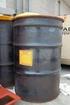 Division of Materials and Waste Management August 2015 Identifying Your Hazardous Waste As a business owner, it is important to know if you generate hazardous waste. Under Ohio EPA s rules, all wastes
Pharmaceutical Waste Compliance Program
 Pharmaceutical Waste Compliance Program Corporate Overview Stericycle Services Medical Waste Management Sharps Disposal Management Product Recalls & Retrieval OSHA Compliance Training Pharmaceutical &
CHAPTER 62-740 PETROLEUM CONTACT WATER
 CHAPTER 62-740 PETROLEUM CONTACT WATER 62-740.010 Declaration of Intent (Repealed) 62-740.020 Applicability 62-740.030 Definitions 62-740.040 General 62-740.100 Management Practices for Producers of PCW
Chapter 5: Spills Response
 Chapter 5: Spills Response When printing materials are spilled, the response required by the owner or operator depends on what is spilled and the quantity. The entities who must be informed of a spill
Policies and Procedures Manual Waste Management Plan Policy No. 06:04:00 Page 1 of 12
 Page 1 of 12 Revision Responsibility: Director of Facility Services and Safety Responsible Executive Officer: Vice President for Financial & Administrative Services Source / Reference: Tennessee Division
Contingency Plan. Facility Name
 Contingency Plan Facility Name This plan is reviewed annually and amended whenever changes occur that will significantly affect the ability of this facility to respond to an emergency situation. This includes
TEXAS TECH UNIVERSITY HAZARDOUS WASTE PROGRAM DEPARTMENT OF ENVIRONMENTAL HEALTH AND SAFETY
 TEXAS TECH UNIVERSITY HAZARDOUS WASTE PROGRAM DEPARTMENT OF ENVIRONMENTAL HEALTH AND SAFETY 1 TABLE OF CONTENTS I II III IV V VI VII INTRODUCTION CHEMICAL HAZARDOUS WASTE 1. Definition 2. Characteristics
Waste Hazardous? Why?
 Doc. No. 801 Hazardous Waste M anagement Auto body shops typically generate several kinds of potentially hazardous waste, including waste solvent and coatings, contaminated rags, wipes, and absorbents,
Managing Hazardous Waste A HANDBOOK FOR SMALL BUSINESS
 Managing Hazardous Waste A HANDBOOK FOR SMALL BUSINESS TABLE OF CONTENTS INTRODUCTION... 4 DECIDING WHETHER HAZARDOUS WASTE REGULATIONS APPLY TO YOU... 5 Defining Hazardous Waste... 5 Identifying Your
Hazardous Materials Management Considerations in Healthcare
 Session No. 656 Introduction Hazardous Materials Management Considerations in Healthcare Mae Ping Grogg, MS, CSP BJC HealthCare St. Louis, MO 63110 Paul Halliburton, MS, CHMM Barnes-Jewish Hospital St.
The Texas A&M University System Environmental, Health & Safety Special Thanks to Koch Industries, Wichita, KS
 Universal Waste Management Training The Texas A&M University System Environmental, Health & Safety Special Thanks to Koch Industries, Wichita, KS Training Objectives In this training, you will learn: What
5: Types of Hazardous Waste
 1. Introduction THE TEXAS A&M UNIVERSITY SYSTEM HEALTH SCIENCE CENTER CHAPTER XI HAZARDOUS WASTE DISPOSAL Hazardous waste disposal is governed by the EPA and the TCEQ through State and Federal regulations.
Hazardous Waste Generator Training
 presented by Facilities Management and the office of Hazardous Waste Generator Training Environmental Health & Safety RCRA..."It's The Law!" Hazardous Waste is: Spent material that is: READY TO BE THROWN
The following sections provide hazardous waste safety guidelines and procedures. This section covers the following topics:
 13. The following sections provide hazardous waste safety guidelines and procedures. This section covers the following topics: TOPIC PAGE 13.1 Hazardous Waste and Texas State University... 13-2 13.2 Definitions...
40 CFR 262.11 Hazardous Waste Determination
 262.11 states, the following: 40 CFR 262.11 Hazardous Waste Determination [which is incorporated into 391 3 11.08(1) of the Georgia Rules for Hazardous Waste Management by reference] A person who generates
Plain English Guide for the Dry Cleaners Step By Step Approach to Understanding Federal Environmental Regulations
 LOCAL DRY CLEANING SHOP Plain English Guide for the Dry Cleaners Step By Step Approach to Understanding Federal Environmental Regulations LOCAL DRY CLEANING SHOP Table of Contents I. Part I: Summary of
Chemical Waste Policy Duke University/Medical Center October 10, 2010
 Supplement Q Chemical Waste Policy Duke University/Medical Center October 10, 2010 PUBLISHED BY Occupational Environmental Safety Office Environmental Programs Division Phone (919) 684-2794 Fax (919) 684-2422
UNIVERSITY OF MARYLAND, BALTIMORE COUNTY HAZARDOUS WASTE DISPOSAL GUIDELINES
 UNIVERSITY OF MARYLAND, BALTIMORE COUNTY HAZARDOUS WASTE DISPOSAL GUIDELINES I. Introduction The intention of these guidelines is to provide UMBC employees with an understanding of Federal and State hazardous
SUBJECT: Effective Date: Procedure Number: Contractor Environmental Management. 09/03/13 emp11 Procedures
 SUBJECT: Effective Date: Procedure Number: Contractor Environmental Management 09/03/13 emp11 Procedures APPLICABILITY/ACCOUNTABILITY: Supersedes: Page Of EMS Procedure-011 1 11 Responsible Authority:
Fact Sheet: Disposal of Alkaline Batteries
 Fact Sheet: Disposal of Alkaline Batteries August 1994 Disposal of Alkaline Batteries Introduction This fact sheet is intended for users of alkaline batteries. It describes how alkaline batteries should
Handling of Specific Chemicals
 Handling of Specific Chemicals 1) ACETONITRILE 2) CARCINOGENS, MUTAGENS, TERATOGENS 3) COMBUSTIBLE LIQUIDS 4) CONTAMINATED CONTAINERS 5) CONTAMINATED EQUIPMENT 6) CORROSIVE ACIDS AND BASES 7) EXPLOSIVES
Laboratory Hazardous Waste Disposal Guidelines
 Satellite Accumulation Area (SAA) For safety and environmental reasons, hazardous waste must be stored in a designated "Satellite Accumulation Area." These areas must be inspected weekly for container
Hazardous Waste Management & Waste Minimization Training
 Hazardous Waste Management & Waste Minimization Training Environmental Health and Safety Safety Training Building Inspections Accident Investigations Fire Safety Hazardous Materials Management Laboratory
Hazardous Waste Training
 Hazardous Waste Training Hazardous Waste training is an ANNUAL requirement. Please plan to recertify this training again within one year of today s date if you are still working in an area that may produce
UDOT SPILL PREVENTION and RESPONSE PLAN for CONSTRUCTION SITES
 UDOT SPILL PREVENTION and RESPONSE PLAN for CONSTRUCTION SITES February 2014 The plan contained in the following pages was developed in part from UDOT Construction Division s Safety and Health Manual,
EPA s proposed hazardous waste pharmaceutical regulations
 EPA s proposed hazardous waste pharmaceutical regulations November 4, 2015 By J. Timothy Ramsey The United States Environmental Protection Agency ( EPA ) published proposed regulations in the Federal Register
Spill Prevention, Control & Cleanup SC-11
 Objectives Cover Contain Educate Reduce/Minimize Product Substitution Description Spills and leaks, if not properly controlled, can adversely impact the storm drain system and receiving waters. Due to
HAZARDOUS WASTE SATELLITE ACCUMULATION MANAGER RESPONSIBILITIES
 INTRODUCTION This program applies to Eastern Washington University (EWU) personnel who work with chemicals and generate chemical waste in performance of their job duties. Chemicals may pose a threat to
7. Chemical Waste Disposal Procedures
 7. Chemical Waste Disposal Procedures Substances that Can and Cannot be Disposed of via Sink Drains or in Regular Solid Refuse Containers 1. It is prohibited to pour down a sink or floor drain, or place
DREXEL UNIVERSITY HAZARDOUS WASTE MANAGEMENT PLAN DEPARTMENT OF ENVIRONMENTAL HEALTH AND SAFETY
 DREXEL UNIVERSITY HAZARDOUS WASTE MANAGEMENT PLAN DEPARTMENT OF ENVIRONMENTAL HEALTH AND SAFETY January 2010 Page 1 of 32 HAZARDOUS WASTE MANAGEMENT PLAN TABLE OF CONTENTS Hazardous Waste Management Plan...3
Newport News Shipbuilding Contractor Environmental, Health and Safety Resource Manual Waste Management
 Newport News Shipbuilding Contractor Environmental, Health and Safety Resource Manual Waste Management Newport News Shipbuilding Page 1 WASTE MANAGEMENT 1. Purpose and Scope a. The purpose of this section
ST. CLOUD TECHNICAL AND COMMUNITY COLLEGE HAZARDOUS WASTE PROCEDURE
 APPLICABILITY This procedure is applicable to all St. Cloud Technical & Community College faculty, staff and students. GENERAL Federal, state and local governments impose strict regulations concerning
University of California, Santa Barbara Environmental Health and Safety. Hazardous Waste Minimization Plan
 University of California, Santa Barbara Environmental Health and Safety Hazardous Waste Minimization Plan 1. Introduction The University of California, Santa Barbara (UCSB) Hazardous Waste Minimization
Waste Management Program
 EOSMS 210 Date: 04/01/2014 Page 1 of 7 1. Purpose Non-hazardous and hazardous chemical wastes, biohazardous wastes, regulated medical wastes and universal wastes generated by KSU will be handled according
New York State Department of Environmental Conservation 625 Broadway, Albany, NY 12233 www.dec.ny.gov. Environmental Self Audit For Small Businesses
 New York State Department of Environmental Conservation 625 Broadway, Albany, NY 12233 www.dec.ny.gov Environmental Self Audit For Small Businesses Disclaimer The materials in this document are intended
Inspection Checklist Tool for Facilities Generating and Recycling Hazardous Secondary Materials (HSM) Version 1.0 January 2012
 Inspection Checklist Tool for Facilities Generating and Recycling Hazardous Secondary Materials (HSM) Version 1.0 January 2012 DISCLAIMER: This checklist is an inspection support tool provided by the U.S.
4.7 HAZARDS AND HAZARDOUS MATERIALS
 LSA ASSOCIATES, INC. MARCH 2008 FINAL ENVIRONMENTAL IMPACT REPORT YUCCA VALLEY RETAIL SPECIFIC PLAN The State defines hazardous material as any material that, because of its quantity, concentration, or
Managing Automotive Repair And Body Shop Wastes
 Managing Automotive Repair And Body Shop Wastes For Assistance and More Information Your company may generate other hazardous wastes beyond the examples mentioned within this Booklet. It is your responsibility
Environmental laws have been enacted to protect natural resources and the public health. A number
 Workers Whistleblower Protection Under Seven Federal Environmental Laws Protecting Workers Who Exercise Rights PWWER A PROJECT OF THE NATIONAL Committees for Occupational Safety and Health NETWORK FACTSHEET
Mechanical Systems Competency 1.20
 Competency 1.20 Mechanical systems personnel shall demonstrate a working level knowledge of the safety and health fundamentals of mechanical systems and/or components. 1. Supporting Knowledge and Skills
CHEMICAL LABORATORY SAFETY
 CHEMICAL LABORATORY SAFETY Introduction The Environmental Health & Safety Office (EH&S) supports The University in its quest to excel in research and teaching. EH&S has prepared a Laboratory Safety Manual
EMERGENCY PETROLEUM SPILL WASTE MANAGEMENT GUIDANCE. Hazardous Materials and Waste Management Division (303) 692-3300
 EMERGENCY PETROLEUM SPILL WASTE MANAGEMENT GUIDANCE Hazardous Materials and Waste Management Division (303) 692-3300 First Edition January 2014 This guidance is meant to provide general information to
RCRA Applied to Retail and Pharmaceutical Wastes, How to Manage a Work in Progress. Gregory W. Blount Troutman Sanders LLP Atlanta, GA
 RCRA Applied to Retail and Pharmaceutical Wastes, How to Manage a Work in Progress Gregory W. Blount Troutman Sanders LLP Atlanta, GA TABLE OF CONTENTS INTRODUCTION... 1 A. Determining Whether a Pharmaceutical
Can I Recycle Some of My Industrial or Hazardous Wastes?
 TCEQ REGULATORY GUIDANCE Waste Permits Division RG-240 August 2006 Can I Recycle Some of My Industrial or Hazardous Wastes? Purpose. The purpose of this document is to assist those who recycle industrial
BEST MANAGEMENT PRACTICES FOR DENTAL OFFICES CLEAN WATER INDUSTRIAL WASTE MANAGEMENT DIVISION OF THE CITY OF LOS ANGELES
 BEST MANAGEMENT PRACTICES FOR DENTAL OFFICES CLEAN M A K I N G I T H A P P E N WATER INDUSTRIAL WASTE MANAGEMENT DIVISION OF THE CITY OF LOS ANGELES B E S T M A N A G E M E N T P R A C T I C E S Dental
How To Understand And Understand The Waste Management Process
 WASTE MANAGEMENT PLAN Presented to: Abilene Christian University 1600 Campus Court Abilene, Texas 79699 JOB # ABI2001.RC Prepared: May 2012 Prepared By: 1327-D Miller Road Greenville, South Carolina 29607
Training Module. Hazardous Waste Identification (40 CFR Parts 261) Introduction to. Solid Waste and Emergency Response (5305W) EPA530-K-05-012
 Training Module Introduction to Solid Waste and Emergency Response (5305W) EPA530-K-05-012 Hazardous Waste Identification (40 CFR Parts 261) United States Environmental Protection Agency September 2005
Hazardous Waste and Pharmaceutical Waste in
 Hazardous Waste and Pharmaceutical Waste in Veterinary Offices Janine Kraemer, CHMM Environmental Manager Solid and Hazardous Waste Programs Florida Department of Environmental Florida Department of Environmental
Hazardous Waste Accumulation, Storage, & Labeling
 Nadine Deak, Kalamazoo District Office 269-567-3592 or [email protected] Jenny Bennett, Gaylord District Office 989-705-2421 or [email protected] Hazardous Waste Accumulation, Storage, & Labeling
MATERIAL SAFETY DATA SHEET
 MATERIAL SAFETY DATA SHEET SECTION 1 -- CHEMICAL PRODUCT AND COMPANY IDENTIFICATION PRODUCT NAME Sav-A-Hoof Protectant PRODUCT CODE 309 ISSUE DATE 11/15/14 EMERGENCY TELEPHONE NUMBERS DISTRIBUTOR SBS EQUINE
Waste Handling & Disposal
 Objectives Cover Contain Educate Reduce/Minimize Product Substitution Description Improper storage and handling of solid wastes can allow toxic compounds, oils and greases, heavy metals, nutrients, suspended
Hazardous and Regulated Waste Management Plan Purpose
 Hazardous and Regulated Waste Management Plan Purpose Purpose This Hazardous and Regulated Waste Management Plan describes the chemical and biological waste management practices at Normandale Community
Hazardous Pharmaceutical Waste Management. Written by: Matthew Teeter, Environmental Compliance Consultant
 Hazardous Pharmaceutical Waste Management Written by: Matthew Teeter, Environmental Compliance Consultant Identifying Hazardous Pharmaceuticals Certain pharmaceuticals used in hospitals, medical centers
The potential to adversely affect human
 Purpose and Applicability of Regulations The potential to adversely affect human health and the environment is always present when using, storing, and transporting regulated materials. Consequently, numerous
ENVIRONMENTAL PROTECTION AGENCY
 ENVIRONMENTAL PROTECTION AGENCY Fees Requires application fees for state isolated wetlands permits to be credited to the Surface Water Protection Fund, which is used for the administration of surface water
Extraction Oil and Gas, LLC. Diamond Valley Central Oil Terminal Waste Management Plan
 Extraction Oil and Gas, LLC. Diamond Valley Central Oil Terminal Waste Management Plan Scope: This Extraction Oil and Gas Waste Management Plan has been prepared to provide operations personnel at the
Hazardous Waste Procedures. Faculty of Science University of Ottawa
 Hazardous Waste Procedures University of Ottawa Contents Hazardous Materials Waste Overview:... 3 Regulations:... 3 General requirements related to packaging waste:... 4 Table 1: List of Appropriate Waste