
Chapter 1, OneSign Authentication Methods Chapter 2, Two-Factor Authentication in OneSign Chapter 3, Emergency Access Privileges
|
|
|
- Harriet Fields
- 10 years ago
- Views:
Transcription
1 OneSign Authentication Management Guide Imprivata OneSign Authentication Management comes in a non-intrusive, easy-toimplement appliance that requires no modifications to your network. Users can use strong authentication to access the network more securely. You can implement more secure policies in minutes while OneSign maintains user credentials so you do not have to. This includes information about the many strong authentication methods available with your Imprivata OneSign system: Chapter 1, OneSign Authentication Methods introduces the OneSign appliance, authentication methods, and how to deploy OneSign to your enterprise. Chapter 2, Two-Factor Authentication in OneSign introduces the two-factor authentication feature that strengthens IT security by requiring users to provide a second form of identification for authentication Chapter 3, Emergency Access Privileges describes the question-and-answer emergency access feature. Chapter 4, Converging Authentication Management with Physical Access describes authentication issues relating to OneSign Physical/Logical. Chapter 5, OneSign Secure Walk-Away describes webcam workstation security. Chapter 6, Configuring OneSign ProveID describes OneSign s powerful ProveID feature for ensuring the identity of users at the point of a specific transaction. Chapter 7, Configuring Fingerprint Verification in OneSign introduces OneSign concepts, including the appliance, authentication methods, and how to deploy OneSign to your enterprise. Chapter 8, Configuring Fingerprint Identification in OneSign describes how users can authenticate to OneSign with the secure, convenient fingerprint ID system. Chapter 9, Configuring Passive Proximity Card Authentication in OneSign provides the procedures you need to configure OneSign to work with your proximity card system. Chapter 10, Configuring XyLoc KeyCard Authentication in OneSign shows how to configure OneSign to work with a XyLoc active proximity card system. Chapter 11, OneSign Authentication for Smart Cards with AD Certificates shows you how to configure OneSign to work with MS Active Directory smart cards. Chapter 12, OneSign Authentication for Smart Cards with External Certificates shows you how to configure OneSign to work with third-party smart cards. Chapter 13, Configuring RSA SecurID Token Authentication in OneSign has procedures for configuring OneSign connections to an RSA SecurID token system. Chapter 14, Configuring PhoneFactor Authentication in OneSign shows you how to configure OneSign to work with your PhoneFactor system. Chapter 15, Managing VASCO Digipass Tokens provides the procedures you need to manage access through OneSign s integrated VASCO VACMAN support. Chapter 16, Managing an Individual Digipass Token provides the procedures you need to manage Digipass tokens for individual users.

2 Website Phone Support in North America (800) Outside North America Sales (877) OneSign ( ) Office address 10 Maguire Road, Lexington, MA , United States of America Contacting Imprivata, Inc. This product is distributed under licenses restricting its use, copying, distribution and decompilation. Portions of this product are protected under US Patent Number 7,356,705. OneSign, Imprivata, and the Imprivata logo are registered trademarks of Imprivata, Inc. ProveID and TouchPass APG are trademarks of Imprivata, Inc. in the United States and in other countries. Under international copyright laws, neither the documentation nor software may be copied, photocopied, reproduced, translated, or reduced to any electronic medium or machine-readable form, in whole or in part without the prior written consent of Imprivata, Inc., except as described in the license agreement. The names of companies, products, people, and/or data mentioned herein are fictitious and are in no way intended to represent any real individual, company, product, or event, unless otherwise noted. DOCUMENTATION IS PROVIDED "AS IS" AND ALL EXPRESS OR IMPLIED CONDITIONS, REPRESENTATIONS AND WARRANTIES, INCLUDING ANY IMPLIED WARRANTY OF MERCHANTABILITY, FITNESS FOR A PARTICULAR PURPOSE OR NON-INFRINGEMENT, ARE DISCLAIMED, EXCEPT TO THE EXTENT THAT SUCH DISCLAIMERS ARE HELD TO BE LEGALLY INVALID. ii PDF-TXT-AMXX-4601

3 Table of Contents Contacting Imprivata, Inc.... ii Table of Contents...iii Chapter 1 - OneSign Authentication Methods...1 Password Authentication... 2 Fingerprint Verification... 3 Fingerprint Identification... 4 Passive Proximity Card Authentication... 5 XyLoc KeyCard Authentication... 6 Smart Card/USB Token Authentication... 7 Authentication with VASCO Digipass and other ID Tokens... 8 Emergency Access Privileges... 9 Authentication with a OneSign PIN Chapter 2 - Two-Factor Authentication in OneSign OneSign PIN as a Second Factor for Authentication Chapter 3 - Emergency Access Privileges...15 Assigning and Revoking Emergency Access Privileges Revoking Emergency Access Privileges Password Self-Services Chapter 4 - Converging Authentication Management with Physical Access...21 Permitting Authentication to OneSign if the Physical Access System is Unreachable Chapter 5 - OneSign Secure Walk-Away...23 OneSign Secure Walk-Away...24 Chapter 6 - Configuring OneSign ProveID...27 Configuring an Application for OneSign ProveID Chapter 7 - Configuring Fingerprint Verification in OneSign...31 Hardware Requirements Assigning Fingerprint Authentication Privileges Enrolling Users for Fingerprint Verification Allowing Users to Manage Finger Enrollment Data Managing Finger Enrollment Data Authenticating to OneSign by Finger Biometrics OneSign FastPass for Fast, Secure Login Chapter 8 - Configuring Fingerprint Identification in OneSign...41 Assigning Fingerprint Identification Privileges Authenticating to OneSign via Fingerprint Identification Chapter 9 - Configuring Passive Proximity Card Authentication in OneSign...45 Assigning Proximity Card Authentication Privileges Enrolling Users for Passive Proximity Card Authentication Authenticating to OneSign by Passive Proximity Card Locking a Shared Workstation OneSign FastPass for Fast, Secure Proximity Card Login Chapter 10 - Configuring XyLoc KeyCard Authentication in OneSign...53 Deploying XyLoc Locks and Readers Configuring OneSign Computer Policies for XyLoc Users Assigning XyLoc KeyCard Authentication Privileges Installing the OneSign Agent with XyLoc Support Enrolling for XyLoc KeyCard Authentication Authenticating to OneSign by XyLoc KeyCard Chapter 11 - OneSign Authentication for Smart Cards with AD Certificates...61 Server Configuration Requirements Uploading the Keytab File to the OneSign Server Assigning Smart Card/USB Token Authentication Privileges iii

4 Authenticating to OneSign via Smart Card or USB Token...65 Chapter 12 - OneSign Authentication for Smart Cards with External Certificates Assigning Smart Card Authentication Privileges...68 Overriding User Policies on Select Computers...69 Enrolling for Smart Card Authentication...70 Authenticating to OneSign via Smart Card...71 Chapter 13 - Configuring RSA SecurID Token Authentication in OneSign Server Configuration Requirements...74 Configuring the RSA Authentication Manager to Recognize OneSign...75 Configuring OneSign to Recognize the ID Token Server...77 Assigning SecurID Token Authentication Privileges...78 Enrolling for SecurID Token Authentication...79 Authenticating to OneSign via SecurID Token...80 Chapter 14 - Configuring PhoneFactor Authentication in OneSign Configuring OneSign to Work with a PhoneFactor Server...82 Configuring the PhoneFactor Agent to Recognize OneSign...82 Configuring OneSign to Recognize the PhoneFactor Server...84 Assigning PhoneFactor Authentication Privileges...85 Authenticating to OneSign via PhoneFactor...86 Chapter 15 - Managing VASCO Digipass Tokens Reviewing VASCO Kernel Parameters...88 Using the Tokens Page...89 Importing Digipass Tokens...90 Deleting Digipass Tokens...91 Resetting Multiple Digipass Token PINs...92 Forcing Digipass ID Token Enrollment...93 Using Password with VASCO Digipass OTP...94 Using Password plus OTP for Remote Authentication...95 Enrolling for Digipass Authentication...96 Authenticating to OneSign via Digipass...97 Managing an Individual Digipass Token...98 Chapter 16 - Managing an Individual Digipass Token Changing Token Status Assigning Available Status to a Digipass Assigning a Digipass to a User Assigning Lost Status Changing a Static PIN User may never change static PIN User must change PIN immediately and may change later User may change PIN at any time Resetting and Changing a Static PIN Using Virtual Tokens Other Operations Testing a Token s One-Time Password Resetting a Disabled Digipass Unlocking a Digipass Generating and Viewing a Token Activity Report Index iv

5 OneSign Authentication Methods 1 OneSign offers an array of administrative tools to simplify and monitor user access to network resources. Authentication methods are the ways a user can authenticate to OneSign. OneSign supports a wide variety of authentication methods: Password Authentication on page 2 Fingerprint Verification on page 3 Fingerprint Identification on page 4 Passive Proximity Card Authentication on page 5 XyLoc KeyCard Authentication on page 6 Smart Card/USB Token Authentication on page 7 Authentication with VASCO Digipass and other ID Tokens on page 8 This chapter also introduces: Emergency Access Privileges on page 9 Authentication with a OneSign PIN on page 10 Every user must have at least one authentication method. Users authenticate to OneSign when logging in and unlocking their workstations, and during challenges. Challenges are described in the OneSign Administrator Guide. OneSign strong authentication keeps unauthorized people out of your network; however, a valid user might forget or lose an authentication factor; see Emergency Access Privileges on page 9. 1

6 Chapter 1 - OneSign Authentication Methods Password Authentication When you first install OneSign, all users are authorized for password authentication. The default username and password are their current user directory credentials. You can disallow password authentication for some or all policies; however, all enabled users must have at least one authentication method. Password authentication is often used as a second factor for two-factor authentication. There is no separate enrollment step for password authentication. All OneSign users automatically enroll the first time they log into Windows after installing the OneSign Agent. User authentication via password is similiar Windows authentication, except that the user is prompted with the OneSign login screen instead of the Windows login screen: OneSign Agent Logon Window Showing Password Authentication Kerberos Authentication for MS Active Directory Passwords OneSign supports the choice between native username/password authentication with or without Kerberos for MS Active Directory environments. Kerberos mode offers enhanced authentication speed and additional encryption for password users in OneSign. To establish Kerberos trust between Active Directory and OneSign, you must generate a Kerberos keytab file, as described in the OneSign Administrator Guide. 2

7 Fingerprint Verification Fingerprint Verification OneSign embeds a set of secure, high-performance finger biometric capabilities within the OneSign appliance. With finger biometric authentication, fingerprint matching confirms that users are who they say they are. Finger Biometric Verification (Standard Module) OneSign Fingerprint Verification lets users enter their login credentials while adding a layer of security by verifying their identity through a fingerprint swipe. This is a one-to-one verification as OneSign checks the fingerprint against the credentials provided by the user. Finger Biometric Identification (Optional Module) OneSign optionally supports finger biometric identification. This differs from standard verification in one critical way. With finger biometric identification, the matching algorithm establishes the user's identity from the database of all enrolled users without need for the user to enter a username (no typing is needed). This is a one-to-many identification as OneSign checks the fingerprint against all users in the database. Finger biometric identification is introduced in Fingerprint Identification on page 4. Finger Biometric Support OneSign supports multiple types of biometric readers to execute a Windows login. Users enroll and authenticate locally and then can use any fingerprint biometric enabled PC to authenticate with a swipe of a finger. Finger biometric authentication is reliable and easy. Two Types of Fingerprint Scanners Fingerprint authentication is detailed in the. You can also use a OneSign PIN as an alternative to a password; see the OneSign Authentication Management Guide. 3

8 Chapter 1 - OneSign Authentication Methods Fingerprint Identification Fingerprint Identification is an optional component of OneSign. The standard finger biometric authentication matches a scanned fingerprint against the records for the individual user, who must enter a valid username along with the fingerprint scan. Easy-touse Fingerprint Identification identifies the user by comparing the fingerprint to all other fingerprint records. Upon unique identification, the user is authenticated. Fingerprint Identification is a OneSign optional module. With it, users enabled for fingerprint authentication automatically get the benefit of fast, secure OneSign fingerprint identification without the need to enter a username or select a domain. Note: If the OneSign Administrator Properties page Modules section does not show Fingerprint Identification as Enabled, then your OneSign license does not include the Fingerprint Identification option. A OneSign License with the Fingerprint Identification Module Enabled Fingerprint ID is detailed in the. 4

9 Passive Proximity Card Authentication Passive Proximity Card Authentication OneSign customers can take advantage of pre-existing, low-cost passive facility access cards as a familiar, easy authentication option without re-issuing cards to users. OneSign supports integration for the proximity physical access cards from HID and Motorola/Indala. No OneSign-to-access-card-panel interface is required. Proximity card authentication can be combined with password, OneSign PIN (as an alternative to a password), or finger biometrics as second factors to provide strong twofactor authentication. Proximity Cards Proximity card authentication is detailed in the OneSign Authentication Management Guide. Note: A proximity card reader is required for this to function. You can set an option in Computer Policies (Proximity tab) to control whether a proximity card can lock a user s shared computer screen. 5

10 Chapter 1 - OneSign Authentication Methods XyLoc KeyCard Authentication OneSign natively supports XyLoc KeyCard active proximity cards from Ensure Technologies. XyLoc is an active RF product that lets users identify themselves merely by approaching a XyLoc Lock-enabled PC. OneSign automatically locks the computer when the user departs. This feature is natively supported and requires no additional software or server to operate. The XyLoc KeyCard and Lock XyLoc authentication is detailed in the. 6

11 Smart Card/USB Token Authentication Smart Card/USB Token Authentication Smart cards and smart USB tokens provide two-factor authentication by combining a user PIN with a pre-programmed smart card or USB token. Smart cards are good until the expiration date of the digital certificate on the card, normally valid for two or more years. OneSign is fully compatible with MS Active Directory certificate services and can use any smart card or USB token that contains a MS-compatible login certificate and compatible middleware for MS Active Directory environments using Windows 2000, XP professional, or Vista desktops. OneSign supports x.509 v3 digital certificates for Windows login in Microsoft Active Directory environments via the Windows Local Security Authority and Kerberos. PC/SC-compatible smart token technology is provided with MS Active Directory. Smart cards that comply with the U.S. Department of Defense (DOD) Common Access Card standard are also supported. In OneSign SSO environments, smart card authentication grants network access and an SSO session in a single step. Smart card-enabled users authenticating to OneSign use a smart card and associated PIN. OneSign makes no difference to the user experience of logging into Windows. A Smart Card and Smart Card Reader Smart Card/USB token authentication is detailed for both AD and external certificates in the. 7

12 Chapter 1 - OneSign Authentication Methods Authentication with VASCO Digipass and other ID Tokens OneSign delivers support for VASCO Digipass tokens out-of-the-box and embeds VASCO s VACMAN middleware and management components within the OneSign appliance. There is no separate token management server to purchase or maintain. VASCO Digipass Token Digipass authentication is detailed in the. Using RSA SecurID and SafeWord Tokens Additionally, sites that have deployed Secure Computing SafeWord or RSA Security SecurID strong authentication tokens can leverage these existing investments. OneSign includes built-in RADIUS integration to Secure Computing s Premier Access and Remote Access Servers and RSA s Authentication Manager for token authentication. OneSign can provide a seamless single-step desktop login using two-factor one-time passcodes for login to any SSO-enabled client/server, web, or legacy application from any OneSign-enabled desktop. OneSign supports ID token authentication with: RSA SecurID tokens with RSA Authentication Manager Secure Computing SafeWord tokens with PremierAccess and RemoteAccess tm servers ID Tokens: RSA SecurID Keyfob and Secure Computing SafeWord Token ID Token authentication is detailed in the. If you are transitioning from RSA SecurID or Secure Computing SafeWord tokens to VASCO Digipass tokens, you can use both SecurID or SafeWord and VASCO Digipass tokens in the same OneSign system. OneSign also supports PhoneFactor tokenless two-factor authentication. 8

13 Emergency Access Privileges Emergency Access Privileges Occasionally users forget or lose their ID tokens, smart cards, or other authentication factors. You can configure emergency access privileges to permit the user access upon answering a number of security questions. Emergency Access Emergency Access is detailed in the. 9

14 Chapter 1 - OneSign Authentication Methods Authentication with a OneSign PIN In the authentication configuration for a user security policy, you can configure a OneSign PIN as a second factor (as an alternative to a password) to be used with the primary authentication methods: fingerprint authentication and proximity card authentication. You can configure this feature to require the OneSign users to create and confirm a numeric PIN when they first login. OneSign PIN Options as a Secondary Factor See the for more information. 10

15 Two-Factor Authentication in OneSign 2 OneSign offers a two-factor authentication that strengthens IT security by requiring users to provide a second form of identification for authentication. Fingerprint identification can be combined with a password or a OneSign PIN as a second factor. Proximity Card authentication can be combined with a password, a OneSign PIN (as an alternative to a password), or finger biometrics as second factors. VASCO Digipass and other ID tokens are two-factor authentication by nature as they already have PINs assigned to them. Smart card and Smart USB Token authentication can also be used as a two-factor authentication methods. This chapter contains OneSign PIN as a Second Factor for Authentication on page 12. See the OneSign Administrator Guide for more information on assigning authentication methods for user policies. Second Factors in Authentication Methods in a User Policy 11

16 Chapter 2 - Two-Factor Authentication in OneSign OneSign PIN as a Second Factor for Authentication In the authentication configuration for a user policy, you can configure a OneSign PIN as a second factor (as an alternative to a password) to be used with the primary authentication methods: Fingerprint Identification and Proximity Card authentication. This feature lets you configure OneSign to have users create and confirm a numeric PIN when they first enroll or log in. When you configure a OneSign PIN for use with any primary method, the same settings are applied for use with all other primary methods that employ a OneSign PIN. Fingerprint Identification Authentication with a OneSign PIN To configure user policy settings for a OneSign PIN as a second factor with Fingerprint Identification: 1. From the Authentication tab, click Fingerprint. 2. Click OneSign PIN from the Secondary group. 3. Click Options... to open the options dialog box OneSign PIN Options as a Secondary Factor for Fingerprint Authentication 4. Set the minimum and maximum lengths for the OneSign PIN (4 to 20 digits). 12

17 OneSign PIN as a Second Factor for Authentication 5. Enable Force PIN Enrollment to prompt users to create and verify a new OneSign PIN number upon first login (otherwise, users can enroll at anytime). If users click Cancel in the enroll OneSign PIN login box, they will not be allowed to login. Once the OneSign PIN is specified, the user is prompted to enter the PIN on subsequent logins after fingerprint or proximity card requirements are met. 6. Enable Require OneSign PIN Change on Expiration to have the OneSign Agent force users to change and verify their OneSign PIN numbers when expired. Users will be prompted to enter their old PIN and will then be prompted to create and verify a new PIN. 7. If you enabled Require OneSign PIN Change on Expiration, enter the number of days (1 to 365) for which the PIN number will be valid and click OK. 8. Click Save at the bottom of the page. Proximity Card Authentication with a OneSign PIN To configure user policy settings for a OneSign PIN as a second factor with a Proximity Card: 1. From the Authentication tab, click Proximity Card. 2. Select Password or OneSign PIN from the Secondary group and then click OneSign PIN. 3. Click Options... to open the options dialog box. 13

18 Chapter 2 - Two-Factor Authentication in OneSign OneSign PIN Options as a Secondary Factor for Proximity Card Authentication 4. Set the minimum and maximum lengths for the OneSign PIN (4 to 20 digits). 5. Enable Force PIN Enrollment to prompt the user to create and verify a new OneSign PIN number upon first login. If users click Cancel in the enroll OnSign PIN login box, they will not be allowed to login. Once the OneSign PIN is specified, the user is prompted to enter the PIN on subsequent logins after fingerprint or proximity card requirements are met. 6. Enable Require OneSign PIN Change on Expiration to have the OneSign agent force users to change and verify their OneSign PIN numbers when expired. Users will be prompted to enter their old PIN and will then be prompted to create and verify a new PIN. 7. If you enabled Require OneSign PIN Change on Expiration, enter the number of days (1 to 365) for which the PIN number will be valid and click OK. 8. Click Save at the bottom of the page. 14

19 Emergency Access Privileges 3 Emergency access privileges let authorized users gain network and SSO access even if they have forgotten a password or lost an ID token or other authentication device. To gain access, the user must correctly answer a number of security questions. Selecting Emergency Access You configure the emergency access settings such as: the number of questions to answer for successful authentication the number to answer when enrolling for emergency access privileges how many times a user can take advantage of emergency access in a month You also control who can have emergency access privileges. Emergency access privileges are granted through the user policies, as described in Assigning and Revoking Emergency Access Privileges on page

20 Chapter 3 - Emergency Access Privileges Assigning and Revoking Emergency Access Privileges You assign and revoke emergency access privileges through the OneSign User Policies that you assign to each user. Emergency access is available only when the user is authenticating to an online OneSign Agent. User Policy that Permits ID Token Authentication with Emergency Access You can change the settings of the emergency access options through a dialog that opens when you click the red options link: Configuring Emergency Access Options You can set different emergency access settings for different user policies. When you create a new user policy with emergency access privileges, the new policy uses the settings in the default policy as a starting point. 16

21 Assigning and Revoking Emergency Access Privileges Revoking Emergency Access Privileges Revoke emergency access privileges through the OneSign User Policies that you assign to each user. Create a different user policy and assign it to the user. User policies are detailed in the OneSign Administrator Guide. Deleting Emergency Access Enrollment Data for a User Occasionally a user wants to change the answers to emergency access questions or to select different questions to answer. In this situation, you need to delete the existing data to make way for the new data. You can delete a user s emergency access enrollment data from the user record: Save when you are finished. Deleting Emergency Access Enrollment Data 17
22 Chapter 3 - Emergency Access Privileges Resetting the Emergency Access Usage Counter If a user has exhausted the number of emergency access uses permitted by your policy, you can reset the usage counter to 0: Save when you are finished. Resetting Emergency Access Enrollment Data Restricting Emergency Access at Some Computers You can restrict emergency access at individual computers by deselecting the Emergency Access option in a computer policy applied to the affected computers. To change the security questions, see the OneSign Administrator Guide. 18
23 Assigning and Revoking Emergency Access Privileges Password Self-Services All installations get the OneSign Self-Service Portal, reachable at IP>/sso/passwordhelp: A Customized OneSign Self-Service Portal, without the Password Self-Service Option The Password Self-Services option extends the portal to permit users to change their primary authentication passwords and to review their application credentials (if you have deployed the SSO option): The OneSign Self-Service Portal with Password Self-Service Option You can customize the Password Self Services screen with your corporate logo; the procedure is detailed in the OneSign Administrator Guide. 19
24 Chapter 3 - Emergency Access Privileges 20
25 Converging Authentication Management with Physical Access 4 Imprivata OneSign Physical/Logical integrates building and network access systems for unified enterprise security management by consolidating identities between physical access systems and IT directories. This enables creation and deployment of a single, converged security policy for allowing or denying remote and local network access based on a user's physical location, user role, and/or employee status. Coordinating Network Access and Physical Access OneSign Physical/Logical is fully detailed in the OneSign Physical/Logical Guide. A special authentication issue is detailed in this chapter. When you use OneSign in conjunction with a physical access system, a situation might arise where the OneSign server is running, but the physical access system is unreachable. You can permit certain users or computers to bypass the physical access system, as described in Permitting Authentication to OneSign if the Physical Access System is Unreachable on page
26 Chapter 4 - Converging Authentication Management with Physical Access Permitting Authentication to OneSign if the Physical Access System is Unreachable User and computer policies that permit or deny network access based upon physical access status require information from the physical access system. If the physical access system is unreachable for any reason, then the physical access side of the equation is unknowable to OneSign. The default OneSign behavior in this circumstance is to ensure security by prohibiting network access to users who might not have authenticated to the physical access system. For some users or for some computers that do not require such stringent security measures, you can permit authentication in the event that the physical access system is unreachable. This is also useful if a new user has a network account and is listed in the physical access system, but the accounts have not yet been mapped in OneSign. To grant network access if the physical access system is unreachable or if a OneSign user has not yet been mapped to an account in the physical access system, create a new User Policy and check the Bypass checkboxes on the Network Access tab. Permitting Network Access in the Absence of a Physical Access System Connection For greater security, you can prohibit physical access connections in the User Policies, and then implement this feature for specific computers by using the Override User Policy feature for Local Network Access in a Computer Policy for specific computers. 22
27 OneSign Secure Walk-Away 5 OneSign Secure Walk-Away closes a critical security gap in the protection of confidential information assets by automating the process of securing the desktop when a user walks away. OneSign Secure Walk-Away uses a combination of computer vision, active presence detection, and user tracking technologies to identify an authenticated user in front of a workstation, automatically locking the desktop upon the user s departure and providing instant re-authentication upon their return. OneSign Secure Walk-Away flexibly supports different user workflows, including shared workstation environments where multiple users require constant fast and secure login and logout to information assets. Secure Walk-Away is of particular value in clinical settings. Secure Walk-Away enables hospitals to improve patient safety by eliminating the charting errors that can result from an incorrect user logging into a workstation. It also ensures regulatory compliance by taking the burden of desktop security out of the hands of clinicians in a non-intrusive and seamless way. The Desktop is Active Only While An Authorized User is Present 23
28 Chapter 5 - OneSign Secure Walk-Away OneSign Secure Walk-Away OneSign Secure Walk-Away automatically secures a user workstation or session when the user leaves the workstation unattended. The system tracks a user's physical presence in front of the workstation using a combination of off-the-shelf webcam hardware, head tracking, and facial recognition technologies. You configure OneSign Secure Walk-Away from the Agent tab of a Computer Policy: Configuring OneSign Secure Walk-Away Before You Begin Make sure each computer that will support Secure Walk-Away is equipped with a supported web camera. The camera must be properly installed and adjusted for workplace lighting conditions. Users must be trained in the workflow; the OneSign User Information Kit has helpful information for users about OneSign Secure Walk-Away. 24
29 Configuring OneSign Secure Walk-Away To configure Secure Walk-Away: OneSign Secure Walk-Away 1. Check the Automatically lock workstation if user leaves workstation checkbox. 2. To prevent unauthorized users from gaining access to a computer by disconnecting the camera, check Lock the workstation after the camera is unplugged or otherwise unavailable. 3. To secure the workstation when no enrolled user is physically present, check Lock the workstation if a face is not detected immediately after logging in. 4. Secure Walk-Away is a change to users workflow. Check Show a tutorial the first time each user logs in to help educate users about the Secure Walk-Away feature. 5. Set the countdown to session lock value. This is the number of seconds after a user is no longer detected before the screen is locked. A user who returns within the countdown period does not have to reauthenticate. 6. Set countdown behavior. Select: Show the countdown in a notification area balloon, if you want users to see how soon the session will lock, or Obscure the desktop during the countdown, if you want to obscure the desktop until the session lock. 7. Users who often spend a few moments out of camera view while working may find the immediate appearance of a countdown balloon or obscuring the screen a distraction. To delay the appearance of the countdown balloon or the obscured desktop for a few seconds, enter a value in Delay before countdown appears. 8. You can enable a grace period for users who frequently leave and return to a Secure Walk-Away-equipped workstation. To enable a grace period, check Allow visual reauthentication if the same user returns to the workstation within and enter a value in minutes. Secure Walk-Away Technical Specifications for Client Computers Lighting Processor 50 to 5000 Lux, evenly diffused Pentium 4 Hyperthreaded: 2.4 GHz +, CoreDuo or Core2Duo 1.6 GHz + Memory 1 GB RAM for Windows XP, 2 GB RAM for Windows 7 Operating System Windows XP Professional or Windows 7 Supported Cameras Recommended Logitech Pro 9000, Logitech Pro for Notebooks Privacy filter, Disable screen saver 25
30 Chapter 5 - OneSign Secure Walk-Away 26
31 Configuring OneSign ProveID 6 OneSign ProveID is an API that allows an external application to access the OneSign Agent s authentication services and devices. When triggered by a calling application, OneSign ProveID presents a challenge to verify the user s identity. Before you begin Use the OneSign APG to profile the target application. The list of OneSign application names is generated from the list of OneSign application profiles. Get the executable application name from the application provider. You will use the exact name used by the application provider when you map it to the OneSign application profile name. Set Configure ProveID administrator privileges for administrators as needed at Users page>administrator Roles tab. Note: OneSign ProveID is only usable with applications that have been explicitly configured by the application provider for use with OneSign ProveID. 27
32 Chapter 6 - Configuring OneSign ProveID Configuring an Application for OneSign ProveID Configuring an application for OneSign ProveID requires mapping the name used by the application provider to the name used in the OneSign application profile: 1. Open the OneSign Administrator to the Properties page, ProveID tab. The OneSign ProveID tab is on the right end of the Properties page just before the OneSign Sites tab. The OneSign ProveID Tab, with no Applications Mapped 2. Enter the application name in the External Application Name boxes on the left. OneSign relies upon a text match, so use the exact name used by the application provider. 3. From the dropdown list on the right, select the corresponding OneSign Application Profile Name. 28
33 Configuring an Application for OneSign ProveID Mapping an Application to a OneSign Application Profile You can map multiple applications to a single OneSign application profile. Use the Or... selection to add another mapping to the same OneSign application profile. Mapping Multiple Applications to a Single OneSign Profile 4. To configure additional applications for OneSign ProveID, click Add Application Mapping and map additional applications as detailed above. 29
34 Chapter 6 - Configuring OneSign ProveID Mapping Another Application to a Different OneSign Application Profile 30
35 Configuring Fingerprint Verification in OneSign 7 This chapter contains: Hardware Requirements on page 32 Assigning Fingerprint Authentication Privileges on page 33 Enrolling Users for Fingerprint Verification on page 34 Allowing Users to Manage Finger Enrollment Data on page 36 Authenticating to OneSign by Finger Biometrics on page 38 OneSign FastPass for Fast, Secure Login on page 39 Two-Factor Strong Authentication Fingerprint verification can be used in conjunction with a password or a OneSign PIN as a second factor for strong two-factor authentication. When you select Fingerprint from the list of primary authentication methods in a user policy, an Options link appears. Click that link to require password authentication or OneSign PIN for users with that security policy. Fingerprint verification can also be used in conjunction with proximity cards for two-factor authentication. Configure this from the Proximity Card Options. For more on two-factor authentication, see Two-Factor Authentication in OneSign on page 11. Monitoring and Reporting Fingerprint Verifications You can get real-time notifications of many network events, including enrollment for fingerprint. Event notifications are detailed in the OneSign Administrator Guide. 31
36 Chapter 7 - Configuring Fingerprint Verification in OneSign Hardware Requirements To implement finger biometric authentication, workstations must be equipped with fingerprint scanners. Two Types of Fingerprint Scanners The fingerprint scanner can be built into a laptop or keyboard, or a USB device that connects to the local computer. It includes a transparent scanning area on which the user places the pad of the fingertip being scanned or swipes the fingertip along the thin strip. As long as one enrolled finger is clean and unscarred, fingerprint scanning is highly reproducible and reliable. The scanner has no moving parts. The important part is the scanner window or strip. As long as the window or strip is clean, your finger biometric authentication is simple and reliable. Server Configuration Requirements OneSign Fingerprint Verification support is handled entirely on the OneSign appliance. There are no connections required to any other servers when you implement fingerprint verification. 32
37 Assigning Fingerprint Authentication Privileges Assigning Fingerprint Authentication Privileges Assign fingerprint authentication and all other authentication methods through the OneSign User Policies that you assign to each user. User policies are detailed in the OneSign Administrator Guide. Computer Policy Overrides A User Policy that Permits Only Fingerprint Verification OneSign permits you to assign computer policies to individual computers. The Override User Policy tab of a computer policy includes an option to allow or to prohibit fingerprint authentication on individual computers. When a user with a user policy that permits fingerprint authentication tries to authenticate to a computer that does not, the computer policy overrides the user policy. Revoking Fingerprint Authentication Privileges Revoke fingerprint authentication privileges through the OneSign User Policies that you assign to each user. Create a different user policy and assign it to the user. 33
38 Chapter 7 - Configuring Fingerprint Verification in OneSign Enrolling Users for Fingerprint Verification Users whose security policies are authorized for fingerprint verification (or for the optional fingerprint identification) get the opportunity to enroll the next time they log into OneSign. Note: All fingerprint data is securely encrypted before it is transmitted and saved. OneSign does not save an image of a fingerprint. Nobody can read the fingerprint data. To enroll for finger biometrics: 1. After becoming authorized for fingerprint verification or fingerprint identification, use your password to log into OneSign. 2. OneSign logs you into Windows and prompts you to enroll a finger. Accept it and click Next. The Manage Fingerprints screen appears: 3. Click a finger to enroll. Select a Finger for Enrollment 34
39 Enrolling Users for Fingerprint Verification A new screen appears: Scan the Finger for Enrollment 4. Complete Step 1 by getting three good scans of the finger. 5. Complete Step 2 by scanning the finger again to validate the fingerprint. 6. To enroll more fingers, click Yes, enroll another finger. When you have finished scanning fingerprints, click No, I m done. Deleting Enrollment Data You can delete the enrollment data for fingerprint users from each user s user record. Deleting Fingerprint Enrollment Data 35
40 Chapter 7 - Configuring Fingerprint Verification in OneSign Allowing Users to Manage Finger Enrollment Data You can allow users to manage their fingerprints after the initial enrollment by editing Fingerprint options in the User Policies. Users with this privilege can enroll additional fingers and un-enroll and re-enroll currently enrolled fingers. To allow users to manage finger enrollment data: 1. Select the User Policy from the Policies page. 2. In the Fingerprint options, click the checkbox next to Allow users to manage fingerprints: Users Are Allowed to Manage Their Fingerprints Uncheck the box to prevent users from managing their fingerprints. 3. Click OK and then save the user policy. See Managing Finger Enrollment Data on page 37 for more information about managing fingerprints. 36
41 Allowing Users to Manage Finger Enrollment Data Managing Finger Enrollment Data Users can manage their fingerprints from the OneSign Agent menu: Click Manage Fingerprints To enroll additional fingers, click the unenrolled finger you wish to enroll. To re-enroll or un-enroll a finger: 1. Click a enrolled finger. A menu appears: Select an Finger Enrollment Action from the Menu 2. Select an action from the menu. See Enrolling Users for Fingerprint Verification on page 34 for information about enrolling fingers. 37
42 Chapter 7 - Configuring Fingerprint Verification in OneSign Authenticating to OneSign by Finger Biometrics To authenticate via fingerprint scanner: 1. At the OneSign logon window, enter your username and domain. This step is unnecessary if you are using the optional Fingerprint Identification feature, described in Configuring Fingerprint Identification in OneSign on page 41. Note: If the Fingerprint option does not appear, then check to be sure the fingerprint scanner is connected to the computer. 2. Select Fingerprint and then click OK. The Fingerprint Scanner screen appears: The Fingerprint Scanner Screen 3. Scan any enrolled finger and wait for the system to acknowledge the scan. 4. If a password is configured as a second authentication factor, enter the password and click OK. If a OneSign PIN is configured as a second authentication factor, enter the PIN and click the Use OneSign PIN button. When you have been authenticated, the authentication window closes. 38
43 OneSign FastPass for Fast, Secure Login OneSign FastPass for Fast, Secure Login OneSign FastPass allows users fast and secure access to shared workstations with the convenient touch of their fingers. When FastPass is combined with OneSign s ability to automatically launch applications, sign users into and out of applications and automate Citrix roaming, OneSign provides users with an unprecedented ability to move quickly, unimpeded by access issues. Users perform a secure, two-part authentication at the beginning of their work shift by scanning their finger and entering a PIN or password as the second factor. Once this twofactor authentication is completed, FastPass starts an authentication grace period, during which the users may access their computer or shared workstations simply by scanning their finger. Users only need to enter their PIN or password again when their grace period expires. You assign the grace period from an Options link beside the primary authentication method in the User Policy: Grace Period for a Second Authentication Factor: FastPass for Finger Biometrics 39
44 Chapter 7 - Configuring Fingerprint Verification in OneSign Order of Precedence of Related Features As with all User Policy authentication settings, this can be overridden by local Computer Policies. There is also a Grace Period without Second Factor Challenge setting on the Computer Policy Proximity Card tab that permits grace periods up to 24 hours for proximity cards only. A Computer Policy setting that explicity overrides the User Policy takes first precedence (on that computer). Order of Precedence of Related Features by Policy Feature Scope Online Use Offline Use User Policy Individual users at any computer, unless overridden. Always in effect. Default setting is 0 min. Never in effect Computer Policy Override of User Policy Individual computers assigned this policy. User switch has no effect on other users of kiosk. Always in effect Never in effect 40
45 Configuring Fingerprint Identification in OneSign 8 Fingerprint Identification is an optional component of OneSign. While finger biometric verification matches a scanned fingerprint against the records for the individual user, convenient Fingerprint Identification identifies the user by comparing the fingerprint to all other fingerprint records. Upon unique identification, the user is authenticated as well. Fingerprint identification offers great convenience for users, but many factors affect scan quality and accuracy, including number of scanned fingerprints and the cleanliness of the finger and the scanner. Even with diligent attention, the probability of a false reject or a false positive match is always present. Be sure to educate users on the proper use of the Fingerprint Identification feature. This chapter contains: Assigning Fingerprint Identification Privileges on page 42 Authenticating to OneSign via Fingerprint Identification on page 43 Note: If the OneSign Administrator Properties page License section does not include Fingerprint Identification settings, then your OneSign license does not include the Fingerprint Identification option. Hardware and Server Configuration Requirements OneSign fingerprint identification is part of OneSign fingerprint authentication. OneSign fingerprint identification support is handled entirely on the OneSign appliance. There are no connections required to any other servers when you implement fingerprint identification. Implementing OneSign fingerprint identification is easy. Hardware requirements, enrollment, and most other settings and procedures are the same as for fingerprint verification. To implement finger biometric verification, see Configuring Fingerprint Verification in OneSign on page 31. Monitoring Fingerprint Identifications With the Fingerprint Identification module, you get real-time notifications of fingerprint identification suspensions resulting from failed authentication attempts. These and more helpful notifications are detailed in the OneSign Administrator Guide. 41
46 Chapter 8 - Configuring Fingerprint Identification in OneSign Assigning Fingerprint Identification Privileges With OneSign Fingerprint Identification, users enabled for fingerprint verification automatically get the benefit of fast, secure fingerprint identification without the need to enter a username or select a domain. You assign fingerprint authentication and all other authentication methods through the OneSign User Policies that you assign to each user. A User Policy that Permits Fingerprint Authentication Automatically Permits Fingerprint Identification if you have the Option Use computer policies to define the parameters for fingerprint ID failure. Too many consecutively failed fingerprint identification attempts will mean that no further fingerprint identifications are allowed for the specified amount of time on the designated workstation. Computer Policy Fingerprint Identification Suspension Settings Revoking Fingerprint Identification Privileges Revoke fingerprint identification privileges the same way you revoke fingerprint verification and all other authentication methods, through the OneSign User Policies that you assign to each user. Simply assign a different policy to the user. 42
47 Authenticating to OneSign via Fingerprint Identification Authenticating to OneSign via Fingerprint Identification To authenticate via fingerprint only: 1. Log on to the computer. The Imprivata OneSign logon window appears and prompts you to scan your finger: The Fingerprint Identification Screen 2. Scan any enrolled finger and wait for the system to acknowledge the scan. When you have been identified, the authentication window closes and you are logged in. Note: Some users may be prompted to provide a valid username to authenticate in largescale OneSign deployments in which many fingers are enrolled. 43
48 Chapter 8 - Configuring Fingerprint Identification in OneSign 44
49 Configuring Passive Proximity Card Authentication in OneSign 9 OneSign supports passive proximity card authentication with most standard proximity cards and USB card-based readers from RFIdeas Inc. Note: OneSign also supports active proximity card authentication with XyLoc KeyCards, detailed in Configuring XyLoc KeyCard Authentication in OneSign on page 53. This chapter contains: Assigning Proximity Card Authentication Privileges on page 46 Enrolling Users for Passive Proximity Card Authentication on page 47 Authenticating to OneSign by Passive Proximity Card on page 49 Locking a Shared Workstation on page 50 Proximity Cards Hardware Requirements and Server Connections Each proximity card-enabled user needs a card, and each computer that supports proximity card authentication requires a card reader. There are no special server configuration steps when implementing proximity card authentication. Microsoft Windows includes the necessary drivers. Two-Factor Authentication with Passive Proximity Cards For two-factor authentication, you can require proximity cards to be used with password, OneSign PIN, or fingerprint authentication for some or all users via OneSign user policies. See Two-Factor Authentication in OneSign on page 11 for more information. Monitoring and Reporting Proximity Card Authentications You can get real-time notifications of many network events, including enrollment for proximity card. Event notifications are detailed in the OneSign Administrator Guide. 45
50 Chapter 9 - Configuring Passive Proximity Card Authentication in OneSign Assigning Proximity Card Authentication Privileges You assign proximity card authentication and all other authentication methods through the OneSign User Policies that you assign to each user. A User Policy that Allows Users to Enroll a Replacement Proximity Card Allowing Users to Enroll a Replacement Card If you restrict the number of cards assigned to each user, you can allow users with this policy to enroll a replacement card when they log in with it. The new card is effective immediately and all other cards assigned to the user are immediately disabled. Grace Period without Second Factor Challenge To configure a grace period for a user to re-authenticate without a second factor challenge, see OneSign FastPass for Fast, Secure Proximity Card Login on page 51. Revoking Proximity Card Authentication Privileges Revoke proximity card authentication privileges through the OneSign User Policies that you assign to each user. Create a different user policy and assign it to the user. User policies are detailed in the OneSign Administrator Guide. 46
51 Enrolling Users for Passive Proximity Card Authentication Enrolling Users for Passive Proximity Card Authentication Each user with a proximity card must enroll the card to OneSign before using it to authenticate to OneSign. The enrollment process maps the card number to the user s OneSign user ID. When a user tries to authenticate to OneSign with an unrecognized proximity card, OneSign shows the proximity card enrollment screen: Enrolling for Proximity Card Authentication If multiple proximity cards are detected, then you see a list of detected cards so you can select the user account to log into. If a OneSign PIN has been configured, you must enter and confirm a new OneSign PIN. Note: In some cases, the number which is visible in the OneSign Administrator and in the proximity card enrollment screen does not match the number printed on the proximity card. The mapping used internally by OneSign is unique, consistent, and accurate for all OneSign use; there is no need to change or update the card number. Note: If the Proximity Card logon option is grayed out, check to be sure the proximity card sensor is securely plugged into the computer s USB port. Deleting Enrollment Data You can delete the enrollment data for proximity card users from each user s user record. 47
52 Chapter 9 - Configuring Passive Proximity Card Authentication in OneSign Deleting Proximity Card Enrollment Data 48
53 Authenticating to OneSign by Passive Proximity Card Authenticating to OneSign by Passive Proximity Card You can require proximity card users to authenticate with the proximity card and password together, proximity card and fingerprint together, or you can permit them to authenticate with the proximity card alone. Authenticating via Proximity Card and Password Users who authenticate with a proximity card alone might see the login screen briefly appear and be dismissed with no need for user input. If your user policy is configured to use a OneSign PIN, you must enter it at login. If a proximity card is lost, damaged, stolen, or must be taken out of circulation for any other reason, you can disassociate a card from its enrolled user at the user s user record. The disassociated card remains so until another user enrolls to OneSign with it. Some RFIdeas proximity card readers can beep to acknowledge the users proximity card. Enable this feature in the Proximity Card tab of the computer policy for affected computers. Activating the RFIdeas Beep Feature 49
54 Chapter 9 - Configuring Passive Proximity Card Authentication in OneSign Locking a Shared Workstation Users can lock their shared workstation before they leave it by tapping their passive proximity cards on the reader. On an unlocked shared computer, the OneSign Agent bubble tells the user who is currently logged in. If another user wants to use this workstation, the user can tap the proximity card once to lock the screen and then tap it again to log in. To allow a user to lock a computer by tapping a passive proximity card on the reader: 1. In Computer Policies, click the Proximity Card tab. 2. Enable the Allow user to lock computer with Passive Proximity Card option (the default is enabled). A Computer Policy that Lets a User Lock a Shared Workstation with a Passive Proximity Card on this Computer 50
55 OneSign FastPass for Fast, Secure Proximity Card Login OneSign FastPass for Fast, Secure Proximity Card Login OneSign FastPass allows users fast and secure access to shared workstations with the convenient touch of their proximity cards. When FastPass is combined with OneSign s ability to automatically launch applications, sign users into and out of applications and automate Citrix roaming, OneSign provides users with an unprecedented ability to move quickly, unimpeded by access issues. Users can quickly and securely log on to different workstations in a facility simply by touching their proximity cards on a reader, without having to type their Windows user name and password every time they log on. Users perform a secure, two-part authentication at the beginning of their work shift by touching their ID badge or building access card on a reader and entering a PIN or password as the second factor. Once this two-factor authentication is completed, FastPass starts an authentication grace period (up to 24 hours), during which the users may access other shared workstations simply by touching their card on a reader. Users only need to enter their PIN or password again when their grace period expires. You assign the grace period from an Options link beside the primary authentication method in the User Policy: Grace Period for a Second Authentication Factor: FastPass for Proximity Cards 51
56 Chapter 9 - Configuring Passive Proximity Card Authentication in OneSign Order of Precedence of Related Features As with all User Policy authentication settings, this can be overridden by local Computer Policies. There is also a Grace Period without Second Factor Challenge setting on the Computer Policy Proximity Card tab that permits grace periods up to 24 hours for proximity cards only. A Computer Policy setting that explicity overrides the User Policy takes first precedence (on that computer). Order of Precedence of Related Features by Policy Feature Scope Online Use Offline Use Computer Policy Proximity Card tab Individual computers with this policy, active and passive proximity card only. User switch resets grace period timer. Only if User Policy has not been set. Default setting is 20 seconds. Always in effect User Policy Individual users at any computer, unless overridden. Always in effect. Default setting is 0 min. Never in effect Computer Policy Override of User Policy Individual computers assigned this policy. User switch has no effect on other users of kiosk. Always in effect Never in effect 52
57 Configuring XyLoc KeyCard Authentication in OneSign 10 Imprivata OneSign supports active proximity card authentication with XyLoc Locks and KeyCards. The Ensure Technologies XyLoc wireless PC security solution requires no additional server configuration steps. The OneSign Agent includes the necessary drivers. This chapter contains: Deploying XyLoc Locks and Readers on page 54 Configuring OneSign Computer Policies for XyLoc Users on page 55 Assigning XyLoc KeyCard Authentication Privileges on page 57 Installing the OneSign Agent with XyLoc Support on page 58 Enrolling for XyLoc KeyCard Authentication on page 59 Authenticating to OneSign by XyLoc KeyCard on page 60 A XyLoc KeyCard Hardware Requirements Each keycard-enabled user needs a XyLoc KeyCard, and each computer that supports keycard authentication requires a XyLoc Lock and a OneSign Agent with XyLoc support. Two-Factor Authentication with XyLoc Cards You can use XyLoc KeyCards with password, fingerprint, or a OneSign PIN. See Two- Factor Authentication in OneSign on page 11 for more information. Monitoring and Reporting XyLoc KeyCard Authentications You can get real-time notifications of many events, including enrollment for proximity card (includes XyLoc card enrollment). These and many more event notifications are detailed in the OneSign Administrator Guide. 53
58 Chapter 10 - Configuring XyLoc KeyCard Authentication in OneSign Deploying XyLoc Locks and Readers XyLoc KeyCards emit an RFI signal that is read by all XyLock Locks within range. To ensure smooth login-logout activity, it is important to configure settings properly. Full information for deploying XyLoc Locks and KeyCards is in your XyLoc documentation, but here is some helpful information to get you started. Deploying XyLoc KeyCards to Users XyLoc Locks are very sensitive devices. Desktops, computer and other hardware, and even heavy clothing can attenuate the signal enough to result in a lock signal, or the failure to register an unlock event. To the XyLoc Lock, a KeyCard worn below the level of a desktop might seem as far away as a departing user. It is important to communicate to your users the best way to wear their KeyCards. KeyCards should always be on a shirt pocket, lapel, or on a lanyard around the neck and not below waist level. Lock and unlock settings based upon a KeyCard worn in an easily-blocked place can make deployment frustrating. XyLoc KeyCards should be worn high enough to have a relatively uninterrupted view of the XyLoc Lock as the user approaches the Lock. For example, a KeyCard worn on a belt is obscured from the Lock whenever the wearer sits down. Deploying XyLoc Locks This section contains some tips for deploying XyLoc Locks on computers that will be used for OneSign. All XyLoc configuration settings referred to below are set in the Computer Policy > Proximity Card tab. Create a computer policy to suit the different needs of different workstation environments (Roaming Cart vs. Nurse Station). For best results in all environments: Place the XyLoc Lock on the front of the monitor, with the LED facing the user. Start with a default Signal Range of 6 and determine the grace period as described in Delay Screen Lock for on page
59 Configuring OneSign Computer Policies for XyLoc Users Configuring OneSign Computer Policies for XyLoc Users You can customize settings for users who authenticate to this computer by XyLoc KeyCard by configuring Computer Policies for computers with XyLoc Locks: Grace Period without Second Factor Challenge If a proximity card is used along with a second authentication method, you can permit a period during which a user can reauthenticate without the second authentication method. The user must use the same proximity card. This provides user convenience at the expense of security. Delay Screen Lock for The computer locks when the proximity card is out of the signal range. In an environment that often requires users to be briefly away from the workstation, constant screen locks can be frustrating. You can delay the locking behavior for up to 20 seconds. This permits the user a degree of flexibility at the expense of security. If the Lock Delay is long enough for a user to go from one workstation to another, then the user could be logged into two workstations simultaneously, to avoid this, determine the maximum lock delay through direct experience with the users. This is most commonly done by measuring the time it takes for the user to leave the workstation, walk around the room, and return to the workstation. Computer Policy: Proximity Card Settings 55
60 Chapter 10 - Configuring XyLoc KeyCard Authentication in OneSign XyLoc KeyCard Signal Range - XyLoc signal range is a dimensionless value related to the strength of the signal at the reader. The computer is locked if no authorized XyLoc KeyCard is detected within the top range, and unlocked if an authorized XyLoc KeyCard is detected within the bottom range. These values often require some careful adjustment based on actual usage; Lock/Unlock values of 10 and 4 are a good start for many common usage scenarios. Display a List of Detected Card(s)? - OneSign can detect the presence of multiple XyLoc KeyCards within authentication range. If no user is logged into the computer, then OneSign displays a list of detected KeyCards. The user selects the KeyCard that corresponds to the user ID to be used for login. You can configure OneSign to display a list of detected cards under different conditions. A single card is detected - When OneSign detects the presence of a single XyLoc KeyCard within authentication range, if no user is logged into this computer, then: Always display the list - if the computer should always display the detected proximity card. This can be used as a confirmation before login. Always display the list except when the card that locked the computer is detected within grace period - if there is no need to display the list when the previous user returns within the grace period. No, don t display the list - if OneSign can safely assume the card holder is the user to be authenticated, regardless of the grace period. Multiple cards are detected - When OneSign detects multiple KeyCards within authentication range: Always display the list - to display all detected KeyCards. The user selects from the list which KeyCard to use for authentication to OneSign. Always display the list except when the card that locked the computer is detected within grace period - to display the detected KeyCards only if none of the detected KeyCards was the last one logged into this computer. If the most recent user returns within the grace period accompanied by other KeyCard users, then the most recent user is reauthenticated automatically. Lock the computer after stationary card is detected for - A XyLoc reader reads constant minute variations in signal strength from a KeyCard carried by a user, even when the user is sitting still. If the signal remains unchanging or at maximum strength for an extended period, then the card may have been abandoned near the reader, creating a security breach. You can instruct OneSign to lock the computer if a XyLoc KeyCard within the unlock signal range exhibits no change in signal strength for a specified period of time. 56
61 Assigning XyLoc KeyCard Authentication Privileges Assigning XyLoc KeyCard Authentication Privileges XyLoc KeyCards are active proximity cards. You assign active proximity card authentication through the Proximity Card section of the OneSign User Policies that you assign to each user. A User Policy that Permits Proximity Card with Fingerprint Two-Factor Authentication Revoking XyLoc KeyCard Authentication Privileges Revoke XyLoc KeyCard authentication privileges through the OneSign User Policies that you assign to each user. Create a different user policy and assign it to the user. User policies are detailed in the OneSign Administrator Guide. 57
62 Chapter 10 - Configuring XyLoc KeyCard Authentication in OneSign Installing the OneSign Agent with XyLoc Support You need to include support for XyLoc devices when installing the OneSign Agent on computers to which users will authenticate using their XyLoc KeyCards. Installing Support for XyLoc Devices 58
63 Enrolling for XyLoc KeyCard Authentication Enrolling for XyLoc KeyCard Authentication Each user with a XyLoc KeyCard must enroll the card to OneSign before using it to authenticate to OneSign. The enrollment process maps the card number to the user s OneSign user ID. When a user tries to authenticate to OneSign with an unrecognized KeyCard, OneSign shows the Proximity Card Enrollment Screen: Enrolling for KeyCard Authentication Deleting Enrollment Data You can delete the enrollment data for XyLoc KeyCard users from each user s user record. Deleting XyLoc KeyCard Enrollment Data 59
64 Chapter 10 - Configuring XyLoc KeyCard Authentication in OneSign Authenticating to OneSign by XyLoc KeyCard You can require KeyCard users to authenticate with the KeyCard and password together, with the KeyCard and fingerprint together, or you can permit them to authenticate with the KeyCard alone. When a user is required to authenticate to OneSign with a XyLoc KeyCard and a second authentication method, OneSign detects the KeyCard first: Authenticating via XyLoc KeyCard Users who authenticate with a KeyCard alone may see the login screen briefly appear and be dismissed with no need for user input. If multiple KeyCards are detected, then you see a list of detected cards so you can select the user account to log into. Selecting a KeyCard User If a KeyCard is lost, damaged, or stolen, you can disassociate a KeyCard from its enrolled user from the user record. The disassociated KeyCard remains so until another user enrolls to OneSign with it. 60
65 OneSign Authentication for Smart Cards with AD Certificates 11 Smart cards and USB tokens provide two-factor authentication by combining a user PIN with a pre-programmed smart card. Smart cards are good until the expiration date of the digital certificate on the card, normally valid for two or more years. Smart cards with certificates issued by an external agency, described in OneSign Authentication for Smart Cards with External Certificates on page 67. Smart cards with certificates issued by Active Directory, described in this chapter. This chapter contains: Server Configuration Requirements on page 62 Assigning Smart Card/USB Token Authentication Privileges on page 64 Authenticating to OneSign via Smart Card or USB Token on page 65 A Smart Card and Smart Card Reader Hardware Requirements Smart card users need smart cards, and workstations need smart card readers. USB token users need a smart USB token and an available USB port on computers that they log into. Enrolling for Smart Card/USB Token Authentication There is no separate enrollment step for Active Directory smart cards. Enrolling for smart card/usb token use in Active Directory automatically enrolls the user for use in OneSign. 61
66 Chapter 11 - OneSign Authentication for Smart Cards with AD Certificates Server Configuration Requirements OneSign supports smart card authentication via the Windows Local Security Authority and Kerberos. PC/SC-compatible smart card/usb token technology are provided with MS Active Directory. The PKI infrastructure must be installed to support Kerberos security and smart card authentication. There are four steps to configuring OneSign to work with your Microsoft Active Directory Server smart card/usb token system. 1. Before you begin, it is important to be sure the appliance is configured to communicate with the NTP time server on the domain controller that supports the smart card users. Set this on the NTP tab of the Network page on the Appliance Administrator; see the OneSign Appliance Guide. 2. Configure the Microsoft Active Directory Server to recognize OneSign. See Uploading the Keytab File to the OneSign Server on page Configure OneSign to recognize the Microsoft Active Directory Server smart card system, as detailed in Uploading the Keytab File to the OneSign Server on page Create or edit a security policy that permits smart card use, as detailed in Assigning Smart Card/USB Token Authentication Privileges on page 64 Note: Refer to your Microsoft Active Directory Server documentation for additional information about Kerberos v5 security. User Policy that Permits Smart Card or USB Token Authentication Only 62
67 Server Configuration Requirements Uploading the Keytab File to the OneSign Server OneSign does not have a Kerberos trust relationship with the AD server until you generate and upload a keytab file. If you need to generate a keytab file, see Creating a Kerberos Keytab File on Windows 2000 Server and Windows 2003 Server in the OneSign Documentation Library. To upload the keytab file to the OneSign Server: 1. On the OneSign Domains tab of the Users page, edit the record for the domain that will host the keytab file. Uploading the Keytab File 2. Browse to the keytab file and click Upload. 3. The uploaded keytab file will be copied to all appliances in your OneSign enterprise. For best security, destroy the original keytab file. The only copy should be in the OneSign enterprise. You can view, upload, and delete the keytab file from a domain record. Click the domain name of any MS Active Directory domain to open its record. Near the bottom, at the right end of the Keytab File line is a View Kerberos Keys link. 63
68 Chapter 11 - OneSign Authentication for Smart Cards with AD Certificates Assigning Smart Card/USB Token Authentication Privileges You assign smart card/usb token authentication (and all other authentication methods) through the OneSign User Policies that you assign to each user. A User Policy that Permits Smart Card or USB Token Authentication Only Revoking Smart Card Authentication Privileges Revoke smart card authentication privileges through the OneSign User Policies that you assign to each user. Create a different user policy and assign it to the user. User policies are detailed in the OneSign Administrator Guide. 64
69 Authenticating to OneSign via Smart Card or USB Token Authenticating to OneSign via Smart Card or USB Token To log into OneSign, the user inserts the card or token into the reader and then enters the associated PIN. All smart card and smart USB token authentication to the domain is handled by the Microsoft GINA, but the user s OneSign experience is no different from users with any other authentication method. The authentication process is straightforward. To authenticate via smart card: 1. At the Windows Log On screen: The Smart Card Login Window 2. Insert the smart card into the smart card reader. 3. Enter your PIN to enable the smart card. Repeated failure to correctly enter the PIN might disable the smart card. When you have been authenticated, the login window closes. If you have multiple authentication options, you first see the OneSign login screen. To log in by smart card, ignore the listed options and insert your smart card as above. 65
70 Chapter 11 - OneSign Authentication for Smart Cards with AD Certificates 66
71 OneSign Authentication for Smart Cards with External Certificates 12 Smart cards provide two-factor authentication by combining a user PIN with a preprogrammed smart card. OneSign supports: Smart cards with certificates issued by Active Directory, described in OneSign Authentication for Smart Cards with AD Certificates on page 61. Smart cards with certificates issued by an external agency, described in this chapter. OneSign authenticates users through a 3rd-party application rather than Windows. This chapter contains: Assigning Smart Card Authentication Privileges on page 68 Overriding User Policies on Select Computers on page 69 Enrolling for Smart Card Authentication on page 70 Authenticating to OneSign via Smart Card on page 71 Configuring Smart Card Authentication Smart Card and Smart Card Reader There are two steps to configuring smart card authentication for your users: 1. Create or edit a user policy that permits smart card use, as detailed in Assigning Smart Card Authentication Privileges on page Create local overrides to smart card use as necessary with a computer policy, as detailed in Overriding User Policies on Select Computers on page
72 Chapter 12 - OneSign Authentication for Smart Cards with External Certificates Assigning Smart Card Authentication Privileges You assign smart card authentication (and all other authentication methods) through the OneSign User Policies that you assign to each user. A User Policy that Permits External Smart Card Authentication Only Enforcing Smart Card Certificate Validity You have the option to prohibit authentication with these smart cards if the card certificate has expired. To do this, check the checkbox under options. Smart card certificate information is displayed in and can be deleted from the user record: A User Record Showing External Smart Card Certificate Information Revoking Smart Card Authentication Privileges Revoke smart card authentication privileges through the OneSign User Policies that you assign to each user. Create a different user policy and assign it to the user. 68
73 Overriding User Policies on Select Computers Overriding User Policies on Select Computers You can override the User Policy on individual computers with a Computer Policy: A Computer Policy with the Override User Policy Enabled to Permit Only Smart Card Authentication 69
74 Chapter 12 - OneSign Authentication for Smart Cards with External Certificates Enrolling for Smart Card Authentication Smart cards with externally-issued certificates cannot be used for authentication to OneSign until the card certificate has been mapped to a OneSign user during an enrollment process. Enrollment occurs during login/unlock process. 1. The user inserts a smart card to authenticate to the network. The PIN dialog appears: 2. The user enters a valid PIN. The Smart Card Login Window 3. OneSign does not recognize the certificate as one mapped to a OneSign user. OneSign displays the "Enroll smart card" caption of the login or unlock dialog and prompts the user to enter a valid domain password. The Smart Card Enrollment Window 4. The user enters username and password. The PIN dialog appears a second time. 5. The user enters a valid PIN. OneSign validates the certificate and maps the User Principal Name from the certificate to the user. 70
75 Authenticating to OneSign via Smart Card Authenticating to OneSign via Smart Card To log into OneSign, the user inserts the card or token into the reader and then enters the associated PIN. The user s OneSign experience is no different from users with any other authentication method. The authentication process is straightforward. To authenticate via smart card: 1. When the Windows Log On screen appears, insert the smart card into the smart card reader. The Imprivata Smart Card Login window appears: The Smart Card Login Window 2. Enter your PIN to enable the smart card. Repeated failure to correctly enter the PIN may disable the smart card. When you have been authenticated, the login window closes. If you have multiple authentication options, you first see the OneSign login screen. To log in by smart card, ignore the listed options and insert your smart card as above. 71
76 Chapter 12 - OneSign Authentication for Smart Cards with External Certificates 72
77 Configuring RSA SecurID Token Authentication in OneSign 13 OneSign supports ID token authentication with RSA SecurID tokens with RSA Authentication Manager. An RSA SecurID Keyfob This chapter contains: Server Configuration Requirements on page 74 Assigning SecurID Token Authentication Privileges on page 78 Enrolling for SecurID Token Authentication on page 79 Authenticating to OneSign via SecurID Token on page 80 Note: You can find additional documentation regarding OneSign integration with RSA SecurID at Hardware Requirements Each user needs a SecurID token. The tokens are powered by an integral battery and require no user maintenance. Tokens last between 2-5 years. There is no reader; the passcode is entered like a password, along with an optional personal PIN. Monitoring and Reporting SecurID Token Authentications You can get real-time notifications of a variety of network events, including enrollment for ID tokens. 73
78 Chapter 13 - Configuring RSA SecurID Token Authentication in OneSign Server Configuration Requirements To use ID tokens with OneSign, you must configure OneSign to recognize the ID token server, and the ID token server must recognize the OneSign appliances. Configuring OneSign to work with an ID token server There are two steps to configuring OneSign to work with an ID token server: 1. Configure the SecurID token server to recognize OneSign, as detailed in Configuring the RSA Authentication Manager to Recognize OneSign on page Configure the OneSign Server to recognize the SecurID token system, as detailed in Configuring OneSign to Recognize the ID Token Server on page 77. Implementing OneSign in an existing ID Token environment ID token-enabled users authenticating to OneSign use their domain usernames instead of their ID token system usernames (these may be the same values anyway). In all other ways OneSign makes no changes to the user experience. 74
79 Server Configuration Requirements Configuring the RSA Authentication Manager to Recognize OneSign The RSA Authentication Manager cannot communicate with the OneSign appliance until the RSA Authentication Manager has been configured to recognize it. In the RSA Authentication Manager system, appliances must be deployed as Agent Hosts. To configure the OneSign appliance as an Agent Host: 1. Open the RSA Authentication Manager Admin UI (Start >Programs > RSA Security > RSA Authentication Manager Host Mode). 2. From Agent Host, select Add Agent Host. 3. In the Add Agent Host screen, enter the host name and network address of the OneSign Appliance. Adding the OneSign Server as an RSA Authentication Manager Agent Host 4. Use the Group Activations or User Activations buttons to activate any groups or users who will be using OneSign. 5. From RADIUS, select Manage RADIUS Server. 6. Expand RSA RADIUS Server Administration menu and select RADIUS Clients. 75
80 Chapter 13 - Configuring RSA SecurID Token Authentication in OneSign 7. Click Add. Adding the OneSign Server as an RSA Authentication Manager RADIUS Client 8. Enter the name, description, and IP address of the OneSign appliance. 9. Enter a shared secret encryption key. You will use the key in step 4 of Configuring OneSign to Recognize the ID Token Server on page Repeat Step 1 through Step 9 to configure all other appliances as agent hosts for the RSA Authentication Manager. Use the same value for the encryption key. Note: Refer to your RSA Authentication Manager documentation for additional information about the RSA Authentication Manager system. 76
81 Server Configuration Requirements Configuring OneSign to Recognize the ID Token Server To configure the OneSign Server to recognize the ID token server: 1. On the ID Tokens tab on the Tokens page, click the Add button. Host Name, Port, and Encryption Key fields appear. ID Token Server Setup 2. Enter the host name (or IP address) for the ID token server. 3. Enter the authentication port for the ID token system RADIUS server. Note: The most commonly used authentication ports are 1812 and You can find the port number in the RSA Authentication Manager Configuration Management tool, under the entry for RADIUS in the Services section. 4. Enter an encryption key that you used in Step 9 of Configuring the RSA Authentication Manager to Recognize OneSign on page You can specify some Additional time to wait... to suit the needs of your users. This is probably not necessary; it is intended for PhoneFactor users. PhoneFactor authentication is described in Configuring PhoneFactor Authentication in OneSign on page
82 Chapter 13 - Configuring RSA SecurID Token Authentication in OneSign Assigning SecurID Token Authentication Privileges You assign SafeWord token authentication and all other authentication methods through the OneSign User Policies that you assign to each user. A User Policy that Permits ID Token Authentication with Emergency Access Revoking ID Token Authentication Privileges Revoke ID Token authentication privileges through the OneSign User Policies that you assign to each user. Create a different user policy and assign it to the user. User policies are detailed in the OneSign Administrator Guide. 78
83 Enrolling for SecurID Token Authentication Enrolling for SecurID Token Authentication Users who have been authorized for SecurID Token authentication get the opportunity to enroll when they log into OneSign so that OneSign can match their RSA identities to their OneSign identities. To enroll for SecurID token authentication: 1. Log into the computer to invoke a OneSign authentication. 2. Use your password to log into OneSign. 3. OneSign logs you into Windows and offers you the opportunity to enroll for ID Token authentication. Accept it and click Next. The ID Token Enrollment screen appears: The ID Token Enrollment Screen 4. Enter the username for the RSA SecurID system. Note: The ID token system username may not be the same as your Windows username. Your ID token system administrator will know this information. 5. Enter your passcode (with PIN if required). 6. Click OK. Authentication is described in Authenticating to OneSign via SecurID Token on page
84 Chapter 13 - Configuring RSA SecurID Token Authentication in OneSign Authenticating to OneSign via SecurID Token Once the user has enrolled, the authentication process is straightforward. To authenticate via your SecurID token: 1. Log into your computer. The OneSign Log On window appears: The OneSign ID Token Logon Window 2. Select the ID Token radio button at the bottom of the window. 3. In the Passcode field, enter your passcode. When you have been authenticated, the authentication window closes. 80
85 Configuring PhoneFactor Authentication in OneSign 14 PhoneFactor adds a second factor of authentication to your corporate login. Instead of the user entering a passcode from an ID Token, your PhoneFactor server calls the user s phone with a passcode and instructions for secure authentication. OneSign supports second-factor authentication with PhoneFactor. OneSign Supports PhoneFactor Authentication This chapter contains: Configuring OneSign to Work with a PhoneFactor Server on page 82 Assigning PhoneFactor Authentication Privileges on page 85 Authenticating to OneSign via PhoneFactor on page 86 81
86 Chapter 14 - Configuring PhoneFactor Authentication in OneSign Configuring OneSign to Work with a PhoneFactor Server There are two steps to configuring OneSign to work with a PhoneFactor server: 1. Configure the PhoneFactor Agent to recognize OneSign, as detailed in Configuring the PhoneFactor Agent to Recognize OneSign on page Configure the OneSign server to recognize the PhoneFactor system, as detailed in Configuring OneSign to Recognize the PhoneFactor Server on page 84. Configuring the PhoneFactor Agent to Recognize OneSign The PhoneFactor Agent cannot communicate with the OneSign appliance until the PhoneFactor Agent has been configured to recognize it. In the PhoneFactor Agent, your OneSign appliances must be deployed as RADIUS clients. To configure the OneSign appliance as a PhoneFactor RADIUS client: 1. Open PhoneFactor Agent (Start >Programs > PhoneFactor > PhoneFactor Agent). 2. From RADIUS Authentication, make sure the Enable RADIUS authentication checkbox is checked. 3. On the Clients tab, below the list of clients, select Add to add the OneSign server as a RADIUS client. 4. In the Add RADIUS Client window, enter the IP address of the OneSign Appliance. Enter a shared secret encryption key. You will use the key in Step 4 of Configuring OneSign to Recognize the PhoneFactor Server on page
87 Configuring OneSign to Work with a PhoneFactor Server Adding the OneSign Server as a PhoneFactor RADIUS Client 5. (Optional) Check Require PhoneFactor user match. 6. Click OK. 7. Repeat Step 1 through Step 6 to configure all other appliances in your OneSign enterprise as RADIUS clients. Use the same value for the shared secret. 83
88 Chapter 14 - Configuring PhoneFactor Authentication in OneSign Configuring OneSign to Recognize the PhoneFactor Server To configure the OneSign Server to recognize the PhoneFactor server: 1. On the ID Tokens tab on the Tokens page, click Add.Configuration fields appear. 84 ID Token Server Setup 2. Enter the host name (or IP address) for the ID token server. 3. Enter the authentication port for the ID token system RADIUS server. 4. Enter an encryption key that you used in Step 4 of Configuring the PhoneFactor Agent to Recognize OneSign on page It takes some moments for the user to answer the phone and enter the code. Enter a value in the Additional time to wait... field to suit the needs of your users. 6. Leave Enroll users automatically selected. Use the username format that matches the usernames in the PhoneFactor Agent users list. 7. Click Save to save the configuration.
89 Assigning PhoneFactor Authentication Privileges Assigning PhoneFactor Authentication Privileges You assign PhoneFactor token authentication and all other authentication methods through the OneSign User Policies that you assign to each user. PhoneFactor authentication is controlled like an ID Token, so PhoneFactor users must have ID Token authentication checked in their User Policies. A User Policy that Permits PhoneFactor Authentication with Emergency Access Revoking ID Token Authentication Privileges Revoke ID Token authentication privileges through the OneSign User Policies that you assign to each user. Create a different user policy and assign it to the user. OneSign User policies are detailed in the OneSign Administrator Guide. 85
90 Chapter 14 - Configuring PhoneFactor Authentication in OneSign Authenticating to OneSign via PhoneFactor Authenticating to OneSign via PhoneFactor is secure, but it is a little tricky. You use your username and password, but you click the ID Token radio button for increased security. To authenticate via PhoneFactor: 1. Log into your computer. The OneSign Log On window appears: 2. Enter your username and password normally. Logging into OneSign and OneSign Anywhere with PhoneFactor 3. Select the ID Token radio button at the bottom of the window. 4. Click OK, and wait for your phone to ring. Within a few moments, your phone will ring with further instructions. When you have been authenticated, the authentication window closes. Note: PhoneFactor is often used as a second factor for authentication to OneSign Anywhere. You can customize the OneSign Anywhere authentication dialog to make it less tricky for your users. This is detailed in the OneSign Anywhere Guide. 86
91 Managing VASCO Digipass Tokens 15 OneSign provides integrated support for VASCO Digipass tokens through the Tokens page as an option controlled by your OneSign license. If there is no Tokens tab at the top of the OneSign Administrator page, then it is not a part of your current license. integrated VASCO support includes a suite of management tools for all Digipass tokens described in this chapter, and tools for individual tokens described in Managing an Individual Digipass Token on page 99. This chapter includes: Reviewing VASCO Kernel Parameters on page 88 Using the Tokens Page on page 89 Importing Digipass Tokens on page 90 Deleting Digipass Tokens on page 91 Forcing Digipass ID Token Enrollment on page 93 Using Password with VASCO Digipass OTP on page 94 Using Password plus OTP for Remote Authentication on page 95 Enrolling for Digipass Authentication on page 96 Authenticating to OneSign via Digipass on page 97 Managing an Individual Digipass Token on page 98 This License Includes the VASCO Integration Module 87
92 Chapter 15 - Managing VASCO Digipass Tokens Reviewing VASCO Kernel Parameters To review the VASCO kernel parameter values from the VACMAN controller, click Configure Kernel Parameters on the Properties page: Accessing the VASCO Kernel Parameters Window Click Click here to configure kernel parameters. VASCO Kernel Parameters Note: Consult your VACMAN documentation before changing these values. 88
93 Using the Tokens Page Using the Tokens Page Use the Tokens page to manage Digipass tokens. All Digipass tokens that you import into OneSign appear on the Tokens page. The Tokens Page To sort the tokens listed on the Tokens page by token Serial Number, Assignment Status, or Digipass model, click on the column heading. If you have a long list of tokens, you can search by Serial Number and by Assignment Status (Available, Assigned, and Lost). When searching by serial number, the search looks for any Digipass serial number that contains the string you type. This means you can type a portion of a serial number to display a list of tokens that include that string. 89
94 Chapter 15 - Managing VASCO Digipass Tokens Importing Digipass Tokens You can import Digipass tokens at any time. You can have an unlimited number of Digipass tokens on the Tokens page, but you can only enable as many users as you have OneSign licenses. To import Digipass tokens, you need: the shipping code a.dpx file Note: If the tokens are configured to support multiple applications, then you need to know which application pertains to. To import tokens: 1. On the Tokens page, click Import. A window appears: Enter the shipping code. Importing a DPX file with Digipass Token Records 3. Select if the tokens are preconfigured for one application only () or if they are configured for multiple applications. If they are configured for mutiple applications, then use the text field provided to enter the application name or number that is reserved for. 4. Browse to and upload the.dpx file.
95 Deleting Digipass Tokens Deleting Digipass Tokens You can delete Digipass tokens when you remove the physical tokens from service. If you want to reassign a token, then do not delete the token but instead change its status as described in Changing Token Status on page 100. You can change status to lost, available, or assigned to another user. To delete Digipass tokens, select them on the Tokens page and click Delete. Deleting Digipass Tokens 91
96 Chapter 15 - Managing VASCO Digipass Tokens Resetting Multiple Digipass Token PINs You can perform a bulk reset operation for multiple Digipass static token PINs, which immediately clears static pins on selected tokens. This feature allows users with new tokens to set their PINs themselves at login. To reset multiple token pins: 1. On the Tokens page, select multiple tokens. 2. Click Reset PIN. A message prompts you to confirm resetting the PINs to zero digits. 3. Click OK. The user will need to enter a new PIN at login. Resetting Digipass Token PINs 92
97 Forcing Digipass ID Token Enrollment Forcing Digipass ID Token Enrollment Users who authenticate to OneSign via Digipass must use a Digipass that is enrolled to OneSign. If the Digipass was not preassigned, then the user must self-enroll it before it can be used for authentication. In this case, the user is prompted to enroll at login. The Digipass Enrollment Dialog Under normal circumstances, a user authorized for Digipass authentication can defer the Digipass enrollment step indefinitely, always authenticating by password. You can require users to enroll their Digipasses by using the Lock computer if user cancels enrollment? feature in a User Policy. Forcing ID Token Enrollment After you save the policy, it will be downloaded to the OneSign Agents of affected users as each Agent reaches its next refresh interval. On authentication to OneSign, the user is prompted to enroll the ID token. The prompt remains for two minutes of inactivity, after which the computer locks, forcing re-authentication. If this feature is required only on select computers, you can implement this feature through Computer Policies, restricting access to specific computers to enrolled Digipass users. 93
98 Chapter 15 - Managing VASCO Digipass Tokens Using Password with VASCO Digipass OTP Digipass (One Time Password) OTP plus password authentication provides secure twofactor authentication for PIN-less Digipass users by employing the user s Windows network password as a PIN. You can use the same OneSign User Policy for both types of Digipass users: Note: OTP+Password authentication is supported only for VASCO Digipass ID tokens. It is not supported for other ID tokens. You assign authentication options through User Policies, and you can override them locally with Computer Policies. User Policies and Computer Policies are described in the OneSign Administrator Guide. A User Policy Requiring Password Login in Conjunction with Digipass Passcode You set remote authentication options separately from local authentication options. Requiring OTP+Password for local authentication does NOT automatically set the same requirement for remote authentication. To require password with OTP for remote authentication, see Using Password plus OTP for Remote Authentication on page
99 Using Password plus OTP for Remote Authentication Using Password plus OTP for Remote Authentication You can require password-plus-otp authentication only for remote users, or permit remote users to use OTP alone. Make the setting in the Remote Network Authentication section. A User Policy Requiring Password for Remote Login with Digipass 95
100 Chapter 15 - Managing VASCO Digipass Tokens Enrolling for Digipass Authentication Digipass users must self-enroll or be enrolled by a system administrator. This section describes user self-enrollment. To assign a Digipass to a user, see Assigning a Digipass to a User on page 102. To self-enroll a Digipass to OneSign: 1. Log into the computer to invoke a OneSign authentication. 2. Use your password to log into OneSign. OneSign logs you into Windows and offers you the opportunity to enroll for ID Token authentication. Accept it and click Next. The ID Token Enrollment screen appears: The Digipass Enrollment Screen 3. In the serial number field, enter the serial number of your Digipass. The serial number is located on the back of your token. 4. Enter the passcode on your Digipass in the Passcode field. Note: If you have a PIN number associated with your Digipass, enter it with your passcode. For more information, contact your Digipass system administrator. 5. Click OK to complete the enrollment process. You have successfully enrolled your Digipass. For instructions on authenticating to OneSign with your Digipass token, see Authenticating to OneSign via Digipass on page
101 Authenticating to OneSign via Digipass Authenticating to OneSign via Digipass Once the user has enrolled, the authentication process is straightforward. To authenticate via Digipass: 1. Log into the computer. The OneSign Log On window appears: Logging in with a Digipass 2. Select the ID Token radio button at the bottom of the window. 3. In the Passcode field, enter the passcode shown on the Digipass display. 4. Click OK. When you have been authenticated, the authentication window closes. Two-Factor Authentication If you have a PIN or a password, include it with your passcode. Enter a PIN or a password immediately before the passcode. For example, if the PIN or password is 1234 and the passcode is 98765, then enter in the passcode field. 97
102 Chapter 15 - Managing VASCO Digipass Tokens Managing an Individual Digipass Token The Digipass record page shows information about a specific Digipass token, including the username of the user currently assigned to it and an image of the token. Each VASCO Digipass has its own VASCO Token page. You can use OneSign to manage Digipass tokens in many ways. The OneSign tools for managing VASCO Digipass tokens are detailed in Managing an Individual Digipass Token on page 99. Note: Digipass users can be enabled for Offline Mode through their security policies. For more on offline mode, see the OneSign Administrator Guide. 98
103 Managing an Individual Digipass Token 16 The Digipass detail page shows information about the Digipass, including the username of the user currently assigned to it and an image of the token. You can use to manage Digipass tokens in many ways: Changing Token Status on page 100 Changing a Static PIN on page 104 Using Virtual Tokens on page 109 Other Operations on page 110 Generating and Viewing a Token Activity Report on page 116 A Token Detail Page Digipass users can be enabled for Offline Mode through their security policies. For more on offline mode, see the OneSign Administrator Guide. 99
104 Chapter 16 - Managing an Individual Digipass Token Changing Token Status Every Digipass token must have one of three statuses: Tokens that are Available are valid, licensed, and ready for use, but not yet assigned to any user. Available tokens cannot be used to authenticate to. Lost tokens are no longer in the custody of an authorized person, and may be in the possession of an unauthorized person. This is a potential security breach, so tokens with Lost status are disabled. Lost tokens cannot be used to authenticate to. Tokens Assigned to a user have been assigned to an authorized user. These tokens cannot be deleted from OneSign until their status is changed to Available or Lost. You can change the status of any token at any time, as described in: Assigning Available Status to a Digipass on page 101 Assigning a Digipass to a User on page 102 Assigning Lost Status on page
105 Assigning Available Status to a Digipass To assign Available status to a Digipass: Changing Token Status 1. From the Tokens page, click the serial number of the Digipass token to open the Digipass token detail page. 2. In the Assignment Status section, select Available: 3. Click Save. Making a Token Available 101
106 Chapter 16 - Managing an Individual Digipass Token Assigning a Digipass to a User To assign an available Digipass to a user: 1. From the Tokens page, click the serial number of the Digipass token to be assigned to open the Digipass token detail page. 2. In the Assignment Status section, select Assigned to: Assigning a Token to a User 3. Enter the username and domain information of the user. 4. Click Save. Note: If you assign a second token to a user, OneSign automatically unassigns the first token. 102
107 Assigning Lost Status To assign Lost status to a Digipass: Changing Token Status 1. From the Tokens page, click the serial number of the Digipass token to open the Digipass token detail page. 2. In the Assignment Status section, select Lost: 3. Click Save. Assigning Lost Status When a token is no longer in the custody of an authorized person, then it may be in the possession of an unauthorized person. This is a potential security breach, so tokens with Lost status are disabled. 103
108 Chapter 16 - Managing an Individual Digipass Token Changing a Static PIN Some VASCO Digipass tokens support a static PIN feature. A static PIN is a personal code of preset length that is used in conjunction with the Digipass passcode to permit higher security. Because the Digipass passcode is dynamic (so it cannot be memorized) and the user s PIN is static but (under normal circumstances) is never written down, a Digipass token that comes into the hands of an unauthorized user cannot be used to authenticate to your network. In the same way, an intruder who learns a user s static PIN cannot access the network without having the physical token as well. If the Digipass supports the VACMAN static PIN feature, then there are three conditions that come preconfigured on the token: User may never change static PIN on page 105 User must change PIN immediately and may change later on page 106 User may change PIN at any time on page 107 These settings have different security values, so it is important to understand which configurations best suit your users. There is an additional tool for the administrator: Resetting and Changing a Static PIN on page
109 Changing a Static PIN User may never change static PIN Forbidding the user from changing the PIN ensures the PIN is always known to the administrator: A Digipass with Static PIN Support This is more a matter of policy than of usability. There is a separate reset function for use when a user changes the PIN and then forgets it or if a token is reassigned. The reset function is detailed in Resetting and Changing a Static PIN on page 108. These settings are determined by the.dpx file contents set by the manufacturer based on parameters chosen by the Digipass purchaser. 105
110 Chapter 16 - Managing an Individual Digipass Token User must change PIN immediately and may change later Digipass tokens on which the user is required to change the PIN ensures the PIN is known only to the user. The administrator cannot know the PIN after it has been changed. A Digipass with Static PIN Support that Forces the User to Change the PIN on First Use and Allows the User to Change the PIN at Any Time If a user changes the PIN and then forgets it, or if a token is reassigned, see Resetting and Changing a Static PIN on page
111 Changing a Static PIN User may change PIN at any time Digipass tokens on which the user is permitted but never required to change the PIN makes it possible for the PIN to be known to both the user and to the administrator only until the user changes the PIN. Users are more likely to remember PINs they set themselves. A Digipass with Static PIN Support that Allows the User to Change the PIN at Any Time If a user changes the PIN and then forgets it, or if a token is reassigned, see Resetting and Changing a Static PIN on page
112 Chapter 16 - Managing an Individual Digipass Token Resetting and Changing a Static PIN If a user changes the static PIN and then forgets it, or if a token is reassigned, you can reset the PIN to nothing at all, a string value of zero length. Not all Digipass tokens support the static PIN feature. Resetting a Static PIN When the PIN has been reset in this manner, the administrator can assign a new PIN by entering and confirming it in the Change Static PIN fields. Changing a static PIN To change the static PIN: 1. Open the token record and scroll down to the Static PIN section. Changing a Static PIN Note: Do not click the Reset PIN button Enter the new PIN in the New PIN: field. Confirm the new PIN in the Confirm PIN: field. There is no need to enter the old PIN. 3. Click Change PIN. Users changing the static PIN Users can change a PIN in the OneSign ID token login screen in the PIN + Passcode field: enter the old PIN, the passcode, and the new PIN in the following format, with no spaces: OldPINpasscodeNewPINNewPIN If the old PIN was reset (now is of zero length), then enter only: PasscodeNewPINNewPIN
113 Using Virtual Tokens Using Virtual Tokens Virtual tokens are useful when an authorized user has forgotten or lost a Digipass token and needs access to the network. Note: Not all Digipass tokens support the Virtual Token feature. The Virtual Token feature comes programmed into the token, you cannot assign the Virtual Token feature from. To generate a one-time password: 1. Open the token record and scroll down to the Virtual Token section. A Digipass with Virtual Token Support Click Generate to generate a new one-time password. 2. The One-Time Password appears to the right of the button. The one-time password can be used just like the passcode generated by the Digipass token. Generating a One-Time Password for a Virtual Token Note: Do NOT test the new one-time password in the Test One-Time Password field! The Test One-Time Password field is for troubleshooting tokens. Do Not Test the New One-Time Password 109
114 Chapter 16 - Managing an Individual Digipass Token Other Operations At the bottom of the Digipass token record is a token-sensitive set of other operations. Not all of these operations will appear; their availablility depends upon whether or not the token supports them: If you are testing one-time password functionality on a token, see Testing a Token s One-Time Password on page 111. A Digipass can become disabled after passing the inactive days setting (see Reviewing VASCO Kernel Parameters on page 88) or as a result of an accumulation of minor errors over time. If a user s Digipass has become disabled, the easiest solution is to try resetting it, described in Resetting a Disabled Digipass on page 114. If a Digipass shows a lock code on its screen, then you can unlock it with the procedure in Unlocking a Digipass on page 115. Other Token Operations 110
115 Other Operations Testing a Token s One-Time Password When you reassign a token to another user, it is a good idea to test the token first. OneSign permits you to test the token by using it to authenticate against the Test One-Time Password field. There are two types of one-time password functions, depending on which type of token you are testing: Testing a Response-Only Digipass on page 112 Testing a Challenge-Response Digipass on page 113 The token type is listed on the token information section of the token record: Identifying the Token Type 111
116 Chapter 16 - Managing an Individual Digipass Token Testing a Response-Only Digipass It is a good practice to test a Digipass before assigning it to a user. To test a response-only Digipass: 1. Open the token record for the Digipass to be tested. 2. In the Test One-Time Password field, enter the token PIN and a passcode generated by the token. 3. Click Test. Testing a One-Time Password A Successful Token Test 112
117 Other Operations Testing a Challenge-Response Digipass It is a good practice to test a Digipass before assigning it to a user. To test a challenge-response Digipass: 1. Open the token record for the Digipass to be tested. 2. In the Test One-Time Password line, click Generate Challenge Code. 3. generates a challenge code: Generating a Challenge Code Testing a One-Time Password for a Challenge-Response Digipass 4. Using the Digipass keypad, enter the challenge code into the Digipass. The Digipass generates a one-time password. 5. Enter the one-time password from the Digipass in the test field. 6. Click Test. 113
118 Chapter 16 - Managing an Individual Digipass Token Resetting a Disabled Digipass Each Digipass maintains an internal error counter designed to disable it if it has been misused. Sometimes a Digipass can become disabled through ordinary usage under extraordinary circumstances when the error count gets too high. To reset a disabled Digipass, push the Reset Token button. The error counters are immediately reset to zero. Resetting a Disabled Digipass If resetting the token error counters does not make the token serviceable again, then assign the user a new token. Resetting the token error counters has no effect on the static PIN. To reset the token static PIN, see Resetting and Changing a Static PIN on page
119 Other Operations Unlocking a Digipass If a user locks a Digipass by repeatedly entering the wrong PIN into the token, you can generate a PIN that the user can use to unlock it. This operation can be handled over the telephone. To unlock a locked Digipass: 1. The token says LOCK and shows a passcode. Enter the passcode in the Unlock Token field. Entering the Code Displayed on the Token 2. Click Generate Unlock PIN. A new PIN appears: The Pin Generated on the Unlock Token 3. Enter the new unlock PIN in the token. This unlocks the Digipass for normal use. The Digipass returns to normal functionality. 115
120 Chapter 16 - Managing an Individual Digipass Token Generating and Viewing a Token Activity Report A token report is a specific kind of OneSign report that shows Digipass activity for this token for a period of time that you set before running the report. When you click View Token Report, you are brought to an Add New Report page where you can name the report (if you plan to save it), and specify a date range. A Token Report OneSign reports are detailed in the OneSign Administrator Guide. 116
121 Index.DPX file 90 A ACE/Server, see RSA Authentication Manager Agent Host, RSA Authentication Manager, configuring OneSign Server as 75 Assigned to user status, for a Digipass 102 assigning authentication privileges fingerprint authentication 33 ID token 78 PhoneFactor 85 proximity card 46 smart card (AD) 64 smart card (third-party, government) 68 XyLoc KeyCard 57 Assignment Status, Digipass 89 Authenticate With Fingerprints screen 38 authentication active proximity card 6, 53 authenticating with a smart card or USB token 65 Digipass 97 fingerprint 31 invoking a OneSign authentication demand 79 methods of, for users 1 passive proximity card 5, 45 password 2 PhoneFactor 86 SecurID token 8, 80, 96 smart card 2, 61, 62, 67 USB token 2, 61, 62, 67 XyLoc KeyCard 6, 53 authentication ports, SecurID 77 Available status, for a Digipass 101 B beep feature, RFIdeas proximity card readers 49 C camera, for OneSign Secure Walk-Away 24 certificate, smart card, deleting 68 challenge code, for testing challenge-response-type Digipass 113 changing a Digipass PIN user forbidden 105 user permitted 107 user required 106 computer policies overrides of user policy authentication settings 33 to bypass unreachable physical access system 22 XyLoc authentication 55 contact information, Imprivata ii countdown balloon 25 countdown to session lock 25 Customer Support, Imprivata, contacting ii D deleting a user s smart card certificate 68 deleting Digipass token records 91 deleting emergency access data for a user 17 Digipass assigning Available status 101 assigning Lost status 103 assigning to a user 102 deleting 91 determining type 111 disabled 103, 110, 114 error counters 114
122 importing into OneSign 90 inactive days setting 110 managing 89 OneSign optional module 87 one-time password 109 record page 98, 99 running an activity report 116 serial number or model 89 static PIN 106, 107 testing OTP before reassignment 111 three possible statuses 100 types of tokens 111 unlocking 115 user forgot or lost, needs access 109 virtual 109 disabled Digipass 110, 114 disabling a smart card accidentally 65 disassociating a proximity card from its enrolled user 49 disassociating a XyLoc KeyCard from its enrolled user 60 drivers, for proximity card use 45 E emergency access deleting user data 17 resetting counter 18 revoking 17 emergency access privileges about 15 assigning and revoking 16 deleting 17 lockouts 18 resetting lockouts 18 restricting at some computers 18 settings for 16 encryption key 77, 84 enrollment active proximity card 59 fingerprint authentication 34 passive proximity card 47 password 2 Safeword ID token 79 smart card or USB token 61 Ensure Technologies XyLoc cards 6, 53 error counters, Digipass 114 F fingerprint authentication privileges, assigning and revoking 33 how to record a fingerprint 38, 43 scanner 3, 32, 33, 35, 42 Fingerprint Enrollment screen 34 Fingerprint Identification (option module) 4, 41 fingerprint scanner, illustrated 32 G GINA desktop login module 65 grace period for users 25 H hands image screen 34 hardware requirements for passive proximity card authentication 45 for SecurID token authentication 73 for smart card authentication 61 for USB token authentication 61 for XyLoc KeyCard authentication 53 HID proximity cards 5 I ID token configuration procedure overview 74 configuring OneSign to recognize SecurID token server 77, 84 configuring RSA Authentication Manager 75 supported tokens 8 identification, fingerprint 3 importing Digipass tokens 90 inactive days setting (VACMAN) 110 Indala proximity cards 5 K Kerberos security trust, required for smart card authentication 7, 62 keytab file 63 L limit of emergency access usage, waiving 18 lock code, Digipass 115
123 lock/unlock a desktop by tapping a proximity card 50 locking a shared workstation 50 Log On window fingerprint 38 PhoneFactor 86 proximity card 49 SafeWord 80 smart card (AD) 65 smart card (government/third-party) 71 login screen flashing by, with proximity card authentication 49 Lost status, for a Digipass 103 M Microsoft Active Directory Server, Windows Local Security Authority from 7, 62 multiple applications configured to a Digipass 90 multiple authentication options, when smart card or USB token is an option 65 N notification, fingerprint identification failure 41 O OneSign authentication methods 1 Log On window with PhoneFactor 86 Log On window with SafeWord token 80 Log On window with smart card 65 VASCO Integration option 87 OneSign appliance as PhoneFactor RADIUS client 83 as RSA Agent Host 76 OneSign PIN 12, 31 OneSign ProveID about 27 mapping an application 28 mapping multiple applications 29 OneSign server to configure for use with a PhoneFactor system 84 to configure for use with a SecurID token system 77 to configure for use with a smart card or USB token system 63 one-time password, for virtual Digipass user 109 one-to-many user identification 4, 42 OTP-plus-password authentication, Digipass local 94 remote 95 Override User Policy tab, of a computer policy 33 P passcode 73, 79, 80, 86 password authentication 2 password-plus-otp authentication, Digipass local 94 remote 95 PhoneFactor configuration procedure overview 82 configuring OneSign to recognize Phone- Factor 84 configuring to recognize OneSign 82 introduction 81 physical access, user policies to bypass temporarily unreachable physical access system 22 PIN, for Digipass, see static PIN PKI infrastructure 62 port number, for RSA Authentication Manager 77 ProveID, see OneSign ProveID proximity card and two-factor authentication 49 authentication failure, notification of 45 grace period 55 passive proximity card authentication 5, 45 user enrollment, passive proximity card 47 user enrollment, XyLoc active proximity card 59 proximity card, permit user to enroll replacement at login 46 R RADIUS client, PhoneFactor, configuring One- Sign Server as 82 reassigning a Digipass, testing first 111
124 remote Digipass users 95 replacement proximity card, permit user to enroll at login 46 replacing emergency access questions 17 reporting Digipass activity 116 resetting an individual Digipass token 114 revoking authentication privileges emergency access 17 fingerprint authentication 33 ID token 78 PhoneFactor 85 proximity card 46 smart card 64, 68 XyLoc KeyCard 57 RFIdeas beep feature 49 RFIdeas, Inc proximity card readers 45 RSA ACE/Server, see RSA Authentication Manager RSA Authentication Manager configuring 75 selecting port number for RADIUS service 77 supporting RSA SecurID tokens 73 RSA SecurID tokens 8, 73 S scanner, fingerprint 3, 32, 33, 35, 42 screen lock, delaying, for proximity card users 55 secret, for PhoneFactor 84 secret, for RSA SecurID 77 Secure Computing PremierAccess about 8 Secure Computing RemoteAccess about 8 Secure Computing SafeWord tokens 8 Secure Walk-Away, OneSign 24 SecurID token, about 73 securing a workstation 25 server connections active proximity card authentication 53 fingerprint authentication 32, 41 passive proximity card authentication 45 RSA ACE/Server 74 shipping code, Digipass 90 signal range, for XyLoc KeyCards 56 smart card and USB token authentication 62 authentication, not shown on login screen 65 configuration procedure overview 62 illustrated 62 usable period 7 static PIN changing 108 known to administrator 105 procedure for users to change 108 resetting to zero length 108 unaffected by reset operation 114 unknown to administrator 106 Support, Imprivata, contacting ii T tapping a proximity card to lock/unlock a desktop 50 telephone number, Imprivata ii testing a Digipass 112, 113 testing one-time password on a Digipass 110 token reports (VASCO Integration option only) 116 tokenless two-factor authentication, see PhoneFactor Tokens page (VASCO Integration option only) 87, 89 tokens, see ID tokens, see also Digipass tutorial, for OneSign Secure Walk-Away 25 two-factor authentication with fingerprints 31 with passwords 2 with PhoneFactor 81 with proximity cards 49 with smart cards 61, 67 with USB tokens 61, 67 with XyLoc KeyCard 60 U unattended workstation, securing 24 unlock PIN, for Digipass token 115 unlocking a locked Digipass 115 USB port 32 user policies, to bypass a physical access system if it is unreachable 22
125 V VACMAN controller 88 static PIN 104 VASCO Integration overview 87 VASCO kernel parameter values 88 verification fingerprint 31 restricting fingerprint 34 View Kerberos Keys link 63 virtual Digipass 109 W waiving emergency access limit 18 Windows Local Security Authority 7, 62 wireless PC security, XyLoc 53 workstation, unattended, securing with One- Sign Secure Walk-Away 24 X XyLoc KeyCard, authentication failure, notification of 53 XyLoc KeyCard, signal range 56 XyLoc Lock 53
126
5 Day Imprivata Certification Course Agenda
 Class time consists of a break in the morning and afternoon as well as an allotted time for lunch. Lengths of breaks are at the discretion of the instructor based on the time to cover material. 5 Day Imprivata
NetIQ Advanced Authentication Framework - Client. User's Guide. Version 5.1.0
 NetIQ Advanced Authentication Framework - Client User's Guide Version 5.1.0 Table of Contents 1 Table of Contents 2 Introduction 4 About This Document 4 NetIQ Advanced Authentication Framework Overview
DigitalPersona Pro Enterprise
 DigitalPersona Pro Enterprise Version 5.3 Frequently Asked Questions 2012 DigitalPersona, Inc. All Rights Reserved. All intellectual property rights in the DigitalPersona software, firmware, hardware and
White paper December 2008. IBM Tivoli Access Manager for Enterprise Single Sign-On: An overview
 White paper December 2008 IBM Tivoli Access Manager for Enterprise Single Sign-On: An overview Page 2 Contents 2 Executive summary 2 The enterprise access challenge 3 Seamless access to applications 4
RSA Authentication Agent 7.2 for Microsoft Windows Installation and Administration Guide
 RSA Authentication Agent 7.2 for Microsoft Windows Installation and Administration Guide Contact Information Go to the RSA corporate web site for regional Customer Support telephone and fax numbers: www.rsa.com
Cisco ASA. Implementation Guide. (Version 5.4) Copyright 2011 Deepnet Security Limited. Copyright 2011, Deepnet Security. All Rights Reserved.
 Cisco ASA Implementation Guide (Version 5.4) Copyright 2011 Deepnet Security Limited Copyright 2011, Deepnet Security. All Rights Reserved. Page 1 Trademarks Deepnet Unified Authentication, MobileID, QuickID,
RSA Authentication Manager 8.1 Help Desk Administrator s Guide
 RSA Authentication Manager 8.1 Help Desk Administrator s Guide Contact Information Go to the RSA corporate website for regional Customer Support telephone and fax numbers: www.emc.com/domains/rsa/index.htm
DIGIPASS Authentication for Citrix Access Gateway VPN Connections
 DIGIPASS Authentication for Citrix Access Gateway VPN Connections With VASCO Digipass Pack for Citrix 2006 VASCO Data Security. All rights reserved. Page 1 of 31 Integration Guideline Disclaimer Disclaimer
VeriSign PKI Client Government Edition v 1.5. VeriSign PKI Client Government. VeriSign PKI Client VeriSign, Inc. Government.
 END USER S GUIDE VeriSign PKI Client Government Edition v 1.5 End User s Guide VeriSign PKI Client Government Version 1.5 Administrator s Guide VeriSign PKI Client VeriSign, Inc. Government Copyright 2010
The Benefits of an Industry Standard Platform for Enterprise Sign-On
 white paper The Benefits of an Industry Standard Platform for Enterprise Sign-On The need for scalable solutions to the growing concerns about enterprise security and regulatory compliance can be addressed
Enabling Fast and Secure Clinician Workflows with One-Touch Desktop Roaming W H I T E P A P E R
 Enabling Fast and Secure Clinician Workflows with One-Touch Desktop Roaming W H I T E P A P E R Table of Contents Introduction.......................................................... 3 The Challenge
DIGIPASS Authentication for GajShield GS Series
 DIGIPASS Authentication for GajShield GS Series With Vasco VACMAN Middleware 3.0 2008 VASCO Data Security. All rights reserved. Page 1 of 1 Integration Guideline Disclaimer Disclaimer of Warranties and
BlackShield ID Agent for Remote Web Workplace
 Agent for Remote Web Workplace 2010 CRYPTOCard Corp. All rights reserved. http:// www.cryptocard.com Copyright Copyright 2010, CRYPTOCard All Rights Reserved. No part of this publication may be reproduced,
XyLoc Windows7 Client Release Notes
 Support Information: XyLoc Windows7 Client Release Notes Ensure Technologies Technical Support is available to provide any needed assistance. Please contact us at (734) 547-1631 or at [email protected].
Two-Factor Authentication
 Two-Factor Authentication This document describes SonicWALL s implementation of two-factor authentication for SonicWALL SSL-VPN appliances. This document contains the following sections: Feature Overview
EMC Physical Security Enabled by RSA SecurID Two-Factor Authentication with Verint Nextiva Review and Control Center Clients
 EMC Physical Security Enabled by RSA SecurID Two-Factor Authentication with Verint Nextiva Review and Control Center Clients A Detailed Review EMC Information Infrastructure Solutions Abstract This white
Imprivata OneSign Getting Started Guide
 Imprivata OneSign Getting Started Guide This Getting Started Guide introduces the common administration procedures that you will encounter while using the OneSign system: Chapter 1, Overview of Imprivata
RSA Authentication Agent 7.1 for Microsoft Windows Installation and Administration Guide
 RSA Authentication Agent 7.1 for Microsoft Windows Installation and Administration Guide Contact Information Go to the RSA corporate web site for regional Customer Support telephone and fax numbers: www.rsa.com
RSA Authentication Manager 8.1 Help Desk Administrator s Guide. Revision 1
 RSA Authentication Manager 8.1 Help Desk Administrator s Guide Revision 1 Contact Information Go to the RSA corporate website for regional Customer Support telephone and fax numbers: www.emc.com/domains/rsa/index.htm
RSA Authentication Manager 7.1 Basic Exercises
 RSA Authentication Manager 7.1 Basic Exercises Contact Information Go to the RSA corporate web site for regional Customer Support telephone and fax numbers: www.rsa.com Trademarks RSA and the RSA logo
MIGRATION GUIDE. Authentication Server
 MIGRATION GUIDE RSA Authentication Manager to IDENTIKEY Authentication Server Disclaimer Disclaimer of Warranties and Limitation of Liabilities All information contained in this document is provided 'as
Check Point FDE integration with Digipass Key devices
 INTEGRATION GUIDE Check Point FDE integration with Digipass Key devices 1 VASCO Data Security Disclaimer Disclaimer of Warranties and Limitation of Liabilities All information contained in this document
DIGIPASS KEY series and smart card series for Juniper SSL VPN Authentication
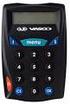 DIGIPASS KEY series and smart card series for Juniper SSL VPN Authentication Certificate Based 2010 Integration VASCO Data Security. Guideline All rights reserved. Page 1 of 31 Disclaimer Disclaimer of
AD Self-Service Suite for Active Directory
 The Dot Net Factory AD Self-Service Suite for Active Directory Version 3.6 The Dot Net Factory, LLC. 2005-2011. All rights reserved. This guide contains proprietary information, which is protected by copyright.
NetIQ Advanced Authentication Framework
 NetIQ Advanced Authentication Framework Security Officer Guide Version 5.2.0 1 Table of Contents 1 Table of Contents 2 Introduction 3 About This Document 3 Authenticators Management 4 Card 8 Email OTP
NetMotion Mobility XE
 Implementation Guide (Version 5.4) Copyright 2012 Deepnet Security Limited Copyright 2012, Deepnet Security. All Rights Reserved. Page 1 Trademarks Deepnet Unified Authentication, MobileID, QuickID, PocketID,
Smart Card Two Factor Authentication
 January 2013 Page 1 Smart Card Two Factor Authentication The combination of a smart card and PIN provides Two-Factor Authentication, where two items are needed: something physical the user has (a smart
Strong Authentication for Microsoft SharePoint
 Strong Authentication for Microsoft SharePoint with Powerful Authentication Management for Service Providers and Enterprises Authentication Service Delivery Made EASY Copyright Copyright 2011. CRYPTOCard
Connection Broker Managing User Connections to Workstations, Blades, VDI, and More. Quick Start with Microsoft Hyper-V
 Connection Broker Managing User Connections to Workstations, Blades, VDI, and More Quick Start with Microsoft Hyper-V Version 8.1 October 21, 2015 Contacting Leostream Leostream Corporation http://www.leostream.com
BlackShield ID Agent for Terminal Services Web and Remote Desktop Web
 Agent for Terminal Services Web and Remote Desktop Web 2010 CRYPTOCard Corp. All rights reserved. http:// www.cryptocard.com Copyright Copyright 2010, CRYPTOCard All Rights Reserved. No part of this publication
IBM Client Security Solutions. Client Security User's Guide
 IBM Client Security Solutions Client Security User's Guide December 1999 1 Before using this information and the product it supports, be sure to read Appendix B - Notices and Trademarks, on page 22. First
HOTPin Integration Guide: DirectAccess
 1 HOTPin Integration Guide: DirectAccess Disclaimer Disclaimer of Warranties and Limitation of Liabilities All information contained in this document is provided 'as is'; Celestix assumes no responsibility
Strong Authentication for Juniper Networks
 Strong Authentication for Juniper Networks SSL VPN SSO and OWA with Powerful Authentication Management for Service Providers and Enterprises Authentication Service Delivery Made EASY Copyright Copyright
Implementation Guide for. Juniper SSL VPN SSO with OWA. with. BlackShield ID
 Implementation Guide for Juniper SSL VPN SSO with OWA with BlackShield ID Copyright 2009 CRYPTOCard Inc. http:// www.cryptocard.com Copyright Copyright 2009, CRYPTOCard All Rights Reserved. No part of
Administrators Help Manual
 Administrators Help Manual Lepide Active Directory Self Service Lepide Software Private Limited Page 1 Administrators Help Manual for Active Directory Self-Service Lepide Active Directory Self Service
STRONGER AUTHENTICATION for CA SiteMinder
 STRONGER AUTHENTICATION for CA SiteMinder Adding Stronger Authentication for CA SiteMinder Access Control 1 STRONGER AUTHENTICATION for CA SiteMinder Access Control CA SITEMINDER provides a comprehensive
DigitalPersona Privacy Manager Pro
 DigitalPersona Privacy Manager Pro DigitalPersona Privacy Manager Pro is a centrally-managed secure communication solution for businesses. It allows sensitive documents and communications to remain private,
DIGIPASS CertiID. Getting Started 3.1.0
 DIGIPASS CertiID Getting Started 3.1.0 Disclaimer Disclaimer of Warranties and Limitations of Liabilities The Product is provided on an 'as is' basis, without any other warranties, or conditions, express
Oracle Enterprise Single Sign-on Technical Guide An Oracle White Paper June 2009
 Oracle Enterprise Single Sign-on Technical Guide An Oracle White Paper June 2009 EXECUTIVE OVERVIEW Enterprises these days generally have Microsoft Windows desktop users accessing diverse enterprise applications
DIGIPASS Authentication for Windows Logon Product Guide 1.1
 DIGIPASS Authentication for Windows Logon Product Guide 1.1 Disclaimer of Warranties and Limitations of Liabilities The Product is provided on an 'as is' basis, without any other warranties, or conditions,
NETWRIX ACCOUNT LOCKOUT EXAMINER
 NETWRIX ACCOUNT LOCKOUT EXAMINER ADMINISTRATOR S GUIDE Product Version: 4.1 July 2014. Legal Notice The information in this publication is furnished for information use only, and does not constitute a
Dell SonicWALL Aventail 10.6.5 Connect Tunnel User Guide
 Dell SonicWALL Aventail 10.6.5 Connect Tunnel User Guide 1 Notes, Cautions, and Warnings NOTE: A NOTE indicates important information that helps you make better use of your system. CAUTION: A CAUTION indicates
DIGIPASS Authentication for Check Point Connectra
 DIGIPASS Authentication for Check Point Connectra With IDENTIKEY Server 2009 Integration VASCO Data Security. Guideline All rights reserved. Page 1 of 21 Disclaimer Disclaimer of Warranties and Limitations
Endpoint Security VPN for Windows 32-bit/64-bit
 Endpoint Security VPN for Windows 32-bit/64-bit E75.20 User Guide 13 September 2011 2011 Check Point Software Technologies Ltd. All rights reserved. This product and related documentation are protected
Android App User Guide
 www.novell.com/documentation Android App User Guide ZENworks Mobile Management 2.7.x August 2013 Legal Notices Novell, Inc., makes no representations or warranties with respect to the contents or use of
RSA SecurID Software Token 1.0 for Android Administrator s Guide
 RSA SecurID Software Token 1.0 for Android Administrator s Guide Contact Information See the RSA corporate web site for regional Customer Support telephone and fax numbers: www.rsa.com Trademarks RSA,
www.rohos.com Two-factor authentication Free portable encryption for USB drive Hardware disk encryption Face recognition logon
 Two-factor authentication Free portable encryption for USB drive Hardware disk encryption Face recognition logon Secure Windows and Mac login by USB key www.rohos.com Rohos Logon Key Secure two-factor
INTEGRATION GUIDE. DIGIPASS Authentication for VMware Horizon Workspace
 INTEGRATION GUIDE DIGIPASS Authentication for VMware Horizon Workspace Disclaimer Disclaimer of Warranties and Limitation of Liabilities All information contained in this document is provided 'as is';
Virtual Code Authentication User Guide for Administrators
 Virtual Code Authentication User Guide for Administrators Virtual Code Authentication - User Guide for Administrators Document No.: 05-001 2001-2015 All rights reserved. Under copyright laws, this document
NetWrix USB Blocker. Version 3.6 Administrator Guide
 NetWrix USB Blocker Version 3.6 Administrator Guide Table of Contents 1. Introduction...3 1.1. What is NetWrix USB Blocker?...3 1.2. Product Architecture...3 2. Licensing...4 3. Operation Guide...5 3.1.
DualShield. for. Microsoft TMG. Implementation Guide. (Version 5.2) Copyright 2011 Deepnet Security Limited
 DualShield for Implementation Guide (Version 5.2) Copyright 2011 Deepnet Security Limited Copyright 2011, Deepnet Security. All Rights Reserved. Page 1 Trademarks DualShield Unified Authentication, MobileID,
XyLoc Security Server w/ AD Integration (XSS-AD 5.x.x) Administrator's Guide
 XyLoc Security Server w/ AD Integration (XSS-AD 5.x.x) Administrator's Guide Contacting Ensure Technologies Email: [email protected] Phone: (734) 547-1600 Home Office: Ensure Technologies 135 S Prospect
Advanced Configuration Steps
 Advanced Configuration Steps After you have downloaded a trial, you can perform the following from the Setup menu in the MaaS360 portal: Configure additional services Configure device enrollment settings
Strong Authentication for Microsoft TS Web / RD Web
 Strong Authentication for Microsoft TS Web / RD Web with Powerful Authentication Management for Service Providers and Enterprises Authentication Service Delivery Made EASY Copyright Copyright 2011. CRYPTOCard
NASA PIV smartcards at Headquarters Frequently Asked Questions (FAQ s)
 Frequently Asked Questions (FAQ s) November, 2013 This list of FAQs is a subset of a larger list derived by the Agency. This list is tailored to meet the needs of users at Headquarters. If you do not find
DIGIPASS Authentication for SonicWALL SSL-VPN
 DIGIPASS Authentication for SonicWALL SSL-VPN With VACMAN Middleware 3.0 2006 VASCO Data Security. All rights reserved. Page 1 of 53 Integration Guideline Disclaimer Disclaimer of Warranties and Limitations
Connection Broker Managing User Connections to Workstations and Blades, OpenStack Clouds, VDI, and More
 Connection Broker Managing User Connections to Workstations and Blades, OpenStack Clouds, VDI, and More Leostream Connect Administrator s Guide and End User s Manual Version 3.5 / 3.1 January 14, 2016
DigitalPersona Pro. Password Manager. Version 5.x. Application Guide
 DigitalPersona Pro Password Manager Version 5.x Application Guide 1996-2012 DigitalPersona, Inc. All Rights Reserved. All intellectual property rights in the DigitalPersona software, firmware, hardware
SafeNet MobilePASS Version 8.2.0, Revision B
 SafeNet MobilePASS Version 8.2.0, Revision B User Guide Software Version 8.2.0 Documentation Version: 20101118 2012 SafeNet, Inc. All rights reserved Preface All intellectual property is protected by copyright.
IMS Health Secure Outlook Web Access Portal. Quick Setup
 IMS Health Secure Outlook Web Access Portal Purpose: This service has been developed to allow access to the IMS Health email system for staff that can not access the email system through VPN which is preferred
Agent Configuration Guide
 SafeNet Authentication Service Agent Configuration Guide SAS Agent for Microsoft Internet Information Services (IIS) Technical Manual Template Release 1.0, PN: 000-000000-000, Rev. A, March 2013, Copyright
DIGIPASS Authentication for Sonicwall Aventail SSL VPN
 DIGIPASS Authentication for Sonicwall Aventail SSL VPN With VASCO IDENTIKEY Server 3.0 Integration Guideline 2009 Vasco Data Security. All rights reserved. PAGE 1 OF 52 Disclaimer Disclaimer of Warranties
Configuration Guide. SafeNet Authentication Service. SAS Agent for Microsoft Internet Information Services (IIS)
 SafeNet Authentication Service Configuration Guide Technical Manual Template Release 1.0, PN: 000-000000-000, Rev. A, March 2013, Copyright 2013 SafeNet, Inc. All rights reserved. 1 Document Information
Flexible Identity. OTP software tokens guide. Multi-Factor Authentication. version 1.0
 Flexible Identity Multi-Factor Authentication OTP software tokens guide version 1.0 Publication History Date Description Revision 2014.02.07 initial release 1.0 Copyright Orange Business Services 2 of
Citrix Password Manager Using the Account Self-Service Feature. Citrix Password Manager 4.6 with Service Pack 1 Citrix XenApp 5.0, Platinum Edition
 Citrix Password Manager Using the Account Self-Service Feature Citrix Password Manager 4.6 with Service Pack 1 Citrix XenApp 5.0, Platinum Edition 2 Citrix Password Manager - Account Self-Service Copyright
User Guide. Version R91. English
 AuthAnvil User Guide Version R91 English August 25, 2015 Agreement The purchase and use of all Software and Services is subject to the Agreement as defined in Kaseya s Click-Accept EULATOS as updated from
Security Provider Integration RADIUS Server
 Security Provider Integration RADIUS Server 2015 Bomgar Corporation. All rights reserved worldwide. BOMGAR and the BOMGAR logo are trademarks of Bomgar Corporation; other trademarks shown are the property
RSA SecurID Software Token 3.0 for Windows Workstations Administrator s Guide
 RSA SecurID Software Token 3.0 for Windows Workstations Administrator s Guide Contact Information See our Web sites for regional Customer Support telephone and fax numbers. RSA Security Inc. RSA Security
NETWRIX IDENTITY MANAGEMENT SUITE
 NETWRIX IDENTITY MANAGEMENT SUITE FEATURES AND REQUIREMENTS Product Version: 3.3 February 2013. Legal Notice The information in this publication is furnished for information use only, and does not constitute
RSA SecurID Ready Implementation Guide
 RSA SecurID Ready Implementation Guide Partner Information Last Modified: December 18, 2006 Product Information Partner Name Microsoft Web Site http://www.microsoft.com/isaserver Product Name Internet
IBM Security Access Manager for Enterprise Single Sign-On Version 8.2.1. User Guide IBM SC23-9950-05
 IBM Security Access Manager for Enterprise Single Sign-On Version 8.2.1 User Guide IBM SC23-9950-05 IBM Security Access Manager for Enterprise Single Sign-On Version 8.2.1 User Guide IBM SC23-9950-05
Remote Desktop Services User's Guide
 Contents Remote Desktop Services Document Revision Control Revision Description Author DATE 1.0 Initial Release Karen M. Hess 3/24/2015 1.1 Added section for viewing mapped drives Karen M. Hess 4/15/2015
VERGENCE TM : TECHNICAL DATA SHEET
 VERGENCE TM : TECHNICAL DATA SHEET DATASHEET PRODUCT OVERVIEW With the move from paper charts to electronic medical records, caregivers have been slowed down by passwords and searching for the same patient
Full Disk Encryption Pre-Boot Authentication Reference
 www.novell.com/documentation Full Disk Encryption Pre-Boot Authentication Reference ZENworks 11 Support Pack 4 Beta April 2015 Legal Notices Novell, Inc., makes no representations or warranties with respect
An Overview of Samsung KNOX Active Directory and Group Policy Features
 C E N T R I F Y W H I T E P A P E R. N O V E M B E R 2013 An Overview of Samsung KNOX Active Directory and Group Policy Features Abstract Samsung KNOX is a set of business-focused enhancements to the Android
Brainloop Secure Dataroom Version 8.30. QR Code Scanner Apps for ios Version 1.1 and for Android
 Brainloop Secure Dataroom Version 8.30 QR Code Scanner Apps for ios Version 1.1 and for Android Quick Guide Brainloop Secure Dataroom Version 8.30 Copyright Brainloop AG, 2004-2015. All rights reserved.
WHAT IS VIRTUAL DESKTOP? WHAT YOU NEED LOG IN TO VIRTUAL DESKTOP SET UP CITRIX RECEIVER REMOTE ACCESS GUIDE
 WHAT IS VIRTUAL DESKTOP? Virtual Desktop is an online environment that allows you to access NSF applications and a virtual desktop that mimics a Windows 7 environment. You can use Virtual Desktop to use
Boost Healthcare Security and Patient Care with Imprivata Enhanced VDI
 White Paper Boost Healthcare Security and Patient Care with Imprivata Enhanced VDI Erik Willey 12.12.2014 SUMMARY: Imprivata OneSign offers an easy-to-implement solution that works seamlessly within a
Omniquad Exchange Archiving
 Omniquad Exchange Archiving Deployment and Administrator Guide Manual version 3.1.2 Revision Date: 20 May 2013 Copyright 2012 Omniquad Ltd. All rights reserved. Omniquad Ltd Crown House 72 Hammersmith
NetIQ Advanced Authentication Framework - Smartphone Applications
 NetIQ Advanced Authentication Framework - Smartphone Applications User Guide Version 3.0 1 Table of Contents 1 Table of Contents 2 Introduction 3 About This Document 3 System Requirements 4 Install Smartphone
Two-Factor Authentication
 Two-Factor Authentication IT Professional & Customer Service Desk Feature Guide Two-Factor Authentication for Exchange Online Office 365 Dedicated & ITAR-Support Plans April 26, 2013 The information contained
Aventail Connect Client with Smart Tunneling
 Aventail Connect Client with Smart Tunneling User s Guide Windows v8.7.0 1996-2006 Aventail Corporation. All rights reserved. Aventail, Aventail Cache Control, Aventail Connect, Aventail Connect Mobile,
Full Disk Encryption Agent Reference
 www.novell.com/documentation Full Disk Encryption Agent Reference ZENworks 11 Support Pack 3 May 2014 Legal Notices Novell, Inc., makes no representations or warranties with respect to the contents or
VPN Client User s Guide. 9235966 Issue 2
 VPN Client User s Guide 9235966 Issue 2 Copyright 2004 Nokia. All rights reserved. Reproduction, transfer, distribution or storage of part or all of the contents in this document in any form without the
Application Note. Intelligent Application Gateway with SA server using AD password and OTP
 Application Note Intelligent Application Gateway with SA server using AD password and OTP ii Preface All information herein is either public information or is the property of and owned solely by Gemalto
SonicWALL SSL VPN 3.5: Virtual Assist
 SonicWALL SSL VPN 3.5: Virtual Assist Document Scope This document describes how to use the SonicWALL Virtual Assist add-on for SonicWALL SSL VPN security appliances. This document contains the following
KofaxExpress. Installation Guide 3.1.0 2012-05-01
 KofaxExpress 3.1.0 Installation Guide 2012-05-01 2008-2012 Kofax, Inc., 15211 Laguna Canyon Road, Irvine, California 92618, U.S.A. All rights reserved. Use is subject to license terms. Third-party software
Host Access Management and Security Server
 Host Access Management and Security Server Evaluation Guide Host Access Management and Security Server Evaluation Guide 12.2 Copyrights and Notices Copyright 2015 Attachmate Corporation. All rights reserved.
Intel Unite Solution. Standalone User Guide
 Intel Unite Solution Standalone User Guide Legal Disclaimers & Copyrights All information provided here is subject to change without notice. Contact your Intel representative to obtain the latest Intel
DIGIPASS Authentication for Juniper ScreenOS
 DIGIPASS Authentication for Juniper ScreenOS With Vasco VACMAN Middleware 3.0 2007 Integration VASCO Data Security. Guideline All rights reserved. Page 1 of 53 Disclaimer Disclaimer of Warranties and Limitations
Application Note Gemalto.NET 2.0 Smart Card Certificate Enrollment using Microsoft Certificate Services on Windows 2008
 7 Application Note Gemalto.NET 2.0 Smart Card Certificate Enrollment using Microsoft Certificate Services on Windows 2008 All information herein is either public information or is the property of and owned
HP ProtectTools User Guide
 HP ProtectTools User Guide Copyright 2007 Hewlett-Packard Development Company, L.P. Microsoft and Windows are U.S. registered trademarks of Microsoft Corporation. Intel is a trademark or registered trademark
Passlogix Sign-On Platform
 Passlogix Sign-On Platform The emerging ESSO standard deployed by leading enterprises Extends identity management to the application and authentication device level No modifications to existing infrastructure
For Active Directory Installation Guide
 For Active Directory Installation Guide Version 2.5.2 April 2010 Copyright 2010 Legal Notices makes no representations or warranties with respect to the contents or use of this documentation, and specifically
MBAM Self-Help Portals
 MBAM Self-Help Portals Authoring a self-help portal workflow for BitLocker Recovery Using Microsoft BitLocker Administration and Monitoring (MBAM) Technical White Paper Published: September 2011 Priyaa
Ensure Technologies Software Release Notes XyLoc Win7 Client 9.x.x Drawing#: 540-0101-010 Drawing Rev: 9.3.0.15 Rev Date: 02-01-2013 Page 1 of 16
 Support Information: XyLoc Windows7 Client Release Notes Ensure Technologies Technical Support is available to provide any needed assistance. Please contact us at (734) 547-1631 or at [email protected].
NetWrix Logon Reporter V 2.0
 NetWrix Logon Reporter V 2.0 Quick Start Guide Table of Contents 1. Introduction... 3 1.1. Product Features... 3 1.2. Licensing... 4 1.3. How It Works... 5 1.4. Report Types Available in the Advanced Mode...