
Comparing Conventional Physical Therapy Rehabilitation With Neuromuscular Electrical Stimulation After TKA
|
|
|
- Jeremy Randall
- 10 years ago
- Views:
Transcription
1 TKA Comparing Conventional Physical Therapy Rehabilitation With Neuromuscular Electrical Stimulation After TKA Michael Levine, MD; Karen McElroy, MPT; Valerie Stakich, MPT; Jodie Cicco, DPT abstract Full article available online at Healio.com/Orthopedics. Search: Rehabilitation following total knee arthroplasty (TKA) is a costly, cumbersome, and often painful process. Physical therapy contributes to the successful outcome of TKA but can be expensive. Alternative methods of obtaining good functional results that help minimize costs are desirable. Neuromuscular electrical stimulation (NMES) is a potential option. Neuromuscular electrical stimulation has been shown to increase quadriceps muscle strength and activation following TKA. Functional scores also improve following TKA when NMES is added to conventional therapy protocols vs therapy alone. The authors hypothesized that rehabilitation managed by a physical therapist would not result in a functional advantage for patients undergoing TKA when compared with NMES and an unsupervised at-home range of motion exercise program and that patient satisfaction would not differ between the 2 groups. Seventy patients were randomized into a postoperative protocol of conventional physical therapy with a licensed therapist, including range of motion exercises and strengthening exercises, or into a program of NMES and range of motion exercises performed at home without therapist supervision. Noninferiority of the NMES program was obtained 6 weeks postoperatively (Knee Society pain/function scores, Western Ontario and McMaster Universities Osteoarthritis Index, flexion). Noninferiority was shown 6 months postoperatively for all parameters. The results suggest that rehabilitation managed by a physical therapist results in no functional advantage or difference in patient satisfaction when compared with NMES and an unsupervised at-home range of motion program. Neuromuscular electrical stimulation and unsupervised at-home range of motion exercises may provide an option for reducing the cost of the postoperative TKA recovery process without compromising quadriceps strength or patient satisfaction. The authors are from West Penn Allegheny Health System (ML, JC); and Orthopedic Associates of Pittsburgh (ML, KM, VS), Pittsburgh, Pennsylvania. Dr Levine is a DJO Surgical Consultant. Mss McElroy and Stakich and Dr Cicco have no relevant financial relationships to disclose. The authors thank Gary Losse, MD, and DJO Global for the research grant that supported this study; David He, MD, James Ryaby, PhD, and Larry Muenz, PhD, for the statistical analysis; and Kate Matthews for her assistance in preparing this article. Correspondence should be addressed to: Michael Levine, MD, c/o Orthopaedic Associates of Pittsburgh, 2550 Mosside Blvd, Monroeville, PA ([email protected]). doi: / MARCH 2013 Volume 36 Number 3 e319

2 Total knee arthroplasty (TKA) is frequently performed in the United States. In 2005, more than 400,000 TKAs were performed; by 2008, the number reached 615,000. 1,2 This number is expected to continue to increase as the Baby Boomer population ages. 3 The surgical aspect of TKA is just one part of the total process. Physical therapy and rehabilitation play an integral role in successful TKA outcomes. A main concern of patients after TKA involves the physical therapy exercises and the related process (ie, pain involved, inconvenience, and cost). Patient perceptions of pain, time commitment during rehabilitation, cost, and inconvenience vary, which may affect outcomes. 4 The physical therapy process is also costly. 5 The current standard of care after TKA involves a physical therapy program supervised by a licensed physical therapist during the hospital stay and for 6 to 12 weeks postoperatively. Usually, therapy occurs under the guidance of a physical therapist in the home for 2 weeks and is followed by therapy in an outpatient facility for another 4 to 8 weeks. It involves therapeutic modalities such as ice, heat, and massage in addition to exercise. The exercise protocol involves range of motion (ROM) and strengthening exercises. Occasionally, hands-on ROM maneuvers are performed by the therapist. Therapy is necessary because of the significant weakness noted in the musculature after TKA, particularly in the quadriceps. Quadriceps muscle weakness can persist for 6 to 13 years postoperatively. 6 Quadriceps strength has been shown to decrease by 62% and voluntary activation of the quadriceps musculature by 17% after TKA when compared with preoperative values. 7 This significant impairment of quadriceps function is predominantly due to failure of voluntary muscle activation. 7 Given that voluntary muscle activation is significantly decreased after TKA, rehabilitation is often difficult. Therefore, even with standard rehabilitation protocols, strength, function, and ROM are significantly worse at 1 month postoperatively and do not approach preoperative levels until 6 months postoperatively. 8 It also appears that exercise protocols alone do not restore patients to the level of a nonarthritic peer. 8 Thus, alternative methods of gaining muscle recovery after TKA should be considered. Neuromuscular electrical stimulation (NMES) has been shown to increase quadriceps muscle strength and activation after TKA. 9 Functional scores appear to improve after TKA when NMES is added to conventional therapy protocols as opposed to therapy alone. 10 However, most studies to date have examined NMES as an adjunct to supervised therapy protocols and have not evaluated its benefit after TKA without formal therapy. 9,10 The current authors hypothesized that rehabilitation managed by a physical therapist would not result in a functional advantage for patients undergoing TKA compared with NMES and an unsupervised at-home ROM exercise program, and that patient satisfaction would not differ between the 2 groups. Materials and Methods This study was a balanced, 2-group, single-center, randomized, noninferiority trial comparing NMES with unsupervised at-home ROM exercises and therapist-managed physical therapy after TKA. Physical therapy was the standard of care. The study sought to determine whether any clinically meaningful difference existed between the NMES group and the physical therapy group. The study was approved by the institutional review board of the Western Pennsylvania Hospital and processed through the Singer Research Institute of the West Penn Allegheny Health System. All patients were required to provide informed consent specific to the study and to the surgical procedure. Patients were voluntarily recruited from the daily operations of the medical practice of the principal investigator (M.L.), with no form of advertisement or financial remuneration. All surgical procedures were performed at Forbes Regional Hospital, Monroeville, Pennsylvania, by the principal investigator using the posteriorstabilized Optetrak Knee (Exactech, Inc, Gainesville, Florida). Patients were included if they were older than 18 years, scheduled for an elective TKA for osteoarthritis, and able to consent for themselves. Exclusion criteria included age younger than 18 years, revision surgery, inflammatory arthritis, admission to an extended care facility, pacemaker or defibrillator, epilepsy, lower-limb ischemia, abdominal or inguinal hernia, cutaneous lesions, acute trauma or fracture, inability to undergo extended physical therapy, and diminished mental capabilities. Patients randomized to the physical therapy group were not allowed to undergo NMES as part of their physical therapy during the study period. Preliminary evaluations for study inclusion were performed at the principal investigator s office. After eligibility was confirmed, patients were evaluated by the physical therapists (K.M., V.S.) 14 days preoperatively, at which time preoperative assessments were performed and instruction on the treatment protocol and the devices used in the protocol were initiated. Randomization was performed by the physical therapists at the initial evaluation 14 days preoperatively by drawing 1 paper from a hat that contained 35 papers for each group. A sample size of 70 patients was used, with 35 patients randomized to each group. Patients in the physical therapy group were instructed in a formal physical therapy program consisting of 5 packets of exercises that included different combinations of ROM and progressive resistive exercises done while hospitalized and after discharge under the direct supervision of a physical therapist. Packets 1 and 2 contained ROM exercises only, and packets 3 to 5 included strengthening. e320 ORTHOPEDICS Healio.com/Orthopedics

3 Physical Therapy Vs Neuromuscular Electrical Stimulation After TKA Levine et al Patients in the NMES group were given the same first 2 packets of exercises as the physical therapy group, but only included ROM exercises. After discharge from the hospital, the patients had no direct contact with a physical therapist postoperatively except for during study evaluations. In addition, 14 days preoperatively, the NMES group was instructed to begin use of the Compex Neuromuscular Electrical Stimulator (DJO Global, Vista, California). Preoperative use continued until 1 day before surgery, was reinitiated on postoperative day 1, and was continued for 60 days postoperatively. Postoperative pain management was standard to both groups. Surgery was performed under spinal anesthesia unless contraindicated or the anesthesiologist was unable to perform spinal anesthesia and the patient had to undergo general anesthesia. A long-acting morphine supplement was added to the spinal anesthesia. An oral analgesic protocol consisting of extended- and short-release oxycodone or tramadol was then used. During the initial preoperative visit, patients underwent evaluations including the Knee Society score (KSS), the Western Ontario and McMaster Universities Osteoarthritis Index (WOMAC) score, ROM assessment, and Get-Up-and-Go (GUG) testing by a licensed physical therapist (K.M., V.S.). The WOMAC and KSS scores were calculated at Orthoscores. com using their modifications. 11 Similar examinations occurred at 6 weeks and 6 months postoperatively. A daily log was maintained by each patient to confirm compliance with daily study protocol participation. The primary endpoint of the investigation was the 6-month postoperative evaluation. Noninferiority was assessed for flexion, extension, KSS pain score, KSS function score, WOMAC score, and GUG test by examining the absolute 6-week and 6-month differences between groups and the change from baseline to 6 weeks and 6 months. A 95% confidence interval was Outcome used. All tests had a 2.5% type I error rate and a power of 80%; no adjustment was made for attrition. Margins for each parameter were established by the principal investigator Tests for superiority were performed to determine a margin for noninferiority testing for the 6-week and 6-month outcomes. This was necessary because no widely accepted preestablished margin of inferiority exists in the clinical literature for the parameters evaluated in this study. The margin was set at roughly 10% of the most extreme value (Table 1). This percentage, although arbitrary, seemed reasonable based on the authors calculations. Results Seventy patients were initially recruited into the study. Thirty-five patients were randomized into the physical therapy and NMES groups, respectively. All patients were diagnosed with osteoarthritis and underwent TKA with a posterior-stabilized implant. Mean age was 65.1 years in the physical therapy group and 68.1 years in the NMES group (P5.16). The physical therapy group comprised 21 (62%) women and 13 (38%) men, and the NMES group comprised 25 (76%) women and 7 (21%) men (P5.19). Mean body mass index Table 1 Extreme Values of Each Outcome Used to Choose Margins of Noninferiority Maximum (Margin) Change From Preop to Wk 6/ Mo 6 Postop, Range (Margin) Flexion, deg 134 (10) 236 to 49 (5) Extension, deg 33 (3) 210 to 24 (2) Knee Society score, points Pain 95 (10) 242 to 64 (5) Function 100 (10) 245 to 90 (10) WOMAC score, points 100 (10) 230 to 67 (5) Get-Up-and-Go test, s 23 (3) 214 to 8 (2) Abbreviations: deg, degrees; Postop, postoperative; WOMAC, Western Ontario and McMaster Universities Osteoarthritis Index. was 31.9 kg/m 2 in the physical therapy group and 30.6 kg/m 2 in the NMES group (P5.35). Baseline comparison of the physical and functional outcomes showed no significant differences between groups (Table 2). One patient in the physical therapy group withdrew from the study in postoperative week 2 because she was unable to travel to the study site for postoperative evaluation. Two patients in the NMES group were withdrawn because they developed confusion postoperatively, which required inpatient skilled nursing. Another patient was withdrawn from the NMES group after it was identified that workman s compensation was involved. Four patients in the NMES group and 9 patients in the physical therapy group were lost to follow-up at 6 months. Attempts were made to contact each of these patients by telephone, and those reached reported satisfactory progress but did not wish to continue being evaluated. The 6-week and 6-month data were assessed for noninferiority on each of the functional outcomes. Extreme values of each outcome were used to choose the margins of noninferiority. The maximum values were as follows: flexion, 134 MARCH 2013 Volume 36 Number 3 e321
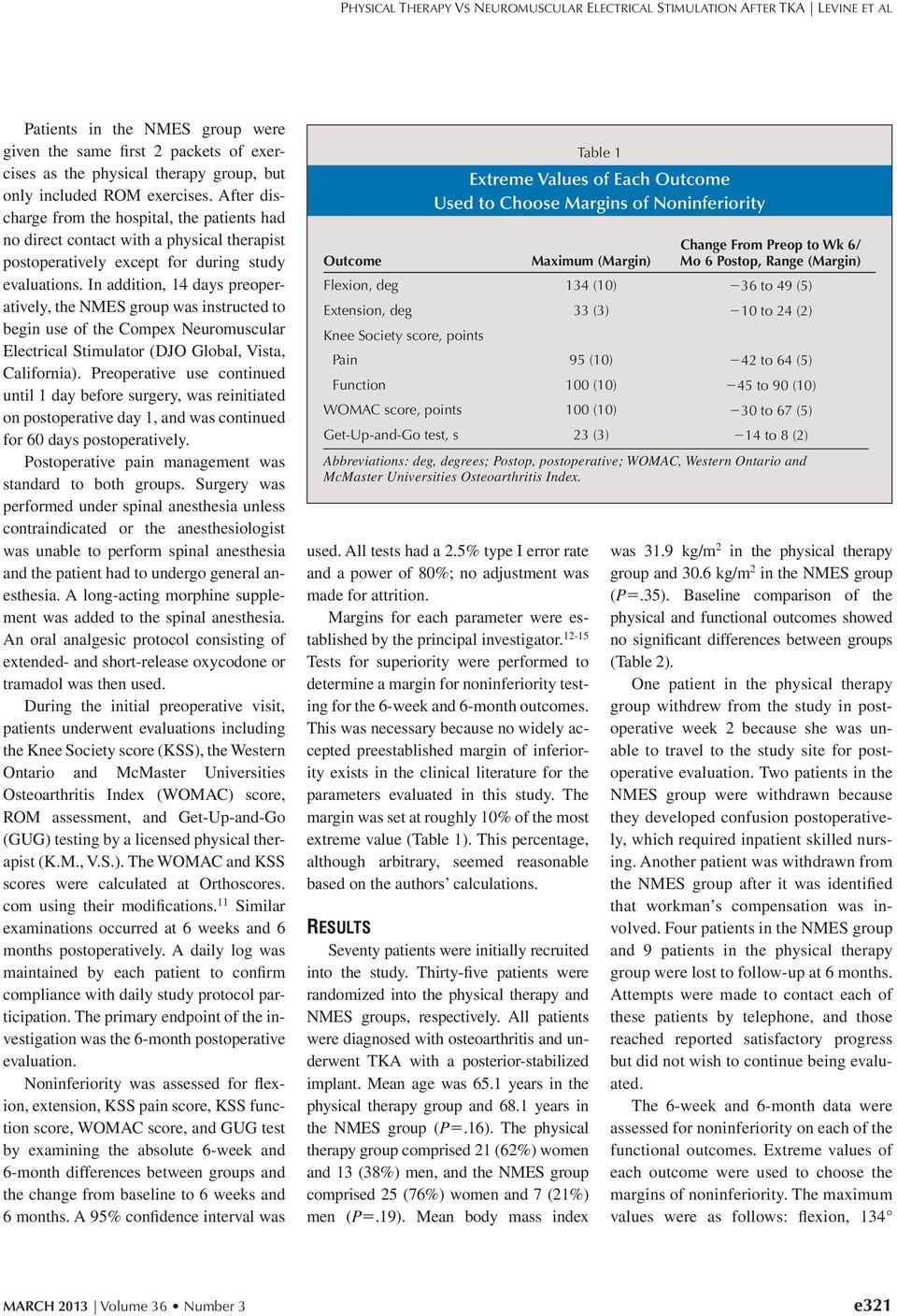
4 Table 2 Preoperative Data Mean6SD Outcome NMES Group Physical Therapy Group P Flexion, deg Extension, deg KSS score, points Pain Function WOMAC score, points Get-Up-and-Go test, s Abbreviations: KSS, Knee Society score; NMES, neuromuscular electrical stimulation; s, seconds; WOMAC, Western Ontario and McMaster Universities Osteoarthritis Index. Outcome Flexion, deg Table 3 Statistics for Each Outcome by Treatment Group NMES Group Mean6SD (n) PT Group 95% CI for D: NMES2PT Wk (30) (33) a to 2.28 Mo (26) (24) a to 9.1 Extension, deg Wk (30) (33) 22.1 to 3.4 a Mo (26) (24) to a,b KSS pain, points Wk (30) (33) a to Mo (26) (24) a to KSS function, points Wk (30) (33) a to Mo (26) (24) a to 18.4 WOMAC score, points Wk (30) (33) a to Mo (26) (24) a to Get-Up-and-Go test, s Wk (30) (33) to 3.13 a,b Mo (25) (24) to a Abbreviations: CI, confidence interval; deg, degrees; KSS, Knee Society score; NMES, neuromuscular electrical stimulation; PT, physical therapy; s, seconds; WOMAC, Western Ontario and McMaster Universities Osteoarthritis Index. a Noninferiority attained. b Confidence interval per the unequal variance Satterthwaite method. with a margin of 10 ; extension, 33 with a margin of 3 ; KSS pain score, 95 points with a margin of 10 points; KSS function score, 100 points with a margin of 10 points; WOMAC score, 100 points with a margin of 10 points; GUG test, 23 seconds with a margin of 3 seconds. Noninferiority was shown at 6 weeks for flexion, KSS pain score, KSS function score, and WOMAC score. Noninferiority was not shown at 6 weeks for extension and GUG test. However, noninferiority was shown at 6 months for all parameters (Table 3). Overall functional scores, such as KSS pain and function scores and WOMAC scores, were better in the NMES group, whereas ROM and GUG results were slightly better in the physical therapy group at 6 weeks. At 6 months, all parameters except GUG testing were slightly better in the NMES group. Patient satisfaction WOMAC scores were similar between the 2 groups. Discussion The hypothesis of this study was that a NMES protocol with self-performed ROM exercises administered for 2 weeks before and 60 days after TKA would provide similar outcomes regarding quadriceps strength and patient satisfaction at 6 weeks and 6 months compared with a traditional therapist-managed physical therapy program. This was confirmed using well-accepted outcome assessments for TKA. Looking at the absolute values of the KSS pain and function scores and the WOMAC scores, patient satisfaction was somewhat better in the NMES group. Physical therapy is often a source of concern for patients after TKA; if it could be reduced or eliminated, anxiety over the procedure could also be reduced. 4 Other potential advantages of reducing or eliminating physical therapy are its cost and inconvenience. Medicare reimbursements at local outpatient physical therapy facilities are approximately $100 to $125 per session: a cost ranging from $1200 to e322 ORTHOPEDICS Healio.com/Orthopedics
5 Physical Therapy Vs Neuromuscular Electrical Stimulation After TKA Levine et al $1500 for 12 sessions. This does not include the 2 weeks of home care, for which the actual cost of therapy is difficult to assess because of the Medicare bundled payment system. The cost of the NMES device in this study was $400, which resulted in a substantial cost savings over the therapist-managed physical therapy. Neuromuscular electrical stimulation and ROM exercises can be performed at home and at the patient s convenience, not according to the schedule of a therapist. This lowers the burden on the patient with regard to scheduling home visits with a therapist or the need to visit a therapy facility, which involves making transportation arrangements. Recently, unsupervised physical therapy, such as telerehabilitation, has been shown to provide results comparable with therapist-managed physical therapy. 16 However, a role exists for active therapy. Certain patients will require a formal physical therapy program; extension was not shown to be noninferior at 6 weeks, and some individuals in the NMES study group may have benefitted from physical therapy. However, by 6 months, noninferiority was observed. Prior studies have shown less improvement in knee extension after TKA when fewer physical therapy visits occurred on a home care basis. 17 However, in the current study, extension in the NMES group was similar to that in the physical therapy group at 6-month follow-up. Another area of concern was the GUG test, which was shown to be noninferior at 6 months but not at 6 weeks. The GUG test is a reliable assessment of function; however, it may not represent overall physical function. Patient perceptions of function can differ from actual function, 18 which may explain the WOMAC and KSS results differing from the GUG results at 6 weeks in the current study. Significant patient factors, including obesity, motivation, fatigue, and preoperative activity levels, in the performance of the test can also affect results. Stratification of patients at randomization based on their preoperative activity levels may be necessary to detect differences in groups based on the GUG test. This study had some limitations. Although the physical therapy group was given a comprehensive protocol, the therapists differed for each patient, and the therapy protocol may not have been implemented identically for each patient. In the NMES group, the authors were able to monitor patient compliance with the protocol but not to objectively assess performance of the unsupervised ROM exercises. Finally, the power for the study was not adjusted to reflect the 13 patients lost to follow-up by 6 months; this may have skewed the results. Another potential limitation of the study was the inherent design. When the study was initially designed, the hypothesis was to evaluate NMES with unsupervised, at-home ROM exercises versus a supervised physical therapy program. This evaluation produced no clear evidence that NMES with home exercise is superior to home ROM exercises alone or no therapy at all. For future investigations, the authors will consider a different study design. An appropriately sized study population could be divided into 4 groups, such as supervised physical therapy with NMES, supervised physical therapy without NMES, at-home ROM exercises with NMES, and at-home ROM exercises without NMES. This type of design represents a logical next step for study. Patients can have impaired quadriceps function after TKA due to decreased voluntary muscle activation. 7 Therefore, it is important to make the rehabilitation process after TKA as efficient as possible to encourage compliance. Neuromuscular electrical stimulation combined with selfadministered ROM exercises may provide a more efficient and cost-effective alternative approach for improving short-term outcomes. Conclusion The hypothesis of this study was that physical therapist managed rehabilitation would not result in a functional advantage for patients undergoing TKA compared with NMES and an unsupervised at-home ROM exercise program, and that patient satisfaction would not differ between the 2 groups. The results of the study support this hypothesis. Use of NMES and unsupervised at-home ROM exercises may provide an option for simplifying and reducing the cost of the postoperative TKA recovery process without compromising quadriceps strength or patient satisfaction. References 1. Kane RL, Saleh KJ, Wilt TJ, et al. Total knee replacement. Evid Rep Technol Ass Summ. 2003; 86: Healthcare Cost and Utilization Project (HCUP). Nationwide Inpatient Sample (NIS). Agency for Healthcare Research and Quality: data/hcup/. 3. Lavernia C, Lee DJ, Herandez VH. The increasing financial burden of knee revision surgery in the United States. Clin Orthop Relat Res. 2006; 446: Restogi R, Chesworth BM, Davis AM. Change in patient concerns following total knee arthroplasty described with the International Classification of Functioning, Disability and Health: a repeated measures design. Health Qual Life Outcomes. 2008; 6: Mitchell C, Walker J, Walters S, Morgan AB, Bins T, Mathers N. Cost and effectiveness in pre and postop home physiotherapy for total knee replacement; randomized control trial. J Eval Clin Pract. 2005; 11: Huang CH, Chang CK, Lee YT, Lee KS. Muscle strength after successful total knee replacement: a 6-12 year follow up period. Clin Orthop Relat Res. 1996; 328: Mizner RL, Petterson SC, Stevens JE, Vandenborne K, Snyder-Mahaler L. Early quadriceps strength loss after total knee arthroplasty: the contributions of muscle atrophy failure of voluntary muscle activation. J Bone Joint Surg Am. 2005; 87: Bade MJ, Kohrt WM, Stevens-Lapsky JE. Outcomes before and after total knee arthroplasty compared to healthy adults. J Orthop Sports Phys Ther. 2010; 40: Stevens-Lapske JE, Baler JE, Wolfe P, et al. Relationship between intensity of quadriceps muscle neuromuscular electrical stimulation and strength recovery after total knee arthroplasty. Phys Ther. 2012; 92: MARCH 2013 Volume 36 Number 3 e323
6 10. Avramidid K, Karachalios T, Popotonasios K, Sacorafa D, Papathanasiades AA, Malizos KN. Does electrical stimulation of the vastus medialis muscle influence rehabilitation after total knee replacement. Orthopedics. 2011; 34: Kurer M, Gooding C. Orthopedic Scores Web site. www. orthoscores.com. 12. Piaggio G. Elbourne DR, Altman DG, Peacock SJ, Evans SJ, Consort Group. Reporting of noninferiority and equivalence randomized trials: an extension of the CONSORT statement. JAMA. 2006; 295: Lewis JA. Statistical principles for clinical trials (ICH E9): an introductory note on an international guideline. Stat Med. 1999; 18: Lui J, Hsueh H, Hsieh E, Chen JJ. Tests for equivalence or non-inferiority for paired binary data. Stat Med. 2002; 21: Nam JM, Blackwelder WC. Analysis of the ratio of marginal probabilities in a matchedpair setting. Stat Med. 2002; 21: Russell TG, Buttrum P, Wootton R, Jull GA. Internet-based outpatient telerehabilitation for patients following total knee arthroplasty: a randomized controlled trial. J Bone Joint Surg Am. 2011; 93: Collins T, Herness J, Martenas J, Roberson A. Medicare prospective payment before and after implementation: a review of visits and physical performance among Medicare home health patients after total knee replacement. Home Health Nurse. 2007; 25: Piva SR, Fitzgerald GK, Irrgang JJ, Bouzabar F, Starz TW. Get up and go test in patients with knee osteoarthritis. Arch Phys Med Rehabil. 2004; 85: e324 ORTHOPEDICS Healio.com/Orthopedics

Is 1-to-1 therapy superior to group- or home-based programs after TKA? A randomised trial.
 Is 1-to-1 therapy superior to group- or home-based programs after TKA? A randomised trial. Victoria Ko BAppSc (Phty) Justine Naylor PhD Ian Harris PhD Jack Crosbie PhD Anthony Yeo PhD Rajat Mittal MBBS
Enhanced recovery programme after TKA through multi-disciplinary collaboration
 Enhanced recovery programme after TKA through multi-disciplinary collaboration ChanPK(1), ChiuKY(1), FungYK(6), YeungSS(7), NgT(8), ChanMT(5), LamR(4), WongNY(3), ChoiYY(3), ChanCW(2), NgFY(1), YanCH(1)
West Penn Allegheny Health System
 West Penn Allegheny Health System System Compliance Department Medical Necessity and Billing for Inpatient Rehabilitation Lessons Learned from an Inpatient Rehab Unit Billing Audit 2006 HCCA Compliance
Mary LaBarre, PT, DPT,ATRIC
 Aquatic Therapy and the ACL Current Concepts on Prevention and Rehab Mary LaBarre, PT, DPT,ATRIC Anterior Cruciate Ligament (ACL) tears are a common knee injury in athletic rehab. Each year, approximately
MN Community Measurement Total Knee Replacement Impact and Recommendation Document June 2010
 MN Community Measurement Total Knee Replacement Impact and Recommendation Document June 2010 Degree of Impact Relevance to Consumers, Employers and Payers Annually there are over 500,000 total knee replacement
A Manual Therapy and Exercise Approach to Breast Cancer Rehabilitation Course
 2014 Annual Breast Cancer Rehabilitation Healthcare Provider Event A Manual Therapy and Exercise Approach to Breast Cancer Rehabilitation Course November 7 th and 8 th, 2014 Mercer University, Atlanta,
GENERAL ADMISSION CRITERIA INPATIENT REHABILITATION PROGRAMS
 Originator: Case Management Original Date: 9/94 Review/Revision: 6/96, 2/98, 1/01, 4/02, 8/04, 3/06, 03/10, 3/11, 3/13 Stakeholders: Case Management, Medical Staff, Nursing, Inpatient Therapy GENERAL ADMISSION
Neck Pain & Cervicogenic Headache Integrating Research into Practice: San Luis Sports Therapy s Approach to Evidence-Based Practice
 Neck Pain & Cervicogenic Headache Integrating Research into Practice: San Luis Sports Therapy s Approach to Evidence-Based Practice PROBLEM: Neck Pain and Cervicogenic Headache 66% Proportion of individuals
Transmittal 55 Date: MAY 5, 2006. SUBJECT: Changes Conforming to CR3648 for Therapy Services
 CMS Manual System Pub 100-03 Medicare National Coverage Determinations Department of Health & Human Services (DHHS) Centers for Medicare & Medicaid Services (CMS) Transmittal 55 Date: MAY 5, 2006 Change
Inpatient Rehabilitation Facilities (IRFs) [Preauthorization Required]
![Inpatient Rehabilitation Facilities (IRFs) [Preauthorization Required]](/thumbs/25/4903617.jpg "Inpatient Rehabilitation Facilities (IRFs) [Preauthorization Required]") Inpatient Rehabilitation Facilities (IRFs) [Preauthorization Required] Medical Policy: MP-ME-05-09 Original Effective Date: February 18, 2009 Reviewed: April 22, 2011 Revised: This policy applies to products
Inpatient Rehabilitation Facilities (IRFs) [Preauthorization Required] Medical Policy: MP-ME-05-09 Original Effective Date: February 18, 2009 Reviewed: April 22, 2011 Revised: This policy applies to products
Resident will learn independently in addition to scheduled didactics. Learning is centered on the 7 core competencies as follows:
 Educational Goals & Objectives Physical and Occupational Therapies are an important part of patient care. The Physical Therapy rotation, under the supervision of the Director of Rehabilitation, is a one
UNILATERAL VS. BILATERAL FIRST RAY SURGERY: A PROSPECTIVE STUDY OF 186 CONSECUTIVE CASES COMPLICATIONS, PATIENT SATISFACTION, AND COST TO SOCIETY
 UNILATERAL VS. BILATERAL FIRST RAY SURGERY: A PROSPECTIVE STUDY OF 186 CONSECUTIVE CASES COMPLICATIONS, PATIENT SATISFACTION, AND COST TO SOCIETY Robert Fridman DPM, Jarrett Cain DPM, Lowell Weil Jr. DPM,
Evidence Review. Topic: Same-day Mobilization following Total Hip and Total Knee Arthroplasty
 Evidence Review Revised October 01, 2009 Topic: Same-day Mobilization following Total Hip and Total Knee Arthroplasty Background Hip and knee arthroplasty patients routinely receive postoperative physiotherapy
Rehabilitation Protocol: Total Knee Arthroplasty (TKA)
 Rehabilitation Protocol: Total Knee Arthroplasty (TKA) Department of Orthopaedic Surgery Lahey Hospital & Medical Center, Burlington 781-744-8650 Lahey Outpatient Center, Lexington 781-372-7020 Lahey Medical
Marina Richardson, M.Sc. Deb Willems, BSc.PT David Ure, OT Robert Teasell, MD FRCPC
 Assessing the Impact of Southwestern Ontario s Community Stroke Rehabilitation Teams: An Economic Analysis Presenters: Laura Allen, M.Sc. (cand.) Matthew Meyer, Ph.D (cand.) Marina Richardson, M.Sc. Deb
Outpatient Physical Therapy Locations
 Outpatient Physical Therapy Locations Physical Therapy at Clinton Health Campus 908-735-3930 1783 Route 31N, Suite 103 Clinton, NJ Hunterdon Sports and Physical Therapy 908-237-7096 222 Route 31N Flemington,
May 7, 2012. Submitted Electronically
 May 7, 2012 Submitted Electronically Secretary Kathleen Sebelius Department of Health and Human Services Office of the National Coordinator for Health Information Technology Attention: 2014 edition EHR
FACTORS ASSOCIATED WITH ADVERSE EVENTS IN MAJOR ELECTIVE SPINE, KNEE, AND HIP INPATIENT ORTHOPAEDIC SURGERY
 FACTORS ASSOCIATED WITH ADVERSE EVENTS IN MAJOR ELECTIVE SPINE, KNEE, AND HIP INPATIENT ORTHOPAEDIC SURGERY Dov B. Millstone, Anthony V. Perruccio, Elizabeth M. Badley, Y. Raja Rampersaud Dalla Lana School
Rapid Mobilization Decreases Length-of-Stay in Joint Replacement Patients
 222 Rapid Mobilization Decreases Length-of-Stay in Joint Replacement Patients Gregory Tayrose, M.D., Debbie Newman, B.S., James Slover, M.D., M.S., Fredrick Jaffe, M.D., Tracey Hunter, B.S., and Joseph
Knee Pain/OA Physical Therapy Approaches
 Knee Pain/OA Physical Therapy Approaches G. Kelley Fitzgerald, PT, PhD, FAPTA Professor, Department of Physical Therapy, School of Health and Rehabilitation Sciences Director, Physical Therapy Clinical
Contemporary Orthopedic Care: The O.R. Through Rehabilitation
 Session Descriptions and Objectives: The Impact of Orthopaedic Care, Michael West, CPA, MBA, CEO, Rothman Institute This session will provide an overview of the Health Care Reform. Conference participants
Draft South West LHIN Hip and Knee Replacement Program Post Acute Stream Algorithm - Guidelines and Milestones
 Post Acute Stream Guidelines for patients to attend Post-Acute Stream Stream Overview 1)Discharge home to Outpatient Rehab (hospital funded or Private clinic). RAPT score >9 (only assessed pre-operatively)or?
The Impact of Regional Anesthesia on Perioperative Outcomes By Dr. David Nelson
 The Impact of Regional Anesthesia on Perioperative Outcomes By Dr. David Nelson As a private practice anesthesiologist, I am often asked: What are the potential benefits of regional anesthesia (RA)? My
Position Statement: The Use of Total Ankle Replacement for the Treatment of Arthritic Conditions of the Ankle
 Position Statement: The Use of Total Ankle Replacement for the Treatment of Arthritic Conditions of the Ankle Position Statement The (AOFAS) endorses the use of total ankle replacement surgery for treatment
adj., departing from the norm, not concentric, utilizing negative resistance for better client outcomes
 Why Eccentrics? What is it? Eccentric adj., departing from the norm, not concentric, utilizing negative resistance for better client outcomes Eccentrics is a type of muscle contraction that occurs as the
Lumbar Disc Herniation/Bulge Protocol
 Lumbar Disc Herniation/Bulge Protocol Anatomy and Biomechanics The lumbar spine is made up of 5 load transferring bones called vertebrae. They are stacked in a column with an intervertebral disc sandwiched
Rebuilding your INDEPENDENCE. The Joint Center. This is your hospital.
 Rebuilding your INDEPENDENCE The Joint Center This is your hospital. Providing you with high-tech orthopedic care inahealingenvironment. Every year, thousands of Americans suffer from severe pain in their
Rehabilitation after ACL Reconstruction: From the OR to the Playing Field. Mark V. Paterno PT, PhD, MBA, SCS, ATC
 Objectives Rehabilitation after ACL Reconstruction: From the OR to the Playing Field Mark V. Paterno PT, PhD, MBA, SCS, ATC Coordinator of Orthopaedic and Sports Physical Therapy Cincinnati Children s
Clinical pathways in total knee arthroplasty: A New Zealand experience
 Journal of Orthopaedic Surgery 2003: 11(2): 166 173 Clinical pathways in total knee arthroplasty: A New Zealand experience JM Pennington, DPG Jones, S McIntyre Department of Orthopaedic Surgery, Dunedin
it s time for rubber to meet the road
 your total knee replacement surgery Steps to returning to a Lifestyle You Deserve it s time for rubber to meet the road AGAIN The knee is the largest joint in the body. The knee is made up of the lower
PREPARED FOR: U.S. Army Medical Research and Materiel Command Fort Detrick, Maryland 21702-5012
 AD Award Number: W81XWH-10-1-0957 TITLE: PRINCIPAL INVESTIGATOR: Andrea L. Behrman, Ph.D., P.T. CONTRACTING ORGANIZATION: University of Florida Gainesville, FL 32611 REPORT DATE: October 2011 TYPE OF REPORT:
How Health Services Research Can Translate to a Better Future: Singapore s Tele-Rehabilitation Experience
 How Health Services Research Can Translate to a Better Future: Singapore s Tele-Rehabilitation Experience A/Prof (Dr) Gerald Koh Leader of Health Services and Behavioural Sciences (HSBS) Domain and Tele-Health
Annual Report Fiscal Year 2014
 Annual Report Fiscal Year 2014 Message from Administration The Rehabilitation Unit at Meritus Medical Center has enjoyed the use of great new equipment, a wonderful new space and opportunities to revise
ACL Rehabilitation Pathway. Expediating Safe Return to Optimum Performance. www.sportssurgeryclinic.com
 Specialists in Joint Replacement, Spinal Surgery, Orthopaedics and Sport Injuries ACL Rehabilitation Pathway Expediating Safe Return to Optimum Performance www.sportssurgeryclinic.com Contents Introduction...
The Role of Acupuncture with Electrostimulation in the Prozen Shoulder
 The Role of Acupuncture with Electrostimulation in the Prozen Shoulder Yu-Te Lee A. Aim To evaluate the efficacy of acupuncture with electrostimulation in conjunction with physical therapy in improving
MAKOplasty MAKOplasty MAKOplasty MAKOplasty MAKOplasty MAKOplasty MAKOplasty MAKOplasty MAKOplasty
 Pre-op Patient Guide to Partial Knee Resurfacing Your Guide to Partial Knee Resurfacing Page I 1 Partial Knee Resurfacing...2 Benefits Possible with the Procedure...4 Your Guide to Surgery...5 Frequently
Therapeutic Canine Massage
 Meet our Certified Canine Massage Therapist, Stevi Quick After years of competitive grooming and handling several breeds in conformation, I became interested in training and competing with my dogs in the
Evolving New Practices in Hip & Knee Arthroplasty: It Takes A Team! CCHSE National Healthcare Leadership Conference June 11-12, 2007 Toronto
 Evolving New Practices in Hip & Knee Arthroplasty: It Takes A Team! CCHSE National Healthcare Leadership Conference June 11-12, 2007 Toronto Focus of Presentation Toronto Central LHIN is developing a new
Employers Centers of Excellence Network (ECEN) Frequently Asked Questions
 Employers Centers of Excellence Network (ECEN) Frequently Asked Questions The Employers Centers of Excellence Network (ECEN) What is this program? Inspired by our members interest in supporting value-based
The Unhappy total knee replacement patient whose X rays look fine. Can we predict, prevent and treat. Myles RJ Coolican and Kunal Dhurve
 The Unhappy total knee replacement patient whose X rays look fine Introduction: Can we predict, prevent and treat Myles RJ Coolican and Kunal Dhurve Total knee replacement (TKR) is an effective treatment
Bayada Home Health. Health Policy. Objectives. Quality. Quality Defined. Health Defined 11/24/2009. Institutes of Medicine (IOM)
 Engaging the Professional Workforce Mike Johnson, PT, PhD, OCS Director of Clinical Leadership Visit Clinical Leadership (VCL) Office Skilled Visit Services; Bayada Nurses Moorestown, New Jersey Creating
frequently asked questions Knee and Hip Joint Replacement Technology
 frequently asked questions Knee and Hip Joint Replacement Technology frequently asked questions Knee and Hip Joint Replacement Technology Recently, you may have seen advertisements from legal companies
Assessment of Patient Outcomes of Rehabilitative Care Provided in Inpatient Rehabilitation Facilities (IRFs) and After Discharge
 Assessment of Patient Outcomes of Rehabilitative Care Provided in Inpatient Rehabilitation Facilities (IRFs) and After Discharge PREPARED FOR: ARA Research Institute PRESENTED BY: Al Dobson, Ph.D. PREPARED
Pennsylvania Workers Compensation Billing Tutorial. Step 1: Find the Charge Classes by Zip Code
 Step 1: Find the Charge Classes by Zip Code http://www.portal.state.pa.us/portal/server.pt/community/charge_classes_by_zip_co de/10428 The Pennsylvania Workers' Compensation Fee Schedule for Part B providers
Hoag Orthopedic Institute If we build it, will they come?
 Hoag Orthopedic Institute If we build it, will they come? James T. Caillouette, M.D. Surgeon in Chief Hoag Orthopedic Institute Chairman and President Newport Orthopedic Institute What is HOI? Current
Total Knee Arthroplasty. TKA - Indications. Technical Goals - TKA. Prosthesis parallel to Floor/Stance. Mechanical Axis/Center of Joint
 Total Knee Arthroplasty TKA - Indications Osteoarthritis Rheumatoid Arthritis Post Traumatic Arthritis Osteonecrosis Tumor Technical Goals - TKA Prosthesis parallel to Floor/Stance Mechanical Axis/Center
Rehabilitation Protocol: Total Hip Arthroplasty (THA)
 Rehabilitation Protocol: Total Hip Arthroplasty (THA) Department of Orthopaedic Surgery Lahey Hospital & Medical Center, Burlington 781-744-8650 Lahey Outpatient Center, Lexington 781-372-7020 Lahey Medical
Rehabilitation. Day Programs
 Rehabilitation Day Programs Healthe Care is the hospital division of Healthe. As the largest privately owned network of private hospitals in Australia, we take pride in delivering premium care to our valued
New Functional Limitation Reporting Requirements Under Medicare Part B
 New Functional Limitation Reporting Requirements Under Medicare Part B Heather Smith, PT, MPH 1 BACKGROUND AND OVERVIEW 2 1 History of Medicare Therapy Caps and Reform Payment in Therapy Services 2013
LOW BACK INJURIES PROGRAM OF CARE PROGRAM OF CARE 4TH EDITION 2014
 LOW BACK INJURIES PROGRAM OF CARE PROGRAM OF CARE 4TH EDITION 2014 GUIDE Acknowledgements Acknowledgements The WSIB would like to acknowledge the significant contributions of the following regulated Health
Rehabilitation and Lung Cancer Resection. Roberto Benzo MD MS Mindful Breathing Laboratory Division of Pulmonary & CCM Mayo Clinic
 Rehabilitation and Lung Cancer Resection Roberto Benzo MD MS Mindful Breathing Laboratory Division of Pulmonary & CCM Mayo Clinic Disclosure Funded by the National Cancer Institute NIH for Preoperative
Corporate Medical Policy Continuous Passive Motion in the Home Setting
 Corporate Medical Policy Continuous Passive Motion in the Home Setting File Name: Origination: Last CAP Review: Next CAP Review: Last Review: continuous_passive_motion_in_the_home_setting 9/1993 6/2016
Updates into Therapeutic Exercise Programs for Patients with LBP. Maximizing Patient Motivation and Outcomes Alice M.
 Updates into Therapeutic Exercise Programs for Patients with LBP Maximizing Patient Motivation and Outcomes Alice M. Davis, PT, DPT Objectives Review Statistics on LBP Discuss current research findings
To provide standardized Supervised Exercise Programs across the province.
 TITLE ALBERTA HEALTHY LIVING PROGRAM SUPERVISED EXERCISE PROGRAM DOCUMENT # HCS-67-01 APPROVAL LEVEL Executive Director Primary Health Care SPONSOR Senior Consultant Central Zone, Primary Health Care CATEGORY
Audit on treatment and recovery of ankle sprain
 Hong Kong Journal of Emergency Medicine Audit on treatment and recovery of ankle sprain WY Lee Study Objectives: The object of this study is to audit the care of ankle sprain of different severity and
Health Care Subsidy and Outcomes of Total Knee Arthroplasty in Asians
 Health Care Subsidy and Outcomes of Total Knee Arthroplasty in Asians Hamid Rahmatullah bin Abd Razak, MBBS, MRCS(Glasg); Toh Rui Xiang, MBBS; Chong Hwei Chi, BSc; Tan Hwee Chye Andrew, MBBS, FRCS(Orth)
POPULATION HEALTH MANAGEMENT: VALUE- BASED PAYMENT MODELS: CARE REDESIGN IN TOTAL JOINT REPLACEMENT HCSRN Conference: April 2016
 POPULATION HEALTH MANAGEMENT: VALUE- BASED PAYMENT MODELS: CARE REDESIGN IN TOTAL JOINT REPLACEMENT HCSRN Conference: April 2016 TAMARA CULL, NATIONAL DIRECTOR, POPULATION HEALTH ACCOUNT MANAGEMENT Tamara
What to know if Medicare denies coverage
 What to know if Medicare denies coverage What Medicare covers Necessary post-hospital extended care for up to 100 days Extended care: nursing care and rehab provided to a Medicare beneficiary who is an
Essential Hospitals VITAL DATA. Results of America s Essential Hospitals Annual Hospital Characteristics Survey, FY 2012
 Essential Hospitals VITAL DATA Results of America s Essential Hospitals Annual Hospital Characteristics Survey, FY 2012 Published: July 2014 1 ABOUT AMERICA S ESSENTIAL HOSPITALS METHODOLOGY America s
Rehabilitation guidelines for patients undergoing knee arthroscopy
 Rehabilitation guidelines for patients undergoing knee arthroscopy At the RNOH, our emphasis is patient specific, which encourages recognition of those who may progress slower then others. We also want
Development of a clinical pathway for total knee arthroplasty and the effect on length of stay and in-hospital functional outcome
 Acta Orthop. Belg., 2005, 71, 439-444 ORIGINAL STUDY Development of a clinical pathway for total knee arthroplasty and the effect on length of stay and in-hospital functional outcome Kris VANHAECHT, Walter
ACCELERATED REHABILITATION PROTOCOL FOR POST OPERATIVE POSTERIOR CRUCIATE LIGAMENT RECONSTRUCTION DR LEO PINCZEWSKI DR JUSTIN ROE
 ACCELERATED REHABILITATION PROTOCOL FOR POST OPERATIVE POSTERIOR CRUCIATE LIGAMENT RECONSTRUCTION DR LEO PINCZEWSKI DR JUSTIN ROE January 2005 Rationale of Accelerated Rehabilitation Rehabilitation after
Is manual physical therapy more effective than other physical therapy approaches in reducing pain and disability in adults post whiplash injury?
 Is manual physical therapy more effective than other physical therapy approaches in reducing pain and disability in adults post whiplash injury? Clinical Bottom Line Manual therapy may have a role in the
Update to the Treatment of Degenerative Cervical Disc Disease
 Update to the Treatment of Degenerative Cervical Disc Disease Michael Lynn, MD Neurosurgeon, Southeastern Neurosurgical & Spine Institute Adjunct Assistant Clinical Professor of Bioengineering, Clemson
CURRENT AND FUTURE TRENDS IN POST ACUTE CARE The Value and Role of Acute Inpatient Rehab
 CURRENT AND FUTURE TRENDS IN POST ACUTE CARE The Value and Role of Acute Inpatient Rehab Robert S. Djergaian, M.D. Medical Director Banner Good Samaritan Rehabilitation Institute Stewardship Profitability
in LOVE with LIFE CaroMont Health s Path to Accountable Care: A Pathway to Health
 CaroMont Health s Path to Accountable Care: A Pathway to Health Betty Herbert, Director Managed Care May 17, 2011 CaroMont Health System Gaston Memorial Hospital, with 435 beds Courtland Terrace, a 96-bed
Naylor JM, Descallar J, Grootemaat M, Badge H, Simpson G, Harris IA, Jenkin D Funding: HCF Research Foundation 2013-2015
 Is satisfaction with the acute-care experience higher amongst consumers treated in the private sector? A survey of public and private sector arthroplasty recipients Naylor JM, Descallar J, Grootemaat M,
Patient Optimization Improves Outcomes, Lowers Cost of Care >
 Patient Optimization Improves Outcomes, Lowers Cost of Care > Consistent preoperative processes ensure better care for orthopedic patients The demand for primary total joint arthroplasty is projected to
The Outpatient Knee Replacement Program at Orlando Orthopaedic Center. Jeffrey P. Rosen, MD
 The Outpatient Knee Replacement Program at Orlando Orthopaedic Center Jeffrey P. Rosen, MD Anesthesia Pain Management Post-Op / Discharge Protocols The Orlando Orthopaedic Center Joint Replacement Team
Rapid Recovery Total Joint Programs: Interdisciplinary Collaboration
 Rapid Recovery Total Joint Programs: Interdisciplinary Collaboration Alisa L. Curry, PT, DPT CJR Program Manager Physical Therapy Clinical Coordinator Center for Joint Replacement Mission Statement since
Hip Rehab: Things to Consider. Sue Torrence, MS, PT, ATC Lead Physical Therapist
 Hip Rehab: Things to Consider Sue Torrence, MS, PT, ATC Lead Physical Therapist Where to Start? Objectives: Discuss injuries related to hip dysfunction Review commonly used functional tests for posteriolateral
Managing canine osteoarthritis: What has proven benefits?
 Managing canine osteoarthritis: What has proven benefits? B. Duncan X. Lascelles and Denis J. Marcellin-Little North Carolina State University Student Chapter of the IVAPM, Durham, NC 10.10.2006 Osteoarthritis:
Case Series on Chronic Whiplash Related Neck Pain Treated with Intraarticular Zygapophysial Joint Regeneration Injection Therapy
 Pain Physician 2007; 10:313-318 ISSN 1533-3159 Case Series Case Series on Chronic Whiplash Related Neck Pain Treated with Intraarticular Zygapophysial Joint Regeneration Injection Therapy R. Allen Hooper
TORONTO STROKE FLOW INITIATIVE - Outpatient Rehabilitation Best Practice Recommendations Guide (updated July 26, 2013)
 Objective: To enhance system-wide performance and outcomes for persons with stroke in Toronto. Goals: Timely access to geographically located acute stroke unit care with a dedicated interprofessional team
Stakeholder s Report. 2525 SW 75 th Ave Miami, Florida 33155 305.262.6800 www.westgablesrehabhospital.com
 212 Stakeholder s Report 2525 SW 75 th Ave Miami, Florida 33155 35.262.68 www.westgablesrehabhospital.com PROFILE REPORT For more than 25 years, West Gables Rehabilitation Hospital has made a mission of
Anterior Cruciate Ligament Reconstruction. ACL Rehab Protocol
 Anterior Cruciate Ligament Reconstruction Rehab Protocol This rehabilitation protocol has been designed for patients following ACL reconstruction who anticipate returning to a high level of activity as
CURRICULUM VITAE. Kelli Brizzolara, PT, PhD, OCS. Doctor of Philosophy in Physical Therapy
 CURRICULUM VITAE Kelli Brizzolara, PT, PhD, OCS Education 2013 Texas Woman s University, Dallas, Texas Doctor of Philosophy in Physical Therapy 2003 Texas Woman s University, Houston, Texas Master of Science
William J. Robertson, MD UT Southwestern Orthopedics 1801 Inwood Rd. Dallas, TX 75390-8882 Office: (214) 645-3300 Fax: (214) 3301 billrobertsonmd.
 Anterior Cruciate Ligament Reconstruction Postoperative Rehab Protocol You will follow-up with Dr. Robertson 10-14 days after surgery. At this office visit you will also see one of his physical therapists.
Department of Physiotherapy and Rehabilitation:
 Department of Physiotherapy and Rehabilitation: The 10,000 sq. ft. area of the Rehab Department offers wide range of services which include Musculoskeletal, Neuro Rehabilitation Dept (Pediatrics and Adult),
What Is Femoral Acetabular Impingement? Patient Guide into Joint Preservation
 What Is Femoral Acetabular Impingement? Patient Guide into Joint Preservation Normal Hip Joint The hip joint, also known as a ball and socket joint is located where the femur (the thigh bone) meets the
Rehabilitation for Total Joint Replacement
 ICES Research Atlas INSIDE Introduction Findings and Discussion Discharge destinations following total joint replacement Length of stay in acute care and inpatient rehabilitation following total joint
CDR Matt Armentano, PT, DPT, OCS FMC Lexington
 CDR Matt Armentano, PT, DPT, OCS FMC Lexington Define standard acceptable rates of surgical site infections in lower extremity total joint procedures Describe risk factors for surgical site infections
New treatment options for chronic sinusitis
 New treatment options for chronic sinusitis Balloon Sinuplasty Technology Vishram Jalukar, MD Mason City Clinic ENT & Allergy MKT01014 Rev. D Sinusitis Overview Inflammation of the sinus lining caused
National Stroke Association s Guide to Choosing Stroke Rehabilitation Services
 National Stroke Association s Guide to Choosing Stroke Rehabilitation Services Rehabilitation, often referred to as rehab, is an important part of stroke recovery. Through rehab, you: Re-learn basic skills
Where Should Rehabilitation Take Place?!
 Where Should Rehabilitation Take Place?! Three Basic Questions! 1. Is rehabilitation effective in improving a patient s functional abilities?!yes" yes" 2. Is rehabilitation cost effective?!yes" where"
Organization of Rehabilitation and Post-Acute Care
 Organization of Rehabilitation and Post-Acute Care Inaugural Meeting of NECC Boston, MA - September 13, 2006 Janet Prvu Bettger, ScD University of Pennsylvania Department of Physical Medicine and Rehabilitation
THE ACUTE CARE INPATIENT PPS implemented in
 184 ORIGINAL ARTICLE Impact of Mental on Cost and Reimbursement for Patients in Inpatient Rehabilitation Facilities Deborah Dobrez, PhD, Allen W. Heinemann, PhD, Anne Deutsch, RN, PhD, CRRN, Elizabeth
Physiotherapy-Based Rehabilitation after Total Hip or Knee Arthroplasty. CURRENT AUSTRALIAN PRACTICE Hart AJ, Chua MJ, Naylor JM, Mittal R, Harris IA
 Physiotherapy-Based Rehabilitation after Total Hip or Knee Arthroplasty CURRENT AUSTRALIAN PRACTICE Hart AJ, Chua MJ, Naylor JM, Mittal R, Harris IA Acknowledgements and Funding Funding: HCF Research Foundation