
Acne Vulgaris: Pathophysiology, diagnosis, and treatment of a common dermatologic condition
|
|
|
- Shawn Cobb
- 10 years ago
- Views:
Transcription
1 Acne Vulgaris: Pathophysiology, diagnosis, and treatment of a common dermatologic condition Latasha Weeks, B.A., B.S. Doctor of Pharmacy Candidate, 2007 University of Maryland School of Pharmacy

2 Learning Objectives Define acne and describe its epidemiology Explain the pathophysiology of acne Describe the clinical presentation of acne Explain how acne is diagnosed Discuss the various treatment options for acne, both pharmacologic and non-pharmacologic 2

3 What is Acne? Acne vulgaris is a chronic, inflammatory disease of the pilosebaceous units of the skin. Pilosebaceous unit = hair + hair follicle + sebaceous gland Sebaceous gland Found in hair-covered areas Functions to secrete sebum, an oily substance that acts to protect and waterproof skin and hair, and keep it from being dry, brittle, and a cracked 3

4 Epidemiology Age Sex Acne can present at any point during a person s s life Adolescent acne usually presents prior to the onset of puberty During adolescence, acne is more common in males than females During adulthood, acne is more common in females than males 4

5 Epidemiology cont US population Acne affects more than 85% of teenagers Results in more than 2 million visits to the doctor per year for patients years of age Mean age at presentation for treatment is 24 years 10% of doctor s s visits take place when patients are between the ages of 35 and 44 years. Financial impact Direct cost of acne in the US is estimated to exceed $1 billion per year Of this amount, it is estimated that $100 million is spent on over er-the- counter acne products 5
6 Epidemiology cont Psychosocial impact Social, psychological, and emotional impairment that can result from acne has been reported to be similar to that associated with other chronic medical conditions like arthritis, asthma, diabetes, and epilepsy Patients are prone to depression, social withdrawal, anxiety, and d anger Scarring associated with acne can lead to lifelong problems with regards to self-esteem esteem Patients with acne are more likely to be unemployed 6

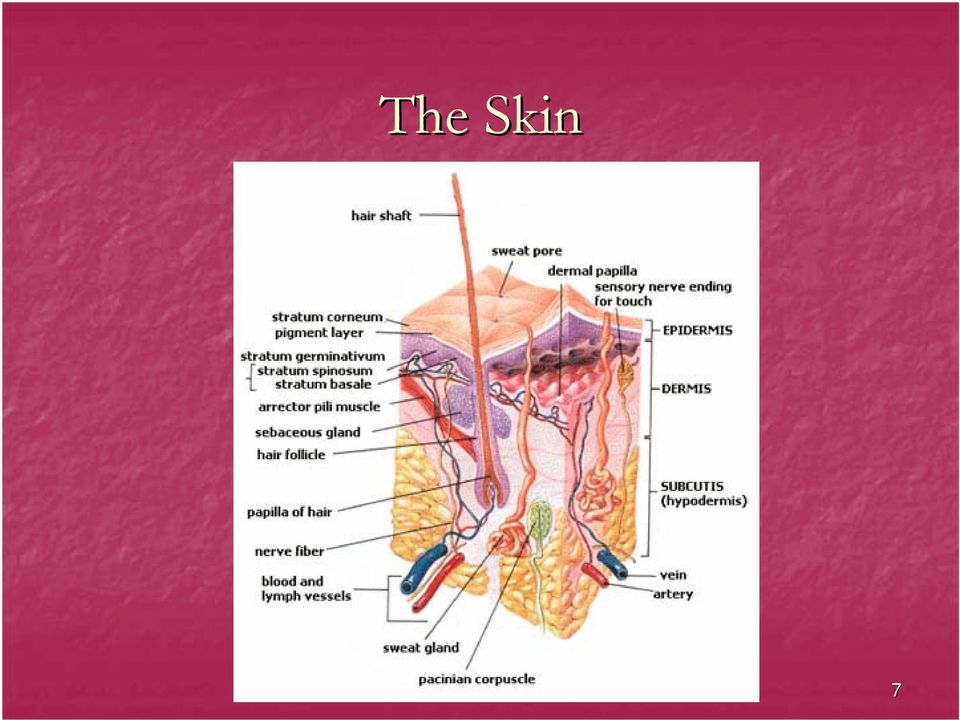
7 The Skin 7
8 Pathophysiology Primary Causes Increased sebum production Abnormal epithelial desquamation Bacterial growth Inflammation Secondary Triggers Mechanical obstruction (e.g., helmets, shirt collars) Increased hormonal activity (e.g., menstrual cycles, puberty) Stress (due to increased output of hormones from the adrenal gland) Cosmetics and emollients (occlude follicles and cause an acneiform eruption) Medications with halogens (iodine, chlorine, bromine) Lithium, barbiturates, androgens Anabolic steroids 8

9 1. Increased Sebum Production Maturation of the adrenal gland or an increase in the number of cells of the sebaceous gland can lead to excess sebum production 9

10 2. Abnormal Epithelial Desquamation Hyperkeratinization of the hair follicle prevents the normal shedding of follicular keratinocytes This results in follicular canal widening and increased cell production Sebum mixes with excess loose cells in the follicular canal to form a keratinous plug, or microcomedo Blackhead aka, open comedo; ; color due to the oxidation of tyrosine to melanin upon exposure to air Whitehead aka, closed comedo; ; due to inflammation or trauma to the follicle 10

11 3. Bacterial Growth The occluded follicle is rich in lipids as this is a major component of sebum This environment fosters the growth of Propionibacterium acnes,, a bacteria that is part of the normal flora of the skin 11

12 4. Inflammation P. acnes provokes an inflammatory response by breaking down triglycerides found in sebum to free fatty acids and glycerol, and these compounds are proinflammatory P. acnes leads to further inflammation by releasing chemotactic factors that result in WBC activity 12

13 Clinical Presentation Acne may present on the face, neck, chest, back, shoulders, or upper arms Acne can be described in terms of: Type of lesion Classification of severity Lesions can take months to heal completely, and fibrosis associated with healing may lead to permanent scarring 13
14 Type of Lesion Non-Inflammatory Comedonal Whitehead dilated hair follicle filled with keratin, sebum, and bacteria, with an obstructed opening to the skin Blackhead dilated hair follicle filled with keratin, sebum, and bacteria, with a wide opening to the skin capped with a blackened mass of skin debris Inflammatory Papulo-pustular pustular Papule small bumps less than 5mm in diameter Pustule small bump with a visible central core of purulent material Nodulocystic Nodule bump greater than 5mm in diameter 14

15 Severity 15

16 Mild Acne 16

17 Moderate Acne 17

18 Moderately Severe 18

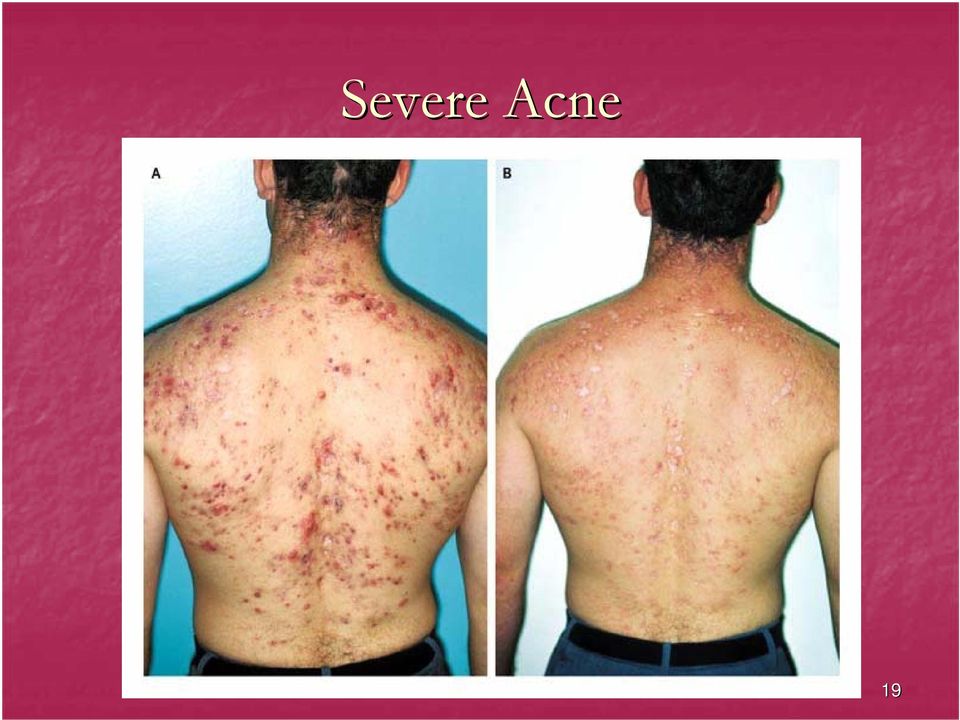
19 Severe Acne 19
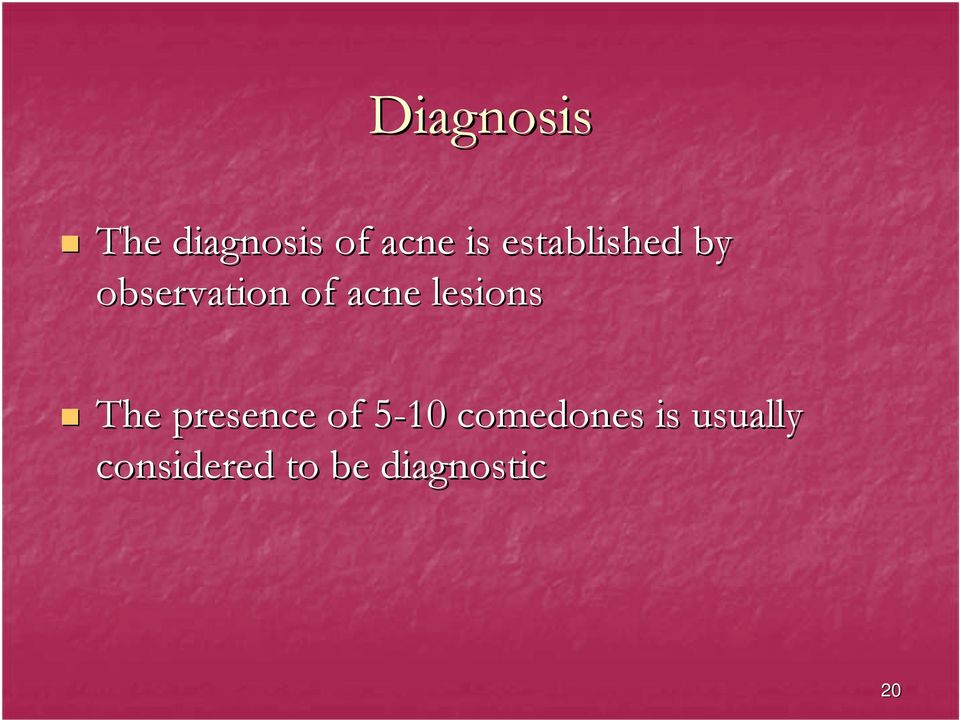
20 Diagnosis The diagnosis of acne is established by observation of acne lesions The presence of comedones is usually considered to be diagnostic 20
21 Therapeutic Objectives To prevent the formation of new acne lesions To heal existing lesions To prevent or minimize scarring 21
22 Treatment Options Non-pharmacologic Surface skin cleansing Pharmacologic Topical products Oral antibiotics Isotretinoin Hormonal agents 22
23 Non-Pharmacologic Treatment Surface skin cleansing with soap and water has a relatively small effect on acne because it has minimal impact within follicle Skin scrubbing or excessive face washing does not necessarily open or cleanse pores and may lead to skin irritation Use of gentle, nondrying cleansing agents is important to avoid skin irritation and dryness during some acne therapies 23
24 Pharmacologic Treatment: Benzoyl peroxide Retinoid analogues Topical antibiotics Azelaic acid Topical Products 24
25 Benzoyl Peroxide Role in Acne Treatment: Non-antibiotic antibacterial agent that is bacteriostatic against P. acnes Increases the sloughing rate of epithelial cells and loosens the follicular plug structure Proven effective in the treatment of acne Availability Available in a wide variety of dosage forms (e.g., soaps, lotions, creams, washes, and gels) and dosages (e.g., 2.5% to 10% Dosing To limit irritation and increase tolerability, begin with lowest concentration and increase either the strength or application frequency Patients should apply the product to cool, clean, dry skin no more than twice daily Common Side Effects Dryness and irritation May bleach or discolor some fabrics 25
26 Retinoid Analogues Role in Acne Treatment Increases cell turnover in the follicular wall Decreases cohesiveness of cells, leading to extrusion of the comedones and inhibition of new comedo formation Effectiveness in the treatment of acne is well documented 26
27 Retinoid Analogues cont Examples Tretinoin (topical vitamin A acid) Availability wide variety of dosage forms and concentrations, including Retin-A- Micro Dosing applied once nightly Side Effects skin irritation, erythema, peeling, increased sensitivity to sun n exposure, wind, or cold Adapalene (Differin) Availability 0.1% gel, cream, alcoholic solution, and pledgets Dosing - applied once daily at night or in the morning Side Effects minimal irritation Tazarotene (Tazorac) Availability 0.05% and 0.1% gel or cream Dosing applied once nightly Side Effects irritation, erythema, burning, stinging 27
28 Topical Antibiotics Role in Acne Treatment Both erythromycin and clindamycin have demonstrated efficacy and are well tolerated Availability Wide variety of dosage forms and concentrations Also available in combination with benzoyl peroxide Dosing Erythromycin applied once or twice daily Clindamycin applied once or twice daily In combination with benzoyl peroxide applied once or twice daily Common Side Effects Development of resistance by P. acnes 28
29 Azaleic Acid Role in Acne Treatment Reported to possess comedolytic,, anti-inflammatory, inflammatory, and antibacterial properties Availability 20% cream Dosing Applied twice daily on clean, dry skin Side Effects Mild transient burning, pruritus,, stinging, and tingling 29
30 Pharmacologic Treatment: Oral Antibiotics Role in Acne Treatment Standard of care in the management of moderate and severe acne as well as in treatment-resistant resistant forms of inflammatory acne Examples Minocycline reserved for patients who do not respond to other oral antibiotics ics or topical products; superior to doxycycline in reducing P. acnes Doxycycline more effective than tetracycline Tetracycline least expensive and most often prescribed for initial therapy Erythromycin effective, but use is limited to those who cannot use the tetracyclines (e.g., pregnant women or children under 8 y.o.).) Trimethoprim-Sulfamethoxazole effective, but use is limited to those who cannot use the tetracyclines or erythromycin, or in case of resistance to these antibiotics Clindamycin use is limited by diarrhea 30
31 Oral Antibiotics cont Dosing Minocycline mg once to twice daily Doxycycline mg once to twice daily Tetracycline mg 500mg twice to four times daily Erythromycin mg 500mg twice daily Trimethoprim-Sulfamethoxazole 160/800mg twice daily Clindamycin use is limited by diarrhea Common Side Effects Vaginal candidiasis, photosensitivity, diarrhea 31
32 Pharmacologic Treatment: Isotretinoin Role in Acne Treatment Indicated for severe nodular or inflammatory acne in patients unresponsive to conventional therapies, for scarring, for those with chronic relapsing acne, and for acne associated with severe psychological distress Decreases sebum production, changes in sebum composition, inhibits P.acnes growth within follicles, inhibits inflammation ipledge This agent is a potent teratogen,, and thus should only be prescribed by physicians knowledgeable in its appropriate administration and monitoring Female patients of child-bearing potential must only be treated with this agent if they are participating in ipledge,, the approved pregnancy prevention and management program Physician enters the patient s s information into the ipledge website Dispensing pharmacist interviews patient and verifies patient information on website Patient has to sign a consent form to comply with the program 32
33 Isotretinoin cont Dosing mg/kg/day Drug is usually given for a 20 week course of therapy Lower doses can be used for a longer time period, with a total cumulative c dose of mg/kg 150mg/kg Common side effects Dry mouth, nose, and eyes Increases in cholesterol, triglycerides, glucose, and transaminases Other reported effects Mood disorders, depression, suicidal ideation, 33
34 Pharmacologic Treatment: Role in Acne Treatment Hormonal Agents Estrogen-containing oral contraceptives can be useful in the treatment of acne in some women Currently FDA-approved products for the treatment of acne include Ortho Tri-Cyclen (norgestimate with ethinyl estradiol) ) and Estrostep (norethindrone acetate with ethinyl estradiol) These products have been shown to be equally efficacious The effect of other estrogen-containing contraceptives (e.g., transdermal patches, vaginal rings) has not been studied 34
35 References American Academy of Dermatology: Guidelines of Care for Acne Vulgaris Management. Access on 11/26/2006 at James WD. Clinical Practice: Acne. N Engl J Med Apr 7;352(14): Feldman S, Careccia RE, Barham KL, Hancox J. Diagnosis and treatment of acne. Am Fam Physician May 1;69(9): Liao DC. Management of acne. J Fam Pract Jan;52(1): Bershad SV. The modern age of acne therapy: a review of current treatment options. Mt. Sinai J Med Sept-Oct;68(4 Oct;68(4-5): Federman DG, Kirsner RS. Acne vulgaris: pathogenesis and therapeutic approach. Am J Manag Care Jan;6(1):
Acne Vulgaris: Pathophysiology, diagnosis, and treatment of a common dermatologic condition
 Acne Vulgaris: Pathophysiology, diagnosis, and treatment of a common dermatologic condition Dr. Mohamed Emam Lecturer in Clinical Pharmacy Department Faculty of Pharmacy Beni Suef University Hair Pilosebaceous
Acne (Acne Vulgaris) A common type of bacteria that lives on the skin, known as Propionibacterium acnes, sometimes
 Acne (Acne Vulgaris) Acne, clinically known as acne vulgaris, is the most common skin disease. It affects 85% of teenagers, some as young as 12, and often continues into adulthood. It is also called pimples,
ACNE. Nisakorn Saewan, Ph.D.
 ACNE, Ph.D. Contents Definition Cause of acne Type of acne Acne grades Acne treatments Objectives To explain the definition of acne To elucidate cause of acne To identify type and grade of acne To explain
Acne. Sofia Chaudhry M.D. Histology of an inflamed comedo. Bolognia, 2008.
 Acne Sofia Chaudhry M.D. Histology of an inflamed comedo. Bolognia, 2008. Acne Vulgaris (Common Acne) Multifactorial disorder of pilosebaceous unit Affects 40-50 million individuals annually in U.S. alone
X-Plain Acne Reference Summary
 X-Plain Acne Reference Summary Introduction Nearly 17 million people in the United States have acne, making it one of the most common skin diseases in the USA. Although acne is not a serious health threat,
1. ACNE 1. Lisa Schmidt, MPH, Eve A. Kerr, MD, and Kenneth Clark, MD
 1. ACNE 1 Lisa Schmidt, MPH, Eve A. Kerr, MD, and Kenneth Clark, MD The general approach to summarizing the key literature on acne was to review relevant sections of two medical text books (Vernon and
Summary Acne vulgaris is a chronic, treatable disease but response to treatment may be delayed.
 TREATMENT OF ACNE VULGARIS Summary Acne vulgaris is a chronic, treatable disease but response to treatment may be delayed. Topical agents are useful as monotherapy for mild acne and in combination with
Acne. Objectives. Conflicts of Interest. Acne 05/18/2015
 Objectives Acne Jonathan A. Dyer, MD Associate Professor of Dermatology and Child Health University of Missouri Discuss acne pathogenesis Recognize common acne subtypes Implement a treatment plan based
Smoothbeam Laser Treatment of Acne Vulgaris. Emerging Applications
 Smoothbeam Laser Treatment of Acne Vulgaris Emerging Applications About Acne Vulgaris Very common - Affects 80% of population Almost every person experiences acne Most common reason to visit dermatologist
ACNE AND ROSACEA. Disclosure. Distribution of Acne 6/12/2014. NJAFP 2014 Summer Celebration & Scientific Assembly 1
 ACNE AND ROSACEA Everett Schlam, MD Assistant Director, Mountainside Hospital Family Medicine Residency Program, Verona, NJ Disclosure Dr. Schlam has indicated that he has nothing to disclose relevant
MANAGING ACNE IN PHARMACY
 MANAGING ACNE IN PHARMACY ACNE PREVALENCE Acne is the most common of skin diseases, affecting 85 per cent of Australians aged 15-24 years old. Very few people manage to escape their teenage and young adult
Acne Vulgaris: Basic Facts
 Acne 1 Module Instructions The following module contains hyperlinked information which serves to offer more information on topics you may or may not be familiar with. We encourage that you read all the
acne Dr. M. Goeteyn Dermatologie AZ Sint-Jan Brugge-Oostende AV [email protected]
 acne Dr. M. Goeteyn Dermatologie AZ Sint-Jan Brugge-Oostende AV [email protected] Why should you treat acne? -Impact on the quality of life -scarring What is acne? Acne is an inflammatory disease
Acne. What causes acne? Formation of Skin Pimples and Acne
 Acne Facts & Fixes Acne Acne is the most common skin disease, affecting 85% of Australians aged 15-24 years old. Very few people manage to escape their teenage and young adult years without some pimples
Pathogenesis 10/04/2015. Acne
 Deepani Rathnayake MBBS, MD, FACD Acne Affects >80% of adolescents >40% of adults Associated with Disfigurement Loss of confidence Depression Affects quality of life Pathogenesis i) increased sebum production,
before it starts getting better. Do not give up! We will continue to work with you to get your acne better.
 ACNE Acne is a common condition in teenagers and adults. It affects up to 80-90% of teenagers. Developing an acne bump is multifactorial, meaning that several processes lead to the formation of the acne
Comparison of the Effect of Azelaic Acid 20% And Clindamycin 1% In the Treatment of Mild And Moderate Acne. Abstract
 Original Article Comparison of the Effect of Azelaic Acid 20% And Clindamycin 1% In the Treatment of Mild And Moderate Acne Soudabeh Tirgar Tabari, MD Ali Akbar Moghadam Nia, PharmD Karimollah Hajian Amirmajid
The Cause of Acne. Caring for Acne
 Sebaceous (oil) glands generate oil. The nose area is typically affected by acne because the sebaceous glands are larger and more active in this vicinity than in any other area of the face. In order to
F r e q u e n t l y A s k e d Q u e s t i o n s
 Acne who specializes in treating skin problems) about how you can help prevent acne and if treatment would help you. Q: What is acne? A: Acne is a disorder that causes outbreaks of skin lesions commonly
4/18/2014 ACNE: THEN & NOW 25 YEARS OF INNOVATION ACNE VULGARIS ETIOLOGY OF ACNE. Jenifer Lloyd, DO, FAAD Professor of Internal Medicine
 ACNE: THEN & NOW 25 YEARS OF INNOVATION Jenifer Lloyd, DO, FAAD Professor of Internal Medicine ACNE VULGARIS The most common disease of the pilosebaceous unit. Commonly affects the face, chest & back.
F REQUENTLY A SKED Q UESTIONS
 Acne ogist (a doctor who specializes in treating skin problems) about how you can help prevent acne and if treatment would help you. page 1 Q: What is acne? Q: What are the different types of A: Acne is
Acne. Normal skin. What is acne?
 Acne Acne is extremely common in varying degrees of severity. About 9 out of 10 teenagers develop some degree of acne. However, this does not mean it should be ignored. Acne is a distressing condition
You may leave comments on this document at http://cme.medicine.dal.ca/ad_resources.htm
 PLANNING COMMITTEE 1. Content Experts Clinical expert Peter Green MD FRCPC, Assistant Professor, Department of Medicine, Division of Dermatology, Dalhousie University Drug evaluation pharmacist Kim Kelly,
Acne can appear on the face. back, chest, neck. shoulders, and upper arms. ----.-----. WHAT CAUSES ACNE?
 Cysts Nodules Acne can appear on the face. back, chest, neck. shoulders, and upper arms. pore becomes inflamed (red and swollen). Sometimes the inflammation can damage the lining of the pore and then the
9/25/2012. Composed of three layers. Glands. Basic skin care Acne How to recognize How to treat. I have no conflict of interest
 By Theresa M. Schimmels, PA-C WAPA Fall CME 2012 Basic skin care Acne How to recognize How to treat I have no conflict of interest Composed of three layers epidermis dermis hypodermis or subcutaneous Glands
+++#,# & %!"#$%& '"#()*
 +++#,#! "#$#%&"##$!'#&("&!"# $ %& %& & %!"#$%& '"#()* +++#,# Research Article Pharmacology International Journal of Pharma and Bio Sciences ISSN 0975-6299 COMPARISION OF CLINICAL EFFICACY OF TOPICAL CLINDAMYCIN
ACNE TOP TIPS FOR GPs! Louise Moss GP Moss Valley Medical Practice, Eckington, GPwSI for NDCCG Sept 2013
 ACNE TOP TIPS FOR GPs! Louise Moss GP Moss Valley Medical Practice, Eckington, GPwSI for NDCCG Sept 2013 Acne-an important condition Aim for today To have a better understanding of how to treat Acne well,
Acne Vulgaris Medicines Consultation Toolkit
 Introduction Acne is a very common skin condition, which affects more than 80% of people at some point in their life. 1 Furthermore, it is a chronic condition, which along with eczema and psoriasis, accounts
Acne breakouts vulgaris is one of the commonest skin conditions, which dermatologists treat and it
 Introduction Acne breakouts vulgaris is one of the commonest skin conditions, which dermatologists treat and it mostly impacts teens, though it might appear at any sort of age. Acne breakouts cause necessarily
How To Treat An Inflamed Acne
 Acne Page 1 of 5 Acne is common and is usually treatable. You may need treatment for several months to clear spots. Inflamed acne needs to be treated early to prevent scarring. Once the spots are gone,
The treatment of acne is often hampered by
 168 Clinical Pharmacist April 2009 Vol 1 Treatment can help clear acne, minimising scarring and relieving psychosocial stress Acne treatment For personal use only. Not to be reproduced without permission
Key Messages. Treatment Basics. So preventing acne requires some patience and some experimentation to find the right program for you.
 Treatment Basics Key Messages You don't treat acne, you prevent it. There is no one best or one-size fits all acne treatment. Finding the best topical medications - medications you put on your skin - depends
Angst over acne, those pesky zits Mind Your Body, The Straits Times (Wednesday, 6 August 2008)
 121212121212121212 Angst over acne, those pesky zits Mind Your Body, The Straits Times (Wednesday, 6 August 2008) By June Cheong When you left your teen years behind, you probably thought it would also
Solutions for Treating Acne
 Solutions for Treating Acne The information presented here is not intended to be medical advice. Although the products discussed here are very safe, we recommend discussing your own medical situation with
Acne is the most common skin condition PROCEEDINGS CLINICAL UPDATE ON ACNE* Magdalene Dohil, MD ABSTRACT
 CLINICAL UPDATE ON ACNE* Magdalene Dohil, MD ABSTRACT Acne is the most common skin condition in the United States, affecting nearly all adolescents but also a large number of adults. Several pathogenic
Disease overview. Acne is a skin disorder, due to many intrinsic factors. Acne improves mainly upon reaching adulthood
 Innovative treatment for acneic skin Disease overview Acne is a skin disorder, due to many intrinsic factors Acne improves mainly upon reaching adulthood Acne affects 80% of adolescents & 20% of adults
ACNE GUIDELINES: Management of Acne Vulgaris: Clinical Recommendations & Isotretinoin Position Statement. American Academy of Dermatology
 O ACNE GUIDELINES: Management of Acne Vulgaris: Clinical s & Isotretinoin Position Statement American Academy of Dermatology s s for systems for the grading and classification of acne Clinicians may find
How To Treat Acne
 www.bpac.org.nz keyword: acne How to treat acne Key reviewer: Dr Amanda Oakley, Specialist Dermatologist and Clinical Associate Professor, Tristram Clinic, Hamilton Key concepts: An inflammatory response
Patients at Increased Risk for Developing Acne. Mark A. Bechtel, M.D. Director of Dermatology The Ohio State University College of Medicine
 Acne Vulgaris Mark A. Bechtel, M.D. Director of Dermatology The Ohio State University College of Medicine Acne Vulgaris - Onset Lesions may begin as early as 8-10 years Incidence increases steadily during
Acne Basics. Acne Treatment. Acne Myths
 Acne Basics Linda Wong, M.D. Kaiser Permanente Chief of Dermatology Baldwin Park TL 370 / (626) 851-5004 [email protected] Acne Treatment Treatment for control, not cure Pathogenesis Sebum production
B. Disorders of sebaceous glands
 Go Back to the Top To Order, Visit the Purchasing Page for Details B. Disorders of sebaceous glands 1. Acne vulgaris It most frequently occurs on the face of adolescent men and women. Comedones, folliculitis,
National Medicines Information Centre ST. JAMES S HOSPITAL DUBLIN 8 TEL 01-4730589 or 1850-727-727 FAX 01-4730596 www.nmic.ie
 National Medicines Information Centre ST. JAMES S HOSPITAL DUBLIN 8 TEL 01-4730589 or 1850-727-727 FAX 01-4730596 www.nmic.ie VOLUME 14 NUMBER 1 2008 FOR PERSONAL USE ONLY. NOT TO BE REPRODUCED WITHOUT
Of all the skin conditions that lead consumers to seek
 by Ahmed Abdullah, M.D., FICS, FACS Of all the skin conditions that lead consumers to seek treatment, acne is, by far, the most common. A chronic, inflammatory disease of the pilosebaceous units (hair
New Developments in the Topical Management of Acne
 Clinical Review New Developments in the Topical Management of Acne Abstract Adapalene 0.1%/BPO 2.5% (adapalene/bpo) gel is a novel agent for acne therapy that has recently become available in Canada. This
ACNE EVALUATION AND MANAGEMENT
 ACNE EVALUATION AND MANAGEMENT Katie Fiala, MD Assistant Professor Depar tment of Dermatology Scott and White Nor thside Clinic ACNE 85% of people age 12-24 20% with significant scarring Most common skin
Acne vulgaris: One treatment does not fit all
 REVIEW SHARON J. LONGSHORE, RPH, MD Department of Dermatology, The Cleveland Clinic KIMBERLY HOLLANDSWORTH, MD University Hospital Dermatology Associates, Inc., Dermatopathology & General Dermatology,
Available online www.jocpr.com. Research Article
 Available online www.jocpr.com Journal of Chemical and Pharmaceutical Research, 2014, 6(2):736-741 Research Article ISSN : 0975-7384 CODEN(USA) : JCPRC5 A comparative study of efficacy and safety of combination
Adolescent Acne Update. Gina Brown, MD Pediatric Dermatology Alaska Center for Dermatology
 Adolescent Acne Update Gina Brown, MD Pediatric Dermatology Alaska Center for Dermatology Overview Cases Pathophysiology Differential Diagnosis Treatment Re-visit Cases Case 1 Photo courtesy of Sabra Leitenberger
Acne Vulgaris Introduction What is acne? Factors implicated in the development of acne
 Acne Vulgaris Introduction Acne is a common condition, affecting about 85% of people between the ages of 12-24 years. Although the majority of sufferers grow out of their acne, about 12% of women and 3%
Annex II. Scientific conclusions and grounds for refusal presented by the European Medicines Agency
 Annex II Scientific conclusions and grounds for refusal presented by the European Medicines Agency 5 Scientific conclusions Overall summary of the scientific evaluation of Ethinylestradiol-Drospirenone
Objective: To compare the efficacy of isotretinoin vs. weekly pulse dose azithromycin in the treatment of moderate to severe acne.
 Original Article Isotretinoin versus weekly pulse dose azithromycin in the treatment of acne-a comparative study Md Abdul Wahab, M. Hasibur Rahman*, Nasrin Sultana Monamie**, Mohammad Jamaluddin, Lubna
UMG PLASTIC SURGERY & AESTHETICS
 UMG PLASTIC SURGERY & AESTHETICS July 29, 2011 Back to School Benefits for Parents, Teachers and Teens During the month of August, receive a FREE product when you purchase an Obagi ELASTIderm eye product
COST-EFFECTIVE TREATMENT OF ACNE, ATOPIC DERMATITIS AND MOLLUSCUM. Jan Yusk, M.D.
 COST-EFFECTIVE TREATMENT OF ACNE, ATOPIC DERMATITIS AND MOLLUSCUM Jan Yusk, M.D. Conflicts of Interest I have no conflicts of interest to disclose. ACNE Pathogenesis Epidermis Dermis Hair Follicle Hair
A comparison of efficacy and safety of topical 0.1% adapalene and 4% benzoyl peroxide in the treatment of mild to moderate acne vulgaris
 Original Article A comparison of efficacy and safety of topical 0.1% adapalene and 4% benzoyl peroxide in the treatment of mild to moderate acne vulgaris Usma Iftikhar, Shahbaz Aman, Muhammad Nadeem, Atif
OBJECTIVES. Update on Acne Management for the Primary Care Provider. Conflict of Interest. Case. Acne vulgaris/cystica
 OBJECTIVES Update on Acne Management for the Primary Care Provider Elaine T. Kaye, MD Define the pathophysiology of acne and its different clinical morphologies. Discuss differential diagnosis of acne
Diagnosis and Treatment of Acne
 Diagnosis and Treatment of Acne STEPHEN TITUS, MD, and JOSHUA HODGE, MD, Fort Belvoir Community Hospital Family Medicine Residency, Fort Belvoir, Virginia Acne is a chronic inflammatory skin disease that
for the effective treatment of acne
 for the effective treatment of acne for the effective treatment of acne Isotane works by reducing the amount of sebum (an oily substance produced by the sebaceous glands in your skin), reducing bacteria,
Nuts and Bolts of Acne Treatment Options Theresa Coyner, MSN, ANP-BC, DCNP Randall Dermatology West Lafayette, IN
 Nuts and Bolts of Acne Treatment Options Theresa Coyner, MSN, ANP-BC, DCNP Randall Dermatology West Lafayette, IN Objectives Discuss the pathogenesis of acne. Identify the actions of various acne treatment
Pantothenic Acid in the Treatment of Acne Vulgaris "A Medical Hypothesis" by Lit-Hung Leung, M.D.
 Pantothenic Acid in the Treatment of Acne Vulgaris "A Medical Hypothesis" by Lit-Hung Leung, M.D. This article originally appeared in the scientifically prestigious Journal of Orthromolecular Medicine
INSTRUCTIONS FOR USE OF BioBeam TM Acne
 INSTRUCTIONS FOR USE OF BioBeam TM Acne BioBeam ACNE is a Class 2A phototherapeutic medical device and complies with Annex VI of the Medical Device Directive 93/42/EEC and is CE certified (CE 0473). BioBeam
Accutane For Under Skin Acne
 Accutane For Under Skin Acne accutane upping dosage accutane makes skin worse total cumulative dose accutane pimples after accutane accutane for pustular acne accutane face dry accutane chronic depression
Managing Adolescent Acne:
 Article dermatology Managing Adolescent Acne: A Guide for Pediatricians Daniel P. Krowchuk, MD* Author Disclosure Dr Krowchuk did not disclose any financial relationships relevant to this article. Objectives
A novel, effective, skin-friendly fixed-dose combination topical formulation for adolescents with acne
 A novel, effective, skin-friendly fixed-dose combination topical formulation for adolescents with acne From a satellite symposium held on June 13 th, 2014 at the 12 th Congress of the European Society
THE SCIENCE WHITE PAPER SERIES OF IMAGE SKINCARE: Benzoyl Peroxide for treatment of acne vulgaris
 THE SCIENCE WHITE PAPER SERIES OF IMAGE SKINCARE: Benzoyl Peroxide for treatment of acne vulgaris by Marc A. Ronert MD PhD, Clinical Director Image Skincare ABSTRACT Image Skincare offers products with
A.C.N.E. H.E.L.P. Advanced Comedolytic & Normalizing Effect by Heat, Electricity & Light for Prevention & Treatment of Acne.
 A.C.N.E. H.E.L.P. Advanced Comedolytic & Normalizing Effect by Heat, Electricity & Light for Prevention & Treatment of Acne. The acne More than 80% of the world population suffers at least once in a lifetime
Indication under review: cutaneous treatment of acne vulgaris when comedones, papules and pustules are present.
 Resubmission adapalene 0.1%/benzoyl peroxide 2.5% gel (Epiduo ) SMC No. (682/11) Galderma UK Ltd 07 March 2014 The Scottish Medicines Consortium (SMC) has completed its assessment of the above product
Comparative study between topical Zanco J. Med. Sci., Vol. 18, No. (3), 2014 http://dx.doi.org/10.15218/zjms.2014.0036
 Comparative study between topical clindamycin solution (1%) versus combination of clindamycin (1%)/adapalene (0.1%) gel in the treatment of mild to moderate acne vulgaris Received: 27/4/2013 Accepted:
Acne. UCSF Dermatology
 Acne UCSF Dermatology Last updated 8.25.2010 Module Instructions The following module contains a number of green, underlined terms which are hyperlinked to the dermatology glossary, an illustrated interactive
Acne Rx For Primary Care
 Acne Rx For Primary Care Step by Step Renee Howard MD Associate Professor of Dermatology University of California San Francisco [email protected] Disclosures Off label treatment No conflicts of interest
2) Disorders of Sebaceous & Sweat Glands - Dr. Kazhan
 2) Disorders of Sebaceous & Sweat Glands - Dr. Kazhan Introduction Sebaceous glands are holocrine glands i.e. discharge their secretions by complete disintegration of the glandular cells. They give the
Secundum Artem BASICS OF COMPOUNDING FOR ACNE
 VOLUME 11 NUMBER 1 Secundum Artem Current & Practical Compounding Information for the Pharmacist. BASICS OF COMPOUNDING FOR ACNE GOALS AND OBJECTIVES Goal: To provide pharmacists, pharmacy students and
Research Journal of Pharmaceutical, Biological and Chemical Sciences
 Research Journal of Pharmaceutical, Biological and Chemical Sciences REVIEW ARTICLE Review on Pathophysiology and Treatment of Acne L Chandersekar Research Scholar, Shri Jagdishprasad Jhabarmal Tibrewala
To determine the appropriate treatment, a thorough
 Guidelines for Treating Acne ANDREAS. D. KATSAMBAS, MD CHRISTINA STEFANAKI, MD WILLIAM J. CUNLIFFE, MD, FRCP Abstract: Acne, a chronic inflammatory disease of the pilosebaceous units of the face, neck,
Solutions for Acne Prone Skin
 Solutions for Acne Prone Skin How to win the battle against acne-causing bacteria Dr. Sam Shefer Salvona Technologies Inc. www.salvona.com 609-655-0173 1 Acne vulgaris Acne lesion (folliculitis) When a
Infantile Acne Treated with Oral Isotretinoin
 CLINICAL AND LABORATORY INVESTIGATIONS Pediatric Dermatology Vol. 30 No. 5 513 518, 2013 Infantile Acne Treated with Oral Isotretinoin Iben Marie Miller, M.D.,* Bego~na Echeverrıa, M.D., Antonio Torrelo,
Acne vulgaris, mental health and omega-3 fatty acids. Lipids in Health and Disease. October 13, 2008
 Acne vulgaris, mental health and omega-3 fatty acids 1 Lipids in Health and Disease October 13, 2008 Mark G Rubin, Katherine Kim, Alan C Logan FROM ABSTRACT Acne vulgaris is a common skin condition, one
Acne and Rosacea handout version. Dr Elizabeth Ogden Associate Specialist in Dermatology 25.4.13
 Acne and Rosacea handout version Dr Elizabeth Ogden Associate Specialist in Dermatology 25.4.13 Acne Acne is the most common skin disease Affecting all races and ages Acne is most common in teenagers and
Potulaca (Portulaca oleracea) detergent and other formulations that disrupt the active anthraquinones by regulating the Nitric
 Natural effective support for acne, oily and inflamed skin care At the heart of Frutarom's TopicRange for oily and acne skin problems, we focus Z-Care - a botanical blend based on traditions of Chinese
Neutral Superoxidized solution vs. benzoyl peroxide gel 5% in the treatment of. Superoxidized solution (SOS) is an electrochemically processed aqueous
 Neutral Superoxidized solution vs. benzoyl peroxide gel 5% in the treatment of acne vulgaris: a randomized open-label clinical trial. Summary. Superoxidized solution (SOS) is an electrochemically processed