
DNSSEC Deployment a case study
|
|
|
- Bertram Townsend
- 10 years ago
- Views:
Transcription
1 DNSSEC Deployment a case study Olaf M. Kolkman [email protected] RIPE NCCs Project Team: Katie Petrusha, Brett Carr, Cagri Coltekin, Adrian Bedford, Arno Meulenkamp, and Henk Uijterwaal Januari 17, 2006 Stichting NLnet Labs

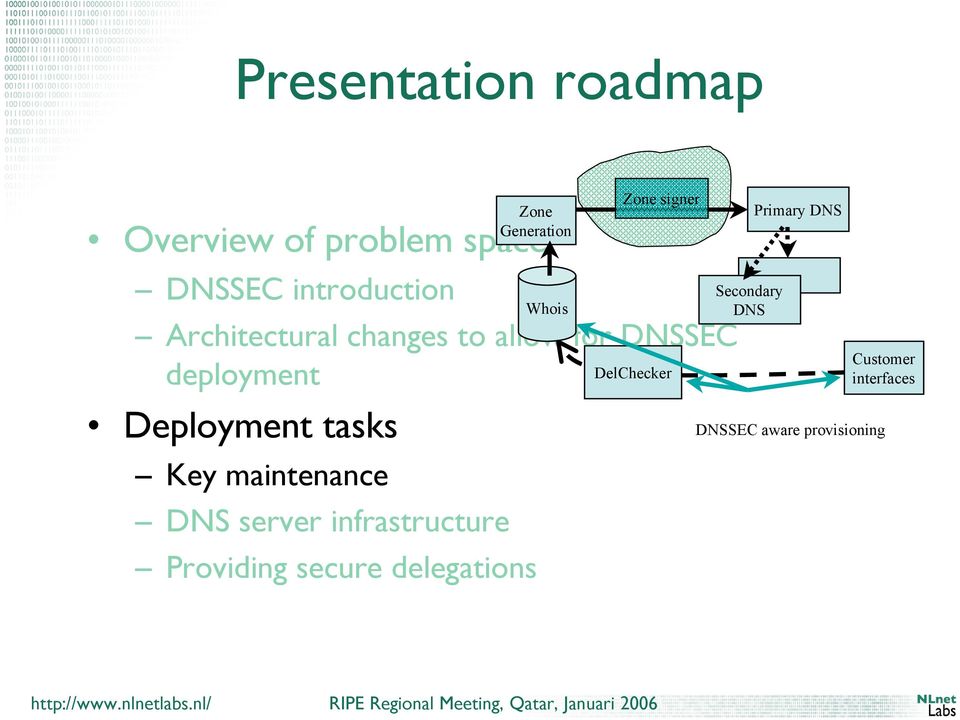
2 Presentation roadmap Overview of problem space DNSSEC introduction Architectural changes to allow for DNSSEC deployment Deployment tasks Key maintenance DNS infrastructure Providing secure delegations

3 Why DNSSEC Good security is multi-leveled Multiple defense rings in physical secured systems
4 Bourtange, source Wikipedia
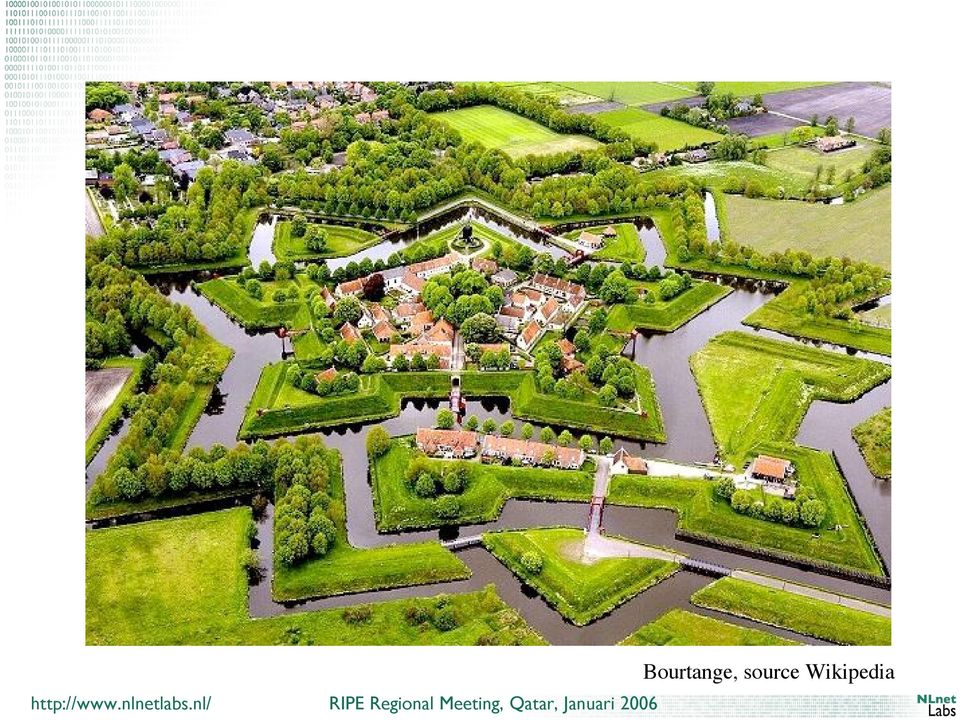
5 Why DNSSEC Good security is multi-leveled Multiple defense rings in physical secured systems Multiple layers in the networking world DNS infrastructure Providing DNSSEC to raise the barrier for DNS based attacks Provides a security ring around many systems and applications

6 DNSSEC evangineer of the day NLnet Labs ( Not for profit Open Source Software lab NSD, open source nameserver DNS and DNSSEC research Protocol and software development Deployment engineering Co-Chair of the IETF DNSEXT working group

7 The Problem DNS data published by the registry is being replaced on its path between the server and the client. This can happen in multiple places in the DNS architecture Some places are more vulnerable to attacks then others Vulnerabilities in DNS software make attacks easier (and there will always be software vulnerabilities)

8 Registrars DNS Architecture secondary Cache server Registry DB primary client Provisioning DNS Protocol secondary
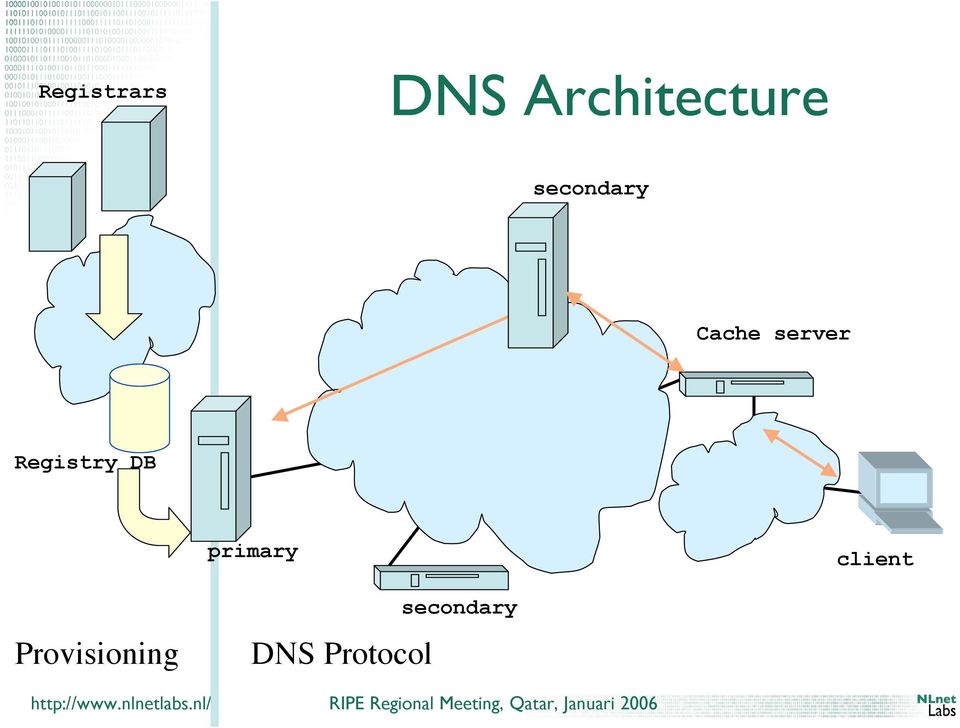
9 Registrars DNS Architecture Server compromise Inter-server communication Cache Poisoning Registry DB Provisioning DNS Protocol

10 Example: Unauthorized mail scanning Big Corp Mail Server Important Corp Mail Server Where? There! DNS

11 Example: Unauthorized mail scanning Big Corp Mail Server Important Corp Mail Server Where? Elsewhere DNS Bad Guy Bad Guy

12 Targets Where do DNS and economics meet? SPF, DomainKey and family Technologies that use the DNS to mitigate spam and phishing: $$$ value for the black hats Stock tickers, RSS feeds Usually no source authentication but supplying false stock information via a stock ticker and via a news feed can have $$$ value ENUM Mapping telephone numbers to services in the DNS

13 DNSSEC properties DNSSEC provides message authentication and integrity verification through cryptographic signatures Authentic DNS source No modifications between signing and validation It does not provide authorization It does not provide confidentiality

14 Metaphor Compare DNSSEC to a sealed transparent envelope. The seal is applied by whoever closes the envelope Anybody can read the message The seal is applied to the envelope, not to the message

15 nlnetlabs.nl IN NS omval.tednet.nl. nlnetlabs.nl IN RRSIG NS ( nlnetlabs.nl. y9urn7llgxdph2my/i/crkmg5pz2njqxndghwsb8op15 [ ] Qgl+b0Oj54b/65TyYVqPp3CLVt/q6L67SMK9orE= ) nlnetlabs.nl IN DNSKEY ( AQPzzTWMz8qSWIQlfRnPckx2BiVmkVN6LPupO3mbz7Fh [ ] 9QP7y2bVw5zSbFCrefk8qCUBgfHm9bHzMG1UBYtEIQ== ) ; key id = nlnetlabs.nl IN RRSIG DNSKEY ( nlnetlabs.nl. 6mEWVaFKLQrypCJb0wgzW56UC1SVGYW3z+KJVM/uANnA [ ] 4cCBqAX/mE2N5nUZians0/IT1TzuqVS5h12R2jE= ) open.nlnetlabs.nl IN RRSIG A ( nlnetlabs.nl. ZoZl6om+q5e4jrrDB64mMXpiloCQVe6NDu7KZbv7k9fg [ ] t+xc4iqpi+htpn5a18pjaea9kak7nfltzhz5uv8= ) open.nlnetlabs.nl IN RRSIG AAAA ( nlnetlabs.nl. [ ]
![nl. 6mEWVaFKLQrypCJb0wgzW56UC1SVGYW3z+KJVM/uANnA [ ] 4cCBqAX/mE2N5nUZians0/IT1TzuqVS5h12R2jE= ) open.nlnetlabs.nl. 86400 IN RRSIG A 5 3 86400 20060131005003 ( 20060101005003 43791 nlnetlabs.nl. ZoZl6om+q5e4jrrDB64mMXpiloCQVe6NDu7KZbv7k9fg [ ] t+xc4iqpi+htpn5a18pjaea9kak7nfltzhz5uv8= ) open.](/docs-images/42/777267/images/page_15.jpg "nlnetlabs.nl. 86400 IN RRSIG AAAA 5 3 86400 20060131005003 ( 20060101005003 43791 nlnetlabs.nl. [ ]")
16 Presentation roadmap Overview of problem space DNSSEC introduction Architectural changes to allow for DNSSEC deployment Deployment tasks Key maintenance DNS infrastructure Providing secure delegations

17 DNSSEC Architecture modifications Zone ZUPD Creation Process Provisioning Whois DB Zone signer Secondary DNS Primary DNS DNSSEC aware servers DNS DelChecker and input checks Customer interfaces DNSSEC aware provisioning

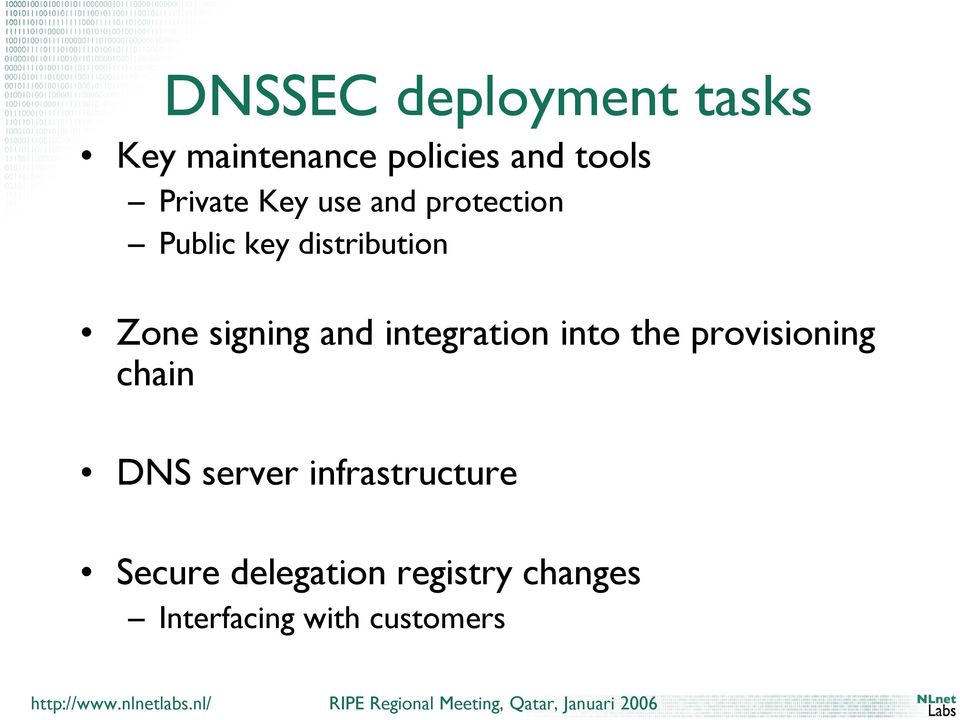
18 DNSSEC deployment tasks Key maintenance policies and tools Private Key use and protection Public key distribution Zone signing and integration into the provisioning chain DNS server infrastructure Secure delegation registry changes Interfacing with customers
19 Presentation roadmap Overview of problem space DNSSEC introduction Architectural changes to allow for DNSSEC deployment DelChecker Deployment tasks Key maintenance DNS server infrastructure Zone Generation Providing secure delegations Whois Zone signer Secondary DNS Primary DNS Customer interfaces DNSSEC aware provisioning
20 Key Maintenance DNSSEC is based on public key cryptography Data is signed using a private key It is validated using a public key Operational problems: Dissemination of the public key Private key has a best before date Keys change, and the change has to disseminate

21 Public Key Dissemination In theory only one trust-anchor needed that of the root How does the root key get to the end user? How is it rolled? In absence of hierarchy there will be many trustanchors How do these get to the end-users? How are these rolled? These are open questions, making early deployment difficult.
22 Public Key Dissemination at RIPE NCC In absence of a signed parent zone and automatic rollover: Trust anchors are published on an HTTPS secured website Trust anchors are signed with the RIPE NCC public keys Trust anchor will be rolled twice a year (during early deployment) Announcements and publications are always signed by x.509 or PGP
23 Key Management There are many keys to maintain Keys are used on a per zone basis Key Signing Keys and Zone Signing Keys During key rollovers there are multiple keys In order to maintain consistency with cached DNS data [draft-ietf-dnsop-dnssec-operational-practices] Private keys need shielding
24 Private Key Maintenance Zone DB Basic Architecture DNS server Signer client Key maintainer Key DB and Signer server KEY Master
25 Maintaining Keys and Signing Zones The KeyDB maintains the private keys It knows rollover scenarios UI that can create, delete, roll keys without access to the key material Physically secured The signer ties the Key DB to a zone Inserts the appropriate DNSKEYs Signs the the zone with appropriate keys Strong authentication
26
27 Private Key Maintenance The software Perl front-end to the BIND dnssec-signzone and dnssec-keygen tools Key pairs are kept on disc in the BIND format Attribute files containing human readable information One can always bail out and sign by hand. Works in the RIPE NCC environment, is a little rough edged but available via the
28 Example session $ maintkeydb create KSK RSASHA example.net Created 1 key for example.net $ maintkeydb create ZSK RSASHA example.net Created 2 keys for example.net $ dnssigner example.net Output written to :example.net.signed $ maintkeydb rollover zsk-stage1 RSASHA1 example.net
29 Presentation roadmap Zone Generation Overview of problem space Whois DNSSEC introduction Architectural changes to allow for DNSSEC deployment Deployment tasks Key maintenance DNS server infrastructure Providing secure delegations Zone signer DelChecker Secondary DNS Primary DNS Customer interfaces DNSSEC aware provisioning
30 Infrastructure One needs primary and secondary servers to be DNSSEC protocol aware We had a number of concerns about memory CPU and network load Research done and published as RIPE 352 What follows are the highlights of that paper
31 Question What would be the immediate and initial effect on memory, CPU and bandwidth resources if we were to deploy DNSSEC on RIPE NCC s primary name server? Measure through simulation. Published in RIPE352
32
33 Memory On ns-pri.ripe.net factor 4 increase. From ca. 30MB to 150MB No problem for a 1GB of memory machine On k.root-servers.net Increase by ca 150KB Total footprint 4.4 MB Nothing to worry about Memory consumption on authoritative servers can be calculated in advance. No surprises necessary
34 Serving the zones Query Properties DNS clients set the DO flag and request for DNSSEC data. Not to do their own validation but to cache the DNSSEC data for. EDNS size determines maximum packet size. (DNSSEC requires EDNS) EDNS/DO properties determine which fraction of the replies contain DNSSEC information
35 EDNS properties
36 CPU trace server ZSK size WCPU ns-pri BIND ca 14% ns-pri BIND ca 18% k.root BIND ca 38% k.root BIND ca 42% k.root BIND mod 2048 ca 50% k.root NSD ca 4% k.root NSD ca 4% k.root NSD mod 2048 ca 5%
37 Bandwidth Factors fraction of queries with DO bit Seen in difference between ns-pri and k.root result Seen in difference between modified and unmodified servers Including DNSKEY RR in additional section. Seen in difference between k.root traces from modified nsd and modified named Difference in answer patterns Name Errors vs Positive answers Difficult to asses from this data
38 Bandwidth increase when all queries to k.root-servers.net would request for DNSSEC With DNSSEC Without DNSSEC
39 Bandwidth Increase Significant for ns-pri.ripe.net Well within provisioned specs. Insignificant for for k.root-servers.net Upper bound well within provisioning specs (Key size influences bandwidth but bandwidth should not influence your key size)
40 Conclusion of these measurements CPU, Memory and Bandwidth usage increase are not prohibitive for deployment of DNSSEC on k.root-servers.net and ns-pri.ripe.net Bandwidth increase is caused by many factors Hard to predict but fraction of DO bits in the queries is an important factor CPU impact is small, Memory impact can be calculated Don t add DNSKEY RR set in additional
41 Presentation roadmap Zone Generation Overview of problem space Whois DNSSEC introduction DelChecker Architectural changes to allow for DNSSEC deployment Deployment tasks Key maintenance DNS server infrastructure Providing secure delegations Zone signer Secondary DNS Primary DNS Customer interfaces DNSSEC aware provisioning
42 Parent-Child Key Exchange In the DNS the parent signs the Delegations Signer RR A pointer to the next key in the chain of trust $ORIGIN net. kids NS ns1.kids DS ( ) 1234 RRSIG DS ( )net. money NS ns1.money DS ( ) RRSIG DS ( )net. $ORIGIN NS ns1 RRSIG NS ( ) kids.net. DNSKEY ( ) (1234) DNSKEY ( ) (3456) RRSIG dnskey 1234 kids.net. RRSIG dnskey 3456 kids.net. beth A RRSIG A ( ) 3456 kids.net. DNSKEY or DS RR needs to be exchanged between parent and child
43 Underlying Ideas The DS exchange is the same process as the NS exchange Same authentication/authorization model Same vulnerabilities More sensitive to mistakes Integrate the key exchange into existing interfaces Customers are used to those Include checks on configuration errors DNSSEC is picky Provide tools To prevent errors and guide customers
44 How Did we Proceed The ds-rdata: attribute was added to the Domain object The zone generation tool:extract DS RRs from ds-rdata: attributes We introduced a filter, to block dsrdata:for zones not yet signed Added a number of DelChecker checks
45 Intergration issue Thinking about DNSSEC made the NCC look at the provisioning system as a whole Prompted a couple of modifications Zone generation (generation of zone now from the Whois DB) Authentication model (introduction of mnt-domain) Possible replay attacks (countered by using timestamps of the strong auth. mechanisms) All these issues are NOT DNSSEC specific Addressed over the last 2 years
46 Introducing the Web Interface Eases registration of keys and the rollovers Can also be used for classic delegations Restricts user somewhat Fewer degrees of freedom mean fewer errors One can always manually create the Domain object Version 1 to appear shortly Demo in the hallway
47 Web Interface Examples May the Demo Gods be with us. We ll cheat.
48 NCC Roadmap RIPE NCC is signing its zones Forward zones (ripe.net &c) are signed Signatures are still being introduced in reverse zones (v4 and v6) Secure Delegations available for a number of /8 equivalent zones Policy and procedures available
49 QUESTIONS? Acknowledgements: A number of these slides are based on earlier work at RIPE NCC.
DNSSEC in your workflow
 DNSSEC in your workflow Presentation roadmap Overview of problem space Architectural changes to allow for DNSSEC deployment Deployment tasks Key maintenance DNS server infrastructure Providing secure delegations
DNS Risks, DNSSEC. Olaf M. Kolkman and Allison Mankin. [email protected] and [email protected]. http://www.nlnetlabs.nl/ 8 Feb 2006 Stichting NLnet Labs
 DNS Risks, DNSSEC Olaf M. Kolkman and Allison Mankin [email protected] and [email protected] 8 Feb 2006 Stichting NLnet Labs DNSSEC evangineers of the day Allison: Independent consultant Member of the Internet2
Rough Outline. Introduction Why DNSSEC DNSSEC Theory Famous last words. http://www.nlnetlabs.nl/ Universiteit van Amsterdam, Sep 2006.
 page 2 Rough Outline An introduction to DNSSEC Olaf Kolkman 21 September 2006 Stichting (www.nlnetlabs.nl) Introduction Why DNSSEC DNSSEC Theory Famous last words page 3 DNSSEC evangineers of the day Olaf:
DNS at NLnet Labs. Matthijs Mekking
 DNS at NLnet Labs Matthijs Mekking Topics NLnet Labs DNS DNSSEC Recent events NLnet Internet Provider until 1997 The first internet backbone in Holland Funding research and software projects that aid the
DNSSEC Practice Statement (DPS)
 DNSSEC Practice Statement (DPS) 1. Introduction This document, "DNSSEC Practice Statement ( the DPS ) for the zones under management of Zodiac Registry Limited, states ideas of policies and practices with
DNSSEC. Introduction. Domain Name System Security Extensions. AFNIC s Issue Papers. 1 - Organisation and operation of the DNS
 AFNIC s Issue Papers DNSSEC Domain Name System Security Extensions 1 - Organisation and operation of the DNS 2 - Cache poisoning attacks 3 - What DNSSEC can do 4 - What DNSSEC cannot do 5 - Using keys
An Introduction to the Domain Name System
 An Introduction to the Domain Name System Olaf Kolkman [email protected] October 28, 2005 Stichting NLnet Labs This Presentation An introduction to the DNS Laymen level For non-technologists About protocol
American International Group, Inc. DNS Practice Statement for the AIG Zone. Version 0.2
 American International Group, Inc. DNS Practice Statement for the AIG Zone Version 0.2 1 Table of contents 1 INTRODUCTION... 6 1.1 Overview...6 1.2 Document Name and Identification...6 1.3 Community and
DNSSEC - Why Network Operators Should Care And How To Accelerate Deployment
 DNSSEC - Why Network Operators Should Care And How To Accelerate Deployment Dan York, CISSP Senior Content Strategist, Internet Society Eurasia Network Operators' Group (ENOG) 4 Moscow, Russia October
SIDN Server Measurements
 SIDN Server Measurements Yuri Schaeffer 1, NLnet Labs NLnet Labs document 2010-003 July 19, 2010 1 Introduction For future capacity planning SIDN would like to have an insight on the required resources
DNSSEC Applying cryptography to the Domain Name System
 DNSSEC Applying cryptography to the Domain Name System Gijs van den Broek Graduate Intern at SURFnet Overview First half: Introduction to DNS Attacks on DNS Second half: DNSSEC Questions: please ask! DNSSEC
DNSSec Operation Manual for the.cz and 0.2.4.e164.arpa Registers
 DNSSec Operation Manual for the.cz and 0.2.4.e164.arpa Registers version 1.9., valid since 1 January 2010 Introduction This material lays out operational rules that govern the work of the CZ.NIC association
Networking Domain Name System
 IBM i Networking Domain Name System Version 7.2 IBM i Networking Domain Name System Version 7.2 Note Before using this information and the product it supports, read the information in Notices on page
This framework is documented under NLnet Labs copyright and is licensed under a Creative Commons Attribution 4.0 International License.
 DNSSEC Infrastructure Audit Framework NLnet Labs Document 2013-002 Version 1.0 by Matthijs Mekking ([email protected]) and Olaf Kolkman ([email protected]) This framework is documented under NLnet
DNSSEC Policy Statement Version 1.1.0. 1. Introduction. 1.1. Overview. 1.2. Document Name and Identification. 1.3. Community and Applicability
 DNSSEC Policy Statement Version 1.1.0 This DNSSEC Practice Statement (DPS) conforms to the template included in RFC 6841. 1. Introduction The approach described here is modelled closely on the corresponding
GDS Resource Record: Generalization of the Delegation Signer Model
 GDS Resource Record: Generalization of the Delegation Signer Model Gilles Guette, Bernard Cousin, David Fort To cite this version: Gilles Guette, Bernard Cousin, David Fort. GDS Resource Record: Generalization
Part 5 DNS Security. SAST01 An Introduction to Information Security 2015-09-21. Martin Hell Department of Electrical and Information Technology
 SAST01 An Introduction to Information Security Part 5 DNS Security Martin Hell Department of Electrical and Information Technology How DNS works Amplification attacks Cache poisoning attacks DNSSEC 1 2
The Domain Name System from a security point of view
 The Domain Name System from a security point of view Simon Boman Patrik Hellström Email: {simbo105, pathe321}@student.liu.se Supervisor: David Byers, {[email protected]} Project Report for Information Security
Securing DNS Infrastructure Using DNSSEC
 Securing DNS Infrastructure Using DNSSEC Ram Mohan Executive Vice President, Afilias [email protected] February 28, 2009 Agenda Getting Started Finding out what DNS does for you What Can Go Wrong A Survival
DNS Security: New Threats, Immediate Responses, Long Term Outlook. 2007 2008 Infoblox Inc. All Rights Reserved.
 DNS Security: New Threats, Immediate Responses, Long Term Outlook 2007 2008 Infoblox Inc. All Rights Reserved. A Brief History of the Recent DNS Vulnerability Kaminsky briefs key stakeholders (CERT, ISC,
DNS SECURITY TROUBLESHOOTING GUIDE
 DNS SECURITY TROUBLESHOOTING GUIDE INTERNET DEPLOYMENT OF DNS SECURITY 27 November 2006 Table of Contents 1. INTRODUCTION...3 2. DNS SECURITY SPECIFIC FAILURE MODES...3 2.1 SIGNATURES...3 2.1.1 Signature
DNSSEC for Everybody: A Beginner s Guide
 DNSSEC for Everybody: A Beginner s Guide San Francisco, California 14 March 2011 4:00 to 5:00 p.m. Colonial Room The Schedule 2 This is Ugwina. She lives in a cave on the edge of the Grand Canyon... This
Step-by-Step DNSSEC-Tools Operator Guidance Document
 Step-by-Step DNSSEC-Tools Operator Guidance Document Using the DNSSEC-Tools v1.0 distribution SPARTA, Inc. Table of Contents 1. Introduction... 1 Organization of this Document... 1 Key Concepts... 2 Zones
DNSSEC and DNS Proxying
 DNSSEC and DNS Proxying DNS is hard at scale when you are a huge target 2 CloudFlare DNS is big 3 CloudFlare DNS is fast 4 CloudFlare DNS is always under attack 5 CloudFlare A secure reverse proxy for
DNSSEC. Introduction Principles Deployment
 DNSSEC Introduction Principles Deployment Overview What we will cover The problems that DNSSEC addresses The protocol and implementations Things to take into account to deploy DNSSEC The practical problems
Computer Networks: Domain Name System
 Computer Networks: Domain Name System Domain Name System The domain name system (DNS) is an application-layer protocol for mapping domain names to IP addresses DNS www.example.com 208.77.188.166 http://www.example.com
Lecture 2 CS 3311. An example of a middleware service: DNS Domain Name System
 Lecture 2 CS 3311 An example of a middleware service: DNS Domain Name System The problem Networked computers have names and IP addresses. Applications use names; IP uses for routing purposes IP addresses.
DNSSEC: A Vision. Anil Sagar. Additional Director Indian Computer Emergency Response Team (CERT-In)
 DNSSEC: A Vision Anil Sagar Additional Director Indian Computer Emergency Response Team (CERT-In) Outline DNS Today DNS Attacks DNSSEC: An Approach Countering DNS Attacks Conclusion 2 DNS Today DNS is
Deploying DNSSEC: From End-Customer To Content
 Deploying DNSSEC: From End-Customer To Content March 28, 2013 www.internetsociety.org Our Panel Moderator: Dan York, Senior Content Strategist, Internet Society Panelists: Sanjeev Gupta, Principal Technical
Prepared by: National Institute of Standards and Technology SPARTA, Inc. Shinkuro, Inc.
 Signing the Domain Name System Root Zone: Technical Specification Prepared for: Science and Technology Directorate US Department of Homeland Security Prepared by: National Institute of Standards and Technology
K-root TCP load measurements
 K-root TCP load measurements Yuri Schaeffer 1, NLnet Labs NLnet Labs document 2010-001 February 17, 2010 Note: This document is still a draft, the research is not completed. Abstract Enabling DNSSEC at
KSRegistry DNSSEC Policy Statement
 KSRegistry DNSSEC Policy Statement 1. INTRODUCTION...5 1.1 Overview...5 1.2 Document name and identification...5 1.3. Community and Applicability...5 1.3.1 Registry...5 1.3.2 Registrars...5 1.3.3 Registrants...6
Internet-Praktikum I Lab 3: DNS
 Kommunikationsnetze Internet-Praktikum I Lab 3: DNS Mark Schmidt, Andreas Stockmayer Sommersemester 2015 kn.inf.uni-tuebingen.de Motivation for the DNS Problem IP addresses hard to remember for humans
FAQ (Frequently Asked Questions)
 FAQ (Frequently Asked Questions) Specific Questions about Afilias Managed DNS What is the Afilias DNS network? How long has Afilias been working within the DNS market? What are the names of the Afilias
Resilient Networking. Overview of DNS Known attacks on DNS Denial-of-Service Cache Poisoning. Securing DNS Split-Split-DNS DNSSEC.
 Resilient Networking 6: Attacks on DNS Overview of DNS Known attacks on DNS Denial-of-Service Cache Poisoning Securing DNS Split-Split-DNS DNSSEC SoSe 2014 Fachbereich Informatik Telecooperation Group
Overview of DNSSEC deployment worldwide
 The EURid Insights series aims to analyse specific aspects of the domainname environment. The reports are based on surveys, studies and research conducted by EURid in cooperation with industry experts
DNSSEC Root Zone. High Level Technical Architecture
 DNSSEC Root Zone Prepared by the Root DNSSEC Design Team Joe Abley David Blacka David Conrad Richard Lamb Matt Larson Fredrik Ljunggren David Knight Tomofumi Okubo Jakob Schlyter Version 1.2.1 October
Unbound a caching, validating DNSSEC resolver. Do you trust your name server? Configuration. Unbound as a DNS cache (SEC-less)
 Unbound a caching, validating DNSSEC resolver UKUUG Spring 2011 Conference Leeds, UK March 2011 Jan-Piet Mens $ dig 1.1.0.3.3.0.8.1.7.1.9.4.e164.arpa naptr Do you trust your name server? DNS clients typically
WHITE PAPER. Best Practices DNSSEC Zone Management on the Infoblox Grid
 WHITE PAPER Best Practices DNSSEC Zone Management on the Infoblox Grid What Is DNSSEC, and What Problem Does It Solve? DNSSEC is a suite of Request for Comments (RFC) compliant specifications developed
DNS security: poisoning, attacks and mitigation
 DNS security: poisoning, attacks and mitigation The Domain Name Service underpins our use of the Internet, but it has been proven to be flawed and open to attack. Richard Agar and Kenneth Paterson explain
DNSSEC. What is DNSSEC? Why is DNSSEC necessary? Ensuring a secure Internet
 SEC Ensuring a secure Internet What is SEC? SEC is an extension of the Domain Name System (), that ensures the authenticity and integrity of the data in replies. Technical measures have been implemented
DNSSEC: The Antidote to DNS Cache Poisoning and Other DNS Attacks
 F5 Technical Brief DNSSEC: The Antidote to DNS Cache Poisoning and Other DNS Attacks Domain Name System (DNS) provides one of the most basic but critical functions on the Internet. If DNS isn t working,
Lesson 13: DNS Security. Javier Osuna [email protected] GMV Head of Security and Process Consulting Division
 Lesson 13: DNS Security Javier Osuna [email protected] GMV Head of Security and Process Consulting Division Introduction to DNS The DNS enables people to use and surf the Internet, allowing the translation
Next Steps In Accelerating DNSSEC Deployment
 Next Steps In Accelerating DNSSEC Deployment Dan York, CISSP Senior Content Strategist, Internet Society DNSSEC Deployment Workshop, ICANN 45 Toronto, Canada October 17, 2012 Internet Society Deploy360
DomainKeys Identified Mail DKIM authenticates senders, message content
 DomainKeys Identified Mail DKIM authenticates senders, message content Alt-N Technologies, Ltd. 2201 East Lamar Blvd, Suite 270 Arlington, Texas 76006 Phone: (817) 525-2005 Fax: (817) 525-2019 http://www.altn.com/
Reverse DNS considerations for IPv6
 Reverse DNS considerations for IPv6 Kostas Zorbadelos OTE David Freedman - ClaraNet Reverse DNS in IPv4 Every Internet-reachable host should have a name Make sure your PTR and A records match. For every
Ordinary DNS: www.google.com A? k.root-servers.net. com. NS a.gtld-servers.net a.gtld-servers.net A 192.5.6.30. Client's Resolver
 Ordinary DNS: www.google.com A? com. NS a.gtld-servers.net a.gtld-servers.net A 192.5.6.30 k.root-servers.net Ordinary DNS: www.google.com A? com. NS a.gtld-servers.net a.gtld-servers.net A 192.5.6.30
DNSSEC - SECURE DNS FOR GOVERNMENT. Whitepaper
 DNSSEC - SECURE DNS FOR GOVERNMENT Whitepaper ii BlueCat Networks Use of this document Copyright This document and all information (in text, Graphical User Interface ( GUI ), video and audio forms), images,
The basic groups of components are described below. Fig X- 1 shows the relationship between components on a network.
 Elements of Email Email Components There are a number of software components used to produce, send and transfer email. These components can be broken down as clients or servers, although some components
Domain Name System (DNS) RFC 1034 RFC 1035 http://www.ietf.org
 Domain Name System (DNS) RFC 1034 RFC 1035 http://www.ietf.org TCP/IP Protocol Suite Application Layer DHCP DNS SNMP HTTP SMTP POP Transport Layer UDP TCP ICMP IGMP Network Layer IP Link Layer ARP ARP
Description: Objective: Attending students will learn:
 Course: Introduction to Cyber Security Duration: 5 Day Hands-On Lab & Lecture Course Price: $ 3,495.00 Description: In 2014 the world has continued to watch as breach after breach results in millions of
page 1 DNS Rate Limiting W. Matthijs Mekking [email protected] http://www.nlnetlabs.nl/ 28 Feb 2013 Stichting NLnet Labs
 page 1 DNS Rate Limiting W. Matthijs Mekking [email protected] page 2 One slide DNS Root www.nlnetlabs.nl A Referral: nl NS www.nlnetlabs.nl A 213.154.224.1 www.nlnetlabs.nl A www.nlnetlabs.nl A 213.154.224.1
USING TRANSACTION SIGNATURES (TSIG) FOR SECURE DNS SERVER COMMUNICATION
 USING TRANSACTION SIGNATURES (TSIG) FOR SECURE DNS SERVER COMMUNICATION Transaction Signatures (TSIG) provide a secure method for communicating in the Domain Name System (DNS) from a primary to a secondary
Defending against DNS reflection amplification attacks
 University of Amsterdam System & Network Engineering RP1 Defending against DNS reflection amplification attacks February 14, 2013 Authors: Thijs Rozekrans Javy de Koning
DOMAIN NAME SECURITY EXTENSIONS
 DOMAIN NAME SECURITY EXTENSIONS The aim of this paper is to provide information with regards to the current status of Domain Name System (DNS) and its evolution into Domain Name System Security Extensions
Measures to Protect (University) Domain Registrations and DNS Against Attacks. Dave Piscitello, ICANN [email protected]
 Measures to Protect (University) Domain Registrations and DNS Against Attacks Dave Piscitello, ICANN [email protected] Why are we talking about Domain names and DNS? Domain names and URLs define
Conexim DNS Administrator s Guide
 Conexim DNS Administrator s Guide Last Updated August 2013 Contents Conexim DNS Quick Reference... 1 DNS Delegation Information... 1 Control Panel Access... 1 Supported Record Types... 1 Getting Support...
The Future of DNS. Johan Ihrén Netnod. October 15, 2015. http://www.netnod.se/
 The Future of DNS Johan Ihrén Netnod October 15, 2015 Netnod Customer Mtg, Oct 2015, October 15, 2015, DNS and Complexity, [email protected] 1 / 16 The Future of DNS I have no idea about the future of DNS.
Network Security Fundamentals
 APNIC elearning: Network Security Fundamentals 27 November 2013 04:30 pm Brisbane Time (GMT+10) Introduction Presenter Sheryl Hermoso Training Officer [email protected] Specialties: Network Security IPv6
APNIC elearning: Network Security Fundamentals. 20 March 2013 10:30 pm Brisbane Time (GMT+10)
 APNIC elearning: Network Security Fundamentals 20 March 2013 10:30 pm Brisbane Time (GMT+10) Introduction Presenter/s Nurul Islam Roman Senior Training Specialist [email protected] Specialties: Routing &
Security of IPv6 and DNSSEC for penetration testers
 Security of IPv6 and DNSSEC for penetration testers Vesselin Hadjitodorov Master education System and Network Engineering June 30, 2011 Agenda Introduction DNSSEC security IPv6 security Conclusion Questions
Use Domain Name System and IP Version 6
 Use Domain Name System and IP Version 6 What You Will Learn The introduction of IP Version 6 (IPv6) into an enterprise environment requires some changes both in the provisioned Domain Name System (DNS)
Secure Domain Name System (DNS) Deployment Guide
 NIST Special Publication 800-81-2 Secure Domain Name System (DNS) Deployment Guide Ramaswamy Chandramouli Scott Rose C O M P U T E R S E C U R I T Y NIST Special Publication 800-81-2 Secure Domain Name
Network Infrastructure Under Siege
 Network Infrastructure Under Siege Char Sample Security Engineer, CERT Information Security Decisions TechTarget Disclaimer Standard Disclaimer - This talk represents the opinions and research of the presenter
A Best Practices Architecture for DNSSEC
 WHITEPAPER A Best Practices Architecture for DNSSEC Cricket Liu, Vice President of Architecture Background The Domain Name System is the Internet s standard naming service. DNS is responsible for mapping
Secure and Hardened DNS Appliances for the Internet
 Page 1 Datasheet Secure and Hardened Appliances for the Internet SECURE APPLIANCE IN THE INTERNET ENVIRONMENT External servers deliver critical services to your company, such as Internet visibility for
Domain Name System Security
 Abstract Domain Name System Security Ladislav Hagara [email protected] Department of Automated Command Systems and Informatics Military Academy in Brno Brno, Czech Republic Domain Name System (DNS) is one of
F5 and Infoblox DNS Integrated Architecture Offering a Complete Scalable, Secure DNS Solution
 F5 and Infoblox DNS Integrated Architecture Offering a Complete Scalable, Secure DNS Solution As market leaders in the application delivery market and DNS, DHCP, and IP Address Management (DDI) market
DNS Root NameServers
 DNS Root NameServers An Overview Dr. Farid Farahmand Updated: 9/24/12 Who- is- Who! Over half million networks are connected to the Internet 5 billion users by 2015! Network numbers are managed by ICANN
DNS Cache-Poisoning: New Vulnerabilities and Implications, or: DNSSEC, the time has come!
 DNS Cache-Poisoning: New Vulnerabilities and Implications, or: DNSSEC, the time has come! Amir Herzberg and Haya Shulman Dept. of Computer Science Bar Ilan University 8/1/2013 About us Bar Ilan University
Networking Domain Name System
 System i Networking Domain Name System Version 5 Release 4 System i Networking Domain Name System Version 5 Release 4 Note Before using this information and the product it supports, read the information
Module 2. Configuring and Troubleshooting DNS. Contents:
 Configuring and Troubleshooting DNS 2-1 Module 2 Configuring and Troubleshooting DNS Contents: Lesson 1: Installing the DNS Server Role 2-3 Lesson 2: Configuring the DNS Server Role 2-9 Lesson 3: Configuring
DKIM last chance for mail service? TFMC2 01/2006
 DKIM last chance for mail service? TFMC2 01/2006 Mail service status More and more spam, fishing, spoofing, virus More and more energy in spam fighting More and more messages lost because : Imperfect automatic
Security in the Network Infrastructure - DNS, DDoS,, etc.
 Security in the Network Infrastructure - DNS, DDoS,, etc. GTER, São Paulo December 8, 2006 Steve Crocker, [email protected] Russ Mundy, [email protected] Proactive Security Build security into the infrastructure
Glossary of Technical Terms Related to IPv6
 AAAA Record An AAAA record stores a 128-bit Internet Protocol version 6 (IPv6) address, which does not fit the standard A record format. For example, 2007:0db6:85a3:0000:0000:6a2e:0371:7234 is a valid
Windows Active Directory. DNS, Kerberos and LDAP T h u r s d a y, J a n u a r y 2 7, 2011 INLS 576 Spring 2011
 Windows Active Directory DNS, Kerberos and LDAP T h u r s d a y, J a n u a r y 2 7, 2011 INLS 576 Spring 2011 1 DNS? LDAP? Kerberos? Active Directory relies of DNS to register and locate services Active
Cisco IronPort C370 for Medium-Sized Enterprises and Satellite Offices
 Data Sheet Cisco IronPort C370 for Medium-Sized Enterprises and Satellite Offices Medium-sized enterprises face the same daunting challenges as the Fortune 500 and Global 2000 - higher mail volumes and
Secure Domain Name System (DNS) Deployment Guide
 Special Publication 800-81 Sponsored by the Department of Homeland Security Secure Domain Name System (DNS) Deployment Guide Recommendations of the National Institute of Standards and Technology Ramaswamy
Domain Name System Security (DNSSEC)
 Dept. of Homeland Security Science & Technology Directorate Domain Name System Security (DNSSEC) CA CISO Lecture Series Sacramento, CA December 15, 2009 Douglas Maughan, Ph.D. Program Manager, CCI [email protected]
A Step-by-Step guide for implementing DANE with a Proof of Concept
 A Step-by-Step guide for implementing DANE with a Proof of Concept Sandoche BALAKRICHENAN, Stephane BORTZMEYER, Mohsen SOUISSI AFNIC R&D {sandoche.balakrichenan, stephane.bortzmeyer, mohsen.souissi}@afnic.fr
IEncrypt a work-in-progress
 IEncrypt a work-in-progress open-source initiative to increase encryption of traffic to and from.ie web sites, starting with newly registered second-level.ie domains. Developed by Tolerant Networks Limited