
Department of Mechanical Engineering Technical University of Munich. 150 Years. Mechanical Engineering Enabling Future. Annual Report 2018
|
|
|
- Jodie Stanley
- 8 years ago
- Views:
Transcription

1 Department of Mechanical Engineering Technical University of Munich Mechanical Engineering Enabling Future 150 Years Annual Report 2018
2 The cover illustration shows the department s building in Garching, 2018 (photo Tobias Hase, TUM) and the Munich Polytechnic School s building in 1868 (engraving from 1869). Image editing by Fa-Ro Marketing.
3 Department of Mechanical Engineering Technical University of Munich Mechanical Engineering Enabling Future 150 Years Annual Report 2018
4 Imprint Technical University of Munich Department of Mechanical Engineering Boltzmannstrasse Garching near Munich Germany Editor: Prof. Dr.-Ing. Nikolaus Adams Sub-editor: Dr. Till v. Feilitzsch History of the department: Dr. Matthias Georgi, Mag. Anton Zwischenberger, Neumann & Kamp, Layout: Fa-Ro Marketing, Munich Photo credits: ARBURG, Uli Benz, Matthias Bittner, Michael Cerny, Astrid Eckert, Andreas Gebert, Getty Images, Jan Greune, Tobias Hase, Andreas Heddergott, Tanja Mayer, Jan-Fabian Meis, Christopher Rausch, Matthias Tebbe, Andreas Zeitler, Zubair and further illustrations provided by the institutes Historical pictures: Bayerland (p. 21), Thomas Bergmann (25), Bildsammlung Liudger Dienel (16), CC Germania (13), Deutsches Museum München (13, 14, 27, 31), EADS Corporate Heritage (17), FOTAG Luftbild, TUM (24), Linde AG (13, 14), MAN Historisches Archiv (14, 54), Angela Molitoris (19), TUM Historisches Archiv (11, 12, 13, 14, 15, 16, 17, 18, 19, 20, 21, 22, 24, 28) March 2018 (refering to data and events of the year 2017)
5 Content Preamble Years of Mechanical Engineering Milestones in the History of the Department of Mechanical Engineering 12 Science Politics Industry 27 Contract Research vs. Free Research 28 Fundamental Research vs. Applied Research 31 The Influence of Politics 33 Selected Highlights The Department of Mechanical Engineering Governance 48 Facts and Figures 50 Department Board of Management 51 Department Council Mechanical Engineering 52 Central Services 54 Honors Awarded During the Department Day 56 Ranking Results 58 Research 59 Divisions of the Department of Mechanical Engineering Aerospace 62 Automotive 64 Energy 65 Materials 66 Mechatronics 68 Medical Technology 69 Process Engineering 70 Production and Logistics 71 Teaching at the Department of Mechanical Engineering Studying at the TUM Department of Mechanical Engineering 74 International Students and Students Exchange 78 Assistance for Students Offered by the Central Examination Services Office 80 Public Funds to Improve Conditions of Study at the Department of Mechanical Engineering 81 Diversity 82 Central Teaching Unit 83 Student Council 85 Faculty of the Department of Mechanical Engineering Appointments 88 Retirements 90 Department Members 91
6 Content Reports of the Institutes Prof. Dr.-Ing. Nikolaus Adams Aerodynamics and Fluid Mechanics 100 Prof. Dr. phil. Klaus Bengler Ergonomics 109 Prof. Dr. rer. nat. Sonja Berensmeier Bioseparation Engineering 115 Prof. Dr. Carlo L. Bottasso Wind Energy Systems 118 Prof. Dr.-Ing. Klaus Drechsler Carbon Composites 123 Prof. Dr.-Ing. Johannes Fottner Materials Handling, Material Flow, Logistics 127 Prof. Dr.-Ing. Michael W. Gee Mechanics and High Performance Computing 132 Prof. Dr.-Ing. habil. Dipl.-Geophys. Christian Große Non-destructive Testing 137 Prof. Dr.-Ing. Volker Gümmer Turbomachinery and Flight Propulsion 141 Prof. Dr.-Ing. Oskar J. Haidn Space Propulsion 146 Prof. Dr.-Ing. Manfred Hajek Helicopter Technology 151 Prof. Dr.-Ing. Florian Holzapfel Flight System Dynamics 154 Prof. Dr.-Ing. Mirko Hornung Aircraft Design 160 Prof. Dr.-Ing. Hans-Jakob Kaltenbach Flow Control and Aeroacoustics 166 Prof. Dr.-Ing. Harald Klein Plant and Process Technology 169 Prof. Phaedon-Stelios Koutsourelakis, Ph.D. Continuum Mechanics 172 Prof. Dr.-Ing. Andreas Kremling Systems Biotechnology 176 6
7 Content Prof. Dr. rer. nat. Oliver Lieleg Biomechanics 179 Prof. Dr.-Ing. Markus Lienkamp Automotive Technology 182 Prof. Dr.-Ing. habil. Boris Lohmann Automatic Control 187 Prof. Dr. rer. nat. Tim C. Lüth Micro Technology and Medical Device Technology 191 Prof. Dr. rer. nat. Tim C. Lüth (interim) Medical Materials and Medical Implant Design 196 Prof. Rafael Macián-Juan, Ph.D. Nuclear Technology 201 Prof. Dr.-Ing. Steffen Marburg Vibroacoustics of Vehicles and Machines 205 Prof. Dr. Rudolf Neu Plasma Material Interaction 209 Prof. Wolfgang Polifke, Ph.D. Thermo-Fluid Dynamics 212 Prof. Dr. Julien Provost Safe Embedded Systems 215 Prof. Dr.-Ing. Gunther Reinhart Industrial Management and Assembly Technologies 218 Prof. Dr. Ir. Daniel Rixen Applied Mechanics 222 Prof. Dr.-Ing. Thomas Sattelmayer Thermodynamics 226 Prof. Dr.-Ing. Veit Senner Sport Equipment and Materials 235 Prof. Dr.-Ing. Hartmut Spliethoff Energy Systems 240 Prof. Dr.-Ing. Karsten Stahl Machine Elements 243 Prof. Dr.-Ing. Birgit Vogel-Heuser Automation and Information Systems 249 7
8 Content Prof. Dr.-Ing. Wolfram Volk Metal Forming and Casting 254 Prof. Dr.-Ing. Georg Wachtmeister Internal Combustion Engines 259 Prof. Dr.-Ing. Wolfgang A. Wall Computational Mechanics 264 Prof. Prof. h.c. Dr. rer. nat. Ulrich Walter Astronautics 268 Prof. Dr. mont. habil. Dr. rer. nat. h.c. Ewald Werner Materials Science and Mechanics of Materials 274 Prof. Dr.-Ing. Dirk Weuster-Botz Biochemical Engineering 280 Prof. Dr.-Ing. Michael F. Zaeh Machine Tools and Manufacturing Technology 284 Prof. Dr. Markus Zimmermann Product Development and Lightweight Design 288 Appendix Honorary Doctorates 296 External Lecturers in WS 16/17 und SS Habilitations Doctorates


9 Preamble Dear reader, Enabling the future ever since 1868 Mechanical Engineering at the Technical University of Munich has been the front runner in developing technical solutions for the challenges of our society at the cutting edge of research and technology. Carl von Linde, the pioneer of refrigeration, and Johann Bauschinger, a renowned mathematician and materials scientist, as founding professors of the Department, as well as our students, Rudolf Diesel, inventor of the diesel engine, and the pioneers in aviation Willy Messerschmitt and Claude Dornier are among the illustrious circle of TUM engineers. Sustainable mobility, transport and energy conversion and disruptive technologies in manufacturing caused by digitalization are the most prominent challenges today. As much as in the early days of engineering, these challenges can only be met by fundamental research in engineering sciences, i.e. mechanics, fluid mechanics, thermodynamics and engineering design from which innovation and creative solutions emerge. Fundamental engineering science, however, finds its orientation only in the applied engineering sciences on which it is firmly grounded. The epitome of the synergy between applied and fundamental engineering science was Ludwig Prandtl, one of our most prominent graduates, who developed the mathematical foundation of aerodynamics and boundary layers and thus enabled modern aeronautical engineering (c.f. Highlights on pp ) Since about the 1980s, cooperation with industry has gained ground and became one of the most important sources for research funding throughout the years 1995 to After the move to Garching, between 2005 and 2015, third-party funding almost tripled, motivating restructuring through new governance approaches and implementation of a strategic mid-range vision for further departmental development (c.f. Strategic Governance, p. 44). In order to maintain the balance between applied research, as a response to one of the first evaluations of a German university department, the department agreed to accept peer-reviewed scientific publications and funding through peer-reviewed public foundations as an additional criteria for research performance, along with successful cooperation with industry. Most international rankings are based on publication data, and the success of the governance measures is reflected in the fact that TUM Mechanical Engineering is now ranked at top international positions worldwide and at position 1 or 2 among its German peers (c.f. Rankings, p. 54). At the same time, TUM Mechanical Engineering became the top-performer at TUM with respect to DFG funding, except for TUM Medical (c.f. Research, p. 55). 150 years culture of excellence does not allow us to rest on our laurels. We are in the midst of an intensive process of redesigning our study programs to meet the future engineering challenges; already reflected in at early semesters of the Bachelor program, enabling students to define and master their focus during the subsequent Master s programs. (c.f. Studying p. 69) For the fourth time now, we have compiled the achievements and topical research results of TUM Mechanical Engineering in this report. We hope that it helps our partners in academia and industry to consolidate or establish contact with us, stimulate the interest of prospective students and junior researchers to join us, and last but not least ourselves, the faculty and researchers as a live exchange platform on our research and teaching activities. Prof. Dr.-Ing. Nikolaus Adams, Dean 9
10 History of the department Dr. Matthias Georgi Mag. Anton Zwischenberger Neumann & Kamp Thermal engine laboratory in the Mechanical Engineering Department, around

11 150 Years of Mechanical Engineering 11

12 The History of the Department The Munich Polytechnic School s new building inaugurated in 1868 and designed by Gotttried Neureuther, one of school s founding professors; engraving from The organic provisions for the new Polytechnic School in Munich have been granted approval by His Majesty the King, and the relevant royal ordinance will be published in the government gazette today. These were the words used by the Allgemeine Zeitung in Augsburg, one of Germany s leading newspapers, when it announced the establishment of the Technical University of Munich (TUM) as a Polytechnic School on 24 April This was also the date on which the history of today s Department of Mechanical Engineering began. The Allgemeine Zeitung continued: The school comprises one general department and four technical schools: for engineers, architects, mechanics and chemical engineers. These five departments will teach both mathematical and natural sciences as well as the arts of drawing, construction and engineering, mechanical and chemical technology in their full scope. Literature, cultural history, aesthetics, law, geography, history etc. were taught within the boundaries matching the audience. The school was given university status from the beginning. During its first year, a total of 24 professors and 21 lecturers taught approximately 350 students. The different positions of the academic instructors were distinguished as follows: The professors at the Polytechnic School are public servants. They are divided into full professors (with the rank of collegial councillor) and associate professors (with the rank of collegiate assessor). Moreover: [T]hese senior teachers will share teaching with an appropriate number of assistant teachers as well as readers. There were explicit rules for students with regard to both behaviour and teaching: [T]he audience is subject to the institute s disciplinary code and each student must be occupied at the school at least three hours per day. Students admission was also regulated: The Polytechnic School only admits students who have reached the age of seventeen and who have completed a technical middle school (equivalent to a Realgymnasium). The latter was a secondary school with a focus on sciences. The Department of Mechanical Engineering has its origins in the mechanics school, Department IV, Mechanical-Technical Department. At the time of its founding, theoretical mechanics was still part of mathematical physics at the General Department, and Technical Mechanics was part of the Engineering Department. This department dealt with geodesy, civil engineering and the field of infrastructure. To guarantee the school s success it issued the following statement in 1868: Indeed, only capable teachers and directors are able to breathe life into it (the Polytechnic School). 12


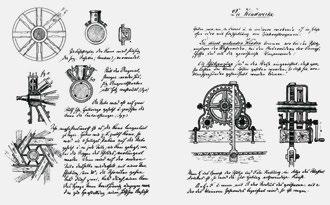
13 The History of the Department Milestones in the History of the Department of Mechanical Engineering 1868 Establishment of the Munich Polytechnic School First Study Programme of the Mechanical-Technical Department Carl v. Linde, Chair of Theoretical Machine Science, lec tures on engines in general; steam engines. H.C.A. Ludewig, Chair of Mechani cal Engineering, lectures on: the construction of simple machine parts; the construction of active machine parts; the construction of machines and engines (each including lecture and tutorial). F. Klingenfeld, Chair of Descriptive Geometry, lectures on: machine science; mechanical techno logy; mechanical drawing (lecture and tutorial). Johann Bauschinger, Chair of Technical Mechanics and Graphical Statics (part of the engineering department until 1874), lectures on: technical mechanics; elementary mechanics The Mechanical-Technical Laboratory headed by Johann Bauschinger which was established in 1871 moves into a laboratory building of its own. This later results in the establishment of the State Materials Testing Institute for Mechanical Johann Bauschinger Engineering which is located at the Chair of Materials Science and Material Mechanics (Ewald Werner) today Carl von Linde sets up the Laboratory of Machine Science. With the newly-established Laboratory of Theoretical Machine Science the Munich Polytechnic School was ahead of all other German Carl von Linde technical universities in scientific knowledge for nearly twenty years. The objective of this laboratory was to conduct various proof-of-principle studies in order to create better calculation principles. One of the first experiments concerns the determination of the properties of superheated steam. For the first time, Linde also includes the theory of refrigeration engines and refrigeration technology in his field of teaching. Establishment of the Chair of Mechanical Technology, Egbert v. Hoyer is appointed as full professor. The focus of his work is on both textile engineering and paper technology. Egbert von Hoyer A half-yearly certificate for Ludwig Frühwein from the Polytechnic School, 1868 Sketches and annotations from one of Carl Linde s early lecture concepts 13


14 The History of the Department The Paradigm of Mechanical Engineering Evolves The paradigm of modern mechanical engineering evolves during the second half of the 19th century and the beginning of the 20th century. Both engineers and scientists develop basic mechanisms such as the one of the diesel engine and the refrigeration engine. Thermodynamics and fluid mechanics are perfected as scientific disciplines essential to mechanical engineering. Institutionally, mechanical engineering outgrows the small inventors workshops. It is taught at universities and industrial enterprises set up research departments Renaming of the Munich Polytechnic School to Technische Hochschule München (Munich Technical University or THM) Rudolf Diesel graduates with the best marks since the university was established and is awarded an honorary degree. During the first few decades of its existence students are given a report each semester like at a conventional school. Diplomas are only granted for outstanding achievements by the department on application. Only twelve diplomas are granted to graduates between the establishment of the school in 1868 and Johann Bauschinger publishes his study entitled: On the changes of the elastic limit and of the strength of iron and steel caused by elongation and squeezing, by heating and cooling and by frequently repeated strain. He thus describes the so-called Bauschinger effect later named after him, i.e. the change in the elastic limit of a metal or an alloy following a deformation which determines the direction; a workpiece is initially bent in one direction. If it is then bent in the opposite direction it shows a reduction in strength. This is caused by primarily induced dislocations in the material (faults or impurities) August Föppl, who succeeds Johann Bauschinger, begins to corroborate his theoretical work in the field of technical mechanics with practical experiments The Föppl is released: August Föppl publishes the first part of his Lectures on August Fo ppl Technical Mechanics. The standard reference work is printed in numerous editions and remains the central textbook for mechanical engineering over decades. It is still published today. The Werder traction engine and bend testing machine, acquired by Johann Bauschinger in 1870, served for over 100 years in the Mechanical Technical Laboratory, before it went to the Deutsche Museum; photo from From left to right: The engineer Rudolf Diesel, director of the Maschinenfabrik Augsburg, Heinrich von Buz and Moritz Schröter, Professor of the Munich Technical University, 1897 View of the old Linde testing laboratory before it was handed over to the university. In the foreground is the oxygen condenser, photo from

15 The History of the Department 1898 Ludwig Prandtl obtains his degree in mechanical engineering at the Munich Technical University. He then works as an assistant to August Föppl, who was to become his father-in-law later. However, in 1899, he had to submit his thesis on Occurrences of Tilting. A Case of Unstable Elastic Equilibrium to the LMU (Ludwig-Maximilians-Universität) in Munich. He made important contributions to a basic understanding of fluid mechanics and developed the boundary layer theory. Name of the Department Over the past 150 years, the present-day Department of Mechanical Engineering has had various names. In 1868 the department s history begins as Mechanical-Technical Department. Around the year 1900 its name changes to Mechanical Engineers Department. In the 1930s it is called Department of Mechanical Engineering, and in the 1940s Department of Mechanical and Electrical Engineering. In 1974 the Electrical Engineering section becomes a department in its own right while the Department of Mechanical Engineering remains. A reconstruction of the exact dates apart from the last renaming in 1974 is not possible. Transitions were fluid each time the name changed, and the old and new names of the department were used in parallel over many years. Ca Around 1,000 students attend courses at the Department of Mechanical Engineers The Munich Technical University is granted the right to confer doctorates and is thus put on a par with Munich University. This was preceded by complicated negotiations with both the Bavarian and Prussian Ministries of Education. It was the universities in particular which feared a debasement of the doctoral degree and voiced harsh protests in the run-up to the decision Carl von Linde returns to the Munich Technical University as associate professor of Applied Thermodynamics. It is on his initiative that the Laboratory for Technical Physics is set up. Ludwig Burmester begins his lectures on kinematics at the Technische Hochschule, making the theory of the wheel gear an important part of the curriculum. Hilde Barkhausen ( ), a member of the research staff at the Laboratory for Technical Physics, and colleagues. In the front row, to her right, is her sponsor, Professor Oscar Knoblauch, around


16 The History of the Department Laboratory for Technical Physics Since its establishment, the aim of the Laboratory for Technical Physics has been the experimental application of theoretically obtained knowledge. Research is also carried out although the Technical University does not have an official research assignment. This teaching model sets an example for many other technical universities and is applied to this day. The purpose of the laboratory is later explained by Wilhelm Lynen, Professor of Mechanical Engineering at the THM from 1909 onwards: The student must deal with the machines himself, ( ) he must see with an open eye, hear with his ear strained, feel with his hands, to understand how they behave when idling and under full load, at the highest speeds and at high temperatures Rudolf Camerer is appointed as full professor at the department, establishing the Chair of Hydroelectric Power Plants. In addition, an Institute of Hydraulic Machines and Plants is attached to the Chair Establishment of the Chair of Lifting Equipment and Conveying Systems which is filled by a crane construction expert from the industry, Rudolf Krell. Aircraft designer Claude Dornier graduates at the department Modernisation of the technical laboratory. The Institute of Machine Tools and Industrial Engineering includes materials testing, ferrous metallurgy and the forming of metals through external forces in its focus of activity. The Paradigm of Mechanical Engineering is Improved The establishment of the groundwork of the paradigm was followed by a period in which the mechanisms, principles and works of mechanical engineering were improved and specified. Machines which work on established principles, for example, become smaller and more efficient. Mechanical engineering is perfected by lubricants, new materials and shapes of toothed wheels in gear mechanisms as well as numerous other detailed solutions. Max Jakob, assistant to Oskar Knoblauch, carrying out thermal output testing in the laboratory, around As a jew, Max Jakob had to emigrate during the Nazi era and became a founder of heat transmission research in the United States Willy Messerschmitt is awarded a degree; he establishes Messerschmitt Flugzeugbau GmbH in Bamberg while still studying. In 1923 he comes first in a gliding competition on the Rhön hills with his graduation project of a glider named S Establishment of the first chair and an Institute of Agricultural Machinery at a German university Wilhelm Nußelt is appointed as full professor at the Chair of Theoretical Machine Science and teaches thermodynamics there. The Nusselt number is named after him. It describes the convective heat transmission between a solid surface and a flowing fluid. Testing facility at the Institute of Hydraulic Machines, around


17 The History of the Department 1930/31 Willy Messerschmitt is awarded a teaching assignment on the construction and design of aircraft. 1932/33 Establishment of a second Chair of Technical Mechanics. This is maintained until W. Kaufmann is conferred emeritus status. It mainly conducts research on the mechanics of fluid and gaseous bodies The Chair of General Design Theory and Machine Elements with trial field, workshop, carpenter s shop and test facility is established under the direction of Erich Böddrich. In-depth arms research is carried out and the trial field is extended. It is evacuated to Schäftlarn Monastery between 1942 and The Chair of Metallurgy and Metals Science is established Establishment of the Chair of Aircraft Engines and Engine Science under the direction of Kurt Schnauffler. During the following years a research institute for aviation and motor vehicle engines is set up at the Kapuzinerhölzl, north of the Botanical Gardens. The original plan to move the entire THM there was discarded because of the course of the war. Today the location at Schragenhofstrasse accommodates the engine laboratory of the Chair of Internal Combustion Engines. Willy Messerschmidt as a student at Munich Technical University After the First World War an academic aeronautical society, AK Flieg was established. At the outset only gliders were built and flown. From the very beginning, government aid for AK Flieg was based on military considerations. 17


18 The History of the Department Nazi Era In 1933, the Department of Mechanical Engineering like the entire THM becomes part of the Nazi system. The university is brought into line, partly by force, partly by conviction, partly out of anticipatory obedience; University members of Jewish origin are expelled, as are those with politically undesirable views. In 1933, Christian Prinz, Professor of Mechanical Engineering, encounters hostility from students because of his red attitude and develops a stomach ulcer from which he dies a short while later. Guido Zerkowitz, Associate Professor of Mechanical Engineering, is dismissed because of his non-aryan extraction. In 1938, he is one of the last German scientists to join the Technion in Haifa (today the Technical University of Israel) in what is then Palestine. Mechanical engineer Erwin Hinlein is sentenced to two years hard labour imprisonment following a perjury trial under nebulous circumstances during which he loses his doctor s degree. After his release he is deported to the Riga-Kaiserwald concentration camp where he dies in The department conducts research for the army, for example in the fields of torpedo propulsion, petrol injection and substitute fuels for car and aircraft engines. Non-military research is continued on a small scale. The Munich Documentation Centre for the History of National Socialism is currently conducting a study on the history of the department during the Nazi era. Moreover, both the department and the whole university are debating how to deal with awards of honorary doctorates and honorary senatorships which were either conferred during the Nazi era or were conferred later on individuals who had been active Nazis. Professors of the Technical University at the 1935 dies academicus (annual academic celebration) in the large physics lecture room. Hermann Go ring, Nazi Marshal of the Reich, leaving the dies academicus at the Technical University, Design for the Technical University s new building in Nymphenburg,


19 The History of the Department 1940 The Chair of Materials in Mechanical Engineering is carved out from Chemistry in 1940 and is assigned to the Department of Mechanical and Electrical Engineering The Chair of Aircraft Construction is established at the THM under the direction of Julius Krauß. The first attempt at setting up such a chair had taken place in 1929 but had failed due to funding problems. Kraus had been a Senior Lecturer since From 1942 onwards, lectures are held on the subjects of aircraft components, aircraft design, aircraft stability and in-flight measuring techniques, and research on these subjects is conducted Discontinuation of teaching at the THM. Closing down of the Chairs of Aircraft Engines and Engine Science and of Aircraft Design. Beginning of the denazification procedures at the THM. This initially causes the loss of two thirds of its university lecturers. There are 24 lecturers employed by the Department of Mechanical Engineering in 1945/46. Thirteen of these are dismissed, four of whom are reinstated by After the Second World War, many academics tried to hide their Nazi past by making false declarations in the obligatory questionnaire concerning involvement in the Nazi party. To begin with, the American military government took a very hard line with regard to denazification and ordered the majority of the teaching staff to be dismissed. According to the list of lecturers, the former rector Lutz Pistor was arrested, while the subsequent rector Hans Piloty was cleared. 19


20 The History of the Department The Bockerlbahn train transporting rubble away from the university building. 1945/46 Both staff and students are involved in the reconstruction of the badly damaged university. Students team up in construction crews with the prospect of being given priority in re-enrolment in exchange for their help Resumption of teaching at the THM. About 3,000 students are accepted most of them war veterans. Besides studying, the students have to commit themselves to fifty hours of auxiliary service work per semester. Applicants who have completed school in 1946 are not admitted Renaming and realignment of the Chair of Aircraft Engines and Engine Science which had been set up in It is then called Chair of Internal Combustion Engines and is headed by Wilhelm Endres. During the following years it goes through more changes in name. For many years, for example, it is called Chair of Internal Combustion Engines and Motor Vehicles. Today, this chair exists under the name Chair of Internal Combustion Engines 1951 Gustav Niemann establishes the Chair of Machine Elements and works in the fields of toothed wheels and gear manufacturing on which he publishes some pioneering works. University applicants carrying out reconstruction work on the university premises, Those applicants who had not participated in the war had to clear rubble for many months, before they were accepted for a course of study. The Student Ancillary Service hour card of the applicant Karl Rihazek, 1947/48. This applicant worked for 1,058 hours, before he was able to start his studies. 20


21 The History of the Department 1952 Ernst Schmidt succeeds Wilhelm Nußelt. He gains a reputation chiefly with his research in all fields of heat transmission, gas turbine design and water vapour research. The Schmidt number is named after him which describes the ratio between diffusive momentum transport and diffusive mass transfer. During Schmidt s tenure the Chair of Thermal Engines, Refrigeration Technology, Heating and Ventilation is extended and renamed Chair of Technical Thermodynamics Establishment of the Chair of Process Engineering with Friedrich Kneule and Hans von Seybel. Process engineering as a field of study had been set up by Friedrich Kneule and Hans von Seybel in After the signing of the Paris Agreements, West Germany regains its air sovereignty. This leads to a Chair of Aircraft Construction being established with an affiliated Institute of Lightweight Construction and Aeronautical Engineering. Julius Kraus, who had already worked at the Chair of Aircraft Design in 1942 and had been dismissed in 1945 is appointed as professor at the newly-created Chair of Aircraft Design. During the 1960s the department puts its focus on aerospace technology. In 1964 the Chair of Aircraft Construction is converted into a Chair of Lightweight and Aircraft Design and, from 1978 onwards, into a Chair in Lightweight Design The Chair of Theory of the Wheel Gear and Kinematics is renamed Precision Engineering and Micro Technology and is headed by Richard Unterberger and Rudolf Beyer The Chair of Thermal Engines, Refrigeration Technology, Heating and Ventilation is extended in size and is renamed Chair of Technical Thermodynamics. 1957/58 The Chair of Technical Mechanics and the Institute of Fluid Mechanics are both taken over by Erich Truckenbrodt Establishment of the Chair of Ergonomics under the direction of Heinz Schmidtke. In 1965, the Institute of Labour Physiology is set up, headed by Wolf Müller-Limmroth. After the latter has been conferred emeritus status in 1990, the two merge to form the joint Chair of Ergonomics The Chair of Engineering Design is newly-established. Based on machine elements and working with examples of outstanding machines and engines, it aims to convey the skills necessary for designing by retracing their design steps. The THM is thus the first German university to implement this new discipline. Pneumatic measuring device testing at the Institute of Machine Tools, 1959 Students in front of the Materials Testing Institute for Mechanical Engineering, 1961 Maren Heinzerling, mechanical engineering final-year student, working at the Telefunken RA 436/2 analogue computer,


22 The History of the Department The machine hall at the Institute for Electrical Drive Machines and Systems in the Luisenstrasse (Arch. G. Hassenpflug) Set-up for drawing electron and ion paths (Institute for Technical Electronics) Demonstration of gyrostatics. Professor Kurt Magnus ( ), Chair B of Mechanics, giving a lecture for beginners,
23 The History of the Department 1965/66 Introduction of the Chair of Aerospace Engineering. Both Franz Josef Strauß, the future Bavarian State Premier and his fellow party member, State Secretary Erwin Lauerbach, played a particularly important part in this The Institute of Machine Tools and Industrial Engineering moves the focus of its research to information technology and production engineering Establishment of the Chair of Metal Forming and Casting. Its main focus is on the use of novel, highstrength materials and aluminium in sheet metal parts production THM is renamed Technische Universität München (TUM). (Technical University of Munich or TUM). Electrical Engineering In 1901 the first Chair of Electrical Engineering is established at the department. Electrical engineering is initially viewed as part of mechanical engineering. However, it grows increasingly more independent. In 1948 the department is split into two independent parts consolidated in the department, one for mechanical engineering and the other for electrical engineering. During the 1960s there are discussions about the department s separation into two independent ones, and this is finally executed in The different divisions at the Department of Mechanical Engineering are set up with chairs, laboratories and institutes combined to form major institutes: Labour Physiology Precision Engineering, Design, Machine Elements Automotive Technology, Materials Handling and Agricultural Engineering Aerospace Technology Mechanics, Thermodynamics, Hydraulics and Energetics Process Engineering Materials Science and Processing Sciences. The Department is split into a Department of Mechanical Engineering and a Department of Electrical Engineering and Information Technology Establishment of a Chair of Joining Technology headed by Gerd Habenicht. The central research focus of this chair is the joining of components of different shapes and functions and materials in a manner which is suitable for both their functions and for production. Use of Microprocessors New Perspectives for Mechanical Engineering The first microprocessors enter the market at the beginning of the 1970s. They open up new perspectives for mechanical engineering and, during the following years, serve as tools for significantly enhancing the possibilities in mechanical engineering. Processor-controlled machines enable greater precision. Computer calculations and simulations speed up research and reduce its costs at the same time. The field of robotics emerges and the automation of even complex production steps is made possible. Information technology is an integral part of mechanical engineering Research at the Chair of Precision Engineering and Micro Technology is not confined to the classic topics such as equipment design based on either purely electronic or electromechanical principles. It also opens up new fields such as ink printing, microsystems engineering, propulsion technology, optical measurement technology, etc The Chair and Institute of Machine Tools and Industrial Management Technologies puts a focus on two new research topics: industrial robotics and assembly technology The collaborative research centre no. 255 Transatmospheric Flight Systems Basics of Aerothermodynamics, Propulsion Systems and Flight Mechanics is set up, co-ordinated by Gottfried Sachs. Its objective is the development of capabilities for aerodynamically borne, stable maximum speed flight with air-breathing propulsion systems while meeting extreme performance requirements with regard to both workload and range For the first time, the TUM budget exceeds the threshold of one billion German marks. The proposed relocation of the Department of Mechanical Engineering to Garching meets with resistance from students. In June 1990 they stage a bicycle demonstration to point to Garching s poor transport connection. Almost 5,000 students are enrolled at the Department of Mechanical Engineering Restructuring of the department: chairs who conduct research on the same topics are combined to form institutes: Institute of Mechatronics Institute of Materials and Processing Institute of Production Technology Institute of Process Technology Institute of Mechanical and Automotive Engineering Institute of Astronautics Institute of Energy Engineering 23

![[Our aim is] not only to utilise the potential for innovation connected with the arrival of information technology in mechanical engineering but to make the problems which accompany the new](/docs-images/77/74952212/images/24-1.jpg "technologies controllable. Only if we succeed in this will our mechanical engineering be able to maintain its leading position, founding professor Klaus Bender emphasises.")

24 The History of the Department 1992 Establishment of the Chair of Information Technology in Mechanical Engineering. This takes into account the increasing significance of information technology in mechanical engineering. [Our aim is] not only to utilise the potential for innovation connected with the arrival of information technology in mechanical engineering but to make the problems which accompany the new technologies controllable. Only if we succeed in this will our mechanical engineering be able to maintain its leading position, founding professor Klaus Bender emphasises The collaborative research centre no. 365 Environmentally Compatible Drive Technology for Vehicles is set up headed by Bernd-Robert Höhn. The objective of this special field of research is the simulation, layout and design of the Full Hybrid Inauguration of the new department building on the Garching research campus with approximately 60,000 sq. metres floor space. The new Audimax under construction, 1992 Garching The construction of the department s new campus in Garching is unique at the time it is not public building authorities which carry out the project planning but BMW which is intended to speed up building. After a construction phase of only six years and without exceeding the budget the new campus is completed in The building is aligned along a central covered axis which provides access to all chairs, the lecture halls, library, administration offices and the cafeteria. Its architecture follows an exact requirement analysis and is optimised for use as a place of research and study while exceeding the boundaries of the laws governing the construction of university buildings in force at the time. Even the students are involved in the building by designing the seating of the lecture halls. However, not all plans are implemented. For a while, there were discussions about setting up a Pilsstube (a kind of pub), directly on the main axis. Demonstration by mechanical engineering students against the department s move to Garching in June 1990 Below: Aerial photo of the Department of Mechanical Engineering,


25 The History of the Department 2000 The new Chair of Automotive Technology is created from parts of the Chair of Internal Combustion Engines and Motor Vehicles established in 1936 and the Chair of Agricultural Machinery and is led by Bernd Heißing. Thus, the automotive sector which shapes the department is given a dedicated professorship. 2000/01 The department begins to implement the so-called Bologna reform process. One Bachelor s and one Master s degree course each in mechanical engineering are set up alongside the traditional degree courses The collaborative research centre no. 582 Marketoriented Production of Customised Products is set up, headed by Udo Lindemann. The Chair of Hydraulic Machines at TUM is granted the sum of 400,000 DM for research on, and the development of fish-friendly turbines The TUM is awarded the status of Excellent University within the framework of the excellence cluster CoTeSys (Cognition for Technical Systems), scientists at the Department of Mechanical Engineering conduct research on the basics of perception-coupled motion control and its implementation through information processing mechanisms. Testing hall at the Institute for Machine Tools and Industrial Management Digitisation in Mechanical Engineering a new Paradigm? Moore s law states that the computing power of processors doubles every one to two years. During the first decade of the new millennium the affordable computing power attains speeds which enable a redesign, even the re-thinking, not only of communication and media but also of technology and, in particular, mechanical engineering. Computers are no longer just tools in mechanical engineering but are becoming the core of previously unthinkable new applications. Students in the department s computing room, The collaborative research centre no. 768 Managing Cycles in Innovation Processes Integrated Develop ment of Product Service Systems Based on Technical Products is set up, headed by Udo Lindemann. Birgit Vogel-Heuser is appointed head of this centre in 2013, leading it into its third funding period. The collaborative research centre TRR 40 Technological Foundations for the Design of Components of Future Aerospace Transportation Systems Subject to High Thermal and Mechanical Stress is set up, headed by Nikolaus Adams. The main research focus of this collaborative research centre is on new technologies for chemical main stage rocket engines for future generations of civilian launchers. Turboshaft engine testbed 25


26 The History of the Department 2011 The department is the first institution at TUM to be evaluated. The assessors confirm its outstanding research results. During the following years the department succeeds in considerably enhancing its scientific profile. Under the project management of Markus Lienkamp, TUM presents the MUTE at the IAA Motor Show for the first time a joint project by 20 departmental professorships. The MUTE is solely electrically-powered. It has a maximum speed of 120 km/h and a minimum range of 100 kilometres The eli14 is a vehicle designed by the TUFast student group. It sets the Guinness world record as Most Efficient Electric Vehicle Nikolaus Adams wins the ERC Advanced Grant NANOSHOCK Manufacturing Shock Interactions for Innovative Nanoscale Processes. This research project examines which mechanisms and properties enable the controlled formation of shocks in very complex environments such as living organisms. These questions are to be studied and answered with the help of modern computer simulation models and some carefully selected experiments Travelling from one place to another at almost the speed of sound that is the idea behind the Hyperloop Pod Competition of visionary Elon Musk. Out of initially 700 teams, 30 teams are selected to build a prototype at the end. The WARR study group at the Department of Mechanical Engineering at TUM is one of these teams. In August 2017, the team wins the maximum speed competition with its Hyperloop Pod II and establishes a new speed record with 324 km/h. In 2015, Cevotec, a spin-off from the Technische Universität Munich, is set up by scientists of the Chair of Carbon Composites at the Department of Mechanical Engineering and wins the important start-up competition Weconomy in The Cevotec founders develop a fully automated manufacturing method that not only makes the production of carbon parts more efficient but also reduces the amount of material required A new helmet-mounted sighting instrument developed by scientists at the Chair of Helicopter Technology is introduced. The augmented reality device enables helicopter operations in poor visibility, increasing the safety of both pilots and any passengers on board The department sets up its first cross-chair cluster Additive Manufacturing. In addition to investments made by the chairs involved, the department contributes more than in start-up aid to establish this pioneering topic. Successful maiden flight of the Sagitta unmanned flying wing. Other participants in this open innovation initiative by aircraft manufacturer Airbus, besides TUM, are research institutes of the German Aerospace Centre DLR, the Universität der Bundeswehr in Munich, the Technical University in Ingolstadt and the TU Chemnitz After enhancing the department s scientific profile following its evaluation in 2011, the department has consistently maintained top level positions in major international research rankings; no. 1 in Gemany in both the Times Higher Education Ranking and the NTU Ranking continuously among the Top 10 in Europe and the Top 40 worldwide. Students of the WARR Hyperloop team SAGITTA unmanned demonstrator 26

27 The History of the Department Science Politics Industry The Department in a Field of Tension It s a difficult relationship, the industrial sector and higher education, time and time again. (Prof. Hajek) Applied research and basic research don t always have to contradict each other. (Prof. Lienkamp) We have to accept political decisions. (Prof. Adams). It is not just questions of research, external funds and higher education bureaucracy that the faculty is concerned with. There are also major issues of responsibility, freedom and the benefits of science. How is research funded? Who makes decisions about issues and the subjects of research? What influence do social developments or political decisions have on science? Conflicting concepts soon emerge: contract research versus free research; fundamental research versus application-oriented research; research trends versus research tradition. These questions are not new; they have been the subject of discussion in the sciences, at TUM and in the department for generations. Here we take a look back at the history of the department, and through exemplary stories show how former generations answered these questions. The different ways in which these issues are currently being tackled will then be outlined on the basis of interviews with five professors. The Founding of the Department The industrialisation of continental Europe began in the early years of the 19th century. In Bavaria, too, factories sprang up with industrial production methods, and from 1835, the railway followed, with the first line travelling between Nuremberg and Fürth. A short time later, the first Bavarian shipping company was founded and canal construction was driven forward. Industrial companies were established such as the locomotive factory J.A. Maffei or the Sander sche Maschinenfabrik und Eisengießerei, the Sander machine works and iron casting company and the Maschinenfabrik Klett & Comp. machine works, both of which were the forerunners of MAN. During the second half of the 19th century, Bavaria experienced a veritable wave of industrialisation. At the same time, from 1805, political visions were being created; Bavaria became a kingdom. It was a political goal of the Bavarian kings to promote technology in Bavaria. In particular, the territorial gains of Franconia linen The Munich Polytechnic School in the Damenstiftstrasse, founded in 1827 production in Upper Franconia and Augsburg the textile industry played an important role. Additionally, the example of Paris awakened a desire for more, with its École Polytéchnique, which had been in existence since The first attempt in Bavaria had already failed after six years. In 1833, the Polytechnische Centralschule closed its doors again. From then on, technical training in Munich focussed on architecture. Instead, polytechnics opened in Nuremberg and Augsburg, with a focus on the main areas of scientific interest of their respective locations. In Nuremberg, these were the casting and metal works, while in Augsburg, wool and cotton manufacture. In Munich, a Faculty for Higher Technical Officers was established at the University of Munich, with architecture and the preservation of historical monuments being retained as the field of study. In 1848, Maximilian II, the third Bavarian king, took over the government. He promoted commerce and the industrial sector and founded the State Ministry of Trade and Public Works, the precursor to today s Ministry of Economic Affairs. Ludwig II, who occupied the Bavarian throne after 1864, made a second attempt in 1868 and founded the Munich Polytechnic School. Department IV of the School, the Mechanical-Technical Department, is where life began for today s Department of Mechanical Engineering. There, knowledge about fundamental mechanical principles was to be gathered, expanded and disseminated. Specialists were to be trained with a specific technical perspective on the world. Both on the part of the state, whose political will to design technology had intensified, as well as of the industrial sector, which was rapidly prospering, demand for these specialists was increasing. Against this political and economic background, the second attempt at founding a technical training facility was a success. 27

28 The History of the Department Contract Research vs. Free Research 1871 Laboratories Working on Behalf of the Industrial Sector In 1871, Johann Bauschinger founded the Mechanical- Technical Laboratory. Today, it is known as the State Material Material Testing Agency for Mechanical Engineering (Staatliche Materialprüfamt für den Maschinenbau; MPA), which regards itself as a service provider for the industrial sector. Bauschinger s original plan envisaged something different. From his perspective, the laboratory was intended above all to promote mechanical engineering research. It was only gradually that it began to be used differently. The original additional objective of inspecting materials and construction parts in exchange for money increasingly replaced the research activity. A similar development occurred with Carl von Linde s Laboratory of Machine Science. While it was also originally intended as places of research and learning, his laboratory established in 1875 quickly became a hub for inspecting and testing industrial products and providing advice to companies. Moritz Schröter in particular, who succeeded von Linde in 1879 and who was a distinguished expert in the field of technical thermodynamics, further expanded this main field of activity. The independent scientific work of the Technical University meant that industrial products obtained a type of quality seal after they had been inspected. Over the years, this became one of the department s most important areas of work. Almost all publications about theoretical mechanical engineering were written on behalf of the industrial sector. Around 80 percent of the articles published by Schröter were about steam engines and turbine inspections. This activity was also criticised in specialist circles: Hans Lorenz, a contemporary of Schröter and Professor for Mechanical Engineering at the University of Halle, argued that: Schröter contents himself with publishing extensive acceptance tests without drawing any notable conclusions from them, which was always the risk entailed by the impetus from the industrial sector with its commercial interests. As well as testing the functioning of machines, the mechanical engineering professors also produced assessment reports. These could be presented as evidence in cases of dispute, technical failure or accidents, or patent proceedings. Linde stressed that: For the lack of understanding among members of the patent office department in question, there is less to be gained from strictly physical proof (which they are unfortunately unable to comprehend) than through a certain explanation regarding the resulting facts of the case from an authoritative agency. Linde was convinced by the benefits of assessment reports. In a letter to his teacher, Gustav Zeuner, he wrote that the task of science was to assist in ensuring that justice prevailed with the aid of non-partisan judgements. However, in daily practice, the independent nature of the professors, who as state officials exuded an aura of non-partisanship, was considerably limited, as Linde s example shows. Konrad Klebe, an assistent at the Mechanical-Technical Laboratory from , at the Werder tensile and bending testing machine On Linde s initiative, in 1887 the Munich Polytechnic Association built a test station for refrigeration machines, which was supervised by Schröter. At the test station, other producers of refrigeration machines were to be given the opportunity of having the quality of their machines tested. Since the test station was in effect under Linde s control, however, and thus under the control of one of the owners of the Gesellschaft für Linde s Eismaschinen AG ( Linde s Ice Machine Company ), other companies did not trust the independent nature of the test station. During the station s five-year existence, only three companies had their refrigeration machines tested there, apart from those produced by Linde s company. 28

29 The History of the Department Testing facility for diesel motors at the Maschinenfabrik Augsburg, around 1899 Just how important these independent assessment reports were for new developments was reflected in the story of Rudolf Diesel. When Diesel presented his engine, the innovative potential of his invention was confirmed by several professors Schröter, Linde and Zeuner. Although Diesel s thermodynamic predictions were incorrect, he received sufficient support for his invention from the industrial sector. This can be traced back in part to the major influence of the assessment report. In this report, for example, Carl von Linde emphasised that: [I] can only confirm my view already expressed verbally to you, that the path you have taken is taking you directly and accurately to your goal of achieving the fuel consumption required for mechanical work which according to our current knowledge of physics and taking into account the current state of mechanical engineering should be regarded as the most ideally suitable. However, Carl von Linde noted that the calculations made by Diesel were too optimistic, and that, in the best scenario, a third of the value of the theoretical degree of efficiency calculated by him could be achieved Sample Contracts and Acquired Freedom Five professors five positions on the issue of industrial research versus scientific independence, commonalities and differences. The five professors consider the issue from different perspectives, with a view to the entire department, and with a focus on their own professorial chair. They all regard themselves as being free and uninfluenced by the industrial sector. With regard to their own professorial chairs, they stress that the origin of the questions initially plays no role; it is important that questions are being asked of the respective field of specialism at all. They claim that com We don t have to accept everything that the industrial sector offers us. That s a very positive situation here in the department. Prof. Werner 29
30 The History of the Department mercial businesses can make a considerable contribution here. In most cases, it is not a question of being told what to do by the industrial sector, but a case of constructive collaboration (Wachtmeister). Werner emphasises that: We are not obliged to take on all the requests made by the industrial sector. Lienkamp regards it as being a task of the TUM to be a thorn in the side of the industrial sector. We don t get involved in the industrial sector s everyday business (Hajek). When approaching problems, there are generally differences between the industrial sector research departments and the faculty. In the industrial sector, experience plays a far greater role. At the university, however, problems are considered at greater depth and in a more analytical way. However, the independence of their work is not just a result of the strength of their own professorial chair and of the professor involved. Throughout the university, contracts have been developed which must be signed by the partners and external funders. These contracts secure extensive freedoms for the higher educational institution, the department and the researchers. These include the freedom to publish and freedom regarding personnel. I found it strange how self assured the TUM was in its contracts with its industrial partners. However, there s a benefit in that. We are not an engineering office that is being signed up. We are scientists. Prof. Hajek With regard to the general development of the department, there are clear differences of opinion among the professors. The spectrum ranges from: proximity to the industrial sector is increasing in the department, and the industrial sector is attempting to increase its influence over the department, in the view of Werner, to: independence is increasing and today s department unlike the If we only had money for ourselves and could do what we wanted with it, then nothing much would result from it. We need the problems of the industrial sector to develop further. Prof. Lienkamp situation one to two generations of professors ago is no longer an extended workbench, as Adams described it. The distance from the industrial sector is increasing, possibly because an increasing number of professors are from academic backgrounds and have not worked in the industrial sector. The earnings from working in the private sector are far higher than at the university. At the same time, proximity to the industrial sector is increasing, since more and more institutes are founding start-ups in order to market their products themselves. There is agreement when it comes to the sense and purpose of their work. Without scientific work at the department, the industrial sector would be lacking important input; without the external funds provided by the industrial sector, important means would be lacking not just for research, but also for teaching. There is also agreement with regard to the fact that the industrial sector only provides a portion of external funds. One third comes directly from the industrial sector, one third are public funds intended to promote the teaching of mechanical engineering, while one third comes from a combination of public funding and industrial participation. Adams stresses in this context that the Department of Mechanical Engineering is the strongest department at TUM with regard to DFG funding, and currently has two collaborative research centres. We are not an extended workbench. Prof. Adams 30

31 The History of the Department Fundamental Research vs. Applied Research 1895 The Dispute Between Theoreticians and Practitioners When professors of German higher education institutions, including the well-known cinematographer and mechanical engineer Franz Reuleaux the academic teacher of Carl von Linde visited the World Exhibition in Chicago in 1893, they were presented with the USA as a forerunner in technical sciences. The German higher education teachers visited the large machine and electrical technology laboratories and sat in on teaching units with demonstrations and experiments. They took these impressions back to Germany with them, and in 1895, together with the Association of German Engineers, (Verein Deutscher Ingenieure, or VDI), they wrote the Aachen resolutions. In these resolutions, the professors of mechanical engineering demanded the construction of modern laboratories and a practical orientation in teaching and study. The basic subjects such as mathematics should be downgraded to auxiliary sciences. According to the authors of the resolutions, the teaching at the technical universities was too theoretical. Young engineers received extensive tuition in mathematics, while experiments and practical tests were a rarity. The German mathematicians resisted these demands. They stressed the importance of mathematics as a basic science and warned against making research and teaching too application-oriented and superficial. Members of the Munich Technical University also got involved. At that time, the Department of Mechanical Engineering has its own machine laboratory. Carl von Linde had established the laboratory in 1875, around 20 years earlier than at other technical universities in Germany. Linde had taken on the idea from the ETH Zürich, separating the teaching of mechanical engineering from machine construction and dividing the teaching into descriptive and theoretical mechanical engineering. While descriptive teaching overlapped with some areas of machine construction, the theoretical teaching of mechanical engineering comprised three focal content areas kinematics, engines and mechanical heat theory. With this approach, Linde created the precursors of kinematics and hydraulics, refrigeration technology and thermodynamics as subjects. At the time of the dispute between theoreticians and practitioners at the Technical University of Munich, the teaching of mathematics was also adjusted to the needs of the engineers. The university was therefore following a path of beneficial compromise and was able to go some way to meeting the demands of the Aachen resolutions. In 1895, mechanical engineer Egbert von Hoyer was made Director of the Technical University of Munich. While he was not a radical defender of the rights of the practitioners, he did commit to increasing the practical element in the teaching programme in Munich. Walther von Dyck, Professor of Mathematics at the Technical University of Munich, was outraged: The mere suspicion that someone wishes to teach more than simply pure practical applications is sufficient to severely impair our mission. Walther von Dyck, 1899 Together with mathematicians from other technical universities, as well as mathematics-oriented engineers, he did all he could to convince the practitioners of the benefits of a basic education in mathematics. He succeeded in retaining mathematics as a basic science in mechanical engineering. The dispute flared up again when during the 1898/1899 university year, technical physics was introduced as a subject in the general department. Rudolf Diesel expressed his admiration for the idea: What a wonderful, new field; that has attracted too little attention to date. The development was not met with much appreciation by mechanical engineering professors Paul von Lossow and Otto von Grove. In their view, the technical departments alone should be responsible for educating engineers who would later work in the industrial sector. The dispute between theoreticians and practitioners died down at the turn of the century. Both sides were given the right to award doctorates. Also, after 1895, the laboratories were made subordinate to the theoretical mechanical engineering faculty. In this way, the position of the theoreticians was strengthened instead of that of the practitioners as had been expected. 31
32 The History of the Department 2018 Consolidation of Fundamental Research In 2018, the subject is no longer disputed along such fundamental lines. The practical element has been established in teaching, although the question of how much mathematics is necessary as a minimum has still not been finally resolved today particularly with a view to the reduced teaching plans as part of the eight-year grammar school syllabus. In research, the relationship between fundamental research and applied research has been subject to strong fluctuations over the decades. In general and here, the five professors interviewed agree the excellence initiative has led to a situation in which the reputation of fundamental research has improved and today, more research is being conducted on fundamental topics. Research by our chair is up to 90 percent application-oriented. However, the tendency is moving very strongly towards fundamental research, including for mechanical engineering. Prof. Wachtmeister who tend to prefer fundamental research is necessary, he claims, in order to develop and realise new ideas in the ideal scenario in an interdisciplinary manner and beyond department boundaries. Currently, we are too strong in the field of application research. But this is subject to cycles and it will change again. Prof. Werner Lienkamp and Adams stress that the actual question should be how the department or the university overall should react to these new demands of increasing interdisciplinarity. Should it be left to the commitment of the individual researcher and their networking skills, or should new structures be created? However, what exactly is fundamental research? Adams explains that fundamental research deals above all with the development of mathematical and physical simulation models, while applied research tends to focus on experiments. Wachtmeister puts it in a similar, albeit less abstract, way. In his sector, he says, fundamental research tends to deal with mechanics, thermodynamics, etc., while applied research looks at gears, production technology and engines, whereby the five professors regard the polarising comparison as being problematic and possibly no longer in keeping with the times. The collaboration between application-oriented researchers and researchers Not everyone can conduct fundamental research. But when the applied researchers collaborate with fundamental researchers, new results emerge. That s our opportunity in mechanical engineering, since we have the people who understand the application. Prof. Adams 32
33 The History of the Department The Influence of Politics 1954 The Establishment of Air and Space Travel at the Department There are countless examples of the influence of politics and society on research at the Technical University of Munich in its 150-year-old history. The creation of the Institute for Aviation and Astronautics after the Second World War is one. In 1954, Julius Krauß received the professorship for aeroplane construction, which was associated with an institute for lightweight construction and aviation technology. Krauß had already been Professor Ordinarius for aircraft construction at the THM from 1942 to Without political decisions being made at the highest level the Federal Minister for Special Affairs at the time, and later Minister of Defence, Franz Josef Strauß, was an enthusiastic amateur pilot the establishment of the professorial chair would not have been possible. At first, the preconditions for the creation of such a research focus appeared unfavourable. While before and during the Second World War, there had already been aviation research at THM, it was forced to close at the end of the war following pressure by the Allies. In 1950, the Bavarian federal state government had already begun first discussions with the Allies regarding the resumption of aviation research. The German federal government was also highly interested in developing its own aviation and astronautics industry and research. Here, the key player was Franz Josef Strauß. The passionate pilot was particularly committed to re-establishing the aviation industry and aviation research, and ensured that this branch industry and research was located in Bavaria, specifically in and around Munich. Finally, on 23 October 1954, the Paris Agreements were signed, which brought the Allied occupation status in the Federal Republic of Germany to an end. Now, German research could again participate in national and international aviation and astronautics projects. The reaction of the THM was immediate; that same year, Krauß was awarded the professorship for aircraft construction. In the years that followed, Munich became a centre for aviation and astronautics. Strauß consciously pursued technology- and industry-oriented policies. He persuaded the entrepreneur Ludwig Bölkow to relocate his company, Bölkow Entwicklungen KG, from Stuttgart to Ottobrunn near Munich, which he did in In 1961, the analysis and test facility of the German Federal Ministry of Defence (IABG) was founded in Ottobrunn. In 1963, a division at the Max Planck Institute for Physics and Astrophysics was turned into a separate sub-institute the Max Planck Institute for Extraterrestrial Physics and one year later was moved to Garching. At this point in time, the professorial chair for aircraft construction was further expanded supported by the aircraft industry companies. In Ernst Schmid, who in 1952 became Professor for Theoretical Mechanical Engineering and Technical Thermodynamics, the THM already had an expert in combustion processes in aircraft engines and temperature measurement at high flying speeds. In 1957, Erich Truckenbrodt, who had formerly been the head of the aerodynamic division of the aviation company Heinkel, was brought to the department. Shortly after his arrival, he had three new wind channels built for aerodynamics tests. The scientific council at the THM recognised the new opportunities presented by the political developments, and suggested that a professorial chair for astronautics should be established. Truckenbrodt, who at that time was the dean of the faculty, then succeeded in having an institute for aviation and astronautics technology established at the department, which traditionally was not involved in aviation. He was supported by the CSU in his endeavour, in order to create a link between the Bavarian aviation and astronautics industry with science. Now, Munich was the fourth German federal higher education centre for aviation and astronautics, alongside Aachen, Braunschweig and Stuttgart. Just a short time later, the professorial chairs of the institute were given complex research tasks. Between 1965 and 1970, the chair researched aircraft engines on behalf of the Federal Ministry of Defence, on flat engines with deflection combustion chambers for a planned VTOL aircraft. Research contracts were also received from other countries, from the Research and Technology Agency (RTA), a sub-organisation of the NATO Military Committee. In this way, under the aegis of Truckenbrodt, important numerical methods for transient and stationary flow processes were researched, as were hypersonic flows, which were of great importance to the astronautics projects that were just beginning in the Federal Republic at that time. 33
34 The History of the Department 2018 Politics and the Future of Mobility Science does not occur in a vacuum. Politics, which is designed to define the guiderails of social activity, sets the general direction. Here, higher education institutions during the National Socialist period, with their inhumane approach, are a negative example. Like the example of aviation and astronautics described above, new fields of research can be quickly established under the influence of politics. Sometimes, however, politics reacts in unforeseeable ways. In 2007, for example, the professorial chair for nuclear technology was established. At that time, power generation through nuclear power stations was still considered to be future-oriented technology, which Colleagues may be asked for political advice, but even so, science doesn t play a key role, either in the decision against the use of nuclear energy or when it comes to whether or not we should only drive with batteries in the future. We have to adjust to that fact. Prof. Adams would make an important contribution to securing energy supplies in Germany. In 2011, in the wake of the Fukushima catastrophe, the German federal government decided to phase out nuclear energy. Currently, a question about the future is again under discussion: the issue of the future of mobility. Is the combustion engine here to stay, or does the future belong to the electric engine? In the view of Wachtmeister and Lienkamp, here, the influence of politics over the department can be clearly felt. The chair for vehicle technology under Lienkamp, with its focus on electromobility, is enjoying an upturn in its fortunes. During the 13 years (four in industry, nine at the TUM) in which Leinkamp has been working on the topic, electromobility has been through some difficult times. Now, the subject has really taken off!, he says. However, unexpectedly, and contrary to what the politicians have been saying, the level of state funding for conducting research into the combustion engine has been raised recently rather than decreased. The combustion engine can be a component for the mobility of the future. With new fuels produced from regenerative energy, the combustion engine will contribute to saving CO 2. Prof. Wachtmeister With regard to the issue of what mobility will look like in the future, there is agreement in part between the professorial chairs. For the years to come, they forecast that both technologies will be used alongside each other. The statement that the combustion engine has a future (total energy balance, CO 2 -neutral fuels, the mathematical impossibility of e-mobility that covers all requirements) contrasts with the claim that the use of the combustion engine will come to an end in the foreseeable future (total energy balance, new battery technology, local emission elimination, properly functioning infrastructure). Perhaps here, politics will have the final word. However, there is one further influential factor that cannot be calculated: the consumer. As was the case with digital cameras or flat screens, things can change very quickly. The subject of electromobility has now really taken off. But we ve also been through difficult times with regard to electromobility. Prof. Lienkamp 34

35 Selected Highlights 2017 Geothermal drilling site in Unterhaching 35


36 Selected Highlights 2017 The Department of Mechanical Engineering Opened an Additive Manufacturing Cluster colloquium, allowing the department to discuss their work with industry representatives. From Q onwards, interested parties will also be able to find information about the participating departments and their additive manufacturing equipment on the cluster webpage. Impression of the second seminar of 26/01/2018 for scientists and technicians Additive manufacturing holds a diverse range of opportunities for mechanical engineering and the Technical University of Munich. In recognition of this potential, the TUM Mechanical Engineering Additive Manufacturing Cluster was launched in September 2017, with support from Professor Michael F. Zaeh, the Head of the Institute of Machine Tools and Industrial Management. The cluster offers a platform for discussion that allows participants to pool and share their knowledge and equipment. Everyone is talking about additive manufacturing. We hear about new process innovations and applications almost every day. The Department of Mechanical Engineering has been actively participating in research into additive manufacturing processes for several years. Together, We Can Achieve More! The spectrum of existing methods of additive manufacturing is so diverse that it cannot be fully mastered by a single department. The Additive Manufacturing Cluster was therefore launched in autumn 2017 as a platform for the various chairs of the Department of Mechanical Engineering to share their experience, ideas, equipment, and project findings. The response was overwhelming. On 22nd September 2017, 31 members of the department attended a total of 15 presentations and engaged in an enthusiastic discussion about the future of additive manufacturing. Interest in this platform had not wavered by the second round of seminars on 26th January Accordingly, it was decided at the end of January that the activities of the Additive Manufacturing Cluster should be intensified. In future, department-wide cluster meetings will be held three times a year. The meeting in the first quarter of each year will be organized as an industrial Life Sciences, Aerospace, Manufacturing Processes The department already has a significant breadth and depth of experience. Three subfields of additive manufacturing have been identified: life sciences, aerospace, manufacturing processes. For example, the Department of Aerospace Engineering has developed its own universal 3D-printing platform that combines three different additive manufacturing techniques. The Department of Medical Engineering studied the production of medical grade polymer materials by additive manufacturing. The research performed by this department sparked off a start-up company for manufacturing high-tech medical products. The Chair of Carbon Composites took the research into composite materials further by developing a series of novel approaches for uniform materials testing. The Institute of Machine Tools and Industrial Management (iwb) focuses on researching the manufacturing processes themselves. Since 2017, the iwb has expanded its competencies in the area of directed energy deposition processes, and is now exploring wire and arc-based additive manufacturing, as well as existing powder-bed approaches. Wire and arc additive manufacturing is characterized by fast build speeds. Favourable Conditions In the future, the cluster hopes to act as a catalyst for thematically innovative applications by fostering collaboration between two or more departments. At the iwb, an additive manufacturing laboratory spanning over 100 square metres is currently under construction. This laboratory will offer excellent infrastructure for the iwb and other bodies of the Department of Mechanical Engineering. Contact Prof. Dr.-Ing. Michael F. Zaeh Machine Tools and Industrial Management [email protected] Phone

37 Selected Highlights 2017 SFB 768: Managing Cycles in Innovation Processes Integrated Development of Product-Service Systems Based on Technical Products Visualizing model dependencies within a cross discipline interactive model network The DFG-funded Collaborative Research Center (CRC) 768 Managing Cycles in Innovation Processes is currently in the 10th of 12 funded years. It is based on the collaboration of Technical University and Ludwig-Maximilians-University Munich. The CRC 768 involves the following institutes of the Department of Mechanical Engineering: Institute of Automation and Information Systems, Institute of Product Development, Institute of Machine Tools and Industrial Management, and Chair of Automatic Control. The SFB 768 provides methods and models to manage cyclic innovation processes in an interdisciplinary way, including technical, economic and social perspectives. The focus of the SFB 768 is on the market area of combining products and services to so-called product service systems (PPS). Managing and shaping innovations in PPS under consideration of cyclic influences is the objective of the SFB 768, aiming to support German companies to evolve their position in the market with methods and domain-spanning coupled models. In 2017, an industrial colloquium was successfully organized with top-class representatives from globally active companies to discuss and mutually enrich ideas within the interactive workshops; Inconsistency Management, Stakeholder Integration, Knowledge Management and Change Management. The transfer of research results to industry and the transfer of industry expertise to academia was a great benefit for all participants. Additionally, the event s participants experienced substantiated speeches from different industry domains within the context of PPS and Cyber-Physical Production Systems (CPPS), moderated discussions and an atmospheric get together. The year 2017 was very fruitful for CRC768: the massive open online course (MOOC) was launched, as well as the first prototype of a publicly accessible platform, called Gestaltenplattform. This platform collects, recaptures and presents research results of the CRC768 over the last 10 years, to benefit closer cooperation and exchange between industry and science. To achieve holistic management of innovation processes, the perspective has been extended to a socio-technical view. In seventeen sub-projects from mechanical engineering, economics, business informatics, psychology and sociology, a unique interdisciplinary research perspective on innovation processes is developed and is being continuously strengthened. Within the transfer projects, the research results are validated using real industry scenarios 37

38 Selected Highlights 2017 Team of the Collaborative Research Centre SFB 768 at the Kickoff meeting for funding period three and valuable feedback from domain experts is brought back to academia. By transferring the knowledge gained and findings to industry e.g. through transfer projects, workshops or the industry colloquium mentioned above managers and decision makers are enabled to find the best available path in the often confusing landscape of possible decisions between technology, organization and qualification. Thus, the SFB 768 offers companies effective concepts to manage the innovation cycles of their systems and PPS. To integrate students into the multidisciplinary research field and enable participants to understand the mechanisms behind innovations and manage the interdependencies in a cooperative interdisciplinary way, the interdisciplinary lecture series Managing Innovations was offered, supported by an online channel with selected training sessions. Contact Prof. Dr.-Ing. Birgit Vogel-Heuser Automation and Information Systems [email protected] Phone: Vice Coordinator: Prof. Dr.-Ing. Gunther Reinhart, Institute of Machine Tools and Industrial Management 38

39 Selected Highlights 2017 SFB TRR 40: Technological Foundations for the Design of Thermally and Mechanically Highly Loaded Components of Future Space Transportation Systems Instantaneous snapshots of a nitrogen jet in hydrogen: (a) Temperature; (b) Vapor fraction on a molar basis; (c) Hydrogen density; (d) Relative difference in density The Institute of Aerodynamics and Fluidmechanics has the speaker role within the DFG-SFB TRR40. Next-generation space transportation systems will be based on rocket propulsion systems which deliver the best compromise between development and production cost and performance. The TRR40 focuses on liquid rocket propulsion systems and their integration into the space transportation system. Critical, thermally and mechanically highly loaded components of such space transportation systems are the combustion chamber, the nozzle, the aft body and the cooling of the structure. These components offer the highest potential for an increase in efficiency in the entire system. However, all components are in close and direct interaction with each other. Optimization or the fundamentally new design of a single component directly affects all other components. The 25 projects from TUM, RWTH Aachen, TU Braunschweig and the University of Stuttgart as well as partners from DLR and AIRBUS D&S investigate in interdisciplinary experimental and numerical teams. The developed concepts developed will be tested on sub-scale combustion chambers and will be developed to a stage of applicability. In addition, principal experiments are going to be conducted to demonstrate new technologies developed in the TRR40. The scientific focus of all five research areas within the TRR 40 is the analysis and the modeling of coupled systems. Based on reference experiments detailed numerical models are developed which serve as the basis for efficient and reliable predictive simulation tools for design. Contact Prof. Dr.-Ing. Nikolaus A. Adams Aerodynamics and Fluid Mechanics [email protected] Phone


40 Selected Highlights 2017 NANOSHOCK* Manufacturing Shock Interactions for Innovative Nanoscale Processes The Nanoshock group at the Institute of Aerodynamics and Fluid Mechanics (Prof. Adams) investigates the highly complex flow physics of shock interactions with interfaces. Shock waves are discontinuities in the macroscopic fluid state that can lead to extreme temperatures, pressures and concentrations of energy. A classic example of the generation of shock waves is the supersonic boom of an aircraft or the pressure wave originating from an explosion. Snapshots of highly-resolved two-dimensional test simulations: implosion test case (left) and Rayleigh-Taylor instability (right). Note the exact symmetry of the simulation result. Interface visualization (blue line) with pressure (upper half) and normalized streamwise velocity component (lower half) of a water drop after interaction with a shock of Mach number MS=1.47. Funded by the European Research Council (ERC) under the European Union s Horizon 2020 research and innovation program with an Advanced Grant for Prof. Adams, in this project we are developing numerical methods that are capable of predicting multi-phase shock wave interactions and are continuously optimizing our software framework for the latest high-performance computing architectures. Our mission is to improve the understanding of complex physical phenomena with the help of numerical tools. As an example, we investigate the underlying mechanisms of applications such as kidney-stone lithotripsy, which ultimately is the fundamental problem of gas-bubble collapse impact on interfaces and biomaterials. With a detailed knowledge of the physics, we aim to help to * This project has received funding from the European Research Council (ERC) under the European Union s Horizon 2020 research and innovation programme (grant agreement No ). improve treatments in cancer therapy or drug delivery by harnessing the enormous potential of shock waveinduced interactions someday. We continuously develop and improve our numerical methods and computer capabilities and offer our simulation framework to the public. Our research code ALPACA is available under open-source license ( de/abteilungen/nanoshock). Interestingly, solving the inviscid and per se unstable Euler equations using spatial schemes with increasingly high order is subject to new challenges. Due to the fact that numerical dissipation no longer suppresses the effect of floating-point inaccuracies, symmetric test cases like an implosion problem or the Rayleigh-Taylor instability tend to lose symmetry. We have improved our numerical algorithms and actual implementations to ensure perfect symmetry of low-dissipative test problems. Volume-rendered interface visualization of the liquid drop shortly after exposure to highly-focused energy deposition from a laser pulse Members of the research group are V. Bogdanov, N. Fleischmann, N. Hoppe, N. Hosseini, J. Kaiser, A. Lunkov, T. Paula, J. Winter, Dr.-Ing. S. Adami, Prof. Dr.-Ing. N. A. Adams. 40
41 Selected Highlights 2017 Communication Activities Kaiser, J.; Adami, S.; Adams, N.A.: Direct Numerical Simulation of Shock-Induced Drop Breakup with a Sharp-Interface-Method, Symposium on Turbulence and Shear Flow Phenomena [TSFP10], 2017 Pan, S.; Adami, S.; Hu, X.; Adams, N.A.: Shock-bubble Interaction Near a Compliant Tissue-like Material, International Symposium on Turbulence and Shear Flow Phenomena [TSFP 10], 2017 Master s Theses Paula, T.: Liquid water drop explosion simulations using a sharp-interface method, Master s thesis, TUM, 2017 Winter, J.: Level-Set Based Multiphase Shockwave Dynamics Using a MPI-Parallelized Multiresolution Compressible Flow Solver, Master s thesis, TUM, 2017 Fleischmann, N.: Numerical Modeling of Shock-Interface Interactions using the Diffusive-Interface Method, Master s thesis, TUM, 2017 Contact Prof. Dr.-Ing. Nikolaus A. Adams Aerodynamics and Fluid Mechanics [email protected] Phone


42 Selected Highlights 2017 First Flight of the SAGITTA Technology Demonstrator In 2017 TUM researchers, jointly with their project partners from industry and academia, successfully conducted the first flight campaign of the SAGITTA technology demonstrator. During two flights in South Africa the flying testbed showed its safe operation in flight. Multiple technologies of five TUM institutes were on board this aircraft. The aircraft manufacturer Airbus Defence & Space initiated its open innovation initiative SAGITTA in Sagitta, meaning arrow in latin, signifies the target air vehicle configuration, which was designed exactly like the tip of an arrow (diamond wing). In very close cooperation between industry and multiple research institues, from DLR, the University of the German Armed Forces, the Technische Hochschule Ingolstadt as well as the Technical Universities of Chemnitz and Munich, are jointly developing technologies for future unmanned air vehicles (UAV). As part of the project the individual technologies were integrated and tested for their applicability on the flying testbed. Within TUM four institutes and one TUM-IAS Focus Group contributed to the project: as novel active flap systems, are key enablers for such diamond-shaped aircraft. In close cooperation with the Institute for Aerodynamics and Fluid Mechanics a radical new split flap system for the wing tip has been developed, promising increased efficiencies and better performance. This flap system has already been tested during the first flights of Sagitta. Institute of Aerodynamics and Fluid Mechanics Diamond shape wings with a high leading edge sweep show specific flow phenomena, such as separated leading edge vortices for example. A better understanding of such flow characteristics as well as methods to actively effect those flow conditions were in the focus of research at the institute. For the flying testbed the institute was responsible for all aerodynamic data and windtunnel measurements, amounting to more than datapoints for multiple variants of the configuration. Institute of Aircraft Design Besides the overall aircraft design of novel UAVs with low wing span, novel flight control devices as well as novel propulsion integration and control concepts were in the focus of research. New means of controlling the air vehicle, such as thrust vectoring techniques, as well 42

43 Selected Highlights 2017 Institute of Lightweight Structures Flaps and movable devices of aircraft show gaps and discontinuities, which result in additional drag and noise among other effects. The design, manufacturing and testing of flexible, shape-adaptive structures were at the center of research at the Institute for Lightweight Structures, to close the gaps and increase the overall efficiency of such systems. Besides the successful flight campaign a large amount of expertise as well as conference publications and journal articles have been provided to the public domain. With the return of the demonstrator to Germany, the researchers are eager to extract more valuable data from the successful flights to further proceed in the research on UAVs. Institute of Flight System Dynamics together with TUM-IAS Focus Group Aircraft Stability and Control : One key challenge for UAV is to ensure a safe flight, as there is no pilot on board who could react to unexpected behavior due to system failures, external disturbances (turbulence, gusts) or model errors. Therefore, the Institute of Flight System Dynamics together with the TUM-IAS Focus Group Aircraft Stability and Control developed an innovative autoflight system (AFS) for SAGITTA which enables fully automatic flight missions from take-off to standstill after landing. Since the novel aircraft configuration had never been flown before, it was a major design driver for the AFS to cope with the widest possible spectrum of model uncertainties. The researchers were rewarded with extremely successful flight tests. Both flights of SAGITTA could be accomplished fully automatically and demonstrated excellent flying characteristics. Contact Univ.-Prof. Dr.-Ing. Mirko Hornung Aircraft Design [email protected] Phone

44 Selected Highlights 2017 Geothermal-Alliance Bavaria (GAB) Funded by the Bavarian State Ministry for Education, Science and the Arts and coordinated by the TUM School of Engineering, three major universities in Bavaria have joined forces in the Geothermal-Alliance Bavaria (GAB): the Technical University of Munich, the Friedrich-Alexander University Erlangen-Nuremberg and the University of Bayreuth. The aim of the project is to push research in the field of geothermal energy on a variety of scientific fields, such as geology, chemistry, thermal process engineering and electrical engineering with the ultimate goal of strengthening the use of deep geothermal energy as a domestic energy source. To phase out nuclear and fossil-fuel energy, alternative ways of providing district heating and electricity have to be explored. In the molasse basin of southern Bavaria, the conditions for using deep geothermal energy reservoirs as a domestic and reliable energy source are very favorable. To access the reservoir and extract the thermal energy efficiently and economically, a variety of research questions need to be addressed. Drill bit, Source: TUM, Rita Dornmair The project is organized in five sub-projects, designed in a holistic approach to cover the fields of geothermal energy research as completely as possible. The GAB partners focus on the following research subjects: the design of efficient and flexible power plants; the development and implementation of monitoring tools for geothermal power plants; to improve the understanding of deep geothermal reservoirs in order to maximize the success rate in exploration; to increase the reliability of the thermal water cycle; and to better understand the geological requirements for petrothermal reservoirs in Northern Bavaria and investigate their potential. In addition, the joint Master s program GeoThermie/ GeoEnergie commenced in WS2017/18 at the Technical University of Munich and the Friedrich-Alexander University of Erlangen-Nuremberg. Contact Drilling site in Unterhaching, Source: H. Angers Söhne Bohr- und Brunnenbaugesellschaft mbh Prof. Dr.-Ing. Hartmut Spliethoff Energy Systems [email protected] Phone

45 Selected Highlights 2017 Mü 31 Recent Prototype Built by Akaflieg München The Akaflieg team proudly presents their new prototyp On September 15, 2017, the glider prototype Mü 31 successfully carried out its maiden flight. It was built by students of the academic fliers club Akaflieg Munich at the TUM research campus near Garching. Akaflieg Munich is an association of students from all three Munich universities who share their common passion for aviation. Founded in 1924 with the motto Design, build and fly, the Akaflieg Munich is the eldest student group at TUM. More than 30 aircraft prototypes have been designed, of which two thirds have flown successfully. Nowadays, five prototypes are still in regular use at the club s airfield close to Königsdorf. The objective of the students activities is to combine theoretical knowledge from lectures with practical experience in the design and the manufacture of aircraft. In the recent project, more than 150 students were involved in research, design and manufacturing activities. Currently, approximately 40 students are actively working on different projects. The design of the recent glider Mü 31 aims at drag reduction by optimization of the wing-fuselage transition. It is based on the series aircraft ASW 27, has a 15 m span and was modified by the students according to the results of theoretical aerodynamic studies and wind tunnel tests. The implemented adaptations of the airfoils as well as the geometry of wing and fuselage yield increased performance by reducing induced and interference drag. The design and the construction of the inner wing section and the fuselage have been done completely by the students. Manufacture of the first parts for the load test structures started in Different load tests were required by the certification authority (LBA) to enable full certification according to the JAR-22 requirements. The actual prototype was built from 2012 onwards and performed its first flight in September To the great relief and joy of the team, the Mü 31 flew without difficulty. However, this is not the end of the project. The next steps will involve a vibration test and different flight tests. They are necessary to show compliance of the flying and handling characteristics of the aircraft with the requirements. As soon as all requirements are fulfilled, the prototype will be fully certified and included in flight operations. Before the Mü 31, the Akaflieg designed and built the Mü 30 Schlacro, which is an aerobatic and towing aircraft, that first flew in the current configuration in The certification process was completed in 2012 and the aircraft is nowadays regularly used in flight operations. Also, the follow-on project has already been defined: The students want to build a high performance aerobatic glider for the Unlimited competition class. They are currently working on the design and want to start manufacturing the first parts this year. Contact The Mü 31 is off the ground for the first time. Akaflieg München e.v., [email protected], Phone


46 Selected Highlights 2017 A Big Year for WARR Setup of the cryogenic test rig with oxygen liquefier WARR (in German, short for Scientific Workgroup for Rocketry and Spaceflight) is a scientific workgroup based at the Technical University of Munich (TUM). It was founded by students in Ever since, it has given students the opportunity to gain hands-on experience in space technology projects. Today, WARR consists of four main project groups. The first group is WARR Rocketry. In December 2017 the students successfully carried out a two-week test campaign on the testing grounds of the German centre for aviation and astronautics (DLR) in Lampoldshausen. The goal was to verify their self-developed engine Battleship, a hybrid rocket engine that will be used for the planned height research rocket WARR Ex-3, which is intended to reach a maximum flight altitude of 30 km and triple the speed of sound. WARR Satellite Technology, in cooperation with the Chair of Astronautics (LRT), develops a CubeSat satellite called MOVE-II. It was developed and built by more than 120 students over a period of two years. At the end of November 2017, the development finally came to an end. MOVE-II is ready for delivery and will be launched by a Falcon-9 rocket in In early December 2017, the WARR Space Elevator Team participated at SPEC2017, an international competition in Mito, Japan. The so-called one.third space elevator was by far the fastest climber in the competition and so the team won the SPEC2017 speed award. WARR Hyperloop is also all about high speed. In August 2017, the team managed to win the SpaceX Hyperloop Pod Competition for the second time, with a brand new concept and design that went with a top speed of 324 km/h the fastest speed ever reached by a Hyperloop pod. Already in January 2017, WARR Hyperloop had won prizes for Fastest Pod and Best Performance in Flight at the first Hyperloop Pod Competition. WARR Hyperloop winning the second SpaceX Hyperloop Pod Competition in Los Angeles Contact WARR e.v., c/o Lehrstuhl für Raumfahrttechnik Boltzmannstr. 15, Garching, 46

47 The Department of Mechanical Engineering 47

48 Governance The TUM Department of Mechanical Engineering pursues the principles of strategic governance. As one of the very first universities in Germany, TUM began in 2011 to evaluate its units on the departmental and administrative levels the first department subject to peer review was the Department of Mechanical Engineering. As a consequence, the department decided (i) to strengthen its scientific focus as the basis for sustaining its leading technological competence, (ii) to further enhance its international standing, and (iii) to revise its faculty appointment procedures employing the full TUM career spectrum. Last but not least, the graduate and undergraduate education program is being modernized and restructured in order to prepare students for future engineering challenges Strengthening of Engineering Science The department has decided to focus on three key measures to strengthen its scientific focus: Significance of High-quality Publications Peer-reviewed publications are key indicators of scientific accomplishment and visibility. While international university rankings are commonly based on publication databases such as Scopus or ISI Web of Science, among German universities, criteria for relevance of scientific publications often are less strict. The department relies on the external metrics from Scopus and ISI for qualification of a relevant scientific publication in order to follow international practice. Publications listed in at least one of these indices are rewarded with a budget bonus, which currently accounts for about 30% of the tangible means of the department. Doctoral researchers are offered courses on scientific paper writing, conducting literature surveys and bibliometry. Comparing figures from before the evaluation ( ) and after implementation of the measures ( ), the number of high-quality publications almost doubled from 300 to 500 per year citation of TUM Mechanical Engineering publications more than tripled from 2000 to 6000 per year. 48
49 Governance Strengthened Positioning of Scientific Theses Theses from undergraduate, graduate and doctoral students are essential parts of the scientific output of the department. Protection of scientific property and quality control prompted the department to enforce the following rules: Companies, not the candidates themselves, may propose topics for an external thesis jointly with an academic lecturer at the department. As a thesis is part of an examination process the department cannot accept access restrictions to thesis content. It is expected that theses are or will be published as scientific papers. The MediaTUM platform provides a good support environment for this purpose. Doctoral candidates without a full contract as a scientific assistent are expected to immerse themselves into the research and educational environment at the department for at least 20% of regular working hours. The department has licenses a plagiarism check software program. The department has implemented a compulsory seminar on good scientific practice for doctoral candidates, as suggested by the standard curriculum developed for the DFG. To our current knowledge, only few other departments in Germany have implemented similar measures. International Profile Over recent years international visibility of the Department of Mechanical Engineering has grown significantly as a consequence of the evaluation in 2011: Since 2011, out of the 13 newly appointed professors, four have an exclusively international background and three more very significant international experience in non-german speaking countries. In total, more than half of the current faculty have significant international experience. 25% of all students are international, not including exchange students such as Erasmus students. This compares to 13% in Appointment Process The department evaluation pointed out the need for a mid- and long-term appointment strategy utilizing the full range of appointment schemes at TUM. The department pursues a three-time-level strategy for structuring its appointment processes, extending from the near future to a time horizon of 12 years into the future. The three-level strategy enables the different time-ranges of tenure-track and tenured appointments to be intertwined. Appointments are derived from the long-term research and teaching positioning strategy of the department. Targeted Support for DFG-funded Projects DFG funding is more competitive than funding through research contracts, but offers more room for scientific creativity. Success in DFG funding lines, especially SFs, is regarded as a key indicator for research strength. Activities for promoting DFG activities are two-fold: Whenever third-party funding is used as a parameter for budgeting measures, DFG funding enters with a factor of two as compared to other non-public funding lines. Other public funding lines (e.g. European Commission or Federal/State Ministries) are counted with a factor of 1,5. Parallel to support by the university, coordination of SFB is directly supported by the Dean through increasing the personnel budget of the respective unit by an additional research assistant position. Through these measures, the Department of Mechanical Engineering is currently the second most important department at TUM with respect to total DFG funding. 49
50 Facts and Figures Staff Total 1,102 1,065 1,019 1,066 Full Professors Associate Professors Scientific Staff Non-scientific Staff Apprentices Students Total 5,726 5,620 5,447 5,320 Bachelor 2,744 2,401 2,176 2,301 Total Students Freshmen per year Graduations per year Master 2,041 2,375 2,592 2,702 Total Students 838 1, Freshmen per year Graduations per year Additional categories include doctoral and exchange students and others Master 2014 Bachelor 2014 Master 2015 Bachelor 2015 Master 2016 Bachelor 2016 Master 2017 Bachelor 2017 n Master female n Master male n Bachelor female n Bachelor male Doctoral Programme Defenses Funding State Budget 1,727,456 1,628,877 1,625,670 1,582,706 Euros Additional Tuition Funds 1,914,375 1,913,690 1,785,204 1,869,155 Euros State Positions Acquired Research Funding 48,582,963 55,302,894 53,930,633 52,707,849 Euros total 22,651,978 26,412,923 27,592,955 30,042,462 Euros public sources 25,930,985 28,889,972 26,337,678 22,665,387 Euros private sources 50
51 Department Board of Management The Department of Mechanical Engineering is headed by the Dean, two Vice Deans and the Dean of Studies, elected by the faculty of the department every three years. In order to facilitate communication and to put decisions onto a broader base a Department Board of Management was established in It comprises the deans and representatives of groups of professors. The Department Board of Management acts as an advisor to the Dean; the responsibility of the Departmental Board ( Fakultätsrat ) regarding formal academic matters remains untouched. Dean Prof. Dr.-Ing. Nikolaus A. Adams Prof. Dr. Klaus Bengler Prof. Dr.-Ing. Hartmut Spliethoff Vice Dean Prof. Dr. Ir. Daniel Rixen Prof. Dr.-Ing. Michael W. Gee Prof. Dr.-Ing. Wolfram Volk Vice Dean Prof. Dr. Tim C. Lüth Prof. Dr.-Ing. Mirko Hornung Prof. Dr.-Ing. Ewald Werner Dean of Studies Prof. Dr.-Ing. Manfred Hajek Prof. Dr.-Ing. Boris Lohmann Prof. Dr.-Ing. Michael Zaeh 51

52 Department Council Mechanical Engineering The Department Council is the central decision-making body of the department and is headed by the Dean. Here fundamental decisions are made, which effect the department but which are not the responsibility of the Dean, Dean of Studies or other decision-making bodies of the department, such as the Examination Board. Furthermore, the Department Council acts as a central communication platform, where representatives from the department's various different membership groups can exchange information and voice opinions. In the current legislative period ( ), the following people are members of the Department Council of the TUM Department of Mechanical Engineering. They represent professors, scientific employees, non-scientific employees, students and female staff. In addition, there are permanent guests (without voting rights), who may take part in meetings of the Department Council. Professors Prof. Dr.-Ing. Nikolaus A. Adams (Dean) [email protected] Prof. Dr. Sonja Berensmeier S.Berensmeier@ lrz.tu-muenchen.de Prof. Wolfgang Polifke, Ph.D. polifke@ tfd.mw.tum.de Prof. Dr. Ir. Daniel Rixen (Vice Dean) prodekan@ mw.tum.de Prof. Dr.-Ing. Michael W. Gee [email protected] Prof. Dr.-Ing. Veit Senner senner@ lfe.mw.tum.de Prof. Dr. Tim C. Lüth (Vice Dean) prodekan@ mw.tum.de Prof. Dr.-Ing. Mirko Hornung mirko.hornung@ tum.de Prof. Dr.-Ing. Wolfram Volk wolfram.volk@ utg.de Prof. Dr.-Ing. Manfred Hajek (Dean of Studies) studiendekan@ mw.tum.de Prof. Dr.-Ing. Markus Lienkamp lienkamp@ ftm.mw.tum.de Prof. Dr. mont. habil. Dr. rer. nat. h. c. Ewald Werner werner@ wkm.mw.tum.de Prof. Dr. Klaus Bengler bengler@ lfe.mw.tum.de Prof. Dr.-Ing. Boris Lohmann [email protected] 52
53 Department Council Mechanical Engineering Scientific Employees Students Permanent Guests (without voting rights) Marcus Grochowina td.mw.tum.de Felicitas Engel fsmb.mw.tum.de Carmen Aringer-Walch (Deputy women s representative) carmen.aringer@ tum.de Dr. Sebastian Rehfeldt sebastian.rehfeldt@ apt.mw.tum.de Felix Forster forster@ fsmb.mw.tum.de Dr. Helena Hashemi Farzaneh (Deputy women s representative) helena.hashemi@ tum.de Dr. Martin Rott [email protected] Franziska Ochsenfarth ochsenfarth@ fsmb.mw.tum.de Annika Ulherr (Deputy women s representative) annika.ulherr@ tum.de PD Dr. Christian Stemmer Christian.Stemmer@ aer.mw.tum.de Daniel Schneider dschneider@ fsmb.mw.tum.de Chong Wang (Doctoral candidates representative) chong.wang@ tum.de Non-scientific Employees Women s Representative Richard Kern (Deputy doctoral candidates representative) richard.kern@ tum.de Uli Ebner [email protected] Stephanie Frankl frauenbeauftragte@ mw.tum.de Cornelia Härtling cornelia.haertling@ tum.de 53

54 Central Services With about 5000 students, over 40 professors and well over 1000 employees, the Department of Mechanical Engineering is of a size comparable to many universities. Even though most administrative tasks, including project management and accounting, are handled by the institutes, many responsibilities are allocated to the Dean of the department. This includes responsibility for the resources allocated to the department as well as student services. Department Management The Department Management assists the Dean in academic self-administration and the coordination of administrative processes in the department. Dr. Till von Feilitzsch Dr. Thomas Wagner The following units are assigned to the Department Management: Quality Management and Controlling The section Quality Management and Controlling coordinates the implementation and further development of a quality management system in the Central Services department. A further major responsibility of this section is to maintain a comprehensive reporting system for the department and to carry out budget planning based on the reports. Academic Affairs The section Academic Affairs deals with academic procedures such as honorary doctorates and professorships, lectureships, awards and prizes as well as departmental events. In addition, this section assists the Dean in building management and in granting permission in relation to such management. Dieter Grimm, Section Head Assistance to the Dean This unit assists the Dean in daily matters, coordinates inquiries in various areas and takes responsibility for administrative duties relating to the department and its administration. Melanie Hügel Rella Recsetar Sandra Greil, Section Head Catalina Lala, Finances and Controlling, Room Administration Antje Asbach, Databases Cornelia Härtling, Budget Planning and Reporting System Stephan Hartl, Accounting Atiye Korkmaz, on parental leave Information Technology This unit supports central services staff regarding IT matters. Robert Klopp, IT Administration Hochbrück Branch This unit acts as a contact point regarding administrative issues of the Hochbrück branch of the department, such as room assignments or access control. Cornelia Kirsten, Administration 54

55 Central Services Central Teaching Unit This section deals with central trainings for doctoral candidates, as well as trainings on key competencies for Bachelor and Master students of the department. Please also c.f. p. 83 f. Dr. Birgit Spielmann, Section Head Franziska Glasl, Deputy Tamaris Pohl, Center of Key Competencies Susanne Lösel, Center of Key Competencies Luise Poetzsch, Center of Key Competencies Amelie Zauner, Center of Key Competencies Po Sang Lam, Graduate Center Stefanija Stiebre, Graduate Center Student Services This section is the central information office for students and potential students regarding degrees, degree courses abroad and degree course organization. It also administers and organizes degree courses and administers tuition funds. In addition, it is the contact for the Head of the Department, professors and other bodies of the university regarding degree course development, planning and organization. Dr. Ingrid Mayershofer, Section Head Saskia Ammon, Student Exchange Dr.-Ing. Anna Reif, Student Advisory Service Julia Liebl, Administration Examination Affairs The section Examination Affairs is the central contact point for students regarding all questions concerning examinations; from admissions procedure, through internships in industry before and during the Bachelor program to the complete admini stration of marking and examinations. Dr. Edda Wenzig, Section Head Bachelor s Degree Examination Board Arno Buchner, Deputy Section Head, Secretary to the Examination Board Maria Schottenheim Raffaella Zuber Daniela Bösl, TUMonline Examination Administration Master s Degree Examination Board Anett Geckert, Secretary to the Examination Board Claudia Matheis Romy Scholz Internships in Industry Lisa Lauterbach Information Technology Information Technology at the Department of Mechanical Engineering designs and documents central IT systems of the department. It is the interface with the external services provided by the TUM. The Information Officer (IO) coordinates the use of IT in the department and advises the institutes on the development of an efficient IT infrastructure. Campuswide IT systems are coordinated by the CIO/IO board. N.N., IO of the Department Nicole Siegmund, Deputy 55

56 Honors Awarded During the Department Day Always held on the second Friday in July, the Department Day Mechanical Engineering is traditionally the ceremonial event which concludes the academic year. The most important items on the program are the ceremonies in which graduates of the previous year are honored and take their leave in the presence of family members and numerous guests of honor from the university and industry. There are addresses from the Dean, Dean of Studies, representatives of the students and TUM. The ceremonies are followed by sparkling wine receptions and then, to round off the day, the department ball with a buffet, dance music and entertainment. Impressions of the Department Day Mechanical Engineering Master s degree graduates accepted this year s invitation. According to this gratifying interest, the ceremony took place in two lecture halls simultaneously. In their addresses, Dean Adams and Dean of Studies Hajek, congratulated the graduates and wished them a successful future. Furthermore they pointed out to the guests and family members some facts and figures about the department. Two representatives of the students took a hilarious look back at life as a student. As a special item on the program some of the student groups at the department presented their work and their successes in designing, building and driving cars, planes, space rockets and satellites. After that, while reading out the names of the graduates, four professors, who all wore the traditional academic gown, said farewell to each graduate: with the department s bronze medal of honor, a handshake und a photo taken on the spot. In the afternoon, accompanied by a jazz band, the dignitaries from the department and from TUM entered the lecture hall where the ceremony for the doctoral graduates and guests of honor took place. In his address Dean Adams spoke about the newly introduced strategy of the department MW 2030 (see photo). The strategy covers three areas: teaching, research and personnel. One step already made is to start much earlier in creating new professorships and also new ways to achieve that. 77 of the invited doctorate graduates attended the ceremony. Each one was presented to the guests and received the department s silver medal of honor, handed over by the Vice Dean Lüth. Furthermore, seven prizes for outstanding dissertations and nine for exceptional academic achievements in the Master s degree programs were awarded. The prize winners are listed on the following page. Prof. Lüth was awarded the newly-created Egbert von Hoyer medal for outstanding merit at the department in honour of his achievements as former Dean. 56

57 Honors Awarded During the Department Day Doctorate Prizes Awarded Rudolf Schmidt-Burkhardt Memorial Prize Dr.-Ing. Christoph Meier Dissertation Geometrically Exact Finite Element Formulations for Slender Beams and Their Contact Interaction Department Prize Dr.-Ing. Thomas Emmert Dissertation State Space Modeling of Thermoacoustic Systems with Application to Intrinsic Feedback WITTENSTEIN Prize Dr.-Ing. Benedikt Schott Dissertation Stabilized Cut Finite Element Methods for Complex Interface Coupled Flow Problems ARBURG Prize Dr. rer. nat. Andreas Schmideder Dissertation Kontinuierliche Bioprozessführung in miniaturisierten Rührkesselreaktoren RENK Propulsion Technology Prize Dr.-Ing. Thomas Lohner Dissertation Berechnung von TEHD Kontakten und Einlaufverhalten von Verzahnungen Study Prizes Awarded Department Prize Best Degree Johannes Ellinger, M.Sc. Best overall grade of all Master s degrees Department Prizes Excellent Degrees Alexander Heilmeier, M.Sc. Second-best overall grade Robert Scholz, M.Sc. Third-best overall grade Dominik Meier, M.Sc. Fourth-best overall grade Alexander Rupp, M.Sc. Fifth-best overall grade WITTENSTEIN Prize Juliane Fischer, M.Sc. Master s thesis Agent-based Auto - mation Systems for Material Flow Sys tems That Enable an Easy Reconfiguration of Material Handling Modules ARBURG Prize Benjamin Winkeljann, M.Sc. Master s thesis Friction and Wear on the Cornea-Contact Lens-Interface Lubricated with Biopolymers Willy Messerschmitt Prize Dr.-Ing. Andreas Hein Dissertation Heritage Technologies in Space Programs Assessment Methodology and Statistical Analysis RENK Propulsion Technology Prize Bastien Proux, M.Sc. Master s thesis Dynamische Simulation von Wälzlagern zur Charakterisierung von Schwingungsanregungen und rotordynamischen Koeffizienten Manfred Hirschvogel Prize Dr.-Ing. Christian Gold Dissertation Modeling of Take-Over Performance in Highly Automated Vehicle Guidance SGL Group Award Georg Siroky, M.Sc. Master s thesis Coupled Atomistic- Continuum Models for Strength Prediction in Fiber-Polymer Composites 57
58 Ranking Results The Department of Mechanical Engineering is one of the most successful faculties of its kind worldwide and has occupied top places in the main research rankings for the past several years. The basis of this success is both very good conditions for teaching and an excellent research record based on a balanced mix of publicly- and industry-funded projects and demonstrated by quality publications and citations Position in Germany QS World University Ranking by Subject n NTU Ranking (Mechanical Engineering) n THE World University Ranking (Engineering and Technology) n QS World University Ranking (Mechanical, Aeronautical and Manufacturing Engineering) The QS World University Ranking by Subject evaluates universities according to the academic reputation, employer reputation, number of citations per publication and h-index. In past years the Department of Mechanical Engineering has been placed among the top ones in Europe (currently at position 8 in Europe) and in second position within Germany. Placement Worldwide for Mechanical Engineering: TUM Mechanical Engineering: 35 (2017) Previous Years: 27 (2016), 19 (2015), 30 (2014), 23 (2013), 33 (2012), 36 (2011) CHE The CHE Center for Higher Education provides a study-oriented ranking for the ZEIT Study Guide. Several indicators are allocated to categories top performing group, medium performing group and low performing group. Most interesting is a survey amongst students, conducted every third year. The latest survey amongst Bachelor students 2016 places the TUM Department of Mechanical Engineering in the top group for 7 out of 13 indicators. THE World University Ranking The Times Higher Education Ranking evaluates universities in their specialist groups according to their teaching and research performance, based primarily on citations, teaching indicators and research volume. According to this ranking, TUM s Engineering again occupies the top place among German universities again, with a particular strength being citations. Placement Engineering Sciences Wordwide: Engineering Sciences of the TUM: 20 (2018) Previous Years: 28 (2016/17), 27 (2015/16), 28 (2014/15), 26 (2013/14), > 50 (2012/13), 43 (2011/12), >50 (2010/11) Taiwan Ranking The National Taiwan University Ranking is based exclusively on the number of publications, citations and h-indexes primarily from the past decade. It therefore reacts very slowly to a process of change. Evaluation is subject specific meaning parts of the Department of Mechanical Engineering are not assessed (e.g. process technology and materials science). The Department of Mechanical Engineering of the TUM demonstrates particularly strong performance with regard to highly cited publications ( HiCi rank 17) and now holds the top position in Germany. Placement Mechanical Engineering worldwide: Mechanical Engineering of the TUM: 37 (2017) Previous years: 49 (2016), 55 (2015), 68 (2014), 64 (2013), 78 (2012), 118 (2011) 58


59 Research At the TUM Department of Mechanical Engineering, research addresses the whole value chain from scientific foundations up to application scenarios. The competitiveness of research is hard to quantify. Typical indicators are third-party funds and the number of publications. Third-party Funds Third-party funds indicate that public bodies, such as the European Commission, ministries and the DFG, and private entities such as industry and foundations trust in the competence and competitiveness of research performed at the department. While in the decade between 1995 and 2004, third-party funds were almost constant at 20 m Euros, in the following decade, third-party funds at the department almost tripled. This compares to a 52% increase of all research funding at German universities from 9.2 bil. (Mrd) Euros to 14.0 bil. (Mrd) Euros between 2005 and 2012 (most recent data available). In recent years since 2012, direct project funding from public bodies such as state and federal ministries, the European Commission and the German Research Foundation continued to increase at a constant rate. Industry funding, however, has decreased by about 10% every year since Publications Publications accepted in international journals through a peer review process are a key parameter for scientific output. They are referred to in most international research rankings. Contributions listed in Scopus with about 600 peer-reviewed articles and contributions to conferences are now almost twice as many as 10 years ago. Even more impressive is the increase in citations: while in 2006 publications of faculty at the Department were cited 1800 times, within one decade, this number increased by more than a factor of five. This indicates that research at the department is of tremendous interest to fellow scientists all over the world. 60m 50m 40m 30m 20m 10m 0m n State Ministries n Donations n Test Authority n Revenue n Priv. (other) n Industry n Found. Prof. n Foundations n DFG ExIni n DFG SFB n DFG Others n EU n Fed. Gov. n State n not specified Third-party funding of the Department of Mechanical Engineering. Blue: public funds; red: private funds; orange: other funds, usually not regarded as third party-funds Citations (Scopus) Citations (Scopus) , Publications (top) and citations (bottom) of faculty active at the Department of Mechanical Engineering in the specific year. Data retrieved from Scopus. 59
60 60 CubeSat MOVE-II was developed and built by more than 120 students over a period of two years.

61 Divisions of the Department of Mechanical Engineering 61

62 Aerospace n The entire chain from concepts of operations down to system and component testing in the aerospace field is mapped at the Department of Mechanical Engineering everything from overall aircraft design down to material and structural principles, propulsion and aerodynamics. A hallmark of this research field is its integration in the excellent research environment in Munich featuring industrial partners such as Airbus, Airbus Helicopter, Airbus Defence & Space, MTU Aero Engines, IABG, Liebherr Aerospace, Kayser-Threde as well as Munich Aerospace, a joint research and academic platform between TUM, Universität der Bundeswehr (University of the German Armed Forces) and the DLR. First Flight of SAGITTA Technology Demonstrator in South Africa In 2010 Airbus Defence & Space started its open innovation project SAGITTA. In a joint research cooperation scientists of multiple universities, DLR and industry have teamed up to progress technologies for unmanned air vehicles. After seven years the team carried out the first flight of SAGITTA at the Overberg test range in South Africa. Five institutes of Technical University of Munich contributed to the demonstrator. Within the overall project TUM researchers worked on overall design aspects, detailed aerodynamic phenomena, novel flight control devices, robust flight control algorithms and systems, the propulsion system and novel structural concepts. In both flights the air vehicle showed predicted behaviour and performed fully automated missions, including automated take-off and landing. The team showed its capability to handle even highly complex systems like the 3m span demonstrator in a collaborative environment. All partners are now looking forward to further exploit the capabilities that the demonstrator is able to provide as a test platform. SAGITTA unmanned demonstrator in South Africa Collaborative Research Center Fundamental Technologies for the Develop ment of Future Space-Transport-System Components under High Thermal and Mechanical Loads The fourth biannual summer program of the TRR 40 Collaborative Research Center Fundamental Technologies for the Development of Future Space-Transport-System Components under High Thermal and Mechanical Loads was held during the month of August 2017 at the Technical University of Munich under the auspices of the German Research Foundation (DFG). Fifteen research groups have been created by researchers of the TRR 40 and visiting researchers, based on proposals received from China, France, Switzerland, lndia, Japan, Canada and the USA. In an intense four-week period of activity, these groups drove forward their projects and rigorously scrutinized their process with intermediate and final project reviews. Project work was accompanied by lectures and special subjects of interest to the research delivered by distinguished lecturers: Dr. Philipps Tran, ArianeGroup, Paris, France Dr. Hendrik Riedmann, ArianeGroup, Munich, Germany Dr. Sergey Frolov, Semenov Institut, Russia Subjects of the research projects were focused on the numerical prediction and experimental characterization of physically complex flows, injection, reacting flows, combustion instabilities and combustion modelling. Synergies have been created by exchanging simulation models and experimental techniques, making sophisticated computer codes and experimental facilities available and by intense exchange of scientific experience and knowledge. A thematic focus on simulations of the model combustion chamber in comparison with pre-existing experimental results provided for by the group of Prof. O. Haidn are part of the report series of 2017 followed by the individual presentation of the results of the respective participating groups

63 Aerospace Thermoplastic CFRP-Module for a Sounding Rocket with Integrated Fiber Optic Sensors The Chair of Carbon Composites (LCC) developed and implemented a manufacturing concept for a carbon fiber reinforced module of a sounding rocket in cooperation with the German Aerospace Center (DLR). The CFRP-module was qualified for flight as part of a REXUS sounding rocket mission and is now ready for the launch in March To increase the performance of the rockets LCC developed and implemented a manufacturing concept for a thermoplastic CFRP-module with integrated fiber optic sensors as an alternative to the existing aluminum modules. A module consists of a thin cylindrical shell with bulky load input rings on both ends as bolting interface to the neighboring structures. The rings were manufactured by pressforming long fiber thermoplastic material (LFT), the shell structure by thermoplastic automated fiber placement (TP-AFP). TP-AFP allows an in-situ consolidation of the shell on the previously manufactured rings without additional adhesive, mechanical fasteners or a subsequent autoclave consolidation. Polyetheretherketone (PEEK) was used as matrix polymer due to the high mechanical and thermal loads. Tests were performed on coupon-, subcomponent- and full-scale level at room- and service-temperature. Capsuled fiber Bragg grating (FBG) sensors were integrated in the TP-AFP laminate during manufacturing at different positions. A measurement system was installed inside the module to operate the sensors and handle the data. This will allow temperature measurements within the laminate during flight. Manufacturing of the cylindrical shell of the module with in-situ consolidated TP-AFP tapes The CFRP-module with integrated sensors and measurement system is part of REXUS mission XXIII with a scheduled launch window in mid-march in Kiruna, Sweden. The project was funded by the Federal Ministry for Economic Affairs and Energy and partly funded by the REXUS mission. REXUS is realized as a bilateral agreement between DLR and the Swedish National Space Board and gives universities all over Europe the opportunity to perform experiments on sounding rockets. Contact Coordinator Prof. Dr.-Ing. Mirko Hornung, Institute of Aircraft Design Phone [email protected] Members Prof. Dr. Nikolaus Adams, Institute of Aerodynamics and Fluid Mechanics Prof. Dr. Carlo Bottasso, Institute of Wind Energy Prof. Dr.-Ing. Klaus Drechsler, Institute of Carbon Composites Prof. Dr.-Ing. Oskar Haidn, Space Propulsion Group Prof. Dr.-Ing. Manfred Hajek, Institute of Helicopter Technology Prof. Dr.-Ing. Florian Holzapfel, Institute of Flight System Dynamics Prof. Dr.-Ing. Ulrich Walter, Institute of Astronautics Prof. Dr.-Ing. Markus Zimmermann, Institute of Product Develop ment and Lightweight Design Prof. Dr.-Ing.Volker Gümmer, Institute of Turbomachinery and Flight Propulsion Prof. Dr.-Ing. Hans-Jakob Kaltenbach, Flow Control and Aero acoustics Group 63

64 Automotive n The automotive field is one of the most important ones at the Department of Mechanical Engineering. Almost every institute is involved via a most diverse range of projects. In addition to vehicle and usage concepts, particular emphasis is also placed on the powertrain, driver assistance systems as well as the use of new materials and the production process. One focal area is how to ensure the viability of individual transport through efficient vehicles in the face of increasing resource shortages. The Munich metropolitan area probably has the highest density of prestigious car manufacturers in the world, a very important factor for this field. Key scientific challenges lie in understanding combustion processes and the properties of materials. Project QoStreet Map and navigation services represent an indispensable foundation for many innovative applications in the vehicle. In addition to static road information such as traffic signs and traffic lights, dynamic events e.g. traffic jams and construction sites are assigned to the map data. Numerous background data can be processed by the vehicle and therefore support the optimization of the energy consumption or improve the active safety. The aim of the project QoStreet is to develop and validate a method for the classification of the road surface based on smartphone sensory data. The surface type should be determined as well as the quality of the road. This is to be done with the help of smartphone sensor data, which were recorded in the course of numerous fleet tests at the Chair of Automotive Engineering. In particular, weather data in the context of the BMVI provide additional information, which are necessary in the classification process. The results can be used to increase driving safety and driving comfort. Dynamic driving simulator Project IMAGinE Within the Project IMAGinE Intelligent maneuver automation cooperative hazard avoidance in real time, the TUM researches together with automotive manufacturers, suppliers and scientific research institutes cooperative advanced driver assistance systems (ADAS). The research initiative is supported by the German Federal Ministry of Economics and Energy. The objective of the project IMAGinE is the development of new ADAS which enable vehicles and infrastructure to cooperate with each other. Therefore, the exchange of information as well as the coordination and decision making between intelligent systems and drivers will be realized. The proof of concept will be demonstrated by six representative functions. Contact Coordinator Prof. Dr.-Ing. Markus Lienkamp, Automotive Technology Phone [email protected] Members Prof. Dr. Klaus Bengler, Ergonomics Prof. Dr.-Ing. Boris Lohmann, Automatic Control Prof. Dr.-Ing. Steffen Marburg, Vibroacoustics of Vehicles and Machines Prof. Dr.-Ing. Gunther Reinhart, Industrial Management and Assembly Technologies Prof. Dr.-Ing. Karsten Stahl, Machine Elements Prof. Dr.-Ing. Wolfram Volk, Metal Forming and Casting Prof. Dr.-Ing. Georg Wachtmeister, Internal Combustion Engines Prof. Dr.-Ing. Michael F. Zaeh, Machine Tools and Manufacturing Technology 64

65 Energy n A sustainable energy supply is one of the essential requirements for the future of our society. The goals of reducing CO 2 emissions, achieving cost effectiveness and societal acceptance make for a field fraught with controversy. The Department of Mechanical Engineering has been a hotbed of research in energy technology and thermodynamics ever since the days of Carl von Linde and Wilhelm Nußelt. The department has a particularly excellent reputation in the areas of combustion technology and the development of very efficient power stations. Our research and teaching portfolio in renewable energy has been expanded considerably in recent years, e.g. through the new Institute of Wind Energy, although institutes covering biomass, geothermal and solar energy have existed for even longer. CleanTechCampus Garching The TUM Garching Campus with more than students and employees is already ranked among the biggest university locations in Germany. If the rapid growth of previous years continues, there has to be a realignment of the energy supply. In cooperation with the Chair of Renewable and Sustainable Energy Systems, the Centre for Sustainable Building, the research group Control of Renewable Energy Systems and the ZAE Bayern, the Institute for Energy Systems develops holistically, sustainable and transferable energy concepts taking the Garching Campus as an example. Wind Energy The Wind Energy Institute works towards the goals of increasing the penetration of wind energy, reducing its cost and mitigating its impacts. Current on-going projects at the institute range from basic scientific investigations to the solution of application-oriented problems. An area of particularly active research is the modeling and under- standing of wake interactions, which enables new smart ways of controlling wind farms for improved power capture and reduced loading. Wind tunnel tests conducted with scaled wind turbine models are used to validate simulation tools and to demonstrate control strategies prior to full-scale testing. Other activities at the institute span all main wind-energy-relevant scientific disciplines, including aerodynamics, structures, dynamics, materials and design, with a strong focus on multi-disciplinarity and a system-engineering point of view. Energy Valley Bavaria Flexible Power Stations The Energy Valley Bavaria project consists of an interdisciplinary team investigating the effects of the energy revolution on generation systems and electricity grids. Investigative research is carried out at the Institute of Thermodynamics on increasing the flexibility of gas turbines and analysis is carried out at the Institute of Energy Systems on the dynamic behaviour of steam generators. The results form the basis of dynamic process simulations which illustrate all the processes at work in power stations. Contact Coordinator Prof. Dr.-Ing. Hartmut Spliethoff, Energy Systems Phone [email protected] Members Prof. Dr. Carlo Bottasso, Wind Energy Prof. Dr.-Ing. Volker Gümmer Turbomachinery and Flight Propulsion Prof. Dr.-Ing. Harald Klein, Plant and Process Technology Prof. Dr. Rafael Macián-Juan, Ph.D., Nuclear Technology Prof. Wolfgang Polifke, Ph.D., Thermo-Fluid Dynamics Prof. Dr.-Ing. Thomas Sattelmayer, Thermodynamics Prof. Dr. Rudolf Neu, Plasma Material Inter action 65

66 Materials n Materials make the manufacture of constituent parts possible, transmit forces, determine the efficiency levels of machines and the compatibility of medical implants. All three major materials categories, polymers/plastics, metals and ceramics as well as those derived from them, e.g. carbon composites and other composite materials, play a significant role in research and teaching at the department. Key research areas include ultra-precise antennae which can be used in space for satellite navigation, manufacturing medical components in sterile environments for use in the human body or the automated manufacture of load-bearing vehicle or aircraft parts. The State Materials Testing Laboratory in Mechanical Engineering (part of the Bavarian government) is another highlight which illustrates how our wide-ranging material analyses enable deep insights into all solid materials and provide a natural interface to various branches of industry interested in the application of advanced materials based on their properties. DeMAnD Dynamic aircraft MAterial property Database Tension, torsion and compression split-hopkinson bars for high strain rate testing at the Chair of Carbon Composites. The DeMAnD project was set up to carry out a mechanical material characterization program to deliver a dynamic material property data base for typical aircraft materials, with a special focus on seat and crash-absorbing struc- tures of small aircraft. For a number of aluminum and steel alloys, fiber-reinforced polymer matrix composites and foam materials, dynamic tests will be carried out over a wide range of strain rates, ranging from quasi-static loading up to high strain rates of 500 s-1. The project brings together renowned experts in the areas of test method development, static and dynamic testing of aircraft materials and structures as well as simulation and design of aeronautical crashworthiness structures. For each strain rate regime, the optimal test equipment was identified and is available within the consortium. The equipment ranges from standard universal testing machines (quasi-static loading) to special servo-hydraulic high speed testing machines (medium strain rates) to split-hopkinson bars (high strain rate testing). This ensures the determination of high quality material data and complete stress-strain curves from static up to high strain rate loading, allowing the derivation of the strain rate dependent material behavior for all material properties needed for predictive crashworthiness simulations. Funded by Horizon Residual stresses Residual stresses and their redistribution may significantly affect the resulting material/component behavior during processing/fabrication and operating life. Particularly in components of thermomechanically processed alloys of complex microstructures, residual stresses act on various length scales. At elevated temperatures, the mechanisms governing the microstrain/microstress accumulation may significantly change, e.g. nickel-base superalloys exhibit a thermal activation of cube slip systems in addition to their octahedral slip systems. The interplay of these slip systems promotes the formation of Kear-Wilsdorf locks within the g -phase and results in a yield stress nearly not decreasing or often even increasing with increasing temperature (anomalous yielding effect). In this context, research activities are focused on the evolution of the intergranular and interphase microstrains in different nickel-base superalloys (Inconel 718 and Haynes 282) during loading and unloading at room temperature and at elevated temperatures. Owing to the simultaneous accessibility of different crystallographic directions and 66


67 Materials phases, in-situ neutron diffraction is the method of choice. An accompanying rigorous characterization of microstructural aspects on different length scales is accomplished by light- and electronmicroscopy (SEM/ TEM), 3D-atomprobe tomography, small angle neutron scattering, as well as X-ray diffraction. Thermally and mechanically loaded tensile specimen clamped in the Eulerian tensile testing machine mounted on the neutron diffractometer STRESS-SPEC. This setup allows to study of the evolution of intergranular and interphase micro-strains during macroscopic plastic deformation at elevated temperatures up to 800 C. (Source: FRM II) High Heat Flux Components for Future Fusion Reactors High heat flux component with tungsten fibre reinforced copper tube as cooling channel and tungsten armour (left). The actively water-cooled component was subjected to cyclic high heat flux tests surviving 300 pulses at 20 MW/m² for 10 s under conditions relevant to a future fusion reactor. During testing (centre: photograph taken in the visible spectral range) the component reaches thermal equilibrium after 5 s at surface temperatures of 1500 C (right). In magnetically confined fusion plasmas, the hot plasma core is largely separated from the first wall. Nevertheless high-energy particles can escape from the confined plasma and collide with the surrounding wall. Additionally, electromagnetic radiation from the plasma reaches the wall material depositing substantial power. In the case of burning fusion plasma, the neutrons produced enter the wall material and alter its characteristics through lattice distortion and transmutation. The research of the Plasma Materials Interaction Group is carried out at the Max Planck Institute for Plasma Physics. The group develops metal matrix composites and prepares mock-ups for plasma facing components for a future fusion reactor together with other European fusion laboratories. They are tested in the group s high heat flux neutral beam facility with reactor relevant heat loads. Supported by EUROfusion Contact Coordinator Prof. Dr. Ewald Werner, Materials Science and Mechanics of Materials Phone [email protected] Members Prof. Dr.-Ing. Mirko Hornung (interim), Lightweight Structures Prof. Dr. Klaus Drechsler, Carbon Composites Prof. Phaedon-Stelios Koutsourelakis, Continuum Mechanics Prof. Dr. Tim Lüth (interim), Medical Materials and Medical Implant Design Prof. Dr. Rudolf Neu, Plasma Material Interaction Prof. Dr.-Ing. Veit Senner, Sport Equipment and Materials 67

68 Mechatronics n Mechatronics focuses on the analysis, design and construction of active systems enabled by the symbiotic interaction between mechanical components, actuators, sensors and computer control. The TUM Department of Mechanical Engineering hosts several experts dealing with a diversity of applications. SafetyNet Train-wide Availability of Local Sensor Data Local feedback loops between sensors and corresponding actuators, e.g. between the speed sensor and the wheel slip control are state of the art in train control systems. The communication systems between local controllers and mechatronic train components ensure functionality in public transportation, containment of fault is mandatory since errors could have a catastrophic impact. Shortcoming of these local control systems are vulnerability against disturbances of local sensor data for instance caused by local slip. A train-wide model for time critical applications for example the speed control is missing. The aim of the project Safety Net is the examination of train-wide communication systems that tackle highest requirements regarding safety and real-time together with partners from industry. 3D Printing In the field of 3D printing the Chair of Micro Technology and Medical Device Technology accompanies the further development of the ARBURG freeformer. Unlike in conventional additive manufacturing techniques, with ARBURG Plastic Freeforming (APF), qualified standard granulates are used. The goal is warpage-minimized manufacturing where tiny droplets build the parts on the basis of a process specific G-code generated from an STL file. ARBURG freeformer (Photo: ARBURG) Contact Coordinator Prof. Dr. Tim Lüth, Micro Techno logy and Medical Device Technology Phone [email protected] Members Prof. Dr. Michael Gee, Mechanics and High Performance Computing Prof. Dr. Phaedon-Stelios Koutsourelakis, Continu um Mechanics Prof. Dr.-Ing. Boris Lohmann, Automatic Control Prof. Dr. Julien Provost, Safe Embedded Systems Prof. Dr. Daniel Rixen, Applied Mechanics Prof. Dr.-Ing. Veit Senner, Sport Equipment and Materials Prof. Dr.-Ing. Birgit Vogel- Heuser, Automation and Information Systems Prof. Dr. Wolfgang Wall, Computational Mechanics Prof. Dr. Markus Zimmermann, Product Development and Lightweight Design 68


69 Medical Technology n Medical technology is one of the highest value generating sectors in Germany and across the world. The highly interdisciplinary field of medical technology is represented in several chairs and numerous projects at the Department of Mechanical Engineering. In addition, there is an intensive exchange with clinical institutions, especially the Klinikum Rechts der Isar. For many years, the participating chairs have worked together successfully and with a sustained interest of the students in designing the Master s program in medical technology. Emphasis is placed on the development of medical mechatronic systems, medical materials, smart medical devices, cell-based medical technology and biomechanical simulations. The possibilities of additive manufacturing in medical technology also offer exciting perspectives. It can be used, for example, to adapt medical devices anatomically and biomechanically to individual patient needs or to implement highly function-integrated systems for minimally invasive surgical interventions. Life science was therefore established as a pillar of the activities of the newly founded Faculty Cluster Additive Manufacturing. Multi-body simulation and FEM analysis to describe the biomechanical conditions in the spine and the intervertebral discs as a basis for the development of biomechanically and patient-individually adapted intervertebral disc implants. 3D printer of the KUMOVIS spin-off for the production of medical plastic parts from the biocompatible high-performance polymer PEEK (polyether-ether-ketone). The system is characterized by a patented laminar air flow around the printed part, which allows an exact adjustment of the printing temperature up to 400 C and clean room conditions as a basis for the production of medical products. Droplet-based Additive Manufacturing of Metal Parts Most additive manufacturing processes today are based on polymeric building materials. Despite their superior properties, metals are a far less common building material for three dimensional printing (3DP). Although there are commercial processes for the additive manufacturing of metallic products, the high equipment costs impede their widespread adoption. Therefore a novel 3DP process based on the direct deposition of droplets of molten aluminum was developed in a joint DFG-funded (LU604/42) research project in cooperation with the Chair of Metal Forming and Casting (utg). In this project, a pneumatically actuated droplet generator is used to generate droplets of molten aluminum alloys at temperatures of up to 750 C. The droplets are deposited on a heated build platform which is mounted on a computer-controlled translation stage situated in an inert gas atmosphere. This setup allows for cost-effective 3D-printing of aluminum parts without any intermediate steps. Contact Coordinator Prof. Dr. Tim Lüth, Micro Techno logy and Medical Device Technology Phone [email protected] Members Prof. Dr. Oliver Lieleg, Biomechanics Prof. Dr. Wolfgang Wall, Computational Mechanics Prof. Dr. Tim Lüth (interim), Dr. Markus Eblenkamp, Medical Materials and Medical Implant Design 69

70 Process Engineering n Process engineering is a key technology for all production industries. Process engineering at the Department of Mechanical Engineering is focused on thermal process and plant engineering, bioprocess and biochemical engineering, systems biotechnology and bioseparation engineering. The mission is to solve process engineering challenges of the future in an interdisciplinary environment and with respect to industry sectors such as chemistry, biotechnology, pharma and environmental engineering. Process engineering at the Department of Mechanical Engineering forms the engineering science core of the interdisciplinary TUM Research Center for Industrial Biotechnology with a pilot plant on an m3-scale operated in Garching. Photobioreactors for studying the production of fuels and chemicals from CO 2 (photo: Tobias Hase, TUM) Kopernikus SynErgie: Synchronized and Energy Adaptive Production Technology for Flexible Alignment of Industrial Processes Towards Fluctuating Energy Supply The central approach of the BMBF-funded Kopernikus project SynErgie is to adapt industrial production processes from several industry sectors to fluctuating energy supply from renewable sources. Thereby, energy costs as well as CO 2 supply can be lowered significantly within the next years. At the Institute of Plant and Process Technology the flexible operation of air separation plants (FlexASU) is investigated. Gasfermentation: CO 2 and CO-rich Gases as Carbon Sources for the Production of Chemicals The objective of this national collaborative research initiative funded by BMBF are new bioprocesses for the production of alcohols and low molecular-weight carbohydrates (monomers for polymerization) from CO 2 /H 2 or CO-rich gases using metabolically engineered bacteria. The Institute of Biochemical Engineering works on the reaction engineering analysis of CO 2 /H 2 and CO conversion with acetogenic bacteria and on the design and characterization of new bioreactor concepts for continuous gasfermentations. SysBioTerp: An Integrated Systems Biology Platform for the Sustainable Production of Structurally Minimized Taxoid Bioactives The project aims to construct an economically and ecologically efficient platform for the scalable production of taxoid natural products from renewable resources. In an interdisciplinary group of altogether eight partners (four coming from TUM) theoretical as well as experimental strategies are combined for a rapid technology transfer and an accelerated time-to-market scenario. The Systems Biotechnology group works on theoretical methods for the optimization of the production process as well as on the optimization of the cellular system. The Bioseparation Engineering group is focused on process design as well as on purification strategies for a continuous production process. Contact Coordinator Prof. Dr.-Ing. Dirk Weuster-Botz, Biochemical Engineering Phone [email protected] Members Prof. Dr. Sonja Berensmeier, Bioseparation Engineering Prof. Dr.-Ing. Harald Klein, Plant and Process Technology Prof. Dr.-Ing. Andreas Kremling, Systems Biotechnology 70


71 Production and Logistics n Production technology is in addition to the automotive industry Germany s top export and one of the pillars of the Department of Mechanical Engineering since its inception. For a long time, special emphasis has been placed on integrating enhancements into the entire process chain, from the design phase to the customer, rather than considering individual stages in isolation. Closely related to this are fundamental research and application, such as the question of how to simulate and suppress oscillations in production machinery, how to implement models for optimization of the design and production process, or how new materials can be processed resource-efficiently. A sample of production technology highlights follows: Increasing Electric Drive Efficiency by an Optimized Production Process In order to convert electric into kinetic energy in an electric drive, magnetic fields must be generated. Therefore the magnetic properties of the electric drives main component, the so-called electrical sheet metal, are decisive for its efficiency. It has been shown, that the manufacturing process of the electrical sheet metal has a negative influence on its magnetic properties. This is mainly due to the residual stresses induced in each processing step. Especially when looking at the blanking process, the manu facturing parameters have a significant impact on the magnetic properties. Using optimized blanking parameters can decrease the losses and the electricity demand of an electric drive. This work is funded by the Deutsche Forschungsgemeinschaft (DFG, German Research Foundation) and carried out in the research unit project FOR 1897 Low-Loss Electrical Steel for Energy-Efficient Electrical Drives. Microscopic image of an electric drive s blanked stator SynErgie Synchronized and Energy-adaptive Production Technology for Adapting Industrial Processes to a Fluctuating Energy Supply Project Cluster Production Infrastructure The SynErgie project, with its more than 50 partners, aims to create within the next ten years all technical and market requirements in line with legal and social aspects in order to effectively synchronize the energy demand of German industry with the volatile energy supply. SynErgie thus contributes to the cost-efficient realization of renewable energies and enables Germany to develop into an international leader for flexible industrial processes and technologies. The project SynErgie is funded by the Federal Ministry of Education and Research (BMBF). We would like to thank the BMBF for its excellent support. For more information, see Use of smart devices in adapting industrial processes to a fluctuating energy supply 71


72 Production and Logistics Self-Configuring Automated Material Flow Systems Material flow systems are mostly operated by an individual central control. As part of an interdisciplinary project the chairs AIS and fml modularized the hard and software to create autonomous modules which automatically configure transport interfaces and a material flow strategy. As a result of the common interdisciplinary project from the chair AIS and fml, the material flow system is easily convertible. Funded by the German Research Foundation (DFG) (GU 427/25-1, VO 937/24-1) KobotAERGO Adaptive Collaborative Robots as an Age-matching Companion for Ergonomic and Flexible Material Handling KobotAERGO demonstrator system for a panoramic sunroof assembly. Copyright: Fraunhofer IPK, Berlin Modules of convertible material flow systems can be added, removed or changed and the transport interfaces and material flow control is automatically configured. Based on intelligent handling systems, so-called intelligent assist devices (IAD) or cobots, the research project developed an ergonomic support considering object size as well as user perception related adaptation. The aim was to enable people to cope with more complex handling processes more efficiently, effectively, and satisfactorily by applying adaptive support. acoma Within the cooperative project acoma, the institutes AIS and fml have been working on the development of a model-based approach dealing with the same modularity of the mechanical components as well as a layout-oriented editor to improve the software engineering of material flow systems. To improve the exchangeability between the mechanical components, an approach of automatic backwards compatible software has been developed based on the research field clone detection from computer science. Funded by the Bavarian Research Foundation (BFS) (AZ ). Model-based approach of automatic backwards compatible control software for material flow systems Contact Coordinator Prof. Dr.-Ing. Gunther Reihart, Machine Tools and Industrial Management Gunther.reinhart@ iwb.mw.tum.de Members Prof. Dr. Klaus Bengler, Ergonomics Prof. Dr.-Ing. Klaus Drechsler, Carbon Composites Prof. Dr.-Ing. Johannes Fottner, Materials Handling, Material Flow, Logistics Prof. Dr.-Ing. Birgit Vogel- Heuser, Automation and Information Systems Prof. Dr.-Ing. Wolfram Volk, Metal Forming and Casting Prof. Dr.-Ing. Michael F. Zäh, Machine Tools and Industrial Management 72

73 Teaching at the Department of Mechanical Engineering 73

74 Studying at the Department of Mechanical Engineering With about 4800 enrolled students (in winter semester 2017/18), the Department of Mechanical Engineering is one of the largest departments of the Technical University of Munich (TUM). In terms of teaching, the curricula which are offered combine classical, in-depth teaching in mechanical engineering with new aspects such as cutting-edge technology, interdisciplinary research and the development of soft skills in order to prepare students for their future professions in research, development and/or production. BACHELOR S DEGREE PROGRAM Mechanical Engineering MASTER S DEGREE PROGRAMS Aerospace Automotive and Combustion Engine Technology Energy and Process Engineering Mechanical Engineering Mechanical Engineering and Management Mechatronics and Information Technology Medical Technology and Engineering Nuclear Technology Product Development and Engineering Design Production and Logistics Degree programs being offered by and in charge of the TUM Department of Mechanical Engineering. Source: studiengaenge/bachelor/ and master, accessed 12/01/2017 A Bachelor s degree program and ten Master s degree programs (see table) are being offered by the Department of Mechanical Engineering. In addition, the Department of Mechanical Engineering collaborates with other TUM departments and offers Bachelor s and Master s degree programs: Teaching at Vocational Schools Metal Engineering (primary responsibility: TUM School of Education) and Chemical Engineering (Department of Chemistry), Master s programs Power Engineering (Department of Electrical and Computer Engineering) and Robotics, Cognition, Intelligence (Department of Informatics), the Bachelor s program Engineering Sciences as well as the Master s programs Industrial Biotechnology and Human Factors Engineering (Munich School of Engineering). On the international level, the Department of Mechanical Engineering participates in the joint Bachelor s program Engineering Sciences with Paris-Lodron University Salzburg as well as the joint Master s program Aerospace Engineering with the Nanyang Technological University (NTU) and the German Institute of Science and Technology (GIST) in Singapore. Furthermore, the department has signed more than 70 ERASMUS agreements with 87 universities in 21 countries and offers 14 double degree programs with renowned universities such as the École Centrale Paris, EPFL Lausanne and the KTH Royal Institute of Technology, Stockholm. 74
75 Studying at the Department of Mechanical Engineering Bachelor s Degree Program Mechanical Engineering The Bachelor s degree program Mechanical Engineering addresses students interested in natural sciences and technology. Within the three-year program (six semesters), students acquire fundamental knowledge, basic methodological skills as well as soft skills required for a mechanical engineer. The program has a total of 180 credits of the European Credit Transfer and Accumulation System (ECTS). Admission To maintain the high quality standards of TUM all applicants have to undergo an aptitude assessment procedure evaluating their overall performance in the university entrance examinations, knowledge in mathematics and physics, language skills, and general motivation. Excellent applicants are directly admitted to the Bachelor s degree program. Good applicants can be admitted to the Bachelor s degree program after demonstrating their skills and motivation in interviews. New Curriculum With the beginning of the winter semester 2017/18 new Subject Examination and Study Regulations entered into force. What is new? The modules Principles of Engineering Design and Production Systems, Foundations of Business Administration 1 and the Lab Course in Experimental Physics for Engineering are no longer obligatory basic subjects. Furthermore, in the 5th and 6th semesters, practical courses have been replaced by an additional supplementary module and the lecture Mathematical Tools. This module imparts knowledge about the implementation of scientific-engineering models and methods by means of conventional programming languages. The main focus is placed on MATLAB combined with Simulink and Stateflow. The new module Uncertainty and Data in Mechanical Engineering (3rd semester) enables students to model engineering problems containing uncertainty. Having successfully passed the course students will be capable of estimating parameters of probabilistic models, obtaining confidence intervals and testing hypotheses as well as implementing these tasks in MATLAB. The nine week internship in industry can be substituted by a team project where students learn how to solve mechanical engineering problems. They work together in small groups during the semester to examine an engineering problem. Accompanying the students engineering work, soft skill teaching contents support them regarding team work, time and project management as well as product presentation. In addition to the Bachelor s thesis, students have to take part in the seminar Scientific Practice, where research strategies (approach to and use of literature), good scientific practice (correct way to quote), scientific writing in English and presentation techniques are taught. Profile During the first four semesters of the program, students acquire profound knowledge of mathematics, the natural sciences and several fundamental fields of engineering. These challenging modules are compulsory and prepare Semester FOUNDATION COURSE 7 Mathematics I 6 Mathematics II 6 Mathematics III 5 Automatic Control 5 Bachelor Module I 5 Bachelor Module III ECTS (total: 180) 6 Technical Mechanics I 6 Technical Mechanics II 7 Technical Mechanics III 6 Fluid Mechanics I 5 Bachelor Module II 5 Bachelor Module IV 3 Supplem. Course 5 Bachelor Module V 2 CAD I 5 CAD II 3 Information Techn. I 6 Machine Elements I 9 Machine Elements II 5 Mathematical Tools 3 Supplem. Course 3 Technical Electricity I 5 Information Technology II 4 Physics 3 Technical Electricity II 5 Materials Science I 5 Materials Science II 3 Chemistry 12 Project Work 12 Bachelor s Thesis (+ Seminar) 2 Soft Skills 5 Modeling of Uncertainty and Data 6 Thermodynamics 5 Heat Transfer Phenomena 30 per semester BACHELOR OF SCIENCE Curriculum of the Bachelor s degree program Mechanical Engineering at the TUM Department of Mechanical Engineering. 75
76 Studying at the Department of Mechanical Engineering the students for more specific and advanced subjects. In the 5th and 6th semesters, students choose five out of 37 specialized Bachelor modules from a broad variety of options. Specific recommendations for the different Master s programs are available. These modules as well as the Bachelor s thesis prepare students either to work as an engineer or to continue their studies in one of the ten specialized Master s degree programs. Moreover students do an internship in industry or a team project. The curriculum of the Bachelor s degree program is illustrated in the figure below. Master s Degree Programs The Department of Mechanical Engineering offers ten Master s degree programs which enable students to deepen their knowledge of selected disciplines acquired during the Bachelor s degree program. Each of the twoyear programs has a total of 120 ECTS credits. Admission All applicants have to undergo an aptitude assessment procedure consisting of two stages: In the first stage, the applicants grades, knowledge of advanced mathematics, engineering mechanics, engineering materials and machine elements (for some programs also thermodynamics, fluid mechanics, heat transfer phenomena, automatic control and/or information technology), and motivation are evaluated. Applicants who are not admitted directly after the first stage have to pass a written test, which is the second stage of the aptitude assessment procedure. Profile During the first three semesters, students choose twelve out of more than 160 Master modules, which are specialized courses consisting of at least three 45 minute units per week. Additionally, students have to take two (out of about 130) practical courses in which they work individually or in small groups on practical tasks such as programming or carrying out experiments. Furthermore, students choose three supplementary courses and soft skills workshops from a broad variety of options. Opportunities to gain insight into research are offered within the semester project and the Master s thesis, which are supervised by professors and scientific assistants. The curriculum of the Master s degree program is illustrated in the figure below. Facts and Figures Since winter semester (WS) 2010/11, the total number of students has varied between 4300 and About 15% of the student body is female. As shown in the first figure on page 73, the number of Bachelor s and Master s degree students decreased in winter semester 2017/18 for the first time since the old Diplom degree program was replaced by B.Sc. and M.Sc. programs in WS 2008/09. The second figure illustrates the number of first semester students starting the B.Sc. program and M.Sc. programs at the Department of Mechanical Engineering during the last eight years. The number of B.Sc. freshmen varies between 500 and 900, the exception being 2011 when two age groups of Bavarian high school pupils started studying simultaneously. The number of first semester students starting their Bachelor s degree in Mechanical Engineering has never been lower (521) than in the winter semester 2017/18. The last figure shows the number of graduates from each of the degree programs after the standard duration of study, which is six semesters for the B.Sc., four semesters for the M.Sc., and ten semesters in the Diplom degree programs. Semester Master Module I 5 Master Module IV 5 Master Module VIII 5 Master Module II 5 Master Module V 5 Master Module IX 5 Master Module III 5 Master Module VI 5 Master Module X 27 Master s Thesis 4 Practical Course I 5 Master Module VII 5 Master Module XI 4 Practical Course II 5 Master Module XII 11 Semester Project 3 Supplem. Course I 3 Supplem. Course III 3 Supplem. Course II 2 Soft Skills I 3 Scientific Writing MASTER OF SCIENCE ECTS (total: 120) 30 per semester Curriculum of the Master s degree programs at the TUM Department of Mechanical Engineering. 76
77 Studying at the Department of Mechanical Engineering Number of full time students WS WS WS WS WS WS WS WS n Diplom female n Diplom male n Master female n Master male n Bachelor female n Bachelor male Number of full-time students enrolled in degree programs offered by the TUM Department of Mechanical Engineering (at the beginning of each winter semester). Source: accessed on 12/08/ Number of first semester students Year of commencing studies n Master female n Master male n Bachelor female n Bachelor male Number of students starting their studies in the degree programs offered by the TUM Department of Mechanical Engineering. (The number for e.g is the sum of students starting in the summer semester 2014 and winter semester 2014/15.) Source: retrieved 12/08/ Number of graduates Year of graduation n Diplom n Master n Bachelor Number of graduates at the TUM Department of Mechanical Engineering. (The number for e.g is the sum of students graduating in the winter semester 2013/14 and summer semester 2014.) Source: accessed on 12/08/

78 International Students and Students Exchange As one of the leading departments in mechanical engineering worldwide, the TUM Department of Mechanical Engineering is dedicated to attracting international students, both as full-time students and through exchange programs, as well as to enable TUM students to spend parts of their studies at partner institutions worldwide. Students from more than 80 nations study at the department the biggest groups being Austrians, followed by Chinese and Spanish students Full-Time Students More than 25% (TUM: 24%) of the department s student body are international students. During the past six years the number of international students enrolled in the B.Sc. and M.Sc. programs almost doubled Number of students Austria China Spain Turkey Italy Tunisia India France Number of students Development of the prime nationalities of international full-time students n Master of Science n Bachelor of Science Development of the number of international full-time students enrolled at the Department of Mechanical Engineering 1 Souce: Registrar s office (TUM), 09/ See footnote 1 78
79 International Students and Students Exchange Students Exchange TUM students are offered several possibilities for spending some part of their studies abroad varying in region, duration and educational goal. Within the framework of the European ERASMUS+ program and TUM s worldwide TUMexchange program, students have the possibility to study one or two semesters at one of TUM s more than 450 partner universities. Moreover TUM has signed about 35 double degree agreements worldwide, targeting students with excellent academic performance who are interested in doing an additional degree. Tuition fees are waived for double degree students as well as for students going abroad for an exchange. Help regarding administrative issues and housing is usually provided by TUM and/or the partner institution. ERASMUS+ and double degree students at EU-partner universities automatically get the ERASMUS+ grant whereas TUMexchange and double degree students studying overseas may apply for scholarships. Apart from offering the exchange options mentioned, self-organized internships within Europe and research projects overseas can be financially supported by TUM. Information about suitable scholarships is provided by TUM and the department. The ERASMUS+ student mobility as well as the double degree program is by and large organized on departmental level whereas TUM s International Center is in charge of the TUMexchange program. A recently issued brochure aims at the promotion of double degree programs among the department s students. Incoming Exchange Students In addition to recruiting an increasing number of international full-time students, the department successfully attracts an increasing number of international exchange students both from within Europe and worldwide. In winter 2017/18, 151 exchange students from 27 nations are studying at the Department of Mechanical Engineering. 3 Number of students * n ERASMUS n TUMexchange n Time DD Development of the number of international exchange and double degree students (*winter term 2017/18 only) During the winter term 2017/18 more than 16% of the incoming exchange students of TUM have been enrolled at the Department of Mechanical Engineering and another 43 students have been registered as full-time M.Sc. students within the framework of the TIME double degree programs. 4 Outgoing Exchange Students The Department of Mechanical Engineering not only aims at increasing its international student body, but also pursues its goal to increase the mobility of its own students. With the objective of being able to offer every student the opportunity to spend at least one semester abroad, the department has signed 70 ERASMUS+ agreements with 87 universities in 21 European countries. Most of the department s partner institutions are in France (12), Spain (12), Italy (8), Sweden (6) and the UK (5). In 2017/18 the number of students going abroad has slightly declined for the first time since 2013/14, yet it nevertheless seems to have stabilized at a level of around 300 outgoing students per year. Number of students n ERASMUS SMS n ERASMUS SMP n TUMexchange n Time DD Development of the number of mechanical engineering students going abroad In addition, the centrally organized TUMexchange program enables selected students of the department to study overseas at one of more 120 partner universities. Moreover a joint degree B.Sc. program Engineering Science and a joint M.Sc. program Material Science with Paris Lodron Universität Salzburg have been signed and ten TIME double degree agreements in Brazil, France, Italy, Sweden, Switzerland and Spain have been concluded with renowned associate universities such as Groupe Ecoles Centrales, KTH Stockholm and Ecole Polytechnique Fédérale de Lausanne (EPFL). 3 Sources: International Center (TUM): Online database Moveon ; Students Services Department of Mechanical Engineering (TUM) 4 See footnote 3 79

80 Assistance for Students Offered by the Central Examination Services Office Similarly, for industrial internships, we also provide excellent support to students as they search for the most relevant internship for them. We offer a sorted list of locations and companies with around 460 entries, which applicants and current students can use to gain a headstart on finding a suitable employer for their manufacturing internship. The list is not limited to companies from Germany, with entries from throughout Europe and the rest of the world. The Central Examination Services Office is a centralized point of contact that students can use for all exam-related questions, with the participation of the secretary of the examination board and the internship office. Its areas of responsibility include all exam-related topics, from admissions procedures during the application process, to the mandatory industrial internships associated with a given degree programme, to grading and examination practices for the Bachelor s and Master s courses offered by the faculty. The office provides advice and guidance to around 5,000 students of the Department of Mechanical Engineering on these topics. To improve this service, an FAQ page has now been published on the faculty homepage. This page is regularly updated and will gradually become a comprehensive source of reference. The FAQs allow students to find general information about exam-related questions outside of individual consultation hours. Students can then contact the relevant persons directly if further clarification is needed. Given the non-negligible proportion of students who drop out of their courses, the early warning system operated by Arno Buchner, the secretary of the Bachelor s degree examination board, is of invaluable assistance. The early warning system was recognized by the Academicus prize in 2016 (see Annual Report 2016). It is aimed at students with below-average academic progress who are at risk of failing their studies. This integrated system is founded on examination data from TUMonline. It identifies students at risk of exmatriculation at an early stage, opens a dialogue with them, and connects them with supportive resources. This allows early shortcomings and the resulting risks for the continuation of studies to be identified promptly. Some students have already responded well to the resources proposed to them and have sought assistance from the relevant sources. This allowed them to significantly enhance the results of their own efforts and ensure that their studies unfold successfully. However, it will only become clear after a few semesters whether this system can sustainably reduce the drop-out rate in the medium term. The study equivalence recognition table serves a similar purpose and is also regularly updated. This table lists all examinations and diplomas that are currently recognized by the official process, listed by country, allowing students to plan and evaluate potential study programmes abroad more accurately and determine in advance which programmes are most likely to be recognized when they return. No other university offers as comprehensive a table of this type. Anerkennungen_andere_Hochschulen_WS17_18.pdf 80
81 Public Funds to Improve Conditions of Study at the Department of Mechanical Engineering Since winter semester 2013/14 Bavarian universities and colleges receive state funding grants to replace course fees which were abolished at the end of summer semester The level of this funding is based on the number of students enrolled at the university in question. The funds may only be used to improve conditions for students and teaching staff. At TUM funding may be used in two areas: 1. Common Areas of Responsibility Common areas of responsibility are those that concern several or all faculties, one or more campuses, in particular effective priority teaching programmes and university-wide structural programmes to improve conditions of study. 2. Departmental Areas of Responsibility Departmental areas of responsibility involve in particular the improvement of matters which relate specifically to degree courses on offer, such as the amount, quality and organisation of tuition (e.g. courses, course-related measures, internationalisation, infrastructure, e-learning), and in some special cases also new degree courses. The legal basis for the use of tuition funding is laid down in the TUM statute on the use of state funding grants. Based on the tuition funding statute, the Department of Mechanical Engineering has drawn up a tuition funding concept. Projects in the following areas are funded: subject and method competence, e.g. through setting up or building up tutorials, practical experience sessions and consultation sessions, social competence, e.g. through financing of job positions at the Center of Key Competences, personality-related competence, e.g. through extension of the opening hours of the Department of Mechanical Engineering Library, and general conditions, e.g. through financing a job position at the Student Advisory Service. n Teaching at Department of Mechanical Engineering by other faculties (in particular, mathematics) n Center of Key Competences n Advice, service and administration n Excursions and travel expenses n Teaching by professors at Department of Mechanical Engineering, funding of student groups Use of public funding at the Department of Mechanical Engineering Depending on the number of students at the Department of Mechanical Engineering, the department receives c. 1.7 million euros annually in the form of tuition funding. This funding is generally employed as follows: A detailed list of projects funded can be downloaded from the website 81

82 + 100% Diversity The Department of Mechanical Engineering is dedicated to increasing diversity, especially with respect to gender and international background. This process was formalized in a target agreement with the university board in 2012, defining 2011 as a point of reference. Since 2011, the share of female students has increased by a quarter from 12% to 15%. At the same time, the share of female researchers with a time-limited contract (i.e. Ph.D. candidates) increased by almost three quarters from 11% to 18.4% and the share of female researchers in a leading position (i.e. with a permanent contract or at higher pay grades) also by almost three quarters from a mere 6% in 2011 to 10% in Especially the increase in senior scientific staff gives rise to hope that it will also be possible to gain more female professors in the future. Since 2011, the department has not only become more female but also much more international. Now 24.6% of all students are international, more than twice the number in 2011, and 15% of all professors are international more than half of them have gained significant expertise abroad during their career. + 75% + 25% 12% 15% Students Percentage of women 18,4% 11% Scientific Employees + 75% 10% 6% Senior Scientists 24,6% 12% + 150% 15% 6% Students Professors Percentage of international students and professors 82


83 Central Teaching Unit The Central Teaching Unit trains for doctoral candidates as part of the Graduate Center Mechanical Engineering, as well as training key competencies for Bachelor and Master students of the department in the Center of Key Competencies. The Center of Key Competencies is responsible for the central training aspects of all Bachelor and Master students at the Department of Mechanical Engineering with the aim to expand their soft skills. Through developing their social, methodological and personal competencies, young engineers get training to complement their technical knowledge. The Center of Key Competencies focuses on the development of skills such as effective team work, constructive solution of conflicts or convincing presentations. One out of our various offers, focuses on the education of Bachelor students. Ending with the new Bachelor, we want to use this opportunity to review the last 20 years of the Tutoring System Garching: the Tutoring System students take part in different projects to experience how to work on a project as a team. These workshops were held by tutors, experienced students with a special qualification to design, run and evaluate workshops and lead their teams for a whole year. In eight days of training the tutors are prepared for the workshops by trainers of the Center of Key Competencies. During their time as a tutor they receive feedback on their workshops to further develop their skills. The coordinator of the program at the Center of Key Competencies always provides help and support for over 50 tutors each semester. After one year as a tutor the participants develop skills in leading a group, project management and giving workshops. These are the highlights of 20 years of the Tutoring System Garching: 1996 The Tutoring System Garching was founded out of a student initiative and was supported by the Chair of Product Development. It has been under the leadership of Prof. Dr.-Ing. Udo Lindemann, Department of Product Development. It started with eight tutors and was supervised by the chair After more than ten years there were more participants than places to offer. Due to this high demand, two tutoring groups with 15 tutors each have been educated each year and up to 450 undergraduate students have taken part in the program, since summer semester years of Tutoring System Garching A Shortcut The Tutoring System Garching has been one of the cornerstones in educating Diploma and Bachelor students over the last two decades. Although some aspects may have changed within the last 20 years, one objective has always remained the same: To support young people in connecting with each other, handling challenging projects and being prepared for university and for life. In interactive workshops, small groups of students work together on topics such as communication and feedback, presentational skills, time management and learning strategies, teamwork and meeting management. These workshops are based on scientific fundamentals and on an activity and experience focused approach. The methods included in the workshops consist of input, practical tasks, role play and peer counseling. In the second half of 2010 The Tutoring System Garching left the Department of Product Development and was assigned to the Study Office of the Department of Mechanical Engineering The Center for Key Competencies was found to train soft skills at the Department of Mechanical Engineering and took over the responsibility for the Tutoring System Garching. 83

84 Central Teaching Unit 2012 TUTOR for everyone! All freshmen started to take part in the Tutoring System Garching. In numbers, up to 800 freshers were trained by 55 tutors. The students gained four soft skills credits in two semesters, a workshop and a project semester. Here they learned to plan and construct prototypes just like products to facilitate the start of the day Startup your day! With the new Bachelor program we said goodbye to the Tutoring System Garching. The Center of Key Competencies started a new period with Key Competencies for the start into your studies. Allthough some parts remained the same, the new seminar focuses on preparing students for their life at university. Then as now, the Tutoring System Garching pursues two goals: giving students a first orientation at the university within their first semester and extending their social, methodological and personal competencies. We are looking forward to the next 20 years to come! Graduate Center As part of the TUM Graduate School the Graduate Center Department of Mechanical Engineering supports the institutes in creating the best possible environment for doctoral candidates. That is why the Graduate Center offers several subject-specific and professional courses. To guarantee the high standard of good scientific work, the seminar Good Scientific Practice is mandatory for all doctoral candidates at the Department of Mechanical Engineering. In 2017 the seminar was offered 23 times and 276 doctoral candidates participated. Good scientific practice is not only an important point for doctoral candidates, it is also very important for the professors of the department, who also give courses on this subject. The seminar combines the standards for good scientific practice, the process of their own research topics and practical tips for writing their dissertation. Content of the seminar Good Scientific Practice : Guidelines for the safeguarding of good scientific practice, Core elements of scientific work and sharpening one s identity in science, Phases in the scientific writing process, Quotation rules and records of scientific progress, Exposé how to start the dissertation, Scientific expression and scientific argumentation strategies. Another very important part of Ph.D. candidates tasks is teaching or supervising students. About 50% of the doctoral candidates spend 11-30% of their working time in teaching or supervising students. For this reason in May 2012 organization of the event Fit in Teaching started in cooperation between doctoral candidates, the Department of Teaching and Learning and the Graduate Center. At this event doctoral candidates get advice on giving lectures in the academic environment and supervising. In 2017 we offered the Seminar Fit in Teaching for the 10th time and since 2012 about 300 doctoral candidates have participated. Topics of the workshops during the event were: How to supervise and assess student research projects, Teaching tricks digital tools for efficient teaching, Evaluation and feedback mandatory or a chance, Understanding the unconscious bias, Didactic planning of lectures, Interaction in lectures. In summary the Graduate Center is responsible for the concept of courses to guarantee the high standard of scientific work of all doctoral candidates. Contact Center of Key Competencies Phone [email protected] Graduate Center Mechanical Engineering Phone [email protected] 84

85 Student Council The task of the FSMB, the Student Council for Mechanical Engineering, is to represent all of the department s students. It is one of the largest student councils in Germany with more than 150 active members. During yearly elections, held according to the Bavarian Higher Education Law, the students elect a specified number of student representatives, depending on the current count of students enrolled at the department. Due to the vast number of members the council is divided into individual departments, which work in close collaboration to improve and ensure good academic conditions at our faculty. Event Department The summer semester 2017 started with the Student Council s workshop weekend, dedicated to various topics ranging from improvements in the study conditions to the range of courses. Throughout the whole year regular blood donation events were organised in corporation with the Bavarian Red Cross and the initiative Talente Spenden. This was an excellent opportunity for the members of Garching campus to do a good deed. During the warm days of June the various different student councils on Garching Campus organised GARNIX Festival, in co-operation with the Student Council of Technical University of Munich. During the GARNIX various tournaments, such as beach volleyball, basketball and football were held on campus. For the third time in a row the Student Council supported the TUM Junge Akademie in running the TUM Campus Run with nearly 1000 participants. Moreover the department was supported by the Student Council at the Tag der Fakultät, graduation day, where graduates could enjoy freshly mixed drinks at the council s cocktail bar. After a second workshop weekend in the early winter months, it was time for some more solemn days which were highlighted by the festive Christmas tree in the foyer of the department and the organisation of a big Christmas market in front of the department building. Many other small events like a pub crawl and a poker competition aimed at pleasing the students during the year. Magazine of the Student Council The Student Council published six issues of its magazine Reisswolf. This year the topics for each issue ranged from news about the new Bachelor study regulation, reports of voluntary work or car reviews. The traditional Lehrstuhlserie continued to introduce the different chairs of the department. Less serious topics were published in Klopapier, the humorous and entertaining poster in the restrooms of the department. Furthermore articles from university groups contribute to every issue. 85
86 Student Council Print Shop As in previous years, the print shop of the Student Council printed all kinds of lecture notes, collections of old exams and the free magazine Reisswolf in large editions. The lecture notes and collections of old exams could be purchased in our store, open on working days. It was possible to offer this large amount of documents for lectures, seminars and lab courses, thanks to the great cooperation with numerous institutes. This year the documents on offer were increased, as it was possible to gain new scripts in cooperation with existing and new institutes. Furthermore, the design of the covers was changed and the lecture notes are now covered in fresh and appealing colors, and a new printing press was purchased to improve and ensure the quality of our scripts. International Department In 2017 the International Department tackled the task of evaluating and adjusting their program according to student feedback from previous terms. For the second time the buddy program did not take the form of people meeting up at a Welcome Event, but rather they could sign up online. This favored students being brought together according to their preferred language, country or university. Since the Welcome Event was one of the most important pillars in our program and the meet and greet on those evenings was welcomed by all students, we decided to add an event at the beginning of the winter term, called Speedfriending. For that event we provide a place for students to get together and get to know each other in short conversations. This tries to simplify social networking between domestic and international students. In addition we still maintain our regular pub evening program during the winter and summer terms. Last but not least, we held a big Erasmus Christmas Party a week before the Christmas break. There we set up a buffet table and asked every guest to bring culinary delights from their home country to the dinner. We are also very proud of our contribution to the new Bachelor regulations and the improvements achieved, now enjoyed by our freshmen. Furthermore we worked on the reformation of a few important statutes and are very satisfied with the results. On the student side, we managed to enlarge our national and international relationships by attending the Fachschaftentagung Maschinenbau, the KOMET and the European Mechanical Engineering Student Council Congress. Freshman Department The job of the Freshman Department is to care for all the freshmen who begin their studies at the department. For the third time the POWER the orientation week was organized which included a city rally through Munich, a traditional Bavarian breakfast with wheat beer and Weißwurst and a sport event. All the important information regarding study courses and university life were given to the students in a two-day information event at the start of the winter term. Moreover we informed possible future students at numerous events during the year. Public Relations Department This year the Public Relation Department organised the BASSD, the Basic and Advanced Studies and Science Day. During this event the students were informed about the various possibilities available after their basic studies and on how they could get more information about academic work at the institutes and the working life of scientific employees and Ph.Ds. Moreover the Public Relations Department answered incoming request throughout the year from students of all ages and countries and general requests addressed to the Student Council. Department for Higher Education Policy Together with the TUM Department of Mechanical Engineering, the Student Council worked on a few major projects to improve teaching and the learning environment. In the Studienzuschusskommission (committee for study allowances), more than 300 applications were granted to advance the quality of teaching. 86

87 The humanoid robot LOLA is 180 cm tall and weighs approximately 55 kg. Faculty of the Department of Mechanical Engineering 87
88 Appointments In 2017, one new full professor, an adjunct professor and four honorary professors were appointed to the TUM Department of Mechanical Engineering. Prof. Dr.-Ing. Markus Zimmermann Prof. Lindemann (head of the Chair of Product Development) and Prof. Baier (head of the Chair of Lightweight Structures) retired almost simultaneously in The department took this opportunity to merge both chairs and to create a new Chair of Product Development and Lightweight Design, thus raising the potential to focus on design aspects of lightweight structures. The materials aspects of lightweight structures are well addressed in other chairs, such as Carbon Composites, Materials Science and Mechanics of Materials as well as Metal Forming and Casting. The department is proud of having won Prof. Zimmermann (b. 1976) for this position. He studied Engineering Sciences at the Technical University of Berlin, the University of Michigan, Ann Arbor, and the École Polytechnique, Palaiseau, and achieved his doctorate at MIT under the supervision of Prof. Aberyaratne on multi-scale modeling, non-local material models, numerical simulation of cracks and phase boundaries. Thereafter, he joint the BMW group, where he became team manager for driving dynamics in the Department of Architecture Layout and Preliminary Design. Despite his industrial career, Prof. Zimmermann has never stopped publishing research results in refereed scientific journals. Prof. Dr.-Ing. Matthias Gaderer Prof. Gaderer (b. 1968), head of Regenerative Energy Systems at the TUM Straubing Center of Science has been appointed adjunct professor of the Department of Mechanical Engineering in order to strengthen its ties to the Straubing Center of Science. Gaderer studied process engineering at TU Graz and KTH Stockholm. He subsequently worked in industry on process engineering projects in Switzerland and Austria. In 1999 he took up a position at the Bavarian Center for Applied Energy Research (ZAE Bayern) in Garching, Munich, where he was instrumental in setting up a biomass research unit. After obtaining his doctorate at TUM in 2008 he was responsible for the area of decentralized energy systems and thermal biomass utilization at the Institute of Energy Systems. In 2015 Gaderer was appointed professor of regenerative energy systems at Straubing Center of Science. Hon.-Prof. Dott. Antonio Cardella Prof. Cardella (b. 1953) has been appointed to the department as Honorary Professor for Nuclear Fusion Technology at the Chair of Nuclear Technology. He studied Nuclear Technologies at the Università degli Studi di Palermo and has held several positions in industry and academia since then, including an associate professorship at the Italian Ministerio dell Università e della Ricerca Scientifica. Since 1994 he has been seconded by the European Commission to various positions in relation to fusion technology, including the JT60SA project in Japan. Since 2010 he has been teaching at the TUM Department of Mechanical Engineering with great personal commitment. Prof. Cardella will create an important link to IPP. 88
89 Appointments Hon.-Prof. Dr.-Ing. Marco Einhaus Prof. Einhaus (b. 1967) has been appointed to the department as Honorary Professor for Occupational and Industrial Safety at the Chair of Machine Tools and Manufacturing Technology. He studied Civil Engineering and Environmental Technology at the University of the Armed Forces in Neubiberg and later achieved his doctorate at TU Chemnitz. After various positions with the armed forces related to occupational safety he became technical supervisor with the Mutual Indemnity Association Metal (Berufsgenossenschaft Metall Nord Süd), supervising several large-scale construction projects such as the Allianz Arena, BW Welt and others. Since 2009 he has been teaching occupational and industrial safety with great success. Hon.-Prof. Dr.-Ing. Alexander Kolb Prof. Kolb (b. 1964) has been appointed to the department as Honorary Professor for Climate Control and Refrigeration at the Chair of Thermodynamics. He studied mechanical engineering and achieved his doctorate at TUM. After a position with Webasto he moved to DENSO and finally became director of the DENSO Engineering Center Northern Europe. Since 2009, Prof. Kolb has been teaching automotive climate control and refrigeration with great success. Hon.-Prof. Dr.-Ing. Matthias Heller Prof. Heller (b. 1966) has been appointed to the department as Honorary Professor for Highly Augmented Aircraft at the Chair of Flight System Dynamics. He studied aerospace engineering and achieved his doctorate at TUM. Later, he worked with EADS CASSIDIAN Air Systems, first as a research and development engineer within the department Flight Mechanics & Flight Guidance, then as expert advisor in flight machanics for the entire BUCAS- SIDIAN Air Systems. He has been appointed Rudolf Diesel Industry Fellow of TUM IAS twice, in 2010 and in Since 2010 he has been teaching flight dynamics design challenges of highly augmented aircraft at the TUM Department of Mechanical Engineering with great personal success. 89
90 Retirements Willibald A. Günthner On 30 September 2017, Prof. Willibald A. Günthner, Ordinarius of the Chair for Materials Handling, Material Flow, Logistics, entered into retirement. Willibald A. Günthner can look back on a long career in logistics. After studying mechanical engineering from 1973 to 1978, he gained his doctorate at the Chair and Institute for Materials Handling under Professor Siegfried Böttcher at the Technical University of Munich. At the same time, he also completed studies in work and economic studies. In 1985, Günthner moved to the industrial sector as a technical manager at Max Kettner. After working for the company for four years, he returned to academia as professor for materials handling and material flow at the Technical University in Regensburg. In 1994, he followed an invitation to join the Technical University of Munich as Böttcher s successor in the Chair. In the newly renamed Chair for Materials Handling, Material Flow, Logistics, Günthner placed a stronger research and teaching focus on material flow and logistics. Key achievements from his 23 years as a professor at TUM are research results such as pick by vision, picking with data glasses, and more efficient, more reliable crane evaluation using the NODYA programme. Günthner recognised the trend towards digitalisation in intralogistics at an early stage, and was a co-initiator of the concept of an internet of things the basic idea that spawned the fourth industrial revolution (Industry 4.0). As well as leading numerous research projects and research groups, Günthner was also active in the Department of Mechanical Engineering and was chairman of the Bachelor degree examination board. With the goal of promoting technical logistics as an academic discipline, he founded the Wissenschaftliche Gesellschaft für Technische Logistik e.v. (WGTL), the scientific body for technical logistics, together with other logistics professors. Günthner was also involved in the German federal association for logistics, the Bundesvereinigung für Logistik as deputy chairman of the scientific advisory board, and was also chairman of the board of the Gesellschaft Produktion und Logistik, a member of the Association of German Engineers (VDI) in the field of technical logistics. 90


91 Department Members Prof. Dr.-Ing. Nikolaus Adams Aerodynamics and Fluid Mechanics Numerical modeling and simulation of complex flows Low-speed aerodynamics Multiphase flows, microfluidics Gasdynamics, cavitating flows Aircraft, spacecraft and automotive aerodynamics Page 100 Prof. Dr.-Ing. Klaus Drechsler Carbon Composites Composite materials and process technology Textile technology Lightweight design Page 123 Prof. Dr. phil. Klaus Bengler Ergonomics Micro ergonomics Human-machine interaction Digital human modeling Cooperative systems and automation Page 109 Prof. Dr.-Ing. Johannes Fottner Materials Handling, Material Flow, Logistics Innovative conveyor technology Sustainable logistics systems Planning and control of material flow systems Industry 4.0 Humans in logistics Crane engineering and design of load-supporting structures Page 127 Prof. Dr. rer. nat. Sonja Berensmeier Bioseparation Engineering bioseparation-engineering Selective separation of biomolecules Downstream processing Magnetic separation Page 115 Prof. Dr.-Ing. Michael W. Gee Mechanics and High Performance Computing High performance parallel computing Fluid-structure interaction Cardiovascular biomechanics Page 132 Prof. Dr. Carlo L. Bottasso Wind Energy Wind energy system design, modeling and control Computational mechanics and simulation technology Numerical and experimental aeroelasticity Page 118 Prof. Dr.-Ing. habil. Dipl.-Geophys. Christian Große Non-destructive Testing Quality control during construction Inspection of structures and components in civil and mechanical engineering Structural health monitoring Joint Appointment with the Faculty of Civil Engineering Page


92 Department Members Prof. Dr.-Ing. Volker Gümmer Turbomachinery and Flight Propulsion Aerodynamics of turbomachinery Propulsor technology Design concepts for gasturbine components Gasturbine systems and cycles Page 141 Prof. Dr.-Ing. Mirko Hornung Aircraft Design Scenario analysis, future trends and technologies Aircraft design (civil and military) Analysis and evaluation of aircraft concepts Page 160 Prof. Dr.-Ing. Oskar J. Haidn Space Propulsion Thrust chamber technologies High pressure combustion In-space propulsion Green propellants Combustion dynamics Turbopump technologies Page 146 Prof. Dr.-Ing. Hans-Jakob Kaltenbach Flow Control and Aeroacoustics Active and passive flow control Prediction and mitigation of flow noise Aircraft, automotive and railway aerodynamics Page 166 Prof. Dr.-Ing. Manfred Hajek Helicopter Technology Aeromechanical modeling and test of rotors Modelling and simulation of rotocraft flight Multi-rotor configurations Page 151 Prof. Dr.-Ing. Harald Klein Plant and Process Technology Process design Equipment design methods Modeling and thermodynamic property data Page 169 Prof. Dr.-Ing. Florian Holzapfel Flight System Dynamics Modeling, simulation and parameter estimation Flight guidance and flight control Sensors, data fusion and n avigation Trajectory optimization Page 154 Prof. Phaedon-Stelios Koutsourelakis, Ph.D. Continuum Mechanics Uncertainty quantification in computational science and engineering Bayesian formulations for inverse problems Atomistic simulation of materials Page


93 Department Members Prof. Dr.-Ing. Andreas Kremling Systems Biotechnology Mathematical modeling of cellular systems Model analysis and parameter identification Model-based experimental design Page 176 Prof. Dr. rer. nat. Tim C. Lüth Micro Technology and Medical Device Technology Medical navigation, robotics, and control architectures Rapid prototyping Technology for an aging society Page 191 Prof. Dr. rer. nat. Oliver Lieleg Biomechanics Mechanics of biomaterials Biological hydrogels Biomedical/biophysical engineering Page 179 Prof. Dr. rer. nat. Tim C. Lüth (interim) Medical Materials and Medical Implant Design Hemocompatible and -active surfaces and systems Functionalized polymeric implants Improved polymers, process tooling and analysis tools Page 196 Prof. Dr.-Ing. Markus Lienkamp Automotive Technology Vehicle concepts Electric mobility Vehicle control and dynamics Driver assistance systems Page 182 Prof. Rafael Macián-Juan, Ph.D. Nuclear Technology Nuclear reactor safety Thermal-hydraulic and neutronic analysis of nuclear systems Radiation transport Page 201 Prof. Dr.-Ing. habil. Boris Lohmann Automatic Control Methods and application of nonlinear and predictive control Modeling, reduction, and control of distributed parameter systems Automotive, multicopter, and robot control application Page 187 Prof. Dr.-Ing. Steffen Marburg Vibroacoustics of Vehicles and Machines Experimental and computational acoustics Vibroacoustic optimization Uncertainty quantification of vibroacoustic systems Material data identification Page


94 Department Members Prof. Dr. Rudolf Neu Plasma Material Interaction Erosion and hydrogen retention in plasma facing materials Tungsten alloys and composite structures for heat removal Heatflow tests for and development of plasma facing materials Page 209 Prof. Dr. Ir. Daniel Rixen Applied Mechanics Numerical methods for technical dynamics Experimental structure dynamics Multiphysicals models Page 222 Prof. Wolfgang Polifke, Ph.D. Thermo-Fluid Dynamics Aero- and thermoacoustics Mixing and reaction in turbulent flows Two-phase flows Page 212 Prof. Dr.-Ing. Thomas Sattelmayer Thermodynamics Combustion and reactive flows, noise and instabilities Transport phenomena in singleand two-phase flows Energy systems and technologies Page 226 Prof. Dr. Julien Provost Safe Embedded Systems Fault-tolerant systems Formal verification and validation Distributed control systems Diagnosis of automated systems Page 215 Prof. Dr.-Ing. Veit Senner Sport Equipment and Materials New materials (esp. carbon composites) in sports Improved interaction between athletes and sports equipment Equipment for reduced injury risk in sports Page 235 Prof. Dr.-Ing. Gunther Reinhart Industrial Management and Assembly Technologies Production management and logistics Automation and robotics Assembly technology Page 218 Prof. Dr.-Ing. Hartmut Spliethoff Energy Systems Systems studies Combustion and gasification of solid fuels Steam cycles Page


95 Department Members Prof. Dr.-Ing. Karsten Stahl Machine Elements Gears and transmission components Fatigue life, efficiency, NVH behavior Testing, methods, simulation Analysis, computer applications Page 243 Prof. Dr.-Ing. Wolfgang A. Wall Computational Mechanics Multifield problems Multiscale problems Computational biomechanics and biophysics Page 264 Prof. Dr.-Ing. Birgit Vogel-Heuser Automation and Information Systems Model-based and integrated engineering Distributed control systems Quality management and human factors Page 249 Prof. Prof. h.c. Dr. rer. nat. Ulrich Walter Astronautics Spacecraft and satellite technologies Systems engineering Human exploration technologies Hypervelocity laboratory Page 268 Prof. Dr.-Ing. Wolfram Volk Metal Forming and Casting Manufacturing, tooling and measurement technology Development, heat treatment and processing of new materials Virtual manufacturing processes Page 254 Prof. Dr. mont. habil. Dr. rer. nat. h.c. Ewald Werner Materials Science and Mechanics of Materials Materials science of metals and mechanics of materials Phase transformations Alloy and process development Page 274 Prof. Dr.-Ing. Georg Wachtmeister Internal Combustion Engines Gas and diesel engines Injection processes Exhaust gas aftertreatment Page 259 Prof. Dr.-Ing. Dirk Weuster-Botz Biochemical Engineering Microbial bioprocess engineering and industrial biotechnology Biocatalysis and fermentation Bioprocess integration Page


96 Department Members Prof. Dr.-Ing. Michael F. Zaeh Machine Tools and Manufacturing Technology Machine tools Manufacturing processes Joining and cutting technologies Page 284 Prof. Dr. Markus Zimmermann Product Development and Lightweight Design Multi-disciplinary design Modelling and simulation of complex systems Design methods and tools and processes Page 288 Other Academics with Professorial Rights Hon.-Prof. Nikolaus Bauer Material Handling, Material Flow, Logistics Hon.-Prof. Dr. Dr. Hans-Harald Bolt Thermodynamics apl. Prof. Dr.-Ing. habil. Christian Breitsamter Aerodynamics and Fluid Mechanics Hon.-Prof. Dott. Antonino Cardella Nuclear Technology Hon.-Prof. Johann Dambeck Flight System Dynamics Hon.-Prof. Dr.-Ing. Marco Einhaus Machine Tools and Manufacturing Technology Hon.-Prof. Dr.-Ing. habil. Raymond F. Freymann Applied Mechanics Prof. Dr.-Ing. Matthias Gaderer Renewable Energy Systems (TUM Campus Straubing) Hon.-Prof. Dr.-Ing. Harald Großmann Plant and Process Technology Hon.-Prof. Dr.-Ing. Ulrich Heiden Automotive Technology Hon.-Prof. Dr.-Ing. Matthias Heller Flight System Dynamics Prof. Dr.-Ing. Hans-Georg Herzog Energy Conversion Technology (TUM Department EI) PD Dr.-Ing. habil. Xiangyu Hu Aerodynamics and Fluid Mechanics PD Dr.-Ing. habil. Thomas Indinger Aerodynamics and Fluid Mechanics Hon.-Prof. Dr.-Ing. Alexander Kolb Thermodynamics 96
97 Department Members Distinguished Affiliated Professors PD Dr.-Ing. habil. Christian Krempaszky Materials Science and Mechanics of Materials Hon.-Prof. Dr.-Ing. Christian Lammel Industrial Management and Assembly Technologies Prof. Dr. Gerhard Rigoll Human-Machine Communication (TUM Department of Electrical and Computer Engineering) Prof. Dr.-Ing. Wan Gang Minister of Science and Technology of the Peoples Republic of China Prof. Dr. Petros Koumoutsakos ETH Zurich, Switzerland Prof. Dr.-Ing. Wolfgang Kröger ETH Zurich, Switzerland Hon.-Prof. Dr.-Ing. Karl Viktor Schaller Automotive Technology Hon.-Prof. Dr. rer. pol. Werner Seidenschwarz Product Development and Lightweight Design PD Dr.-Ing. habil. Christian Stemmer Aerodynamics and Fluid Mechanics PD Dr.-Ing. habil. Thomas Thümmel Applied Mechanics Hon.-Prof. Dr.-Ing. Peter Tropschuh Automotive Technology Hon.-Prof. Josef Vilsmeier Automation and Information Systems Prof. Dr.-Ing. Ulrich Wagner Energy Economy and Application Technology (TUM Department of Electrical and Computer Engineering) Hon.-Prof. Dr.-Ing. Walter Wohnig Metal Forming and Casting 97
98 Department Members Retired Professors Prof. Dr.-Ing. Horst Baier Lightweight Structures Prof. Dr.-Ing. Klaus Bender Information Technology Prof. Dr.-Ing. habil. Günther Brandenburg Special Applications of Electrical Drives Prof. Dr.-Ing. Dr. rer. nat. Otto Brüller Mechanics Prof. Dr. rer. nat. Heiner Bubb Ergonomics Prof. Dr.-Ing. Klaus Ehrlenspiel Design in Mechanical Engineering Prof. Dr.-Ing. habil. Rainer Friedrich Fluid Mechanics Prof. Dr.-Ing. Willibald A. Günthner Materials Handling, Material Flow, Logostics Prof. Dr.-Ing. Dr. rer. nat. Gerd Habenicht Joining Technology Prof. Dr.-Ing. Dietmar Hein Thermal Power Plants Prof. Dr.-Ing. Dr.-Ing. E. h. Joachim Heinzl Precision Engineering and Micro Technology Prof. Dr.-Ing. Bernd Heißing Automotive Technology Prof. Dr.-Ing. Hartmut Hoffmann Metal Forming and Casting Prof. Dr.-Ing. Bernd-Robert Höhn Machine Elements Prof. Dr.-Ing. Eduard Igenbergs Astronautics Prof. Dr.-Ing. Boris Laschka Fluid Mechanics Prof. Dr.-Ing. Udo Lindemann Product Development Prof. Gero Madelung Aircraft Engineering Prof. Dr.-Ing. Dr.-Ing. E. h. mult. Franz Mayinger Thermodynamics Prof. Dr.-Ing. Alfons Mersmann Process Engineering Prof. Dr.-Ing. Reimer J. Meyer-Jens Lightweight Structures Prof. Dr.-Ing. Dr.-Ing. E. h. mult. Friedrich Pfeiffer Mechanics Prof. Dr.-Ing. Dr.-Ing. h. c. Karl Theodor Renius Agricultural Machines Prof. Dr.-Ing. habil. Heinzpeter Rühmann Ergonomics Prof. Dr.-Ing. Gottfried Sachs Flight Mechanics Prof. Dr.-Ing. habil. Dr. h. c. Rudolf Schilling Hydraulic Machines and Plants Prof. Dr.-Ing. Karlheinz G. Schmitt-Thomas Materials in Mechanical Engineering Prof. Dr.-Ing. habil. Günter H. Schnerr Gas Dynamics Prof. Dr.-Ing. habil. Johann Stichlmair Fluid Process Engineering Prof. Dr.-Ing. habil. Johannes Straub Thermodynamics Prof. Dr.-Ing. Klaus Strohmeier Apparatus and Plant Engineering Prof. Dr.-Ing. habil. Hans M. Tensi Mechanical Engineering Prof. Dr.-Ing. habil. Heinz Ulbrich Applied Mechanics Prof. Dr. rer. nat. Dieter Vortmeyer Chemical Process Engineering 98

99 Reports of the Institutes 99

100 Aerodynamics and Fluid Mechanics Numerical modeling, simulation and experimental analysis of fluids and fluid flows The focus of the Institute of Aerodynamics and Fluid Mechanics in was on further development of a multi-resolution parallel simulation environment for the NANOSHOCK project, on reduced-order modeling of fluid-structure interaction, on the analysis of advanced aerodynamic configurations for helicopter, aircraft and automobiles, and on advanced simulation and gridding technologies for exterior and interior aerodynamics. A highlight in was the successful operation start of the large shock-tube facility, and the kick-off of two interdisciplinary DFG projects with the institutes IWB and FZG, where the institute brings in its expertise on advanced flow-simulation methodology. Dr. Lin Fu, graduating from the institute in 2017, received a Postdoctoral Fellowship from Stanford University, and M.Sc. Thomas Paula received the Willy Messerschmitt award for his Master Thesis absolved at the German Association for Aero- and Astronautics. Last but not least, from the NANOSHOCK project the first CFD code spin-off was opened for perusal by the scientific community: Experimental and Numerical Investigation of Cavitating Two-phase Flows and Cavitation-induced Erosion Our objective is to develop efficient and accurate simulation approaches for predicting all dominating phenomena in cavitating flows including shock-wave formation and propagation, with the goal to provide the groundwork for the design optimization of future technical devices. Shock tube at AER length 24 m, diameter 0.3 m, pressures from 1 Pa to 50 bar Motivation and Objectives The formation of vapor bubbles in a liquid due to pressure reduction is called cavitation. Flows involving cavitation feature a series of unique physical properties such as discontinuous jumps in the speed of sound from O(1000) m/s to O(1) m/s, a jump in density of up to four orders of magnitude, and intense compressibility effects, such as the formation of intense shock waves with post-shock pressures of more than 1GPa. Flows involving cavitation occur in a wide range of technical systems. In particular, injection systems for combustion engines, high pressure hydraulics, naval propellers and biomedical applications are prone to cavitation and cavitation-induced material erosion. Approach to Solution We perform fundamental experiments using a shock tube and state-of-the art high speed cameras/sensors to investigate collapse processes of gas und vapor bubbles embedded in a liquid-like gel. These experiments are used to enhance physical understanding of involved fluid dynamics and serve as reference data to our numerical investigations. For about one decade, mathematical models and numerical approaches for efficient and accurate predictions of cavitating flow phenomena have been developed at the institute. A series of numerical approaches, including state-of-the-art large-eddy simulation (LES) schemes enable high performance computing with linear scaling on HPC systems, such as SuperMUC. Our approaches are monolithic in a sense that all fluid components involved (liquid, vapor, inert gases) are handled in a consistent way. Shock-wave formation due to collapsing vapor patterns is resolved by application of time steps smaller than one nanosecond. The resulting loads on material surfaces and thus the potential of material erosion are obtained without the need for additional models. Fundamental research is funded by the European Union (Project CaFE ), while applied research is performed in collaboration with several automotive suppliers, the U.S. Office of Naval Research and with the European Space Agency. 100


101 Aerodynamics and Fluid Mechanics Spray angle and erosion analysis in generic injector components. Key Results Budich, B.; Schmidt, S.J.; Adams, N.A.: Numerical Simulation and Analysis of Condensation Shocks in Cavitating Flow. To appear in Journal of Fluid Mechanics (accepted 2017) Beban, B.; Schmidt, S.J.; Adams, N.A.: Numerical study of submerged cavitating throttle flows. Atomization and Sprays (27 (8)), 2017, pp Egerer, C.P.; Schmidt, S.J.; Hickel, S.; Adams, N.A.: Efficient implicit LES method for the simulation of turbulent cavitating flows. Journal of Computational Physics, Volume 316, 2016, pp Örley, F.; Hickel, S.; Schmidt, S.J.; Adams, N.A.: Large-Eddy Simulation of turbulent, cavitating fuel flow inside a 9-hole Diesel injector including needle movement. International Journal of Engine Research, 2016, pp Numerical Methods for Computational Fluid Dynamics Physical Consistency of High-resolution CFD Motivation and Objectives CFD tools in physical or engineering applications can never reach numerical resolution levels where the truncation error of the discretization schemes enters its asymptotic limit. It thus is of high practical relevance to design schemes that have good scale resolution properties whenever numerical resolution is sufficient for relevant flow scales, and whose truncation error functions as a physically consistent subgrid-scale model when not. In the past, this research concept has led to the development of the first physically consistent and practically successful implicit LES model. Currently, the notion of employing model uncertainty and truncation errors as physical-model surrogates is being pursued on several levels. Instantaneous contours of temperature (top) of Ma=3 shock impinging on a turbulent boundary layer, and corresponding mean flow (bottom) 101


102 Aerodynamics and Fluid Mechanics Approach to Solution Concepts of physical design of modeling and discretization error have been successfully employed for further development of high-resolution schemes and targeted ENO schemes that are suitable for underresolved computations of turbulent and non-turbulent flows. The physically consistent implicit LES model ALDM has been applied to turbulent shock-boundary-layer interaction at unprecedented Reynolds numbers. Extending the general concept to numerical models for fluctuating hydrodynamics, the manipulation of modeling errors within the dissipative-particle-dynamics model is investigated to explore spontaneous long-range correlations in turbulent flows. Physical effects of truncation errors in particle-discretizations may also lead to relaxation processes that allow for highly effective mesh generation and domain partitioning methods. Both have been developed to a pre-commercialization demonstration level. Automatic generation of unstructured meshes with high mesh quality based on physical-particle advection anaology Vortex-ring evolution for reacting shock-bubble interaction, grey shades correspond to inert-gas mass fraction and red is isosurface of vorticity v Key Results Pasquariello, V.; Hickel, S.; Adams, N.A.: Unsteady effects of strong shock-wave/boundary-layer interaction at high Reynolds number. Journal of Fluid Mechanics (823), 2017, pp mehr BibTeX Volltext (DOI) Diegelmann, F., Hickel, S., Adams, N.A.: Three-dimensional reacting shock bubble interaction. Combustion and Flame 181, 2017, pp mehr BibTeX Volltext (DOI) Fu, L.; Hu, X.Y.; Adams, N.A.: Targeted ENO schemes with tailored resolution property for hyperbolic conservation laws. Journal of Computational Physics (349), 2017, pp mehr BibTeX Volltext (DOI) Fu, L.; Hu, X.Y.; Adams, N.A.: A physics-motivated Centroidal Voronoi Particle domain decomposition method, Journal of Computational Physics 335, 2017, pp mehr BibTeX Volltext ( DOI ) European Patent Application EP , Hu X., Fu L., Han L., Adams N.A., Method and system for generating a mesh Smoothed Particle Hydrodynamics Method for Simulating Free Surface Flow Motivation and Objectives Smoothed particle hydrodynamics (SPH) is a purely meshfree Lagrangian method developed for astrophysical applications. Since these pioneering works, the SPH method has been successfully applied for numerical simulations of solid mechanics, fluid dynamics and fluid-structure interaction. Concerning the computation of hydrodynamic problems, the present methods either lead to violent pressure oscillations or excessive dissipation and are not able to reproduce correct physical phenomena reliably. Approach to Solution We present a low-dissipation, weakly-compressible SPH method for modeling free-surface flows exhibiting violent events such as impact and breaking. The key idea is to modify a Riemann solver which determines the interaction between particles by using a simple limiter to decrease the intrinsic numerical dissipation. The modified Riemann solver is also extended for imposing wall boundary conditions. Numerical tests show that the method resolves free-surface flows accurately and produces smooth, accurate pressure fields. 102


103 Aerodynamics and Fluid Mechanics Three-dimensional dambreak problem simulated with dp =H/30 (the total fluid particle number N=27000): free-surface profile compared with experiment. Key Results A weakly compressible SPH method based on a low-dissipation Riemann solver, C. Zhang, X.Y. Hu, N.A. Adams. Journal of Computational Physics 337 (2017) A generalized transport-velocity formulation for smoothed particle hydrodynamics, C. Zhang, X.Y. Hu, N.A. Adams. Journal of Computational Physics 337 (2017) Targeted ENO schemes with tailored resolution property for hyperbolic conservation laws, L. Fu, X.Y. Hu, N.A. Adams, Journal of Computational Physics 349 (2017) Numerical Modeling of Interface Networks Motivation and Objectives Multi-region problems can occur when the motion of more than two immiscible fluids is to be described. In this case the interface network, separating the different fluid regions, evolves in time due to interactions of the different fluids across interface segments. These interactions can often be described by local fluid properties. Due to the complexity of the topology, numerical modeling of the evolution and interactions near the interface network are long-standing challenges for the research community Approach to Solution We have developed a high-resolution transport formulation of the regional level-set approach for an improved prediction of the evolution of complex interface networks. The approach thus offers a viable alternative to previous interface-network level-set method. Constant normal driven flow of an interface network with three regions at different time instance Key Results High-resolution method for evolving complex interface networks, S.C. Pan, X.Y. Hu, N.A. Adams, Computer Physics Communication, accepted for publication 2017 High-order time-marching re-initialization for regional level-set functions. S.C. Pan, X.X. Lyu, X.Y. Hu N.A. Adams, Journal of Computational Physics, accepted for publication 2017 Single-step re-initialization and extending algorithms for level-setbased multi-phase flow simulations. L. Fu, X.Y. Hu, N.A. Adams, accepted for publication


104 Aerodynamics and Fluid Mechanics Aircraft and Helicopter Aerodynamics Model of BLUECOPTER configuration mounted in the test section of wind tunnel A. Motivation and Objectives The long-term research agenda is based on the continued improvement of flow simulation and analysis capabilities in the context of aircraft and helicopter performance enhancement and drag reduction. Specific research activities are dedicated to the reliable prediction of flow separation onset and progression in the context of vortex dominated flow and control of leading edge vortex systems, development of a novel ROM framework for aeroelastic analysis, helicopter drag reduction of rotor hub and engine intake by shape optimization and flow control, development of propeller performance and optimization tool chain with respect to electrically driven flight vehicles and fluid-structure interaction of membrane-type lifting surfaces applied to wind turbine rotors. Approach to Solution The investigations have been performed using both wind tunnel experiments and state-of-the art numerical simulations. In-house codes are continously elaborated further in the context of aeroelasticity analysis with respect to time-accurate, fully-coupled simulations as well as the application of novel neuro-fuzzy based reduced order models. Commercial CFD codes are applied to flow control problems and helicopter aerodynamics addressing unsteady loads analysis and aeroacoustics. Knoth, F. and Breitsamter, C.: Flow Analysis of a Helicopter Engine Side Air Intake. Journal of Propulsion and Power, Vol. 33, No. 5, 2017, pp Knoth, F. and Breitsamter, C.: Aerodynamic Characteristics of Helicopter Engine Side Air Intakes. Aircraft Engineering and Aerospace Technology, 2017 Knoth, F. and Breitsamter, C.: Aerodynamic Testing of Helicopter Side Intake Retrofit Modifications. Aerospace, Vol. 4, 33, 2017, pp Knoth, F. and Breitsamter, C.: Numerical and Experimental Investigation of a Helicopter Engine Side Intake. NNFM, Vol. 136, Springer, 2017, pp Piquee, J. and Breitsamter, C.: Numerical and Experimental Investigations of an Elasto-Flexible Membrane Wing at a Reynolds Number of Aerospace, Vol. 4, 39, 2017, pp Piquee, J., Saeedi, M., Breitsamter, C., Wüchner, R. and Bletzinger, K.-U.: Numerical Investigation of an Elasto- Flexible Membrane Airfoil Compared to Experiments. NNFM, Vol. 136, Springer, 2017, pp Rozov, V., Hermanutz, A., Breitsamter, C. and Hornung, M.: Aeroelastic Analysis of a Flutter Demonstrator with a very Flexible High-Aspect-Ratio Swept Wing. IFASD , 2017 Winter, M., Heckmeier, F. and Breitsamter, C.: CFD- Based Aeroelastic Reduced-Order Modeling Robust to Structural Parameter Variations. Aerospace Science and Technology, Vol. 67, 2017, pp Winter, M. and Breitsamter, C.: Coupling of Recurrent and Static Neural Network Approaches for Improved Multi-step Ahead Time Series Prediction. NNFM, Vol. 136, Springer, 2017, pp Winter, M. and Breitsamter, C.: Application of Unsteady Aerodynamic Reduced-Order Modeling Techniques to a Complex Configuration. IFASD , 2017 Key Results Buzica, A., Bartasevicius, J. and Breitsamter, C.: Experimental investigation of high-incidence delta-wing flow control. Experiments in Fluids, Vol. 58:131, 2017 Buzica, A. and Breitsamter, C.: Experimental and Numerical Investigation on Delta-Wing Post-stall Flow Control. NNFM, Vol. 136, Springer 2017, pp Test bed of an elasto-flexible membrane wing configuration mounted in the test section of wind tunnel A 104

105 Aerodynamics and Fluid Mechanics Modal Decomposition for Vehicle Aerodynamics Iso-surfaces of the streamwise velocity component of the most dominant DMD mode at 9Hz A new modal decomposition approach is employed for analyzing temporally resolved flow field data from detached eddy simulation (DES) using the open source CFD environment OpenFOAM. Velocity components are temporally filtered with moving average filter before being interpolated to a coarser equidistant mapping mesh. These filtering operations reduce the amount of spurious numerical oscillations in the data to be analyzed and cut off high frequency, low energy content. In order to extract the most dominant flow structures for in-depth analysis, an incremental variant of dynamic mode decomposition (DMD) was found to be most useful. DMD generates modes of distinct frequency that can be reconstructed in time. Several modifications to an already existing variant are implemented to increase the applicability for large data sets, mainly reducing the required amount of memory, which is the most limiting factor in modal analysis for industrial applications with large data sets. The modes represent flow structures of vortex shedding and stationary recirculation processes. Reconstruction enables tracking of structures to their respective excitation mechanisms and allows for identification of geometrical features that introduce strong perturbations to the flow. Strong perturbations lead to an increase in potential for viscous dissipation in the wake of bluff bodies and thus to generally lower base pressure and increased drag. The DrivAer reference model in notchback configuration with structured underbody, engine bay flow, open wheel houses and open rotating rims is simulated in wind tunnel conditions with a rolling road system. The results from CFD are processed using the DMD approach described above and the most dominant flow structures are visualized and discussed. Small scale detachments that are generated far upstream of the mean detachment line of the vehicle s rear end travel downstream along the surface, triggering large-scale structures in the wake. The frequency of those structures is also dominant in the frequency spectra of the integrated force coefficient. Publications Kiewat, Haag, Indinger, Zander, Low-Memory Reduced-Order Modelling with Dynamic Mode Decomposition Applied on Unsteady Wheel Aerodynamics, 2017 ASME Fluids Engineering Division Summer Meeting Kiewat, Haag, Matsumoto, Indinger, Zander, Online Dynamic Mode Decomposition for the Investigation of Unsteady Vehicle Aerodynamics of the DrivAer Model: Part 2. Application on Velocity Fields, 2017 JSAE Annual Congress (Spring) Frequency spectrum of the integrated drag force coefficient 105


106 Aerodynamics and Fluid Mechanics Laminar-turbulent Transition with Chemical (Non-)Equilibrium in Hypersonic Boundary-Layer Flows Key Results A. Di Giovanni and C. Stemmer: Numerical Simulations of the High-Enthalpy Boundary Layer on a Generic Capsule Geometry with Roughness. New Results in Numerical and Experimental Fluid Mechanics XI (Notes on Numerical Fluid Mechanics and Multidisciplinary Design 136), Contributions to the 20th STAB/ DGLR Symposium Braunschweig, Germany, 2016, pp C. Stemmer, M. Birrer and N.A. Adams: Disturbance Development in an Obstacle Wake in a Reacting Hypersonic Boundary Layer. Journal of Spacecraft and Rockets (54(4)), 2017, pp and pp Computational setup for a roughness patch on a re-entry capsule Motivation Blunt bodies returning from space are subject to immense heat loads leading to ablation. Roughnesses on these ablating surfaces can induce laminar-turbulent transition in an otherwise laminar flow. Laminar-turbulent transition increases the heat load on the surface. This self-energizing effect can lead to a catastrophic failure of the spacecraft. The role of the chemical modelling in high-temperature boundary layers in equilibrium and non-equilibrium is the main focus of the numerical work. Approach to Solution Direct numerical simulations (DNS) are conducted on national HPC facilities such as SuperMUC and HLRS. Results show that roughness wakes are subject to an increased instability in the presence of chemical reactions and non-equilibrium effects DNS results from vortical disturbances induced by surface roughness in a reacting environment. The wake of the roughness elements becomes unstable and laminar-turbulent transition takes place. 106

107 Aerodynamics and Fluid Mechanics Contact Phone Prof. Dr.-Ing. Nikolaus A. Adams Management Prof. Dr.-Ing. Nikolaus A. Adams, Director Apl. Prof. Dr.-Ing. habil. Christian Breitsamter PD Dr.-Ing. habil. Christian Stemmer Dr.-Ing. Xiangyu Hu PD Dr.-Ing. habil. Thomas Indinger Adjunct Professors Prof. i.r. Dr.-Ing. habil. Rainer Friedrich Prof. em. Dr.-Ing. Boris Laschka, Emeritus Apl. Prof. i.r. Dr.-Ing. Hans Wengle, Emeritus Visiting Lecturer Dr.-Ing. Rainer Demuth (BMW Group) Administrative Staff Angela Grygier Amely Schwörer Li Su, M.Sc. Dip.-Betriebw. (FH) Sandra Greil Research Staff Dr.-Ing. Stefan Adami Dr. -Ing. Xin Bian Vladimir Bogdanov, M.Sc. Morgane Borreguero, M.Sc. Dipl.-Ing. Andrei Buzica Michael Cerny, M.Sc. Antonio Di Giovanni, M.Sc. Alexander Döhring, M.Sc. Zheng Fang, M.Sc. Nico Fleischmann, M.Sc. Lin Fu, M.Sc. Dr.-Ing. Marcus Giglmaier Polina Gorkh, M.Sc. Dipl.-Ing. Lukas Haag Dr.-Ing. Luhui Han Florian Heckmeier, M.Sc. Thomas Hopfes, M.Sc. Nils Hoppe, M.Sc. Naeimeh Hosseini, M.Sc. Xiaobin Hu, M.Sc. Zhe Ji, M.Sc. Jakob Kaiser, M.Sc. Dipl.-Ing. Thomas Kaller Marco Kiewat, M.Sc. Sebastian Klukas, M.Sc. Dipl.-Ing. Florian Knoth Andreas Kümmel, M.Sc. Christian Lang, M.Sc. Yue Li, M.Sc. Aleksandr Lunkov, M.Sc. Xiuxiu Lyu, M.Sc. Dipl.-Ing. Jan Matheis Daiki Matsumoto, M.Sc. Lu Miao, M.Sc. Matteo Moioli, M.Sc. Dipl.-Phys. Christoph Niedermeier Daria Ogloblina, M.Sc. Raffaele Olmeda, M.Sc. Aleksandra Pachalieva, M.Sc. Ludger Pähler, M.Sc. Shucheng Pan, M.Sc. Thomas Paula, M.Sc. Dr.-Ing. Albert Pernpeintner Stefan Pfnür, M.Sc. Dipl.-Ing. Julie Piquee Patrick Pölzlbauer, M.Sc. Dipl.-Ing. Jan-Frederik Quaatz Vladyslav Rozov, M.Sc. Dr.-Ing. Steffen Schmidt Dipl.-Ing. Marco Stuhlpfarrer Theresa Trummler, M.Sc. Konstantin Vachnadze, M.Sc. Jianhang Wang, M.Sc. Zhaoguang Wang, M.Sc. Josef Winter, M.Sc. Dipl.-Ing. Maximilian Winter Technical Staff Martin Banzer Franz Färber Hans-Gerhard Frimberger Wolfgang Lützenburg (Werkstattleiter) Detlef Mänz Hans-Jürgen Zirngibl Research Foci Numerical fluid and flow modeling and simulation Complex fluids Turbulent and transitional flows Aerodynamics of aircraft and automobiles Environmental aerodynamics Competences Multi-physics code and particle-based model development DrivAer car geometry Experimental aerodynamics Infrastructure 3 low-speed wind tunnels and moving belt system 2 shock tubes Courses Grundlagen der Fluidmechanik I Fluidmechanik II Computational Solid and Fluid Dynamics Aerodynamik des Flugzeugs I Aerodynamik des Flugzeugs II Grenzschichttheorie Angewandte CFD Gasdynamik Turbulente Strömungen Aerodynamik bodengebundener Fahrzeuge Aerodynamik der Bauwerke Aerodynamik von Hochleistungsfahrzeugen Instationäre Aerodynamik I Instationäre Aerodynamik II Numerische Berechnung turbulenter Strömungen Numerische Methoden für Erhaltungsgleichungen Aerodynamik der Raumfahrzeuge Wiedereintrittsaerodynamik Particle-Simulation Methods for Fluid Dynamics Biofluid Mechanics Grundlagen der experimentellen Strömungsmechanik An Introduction to Microfluidic Simulations Physics of Fluids Strömungsphysik und Modellgesetze Praktikum Aerodynamik des Flugzeugs Praktikum Simulation turbulenter Strömungen auf HPC-Systemen Praktikum Experimentelle Strömungsmechanik 107
108 Aerodynamics and Fluid Mechanics Selected Publications 2017 Beban, B.; Schmidt, S.J.; Adams, N.A.: Numerical study of submerged cavitating throttle flows. Atomization and Sprays (27 (8)), 2017, pp Buzica, Andrei; Bartasevicius, J.; Breitsamter, C.: Experimental investigation of high-incidence delta-wing flow control. Experiments in Fluids 58: 131, 2017 Buzica, A.; Breitsamter, C.: Experimental and Numerical Investigation on delta-wing Post-stall Flow Control. In: Diverse (Hrsg.): New Results in Numerical and Experimental Fluid Mechanics XI. Springer, 2017, pp Diegelmann, F., Hickel, S., Adams, N.A.: Three-dimensional reacting shock bubble interaction. Combustion and Flame 181, 2017, Fu, L.; Hu, X.Y.; Adams, N.A.: Singlestep reinitialization and extending algorithms for level-set based multiphase flow simulations. Computer Physics Communications (Article in press), 2017 Fu, L.; Hu, X.Y.; Adams, N.A.: Targeted ENO schemes with tailored resolution property for hyperbolic conservation laws. Journal of Computational Physics (349), 2017, pp Kaiser, J.; Adami, S.; Adams, N.A.: Direct Numerical Simulation of Shock- Induced Drop Breakup with a Sharp- Interface-Method. Symposium on Turbulence and Shear Flow Phenomena [TSFP10], 2017 Kiewat, M.: Low-Memory Reduced- Order Modelling with Dynamic Mode Decomposition Applied on Unsteady Wheel Aerodynamics. American Society of Mechanical Engineers (ASME) Fluids Engineering Division Summer Meeting (FEDSM), 2017 Kiewat, M.: Online Dynamic Mode Decomposition for the Investigation of Unsteady Vehicle Aerodynamics of the DrivAer Model: Part 2. Application on Velocity Fields. Annual Congress (Spring), 2017 Knoth, F.; Breitsamter, C.: Flow Analysis of a Helicopter Engine Side Air Intake. Journal of Propulsion and Power, 2017 Knoth, F.; Breitsamter, C.: Aerodynamic Characteristics of Helicopter Engine Side Air Intakes. Aircraft Engineering and Aerospace Technology, 2017 Knoth, F.; Breitsamter, C.: Aerodynamic Testing of Helicopter Side Intake Retrofit Modifications. Aerospace (Vol. 4 (3)), 2017 Pan, S.; Adami, S.; Hu, X.; Adams, N.A.: Shock-bubble Interaction Near a Compliant Tissue-like Material. Inter - national Symposium on Turbulence and Shear Flow Phenomena [TSFP 10], 2017 Pasquariello, V.; Hickel, S.; Adams, N.A.: Unsteady effects of strong shockwave/boundary-layer interaction at high Reynolds number. Journal of Fluid Mechanics (823), 2017, pp Piquee, J.; Breitsamter, C.: Numerical and Experimental Investigations of an Elasto-Flexible Membrane Wing at a Reynolds Number of Aerospace, 2017 Piquee, J.; Saeedi, M.; Breitsamter, C.; Wüchner, R.; Bletzinger, K.-U.: Numerical Investigation of an Elasto- Flexible Membrane Airfoil Compared to Experiments. In: New Results in Numerical and Experimental Fluid Mechanics XI. Srpinger, 2017, pp Rozov, V.; Hermanutz, A.; Breitsamter, C.; Hornung, M.: Aeroelastic Analysis of a Flutter Demonstrator with a very Flexible High-Aspect-Ratio Swept Wing. International Forum on Aeroelasticity and Structural Dynamics [IFASD], 2017 Stemmer, C.; Birrer, M.; Adams, N.A.: Hypersonic boundary-layer flow with an obstacle in thermochemical equilibrium and nonequilibrium. Journal of Spacecraft and Rockets (54 (4)), 2017, pp Stemmer, Christian; Birrer, Marcel; Adams, Nikolaus A.: Disturbance Development in an Obstacle Wake in a Reacting Hypersonic Boundary Layer. Journal of Spacecraft and Rockets (54(4)), 2017, pp Winter, M.; Heckmeier, F.M.; Breitsamter, C.: CFD-Based Aeroelastic Reduced-Order Modeling Robust to Structural Parameter Variations. Aerospace Science and Technology (67), 2017, pp Winter, M.; Breitsamter, C.: Application of Unsteady Aerodynamic Reduced- Order Modeling Techniques to a Complex Configuration. International Forum on Aeroelasticity and Structural Dynamics, 2017 Winter, M.; Breitsamter, C.: Coupling of Recurrent and Static Neural Network Approaches for Improved Multi-step Ahead Time Series Prediction. In: Diverse (Hrsg.): New Results in Numerical and Experimental Fluid Mechanics XI. Springer, 2017, pp Zhang, C.; Hu, X.Y.; Adams, N.A.: A weakly compressible SPH method based on a low-dissipation Riemann solver. Journal of Computational Physics 335, 2017, pp Zhang, C.; Hu, X.Y.; Adams, N.A.: A generalized transport-velocity formulation for smoothed particle hydrodynamics. Journal of Computational Physics, 337, 2017, pp

109 Ergonomics Definition and evaluation of human-machine interaction and anthropometric layout of technical systems. Safety, efficiency of use and user satisfaction. n The focus of the Chair of Ergonomics in 2017 was to further increase the activities in the area of cooperative interaction between human and vehicle or human and robot on a global level. National and internationally funded project proposals were successful to continue the fundamental research at the institute. The second focus was to intensify the developments and research activities on digital human modeling and automated driving. Regarding this, the research in digital human modeling examined research questions about future vehicle concepts. In addition, further funded projects investigated automated driving and its impacts on humans. The driving simulators at the Chair of Ergonomics helped to answer these questions. Within the scope of further national and international projects, the cooperation and interaction of vehicles and pedestrians was examined. For this purpose, the pedestrian simulator of the chair was used. 1. Human Modeling Product and workspace designs belong to the main tasks of ergonomics. Today, emerging ergonomic problems can be solved or evaluated more efficiently and competitively with digital human models. The development of biomechanical, physiological, anthropometrical and cognitive models is the main task of the research group Human Modeling. Biomechanics, physiology and anthropometry can already be precisely modelled and simulated. Therefore, reliable predictions of the influence of single factors on discomfort, load, workload and human performance are possible. Human beings are complex systems, whose parameters can influence each other. For instance discomfort and workload depend on an interaction of factors. However an interdisciplinary approach for a holistic human model is still missing. Basic research, crosslinking individual systems, modeling approaches and application-oriented studies are used for a further development of physical, numerical and theoretical models. Different fields of application for as holistic as possible models are automotive, mobility, production, logistics and sports. The human modeling considers in addition to objective parameters of load, also workload and subjective measures, as comfort and discomfort in the following projects: Lifting Aid Development and Verification of Bodyworn Lifting Equipment for Work Support (BMBF, completed 2017) UDASim Global Discomfort Assessment for Vehicle Passengers by Simulation (BMBF/KMU Innovativ, completed 2017) RAMONA Realisation of Automated Mobility Concepts in Public Transportation (BMWi, started in July 2017) Truck 5.0 Concepts of Truck Cabins for 2030/35 (MAN.TUM, started April 2016) Research Project RAMONA: How can autonomous buses be part of the public transportation system? (Reference: Ingrid Bubb, TUM, 2017) The RAMONA research project: Realisation of Automated Mobility Concepts in Public Transportation By using autonomous buses, local authorities and operators hope to make public transport more efficient, safe and flexible. However, a number of questions are raised regarding the potential use of such vehicles: How do passengers deal with the new situation? What are possible opportunities and risks caused by automated and flexible mobility concepts? What frameworks are necessary for a successful application? The research project RAMONA (Start: July 2017, End: June 2020) tries to answer these and other questions. The project will not focus on the technical feasibility of autonomous systems but rather on how automated mobility concepts can be integrated into existing public transport systems and how passengers will accept those systems. The project will work with a Wizard-Of-Oz method, in which the user thinks they are operating with an autonomous system. However, in reality, a hidden operator drives the bus. Alongside this investigation, the project consortium will perform virtual experiments to evaluate possible interaction and communication models between different 109

110 Ergonomics road users (e.g. pedestrian and bus) and to design the interior and exterior of an autonomous bus. The Chair of Ergonomics will work on this project together with the German Aerospace Center (DLR, Institute for Transport Research, Institute for Vehicle Concepts, and Institute for Traffic System Technology), the Hochschule Esslingen, the Berlin Transport Company (BVG), the Association of German Transport Companies (VDV) and the Berlin Senate Department for the Environment, Transport and Climate Protection. Truck 5.0 Concepts of Truck Cabins for Future Vehicles In this day and age, the automobile industry has to manage a huge challenge: on the one hand, traffic and transport volume is increasing more and more; on the other hand fuel consumption has its limits. This trade-off is well known, but the problem it presents has not yet been solved. Particularly trucks with their high drag coefficient are not exactly known to be environmentally friendly. To improve the environmental footprint of the trucks, the legal length regulations will be changed so that the cabs have a more aerodynamic shape. An aerodynamic exterior design has a natural effect on the interior of the vehicle and consequently on the driver s workplace. Against this background and in the context of the three-year research project Concepts of Truck Cabins for Future Vehicles funded by MAN Truck & Bus AG, fundamental investigations into future drivers workplaces will be carried out. This fundamental investigation can be summarised in three main aspects; view and seating position, roominess and cabin layout, and ingress and egress motion. The subtopic view and seating position focuses on the effects of the lateral and vertical movement of the seating position on the direct view of a truck driver. The work package roominess and cabin layout deals Truck ingress model (Reference: Tobias Hase, TUM, 2017) with new cabin layouts and their impact on the driver s feeling of roominess. Finally the truck ingress will be investigated in terms of motion strategies and the desired entering geometry. 2. Automated Driving Next to the advances in sensor and actuator technologies, the human factors aspect of automated driving keeps on contributing towards the goal of self-driving cars. The Chair of Ergonomics has had its share so far in adding to the research base that will one day allow fully autonomous systems to be built. Complying with the international known SAE J3016 standard definition most research concentrated on Level 3 conditionally automated driving, in which an automated system controls the vehicle in both lateral and longitudinal direction under normal circumstances. The challenge of successfully handing back the driving task to a human driver in case such a system reaches its functional limit has been and continues to be a complex endeavor. Multiple influences, like distraction through secondary tasks, basic trust in such systems and the danger of sleepiness through an insufficiently challenged human driver, have been the focus of research on highway roads. Pushing forward new environments, like urban areas as well as the interaction with a wider range of different traffic participants, pose new challenges for the development of automated cars. 110


111 Ergonomics In addition, new concepts of dividing the driving task between the machine and the human become the center of attention for the ongoing research. Finally, the human-centered approach of designing automated driving functions raises issues of how to take into account every driver s individual preferences on the road. will be conceived to support the driver in complex urban settings, which are characterized by a high information density and short response time. The demonstration of these automated driving functions will be realized in exemplary pilot Automated Cars and Intelligent Traffic in the City PAKoS Personalized, Adaptive, Cooperative Systems for Automated Vehicles (Reference: 2017) (Reference: Consortium PAKoS, 2016) The funded by the Federal Ministry for Economic Affairs and Energy started in September 2017 and will run for four years. Due to the complexity of urban traffic areas cities set some special challenges for use cases in the automated driving context. Various roundabouts and crossings complicate the situation understanding compared with a well-structured environment like motorways. Reliable situation understanding of the setting lays the foundation for every automated driving function. The goal of the is to enable automated driving in urban areas. Automated vehicles and intelligent traffic are the key elements for safe, efficient and stress-free future traffic. They should not only provide the highest possible assistance, but also enhance the interaction between vehicle and driver or rather between vehicle and vulnerable road users like pedestrians and cyclists. The project aims at efficient and robust algorithms for environment detection and the driver s situation understanding. Moreover, its goals are the achievement of a precise digital map, well-designed automation as well as the ideal integration of the human driver. Based on these goals automated driving functions for urban areas In three years time, the project PAKoS aims at introducing an automation manager capable of displaying the full use case of an automated vehicle. This process starts with the possibility for the driver to prepare the automated vehicle remotely via a smartphone app in a way that it already suits the driver s personal preferences upon arrival. During the drive the aim is to monitor and identify the user state and then to use this information to adapt the automated driving functions appropriately. The third big part of PAKoS focuses on a new way of handling the take-over process during which the driver has to regain full control of the vehicle. Unlike the conventional binary switch from automation to driver, a cooperative approach is investigated, in which automation and driver simultaneously control the vehicle during the take-over process. To tackle these interdisciplinary challenges, a consortium of nine German partners was formed: Karlsruher Institute of Technology, Technical University of Munich, Fraunhofer Institute of Optronics, System Technologies and Image Exploitation, Robert Bosch GmbH, BMW AG, Spiegel Institute Mannheim GmbH & Co. KG, Videmo Intelligent Video Analysis GmbH & Co. KG, mvise AG, b.i.g. security. 3. Interaction & Cooperation The research group investigates interaction processes between a human agent and one or multiple cooperative partners. These partners can represent other humans as well as technological devices such as robots, vehicles or aircraft. In the context of cooperation, it is important to balance partially competing individual and shared goals of the parties involved, which can be achieved by diverse mechanisms of communication. Metrics are to be developed to allow for the performance-oriented assessment of cooperation across multiple domains. With regard to robots, effective strategies are required for both locomotive and evasive actions by designing legible and predictable movements. A robot s motion can implicitly convey intentions to the human agent, who, visually perceiving and interpreting the respective information, reacts by performing certain movements themselves within 111


112 Ergonomics the shared space. The adequate design of movement strategies thus fosters the achievement of both individual and shared goals. In general, acceptance and trust of the human operator have to be considered in addition to the interpretation of human movements. Concerning automated vehicles, similar mechanisms apply to the design of driving behavior. To ensure smooth procedures, driving strategies must be unambiguous and easily recogni z- able to other traffic participants such as human drivers, cyclists, and pedestrians. Accordingly, methods have to be defined for the design and evaluation of unequivocal and safe trajectories. Telepresence System for Wizard-of-Oz Studies IMAGinE Illustration of head up display elements in a gamified driver assistance system to motivate and facilitate cooperation (Reference: Sandra Zollner, TUM, 2017) Automated and autonomously moving robotic systems are increasingly merging in human dominated areas and therefore will have to interact and coordinate with pedestrians in public and private spaces. The Human-Robot Interaction group (part of Cooperative Systems and Automation) at the Chair of Ergonomics applies a commercially available robotic telepresence system to investigate social interactions in Wizard-of-Oz experiments. The robot is controlled via keyboard, mouse or gamepad and hotkeys are programmed to enable repeatable robot movement behavior, initiated by the wizard. Present research activities target the identification and quantification of implicit (non-verbal) communication via movement cues of mobile robot systems. Based on the concept of legibility (behavior that leads to understanding the robot s intentions) and predictability (behavior that meets the human observer s expectations and lets the user anticipate future states), robotic movements are investigated and evaluated in The BEAM telepresence system quantitative (e.g. motion and eye tracking, physiological measures) (Reference: Jonas Schmidtler, TUM, 2017) and qualitative (e.g. questionnaires, interviews, video feed rating) studies with participants. For more information please do not hesitate to contact Jakob Reinhardt ([email protected]) or Jonas Schmidtler ([email protected]). The collaborative research project IMAGinE (Intelligent maneuver automation cooperative hazard avoidance in real time) will develop new and innovative assistance systems which will support the cooperative driving of the future. To realize the potential for cooperation between vehicles and between vehicles and the infrastructure major technological challenges need to be solved. IMAGinE will take on these challenges by for the first time implementing communication protocols for automated information exchange in real time as well as the alignment and the decision-making processes between intelligent systems and drivers. The human factors aspect in this project targets questions regarding the driver s motivation to cooperate with other drivers and the driver s acceptance of assistance systems that facilitate cooperative maneuvers. While the research project is organized (vertically) into six sub-projects its contribution to current and future research endeavors in the field of connected and assisted driving becomes visible (horizontally) through five core innovations: Cooperative functions Shared environment perception model Communication mechanism for cooperative behavior Simulation environment for cooperative driving maneuvers Human-machine interaction The project will run for four years beginning on September 1, First results are available. The IMAGinE consortium is formed by twelve renowned companies and research institutions in Germany: Adam Opel AG (project coordinator), BMW AG, Continental Teves AG & Co. ohg, Daimler AG, Hessen Mobil Straßen- und Verkehrsmanagement, IPG Automotive GmbH, MAN Truck & Bus 112


113 Ergonomics AG, Nordsys GmbH, Robert Bosch GmbH, Technische Universität München, Volkswagen AG, Würzburger Institut für Verkehrswissenschaften GmbH. Identifying the kind and magnitude of potential differences is essential to allow for the sound and meaningful interpretation of existing results and to support the design of future studies promoting traffic safety and efficiency. PedSiVal Cross Platform Validation of Pedestrian Simulators Stimulated by technological progress and a growing concern for vulnerable road users, pedestrian simulators have become a valuable and flexible tool to analyze hazardous traffic constellations and the interaction with recent technologies (e.g. vehicle automation). At the same time, the abstraction inherent to any simulation results in differences between virtual and naturalistic environments, potentially altering human behavior and thus compromising the generalizability of experimental results. To investigate the level of agreement in perceptual, decisional and motoric processes, PedSiVal employs a threefold approach: To assess the influence of technological characteristics, two diverse simulator settings are compared. While the French IFSTTAR employs a CAVE consisting of ten projection screens, at the Chair of Ergonomics the environment is displayed via a head-mounted device. Differences include the potential for stereoscopic vision and the visibility of the own body in contrast to an avatar. To evaluate more generally the employment of a virtual environment, human behavior on a test track is compared to a matching simulated environment. To gain insight into behavior biased neither by differences in perceptual cues, nor by observer effects or experimental artificiality, data from naturalistic traffic observations are gathered at various locations in Munich. interact Designing cooperative interaction of automated vehicles with other road users in mixed traffic environments (Reference: Consortium interact, 2017) As automated vehicles (AVs) will be deployed in mixed traffic, they need to interact safely and efficiently with other traffic participants. The interact project will be working towards the safe integration of AVs into mixed traffic environments. In order to do so, interact will analyze today s human-human interaction strategies, and implement and evaluate solutions for safe, cooperative, and intuitive interactions between AVs and both their on-board driver and other traffic participants. Across three European countries (Germany, Greece, & the UK), data will be collected on how human traffic parti cipants interact in real traffic conditions. Specific situations will be identified to enable meaningful comparisons. This data will inform the development of interaction models that identify the main communication needs of road users in future traffic scenarios incorporating AVs. These interaction models will then be used to improve software algorithms and sensor capabilities for recognizing the intentions of surrounding road users, and predicting their behaviours, enabling real cooperation between AVs and other road users. On the vehicle side, the AV itself will be controlled by a newly developed Cooperation and Communication Planning Unit that integrates the planning algorithms, provides synchronized and integrated interaction protocols for the AV, and includes a safety layer that is based on an easy-to-verify software with novel methods for fail-safe trajectory planning. In addition, the interact project team will use a user-centered design process to develop, implement and evaluate novel human-machine interaction elements for communicating with surrounding road users. interact results will be demonstrated using driving and pedestrian simulators and two vehicle demonstrators. Pedestrian Simulator (Reference: Tobias Hase, TUM, 2017) 113
114 Ergonomics Contact Phone Prof. Dr. phil. Klaus Bengler Management Prof. Dr. phil. Klaus Bengler, Director Administrative Staff Ioana Bolocan Simona Chiritescu-Kretsch, M.A. Doris Herold Julia Fridgen Research Scientists Dr.-Ing. Herbert Rausch Dr.-Ing. Verena Knott Dr. phil. Antonia S. Conti-Kufner Adam Caroline, M.Sc. Carmen Aringer-Walch, M.A. Dipl.-Ing. Ingrid Bubb Dipl.-Ing. André Dietrich Alexander Eichler Alexander Feierle, M.Sc. Anna Feldhütter, M.Sc. Tanja Fuest, M.Sc. Joel Gonçalves, M.Sc. Dipl.-Ing. Patrick Gontar Dipl.-Ing. Martin Götze Jennifer Hebe, M.Sc. Tobias Hecht, M.Sc. Benjamin Heckler, M.Sc. Luis Kalb, M.Sc. Ralf Kassirra Dipl.-Psych. Moritz Körber Dipl. Wirtsch.-Ing. Christian Lehsing, M.Sc. Sebastian Müller, M.Sc. Sebastianus Petermeijer, M.Sc. Johannes Potzy, M.Sc. Lorenz Prasch, M.Sc. Dipl.-Ing. Jonas Radlmayr Jakob Reinhardt, M.Sc. Michael Rettenmaier, M.Sc. Dipl.-Ing. Jonas Schmidtler Sonja Schneider, M.Sc. Michael Stecher, M.Sc. Dipl.-Ing. Annika Ulherr Matthias Walter, M.Sc. Oliver Winzer, M.Sc. Yucheng Yang, M.Sc. External Ph.D. candidates Stephanie Cramer, M.Sc. Oliver Jarosch, M.Sc. Dipl.-Ing. Philipp Kerschbaum Kamil Omozik, M.Sc. Lisa Rücker, M.Eng. Dipl.-Ing. Sebastian Smykowski Dipl.-Inf. Nadine Walter Veronika Weinbeer, M.Sc. Dipl.-Ing. Tom Winkle Technical Staff Michael Arzberger Heribert Hart Robert Papist Leonid Shkolnikov Research Focus Digital human modeling for ergonomic anthropometric workplace layout, products and cars Biomechanics modeling of forces and motions Investigation and design of humanmachine interaction Investigation of concepts for interaction in cooperative systems Development of measurement metrics Research on motivational aspects of user behavior Competence Interdisciplinary research approach Development of evaluation methods, models and implementation of interaction concepts in the areas of anthropometry/biomechanics as well as cognitive ergonomics Infrastructure Static driving simulator mockup Dynamic driving simulator mockup Static driving simulator (360 fov) Modular ergonomic mockup (MEPS) Remote and head-mounted eye trackers Pupil dilation measurement equipment VICON motion capturing system CAPTIV motion analysis system Seating lab Seat test dummy Driver distraction usability lab Climate chamber Biomechanical laboratory Cardiopulmonary exercise testing Pedestrian simulator Courses Arbeitswissenschaft/Ergonomics Produktergonomie Produktionsergonomie Softwareergonomie Menschliche Zuverlässigkeit Ergonomisches Praktikum RAMSIS Praktikum Versuchsplanung & Statistik Human Factors of Automated & Cooperative Driving Interaction Programming & Protoyping Selected Bublications 2017 Bengler, K., Drüke, J., Hoffmann, S., Manstetten, D., & Neukum, A. (Eds.). (2017). UR:BAN Human Factors in Traffic: Approaches for Safe, Efficient and Stress-free Urban Traffic. Wiesbaden: Springer Vieweg. Cramer, S., Miller, B., Siedersberger, K.-H., & Bengler, K. (2017). Perceive the Difference: Vehicle Pitch Motions as Feedback for the Driver. In Proceedings of the 2017 IEEE International Conference on Systems, Man, and Cybernetics (SMC) (pp ). Elsevier. Feldhütter, A., Gold, C., Schneider, S., & Bengler, K. (2017). How the Duration of Automated Driving Influences Take- Over Performance and Gaze Behavior. In C. Schlick, S. Duckwitz, F. Flemisch, M. Frenz, S. Kuz, A. Mertens, & S. Mütze-Niewöhner (Eds.), Advances in Ergonomic Design of Systems, Products and Processes. Proceedings of the Annual Meeting of GfA st ed/the best of (pp ). Berlin: Springer. Schmidtler, J., & Bengler, K. (2017). Influence of Size-Weight Illusion on Usability in Haptic Human-Robot Collaboration. IEEE transactions on haptics. Advance online publication. TOH Yang, Y., Orlinskiy, V., Bubb, I., & Bengler, K. (2016). Development and Evaluation of a Method for an Intuitive Driver s Workplace Ad just ment in a Motor Vehicle. In D. Waard de, A. Toffetti, R. Wiczorek, A. Sondereg ger, S. Röttger, P. Bouchner,... K. Brook huis (Eds.), Proceedings of the Human Factors and Ergonomics Society Europe Chapter 2016 Annual Con ference (HFES) (pp ), open access. Retrieved from uploads/2016/11/yang2017.pdf 114

115 Bioseparation Engineering Process development and intensification, particle technology, adsorption, filtration, and extraction n The Bioseparation Engineering Group deals with different aspects of the isolation and purification of biomolecules for the pharmaceutical or chemical industry. We are focused on adsorption, filtration and extraction as separation methods as well as their integration into the production process. In addition to the experimental approaches we use COMSOL and COSMO-RS for modelling and simulation was a particularly successful year for the Bioseparation Engineering Group. The small group can look back on three completed Ph.D. theses, seven peer-reviewed papers, and one patent application. In addition, we launched two new third-party funded projects with various academic and industrial partners. In one project, we focus on a multi-scale approach to better understand a potential-controlled chromatography for process intensification. In the second project, we work closely with industry to establish a new sustainable process for purifying small protective solutes. New Stationary Phases Preparative chromatography for the separation of biomolecules. Source: Raphael Lichtecker New stationary phases are essential in bioseparation sciences; classical phases are already well developed and reach their limits. The Bioseparation Engineering Group is specialized in synthesis and functionalization of magnetic particles and conductive materials as well as their process implementation. Making use of magnetism or conductivity allows for an additional degree of freedom for state-ofthe-art process development. Projects Synthesis, functionalization, and characterization of magnetic nanoparticles New conductive materials for potential-controlled chromatography 115


116 Bioseparation Engineering Functional Interfaces In separation sciences the interaction of particulate carriers among each other and to target molecules is essential for process development. Selective interactions as well as high binding capacities of target molecules to solid phases determine the final purity and yield and therefore the quality in the whole of the separation step. In contrast, uncontrolled aggregation of particles decreases process performance with regard to robustness, reproducibility, and scalability. All these aspects are main focus topics of our projects. Projects BMBF Biotechnology initiative rational design of peptide-surface interactions Design of new affinity tags for the purification of recombinant proteins Development of new stationary phases for antibody purification Structure of Paxclitacel (drug to treat cancer) Source: Ljubomir Grozdev, M.Sc. Process Development In addition to the optimization of classical downstream processes new innovative separation techniques as well as integrated process concepts are subjects under research. A focus area is the research on high-gradient magnetic separation, potential controlled chromatography, and membrane assisted extraction. Projects BMBF Project HOBBIT Development of a sustainable separation process for purifying small protective solutes BMBF e:bio initiative SysBioTerp innovative strategies for a sustainable production of bioactive molecules BMBF Project S3kapel Multiscale simulation for electrochemical separation processes Hydrodynamics in a packed bed chromatography Source: Lukas Gerstweiler 116

117 Bioseparation Engineering Contact Phone Prof. Dr. Sonja Berensmeier Management Prof. Dr. Sonja Berensmeier, Director Administrative Staff Mrs. Susanne Kuchenbaur, Team Assistant Research Scientists Dr. Paula Fraga Garcia Dr. Constanze Finger Priyanka Padwal, Ph.D. Silvia Blank, M.Sc. Markus Brammen, M.Sc. Ljubomir Grozdev, M.Sc. Yasmin Kaveh-Baghbaderani, M.Sc. Lars Janoschek, M.Sc. Lea Martin, M.Sc. Veronika Schömig, M.Sc. Sebastian Schwaminger, M.Sc. Tatjana Turrina, M.Sc. Technical Staff Stefan Darchinger, BTA Research Focus Downstream processing Bioprocess integration High-gradient magnetic separation New magnetic or conductive particles Optimization of chromatographic processes Biomolecule surface interaction Extraction Competence Synthesis and characterization of nano- and microparticles Surface functionalization Magnetic separation and automation Fermentation Molecular biology, microbiology, biochemistry Simulation with COSMO-RS, COMSOL Multiphysics, OpenFoam, and SuperPro Designer Infrastructure S1 Labs (working with genetically modified microorganisms safety level 1) Parallel bioreactor system High-gradient magnetic separator (HGMS) Diverse chromatography- and filtration systems Particle-/surface analytics (DLS, BET, RAMAN, TGA-MS, DSC, contact angle, tensiometry) HPLC systems Courses Bioseparation Engineering I + II Biotechnology for Engineers Practical Training on Bioprocess Engineering Practical Training on Particular Nanotechnology Practical Training on Preparative Chromatography Simulation Training by ChromX Peer-reviewed Publications 2017 Blank-Shim SA, Schwaminger SP, Borkowska-Panek M, Anand P, Yamin P, Fraga-García P, Fink K, Wenzel W, Berensmeier S: Binding patterns of homo-peptides on bare magnetic nanoparticles: insights into environmental dependence, Scientific Reports, 7, 14047, 2017 Schwaminger SP, Surya R, Filser S, Wimmer A, Weigl F, Fraga-García P, Berensmeier S: Formation of iron oxide nanoparticles for the photooxidation of water: Alteration of finite size effects from ferrihydrite to hematite, Scientific Reports, 7, 12609, 2017 Schoemig V, Isik E, Martin L, Berensmeier S: Solid liquid extraction of porcine gastric mucins from homogenized animal material, RSC Adv., 2017, 7, Schwaminger S, Blank-Shim SA, Borkowska-Panek M, Anand P, Fraga-García P, Fink K, Wenzel W, Berensmeier S: Experimental characterization and simulation of amino acid and peptide interactions with inorganic materials, Engineering in Life Sciences, DOI: / elsc Schwaminger SP, Fraga-García P, Selbach F, Hein FG, Fuß EC, Surya R, Roth HC, Blank-Shim SA, Wagner FE, Heissler S, Berensmeier S: Bio-nano interactions: cellulase on iron oxide nanoparticle surfaces, Adsorption, 23, , Schwaminger SP, Blank-Shim SA, Scheifele I, Fraga-García P, Berensmeier S: Peptide binding to metal oxide nanoparticles, Faraday Discuss., 2017, 204, Brammen M, Fraga-García P, Berensmeier S: Carbon nanotubes a resin for electrochemically modulated liquid chromatography. J. Sep. Sci. 40, , Schwaminger SP, Bauer D, Fraga- García P, Wagner FE, Berensmeier S: Oxidation of magnetite nanoparticles: impact on surface and crystal properties, CrystEngComm, 19, ,

118 Wind Energy Wind energy technology Mission of TUM Wind Energy Institute (WEI): to educate students and to advance wind energy science and technology towards a fully renewable future energy mix. Wind energy has become the number one renewable source of energy in the world, and it is expected to play an ever-growing role in the transition away from fossil fuels. The success of wind energy is primarily due to the great progress made in the last decades in understanding the complex physical phenomena that underlie the process of energy conversion from wind, and translating this knowledge into sound technical solutions. Notwithstanding the recent advances, there are still many scientific and technological challenges that need to be overcome, in order to increase the penetration of wind, reduce its cost and mitigate its impacts. To contribute to the achievement of these goals, the Wind Energy Institute at TUM works on basic scientific and application-oriented problems, often in close collaboration with industry. Areas of specific expertise of the institute embrace all main wind-energyrelevant scientific disciplines, including aerodynamics, structures, dynamics, materials, controls, with a strong focus on a multidisciplinary and a system-engineering point of view. Some of the most exciting on-going projects at the institute are briefly described in the following. Design of Wind Turbines The design of wind turbines is an extremely complex multi-disciplinary activity. In the design process, one must be able to find the best possible compromises from different and often contrasting requirements. In addition, multiple aspects of the problem have profound and complex couplings, including the aerodynamic and structural designs, the control laws used to govern the machine, and the performance and characteristics of all on-board sub-systems. To address these challenges, we develop automated design procedures implemented in sophisticated software tools, which are capable of performing the integrated aerostructural design of a complete wind turbine. Using these tools, WEI researchers work on answering the following and many other fascinating questions: What are the optimal machine sizes and configurations for a given application? What are the impacts and possible benefits of new technologies, as for example passive and active load alleviation methods? And what are their costs and drawbacks? Are new wind turbine configurations competitive with standard designs, and if so, for which applications? Is there any advantage in downwind, free-yawing machines, pre-aligned rotors, active flaps or in the use of unconventional techniques such as active coning and morphing rotors? Will future extremely large blades look similar to the current ones, or are there better and possibly radically different ways of designing blades? How can we hedge against the myriad uncertainties that plague the design and operation of wind turbines and farms? How can we achieve more robust designs and reduce safety factors? Blade of a 3.4MW wind turbine designed by WEI researchers for the international collaborative project IEA Wind Task 37 on wind systems engineering. Projects International collaborative project IEA Wind Task 37 Systems Engineering Industrial Ph.D. project Design of Very Large Light- Weight Rotors Industrial project Uncertainty Quantification for Large Offshore Wind Turbines TUM-Nanyang Technological University (Singapore) Ph.D. project Bio-Inspired Wind Turbines for Monsoonal Climates 118


119 Wind Energy Wind Sensing Technology Wind sensing technology in action. Wind turbines detect in real-time the wind inflow conditions, including the possible presence of an impinging wake. At present, wind turbines are largely unaware of the wind blowing on their rotor: they are equipped with anemometers and wind vanes installed on the nacelle, which only measure wind speed and direction at that point in space. Therefore, wind turbines are essentially operating in the dark: they have only a very primitive knowledge of the atmospheric conditions, and they ignore whether or not they are shaded by other machines. This lack of awareness clearly hinders the way they are operated. We are working on changing this situation, developing new technology that can measure the wind conditions at the rotor disk. This is achieved in a radically new way: turning the whole rotor in a large wind sensor, a novel approach that we have termed wind sensing. By the use of wind turbine response data, as provided by strain gages or accelerometers installed on the blades or the nacelle, wind sensing technology computes in real-time the wind conditions at each machine. In turn, better knowledge of the wind is used for improved operation of each wind turbine or the whole wind farm by smart control strategies. These are some of the key scientific questions we are working on: What wind characteristics can we measure and with what precision? What is the minimum set of sensors that are necessary for measuring the wind inflow? What is the use that can be made of detailed wind information at the rotor disk? What new control approaches can be developed based on wind sensing technology? How can wind sensing improve the way a wind turbine is controlled? And how does wind sensing enable smart wind farm control methods? Projects Industrial project Wind Estimation from Rotor Loads Industrial project Vertical Wind Shear Estimation from Rotor Loads H2020 ETN Project AWESOME Wind Energy Operation and Maintenance EU H2020 project CL-WINDCON Closed Loop Wind Farm Control Experimental Testing Experimental testing is crucial for verifying and validating the results of all our research efforts, including mathematical models, simulation tools, control strategies or new technologies. Testing in the field on production machines is however very challenging, possibly expensive and often altogether impossible. To address some of the limits of full scale testing, WEI has developed new technology for scaled model testing in boundary layer wind tunnels. These are some of the most important research questions that WEI researchers are trying to answer: Can we replicate in the controlled environment of a wind tunnel some of the key physical aspects of the energy conversion process from wind? How should scaled models be designed in order to match as many of the relevant physical parameters as possible? Can we faithfully replicate wake behavior, wake interactions, and complex terrain effects? Top: LES simulation of a single G1 wind turbine; bottom: wake interactions for three aligned G1 wind turbines. 119

120 Wind Energy From the left: view of the nacelle-rotor system of the G1; 6 G1s in a 2 x 3 array; 2 G2s in partial wake overlap, looking upstream towards the wind tunnel inlet (notice turbulence-shear-generating spires). Can we go beyond the matching of purely aerodynamic effects, replicating at scale also the aeroservoelastic behavior of wind turbines? Can closed-loop control methods for wind turbines and farms be tested at scale? If so, what do we capture with good precision, and what are the limits of these scaled models with respect to full-scale reality? Our scaled models are miniaturized wind turbines and, exactly as full-scale machines, they are governed by closed-loop pitch, torque and yaw controllers. Optionally, a super-controller can be used for the collective control of clusters of wind turbine models, enabling the study of wind farm control techniques. Our family of wind turbines includes at present three different sizes: the largest models (termed G2, with a 2 meter rotor diameter) can be optionally equipped with aeroelastically scaled blades, while the smaller ones (G1 and G0.6, respectively of 1 and 0.6 meters of diameter) are used for modeling wind turbines clusters, studying wake interactions and complex terrain effects. A high-fidelity digital copy of the models and the wind tunnel has been developed by WEI researchers, using state of the art CFD techniques coupled with aeroelastic wind turbine models. The experimental results are used to validate the digital models, which in turn are used for studying wakes, turbulent flows within wind farms and wind plant control, as well as for the planning of future experiments. Experimental activities at WEI are not limited to scaled testing. In fact, within a joint project with the research cluster WindForS (Windenergie-Forschungscluster), we are working on the development of an experimental test site in complex terrain. The test facility, funded by the German Federal Ministry for Economic Affairs and located in Baden-Württemberg, will include two highlyinstrumented 750 kw wind turbines, as well as extensive instrumen tation for the measurement of wind conditions. Once operational, the test site will enable new, exciting and unique testing capabilities, paving the way for an improved understanding of wind conditions and the optimization of wind turbines for complex terrain applications. Projects BMWi project WINSENT Wind Science and Engineering in Complex Terrains EU H2020 project CL-WINDCON Closed Loop Wind Farm Control Industrial project Wind Farm Control Industrial project Development and Testing of Scaled Offshore Wind Turbine Models 120

121 Wind Energy Control of Wind Turbines and Wind Farms Wind farm control by wake steering, tested in a boundary layer wind tunnel. The front turbines yaw slightly away from the wind, and clean the downstream machines by laterally deflecting their wakes. For the cluster of turbines in the figure, this strategy leads to a gain in power output of 15%. (Flow visualization by DTU scanning LiDARS) Control technology holds much promise for improving the way wind turbines and wind farms are operated, and may contribute significantly to reducing the cost of energy from wind. In fact, as sensors become cheaper and more capable, digital controls can make existing and future assets smarter, optimizing the way turbines and farms respond to complex inputs and behave in challenging operational scenarios. These are some of the most interesting and pressing scientific questions we are working on: How can we improve the way wind turbines are controlled, to increase power capture and/or decrease loading to extend life? Can we move away from the greedy control approach used today on board wind turbines, where each turbine is operated individually with little or no consideration of what neighboring machines are doing? What can be gained by using cooperative control strategies of wind turbines within a farm? By the use of cooperative control, can we mitigate wake losses or reduce loading? Does the use of smart cooperative control lead to new ways of designing future wind farms? And, by using cooperative control, can we also improve the way existing wind farms operate today? Can we operate wind farms in a way more similar to what is done for other conventional energy sources, and can this help in the integration of a higher share of wind in the grid? What knowledge on the wind and the system response is necessary to enable smart control approaches for turbines and farms? And what sensors can provide such information at a low cost, high availability and moderate complexity? Projects EU H2020 project CL-WINDCON Closed Loop Wind Farm Control BMWi project CompactWind Erhöhung des Flächenenergieertrags in Windparks durch avancierte Anlagenund Parkregelung Industrial project Wind Farm Control Industrial project Development and Testing of Scaled Offshore Wind Turbine Models Industrial Ph.D. LiDAR-Assisted Control of Wind Turbines One Ph.D. position (Chinese Scholarship Council) 121

122 Wind Energy Contact Phone Prof. Dr. Carlo L. Bottasso Management Professor Dr. Carlo L. Bottasso, Director Administrative Staff Elfriede Sabine Matzner Research Scientists Marta Bertelè, M.Sc. Pietro Bortolotti, M.Sc. Helena Canet Tarres, M.Sc. Filippo Campagnolo, Ph.D. Alberto Fortes Plaza, M.Sc. Jaikumar Loganathan, M.Sc. Stefan Löw, M.Sc. Emmanouil Nanos, M.Sc. Johannes Schreiber, M.Sc. Carlo Sucameli, M.Sc. Chengyu Wang, M.Sc. Jiangang Jesse Wang, M.Sc. Robin Weber, M.Sc. Research Foci Modeling and simulation of wind energy systems Multidisciplinary design Aeroservoelasticity, loads and stability Control of wind turbines and farms Wind tunnel testing Operation and maintenance Competence Multibody dynamics, computational mechanics, non-linear finite element methods Model reduction and system identification Design and synthesis of model-based controllers Design and manufacturing of aeroelastically-scaled and actively controlled wind turbine models for wind tunnel testing Data analytics Infrastructure Scaled wind turbine and farm models Model building lab Computational lab Courses Introduction to Wind Energy Modeling, Control and Design of Wind Energy Systems Wind Turbine Simulation Wind Turbine Design Wind Tunnel Testing of Wind Turbines Aeroservoelasticity Selected Publications C.L. Bottasso, S. Cacciola, J. Schreiber, Local Wind Speed Estimation, with Application to Wake Impingement Detection, Renewable Energy, 116: , doi: /j. renene , M. Bertelè, C.L. Bottasso, S. Cacciola, F. Daher Adegas, S. Delport, Wind Inflow Observation from Load Harmonics, Wind Energy Science, doi: /wes , V. Petrović, C.L. Bottasso, Wind Turbine Envelope Protection Control Over the Full Wind Speed Range, Renewable Energy, doi: /j. renene , C.L. Bottasso, The Largest Rotating Machines on Earth: Challenges and Opportunities from an Aeroelastic Perspective and Beyond, Plenary Lecture, IFASD2017 International Forum on Aeroelasticity and Structural Dynamics, Como, Italy, June 25 28, G.A.M. van Kuik, J. Peinke, R. Nijssen, D. Lekou, J. Mann, J.N. Sørensen, C. Ferreira, J.W. van Wingerden, D. Schlipf, P. Gebraad, H. Polinder, A. Abrahamsen, G.J.W. van Bussel, J.D. Sørensen, P. Tavner, C.L. Bottasso, M. Muskulus, D. Matha, H.J. Lindeboom, S. Degraer, O. Kramer, S. Lehnhoff, M. Sonnenschein, P.E. Sørensen, R.W. Künneke, P.E. Morthorst, K. Skytte, Long-Term Research Challenges in Wind Energy A Research Agenda by the European Academy of Wind Energy, Wind Energy Science, 1:1-39, doi: /wes ,

123 Carbon Composites Fundamental research on material behavior, processing technology and simulation of high performance composite materials n We were very proud that SGL Group has renewed its commitment to endowing our Chair of Carbon Composites (LCC) at the Technical University of Munich (TUM), which began eight years ago. The agreement for a six-year extension was signed by TUM president Prof. Wolfgang A. Herrmann and the SGL Group s CEO, Dr. Jürgen Köhler in February As another highlight in 2017 more than 20 doctoral candidates completed their doctoral theses at our chair. We are very delighted that most of our graduates are entering the industry and broadening the network to our industrial partners. Process Technology for Fibers and Textiles The Process Technology for Fibers and Textiles group focuses on improving manufacturing technologies that arrange the fibers in their desired orientation within a composite component. The group s three research teams cover the fields of braiding technology, automated fiber placement and tailored textiles. With highly developed processing equipment, the fibers can be brought into shape in an automated and reproducible way. Team Braiding Technology Third Prize at the AVK Award The Industrievereinigung Verstärkter Kunststoffe e.v. (AVK) celebrated their Innovation Award on 18th September 2017 at the 3rd Composite Congress during the 12th Composite Europe in Stuttgart. The Chair of Carbon Composites (Technical University of Munich) won the category Processes & Procedures in cooperation with the industrial partner Munich Composites GmbH, a spin-off of the chair which develops and produces high performance composites. The partners submitted an innovative process to produce carbon fiber bicycle rims. Hand lay-up of prepreg, the de facto standard in sporting goods manufacture, is a very labor intensive and hence expensive process. Instead the new process uses a combination of automated winding and braiding with subsequent RTM injection. A specifically developed removable core system enables consistent net shape preforming and a high fiber volume content. With the new process, it is possible for Munich Composites to competitively produce CFRP bicycle rims in Germany in an affordable price range. AVK regarded this innovative process worthy of their prestigious award. LCC managed to win an AVK Award for the third time in a row after being awarded with first prizes in Innovation Award Ceremony (left to right) Dr. Rudolf Kleinholz (AVK), Olav Rüger (Munich Composites), Kalle Kind (LCC), Prof. Jens Ridzewski (AVK) the Research and Science category in 2015 and Team Automated Fiber Placement The Chair of Carbon Composites (LCC) at Technical University of Munich (TUM) developed and implemented a manufacturing concept for a carbon fiber reinforced module of a sounding rocket in cooperation with the German Aerospace Center (DLR). The CFRP-Module was qualified for flight as part of a REXUS rocket mission and is now ready for the launch in March


124 Carbon Composites Reducing the structural weight of a rocket allows higher payloads, higher apogees or reduced fuel consumption. DLR operates sounding rockets to perform experiments during its sub-orbital flight. The modular structures of these rockets are typically made out of aluminum. To increase the performance of the rockets TUM has developed and implemented a manufacturing concept for a thermoplastic CFRP-module with integrated fiber optic sensors as part of a project funded by the Federal Ministry for Economic Affairs and Energy. A module consists of a thin cylindrical shell with bulky load input rings on both ends as a bolting interface to the neighboring modules. The manufacturing was split into separate steps for the load input rings and the cylindrical shell. The rings were manufactured by pressforming of long fiber reinforced thermoplastic granules (LFT). Thermoplastic automated fiber placement (TP-AFP) was used for the manufacturing of the shell structure. The closed loop control of the TP-AFP process parameters allows an in situ consolidation of tapes on the substrate and on the previously manufactured load input rings. This way there is no need for a subsequent consolidation in an autoclave. Polyetheretherketone (PEEK) was used as a matrix polymer due to the high mechanical and thermal loads. Test Set-up with integrated CFRP-module representing a major milestone in the REXUS mission XXIII Public Funded Projects AIF project FullCycle AIF project Accurat 3 BMBF project MAIsandwich BMBF project InSensoFlecht BMWi project AirCarbon2 BMWi project TELOS BFS project ISP DFG project DR 204/10-1 EU project INSCAPE Process Technology for Matrix Systems The Group Process Technology for Matrix Systems addresses the robust and efficient processing of matrix systems for the production of continuous fiber reinforced composite parts. On the one hand, the basic understanding of matrix systems, the characterization of impregnation properties of the fiber material for optimized processing, and process engineering are central for the group. On the other hand, associated issues such as tool technology, surface sealing, and process integration are key activities of the group. Team Processes and Production Systems The Chair of Carbon Composites is represented in the steering committee of the Competence Cluster for Additive Manufacturing of the Department of Mechanical Engineering to address composite materials for high temperature applications. The investigations are focused on the processing method called fused filament fabrication (FFF). The main target has to be to change the part design approach to maximize the benefit of the increased freedom of design and potential of additive processing. Gyroid Structure printed out of PEEK (printed on an Apium Printer) Constructions like gyroids for example can combine features like heat exchange with mechanical load to multi functionalize the structure (see figure). These constructions show the new freedom of design, without limitations for tool access, for printed parts to address new business 124
125 Carbon Composites opportunities for highly complex and functional parts. Additionally the LCC is participating in Solvay s AM Cup and has been chosen as one of eleven finalists from all over the world. The AM Cup is a competition for processing new PEEK materials comparing maximum achievable mechanical properties, freedom of design, detailing and testing capabilities. Through the AM Cup, Solvay aims to find an institute capable of advancing their research to further industrial impact. Team Hybrid Materials and Structures LCC Winner of JEC Innovation Award Forward Engineering GmbH has applied on behalf of a project consortium consisting of KraussMaffei Technologies GmbH, Alpex Technologies GmbH, DIEFFENBACHER GMBH, SAERTEX GmbH & Co. KG, Henkel AG & Co. KGaA, Albert Handtmann Metallgusswerk GmbH & Co. KG and the Chair of Carbon Composite (TUM) for this year s JEC Innovation Award for the development of a T-RTM roof frame. The consortium has been awarded during the JEC show in Paris in the category Automotive, structural. The production of the roof frame was demonstrated for the first time during the K 2016 with live production in two minutes cycle time at the booth of KraussMaffei. The result is a cost-efficient roof structure, made of hybrid textiles in multi preform, functional resin areas and integrated metal inserts out of one tool. The new near-net-shape technology for shell-shaped components is a further highlight to minimize material- and process cost. Public Funded Projects AIF project DRAHT AIF project Vertis AIF project Slokav AIF project SchwingIn EU project ImCoLoR Material Behaviour and Testing The group Material Behavior and Testing focuses on the investigation of the material response of fiber-reinforced polymer matrix composites. At the testing laboratories of the LCC a broad spectrum of state-of-the-art test methods and equipment is available, covering thermo-analytical methods, rheology and microscopy, experimental methods to measure permeability and drapeability of UD and textile preforms, as well as static and high strain rate mechanical testing. The DeMAnD project as a highlight was set up to carry out a mechanical material characterization program to deliver a dynamic material property data base for typical aircraft materials, with a special focus on seat and crash absorbing structures of small aircraft. For a number of aluminum and steel alloys, fiber-reinforced polymer matrix composites and foam materials, dynamic tests will be carried out over a wide range of strain rates, ranging from quasi-static loading up to high strain rates of 500 s-1. The project brings together renowned experts in the areas of test method development, static and dynamic testing of aircraft materials and structures as well as simulation and design of aeronautical crashworthiness structures. For each strain rate regime, the optimal test equipment was identified and is available within the consortium. The equipment ranges from standard universal testing machines (quasi-static loading) to special servo-hydraulic high speed testing machines (medium strain rates) to split-hopkinson bars (high strain rate testing). This ensures the determination of high quality material data and complete stress-strain curves from static up to high strain rate loading, allowing the derivation of the strain rate dependent material behavior for all material properties needed for predictive crashworthiness simulations. Public Funded Projects COMET K1 v-3.08 EU project DeMAnD 125

126 Carbon Composites Contact Phone Prof. Dr.-Ing. Klaus Drechsler Management Prof. Dr.-Ing. Klaus Drechsler, Director Dr. mont. Elisabeth Ladstätter Adjunct Professors Dr.-Ing. Oswin Öttinger Dr.-Ing. Christian Weimer Prof. Pierre Mertiny, Ph.D., Dipl.-Ing. Prof. Paul Compston Administrative and Technical Staff Cigdem Filker Katja Knösch Pelin Hans Daniel Amrein, B.Sc. Helmut Josef Dick Sebastian Gruber Thomas Witteczek Reiner Rauch Research Scientists Luciano Avila Gray, M.Sc. Dipl.-Ing. Vincent Backmann Benno Böckl, M.Sc. Dominik Boos, M.Sc. Dennis Bublitz, M.Sc. David Colin, M.Sc. Dipl.-Ing. Matthias Copony Dipl.-Ing. Paul Bockelmann Dr.-Ing. Christoph Ebel Dipl.-Ing. Stefan Ehard Dipl.-Ing. Ralf Engelhardt Dipl.-Ing. Philipp Fahr Dr.-Ing. Mathias Hartmann Klaus Heller, M.Sc. Dipl.-Ing. Bernhard Horn Dipl.-Ing. Philipp Kammerhofer Dipl.-Ing. Kalle Kind Dipl.-Ing. Andreas Kollmannsberger Dr. Hannes Körber Theodosia Kourkoutsaki, M.Sc. Dipl.-Ing. Jan Krollmann Peter Kuhn, M.Sc. Stephan Maidl, M.Sc. Dipl.-Ing. Ulrich Mandel Alexander Matschinski, M.Sc. Dipl.-Ing. Andreas Mierzwa Jonathan Oelhafen, M.Sc. Dipl.-Ing. Philipp Picard Marina Plöckl, M.Sc. Dipl.-Ing. Maximilian Schäfer Dipl.-Ing. Philipp Maximilian Schäfer Dipl.-Ing. Alexander Schwingenschlögl Florian Sommer, M.Sc. Dipl.-Ing. Daniel Teufl Swami Subramaniyan Venkat, M.Sc. Dipl.-Ing. Mario Vollmer Dipl.-Ing. Thomas Wettemann Dipl.-Ing. Swen Zaremba Research Focus Process technology for fibers and textiles Process technology for matrix systems Simulation Material behavior and testing Competence The LCC takes an interdisciplinary approach to research, extending from raw materials through implementation of manufacturing technologies to complete composite components. With specially developed simulation methods, the composite manufacturing process chain can be represented virtually. Infrastructure Composite technical lab Preforming and Thermoset Injection Technology Composite technical lab Thermoplastic Technology Composite test labor Computing cluster Courses Materials and Process Technologies for Carbon Composites Composite Materials and Structureproperty Relationship Analysis and Design of Composite Structures Production Technologies for Composite Parts Process Simulation and Material Modeling of Composites Multifunctional Polymer-based Composites Carbon and Graphite High Performance Materials for Key Industries Supply Chain and Value Creation Composites Selected Publications 2017 Eberl, L.; Avila Gray, L.; Zaremba, S.; Drechsler, K.: The effect of fiber un du lation on the strain field for pin ned composite/titanium joints under ten sion. Composites Part A: Applied Science and Manufacturing 103, 2017, Kollmannsberger, A.; Lichtinger, R.; Hohenester, F.; Ebel, C.; Drechsler, K.: Numerical analysis of the temperature profile during the laser-assisted automated fiber placement of CFRP tapes with thermoplastic matrix. Journal of Thermoplastic Composite Materials, 2017 Kuhn, P.; Catalanotti, G.; Xavier, J.; Camanho, P.P.; Körber, H.: Fracture toughness and crack resistance curves for fiber compressive failure mode in polymer composites under high rate loading. Composite Structures 182, 2017, Schäfer, P.M.; Gierszewski, D.; Koll manns berger, A.; Zaremba, S.; Drechsler, K.: Analysis and improved process response prediction of laserassisted automated tape placement with PA-6/carbon tapes using Design of Experiments and numerical simulations. Composites Part A: Applied Science and Manufacturing 96, 2017, Taubert, R.; Mandel, U.; Hartmann, M.: Influence of nonlinear material behavior on the effect of inter-fiber cracks in composite laminates. Journal of Composite Materials 51 (27), 2017,

127 Materials Handling, Material Flow, Logistics Basic and applied research in logistics engineering n The Chair for Materials Handling, Material Flow and Logistics perceives itself as an open research institution aiming to contribute to the scientific progress in the areas of material flow technology and logistics engineering. In-plant milk-run systems will play an important role in tomorrow s digitalized production and supply Digitalization and automation are two mega trends in logistics. Rapid progress in digitalization enables a deep link of information between production and supply. Therefore, optimized systems which dynamically consider more accurate location, state and demand data in real time and without failure can be achieved even under volatile circumstances. A broad study conducted by the chair fml shows that static control approaches are predominant in present systems and, moreover, that automated in-plant milk-runs are exceptional cases, though discussed a lot. The chair fml therefore develops dynamic algorithms implemented in a control system and sets up a modular prototype showing different automated handling units which merge to form an autonomous in-plant milk-run. 127


128 Materials Handling, Material Flow, Logistics Innovative Conveyor Technology the free openings of a standard pallet. To avoid such damage, a novel advanced driver assistance system (ADAS) is developed to assist the driver while picking up a pallet. The new ADAS detects the target pallet with a 3D camera. Based on the determined relative position between the pallet and forklift an optimal trajectory for a collision-free pick-up is calculated. The ADAS takes over the entire steering function to ensure that the forklift follows the trajectory correctly. Driving and brake pedal are still operated by the driver. The steering function is returned to the driver after the pallet has been picked up. The aim of the research project is the construction of a prototype to show the technical feasibility. A pallet pick-up assistance system uses 3D camera input to assist forklift drivers. Pallet pick-up is a standard task in intralogistics scenarios mainly performed by forklifts. Inexperienced drivers and drivers with time pressure in business operations can damage the pallet or goods with the forks when entering Projects FlexiFuel (EU) PräVISION Methodenentwicklung zur präventiven Steigerung der Arbeitssicherheit an Flurförderzeugen mit Umsetzung eines Assistenzsystems durch Fusion und Analyse von 2D- und 3D-Bilddaten (DGUV) Teilautomatische Palettenaufnahme als Fahrer assistenz system für Flurförderzeuge (Jungheinrich) Sustainable Logistics Systems As one of last year s mega trends a huge focus in industry lies on sustainability which is also affecting logistics operations. That is why the chair fml likewise works on related projects; for example, the project FFZ70 described below. Following on from the pilot project H2Intradrive the new project is mainly about economically efficient fleet operation of hydrogen-powered industrial trucks. Using battery-operated trucks in intralogistics presents various disadvantages, such as long loading times, that can be eliminated by retrofitting to energy efficient fuel cell systems. Combined with installing the related hydrogen infrastructure they form a sustainable and highly available technology. Previous projects often lacked profitability and were accompanied by complex modifications; standardized and efficient solutions ready for the market do not yet exist. The project partners thus aim to elaborate ample concepts for economical efficiency, service, interfaces, lifetime validation, a plug-and-play solution and a general standardization of processes. The hydrogen refueling process for industrial trucks is done in few minutes. Projects Entwicklung von Energieeffizienzklassen für Regalbediengeräte (IGF) FFZ70 Einsatz von 70 wasserstoffbetriebenen Flurförderzeugen im BMW-Werk Leipzig (BMVI) Lebenszykluskosten intralogistischer Systeme (Jungheinrich) 128


129 Materials Handling, Material Flow, Logistics Planning and Control of Material Flow Systems A startup-specific development model helps to identify which logistics challenges are to be considered when. Especially in the beginning, technology-oriented startups often focus on key issues like technical development, financing and marketing. They often consider logistics aspects only in a late development phase, when a lot of money, capacity and manpower have already been spent on special processes, unfavorable supplier contracts or inefficient storage of material. To give advice on how to create efficient logistics, the chair fml develops a flexible logistics concept for technology-oriented startups called StartupLog. This concept grows with the startup and is especially tailored to its requirements. The basis is a development model which defines the development stages of technology-oriented startups. Using different characteristics and indicators a startup can easily classify itself into one of the phases and can derive the logistics challenges that currently have to be considered. For each logistics challenge, startup-specific methods are developed in the project, which will be summarized in a guideline. Projects Dynamische Routenzugsteuerung für kurzfristig schwankende Transportbedarfe (DFG) ETKoop Effizienzsteigerung durch kooperatives Bestandspooling von Ersatzteilen (IGF) FlexiBeam Entwicklung eines flexiblen Beamerwagensystems für manuell kommissionierbare Stückgüter (IuK Bayern) Flexibilitätssteuerung der Inbound-Logistik im volatilen Umfeld der Nutzfahrzeugindustrie (MAN.TUM) Routenzugsystem 4.0 (MAN.TUM) StartUpLog Entwicklung eines adaptiven Logistikkonzepts für technologieorientierte Startup-Unternehmen (IGF) Crane Engineering and Design of Load-supporting Structures Research in the fields of crane engineering and design of load-supporting structures has a long tradition at the chair fml. Important topics within this field are both the development of new calculation methods for mobile cranes in order to significantly increase calculation accuracy and the realization of user-oriented control systems to simplify crane operation. Many crane types are operated with radio controls that allow free operator movement while moving the load in the desired way and thus assure maximum flexibility and safety. However, the operator still needs to calculate the individual movement for each drive in a way that the hook movement matches the operator s wish. Depending on the number and type of drives (e.g. slewing, trolley movement, hydraulic cylinders) this calculation requires a substantial amount of experience and con- Operating a crane with an intuitive control 129

130 Materials Handling, Material Flow, Logistics centration effort and hence causes fatigue problems that result in safety issues and high manipulation times. The research project Intuitive Crane Control aims to develop a human machine interface that automatically takes both crane design (number of drives, crane kinematics) and operator orientation into account and thus allows the operator to directly control the hook movement from his point of view. As a result, the operator no longer needs to calculate the individual movement of each drive. Instead, he uses the remote control levers to move the hook in an intuitive way with a single lever movement in the desired moving direction. Consequently, crane operation becomes significantly faster, safer and easier to learn. Projects Intuitives Laststeuerungskonzept Entwicklung eines intuitiven Steuerungskonzept für Lasthebemaschinen (IGF) Systematischer Vergleich der dynamischen Beanspruchungen von Gittermast-Fahrzeugkranen mit den Ergebnissen der quasistatischen Auslegung nach DIN EN Abbildung der dynamischen Beanspruchungen von Fahrzeugkranen und Lkw-Ladekranen in quasistatischen Berechnungen (DFG) Industry 4.0 The Mittelstand 4.0 center offers a variety of qualification measures especially for small and medium-sized enterprises The growing number of global competitors requires companies to be highly innovative and willing to invest. While large companies can absorb R&D investment through their sales volume, this investment is often not feasible for small and medium-sized enterprises (SME). In order to enable SME to exploit the potential offered by digitalization, the project Mittelstand 4.0 raises awareness of the benefits and opportunities of Industry 4.0 and helps companies to develop the skills required for a successful implementation. For this purpose, the chair fml as part of the Mittelstand 4.0 center participates in the realization of a Mittelstand 4.0 mobile, which is a truck equipped with various Industry4.0 demonstrators for live experiences at local companies and events. Furthermore, the Mittelstand 4.0-Akademie offers versatile qualification measures. To set examples for a successful implementation, small projects are carried out in different SME. The focus of the chair fml in these projects is to show how the quality and efficiency of logistics alongside the production chain can be improved by using digital technologies. Projects acoma Automatische Codegenerierung für modular aufgebaute Anlagen der Intralogistik (BFS) IntelliREAD Mehrdimensionale Lokalisierung von Gütern mittels eines INTELLIgenten READers (DFG) isikon Gesteigerte Flexibilität in heterogen aufgebauten Materialflusssystemen (DFG) islt.net Netzwerk für intelligente modulare Sonderladungsträger (BMWi) Mittelstand 4.0 (BMWI) ValidKomm Kommissionierarmband zur Validierung von Picking-Prozessen (AIF) Work-by-Inclusion Entwicklung von visuellen Arbeitsmitteln für in Lagerprozessen tätige Gehörlose (BMAS) 130


131 Materials Handling, Material Flow, Logistics Prof. Dr.-Ing. Johannes Fottner Prof. Dr.-Ing. Dipl.-Wi.-Ing. Willibald A. Günthner Management Prof. Dr.-Ing. Johannes Fottner Prof. Dr.-Ing. Dipl.-Wi.-Ing. Willibald A. Günthner Dipl.-Ing. Stephan Kessler Dr.-Ing. Michael Kleeberger Christian Lieberoth-Leden, M.Sc. Dipl.-Ing. Marcus Röschinger Dipl.-Ing. Tobias Staab Adjunct Professors Prof. Nikolaus Bauer Prof. Dr. rer. nat. Erich Kirschneck Administrative Staff Claudia Common Brigitte Stephani Tobias Hemmauer Susanne Höcht, B.Eng. Research Scientists Dipl.-Ing. Matthias Amberger Sonja Bigontina, M.Sc. Dipl.-Ing. Rainer Ertl Dipl.-Ing. Susann Ertl Dipl.-Wi.-Ing. Julia Freis Dipl.-Wirtsch.-Ing. Stefan Galka Lingchong Gao, M.Sc. Dipl.-Ing. Sebastian Habenicht Andreas Habl, M.Sc. Yannic Hafner, M.Sc. Nicole Hietschold, M.Sc. Fabian Hormes, M.Sc. Dipl.-Ing. Amadeusz Kargul Dirk Kauke, M.Sc. Christopher Keuntje, M.Sc. Dipl.-Ing. Orthodoxos Kipouridis Dipl.-Wi.-Ing. Eva Klenk Armin Lang, M.Sc. Dipl.-Ing. Johannes Lechner Christian Lieb, M.Sc. Thomas Lienert, M.Sc. Dipl.-Ing. Christopher Ludwig Dipl.-Kffr. Corinna Maas, M.Sc. Benjamin Molter, M.Sc. Sandra Müller, M.Eng. Michael Rackl, M.Sc. Friederike Rechl, M.Sc. Andreas Rücker, M.Sc. Dipl.-Ing. Markus Spindler Manuel Stölzner, M.Sc. Dipl.-Ing. Matthias vom Stein Yuan Tan, M.Sc. Felix Top, M.Sc. Miriam Wagner, M.Sc. Dr.-Ing. Rui Wang Dipl.-Ing. Florian Wenzler Johannes Zeiler, M.Sc. Technical Staff Alfred Sachs Werner Ottl Johannes Bauer Andreas Busch Niklas Leitermann Mario Nodes Nico Philipp Volker Riedel Julian Schoch Research Focus Innovative conveyor technology Sustainable logistics systems Planning and control of material flow systems Industry 4.0 Humans in logistics Construction logistics Crane engineering and design of loadsupporting structures Competence Logistics planning RFID systems Virtual and augmented reality Real-time location systems FEM and MKS Simulation of logistics systems Infrastructure Augmented reality picking zone Automatic small parts storage system Electric monorail Industrial robot Kardex shuttle XP 700 Mechanic workshop RFID testing equipment Testing facility for high-performance screw conveyors Virtual reality laboratory Courses CAD and Machine Drawing I+II Materials Handling and Material Flow Technology Planning of Technical Logistics Systems Machine System Technology Material Flow and Logistics Logistics in the Automotive Industry Ropeway Technology Development Process for Mobile Machine Tools Conveying of Bulk Goods Planning of Intralogistics Systems in an International Context Publications 2017 Lieb, C.; Klenk, E.; Galka, S.; Keuntje, C.: Einsatz von Routenzugsystemen zur Produktionsversorgung Studie zu Planung, Steuerung und Betrieb. Lehrstuhl fml, Garching, Lienert, T.; Fottner, J.: Entwicklung einer generischen Simulationsmethode für das zeitfensterbasierte Routing fahrerloser Transportfahrzeuge. In: Wissenschaftliche Gesellschaft für Technische Logistik e.v. (Hrsg.): Tagungsband zum 13. Fachkolloquium der WGTL. Institut für Technische Logistik der Technischen Universität Graz, Graz, Mass, C.; Intra, C.; Fottner, J.: Decision-making for assessing flexible switches of inbound supply concepts in the automotive industry. In: European Operations Management Association (Hrsg.): Proceedings of the 24th International Annual EurOMA Conference, Rackl, M.; Grötsch, F. E.; Rusch, M.; Fottner, J.: Qualitative and quantitative assessment of 3D-scanned bulk solid heap data. In: Powder Technology, 321 (2017), pp , ISSN Rechl, F.; Fottner, J.: Life-cycle cost model for intralogistics systems. In: European Operations Management Association (Hrsg.): Proceedings of the 24th International Annual EurOMA Conference,

132 Mechanics and High Performance Computing Parallel algorithms and high performance computing in computational continuum mechanics n Research activities of the Mechanics & High Performance Computing Group in 2017 covered a range of topics in computational modeling and algorithm development in the area of multifield phenomena, highly efficient parallel solution methods, model reduction, inverse analysis and uncertainty quantification. Applications focused on mechanical models of the heart and the circulatory system, the mechanobiology of atherosclerosis and abdominal aortic aneursyms and lately on the integration and optimization of control algorithms with large-scale nonlinear computational models. Hybrid Preconditioning for Surface-Coupled Problems When solving coupled problems in a monolithic fashion, powerful preconditioning techniques are crucial to obtain an efficient solution scheme. In our group, we are interested in monolithic solvers for fluid-structure interaction problems, where a fluid and a solid domain exchange coupling information at their common coupling surface. Starting from well-established physics-based block preconditioners, that are known to accumulate the error at the coupling surface, we developed a novel hybrid preconditioner. It is based on an overlapping domain decomposition, that purposely exhibits subdomains that span across the fluid-structure interface. By performing cheap but accurate subdomain solves in an additive Schwarz manner in combination with the existing physics-based block preconditioners, the number of iterations of the linear solver as well as the total solution time could be reduced remarkably. Furthermore, scalability of the proposed methods has been demonstrated. Overlapping domain decomposition for hybrid FSI preconditioner Uncertainty Quantification in Cardiovascular Mechanics Personalized computational models in cardiovascular mechanics as a predictive simulation tool represent a promising approach for diagnosis and decision making in clinical practice. Such models, however, require precise knowledge about the individual geometry, boundary conditions and material parameters. Since it is impossible to exactly specify a simulation model on a patient-specific basis, the best one can do is to incorporate all available information into the model in a probabilistic manner. This knowledge often stems from noisy input parameters or is based on posterior statistic from Bayesian inference. We are working on efficient UQ strategies that are able to represent uncertainties in personalized simulations and quantify their effects on the quantities of interest. Predicted mean, confidence interval and reference solution for the peak wall stress (PWS) of a personalized abdominal aortic aneurysm model. The surrogate model was built from reference data points for an uncertain wall thickness and can be used for rupture risk estimation. 132


133 Mechanics and High Performance Computing Functional Modeling of the Heart and an Extravascular Assist Device (VAD) 3D-0D coupled model of the heart, systemic circulation system and vascular assist device Due to the decreasing number of transplantable hearts and deficiencies in current heart-assist device technologies, novel concepts for extravascular heart assistance are developed in close collaboration between AdjuCor GmbH and MHPC. The collaboration aims at minimizing vulnerable impact to the heart and optimizing design and functionality of a novel device by use of computational models. Therefore, computational models of the heart, the vascular system and a novel epicardial augmentation device are developed and their interplay computed on patient-specific cardiovascular conditions in order to predict the increase in heart work required to maintain vascular perfusion. Furthermore, models of oxygen transport and ventricular disease progression after myocardial infarction should help to gain further insights into the specific device operating parameters required to sustain cardiac regeneration. Multi Objective/Field Optimization of an Extravascular Assist Device (VAD) Coupling of 0D technical model to a 3D implant model Faster rescue chains and especially improved clinical diagnostics and therapies have reduced the number of lethal heart infarcts. More patients survive but suffer from a resulting heart insufficiency. At the same time, heart transplantations are limited to the amount of donor organs, which has been declining during the past decade. A promising technology is efficient cardiac assist devices. However, the wide range of patient individual requirements makes it challenging to design an appropriate device. Together with AdjuCor GmbH, we develop an 0D model of the driving unit of a novel VAD and couple it to a 3D patient-specific heart model. This allows us to iteratively optimize device and implant in order to meet the individual patient needs. 133

134 Mechanics and High Performance Computing A Multiscale Model of Atherosclerosis Grown artery wall, spatial distribution of relative volume increase (growth factor) and comparison of cross sections with stained aortic cross sections from LDL receptor deficient mice with early (left top) and advanced (right) atherosclerotic plaques. A multidisciplinary approach to the mechanobiology of atherosclerosis is taken that is based on computational techniques and experimental calibration and verification as well as in- and ex-vivo molecular imaging. The biological processes involved take place at the (sub)cellular length scale and will be assessed experimentally by histology by our project partners from Klinikum rechts der Isar. Based on the imaged 3D geometries, macroscopic computational fluid-solid interaction models with transport, diffusion and interaction of species and cells supply an understanding of the local mechanical conditions which can then be correlated to the biological findings. A computational mesoscopic biological model will be implemented which will be coupled to the macroscopic continuum representation of the region of interest in a multiscale in time and space framework. Imaging of several stenoses in mice as well as carefully designed in vitro experiments are applied to test the hypotheses of the model, calibrate its behavior and evaluate its predictive capabilities. Parametric Model Order Reduction for Large Scale Problems Model order reduction (MOR) is a technique under current research, which aims at a decrease of computational effort in large-scale problems. The basic idea is to find a low dimensional subspace for the problem s solution, while at the same time the quality of the solution shall be retained in comparison to a direct solution of the large-scale problem. We aim at developing a MOR framework for finite element mechanical analysis of abdominal aortic aneurysms. The reduction shall be performed for material as well as geometric parameters determining the mechanical properties as well as the geometry of the aneurysms. The intended framework faces several complexities such as model nonlinearities, patient-specific geometries and the guarantee of small error bounds. 134


135 Mechanics and High Performance Computing In Silico Endovascular Repair of Abdominal Aortic Aneurysms Endovascular aneurysm repair (EVAR) is a well-established technique to prevent rupture of abdominal aortic aneurysms (AAA). In this technology, a stent-graft (SG) is deployed inside the AAA to exclude the aneurysm sac from the main blood flow. However, EVAR involves some unfavorable complications such as endoleaks or SG migration. Such complications, resulting from wrong placement of the SG or incompatibility of SG design and AAA geometry, are difficult to predict. We aim at developing a predictive tool for the selection and sizing process of SGs depending on the patient-specific AAA geometry. A further objective In silico stent-graft placement and deployment of the predictive tool is a better risk assessment of the intervention indicating potential SG-related complications already in the preoperative planning phase. The predictive, numerical tool based on finite element analysis requires the combination of various complex simulation components, such as contact mechanics between AAA and SG, mechanobiology of AAA, morphing strategies for the positioning of the SG and material modeling of the superelastic behavior of nitinol. Analysis of Shape Variability of Abdominal Aortic Aneurysms An abdominal aortic aneurysm (AAA) is a local dilation of the abdominal aorta, leading to shapes often threatened by rupture. In clinical practice, the classification between stable and rupture-prone AAAs is done according to one geometrical feature, i.e. the maximum diameter, a criterion that is well established, but proven to be not sufficiently accurate for rupture risk prediction. This project aims therefore at evaluating the rupture risk based on the whole patient-specific AAA abluminal surface. The groupwise statistics for the classification require the estimation of an averaged geometry, a template, of both the symptomatic/ known ruptured (rupture-prone) and asymptomatic AAA cohort found in the exemplary database. Then, each template is mapped to every AAA surface of both cohorts. The mapping properties are used for the classification and to understand the shape variability of each cohort. Variability analysis of the symptomatic/known ruptured (rupture-prone) AAA cohort 135

136 Mechanics and High Performance Computing Contact Phone Management Prof. Dr.-Ing. Michael W. Gee Administrative Staff Cornelia Kirsten Prof. Dr.-Ing. Michael W. Gee Research Scientists Marina Bassilious, M.Sc. Lukas Bruder, M.Sc. (since 4/2017) Andre Hemmler, M.Sc. (Hons) Dipl.-Ing. Marc Hirschvogel Johannes Hochreiter, M.Sc. Dipl.-Ing. Sebastian Kehl Maximilian Noll, M.Sc. Alexander Schein, M.Sc. (since 7/2017) Moritz Thon, M.Sc. Dipl.-Ing. Robert Wohlfarth Research Focus High performance parallel computing and efficient algorithms Parallel algorithms and scalable software Inverse problems Numerical models in vascular biomechanics and mechanobiology Competence Computational continuum mechanics Design and realization of parallel software Coupled multifield problems Algebraic multigrid methods Biomechanics and mechanobiology Soft image registration and inverse problems Courses Engineering Mechanics 1 (B.Sc Engineering, MSE) Engineering Mechanics 2 (B.Sc. Engineering, MSE) Structural Mechanics Modeling (B.Sc. Mech. Engineering) Advanced Parallel Computing and Solvers in Engineering (M.Sc. Mech. Engineering) Nonlinear Continuum Mechanics (M.Sc. Materials Science & Engineering, MSE) Peer-Reviewed Publications 2017 Jagschies, L., Hirschvogel, M., Matallo, J., Maier, M., Mild, K., Brunner, H., Hinkel, R., Gee, M.W., Radermacher, P., Wildhirt, S.W., Hafner, S. (2017) Individualized Biventricular Epicardial Augmentation Technology in a Drug- Induced Porcine Failing Heart Model, J of American Society for Artificial Internal Organs (ASAIO), online ahead of print, MAT Thon, M.P., Hemmler, A., Glinzer, A., Mayr, M., Wildgruber, M., Zernecke- Madsen, A., Gee, M.W. (2017) A Multiphysics Approach for Modeling Early Atherosclerosis, Biomechanics and Modeling in Mechanobiology, online ahead of print, org/ /s Thon, M.P., Ford, H.Z., Gee, M.W., Myerscough, M.R. (2017) A Quantitative Model of Early Atherosclerotic Plaques Parameterized Using In Vitro Experiments, Bulletin of Mathematical Biology, online ahead of print, Mayr, M., Wall, W. A., Gee, M. W. (2018) Adaptive time stepping for fluid-structure interaction solvers, Finite Elements in Analysis and Design, 141, Biehler, J., Kehl, S., Gee, M.W., Schmies, F., Pelisek, J., Maier, A., Reeps, C., Eckstein, H.-H., Wall, W.A. (2017) Probabilistic noninvasive prediction of abdominal aortic aneurysm using Bayesian regression, Biomechanics and Modeling in Mechanobiology, pp


137 Non-destructive Testing Quality control, non-destructive testing and structural health monitoring n The focus of the Chair of Nondestructive Testing in the field of mechanical engineering in 2017 was to establish NDT methods for the inspection of fiber reinforced materials (CFRP and GFRP) together with partners in the automotive and aeronautic industries. Further research is conducted in the field of wind energy: structural-health-monitoring of tower and basement and non-destructive testing of rotor blades. In civil engineering, the focus was on inspection techniques for constructions of the infrastructure, the development of self-healing techniques for concrete and for the detection of vertical cracks in concrete pavements of highways (solving the blow-up problem). In addition, several projects in the field of cultural heritage have been conducted in close cooperation with the Deutsches Museum. Computed Tomography of Otto Lilienthal s Gliding Apparatus Otto Lilienthal s gliding apparatus (Deutsches Museum) More than 125 years ago, Otto Lilienthal laid the foundation for modern aviation with his innovative gliding apparatus, the Normal Segelapparat. Only four specimens of the gliding apparatus have survived to this day, one of them at home in the Deutsches Museum in Munich. Computed tomography investigations carried out by the Chair of Non-destructive Testing in collaboration with Airbus have for the first time provided a glimpse into the inner workings of the construction design. The images will help researchers and conservators from the Chair of Restoration, Art Technology and Conservation Science as well as the Deutsches Museum during restoration. Self-healing Materials The aim of this project is the development of structures made of self-healing concrete having an inherent healing mechanism that becomes active when a crack appears, thus rendering manual crack repair completely obsolete. In order to obtain such automatic crack closure, European project partners are investigating the use of PU-based polymer precursors, superabsorbent polymers and bacteria. The role of the Institute of Non-destructive Testing is to support the design of such healing agents as well as the development of testing methods as tools for the stakeholders to prove self-healing efficiency. Experimental results of small-scale tests confirm the capability of selected NDT methods to characterize material properties plus the healing process and its efficiency. Microscopic image of bacteria-based self-healing agent stored in LWA (lightweight aggregate). 137


138 Non-destructive Testing Concrete Pavement Scanner Aging infrastructure is a major topic of interest that also applies to road networks. For targeted maintenance and repair measures NDT tools to characterize the current state of structural elements are highly desirable. Concrete pavements approaching the end of their service life can suffer from damage not visible on the surface but potentially affecting safety and serviceability. Such damage includes, for example, horizontal cracks or delaminations within the pavement structure due to heat-induced stress or detrimental chemical influences. Although several non-destructive testing methods can be applied to concrete pavements most of the conventional techniques like ultrasonics or ground penetrating radar have drawbacks in imaging the above-mentioned defects. On the other hand, testing methods based on the propagation of elastic waves have high sensitivity to flaws like delaminations and have potential to be applied to concrete pavements in an automated manner. This project focuses on developing Scanner in operation on a highway Simulation of wave field in concrete plate and radiated sound waves. an acoustic scanning method to image relevant damage inside concrete pavements. The approach aims to develop a new acquisition strategy for the so-called impact-echo method. Primary goals are the development of sensing systems based on microphone arrays specifically tailored to the demands of concrete pavement testing. Further, acquisition strategies and hardware aspects for testing entire road sections will be examined. The project is financed by the German Federal Highway Research Institute (BASt), under the authority of the Federal Ministry of Transport and Digital Infrastructure (BMVI). Multiscale Modeling of the Degradation Progress in the Localised Fracture Zone of Carbon Fiber Reinforced High-performance Concrete Subjected to High-cycle Tension and Flexural Tension Fatigue Loading As a part of the DFG priority program Cyclic deterioration of High-Performance Concrete in an Experimental-virtual Lab, the study will address the degradation process in carbon fiber reinforced concrete. Part of this work is non-destructive damage detection and deterioration monitoring during laboratory experiments. This task will be achieved not only with standard non-destructive methods like acoustic emission analysis and ultrasound transmission methods but also with coda-wave interferometry. Concrete cylinder during compression test 138


139 Non-destructive Testing MISTRALWind Within the next few years, many established wind turbines are going to reach the end of their nominal service life, which is 20 years. Maintaining and operating structural parts of wind turbines beyond their nominal service-life makes sense from an economical and technical point of view. To reach this aim, a concept for inspection and monitoring of structural parts of wind turbines is developed in cooperation with IABG, Siemens, Max Bögl Wind AG as well as the Chair of Structural Analysis and the Chair of Materials Science and Testing of the Technical University of Munich. The work of the Institute of Non-destructive Testing is focused on developing a long-term Monitored wind turbine in the Oberpfalz region monitoring system and short-term non-destructive testing techniques for tower and foundation of onshore wind turbines. Both techniques have successfully been applied to a full size 3 MW Wind Turbine. The results are combined and serve to evaluate loads and the actual state of the structure. With the aid of the acquired data, maintenance and servicing costs shall be optimized. Beyond that evaluated data will be employed as a basis for an extension of the service life of wind turbines and for the development of a control strategy that considers the remaining service life. The project is funded by the German Federal Ministry for Economic Affairs and Energy (BMWi). Non-destructive Testing of Fiber Reinforced Composites Fiber reinforced polymeric materials are used for lightweight constructions and are an integral part of cars, airplanes or rotor blades of wind turbines. Nondestructive testing (NDT) methods play an increasing role in the manu facturing process and the inspection during lifetime. The selection of the best NDT technique for a certain application depends of course on many factors including the type, position and size of the defect to be detected but also on secondary issues like accessibility, automation, testing costs, reliability and resolution to mention only some. For this reason, the Chair of Non-destructive Testing is working on the development of numerous NDT techniques including full matrix capture of ultrasound in reflection (phased-array), optical lock-in thermography, air coupled ultrasound, lamb wave propagation and local Simulated Lamb waves propagating in a CFRP plate, revealing a delamination in the bottom left corner (Master thesis, A. Narr) acoustic resonance spectroscopy. In cooperation with industrial partners, new approaches to computed tomography are developed as well. In order to complete the picture of the processes during testing, numerical simulations using the Finite Element Method are conducted alongside the experimental work. Hydro Acoustic Tracking Concept In order to monitor the migration of fish, especially downstream of hydro-power plants, the development of a hydro-acoustic measurement concept is the goal of the project. A tomographic approach is therefore necessary to cover a finite volume of water. The built-up prototype showed promising results during test measurements at a model plant of the Obernach Research Institute (Chair of Hydraulic and Water Resources Engineering). Trout travel upstream to spawn, where hydropower facilities constitute a major obstacle (Master thesis, R. Scharl) 139

140 Non-destructive Testing Contact phone Prof. Dr.-Ing. habil. Christian U. Große Management Prof. Dr.-Ing. habil. Christian Große, Director Sonja Hafenmayer, Secretary Research Scientists Max Botz, M.Sc. Julia Frisch, M.Sc., external Dipl.-Ing. Peter Föhr, MRI Christian Geiss, M.Sc., external Jan-Carl Grager, M.Sc., external Dipl.-Geophys. Robin Groschup Sebastian Heckner, M.Sc., external Dipl.-Ing. Philipp Jatzlau Denis Kiefel, M.Sc., external Michael Mosch, M.Sc., external Fabian Malm, M.Sc. Dr. rer. nat. Katja Pinkert Dipl.-Phys. Martin Radlmeier, external Manuel Raith, M.Sc. Thomas Schromm, M.Sc., external Dipl.-Ing. Bernhard Wondra, external Technical Staff Franziska Gemander Rudolph Kraus Sebastian Münchmeyer Marina Nahm Research Focus Material testing using non-destructive techniques in mechanical and civil engineering, automotive, aeronautics, bio engineering Development and improvement of NDT techniques Structural health monitoring Sensor characterization and sensor combinations Competence Inspection techniques: ultrasound, RADAR, infrared thermography, micro waves, eddy current; video endoscopy, radiography, high speed camera Monitoring techniques: acousticemission, vibration techniques (laser vibrometry), modal analysis, wired and wireless monitoring Simulation of non-destructive testing methods Infrastructure NDT laboratory with contemporary NDT equipment, sensors and cameras Calibration facilities, modeling tools 14 different mechanical testing machines, microscopes Courses Material Science II (Munich School of Engineering) Non-destructive Testing in Civil Engineering Applications in Non-destructive Testing in Mechanical Engineering NDT Seminar Selected Publications 2017 Mosch, M.; Grosse, C. U. (2017): ZfP Prüfbarkeit an Faserverbundbauteilen ein Modell zur automatisierten Be wer tung von Prüfsituationen. DGZfP Jahres tagung Koblenz 2017 Gruyaert, E.; Debbaut, B.; Kaasgaard, M.; Erndahl, H.; Pelto, J.; Branco, V.; Malm, F.; Grosse, C. U.; Price, E.; Krüger, M.; De Belie, N. (2017): Eva lu a- ti on of the performance of self-healing con crete at small and large scale under laboratory conditions. 14th Inter national Conference on Durability of Building Materials and Components. Ghent, Belgium 2017 Iliopoulos, Sokratis N.; Malm, Fabian; Grosse, Christian U.; Aggelis, Dimi tri os G.; Polyzos, Demosthenes (2017): Concrete wave dispersion inter pretation through Mindlin s strain gradient elastic theory. The Journal of the Acous tical Society of America 142 (1), 2017 Eggert, S.; Tuebel, J.; Foehr, P.; Kuntz, L.; Obermeier, A.; Marthen, C.; Grosse, C. U.; Burgkart, R. (2017): Image-Based Histological Evaluation of Scaffold-Free 3D Osteoblast Cultures. Journal of Functional Morphology and Kinesiology 2017, 2(4), 42 Kessler, S.; Thiel, C.; Grosse, C. U.; Gehlen, C. (2017): Effect of freeze thaw damage on chloride ingress into concrete. Materials and Structures (2017) 50:


141 Turbomachinery and Flight Propulsion Aerodynamic and structural development, simulation and experimental investigation of innovative and novel turbomachinery systems and components n Research activities at the Institute of Turbomachinery and Flight Propulsion (Lehrstuhl für Turbomaschinen und Flugantriebe LTF) cover topics in the fields of flight propulsion, gas turbines and thermal turbomachinery. The institute focuses on advanced enhancements of turbomachinery components applied in the field of flight propulsion and energy systems. As a centre of excellence for compression system aerodynamic and structual innovation the institute owns world-class compressor test facilities used along with extensive numerical modelling to take technology to the next level. Since its re-structuring and re-establishment in June 2016 the institute has been built up strongly, with respect to both human resource and research activities in national/ European funding programmes and in industry partnerships. The former Institute of Flight Propulsion (LFA) was established back in 1964, when Prof. Münzberg was appointed head of the chair in downtown Munich. Since its foundation the institute has been dedicated to research and teaching in the field of jet propulsion and gas turbines. The institute is an active member of national research associations, participant in European research projects and long-term partner of leading aero-engine and component manufacturers. A cooperation with General Electric (GE) initiated the development of one of the world s most advanced high-speed research radial and axial compressor laboratories focused on developing tomorrow s aircraft engines and gas turbines. As a centre of excellence, the institute collaborates with a number of global-player industry partners, such as GE, MTU Aero Engines, Rolls Royce and Siemens. In accordance with the research strategy of the institute four main areas of research are pursued: Turbomachinery Aerodynamics, Propulsor Technologies, Advanced Engine Component Design and Make Concepts, and Gas Turbine Systems and Cycles. Each of these is addressed from both the experimental as well as the numerical perspective, directed towards the analysis of the time-resolved aerodynamic and structural behavior of turbomachinery components in flying and stationary gas turbine environments. Turbomachinery Aerodynamics Research is carried out in the field of axial as well as centrifugal turbomachinery in order to explore new areas of the design space, targeted at improvements in compressor stability, the reduction of secondary losses in turbomachinery and the optimisation of loading parameters with respect to a further rise in component efficiencies. Both fundamental as well as applied research is pursued in order to derive novel aerofoil configurations which would allow a significant reduction Radial compressor test facility at the LTF Blade tip vortex flow field influenced by a stability-enhancing casing treatment in stage count, weight and cost of turbomachinery. An important role in this respect is taken by innnovative flow control concepts, which in the mid-term may eventually be of active type. For the purpose of fundamental experimental flow investigation it is planned to develop and build a new large-scale low-speed compressor rig, which allows detailed flow measurements in a wide range of Reynolds numbers, in particular on high-lift aerofoil 141


142 Turbomachinery and Flight Propulsion configurations and new stage concepts. The envisaged date for commissioning of this facility FRANCC (Fundamental Research and New Concepts Compressor) is Stability enhancement on compressors is an area of research, which the institute has been pursuing since year 2000 with great success and recognition. More than one concept has been developed and matured to be ready for application in tomorrow s turbomachinery. Projects Experimental Investigation of Variable Geometry on a Axi-Centrif Compressor ( , IA) Experimental Investigation of Stage Matching and Tip Clearance Effects in an Axial Compressor ( , IA) Erhöhung der Leistungsdichte zur Reduzierung der Stufenzahl durch Impulsausblasung und Einsaugen ( , AG Turbo, Cooreflex, Vorhaben 1.1.6) Integrale Auslegung einer Hochdruckverdichterstufe mit Gehäusestrukturierung ( , Lufo V2, AeroEtaT) Conceptual Design and Build of a Large-Scale Low- Speed Research Compressor Rig ( , LTF PV) Compressor Off-Design Operability ( , EU, TurboReflex, WP1) Propulsor Technologies Hybrid high-fidelity acoustic simulations on a counter-rotating propulsor flow in advanced blade row configurations, aimed at future propulsor applications. In the future, research will also be carried out in the associated fields of engine/airframe integration, and novel distributed propulsion concepts. In an ongoing project the nature and impact of pressure and temperature inlet distortion on the performance of a helicopter propulsion system is experimentally investigated. Measurements are taken on a scaled wind tunnel model of the real intake geometry for a matrix of pressure and temperature distorsion patterns in order to determine distorsion transmission and performance characteristics of the intake. Once these are completed the project can proceed carrying out full engine system distorsion tests on one of the LTF helicopter engine test beds. Driven by the multi-disciplinary nature of designs for future gas turbine-driven as well as electrically-driven propulsors (fans or front rotors of stationary systems), research in this field is focused on novel blade design, which is needed to further improve propulsive efficiency and reduce noise in ducted and open rotor configurations. Also, the aerodynamic integration with an intake, which in the case of integrated engines also requires consideration of boundary layer ingestion, is a key research topic. In particular in flying turbomachinery applications there is significant and increasingly strong inlet flow distorsion present when it comes to novel highly integrated aircraft-engine designs. Therefore, the response of compression components and whole gas turbine systems to severe flow field distorsion and boundary layer ingestion is a key topic in current and future research, carried out on a whole helicopter engine, individual compressor components, or most simply in a wind-tunnel arrangement. On the numerical side, capability is strongly built up to carry out large-size high-fidelity simulation of the time-dependent unsteady Intake model and measurement set-up (left) and sector pressure measurement (right) Projects Contoured Endwall Design in High-Lift Propulsor Blade Row Configurations ( , LTF PV) Numerical Investigation of the Unsteady Flow Behavior in Tandem Compressor Vanes ( , LTF PV) Rotorabwindinteraktionen am Triebwerkseinbau ( , Lufo V2, CHARME, AP 2.3) 142


143 Turbomachinery and Flight Propulsion Design and Make Concepts In this main research area of the institute emphasis is put on the use of new enabling technologies in the materials and manufacturing sector, as a measure to enlarge the design space for turbomachinery and to come up with novel solutions in terms of turbomachinery parts or turbomachinery components integration, targeted at savings in weight, cost and build complexity. The availability and further maturing of additive layer manufacturing methods brings along a variety of options for basically unlimited shaping of geometries, which can be exploited when optimising turbomachinery parts with respect to their structural stiffness, vibrational behavior and weight. Associated with these structural conceptual changes an improvement of the aerodynamic behavior may be identified again, research is required to develop multidisciplinary approaches and simulations, which allow the opportunities given in this field to be taken. An enabler for a step change in aero engine efficiency is the use of heat exchangers for the purpose of inter-cooling and recuperative processes. Research at the institute in this area is focused on the quantification of the benefits and the conceptual design of novel heat exchanger geometries, which allow better matching of the required engine architecture Disk temperature distribution with/without heat pipes derived using numerical modelling and the desired reductions in weight and size. In this context, additive manufacturing methods are expected to provide the ability to geometrically optimise the aero-thermal design features of heat exchangers. Also, integration of heat exchangers with adjacent components such as compressor stages is being adressed within the scope of the advanced design and make concepts research. Beyond this, enhanced methods for heat exchange/ transfer were investigated. Numerical modeling of the thermo-structural behavior of turbine disks with integrated heat pipes has been carried out, which demonstrated the large potential of this heat management approach. Projects Strukturmechanische Untersuchung der Potenziale von Turbinenscheiben mit integrierten Hitzeröhren ( , LTF PV) Advanced Seal Design ( , EU, FlexTurbine, WP3) Conceptual Design and Investigation of Novel Heat Exchangers for Small Helicopter Gas Turbines ( , PV) Conceptual Design and Numerical Investigation of Novel Inter-Cooling Heat Exchangers ( , LTF PV) Options of Rotor Drum Life Monitoring in Large Steam Turbines (2017, IA) Thermo-structural model of a turbine disk with heat pipes and their working principle 143

144 Turbomachinery and Flight Propulsion Systems and Cycles Allison 250 helicopter engine test bed including a quick start system essential to allow the high degree of control, which is necessary to operate future engine in a stable and efficient way across the entire flight envelope. Part of the current research is concerned with improving the starting time of helicopter engines in order to allow a significant increase in single-engine operation. The quick start system is based on the concept of injecting high momentum air at supersonic conditions into the outer portion of the radial compressor of the engine. It is tested on the institute s Allison 250 testbed. The novel system allowed a reduction in the starting time of the engine from approximately 25 seconds down to 2 seconds. With this, a much more advantageous management of the two engines in a helicopter has become available. Currently functionality is improved and the quick start system modules are being further developed with respect to their reliability and future use in a real helicopter environment. This main area of research at the institute is dedicated to future advanced performance cycles as well as novel overall architectures of gas turbines and aero engines. In this field investigations are carried out with respect to potential improvements of overall engine characteristic parameters, such as fuel burn, weight-to-power ratio, propulsive efficiency and thermal efficiency. As engine architecture and performance are increasingly complex, smart systems as well as variable geometries will be Projects Konzeption und Erprobung eines Schnellstartsystems für Hubschraubergasturbinen am Beispiel der Allison 250 ( , LTF PV) Numerical Investigation of Compressor Stator Shroud Leakage Effects ( , IA) Flame Stabilisation in Supersonic Combustion ( , LTF PV) 144
145 Turbomachinery and Flight Propulsion Contact Phone Prof. Dr.-Ing. Volker Gümmer Management Prof. Dr.-Ing. Volker Gümmer, Ordinarius Dr.-Ing. Wolfgang Erhard, Consultant Retired Professors Prof. Dr.-Ing. Dr. h.c. mult. Günter Kappler Prof. Dr.-Ing. Hans Rick Prof. Dr. Ing. Dieter Rist Adjunct Professors/Lecturers Prof. Dr.-Ing. Hanns-Jürgen Lichtfuß Dr.-Ing. Jörg Henne, MTU Aero Engines Administrative Staff Karin Engels (Accounting) Andrea Bauer (Secretary) Research Scientists Dipl.-Ing. Daniel Paukner Dipl.-Ing. Martin Kerler Dipl.-Ing. Marcel Schmieder Dipl.-Ing. Andreas Feierabend André Inzenhofer, M.Sc. Christofer Kendall-Torry, M.Sc. Fabian Fuchs, M.Sc. Chengyu Zhang, M.Sc. Anna Zimmermann, M.Sc. Korbinian Schachtner, M.Sc. Michael Hopfinger, M.Sc. Tobias Schmidt, M.Sc. Mattia Straccia, M.Sc. Jannik Eckel, M.Sc. Ilaria de Dominicis, M.Sc. External Ph.D. Candidates Rodrigo Rodriguez Erdmenger (GEA) Dominik Schlüter (Siemens PG) Technical Staff Ralf Priller (Werkstattmeister) Christian Mörlein Research Focus Turbomachinery aerodynamics Propulsor technologies Advanced engine component design and make concepts Gas turbine systems and cycles Competence Fluiddynamic simulation of turbomachinery Structural simulation of gas turbine components Thermo-structural simulation of gas turbine components Axial and centrifugal compressor aerodynamic design Unsteady multidisciplinary simulations Performance cycle modelling Axial and radial compressors testing Helicopter engine testing Infrastructure Multi-stage axial high-speed research compressor test facility Centrifugal high-speed compressor test facility Axial blower test facility Allison 250 and PW206 helicopter engine test facilities Multi-stage axial low-speed research compressor rig (under development) 2-stage medium-speed research turbine rig (to be re-built) Internal compute cluster Shop floor (machining, assembly, purpose-built items) Courses Basics of Turbomachinery Flight Propulsion 1 Flight Propulsion 2 Aerodynamic Design of Turbomachinery Fluid Machinery Turbomachinery Design Aspects on Aero Engines Numerical Methods in Turbomachinery Measurement and Experimental Techniques CFD Hands-on Block Course FEM Hands-on Block Course Fluid Machinery and Flight Propulsion Laboratory Selected Publications 2017 Inzenhofer, André; Haikonen, Joona; Hupfer, Andreas (2017): Multi-objective topology optimization with the skomethod 6 (14), p DOI: / s Tobias Schmidt, Sina Eisenmann, Velislav Velikov, Andreas Hupfer, Volker Gümmer: Analysis of an Auxetic Casing Structure for Tip Clearance Control under Various Temperature and Pressure Conditions. ISABE Conference 2017 Zimmermann, A.-L., Giepman, R. H. M., Nguyen Tran, Q. T., Aalburg, C., Gümmer, V.: Design of a static test rig for advanced seals and air bearing testing. ISROMAC Conference 2017 D. Paukner, J. Nowak, V. Gümmer, O. Haidn: Improved flammability for hydrogen fuelled scramjets with preinjection catalytic radical farming. ISABE Conference 2017 André Inzenhofer, Thomas Lahni, Volker Gümmer, Bernd Becker, Patrick Grothe, Frank Heinichen: Using Annulus Contouring to Compensate Compressor Mis-Matching Effects in the Presence of Casing Treatments. ISABE Conference


146 Space Propulsion Liquid propellant rocket engine technologies n In 2017 our focus in the field of space propulsion has been equally distributed between experimental and numerical research into various aspects of injection, ignition, combustion and heat transfer in methane/oxygen combustion applications for rocket engines. Particularities of cryogenic injection and atomization under low pressure conditions and an ignition system based on resonance phenomena have been investigated within a project jointly funded by the Brazilian CsF, the Chinese CSC, Munich Aerospace and TUM. Studies of the behavior of methane/oxygen injectors towards their impact on flame dynamics, combustion performance and heat transfer were the key topics within projects funded by DFG, BFS and Ariane Group. In addition, the group continued its effort in design and operation of turbo-pump components for liquid propellant rocket engines. Prof. Dr. Haidn was invited as a keynote lecturer to four international propulsion conferences among which the 38th APTIS Conference in Dalian, China was the most prestigious. In addition, the Harbin Institute of Technology, a member of the Chinese C9 League Universities appointed Prof. Dr. Haidn as Guest Professor. Rocket Propulsion Technologies Figure 1: Experimental set-up for single injector element flame visualization investigations In the field of rocket propulsion technologies, the group is focusing within 3 different projects funded by DFG and BFS on numerical as well as experimental aspects of methane/oxygen combustion, a propellant combination which has recently seen increasing interest worldwide. An aspect all three projects have in common is the desire to further the understanding of dominating phenomena behind injector/injector and injector wall interaction which Figure 2: High speed image of the near-injector region of a methane/ oxygen single element model combustor Figure 4: 7-Injector combustor and injection head are key for flame dynamics and combustion stability and heat loads to the combustion chamber walls. Studies on flame anchoring process and flame dynamics for various injection conditions and start sequences have clearly revealed the importance of an appropriate timing of the injection conditions during engine start-up for flame anchoring and combustion stability, see Figs. 1-3 which show a sketch of the experimental set-up, an image of the anchored flame and the impact of the propellant mixture ratio on the axial distribution of the flame emission intensity. Specifically designed experimental single (Fig. 1) and multi-injector setups (Fig. 4) allowed us to identify and quantify phenomena unique for this propellant combina- Figure 3: Iso-lines of identical OH-intensities for different propellant mixture ratios of a = 2.2; b = 2.6; c = 3.0, d = 3.4 Figure 5: Temperature stratification in a 7-injector model combustion chamber 146

147 Space Propulsion tion such as the necessity to not only resolve the velocity and temperature boundary layer to values smaller than y+ < 1 but take into account the finite rate chemistry in sufficient detail which have been missing in almost all numerical tools applied so far for such applications. This finding is an outcome of a modeling workshop with international participation of renown experts such as the Japanese Space Agency (JAXA) and the Ariane Group particularly dedicated to identify strengths and weaknesses in numerical models and tools. Fig. 5 demonstrates the temperature stratification in the combustor but shows as well the majority of the heat release has already taken place within the first 200 mm of the combustion chamber, a fact which is validated by the wall pressure profiles, see Fig. 6, where after the steep decrease within the first part of the chamber, the rate of decrease becomes nearly constant after 200 mm. Figure 6: Normalized axial pressure distributions in a 7-injector model combustion chamber for a) 20 and mixture ratios of 2.6, 3.0 and 3.4 and b) 20bar, 30 bar and 40 bar for a mixture ratio of 3.0 Technologies for Green In-Space Propulsion A key problem of in-space propulsion systems is the transient start-up period of such thrusters since during the first phase the propellants are injected into the combustion chamber at very low pressures which enforces flash vaporization of the fluids since although at cryogenic temperatures the propellants are in a state superheat, see Fig. 7 which shows the nucleation barrier as a function of the bubble diameter and the rainbow signal of a single droplet. Figure 7: Nucleation barrier ΔG (left) and rainbow scattering signal of a single droplet (right) 147


148 Space Propulsion Figure 8: Scattering fringe pattern of liquid methane (left) and liquid oxygen (right) The group applied a modified global rainbow refractometry to investigate the cryogenic propellants spray droplets (i.e. liquid oxygen, liquid methane and, for comparison reasons, liquid nitrogen). The refractive index and the probability distribution of the droplet sizes are retrieved from the global rainbow pattern with the inversion methods using the complex angular momentum scattering theory, see Fig. 8 which shows the measured rainbow signal of a liquid methane and liquid oxygen spray, respectively. A detailed evaluation of the results shows that the deduced temperatures from the rainbow signal agree well with the temperatures measured by thermocouples, with discrepancies less than 7.5% for the tested sprays at temperatures ranging from 80K to 110K. The temperature measurement uncertainties are analyzed to be within ±1.0K. Applying Saengkaew s methods, the inversed droplets size distribution shows bimodal or even multimodal characteristics in the measurement probe volume, see Fig. 9. Interestingly, the flashing experiments revealed the formation of solid nitrogen and methane but not of solid oxygen, a behavior which can be easily attributed to the differences in thermos-physical properties of these molecules. Figure 9: Comparison of measured thermocouple and rainbow temperatures 148


149 Space Propulsion Turbo-Pump Technologies Figure 11: Experimental set-up for turbopump investigations The research activities of the group are part of the project KonRAT at the Ludwig Bölkow Campus: Komponenten von Raketentriebwerken für Anwendungen in Transportsystemen der Luft- und Raumfahrt. The partners in this project strive to create a professional network including universities, research institutions and industry in order to enhance the competences in the fields of turbopumps for liquid rocket engines and powder-based additive layer manufacturing for space applications. A design methodology for each component of the turbopump, i.e. inducer, impeller, volute and turbine, has been developed. With the help of numerical simulations the design of the turbopump components is optimized within an iterative loop. Thereby detailed flow analyses play a crucial role for targeted geometry modifications and new design concepts. Fig. 10 provides an overview of our approach to start with flow analyses for all the different components and once a promising performance is found for these, in a second attempt analyses are performed for a setup where all components are linked together. The experimental investigation of tubopump components is an essential step in order to evaluate the capability of new turbopumps designs. Therefore, a new test bench has been developed and installed at the facilities of the Division Space Propulsion where it is possible to investigate pump components with respect to their hydrodynamic properties as well as their cavitation behavior, see Fig. 11. The experiments are performed under subscale conditions with reduced rotational speeds and with water as a surrogate for the cryogenic fuels and oxidizers commonly used in liquid rocket engines. Based on a scaling logic, that has been developed as well, this approach allows integration of experimental data as early as possible in the design process of newly developed pump components. The research work perfomed at this test bench focuses on the operational stability of pumps over a wide range of operating conditions and operation in off-design conditions. Figure 10: Numerical results for the flow through different components of a turbo machine 149

150 Space Propulsion Contact Phone Management Prof. Dr.-Ing. Oskar J. Haidn Adjunct Professors Dr.-Ing. Gerald Hagemann, Airbus Defence & Space Dr.-Ing. Oliver Knab, Airbus Defence & Space Administrative Staff Karin Engels Research Scientists Dr.-Ing. Paulo Beck, M.Sc. Alexander Fuchs, M.Sc. Paul Lungu, M.Sc. Meng Luo, M.Sc. Zijie Li, B.Sc. Jianing Liu, M.Sc. Fernanda Maia, M.Sc. Julian Pauw, M.Sc. Nikolaos Perakis, M.Sc. Dipl.-Ing. Christof Roth Simona Silvestri, M.Sc. Dipl.-Ing. Andrej Sternin Brunno Vasques, M.Sc. Lucrezia Veggi, M.Sc. Hongxin Wang, M.Sc. Kendong Yu, M.Sc. Prof. Dr.-Ing. Oskar J. Haidn Guest Scientists Benedicte Cuenot, Ph.D., CERFACS, Toulouse Prof. Xianggang Wei, Ph.D., Northwestern Polytechnical University, Xi An Research Focus Prof. Haidn s research focuses on rocket propulsion with the main emphasis on technologies for liquid propellant rocket engines: propellant injection, ignition technologies, combustion stability, heat transfer, cooling and life cycle analysis, nozzle flow phenomena, turbopump seals, bearings and lifing and environmentally benign propellants and in particular on dynamic processes. The group aims to establish a strong modeling and simulation group parallel to its experimental activities. Competence The publications of the Space Propulsion group clearly demonstrate the competence of the group in the field of rocket engine technology. Infrastructure High pressure combustion facility (~ 100 bar, 1.5 kg/s; O 2 /CH 4 /kerosene) Low pressure combustion facility (~ 20 bar, 0.5 kg/s; O 2 /CH 4 /H 2 /kerosene) N 2 O hybrid rocket engine test facility (~ 20 bar, ~1 kg/s; LOX, HTPB) Multi-fluid cryogenic flashing test facility (~LOX, LCH 4, LN 2 ) Cryogenic combustion facility (~ 20 bar, ~0.5 kg/s; LOX/LCH 4 ) Courses Raumfahrtantriebe 1 (Grundlagen, SS) ZÜ Raumfahrtantriebe 1 (SS) Space Propulsion 1 (Fundamentals, WS) Exercises (SP 1, WS) Selected Topics on Launcher Propulsion (WS, SS) Heat Transfer (MSE, SS) ZÜ Heat Transfer (MSE, SS) Practical Training Raumfahrtantriebe (WS, SS) Publications Journals Chemnitz, A., Sattelmayer, T., Roth, C., Haidn, O.J., Daimon, Y., Keller, R., Gerlinger, P., Zips, J. and Pfitzner, M., Numerical Investigation of Flow and Combustion in a Single-Element GCH4/ GOX Rocket Combustor: Aspects of Turbulence Modeling, accepted for publication in Journal of Propulsion and Power, B36565 Silvestri, S., Kirchberger, C., Schlieben, G., Celano, M.P., Haidn, O.J., Experimen tal and Numerical Investi gation of a Multi-Injector GOX/GCH4 Combustion Chamber, accepted for Transactions of the JSASS, Aerospace Technology Japan Manettia, L.L., Stephen, M.T., Beck, P.A., Cardoso, E.M., Evaluation of the heat transfer enhancement during pool boiling using low concentrations of Al2O3-water based nanofluid. Experi - men tal Ther mal and Fluid Science, Vol. 87, pp , October 2017, expthermflusci Verma, S.B., Hadjadj, A., Haidn, O.J., Origin of Side-Loads in a Subscale Truncated Ideal Contour Nozzle, Aerospace Science and Technology, Vol. 71, pp , 2017 Invited Conferences Haidn, O.J., Bauer, C., Luo, M., Roth, C., Silvestri. S., Methane/Oxygen: The new propellant combination for rocket engines, Development Trends in Space Propulsion Systems, Warsaw, Poland, November 30 December 1, 2017 Haidn, O.J., Bauer, C., Hong, Y., Luo, M., Perakis, N., Roth, C., Silvestri. S., Slavinskaya, N.A., Methane/Oxygen Combustion in Rocket Engines, 38th APTIS and 2nd JCAP, Dalian, China, August 23-26, 2017 Haidn, O.J., Bauer, C., Luo, M., Silvestri. S., Daimon, Y., Slavinskaya, N.A., Green Propulsion: Experimental and Numerical Investigation of Methane/Oxygen Combustors, Munich Aerospace Summit: Green Aerospace, Munich, Germany, June 26-28,

151 Helicopter Technology Performance, efficiency and safety for rotorcraft n Helicopter rotor blades operate in a wide range of flow conditions, but with a fixed geometry which is optimized only for a small sub-set of the complete flight regime. An obvious way to increase the efficiency of conventional rotors would be an adaptive blade geometry which allows selection of the optimal shape in terms of power or thrust. The European Commission has awarded a research contract to a team of universities and research institutions including the Institute for Helicopter Technology to investigate solutions for morphing rotor blades during the coming 42 months. A group of four researchers will develop models for such morphing structures and validate their simulations with experimental results. Rotorcraft Downwash and Dynamic Interface Modeling for Real-Time Simulations Rotorcraft downwash as the flow field below the rotor disc is usually called and more specifically its effect on the aircraft is perceived by pilots as so-called ground effect. In simulation models, this effect is mostly represented by a dependency of the lift on the distance between rotor and ground. Pilots operating on ship decks, oil rig platforms or wind energy platforms experience, however, a time-varying version of this ground effect which requires higher piloting skills and more training. Commercial pilot training simulators do not represent this dynamic behavior at a satisfactory level since they lack physics-based downwash models. The Institute for Helicopter Technology has realized the coupling of a novel Lattice-Boltzmann based fluid simulation model with external air wake from ship decks, platforms, etc. and rotor aerodynamics (inflow) modeling, including the feedback on the flight dynamics and handling qualities for piloted simulation of rotorcraft. A research grant from the U.S. Office of Naval Research enables a cooperation with the U.S. Naval Academy and the George Washington University who contribute valuable experimental data to support and validate our simulation results. Funded by the German Ministry of Economic Affairs and Energy, this modelling approach is additionally pursued with a target application on platforms in offshore windfarms. Partners are DLR and the Universities of Stuttgart and Tübingen. Modelling and Testing of Counter-Rotating Rotors Co-axial (also known as counter rotating rotors) are still a rare species of rotorcraft. But there are some undisputable advantages like symmetry and its associated ease of flying or high speed potential which make them increasingly attractive. Modelling such rotors is particularly challenging due to the obvious interaction between the adjacent rotor disks. Therefore, model validation based on experimental data is a pre-requisite. For the Institute of Helicopter Technology, two different data sources are available: An ultra-light (max. 450kg) 2-seater rotorcraft is modelled, flight tested and evaluated under a grant from the German Federal Ministry for Economic Affairs and Energy with the aim to better understand the limits of the flight envelope of this type of rotorcraft. But co-axial rotor configurations are also viable candidates when aiming at the high-speed flight regime. Therefore, the existing cooperation with the University of Texas has been continued under the umbrella of VLRCOE. Blade clearance vs. flight speed 151


152 Helicopter Technology Material from Renewable Resources in Aerospace Applications Hybrid structures combining carbon and flax fibers should be applied in replacing a conventional carbon composite structure for a helicopter cockpit door. Besides advantages in structural damping, benefits in crash behavior can be expected. First specimen tests showed promising results. The project is funded by LUFO V2; the associated partners are the Department of Lightweight Structures and Polymer Technology at the Technical University Chemnitz and the Institute for Bioplastics and Biocomposites at the University of Applied Sciences and Arts in Hannover. Carbon-flax specimen after crushing AREA Autonomous Rotorcraft for Extreme Altitudes Area rotor heads with flight test instrumentation Our partnership with DLR has the aim to bring an autonomous rotorcraft up to altitudes of 9000m. Now, the project has reached an important milestone with successful test flights in Switzerland. The all-electric drone, with a take-off weight of 36 kg and its unique flying qualities, has shown the desired response to a newly developed controller. Since the successful first flight took place in August 2016, more than 100 starts have been performed, accumulating a total of 4 flight hours. The flight dynamics model represents the aircraft s behavior with a high fidelity and could thus be used for the controller development. All systems are working as expected and the performance parameters correspond with predictions necessary preconditions for the high attitude flight trials in As a last formal step, the flight clearance for test flights in Argentina was received in early December. 152
153 Helicopter Technology Contact Phone Prof. Dr.-Ing. Manfred Hajek Management Prof. Dr.-Ing. Manfred Hajek, Director Adjunct Professors Hon.-Prof. Dr.-Ing. Ulrich Butter Administrative Staff Martina Thieme Research Scientists Dr.-Ing. Jürgen Rauleder Amine Abdelmoula, M.Sc. Dipl.-Ing. Aaron Barth Jakob Bludau, M.Sc. Dipl.-Ing. Roland Feil Willem Garre, M.Sc. Omkar Halbe, M.Eng. Verena Heuschneider, M.Sc. Bastian Horvat, M.Sc. Dominik Komp, M.Sc. Sumeet Kumar, M.Tech. Tim Mehling, M.Sc. Tobias Pflumm, M.Sc. Stefan Platzer, M.Sc. Markus Rinker, M.Sc. Yin Ruan, M.Sc. Dipl.-Ing. Dominik Schicker Dipl.-Ing. Christian Spieß Katharina Strohrmann, M.Sc. Dipl.-Ing. Sören Süße Dominik Wirth, M.Sc. Research Focus Interactional aerodynamics Aeromechanic rotor modeling Nonlinear controls Pilot assistance & situational awareness Rotorcraft design and sizing Competence CFD and free wake simulations of rotor wake and vortex flows Dynamic stall modeling Coupled rotor-fuselage simulation Real-time flight simulation Hardware in the loop simulation Design and manufacturing of composite rotor blades Sensor integration in light weight structures Infrastructure Research helicopter simulator with 6 channels, image, terrain and image data bases and head tracking system Test rig for blade root structures (leadlag and flap) Optical strain measurement system (Fiber Bragg gratings)) Cluster with 500 cores Lectures Introduction to Aeronautical Engineering (Rotorcraft) Helicopter Flight Physics Helicopter Design and Architecture I/II Helicopter Systems Helicopter Safety and Certification Helicopter Flight Dynamics and Control Fundamentals of Helicopter Aerodynamics Helicopter Aerodynamics Advanced Topics Lightweight Structures Smart Structures Practical Course IFR Helicopter Flight Practical Course Lightweight Structures Soft-Skill Seminar Helicopter Engineering: Leadership Selected Publications 2017 Strohrmann, K., Blaut, J., Panescu, C., Endres, H.-J., Svidler, R., Hajek, M.: Impact Damage Behavior and Non- Destructive Inspection Methods of Thin Hybrid Carbon-Flax Laminates, DLRK, Munich, Germany, 2017 Suesse, S., Hajek, M.: Dynamic Rotor Blade Displacement Tracking with Fiber-Optical Sensors for a Health and Usage Monitoring System, 18th AIAA/ ISSMO Multidisciplinary Analysis and Optimization Conference, Denver, Colorado, USA, June 2017 Wirth, D., Hajek, M.: Probabilistic Methodo logy for Multi-Fidelity Model- Based Robust Preliminary Design of Rotorcraft, American Helicopter Society 73rd Annual Forum, Fort Worth, TX, 2017 Feil, R., Rinker, M., Hajek, M.: Flight Testing of a Coaxial Ultralight Rotorcraft, American Helicopter Society 73rd Annual Forum, Fort Worth, TX, 2017 Viertler, F., Hajek, M.: Evaluation of Visual Augmentation Methods for Rotor craft Pilots in Degraded Visual En viron ments, Journal of the American Heli copter Society, 2017 Bludau, J., Rauleder, J., Friedmann, L., Hajek, M.: Real-Time Simulation of Dynamic Inflow Using Rotorcraft Flight Dynamics Coupled With a Lattice- Boltzmann Based Fluid Simulation, 55th AIAA Aerospace Sciences Meeting. Grapevine, Texas,

154 Flight System Dynamics Making innovations fly in certified products of small and medium-sized aerospace companies n As part of the Technical University of Munich Department of Mechanical Engineering, we are devoted to analyzing and modifying the dynamic characteristics of aerial platforms. Our passionate team is committed to mature cutting-edge technologies that are required to incept the flight system behavior of tomorrow. During the last years we have acquired all the experience which is needed along the whole process of making control ideas fly. This includes modeling and system identification, controller design and implementation in real aircraft. Our research areas are presented in the following sections. The research infrastructure includes several flight simulators, test rigs, and manned and unmanned aircraft. We have established important partnerships and synergies with top research institutions and leading industrial players in the field of aerospace. Our ultimate goal is the development and the application of innovative approaches tailored to real world applications and products, as well as to the demanding challenges of tomorrow. Research aircraft OE-FSD on approach to automatic landing Flight Guidance and Flight Control In 2017 the Institute of Flight System Dynamics was able to draw upon and continuously expand its successes from previous years in the domain of flight guidance and control. For several years the institute now operates a Diamond DA42M-NG general aviation aircraft for research purposes. With the personal commitment of several research assistants of the institute the aircraft was modified according to the special demands for flying and testing modern flight control algorithms. In particular a full fly-by-wire system was design and installed. In November 2016, full automatic flight had already been demonstrated, ranging from automatic take-off via waypoint en-route flight to automatic landing. Based on this success, additional flight hours were gathered and experience was gained in In particular, performance of the flight control system was improved and the robustness to external disturbances was evaluated. Furthermore, an active stick was installed into the DA42 for manned flight experiments, including angle of attack limitation and stall protection. Besides the Diamond DA42 the Institute of Flight System Dynamics is also involved in the development of flight control systems for additional different types of aircraft. One example, where the efforts really paid off, was the maiden flight of the unmanned SAGITTA Demonstrator at the Overberg test range in South Africa in July Within the Open Innovation initiative led by aircraftmanufacturer Airbus, the unmanned aerial vehicle (UAV) has been newly developed in a collaboration of partners from academia and research. Designed as an innovation- and technology-demonstration platform, the diamond-shaped flying wing has a wingspan of 3 m and a take-off weight of about 150 kg. The institute and the focus group Aircraft Stability and Control at the Institute for Advanced Study (IAS) have developed an innovative flight control system for the SAG- ITTA Demonstrator that enables fully-automatic operation of the aircraft. The major challenge of the development was to ensure a safe flight of the UAV, as there is no pilot on board who could react to unexpected behavior. 154


155 Flight System Dynamics system performed so well during the whole first-flight mission, a second flight in identical configuration was conducted successfully with additional mission segments just after the maiden flight. Unmanned SAGITTA Demonstrator on its fully-automatic maiden flight Image: Airbus Defence and Space, Zeitler Since the novel aircraft configuration had never flown be fore, design and testing of the automatic control system were conducted exclusively with simulation models. Un fortu nately, such models inevitably represent the be havior of the real aircraft merely up to a certain degree of accuracy, i.e., they exhibit a broad band of multiple un certainties. It was thus a major driver for the design of the automatic flight control algorithms to ensure sufficient flight performance even if the aircraft behaved very dif ferent ly in reality than in simulation. The effort of the engineers was rewarded with extremely successful flight tests. The maiden flight of the SAGITTA Demonstrator could be conducted fully automatically and exactly as planned. Since the aircraft and flight control Projects: Total capability approach to highly accurate and safe guidance applied to an automatic landing system (Phase B, BMWi) Development of an autopilot for RPAS with fixed-wing, rotary-wing or hybrid configuration (BMWi) Development of the flight control system for an unstable tailless jet (industry) Development of innovative adaptive flight control algorithms for non-minimum phase systems (industry) Model-based development of a certifiable avionics system for unmanned aerial vehicles of 5kg to 2000kg (industry). Development and integration of an autopilot system for a Class IV CS-23 aircraft (industry). Development of a full envelope autopilot system for a long endurance, high altitude aircraft (LuFo) started in 2016 Development of a fuel-optimal autothrottle and flight guidance system for CS-23 aircraft (LuFo) started in 2016 All-electric unmanned reconnaissance and aerial imaging airborne system (BMWi) started in 2017 Sensors, Navigation and Data Fusion Navigation sensors and systems provide crucial information on aircraft flight states, such as position, velocity and orientation, required for flight state control and flight path guidance. Consequently, the performance of flight state control and hence safety greatly depends on navigation accuracy and integrity. Furthermore, flight safety and mission success depend strongly upon availability, continuity and robustness of navigation. The navigation research group at the FSD focused in 2017 on the following key enabling technologies: Inertial sensor and navigation system test facility for sensor calibration and integrated navigation system testing Multi global navigation satellite systems (GNSS) signal from space and augmentation signal exploitation under nominal conditions Platform-autonomous fault-tolerant AD-AHRS, aerodynamic model aided navigation or surface range-imaging in GNSS-degraded and denied environments Navigation system integration architectures with graceful degradation capability and professional data fusion algorithms Three-axis motion simulator for inertial sensor testing Projects Multi-GNSS navigation Inertial laboratory Surface, image and model-aided navigation Fault-tolerant ADAHRS Sensor driven trajectories 155

156 Flight System Dynamics Transition Aircraft Illustration of a transition aircraft With the fast-growing market of unmanned aircraft systems (UAS) new needs on aircraft arise. Especially for small unmanned aircraft (aka. drones, the term used by the media) users desire to have plug and play systems. A new requirement gains importance: flying without given infrastructure. Imagine your unmanned aircraft stored in a box in the trunk of your car. You simply drive to the operating site, unbox and set up the system and start it right off the meadow in front of you. To do so, your aircraft needs to be capable of vertically take-off and landing (VTOL). The requirement of VTOL is accomplished quite easy by multicopters. However, those systems only have a short range and endurance. So why not combine the advantage of a multicopter (VTOL capability) with those of a wing born plane (range and endurance)? A transition aircraft emerges. Transition aircraft are capable of VTOL and fly wing born with high efficiency. This offers them a broad range of applications and market. For UAS VTOL systems, the design can differ a lot from classic manned aircraft VTOLs. Electric propulsion and different requirements on redundancy bring out different concepts. So, VTOL UAS is becoming a large subject of research. A major part of this research is occupied by the development and implementation of control algorithms on the quite new vehicle configurations. Besides classical control objectives such as performance and robustness, the main focus in modern control techniques includes several further aspects. A main aspect is reflected by developing modular, encapsulated and easy-to-adapt control systems for the diversity of existing and future aircraft configurations and maximizing their robustness against unforeseen disturbances and uncertainties even the loss of one or more control effectors. For the development of the VTOL UAS in particular a model based approach is chosen, which simulates a vehicle model online on the flight control computer, in order to compute the real time forces and moments, as well as their efficiencies on the commands. This enables an optimal distribution of control effector effort and additionally allows the consideration of secondary objectives, such as minimizing energy and maximizing safety. It is a long way from the idea of an aircraft until the first prototype is ready for flight testing. This holds true for manned aircraft as well as for unmanned aircraft if the software and hardware is intended to be designed according to processes and standards from manned aviation. There are many steps within the development process, which are necessary to ensure that the implementation of algorithms and the design of the avionic system is done with the required level of rigor while keeping the objectives in mind which establish the confidence that the aircraft can be operated safely. This means that beside the implementation and design tasks, different verification methods, adapted from manned aviation development processes are also used for unmanned aircraft. Beginning from the lowest level of verification, model-in-the-loop simulation gives results on software functions and modules, up to hardware-in-the-loop simulations which incorporate all software modules running on the target system in a closed loop with a high-fidelity simulation model of the real aircraft. 156

157 Flight System Dynamics Flight Safety Source: Figure 2/1, SafeClouds.eu Deliverable D2.2 Over the last years, the work of the Flight Safety Team at the institute has raised attention at several international airlines and agencies. Besides the ongoing projects, bilateral cooperations have been strengthened in Furthermore, flight safety team members have presented their work at several conferences well renowned in the flight safety community. The Future Sky Safety project is on its way to develop a prototype for a risk observatory of the total aviation system. The main contribution of TUM is to create models describing the flight operations of airlines including the hazards and their contributing factors. The project is currently entering its final year with many exciting results to come. Another ongoing project is the European Horizon2020 project SafeClouds.eu ( The project consortium involves five airlines and three air navigation service providers with the goal of improving flight safety through aviation data mining. The institute leads a work package that was mainly carried out in In April 2017, a consortium meeting was organized at TUM premises in Garching. The European Operators Flight Data Monitoring (EOFDM) Forum is a voluntary framework initiated by the European Aviation Safety Agency (EASA) and allows flight data experts to meet and exchange ideas. FSD Flight Safety Team members are active members of the EOFDM working groups and also gave presentations at the EOFDM Conference 2017 in Cologne. To allow the functionalities developed at the institute to be used in the flight safety community in the future, the cooperation with one of the few flight data monitoring software providers has been intensified in While the first steps of a cooperation had been taken in the previous years, first discussions at management level were carried out in 2017 and cooperative plans for the future were developed. The experience in flight data analyses gained at the institute raised attention at several European airlines and agencies. As a result, the research group is part of the consortia of two European Horizon2020 projects directly related to flight data analyses with respect to flight safety. Furthermore, a cooperation with the TUM Statistics department exists to incorporate advanced statistical concepts into flight data analysis. Projects Future Sky Safety: development of a risk observatory for the total aviation system (EU-H2020) SafeClouds.eu: sharing data to make aviation safer (EU-H2020) Copula based dependence analysis of functional data for validation and calibration of dynamic aircraft models (DFG) 157
158 Flight System Dynamics Trajectory Optimization The trajectory optimization research group gladly welcomed respected researchers, among them Associate Professor Sébastien Gros of Chalmers University of Technology, who held a well visited series of lectures on Advanced Topics in Optimal Control. Furthermore, Professor Joseph Z. Ben-Asher from Technion University returned for a visit under the TUM August-Wilhelm Scheer Visiting Professorship Program. Besides his inspiring lecture on the application of game theory in aerospace, we made big steps forward in our joint research topic on optimization and optimal control based flight control law testing. This method employs nonlinear optimization algorithms to find worst-case system inputs (pilot commands, disturbances) and parameters that may drive the system to or beyond the safety boundaries, additionally providing information on the sensitivity of distinct parameters. ATM research was continued by developing extended bilevel algorithms to determine the optimal arrival times and trajectories. These results will build the foundation of a new research project starting in Within the VaMEx-CoSMiC project, the goal of the trajectory optimization research group was to develop an online trajectory generation module for path following including obstacle avoidance. Therefore, a custom online optimal control tool has been developed. The algorithm has been implemented and tested onboard a hexacopter. The skopting project focused on determining optimal trajectories for ski jumpers is ongoing. The current development stage is the system identification using optimal control methods. Data will be obtained during measurement campaigns scheduled for this winter. A new research project within the scope of the Munich Aerospace Scholarship Program aims at optimizing the atmospheric reentry trajectory of a capsule to minimize heating on or in the vehicle. All projects employ the in-house developed optimal control tool Falcon.m (www. falcon-m.com). Projects Robust dynamic programming approach to aircraft control problems with disturbances (DFG) Optimal control methods in ski jumping (IGSSE) Valles Marineris Explorer (VaMEx) Cooperative swarm navigation, mission and control (CoSMiC) (DLR) Optimierung des Wiedereintritts zur Minimierung der Aufheizung oder der Infrarotsignatur (Munich Aerospace) Optimal trajectory to avoid an obstacle 158

159 Flight System Dynamics Contact Phone Prof. Dr.-Ing. Florian Holzapfel Management Prof. Dr.-Ing. Florian Holzapfel, Director Prof. Dr.-Ing. Dr. h.c. Gottfried Sachs (ret.) Dr.-Ing. Matthias Heller Adjunct Professors/Lecturers Dr.-Ing. Dipl.-Math. techn. Johann Dambeck Dr.-Ing. Matthias Heller Administrative Staff Monica Kleinoth-Gross Research Scientists Sravan Akkinapalli, M.Sc. Tugba Akman, M.Sc. Bharathkumar Balaji, M.Sc. Pranav Bhardwaj, M.Sc. Christopfer Blum, M.Sc. Yahao Cheng, M.Sc. (Scholar) Dipl.-Ing. Johannes Diepolder Dipl.-Ing. Daniel Dollinger Dipl.-Ing. Christoph Dörhöfer Dr. Koray S. Erer Xiang Fang, M.Eng. Dipl.-Ing. Agnes Gabrys Daniel Gierszewski, M.Sc. Dipl.-Ing. Christoph Göttlicher, M.Sc. Ferdinand Grimm, M.Sc. Benedikt Grüter, M.Sc. Dipl.-Ing. Stefan Haßler Dipl.-Ing. Christian Heise Dipl.-Ing. Markus Hochstrasser Lukas Höhndorf, M.Sc. Serçin Höhndorf, B.Sc. Dipl.-Ing. Jerg Jaisle Guolong Jiang, M.Sc. Shen Kang, B.Eng. Dipl.-Ing. Marc Andreas Kleser Phillip Koppitz, M.Sc. Ann-Kathrin Koschlik, M.Sc. Christoph Krammer, M.Sc. Christoph Krause, M.Sc Michael Krenmayr, M.Sc. Martin Kügler, M.Sc. Dipl.-Ing. Patrick Lauffs Miquel Leitao, M.Sc. (Scholar) Dipl.-Ing. David Löbl Valentin A. Marvakov, M.Sc. Dipl.-Ing. Christian Merkl Dipl.-Ing. Nils Mumm Dipl.-Ing. Kajetan Nürnberger Dipl.-Ing. Lars Peter Patrick Piprek, M.Sc. Idris Putro, M.Sc. (Scholar) Stefan Raab, M.Sc. Philipp Reiß, M.Sc. Julian Rhein, M.Sc. Saurabh Saboo, M.Sc. Simon Schatz, M.Sc. Dipl.-Ing. Stefan Schiele Kevin Schmiechen, M.Sc. Dipl.-Ing. Christopher Schropp David Seiferth, M.Sc. Javensius Sembiring, M.T. (Scholar) Dalong Shi, M.Eng. Jun Shi, M.Eng. Lukas Steinert, M.Sc. (Scholar) Raziye Tekin, M.Sc. Florian Wachter, B.Sc., B.Sc. Chong Wang, M.Sc. Xiaolong Wang, M.Eng. Jiazheng Wu, B.Eng. Jiannan Zhang, M.Sc. Dipl.-Ing. Simona Wulf Alexander Zollitsch, M.Sc. Research Focus Flight guidance and flight control Modeling, simulation, parameter estimation and flight safety Trajectory optimization Avionics and safety critical systems Sensors, navigation and data fusion Competence Simulation of aerospace systems Development of GNC functions in accordance with aerospace standards Trajectory optimization under application relevant constraints Airline operational safety assessment Infrastructure Multiple fixed and rotary wing UAS/ RPAS Three flight simulators (from research to level 6 FTD) Two manned research aircraft serving as flying test bed; one of them with active access to flight controls HIL test benches Courses Introduction to Flight System Dynamics and Flight Control Flight System Dynamics I/II Flight Control I/II Flight Guidance I/II Safety and Certification of Avionics and Flight Control Systems Nonlinear Flight Control Model Reference Adaptive Control Flight Dynamics Challenges of Highly Augmented Configurations I/II Aircraft Trajectory Optimization Operational Flight Safety Navigation and Data Fusion MATLAB/Simulink for Computer Aided Engineering Flight System Identification and Parameter Estimation Fundamentals of Practical Flight Lab Flight Guidance Lab Flight Testing Lab Optimal Control Lab Flight Control Systems Lab Navigation and Data Fusion Selected Publications 2017 Drees, Ludwig; Müller, Manfred; Schmidt-Moll, Carsten; Gontar, Patrick; Zwirglmaier, Kilian; Wang, Chong et al. (2017): Risk analysis of the EASA minimum fuel requirements considering the ACARE-defined safety target. In: Journal of Air Transport Management 65, pp Felux, Michael; Circiu, Mihaela-Simona; Lee, Jiyun; Holzapfel, Florian (2017): Ionospheric Gradient Threat Mitigation in Future Dual Frequency GBAS. In: International Journal of Aerospace Engineering 2017 Höhndorf, Lukas; Siegel, Joachim; Sembiring, Javensius; Koppitz, Phillip; Holzapfel, Florian (2017): Reconstruction of Aircraft States During Landing Based on Quick Access Recorder Data. In: AIAA Journal of Guidance, Control, and Dynamics, pp Nürnberger, Katejan; Hochstrasser, Markus; Holzapfel, Florian (2017): Execution time analysis and optimisation techniques in the model-based development of a flight control software. In: IET Cyber-Physical Systems: Theory & Applications 2 (2) Tekin, Raziye; Erer, Koray S.; Holzapfel, Florian (2017): Adaptive Impact Time Control Via Look-Angle Shaping Under Varying Velocity. In: Journal of Guidance, Control, and Dynamics 159

160 Aircraft Design Applied aircraft design for civil aviation and unmanned aerial systems n First flight These are magical words for any aircraft designer. The highlight of long and intense activities in designing, manufacturing, integrating and testing is the first time a new aircraft gets airborne. In 2017 the first flight of the SAGITTA UAV demonstrator took place successfully in South Africa. In addition, initial flights started with an advanced vertical take-off and landing UAV providing new capabilities for unmanned systems. These practical demonstrations clearly showed the capabilities of the Institute for Aircraft Design to cover the whole range from initial design up to inflight technology demonstrations. In the realization of effective demonstrator vehicles new manufacturing techniques like additive layer manufacturing have been included to enable even more efficient rapid prototyping. These new approaches also enabled new design features and even innovative functionalities which open up new design spaces. Further progress will allow for even lighter and smaller demonstrator aircraft concepts. Team success: SAGITTA first flight on 18 July 2017 in South Africa (Airbus Defence & Space) SAGITTA First Flight The development of new technologies and their demonstration on a flying demonstrator air vehicle have been the core challenges of the Airbus Defence & Space led research cooperation SAGITTA. In an open innovation approach scientists of multiple universities, DLR and industry have teamed up to progress technologies for unmanned air vehicles. After seven years the team enabled the first flight of SAGITTA at the Overberg test range in South Africa. The Institute for Aircraft Design contributed with its overall design capability and has been responsible for the propulsion system as well as for novel flight control devices of the diamond-shaped air vehicle. With two flawless flights the team showed its capability to handle even highly complex systems like the 3m span demonstrator in a collaborative environment. We are looking forward to further exploit the capabilities that the demonstrator is able to provide as a test platform. It has been a big success. 160

161 Aircraft Design Fixed Wing VTOL UAS Rendering of Autel DRAGONFISH fixed-wing VTOL UAV Combining the superior cruise performance of a fixed wing aircraft with the vertical take-off capabilities of a multicopter leads to so-called transition UAVs. Combining both flight phases in one configuration is challenging. As part of a joint research project with AUTEL Robotics, the integration of a 5kg electric fixed-wing VTOL UAV demonstrator took place, which was presented at the Consumer Electronics Show 2017 in Las Vegas. The successful maiden hover flight followed at the end of January, the first transition to forward flight in March. Subsequently, three more prototypes with modifications like full composite structure, improved wing tip tilt mechanism and new internal fuselage layout were manufactured and test flown. Along with the prototyping and test flight program, fixedwing VTOL research was continued on topics like the influence on propeller performance by blocking the in- or outflow electromagnetic compatibility on electric VTOL UAV range and endurance extension with hybrid combustion-electric powertrains or high energy batteries approaches to reduce the aerodynamic drag of inactive rotors thermal management of electric powertrains redundant electric motor design fixed-wing VTOL UAV configuration studies conceptual design tool improvements The realization of systems and components for the demonstrators made massive use of rapid prototyping processes, like 3D printing and hybrid structural concepts. This allowed a radical reduction of the time from design to test and thus faster concept maturation. Noise and Fleet Assessment Environmental effects of air transportation are a crucial challenge for the aviation industry. Whereas on the global level, gaseous emissions, such as CO 2, represent the major focus of environmental assessments, on a local level, noise emissions in the vicinity of airports are the main concern. The Institute for Aircraft Design thus undertakes research in the area of aircraft noise emission and noise exposure at the airport level. Following the expected increase in air traffic and a continuing urbanization, noise emissions at city airports become an increasingly relevant research topic. The Institute for Aircraft Design supported an interdisciplinary group design project at Bauhaus Luftfahrt that developed a sophisticated concept for innercity airports, called CentAir Station. An aircraft, designed to meet the special needs of inner-city operations, was evaluated by the institute in terms of noise reduction by comparing advanced, noise-mitigating aircraft operations. Therein, significant potential for noise savings could be shown, for instance of continuous descent operations (CDOs), in particular in combination with increased glide slope angles. Further research at the institute focusses on the assessment of future airport noise exposure and the evaluation of corresponding impacts. Therein, methods and tools Calculated noise contours of different approach procedures are developed to model the impact of noise-reduced aircraft types, of specific aircraft retirement behavior, or of aircraft introduction strategies on future airport noise exposure. The resulting methods may be used for technology assessment of new aircraft concepts at airport level or for the prioritization of possible noise reduction strategies. 161

162 Aircraft Design Multifunctional System Design for Aircraft Control Devices Reference System Architecture Reference System Architecture Control and Monitoring Control and Monitoring Distributed System Architecture 1 Distributed EHA/EMA System Architecture 1 EHA/EMA E1 E2 E1 E2 Control and Monitoring Control and Monitoring KGB DGB RGB KGB DGB RA RGB RA Inboard RGB STL Inboard Flap RGB STL PCU Power Circuits H1Flap H2 Power H1 Circuits H2 Hydraulic PCU H1 H2 H1E1 H2E2 Hydraulic Electrical RGB Right-angle Gearbox E1 E2 PPU Position Electrical Pickup Unit RGB DGBRight-angle Drive Gearbox Gearbox PPU RA Position RotaryPickup Actuator Unit DGB KGBDrive KinkGearbox RASTL Rotary System Actuator Torque Limiter KGB PCUKink Power Gearbox Control Unit STL WTBSystem Wing Tip Torque Brake Limiter PCU Power Control Unit WTB Wing Tip Brake Distributed System Architecture 2 EHA/EMA E1 E2 Control and Monitoring EHA Electro-Hydrostatic Actuator EHA EMA Electro-Hydrostatic Electro-Mechanical Actuator EMA Electro-Mechanical Actuator E1 E2 E1 E2 E1 E1 E2 E2 E1 E1 E2 E2 Inboard Inboard Electrical Motor E1Electrical E2MotorElectrical E1 Power Circuits E2 Electrical Power E1 Circuits E2 E1 E2 PPU Position Pickup Unit PPU Position Pickup Unit Distributed System Architecture 3 Distributed System Architecture 3 EHA/EMA E1 E2 Monitoring Control and Monitoring PPU E1 E1 E2 Inboard E1 E2 Electrical Motor E1 E2 Electrical Power Circuits E1 E2 PPU PPU E1 E1 E1 E2 E1 E2 Inboard Inboard Electrical Motor E1Electrical E2MotorElectrical E1 Power Circuits E2 Electrical Power E1 Circuits E2 E1 E2 EHA Electro-Hydrostatic Actuator EMA Electro-Mechanical Actuator PPU Position Pickup Unit EHA Electro-Hydrostatic Actuator EMA EHA Electro-Hydrostatic Electro-Mechanical Actuator EMA Electro-Mechanical Actuator PPU Position Pickup Unit GRA PPU Position Geared Rotary PickupActuator Unit GRA Geared Rotary Actuator Schematic diagrams of the reference system architecture (RSA) with conventional transmission shaft system and the distributed system architectures (DSA1-3) with distributed electric drive architectures Utilizing flight control devices, not only for single functions but applying a multi-functional approach as already used in military aircraft design, may lead to reduced system complexity and thus reduced weight and enhanced performance on aircraft level. In 2017, the aircraft design group focused its related research on the following topics: Development of an integrated design approach for advanced flight control systems with multi-functional flight control devices Parameterized mass estimation tool for flight control systems Preliminary design tool for advanced flight control system architectures Advanced high-lift control systems with distributed electric drive architectures One promising approach for a multi-functional architecture is a distributed electric drive architecture. This provides the opportunity to enable advanced high-lift control systems with multifunctional control surfaces driven by electrical actuators. The aircraft design group has developed three distributed system architecture concepts using electrical actuators. The system architectures were developed in an iterative design process to fulfill the high-lift system requirements, and comply with safety regulations. Finally, it can be stated, that distributed system architectures show advantages regarding overall system mass and direct operating costs compared to a conventional system architecture. 162

163 Aircraft Design Flexible Wing Demonstrator As part of the European Commission funded FLEXOP project, the Institute for Aircraft Design is responsible for the design, manufacturing, integration and testing of the unmanned demonstrator aircraft enabling in-flight investigations on highly flexible wings. With flight tests planned for mid 2018 the tasks during 2017 were focused on detail design as well as manufacturing, integration and first ground test of the FLEXOP demonstrator UAV. Further subsystem tests with a mock-up of the airbrake, as well as tests with the integrated modular propulsion unit (engine, enginemount & ECU) were conducted. Since no consumable off-the-shelf actuators fulfill the driving requirements of active flutter control, the design and integration of a high frequency/high torque actuator for flutter dampening into the most flexible wing set was a major achievement. The electric and control engineering was conducted by our Hungarian partners of MTA SZTAKI, whereas the hardware and integrational design was conducted by the Institute for Aircraft Design and the Institute for Lighweight Structures. The assessment of minimum implications on the aeroelastic characteristic of the aircraft was ensured by full finite element models coupled with aerodynamic simulations. The resulting design is currently being manufactured and will be tested in a mock-up configuration to verify the design strategy. The idea of a virtual aircraft model, which allows virtual Aeroelastic study with external actuator integration flight tests to predict aircraft loads and performance is part of the national LuFo funded research project VitAM. The combination of structural and aerodynamic models with an application aiming for highly flexible wing structures into a unified coupled aeroelastic aircraft model are in the research focus of the project. High fidelity coupled CSM-CFD methods are used for highly accurate load and aerodynamic drag prediction. Therefore, staggered fluid-structure interaction methods in combination with a trim algorithm are developed. Furthermore, dynamic flight maneuvers on a reduced order model are performed to investigate the dynamic behavior. Within the investigated methods, the number of degrees of freedom are typically reduced from millions to some hundreds, without loss of the most important dynamic aircraft properties. The methods enable investigation of wing instabilities due to gusts or flutter with high accuracy at an early aircraft design stage. External flutter control actuator integration with additional trim mass 163


164 Aircraft Design Student Activities: NASA/DLR Challenge & Aircraft Design Course First Place DLR & NASA challenge: the URBANLINER concept of the TUM student team In 2016, DLR & NASA initiated the first student aircraft design challenge, asking for innovative concepts addressing two distinct areas of aviation: (1) low noise subsonic airliners, (2) new generation supersonic transport aircraft. At TUM three teams were formed; two addressing the low noise subsonic aircraft and one team coming up with Aircraft Design Course: The Students with their Winning Canard-Configuration (Philipp Gieler) a proposal for a next generation supersonic airliner. In Germany seven universities participated, also competing with the American counterparts supported by NASA. The winner of the first DLR & NASA challenge is a TUM team with three aeronautical students. Their concept of a novel URBANLINER concept utilizing enhanced propulsion technologies in very close interaction with enhanced aerodynamics of the wing convinced the evaluators of DLR & NASA. The team worked very enthusiastically on their concept and came up with very innovative solutions. Aircraft Design Course: Design and Fly an aircraft within one semester The use of additive manufacturing, a kitlike set of common components, as well as the application of well-proven, off-the-shelf radio control equipment, finally makes it possible. Simulating a real customer, the students of the Winter Semester 2016/17 were challenged by a request for proposal, which asked for a 1m wingspan unmanned aircraft, tasked to perform the best endurance as well as the best range with a given lithium-polymer battery. The students formed two competing teams, which finally proved the airworthiness of their designs in February

165 Aircraft Design Contact Phone Univ.-Prof. Dr.-Ing. Mirko Hornung Management Univ.-Prof. Dr.-Ing. Mirko Hornung, Director Prof. h.c. Dr.- Ing. Dr. h.c. Dieter Schmitt, Emeritus Prof.- Ing. Gero Madelung, Emeritus Adjunct Professor Dipl. -Ing. Axel Becker Administrative Staff Natalie Gulotta Research Scientists Dr.- Ing. Christian Rößler Dipl.-Ing. Johannes Achleitner Lysandros Anastasopoulos, M.Sc. Julius Bartasevicius, M.Eng. Dipl.- Ing. Lykourgos Bougas Dipl. -Ing. Jens Feger Dipl. -Ing. Ekaterina Fokina Sebastian Herbst, M.Sc. Andreas Hermanutz, M.Sc. Sebastian Köberle Dipl. -Ing. Thomas Lampl Dipl.-Ing. Martin Mahl Sebastian Oberschwendtner, M.Sc. Dipl. -Ing. Christoph Schinwald Anna Scholz, M.Sc. Franz-Michael Sendner, M.Sc. Philipp Stahl, M.Sc. Dipl. -Ing. Joachim Sturm Gilbert Tay, M.Sc. Moritz Thiele, M.Sc. Dipl. -Ing. Felix Will Research Focus Scenario and future analysis Aircraft design Analysis & evaluation of aircraft concepts Competence Scenario technique Aircraft design (manned/unmanned, military & civil) Aircraft and system integration and verification (UAVs, prototypes) Propulsion integration, electrical and hybrid propulsion systems Operational assessment: noise, airport, capacity, cost Infrastructure Integrated aircraft design environment Laboratory for demonstrator aircraft Experimental UAS (e.g. IMPULLS UAV) Propulsion integration lab Mission simulation Airport simulation Courses Fundamentals in Aeronautics (jointly with the Institute for Helicopter Technology) Aircraft Design Aircraft Systems Aerospace Structures Fundamentals of Aircraft Operations Operational Aspects of Aviation Practical Courses Aviation Scenarios, Technology Evaluation CAD in Aircraft Design Aircraft Design Publications 2017 C. Schinwald, M. Hornung: Evaluation of Airport Capacity Optimisation Measures, AIAA SciTech, USA, 2017 T. Lampl, S. Muschkorgel, M. Hornung: Parameterized Flight Mission for Secon dary Power Requirement Esti mations of Commercial Transport Air craft, 17th AIAA Aviation Technology, Integration, and Operations Conference, Denver, USA, 2017 P. Stahl, F.-M. Sendner, A. Hermanutz, C. Rößler, M. Hornung: Mission and Aircraft Design of FLEXOP Unmanned Flying Demonstrator to Test Flutter Suppression within Visual Line of Sight, 17th AIAA Aviation Technology, Integration, and Operations Con ference, Denver, USA, 2017 G. Tay, P. Keller, M. Hornung: Development of a Software Tool for Compre hensive Flight Performance and Mission Analysis of Hybrid-Electric Air craft, 6th CEAS Air & Space Conference, Bukarest, Rumania, 2017 E. Fokina, J. Feger, M. Hornung: Application of a visualization environment for the mission performance evaluation of civilian UAS, 6th CEAS Air & Space Conference, Bukarest, Rumania, 2017 Technical Staff John Lewis 165


166 Flow Control and Aeroacoustics Numerical and experimental study of flow and sound fields and their control n The focus of the research group in 2017 was the development, testing and usage of research tools for the numerical prediction of flow and sound fields and the improvement of model-scale experiments in wind tunnels. Our research dealt with topics in three focus areas, including the numerical and experimental modeling of the wake evolution of wind turbines, the numerical and experimental modeling of self-noise from splitter attenuators and generic flow control studies. An achievement was the successful application for substantial computer resources for large-scale computations to be carried out with the LRZ facilities for high-performance computation on massively parallel computer systems. They form the basis for the ongoing investigations. Control of a Three-dimensional Shear Layer by Oblique Vortices Figure 1: Generic geometry for the investigation of open-loop flow control by oscillatory blowing and suction along a strip aligned with the step edge. An established open-loop flow control method for the mitigation of flow separation is oscillatory blowing and suction through holes or slots in the vicinity of the separation location on a body immersed in a flow. The artificial insertion of steady or propagating vortices enhances the momentum transfer across the shear layer. In order to better understand the role of forcing parameters numerical investigations have been carried out by means of largeeddy simulation for the generic configuration shown in Fig. 1. It consists of a turbulent boundary layer approaching a swept backward-facing step geometry. Vortices are generated by wall-normal blowing and suction along the step edge in terms of a wave propagating along the z-axis. Using a suitable choice of the forcing parameters angular frequency and wave-length along the z-axis oblique vortices are generated that are primarily advected by the mean flow in the shear layer as shown in Fig. 2. Their mixing capability depends on their strength (related to the forcing amplitude), their spacing and their orientation. For the generic configuration a maximum efficiency in terms of shortening of the reattachment length was observed for a train of vortices with their axes deviating by an angle of 50 o from the direction of the step edge. The achievement was similar for both the planar case with the mean flow normal to the step and for an inflow profile oriented in an angle of 40 o towards the step. Figure 2: Isosurfaces of the second invariant of the velocity gradient tensor for turbulent flow across a backward-facing step subject to harmonic forcing by means of a wave propagating along the step edge. 166

167 Flow Control and Aeroacoustics Numerical and Experimental Modeling of the Influence of Ground Roughness on the Wake Evolution of Wind Turbines In order to identify the power produced by a model-scale wind turbine (such as shown in Fig. 3) from the voltage and current of the attached generator, the mechanical and other losses of the drive train have to be known. Within the Eurotech collaboration on wind energy (Greentech project 03 Wind managed under the auspices of IGSSE) our partners at EPFL (group of Prof. F. Porte-Agel) offered us the possibility to calibrate the motors/generators for two model-scale wind turbines in the facilities of the WIRE lab at Lausanne which has recently acquired a suitable miniature torque meter. In combination with our force measurements these calibrations are mandatory for a proper determination of the dependence of thrust and power coefficients c T and c P as function of tip-speed ratio and yaw angle under different roughness conditions. Figure 3: Model-scale wind turbine for the experimental investigation of the wake evolution over rough terrain in the atmospheric boundary layer wind tunnel of the Chair of Aerodynamics and Fluid Mechanics. The rotor diameter is abouit 450 mm. 167
168 Flow Control and Aeroacoustics Prof. Dr.-Ing. Hans-Jakob Kaltenbach Contact Phone Management Prof. Dr.-Ing. Hans-Jakob Kaltenbach Administrative Staff Amely Schwörer (secretary to the Chair of Aerodynamics) Research Scientists Dipl.-Ing. Victor Stein Jithendra Tirakala, M.Sc. Konstantin Vachnadze, M.Sc. Research Focus Numerical prediction of generation and propagation of flow-induced noise Flow control with focus on suppression of flow separation and noise mitigation Self-noise of splitter attenuators Wake interaction of wind turbines Competence Numerical prediction of flow and sound Experimental investigation of flow and sound fields Infrastructure Usage of wind-tunnel at the Institute of Aerodynamics and Fluid Mechanics Test set-up of a microphone array Courses Continuum Mechanics (for B.Sc. Engineering Sciences of MSE), 50% Grundlagen der numerischen Strömungsmechanik Aeroakustik Strömungsbeeinflussung Numerische Strömungsakustik Praktikum Numerische Strömungssimulation Praktikum Numerische Strömungsakustik Publications 2017 Jürgens, W. & Kaltenbach, H.-J.: Control of a three-dimensional shear layer by means of oblique vortices. Theor. Comput. Fluid Dyn. (2017)

169 Plant and Process Technology Modeling and simulation of chemical processes, equipment design, thermodynamic property data The Institute of Plant and Process Design is a research center in the area of plant and process engineering with a strong focus on thermal separation processes like distillation, rectification, absorption and desorption, heat exchange and membrane processes. The research is organized in the three focus areas of process design, equipment design methods, modelling as well as thermo dynamic property data. Thereby, modern experimental methods along with state of the art mathematical software tools like dynamic simulation and computational fluid dynamics are widely used in the research activities. Process Design Energy intensive chemical production processes like alumina production and air separation can contribute to stabilize fluctuating electric energy grids and markets. However, chemical production processes are presently not designed for dynamic operation modes with rapid load and process changes. Therefore, it is necessary to demonstrate which process and equipment modifications are required in order to operate processes like air separation under severe dynamic conditions. Within the SynErgie consortium of the long term BMBF project Kopernikus the energy intensive process for air separation units (ASU) was selected as a fast track example. As a target air separation plants will be enabled to contribute to stabilize fluctuating electric energy grids and markets which will be required when renewable energy sources such as wind and solar power will lead in the long term to fluctuating energy supply. Picture of a typical air separation plant (provided by Linde AG) 169


170 Plant and Process Technology Modeling and Thermodynamic Property Data Typical dynamic behavior of ph value in open algae ponds A dynamic model for open algae ponds was developed in MATLAB at the Institute of Plant and Process Technology. The model takes real weather data for selected locations as input and enables the process engineer to optimize the design of large raceway-type algae ponds. The developed tool is essential since there is virtually no practical experience available on the behavior of these large ponds. A possible CO 2 source is flue gas of power plants which can either be used directly as feed for the algae pond or from which the CO 2 can be captured and then used as a pure CO 2 feed gas. Both options are covered in the MATLAB model. Although growing algae in open ponds has been done for decades, there is still a lot of research necessary on how to efficiently grow algae in large systems with a surface area per pond of 10 ha and greater and therefore produce biofuels economically. At the Institute of Plant and Process Technology a control scheme for CO 2 supply has been developed with the fully dynamic MATLAB model. It can be seen that for high yield algea a minimum of three injection points are required for an algae pond with a length of 1340 m and a width of 30 m. This ensures that the ph-value stays within the range of 9.5 and The exemplary simulated location shown is Everglades, Florida, taking a full year of available meteorological data. Equipment Design Methods Heterogeneous flow of bubbles in a bubble column In the chemical industry bubble columns are used as multiphase reactors. In the literature numerous experimental studies investigate the regimes of homogeneous and heterogeneous bubble flow with low gas velocities up to 0.4 m/s and propose correlations for the prediction of the gas content. At the Institute of Plant and Process Technology a bubble column with a diameter of 300 mm and a total height of 5.5 m was operated at high gas velocities up to 1.2 m/s. Different mixtures of water and 72.7% invert sugar solution were used to selectively vary the properties of the liquid, especially the viscosity. The photograph shows heterogeneous bubble flow in the bluecolored solution in the column. A comparison of the measurement data with different correlations for homogeneous bubble flows shows clear deviations, whereas some correlations show similar tendencies for the heterogeneous bubble flow. Based on a semi-empirical approach, the measured gas content for the heterogeneous flow of bubbles Simulation of irrigated structured packing can now be described for varying material properties with a maximum deviation of ± 20%. The model for dimensioning mass transfer columns based on CAD data of packing elements, which was developed at the institute, was successfully extended to structured packings. The required coefficients were gained from simulations with computational fluid dynamics. The picture shows a representative element of structured packing which is irrigated with liquid. The model can be used for a more efficient design of distillation and absorption columns. 170
171 Plant and Process Technology Contact Phone Prof. Dr.-Ing. Harald Klein Management Prof. Dr.-Ing. Harald Klein, Director Dr.-Ing. Sebastian Rehfeldt Emeritus Professors Prof. Dr.-Ing. Johann Stichlmair, Emeritus Adjunct Professors Dr.-Ing. Alexander Alekseev Prof. Dr.-Ing. Harald Großmann Research Scientists Tomas Cahalan, M.Eng. Dipl.-Ing. Umberto Cardella Anna Ecker, M.Sc. Philipp Fritsch, M.Sc. Patrick Haider, M.Sc. Florian Hanusch, M.Sc. Eloy Melián Hernández, M.Sc. Simon Hill, M.Sc. Fabian Höhler, M.Sc. Robert Kender, M.Sc. Dipl.-Ing. Isabel Kiendl Thomas Kleiner, M.Sc. Mohamed Ouda, M.Sc. Andreas Rarrek, M.Sc. Simon Schäfer, M.Sc. Johannes Sundberg, M.Sc. Thomas Winkler, M.Sc. Florian Wolfenstetter, M.Sc. Administrative Staff Melanie Laubenbacher Research Focus Process design Equipment design methods Modeling and thermodynamic property data Competence Process modeling and simulation (MATLAB, Unisim Design, Aspen Plus) Experimental measurement of thermodynamic property data Predictive computation of thermodynamic property data Experimental measurement of heat transfer coefficients Experimental measurement of maldistribution CFD-modeling and simulation of heat and mass transfer processes Pilot-scale investigations of apparatus design methods Infrastructure High pressure phase equilibrium laboratory Analytical laboratory Distillation columns (pilot scale) Condensers and evaporators (pilot scale) Workshop Computer room Courses Introduction to Process and Plant Engineering Thermal Separation Principles I & II Heat and Mass Transfer Process and Plant Engineering Equipment Design Process Design Modeling of Chemical Engineering Processes Similarity and Dimensionless Numbers Lab Course in Process Engineering Practical Course in Process Simulation Principles of Refrigeration and Industrial Low Temperature Systems Paper Technology Selected Publications 2017 Cahalan, T.; Rehfeldt, S.; Bauer, M.; Becker, M.; Klein, H.: Analysis of membranes used in external mem brane humi dification of PEM fuel cells, International Journal of Hydrogen Energy 42 (22), 2017, Hanusch, F.; Rehfeldt, S.; Klein, H.: Flüssigkeitsmaldistribution in Füllkör per schüttungen: Experimentelle Unter suchung der Einflussparameter, Chemie Ingenieur Technik 89 (11), 2017, Rarrek, A.; Rehfeldt, S.; Klein, H.: Evaluation of the performance of a simulation model for open algae ponds and investigation of the operating behavior of open algae ponds over a one-year period for different locations, Chemical Engineering Research and Design 125, 2017, Sundberg, J.; Rehfeldt, S.; Peschel, A.; Klein, H.: Prozessoptimierung am Bei spiel der Methanolsynthese mit hilfe verschiedener lokaler Optimierungsalgorithmen, Chemie Ingenieur Technik 89 (5), Cardella, U.; Decker, L.; Sundberg, J.; Klein, H.: Process optimization for large-scale hydrogen liquefaction, International Journal of Hydrogen Energy 42 (17), 2017, Technical Staff Marian Böswald Lukas Hack Danuta Styrnik Oliver Timm 171


172 Continuum Mechanics Predictive computational modeling The focus of the Continuum Mechanics Group in 2017 was the development of novel models, methodologies and computational tools for quantifying uncertainties and their effect in the simulation of engineering and physical systems. Our work has been directed towards four fronts: a) the calibration and validation of computational models using experimental data, b) uncertainty propagation in multiscale systems, c) design/control/ optimization of complex systems under uncertainty, and d) the extraction of governing equations from data in multiscale systems where effective models (or closures) remain elusive. A highlight was the organization of the international Symposium on Machine Learning Challenges in Complex Multiscale Physical Systems which took place in TUM-IAS during January It featured talks from several internationally-renowned scientists in the areas of computational physics, machine learning, uncertainty quantification and computational mathematics. In addition, there were three panel discussions on the outstanding challenges in Bayesian statistics and machine learning, in multiscale modeling and in uncertainty quantification. Nonlinear Forward and Inverse Stochastic Problems with Applications in Medical Diagnostics This project is concerned with the numerical solution of high-dimensional, model-based, Bayesian inverse problems. Our motivating application stems from biomechanics where several studies have shown that the identification of material parameters from deformation data can lead to earlier and more accurate diagnosis of various pathologies. We attempt to overcome two of the most important limitations, namely the high-computational Figure 1: Visualization of the proposed, intrusive probabilistic approach for the solution of PDE-constrained inverse problems by employing probabilistic graphical models where nodes corresponding to element-wise dened quantities are entangled by physical (conservation laws) and phenomenological (constitutive) laws as well as observational data. Figure 2: Maximum-A-Posteriori stress field s vonmises and material parameter y associated with the inverse problem as recovered by our probabilistic white-box model using a Taylor-Hood mixed function space cost and the quantification of model errors, by proposing a paradigm shift. Namely, we rephrase the solution of partial differential equations (PDEs) appearing in continuum thermodynamics as a problem of probabilistic inference (probabilistic programming) where unknown state variables are treated as random fields (Figure 1). The solution of the inverse, PDE-constrained problem for solid mechanics problems can be carried out by adjoint-free, second-order methods over the joint space of displacements, stresses and unknown material parameters. The method generalizes to nonlinear problems while the maximum-a-posteriori estimate recovers the results obtained by the mixed finite element method derived from the Hellinger-Reissner variational principle (Figure 2). 172


173 Continuum Mechanics Coarse-Graining in Equilibrium Statistical Mechanics The macroscopic behavior and properties of engineering materials depend on the microscopic characteristics which are not accounted in typical continuum-based models. In this project we operate on the atomistic scale, and employ coarse-grained (CG) models as a computationally efficient means to study large numbers of atoms over extended spatio-temporal scales. A data-driven approach to CG has been proposed within the the multidisciplinary joint project Predictive Materials Modeling with the Hans Fischer Senior Fellow and TUM Ambassador, Prof. N. Zabaras (Viola D. Hank Professor of Aerospace and Mechanical Engineering, Director of the Computational Science and Engineering Laboratory, University of Notre Dame, USA). The method developed makes use of generative probabilistic models and employs a parametrized probabilistic mapping from coarse-to-fine-scale descriptions which implicitly defines the coarse variables. The coarse-variable model is sequentially refined by adding features providing the largest anticipated information gain. In the context of peptide simulations, the dimension has been reduced by a factor of 30, while still capturing the main properties and revealing configurational similarities in the coarse space as depicted in Figure 3a. Predictions that reconstruct the full atomistic picture, are probabilistic and account for uncertainties due to limited fine-scale simulation data and information loss as a result of dimensionality reduction (Figure 3b). Figure 3: Predictive Coarse-Graining (a) Representation of the training data in the reduced (two dimensional) latent space of Alanine Dipeptide. Three clusters, corresponding to the characteristic configurational modes (a, b 1, b 2), arise in the latent space. (b) Probabilistic prediction of the deviation of the radius of gyration from a common a helix Model-order and Dimension Reduction of Random Heterogeneous Media Well-established methods for the solution of sochastic partial differential equations (SPDEs) typically struggle in problems with high-dimensional inputs/outputs. Such difficulties are only amplified in large-scale applications where even a few tens of full-order model runs are impractical. While dimensionality reduction can alleviate some of these issues, it is not known which and how many features of the (high-dimensional) input are actually predictive of the (high-dimensional) output. In this project, we advocate a Bayesian formulation that is capable of perform- Figure 4: Proposed framework 173

174 Continuum Mechanics ing simultaneous dimension and model-order reduction (Figure 4). It consists of a component that encodes the high-dimensional input into a low-dimensional set of feature functions by employing sparsity-enforcing priors and a decoding component that makes use of the solution of a coarse-grained model in order to reconstruct that of the full-order model. Both components are represented with latent variables in a probabilistic graphical model and are simultaneously trained using stochastic variational inference methods. The model is capable of quantifying the predictive uncertainty due to the information loss that unavoidably takes place in any model-order/dimension reduction as well as the uncertainty arising from finitesized training datasets. We demonstrate its capabilities in the context of random media where fine-scale fluctuations Figure 5: True solution (colored), predictive mean (blue), one standard deviation (transparent gray) can give rise to random inputs with tens of thousands of variables. With a few tens of full-order model simulations, the proposed model is capable of identifying salient physical features and produce sharp predictions under dierent boundary conditions of the full output which itself consists of thousands of components (Figure 5). Physics-constrained, Data-driven Discovery of Coarse-grained Dynamics This project is concerned with the discovery of datadriven, dynamic, stochastic coarse-grained models from fine-scale simulations with a view to advancing multiscale modeling. Many problems in science and engineering are modeled by high-dimensional systems of deterministic or stochastic, (non)linear, microscopic evolution laws (e.g ODEs). Their solution is generally dominated by the smaller time scales involved, even though the outputs of interest might pertain to time scales that are greater by several orders of magnitude. The combination of highdimensionality and disparity of time scales has motivated the development of coarse-grained (CG) formulations. These aim at constructing a much lower-dimensional model that is practical to integrate in time and can adequately predict the outputs of interest over the time scales of interest. The challenge in multiscale physical systems such as those encountered in non-equilibrium statistical mechanics, is even greater as apart from the identification of an effective model, it is crucial to discover simultaneously, a good set of CG state variables. In this project, we treat the CG model as a probabilistic state-space model where the transition law dictates the evolution of the CG state variables and the emission law the coarse-to-fine map (Figure 6). Naturally, one of the most critical questions pertains to the form of the CG evolution law which poses a formidable model selection issue. Correct identification of the right-hand side terms involved can also reveal qualitative features of the coarse-scale evolution such as the type of constitutive relations. In order to avoid overfitting as well as endow the estimates with robustness even in the presence of limited data, we invoke the principle of parsimony that is reflected in the sparsity of the solutions. Figure 6: Illustration of the predictive capabilities of the proposed model for the one-dimensional Burgers equation. The left-hand and right-hand columns correspond to two different initial conditions and the rows represent snapshots of the system at different time instances. The green dashed line represents the true time evolution of the system. The red shaded area is the predicted 95 percent credible interval and the red dashed line the predicted mean. 174

175 Continuum Mechanics Contact Phone Prof. Phaedon- Stelios Koutsourelakis, Ph.D. Management Prof. Phaedon-Stelios Koutsourelakis, Ph.D., Director Administrative Staff Ms. S. Harnauer Research Scientists Dr. Isabell Franck Markus Schöberl, M.Sc. Constantin Grigo, M.Sc. (Physics) M. Koschade, M.Sc. L. Bruder (M.Sc. thesis) L. Felsberger (M.Sc. thesis) F. Bott (Semester thesis) H. von Kleist (Bachelor s thesis) Research Focus Uncertainty quantification Random media Coarse-graining in molecular dynamics Bayesian inverse problems Design/optimization under uncertainty Competence Computer simulation Mathematical modeling of stochastic systems Infrastructure 256core HPC Courses B.Sc. Uncertainty Quantification in Mechanical Engineering (SS) Modeling in Structural Mechanics (WS) M.Sc. Atomistic Modeling of Materials (WS) Bayesian Strategies for Inverse Problems (SS) Journal Club Uncertainty Quantification (WS-SS) MSE Continuum Mechanics (WS) Probability Theory and Uncertainty Quantification (WS) Uncertainty Modeling in Engineering (SS) (Top Teaching Trophy 2014, 2015, 2016) Publications 2017 Archival Journal Publications M. Schöberl, N. Zabaras, and P.S. Koutsourelakis, Predictive Coarse- Graining, Journal of Computational Physics. Volume 333, 15 March 2017, pp I.M. Franck, and P.S. Koutsourelakis, Constitutive model error and un certainty quantification, Proceedings in Applied Mathematics and Mechanics, Wiley, November 2017 A. Quaglino, S. Pezzuto, P.S. Kout sourelakis, A. Auricchio, and R. Krause, Fast uncertainty quantification in patient-specific cardiac electro physiology meeting clinical time constraints, accepted for publication International Journal for Numerical Methods in Biomedical Engineering, December 2017 Contributions to Scientific Conferences and Symposia C. Grigo, P.S. Koutsourelakis, Coarsegrained models for PDEs with random coefficients, SIAM Computational Science and Engineering Conference, March 2017, Atlanta, GA, USA I. Franck and P.S. Koutsourelakis, Un - certain ty and constitutive model error quantification, GAMM 2017, March 2017, Weimar, Germany M. Koschade, P.S. Koutsourelakis, Bayesian Multi-Fidelity Optimization under Uncertainty, SIAM Computational Science and Engineering Conference, March 2017, Atlanta, GA, USA M. Schöberl, N. Zabaras, P.S. Koutsou relakis, Bayesian Coarse-Graining in Atomistic Simulations: Adaptive Identification of the Dimensionality and Salient Features, SIAM Computational Science and Engineering Conference, March 2017, Atlanta, GA, USA C. Grigo, P.S. Koutsourelakis, Re duced-order Models for PDEs with Ran dom Coefficients, UNCECOMP June 2017, Greece M. Schöberl, N. Zabaras, C. Grigo, P.S. Koutsourelakis, Probabilistic Coarse- Graining: from Molecular Dynamics to Stochastic PDEs, SIAM Workshop on Parameter Space Dimension Reduction July 2017, Pittsburg, PA, USA M. Koschade, P.S. Koutsourelakis, Opti mization of Random Systems Using Multi-Fidelity Models, Invited Talk, SIAM Annual Meeting, July 2017, Pitts burgh, PA, USA P.S. Koutsourelakis, Physics-con versant machine learning: from molecular dynamics to stochastic PDEs, 46th Work shop on High-Performance Compu ting Uncertainty Quantification and HPC, Invited Talk, University of Bern, September 2017 M. Schöberl, N. Zabaras, P.S. Koutsou relakis, Bayesian Coarse-Graining, European Congress on advanced materials and processes (EUROMAT), September 2017, Greece 175

176 Systems Biotechnology Model-based metabolic engineering for bacterial systems n Systems Biotechnology combines methods from engineering sciences, microbiology, and computational sciences to improve biotechnological processes. Systems Biotechnology focuses on application of methods from systems biology to problems related to biotechnology. Central to our current projects is the understanding of resource allocation during growth and production. The heterologous protein production with microorganisms becomes more and more an important pillar in various fields of biotechnology. Combing theoretical methods with experimental studies we systematical ly analyze the population behavior in dependence of different load strength. Here, a new experimental approach that allows monitoring of mrna as well protein dynamics in the same cell are applied and fitted to mathematical models. This opens new perspectives in the understanding of single cell dynamics and in designing new strains in biotechnology. Fundamentals for Experimental Analysis and Mathematical Modeling of Cellular Networks Regulation of transcriptional and biochemical processes in a bacterial cell is essential for survival in changing environmental conditions and the understanding of the events taking place is pivotal for the use of bacteria in industrially interesting applications. Research of the Systems Biotechnology Group targets different key regulatory devices, like the phosphotransferase system in Pseudomonas putida or the ComRS two component system in Streptococcus mutans. The experimental information derived either in the group s own laboratory or by collaboration partners gives rise to mathematic models that contribute to a better understanding of cellular processes. Another research focus lies on the establishment of a co-culture between a photosynthetically active organism extruding sugar molecules together with heterotrophic organisms capable of producing industrially interesting compounds. To this end a photobioreactor is employed which allows the cultivation and collection of a vast amount of data used to describe the population-based variations in the overall process. Project e:biofilm, BMBF e:bio initiative Metabolic Engineering of Halophiles: Towards Halomonas elongata as Industrial Producer The project focuses on ectoine production by the halophilic bacterium Halomonas elongata. The reasons for that choice are not only the interest of ectoine as a novel product for medicine and cosmetics but also the potential of H. elongata for further biotechnological applications. Ectoine is a highly soluble organic molecule that belongs to the group of compatible solutes and is found as an osmotic agent in a wide range of cell types and has also been shown to stabilize and protect macromolecules in adverse conditions. The current applications of ectoine cover a wide range of different fields like biomedicine, cosmetics, support roles in analytic and industrial processes and bioremediation. Projects OPHELIA optimization of Halomonas elongate for industrial applications, BMBF e:bio initiative HOBBIT Halophilic bacteria for bio catalysis 176
177 Systems Biotechnology Metabolic Engineering of Escherichia coli: Combing Synthetic and Systems Biology Escherichia coli is the organism of choice for basic research in biotechnology due to the possibility for genetic alterations as well as its simple culture conditions. In two projects together with experimental partners from different places in Munich and Germany, E. coli is used for the production of chemical bulk components or interesting precursors for medical applications. Based on genome scale mathematical models, optimal flux distributions and optimal intervention strategies are determined that make the processes more efficient. Project DynOpt dynamic process optimization in biotechnology, BMBF, biotechnology initiative; SysBioTerp innovative strategies for a sustainable production of bioactive molecules, BMBF, e:bio initiative 177

178 Systems Biotechnology Contact fg-systembiotechnologie Phone Prof. Dr.-Ing. Andreas Kremling Management Prof. Dr.-Ing. Andreas Kremling, Director Administrative Staff Susanne Kuchenbaur Research Scientists Dr. Alberto Marin Sanguino Dr. Katharina Pflüger-Grau Sabine Wagner, M.Sc. Hannes Löwe, M.Sc Miguel Valderrama, M.Sc Sayuri Hortsch, M.Sc Kreitmayer, Diana, M.Sc. Technical Staff Stefan Darchinger Research Focus Mathematical modeling of cellular systems Model analysis Model-based metabolic engineering Experimental design Competence Model library for different model systems (metabolic modules, gene expression modules, signaling modules) Design space analysis Time hierarchy analysis Process design Infrastructure S1-Laboratory (allows work with genetically modified strains) Photo bio-reactor system Standard bio-reactor system Tecan reader Courses (for Master Industrial Biotechnology, MSE) Applied Mathematics Modeling of Cellular Systems Analysis and Design of Cellular Systems Optimization in Biotechnology Data Analysis and Statistical Models Exercises in Simulation Studies in Biotechnology Publications Hahl, S. and Kremling, A.: A com parison of deterministic and stochastic modelling approaches for biochemical reaction systems: on fixed points, means, and modes. Frontiers in Genetics (7), 157 ff (2016) Löwe, H, Kremling, A., and Marin- Sanguino, A.: Time hierarchies and model reduction in canonical non-linear models. Frontiers in Genetics (7), 166 ff (2016) Valderrama-Gomez, M.A., Kreitmayer, D., Wolf, S. Marin-Sanguino, A. and Kremling, A.: Application of theo reti cal methods to increase succi nate production in engineered strains. Bioprocess and Biosystems Engineering 40 (4), 479 ff (2017) Löwe, H., Schmauder, L., Hobmeier, K., Kremling, A. and Pflüger-Grau, K.: Metabolic engineering to expand the substrate spectrum of Pseudomonas putida toward sucrose. Micro bio logy Open, e00473 (2017) Löwe, H., Hobmeier, K., Moos, M., Kremling, A., and Pflüger-Grau, K.: Photoautotrophic production of polyhydro xyalkanoates in a synthetic mixed culture of Synechococcus elongatus cscb and Pseudomonas putida cscab. Biotechnology for Biofuels 10:190 (2017) Kindzierski, V., Raschke, S., Knabe, N., Siedler, F., Scheffer, B., Pflüger-Grau, K. et al.: Osmoregulation in the Halophilic Bacterium Halomonas elongata: A Case Study for Integrative Systems Biology. PLoS ONE12(1): e (2017) 178


179 Biomechanics Biological (hybrid-)materials and bio-interfaces n The mission of the biomechanics group is to: 1. discover new, to date unknown material properties of biopolymer materials and biological interfaces; 2. identify the microscopic principles that govern those material properties (mechanics, permeability); 3. apply those principles to create biomimetic materials for biomedical or technical applications. The biomaterials studied range from very soft gels such as mucus and biofilms to tissues such as cartilage and hard, artificial materials such as mortar and concrete. Accordingly, a broad variety of characterization methods is used in the Biomechanics Group. Biomedical questions addressed include understanding the wetting resistance of bacterial biofilms and developing surface modifications by biopolymers to reduce friction and wear on biological tissues. In our highly interdisciplinary projects, we work together with chemists, pharmacists, physicists and medical researchers to generate, characterize and optimize existing and novel biopolymer-based materials and to test their applicability for biomedical or industrial purposes. Highlights in 2017 were the development of a contact lens coating that prevents tissue damage on the cornea and the detection of two types of hydrophobic biofilm surfaces where the former is related to lotus leaves and the later to rose petals. Biotribology and Biolubrication We study the mechanical and tribological properties of biological tissues. By exploiting loss and gain of function experiments, we aim to understand what molecular components are responsible for the outstanding mechanical properties of cartilage and which lubricants minimize friction and wear. Furthermore, we examine the effectiveness of different biopolymers as lubricants on biological and artificial surfaces. Project Mucin coatings on contact lenses Purified mucins (light-blue) from pig stomachs form a protective layer on contact lenses. The experiments were conducted with porcine eyes (lower right). Microfluidic Chips for Diffusion Studies PDMS microchips are a versatile platform to study the behavior of fluids on small dimensions. We aim at generating microchip solutions to quantify diffusive processes at the liquid/gel interface. We also try to mimic complex biological interfaces such as the bloodstream/connective tissue. In collaboration with medical researchers and physicists, we then compare the results obtained from our gel-on-chip assays to in vivo data and theoretical models. Microfluidic chips allow us to study the diffusive entry process of molecules into and their transport across hydrogels. Project Barrier properties of mucin hydrogels 179


180 Biomechanics (Bio-)Hybrid-Materials A combination of osmotic pressure and synthetic DNA constructs allows for the temporally controlled release of nanoparticles from a hydrogel matrix. Many biomolecules offer outstanding properties but cannot be used in medical/technical applications on their own. Thus, we develop hybrid materials where we either mix biological molecules in new combinations or add biological components to inorganic/synthetic materials. Examples for such hybrid materials are hydrogels with programmable drug release kinetics. Project Triggered nanoparticle release from hydrogels Material Properties of Bacterial Biofilms Bacteria secrete a broad range of biopolymers, that form a protective matrix around the prokaryotes. This community of biopolymers and bacteria is referred to as a biofilm. Bacterial biofilms can grow on a broad variety of surfaces and constitute a severe issue in industry and medicine. We aim at quantifying the mechanical and water-repellent properties of bacterial biofilms. We are also interested in how different chemical environments affect those material properties. By doing so, we hope to develop new strategies for the removal of biofilms from surfaces. Project SFB 863: Mechanics of bacterial biofilms Water drops on biofilms (left column) and plant leaves (right column). Rose-like behavior is indicated by red boxes whereas lotus-like behavior is depicted by green boxes. 180

181 Biomechanics Contact Phone Management Prof. Dr. rer. nat. Oliver Lieleg, Group Leader Administrative Staff Iris König-Decker, Secretary Prof. Dr. Oliver Lieleg Technical Staff Christine Braig, Med.-Tech. Assistant Research Scientists Agnes Bußmann, B.Sc. Carolina Falcon Garcia M.Sc Benjamin Käsdorf, M.Sc. Matthias Marczynski, B.Sc. Felix Stangl, M.Sc. Dr.-Ing. Marwa Tallawi Dipl.-Ing. Andreas Wenzler Benjamin Winkeljann, M.Sc Research Focus Biological (hybrid-)materials Cartilage and cartilage surrogate materials Biological hydrogels as selective diffusion barriers Material properties of bacterial biofilms Medical applications of nanoparticles Competence Rheology, tribology Microfluidics, diffusion measurements Surface characterization Purification of antibacterial/antiviral glycoproteins Cell culture, microbiology Infrastructure Rheometer, tribometer Optical microscopes Optical profilometer Scanning electron microscope S1 laboratory (working permission for genetically modified microorganisms of biosafety level 1) Laboratory for cell culture Equipment for protein purification Quartz crystal microbalance Courses Microscopic Biomechanics Experimental Techniques for the Characterization of Biomaterials Design Principles in Biomaterials Biomedical Materials and Technologies Lab Course: Characterization of Soft Materials Biophysics Lab Course for Biochemistry Students Publications 2017 C. Nowald, B. Käsdorf and O. Lieleg, Controlled nanoparticle release from a hydrogel by DNA-mediated particle disaggregation, Journal of Controlled Release, 246, (2017) M. Tallawi, M. Opitz and O. Lieleg, Modulation of the mechanical properties of bacterial biofilms in response to environmental challenges, Biomaterials Science, 5, (2017) M. Werb, C. Falcón García, N. Bach, S. Grumbein, S. Sieber, M. Opitz and O. Lieleg, Surface topology affects wetting behavior of Bacillus subtilis biofilms, NPJ Biofilms and Microbiomes, DOI: /s (2017) M. Tena-Solsona, B. Rieß, R.K. Grötsch, F.C. Löhrer, C. Wanzke, B. Käsdorf, A.R. Bausch, P. Müller-Buschbaum, O. Lieleg and J. Boekhoven, Nonequilibrium dissipative supramolecular materials with a tunable lifetime, Nature Communications, 8, (2017) S. Kesel, B. von Bronk, C. Falcón Garcia, A. Götz, O. Lieleg and M. Opitz, Matrix composition determines the dimensions of Bacillus subtilis NCIB 3610 biofilm colonies grown on LB agar, RSC Advances, 7, (2017) B. Käsdorf, F. Weber, G. Petrou, V. Srivastava, T. Crouzier and O. Lieleg, Mucin-inspired lubrication on hydrophobic surfaces, Bio macromolecules, 18. 8, (2017) B. Winkeljann, K. Boettcher, B. Balzer and O. Lieleg, Mucin coatings prevent tissue damage at the cornea-contact lens-interface, Advanced Materials Interfaces, 4, 19, (2017) K. Boettcher, B. Winkeljann, T. Schmidt and O. Lieleg, Quantification of cartilage wear morphologies in unidirectional sliding experiments: influence of different macromolecular lubricants, Biotribology, doi. org/ /j.biotri (2017) 181


182 Automotive Technology Vehicle concepts smart mobility vehicle dynamics and control systems driver assistance and safety electric vehicle components n Under the direction of Prof. Lienkamp, the Institute of Automotive Technology deals with all the requirements of mobility. Particular emphasis in research is on electro mobility, as well as its components and infrastructure. There are five research groups with different subject areas: Vehicle Dynamics and Control Systems, Driver Assistance and Safety, Vehicle Concepts, Electric Vehicle Components and Smart Mobility. Mobility for Africa testing of the acar and presentation at the IAA 2017 The second prototype and the development team at the International Automotive Show in Frankfurt With the objective of providing sustainable mobility for rural regions in sub-saharan Africa the Institutes of Automotive Technology, Metal Forming and Casting, Industrial Design and Strategy and Organization have developed the first prototype of the acar project. In order to verify the estimated assumptions regarding environments of use and vehicle design, the first prototype has been tested in Ghana. Another highlight in 2017 was the development of the second prototype and its presentation to the public at the IAA. The objective of the on-site vehicle trial was the conformation of assumptions regarding electric vehicle design, driving profile of prospective users and environmental conditions. Various user tests verified the acar s range. Furthermore, the tests proved the assumptions regarding the external influences like temperature, road profile and traffic flow. Conducting driving dynamic tests, driving safety and cross-country mobility under conditions prevailing in sub-saharan Africa were secured. Thereby the experience gained, emphasize the acar s ability to tackle the challenges of providing sustainable mobility. Prototype testing in Kumasi, Ghana 182


183 Automotive Technology After concluding the vehicle testing, the development team focused on the International Automotive Show in Frankfurt where the second prototype was presented to the public. Improvement priority was further development of the acar s design in order to enable local production of the vehicle s interior and exterior as well as the final assembly of the overall vehicle. Exemplary for this development is the new passenger compartment, characterized by a simple assembly concept through a plug and adhesive system. Additional new components, like winch, work lights and waterproofed switches, increase everyday suitability in sub-saharan Africa. After the successful presentation to the public the approval and vehicle trial are scheduled for the next months. Prototype testing in Kumasi, Ghana globaldrive Every year the Institute of Automotive Technology at the Technical University of Munich hosts the globaldrive Project. In this student project, international teams of eight students work on future mobility concepts. To identify the trendsetting topics in the field of mobility, the German students stay abroad for a few weeks to start the cooperation. In the final stage of the project, the international partners come to Munich to finish and present the final prototype. SCUBE Together with the Nanyang Technical University and TUM- CREATE, both located in Singapore, one team developed a micro mobility concept for the still growing metropolis of Singapore. To solve the first and last mile problem and by that enhancing usage of the public transport system, the autonomous driving device Scube was developed. Scubes are free-floating devices, which are shared among the users of the public transport infrastructure. Driving on SCUBE micro mobility for megacities 183


184 Automotive Technology two wheels and stabilizing itself, Scube is able to operate with a very small footprint. Driven autonomously, Scube features an active tilting system to keep the passenger free from sheering forces and ensure a comfortable ride. To travel longer distances, the team proposes the novel bus system Scube-Trans. Scubes can attach themselves to this bus system, which travels above the traffic and therefore never needs to stop. Entry Mobility for India The concept consists of a modular bike with a multifunctional frame and a separate electric propulsion unit, which can also be attached to any other existing bike. This enables the customers who own a bike already to only purchase the propulsion unit and retrofit with a major cost advantage compared to the whole system. If the customer later on feels the need for more features, like better design or increased payload, he or she can simply upgrade by purchasing the frame at a later point in time. But the whole system is offered with a cost advantage compared to separate purchase. The propulsion consists of a compact mid-mounted electric motor. It can be attached to almost any kind of bike just by replacing the bottom bracket and cranks. The separate detachable portable battery module can be mounted to the down tube or on the rack of the bike. To make the vehicle more attractive and increase performance, the propulsion unit includes a hand throttle so that the driver can use his bike without even the need to pedal. However, pedals can then still be used to extend the range of the vehicle and in case recharging is not possible. With this setup, a potential customer is able to carry passengers or goods more comfortably and extend his or her mobility radius. The design of the vehicle is more motorcycle-like to create a more appealing and sportier image compared to fragile-looking standard bike frames. A bigger set of tires are available to take over suspension functionality and hence provide more comfort, especially on bad roads. The wheelbase is longer to provide more space and the frame has a low step-through to also ensure that female riders wearing a traditional Indian Sari do not encounter problems. Beside the typical vehicle features, the concept also offers extra features due to its modular design. The frame comes with special mounting holes for different add-ons. They can be footboards, a rack or a lateral tube structure that, together with a net, serves as a lightweight but high-bearing cargo space. In addition to the modular frame, the concept also includes a second-life option for the frame. If parts of the vehicle are broken and it needs to be disposed of entirely, the frame can still be reused and easily converted into a bike trailer, a wheelbarrow or even a simple three-wheeler. Because of the special design of the frame with lateral holes, two frames with their respective back wheels can easily be combined with a few crossbars. The new vehicle which results can be used as a transportable marketplace or a trailer for several passengers. Tele-Operated Driving It was the first time in Europe that 5G-enabled teleoperated driving was used to control a consumer vehicle remotely in this demonstration, the vehicle was located at Surrey University (5GIC) and was controlled from the MBB Forum venue, London ExCel. The end-to-end network latency was less than 10 milliseconds and air interface latency was less than 1 milliseconds, which enabled the driver to control a vehicle remotely from 50 kilometers away, with only 24 cm braking deviation when it was driven at approximately 90 km/h. The Institute of Automotive Technology has been researching into controlling a vehicle remotely since From projects like the EU-Project PROMOTHEUS or the London, UK, 15th November 2017: At 8th Global Mobile Broadband Forum, the Institute of Automotive Technology demonstrated 5G teleoperated driving with Huawei, Vodafone and the 5G Innovation Centre (5GIC) of Surrey University. 184

185 Automotive Technology competitions of the U.S. Department of Defense (DARPA Challenges), it can be stated that today autonomous driving is only possible in certain less complex scenarios. Especially in the field of urban traffic with many different road users and confusing road topology autonomous cars will not be able to perform like a human in the next couple of years. Therefore, a viable approach is to bring back a human driver into the control loop in order to deal with the complexity of the situation. A wireless data transmission (5G at the demo) connects the human driver with the vehicle. A server handles communication and can perform computationally intensive tasks or provide additional information from the internet. Further, a Car2Server communication is being developed simultaneously, which apart from the tele-operation, is able to provide information to the driver, like road situations lying ahead. The Institute of Automotive Technology demonstrates Europe s first tele-operated driving with 5G. New Projects Vehicle Dynamics and Control Systems Optimal body movement for highly automated driving Development of a methodology to support strategy decisions in motorsports Compensation of modified suspension parameters using steering control Driver Assistance and Safety Safety assessment of highly automated vehicles Intelligent maneuver automation cooperative risk prevention in real time Classification of damage risk under the influence of advanced driver assistance systems Vehicle Concepts ACAR Vehicle concept for sub-saharan Africa SIM2GETHER Collaboration platform for interdisciplinary simulation Topology optimization of electric drive trains for fourwheel drive vehicles Electric Vehicle Components The rapid aging characterization of battery systems Lifetime analysis and prediction for battery-powered products Second-life of lithium-ion vehicle batteries Smart Mobility Hydrogen mobility concept WATE Web-based analysis tool electro mobility QOSTREET Classification of road surface quality with big data GlobalDrive Fusion of high-precision map data in the automotive industry Intelligent travel features in public transport of the future Pimp my Twizy Increasing the performance and range of an electric vehicle through optimized thermal management 185

186 Automotive Technology Contact Phone Prof. Dr.-Ing. Markus Lienkamp Management Prof. Dr.-Ing. Markus Lienkamp, Director Dr.-Ing. Frank Diermeyer Adjunct Professors/Lecturers Prof. Dr.-Ing. Ulrich Heiden Dr.-Ing. Herbert Pfab, Liebherr GmbH Prof. Dr.-Ing. Karl-Viktor Schaller Prof. Dr.-Ing. Peter Tropschuh, AUDI AG Prof. Dr.-Ing. Lothar Wech, TH Ingolstadt Administrative Staff Sylvia Brinkmann Nina Julius Alexa Lohrer Bettina von Stokar Gabriele Weigand Research Scientists Lennart Adenaw, M.Sc. Jörn Adermann, M.Sc. Christian Angerer, M.Sc. Dipl.-Ing. Michael Baumann Johannes Betz, M.Sc. Stefan Büchner, M.Sc. Matthias Brönner, M.Sc. Fengqi Chang, M.Sc. Benedikt Danquah, M.Sc. Dipl.-Phys. Fabian Ebert Erik Enders, M.Sc. Andreas Eisele, M.Sc. Jana Fank, M.Sc. Philip Feig, M.Sc. Johannes Feiler, M.Sc. Matthias Felgenhauer, M.Sc. Matthias Förth, M.Sc. Michael Fries, M.Sc. Jean-Michael Georg, M.Sc. Tanja Gewald, M.Sc. Jürgen Hauenstein, M.Sc. Alexander Heilmeier, M.Sc. Dipl.-Ing. Benedikt Jäger Svenja Kalt, M.Sc. Dipl.-Ing. Manfred Klöppel Christian Knies, M.Sc. Dipl.-Ing. Sascha Koberstaedt Alexander Koch, M.Sc. Julian Kreibich, M.Sc. Xue Lin, M.Sc. Lukas Merkle, M.Sc. Jan Cedric Mertens, M.Sc. Katharina Minnerup, M.Sc. Felix Nobis, M.Sc. Aditya Pathak, M.Sc. Thomas Ponn, M.Sc. Christoph Reiter, M.Sc. Natalie Richardson, M.Sc. Dipl.-Ing. Felix Römer Stephan Rohr, M.Sc. Konstantin Riedl, M.Sc. Julian Schatz, M.Sc. Werner Schmid, M.Sc. Michael Schmidt, M.Sc. Ferdinand Schockenhoff, M.Sc. Dipl.-Ing. Andreas Schultze Ganesh Sethuraman, M.Sc. Dipl.-Ing. Michael Sinning Dipl.-Ing. Martin Soltes Matthias Steinsträter, M.Sc. Johannes Stocker, M.Sc. Dipl.-Ing. Philip Wacker Adam Waclaw, M.Sc. Daniel Wagner, M.Sc. Nikolaos Wassiliadis, M.Sc. Michael Wittmann, M.Sc. Sebastian Wolff, M.Sc. Thomas Zehelein, M.Sc. Technical Staff Günter Anthuber Dipl.-Ing. (FH) Florian Biechl Erwin Darnhofer Ahmetcan Karasahin Michael König Peter Seidinger Alexander Suckow Tom Riekers Nelson Vogel Research Focus Vehicle concepts Smart mobility Driving dynamics Driver assistance Electric vehicle components Competence E-mobility Safety Efficiency Human-vehicle interaction Tele-operated driving Infrastructure 3D Printer Dynamic driving simulator Mechanical and electrical workshop Dynamometer test rig Battery testing lab Hardware in the loop test stands Measurement of driving dynamics Mobile data captur via smartphones Computing cluster Courses Basics of Motor Vehicle Construction Road Vehicles: Design and Simulation Dynamic of Passenger Cars Design of Electric Vehicles Technology of Motorcycles Race Rar Technology Selected Publications 2017 Wagner, Daniel; Hoffmann, J.; Lienkamp, M.: Downsizing potential of wheel brakes in electric vehicles. P.E. Pfeffer (Ed.), 8th International Munich Chassis Symposium 2017, Springer Fachmedien Wiesbaden GmbH 2017 Sadeghipour, Emad; Danquah, Bene dikt Ohene; Lienkamp, Markus: Acceleration-based criterion for in trusions in frontal impacts. Inter national Journal of Crash worth iness 22 (1), 2017, Fries, Michael; M. Kruttschnitt; M. Lien kamp: Multi-objective optimization of a long-haul truck hybrid operational strategy and a predictive powertrain control system, IEEE Twelfth International Conference on Ecological Vehicles and Renewable Energies (EVER), Monaco, 2017 Adermann, Joern; Julian Kreibich; Markus Lienkamp: Experimental Study of Energy Consumption Variation in Recur ring Driving Trips. Journal of Electri cal Engineering 5 (2017) Wittmann, M.; Lohrer, J.; Betz, J.; Jäger, B.; Kugler, M.; Klöppel, M.; Lien kamp, M.: A Holistic Framework for Acqui sition, Processing and Evaluation of Vehicle Fleet Test Data IEEE 20th International Conference on Intelligent Transportation Systems (ITSC),


187 Automatic Control Model-based analysis and design allow for the successful control of complex dynamical systems n The institute is focused on both the development of methods and their practical application. For an efficient control of technical processes, new techniques are devised in nonlinear control, energy-based modeling and design, the control of distributed parameter systems, model order reduction, as well as adaptive and predictive control and methods of optimization and computational intelligence. Moreover, a Collaborative Research Centre puts a spotlight on the modeling and analysis of nontechnical systems. New cooperations within a DFG Priority Program and within a joint international ANR-DFG funding initiative were established. Concerning application, highly challenging problems include the treatment of vibrations in mechanical systems and in automobiles, the robust control of multicopters, the control of unstable robots, and the feedback control of technical and nontechnical industrial processes. Active and Semi-Active Suspension Control Active suspension systems can significantly contribute to the comfort and safety of passenger cars by minimizing vibrations acting on passengers and by reducing dynamic wheel load. Recent developments of our research include nonlinear disturbance compensators and optimal proactive preview control. Thereby, different design objectives can be achieved transparently. To gather and manage the required preview data, we look into approaches including vehicle-based road profile estimation (see figure below) combined with vehicle-to-infrastructure (V2I) communication. The so-called hybrid suspension system, developed at our institute, is shown in the figure left; it includes a low-bandwidth actuator and a high-bandwidth variable damper, together with a sophisticated control system. Experiments are performed at a quarter-car test stand available in the Institute of Automatic Control. High-Performance Control of Constrained Fast Systems There is huge interest in modern robots for transportation and service capable of performing fast maneuvers while maintaining stability at all times. As these systems are often inherently nonlinear, unstable and fast, control requirements are increasing rapidly. Our groups pursue two main approaches to high-performance control of such systems: model predictive control (MPC) and Lyapunovbased nonlinear control methods. The main advantage of the MPC paradigm is the possibility of systematically considering constraints on input and state variables. However, the real-world application of nonlinear MPC remains challenging, as non-convex optimization problems have to be solved online with a sufficient accuracy in order to obtain desirable closed-loop dynamics. Currently, a novel control concept for multirotor systems using adaptive and predictive components is developed in cooperation with the Institute of Flight System Dynamics. Lyapunov-based techniques can use a linear representation of the nonlinear system to design a controller that locally stabilizes an operating point. Particularly, low- and high-gain methods require the solution of either a Riccati or a parametric Lyapunov equation providing an optimal control law together with a contractive Lyapunov function which, for systems under input saturation, can be used as 187


188 Automatic Control an estimate of the domain of attraction. The main advantage of this approach resides in the controller structure, which allows the convergence rate of the trajectories to be accelerated by discretely or continuously scheduling a single parameter. Nevertheless, as long as the closed-loop system is not operated in a region sufficiently close to the nominal setpoint, the linearization does not accurately reflect the behavior of the nonlinear system. Therefore, our institute conducts further research focusing on regulation and tracking tasks using different nonlinear approaches, like command governors and extended linearization. MPC closed-loop trajectory (black) and selection of recomputed open-loop trajectories (colored) A ballbot and a wheeled inverted pendulum as examples of unstable nonlinear robots Distributed Parameter Systems/Energy-based Modeling and Control For the discretization and control of distributed parameter systems, we develop new techniques that preserve or are inspired by an energetic model structure. Examples are all kinds of transport and diffusion phenomena, e.g. the flow of pressured air through a tube or heat transfer in a catalytic foam. Also flexible mechanical structures can be represented in this spirit within the port-hamiltonian framework. Current research highlights are: A pneumatic test bench with its main components: a valve, a long pneumatic transmission line and a tank Modeling, identification and control of pneumatic systems. The benchmark example of a pneumatic transmission line with nonlinear friction is used to validate different numerical models and to develop, in a late lumping approach, flatness-based feedforward and backstepping feedback controllers. Numerical solution of the wave equation under point excitation in the corner. Upwinding in the mixed Galerkin structure-preserving discretization improves the approximation quality Control of flexible mechanical systems based on PH models. We develop feedforward and feedback controllers for distributed parameter systems based on structured numerical models in PH form. The flexible link lab manipulator serves as a test bench for experimental validation. Numerical methods for port-hamiltonian systems. Preserving the mathematical structure that represents power exchange and energy storage in port-hamiltonian (PH) system models is a desirable feature of discretization methods. We work on adjustable structure-preserving discretization schemes in space and time, which are applicable to systems of arbitrary dimension and geometry. A modular flexible link manipulator in the simplest configuration to validate the fast point-to-point motion control of the flexible beam based on a PH discretized model 188


189 Automatic Control Structured modeling and order reduction of coupled phenomena. Within the DFG-ANR funded project INFIDHEM we develop in a first stage structured, high-dimensional numerical models for the heat transfer on dual complexes, as given by the structure of catalytic foams. The structure of the models will be preserved in a second stage of parametric model order reduction. Representation of a regular metallic foam based on Kelvin cells. Image data from LGPC Lyon, processed with imorph Modeling and Control of Socio-Technical Systems Value function resulting from a learning algorithm, trained on a system with two state variables As part of the collaborative research center 768 Managing Cycles in Innovation Processes, the Chair of Automatic Control is concerned with the modeling and control of socio-technical and cyber-physical systems. As opposed to physical systems, socio-technical systems often inherit strong uncertainties, complex micro and macro dynamics and are commonly modeled as agent-based models, for which no general control-design method is available. Thus design methods which are valid for a broad class of dynamical systems, like fuzzy control and learning algorithms, are in the focus of this research group. While being primarily developed for socio-technical systems, the algorithms are also transferred to real plants and machinery for validation and comparison. Model Order Reduction Logo of the open source toolbox The modeling of dynamic systems frequently leads to large sets of differential equations. The goal of model order reduction is to find a much smaller (reduced) model preserving the most important properties of the original model. Recent research in our group deals with reducing parameter-dependent systems, nonlinear systems, mechanical structures, ISS as an example of a high-order flexible structure (Photo: NASA) Nonlinear FE modeling allows for consideration of structural dynamics with large deformations. Further analysis, optimization and control of the resulting high-order models require prior reduction. port-hamiltonian models and systems of differential algebraic equations. The resulting new methods guarantee high approximation accuracy, while being numerically efficient. Just recently, the free and open-source sssmor- Toolbox has been extended by the new psssmor toolbox for parametric model reduction. 189

190 Automatic Control Contact Phone Prof. Dr.-Ing. habil. Boris Lohmann Management Prof. Dr.-Ing. habil. Boris Lohmann Director Administrative Staff Regine Markwort Research Scientists Dr.-Ing. Nicole Gehring Dr.-Ing. Paul Kotyczka Klaus Albert, M.Sc. Felix Anhalt, M.Sc. Alessandro Castagnotto, M.Sc. Maria Cruz Varona, M.Sc. Christian Dengler, M.Sc. Julio Franco Pérez Cruz, M.Sc. Richard Kern, M.Sc. Christopher Lerch, M.Sc.(Hons) Philipp Niermeyer, M.Sc. Ertug Olcay, M.Sc. Mikhail Pak, M.Sc. Tobias Scheuermann, M.Sc. Johannes Strohm, M.Sc. Mei Wang, M.Sc. Alexander Wischnewski, M.Sc. Technical Staff Thomas Huber Ralf Hübner Research Focus Automotive and active vibration control Model order reduction Model predictive and optimal control Energy-based modeling and control Modeling and control of distributed parameter systems Takagi-Sugeno models, agent-based modeling, and learning control Competence Mechatronic systems design and control Modeling, analysis and control of technical and non-technical processes Control and optimization Adaptive and model predictive control Infrastructure Two quarter-car test stands Various mechatronic test rigs and (autonomous) robots Modular flexible link manipulator High-resolution optical tracking system Control systems design lab Electrical and mechanical workshop Courses Regelungstechnik Systemtheorie in der Mechatronik Moderne Methoden der Regelungstechnik 1-3 Regelung von Systemen mit verteilten Parametern Advanced Control Nonlinear Control Lab Course Computergestützter Regelungsentwurf Lab Course Moderne Methoden der Regelungstechnik Lab Course Reglerimplementierung auf Mikrocontrollern Publications 2017 Dengler, C.; Schönmann A.; Lohmann, B.; Reinhart G.: Cycle-oriented Evaluation of Production Technologies: Ex ten ding the Model of the Production Cycle. Procedia CIRP, Elsevier B.V., 2017 Niermeyer, P.; Pak, M.; Lohmann, B.: A Control Effectiveness Estimator with a Moving Horizon Robustness Modification for Fault-Tolerant Hexacopter Control. Proc. 20th IFAC World Congress, 2017, Toulouse, France Pletschen, N.; Diepold, K.J.: Nonlinear State Estimation for Suspension Control Applications: A Takagi-Sugeno Kalman Filtering Approach. Control Engineering Practice 61, 2017 Wang, M.; Bestler, A.; Kotyczka, P.: Modeling, discretization and motion control of a flexible beam in the port- Hamiltonian framework. Proc. 20th IFAC World Congress, 2017, Toulouse, France, pp Castagnotto, A.; Cruz Varona, M.; Jeschek, L.; Lohmann, B.: sss & sssmor: Analysis and Reduction of Large-Scale Dynamic Systems in MATLAB. at-automatisierungstechnik 65 (2),

191 Micro Technology and Medical Device Technology Computational design and rapid manufacturing of certified devices, mechanisms and robots n The focus of the Institute of Micro Technology and Medical Device Technology is to accelerate the process of developing ideas into products. In research and science, the time required for implementation is a significant factor for success. Therefore, rapid prototyping and rapid manufacturing technologies are part of our main research interest. We are systematically developing and analyzing new rapid technologies, as well as applying them in the areas of precision engineering, micro technology and medical device technology. We are systematically validating our research devices to achieve reliable scientific results. In the area of medical technology, we develop according to ISO 13485, certify our devices according to MDD/FDA and perform clinical studies according to ISO Most additive manufacturing processes today are based on polymeric building materials. Despite their superior properties, metals are a far less common building material for three dimensional printing (3DP). Although there are commercial processes for the additive manufacturing of metallic products, the high equipment costs impede their widespread adoption. Therefore a novel 3DP process based on the direct deposition of droplets of molten aluminum was developed in a joint DFG-funded (LU604/42) research project in cooperation with the Chair of Metal Forming and Casting (utg). In this project, a pneumatically actuated droplet generator is used to generate droplets of molten aluminum alloys at temperatures of up to 750 C. The droplets are deposited on a heated build platform which is mounted on a computer controlled translation stage situated in an inert gas atmosphere. This setup allows for the cost effective 3DP of aluminum parts without any intermediate steps. Patient Individual Hand Rehabilitation Robot A frequent consequence of stroke is limited hand function. As there are high anthropometric variances in hand and finger anatomy, a patient individual hand rehabilitation robot was developed. The individual design ensures an ergonomic interface which allows longtime wearing of the device. In order to provide cost-effective production, we propose an automated design process. The individual fingers are manufactured monolithically using the selective laser sintering of polyamide. The fingers are moved by wires, connected via Bowden cables to a servo motor. The device presented is portable and can be used for repetitive training as well as for grasping things. Patient individual hand rehabilitation robot considering high anthropometric variances in finger anatomy (MiMed) 191


192 Micro Technology and Medical Device Technology Additive Manufacturing Technologies Arburg Freeformer The claim in additive manufacturing changes more and more from just generating prototypes for demonstrating issues to producing final functional parts. This increases the requirements concerning the freedom of material, dimensional accuracy and component properties. In 2013, after a collaboration with our institute, Arburg GmbH introduced Arburg plastic freeforming (APF) as a novel droplet-based additive manufacturing method. Using conventional thermoplastic polymers, the Arburg Freeformer expands the freedom of manufacturing. In earlier collaborations, our institute took part in designing the droplet generator and the data preprocessing. Current research concentrates on investigating in the achievable component properties and introducing new materials for the manufacturing process. Furthermore, material parameters and dimensional accuracy of the manufactured parts should be optimized systematicall. Therefore, new building strategies are developed to influence the temperature distribution during the manufacturing process. This way unwanted effects like curling can be reduced and dimensional accuracy can be improved. Augmented Reality in Laparoscopic Partial Nephrectomy Laparoscopic partial nephrectomy allows the surgical resection of kidney tumors with the aim of partially preserving kidney function. For intraoperative imaging a laparoscope is used, which allows only superficial imaging of the abdominal cavity. Additionally, a laparoscopic ultrasound probe can be used to gain information about the subsurface of the organ in order to determine the resection line for the removal of the tumor. Usually, images from the laparoscope and the ultrasound system are displayed on separate screens. Matching information from both imaging sources to the anatomical context in the mind is challenging and error-prone. The aim of this project, which is funded by the German Research Foundation (Deutsche Forschungsgemeinschaft), is to improve laparoscopic partial nephrectomy in the field of intraoperative imaging and visualization of information by integrating augmented reality features by superimposing additional information gained with the ultrasound probe onto the laparoscopic image. First realization of the augmented reality feature in a model by superimposing the contour of a tumor and a safety margin onto the surface of the organ (MiMed). 192


193 Micro Technology and Medical Device Technology Micro-Macro Manipulator System Micro-surgeries in the middle ear require the surgeon to manipulate extremely delicate structures with fine tools, while staying in a non-ergonomic posture for extended periods of time. This strain on the surgeon may negatively affect the outcome of the operation. Therefore, a micro-manipulator was developed at our institute, capable of using standard surgical instruments and controlled via a console. In order to increase the applicability and versatility of the micro-manipulator, a macro-manipulator was introduced, a lightweight 6DoF robot with a reach of 0.8 m. An adapter system was developed to connect the micro-manipulator to the tip of the robot arm. Using the macro-manipulator drastically increases the workspace. Furthermore, additional features were introduced, such as a simultaneous control of both micro- and macro-manipulator, hands-on-manipulation and autonomous repositioning. Additionally, a new approach to control the robot was developed, circumventing the built-in controller and directly accessing the communication bus. This allows for the direct control of each individual joint by a user-written application as well as configurations using a different number of arm elements. The project is funded by the German Research Foundation (Deutsche Forschungsgemeinschaft). Macro-manipulator (black) with attached micro-manipulator (white) (MiMed) Patient Individual 3D Printed Heart Valve Models for Operation Planning A 3D printed model of a mitral valve (MiMed) Heart valve reconstructions are complex operations. To improve the planning of heart valve reconstructions our institute collaborates with TOMTEC Imaging Systems GmbH, the Klinikum rechts der Isar (Cardiovascular Imaging) and the Ludwig-Maximilians-Universität München (Cardiosurgery) in a project funded by the German Federal Ministry of Education and Research (Support programme: KMU-innovativ: Medizintechnik, Contract number: 13GW0115A). The aim of the project is to design patient individual 3D printed heart valve models for operation planning and surgical templates for the realization of the planning. From 3D ultrasound image data of patients hearts, the heart valves are segmented and models of the heart valves are 3D printed. Heart surgeons can use these models to plan the reconstruction preoperatively with conventional surgical techniques. Based on the planning at the model, a surgical template to assist the heart surgeon with the realization of the planning during the operation is designed. 193


194 Micro Technology and Medical Device Technology Automated Design Process of Manipulators for Minimally Invasive Surgery Since minimally invasive surgery is distinguished by significant benefits for the patient, today s research focuses on the development of novel instruments for this advancing field. The developed Single Port Overtube Manipulator (SPOT) is designed as an overtube structure for standard endoscopes and possesses working channels that fit for standard endoscopic instruments. Thereby, the system can be adapted to the equipment the surgeon is used to. For the actuation a novel electrical control unit can be used beside the established mechanical control unit. The shape of the manipulator (i.e. workspace of the manipulator arms) can easily be adapted to the patient s anatomy by using the automated design process in combination with 3D printing as the manufacturing method. Furthermore, the design process now allows for the adaption of the system to different surgical tasks. Thereby, current research focuses on the investigation on thin-walled structures fabricated using additive manufacturing and their clinical evaluation. Patient individual SPOT manipulator (MiMed) Kinematic Design and Rapid Prototyping This project focuses on supporting the design of kinematic linkages. Therefore software tools are developed to support, accelerate and reduce the costs of the design processes. These are based on state-of-the-art methods of kinematic design as well as those being subject of research and are integrated into CAD software. Further- more, this project investigates the similitude of original mechanisms and model mechanisms manufactured with rapid prototyping techniques. This work is done in collaboration with BMW AG and Webasto Edscha Cabrio GmbH and is funded by the Bayerische Forschungsstiftung (BFS). CAD-integrated kinematic design (MiMed) 194
195 Micro Technology and Medical Device Technology Contact Phone Prof. Dr. Tim C. Lüth Management Prof. Dr. rer. nat. Dipl.-Ing. Tim C. Lüth, Director Dr.-Ing. Franz Irlinger, Academic Director Renate Heuser, Secretary Anke Harisch, Secretary Adjunct Professors Prof. Dr. Walter Kucharczyk, IAS Fischer Senior Fellow (Univ. Toronto) Prof. Dr. Gero Strauß, Medical Coordinator (Univ. Leipzig) Prof. Dr.-Ing. Jörg Vollrath, Electronics, Olching, Kempten Research Scientists Dr.-Ing. Kassim Abdul-Sater Dipl.-Ing. Sandra Brecht Suat Cömert, M.Sc. Samuel Detzel, M.Sc. Christian Dietz, M.Sc. Dipl.-Math. Max Dingler Tatiana Eliseeva, M.Sc. Christina Hein, M.Sc. Dipl.-Ing. Eva Graf Franziska Klein, M.Sc. Yannick Krieger, M.Sc. Michael Kruttschnitt, M.Sc. Dipl.-Ing. Ismail Kuru Simon Laudahn, M.Sc. Dipl.-Ing. Tobias Lüddemann Alexandra Mercader, M.Sc. Dipl.-Ing. Jonas Pfeiffer Jelena Prša, M.Sc. (Hons) Samuel Reimer, M.Eng. Dipl.-Ing. Dominik Rumschöttel Felix Schoppa, M.Sc. Andreas Schröffer, M.Sc. Technical Staff Gerhard Ribnitzky, Foreman Markus Wörl, Assistant Dominik Karges, Apprentice Michael Stanglmeir, Apprentice Thomas Weiß-Vogtmann, Apprentice Lukas Staudigl, Apprentice Research Focus Medical navigation and robotics 3D printing of robots and instruments Additive production technology Micro-technological production Synthesis of kinematics Assistance systems for the aging society Competence Automatic CAD construction/matlab Synthesis of joint mechanisms 3D measurement technology (optical, EM) Robotics Mechatronic control Quality management (ISO 9001/13485) Droplet generation Infrastructure Precision mechanics workshop (ISO13485) Micro-technology laser treatment Additive manufacturing systems (3D printing, FDM, SLS, freeformer) Certified OR Electronics workshop Courses Microsystem Technology Medical Device Technology Automation in Medicine Admission of Medical Devices Kinematics Publications 2017 Brecht, S.; Hein, C.; Krieger, Y.; Lüth, T. C. (2017): Patientenindividuelle Medi zin produkte aus dem 3D-Drucker. Medi zintechnik in Bayern, 2017/18, pp Krieger Y. S., Kuball C.-M., Rumschoettel D., Dietz C., Pfeiffer J. H., Roppenecker D.; Lueth T. C. (2017): Fatigue Strength of Laser Sintered Flexure Hinge Structures for Soft Robotic Applications. IROS 2017 IEEE/ RSJ International Conference on Intelligent Robots and Systems, Vancouver, Canada, , pp. 1-6 Krieger, Y. S.; Roppenecker, D. B.; Kuru, I.; Lüth, T. C. (2017): Multi-Arm Snake-Like Robot. ICRA 2017 IEEE International Conference on Robotics and Automation, Singapore, , pp. 1-6 Laudahn, S.; Irlinger, F.; Abdul-Sater, K. (2017): A flexible discrete building block synthesis approach as basis for the design of planar linkages. ASME 2017 International Design Engineering Technical Conferences, Cleveland, Ohio, USA, , pp Rumschoettel, D.; Griebel, B.; Irlinger, F.; Lueth, T. C. (2017): A fast pneumatic droplet generator for the ejection of molten aluminum Pan Pacific Microelectronics Symposium, Kauai, Hawaii, USA, , pp


196 Medical Materials and Medical Implant Design Polymer engineering, additive manufacturing, cell-based medical engineering, IoT and materials n The Chair of Medical Materials and Medical Implant Design is significantly involved in the Master s program Medical Technology and Engineering. In research and teaching, the team deals with production technologies and materials for medical technology, with a particular focus on plastics technology. The year 2017 was marked in research and teaching mainly by an intensification of polymeric additive manufacturing. Driven by the approval of an EXIST Transfer of Research grant, 3D printers for demanding medical materials (PEEK, TPE, silicone) could be developed. In addition, the chair has taken over a coordinating role in the Community of Practice IoT & Materials of the Zentrum Digitalisierung.Bayern. Furthermore, the foundation of three startups was realized and supported in cooperation with UnternehmerTUM (KUMOVIS GmbH, inveox GmbH, essentim GmbH). International cooperation has been established with MIT (Soft Robotics), TUM Asia (medical polymer technology) and Addis Ababa University (medtech for developing countries). Individualized Medical Technology Palate Plates for the Treatment of Cleft Lip and Palate Cleft lip and palate represents with an incidence of 1 in 700 newborns the most common craniofacial birth impairment. Without treatment the malformation would harm breast feeding, hinder voice and auditory development, and the visual appearance would remain distorted. As a presurgical treatment nasoalveolar molding (NAM) addresses reduction of the cleft gap and improvement of nasal symmetry by use of an intraoral guiding plate, which encourages the alveolar segments to grow towards each other. In the project RapidNAM a system was developed Baby suffering from cleft lip and palate treated with an intraoral guiding plate to design the NAM plates within 10 minutes in a fully automated process based on just a single impression taken initially. The plates are manufactured additively. So far already six patients have been treated with such automatically generated NAM plate sets. Process chain for automated generation of intraoral guiding plates 196


197 Medical Materials and Medical Implant Design Polymer Technology Novel Plastics with Germicidal Effect Germs are found in all areas of everyday life and can lead to dangerous infections. To reduce the risk of infection in sanitary facilities and hospitals, surfaces with antimicrobial properties can be used. The aim of the project AntiMik is to obtain polymer compounds with antimicrobial properties for the preventive reduction of microorganisms in the health care sector. Nano-scale, photocatalytically active titanium dioxide (TiO 2 ) is incorporated into different polymer matrix systems. The TiO 2 induces radicals on the surface that have the potential to kill germs. The objective of this project is to identify and process matrix-filler combinations with a high germ reduction rate and resistance against material ageing. Agar plate with grown bacteria colonies to assess antimicrobial polymer compounds Medtech in Least Developed Countries Robust 3D Printed Prostheses for the Poorest Approximately 1 billion people live in so-called least developed countries (LDC). Driven by the initiative of the students, the project MedTech for LDC creates a knowledge and cooperation basis for the development of medical devices that can be manufactured and marketed under the conditions in LDCs. In a first approach, a cooperation was established with Addis Ababa University and the NGO Cheshire Services Ethiopia, which provide the children of the poorest with simple prostheses. Student Fabian Jodeit with his Ethiopian cooperation partners Robust 3D-printed prosthesis for use in least developed countries 197


198 Medical Materials and Medical Implant Design Dental Technology Novel Dental Veneers Made of Thermoplasts The high priority of functioning, aesthetically pleasing teeth motivates the continuous optimization of dental prostheses and the materials used for them. As an alternative to currently used ceramics, thermoplasts or combinations of a ceramic framework and a polymeric veneer are being used increasingly. In order to exploit the advantages of thermoplasts and at the same time to meet the mechanical and optical requirements of dentures, the TheverTech project in cooperation with the Poliklinik für Zahnärztliche Prothetik of LMU Munich has developed a new method for veneering ceramic crowns and bridges with high-performance thermoplasts (e.g. PEEK). Ceramic bridge (top) with thermoplastic veneer (bottom) Smart Technology Integration of IoT Electronics into Medical Plastic Parts The research group IoT & Polymers systematically investigates the interaction between plastics and their processing on the one hand and IoT electronics on the other. Use in the medical environment places special demands on IoT-augmented plastic parts. These include strains from sterilization or disinfection processes as well as the use in the organism s aqueous environment with a risk of short-circuit and corrosion. Research focuses on integration strategies with coatings and casting compounds for cushioning mechanical forces in the injection molding process, surface technologies for optimizing composite materials with regard to conformal integration, and the investigation of the influence of plastics on electromagnetic waves. Suitable materials for the realization of plastic-electronic composites are identified with regard to their biocompatibility and bioprotective effect (prevention of the release of toxic and allergenic substances). Bioprotective conformal polymeric encapsulation of IoT electronics Regenerative Medicine Automated Production of Patient s Own Therapeutic Blood Products Automated system for production of patient s own blood products for therapeutic use Platelet rich plasma (PRP) is generated from a patient s own blood by centrifugation. Platelets contain growth factors, which guide tissue regeneration and enhance healing. Thus, PRP can be therapeutically applied to wound sites to support the body s healing process. However, in current systems numerous manual steps in the manufacturing processes lead to reduced reproducibility of the quality of this patient s own therapeutic agent. Therefore, a centrifugation system enabling fully automated production of PRP has been developed and is now being launched on the market. Optimization and expansion of the system to produce various blood products offering a broad therapeutic field is currently under investigation. 198


199 Medical Materials and Medical Implant Design Spin-off KUMOVIS 3D Printer for Medical Applications KUMOVIS PEEK printer for additive manufacturing of medical devices. Additive manufacturing (3D-printing) is seen as a disruptive technology in production. Especially for medical applications additive manufacturing will be a key technology to produce small series products as well as individualized implants. Starting as a student project in 2015, the team AM Medical developed a printer for the processing of established medical-grade plastics based on FFF (fused filament fabrication). The team is now funded by EXIST Transfer of Research and recently founded the KUMOVIS GmbH. The KUMOVIS printer enables an economically feasible processing of medical-grade high performance plastics such as PEEK and flexible plastics (e.g. TPE). Additionally the team is working on the fabrication of filaments to guarantee a complete production process chain fulfilling medical standards like biocompatibility and the absence of particles. KUMOVIS at Formnext, Europe s most important fair for additive manufacturing Lab 4.0 Highly Function Integrated Smart Bioreactors Additive manufactured miniaturized bioreactor with integrated wall heating for biocompatibility tests Laboratory medicine is often given little consideration in the context of health care because it lacks direct patient contact. Nevertheless, it is very significant in terms of health economics. In addition to tasks in classical diagnosis (e.g. blood and tissue examinations), laboratory medicine also plays a major role in future-oriented procedures such as stem cell or autologous blood therapy. Outside of high-tech blood analysis laboratories, many activities in biomedical labs are still performed by hand at high cost and risk of human errors (e.g. sample confusion, miss-handling). The aim of the research area Lab 4.0 is therefore the development of highly function integrated, autonomous and process-monitored systems for the cultivation of biological samples. 199


200 Medical Materials and Medical Implant Design Contact Phone Management Prof. Dr. Tim C. Lüth Dr. Markus Eblenkamp Administration Susanne Wiedl Research Scientists Franz Bauer, M.Sc. Sarah Burkhardt, M.Sc. Katharina Düregger, M.Sc. Theresa Fischer, M.Sc. Stefan Fischer, M.Sc. Johannes Gattinger, M.Sc. Dr.-Ing. Miriam Haerst Alexander Henhammer, M.Sc. Valerie Köhler, M.Sc. Stefan Leonhardt, M.Sc. Sebastian Pammer, M.Sc. Christin Rapp, M.Sc. Dipl.-Ing. Andreas Robeck Tim Scherzer, M.Sc. Dipl.-Ing. Valerie Werner Dipl.-Ing. Matthias Zeppenfeld Prof. Dr. Tim C. Lüth Dr. Markus Eblenkamp Research Focus Medical materials Polymer technology Machine and process technology Cell-based medical engineering Implantology Competence Polymer processing Additive manufacturing Material testing, incl. biocompatibility Bioreactor designing Blood processing Infrastructure Technical lab (CNC milling machine, water jet cutting, etc.) Bio lab (biocompatibility and sterility testing) Polymer lab (injection molding, extrusion, compounding, testing) 3D lab (DLP, FFF, multijet printing) Electronic lab (anechoic chamber, micrograph analysis, etc.) Courses Introduction in Medical and Polymer Technology Biocompatible Materials Plastics and Plastic Processing Trends in Medical Engineering Vascular Systems Selected Publications 2017 Bauer, F. X., Schönberger, M., Gattinger, J., Eblenkamp, M., Wintermantel, E., Rau, A., Güll, F. D., Wolff, K.-D., Loeffelbein, D. J.: RapidNAM: generative manufacturing approach of nasoalveolar molding devices for presurgical cleft lip and palate treatment. Biomedical Engineering/ Biomedizinische Technik, 62 (4), 2017, Bodden, L., Nina Lümkemann, N., Köhler, V., Eichberger, M., Stawarczyk, B.: Impact of the heating/quenching process on the mechanical, optical and thermodynamic properties of polyetheretherketone (PEEK) films. Dental Materials, 33 (12), 2017, Düregger, K., Frenzel, S., Eblenkamp, M.: Autologous fibrin glue: automated production and adhesive quality. Current Directions in Biomedical Engineering 3 (2), 2017, Eblenkamp, M., Düregger, K., Leonhardt, S.: Biomimicry One Layer at a Time: High-Function Integrated Plastics Systems for the Cell-Based Laboratory Medicine. Kunststoffe international, 6-7, 2017, Werner, V., Müller, T., Qi, X., Zeppenfeld, M., Eblenkamp, M.: Fertigungsstrategien zur funktions erhaltenden und biokompatiblen Integration von IoT-Bauteilen in medizinisch relevante Kunststoffe. MikroSystemTechnik Kongress 2017, München, 2017 Technical Staff Markus Ahrens, B.Sc. Uli Ebner (Master) Georg Lerchl Ilse Schunn Florian Huber Sahel Yusofzai Fabian Hüttinger 200

201 Nuclear Engineering Nuclear engineering and nuclear safety n The focus of the Institute of Nuclear Engineering in 2017 was placed on activities for the development of multi-physics nuclear safety methodologies with coupled code systems; the simulation of the behavior of plant components under off-operation conditions; experimental two-phase flow thermal-hydraulics; the development of uncertainty methodologies for multiphysics applications, the simulation of nuclear fuel behavior; the development of advanced molten salt reactor concepts; and the development of a methodology for the characterization of local instability in nuclear reactors. Most of this work has been carried out in collaboration with other German and international research institutes (NBJC (PL), KIT (D), ITU (D), GRS (D)) and university departments (UPV (E), KTH(S), Chalmers (S), etc). Highlights for 2017 were the participation in the large EU-CORTEX Project awarded this year for the development of experimental and analytical methodologies for nuclear reactor dynamics and the publication of an article in the prestigious International Journal of Multiphase Flow. Nuclear Reactor Safety Analysis of Current and Future Reactor Designs The safe operation of nuclear reactors requires the evaluation of their safety with sophisticated computational methods. The most advanced ones are based on multiphysics approaches by coupling computer codes able in order to simulate the processes driving the response of nuclear systems. We make use of the computational fluid dynamics (CFD) codes ANSYS/CFX and OpenFOAM couple in real time with state-of-the-art multi-dimensional time-dependent neutronic codes (PARCS). Dynamic feedback can be then calculated and the detailed local description obtained of the thermal-hydraulics and neutron flux distribution is used for full system analyses with codes such as TRACE and ATHLET. In 2017 the focus was on the development of uncertainty and sensitivity methodologies for coupled multi-physics applications for liquid metal fast reactors in the context of the SESAME Project; the application and expansion of a novel spectral methodology for local analysis of instabilities in reactor cores in the context of the CORTEX Project and the development and application of local methods to describe neutron flux oscillations inside fuel assemblies. This last project has produced a coupled (ANSYS/CFX- PARCS) modelling system capable of calculating very detailed neutronic thermal-hydraulic feedback, which can reproduce neutron flux oscillations caused by perturbations in the moderator-coolant flow and by the movement of the fuel assemblies. Local power distribution in a fuel assembly (PARCS-ANSYS/CFX coupled calculations (Z. Du, Ph.D. work) Projects Development and Assessment of Methodologies for the Analysis of Neutron Oscillations in PWRs Fuel Assemblies (BMWi) Development of a Methodology for Local BWR Stability Analysis (StMWFK) SESAME Project on Uncertainty Analysis applied to Liquid Lead Cooled Reactors (EURATOM) CORTEX Project on Neutron Flux Oscillations (EUR- ATOM) 201


202 Nuclear Engineering Experimental Two-Phase Flow Thermal-hydraulics At the Institute of Nuclear Engineering we operate a two-phase flow experimental laboratory with three facilities: a scaled hot leg of a PWR reactor with injection of emergency coolant (COLLIDER), a low pressure loop with a vertical test section to study bubble condensation (SCUBA), and a scaled version of a safety coolant tank, in which steam condensation can be studied. The three facilities are instrumented with high speed cameras, and continuous and pulsed lasers with particle velocimetry techniques. In 2017 a special section in COLLIDER has been designed and installed that contains a hoop in the safety injection, similar to advanced PWR designs. Experiments will be carried out in order to determine the effect of such a device in the hold-up of coolant in the leg during LOCA mitigation operations. Such a facility is unique in the world. Experiments in the three facilities have provided very valuable data for the assessment of system codes and CFD calculations, and have resulted in the development of new correlations for condensation and counter-current flow limitation models with entrainment. Collaboration with the Universidad Politecnica de Madrid has continued and a new program for the simulation of bubble condensation in turbulent flows has started with the University Jaume I in Spain Counter current flow study in the COLLIDER experimental facility (by Dr. S. Al Issa) Projects SCUBA: Experimental investigation of the condensation phenomena in large steam bubbles at atmospheric pressure (E.On Kernkraft) COLLIDER: Experimental investigation of counter current flow in a scaled model of the hot leg of a Konvoi-PWR (E.On Kernkraft) Experimental studies of condensation in the suppression pool of BWR reactors (with U. Politécnica de Madrid (E) Development of experimental and analytical techniques for bubble condensation (with Universidad Jaume I, Castellon (E) Development and Design Optimization of the Dual Fluid Reactor (DFR) Concept The dual fluid reactor (DFR) is a new concept of nuclear reactor conceived at the Institute of Solid Matter and Nuclear Physics (IFK) in Berlin. It consists of a molten salt core and second molten metal as coolant. Such a configuration provides the DFR with many advantages compared to other current and advanced reactor concepts. The DFR can destroy the long-lived radioactive isotopes in spent nuclear fuel, thus removing the need to supervise nuclear waste for very long periods of time. The reactor is also extremely efficient in the use of the available nuclear fuel resources, because it can breed new fuel as it operates and it can use thorium and uranium as fuel. In 2017 we have continued our research together with the IFK in order to analyze the neutronic characteristics of the design and to determine its safety under a series of operating strategies. The ultimate goal is to converge in an optimized and safe design that can be eventually built. The work has Radial and axial energy deposition in the DFR molten salt reactor (MCNP Calculation). (Dr. X. Wang, Ph.D. work) made use of coupled analysis computer programs and models based on the codes ATHLET, TRACE-PARCS and SERPENT, ANSYS/CFX and COMSOL. These models have proven their usefulness in design optimization and safety studies and will be the basis for further design efforts planned for 2018 in collaboration with the Center for Nuclear Research (NCBJ) in Poland and the TU Dresden. In collaboration with the IFK, a project has been carried out aimed at studying the chemical processing needed for the on-line elimination of the fission products from the DFR. Projects Development of a coupled neutronic and thermal-hydraulic models for the dual fluid reactor concept (molten salt coolant) (E.On Kernkraft) NuDest Project: Development of chemical techniques for the pyroprocessing of fission products and minor actinides (BMWi) 202

203 Nuclear Engineering Material and Mechanical Fuel Behavior Analysis The safe and economic operation of nuclear reactors depends to a large extent on the behavior of the nuclear fuel. We carry out research in this topic through a series of projects on model development and the simulations of fuel rod and fuel assembly behavior for a large range of operating and transient conditions. The use of thorium fuel-cycle in future reactors is becoming a hot topic around the world because of its better performance in terms of nuclear waste compared to the current uranium cycle. During 2017, a project was completed that expanded the capabilities of the fuel analysis code TRAN- SURANUS, in collaboration with the Institute for Transuranic Elements (ITU) in Karlsruhe, to the simulation of thorium-based fuels ((Th,Pu)O 2 and (Th,U)O 2 ) by including models for fission gas release, thermal properties, burn-up and fracture dynamics models with very good results. Another on-going project looks into the long-term creep deformation of PWR (pressurized water reactor) fuel assemblies (FA), also known as FA bow. A sophisticated mechanical model has been developed with ANSYS that also contains fuel structure interactions. Such a development makes it possible to carry out studies of fuel assembly displacements and full core mechanical oscillations. Finally, a collaboration with the CEA and E.On Kernkraft (today PreusserElektra) on the behavior of Fuel assembly bowing and forces caused by fluid-structure interactions in the core of a PWR (A. Wanninger, Ph.D. Work) new fuel materials in LWRs has produced very interesting insights into their properties and open the possibility of using them in the future. Projects Development of models for the prediction of thoriumbased fuel (E.On Kernkraft) Experimental and analytical analysis of the performance of nuclear fuel under LOCA conditions (E.On Kernkraft) Mechanical analysis of bowing in PWR fuel assemblies (E.On Kernkraft) 203

204 Nuclear Engineering Contact Phone Prof. Dr. Rafael Macián-Juan Management: Prof. Dr. Rafael Macián-Juan, Director Adjunct Professor Prof. Dr. Antonino Cardella Administrative Staff Dipl.-Ing. (FH) Margitta Franke Petra Popp-Münich Research Scientists Dr.-Ing. Suleiman Al Issa Dr. rer. nat. Götz Ruprecht Prof. Dr. Konrad Czerski Daniel Weißbach, M.Sc. M.Sc.-Ing. Du Zhuoqi Dipl.-Ing. Clotaire Geffray Jose Tijero, M.Sc. Xiang Wang, M.Sc. M.Sc.-Ing. Chunyu Liu Dipl.-Ing. Andreas Wanninger Maria E. de Rego Melo, M.Sc. Soobeen Yum, M.Sc. Yuanwei Cao, M.Sc. External Ph.D. Students M.Sc.-Ing. Felix Bold Luca Cappriotti, M.Sc. M.Sc.-Ing. Claudius Hammann M.Sc.-Ing. Dennis Janin M.Sc.-Ing. Ovidiu Melinte Dipl.-Ing. K. Stammüller Technical Staff Andreas Borowski Research Focus Thermal-hydraulic and neutronic analysis of current and advanced nuclear systems Reactor dynamics Nuclear fuel behavior Experimental two-phase flow Radiation transport and radiation protection Medical applications of radiation The development and application of uncertainty analysis methodologies Competence Safety analysis for nuclear systems and fuel behavior Two-phase flow experimental measurements Monte Carlo-based radiation transport and radiation dosimetry calculations Single and two-phase flow computational fluid dynamics Nuclear reactor dynamics Molten salt reactor technology Infrastructure Thermal-hydraulic two-phase flow laboratory Computer laboratory with state-of-theart nuclear safety codes Courses Introduction to Nuclear Energy Fundamentals of Nuclear Engineering Applications of Radiation to Medicine, Research and Industry Fundamentals of Thermalhydraulics in Nuclear Systems Advanced and Future Nuclear Reactor Systems Radiation and Radiation Protection Nuclear Fusion Technology Nuclear Safety Seminar Use of System Analysis Codes in Nuclear Safety Master Program in Nuclear Engineering in collaboration with the INSTN Institute in Saclay, France Selected Publications 2017 Al Issa, S. and Macián-Juan, R., Imageprocessing of time-averaged interface distributions representing CCFL characteristics in a large scale model of a PWR hot-leg pipe geometry, Annals of Nuclear Energy, 103, , (2017) Al Issa, S., Macian-Juan, R., CFD validation of new Nu-Re correlations for the condensation of large steam bubbles directly injected into a flow in a vertical pipe and effects of bubbles forces upon momentum transfer, International Journal of Multiphase Flow, 94, , (2017) Wang, X. and Macián-Juan, R., Comparative study of basic reactor physics of the DFR concept using U-PU and TRU fuel salts, 25th International Conference on Nuclear Engineering, Proceedings, ICONE, Vol. 5, Shanghai; China; 2 July 2017 through 6 July; Code , (2017) Du, Z., Seidl, M. and Macian-Juan, R., Development of a multiphysics approach with ANSYS CFX and PARCS for local analysis of neutron oscillation, 25th International Conference on Nuclear Engineering, Proceedings, ICONE, Vol 5, Shanghai; China; 2 July 2017 through 6 July; Code , (2017) Basualdo, J.R., Sánchez-Espinoza, V.H., Stieglitz, R., and Macián-Juan, R., Parcs-subchanflow-transuranus multiphysics coupling for improved pwr s simulations, International Congress on Advances in Nuclear Power Plants, ICAPP 2017, Kyoto; Japan; 24 April 2017 through 28 April; Code (2017) 204


205 Vibroacoustics of Vehicles and Machines Vibroacoustics, acoustics of vehicles, experimental acoustics, computational acoustics (FEM/BEM), structural dynamics and structure-borne sound, uncertainty quantification, damage detection, acoustic porous materials n In 2017, the Chair of Vibroacoustics of Vehicles and Machines put emphasis on multidisciplinary research and development and establishing the new test facilities. Research funds have been successfully launched to continue fundamental and applied research at the Chair. The purchase and establishment process of experimental test facilities started in 2016 have been completed. Research Projects Innovative and more efficient strategy on modeling vibroacoustic systems (BFS) This project concentrates on the modeling process of vibroacoustic problems. The case study is the engine-transmission unit in a vehicle, with a special focus on bolted assemblies. An assembly is the combination of monolithic components joined together. The joint area is a vulnerable point in structural dynamics and has to be carefully investigated. 3D finite element model of an engine-transmission assembly of utilizing CAE methods, the manufacturer can increase the technological performance level. Virtual simulations together with experimental tests provide useful information about possible sources of excessive vibration and sound emission to keep them at a minimum level. In this way, an optimized stage podium with improved stage elevator performance is developed. Further, the project provides realistic minimum noise level criteria to support requirements of tender documents. First vibration mode shape Development of the sound-optimized Pianissimo stages (ZIM, SBS+FH Zwickau) With the help of modern CAE methods, the innovative development process of the stage podium SBS-BP-PP-1, Pianissimo with an updated list of requirements in combination with a vibroacoustic optimization substantially differs from the state of the art development processes of stage podiums. While introducing the new methodology Development of the sound-optimized Pianissimo stages 205

206 Vibroacoustics of Vehicles and Machines Decoupling Coupled Structural-Acoustic Systems: Investigation of Structural Acoustic Damping Mechanisms (DFG) In the framework of a project within the DFG priority program 1897 Calm, Smooth and Smart, dissipation of kinetic energy of vibrating structures into the acoustic far field is studied. It can be understood as radiation damping and is particularly relevant for weakly damped structures, such as sandwich panels and musical instruments. The mathematical access to radiation damping involves the coupled equations of time-harmonic elastodynamics and acoustics, which are addressed respectively by means of finite and boundary element methods and solved monolithically. The main work packages include systematic investigation of radiation damping and the derivation of numerical formulation, which enable an efficient consideration of the phenomenon in decoupled structural simulations. Overall, the project aims for a better understanding of the effect of acoustic radiation damping and to estimate its relevance in future research. Modal quantities and their usage for evaluation of radiated sound power (DFG) In order to describe acoustic sources, the sound power is often used as a variable, since it is independent of the position of the viewer. The sound power can only be adequately determined if the sound source is examined under free-field conditions, i.e. the source is in a reflection-free environment, so the influence of the surrounding room does not influence the results. If one wants to produce this condition in a computer-aided simulation, then special methods are required, such as the so-called infinite element method (IFEM), which can map the properties of an infinitely large surrounding area with a finite number of discrete degrees of freedom and for a physically correct decay of the sound pressure with increasing distance. Subject of the research of this project is the decomposition of the vibrations in the acoustic exterior domain into Acoustic mode in an unbounded computational air-filled domain around a car model orthogonal eigenvectors or modes, whose superimposition again results in the real vibration behavior. In order to be able to reduce the computational effort, those modes are to be identified by means of mathematical criteria, which already provide a sufficiently accurate result for the sound pressure or the radiated sound power when superimposed, so that the complete basis of modes need not be considered and calculated. Sound emission of multi-layer composites with nonlinear and locally varying damping properties (DFG) The project goal is focused on the simulation of sound radiation caused by the vibroacoustic behavior of thinwalled structures. Lightweight structures of multi-layer fiber reinforced composites and hybrid metal-plastic composites offer high damping capabilities and a high stiffness-weight ratio. The mechanical properties of such components are influenced by interfaces and local inhomogeneities resulting in uncertainties and non-linearities of the characterizing parameters. The investigations are focused on the simulation of amplitude depending damping by finite-element procedures. 206

207 Vibroacoustics of Vehicles and Machines Experimental Test Facility In 2017, the Chair of Vibroacoustics of Vehicles and Machines purchased two major scientific measurement systems, namely a PSV500 3D-scanning-laser-Doppler vibrometer (LDV) from Polytec and a 56-multi-channal acquisition system from Brüel & Kjaer. The following measurements and analysis methods can be conducted using both systems: Contact-free excitation and three dimensional measurements of structural dynamics of large structures at virtually an infinite number of measurement points Operational and experimental modal analysis (excitation force of modal shaker between 1N and 600N) Measurement and visualization of operational deflection shapes (ODS) Measurement of high frequency Lamb wave propagation up to 10Mhz Sound source localization with the help of an acoustic camera and/or a sound intensity probe Long time field measurements of various physical quantities such as sound pressure level (SPL), sound intensity, structural velocity and acceleration, rotational speed, dynamic forces Bi-naural sound measurements for psycho acoustic analysis Measurement of room acoustic parameters such as SPL, reverberation time, speech intelligibility Sound wave visualization through refractor vibrometry Furthermore, the chair received two new laboratory rooms both of which will be equipped with large vibration isolated tables for measurements with high scientific precision and quality. Interactive Acoustic Apps in Research and Teaching In lectures or exercises physical problems can be clearly demonstrated with experiments. Depending on the experiment, special laboratory conditions may be necessary or the set up and tidying requires a considerable amount of time. Using modern simulation tools, however, numerous phenomena of acoustics and vibration theory can be demonstrated clearly and with little effort. In the form of interactive apps in the web browser, the chair develops a range of freely-accessible applications for teaching in school and further education, which can help visualize acoustic phenomena without further ado in the lecture or subsequently on the computer or on the touch screen of a tablet computer or smartphone for understanding and trial. Among the applications already developed are apps for the acoustics of musical instruments, vehicles in the wind channel, vibrations of bells and glasses and the effect of acoustical grating). Using an application for vibrations of bells on a tablet computer in a bell tower during a student tutorial Humboldt Fellow Due to the long-term collaboration with Associate Professor Vasant Matsagar from the Indian Institute of Technology in Delhi, his Humboldt application was accepted as a research fellow in the early He has attended a German course in Munich and will be working from the end of October to end of February 2018 at the Chair. In addition to his professional background in structural dynamics, he will focus on the field of vibration reduction and modeling uincertainties together during his stay at the Chair. 207
208 Vibroacoustics of Vehicles and Machines Contact Phone Management Prof. Dr.-Ing. Steffen Marburg Administrative Staff Elke Reichardt Akademischer Rat Dr.-Ing. Kheirollah Sepahvand Academic Staff Sourav Chandra, M.Eng. (Ph.D. student with scholarship) Suhaib Koji Baydoun, M.Sc. Dr. phil. Monika Gatt-Walter Christian Geweth, M.Sc. Christopher Jelich, M.Sc. Patrick Langer, M.Eng. Lennart Moheit, M.Sc. Ferina Saati Khosroshahi, M.Sc. Magdalena Scholz, M.Sc. Visiting Scholars Peter Risby Andersen Shubham Garg Nian Yang Wenchang Zhao Prof. Dr.-Ing. Steffen Marburg Research Focus Computational acoustics (FEM, BEM) Virtual prototyping Identification of uncertain parameters Lightweight material characterization Non-destructive testing for damage detection Sound propagation in flow Normal modes in external acoustics Acoustics in porous media Competence Vibrational and acoustical measurements Computational acoustics (FEM, BEM) Modal analysis Vibroacoustic simulation Fluid-structure interaction Self-sustained vibrations Structural-acoustic optimization Identification of admittance boundary conditions Infrastructure 3D laser Doppler scanning vibrometer (Polytec) Multichannel measurement system (B&K) Acoustic camera (B&K) Courses Various courses, training sessions and workshop modules have been developed and offered in graduate and undergraduate levels during the last academic year. Introduction to Vibroacoustics Computational Acoustics Applied FEM in Vibroacoustics Stochastic Finite Element Method in Vibroacoustics Modeling in Vibroacoustics Sound Radiation Colloquium on Acoustics Philosophy of Nature and the Philosophical Basis of Acoustics Vibroacoustics in Industrial Practice Introduction to Philosophy for Engineers Ethics for Engineers Selected Publications and Keynotes Chen, L., Marburg, S., Chen, H., Zhang, H., Gao, H.: An Adjoint Operator Approach for Sensitivity Analysis of Radiated Sound Power in Fully Coupled Structural-Acoustic Systems (2017) Journal of Computational Acoustics, 25 (1), art. No Langer, P., Sepahvand, K., Guist, C., Marburg, S.: Finite element modeling for structural dynamic analysis of bolted joints under uncertainty (2017) Procedia Engineering, 199, pp Lennart M. and Marburg S.: Numerical Methods for Vibro-Acoustics and Aeroacoustics: Infinite Elements and Their Influence on Normal and Radiation Modes in Exterior Acoustics. Journal of Computational Acoustics, Vol. 25, No. 4 (2017) (20 pages) Sepahvand, K., Marburg, S.: Spectral stochastic finite element method in vibroacoustic analysis of fiberreinforced composites (2017) Procedia Engineering, 199, pp Sepahvand, K.: Stochastic finite element method for random harmonic analysis of composite plates with uncertain modal damping parameters (2017) Journal of Sound and Vibration, 400, pp Keynotes at International Conferences Steffen Marburg. Surface Contribution Analysis Using Non-Negative Intensity, the 13th International Conference on Theoretical and Computational Acoustics (ICTCA2017), 30 July to 3 August 2017, Vienna, Austria Steffen Marburg. Conventional Boundary Element Techniques: Recent Develop ments and Opportunities, INTER-NOISE 2017, the 46th International Congress and Exposition on Noise Control Engineering, August 2017, Hong Kong, China Kheirollah Sepahvand. Identification of random elastic and damping para meters of composite structures, 3rd International Conference on Mechanics of Composites (MECHCOMP3), 4-7 July 2017, Bologna, Italy 208


209 Plasma Material Interaction Properties and optimisation of materials facing high temperature plasmas n The highlight for the Plasma Material Interaction Group in 2017 was the manufacture and successful testing of a high heat flux component with tungsten fibre-reinforced copper tube as cooling channel. Tungsten Fibre-Reinforced Copper Tubes for High Temperature Applications Fig. X1: Tungsten fibre reinforced copper (W f -Cu) tube as cooling channel of a high heat flux (HHF) component. From left to right: W f preform, Cu-infiltrated W f preform, W f -Cu tube with swirl tape insert, complete component with W monoblock armour. The highlight for the Plasma Material Interaction Group in 2017 was the manufacture of a high heat flux (HHF) component mock-up equipped with a tungsten fibrereinforced copper (W f -Cu) tube as cooling structure and its successful testing in the HHF test facility GLADIS. A major challenge in view of the design of a magnetic confinement nuclear fusion demonstration power plant (DEMO) is the reliable exhaust of power and particles. In such a reactor, highly loaded plasma facing components (PFCs) have to withstand severe particle and heat flux as well as considerable neutron irradiation. Existing PFC designs are based on monolithic tungsten (W) and copper (Cu) materials. Such an approach, however, bears engineering difficulties as W and Cu are materials with inherently different thermo-mechanical properties and their preferred operating temperature windows do not overlap. Against this background, W-Cu composite materials are promising candidates regarding the application to the cooling structure of highly loaded PFCs. The W f -Cu composite had been developed during the previous year (see Annual Report 2016) as a material that provides enhanced high-temperature strength for use at elevated temperatures (> 300 C). Cylindrical W fibre preforms were braided using fibres with a nominal diameter of 50 µm. In order to fill the whole width of the tube wall with rein forcing W fibres multi-layered preforms with 17 plies were manufactured by means of mandrel overbraiding. They were manufactured (in collaboration with ITV Denkendorf) in such a way (high braiding angle, see Fig. X1 left) that the thermomechanical properties in hoop direction of the tube are optimised. Finally, the composite material is manufactured by centrifugally melt infiltrating Cu into the fibrous W preform. Simulations based on homogenisation of a representative volume element (RVE) as well as experiments confirm that the mechanical performance at 300 C is enhanced by more than a factor of two compared to state-of-the-art Cu alloys already at a fibre volume fraction of 0.2. W armour monoblocks were joined to the W f -Cu tube (in collaboration with ENEA Frascati) and a twisted swirl tape was inserted into the tube in order to enhance the heat transfer to the coolant. The actively water-cooled component (Fig. X1 right) was subjected to cyclic high heat flux tests in the GLADIS ion beam facility surviving 300 pulses at 20 MW/m 2 for 10 s (the time to reach thermal equilibrium is about 5 s) under DEMO relevant conditions (water inlet temperature 130 C, pressure 4 MPa). With these very successful tests the component qualified for the next round of experiments which are supported by the European fusion consortium EUROfusion. Project Supported by EUROfusion (2017) 209

210 Plasma Material Interaction Tungsten Heavy Alloys as First Wall Material in Fusion Devices Tungsten (W) is currently the most promising candidate as armour material of the first wall in a future fusion power plant. Since 2014, the Garching fusion experiment ASDEX Upgrade (AUG) operated by the Max-Planck-Institute for Plasma Physics has been using bulk tungsten tiles at its most loaded area, the divertor, receiving up to 20 MW/m² of heat load. Since the base operating temperature of AUG is room temperature, where bulk tungsten behaves mostly brittlely, cracks in most of the tiles were observed after only a few hundred plasma discharges. A possible option could be the use of more ductile W heavy alloys (W-HA) as they are produced commercially by several companies. W-HAs consist of up to 97 weight % W and Ni/Fe admixtures. In comparison to bulk W, these materials are considerably cheaper due to the facilitated sintering process and they show improved machinability and ductility at room temperature. Their major drawbacks, in view of the application in fusion experiments, are the rather low melting temperature (~1500 C) and their magnetic properties. In order to explore their feasibility, W-HAs from two suppliers (Plansee Composite Materials GmbH (D185) and HC Starck Hermsdorf GmbH (HPM 1850)) were investigated concerning their thermal and magnetic properties and subjected to screening tests and cyclic loading in the high heat flux test facility GLADIS. The magnetisation of these materials is moderate (~2Am²/kg)) and saturates already at low magnetic field (~2000 Oe). The thermal conductivity at room temperature is a factor of two smaller than that of pure W (80W/(mK)), but in contrast to W it increases with temperature leading to a similar thermal performance above 700 C. High heat flux tests with power loads of up to 20 MW/m² and surface temperatures of up to 2200 C were performed. As expected, a surface modification was observed when the melting temperature of the binder phase was exceeded. However, the failure behaviour under overload is very benign: segregation of Ni/Fe in the topmost micrometres, but the bulk structure was not affected under the conditions tested here. Long term exposure of one W-HA tile in AUG (with the so-called Divertor-Manipulator see Annual Report 2014) under the highest possible power and energy injection confirmed the rather positive results of the GLADIS HHF tests. It was therefore decided to equip the divertor with 28 W-HA tiles, preferentially at locations where the mechanical load (due to electromagnetic forces) is expected to be highest. First results revealed the expected positive properties. Depending on ongoing investigation on their hydrogen retention and their behaviour under neutron irradiation W-HAs could even qualify as armour material in a future fusion reactor at locations with intermediate heat load. Fig. X2 a) and b): Scanning electron micrograph with orientation contrast of W heavy alloy (HPM 1850, 2% Ni, 1% Fe). The yellow squares mark the regions with higher magnification; c), d), e) EDX maps showing the distribution of W, Ni and Fe, respectively. 210

211 Plasma Material Interaction Contact Phone Management Prof. Dr. Rudolf Neu Prof. Dr. Rudolf Neu Research Scientists (MPI für Plasmaphysik) Dr. rer. nat. Martin Balden Dr. rer. nat. Aleksander Drenik Dipl.-Phys. (FH) Stefan Elgeti Dipl.-Ing. Hanns Gietl Dipl.-Ing. Henri Greuner Dipl.-Phys. (FH) Till Höschen Dr. rer. nat. Karl Krieger Dr.-Ing. Muyan Li Dr. rer. nat. Hans Maier Dipl.-Ing. Alexander von Müller Dr.-Ing. Johann Riesch Dr. rer. nat. Volker Rohde Karsten Schlüter, M.Sc. apl. Prof. Dr.-Ing. Jeong-Ha You Technical Staff Dipl.-Ing. (FH) Bernd Böswirth Dipl. Ing. Katja Hunger Gabriele Matern Research Focus Detailed understanding of complex interaction processes between plasma and material Development of novel materials with improved properties for high heat load applications Integration of new materials into plasma-facing components Competence Measurement and modeling of erosion, surface composition and hydrogen retention of materials Laboratory-scale production of thin coatings Laboratory-scale production of tungsten fibre reinforced materials Performance and analysis of high heat flux tests of inertially and actively cooled materials and components Thermo-mechanical analysis of high heat flux components Infrastructure Tandem-accelerator for surface analysis High heat flux neutral beam test stand Manipulator in the fusion device ASDEX Upgrade Scanning electron microscopy (SEM with focused ion beam (FIB), X-ray spectroscopy (EDX/WDX), electron backsc. diffract. (EBSD)) for loads up to 10 kg Atomic force microscope (AFM) X-ray diffraction (XRD) Confocal laser scanning microscope Photo electron spectroscopy (XPS) Magnetron sputter devices Laser flash analysis Vacuum ovens for thermal desorption Selected Publications 2017 P. Lang, R. Maingi, D.K. Mansfield, R.M. McDermott, R. Neu et al., Impact of lithium pellets on the plasma per - for mance in the ASDEX Upgrade allmetal-wall tokamak, Nucl. Fusion 57 (2017) R. Neu, J. Riesch, A. von Müller, M. Balden, J.W. Coenen, H. Gietl, T. Höschen, M. Li, S. Wurster, J.-H. You, Tungsten Fibre-Reinforced Composites for Advanced Plasma Facing Components, Nuclear Materials and Energy 12 (2017) 1308 H. Gietl, J. Riesch, J.W. Coenen, T. Hoeschen, Ch. Linsmeier, R. Neu, Material qualification of tungsten fibre-reinforced tungsten composite by means of tension tests, Fus. Eng. Design 124 (2017) 396 R. Neu, H. Maier, M. Balden, S. Elgeti, H. Gietl, H. Greuner, A. Herrmann, T. Höschen, A. Houben, V. Rohde, B. Sieglin, I. Zammuto, ASDEX Upgrade team, Investigations on tungsten heavy alloys for use as plasma facing material, Fus. Eng. Design 124 (2017) 450 A. v. Müller, E. Tejado, A. Galatanu, D. Ewert, H. Greuner, M. Milwich, R. Neu, J.Y. Pastor, U. Siefken, J.-H. You, Melt infiltrated W-Cu composites as advance heat sink materials for plasma facing components of future nuclear fusion devices, Fus. Eng. Design 124 (2017) 455 Courses Plasma Physics for Engineers Plasma Material Interaction Research Group at: Max-Planck-Institut für Plasmaphysik, funded by MPG/HGF and supported by EUROfusion 211


212 Thermo-Fluid Dynamics High performance simulation with added value n In 2017 we have made significant progress in the development of modelling concepts and simulation software for combustion dynamics and combustion noise. Furthermore, consequences of intrinsic thermoacoustic feedback for the convective scaling of eigenfrequencies were elucidated. Thomas Emmert was awarded the Dissertation Prize of the Faculty of Mechanical Engineering for his doctoral thesis State Space Modeling of Thermoacoustic Systems with Application to Intrinsic Feedback. Wolfgang Polifke and Camilo Silva contributed a course with the title Systemidentifikation bei Unsicherheiten Nix g naus woas ma ned to the Ferienakademie Sarntal. Research Focus In recent years, the research efforts of the TFD group have focused almost exclusively on thermoacoustic combustion instabilities. This type of self-excited instability results from feedback between fluctuations of heat release rate and acoustic perturbations of velocity and pressure, and may occur in combustion applications as diverse as domestic heaters, gas turbines or rocket engines. Possible consequences are increased emissions of noise or pollutants, limited range of operability or severe mechanical damage to a combustor. Thermoacoustic instabilities have hindered the development of low-emission, reliable and flexible combustion systems for power generation and propulsion. Due to their multi-scale and multi-physics nature, the prediction and control of such instabilities is a very challenging problem with manifold exciting research opportunities. Linearized (Reactive) Flow Solvers Analysis of thermoacoustic combustion instabilities is typically based on linearized perturbation equations for compressible reactive flow, with important effects of convection by mean flow. A discontinuous Galerkin finite element method with superior accuracy and stability for this type of equation has been developed in the TFD group. Combined with the state-space framework of the in-house tax software, this method makes possible the computation of transfer functions and thermoacoustic Distribution of heat release rate fluctuations of the intrinsic thermoacoustic eigenmode of a laminar flame (from Avdonin et al., submitted to Proc. Combust. Inst., 2018). eigenmodes with unprecedented speed and flexibility. Inclusion of a linearized source term for species production and heat release allows the explicit inclusion of flow-flame-acoustic coupling in the computation of thermoacoustic eigenmodes, which has hitherto not been possible. Inertial waves as well as entropy waves can also be described in this framework. First results on the propagation speed of inertial waves, the effect of inertial waves on flame dynamics, and the source term of entropy waves have been achieved and published. Such fundamental investigations of flow-flame-acoustic interactions provide important guidance for the proper formulation of analysis and design tools for thermoacoustic stability. Axial velocity of the unstable, intrinsic thermoacoustic eigenmode of a swirl burner (from Meindl et al., submitted to J. Comp. Phys). Project AG Turbo COOREFLEX, FVV Vorhersage von Flammentransferfunktionen 212

213 Thermo-Fluid Dynamics Uncertainty quantification Thermoacoustic instabilities are highly unpredictable, because they respond in a very sensitive manner to slight changes in operating or boundary conditions. As a result instabilities are detected often only at the later stages of development in full combustor tests, resulting in significant overruns of development cost or time. It is essential to deploy robust and reliable simulation methodologies that include strategies to quantify the uncertainty of model predictions and their sensitivity to parameter changes. The TFD group has developed and applied successfully a variety of strategies for uncertainty quantification in thermoacoustics, such as non-intrusive polynomial chaos expansion, or active subspace. The development of surrogate models by analytical means, or by exploiting adjoint numerical solutions, has played an important role in these efforts. Project CSC Scholarship, AG Turbo COOREFLEX Uncertainty of growth rates and risk factor of thermoacoustic instability, predicted with adjoint-based surrogate models of increasing order (from Silva et al, JGTP, 2017). Combustion noise In the past year, the TFD group has developed characteristic-based, state-space boundary conditions, which allow to impose non-trivial acoustic impedances at the computational domain boundaries in a robust and flexible manner. Furthermore, advanced techniques for system identification were introduced, which estimate noise models as well as confidence intervals from time series data generated by high-fidelity simulations. Combining these techniques with large eddy simulation of turbulent combustion makes possible the accurate and efficient prediction of combustion noise. Furthermore, eigenmode analysis of the spectral distribution of pressure fluctuations elucidates the interplay between combustion noise generation, flame dynamics and thermoacoustic resonances. The results emphasize the necessity of including full two-way coupling in simulations of flow-flame-acoustic interactions. Project DFG/ANR NoiseDyn Power spectral distribution of pressure fluctuations generated by an enclosed turbulent swirl burner. Measurements (O) vs. modelling with one-way ( ) and two-way coupling ( ). Shading indicates the 95% confidence interval of results. (Merk et al, submitted to Proc. Combust. Inst.) 213

214 Thermo-Fluid Dynamics Contact Phone Prof. Wolfgang Polifke, Ph.D. Administrative Staff Helga Bassett Dipl.-Ing. (FH) Sigrid Schulz-Reichwald Research Scientists Alp Albayrak, M.Sc. Alexander Avdonin, M.Sc. Kilian Förner, M.Sc. Abdualla Ghani, Ph.D. Shuai Guo, M.Sc. Matthias Härniger, M.Sc. Alfredo Hernandez, M.Sc. Christian Lang, M.Sc. Joohwa Sarah Lee, M.Sc. Max Meindl, M.Sc. Malte Merk, M.Sc. Driek Rouwenhorst, M.Sc. Dipl.-Ing. Felix Schily Camilo Silva, Ph.D. Dipl.-Ing. Thomas Steinbacher Simon van Buren, M.Sc. Dipl.-Ing. Armin Witte Research Focus Thermo- and aeroacoustics Turbulent reacting flow Heat and mass transfer Research Competence Modelling and simulation Stability analysis System identification Model reduction Uncertainty quantification AVBP, OpenFOAM tax Courses Engineering Thermodynamics (MSE) Wärmetransportphänomene Wärme- und Stoffübertragung Grundlagen der Mehrphasenströmung Grundlagen der numerischen TFD Computational Thermo-Fluid Dynamics Simulation of Thermofluids with OpenSource Tools Selected Publications 2017 Albayrak, A., Steinbacher, T., Komarek, T., and Polifke, W., Convective Scaling of Intrinsic Thermo-Acoustic Eigenfrequencies of a Premixed Swirl Combustor, J. Eng. Gas Turbines and Power, vol. 140, 2017, DOI / , pp Avdonin, A., Jaensch, S., Silva, C. F., Češnovar, M., and Polifke, W., Uncertainty quantification and sensitivity analysis of thermoacoustic stability with non-intrusive polynomial chaos expansion, Combustion and Flame, vol. 189, Mar. 2018, DOI /j.combustflame , pp Emmert, T., Bomberg, S., Jaensch, S., and Polifke, W., Acoustic and Intrinsic Thermoacoustic Modes of a Premixed Combustor, Proceedings of the Combustion Institute, vol. 36, 2017, DOI /j.proci , pp Silva, C. F., Magri, L., Runte, T., and Polifke, W., Uncertainty quantification of growth rates of thermoacoustic instability by an adjoint Helmholtz solver, J. Eng. Gas Turbines and Power, vol. 139, 2017, DOI / , p Silva, C. F., Merk, M., Komarek, T., and Polifke, W., The Contribution of Intrinsic Thermoacoustic Feedback to Combustion Noise and Resonances of a Confined Turbulent Premixed Flame, Combustion and Flame, vol. 182, 2017, DOI /j. combustflame , pp


215 Safe Embedded Systems Development, control, verification and validation of dependable cyber-physical systems n The activities of the Assistant Professorship of Safe Embedded Systems (SES) focus on the development of formal methods and tools to improve the dependability of cyber-physical systems. These methods are applied throughout the different phases of the development and implementation of a system, from the formalization of its requirement to its long-life support. As part of the Department of Mechanical Engineering, these activities play an interface role between the formal methods developed in the computer science field and applications in mechanical engineering. Model-Based Testing of Embedded Systems specification models, this could lead to the impossibility of validating the behavior of a controller by means of testing. In 2017, SES extended its design-to-test approach for discrete event systems. This approach aims at improving the testability of controllers and reducing the additional human workload required to test critical logic controllers reliably. Also, to guide, in the early phase, the effort of testing to the nominal behavior of a cyber-physical system, SES has developed an approach which permits the extraction of simple features from the physical behavior and to combine them with the specification models. This approach requires limited expert knowledge about the physical behavior but leads to a drastic reduction in the test sequence length. The current focus in this area is the extension of the existing approaches to timed and hybrid systems. Framework of the testing with plant features approach Validation by testing is a mandatory procedure for safetycritical controllers. However, the validation of a logic controller is often only considered in the later phases of its development. Thus, if specific non-functional requirements related to testing are not initially considered in the Projects Design-to-test and testing with plant features approaches for black-box testing of programmable controllers (internal) Test and verification of machine-learning-based systems (internal) Dynamic Software Update of Programmable Controllers Current industrial automation plants are controlled by programmable logic controllers (PLC), soft-plcs or industrial PCs. Using a software-based PLC or an industrial PC enables the implementation of new methods such as dynamic software updating (DSU). Since the lifetime of a production facility can be very long, the need to update the software at some point is inevitable. It may include the implementation of new features, an increase in performance, or simple bug fixes. Depending on how severe this change is, the update of the facility may not be feasible due to downtimes caused by the shutdown, update and restart phases of the plant. By using DSU, modifications of the model can still be prepared offline and follow the same modelling procedure as before, but the downtime can be drastically decreased and in the best Illustration of a troublesome required restart after a software update case completely eliminated, thus increasing the productivity of the plant. In 2017, SES started a new project on the development of methods to formalize and implement IEC models in Erlang Runtime System; thus, supporting an industrial standard in the field of production automation and benefiting from the experience of DSU in the telecommunication field. Project Dynamic Software Update of Programmable Logic Controllers (BMWi ZIM) 215

216 Safe Embedded Systems Supervisory Control Theory Didactic platform supervisory control theory applied to production automation Supervisory control theory (SCT) is a model-based approach that permits the automatic generation of correct-by-construction supervisory controllers. Thanks to the SCT approach, which uses mathematically proven algorithms, generated controllers do not need to be verified anymore. The designers can then focus more on the requirements definition and the specification modeling. A set of specifications permits each requirement (functional and non-functional requirements, safety and liveness requirements, optimization criteria, etc.) to be specified independently. Then, synthesis algorithms are applied on the set of specification and plant models to generate a supervisory controller. The supervisory controller obtained is then guaranteed to be deadlock-free and maximally permissive (all the specifications are fulfilled and only these specifications are fulfilled). In 2017, SES further investigated the obstacles to a wide application of SCT in industry. First, a formal approach using a signal-based formalism was investigated. This aimed at reducing the gap between the classical event-based approach of SCT and industrial applications using signals and dataflows to represent and exchange sensor and actuator values. Secondly, SES also investigated the integration of SCT methods in a broader systems engineering perspective. The goal is to establish good practice and business rules to simplify the application of SCT in the production automation industry. Projects A Signal-Interpreted Approach to Supervisory Control Theory (internal) Application of Supervisory Control Theory to the Production Automation Industry (internal) Robust diagnosis for Ambient Assisted Living According to the World Health Organization, the world s population percentage of people aged over 60 is expected to double in the next decades; it will increase from 12% in 2015 to 22% in Ambient assisted living (AAL) integrates sensors in an unobtrusive intelligent way that can track the health status of elderly people at home and detect early signs of diseases by monitoring their activities of daily living. SES is working on the development of reliable AAL methods that are capable of monitoring elderly people without intruding into their lives. An important aspect of the reliability of such systems lies in the capability of handling sensors faults. Indeed, a fault in one of the sensors of the AAL could lead to misleading results in activity recognition. In emergency situations, this could have dramatic consequences for the health of the inhabitant. Project Robust Diagnosis for Ambient Assisted Living (DAAD) 216

217 Safe Embedded Systems Contact Phone Management Prof. Dr. Julien Provost Research Scientists Nancy Elhady, M.Sc. Jordan Claudius, M.Sc. Canlong Ma, M.Sc. Laurin Prenzel, M.Sc. Prof. Dr. Julien Provost Research Focus Formal methods for verification and validation Formalisation and control of discrete event systems Competence Model-based component and system testing Supervisory control theory Dynamic software update Infrastructure Test bench for (safety) programmable logic controllers Didactic platform for supervisory control Demonstrators for dynamic software update Courses Basics of Dependable Systems Control of Discrete Event Systems Safe Embedded Systems Fault-Tolerant Control and Supervisory Control Theory Lab Selected Publications 2017 Canlong Ma; Julien Provost (2017): A model-based testing framework with reduced set of test cases for programmable controllers. In: 13th IEEE Conference on Automation Science and Engineering Laurin Prenzel; Julien Provost (2017): Dynamic Software Updating of IEC Implementation Using Erlang Runtime System. In: 20th World Congress of the International Federation of Automatic Control Kevin Fouquet; Julien Provost (2017): A Signal-Interpreted Approach to the Supervisory Control Theory Problem. In: 20th World Congress of the International Federation of Automatic Control Claudius Jordan; Canlong Ma; Julien Provost (2017): An Educational Toolbox on Supervisory Control Theory using MATLAB Simulink Stateflow From Theory to Practice in one week. In: 8th IEEE Global Engineering Education Conference Eduardo Manas Pont; Christian Kuenzel; Julien Provost (2017): Development of a Methodology for Monitoring and Prediction of Road Surface Conditions in Highly Automated Driving. In: 22nd IEEE International Conference on Emerging Technologies And Factory Automation 217

218 Industrial Management and Assembly Technology Perspectives for production n The Chair for Industrial Management and Assembly Technology is one of the largest research centers in Germany. In 2017 we considered in particular the possibilities of how humans can be integrated into the objectives of Industry 4.0. In addition, the further development of electromobility in Germany s production area was specifically targeted. Founded in 1875 the Institute for Machine Tools and Industrial Management (iwb) at the Technical University of Munich is one of the largest research institutions for production technology in Germany. It encompasses two chairs at the Faculty of Mechanical Engineering in Garching near Munich. In addition to all technological developments in the context of industry 4.0 humans also play a central role in the factory of the future. In order to be able to make reliable statements about the potential and dangers of its networking with the production system, the research field Man in the factory set up and commissioned an experimental and learning laboratory. With the Mittelstand 4.0 Competence Center Augsburg, a contact point for digitization and industry 4.0 topics is available for small and medium-sized companies in the region of Bavaria. In line with the structural conditions on site, the center s range of services is geared to manufacturing industry, which is strongly represented there. The focus is on industry and craft enterprises in mechanical engineering, the manufacturing of metal products and electronic products as well as vehicle construction. The center s offer is of course also available to companies from other sectors. An important field of research is the planning and control of autonomous production that is based on cyber-physical systems, where the customer-innovated products will be produced. It is linked directly to the open-innovation platform to ensure that the customer is always well informed of the feasibility of their design, and at the same time receives a delivery schedule and cost estimate. In the next few years the iwb will be involved in the EU Horizon 2020 research project PreCoM, which investigates the concept of predictive maintenance in Combined jaw suction pad for handling of cell holders conjunction with production planning, in order to increase machine availability. The results offer companies a very innovative business model with the opportunity to position themselves on the market with customer-innovated products, and to strengthen Germany s position as a business location in the long term. 218


219 Industrial Management and Assembly Technology Production Management and Logistics Furthermore, the research group is equipped with a real production environment through the Learning Factory for Lean Production (LSP) and a lab that supports research, teaching and training in the context of human resources in production. Digital worker assistance system (Uli Benz, TUM) The research group Production Management and Logistics is working on projects aimed at enhancing effectiveness and efficiency of production. The research scope covers three main fields of interest. The first field comprises the design of an effective manufacturing change management and the management of production technologies as well as factory planning. The second field conducts research on the efficient integration of human resources in an increasingly digital and networked production environment. Projects SFB 768 Managing cycles in innovation processes, sub-projects, B4 Model-based forecasting and assessment of change impacts in production, and B5 Systemic change management for the design of change cycles in production in the funding phase II, and the transfer project T2 Cyclically Oriented Assessment and Planning of Technology Sequences and Equipment for Assembly Processes (DFG) Intelligent logistics planning based on big data (BMW) Efficient data management for the use of mathematical optimization models in the production strategy (BMW) Individual and dynamic worker information (MAN) Efficient preproduction development of variantrich small series production (MAN) Predictive cognitive maintenance decision support system (EU) Mittelstand 4.0 Competence Center Augsburg (BMWi) These fields are complemented by research on optimi zation methods for industrial application and on approaches for efficient exploration of required data. The group s wide-ranging expertise in all areas of production management and logistics is based on current and former comprehensive research. Courses at the new Learning factory for lean production 219


220 Industrial Management and Assembly Technology Assembly Technology and Robotics Real robot cell and its virtual model The robotics research groupassembly technologies and robotics research group addresses the processes regarding the last step in production chain. Here, the assembly process has a significant influence on the costs and quality of the end product, thus innovative ideas and technologies are required for achieving cost-, energy- and planning-efficient solutions. Particularly, the digitization and planning of assembly processes, including the operating resources such as robots, transportation and automation technologies are the main research areas being investigated by our team. Based on digital models, concepts are being developed by our researchers to generate an automated design, selection and configuration of assembly systems. Particular attention is here being paid to the industrial robot as a universal tool for the automation of processes in production. Furthermore, the global necessity of alternative and sustainable energy resources has encouraged our researchers to investigate new manufacturing and assembly technologies, addressing the production of lithium-ion batteries. A large part of the work is therefore oriented towards the future area of electromobility and decentralized energy storage. In this connection, a research line was developed at iwb for the production of large-format lithium-ion battery cells from electrode fabrication to cell and module assembly. This offers a unique platform to research the relationships between production and product quality, as well as the processing of new materials and the integration of new technologies for the fabrication of next generation batteries. Projects Cell-Fi Acceleration of electrolyte uptake through optimized filling and wetting processes CyMePro Cyber-physical metrology for 3D digitization in networked production ExZellTUM II Center of Excellence for Battery Cells at the Technical University of Munich II FELIZIA Solid electrolytes as enablers for lithium cells in automotive applications FORobotics Mobile, ad-hoc cooperating robot teams ProMoA Product-based automatic model-based system development ProKal Process modelling of the calendering of high-energy electrodes SPICY Silicon and polyanionic chemistries and architectures of Li-ion cell for high energy battery Presentation of a jaw suction pad for handling of cell holders at Automatica
221 Industrial Management and Assembly Technology Contact Phone Prof. Dr.-Ing. Gunther Reinhart Management Prof. Dr.-Ing. Gunther Reinhart, Director Beatrix Kain, Secretary Adjunct Professors Prof. Dr.-Ing. Joachim Milberg Hon.-Prof. Dipl.-Ing. Jochen Platz Visiting Lecturer Dr.-Ing. Rainer Stetter Dipl.-Ing. Peter Göttel Administrative Staff Nadja Kirmayer Tanja Mayer Research Scientists Harald Bauer, M.Eng. Philipp Bauer, M.Sc. Nicolas Billot, M.Eng. Dipl.-Ing. (Univ.) Felix Brandl Christiane Dollinger, M.Sc. Florian Günter, M.Sc. Till Günther, M.Eng. Sven Hawer, M.Sc. Andreas Hofer, M.Sc. Dino Knoll, M.Sc. Anna Kollenda, M.Sc. Daria Leiber, M.Sc. Dipl.-Ing. (Univ.) Christopher Lock Dipl.-Phys. (Univ.) Gregor Lux-Gruenberg Dipl.-Ing. Alejandro Magana Flores Ajinkya Ganesh Metkar, M.Sc. Lukas Richter, M.Eng. Dipl.-Ing. (Univ.) Philipp Rinck Christian Robl, M.Sc. Joscha Schnell, M.Sc. Alexander Schönmann, M.Sc. David Schreiner, M.Sc. Manuel Voit, M.Eng. Dipl.-Wirtsch.-Ing. (Univ.) Susanne Wolf Simon Zhai, M.Sc. Research Focus Production management and logistics Assembly technology and robotics Competence Battery production Cyber-physical assembly systems Industrial robotics Production technology management Human factors in factory environments Industrial optimization and data analytics Infrastructure Production line for battery cells Industrial robots Environmental/safety and teaching laboratories Energetic and geometrical parameters Material analysis systems Simulation environments Additive manufacturing laboratory Cutting machine tools Laser tools Friction welding equipment Industrial robots Learning factory for lean production Courses Factory Planning Human Factors in Production Engineering Methods of Company Management Assembly, Handling and Industrial Robots Management of Production Enterprises for Teachers Practical Course CAD/CAM-Systems Practical Course ERP-Systems Practical Course Industrial Robots Practical Course Production Planning and Control Practical Course Lean Production Seminar Production Management Practical Soft Skills for Mechatronic Processes in Development and Production Engineering 4.0 Agile and Interdisciplinary Development of Mechatronical Production Systems Practical Course for Mechatronical Development Processes and Project Management Computer Integrated Manufacturing Networked Production Industry 4.0 Published Book Reinhart, Gunter (Hrsg.) Handbuch Industrie 4.0, Geschäftsmodelle Prozesse Technik, ISBN Selected Publications 2017 Greitemann, J.; Stahl, B.; Schönmann, A.; Lohmann, B.; Reinhart, G.: Strategic production technology planning using a dynamic technology chain calendar. Production Engineering 9 (2015), pp Richter, C.; Hackenberg, G.; Zaeh, M.F.; Reinhart, G. (2015): Integrated Requirements and Systems Modeling in the Mechatronic Development Process. IEEE (Ed.): International Conference on Developments of ESystems Engineering, pp Huber, J.; Tammer, C.; Krotil, S.; Waidmann, S.; Hao, X.; Seidel, C.; Reinhart, G.: Method for Classification of Battery Separator Defects Using Optical Inspection. Procedia CIRP 57 (2016), pp Graf, J.; Gruber, K.; Shen, Y.; Reinhart, G.: An Approach for the Sensory Integration into the Automated Production of Carbon Fiber Reinforced Plastics. Procedia CIRP 52 (2016), pp Koch, J.; Gritsch, A.; Reinhart, G.: Process design for the management of changes in manufacturing: toward a Manufacturing Change Manage ment process. CIRP Journal of Manu fac turing Science and Technology 14 (2016), pp Klein, T.P.; Drescher, B.; Reinhart, G.: Agile engineering in mechatronic education: Interdisciplinary development of a mechatronic system using Scrum. IEEE (Ed.): Mechatronics (2016), pp Technical Staff Fritz Grimmer Oliver Holzmann Andreas Sebald-Ehrenthaler 221

222 Applied Mechanics Development, simulation and experimental investigation of complex dynamical and mechatronic systems n The Chair of Applied Mechanics is a leading research center in the field of dynamics of mechanical and robotic systems. The core of its activities focuses on the development of novel simulation and experimental techniques for efficient analysis of complex structural dynamics, and on the design, construction and control of advanced robotic machines. The research is organized in three main areas: Dynamic Simulation and Numerical Techniques, Experimental Dynamics, and Robotics and Mechatronics. Each research group bundles specific expertise, monitors international advances and actively discusses future research directions. Dynamic Simulation and Numerical Techniques Designing and optimizing high-tech systems necessitates accurate and efficient modeling. The expertise and research focus of the chair is mainly on model reduction aspects, parallel computing strategies and numerical techniques to simulate structural dynamics. The simulation of many advanced mechanical structures that undergo large deformations, such as microelectromechanical systems or wind turbine blades, often requires long computation times. One approach to reduce computation time is model order reduction, which has been a central research interest at the chair for many years. Recently, so-called simulation-free hyper reduction methods that can significantly reduce simulation time have been developed and implemented in the chair s Python-based finite element research code (AMfe). In current research, these methods are extended to parametric systems to be used for optimization and real-time control applications. Most classical model order reduction methods take exclusively mass and stiffness properties of dynamical systems into account, but neglect damping effects. Thereby, only real-valued undamped vibration modes are considered. However, if damping significantly influences the dynamic behavior of the system, the approximation quality might be poor. Therefore, we modify classical modal order reduction methods by using complex damped vibration modes to obtain good approximations of damped systems. Another competence of the chair is the Finite Element Tearing and Interconnecting (FETI) method, which is a class of parallel, iterative solvers for structural dynamics. The research focuses on linear and nonlinear dynamics and the application to large flexible multibody systems. Herein, the recycling of gathered information during the solution process is crucial due to the fact that the same or similar systems are solved repeatedly. The chair is also participating in a European training network called EXPERTISE, which is short for Experiments and High-performance Computing for Turbine Mechanical Integrity and Structural Dynamics in Europe. The main Simulation-free training set for hyperreduction of a cantilever beam goal of the project is to develop advanced tools for the dynamic analysis of large-scale models of turbine components. Currently, the research focuses on the application of FETI methods to increase the parallel scalability of turbine models, and an experimental approach for dynamic identification of blade-to-blade interfaces. Projects Varying manifolds and hyper-reduction for geometrically non-linear structures (internal) Model order reduction of parametric nonlinear mechanical systems for influencing vibrations (DFG) Substructuring for nonlinear components (internal) Domain decomposition techniques for dynamic problems (internal) Domain decomposition methods for large flexible multibody systems (internal) Elasto-hydrodynamic lubricated contacts in multibody dynamical systems (internal) Aerodynamic noise prediction of treaded tires using a hybrid aero-acoustic methodology (National Science Foundation Luxemburg) Dynamics analysis of large-scale models of turbine components (EXPERTISE) 222


223 Applied Mechanics Experimental Dynamics Dynamic testing is regularly performed in our lab to validate models and test constructions. In addition, experimental dynamic techniques are part of our research aiming at improving the quality of the identification in real conditions. As an example, a self-tracking laser Doppler vibrometer system is under development to perform in-operation monitoring and new laser measurement techniques are tested for the characterization of biomaterial. The research on experimental substructuring deals with specific assembly techniques, which can be used to build up full models based on the measured dynamics of real components. The methods of dynamic substructuring and transfer path analysis provide a promising combination for the development of optimally tuned structural and vibro-acoustical systems, using both measured and modeled components. Current research involves better models for the interface dynamics between parts and numerical design optimization for lower overall sound transmission. Substructuring methods are also used in so-called realtime hybrid testing. This special hardware-in-the-loop technique numerically simulates structural components for which models are available, and exchanges in real-time forces and displacements on the interfaces with a real hardware component in the lab. Furthermore, different numerical and experimental methods are investigated on a wind turbine in an experimental dynamics lab. Modal analysis techniques are applied to improve substructuring and model order reduction techniques. The research field of rotor dynamics includes techniques to characterize the rotor dynamics as well as the dynamic behavior of seals and bearings. Reduced component models are set up and validated on several test rigs in the experimental dynamics lab. In this way, influences such as seal instabilities and bearing effects on rotor systems can be determined. Furthermore, active magnetic bearings are investigated with a focus on the modeling and experimental validation of the nonlinear magnetic behavior. Model-based monitoring, fault detection and control is Hydrogel sample (5 mm x 5 mm x 3 mm) fixed on a piezo stack during a laser-doppler vibrometry measurement Special test rig for magnetic bearings to measure forces in all six dofs another research interest of the chair. To account for aging effects in common rail diesel injectors that can appear over the lifetime of an engine, model-based identification and control methods have been developed in cooperation with the Chair of Internal Combustion Engines. Numerical and experimental results show the great potential in improving long-term engine efficiency and controlling exhaust emissions. Besides, the chair explores new monitoring approaches for rotating machinery using accelerometers built of micro-electro-mechanical systems (MEMS) in a sensor network for fault prediction. Thereby, combinations of signal- and model-based algorithms are implemented on sensor nodes and verified on real machines. Projects Real-time substructuring for complex systems (internal) Substructuring methodology for transfer path analysis (BMW) Rotor dynamics for turbo pumps in space propulsion systems (BaySt-MWMET) Rotor dynamics with active magnetic bearings (internal) Modeling of common rail injectors for faults detection and control (DFG) Interface dynamics identification in bladed disks (EXPERTISE) Model reduction and experimental substructuring (Iranian Ministry of Research, Education and Technology) In-operational measurement on a wind turbine test bench (Chinese Scholarship Council) Mechanical monitoring with MEMS sensor network (Siemens) 223


224 Applied Mechanics Robotics and Mechatronics The chair has a long tradition in designing, constructing and controlling robots for novel applications. Based on the expertise in autonomous legged robots, the institute has developed a high-performance humanoid robot (LOLA) in recent years. Autonomous navigation of mobile robots in cluttered environments is a difficult task. Especially, if biped robots are considered, for which continuous high-level paths must be planned alongside discrete footstep locations in the lower-level planning stage. New algorithms have been developed to allow the robot to navigate autonomously through previously unknown environments. The ability to step over small obstacles while avoiding big obstacles shows the superiority of this approach. To avoid robot-obstacle collisions in a dynamic environment, real-time perception methods for detecting possible obstacles are investigated. Herein the focus lies on locating objects and approximating them by geometric primitives, so called Swept Sphere Volumes (SSV), which allow efficient distance calculations to meet the real-time requirements. Furthermore, new techniques for planning and controlling robot locomotion in the multi-contact setting, i.e. using the arms of a humanoid robot, are investigated. Aside from reduced models approximating the dynamics of the robot for real-time control, various methods for perceiving the environment and extracting appropriate support areas are developed. To enable robots to sense their environment and evaluate contact properties, a flexible tactile sensor design has been developed at the chair. In contrast to conventional force sensors, tactile sensors allow the measurement of the contact geometry and not only the resultant forces Prototype of a new flexible and low-cost tactile sensor design, which allows the measurement of external pressure and its distribution on the sensor area. The humanoid LOLA stepping from an undetected platform of 5.5 cm height. Based on newly developed force-control schemes, the robot is now able to deal with such late-contact scenarios. on an object. This low-cost design is based on a piezo resistive polymer. In addition to the development of humanoid robots, the research group also investigates methods for motion cueing, which mainly targets driving simulators in the automotive industry. Due to the high requirements on the simulator s dynamics, parallel robots are used whose special kinematics must be considered. The research focuses on the perceived dynamical motion from the driver s perspective. In recent years, the mechanical structure of driving simulators has been becoming more complex, thus a global optimization scheme was developed to distribute the redundant degrees of freedom of the motion system. We also cooperate with the Department of Orthopedics and Sports Orthopedics, to investigate the application of robotic manipulators to investigate the range of movement of human joints. We investigate compliant motion control to explore the motion space without overstressing the tested joint. The humanoid robot LOLA Projects Real-time planning for flexible and robust walking of a humanoid robot (DFG) Gait control of a humanoid robot in uneven terrain (DAAD) Multi-contact planning and control of biped walking robots (internal) Tactile feedback and force control of biped walking robots (internal) High-precision control of flexible robot systems (internal) Model predictive and filter-based control strategies for motion cueing algorithms (BMW) Identification and control in robot-driven joint biomechanics (Department of Orthopedics and Sports Orthopedics) 224

225 Applied Mechanics Contact Phone Prof. dr. ir. Daniel Rixen Management Prof. dr. ir. Daniel Rixen, M.Sc., Ordinarius PD Dr.-Ing. habil. Thomas Thümmel, Director Retired Professors Prof. Dr.-Ing. Friedrich Pfeiffer Prof. Dr.-Ing. Heinz Ulbrich External Lecturer Dr.-Ing. Robert Huber Administrative Staff Manuela Müller-Philipp Daniela Priller Technical Staff Simon Gerer Georg König Georg Mayr Research Scientists Dipl.-Ing. Andreas Bartl Tobias Berninger, M.Sc. Dipl.-Ing. Constantin von Deimling Dipl.-Math. Eva-Maria Dewes Felix Ellensohn, M.Sc. Max Gille, M.Sc. Fabian Gruber, M.Sc. Michael Häußler, M.Sc. Dipl.-Ing. Arne-Christoph Hildebrandt Oliver Hofmann, M.Sc. Guilherme Jenovencio, M.Sc. Karamooz Morteza, M.Sc. Steven Klaassen, M.Sc. Dipl.-Ing. Andreas Krinner Dipl.-Ing. Michael Leistner Dong Li, M.Sc. Johannes Maierhofer, M.Sc. Christian Meyer, M.Sc. Dipl.-Ing. Johannes Rutzmoser Philipp Seiwald, M.Sc. Nora-Sophie Staufenberg, M.Sc. Felix Sygulla, M.Sc. Christian Wagner, M.Sc. Dipl.-Ing. Robert Wittmann Daniel Wahrmann, M.Sc. External Ph.D. Candidates Dipl.-Ing. Martin Münster (BMW) Sascha Schwarz, M.Sc. (HS München) Romain Pennec, M.Sc. (Goodyear) Samuel Krügel, M.Sc. (Siemens) Research Focus Modeling and simulation of dynamical systems Vibration analysis and rotor dynamics Mechatronics and robotics Experimental dynamics Competence Finite element modeling in dynamics Model reduction and substructuring Time integration and solvers Multiphysical modeling Trajectory planning and control of robots Biped robots Modal identification Infrastructure Mechanical and electronic workshop Vibration and dynamic test lab Robotic lab Dynamics teaching lab Courses Technical Mechanics (Statics, Elasticity and Dynamics) Technical Mechanics for Electrical Engineering Machine Dynamics Simulation of Mechatronic Systems Technical Dynamics Dynamics of Mechanical Systems Robot Dynamics Multibody Dynamics Structural Dynamics Experimental Vibration Analysis Seminars in Applied Mechanics Mechanical Vibration Lab Vibration Measurement Lab Robot Dynamics Lab Structural Dynamics Lab Selected Publications 2017 Rutzmoser, J.B., Rixen, D.J.: A lean and efficient snapshot generation technique for the Hyper-Reduction of nonlinear structural dynamics (2017) Computer Methods in Applied Mechanics and Engineering, 325, pp Krinner, A., Schindler, T., Rixen, D.J.: Time integration of mechanical systems with elastohydrodynamic lubricated joints using Quasi-Newton method and projection formulations (2017) International Journal for Numerical Methods in Engineering, 110 (6), pp Géradin, M., Rixen, D.: Impulse-based substructuring in a floating frame to simulate high frequency dynamics in flexible multibody dynamics. Multibody System Dynamics, 2017 Hildebrandt, A.-C., Klischat, M., Wahrmann, D., Wittmann, R., Sygulla, F., Seiwald, P., Rixen, D., Buschmann, T.: Real-Time Path Planning in Unknown Environments for Bipedal Robots. IEEE Robotics and Automation Letters 2 (4), 2017, Wagner, C., Krinner, A., Thümmel, T., Rixen, D.: Full dynamic ball bearing model with elastic outer ring for high speed applications (2017) Lubricants, 5 (2) 225


226 Thermodynamics Technology-driven thermo-fluid dynamics research n Our research guideline is the proposition that scientific research in an engineering school should be focused on problems with high technological relevance. A key to realizing our mission is the close cooperation with industry in general and in particular with partners who developing their top-class global products at the leading edge of technology have encountered barriers that might be overcome by fundamental research. Our partner industries are optimizing their technologies towards a lower carbon footprint, integration with renewable power sources and environmental compatibility. Their research needs are reflected in our three research clusters: The increase of fuel efficiency and operational flexibility of gas turbines and large reciprocating engines at low pollutant emissions requires fundamental research on pollutant formation and emission, reliability, combustion instabilities and multi-phase phenomena. Safety issues in nuclear power plants and in the process industries are addressed by our work on detonation and on two phase flows. Finally, further research is devoted to the grand challenge of providing clean water for the world. The appreciation of our technologically oriented research approach in the technical community is reflected by two ASME Gas Turbine Awards for the best publication of the year on gas turbines and numerous best paper awards that our research group has received during the past two decades from several organizations. Combustion Emissions and Reliability 1. Boundary Layer Flashback in Premixed Combustion of Highly Reactive Fuels Furthermore, it was shown that the existence of average boundary layer separation is not a distinct criterion for the occurrence of confined boundary layer flashback. Instead, flashback is triggered if local flow separation zones at the flame bulges are large enough to locally promote flame propagation. 2. Operational Flexibility of Gas Turbine Power Plants Confined flame front at flashback (red) with local flow separation zones (blue) Motivation and Objectives If modern gas turbines are operated on highly reactive fuels such as hydrogen, flame flashback inside the burner s wall boundary layer is a major issue which limits stable and safe operation. A detailed understanding of the underlying physical mechanism as well as tools to predict the flashback limits are of great interest in the design of gas turbine burners. Motivation and Objectives To balance the increasing share of volatile power from renewable power sources, highly flexible conventional power plants are needed. Gas turbine power plants have the potential to quickly adjust to changing power demand but their operating range is limited by emission Approach to Solution Boundary layer flashback is numerically investigated with large eddy simulations. Combustion is modeled with finite rate chemistry including detailed diffusion modelling. This improves the insight into the mechanisms leading to flashback. Key Results The numerical model can reproduce the boundary layer flashback limits of flames confined in a duct. All relevant physical effects are thus accounted for by the chosen modelling approach. OH*-chemiliminescence of the swirl stabilized jet burner with syngas injection 226

227 Thermodynamics constraints. Towards very low loads, i.e. high turn-down a sudden strong increase of CO and UHC emissions occurs whereas high NOx emissions limit the high-power end of the range. Low Load Operation of In-line Syngas Generation To extend the turn-down the fuel can be converted to syngas with a higher reactivity than natural gas. Theoretical system analysis shows the feasibility and potential of the process. Experimental investigations of the combination of a fuel pre-processor which produces syngas with a hydrogen content of 30%, and two different generic gas turbine combustors prove the technical feasibility. The lean limit of premixed combustion in terms of flame temperature for the two combustion concepts could be produced by K below the limit for natural gas. This corresponds to a decrease of 15-20% thermal power without violating CO emission limits. Modeling of CO-Emissions for Gas Turbine Combustors Operating at Part Load Conditions Load decrease in gas turbines is limited by a sharp rise of CO-emissions as the flame temperature decreases and chemistry gets inhibited. The objective of this project is a CFD-based model, which can predict CO in combustion systems operating at part-load conditions. The model supports the development of combustion systems fulfilling future emissions legislation. So far, the model is formulated and implemented. Furthermore, we conducted experimental measurements at atmospheric conditions for validation. In the following, validation using real engine data will assess the performance at realistic conditions. 3. Explosion Research: Lean Hydrogen-Air Explosions Severe accidents in nuclear power plants can be accompanied by the production of large amounts of hydrogen and carbon monoxide. The formation of a flammable mixture cloud is highly probable because of the wide ignition limits of the fuel-air mixtures. The research focuses on the hazardous deflagration-to-detonation transition (DDT), which creates high pressure loads on the containing structure, and on the important early stage of flame acceleration as well. In the early stage of flame propagation, enlargement of the flame surface area is the main driver for flame acceleration. In lean hydrogen-air mixtures, flame front wrinkling caused by flame front instabilities is a major cause of flame enlargement. Hence, these effects need to be included in models for time averaged reaction source term. Temporally high resolved optical measurement techniques (OH-PLIF and shadowgraphy) are employed to evaluate the flame front behavior in the initial phase of flame propagation. This data is used for the development and the validation of the model. Investigations were focused on the evaluation of microscopic flame front curvature and showed a strong accelerating effect that must be incorporated in future models. Additionally, the existing experimental infrastructure of the GraVent explosion channel is extended, allowing the investigation of homogenous and inhomogeneous H 2 -CO-air mixture distributions. The extension of the existing numerical CFD framework in OpenFOAM aims for large-scale detonation simulations with a wider fuel flexibility and the possibility of further introduction of other fuels. By applying the existing numerical H 2 -air framework to smooth pipe accident scenarios of the chemicals company BASF AG, it was shown that the large-scale CFD framework can be adopted for the interests of the chemical industry as well. 4. Internal Combustion Engines Shadowgraphy image of lean (13 vol-%) hydrogen-air-flame shortly after ignition Motivation and Objectives Since dual-fuel combustion of natural gas with diesel pilot ignition is a promising approach to address future emission standards this topic is the subject of several current studies at the Thermodynamics Institute. Characterization and optimization of pilot ignition in the premixed natural gas/air charge can lead to an increase in efficiency. Another investigation tackles the formation of NO 2 under these conditions, a toxic pollutant that is increasingly emitted at certain loads. The third ongoing project aims to reduce fuel slip caused by quenching effects in the homogenously mixed charge by controlling the mixture formation with high pressure direct injection of natural gas. Experimental Investigations The ignition and combustion processes in homogeneous charge methane/air mixtures were investigated in a dynamically chargeable combustion cell under engine-like conditions. It could be shown that ignition probability and intensity are strongly influenced by the amount of pilot fuel, pilot injection pressure, air-fuel ratio and the number of injection holes. The investigations have revealed that in most cases the pilot fuel suffers from too high dilution due to its small quantity and long ignition delays. This results in 227


228 Thermodynamics a small number of ignited sprays and consequently leads to longer combustion durations. Furthermore, the experiments confirm that the natural gas of the background mixture influences the autoignition of the diesel pilot oil. Shadowgraph image of diesel pilot injection and flame luminescence of combustion The investigation of natural gas high pressure direct injection combustion with diesel spray piloting was performed on a rapid compression machine. The variation of spatial and temporal overlap of the pilot spray and gas jet shows how the ignition behavior is governed by the interaction between the two jets. In both experiments, high speed imaging of flame luminescence and of shadowgraphy were applied. Numerical Investigations The effect of fuel substitution on the ignition probability of the resulting fuel blend was studied using detailed reaction mechanisms. An auto-ignition model capable of hand ling mixtures of two fuel types with significantly different reactivity was developed and successfully implemented in a commercial CFD software package. With these tools ignition and heat release in dual-fuel diesel engines are investigated for the two cases of homogeneous charge and high pressure direct injection of gaseous fuel. Detailed kinetics simulations in homogenous reactors revealed the thermodynamic conditions responsible for the significant NO-NO 2 conversion observed in these engines. High emissions of NO 2 were shown to be caused by small amounts of unburned hydrocarbons which originate from flame quenching in the lean methane-air charge, which reacting with NO during the expansion stroke and in the exhaust system. Related Projects Optimization of Diesel Pilot Ignition in Dual-Fuel Engines with High Mean Effective Pressures Investigation of Direct Injection Dual-Fuel Combustion with Flexible Fuel Combinations Numerical Simulation of NO to NO2 Conversion in Dual Fuel Engine Combustion Instabilities and Noise 1. High-Frequency Transversal Thermoacoustics Motivation and Objectives High-frequency thermoacoustic instabilities in gas turbine combustion chambers result from constructive interferences between combustion heat release and acoustic oscillations. They physically manifest themselves as high-amplitude, self-sustained pressure pulsations in the combustion chamber. Potential consequences range from hardware damage, increased pollutant production to system failure. Avoiding these instabilities requires a thorough understanding of the physical mechanisms, for the development of prediction models and mitigation tools. Research activities in recent years were focused on swirl stabilized combustion systems and allowed a deep insight to be gained into the high-frequency thermoacoustic Two-stage, reheat combustor experiment for the investigation of high-frequency thermoacoustic instabilities 228

229 Thermodynamics feedback mechanisms, both experimentally and numerically. To further develop a comprehensive understanding of physical flame response mechanisms to high-frequency pressure pulsations, the focus is extended towards reheat combustion systems, which represent a highly relevant technology for modern gas turbine systems for electrical power generation. Methods and Approaches A state-of-the-art test rig for investigation of reheat flame dynamics has been designed, commissioned and experiments on the reheat flame response were conducted. The experiment features a special design that promotes the first transverse acoustic resonant mode, while simultaneously allowing the establishment of a characteristic reheat flame with areas dominantly stabilized by auto-ignition processes. The institute s acoustic prediction tools, knowhow and methodologies were employed in an iterative design process to implement an experiment that allows for both in-depth academic studies by applying respective acoustic and flame diagnostic measurement techniques whilst reproducing characteristic flame features at lab scale. This experiment is the basis of future investigations to gain insight into distributed source terms that capture the underlying physics of high-frequency reheat flame response. Normalized acoustic pressure distribution within the two-stage combustion rig from frequency domain simulations Key Results The novel reheat combustor experiment represents realistic reheat flame features as found in industrial systems and allows for an extensive scope of investigations. The specific combustor design of the rig has been optimized simulating its thermomechanical and fluid dynamic characteristics. The acoustic design, sought to predominantly excite the first transverse mode, is developed by means of analytic approaches together with computational aero-acoustics in the frequency domain. In addition to this, a priori linear stability assessments are carried out to maximize the flame-acoustics constructive feedback. This rig design was successfully commissioned and is now used to conduct investigations to establish insights into the physics of reheat flame dynamics and to provide validation data for the development of analytical and numerical prediction models for thermoacoustic stability assessment tools as well. 2. Annular Combustor Damping Motivation and Objectives A major concern in modern industrial gas turbines is the occurrence of combustion instabilities. Annular combustors burning under lean conditions are susceptible to self-sustained azimuthal oscillations. A widely used countermeasure is the use of passive damping devices to suppress high amplitude pressure pulsations. Efficient dissipation of acoustic energy by such resonators and hence the disruption of the thermoacoustic feedback cycle, requires appropriate dimensioning and an effective placement strategy especially in the case of annular combustors. Instantaneous pressure distribution in the annular combustor test rig with two damper impedances applied Experimental Approach Different damper configurations with respect to the number of dampers, their spatial distribution and the amount of purge air are investigated and compared to the baseline case without dampers. To assess the stability quantitatively three methods for damping rate computation from dynamic pressure data have been developed: The first method is based on the analysis of the decay of the pulsating pressures after sudden shut-down of sirens providing single frequency acoustic excitation. The second method employs so-called Lorentzian fitting to the pressure spectra resulting from turbulent combustion noise and the third method consists of the analysis of the autocorrelation of the acoustic pressures. Numerical Approach The measured damping rates serve as a validation database for a numerical methodology based on the linearized Euler equations to predict the stability margin of the rig quantitatively in a wide operating range, and to assess the influence of different damper configurations and fuel-stagings on the thermoacoustic stability to deduce basic guidelines for the application of passive damping concepts in annular combustors. Related Projects In a similar project, the application of the damping devices in a can-combustor is investigated in high frequency regime. To avoid high-frequency vibrations, 229


230 Thermodynamics destruction of the engine and thus mission failure. The prediction of these instabilities and the assessment of counter measures is the objective of this project, to support the reliable design of thermo-acoustically stable rocket engines. Instantaneous pressure distribution in a single damper configuration (CFD/LNSE method) the increase in the acoustic damping of the combustion chamber is of central importance. This requires precise modeling tools which are not yet state of the art. Therefore, the purpose of this project is to develop a hybrid method for the damping calculation of can combustion chambers used in the high efficiency machines. This includes a combination of non-linear and linear field methods with network methods and the aim of creating a hybrid process that is as efficient as possible. In this context, two methods are introduced. The first approach is the CFD/LNSE method, where the modeling task is to calculate the acoustic processes in the combustion chamber (basket and transition) based on linearized Navier-Stokes equations (LNSE). In the other approach, perturbed non-linear non-conservative Euler (PENNE) equations will be implemented for computational aero acoustic (CAA) simulations. In general, the hybrid approach, separating the calculation of mean flow field and perturbation in time domain will help to identify the acoustic behavior of combustion chambers and associated damping elements at comparatively low cost. 3. Combustion Instabilities in Rocket Engines Motivation and Objectives High frequency combustion instabilities arise from the interaction of field fluctuations due to the combustor acoustics with the heat release from the combustion. Consequences of unstable operation can reach up to Methods and Approaches Numerical simulations are carried out in the frequency domain. Eigensolutions of linearized Euler equations are computed, describing modes and frequencies of the acoustic oscillations in the combustor. Absorbers are accounted for by impedance boundary conditions and a dome can be coupled to the chamber via a transfer matrix. Source terms in the energy equation account for flame feedback. Experimentally, studies are carried out on a cold-flow rocket engine configuration. Normalized pressure amplitudes of the split modes occurring upon application of an absorber ring; from: Kings et al. Key Results For the stability predictions in rocket combustors, analysis has been extended to different propellant combinations. The modes in a hydrogen and a methane fueled engine without flame feedback have been compared with each other. Computational and qualitative differences in the cut-on behavior have been observed. In contrast to H 2, for CH 4 higher modes can be cut on in the front chamber part, before lower modes are cut on at the rear end. Further numerical and experimental studies have been continued examining the modification of chamber acoustics by the application of an absorber ring. The mode split observed previously has been studied with respect to the absorber design and a significant influence on the mode shape as well as eigenfrequencies has been found. Transport Phenomena 1. Behavior of the Void Fraction in Subcooled Flow Boiling Close to Critical Heat Flux Motivation and Objectives In nuclear engineering the heat transfer in both reactor core and steam generator are of great interest regarding the safe operation of a nuclear power plant. Beyond a critical value of the heat flux (CHF), film boiling can occur. This boiling crisis and the departure from nucleate boiling must be avoided under all circumstances. Approach to Solution The experimental work conducted at TUM is aimed at providing detailed experimental data about CHF condi 230


231 Thermodynamics Double fiber probe inserted into a two-phase flow tions for validation of CFD-based critical heat flux modeling. Special interest is placed on gathering data about the morphology of the two-phase flow close to CHF in the immediate vicinity of the heated wall. Measurements are carried out using a variety of measurement techniques, ranging from conventional thermocouples and pressure sensors to high-speed videometry and optical micro-fiber probes. The latter, shown in the figure representing a double fiber probe, provide a way of measuring the local void fraction, bubble velocity and bubble diameters inside a flow channel. research on the recovery of potable water from saline water has therefore undergone a paradigm shift from a product-centered activity to a comprehensive interdisciplinary field. Approach to Solution Mainly two desalination techniques are currently investigated at the Institute: reverse osmosis (RO) and vacuum membrane distillation (VMD). The thermal driven process of VMD can operate at salinities that go beyond the limits of RO, which has to overcome the osmotic pressure of saline solutions. This is a necessary feature especially in brine treatment of desalination plants or waste water treatment up to the so-called zero liquid discharge (ZLD). Key Results Similar to heat exchangers, in the RO process the build-up of a concentration boundary layer decreases the performance of the system. Experimental and numerical studies on pulsatile flows showed that the water flux can be significantly increased due to the distortion of the boundary layer, depending on amplitude and frequency. Furthermore, optical studies of pulsating flows in channels including eddy promoters were performed to identify the main fluid dynamic phenomena. During the experimental investigations, a measurement technique was developed to measure highly dynamic volume flow rates in hydraulic systems. Left axis: Comparison of experimental with simulated boiling curve. Right axis: Void fraction at the wall (dashed line: experimental result at CHF) Key Results It was found that inlet subcooling is the main influence parameter on void fraction. An analysis of the dynamic behavior of the void along the entire boiling curve up to fully developed film boiling revealed a sudden peak in void fraction at the wall upon reaching critical heat flux in conjunction with a significant increase in bubble velocity close to the wall. The experimental data have been used to develop a calibration procedure of the classical CFD boiling model, as shown in the figure below. 2. Transport Phenomena in Desalination Motivation and Objectives Water processing and its related power consumption within the constraints of an ecologically sustainable use of globally essential resources has become one of the major challenges of the 21st century. During the last decade Sketch of the optimized VMD system design Concerning VMD, during the last years the institute has built up a research infrastructure to investigate the technology from multi-effect industrial systems down to heat and mass transfer phenomena in the membrane channels with respect to scaling behavior and membrane wetting. Continuing the work of the last years a new model of a multi-effect VMD system has been successfully completed. This tool developed can be used to optimize plant design of multi-effect VMD systems and decrease the energy consumption with respect to high concentrated saline solutions and possible scaling effects. 231

232 Thermodynamics 3. Solar Cooling by Coupling of PV and Compression Chillers Motivation and Objectives Thermal conditioning of residential buildings plays a major role in the energy consumption of countries in a temperate climate as well as in the hot and humid climate of countries in the Gulf region. The market share of HVAC devices powered by renewable energy is low for both regions. This issue is addressed in the PVCool project of the Institute of Thermodynamics at TUM and the Hamad Bin Khalifa University (HBKU) in Doha, Qatar, started in March is slightly lower than the COP of the scroll compressor. These promis ing first results lead to further investigations comparing the dynamic operation of the two compressor types. 4. Energy Efficient Heat Source Management During the Initial Heat-up Period of Vehicle Cabin Motivation and Objectives Even in current, combustion-engine powered vehicles, cabin-heating in winter conditions is mainly provided by the heat rejection of the drivetrain. Consequently, development goals to achieve higher effective efficiency and lower fuel consumption entail decreasing waste heat production. As a result, in particular diesel engine-powered vehicles have to deal with insufficient heat supply to the vehicle cabin under low ambient temperatures. Approach to Solution Present investigations are focused on the influence of different engine operation modes of a state-of-the-art automotive six-cylinder diesel engine on its energy balance and its emissions especially under low-load conditions. Primarily, the parameters affecting the combustion process and the intake system are investigated. Additionally, load point shifting due to electrical loads is examined. As an evaluation criterion, a new kind of efficiency factor is introduced. Compressor section of the test-rig with swash-plate compressor (left) and scroll compressor (right) Approach to Solution Compression chillers (CC) directly coupled with photovoltaic (PV) systems (PV-CC) have gained increased attention, mainly due to the decreasing costs of PV systems and the low investment costs of conventional compression chillers, which makes them more and more economically feasible. However, one of the main challenges in PV-CC is their unsteady operation and need for low part load capability under fluctuating solar irradiation. Therefore, a swash-plate compressor is integrated into a CC for residential buildings and tested under desert and temperate climate boundary conditions. Key Results In a first step, experimental comparisons between swash plate compressor and scroll compressor, that is commonly used in HVAC applications, were executed under steady state conditions. It could be shown, that the part load capability of the swash-plate compressor is substantially lower than for the scroll compressor. The coefficient of performance of the swash plate compressor Key Results Cabin heating has a crucial influence on the thermal- and emission behavior of the engine. Therefore, the amount of heat or enthalpy transferred to the environment must be reduced significantly. This can be achieved most effectively by increasing the EGR rate and the charge air temperature. Indirect charge air cooling systems, for example, are advantageous for both measures. 5. Low Dimensional Modelling of Flow and Mixing in Automotive HVAC Units Using Proper Orthogonal Decomposition Motivation and Objectives Passenger comfort has become a major aspect in modern vehicle air conditioning concepts. Therefore, the temperatures at the outlets of the HVAC units are controlled and measured using temperature sensors. These sensors provide the most important value for the automatic climate control (ACC). To predict the temperatures at the outlets a novel proper orthogonal decomposition (POD) based approach is investigated to avoid costly sensors and enable model-based control of the HVAC unit. 232
233 Thermodynamics Approach to Solution The POD method is widely used to extract dominant flow features from spatio-temporal flow observations. By using only the most dominant features, or so-called POD modes, a low dimensional model of the flow field can be formulated. In this work, the POD is applied to the mixing process in the HVAC unit to find a correlation between input and output parameters, in terms of volume flow rates and enthalpy flow rates, respectively. By coupling the POD model with traditional modeling techniques, a low dimensional description of the HVAC unit is obtained. Key Results The approach was applied and evaluated on a real HVAC unit of a sport utility vehicle. A fluid resistance network was established to calculate the volume flow rates at the outlets. By combining the fluid resistance network with the POD approach the outlet temperatures can be computed. As a major outcome it could be shown that the accuracy of the model is comparable to the measurement uncertainty of the sensors (+/- 2K). Furthermore, the application of the model for model-based control was demonstrated. Awards and Honors Golden Teaching Award Norbert Heublein won the Department of Mechanical Engineering Golden Teaching Award in the category Bachelor Exercises on behalf of the department s students as a recognition for his commitment and performance in teaching Thermodynamics I. WATT-Master s Thesis Award The Scientific Working Group Technical Thermodynamics (WATT) awarded Simon Tartsch a prize for his excellent Master thesis Aufbau eines optischen Schatten-Messsystems und Durchführung von Verbrennungsuntersuchungen, which was supervised by Markus Grochowina. The award was presented to him in the form of a certificate at the last Thermodynamics Colloquium in Dresden. Part of the prize was participation at the colloquium, where he presented his excellent work to the German Thermodynamics Community. ASME Turbo Expo Best Technical Paper Award At TurboExpo 2017 Stefan Bauer, Balbina Hampel and Thomas Sattelmayer received the Best Paper Award of the ASME IGTI Microturbines, Turbochargers & Small Turbomachinery (MTST) Committee for their 2016 paper: Operability Limits of Tubular Injectors with Vortex Generators for a Hydrogen Fueled Recuperated 100Kw Class Gas Turbine. ASME Turbo Expo Best Technical Paper Award At TurboExpo 2017 Vera Hoferichter, Christoph Hirsch and Thomas Sattelmayer received the Best Paper Award of the ASME IGTI Combustion, Fuels and Emissions (CFE) Committee for their 2016 paper: Prediction of Confined Flame Flashback Limits Using Boundary Layer Separation Theory. ASME Dedicated Service Award At Turbo Expo 2017 in Charlotte, Christoph Hirsch received the ASME Dedicated Service Award, which honors unusual dedicated voluntary service to the ASME marked by outstanding performance, demonstrated effective leadership, prolonged and committed service, devotion, enthusiasm and faithfulness. The award is presented to selected individuals who have served the ASME for at least ten years GPPS Innovation Award Thomas Sattelmayer has been selected as the recipient of the 2017 Global Power & Propulsion Society (GPPS) Innovation Award. This annual award is given in recognition of outstanding technical and professional contributions to the gas turbine industry. New Honorary Professor at the Chair of Thermodynamics Dr.-Ing. Alexander Kolb was appointed Honorary Professor at the Technical University of Munich. He is Director of the Engineering Center Northern Europe of the Thermal Europe Center of DENSO Corporation, Kariya, Japan. Since winter term 03/04 he has been teaching the Master course Automotive Air Conditioning/Refrigeration Technology and the corresponding exercises. In addition to his teaching activities, Dr. Kolb has supported research at the TUM in many ways in the past. 233

234 Thermodynamics Contact Phone Prof. Dr.-Ing. Thomas Sattelmayer Management Prof. Dr.-Ing. Thomas Sattelmayer (Ordinarius) Prof. em. Dr.-Ing. Dr.-Ing. E.h. Franz Mayinger (Emeritus) Prof. i. R. Dr.-Ing. Dr.-Ing. habil. Johannes Straub (Emeritus) Senior Scientists Dr.-Ing. Christoph Hirsch Dr.-Ing. Markus Spinnler Lecturer Dr.-Ing. Alexander Kolb Administrative Staff Helga Bassett Dipl.-Ing. (FH) Sigrid Schulz-Reichwald Research Scientists Ehsan Arabian, M.Sc. Christoph Barfuß, M.Sc. Frederik Berger, M.Sc. Moritz Bruder, M.Sc. Alexander Chemnitz, M.Sc. Dipl.-Ing. Paul Christ Hannes Dietz, M.Sc. Aaron Endres, M.Sc. Dipl.-Ing. Georg Fink Dipl.-Ing. Marcus Grochowina Daniel Heilbronn, M.Sc. Gerrit Heilmann, M.Sc. Bernd Heithorst, M.Sc. Norbert Heublein, M.Sc. Michael Jud, M.Sc. Andreas Kastl, M.Sc. Jan Kaufmann, M.Sc. Florian Kiefer, M.Sc. Dr.-Ing. Nancy Kings Noah Klarmann, M.Sc. Payam Mohammadzadeh Keleshtery, M.Sc. Dipl.-Ing. Alexander Präbst Mayameen Rede, M.Sc. Pedro Romero Vega, M.Sc. Dipl.-Ing. Max vom Stein Technical Staff Josef Dorrer Gerhard Giel Jens Hümmer Ogulcan Kocer Joel Rieger Thomas Schleussner Bernhard Strobl Claus Wimmer Research Focus Combustion emission and reliability Combustion instabilities and noise Transport phenomena Competence Experimental and theoretical study of combustion and thermo-acoustics stability analysis of combustion systems Experimental and theoretical study of low-emission constant pressure and constant volume combustion Simulation of flow, heat-transfer and combustion Experimental and theoretical study of two-phase flow and boiling Infrastructure Mechanical workshop, electronics workshop Combustion/combustion instability research: test cells for experiments from lab to engine scale, 40bar laminar flame rig, atmospheric single burner rigs kW, annular combustor 1500kW, HP rig 10bar/500kW, water channel for fluid dynamics and mixing studies. 80/200mm rapid compression machines, dynamical constant volume combustion cell, detonation channel Two-phase flow research: boiling loop, water-air two-phase loop, test rigs for studies of catalytic process Tools: high speed (HS) PIV, PIV, LDV, PDA, HS LIF, CW lasers, HS cameras 40 kfps, intensifiers, spectrometers, filters, digital holography, emission analyzers, dynamical temperature and pressure probes, cluster for scientific computing, numerous codes (CFD, LNSE, LEE, acoustics, reaction kinetics, etc.) Courses Thermodynamics I and II Combustion Desalination Energy Optimization of Buildings Solar Engineering Automotive Air Conditioning Thermo-Fluiddynamics Lab Combustion Technology Lab Solar Technology Lab Data Acquisition & Controls Lab Selected Publications 2017 Berger, F.M.; Hummel, T.; Hertweck, M.; Kaufmann, J.; Schuermans, B.; Sattelmayer, T.: High-Frequency Thermoacoustic Modulation Mechanisms in Swirl-Stabilized Gas Turbine Combustors Part One: Experimental Investigation of Local Flame Response. J. Eng. Gas Turbines Power, 2017 Hasslberger, J.; Katzy, P.; Boeck, L.; Sattelmayer, T.: Computational Fluid Dynamics Simulation of Deflagrationto-Detonation Transition in a Full-Scale Konvoi-Type Pressurized Water Reactor. Journal of Nuclear Engineering and Radiation Science 3 (4), 2017, Hoferichter, V.; Hirsch, C.; Sattelmayer, T.: Analytic Prediction of Unconfined Boundary Layer Flashback Limits in Premixed Hydrogen-Air Flames. Combustion Theory and Modelling 21 (3), 2017, Präbst, A.; Kiefer, F.; Kroiß, A.; Spinnler, M.; Sattelmayer, T.: Influence of dynamic operation of reverse osmosis systems on fluid dynamics and mass transfer by investigation of 2-D spacer filled channels. Desalination and Water Treatment 73, 2017, Utschick, M.; Sattelmayer, T.: Flame Holding in the Premixing Zone of a Gas Turbine Model Combustor After Forced Ignition of H2-Natural Gas-Air Mixtures. J. Eng. Gas Turbines Power,

235 Sport Equipment and Materials Sustainable support for sports and health through technology n TUM s broad knowledge from very different scientific disciplines helps us to realize our chosen holistic approach to better understand the interaction between athlete, equipment and environment. In 2017 we extended our internal network starting a close collaboration with the Chair of Micro Technology and Medical Device Technology (MiMed) of Professor Lüth. From our 2017 activities four highlights are worth mentioning: Development and realization of a new test bench to quantify ski boot flexibility. Co-organization of 23rd University Day of the German Society of Sport Science Innovation & Technology in Sports held at TUM. Intensification of our collaboration with Reutlingen University on the field technical garment and wearables. Common student project at Environmental Research Station Schneefernerhaus (Zugspitze). Start-off R&D project (ZIM) realizing non-invasive realtime measurement of core temperature integrated into ballistic police helmets. Towards Better Performance with Optimized Sport Equipment Mountain bike downhill on a (widely) standardized track with two different suspension settings (photo: Lars Scharl) Improving the performance in both top-level and leisuretime sports is one motivation of our work. The focus is on optimizing the energy transfer between athlete and equipment and on reducing the inherent energy loss. On the equipment level we try to achieve this by: better weight to stiffness ratio (i.e. bicycle frame), using energy storage and return effects, optimized heat- and moisture management of sport garments (i.e. new infills for down jackets), improved fitting to the individual (i.e. golf shaft). An excellent example of our efforts towards optimized performance of sport equipment is demonstrated in a study which has been performed by one of our Master students (Pablo Weber, 2017). The goal was to characterize different suspension settings of mountain bikes and to answer the question if these have an influence on the perceived subjective riding experience of advanced bikers. Using a special suspension-tuning system (ShockWiz ) the performance of four identical enduro mountain bikes were tuned differently thus achieving 235


236 Sport Equipment and Materials Data logger and linear displacement measurement at rear suspension (photo: Lars Scharl) Through a holistic activation of hand- and arm muscles we want to achieve an equal activation of essential core muscle groups and therefore improve athletic performance. We aim to develop an individualized exoskeleton-glove that activates the aforementioned muscles. A high level of manufacturing quality for these gloves is possible through our collaboration partner, the Chair of Micro Technology and Medical Device Technology (MiMed) of Professor Lüth. State-of-the art additive manufacturing techniques will be used to create these gloves. Using our expertise in scientific methodology, we will validate their efficacy in performance during a subsequent validation study. response characteristics such as aggressive, efficient, balanced and playful. All test bikes and their suspensions were equipped with sensors standardized measurements on a test bench confirmed physically measurable spreads of the four setups. To answer the above question on the relationship between objective and subjective parameters a blind test was performed. The selected ten subjects all with approximately the same body weight had to rate the performance of the bikes under widely standardized field conditions and always against the same reference bike. Variance analyses confirm significant differences in perception and evaluation, thus paving the way for further research on mechatronic suspension systems. Improved Fitting Through Customized Sport Equipment A good core stability has a high impact in different fields of physical activity like rehabilitation, performance improvment and injury prevention. Especially during fast distal segment movements and initiation of force development, high activity and hence stability of the core muscles is essential. First steps towards an individual exoskeleton-glove which aims to activate specific muscle groups to enhancing core stability Custom built data logger to measure cycling speed, displacements and velocities at the suspensions, three axis accelerations, angular displacements and velocities Future Aspects Like the idea of individualized medicine assistive devices (e.g. ortheses) should also be adjustable to an individual s anthropometry. While ortheses and prostheses manufacturers already consider different segment circumferences and lengths, they still neglect individual differences with respect to the joint s trajectory of its instantaneous centers of rotation, leading to uneven pressure distribution of the orthesis and consequently to high loads on soft tissues. Through high-precision measurement of human surface and joint properties, and additive manufacturing, we aim for a real customization for everyone in the near future. 236


237 Sport Equipment and Materials Understanding the Interaction between Athlete, Equipment and Environment Psycho-physics has pervasive and significant practical applications in different fields such as neuroscience, robotics but also for sports engineering. The meaning for sports engineering becomes clear if we look at the factor (dis)comfort. This variable is considered as one of the important criteria for athletes selecting and tuning their sport equipment. It may also have an impact on sport injuries and performance. One related question is whether there is a relationship between objective biomechanical para meters (i.e. plantar pressure distribution or joint angles) and the perceived ratings of the athletes. Running and especially on various type of terrain offers Plantar pressure measured with insoles perfect boundary conditions to investigate this question. Systematically different types and levels of perturbations are imposed to runners (i.e. additional weight in the boots) and their perceptions of perturbations are gathered. Simultaneously objective variables such as center of pressure, vertical force, joint kinematics and EMG are measured. First observations indicate that the athlete seems to maintain his/her running pattern even if major equipment modifications have been made. Rather non-ergonomic data collection in the field Performance tests with subjective ratings of discomfort of different trial running shoes Health, Wellness and More Fun Through Technical Support Fitness Tracker GARMIN vivosmart HR Multisport watch GARMIN Forerunner 920XT Sports and physical activity are often considered as the preventive medicine not taken. Clearly, this puts emphasis on the so-called self-management of health since people are individually responsible for their physical activity and well-being. Today, the advancement of sensing technologies, embedded systems, wireless communication, nano-technologies and miniaturization potentially makes it possible to develop smart systems for monitoring activities and vital parameters. In the last few years, a multitude of wearable devices, such as activity trackers, smart watches or inertia sensors have come to the market. They assist as a virtual coach, monitor physiological parameters or even serve as a feedback system. The future of wearable devices with sensors close, on or even in the body seems to be bright. 237


238 Sport Equipment and Materials Sports engineering not only takes care of developing those systems or improving their accuracy and usability. It is also in charge to validate them against gold standards. Regarding these issues, we are currently focusing on the validation of some current state wearable devices, e.g. multisport watches (GARMIN Forerunner 920XT, Polar V800) and fitness trackers (GARMIN vivosmart HR, TOMTOM Touch, Fitbit Charge 2, Withings Pulse Ox). The aim of this extensive study is to determine the accuracy of estimation of certain physiological parameters. These parameters include heart rate, energy consumption, the body fat percentage as well as the cardiorespiratory fitness level. Based on the results, the estimation of physiological parameters of future wearable devices shall be improved. In addition to that, we are also working on the development of new non-invasive measurement systems monitoring hydration status and glucose concentration. Fitness Tracker Withings Pulse Ox More Safety with Improved Protection Gear In alpine skiing, knee injuries remain a major safety issue. Systematic analysis of injury situations and human anatomy suggest that mechatronic ski bindings may provide a solution. The key aspect of mechatronic ski bindings is the release algorithm. Two of the needed parameters of that algorithm are the knee angle and the muscle activity of the leg while skiing. Both parameters help to identify critical situations, which might lead to an increased risk of a knee injury. The algorithm would react by accordingly adjusting the release settings of the ski binding. Besides the research to establish the algorithm(s), we also have to develop functional close-to-body measurement systems being able to provide real time data on knee kinematics and muscle state of the skier. In collaboration with University of Applied Sciences Reutlingen we have developed a prototype of skiing underpants which are able to measure the knee angle. We also work on the integration of sensors to register the level of the major leg muscles activity. Ski underwear with textile integrated sensors to measure knee flexion angle 238

239 Sport Equipment and Materials Contact Phone Prof. Dr.-Ing. Veit Senner Management Prof. Dr.-Ing. Veit Senner, Director Administrative Staff Simona Chiritescu-Kretsch Research Scientists Aljoscha Hermann, M.Sc. Bahador Keshvari, M.Sc. Dipl.-Kfm. techn. Univ. Philipp Kopp Tanja Lerchl, M.Sc. Stefanie Passler, M.Sc. Dipl.-Ing. Kilian Rauner Daniela Schranner, M.Sc. Research Focus Improved performance of sport equipment Safety and protection gear to avoid overloads Thermo-physiology in sport garment design Footwear sport surface interaction Electric and muscle-powered lightweight vehicles Competence Muscular-skeletal models and simulation 3D-motion analysis (optical, inertia, DGPS) Electromyography (EMG) and spirometry Measurement of external loads and plantar pressure Development of physical models (foot and ankle, knee, lower leg) Infrastructure Mobile skin- and core-temperature measurement Multi-body simulation software SIMPACK Mobile EMG and spirometry Video-based motion analysis (Simi Motion) Leg surrogate with loading device Instrumented bicycle 5-axis fatigue testing device for bicycle frames Skiboot flexibility test rig, simulating real ground reaction forces Courses Basic Skills of Science Applied Biomechanics Sports Technology CAD-Basics Practical Ergonomics Digital Human Modeling Advanced Biomechanics Sports Engineering Interdisciplinary Research Project Publications 2017 Keshvari, B., Senner, V., Kraft, D. & Alevras, S. (2017). Comparative Study of Shoe-Surface Interaction in Trail Running Subjective and objective Evaluation. In Proceedings of the 35th International Conference on Biomechanics in Sports (ISBS) 2017 (Volume 35, Issues 1) Keshvari, B., Mitternacht, J. & Senner, V. (2017). Competitive study of stud characteristics on the penetrability. Foot wear Science, 9(sup1: Pro ceed - ings of the Thirteenth Footwear Biomechanics Symposium), pp Schwirtz, A., Mess, F., Demetriou, Y. & Senner, V. (Eds.). (2017). Innovation & Technologie im Sport. 23. dvs-hochschultag München September Schriften der Deutschen Vereinigung für Sport wis senschaft: Vol Hamburg: Feld haus Verlag GmbH &Co. KG. Retrieved from Supej, M. & Senner, V. (2017). Special Design of Ski Plates May Im prove Skiing Safety. In I. Scher, R. Green wald, & N. Petrone (Eds.), Snow Sports Trauma and Safety. Con fer ence Pro - ceed ings of the Inter national Society for Skiing Safety (21st Volume, pp ). Springer Inter national Publishing _8 Supej, M., Senner, V., Petrone, N. & Holmberg, H.-C. (2017). Reducing the risks for traumatic and overuse injury among competitive alpine skiers. British Journal of Sports Medicine, 51(1), bjsports

240 Energy Systems Power generation and solid fuel conversion n The focus of the Institute for Energy Systems in 2017 was to investigate future power generation systems and solid fuel conversion processes. Our research can be divided into four areas: power plant technology, renewable energy, modeling and simulation, as well as measurement technology. We cooperate with research institutions and industrial companies on a number of national and international research projects. The expertise of the institute is also reflected in the large number of operated test rigs and applied measurement technologies. The mechanical workshop, electronics lab and chemical lab are also essential parts for the experimental operability at our institute. Key competences regarding modeling and simulation are CFD simulations of combustion and gasification processes, entire process simulations, burner design, form optimization of blade and seal geometry, as well as the simulation of deposition and slagging tendencies. Furthermore, a Siemens GuD Simulator (SPPA-T3000) is hosted at the Institute for Energy Systems, which makes it possible to simulate various power plant processes, and to test the control system of power plants. Renewable Energy The use of biomass for electricity and heat production has moved increasingly into focus. In the biomass work group, the goal is to investigate and solve problems and limitations that arise in the thermal use of biomass. Key aspects are the reduction of emissions and unburned materials, trace elements like sulfur and chlorine compounds, as well as alkalis and particles. Together with Suncoal Industries GmbH, focusing on the process of hydrothermal carbonization (HTC), the conversion of biochar in an entrained flow gasifier is investigated. A procedure for the treatment and methanation of the product gas from a biomass gasifier is developed as well. The processed gas has to meet the criteria for integration into the natural gas grid. Furthermore, within the framework of the SYNSOFC project, the use of solid oxide fuel cells (SOFCs) in combination with a biomass gasifier for generating electricity from biomass is investigated. The goal is to develop SOFCs that show a high tolerance against biogenic contaminants. The new EU project Biofficiency aims, among other things, at the development of next generation, biomass-fired CHP plants, an increase in efficiency at elevated steam temperatures and the reduction of emissions i.e. CO 2, particulates, CO, NOx and SO 2. SNG test rig Projects Biofficiency Highly-efficient biomass CHP plants by handling ash-related problems FLUHKE Entrained flow gasification with biochar FNR Thermal use of biomass in high-temperature processes SYNSOFC Solid oxide fuel cells SNG Decentralized production of synthetic natural gas from biomass Power Plant Technology With a stronger presence of renewable energy sources in the power grid, combined cycles and coal-fired thermal power plants are subject to more frequent, steep faster and larger load changes. The evaporator as a component in thermal power plants and its dynamic behavior is of great interest for flexible power plants. To investigate the evaporation process under dynamic conditions, an evaporation test rig was put into operation at the institute in Further test rigs include an oxyfuel combustion chamber and two entrained flow reactors. The oxyfuel combustion of coal is one of the three main research routes for the development of coal-fired power plants with CO 2 capture and storage (CCS) systems. The aim is to develop and demonstrate combustion and boiling systems on a commercial scale. Coal power plants based on IGCC technology (integrated gasification combined cycle) mainly use entrained flow gasifiers and offer the advantage of high efficiency and an opportunity for effective CCS. 240


241 Energy Systems The primary objective of the work at the institute is to lay the necessary foundations for the long-term development of future, highly efficient high-temperature gasification processes with integrated hot gas cleaning and optional CCS for IGCC power plants and processes for the development of synthetic fuels. Further projects, like the EU project OnCord, which is coordinated by the institute, investigate the use of coal and its inorganic constituents as a protective agent to prevent the formation of alkali metal chlorides at both laboratory/test rig and industrial scale. Projects Energy Valley Bavaria High pressure evaporation facility OnCord Online corrosion monitoring for combined combustion of coal and chlorine-rich biomasses HotVeGas High-temperature gasification and gas purification KorrMind Development of a corrosion reduction concept COOREFLEX-turbo Performance and characteristics of modern dynamic sealing concepts High pressure evaporation test rig Modeling and Simulation Modeling and simulation of solid fuel conversion play an important role in several projects, e.g. HotVeGas and SNG. Computational fluid dynamic (CFD) simulations are applied in order to gain a more detailed understanding of several combustion and gasification processes. Furthermore, entire process simulations aim at evaluating the complete power plant system and possible synergies. As the flexibility of power plants gets into the focus of the operators in addition to efficiency and economy the interaction of power plant processes during dynamic operation is investigated by means of dynamic simulations of power plants. An improved process understanding helps to develop better operating strategies and optimized power plant configurations. Two different power plant types are investigated: combined cycle power plants and coal-fired power plants. The use of heat at low temperatures, like waste heat and geothermal heat, with organic Rankine cycles (ORC) or the Misselhorn cycle is also a focus of research and is examined at the institute by means of process simulations and experiments. Since 2016 several projects regarding process simulation have started: The CleanTechCampus Project, for example, aims to improve the CHP plant on site. The Bavarian Geothermal Alliance focuses on efficiency enhancing designs of ORCs in combination with suitable working fluids and possibilities of flexible heat decoupling. CFD simulation fluidised bed Projects CleanTechCampus Energy Valley Bavaria Dynamic simulation of power plants ICER Low grade waste heat recovery for enhanced energy efficiency Misselhorn cycle Waste heat utilization at low temperatures Bavarian Geothermal Alliance GRAME Deep-geothermal plants in the Southern German Molasse Basin TcET Thermochemical energy storage unit for power plants and industrial heat 241

242 Energy Systems Contact Phone Prof. Dr.-Ing. Hartmut Spliethoff Management Prof. Dr.-Ing. Hartmut Spliethoff, Director Dr.-Ing. Stephan Gleis Dr.-Ing. Christoph Wieland Dr.-Ing. Annelies Vandersickel Dipl.-Ing. Sebastian Fendt Administrative Staff Brigitte Demmel Xiaolu Pei Martina Rath Heike Winter Research Scientists Michael Angerer, M.Sc. Dipl.-Ing. Moritz Becker Fabian Dawo, M.Sc. Dipl.-Ing. Stefan DeYoung Sebastian Eyerer, M.Sc. Felix Fischer, M.Sc. Michael Geis, M.Sc. Andreas Geißler, M.Sc. Moritz Gleinser, M.Sc. Dipl.-Ing. Clemens Griebel Tobias Gschnaidtner, M.Sc. Barbara Gumpert, M.Sc. Stefan Härzschel, M.Sc. Lynn Hansen, M.Sc. Julia Hentschel, M.Sc. Stephan Herrmann, M.Sc. Matthäus Irl, M.Sc. Dipl.-Ing. Sebastian Jell Philipp Johne, M.Sc. Florian Kerscher, M.Sc. Dipl.-Ing. Andreas Kohlhepp Tobias Netter, M.Sc. Richard Nowak Delgado, M.Sc. Peter Ostermeier, M.Sc. Roberto Pili, M.Sc. Dipl.-Ing. Gerrit Schatte Robert Schwarz, M.Sc. Dipl.-Ing. Benedikt Schweiger Miriam Sepke-Vogt, M.Sc. Wolf Gereon Wedel, M.Sc. Christian Wolf, M.Sc. Manuel Würth, M.Sc. Technical Staff Christoph Berkel Peter Bramberger Albert Daschner Andrea Hartung Jürgen Knösch Michael Knecht Vera Kragl Robert Riss Margarethe Schwindl Leonid Shkolnikov Research Focus Power plant technology Renewable energies Modeling and simulation Measurement technology Competence Combustion and gasification of solid Steam cycles and waste heat utilization Operation of pilot- and lab-scale test facilities Process simulations and CFD simulations Laser measurement technologies Fuel and gas analysis Infrastructure Fuel laboratory and thermobalances Mechanical workshop and electronics laboratory Experimental facilities and test rigs (in particular combustion and gasification reactors) Courses Basic Course in Reaction Thermodynamics Chemical Reactors Energy and Economy Energy from Biomass and Residuals Power and Natural Gas: Grids and Regulation Energy Systems I Electricity and Heat Storages Numerical Methods for Energy Systems Process Technology and Ecology in Modern Power Plants Renewable Energy Technology I/II Solarthermal Power Plants Steam Turbines Sustainable Energy Systems Thermal Power Plants (M.Sc. Power Engineering) Thermodynamics in Energy Conversion (M.Sc. Power Engineering) Selected Publications 2017 Eyerer, S.; Wieland, C.; Schifflechner, C.; Spliethoff, H.: Hydrothermale Geo thermie in Deutschland Potential zur Stromerzeugung. Geothermische Energie 87 (2), 2017, Kleinhans, U.; Wieland, C.; Babat, S.; Scheffknecht, G.; Spliethoff, H.: Ash particle sticking and rebound behavior: A mechanistic explanation and modeling approach. Proceedings of the Combustion Institute 36 (2), 2017, Kremling, M.; Briesemeister, L.; Gaderer, M.; Fendt, S.; Spliethoff, H.: Oxygen-Blown Entrained Flow Gasification of Biomass: Impact of Fuel Parameters and Oxygen Stoichiometric Ratio. Energy & Fuels, 2017 Ostermeier, P.; Vandersickel, A.; Gleis, S.; Spliethoff, H.: Three dimensional multi fluid modeling of Geldart B bubbling fluidized bed with complex inlet geometries. Powder Technology 312, 2017, Ulbrich, M.; Preßl, D.; Fendt, S.; Gaderer; M.; Spliethoff, H.: Impact of HTC reaction conditions on the hydrochar properties and CO 2 gasi fication properties of spent grains. Fuel Processing Technology 167, 2017,

243 Machine Elements Calculation, simulation and experimental analysis of gears, synchronizers, clutches and rolling element bearings n The Institute of Machine Elements (FZG) focuses on the development of methods and tools for reliable determination of fatigue life, efficiency, friction and vibration characteristics of gears and transmission elements. The Institute of Machine Elements, also known as Gear Research Centre (FZG), is an internationally renowned research centre for gears and transmissions. The primary focus of research activities at FZG is the development of methods and tools for reliable determination of fatigue life, efficiency and vibration characteristics of gears and transmission elements. FZG has state-of-the-art facilities for the examination and testing of different machine elements such as gears, synchronizers, clutches and rolling element bearings. The research projects of FZG range from theory-oriented fundamental research to application-related work. The projects are financed and supported by different organisations. A large number of these projects are initiated, financed and supervised by the Forschungsvereinigung Antriebstechnik e.v. (FVA), usually together with the Arbeitsgemeinschaft industrieller Forschungsvereinigungen (AiF). Other important research partners include the Deutsche Forschungsgemeinschaft (DFG), the federal ministry for economic affairs and energy (BMWi), the Deutsche Wissenschaftliche Gesellschaft für Erdöl, Erdgas und Kohle e.v. (DGMK), the FVV or the Stahlforschung. In addition, many application-oriented projects are requested and commissioned directly by industry. Our education lecture series and exercises in machine elements represent the basic training of mechanical engineering. In the lectures, students learn to select machines and machine elements properly, to design them and to calculate their properties. This knowledge is then applied practically to design and calculation examples within the lecture-related exercises. A very important aspect of this is that the students learn to communicate in the engineer s language with sketches and drawings. Practical relevance and topicality are also an important criteria for lectures with special subjects. Last but not least, this is ensured by lectures given by executives from industry. Research on the load-carrying capacity of gear drives is one of the main research areas of the institute. Further important aspects of research in automotive applications have evolved, such as synchromesh systems, multidisc clutches and rolling element bearings. The consideration of fatigue life, efficiency friction and vibration behavior of gears and transmission elements is in the foreground of research activity at FZG. A large number of the research topics deals with the load-carrying capacity of the components cylindrical, bevel, hypoid and worm gears, as well as multidisc clutches, synchronizers and rolling element bearings. The results of many research projects at FZG are gained from theoretical and experimental investigations carried out simultaneously. These validated methods are often programmed as application software and thereby comfortably accessible for pratical application. For the development of a method, simulation models for the load case are usually developed and validated by extensive tests with samples. The following selected projects give an exemplary insight into the research activities of FZG. Innovative High-Speed Powertrain Concept for Highly Efficient Electric Vehicles Due to its high power density and lightweight design, high-speed powertrain concepts are increasingly used in electrified vehicles. Because of the high input speeds, new design challenges arise in terms of efficiency, lubrication, load capacity and NVH behavior, which were investigated in the BMWi joint research project Speed2E. Within this project, a new powertrain layout based on two identical electrical machines and one joint gearbox was developed and investigated. In order to determine the power requirements of the electromechanical powertrain, a reference vehicle of the C segment, which includes compact-class vehicles for suburban use, was defined. Based on this reference, a compact powertrain based on a front-wheel drive was designed resulting in a maximum vehicle velocity of up Design of sub-transmissions I and II 243

244 Machine Elements Powertrain layout of Speed2E and resulting design challenges to 160 kph. Two identical permanent magnet synchronous machines drive the axle gear with up to 30,000 rpm. The electric motors operate with separate optimized AC/DC converters, which are supplied by a direct current voltage source. Hence, the car s battery system was not part of this project. The powertrain s gearbox consists of two separate sub-transmissions, which are mechanically connected via a common final drive. Sub-transmission I consists of a two-stage cylindrical gear drive with a gear ratio of 21, reaching the desired vehicle velocity of 160 kph at the maximum speed of the electric machine. To investigate the impact of the extremely high input speeds on acoustic behavior and efficiency, different types of gears were applied to the high-speed stage of sub-transmission I. Sub-transmission II consists of three stages and features two speeds: a high run-up gear ratio of 32 and an overdrive gear ratio of 15 for high efficiency at high vehicle velocity. The flexible distribution of power supply to both subtransmissions is used to provide operating strategies with reduced energy consumption or noise emissions. It also enables seamless shifting using dog clutches with an optimized electric synchronization. This requires an operational strategy, which influences the shifting of sub-transmission II and therefore the power distribution between both electric motors and sub-transmissions. The whole powertrain was installed and tested at FZG. Within the scope of the experimental investigations, both efficiency as well as NVH performance was optimized. In order to reduce load dependent power losses, a lowloss test gear set was developed and tested, showing a significant increase in efficiency. By adjusting the operation strategy, the overall energy consumption within a given driving cycle decreased even more. Using another test gear set enabled investigations beyond the gear s resonance frequency and showed huge potential for highspeed applications. In the follow-up BMWi joint research project Speed4E, the input speed will be increased above 30,000 rpm and a newly developed powertrain will be installed in a car. Hence, the vehicle integration of the high-speed powertrain will be an important part of the follow-up project, starting in


245 Machine Elements Optimized Lubrication and Energy Efficiency of Geared Power Transmissions The development of energy- and resource-efficient geared transmissions has become a major concern in industry. This is mainly driven by environmental requirements and resource scarcity. Geared power transmissions require lubrication in order to reduce friction in loaded rolling elements and to dissipate frictional heat. Several research projects at FZG address the lubrication and energy efficiency of geared power transmissions. Besides experimental investigations, focus is put on the physical understanding of mechanisms by support of numerical modelling. As the lubrication of geared transmissions is difficult to predict at the design stage, the DFG project STA 1198/14-1 in cooperation with Prof. Adams from AER/ TUM aims at developing efficient CFD (computational fluid dynamics) simulation models to predict the oil flow and no-load gear losses. Various operating conditions including kinematic, geometrical and oil-specific parameters are investigated. Consequent validation is performed at a no-load power loss test rig by measuring the loss torque and the oil flow with a high-speed camera. The results contribute to an optimized lubrication and efficient design of geared transmissions. On the one hand, lubrication has to be sufficient to avoid any damage to machine elements. On the other hand, the lubricant volume has to be as small as possible to reduce the no-load power loss, which is due to hydraulic losses and ventilation. Load-dependent gear losses are caused by friction between loaded gear flanks in relative motion. Its reduction by use of DLC (diamond-like carbon) coatings is addressed in the IGF project N (FVA 585/II). The potential of DLC coatings to improve load capacity and to reduce friction is well known. However, the thermophysical mechanisms of friction reduction in elastohydrodynamically lubricated (EHL) gear contacts with separated surfaces is largely unexplored. Experimental investigations at the model and gear test rigs show significant reduction of friction and load-dependent gear loss by up to 40%. Thermal EHL simulations indicate that this is mainly due to the low thermal inertia of DLC resulting in a thermal insulation and low effective viscosity in EHL gear contacts. The potential of pure and reinforced thermoplastic gears for application in geared power transmissions is investigated in the IGF project N (FVA 785/I). Thermoplastic EHL contacts are completely different to steel EHL contacts and not well understood. Investigations are performed experimentally at model and gear test rigs as well as theoretically by means of thermal EHL simulations. The figure above illustrates exemplarily the deformation and temperature distribution of a hybrid EHL contact of steel and polyamide 6.6 (PA66). The high surface conformity leads to low hydrodynamic pressure compared to steel contacts for the same load applied and thus very low friction. The low thermal inertia of thermoplastic material affects the local contact temperature and its tribological performance. The appropriate usage of optimized thermoplastic gears in geared power transmissions can push its limits of energy and resource efficiency. 245


246 Machine Elements Calculation of Load Distribution in Complex Gear Systems Planetary gear sets are widely used in industry and automotive applications. Compared to a basic cylindrical gear pair, they offer high transmission ratios and high power densities due to load sharing across several planet gears. They usually consist of a central sun gear, several planetary gears (orbiting round the sun as well as rotating on their own axes) and an outer ring gear. The planet gears axes are mounted on a planetary carrier, which forms the third coaxial shaft, in addition to the sun gear s shaft and ring gear s shaft. When in need for even higher transmission ratios, more than one planetary gear set can be arranged sequentially, as was done in the gearbox shown below. Load-induced deformations and manufacturing or assembly-related errors influence local peaks of the tooth load and the load deviation in the meshes of planetary gear sets. In modern transmission systems, deformations of transmission elements and associated displacement of gear wheels in tooth contact can be compensated by modification of the tooth geometry. The design of flank modifications in planetary gear systems is based on the reliable and accurate calculation of the three-dimensional positons of the central shafts and the load sharing behavior between the planets. Practical methods used previously often neglect these influences and assumed equal load distribution between the planets and central shafts in non-deflected positions. With the FZG s simulation approaches, load distribution, load sharing behavior between planets and deformation in arbitrarily coupled planetary gear sets can be calculated and tooth flank modifications can be designed. The 3D graphics show the nominal and the deformed (exaggerated) state of an example multi-stage planetary gear set from which gear flank load distributions can be calculated. Using this elastic deformation analysis, the influence of different carrier angular positions on the momentary load distribution of each gear mesh is determined, as shown in the diagram above (showing mesh load over tooth width for several carrier positions). This deformation and load distribution information can serve as a base for flank micro-geometry modification design. Applying these micro-geometry modifications in the manufacturing process allows for a favorable load distribution during operation. With this at hand, an optimized load carrying capacity or noise excitation behavior can for example be achieved. 246

247 Machine Elements Contact Phone Prof. Dr.-Ing. Karsten Stahl Management Prof. Dr.-Ing. Karsten Stahl, Director Emeritus Prof. i. R. Dr.-Ing. Bernd-Robert Höhn Guest Lecturers Prof. Dr.-Ing. Manfred Hirt Dr.-Ing. Burkhard Pinnekamp, Renk AG Dr.-Ing. Joachim Thomas, ZG Hypoid GmbH Department Leaders Dr.-Ing. Daniel Kadach Dr.-Ing. Thomas Lohner Dr.-Ing. Michael Otto Dr.-Ing. Hermann Pflaum Dr.-Ing. Thomas Tobie Senior Engineers (retired) Dr.-Ing. Klaus Michaelis Dr.-Ing. Peter Oster Team Leaders Dipl.-Ing. Andreas Dobler Dipl.-Ing. Patrick Fischer Dipl.-Ing. Maximilian Fromberger Dipl.-Ing. Michael Hein Dipl.-Ing. Thomas Jurkschat Dipl.-Ing. Johannes König Dipl.-Ing. Katharina Völkel Uwe Weinberger, M.Sc. Administrative Staff Andrea Baur Kornelia Güth Sigrid Mayr Robert Rauschmayer Research Scientists Sabrina Bansemir, M.Sc. Holger Cermak, M.Sc. Dipl.-Ing. Rui Dai Alexander Drechsel, M.Sc. Martin Ebner, M.Sc. Dipl.-Ing. Christian Engelhardt Andreas Fingerle, M.Sc. Daniel Fuchs, M.Sc Joshua Götz, M.Sc. Daniel Grötsch, M.Sc. Dipl.-Ing. Christian Güntner Michael Hofer, M.Sc. Chistopher Illenberger M.Sc. Dominik Kratzer, M.Sc. Christoph Leonhardt, M.Sc. Hua Liu, M.Sc. Enzo Maier M.Sc. Dipl.-Ing. Eva-Maria Mautner Marco Mileti, M.Sc. Daniel Müller, M.Sc. Philipp Norgauer, M.Sc. Constantin Paschold, M.Sc. Tobias Paucker, M.Sc. Josef Pellkofer, M.Sc. Dipl.-Ing. Tobias Reimann Philipp Roth, M.Sc. Martin Sedlmair, M.Sc. Dipl.-Ing. Benedikt Siewerin Felix Siglmüller, M.Sc. André Sitzmann, M.Sc. Korbinian Stadler, M.Sc. Ulrich Stockinger, M.Sc. Maximilian Trübswetter, M.Sc. Dipl.-Ing. Thanak Utakapan Christian Weber, M.Sc. Karl Jakob Winkler, M.Sc. Mustafa Yilmaz, M.Sc. Marvin Zander, M.Sc. Andreas Ziegltrum, M.Sc. Workshop and Testing Management Dipl.-Ing. Rui Dai Reiner Duschek Workshop and Testing Staff Richard Brandoni Franz Hofmann Robert Kiermeier Harald Mayr Markus Pflügler Heiko Preuß Thomas Rath Christian Weber Klaus Winkler Marco Breidinger Ingeborg Brodschelm Wilma Leykamm Helmut Kammerer Ralf Kiepfer Christopher Neufeld Josef Pöllner Research Focus Experimental examinations and simulations of gear systems and components Load-carrying capacity, efficiency and NVH of cylindrical, bevel, hypoid and worm gears Durability and friction behavior of multidisc clutches and synchronizers Competence Calculation, simulation and experimental analysis of load-carrying capacity, efficiency and NVH of gears Standardization: DIN/ISO/CEC FVA/VDI/DGMK Failure analysis, seminars, training sessions Infrastructure Test facility (> 80 test rigs) Measuring laboratory Materials laboratory Lubricants laboratory Electro/electronic laboratory Workshop Gear grinding machine LGG 280 Courses Machine Elements I + II Drive-Systems Technology for Vehicles Planetary Gearboxes High-performance Gears for Marine Drives, Wind Energy Plants and Industrial Applications Design of Gearboxes with Cylindrical Gears Bevel and Hypoid Gears for Vehicle Drive Systems Special Section Machine Elements Rolling Pairing Synchromesh Systems and Multidisc Clutches 247
248 Machine Elements Selected Publications 2017: Hasl, C., Liu, H., Oster, P., Tobie, T., Stahl, K.: Method for calculating the tooth root stress of plastic spur gears meshing with steel gears under consideration of deflection-induced load sharing. Mechanism and Machine Theory, 111, pp (2017) Schultheiß, H.; Tobie, T.; Stahl, K.: The effect of selected operating parameters, material pairing, and gear size on the wear behavior of grease lubricated small module gears. Journal of Tribology 2017, Heft 139 (2017) Stockinger, U.; Pflaum, H.; Stahl, K.: Zeiteffiziente Methodik zur Ermittlung des Reibungsverhaltens nasslaufender Lamellenkuppungen mit Carbon-Reibbelag. Forschung im Ingenieurwesen 2017, Heft 1, pp. 1-7 (2017) Weinberger, U.; Kohn, B.; Fromberger, M.; Otto, M.; Stahl, K.: Effect of pitting on excitation behaviour of a planetary gear set with sequential mesh phasing. 24th International Congress on Sound and Vibration, London (2017) Ziegltrum, A.; Lohner, T.; Stahl, K.: TEHL Simulation on the Influence of Lubricants on Load-Dependent Gear Losses. Tribology International 2017, pp (2017) 248


249 Automation and Information Systems Engineering and operation of intelligent, reconfigurable, distributed cyber-physical production systems n The increasing demand to produce customer-specific, individual products in shorter innovation cycles within the machine and plant manufacturing domain require Cyber Physical Production Systems (CPPS) with higher Overall Equipment Effectiveness (OEE). The main research goals of the AIS are methods, notations, algorithms and architectures to increase OEE. Research areas are Model-Based Engineering, self-x-cpps, human-machine interaction and analysis and aggregation of big data. Institute of Automation and Information Systems Main research fields To increase the overall equipment effectiveness of machines, agents and learning approaches have been and are being developed to improve the operation of CPPS. In the field of model-based engineering, inconsistencies management across disciplines and along the life cycle were investigated to enable a seamless integration of the data through the engineering workflow. In the field of human-machine interaction, solutions for information aggregation and representation for the human were developed including speech recognition and Augmented Reality (AR) to support the individual operator according to his/ her skills and requirements. The aggregation and analysis of big data to gain smart data from big data enables predictive maintenance and process/product optimization. Embedded Systems and its software in the mechatronic industry (products and automated production systems) are getting more and more important. The AIS adapts methods and approaches from the computer science domain with the needs of the machine and plant-manufacturing domain. Therefore, approaches like technical debt, product lines, family mining and neuronal nets or ontologies are introduced to address the challenges in automation in real-world scenarios often together with partners from industry. Methods applied at the Institute of Automation and Information Systems 249

250 Automation and Information Systems Self-X Cyber-Physical Production Systems Methods to establish and improve the design of self-x (e.g., self-organizing, self-learning and self-adapting) automation software in automated production systems were evaluated e.g. in intralogistics. Research in the domain of intralogistics was focused on reducing the effort for new development and extension of existing Material Flow Systems (MFSs). Generally, the hardware modules, which are combined to form a MFS, are reused frequently (an example for such a hardware module is a roller conveyor). The project acoma (BFS Project) transferred this reuse into the control software of MFSs and introduced a modular, model-based development procedure for intralogistics systems. Based on a meta model, which allows the formal description of the frequently reused hardware modules, the programmable logic controller (PLC) control code for these modules is generated automatically. The generated code was successfully used to control the industry size self-x material flow demonstrator. Furthermore, the model-based description is used to automatically analyze and adapt the interfaces of hardware modules to implement a backward compatibility of newer modules with an existing MFS. To increase the flexibility of MFSs and allow an easy adaption of the system layout to requirements arising during the operation phase of a MFS, the project isikon (DFG Project) introduced a decentralized, agentbased control approach for MFSs. Therefore, an MFS is divided into hardware modules, which are each equipped with a PLC and represented by a module agent. The use of a multi-agent system allows adding or removing modules to or from a MFS without the need to change the control program of the MFS s other modules. Additionally, an approach for self-healing was implemented based on Demonstrators at the AIS from discrete event to batch processes a state control according to the OMAC State Machine Standard. This approach enables a plant to independently react to a failure and take measures to attempt to resolve an occurring error state before the plant operator has to intervene. Projects DFG Project Increased flexibility in heterogonous material flow systems based on intelligent software in self-configuring modules DFG Project Model-Driven Evolution Management for Microscopic Changes in Automation Systems DFG Project Self-Maintenance of Mechatronic Modules BFS Project Automatische Codegenerierung für modulare Anlagen Model-Based Development To handle the increasing complexity of mechatronics systems model-based approaches are most appropriate but still need research to handle cross-disciplinary development. The question of interest is how different domain-specific models could be connected, how the information flow between models could be automated and how inconsistencies between models should be managed. Therefore, dependencies between models were investigated, intra-model change impacts explored and methods like standardized model-interfaces defined using meta modeling and model-coupling as well as ontologies for inconsistency management. A special focus is put on the human and organization as an essential part of an interdisciplinary CPPS in the Collaborative Research Center (CRC) 768. Different modeling languages are investigated and adapted for the different domains of mechatronics 250
251 Automation and Information Systems systems (cf. CRC 768 Subproject A6) and corresponding tool environments are developed, extended, and adapted (cf. CRC 768 Transfer Project T3). Model transformation and formal methods for consistency checking (cf. CRC 768 Subproject D1) are applied. In addition, being a member of the coordination board of the Priority Program (PP) 1593, research in the field of cyber-physical (production) systems evolution management is conducted together with German institutes in the field of software engineering. Special focus is, among others, put on regression verification (cf. PP 1593 ImproveAPS) as well as estimation of maintainability effort (cf. PP 1593 DoMain). By means of the foundational research results in the field of model-based systems engineering (CRC 768) and formal verification of variant-rich systems (PP 1593), the foundational basis to improve forever-evolving cyber-physical (production) systems engineering and operation is laid. Aside from these research projects, one of AIS main objectives is to rapidly apply the fundamental results for industrial settings, thereby collaborate with German SMEs to improve the engineering process. Therefore, five novel application and industry projects were set up in the field of model-based testing of variant-rich systems, industrial communication architectures and their modeling to estimate time and safety aspects in trains, automated configuration and code generation for process engineering systems, model-based testing of safety functions, as well as semantic code analysis (cf. industry project semantic code analysis), building on the successful results of the application and research projects that were completed recently. Projects DFG Projects Spokeswoman CRC 768 Managing Cycles in Innovation Processes Integrated Development of Product-Service Systems Based on Technical Products Regression Verification in a User-Centered Software Development Process for Evolving Automated Production Systems Domain-spanning Maintainability Estimation Diagnosis and Resolution of Inconsistencies in Heterogeneous Models Decision Making Support in Innovation Processes under Consideration of the Technical Disciplines Reverse Engineering Design of Software Product Lines for Automation Technology AIF Projects Variabilität und Versionierung bei der anforderungsbasierten Testfallentwicklung und -auswahl für mechatronische Systeme Modellsynthese aus sequenzbasierten Verhaltensanforderungen zur modellbasierten Testfallgenerierung VDI/VDE Projects Automatic configuration and generation of control codes and visualizations for production plants in process technology Train-wide availability of local sensor data Speaker of GMA Fachausschuss 5.15 Agents in automation BFS Project Effiziente Fehlersuche für sichere variantenreichen Maschinen- und Anlagenautomatisierung Industry Project Semantic Codeanalysis for IEC Applications and Libraries From Big Data to Smart Data To gain value from the enormous amount of data recorded during engineering and operation of industrial systems, an increasing part of the research conducted at AIS is dedicated to the transformation of big data to smart data. Within this scope, the chair AIS applies a variety of data analysis algorithms to data gathered from manufacturing industry (EU project IMPROVE) and process industry (BMWi Project SIDAP) as well as other important industries such as semiconductor manufacturing. Within these projects, the data acquisition, curation and preprocessing often becomes as important as the machine learning methods. For data aggregation and integration as challenging parts of data collection, architectural solutions are elaborated, which enable a flexible acquisition of data from a variety of sources within CPPS. In the phase of data preparation, AIS develops routines for the evaluation of data quality and standardized procedures for data preparation itself. Amongst others, methods based on conditional probability are developed in order to replace missing values in incomplete datasets. Furthermore automatic outlier detection methods are introduced using statistical approaches. Another important preprocessing step is the automatic classification of process data into operation phases, taking into account the different behavior of production processes and plants during these phases. Several methods e.g. k-means clustering or self-organizing maps 251

252 Automation and Information Systems (modification of the well known neuronal nets) are examined and adapted to serve as classification methods for operation phases. Once the preprocessing is completed, an intelligent combination of various approaches can be used to analyze data for patterns indicating upcoming malfunctions, necessary maintenance and short comings in product quality. Machine learning methods like neuronal nets and Markov chains as well as statistical approaches like regression are use to predict machine faults or product quality. Thereby the signals are considered in time-domain as well as frequency-domain. All above approaches require a balanced combination of big data methods, process understanding and input of plant specialist knowledge. The Chair of AIS is experienced in applying these to a great variety of different industries. The above experience makes the chair of AIS a reliable and experienced research institute and partner to transform industrial big data into smart data, including sensor, actuator and alarm data. Projects EU Project Innovative Modelling Approaches for Production Systems to Raise Validatable Efficiency (IMPROVE) BMWi Project Skalierbares Integrationskonzept zur Datenaggregation, -analyse, -aufbereitung von großen Datenmengen in der Prozessindustrie (SIDAP) Human Machine Interaction Interdisciplinary team working at the visual computing laboratory, discussing model dependencies This field of research addresses the design and evaluation of human-machine interfaces (HMI) for operators as well as engineering support systems. The increasing capabilities of production systems and the availability of big data require intuitive user interfaces and visualization techniques. New challenges for the design of industrial HMI arise from the increasing diversification of the workforce driven by the demographic change. The EU project INCLUSIVE targets the development of automation systems that adapt to the capabilities of human operators. A part of the approach are virtual training systems that allow the initial training of manufacturing and changeover procedures using virtual reality technologies. User profiles that describe age, education, and the mental model of the trainees are used to adapt the training system and the style of information presentation to the capabilities of the user. Multimodal training systems (e.g., using haptic or speech-based interaction) allow more effective training that can be adapted to the capabilities of elderly or disabled users. The state of the users is tracked in realtime using emotional speech analysis and eye-tracking to detect stressful situations and errors in mental models. Support during the work process is provided by multimodal assistance systems that guide operators during procedures using speech and visual instructions. To support the cycle-oriented design of innovation processes for product service systems, the goal of subproject D2 of the CRC 768 is to develop an appropriate interaction and visualization approaches. For this purpose, a method for the interactive visualization of model dependencies, which arise during the innovation process, is developed. Such a visualization approach can increase the cross-discipline understanding of the actors involved in the innovation process by linking their mental models. Furthermore, resolving inconsistencies in the model dependencies is simplified by the visualization of possible recommendations for action. Projects EU Project Smart and Adaptive Interfaces for Inclusive Work Environment (INCLUSIVE) EU Project Innovative Modelling Approaches for Production Systems to Raise Validatable Efficiency (IMPROVE) DFG Project Interactive Visualization and Navigation in Heterogeneous Models (CRC 768, subproject D2) DFG Project Regression Verification in a User-Centered Software Development Process for Evolving Automated Production Systems (SPP 1593, project IMPROVE APS) 252

253 Automation and Information Systems Contact Phone: Prof. Dr.-Ing. Birgit Vogel-Heuser Management Prof. Dr.-Ing. Birgit Vogel-Heuser, Ordinaria Associate Lecturer Dr.-Ing. Heiko Meyer Secretariat Michaela Franke Irene Goros Senior Research Associates Dr.-Ing. Dorothea Pantförder Dr.-Ing. Daria Ryashentseva Research Associates Safa Bougouffa Benjamin Brunner Suhyun Cha Huan Dong (Vietnam International Education Development scholarship) Mina Fahimipirehgalin Juliane Fischer Fabian Gemein Victoria Karaseva Jakob Kinghorst Gennadiy Koltun Huaxia Li Frieder Loch Luis Alberto Cruz Salazar (Universidad Antonio Nariño scholarship) Michael Sollfrank Emanuel Trunzer Mario Weiß Iris Weiß Simon Ziegltrum Minjie Zou External Ph.D. Candidates Jens Otto Cyntia Vargas Martinez Technical Staff Christian Gmeinwieser Thomas Mikschl Josef Wagner Johannes Werner Apprentice Jana Eggert Doctoral Theses finished in 2017 Dr.-Ing. Thomas Aicher Hang Li (Chinese Council scholarship) Research Focus Model-based engineering Quality management Distributed, intelligent control systems Software agents, service-oriented architectures Machine learning Human-computer interation Competence Cyber-physical production systems Smart data Human factors Improvement of the engineering during the whole life cycle of products and production lines for hybrid processes using and adapting methods from computer science, e.g. pattern recognition and software engineering. Matching data and models along the life-cycle of CPS and CPPS in different domains Infrastructure/Demonstrators myjoghurt demonstrator: Complex hybrid plant lab model, which operates with market leading automation devices see 48 modular production plants for software engineering for embedded systems Neutralization plant test bed for the process engineering domain Extended Pick and Place Unit demonstrator for safety, modes of operation and novel communication technologies see Self-X Material Flow System demonstrator for self-x capabilities in the intralogistics domain VR Wall demonstrator for handling complex information by using the expanded possibilities of visualization and interaction Communication Demonstrator for analyzing different real time communication technologies based on Ethernet Courses Basics of Modern Information Technology 1+2 Industrial Automation 1+2 Industrial Software Engineering 1+2 Development of Distributed Intelligent Embedded Mechatronic Systems Manufacturing Execution Systems in Producing Industries Practical Course Automation Practical Course Development of Distributed Intelligent Embedded Mechatronic Systems Practical Course Industrial Software Engineering Practical Course Simulation Technology Selected Publications 2017 C. Legat and B. Vogel-Heuser. A Configurable Partial-Order Planning Approach for Field Level Operation Strategies of PLC-based Industry 4.0 Automated Manufacturing Systems, Engineering Applications of Artificial Intelligence, vol. 66, pp , Nov B. Vogel-Heuser, J. Fischer, S. Feld - mann, S. Ulewicz and S. Rösch. Modu larity and Architecture of PLC-based Software for Automated Produc tion Systems: An analysis in industrial companies, Journal of Systems and Software (JSS), vol. 131, no. 1, pp , May J. Otto, B. Vogel-Heuser and O. Nigge - mann. Automatic Parameter Estimation for Reusable Software Components of Modular and Reconfigurable Cyber- Physical Production Systems in the Domain of Discrete Manufacturing, IEEE Transactions on Industrial Informatics, no. 99, pp. 1-8, Jun S. Rehberger, L. Spreiter, B. Vogel- Heuser. An agent-based approach for dependable planning of production sequences in automated production systems, at Automatisierungstechnik, 65(11), pp , Dec S. Cha, S. Ulewicz, A. Weigl, M. Ulbrich, B. Beckert and B. Vogel- Heuser. Generation of Monitoring Functions in Production Automation Using Test Specifications, in 15th IEEE International Conference on Industrial Informatics (INDIN), pp , Jul

254 Metal Forming and Casting Process and material qualification for metal forming, blanking and casting The Chair of Metal Forming and Casting (utg) focuses on the three production processes: casting, blanking and metal forming. In 2017 over 40 scientists worked at the institute on research projects which vary from fundamental research to industrial application. Virtual production and simulation New technologies and processes in the field of casting New technologies and processes in the field of blanking New technologies and processes in the field of metal forming Process stability and capability Casting The research group Casting focuses on: Molding materials Residual stress analysis and material characterization Tooling technology for (high pressure) die casting Continuous and composite casting Copper composite materials are used in many technical applications today. These compounds are produced mostly by joining of the basic materials, especially via roll bonding processes. The bonding mechanism of these solid-state joining techniques is based on a cold welding process to establish adhesive bonding. Therefore, extensive chemical, thermal and mechanical preparation of the bonding partners and post-treatment of the compounds are required to ensure the formation of a suitable bonding. Horizontal continuous compound casting of copper materials could be an adequate alternative to this energy- and resources-consuming processes. Thus, it will be possible to replace the chemical and mechanical preparation of the bonding surfaces and increase the output by reducing Horizontal continuous compound casting 254

255 Metal Forming and Casting cracking of higher-strength alloys, which can occur in roll processes. Furthermore, the utilization of the casting heat of the substrate results in conservation of energy, because no additional thermal pretreatment is necessary. Therefore, the producibility of continuous composite casting of selected copper alloys needs to be qualified in this joint research project in cooperation with industrial partners. First the required conditions to achieve a proper metallurgical bonding between the copper alloys have to be determined by means of static composite casting experiments using sand moulds and permanent moulds. Based on the results of the basic composite casting experiments, the continuous casting process is established. Therefore, the horizontal continuous casting device located at the utg is modified. Numerical simulations are applied to design a composite mould system which is integrated into the existing continuous casting equipment. Thereby, the comprehension of the correlation between the quality of the compound and the casting conditions is gained. Furthermore, the numerical simulation of the casting process has to be validated to help industrializing the new process in the future. Projects Incremental Casting The Generative Droplet-based Manufacturing of Parts Using Aluminium Alloys (DFG) Opti Alloy Mechanical Strength Calculation Based on Microstructure (BFS) In-situ Straing Measurement During the Solidification of Aluminium Alloys Using Fibre Bragg Gratings (DFG) μ-kern Microstructure-based Method for Calculating Technological Properties of Inorganic Bounded Sand Cores (DFG) Energy- and Material-efficient Production of Coppercomposites Using Horizontal Continuous Casting (DBU) Casting and Characterization of Cu-Al-bilayer Composites (DFG) FORPRO² Efficient Product and Process Development by Knowledge-based Simulation (BFS) In-situ Measurement of Deformation Induced Formation of Martensite in Austempered Ductile Iron (DFG) Blanking The increased demand for lightweight constructions in industrial production requires the design, manufacture, and use of application oriented components. Forming and blanking processes have many advantages over machining processes like optimized productivity and a fiber orientation which is adapted to the specific task. The latter results in increased mechanical characteristics and fatigue strength of formed metal components. However, residual stresses greatly influence the performance of components manufactured by forming or blanking procedures. The state of residual stress is mainly responsible for component failure, especially under cyclic loads. For this reason, residual stresses are currently considered as highly unfavorable and as having a negative impact on a component s feasibility. Efficient models and experimental testing equipment for operational stability have already shown promising results for the potential usefulness of internal stresses. The control and alteration of these stresses in order to achieve a positive impact on relevant characteristics of components manufactured by forming or blanking processes is the objective of the DFG priority program 2013, which is coordinated by the Chair of Metal Forming and Casting. Among these manufacturing processes, near-net-shapeblanking processes (NNSBP) are one possibility to pro duce functional surfaces in an economic way. These Gear manufactured by a NNSBP 255
256 Metal Forming and Casting cutting processes are characterized by a high plastic deformation and thus induce residual stresses in the produced part. Up to now, residual stresses induced by metal forming operations have not been subject to focused investigations in the sense of a suitable use of their tensile and compressive components to ensure targeted part-specific residual stress profiles, especially when a cost and time-intensive heat treatment should be avoided. By a variation of the process parameters the influence on the formation of the residual stress state is identified and used for a targeted utilization. To that end, experimental as well as numerical experiments are performed. On the basis of the residual stress states generated and their time-stability in the produced parts, the component strength is derived by a residual stress model. Core of the investigation is a predictive residual stress model for closed cutting lines to determine process parameters for part specific load requirements. This allows an increase in the quality as well as the lifetime of parts manufactured by NNSBPs. Projects Reduction of Sliver During Trimming of Aluminum Sheets (AiF) Wear Curves of Cutting Punches through Targeted Fatigue (AiF) Influence of Edge Manufacturing on the Fatigue Behavior of Different Steel Grades Under Cyclic Load (AVIF) Influence of Process-related Altering Die Clearance on Tool Wear (AiF) Improvement of Tool Life Through Adjustment of the Tip Clearance of Punching Dies to the Breakthrough-force (AiF) HyBMS Punching of Hybrid Components with a Minimal Degree of Damage (AiF) Lubricant-free Forming by Affecting Thermoelectric Currents (DFG) Manufacturing of Electromagnetic Components from Non-grain Oriented Electrical Steels (DFG) Geometry and Feasibility Prediction of Sheet Metal Parts with Embossings Made of High-strength and Ultra-high-strength Steels (AiF) Sources and Prediction of Slug Pulling (AiF) Characterization and Utilization of Process-induced Residual Stresses for the Manufacturing of Functional Surfaces by Near-Net-Shape-Blanking Processes (DFG) Thermomechanical Interaction in the Shear Cutting Affected Zone (DFG) Formability Improvement of Shear Cut Surfaces of Iron-manganese Sheet Metal by Optimized Cutting Parameters (FOSTA Stahlanwendung e.v.) Focused Use of Residual Stress in Electrical Steel as Means of Improving the Energy Efficiency (DFG) Metal Forming The research group Metal forming focuses on: Qualification of materials Qualification of processes, tools and machinery The qualification of materials is a key topic of this research group. In this area, especially the determination of quasi-static properties as well as the investigation of the strain rate and temperature sensitivity of the materials are focused on. The knowledge gained is the basis for the understanding of the material behavior in forming processes and high quality finite element simulations. The latter helps to gain deeper process insights and understanding of the forming processes. They are part of nearly every project in the metal forming group and are the starting point for the qualification of processes, tools and machinery. As an example for our work, our part within the research initiative Lightweight Forging ( is presented in more detail. Research Project Lightweight Forging Motivation The continuous pressure in the automotive industry to reduce a car s weight forces the engineers to look for new areas to which apply lightweight design. Therefore, power train, chassis and with them the gear box, are being focused on. Today, gear wheels within the gear box are solid components. Approach We investigate along the gear wheels whole process chain. Beginning with the design phase, heading over to production phase and ending with the final product, we look for possibilities to apply lightweight design. This leads to the proposal of gear wheels in differential design (figure 1 and 2). Numerical investigations on the combinations of different designs, materials and manufacturing techniques detect and allow us to understand interdependencies. Subsequently to the numerical investigations, prototypes are manufactured for real world testing. 256


257 Metal Forming and Casting At utg we manufacture wheel bodies only. We look into the manufacturing techniques deep drawing and fine blanking. These manufacturing techniques are already taken into account during the wheel bodies design phase. Manu facturing of the gear ring and joining it with the wheel body is conducted at our partner institute IWT in Bremen. Finally, there will be endurance trials at another partner institute, the FZG in Munich, to ensure the durability of the designed gear wheels. Figure 3: Multi-component gear wheel with stapled sheet metal wheel body Figure 1: Multi-component gear wheel, consisting of gear ring (dark-grey) and wheel body (light grey) with stapled sheet metal wheel body. The single sheet metal layers are fine blanked at utg, Munich. Gear ring and wheel body are joined immediately after the gear ring s heat treatment at IWT, Bremen. Connectors hold the sheet metal layers in place during transport. They will be removed for the endurance trials. In mass production, the sheet metal layers will be connected via stacking after cutting. Figure 2: Multi-component gear wheel (sectional view) with deep drawn wheel body. The wheel body is divided horizontally and therefore consists of two separate parts. Results To date we have successfully manufactured a gear wheel with stapled sheet metal wheel body (figure 3). First deepdrawn wheel bodies have been produced as well. As soon as gear wheels with both types of wheel bodies exist, we will conduct static tests to investigate the force needed to push the wheel body out of the gear ring in axial direction and how much torque the gear wheels can transmit. This will allow us to validate our numerical results. Conclusion Within the research project Lightweight Forging we have developed and manufactured promising designs for lightweight gear wheels. Weight savings of 35% (189 g) with the stapled sheet metal wheel body have been achieved. The numerical investigations predict the load capacities of the new gear wheel designs and a solid gear wheel to be on the same level. This allows replacement of the solid gear wheel with one of the new designs. Projects Prevention of Surface Deflections of Sheet Metal Parts (AiF) Improving the Time Dependent Evaluation Method of Tests for the Determination of the Forming Limit Curve and Developing of a Numerical Equivalent Model (AiF) Optimized Risk Management in Press-shops for Minimizing Breakdown Costs in Case of Facility Downtime (BMW AG) Hole Roller Clinching of Multi-Material-Lightweight Joints (DFG) Connection Optimization of Progressive Die Components (AiF) Inline-Quality Control in Pressing Tools (BMW AG) Stiffening of Cambered Sheet Metal Designs: Numeric Bead Optimization by a Coupled Algorithm Considering Nonlinear Forming Limits (DFG) Anisotropic Generalized Forming Limit Concept (DFG) Intelligent Lightweight Design Through Multi-component Processes (AiF) Production-compatible Design of Deep-drawn Parts (BFS) Process-integrated Compensation of Geometrical Deviations for Bulk Forming (IMU) Suitable Representation of Sharp Character Lines for Large Scale Production (BMW AG) Improvement of High Strain Rate Superplasticity of Aluminum Materials by Equal Channel Angular Pressing of Sheet Metal Products (DFG) 257

258 Metal Forming and Casting Contact Phone Prof. Dr.-Ing. Wolfram Volk Management Prof. Dr.-Ing. Wolfram Volk, Director Prof. i.r. Dr.-Ing. Hartmut Hoffmann, Emeritus Honorary Professors Prof. Dr.-Ing. Franz Breun Prof. Dr.-Ing. Walter Wohnig Prof. Dr. Horst-Henning Wolf Visiting Lecturers Dr.-Ing. Carsten Intra Dr.-Ing. Hans-Willi Raedt Administrative Staff Dipl.Chem. Stefanie Prauser Brigitte Resch Technical Staff Marco Olbrich-Baier Andreas Fuhrmann Tim Schönstädt Corinna Sutter Research Scientists Dr.-Ing. Roland Golle Prof. Dr.-Ing. Matthias Golle Dipl.-Ing. Tim Benkert Wan-gi Cha, M.Sc. Matthias Eder, M.Sc. Florian Ettemeyer, M.Sc. Dipl.-Ing. Martin Feistle Christian Gaber, M.Sc. Thomas Greß, M.Sc. Maximilian Gruber, M.Sc. Dipl.-Ing. Benjamin Himmel Tobias Hammer, M.Sc. Christoph Hartmann, M.Sc. Florian Heilmeier, M.Sc. Dipl.-Ing. Maria Hiller Dipl.-Ing. David Jocham Alexander Kindsmüller, M.Sc. Dipl.-Ing. Michael Krinninger Martin Landesberger, M.Sc. Philipp Lechner, M.Sc. Daniel Maier, M.Sc. Simon Maier, M.Sc. Tim Mittler, M.Sc. Ferdinand Neumayer, M.Sc. Dipl.-Math. Daniel Opritescu Dipl.-Ing. Isabella Pätzold Dipl.-Ing. Manuel Pintore Marco Raupach, M.Eng. Dipl.-Ing. Peter Sachnik Dipl.-Ing. Sven Schreyer Jens Stahl, M.Sc. Florian Steinlehner, M.Sc. Philipp Tröber, M.Eng. Simon Vitzthum, M.Sc. Dipl.-Ing. Simon Vogt Dipl.-Ing. Annika Weinschenk Hannes Weiss, M.Sc. Markus Welm, M.Sc. Research Focus Industrial engineering Tool design Engineering and planning processes Competence Process chain car body sheet Alternative metal forming processes for small batch production and prototyping Cutting surface quality, wear, accuracy Tool technology Molding materials Continuous casting Residual stress analysis and material characterization Infrastructure Hydraulic press, high speed punching press, triple-action blanking press 3D printer for inorganically bound core sands Measurement instrumentation (residual stresses, surface, geometry, mechanical properties, ) Various tools (cold and heated) Stamping and bending machine Rotational cutting line Casting equipment Craftformer Core blowing machine Workshop Courses Principles of Engineering Design and Production Systems Basics of Casting and Metal Forming Metal Forming Machines Virtual Process Design for Metal Forming and Casting Casting and Rapid Prototyping Manufacturing Technologies Marketing Engineering and Purchasing Production Management in the Commercial Vehicle Sector Development of Car Body Parts Casting in Vehicle Construction Forging and Manufacturing Technology for Powertrain and Chassis in Automotive Technology Selected Publications 2017 Sachnik, P.; Hoque, S.E.; Volk, W.: Burr-free Cutting Edges by Notchshear Cutting. Journal of Materials Processing Technology, 249, 2017 Tröber, P.; Weiss, H.A.; Kopp, T.; Golle, R.; Volk, W.: On the Correlation between Thermoelectricity and Ad hesive Tool Wear during Blanking of Alu minum Sheets. International Journal of Machine Tools and Manufacture, , 2017 Volk, W.; Gaber, Ch.: Investigation and Compensation of Biaxial Pre-strain during the Standard Nakajima- and Marciniak-test Using Generalized Forming Limit Concept. Procedia Engineering, 207, 2017 Tröber, P.; Demmel, P.; Hoffmann, H.; Golle, R.; Volk, W.: On the Influence of Seebeck Coefficients on Adhesive Tool Wear during Sheet Metal Processing. CIRP Annals Manufacturing Technology, 66, 2017 Cha, W.-G.; Hammer, T.; Gutknecht, F.; Golle, R.; Tekkaya, A.E.; Volk, W.: Adaptive Wear Model for Shear-cutting Simulation with Open Cutting Line. Wear, ,

259 Internal Combustion Engines Engine design and simulation, combustion technologies, and experimental evaluation n The focus of the Chair of Internal Combustion Engines is to extend the efforts on the reduction of engine-out emissions by enhancing combustion technology, engine after-treatment, emission measurement techniques, and the knowledge on fuel properties and fuel composition. Favorable emission behavior, a high efficiency and low complexity of internal combustion engines will be crucial in the future, as alternative drive technologies emerge. Especially for long-distance or high-power applications, internal combustion engines will for a long time ensure clean and sustainable mobility and energy supply today and tomorrow. Test bench with gasoline single cylinder engine for clean DMC/MeFo fuel A highlight in 2017 were the first experimental results using dimethyl carbonate (DMC) and methyl formate (MeFo) as fuel in a spark ignited engine. These fuels burn with ultra low emission of particles and also reduce NO x and hydrocarbon emissions significantly. DMC and MeFo are E-fuels, that means they can be produced using green electricity as primary energy and thus feature a carbonneutral means of energy storage for mobile applications which require high energy density. At the same time, their low emission of pollutants reduces the necessary efforts of exhaust after-treatment and contributes to the improvement of air quality. 259


260 Internal Combustion Engines Combustion Technologies CFD Simulation Emission Reduction The reduction of engine emissions and fuel consumption are drivers for the improvement of combustion technology. Engines for gasoline, diesel, and natural gas are developed and built at the institute and are available for industrial or public-funded research projects. A key competence for the realization of our engine concepts is the application of professional CFD simulation software, which is used to predict and optimize the gas exchange phase, in-cylinder swirl, tumble or turbulence, and the phases of fuel injection, mixture formation, and combustion. Simulation results are used to design improved geometries of the combustion chamber or injector nozzles and are then validated on one of our 13 engine test benches. Engine out emissions are measured by means of up-to-date FTIR technology and a modern particle counting system. We use component test benches to evaluate hydraulic behavior and spray parameters of fuel injectors. Simulative and experimental tools allow fast and effective optimization of both emission behavior and engine efficiency. Test runs on the research engines are planned and evaluated with statistical methods (design of experiments, DOE) to reduce time and costs for the testing procedure. Half cross-section through the combustion chamber at three different times (rows) and for four different piston shapes (columns): development of a diesel combustion system and evaluation using CFD simulation. Projects BStmW project sim2gether Kollaborationsplattform zur interdisziplinären Simulation Several projects funded by industry partners Injection Systems Spray Measurement Optical Research In the past decades the injection pressure of modern diesel engines has increased from 1000 bar up to 3000 bar. Our research activities include all steps of injection system development. Key competences are various simulations containing 1-D hydraulic, 3-D multiphase flow as well as spray simulation. Furthermore, at several test benches hydraulic and optical measurements of injectors with various fuels are carried out. A current project is focusing on the hydraulic behavior of orifices in injection systems to validate simulation results. Part of the task is the development of a hydraulic test bench including measurement techniques to investigate the high dynamic fluid flow properties in combination with cavitation and thermal effects. The main target is to analyze hydraulic elements by using innovative measurement techniques and gain information about physical effects to optimize the design of future injection systems. Furthermore an open-loop control is under development in collaboration with the Institute of Applied Mechanics whose aim is to maintain an optimal injection rate throughout the entire lifetime of a common-rail injector subjected to coking, wear, etc. For this purpose, different injector signals are evaluated in order to determine the injection rate by available signals in engine operation. Projects BFS project Messung und Berechnung des Düsendurchflusses DFG project Optimierung des Einspritzverhaltens von Dieselinjektoren unter dem Einfluss von Alterungserscheinungen des Injektors Several projects funded by industry partners End of a gasoline injection event (from top to bottom): poor atomization in the end bears the risk of soot formation and injector coking. 260

261 Internal Combustion Engines Friction Measurement Tribology Engine Mechanics Single cylinder engine equipped with glass window in the cylinder liner enabling in-situ measurement of the oil-film thickness on the fired engine. Reducing piston assembly friction is a central issue of improving the efficiency of modern internal combustion engines. Piston, piston rings, liner and lubricating oil form a complex tribological system operating in a field of constantly alternating velocities, pressures, and temperatures. Therefore a special research engine containing a measurement device using the floating liner method was developed at the institute. It allows the piston assembly friction to be measured with a highly accurate resolution up to 2 N under fired conditions. That enables the detection of optimization potential by experimental analysis. A second research engine was built up, containing several sensors to measure crank-angle resolved motions of the piston and the piston rings. Furthermore the oil film thickness and oil transportation phenomena are measured during fired engine operation. Recently, even optical insight on the cylinder surface was prepared by means of a glass window inside the liner (see above). The measurement results of the three engines establish a deeper understanding of the behavior and dependencies in the tribological system. Projects FVV project Kolbenring-Öltransport II FVV project Kolbenring-Öltransport Glasliner DFG project Entwicklung eines kosten- u. verbrauchsgünstigen Split-Verbrennungsmotors III BFS Project Truck 2030 Bayerische Kooperation für Transporteffizienz Several projects funded by industry partners 261


262 Internal Combustion Engines Natural Gas Engines Combustion Emissions Simulation influence of engine parameters like valve timing, ignition, equivalence ratio and gas quality. Alternative combustion processes are another focus to overcome the trade-off between emissions and efficiency. Stratified or diesel-like combustion processes are promising techniques and could allow highest loads without restrictions from knocking while keeping lowest emission levels and highest efficiency with highly volatile gas qualities. The 5 l single cylinder research engine features an optically accessible combustion chamber. Combined with CFD Simulations a deep insight into the combustion process is now possible. Combustion in a dual-fuel engine: a homogenous mixture of air and natural gas is ignited by a small quantity of diesel fuel. Utilization of natural gas can be one step to cope with future energy demand. Surplus energy from renewable sources can be stored as hydrogen or methane. Further development is needed to fulfill future emission legislation with high efficiency combustion. Current research projects focus on emissions of unburned hydrocarbons like methane or formaldehyde. The goal is to understand the Projects FVV project Formaldehyd FVV project Mitteldruck 30 bar bei Gasmotoren BFS project Effizienzsteigerung von Dual-Fuel Motoren durch Optimierung der Zündung bei effektiven Mitteldrücken über 24 bar BMWi project Flex DI: Flexible direkteinspritzende Motoren für die Schifffahrt BStmW project Optimierter Verbrennungsmotor für landwirtschaftliche Biogas Mini-BHKW EU project HERCULES 2 Several projects funded by industry partners Alternative Fuels Emission Measurement Energy Management Fossil fuels are becoming more and more scarce and European CO 2 saving policies have been introduced to fight global warming. Combustion engines can reduce their output of GHG emissions and contribute to the transition towards alternative energy by enhancing the efficiency of energy conversion and by exploiting CO 2 neutral primary energies. Sustainable biofuels and synthetic fuels can replace fossil fuels and offer the additional benefit of clean combustion. With promising progress in the field of clean burning diesel ongoing, in 2017 two new fuels for spark ignited engines ( Otto engines ) were investigated at the Chair of Internal Combustion Engines. Dimethylcarbonate (DMC) and methyl formate (MeFo) were for the first time tested as pure substances in a research engine, delivering substantially lower emissions of particles, NO x and hydrocarbons compared to conventional gasoline. Modern methods for the measurement of ultra-low particle emissions are needed for this and other advanced engine concepts. Cooperating closely with the industry, we help to improve such measurement techniques. Another field of our research is the utilization of thermodynamic losses from coolant or exhaust. The thermodynamic Rankine cycle for instance allows harvesting Flames of conventional gasoline (center) and low-particle fuels dimethylcarbonate (right) and methyl formate (left) of enthalpy from hot exhaust gas and the production of electric power by means of a steam turbine. Projects BMWi project XME Diesel (Bio-)Methylether als alternative Kraftstoffe in bivalenten Dieselmotoren FNR project OME Umweltfreundliche Dieselkraftstoffadditive BMWi project TruckER Rankine Kreislauf für Nutzfahrzeuge mit ganzheitlichem Energiemanagement BFS project Sub-Zero emission diesel engine Several projects funded by industry partners 262

263 Internal Combustion Engines Contact Phone Prof. Dr.-Ing. Georg Wachtmeister Management Prof. Dr.-Ing. Georg Wachtmeister Dr.-Ing. Maximilian Prager Dr.-Ing. Martin Härtl Administrative Staff Marita Weiler Sonja Zeilhofer Research Scientists Dipl.-Ing. Fabian Backes (until 06/17) Tomas Bartkowski, M.Sc. Dipl.-Ing. Laura Baumgartner (until 10/17) Dipl. Phys. Vinicius Berger Sebastian Blochum, M.Sc. (since 03/17) Jürgen Binder, M.Sc. Patrick Dworschak, M.Sc. Stefan Eicheldinger, M.Sc. Stephanie Frankl, M.Sc. Kai Gaukel, M.Sc. Stephan Gleis, M.Sc. Dipl.-Ing. Johannes Halbhuber (until 01/17) Stefan Held, M.Sc. Stefan Karmann, M.Sc. Dipl.-Ing. Christian Daniel Koch Christian Mährle, M.Sc. Dipl.-Phys. Thomas Maier (until 05/17) Markus Mühlthaler, M.Sc. Dominik Pélerin, M.Sc. Simon Pöllmann, M.Sc. (since 10/17) Dipl.-Ing. Sebastian Rösler Julian Schäffer, M.Sc. Dipl.-Ing. Alexander Schröder Dipl.-Ing. Sebastian Schuckert Dipl.-Ing. Fabian Schweizer Andreas Stadler, M.Sc. Dipl.-Ing. Richard Stegmann Dipl.-Ing. Stefan Weber (until 08/17) Sebastian Zirngibl, M.Sc. Technical Staff Dipl.-Ing. Frank Bär Martin Daniel Siegfried Geiger Philipp Hell (until 08/17) Dipl.-Ing. Christian Hödl Alex Link, M.Sc. (until 01/17) Kai Möbius Patrick Ottiger Ferdinand Springer (until 09/17) Edgar Thiele (until 05/17) Dipl.-Ing. Ulrich Tetzner Markus Weiß Research Focus Combustion technologies Gas engines Friction measurement Fuel injection technologies Alternative fuels and biofuels Exhaust gas after-treatment and measurement Competence CAD construction CFD calculation Thermodynamic simulations Hydraulic simulations Mechanical simulations Engine measurement techniques Infrastructure Engine test rigs (13) Gasoline, diesel and gas engines (>15) Injection test rigs (2) Optical and laser diagnostics Mechanical workshop Electronic workshop Courses Combustion Engines Engine Thermodynamics Mechanics of Combustion Engines Methods of Engine Calibration Injection Technology Measurement Techniques Fuels for Combustion Engines Several practical courses (High-Speed Engines, TEAM, Hardware-in-the-Loop) Journal Publications 2017 Härtl, M.; Gaukel, K.; Pélerin, D.; Wacht meister; Jacob, E.: Oxy methylenether als potenziell CO 2 -neutraler Kraftstoff für saubere Dieselmotoren Teil 1: Motorenuntersuchungen. Motortechnische Zeitschrift (MTZ) 78 (2), 2017, Härtl, M.; Stadler, A.; Backes, F.; Wachtmeister, G.; Jacob, E.: Potenziell CO 2 -neutrale Kraftstoffe für saubere Ottomotoren. MTZ Motortechnische Zeitschrift 78 (7), 2017, Oliva, Alexander; Wachtmeister, Georg: Numerical simulation of the multiphase flow phenomena in the crankcase of an internal combustion engine. Proceedings of the Institution of Mechanical Engineers, Part D: Journal of Automobile Engineering, 2017 Schuckert, S., Wachtmeister, G.: Characteristics of Control Piston Motion and Pressure Inside of a Common Rail Diesel Injector. 28th Conference on Liquid Atomization and Spray Systems, 2017 Uhlig, Benedict; Preuß, Ann-Christin; Graf, Johann; Neben, Matthias: Measurement and Simulation of the Oil Supply at the Piston Assembly. MTZ worldwide 78 (2), 2017, Von Imhoff, Benedikt; Mühlthaler, Markus; Wachtmeister, Georg: Heat Release Calculation of Internal Combustion Engines by Analyzing the Flame Radiation with Crankshaft Angle Resolution. SAE International Journal of Engines 10 (4), 2017 Zirngibl, S.; Held, S.; Prager, M.; Wachtmeister, G.: Experimental and Simulative Approaches for the Determination of Discharge Coefficients for Inlet and Exhaust Valves and Ports in Internal Combustion Engines. SAE Technical Paper (# ),


264 Computational Mechanics Application-motivated fundamental research in computational mechanics n The Institute for Computational Mechanics (LNM) is committed to what can best be described as cutting -edge application-motivated fundamental research in a broad range of research areas in computational mechanics. Applications span all fields of engineering (mechanical, aerospace, civil, chemical) and the applied sciences. With a strong basis in both computational solid and fluid dynamics, the current focus lies on multifield and multiscale problems as well as on computational bioengineer ing. In all these areas, LNM covers the full spectrum from advanced modeling and the development of novel computational methods to sophisticated software development and application-oriented simulations on high performance computing systems. Meanwhile, the research activities at LNM also include optimization, inverse analysis, uncertainty quantification as well as experimental work. In collaboration with leading researchers worldwide as well as national and international industrial partners, LNM expedites projects at the front line of research. For more details and updated information please do visit our webpage Computational Multiphysics Coupled and Multiscale Problems The interaction of different physical phenomena plays an essential role in most engineering applications. The modeling of such multiphysics problems is one of our main areas of research. We have developed robust and efficient modeling approaches and computational methods for various coupled problems. Those problem classes comprise a.o. fluid-structure interaction, electro-chemical, thermomechanical, opto-acoustic, coupled re-active transport, poro-fluid-transport and thermo-fluid-structure-contact interaction problems. Also the interplay of effects on different scales plays an important role in many scientific and engineering applications. Therefore, there has been increasing interest in modeling so-called multiscale phenomena both mathematically and computationally. We tackle multiscale Simulation of a non-return valve with rough surfaces modeled by a poroelastic layer to compute leakage rates etc. problems both in CSD and CFD. While in the first group the focus is on the modeling of heterogeneous materials, in the second group the focus is on turbulent flows and complex fluids. Simulation of recoating process of fine metal powders in metal additive manufacturing and surface profile of a newly coated powder layer 264


265 Computational Mechanics Computational Solid, Structural and Fluid Dynamics Computational structural and solid dynamics (CSD) is one of the classical core disciplines within the fast-growing field of computational mechanics. Our research activities in computational structural and solid dynamics cover a wide range of methods, from nonlinear solid (hybrid FE meshes, isogeometric analysis) and structural models (beams, shells) and corresponding finite element technology (EAS, ANS, F-Bar) to material modeling (hyperelasticity, viscoelasticity, elastoplasticity) at finite strains. Another focus are complex material phenomena such as anisotropy, fiber components, damage, fracture and multiscale modeling of heterogeneous materials. Computational contact dynamics represent a particularly challenging class of structural mechanics problems due to the non-smooth character of the underlying laws of physics (e.g. non-penetration) and the strong nonlinearities introduced by the corresponding geometrical con straints. In addition, complex interface phenomena (friction, adhesion, etc.) need to be taken into account with sophisticated computational models. Here, our research emphasizes the development of robust and efficient contact formulations and discretization methods in the context of finite deformations and non-matching meshes/ non-conforming interfaces. Lately, this main focus has been successfully extended towards contact with wear, coupled thermo-mechanical contact and beam-to-beam contact. Furthermore, strongly coupled fluid-structure interaction (FSI) with contact is another current research field. Contact simulation of automated fiber placement process for carbon composites (collaboration with LCC) Computational fluid dynamics (CFD) is the other core discipline in computational mechanics. We are one of the very few groups worldwide that do original research in both CSD and CFD. Our focus in CFD is on incompressible and weakly compressible flows. We develop novel discreti zation methods for flow problems as well as novel approaches for turbulent flows based on large eddy simulation (LES) and detached eddy simulation (DES). Our CFD application codes have been run on large supercomputers with more than 100,000 cores. Another focus is on multiphase flows and flows coupled to other fields as in fluid-structure interaction, electro-chemistry or reactive transport problems. Highly efficient parallel (real time) simulation of turbulent flows (Taylor-Green vortex problem) 265


266 Computational Mechanics Computational Bioengineering and Biophysics Our research in the biomedical engineer ing area includes a variety of different fields. In all of them we collaborate with experts from medicine, biology or biophysics. Some activities are the development of a comprehensive coupled multiscale model of the respiratory system, of Automatic fiber generation for human atria for patient-specific electromechanical simulations using image registration techniques. Mapped fibers (left) and displacement during electromechanical simulation (right). Tensile testing of a collagen microfibril in a numerical experiment: Studying the effect of trivalent cross-links, hydrogen bonds and van der Waals interactions. a model for rupture risk prediction of abdominal aortic aneurysms, comprehensive cardiac modeling, simulation of surgical procedures or cellular modeling. In recent years we have also successfully entered the area of biophysics, where we have developed a novel, theoretically sound and highly efficient approach for the Brownian dynamics of polymers. Based on this unique approach we meanwhile are able to study and answer a number of open questions in the biophysics community. Vascular Growth and Remodeling in Aneurysms (Emmy-Noether Group headed by Dr. C. Cyron) Aneurysms are focal dilatations of blood vessels that often grow over years and finally rupture. Rupturing aneurysms are among the leading causes of mortality and morbidity in industrialized countries. While over the last decades our general understanding of the biomechanics of aneurysms has advanced substantially, the factors governing their growth although the key to develop future therapies remain poorly understood. In February 2015, Dr. Christian Cyron established the Emmy-Noether group for vascular growth and remodeling in aneurysms at the Institute for Computational Mechanics. It aims at exploring the biomechanical and biochemical mechanisms governing the growth of aneurysms, with the perspective of exploiting these for the development of future therapies and computer-aided diagnosis. To this end, the Emmy-Noether group will combine advanced methods from computational mechanics with state-of-the-art medical imaging technology and machine learning. The Emmy-Noether program of the German Research Foundation (DFG) was established in 1999 to support groundbreaking projects Biaxial test of tissue sample for validation of constrained-mixture material model of young researchers. Since then the DFG has been supporting only eight Emmy-Noether groups in the area of mechanics and mechanical design. 266

267 Computational Mechanics Contact Phone: Management Prof. Dr.-Ing. Wolfgang Wall (Ordinarius) Dr. Martin Kronbichler Dr.-Ing. Lena Yoshihara Administrative Staff Renata Nagl Research Scientists Dipl.-Ing. Christoph Ager Dipl.-Inf. Roland Aydin Dipl.-Ing. Jonas Biehler Anna Birzle, M.Sc. Sebastian Brandstäter, M.Sc. Dipl.-Ing. Fabian Bräu Dr.-Ing. Christian Cyron Iman Davoodi Kermani, M.Sc. Jonas Eichinger, M.Sc. Rui Fang, M.Sc. Philipp Farah, M.Sc. Mostafa Faraji, M.Sc. Niklas Fehn, M.Sc. Sebastian Fuchs, M.Sc. Carolin Geitner, M.Sc. Dr.-Ing. Volker Gravemeier Maximilian Grill, M.Sc Dipl.-Ing. Michael Hiermeier Julia Hörmann, M.Sc. Dipl.-Ing. Benjamin Krank Johannes Kremheller, M.Sc. Andrea La Spina, M.Sc. Martin Pfaller, M.Sc. Dr.-Ing. Alexander Popp Dipl.-Ing. Andreas Rauch Lukas Scheucher, M.Sc. Christoph Schmidt, M.Sc. Svenja Schoeder, M.Sc. Dr.-Ing. Benedikt Schott Alexander Seitz, M.Sc. Dipl.-Ing. Karl-Robert Wichmann Magnus Winter, M.Sc. Dipl.-Ing. Andy Wirtz Prof. Dr.-Ing. Wolfgang Wall Guest Scientists Jorge de Anda Salazar, M.Sc. Dipl.-Ing. Julien Gillard Prof. Bernhard Schrefler Research Focus Computational fluid dynamics Computational solid and structural dynamics Computational contact mechanics Multiphysics/coupled problems Multiscale problems Reduced-dimensional modeling Uncertainty quantification Inverse problems Optimization High performance computing Competence Contact dynamics Discretization methods Experimental (bio-)mechanics Fluid dynamics Fluid-structure interaction Inverse methods Material modeling Optimization Solid dynamics Solvers/AMG Thermo-fluid-structure interaction Transport phenomena Uncertainty quantification Infrastructure Three HPC clusters Biomechanics lab (including uniaxial and biaxial testing machines) Courses Engineering Mechanics I, II and III Numerical Methods for Engineers Nonlinear Continuum Mechanics Finite Elements Finite Elements in Fluid Mechanics Nonlinear Finite Element Methods Biomechanics Fundamentals and Modeling Discontinuous Galerkin Methods Growth and Remodeling in Biological Tissue Computational Contact and Interface Mechanics Finite Element Lab Computational Biomechanics Lab Engineering Solutions for Biomedical Problems Numerical Methods for Engineers Lab TM Applets Computational Solid and Fluid Dynamics (MSE) Selected Publications 2017 Nagler A., Bertoglio C., Stoeck C., Kozerke S. and Wall W.A.: Maximum likelihood estimation of cardiac fiber bundle orientation from arbitrarily spaced diffusion weighted images. Medical Image Analysis, 39 (2017), Meier C., Wall W.A., Popp A.: A Unified Approach for Beam-to-Beam Contact. Computer Methods in Applied Mechanics and Engineering, 315 (2017), Roth C.J., Becher T., Frerichs I., Weiler N., Wall W.A.: Coupling of EIT with com putational lung modelling for pre dic ting patient-specific ventilatory responses. Journal of Applied Physiology, 122 (2017), Vuong A.-T., Rauch A.D., Wall W.A.: A Biochemo-Mechano Coupled, Com putational Model Combining Mem brane Transport, and Pericellular Proteolysis in Tissue Mechanics. Proc. Royal Society A, 473: (2017) Krank B., Fehn N., Wall W.A., Kronbichler M.: A high-order semi-explicit discontinuous Galerkin solver for 3D incompressible flow with application to DNS and LES of turbulent channel flow. Journal of Computational Physics, 348 (2017),


268 Astronautics Real-time telerobotics in space exploration and human spaceflight spacecraft technologies and nano-satellites spaceflight systems engineering hypervelocity-laboratory n In 2017, the Institute of Astronautics (LRT) continued its multi-faceted research for the development of novel satellite and space exploration technologies including: Spacecraft/CubeSat nano-satellite and sub-system development, Real-time teleoperation technologies for on-orbit servicing including novel satellite communication systems, applications and architectures, Human and robotic exploration technologies, incl. lunar regolith processing and resource extraction, and analysis of life support systems of habitats and space suits, Space environment testing including high velocity impact physics, lunar dust abrasion/damage mitigations, and micrometeoroid/space debris simulation and assessment. Satellite Technologies MOVE-II CubeSat Figure 1. The MOVE-II CubeSat in launch configuration (left) and deployed configuration (right) The CubeSat program MOVE (Munich Orbital Verification Experiment), initiated in 2006, focused on the hands-on education of students, complementing theoretical classwork knowledge in state-of-the-art aerospace engineering. The program s second CubeSat, MOVE-II, is currently undergoing final tests and will be launched into a 575 km sun-synchronous orbit in mid MOVE-II is an educational cooperation between the LRT and the student group Wissenschaftliche Arbeitsgemeinschaft für Raketentechnik und Raumfahrt (WARR) with overall more than 130 students involved so far. MOVE-II is also intended as a platform for validating new technologies in space. The 1.2 kg satellite will carry a self-developed attitude determination and control system, two radio transceivers and four deployable solar panels held down by a reusable shape memory mechanism. The research payload of the MOVE-II satellite will characterize novel 4-junction solar cells in the actual space environment. The MOVE-II project is funded by DLR (German Aerospace Center Space Administration) research grant no. FKZ 50RM1509, managed by Dipl.-Phys. Christian Nitzschke at the DLR Space Administration in Bonn. 268


269 Astronautics Exploration Projects PROSPECT in-situ thermal processing and extraction of volatiles from lunar regolith with feasibility studies and thermal design. The involvement of LRT also includes the development of a breadboard for sample conditioning and experimental demonstration of the volatiles extraction process. With respect to future in-situ resource utilization, the chemical reduction of lunar regolith simulants with hydrogen was demonstrated, a process that can be applied to produce water on the Moon. ProSPA is led by The Open University (UK) under the Italian prime contractor Leonardo Finmeccanica S.p.A. Figure 2. The Russian Luna-27 lander planned for 2020 to land in the lunar South Polar Region, including the PROSPECT drill (ProSEED) and laboratory (ProSPA) along with Russian-led sample analysis instruments [ESA/Roscosmos]. The instrument package PROSPECT, developed under contract to the European Space Agency (ESA) for the upcoming Luna-27 mission to the lunar South Pole, makes use of the gas analysis instrument ProSPA (PROS- PECT Sample Processing and Analysis). LRT was involved in the Phase A and Phase B study of this instrument and supported the development of sample ovens for the LUVMI The international Lunar Volatiles Mobile Instrumentation (LUVMI) consortium of five partners from European science and space industry cooperatively design a mobile instrument to access and analyze lunar regolith in permanently shadowed regions (PSR) on the Moon. LUVMI is funded by the European Commission as part of the program Horizon 2020 Leadership in Enabling and Industrial Technologies Space and coordinated by the Belgian company Space Applications Services. The system consists of a mobile payload support platform (see Figure 3) that can support a number of instruments for the analysis of the lunar pole environment. The main features of the instrument will be the Volatiles Sampler (VS), which is developed by LRT, and the Volatiles Analyzer (VA), developed by The Open University. The VS is a miniature Figure 3. Artist s view of the LUVMI rover on the lunar surface (left) and of the Volatiles Sampler instrument (right). 269

270 Astronautics soil sampling instrument, inserted into the lunar regolith, where a heating element will thermally extract volatile compounds. The VA will capture the volatiles and guide them to a miniature mass spectrometer. In 2017 the LUVMI consortium successfully passed its mid-term review by the European Commission. In the coming year LUVMI will see the integration of the complete rover platform and instruments, which will then be tested in simulated lunar conditions. ROBEX Robotic Exploration in Extreme Environments tool chain for traverse planning optimizes rover trajectories with regard to terrain properties (i.e. slopes, stay out zones, etc.) and runs a thermal simulation afterwards. TUM used this tool chain in order to study a potential landing site between craters Faustini, Shoemaker, and Nobile close to the lunar south pole. A lunar rover shall drive on the surface of the Moon in the search of volatile elements. The environment at the region of interest changes with time with temperatures of the surface of the Moon ranging from 25 K up to about 300 K. Hence, planning of traverses becomes important in order to meet scientific goals whilst also meeting engineering requirements. Furthermore, LRT helped to define the thermal design of an instrument box, called Remote Unit (RU), which houses a seismometer, an electronic board, and a communication system. The design was developed to withstand conditions during several lunar day cycles (Phase A study). Additionally, TUM supports DLR in a study for an optical instrument in a 3U Cubesat form factor that can operate in the polar regions of the Moon. Figure 4. Mechanical spur gear abrasion test setup The project ROBEX (HA-304), financed by the Helmholtz Alliance, examines challenges and synergies in robotic deep sea exploration as well as robotic space exploration. LRT participates with experimental work on abrasive effects of accelerated lunar dust particles on typical spacecraft materials and thermal aspects on robotic planetary operation, such as traverse planning of rovers on the lunar surface, temperature stability of samples and possibilities of energy savings. LRT also provides additional thermal design support for future instruments to be used on the surface of the Moon. Work on lunar dust particle impacts focuses on the identification and quantitative characterization of possible damages to technical surfaces and in more detail on polymer spur gears. Wear of technical surfaces might be a serious problem for long-term missions on the lunar surface, especially because of the sharp-edged lunar regolith particles. Therefore, several technical surfaces including aluminum alloys and polymers were investigated using a test setup for abrasive wear. As part of the project ROBEX, LRT also developed advanced planetary thermal modeling tools. The current Satellite-based Cooperative Autonomous Drones Swarm The LRT participates in the DLR-financed project SKAD (Satellitengestützter Kooperativ-Autonomer Drohnenschwarm), which is led by OHB and started in November SKAD is a Phase 0 study and investigates possible mission architectures to explore Valles Marineris on Mars and search for water and life on the red planet using a cluster of cooperative, autonomous vehicles. The cluster consists of a small satellite and several ground vehicles for example rovers, hominids, and UAVs. LRT research within SKAD focuses on the communication architecture and the instrumentation for sample handling. V HAB Modeling and Simulation of Life Support Systems To fully assess the long-term operation and stability of life support systems (LSS) for exploration missions, static analysis methods are insufficient. Establishing mass balances and selecting technologies based on average performance values is a fast and proven method for feasibility studies. Once the initial system design becomes more detailed, dynamic simulations are required. The Virtual Habitat (V HAB) modelling tool, a MATLAB -based simulation software, enables the dynamic simulation of life support systems, the humans occupying the simulated habitat and the mission that is being performed, for more complex analyses. The simulation system V HAB was validated in 2013 by comparing data from a virtual model of the International Space Station LSS with actual flight data (first V HAB-related dissertation). Five additional disserta- 270

271 Astronautics tions were derived, each adding to V HAB s already broad spectrum of capabilities. A dynamic thermal simulation tool was added to capture the thermal dynamics of moving objects on the lunar surface (Thermal Moon Simulator, TherMoS), which can provide valuable input during the design process of new technical systems. An enhanced and extended capabilities version of TherMos is used to characterize the dynamic thermal environment for the Lunar Polar Sample Return mission lead by the European Space Agency (ESA), characterizing heat fluxes, solar lighting conditions and the availability of a direct communication link to Earth. TherMos data can be exported to ESATAN TMS, the ESA-mandated commercial analysis tool, to verify TherMoS results. The current development of the tool aims at implementing traverse optimization for rovers as well as astronauts. Hence, TherMoS is going to be extended towards inclusion of cost and illumination maps for specific dates at specific locations. Additionally efforts to improve the dynamic plant model in V-HAB to perform dynamic system analysis for existing (ISS) and planned space habitats (Deep Space Habitat, see ) in combination with plants are currently ongoing. Two additional ongoing dissertations cover the advancement of hybrid life support system models and the addition of dynamic crew scheduling algorithms to the human model. A dissertation regarding the simulation of portable life support systems for space suits was completed last year. Peer-reviewed LRT research papers at the annual International Conference on Environmental Systems (ICES) expand already strong ties to LSS experts from NASA and industry (three papers at the ICES 2017 conference). V HAB has a large student participation with two Bachelor s, two Master s and four term paper theses in RACOON Future Technologies for Operating Robots in Space Figure 5. The RACOON laboratory hardware facility provides 11 degrees of freedom to represent any given relative scenario and to allow endless rotation despite mechanical limitations. The target satellite on the right, representing a generic geostationary satellite and approaching satellite (or chaser) on the left hosting a flexible sensor platform. The RACOON Laboratory features a satellite proximity operations simulation environment consisting of a hardware-in-the-loop simulator that represents position and attitude of two spacecraft in close proximity, such as during for rendezvous and docking maneuvers. The lab provides realistic lighting conditions with simulated sun and earth and hardware sensors to simulate realistic sensor data for the development of new spacecraft technologies and novel control algorithms. The real-time capabilities allow the inclusion of a human operator into the control loop for research in the area of human spacecraft interaction, such as studies of optimal human machine interface designs or operator workload evaluations. In 2017, technology developments for on orbit telerobotics missions focused on vision-based 3D-reconstruction and experimental human-machine interface studies. 3D-object reconstruction for virtual reality scenarios is already used in terrestrial systems, including UAV image processing. The use of this technology for On-Orbit Servicing (OOS) missions was investigated in feasibility and performance tests under realistic environmental orbital conditions. User studies characterized an experimental Human-Spacecraft-interface using acoustic feedback to spacecraft operators for enhanced environmental awareness during on orbit servicing missions. 271
272 Astronautics Space Communication Technologies and Architectures Teleoperated on-orbit servicing and space debris removal missions, a key research area of LRT, require near realtime transmission of multi-channel video signals and space craft sensor and control information which can exceed data rates of 20 Mbps. DLR-funded research projects developed novel high-gain antennas as low-loss direct radiating array antenna systems (Lightweight Inter- Satellite Antenna, LISA), both as mechanically or electronically (beam forming) steerable antennas in coppergalvanic waveguide designs (LISA projects completed in 2016). CFRM-HF is a development of alternative manufacturing methods for integrated waveguide designs, based on the established copper galvanic process in LISA. Thereby, two objectives are investigated: 1. Carbon fiber reinforced copper to reduce weight and thermal expansion of the copper parts; 2. Additive manufactured cores to reduce the costs and enable highly integrated waveguide designs. In the last year several standard waveguide parts have been manufactured to investigate the influence of the additive manufactured core on the RF-performance. Furthermore, the deposition and embedding of carbon fibers in a copper matrix with attached flanges was investigated. CopKa is a cooperative technology development and demonstration project of a multi-sensor-based emergency services mission, using data from a UAV helicopter and other imaging data sources, transmitted over Ka-band satellite links. The project develops and tests novel communication architectures as well as supporting rapid antenna pointing technologies, and demonstrates the integrated system in various test scenarios in cooperation with the TUM firefighting services. The CopKa emergency use scenario represents a synergetic satellite communication system to the RACOON on orbit servicing architecture. The UAV copter and local cameras can be controlled over the Ka-band SatCom link to provide enhanced situation awareness from the remote accident site to the emergency services coordinators at the control center/ home base. The CopKa system must not interfere with local first responders and therefore requires novel control environments including virtual reality technologies for safe, partial autonomous operations from the control center. In the last recent years three exercise were successfully carried out with the fire fighter brigades. In two exercises we demonstrated teleoperation of the UAV over a GEO satellite relay and supported the emergency coordination of a large-scale exercise with the fire fighter brigade München-Land with the CopKa system. These satellite communication projects are funded by DLR (German Aerospace Center Space Administration) research grants no. FKZ 50YB1113 (LISA Ka-band electronic steering), FKZ 50YB1333 (LISA Ka-band mechanical steering), FKZ 50YB1533 (Hybrid Manufacturing CFRMHF) and FKZ 1523/1524 (CopKa Comm. Architectures), by BMWi/DLR Space Administration in Bonn. 272

273 Astronautics Contact Phone Prof. Prof. h.c. Dr. Dr. h.c. Ulrich Walter Management Prof. Prof. h.c. Dr. Dr. h.c. Ulrich Walter, Director Dr.-Ing. Martin Rott, Academic Director Emeriti Prof. Dr.-Ing. Eduard Igenbergs, Emeritus Adjunct Professors/Lecturers Dr. rer. nat. Markus Brandstätter (lecturer) Oberstarzt Dr. Franz Grell (lecturer) Dr.-Ing. Detlef Koschny, ESA_ESTEC (lecturer) Dr.-Ing. Jürgen Letschnik (lecturer) Hon. Prof. Dr. med. Hans Pongratz APL-Prof. Dr.-Ing. Robert Schmucker Administrative Staff Petra Lochner Technical Staff Tobias Abstreiter Research Scientists and Doctoral Candidates Dr.-Ing. Jan Harder, DFG Postdoc Dr. Alexander Hoehn, Assoc. Professor (adj.), Univ. of Colorado Dr.-Ing. Claas Olthoff (grad. 06/2017) Nicolas Appel, M.Sc Janos Biswás, M.Sc. Dipl.-Ing. Christian Bühler Dipl.-Ing. Martin Dziura Dipl.-Inf. Carolin Eckl (external) Dipl.-Ing. Hendrik Enke (external) Laura Grill, M.Sc. Dipl.-Ing. Matthias Killian Dipl.-Ing. Martin Langer Dipl.-Ing. Sabine Letschnik Maximilian Prexl, M.Sc. Daniel Pütz, M.Sc. Sofia Ramirez, M.Sc (external) Philipp Reiß, M.Sc. Sebastian Rückerl, M.Sc. Dipl.-Ing. Jonas Schnaitmann (external) Dipl.-Ing. Matthias Tebbe Nicolas Zunhammer, M.Sc. Research Foci Real-time telerobotics in space (RACOON) and space communication technologies (CopKa, CFRMHF, LISAES, LISAMS+). Satellite Development and Technologies (MOVE-II, Move-On). Exploration Technologies, with space life support systems (V HAB, V SUIT) and lunar in-situ resource exploration and utilization (ROBEX, PROSPECT, MARVIN, LUVMI, SKAD, BLTAS). Competence Systems Engineering tools for development of complex systems End-to-end satellite communication Dynamic simulation of life support systems Lunar regolith handling and processing, resource extraction from lunar regolith Thermal analysis and design for satellite systems and planetary exploration environments Infrastructure Machine and electronics workshops Cleanroom (Class 8) Thermal-vacuum chambers Proximity operations simulator Groundstation (Ka-, S- and UHF/VHF band communication) Mission control center Hypervelocity accelerators Remotely operated telepresence drone (DJI Matrice M600 Pro) Astronautics-related Courses Fundamentals of Spaceflight Space System Design/Technology Spacecraft Technology I/II/GIST Spacecraft Design (summer school) Orbit- and Flight Mechanics Orbit Dynamics and Robotics Human Spaceflight Aerospace Medicine Systems Engineering Advanced Systems Engineering Stars and Cosmology Spaceflight Environment and Simulation Near Earth Objects Applied Systems Engineering Lab Hypervelocity Technologies Lab Spaceflight Technologies Lab Systems Engineering Lab Spaceflight Thermal Design Lab Selected Publications 2017 In addition to the following peer-reviewed journal and conference publications, more than 74 academic theses were completed in 2017 (54 bachelor/semester theses, 20 master theses and one Ph.D. thesis). M. Langer, F. Schummer, N. Appel, T. Gruebler, K. Janzer, J. Kiesbye, L. Krempel, A. Lill, D. Messmann, S. Rueckerl, M. Weisgerber (2017): MOVE-II The Munich Orbital Veri fica tion Experiment II, IAA-AAS-CU , Proceedings of the 4th IAA Conference on University Satellite Missions & CubeSat Work shop, Rome, Italy, December 2017 C.T. Olthoff: Validation of the Virtual Spacesuit using Apollo 15 Data, 47th International Conference on Environmental Systems, July 2017, Charleston, South Carolina Reiss, P. et al.: Implications of sample size for the thermal extraction of vola tiles from lunar regolith with the PROSPECT instrument package, Jour nal of Aerospace Engineering, 30(3), p doi: /(ASCE) AS , 2017 Harder, J., Dziura, M., Haberl, S.: Future Technologies for Operating Robots in Space, Proceedings of the 68th International Astronautical Congress, Adelaide, Australia, Sep tember 2017 Guerster, M., Walter, U.: Aero dynamics of a highly irregular body at transonic speeds Analysis of STRATOS flight data, PloS ONE 12(12): e doi. org/ /journal.pone ,

274 Materials Science and Mechanics of Materials Experimental and theoretical characterization of metallic materials n For many decades technological advances have been closely linked to the availability of appropriate materials. The Institute of Materials Science and Mechanics of Materials (WKM) concentrates on processing microstructure (mechanical) properties relationships of load bearing metallic materials such as high strength steels, titanium, nickel, aluminum and tungsten alloys. Research is performed employing theoretical, numerical and experimental techniques with equal importance on multiple length scales. The associated State Material Testing Laboratory serves as an important interface to industry with respect to research oriented (off routine) testing of materials. In 2017 research activities were directed toward plasticity and failure of gas turbine sealing systems, hot isostatic pressing of aluminum alloys in combination with precipitation hardening, the hot isostatic pressing of iron-nickeltitanium-aluminum-chromium high entropy alloys, plasticity of high strength sheet steels for automotive applications and measurement of residual stresses. Much effort is devoted to fundamental research in thermo dynamically based modelling of additive manufacturing and crystal plasticity modelling and its application in micro electronics. Schematic drawing of distorted crystal lattice due to a random arrangement of alloying elements in a high entropy alloy (HEA). (Source: WKM) Combined Hot Isostatic Pressing and Heat Treatment of Aluminum Cast Alloys Temperature time profile for the presently followed industrial production route and the combined hot isostatic pressing process developed at WKM. (Source: WKM) Aluminum cast alloys have multiple applications in the automotive and aeronautical industries. In the field of aircraft applications, high demands on the fatigue resistance lead to the necessity for a special production route that ensures high component quality. Hot isostatic pressing (HIP) is commonly used to reduce casting porosity of cast materials thereby significantly increasing the material s fatigue resistance. For the aluminum cast alloy A356 (Al + 7% Si + 0.3% Mg) this is usually done in a separate process step preceding the regular heat treatment, which comprises solution annealing and aging. Solution annealing followed by rapid cooling results in an oversaturated condition with magnesium and silicon atoms dissolved in the aluminum matrix. During aging at elevated temperatures precipitates are formed that lead to a significant increase in strength. Due to the very limited capability to perform rapid temperature changes, standard hot isostatic presses can hardly be used for a combined process consisting of densification, homogenization and aging. With an advanced HIP technology made accessible to WKM in a joint research project, it became possible to achieve significantly higher quenching rates in the HIP process. Mechanical properties characterization at WKM served to ensure that quenching rates are high enough to achieve an oversaturated solid solution, which then allows aging to be performed directly after hot isostatic pressing. This opens up the possibility to shorten the time at room temperature between solution annealing and aging. Thereby, the overall process time can be reduced further and the material s strength can be increased within this fully integrated process. Partner Magnus Ahlfors, M.Sc.; Quintus Technologies AB, Quintusvägen 2, Västerås, Sweden 274


275 Materials Science and Mechanics of Materials Crystal Plasticity in the Field of Microelectronics Growing demands on performance and durability of integrated circuits require an understanding of possible failure mechanisms like crack initiation within the interlayer dielectric (ILD) and surface roughening of the metallization plate. One main cause for these phenomena arises from the mismatch in thermal expansion between the materials involved (conductor paths and metallization plate are made of aluminum and the surrounding ILD of silicon oxide) leading to thermo-mechanical loads and, consequently, to various types of damage. Throughout their life, the electronic components undergo millions of load cycles, so that an experimental life cycle analysis during the development process is costly and may not be feasible. In cooperation with the Max-Planck-Institut für Eisenforschung, a crystal plasticity material model was developed which takes into account microstructure, grain orientation, grain size and thermal expansion behavior of the metallic components involved and the temperature dependency of the constitutive material parameters. Currently, a comprehensive review of this material model named DAMASK is being prepared for publication. There, one of the examples shows the utilization of crystal plasticity in the field of microelectronics. In this study the influence of the microstructure of the conductor paths on the probability of crack initiation is investigated. Since brittle failure occurs within the ILD, the maximum principal stress Simulation model representing a part of an integrated circuit at the end of a heating cycle. The two cross sections show a vector representation of the maximum principal stress within the ILD. (Source: WKM) is considered as a measure to quantify the likelihood of the occurrence of brittle failure. The texture of aluminum components affects the stress level within the ILD as well as within the conductor paths. The investigations suggest that randomizing the predominant texture which arises from the manufacturing process increases the lifetime of the microelectronic component. High Entropy Alloys High entropy alloys (HEA) represent a new approach in materials design. Initially, HEAs were defined by their equiatomic or near equiatomic composition. At least five different elements take a random arrangement in the crystal lattice. This leads to extreme lattice distortion, which results in a great resistance against plastic deformation and a sluggish lat Mixing of metal powders to a HEA concentration (a). Densification of powder via encapsulation and hot isostatic pressing (b). Densified material with diffusion zones between the original powder particles (c). (Source: WKM) tice diffusion even at high temperatures. Previous studies on HEA showed that also non-equiatomic compositions form a random solid solution and reach HEA-characteristic material properties. Due to this, the strict definition of HEA has been relaxed and additional material compositions were declared as HEA. A promising research approach is the production of HEA based on conventional alloys. The aim is to effectively combine outstanding properties and process technologies of existing material systems with the advantages of HEA compositions. At WKM, conventional powder alloys and elemental powders are combined with the aim of achieving HEA compositions. For this purpose, powder mixtures are encapsulated and compressed via hot isostatic pressing. Microstructural analysis of the solid materials produced is performed via light microscopy, scanning electron microscopy as well as EDX and XRD methods. Mechanical 275

276 Materials Science and Mechanics of Materials characteristics are determined by hardness and compression testing. The resulting microstructure of the material in dependence of the composition and process parameters is another focus of the current investigation. Additionally, expected phases are predicted via calculation of phase diagrams (CALPHAD method) using a thermodynamic database for HEA. Due to the sluggish diffusion reported, mechanical alloying will be necessary in addition to heat treatments to achieve a homogeneous distribution of the alloying elements. Rubbing of Seal Systems in Gas Turbines Three-dimensional finite element model of the periodic honeycomb unit cell for simulating the rubbing process. In the detail the von Mises stress in the rubbing area is shown. The structure contains roughly 300 grains with an average grain size of 72 µm and random crystallographic orientation. (Source: WKM) Achieving high aerodynamic efficiency in gas turbines requires minimal clearance between the rotating and the static components. This clearance can vary during operation, e.g. due to thermal expansion or dynamic loads. As this clearance cannot be controlled sufficiently, rubbing can occur locally, during which both the rotor and the stator can be damaged critically. To ensure high reliability and efficiency of the entire engine, seal systems that can tolerate even extreme rubbing are necessary. Labyrinth seals with special rubbing materials on the stator are able to meet these requirements. However, rubbing processes in such seal systems are not yet completely understood. The interactions of the numerous influencing parameters as well as the extreme conditions during rubbing, such as high temperatures and high rubbing velocities, complicate the investigations. In collaboration with the Karlsruhe Institute of Technology and the University of Bayreuth, WKM contributes to a better understanding of the rubbing process in labyrinth seals. It is the aim of the research project to develop suitable models and tools that allow the design of labyrinth seals of future gas turbines as well as the reliable prediction of performance and lifetime of the seals. WKM conducts fully three-dimensional multiscale finite element simulations with a microstructure-sensitive modeling approach featuring attributes such as crystal orientation, grain size and grain size distribution. The model is also applicable for deformations at high temperatures and high strain-rates. Various rubbing conditions are investigated to find out possible drivers for crack formation that can lead to failure of both rotor and stator. Project Anstreifvorgänge in Turbinen Experimentelle Untersuchung und Modellierung (DFG, WE2351/14-1) Partners Universität Bayreuth, Lehrstuhl für Metallische Werkstoffe, Ludwig-Thoma-Str. 36b, Bayreuth Karlsruher Institut für Technologie, Institut für Thermische Strömungsmaschinen, Straße am Forum 6, Karlsruhe MTU Aero Engines AG, Dachauer Str. 665, München 276


277 Materials Science and Mechanics of Materials Measurement, Redistribution and Relaxations of Residual Stress Characterization of the axisymmetric residual stress distribution in a cylindrical specimen by WEDM (wire electrical discharge machining) assisted dissection. During continuous material removal on the inner cylindrical surface via WEDM the strain relaxation is simultaneously recorded by strain gages mounted on the lateral surface of the specimen. (Source: WKM) Residual stresses, typically acting on different length scales depending on the mechanisms they originate from, can be beneficial or detrimental for the material and component performance. As a consequence of compressive macroscopic stresses near the surface of a component, the accumulation of micro-cracks can be reduced and the lifetime of the component can be extended. In contrast, tensile macroscopic stresses can lead to spontaneous cracking which can reduce strength and toughness. A redistribution of residual stress may result either from the removal of portions of a workpiece during machining or from stress relaxation in the material due to diffusion processes and plays a central role for most experimental techniques applied for residual stress analysis. Residual stress redistributions may lead to undesired distortions of the whole component during machining to its final shape or during the component s operating life. The macroscopic temperature-dependent damping behavior of the material can provide important information about the governing (microscopic) diffusion processes, as it results from energy dissipation by internal friction caused by (thermally activated) migration of crystal lattice defects during loading/deformation. In this context, research activities of WKM focus on investigations of (residual) stress redistributions both on macroscopic and microscopic scales as well as on the identification of the underlying microscopic mechanisms. This includes the application and further development of experimental techniques involving diffraction and mechanical methods. To investigate the diffusion processes governing residual stress relaxation, the macroscopic damping behavior of the materials is investigated by dynamic mechanical spectroscopy using an instrumented torsion pendulum and the impulse excitation method. Besides the semi-destructive hole drilling method, which is an effective way of determining near-surface residual stresses, dissection/slitting methods like boring of cylinders are applied to analyze axisymmetric residual stress distributions in cylindrical specimens. In most cases, an accompanying residual stress analysis via X-ray diffraction on the specimen s surface is promising. Neutron diffraction offers the possibility of a spatiallyresolved, phase-specific and non-destructive residual stress analysis up to several centimeters below the component s surface. In-situ neutron diffraction experiments play a central role within the research activities of WKM focusing on the evolution of the intergranular and interphase microstrains of different nickel-base superalloys (Inconel 718 and Haynes 282) during loading and unloading Semi-automatic residual stress measurement via X-ray diffraction (d-sin²x measurement mode, two symmetrically positioned linear detectors, backscatter geometry) on the surface of a cylindrical specimen. (Source: WKM) at room temperature and at elevated temperatures. Haynes 282, due to its good creep strength, thermal stability and weldability, is developed for avian and land-based applications and exhibits a low diversity of precipitates and a small lattice misfit, opening up the possibility of an in-depth study on the micromechanics of the anomalous yielding effect. A complementary rigorous characterization of both microstructural aspects and their kinetics on different length scales is accomplished by light- and electronmicroscopy (SEM/TEM), 3D-atomprobe tomography, small angle neutron scattering, as well as X-ray diffraction. These combined experimental techniques will help to identify the mechanisms governing the different microstrain-accumulation behavior of these alloys. Project Entwicklung von Typ II Eigendehnungen in Abhängigkeit der Mikrostruktur in Nickelbasislegierungen (DFG, KR3687/3-1) Partners Karlsruher Institut für Technologie, Institut für An gewandte Materialien Werkstoffkunde, Engelbert- Arnold-Str. 4, Karlsruhe Forschungs-Neutronenquelle Heinz Maier-Leibnitz (FRM II), Technische Universität München, Lichtenbergstr. 1, Garching 277
278 Materials Science and Mechanics of Materials Plasticity and Failure of High-Strength Sheet Materials for Automotive Applications The desire to produce steel sheet material with a low content of alloying elements but high strength and excellent formability has led to the development of microstructure-strengthened steels. Among these are the ferritic-martensitic dual-phase (DP) steel grades. They are produced from alloys containing mostly only iron and carbon with the aid of a multi-step heat treatment. Their microstructures consist of a soft matrix of ferrite, reinforced with dispersed, hard grains of martensite. Due to their multi-phase nature, DP steels can be produced with widely varying microstructural constitution. Research activities at WKM related to DP steels focus on the study of their heat treatment-induced microstructural residual stresses and strains, their untypical plastic deformation behavior and their damage behavior. To attain an understanding of the complex mechanisms which occur in DP-steel microstructures during processing, forming, service or damage, it is necessary to conduct systematic mechanical studies on the micro and macro-levels. For this purpose, a simulation model based on micro-continuum mechanics and tessellated (i.e. computer generated) three-dimensional microstructures was developed at WKM. With the aid of this model, most currently the impact of the heat treatment-induced microstructural residual stresses and strains on the deformation behavior of DP steels was demonstrated. Of particular importance in this regard is the fact that this impact cannot be studied correctly with the aid of simpler two-dimensional modeling approaches, as were extensively used in the past. Systematic variations in the simulations revealed which processing-induced field quantity impacts the individual peculiarities of the DP steels. It could be shown, that regardless of the martensite content, the heat treatment-induced residual stresses and strains are qualitatively unaltered. Primary and secondary causes for continuous yielding (a peculiar property of the DP steels) could be identified. These are heat treatment-induced plastic strains (figure, top right) and the deviatoric component of the residual stresses (figure, bottom right). The latter causes an unsymmetrical stressstrain behavior of the material in tension and compression, as well as a reduced Young s modulus in the unaged material state. Another important finding of this work is that heat treatment-induced quantities impact the macroscopic mechanical behavior of the DP steels only up to roughly 1% of macroscopic strain. Project Micromechanical modeling of the formability and failure of DP steels Partner voestalpine Stahl GmbH, voestalpine-str. 3, 4020 Linz, Austria Two DP-steel model microstructures (top left; martensite: shaded, ferrite: transparent), differing only in martensite phase fraction and their heat treatment-induced phase specific residual stresses and strain distributions. Top right: plastic equivalent strain, the primary cause for continuous yielding; Bottom left: hydrostatic stress, the driving quantity behind micro-damage; Bottom right: von Mises stress (the deviatoric stress component), the primary cause for reduced Young s modulus and yield-asymmetry in tension and compression. (Source: WKM) 278

279 Materials Science and Mechanics of Materials Contact Phone Prof. Dr. mont. habil. Dr. rer. nat. h. c. Ewald Werner Management Prof. Dr. mont. habil. Dr. rer. nat. h. c. Ewald Werner, Director Priv.-Doz. Dr.-Ing. habil. Christian Krempaszky Administrative Staff Yvonne Jahn Research Scientists Dr.-Ing. Alexander Fillafer Tim Fischer, M.Sc. Stephan Hafenstein, M.Sc. Dr.-Ing. Felix Meier Marius Reiberg, M.Sc. Dipl.-Ing. Gerwin Riedl Johannes Seidl, M.Sc. Muhammed Zubair Shahul Hameed, M.Sc. Dr. mont. Zhonghua Wang Sarah Welzenbach, M.Sc. Jonas Woste, M.Sc. Technical Staff Wolfgang Bauer Alois Huber Stefan Humplmair Carola Reiff Jens Reuter, B.Sc. Research Focus Testing and modelling of metallic high performance alloys (iron-, nickel-, titanium- and aluminum-based alloys) Residual stress determination via diffraction (X-rays, neutrons) and mechanical methods Microstructure-based numerical modelling Electron and light microscopy Mechanical testing High entropy alloys Crystal plasticity modelling Competence High resolution scanning electron microscopy Diffraction techniques Material testing on demand Infrastructure Material testing equipment Light and electron microscopes X-ray diffractometers Hot isostatic press Dilatometers and annealing simulator Electrical and mechanical workshops Courses Materials Science I & II Engineering Materials Technology I & II Engineering Mechanics for Business Sciences Fracture Mechanics/Plasticity Theory Tensor Calculus for Engineers Finite Elements in Mechanics of Materials Electron Microscopy Laboratory Courses on Materials Science, Mechanics of Materials and Finite Element Methods Selected Publications 2017 S. Hafenstein, E. Werner, J. Wilzer, W. Theisen, S. Weber, C. Sunderkötter, M. Bachmann: Einfluss der Temperatur und des Vergütungszustands auf die Wärmeleitfähigkeit von Warmarbeitsstählen für das Presshärten. HTM J. Heat Treatm. Mat. 72 (2017) DOI: / A. Fillafer, E. Werner, C. Krempaszky: On phase transformation induced effects controlling the initial flow behavior of ferritic-martensitic dualphase steels. Mater. Sci. Engng A 708 (2017) DOI: /j. msea A. Fillafer, E. Werner, C. Krempaszky: On phase transformation induced effects controlling the flow behavior of ferritic-martensitic dual-phase steels. Advances in Mechanics of Materials and Structural Analysis In Honor of Reinhold Kienzler. H. Altenbach, F. Jablonski, W. H. Müller, K. Naumenko, P. Schneider (Hrsg.), Springer Inter national Publishing AG, (2018) im Druck. DOI: / S. Welzenbach, T. Fischer, F. Meier, E. Werner, S. Ulan kyzy, O. Munz: Temperature distribution of a simplified rotor due to a uniform heat source. Continuum Mech. and Thermodyn. in press. DOI: /s z T. Fischer, S. Welzenbach, F. Meier, E. Werner, S. Ulan kyzy, O. Munz: Modeling the rubbing contact in honeycomb seals. Continuum Mech. and Thermodyn. in press. DOI: /s


280 Biochemical Engineering Industrial biotechnology n Industrial biotechnology ( white biotechnology ) makes use of microorganisms or enzymes for the industrial production of chemicals like special and fine chemicals, building blocks for agricultural or pharmaceutical products, additives for manufacturing as well as bulk chemicals and fuels. Renewable resources and CO 2 are the favored raw materials for industrial biotechnology. The Institute of Biochemical Engineering deals with all aspects of the technical use of biochemical reactions for industrial biotechnology. The research focus is on bioreactors and biocatalysis, as well as on (gas-) fermentation and isolation of bioproducts. Special microorganisms are able to produce chemicals with carbon dioxide as sole carbon source, but oxygen (air) is toxic to them. At the Institute of Biochemical Engineering these microorganisms are prepared in anaerobic (oxygen free) workbenches for reaction engineering studies in bioreactors. (photo: Tobias Hase, TUM) Bioreactors The effective generation of process information repre sents a major bottleneck in microbial production process development and optimization. An approach to overcome the necessity of a large number of time- and labor-consuming experiments in lab-scale bioreactors is miniaturization and parallelization of stirred-tank reactors along with automation and digitalization. Highlight A new miniaturized laser-based sensor system has been established for parallel online measurement of optical densities as reference for microbial cell mass concentrations in 48 individual single-use stirred-tank bioreactors which are operated in a bioreactor unit on a shoe-box scale and automated with a lab robot. Projects Multi-parameter analytics in parallel bioreactors Operation of a bioreactor unit with 48 parallel single-use stirred-tank bioreactors on a milliliter-scale (photo: Tobias Hase, TUM) 280


281 Biochemical Engineering Biocatalysis Great demands are placed on the optical purity of building-blocks for the production of pharmaceuticals. Due to the high natural selectivity of biocatalysts, biocatalysis appears to be a favorable method for the purpose of chiral syntheses. Major research interests are the development of new reaction engineering methods and devices to intensify whole cell biotransformations of hydrophobic, unstable and/or toxic substrates up to the technical scale. Highlight The activity of an industrially important enzyme isolated from a cyanobacterium which catalyzes the stereo-selective reduction of alkenes was improved by a factor of 6 by rational exchange of loop regions of the protein which are supposed to interact with the electron transport metabolite nicotinamide adenine dinucleotide (NADH). Model of an enzyme useful for the stereoselective reduction of alkenes which was improved by rational exchange of loop regions (colored in red) (copyright: Klermund, TUM) Projects Polymeric nano-compartments for biocatalytic applications Membrane functionalization of nanoscale enzyme membrane reactors Surface functionalization of nano-scale enzyme membrane reactors Cellular envelopes for multi-enzyme synthesis Production of N-acetylneuraminic acid using epimerases from cyanobacteria Asymmetric syntheses with optimized ene-reductases Fermentation Making use of microorganisms for the production of chemicals from renewable resources is the core of industrial biotechnology. Reaction engineering analyses of metabolically optimized producer strains and metabolic analyses of microorganisms in production processes are necessary for efficient bio-production on an industrial scale. Highlight A new microbial production process was designed for the efficient production of up to 225 g L -1 L-erythrulose (tanning agent used in cosmetics) from meso-erythritol making use of a recombinant Gluconobacter oxydans provided by TUM Microbiology (Prof. Liebl). Projects Population heterogeneity in industrial scale bioprocesses Metabolic analyses of recombinant microorganisms from production processes Production of single-stranded DNA with Escherichia coli Production of terpenoid glycosides by recombinant Escherichia coli Reaction engineering analysis of recombinant Gluconobacter oxydans Pilot-scale fermentations were performed at the TUM Research Center for Industrial Biotechnology (photo: Tobias Hase, TUM) 281


282 Biochemical Engineering Gas Fermentation Special microorganisms are able to produce chemicals with carbon dioxide as sole carbon source. Electrons may be supplied from sunlight or hydrogen gas. Bioprocess engineering is the key to make use of these energy sources for the microbial production of chemicals from carbon dioxide on an industrial scale. Highlight New open thin-layer cascade photo-bioreactors made of pond liner were designed and operated up to pilot scale for the evaluation of new microalgae production processes at physically simulated dynamic climate conditions with respect to light (LED), temperature and air humidity (e.g. Mediterranean summer in Spain) in the TUM Algae TechCenter located at the Ludwig Bölkow Campus in Ottobrunn. New open thin-layer cascade photobioreactors operated in the TUM Algae TechCenter, Ottobrunn (photo: Tobias Hase, TUM) Projects Modeling of microalgae cultivation in open photobioreactors Characterization of new microalgae for open photobioreactors Mass production of microalgae in open photobioreactors Production of anti-oxidants with microalgae Light-dependent growth kinetics in flat-plate photobioreactors Microalgae processes in open photobioreactors with reduced water consumption Gas fermentation with Clostridium carboxidivorans Gas fermentation with Clostridium aceticum Multi-purpose reactor for gas fermentations Bioprocess Integration bioseparations are required yielding rather low product yields. Therefore, existing bioseparation processes should be improved and combined to reduce the number of process steps. The focus is on bioprocess integration of fermentation/biocatalysis and downstream processing. Highlight A three-dimensional deterministic model applying computational fluid dynamics (CFD) coupled with the discrete element method (DEM) was developed and validated to simulate chromatographic column packing behavior during either flow or mechanical compression. Simulated influence of particle migration on the fluid flow distribution in a chromatography column (copyright: Dorn, TUM) In many cases, downstream processing is by far the most cost-intensive step of a bioprocess. Often, multiple-step Projects Non-stationary hydrodynamics of chromatography columns Novel methods for packing of preparative chromatography columns Preparative purification of proteins via extraction Engineering of proteins for the control of crystallization processes Modeling and molecular dynamics simulation of protein crystals 282

283 Biochemical Engineering Contact Phone Prof. Dr.-Ing. Dirk Weuster-Botz Management Prof. Dr.-Ing. Dirk Weuster-Botz, Director Administrative Staff Marlene Schocher Ellen Truxius Gabriele Herbrik Research Scientists Dr. Kathrin Castiglione, TUM Junior Fellow Dr.-Ing. Dariusch Hekmat Dr. Anna-Lena Heins Dr. Ludwig Klermund Dipl.-Ing. Dipl.-Wirt.Ing. Andreas Apel Sarah Poschenrieder, M.Sc. Julia Tröndle, M.Sc. Tom Schwarzer, M.Sc. Anja Koller, M.Sc. Benjamin Kick, M.Sc. Kathrin Doll, M.Sc. Martin Dorn, M.Sc. Christina Pfaffinger, M.Sc. Timm Severin, M.Sc. Dipl.-Ing. Peter Riegler Alexander Mayer, M.Sc. Xenia Priebe, M.Sc. Samantha Hensler, M.Sc. Christian Burger, M.Sc. Christoph Mähler, M.Sc. Andres Martinez, M.Sc. Karl Behler, M.Sc. Ingmar Polte, M.Sc. Lara Wolf, M.Sc. Phillip Nowotny, M.Sc. Johannes Hermann, M.Sc. Torben Schädler, M.Sc. Florian Golombek, M.Sc. Michael Mertz, M.Sc. Anton Rückel, M.Sc. Dominik Schäfer, M.Sc. Jacqueline Wagner, M.Sc. Technical Staff Georg Kojro Norbert Werth Markus Amann Florian Sedlmaier Research Focus Micro-bioprocess engineering Bioreactors Biocatalysis Fermentation Gasfermentation Bioprocess integration Competence Design and automation of bioreactor systems Bioprocess development and optimization Metabolic analysis of microbial reactions in bioreactors Metabolomics Downstream processing Infrastructure Stirred-tank bioreactor systems up to a 100 l scale Flat-panel photobioreactor systems with high-power LEDs Parallel bioreactor systems automated with lab robots Anaerobic work benches/sterile laminar flow work benches Syngas labs (CO 2, CO, H 2 ) Phage lab Cooled lab (4 C) Electronic/mechanical workshop Analytical lab (LC-MS, flow cytometry, GC, LC, etc.) Courses Biochemical Engineering Fundamentals Biochemical Engineering Bioprocesses Bioprocesses and Bioproduction Industrial Bioprocesses Bioreactors/Bioreaction Engineering Environmental and Biochemical Engineering Separation of Macromolecular Bioproducts Practical Training on Biochemical Engineering Practical Training on Bioprocess Engineering Selected Publications 2017 Praetorius F, Kick B, Behler KL, Honemann MN, Weuster-Botz D, Dietz H (2017): Biotechnological mass pro duction of DNA origami. Nature 552: Koller A, Löwe H, Schmid V, Mundt S, Weuster-Botz D (2017): Model-sup port - ed phototrophic growth studies with Scenedesmus obtusiusculus in a flatplate photobioreactor. Biotechnol Bioeng 114: Weiner M, Tröndle J, Albermann C, Sprenger GA, Weuster-Botz D (2017): Metabolic control analysis of L-phenylalanine production from glycerol with engineered E. coli using data from short-term steady-state perturbation experiments. Biochem Eng J 126: Apel AC, Pfaffinger CE, Basedahl N, Mittwollen N, Göbel J, Sauter J, Brück T, Weuster-Botz D (2017): Open thin-layer cascade reactors for saline microalgae production evaluated in a physically simulated Mediterranean summer climate. Algal Research 25 (2017) Dorn M, Eschbach F, Hekmat D, Weuster-Botz D (2017): Influence of different packing methods on the hydrodynamic stability of chro ma tography columns. J Chrom A 1516:


284 Machine Tools and Manufacturing Technology Perspectives for production n The Chair for Machine Tools and Manufacturing Technology is one of the largest research centers in Germany. In 2018 collaboration will be improved both within the institute s research group and with other members of TUM in additive manufacturing. Laser beam melting (LBM) Founded in 1875 the Institute for Machine Tools and Industrial Management (iwb) at the Technical University of Munich is one of the largest research institutions for production technology in Germany. It encompasses two chairs at the Faculty of Mechanical Engineering in Garching near Munich. With regard to light-weight structures that are optimally adapted to the respective loads, bionic approaches such as the adaptation of natural honeycomb and grid structures have proven to be particularly suitable for achieving the desired goals in the area of additive production processes. facturing of, and research with, large-scale components produced by laser beam melting. The financial support of the DFG to enable this research opportunity is greatly appreciated. For the next few years the iwb will be involved in the EU Horizon 2020 research project PreCoM, which investigates the concept of predictive maintenance in conjunction with production planning, in order to increase machine availability. With the objective to use the suitable material in any location, the research acivities focus on the area of joining and separating cutting technologies focus on producing joints of dissimilar metals or metal to plastics that so far could not be produced. The formerly Augsburg-based research capabilities for additive manufacturing, both machines and personnel, will be moved to a newly constructed lab within the iwb experimental hall at the beginning of This will improve the collaboration both within the institute s research group and with other members of TUM. The development of this research topic is further supported by a new EOS M400 machine which is located at the Ludwig Boelkow Campus in Ottobrunn for the manu- Automated simultaneous 5-axis milling of a topology-optimized, patient-specific implant 284

285 Machine Tools and Manufacturing Technology Machine Tools In the context of the Machine Tools working group, we analyze and optimize cutting production systems. The studies focus on the examination of dynamic machine behavior, the cutting process and influencial thermal factors. Thanks to the consideration of aspects of instrumentation and control, the study horizon is expanded beyond purely mechanical structures to complex mechatronic systems. Modern simulation methods, such as the finite elements and multiplebody simulation, are used for these exami- Test of milling in the context of the new learning factory for optimal cutting nations in order to reflect the machine features in detail. By coupling these with developed cutting-force models, interactions between structure and process can be demonstrated. Furthermore, energy-related aspects which interact with the machine properties are in the focus of the investigations. The energy efficiency of machine tools is becoming more and more a competitive factor. Projects SynErgie Synchronized and energy-adaptive production technology for adapting industrial processes to a fluctuating energy supply project cluster production infrastructure E²D Improvement of the energy efficieny by damping of machine structures Local damping modeling for simulation and optimization of the dynamic behavior of machine tools Increasing the working accuracy of milling robots HyPoGaL Highly dynamic nonlinear position control of galvanometer laser scanners FORobotics Mobile, ad-hoc cooperating robot teams PreCoM Predictive cognitive maintenance decision support system CutSim III Modelling, simulation and compensation of shape deviations in the milling process thermal processing influences for complex machining processes BaZMod component-specific machine configuration in the production by cyber-physical additional modules TOPOS Development, manufacturing and testing of topology-optimized osteosynthesis plates Additive Manufacturing Additive manufacturing offers great design freedom but also involves novel challenges and research opportunities. Scientists of the research group Additive Manufacturing strive to provide solutions to these challenges across a broad range of additive manufacturing technologies, including among others electron beam melting (EBM), laser beam melting (LBM) and powder-binder-based 3D printing (3DP). The efforts comprise both soft- and hardware topics, i.e. simulation and process monitoring and also process development and the qualification of new materials. The formerly Augsburg-based research capabilities for additive manufacturing, both machines and personnel, will be moved to a newly constructed lab within the iwb experimental hall at the beginning of This will improve the collaboration both within the institute s research group and with other members of TUM. The development of this research topic is further supported by a new EOS M400 machine which is located at the Ludwig Boelkow Campus in Ottobrunn for the manufacturing of, and research with, large scale components produced by laser beam melting. The financial support of the DFG to enable this research opportunity is greatly appreciated. Projects HMTools Development of a process chain on the basis of 3D printing for the production of hard metal tools AscentAM Adding simulation to the corporate environment for additive manufacturing and simulation-based compensation of warpage KonRAT Development of a small-scale powder atomization plant and additive manufacturing of large parts for aerospace applications 285


286 Machine Tools and Manufacturing Technology Joining and Cutting Technology Technical products go through several joining and separating steps until completion. These processing steps are particularly relevant for the high quality and economic success of the production. The aim of the research and development activities is to optimize production processes in terms of quality and productivity. For this purpose, the researchers have access to a machine park with modern laser beam sources, friction welding equipment and a wide range of measuring and analysis instruments. The team s expertise ranges from process analysis, systems engineering and technology consulting to process simulation. Projects ExZellTUM II Excellence center for battery cells at the Technical University of Munich FOREL II Research and technology center for resource efficient lightweight structures for electromobility FSWLeg Synthesis of non-equilibrium alloys using friction stir processes PROLEI Process chain for joining fiber reinforced polymers to metals in lightweight structures ProLasKu Enhancement of process efficiency and weld seam quality for laser welding using innovative system technology RegTemp Temperature control during friction stir welding ReVeBa Computer-based minimization of distortions for laser welding of complex structures SurfaLIB Surface modifications of battery materials ZAktiSiLA Design and development of a prototype of a central active safety device for the monitoring Absorption measurement of green laser radiation using an integrating sphere of remote high-performance laser beam systems in industrial applications RoKtoLas Robot-guided, scanner-based optical coherence tomography for remote laser beam welding for flexible process chains in car body construction RevisedBatt Resonances, vibrations, shocks, external mechanical forces and detection methods for Lithium- Ion Batteries SPP 1640 (3rd funding phase) Binding mechanisms during friction stir welding of mixed compounds Click&Weld Increased industrial applicability of friction stir welding through a knowledge-based and user-friendly operating concept MoBaReg Process torque based temperature control for friction stir welding Wire and arc additive manufacturing at iwb 286
287 Machine Tools and Manufacturing Technology Contact Phone Prof. Dr.-Ing. Michael F. Zaeh Management Prof. Dr.-Ing. Michael F. Zaeh, Director Marion Fritsch, Secretary Adjunct Professors Hon.-Prof. Dr.-Ing. Christian Lammel Hon.-Prof. Dipl.-Ing. Siegfried Petz Hon.-Prof. Dipl.-Ing. Marco Einhaus Visiting Lecturer Dr.-Ing. Andreas Wendt Administrative Staff Ursula Fourier-Kamp Verena Sophia Hammerschmidt Sandra Pichlmeier Research Scientists Andreas Bachmann, M.Sc. Fabian Bayerlein, M.Sc. Dipl.-Wirt.-Ing. Conrad Fischbach Dipl.-Ing. (Univ.) Alexander Fuchs Andreas Ganser, M.Sc. Dipl.-Ing. (Univ.) Johannes Glasschröder Jan Habedank, M.Sc. Dipl.-Ing. (Univ.) Veit Hammerstingl Roman Hartl, M.Sc. Dipl.-Ing. (Univ.) Martin Haubold Manuel Keßler, M.Eng. Robin Kleinwort, M.Sc. Markus Krutzlinger, Dipl.-Ing. (Univ.) Corinna Liebl, M.Sc. Stefan Liebl, M.Sc. Stefan Meyer, M.Sc. Michael Milde, M.Sc. Dipl.-Ing. (Univ.) Sebastian Pieczona Dipl.-Ing. (Univ.) Richard Popp Christian Rebelein, M.Sc. Valerie Scharmer, M.Sc. Patrick Schmitz, M.Sc. Florian Schnös, M.Sc. Sandra Schreiber, M.Sc. Dipl.-Ing. (Univ.) Michael Seebach Thomas Semm, M.Sc. Christian Stadter, M.Sc. Cosima Stocker, M.Eng. Severin Teubner, M.Sc. Sepp Wimmer, M.Sc. Christoph Wunderling, M.Sc. Amanda Zens, M.Sc. Technical Staff Armin Braun Michael Breuer Alexander Degenhart Andreas Grünwald Brigitte Hadler Regina Spitzer Wolfgang Rissling Stefan Seidl Rainer Sollfrank Research Focus Machine tools Joining and cutting technology Additive manufacturing Competence Process and structural behaviour of machine tools Smart machine tools Hybrid manufacturing technologies Laser technology Friction welding Joining and cutting of CFRP Process development and process management in additive manufacturing Simulation in additive manufacturing Infrastructure Additive Manufacturing Laboratory Cutting machine tools Laser tools Friction welding equipment Industrial robots Environmental, safety and teaching laboratories Energetic and geometrical parameters Material analysis systems Simulation environments Production line for battery cells Industrial robots Environmental/safety and teaching laboratories Energetic and geometrical parameters Material analysis systems Simulation environments Courses Machine Elements and Manufacturing Manufacturing Technologies Metal Cutting Manufacturing Processes Metal Cutting Machine Tools 1 Joining Technology Laser Technology Quality Management Practical Course Additive Manufacturing Practical Course Development of Machine Tools Practical Course Metal Cutting Machine Tools Practical Course Welding Technologies Principles of Engineering Design and Production Systems Selected Publications 2017 Bachmann et al Bachmann, A.; Gamper, J.; Krutzlinger, M.; Zens, A.; Zaeh, M. F.: Adaptive model-based temperature control in friction stir welding. The International Journal of Advanced Manufacturing Technology 54 (2017) 2, p. 49 Haubold et al Haubold, M. W.; Wulf, L.; Zaeh, M. F.: Validation of a spatter detection algorithm for remote laser welding applications. Journal of Laser Applications 29 (2017) 2, p Popp et al Popp, R. S.-H.; Liebl, C.; Zaeh, M. F.: Evaluation of the energy flexible operation of machine tool components. Procedia CIRP 63 (2017), p Schreiber et al Schreiber, S.; Theodossiadis, G. D.; Zaeh, M. F.: Combustion synthesis of reactive nickel-aluminum particles as an innovative approach for thermal joining applications. IOP Conference Series: Materials Science and Engineering 181 (2017), p Theodossiadis & Zaeh 2017 Theodossiadis, G. D.; Zaeh, M. F.: Study of the heat affected zone within metals joined by using reactive multilayered aluminium-nickel nanofoils. Production Engineering 11 (2017) 4-5, p Zaeh et al Zaeh, M. F.; Kleinwort, R.; Fagerer, P.; Altintas, Y.: Automatic tuning of active vibration control systems using inertial actuators. CIRP Annals 66 (2017) 1, p

288 Product Development and Lightweight Design Multi-disciplinary design, numerical optimization, modelling and simulation, design methods, tools and processes n Joining the two former laboratories for product development and lightweight design offers great potential for research synergies. In November 2017, the new laboratory was founded after merging the two labs for product development and lightweight structures. The two scientific disciplines provide a good balance between similarities and differences for synergy. They share a strong focus on engineering design with a comprehensive and interdisciplinary view, and are concerned with methods and tools to cope with complexity. At the same time, they are different in breadth and depth: while product development aims at applicability to a broad range of technical disciplines, lightweight design is about specific solutions to technical problems. The accomplishments of both former labs in 2017 are presented for the last time in two separate parts. In 2018, we will re-align research directions to optimally combine the long and successful history of product development and lightweight design at TUM with new impulses from engineering science and needs from industry. The primary focus of our future research will be on design and optimization of complex technical systems in particular form aerospace and automotive. Part I: Lightweight Design Morphing Wings A concept for a morphing leading edge of a sailplane wing is developed in the project MILAN. Preliminary studies showed great potential for total aircraft drag decrease of up to 12% compared to conventional designs by morphing the front part of the wing in between a high speed and a low speed, high lift configuration, thus mitigating the design compromise for different speeds of a fixed geometry configuration. The shape change from the original high speed airfoil to the actuated low speed-high lift airfoil is accomplished by deforming the wing shell precisely using several spanwise arranged ribs, designed as compliant mechanisms. Topology optimization is used to generate the geometry of the compliant mechanism ribs. First designs were accomplished using commercial topology optimization software. Currently a new topology optimization software environment is under development including finite strain theory and stress constraints. Project Milan (by Prof. Hornung) Laser sintered concept study of a compliant mechanism actuation rib 288


289 Product Development and Lightweight Design Highly Flexible Aircraft Model of highly flexible wing structures Future airliner wings have an increased aspect ratio for lowering drag and the structure is extensively optimised in the direction of lightweight design. Therefore the next generation of wings are inherently highly flexible and implicate further challenges in the aeroelastic design. The idea of a virtual aircraft model, which allows virtual flight tests to predict aircraft loads and performance, is part of the research project VitAM. The combination of structural and aerodynamic models with an application background on highly flexible wing structures to a unified coupled aeroelastic aircraft model is in research focus. High fidelity coupled CSM-CFD methods are used for highly accurate load and aerodynamic drag prediction. Therefore, staggered fluid-structure-interaction methods in combination with a trim algorithm is developed. Furthermore, dynamic flight manoeuvres on a reduced order model are performed to investigate the dynamic behaviour. Within the investigated methods, the number of degrees of freedoms are typically reduced from millions to some hundreds, without loss of the most important dynamic aircraft properties. The method enables to investigate wing instabilities due to gusts or flutter in an early aircraft design stage with high accuracy. Project Vitam-Flex (by Prof. Hornung) Rotating CFRP Disks for Neutron Spectroscopy Carbon fiber reinforced plastic disks with a diameter of up to 1000 mm and rotational speeds in vacuum aimed for up to 500 Hz ( rpm) are studied for their vibration behavior at the Laboratory of Lightweight Structures. One specific application of such disks is the neutron time-of-flight spectroscopy. These disks have one or more cut-outs, which causes stress peaks in the structure. The strength and the vibration behavior of such disks are researched in detail, and proper design and material selections are made. The interaction between the disk and the hub on which the disk is mounted, as well as the structural dynamics of the whole system, are considered. In particular, the effect of the membrane stiffening of the disk, which is caused by the centrifugal forces during rotation, is quantified. CFRP disk mounted on a spin test stand An improved design is generated by numerical design optimization methods, which also take strength and manufacturing constraints into account. The computed results are validated by experimental testing. 289


290 Product Development and Lightweight Design Satellite Antenna The thermoelastic deformation behavior of a satellite antenna is investigated in the project H2KAR, which is a collaborative project with the space supplier companies INVENT GmbH and HPS GmbH, funded by the German Federal Ministery of Economic Affairs and Energy (BMWi). Thermoelastic deformations occur during orbiting of the satellite in space, which causes temperature changes of up to +150 C and -150 C. The deformations are investigated by heating the antenna and measuring the deformations by photogrammetry and temperatures with infrared thermos-grammetry. A concept for measuring temperatures and strains on the reflector surface with a fiber-optical sensor was developed, evaluated and qualified for use in orbit. A Rayleigh-backscattering fiber optical sensor can measure temperatures or strain continuously over the whole length of the fiber, in contrast to classical fiber optical measurement methods. The fiber was bonded on the reflector backsurface with a new high precision bonding process. The sensor was finally tested in an environmental test campaign consisting of vibration-, acoustic- and thermal vacuum tests, which simulate the conditions of Fiber-optical sensor array bonded on antenna the launch and in orbit. First results show that the sensor withstands the applied environmental loads. Project H2Kar (by Prof. Hornung) Flexible Flap Gap Cover Aircraft wing with flexible flap gap cover The use of fiber reinforced elastomeric materials for an elastic flap gap cover for a passenger aircraft wing is investigated in the project FlexMat, in collaboration of the German Aerospace Center (DLR), Invent GmbH and TUM, with funding from the German Federal Ministery of Economic Affairs and Energy (BMWi). The elastomer material EPDM serves as matrix material, which is reinforced by unidirectional carbon fiber reinforced epoxy. The elastomeric material makes the composite shear compliant, which can be used for morphing purposes. A new manufacturing process for thin fiber reinforced elastomeric composites has been developed and evaluated. Homogenization-based simulation methods were used for prediction of the material behavior. Project FlexMat (by Prof. Hornung). 290

291 Product Development and Lightweight Design Part II: Product Development Cost Management In the area of cost management, the early phases of the product life cycle, the cost responsibility of designers and the necessary cooperation between various internal departments and external corporate points are emphasized. Designers and engineers are supported by the research activities of the department for product development in various areas. Thus, methods and tools are designed to enable cost estimates during early phases of product development and to make them thorough and reliable. Projects FVA e.v. diverse companies Challenge in cost management: forecast and influence of visible and hidden layers in product design Systems Engineering The Laboratory for Product Development and Lightweight Design has a long tradition in integrated product development. In recent years, research activities of systems engineering were performed to react on the increasing interdisciplinarity of product development and to benefit from synergies. Research focus of the laboratory is the development of product architectures as an important link between requirements analysis and design of individual components. Methodologically seen, the lab mainly works based on the approach of structural complexity management. A major result in this field is the guideline developed for a market-oriented top-down modularization tailored to machine and plant engineering. Project DFG SFB project A10 Analyzing the dynamics of cyclic interactions in PSS Initial situation of the project and aspects of mechatronics development 291


292 Product Development and Lightweight Design Innovation & Creativity development. The lab mainly refines design methodologies and adapts processes in companies. An essential component of research are applications within an industrial environment. Research helps to develop sustainable product architectures, find new ideas using methodologies of the Open Innovation toolbox and implements new organizational models following the principles of open organization. Schematic dependency graph of the project The current research activities of the Laboratory for Product Development and Lightweight Design in the field of innovation and creativity aim at the integration of relevant knowledge from various disciplines of product Projects IDAGMED project Interdisciplinary agile medical engineering development KMEagil project Implementation of agile methods in small and medium sized enterprises to improve development processes PE-SEMINAR Development of a Cocoa Pod Peeling Machine for Cocoa Plantations in Cameroon Engineering Design Process Research activities on engineering design processes focus on the development of efficient procedures for the design of complex technical products and product service systems (PSS). The most important premise when analyzing and improving processes is the company- and situation-specific support of developers. In particular, the underlying product structure, the organizational conditions and the dynamics of internal and external factors for a targeted design process are taken into account. Projects DFG SFB project B1 Cycle-oriented planning and coordination of development processes DFG SFB project C2 Lifecycle-driven decision methodology in product-service system DFG SFB project D1 Cyclemanagement design of PSS innovation processes through diagnosis and dissolving of inconsistencies between models of different domains The Systemic Change Management Approach 292
293 Product Development and Lightweight Design Contact Phone Management Prof. Dr. Markus Zimmermann Dr.-Ing. Markus Mörtl Prof. Dr. Markus Zimmermann Adjunct Professors Prof. PD Dr. Werner Seidenschwarz Administrative Staff Manfred Bauer Eva Körner Karl-Ludwig Krämer Bernhard Lerch Edith Marquard-Schmitt Marion Riedel Josip Stokic Robert Weiß Katja Zajicek Research Scientists Dipl.-Ing. Johannes Achleitner Lucia Becerril, M.Sc. Dipl.-Ing. Annette Böhmer Dipl.-Ing. Cristina Carro Saavedra Dr. Hugo D Albert Kristin Gövert, M.Sc. Dr.-Ing. Helena Hashemi Farzaneh Dipl.-Ing. Christoph Hollauer Niklas Kattner, M.Sc. Dipl.-Ing. Simon Kremer Lukas Krischer, M.Sc. Dr. Mayada Omer Dipl.-Ing. Martin Mahl Dipl.-Ing. Christian Schmied Sebastian Schweigert, M.Sc. Dominik Weidmann, M.Sc. Matthias Weinzierl M.Sc. Julian Wilberg, M.Sc. Research Focus Adaptive and shape morphing structures Hybrid material structures Large space structures Model-based design optimization methods Innovation & creativity Systems engineering Engineering design processes Cost management Competence Numerical modeling and optimization of mechanical systems Adaptive structures and smart materials Design optimization methods Structural mechanics and design concepts Mechanical and environmental testing Systematic development of complex products Methods in engineering design Cost optimization in engineering design Infrastructure Computer cluster with 250 processors CAD and several FEM tools Design optimization tools Workshop for metal and fiber compositeparts Mechanical and environmental test facilities incl. cryogenic temperatures Extensive measurement systems Non-destructive materials and part inspection Precision engineering workshop Innovation lab for student projects with 3D printer Courses Analysis and Design of Composite Structures Practical Course Lightweight Structures Light Weight Structures Smart Structures Multidisciplinary Design Optimization Laboratory course: Finite Element Method (FEM) in Aerospace Structures Aerospace Structures Product Design and Development Methods of Product Development Cost Management in Product Development Management of Business Strategies Lectures in Collaboration with Further Institutes Basics of Engineering Design and Production Systems Selected Publications 2017 Becerril, Lucia; Knoll, Marvin; Kattner, Niklas; Lindemann, Udo: Visualizing Information Flow in Engineering Change Management Processes. Proceedings of the 19th International DSM Conference, Espoo (Finland), September 2017 Böhmer, Annette Isabel; Hostettler, Rafael; Richter, Christoph; Lindemann, Udo; Conradt, Jörg; Knoll, Alois: Towards Agile Product Development The Role of Prototyping. ICED17, Proc. of the Int. Conf. on Engineering Design 2017, Vancouver (Canada), August 2017, 1-10 Carro Saavedra, Cristina; Morales Quiles, Jose; Lindemann, Udo: Characteristics of Design Situations Influencing the Knowledge to Reuse. R&D Management Conference, 2017 Hermanutz, A.; Hornung, M.: High Fidelity Trim Calculation under Consideration of Aeroelastic Effects of a High Aspect Ratio Swept Wing. IFASD (International Forum on Aeroelasticity and Structural Dynamics), 2017 Kattner, Niklas; Mehlstäubl, Jan; Be cerril, Lucia; Hollauer, Christoph; Weidmann, Dominik; Lindemann, Udo: A Method for the Expert-based Identi fi cation of Engineering Change Propagation. ICED17, Proc. of the Int. Conf. on Engineering Design 2017, Vancouver (Canada), August 2017, Mahl, M.; Jelich, C.; Baier, H.: Thermo-mechanical Behavior of Polyethylene under Mechanical Loads at Cyogenic and Elevated Temperatures. International Journal of Pressure Vessels and Piping, 150 (2017), Schmied, Christian; Gebhardt, Marcel; Mörtl, Markus; Lindemann, Udo: Expert Based Approach to Analyse and Influence Indirect Cost of Engineering Changes. ICED17, Proc. of the Int. Conf. on Engineering Design 2017, Vancouver (Canada), August 2017, Stahl, P.; Sendner, F.-M.; Rößler, C.; Hornung, M.; Hermanutz, A.: Mission and Aircraft Design of FLEXOP Un manned Flying Demonstrator to Test Flutter Suppression within Visual Line of Sight. AIAA Aviation Forum, 2017 Wilberg, Julian; Triep, Isabell; Hollauer, Christoph; Omer, Mayada: Big Data in Product Development: Need for a Data Strategy. Proceedings of PICMET 17: Technology Management for Inter connected World, Portland International Center for Management of Engineering and Technology, Portland (USA), 2017 Zimmermann, M.; Königs, S.; Niemeyer, C; Fender, J.; Zeherbauer, C.; Vitale, R.; Wahle, M.: On the Design of Large Systems Subject to Uncertainty. Journal of Engineering Design, 28 (2017) 4,
294

295 Appendix
296 Honorary Doctorates Herbert Kraibühler, 2015, in recognition of his remarkable achievements and ideas in the research and development of innovative plastic processing and additive manufacturing machinery Reimund Neugebauer, 2012, in recognition of his outstanding achievements in the research and development of resource-efficient mass production technology and innovative mechatronic manufacturing systems Norbert Reithofer, 2011, in recognition of his outstanding achievements in the research, development and realisation of new production technologies and innovative, future-oriented organisational forms for production Bernhard Fischer, 2009, in recognition of his remarkable achievements in the research, development and realisation of efficient and environmentally friendly power generation technologies Manfred Wittenstein, 2008, in recognition of his exceptional achievements and ideas in the research and development of innovative propulsion systems and forward-looking company leadership Dieter Spath, 2007, in recognition of his outstanding re search and development achievements in the connection between technical competence, industrial science and management Frank E. Talke, 2005, in recognition of his exceptional research and development achievements in the mechanics and tribology of magnetic memory systems and his international work in the area of engineering education Burkhard Göschel, 2004, in recognition of his exceptional research and development achievements as well as his ideas in the field of mechatronics for the automotive industry Volker Kronseder, 2003, in recognition of his remarkable achievements and ideas in the research and development of innovative bottling plants and plastics machines as well as for his company leadership Ali Hassan Nayfeh, 1999, in recognition of his exceptional and internationally recognised scientific contributions in the field of non-linear dynamics and their applications in engineering science Bernd Pischetsrieder, 1997, in recognition of his outstanding achievements in company leadership and his innovative ideas in holistic system technology and system integration Rudolf Rupprecht, 1995, in appreciation of his exceptional engineering-related achievements in the field of company leadership and contributions to maintaining Germany as an economic powerhouse Raymond Viskanta, 1994, in recognition of his remarkable scientific achievements in the fields of radiation energy transmission as well as heat and materials transportation Wolfgang Bürgel, 1993, in recognition of his excellent achievements in the engineering aspects of material flow and production logistics. Hans Jürgen Matthies, 1991, in recognition of his outstanding scientific, technical and commercial/organisational achievements in agricultural engineering and for special contributions in deepening our understanding of oil hydraulics Gerhard Pahl, 1990, in recognition of his scientific achievements in design and its relationship to machine components and computer-aided technology Rudolf Quack, 1990, in recognition of his outstanding scientific achievements in firing and control technology Eberhard von Kuenheim, 1988, in recognition of his outstanding technical achievements in the area of automotive and production technology and company leadership Hans Dinger, 1987, in recognition of his outstanding achievements in the engineering science of combustion engine construction Hans-C. Koch, 1986, in recongition of his exemplary technical and scientific achievements in the entire field of car production technology Helmuth Glaser, 1981, in recognition of his groundbreaking scientific work in thermodynamics, especially refrigeration and process technology and his successful career as an academic educator and publisher of scientific writings Erwin Sick, 1980, in recognition of his contribution to the scientific and constructive development of optical devices with electronic signal processing Ernst Gassner, 1979, in recognition of his great contributions to theoretical and experimental research in operational stability Only honorary doctorates since 1979 are shown here. 296
297 External Lecturers in WS 16/17 und SS 17 Name Professorship Lecture Title Since Dr.-Ing. Alexander Alekseev Plant and Process Technology Grundlagen der Kälteerzeugung und Industrielle Tieftemperaturanlagen Univ.-Prof. Ph. D. P. Vellayani Aravind Energy Systems Thermodynamics in Energy Conversion WS 10/11 Dr. rer. nat. Manfred Benthaus Energy Systems Stromnetze und Energiemärkte SS 15 Dr.-Ing. Johann Blaha Materials Science and Mechanics of Materials Werkstoffe für Motoren und Antriebssysteme: Ottound Dieselmotoren Hon.-Prof. Dr.-Ing. Ulrich Butter Helicopter Technology Hubschrauber-Flugmechanik und -Flugregelung WS 10/11 Prof. Antonino Cardella Nuclear Technology Kernfusion Reaktortechnik SS 10 Dr.-Ing. Johann Dambeck Flight System Dynamics Navigation und Datenfusion WS 08/09 Dr.-Ing. Rainer Demuth Aerodynamics and Fluid Mechanics Aerodynamik von Hochleistungsfahrzeugen WS 08/09 Dr.-Ing. Marco Einhaus Dr. rer. nat. Jörg Eßlinger Peter Göttel Machine Tools and Manufacturing Technology Materials Science and Mechanics of Materials Industrial Management and Assembly Technologies SS 12 SS 09 Arbeitsschutz und Betriebssicherheit WS 09/10 Werkstoffe für Motoren und Antriebssysteme: Luftstrahlantriebe, extreme Anforderungen an besondere Materialien SS 06 Projektmanagement für Ingenieure WS 07/08 Dr. Franz Grell Helicopter Technology Luft- und Raumfahrtmedizin für Ingenieure WS 15/16 Dr. rer. nat. Michael Grünewald Vibroacoustics of Vehicles and Machines Praktische Aspekte der technischen Akustik SS 11 Dr.-Ing. Marcus Heindl Medical Engineering Werkstoff- und Schadensanalyse an Kunststoffteilen SS 11 Dr.-Ing. Matthias Heller Flight System Dynamics Flugdynamische Herausforderungen hochgradigreglergestützter Konfigurationen Dr.-Ing. Jörg Henne Turbomachinery and Flight Propulsion Technologie und Entwicklung von Triebwerken der nächsten Generation Dr.-Ing. Robert Huber Applied Mechanics Anwendungsorientierte Simulation mechatronischer Systeme Prof. Dr.-Ing. Andreas Hupfer Turbomachinery and Flight Propulsion Konstruktionsaspekte bei Flugantrieben SS 16 SS 09 WS 07/08 WS 13/14 Dr.-Ing. Carsten Intra Metal Forming and Casting Produktionsmanagement im Nutzfahrzeugsektor WS 13/14 Dr.-Ing. Oliver Knab Space Propulsion Raumfahrtantriebe 2 WS 09/10 Dr.-Ing. Alexander Kolb Thermodynamics Kraftfahrzeug-Klimatisierung/Kältetechnik WS 03/04 Dr.-Ing. Detlef Koschny Astronautics Near-Earth Objects for Engineers and Physicists SS 15 Dr.-Ing. Jürgen Letschnik Astronautics Space Communication and Operations SS 16 Dr.-Ing. Heiko Meyer Automation and Information Systems Prozessleitsysteme in der verarbeitenden Industrie und ihre vertikale Integration Dr.-Ing. Oswin Öttinger Carbon Composites Kohlenstoff und Graphit Hochleistungswerkstoffe für Schlüsselindustrien Dr.-Ing. Herbert Pfab Automotive Technology Baumaschinen SS 00 Dr.-Ing. Burkhard Pinnekamp Machine Elements Hochleistungsgetriebe für Schiffsantriebe, Wind-Energie- Anlagen und industrielle Anwendungen Dr. Hans-Willi Raedt Metal Forming and Casting Massivumformung und Fertigungstechnik für Antriebstrang und Fahrwerk im Automobil Dr.-Ing. Robert Reiter Dr.-Ing. Rainer Stetter Machine Tools and Manufacturing Technology Industrial Management and Assembly Technologies Die Digitale Fabrik in der Automobilindustrie und im Flugzeugbau WS 11/12 WS 10/11 WS 12/13 WS 15/16 SS 05 Mechatronik-Entwicklungsprojekte in der Praxis SS 07 Dr.-Ing. Joachim Thomas Machine Elements Kegel- und Hypoidzahnräder für Fahrzeugantriebe SS 09 Dr.-Ing. Lothar Wech Automotive Technology Verkehrsunfall-Analyse und passive Fahrzeugsicherheit WS 03/04 Dr.-Ing. Christian Weimer Carbon Composites Liefer- und Wertschöpfungskette Composites WS 10/11 Dr.-Ing. Christian Wende Medical Engineering Einführung in das Patent-, Marken- und Musterrecht für Ingenieure Dr.-Ing. Andreas Wendt Machine Tools and Manufacturing Technology Unternehmensexzellenz SS 11 SS17 297
298 Habilitations 2017 Name Topic Mentor Date Dr.-Ing. Thorsten Schindler Angewandte Mechanik Prof. dr. ir. Daniel Rixen April 14, 2017 Doctorates 2017 Name Topic Supervisor Date Dr.-Ing. Florian Behncke Dr.-Ing. Paul Stuke Dr.-Ing. Patrick Saal Dr.-Ing. Ariovist Ufer Dr.-Ing. Stefan Langer Dr.-Ing. Sarah Poschenrieder Dr.-Ing. Maximilian Zimmer Dr. rer. nat. Anja Koller Dr.-Ing. Mathias Peter Hartmann Dr.-Ing. Christin Hölzel Dr.-Ing. Felix Günther Beschaffungsgerechte Produktentwicklung. Abstimmung von Produktarchitektur und Liefernetzwerk in frühen Phasen der Entwicklung Vertical interior cooling system for passenger cars: Trials and evaluation of feasibility, thermal comfort and energy efficiency Quantitative Phasenanalyse von ausferritischem Gusseisen mithilfe der Neutronendiffraktometrie Entwicklung und Validierung einer Technologie zur wirt schaftlichen Herstellung geometrisch komplexer Langfaser-Preforms unter Großserienrandbedingungen Kritische Änderungen in der Produktentwicklung Analyse und Maßnahmenableitung Prozess zur skalierbaren Herstellung von Nanokompartimenten aus ABA-Triblock-Copolymeren Berechnung und Optimierung von Geometrie und Eingriffsverhalten von Verzahnungen beliebiger Achslage Reaktionskinetik des lichtabhängigen Wachstums von Scenedesmus spec. in Flachplattenphotobioreaktoren Analysis and Compensation of Process Induced Deformations in Composite Structures Belastungsreduzierung für das Hand-Arm-System bei manuellen Montagetätigkeiten Beitrag zur Co Simulation in der Gesamtsystementwicklung des Kraftfahrzeugs Prof. Dr.-Ing. Udo Lindemann i.r. January 17, 2017 Prof. Dr. phil. Klaus Bengler January 19, 2017 Prof. Dr.-Ing. Wolfram Volk January 25, 2017 Prof. Dr.-Ing. Klaus Drechsler January 31, 2017 Prof. Dr.-Ing. Udo Lindemann i.r. Dr. rer. nat. Kathrin Castiglione, TUM Junior Fellow February 2, 2017 February 3, 2017 Prof. Dr.-Ing. Karsten Stahl February 3, 2017 Prof. Dr.-Ing. Dirk Weuster- Botz February 6, 2017 Prof. Dr.-Ing. Klaus Drechsler February 8, 2017 Prof. Dr. phil. Klaus Bengler February 14, 2017 Prof. Dr.-Ing. habil. Heinz Ulbrich i.r. February 14, 2017 Dr.-Ing. Rainer Rieck Discrete Controls and Constraints in Optimal Control Problems Prof. Dr.-Ing. Florian Holzapfel February 15, 2017 Dr.-Ing. Stefan Köglmeier Dr.-Ing. Nan Chen Dr.-Ing. Hans-Christian Roth Dr.-Ing. Elias Breunig Dr.-Ing. Charalampos Daniilidis Modellierung der akustischen Wellenausbreitung in Raketenschubkammern unter Verwendung nichtlinearer Störungsgleichungen Experimental and Numerical Investigation of a Centrifugal Compressor Stage with Variable Inlet Guide Vanes Design of nano-scale enzyme carriers and their separation from highly viscous liquors High Precision Alignment and Integration of Modular X-Ray Space Mirrors via a Synthesis of Simulation, Experiment and the Deflectometry Method Planungsleitfaden für die systematische Analyse- und Verbesserung von Produktarchitekturen Prof. Dr.-Ing. Thomas Sattelmayer February 21, 2017 Prof. Dr.-Ing. Oskar Haidn February 21, 2017 Prof. Dr. rer. nat. Sonja Berensmeier February 23, 2017 Prof. Dr.-Ing. Horst Baier i.r. February 23, 2017 Prof. Dr.-Ing. Udo Lindemann i.r. March 6, 2017 Dr.-Ing. Jan-Fabian Meis Produktionsseitiges Anforderungsmanagement Prof. Dr.-Ing. Gunther Reinhart March 6, 2017 Dr.-Ing. Sebastian Eberhardt Dr.-Ing. Constantin von Saucken Dr.-Ing. Johannes Kirn Dr.-Ing. Stephan Jin Siong Schickram Dr.-Ing. Florian Kohlhuber Large-eddy simulations of supersonic mixing with application to scramjets Entwicklerzentrierte Hilfsmittel zum Gestalten von Nutzererlebnissen Investigation of a shape adaptive aircraft wing leading edge with pneumatic actuation Derivation and Evaluation of Electric Vehicle Concepts for World Cities Fahrtsynchrone Adaption physikalischer Fahrzeug- und Reifenmodellparameter zur Verbesserung von Dynamikregelsystemen Prof. Dr.-Ing. Nikolaus Adams March 7, 2017 Prof. Dr.-Ing. Udo Lindemann i.r. March 8, 2017 Prof. Dr.-Ing. Horst Baier i.r. March 8, 2017 Prof. Dr.-Ing. Markus Lienkamp Prof. Dr.-Ing. Markus Lienkamp March 13, 2017 March 14,
299 Doctorates 2017 Name Topic Supervisor Date Dr. rer. nat. Benjamin Kick Dr.-Ing. Andreas Ebner Dr.-Ing. Philipp Andersch Dr.-Ing. Ludwig Friedmann Dr.-Ing. Moritz Grawunder Dr.-Ing. Matthias Friemel Dr.-Ing. Fubiao Zhang Dr.-Ing. Michael Mihatsch Dr.-Ing. Stefan Jaensch Dr.-Ing. Joona Arttu Alarik Haikonen (geb. Seppälä) Dr.-Ing. Isabell Franck Dr.-Ing. Ulrich Kleinhans Dr.-Ing. Benedikt Schott Dr. rer. nat. Ludwig Klermund Reaktionstechnische Untersuchungen zur Herstellung von Einzelstrang DNA mit dem Bakteriophagen M13 Konzeption eines Virtual Reality unterstützten, teambasierten Planungssystems für die Baustelleneinrichtungsplanung On the Modeling and Analysis of Helicopter Rotor Dynamics for a Frictional Blade Attachment Echtzeit-Simulation des Rotorabwinds von Hubschraubern und Kipprotor-Flugzeugen mit der Lattice-Boltzmann Methode Aerodynamic Design Optimisation for Utility Helicopter Drag Reduction Methoden zur Charakterisierung des thermoelastischen Verhaltens dimensionsstabiler CFK-Werkstoffe bei einer hohen Zahl von Temperaturzyklen Physically Integrated Reference Model Based Flight Control Design Numerical Prediction of Erosion and Degassing Effects in Cavitating Flows On the efficient numerical modeling of nonlinear self-excited thermoacoustic oscillations Topology Optimization of Thermally Loaded, Additively Manufactured Turbo Components Sparse Variational Bayesian algorithms for large-scale inverse problems with applications in biomechanics Fly Ash Formation and Deposition during Pulverized Fuel Combustion: Numerical and Experimental Investigations Stabilized Cut Finite Element Methods for Complex Interface Coupled Flow Problems Surface Functionalization of Nano-scale Membrane Reactors for Multienzyme Syntheses Prof. Dr.-Ing. Dirk Weuster- Botz Prof. Dr.-Ing. Willibald Günthner i.r. March 17, 2017 March 17, 2017 Prof. Dr.-Ing. Manfred Hajek March 21, 2017 Prof. Dr.-Ing. Manfred Hajek March 23, 2017 apl. Prof. Dr.-Ing. Christian Breitsamter March 24, 2017 Prof. Dr.-Ing. Horst Baier i.r. March 27, 2017 Prof. Dr.-Ing. Florian Holzapfel March 30, 2017 Prof. Dr.-Ing. Nikolaus Adams March 30, 2017 Prof. Wolfgang Polifke, Ph.D. March 30, 2017 Prof. Dr.-Ing. Oskar Haidn March 30, 2017 Prof. Phaedon-Stelios Koutsourelakis, Ph.D. Prof. Dr.-Ing. Hartmut Spliethoff March 31, 2017 March 31, 2017 Prof. Dr.-Ing. Wolfgang Wall March 31, 2017 Dr. rer. nat. Kathrin Castiglione, TUM Junior Fellow April 4, 2017 Dr.-Ing. Peter Sachnik Methodik für gratfreie Schnittflächen beim Scherschneiden Prof. Dr.-Ing. Wolfram Volk April 6, 2017 Dr.-Ing. Oliver Oberinger Dr.-Ing. Joachim Kreutzer Dr.-Ing. Ioanna Michailidou Dr.-Ing. Franz Viertler Dr.-Ing. Tim Fricke Modellbildung und Berechnung von Rotor-Zelle Kopplungserscheinungen am Hubschrauber und deren Interpretation mittels Energieflussmethoden Messmethoden für die Detektion der Flüssigkeitsaufnahme zur Prävention von Dehydratation Design the experience first A scenario-based methodology for the design of complex, tangible consumer products Visual Augmentation for Rotorcraft Pilots in Degraded Visual Environment Flight Control with Large Time Delays and Reduced Sensory Feedback Prof. Dr.-Ing. Manfred Hajek April 7, 2017 Prof. Dr. rer. nat. Tim C. Lüth April 12, 2017 Prof. Dr.-Ing. Udo Lindemann i.r. April 20, 2017 Prof. Dr.-Ing. Manfred Hajek April 21, 2017 Prof. Dr.-Ing. Florian Holzapfel April 21, 2017 Dr. rer. nat. Constantin Nowald Nanoparticle/Biopolymer Systems for Medical Applications Prof. Dr. rer. nat. Oliver Lieleg April 24, 2017 Dr.-Ing. Christoph Ebel Dr.-Ing. Wolfgang Raffelt Dr.-Ing. Petra Fröhlich Dr.-Ing. Thomas Kopp Hochgeschwindigkeitsumflechten für die Fertigung von Faserverbundbauteilen Hochdruck-RTM-Prozessentwicklung für die automobile Großserie Process development and validation of thermoplastic complex shape thermoforming Einfluss der Werkzeugsteifigkeit auf Scherschneidprozess und Werkzeugverschleiß beim offenen Schnitt Prof. Dr.-Ing. Klaus Drechsler April 24, 2017 Prof. Dr.-Ing. Klaus Drechsler April 25, 2017 Prof. Dr.-Ing. Klaus Drechsler April 25, 2017 Prof. Dr.-Ing. Wolfram Volk April 26, 2017 Dr.-Ing. Felix Schranner Weakly Compressible Models for Complex Flows Prof. Dr.-Ing. Nikolaus Adams April 27, 2017 Dr.-Ing. Arne Herberg Dr.-Ing. Oliver Schneider Dr.-Ing. Fabiola Cappia Dr.-Ing. Philipp Seidenspinner Dr.-Ing. Johannes Neumayer Planung und Entwicklung multifunktionaler Kernmodule in komplexen Systemarchitekturen und -portfolios Prozessaufnahmemethode zur Unterstützung des RFID- Einsatzes in der Intralogistik Investigation of very high burnup UO2 fuels in Light Water Reactors Methoden zur Vorselektion sauerstoffhaltiger Kraft stoffkomponenten Characterisation and simulation of adhesively bonded joints with laminated adherends for crash applications Prof. Dr.-Ing. Udo Lindemann i.r. Prof. Dr.-Ing. Willibald Günthner i.r. Prof. Rafael Macián-Juan, Ph.D. Prof. Dr.-Ing. Georg Wachtmeister April 28, 2017 May 2, 2017 May 4, 2017 May 5, 2017 Prof. Dr.-Ing. Klaus Drechsler May 5,
300 Doctorates 2017 Name Topic Supervisor Date Dr.-Ing. Vera Hoferichter Boundary Layer Flashback in Premixed Combustion Systems Prof. Dr.-Ing. Thomas Sattelmayer Dr.-Ing. Falk Schröder Dr.-Ing. Alexane Margossian Dr.-Ing. Johannes Wolfgang Stock Vorgehensweise zur Implementierung von logistischen Kennzahlensystemen im Umfeld der Automobilindustrie Forming of tailored thermoplastic composite blanks: material characterisation, simulation and validation Remote-Laserstrahltrennen von kohlenstofffaserverstärktem Kunststoff Prof. Dr.-Ing. Willibald Günthner i.r. May 5, 2017 May 9, 2017 Prof. Dr.-Ing. Klaus Drechsler May 9, 2017 Prof. Dr.-Ing. Michael Zäh May 9, 2017 Dr.-Ing. Andreas Johanning Methodik zur Ökobilanzierung im Flugzeugvorentwurf Prof. Dr.-Ing. Mirko Hornung May 10, 2017 Dr.-Ing. Matthias Bittner Dr.-Ing. Daniel Häffelin Dr.-Ing. Andreas Hees Dr.-Ing. Stefan Grubwinkler Dr.-Ing. Lars Holt Dr.-Ing. Reinhold Franz Johann Meier Dr.-Ing. Marcus Arnold Dr.-Ing. Clotaire Geffray Dr.-Ing. Fedor Baklanov Dr.-Ing. Christopher Buchmann Dr.-Ing. Martina Wickel Dr.-Ing. Stefan Walser Dr.-Ing. Mattias Träger Dr.-Ing. Peer Helmbrecht Dr.-Ing. Jörg Pause Dr.-Ing. Christian Plehn Dr.-Ing. Veronika Schömig Dr.-Ing. Thaddäus Baier Dr.-Ing. Philipp Gwinner Dr.-Ing. Liang Si Dr.-Ing. Johannes Coy Utilization of Problem and Dynamic Characteristics for Solving Large Scale Optimal Control Problems Verfahren zur Integration von Folien in den RTM-Prozess (resin transfer molding) für endlosfaserverstärkte Schalenteile System zur Produktionsplanung für rekonfigurierbare Produktionssysteme Fahrprofilbasierte Energieverbrauchsprädiktion für vernetzte Elektrofahrzeuge Improvement and validation of a computer model for the thermo-mechanical fuel rod behavior during reactivity transients in nuclear reactors Über das Fließverhalten von Epoxidharzsystemen und vibrationsunterstützte Harzinfiltrationsprozesse Verbesserung der Materialeigenschaften von CFK durch den gezielten Einsatz von thermoplastischen Fadengelegen Uncertainty Propagation Applied to Multi-Scale Thermal- Hydraulics Coupled Codes: A Step Towards Validation Platform-autonomous Fault-tolerant Attitude/Heading Reference and Navigation Systems Untersuchungen zur Steigerung der Prozessrobustheit bei der Fertigung faserverstärkter Luftfahrtbauteile Änderungen besser managen Eine datenbasierte Methodik zur Analyse technischer Änderungen Development and Application of a Fourier Transform based Methodology for the Identification of Instability in Boiling Water Reactors at a local Scale Additive Fertigung von Kunststoffzahnrädern. Kon struktionsalgorithmen, automatischer Entwurf von Stirnradstufen, Herstellbarkeit und Tragfähigkeit Die Änderung von Fahrerverhaltensmustern durch Nutzung eines Elektrofahrzeuges Gewöhnung an die fahrdynamischen und konzeptionellen Besonderheiten und Anwendung effizienter Fahrstrategien Bewertung der Wissensqualität von Kostenelementen für Kalkulationen am Beispiel der Automobilproduktion A Method for Analyzing the Impact of Changes and their Propagation in Manufacturing Systems Prozessentwicklung zur Gewinnung von Mucinen aus tierischem Gewebe Entwicklung und Verifizierung eines Konzepts zur Robusten Regelung der Seitenbewegung zukünftiger Kleinflugzeuge Schwingungsarme Achsgetriebe elektromechanischer Antriebsstränge Auslegung schwingungsarmer Stirnradverzahnungen für den automobilen Einsatz in hochdrehenden, elektrisch angetriebenen Achsgetrieben Towards a Robust In-Situ Health Monitoring and Identification Technique for Thin-walled Fiber Composite Structures under Various Types of Adverse Disturbances Ein neues Verfahren zur Quantifizierung von Parkinsonsymptomen für die Tiefenhirnstimulation Verfahren, Gerät und klinische Bewertung Prof. Dr.-Ing. Florian Holzapfel May 11, 2017 Prof. Dr.-Ing. Klaus Drechsler May 12, 2017 Prof. Dr.-Ing. Gunther Reinhart May 16, 2017 Prof. Dr.-Ing. Markus Lienkamp Prof. Rafael Macián-Juan, Ph.D. May 17, 2017 May 18, 2017 Prof. Dr.-Ing. Klaus Drechsler May 19, 2017 Prof. Dr.-Ing. Klaus Drechsler May 19, 2017 Prof. Rafael Macián-Juan, Ph.D. May 19, 2017 Prof. Dr.-Ing. Florian Holzapfel May 24, 2017 Prof. Dr.-Ing. Klaus Drechsler May 24, 2017 Prof. Dr.-Ing. Udo Lindemann i.r. Prof. Rafael Macián-Juan, Ph.D. May 24, 2017 May 30, 2017 Prof. Dr. rer. nat. Tim C. Lüth May 31, 2017 Prof. Dr. phil. Klaus Bengler May 31, 2017 Prof. Dr.-Ing. Gunther Reinhart June 7, 2017 Prof. Dr.-Ing. Gunther Reinhart June 14, 2017 Prof. Dr. rer. nat. Sonja Berensmeier Dr.-Ing. Matthias Heller, Rudolf Diesel Industry Fellow at TUM-IAS June 19, 2017 June 19, 2017 Prof. Dr.-Ing. Karsten Stahl June 19, 2017 Prof. Dr.-Ing. Horst Baier i.r. June 21, 2017 Prof. Dr. rer. nat. Tim C. Lüth June 22,
301 Doctorates 2017 Name Topic Supervisor Date Dr.-Ing. Hansjörg Schultheiß Dr.-Ing. Michael Josef Sebastian Gurtner Dr.-Ing. Christian Heise Dr.-Ing. David Kelterborn Dr.-Ing. Veronika Bühler (geb. Radlmaier) Dr.-Ing. Christian Pötsch Dr.-Ing. Danilo Schmidt Dr.-Ing. Steffi Hoppenheit Dr.-Ing. Christina Pfaffinger Dr.-Ing. Kristina Speth Dr.-Ing. Lisa-Magdalena Herbst (geb. Schmid) Dr.-Ing. Fabian Michael Distel Zum Verschleißverhalten einsatzgehärteter Zahnradpaarungen in Abhängigkeit des Schmierungsmechanismus bei Fettschmierung Untersuchungen zu dem Betriebsverhalten und den Betriebsgrenzen einer mehrstufigen Scramjet Brennkammer Survivable Flight Control with Guaranteed Stability and Performance Characteristics Erweiterung eines Systems vorbestimmter Zeiten zur Bewertung der körperlichen Belastung in der Produktionslogistik Gradual Impregnation during the Production of Thermoplastic Composites Experimentelle Untersuchungen zur inneren und äußeren Gemischbildung am hochaufgeladenen Ottomotor mit Luftmengenbegrenzung Increasing Customer Acceptance in Planning Product-Service Systems System zum proaktiven Bestandsmanagement von Langsamdrehern Reaktionstechnische Untersuchungen zur Lipidherstellung mit Nannochloropsis sp. in verschiedenen Photobioreaktoren Experimentelle Untersuchungen zur Stickoxidbildung und -minderung bei der Verbrennung von Biomassen und Hausmüll Entwicklung einer Methodik zur Ableitung raumfunktionaler Kundenanforderungen in der Automobilentwicklung Methodische Auslegung ultraschallbasierter berührungsloser Handhabungssysteme Prof. Dr.-Ing. Karsten Stahl June 23, 2017 Prof. Dr.-Ing. Oskar Haidn June 28, 2017 Prof. Dr.-Ing. Florian Holzapfel June 28, 2017 Prof. Dr.-Ing. Willibald Günthner i.r. June 29, 2017 Prof. Dr.-Ing. Klaus Drechsler July 3, 2017 Prof. Dr.-Ing. Georg Wachtmeister Prof. Dr.-Ing. Udo Lindemann i.r. Prof. Dr.-Ing. Willibald Günthner i.r. Prof. Dr.-Ing. Dirk Weuster- Botz Prof. Dr.-Ing. Hartmut Spliethoff Prof. Dr.-Ing. Udo Lindemann i.r. July 3, 2017 July 4, 2017 July 6, 2017 July 7, 2017 July 7, 2017 July 10, 2017 Prof. Dr.-Ing. Gunther Reinhart July 10, 2017 Dr.-Ing. Paul Bockelmann Process Control in Compression Molding of Composites Prof. Dr.-Ing. Klaus Drechsler July 13, 2017 Dr.-Ing. Daniel Roppenecker Dr.-Ing. Theodosia Kourkoutsaki Entwicklung und Validierung eines generativ gefertigten Snake- Like Manipulators für die minimal-invasive Chirurgie A Multiphysics Simulation Toolkit Developed to Address Scale-up Challenges of Out-of-Autoclave Composites Manufacturing Dr.-Ing. Christoph Schütz Trajectory Planning for Redundant Manipulators Optimization, Real Time Methods, Agricultural Robots Prof. Dr. rer. nat. Tim C. Lüth July 17, 2017 Prof. Dr.-Ing. Klaus Drechsler July 17, 2017 Prof. Dr.-Ing. habil. Heinz Ulbrich i.r. Dr.-Ing. Xiang Wang Analysis and Evaluation of the Dual Fluid Reactor Concept Prof. Rafael Macián-Juan, Ph.D. Dr.-Ing. Michael Jürgens Dr.-Ing. Kristina Däuschinger (geb. Laschinger) Dr.-Ing. Burkhard Seifert Dr.-Ing. Peter Stich Dr.-Ing. Christian Roth Dr.-Ing. Jakob Weiland Dr.-Ing. Denis Kiefel Grenzflächenphänomene metallisch z-verstärkter Kohlen stofffaserverbundverbindungen Abrufsteuerung bei Bedarfsschwankungen in der automobilen Beschaffungs- und Produktionslogistik Performance Improvements of Humidification-Dehumidification Desalination Systems with Natural Convection Interaktiver simulationsgestützter Entwurf mechatronischer Verarbeitungssysteme Multi-dimensional Coupled Computational Modeling in Respiratory Biomechanics Thermal Design of Resistively Heated Tools for Composite Manufacturing Quantitative Porositätscharakterisierung von CFK-Werkstoffen mit der Mikro-Computertomografie July 18, 2017 July 20, 2017 Prof. Dr.-Ing. Klaus Drechsler July 21, 2017 Prof. Dr.-Ing. Willibald Günthner i.r. Prof. Dr.-Ing. Thomas Sattelmayer July 24, 2017 July 26, 2017 Prof. Dr.-Ing. Gunther Reinhart July 27, 2017 Prof. Dr.-Ing. Wolfgang Wall July 28, 2017 Prof. Dr.-Ing. Klaus Drechsler August 3, 2017 Prof. Dr.-Ing. Christian Große August 3, 2017 Dr.-Ing. Claas Olthoff Dynamic Simulation of Extravehicular Activities Prof. Dr. rer. nat. Dr. h.c. Ulrich Walter Dr.-Ing. Sebastian Heckner Dr.-Ing. Josef Haßlberger Dr.-Ing. Charlotte Eisenhauer Zerstörungsfreie Prüfmethoden zur Ober flächen charakterisierung von kohlenstofffaserverstärkten Kunststoffen Numerical Simulation of Deflagration-to-Detonation Transition on Industry Scale Hoch drapierbare, konturgetreue, variabelaxiale Verstärkungstextilien für faserverstärkte Kunststoffe August 7, 2017 Prof. Dr.-Ing. Christian Große August 8, 2017 Prof. Dr.-Ing. Thomas Sattelmayer August 18, 2017 Prof. Dr.-Ing. Klaus Drechsler September 5,
302 Doctorates 2017 Name Topic Supervisor Date Dr.-Ing. Benjamin Lütke Dynamic Stall on a Pitching Double-Swept Rotor Blade Tip apl. Prof. Dr.-Ing. Christian Breitsamter Dr.-Ing. Philipp Maximilian Schäfer Dr.-Ing. Andreas Loos Dr.-Ing. Stephan Lellek Dr.-Ing. Klaus Moser Consolidation of carbon fiber reinforced Polyamide 6 tapes using laser-assisted tape placement Strömungsbeeinflussung durch Nabenstrukturierung in deckbandlosen Statoren von Axialhochdruckverdichtern Numerische Untersuchungen Pollutant Formation in Premixed Natural Gas Swirl Flames with Water Injection Methode zur Untersuchung des Betriebsverhaltens stufenloser Umschlingungsgetriebe September 8, 2017 Prof. Dr.-Ing. Klaus Drechsler September 8, 2017 Prof. Dr.-Ing. Oskar Haidn September 14, 2017 Prof. Dr.-Ing. Thomas Sattelmayer Prof. Dr.-Ing. Bernd-Robert Höhn i.r. Dr.-Ing. Ulrich Lammer Funktionsvereinigung in der Lagertechnik Prof. Dr.-Ing. Willibald Günthner i.r. Dr.-Ing. Julia Freis Dr.-Ing. Hermann Hajek Dr.-Ing. Tobias Rammelmeier Dr.-Ing. Natalie Mayer Dr.-Ing. Robin Taubert Wechselwirkungen und Auswirkungen von Planungsalternativen auf die Gesamtenergiebilanz und die CO 2 - Emissionen von Logistikzentren Längsdynamik und Antriebsakustik von elektrifizierten Straßenfahrzeugen Beschreibung und Gestaltung des emotionalen Erlebens Vermeidung und prozessintegrierte Erkennung von Kommissionierfehlern auf Basis der Pick-by-Vision-Technologie Integrated simulation approach from process simulation to structural analysis for composite components considering manufacturing effects Einfluss von nichtlinearem Materialverhalten auf die Entwicklung und Auswirkung von Zwischenfaserbrüchen in Verbundlaminaten Prof. Dr.-Ing. Willibald Günthner i.r. September 15, 2017 September 18, 2017 September 18, 2017 September 18, 2017 Prof. Dr. phil. Klaus Bengler September 19, 2017 Prof. Dr.-Ing. Willibald Günthner i.r. September 19, 2017 Prof. Dr.-Ing. Klaus Drechsler September 19, 2017 Prof. Dr.-Ing. Klaus Drechsler September 21, 2017 Dr.-Ing. Michael Krause Modeling Driver Distraction Prof. Dr. phil. Klaus Bengler September 21, 2017 Dr.-Ing. Thorsten Nikolaus Hans Finite Element Simulation of the braiding process Prof. Dr.-Ing. Klaus Drechsler September 25, 2017 Dr.-Ing. Samuel Reimer Bio-Kinematic Design of Individualized Lift-Assist Chairs for the Support of Sit-to-Stand Movement Prof. Dr. rer. nat. Tim C. Lüth September 27, 2017 Dr.-Ing. Mathias Martin Dibon Fast Valves for Massive Gas Injection in Tokamaks Prof. Dr. Rudolf Neu September 29, 2017 Dr.-Ing. Konrad Entsfellner Ein modular konfigurierbares Assistenzsystem zur Perforatorführung bei der Stapedotomie Prof. Dr. rer. nat. Tim C. Lüth October 4, 2017 Dr.-Ing. Lin Fu Numerical methods for computational fluid dynamics PD Dr.-Ing. Xiangyu Hu October 5, 2017 Dr.-Ing. Martin Dorn Dr.-Ing. Eva Klenk Dr. rer. nat. Tom Schwarzer Modeling of the transient hydrodynamic behavior of preparative chromatography columns Ein analytisches Modell zur Bewertung der Leistung von Routenzugsystemen bei schwankenden Transportbedarfen Membrane functionalization of nano-scale enzyme membrane reactors for asymmetric syntheses Prof. Dr.-Ing. Dirk Weuster- Botz Prof. Dr.-Ing. Willibald Günthner i.r. Dr. rer. nat. Kathrin Castiglione, TUM Junior Fellow Dr.-Ing. Michael Roth Efficient Safety Method Kit for User-driven Customization Prof. Dr.-Ing. Udo Lindemann i.r. Dr.-Ing. Qixiong Li Dr.-Ing. Emad Sadeghipour Ablagerungsbildungsmechanismen Modellbildung und Simulation der Partikelablagerung im Brennraum bei Rapsölbetrieb A New Approach to Assess and Optimize the Frontal Crash Compatibility of Vehicle Structures with Focus on the European Fleet of Passenger Cars Dr.-Ing. Robert Wittmann Robust Walking Robots in Unknown Environments Dynamic Models, State Estimation and Real-Time Trajectory Optimization Dr.-Ing. Andreas Ehrl Dr. rer. nat. Sebastian Schwaminger Determination of Transport Parameters of Binary Electrolyte Solutions for the Use in Numerical Simulations Nano-bio interactions at the aqueous interface of iron oxide nanoparticles Prof. Dr.-Ing. Georg Wachtmeister Prof. Dr.-Ing. Markus Lienkamp Prof. Dr.-Ing. habil. Heinz Ulbrich i.r. October 6, 2017 October 9, 2017 October 12, 2017 October 18, 2017 October 19, 2017 October 19, 2017 October 23, 2017 Prof. Dr.-Ing. Wolfgang Wall October 24, 2017 Prof. Dr. rer. nat. Sonja Berensmeier October 24, 2017 Dr.-Ing. Kilian Förner Nonlinear Aeroacoustic Characterization of Resonators Prof. Wolfgang Polifke, Ph.D. October 25, 2017 Dr.-Ing. Josef Huber Dr.-Ing. Mathias Sommerer Verfahren zur Klassifikation von Ungänzen bei der optischen Prüfung von Batterieseparatoren Multiple-Use-Technologien in der Fusionsforschung und industriellen Anwendungen: Mikrostrukturelle Aspekte des thermozyklischen Bruchverhaltens von Wolfram Prof. Dr.-Ing. Gunther Reinhart October 26, 2017 Prof. Dr. mont. habil. Dr. rer. nat. h.c. Ewald Werner October 26,
303 Doctorates 2017 Name Topic Supervisor Date Dr.-Ing. Nepomuk Heimberger (geb. Chucholowski) Dr.-Ing. Steffen Kahlert Strukturbasierte Koordinationsplanung in komplexen Entwicklungsprojekten Analyse der Lastflexibilität von industriellen KWK-GuD- Kraftwerken Prof. Dr.-Ing. Udo Lindemann i.r. Prof. Dr.-Ing. Hartmut Spliethoff Dr.-Ing. Daniel Kammerl Modellbasierte Planung von Produkt-Service-Systemen Prof. Dr.-Ing. Udo Lindemann i.r. October 26, 2017 October 27, 2017 October 27, 2017 Dr.-Ing. Maximilian Strebel Spontanschäden an nasslaufenden Lamellenkupplungen Prof. Dr.-Ing. Karsten Stahl November 2, 2017 Dr.-Ing. Sonja Hofauer Dr.-Ing. Markus Baar Fahrer-Fahrzeug-Interaktion einer automatisierten, kraft stoffeffizienten Fahrzeuglängsführung Kennwerte zur Tragfähigkeit kleinmoduliger Kronen radverzahnungen unterschiedlicher Werkstoffpaarung Prof. Dr.-Ing. Markus Lienkamp November 6, 2017 Prof. Dr.-Ing. Karsten Stahl November 7, 2017 Dr.-Ing. Karl Simon Radler Periodic Free Vortex Wake Simulation Prof. Dr.-Ing. Manfred Hajek November 10, 2017 Dr.-Ing. Mark-Philipp Kurowski Dr.-Ing. Jae You Dr.-Ing. Ugur Karban Dr.-Ing. Bernhard Sauerer Dr.-Ing. Christin Rapp Dr.-Ing. Alexander Belitzki Dr.-Ing. Verena Knott Dr.-Ing. Carolin Wickborn Dr.-Ing. Felix Meier Dr.-Ing. Jose Ignacio Tijero Cavia Dr.-Ing. Thorsten Gläsner Dr.-Ing. David Allaverdi Dr.-Ing. Thomas Aicher Dr.-Ing. Ulrich Mandel Dr.-Ing. Jonas Koch Dr.-Ing. Georg Meingaßner Dr.-Ing. Theo Fabian Kiesel Dr.-Ing. Alexander Lang Dr.-Ing. Sebastianus Petermeijer Modellierung und Simulation der Verschlackung bei der Kohlevergasung unter Berücksichtigung der Asche schmelztemperaturen Aeroacoustic Characteristics of a Shrouded Helicopter Tail Rotor Scale-resolved and stochastic approaches for noise prediction in duct singularities Ordnungsreduzierte Simulationsmodelle und Berücksichtigung der additiven Fertigung in der mathematischen Optimierung mechanischer Strukturen Atmosphärische Plasmabeschichtung von orthopädischen Implantaten Rechnergestützte Minimierung des Verzugs laser strahlgeschweißter Bauteile Evaluation von Exoskeletten zur Lastenhandhabung in der Logistik mithilfe des standardisierten Einsatzes der Spiroergometrie Erweiterung der Flankentragfähigkeitsberechnung von Stirnrädern in der Werkstofftiefe Einfluss von Werk stoffeigenschaften und Werkstoffdefekten Einfluss der Aluminium-Mikrostruktur auf das Schädigungsverhalten von integrierten Schaltungen Simulation of thorium material properties under fission reactor conditions Reduzierung der Kantenrissempfindlichkeit von Mehr phasenstählen durch 2-stufiges Scherschneiden Systematic identification of Flexible Design Opportunities in offshore drilling systems Automatic backwards compatibility of automated material flow software Mechanism Based Constitutive Model for Composite Laminates Manufacturing Change Management a Process-Based Approach for the Management of Manufacturing Changes Methodik zur Untersuchung des Reibungsverhaltens nasslaufender Lamellenkupplungen bei Langsamlauf- und Mikroschlupf Flexible Multi-Body Simulation of a Complex Rotor System Using 3D Solid Finite Elements Im Spannungsfeld zwischen Risiken und Chancen Eine Methode zur Ableitung von Handlungsempfehlungen zur Öffnung der Produktentwicklung A vibrotactile interface to support the driver during the takeover process Prof. Dr.-Ing. Hartmut Spliethoff apl. Prof. Dr.-Ing. Christian Breitsamter November 13, 2017 November 13, 2017 Prof. Wolfgang Polifke, Ph.D. November 14, 2017 Prof. Dr.-Ing. Horst Baier i.r. November 14, 2017 Prof. Dr.-Ing. Harald Klein November 14, 2017 Prof. Dr.-Ing. Michael Zäh November 16, 2017 Prof. Dr. phil. Klaus Bengler November 21, 2017 Prof. Dr.-Ing. Karsten Stahl November 23, 2017 Prof. Dr. mont. habil. Dr. rer. nat. h.c. Ewald Werner Prof. Rafael Macián-Juan, Ph.D. Prof. Dr.-Ing. Hartmut Hoffmann i.r. Prof. Dr.-Ing. Udo Lindemann i.r. Prof. Dr.-Ing. Birgit Vogel- Heuser November 23, 2017 November 24, 2017 November 27, 2017 November 29, 2017 November 29, 2017 Prof. Dr.-Ing. Klaus Drechsler November 29, 2017 Prof. Dr.-Ing. Gunther Reinhart November 30, 2017 Prof. Dr.-Ing. Karsten Stahl December 4, 2017 Prof. Dr.-Ing. Steffen Marburg December 4, 2017 Prof. Dr.-Ing. Udo Lindemann i.r. December 5, 2017 Prof. Dr. phil. Klaus Bengler December 5, 2017 Dr.-Ing. Fabian Hellmundt Adaptive Flight Control for Fault Tolerance Prof. Dr.-Ing. Florian Holzapfel December 6, 2017 Dr.-Ing. Timm Severin Dr.-Ing. Tanut Ungwattanapanit Computational Fluid Dynamics Assisted Design of Thin-Layer Cascade Photobioreactor Components Optimization of Steered-Fibers Composite Stiffened Panels including Postbuckling Constraints handled via Equivalent Static Loads Prof. Dr.-Ing. Dirk Weuster- Botz December 6, 2017 Prof. Dr.-Ing. Horst Baier i.r. December 8,
304 Doctorates 2017 Name Topic Supervisor Date Dr.-Ing. Seung Oh Dr.-Ing. Patrick Stenner Dr.-Ing. Sebastian Kehl Modellierung und Entwicklung eines Flur förder zeugreifenmodells als Mehrkörpersystem Erprobungsplanung zur Konzeptabsicherung von Elektrofahrzeugen Bayesian Calibration of Nonlinear Cardiovascular Models for the Predictive Simulation of Arterial Growth Prof. Dr.-Ing. Willibald Günthner i.r. Prof. Dr.-Ing. Markus Lienkamp Dr.-Ing. Myriam Koch Methodik zur Einführung von Jobrotation in der Logistik Prof. Dr.-Ing. Willibald Günthner i.r. Dr.-Ing. Markus Spindler Zwei-Schichten-Architektur zur modellbasierten Erstellung der Steuerungssoftware für automatisierte Material flusssysteme December 15, 2017 December 15, 2017 Prof. Dr.-Ing. Michael Gee December 19, 2017 Prof. Dr.-Ing. Willibald Günthner i.r. Dr.-Ing. Anja Kölzsch Active Flow Control of Delta Wing Leading-Edge Vortices apl. Prof. Dr.-Ing. Christian Breitsamter Dr.-Ing. Georg Götz Dr.-Ing. Martin Schmid Dr.-Ing. Andreas Haslbeck Methode zur Steigerung der Formatflexibilität von Verpackungsmaschinen Kognitive Prozesssteuerung zur Steigerung der Ressourceneffizienz in der Druckindustrie An Integrative Evaluation of Airline Pilots Manual High- Precision Flying Skills in the Age of Automation December 19, 2017 December 20, 2017 December 20, 2017 Prof. Dr.-Ing. Gunther Reinhart December 21, 2017 Prof. Dr.-Ing. Gunther Reinhart December 21, 2017 Prof. Dr. phil. Klaus Bengler December 22,
305
306 Technical University of Munich Department of Mechanical Engineering Boltzmannstrasse Garching near Munich Germany You can reach the Garching Research Centre (Garching-Forschungszentrum) using the U6 undergroung line (get off at Garching-Forschungszentrum ), the bus lines 230 and 690 as well as via the A9 motorway (take the Garching Nord exit) and the B11 federal highway.
307 Lichtenbergstraße Freisinger Landstraße Ernst-Otto-Fischer-Straße Am Coulombwall Walter-Meißner-Straße A9 Garching Nord Ludwig-Prandtl-Straße Boltzmannstraße


308
Technical University of Munich
 Technical University of Munich Doing Your PhD or Postdoc at TUM Dr.-Ing. Michael Klimke, [email protected] Managing Director TUM Graduate School Technical University of Munich Cairo, 28 May 2016 TUM. Munich.
Types of Engineering Jobs
 What Do Engineers Do? Engineers apply the theories and principles of science and mathematics to the economical solution of practical technical problems. I.e. To solve problems Often their work is the link
Department of Mechanical Engineering
 About The Department The at BITS-Pilani is one of the premier departments in the institute that provides a unique educational and research environment. Its various Bachelor s, Master s and Doctoral Programs
Aerospace Technology in Germany. Christine Müller M.A.,
 Aerospace Technology in Germany Christine Müller M.A., 16.04.2012 Overview Helmholtz Association: Helmholtz Centre: German Aerospace Center DLR@UNI Max-Planck-Institutes for Extraterrestrial Physics for
INTERNATIONAL GRADUATE PROGRAMMES
 University of Trento Department of Industrial Engineering INTERNATIONAL GRADUATE PROGRAMMES MASTERMAT - MATERIALS ENGINEERING MASTERMECH - MECHATRONICS ENGINEERING international.unitn.it/mastermat international.unitn.it/mastermech
Chemical Engineering: undergraduate course contents
 Chemical Engineering: undergraduate course contents 2016-17 1 Chemical Engineering course contents This document gives information on the course structure and contents to potential undergraduate applicants
Curricula for Chemical Engineering Degree Courses at Universities and Fachhochschulen (Universities of Applied Science)
 Curricula for Chemical Engineering Degree Courses 1 Curricula for Chemical Engineering Degree Courses at Universities and Fachhochschulen (Universities of Applied Science) Recommendation of the VDI-Society
Engineering Technology Disciplines
 Engineering Technology Overview The Field - Engineering Technology Disciplines - Preparation - Accreditation - Day in the Life - Earnings - Employment - Career Path Forecast - Professional Organizations
BSc Bachelor of Science Electrical Engineering Sciences (240ECTS)
 BSc Bachelor of Science Electrical Engineering Sciences (240ECTS) Name of Study BSc - Bachelor of Science Electrical Engineering Sciences (240 ECTS) Introduction The mission of the Electrical Engineering
Final Year Projects at itm. Topics 2010/2011
 Final Year Projects at itm Topics 2010/2011 Chair of Information Technology in Mechanical Engineering Prof. Dr.-Ing. B. Vogel-Heuser Prof. Dr.-Ing. Frank Schiller Prof. Dr.-Ing. Klaus Bender Technische
di Milano the PhD Bovisa
 PhD School of the Politecnico di Milano Regulations of the PhD Programme in Aerospace Engineeringg Cycle XX XX Location: Milano Bovisa 1 Proposal of a PhD Programme (PhD) administered at the Politecnico
MASTER OF ENGINEERING Mechanical Engineering Program
 MASTER OF ENGINEERING Mechanical Engineering Program Note: On-line registration is available to CURRENT M.Eng. students only. NEW students are NOT permitted to register on-line for their first semester.
Faculty of Applied Science and Engineering University of Toronto. Chapter 7. Chapter 5 Chapter 4 Chapter 3 Chapter 2 Chapter 1.
 Chapter 5 Chapter 4 Chapter 3 Chapter 2 Chapter MECHANICAL ENGINEERING (Offered by the Department of Mechanical and Industrial Engineering. For a listing of Academic Staff in the Department, please refer
The University `Manufacturing' System: ISO 9000 and Accreditation Issues*
 Int. J. Engng Ed. Vol. 13, No. 3, p. 180±189, 1997 0949-149X/91 $3.00+0.00 Printed in Great Britain. # 1997 TEMPUS Publications. The University `Manufacturing' System: ISO 9000 and Accreditation Issues*
Computational Engineering Programs at the University of Erlangen-Nuremberg
 Computational Engineering Programs at the University of Erlangen-Nuremberg Ulrich Ruede Lehrstuhl für Simulation, Institut für Informatik Universität Erlangen http://www10.informatik.uni-erlangen.de/ ruede
LEADING UNIVERSITY PROGRAMS ENDORSE PRM TM CERTIFICATION
 FOR IMMEDIATE RELEASE LEADING UNIVERSITY PROGRAMS ENDORSE PRM TM CERTIFICATION October 25, 2005 The Professional Risk Manager (PRM TM ) certification program today received formal backing from leading
NED University of Engineering and Technology MECHANICAL DESIGN. Master of Engineering in. Mechanical Engineering Department. Courses Offered.
 MECHANICAL DESIGN 1. Masters program in Mechanical Engineering with specialization in DESIGN field empowers the student with the required skill set for the job market as well as for further studies. 2.
Aerospace Engineering
 West Virginia University 1 Aerospace Engineering Aerospace Engineering Aerospace travel, space exploration, and flight of manned or unmanned vehicles continue to gain significance. Aerospace engineering
SYSTEMS, CONTROL AND MECHATRONICS
 2015 Master s programme SYSTEMS, CONTROL AND MECHATRONICS INTRODUCTION Technical, be they small consumer or medical devices or large production processes, increasingly employ electronics and computers
we do. Aerospace Engineering Master Engineering fhwn University of Applied Sciences Wiener Neustadt www.fhwn.ac.at
 Aerospace Engineering Master fhwn we do. Engineering www.fhwn.ac.at University of Applied Sciences Wiener Neustadt Business. Engineering. Health. Security. Sport Aerospace Engineering beyond limits. Short
Double Degree Programme TU Munich Tomsk Polytechnic University
 Double Degree Programme TU Munich Tomsk Polytechnic University Department of Informatics, Technische Universität München, Germany Institute of Cybernetics, Tomsk Polytechnic University, Russia Tomsk, Russia
Mechanical Engineering at Imperial College. Bamber Blackman- Admissions Tutor
 Mechanical Engineering at Imperial College Bamber Blackman- Admissions Tutor [email protected] Outline Introduction Why Mechanical Engineering? Why Imperial? About the courses offered. Industrial
SCHOOL OF ENGINEERING. www.warwick.ac.uk/go/engineering RESEARCH DEGREES TAUGHT MASTER S DEGREES CONTACT DETAILS RESEARCH GROUPS
 Warwick s is one of the leading engineering schools in the UK. We offer a range of specialist taught Master s courses and research degrees. The School has a strong research profile placing it in the top
Department of Mechatronics and Electrical Engineering
 Department of Mechatronics and Electrical Course of studies: Automation ATB Aim/Content: A special role for the functionality of modern devices and plants is taken by the automation systems, especially
Questions and Answers. On the Mechanical Engineering program at SUNY Korea
 Questions and Answers On the Mechanical Engineering program at SUNY Korea 1. What is mechanical engineering? (Prepared by the Mechanical Engineering department at SUNY Korea, Song-do, South Korea) March
Verfahrenstechnik und Chemieingenieurwesen
 Verfahrenstechnik und Chemieingenieurwesen Qualification Frames and Curricula for Degree Courses for Process Engineering, Chemical Engineering and Biomolecular or Bioprocess Engineering at Universities
Skills are merely a vain invention, just a folly of the brain or idle fun so long as they are not used for the benefit of nations.
 Skills are merely a vain invention, just a folly of the brain or idle fun so long as they are not used for the benefit of nations. Stanisław Staszic (1755-1826) Founder of Technical Education in Poland
Regulations of the Graduate School of Communication Science of the Department 06 of the Westfälische Wilhelms University Muenster
 Regulations of the Graduate School of Communication Science of the Department 06 of the Westfälische Wilhelms University Muenster 1 Tasks and objectives 2 About the regulations 3 Structure of the Graduate
Curriculum of the International Master degree programme. Material and Energetic Exploitation of Renewable Raw Materials (NAWARO)
 Curriculum of the International Master degree programme Material and Energetic Exploitation of Renewable Raw Materials (NAWARO) Code: 066 471 University of Natural Resources and Life Sciences, Vienna Center
THE DANIEL GUGGENHEIM SCHOOL OF AEROSPACE ENGINEERING
 THE DANIEL GUGGENHEIM SCHOOL OF AEROSPACE ENGINEERING COLLEGE OF ENGINEERING AEROSPACE ENGI- ING Scott Horowitz, MS AE 1979, PhD AE 1982, enjoyed a successful career as a NASA astronaut, flying in four
What can I do with a degree in... Engineering
 What can I do with a degree in... Engineering The Department of Physics offers a spectrum of courses reflective of both the integral character of physics in the liberal arts curriculum and its essential
Engineering Disciplines
 Engineering Overview The Field - Engineering Disciplines - Preparation - Accreditation - Day in the Life - Earnings - Employment - Career Path Forecast - Professional Organizations The Field Engineers
Efficient fleet for Deutsche Bahn
 Value chain: Customer Efficient fleet for Deutsche Bahn Siemens proximity to markets all over the world makes it a strong local partner for its customers the ICx train project is a partnership with new
Insight. into Bielefeld University. research teach study
 Insight into Bielefeld University research teach study Bielefeld University Research, teaching, and studying on an interdisciplinary, communicative, and inspiring campus. www.uni-bielefeld.de interdisciplinary
Department of Aeronautics and Astronautics School of Engineering Massachusetts Institute of Technology. Graduate Program (S.M., Ph.D., Sc.D.
 Department of Aeronautics and Astronautics School of Engineering Massachusetts Institute of Technology Graduate Program (S.M., Ph.D., Sc.D.) Field: Air-Breathing Propulsion Date: September 4, 2007 Introduction
RWTH Aachen University Institute of General Mechanics
 Institute of General Mechanics H.Topol 28. - 30. June 2010 RWTH Aachen University 1870: Founded as a polytechnical institute (Polytechnikum) Main purpose: education of engineers for the industry. Schools
Regulations of Studies of the International Master Degree. "Electrical Power Engineering (EPE)" Darmstadt University of Technology
 Regulations of Studies of the International Master Degree in "Electrical Power Engineering" 1/9 Regulations of Studies of the International Master Degree "Electrical Power Engineering (EPE)" Department
Doctor of Philosophy in Systems Engineering
 Doctor of Philosophy in Systems Engineering Coordinator Michael P. Polis Program description The Doctor of Philosophy in systems engineering degree program is designed for students who plan careers in
Job Structure for Academic Staff at Universities 2013
 Job Structure for Academic Staff at Universities 2013 General comments This memorandum stipulates the job structure and the contents of the job categories which may be assigned to academic staff at universities
http://www.bls.gov/oco/ocos112.htm Engineering Technicians
 http://www.bls.gov/oco/ocos112.htm Engineering Technicians * Nature of the Work * Training, Other Qualifications, and Advancement * Employment * Job Outlook * Projections Data * Earnings * OES Data * Related
Engineering Technicians Career Information
 Ingredients for College & University Success Engineering Technicians Career Information At School Soup we want to help you on your Engineering Technicians Career path. Here in our Engineering Technicians
UNIVERSITY INDUSTRY COLLABORATION: SAFETY ENGINEERING EDUCATION AT KU LEUVEN
 UNIVERSITY INDUSTRY COLLABORATION: SAFETY ENGINEERING EDUCATION AT KU LEUVEN Jan Degrève 1, Jan Berghmans* 1, Geert Boogaerts 2 1 Katholieke Universiteit Leuven, Department of Chemical Engineering, Belgium
we do. Aerospace Engineering Master Engineering fhwn University of Applied Sciences Wiener Neustadt www.fhwn.ac.at
 Aerospace Engineering Master fhwn we do. Engineering www.fhwn.ac.at University of Applied Sciences Wiener Neustadt Business. Engineering. Health Sciences. Security. Sport A unique Master programme in Austria.
Library and Information Science Education in Germany
 Library and Information Science Education in Germany Prof. Dr. Ursula Georgy Cologne University of Applied Sciences Institute of Information Science Goethe-Institute Lisboa, September 2005 Kind regards
Politecnico di Milano since 1863. WC2 University Network September 1-3, 2010
 Politecnico di Milano since 1863 WC2 University Network September 1-3, 2010 The Campuses of the Politecnico di Milano Milano Leonardo Campus Leonardo Campus is the historical seat of the Politecnico It
Aerospace Research at Brno University of Technology - Czech Rep. and Cooperation with European Universities and Institutions
 Aerospace Research at Brno University of Technology - Czech Rep. and Cooperation with European Universities and Institutions Prof. Ing. Antonín n PíšP íštěk, Ph.D. Head of Institute Institute of Aerospace
Population 71. The MAE Legacy. Department History. Mechanical & Aerospace
 The MAE Legacy Mechanical & Aerospace Department History Mechanical and aerospace engineering is deeply rooted in the history of NC State, stretching back to the Mechanic Arts program of NC State s inaugural
SUBJECT-SPECIFIC CRITERIA
 SUBJECT-SPECIFIC CRITERIA Relating to the accreditation of Bachelor s and Master s degree programmes in mechanical engineering, process engineering and chemical engineering (09 December 2011) The following
PhD School of the Politecnico di Milano
 PhD School of the Politecnico di Milano Regulations of the PhD Programme in Aerospace Engineering Cycle XXXI Location: Milano Bovisa 1 1. General Information PhD School of the Politecnico di Milano PhD
Master in Robotics & Transport
 Master in Robotics & Transport MRT Objectives The international Master MRT is designed to train international students interested in developing their professional knowledge and skills in engineering sciences,
The Otto-Friedrich University of Bamberg. The University of Bamberg focuses on. The Otto-Friederich University of Bamberg
 The Otto-Friederich University of Bamberg The Otto-Friedrich University of Bamberg is one of the oldest and at the same time one of the youngest of Bavaria s universities: this paradox is the result of
Mechanical Engineering Technology Program
 Mechanical Engineering Technology Program Intellectual Foundations 204 requirements for new students to college/university starting 204 and after The Electrical and Mechanical Engineering Technology programs
History of Czech Technical University in Prague
 History of Czech Technical University in Prague Alena Šolcová, CTU in Prague December 10, 2012 Beginnigs of CTU The history of CTU begins in 1707, when Christian Joseph Willenberg (1655-1731) requested
3TU Master of Science in Systems and Control. An essential engineering qualification for future decades
 3TU Master of Science in Systems and Control An essential engineering qualification for future decades The challenge of Systems and Control As the complexity and importance of our many industrial structures
Business Administration
 English-Language Track Master of Science in Business Administration Major in Business Development and Promotion www.hslu.ch/international Table of contents Master of Science in Business Administration
Faculty of Health Sciences Recanati School for Community Health Professions Ben-Gurion University of the Negev
 Faculty of Health Sciences Recanati School for Community Health Professions 25-Jan-11 A response to the report of the Committee for the Evaluation of Nursing Study Programs January 2011 The Department
MTECH (RENEWABLE ENERGY ENGINEERING AND MANAGEMENT) 2-YEAR PG DIPLOMA IN RENEWABLE ENERGY (DISTANCE LEARNING PROGRAMME)
 MTECH (RENEWABLE ENERGY ENGINEERING AND MANAGEMENT) 2-YEAR PG DIPLOMA IN RENEWABLE ENERGY (DISTANCE LEARNING PROGRAMME) OBJECTIVES OF THE PROGRAMMES There is now a growing realization that India has to
1982-1987 Research Assistant to Prof. E. v. Finckenstein, Chair of Forming Technology, University of Dortmund
 Professor Dr.-Ing. Dr. h.c. Matthias Kleiner Married to Christine Burkhardt-Kleiner, Pastor Three adult children: Mara Marthe, Jan Jonathan, and Jürn Jakob Research area: Production Engineering Curriculum
I m converting a monastery into a modern rehabilitation center
 GRADUATE SCHOOL 2015-2016 I m converting a monastery into a modern rehabilitation center Graduate program Built Environment * This major is formally part of the Computer Science & Engineering Bachelor
Statutes of the Doctoral School of Computer Science
 Statutes of the Doctoral School of Computer Science Latest version: 13 August 2012 1 Content of the Doctoral Programme Offered at the Doctoral School of Computer Science and Related Subject Areas The Doctoral
SCHOOL OF ENGINEERING BACHELOR S DEGREE IN AEROSPACE ENGINEERING
 SCHOOL OF ENGINEERING BACHELOR S DEGREE IN WELCOME TO UNIVERSIDAD EUROPEA DE MADRID Welcome to Universidad Europea de Madrid, a young, dynamic institution, fully prepared to meet the challenges of today
Information for Applicants for a Professorship in the field of Networks and Security
 Information for Applicants for a Professorship in the field of Networks and Security Johannes Kepler University Linz, Altenberger Straße 69, 4040 Linz, Austria, www.jku.at, DVR 0093696 I. DIE JOHANNES
Doctoral degree regulations of the Faculty of Mathematics and Natural Sciences at the University of Rostock. dated 16th September 2010
 Doctoral degree regulations of the Faculty of Mathematics and Natural Sciences at the University of Rostock dated 16th September 2010 Based on 43 (3) in conjunction with 2 (1) sentence 3 of the State University
Course of Examination for Doctoral Studies Version for Readers 1
 Wirtschaftswissenschaftliche Fakultät Course of Examination for Doctoral Studies Version for Readers 1 of the School of Economics and Business Administration at Friedrich Schiller University Jena of 07
Marine engineering at the management level. Column 1 Column 2 Column 3 Column 4. Criteria for evaluating competence
 Table A-III/2 Specification of minimum standard of for chief engineer officers and second engineer officers on ships powered by main propulsion machinery of 3,000 kw propulsion power or more Function:
What can I do with this degree?
 What can I do with this degree? ANY ENGINEERING DISCIPLINE Production Sales and Marketing Management Consulting Research and Development Teaching Law AEROSPACE Propulsion Fluid Mechanics Thermodynamics
Vorarlberg University of Applied Sciences - Dornbirn, Austria
 The Magellan Exchange GRADUATE/MASTER Course Offerings in English List is as up-to-date as possible as of 30 November 2015 (Variation may occur; please use this as a general guide only. Credits and course
CORE STANDARDS, OBJECTIVES, AND INDICATORS
 Aerospace Engineering - PLtW Levels: 11-12 Units of Credit: 1.0 CIP Code: 14.0201 Core Code: 38-01-00-00-150 Prerequisite: Principles of Engineering, Introduction to Engineering Design Test: #967 Course
UNIVERSITY OF NEBRASKA AT OMAHA COLLEGE OF ARTS AND SCIENCES GUIDELINES ON REAPPOINTMENT, PROMOTION, AND TENURE
 UNIVERSITY OF NEBRASKA AT OMAHA COLLEGE OF ARTS AND SCIENCES GUIDELINES ON REAPPOINTMENT, PROMOTION, AND TENURE Preamble The faculty of the College of Arts and Sciences hereby establishes these standards
Arab Academy for Science, Technology and Maritime Transport. INDUSTRIAL AND MANAGEMENT ENGINEERING B. Sc. Program
 COLLEGE OF ENGINEER I NG AND TECHNOLOGY Arab Academy for Science, Technology and Maritime Transport INDUSTRIAL AND MANAGEMENT ENGINEERING B. Sc. Program Status Report: Volume II December 2009 B. S C. P
ANNA UNIVERSITY CHENNAI - 25
 I M.E-Aeronautical Engineering Page : 1 of 17 071180013:AERODYNAMICS - II Wednesday 071180021:BOUNDARY LAYER THEORY 071180027:COMPUTER METHODS IN ENGINEERING Wednesday 071180022:FATIGUE AND FRACTURE MECHANICS
Past Deans of the College
 Past Deans of the College Delos M. Palmer, 1934-1943 Delos M. Palmer proposed the first engineering curriculum at the University of Toledo. Palmer was born on June 23, 1897 in Monroe Country, Michigan.
Departments and Specializations
 Departments and Specializations Department Post Specialization Areas Aerospace Engineering: Only candidates with a clear focus on one or more of the specified areas will be considered Experimental Structural
Silesian University of Technology
 www.polsl.pl Politechnika Śląska Silesian Univesity of Technology address: ul. Akademicka 2A 44-100 Gliwice, Poland fax: + 48 32 231 80 85 e-mail: [email protected] The is one of the most prestigious and
ENGINEERING AT CAMBRIDGE
 ENGINEERING AT CAMBRIDGE GEOFF PARKS DIRECTOR OF UNDERGRADUATE ADMISSIONS ENGINEERING Engineers are ingenious people who apply science and technology to the fulfilment of human needs and aspirations Engineers
How To Become An Electrical Engineer
 Department of Information Technology and Electrical Engineering Master Electrical Engineering and Information Technology Welcome Electrical engineers continue to invent and to shape the future of the digital
GREEN FLAGSHIP.
 GREEN FLAGSHIP www.2wglobal.com Green flagship 3 Alternative energy sources 4 Optimum cargo capacity 5 Environmentally friendly design 6 What s in a name? 8 Design sketchbook 9 Vessel design 10 Clean sailing
The Department of Mechanical and Aerospace Engineering
 The Department of Mechanical and Aerospace Engineering Mechanical Engineering and Aerospace Engineering 204 Woolf Hall Box 19023 817-272-2561 www.uta.edu/mae Overview The Department of Mechanical and Aerospace