
SOUTHERN STATES UNIVERSITY CATALOG
|
|
|
- Geoffrey Dalton
- 10 years ago
- Views:
Transcription
1 SOUTHERN STATES UNIVERSITY CATALOG October 1, 2011 September 30, 2012 Main Campus: 123 Camino de la Reina, Suite 100 East, San Diego, CA Phone: (619) Additional Locations: 1601 Dove Street, Suite 105, Newport Beach, CA Phone: (949) Holiday Court, Suite 111, La Jolla, CA Phone: (858) Garnet Avenue, San Diego, CA Phone: (858) Rancheros Drive, Suite 260, San Marcos, CA Phone: (760) Toll Free Number: (800)

2 TABLE OF CONTENTS A MESSAGE FROM THE CHANCELLOR... 5 MISSION STATEMENT... 6 APPROVALS AND RECOGNITION... 7 AUTHORIZATIONS... 7 CORPORATE STRUCTURE / STATEMENT OF LEGAL CONTROL... 7 DESCRIPTION OF FACILITIES... 9 OVERVIEW OF FACILITIES... 9 San Diego Main Campus... 9 Newport Beach Branch Campus... 9 San Diego Learning Sites... 9 San Diego Additional Administrative Site... 9 INSTRUCTIONAL MODALITIES AND OPTIONS ON CAMPUS RESIDENTIAL EDUCATION ONLINE DISTANCE LEARNING ADMISSION RULES AND STANDARDS BACHELOR OF BUSINESS ADMINISTRATION (BBA) PROGRAM International BBA Students MASTER OF BUSINESS ADMINISTRATION (MBA) PROGRAM International MBA Students READMISSION TO DEGREE PROGRAMS AFTER DISMISSAL OR WITHDRAWAL INTERNATIONAL STUDENTS MAINTAINING LEGAL STATUS TRANSFER CREDITS UNDERGRADUATE PROGRAM TRANSFER CREDIT Non-Traditional Collegiate Education Transfer Credit GRADUATE PROGRAM TRANSFER CREDIT HOUR TESOL PROGRAM TRANSFER CREDIT INTENSIVE ENGLISH PROGRAM TRANSFER CREDIT NOTICE CONCERNING TRANSFERABILITY OF CREDITS AND DEGREES EARNED AT SSU TUITION, FEES, INCIDENTAL PROGRAM COSTS TUITION PAYMENT POLICY STUDENT REFUND POLICY / STUDENT S RIGHT TO CANCEL STUDENT TUITION RECOVERY FUND FINANCIAL OBLIGATIONS FEDERAL AND STATE FINANCIAL AID PROGRAMS SCHOLARSHIPS WORK-STUDY LANGUAGE OF INSTRUCTION

3 SCHOLASTIC RULES, REGULATIONS, AND ACADEMIC POLICIES CREDIT/HOURS UNDERGRADUATE AND GRADUATE GRADING SYSTEM SATISFACTORY ACADEMIC PROGRESS (SAP) UNDERGRADUATE PROGRAMS GRADUATE PROGRAMS ACADEMIC PROBATION DISMISSAL SATISFACTORY ACADEMIC PROGRESS DISMISSAL APPEALS POLICY ACADEMIC MISCONDUCT ADMINISTRATIVE POLICIES AND PROCEDURES STUDENT CODE OF CONDUCT - RIGHTS AND RESPONSIBILITIES ADMINISTRATIVE DISMISSAL STUDENT RIGHTS AND PRIVACY ACCESS TO STUDENT EDUCATION RECORDS DIRECTORY INFORMATION DRUG, ALCOHOL AND TOBACCO POLICIES SEXUAL ASSAULT OR HARASSMENT POLICY OF NON-DISCRIMINATION STUDENT GRIEVANCE POLICIES AND PROCEDURES STUDENT SERVICES UNIVERSITY HOUSING SOCIAL MEDIA HEALTH INSURANCE ACADEMIC ADVISING CAREER SERVICES LIBRARIES AND RESOURCE MATERIAL CENTER UNDERGRADUATE PROGRAMS BACHELOR OF BUSINESS ADMINISTRATION (BBA) PROGRAM GRADUATE PROGRAMS MASTER OF BUSINESS ADMINISTRATION (MBA) PROGRAM CERTIFICATE PROGRAMS TESOL PROFESSIONAL CERTIFICATE (TESOL-PC) PROGRAM TESOL-PC PROGRAM COURSE DESCRIPTIONS INTENSIVE ENGLISH PROGRAM (IEP) INTENSIVE ENGLISH PROGRAM OVERVIEW PLACEMENT AND ORIENTATION PROCEDURES COMBINED CLASSES INDIVIDUAL STUDENT REPORT

4 INTENSIVE ENGLISH PROGRAM CERTIFICATES INTENSIVE ENGLISH PROGRAM COURSE DESCRIPTIONS CATALOG SUPPLEMENT - EFFECTIVE WINTER QUARTER 2010 TUITION, FEES, INCIDENTAL PROGRAM COSTS, REFUND POLICIES ACADEMIC CALENDAR DEGREE PROGRAM FACULTY INTENSIVE ENGLISH PROGRAM FACULTY ADMINISTRATION AND STAFF

5 A MESSAGE FROM THE CHANCELLOR Southern States University was first established over 25 years ago in Orange County, California and in 2005 was acquired by an education-focused corporation, which immediately re-directed the University and its programs to better reflect the needs of today s global business community. Since January 2006, SSU has grown from less than 10 students in one location to over 1,000 students studying in two Degree Programs (BBA & MBA) and two English Programs (Intensive English Program & TESOL) at five campuses in San Diego and Orange Counties in Southern California. The quality, depth and breadth of our faculty, students and staff have been steadily improving quarter-by-quarter, year-by-year, culminating in SSU being granted national accreditation in August 2010, by the Accrediting Council of Independent Colleges and Schools (ACICS). Our mission is to educate the leaders of tomorrow, while preparing you to develop and achieve your personal and professional goals. Our Bachelor of Business Administration (BBA) and Master of Business Administration (MBA) Degree Programs have been designed to train you to succeed in the business world, and to develop tomorrow s business leaders. SSU also offers a world-class Intensive English Program to help non-native English speakers improve their English comprehension, reading, writing and speaking skills, and ultimately to prepare for University level studies. The 150-hour TESOL Certificate program is a wonderful program that teaches teachers how to teach English both in the US and abroad. Please spend a few minutes reviewing this catalog, the purpose of which is to accurately detail everything our students need to know about being a registered student at SSU. In addition to providing a listing and description of all of the classes offered at the University, this Catalog provides answers to most of the questions you may have regarding items such as pricing, schedules, policies and procedures. If you don t find all of the answers here, our faculty and staff are always available and happy to help you with any questions you might have. Please let us know if there is anything we can do to serve you better. Everyone in our administration values your feedback, and I am always personally interested in hearing from students, as we continue striving to provide each of you with the highest quality educational experience. I would like to warmly welcome you to our community of international scholars at Southern States University. I sincerely hope and expect that you will have a wonderful experience with us! Sincerely, John D. Tucker Chancellor 5

6 MISSION STATEMENT Southern States University's mission is to offer competitive and professionally-recognized academic degree and certificate programs, to serve a culturally diverse student community, and to facilitate international awareness amongst our students. We are committed to improving our students career options and opportunities, and will accomplish this by delivering cutting-edge content, teaching both the fundamental and advanced skills needed to succeed in today s competitive marketplace. Educational Objectives: The University: offers a focused set of programs to educate students in the fields of Business and English Language Learning to help students improve their career options; promotes critical thinking and intellectual inquiry, which enhance cultural, social, and professional development and opportunities; prepares students for communicative interaction at a social, academic and professional level; creates a learning atmosphere that encourages students to develop the highest standards of ethical and professional behavior; provides students with a strategic understanding of the role of information and communication technologies in business and management, with the sensitivity to understand and analyze facts and ideas; integrates formal academic learning with each student s practical business related experiences; familiarizes international and non-native English speakers with the various facets of American culture, the local economy and job market; seeks to enhance English proficiency skills, particularly for non-native English speakers; delivers instruction through classroom and distance learning methodologies. 6

7 ACCREDITATION AND AUTHORIZATIONS Accreditation Accredited by the Accrediting Council for Independent Colleges and Schools, 750 First Street, NE, Suite 980, Washington, DC , (202) (telephone), (202) (facsimile), to award bachelor s degrees, master s degrees and TESOL Professional certificates. ACICS is listed as a nationally recognized accrediting agency by the United States Department of Education and is recognized by the Council for Higher Education Accreditation. Authorizations Southern States University is a private institution granted Approval to Operate by the California Bureau for Private Postsecondary and Vocational Education (BPPVE), renamed the Bureau for Private Postsecondary Education ( and part of the California Department of Consumer Affairs as of January Approval to Operate means that the Bureau certified that SSU meets California s minimum standards for integrity, financial stability, and educational quality, including instruction by qualified faculty and the appropriate assessment of students achievement prior to, during, and at the end of its programs. As a prospective student, you are encouraged to review this catalog prior to signing an enrollment agreement. You are also encouraged to review the School Performance Fact Sheet, which must be provided to you prior to signing an enrollment agreement. Any questions a student may have regarding this catalog that have not been satisfactorily answered by the institution may be directed to the Bureau for Private Postsecondary Education at 2535 Capitol Oaks Drive, Suite 400, Sacramento California, 95833, (888) (toll free), (916) , (916) (facsimile). A student or any member of the public may file a complaint about this institution with the Bureau for Private Postsecondary Education by calling (888) toll-free or by completing a complaint form, which can be obtained on the bureau s internet web site Southern States University is authorized by the Department of Homeland Security (DHS) Student and Exchange Visitor Program (SEVP) to issue form I-20, which permits international students to attend classes at all SSU campuses. Corporate Structure / Statement of Legal Control Southern States University (SSU) was incorporated as a for-profit organization in 1985, and was purchased by Tepper Technologies, Inc. in Except as otherwise provided in the Articles of Incorporation or Bylaws of SSU, the powers of the corporation shall be exercised, its property controlled, and its affairs managed by its Board of Directors. The Board may delegate to such committees, councils or other groups as it shall create, any of its powers that it may deem judicious, keeping in mind that it has the ultimate responsibility for SSU, and that it must ensure proper accountability by each of these groups. 7

8 The duties of the Board are: to define and maintain the mission of SSU; to ensure that the goals and objectives of SSU are implemented; to evaluate and monitor all programs; to develop programs and activities that promote SSU s mission; to establish and review fiscal and administrative policies; to approve an annual budget; to monitor finances; to ensure that adequate resources are available to SSU; to authorize all legal documents; and to present an annual report at the annual meeting. The CEO/President and the Chancellor/COO shall, under the direction of the Board and its Chairperson, be responsible for overall planning and budgeting, and for the general management of the day-to-day operations of SSU. The SSU Board of Directors is comprised of the following individuals: 1. Chairman of the Board Carmen Tepper 2. Secretary Denise Mastro 3. Treasurer Denise Mastro In accordance with the requirements of Ed. Code 94909(a)(12), SSU hereby states that it currently has no pending petition in bankruptcy and is not operating as a debtor in possession. SSU has not filed any bankruptcy proceedings nor had any petition in bankruptcy filed against it within the preceding five years. 8

9 DESCRIPTION OF FACILITIES Overview of Facilities The University s primary administrative and academic offices are located on its Main Campus at 123 Camino de la Reina, Suite 100 East, San Diego, CA, Additional locations of the University are located at 1601 Dove Street, Suite 105, Newport Beach, CA 92660, and in La Jolla, Pacific Beach, and San Marcos. Prospective and enrolled students are invited to stop by and visit all of SSU s campus locations. Regular office hours are 8:00 am 5:00 pm., Pacific Standard Time, Monday through Friday. San Diego Main Campus The main facility is located centrally in Mission Valley, 10 minutes from downtown San Diego. The University occupies the top floor of a two-story building, which includes administrative offices, a student lounge, a computer laboratory, and a library. Free parking is available on the surrounding streets and in the conveniently located shopping mall parking lot across the street from the school. Trolley and bus service are also conveniently located relative to this facility. Newport Beach Additional Location The Newport Beach branch campus is located close to the John Wayne Airport, providing easy access from all points of Orange, San Diego and Los Angeles Counties. This site is staffed with instructors and administrators who can assist students with all of their needs, and offers plentiful free on-site parking, as well as conveniently located bus service. San Diego Additional Locations Southern States University has three additional locations in San Diego: in La Jolla at 3252 Holiday Court, La Jolla, CA (the reception area is in Suite 111); in Pacific Beach at 919 Garnet Avenue, San Diego, CA 92109; and in San Marcos at 340 Rancheros Drive, San Marcos, CA All administration and management for these locations is directed from the Main Campus. 9

10 INSTRUCTIONAL MODALITIES AND OPTIONS Southern States University s programs are offered through two instructional modalities: On-campus residential instruction Online distance learning On Campus Residential Education Residential instruction occurs in a classroom setting throughout the year at various Southern States University locations. Students are encouraged to visit our website at to view the current course schedule. Once enrolled, students are encouraged to use SSU s on-campus and virtual libraries, and local public libraries to find resources and information they need as they progress through their individual program of study. SSU offers the following programs in a classroom setting: Bachelor of Business Administration (BBA) Master of Business Administration (MBA) 150 hour TESOL Professional (TESOL-PC) Certificate Intensive English Program (IEP) beginner through advanced Online Distance Learning For online instruction, students access SSU s online courses via the internet, utilizing a web based e- learning and course management platform and collaborate via an internet e-learning portal with Faculty and other students on a regular basis. In this modality, courses require that students complete at least an equivalent amount of work as required for a traditionally delivered course so that the acquired levels of knowledge, skills and/or competencies is at least equivalent to those acquired in a traditional format. Faculty may employ the same types of learning activities found in traditional courses, such as case studies, research projects and examinations, as well as require interaction with the Faculty and the other students via chat sessions and online discussion boards. Typically, interaction occurs throughout the week, with assignments returned weekly. SSU offers online courses in the following degree programs: Bachelor of Business Administration (BBA) Master of Business Administration (MBA) Students may take up to 50% of the total required program classes via an online modality. International students with F-1 Visas may only enroll in online courses if they are simultaneously taking a minimum of three residential courses in SSU s BBA program, a minimum of two in the MBA program, or studying in the Intensive English Program (IEP) for 18 hours per week. 10

11 To participate in distance learning instruction, students must be able to use a computer and have internet access. Students should have a computer with the following minimum configuration: Windows XP or Vista, or Mac OS 10.x or above Internet access with a minimum 56KB/s modem speed. SSU recommends a high speed connection such as DSL or a cable modem. 1GHz or greater Pentium processor Sound Card and Speakers and/or headphones 8X or faster CD-ROM 512MB of RAM (or greater) is recommended Firefox 3 or Internet Explorer 5.0 or higher Microsoft Office or equivalent (Word, Excel and PowerPoint) 11

12 ADMISSION RULES AND STANDARDS Bachelor of Business Administration (BBA) Program Students applying for admission to the undergraduate BBA program are required to satisfy the following admission requirements: Complete and submit an Application for Admission Submit the non-refundable application fee of $100 Provide verification of completion of a high school diploma (from a state-recognized school), GED, or Certificate of Equivalency/Proficiency; diplomas from outside the U.S. must be evaluated by an NACES approved organization ( Submit official transcripts from all other universities or institutions previously attended; transcripts from outside the U.S. must be evaluated by an NACES approved organization ( Submit a written, single-spaced essay of at least 500 words detailing educational and work history, goals as they relate to education and work history, and the relationship between these goals and future career aspirations International BBA Students In addition to the above items, international students and green card holders applying for undergraduate programs at SSU must submit the following: Financial documentation confirming that the student has adequate resources to ensure that s/he can meet all obligations throughout the period of study. An official bank statement not more than three months old reflecting a minimum positive balance must be submitted either in the student s personal name or the student s financial sponsor s name (in which case an Affidavit of Financial Support is also required). The minimum balance required is determined by program choice, selection of payment option, and number of dependents; Copy of passport, including information page, Visa, and I-94 validity page; International students must show proof of medical insurance upon arrival in the United States. Failure to produce valid proof of insurance will result in an inability to enroll in classes and maintain immigration status. TOEFL (Test of English as a Foreign Language) result of 61 or above on the ibt (Internet Based Test), 500 or above on the PBT (Paper Based Test), OR an IELTS (International English Language Testing System) result of 5.0 or above. Test scores more than two years old will not be accepted. TOEFL/IELTS Exam Exceptions will be granted to students who: o come from a country that uses English as the primary language in its education system; o have previously studied in an English-medium, USDE-recognized accredited university level program for at least one academic term and maintained a minimum cumulative 2.0 GPA during the time attended; o have achieved a score of at least 80% on SSU's English Placement Test (EPT). This test consists of listening, speaking, reading, and writing sections. 12

13 Master of Business Administration (MBA) Program Students applying for admission to the graduate MBA program are required to satisfy the following admission requirements: Complete and submit an Application for Admission Submit the non-refundable application fee of $100 Provide verification of completion of a Bachelor s Degree in the form of an official transcript of record from a USDE-recognized accredited institution, and submit official transcripts from all other universities or institutions previously attended; transcripts from outside the U.S. must be evaluated by an NACES approved organization ( Submit a written, single-spaced essay of at least 1000 words detailing educational and work history, goals as they relate to education and work history, and the relationship between these goals and future career aspirations Submit two official Letters of Recommendation (from professional or academic referees only) Provide a current resume International MBA Students In addition to the above items, international students and green card holders applying for admission to the MBA program must submit the following: Financial documentation confirming that the student has adequate resources to ensure that s/he can meet all obligations throughout the period of study. An official bank statement not more than three months old reflecting a minimum positive balance must be submitted either in the student s personal name or the student s financial sponsor s name (in which case an Affidavit of Financial Support is also required). The minimum balance required is determined by program choice, selection of payment option, and number of dependents; Copy of passport, including information page, Visa, and I-94 validity page; International students must show proof of medical insurance upon arrival in the United States. Failure to produce valid proof of insurance will result in an inability to enroll in classes and maintain immigration status. TOEFL (Test of English as a Foreign Language) result of 61 or above on the ibt (Internet Based Test), 500 or above on the PBT (Paper Based Test), OR an IELTS (International English Language Testing System) result of 5.0 or above. Test scores more than two years old will not be accepted. TOEFL/IELTS Exam Exceptions will be granted to students who: o come from a country that uses English as the primary language in its education system; o have previously studied in an English-medium, USDE-recognized accredited university level program for at least one academic term and maintained a minimum cumulative 3.0 GPA during the time attended; o have achieved a score of at least 80% on SSU's English Placement Test (EPT). This test consists of listening, speaking, reading, and writing sections. 13

14 Readmission to Degree Programs After Withdrawal or Dismissal Students who have withdrawn or been dismissed from the University may apply for readmission to their respective programs after the conclusion of at least one academic term without classes. Readmitted students reenter the program subject to the Catalog requirements in effect at the time of readmission. Students seeking readmission must satisfy the following admission requirements: Complete and submit a new Application for Admission Submit the non-refundable application fee of $100 Submit an updated resume Submit proof of health insurance Students who have been dismissed from the University must submit a written, single-spaced essay of at least 1000 words addressing the details of the dismissal and explaining why and how the student believes readmission to the program will result in a successful outcome. In addition to the above items, international students and green card holders applying for readmission must submit the following: Financial documentation confirming that the student has adequate resources to ensure that s/he can meet all obligations throughout the period of study. An official bank statement not more than three months old reflecting a minimum positive balance must be submitted either in the student s personal name or the student s financial sponsor s name (in which case an Affidavit of Financial Support is also required). The minimum balance required is determined by program choice, selection of payment option, and number of dependents; Copy of passport, including information page, Visa, and I-94 validity page; For dismissed students, if TOEFL/IELTS scores provided at the time of previous admission to the program are still valid (less than two years old), they can be used to fulfill the English language proficiency requirement for readmission. If the original scores have expired, dismissed students need to reestablish English language proficiency by achieving a TOEFL (Test of English as a Foreign Language) result of 61 or above on the ibt (Internet Based Test), 500 or above on the PBT (Paper Based Test), OR an IELTS (International English Language Testing System) result of 5.0 or above. TOEFL/IELTS Exam Exceptions will be granted to students who: o come from a country that uses English as the primary language in its education system; o have previously studied in an English-medium, USDE-recognized accredited university level program for at least one academic term and maintained a minimum cumulative GPA (2.0 for BBA, 3.0 for MBA) during the time attended; o have achieved a score of at least 80% on SSU's English Placement Test (EPT). This test consists of listening, speaking, reading, and writing sections. Students who return to a degree program after voluntarily withdrawing may choose whether to retain all their previous grades or to retain only those of 3.0 or higher (or P in pass/fail courses) for the MBA program, 2.0 or higher for the BBA program, with the provision that they will count as transfer credits that do not affect the GPA. If they choose to retain only the grades of 3.0 or higher for MBA or 2.0 or higher for BBA, they will not receive any academic nor financial credit for SSU courses in which they 14

15 received a grade below those levels. Students subject to dismissal due to their academic status will be deemed as dismissed if they choose to withdraw prior to any notification of dismissal. For students who return to a degree program after being dismissed by the University for failure to meet Satisfactory Academic Progress standards, SSU will retain any grades of 3.0 or higher (or P in pass/fail courses) for the MBA program, or 2.0 or higher for the BBA program, as transfer credit that does not affect the GPA, as would be applicable for courses from another university. Previously dismissed students will not receive any academic nor financial credit for SSU courses in which they received a grade below 3.0 in the MBA program or 2.0 in the BBA program. If a student dismissed due to their failure to meet Satisfactory Academic Progress standards or Academic Misconduct is readmitted and then dismissed again for academic reasons, that student is no longer eligible for readmission. INTERNATIONAL STUDENTS For purposes of admission, an international student is defined as a student who is, or will be, in the United States on a nonimmigrant student visa. This specifically refers to the Student (F) and Exchange Visitor (J) Visas. International student admission requirements apply to international students on F or J visas. In addition to the general admission requirements listed in the Admissions Rules and Standards section earlier in the catalog, the following regulations apply to all international students: 1. Official transcripts of the student s academic records (mark sheets) from all universities previously attended, evaluated by an NACES approved organization: ( must be submitted to SSU. Both a copy of the official foreign academic record and an official English translation must be included. 2. Students in the United States on F-1 visas do not typically have employment authorization. U.S. Government regulations require international students to certify that they have sufficient finances to pursue their studies without the need for employment. Thus, international students should not expect to support themselves through employment while attending the university. After completing at least one academic year in the U.S., international students in good academic standing can qualify for work authorization through the Curricular Practical Training (CPT) program. CPT allows students to pursue full- or part-time employment in jobs directly related to their field of study throughout the remainder of their academic period of study. Once F-1 status students complete their degree program studies, they qualify to apply for one year of work authorization through the Optional Practical Training (OPT) program. If approved for work authorization through OPT, students are required to find a job directly related to their field of study within 90 days and can work full-time for up to one year. Students are encouraged to meet with their Academic Advisor(s) and appropriate school official(s) with questions or clarifications in regard to CPT and OPT. 3. Holders of F-1 student visas must enroll for a full-time course of study, which is defined as follows: 15

16 a. Undergraduate students: a minimum of three classes per academic term.. b. Graduate students: a minimum of two classes per academic term. English Documentation All documents must be in English. All bank statements provided must show account balances in U.S. Dollars. For all non-english documents, a certified and signed English translation must be attached. International Students Transferring from Other Schools to SSU Must Provide: Official transcripts from all other universities or institutions previously attended, evaluated by an NACES approved organization ( Course descriptions and syllabi for all transfer credit courses; School transfer documentation; Copy of the student s most recent I-20 form Form I-20: The Certificate of Eligibility for Nonimmigrant (M-1/F-1) Student Status Form I-20 [Certificate of Eligibility for Nonimmigrant (M-1/F-1) Student Status] is issued by U.S. institutions to students holding an M-1 or F-1 visa for the purposes of study in the U.S. Students with this status must receive a Form I-20 from before registering for coursework at SSU. To receive a Form I-20, the student must first be granted admission to SSU. International U.S. student visa holders are required to demonstrate sufficient funding to cover the cost of living and academic expenses while studying at the university. Maintaining Legal Status It is very important that M-1/F-1 students maintain legal status while studying at SSU. In order to maintain legal status, the student must: have a valid passport; be enrolled as a full-time student and in attendance at the school that issued the Form I-20; report address changes within 10 days; maintain a cumulative GPA sufficient to remain in good academic standing with the University; Students who are not making Satisfactory Academic Progress (SAP) may be placed on academic probation, the terms of which include a designated time frame in which the student must return their GPA to SAP standards or be dismissed from the University. If an international student is dismissed from the University, SSU must report the dismissal to the Department of Homeland Security. notify the Designated School Official (DSO) prior to traveling outside the USA; notify the DSO upon applying for change of nonimmigrant status; notify the DSO upon approval of an adjustment of status to an immigrant; consult with the DSO about possible program extension (if needed). 16

17 An international student attending on a student visa may be administratively dismissed from classes if that student fails to meet the terms and conditions of the visa. See pp of this Catalog for the Administrative Dismissal policy. TRANSFER CREDITS Southern States University provides opportunities for students to transfer credit to its Degree Programs as described below. For degree program transfer credits, students must petition before the end of their first term to obtain credit for any classes completed prior to their enrollment with SSU. Undergraduate Program Transfer Credit Credits earned for comparable course work in a Degree Program can be transferred into the applicable Southern States University educational program, if the following conditions are met: Originating school must operate with approval of the regulatory agency of the state in which it is located, and have accreditation recognized by the USDE (or equivalent); Course descriptions, as detailed in the catalog or syllabi of the originating institution, are comparable to SSU courses; Courses must be completed with a minimum GPA of 2.0; Coursework must have been completed within seven years of making application to Southern States University; Credit value of completed coursework (or clock hours) cannot be less than that required by Southern States University (semester credits are converted to quarter credits by multiplying by 1.5, i.e., 3 semester credits multiplied by 1.5 equates to 4.5 quarter credits). Students may transfer no more than 135 quarter credits to the undergraduate program. Note that no more than seventy-five (75) percent of SSU s undergraduate degree program can be completed through a combination of (a) transfer and (b) any other award of credit. No more than 50% of SSU s undergraduate degree program can be completed via the online modality. A minimum of twenty-five (25) percent (45 credits) of the program must be completed at Southern States University via the on-campus residential education modality. Non-Traditional Collegiate Education Transfer Credit SSU accepts non-traditional collegiate education in the form of transferable credits that can be applied towards the Bachelor s Degree. A student may transfer a maximum of 72 credits from a non-traditional setting using the following options: A maximum of 72 credits may be earned through the College Level Examination (CLEP) A maximum of 27 credits may be transferred from the following programs: 17

18 Defense Activity for Non-Traditional Education Support (DANTES) independent study/credit by examination courses Excelsior College Examinations Credit that has been recommended by the American Council on Education. This is listed in the National Guide to Credit Recommendations for Non-Collegiate Courses A maximum of 45 credits may be transferred from prior military coursework or experience. Coursework or experience must be evaluated by the American Council on Education. The University does not grant credit for work experience gained outside of the military. SSU maintains a written record of previous education or training of veterans and eligible persons clearly indicating where credit has been granted, if appropriate, and notifies them accordingly. A student seeking transfer credit must request an official transcript be sent to Southern States University by the college or university awarding credit. In addition, students must submit a completed Transfer Credit Request form to the University Registrar. Consideration will be given to Transfer Credit Requests based on the aforementioned conditions. The University does not guarantee transfer of credits. Graduate Program Transfer Credit Graduate credits earned for comparable course work can be transferred into the applicable Southern States University Degree Program, if the following conditions are met: Originating school must operate with approval of the regulatory agency of the state or country in which it is located, and have accreditation recognized by the USDE (or equivalent); Course descriptions, as detailed in the catalog or syllabi of the originating institution, are comparable to SSU courses; Courses must be completed with a minimum GPA of 3.0; Coursework must have been completed within seven years of making application to Southern States University; Credit value of completed coursework (or clock hours) cannot be less than that required by Southern States University (semester credits are converted to quarter credits by multiplying by 4/3, i.e., 3 semester credits multiplied by 4/3 equates to 4 quarter credits). Students may transfer no more than 32.5 quarter credits into the graduate program. No more than 50 percent (32.5 credits) of SSU s graduate degree program may be completed via the online modality. A minimum of 50 percent (32.5 credits) of the program must be completed at Southern States University via the on-campus residential education modality. A student seeking transfer credit must request an official transcript be sent to Southern States University by the college or university awarding credit. In addition, students must submit a completed Transfer Credit Request form to the University Registrar. Consideration will be given to Transfer Credit Requests based on the aforementioned conditions. 18

19 A maximum of 16 credits may be transferred from prior military coursework or experience. Coursework or experience must be evaluated by the American Council on Education. The University does not grant credit for work experience gained outside of the military. SSU maintains a written record of previous education or training of veterans and eligible persons clearly indicating where credit has been granted, if appropriate, and notifies them accordingly. The University does not guarantee transfer of credits. 150 Hour TESOL Program Transfer Credit The 150 Hour TESOL Professional Certificate is not a for-credit program and does not accept the transfer of credit. Intensive English Program Transfer Credit The Intensive English Program is not a for-credit program and does not accept transfer of credit. NOTICE CONCERNING TRANSFERABILITY OF CREDITS AND CREDENTIALS EARNED AT OUR INSTITUTION The transferability of credits you earn at Southern States University is at the complete discretion of an institution to which you may seek to transfer. Acceptance of the degree you earn in business is also at the complete discretion of the institution to which you may seek to transfer. If the credits or degree that you earn at this institution are not accepted at the institution to which you seek to transfer, you may be required to repeat some or all of your coursework at that institution. For this reason you should make certain that your attendance at this institution will meet your educational goals. This may include contacting an institution to which you may seek to transfer after attending Southern States University to determine if your credits or degree will transfer. Southern States University has not entered into articulation or transfer agreements with any other college or university. 19

20 TUITION, FEES, INCIDENTAL PROGRAM COSTS Tuition, Fees and Incidental Program Costs Tuition, fees and incidental program costs are included in the Catalog Supplement, which is included as part of this Catalog and can be found on pages 68 and 69. Tuition Payment Policy PAYMENT AND REFUND POLICIES All students who select a monthly payment plan are required to make their payments on or before the first day of each month. Students who pay after the first day of the month will have a late fee added to their account. Students who select a quarterly payment plan are required to make their payment on or before the first day of class in each academic term. Students who pay after the first day of class will have a late fee added to their account. A 10% late fee will be applied for the first 5 days after the due date of the payment. After the 5th day, a $5 per day fee will accrue in addition to the original 10% late fee. If the due date falls on a weekend or on a holiday, it is the responsibility of the student to make his/her payment before the close of business on the last business day before the due date. Deposits made directly at Wells Fargo Bank are not processed until deposit slips are submitted to the SSU Bursar. Any deposit slip that is submitted after the payment due date will be considered late, regardless of the deposit date, and the student s account will be charged the late fee described above. Student Refund Policy / Student s Right to Cancel The student has the right to cancel the Enrollment Agreement and obtain a refund of charges paid for attendance through the first class session or the seventh day after enrollment, whichever is later. To cancel enrollment and/or obtain a refund, the student must provide written notice to the Office of the Registrar. If the student cancels the Agreement, the School will refund any money that s/he has paid, less any deduction for non-refundable fees, and for any equipment not returned in good condition, within thirty days after his/her Notice of Cancellation is received. Students who withdraw before 60% of a quarter is completed are eligible to receive a partial refund of tuition and fees paid. Students have a right to cancel their enrollment agreement and obtain a refund by submitting a Withdrawal Form to the Registrar s Office prior to the withdrawal deadline. Only when the completed Withdrawal Form has been submitted to the Registrar s Office does the withdrawal become official. The effective date used to determine a refund of fees will be based and computed from the last possible date of class attendance (regardless of whether the student attended). 20

21 Refunds will be made within 30 days of official withdrawal, or within 30 days of the date of the last possible day of the student s attendance. The refund distribution will be handled as prescribed by federal and state law, as well as according to accrediting body regulations. The refund procedure is uniformly applied to all students, regardless of the form of their tuition payment. In case of conflicting laws and/or regulations, Federal and/or State regulations will take precedence in that order. A student may receive a refund check only when the refund amount exceeds the balance that he/she owes to the University. The basis for refunds is as follows: Students who cancel their registration and withdraw from the University on or before the first day of a term are eligible for a full refund of all fees paid for that term (and any future terms that have been prepaid) less the nonrefundable fees. For an example please see below: Refund Amount = All prepaid amounts (non-refundable fees) Students who withdraw from the University after the first day of the term, but prior to completion of greater than 60% of the quarter, are entitled to a refund on a prorated basis, less the non-refundable fees. Please see the example below: Refund Amount = [(all prepaid tuition for the courses being withdrawn from) x (hours left to be completed / total quarter hours)] - (non-refundable fees) If the (hours left to be completed / total quarter hours) is less than 40%, then no refund is due to the student. If the University cancels or discontinues a course, students will receive a full refund of all tuition and applicable fees for that course, or a credit of the same amount to be applied to an equivalent SSU course. If the University cancels or discontinues a program, students will receive a full refund of all tuition and fees (refundable fees) already paid by them toward that program, or a credit of the same amount to be applied to a different SSU program. Refunds will be made within 30 days of the last official day of class or of the program. Student Tuition Recovery Fund The Student Tuition Recovery Fund (STRF) was established by the California Legislature to protect any California resident who attends a private postsecondary institution from losing money if the student had pre-paid tuition and suffered a financial loss as a result of the school closing, failing to live up to its enrollment agreement, or refusing to pay a court judgment. To be eligible for STRF, the student must be a California resident and reside in California at the time the enrollment agreement is signed, or when the student receives lessons at a California mailing address from an approved institution offering distance education instruction. Students who are temporarily residing in California for the sole purpose of pursuing an education, specifically those who hold student visas, are not considered to be California residents. 21
22 To qualify for an STRF reimbursement, the student must file an STRF application within one year of receiving notice from the Bureau that the school has closed. If the student does not receive notice from the Bureau, the student has 4 years from the date of closure to file an STRF application. If a judgment is obtained, the student must file an STRF application within two years of the final judgment. It is important for the student to keep copies of the enrollment agreement, financial aid papers, receipts, or any other information that documents the monies paid to the school. Questions regarding the STRF may be directed to the Bureau for Private Postsecondary Education, P.O. Box , West Sacramento, CA Financial Obligations Students who have financial obligations incurred at the University and who fail to satisfactorily meet these obligations will be dropped from the program and considered "Withdrawn: Not in Good Standing." Readmission to the University will not be considered until these outstanding obligations are met. Federal and State Financial Aid Programs Southern States University does not currently participate in any federal or state financial aid programs. Students are expected to make arrangements to pay for their own tuition and incidental fees. If a student obtains a loan, the student will have to repay the full amount of the loan plus interest, less the amount of any refund. If a student receives federal student financial aid funds, the student is entitled to a refund of the money not paid from financial aid funds. Scholarships Southern States University does not offer scholarships for any of its programs at this time. If and when scholarships are made available, complete rules, regulations, terms and conditions will be clearly published on the SSU website and in all relevant literature. Work-Study Southern States University occasionally offers work-study programs to students enrolled in its BBA, MBA and IEP Programs. Written employment contracts with each work-study student define the terms and conditions of his/her work-study agreement. Language of Instruction English is the language of instruction for all SSU programs. 22
23 SCHOLASTIC RULES, REGULATIONS, AND ACADEMIC POLICIES Attendance As regular attendance and academic achievement are closely linked, University policies concerning student attendance are necessary for ensuring students are meeting the terms of satisfactory academic progress. It is the policy of the University that once a student is registered in a course, s/he is required to be regular and punctual in class attendance. Class absence DOES NOT excuse the student from learning course material, from submitting required assignments on time, and/or from fulfilling other course requirements. An excused absence is defined as an absence due to legitimate mitigating circumstances (e.g., death in the family, sickness of the student, etc.) that can be documented. When an excused absence is accepted, the student shall still be held to the same standard for making up missed class work, assignments and/or examinations. Faculty maintain records of student attendance in SSU classes and supply these records to the University for the purposes of advising and/or monitoring the performance of students, especially those on academic probation. At SSU more than four absences (including excused absences) in a course is considered excessive. Students who have more than four absences in a class can be administratively removed from the class and assigned a failing grade ( F ). Absences are counted from the first official meeting of the class regardless of the date of a student s enrollment. Consequently, a student who registers late must carefully monitor their regular attendance during the remainder of the term. Attendance disputes must be reported within 15 days following the final class session. A report concerning an attendance dispute must be submitted in writing to the Dean of Students and must include an explanation of any mitigating circumstances that the student thinks are relevant as well as supporting documentation that verifies the extenuating circumstances. A determination of an attendance dispute can take up to 10 days to be reviewed by the Dean of Students. The decision of the Dean of Students is final and cannot be appealed. Credit/Hours Southern States University uses a quarter credit system in which credit hour awards are based on the assessment of the knowledge, skills, or competencies acquired. For traditionally delivered courses, each unit of credit is equivalent to, at a minimum, either one hour of classroom study and outside preparation, two hours of laboratory work, three hours of internship or practicum, or a combination of the three times the number of weeks in the term. For nontraditionally delivered courses, each unit of awarded credit is determined to ensure that at least an equivalent amount of work to that in a traditionally delivered course is required, so that the acquired levels of knowledge, skills, and/or competencies is at least equivalent to those acquired in a traditional format. Grading System The University grades on an A through F basis, on a five-point scale. A minimum grade point average of 2.0 ( C ) is required to graduate from the BBA and certificate programs; a minimum grade point average of 3.0 ( B ) is required to complete the MBA program. 23
24 Undergraduate and Graduate Grading System (as found on student transcripts) Grade Grade Points A 4.0 A- 3.7 B+ 3.3 B 3.0 B- 2.7 C+ 2.3 C 2.0 D 1.0 F 0.0 Note: In the MBA program, a D is a failing grade, under which circumstances the class must be retaken in order to graduate, regardless of the overall (cumulative) GPA. In the BBA program, an F is a failing grade, under which circumstances the class must be retaken in order to graduate, regardless of the overall (cumulative) GPA; a D is a passing grade, under which circumstances the class must only be retaken in order to graduate if the class is a prerequisite, or if it is necessary to raise a student s overall GPA. Grading Definition Explanations (for grades without assigned grade points) P - Pass. Indicates credit granted with no grade points being assigned. NP - No Pass. Indicates no credit or grade points being granted. I - Incomplete. Given to a student who has not completed mandatory assignments, quizzes, or examinations, at the discretion of the instructor. An incomplete grade will only be given to students who have completed at least seventy percent of a course and cannot continue due to unforeseen circumstances. Incomplete(s) must be removed no later than one quarter following the quarter in which the I is received. An I not removed within one quarter will become an F. No grade points are assigned for an I grade. An F will be calculated into the grade point average. W - Withdrawal from the class. This occurs if a student chooses to withdraw from a class after the close of business following the seventh day of the quarter start date. Students can withdraw from a class until the end of the seventh week of the quarter (at the close of business). For specific withdrawal deadlines, students are encouraged to consult the Academic Calendar. Withdrawals remain on the transcript, and no grade points are assigned. W is a permanent grade. T - Transfer. This is for transferred credit; no grade is assigned for each transferred class, and the credit is not entered into grade point average. R - Repeat. Students may be required to, or may choose to repeat a class in order to improve academic performance. The first attempt will be notated with an R on official transcripts, but will not be included into GPA calculations. Students will be charged the full tuition rate when repeating a course. No class may be repeated more than twice. AU - Audit. Students can audit a class. This does not require students to actively participate in regularly graded activities. Audited classes are subject to a special tuition rate and have no effect on GPA calculations or Satisfactory Academic Progress (SAP). 24
25 Grade Appeals Policy The University recognizes Faculty s authority in determining student grades. Faculty are required to articulate and document their course requirements and standards of performance in their course syllabi. All grades submitted to the Registrar, reflecting these articulated course requirements and standards of performance, are assumed to be accurate and final. If a student has an issue about an assigned grade, the student should first consult with the Faculty. If, at the conclusion of any such consultation, the student does not believe the issue has been resolved and believes there are legitimate grounds for appealing the grade, the student may file a formal Grade Appeal. A formal Grade Appeal can be filed when a student can document any of the following: An error in calculating the grade has occurred, including situations in which properly and timely submitted assignments have not been accounted for; There has been a failure of the Faculty to properly notify students of the course requirements and standards of performance; A student s grade is the result of any unlawful discrimination or sexual harassment as comports with the University s policies regarding discrimination. To be considered, a student s Grade Appeal must be submitted within one academic quarter after the grade has been submitted, and must include any and all evidence and documentation that demonstrates the occurrence of one (or more) of the above-listed grounds for appeal. A student may file a formal Grade Appeal by submitting a letter detailing the reason or reasons for the appeal of the grade (as articulated above) and including any supporting documentation to the University Registrar. The burden is on the student to prove the existence or occurrence of one (or more) of the grounds for appeal. Grade Appeals will be forwarded to Faculty for a response, and this response must be submitted to the the Chief Academic Officer within 10 days of receipt. A final decision by the Chief Academic Officer will be rendered within 30 days of the receipt of the Faculty s response. The decision of the Chief Academic Officer is final and cannot be appealed. SATISFACTORY ACADEMIC PROGRESS (SAP) In order to progress satisfactorily through an educational program, students must meet the following standards of Satisfactory Academic Progress (SAP) or they will be dismissed from the University. (SAP applies to all enrolled students at Southern States University.) 1) All students must complete their program within the Maximum Time Frame (MTF), which is 1.5 times the expected time for program completion. 2) Maximum credit hours reflect the maximum allowable quarterly credits before a student is required to graduate or is disqualified from a program. 3) All undergraduate students must maintain a minimum of a 2.0 cumulative GPA in order to meet graduation requirements. Graduate students must maintain a minimum GPA of 3.0 to meet graduation requirements. 25
26 Program Credits Required for Graduation Maximum Time Frame Maximum Credit Hours Bachelor s Degree Years 270 Credit Hours Master s Degree 65 3 Years 97 Credit Hours Student evaluation is conducted quarterly to determine whether Satisfactory Academic Progress is being made. This is measured using: 1. A percentage of the Maximum Time Frame (MTF); 2. Minimum cumulative grade point average (GPA); 3. Improvement toward meeting minimum cumulative GPA, if on academic probation; 4. Percentage of courses successfully completed (of those attempted). Undergraduate Programs Total Required Credits Attempted Percentage of Total Required Credits Attempted Minimum Cumulative GPA Percentage of Courses Successfully Completed (of those attempted) 45 25% % 90 50% % % % Graduate Programs Total Required Credits Attempted Percentage of Total Required Credits Attempted Minimum Cumulative GPA Percentage of Courses Successfully Completed (of those attempted) 16 25% % 32 50% % % % All students must have successfully completed 55% of their classes when 25% of the maximum credits for their program have been attempted, and they must possess a cumulative GPA of 2.0 for undergraduate classes attempted, and 3.0 for graduate classes attempted. Students must have successfully completed 60% of their classes when 50% of the maximum credits for their program have been attempted, and they must possess a cumulative GPA of 2.0 for undergraduate classes attempted, and 3.0 for graduate classes attempted. Students must have successfully completed 67% of their classes when 100% of the maximum credits for their program have been attempted, and they must possess a cumulative GPA of 2.0 or greater for undergraduate classes attempted, and 3.0 for graduate classes attempted. Students who have reached 100% of their MTF are ineligible for Academic Probation, and are subject to immediate dismissal from the University. 26
27 Policies on Satisfactory Academic Progress (SAP) Students are required to abide by attendance policies to achieve Satisfactory Academic Progress. The following grades will lower the percentage of courses successfully completed because of their inclusion in courses attempted: F or Failing (D in the MBA Program) NP or No Pass I or Incomplete W or Withdrawal Course repetitions will be counted twice in the percentage of courses attempted, but will only be applied once toward the number of courses completed. Courses that have been audited or transferred from another institution are not calculated into the GPA for purposes of SAP. Academic Probation Students who fail to abide by the terms of SAP will be placed on academic probation. A student in an undergraduate program must maintain an overall grade point average of 2.0 for all undergraduate work attempted. A grade point average of less than 2.0 will result in the student being placed on academic probation. Graduate program students must maintain an overall grade point average of 3.0 for all graduate work attempted. A grade-point average of less than 3.0 will result in the student being placed on academic probation. A student is also subject to academic probation if s/he has three or more Incompletes at any time. An Incomplete for more than one quarter reverts to an "F" (failing) grade. When a student is placed on probation because of a substandard grade-point average, the student is required to meet with an Academic Advisor. A timetable for improving the grade-point average to an acceptable level is structured (3.0 for graduate students, and 2.0 for undergraduate students). Graduate students are allowed two quarters to correct their academic deficiencies (if they do not exceed the Maximum Time Frame). Undergraduate students are allowed six classes to correct their academic deficiencies (if they do not exceed the Maximum Time Frame). The University recommends that any coursework in which a letter grade of C (for graduate students) or D (for undergraduate students) was earned should be repeated while on academic probation. If a student corrects their academic deficiencies within the allowable timeframe they will be removed from probationary status. SAP Dismissal Students who are on Academic Probation will be dismissed from the University if they fail to abide by the terms of their Academic Probation and/or do not rectify their academic deficiencies in the time allotted. For International Students: Students who have been dismissed for lack of Satisfactory Academic Progress will fall out of status, resulting in termination of their SEVIS I-20. Therefore, if an international student is notified of an SAP Dismissal the student must contact the DSO in conjunction with their status change. 27
28 For Veterans: VA educational benefits are discontinued when the veteran or eligible person ceases to make satisfactory progress after two probationary terms. Individuals in this category, subject to such rules, should consult with the appropriate University official regarding SAP Dismissals. Satisfactory Academic Progress Dismissal Appeals Policy Satisfactory Academic Progress (SAP) defines the standards that University students must meet to continue their studies; failure to meet these standards will result in dismissal from the University. Prior to being dismissed from the University, when a determination has been made that a student is not meeting SAP, that student will be placed on academic probation (see above section on Academic Probation for probationary terms). If the student fails to meet the terms of their academic probation and correct their academic deficiencies, they will be summarily dismissed from the University (SAP Dismissal). If a student has been dismissed due to not meeting SAP standards, and wishes to appeal his/her dismissal, the student should first consult with his/her Academic Advisor. If, at the conclusion of any such consultation, the student does not believe there are legitimate grounds for their dismissal, they may file an SAP Dismissal Appeal with the Chief Academic Officer. An SAP Dismissal Appeal is normally granted when: a) a student can document they have met the terms of their academic probation and corrected their academic deficiencies; or b) a student can document that legitimate mitigating circumstances, beyond the student s control, were present which affected their academic performance (i.e., personal illness or accident, illness or accident of immediate family or family member, loss of housing, military duty, etc.). An SAP Dismissal Appeal must clearly state the reason(s) for submitting the appeal, explaining the mitigating circumstances that led to the substandard academic performance during the probationary period that resulted in their dismissal. Supporting documentation (e.g., doctor s notes, military orders, etc.) must be included with the appeal to substantiate the mitigating circumstances. The Chief Academic Officer is looking for evidence that a student has adequately identified and resolved the issues that led to their substandard academic performance before granting an appeal and permitting them to continue their studies on a reinstatement probationary quarter. Students should provide an explanation of how the circumstances have been resolved, changed or will be different if they are reinstated and permitted to continue their studies. A plan of action detailing realistic and concrete steps the student will take to remedy their academic deficiencies, improve their performance and return their GPA to satisfactory academic standards (3.0 for graduate students or 2.0 for undergraduate students) must be included in an SAP Dismissal Appeal. Therefore, it is strongly recommended that a student meet with their Academic Advisor before submitting their appeal. To be considered, a student s SAP Dismissal Appeal must be submitted within 15 days after they have been notified of their dismissal and must include any and all evidence and documentation that: the student has met the terms of his/her academic probation and has corrected the academic deficiencies; or how the student qualifies for an appeal because of mitigating circumstances and how their academic deficiencies will be rectified. A student s appeal is considered complete when it is submitted and students will not be permitted to supply any additional facts and/or documentation on their own volition; however, a student may be asked for additional information if it is deemed necessary by the Chief Academic Officer. 28
29 A final decision by the Chief Academic Officer will be rendered within 15 days of the SAP Dismissal Appeal submittal. The decision of the Chief Academic Officer is final and cannot be appealed. Qualifying Appeals If a student qualifies for an appeal based on mitigating circumstances, the student will be placed on a reinstatement probationary quarter and will be considered making satisfactory academic progress during that quarter. At the end of a student s reinstatement probationary quarter, the student will either: 1) be dismissed; 2) remain on reinstatement for one additional quarter; or 3) be returned to good standing. Requirements and criteria for each of these are as follows: 1. The student is dismissed if: a. They withdrew from all courses during the quarter; or b. The GPA for the reinstatement probationary quarter was below 2.0 for undergraduate students or 3.0 for graduate students. 2. The student remains on reinstatement probation for one additional quarter if the student's GPA for the reinstatement probationary quarter was at least 2.0 for undergraduate students or 3.0 for graduate students, but the student's cumulative GPA remains below 2.0 for undergraduate students or 3.0 for graduate students. At the end of the second reinstatement probationary quarter, the student is dismissed if: i. The student withdrew from all courses during the quarter; or ii. They have not corrected their academic deficiencies and their cumulative GPA is below 2.0 for undergraduate students or 3.0 for graduate students. 3. The student returns to good standing if: a. The student has completed the quarter; and b. The student s cumulative GPA has improved to at least 2.0 for undergraduate students or 3.0 for graduate students. ACADEMIC INTEGRITY Academic misconduct: The University does not condone acts that transgress universally accepted standards of academic integrity, including instances of academic misconduct. Academic misconduct consists of acts of academic dishonesty and academic fraud as defined below. There is no reason or rationale for academic misconduct, nor will the University permit any student to benefit or gain any advantage from any such misconduct. Examples of Academic misconduct include, but are not limited to: Plagiarism - representing another author s ideas, writings or works as one s own or using another s ideas, writings or works without acknowledgment e.g., cutting and pasting ; Work that is submitted for one class and is used for another; Data fabrication; Copying or allowing work to be copied from (this includes examinations, and all written work); Unauthorized access to examination questions; Modification of examination results; Using unauthorized notes or communication devices that provide examination information; 29
30 Individual misrepresentation (i.e. allowing someone else to take one s exam, or taking someone else s exam); Collaborating with others in work, contrary to the stated rules of an examination or assignment; Assisting other students in any of these acts. If a student (or all students within a group e.g., a team working on a group project), has been found to commit academic misconduct, s/he may be subject to the following consequences: 1) An oral or written reprimand (presented to the student); 2) An assignment to repeat the work, to be graded on its merits; 3) A lower or failing grade on the particular assignment or examination in conjunction with the filing of An Academic Misconduct Warning reporting the incident to the Chief Academic Officer; a) A copy of the Academic Misconduct Warning will be placed in the student s academic file. b) If another Academic Misconduct Warning is filed during the student s course of study, s/he will be dismissed from the program. If a student disagrees that an act of Academic Misconduct has occurred they may appeal an Academic Misconduct Warning in accordance with the procedures below. Academic Misconduct Appeals Policy A student may appeal an Academic Misconduct Warning by requesting a Determination of Academic Misconduct from the Chief Academic Officer within 10 days of their written notification of such misconduct, which will be received via an Academic Misconduct Warning form. To request such a Determination, the student must send a letter to the Chief Academic Officer including an explanation of the conduct upon which the allegation is based, and why this conduct is not academic misconduct. An explanation of why the misconduct occurred does not constitute sufficient grounds for an appeal of an Academic Misconduct Warning. A ruling on the appeal will be issued within 30 days following receipt of the written documentation provided by the student to support their request for a Determination of Academic Misconduct. The decision of the Chief Academic Officer is final and cannot be appealed. In making a Determination of Academic Misconduct, the Chief Academic Officer may uphold the action of the Faculty, in which case the Academic Misconduct Warning will remain in the student s academic file, or may decide that the conduct was not Academic Misconduct. If there has been a determination that the conduct was not Academic Misconduct the Chief Academic Officer shall direct that all written reports of the misconduct be expunged from the student's academic file. In conjunction with directing that the misconduct report be expunged, the Chief Academic Officer may recommend to the Faculty that they reconsider any actions (such as lowering a grade) that have been taken with respect to the misconduct. However, because of the limitations of academic freedom, the Chief Academic Officer is not empowered to change any grade and may only make a recommendation of a grade change. In an instance in which a course grade has been lowered and the Chief Academic Officer has exonerated the student and made a recommendation for a grade change but the Faculty chooses not to follow the Chief Academic Officer s 30
31 recommendation, the Chief Academic Officer will prepare a written statement of the findings for inclusion in the student's academic file. If this is a second incident of Academic Misconduct, the student will be notified of their dismissal. An appeal for a second incident of academic misconduct may also be filed in accordance with this Academic Misconduct Appeals Policy. If there is a determination that Academic Misconduct has not occurred then the dismissal will be rescinded and all other terms of the policy with respect to exoneration will apply. ADMINISTRATIVE POLICIES AND PROCEDURES Student Code of Conduct Rights and Responsibilities Students enrolled at Southern States University assume the obligation to conduct themselves in a manner compatible with the University's function as an educational institution, suitable to a member of an academic community. The University, therefore, expects its students to conduct themselves as responsible individuals, considerate and respectful of the rights and interest of others. The University wants to provide the best possible learning opportunities for all students. Cooperation and respect among students, Faculty and administrative staff builds a positive learning environment. To encourage and maintain this environment, the University will take action against any disruptive behavior that occurs in class or anywhere on the school grounds. Disruptive behavior means conduct which prevents other students from learning or from doing the required class work. Words or actions that prevent Faculty from meeting the needs and goals of the class are also disruptive. Any action or word intended to hurt Faculty, staff, another student, or school property is also disruptive behavior. The following is a list of some behaviors that are disruptive and therefore unacceptable: 1. Showing disrespect or lack of courtesy towards Faculty, staff, or other students 2. Refusing to complete assignments 3. Refusing to cooperate with Faculty or other students in class work or outside assignments 4. Refusing to bring the required textbook and materials to class 5. Sleeping in class 6. Denying other students an equal opportunity to participate in class 7. Arriving late to class repeatedly. This includes returning to class late after a break 8. Arriving at school under the influence of alcohol, illegal drugs or narcotics 9. On campus sale or use of alcohol, or on campus sale, use or knowing possession of illegal drugs or narcotics 10. Repeatedly speaking one s native language during class. 11. Disruption of the educational or administrative process of the University, by acts or expression 12. Physical abuse or threat of abuse to students, University employees, or their families 13. Verbal abuse or intimidation of students or University employees including shouting, use of profanity, or other displays of hostility 14. Violent behavior - any kind of physical violence or harassment will result in immediate dismissal from the program 15. Forgery, altering University documents, or knowingly providing false information 31
32 16. Theft of University property or the property of a University employee, student, or visitor 17. Vandalism or unauthorized destruction of University property or the property of a University employee, student, or visitor 18. Possession, use, or threats of use of explosives or deadly weapons on University property 19. Sexually explicit, indecent, or obscene behavior on University property or by any means of communication, including the Internet 20. Sexual harassment 21. Sexual assault 22. Trespassing in an area of the University where the student is not authorized to be, or failure to leave immediately an area when directed by an employee of the University 23. Using University equipment or networks to violate copyrights 24. Violation of other lawful policy or directive of the University or its employees or any action that would grossly violate the purpose of the University or the rights of those who comprise the University When a violation has occurred, an incident report, including the date, time and circumstances of the alleged act must be submitted to the Dean of Students. The report will include a description of the actions of all the parties involved, the names of witnesses available and documentary evidence that supports the charge. The students suspected of committing any violation of University policy are accorded procedures consistent with fair process before disciplinary action is imposed. The disciplinary action may include an administrative dismissal from the University in which case the student is afforded the opportunity to appeal a dismissal in accordance with the procedures below. Administrative Dismissal A student may be administratively dismissed from classes because of non-payment of tuition or fees. In this case a hold will be placed upon the student s enrollment, and the student will not be allowed to enroll in classes again until making the necessary payments. This may lead to SAP dismissal if the lack of enrollment causes the student to fail to make Satisfactory Academic Progress. A student may be administratively dismissed from a program or a class because of disruptive or unacceptable behavior. Students administratively dismissed from classes during a term for any reason are required to pay for the cost of the classes that have passed as if the dismissal were a withdrawal, but are not required to pay drop fees. If the administrative dismissal occurs after the Withdrawal Deadline for the quarter, the student is required to pay for the entire term. A student may be dismissed from the university due to failure to maintain communication with the university for a period of one year. Students have the right to appeal such actions taken by University administration. Regulations governing original hearings and appeal rights and procedures are designed to give maximum protection to both the individual and the University. To appeal an Administrative Dismissal a student must submit a Request for Administrative Determination to the Chancellor within 15 days after they have been notified of their dismissal. This Request must be in 32
33 writing and must include any and all evidence and documentation regarding the circumstances of the student s dismissal, any events or situations that had direct implications on this dismissal, and the grounds of appeal on the specific factor that may have received insufficient consideration. These grounds may include, for example: 1) legitimate mitigating circumstances (i.e., death in the family, sickness of the student, etc.) 2) an inconsistent or inappropriately harsh penalty 3) incorrect use of the disciplinary procedure. A ruling on the appeal will be issued within 15 days following receipt of the written documentation. The decision of the Chancellor is final and cannot be appealed. Leave of Absence A student who has the need to interrupt his/her program at Southern States University for a period of time may apply to the Office of the Registrar by completing a Request for Leave of Absence Form. International students attending school on an F-1 visa must as a rule complete at least one academic year of courses before taking a leave of absence. F-1 students seeking a leave of absence prior to completing an academic year should consult with the Designated School Official (DSO) to see if any exceptions apply. Withdrawal from a Course In order to withdraw from a course the students must obtain a Withdrawal Form, secure the signatures specified on the form, and submit it to the Registrar s Office. Only when the completed Withdrawal Form has been submitted to the Registrar s Office does the withdrawal become official. Withdrawal from the University In order to withdraw from the BBA or MBA programs between academic quarters, students must obtain a Withdrawal Form, secure the signatures specified on the form, and submit it to the Registrar s Office. Only when the completed Withdrawal Form has been submitted to the Registrar s Office does the withdrawal become official. If the student has the need to withdraw during the course of an academic quarter, the student must complete a Withdrawal Form as described in the preceding paragraph, and must indicate on the form that he/she is withdrawing from classes in progress and agrees to pay the fees associated therewith. See the Payments and Refunds section of this manual (pp ) to determine if a refund applies. Transfer to another Institution Transfer requests are formalized with a Withdrawal Form. This form should be completed before the first day of the academic quarter. International students must consult with a DSO prior to withdrawing from any courses. Without being admitted to a new institution an F-1 student cannot decide to stop attending classes at SSU. Such action 33
34 would be a violation of the student s immigration status, and SSU would be required to terminate the student s SEVIS record. Once this occurs, the student would need to apply for re-instatement at the United States Citizenship and Immigration Services (USCIS) with the institution he/she wishes to transfer to. Student Rights and Privacy SSU students and former students may request access to, or release of, their education records as maintained by the University. Such requests, when made in person, must be made during regular business hours, and in writing on forms provided by the University. If requesting records by mail, the request should be directed to the Registrar. Requests must be in writing, and must specify the purpose of the request, the records to which the student desires access, or to be released, and to whom they should be released. The University will reply to such requests within 10 business days from the date the request is received. Education records are any records, with certain exceptions, maintained by University that directly relate to a student s education. This includes any and all information, maintained in any medium, that is directly related to students and from which students can be personally identified. Each student may request changes to his or her records. Each student may request a determination regarding changes to his or her records. Such requests must be in writing, addressed to the University Registrar, and must include the reasons for requesting such a determination. Upon receipt of the request, the Registrar will initiate a review, consulting with any appropriate University official and/or forwarding the request to such official when necessary. A decision regarding the request will be rendered within 30 days except where a request may require additional pertinent information or verification from an outside agency or party, in which case the decision will be rendered within 30 days after receipt of such information. If a material error in the record is established, or an update is warranted, a change or correction will be made. Access to student education records In accordance with the Family Educational Rights and Privacy Act (FERPA), personally identifiable information in education records may not be released without prior written consent from the student. Some examples of information that MAY NOT BE RELEASED without prior written consent of the student are: birth date citizenship disciplinary status ethnicity gender grade point average (GPA) marital status SSN/student I.D. Grades/exam scores Test scores 34
35 The University will not release personally identifiable information from a student s education records without the student s prior written consent. Notwithstanding this policy, exceptions may be made for authorized officials of State or Federal agencies, if and when such access is necessary for audit or evaluation of educational programs supported by such agencies. Directory Information FERPA has specifically identified certain information called directory information that may be disclosed without student consent. Southern States University has designated the following information as "Directory Information" within the provisions of Public Law and the applicable regulations. This student information may be issued to potential or actual employers, governmental agencies, or other educational institutions by the University at their written request, unless and until a written objection to the release of such information is received from the student. Name of student; Birthplace and birth date of student (for positive identification); Student's address and phone number; Currently enrolled (Y/N) Dates of student's attendance at Southern States University; Certificates, degrees or other awards received by the student; Expected date of graduation; Most recent previous educational agency/institution attended by student. For Student Employees: Department where employed; Employee status (i.e. Administrative Assistant, Marketing Assistant) Drug, Alcohol and Tobacco Policies Southern States University policies concerning the manufacture, distribution, possession or use of controlled substances and the possession and consumption of alcoholic beverages is in compliance with Federal, State and Municipal laws. It is the policy of Southern States University that no person shall manufacture, distribute, possess or use illegal drugs on its premises, or as a part of any of its activities. Members of the University community should understand that this standard of conduct is obligatory and binding in all cases. Consistent with Federal, State and Municipal law, the University will impose sanctions for violations of this standard of conduct. At the discretion of the Chief Academic Officer and the Chancellor, these sanctions will include one or more of the following: A warning to the student, staff person, or member of the faculty; Administrative suspension of the student; or suspension of employment of the staff or faculty member; 35
36 Mandatory completion of an appropriate rehabilitation program by the student, staff or faculty member, to occur prior to re-instatement of academic status or employment; Administrative dismissal of the student; or termination of employment of the staff or faculty member; Referral of violations to appropriate Federal, State and/or Municipal authorities. Should any member of the SSU community be convicted of a drug statute violation occurring in the work place, s/he is required to notify SSU within five days of conviction. It is University policy that smoking is prohibited in the classrooms as well as in all other areas within the facilities. Faculty, staff or students who smoke may do so outside of the building in designated smoking areas. Sexual Assault or Harassment Sexual harassment is defined as any attempt to coerce an unwilling person into a sexual relationship, or to subject a person to unwanted sexual attention, or to punish a refusal to comply. SSU is committed to creating and maintaining an academic environment dedicated to learning and research, in which individuals are free of sexual assault or harassment from colleagues, faculty, staff, or students. Anyone who believes that s/he has been subjected to sexual assault or harassment is encouraged to immediately contact the Dean of Students or the Chancellor with a written account and details of the incident(s), so that an appropriate investigation can be made. All communications will be held in the strictest of confidence, and the constitutional rights of the individuals involved will be protected. Policy of Non-Discrimination Southern States University does not unlawfully discriminate on the basis of race, color, national or ethnic origin, religion, age, sex, sexual orientation, handicap, or prior military service in the administration of its educational policies and procedures. Specifically, the University does not discriminate in admission, financial aid, employment, or entry or exit from educational courses and programs. Student Grievance Policies and Procedures The University continually strives to provide a fair and reasonable University governing system and is committed to ensuring that all University parties have access to the information they need regarding the University s policies and procedures. Note that grades are not grievable under this policy (see Grade Appeals in this Catalog). For students, the University adheres to the following Student Grievance Procedure: 1. If a student has a grievance regarding services or academic procedures, the student must first take responsibility for resolving the grievance by talking with the party with whom they have a grievance. If the matter is resolved at this level (level one), it is considered an informal grievance and the University does not keep a record of the matter. 36
37 2. If the matter is not resolved at level one, the student may bring the matter to the attention of SSU administration. An administrator employing a fact gathering procedure in which both parties, and any third parties involved, are asked to review the facts of the matter investigates a grievance at this level. If it is an academic matter, the Vice Chancellor, Academic Affairs will act as mediator (or the Chancellor if the Vice Chancellor, Academic Affairs is an involved party). If it is an administrative matter, the Dean of Students will act as a mediator (or the Vice Chancellor, Academic Affairs if the Dean of Students is an involved party). If the matter is resolved at this level (level two), the University may provide the student with a written response and keep a record of the resolution, but it is still considered an informal grievance. 3. If the matter is not resolved at level two, the student may file a Formal Complaint. To do this the student obtains (from the University Registrar) a Student Complaint Form, completes it, and takes it to the Dean of Students to discuss his/her concerns. In this discussion the student should provide all of the facts and names of those who may be aware of the problem. The institution shall, within 15 days of receiving the complaint, act on the matter. A suggested resolution may be made and presented to both parties independently. If it is an academic matter, the Vice Chancellor, Academic Affairs may suggest the resolution (or the Chancellor if the Vice Chancellor, Academic Affairs is an involved party). If it is an administrative matter, the Dean of Students may suggest the resolution (or the Vice Chancellor, Academic Affairs if the Dean of Students is an involved party). If this action resolves the complaint, then the resolution and the original complaint are filed and the matter is closed. If however the complaint remains unresolved, the matter proceeds to level four. The University also reserves the right to reject a complaint if it is determined to be unfounded. If the complaint is unfounded, the complainant shall be informed in a timely manner. 4. At level four, a conference is set up with both parties, plus the Dean of Students and/or the Vice Chancellor, Academic Affairs. The first attempt in this conference is to review the facts, review the previous attempts at resolution, and attempt a new and successful resolution to which all parties can agree. If there is no agreement at this time, the Dean of Students and/or the Vice Chancellor, Academic Affairs will make a decision on behalf of the University, and will inform the parties in writing of the final resolution of the complaint. The Vice Chancellor, Academic Affairs has overall responsibility to ensure that student complaints are resolved in a timely manner, and s/he is always available by appointment. 37
38 5. The University will maintain a summary of each formal complaint and its disposition, including reasons for the disposition and any related documents, in the student's file. If the student is dissatisfied with the final resolution as determined by the Vice Chancellor, Academic Affairs (or Dean of Students), s/he has the right to file a complaint with the California Bureau for Private Postsecondary Education and/or ACICS, at the addresses below. THE CALIFORNIA BUREAU FOR PRIVATE POSTSECONDARY EDUCATION Mailing Address: P.O. Box West Sacramento, CA Phone: (916) Toll Free: (800) Fax: (916) Website: Students may also file a formal complaint with the Accrediting Council for Independent Colleges and Schools (ACICS): ACCREDITING COUNCIL FOR INDEPENDENT COLLEGES AND SCHOOLS Address: Website: 750 First Street, NE Suite 980 Washington, DC
39 STUDENT SERVICES University Housing Southern States University is a commuter institution; students are expected to make their own living arrangements. The institution does not have dormitory or housing facilities. However, the University administration is available to provide assistance to students wishing to secure housing, including homestay, nearby student apartments and other local housing options. At students can find options (with applicable fees). Social Media Today the social media is crucial to all kind of business, especially for the educational field. Social media allows SSU to be connected with prospective students, current students and alumni all around the world. Thus, various social media sites are used to facilitate the University s students lives. The University posts events, job opportunities and promotes relations between students on social media sites e.g., Facebook On SSU s Facebook page students can exchange books, peruse job opportunities (including instructions for applying for these jobs) and/or socialize with other students. The University recommends its new students join this page to be apprised of all upcoming events at Southern States University. Health Insurance Health insurance is mandatory for students. All students must show proof of health insurance in order to apply to the University s programs. Students can find information with respect to (some) insurance options at Academic Advising SSU provides academic advising for students. Items students typically need assistance with include: Course and program selection Career and education planning Academic deficiencies (tutoring and future coursework) Counseling while on Academic Probation Career Services SSU established the Career Center as part of its commitment to provide support to both current students and alumni to assist these individuals in securing employment in fields related to their studies. SSU also offers guidance to those students who are uncertain of their career path. The Career Center provides assistance with: Resumes and cover letters Interview preparation 39
40 Career assessment and research Job placement including career fairs, on/off campus employment, and job boards. SSU also holds regular workshops to provide further information for career exploration and development. The University does not guarantee employment or income expectations for current students or alumni. Curricular Practical Training (CPT) / Optional Practical Training (OPT) International students in good academic standing have the option to apply for CPT after completing at least one continuous academic year immediately preceding the date of application in a SEVP-approved program within the U.S. Through CPT, students can work part-time or full-time in a job directly related to their curricular field of study. CPT work authorization is granted by the DSO. Once F-1 visa students complete their degree program studies, they qualify to apply for a one year OPT program. If approved for work authorization through OPT, students are required to obtain employment directly related to their field of study within 90 days and can work full-time for up to one year. Students need to contact their DSO prior to filing the OPT documentation with USCIS. For more information, check the instructions for Form I-765 on the USCIS website. International students can start working as soon as they receive the Employment Authorization Document (EAD). Note: There are two different kinds of OPT: pre-completion OPT and post-completion OPT. In order to use OPT before completing their program, students should apply for pre-completion OPT. It is recommended to apply for pre-completion OPT only if students have exhausted their eligibility for CPT. Pre-completion OPT ends on the student s program end date. After this occurs, students can apply for post-completion OPT. However, any time spent using pre-completion OPT will be deducted from the student s post-completion OPT eligible period. Part-time OPT will be deducted at half the full-time rate. SSU s DSO is always available to assist students when they need advice concerning these options. World Trade Center San Diego (WTCSD) In 2009, SSU became a patron level member of World Trade Center San Diego (WTCSD), an international business organization licensed by the New York-based World Trade Centers Association (WTCA). Membership in this organization provides networking opportunities for the University and its students to meet and socialize with local business leaders, WTCSD also offers internships to students, providing them with valuable experience in an international business environment with its exposure to U.S. markets and international trade. Because the WTCSD is focused on international business, its internships and events can help provide students with the opportunity to make connections that may help them find a job either in the U.S. or another country. Alumni Relations An important goal for SSU and its Alumni Relations Association is to promote the success of University graduates. The Association provides students with opportunities to develop both professionally and personally including:. s detailing job opportunities Surveys to monitor our alumni placement and employer satisfaction 40
41 Library services Computer lounge Up-to-date information in events such workshops and networking events Libraries and Resource Material Center The SSU library is an academic division within the SSU University that serves the information needs of its students, Faculty, and Administration. The University maintains libraries for the degree programs at both its San Diego and Newport Beach campuses. To address the information literacy needs of students and Faculty, the SSU Library has implemented an open door policy in providing reference services. The University Librarian is available for face-to-face, phone, and consultations. SSU Library patrons can come to the reference desk, call, or the librarian and get their questions answered from 9am till 6 pm Monday through Friday and on Saturdays. In addition to the hard and soft cover books and periodicals, and the audio and video materials in the physical library facilities, the University provides 24/7 access to pre-paid subscriptions of several respected online libraries (electronic databases), including the EBSCOhost databases - Business Source Premier and Regional Business News, Library and Information Resources Network consortium ProQuest, Gale, and elibrary, ebrary - business and economic collection of more than 8,000 full text electronic books, and Euromonitor International - marketing database. The SSU Student Computer Centers on the Fashion Valley and Newport Beach campuses provide access to the SSU Online Research Center for students doing research on campus from 8.00 am to 9.30 pm Monday through Friday and 9.00 am 6.00 pm on Saturdays. The SSU Online Research Center is accessible off-campus via the SSU online learning portal Moodle (password protected access). Database training sessions are offered each quarter for students and Faculty members on three university campuses: Fashion Valley, Newport Beach, and La Jolla. Additionally, the library maintains a list of relevant and reliable open on-line resources in each discipline of study, and can recommend public library facilities/local university libraries that can be accessed to obtain research materials. The library s circulating items include books, periodicals, audio, and video materials. Non-circulating items include Course Reserves and Reference Materials for use in the library. Library privileges start with the first day of the first enrollment quarter for students, and with the first day of employment for faculty and staff. Each borrower that uses his/her circulation privileges assumes full responsibility for all materials charged to his or her account and for knowledge and acceptance of library policies regarding borrowing materials from the library, including loan periods, renewals, returns, and fine rates. 41
42 UNDERGRADUATE PROGRAMS Bachelor of Business Administration (BBA) Program: Southern States University s Bachelor of Business Administration is a four-year degree program structured to provide students with an academic foundation solidly built upon general education and specialized business courses. This approach recognizes that, in today s challenging business environment, success requires a combination of critical thinking and practical business skills. The lower division introductory general education courses are designed to promote critical thinking skills by providing students with a basic knowledge and understanding of the humanities, arts, and sciences, while the lower division introductory business courses are designed to provide students with a basic knowledge and understanding of business fundamentals and practices. The program is structured so that success in the lower division courses will improve the student s confidence and ability to succeed in the more challenging and focused upper division courses. The upper division courses in the BBA program build upon the fundamentals covered in both the general education and business introductory courses, providing a consistent, cohesive undergraduate general education that is also commensurate with the business needs of today and tomorrow. The in-depth general education and business principles and practices that students learn throughout SSU s Bachelor of Business Administration program provide them with the skill set required to succeed in today s competitive business environment. Successful completion of the program requires 180 Quarter Credits. BBA Core Objectives: Upon completion of the program, BBA graduates will be able to: Apply critical thinking skills in evaluating information so as to make informed, ethical business decisions; Identify the various stakeholders, components and issues involved in ethical business practices; Understand how business practices shape and influence various stakeholder interests and relationships; Understand the practices in and resources available to management, marketing, finance, and accounting functions, and the role each function plays in a business enterprise so as to promote an understanding of the practical interactions among them in determining an enterprise s economic viability; Analyze various internal and external business components and relationships so as to ascertain a company s overall strengths and weaknesses and determine how business practices might be improved; Have the skills necessary to obtain at least an entry level job in business within one year of graduation from the program. 42
43 Bachelor of Business Administration (BBA) Program Courses Lower Division General Education Requirements 40.5 Quarter Credits ENG 111 Composition and Rhetoric 4.5 Quarter Credits HIST 101 US History Quarter Credits HIST 102 US History Quarter Credits HUM 110 Principles of Humanities 4.5 Quarter Credits MTH 125 College Algebra 4.5 Quarter Credits PHIL 111 Introduction to Ethics 4.5 Quarter Credits POLS 155 Introduction to Political Science 4.5 Quarter Credits SCI 110 Introduction to Physical Science 4.5 Quarter Credits SPCH111 Public Speaking 4.5 Quarter Credits Lower Division Core Requirements 49.5 Quarter Credits ACC 201 Accounting I 4.5 Quarter Credits ACC 202 Accounting II 4.5 Quarter Credits BUS 101 Business Foundations and Analysis 4.5 Quarter Credits BUS 210 Business Law 4.5 Quarter Credits BUS 220 Business Communications 4.5 Quarter Credits CIS 111 Introduction to Business Information Systems 4.5 Quarter Credits ECON 100 Macroeconomics 4.5 Quarter Credits ECON 101 Microeconomics 4.5 Quarter Credits MKT 110 Principles of Marketing 4.5 Quarter Credits MTH 130 Business Statistics 4.5 Quarter Credits MTH 135 Business Calculus 4.5 Quarter Credits Upper Division General Education Requirements 31.5 Quarter Credits ENG 305 Technical Writing 4.5 Quarter Credits HIST 410 World History 4.5 Quarter Credits HUM 305 Impact of Science Fiction on Historical and 4.5 Quarter Credits Modern Literature HUM 405 European Humanities 4.5 Quarter Credits MTH 305 Statistics 4.5 Quarter Credits MTH 310 Finite Math with Applications 4.5 Quarter Credits MUS 305 The History of American Music 4.5 Quarter Credits Upper Division Core Courses 27 Quarter Credits BUS 480 Capstone 4.5 Quarter Credits FIN 305 Business Finance 4.5 Quarter Credits MGT 305 Operations Management 4.5 Quarter Credits MGT 310 Principles of Management and Organization 4.5 Quarter Credits MKT 305 Marketing Fundamentals 4.5 Quarter Credits PHIL 305 Business Ethics 4.5 Quarter Credits 43
44 The BBA program includes a Marketing Specialization: Upper Division Marketing Specialization Courses 31.5 Quarter Credits MKT 310 Consumer Behavior 4.5 Quarter Credits MKT 315 Global Marketing 4.5 Quarter Credits MKT 320 Sales Strategies 4.5 Quarter Credits MKT 405 Introduction to Marketing Research 4.5 Quarter Credits MKT 411 Introduction to Advertising 4.5 Quarter Credits MKT 415 Services Marketing 4.5 Quarter Credits MKT 420 E-Marketing 4.5 Quarter Credits Electives BUS 497 Academic Internship Variable Credit BBA Program Requirements Lower Division Classes Credits Lower Division Core Classes Lower Division General Education Classes Total Lower Division Requirements Upper Division Upper Division Core Classes 6 27 Upper Division Specialization Classes Upper Division General Education Classes Total Upper Division Requirements BBA Total Graduation Requirements
45 Undergraduate Program Courses Course Number Course Title Credits ACC 201 Accounting I 4.5 This course analyzes and records business transactions manually. Emphasis is placed on understanding the accounting cycle, preparing financial statements, bank reconciliations, and payroll. Prerequisite: None ACC 202 Accounting II 4.5 This is the second of two in-depth accounting courses. In this course, students focus on using accounting data to formulate business decisions. Topics include the value chain, job costing, manufacturing overhead allocation, activity based costing, cost behavior, cost-volume-profit analysis, pricing decisions, and the budgeting process. Prerequisite: ACC 201 or equivalent with a grade of "C" or better BUS 101 Business Foundations and Analysis 4.5 This course provides a comprehensive view of today s dynamic American businesses and the global economy. Specific topics include starting a small business, satisfying customers, managing operations, motivating employees, building teams, managing information, managing financial resources, and exploring the ethical and social responsibilities of American businesses. Prerequisite: None BUS 210 Business Law 4.5 This course surveys the legal environment of business organizations. It explores the sources of law and the constitutional basis of regulation, social and ethical influences, corporate responsibility, judicial and administrative systems, contracts, torts, agency, bankruptcy and consumer protection. Prerequisite: None BUS 220 Business Communications 4.5 This course will help students to develop the ability to compose various types of business communications, with an emphasis on well-organized, clear, concise and persuasive letters, memos, and reports. Students will learn to analyze and to present both written and oral business communications, including those involved with seeking employment. Prerequisite: ENG 111 or equivalent with a grade of C or better. BUS 480 Capstone 4.5 The capstone course will enable students to apply knowledge and skills gained from their core coursework. Students will use critical analysis towards case studies and situations that are likely to be seen in relevant and realistic business endeavors. Prerequisite: Completion of lower and upper division core courses. 45
46 BUS 497 Academic Internship Variable A Faculty-supervised internship and applied learning experience related to a student s academic field of study, in a work environment. The course of study for an internship is designed to explore the application and practice of core theories learned in the BBA program in a business environment. Students are required to obtain an internship before being permitted to enroll in BU 497 and must consult with their Academic Advisor in order to be assigned a Faculty supervisor. Credits awarded for the internship are not based solely upon the hours on the job but include the amount and type of academic work the student is required to complete during the internship. Credits awarded are elective credits for which a student will receive a "P" or "NP" grade. Prerequisites: At least one academic year of undergraduate enrollment and good academic standing (at least a cumulative 2.0 GPA). CIS 111 Introduction to Business Information Systems 4.5 This course will provide an introduction to software-based business applications. Components of the course will include data processing, spreadsheets, decision support systems, and databases. Students will acquire knowledge for the purpose of analyzing situations, and determining and applying the appropriate business information systems to address the issue(s) at hand. Prerequisite: None ECON 100 Macroeconomics 4.5 This course introduces the principles and policies of macroeconomics, including the practical aspects of economic analysis as applied to supply and demand, national production, consumption, saving, taxation, inflation, employment and growth. Students will be exposed to graphical analysis and basic algebraic functions. Prerequisite: None ECON 101 Microeconomics 4.5 This course introduces the principles of microeconomics as applied to supply and demand, price and output determination, market structures, government regulation, labor/management relations, distribution of income, and international trade. Students will also be exposed to graphical analysis and basic algebraic functions. Prerequisite: None ENG 111 Composition and Rhetoric 4.5 This course emphasizes expository writing for academic and business purposes. It guides students in developing ideas and their expression, specific writing skills, correct sentence structure, and critical thinking. Students will learn several organizational or rhetorical forms, such as cause and effect, argumentation, comparison and contrast, and persuasion. They will read and analyze samples of various discourse styles or texts. They will also collaborate in pairs or groups to refine their skills in writing and editing. Prerequisite: None 46
47 ENG 305 Technical Writing 4.5 Technical Writing will assist students with various correspondence modes, for example: reports, proposals, and other communications that require particular formats. Students will learn communication processes across technological fields along with correct form and tonality. They will also learn how to conduct a job search by means of written and oral communications. They will review and practice technical writing skills, including logical sentence progression, and sentence structure for clarity and appropriateness. Prerequisite: ENG 111 or equivalent with a grade of C or better FIN 305 Business Finance 4.5 Business Finance teaches students how to evaluate and process firm-related financial decisions. Topics that will be discussed include diversification, determination of risk and return and relational analysis with the financial markets. Students will also learn how to properly leverage a firm with debt and equity, and the time value of money. Prerequisite: ACC 201 and ACC 202 or equivalent with a grade of "C" or better. HIST 101 U.S. History I 4.5 This course is a historical survey of the cultural, political, economic, and institutional forces and events that shaped the United States from its beginning through the period of the Reconstruction. Prerequisite: None HIST 102 U.S. History II 4.5 U.S. History II is a survey of the cultural, political, economic, and institutional forces that have shaped the United States since The class focuses on the major historical events and figures up from that year to the present time. Prerequisite: None HIST 410 World History 4.5 This course traces the evolution of the world from antiquity (5000 B.C.E.) to present day with a culturedcentered view of both humanity and the environment and how the two have interacted throughout history. The emphasis in the course will be on how human cultures have searched throughout their history to strike a balance between constructive and destructive exploitation of their environments. Prerequisite: POLS 155, HIST 101, and HIST 102 or equivalent with a grade of "C" or better. HUM 110 Principles of Humanities 4.5 This course will underscore the learning process within the field of humanities. Students will use critical analysis to discuss literature, drama, music, architecture, painting, and sculpture, and how they pertain to various inter- and cross-cultural contexts. Prerequisites: None 47
48 HUM 305 Impact of Science Fiction on Historical and Modern Literature 4.5 This course will create a benchmark with science fiction against various forms of historical and modern literature. Students will be able to conduct a comparison between literature and science fiction using critical analysis and in-depth reading, writing, and exploratory activities. Prerequisite: ENG 111 or equivalent with a grade of C or better. HUM 405 European Humanities 4.5 European Humanities will explore the historical influences that shaped literature, drama, music, architecture, painting, and sculpture from Prehistory to the Renaissance period. Prerequisite: PHIL 111 and HUM 110 or equivalent with a grade of C or better. MGT 305 Operations Management 4.5 Operations Management will examine various organizational components that are essential within manufacturing and service environments. The course will examine several topics, including project management, layout management, forecasting techniques, total quality management, queue modeling and control, and enterprise and resource material planning. Prerequisite: None MGT 310 Principles of Management and Organization 4.5 Principles of Management and Organization will expose students to managerial principles and functions, including planning, organizing, leading, staffing, and controlling. Students will also explore organizational functions that contribute to managerial comprehension and effectiveness. Prerequisite: None MKT 110 Principles of Marketing 4.5 Principles of Marketing will expose students to new concepts and practices that constitute the field of marketing. This course will examine marketing from the perspective of the consumer, the organization, and society, using the underlying components that are inherent within this field. Prerequisite: None MKT 305 Marketing Fundamentals 4.5 The purpose of this course is to identify and explore the basic concepts and decision-making areas that are central to the general functioning of marketing management. Students will be introduced to conceptual analyses that will entail consumer and business-to-business marketing by focusing on the four functions of marketing: price, product, promotion, and distribution. Prerequisite: None 48
49 MKT 310 Consumer Behavior 4.5 This course will examine and apply the principles of consumer behavior to the development and implementation of marketing strategies. The course focuses on the impact of the new media on consumer information seeking, purchasing options, and decision making, while recognizing that consumers now have fast and convenient access to information about virtually any product or service they may wish to purchase. This course also investigates marketing ethics and social responsibilities. Prerequisite: MKT 305 or equivalent with a grade of C or better MKT 315 Global Marketing 4.5 This course explores various functions in the field of global marketing. Students will learn the political, legal and cultural environments that affect firms attempting to enter foreign markets. They will also analyze the proper leadership and organizational structure, promotional strategies, and marketing mix conducive to international success. Prerequisite: MKT 305 or equivalent with a grade of C or better MKT 320 Sales Strategies 4.5 This course will encompass the various methods and concepts that are used in successful sales strategies. Students will learn the various steps involved in the sales process, including client prospecting, successfully building relationships with customers, presentation skills, and communications following the close of a sale. Prerequisite: MKT 305 or equivalent with a grade of C or better MKT 405 Introduction to Marketing Research 4.5 Introduction to Marketing Research will help students determine the relationship between research and managerial decision making. The course will specifically analyze the research processes involved in marketing research, including the overall formulation and design of the procedures that encompass the steps surrounding a successful marketing study. Students will be able to apply these findings to a research project or a case analysis. Prerequisite: MKT 305 or equivalent with a grade of C or better MKT 411 Introduction to Advertising 4.5 This course exposes students to the basic points-of-view of the advertising manager, and familiarizes students with the areas of concern to the advertising professional. Particular focus will be placed on audience definition, market analysis, budgeting techniques, and campaign effectiveness. Prerequisite: MKT 305 or equivalent with a grade of C or better MKT 415 Services Marketing 4.5 Services Marketing involves various functions, including attributive marketing strategies that vary among firms that have alternate structures. Specific areas of interest in this course include service quality benefits, global service structure, service management, and entrepreneurial ventures and opportunities available in a variety of related organizations. Prerequisite: MKT 305 or equivalent with a grade of C or better 49
50 MKT 420 E-Marketing 4.5 This course will examine the history of the Internet and explore its continuing impact on marketing in today s society. Students will define the relationship between the Internet and various marketing components, including the marketing mix, marketing research, and evolutionary business models that have gained prominence due to this recent innovation. Prerequisite: MKT 305 or equivalent with a grade of C or better MTH 125 College Algebra 4.5 College Algebra will expose students to various numerical, analytical, and graphical approaches that pertain to the study or pre-calculus. Students will learn mathematical concepts, including logarithmical functions, complex numbers, sequential series, polynomial and binomial functions, and fractional analysis. Use of these functions will be applied towards various problems that have verifiable use in theoretical and real-world situations. Prerequisite: High School Algebra or Instructor Recommendation MTH 130 Business Statistics 4.5 This course provides an introduction to the various methodologies involved with business statistics. Various topics will be covered in this course, including probability distributions, testing of hypotheses, correlation analysis, regression analysis, data description, and sampling. Prerequisites: MTH 125 or equivalent with a grade of C or better. MTH 135 Business Calculus 4.5 This course will expose students to a multitude of mathematical concepts; particular attention will be paid to various components including differential, integral, and other functionary topics within calculus that are using for economic and managerial decision making. Students will also be exposed to analytic geometry, and linear algebra functions. Prerequisite: MTH 125 or equivalent with a grade of "C" or better MTH 305 Statistics 4.5 This course provides an introduction to advanced methods in statistics. Various topics are covered in this course, including hypothesis testing of one sample and two samples, analysis of variance, chi-square tests, non-parametric tests, correlation analysis, simple linear regression analysis, multiple linear regression analysis, and time series forecasting. Various statistical applications are presented with the use of statistical software. Prerequisite: MTH 125 and MTH 130 or equivalent with a grade of C or better MTH 310 Finite Math with Applications 4.5 Math 310 exposes students to several important areas of mathematics which run parallel to those of calculus. While the latter subject traditionally uses the machinery of continuity, limits, derivatives, and integration to solve applied problems, finite math uses sets of discrete quantities, sequences, matrices, and difference equations to do the same. Math 310 picks up the coverage of the material at the point where they were left off in Math 125 and continues with some other more advanced topics (Markov Processes, Game Theory, etc.), suitable for an upper division course. Prerequisite: MTH 125 or equivalent with a grade of C or better 50
51 MUS 305 The History of American Music 4.5 The History of American Music will provide an in-depth background of American music. It will begin with an introduction to folk music and follow the evolution of music through different periods, from the pre-colonial times to current modern music. Prerequisites: HUM 110 or equivalent with a grade of C or better. PHIL 111 Introduction to Ethics 4.5 This course will address various issues related to morality and ethics, and theoretical topics, including value, virtue, and vice. Students will learn how to analyze and critique literature specifically related to the schools of philosophy and how to relate these topics to issues in their own ethical position. Prerequisite: None PHIL 305 Business Ethics 4.5 Business Ethics will analyze ethical issues and their impact on theoretical and applied business practices. The course will involve various literary models that will be used to apply new perspectives and ideas to the field of business ethics and individual decision making. Moral analyses will also be conducted to determine the effects on overall professional and personal development. Prerequisite: None POLS 155 Introduction to Political Science 4.5 Introduction to Political Science will explore the nature of government and the dynamics of politics. Students will be exposed to various areas concerned with politics, including political change and instability, ideological analyses, governmental bodies, conflict within political institutions, and the relationship between politics and the economy. Prerequisite: None SCI 110 Introduction to Physical Science 4.5 This course will give students an introduction to various attributes of the physical sciences, including, astronomy, physics, chemistry, and overall earth analysis. Particular focus will be given to fundamental analysis of these concepts, and how past, current, and future research can be applied to problems that are inherent within these fields. Prerequisite: None SPCH 111 Public Speaking 4.5 This course introduces students to rhetoric in oral discourse and includes the principles, theories, and practices of speech communication in interpersonal, small group, and public situations. Students will learn the components of speech organization, audience analysis, delivery, and presentation. Prerequisite: None 51
52 GRADUATE PROGRAMS Master of Business Administration (MBA) Program: Southern States University s Master of Business Administration is a two-year program designed to help prepare students for dealing with a world of business and industry that is constantly changing and evolving. With its emphasis on providing a solid academic and theoretical business foundation combined with modern management skills, the program is structured to ensure its students acquire an in-depth understanding of the structure of the global economy, as well as the practical business decision-making skills required to cope with the ever-increasing complexity of business activities in this global economy. In addition to its educational focus on globalization and international business knowledge and skills, SSU is uniquely positioned to offer an MBA program that brings together aspirants from countries all around the world to study in a collaborative spirit. In consideration of students tight schedules and responsibilities, SSU s MBA courses are offered on weekday evenings and Saturday mornings and afternoons. MBA Core Objectives: Upon completion of the program, MBA Graduates will be able to: Apply critical thinking skills in evaluating information so as to make informed, ethical business decisions; Employ both quantitative and qualitative methodologies to examine the global business environment within which successful multinational firms operate; Explore relevant theories and practical solutions to different problems that continue to confront business managers in various settings; Develop a successful business model employing knowledge of the various business and management components and constructs, strategic initiatives, and leadership principles currently used in global business environments; Have the skills necessary to obtain at least a mid-level job in business within one year of graduation from the program. MBA Core Classes 46 Quarter Credits BU-501 Financial Accounting 4.0 Quarter Credits BU-502 Applied Business Research and Communication Skills 4.0 Quarter Credits BU-504 Integrated Marketing Communications 4.0 Quarter Credits BU-506 Managerial Economics 4.0 Quarter Credits BU-510 Operations Management 4.0 Quarter Credits BU-513 Statistics for Business 4.0 Quarter Credits BU-517 Business Law 4.0 Quarter Credits BU-521 Organizational Leadership 4.0 Quarter Credits BU-522 Managerial Finance 4.0 Quarter Credits BU-524 Strategic Management 4.0 Quarter Credits BU-599 Professional Applied Project 6.0 Quarter Credits 52
53 The MBA program provides an International Business Specialization: International Business Specialization Courses 16 Quarter Credits BU-530 Globalization of Business 4.0 Quarter Credits BU-532 International Economics 4.0 Quarter Credits BU-534 International Marketing 4.0 Quarter Credits BU-536 Global Strategy and Management 4.0 Quarter Credits Electives BU-597 Academic Internship Variable Credit MBA Program Requirements Classes: Credits: MBA Orientation Course 1 3 MBA Core Classes International Business Specialization Classes 4 16 MBA Total Graduation Requirements
54 Graduate Program Courses Course Number Course Title Credits BU-500 MBA Orientation Course 3.0 Business management requires a knowledge of quantitative and analytical decision-making methodologies for gathering, organizing, analyzing, and evaluating data and information. This MBA Orientation course is designed to provide students with an introduction to the foundational analytical concepts and quantitative methodologies in the areas of finance, accounting, economics, and statistics. This course is not designed to substitute for the traditional full courses in Accounting, Economics, Finance and Statistics that are part of SSU s MBA program; it covers the analytical frameworks in these disciplines and supplies an appropriate quantitative preparation essential to ensuring that students are upto-speed and prepared for SSU s required MBA program courses. Prerequisite: None BU-501 Financial Accounting 4.0 This course provides an introduction to accounting procedures and practices. Students will explore the relationship between business and accounting, and how to analyze business transactions. The course will also explain how the accounting cycle operates and the differences between accrual and cash basis accounting. It will also explain how to determine different methods of inventory and asset valuation, and it will elucidate the importance of earnings and corporate governance. Prerequisite: BU-500 BU-502 Applied Business Research and Communication Skills 4.0 This course provides an introduction to graduate business studies focusing on the applied business research and communication skills necessary to be successful in both an academic MBA program and the current economic environment and workplace. It covers information literacy, research and research methodologies, oral and written communication skills as well as critical thinking, problem solving and decision-making paradigms. As designed, the course will familiarize students with the tools necessary for the successful presentation of theories and concepts as they apply to real world managerial scenarios including business decision-making. Prerequisite: None BU-504 Integrated Marketing Communications 4.0 Integrated Marketing Communications will provide an in-depth study of promotional activities, such as advertising, personal selling, sales promotions, and direct marketing, including use of the internet. Emphasis will be placed on strategic planning or promotional activities in order to communicate with customers to achieve marketing objectives. This course will also explore the relationship of integrated marketing communications with other elements of promotional activities. Prerequisite: None 54
55 BU-506 Managerial Economics 4.0 This course is designed to help students analyze and think through economic problems as an executive manager or as a consumer. It teaches the skills needed to develop a working understanding of the basic principles of economics, for the purpose of making decisions within a complex business and economic environment. It also emphasizes the quantitative and qualitative applications of economics to business analysis. Prerequisite: BU-500 BU-510 Operations Management 4.0 Operations Management is the implementation of the business plan by developing and executing a system which transforms inputs into finished goods or services. This course provides an overview of the concepts and quantitative methods by which managers can oversee a firm s operations and develop a competitive advantage through those operations. Topics will include forecasting, project planning, aggregate planning, inventory modeling, scheduling, materials requirements planning, strategies for location, process, layout, and supply chain management. Prerequisite: None BU-513 Statistics for Business 4.0 This course will provide an introduction to statistical procedures and practices. It will cover probability tables, data description, and different types of distributions. Students will also learn the importance of regression analyses, hypothesis testing, sampling, and forecasting methodologies. These concepts will be applied to various business settings to ensure student comprehension and success. Prerequisite: BU-500 BU-517 Business Law 4.0 This course will provide an overview of the ethical issues and laws that affect business sustainability. Students will also learn the relationship between ethics and laws, and how they have an overall impact on the stakeholders in an organization. Students will analyze various sources, statutes, and regulatory issues that affect domestic and international business operations. Prerequisite: None BU-521 Organizational Leadership 4.0 This course will analyze the impact of leadership on organizational effectiveness. It will attempt to differentiate between a leader and a manager, and how each can be vital to an organization s success. Students will also learn new attributes of successful leaders, including interpersonal skills, attitudes, and behaviors, which can facilitate effective leadership within different types of organizations. Prerequisite: None BU-522 Managerial Finance 4.0 This course will explore the scope and environment of managerial finance. Students will learn how to assess a firm s financial performance and analyze its financial statements. The course will also explain how to evaluate financial assets, and explain the purpose of investing in long-term assets. It will address various capital structures, and different dividend policies that are being used by numerous firms. Students will also examine risk management, corporate restructuring, and features of international business finance. Prerequisite: BU
56 BU-524 Strategic Management 4.0 In this course, students will develop the ability to identify and frame complex strategic issues in operations, design operating strategies that address those issues, and take effective action to achieve the full potential of the decisions. This course will also explore the economic principles of business strategy, and develop an analytical framework for identifying and evaluating alternative strategies. It focuses on the major managerial issues associated with project management, and the tools and techniques that can be used to address them. Prerequisite: None BU-530 Globalization of Business 4.0 Students will identify and analyze various concepts and frameworks associated with the global business environment, including strategic analysis, growth and opportunity identification, and structure from both a cultural and an organizational perspective. It will also explore international management practices and how they differ based upon the configuration of an organization. Prerequisite: None BU-532 International Economics 4.0 International Economics examines international trade theory and determines how international trade affects specific components within various economic and regional blocs. The course will familiarize students with monetary and banking issues that pertain to international transactions, and it will address various topics of international interest, including the balance of payments, exchange rates, trade and monetary institutions, and how different trade agreements impact tariff policies among nations. Prerequisite: None BU-534 International Marketing 4.0 Students will explore international marketing concepts from an entrepreneurial and managerial perspective. Specific emphasis will be placed upon cultural components and how they affect product, price, place, distribution, and promotion. The course will also examine the impact of multinational corporations on economic, environmental, and social development. Prerequisite: None BU-536 Global Strategy and Management 4.0 Students in this class will look at various issues that confront organizations that are multi-domestic, transnational, and international. Case study analysis will be used to determine whether specific actions or strategies were successful. Particular attention will be given to strategies, including joint ventures, strategic alliances, acquisitions, mergers, foreign direct investments and various methods of importing and exporting. Prerequisite: None 56
57 BU-597 Academic Internship Variable A Faculty-supervised internship and applied learning experience related to a student s academic field of study, in a work environment. The course of study for an internship is designed to explore the application and practice of core theories learned in the MBA program in a business environment. Students are required to obtain an internship before being permitted to enroll in BU 597 and must consult with their Academic Advisor in order to be assigned a Faculty supervisor. Credits awarded for the internship are not based solely upon the hours on the job but include the amount and type of academic work the student is required to complete during the internship. Credits awarded are elective credits for which a student will receive a "P" or "NP" grade. Prerequisites: At least one academic year of graduate enrollment and good academic standing (at least a cumulative 3.0 GPA). BU-599 Professional Applied Project 6.0 The Professional Applied Project (PAP) is the capstone course of the MBA program, and is focused on the practical application of the knowledge acquired during the student s MBA studies. The PAP is an individual project in which the participant will apply theories and concepts learned in the classroom to the preparation of a business plan. Prerequisite: All other Core MBA classes. 57
58 TESOL PROFESSIONAL CERTIFICATE (TESOL-PC) PROGRAM Southern States University s TESOL Professional Certificate Program focuses on the development of effective classroom teaching techniques to all levels and ages of English language learners, both in non- English speaking countries and to non-native English speakers residing in the United States by providing an in-depth, focused practice in all of the essential areas of Teaching English to Speakers of Other Languages. A plethora of teaching methodologies including, the Communicative Approach and Total Physical Response (TPR) are modeled by qualified instructors and applied by students in authentic academic settings. SSU s TESOL program addresses how to teach all of the skills related to TESOL, such as reading, writing, speaking, and grammar as well as provides useful tips for organization, and assessment strategies that can be utilized by instructors both in and out of the classroom. Upon completion of the program, TESOL graduates will be able to: Effectively anticipate linguistic obstacles faced by non-native English speakers, and address them successfully; Put theories of Second Language Acquisition (SLA) into practice using their learned methodologies (ALM, CLT, LEA, etc.); Employ their skills teaching a broad spectrum of language learners. This 150 clock hour program focuses on the development of effective classroom teaching techniques to all levels and ages of English language learners, both to residents of non-english speaking countries and to non-native English speakers residing in the United States. Students take 80 hours of in-class study of methodologies and theories of language acquisition, 50 hours of independent study, and an additional 20 hours of practicum and application of the skills acquired. The practicum affords students the opportunity to develop and refine their teaching techniques in a supportive classroom environment. Students will observe experienced teachers under the guidance of their TESOL instructor. They will develop the skills needed for success with a broad spectrum of language learners. This program is taught by instructors with extensive experience, both internationally and in the United States. SSU s TESOL instructors have both academic and hands-on experience in the field, who take pride in offering a high quality program with enough individual attention to allow every student to grow as an English language teacher. The TESOL Professional Certificate Program includes the following: 80 Hours of Classroom study 50 Hours of Independent Study 20 Hours of Practicum 150-Hour TESOL-PC Certificate 58
59 TESOL-PC PROGRAM COURSE DESCRIPTIONS NOTE: The TESOL-PC Program consists of one course divided into three sections: Section Name Section Title Clock Hours TESOL 1 Classroom Instruction and Lecture 80 hours The instructional portion of this program focuses heavily on identifying the various teaching methodologies and pedagogy effective for teaching second language acquisition. The curriculum focuses on analyzing the effectiveness of the various teaching strategies in order to adapt them to lesson preparation and implementation. TESOL 2 Independent Study 50 hours The Independent Study portion of the TESOL program requires students to commit 50 hours to studies and activity outside of the classroom. These activities include reading and reporting on the referenced texts from the course program syllabus and creating effective and detailed lesson plans demonstrating the various learned methodologies. TESOL 3 Teaching Practicum 20 hours The Teaching Practicum portion of the program requires teacher trainees to observe authentic classroom settings with one or more assigned mentor teachers. Teacher trainees are also asked to implement lesson plans they have created into a controlled class setting, supervised by a qualified teacher trainer. Prerequisite(s): High School Equivalency IEP 8 or qualifying EPT score (non-native speakers only) 59
60 INTENSIVE ENGLISH PROGRAM (IEP) Intensive English Program: Southern States University s Intensive English Program provides English Language Learners with eight skill levels of instruction, ranging from beginning to advanced including, college or career preparation English. In addition, SSU offers a TOEFL preparation course. These integrated skills courses are referred to as Core Classes, and are supplemented by Topic Classes, including American Culture and Society, Speech and Pronunciation, Academic Writing, Current Events, Conversation and Idioms, and TOEIC Preparation. Topic classes offered are subject to change, and vary between campuses. Upon completion of the IEP program, students will have achieved the following: Improvement in over all language skills including use of proper grammatical structures, situational vocabulary and interpersonal communication skills. Increased written and oral fluency in English, as well as improved comprehensibility The ability to identify, understand and produce grammatical structures in accordance with the course level they have taken Intensive English Program Overview A typical intensive English program class consists of between 15 and 25 students of similar skill levels. Southern States University instructors employ a full range of teaching methodologies and strategies that allow students to develop their reading, writing, listening, and speaking skills. Each core class has a required textbook and/or a class set for reading, writing, and study skills. The core textbook integrates the four language learning skills (listening, speaking, reading, and writing) and critical thinking. The textbook is supplemented by teacher-provided materials that enhance the learning process. Classes are offered in the morning and evening to fit a variety of schedules. Minimum enrollment is four weeks. Intensive English Program Attendance Policies and Federal Regulations In SSU s Intensive English classes, instructors record attendance on a daily basis, and students are expected to be in class on time, every day. Students on F1 visas are required by Federal law to attend have 18 hours of instruction in class every week. If their attendance drops below 70%, they will be immediately dismissed from the University. For International Students: Students who have been dismissed not meeting attendance requirements will be immediately terminated. Students are expected to arrive to class on time. If they arrive within the first 15 minutes of class, they may enter class with a late pass from administration. If they arrive after that time, they will not be allowed in class and will be marked absent for the portion of the class missed. Any student leaving school during class or during a break (and not returning) likewise will be marked absent. Any student returning late from a break will not be permitted to enter the classroom and will be marked absent for that class. 60
61 Placement and Orientation Procedures Prior to beginning studies at SSU, all students are required to take an English Placement Test (EPT). The EPT is composed of 3 elements: 1) Michigan English Placement Test 2) A writing test 3) An oral interview Based on the results of the EPT, students are enrolled in the appropriate level of instruction. A general orientation session is conducted at the same time as placement testing. The orientation session covers issues such as class schedules, books and materials, attendance, and academic advancement. All students receive a Student Handbook and sign a Receipt of Student Handbook form on the day of orientation. Level Progression Class levels 1 through 8 each correspond to an English proficiency level. After being placed in the program, students may move to a higher skill-level class only upon having demonstrated mastery of course material at their current level. Formal assessment takes place at the end of each thirteen week quarter when students take the quarterly exam. If a student passes the quarterly exam with a minimum score of 75%, s/he is eligible to advance to the next level of the program. If a student feels that s/he has made sufficient progress to advance to the next level prior to the end of a thirteen week quarter, s/he may request to take a level-exit exam (offered during weeks 6 through 8 of each quarter) in order to qualify for this move. Students must study for at least 6 weeks at a given level to be eligible for the level-exit exam. Individual Student Report IEP courses operate on a thirteen week quarter, and ongoing student progress is recorded on a student s Individual Student Report (ISR). The ISR includes assessment results from quizzes, a weekly class participation score (combining attendance, homework, and activity participation), and quarterly exam score, as well as the student s current level, and the instructor s comments and recommendations for the upcoming quarter. The ISR is a progress report of his/her performance in IEP courses. A copy of the ISR is available to students, and may be forwarded to another academic institution, upon written request by the student. Normal Academic Progress A student may not remain in the same level and repeat the course curriculum for more than 3 course cycles. Students who exceed this or are making unsatisfactory academic progress, defined as failing the class for 3 quarters, will be dropped from the program. 61
62 Intensive English Program Verification While the minimum program enrollment period is four weeks, completion of the program requires that a student be engaged in the program for a minimum of twenty-six weeks (2 quarters). Students who complete at least 6 months of study are awarded a Verification of IEP Program Completion. Students who leave the school prior to six (6) months of study may request a Verification of IEP Program Participation. 62
63 INTENSIVE ENGLISH PROGRAM COURSE DESCRIPTIONS Course Number Course/Level Title Clock Hours*/Quarter** IEP 1 Core Level 1 for Low Beginners 234 hrs Core Level 1 for Low Beginners focuses on the composition and understanding of simple sentences for listening, speaking, reading and writing purposes. The curriculum focuses on the most basic grammar structures as an introduction to the formulas of the English language. The curricula also facilitates the simulation of routine social interaction through teacher modeling, guided dialogue, and audio-lingual supplements. Prerequisite: None IEP 2 Core Level 2 for Beginners 234 hrs Core Level 2 for Beginners is designed to expand on simple sentence structures used in social and academic settings. The curriculum promotes the use of simple grammar concepts in familiar but less controlled interactive contexts. By means of teacher modeling, communicative activities and audiolingual resources, students will be able to better identify the context of various social and academic dialogues and settings. Prerequisite: IEP 1 or qualifying EPT score IEP 3 Core Level 3 for High Beginners 234 hrs Core Level 3 for High Beginners incorporates a more focused study of language response in social and academic contexts. The curriculum expands on the basic structures of English to encourage longer conversations and discussions in a focused context. Attention is focused on audio-lingual comprehension and response through teacher modeling, memorization, and communicative activities. Prerequisite: IEP 2 or qualifying EPT score IEP 4 Core Level 4 for Low Intermediate 234 hrs Core Level 4 for Low Intermediate learners expands on basic grammar structures to enable the use of more complex sentences in social and academic settings. The curriculum focuses on a communicative approach to establish better understanding of grammar usage and meaning. At this level students will interact using all four skills, listening, reading, writing and speaking, in mostly familiar but minimallycontrolled contexts. Prerequisite: IEP 3 or qualifying EPT score IEP 5 Core Level 5 for High Intermediate 234 hrs Core Level 5 for High Intermediate learners encourages a better ability to anticipate language needs in more unpredictable or less-controlled contexts. The curriculum facilitates the use of complex sentences to promote clearer expression of emotion, opinion and perspective. At this level, students will incorporate common language features such as phrasal verbs and increased vocabulary into the usage of everyday English. Prerequisite: IEP 4 or qualifying EPT score 63
64 IEP 6 Core Level 6 for Low Advanced 234 hrs Core Level 6 for Low Advanced learners requires students to demonstrate a range of speaking skills encompassing grammar concepts and the expression of emotions and opinions. The curriculum introduces formulaic writing techniques for academic purposes, and identifies the difference between spoken and written English. Basic oral presentation skills are introduced to assist with the practice of complex grammar usage in natural settings. The curriculum also assists students with successful interaction in extended discussions and dialogues through class debates, role-play activities, and reading analysis and discussion. Prerequisite: IEP 5 or qualifying EPT score IEP 7 Core Level 7 for Advanced 234 hrs Core Level 7 for Advanced learners provides a setting for the use of a wide range of real-world spoken language and ways in which to alternate between spoken and written English for social or academic settings. The curriculum facilitates appropriate understanding of and response with complex grammar usage. At this level, students exercise an ability to identify and anticipate idiosyncratic and advanced communication through analysis and practice with the various language mediums: reading, writing, speaking and listening. Prerequisite: IEP 6 or qualifying EPT score IEP 8 Advanced English Skills 234 hrs Development The Advanced English Skills Development course is a content-based course for highly advanced English learners. This course requires students to apply grammar concepts in a variety of authenticated contexts. The curriculum in this course is based on understanding and interacting with appropriate college-level English concepts; the context varies depending upon topic and assigned text. This course facilitates focused research, oral presentation, and organized essays. Prerequisite: IEP 7 or qualifying EPT score IEP Prep TOEFL Preparation 468 hrs The TOEFL Preparation course is for students preparing to take the TOEFL exam. This highly structured curriculum encourages an understanding of various unpredictable and advanced contexts presented in a standardized test. In this course, students learn useful strategies for taking the TOEFL test. These strategies include: effective note-taking, anticipating questions, and speaking, reading and writing in a timed setting. This curriculum is covered over two quarters. Prerequisite: IEP 5 or qualifying EPT score * SSU s hourly enrollment requirement of a minimum 18 hours per week of classroom instruction is in compliance with the Department of Homeland Security s requirement for international students studying with an F-1 Visa. * *One quarter consists of a total of 13 weeks 64
65 SOUTHERN STATES UNIVERSITY CATALOG SUPPLEMENT Effective Winter Quarter 2010 TUITION, FEES, INCIDENTAL PROGRAM COSTS, REFUND POLICIES ACADEMIC CALENDAR DEGREE PROGRAM FACULTY INTENSIVE ENGLISH PROGRAM FACULTY ADMINISTRATION AND STAFF
66 TUITION, FEES, INCIDENTAL PROGRAM COSTS AND REFUND POLICIES Bachelor of Business Administration (BBA) Program Costs Total Tuition $22, Quarter Credits x $125/unit Non-refundable Student Tuition Recovery $60 Fund (STRF) Fee for CA residents only Master of Business Administration (MBA) Program Costs Total Tuition $10, Quarter Credits x $155/unit Non-refundable Student Tuition Recovery $27.50 Fund (STRF) Fee for CA residents only Current students are bound by the pricing and terms included in their Enrollment Agreement, which is consistent with the SSU Catalog in effect at the time of initial enrollment. Supplementary Fees Mandatory Fees: Amount Application Fee (non-refundable) $100 International Student Fee $400 Library and Technology Fee $ 75 per quarter Graduation Fee $150 ID Card $ 20 Orientation Fee (includes SSU T-shirt or sweatshirt) $ 75 Evaluation/Critique of Final Project (MBA Only) $500 Optional Fees: Evaluation Fees: General Degree Evaluation $ 80 Detailed Degree Evaluation $165 Late Registration Fee (following Registration Deadline) $100 Transcript Fee $ 25 ID Card Replacement Fee $ 20 Payment Plan Change Fee (except monthly to $ 25 quarterly) Add/Drop Fee (following Add/Drop Deadline) $ 40 per course Class Audit Fee $175 per class per month Withdrawal Fee (from the University) $100 Diploma Reprint Fee $100 Diploma Rush Fee $100 66
67 CPT/OPT Assistance Fee $100 Re Evaluation of the Final Project (MBA Only) $250 I-20 Replacement Fee $ 30 International Courier Fee (varies by country) $ 60 to $85 Domestic Courier Fee $ 20 STUDENT TUITION RECOVERY FUND The State of California created the Student Tuition Recovery Fund (STRF) to relieve or mitigate economic losses suffered students who are California residents, or are enrolled in a residency program attending certain schools regulated by the Bureau for Private Postsecondary and Vocational Education. You may be eligible for STRF if you are a California resident or are enrolled in a residency program, prepaid tuition, paid the STRF assessment, and suffered an economic loss as a result of any of the following: 1. The school closed before the course of instruction was completed. 2. The school's failure to pay refunds or charges on behalf of a student to a third party for license fees or any other purpose, or to provide equipment or materials for which a charge was collected within 180 days before the closure of the school. 3. The school's failure to pay or reimburse loan proceeds under a federally guaranteed student loan program as required by law or to pay or reimburse proceeds received by the school prior to closure in excess of tuition and other costs. 4. There was a material failure to comply with the Act or this Division within 30 days before the school closed or, if the material failure began earlier than 30 days prior to closure, the period determined by the Bureau. 5. An inability after diligent efforts to prosecute, prove, and collect on a judgment against the institution for a violation of the Act. You must pay the state-imposed assessment for the Student Tuition Recovery Fund (STRF) if all of the following applies to you: 1. You are a student, who is a California resident, or are enrolled in a residency program, and prepay all or part of your tuition either by cash, guaranteed student loans, or personal loans, and 2. Your total charges are not paid by any third-party payer such as an employer, government program or other payer unless you have a separate agreement to repay the third party. You are not eligible for protection from the STRF and you are not required to pay the STRF assessment, if either of the following applies: 1. You are not a California resident, or are not enrolled in a residency program, or 2. Your total charges are paid by a third party, such as an employer, government program or other payer, and you have no separate agreement to repay the third party." Questions regarding the STRF may be directed to the Bureau for Private Postsecondary Education, P.O. Box , West Sacramento, CA ,
68 TESOL Professional Certificate (TESOL-PC) Program Program Costs Total Tuition $ 1,800 Incidental Fees: Student Services Fee $ 150 Application Fee (non-refundable) $ 100 Graduation Fee $ 150 Intensive English Program (IEP) Program Costs Monthly Tuition 18 hours/week $ 250 to $385, depending on location and schedule Incidental Fees: Application Fee (non-refundable) $ 100 ($75 for transfer students) Overseas Student Fee $ 400 International Courier Fee $ 60 Textbook Fee $ 50 Prices are subject to change anytime without notice. 68
69 ACADEMIC CALENDAR 2012 Winter Quarter 2012 Registration Deadline December 23, 2011 Orientation Class for New MBA Students January 9 12, 2012 First Day of Classes January 16, 2012 Last Day to Drop for 100% Refund January 23, 2012 Last Day to Withdraw February 27, 2012 Final Day of Classes March 24, 2012 Grades Posted March 30, 2012 Holiday No Class on Monday, February 20 (President s Day) Spring Quarter 2012 Registration Deadline March 23, 2012 Orientation Class for New MBA Students April 9 12, 2012 First Day of Classes April 16, 2012 Last Day to Drop for 100% Refund April 23, 2012 Last Day to Withdraw May 29, 2012 Final Day of Classes June 23, 2012 Grades Posted June 29, 2012 Holiday No Class on Monday, May 28 (Memorial Day) Commencement Ceremony Saturday, June 30 (tentative) Summer Quarter 2012 Registration Deadline June 22, 2012 Orientation Class for New MBA Students July 9 12, 2012 First Day of Classes July 16, 2012 Last Day to Drop for 100% Refund July 23, 2012 Last Day to Withdraw August 27, 2012 Final Day of Classes September 22, 2012 Grades Posted September 28, 2012 Holiday No Class on Monday, September 3 (Labor Day) 69
70 Fall Quarter 2012 Registration Deadline September 21, 2012 Orientation Class for New MBA Students October 1 4, 2012 First Day of Classes October 8, 2012 Last Day to Drop for 100% Refund October 15, 2012 Last Day to Withdraw November 19, 2012 Final Day of Classes December 15, 2012 Grades Posted December 21, 2012 Holidays No Class on Thursday, Friday, and Saturday, November (Thanksgiving) NOTE: Holiday class cancellations are made-up with either an online or in-class meeting. Contact your instructor for details. The dates below are tentative Winter 01/14/ /23/2013 (BU 500 1/7-10) 3 weeks break (except for BU 500) Spring 04/15/ /22/2013 (BU 500: 4/8-11) 3 weeks break (except for BU 500) Summer 07/15/ /21/2013 (BU 500: 7/8-11) 2 weeks break (except for BU 500) Fall 10/07/ /14/2013 (BU 500: 9/30-10/3) 4 weeks break (except for BU 500) 2014 Winter 01/13/ /22/2014 (BU 500 1/6-9) 3 weeks break (except for BU 500) 70
71 DEGREE PROGRAM FACULTY Southern States University s faculty is constantly growing and changing to better assist SSU students in gaining the knowledge they will need to succeed in the business community. Listed below are current degree program Faculty and the location(s) where they are teaching. Samila Amanyraoufpoor DBA, Finance, Alliant International University MBA, Global Management, University of Phoenix BA, German Language, AZAD Islamic University, Tehran, Iran Program MBA, BBA Teaching Location: Fashion Valley, Newport Beach Claudia Araiza Ph.D., Economics, Claremont Graduate University M.A., Economics, San Diego State University B.A., Economics & International Business, San Diego State University Program BBA and MBA Teaching Locations: Newport Beach and Online Stephanie L. Dieringer Ph.D. Economics, Graduate Center, CUNY, NY J.D., UC Davis School of Law, CA M.Phil Economics, Graduate Center, CUNY, NY B.B.A, Bernard M. Baruch College, CUNY, NY Program MBA Teaching Locations: San Diego Dianne Harmata J.D., University of San Diego School of Law LLM, University of San Diego School of Law B.A., Economics, San Diego State University Program MBA Teaching Location: San Diego 71
72 Gary Lawson D.P.A., Doctor of Public Administration, University of La Verne Ph.D., Doctor of Health Services Management, Southwest University M.A.O.M. Masters in Organizational Management, University of Phoenix M.A., Masters in Health Services Management, Southwest University B.A., Bachelor of Arts in Communications Program MBA, BBA Teaching Location: Newport Beach Judith Mann J.D., Law, Stanford Law School Ph.D., Economics, UCLA B.A. (honors), Economics, UCLA Program MBA, BBA Teaching Locations: San Diego, Newport Beach Denise Morano M.B.M. Argosy University B.A., Fashion Institute of Technology Program BBA Teaching Location: San Diego Chayo Moreno M.A.O.M., University of Phoenix B.A., Art, San Diego State University Program BBA, MBA Teaching Location: San Diego Christopher Najera MSIT, California State University, Fullerton B.A., Sociology, University of California, Riverside Program MBA Teaching Locations: San Diego, Newport Beach, Online 72
73 Harold Rucker J.D., University of San Diego School of Law M.A, Political Science, San Diego State University B.A., Public Administration, Cal State College, Long Beach A.A., Political Science, L.A. Harbor College Program MBA, BBA Teaching Location: San Diego, Online Diane Salcedo Ph.D., Organizational Psychology, Alliant International University M.S., Organizational Psychology, California School of Professional Psychology B.S., Psychology, University of La Verne Program MBA, BBA Teaching Location: Newport Beach John Scholte M.Div., Western Theological Seminary B.A., Religion, Hope College Program BBA Teaching Location: San Diego, Newport Beach, Online Robert Stretch MA, Education, University of Phoenix MS, Management, Troy State University BS, Liberal Studies, University of the State of New York Program MBA Teaching Location: San Diego Jeff Wurtz MBA, Accounting, Brigham Young University BA, Accounting, Brigham Young University AA, Liberal Arts, Long Beach City College Program MBA Teaching Location: Newport Beach 73
74 INTENSIVE ENGLISH PROGRAM FACULTY Rod Cutler - Newport Beach B.A., Political Science, University of Illinois, Springfield Wil Dytico - La Jolla B.A. Japanese, San Diego State University B.S. Psychology, San Diego State University Chris Hill - Pacific Beach B.A. Major History, Minor in Secondary Education, Ohio Wesleyan University M.A. in Teaching, History and Social Studies Education, Boston University Nicole Jaievsky- Newport Beach California State University, Fullerton, Child and Adolescent Development Chapman University, MA, Teaching Lucy Mattson - La Jolla B.A., Education, Bircham University Mary Patton San Diego B.A. Spanish and English, University of Wisconsin, Platteville M.A., English Linguistics, University of Wisconsin, Milwaukee Judi Reiff - La Jolla B.A., Communications, Minor in Linguistics, Graceland University B.A., Secondary Education, Graceland University Samuel Smith - Pacific Beach BA, Joint Honors in International Relations and Politics, Nottingham Trent University Victor Svistoonof - La Jolla B.A. Asian Studies, University of California, Berkeley Brent Warner - Newport Beach B.A. Asian Studies and Japanese, San Diego State University Tamara Wilson - Newport Beach B.S., History, Western Michigan University TESOL PROFESSIONAL CERTIFICATE (TESOL-PC) PROGRAM Samuel Smith BA, Joint Honors in International Relations and Politics, Nottingham Trent University 74
75 ADMINISTRATION AND STAFF John Tucker, Chancellor and Chief Operating Officer Stephanie L. Dieringer, PhD, JD, Vice Chancellor, Academic Affairs & Chief Academic Officer Sarah Granby, Assistant Vice Chancellor, English Programs Sean Sell, University Registrar & Compliance Officer William Amoke, Dean of Students & Academic Advising Todd Gonzales, Director of Admissions Svetlana Kondratenko, University Librarian Frank Parker, Interim Chief Financial Officer Elaine Stowers, Bursar Sterling Edwards, Information Technology Manager Yasin Pehlivan, Senior Administrative Analyst Adriana Coelho, Senior Administrative Analyst Wendy Du, La Jolla Site Director Danny Hsing, Newport Beach Site Director Kelly Van Dyke, Newport Beach Site Manager Samuel Smith, Pacific Beach Site Manager 75
ENROLLMENT AGREEMENT
 1 *Please Print All Information. Name SHEPHERD UNIVERSITY 3200 N. San Fernando Rd., Los Angeles CA 90065 Tel.: (323) 550-8888; Fax: (323) 550-1313 School webpage: shepherduniversity.edu ENROLLMENT AGREEMENT
University of the People Enrollment Agreement
 University of the People Enrollment Agreement 07/2015 225 S. Lake Ave. Suite 300, Pasadena, CA 91101, USA +1.626.264.8880 www.uopeople.edu [email protected] Our State Approval University of
AIMC BERKELEY STUDENT CATALOG & HANDBOOK SUPPLEMENT & ADDENDUM
 AIMC BERKELEY STUDENT CATALOG & HANDBOOK SUPPLEMENT & ADDENDUM Updated August 7, 2013. Valid through June 1, 2014 ACCREDITATION & APPROVALS BUREAU FOR PRIVATE POSTSECONDARY EDUCATION Institution [AIMC
California College. Early Childhood Education Certificate
 California College of Early Childhood Education 2333 S. El Camino Real, P.O. Box 7030 San Mateo, CA 94403 Phone: (650) 345-1555 ~ Fax: (650) 573-5741 www.californiacollegeofece.com ~ Email: [email protected]
California Pacific University 2860 Pinole Valley Road, Suite C, Pinole, Ca. 94564 Phone (510) 222-8828 Fax (510) 222-8829 office@cpu.
 California Pacific University 2860 Pinole Valley Road, Suite C, Pinole, Ca. 94564 Phone (510) 222-8828 Fax (510) 222-8829 [email protected] School Year 2013-2014, version update, Winter 2014 Dear Friend,
ENROLLMENT AGREEMENT
 1 *Please Print All Information. Name SHEPHERD UNIVERSITY 3200 N. San Fernando Rd., Los Angeles CA 90065 Tel.: (323) 550-8888; Fax: (323) 550-1313 School webpage: shepherduniversity.edu ENROLLMENT AGREEMENT
Graduate Programs Manual Shawnee State University
 Graduate Programs Manual Shawnee State University INTRODUCTION The following is a guide to graduate programs at Shawnee State University (SSU). SSU retains the right to change its course offerings, academic
The black lettering is the state requirements. The red is Pacific Coast Horseshoeing School s compliance of those requirements.
 The black lettering is the state requirements. The red is Pacific Coast Horseshoeing School s compliance of those requirements. 94909. Minimum Requirements for School Catalog (a) Prior to enrollment, an
ENROLLMENT AGREEMENT *Please Print All Information. Student Name(First, Middle initial, Last) Email Address Student ID #
 1 SHEPHERD UNIVERSITY 3200 N. San Fernando Rd., Los Angeles CA 90065 Tel.: (323) 550-8888; Fax: (323) 550-1313 School webpage: shepherduniversity.edu ENROLLMENT AGREEMENT *Please Print All Information.
ADMISSION REQUIREMENTS AND PROCEDURES
 ADMISSION REQUIREMENTS AND PROCEDURES Changes to some admission requirements have occurred, edits are indicated below in red. Santa Fe University of Art and Design is an academically challenging institution
Admissions. Admissions Application Procedures. Visiting Campus. English Language Competency Requirement for All Applicants
 University of Illinois at Chicago 1 Admissions Mailing Address: Office of Undergraduate Admissions (MC 018) University of Illinois at Chicago Suite 1100 Student Services Building 1200 West Harrison Street
Department of Computer Science Academic Policies
 Department of Computer Science Academic Policies January 2012 This manual describes the academic policies for the Master of Science Degree in Computer Science, Master of Science Degree in Computer Information
Coastal Carolina University Catalog 2004/2005 ADMISSIONS
 ADMISSIONS 25 ADMISSION INFORMATION The Office of Admissions is committed to marketing the University and attracting students who seek to attend a comprehensive liberal arts institution. As a team, we
Department of Computer Science Academic Policies
 Department of Computer Science Academic Policies Version 4 August 2008 This manual describes the academic policies for the Master of Science Degree in Computer Science, Master of Science Degree in Computer
Brandon College Enrollment Agreement
 Brandon College Enrollment Agreement www.brandoncollege.com I will attend classes at the following campus location: Brandon College 944 Market St, 2nd Floor, San Francisco, CA 94704 Phone: 415.391-5711
Student Name: Sex: Male{ } Female{ } Last First Middle Initial Address: Street Apt.# City State ZIP Code Home Phone: Work Phone: Cell phone:
 VIP NURSING SCHOOL, Inc. 16388 East 14 th Street, San Leandro, California 94578 Office: (510) 481-0240; (510) 481-0360: Fax: (510) 481-0242 Web Site: www.vipnursing.net; Email: [email protected] Catalog
II. DEGREE PROGRAM INFORMATION
 Please complete this Enrollment Agreement & send to: Los Angeles College of Music (LACM) ATTN: Admissions 300 S. Fair Oaks Ave. Pasadena, CA 91105 - or Email: [email protected] Fax: 626-568-8854 Fall
A T I S F A C T O R Y A C A D E M I C P R O G R E S S ( S A P )
 S PART 5: A T I S F A C T O R Y A C A D E M I C P R O G R E S S ( S A P ) To maintain your eligibility to be considered for financial aid, you must meet the standards set forth in Howard University s financial
Admissions ADMISSION REQUIREMENTS
 Admissions Admission to Northwest University is granted to applicants meeting the University admissions requirements without regard to sex, race, color, age, national or ethnic origin, or physical disability.
Admissions. Campus Visits and Admission Application
 Admissions Campus Visits and Admission Application Several opportunities are available for prospective students to gain a personal view of life on the Hannibal-LaGrange University campus. Tours, entertainment,
M.B.A. Student Enrollment Agreement
 SVBS Co. 541 Jefferson Ave., Redwood City, CA 94063, USA Tel: 408 673-7033 ~ Fax: (408)493-4601 ~ Email: [email protected] ~ Website: www.svbs.co M.B.A. Student Enrollment Agreement Important: Please read this
Doctorate Degree Program (DBA) Objectives. Doctoral Program Committee. Applicant Qualifications. Application Material
 Doctorate Degree Program (DBA) The School of Business and Information Technology offers one professionally-oriented doctorate degree program: Doctor of Business Administration (DBA) The doctorate degree
Please refer to www.ubalt.edu/gradadmission for the current address to which all application supporting materials should be mailed.
 ADMISSION Office of Graduate Admission Academic Center, Room 117 Tel: 410.837.6565, 1.877.ApplyUB (toll free) Fax: 410.837.4793 Email: [email protected] Web: www.ubalt.edu/gradadmission Office of
Admissions. Five Branches is interested in enrolling students. Visit Five Branches
 Admissions Five Branches is interested in enrolling students into the DAOM program who are dedicated to offering exceptional healthcare to the public and who have a strong desire to expand and enhance
Laralee Davenport. Students who do not meet one or more of the above requirements may be admitted as non-degree seeking.
 Dixie State University 1 Admissions Assistant Director: Office: Laralee Davenport Phone: (435) 652-7777 FAX: (435) 879-4060 Email: Website: Hours: Level 1, Holland Centennial Commons [email protected]
Quick Guide to Getting Started. Admission. Students Not Seeking Degrees or Certificates. Transfer Students. Credit for Prior Learning
 Getting Started 14 getting started Quick Guide to Getting Started www.clackamas.edu (click on Admissions & Aid) www.clackamas.edu/como_inscribirse.aspx Apply to CCC Apply for financial aid (if applicable)
GRADUATE APPLICATION INSTRUCTIONS
 201/201 GRADUATE APPLICATION INSTRUCTIONS All applicants must submit all of the required materials listed below to complete their applications for review. Do not send materials/credentials to departments.
Policies and Procedures
 1 Policies and Procedures Observance of Bulletin Requirements A student, except a classified graduate student, who remains in continuous attendance in regular sessions and continuing in the same curriculum
Academic Information. Academic Credit. Credit Earned at Carl Sandburg College. Credit for Courses Completed at Other Colleges and Universities
 Carl Sandburg College 1 Academic Information Academic Credit Credit Earned at Carl Sandburg College The unit of credit measure is the semester hour which approximates the effort expended in 50 minutes
International Student Admission Guide
 International Student Admission Guide Office of Admissions 10501 FGCU Blvd. South Fort Myers, FL 33965-6565 www.fgcu.edu [email protected] Toll free (888) 889-1095 Florida Gulf Coast University is accredited
Graduate Admission. Application Process
 Graduate Admission Students are admitted into graduate study at Sacred Heart University using a portfolio approach. This allows the University to review an application using a variety of factors such as
International Student Admission Information
 International Student Admission Information Application Checklist To be considered for admission to the University as an international student, in addition to meeting the University and programmatic admissions
Self-Paced Online (Correspondence) Courses Policies and Procedures 2015-2016
 Self-Paced Online (Correspondence) Courses Policies and Procedures 2015-2016 The Nature of Self-Paced Online (Correspondence) Coursework Self-Paced Online (Correspondence) Courses are taught by instructors
UNITED STATES UNIVERSITY KNOWLEDGE IS EMPOWERMENT. Addendum to the 2015 Catalog. Updated 12/14/2015. p. 10
 Addendum to the 2015 Catalog Updated 12/14/2015 p. 10 History Founded in 1997 to provide a unique learning environment based on academic rigor, personal attention, and fulfilling the educational needs
ACADEMIC REGULATIONS FOR MASTER'S DEGREE PROGRAMS
 Additional Requirements 1. At least six hours of electives must be completed to present a minimum total of 120 semester hours. 2. A cumulative grade point average of 2.0, including a minimum of 2.0 in
50 / ADMISSION: TRANSFER STUDENTS CALIFORNIA STATE UNIVERSITY, SACRAMENTO
 ADMISSION TO THE UNIVERSITY: TRANSFER STUDENTS Pre-Enrollment Assistance CAN Numbering System Admission Requirements International Students TOEFL Requirement Special Admission Catalog Rights Auditors Transfer
Regulations for Military Student Success
 Regulations for Military Student Success This regulation provides a framework for the constituent institutions of the University of North Carolina to develop and maintain a comprehensive network of services
How To Get A Grade At A College
 Page 1 of 21 (1) GRADING SYSTEM: ACHIEVEMENT AT COLUMBUS STATE COMMUNITY COLLEGE (CSCC) Letter grades based on student achievement will be assigned to students enrolled in individual degree-credit courses
Financial Aid @ Austin Grad Overview & Policies
 Financial Aid @ Austin Grad Overview & Policies Financial Aid Director Dave Arthur (512) 476-2772 x 105 [email protected] CONTENTS Financing your Austin Grad Education 2 The FAFSA 3 Helpful websites
DOCTORAL DEGREES ADMISSION REQUIREMENTS
 DOCTORAL DEGREES Ball State University offers programs leading to the doctor of philosophy degree (PhD), the doctor of education degree (EdD), the doctor of arts degree (DA), and the doctor of audiology
The Masters of Arts Program in Politics The Wilf Family Department of Politics Graduate School of Arts & Science New York University.
 The Masters of Arts Program in Politics The Wilf Family Department of Politics Graduate School of Arts & Science New York University Student Handbook Last Revised August 2014 Welcome to the Wilf Family
ACADEMIC POLICIES AND PROCEDURES
 ACADEMIC POLICIES AND PROCEDURES Governing Catalog The college catalog is the official document that describes the policies, academic programs and requirements for students attending Valencia College.
Adult Degree Completion Program
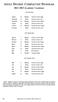 Adult Degree Completion Program 2012-2013 Academic Calendar 2012 Fall Term August 20 Monday Session I classes begin September 21 Friday Session I classes end September 24 Monday Session II classes begin
San Diego Culinary Institute
 SDCI Catalog Supplements 2013-2014 Course Catalog Changes Item 5 CEC 94909((a)(2) Page 5 Paragraph 1 is revised to read: SDCI is licensed by the Bureau for Private Postsecondary Education (BPPE) pursuant
PLEASE READ THE FOLLOWING INFORMATION CAREFULLY AND FOLLOW INSTRUCTIONS:
 page 1 of 8 PLEASE READ THE FOLLOWING INFORMATION CAREFULLY AND FOLLOW INSTRUCTIONS: No. STEP ONE 1. Submit a complete Application and Enrollment Agreement for International Students 2. Letter of Intent
Graduate Programs - Withdrawal and Penalties
 GRADUATE STUDENT POLICIES Graduate Student Policies CONTENTS ACADEMIC INTEGRITY, SUMMARY... 3 ACADEMIC PROBATION... 3 ADDING AND/OR DROPPING COURSES... 4 CHANGE OF ADDRESS... 5 CHANGE OF ADVISER... 5 CHILDREN...
Florida Gulf Coast University General Graduate Academic Policies
 I. Graduate Admission Policies Florida Gulf Coast University General Graduate Academic Policies A. Graduate Admission Requirements Applicants to graduate degree programs or post-baccalaureate professional
UNDERGRADUATE PROGRAM UNDERGRADUATE PROGRAM. Undergraduate Admission Traditional Programs
 UNDERGRADUATE PROGRAM Undergraduate Admission Traditional Programs 800.422.4101 Institutional Codes 574.807.7600 ACT 1178 574.807.7650 (fax) SAT 1079 [email protected] TOEFL 1079 Bethel College
Admission to the College of Graduate Studies
 30 Admission to the College of Graduate Studies Admission to the College of Graduate Studies The University welcomes applications from individuals qualified for graduate study. Admission to graduate studies
Academic Policies. Grading Guidelines
 Academic Policies Grading Guidelines Ashesi s grading system is modeled after University of Cape Coast as required by the National Accreditation Board. Student work is evaluated throughout the semester
California University of Management and Sciences CATALOG
 California University of Management and Sciences CATALOG A Personal Message Welcome to California University of Management and Sciences! A Personal Message from the President On behalf of the school s
NGTC Catalog / Student Handbook 2013-2014
 NGTC Catalog / Student Handbook 2013-2014 Academic Affairs Academic Affairs North Georgia Technical College strives to provide a quality education and to assist students in making progress toward graduation
Registration and Other Procedures
 University of California, Irvine 2015-2016 1 Registration and Other Procedures On This Page: Schedule of Classes and Registration Information Registration Procedures Enrolling in Classes Payment of Tuition
Ranger College International Student Admissions - 1100 College Circle Ranger, TX 76470
 Ranger College International Student Admissions - 1100 College Circle Ranger, TX 76470 Dear Prospective International Student: We are pleased you are interested in enrolling at Ranger College. Enclosed
Inquiries concerning admission should be mailed or phoned to:
 Coleman University Undergraduate Admission Requirements Coleman University s accelerated undergraduate programs provide students with the qualifications necessary to begin and advance in a career in information
Admission to the University
 Admission to the University General Admission Policies and Procedures NHU selects candidates on the basis of educational preparation, intellectual capacity, and motivation. Candidates should show evidence
ADMISSION POLICY. Documents required to start the admission process are:
 ADMISSION POLICY The UAA welcomes applications from students who choose to combine intellectual integrity with spiritual goals in their efforts to obtain a profession. The Admission Committee reviews applications
POLICY FOR APPLICANTS FOR UNDERGRADUATE ADMISSION: Degree and Non-Degree 11/16/2015. Policy Statement
 OFFICIAL POLICY 12.1.6 POLICY FOR APPLICANTS FOR UNDERGRADUATE ADMISSION: Degree and Non-Degree 11/16/2015 Policy Statement Undergraduate Admissions Policy Statement: In support of the statement of institutional
Vocational Nursing Program REQUIRED GENERAL SCIENCE COURSES
 LAST NAME: FIRST NAME: Class Date: Campus: South San Francisco Hayward Class Day/Time: Required General Science Courses: Anatomy & Physiology General Psychology Vocational Nursing Program REQUIRED GENERAL
FINANCIAL AID. Applying for Federal Financial Aid. Eligibility for Federal and State Financial Aid
 16 Financial Aid FINANCIAL AID Columbia College s financial aid program exists to make education affordable for all students who qualify. The College believes that if students desire to attend college
MASTER OF BUSINESS ADMINISTRATION (MBA) CARNEGIE MELLON UNIVERSITY TEPPER SCHOOL OF BUSINESS SILICON VALLEY CAPSTONE CATALOG
 MASTER OF BUSINESS ADMINISTRATION (MBA) CARNEGIE MELLON UNIVERSITY TEPPER SCHOOL OF BUSINESS SILICON VALLEY CAPSTONE CATALOG As a prospective student, you are encouraged to review this catalog prior to
GRADUATE PROGRAMS PURPOSE STATEMENT AMERICAN COUNCIL ON EDUCATION DEGREE PROGRAMS DISTANCE LEARNING TRANSFER COURSES GRADING SYSTEM
 GRADUATE PROGRAMS PURPOSE STATEMENT Graduate education in the School of Adult and Continuing Education (ACE) is grounded in the mission of Barry University. Students educational experiences contribute
STUDENT RECORDS POLICIES
 STUDENT RECORDS POLICIES ACADEMIC RECORDS The management of student records is under the supervision of the Director of Admissions and Records. The records are the property of the College; however, the
Satisfactory Academic Progress (SAP) Standards and Financial Aid Agreement
 Satisfactory Academic Progress (SAP) Standards and Financial Aid Agreement This document contains information that you need to read and understand regarding Satisfactory Academic Progress (SAP) and related
AFFIRMATION OF COMMUNITY RESPONSIBILITY
 AFFIRMATION OF COMMUNITY RESPONSIBILITY Illinois College is committed to the development and welfare of every member of our community: students, faculty, staff, and administration. To achieve the working
2014-2015 MSSU FINANCIAL AID HANDBOOK
 2014-2015 MSSU FINANCIAL AID HANDBOOK INTRODUCTION Thank you for your interest in the financial aid programs at Missouri Southern State University. This handbook describes various sources of federal Title
California International University International Education for International Success
 California International University International Education for International Success Bachelor s Degree in Business Management Master s Degree in International Business English as a Second Language 2012-2013
Requirements for Admission (DBA)
 CALIFORNIA INTERNATIONAL BUSINESS UNIVERSITY 520 WEST ASH STREET, 3RD FLOOR, SAN DIEGO, CALIFORNIA 92101 TEL: (619) 702-9400 FAX: (619) 702-9476 WWW.CIBU.EDU Requirements for Admission (DBA) California
Academic and Other Policies
 Academic and Other Policies Independent Studies/Directed Studies Students may earn academic credits through Independent/ Directed Studies in any of the areas in which credit courses are offered or to pursue
Dear Parents, We wish your student much success here at Bergen Community College and trust this information is helpful. Sincerely,
 Dear Parents, Making the transition from high school to college may be challenging and sometimes difficult. Students must adjust to new academic standards, make new friends, and make appropriate decisions
Academic Policies and Procedures
 Academic Policies and Procedures Academic policies can be changed at any time by the University of North Texas Health Science Center School of Public Health (UNTHSC-SPH). Students should review the Student
A SACS Accredited Distance Education School
 Thank you for requesting information on The Ogburn School, where you can earn a high school diploma through convenient home study. When you enroll with us your tuition includes: enrollment in a private
v. 11/21/2014 Page ii
 The Trident University International (Trident) catalog consists of two parts: Policy Handbook and Academic Programs, which reflect current academic policies, procedures, program and degree offerings, course
GIRNE AMERICAN UNIVERSITY TEACHING AND EXAMINATION BY LAW FOR ASSOCIATE AND BACHELOR S DEGREES
 GIRNE AMERICAN UNIVERSITY TEACHING AND EXAMINATION BY LAW FOR ASSOCIATE AND BACHELOR S DEGREES Name 1. This by law is referred to as the Girne American University Teaching and Examination By law for Associate
Dr. Don Geddes Director, Graduate Studies in Information Security. Graduate Studies in. Information Security
 Dr. Don Geddes Director, Graduate Studies in Information Security Graduate Studies in Information Security Graduate Studies in Information Security Master of Science Dr. Don Geddes, Program Director The
Masters Program Handbook
 Masters Program Handbook Last Edited: November, 2014 Table of Contents I. Overview and VCU Graduate Bulletin 1 II. Mandatory Orientation 2 III. Registration 2 A. VCU e-services 2 B. Advising Requirements
Advanced Professional Studies Application Instructions
 Advanced Professional Studies Application Instructions All applicants must submit all of the required materials listed below to complete their applications for review. Do not send materials/credentials
Hope International University Online Undergraduate and Graduate Programs
 Hope International University Online Undergraduate and Graduate Programs Financial Options Guide Welcome to Hope International University. We are pleased you have chosen to complete your education at HIU.
GEDIZ UNIVERSITY UNDERGRADUATE EDUCATION AND EXAMINATION REGULATIONS PART ONE
 GEDIZ UNIVERSITY UNDERGRADUATE EDUCATION AND EXAMINATION REGULATIONS PART ONE Aim, Scope, Basis and Definitions Aim ARTICLE 1 (1) The aim of these regulations is to stipulate the procedure and principles
APPLICATION FOR ADMISSION
 APPLICATION FOR ADMISSION APPLICATION FOR: Online Class Start Date: 20 Campus Location: CTU Online 4435 N. Chestnut St., Suite E Colorado Springs, CO 80907 Are you interested in applying for Financial
Admissions ADMISSIONS PROCESS FOR FULL-TIME STUDY. International Admissions. Freshman Admissions. Transfer Admissions
 Admissions 2011-2012 Sacred Heart University Undergraduate Catalog Admissions ADMISSIONS PROCESS FOR FULL-TIME STUDY The Office of Undergraduate Admissions coordinates the admission of prospective students
ACADEMIC POLICIES. Academic Appeals. Academic Progress. Academic Support Services. Attendance Audit CLAST GPA. Grading Policies
 Academic Policies Academic Appeals Academic Progress Academic Support Services Attendance Audit CLAST GPA Grading Policies ACADEMIC POLICIES A C A D E M I C P O L I C I E S 65 Academic Policies Academic
Graduate Catalog 2013-2014 Financial Assistance / 23. Financial Assistance
 Graduate Catalog 2013-2014 Financial Assistance / 23 Financial Assistance Financial assistance is available to qualified students in all fields of study in the form of (1) graduate assistantships where
Admission Policies (This language replaces the Admission Policies on pages 8-9)
 Campuses: Bellevue, KY; Madisonville, KY; Owensboro, KY; Online Daymar College Catalog 2014 2015 Addendum Admission Policies (This language replaces the Admission Policies on pages 8-9) Admission Procedures
Financial Aid. Financial Aid. Course Descriptions
 Monmouth University believes that financing a student s education should be a cooperative effort between the student and the institution. To that end, the staff of the Financial Aid Office is available
WELCOME TO COASTLINE COMMUNITY COLLEGE!
 WELCOME TO COASTLINE COMMUNITY COLLEGE! Dear Prospective Student: Thank you for your inquiry regarding. We are pleased that you are considering our college as you make plans for your education. Enclosed
3359-20-05.1 Grading system, discipline, academic probation and dismissal.
 3359-20-05.1 Grading system, discipline, academic probation and dismissal. (A) Faculty grade records. (1) The faculty member is expected to maintain a careful and orderly record of each student's academic
Online Programs Enrollment Agreement Graduate Programs
 Online Programs Enrollment Agreement Graduate Programs This entire form must be completed and submitted as part of your Kaplan University record and should be faxed to your Admissions Advisor s e-fax number.
Financial Aid Terms and Conditions
 Financial Aid Terms and Conditions Introduction Barstow Community College's Financial Aid programs stem from a belief that student aid services should facilitate and foster the successful academic participation
APPLICATION FOR ADMISSION
 APPLICATION FOR ADMISSION TO MBA PROGRAMS APPLICATION CHECK LIST As you complete the application process, it may be useful to keep a record of the compiled materials. Please use this check list for your
Allowable Grades The following grades are used in computing the grade point average:
 Academic Policies Office of the University Registrar Tel: 410.837.4825 Fax: 410.837.4820 Email: [email protected] Web: www.ubalt.edu/records PROGRAM ADVISING AND REQUIREMENTS FOR GRADUATION Students are
FINANCIAL AID. Applying for Federal Financial Aid. Eligibility for Federal and State Financial Aid
 FINANCIAL AID Columbia College s financial aid program exists to make education affordable for all students who qualify. The College believes that if students desire to attend college they should not be
HOW TO BECOME A WITC STUDENT
 HOW TO BECOME A WITC STUDENT Key to getting started, 26 Application steps - WITC s admissions process, 27 Declared program major, 28 Double program major Undeclared program major, 28 Youth Options, 29