
Latest News in Blood Cancer Research
|
|
|
- Nathaniel Quinn
- 10 years ago
- Views:
Transcription
1 ASH 2009 REPORT Latest News in Blood Cancer Research Highlights from the 2009 Annual Meeting of the American Society of Hematology Editor David H. Henry, MD, FACP Pennsylvania Hospital Philadelphia, Pennsylvania Learn about: Treatment advances in blood cancers Medications being developed Clinical trials Coping tips and support services Help and Hope
2 CancerCare is a national nonprofit organization that provides free professional support services to anyone affected by cancer: people with cancer, caregivers, children, loved ones, and the bereaved. CancerCare programs including counseling and support groups, education, financial assistance, and practical help are provided by professional oncology social workers and are completely free of charge. Founded in 1944, CancerCare provided individual help to more than 100,000 people last year, in addition to serving more than 1 million unique visitors to our websites. For more information, call HOPE (4673) or visit Contacting CancerCare National Office CancerCare 275 Seventh Avenue New York, NY [email protected] Services Tel: HOPE (4673) Administration Tel: Fax: [email protected] Website: If you are a health care professional interested in ordering free copies of this booklet for your patients, please use the online order form on our website,
3 Latest News in Blood Cancer Research Highlights from the 2009 Annual Meeting of the American Society of Hematology Editor David H. Henry, MD, FACP Clinical Professor of Medicine University of Pennsylvania School of Medicine Vice Chair, Department of Medicine Pennsylvania Hospital Philadelphia, Pennsylvania LEUKEMIA page 2 LYMPHOMA page 9 MULTIPLE MYELOMA page 16 SUPPORTIVE CARE page 20 RESOURCES page 24 This CancerCare Connect booklet was made possible by: Amgen Inc. Bristol-Myers Squibb Genentech BioOncology Novartis Oncology n Millennium: The Takeda Oncology Company
4 ASH 2009 REPORT Researchers continue to make important progress in treating blood cancers. This special edition of the CancerCare Connect booklet series presents cutting-edge research highlights from the 2009 Annual Meeting of the American Society of Hematology, which took place December 5 8 in New Orleans, Louisiana. This guide includes information on advances in the treatment of blood cancers, a discussion of clinical trials, and tips on how to cope with a diagnosis of blood cancer. Please note: Some of the treatments discussed are still in the very early stages of research and may not be available to the general public outside of a clinical trial. The information contained in this booklet is intended for discussion with your doctor. He or she can let you know whether these research findings affect your treatment plan, and if a clinical trial is right for you. Leukemia Leukemia is the general term used to describe several different types of blood cancers. Each year, approximately 44,000 people in the United States are diagnosed with some form of leukemia. In this section, we discuss some promising results from clinical trials for people with the following types of leukemia: n chronic myelogenous leukemia (CML) n chronic lymphoblastic leukemia (CLL) 2
5 Leukemia n acute lymphoblastic leukemia (ALL) n acute myelogenous leukemia (AML) All of these forms of blood cancer affect various types of white blood cells, which are made by the bone marrow and help the body fight infections and other diseases. However, a major difference among these cancers is how they grow. The chronic forms of leukemia tend to grow slowly; the acute forms of leukemia grow more quickly. TARgETEd TREATMEnt for CML PROving BeneficiAL OvER THE Long TERM When it was introduced in 2001, the drug imatinib (Gleevec) revolutionized the treatment of people with CML. A targeted treatment, imatinib attacks a specific cell mechanism thought to be important for cancer cell survival and growth. This specific targeting helps spare healthy tissues and causes less severe side effects. The first clinical trial took place nearly a decade ago, but researchers have continued to follow the patients who took part. They have reported that the benefits of taking imatinib can last as long as seven years. Most people in the clinical trial are still doing well, and many are in remission, meaning that current tests cannot detect any sign of cancer. Most people who take imatinib must keep taking it indefinitely. However, in two recent studies, researchers found that remission continued even after imatinib treatment was stopped. This was especially true for male patients and those who had also received a drug called interferon. These studies show that some people may eventually be able to stop imatinib treatment. However, to be sure that further treatment is not needed, such people would have to have checkups and blood tests every one to two months. 3
6 ASH 2009 REPORT ALTERnATivES TO STAndARd CML TREATMEnt In the search for improved treatments for people with CML, researchers have found two possible alternatives to standard imatinib therapy: dasatinib (Sprycel) and nilotinib (Tasigna). Dasatinib is a drug that has been used to treat certain types of leukemia, including CML and ALL. It has been approved by the U.S. Food and Drug Administration (FDA) to treat CML in adults whose cancer does not respond or no longer responds to imatinib. Because the medication worked well in such people, researchers hoped it would also benefit people as a first-line (first-time) treatment for CML. Nearly 75 people with CML took part in a clinical trial. None of them had received earlier treatment for their cancer. More than two years after treatment, nearly 80 percent of patients who received dasatinib had a major molecular response that is, their bone marrow had begun to produce normal cells and, at least to some extent, started working properly. (Even though standard treatment with imatinib is effective, people who are taking it seldom have such a strong response.) It s also important to note that patients responded quickly to dasatinib. Within three months of starting treatment with dasatinib, 80 percent had a complete cytogenic response, meaning there was no longer any evidence of cancer in their bone marrow. Results from a later stage of research with dasatinib are expected in Nilotinib versus Imatinib Nilotinib is a drug that belongs to the same family of medications as imatinib. A recent clinical trial compared these two drugs. More than 800 people who had been newly diagnosed with 4
7 Leukemia CML participated in the trial. Nearly 550 were treated with nilotinib and nearly 300 with imatinib. After 12 months of treatment, nilotinib appeared to be even more effective than imatinib. The bone marrow had begun to start working properly in twice as many people treated with nilotinib as those who were given imatinib (about 44 percent versus 22 percent). In about 80 percent of the people taking nilotinib, there was no longer any evidence of cancer in their bone marrow. For those taking imatinib, about 65 percent no longer showed any evidence of cancer in their bone marrow. Based on these results, some researchers think that nilotinib may become the new standard of care for people with newly diagnosed CML, although further study is needed. Omacetaxine for Imatinib-Resistant CML Many people with CML respond well to treatment. But those who do not may have a mutation that makes their cancer resist drugs such as imatinib. A mutation is an abnormal change in the genetic information of a cell. Sometimes these mutations have no effect at all, and other times they can be harmful. COPING TIP Take an active role in your medical care. Get a second opinion and consult with an expert in your type of blood cancer before choosing a treatment. For example, a small group of people with CML have a genetic mutation known as T315I. This mutation poses a challenge because even newer drugs such as dasatinib and nilotinib do not seem to be effective against it. However, an older medication now called omacetaxine (Omapro) may be effective in this instance. More than 80 people with CML took part in a very early-stage clinical trial to test omacetaxine. All of these patients did not respond or no longer responded to treatment with imatinib. 5
8 ASH 2009 REPORT The best results with omacetaxine occurred in the 49 people who had chronic-phase CML. This type of leukemia is an early one, with less than 10 percent of blood cells not working properly. Two years after treatment, 80 percent of the 49 patients had survived. In the past, the average survival of people with a T315I mutation has been about a year and a half. Future studies will test omacetaxine along with newer medications such as dasatinib and nilotinib. POSSiBLE new STAndARd of CARE for CLL A three-drug combination known as FCR may become the new standard of care for people with CLL, the most common form of adult leukemia. The medications in this combination are fludarabine (Fludara and others), cyclophosphamide, and rituximab (Rituxan). More than 800 people with CLL who had never received treatment for their cancer took part in a clinical trial. Some of the patients received FCR, and some received just fludarabine and cyclophosphamide (FC). According to the results of this late-stage research, FCR helped more people to live longer than did FC. Three years after treatment, 87 percent of those treated with FCR were alive, compared with 83 percent of those treated with FC. Also, it took longer for the cancer to start growing again with FCR than with FC (an average of 52 months versus 33 months). Researchers believe this is the first time such a clinical trial showed that a first-line treatment could lengthen the lives of people with CLL. SECOnd-Line TREATMEnt for ALL May BECOME FiRST CHOiCE Dasatinib was approved by the FDA in 2006 as a second-line treatment option for people with ALL that has not responded or no longer responds to other medications. However, based 6
9 Leukemia on the results from an early-stage clinical trial, dasatinib may soon become a first-time option for people with what is known as Philadelphia chromosome-positive ALL, or Ph+ ALL. The Ph chromosome carries a mutation that causes leukemia cells to grow uncontrollably. Like the similar drugs imatinib and nilotinib, dasatinib targets leukemia cells that carry this genetic change. In this recent clinical trial, approximately 40 people with Ph+ ALL were treated with dasatinib. In more than 55 percent of these patients, blood counts (the level of blood cells) returned to normal. In nearly 80 percent, the ALL responded after just one cycle with dasatinib. Thirteen months after this treatment, more than 70 percent of patients had survived. new TREATMEnt OPTions for PEOPLE AT Risk for AML Myelodysplastic syndromes (MDS) are a group of conditions in which the bone marrow does not make enough healthy blood cells. Because MDS can increase the risk of developing leukemia, doctors sometimes refer to it as pre-leukemia. Recently, researchers have studied two different medications in people with MDS: romiplostim (Nplate) and clofarabine (Clolar). Romiplostim The drug romiplostim was tested in people with thrombocytopenia. Thrombocytopenia is a condition in which there is a lower-than-normal number of platelets in the blood. (Platelets are cells that help form blood clots and prevent bleeding.) People with MDS who are being treated with azacitidine (Vidaza) or decitabine (Dacogen) often 7
10 ASH 2009 REPORT develop this side effect. Without enough platelets, the skin may bruise easily and wounds may bleed more than usual. Romiplostim, which is designed to increase the number of platelets, was tested in a small clinical trial of nearly 30 people with MDS. Some patients received romiplostim. The rest received a placebo (a look-alike medication containing no active ingredient). About two-thirds of both of these groups also received four cycles of treatment with decitabine. In another similar clinical trial of nearly 40 people with MDS, two-thirds of patients received romiplostim, and the others received placebo. In this study, some of the patients also received the targeted treatment lenalidomide (Revlimid). COPING TIP In both studies, people who were Reach out to experts treated with romiplostim had for help in managing increased platelet counts and side effects. Doctors fewer cases of bleeding. In the can prevent and reduce first study, those who received symptoms such as fatigue, romiplostim needed fewer platelet nausea, and anemia that are transfusions as well. In the second commonly experienced by study, romiplostim also made it people with blood cancers. possible for the patients to continue treatment with lenalidomide without having to reduce the dose. That s important because taking the full dose of a drug increases a person s chances of being treated successfully. Further study of romiplostim in people with MDS is planned. Clofarabine Clofarabine is another treatment in clinical trials for older adults with MDS or AML. This medication is already approved by the FDA to treat ALL that has relapsed or no longer responds to treatment. (A relapse is a return of cancer symptoms after a period of improvement.) Although clofarabine has been used intravenously (through a vein), a recent clinical trial tested an oral version of this drug. 8
11 Lymphoma Thirty-two people took part in this study. These patients all had MDS, which put them at a higher risk of developing leukemia. Seven of them received a low dose of clofarabine, 19 received an intermediate dose, and 6 received a higher dose. Nearly half of the patients in the clinical trial (43 percent) had improved blood counts. Twenty-five percent had a complete hematologic response. This means that their blood counts returned to normal. Most of the responses occurred in the people who received the intermediate dose of clofarabine. Lymphoma Each year in the United States, about 72,000 people are diagnosed with some type of lymphoma. A little more than half of all blood cancers are lymphomas. This is a general term for a group of cancers that starts in the lymphocytes, a type of white blood cell that is an important part of our infection-fighting immune system. Lymphomas are divided into two major categories. The largest group is called non-hodgkin s lymphoma (NHL). There are more than 40 types of NHLs, and each has a different prognosis and treatment approach. For doctors to prescribe the most effective treatment, they must know the specific kind of NHL a person has. NHLs are grouped by how they look under the microscope, which to a certain extent predicts how fast the tumors would grow without treatment. In this section, we focus on new treatment developments for: n Slow-growing lymphomas such as follicular lymphoma (FL) and mantle cell lymphoma (MCL) n A more aggressive lymphoma called diffuse large B-cell 9
12 ASH 2009 REPORT lymphoma (DLBCL), which accounts for about two in five cases of NHL n Lymphomas that do not respond or no longer respond to treatment n Cutaneous T-cell lymphoma (CTCL), a type of NHL that begins in the skin as an itchy, red rash that can thicken or form a tumor The main difference between NHL and Hodgkin s lymphoma (HL) is the specific type of lymphocyte in the immune system each blood cancer involves and that difference affects how they are treated. Adding newer MediCATions TO CHEMOTHERAPy TO TREAT FL and MCL Doctors often add newer cancer drugs to standard chemotherapy to try to create even better treatments for people who have lymphoma. Two drugs bendamustine (Treanda) and bortezomib (Velcade) have been studied in recent clinical trials using this approach. The first new treatment combines bendamustine with rituximab. Researchers report that this combination may become the future standard of care for treating slowgrowing lymphomas such as FL and MCL. Rituximab is a monoclonal antibody that has been used to treat certain types of NHLs, such as DLBCL and FL. Often compared with guided missiles, monoclonal antibodies zero in on cancer cells whose surface has a target molecule. This molecule is an important key in the development of a cancer cell. Rituximab zeros in on and destroys lymphocytes that have a molecule called CD20 on their surface. More than 500 people with FL, MCL, and other types of lymphomas took part in a German clinical trial, which is in a later stage of research. Half of these patients received 10
13 Lymphoma bendamustine and rituximab. The other half received the current standard of care called CHOP plus rituximab. CHOP is a combination of three chemotherapy drugs cyclophosphamide, doxorubicin (Adriamycin and others), and vincristine (Oncovin and others) plus a steroid called prednisone. The cancer disappeared in more people treated with bendamustine and rituximab than in those treated with CHOP plus rituximab (40 percent versus 30 percent). Also, COPING TIP Be resourceful. Cancer can be a financial strain, but help is available. Organizations such as CancerCare help cover costs such as transportation to treatment and co-pays. the time it took for the cancer to start growing again was longer with bendamustine and rituximab than with CHOP and rituximab (55 months versus 35 months). As for side effects, there were fewer infections and higher blood counts with the bendamustine combination than with the CHOP combination. Doctors also reported that bendamustine did not cause hair loss, which often is a problem with standard chemotherapy drugs. HyperCVAD and R-CVAD The second new treatment combines the targeted drug bortezomib with an intensive combination of anti-cancer medications known as hypercvad. A clinical trial of these medications was in an earlier phase of research than the study on bendamustine and rituximab. These drugs are given in frequent small doses to reduce the side effects of this aggressive treatment. The FDA has approved bortezomib for the treatment of people with MCL and multiple myeloma, a cancer of the plasma cells in bone marrow. (Plasma cells produce antibodies, which fight infection.) 11
14 ASH 2009 REPORT Of the 76 people with MCL who took part in the clinical trial, 64 completed treatment with bortezomib and R-CVAD hypercvad with rituximab. None of these patients had received treatment before for their cancer. The cancer shrank in more than 95 percent of those treated, and it disappeared in 75 percent. Although researchers are encouraged by these early results, they want to follow these patients for a longer time to find out whether this new treatment can help extend their lives. STAndARd of CARE StiLL THE favored TREATMEnt for DLBCL Researchers wanted to find out whether a shortened treatment schedule of R-CHOP might be more effective in people with DLBCL than the standard treatment schedule. More than 200 people older than age 65 who had DLBCL took part in the study. Half of the patients received the shorter treatment, taking the drugs every 14 days; the other half received the standard treatment, taking the drugs every 21 days. To the surprise of many doctors, the shortened treatment seemed to be just as good as the standard treatment at shrinking the cancer. The cancer disappeared in 67 percent of those who received the shortened treatment schedule and in 75 percent of those who received the standard treatment schedule. There also did not seem to be a major difference between the two treatment schedules in terms of extending the lives of these people. However, there were fewer severe side effects with the standard treatment given every 21 days. Therefore, at this time, the 21-day treatment with R-CHOP is still considered to be the standard of care for treatment of older people with DLBCL. 12
15 Lymphoma The Importance of Clinical Trials The goal of clinical trials is to find better ways to treat, diagnose, and prevent cancer. Clinical trials that test new drugs or other treatments proceed in phases. Each phase has a different purpose and helps researchers answer different questions. If a new drug or treatment does not prove its worth in the early phases of testing, the research can be halted. Your doctor can guide you in making a decision about whether a clinical trial mentioned in this booklet may be right for you. You can also consult websites that list clinical trials to learn about other options you can discuss with your doctor. See page 24 for more information. NewER TREATMEnt OPTions for RELAPSEd LyMPHOMAS As a rule, lymphomas that grow slowly respond well to standard treatments such as chemotherapy and radiation. But they tend to relapse, or come back, over time. Generally, these blood cancers respond again to similar or different treatments, but as time passes, the tumors can become resistant to treatment. So it s important to have additional treatment options available. Brentuximab Vedotin Two clinical trials show that the new drugs brentuximab vedotin (SGN-35) and SB1518 may be effective for some people with NHLs as well as HLs that relapse. However, it s important to remember that these results are from an early stage of research. Brentuximab vedotin is a monoclonal antibody attached to a chemotherapy drug. It specifically targets and kills HL cells 13
16 ASH 2009 REPORT while sparing normal cells in the body. Approximately 35 people whose lymphoma had returned or no longer responded to treatment took part in a small clinical trial. Thirty-one of these patients had HL. All of the patients had already received an average of three chemotherapy treatments. They were given brentuximab vedotin weekly for three weeks as part of a 28-day treatment cycle. In nearly half of the patients, the cancer shrank or disappeared after treatment with this new drug. The cancer disappeared in nearly one-third of the 35 patients. Although the results are early, researchers believe they are important enough to study this new treatment further in a major clinical trial. A New Oral Cancer Drug SB1518, a new oral cancer drug, showed promising results as well in a small study. Seventeen people who had relapsed HL or NHL took part in this clinical trial. All of these people had already received an average of five chemotherapy treatments for their lymphoma. SB1518 was given to them by mouth every day for eight weeks in different doses. After eight weeks of treatment, the tumor shrank in three patients who received 300 milligrams of SB1518 and neither shrank nor grew in 11 other patients (nearly 75 percent). The most common side effects of SB1518 were diarrhea and constipation, each of which occurred in 40 percent of patients treated. Researchers plan to study SB1518 in more people with lymphoma. It is hoped that future studies will show which types of lymphoma respond best to this new treatment. new TREATMEnTS for CTCL Another lymphoma that may return and become resistant to treatment is CTCL. Now, researchers may have found two promising ways to treat people with this type of lymphoma. 14
17 Lymphoma The medications they are studying are pralatrexate (Folotyn) and belinostat (PXD101). In the first clinical trial, which was in an early stage of research, 31 people with advanced CTCL received pralatrexate. For all of these people, previous treatments had either not worked or no longer worked. Of the 31 patients in the study, the cancer disappeared in two people and shrank by at least 50 percent in nine COPING TIP Acknowledge your emotions. It s perfectly normal to feel a wide range of emotions: anger, sadness, worry. Consider joining a CancerCare support group online or on the phone. You can also get individual counseling free. people. The most common side effect of treatment with pralatrexate was mucositis (mouth sores), which occurred in more than 55 percent of those who received the drug. Doctors are now evaluating other people who have received this treatment. The second clinical trial studied belinostat in nearly 50 people with lymphoma that returned or no longer responded to treatment. Twenty of these patients had a fast-growing NHL known as peripheral T-cell lymphoma (PTCL), and the others had CTCL. Belinostat belongs to a new class of anti-cancer drugs known as histone deacetylase inhibitors. This type of medication causes a chemical change that stops tumor cells from multiplying. The tumor either disappeared or shrank by at least 50 percent in four of the 29 people with CTCL who were treated with belinostat (14 percent). And the tumor either disappeared or shrank by at least 50 percent in five of the 20 people with PTCL (25 percent). Researchers plan to study belinostat further in people with these subtypes of lymphoma. 15
18 ASH 2009 REPORT Multiple Myeloma Multiple myeloma (also known as myeloma or plasma cell myeloma) is a cancer of the plasma cells. Plasma cells, most of which are found in the bone marrow, are an important part of the immune system that helps fight infection and disease. Every year in the United States, approximately 20,000 people are diagnosed with multiple myeloma. In this section, we discuss clinical trials studying treatments for this type of cancer. First-Line Combination Treatments Combination treatments that include the targeted drug bortezomib are one of the most exciting developments in multiple myeloma. Researchers believe that bortezomib combinations may be an effective way to make multiple myeloma shrink or disappear. They also believe such treatments may improve the results of stem cell transplants, helping to extend the lives of more people with multiple myeloma. Bortezomib has been approved by the FDA for treating people whose multiple myeloma has not responded to other anti-cancer drugs. Because bortezomib has been effective for these patients, researchers have now begun to give bortezomib combinations to people with newly diagnosed multiple myeloma. In several early clinical trials, the following treatment combinations have shown promise when used as first-line options. n VMP: bortezomib, melphalan (Alkeran), and prednisone n VTP: bortezomib, thalidomide (Thalomid), and prednisone VMP may be a new standard of care for people with multiple myeloma who are being treated for the first time, according to the results of a clinical trial that included 250 people with newly diagnosed multiple myeloma. One-third of these patients were older than
19 Multiple Myeloma Some of these patients received six cycles of VMP. The others received six cycles of VTP. Then, all of the patients continued to be treated with bortezomib and either thalidomide or prednisone for two years. At the end of the two years, nearly 88 percent of all patients treated with VMP or VTP were still alive. After the primary treatment, the cancer completely disappeared in 23 percent of all patients. After two years of continued treatment, the cancer completely disappeared in 42 percent of all patients. Although both combination treatments effectively shrank multiple myeloma, VMP seemed to be easier for these older patients to tolerate than VTP. And although there were no severe heart complications with VMP, eight percent of the people treated with VTP developed severe heart problems. Based on these late-stage results, VMP seems to be a beneficial choice for older people with multiple myeloma who are being treated for the first time. Also, the use of continued treatment called maintenance therapy for this blood cancer is an appealing approach that deserves further study. VMPT: VMP Plus Thalidomide More than 500 people took part in this later-stage clinical trial. About half of the patients were treated with VMPT along with bortezomib and thalidomide maintenance therapy. The others were treated with just VMP and were given no maintenance therapy. In this study, VMPT seemed to be more effective at shrinking the cancer than VMP. Multiple myeloma disappeared in more patients treated with VMPT than in those treated with 17
20 ASH 2009 REPORT VMP (34 percent versus 21 percent). Also, nearly two years after treatment, the cancer had not continued to grow in 70 percent of the VMPT-treated patients, compared with only 58 percent of the VMP-treated patients. Researchers believe that this was the first time a four-drug combination treatment followed by maintenance therapy was more effective than VMP alone in treating multiple myeloma. RVD: Lenalidomide, Bortezomib, and Dexamethasone In the past few years, lenalidomide has been approved in combination with other drugs to treat people with multiple myeloma that does not or no longer responds to other treatment. Considered a breakthrough medication for multiple myeloma, lenalidomide seems to work in a number of ways, in part by helping a person s immune system fight the growth of cancer. COPING TIP Develop good communication with your health care team. Prepare a list of questions before your appointments; it s one way to make sure all your concerns are addressed. Researchers are now trying to find out whether using lenalidomide in combination with other drugs is also an effective way to treat people with newly diagnosed multiple myeloma. A very early-stage clinical trial seems to indicate that it is effective in these people as well. RVD was given to 35 people with newly diagnosed multiple myeloma. The cancer shrank in all of the patients treated with RVD. The cancer completely or almost completely disappeared in more than half of the patients. After treatment with RVD, eight patients (more than 30 percent) went on to have an autologous stem cell transplant. (Taking RVD does not remove the option of having a transplant.) This is a procedure in which blood-forming stem cells are removed, stored, and later given back to the patient. The hope is that the stem cells will mature into 18
21 Multiple Myeloma healthy bone marrow cells and help replenish red and white blood cells more quickly. Further studies of RVD and RVD-based combinations are either planned or ongoing. newer TREATMEnt COMBinATions for RELAPSEd MuLTiPLE MyELOMA Two drug combinations have shown impressive results in clinical trials of people with multiple myeloma that did not respond or no longer responds to treatment: Bortezomib and Temsirolimus (Torisel) Temsirolimus is a drug that has been approved by the FDA to treat advanced kidney cancer. According to the results of a recent clinical trial, the combination of bortezomib and temsirolimus may prove to be an effective way to treat multiple myeloma that resists other treatments. Nearly 40 patients were treated once a week with bortezomib and temsirolimus. In 25 percent of the 31 patients evaluated so far, the multiple myeloma decreased by at least 50 percent. In 10 percent of these patients, the cancer completely or nearly disappeared. None of the evaluated patients experienced any symptoms of nerve damage from being treated with bortezomib and temsirolimus. Bortezomib treatment can have some nervous system side effects, but they are usually mild and reversible. Researchers believe the weekly treatment does not affect the nervous system as much as a twice-weekly treatment. Lenalidomide, Elotuzumab, and Dexamethasone This combination appears to be effective for people with multiple myeloma that has returned (relapsed). Like many of the targeted treatments discussed in this booket, elotuzumab (HuLuc63) is a monoclonal antibody. These 19
22 ASH 2009 REPORT medications zero in on and destroy cancer cells that have a certain target on their surface. So far, 28 patients have received this combination treatment. The cancer shrank or disappeared after treatment in more than 80 percent of the 23 patients evaluated so far. Results were even better in patients who had not already been treated with lenalidomide before this study. The cancer shrank or disappeared in 95 percent of those patients. Based on these promising early results, the combination of lenalidomide, elotuzumab, and dexamethasone will be studied further in a larger study in It s important to remember that these studies are in a very early stage of research and need to be confirmed in larger clinical trials with more patients. Supportive Care Many people being treated for cancer also receive supportive care. This type of medical care prevents or reduces the symptoms of cancer itself, as well as the side effects caused by cancer treatment. In this section, we discuss two side effects about which researchers are learning new information, which will help develop effective treatments. new drugs May REPLACE OldER TREATMEnt for BLOOd CLOTS A clinical trial on two new blood-thinning drugs, dabigatran etexilate and rivaroxaban (BAY ), suggests that there is now an easier and better way to treat potentially dangerous blood clots, which can result from chemotherapy. Chemotherapy can create blood clots that travel through the body s bloodstream, sometimes blocking the flow of blood in veins or arteries. When a clot blocks the flow of blood in a vein, the condition is called venous thromboembolism (VTE). Such clots can be life-threatening if they block the flow of blood to the lungs. 20
23 Supportive Care The standard treatment of VTE is a medication called warfarin (Coumadin and others). Warfarin belongs to a class of drugs called anticoagulants, which thin the blood to prevent clots. Although warfarin is one of the most widely prescribed drugs in the world, patients who use it often need to have a number of blood tests so that their doctor can adjust the amount of medication and find the ideal dose. As a result, doctors have looked for a better and easier way to treat VTE. Dabigatran Dabigatran was tested in a large clinical trial of more than 2,500 people. Half of them received dabigatran, and the others received warfarin. After six months of treatment, the results were generally the same in both groups and, in some cases, were better for dabigatran. Both dabigatran and warfarin were effective in preventing VTE and in reducing the risk of bleeding. Unlike warfarin, dabigatran is an oral blood thinner that is given in a fixed dose. Therefore, it does not require repeated blood tests as warfarin does, which is very appealing to both doctors and patients. With these results, researchers now believe that dabigatran may be a possible replacement for warfarin as a treatment for VTE. Dabigatran has been approved for treatment or prevention of VTE in 40 countries throughout the world. Although dabigatran has not yet been approved for use in the United States, many doctors think it will be approved sometime in
24 ASH 2009 REPORT Rivaroxaban for VTE The drug rivaroxaban is similar to dabigatran in many ways. As an oral blood thinner with a fixed dose, rivaroxaban also does not require repeated blood tests or dose adjustments. And, unlike warfarin, it does not require any changes in diet. Nearly 1,200 people took part in a clinical trial studying rivaroxaban. These patients had previously experienced a VTE and had already taken blood-thinning medications. COPING TIP Contact CancerCare. We are a national nonprofit that helps people with any type and stage of cancer. Call HOPE (4673) or visit Doctors wanted to find out whether they would benefit from continued medication to prevent VTEs. About half of them were treated with the new drug, and the others were given a placebo. The risk of a return of VTE was reduced by 82 percent in patients on rivaroxaban compared with those on placebo. Researchers called this result dramatic. Rivaroxaban was also able to reduce a return of VTE without raising the risk of severe bleeding or damage to the liver. Like dabigatran, rivaroxaban has been approved for treatment of VTE in several countries but not yet in the United States. Researchers have also directly compared rivaroxaban with warfarin, and they hope to have these results later in PROMising OPTion for PREventing a COMPLiCATion of STEM CELL TRAnSPLAnTATion Although doctors do not have an effective way to prevent or treat a life-threatening side effect of stem cell transplantation known as veno-occlusive disease (VOD), a new drug called defibrotide appears to reduce the risk of this condition in children who have had a transplant. 22
25 Supportive Care As described earlier in this booklet, stem cell transplant (SCT) is a procedure in which blood-forming stem cells are removed from a patient s bone marrow and stored. When the stem cells are on reserve, doctors give the patient high doses of chemotherapy to destroy his or her remaining cancerous bone marrow. Later, these reserved cells are given back to the patient. The hope is that these stem cells will mature into healthy bone marrow cells and help replenish red and white blood cells more quickly. After SCT, some young people may experience VOD, in which some of the small veins of the liver are blocked. People who develop VOD may gain weight from retaining fluid, may have an enlarged liver, and may experience higher levels of bilirubin in the blood. (Bilirubin is a substance that is formed when the red blood cells break down.) More than 350 children under the age of 18 took part in a clinical trial of defibrotide. All of these children were thought to be at high risk of VOD. Half of them received defibrotide for 30 days after SCT, and the other half did not. The results of this later-stage research showed that children were 40 percent less likely to develop VOD if they were given defibrotide after receiving a transplant. Only 12 percent of the patients who were on defibrotide developed VOD, whereas 20 percent of the patients who were not on defibrotide developed VOD. Researchers say they may eventually consider defibrotide the standard for prevention and treatment of VOD. 23
26 ASH 2009 REPORT Resources n general CancerCare HOPE (4673) American Cancer Society Cancer.Net Patient information from the American Society of Clinical Oncology National Cancer Institute n BLOOD CANCER ORGAniZATIONS The Leukemia & Lymphoma Society Lymphoma Research Foundation International Myeloma Foundation Multiple Myeloma Research Foundation National Bone Marrow Transplant Link National Marrow Donor Program n clinical TRiALS websites Coalition of Cancer Cooperative Groups National Cancer Institute 24
27 The information presented in this patient booklet is provided for your general information only. It is not intended as medical advice and should not be relied upon as a substitute for consultations with qualified health professionals who are aware of your specific situation. We encourage you to take information and questions back to your individual health care provider as a way of creating a dialogue and partnership about your cancer and your treatment. All people depicted in the photographs in this booklet are models and are used for illustrative purposes only. This booklet was edited and produced by Elsevier Oncology Cancer Care, Inc. All rights reserved.
28 makes all the difference With CancerCare, the difference comes from: Professional oncology social workers Free counseling for you and your loved ones Education and practical help Up-to-date information Our trusted team of professionally trained oncology social workers provides free counseling, education and practical help for you and your loved ones. Help and Hope HOPE (4673)
Asymptomatic or smoldering myeloma with no symptoms and slow growing cancer cells
 ESSENTIALS Multiple Myeloma Diagnosed with Multiple Myeloma? It s important to understand everything you can about your diagnosis, possible treatments, and places to go for support and care. Cancer is
Lauren Berger: Why is it so important for patients to get an accurate diagnosis of their blood cancer subtype?
 Hello, I m Lauren Berger and I m the Senior Director of Patient Services Programs at The Leukemia & Lymphoma Society. I m pleased to welcome Dr. Rebecca Elstrom. Dr. Elstrom is an Assistant Professor in
Estimated New Cases of Leukemia, Lymphoma, Myeloma 2014
 ABOUT BLOOD CANCERS Leukemia, Hodgkin lymphoma (HL), non-hodgkin lymphoma (NHL), myeloma, myelodysplastic syndromes (MDS) and myeloproliferative neoplasms (MPNs) are types of cancer that can affect the
Treatment of low-grade non-hodgkin lymphoma
 Produced 28.02.2011 Due for revision 28.02.2013 Treatment of low-grade non-hodgkin lymphoma Lymphomas are described as low grade if the cells appear to be dividing slowly. There are several kinds of low-grade
Clinical Trials: Improving the Care of People Living With Cancer
 CLINICAL TRIALS Clinical Trials: Improving the Care of People Living With Cancer Presented by Mary McCabe, RN, MA Memorial Sloan-Kettering Cancer Center Carolyn Messner, DSW CancerCare Learn about: Stages
Mantle Cell Lymphoma Understanding Your Treatment Options
 New Developments in Mantle Cell Lymphoma John P. Leonard, M.D. Richard T. Silver Distinguished Professor of Hematology and Medical Oncology Associate Dean for Clinical Research Vice Chairman, Department
Acute Myeloid Leukemia
 Acute Myeloid Leukemia Introduction Leukemia is cancer of the white blood cells. The increased number of these cells leads to overcrowding of healthy blood cells. As a result, the healthy cells are not
Lymphoma. Starting Point. Diagnosed with Lymphoma?
 ESSENTIALS Lymphoma Diagnosed with Lymphoma? It s important to understand everything you can about your diagnosis, treatment options, and places to go for support. This will help you make treatment decisions
Update in Hematology Oncology Targeted Therapies. Mark Holguin
 Update in Hematology Oncology Targeted Therapies Mark Holguin 25 years ago Why I chose oncology People How to help people with possibly the most difficult thing they may have to deal with Science Turning
CML. cure. A Patient s Guide. Molecular Biology Diagnosis Stem Cell Transplant Monitoring New Drugs Questions to Ask and More
 A Patient s Guide to CML Molecular Biology Diagnosis Stem Cell Transplant Monitoring New Drugs Questions to Ask and More cure C a n c e r U p d at e s, R e s e a r c h & E d u c at i o n Based on science,
Background Information Myeloma
 Myeloma FAST FACTS Myeloma, also known as multiple myeloma, is a type of cancer that develops from plasma cells which originate in the bone marrow 1 Myeloma is the second most common type of blood cancer
-Examination of key pipeline candidates with in-depth clinical and commercial profiles of Phase III candidates
 Brochure More information from http://www.researchandmarkets.com/reports/1215469/ Pipeline Insight: Lymphomas, Multiple Myeloma & Myelodysplastic Syndromes - Optimization of clinical practice creates opportunities
Bone Marrow Transplantation and Peripheral Blood Stem Cell Transplantation: Questions and Answers. Key Points
 CANCER FACTS N a t i o n a l C a n c e r I n s t i t u t e N a t i o n a l I n s t i t u t e s o f H e a l t h D e p a r t m e n t o f H e a l t h a n d H u m a n S e r v i c e s Bone Marrow Transplantation
Your NHL Journey. RITUXAN for Follicular Lymphoma and Diffuse Large B-cell Lymphoma (DLBCL) Indications. Important Safety Information
 * Your NHL Journey RITUXAN for Follicular Lymphoma and Diffuse Large B-cell Lymphoma (DLBCL) * Non-Hodgkin s Lymphoma Indications RITUXAN (rituximab) is indicated for the treatment of: Follicular CD20-positive
The CML Guide Information for Patients and Caregivers
 The CML Guide Information for Patients and Caregivers LEUKEMIA LYMPHOMA CHRONIC MYELOGENOUS LEUKEMIA MYELOMA Printing of this publication made possible by a grant from A Message from John Walter President
Blood-Forming Stem Cell Transplants
 Blood-Forming Stem Cell Transplants What are bone marrow and hematopoietic stem cells? Bone marrow is the soft, sponge-like material found inside bones. It contains immature cells known as hematopoietic
Leukaemia and lymphoma what s the difference?
 Freephone helpline 0808 808 5555 [email protected] www.lymphomas.org.uk Leukaemia and lymphoma what s the difference? This is a difficult question to answer simply but it is one that is often
What you need to know about. Multiple Myeloma. Based on a brochure from National Institutes of Health National Cancer Institute STDAVIDS.
 What you need to know about Multiple Myeloma Based on a brochure from National Institutes of Health National Cancer Institute STDAVIDS.COM What you need to know about Multiple Myeloma Introduction...1
UNDERSTANDING MULTIPLE MYELOMA AND YOUR TREATMENT. It is not known if REVLIMID is safe and effective in children under 18 years of age My Moment
 TREATMENT OVERVIEW REVLIMID (lenalidomide) is used with dexamethasone to treat patients with multiple myeloma (MM) REVLIMID should not be used to treat people who have chronic lymphocytic leukemia (CLL)
Aggressive lymphomas. Michael Crump Princess Margaret Hospital
 Aggressive lymphomas Michael Crump Princess Margaret Hospital What are the aggressive lymphomas? Diffuse large B cell Mediastinal large B cell Anaplastic large cell Burkitt lymphoma (transformed lymphoma:
Multiple Myeloma. This reference summary will help you understand multiple myeloma and its treatment options.
 Multiple Myeloma Introduction Multiple myeloma is a type of cancer that affects white blood cells. Each year, thousands of people find out that they have multiple myeloma. This reference summary will help
The Treatment of Leukemia
 The Treatment of Leukemia Guest Expert: Peter, MD Associate Professor of Hematology Director, Yale Cancer Center Leukemia Program www.wnpr.org www.yalecancercenter.org Hi, I am Bruce Barber and welcome
Acute myeloid leukemia (AML)
 Acute myeloid leukemia (AML) Adult acute myeloid leukemia (AML) is a type of cancer in which the bone marrow makes abnormal myeloblasts (a type of white blood cell), red blood cells, or platelets. Adult
The Blood Cancer Twice As Likely To Affect African Americans: Multiple Myeloma
 The Blood Cancer Twice As Likely To Affect African Americans: Multiple Myeloma 11 th Annual National Leadership Summit on Health Disparities Innovation Towards Reducing Disparities Congressional Black
Gloria, myeloma survivor Jude, lymphoma survivor Virginia, leukemia survivor
 facts 2014-2015 Caesar, leukemia survivor Gloria, myeloma survivor Jude, lymphoma survivor Virginia, leukemia survivor LLS exists to find cures and ensure access to the most appropriate treatments for
Leukemias and Lymphomas: A primer
 Leukemias and Lymphomas: A primer Normal blood contains circulating white blood cells, red blood cells and platelets 700 red cells (oxygen) 1 white cell Neutrophils (60%) bacterial infection Lymphocytes
Future strategies for myeloma: An overview of novel treatments In development
 Future strategies for myeloma: An overview of novel treatments In development Dr. Matthew Streetly Guys and St. Thomas NHS Trust How far have we come? Melphalan and prednisolone VAD Autologous SCT Thalidomide
Multiple Myeloma Understanding your diagnosis
 Multiple Myeloma Understanding your diagnosis Multiple Myeloma Understanding your diagnosis When you first hear that you have cancer you may feel alone and afraid. You may be overwhelmed by the large amount
Many people with non-hodgkin lymphoma have found an educational support group helpful. Support
 Track 2: Treatment Options [Narrator] Many people with non-hodgkin lymphoma have found an educational support group helpful. Support groups take many forms: some meet the needs of people with all kinds
I was just diagnosed, so my doctor and I are deciding on treatment. My doctor said there are several
 Track 3: Goals of therapy I was just diagnosed, so my doctor and I are deciding on treatment. My doctor said there are several factors she ll use to decide what s best for me. Let s talk about making treatment
It can be devastating to be diagnosed with a cancer like multiple myeloma. But there are treatments that can help you live longer and feel better.
 Patient information from the BMJ Group It can be devastating to be diagnosed with a cancer like multiple myeloma. But there are treatments that can help you live longer and feel better. What is multiple
Your Immune System & Lung Cancer Treatment
 Your Immune System & Lung Cancer Treatment Immunotherapy and Lung Cancer Immunotherapy is quickly developing as an important approach to treating many forms of cancer, including lung cancer. Immunotherapy
Narrator: Transplants using stem cells from the blood, bone marrow or umbilical cord blood
 [Track 2: What Is a Transplant?] Narrator: Transplants using stem cells from the blood, bone marrow or umbilical cord blood can be an effective treatment for people with blood cancers such as leukemia,
Infosheet. Allogeneic stem cell transplantation in myeloma. What is the principle behind stem cell transplantation?
 Infosheet Allogeneic stem cell transplantation in myeloma High-dose therapy and autologous stem cell transplantation is currently the first-line treatment standard of care for younger/fitter myeloma patients.
RADIATION THERAPY FOR LYMPHOMA. Facts to Help Patients Make an Informed Decision TARGETING CANCER CARE AMERICAN SOCIETY FOR RADIATION ONCOLOGY
 RADIATION THERAPY FOR Facts to Help Patients Make an Informed Decision TARGETING CANCER CARE AMERICAN SOCIETY FOR RADIATION ONCOLOGY FACTS ABOUT The lymphatic system is a network of tiny vessels extending
Cutaneous Lymphoma FAST FACTS
 Cutaneous Lymphoma FAST FACTS What is Cutaneous Lymphoma? Cutaneous lymphomas are types of non-hodgkin s lymphomas (NHL) that originate in the lymphocytes (white blood cells). Unlike most other types of
ACUTE MYELOID LEUKEMIA (AML),
 1 ACUTE MYELOID LEUKEMIA (AML), ALSO KNOWN AS ACUTE MYELOGENOUS LEUKEMIA WHAT IS CANCER? The body is made up of hundreds of millions of living cells. Normal body cells grow, divide, and die in an orderly
Bone Marrow (Stem Cell) Transplant for Sickle Cell Disease
 Bone Marrow (Stem Cell) Transplant for Sickle Cell Disease Bone Marrow (Stem Cell) Transplant for Sickle Cell Disease 1 Produced by St. Jude Children s Research Hospital Departments of Hematology, Patient
Acute myeloid leukaemia (AML) in children
 1 61.02 Acute myeloid leukaemia (AML) in children AML can affect children of any age, and girls and boys are equally affected. Leukaemia Acute myeloid leukaemia (AML) FAB classification of AML Causes of
IF AT FIRST YOU DON T SUCCEED: TRIAL, TRIAL AGAIN
 + IF AT FIRST YOU DON T SUCCEED: TRIAL, TRIAL AGAIN Rena Buckstein MD FRCPC Head Hematology Site Group Sunnybrook Odette Cancer Center (OCC) Head of Hematology Clinical Trials Group at OCC + Outline Start
Other treatments for chronic myeloid leukaemia
 Other treatments for chronic myeloid leukaemia This information is an extract from the booklet Understanding chronic myeloid leukaemia. You may find the full booklet helpful. We can send you a copy free
Childhood Leukemia Overview
 Childhood Leukemia Overview What is childhood leukemia? Leukemia is a type of cancer that starts in early forms of blood cells. Cancer starts when cells grow out of control. Cells in nearly any part of
Stakeholder Insight: Acute Leukemias - Reaching the Limits of Cytotoxic Chemotherapy
 Brochure More information from http://www.researchandmarkets.com/reports/1088137/ Stakeholder Insight: Acute Leukemias - Reaching the Limits of Cytotoxic Chemotherapy Description: The drug therapy of acute
MULTIPLE MYELOMA Treatment Overview
 MULTIPLE MYELOMA Treatment Overview ABOUT THE MULTIPLE MYELOMA RESEARCH FOUNDATION After being diagnosed with multiple myeloma in 1998, Kathy Giusti and her sister Karen Andrews, a successful corporate
Answering your questions on Chronic Myeloid Leukaemia (CML)
 Answering your questions on Chronic Myeloid Leukaemia (CML) Your guide to understanding CML and Glivec (imatinib) treatment The information in this booklet is designed to help you understand chronic myeloid
What is a Stem Cell Transplantation?
 What is a Stem Cell Transplantation? Guest Expert: Stuart, MD Associate Professor, Medical Oncology www.wnpr.org www.yalecancercenter.org Welcome to Yale Cancer Center Answers with Drs. Ed and Ken. I am
Malignant Lymphomas and Plasma Cell Myeloma
 Malignant Lymphomas and Plasma Cell Myeloma Dr. Bruce F. Burns Dept. of Pathology and Lab Medicine Overview definitions - lymphoma lymphoproliferative disorder plasma cell myeloma pathogenesis - translocations
Understanding Revlimid
 Understanding Revlimid International Myeloma Foundation 12650 Riverside Drive, Suite 206 North Hollywood, CA 91607 USA Telephone: 800-452-CURE (2873) (USA & Canada) 818-487-7455 Fax: 818-487-7454 [email protected]
IMMUNOTHERAPY FOR THE TREATMENT OF LUNG CANCER
 IMMUNOTHERAPY FOR THE TREATMENT OF LUNG CANCER BOOKLET SUPPLEMENT Immunotherapy Immunotherapy is one of the most exciting new approaches for treating several types of cancer, including lung cancer. Immunotherapies
Personalized, Targeted Treatment Options Offer Hope of Multiple Myeloma as a Chronic Disease
 /publications/targeted-therapy-news/2012/november-2012/personalized-targeted-treatment-options- Offer-Hope-of-Multiple-Myeloma-as-a-Chronic-Disease Personalized, Targeted Treatment Options Offer Hope of
Blood & Marrow Transplant Glossary. Pediatric Blood and Marrow Transplant Program Patient Guide
 Blood & Marrow Transplant Glossary Pediatric Blood and Marrow Transplant Program Patient Guide Glossary Absolute Neutrophil Count (ANC) -- Also called "absolute granulocyte count" amount of white blood
Non-Hodgkin Lymphoma Richard Orlowski, MD
 Non-Hodgkin Lymphoma Richard Orlowski, MD The American Cancer Society (ACS) estimates that 69,740 Americans will be diagnosed with non-hodgkin lymphoma (NHL) in 2013. Excluding non-melanoma skin cancers,
FDA approves Rituxan/MabThera for first-line maintenance use in follicular lymphoma
 Media Release Basel, 31 January 2011 FDA approves Rituxan/MabThera for first-line maintenance use in follicular lymphoma Approval provides option that improves the length of time people with incurable
In non-hodgkin s lymphoma, MabThera is used to treat two types of the disease, both of which affect B-lymphocytes:
 EMA/614203/2010 EMEA/H/C/000165 EPAR summary for the public rituximab This is a summary of the European public assessment report (EPAR) for. It explains how the Committee for Medicinal Products for Human
Treating myeloma. Dr Rachel Hall Royal Bournemouth Hospital
 Treating myeloma Dr Rachel Hall Royal Bournemouth Hospital Treatment overview When to treat? Aim of treatment Which treatment? Monitoring response to treatment Prevention of complications What happens
LYMPHOMA IN DOGS. Diagnosis/Initial evaluation. Treatment and Prognosis
 LYMPHOMA IN DOGS Lymphoma is a relatively common cancer in dogs. It is a cancer of lymphocytes (a type of white blood cell) and lymphoid tissues. Lymphoid tissue is normally present in many places in the
EVIDENCE IN BRIEF OVERALL CLINICAL BENEFIT
 perc also deliberated on the alignment of bendamustine with patient values. perc noted that bendamustine has a progression-free survival advantage, may be less toxic than currently available therapies
National MS Society Information Sourcebook www.nationalmssociety.org/sourcebook
 National MS Society Information Sourcebook www.nationalmssociety.org/sourcebook Chemotherapy The literal meaning of the term chemotherapy is to treat with a chemical agent, but the term generally refers
Understanding Leukemia
 Understanding Leukemia Ray, CML survivor Revised 2012 A Message from Louis J. DeGennaro, PhD President and CEO of The Leukemia & Lymphoma Society The Leukemia & Lymphoma Society (LLS) is the world s largest
Understanding How Existing and Emerging MS Therapies Work
 Understanding How Existing and Emerging MS Therapies Work This is a promising and hopeful time in the field of multiple sclerosis (MS). Many new and different therapies are nearing the final stages of
What is chronic lymphocytic leukaemia?
 Revised October 2011 What is chronic lymphocytic leukaemia? The diagnosis of a blood cancer can be a devastating event for patients, families and friends. It is therefore vital for everyone to have access
Multiple Myeloma. Understanding your diagnosis
 Multiple Myeloma Understanding your diagnosis Multiple Myeloma Understanding your diagnosis When you first hear that you have cancer, you may feel alone and afraid. You may be overwhelmed by the large
What is New in Oncology. Michael J Messino, MD Cancer Care of WNC An affiliate of Mission hospitals
 What is New in Oncology Michael J Messino, MD Cancer Care of WNC An affiliate of Mission hospitals Personalized Medicine Personalized Genomics Genomic Medicine Precision Medicine Definition Application
What You Need to Know About Lung Cancer Immunotherapy
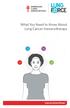 What You Need to Know About Lung Cancer Immunotherapy Lung.org/immunotherapy What is immunotherapy? Immunotherapy for cancer, sometimes called immune-oncology, is a type of medicine that treats cancer
Introduction. About 10,500 new cases of acute myelogenous leukemia are diagnosed each
 Introduction 1.1 Introduction: About 10,500 new cases of acute myelogenous leukemia are diagnosed each year in the United States (Hope et al., 2003). Acute myelogenous leukemia has several names, including
Leukemia-Chronic Myeloid (Myelogenous) Overview
 Leukemia-Chronic Myeloid (Myelogenous) Overview This overview is based on the more detailed information in our document, Leukemia- Chronic Myeloid. You can get this document and other information by calling
Understanding series. new. directions. 1-800-298-2436 LungCancerAlliance.org. A guide for the patient
 Understanding series LUNG CANCER: new treatment directions 1-800-298-2436 LungCancerAlliance.org A guide for the patient TABLE OF CONTENTS What s New in lung cancer? Advancements...4 Changes in genes that
PERIPHERAL STEM CELL TRANSPLANT INTRODUCTION
 PERIPHERAL STEM CELL TRANSPLANT INTRODUCTION This booklet was designed to help you and the important people in your life understand the treatment of high dose chemotherapy with stem cell support: a procedure
Michael Crump MD. Lymphoma Site Leader Princess Margaret Hospital University of Toronto
 Evolution of Lymphoma Therapy: What can we expect for the rest of the millenium decade? Michael Crump MD Lymphoma Site Leader Princess Margaret Hospital University of Toronto disclaimers Served on advisory
Severe rheumatoid arthritis (a disease that causes inflammation of the joints),where MabThera is given intravenously together with methotrexate.
 EMA/614203/2010 EMEA/H/C/000165 EPAR summary for the public rituximab This is a summary of the European public assessment report (EPAR) for. It explains how the Committee for Medicinal Products for Human
Adult Medical-Surgical Nursing H A E M A T O L O G Y M O D U L E : L E U K A E M I A 2
 Adult Medical-Surgical Nursing H A E M A T O L O G Y M O D U L E : L E U K A E M I A 2 Leukaemia: Description A group of malignant disorders affecting: White blood cells (lymphocytes or leucocytes) Bone
National Cancer Institute
 National Cancer Institute What You Need To Know About Leukemia U.S. DEPARTMENT OF HEALTH AND HUMAN SERVICES National Institutes of Health How Can We Help? You may want information about cancer for yourself,
Bone Marrow or Blood Stem Cell Transplants in Children With Severe Forms of Autoimmune Disorders or Certain Types of Cancer
 Bone Marrow or Blood Stem Cell Transplants in Children With Severe Forms of Autoimmune Disorders or Certain Types of Cancer A Review of the Research for Parents and Caregivers Is This Information Right
CANCER TREATMENT: Chemotherapy
 CANCER TREATMENT: Chemotherapy Chemotherapy, often called chemo, is the use of drugs to treat a disease. The term chemotherapy is now most often used to describe a type of cancer treatment. Dr. Khuri:
Medication Guide TASIGNA (ta-sig-na) (nilotinib) Capsules
 Medication Guide TASIGNA (ta-sig-na) (nilotinib) Capsules Read this Medication Guide before you start taking Tasigna and each time you get a refill. There may be new information. This information does
CHAPTER 26 LATE BREAKING DEVELOPMENTS: IMPACT OF ANTI-CD20 MONOCLONAL ANTIBODIES ON LYMPHOMA THERAPY
 CHAPTER 26 LATE BREAKING DEVELOPMENTS: IMPACT OF ANTI-CD20 MONOCLONAL ANTIBODIES ON LYMPHOMA THERAPY 26.1 Introduction rituximab Subsequent to the completion of drafts for the guidelines earlier in 2004,
Fast Facts: Sézary Syndrome
 The Cutaneous Lymphoma Foundation is an independent, non-profit patient advocacy organization dedicated to supporting every person with cutaneous lymphoma by promoting awareness and education, advancing
Cord Blood Stem Cell Transplantation
 LEUKEMIA LYMPHOMA MYELOMA FACTS Cord Blood Stem Cell Transplantation No. 2 in a series providing the latest information on blood cancers Highlights Umbilical cord blood, like bone marrow and peripheral
An overview of CLL care and treatment. Dr Dean Smith Haematology Consultant City Hospital Nottingham
 An overview of CLL care and treatment Dr Dean Smith Haematology Consultant City Hospital Nottingham What is CLL? CLL (Chronic Lymphocytic Leukaemia) is a type of cancer in which the bone marrow makes too
Canine Lymphoma Frequently Asked Questions by Pet Owners
 Canine Lymphoma Frequently Asked Questions by Pet Owners What is lymphoma? The term lymphoma describes a diverse group of cancers in dogs that are derived from white blood cells called lymphocytes. Lymphocytes
Your Immune System & Melanoma Treatment
 Your Immune System & Melanoma Treatment Immunotherapy and Melanoma Immunotherapy is rapidly emerging as an important approach to treating many forms of cancer. For people with melanoma, the news is particularly
I've Just Been Diagnosed. with Multiple Myeloma, What s Next?
 I've Just Been Diagnosed with Multiple Myeloma, What s Next? Table of Contents Message from a Survivor Introduction What is Multiple Myeloma? What Causes Multiple Myeloma? Genes & Multiple Myeloma What
Multiple. Powerful thinking advances the cure
 Multiple Myeloma Treatment OVERVIEW Powerful thinking advances the cure Powerful thinking advances the cure About the Multiple Myeloma Research Foundation The Multiple Myeloma Research Foundation (MMRF)
Chronic Lymphocytic Leukemia
 When you learn you have Chronic Lymphocytic Leukemia An educational resource for patients and caregivers provided by Teva Oncology. 1 If you have just been diagnosed with chronic lymphocytic leukemia (CLL),
Immuno-Oncology Therapies to Treat Lung Cancer
 Immuno-Oncology Therapies to Treat Lung Cancer What you need to know ONCHQ14NP07519 Introduction: Immuno-oncology represents an innovative approach to cancer research that seeks to harness the body s own
The CML Guide. Information for Patients and Caregivers. Chronic Myeloid Leukemia. Matthew, CML survivor. This publication was supported by
 The CML Guide Information for Patients and Caregivers Chronic Myeloid Leukemia Matthew, CML survivor This publication was supported by Revised 2014 A Message from Louis J. DeGennaro, PhD President and
MEDICATION GUIDE POMALYST (POM-uh-list) (pomalidomide) capsules. What is the most important information I should know about POMALYST?
 MEDICATION GUIDE POMALYST (POM-uh-list) (pomalidomide) capsules What is the most important information I should know about POMALYST? Before you begin taking POMALYST, you must read and agree to all of
Patient Medication Guide Brochure
 Patient Medication Guide Brochure 1 MEDICATION GUIDE TASIGNA (ta-sig-na) (nilotinib) Capsules Read this Medication Guide before you start taking TASIGNA and each time you get a refill. There may be new
FastTest. You ve read the book... ... now test yourself
 FastTest You ve read the book...... now test yourself To ensure you have learned the key points that will improve your patient care, read the authors questions below. Please refer back to relevant sections