
People Living with Cancer
|
|
|
- Reynold Arnold
- 10 years ago
- Views:
Transcription
1 Patient Guide ASCOInformation for People Living with Cancer ADVANCED LUNG CANCER TREATMENT Recommendations of the American Society of Clinical Oncology

2 Welcome The American Society of Clinical Oncology (ASCO) is the world s leading professional society of multidisciplinary medical professionals who treat people with cancer. ASCO s more than 20,000 members from the United States and abroad set the standard for patient care worldwide and lead the fight for more effective cancer treatments, increased funding for clinical and translational research, and, ultimately, cures for the many different cancers that affect 1.3 million Americans every year. ASCO publishes the semi-monthly Journal of Clinical Oncology (JCO), the foremost, peer-reviewed journal focusing on clinical cancer research, and produces the award-winning website People Living With Cancer ( which provides oncologist-vetted cancer information to help patients and families make informed healthcare decisions. To help doctors give their patients the best possible care, ASCO asks its medical experts to review the latest research on issues in cancer care and develop recommendations called clinical practice guidelines. To help patients understand their cancer care, ASCO created this patient guide, based on the guidelines ASCO s experts developed to help people with lung cancer. As you read this guide, please keep in mind every person treated for cancer is different. These recommendations are not meant to replace your or your doctors judgment. The final decisions you and your doctors make will be based on your individual circumstances.

3 What is lung cancer? Lung cancer occurs when abnormal cells develop in the lungs and reproduce without the body s normal regulations on cell birth and death. These cells can keep dividing until they form a mass of cells called a tumor. Tumors interfere with normal lung function. Cells can break off from the tumor and can be carried to other parts of the body. This is called metastasis. There are two major types of lung cancer: small cell and nonsmall cell. The terms small cell and non-small cell refer to the types of cells seen under a microscope. About 80% of all lung cancer cases are non-small cell lung cancer (NSCLC). Only non-small cell lung cancer is discussed in this booklet. Some non-small cell lung cancers can be treated with surgery that removes all or part of the affected lung, but most advanced lung cancers cannot. If surgery is not possible or will not help slow the cancer s growth, the tumor is called unresectable. This can be because of the location or the size of the tumor, or because tests show that the cancer has spread to lymph nodes or other organs in the body. Lymph nodes are tiny, bean-shaped structures clustered throughout the body mostly in the areas of the head and neck, chest and abdomen, and groin. The lymph system is an important part of the body s immune system. Its job is to filter out and remove bacteria, viruses, and other foreign substances, and to supply lymphocytes (white blood cells) to the bloodstream. Information in ASCO s patient information materials is not intended as medical advice or as a substitute for the treating doctor s own professional judgment; nor does it imply ASCO endorsement of any product or company. 1

4 How is lung cancer diagnosed and staged? The only way a final diagnosis of lung cancer can be made is through biopsy, a procedure that involves the removal of tissue (all or part of the tumor) for examination under a microscope. Part of diagnosing lung cancer also involves determining if it has spread to the lymph nodes or other parts of the body, a process called staging. Knowing the stage helps the doctor plan treatment and can help predict prognosis (chance of recovery). To stage lung cancer, doctors determine how large the original tumor is, where it is located, if it has spread to the lymph nodes near the chest and lungs, and if it has spread past the lymph nodes to other parts of the body. The stages of lung cancer are described using the terms stage I-IV. Stage I: A tumor that is surrounded by healthy lung tissue, and has not spread to nearby lymph nodes. Stage II: A tumor that has spread to nearby lymph nodes within the lung, or is invading the chest wall, diaphragm, or is touching (but not invading) vital structures in the center of the chest. Stage III: A tumor that is difficult, or impossible, for a surgeon to remove because it invades vital structures in the center of the chest, or has spread to lymph nodes outside of the lung, shed cancer cells into fluid around the lung, or spread to lymph nodes on both sides of the body. Stage IV: Any tumor that has spread to another part of the body such as the brain, bones, adrenal glands, liver, or kidneys. 2

5 In the later stages of lung cancer (stage III and stage IV), surgery to remove all of the cancer is often not possible and the cancer is considered unresectable. This booklet describes guidelines for cancers that are unresectable. About the Expert Panel ASCO formed a panel of experts to revise these guidelines. The members included medical, surgical, and radiation oncologists, health services researchers, a pulmonary specialist, and a patient advocate. The panel worked together using the evidence and their own expertise, and formed their opinions by consensus (agreement from everyone in the group). What are the ASCO guidelines on staging lung cancer? Since knowing the stage of each person s lung cancer is necessary for planning treatment, ASCO has evaluated the available evidence on the use of different tests used to stage lung cancer. According to ASCO s guidelines: For staging local or regional lung cancer (usually stage I or stage II), research has shown the following tests to be the most useful: Chest x-ray. An x-ray of the chest area can help show the location of the primary tumor and help determine if it has grown since a previous x-ray was taken. 3

6 Computerized tomography (CT) scan. CT scans use computers to create images of structures inside the body using a series of x-rays. They can show areas of lung cancer and help determine whether surgical removal is possible. Positron emission tomography (PET) scan. In a PET scan, radioactive sugar molecules are injected into the body. Lung cancer cells absorb sugar more quickly than normal cells, so they light up on the PET scan. PET scans are used to complement information gathered from CT scans, x-rays, and the physical examination. PET scans commonly extend from the patient s neck to their pelvis, and do not evaluate the brain or the legs. The results of a PET scan may affect the need for additional tests. Biopsy. The final diagnosis of non-small cell lung cancer is made with the results from a biopsy. In a biopsy, a doctor removes a piece of tissue or a sample of cells with a needle (called needle aspiration), and sends it to a laboratory to be checked for cancer cells under a microscope. A biopsy may be done during a bronchoscopy, in which doctors examine the tubes that carry air into the lungs (trachea and bronchi) using a slender instrument with a small light at its end called a bronchoscope. Sometimes, a biopsy is done during an operation to open the chest to examine the lungs and the lymph nodes (called a thoracotomy). For staging more advanced lung cancers, the following tests may also be useful: Bone scan. In a bone scan, radioactive molecules are injected into the body to detect abnormal areas within the bone. If patients have symptoms such as bone pain, chest pain, or abnormal blood test results (such as higher than normal levels of calcium or alkaline phosphate in the blood), bone scans can help doctors determine whether cancer has spread to the bone. The result of a prior PET scan may make a bone scan unnecessary. 4

7 CT scan of the head or magnetic resonance imaging (MRI) of the brain. Besides using x-rays, another way to create images of structures inside the body is to use magnetic fields and radio waves. This technique is known as magnetic resonance imaging (MRI). If a patient reports symptoms that suggest the cancer has spread to the brain, doctors may order a CT scan or MRI of the brain to confirm. For patients who do not have symptoms (asymptomatic) but whose tumors are larger than 3 cm, or those patients who have cancer in the lymph nodes in the center of the chest, a brain MRI might be recommended. The CT scan or PET scan may detect masses on the adrenal glands (the small glands that sit on top of the kidneys) or the liver. If there is an abnormality in the liver or adrenal glands, a biopsy is the only definitive way to determine if cancer is present. MRI may be used to examine a mass on the liver. Again, biopsy is the only definitive way to determine if cancer is present. How is unresectable non-small cell lung cancer treated? Which treatment is best is based on the individual. The recommendations ASCO provides are based on experts review of research studies and other evidence, not the results seen in any one person. Treatment decisions should be made through a collaborative effort between patients and their doctors. For people whose cancer is unresectable, doctors usually recommend chemotherapy alone, chemotherapy and radiation therapy (radiotherapy) together, or radiation therapy alone. Chemotherapy Chemotherapy is the use of drugs to kill cancer cells by stopping them from growing or dividing. Chemotherapy has been shown to prolong life for patients with advanced (stage III and stage IV) lung cancer. Because cancer cells grow and divide faster than 5

8 normal cells, they are more likely than normal cells to be eliminated by chemotherapy drugs. For most people, chemotherapy is given in an outpatient setting (the patient does not stay overnight in the hospital), and at regular intervals called cycles. Chemotherapy is typically given for a fixed number of cycles over several months. Many chemotherapy drugs are used to treat lung cancer. Normally, more than one drug is used. ASCO recommends that at least one of the drugs used be either carboplatin (Paraplatin) or cisplatin (Platinol). Other commonly used drugs are docetaxel (Taxotere), gemcitabine (Gemzar), paclitaxel (Taxol), vinorelbine (Navelbine), and vinblastine (Velban). These drugs and others are used in different combinations. No one treatment or combination of treatments works for everyone. A physical examination, chest x-ray, CT scan, MRI, and/or PET scan may be needed to determine if treatment is effective. If, after several months, the treatment does not appear to be working, the doctor may recommend a change in treatment (called second-line therapy), which may include a drug that is being investigated in a clinical trial. It is important to remember that second-line therapy may also prove to be ineffective. According to ASCO s guidelines: If a patient has non-small cell lung cancer that is unresectable but is still treatable with radiation therapy, then chemotherapy should be added to the radiation therapy. Research shows that chemotherapy plus radiation therapy may prolong survival compared with radiation therapy alone in this setting. The chemotherapy can be delivered either before or during radiation therapy. People who are in overall better health (good performance status) are expected to benefit most from treatment. Chemotherapy alone is appropriate for some patients with stage IV non-small cell lung cancer and may prolong survival. 6

9 For advanced non-small cell lung cancer, combination chemotherapy (more than one chemotherapy drug) is recommended. For people whose chemotherapy using platinum-based drugs has stopped working, a drug called docetaxel (Taxotere) has been shown to help as a second-line therapy. For people with stage III lung cancer, there is no research to indicate that more than four cycles of chemotherapy is useful. For people with stage IV lung cancer, there is no research to indicate that more than six cycles of chemotherapy is useful. Radiation therapy (Radiotherapy) Radiation therapy is the use of high-energy x-rays to kill cancer cells in the lungs and shrink small tumors. Radiation of the tumor in the lungs or elsewhere in the body may be recommended in addition to chemotherapy. Radiation therapy is given daily for several weeks, or sometimes more than once a day. Usually, treatment is given in an outpatient setting. Doctors who specialize in radiation therapy for cancer treatment are called radiation oncologists. According to ASCO s guidelines: Radiation therapy has been shown to successfully treat people whose cancer is locally advanced. It is most likely to be successful in people with overall better health (good performance status) and in those whose cancer has not spread beyond the chest area. Radiation therapy is not recommended for people whose cancer has spread to other parts of the body, or in those who have fluid in their lungs caused by cancer (pleural effusion). In people who are having pain or other symptoms caused by lung cancer, radiation therapy may help to relieve symptoms. 7

10 Surgery Surgery to remove a tumor is called resection. Even if the original lung cancer is unresectable, people with lung cancer that has spread to other parts of the body may benefit from surgery. According to ASCO s guidelines: In some cases, research has shown that surgery to remove cancer from the brain may help slow the growth of the cancer. How are the side effects of cancer and cancer treatment managed? Many people experience symptoms such as coughing, pain, shortness of breath (dyspnea), or fatigue caused by cancer in the lungs. These symptoms may also occur as a result of lung cancer treatment. There are ways to control symptoms, so it is important to speak with your doctor about all symptoms. Symptoms may also provide the doctor with information about how the cancer is behaving. While chemotherapy and radiation therapy are designed to kill cancer cells, normal cells can also be damaged by chemotherapy and high doses of radiation therapy. This damage can result in side effects such as nausea, fatigue, and hair loss. These side effects can last for weeks, sometimes longer, but usually go away after treatment is finished. There are methods available to control many of these side effects. If side effects are too severe, treatment may be delayed or stopped. What are clinical trials? Scientists continue to look for new and more effective ways to treat lung cancer. A very important method for discovering new information on cancer treatments is through clinical trials. 8

11 Clinical trials are conducted to determine the safest doses and methods of administration for a new treatment (phase I clinical trials), how well a new treatment works (phase II clinical trials), and how the new treatment compares with other available treatments (phase III clinical trials). Clinical trials are research studies that rely on volunteers. Once a doctor tells a patient about an available clinical trial, the patient must volunteer to take part in the trial. There are no guarantees that a new therapy offers an advantage over an existing therapy. Patients who volunteer to participate in a clinical trial may hope for benefits for themselves, such as cure of the disease, longer survival, or a way to resolve symptoms, and often want to contribute to research that may help others. People in clinical trials are among the first to receive new research treatments before they are widely available. How well a trial will work cannot be known ahead of time. Even standard treatments, although effective for many patients, are not guaranteed to be effective for everyone. According to ASCO s guidelines: For all people with advanced non-small cell lung cancer, ASCO encourages participation in clinical trials of new drugs or treatments. In some cases, clinical trials may offer the best chance for successful treatment. If a person s cancer does not respond to treatment in a clinical trial, standard treatment may be continued. What happens after lung cancer treatment? Continued medical care is necessary for people with lung cancer that has been treated to determine if the cancer recurs (comes back), or to evaluate if the tumor continues to grow. 9

12 According to ASCO s guidelines: ASCO recommends that people who have had treatment to extend their life and have no symptoms or other evidence of cancer should see their doctor every three months for the first two years, then every six months for the next three years, and then once a year. In general, research shows that extensive testing is only necessary for patients who have symptoms. For patients who are having symptoms after treatment ends, doctors may recommend a CT scan, MRI, or PET scan. Doctors compare the results of tests done after treatment with tests done before treatment to determine if the cancer has progressed. Chest x-rays, bone scans, complete blood cell counts, and other routine tests may be done at follow-up examinations, depending on each patient s symptoms. What is palliative therapy? Palliative therapy involves the care of the person with cancer and all of his or her needs, and does not focus only on treating the disease. For people with lung cancer, palliative therapy involves the use of medications, chemotherapy, radiation therapy, and/or other means to relieve the symptoms caused by cancer, such as pain and shortness of breath. The patient s comfort is a priority at every stage of treatment. When radiation therapy is used as palliative therapy, it is usually given in doses small enough to avoid the side effects that can result at the doses used in curative therapy. If doctors and their patients decide together that treatment will no longer slow or stop the growth of cancer, hospice care for comfort may be suggested. 10

13 How can cancer be prevented from recurring? Since it is known that people with overall better health (good performance status) benefit most from treatment, maintaining the best health possible is important. This includes keeping a balanced, nutritious diet and getting plenty of rest. Research shows that people who smoke can damage their health even after they have lung cancer. It is very important to stop smoking, not to begin smoking, and to avoid being around people who are smoking. Smoking can cause new cancer to develop and can further lung damage. Even in people with advanced lung cancer, stopping smoking can improve breathing. No vitamin, antioxidant, or other agent in large doses (more than the recommended daily requirements) has been shown to prevent recurrence or slow the growth of cancer, and some may be harmful. People who are taking these supplements should speak with their doctor. Where can I get more information? The revised guidelines are published in ASCO s Journal of Clinical Oncology (J Clin Oncol Jan ;22). For a copy of the guidelines, visit call , or send an to: [email protected]. For more information about cancer, visit People Living With Cancer at ASCO s website for patients, families, and the public. For more information about advanced lung cancer treatment, patients should speak directly with their doctor. 11

14 Resources Many organizations offer support to people with cancer and their families. Ask your doctor or call your local hospital to find out about such groups in your community. In addition, these organizations can provide information or educational materials about lung cancer. Alliance for Lung Cancer Advocacy, Support, and Education 500 W. 8th Street, Suite 240 Vancouver, WA American Cancer Society 1599 Clifton Road, NE Atlanta, GA ACS-2345 ( ) American Lung Association 61 Broadway, 6th Floor New York, NY LUNG-USA ( ) Cancer Care 275 7th Avenue New York, NY HOPE (4673) National Cancer Institute NCI Public Inquiries Office, Suite 3036A 6116 Executive Boulevard, MSC8322 Bethesda, MD CANCER ( ) 12

15 Made available with support from A Commitment to Service Through charitable giving, friends of The ASCO Foundation can become partners in the effort to reach our goal: the progressive control and ultimate cure of cancer. Types of Giving Philanthropic funding of the educational programs is more important than ever. There are a number of ways to provide support for a better understanding and treatment of cancer. Unrestricted gifts provide the flexibility needed to move quickly in unexpected directions in research and clinical applications, and help to cover the costs of ASCO critical services that are not entirely financed by other support. Restricted gifts benefit specific programs of the donor s choosing in any of the ASCO initiatives in patient care and education. Tribute gifts can be made as memorial tributes, remembrance gifts, or as a way of honoring the Society s membership. For more information, please contact: Julia J. McCormack Executive Director, The ASCO Foundation 1900 Duke Street, Suite 200 Alexandria, VA [email protected] 13

16 1900 Duke Street, Suite 200, Alexandria, VA Phone Fax Toll Free Copyright 2003 American Society of Clinical Oncology For permissions information, contact ASCO s Intellectual Property Rights Manager at [email protected]

Small cell lung cancer
 Small cell lung cancer Small cell lung cancer is a disease in which malignant (cancer) cells form in the tissues of the lung. The lungs are a pair of cone-shaped breathing organs that are found within
Smoking and misuse of certain pain medicines can affect the risk of developing renal cell cancer.
 Renal cell cancer Renal cell cancer is a disease in which malignant (cancer) cells form in tubules of the kidney. Renal cell cancer (also called kidney cancer or renal adenocarcinoma) is a disease in which
What If I Have a Spot on My Lung? Do I Have Cancer? Patient Education Guide
 What If I Have a Spot on My Lung? Do I Have Cancer? Patient Education Guide A M E R I C A N C O L L E G E O F C H E S T P H Y S I C I A N S Lung cancer is one of the most common cancers. About 170,000
Lung Cancer: Diagnosis, Staging and Treatment
 PATIENT EDUCATION patienteducation.osumc.edu Lung Cancer: Diagnosis, Staging and Treatment Cancer begins in our cells. Cells are the building blocks of our tissues. Tissues make up the organs of the body.
Mesothelioma. 1995-2013, The Patient Education Institute, Inc. www.x-plain.com ocft0101 Last reviewed: 03/21/2013 1
 Mesothelioma Introduction Mesothelioma is a type of cancer. It starts in the tissue that lines your lungs, stomach, heart, and other organs. This tissue is called mesothelium. Most people who get this
General Information About Non-Small Cell Lung Cancer
 General Information About Non-Small Cell Lung Cancer Non-small cell lung cancer is a disease in which malignant (cancer) cells form in the tissues of the lung. The lungs are a pair of cone-shaped breathing
Lung Cancer. This reference summary will help you better understand lung cancer and the treatment options that are available.
 Lung Cancer Introduction Lung cancer is the number one cancer killer of men and women. Over 165,000 people die of lung cancer every year in the United States. Most cases of lung cancer are related to cigarette
Thymus Cancer. This reference summary will help you better understand what thymus cancer is and what treatment options are available.
 Thymus Cancer Introduction Thymus cancer is a rare cancer. It starts in the small organ that lies in the upper chest under the breastbone. The thymus makes white blood cells that protect the body against
Follow-Up Care for Breast Cancer
 A Patient s Guide Follow-Up Care for Breast Cancer Recommendations of the American Society of Clinical Oncology The American Society of Clinical Oncology (ASCO) is a nonprofit organization which represents
Understanding. Pancreatic Cancer
 Understanding Pancreatic Cancer Understanding Pancreatic Cancer The Pancreas The pancreas is an organ that is about 6 inches long. It s located deep in your belly between your stomach and backbone. Your
Avastin: Glossary of key terms
 Avastin: Glossary of key terms Adenocarcinoma Adenoma Adjuvant therapy Angiogenesis Anti-angiogenics Antibody Antigen Avastin (bevacizumab) Benign A form of carcinoma that originates in glandular tissue.
How To Treat Lung Cancer At Cleveland Clinic
 Treatment Guide Lung Cancer Management The Chest Cancer Center at Cleveland Clinic, which includes specialists from the Respiratory Institute, Taussig Cancer Institute and Miller Family Heart & Vascular
GUIDELINES FOR THE MANAGEMENT OF LUNG CANCER
 GUIDELINES FOR THE MANAGEMENT OF LUNG CANCER BY Ali Shamseddine, MD (Coordinator); [email protected] Fady Geara, MD Bassem Shabb, MD Ghassan Jamaleddine, MD CLINICAL PRACTICE GUIDELINES FOR THE TREATMENT
THORACIC DIAGNOSTIC ASSESMENT PROGRAM (DAP) PATIENT INFORMATION FOR:
 central east regional cancer program in partnership with cancer care ontario THORACIC DIAGNOSTIC ASSESMENT PROGRAM (DAP) PATIENT INFORMATION FOR: Thoracic dap booklet March2012.indd 1 SCHEDULED TESTS YOUR
Introduction Breast cancer is cancer that starts in the cells of the breast. Breast cancer happens mainly in women. But men can get it too.
 Male Breast Cancer Introduction Breast cancer is cancer that starts in the cells of the breast. Breast cancer happens mainly in women. But men can get it too. Many people do not know that men can get breast
Disease/Illness GUIDE TO ASBESTOS LUNG CANCER. What Is Asbestos Lung Cancer? www.simpsonmillar.co.uk Telephone 0844 858 3200
 GUIDE TO ASBESTOS LUNG CANCER What Is Asbestos Lung Cancer? Like tobacco smoking, exposure to asbestos can result in the development of lung cancer. Similarly, the risk of developing asbestos induced lung
The lungs What is lung cancer? How common is it? Risks & symptoms Diagnosis & treatment options
 Why We re Here The lungs What is lung cancer? How common is it? Risks & symptoms Diagnosis & treatment options What Are Lungs? What Do They Do? 1 Located in the chest Allow you to breathe Provide oxygen
Understanding Pleural Mesothelioma
 Understanding Pleural Mesothelioma UHN Information for patients and families Read this booklet to learn about: What is pleural mesothelioma? What causes it? What are the symptoms? What tests are done to
Mesothelioma: Questions and Answers
 CANCER FACTS N a t i o n a l C a n c e r I n s t i t u t e N a t i o n a l I n s t i t u t e s o f H e a l t h D e p a r t m e n t o f H e a l t h a n d H u m a n S e r v i c e s Mesothelioma: Questions
Surgery. Wedge resection only part of the lung, not. not a lobe, is removed. Cancer Council NSW
 The treatment you receive will depend on your lung cancer type, for example, whether you have a non-small cell lung cancer Adenocarcinoma or Squamous cell carcinoma, and if this is a sub-type with a mutation.
SMALL. 1-800-298-2436 LungCancerAlliance.org
 UNDERSTANDING Non- SMALL CELL LUNG CANCER 1-800-298-2436 LungCancerAlliance.org A guide for the patient I ANATOMY OF THE LUNGS The following image shows different parts that make up the lungs. Please use
RADIATION THERAPY FOR LYMPHOMA. Facts to Help Patients Make an Informed Decision TARGETING CANCER CARE AMERICAN SOCIETY FOR RADIATION ONCOLOGY
 RADIATION THERAPY FOR Facts to Help Patients Make an Informed Decision TARGETING CANCER CARE AMERICAN SOCIETY FOR RADIATION ONCOLOGY FACTS ABOUT The lymphatic system is a network of tiny vessels extending
Quick Facts about Appendix Cancer
 Quick Facts about Appendix Cancer What is the appendix? The appendix is a pouch-like tube attached to the first part of the large intestine (cecum). The appendix is about 10 centimetres long and has no
Multiple Myeloma. This reference summary will help you understand multiple myeloma and its treatment options.
 Multiple Myeloma Introduction Multiple myeloma is a type of cancer that affects white blood cells. Each year, thousands of people find out that they have multiple myeloma. This reference summary will help
Colon and Rectal Cancer
 Colon and Rectal Cancer What is colon or rectal cancer? Colon or rectal cancer is the growth of abnormal cells in your large intestine, which is also called the large bowel. The colon is the last 5 feet
Lung Cancer Understanding your diagnosis
 Lung Cancer Understanding your diagnosis Lung Cancer Understanding your diagnosis When you first hear that you have cancer you may feel alone and afraid. You may be overwhelmed by the large amount of information
Lung cancer forms in tissues of the lung, usually in the cells lining air passages.
 Scan for mobile link. Lung Cancer Lung cancer usually forms in the tissue cells lining the air passages within the lungs. The two main types are small-cell lung cancer (usually found in cigarette smokers)
Understanding Your Diagnosis of Endometrial Cancer A STEP-BY-STEP GUIDE
 Understanding Your Diagnosis of Endometrial Cancer A STEP-BY-STEP GUIDE Introduction This guide is designed to help you clarify and understand the decisions that need to be made about your care for the
Lung cancer (non-small-cell)
 Patient information from the BMJ Group Lung cancer (non-small-cell) It can be devastating to find out that you or someone close to you has lung cancer. You will have to make some important decisions about
The TV Series. www.healthybodyhealthymind.com INFORMATION TELEVISION NETWORK
 The TV Series www.healthybodyhealthymind.com Produced By: INFORMATION TELEVISION NETWORK ONE PARK PLACE 621 NW 53RD ST BOCA RATON, FL 33428 1-800-INFO-ITV www.itvisus.com 2005 Information Television Network.
Acute Myeloid Leukemia
 Acute Myeloid Leukemia Introduction Leukemia is cancer of the white blood cells. The increased number of these cells leads to overcrowding of healthy blood cells. As a result, the healthy cells are not
Non-Small Cell Lung Cancer
 Non-Small Cell Lung Cancer John delcharco, MD (Statistics based on CVMC data 2009-2013) Statistics Lung cancer is the leading cause of cancer deaths in the United States. The American Cancer Society estimates
Radiation Therapy for Prostate Cancer
 Radiation Therapy for Prostate Cancer Introduction Cancer of the prostate is the most common form of cancer that affects men. About 240,000 American men are diagnosed with prostate cancer every year. Your
Facing Lung Cancer? Learn why da Vinci Surgery may be your best treatment option for lung cancer.
 Facing Lung Cancer? Learn why da Vinci Surgery may be your best treatment option for lung cancer. The Condition: Lung Cancer The lung is the organ that moves oxygen through your body. You have two lungs
PERIPHERAL STEM CELL TRANSPLANT INTRODUCTION
 PERIPHERAL STEM CELL TRANSPLANT INTRODUCTION This booklet was designed to help you and the important people in your life understand the treatment of high dose chemotherapy with stem cell support: a procedure
Treating Mesothelioma - A Quick Guide
 Treating Mesothelioma - A Quick Guide Contents This is a brief summary of the information on Treating mesothelioma from CancerHelp UK. You will find more detailed information on the website. In this information
Skin cancer Patient information
 Skin cancer Patient information What is cancer? The human body is made up of billions of cells. In healthy people, cells grow, divide and die. New cells constantly replace old ones in an orderly way. This
Brain Tumor Treatment
 Scan for mobile link. Brain Tumor Treatment Brain Tumors Overview A brain tumor is a group of abnormal cells that grows in or around the brain. Tumors can directly destroy healthy brain cells. They can
Learning about Mouth Cancer
 Learning about Mouth Cancer Creation of this material was made possible in part by a pioneering grant from CBCC-USA. Distributed by India Cancer Initiative What is mouth cancer? Our bodies are made up
TREATING LUNG CANCER AT VA PITTSBURGH HEALTHCARE SYSTEM A HERO S GUIDE
 Providing the best in cancer care for Veterans TREATING LUNG CANCER AT VA PITTSBURGH HEALTHCARE SYSTEM A HERO S GUIDE VA Pittsburgh s state-of-the-art TomoTherapy machine, which delivers radiation to patients.
LYMPHOMA IN DOGS. Diagnosis/Initial evaluation. Treatment and Prognosis
 LYMPHOMA IN DOGS Lymphoma is a relatively common cancer in dogs. It is a cancer of lymphocytes (a type of white blood cell) and lymphoid tissues. Lymphoid tissue is normally present in many places in the
Prostate Cancer Guide. A resource to help answer your questions about prostate cancer
 Prostate Cancer Guide A resource to help answer your questions about prostate cancer Thank you for downloading this guide to prostate cancer treatment. We know that all the information provided online
Lung Cancer Treatment
 Scan for mobile link. Lung Cancer Treatment Lung cancer overview More than one in four of all diagnosed cancers involve the lung, and lung cancer remains the most common cancer-related cause of death among
Cancer of the Cervix
 Cancer of the Cervix WOMENCARE A Healthy Woman is a Powerful Woman (407) 898-1500 A woman's cervix (the opening of the uterus) is lined with cells. Cancer of the cervix occurs when those cells change,
Understanding. Brain Tumors. Jana, diagnosed in 1999, with her husband, Paul.
 Understanding Brain Tumors Jana, diagnosed in 1999, with her husband, Paul. What Is a Brain Tumor? A brain tumor, like other tumors, is a collection of cells that multiply at a rapid rate. The tumor may
Non-Small Cell Lung Cancer
 Non-Small Cell Lung Cancer About Your Lungs and Lung Cancer How do your lungs work? To understand lung cancer it is helpful to understand your lungs. Your lungs put oxygen into the blood, which the heart
METASTASES TO THE BONE
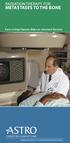 RADIATION THERAPY FOR METASTASES TO THE BONE Facts to Help Patients Make an Informed Decision TARGETING CANCER CARE AMERICAN SOCIETY FOR RADIATION ONCOLOGY WHAT ARE BONE METASTASES? Cancer that starts
How To Understand How Cancer Works
 Mesothelioma Understanding your diagnosis Mesothelioma Understanding your diagnosis When you first hear that you have cancer, you may feel alone and afraid. You may be overwhelmed by the large amount of
Lung Cancer. Understanding your diagnosis
 Lung Cancer Understanding your diagnosis Lung Cancer Understanding your diagnosis When you first hear that you have cancer, you may feel alone and afraid. You may be overwhelmed by the large amount of
LIVER CANCER AND TUMOURS
 LIVER CANCER AND TUMOURS LIVER CANCER AND TUMOURS Healthy Liver Cirrhotic Liver Tumour What causes liver cancer? Many factors may play a role in the development of cancer. Because the liver filters blood
Management of Non-Small Cell Lung Cancer Guide for General Practitioners
 Management of n-small Cell Lung Cancer Guide for General Practitioners Clinical Stage I Cancer only in one lobe of lung and
Lung Cancer. Know how to stay strong
 Lung Cancer Know how to stay strong What is cancer? 2 Cancer is a disease when some cells in the body grow out of control Normal cells Your body has many tiny cells and keeps making new cells to keep you
GYNECOLOGIC CANCERS Facts to Help Patients Make an Informed Decision
 RADIATION THERAPY FOR GYNECOLOGIC CANCERS Facts to Help Patients Make an Informed Decision TARGETING CANCER CARE AMERICAN SOCIETY FOR RADIATION ONCOLOGY FACTS ABOUT GYNECOLOGIC CANCERS Gynecologic cancers
What You Need to Know About Lung Cancer Immunotherapy
 What You Need to Know About Lung Cancer Immunotherapy Lung.org/immunotherapy What is immunotherapy? Immunotherapy for cancer, sometimes called immune-oncology, is a type of medicine that treats cancer
WHEN PROSTATE CANCER RETURNS: ADVANCED PROSTATE CANCER. How Will I Know If My Prostate Cancer Returns?
 WHEN PROSTATE CANCER RETURNS: ADVANCED PROSTATE CANCER (The following information is based on the general experiences of many prostate cancer patients. Your experience may be different.) How Will I Know
Colorectal Cancer Treatment
 Scan for mobile link. Colorectal Cancer Treatment Colorectal cancer overview Colorectal cancer, also called large bowel cancer, is the term used to describe malignant tumors found in the colon and rectum.
Brain Cancer. This reference summary will help you understand how brain tumors are diagnosed and what options are available to treat them.
 Brain Cancer Introduction Brain tumors are not rare. Thousands of people are diagnosed every year with tumors of the brain and the rest of the nervous system. The diagnosis and treatment of brain tumors
Breast Cancer. Sometimes cells keep dividing and growing without normal controls, causing an abnormal growth called a tumor.
 Breast Cancer Introduction Cancer of the breast is the most common form of cancer that affects women but is no longer the leading cause of cancer deaths. About 1 out of 8 women are diagnosed with breast
A Checklist for Patients with Breast Cancer
 A Checklist for Patients with Breast Cancer Questions to Ask the Doctor 1 and Quick Help Resources 1 Adapted from: American Cancer Society. Detailed Guide: Breast Cancer - What Should You Ask Your Doctor
Guide to Understanding Breast Cancer
 An estimated 220,000 women in the United States are diagnosed with breast cancer each year, and one in eight will be diagnosed during their lifetime. While breast cancer is a serious disease, most patients
How treatment is planned Giving your consent The benefits and disadvantages of treatment Second opinion
 Treatment overview for lung cancer This information is an extract from the booklet Understanding lung cancer. You may find the full booklet helpful. We can send you a free copy see page 5. Contents How
Lymphoma. Starting Point. Diagnosed with Lymphoma?
 ESSENTIALS Lymphoma Diagnosed with Lymphoma? It s important to understand everything you can about your diagnosis, treatment options, and places to go for support. This will help you make treatment decisions
Metastatic Renal Cell Carcinoma: Staging and Prognosis of Three Separate Cases.
 Metastatic Renal Cell Carcinoma: Staging and Prognosis of Three Separate Cases. Abstract This paper describes the staging, imaging, treatment, and prognosis of renal cell carcinoma. Three case studies
Diagnosis and Prognosis of Pancreatic Cancer
 Main Page Risk Factors Reducing Your Risk Screening Symptoms Diagnosis Treatment Overview Chemotherapy Radiation Therapy Surgical Procedures Lifestyle Changes Managing Side Effects Talking to Your Doctor
Malignant Mesothelioma
 Malignant Malignant mesothelioma is a tumour originating from mesothelial cells. 85 95% of mesotheliomas are caused by asbestos exposure. It occurs much more commonly in the chest (malignant pleural mesothelioma)
Malignant Mesothelioma
 Malignant mesothelioma is a tumour originating from mesothelial cells. 85 95% of mesotheliomas are caused by asbestos exposure. It occurs much more commonly in the chest (malignant pleural mesothelioma)
Understanding Metastatic Disease
 Supported by an unrestricted educational grant from Pfizer Understanding Metastatic Disease Metastatic disease or metastases are phrases that mean the same as Secondary cancer. This means that the cancer
Asbestos and your lungs
 This information describes what asbestos is and the lung conditions that are caused by exposure to it. It also includes information about what to do if you have been exposed to asbestos, and the benefits
Asymptomatic or smoldering myeloma with no symptoms and slow growing cancer cells
 ESSENTIALS Multiple Myeloma Diagnosed with Multiple Myeloma? It s important to understand everything you can about your diagnosis, possible treatments, and places to go for support and care. Cancer is
RESEARCH EDUCATE ADVOCATE. Just Diagnosed with Melanoma Now What?
 RESEARCH EDUCATE ADVOCATE Just Diagnosed with Melanoma Now What? INTRODUCTION If you are reading this, you have undergone a biopsy (either of a skin lesion or a lymph node) or have had other tests in which
An Introduction to PROSTATE CANCER
 An Introduction to PROSTATE CANCER Being diagnosed with prostate cancer can be a life-altering experience. It requires making some very difficult decisions about treatments that can affect not only the
PRIMARY LUNG CANCER TREATMENT
 PRIMARY LUNG CANCER TREATMENT Cancer Care Pathways Directorate Tailored Information in Cancer Care (TICC) Sir Anthony Mamo Oncology Centre December 2014 Contents About this booklet 1 Types of Lung Cancer
Tricia Cox on 7/18/2012 at Oncology Center. Sarah Randolf. Female
 SAMPLE This Survivorship Care Plan will facilitate cancer care following active treatment. It may include important contact information, a treatment summary, recommendations for follow-up care testing,
Recruiting now. Could you help by joining this study?
 Non-Small Cell Lung Cancer Recruiting now AstraZeneca is looking for men and women with locally advanced or metastatic non-small cell lung cancer (NSCLC) to join ATLANTIC, a clinical study to help investigate
Frequently Asked Questions About Ovarian Cancer
 Media Contact: Gerri Gomez Howard Cell: 303-748-3933 [email protected] Frequently Asked Questions About Ovarian Cancer What is ovarian cancer? Ovarian cancer is a cancer that forms in tissues
Breast Cancer. CSC Cancer Experience Registry Member, breast cancer
 ESSENTIALS Breast Cancer Take things one step at a time. Try not to be overwhelmed by the tidal wave of technical information coming your way. Finally you know your body best; you have to be your own advocate.
Adjuvant Therapy for Breast Cancer: Questions and Answers
 CANCER FACTS N a t i o n a l C a n c e r I n s t i t u t e N a t i o n a l I n s t i t u t e s o f H e a l t h D e p a r t m e n t o f H e a l t h a n d H u m a n S e r v i c e s Adjuvant Therapy for Breast
Canine Lymphoma Frequently Asked Questions by Pet Owners
 Canine Lymphoma Frequently Asked Questions by Pet Owners What is lymphoma? The term lymphoma describes a diverse group of cancers in dogs that are derived from white blood cells called lymphocytes. Lymphocytes
dedicated to curing BREAST CANCER
 dedicated to curing BREAST CANCER When you are diagnosed with breast cancer, you need a team of specialists who will share their knowledge of breast disease and the latest treatments available. At Cancer
This factsheet aims to outline the characteristics of some rare lung cancers, and highlight where each type of lung cancer may be different.
 There are several different kinds of lung cancer, often referred to as lung cancer subtypes. Some of these occur more often than others. In this factsheet we will specifically look at the subtypes of cancers
PATIENT INFORMATION ABOUT ADJUVANT THERAPY AFTER THE WHIPPLE OPERATION FOR ADENOCARCINOMA ( CANCER ) OF THE PANCREAS AND RELATED SITES.
 PATIENT INFORMATION ABOUT ADJUVANT THERAPY AFTER THE WHIPPLE OPERATION FOR ADENOCARCINOMA ( CANCER ) OF THE PANCREAS AND RELATED SITES. Radiation Oncology Sidney Kimmel Cancer Center at Johns Hopkins Last
CEU Update. Pancreatic Cancer
 CEU Update A semi-annual publication of the National Association for Health Professionals June 2015 Issue #0615 Pancreatic Cancer The Pancreatic Cancer Action Network, Inc. (PanCAN), established in 1999,
The Center for Prostate Cancer. Personalized Treatment. Clinical Excellence.
 The Center for Prostate Cancer Personalized Treatment. Clinical Excellence. The Center for Prostate Cancer Leaders in Prostate Cancer Treatment and Research The Center for Prostate Cancer at the North
Colorectal Cancer Care A Cancer Care Map for Patients
 Colorectal Cancer Care A Cancer Care Map for Patients Understanding the process of care that a patient goes through in the diagnosis and treatment of colorectal cancer in BC. Colorectal Cancer Care Map
Types of surgery for kidney cancer
 Useful information for cancer patients Contents This information is about the different operations that you may have for kidney cancer. Surgery can be used to treat almost any stage of kidney cancer. There
Mammograms & Breast Health. An Information Guide for Women U.S. DEPARTMENT OF HEALTH AND HUMAN SERVICES. Centers for Disease Control and Prevention
 U.S. DEPARTMENT OF HEALTH AND HUMAN SERVICES Centers for Disease Control and Prevention Mammograms & Breast Health An Information Guide for Women This booklet was developed by the Centers for Disease Control