
EDUC 283 Child Development In and Beyond Schools Pre-Fall/Fall 2015
|
|
|
- Cordelia Lewis
- 10 years ago
- Views:
Transcription
1 EDUC 283 Child Development In and Beyond Schools Pre-Fall/Fall 2015 Instructors: Nicole Merino Laura Hill-Bonnet Office: CERAS 311 Canvas: classes.stanford.edu Course Overview: The value of the science, the history and philosophy of education acquired in the training school, resides in the enlightenment and guidance it supplies to observation and judgment of actual situations as they arise. Dewey (1929) What constitutes good teaching practices within a classroom is open to debate and so, the purpose of this course is to strengthen your understanding of how educational psychology and child development are involved in teaching so that you are able to make thoughtful choices in your classroom. Together we will explore how to make meaning of educational theory so that you can make informed and intentional decisions to best support your teaching and, ultimately, your students learning. This class is designed to help prepare you as a teacher and a professional. Specifically this course seeks: 1) to help you better understand how children develop in regard to their physical, cognitive, and social-emotional abilities, 2) to expose you with the theoretical roots and empirical research that support the many classroom practices you have previously experienced and will encounter throughout your development as a teacher, and 3) to provide you with the tools and background knowledge for you to pursue your own inquires and decide on your own theoretical position about the learning and development process. Class texts: Pressley, M. & McCormick, C. B. (2007). Child and Adolescent Development for Educators. The Guilford Press: NY ISBN:978-0 Assigned articles on STEP course website (distributed online) Required activities and assignments: Class participation/attendance 25% You are required to attend every class meeting. Contact us prior to class if you cannot attend or will be late.

2 If you are absent, you are responsible for collecting hand-outs and in-class assignment materials for the day you missed. In addition, you will need contact the instructors for further directions on meeting course requirements for material missed. Missing assignments and excessive class-time missed will result in a lowering of your course grade. Discussion Questions and in-class assignments: You are required to complete all readings for each class meeting. Each class period there will be discussion questions or in-class assignments. Completing the class reading is essential for meaningful learning in this class. Expert presentations 25% In groups of 4, you will work together to read and discuss an article and then make a presentation to the class. This article will be one that was assigned as class reading (e.g. everyone will have read it!). The presentation should be engaging and interactive (the presentation should require a level of participation other than listening!) and demonstrate your understandings of the key points of the article. This is an opportunity for you to engage some intentional teaching of your own! a. 4 members per group b. 20 minutes, including 3-4 minutes for questions at the end. c. Requirements of the presentation: i. Should be interactive ii. Brief overview of article-key points iii. Further questions or concerns iv. Application to current practice 1. This requirement could take place in the form of: a. An activity for the group to further understanding b. An example of an activity for elementary students to assist with their learning/development Observation logs- 25%- (see handout on course website) Throughout the course you will document and submit 3 formal (written) observations of your students from your placement. These observations will be used in class and turned in on an ongoing basis to the instructors for reflection and feedback. Your syllabus documents which weeks you should plan to do an observation. Our goal is to scaffold the observations throughout the course in order to help you examine and build a theory of development and learning to facilitate intentional teaching. Your observations will assist you in making decisions about instruction and learning, and inform your final assignment. Observations will include: a. Description of observed phenomena b. Connection to theory and research c. Reflection

3 Annotated lesson plan and summative reflection- 25%- (see handout on course website) As your summative assignment you will annotate a lesson plan for your current classroom. The goal of this assignment is to allow you to show intentional decisions made when planning for your students. Using your formal observations and feedback (as well as any informal observations), readings, and in-class discussions and activities, you will provide a rationale for decisions present in your lesson plan. Your rationale should be theory and research based. In addition you will include a written reflection that answers the following questions: How is my lesson plan developmentally appropriate? How is my lesson plan theoretically grounded?

4 Week Date Child Development in and Beyond Schools Weeks 1-5: 2:45-5:15 Weeks 6-9: 3:15-5:15 Class Topic Objective Readings and/or Assignments Due 1 Aug. 19 Intentional teaching SWBAT articulate their beginning understandings of what counts as a intentional teaching as well as articulate their own questions about such a Dewey - What Psychology can do for the teacher. Pressley & McCormick Ch. 1 (pages 3-8) 2 Aug. 26 Cognitive Development Part I perspective. SWBAT identify developmental differences in cognitive abilities. Discuss reasons/ considerations for supporting various developmental levels of cognition. SWBAT practice their research/observational techniques by conducting an in class Chapter 3 (pages: 61-74; 82-91) Oldfather, P., Bonds, S., & Bray, T (1994). Stalking the Fuzzy Sunshine Seeds : Constructivism processes for teaching about constructivism in teacher education. Teacher Education Quarterly,21(3), Commeyras, M. (1995). What can we learn from students questions? Theory Into Practice, 34,

5 observation. 3 Sept. 2 (Wed. 2:45- Cognitive Development Part II SWBAT describe the differences between constructivism and socio constructivist theory. SWBAT apply schema theory Chapter 6 (pages: ) Kissner. E. (2009). How do we know what we know? A look at schemas. Science Scope, (September 2009) McVee, M.B., Dunsmore, K., Gavelek, J.R. (2005). Schema Theory Revisited. Review of Educational Research 75(4), Sept. 9 Memory and Thinking SWBAT identify various instructional techniques of supporting and hindering memory and thinking processes Chapter 4 Willingham, D.T. (2003). Students remember...what they think about. Scruggs, T.E., & Mastropieri, M. A. (1992). Remembering the forgotten art of memory. Due: Observation 1- teacher directed lesson 5 Sept. 16 Intelligence SWABT compare and contrast orienting theories on what is intelligence? Chapter 8 (pages ) Sternberg, R. J., & Grigorenko, E. L. (2004). Successful intelligence in the classroom. Theory Into Practice, 43, Gardner, H. (1999). Intelligence reframed: Multiple intelligences for the 21 st century (pp 41-46; ; ). New York: Basic Books. Burke, K. (1999). Excerpts from Multiple Intelligences. In The mindful school: How to assess authentic learning (3 rd ed., pp ). Arlington

6 Heights, IL: SkyLight Professional Development. 6 Sept. 23 Change in time!! Motivation and Feedback SWBAT analyze various motivational approaches and forms of feedback for intended (as well as unintended) outcomes. Chapter 9 Dweck, C. S. (2007). The perils and promises of praise. Educational Leadership, 65, Stipek (2002) chapter 7 or 11 Due: Observation 2- teacher directed lesson #2 7 Sept. 30 Social- Emotional development Friendships and Aggression SWBAT identify practices that facilitate positive socialemotional development. Chapter 10 (pages: ) Zajac, R. J., & Hartup, W. W. (1997). Friends as coworkers: Research review and classroom implications. 8 Oct. 7 Gender Identity, Puberty SWBAT identify ways in which gender and gender stereotypes get constructed and propagated in schools Chapter 11 Other reading TBD Due: Observation 3- peer to peer interaction 9 Oct. 14 Direct vs. Indirect instruction SWBAT evaluate models of instruction and determine an approach Dell Olio, J. & Donk, T. (2007). Models of teaching, Connecting Student learning with Standards. Chapters 4 and 6 (Direct and indirect instruction)

7 & Wrap-up for best practices in a given context. Due: Lesson plan final 10/18

Instructor: Tonya Hameister Office: N/E e-mail: [email protected] phone: 920 720-2212 (home), 920 424- Office Hours: Course Description:
 Course Syllabus Education Foundations 235: Child and Adolescent Development Time of Class: 5:15 8:15 p.m., Monday night Class Meeting: N/E 213 Fall 2010 Instructor: Tonya Hameister Office: N/E e-mail:
Additional Qualification Course Guideline. Primary Education Specialist
 Additional Qualification Course Guideline Primary Education Specialist Schedule D Regulation 184/97 Teachers Qualifications Standards of Practice and Education April 2003 Ce document est disponible en
GENERAL COURSE INFORMATION
 Course Syllabus AEDU N651 University of South Carolina- Aiken GENERAL COURSE INFORMATION Please print a copy of this syllabus for handy reference. Whenever there is a question about what assignments are
Outcomes Data School Psychology EdS Program
 Outcomes Data School Psychology EdS Program Programs goals and their associated objectives of the program were designed to be consistent with our philosophy and the 2010 approved National Association of
EDU 330: Developmental and Educational Psychology Course Syllabus Spring 2015
 EDU 330: Developmental and Educational Psychology Course Syllabus Spring 2015 Professor: Dr. Daniel C. Moos Office: (507) 933-7448 Email: [email protected] Class: Tuesday & Thursday (Mattson, 102) 9:00
EDP 504 ADVANCED EDUCATIONAL PSYCHOLOGY
 EDP 504 1 EDP 504 ADVANCED EDUCATIONAL PSYCHOLOGY Fall 2012 Tues. 4:10 6:55 pm, 312 Poe Hall 3 credit hours Graduate standing requirement Instructor Information: Name: John Nietfeld, Ph.D. Email: [email protected]
Chapter 3 - Alternative Assessments
 Chapter 3 - Alternative Assessments Evaluating with Alternative Assessments In the ERIC Digest article "Alternative Assessment and Second Language Study: What and Why?" Charles R. Hancock states "In the
EFRT 305 Human Development and Learning
 EFRT 305 Human Development and Learning Required Textbooks: Slavin, Robert E., (2010). Educational psychology: Theory and practice. 9 th Ed. ISBN: 9780137034352 EMSP Registration: This course has a field
Social Psychology PSY 255. Office Hour: Tuesdays 13.30-14.30 9-10.20
 Centro Universitario Internacional Social Psychology PSY 255 María Cabillas, PhD Course Information: Office: Building 45, 1 st floor, nº 51 Fall 2015 Email: [email protected] Tuesdays and Thursdays Office
EDEC 455 Creative Expression and Play in Early Childhood 1
 EDEC 455 Creative Expression and Play in Early Childhood 1 EDEC 455 002 (3 credits) 11412 CREATIVE EXPRESSION AND PLAY IN EARLY CHILDHOOD Fall Semester 2009 Monday and Wednesday 8:30 9:45 am McKee 0253
EDUC 1235 - SPECIAL EDUCATION: PART I (Six-Credit Course) Additional Qualification Course Distance Study Revised: May, 2011
 EDUC 1235 - SPECIAL EDUCATION: PART I (Six-Credit Course) Additional Qualification Course Distance Study Revised: May, 2011 COURSE DESCRIPTION The underlying purpose of Special Education, Part I is to
EDF 3214: Human Development and Learning Section 901 Meeting Time: Mondays from 5-9 Room: CPR 256
 EDF 3214: Human Development and Learning Section 901 Meeting Time: Mondays from 5-9 Room: CPR 256 Instructor: Amanda Prive, M.A. Office Hours: By appointment only E-Mail: [email protected] Mailbox: EDU
Rehabilitation Counseling Practicum
 REHAB 238 Draft, may be revised. Rehabilitation Practicum Fall 2013 California State University, Fresno Course Information: REHAB 238 Rehab 238-07 (33862) 238-08 (33863) Units = 4 Time Mon/Wed 9:00AM-11:50
CHILD GROWTH & DEVELOPMENT EDHD 411(0301) FALL 2015 University of Maryland
 CHILD GROWTH & DEVELOPMENT EDHD 411(0301) FALL 2015 University of Maryland Instructor: Dr. Jennie Lee-Kim Meets: Thursdays, 9:30am 12:15pm Office: 1117J Benjamin Bldg Room: LEF 2166 Office hours: Wednesdays,
PSYC 3200-C Child Psychology 3 SEMESTER HOURS
 PSYC 3200-C Child Psychology 3 SEMESTER HOURS Dewar College of Education Valdosta State University Department of Psychology and Counseling Conceptual Framework: Guiding Principles (DEPOSITS) (adapted from
Advanced Placement Psychology Syllabus Rolesville High School, 2015-16
 Instructor Information Julie P. Telenko Email: [email protected] Website: rhsjtelenko.weebly.com Twitter: @jtelenkorhs Advanced Placement Psychology Syllabus Rolesville High School, 2015-16 Student and
Students who want to excel in this course should consistently do the following:
 EDUC 557 Teaching Adults & Active Learning Online Course Margaret Glick [email protected] This is a fully online course. You may enter the course through your Blackboard account. Technology requirements:
EDU 656: Classroom Applications of Child Development. Spring 2011 Beard Building, Main St. Monday 5:00-7:30 pm
 EDU 656: Classroom Applications of Child Development Spring 2011 Beard Building, Main St. Monday 5:00-7:30 pm Course Instructor: Katina Sayers-Walker, Ed.D. Childhood/Early Childhood Dept. Office: Education
Course Description \ Bachelor of Primary Education Education Core
 Course Description \ Bachelor of Primary Education Education Core EDUC 310 :Foundations of Education in Qatar and School Reform : This course has been designed to acquaint the learners with the progress
Phone: 273-3742 / e-mail: [email protected]
 FOL 6943, Fall 2013 Language Teaching Methods T (8:30-9:20) R (8:30-10:25) MAR 0112 Dr. Jesse Gleason 241 Dauer Hall Office Hours: T: 10-11/R: 11-12 & by appt Phone: 273-3742 / e-mail: [email protected] Course
Course: PSY 241 OL1 Developmental Psychology
 Syllabus Course: PSY 241 OL1 Developmental Psychology Prerequisites: PSY 150 Credits: Three (3) Credit Hours Class Meetings: Online Instructor: Marianne Valentiner, M.S. Office hours: Most issues will
STATE UNIVERSITY OF NEW YORK COLLEGE OF TECHNOLOGY CANTON, NEW YORK COURSE OUTLINE PSYC 350 EDUCATIONAL PSYCHOLOGY
 STATE UNIVERSITY OF NEW YORK COLLEGE OF TECHNOLOGY CANTON, NEW YORK COURSE OUTLINE PSYC 350 EDUCATIONAL PSYCHOLOGY Prepared By: John T. Nixon, Ph.D. Reviewed and modified by Edward Boyd April 2015 SCHOOL
VACAVILLE UNIFIED SCHOOL DISTRICT Psychologist Observation/Discussion Form TEACHING STANDARD 1
 APPENDIX D SECTION M TEACHING STANDARD 1 COMMITTED TO STUDENTS AND THEIR LEARNING (check one or more of the following reflections, observations, documentation, or conferences) 1.1 Participates in formal
ED 666 ~ Advanced Educational Psychology ~ Karen L. Macklin
 UAS CTE graduates will be informed, reflective, and responsive teachers within diverse classroom, school, and community contexts ED S631 Advanced Educational Psychology - Course Syllabus Karen L. Macklin,
Elementary MEd I. The Relationship of the Program with the Unit s Conceptual Framework
 Elementary MEd I. The Relationship of the Program with the Unit s Conceptual Framework Shaping Tomorrow: Ideas to Action The Early Elementary Education program for prospective elementary education candidates
Colorado Professional Teaching Standards
 Colorado Professional Teaching Standards Standard I: Teachers demonstrate knowledge of the content they teach a. Teachers provide instruction that is aligned with the Colorado Academic Standards and their
COUN 5570.01N: SUPERVISED EXPERIENCE IN SCHOOL COUNSELING. Northwestern State University of LA. Readings as assigned by instructor. No text required.
 COUN 5570.01N: SUPERVISED EXPERIENCE IN SCHOOL COUNSELING Northwestern State University 1. Identification of Course 1.1. COUN 5570: Supervised Experience in School Counseling (3-1-5) 3 credit hours; A
Introduction to Psychology (PSY 105E O FALL 2013) Weisz
 INTRODUCTION TO PSYCHOLOGY 105 PDE Specification: On Line This is a three-credit course and requires the equivalent of 42 hours of classroom learning. A traditional course is equivalent to three class
New York University Steinhardt School of Culture, Education, and Human Development Department of Teaching and Learning
 New York University Steinhardt School of Culture, Education, and Human Development Department of Teaching and Learning Professor: Russ Schulman, PhD Office: By appointment Phone: 917-596-9023 Email: [email protected]
Educational Psychology and Assessment
 Salem Community College Course Syllabus Course Title: Course Code: Educational Psychology and Assessment PSY212 Lecture Hrs: 3 Lab Hrs: 0 Credits: 3 Course Description: PSY212 is concerned with the psychological
Western Carolina University Program Assessment Plan Program: School Psychology College of Education and Allied Professions
 Western Carolina University Program Assessment Plan Program: School Psychology College of Education and Allied Professions Assessment Plan for 2006-2007 Primary Contact: Candace H. Boan, Ph.D. Associate
Using Eggen & Kauchak, Educational Psychology: Windows on Classrooms for the New York State Teacher Certification Examinations
 Using Eggen & Kauchak, Educational Psychology: Windows on Classrooms for the New York State Teacher Certification Examinations Introduction The New York State Education Department requires that prospective
Psychology. Kansas Course Code # 04254
 High School Psychology Kansas Course Code # 04254 The American Psychological Association defines Psychology as the study of the mind and behavior. The discipline embraces all aspects of the human experience
Master of Science in Early Childhood Education Singapore, 2005 2006
 Master of Science in Early Childhood Education Singapore, 2005 2006 Offered by RTRC Asia in Collaboration with Wheelock College s Center for International Education, Leadership, and Innovation Background
VANGUARD UNIVERSITY OF SOUTHERN CALIFORNIA PSYC 103-03: General Psychology Instructor: Steve Cuffari M.A., M.A. MFC #44845 Fall Semester 2015
 VANGUARD UNIVERSITY OF SOUTHERN CALIFORNIA PSYC 103-03: General Psychology Instructor: Steve Cuffari M.A., M.A. MFC #44845 Fall Semester 2015 Class Meeting: T-Th 3:00 4:15 Email: [email protected]
School of Education MASTER OF SCIENCE IN EARLY CHILDHOOD EDUCATION. MSED: Early Childhood Education
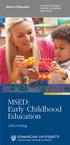 School of Education MASTER OF SCIENCE IN EARLY CHILDHOOD EDUCATION : Early Childhood Education 2012-2014 Master of Science in Education () (Early Childhood Education) Purpose The Master of Science in Education
REQUIRED TEXT: Slavin, R. E. Educational Psychology, Ninth Edition. Allyn and Bacon, 2009.
 HARFORD COMMUNITY COLLEGE SYLLABUS - EDUCATIONAL PSYCHOLOGY PSYCHOLOGY PSY207 03 (CRN# 21002) T 7:00-9:50 Fallston 203 SPRING 2011 INSTRUCTOR: Mr. Chuck Conjar OFFICE: Fallston 250 / OFFICE HOURS: T 6-6:50
VALENCIA COLLEGE, OSCEOLA CAMPUS PSYCHOLOGY 2012 32733 (General Psychology) Summer B, 2014 Dr. Nancy Small Reed
 I. GENERAL INFORMATION VALENCIA COLLEGE, OSCEOLA CAMPUS PSYCHOLOGY 2012 32733 (General Psychology) Summer B, 2014 Dr. Nancy Small Reed Instructor: Dr. Nancy Reed Office hours: The first 15 minutes of class
Charter Oak State College Examination Program
 55 Paul J. Manafort Drive New Britain, CT 06053 Testing Phone 860-515-3708 www.charteroak.edu/exams Charter Oak State College Examination Program Description: Introduction to Early Childhood Education
YALE UNIVERSITY Department of Psychology
 YALE UNIVERSITY Department of Psychology SOCIAL PSYCHOLOGY (PSYC S-150) Instructor: Hannah Raila & Michael Vanderlind Location: Kirtland Hall, Room 207 Day/Time: Monday, Wednesday, Friday 1:00 3:15 pm
LANGARA COLLEGE PSYCHOLOGY 2328 - APPLIED EARLY CHILD PSYCHOLOGY
 LANGARA COLLEGE Department of Psychology PSYCHOLOGY 2328 - APPLIED EARLY CHILD PSYCHOLOGY Summer Session 2010 CRN: 20146 Class Section: 001 Instructor: J.W. Barton, Ph.D. Class Time: Fridays; 1330-1620
INSTRUCTOR Amber Bolden Greer, M.Ed. Phone: Provided in class E-mail: [email protected]; [email protected] Office Hours: By appointment only
 Loyola University Chicago School of Education CPSY 431: Advanced School Counseling and Consultation Spring 2015 Tuesday 4:15 6:45 p.m. Corboy Law Center, Room 203 INSTRUCTOR Amber Bolden Greer, M.Ed. Phone:
Teacher Education Portfolio Guidelines and Rubric
 Teacher Education Portfolio Guidelines and Rubric The Teacher Education Portfolio is developed throughout a s program. Most Teacher Education courses have a capstone project designed to meet the InTASC
Psychology 3313, Human Growth and Development Lifespan Spring Semester, 2015 School of Education and Behavioral Sciences
 Psychology 3313, Human Growth and Development Lifespan Spring Semester, 2015 School of Education and Behavioral Sciences COURSE SEQUENCE IN CURRICULUM AND PREREQUISITE INFORMATION An upper level psychology
Master of Science in Early Childhood Education Singapore, 2004 2005
 Master of Science in Early Childhood Education Singapore, 2004 2005 Sponsored by Wheelock College s Center for International Education, Leadership, and Innovation and RTRC Asia in Singapore Background
TOOL KIT for RESIDENT EDUCATOR and MENT OR MOVES
 Get to Know My RE Observe Collect Evidence Mentor Moments Reflect Review Respond Tailor Support Provide Provide specific feedback specific Feedback What does my RE need? Practice Habits Of Mind Share Data
ASU College of Education - Teacher Education Department EPSY 3303 Child and Adolescent Development Course Syllabus Fall 2009
 ASU College of Education - Teacher Education Department EPSY 3303 Child and Adolescent Development Course Syllabus Fall 2009 Professor: Dr. Linda N. Lucksinger Telephone: 325-942-2052 ext. 257 Email: [email protected]
Upon completion of the Minor in Education Studies, students would be able to: Gain knowledge of the Education System in Singapore and internationally
 1 MINOR IN EDUCATION STUDIES Rationale The purpose of this minor is to provide NTU students with the opportunity to gain exposure to key developments in education and training as future professionals in
Hermantown High School CIS Psychology Course Syllabus 2009 2010 This course is in conjunction with Lake Superior College
 Course Title: General Psychology Hermantown High School CIS Psychology Course Syllabus 2009 2010 This course is in conjunction with Lake Superior College Course Number: Psychology 1120 Credits: 3 Instructor:
DEPARTMENT OF CURRICULUM AND INSTRUCTION EDUC 314: HUMAN GROWTH, DEVELOPMENT, & LEARNING IN A DIGITAL AGE SPRING 2015
 DEPARTMENT OF CURRICULUM AND INSTRUCTION EDUC 314 1 EDUC 314: HUMAN GROWTH, DEVELOPMENT, & LEARNING IN A DIGITAL AGE SPRING 2015 TIME AND PLACE: Lecture: Mondays & Wednesdays 9:00 9:50 105 Wham INSTRUCTOR:
SYLLABUS NAVIGATING CHILDREN S GRIEF: ACADEMIC, BEHAVIORAL & EMOTIONAL CHALLENGES
 SYLLABUS NAVIGATING CHILDREN S GRIEF: ACADEMIC, BEHAVIORAL & EMOTIONAL CHALLENGES Instructor: Email: [email protected] Phone: 303.246.3826 Fax: 866.795.6631 Address: P. O. Box 21876 Denver, CO 80221
Engaging Students for Optimum Learning Online. Informing the Design of Online Learning By the Principles of How People Learn
 Engaging Students for Optimum Learning Online Informing the Design of Online Learning By the Principles of How People Learn What Is Engagement? As early as 1995, student engagement was "the latest buzzword
COURSE SYLLABUS COVER SHEET Lewis & Clark College Graduate School of Education and Counseling
 SPSY 580 School Psychology Practicum, 1 Course Name COURSE SYLLABUS COVER SHEET Lewis & Clark College Graduate School of Education and Counseling Practicum in School Psychology Course Number SPSY 580 Term
Social Psychology PSY 255a & PSY 255b
 Centro Universitario Internacional Social Psychology PSY 255a & PSY 255b Course Description This course is designed to offer a comprehensive view of Social Psychology and its most important phenomena,
H-851 PHILADELPHIA UNIVERSITY. Spring 2005 M W 1:35-2:50 in Hayward 230
 1 SOCIAL PSYCHOLOGY H-851 PHILADELPHIA UNIVERSITY Spring 2005 M W 1:35-2:50 in Hayward 230 Dr. Rory O Brien McElwee Office hours: M 3-4; T 10-11; Th 1-2:30 Office: Hayward Hall 224A E-mail: [email protected]
Psychology of Aging GEY 4612 Fall 2012 M W F 12:55-1:45 CWY 109
 Psychology of Aging GEY 4612 Fall 2012 M W F 12:55-1:45 CWY 109 Instructor: Elizabeth Handing Office Hours: Mon & Wed 2:00 4:00 pm or by appointment Office: MHC 1136 Email: [email protected] Phone:
Instructional Technology Philosophy
 Instructional Technology Philosophy Do not train a child to learn by force or harshness; but direct them to it by what amuses their minds, so that you may be better able to discover with accuracy the peculiar
Psychology Professor Joe W. Hatcher; Associate Professor Kristine A. Kovack-Lesh (Chair) Visiting Professor Jason M. Cowell
 Psychology Professor Joe W. Hatcher; Associate Professor Kristine A. Kovack-Lesh (Chair) Visiting Professor Jason M. Cowell Departmental Mission Statement: The Department of Psychology seeks for its students
The Psychology of Aging COURSE TITLE PSY3315 COURSE NUMBER NUMBER OF CREDITS 4. Dr. Laura J. Moore INSTRUCTOR. laura.moore@purchase.
 COURSE TITLE The Psychology of Aging COURSE NUMBER PSY3315 NUMBER OF CREDITS 4 INSTRUCTOR Dr. Laura J. Moore INSTRUCTOR S EMAIL [email protected] COURSE DESCRIPTION FROM CATALOG DELIVERY FORMAT
School of Education MASTER OF ARTS IN TEACHING. Master of Arts in Teaching
 School of Education MASTER OF ARTS IN TEACHING Master of Arts in Teaching 2012-2014 The Master of Arts in Teaching Program The Master of Arts in Teaching program is designed for: 1. A person with an appropriate
Teacher Evaluation. Missouri s Educator Evaluation System
 Teacher Evaluation Missouri s Educator Evaluation System Teacher Evaluation Protocol Introduction Missouri s Educator Evaluation System was created and refined by hundreds of educators across the state.
NEWS INFORMATION and BEST PRACTICES FOR INCLUSION IN MARYLAND
 Introductory Issue JUNE 2001 All Inclusive NEWS INFORMATION and BEST PRACTICES FOR INCLUSION IN MARYLAND A Collaborative Effort from the MARYLAND STATE DEPARTMENT OF EDUCATION, Division of Special Education
PSYCH 460 CLINICAL CHILD PSYCHOLOGY SPRING 2013
 PSYCH 460 CLINICAL CHILD PSYCHOLOGY SPRING 2013 Professor: Deirdre Radosevich, Ph.D. Class Time: Mon & Wed 8:00am-9:20am Class Location: MAC 109 Office Location: MAC C314 In-Person Office Hours: Mon &
Required Online Subscription Brainpop.com. Subscriptions will be provided in class (will be used in science methods, too).
 Elementary Math Methods 02.551 Course Syllabus Fall 2013 Wednesdays, 9 a.m. - 11:30 a.m. and Web-enhanced O'Leary Library 513 and Murkland School, Lowell Instructors: Dr. Michelle Scribner-MacLean ([email protected])
Developmental Psychology Course Syllabus
 Developmental Psychology Course Syllabus Teacher: Lisa Bernstein Course Description : Psychology is designed to introduce students to the systematic and scientific study of the behavior and mental processes
Introduction to Educational Psychology AEDP235. Spring 2012. A. AEDP 235 Introduction to Educational Psychology (3)
 Introduction to Educational Psychology AEDP235 Spring 2012 Instructor: David Lewis, MA, NCSP, LPES Email: [email protected] Telephone Home 803-259-7668 Office 803-625-5008 Office Hours by appointment
The residency school counselor program does not prepare candidates to design, deliver, and
 STANDARD V: KNOWLEDGE AND SKILLS SCHOOL COUNSELORS -Building on the mission to prepare educators who demonstrate a positive impact on student learning based on the Improvement of Student Achievement act
DOCTOR OF PHILOSOPHY IN EDUCATIONAL PSYCHOLOGY
 DOCTOR OF PHILOSOPHY IN EDUCATIONAL PSYCHOLOGY Program Description The PhD in Educational Psychology is designed for individuals who wish to pursue advanced scholarship and professional practice in a specific
Learner Centered Education in Online Classes
 Learner Centered Education in Online Classes Paula Garcia Center for E-learningE Walter Nolan CTEL and College of Education What is learner centered education? An approach to teaching and learning that
AP PSYCHOLOGY. Grades: 85% - Quizzes, tests, projects, journal entries, homework, activities in class 15% - Semester exam
 AP PSYCHOLOGY Mr. Kean ROOM # B-304 and OFFICE #A311 Office hours: 7th or 8 th or by appointment [email protected] 224-765-2294 Web site: https://sites.google.com/a/dist113.org/appsych-kean/ Welcome to
CPSY 585 School Psychology Practicum, 2
 CPSY 585 School Psychology Practicum, 1 COURSE SYLLABUS COVER SHEET Lewis & Clark College Graduate School of Education and Counseling Course Name Practicum in School Psychology Course Number CPSY 585 Term
Masters of Reading Information Booklet. College of Education
 Masters of Reading Information Booklet College of Education Department of Teaching and Learning Bloomsburg University's Masters in Reading/Reading Certification degree program provides theoretical, analytical
Dixie State University Department of Education Syllabus
 Dixie State University Department of Education Syllabus Course Title: Principles of Early Childhood Education Course Number: ELED 3150 Meeting Days /Time & Place: Tue 8:00-9:40 NIB 144 Course Credit Hours:
Urban Education: School, Student, Family, Community Influences on Student Learning
 MA Degree: Core Curriculum and Specializations Coursework Overview: Elementary and Special Education DTR Course Work Plan 2012-2013 Degree Plan: Master s Degree in Curriculum and Instruction to begin June,
U.S. News & World Report and the National Council on Teacher Quality. National Education School Review. Survey
 U.S. News & World Report and the National Council on Teacher Quality National Education School Review Survey This is an outline of the questions and documents that will be requested during the review.
Psy 270.3 Psychology of Self-Discovery Spring 2016 / McCabe
 Psy 270.3 Psychology of Self-Discovery Spring 2016 / McCabe TuTh 5-6:50, Stevenson 3044 Email: [email protected] Instructor: Laurel McCabe, Ph.D. Phone: 664-2130 Office Hrs.: Thu 2-3:50 pm Office:
Psychology and the Media COURSE TITLE PSY3245 COURSE NUMBER NUMBER OF CREDITS. Dr. Laura J. Moore INSTRUCTOR. laura.moore@purchase.
 COURSE TITLE Psychology and the Media COURSE NUMBER PSY3245 NUMBER OF CREDITS 4 INSTRUCTOR Dr. Laura J. Moore INSTRUCTOR S EMAIL [email protected] COURSE DESCRIPTION FROM CATALOG Media profoundly
Program Outcomes and Assessment
 Program Outcomes and Assessment BS Child Development Program Outcomes October 2013 Creative and Critical Thinkers Program Outcomes Courses Courses Standard 1. Understanding and Applying Developmental Knowledge
Psychology Courses (PSYCH)
 Psychology Courses (PSYCH) PSYCH 545 Abnormal Psychology 3 u An introductory survey of abnormal psychology covering the clinical syndromes included in the diagnostic classification system of the American
Loyola University Chicago. Dr. Michelle Schlack, LPC Work: 847-626-2171 [email protected] Office hours: Before class or by appointment
 Loyola University Chicago CPSY 440-001 (3206) School Counseling Practicum Corboy Law Center and Room 525 Mondays 7:00 9:30PM 1/12/15 4/20/2015 Dr. Michelle Schlack, LPC Work: 847-626-2171 [email protected]
PRIORITY REVIEW GIVEN TO THOSE WHO SUBMIT APPLICATIONS BY JANUARY 5, 2009. (EI AND LD ONLY.)
 SPECIAL EDUCATION Emotionally Impaired/Learning Disabled/Deaf Education Master of Arts Application Deadlines: EMOTIONALLY IMPAIRED FEBRUARY 15. LEARNING DISABLED FEBRUARY 15. DEAF EDUCATION FEBRUARY 15.
PSYC 1315-001 Introduction to Psychology Summer I 2014
 PSYC 1315-001 Introduction to Psychology Summer I 2014 Instructors: E Mail: Maria Guarneri-White Lauren Coursey [email protected] [email protected] Office: Maria: LS 409 Lauren: LS
ALBUQUERQUE PUBLIC SCHOOLS
 ALBUQUERQUE PUBLIC SCHOOLS Speech and Language Initial Evaluation Name: Larry Language School: ABC Elementary Date of Birth: 8-15-1999 Student #: 123456 Age: 8-8 Grade:6 Gender: male Referral Date: 4-18-2008
SECTION 4: MASTER OF EDUCATION DEGREE
 SECTION 4: MASTER OF EDUCATION DEGREE Beginning with the summer session in 1954, a fifthyear program of teacher education leading to the degree Master of Teaching was instituted at Northwestern Oklahoma
ARLINGTON PUBLIC SCHOOLS SPECIAL EDUCATION PROGRAMS AND SERVICES
 ARLINGTON PUBLIC SCHOOLS SPECIAL EDUCATION PROGRAMS AND SERVICES Introduction The Arlington Public Schools provides a comprehensive array of programs and services from pre-school through grades 12 designed
The University of Tennessee College of Social Work Ph.D. Program Fall 2015. Social Work 675 Teaching Methods in Social Work (2 credits)
 SWK 675 Fall 2015 The University of Tennessee College of Social Work Ph.D. Program Fall 2015 Social Work 675 Teaching Methods in Social Work (2 credits) Instructor: Matthew T. Theriot, Ph.D. Time: M 1:25-3:20pm
EARLY EDUCATION. ADMPS 1001 SOCIAL FOUNDATIONS OF EDUCATION 3 cr. I&L 0020 DIRECTED TUTORING 1-3 cr.
 EARLY EDUCATION ADMPS 1001 SOCIAL FOUNDATIONS OF EDUCATION 3 cr. This course is a broad-based overview of education addressing education issues and policies in the United States. An interdisciplinary approach
COURSE SYLLABUS: PSYC S2630. Social Psychology. Summer 2016. Office hours: After class Mondays and Wednesdays or by apt.
 COURSE SYLLABUS: PSYC S2630 Social Psychology MW 9:00a - 12:10p 608 SCHERMERHORN HALL Summer 2016 Instructor: Dr. Joshua M. Feinberg Office: Milbank 415n Office hours: After class Mondays and Wednesdays
Massachusetts Department of Elementary and Secondary Education. Professional Development Self- Assessment Guidebook
 Massachusetts Department of Elementary and Secondary Education Professional Development Self- Assessment Guidebook For Teacher Professional Development Offerings Modified for use by the District and School